11 Tia BrazdaWhen I Get Low
Tia Brazda
Flatcar Records FCR022 (tiabrazda.com)

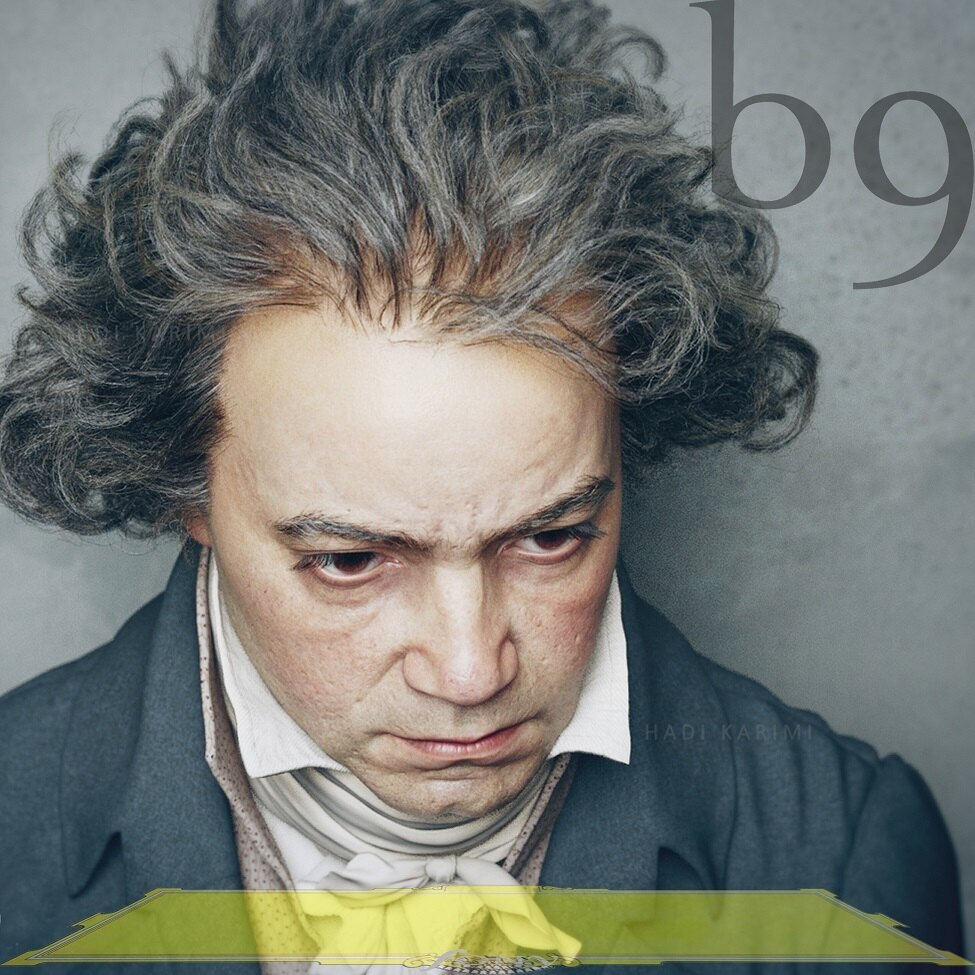
Going out on a limb it is not so risqué to proclaim that you won’t find another singer who vocalizes music – including this classic music – quite like Tia Brazda. While Brazda may owe much to both Billie Holiday and Amy Winehouse, she has a fully formed style that is wholly her own. Her wide-open articulation, characterized by the sultry, aspirated “ah” when she uses the first person pronoun “I” is as unique as it is beckoning, and it is something you are not likely to tire of as she glides through these nine songs on her fifth disc When I Get Low

Brazda traverses the mezzo-soprano tonal range with ease. But her intonation is uniquely smoky. Moreover, she has a singing style that is made for the pathos of songs such as Lullaby of Leaves, When I Get Low, I Get High and Smile. She can catch both pathos and agitation with tenderly softened tones, made for the graceful love repertoire on this disc (such as the spectacularly evocative I’ll Be Seeing You). 

The members of the ensemble that back Brazda prove themselves to be both subtle and idiomatic interpreters of these songs which they illuminate (as if) with dim gaslight on the darkened alleys off Broadway. Soloists Mike Freedman (guitar), Joel Visentin (piano), Alexis Baro (trumpet) and Drew Jurecka (violin, bandoneón) create an atmospheric setting for Brazda’s gorgeously sullen, long-limbed narratives and floating and spinning lines to unfold with bewitching beauty.

12 Melissa StylianouDream Dancing
Melissa Stylianou; Gene Bertoncini; Ike Sturm
Anzic Records ANZ-0080 (melissa-stylianou.bandcamp.com)

This writer purchased Melissa Stylianou’s 2006 release Sliding Down after hearing her perform in Toronto, which was my introduction to the vocalist’s tasteful singing and composing. It was also my introduction to guitarist Kim Ratcliffe whom I knew of but hadn’t heard, and a chance to hear Kevin Breit who I had just gotten to know. When offered the chance to review Dream Dancing, I delighted in the opportunity to revisit Stylianou’s music over 15 years later, accompanied by yet another great guitarist, Gene Bertoncini. 

Renowned New York bassist Ike Strum is the third bandmate on this recording, and does an exquisite job filling in spaces left by voice and guitar. In this chamber jazz setting devoid of drums, there is simultaneously a rhythmic responsibility to be aware of, as well as the freedom of knowing that each note and chord can be heard clearly. 

Bertoncini throws an occasional harmonic curveball Stylianou’s way, as any exciting and interactive guitarist will tend to do, but each of these interesting challenges are responded to in a sensitive yet sophisticated manner. The album’s penultimate and final numbers My One and Only Love and It Might As Well Be Spring both attest to this, with the NYC-based Canadian vocalist adjusting range and phrasing to fit best with her bandmates. Dream Dancing is a great vocal album yhat transcends the jazz vocal realm enough to be enjoyed by instrumentalists and listeners of all genres.

Listen to 'Dream Dancing' Now in the Listening Room

13 Jacob ChungEpistle
Jacob Chung; Christian Antonacci; Felix Fox-Pappas; Thomas Hainbuch; Petros Anagnostakos
Three Pines Records TPR-008 (jacobchung.bandcamp.com/album/epistle)

It is always exciting to hear a young musician sound fully formed, simultaneously recognizing the tradition that created this art form while innovating as well. Just because there is youthful energy present doesn’t mean the music has to become overly futuristic or avant-garde, and saxophonist Jacob Chung does a brilliant job of bringing new ideas to the table while respecting the old guard. 

Epistle stimulates the listener seconds after pressing play on a CD player or streaming platform. The recording quality and aesthetic brings to mind Verve, Blue Note and Impulse releases, but maintains a modern clarity that eludes many musicians/engineers’ attempts to achieve such a sound. 

Chung has surrounded himself with a group of likeminded and competent young musicians, the oldest being just 24. Trumpeter Christian Antonacci matches Chung’s phrasing, giving the group a unified sound as they traverse several intricate melodies. Some of these melodies come in the form of lines written over pre-existing chord changes, notably Triage with chords penned by Billy Strayhorn, and Bouncin’ at Bonafide which shares a progression with Charlie Parker’s classic Confirmation. These compositions are very tastefully executed by Chung and his band, and their borrowed chord progressions are in no way a cop-out. Epistle 1, 2, 3 and 4 are all unique offerings that provide us with contrasting characteristics, from gospel to swing and everything in between. 

If this is how Jacob Chung is sounding in his early 20s, the future of jazz in Canada and beyond looks bright. Check out Epistle and stay tuned for what’s next!

14 Nate WooleyNate Wooley – Ancient Songs of Burlap Heroes
Columbia Icefield
Pyroclastic Records PR 20 (natewooleypyroclastic.bandcamp.com/album/ancient-songs-of-burlap-heroes)

Composer/trumpeter Nate Wooley possesses focus and drive to match his creativity, embarking on projects that shift and reappear at intervals of years, expanding exponentially. Between 2007 and 2020, his Seven-Storey Mountain grew from a trio accompanied by electronic tapes to 14 musicians and a 21-member choir. Columbia Icefield, a stellar quartet launched in 2019 with guitarist Mary Halvorson, pedal steel guitarist Susan Alcorn and drummer Ryan Sawyer, is growing conceptually. Wooley sometimes quotes 19th-century American authors like Herman Melville, and this work invites terms like “epic” and “monumental.” The looming intensity, even dark energy, can suggest Moby Dick.  

Wooley’s poetic invocation describes the “burlap hero” as “one who marches – consciously or not – back to the sea in hopes of making no splash, who understands and embraces the imperfection of being, and in that way, stretches the definition of sainthood to fit.” The CD booklet includes aAron [sic] Munson’s grimly evocative photos of an Inuit village in Nunavut, one depicting a frozen whale carcass. 

As a trumpeter, Wooley extends the lyric, expressive tradition of Miles Davis and Wadada Leo Smith, adding extended techniques, eerie electronics and over-dubbing. Brief impressionistic inter-tracks suggest submerged struggles, while the three long movements are developed instrumental dialogues, with guest appearances on one track each by violist Mat Maneri and electric bassist Trevor Dunn. The concluding Returning to Drown Myself, Finally, based on the Swedish song, Nu är midsommar natt, is awash with sea sounds before Wooley’s unaccompanied trumpet comes to the fore, then surrenders to the guitarists’ burbling liquid microtones.

15 Sorey MesmerismMesmerism
Tyshawn Sorey Trio
Pi Recordings (tyshawn-sorey.bandcamp.com)

Tyshawn Sorey has a strong profile as both drummer and composer, creating extended works on several fronts, exploring both improvisation and composition, including concert pieces dedicated to key influences (For Roscoe Mitchell and For George Lewis), probing hypnotic works (Pillars, a three-CD magnum opus exploring low frequency improvisation), and assorted collaborations with pianists Vijay Iyer and Marilyn Crispell. Here Sorey takes a different turn, recording a series of favourite jazz tunes, several of them standards, in an ad hoc trio with pianist Aaron Diehl and bassist Matt Brewer, a “project with only an hour or two of rehearsal, … with a group of musicians who never performed on stage together.” 

That’s both harsh reality and ideal in jazz, a test of the spontaneous creativity that defines the art, and this trio performs magnificently, working through a program that combines traditional standards – Detour Ahead, here a 14-minute voyage into harmonic extension, and Autumn Leaves, a spare masterpiece – to works by master pianist-composers, like Horace Silver and Duke Ellington. It’s a trio that can achieve mystery and clarity simultaneously, with Silver’s Enchantment moving from hanging resonant chords to soulful modal blues and Paul Motian’s From Time to Time effectively suspending time amidst the piano’s sustain and Sorey’s cloud-like cymbals. Muhal Richard Abrams’ Two Over One and Duke Ellington’s REM Blues, have a muscular vigour and avoid verbosity, reflecting Diehl, Brewer and Sorey’s creativity and precision.    

Mesmerism may be a commonplace project, but the results are often majestic.

16 Florian HoefnerDesert Bloom
Florian Hoefner Trio
Alma Records ACD52022 (florian-hoefner.com/music-shop)

Pianist/composer Florian Hoefner states that the concept behind his latest album Desert Bloom is the behaviour in certain arid locations where a huge rainstorm will occur every few years: the dormant seeds of the wildflowers “suddenly germinate” and “the colours explode.” That image resonates throughout the evocative and tasteful works comprising Desert Bloom. The opener, Between the Lines, is beautifully hypnotic with a repeating piano line that is joined by a contrapuntal bass and when the drums enter it switches effortlessly to a funky groove. The title song begins with a bowed bass, elegant cymbal strikes and sporadic piano chords, works into a nice bass solo until a very funky ostinato theme emerges. 

Hoefner’s compositions are subtle, nuanced and always moving; the album is a jazz delight because of the interplay amongst all three musicians. Andrew Downing’s bass work is precise and funky, Nick Fraser’s drumming is a masterclass in keeping the groove going while sprinkling in surprising and enlightening percussive elements; and Hoefner’s piano can be understated, driving, impressionistic or whatever else is required.

17 Jocelyn GouldGolden Hour
Jocelyn Gould
Independent JGDC0422 (jocelyngould.com)

Nothing can beat an album intro like this one. Beautiful rubato guitar melodies weave together overtop lush piano chords, punctuated by patient pauses. As the lead voice leans into the last note, the rest of the band hangs onto it, giving the impression of a soft exhale. The spell is eventually broken by catharsis via drum pickup, which manages to feel like a definitive statement without being overly forceful, as if to say “welcome.” This is not to overanalyze 30 seconds of music, because one could loosely apply the previous description to the entirety of Golden Hour. It flows perfectly, is extremely dynamic, and has the calming effect of a slow, deep breath. Everything fits snugly in place. 

With her sophomore effort, Jocelyn Gould proves herself to yet again be a masterful curator, bandleader and improviser, refining so much of what made 2020’s Elegant Traveler so mesmerizing. From that preceding album, the energy itself is largely dialed back, to inject the overall tone with the quietude of observing a sunset. This atmosphere is aided by Gould’s approach to song, both through interpretation and composition. Her original music feels every bit as polished and timeless as the jazz standards she chooses to tackle. Serendipity evokes the meaning of its title with grace, with pleasant surprises to be found throughout its form, culminating in an outro that sums up everything the music’s  about: pure, unbridled unity.

18 RedGreenBlueThe End and The Beginning
RedGreenBlue
Astral Spirits AS190 (astralrgb.bandcamp.com)

The End and the Beginning defines the slow burn; establishing a drone and then, armed with nothing but patience, allowing it to grow organically into something truly profound. The whisper of synth wizard Paul Giallorenzo’s reassuringly consonant droning note both begins and ends the album. At first so subtle you almost need to squint to hear it, this initial monophonic drone in The Beginning signals the only viable musical direction to be skyward, and then in The End allows space for the rubble to clear. Charlie Kirchen comes in shortly after, creating a simple bass line that lends itself to the tranquil atmosphere while managing to add as much harmonic context to the drone as needed, not unlike what Charlie Haden provided to the music of Don Cherry. 

It is on this foundation that the music begins to gather wholly satisfying momentum. Citing Terry Riley as an influence, RedGreenBlue accomplishes something staggering, managing to evenly bridge the forms of minimalism and improvisation, revealing their marriage to warrant unceasing exploration. Percussionist Ryan Packard’s ability to impeccably imply pulse while stealthily adding aspects to the groove is key here, allowing for the sound to expand outward while also shifting imperceptibly. The end of The Beginning is an undeniable climax, but the stripped-down Giallorenzo solo passage during the next piece is every bit as evocative. In this kind of music, process is given equal emphasis as product, and RedGreenBlue embody that concept.

19 E3 Transmit SlowTransmit Slow
E3 by Alex Lakusta
(e3byalexlakusta.bandcamp.com/album/transmit-slow)

Numerous points in Transmit Slow can place a listener in a unique state between dissociation and transfixion, peacefully swaying as blissful minutes evaporate. Drawing from numerous palates of ambient and electronic sound, the trio finds their signature from the outset. Alex Lakusta’s bass playing is the definition of substance over style, only playing the notes that lay a necessary harmonic foundation for the ensemble. Drummer Keagan Eskritt and keyboardist Josh Smiley play similarly devoid of superficiality. Transmit Slow is a masterclass in what a rhythm section can achieve artistically when solely focused on grooving as hard as possible. Just as additive are the production efforts of Robert Diack, who adds the perfect amount of polish to the low end; greatly benefiting the music’s textural clarity. Brad Eaton rounds out this cast of consummate professionals, guesting with extremely restrained trumpet playing that does nothing more than needed to further contextualize Lakusta’s arrangements. 

Due to the consistency of Lakusta’s refined bandleading style, the tracks blend together almost as if they were parts of a suite, arriving at nary a single passage in contrived fashion. Quite a bit of the overall cohesion is helped by Smiley’s patience when it comes to creating drones with his organ, allowing for a profoundly hypnotic throughline. This effect is particularly present on the track All Static/Frequency Lost, which seamlessly switches metre and pulse halfway through. That’s the thing about E3, they always stick the landing.

20 Billy MohlerAnatomy
Billy Mohler; Nate Wood; Chris Speed; Shane Endsley
Contagious Music CGM007 (billymohler.bandcamp.com/album/anatomy)

It is perhaps fitting that Anatomy – an album most defined by its clarity and attentiveness – is so profoundly anchored by brief, improvised passages. If the track list were to be split into three, the songs titled Abstract would open each side. As it pertains to the pristine arrangements surrounding these vignettes, these solos serve as a sobering reminder of how fruitless and unnecessary a task it can be to draw a hard line between creative processes. There is still that element of cleanliness and craftsmanship present, mainly due to the fidelity of Billy Mohler’s bass.

Through the hypnotic layering and reverb of Abstract 1, one can almost hear the exact point in which fingers make impact with string. But through his diatonic explorations within a fixed range and found resolutions of phrases in real time, it is not only pure spontaneous expression but an admittance that he isn’t one to have an entire arrangement suddenly appear in his head. By bringing the listener through a process, a greater appreciation is gained for the premeditation going into a track such as Equals. The song lives in a ping-pong match between septuple metre sections for long enough that its brief forays into standard time feel like subversive interludes. Mohler understands the power of a well-intentioned bridge, serving as a memorable detour from more prominent ideas while never being reduced to a mere conduit from point A to point B.

21 Chet BakerLive in Paris (Radio France Recordings 1983-1984)
Chet Baker Trio
Elemental Music 5990442 (elemental-music.com)

In 1952, near his career’s beginnings, Chet Baker became an instant star playing cool jazz with the Gerry Mulligan quartet. It was the opposite of everything that then characterized modern jazz: glacially slow, meticulously arranged, almost improvisation-free. Thirty years later, just a few years before his death, Baker was still playing a kind of cool jazz, but it was frequently fast, with extended improvisation.

Available as three LPs or two CDs, Live in Paris presents two concert recordings, each featuring Baker’s preferred instrumentation, a chamber jazz trio of trumpet, piano and acoustic bass. The first concert, from L’Esplanade De La Défense, focuses on the Great American Songbook. It’s the ballads that stand out, with stellar instrumental performances of Easy Living and Stella by Starlight, the rhapsodic accompaniment by pianist Michel Graillier (his fluid harmonic invention resembles Bill Evans’) and bassist Dominique Lamerle feeding Baker’s lyrical gift. Episodes of Baker’s scat singing, while mimicking the fluid detail of his trumpet playing, detract from two up-tempo performances. 

The much longer club session from Le Petit Opportun is much more consistent, with Baker foregoing singing and popular songs to concentrate on East Coast hard bop anthems – e.g., Hank Mobley’s Funk in Deep Freeze, Horace Silver’s Strollin’, Richard Carpenter’s Walkin’ – pieces that take on new character with the chamber jazz dynamics and the more forceful bass playing of Riccardo Del Fra, further propelling Baker and Graillier. A 19-minute (the improvisations really are extended) treatment of Brazilian composer Rique Pantoja’s Arbor Way is another highlight.

01 Cats CradleCat’s Cradle
Arnab Chakrabarty
Independent (arnabchakrabarty.bandcamp.com/releases)

Musicians from around the globe have chosen to make Toronto home ever since the days it was colloquially tagged for hogs and muddy streets. Virtuoso sarod player Arnab Chakrabarty, a representative of the venerable Hindustani raga classical music tradition, is a relatively recent and welcome addition to the ranks of Toronto-area music professionals.  

No novice, over the last two decades Chakrabarty has played hundreds of concerts on stages around the world. Indian newspaper The Hindu reported that Chakrabarty is “known both for his emotive virtuosity and cerebral approach,” believing not in “simplifying music to cater to popular tastes as much as revelling in ‘manipulating the operative rules of the ragas to create interesting expressions.’” 

Chakrabarty aims to make classical raga performance accessible to today’s audiences without compromising its fundamentals. And his third full-length album Cat’s Cradle, featuring sarod renderings of five classical ragas, reflects this balanced approach. Eschewing flamboyant ornamental passagework, he rather focuses on the core values of the raga at hand which come to life in the alap, the introductory melodic improvisation.

The gat, a melody set in a specific raga and tala (time cycle) the latter rendered on the tabla, follows. On this album the gats are Chakrabarty’s compositions. They in turn inspire improvisation, the outcome of a spirited dialogue between set rules and the musician’s imagination freed up.

Cat’s Cradle gives full scope to Chakrabarty’s in-depth understanding and imaginative exploration of each raga complex, plumbing their signature phrases and emotional tenor while never losing sight of the rich Hindustani traditions of raga performance practice.

02 Pacific GamelanVessel
Gamelan Pacifica
Independent 002 (gamelanpacifica.org)

Led by composer Jarrad Powell, for over 40 years Seattle’s Gamelan Pacifica has been one of the few ensembles specializing in the intersection of Southcentral Javanese gamelan and international experimental music. Its new release Vessel extends that approach in new directions, bookended by two works by group musician and composer Stephen Fandrich. Laras Chopin and Difference both evoke a sound world of electronic clusters, or perhaps of bowed glass bowls, supported by occasional powerful bass tones. Yet Fandrich creates that soundscape using mostly acoustic sounds coaxed from bowed metal gamelan instruments, deep gongs, and a piano played with an electromagnetic bow. The effect is magical.

Fandrich’s Iron Tears explores regions between the Western harmonies rendered by the Del Sol string quartet and indigenous gamelan tunings. They’re allowed to interweave for 12 minutes before cadencing in a surprising A Major chord. 

Powell’s Tsuki features the brilliant Javanese-inflected singing by Jessika Kenney of an English text by Zen Master Doĝen urging us toward direct experience, the path to spiritual awakening. In her challenging work Scar, composer Kenney aims to “unlearn Javanese vocal timbres and melodic patterns without relearning centering whiteness.” She explains the work is a “prayer which intends to reject the violence of white imperial privilege, and also to unlearn [the] Javanese vocal tradition” in which she is so fluent.

Finally, Ketawang Panembah by Darsono Hadirahardjo features an emotional rebab (2-string bowed lute) solo masterfully played by Jesse Snyder. Originally meant to evoke a prayer for divine blessing, this moving music – and much of the album – reminds us of the healing power of music in dark times.

03 ShantiesShanties! Live
La Nef; Chor Leoni
Leaf Music NEF0003 (chorleoni.org/product/shanties-live/)

There could be nothing more eminently singable and danceable than sea shanties – those apparently unforgettable work songs from the 19th century. Fortuitously – perhaps even providentially – proud Canadians (particularly of the Scottish diaspora) continue to keep the cultural flame of the shanty alive. There is much to choose from; shanties – creations of the peripatetic merchant mariner – grew out of the French “chanter” fused into boisterous barn-dancing songs, merrily sung by British mariners into a pint of lager across the ocean to North America. Many have made it to this outstanding live recording. 

Two celebrated traditional music groups – Montreal’s La Nef and Vancouver’s Juno-nominated Chor Leoni, came together for a one-night-only performance of brand new arrangements of these work songs on the resplendent Shanties! Live. It would be a minor travesty to suggest that all praise for this performance accrues to members of La Nef, albeit the fact that the ensemble’s fame is owed to their iconic soundtrack for Ubisoft’s Assassin’s Creed video game. The participation of the iconic Chor Leoni has – together with arrangements by Seán Dagher and the Chor directed by Erick Lichte – turned this rare collaboration into something truly special. 

Rip-roaring shanties such as Haul on the Bowline and the stomach-churning Stormalong John provide thrill-a-minute excitement. Meanwhile the profound beauty of Lowlands Away, Shallow Brown and Le 31 du mois d’août, and the sublime fidelity of the recording make this classic sea shanties disc truly spectacular.

Listen to 'Shanties! Live' Now in the Listening Room

04 Hypnosis NegativeThree Corners
Hypnosis Negative
(instagram.com/hypnosis.negative)

Hypnosis Negative is a collaboration between Canadian Robert Alan Mackie (violin) and Estonian Katariina Tirmaste (flute, jawharp). The duo explores the roots of dance in their modern original interpretations of international and traditional repetitive dance music with inherent trance-like “hypnotic” listening and movement qualities.  

The ten-track debut release includes their modern renditions of some Estonian dance tunes they found in folk music archives, which I appreciate as a Canadian musician of Estonian parents. The first track – Hi (Mardi Tandi Polka), and  last track – Bye (Kuldimuna Lõikaja) – are each under 50 seconds, opening and closing the release with two shorter version repetitive rhythmic and melodic Estonian polka interpretations. Track 2, Buffalo Gals, (Kuldimuna Lõikaja), from the “common repertoire” Estonia, is its longer version. This upbeat rendition has many melodic repetitions with flute harmonies, quasi atonality and a waltz midstream, with a legato violin countermelody to an abrupt “time to stop dancing” accented ending. Guest percussionist is Juan de la Fuente Alcón. His subtle background beats in the calming waltz Sõrmõlugu from Estonian Jaan Palu’s repertoire, support high-pitched flute, violin held notes and astoundingly tight lyrical unison instrumental passages. Three southeastern United States square dance interpretations show a surprising traditional folk-dance similarity to them. There are Spanish cultural flavours with tight violin and flute playing over percussion grooves in the more contemporary sounding Cantiga 181 by Alfonso X El Sabio.

Hypnosis Negative is creating a brilliant traditional music future here, both on and off the dance floor!

Listen to 'Three Corners' Now in the Listening Room

They were supposed to have vanished when singers replaced big bands and become anachronisms once rock music combos became the de facto performance configuration. Yet large ensembles never went away. The challenge of blending multiple instrumental colours still fascinates composers and players of both notated and improvised music. Producing the proper balance between those two motifs, while taking advantage of every timbre produced by a large group of musicians is what characterizes the following CDs.

01 TrondheimUsing the 14-member Trondheim Jazz Orchestra, Norwegian bassist Ole Morton Vågan created Plastic Wave (Odin Records ODINLP 9578 odinrecords.bandcamp.com), a 2CD meditation on modern challenges and promises. Although the brief recitations by a poet are lost on non-Norwegian speakers, the compositions stand on their own. Taking advantage of the soprano tessitura of vocalist Sofia Jernberg, Vågan’s arrangements often blend her wordless lyricism with brassy fissures or placid reed tones. But groove is never sacrificed for gentleness. Throughout motifs, which suggest Charles Mingus at his bluesiest and Henry Mancini at his jazziest, are driven by Ståle Storløkken’s Hammond organ pumps, Kjetil Møster’s and Espen Reinertsen’s tenor saxophone vamps and Vågan’s own double bass stops. Tracks such as Critical Mass Distraction are notable for their unified polyphony, as the piece advances due to contributions from trumpeter Eivind Lønning’s shakes and triplets and violinist Ola Kvernberg’s barbed glissandi. Meanwhile, drummers Gard Nilssen and Håkon Johansen’s pops and rebounds emphasize the tune’s spikiness, confirmed by a coda of heightened brassiness. Extended or briefer tracks accentuate the unforced swing that underlies the program. Two of the more notable are Pickaboogaloo and the title track; moving along with double bass thumps and drum backbeats the former maintaining a funk tempo projected by contrapuntal reed and brass riffs. Soon though, a wailing plunger interlude from trombonist Øyvind Brække, paced by double time organ smears introduces a stop-time variant that matches portamento brass flutters and honks from the group’s four-person reed section, sliding from that dissonate interlude to a coordinated finale. Plastic Wave confirms tone construction. Gradually building up from unified voice, brass and reed expressions, Oscar Grønberg’s piano tinkles precede an arrangement that alternates intermittent drum beats, brass tongue sucking and puffs from Eirik Hegdal’s baritone saxophone with the layered harmonies of the introduction. 

02 Ensemble IcosAnother double bassist, Benjamin Duboc of Paris, composed and directed an even more ambitious project. Entitled Volumes II – Fiction Musicale et Chorégraphique – Création pour Grand Orchestre et Corps Actants (Dark Tree DT 15 darktree-records.com), Duboc’s  Ensemble Icosikaihenagone (EI) runs through a single (nearly) 45-minute arrangement that brings to life this fictitious idea. Added to the 22 instrumentalists, who also vocalize, are the voices of three actors. With the text oscillating between imagery and sardonic comments, with voices often overlapping, it’s best to concentrate on the music. Beginning with near-silence, it’s not until after the first four minutes that a harmonized chord from seemingly every ensemble member moves in a linear fashion but without losing the exposition’s near-opaqueness. Although reed squeaks and string strokes are sometimes detached from the sonic murk, it isn’t until repeated kettle-drum-like throbs from percussionists Thierry Waziniak and Amélie Grould introduces a dramatic upsurge from reed players Jean-Luc Petit and Sylvain Kassap, soon followed by Émilie Aridon-Kociołek’s reflective keyboard interlude, fully define the musical program. Brassy triplets from trumpeters Jean-Luc Cappozzo and Franz Hautzinger join with the seven string players for a crescendo of undifferentiated timbres amplified with expressions from two female and one male voice. These fragments emphasize the composition’s two contrapuntal currents: dissonant footfall-like tongue slaps from the reeds and romantic glissandi from violinists Mathias Naon and Patricia Bosshard. Confirming his manipulations of low pitches Duboc’s next section matches Dorian Marcel’s and Sébastien Beliah’s percussive double bass motifs to Diemo Schwarz’s electronic samples which interject mariachi-like brass, Latin dance, waltz music snatches and hooting voices. The sampled voices and electronic wave forms continue in the following sequence as they’re toughened with Christiane Bopp’s and Alexis Persigan’s portamento trombone slurs, anvil-hard percussion smashes, percussion slaps and wordless bel-canto vocalizing. Reaching another polyphonic crescendo, the voices, electronic buzzes and trumpet triplets fade to silence. Now suspended in time, ones wonder how Volumes I and Volumes III sound.

03 LeUnInterest in large-scale improvisation appears to fascinate French musicians, since six months before the EI disc was recorded, the 24-member Le Un troupe made its album. Coincidentally organized by David Chiesa, another double bass player, Le Havre (UnRec R 21 unensemble.bandcamp.com/album/le-havre) finds the orchestra, with a similar blend of reeds, brass, strings, percussion and electronics working its way through five group compositions over 65 minutes. The performances can be low key and slow moving or aggressive and rapid. But whether a tune’s horizontal progress is spurred by, for instance, Claire Bergerault’s accordion shakes or pianist Sophie Agnel’s key clips, overblowing and circular breathing from the four reed players, or staccato stops from the eight plucked or bowed strings, group affiliations and counterpoint always supersede singular instrumental spots. Vocalized yells, electronic drones, reed yelps and brass triplets have their place but are balanced and layered. Chiesa’s preference for low pitches means that a track such as Unité Nodale 8.2 reaches a climax at mid-point as double bass pumps preface a defining sequence where every one of the instruments’ tones, pops, cries, thumps and squeaks in unison, with bell tree shakes as a respite. Unité Nodale 11.2 and Unité Nodale 3.1, the introductory and concluding salvos, express this strategy at greatest length. On the first, affiliations from tremolo accordion brush up against thick double bass stops, mooing reeds and trumpeter Christian Pruvost’s half-valve expressions, reaching a crescendo of miasmatic blending. This mixture bypasses stuttering rips from the trumpeter and trombonist Patrick Charbonnier plus col legno string sweeps to reach a contrapuntal climax of intermittent piano clips and thumping ruffs from percussionists Camille Emaille and Benoit Kilian. That’s until spiccato string shakes, brass scoops and vocalized bel canto sighs sail across the lower pitches for a finale. These alternations from complete freedom to integration are confirmed with Unité Nodale 3.1 although here the reverberating metallic pressure and vibrating sibilation from Pascal Battus’ rotating surfaces and Jérôme Noetinger and Lionel Marchetti’s electronics are more prominent. Among the concentrated timbres of drones, pops, slaps and shakes dualism is set up between pairs such as Nina Garcia’s guitar strums and saxophonist Michel Doneda’s wailing split tones, or as multiple circular breathing abuts swift string glissandi. Ascending to a mesh of electroacoustic output, the cumulative tone ascends in pitch and loudness until it shakes away.

04 Healing OrchUnlike the massive ensembles put together by EI and Le Un, another French band, the Healing Orchestra (HO) presents its music as Free Jazz for the People! (LFDS 011 lefondeurdeson.com) with only 14 musicians. Despite the insurgent title, the two CDs combine free-form swinging with precise touch of emotional free jazz. Led by vibist/pianist Paul Wacrenier, who composed all the music, the strategic arrangements take advantage of every member’s talent. Pouvoir du Dedans which introduces the three-part title suite, features slurping and squeezed clarion variations from Kassap who has a less prominent role with Le Un. Overall his staccato tongue-slapping floats over lumbering group work then introduces a section characterized by throbbing bass lines from Victor Aubert and Blaise Chevalier and climaxes with a dual between violinist Sarah Colomb’s stretched spiccato and flutist Fanny Ménégoz’s peeping whistles. This dualism is used to striking effect on other tracks, especially when soloists pop out of concentrated orchestral motifs before integrating themselves back into the evolving themes. Confluences and L’Estaca suite’s final tracks illustrate this. The flutist’s traverse colouration; projected triplets from trumpeter Xavier Bornens; snorting and searing altissimo and vibrated split tones from saxophonists Arnaud Sacase (alto), Jean-François Petitjean (tenor) and Jon Vicuna (baritone); plus Wacrenier’s staccato vibes chiming and linear piano comping heard briefly but crucially. Personalizing the packed group improvisations, the narrative is loosened enough so that the shift to a happy dance rhythm makes the finale more freylekhs than free jazz. This same balance between freneticism and facility is expressed on Blooming In Tough Days, the extended finale of the Fraternity Suite. After exploring motifs encompassing folkloric harmonies by the three arco string players, gong-like resonations from the vibes and a touch of drone from concentrated timbres led by low-pitched piano notes, baritone sax honks and plucked bass thumps, the group settles into a groove. With portamento brass scoops, mellow violin glissandi and drummer Benoist Raffin’s press rolls, the suite and session exit with joyous vamps that are spirited, streetwise and sophisticated all at once.

05 HardRubberThere are similar concepts from Vancouver’s Hard Rubber Orchestra (HRO) on Iguana (Hard Rubber DL hardrubber.com).The urbane arrangements by leader/trumpeter John Korsrud and others make it sound as if they’re being played by a larger group whereas the HRO is usually an octet. Always ready to emphasize the hard in the group’s name, the tracks often suggest how a metal band would sound playing all acoustic instruments. Instances of this are the extended Source Code, composed and featuring guitarist Harry Stafylakis and Korsrud’s Force Majeure. Built up from buzzy guitar and electric bass riffs and backbeat drumming from Eliot Doyle, the often agitated program still finds room for Mark Ferris’ Baroque-tinged mid-point violin sweeps before a polyphonic climax-crescendo with every instrument, especially the three hocketing and harmonized horns projecting at once. Based around a responsive and repeated chunky pattern by drummers Trent Otter and Kai Basanta, this background power pushes juddering and ascending chords from saxophonists Tom Keenlyside and Jon Bentley plus thickened brass portamento from Jim Hopson’s three low-pitched horns. Metal doesn’t replace melody however, since Korsrud’s From the Earth is a veritable piano concerto for Marianne Trudel. As her piano line evolves with Romantic overtones including waterfalls of notes and individual plinking, Mike Herriott adds to the Arcadian mood with overdubbed harmonized French horn, trombone, bass trombone and flugelhorn textures. Other tracks showcase everything from Vivian Houle’s alternating banshee-like or warbling vocalizing floating over electrified violin sweeps and paced by Ron Samworth’s guitar drones, to the stop-time title track that matches a Latin tinge with driving plunger brass and Samworth’s string slaps. Overall it appears the HRO has every part of the sound spectrum covered.

A comparison of the sparse HRO personnel with the many players involved elsewhere shows how modern large ensemble writing and playing can take many forms if creativity is in the right hands.

Back to top