DIVAS’ DELIGHTS – Opera, Lieder, Art Song and the Contemporary Air

We enjoy a wide range of genre in recent offerings from those best known in the world of opera. This month, we salute those with more conventional releases and those who stray unexpectedly but delightfully from the fold, all manifesting as chanteuses extraordinaire.

01_bartoliSospiri (Decca 4782558), is a compilation of Cecilia Bartoli’s best recital selections and is comprised of opera arias and sacred songs recorded between 1994 and 2009. A singer famous for her thrilling and fast-paced virtuosic vocal runs, this collection’s name which translates as ‘sighs’ indicates a focus on her mastery of more relaxed and tender expressions. To this end, we have pieces like Handel’s Lascia la spina and Mozart’s Laudate dominum performed with exquisite beauty and sensitivity. It seems, however, they could not resist the inclusion of spectacular runs and dramatic showpieces such as Una voce poco fa and Geminiano Giacomelli’s Merope: Sposa non mi conosci. An enchanting mix of well-known favourites with obscure and precious gems.

02_dessayNatalie Dessay’s Cleopatra: Arias from Giulio Cesare (Virgin Classics 5099990 7872 2 5) showcases this soprano’s dramatic range in her newest role at the Paris Opéra as the Queen of the Nile’s arias demonstrate the “infinite variety” referred to by Shakespeare. Regal bearing forms one facet of the bejewelled monarch, jealousy and vindictiveness another and sensuality and tenderness yet another. Dessay handles the dramatic transitions flawlessly while the beauty and precision of her vocal work creates a superb pairing with the dynamic ensemble Le Concert d’Astrée. All are led by Emmanuelle Haim who Dessay says is the perfect stage director for her voice.

03_didonatoDiva Divo (Virgin Classics 50999 641986 0 6) is Joyce DiDonato’s tribute to the world of the mezzo-soprano who, à la Victor/Victoria, “has always been called upon to bend the genders, to convince equally in both pants and skirts… while hopefully retaining an individual and unique sound.” Featured ‘trouser roles’ such as Mozart’s Cherubino, Bellini’s Romeo and Massenet’s Prince Charming are set alongside female counterparts such as Mozart’s Susanna and Rossini’s Cinderella. Not only gender variations, but same themes and stories set by different composers are juxtaposed in this recording from the Opera de Lyon under Kazushi Ono’s direction, for example selections from both Mozart & Gluck’s La Clemenza di Tito, providing an interesting perspective on the versatility of the performer. Which, of course, Ms. Donato is (and a stellar one at that!).

04_damrauPoésie (Virgin Classics 5099962 8664 0 8), features the orchestral songs of Richard Strauss throughout which Diana Damrau’s flawless voice soars transcendently all the while sustaining enormous depth of emotion. She really makes the most of the atmospheric changes and seemingly infinite range of colour with which Strauss infuses his songs. It is breathtakingly expressive even when Damrau drops to a pianissimo passage. Strauss considered his temperamental wife Pauline the ideal interpreter of his songs and the only one to whom he would entrust the intimate raptures of songs like Morgen and Allerseelen. Perhaps he would reconsider if he were with us today to hear this singer who seems to understand the ever-shifting nuances of his work so well. Christian Thielemann is in top form leading the Munich Philharmonic

05_ricciWith Cirque (Sono Luminus DSL-92125 www.sonoluminus.com), Céline Ricci conjures up the carnival atmosphere of the streets of 1920s Paris with songs of the era weaving a smoky screen of mesmerizing inventions and illusions. Having been chosen by William Christie for Les Jardin des Voix and named one of opera’s promising young talents by Opernwelt, in her first solo recording Ricci tackles Henri Sauguet’s cycle Cirque with all the flair of a ringmaster, Milhaud’s Six Chansons de Théatre with the brash seductiveness of the cabaret singer and Poulenc’s Cocardes with fantastical whimsy. Pianist Daniel Lockert adds a dash of panache to the scene with Satie’s Rag-time Parade.

06_von_otterTeaming up with jazz pianist Brad Mehldau for Love Songs (Naïve 2CD V5421), Anne Sofie von Otter demonstrates great artistic versatility. In doing so she neither sacrifices her pure and dulcet tones nor delivers any measure of artifice inappropriate to the character of the music. Or, as Mehldau comments, she is never overly dramatic. Take, for example, her rendition of Lennon & McCartney’s Blackbird which is as sweet and simple as it ever should be juxtaposed with the subtle nuance of Jacque Brel’s Chanson des vieux amants and the wistful fun of Walking My Baby Back Home sung in Swedish. Mehldau’s own Love Songs cycle, commissioned by Carnegie Hall and written for von Otter, offers a lovely and eloquent vehicle for these two artists. 

01_tristan_und_isoldeWagner - Tristan und Isolde
Waltraub Meier; Ian Story; Michelle DeYoung; Gerd Groehowski; Matti Salminen; Teatro alla Scala; Daniel Barenboim
Virgin Classics 51931599

On December 7, 2007 an event that reverberated throughout Milan took place at La Scala with the greatest artists gathered to breathe new life into Wagner’s immortal masterpiece.

The main reason for the celebration was the re-emergence of director Patrice Chereau who as a young firebrand created the centennial Ring in Bayreuth in 1976, a revolutionary concept that started a chain of new productions all over the world. Now 30 years later and no longer young he was persuaded to do a much more difficult task, Tristan. There is nothing revolutionary here, however. His production is almost traditional. The sets are unobtrusive, neutral in colour, quasi abstract and echo timeless reality, the stage movements are relaxed, exquisitely handled almost like a ballet. The action erupts only when the music calls for it, like the finale of the first act or the fighting in the third. In this framework Chereau allows his singers to act naturally and so optimize their talents.

Waltraud Meier (Isolde) is a wonderful singer-actress who has sung the role many times and simply lives in it. She is the crown of the production. Her interpretation is so convincing, so spontaneous that it’s near perfection in itself. Ian Storey as Tristan, a relative new-comer, is steady and a ‘tidal wave of power and passion’ - especially in the third act where he abandons himself totally as the suffering hero. The other three principals, Michelle deYoung (Brangaene), Greg Grochowsky (Kurwenal) and Matti Salminen are theatrically and musically all on the same level as the protagonists.

The musical triumph however belongs to Daniel Barenboim who proudly steps into the formidable tradition established by Böhm, Furtwangler, Kleiber and Karajan. He forms his own style with well thought out tempi and details, making the Scala Orchestra sound glorious and exciting. This is production that will go down in history.

02_verdi_don_carloVerdi - Don Carlo
Rolando Villazon; Marina Poplavskaya; Simon Keenlyside; Ferruccio Furlanetto; Sonia Ganassi; Royal Opera House; Antonio Pappano
Royal Opera House/EMI 6 31609 9

Verdi’s Don Carlo is an opera of star crossed lovers, forbidden love, marital infidelity and other miseries, one of his greatest masterworks, certainly the most monumental, though flawed. It exists in many versions, French, Italian, five and four acts, some revised several times. Nowadays there is a recording for each and hence there are over 10 versions available on DVD, not to mention CDs. In my opinion the 5 act version, such as this one in Italian is the most satisfying for completeness of the music and the beauty of the language. After all Verdi should rightly be enjoyed in Italian.

Coproduced with the Metropolitan Opera, this production was the highlight of the 2008 season of the Royal Opera House. It heralded the return of Rolando Villazon as its principal tenor. Although his voice has had problems, he seems to have recovered sufficiently to cope with the title role. He looks the part, attractive and passionate, though sometimes he sounds strained. Marina Poplavskaya as the young Queen provides a wonderful portrayal, in excellent soprano voice and sympathetic personality. As the anguished King Philip, certainly one of Verdi’s most memorable creations, Ferruccio Furlanetto is a veteran of the role. He sang it under Karajan and follows the great tradition established by the legends, Boris Christoff and Nicolai Ghiarov. The pinnacle of the opera is the 4th act chamber scene where nearly all of the principals come together with intense drama and superb music beautifully integrated in the Quartet, very moving indeed.

The production is traditional, in good taste. The sets are imaginative and architecturally interesting and very well coordinated with the action. Antonio Pappano, a favourite conductor of Italian operas these days, conducts with vigour and great authority, making this set outstanding, probably the best currently available.


03_Glass_OrpheeGlass - Orphée
Portland Opera; Anne Manson
Orange Mountain Music OMM 0068 (www.orangemountainmusic.com)

As I was all but indifferent to the music of Philip Glass, I was not eagerly looking forward to a performance of Orphée at the 2007 Glimmerglass Opera Summer Series. That year the theme for the season was the Orpheus legend and the company staged operas by Offenbach, Gluck, Glass, Monteverdi and Haydn. As expected, every performance was outstanding but Orphée was the surprise hit, unexpectedly making a provocative first impression and a lasting wish to hear it again.

For his libretto Glass lifted the script from Jean Cocteau’s 1950 film Orphée and moved the setting to a stage-wide, modern studio-apartment. As we might expect from Cocteau’s fascination with mirrors, when the characters move back and forth to “The Zone” they simply step through a mirror. It’s all true to the love story of mythology but the mise-en-scène brings the action comfortably into the present, or at least to the mid 20th century.

The Portland Opera production, recorded live in November 2009, employs the scenery and costumes created for the 2007 Glimmerglass Opera presentation, has the same conductor, Anne Manson and the Glimmerglass Orphée, Philip Cutlip. The productions also share Lisa Saffer as La Princesse. The Portland Eurydice is Georgia Jarman. The production is well cast and I don’t hear a single weak voice.

It is a given that watching an opera in the house or elsewhere is a different experience from only hearing it. Nevertheless on the CD, without the visuals to animate this performance of Orphée, Glass’s music impresses with an uncomplicated, attractive, melodic, often hypnotic score... very listener friendly. It is sung in French with enclosed line-by-line English translations.

I would not have acquired this recording had I not attended the Glimmerglass performance. Over the years we have seen many new or rarely performed operas there. This year, from July 2nd to August 23rd, they will mount productions of Carmen, Medea and Annie Get Your Gun (with Deborah Voigt as Annie Oakley). Also a double bill: the premier of A Blizzard at Marblehead Neck by Broadway composer Jeanine Tesori together with Later the Same Evening by John Musto. Glimmerglass is just before Cooperstown in New York State, only six hours from Toronto. Take the New York Thruway (I-90) and hang a right at Herkimer. Go for the weekend, visit the Baseball Museum and luxuriate over the Sunday buffet brunch at the Otesaga Hotel overlooking the lake.


04_BinibonElliott Sharp - Binibon
Elliott Sharp; Jack Womack
Henceforth Records 110 (www.henceforthrecords.com)

Theatrically gripping and sonically sophisticated, this modern opera by composer Elliott Sharp and librettist/narrator Jack Womack reflects the events surrounding a 1981 killing in New York’s East Village. That flashpoint was the genesis for a musical meditation on Manhattan, where “everyone has a favorite murder.”

Through studio wizardry Sharp creates all the instrumental sounds on reeds, guitars, bass, percussion, synthesizer and programmed samples. With the score providing leitmotifs for the story, Sharp’s instincts are note-perfect, whether backing the narrator’s hard-boiled sardonic drawl with overblown saxophone vibrato à la Harlem Nocturne or using menacing guitar flanges to underline Jedediah Schultz’s dialogue as protagonist Jack Henry Abbott boasting how he can gut a victim while knifing him. Later echoing industrial sound accelerates to synthesizer and drum-beat disco-funk, when waitress Susie (sung by Queen Esther) defiantly describes her street smarts, then in funky R&B mode, vocalizes her view of the tragedy.

A 24-hour Bohemian hang-out, the Binibon restaurant was where manager/actor Richie Aden (sung by Cy Fore) was murdered by Abbott, a writer and psychopathic criminal. While the libretto makes clear that the brutal murder presaged the city’s gentrifying, to become “Ground Zero Disneyland” as Womack states deadpan while samples of ecclesiastical organ music pump in the background, Sharp’s music evocatively recreates the 1980s sound milieu.

Whether it’s the jerky pulsating electronics that backs Ryan Quinn’s campy rap as drag queen and eyewitness Fabuluscious or the hard-C&W styled guitar twangs that frame the showdown and eventual murder – escalating to motor-driven grinds and scrapes during the act itself – the music is appropriately illustrative. Binibon is a momentous achievement, because Sharp and Womack have not only recreated a particular time and place, but also recast it in the form of top-flight musical drama.


05_Rethink_foreverPeter Hannan - Rethink Forever
Musica Intima; Vancouver Cantata Singers
Artifact Music ART040 (www.artifactmusic.ca)

Happiness, love and the inequities of life drive the creative juices of composer Peter Hannan in the four vocal works (two with tape) here. This is not your standard choral fare – featuring Musica Intima on two tracks, the Vancouver Cantata Singers on another, and soprano Siri Olesen on the last, “Rethink Forever” will challenge the listener to rethink the nature of contemporary choral music forever.

Hannan uses his formidable skills in vocal scoring and tape development to set his self-penned, witty yet at times very troubling, lyrics to music. Musically, he draws on diverse influences, from ethereal harmonies, to traditional African music to the beats of pop. His words are drawn from his experiences living in Africa to Christopher Columbus to the happy gal at the checkout counter. What amazes is his ability to develop and superimpose these ideas seamlessly.

The performances are world class. This is tough material to perform, yet both choirs are solid in their technique and musicality. Soprano Siri Olesen’s distinct voice is especially suitable to Hannan's compositional style – her haunting take on the equally haunting work for soprano and tape entitled No Brighter Sun: No Darker Night is a sudden reminder that “art” at its very best is simple and clear.

The liner notes are a great support in aiding one through the material. Artifact’s superb production values are impressive too. Hannan need not search for “happiness” anymore. He’s got it right on his own CD!


01_biberBiber - Mystery Sonatas
Julia Wedman
Sono Luminus DSL-92127 (www.sonoluminus.com)

Biber was by all accounts at least as proficient a violinist as his late 17th century contemporary Corelli. He was renowned for his abilities to play in the upper positions and for his complex compositions for the instrument. The sonatas on this disc are perhaps his most well-known, though they are rarely performed for a number of reasons. The Mystery Sonatas were written most likely sometime in the 1670s “to honour the fifteen Sacred Mysteries” of the Catholic Rosary. They are contemplative, deeply spiritual, almost private, intimate pieces. One of their most interesting aspects is that each sonata calls for a different tuning of the open strings of the violin, a technique known as “scordatura” or “de-tuning”. Each sonata has a different structure, some featuring dance movements, others theme and variations, with #4 and #6 featuring extended chaconne and lament movements.

This is a remarkably detailed and well-executed recording, at the centre of which is the stellar and imaginative playing of Julia Wedman, who is a mainstay of Tafelmusik, I Furiosi and the Eybler Quartet. The variety of continuo playing – performed exquisitely by top-notch local players Felix Deak, Charlotte Nediger, Lucas Harris and Julia Seager Scott – contributes to the brilliance of this CD, as does the excellent technical production and program booklet.

It’s clear that this project is a labour of love for Wedman and it represents a high achievement, produced relatively early in what we hope is a long and productive career. Highly recommended.


01a_liszt_anniversaryThe Liszt Anniversary Collection
Christina Petrowska Quilico
Welspringe Productions WP011 (www.indiepool.com)

01b_liszt_lortieLiszt - The Complete Années de Pèlerinage
Louis Lortie
Chandos CHAN10662(2)

Is it true that women used to vie for a lock of Franz Liszt’s hair? Justin Bieber move over! In any event, it seems particularly appropriate that this being the 200th anniversary of his birth, we have not one, but two new releases devoted to piano music by the Hungarian virtuoso, and both of them performed by Canadians.

Ottawa-born Christina Petrowska Quilico studied at the Royal Conservatory, and later at the Juilliard School. Since then, she has earned a reputation as an exceptional and innovative teacher and performer, with a particular dedication to music by contemporary Canadian composers. Nevertheless, in her newest CD, titled “The Liszt Anniversary Collection” on the Welspringe label, she returns to the 19th century, with selections spanning Liszt’s entire career. True to form, her playing is polished, self-assured, and technically flawless. But what I find most appealing about this recording is the wonderful variety achieved within the carefully chosen programme. Well-known favourites such as La Campanella (as transcribed by Busoni) and the concert étude Un Sospiro are here, but also included are less familiar pieces, such as Wiegenlied, En rêve, and Nuages gris. These smaller works dating from Liszt’s late period are quietly introspective, and stylistically point to the 20th century. Petrowska Quilico treats them with a wonderful delicacy, adeptly proving that Liszt is not all bravura and showmanship!

More gargantuan in scale is a new Chandos double-disc set by Louis Lortie featuring the entire Années de Pelèrinage, including an addendum to the second set, Italie. Lortie has made a considerable name for himself since winning first prize at the Busoni Piano Competition in 1984, and a major prize at the Leeds Competition... Now based in Berlin, he continues to enjoy international fame through concerts and recordings. The three sets of Années – based on Liszt’s voyages to Switzerland and Italy - are gigantic in scope, and I would deem few pianists are able to interpret this music convincingly. Needless to say, Lortie does so brilliantly. As befits this repertoire, his approach is bold and impassioned, demonstrating a herculean technique. The Vallée d’Obermann from the first set presents technical challenges that would make the average pianist wince, but Lortie brings it off with aplomb. On the other hand, his treatment of such pieces as the Sonetto 47 and 123 from the second set, Italie, is elegantly understated. Bringing the disc to a rousing conclusion is the flamboyant Tarantella, music requiring almost superhuman powers. Is it any wonder that Liszt was sometimes regarded as Mephistopheles himself?

In all, two exemplary recordings which together comprise admirable recognition to Liszt’s bicentenary.

02_Schmitt_FranckSchmidtt - La Tragedie de Salomé; Franck - Symphonie in D minor
Orchestre Metropolitain du Grand Montreal; Yannick Nézet-Séguin
ATMA ACD2 2647

A half-submerged treasure in the dark and luxurious orchestral repertoire of the early 20th-century is the ballet/orchestral work The Tragedy of Salomé (1907) by French composer Florent Schmitt. Dance critic Toni Bentley’s intriguing book Sisters of Salomé describes the era’s “Salomania” craze. Oscar Wilde’s play Salomé that became the libretto for the Richard Strauss opera (1905) was not the only manifestation. There were also solo Salomé acts by proto-modern dancers including Canadian Maud Allan, “Mata Hari” (real name Margaretha Zelle) and Ida Rubenstein.

Schmitt’s work was premiered by American dancer Loïe Fuller, also well-known for her own Salomé creations when Schmitt composed his version. After the premiere he shortened and re-scored it for large orchestra, in the form recorded on this fine disc. Yannick Nézet-Séguin leads Montreal’s Orchestre Métropolitain in an exciting yet carefully-balanced performance. The shifts of mood and pacing essential for this post-Debussy style are handled sensitively, as is the balance of solo winds emerging out of complex symphonic textures. I particularly liked the brilliance of the Dance of Pearls and the aptly-titled final Dance of Terror in 5/4 time.

Franck’s Symphony in D minor (1888) has its defenders, but for me the overworked motifs eventually turn into unwelcome guests. Nézet-Séguin delivers with subtle dynamics and clear delineation of the organ-like instrumentation, enough to attract Franckophiles and those seeking to fill a gap in their late-19th-century orchestral collections.


03_HolstHolst - The Planets; Beni Mora; Japanese Suite
Manchester Chamber Choir; BBC Philharmonic; Sir Andrew Davis
Chandos CHSA 5086

This is Davis’ third recording of The Planets, Holst’s best known work. The first was for EMI in 1986 with the TSO during his tenure here. His second, for Teldec, was in 1993 with the BBC Symphony Orchestra during his tenure there.

There is no paucity of recorded versions interpreted by a who’s who of eminently suitable conductors and some quite unsuitable. I have heard just about all of them and some are outstanding, such as Boult’s 1966 version with the New Philharmonia (EMI) but Davis’s new version, all things considered, is the one some of us have been waiting for.

From the very first bars of Mars, The Bringer of War, it is clear that Davis has re-thought the music with striking results. There is a fresh clarity and transparency achieved primarily by adjusting the balances between instruments and through subtle and not so subtle adjustments to the tempi and phrasing.

Beni Mora is a delicately scored, attractive little ballet with an oriental flavour. The Japanese Suite is another dance piece, alternately stimulating and reposeful. It is new to me but I’ve listened a few times and regard both beautifully scored little works as undeservedly obscure gems that live in the shadow of The Planets.

Davis acknowledges an affinity for Holst and there are more recordings to come from these forces.

The wide range of sonorities together with scrupulous regard for dynamic gradations from juggernaut tuttis to the gossamer pianissimos in The Planets are captured to absolute perfection by CHANDOS. This disc is a must have, particularly for the most demanding audiophile. A hybrid disc, the outstanding sound in stereo is enhanced with astonishing reality in surround sound on SACD players.


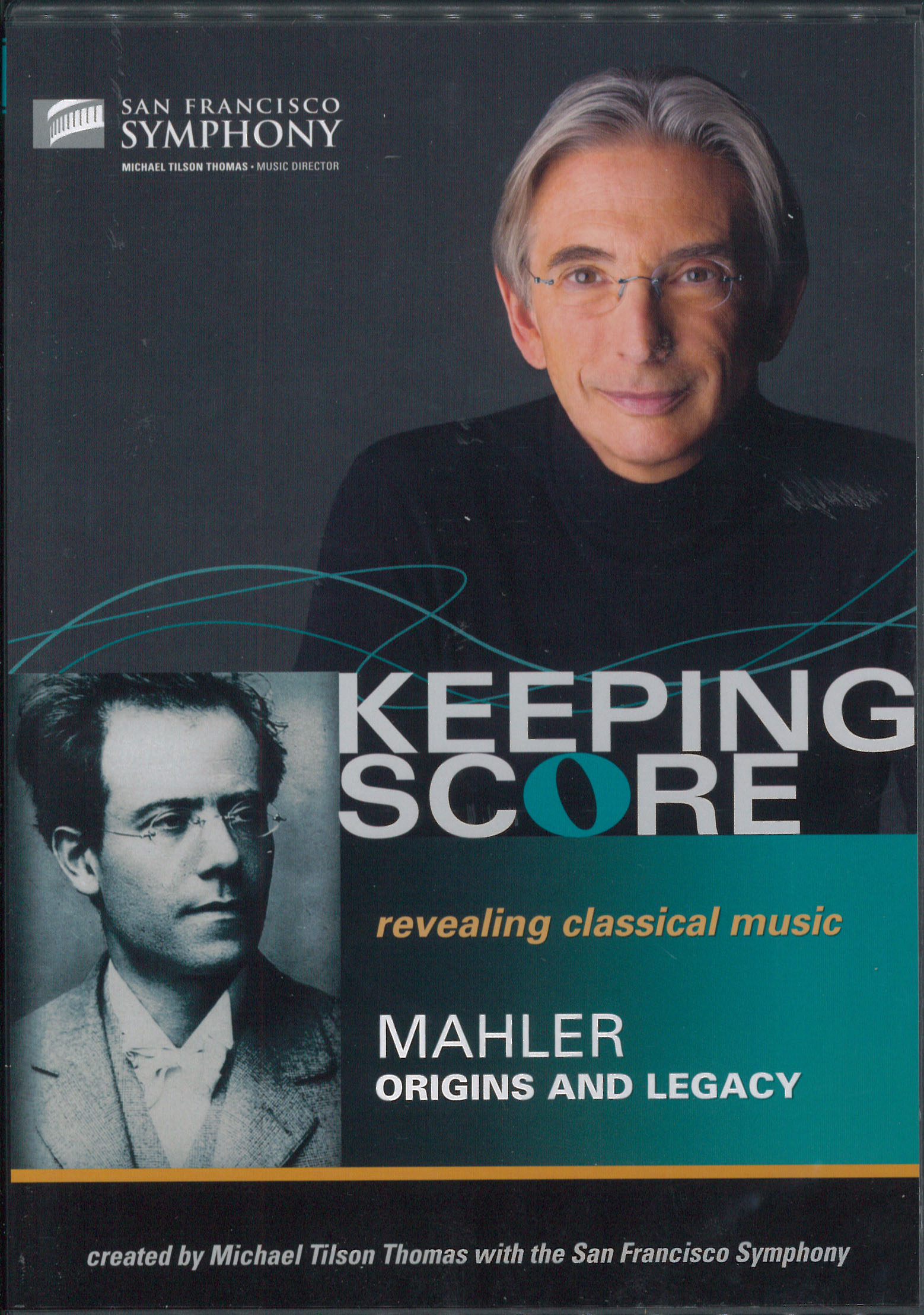
04_mahler_dvdMahler: Symphony No. 9
Lucerne Festival Orchestra; Claudio Abbado
Accentus Music; Arte DVD ACC20214

This is the second DVD of Abbado conducting this work at the Lucerne Festival; a previous 2005 EuroArts release had featured a marvellous rendition by the Gustav Mahler Youth Orchestra. As fine as that performance was, I find myself utterly astonished by the excellence of this latest incarnation from August of 2010 with the incomparable Lucerne Festival Orchestra. From start to finish conductor and orchestra are of one mind, setting a new standard of excellence in revealing this purportedly death-obsessed work as a fiery affirmation of life. The very soul of Mahler is stripped bare, tender and defiant, sarcastic and caring, brave and pensive, in a truly revelatory performance of astounding sensitivity and beauty of tone. As the house lights dim theatrically during the final pages of the symphony we are transported into an atmosphere of sublime transcendence: now barely audible, the music is drawn out to infinity and evaporates into two and a half minutes of stunned silence from an audience which clearly has witnessed a truly historic event. The DVD (also available in the Blu-Ray format) is skilfully filmed with vastly improved sound from previous releases and includes the option of a “conductor camera” view focused on Abbado alone.

01_Adams_PortraitBy his own admission American composer John Adams, star of the recent TSO New Creations Festival, is hard to classify. Given his large output, the three works on John Adams - Portrait, the latest CD from Angèle Dubeau and La Pietà (Analekta AN 2 8732), won’t really help you in that regard, despite the CD’s title. This is the group’s third ‘portrait’ CD, following discs dedicated to Philip Glass and Arvo Pärt, but there is little of Adams’ range on display here. Shaker Loops, for string septet, is an early work from 1978 with echoes of Steve Reich, but with more going on and some interesting textures. The other works are only a year apart, and over 15 years old. Road Moves for violin and piano (with Louise Bessette) is from 1995, and closer to the Adams of the Short Ride in a Fast Machine style. John’s Book of Alleged Dances for string quartet, from 1994, is a set of dances that can be played in whole or in part, and in any order. Six of the ten dances – the ones selected for this CD - are accompanied by a recorded track of percussion noises produced on a prepared piano. The booklet notes inform us that “except for a few excerpts, the dances are played here with a double quartet, adding considerably to the challenge of performing the work.” Nobody says why. Recorded at McGill’s Schulich School of Music, the performance and sound quality are top notch.

The Deutsche Grammophon debut CD by the Georgian violinist Lisa Batiashvili, Echoes of Time (DGG 477 9299) is her selection of works by composers whose artistic lives were impacted by the Soviet regime, and it’s a real winner. At its core is the Shostakovich Violin Concerto No.1, and it’s worth the price of the CD on its own. Whatever the truth of the composer’s apparent compliance with the regime, there is no music from the 20th century that is more painfully personal than that of Shostakovich: listening to this deeply moving performance made me feel almost uncomfortable, as if intruding on someone’s most intimate thoughts. The contribution of the Symphonieorchester des Bayerischen Rundfunks under Esa-Pekka Salonen is outstanding. Nothing else on the disc really measures up after that, but it’s still terrific playing. Giya Kancheli’s V&V, for violin and taped voice with string orchestra, and Shostakovich’s Lyrical Waltz (orchestrated by Batiashvili’s father) are paired with Arvo Pärt’s Spiegel im Spiegel and Rachmaninov’s Vocalise, Batiashvili being joined by the excellent Hélène Grimaud on piano.

03_SchulhoffChances are you may know the name of Erwin Schulhoff but not his music; I was unaware of his violin works before hearing the excellent CD of his Violin Sonatas by Tanja Becker-Bender and Markus Bender (Hyperion CDA67833). Schulhoff, who was in his late 40s when he died of tuberculosis in a Nazi concentration camp in 1942, was a student of Reger and of Brahms’ close friend Fritz Steinbach, and the influence shows in his early Suite Op.1, a finely crafted and strongly tonal work from 1911. Within two years, however, Schulhoff had discovered the music of Debussy, and the harmonic language in his Sonata No.1, Op.7 is far more sophisticated. The other two works on the CD are from 1927. The Sonata for Solo Violin is a stunning work with a dazzling first movement, a lyrical but highly chromatic slow movement, and third and fourth movements strongly reminiscent of Bartok, whose influence is also heard in the Sonata No.2 for violin and piano. The playing and sound quality throughout are of the highest order. A terrific disc.

04_Bach_RegerI’ve never quite understood the lack of interest in the music of Max Reger. Outside his native Germany he is still misunderstood and rarely heard, usually being regarded as some turgid, chromatic hybrid of Brahms and Mahler. A brilliant organist, Reger revered Bach, taking him as a model, and his life-long obsession with the fugue is reflected in the huge amount of music he wrote for organ and for solo violin. The Japanese violinist Sayaka Shoji has produced a fascinating 2-CD set (Mirare MIR 128) which pairs three of Reger’s Preludes & Fugues from his Op.117, written between 1909 and 1912, with three of the Bach Sonatas & Partitas: the Sonata No.1 in G minor; the Partita No.1 in B minor; and the Partita No.2 in D minor. Shoji has a full, warm sound, and is recorded with a good deal of resonance but great clarity. Her technique is superb, and her interpretation quite captivating: with its understated dynamics, the great D minor Chaconne makes an almost introspective ending to a fascinating look at how musical influences can reach across the centuries. In fact, hearing these works side by side makes you realize just how chromatic and stunningly ‘modern’ Bach’s harmonic structures really were.

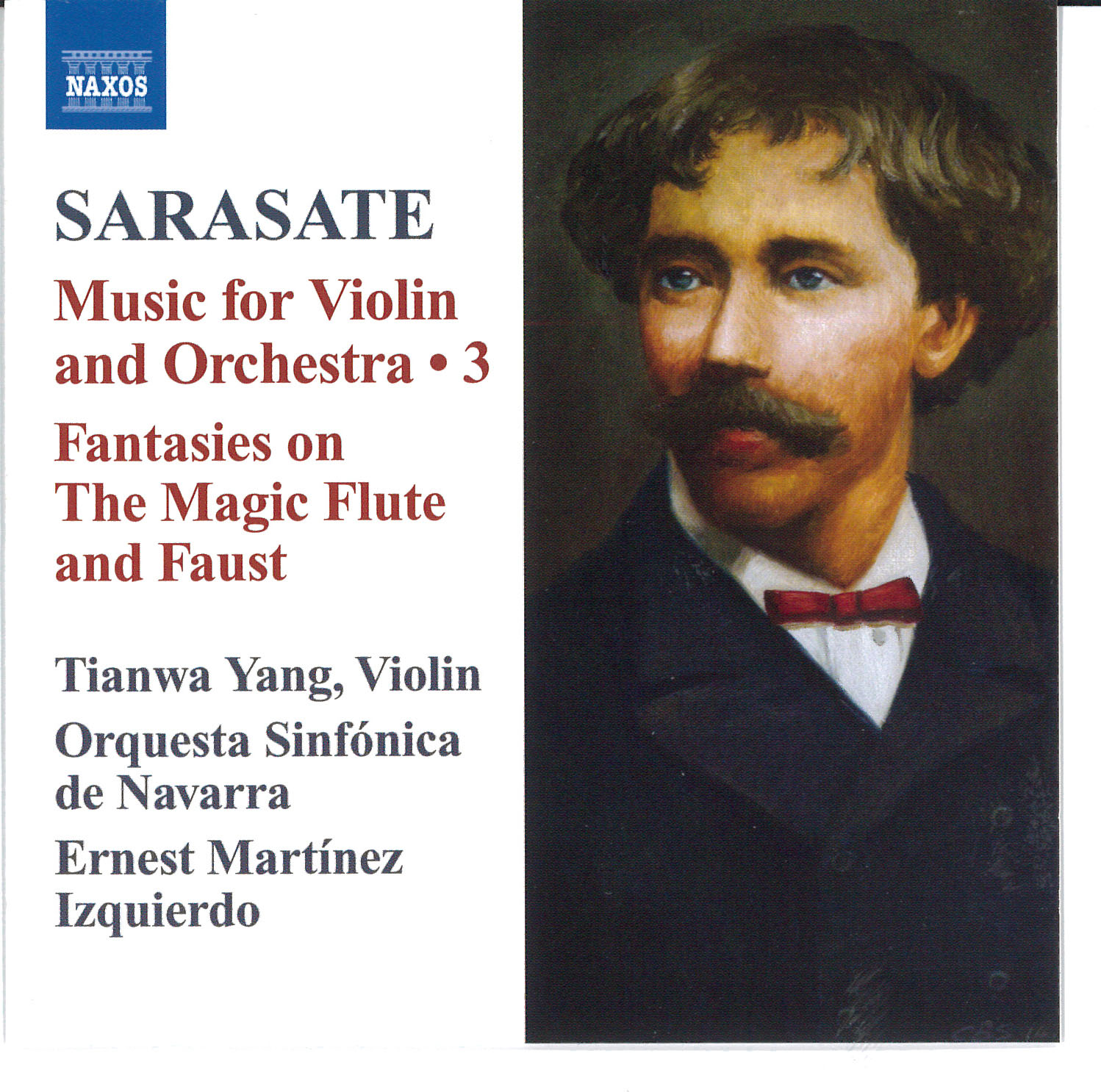
05_dErlangerHyperion’s latest addition to their series The Romantic Violin Concerto – Volume 10 (Hyperion CDA67838) – features works by two composers who are completely new to me, and three works that will be new to almost everyone. Frederic d’Erlanger (1868-1943) was born in France to a German father and American mother, and moved to London in his teens, eventually becoming a naturalized British citizen and a prominent figure in the London musical scene. He composed regularly, though not profusely, throughout his life, and his compositions were performed by the leading artists of the day. His Violin Concerto in D minor, Op.17, dates from 1902, and over the next 20 years was played by Kreisler and by the great English violinist Albert Sammons. It is very much in the Brahms/Bruch mould, beautifully scored, and with a very lovely slow movement. His Poème started life in 1918 as a work for violin and piano, and was orchestrated by d’Erlanger in 1926. The soloist for the premiere of the orchestral version in 1928 was the famous viola player William Primrose. Again, it’s lovely stuff: fresh, warm, melodic, and beautifully orchestrated. The Yorkshire-born Frederic Cliffe (1857-1931) is a classic example of the late Victorian minor English composers who were swept away and rendered irrelevant by the 20th century. He burst on to the scene at the age of 31 – apparently with no previous compositional accomplishments to his name - with a highly successful symphony, produced a handful of major works, and disappeared again within 20 years. His Violin Concerto was written in 1896 for the Norwich Festival, but after only a handful of performances it remained un-played for 90 years. It’s an attractive and competent work, but nowhere near as convincing as the d’Erlanger, feeling more episodic and somewhat disjointed, especially in the slow movement. The violinist who revived it, Philippe Graffin, is the soloist on this excellent CD, and it’s difficult to imagine a more appropriate and sympathetic interpreter. His playing is effortlessly beautiful, and stylistically perfect. The BBC National Orchestra of Wales under David Lloyd-Jones is his equal in all respects. It’s easy to see why this music disappeared – after all, it’s only a dozen years or so before Schoenberg’s atonality and Stravinsky’s Rite of Spring changed the playing field for ever – but it’s also easy to appreciate its appeal. It’s an absolutely fascinating sample of English music in the late Victorian and Edwardian eras.

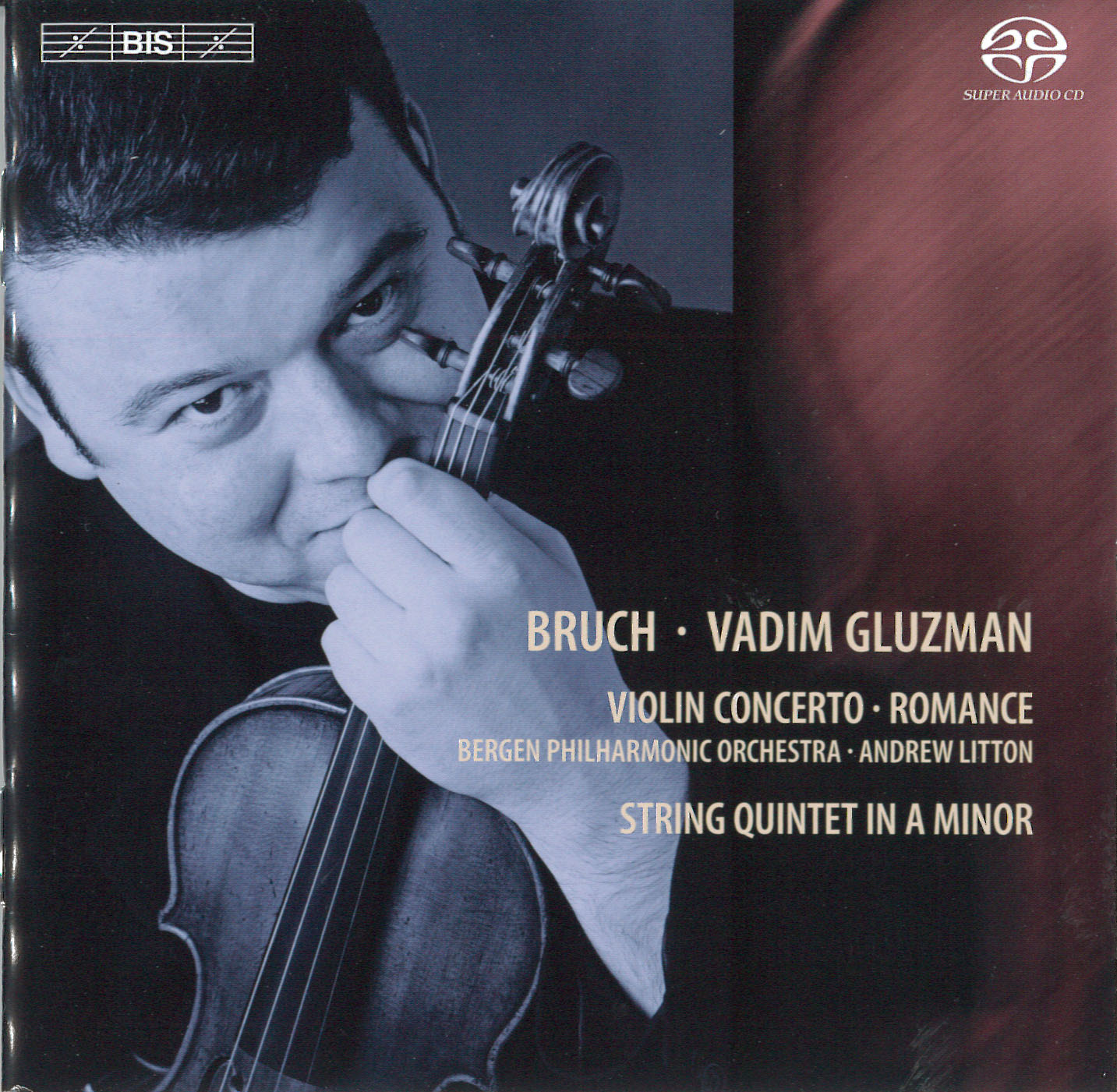
06_Romantic_violinistOn The Romantic Violinist – A Celebration of Joseph Joachim (DGG 477 9301), Daniel Hope presents a programme of works created for and by the man whose influence dominated the violin world in the second half of the 19th century. The major work is a beautifully considered, warm and intelligent reading of the Bruch G minor concerto, with the Royal Stockholm Philharmonic Orchestra under Sakari Oramo. The nine shorter pieces have varied accompaniment: Dvorak’s Serenade and Joachim’s own Notturno are with orchestra; Brahms’ Hungarian Dances Nos.1 and 5 are for violin and strings; Clara Schumann’s Romanze, Joachim’s piece with the same title, Brahms’ Scherzo from the F-A-E Sonata and Schubert’s Auf dem Wasser zu singen feature piano accompaniment by Sebastian Knauer. Hope switches to viola for the Brahms Geistliches Wiegenlied, where he is joined by mezzo-soprano Anne-Sofie von Otter and pianist Bengt Forsberg. For this CD, he tells us in the booklet notes, “I borrowed a viola and taught myself to play it.” Must be nice!

07_romantic_violinGENUIN has released a CD of Romantic Works for Violin (GEN 10535) featuring the German violinist Christine Raphael, who died 3 years ago in her mid-60s. The Dvorak concerto and two pieces for violin and string orchestra by Ysaÿe are coupled with two selections with piano accompaniment: Suk’s Four Pieces Op.17 and Schumann’s Three Romances Op.94. Recorded between 1977 and 1985, apparently for German radio broadcasts, this is a good testament to a solid, if unspectacular, player.


01_Proulx_SirocoSirocco - A Warm Breeze from Newfoundland
Sylvie Proulx
Centaur Records CRC 3053 (www.centaurrecords.com)

Here is a delightful solo recording by Canadian guitarist Sylvie Proulx featuring accessible yet virtuosic contemporary music for everyone, even those one or two of you who don’t like new music.

Proulx is a technical and stylistic wizard on the guitar. She tackles the non-stop perpetual rapid momentum of the fourth movement Presto in Carlo Domeniconi’s Koyunbaba with breathless ease. Her take on the Spanish musical influences of Andrew York's Sirocco are personal yet bang-on accurate. The more Baroque-like qualities of Leo Brouwer’s An Idea showcase her solid foundation in a more classical rooted work, and her ability to conjure a more subtle and soothing atmosphere from her instrument. Soothing elements resurface in the first movement of Roland Dyens’ Triaela while she gets to interpret more jazz and groove based lines in its other two movements.

The Theme and 10 Variations of Clark Ross’ Variations on McGillicuddy’s Rant are as wide ranging in style as Proulx’s talent. From folk dance to jig to chorale to bluegrass, it was written over a 20 year period yet is so cohesive in spirit and ideas that it sounds like it was composed after an afternoon at the pub.

It is really, really difficult to maintain a listener’s interest in a solo recording (or recital for that matter). Proulx’s guitar finesse with her excellent choice of repertoire makes “Sirocco” a recording that will keep one’s interest for a long time to come.


01_lovanoBird Songs
Joe Lovano; Us Five
Blue Note 509999 058610205

Joe Lovano is a colossally creative jazz performer on a par with vintage Sonny Rollins but on his 22nd album for Blue Note he’s outdone himself – with barely an original composition to be heard. It’s a tough challenge reinventing the classic material of 20th century jazz master Charlie Parker, but Lovano with his band Us Five (voted jazz group of the year in Downbeat’s 2010 poll) has achieved in spades what hordes of jazzers have essayed with this rich repertoire - he’s made it sound new. Playing four woodwinds, mostly signature tenor sax, he exhibits his insightful knowledge, terrific technique, thorough comprehension of melodic and harmonic language and questing curiosity. He’s backed on the 11 tunes by pianist James Weidman, Grammy-winning bassist Esperanza Spalding and two lively drummers, Otis Brown 111 and Francisco Mela. Among many treasures you hear an elegant slow Donna Lee usually done at reckless speed, a funky Moose the Mooche, a Lover Man on G mezzo soprano sax, Ko Ko played in trio format with furious drum polyrhythms, a mix of three of Bird’s blues (Blues Collage) featuring alto sax, piano and bass, the extraordinary Birdyard with the leader on aulochrome, a new instrument combing two soprano saxes and a mighty closing Yardbird Suite. This disc’s a keeper.

01_elmes_redshiftIt’s been years since sophisticated drummer Barry Elmes’ quintet entered the lists, but the wait’s worth it for Barry Elmes Quintet - Redshift (Cornerstone CRST 127 www.cornerstonerecordsinc.com), a nine-tune session showcasing leading jazzmen at the top of their game. The beat’s in a constant state of buoyant flux as tenorman Mike Murley, trumpeter Kevin Turcotte, guitarist Reg Schwager and propulsive bass Steve Wallace romp through seven artfully-arranged Elmes originals, joined on some tracks by hornman Kelly Jefferson and Montreal-based organist Vanessa Rodrigues. The opening Reading Week is an appealing blues in ever-changing meters and Stumpy updates “Pink Panther” themes with rugged tenor and glistening guitar that counterpoints jagged passages elsewhere. All the Elmes rhythmically-charged tunes suggest a long shelf life with their imaginative structures and unspooling lines that create their own elegant moments – and they get sterling, probing and vigorous execution here. Thus one can accept the leader’s indulgent inclusion of the hymn Abide With Me.

A new album by Russ Little showing off his vast trombone wares is always welcome, guaranteed to be both different from past entries (like the outstanding “Footwork” and “On The Shoulders of Giants”) and entertaining. Here Russ Little - Slow Burn (Rhythm Tracks RTCD0014 www.russlittle.com) roams 20th century music covering the musical waterfront from Jimmy van Heusen and Irving Berlin to Stevie Wonder and Marcus Miller. Plenty of guests enhance his basic quintet, with only drummer-arranger Brian Barlow ever-present on seven long tracks that demonstrate Little’s ease whatever the genre. The funky My Momma Told Me So has two tenors and regular pianist Tom Szczesniak on electric bass, the versatile leader offers soothing Glenn Millerisms on Body and Soul before jumping into lilting improve, while Jive Samba features slick playing by trumpeter Steve McDade before Little delicately growls on his Latin journey. Overall, the pace is too leisurely and Little could have challenged himself more, but each chart gets a colourful, subtle workout with strong contributions from skilful sidemen.

03_nordic_spiralsCanadian stars Ingrid and Christine Jensen help serve up a sonic treat on Nordic Connect - Spirals (ArtistShare AS0097 www.ingridjensen.com). Together with Sweden’s Maggi Olin (piano) and Mattias Welin (bass) plus Alaskan drummer Jon Wikan, the sisters underscore the notion that jazz is art with a program of lush and atmospheric, essentially cerebral music of superior quality. Ingrid on trumpet and flugelhorn is in splendid form, playing with fluent flair, a model of clarity tempered with a biting attack, Christine on alto and terrific soprano sax forcefully eloquent yet always tasteful. With the innovative Olin, composer of five of the nine cuts and also a dab hand on Fender Rhodes, they comprise a Pandora’s box of fresh, clever ideas, narratives big on melody sculpted within ethereal surroundings, precise but never predictable. This is significant jazz.

04_tara_davidsonHer continued rise to the top is exemplified by alto and soprano saxophonist Tara Davidson in her new release View (TD-11 www.taradavidson.ca). This seven tune set of originals, her third as leader, embellishes her talent as a composer as well as a horn player who first emerged hereabouts as a Mike Murley protégé who comprehends the importance of balance and contrast. Her colleagues – pianist James Reynolds, bass Jon Maharaj and drummer Fabio Ragnelli - are fully in sync with her expansive ideas. The opening Bunny, Bubs and Bodie has effective alto long-line improv with supple phrasing, while Reynolds eases June into a reflective mode that’s sweet but not sentimental before tempo is doubled for an undulating scamper that suits the bustle and ebb of the boss’ notions. Elsewhere she displays a sprightly soprano that particularly flourishes with Reynolds switching to electric piano. Tempos hew to the serene, which makes the bruising elements of South Western View a welcome, grittier proposition, but this album is a classy contender for your wallet.

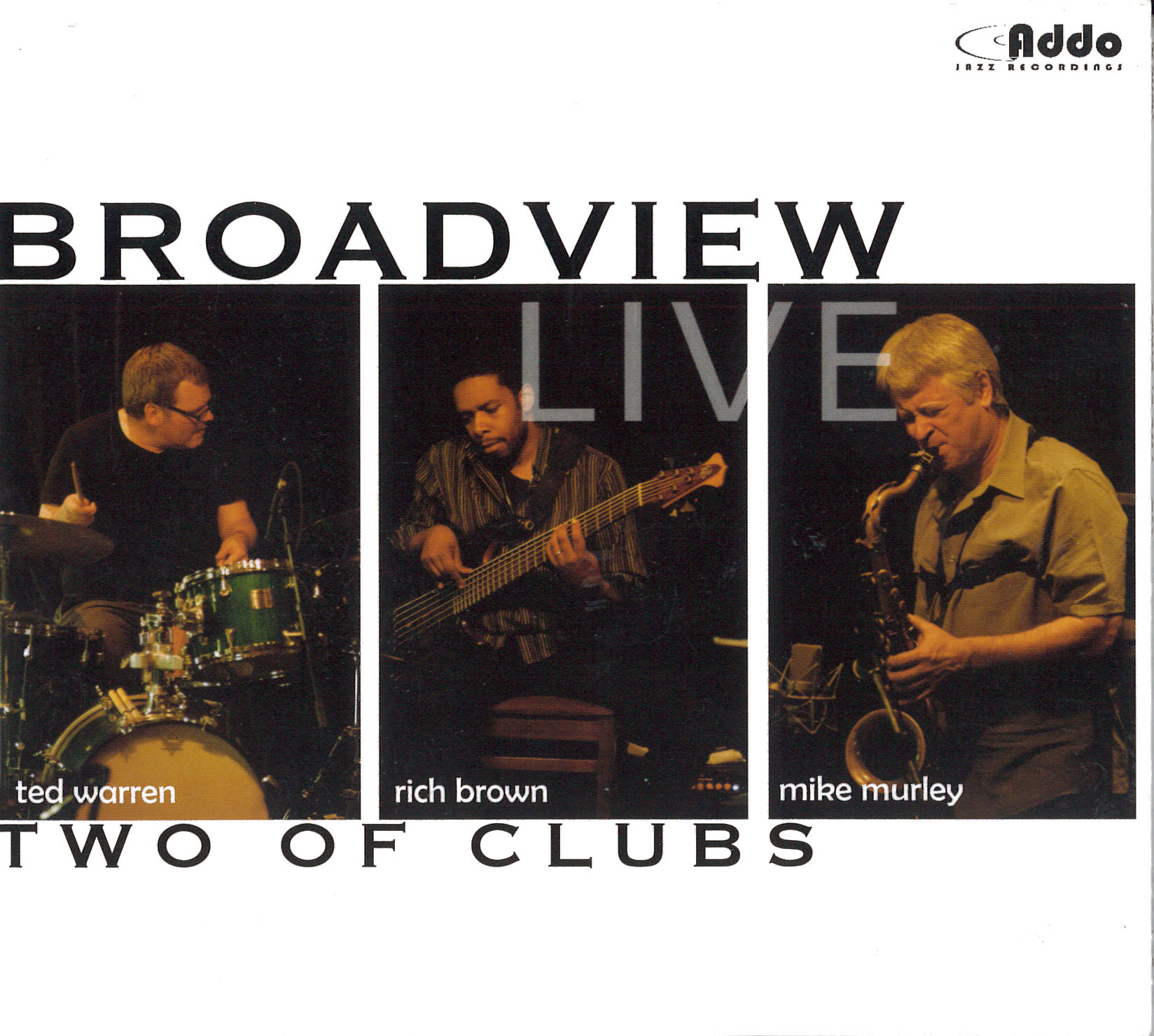
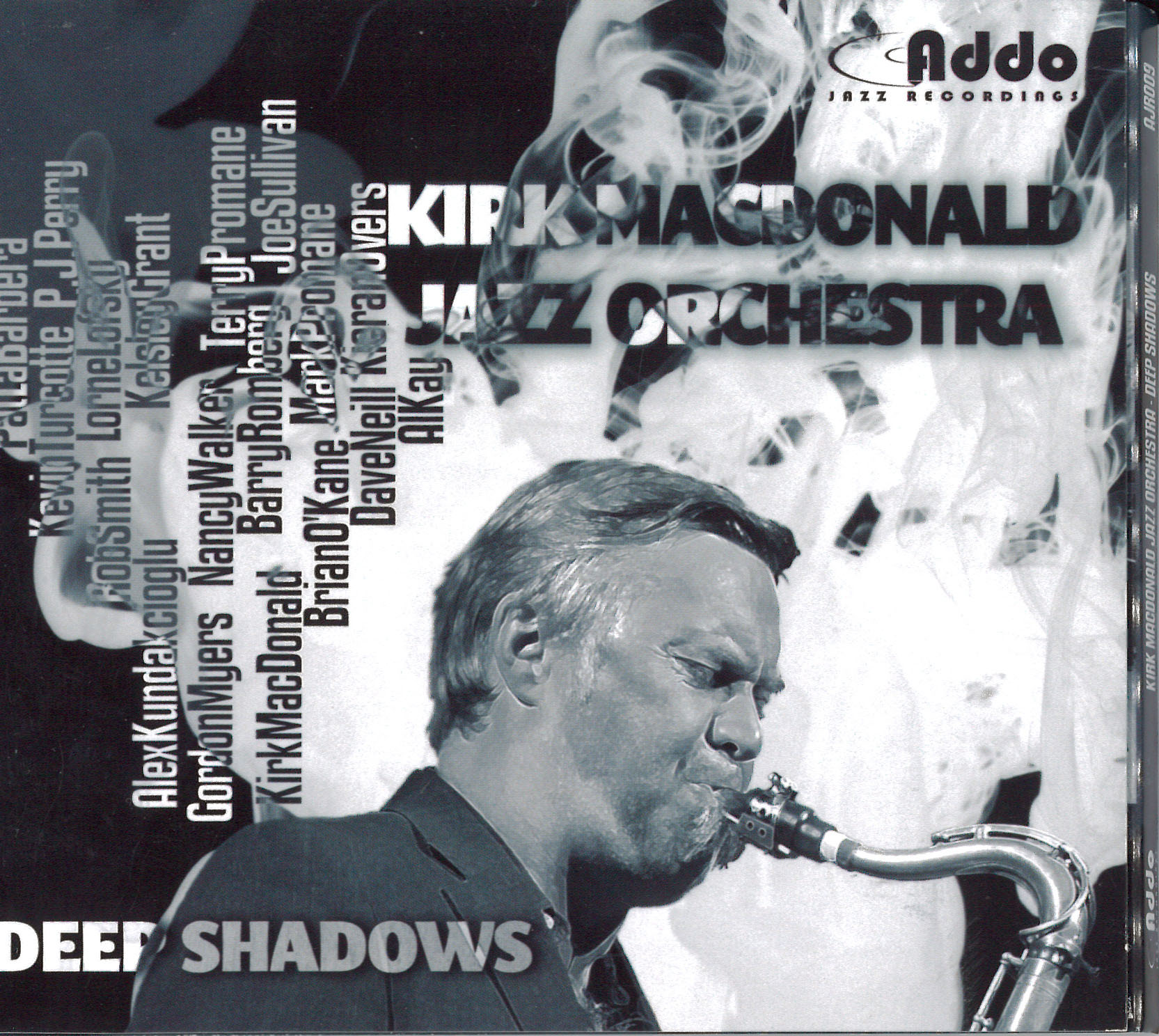
05_michelle_gregoireEnterprising Winnipeg pianist Michelle Gregoire is an intense and engaging performer, as you’ll hear on Diversity, her second CD as leader (MG3332 www.michellegregoire.com), a quintet outing with seasoned companions in tenor Kirk MacDonald, trumpeter Kevin Turcotte, bass Jim Vivian and drummer Ted Warren. Of the nine pieces three comprise the Gratitude Suite with Vivian offering a fourth, the solo Gratitude Interlude. The opening title track is typically intricate with a surging pulse, and others flow with appealing concepts at their core. The minor key Dichotomy rumbles in hard bop idioms illuminating MacDonald’s fluency and Streak has Gregoire in fine fettle, continually prodding bandsmen to greater vigour. Throughout the session she demonstrates an acute sense of mood that’s perhaps most dramatic in the vaulting cadences of Three or Four in the Morning. More please.

06_amanda_tosoffPianist Amanda Tosoff is justifiably carving a solid niche in Toronto since emigrating from Vancouver, exemplified on Looking North (Oceans Beyond Records OBR0008 www.amandatosoff.com). With Evan Arntzen (saxes), Sean Cronin (bass) and Morgan Childs (drums) plus guests she highlights a talent for catchy composition and an impressive command of the keyboard and the inevitable Rhodes at all tempos. Among a batch of intriguing tunes M.I.A. struts delightfully and Concept 2010 is most certainly compelling contemporary piano, direct and thrusting. Tosoff conveys a sense of resilient optimism in her creations, fiercely inventive when it matters.

01_FMP_CoverThroughout jazz history, independent labels have typified sounds of the time. In the Swing era it was Commodore; Modern jazz was prominent on Blue Note and Prestige; and with Improvised Music, FMP is one of the longest lasting imprints. Celebrating its 40th anniversary, the Berlin-based label has given listeners a spectacular birthday present with FMP In Rückblick – In Retrospect 1969-2010 (www.fmp-publishing.de): 12 [!] CDs representing FMP’s past and future – the oldest from 1975, the newest, by American cellist Tristan Honsinger and German guitarist Olaf Rupp from 2010, half previously unissued – plus an LP-sized, 218-page book, lavishly illustrated with contemporary photographs, posters, album covers and a discography.

FMP’s musical scope was overwhelming. In this box, for instance, are discs by an early Pan-European ensemble, the Globe Unity Orchestra (GUO); solo sessions by Belgian pianist Fred Van Hove, German bassist Peter Kowald and others; outstanding combo dates including British saxophonist Evan Parker and Swiss pianist Irène Schweizer; and instances of minimalism from German string-player Hans Reichel and Austrian trombonist Radu Malfatti. Ferocious German saxophonist Peter Brötzmann, who almost single-handedly formulated Free Music in Germany and helped create FMP, is represented on three CDs. No exercise in nostalgia, the book outlines in unsentimental details how the revolutionary climate of the late 1960s sustained the growth of tough, experimental, music modeled on American-influenced Free Jazz. FMP’s value was that by 1971 it was recording distinctively European Free Music, blending layers of contemporary notated and electro-acoustic music, Fluxus art ideas plus folk-based material onto the American base. Triumphs such as FMP’s documentation of American pianist Cecil Taylor and its wide dissemination of essential American, European and created-in-East-Germany discs are also noted.

02_Steve_LacyBroadminded, FMP never asserted European musical superiority however. For example, Steve Lacy Solo 1975 & Quintett 1977 In Berlin CD 02 (FMP CD 138), is a reissue by Americans Lacy on soprano saxophone; alto saxophonist Steve Potts; bassist Kent Carter and drummer Oliver Johnson plus Swiss cellist Irène Aebi. The band’s super-fast harmonies plus the contrast between Potts staccato and linear style and Lacy’s bugle-like moderato blowing atop Carter and Johnson’s Freebop backbeat, demonstrate why the quintet was admired. Most of the CD consists of some of Lacy’s earliest solos, including The Duck. Characteristically that thrilling improvisation is built from a collection of kazoo-like reed bites, split-tone yelps, hissing and rasping growls and muffled mid-range retorts. Lacy defines free music.

03_ManuelaAnother way to mark the evolution of FMP and European Free Music is by following the thread from Schweizer/Carl/Moholo 1975/77 Messer und… CD 03 (FMP CD 139) to MANUELA+ Live In Berlin 1999 CD 10 (FMP CD 146). Almost 25 years later Rüdiger Carl’s mercurial and atonal saxophone squeals sprayed out in never-ending blasts alongside Louis Moholo’s paced drumming and Schweizer’s percussive pianism with a hint of Stride, has mutated into contradictory but equally aleatoric inventions. Now Carl, in the company of Carlos Zingaro’s spiccato violin buzzes, Jin Hi Kim’s throbbing komungo strings, and Reichel’s thumping daxophone rhythms layer the interlude with distinctive colours from his new instruments of choice – light-toned clarinet and pumping accordion glissandi. Without lessening his commitment to improvised sounds the former leather-lunged saxman, now operates in a more placid area, as his quivering intonation toughens the other strings’ tremolo jetes while the daxophone’s strident whines provide comic relief.

04_UndDemarcation of a unique style – which suggested a different path than all-out Free Jazz characterized by discs such as Baden-Baden ’75 CD 01 (FMP CD 137), with five previously unissued performances by the 16-piece GUO providing plenty of space for genre-defining reed-splintering solos from Parker and Brötzmann; the soaring triplets of trumpeter Manfred Schoof; plus high-energy piano dynamics from GUO leader Alexander von Schlippenbach – was germinated by another of this collection’s reissued CDs. In 1977, trombonist Malfatti’s and guitarist Stephan Wittwer’s UND? ... plus CD 06 (FMP CD 142) conclusively proved that interactive pointillism and polyphony as reductionist chamber improv was another option. Sometimes this strategy involves Wittwer’s kinetic rasgueado seemingly filling all the sonic space, before Malfatti’s puffs, mouthpiece osculation or leaking discordant tones move to the forefront. Despite this, connections are always linear with tracks like Cotpotok (still valid) exhibiting a broken octave coda of koto-like picks from the guitarist plus lower-case slurs and growls from the brass man.

05_Die_Like_DogUnderlining the sparks he still generates and his importance to FMP, as player, designer and talent scout – the book’s first and final images are of Brötzmann in quartet formation and in frantic performance with Taylor. Similarly besides his GUO affiliation, two other CDs demonstrate the saxophonist’s prowess. Close Up/Die Like A Dog 1994 CD 08 (FMP CD 144), is a hitherto unreleased concert date with one of his most powerful formations: Japanese trumpeter and electronics manipulator Toshinori Kondo, Americans William Parker on bass and Hamid Drake on drums and tablas, plus Brötzmann playing saxophones, tarogato and clarinets; and Wolke in Hosen/Brötzmann Solo 1976 CD 05 (FMP CD 141), the reedist’s first solo disc. On it he shows the breadth of his skills, from surprisingly mellow, yet atonally-tinged alto saxophone vibrations on Two Birds is a Feather to the elongated and contrasting contralto and altissimo obbligatos on Piece for Two Clarinets; to how he uses tuba-like blasts and slurs plus heavy flutter tonguing to turn Humpty Dumpty, a showcase for his bass sax, into a jaunty march. Characteristically Close Up demonstrates not only high-quality Free Music, but also other musical currents welcomed by FMP. On the 46-minute Close Up/Man, Kondo’s flutter tongued runs and plunger tones are further fragmented by electronic wave forms, while Drake’s rhythmic tabla pulses suggest World Music. Meantime Brötzmann progressively masticates and splinters dissident ostinatos from tenor saxophone or bass clarinet, using the nephritic friction for call-and-response with the trumpeter’s rubato strategies, and sometimes stopping for speedy spiccato friction from Parker, all backed by the percussionist’s ruffs and pops.

Brötzmann is still going strong 16 years later, as are many improvisers recorded by FMP from its beginning. Nonetheless, as Stretto CD 12 (FMP CD 148) demonstrates, new music still comes from the label. Spiced with aviary field recordings, the eight tracks blend the timbres from cellist Honsinger’s sardonic verbal humour, col legno smacks or enhanced legato quivers with Rupp’s chromatic frails plus spidery finger picking. With new generations to record, perhaps FMP can last for another 40 years.


Back to top