06 polky ils66Songs from Home
Polky
Independent n/a (polkyband.com)

Polky – “Polish women” in English – is a Canadian folk band started by three Polish-Canadian musicians, singer Ewelina Ferenc, dancer/singer Alicja Stasiuk and multi-instrumentalist Marta Solek. This is their first full-length recording and the six-piece band, with four special guests, energetically perform uniquely passionate music drawing on their Polish musical roots, various Eastern/Central European musics and that of the multicultural Canadian setting they call home for their musical influences.

Featured are nine Polky arranged/composed traditional Polish compositions. Opening track Hej z pola z pola is an eloquent introduction with Ferenc’s written chantlike vocals above guest Wojciech Lubertowicz’s haunting duduk drone. Then an upbeat fast polka change of pace in an arrangement of traditional Polish Oj Musialas. Vocal solo, choral full answer, energetic vocal squeals, full bass and drum cymbal rings add to its fun feel. Slow instrumental start, full vocals and sudden shift to fast polka in Jewish Polka, with Georgia Hathaway’s violin and Tangi Ropars’ accordion adding to the joyful sound. Rain, one of two original tunes, is composed by Solek. String plucks, repeated wind notes, bass groove and vocals build to final quiet instrumental rain drops. Bassist Peter Klaassen drives and holds the band together in the closing more traditional upbeat polka rendition of Wishing Kasia with his strong groove supporting group vocals and alternating instrumental solos to the closing loud accent.

Polky musically incorporates the love of all their homes’ traditional music into their own luminous original sound. Canadian Folk Music Awards 2022 nominations in three categories!

07 gordie mckeeman dwja3Folk for Little Folk Volume 1
Gordie Crazylegs MacKeeman
Independent n/a (gordiemackeeman.com/site/albums)

Uplifting joyous energetic musical surprises abound as superstar East Coast fiddler/singer/dancer/composer Gordie “Crazylegs” MacKeeman directs his musical energies to kids and their families in 17 songs. MacKeeman is a father and, when not performing, has worked for ten years as a daycare teacher seeing, as he writes in the liner notes, “a lack of variety in children’s music.” I too spent years teaching daycare music and agree, kids enjoy musical variety. I love what MacKeeman has accomplished here, as he sings and fiddles in many styles like folk, bluegrass and country. He is joined by numerous musicians, including two Gordie McKeeman and His Rhythm Boys bandmates, Peter Cann (guitar) and Tom Webb (banjo/pedal steel).

 All Around the Kitchen has upbeat traditional East Coast old-time MacKeeman fiddling, and hilarious cock-a-doodle-doo female vocals. More traditional fiddling with high-pitch fiddle sections in Listen to the Mockingbird. Fiddle and guitar solos between MacKeeman’s robust singing in his really fast rendition of Hokey Pokey encourages boisterous listener participation. Classic singalong rendition of Log Driver’s Waltz sets the mood for “chair dancing.” A cappella vocals and sounds of trickling/splashing water create a hilarious change of pace in Dancing in the Bathtub. MacKeeman’s composition Boogie Woogie Baby uses the title words as lyrics, making it easy for kids of all ages to sing and dance to its walking groove feel. His relaxing waltz Dreamland closes with tinkly piano.

MacKeeman’s children’s release is perfect! More please!

Since at least after World War Two, the skill of Japanese players of every type of music has been unquestioned, and it’s the same for jazz and improvised music. However since non-notated music’s bias has been North American and European-centred, except for the few who moved to the US, numerous Japanese innovators are unknown outside the islands. But these discs provide an overview of important players’ sounds and the evolution of the form.

01 itaru oj4kjAlthough arriving from a dissimilar tradition, free-form experiments were common in 1960s Japan with several avant-garde ensembles throughout the country. One player who tried for more international renown was trumpeter Itaru Oki (1941-2020). He relocated to France in 1974 and was soon playing with locals. Occasionally he returned to gig in Japan, and Live at Jazz Spot Combo 1975 (NoBusiness NBCD 143 nobusinessrecords.com) reproduces one of those visits. Playing with drummer Hozumi Tanaka who was part of his Japanese trio, bassist Keiki Midorikawa and, crucially, alto saxophonist/flutist Yoshiaki Fujikawa, Oki’s quartet roams through five themes and improvisations. The trumpeter’s truculent flutters set the pace with speedy arabesques in counterpoint to slithery flute flutters. While keeping the exposition horizontal, the trumpeter prolongs intensity with triplets and half-valve effects. Backed by sul tasto bass string rubs and percussion slaps, Fujikawa is even more assertive beginning with Combo Session 2, where initial saxophone concordance with trumpet puffs soon dissolves into strangled reed cries and irregular vibrations. Dragging an emotional response from Oki, both horns are soon exfoliating the narrative, seconded by cymbal shivers. But the four stay rooted enough in jazz to recap the head after cycling through theme variations. These opposing strategies are refined throughout the rest of this live set. But no matter how often the saxophonist expresses extended techniques such as doits and spetrofluctuation, linear expression prevents aural discomfort. In fact, the concluding Combo Session 5 could be termed a free jazz ballad. While Oki’s tonal delineation includes higher pitches and more note expansion than a standard exposition, at points he appears to be channelling You Don’t Know What Love Is. That is, until Midorikawa’s power pumps, Tanaka’s clapping ruffs and the saxophonist’s stentorian whistles and snarls turn brass output to plunger emphasis leading to a stimulating rhythmic interlude. With trumpet flutters descending and reed trills ascending a unison climax is reached.

02 lovely ab4d9Flash forward 15 years and more instances of first generation Japanese free music are on Live at Jazz Inn Lovely 1990 (NoBusiness NBCD 135 nobusinessrecords.com). In one way it was a reunion between two pioneering improvisers, guitarist Masayuki Jojo Takayanagi (1932-1991), who began mixing noise emphasis and free improvisation in the mid-1960s with in-your-face groups featuring the likes of saxophonist Kaoru Abe and pianist Masabumi Puu Kikuchi (1939-2015). Kikuchi evolved a quieter style after moving to the US in the late 1980s and this was the first time the guitarist and pianist played together since 1972. Problem was that this was a Takayanagi duo gig with longtime bassist Nobuyoshi Ino until Kikuchi decided to sit in, creating some understandable friction. Agitation simmers beneath the surface adding increased tautness to the already astringent sounds. This is especially obvious on the trio selections when the guitarist’s metallic single lines become even chillier and rawer. Initially more reserved, Kikuchi’s playing soon accelerates to percussive comping, then key clangs and clips, especially on the concluding Trio II. For his part, Ino serves as a bemused second to these sound duelists, joining an authoritative walking bass line and subtly advancing swing to that final selection. On the duo tracks, he and the guitarist display extrasensory connectivity. He preserves chromatic motion with buzzing stops or the occasional cello-register arco sweep. Meanwhile with a minimum of notes, Takayanagi expresses singular broken chord motion or with slurred fingers interjects brief quotes from forgotten pop tunes. On Duo II as well, Ino’s string rubs move the theme in one direction while Takayanagi challenges it with a counterclockwise pattern. Still, fascination rests in the piano-guitar challenges with Kikuchi’s keyboard motion arpeggio-rich or sometime almost funky, while Takayanagi’s converse strategies take in fluid twangs, cadenced strumming and angled flanges. 

03 littlejohn jo4o1Abandoning chordal instruments and concentrating on horn textures, Live at Little John, Yokohama 1999 (NoBusiness NBCD 144 nobusinessrecords.com) provides an alternative variant of Nipponese free music. Backed only by the resourceful drumming of Shota Koyama, a trio of wind players creates almost limitless tonal variants singly, in tandem or counterpoint. Best known is tenor saxophonist Mototeru Takagi (1941-2002), who was in Takayangi’s New Direction Unit and in a duo with percussionist Sabu Toyozumi. The others who would later adopt more conventional styles are Susumu Kongo who plays alto saxophone, flute and bass clarinet, and Nao Takeuchi on tenor saxophone, flute and bass clarinet. No compromising of pure improvisation is heard on this CD’s three lengthy selections, although there are times when flute textures drift towards delicacy and away from the ratcheting peeps expelled elsewhere. Whether pitched in the lowing chalumeau register or squeaking clarion split tones, clarinet textures add to the dissonant sound mosaic. This isn’t anarchistic blowing however, since the tracks are paced with brief melodic interludes preventing the program from overheating. The more than 40 minute Yokohama Iseazaki Town gives the quartet its greatest scope, as vibrating split tones pass from one horn to another with percussion crunches keeping the exposition chromatic. Takagi’s hardened flutters and yowling vibrations may make the greatest impression, but Kongo’s alto saxophone bites are emphasized as well. Although space exists for clarion clarinet puffs and transverse flute trilling, it’s the largest horn’s foghorn honks and tongue-slaps that prevent any extraneous prettiness seeping into the duets. Still, with canny use of counterpoint and careful layering of horn tones backed by sprawling drum raps, the feeling of control is always maintained along with the confirmation of how the balancing act between expression and connection is maintained.

04 misak jj0kaTakagi’s former duo partner, percussionist Sabu Toyozumi (b.1943) continues playing free music as he has since the mid-1960s. Recently he’s formed a partnership with American alto saxophonist Rick Countryman, with Misaki Castle Tower (Chap Chap Records CPCD-0190 chapchap-music.com) the most recent session. It’s fitting that one track is entitled Ode to Kaoru Abe since the saxophonist who overdosed at 29 in 1978 is a Charlie Parker-like free jazz avatar in Japan. While the healthy duo’s homage is strictly musical, Countryman’s spiralling tones, modulated squeaks and brittle reed interjections are aptly seconded by Toyozumi’s hard ruffs and cymbal pops. Segues into shaking flattement, renal snarls and multiphonics characterize the saxophonist’s playing on other tracks and the drummer responds with positioned nerve beats, complementary rim shots and restrained press rolls. Hushed tone elaborations, during which Countryman moves pitch upwards with every subsequent breath, distinguish the concluding Myths of Modernization from the preceding tracks. But the saxophonist’s ability to snake between clarion peeps and muddy smears when not eviscerating horn textures, remains. The summation comes on that track, as articulated reed squeezes and stops meet irregular drum bops and ruffs. 

05 taku rxoepAlthough they play the same instrument as Takayanagi, the sounds from Taku Sugimoto (electric guitar) and Takashi Masubuchi (acoustic guitar) on Live at Otooto & Permian (Confront Core Series core 16 confrontrecordings.com/core-series) reflects a new minimalist genre of Japanese improvisation. Called Onkyo, which loosely translates as quiet noise, it’s as introspective as free jazz is brash. Through a sophisticated use of voltage drones, string percussion and harmonic transformation, these two guitarists prevent the five selections recorded at two Tokyo clubs from being bloodless. With the electric guitar projecting a buzzing undercurrent, harsh jabs, bottleneck-like twangs and inverted strums inject rhythmic and harmonic transformation into the tracks even as the narratives unroll horizontally. While the gradual evolution is rigid, there are sequences as on At Permian II, where repetitive undulations from both join singular cells into a distant melody. Plus, by moving patterns between guitarists, the duo ensures that neither droning continuum nor singular string prods predominate, making sound transformation as logical as it is unforced. 

Too often Western listeners think of unconventional Japanese music as foreign, frightening and impenetrable. As these sessions show there’s actually much to explore and appreciate with close listening.

01 juilliard early columbia i4nxbMany years ago, I chatted with members of the Juilliard String Quartet in Toronto when they were engaged to play at the recently opened North York Centre for the Performing Arts. I asked which of them was considered the “head of the quartet”? They each replied that they were all equally involved and responsible for decisions of repertoire and performance. Perhaps this is the secret to their excellence and longevity, that they all feel they are equal contributors. 

The Juilliard String Quartet was neither composed of students nor members of the faculty of the elite New York conservatory, but rather founded at the instigation of William Schuman, American composer and president of the Juilliard School. His wish was to form a quartet that would “play the standard repertoire with the sense of excitement and discovery and play new works with a reverence usually reserved for the classics.” Schuman found a kindred spirit in the young violinist, Robert Mann, who brought with him two former Juilliard classmates, cellist Arthur Winograd and violinist Robert Koff. They found their fourth member, Raphael Hillyer, in the Boston Symphony Orchestra. Hillyer enthusiastically switched from violin to viola to complete the ensemble.

This original Juilliard String Quartet gave their first public performance in 1947 in Tanglewood, introduced by the Boston Symphony’s Serge Koussevitzky. The sound of these recordings, made by Columbia in the early years of the quartet from 1949 to 1956, is remarkably immediate and strikingly fresh. Some of the works may be new to a few collectors but every opus on these 16 well-chosen recordings enjoys an outstanding performance. The repertoire, featuring the Juilliard and a number of their colleagues, is as Schuman envisioned, including, not unexpectedly, two works of his own. 

Here are all the works to be heard on these 16 CDs in the order in which they appear. Notice that this is not a potpourri of the usual repertoire of best-loved pieces but includes performances of many compositions that were new then. The opening work is Darius Milhaud’s Cantate de l’enfant et de la mere, Op.185 with text by the Belgian poet Maurice Carême. It is for speaker, piano and string quartet and had premiered in Brussels in 1938 with the Pro Arte Quartet and the composer’s wife Madeleine as speaker. Columbia made this recording two days before Christmas in 1949 in New York with Madeleine, pianist Leonid Hambro and the Juilliard all directed by Milhaud himself. A second Milhaud opus is The Household Muse, a collection of five pleasant piano pieces each lasting less than two minutes, played by Milhaud and recorded in 1945.

The complete Bartók String Quartets. The set that drew attention worldwide was the premiere recording of the complete string quartets by the recently deceased Béla Bartók. The Juilliard gave the first public performance of the complete cycle in 1949. Present in the audience were Dmitri Shostakovich and Columbia’s legendary producer Goddard Lieberson, who shortly afterward went on to make these recordings. This was no small event as the “Bartók Scene” was where it “was at.” I had not heard the complete cycle for some time and listening and paying attention, not only the intensity of the performances but the body of sound and the feeling of the players being right there, is captivating.

The next works are Berg’s Lyric Suite and Ravel’s String Quartet in F Major. For Aaron Copland’s Sextet for Clarinet, Piano and String Quartet the Juilliard is joined by David Oppenheim and pianist Hambro. A composer named Ellis Kohs (1916-2000) is represented by his Chamber Concerto for Viola and String Quartet, with Ferenc Molnar solo viola. The abovementioned Schuman’s String Quartet No.4 is follow by Ingolf Dahl’s Concerto a Tre for clarinet, violin and cello with Mitchell Lurie, Eudice Shapiro and Victor Gottlieb. The complete string quartets of Arnold Schoenberg are followed by Anton Webern’s Three Movements for String Quartet and Alban Berg’s String Quartet No.3. Mann recalls an encounter with Arnold Schoenberg after a session when they were recording his four string quartets: “After we finished… we waited anxiously. He was silent for a while. Eventually he said with a smile ‘I really must admit that you played it in a way I never conceived it… but you know, I like how you play it so much that I’m not going to say a word about how I think, because I want you to keep playing in that manner.’” These recordings from 1951-52 comprise three discs in this box set. 

Reading lists like this one can surely become tiresome to the reader but I can assure you that listening to all these works, not in one sitting of course, was a pleasure. These are fine performances meeting Schuman’s original ideals quoted above. But wait, there’s more…

More American music from Leon Kirchner (String Quartet No.1) played by the American Art Quartet. Then we return to the Juilliard themselves with Irving Fine’s String Quartet, Peter Mennin’s String Quartet No.2 and Andrew Imbrie’s String Quartet No.1. And then, at last, Mozart – String Quartet No.20 K499 and No.21 K575, providing a breath of fresh air and respite from the somewhat craggy modernism that dominates the discs. But after that refreshing pause we’re back in the thick of the 20th century with Virgil Thomson’s String Quartet No.2 and our old friend William Schuman’s piano cycle, Voyage, in five movements played by Beverage Webster. 

The penultimate disc features Alexei Haieff’s String Quartet No.1 and Samuel Barber’s Hermit Songs Op.29 sung by the incomparable Leontyne Price accompanied by the composer on piano. Columbia/Sony wraps up this collection with the Lukas Foss String Quartet No.1 with the American Art Quartet and finishes with the Juilliard performing William Bergsma’s String Quartet No.3. Juilliard String Quartet – The Early Columbia Recordings 1949-1956 (Sony Classical 194398311029 16 CDs, amazon.com/Early-Columbia-Recordings-Various-Artists/dp/B08YLZW1YY)

01 norm amadio 1966 5a398After Hours 1966
Norm Amadio Trio + Tommy Ambrose
Panda Digital PDCD0291 (pandadigital.com)

A stalwart of the Toronto jazz and live music community, the late Norm Amadio is captured here on After Hours 1966 in the kind of fine form that hundreds of musicians locally and such visiting American players as Stan Getz and Coleman Hawkins (among many others) experienced when working with Amadio on the bandstands and jam sessions of any number of Toronto clubs over the numerous decades of his storied career. Capturing some of the long ornamented piano lines and furious comping that made him a bebop soloist and accompanist of choice for so many, Amadio is joined on this recording by bassist Bob Price and drummer Stan Perry, occasionally in support of vocalist (and longtime Amadio collaborator) Tommy Ambrose. 

The compositions, all of which were written by Andrew Meltzer (including one with lyrics by journalist and Order of Canada Member George Jonas), all move harmonically and melodically like standards, that is to say the music of the gilded fraternity of tunesmiths who wrote for the Broadway stage, that jazz musicians love to perform and extemporize upon. Accordingly, everyone here plays beautifully and in a relaxed manner that imbues a sense of intimacy and familiarly. For Melzer, this release is a dream that dates back to when he was a 60-year-old songwriter in conversation with Amadio about doing this recording on the stage of Toronto’s The Cellar club. For the rest of us, this album is a welcome addition to our collection of great Toronto jazz from yesteryear and a testament to Amadio’s amazing musicianship.

02 ayler newyork cv7j6New York Eye and Ear Control Revisited
Albert Ayler
ezz-thetics 1118 (hathut.com)

A movie soundtrack that’s as acclaimed as the film for which it was conceived, 1964’s New York Eye and Ear Control has maintained its reputation for both the distinctive quality of Toronto artist/pianist Michael Snow’s experimental film, and the unique ensemble which improvised its soundtrack. Following Snow’s instructions to create an improvised score, New York’s top free jazz players of the time – cornetist/trumpeter Don Cherry, trombonist Roswell Rudd, alto saxophonist John Tchicai, tenor saxophonist Albert Ayler, bassist Gary Peacock and drummer Sunny Murray – rose to the challenge.

Part of the disc’s longstanding appeal is the unfiltered reed extensions from Ayler, who emerges as first among equals in the group, even though it’s one of the saxophonist’s few non-leadership sessions. 

Although free jazz at its freest, the tracks’ sounds aren’t formless, with the nephritic honks of Ayler’s saxophone serving as thematic leitmotif throughout. Other than that, the sound narrative is expressed by contrasting guttural snarls and low-pitched bites from Ayler, sometimes seconded by Tchicai’s snaky split tones, while Cherry’s shrill rips and flutters propel melodic and linear interludes. Rudd’s smeary triplets are heard sparingly, most conspicuously on A Y in an up-and-down duet with Peacock, whose systematic rhythmic thumps likewise stay in the background. Not Murray, whose drum rolls and ruffs frequently punctuate the ongoing group narratives. Balanced experimentation like the film, the session confirms its structure when Ayler ends it by recapping the subterranean growl which begins the program.

03 time warp psjv8Down to Earth
Time Warp
Cornerstone Records CFST CD 159 (cornerstonerecordsinc.com)

Formed in 1980 by drummer Barry Elmes and bassist Al Henderson as a forum for their compositions, Time Warp became one of the leading Canadian jazz bands of its era. Rooted in hard and post-bop, it also integrated world music materials, including Asian, African and Latin American elements. Initially a trio with Bob Brough, the group added Mike Murley in 1985, giving it a particular snarl when the two saxophonists both played tenors. Down to Earth was originally released on cassette, but the rediscovered original tapes have been restored, remixed and remastered for this CD. 

The compositional emphasis shows in the brevity of the treatments, with ten tracks packed into 45 minutes, but the concentration intensifies the music. Henderson and Elmes create masterful grooves, apparent from the outset on Elmes’ Blue Mustard, a soul jazz demonstration of the drive of twinned tenor saxophonists. There’s even more evidence of jazz showing its blues roots on Henderson’s Muddy’s Blues, complete with mimetic honks and wails from the saxophones. There’s variety as well, though, with the Japanese undercurrent to Black Koto, the high-speed bop of Sonny’s Tune and Backlash and the moody Solar Wind. There’s an added rhythmic complexity to Nightwing, a slightly Latinate feature for Brough’s alto saxophone, and Clunker, which brings Henderson and Elmes to the foreground.

Time Warp’s personnel altered through the following years, with leaders Elmes and Henderson as the constants; their last release, Warp IX, marked their 20th anniversary in 2000. Cornerstone is currently reissuing their earlier recordings.

04 jim snidero ewipfStrings
Jim Snidero
Savant Records SCD 2199 (jimsnidero.com)

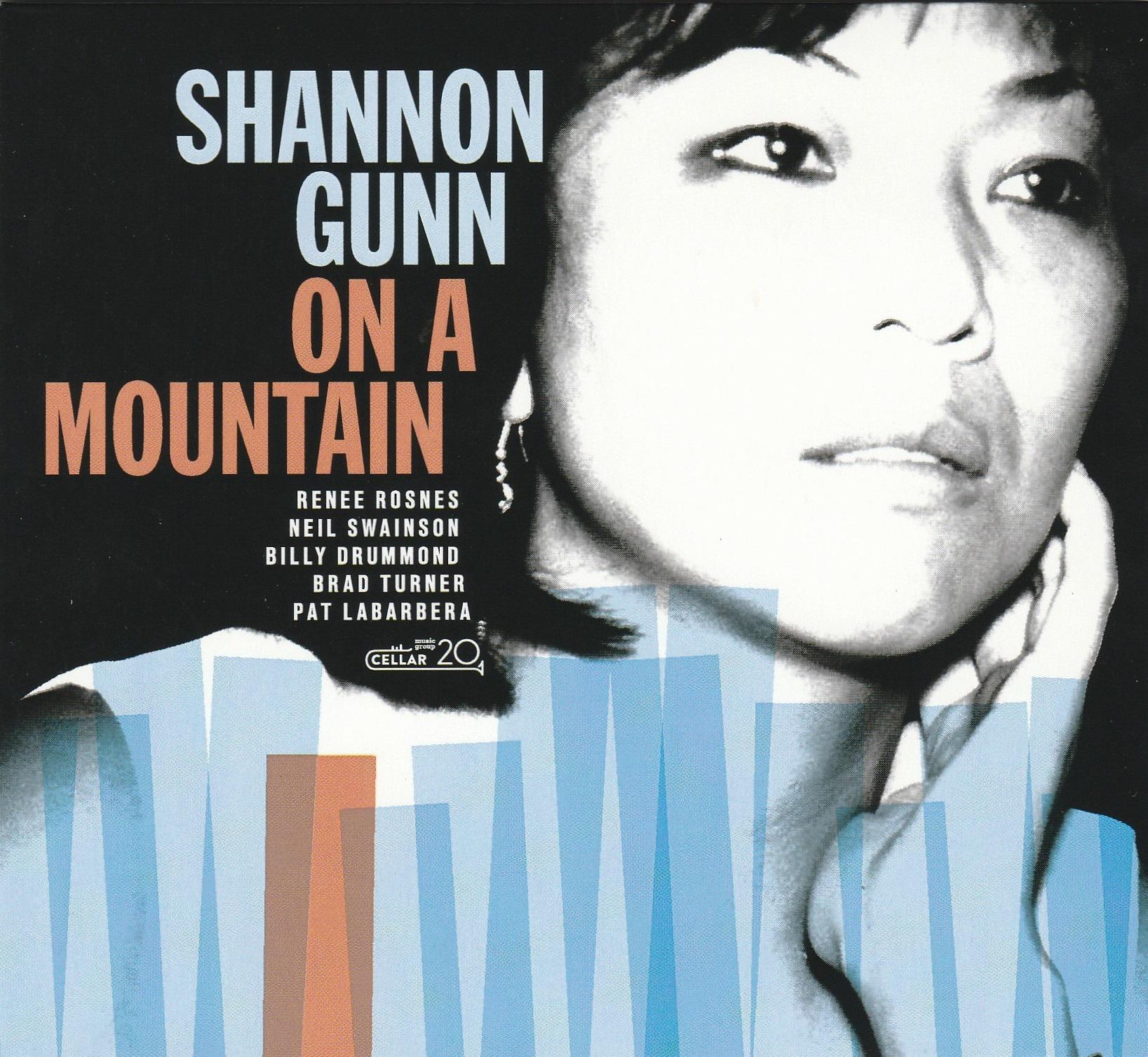
On September 10, 2001 alto saxophonist Jim Snidero could not have predicted what a trajectory this album would take. Set to record on September 11 in New York City, unexpectedly postponed due to the tragic circumstances, this fine album was originally released in 2003 and reissued on September 10, 2021. A lot can happen in a musician’s career and the world itself in the span of 20 years but Snidero’s music remains relevant and touching, depicting the weight of its times. 

Originally written and arranged for a jazz quartet and a 10-piece string ensemble, the reissued version has an added double bass in the string section and an enhanced sound. I loved the sound of the strings on this album – lush, expansive, dreamy and all encompassing. Snidero’s arrangements work very well in all the tunes. The album showcases six original compositions and two standards, and is heavy on the ballads. River Suite, comprised of three parts, is especially captivating. A homage to the Hudson River, this gorgeous music tells a story of an innermost experience. Absolutely devilish solos by drummer Bill Drummond and violinist Marc Feldman in the third part of the suite, Torrent, are whirling with intense energy.

Featured are some memorable solos by the fantastic Renee Rosnes (piano), Paul Gill (bass) and Tomas Ulrich (cello). Snidero’s sax interacts with the strings in the most natural way. His solos demand attention and bring in lyricism to unexpected places. With just a touch of nostalgia, Snidero’s compositions are sonic evocation of the times past. You will find Strings incredibly satisfying.

01 Jack Liebeck WebCoverJack Liebeck Ysaÿe sees the outstanding English violinist finally recording Ysaÿe’s Six Sonatas for Solo Violin Op.27, works which have long fascinated him (Orchid Classics ORC100179 jackliebeck.com).

“I always knew I would have to climb this mountain,” says Liebeck, and the recent COVID lockdowns provided the right moment. He describes Ysaÿe’s style as monumental, with gothic themes, drama and poignancy, and the music as the pinnacle of harmonic and technical challenge, which nevertheless fits a violinist’s hand like a glove.

Liebeck is joined by pianist Daniel Grimwood in the rhapsodic Poème élégiaque in D Minor Op.12, and as always draws a sumptuous tone from his 1785 J. B. Guadagnini violin in superlative performances.

02 Jukebox Cover 1In March 2020 violinist Elena Urioste and pianist Tom Poster decided to record and share one music video for every day spent in isolation. The expected two to three weeks of their #UriPosteJukeBox project turned into 88 days – one for each piano key. The resulting studio CD The Jukebox Album is simply one of the most heart-melting and breathtakingly beautiful discs you could imagine (Orchid Classics ORC100173 orchidclassics.com/releases/jukebox).

From the opening Look for the Silver Lining through a program including standards like La vie en rose, Begin the Beguine, A Nightingale Sang in Berkeley Square and Send in the Clowns, all in superb arrangements by Poster and with occasional sumptuous multi-tracking by Urioste, to Kreisler arrangements, pieces by Carlos Gardel, Lili Boulanger, Fauré and six new pieces commissioned for the project, the standard never drops for a moment. 

“This is the music we’ve loved our whole lives,” says Poster, and it shows in every note of an absolutely gorgeous CD.

03 Four VisionsCellist Daniel Müller-Schott is in superb form on Four Visions of France – French Cello Concertos with the Deutsches Symphonie-Orchester Berlin under Alexandre Bloch (Orfeo C988211 naxosdirect.com/search/c988211).

Saint-Saëns is represented by his 1872 Cello Concerto No.1 in A Minor Op.33 and the Romance in F Major Op.36. Honegger’s fascinating 1929 Cello Concerto and Lalo’s 1877 Cello Concerto in D Minor are the other two major works, with Fauré’s Élégie in C Minor Op.24 in the 1901 orchestral version completing the disc.

A lovely recorded ambience captures the luminous textures and sensual orchestral colours typical of French music, on an outstanding CD.

04 IsserlisBritish Solo Cello Music features the always-wonderful Steven Isserlis (Hyperion CDA68373 hyperion-records.co.uk/dc.asp?dc=D_CDA68373).

Britten’s Tema ‘Sacher’ and Cello Suite No.3 Op.87 open the disc, with Isserlis being joined by pianist Mishka Rushdie Momen for the three Tchaikovsky settings of the folk-song themes used in the Suite. Other works are Walton’s Theme for a Prince and Passacaglia, John Gardner’s Coranto pizzicato, Frank Merrick’s Suite in the eighteenth-century style and the brief Sola by Thomas Adès.

As always, Isserlis’ booklet essay is erudite and fascinating, with its personal reminiscences of John Gardner (1917-2011) and – in particular – the astonishing Frank Merrick (1886-1981) an absolute delight.

05 Sol PatViolinist Patricia Kopatchinskaja and cellist Sol Gabetta celebrate 20 years of friendship on Sol & Pat, a recital of duos for violin and cello built around two 20th-century masterpieces (ALPHA757 naxosdirect.com/search/alpha757).

Ravel’s Sonata and, in particular, Kodaly’s Duo Op.7 draw terrific playing from the duo, with shorter pieces ranging from the dazzling opening gypsy dance of Leclair’s Tambourin: Presto through a pizzicato C.P.E. Bach Presto to the J. S. Bach keyboard Prelude No.15 in G Major, with brief contemporary works by Jörg Widmann, Francisco Coll, Marcin Markowicz, Xenakis and Ligeti.

An unexpected gem, though, is La Fête au village Op.9, a 1947 affectionate depiction of Swiss National Day by Swiss composer Julien-François Zbinden, who was still alive and emailing the performers in 2018 aged 101.

06 HopeOn his new CD Hope violinist Daniel Hope presents a personal collection of classics featuring music largely based on songs or sung melodies that he describes as “an attempt to send out a ray of hope and to provide people with a sense of support and perhaps even consolation” (DGG 28948605415 deutschegrammophon.com/en/artists/danielhope).

He is joined by an array of artists including the Zürcher Kammerorchester, the vocal ensemble Amarcord and baritone Thomas Hampson in a program that opens with Ariel Ramírez’s beautiful Misa Criolla and travels through pieces by Dowland, Schubert, Giazotto, El-Khoury, Pärt, Elgar and Stephen Foster to Danny Boy, Dream a Little Dream and Amazing Grace.

As always with Hope and friends, the standard of arrangements and performances is of the highest level.

07 Nicola Benedetti BaroqueBaroque, the new CD from violinist Nicola Benedetti marks her first Baroque recording with period set-up and gut strings. She is joined by the Benedetti Baroque Orchestra, a new ensemble of freelance Baroque musicians that she assembled and directs (Decca Classics B0034187-2 nicolabenedetti.co.uk).

Geminiani’s Concerto grosso in D Minor H143 “La Folia”, a transcription of Corelli’s Violin Sonata Op.5 No.12, opens an otherwise all-Vivaldi program of the Violin Concertos in D Major RV211, E-flat Major RV257, B Minor RV386 and the Andante middle movement from the Concerto in B-flat Major RV583.

The 1717 Gariel Stradivarius that Benedetti has played since 2012 sounds warm and bright, with top-notch performances from all concerned, contributing to a lovely CD.

08 ProkofievWith violinist Tianwa Yang you can always count on a mixture of dazzling technique, colour, tone and musical intelligence, and so it proves again on Prokofiev Violin Concertos Nos.1 and 2, her latest release on the Naxos Classics label with the ORF Vienna Radio Symphony Orchestra under Jun Märkl (8.574107 naxosdirect.com/search/8574107).

Performances of the Concertos No.1 in D Major Op.19 and No.2 in G Minor Op.63 are both particularly strong on the lyrical aspects of the works, with some beautifully expansive playing. The Sonata for Solo Violin in D Major Op.115 completes an excellent disc.

09 Tabula RasaViolinist Renaud Capuçon recently became artistic director of the Orchestre de chambre de Lausanne, and Arvo Pärt Tabula Rasa is his first recording as soloist and conductor of the ensemble (Erato 9029502957 warnerclassics.com/release/tabula-rasa).

The seven works here are: the double concerto Tabula Rasa; the 1992 version of Fratres for violin, string orchestra and percussion; Summa and Silouan’s Song, both for string orchestra; Darf ich… (May I); Spiegel im Spiegel (with piano); and For Lennart in memoriam.

Capuçon says that the music takes us from darkness to light, but there’s very little change of mood across the CD. Still, the playing is first class, and if you love Pärt’s music you’ll love this disc.

10 Times of TransitionAndreas Brantelid is the cellist on Times of Transition, a CD of three cello concertos from the second half of the 18th century, when Baroque polyphony and fugue were giving way to the early classical galant style of melody with accompaniment. Lars Ulrik Mortensen conducts the Concerto Copenhagen (Naxos Denmark 8.574365 naxosdirect.com/search/8574365).

C.P.E. Bach’s Concerto in A Major Wq.172 with its familiar finale dates from 1753. Haydn’s Concertos in C Major Hob.VIIb:1 from 1761-65 and the purely classical D Major Hob.VIIb:2 from 1783 are the only two indisputably by him, the finale of the C major work drawing particularly fine playing from Brantelid, who for this disc plays an Emil Hjort, Copenhagen cello from 1887 with gut strings.

11 Villa Lobos coverHe’s not a composer you readily associate with violin sonatas, but on Heitor Villa-Lobos Complete Violin Sonatas, the new CD from Naxos Classics in their Music of Brazil series violinist Emmanuele Baldini and pianist Pablo Rossi present three delightful pieces which should be much better known (8.574310 naxosdirect.com/search/8574310).

The works – the single-movement Sonata No.1 Fantasia “Désespérance” and the three-movement Sonatas No.2 Fantasia and No.3 – were written between 1912 and 1920, a key period in Villa-Lobos’ career in which he was maturing as a composer, establishing a personal style and achieving his first professional successes.

There’s influence of French late-Romanticism here (especially Debussy in No.3) and a wealth of melodic invention, with excellent performances making for a delightful disc.

12 KarnaviciusJurgis Karnavičius String Quartets Nos.3 & 4 is the final volume in the complete string quartets by the Lithuanian composer, in world-premiere recordings by the Vilnius String Quartet (Ondine ODE1387-2 naxosdirect.com/search/761195138724). 

These quartets are more expressive and modern in nature than Nos.1 & 2, warmly reviewed here in May/June of this year, and were composed in St. Petersburg in 1922 and 1925 before Karnavičius returned to Lithuania in 1927. After their premieres they were not heard again until 1969 and the 1980s respectively, with No.4 still unpublished. It’s hard to understand why – described as a stylistic link between the quartets of Tchaikovsky and Shostakovich and as a “chromatically saturated musical fabric” they’re outstanding works given wonderfully rich and empathetic performances by the Lithuanian ensemble.

13 Barber IvesThe string quartets of Samuel Barber and Charles Ives are featured on Barber – Ives in excellent performances by the Escher String Quartet (BIS-2360 bis.se).

Barber’s String Quartet Op.11 features the original inception of his Adagio for Strings as its central movement, beautifully played here. The original third movement, discarded by Barber in favour of a shorter ending, is also included for reference.

Ives’ two quartets have various composition and revision dates from 1897 to 1915. His String Quartet No.1 “From the Salvation Army” (A Revival Service) is played with the reinstated first movement, discarded by Ives but re-attached – and not to everyone’s approval – by Ives scholar John Kirkpatrick after the composer’s death. His String Quartet No.2 is more dissonant and atonal, but makes similar use of American hymns and folk tunes. The spiky Scherzo: Holding Your Own from 1903-04 completes a terrific disc.

14 Haydn Last ThreeJoseph Haydn The Last Three String Quartets Op.77 & Op.103 is the new CD from the Czech Pražák Quartet (Praga PRD250420 pragadigitals.com).

In 1799 Haydn started a projected set of six quartets dedicated to Prince Lobkowitz but completed only two – Op.77 Nos.1 and 2. In 1802/03 he wrote two middle movements for an unfinished third quartet; these are now known as Op.103. The Op.77 quartets in particular, described here as “bold and full of wit” make a fitting farewell to a musical form that Haydn had almost single-handedly established and developed.

The performances are full-blooded but insightful and sensitive, putting one – if you are old enough – in mind of the great Czech quartet ensembles of the 1960s Supraphon LP recordings. 

15 Ciaconna coverCiaconna is Russian violinist Ilya Gringolts’ first solo recording of music of his own time with a tribute to its inspiration – Johann Sebastian Bach (BIS-2525 bis.se). 

Heinz Holliger’s brief Drei kleine Szenen intertwines Gringolts’ voice in the Ciacconina first movement. Roberto Gerhard’s Chaconne, inspired by Bach’s D-Minor Chaconne is a 12-tone work of 12 short movements, but with highly individual use and adaptation of the basic tone row.

The major work here is Kontrapartita by the French composer Brice Pauset, its seven movements – Preludio, Allemande, Corrente, Sarabande, Loure, Giga and Ciaccona – interspersed with the seven Bach movements from the three Partitas that inspired them. 

16 BartokBachThe D-Minor Chaconne also turns up on Bartók, J. S. Bach, Schneeberger, a recital CD from the Russian violinist Dmitry Smirnov featuring Bartók’s Sonata for Solo Violin, Bach’s Partita No.2 in D Minor and the 1942 Sonata for Solo Violin by the Swiss violinist Hansheinz Schneeberger, who died two years ago at the age of 93 (First Hand Recordings FHR117 firsthandrecords.com). 

There are some interesting ornamentation choices in the Bach (especially in the Sarabande), but the Bartók and – in particular – the Schneeberger are given convincing performances.

01 Handel RodelindaHandel – Rodelinda
Lucy Crowe; Iestyn Davies; Joshua Ellicott; Tim Mead; Brandon Cedel; Jess Dandy; The English Concert; Harry Bicket
Linn Records CKD 658 (naxosdirect.com/search/ckd658)

Success is a funny thing – sometimes it finds you, and sometimes you create it for yourself. This latter circumstance is the one in which Handel found himself in 1711 after bringing Italian opera to London with his Rinaldo and achieving tremendous success as a result. Over a decade later, Handel would revisit Italian opera in London through three separate works: Giulio Caesare, Tamerlano and Rodelinda.

Regarded as one of Handel’s greatest works, Rodelinda was first performed in London in 1725 but did not receive a permanent place in the modern opera repertoire until the Baroque revival movement in the 1960s. Since then, it has been staged in major opera houses across the globe and featured on numerous recordings, not the least of which is this stellar essay featuring the English Concert led by Harry Bicket.

From the opening notes, it is apparent that this performance of Handel’s masterpiece is well worth the time spent listening. The French overture has the requisite gravitas and agility, delightfully shaped and exquisitely performed, and it only gets better from there. Throughout this two-disc set it is immensely satisfying to hear such well-paced and thoughtfully performed interpretations, never ranging to extremes either in tempo or dynamic, always feeling that the singer and orchestra are collaborating comfortably, and allowing the singers themselves to express the dramatic intricacies of Handel’s vocal writing in a measured yet fluid manner.

Whether unfamiliar with Handel’s operas or a seasoned expert, this recording is a magnificent addition to any collection and an utter delight to listen to from beginning to end.

02 Beethoven FidelioBeethoven – Fidelio
Lise Davidsen; Christian Elsner; Georg Zeppenfeld; Dresdner Philharmonie; Marek Janowski
Pentatone PTC 5186 880 (naxosdirect.com/search/ptc5186880)

Beethoven named his only opera after a young man who doesn’t actually exist, even in the opera. He’s a character that the heroic Leonore uses as a disguise to rescue her husband Florestan from prison. Leonore is a complex role, as challenging dramatically as vocally. Yet it often gets less attention than the role of Florestan, who doesn’t even appear until well over halfway through. 

Here, a commanding performance from the young Norwegian soprano Lise Davidsen puts the spotlight unquestionably on Leonore. Davidsen’s combination of power, virtuosity and beauty, which makes her Act I aria, Absheulicher! (You monster!) so moving, is rare and wonderful.   

Davidsen is supported by a largely terrific cast. In particular, I love how Georg Zeppenfeld brings out Rocco’s humanity, compromised though he may be. Johannes Kränzle makes a satisfyingly nasty Pizarro, and Christina Landshamer is an affecting Marzelline. But Christian Elsner’s ragged, effortful Florestan is a letdown. 

The exquisite Dresden Philharmonic plays with the agility of a chamber ensemble, while the MDR Leipzig Radio Choir is inspired, soaring in the rapturous O welche Lust (Oh what joy). Conductor Marek Janowski propels things forward with buoyant vitality. 

Fortunately, the dialogue has been retained, though it has been judiciously pared down. The singers speak their own lines – no actors or narrators are brought in, as is done too often. Unsurprisingly, this makes for natural, seamless transitions between dialogue and music. Special kudos to Pentatone for including the full text and English translation in the booklet.

03 Jonas Kaufmann LisztLiszt – Freudvoll und Leidvoll
Jonas Kaufmann
Sony Classical (jonaskaufmann.com/en)

Just looking at the photography in the booklet that comes with this wonderful new release from Sony Classical, I was immediately struck by the jolly good mood, frolichkeit and friendliness between the two artists, world-famous German heldentenor Jonas Kaufmann and his accompanist Helmut Deutsch, pianist, Liszt expert and aficionado. This good spirit translates into a happy collaboration shining throughout this record.

Liszt wrote some 90 songs that are difficult to sing, as Liszt treated the voice as he treated the piano: mercilessly extending it to two octaves, sudden fortissimo outbursts, key changes and the like. Kaufmann selected 20 for this release with a coherent title – Freudvoll und Liedvoll meaning joyful and sorrowful – referring mainly to love, because love is indeed sometimes very happy and sometimes very sad as anyone who’s ever been in love knows. And indeed, the most beautiful song, I think, is O lieb, solang du lieben kannst (Love as long as you can) with the famous melody of Liebestraum No.3. Kaufmann’s voice is amazingly flexible to cope with mood changes: from heroic fortissimo to soft and sweet intonation, like the way he caresses the words Freudvoll und Leidvoll.

The spirit of love is indeed manifest in the centrepiece of this collection, the three Petrarch Sonnets. These are written in Italian as opposed to all the other songs which are in German, with unparalleled melodic richness.

A joyful moment for me, and a nice surprise, was the sudden outburst of a glorious Hungarian melody in the song: Die drei Zigeuner, played with gusto by Helmut Deutsch. He is marvellous throughout, playing with ease Liszt’s very difficult accompaniments.

05 Bizet CarmenBizet – Carmen
Anna Caterina Antonacci; Andrew Richards; Anne-Catherine Gillet; Nicolas Cavallier; Monteverdi Choir; Orchestre Révolutionnaire et Romantique; Sir John Eliot Gardiner
Naxos 2.110685-86 (naxosdirect.com/search/2110685-86)

Although Les pêcheurs de perles launched Georges Bizet’s memorable career as an operatic composer, it was Carmen, composed in 1875, which left his indelible stamp on the world. Its premiere so shocked the conservative audience of opéra comique of the day that it almost discontinued its run. Yet the seductive magic that worked through the charm of its melodies, Spanish exoticism of its score and strength of its characters has made it one of the greatest, most enduring operas of all time. 

This DVD, (of the 2009 film) could not have come at a better time, when most of the world’s opera houses still remain closed due to an unrelenting pandemic. What makes it all the more enduring is the fact that it is a production stage-directed by Adrian Noble, with the Orchestre Révolutionnaire et Romantique and the Monteverdi Choir conducted by the great Sir John Eliot Gardiner. Of course, you couldn’t ask for a better cast than soprano Anna Caterina Antonacci as the rebellious cigarette girl, Carmen, and tenor Andrew Richards as the honourable corporal in the dragoons, Don José. Or for that matter soprano Anne-Catherine Gillet as the peasant girl Micaëla and bass-baritone Nicholas Cavallier as Escamillo. 

The rich colour of the choruses and orchestration plays a central role. But while Don José, Escamillo and Micaëla have fine arias, Antonacci’s Carmen is the diva of this opera, nowhere more brilliantly expressed than in her Act One Habanera.

06b Die Tote Stadt whiteKorngold – Der Tote Stadt
Jonas Kaufmann; Marlis Petersen; Bayerische Staatsoper; Kirill Petrenko
Bayerische Stattoper BSOREC1001 (naxosdirect.com/search/bsorec1001)

This release from the Bavarian State Opera launches their new label for in-house video recordings in grand style. Erich Korngold was just 23 in 1920, when he wrote Die Tote Stadt – both the music, and, with his father, music critic Julius Korngold, the libretto (under the pen name Paul Schott). It’s based on a melancholy, dream-suffused novel, Bruges-la-Morte, written almost 30 years earlier by Georges Rodenbach. But there are significant changes, especially to the ending. Now Korngold’s opulent Vienna prevails over Rodenbach’s claustrophobic Bruges. 

The inventive staging by Simon Stone takes full advantage of Ralph Myers’ magically transforming, exquisitely detailed set. Kirill Petrenko leads the splendid BSO orchestra and chorus with a probing intensity that takes us directly to the emotional pulse of Korngold’s sumptuous, turbulent opera. Nostalgic romanticism confronts expressionist modernism. 

Tenor Jonas Kaufmann inhabits the role of volatile, tormented Paul as though it had been written for him. Soprano Marlis Peterson matches Kaufmann for gorgeous singing and convincing acting as Marietta, a free-spirited dancer who reminds Paul of his dead wife. Peterson’s rapport with Kaufmann in the exquisite duet, Glück, das mir verblieb (Joy, that near to me remained) is irresistible.

Baritone Andrzej Filończyk serenades Marietta with a tender Mein Sehnen, mein Wähnen (My yearning, my dreaming) as he leads her in a waltz. The whole time, he’s pushing her around in a shopping cart. It’s one of the many treasurable moments from this brilliant production that stay with me.

07 Voces8Infinity
VOCES8
Decca Classics B0034074-02 (voces8.com)

Trailblazing comforting online choral video performances at the outset of the current pandemic, VOCES8 presents Infinity, a new disc with a soothing, meditative space-inspired theme. Evocatively dubbed “the Rolls-Royce of British a-cappella ensembles,” this eight-voice choir with a 15-year international career enjoys transcending genres. On this record they render the scores of composers of alternative, film, electronic and contemporary classical music. 

The 15-track program includes arranged excerpts from film scores interspersed with a medieval song and eight commissioned works. Collectively, the music admirably showcases VOCES8’s clean, well-controlled, precision English vocal ensemble sound, yet one with character, personality and not without warmth.

Jóhann Jóhannsson’s A Pile of Dust is an example of what one can expect on the album. Driven by the ensemble’s vocal pacing, its climactic middle section miraculously builds relentlessly higher and higher before just as relentlessly slowly resolving, settling down in quiet half notes. Other highlights include In the Shining Blackness (2016), London composer Benjamin Rimmer’s searching, challenging-to-sing double-SATB score. In keeping with the outer space theme, Nainita Desai’s tonal My Mind is Still, for voices, solo violin, piano and bowed vibraphone, is apparently sprinkled with fragments of recorded sound from Sputnik, humanity’s first satellite.

I found singer-songwriter and electronic producer Kelly Lee Owens and Sebastian Plano’s Find Our Way, skillfully arranged by Jim Clements, particularly moving. Exquisitely sung by VOCES8, it was so reassuring after a rough day that it required a third listen.

08 Duo della LunaDuo della Luna: Mangetsu
Susan Botti; Airi Yoshioka
New Focus Recordings FCR 305 (newfocusrecordings.com)

A rare ensemble combination of voice and violin, Duo della Luna presents an album that is sonically beautiful and contextually adventurous. Mangetsu is dreamy and poetic yet cutting edge and experimental. The thread that connects a variety of compositions on this album is the unique ensemble sound throughout: deep, eloquent, potent. Susan Botti (voice/composer) and Airi Yoshioka (violin) venture into themes of life and creation, imagination, female power and love with a magical artistic rapport. 

The album opens with Botti’s dreamlike multi-movement title work. The wordless sections (“mangetsu”) are nested in between the movements with poems describing the moon and the ethereal world of childhood (Shikibu, Yeats, de Saint-Exupéry). The result is music that is willowy and sensual, a luring mystery. Botti explores the possibilities of voice and violin interactions to a great degree but always in the service of the poetry. Yoshioka’s violin playing is simply gorgeous, the colours and the precision equally alluring. 

The rest of the album consists of Botti’s innovative arrangements of selected Bartók Duos for Two Violins, followed by Kaija Saariaho’s intimate Changing Light. Linda Dusman’s Triptych of Gossips, incorporating a fancifully rhythmical poem by Serena Hilsinger, is a chamber of curiosities of extended techniques and a great sonic adventure.

There is a certain kind of magic that happens when the music is expressed in so few voices. The sound becomes unadorned and pure, and these two performers take full advantage of it.

Listen to 'Mangetsu' Now in the Listening Room

Back to top