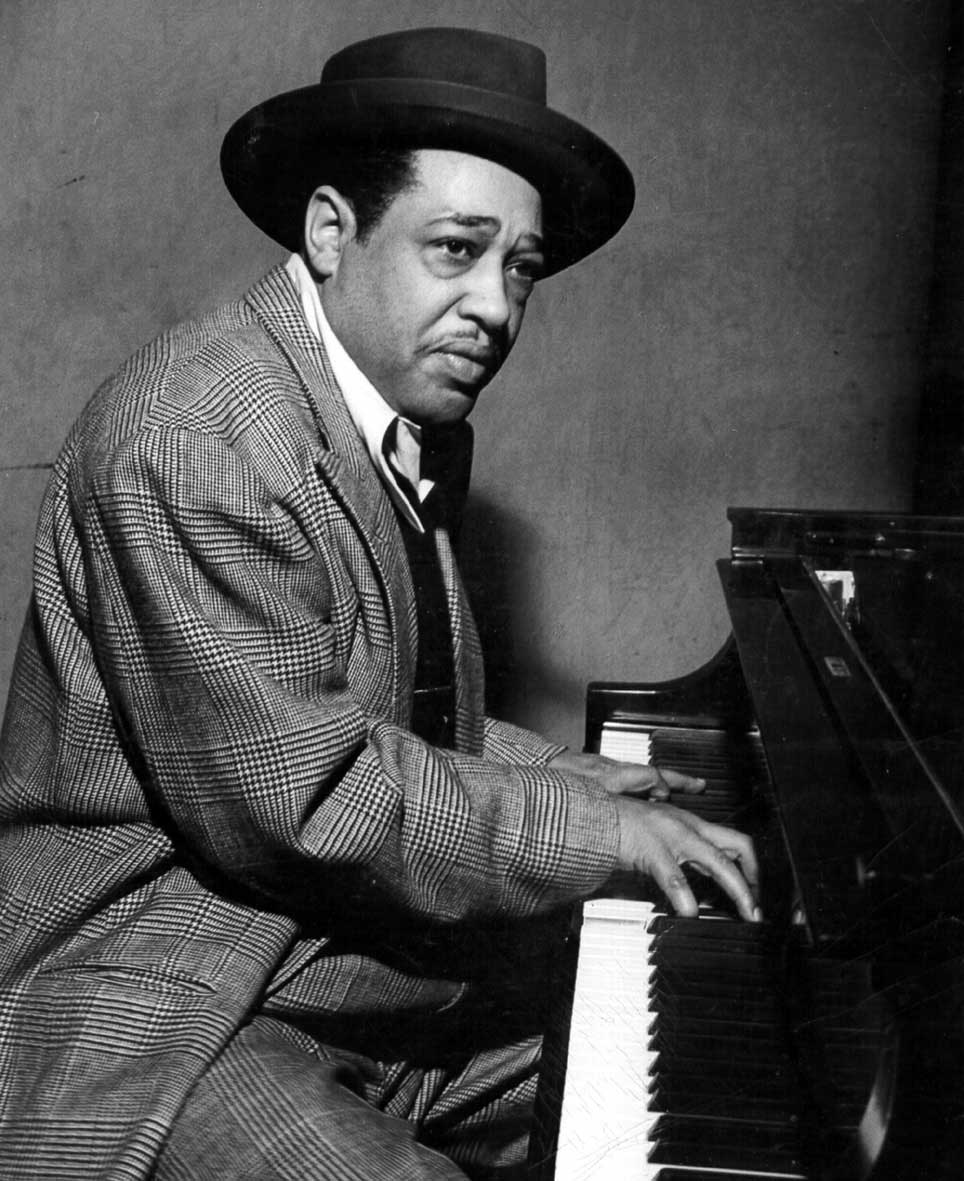
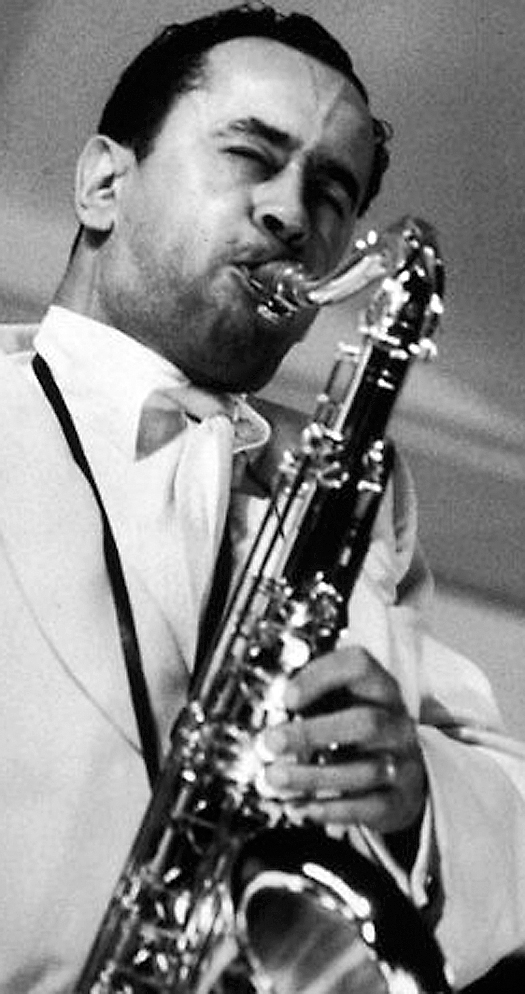
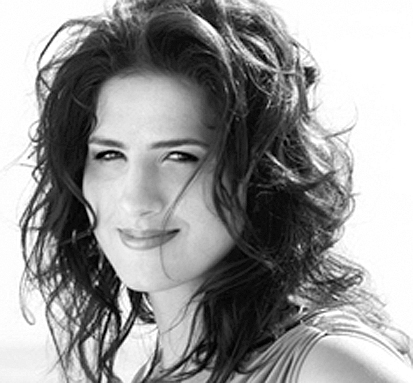
Jazz Festival season is well underway and it doesn’t get any easier to fill a concert hall with real jazz acts. Of course that begs the question as to what constitutes jazz. The parameters have changed drastically and the word jazz has been embraced by everything from airlines to deodorants. But for the sake of this discussion let’s use the term classic jazz which will range from Buddy Bolden and King Oliver to Miles Davis and John Coltrane. And if you question such diversity of styles, bear in mind that this year’s JUNO for best traditional jazz went to John MacLeod’s Rex Hotel Orchestra.

But classic jazz and major concert halls?

Yes, you can successfully present the Dave Brubeck Quartet, Wynton Marsalis and the Lincoln Centre Orchestra and All-Star packages like Return To Forever, but more and more festivals have to turn to performers with only a passing acquaintance with jazz. This year, Tom Jones headlined at the New Orleans Jazz & Heritage Festival and one of the headliners at the Vienna Jazz festival is – wait for it – Liza Minnelli! With all due respect, she has as much to do with jazz as I do with ballet dancing.

I remember a disastrous attempt in 1991 by Kiri Te Kanawa to make a jazz album with Andre Previn on piano, Mundell Lowe on guitar and Ray Brown on bass. It’s just not that simple. You can’t just decide to be a jazz performer overnight.

In Toronto, one of the major attractions is Jessye Norman and I’m sure she will be more successful than Kiri Te Kanawa, but it is still something of an anomaly to find her topping the bill at a jazz festival.

But it will sell tickets.

There was the occasion when Louis Armstrong and Lotte Lenya were recording “Mack The Knife.” Between takes tape was running. I have a copy on cassette of Armstrong trying to help Ms. Lenya syncopate the phrase, “Mack The Knife,” and try as she might, she just could not get it right. The jazz interpretation of those three little words which came so naturally to Louis Armstrong, one of the great jazz singers, was completely foreign to Lotte.
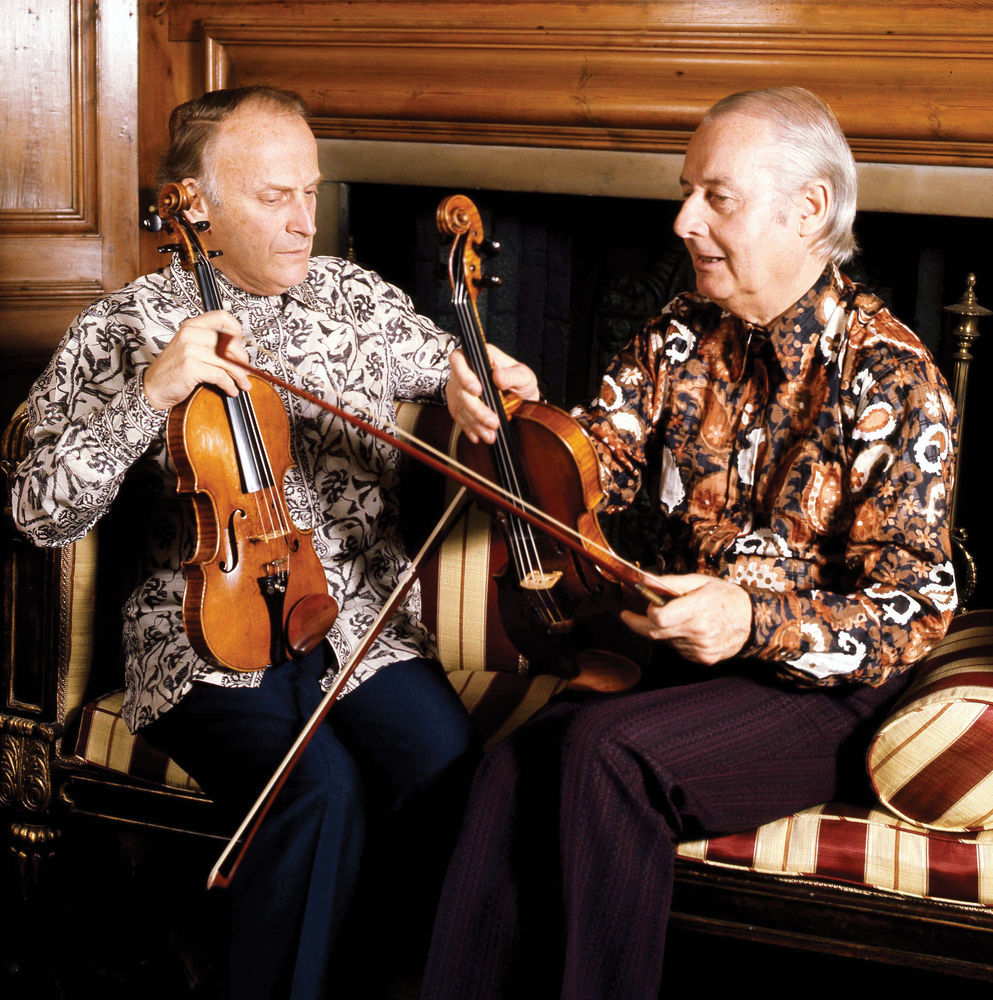
p22_option_yehudi_menuhin_and_stephane_grappelliMore successful were the collaborations between Stephane Grappelli and Yehudi Menuhin, but there is little doubt as to which of them is the jazzer.

More and more, the real jazz content of festivals is to be found in smaller venues. Maybe that’s how it should be and has to be. The intimacy of a smaller venue lends itself to the spirit of the music and when jazz moved into large concert halls it lost something. I am not trying to take away from the success of presenting jazz in a more formal setting. The Modern Jazz Quartet, among the first to meet with acclaim in making their music successful in the concert hall environment, made some wonderful music, but hearing Milt Jackson in a club setting was a far more satisfying jazz experience than listening to him within the confines of the M.J.Q.

Which takes me back to the observation that bigger is not necessarily better when it comes to enjoying jazz. In fact, largely because he liked a freer flowing style of playing, Jackson left in 1974, causing the group to disband, although they re-formed in 1981.

It’s that time of year when I often find myself in Europe. Not that I’ve been lost or missing, you understand. As I write this I am in Vienna enjoying one of the few remaining jazz clubs that operates on a six nights a week policy. Jazzland is the name of this friendly cellar club and next year it will celebrate 40 years of presenting jazz. It is unpretentious, but has a history going back 500 years when it was an escape route in times of siege. The walls are lined with photographs of famous jazz musicians who have played in the club.

Long time readers of the column might remember earlier references to this jazz oasis, but it bears repeating that Axel and Tilly Melhardt, owners of the club, must be the best in their field.

By the time you read this, my 13 weeks of being on Jazz.FM91, Sundays from 4pm to 5pm will have begun. I hope you will give it a whirl and those of you who know me won’t be surprised to hear that each week I will feature a recording which demonstrates humour in jazz, such as Lester Young singing “It Takes Two To Tango,” and Bill Harris and Ben Webster asking for “Just One More Chance.”

Happy listening.

Jim Galloway is a saxophonist, band leader and former artistic director of Toronto Downtown Jazz. He can be contacted at jazznotes@thewholenote.com.
“Musick has Charms to soothe a savage Breast,” was coined by William Congreve, in The Mourning Bride, 1697. Some music, yes. But the other day I was in a large store owned by a grocery chain. And there it was, seeping unbidden and unwanted into my sensitive ears – perhaps too sensitive for this day and age – disagreeable and intrusive “music” flooding the store through tinny, ceiling-mounted speakers, just loud enough to disturb and certainly loud enough to annoy me.

People listen to music for a variety of reasons. It can help you to relax. It can make you happy. It can give solace. It can trigger memories. But nowadays it is everywhere – all the time – and somehow it has lost value and too often is a form of noise pollution.

I will walk out of a restaurant or bar if there is a pounding, repetitive noise coming through the sound system, forcing everybody to raise their voices just to be heard across a small table. And, it seems to me, almost nobody is actually listening to it; the noise seems to act like some sort of security blanket. Heaven forbid that they would have to cope with silence. Familiarity and all that.

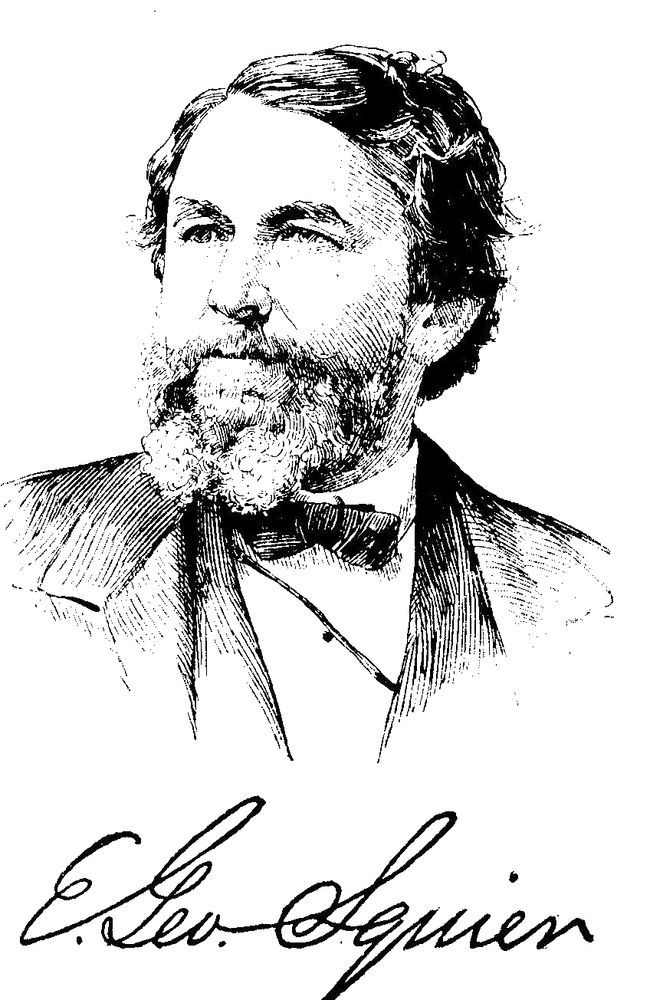
26_george_squierIt all began with Muzak which, believe it or not, was created in 1922! It was the brainchild of General George Squier and initially was called Wired Radio. He devised a system to deliver music from phonograph records to subscribers – mainly workplaces – via electrical wires, in the belief that people would be more productive listening to certain types of music. He decided later to change the service’s name to “Muzak.” Influenced by the system, the BBC began to broadcast music in factories during World War II in order to encourage workers.

So who was this General Squier?

He was an officer in the U.S. Signal Corps and was Chief Signal Officer during World War I. He had a distinguished career, died in 1934 and in 1943 was honoured by having a U.S. troopship named after him.

Don’t get me wrong. The concept, and value, of music in the work place goes back a long way. The human voice was an instrument which everybody possessed. People could sing either individually or in groups. When in groups, singing was always a collective act. The rhythm of songs was key to work, coordinating workers’ muscles for the repetitive tasks of the day. Songs commented on the work process, everyday life or religious themes, thereby establishing a shared bond between co-workers even in the most difficult of situations. Songs sung together at the workplace, at home, and in worship established solid bonds – work songs and sea shanties come immediately to mind – by providing shared experiences. Music was both a communal activity and, in memorializing events, it was a form of history writing. And it was performed live.

Until recorded music, no two performances were exactly the same, just as today, for example, no two performances of a play are exactly the same.

With the coming of the Industrial Revolution, everything changed and machines became the prevailing producers of sound. General background noises were inescapable. Not only that, singing in the workplace was difficult and sometimes frowned upon by factory management. If you worked for Henry Ford, for example, you were expected to work in silence, although he did organize concerts for his workers several times a year.

Then along came General Squier and music was taken out of the hands, or rather the voices, of the general public. It was replaced by sounds which in too many instances today seem to me to be leading the charge in the dumbing-down process in evidence all around us, in a society which is afraid of having to deal with even a few minutes of silence.

Muzak’s claims were questioned in some quarters and among those expressing some doubts was Canadian composer R. Murray Schafer who feared that it would lead to a dulling of aesthetic sensitivity. I wonder what he thinks about today’s assaults on our ears.

Perhaps it is time to form the National Organization for the Prevention of Aural Pollution or NOPAP.

Of course, the only antidote to muzak is live music! WholeNote colleague Ori Dagan lists the jazz happening in the clubs; here is some other live jazz taken from our concert listings:

• May 5 at 7:30: Jazz.FM91. Jazz Lives 2011. Local and international artists including Al Jarreau, vocals; Karrin Allyson, vocals and piano; Randy Brecker, trumpet and flugelhorn; Joey DeFrancesco,  jazz organ, and others. Convocation Hall.

• May 14 at 8:00: Emilie-Claire Barlow. In Concert. Jazz vocalist covers songs from the 1960s. Queen Elizabeth Theatre.

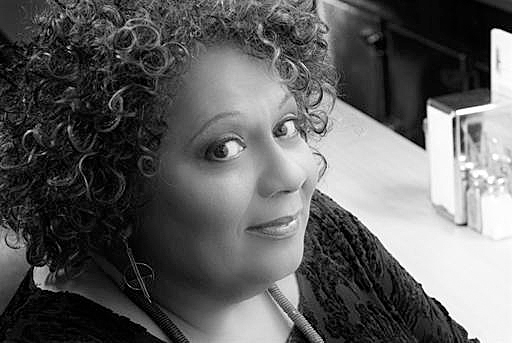
• May 14 at 8:00: MCC Toronto. Leading Ladies: Jackie Richardson. Jazz, blues and R&B vocalist performs with David Warrack, piano.       Metropolitan Community Church.

• May 31 at 8:00: Gallery 345. Mark Kieswetter & Ross MacIntyre CD Release. Piano-bass duo release jazz recording “Green Edge Sky, Green Edge Sun.”

• June 5 at 8:00: Jazz Performance Education Centre. Seamus Blake Quartet. Featuring New York-based tenor saxophonist and                                composer Seamus Blake, joined by trio of Toronto-based musicians. Glenn Gould Studio.

Giving Me the Air

I hope you will forgive me for taking this opportunity for a little self-promotion, but starting June 5, for 13 Sundays, I will be on Jazz.FM at 91.1 from 4pm to 5pm with a programme called “Journeys In Jazz with Jim Galloway,” playing music from my own collection. Much of the music will be played by musicians I know or knew personally on and off the bandstand and I’ll have some little anecdotes about some of them.

Please give it a listen. It won’t be boring and you’ll hear some music that you might not have heard before, played by some of the great but sometimes under-appreciated talents who helped to shape jazz. Oh, and yes, it will be melodic and it will swing.

Happy listening to music that you choose to hear.

Jim Galloway is a saxophonist, band leader and former artistic director of Toronto Downtown Jazz. He can be contacted at jazznotes@thewholenote.com.
How many of you are aware that in August 2003 the U.S. Congress passed Public Law 108-72 declaring April “Jazz Appreciation Month” – a time when musicians, schools, colleges, libraries, concert halls, museums, radio and television stations, and other organizations should develop programs to explore, perpetuate and honour jazz as a national and world treasure? I can understand that the initiative for such a celebration would have originated in the States, but I can find no acknowledgement of it in Toronto jazz circles, or, for that matter, anywhere else in Canada. A pity, because it would seem to be an opportunity to get some media recognition for the music, and Lord knows, it could use it.

Perhaps we have an opportunity for Stephen Harper to do something which would cement even more strongly his ties with our neighbours to the South! He surely was exposed to jazz when he was growing up. After all, his father, Joe Harper, was a keen collector of jazz records and was a member of the Duke Ellington Society right here in Toronto.

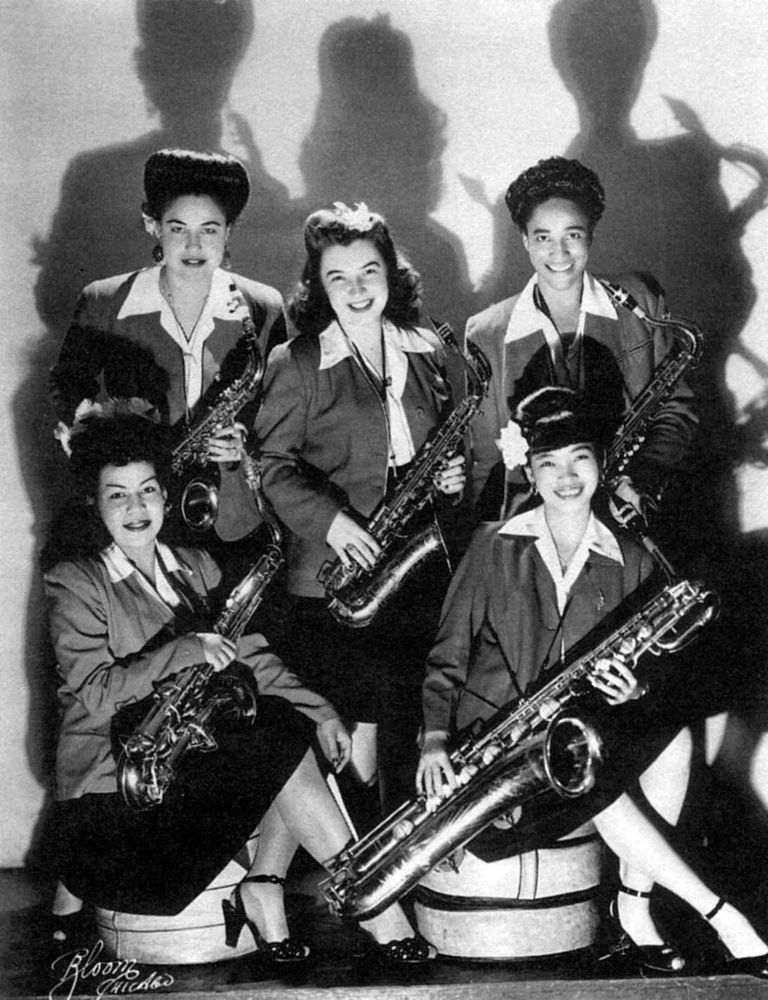
To mark the occasion this year, on March 26, 2011, in New Orleans, Louisiana, the Postal Service issued a Jazz commemorative stamp. In addition, The Smithsonian’s National Museum of American History will mark the tenth annual Jazz Appreciation Month in April with a month-long celebration of jazz. The main focus this year will be on the legacies of women in jazz and there will be a special ceremony related to the nation’s first integrated, female big band, the International Sweethearts of Rhythm, founded in 1937 at the Piney Woods School, in Mississippi. Another group which originated at the Piney Woods School in the same year was the Cotton Blossom Singers which later changed its name to the Five Blind Boys of Mississippi.

28aThe Piney Woods School was born in 1909, in a desperately poor section of Mississippi. The first school building was an abandoned sheep shed that had been cleaned up, repaired and whitewashed. The original International Sweethearts of Rhythm band members were students, 14 years and older, who paid for their education by performing as a jazz band to help promote and sustain the financially struggling school. The Sweethearts eventually travelled nationwide in a customized tour bus built by the school, named Big Bertha, performing at churches, state fairs, dance and civic halls and later at name entertainment venues such as the Apollo Theatre.

Some of their work was in the Deep South and they could never be sure of finding lodgings. Also, being a multi-racial group they did not want to run afoul of the “Jim Crow” laws, so the Sweethearts had their bus equipped with eating and sleeping facilities. One can only imagine the difficulties they must have had to overcome at that period in American history as a group of women of mixed race. And integrated they were – over the years the band members included a Chinese saxophonist, a Mexican clarinet player, an Indian saxophonist and a Hawaiian trumpet player. The first white musicians joined in 1943 and when they were in Jim Crow territory they had to paint their faces dark so the police wouldn’t come and take them off the bandstand or arrest them.

They were probably the best female aggregation of the Big Band era but personnel changes eventually led to the breakup of the band in 1949. Without doubt their dedication and the pluckiness of its members earned the International Sweethearts of Rhythm a very special place in the story of jazz. On a personal note, I can recall a Saturday afternoon in the 80s when I had my weekly live jazz radio show “Toronto Alive!” on CKFM (now better known as MixFM) and two attractive elderly ladies introduced themselves. They had actually been members of the International Sweethearts of Rhythm, an achievement of which they were justly proud.

But back to JAM (Jazz Appreciation Month). In my research I discovered that in the month of April there are 20 jazz festivals in the United States and seven more in Estonia, England, Ireland, Finland, Germany, Northern Ireland and Saint Lucia. Too late for this year, but I hope that in 2012, Canada, and specifically Toronto, can do something in April to celebrate and increase awareness of jazz.

I mean, we celebrate National Donut Month – so why not jazz?

In the meantime here are a few suggestions that you, as an individual, might consider for the month:

• Read a good book on jazz.

• Listen to a jazz CD that is new to you.

• Explore the music of a musician who is new to you.

• Go out and hear some live jazz.

• And, most important of all, when JAM is over keep doing all of the above!

On The Menu In Toronto

HERE ARE A FEW of the events in Toronto that are worth a mention:

29aOn Apr 14 at 7:30: Canadian vocal treasure, Jackie Richardson, will be at Trinity-St. Paul’s Centre, 427 Bloor St. W. along with Trinity-St.Paul’s United Church Choir presenting “Homecookin’ with Jackie Richardson.” Proceeds will go to the Canadian Association for Spiritual Care. For ticket information call 416-340-4055.

29_darrensigesmund_hires_photo_28_3_8bitsFor those of you who like your music contemporary and original, Galaxy Rising Star award-winner, Darren Sigesmund and the Strands II Septet will be at the Al Green Theatre in the Miles Nadal JCC, 750 Spadina Ave. on April 27 at 8:00pm. The band will feature a couple of interesting out-of-towners: one is violinist Mark Feldman who has played with such jazz notables as John Zorn, Dave Douglas, Lee Konitz and Chris Potter, and the other is Gary Versace, piano and accordion, who has been featured in the bands of Maria Schneider, John Scofield and Ingrid Jensen. For tickets phone: 416-924-6211 ext 0.

“Tommy Ambrose & Friends” will be at Lula Lounge on May 1. Tommy’s friends include pianist Norman Amadio, bassist Rosemary Galloway, saxophonist Pat LaBarbera, drummer Don Vickery and John MacLeod on flugelhorn. The evening is the brainchild of Ron Manfield who runs MPC Music, a small indie label. As Ron says, an evening like this is “nourishment for the soul.” The music kicks off at 7pm and for tickets you should call MPC Music at 416-788-2699.

In closing, April provided the names of some pretty good songs. Here are some of them: April In Paris, April In Portugal, April Showers, I’ll Remember April and April In My Heart.

Happy listening and don’t forget that list of things to do.

Jim Galloway is a saxophonist, band leader and former artistic director of Toronto Downtown Jazz. He can be contacted at jazznotes@thewholenote.com.
For more on the month in Jazz, see In the Clubs.

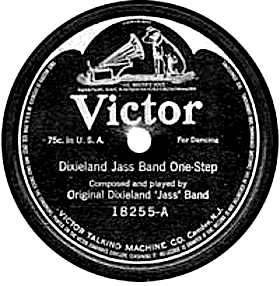
26_victor_recordsOn March 7 1917, two sides “The Dixie Jass Band One Step,” and “Livery Stable Blues” by Nick LaRocca’s Original Dixieland Jass Band were released. It was the first jazz recording issued for sale in the U.S. That honour might well have gone to a group called The Original Creole Orchestra, the first New Orleans Jazz band to tour outside of the South, but in 1915 trumpeter Freddie Keppard turned down an offer from the Victor Talking Machine Company. The story goes that he didn’t want other musicians to be able to steal his music by listening to records.

Another version claims that the Victor Company wanted the band to make a test recording without pay. Yet another story is that Keppard was offered $25.00 to make a recording – much less than he was making on the vaudeville circuit at that time, although pretty well the going rate for a recording. He refused saying, “I drink that much in gin every day!”

But what was the earliest Canadian jazz recording?

Well, there isn’t much information available about the early Canadian bands or, for that matter, musicians. But in the mid 20s a piano player called Gilbert Watson formed a band which included an American trumpet player called Curtis Little. In 1925 they recorded a couple of numbers in Montreal for Starr Records, probably the first records by a Canadian band.

In these days when a little piece of electronic wizardry no bigger than a square of chocolate can store upwards of 2,000 tunes as MP3s, it is fascinating to look back in time to the early days of phonograph recordings. Before discs, recordings were made on cylinders, a process invented by Edison in 1877. By the early 1900s cylinders were selling by the millions. Then the gramophone disc took over the market. It also had been around since the late 1800s, invented by a German-born American called Emile Berliner. He founded the Berliner Gramophone Company in 1895, and in 1899 the Berliner Gramophone Company of Canada in Montreal. The original discs were only five inches in diameter and intended for toy phonographs.( He also created Deutsche Grammophon in 1898.)

I remember “Wild” Bill Davison, one of the hottest jazz cornet players in the history of the music (and who was already playing in the 1920s telling me about his memories of the early days of discs when it was an acoustic process, before the days of electric recording.

A large metal horn protruded from one wall in the studio. On the other side of the wall was the recording equipment consisting of a needle, connected to the narrow end of the horn, which vibrated to the music and cut grooves in the form of wavy lines into a revolving slab of wax thus creating the sound track. It was, in fact, direct to disc recording. (An interesting aside: in 1977 Rob McConnell and the Boss Brass recorded a limited edition 2-LP set, direct to disc, but they didn’t use wax slabs!).

“Wild” Bill then went on to explain that if the band had to stop for whatever reason during the take, a ring of gas burners would be lowered to the wax in order to melt the surface making it smooth again. You could have a maximum of three attempts before the wax had to be replaced. An added complication was that the band could not set up as it normally would on stage because the louder the instrument, the farther it had to be from the horn in the wall!

A typical example of the difficulties that had to be overcome was described by American writer Rudi Blesh, writing about a recording session with the King Oliver band in the early 20s. The band had two cornet players, Oliver and the young Louis Armstrong and when the band set up around the horn in the wall, Oliver and Armstrong drowned out the rest of the band and had to back off while clarinet player Johnny Dodds had to play right into the horn. Drummer Baby Dodds couldn’t use his bass drum at all, and had to limit himself to a greatly reduced kit.

But that wasn’t the end of it; on the next try they could hear Louis Armstrong, but not King Oliver, so Louis had to move back even more before they could achieve some semblance of balance! Far from ideal conditions you might say.

But let’s go back to that first recording by The Original Dixieland Jass Band.  Note that they used the word jass. The transformation of the word jass to jazz is shrouded in conjecture and legend. There is correspondence dated April 19, 1917 from Victor addressed to the Original Dixieland Jazz Band and certainly by 1918 the ODJB was using jazz in the band’s name. One of many stories about the change from jass to jazz is that mischief makers would obliterate the letter ‘j’ from posters advertising the music! But there is no real proof as to who first used the word.

On Friday December 10, 2010 a tongue-in cheek letter from the New York copylaw firm of Lloyd J. Jassin was issued. Here is a partial transcript of the letter. “In a ceremony on Friday, which exuded warmth and openness, the the Jazz world and Jassins came together and reconciled a 95-year dispute over the derivation of the term Jazz.” If you would like to read the very witty transcript you can find it in my expanded column on the WholeNote web site.

The letter closes with this quotation from Martin Luther King: “Everyone has the blues. Everyone longs for meaning. Everybody needs to love and be loved.  Everybody needs to clap hands and be happy. Everybody longs for Faith. In music, especially that broad category called Jazz, there is a stepping stone towards all of these.”

A sad note. Last month we lost George Shearing and I miss his sense of humour almost as much as his music. One of my favourite examples was the following; “When people ask me how is it I was a musician, I facetiously say that I’m a firm believer in reincarnation and in a previous life I was Johann Sebastian Bach’s guide dog.”

Happy listening.

Jim Galloway is a saxophonist, band leader and former artistic director of Toronto Downtown Jazz. He can be contacted at jazznotes@thewholenote.com.
Acouple of issues ago I wrote about the less than thriving club scene which is, by the way, not confined to Toronto. For those of you who did not read the article in question it bemoaned the sad state of affairs in the jazz job market and the difficulties of finding enough employment to sustain a career in music.It has never been an easy career choice. It’s tougher now. The article elicited a larger than usual response, favourable, with one exception and mostly from musicians who could empathise with the challenges faced by the musical community.

This is not to suggest that there is no scene at all in town. A fair number of venues do present jazz on a regular basis, albeit sometimes only once a week – a partial list includes Quotes, featuring the Canadian Jazz Quartet on a Friday evening at 5pm, (I’m happy to say that I’ll be playing there on February 11), The Old Mill with its three nights a week policy in the Home Smith Bar, Grossman’s New Orleans inspired sessions on a Saturday afternoon, The Reservoir with its nightly entertainment and, of course, The Rex which rolls on its merry way.

They deserve your support.

Looking at all of the above you might say not a bad little crop. But it’s still a far cry from the days when you had a choice of three or four clubs six nights a week. Today it is the concert events which are just about the only way to hear some of the “big names” in jazz. The Wayne Shorter Quartet with pianist Danilo Perez, bassist John Patitucci, and drummer Brian Blade will be at Massey Hall on Saturday Feb.12; JAZZ.FM91’s Sound of Jazz Concert Series at The Old Mill on February 14 will present a Valentine’s Day special with The Steve Koven Trio, special guests Christopher Plock on reeds and vocals, and singer Lori Cullen; and as part of the same series, on Monday February 28 Brian Browne, who for years was a fixture on the Toronto jazz scene, will team up with Robi Botos to play a tribute to Bill Evans.

A relative newcomer on the scene is the Jazz Performance and Education Centre, created to support and nurture the jazz scene here in Toronto and, whenever possible, across Canada. Created in 2007, it is dedicated to the preservation and continued development of jazz in Canada. A committee of jazz lovers, musicians and business people was assembled to make plans which would enrich Toronto’s jazz scene and complement existing successful local establishments

The driving forces behind the venture are longtime jazz supporters Ray and Rochelle Koskie and the ultimate goal is to create a full time multi purpose facility which would feature performances by top local, national and international jazz talent plus educational programming through which fans of all ages can learn about the music.

The centre would incorporate recording facilities; and a Hall of Fame which would preserve our jazz heritage and tradition. In other words a Canadian version of the Jazz at Lincoln Centre

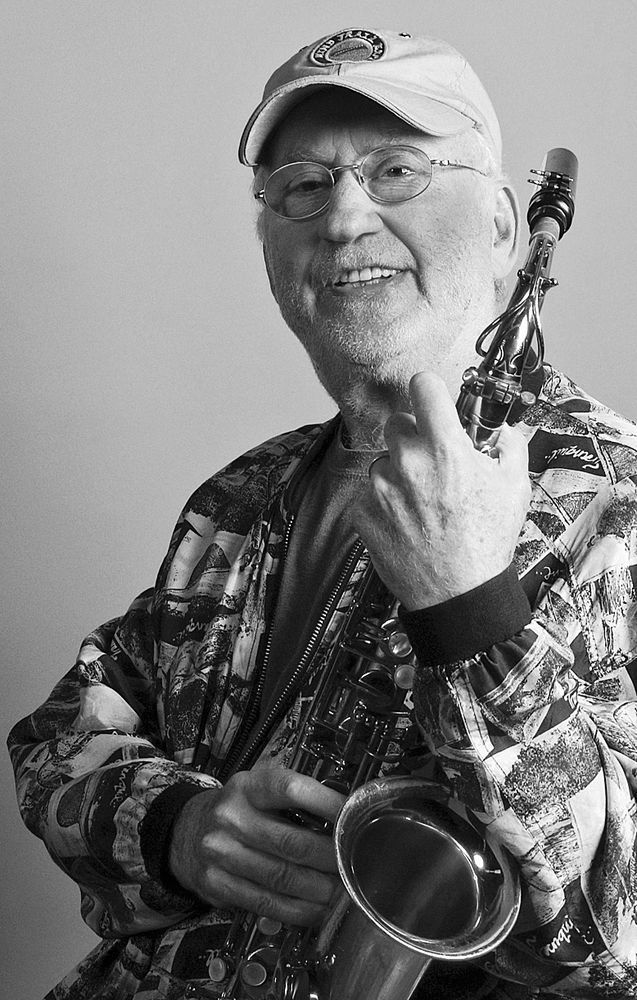
25_lee_konitz1_Their 2010-2011 concert season began with an evening with Fred Hersch and Norma Winstone and will continue on Friday February 11 with Lee Konitz and the Brian Dickinson Trio. A word about Mr. Konitz. He has been a significant force in jazz for more than sixty years, was heavily influenced by Lennie Tristano, played on the Miles Davis compilation, “Birth of the Cool” and on the Bill Evans “Crosscurrents” album, and has well over a hundred albums as leader. Konitz has become more experimental as his playing evolves and has released a number of avant-garde jazz albums, working with many of today’s younger players. Composer/teacher/pianist Brian Dickinson and his trio (Jim Vivian on bass and Barry Romberg on drums) will be accompanying Konitz and it promises to be a very special occasion.

Looking ahead, on Friday, March 18, JPEC will be presenting the Robert Glasper Experiment, an electric, hip-hop influenced quartet, one of the best of the groups taking jazz in new directions. TASA, a world music ensemble inspired by the traditions of India will share the stage with Hugh Marsh on Friday April 29 and on Sunday June 5, the New York based tenor axophonist/composer Seamus Blake and his Quartet. “Extraordinary, a total saxophonist” is how he was described by John Scofield.

In addition to the above, JPEC is also planning special workshops at the Miles Nadal Jewish Community Centre and will establish the JPEC Jazz Hall of Fame with Phil Nimmons as its first inductee.

Certainly JPEC has lofty ambitions and I wish them well.

To finish off on a light-hearted note, I give you the following:

In 2009 The World Entertainment News Network ran an article about Dustin Hoffman and his unfulfilled life ambition. He claimed that he would give up Hollywood in an instant to be an accomplished piano player! He was quoted as saying, “If God tapped me on the shoulder and offered me an ultimatum – acting or jazz piano – I’d make the decision in a New York minute.”

All I can say is this. Don’t give up your day gig, Dustin.

Meanwhile, happy live listening.

All the club action worth taking in (yes, including a bunch of jazz) is in the Club Listings starting on page 45.


Jim Galloway is a saxophonist, band leader and former artistic director of Toronto Downtown Jazz. He can be contacted at jazznotes@thewholenote.com

This being the issue that sees out the old year and welcomes the new, it has something of a “hail and farewell” feel to it – so before all hail breaks out let me offer season’s greetings to you in the hope that you will fare well in the new year.

Some Local Festivities

Throughout the year there is a fair sprinkling of jazz vespers, and much of it takes place at Christ Church Deer Park, 1570 Yonge Street. December 19 at 4:30 I’ll be there with a quartet for Christmas Vespers. On January 9 the Colleen Allen Quartet will be there at 4:30. There’s no admission charge but donations are welcomed.

Beach United Church at 140 Wineva Avenue will have Jazz Vespers: “Music for the Soul,” featuring Cadence on December 4. The time is 4:30, and again there is no admission charge. On December 12 at 4:00pm St. Philip’s Anglican Church at 25 St. Phillips Road will also have Jazz Vespers with Diana Panton, Reg Schwager and Don Thompson.

So, there you are – some opportunities to hear jazz that’s good for the soul.

In the New Year

The popular afternoon jazz series presented by the Canadian Opera Company at the Four Seasons Centre for the Performing Arts continues on January 11 with “Winter Heat,” when the Humber Contemporary Jazz Ensemble, directed by Don Thompson, will perform a programme of music written by Thompson. The next day at 5:30 the programme is called “The Fifth Season,” featuring chamber jazz performed by Duologue (David Occhipinti, bass; Mike Murley, saxophone).

Looking ahead, on February 5 the Cathedral Bluffs Symphony Orchestra presents a “Tribute to Henry Mancini,” with special guests Canadian Jazz Quartet. Norman Reintamm conducts the concert at the P.C. Ho Theatre, 5183 Sheppard Ave. E.

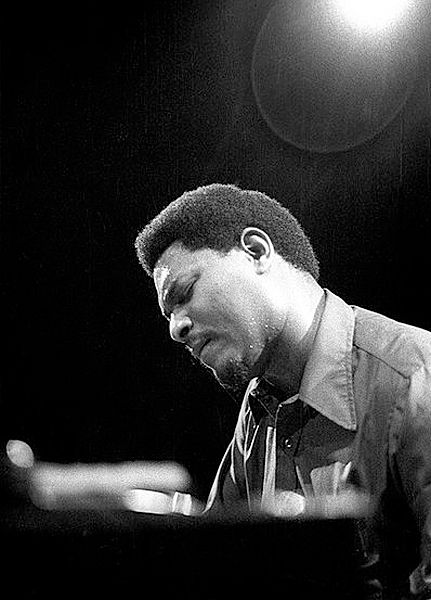
p26Big guns coming into town include pianists McCoy Tyner and Alfredo Rodriguez in a presentation called “Aspects of Oscar: Oscar Solo” – a tribute to Oscar Peterson’s solo piano music. They will be at Koerner Hall at the Royal Conservatory, 273 Bloor St. W., on December 11 at 8 pm.

Tyner hardly needs any introduction: over the years he’s been a frequent visitor to Toronto. Born in Philadelphia, he came to the attention of the jazz public when he joined the John Coltrane Quartet. He was a mere 17 years old! He joined Coltrane for the classic album My Favorite Things (1960). The band also included drummer Elvin Jones and bassist Jimmy Garrison, and was one of the landmark groups in jazz history. Tyner is also on such classic recordings as Coltrane’s Live at the Village Vanguard, Impressions, and A Love Supreme.

Havana-born Rodriguez, like many pianists from Cuba, has a prodigious technique. Classically schooled, his music is influenced not only by jazz and his Cuban roots but also by the great classical composers. Hearing these two great talents should surely make for an evening to remember.

Bill Mays’ Chamber Jazz Septet will be at The Old Mill on December 16, combining jazz improvisation and classical themes. It’s impossible to find a category for Mays, so diverse are his talents. He has deep roots in jazz, but can take a pop theme and turn it into a rich experience and then sound equally at home with a classical theme. He could make a scale in C sound interesting! Then on February 1 at Massey Hall, the Jazz at Lincoln Centre Orchestra with Wynton Marsalis will be playing music of jazz greats, including Ellington, Mingus and Coltrane.

Time for the annual visit of this exceptional group of musicians. Marsalis may have his detractors, but there’s no denying that he is at the helm of a unique orchestra which can at times reach the heights. A programme that includes the music of Ellington, Mingus and Coltrane demonstrates just how versatile this orchestra is. I also like the fact that the concert is being presented in venerable old Massey Hall.

Finally, this little variation on a seasonal theme is for those musicians out there who do not have any gigs at Christmas.

God rest ye merry gentlemen, let nothing you dismay,
In spite of having no gigs and not a place to play.
“Tis the season to be merry and fill our hearts with joy,
At least we will not have to play The Little Drummer Boy.
Ring out the bells, greet all the Kris Kringles,
Forget the fact that there are no jingles.
But let’s not be downhearted and all to no avail,
We could try our hand at fishing – at least we would get scale!

Have a happy holiday season, and make sure you hear some live jazz.

Jim Galloway is a saxophonist, band leader and the former artistic director of Toronto Downtown Jazz. He can be contacted at jazznotes@thewholenote.com.

"In this world nothing can be said to be certain, except death and taxes.” So wrote Benjamin Franklin in a letter to French historian Jean-Baptiste Leroy, on November 13, 1789. Well, Ben, add another one: change. As a veteran of the Toronto jazz scene I’ve seen a lot of changes. I wish I could say they’ve been for the better, but the sad fact is that looking back is more enjoyable than looking ahead.

What has changed Toronto from being a leading city on the jazz club circuit to the sad state of today? For a start, there is no club circuit any more. Rising costs and declining, aging audiences put paid to that. Touring groups, except for the few that can fill a concert hall, have become a thing of the past. With the demise of the great jazz clubs in this city – the Colonial, Town Tavern, Bourbon Street, Cafe des Copains, Montreal Bistro, Top O’ The Senator, to name only some of them – I feel a sense of loss. The club circuit has its equivalent now in the festival roundabout, relying more and more on ticket sales, often at the expense of the music. And festivals come around once a year; clubs entertained us year round.p26b

Jazz has undergone huge changes since the 1930s when Louis Armstrong was not only a musical genius, he was a pop star. His music was accessible and entertaining. Even into the 1950s jazz was relatively popular, based on a melodic foundation. But it evolved into a complex musical form much of which was no longer easily accepted by the public at large. Audiences started to decline. It was becoming a sophisticated art form rather than an entertainment.

Last month I wrote about nicknames of some of the musicians who played with Duke Ellington. Why did they have nicknames? Because they were colourful characters and it was reflected in their music. In Canada, in his early years Oscar Peterson was “The brown bomber of boogie-woogie.” Trumpeter Jimmy Davidson was “Trump.” But today where are the characters, players who have a personal trademark sound, making them immediately recognizable?

As a profession, jazz is perhaps at its lowest ebb. Making a decent living in jazz has never been easy. Now it is just about impossible. The irony is that jazz has now become something that can be “taught.” In Toronto alone scores of graduates from jazz courses enter a market that hardly exists any more. They have been taught by some of the finest players in Canada – who teach to supplement their income because there isn’t enough work out there to pay the bills. (I know that I’m going to ruffle some feathers by saying such things, but I am echoing what I hear in a lot of opinions expressed when veteran players and aficionados get together.)

Certainly, students can learn to master the techniques and mechanics of playing in all the scales, coming out at the end of it all as superb musicians. But the thing that can’t be taught is the soul of the music. “The teaching of jazz is a very touchy point. It ends up where the jazz player, ultimately, if he’s going to be a serious jazz player, teaches himself.” Whose quotation is that? Pianist Bill Evans. A technically great musician doesn’t necessarily know how to make music.

Some musicians with relatively limited technique made great music: Muggsy Spanier, Pee Wee Russell, Art Hodes, Kid Ory. And – not that I recommend it – greats like Errol Garner and Buddy Rich didn’t even read music. I also believe that a well rounded musician should have a vocabulary which includes songs by the great songsmiths; as well, the great ballad players have also known what the lyric, if there is one, is about.

A well-known Toronto musician once told a story about being on an engagement which was a surprise birthday party. There were a couple of horn players on the gig who were recent graduates of one of the jazz courses. When the guest of honour (a well-known horn player) walked in he asked the band to play “Happy Birthday.” The horn players didn’t know it!

Now, it wasn’t the responsibility of their teachers on the course of studies to teach them that song – it was their job to have it in their musical vocabulary. Not that they would ever choose to play it on a jazz gig, but not all of their gigs are going to be opportunities to play their original compositions. Some gigs are “bread and butter” ones, no matter how well you play.

Here’s a suggestion. If you are a young player about to make your first CD, which nowadays is your calling card, don’t make every number an original composition. Swallow your pride and play at least one number by one of the great songwriters. It gives your listeners a point of reference and demonstrates how well you can interpret one of the numbers which, as I pointed out, should be in any well-rounded musical vocabulary.

p27Change is inevitable in any art form, and in many ways reflects the society of its time. And given that we live in a world full of doubt, insecurity and danger to a degree unequalled in this declining civilization, it’s no surprise that much of the joy has gone from the music. So I accept the fact that change is inescapable and indeed necessary. But maybe it’s time to find a word to replace “jazz” – Duke Ellington stopped using the term in 1940 – because much of today’s music simply does not meet the criteria of some of the music’s great players.

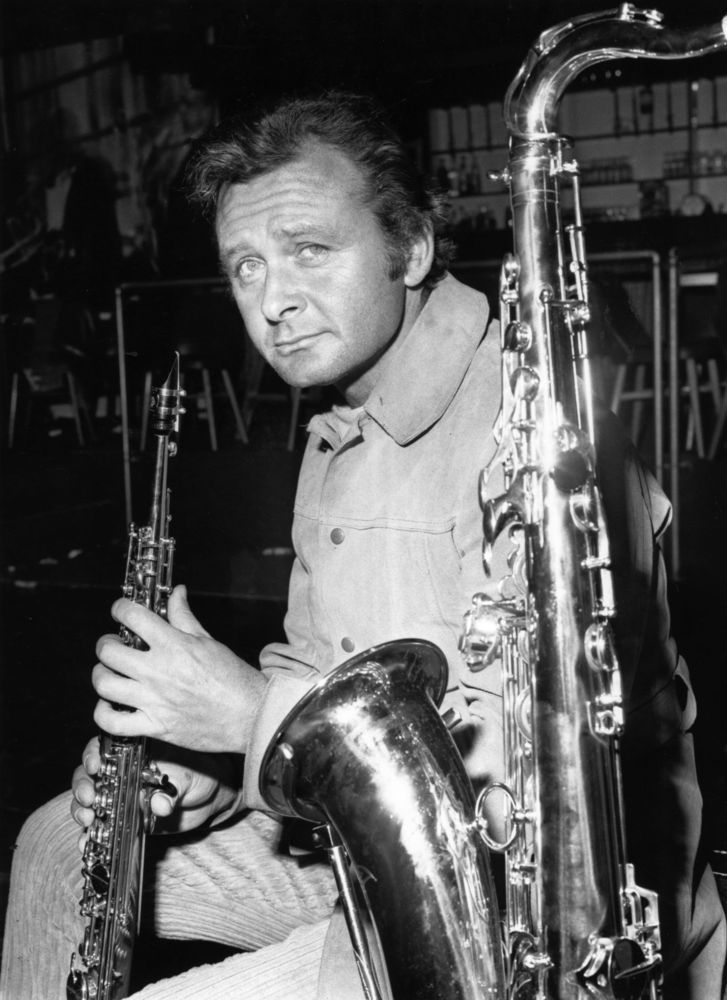
Here are a few things to consider. Miles Davis: “I don’t care if a dude is purple with green breath as long as he can swing.” Stan Getz: “The saxophone is actually a translation of the human voice, in my conception. All you can do is play melody. No matter how complicated it gets, it’s still a melody.” John Coltrane: “I’ve found you’ve got to look back at the old things and see them in a new light.”

Swing, melodic content and a knowledge of the roots –
I rest my case.


Postscript

I wrote this month’s piece just before leaving for an engagement at Jazzland in Vienna, one of the few remaining jazz venues which presents jazz six nights a week. I’m sitting looking at the photo collection on the walls of musicians who have played the club, among them many of the players who used to appear in Toronto clubs. I can’t stifle a certain feeling of nostalgia and, again, a sense of loss. But then, years from now I’m sure there will be another generation looking back at 2010 as “the good old days.” However, in my present mood, to paraphrase playwright John Osborne, it’s “Look Back In Sorrow.”


Jim Galloway is a saxophonist, band leader and the former artistic director of Toronto Downtown Jazz. He can be contacted at jazznotes@thewholenote.com.

Last month I gave a talk to the Toronto Chapter of the Duke Ellington Society, a group of enthusiasts that gets together on the second Tuesday of every month, except for July and August.

p27The Society was founded in 1959 as the Duke Ellington Jazz Society through the efforts of one Bill Ross, a Canadian working in Hollywood who placed an ad in Downbeat magazine in late 1958, announcing that a Duke Ellington Jazz Society had been formed in Hollywood. Simply put, it consists of people who are interested in Duke Ellington: fans, musicians, researchers, scholars and writers, the common bond being a love of the music of Ellington – and, of course, his alter ego Billy Strayhorn. (It’s interesting to note that in 1968, at the Duke’s request, the word jazz was dropped from the name and all the Chapters became known as the Duke Ellington Society.)

The Toronto chapter’s origins make an interesting story, thanks to the Anger family. Rhea Anger, a champion of the music of Ellington, in response to a letter of January 29 from Ross, organized the first meeting of the Toronto Chapter, which was held on May 4, 1959. Anger was elected as the first president, and the Toronto Chapter has been meeting regularly ever since. There’s no doubt that she was a suitable choice. She was the widow of Justice Harry Anger of the Ontario Supreme Court, who had established a warm friendship with the Duke many years before. After his death, Rhea and her son, Ron, also a lawyer, maintained the relationship. Over a period of time, whenever the Ellington band came to Toronto they would be invited to the Anger home after the engagement to enjoy some home comfort. And Duke Ellington played this town many times from 1931 on. I came up with a list of 16 different venues where they performed.

Robert Fulford, in the Toronto Star, January of 1987, wrote the following: “In the early 1970s, when the Duke Ellington band was playing the O’Keefe Centre, tenor saxophone soloist Paul Gonsalves came down from the stage and stood before a middle-aged woman in the audience, affectionately serenading her as the band accompanied him. While Gonsalves played and the woman shyly smiled, Ellington dedicated the number ‘for Mrs. Anger, our dear friend.’” For years Rhea and her son Ron were familiar faces at jazz events in Toronto and their love and enthusiasm for the music never diminished.

In his book, Music Is My Mistress, Ellington wrote: “Mrs. Anger and her son, Ron, are also among our most loyal friends and supporters. They never miss our appearances in Toronto, and the city’s chapter of the Duke Ellington Society has always owed a great deal of its health to them. Canada has a character and a spirit of its own, which we should recognize and never take for granted.”

In 1987 Toronto hosted the fifth annual Ellington conference at The Inn on the Park. It was a three day event, and the musicians included two Ellington alumni: trombonist Booty Wood and bassist Aaron Bell, along with Doc Cheatham, George Kelly, Ray Bryant, Gus Johnson and from Canada, Oliver Jones, Neil Swainson, Fraser MacPherson and myself. In addition, there was a rare performance of Ellington’s extended work, The Tatooed Bride by my big band. Alice Babs, who had a long collaboration with the Duke, was present. She’s perhaps best remembered for her singing in the second and third Sacred Concerts, which Ellington wrote for her voice. It had a range of more than three octaves and was so remarkable that Ellington said that when she did not sing the parts that he wrote for her, he had to use three different singers!

In the early days of the society, meetings were held in members’ homes – but nowadays Montgomery’s Inn, at the junction of Dundas Street West and Islington, is the home of the Society. And each year the Toronto Chapter presents a fundraising concert at a date close to Ellington’s birthday, April 29. In 2011, on Saturday April 30, a group led by Dave Young and Terry Promane will be the featured ensemble. More about that closer to the date.

As a result of their fundraising activities, seven $1,000 scholarships are awarded to emerging Toronto musicians, a remarkable achievement for what is a relatively small group of enthusiasts. Speaking of which, they would welcome additional members – especially some younger blood – so if you’re interested please call Chris McEvilly at 416-234-0653 and help the spirit of Duke Ellington to live on in one of his favourite cities.


What’s in a Name?

When I spoke to the Toronto Duke Ellington Society the topic was nicknames given to some of the musicians who worked with him. Here are a few of them.

Trombonist Joe Nanton was one of the great pioneers of the plunger mute. He joined Ellington in 1926 and his growl and plunger sounds were a major ingredient in the band’s jungle sound that evolved in the 20s. He earned his nickname “Tricky Sam” during his first years with Ellington. There are a couple of conflicting stories about the origin of his nickname, neither having to do with his trombone technique – a common misconception.

One story is that he consistently won when he played poker with bandmates, so much so that he became known as tricky with a deck of cards. But saxophonist Toby Hardwick claimed that he was capable of “doing with one hand what someone else would do with two – he was tricky that way.” Nanton had perfected a technique of drinking on-stage without anyone noticing!

Another trombonist, Lawrence Brown, joined the band in 1932. Somewhat straight-laced, he kept away from the drinking and high-life enjoyed by the rest of the band, a rather puritan behavior that earned him the nickname “The Deacon.”

p28Tenor sax player Paul Gonsalves joined the band in 1950 and stayed for the rest of his life. His nickname was “Mex,” because people thought he was Hispanic, when in fact he was from the Cape Verde Islands. But Ellington bestowed on him another sobriquet. Because he sometimes walked around in the audience while soloing, the Duke dubbed him “Strolling Violins.”

Here’s one for punsters. In the 1950s Britt Woodman was in the trombone section. So was Quentin Jackson, whose nickname was “Butter,” thus giving rise to “Britt and Butter.” So you see, some of us don’t only play on instruments – and words seldom fail us.

Happy listening.


Jim Galloway is a saxophonist, band leader and the former artistic director of Toronto Downtown Jazz. He can be contacted at: jazz@thewholenote.com.

Here we are heading into a new season. Summer is a sweaty memory. Before we know it, we’ll be complaining about the cold weather. But it also heralds an upsurge in club and concert activity. There are even a couple of festivals to round out that season.

The Guelph Jazz Festival runs from September 8 to 12 and kicks off with a performance featuring accordionist Pauline Oliveros performing live in Guelph with Anne Bourne (cello), Guelph’s own Ben Grossman (hurdy gurdy) and Jesse Stewart (drums) connected to two other sites where they will be joined by Ricardo Arias on balloon (in Bogotá, Colombia) and Jonas Braasch on soprano sax, Doug Van Nort on laptop and Curtis Bahn on electronics (in Troy, NY).

Some of the other featured artists include the quartet of Bob Ostertag, Sylvie Courvoisier, Taylor Ho Bynum, Jim Black on the 9th, Henry Grimes, Jane Bunnett, Andrew Cyrille, Marilyn Crispell, a double bill of The Trio (Muhal Richard Abrams, Roscoe Mitchell, George Lewis), Sangam (Charles Lloyd, Zakir Hussain and Eric Harlan), and on the closing day – and I do mean day because it is scheduled for 10:30am – guitarist Marc Ribot, bassist Henry Grimes and drummer Chad Taylor. The festival is a veritable feast for anyone who enjoys contemporary music. Full details can be found in our listings or by going to www.guelphjazzfestival.com.

P29Then there’s the All-Canadian Jazz Festival in Port Hope, September 24-26, which will be a real celebration of Canadian jazz. The Shuffle Demons, Alex Pangman and Her Alleycats, Laila Biali Trio with Guido Basso and Phil Dwyer and the Brian Barlow Big Band with Heather Bambrick to name just a few. Again, full details can be found at www.allcanadianjazz.ca.

On October 3 at the Toronto Centre for the Arts, 5040 Yonge, the Jazz Performance and Education Centre will present a tribute to Warren K. Winkler, Chief Justice of Ontario. The JPEC Jazz Orchestra (Denny Christianson, music director), and vocalist Ranee Lee are the featured performers for this gala event.

Not Run of The Mill

The fall programming at the Old Mill certainly isn’t “run of the mill.” On Thursday, September 16, 7:30pm in the dining room, 2010 Grammy Award-winning vocal virtuoso Kurt Elling will take the stand followed by the Oliver Jones Trio on September 30, while over at the Home Smith Bar Thursday nights will feature John Sherwood, except on the 16th when Richard Whiteman will take over.

Friday nights will showcase June Garber, Luis Mario Ochoa and Julie Michaels. On Saturday nights the Home Smith will present the Bob Scott Duo followed by the trios of Gord Sheard and Paul Read.

Gallery 345 at 345 Sorauren Ave. is also coming up with some interesting programmimg this month with “The Art of the Piano,” featuring Dave Restivo and Robi Botos on the 12th, Henry Grimes, Jane Bunnett and Andrew Cyrille on the 13th, and Indo-Latin jazz from Irshad Kahn World Trio on the 19th.

Meanwhile, the Rex rolls on and Quotes will be back mid-month. So the season is well and truly under way, and you should check the listings section for more complete details of the month’s offerings.

I also did some looking back at significant and memorable events this year, and two spring to mind immediately.

The Ken Page Memorial Trust Gala in May featured a cross-section of Canadian and American artists in an informal setting, again at the Old Mill, where players were mixed and matched throughout the evening. The visitors included the Vache brothers, Allan and Warren, George Masso and the multi-talented Scott Robinson, all long-time favourites with Toronto audiences. And the local musicians included almost a who’s who on the Toronto scene with John MacLeod, Kevin Turcotte, Laurie Bower, Al Kay, Don Thompson, John Sherwood, Reg Schwager, Neil Swainson, Terry Clarke, Lucian Gray and some guy playing a bent soprano sax.

Then there was the tribute performance by members of the Rob McConnell Tentet at the Old Mill. Led by trombonist Terry Promane the band gave an exuberant evening of Rob’s arrangements – that is, until the closing number, “For All We Know,” composed by J. Fred Coots in 1934, with lyrics by Sam M. Lewis. It goes as follows:

For all we know we may never meet again

Before you go make this moment sweet again

We won’t say goodnight until the last minute

I’ll hold out my hand and my heart will be in it

For all we know this may only be a dream

We come and we go like the ripples of a stream

So love me, love me tonight tomorrow was made for some

Tomorrow may never come for all we know

Ah, they don’t write lyrics like that any more.

But on that night it was an instrumental performance – and if ever there was a demonstration of the emotional power of music it was John Johnston’s moving alto sax interpretation of Rob McConnell’s arrangement. If there was a dry eye in the room it must have belonged to someone who is emotionally deaf.

To all of you out there: fall in and get out to hear some jazz!


Jim Galloway is a saxophonist, band leader and the former artistic director of Toronto Downtown Jazz. He can be contacted at: jazznotes@thewholenote.com.


“I’ve been a great jazz fan my whole life. I certainly like modern jazz as well, but my favourite kind is New Orleans jazz. Something about the primitive quality, the simplicity of it, the directness. It is the one style of jazz that stays with me the most.”

So says Allan Stewart Konigsberg, better known as Woody Allen in a recent article in New York’s Village Voice.

“Early jazz was very pleasurable and very simple,” explains Allen. “After a while, that stuff became concert music, and the chord progressions got very complicated, and the harmonies got very complicated. It became less pleasurable. Not less great … But it required more concentration and more effort from the audience.”

Allen has just finished the season of sold-out Monday night appearances at New York’s up-market Carlyle Hotel where, to be honest, his fame rather than his music was the big attraction, and forking out $100 for the privilege wasn’t a problem.

He does not deny his limitations as a musician, but his love of the music is genuine.

It is, however, a form of jazz that is no longer a part of the mainstream of the music. The audience for traditional jazz has diminished, partly through attrition, changing tastes, media neglect and the fact that jazz has embraced so many different influences that it is now well nigh impossible to define. Only a few young musicians now choose to specialize in traditional jazz and you have to look to Europe to find many of them.

Certainly, early jazz and swing musicians looked upon themselves largely as entertainers. There was no comprehension that jazz music might be or develop into an art form. “Entertainment”: such a vital word when describing early jazz, and a word that’s foreign to much of today’s music.

New York, which used to be a stronghold of jazz in the tradition with places such as Eddie Condon’s and Jimmy Ryan’s still does have a few places where you can hear jazz that swings: Arthur’s Tavern on Grove Street, Il Valentino at the Sutton Hotel on E. 56th St., and on Mondays you can catch Vince Giordano and the Nighthawks (11-piece band) at Club Cache, downstairs at the Edison Hotel on W. 46th St.

Here in Toronto the longest running of these traditional strongholds has to be Grossman’s Tavern on Spadina, which this year celebrates the 40th anniversary of New Orleans Jazz every Saturday afternoon from 4:30 pm.

P24The original bandleader was Cliff (“Kid”) Bastien, and his Saturday afternoon residence at Grossman’s began when, in 1970, then-owner Al Grossman hired the young trumpeter and his Camelia Band, later called Kid Bastien’s Happy Pals, to perform every Saturday. Apart from a short period around 1980, Kid played there until his death in February 2003. But the band, now led by Patrick Tevlin, still plays New Orleans jazz to a faithful following.
C’est What has bi-weekly sessions with the Hot Five Jazzmakerss from 3-6pm, although in the next few weeks the dates are June 5 and July 4. They play a mix of ragtime, blues, spirituals and classic jazz, and they have been strutting their stuff in this downtown watering hole on Front St. E. for over 20 years. The leader is trombonist Brian Towers, and the band is dedicated to playing in the traditional style with the emphasis on entertaining their audience.

It’s worth making the observation that when I say traditional jazz, I’m using terms of reference that have changed from the old days when jazz was still relatively easy to define – the time when you were either a traditionalist or a bebopper. Nowadays, as I have said in earlier columns, it is pretty well impossible to define just what jazz is, so widespread are the influences – and Charlie Parker’s music, once considered pretty “outside,” now sounds positively traditional.

Having said that, a great spot for jazz that swings has to be Quotes on King St., opposite Roy Thomson Hall. They have established a loyal following for their Friday sessions from 5 to 8pm with the resident Canadian Jazz Quartet plus a guest each week drawn from the extensive pool of front-rank local musicians. If you want a seat near the band you have to get there early.

What makes this club so successful? For one thing the timeframe of 5 to 8 is a winner. You can make your way there after work or make it a destination. you can enjoy the music and be home by 9 o’clock, or go out for an evening on the town. It also falls into the TGIF category at the end of the work week for most people.

But there’s another significant element; the quality of the music is extremely high by any standards, and the club has become a “hang” for local musicians, adding to the cachet. In this regard it is reminiscent of the old Montreal Bistro. They do, however, take a break over the summer months, so you will have to wait until September 17, when jazz at Quotes will enter its fifth year of swinging jazz.

However, the reality is that more and more traditional jazz finds itself surviving in little enclaves, supported by a small but dedicated following. Yet there’s a vital significance to this music: every style of jazz is an integral part of the story and if you know nothing about the roots your music – or your listening experience – will be less rewarding than it might have been.

If art reflects the age, and recognizing that we are in an era of anger and frustration, then it’s no wonder that today’s music often reflects what is happening around us these days. As the Austrian writer Ernst Fischer said: “In a decaying society, art, if it is truthful, must also reflect decay.” But I like to think that music also has the power to heal, soothe and calm, and there has to be room in our lives for jazz that lifts our spirits and entertains us.

Happy listening – with the emphasis on happy!

Jim Galloway is a saxophonist, band leader and the former artistic director of Toronto Downtown Jazz. He can be contacted at: jazznotes@thewholenote.com.


p26Another death in the family. Less than two weeks after the passing of Gene Lees, the ranks were thinned even more by the passing of Rob McConnell. But the legacy left by him leaves no doubt that his music will live on. Like Duke Ellington, the orchestra was his instrument and his arrangements will be a living memorial to his great talent as an arranger.

A native of London, Ontario, he took up the valve trombone in high school and began his performing career in the early 1950s. In 1954 he played in Edmonton with the band of saxophonist Don (DT) Thompson. Back in Toronto he played piano in drummer Alex Lazaroff’s Rhythm Rockets and trombone with Bobby Gimby before moving to New York for several months in 1964 to play, mainly with Maynard Ferguson’s big band.

On his return to Toronto he became one of the busiest studio musicians and arrangers in town. At one point he was doing the Bob Maclean Show five days a week, playing the Juliette Show, both on CBC plus any number of jingles. Whichever way you slice it, McConnell was a very successful studio musician, but the real satisfaction came from playing jazz, mostly in small group settings until he formed the Boss Brass in 1968. The band’s first engagement was at the Savarin, an attractive watering hole on Bay Street in Toronto. As the band’s name suggests, it originally had no reeds. The instrumentation was 16 pieces consisting of trumpets, trombones, french horns, and a rhythm section – but no saxophones, much to the chagrin of the local reed movers and shakers. Eventually McConnell repented and introduced a saxophone section in 1970. He also added a fifth trumpet in 1976, bringing the total to 22 members.

Inevitably it took some time for the band to be recognized in the United States, but Times jazz critic Leonard Feather, in 1986, proclaimed it the jazz band of the year. Now this was long after the heyday of big bands and for such a group to win critical and a degree of financial success was quite remarkable - an achievement all the more extraordinary when you consider the fact that five Juno and three Grammy awards were accumulated by the Boss Brass over the years.

I think it’s fair to say that it was because of the Boss Brass that McConnell was regarded as one of the major Canadian jazz musicians on the world stage. In 1997 he gave up the unenviable tasks of running a big band and formed a 10-piece group which still had the unique McConnell sound and with which he continued to work until bad health forced him to slow down.

As a person, McConnell had his light and dark sides – we all have different facets to our personality and he was certainly no exception – and was not always the easiest of people. He could be grumpy and difficult to work with, but those of us who knew him offstage also saw a much more gentle, good natured man in contrast to the crusty persona he could present.

He had a biting sense of humour, and pity on anyone on the receiving end of it. I like to think of him as the Don Rickles of jazz.! There was also a wry side to his humour. His close friend, Ted O’Reilly recalled the following little episode.

“The Boss Brass did a CJRT concert at the Ontario Science Centre for me one time, and it was intense. Setting up a 22-piece orchestra, complete with microphone setups and sound checks was hard work. To add to that, we got word that Dizzy Gillespie was going to come to the concert. It went well, of course, but at the end of the hour, with an empty hall, there was Rob collecting all the music, packing his horn; and me, wrapping up mic cables and putting equipment away. Rob stopped, shook his head and laughed, saying ‘Here’s the reward of the jazz world: you the producer, me the leader – where’s the broom to sweep the floor?”

Like many great artists McConnell coped with feelings of insecurity throughout his career, using that bluff exterior he presented to the world as a cover. Not that he was modest or insecure in his belief in the greatness of the Boss Brass – and rightly so.

On a personal note, I’m proud of the fact that in my last year as artistic director of the Toronto Jazz Festival I was able to present McConnell and the Boss Brass in what was to be their final performance. When I called him he really didn’t want to go to the trouble of getting the Brass together, and suggested that I hire the tentet instead. For my part, I knew exactly what I wanted, and fortunately I was able to convince him that a July 1 noon-hour concert in the marquee at City Hall and free to the public would be a perfect way to celebrate Canada Day, and that the Boss Brass had to be the band.

Just before the start of the performance on that day we had a few private minutes together, and it was quite clear that Rob was less than well. We walked to the tent and I know it was an effort for him to even get onstage, but there he was, cracking a joke, making the audience and his musicians feel good and launching into what was to be the last hurrah.

Drummer Dennis Mackrel summed it up nicely: “Rob McConnell was a giant among musicians and one of the finest arrangers of his day or anyone else’s. To listen to his writing was a lesson in excellence, and remains one of the best examples of just how high the bar can be!”

Thank you, Rob, for the musical pleasure you gave to fans around the world and the music that will continue to inspire young players for years to come. The boss is dead – long live the Boss Brass.

Hank Jones

p27As I was writing about Rob McConnell, word came in that we had lost yet another jazz master with the passing of pianist Hank Jones. Born in 1918 in Vicksburg, Mississippi, he outlived two younger brothers, trumpeter, composer Thad and drummer Elvin, surely one of the most musical families in jazz.

Jones was a prodigious talent and revered by every other piano player. Case in point: seven years ago The WholeNote printed a piece I wrote after spending an afternoon with Oscar Peterson. I talked about his huge talent as an accompanist, knowing when to use his great technique and when to leave spaces, and O.P. said, “Do you know who my teacher was? It was Hank Jones.” He then spoke about the Jazz At The Phil concerts when the closing of the show would feature Ella Fitzgerald, accompanied by Jones. “Hank would be right there, playing for Fitz and I’d soak up whatever I could, ‘cause he taught me everything I know about it. I learned from Hank Jones. I’m not ashamed to say that – I’m proud to say it.”

Jones leaves a wonderful legacy, and although we feel sorrow we should also celebrate his remarkably rich gifts.

Happy listening and make some of it live jazz.

Jim Galloway is a saxophonist, band leader and the former artistic director of Toronto Downtown Jazz. He can be contacted at: jazz@thewholenote.com.

Back to top