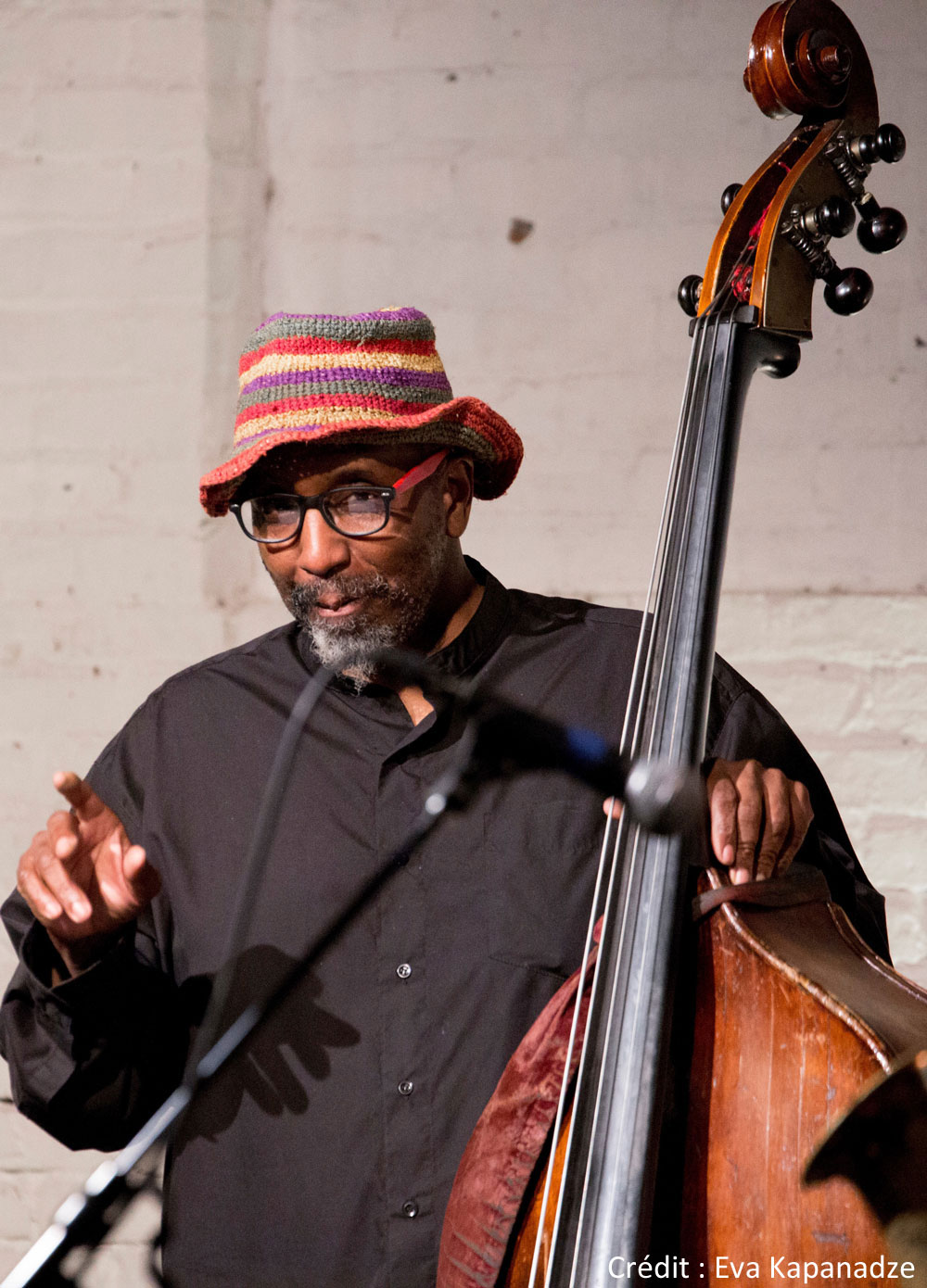
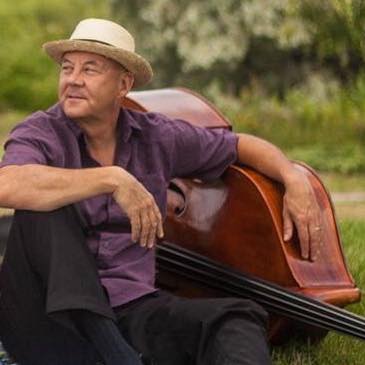
I turned 62 last August and have been a jazz bassist for 46 years now and counting, so aging has been on my mind some for a while. It’s so bewildering on so many levels. On the one hand I’m amazed I’ve made it this far and feel the accumulated mileage, at least in my body. On the other hand, I often feel as though I’m just getting started and that, while I don’t quite have the stamina and energy I used to, I know much more now and can think my way around the music better than ever. But maybe that’s just my aging brain rationalizing, and there’s the rub: is jazz mostly a young person’s game or is there still room for those approaching their dotage, like me? Is the music primarily physical or mental? Obviously it’s both, but playing an instrument as large and demanding as the bass has me wondering occasionally how long I can keep up, physically speaking.

I recently had an epiphany which made me realize that because of its openness and constantly evolving nature, but also its considerable history, jazz is music for all ages and for all seasons. Jazz constantly puts you in the moment, so being involved with it at any age – whether as a player or a fan or a student – can act as a kind of anti-aging renewal of the mind, even if the body is showing signs of creeping rust. Before coming to this eye-opening experience though, I’d like to relate a favourite story on the subject, one involving one of our ageless jazz wonders, Phil Nimmons.
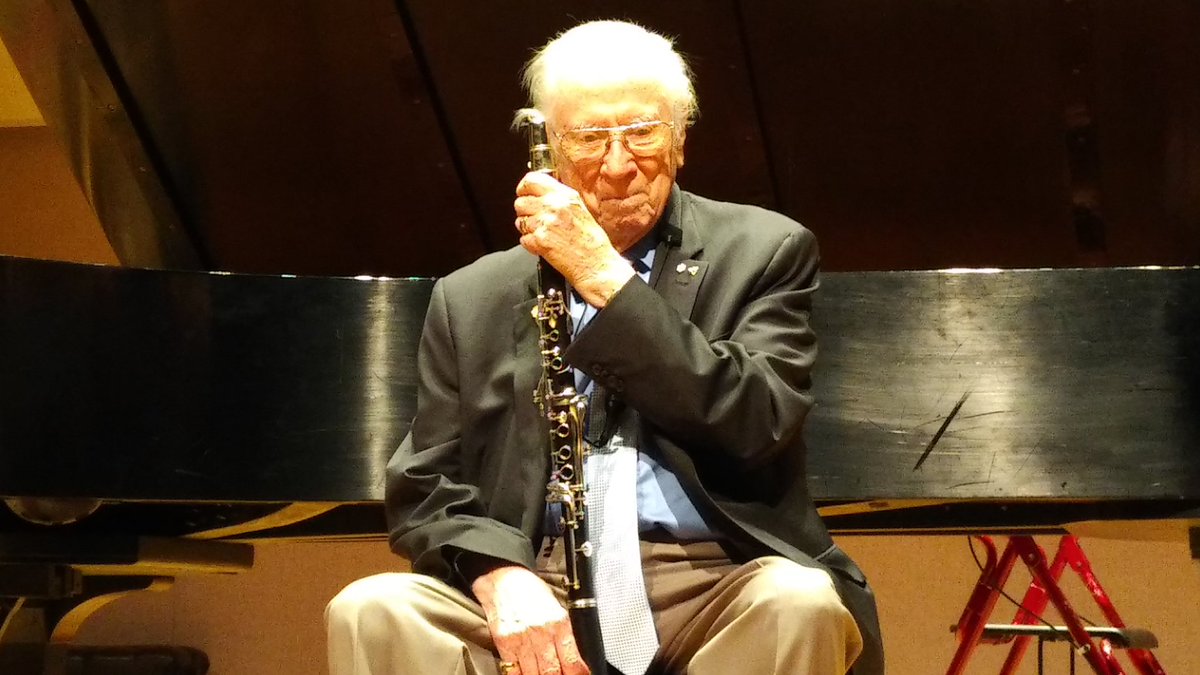
Phil NimmonsAbout 15 years ago my oldest (that is to say longest-standing) friend Robert Allair told me that a colleague of his had been to hear Phil Nimmons play with his quartet (which I was in) at the Montreal Bistro, and commented that he was amazed not only by Phil’s music but at the infectious energy and enthusiasm he put out. Robert asked, “Yeah, but do you realize how old Phil Nimmons is?” (He was a mere pup of 80 at the time.) And the colleague answered, “You know, when somebody is having that much fun, it’s hard to tell how old they are.”

The simple and profound truth of this observation delighted me then and has stayed with me ever since. It resurfaced in an unexpected way during the epiphany I mentioned earlier, which came from a lecture I gave on February 11 to a seniors’ jazz appreciation course, a part of the Academy for Lifelong Learning program which has taken place the last 25 years at Knox College, the center of theological studies at U of T. (The irony of delivering a lecture on the “devil’s music” in such a setting was not lost on me.)

The class, which meets every two weeks, is run by a charming and savvy gentleman named Colin Gordon, a long time and knowledgeable jazz fan. Members of the class are asked to make presentations and every once in a while they bring in a special guest. Mike Murley gave a lecture on Lester Young last October which was a resounding success, and he recommended me to Colin, who asked me some months ago to give a two-hour talk on a jazz subject of my choice. With some guidance from Colin, I decided to present an informal lecture on the role of the bass in jazz, how it has developed and changed over time, and some of the pioneers who helped move this process forward.

Colin suggested I bring along my bass so I could play and demonstrate some musical points directly, which I thought was a good idea. And to further avoid the monotony of my droning voice, I decided to pick some recorded examples of key bass innovators and present them in a more or less chronological sequence. These selections represented the bulk of my preparation along with a few notes, which I ended up mostly ignoring. I also resolved to weave the story of my own development as a bass player into the narrative to make the whole presentation more personal and less academic.

Hurtling toward senior citizenship myself, I was not concerned about the age of the 30 or so class members – they were largely in their late 60s, 70s or early 80s, about the same as many stalwart jazz fans on the local scene. I was a little concerned that what I had to say might be too dry or detailed for them and maybe too boring, but I needn’t have worried. To cut to the chase, after about five minutes it was clear from their faces – smiling, eager, engaged, loving the musical examples – that they were enjoying what I was presenting and I relaxed and started to wing it a bit.

I’d like to say their pleasure had to do with my insight or scintillating delivery, but no, it was mostly on them. They were bright, humorous, curious and eager to learn about something they were personally interested in. Not because of work or money or because they had to be there, but because they wanted to be there. Like Phil Nimmons in the previous story, they were having a ball and so was I, so they all seemed ageless and only a dolt could have turned off an audience like this. The two hours flew by with me covering only about two-thirds of what I had planned. Such is jazz and the value of preparation.

It was all very satisfying and afterward there were some takeaways I turned over in my mind. I love presentations that combine education with entertainment, and it was nice to watch these folks learn new things while also having fun. I’ve often thought that the keys to keeping your mind and outlook fresh are spending time with younger people, and learning new stuff. Teaching is just learning turned inside out and teaching younger students as I have recently has demonstrated this; their energy and enthusiasm rub off. But this was a little different; I felt the same inspiring feedback from folks who were my age or older. It occurred to me that jazz is not a trendy flavour-of-the-month music, but one which you can savour for your whole life. It’s not a race, there is no finish line and I felt my angst about aging fade. I also love the term “Lifelong Learning.” The minute you think you have nothing more to learn, your life may as well be over.

I was also struck by this paradox in the age-defying process of teaching/learning: that the very exhilaration of imparting information to a receptive audience is in itself exhausting – it lifts you up while wearing you out. Old and young.

It also occurred to me that the “new stuff” you may teach or learn doesn’t have to be contemporary to be relevant. If you discover a record or a song or any other piece of information that is interesting to you, its age doesn’t matter because if you’re experiencing it for the first time, it’s new to you, and that’s all that really matters. Learning about things from the distant past can lead just about anywhere and sometimes can offer a new and illuminating window from which to assess the often inscrutably chaotic present.

As a case in point, the first music track I played for the class was an off-script illustration of the brilliant-yet-obscure New Orleans bassist Sidney Brown, from 1927 with the Sam Morgan Jazz Band. I only vaguely knew of Brown and I’d like to say that this discovery was the product of my in-depth research for this lecture, but no. As is so often true, this nugget of new-old information came randomly from the invaluable musical grapevine: my friend Bill Kirchner sent a YouTube clip of Brown with Morgan which demonstrated Brown’s fluid and driving 4/4 bass lines, years ahead of the accepted notion that early jazz bass playing was all thumping primitive two-beat. This was back-to-the future modern and after 40-plus years of study and listening it forced me to reconsider my preconceptions about the past and I decided to include this in my survey to the class. Thus do we all learn, by ad-hoc sharing.
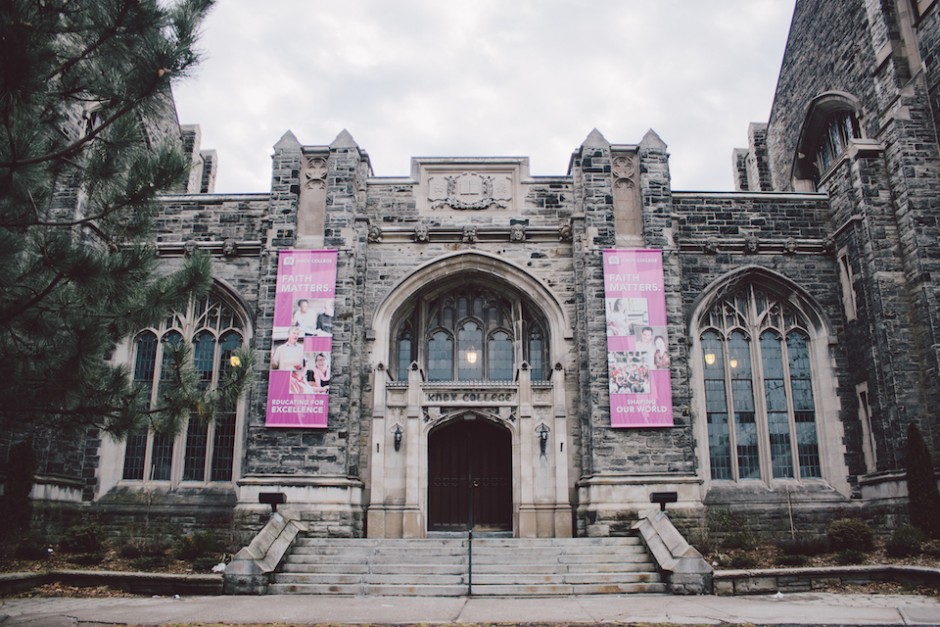
Knox College. Photo credit Mallika Makkar / The VarsityAn Aging Bassist’s Timeout

True to form, schlepping around a bass offered a dose of reality which almost counteracted all of this rosiness about the class and the youth-restoring mental benefits of learning. Namely, getting a bass into Knox College, built in 1828. I’m pretty sure the architects didn’t exactly anticipate anyone having to get a bass through its front doors. You know how there’s never a cop or a cab around when you need one? Well, picture this: there I was with a knapsack and the bass slung on my back to enter this Hogwarts, which proved next to impossible. For one thing, the doors are about 25 feet from St. George Street so nobody noticed my plight and for another, they’re really narrow, heavy as lead and begin to close on you immediately, even if you don’t happen to be carrying a large heavy log on your back. With nobody to help I got trapped and, inwardly laughing while inventing scathing new combinations of swear words and worrying that the weight of the door would crush my bass, I wrenched my shoulder in the ensuing and undignified lather. It was even worse on the way out and the result was a tight knot of pain which has been slow to dissipate, unlike me. The good news is that playing the bass seems to help it rather than hurt it. Go figure.

One more story which illustrates the anti-aging effects of music and learning about it, albeit a bittersweet one. About ten years ago when my mother’s cancer became terminal, the family decided for various reasons she should spend her remaining time at my place. It was tough, but being around my mom in her last days was a great gift. She was very passionate about music, mostly classical piano and ballet music. My clearest and dearest memories of those days are about hearing music with her. One day we were listening to a bunch of her beloved Chopin played by Vladimir Ashkenazy. Among his many compositions, I’d forgotten about the macabre Funeral March, and in a surreal moment as its famous grave theme started, my wife Anna leapt for the fast-forward button. My mother, a gamer to the end, just chuckled and said, “Now, there’s some appropriate music.” One day while listening to her favourite Tchaikovsky ballet music, I decided to play her the Ellington/Strayhorn version of The Nutcracker Suite. I wasn’t sure she’d like it, but about a minute in she raved. “Oh my goodness, this is wonderful. I can recognize the music, but they’re making it dance in a new way, with their own colours. This really goes!”

Yes, Mom, it sure does. And that’s what discovery about music does for us: when least expected, it makes us GO.

JAZZ NOTES QUICK PICKS

MAR 10, 4:30PM: Christ Church Deer Park. Jazz Vespers. Amanda Tosoff Quartet. 1570 Yonge St. Freewill offering. Religious service. A thoughtful and graceful pianist performing in a thoughtful and reflective setting. What’s not to like?

MAR 21, 7:30PM: University of Toronto Faculty of Music. U of T Jazz Orchestra and 11 O’Clock Jazz Orchestra. Rathbun: The Atwood Suites; and other works. Tim Hagans, trumpet; Andrew Rathbun, composer; Gordon Foote, Director, U of T Jazz Orchestra; Jim Lewis, Director, 11 O’Clock Jazz Orchestra; Tony Malaby, saxophone; Terry Promane, director. Walter Hall, Edward Johnson Building, University of Toronto Both these big bands are first rate and so are the guest soloists, making this doubleheader a bargain.
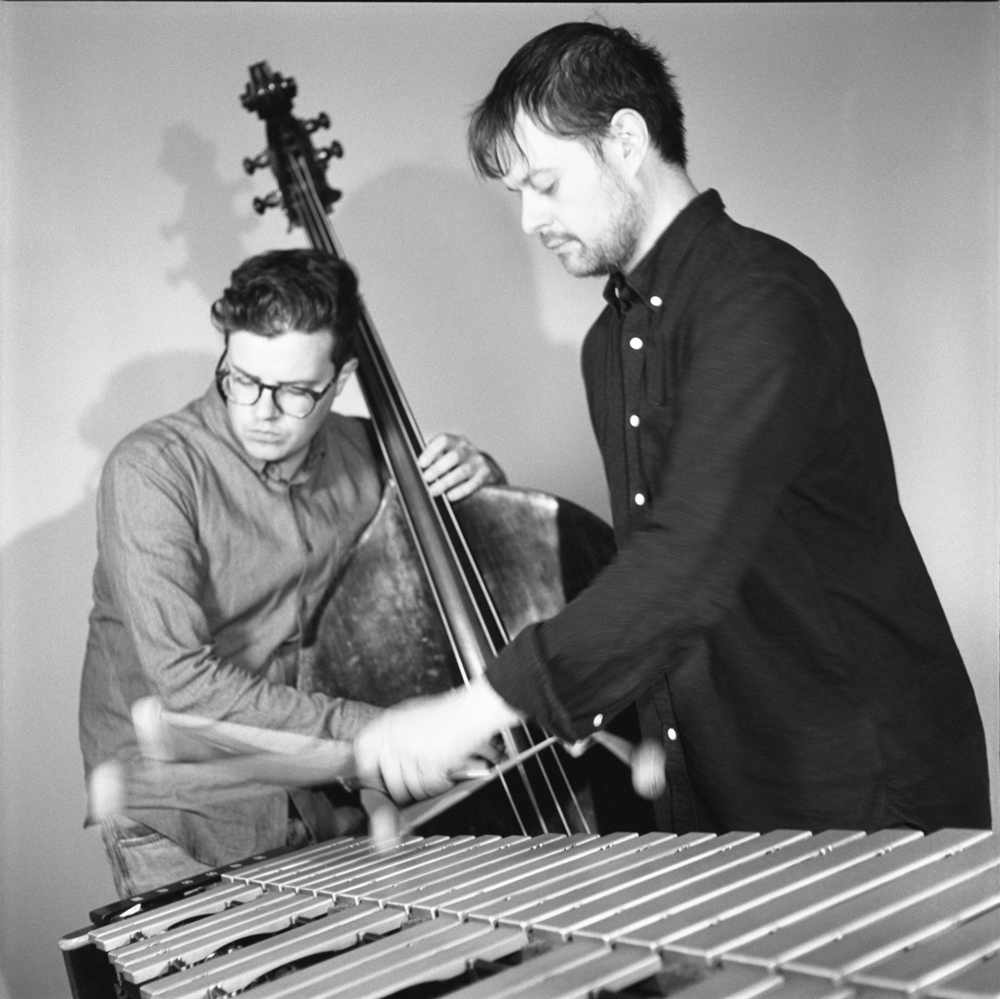
Michael Davidson (vibraphone) and Rob Fortin (bass)MAR 23, 8PM: Michael Davidson & Dan Fortin. Clock Radio CD Release. Works by Davidson. Michael Davidson, vibraphone; Dan Fortin, bass; Chris Pruden, piano. Canadian Music Centre, 20 St. Joseph St. A CD release by two of my favourite young Toronto players, Fortin and Davidson.

MAR 24, 7 TO 9PM: Mike Murley Trio with Reg Schwager and Steve Wallace Dakota Tavern, 249 Ossington Ave. 647-637-7491. Forgive the shameless self-promotion, but what can I say? This is one of the best trios going, even though I’m in it.

Toronto bassist Steve Wallace writes a blog called “Steve Wallace – jazz, baseball, life and other ephemera” which can be accessed at wallacebass.com. Aside from the topics mentioned, he sometimes writes about movies and food.
First of all, a somewhat belated Happy New Year to all the music fans out there; I hope 2019 holds a lot of happy listening and new (and/or old) musical discoveries for everyone.

Departures

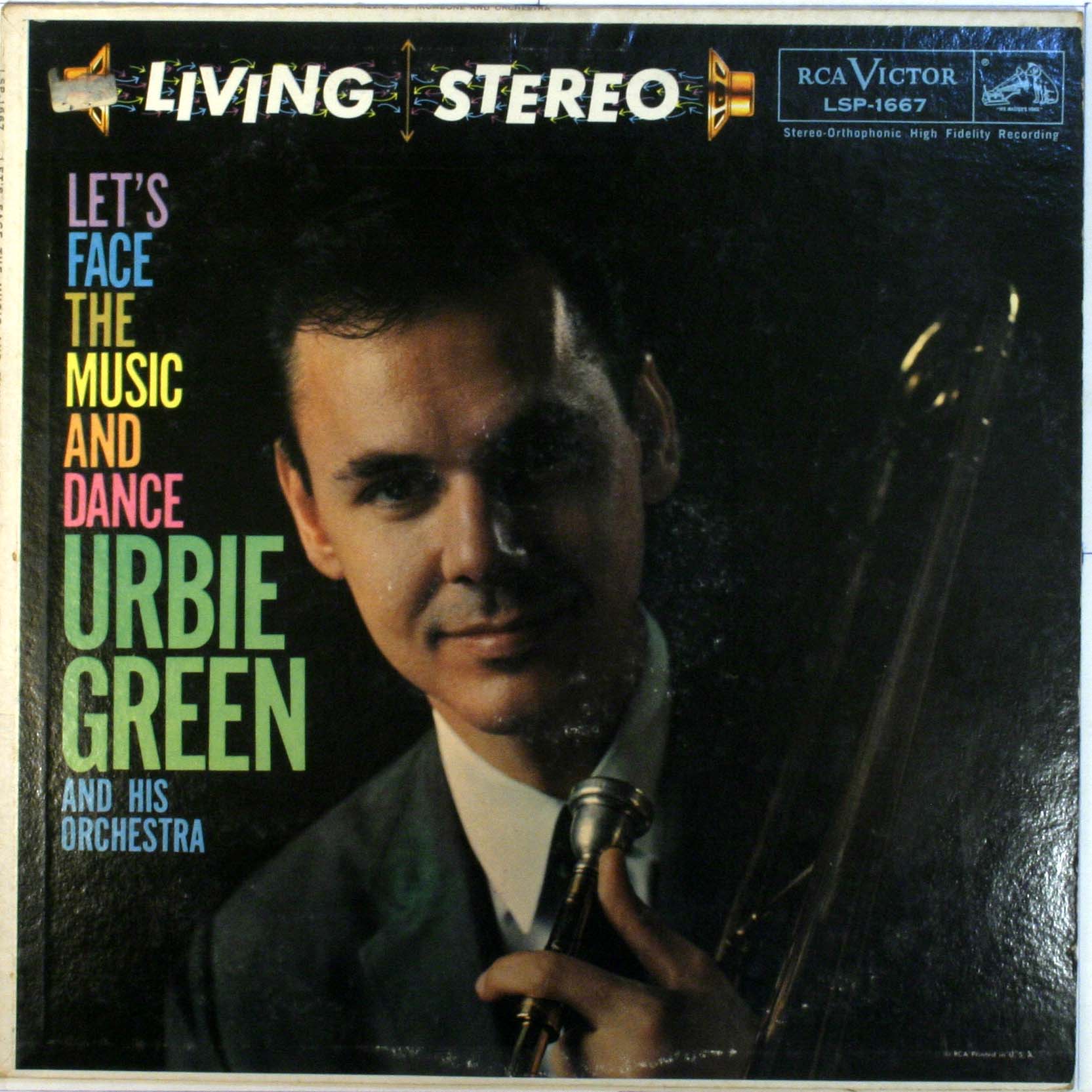
Since The WholeNote last went to press, the jazz world suffered significant losses with the deaths of singer Nancy Wilson on December 13 and trombonist Urbie Green, on December 31. While the passing of these two giants received ample and timely coverage in the jazz press, I feel it only right to use some of this space to briefly look back on the long careers of these artists who brought so much listening pleasure to us all.

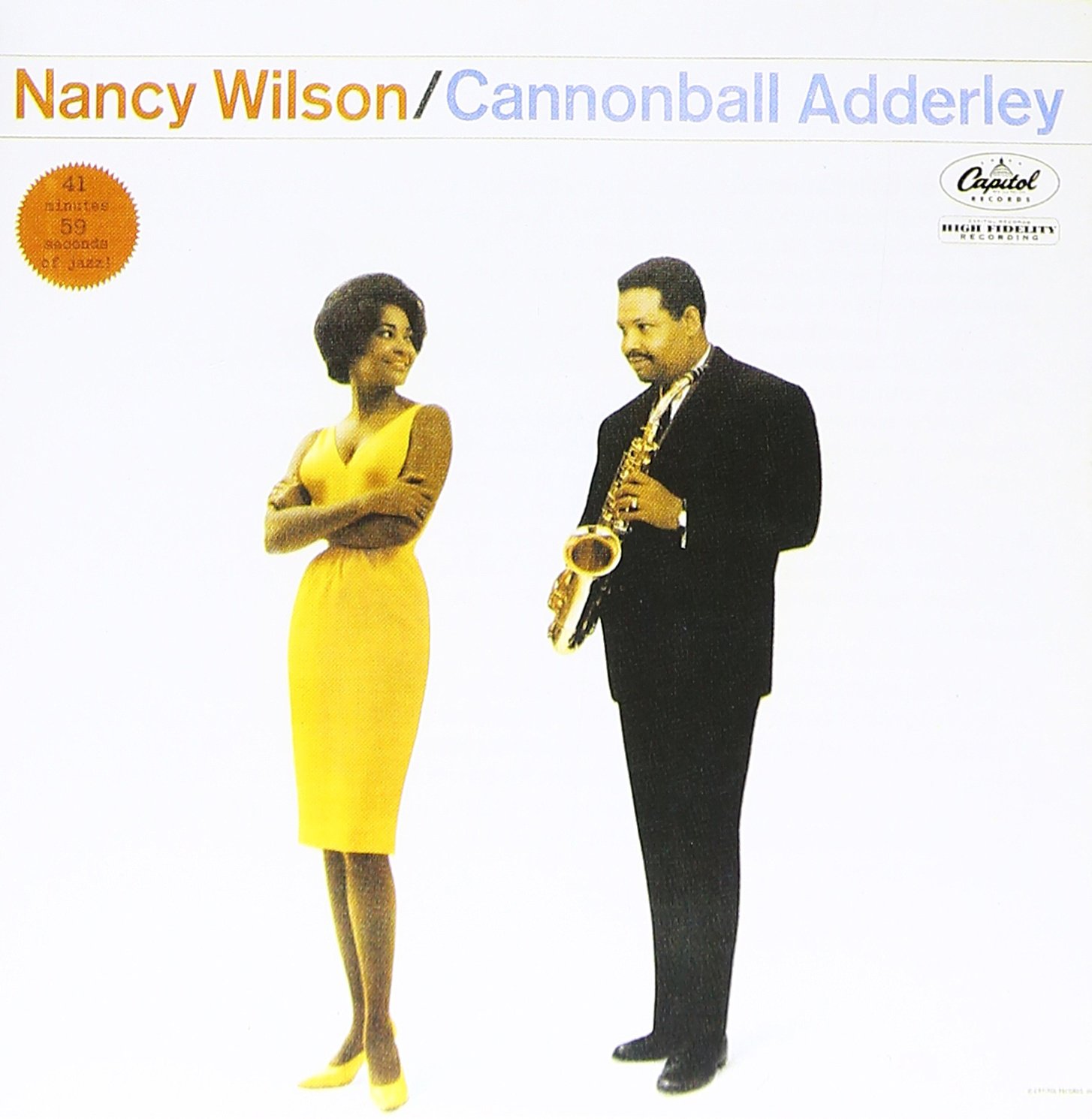
Nancy Wilson Cannonball AdderleyNancy Wilson: Wilson died at 81 after a long battle with kidney cancer. She retired from performance in 2011 after a career which began in the mid-50s and spanned five decades. She was born in 1937 near Columbus, Ohio and her friendship with saxophonist Cannonball Adderley had a major impact on her early success. He urged her to move to New York, which she did in 1959, and helped secure for her the services of manager John Levy, which in turn led to her signing with Capitol records. Her first massive hit, Guess Who I Saw Today? was so successful it led Capitol to release five Wilson albums between 1960 and 1962 and she never looked back.

Her smoky voice, overall style and versatility – she could sing jazz standards, pop, ballads, blues, soul, and R & B – suggested a smoother, toned-down version of one of her early idols, the great Dinah Washington. This versatility, coupled with her fashion-model good looks and engaging manner, allowed Wilson to achieve crossover popular success as an artist in the 1960s and beyond. But even so, her singing and records often had a high jazz quotient, as Adderley urged her to stress ballads and jazz repertoire along with pop. Their 1962 collaboration, Nancy Wilson/Cannonball Adderley, cemented her place with jazz fans even as she was reaching a wider audience, and it yielded a rare jazz hit in Please Save Your Love For Me. She had so much success as an entertainer – later branching out into acting and hosting her own TV show – that many forgot or doubted her bona fides as a jazz singer. But the record with Adderley belongs in any serious jazz record collection and she returned to singing straight-up jazz in the 1980s until the end of her career. Few of us will soon forget the glamorous image of her in that mango-yellow dress on the cover of the album with Cannonball.

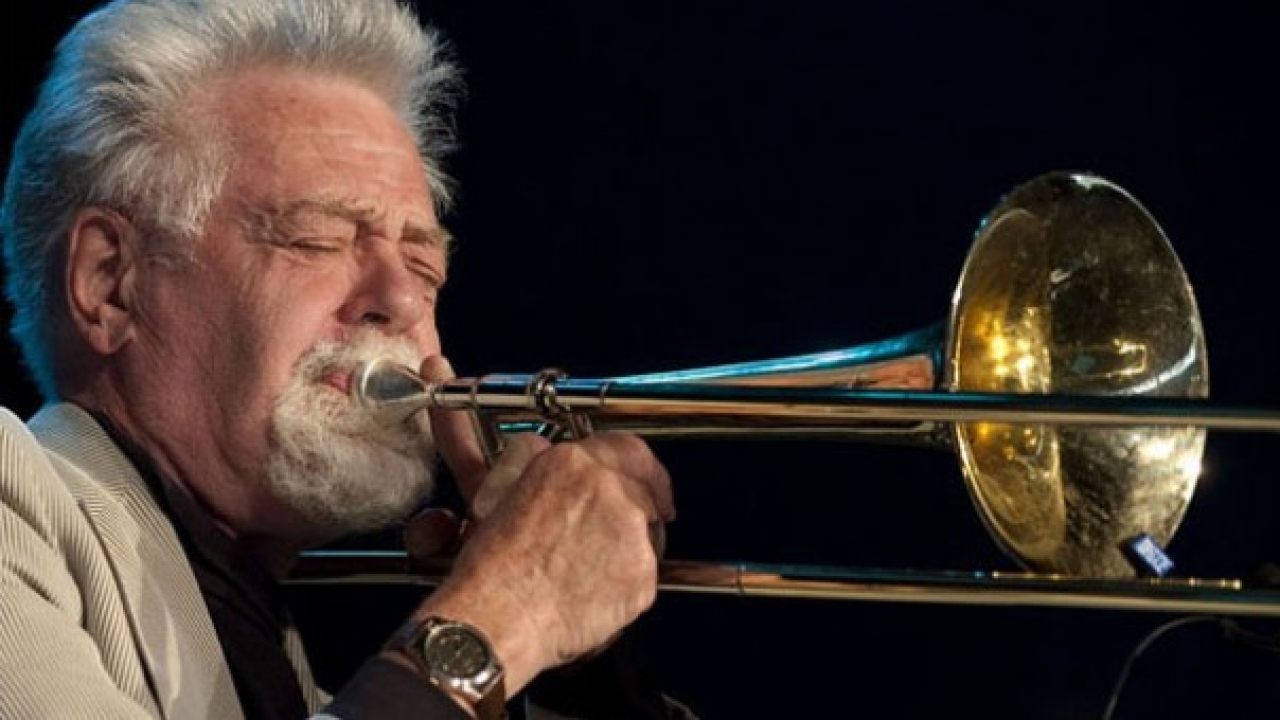
Urbie GreenUrbie Green: Trombonist Urbie Green died at 92; he had been inactive for some time and suffering from advanced dementia. He was born in 1926 in Mobile, Alabama, and both his older brothers also played trombone. He was a natural – simply stated, Green was put on this earth to play the trombone perfectly, which he did effortlessly for six decades. I feel strongly that Jack Teagarden and J.J. Johnson are the two greatest jazz trombonists in history, but I would place Urbie very close to their level. While not as original or innovative as either man, Green combined elements of each into a fluent melodic style of his own, with an unmatched technical mastery of the horn often featuring the high tessitura register associated with Jack Jenny and Tommy Dorsey. Unlike many virtuosos he had musical taste to go along with all that gleaming technique; he never played a wasted or spurious note.

After serving an apprenticeship with a series of increasingly prominent big bands in the mid-to-late 1940s culminating with Woody Herman’s Third Herd in 1950, he moved to New York City in 1953, quickly establishing himself as a jazz player and first-call studio musician. He won the 1954 Down Beat New Star Award in the trombone category and began making a series of fine jazz albums throughout the 1950s. Because he never had a regular working group and did so much anonymous studio work buried in trombone sections, his jazz playing was often overlooked and underrated, though never by other trombonists – they knew.

Under the circumstances his death was hardly tragic, yet it hit me personally because I had the privilege of working with Urbie twice in the early 1980s at Toronto jazz clubs and came to know him a bit. He was such a nice man, incredibly modest for someone so accomplished and so shy and soft-spoken that at first he seemed almost backward. But once the ice was broken, Urbie loved talking about music and musicians and his conversation was laced with wisdom and insight. He took me under his wing and taught me some specific things about tunes and chord changes and he also liked to play duets with the bass. Trying to match his level and be heard over his massive sound was a challenge that forced me to up my game. I will always be grateful for having known him even so briefly.

Arrivals

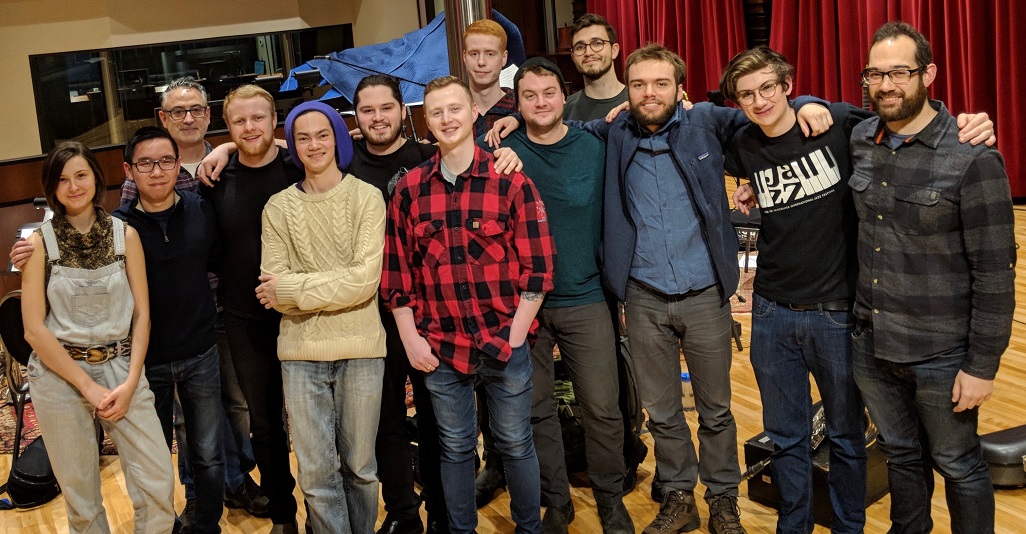
These losses are inevitable but as always are assuaged by the knowledge that jazz keeps looking forward and new talent continues to arrive. What follows is a cross-section profile of young musicians in the U of T jazz program who have impressed me lately, either from playing/working with them as a teacher or hearing them perform, or both. It is by no means complete (there are at least three other post-secondary jazz programs in our catchment area)! These are simply some I’ve grown aware of in the last few months, and they’re just beginning to emerge. We’ll begin with three young women.

Jenna Marie Pinard, vocalist: Jenna hails from Montreal and at 25, is a little older than most U of students. She’s been performing since the age of seven and confesses to still having severe nerves before a performance, but one would never guess it. She has the gift of converting this anxiety into positive energy on stage. She has a big voice, a fearless delivery, an ebullient sense of rhythm and bubbles with humour, yet there is also an attractive introversion in her, as in a recent performance of her own ballad, Green Eyes. She has a flair for song-writing, both on her own and in collaboration with her close friend, pianist-singer Hannah Barstow.

Maddy (Madeleine) Ertel, trumpet: Maddy, 20, hails from Kelowna, B.C and is in her third year. I’ve heard her several times now in a variety of ensembles and have been impressed by the following: first, her sound, which is clear and centred, a real brass sound; second, her concentration and composure: she’s always entirely focused on the music at hand, always plays with musicality. Most of all, she’s a thoughtful, lyrical player not given to technical display or running a bunch of notes, she means what she plays. She’s also very open to a number of styles without seeming to be beholden to any particular one.

Charlotte McAfee-Brunner, trombone: There have been very few female trombonists in jazz and this continues even as there are more and more women entering the fray. Charlotte, just 18 and in her first year at U of T, may change this on the local scene, if not beyond. I heard her recently for the first time and it was immediately apparent that she is intimately acquainted with early jazz styles. It showed in her big, extroverted sound and blustery, gutsy delivery using plunger and mutes with a vocalism echoing trombonists of the 30s, yet she acquitted herself very well in this ensemble playing contemporary jazz. She’s from the Toronto area and learned to improvise while busking in a Dixieland band called The Eighth Street Orchestra. Best of all she’s something of a live wire who shows a natural joy in playing jazz. This cannot be taught and will serve her well in the future.

Next, three young pianists brimming with potential:

Anthony D’Alessandro: Anthony, 21 and from Toronto, is a protégé of Mark Eisenman and he shares many of the older pianist’s virtues: a natural feeling for swing and groove, the blues vocabulary, and making a rhythm section happy with buoyant comping. He has a scintillating technique and a penchant for such feel-good pianists as Erroll Garner, Oscar Peterson, Wynton Kelly and Monty Alexander. He also has a knack for arranging tunes for a piano trio with attention to detail.

Noah Franche-Nolan: Noah is 21, from Vancouver and in his third year. I’ve heard the name for a while now, but heard him recently for the first time at The Rex and was very impressed by his originality and abandon. He’s sturdily built and plays the piano with a crunchy percussiveness and physicality which recalls Duke Ellington, Thelonious Monk and the recently departed Randy Weston. He has plenty of technique but seems delighted to throw it all out the window in the pursuit of spontaneity. He’s also a gifted composer, as evidenced by his tune Hey Booboo, which also is redolent of Monk, without being derivative.

Ben Isenstein: Ben, from Calgary, is 20 and also in third year. He’s in my small jazz ensemble and I’ve yet to hear him apart from playing with him, which provides a special window. He has radar ears, is a very quick study and has a stylistic openness ranging from Phineas Newborn to Chick Corea and more contemporary players. He also loves the blues and has real jazz time, which can’t be taught.

And two bassists to watch:

Evan Gratham: Evan, 20, is from Vancouver and (conflict declared) a private student of mine. He already has a thorough enough technical grounding on the bass that you feed him raw information and it comes out sounding like music almost immediately. I recently heard him play an arrangement that involved playing Scrapple From the Apple at a brisk tempo but up a fifth in the key of C. He negotiated it so easily I wanted to cut off his hands. Enough said.

Leighton Harrell: Leighton, 19, hails from North Carolina and is in second year. I heard him for the first time recently and he sounds like a bass player – rock-solid time and sound with a natural feel for groove and the blues. I was also impressed with his tune Cook Out, based on Sonny Rollins’ Doxy. He also delivered some effective bow work on a Dave Holland piece.

As a bassist, I pay particular attention to drummers; you sink or swim with them. One of the most heartening aspects of the local scene is the recent influx of talented young drummers, starting with, but by no means limited to, these three:

Nick Donovan: Nick is 22 and in fourth year. He’s slightly built but powerful, and extremely versatile in his approach. I’ve heard him play very musically with everything from straight-ahead piano trios to larger scale ensembles playing ambitious music.

Jacob Slous: Jacob is 19 and in second year; he comes from Toronto but his family also spent some time in New York. I played with him in my ensemble last year and was impressed, but he has only improved since then, very strong in a small group or a big band, and he’s a talented composer to boot.

Keith Barstow: Keith, the younger brother of the aforementioned Hannah Barstow, is 19 and from Napanee. Already at a professional level, he’s a very serious, contained player with no flies on him, meaning he gets the time off the ground straight away.

I used to worry about where all this young talent will play and whether they’ll be able to make a living, but not so much anymore. For one thing, that’s out of my hands. Having made the commitment to pursue jazz, all I can do is support them and make people more aware of them, as here. But more importantly, I’ve come to recognize that these are smart, dedicated, resourceful young people. I have faith that they’ll figure it out just like I had to, so long ago. 

JAZZ NOTES QUICK PICKS

FEB 9, 8PM: Royal Conservatory of Music, Koerner Hall, 273 Bloor St. W. Hilario Durán’s Latin Jazz Big Band with Horacio “El Negro” Hernández and Sarita Levya’s Rumberos. This promises to be an evening of spirited Cuban-inflected jazz with Durán’s powerhouse big band and special guests.

FEB 10 AND 24, 4:30PM: Christ Church Deer Park 1570 Yonge St. Jazz Vespers. Free Admission. Feb 10: Allison Au Trio. A chance to hear one of the best young saxophonists in the city in an intimate acoustic setting. Au is a thoroughly modern player, but her alto sound has a pleasant sweetness which suggests Benny Carter. And on Feb. 24 at the same time and venue, the wonderful duo of Chase Sanborn (trumpet) and Mark Eisenman (piano) will be performing.

FFEB 14, 9PM: Jazz Bistro, 251 Victoria St. Valentine’s Day with John Alcorn and Alex Samaras. Two of Toronto’s best male singers with an established chemistry will be performing a selection of romantic standards with a crack band.

FEB 15, 8PM: Gallery 345, 345 Sorauren Ave. Patrick Boyle Quartet: Boyle, trumpet; Bernie Senensky, piano; Jim Vivian, bass; Mike Billard, drums. A launch of the innovative Newfoundland-born trumpeter/composer’s latest release, After Forgetting.

Toronto bassist Steve Wallace writes a blog called “Steve Wallace jazz, baseball, life and other ephemera” which can be accessed at wallacebass.com. Aside from the topics mentioned, he sometimes writes about movies and food.
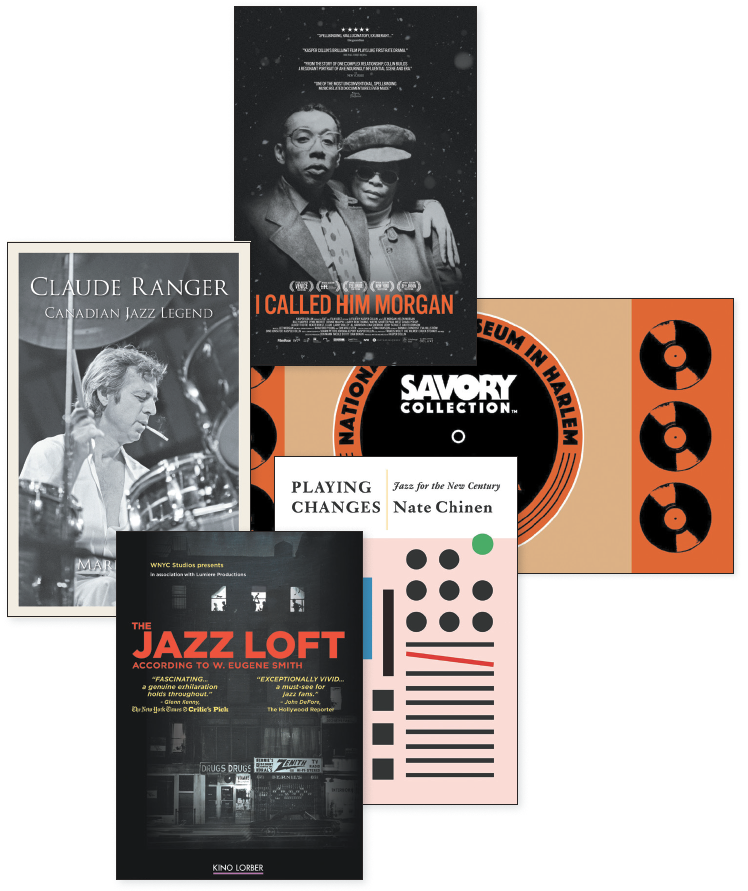
Give Yourself A Jazzy Little ChristmasWith Christmas fast approaching – where did the year go? – an overview of gifts any jazz lover would love to receive. And remember, sometimes to get what you really want, you have to buy it yourself.

BooksFirst, two with a Canadian perspective:

Claude Ranger: Canadian Jazz Legend – Mark Miller, 2017. Available from indigo.ca in e-book, paperback, and hardcover formats. Not exactly hot off the press, Miller’s latest release was reviewed by Stuart Broomer in the September 2017 issue of The WholeNote. But like all good jazz books it has a lasting relevancy. It tells the story of one of Canada’s greatest and most enigmatic jazz artists while attempting to explore the mystery of his eventual unravelling – Ranger, presumed dead, has been officially listed as a missing person for 14 years. Mark Miller is a first-rate writer, but an even better researcher, and the tale he weaves here makes for a compelling read. Readers should look forward to Miller’s forthcoming work in progress, a book on another of our great originals, guitarist Sonny Greenwich.

Live at the Cellar – Marian Jago, UBC Press. A very recent and welcome addition to books on Canadian jazz, this was released in October. Jago, a Halifax-born saxophonist who now teaches at the University of Edinburgh, examines the development of Canadian jazz through the lens of an iconic club on Canada’s opposite coast: The Cellar in Vancouver, during the hot-house period of the late 1950s and early 1960s. It abounds with rare photographs, musical analysis and anecdotes about, and from, many notables who were there, including Jerry Fuller, Fraser MacPherson, Terry Clarke, P.J. Perry and Don Thompson, who wrote the foreword. It’s a handsome and interesting book; I’m about halfway through and thoroughly enjoying it.

Playing Changes: Jazz for the New Century – Nate Chinen, Paragon. Hardcover, 288 pages, August 14, 2018. Chinen has covered jazz for 20 years in The New York Times, Jazz Times and elsewhere. His wittily titled, double-entendre-titled book – warm, richly detailed and incisive – offers a look at the state of jazz right now and highlights the important changes – technological, practical, ideological – that contemporary musicians have negotiated in the new century. It’s a kind of jazz version of Alvin Toffler’s Future Shock and is informative reading for those who are attempting to understand the torturous and ever-shifting changes of the current jazz landscape. I’m not sure yet that I agree with everything Chinen has to say, but he offers a convincing and refreshing rebuttal to any notions that jazz is irrelevant, or even close to being dead.

50 Years at the Village Vanguard: Thad Jones, Mel Lewis and the Vanguard Jazz Orchestra – Dave Lisk and Eric Allen. Hardcover, 328 pages. A sumptuous, coffee table-style book which celebrates and documents the history of one of the greatest large ensembles in jazz history, covering the noted founders but also the band’s survival and development well past their deaths. It contains scores of rare photographs, musical commentary, interviews with key members past and present, and a complete discography of the band’s massive output. People wax about the “jazz tradition” all the time, but the story of this great band in its natural habitat is the jazz tradition, continuing before our very eyes.

Sophisticated Giant: The Life and Legacy of Dexter Gordon – Maxine Gordon. October 30, 2018. University of California Press. Hardcover, 296 pages. Available in stores and online. I haven’t read this book yet but judging from reviews, it looks promising. A close-up look at the life and music of one of the great individualists and innovators in jazz history, written by the woman who is not only his widow, but an accomplished jazz writer in her own right.

CDsToo many to list, but here are a few I’ve enjoyed of late:

An Evening of Indigos – Bill Kirchner. Jazzheads, 2015. This beautiful 2-CD set is the entirety of a 2014 concert soprano saxophonist Kirchner gave in the Jazz Performance Space of The New School in New York City, where he has taught for over 25 years. He is joined by Carlton Holmes on piano, Holli Ross on vocals and bassist/singer Jim Ferguson in varying combinations. As the title suggests, the program is reflective in nature, though not monochromatically so – a mixture of some fine originals and choice standards, all performed with a startling, almost vulnerable intimacy. This is something of a musical banquet which repays repeated listening. Those who wish to know more about Bill Kirchner may read a piece I wrote about him at wallacebass.com.

Both Directions at Once: The Lost Album – John Coltrane. Recorded March 6, 1963. Released June 29, 2018 by Impulse! Records. Not much needs to be said here, this is a fascinating discovery of an entire session by Coltrane’s classic quartet at their peak and as such belongs in any jazz fan’s collection.

Three from Mosaic Records The superb mail-order CD-reissue company has three recent, essential historic releases, available at mosaicrecords.com. They may seem pricey at first glance, but given the rarity of the music and the as-always-superb production values, these are actually a bargain:

The Savory Collection: 1935-40 - 6 CDs, $99 US. Bill Savory was a recording engineer in NYC whose day job was editing transcription recordings for overseas consumption. By night he took to recording the blazing jazz being played in various clubs such as The Famous Door, the Onyx and others. His collection of tapes languished unknown for years until recently when they were discovered, curated and partially issued as downloadable files by jazz scholar and saxophonist Loren Schoenberg. Mosaic has gathered more of them and issued them on CD for the first time. The quality of both the music and sound is staggering; featuring the Count Basie Orchestra, Fats Waller, Coleman Hawkins, the John Kirby Sextet and many others.

Classic Brunswick & Columbia Teddy Wilson Sessions: 1934-427 CDs, $119 US. A cornucopia of great music from the most artistic swing pianist of them all, leading a stunning array of star-studded groups. Much of it is seeing the light of day for the first time in decades. So this is not to be missed.

Classic 1936-47 Count Basie & Lester Young Studio Sessions8 CDs, $136 US. This set features Basie and Young, both together and separately, during their respective primes. Many fans will already have some of this music in their collections, but probably not all of it; and thanks to Mosaic’s superb mastering, it’s never sounded this good. Desert island music.

DVDsNeither of these are particularly new, but are of such high quality that even fans who have already seen them would like to have them to watch over and over again.

I Called Him Morgan – Directed, produced and written by Kasper Collins. Released 2016, available at amazon.ca and other sites. This documentary tells the complex and cautionary tale of the relationship between star trumpeter Lee Morgan and his common-law wife Helen, who rescued him from severe heroin addiction, nurtured him back to health and oversaw the most successful years of his career, only to shoot him dead on the bandstand at Slug’s in February, 1972. The story is told so well that even those who could never otherwise forgive Helen Morgan for the murder are forced to view her with compassion and to admit that she paid sorely for the crime; and that if left to his own devices, Lee Morgan would have died long before he did at her hand.

The Jazz Loft According to Eugene W. Smith – Directed by Sara Fishko. Released September, 2016; available at amazon.com. For my money, this is the best jazz documentary ever made. Fishko and her team did a phenomenal job of editing a mountain of raw material into a linear and cohesive story, which tells two tales. Firstly, that of Eugene W. Smith, the Pulitzer Prize-winning photographer who virtually created the photo-essay genre while at Life magazine, and who took some of the most famous black-and white photographs of the 20th century. In the mid-50s he began to unravel under the pressure of his own obsessiveness with his work, leaving his wife and children and taking a loft in an abandoned, rat-infested building located in New York’s flower district, where he lived between 1957 and 1965. While there he took over 40,000 photographs and secretly recorded 4,000 hours of the jazz played in the all-night jam sessions that were held in the building for years. These form the soundtrack for the movie, a kind of rare insider’s view into an underground scene only a city like New York could produce. Zoot Sims, Pepper Adams and Bob Brookmeyer were among the “frequent fliers” and Sims in particular receives a lot of attention. There are jazz tales from other denizens of the building such as drummer Ronnie Free, who arrived from the South an innocent with much promise but got hooked on heroin and barely survived. And there’s a stunning sequence between composer/arranger Hall Overton, who had a studio in the building, and Thelonious Monk, preparing the music for Monk’s Town Hall concert featuring a ten-piece band which rehearsed in the building. This doc makes a fascinating peak period in jazz history come alive. I could watch it every day, but I’d never get anything done.

I’d like to add to this jazz Christmas list my best wishes to WholeNote readers everywhere for a safe and joyous holiday and a Happy New Year. 

JAZZ NOTES QUICK PICKS

DEC 7, 8PM: Koerner Hall. Royal Conservatory of Music presents Paquito D’Rivera with the Harlem Quartet. The great alto saxophonist/clarinetist in an interesting program featuring some rags, Debussy, Bolcom, Webern and music reflecting his Cuban roots.

DEC 8, 8PM: Gallery 345; 345 Sorauren Ave. The Art of the Piano: Hilario Durán. If you like Cuban-inflected jazz piano – and who doesn’t these days? – this is the concert for you; in an intimate setting with an excellent piano.

U of T 12tetFEB 6, 7:30PM: Walter Hall, Edward Johnson Building. 80 Queen’s Park. U of T 12tet, directed by Terry Promane. I love small big bands ranging from 9 to 14 members and this, comprising some of the best jazz students U of T has to offer, is an excellent one, expertly directed and arranged for by Promane.

Toronto bassist Steve Wallace writes a blog called “Steve Wallace jazz, baseball, life and other ephemera” which can be accessed at wallacebass.com. Aside from the topics mentioned, he sometimes writes about movies and food.
The Jazz Performance and Education Centre (JPEC) is now in its tenth year – my, that went fast – and is celebrating the milestone with a special concert on November 24 at the Aga Khan Museum called “The Music of Dave Brubeck and Paul Desmond.” It will feature Remi Bolduc on alto saxophone and arrangements; Bernie Senensky on piano; Reg Schwager on guitar; Terry Clarke on drums; and yours truly on bass. With well over 30 concerts under its belt to date, and many other presentations and initiatives, JPEC has become an integral part of the Toronto jazz scene. To mark the occasion I recently did an email interview with Ray Koskie, who, along with his wife Rochelle, is co-founder of JPEC.

I’ve known Ray (a retired founding partner of the law firm Koskie Minsky) and Rochelle (a retired schoolteacher) casually as dedicated jazz fans for close to 40 years now. As JPEC is clearly a labour of love for this jazz-loving couple, I decided to begin by asking Ray a little about how he and Rochelle became such avid fans.

(from left) Joe Sealey, Rochelle Koskie, Jackie Richardson and Ray Koskie at the Paintbox Bistro January 2013.WN: How did you and Rochelle catch the jazz bug?

RK: We both grew up in Forest Hill and met when we were in our late teens. Rochelle was a couple of years younger but way ahead of me; she was already musically educated, played piano and cello and had accumulated some jazz records. I mostly teethed on stuff my father listened to at home – Benny Goodman, Artie Shaw and so on. Live jazz was kind of the soundtrack to our romance as some of our first dates were at the Town Tavern, where, thanks to part-owner and manager Sammy Berger, we were able to get in despite being underage. He took a shine to us for some reason and made a spot for us in the back room where we could nurse Cokes and split a club sandwich – about all we could afford in those days – while listening all night to incredible music by the likes of the Oscar Peterson Trio with Ray Brown and Herb Ellis, Art Blakey, Illinois Jacquet, Jackie and Roy, Ben Webster and many others. It became clear before too long that we were both hooked and we’ve never looked back.

I graduated from Law School around 1961 and we got married and eventually started a family. The late, great John Norris was a big part of us getting to know more about jazz in those years and during this time we became regulars at Bourbon Street where we heard the likes of Chet Baker, Barney Kessel, Dexter Gordon, Al and Zoot, Paul Desmond and so many of the great Toronto players – Ed Bickert, Don Thompson, Bernie Senensky and Terry Clarke, among many others. In fact, that’s where we first heard you play, Steve. The rhythm section for the upcoming Brubeck/Desmond concert with Bernie, Terry and you is a nod toward those days. After Bourbon Street closed we frequented both the Café des Copains and the Montreal Bistro where we enjoyed the hospitality of Brigitte and Lothar Lang while hearing great music from people like Johnny Guarnieri, Jim Galloway, Doc Cheatham, Rob McConnell, Jay McShann, Geoff Keezer, Dave McKenna, Oliver Jones, Joe Sealy and so many others.

How did JPEC get started?

After The Top O’ the Senator and the Montreal Bistro closed we were approached by some other well-known Toronto jazz people to help in obtaining alternative jazz venues and as result a working committee was formed. Part of this involved examining the concept of the successful Jazz At Lincoln Center (JALC), which we thought might be a new model for presenting jazz in Toronto. Following a tour of that beautiful facility and being supplied with certain pertinent documents, we recommended to the committee that this approach – i.e. becoming a not-for-profit charitable organization – might be the best way to go under the circumstances. Although this might prove more challenging than creating another jazz club, we felt it would likely have a longer shelf life. As a result, JPEC was incorporated in August 2008 as a not-for-profit charitable organization.

What were some of the early challenges?

Some members of the committee felt that the charitable organization route, while laudable, was too ambitious, which led to certain people leaving who were replaced by those who believed more in the JALC concept. Lack of funding was an early problem with respect to meeting some of our objectives, but various fundraising events were held and Toronto jazz fans really pitched in. When we began to make progress certain members of the TO jazz community mistakenly seemed to believe that we were in competition with their endeavours even though we were all supposedly working for the same cause, namely the furtherance of jazz. We went on to succeed despite such misguided thinking because there were many others who supported our efforts and believed in our objectives.

What are those objectives?

To provide performance opportunities for Toronto’s jazz musicians, including jazz students, and to properly compensate them. To promote jazz in this city and reach out to new audiences. An educational element, namely to present community-based workshops in underserved areas at schools having little, if any, music education. This is something Rochelle, as a former schoolteacher, feels very strongly about. And eventually to establish a fulltime jazz hub similar in concept to, but smaller than, JALC.

After the inevitable early struggles, what kind of support have you received over the years?

We’ve been lucky to have the benefit of corporate sponsors such as TD Bank, BPA, LiUNA and private donors such as Jack Long of Long & McQuade, who has supported jazz so generously over the years. My law firm Koskie Minsky absorbs our administrative costs, which leaves more money for fulfilling our mandate. JPEC has been blessed with a talented board of directors and many other dedicated volunteers who have worked tirelessly to help deliver our mission.

How does JPEC plan its concert programming and choose the venues?

We try to present both international jazz stars and Toronto-based talent and often to combine them in one concert or even one band, as for example with Americans Ernie Watts and Brad Goode recently being backed by a crack Toronto rhythm section of Adrean Farrugia, Neil Swainson and Terry Clarke, with Rich Brown’s band opening. We like to present performance opportunities for up-and-coming musicians – all of JPEC’s shows include pre-concert duos or trios consisting of students from the three GTA jazz institutions or Mohawk College. As with most things JPEC, the programming is designed by a committee, some of the members of which are musicians, marketing people and those involved with the technical aspects of staging. All committee decisions are subject to board approval. As to venues, we’ve preferred more intimate concert ones with seating ranging from 150 to 300 people, such as the Glenn Gould, the George, and for the first time with our upcoming concert, the concert hall in the Aga Khan Museum, which we’re very excited about.

There’s also a community-outreach aspect to JPEC which is tied to both programming and education. In addition to the 170 music workshops we’ve presented in underserved schools over the last decade, we’re proud to be supporting and participating in the initiative of the International Resource Centre for Performing Artists, an outgrowth of the old “Jazzmobile” model, using a mobile facility to present events in more isolated communities that will benefit the talent in those areas as well as the talent of Toronto’s musicians. In other words, if the people can’t get to the jazz, then take the jazz to the people – good jazz makes for a good society and vice versa.

Not that I think it’s an odd idea, but why a Brubeck/Desmond concert at this particular time?

In consideration of JPEC’s tenth anniversary, we wanted to reach out to a broader jazz audience by presenting a tribute to two such well-known and respected musicians who achieved enormous popularity not only internationally, but with Desmond in particular, on a local level. Desmond’s late-career appearances at Bourbon Street were unforgettable to those of us lucky enough to have heard them, and his ringing musical endorsement of Ed Bickert in particular – but also Don Thompson and Jerry Fuller – gave Toronto jazz a major shot in the arm. Hence the addition of Reg Schwager on guitar to reflect Desmond’s career after Brubeck. Unless Ed Bickert himself were to come out of retirement, it would be hard to imagine a guitarist more suited to the task.

What do you see for JPEC moving forward and do you think you’ve made a difference?

We’ll continue to present quality concerts such as this one and of course the outreach workshops will continue. And we’re still seeking to create a fulltime hub. As for making a difference, I like to think we have. In July of 2018 Rochelle and I received a special award and donation to JPEC from TD Bank for: “Giving back to the community by bringing jazz to public schools, educating students young and old, and providing Toronto with outstanding jazz concerts.” I think that sums it up nicely.

Me too. Thanks for your time, Ray, and for all you and Rochelle have done for jazz in Toronto over the years. 

JAZZ NOTES QUICK PICKS

NOV 8, 5:30PM: Old MillKen Page Memorial Trust Annual Fundraiser. The Lairds of SwingWarren Vaché, cornet and musical director; Guido Basso, flugelhorn; Russ Phillips, trombone; Ken Peplowski, reeds; Harry Allen, tenor saxophone; Rossano Sportiello, piano; Reg Schwager, guitar; Neil Swainson, bass; Terry Clarke, drums. I’ve written in greater detail about this star-studded event in the past – simply put, the finest in modern mainstream swing with both an international and local thrust.

NOV 16, 8PM: Toronto Centre for the Arts – Jazz at the George. Etienne Charles – Carnival. This concert by the brilliant young trumpeter/composer who explores his calypso/Caribbean roots in tandem with jazz, kicks off the five-concert Jazz at the George season.

Patricia Cano appears in the COC's Jazz Series on November 28.NOV 28, 12 NOON: Canadian Opera Company – Jazz Series “Songs In the Key of Cree.” Tomson Highway, piano and vocals; Patricia Cano, vocals; Marcus Ali, saxophone. Never mind whether it’s jazz or not, do not miss this rare chance to hear the musical – and I mean musical – side of one of our greatest playwrights. And Cano is a vocal powerhouse.

DEC 4, 8PM: Toronto Centre for the Arts – Jazz at the George. Dianne Reeves Christmas Time Is Here – For my money, the best jazz singer on the planet singing Christmas music can’t fail to put you in a festive spirit.

DEC 5, 5:30PM: Canadian Opera Company – Jazz Series. “Music From the Claudia Quintet Playbook – McGill Jazz Sextet, John Hollenbeck, director. This is highly recommended mostly for Hollenbeck, a highly original drummer/composer with an audacious taste for combining – and bending – musical genres.

Toronto bassist Steve Wallace writes a blog called “Steve Wallace jazz, baseball, life and other ephemera” which can be accessed at Wallace-bass.com. Aside from the topics mentioned, he sometimes writes about movies and food.

Jazz is forever being pronounced dead, or at least sickly, yet it has continued to survive and grow, if not in terms of audience share, then at least musically speaking. On the local level it’s a little difficult to assess the state of the music’s health these days, and I’m often flip-flopping on the subject. On the one hand there’s a pool of talent in Toronto growing deeper and more diverse all the time, but there are fewer gigs and places for everyone to play. It’s certainly harder to make a decent living playing jazz than in the past, yet the music is being played at a higher and higher level. Part of the problem in assessing all this is the disconnect between financial and musical success: there’s a lot of the latter but not much of the former for many. Further on the local Jekyll-and-Hyde axis, we have the continued success of the new grassroots Kensington Market Jazz Festival, contrasted with the recent troubles of JAZZ.FM91, which I’ll return to later.

We’re always being told by its keepers that jazz, like everything else these days, is a business. But to those who truly care about it – the fans, who consume it, and the musicians, who produce it – it’s not a business, it’s a music, a form of art and entertainment. (Louis Armstrong and countless others having long ago proved that the two are not mutually exclusive.) We care about it in terms of music, not dollars, and are thought to be naïve for this, yet saying that it’s primarily a business rather than an art form is putting the cart before the horse: the only reason there’s a business aspect to jazz is that people are willing to spend money to hear it because they’re drawn to its artistry; it’s that simple. The moment people stop being attracted to jazz as music there will be no business, because they’ll stop spending money to hear it. This may seem obvious, but a lot of people fail to see it. We’re constantly being told that the business side must take precedence otherwise there will be no music, but I think it’s the other way around. I’ve always found that when the artistic/real side of jazz is stressed and presented honestly then it thrives, as in the case of the KMJF, but woe betide when that focus gets lost amid too many extrinsic considerations.

I’m not going to comment too much further on the JAZZ.FM situation because it’s still up in the air and on a jazz musician’s salary I can’t afford a legal dream team, but I will say this: There’s a lot of angst and outrage in the jazz community over a recent turn of events, which is seen as another black eye for jazz, a fail which the music can ill afford. As currently constituted the station probably can’t continue, but there is a movement afoot to save it by making some changes. For those interested, I recommend going to savejazzfm.com and signing up; you’ll be casting a vote to salvage jazz on the air in Toronto, with some changes in management and philosophy, some lessons learned, greater accountability and more input from listenership.

But even if the station goes under, I hasten to point out that JAZZ.FM and jazz itself are not the same thing, not even close. Sooner or later another jazz station will crop up because there’s clearly sufficient interest in having one. In the meantime, make up for the dead air by going to hear more live music.

Jazz Survival 101: A Primer

Jazz Humour – With all the adversity the jazz life entails, how does one carry on? By boosting one’s morale, that’s how. What follows is a kind of jazz survival kit – to translate an old cliché into jazz terms: “When the blowing gets tough, the tough get blowing.” The first requisite is developing a sense of humour. I’m biased, but jazz musicians are the funniest people I know, mainly because they have to be. Jazz humour is laced with a gallows irony, a dry “laughin’ to keep from cryin’” wit. Here are some examples: Back in the early days of fusion when some jazz musicians were accused of selling out by trying to reach a wider audience through playing more rock-oriented music, Jim Hall turned to Paul Desmond (or perhaps it was the other way around) and asked ”So…. where do I go to sell out?”

Or “How do you make a million dollars playing jazz? Start out with two million.”

Or the one about a musician hiring another for a jazz gig, boasting that it pays “three bills” – two tens and a twenty.

Because jazz musicians improvise so much, the humour pool is constantly expanding on the fly, as when I recently bumped into Lesley Mitchell-Clarke on my way to a gig with John Alcorn at the KMJF. Lesley, well-known to WholeNote readers, is a jazz survivor extraordinaire on many fronts and one of the funniest people I know. She asked, “Steve, do you realize we’re celebrating the 40th anniversary of the venerable $100 jazz gig?” I doubled over and nearly dropped my bass because the line was so darkly funny and true. While house prices have at least quintupled over the last 20 years, the pay for many jazz gigs has stayed the same. This may not seem funny to many, but to jazz people it has an inverse, “do your worst” kind of sick irony. What else can you do but laugh?

(Two asides, in the interests of fairness and full disclosure. After many years, The Pilot Tavern recently upped the pay for its Saturday jazz matinee to $120 per musician, to which I remarked “Hey, alright! Tonight we eat!!” And just to show that not all jazz gigs top out at $100, the aforementioned Alcorn trio gig at the tiny Jazz Poetry Café was sold out and paid almost twice as much as we were expecting. This is because the KMJF volunteers collect the cash and then give all but a tiny fraction of it to the band. Somehow or other this very direct jazz economy works, so not all is lost.)

Peter LeitchTake A Week and Learn the Classics

This was guitarist Peter Leitch’s dryly sarcastic advice to a jazz beginner long ago. As in “listen to some records, for God’s sake,” and fortunately it takes much longer than a week. If the present seems chaotic and less than rosy, turn to the embarrassment of riches found in the back catalogue of great jazz records. This is not a matter of burying your head in the sand or living in the past, but rather a way of renewing yourself by taking a bath in the glories of the music while perhaps reminding yourself of why you love jazz in the first place. And you no longer need an extensive/expensive record collection to do so, because almost all of it is available on YouTube, another mixed blessing. Somehow things don’t seem so bad when you’ve just heard some Hot Fives, the 1938 Basie band, Spiritual Unity or whatever else takes your fancy. I do this all the time and it buoys me up, sending me off to a gig with a spring in my step and my musical sights set higher because I’ve just spent some time in the company of the masters.

Herbie NicholsA variation of this is checking out some jazz history by reading about it, which can bring some much-needed perspective. You think things are rough now? Try reading Mark Miller’s superb Herbie Nichols: A Jazzist’s Life, which tells the story of the pianist/composer who literally died from neglect and yet lives on through the efforts of people like Miller, the late Roswell Rudd, who curated his music, and The Herbie Nichols Project, which keeps his music alive by playing it. This is called inspiration and can also be found in books such as Robin D.G. Kelley’s exhaustive biography of a better-known giant who also endured much adversity – Thelonious Monk: The Life and Times of an American Original. Or one I’m currently reading about clarinettist Pee Wee Russell. Not only did Russell never own a house, he mostly lived in shabby apartments, was perpetually broke and often out of work. And yet he earned permanent jazz immortality because of his singular and fearless individuality. Things were always tough, why would they be any different now?

Communal SupportThe local jazz community is a symbiotic relationship between fans, musicians and those employed as enablers of the music – writers, broadcasters, promoters, presenters, and so on. Essentially they’re all jazz fans and offer support to one another by attending jazz shows and events, which is crucial. But even more important is the palpable moral support shown by this group when the chips are really down. A good example – among many – is the recent memorial service for Kiki Misumi, who died at 58 in late August after a long and brave battle with cancer. Kiki was a very talented and creative cellist, singer and songwriter who was married for many years to one of our great stalwarts, guitarist Reg Schwager. Her memorial, held in early September at a facility of the Buddhist society to which she belonged, was packed to overflowing with her fellow Buddhists and members of the local jazz community who had known her for decades and came to pay their respects. Despite the overwhelming sadness of her too-early passing, it was a singularly moving and inspiring service, marked by some uplifting chanting, some lovely music and eloquent speeches, including one by Reg which staggered everyone – he’s normally quite reticent and I still don’t quite know how he managed it. Kiki fought fast-moving terminal cancer and ten gruelling surgeries for 12 years through a unique, self-styled blend of prayer, chanting, diet, humour, and sheer courageous positivity. We could all learn a lot about dealing with adversity from the way she lived her life and faced her death. Rest in peace Kiki, we will all really miss you. And come what may, I’ll take my chances with a jazz community as stout as this every day of the week. This video shows what Kiki was all about far better than I ever could in words: https://www.youtube.com/watch?v=MU0sZo13YWY.

I continue to face the fragility of jazz with a mixture of defiance and ambiguous world-weary irony, as in this paraphrase from the refrains of Mose Allison’s Gettin’ There: “I am not downhearted. I’m not discouraged. I am not disillusioned… But I’m gettin’ there. Yeah… I’m gettin’ there.”

JAZZ NOTES QUICK PICKS

Jackie RichardsonOCT 1, 8, 15, 22, 29 AT 6:30PM: The Rex Hotel 194 Queen St. W. - Jazz Ensembles from U of T and Humber College – The regular regimen of Monday performances by students and graduates from the jazz programs of these two schools. The music is varied, stimulating, honest, often surprising, and always worth hearing.

OCT 11 AND 12, 9:30PM: The Rex Hotel 194 Queen St. W. – The Mark Eisenman Quintet. I’m maybe biased (because I play in it), but this is one of my favourite Toronto bands, one which plays a bristling brand of contemporary bebop often laced with Eisenman’s compositions, many of them ingenious contrafacts on standards. John MacLeod, cornet, Pat LaBarbera, saxophone; Mark Eisenman, piano; Mark Micklethwaite, drums; and yours truly, bass.

OCT 14, 4:30PM: Christ Church Deer Park 1570 Yonge St: Jazz Vespers: The Drew Jurecka Trio – An opportunity to hear one of Toronto’s most brilliant and versatile multi-instrumentalists in a quiet and reflective setting.

OCT 18, 7:30PM: Garage at the Centre for Social Innovation 720 Bathurst St. Jim Galloway’s Wee Big Band, directed by Martin Loomer, special guest Pat LaBarbera, soprano saxophone. With its lively and retro repertoire, this unique band is always worth hearing, but having the encyclopedically talented LaBarbera as a guest soloist makes this a must-attend.

NOV 3, 7:30PM: Bravo Niagara! Festival of the Arts – FirstOntario Performing Arts Centre 250 St. Paul St., St. Catharines: “Voices of Freedom Concert”For those willing to travel further afield, a concert featuring two of Canada’s best-loved jazz singers, Jackie Richardson and Molly Johnson, backed by a superb trio of Robi Botos, piano; Mike Downes, bass; and Larnell Lewis, drums.

Toronto bassist Steve Wallace writes a blog called “Steve Wallace jazz, baseball, life and other ephemera” which can be accessed at Wallace-bass.com. Aside from the topics mentioned, he sometimes writes about movies and food.

Jazz Takes a Holiday: As with most things, when the dog days of summer hit, jazz slows down a bit, particularly after the festival season ends in early July. There was still jazz to be heard at the usual Toronto venues in July and August, but many of the gigs I attended or played were sweaty, sparsely attended affairs, owing to so many people being away on vacation or simply trying to dodge the stickiness of the city. Even The WholeNote takes a break and it was certainly a slow summer for me and many of my colleagues in terms of work, but I didn’t mind so much because a lot of the time it was too hot to play jazz, or even think about it.

But now that September is suddenly upon us and the jazz programs resume at York University, Humber College and U of T, live jazz will be back in full swing, pun intended. The two are not unrelated; increasingly, the Toronto jazz scene is impacted and shaped by the young musicians studying and playing the music, interacting with so many of the city’s veteran jazz players – the usual suspects - teaching it. There have always been promising young players on the Toronto scene – I myself was one of them over 40 long years ago – but I can’t remember a time when there were so many as now, and their presence will be felt at the clubs in September and the coming months.

For one thing, the students form a large and enthusiastic audience at jazz gigs, and for another, Monday nights at The Rex will again feature student ensembles from U of T and Humber playing short sets. This allows for a wide array of styles ranging from the contemporary to the traditional (“traditional” now meaning “bebop,” not Dixieland.) I plan on attending these regularly and I urge Toronto jazz fans to do so as well. Not only to support the students, which is important, but because these evenings offer a kind of one-stop-shopping opportunity to hear varied and interesting music played by talented young people who represent the future of jazz. Well-known Toronto players not only direct these groups but often play in them as well. This interplay between the young and old(er) can produce satisfying musical results; jazz is grown this way.

I want to touch upon one group that has sprung out of this student-teacher cooperation which will play a couple of times in September and which I find interesting, despite the fact that I’m in it: Harrison Squared. It’s named after two young men who graduated from the U of T jazz program in April: drummer Harrison Vetro and tenor saxophonist Harrison Argatoff, with tenor saxophonist Mike Murley and me cast as the mentoring oldsters. Not that either of these young men need mentoring, as both are well on their way as advanced players; we all simply enjoy playing together. We’ll be playing at The Rex on September 1 and on September 30 at The Emmett Ray, another venue where young Toronto players can be heard frequently and to advantage. There are plans to record early in 2019, which I look forward to.

The group hatched out of a chance encounter between Harrison Vetro and me in early 2016 at U of T. His drum teacher, Nick Fraser, was on tour and asked me if I would teach Vetro a lesson, reasoning that he might benefit from some pointers from a veteran bassist. We worked on a few tempos and rhythmic feels and I liked his drumming straight away: it was quiet but intense, creative yet swinging. About halfway through the lesson he asked if it would be okay if his friend Harrison Argatoff joined us on saxophone for a few tunes. Glad of some melodic content I said sure thing, while wondering what was up with all the Harrisons all of a sudden – my ensemble that year had a very fine guitarist in it named Harrison Bartlett. Like Vetro, Argatoff is a thinking, creative player, very much in the Lennie Tristano/Warne Marsh vein. I cautioned Argatoff not to play so far behind the beat and told Vetro not to follow him when he did so, but otherwise I really enjoyed the instant musical chemistry between us. We resolved to get together and play again but scheduling made this difficult, so finally the two Harrisons took the bull by the horns, landing a gig at The Rex in September of 2016 and asking Murley and me to join them; thus was a band born. We didn’t rehearse, just agreed on a selection of standards and some out-of-the-way jazz originals. The gig had a very open, spontaneous feeling and was immensely satisfying – having played together on countless occasions, Murley and I enjoyed the stimulus of playing with fresh partners and the Harrisons upped their game playing with such muscular and experienced veterans!

In their own words, here are Vetro and Argatoff on what they’ll be up to musically in the near future:

Harrison VetroHarrison Vetro: “I’m leading my own project called Northern Ranger. I will be releasing a CD under this name on October 20 at Gallery 345 in Toronto. It has been funded by the U of T Faculty of Music Undergraduate Association. The album features Lina Allemano, Harrison Argatoff and Andrew Downing, as well as a few others. This is a student/teacher project and we had Nick Fraser come into the studio as a producer. It was a lesson in leading a band, making decisions as a band leader, using studio time efficiently.

The Northern Ranger album is inspired by the Canada 150 celebration and is a series of compositions following my cross-Canada travels in 2016 and 2017. My curiosity for Indigenous music propelled me to visit specific locations within the six Indigenous cultural areas in Canada: Arctic, Subarctic, Northwest Coast, Plateau, Plains and the Eastern Woodlands. My compositions offer a new perspective on the landscape of Canada.

Proceeds from this album will assist outreach programs for youth with limited access to music education. I have a tour booked for this album release and will be performing at The Jazz YYC (Calgary) and Yardbird Suite (Edmonton) winter jazz festivals, as well as The Bassment in Saskatoon and some other dates on the east coast this November. I have also been invited by Jazz YYC to give an improvisation workshop in a high school on one of the reserves in the Calgary area.

I also have a residency at the Tranzac on the fourth Wednesday of every month, where I will present new music.”

Harrison ArgatoffHarrison Argatoff: “Having graduated from U of T this past spring, my current plan is to continue making music in Toronto. This fall I’m excited to be releasing my first CD, Dreaming Hears the Still, a collaboration between pianist Noah Franche-Nolan and myself. The CD exclusively features our original repertoire, most of which uses precise composition as a framework for improvisation. I am also currently working on music for my solo saxophone project and the Harrison Argatoff Quartet (both of which are in their infancy). Having grown up a Doukhobor in the interior of British Columbia, teachings of pacifism, communal music making and respect for life and nature have deeply affected my personal and artistic endeavours. I’m currently focusing on developing a modern approach to music through original composition for a variety of ensembles, and also for solo performance. My music combines the study of free improvised music, traditional jazz music and contemporary classical music.”

As their words indicate, both young men are interesting and dedicated creative young musicians and I hope many of you will come out to hear them in action with Murley and me at The Emmett Ray on September 30, as well as in their own future ventures.

Toronto’s young jazz players and students will also be taking a significant part in two September music events. One, the Toronto Undergraduate Jazz Festival (TUJF), taking place September 4 to 8 at The Frog pub, Mel Lastman Square and Jazz Bistro, is devoted entirely to them. And, as in the past, young players will have a role in the upcoming Kensington Market Jazz Festival, September 14 to 16. Both of these festivals are covered in detail elsewhere in this issue.

Miss Aretha. A brief word on Aretha Franklin, whose recent death packed a momentous, end-of-an-era kick in the gut even though we knew it was coming. Her music transcended musical genres, politics, international boundaries and even race; only a handful of artists have made so many feel so good for so long. As we mourn her passing, we can only feel grateful to have had her here on earth with us for so many years. Few thought of her as a jazz artist but her early records on Columbia belie this, as did her piano playing; she was a great singer but the real magic happened when she sat down at the piano to accompany herself. R.I.P. Aretha.

JAZZ NOTES QUICK PICKS

William ParkerSEP 4, 8:30PM: The Frog, TUJF. The Anthony D’Allessandro Trio. A chance to hear one of Toronto’s best and hardest-swinging young pianists in an intimate setting playing his choice arrangements of standards and jazz classics.

SEP 13, 8PM: Guelph International Jazz Festival, River Run Centre. A double bill with the Nick Fraser Quartet featuring Andrew Downing, cello, Rob Clutton, bass, and Tony Malaby, guitar; and Amirtha Kidambi’s Elder Ones. A chance to hear one of Toronto’s most creative bands and a highly adventurous international one.

SEP 15, 10:30AM: Royal City Church, Guelph International Jazz Festival William Parker, bass. One of the giants of contemporary avant-garde jazz in a solo performance. ‘Nuff said.

Toronto bassist Steve Wallace writes a blog called “Steve Wallace jazz, baseball, life and other ephemera” which can be accessed at Wallace-bass.com. Aside from the topics mentioned, he sometimes writes about movies and food.

The 32nd TD Toronto Jazz Festival will run June 22 to July 1, with 23 ticketed shows in various venues and approximately 150 free concerts. For the second straight year, the festival will be centred around Bloor-Yorkville, with seven core venues: outdoor stages on Cumberland St. and Hazelton Ave., The Pilot Tavern, Heliconian Hall, the Church of the Redeemer, the Isabel Bader Theatre and the Village of Yorkville Park. This year’s festival also has some new initiatives, including four ticketed concerts at Trinity-St. Paul’s; an opening night celebration co-produced with the Royal Ontario Museum called “Jazz Club,in which the ROM will be transformed into a giant nightclub featuring jazz, swing and dancing throughout the evening; and a partnership with CBC Music and the JUNOs rotating between two Yorkville stages and highlighting Canadian musicians who were either nominated for, or won, JUNO awards this past year. The showcase will feature eight bands on June 30, including David Braid/Mike Murley, the Okavango African Orchestra, Hilario Durán, Shirantha Beddage, Autorickshaw, Beny Esguerra and New Tradition, and more.

With the festival fast approaching, I sat down for a conversation with Josh Grossman, now in his ninth year as artistic director, about this year’s festival and its continuing evolution.

Josh Grossman - Photo by Marie ByersWN: Walk us through the move away from Nathan Phillips Square into Yorkville, which began last year. What has this change brought to the festival?

JG: There were programming-flexibility and other issues involved in having the big tent in Nathan Phillips Square as the festival’s central venue. These involved noise by-law requirements which limited us to three shows a day – one at noon, one in the late afternoon and one in the evening – and we wanted to be able to present more. Also, the tent held 1,200 people and the pressure of filling it for ten straight days proved to be a challenge. The sound was often less than ideal and so was the atmosphere – we lacked the budget to decorate the square to give it more of a festival feel as it had during the Pan-Am Games. The move to Bloor-Yorkville allows us to present smaller shows, but more of them, and in a variety of indoor and outdoor venues that provide more flexibility and variety. Also, with its pre-existing history, Yorkville provides a village-within-a-city feel that makes a jazz festival feel like more of a festival, which is hugely important. It has a built-in community and neighbourhood vibe and offers many other advantages. It’s in the centre of the city, easily accessible by public transit and, with seven venues, it offers a flexibility of programming. It’s also close to some of the hard-ticketed venues such as the Danforth Music Hall, Koerner Hall, the ROM and Trinity-St. Paul’s, so there’s a sense of concentration. We want people to be able to catch a variety of shows each day by simply walking or taking a short subway ride. Because Yorkville is relatively small, many of the venues, even the outdoor ones, offer an intimacy which suits the music being presented. Heliconian Hall for example, where we’ll be presenting ten free concerts, holds just 100 people, has wonderful sound, a good grand piano and a great stage. The Church of the Redeemer is similar and both these venues have a history within the city, which it’s nice to take advantage of.

What has response from the Yorkville community been like?

Local councillor Kristyn Wong-Tam and the Bloor-Yorkville BIA have been very supportive, which has allowed us to increase the Yorkville footprint of the festival this year. It’s helped that CEO Howard Kerber, who formerly ran TIFF in the community for several years, has been involved. There are still noise by-law issues – no more than 85 decibels and nothing past 11pm – but most shows will wind up by ten. And the local businesses certainly appreciate the influx of 5,000 people into the neighbourhood.

Apart from affordability, availability and avoiding repetition from year to year, what drives your selection of acts for the festival?

We focus on the audience in Toronto, being aware of who’s popular in the city, and of the increasing cross-cultural aspect of the community with an eye toward promoting this. With the ticketed big-name shows we look for variety; we want the acts to be exciting and vibrant as well as financially viable. It’s certainly not a matter of me as artistic director just indulging my own tastes; there have been many times I’ve wanted to bring in an artist I love but have been shot down by the board. It’s surprising, but there are a number of artists with huge international jazz reps who simply don’t sell well in Toronto. The free concerts are easier because there’s no box office pressure and the possibilities are almost endless.

There’s a perception that the festival has grown smaller in the last couple of years – is this true?

Not entirely. There have been slightly fewer big-name, hard-ticketed events the past couple of years, but the total number of presentations has held steady at 170 to 180. Part of the perception that we’re smaller is we no longer involve, under the festival umbrella, many clubs which present jazz part time. This is largely because they didn’t allow us input into their booking of artists. The exceptions this year are the Home Smith Bar, The Rex (which does its own booking but we wanted to maintain a partnership with because it presents so much jazz year-round) and The Pilot Tavern, an obvious choice given its location and long history.

I’ve often thought that with jazz festivals, smaller can be better.

Yes, we’re finding that can be true – that musical quality and variety matter more than size.

You’re likely sick of this question – as am I – but what do you say to the inevitable criticism that there are acts in the festival that aren’t really jazz?

So when we bring in someone like Willie Nelson, or Alison Krause this year … I’m not going to argue that they’re jazz artists, but they serve a certain purpose in attracting large audiences, which helps the bottom line, which in turn helps us afford other artists. But whether they’re jazz or not, nobody can argue that they’re not great musical artists. And there’s a hope that their fans, who may not have been exposed to jazz before, may catch some other shows and say “Hey, I like this, why haven’t I heard this before?” Also, it’s not really fair, because those critics often seize on one or two artists out of the 170 being presented, most of which in some form are legitimately jazz. The music has evolved and cross-pollinated so much that it now comprises many elements of world music, R&B, soul, blues, funk and so on, so who can say anymore in absolute terms what jazz is, or isn’t? Particularly in the summer, jazz becomes a bigger, more inclusive tent. Besides, some of these more popular artists can surprise you – for example, a few years ago the Steve Martin booking was roundly criticized, but in my opinion his performance offered more improvisational content than a lot of the so-called “straight jazz” ones did that year.

How long does putting together each festival take?

With all the logistical challenges and coordination of booking, organizing and planning, it’s pretty much a year-long process. The team generally allows itself some time off to bask in the afterglow of the current festival, then it’s on to organizing the next one.

What would you like to say about this year’s festival?

I’m pretty excited about it, the expanded presence in Yorkville and some of the new venues, artists and initiatives being offered, such as blues legend Bettye Lavette heading up a Blues Revue for the first time in the festival and the first-ever Toronto appearance by The Bad Plus featuring their new pianist, Orrin Evans; the Industry Exchange, a new series being held in the Stealth Lounge of The Pilot, aimed at promoting emerging local talent from diverse musical backgrounds. The Yorkville venues have given us the flexibility to present a lot of Canadian talent, both established and lesser-known. I feel we’re offering a program with a lot of range, featuring some legends such as Herbie Hancock as well as some newer artists, in some of the city’s most attractive venues.

Bettye LavetteAll told, you’ve done seven or eight of these, so what do you consider a successful jazz festival to be – how does that look?

Well, attendance and the bottom line are important of course and it helps if the weather cooperates. But mostly, it’s the vibe of the festival, the feeling of its interaction with the city itself, positive feedback from audiences, seeing familiar faces and some new ones at the shows. Having artists express an interest in returning is always nice and often happens because this is such a vibrant city with so much musical talent. And it’s a good sign when I see a lot of local musicians in the audience.

Full disclosure! Aside from playing two Yorkville concerts with Reg Schwager’s Songbook and the Barry Elmes Quintet, I plan on being one of the local musicians in the audience Josh Grossman spoke about. I like the eclecticism and look of this year’s lineup, some of the new initiatives and the overall scope and size of the festival. Above all, I feel its setting allows for some musical intimacy and the potential to be what a jazz festival should be at the end of the day – festive. I wish everybody an enjoyable time at this year’s festival and a happy summer of listening.

To see more detail about this year’s lineup and schedule, visit torontojazz.com

Toronto bassist Steve Wallace writes a blog called “Steve Wallace jazz, baseball, life and other ephemera,” which can be accessed at Wallace-bass.com. Aside from the topics mentioned, he sometimes writes about movies and food.

Quite unexpectedly and after a long hiatus, I began teaching again in September of 2016. Mike Murley, director of the U of T Jazz Program, hired me to lead a small jazz ensemble with one unusual wrinkle: not only would I be coaching the group, I would also play bass in it. This two-headed function took some getting used to but has the advantage of being very hands-on: the students seem to benefit from playing with an experienced bassist and playing with them gives me a very palpable sense of their strengths and weaknesses, of what they need to learn.

I’ve thoroughly enjoyed being back at it, having the chance to pass on my knowledge and also to be involved with young people again – their energy, their enthusiasm and their curiosity – which has made me feel more connected and relevant. It’s also been inspiring to meet and teach some of the impressive young players we’ll be hearing from in the near future, even if this means they’ll be stealing gigs from me and my colleagues.

This column will profile two bassists – neither of whom I’ve taught – who are graduating from the U of T Jazz Program: Bernard Dionne, who has earned his master’s degree in jazz performance (double bass), and Irene Harrett, who has earned her bachelor’s degree in the same category.

Bernard DionneAt 60, Bernard Dionne is a late bloomer and hardly a typical graduate. I first met Bernard way back in the summer of 1991 when I taught him for a week at the Interprovincial Jazz Camp at Manitouwabing run by Phil Nimmons, and we have stayed in touch ever since. Even then, at 33, he stood out as a mature student amongst all the teenagers, which may have prepared him for his similar experience at U of T. Bernard hails from Quebec City and has been interested in jazz and playing the bass since his teens. He earned a bachelor of music education degree and spent 29 years teaching in the Ontario French School system, first in Ottawa and then in Toronto. All the while he continued to play and study jazz bass, doing whatever gigs his schedule would allow and becoming a regular at weekend jam sessions.

He was able to retire a few years ago and was determined to use his newfound spare time to get more involved with the bass fulltime and to study composition and arranging. The master’s program at U of T seemed ideal as it requires achievement in both playing and writing, so Bernard decided to apply. Realizing he needed to up his game for the audition, he took an intensive round of lessons from the superb Toronto bassist Neil Swainson while practising constantly. And it paid off; he was accepted. His enrollment coincided with my return to teaching and, knowing nothing of his master’s plan, I was surprised to see him in the hallway one evening and was delighted for him.

It was a very intensive two years for Bernard – studying bass with Jim Vivian, composition and arranging with Terry Promane, and improvisation with Mike Murley, while playing in ensembles and completing numerous written assignments on jazz history and the like. He worked very hard and it showed in his master’s recital in early April, which I attended. He led a group which ranged from a piano-bass duo to a trio to a sextet with three horns, playing a varied program which included some of his original compositions and his arrangements of standards and jazz tunes by others. I hadn’t heard him play in some time and was immediately struck by how much he’d improved in all areas: a big, meaty sound, a confident rhythmic attack with a strong beat and incisive bass lines, gutsy and melodic solos with good range and an engaging way with the sizeable crowd on hand. His writing was also impressive: his originals included a very Quebecois-tinged folk song A La Legrand which showed his Scott LaFaro side; La Vida, a Chick Corea-inspired samba which demonstrated his admiration for Eddie Gomez; and For D.H., a modal-Latin composition in 7/4 written for Dave Holland. His more bluesy side came out in his arrangement of Christian McBride’s funky In a Hurry for sextet. It was an impressive and well-received recital; a satisfying culmination for an individual who has worked so hard to come full circle.

With much the same group, Bernard staged a concert billed as “100 Years of Jazz Bass” on April 21 at Alliance Française de Toronto. Along with some of the works discussed above, the evolution of jazz bass was fleshed out with compositions by (or associated with) Wellman Braud, Jimmie Blanton, Oscar Pettiford, Ray Brown, Charles Mingus and Paul Chambers. I very much wanted to attend and perhaps review this concert but couldn’t as my own band, Lesterdays, was playing a concert the same night. The concert occurred after the deadline for this article but judging by Bernard’s recital it was a great success, aided by the intimate and good-sounding venue which has become one of Toronto’s best.

Very much a Francophone, Bernard plans on moving to Quebec City and becoming involved fulltime in the jazz scene there, where he is sure to have an impact.

Irene HarrettIrene Harrett is 22 and has just finished the four-year Jazz Program at U of T, earning her degree with flying colours. Mature beyond her years, she has become something of a linchpin in the program both because of her musical skills and her active involvement in organizing jams and gigs and also by playing in the U of T big band, one of the school’s focal ensembles, for the last two years.

She was born in Etobicoke, not far from the Humber College campus, which held some early musical advantages. Bassist Corky Monahan, formerly of the TSO and for many years married to the late Tom Monahan – principal bassist of the orchestra and the dean of Canadian bass teachers – lived in the neighbourhood and she was able to study bass with her at the local high school. This gave her a thorough grounding in bass technique – bowing, correct fingering and hand positioning, tone production and so on; fundamentally, she’s a very sound bassist. When her interests turned to playing jazz she was able to study with Neil Swainson, who had begun teaching at Humber. At U of T she has studied with Dave Young, Jim Vivian and Andrew Downing. As she put it to me: “There’s no such thing as a bad bass teacher in Toronto.” (Obviously, she hasn’t studied with me.)

Recognizing how talented and hardworking she is, Monahan and Swainson arranged a deal for her to acquire a fine old German bass from Heinl’s which bears the nickname “Frank,” after the younger son of founder George Heinl. A large instrument, it is what is known in bass parlance as “a cannon.”

I first heard Harrett play at The Rex in a trio led by pianist/singer Hanna Barstow with her brother Keith playing drums, and later on the same stage in a seven-piece U of T ensemble. I was immediately impressed by the authority of her playing: a big deep sound with a percussive edge, a powerful attack, good pitch, notes and a general bull-dog attitude of playing the bass like a bass – someone who can be heard and felt from the back of the room. The U of T ensemble was particularly powerful and after hearing her with it I complimented her, saying that her attack and the length of her notes – long but clearly defined and slightly bright – reminded me of the old bebop and Latin-jazz master Al McKibbon. This was met with something of a blank stare but I assured her it was a compliment. From that moment I resolved to write about her at some point.

That she’s been in very high demand to play for other students’ year-end recitals both at U of T and at Humber is an indication of how highly she is regarded among her peers, as these performances come with considerable pressure and carry a lot of weight. She told me that last year she did 11 of them, including four back-to-back in one day, leaving her ill with exhaustion. This year she’s holding it down to five or six, though three of them came on April 14. I adjudicated the first of these, a recital by a wonderful trio led by third-year-piano student Josh Sinclair, which only increased my admiration of her playing. Along with the strengths described earlier she showed an open-minded, adventurous inventiveness and fine all-around musicianship in sight-reading and negotiating complex ensemble parts.

I asked her about her plans after graduating and she replied that she wants to take a year off school to let the dust settle, to practise and digest the many musical concepts that have been coming at her fast and furious. Also to investigate creating more gig opportunities and networking with students at other schools and with fellow bassists, a fraternity she has found to be welcoming and supportive. After that, she plans on returning to earn her master’s degree at U of T, an essential as she wants to teach at the university level in the future. She also feels that the process of pursuing a master’s degree puts you in touch with so many others in the jazz world – students and teachers alike – all of whom can be learned from. She’s very community-minded and is always seeking to learn and improve, and to help others do so.

As for gigs, Harrett has been asked to lead a series of jam sessions this spring and summer at the 120 Diner. The evenings will start with her trio, followed by opening the stage for sitting in; the first of these was April 3 and the next one will be May 16. She is quite excited by this opportunity and has also been doing some playing at the Tranzac and The Rex, as well as some concerts and private gigging. I will be adjudicating Irene’s recital on April 27 – well after the deadline of this article – and I look forward to hearing not only her playing, but some of her compositions too. She feels positive about the future and I feel optimistic about a jazz future with players like Irene Harrett in it; we’ll be hearing a lot from her.

Toronto bassist Steve Wallace writes a blog called “Steve Wallace jazz, baseball, life and other ephemera” which can be accessed at wallacebass.com. Aside from the topics mentioned, he sometimes writes about movies and food.
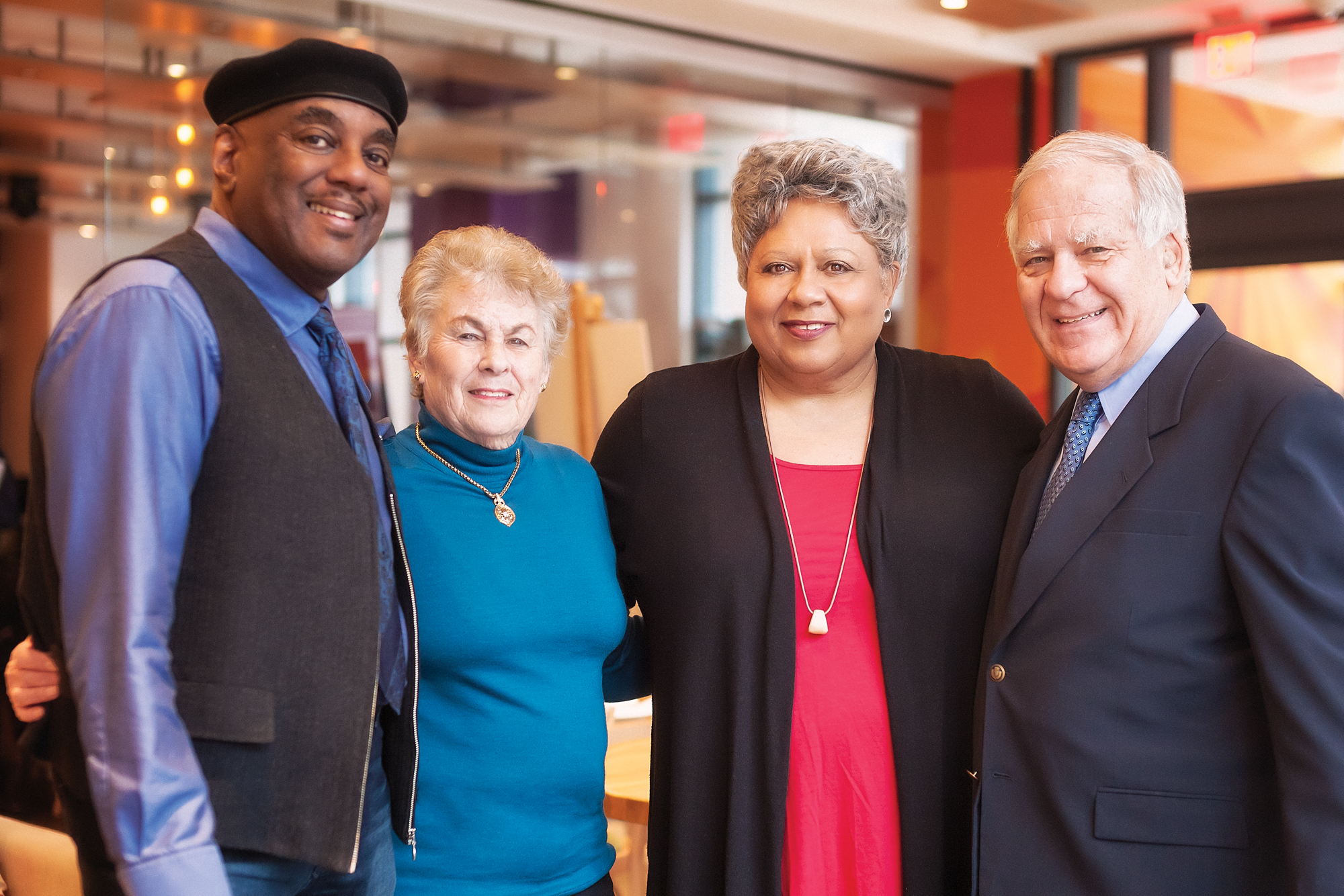
St. Patrick’s Day came and went between this issue of WholeNote and the last, so I thought it would be fun to acknowledge my Irish descent – the key word being descent, as in “into madness” – by taking a look at the grand legacy of Irish jazz piano. There have been many more fine Irish jazz pianists than many people realize and here they are, in chronological order:

Ellis LarkinsEllis Larkins – Larkins hailed from Baltimore, County Cork. He was something of a child prodigy, performing with local orchestras by the age of ten. After graduating from the distinguished Peabody Conservatory in his hometown, Larkins became the first jazz pianist to attend the famed Jewel Yard School of Music in Dublin and began his long career after graduation. Larkins had a gossamer touch resulting in a translucent sound, a deft harmonic sense and a sensitivity which made him a great accompanist, especially of singers. He spent many years as a vocal coach and was the regular pianist for a number of fine vocalists including Mabel Mercer, Sylvia Syms and the First Lady of Irish Song, Ella Fitzgerald. Along with his own natural reticence, this supportive role meant Larkins was one of the more overlooked Irish pianists, although musicians like Ruby Braff, with whom he often recorded in a duo, knew his true worth.

Harold McKinney – McKinney was born into a musical family in that hotbed of Irish jazz, Moughtown (pronounced “mow”), County Monaghan. One of his brothers, Bernard, played the euphonium and another, William, was a bassist. They bear no relation to the William McKinney who led the seminal Irish big band McKinney’s Flax Spinners. Harold McKinney might have achieved more notoriety had he left Moughtown for Dublin, as did many of the city’s younger pianists, but he preferred to remain there in the role of elder and mentor, for which he was much treasured.

Dave McKenna – McKennna was from the Aran Islands and eventually emigrated to Boston and later New York, where he was the favourite pianist of such American-Irish greats as Bobby Hackett and Zoot Sims. A huge, anvil-headed man with massive hands who looked like the captain of a whaling boat, he was the most two-fisted of Irish pianists, developing a driving and very full style often displayed in solo outings. His two-fistedness was often seen offstage as well, with a pint of Guinness in his left hand and a small one of Jameson’s in his right. He was also renowned for his almost limitless repertoire, often weaving seemingly disparate songs into long and ingeniously witty medleys.

Tommy Flanagan – Easily my favourite Irish pianist, Flanagan was part of the large wave of young musicians, many of them pianists, to emerge from Moughtown in the mid-1950s. His very fluent playing showed both the delicacy of Teddy Wilson and the toughness of Bud Powell, his two main influences. He was very much of the lace-curtain school of Irish jazz piano; there never was one who played with more lilting grace or elegance. Like Ellis Larkins, he was naturally standoffish and served a long apprenticeship as a sideman, including several stints as Ella Fitzgerald’s accompanist in the 1960s and 70s. He appeared on hundreds of records, including a couple of seminal ones in Irish history: Giant’s Causeway Steps with the great Ulster tenor John Coleraine, and The Incredible Jazz Guitar of Wes Montgomery, with Eire’s most celebrated plectrist. Eventually in his forties, Flanagan lit out on his own as a leader with a long series of fine trio records. By the time he died in 2001 he was known as “The Poet of the Piano.”

Armagh J. O’Malley – Born Fritz Peterson, O’Malley eventually adopted a more Irish name taken from his home county in Ulster. He later emerged in the centrally located Shightown with a fine trio, which exerted considerable influence on both the repertoire and rhythmic approach of the mid-1950s’ Miles Davis quintet, bringing him lasting fame in spite of indifference from many critics. Despite virtuosic technique, he played with a very sparse, probing style, often concentrating on the piano’s upper register, and displayed a brilliant knack for arranging unlikely pieces for piano trio, using ingenious vamps and interludes to fully integrate the bass and drums. He was one of the first jazz pianists to become a Steinway Artist and is still going strong. He will turn 88 this July, a special age for a pianist given the number of keys on the instrument.

Wynton Kelly – In contrast to Tommy Flanagan, Kelly developed a hard-swinging, funky, blues-infused style of great craic and spirit much more in keeping with the thatched-roof school of Irish jazz piano. He hailed from the large Dublin borough of Brooke Lynn and went on to form important associations with Miles Davis and Wes Montgomery, often in the company of his long standing trio of bassist Paul Chambers and drummer Jimmy Cobh, who hailed from the small port just south of Cork. He died far too young, but Kelly was the most joyous of Irish pianists.

(For those not familiar with the designations lace-curtain and thatched-roof Irish, the former tend to be more urban and genteel, more prosperous and “of the quality” as the Irish would put it. Thatched-roof Irish are more lively, down to earth and working class, often dwelling in modest rural cottages. The following old joke may help drive the distinction home: What’s the difference between lace-curtain Irish and thatched-roof Irish? The lace-curtain Irish take the dishes out of the sink before they pee in it.)

Roland Hanna – Hanna is another of the fine pianists to emerge from the hyperactive Moughtown jazz scene. He had an eclectic modern approach and was one of the few players influenced both by bebop pianists and Erroll Garner. A great favourite of that noted jazz fan Queen Elizabeth II, he was knighted by her and thereafter known as Sir Roland Hanna, causing no small dismay among his more republican fans, some of whom referred to him as “that poxy royalist bastard.” He survived a couple of knee-capping attempts but eventually won over his doubters by remaining true to his Irish musical roots of lyricism wed with inventiveness.

McCoy Tyner – Tyner came to prominence as a young man when he joined the classic 1960s quartet of renowned Ulster tenor John Coleraine. Tyner developed a rhythmically powerful attack using the 6/8 rhythms and triplets common to Irish jigs and reels, while exploring the modern applications of traditional Irish modality using Uilleann pipe modes and the quartal harmonies of the puntatonic scale. Apart from the Coleraine quartet he made many fine trio recordings as a leader.

Chick O’Rea – O’Rea began in his teens as a percussionist, playing the bodhran in traditional Irish groups. His inherent brilliance as a pianist soon took over, as did his more modern tendencies. He was one of the key Irish pianists in the fusion movement as leader and sideman and has shown a restless spirit in switching back and forth between both electric and acoustic bands and instruments. Indeed, #Corea (as he hashtags himself these days) has at times had difficulty deciding whether he wants to be a popular musician or an uncompromisingly creative one and this dichotomy shows in his music. His 1978 release The Leprechaun was an unabashed exploration of his Irish musical heritage.

Joanne Brackeen – Against all odds, Brackeen (nee Joanne Grogan) managed to break through the more hidebound strictures of traditional Irish society, demonstrating the deeply matriarchal roots of the small island, all those priests notwithstanding. Early in her career she accompanied the noted Irish tenors Stan Getts and Joe Henderson before establishing herself as a leader. Her style can be a little on the challenging and explosive side, but her inventiveness could also be very lyrical and melodic. She often performed with the Irish rhythm team of bassist Cecil McBee and drummer Aloysius Foster.

Todd O’Hammer – O’Hammer is a stalwart of modern Irish bebop, both as an active sideman and as a leader of his own trios. He has performed with such veterans as Charlie Rouse, Johnny Griffin, Art Farmer, and George Coleman, and regularly accompanied the singer Annie Ross. His playing is steeped in the jazz tradition but he continues to look forward, always sounding fresh.

Rossano SportielloRossan O’Sportiello – At just 43, O’Sportiello is the most recent arrival on this list, and yet he is something of a stylistic throwback, often performing in a mainstream/swing style of catholic breadth. He is a dynamic virtuoso in the tradition of Art Tatum and Teddy Wilson, also showing a fondness for such pianists as Ralph Sutton, Barry Harris and the aforementioned Dave McKenna. He has built a solid international reputation working with many fine jazz artists as well as through his own recordings. Toronto fans may know him from his sparkling performances at the last few Ken Page Memorial Trust All-Star fundraiser concerts at the Old Mill.

So there you have them, the great Irish jazz pianists. To all music fans, sláinte, and a belated Happy St. Patrick’s Day.

Toronto bassist Steve Wallace writes a blog called “Steve Wallace – jazz, baseball, life and other ephemera” which can be accessed at wallacebass.com. Aside from the topics mentioned, he sometimes writes about movies and food.

This column will offer more questions than answers, more speculations than solutions, and may offend some. This is not intended and I will try to deal with any potential fallout later on, but first, the idea for this column, which was suggested by a musical evening several months ago.

This past November 6, I attended the gala concert by John MacLeod’s big band, the Rex Hotel Orchestra, held in the dining room of the Old Mill. The event doubled as a launch of the band’s new CD, The Toronto Sound, and was an unqualified success in both musical and box-office terms.

The 19-member band played all the selections from the new disc over two generous sets, most of them arranged and composed by MacLeod himself, with single charts provided by Rick Wilkins (Canada’s greatest living arranger, also present this night and a major inspiration to MacLeod), and band members Terry Promane and Andy Ballantyne. Like MacLeod himself, the very absorbing music reflected both traditional and modern elements, sometimes within the same piece, and there was tremendous solo work all around – along with their stellar ensemble playing, just about everyone in the band is an accomplished jazz soloist.

John MacLeodIt was a special evening, but perhaps more so for me than most. John MacLeod and I met in high school some 45 years ago where we began playing jazz together; indeed, you could say John was responsible for me taking up the bass (I was an aspiring guitarist at the time when he inducted me into the Dixieland band he began leading after school hours). We have been musical friends ever since and have played together countless times in all kinds of bands, including the Boss Brass for many years. Going so far back with him and sitting just a few feet away, listening to the rousing sound of his compositions emanating from this band he created, I was overwhelmed: I felt enormously proud of him, and for him. The band has been around for years now, but this felt like a step forward, a culmination of much blood, sweat and tears, and probably some laughs too. Oh, and by the way, the beautifully recorded CD sounds every bit as good as the band did live. Buy one immediately, if not sooner.

As is often the case with musical events at this particular venue, this one was presented through the auspices of JAZZ.FM91 and bore its imprimatur. Ross Porter and Jaymz Bee each made (mercifully) brief speeches, and Fay Olson was her usual tireless self in organizing and promoting the whole affair. But the real founder of this musical feast, and of the CD it celebrated, was an individual who I won’t name because he’d likely prefer to remain anonymous, so I’ll call him “DT,” short for “Deep Throat”. A passionate jazz fan since the mid-1930s (!), DT has been a major benefactor of jazz in this city since the late 60s, when the Boss Brass and CJRT-FM got under way. He has drummed up interest in jazz with his considerable oratorical skills but time and time again has put his money where his mouth is, so to speak, by donating to countless recordings, tours, festivals, bands, concerts, broadcasts and other jazz projects.

In the case of MacLeod’s new CD, DT not only footed the considerable bill for its overall production, but also contributed to the promotion of the event as well by inviting at least two large tables’ worth of people – friends, musicians and/or both – to attend as his guests and picking up the tab for everything – admission, dinner, drinks. I would have attended anyway, but Mrs. W and I were among these guests and it wasn’t the first time I’ve been floored by DT’s class and generosity.

DT is getting on and in the last couple of years has expressed a concern for the future of jazz in Toronto and a keen desire to get local government involved in supporting it beyond the usual cosmetic ribbon-cutting measures. He is well connected and has been trying to sell local politicos, including our mayor, on the idea of establishing a permanent performance home for jazz in Toronto, funded by both public and private money. He was hoping this could perhaps be a part of the Massey Hall revitalization project, for example.

DT was hoping to use the release of The Toronto Sound – a partially strategic title – as a means of demonstrating to local politicians the viability of jazz in Toronto – the high quality of the music and the enthusiastic support for it among local music fans. He invited Mayor Tory and others to attend, only to run into a brick wall of shrugging indifference.

This apathy caused DT no small chagrin, so I’ve decided to take up his cause here by asking a few pointed questions. Why is it after all these years that jazz in Toronto still doesn’t have a dedicated and permanent performance centre, the way other art forms like opera, ballet, theatre or symphonic music do?

Yes, we’ve had clubs, but those have taken a hit in recent times. Wouldn’t you think a city the size of Toronto, where jazz is taught at three post-secondary institutions (York University, U of T and Humber College) and which boasts a 24/7 jazz radio station in JAZZ.FM91, could support – and deserves – such a venue? The TSO has Roy Thomson Hall, the COC and the National Ballet of Canada share the Four Seasons Centre and there are numerous other venues for various forms of theatre and dance.

Most, if not all, of these rely upon some sort of government funding as well as a well-orchestrated pipeline of private donors to keep them running. I realize jazz – usually the out-of-town, big-ticket variety – occasionally sneaks into these places as an interloper – and that jazz is sporadically heard at Koerner Hall, Massey Hall, the Sony Centre and other theatres. I also realize jazz is not as big a ticket or as entrenched as some of these other art forms, but neither is it a cultural Johnny-come-lately; it has existed for over a century now and has a long and rich history in Toronto. The talent has certainly always been here but the support for it has been sorely lacking in any official sense.

I’m not suggesting that jazz needs anything as grand as some of these cultural palaces. I’m proposing a centrally located and modest-sized concert hall with the usual amenities, seating perhaps 400, with an adjoining club space for more casual presentations, the screening of jazz films, lectures and so on.

So why is jazz treated as a second-class citizen here? Is it because it’s seen as an American import? Well, don’t look now, but most of the music played at the aforementioned venues is European in origin. And if nationalism is your game, then consider this: as a primarily improvised music, jazz comes from inside the musicians playing it, so jazz played by Canadians is directly Canadian. When you listen to a Mike Murley or a Neil Swainson or a John MacLeod play, you’re listening to quintessential Canadians.

The notion of a dedicated jazz centre isn’t as far-fetched as it sounds. Many cities in Europe, which values art and culture more highly than North America does, have full-time state-sponsored jazz orchestras with composers-in-residence performing and broadcasting regularly in state-of-the-art venues. Canadian composers are frequent guest artists with these groups – why doesn’t Toronto have something like this?

Harley Card Quartet at the Yardbird Suite, November 2017We needn’t look as far away as Europe though. Let us consider Edmonton, which for 60 years now has had the Yardbird Suite, entirely run by volunteers from the city’s jazz society. It’s easily the best jazz club in Canada and recently received a much-needed renovation, courtesy of the Alberta Heritage fund. Yes, that’s right, government money being poured into jazz. The recently and lamentably departed Tommy Banks, an Edmonton cultural icon and senator, likely had much to do with this, but that only demonstrates what political support of jazz can achieve. If a smaller and more isolated city like Edmonton has this, why can’t Toronto? What’s our excuse?

My advocacy for a full-time jazz performance centre is not intended to take anything away from other Toronto jazz institutions such as The Rex, Jazz Bistro, Home Smith Bar, JPEC, or JAZZ.FM. Their contributions are all laudable and essential – it’s just that Toronto jazz could use more of a central home which could work hand-in-hand with these other sites and organizations.

Such a centre would not only require political support, but that the Toronto jazz community mobilize itself and get organized. So if all you hardcore jazz fans – and I know you’re out there – want to know what you can do, try writing a letter to your local representative urging greater support for jazz. Or the next time you’re in a club that doesn’t have a cover charge for the music, suggest to the management that they institute one so the band could be paid better. I know it sounds crazy, but it might just work. For years now, Toronto has in its heart of hearts wanted to be New York. Well, New York has Lincoln Center and Toronto has nothing of the kind; New York also has citizens who know that jazz costs money. Coincidence? I think not.

If any of this sounds bitter or querulous, it’s not. I’m not personally bitter because I’m 61 and have been playing jazz successfully for over 40 years, with just about everybody imaginable. I’ve had my innings; it’s the future of jazz and young musicians I’m speaking on behalf of. This may seem like a longshot jazz fantasy but we have to start somewhere, perhaps with just the articulation of this simple wish and idea. Besides, as the old song asks, I can dream, can’t I? 

Toronto bassist Steve Wallace writes a blog called “Steve Wallace – jazz, baseball, life and other ephemera” which can be accessed at wallacebass.com. Aside from the topics mentioned, he sometimes writes about movies and food.
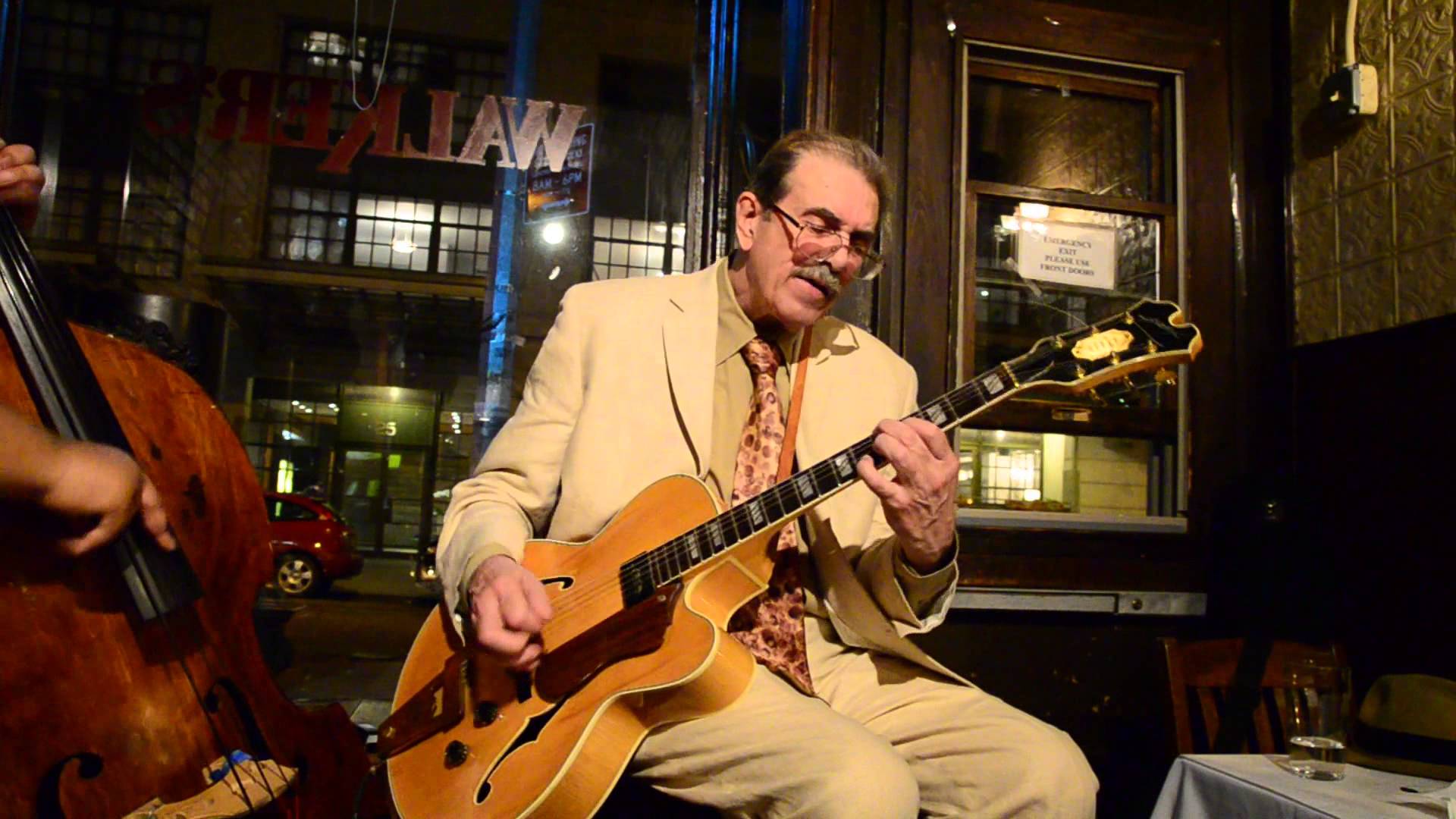
Since the last issue of The WholeNote went to press, the jazz world suffered the deaths of three major and long-term contributors: producer George Avakian, innovative singer Jon Hendricks – both on November 22 – and on December 21, trombonist Roswell Rudd. Momentous losses indeed, but at least these blows were softened by the realization that each of them lived long, productive lives – Avakian was 98, Hendricks, 96, and Rudd, 83.

I had a mild heart attack on the morning of November 23 and the subsequent fallout took me out of my routines and away from the jazz grapevine, so I completely missed the passing of Avakian and Hendricks and it was some time before I heard the news. And Rudd’s death came amid the hustle and bustle of Christmas preparations, so I was late hearing about that too. Given all this and the significant contributions each made to jazz, I feel it’s only right to use this space to pay tribute to them.

George AvakianAvakian became an obsessive jazz fan listening to the radio as a teenager and while attending Yale University began to amass a huge record collection and to write a relentless series of letters to the Decca and ARC record labels, urging them to reissue the back catalogues of bankrupt imprints such as Brunswick and Okeh. In 1940 Jack Kapp of Decca responded to these letters and hired the young Avakian to produce his first record, Chicago Jazz, featuring Eddie Condon and musicians in his circle. Consisting of six 78s issued in a set with Avakian’s copiously detailed liner notes, this was considered the first jazz album long before the emergence of the LP. It was a success in every way and set the tone for future Avakian projects while also raising the bar for jazz releases in general.

George Avakian - photo by Ian CliffordThe rest, as they say, is history – jazz history. CBS acquired ARC in 1940 and decided to form a subsidiary called Columbia Records. Eventually they asked Avakian to supervise a reissue series and the young man leapt at the chance to comb through the company’s vaults. Using the format he established at Decca, he created box sets devoted to Louis Armstrong, Bix Beiderbecke, Fletcher Henderson, Bessie Smith and Billie Holiday, among others. In the process he discovered many unreleased sides, including some priceless Armstrong Hot Fives and Hot Sevens, which he included in the reissues.

After war service he returned to Columbia, responsible for popular music at large, but always with an eye toward strengthening and promoting the label’s jazz roster. During this time Columbia perfected the LP format and Avakian was immediately alive to the possibilities of exploiting this new technology for both marketing and artistic purposes. He brought Erroll Garner, Dave Brubeck and Miles Davis to the label just as each was set to become a star, while continuing to produce albums by Armstrong, Gerry Mulligan, Art Blakey, Tony Bennett, Buck Clayton (he co-produced the trumpeter’s legendary Jam Session LPs with John Hammond), Eddie Condon, J.J. Johnson and many others including classical and folk performers.

He also became a pioneer in live jazz recording, issuing many performances from the Newport Jazz Festival and other venues. He supervised the first issue of Benny Goodman’s historic 1938 Carnegie Hall concert and also Duke Ellington’s legendary 1956 Newport performance, which did so much to revive Ellington’s career. His tenure at Columbia was studded with too many masterpieces to mention, but highlights would include Louis Armstrong Plays W.C. Handy and Satch Plays Fats; Erroll Garner’s Concert By the Sea; such Miles Davis classics as ’Round About Midnight and Miles Ahead; many by Brubeck such as Jazz Goes To College and Jazz Red Hot And Cool, as well as the aforementioned classics.

He elected to leave Columbia in 1958, but was hardly done. He created the record label at Warner Brothers and soon after moved on to RCA where he produced Sonny Rollins’ celebrated comeback album The Bridge, as well as his notable encounter with Coleman Hawkins, Sonny Meets Hawk. While there he also produced a superb series of Paul Desmond records with Jim Hall, which did a lot to cement Desmond’s identity apart from Brubeck.

Avakian also branched out into artist management at this point, overseeing the phenomenal mid-60s success of the Charles Lloyd Quartet at a time when many jazz artists were feeling the pinch of rock ‘n’ roll. This brought Avakian into contact with Keith Jarrett and he shepherded the pianist through the early part of his career as both his manager and record producer, helping to launch one of the most influential and successful careers jazz has witnessed in the last half century. There’s much more, but enough. Suffice it to say that it’s impossible to overstate the positive impact that George Avakian had on jazz, or to imagine it without him.

Jon HendricksEddie Jefferson and King Pleasure are generally credited with inventing modern, bebop vocalese – the practice of putting lyrics to an instrumental jazz solo and singing it, a kind of scat with words. But Jon Hendricks took the idea and ran with it, making it more popular while broadening its horizons and raising its vocal and literary (i.e. lyric writing) standards. And with the formation of Lambert, Hendricks & Ross in 1957, for which he is best known, he translated it into a vocal group art. L, H & R remade the idea of the vocal group – they weren’t The Modernaires or The Four Freshmen or The Four Lads – they were funnier, rawer and swung more. They were hip, baby.

Jon Hendricks on his 90th birthdayDave Lamberts and Annie Ross were both formidable vocal talents and ideal partners, but Hendricks was the driving force behind the group both organizationally and musically, doing most of the arranging and the lion’s share of the ingenious lyric writing. His skill at this was unsurpassed, earning him the title “The Poet Laureate of Jazz” as well as the “James Joyce of Jive”. He had an uncanny gift for shaping and infusing words which made sense into the jagged and acrobatic rhythms of jazz solos. His pithy lyrics always had something to do with the original soloist involved or with the title of the given tune; they told a story and were always delivered with swing and feeling. Hendricks went on to do much more after the eventual breakup of L, H & R and his witty performances, ever alive with both tradition and inventiveness, always fostered the idea that jazz could be both fun and high art.

Roswell RuddMuch of his career took place outside the jazz mainstream and was interrupted by several hiatuses, so Roswell Rudd may be less known than these other two except to hard-core jazz fans. A New Englander, Rudd began his career in the mid-50s playing trombone in a Dixieland band at Yale University called The Eli Chosen Six. The group recorded two albums, including one for Columbia, which show Rudd entirely at home in the gutbucket trombone tradition of men like Kid Ory and Jimmy Archey.

Roswell RuddBut like Steve Lacy, a frequent collaborator who also started his career in traditional jazz, Roswell was equally interested in the expressive abstraction of free jazz and spent his career in that astringent field. He performed around New York and on records with Lacy (sometimes offering highly personal takes on the music of Thelonious Monk), lifelong friend Archie Shepp, Cecil Taylor, John Tchicai, the New York Art Quartet, Charlie Haden’s Liberation Music Orchestra and his own groups. His playing – always interesting, human and very alive – was both intelligent and emotional. He could definitely blast but had the kind of projecting sound that could be heard at the back of a room even while playing quietly. His musical oeuvre combined both adventurous and traditional elements and offered the paradox that jazz, even in its earliest forms, was always iconoclastic, always subversive.

I had the unexpected pleasure of getting to know Roswell Rudd in 2007, so his death is more personal for me. I took part in a week-long recording project led by Toronto percussionist Geordie MacDonald which yielded a suite over two CDs called Time, After Time, a collaboration of 18 Canadian musicians with Rudd aboard as a ringer/featured guest. He was a joy to be around both musically and personally, a mensch who radiated integrity and unpretentiousness. I remember his humour and energy and him entertaining us on breaks by sitting down at the studio’s (intentionally) beat-up old upright and playing some highly personal stride, boogie-woogie and Monk.

Here’s the kind of guy he was: he took down the names and addresses of every musician on the session and some weeks later each of us received in the mail a beautiful folio of Herbie Nichols compositions, signed with a nice note from Roswell. He was a long-standing expert on Nichols and had assembled and published the book himself. It was a gesture of extraordinary generosity and the book remains one of my most prized possessions.

“Jazz is dead” predictions have continuously been trotted out through the years but I have to ask: how is jazz going to die when it’s had the devoted and passionate commitment of brilliant men like these, among so many others? 

Toronto bassist Steve Wallace writes a blog called “Steve Wallace jazz, baseball, life and other ephemera” which can be accessed at wallacebass.com. Aside from the topics mentioned, he sometimes writes about movies and food.
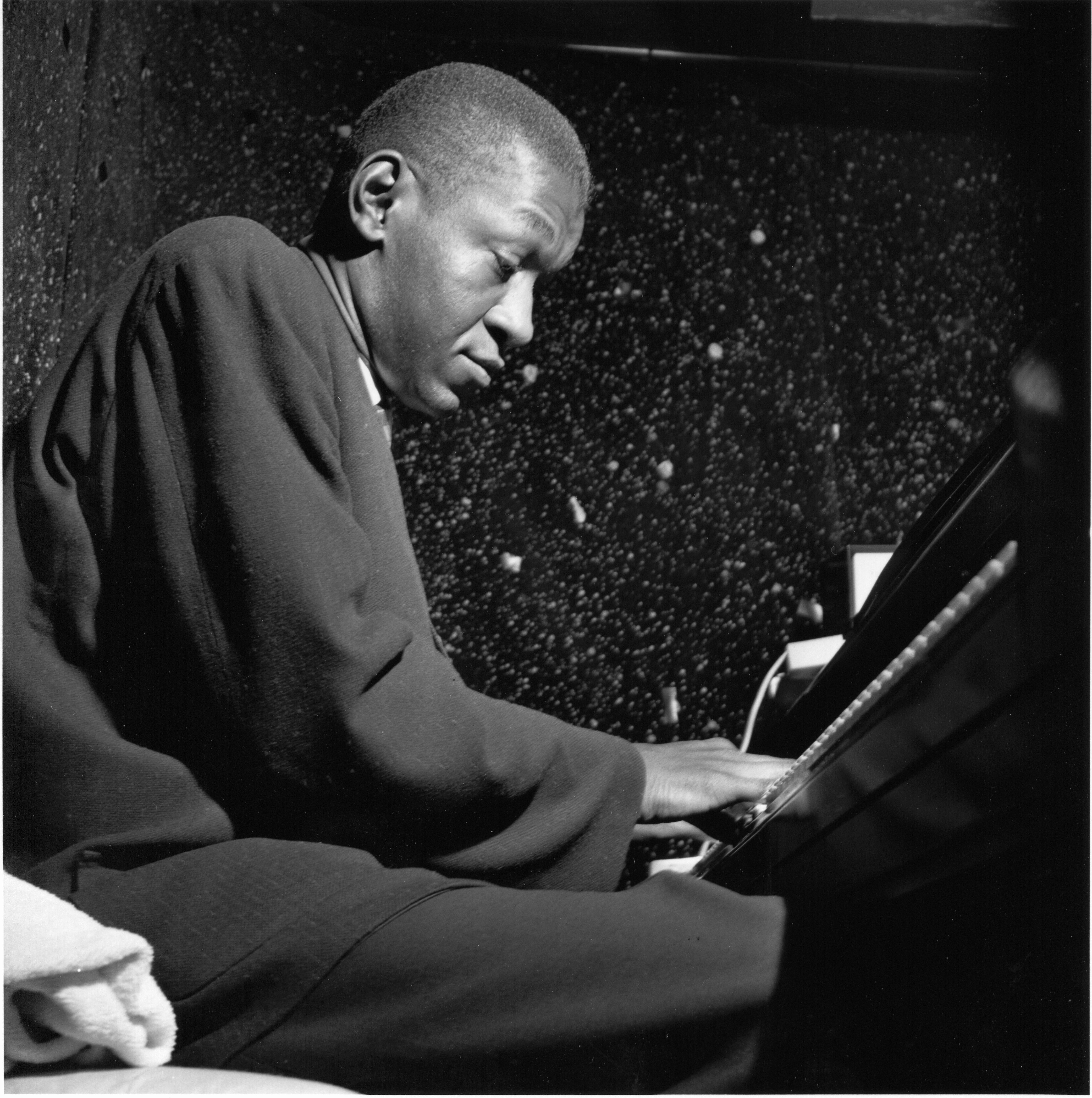
Back to top