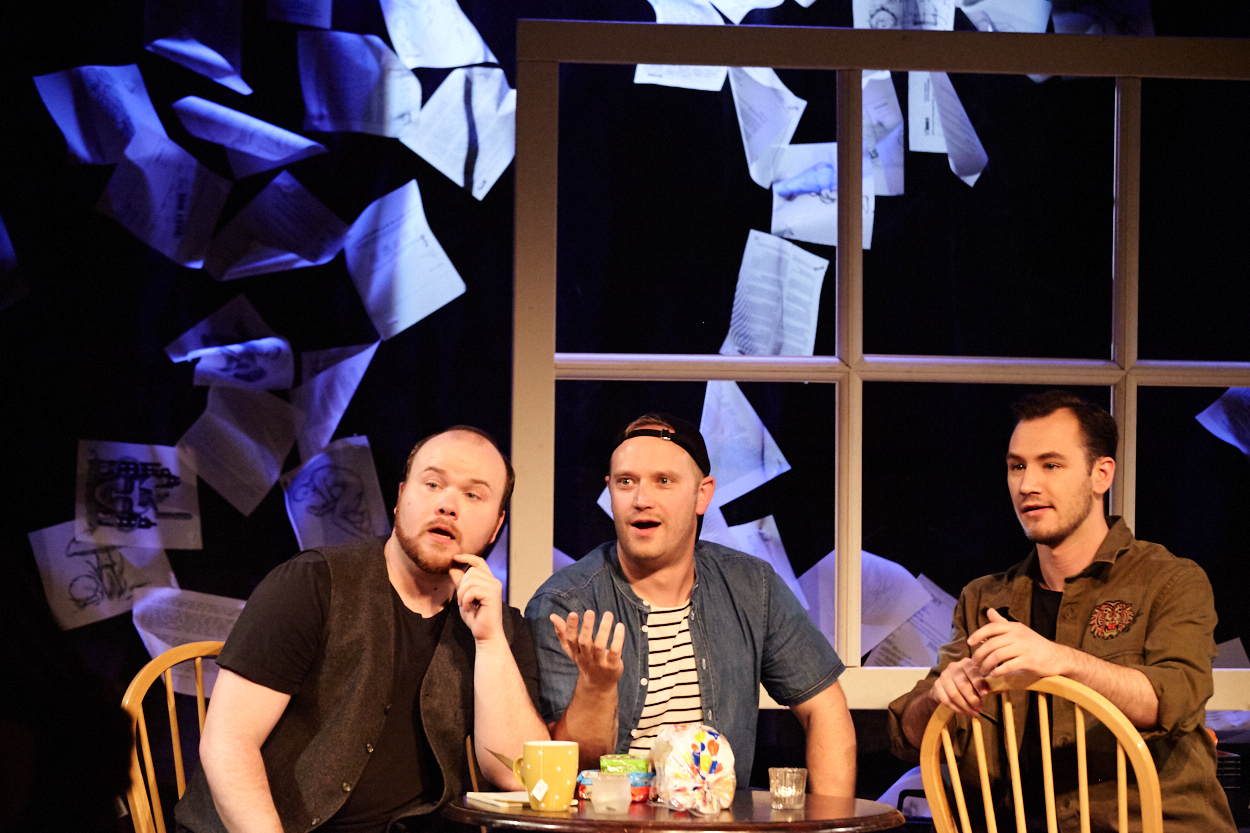
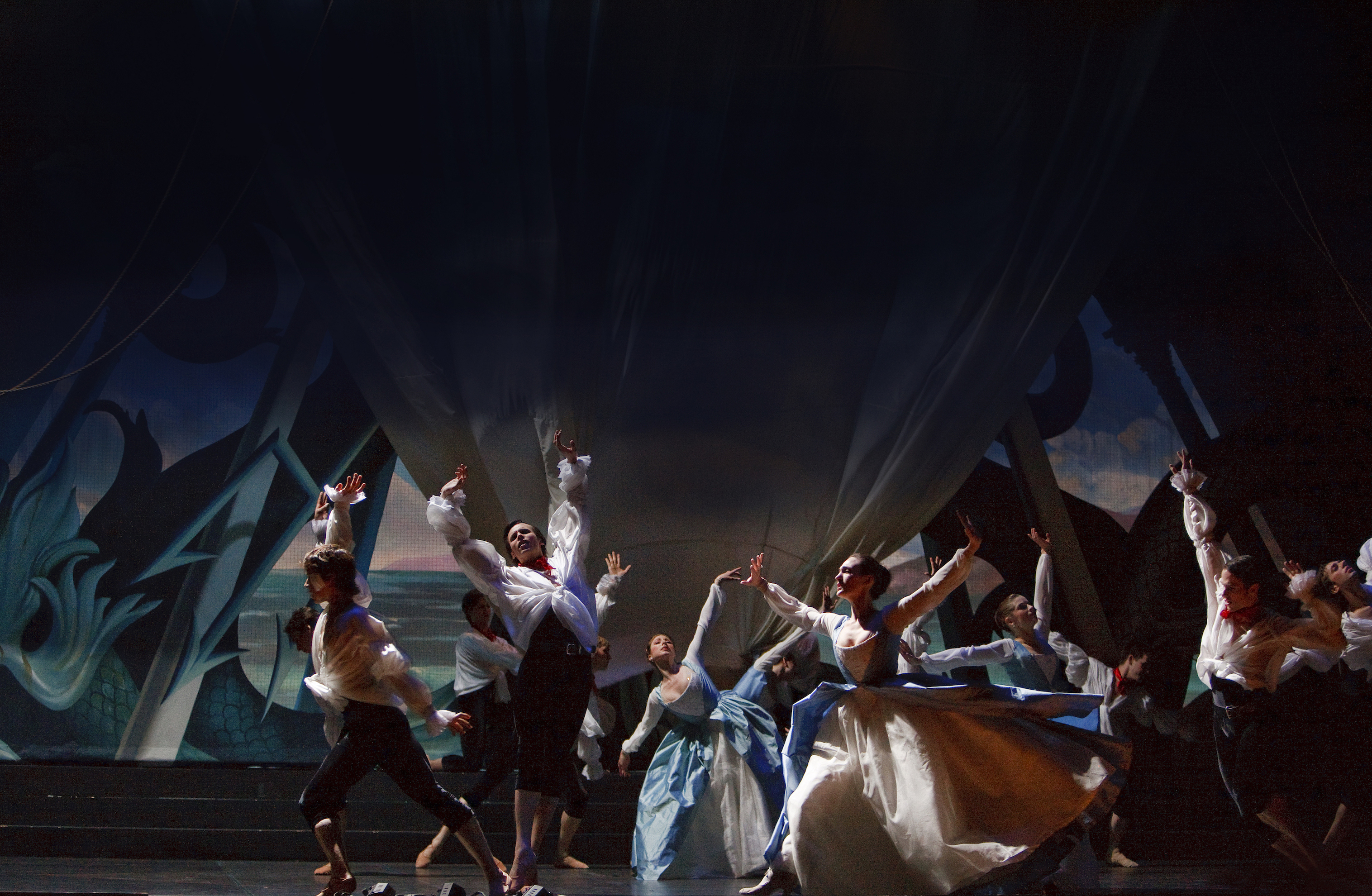
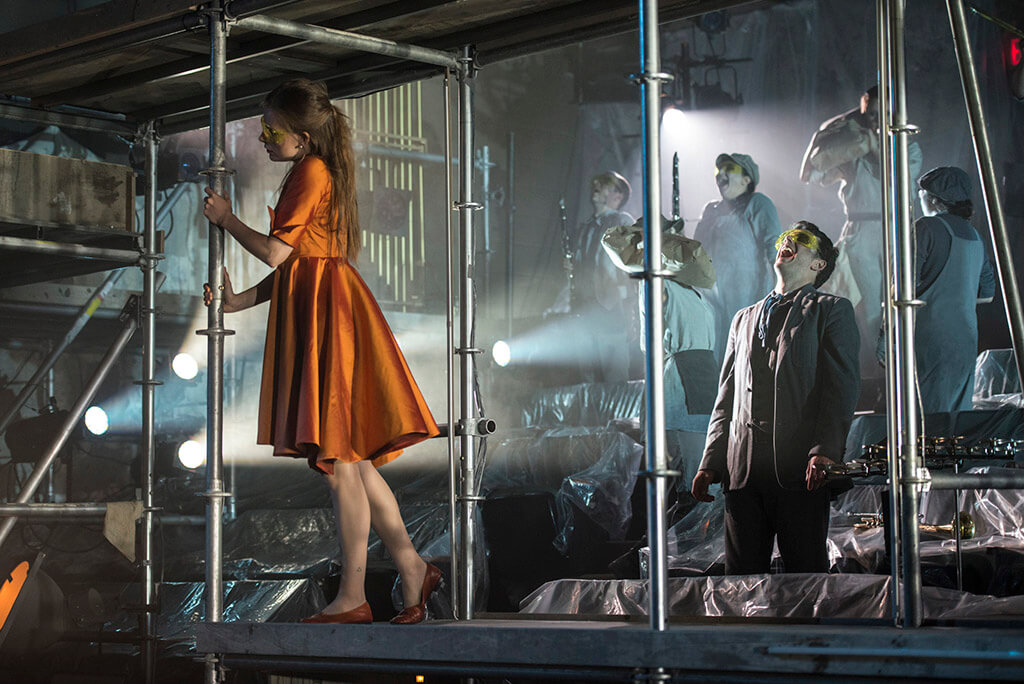
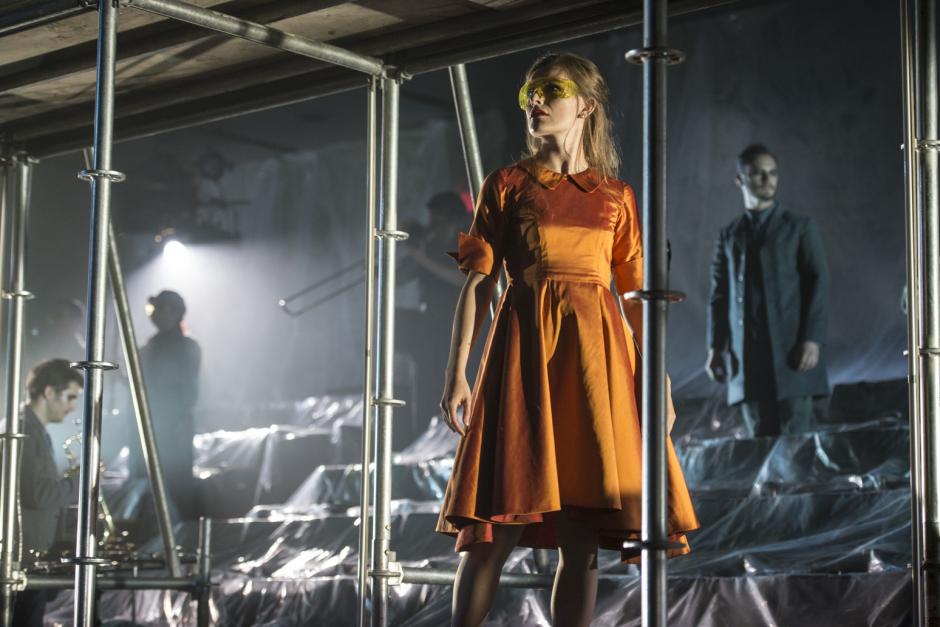
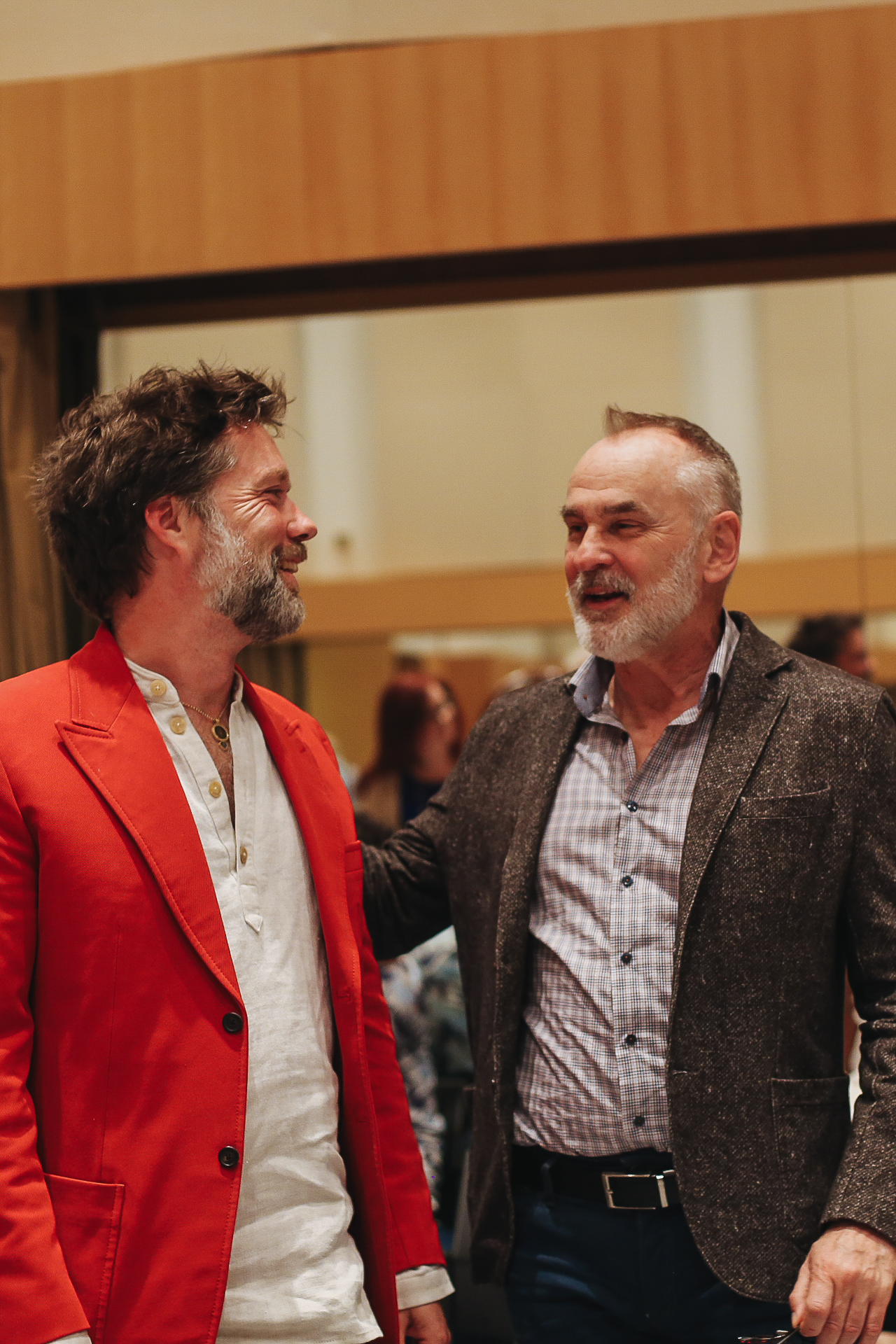
Against the Grain's 2017 production of La BohèmeQuick now. What do Bob’s Burger Bar in Kenora, the Red Lion Smokehouse in Thunder Bay and the SRO Nightclub in Sudbury have in common? Answer: they are the last three stops, October 5, 6 and 8 on an 11-city cross-Western Canada tenth anniversary tour of Against the Grain Theatre’s groundbreaking production of La Bohème, before, fittingly, settling in for a further 11 performances at the Tranzac Club in Toronto. The Tranzac was where, in 2011, Against the Grain burst onto the Toronto opera scene with their interpretation of the classic Puccini love story updated from 19th-century Paris to the uncompromisingly unglamorous environs of this iconic Brunswick Ave watering hole. If you’ve missed the show so far (or just missed it while it was gone) you get 11 opportunities to make amends, between October 11 and 25, and they’ve put together an anniversary season that reflects both the company’s past and ongoing creative flair. Take a look. They are at againstthegraintheatre.com

Turning 40 in style

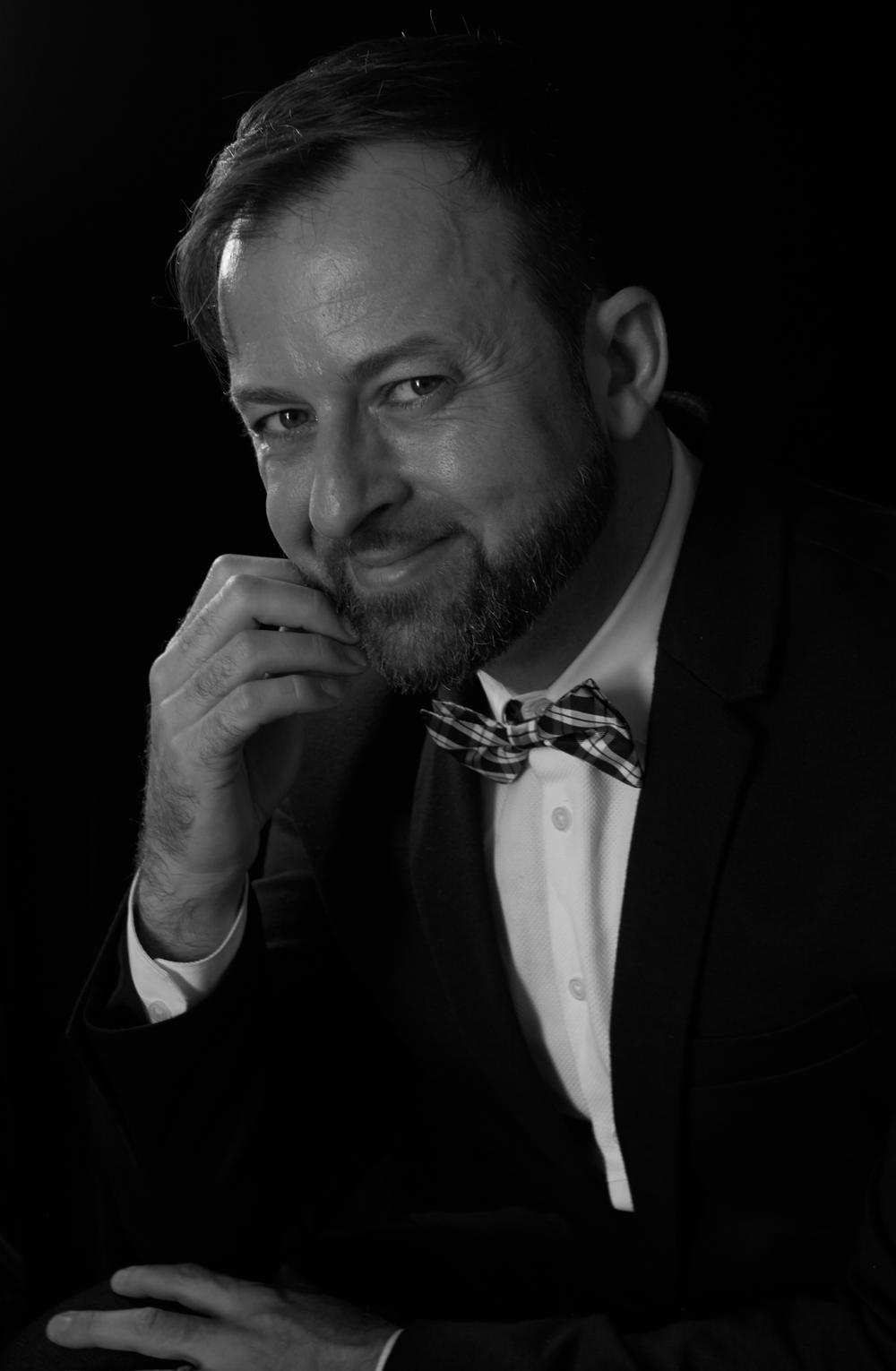
Take the streetcar almost as far south as you can down Bathurst Street from the Tranzac, and you come to Stackt Market, at 28 Bathurst, built entirely of shipping containers and home to more than 30 retailers, service providers, event spaces and, yes, a brewery. As unlike the Tranzac as one might imagine, if you make it down there October 10 at 6pm (and have $225 to spare) you can join a select group of opera aficionados in raising at least one glass to Tapestry Opera, celebrating 40 groundbreaking years on the Toronto and North American new opera scene. Originally the brainchild of artistic director Wayne Strongman and Claire Hopkinson, now heading the Toronto Arts Council, Tapestry has successfully weathered the proverbial succession storm, and in the capable hands of artistic director Michael Hidetoshi Mori, continues to break new ground, carrying the essential storytelling power of the operatic art form into territories and media that were unimagined when the company was formed, intersecting in the past with punk rock, film, Persian classical music, physical theatre, turntablism and hip-hop. Next month, November 20 to 23, the ongoing program/project/series they call TAP:EX will take their operatic explorations into Sidewalk Labs experimental workspace at 307 Lakeshore E. for a night of “experiential opera.” (They will also be reviving Chan Ka Nin and Mark Brownell’s monumental 2001 mainstage opera, Iron Road, in an opera-in-concert remount next July 15 at Koerner Hall. But that will definitely be another story!) Go to tapestry.com for details of everything they have in store.
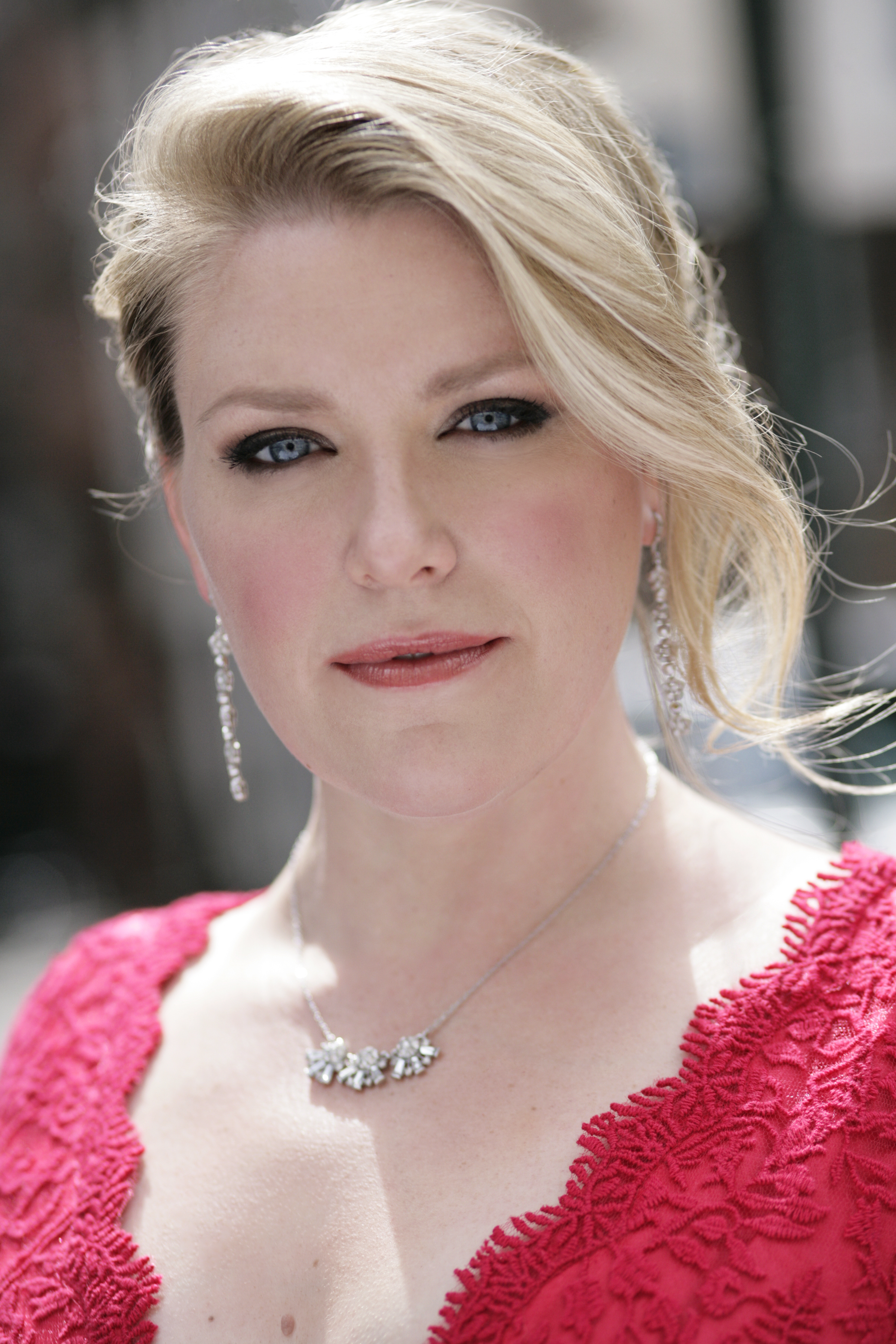
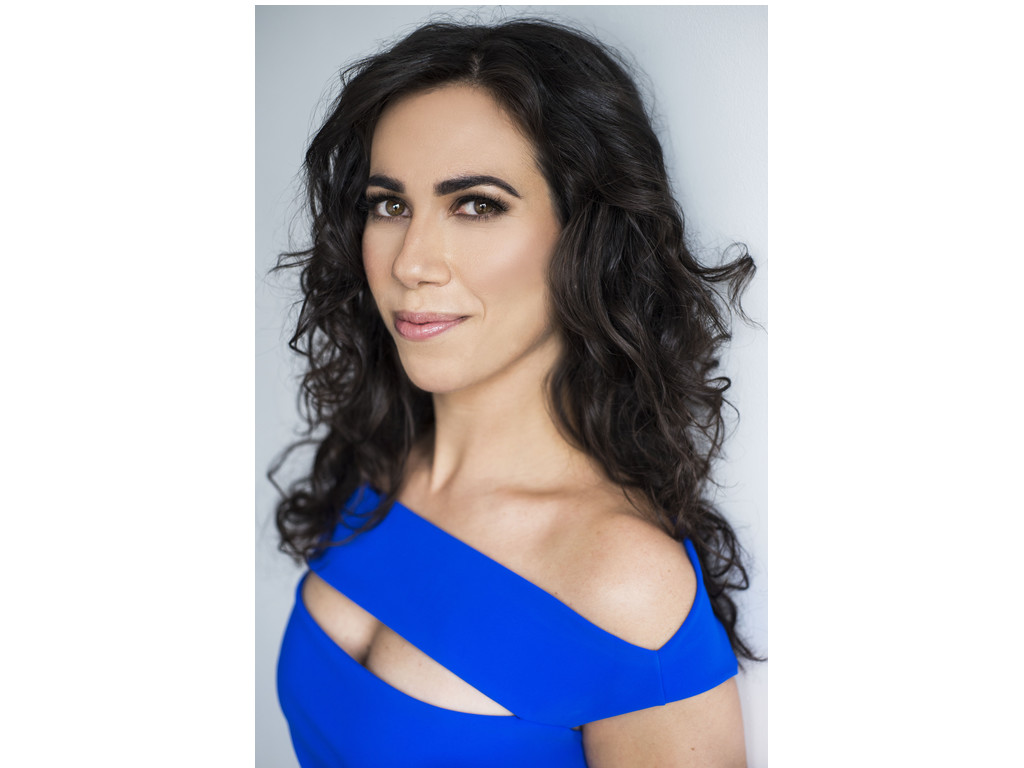
Erin Wall. Photo by Kristin HoebermannOpera in Concert

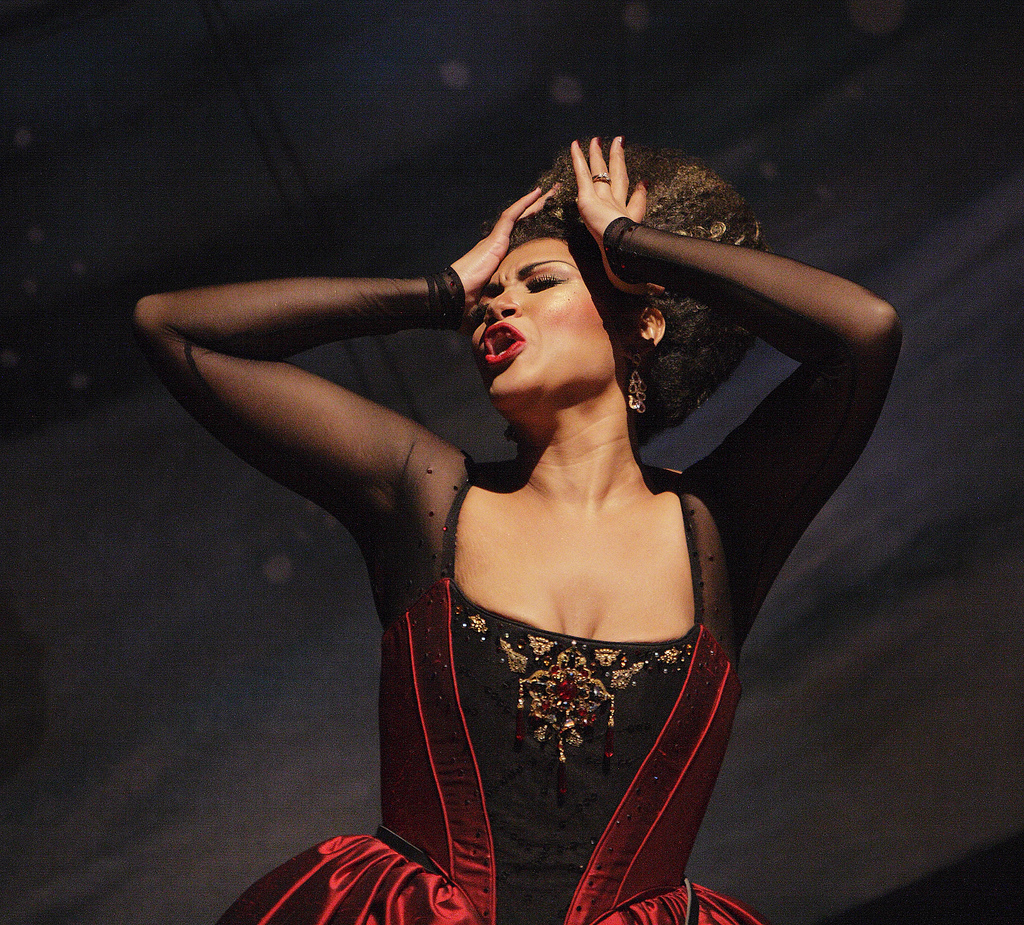
Tapestry’s Iron Road next July would be a very long time to wait for fans of opera in concert as an art form. But there’s never a dearth of the art form here. At one end of the spectrum, Opera by Request hits the ground running, October 4 and 5, at their intimate College St. United home base, with an OperOttawa presentation of Bizet’s Pearl Fishers, with Cristina Pisani, soprano (Leila); Robert Martin, tenor (Nadir); Norman Brown, baritone (Zurga); and John Holland, bass (Nourabad). And at the opposite end of the spectrum in terms of size of undertaking – November 7 and November 9 – the Toronto Symphony Orchestra presents an opera-in-concert rendition of Jules Massenet’s Thaïs, with Erin Wall, soprano; Joshua Hopkins, baritone; Andrew Staples, tenor; Nathan Berg, bass-baritone; Liv Redpath, soprano; and others; along with the Toronto Mendelssohn Choir, and the inimitable Sir Andrew Davis conducting.

Opera Atelier

Back in 1996, as a fledgling opera company, Opera Atelier took a Mozartian sacred cow by the horns, mounting what was not only the first period production of Don Giovanni in North America, but one which stood the Bergmanesque gloom of standard treatments of the opera on its head, by exploring with savage glee the darkness of the comedy inherent in the plot. Remounted in 2004 and again in 2011, this year’s iteration boasts a cast that as always, is a blend of familiar faces – performers for whom Atelier’s commedia-based, stylized gestural vocabulary is comfortable second nature – and newcomers who more often than not, once they get past the learning curve, understand and revel in the freedom of not having to worry about what their bodies are doing while their voices soar. This production features Colin Ainsworth, Gustav Andreassen, Mireille Asselin, Stephen Hegedus, Carla Huhtanen, Olivier Laquerre, Meghan Lindsay and Douglas Williams in the singing cast; Marshall Pynkoski, stage director; Jeannette Lajeunesse Zingg, choreographer; Artists of Atelier Ballet; Tafelmusik Baroque Orchestra; and David Fallis, conductor. It opens October 31 and continues November 2, 3, 8 and 9. operaatelier.com

Canadian Opera Company

I talked a bit about the COC’s Turandot in the previous column, but the run, about to open as we go to press, continues to October 27, by which time, I predict, lovers and haters of Robert Wilson’s uncompromising staging will have lined up on opposite sides of the Four Seasons lobby to do battle. As I said then, having seen Wilson’s Einstein on the Beach, it’s a production I would not miss.

At risk of getting lost in the fog of operatic audience wars is the second of the two fall COC productions, opening Oct 12 and running till October 26, Dvořák’s Rusalka with Sondra Radvanovsky, soprano (Rusalka); Pavel Černoch, tenor (The Prince); Ŝtefan Kocán, bass (Vodnik); Elena Manistina, mezzo (Jezibaba); Keri Alkema, soprano (The Foreign Princess); Johannes Debus, conductor; and Sir David McVicar, stage director. MacVicar’s new production, for the Lyric Opera of Chicago has been getting rave reviews, and if the chemistry that Kerri Alkema (as Giovanna Seymour) and Radvanovsky generated in Anna Bolena here in May 2018 is anything to go by, we are in for a treat. coc.ca 

And there’s always more

Check out the Music Theatre listings in this issue of the magazine (or go to “Just Ask” under the listings tab on our website) for details on all the following:

OCT 8, 12 noon: Canadian Opera Company/U of T Opera. Vocal Series: Parlami d’Amore - Speak to Me of Love. Richard Bradshaw Amphitheatre, Four Seasons Centre for the Performing Arts.

OCT 19, 2:00: University of Toronto Faculty of Music. Early Music Concerts: Acis and Galatea. Handel: Acis and Galatea. Heliconian Hall.

OCT 31, 12:10: University of Toronto Faculty of Music. Thursdays at Noon: Opera Spotlight - The Marriage of Figaro Preview. Walter Hall, Edward Johnson Building, University of Toronto.

NOV 1, 7:30: Royal Conservatory of Music. The Glenn Gould School Fall Opera: Siren Song. Music by Jonathan Dove, libretto by Nick Dear. Mazzoleni Concert Hall, Telus Centre.

NOV 1 and 3, 7:30: Opera York. La Traviata. Music by Giuseppe Verdi, libretto by Francesco Maria Piave. Richmond Hill Centre for the Performing Arts.

David Perlman can be reached at publisher@thewholenote.com. Opera-related leads and news should be directed to opera@thewholenote.com.
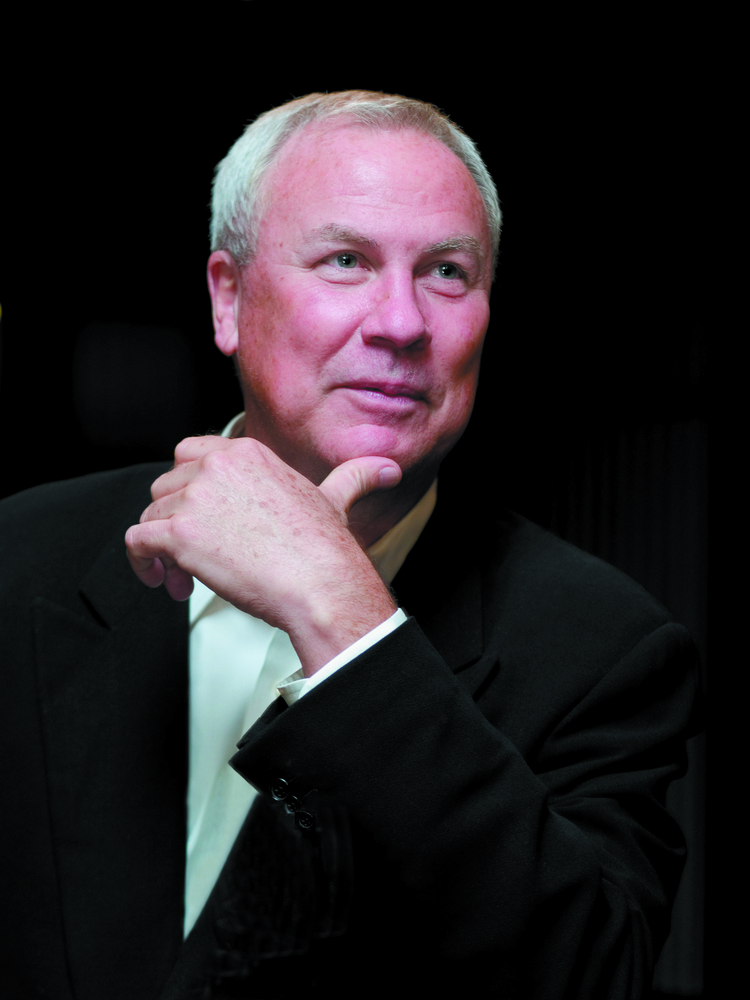
Regular WholeNote opera columnist Christopher Hoile embarked on a year that includes an enviable amount of travel. Consequently, with all the world as his stage, his attention to the local stages that comprise our opera beat is going to be significantly compromised. So during his agreed semi-sabbatical, the opera patrol here at The WholeNote is going to be something of a team effort. So away we go, with what promises to be a season of operatic proportions, both onstage and off.

September Start at the COC

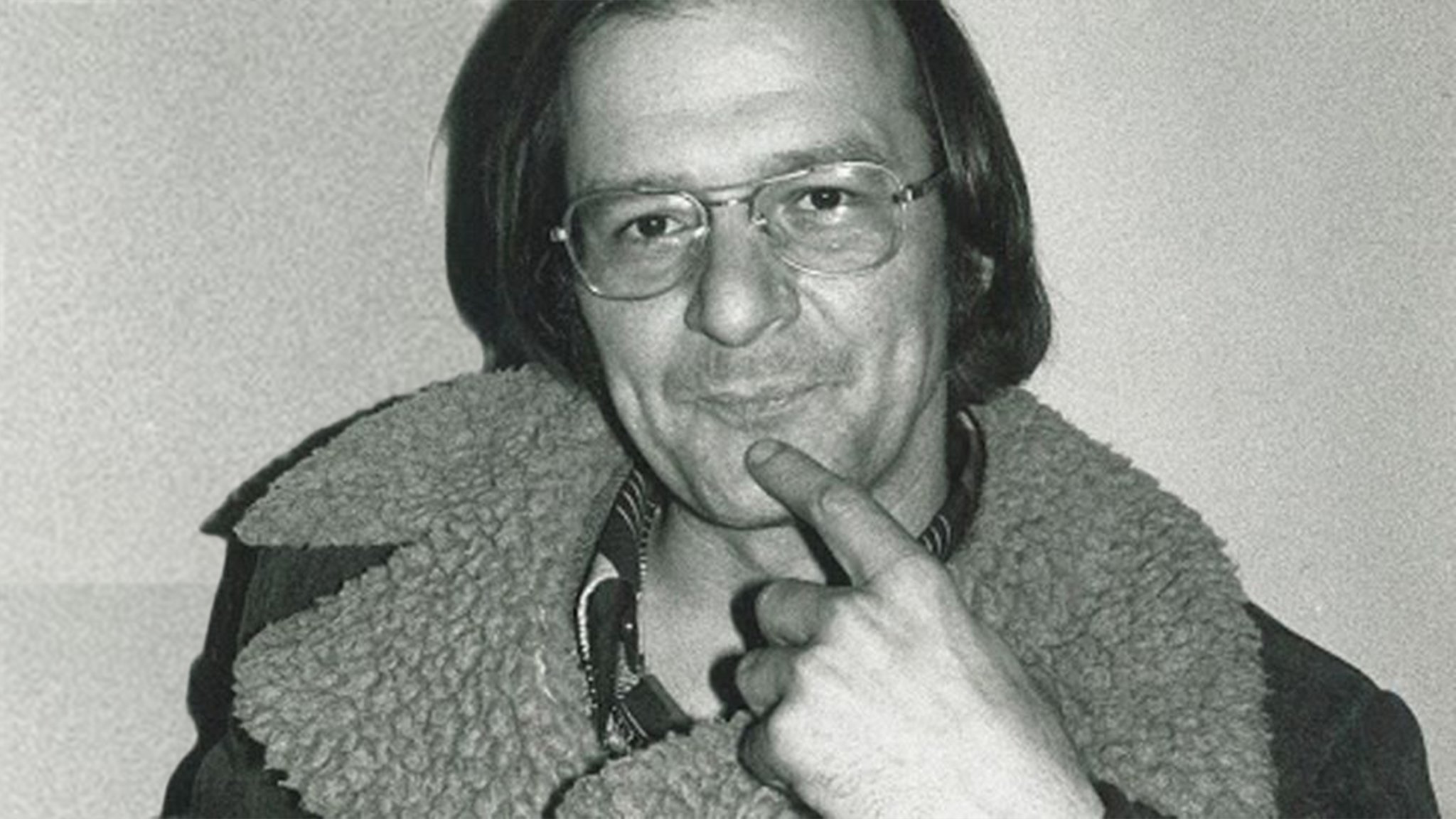
The first of the COC’s two fall operas, Puccini’s Turandot, gets under way September 28, with the second, Rusalka, a couple of weeks behind, usually an indication that the first of the two shows requires all hands on deck, more often than not because it is a new production. Under other circumstances, the cast that has been assembled for this production would be the story, but the name that jumps off the page for me is Robert Wilson, 77-year-old, Waco, Texas-born theatre artist extraordinaire.

robert wilson hsu ping high resThose of you who saw the Philip Glass/Robert Wilson Einstein on the Beach at Luminato 2012 will be aware of the extent to which Wilson, while no slouch at deploying scenic machinery on the grandest scale, is also capable of achieving the subtlest of effects, minimalist visual moments of excruciating beauty and power. So, given the split personality of opera-going audiences in Toronto we’re almost guaranteed a hung jury, with fans of the grand gesture and lots of moving parts feeling cheated, and others, count me in, who can’t wait to see what Wilson makes of little things. “If I go to the opera,” Wilson himself said recently, “I really want to hear the music. I close my eyes. So the challenge is to find how I can keep my eyes open? How what I see can help me to hear music better.”

The quote in question is from an interview Wilson did this past February, with OperaWire contributor, Polina Lyapustina, when this Teatro de Madrid/Lithuanian National Opera/Canadian Opera Company co-commission touched down in Lithuania, the second stop on its three-nation tour, having started out in Madrid. It’s an interesting read, dotted with Wilsonian gems. He recounts a conversation with Lady Gaga: “You know, Gaga, in the theatre the last second is the most important, and next is the first second. Sometimes, if you get the last second right, they will forgive you for everything you’ve done all night.” Then continues: “In making Turandot I always tried to figure what that last second is. And then, where we began. And then, how you would draw a line from the beginning to the end.”

And this: “A stage is unlike any other space. I hate naturalism. To be on stage is something artificial. And if you try to act naturally it seems artificial. But if you accept it as something artificial, it becomes more natural.”

I can’t wait.

Neef

The production also gives the opportunity for some early reflection on what the implications will be of Alexander Neef’s announced move, after ten years heading up the COC, to assume the position of General Director of Opéra National de Paris. From where I sit, looking at Turandot, it’s potentially really good news, looking at the calibre of casts he’s attracted and the international co-producing allegiances he’s been able to build. Having someone “on the other side” with a bedrock understanding that this is a good place to build bridges to can only be a good thing. It’s an offstage season story that will unfold very interestingly over time.

Opera Atelier

With Atelier’s fall production, Don Giovanni, still a month away (October 31), their big news is also a “French connection” story, with Atelier founders and co-directors, Marshall Pynkoski and Jeannette Lajeunesse Zingg, having been invited to stage and choreograph Grétry’s opera Richard Coeur-de-lion, celebrating the 250th anniversary of the Royal Opera House at Versailles from October 10 to 13, 2019 at Château de Versailles. “This extraordinary event marks the ultimate recognition of Pynkoski and Lajeunesse Zingg’s interpretation of French Baroque repertoire – selected as the only non-French artists involved in this milestone anniversary of the most prestigious opera house in France,” said OA’s press release about the event. And I wouldn’t change a word of it.

Opera by Request planning the entire Wagner Ring Cycle over the Ontario Family Day weekend this coming February (hmmm, talk about dysfunctional families); Tapestry Opera embarking on their 40th season; Against the Grain Theatre completing its tenth …

Let the good times roll.

David Perlman can be reached at publisher@thewholenote.com. Opera-related leads and news should be directed to opera@thewholenote.com.
Opera performances in Southern Ontario are not quite as abundant this summer as they were last summer, but there is certainly enough activity to keep any opera-lover busy, especially those who have an interest in new opera.

June

Outside Toronto, the young opera company Vera Causa Opera is presenting its second annual Canadian Opera Fest in Cambridge, Guelph and Waterloo. A contest was held for local high school and middle students in the region to create the plot of an opera. Once selected, the students collaborated with VCO to turn these initial ideas into full stories with music, i.e. short operas.

Five winners were chosen. The first is The Village Girl, with a concept by Chloe Bissada and words and music by Dylan Langan. The story involves a young girl who wants to purchase a cow for her family’s farm to help boost the town’s economy, but the meat marketer refuses, putting the town on the brink of starvation. The opera explores family and responsibility.

The second is Refracted, with a libretto by Charlotte Lilley and music by Emma Verdonk. The work is a semi-abstract exploration of the influence of media and technology on one’s self-perception. A young girl debates with her reflection on how her culture is affecting her, and whether it is a welcome influence or not.

Third is La jugement, with a libretto by Emma Lemieux and music by Dylan Langan. This is an emotional musical soliloquy, relaying the story of a young woman battling an eating disorder. La jugement is performed in French.

Fourth is The Shoemaker’s Orphans, with a libretto by Rivi and Kyri Friedman and music by Emma Verdonk. The action takes place in France in the year 1600, during the outbreak of the Black Plague. After losing their father to the terrible disease, two sisters embark on a mission to prevent the spread of the disease, with the help of their kindly aunt.

The last of the five is L’étrange et belle, with a libretto by Lexie McCorkindale and Vanessa Kerr and music by Dylan Langan. The opera tells the story of an unstable young woman and her tempestuous relationships with her friends when she invites them to stay at her house for a Christmas celebration. This is the second opera of the five to be performed in French.

Performances will be held in Cambridge on June 14 at the Cambridge Centre for the Arts, in Waterloo on June 15 at Knox Presbyterian Church and in Guelph on June 16 at Harcourt Memorial United Church. The operas will feature performances by soprano Autumn Wascher, soprano Michaela Chiste and baritone Jorge Trabanco.

General Director Dylan Langan says: “It is great to see everyone coming together to make brand new opera, regardless of their previous experience. These are truly original and Canadian stories that need to be told.” VCO provides paid professional opportunities for youth, aimed at improving their health and well-being, while presenting affordable entertainment to the community with free admission for students and kids.

Closer to Toronto, Opera by Request has three presentations in June. On June 1 in Mississauga OBR presents Verdi’s Nabucco (1842) in concert with piano accompaniment at Christ Church UCC. Gene Wu sings the title role, Cristina Pisani is Abigaille, Dylan Wright is Zaccaria, Cian Horrobin is Ismaele and Meghan Symon is Fenena.

In Toronto on June 7, OBR presents a triple bill under the title “A Summer Feast,” at College St. United Church. The works include Henry Purcell’s If Music Be the Food of Love (1692), Lee Hoiby’s Bon Appétit!(1989) in which an television episode of Julia Child making a chocolate cake is set to music, and Lennox Berkeley’s A Dinner Engagement (1954) about impoverished aristocrats having dinner for a wealthy prince they hope their daughter will marry. Performers include mezzo-soprano Meghan Symon, baritone Lawrence Shirkie, soprano Gwendolynn Yearwood, tenor Josh Clemenger and tenor Francis Domingue.

On June 15 in Toronto, OBR presents Donizetti’s Maria Stuarda (1835) at St. Andrews United Church. Antonina Ermolenko sings Maria, Cristina Pisani is Elizabeth I, Paul Wiliamson is Leicester, Dylan Wright is Talbot, Henry Irwin is Cecil and Anna Belikova is Anna. For all three OBR operas in concert, William Shookhoff is the pianist and music director.

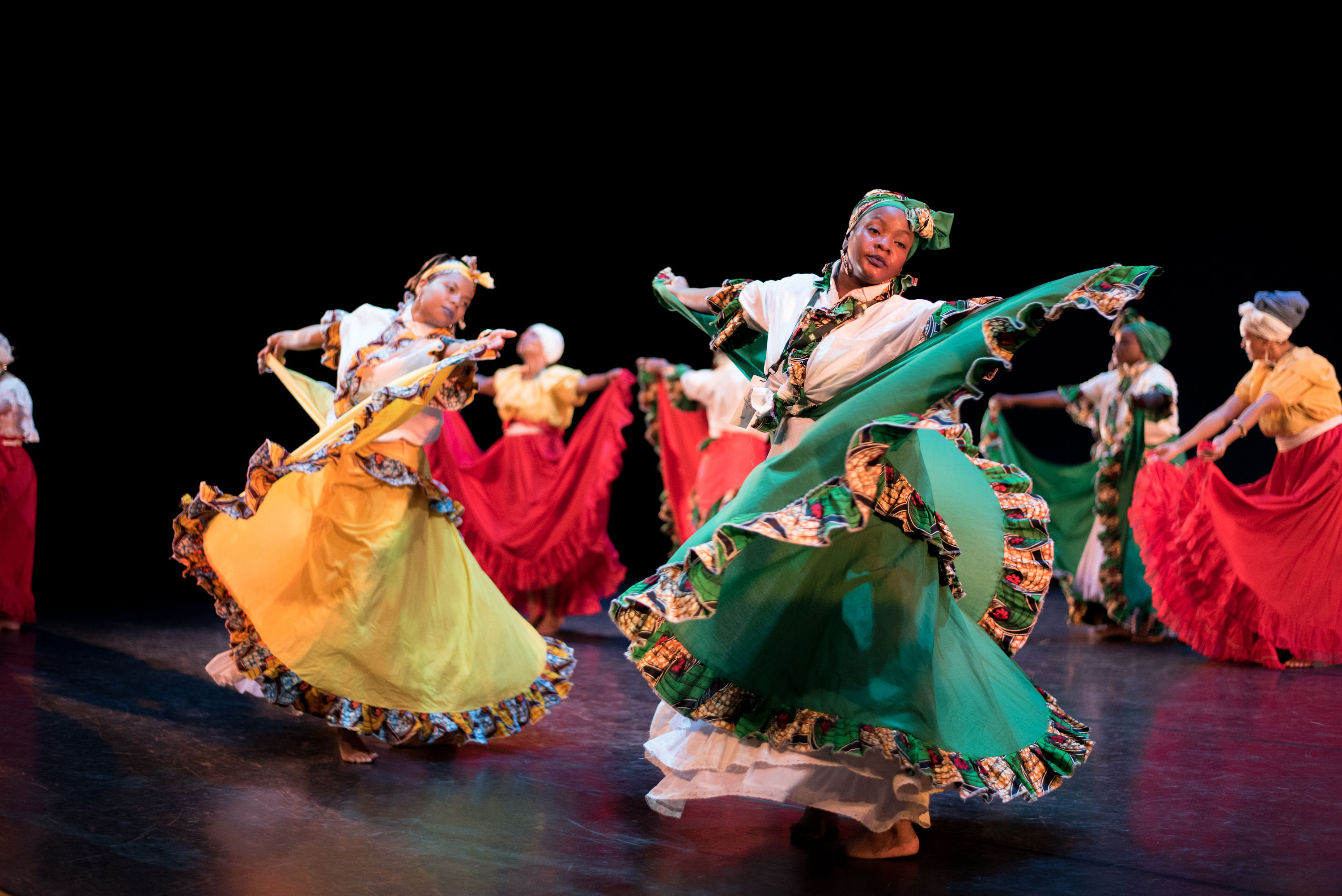
Shiata Lewis in Obeah Opera. Photo by Osato EreborThis year the Luminato Festival has two operas on its schedule. The first is a remount of Obeah Opera by Nicole Brooks first seen in Toronto in 2012. The work, which runs from June 13 to 22, is an all-female a cappella opera that retells the story of the Salem witch trials from the perspective of the first woman accused, the young Caribbean slave Tituba.

The second opera, running June 19 to 23, is Hell’s Fury, The Hollywood Songbook. Last year Luminato presented it as a work in progress. Now it presents the finished piece. The story follows the life of composer Hanns Eisler (1898-1962), who escaped Nazi Germany for the US in 1938, only to be rejected for his adherence to Communism in 1948 and forced to return to Europe, finally settling in the new East Germany. The opera, conceived and directed by Tim Albery, constructs a song cycle of Eisler’s many Lieder to tell the story. Baritone Russell Braun is the soloist, Serouj Kradjian is the pianist and Michael Levine the designer.

July

This year the Brott Music Festival (June 27 to August 15) will again present a fully staged opera as part of its overall schedule. This summer’s opera will be Puccini’s La Bohème presented for one night only in Italian with English surtitles on July 18 at the FirstOntario Concert Hall. Natalya Gennadi sings Mimi, Andrew Derynck is Rodolfo, Chelsea Rus is Musetta, Kyle Lehmann is Marcello, Cesar Bello is Schaunard, Simon Chalifoux is Colline and John Fanning sings both Alcindoro and Benoît. The production changes the location from late 19th-century Paris to Hamilton in the 1930s. Boris Brott conducts the Brott Festival Orchestra.

Those who missed the Canadian Children’s Opera Company’s mainstage show earlier this year will have another chance to catch The Snow Queen (1993) by John Greer to a libretto by Jeremy James Taylor in Campbellford. On July 7 the CCOC will present the hour-long opera based on the 1844 Hans Christian Andersen fairy tale at Westben Concerts at The Barn. Rob Kempson is the stage director and Teri Dunn is the conductor.

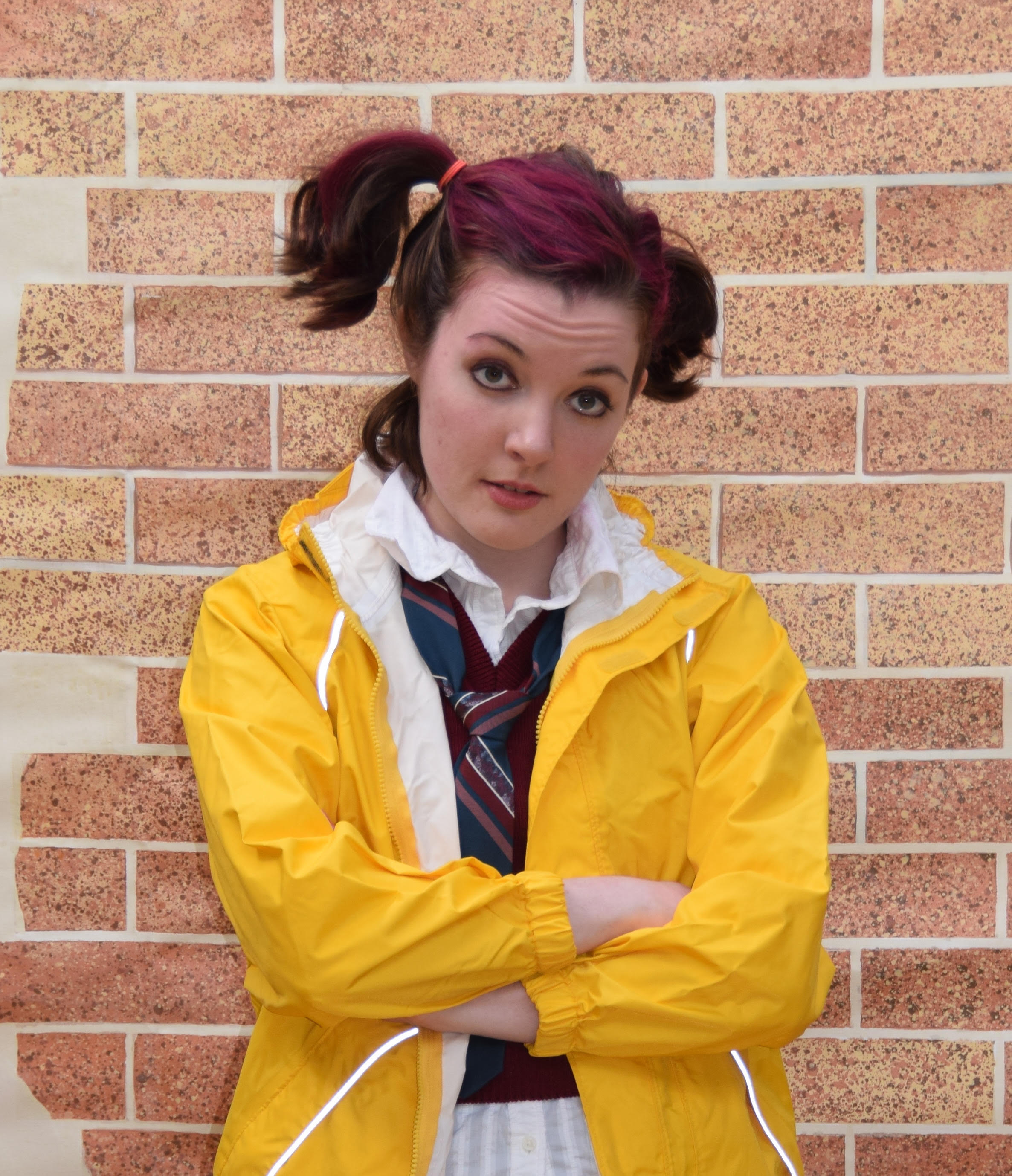
Katy Clark is Shoestring Opera’s Schoolyard Carmen. Photo by Jiayin LiuOn July 20 the Elora Festival hosts Shoestring Opera’s Schoolyard Carmen at the Heritage Barn in Fergus. In this adaptation for children in Grades 1 to 8, Carmen is a feisty little girl and newcomer to Canada who has a dark past. When Tory Adair, the “coolest kid in school” tries to bully her, she stands up to him. Shoestring Opera uses Carmen’s story to look at the immigrant in Canadian society, the child who is different, schoolyard bullying, personal independence and the saving properties of art.

Straddling July and August is Guillermo Silva-Marin’s venerable Summer Lyric Opera Theatre in Toronto. Founded in 1986, the training program culminates in staged concert performances. This year the operas are Verdi’s La Traviata (1853) on July 26, 28, 31 and August 3; Victor Davies’ Earnest, The Importance of Being (2008), an operetta based on Oscar Wilde’s well-known comedy, on July 27 and 30, August 1 and 4; and a double bill of Ralph Vaughan Williams’ Riders to the Sea (1937) and Puccini’s Gianni Schicchi (1918) on July 27 and 31, August 2 and 3. All performances take place at the Robert Gill Theatre on the downtown campus of the University of Toronto.

August

Last year Stratford Summer Music presented a staged version of J.S. Bach so-called Coffee Cantata of 1733 and followed this up with a more contemporary version called The Cappuccino Cantata. This year the festival keeps up with the times with a new work, the Cannabis Cantata, A Musical ‘Pot’ Pourri, commissioned by Stratford Summer Music and Ottawa Chamberfest from Peter Tiefenbach. Soprano Mireille Asselin, tenor Matthew Dalen and baritone Adam Harris explore the new landscape of legal weed in Canada through music by J.S. Bach with a libretto reimagined by Tiefenbach, on August 1 at Factory 163 in Stratford.

The Highlands Opera Studio is presenting two programs of opera. On August 15 in Haliburton and on August 17 in Orillia, it presents a fascinating triple bill under the title “Women in Opera: Then and Now.” First on the bill is Puccini’s Suor Angelica (1918) with Valerie Kuinka as stage director, Louise-Andrée Baril as music director and Lauren Margison in the title role. Next are two short operas from 2019.The Chair, by Maria Atallah to a libretto by Alice Abracen, focuses on a teenaged girl who tries to cope with the death of her best friend in an accident.Book of Faces, by Kendra Harder to a libretto by Michelle Telford, takes an irreverent look at the many faces of social media. Both short works were winners of the inaugural Musique 3 Femmes prize for emerging female opera creators. Jessica Derventzis is the stage director for both and Jennifer Szeto the pianist and music director.

In Haliburton on August 22, 24, 25 and 26, HOS presents Richard Strauss’ Ariadne auf Naxos (1912) in German with English surtitles with one cast on August 22 and 25 and another on August 24 and 26. Valerie Kuinka directs the Prologue and Richard Margison the main opera, while Philip Morehead is the music director for both parts.

All of this operatic activity should be more than enough to occupy any Southern Ontarian operagoer until the fall season.

Christopher Hoile is a Toronto-based writer on opera and theatre. He can be contacted at opera@thewholenote.com.
The Canadian Opera Company’s production of Puccini’s La Bohème continues to May 22 and its production of Verdi’s Otello to May 21. Yet, May is not simply devoted to revivals of standard repertory. The month also sees the premiere of a brand new Canadian opera from Tapestry Opera and the revival of two operas by American composer Dominick Argento who died on February 20 this year.

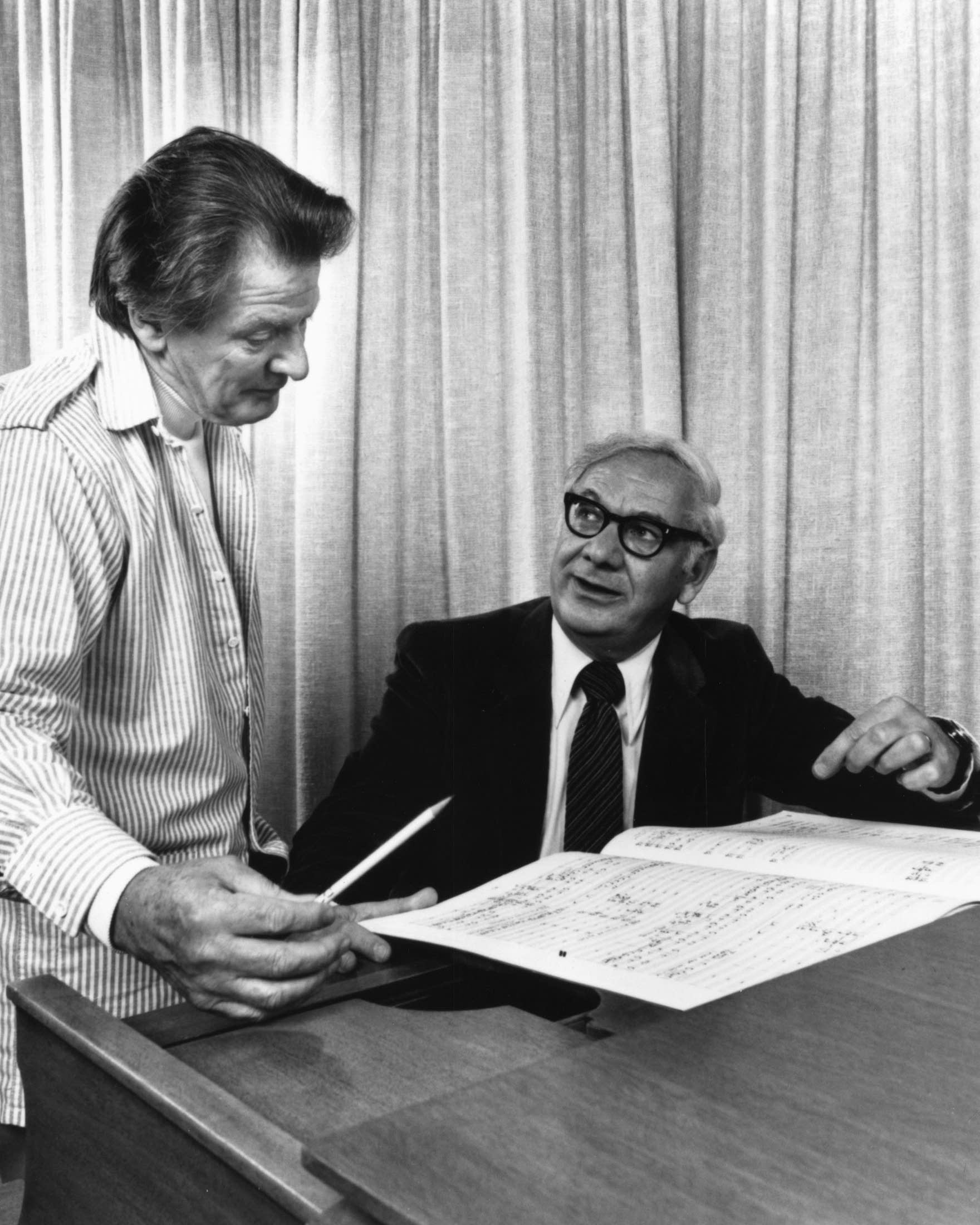
Neville Marriner (left) and Dominick ArgentoArgento wrote works in many genres but is best known for his operas, of which he wrote 13, and his dramatic song cycles that he termed “monodramas.” His best known operas are Postcard from Morocco (1971), Miss Havisham’s Fire (1977, rev. 1995) and The Aspern Papers (1988). Postcard from Morocco was last staged in Toronto by the University of Toronto Opera Division in 2015, but Argento’s other works have seldom been seen or heard in Ontario. 

Opera by Request, Toronto’s opera-in-concert company where the singers choose the repertoire, will be presenting a double-bill of Miss Havisham’s Wedding Night (1981) and one of Argento’s monodramas, A Water Bird Talk (1977). Miss Havisham’s Wedding Night focuses on the famous character in Dickens’ novel Great Expectations (1861) who was jilted on her wedding night and now, 50 years later, still replays the events in her mind. It is a prequel to another opera by Argento about the same character in Miss Havisham’s Fire. A Water Bird Talk is inspired by Chekhov’s one-person play On the Harmful Effects of Tobacco (1886). In Argento the gentleman lecturer does not deliver a talk about tobacco but about water birds, yet as in Chekhov’s play, the lecturer can’t refrain from mentioning illustrative points drawn from his private life.

The singer behind the selection of OBR’s double bill is soprano Brianna DeSantis. In April DeSantis provided me with a detailed account of how she was drawn to these works and how they function as a double bill. She writes: “I came across Miss Havisham’s Wedding Night when looking for a piece for my opera literature class. Being an avid reader, I first went to opera adaptations of literature. I came across Argento’s Miss Havisham’s Fire and Wedding Night and saw that we had a copy of the score and CD in the library at Western. I took a listen and loved it. I read Great Expectations as a child and was always attracted to Miss Havisham’s character – why was she like that? Argento’s work gives us a glimpse into her psyche.

“I decided to perform a small excerpt of the monodrama in a recital and loved it so much that I thought I should learn the whole piece one day. I believe we [Shookhoff and I] met sometime about a year ago and discussed doing Miss Havisham’s Wedding Night with Opera by Request. We thought of programming it with its frequently paired piece, Argento’sWater Bird Talk, because they both discuss the ins and outs of relationships, specifically, marriages.

“Since then, we have found ourselves a baritone [Parker Clement] to sing the role of the Lecturer, and I will be singing Miss Havisham. This project is special because it shines a light on gender disparity in madness, specifically in Miss Havisham’s Wedding Night, which is basically one long mad scene written in the vein of Lucia di Lammermoor. The opera provides a commentary on madness during the 19th century, where madness was often viewed as the irrational ‘female’ reaction to the rationality of the ‘male.’ We seek to highlight this gender disparity and offer a different perspective on what madness involves – that way the audience can decide. While the music may be unfamiliar, the message the operas seek to send is one that will resonate with many.”

The double bill, titled “Til Death Do Us Part? – A Dominick Argento Commemoration,” will have one performance in Toronto on May 3 at the College St. United Church with William Shookhoff as pianist and music director and Claire Harris on keyboard. The program will then be repeated in Windsor on May 4 at the Paulin Memorial Presbyterian Church.

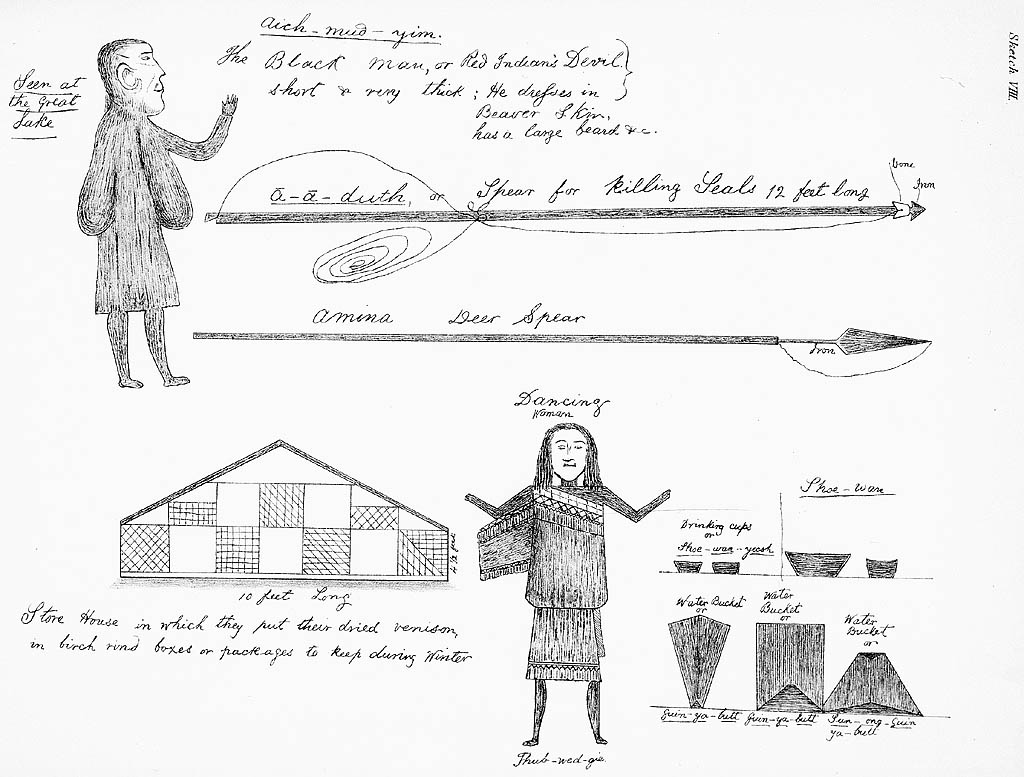
Shanawdithit: A commemoration of another sort is the purpose behind Tapestry Opera’s second new opera of the season after its highly popular presentation of Hook Up by Chris Thornborrow earlier this year. This is the world premiere of Shanawdithit by Newfoundland composer Dean Burry to a libretto by Algonquin playwright Yvette Nolan. Its title is the name of a woman (1801-29) encountered by a white settler William Cormack in 1829 in Newfoundland and thought to be the last member of the Beothuk Nation. Cormack took Shanawdithit to St. John’s where she created ten drawings that are the only first-person account of the life of the Beothuk.

In March, Tapestry Opera artistic director Michael Hidetoshi Mori provided me with invaluable information about the creation and importance of the opera which Burry and Nolan have been working on for the past three and a half years. Mori states: “This project came about a few years after a conversation between Dean Burry and Yvette Nolan about the subject of Shanawdithit for an opera.

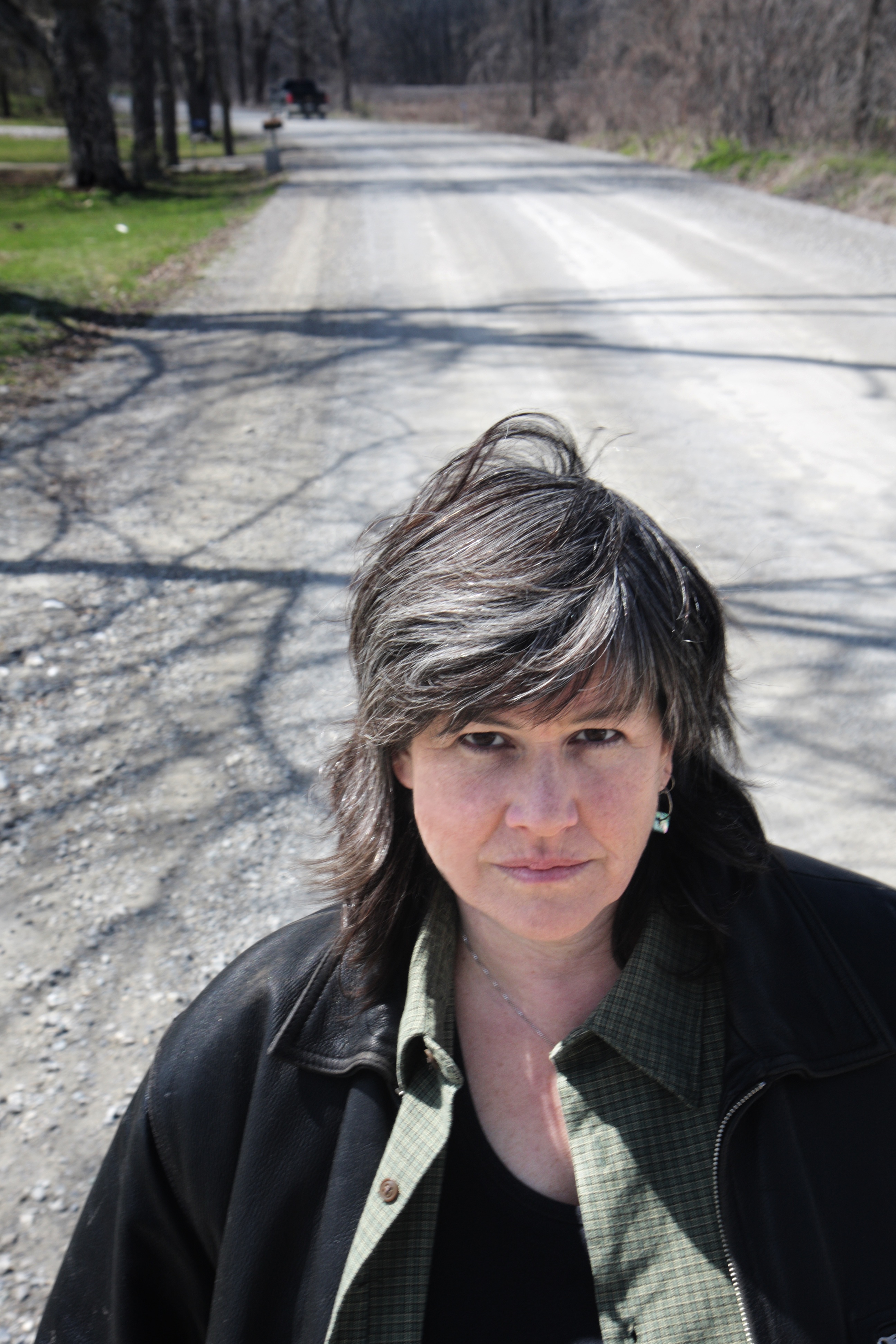
Yvette Nolan. Photo by Alex Felipe“Yvette was very keen on finding a way to tell the story without relying on the texts of Cormack and other settler historians. The challenge with Shanawdithit was that there are no Beothuk Elders, there was little Indigenous documentation of the Beothuk, and even if there were surviving bloodlines, they had been mostly absorbed into the Mi’kmaq almost 200 years ago.

“Yvette turned to the ten drawings Shanawdithit did in her last year of life as one of the only first-person accounts of Beothuk life and Shanawdithit’s perspective. She proposed we work with the ten drawings and five to ten Indigenous artists to interpret them, with the intent of retelling the last days of Shanawdithit and questioning the prevailing dominant settler scholarship and history.

One of Shanawdithit’s drawings“Yvette, Dean and I met, and we proposed an unconventional approach to creation. Yvette would write the libretto, with elasticity for collaborative artist input, and with specific vessels for where the drawings would come to life, with a dominant point of view from a collaborating artist. The artists would meet with Yvette and depending on their discipline, also Dean and myself, to reflect on the drawings and work through their thoughts and what was possible within a musical-dramatic-narrative and design framework. 

“Dean would compose soundscapes, not music, to start. Drawing on his shared familiarity with the same lakes, land, rivers and weather that Shanawdithit grew up and lived in, he would experiment with capturing those sounds rather than risk imitating or appropriating ‘Indigenous’ music sounds or stereotypes.

“Five of our seven performers are also Indigenous performers (all of the named characters portrayed as Indigenous are Indigenous performers), Asitha Tennekoon plays Peyton and Clarence Frazer plays Cormack. Every step of the way the Indigenous performers were active participants in shaping and responding to the story and its potential treatment (e.g. engaging in the conversation of whether Cormack was a hero, a villain, or just out of his ken).

“Chronologically this meant that instead of Yvette completing a final libretto and sharing it with Dean for him to take over, as is most often the case, in-depth meetings with all of the collaborators following the first draft libretto led to changes in the libretto. New art commissions based on the artists’ interpretations had to have their directions finalized before Dean would compose that section. All in all, the process was complex and instead of hierarchical, it was collaborative and organic.”

In response to the question whether anyone saw a difficulty in having a non-Indigenous person compose the music, Mori writes, “Reconciliation on the truth and reconciliation website begins with the text ‘Reconciliation is an ongoing journey, one that will take a collective effort to find a new way forward.’ Many First Nations colleagues have stressed that the necessary dialogue is two-way. Indeed our history of violence and injustice against First Nations is also our history.

“That said, this is not another settler artist explaining what happened. The key to the success of Shanawdithit is in its welcoming Indigenous voices to shape and lead the work in creation and performance. This is meant to be a contrast to previous artistic works, histories and academic publications that ignored Indigenous voices and placed a positivist settler perspective on history. This work challenges that one-sided historical perspective. 

“Considering the collaborative and facilitation role of composition in how Dean is approaching Shanawdithit, it should be understandable why the team is not completely Indigenous. It is Indigenous led and as a result many will see the piece as a true coming together of settler and Indigenous arts and artists, where the Indigenous voices are privileged. In working in opera we can explore a story that requires Indigenous voices and leadership, which will have the story and its retelling reach a different and new public through the mixing audiences of opera, multimedia theatre and Indigenous arts in Toronto and St. John’s.”

Shanawdithit will be performed at the Imperial Oil Opera Theatre in Toronto May 16, 18, 21, 22, 23 and 25 with Marion Newman in the title role and Clarence Frazer as William Cormack. The cast also includes Asitha Tennekoon, Rebecca Cuddy, Deantha Edmunds, Evan Korbut and Aria Evans. Michael Hidetoshi Mori and Yvette Nolan co-direct, Michelle Olson is the choreographer and Rosemary Thomson is the music director. On June 21 the opera, a co-production with Opera on the Avalon, will be performed at the St. John’s Arts and Culture Centre. 

Christopher Hoile is a Toronto-based writer on opera and theatre. He can be contacted at opera@thewholenote.com.
In most years, April is the month with the single highest concentration of opera presentations in Toronto and environs. In past years there have often been so many examples of opera from all periods that the month’s offerings could form a survey of the genre. This month, for unknown reasons, there is a high concentration of operatic warhorses which will certainly please those who primarily enjoy familiar works. Yet, two companies are presenting works out of the ordinary to help spice up a month heavy on household-name composers.

Opera Atelier’s Idomeneo. Photo by Bruce ZingerIdomeneo and Atelier

The first on offer is a remount of Opera Atelier’s stunning production of Mozart’s Idomeneo (1780), first seen in 2008. Famed soprano Measha Brueggergosman made her Mozart operatic debut and her debut with Opera Atelier in this production. Now she returns to OA to sing the role of Elettra again. The cast includes tenor Colin Ainsworth in the title role, mezzo-soprano Wallis Giunta as Idamante and soprano Meghan Lindsay as Ilia. David Fallis conducts the Tafelmusik Baroque Orchestra and Marshall Pynkoski directs.

Because the Mirvish production of the hit musical Come From Away has taken over OA’s traditional venue, the Elgin Theatre, Idomeneo will be performed in the Ed Mirvish Theatre, a block or so north of the Elgin. Audiences will have to decide whether performing in an auditorium with 700 more seats than the Elgin has any effect on the acoustics. The opera runs from April 4 to 13. 

Opera by Request

Opening next is familiar Mozart on a smaller scale in the form of his Così fan tutte in concert only on April 5 by Opera by Request. Deena Nicklefork sings Fiordiligi, Erin Armstrong is Dorabella, Conlan Gassi is Ferrando, Anthony Rodrigues is Guglielmo, Danie Friesen is Despina and John Holland is the cynical Don Alfonso. Claire Harris is the pianist and music director. 

Vera Causa

In April even the new company Vera Causa Opera, which presented the world premiere of Dylan Langan’s Dracula last month and will present a selection of arias from Canadian operas in June, has chosen a work from the standard repertory for April. This is Donizetti’s L’Elisir d’amore from 1832 that the company, as per its mandate, will present in three cities in Southern Ontario. Allison Walmsley will sing Adina, James Smith will be Nemorino, Jorge Trabanco will be Belcore, Michaela Chiste is Giannetta and Camilo Rodriguez-Cuadrado is the wily Dr. Dulcamara. Dylan Langan conducts the Vera Causa Opera Chorus and Orchestra and is also the stage director. The production opens in Cambridge on April 5, moves to Waterloo on April 6 and finishes its run in Guelph on April 7.

Opera Belcanto

Filling out the crammed first week of April, running April 4 and 6 at the Richmond Hill Centre, is the blockbuster opera Carmen presented by Opera Belcanto of York. Mila Ionkova sings the title role, Stanislas Vitort is Don Jose, Michele Pearson is Micaela and Andrew Anderson is Escamillo. David Varjabed conducts the Opera Belcanto of York Chorus and Orchestra and Edward Franko, co-artistic director of TrypTych Concert and Opera which has now moved to Kenora, will direct. 

A scene from the Canadian Opera Company production of La Boheme, 2013. Photo by Michael CooperCaird’s La Bohème at COC

In mid-April the spring season of the Canadian Opera Company opens with Puccini’s La Bohème, the opera that vies with Carmen as the world’s most popular. The production (which runs from April 17 to May 22) directed by John Caird was first seen in Toronto in 2013. It features Angel Blue as Mimi, Atalla Ayan as Rodolfo, Andriana Churchman as Musetta, Lucas Meachem as Marcello, Brandon Cedel as Colline and Phillip Addis as Schaunard. On May 5, 11 matinee and 22 the cast is Miriam Khalil as Mimi, Joshua Guerrero as Rodolfo, Danika Lorèn as Musetta, Andrzej Filończyk as Marcello, Önay Köse as Colline and Joel Allison as Schaunard. Fans of the opera may wish to see both casts. The conductor will be Paolo Carignani.

The COC follows La Bohème with yet another work from the standard repertory, Verdi’s Otello, but one not seen in Toronto since 2010. The production will be directed by David Alden, creator of such other COC productions as The Flying Dutchman, Rigoletto and Lucia di Lammermoor. Alden’s production is most notable for relocating the action from the Renaissance to around the time of the opera’s premiere in 1887. The COC fields its first African-American Otello in the person of Russell Thomas. Canadian Gerald Finley is Iago, Tamara Wilson is Desdemona, Andrew Haji is Cassio and Carolyn Sproule is Emilia. COC Music Director Johannes Debus conducts the opera that runs from April 27 to May 21. 

Lucia Cesaroni is The Merry WidowTOT goes tried and true

This year even Toronto Operetta Theatre finishes its season with the tried and true – in this case Franz Lehár’sThe Merry Widow (1905), the greatest of all Silver Age operettas. The opera runs April 24 to 28 and features Lucia Cesaroni in the title role, Michael Nyby as Count Danilo, Daniela Agostino as Valencienne and Gregory Finney as Baron Zeta. Larry Beckwith conducts the TOT Ensemble and Guillermo Silva-Marin directs.

Dion Mazerolle, featured in Shakespeare’s CriminalAnd finally … something new

Despite this plethora of familiar works, April does offer one new opera and one important but seldom-seen opera. The new opera is Shakespeare’s Criminal by Dustin Peters to a libretto by Sky Gilbert. Orpheus Productions will give the chamber piece three workshop performances at Factory Theatre from April 26 to 28.

The magic realist work, set in the present, plays with the notion that Shakespeare was gay, a view some hold since many of Shakespeare’s sonnets are addressed to a young man. Other sonnets are addressed to an unknown woman whom critics have dubbed the “Dark Lady of the Sonnets.” In Shakespeare’s Criminal, an older male poet named Shakespeare is unable to admit that he is homosexual. Instead he hides his attraction for men in the eloquent language of the sonnets for which he is much esteemed. He meets a beautiful young HIV-positive man to whom he finds himself attracted, but whom he resists. Enter a wild, fierce voyeur who urges the older poet to fall in love with the young man and bed him. The woman is so persuasive that it seems the older closeted poet will succumb, but at the last moment he cannot bring himself to risk his reputation. In revenge, the woman turns the old poet into a tree – a gender-reversed image of what the river god Peneus does in Ovid’s Metamorphoses to his daughter Daphne to preserve her chastity.

Dustin Peters is a Toronto-based composer whose works range from concert and chamber music to film scores and pieces for voice and dance. Sky Gilbert is an award-winning writer, director, filmmaker and professor. His many critically acclaimed plays have been performed in theatres worldwide. Guernica will publish his investigation of Shakespeare’s rhetoric, Shakespeare: Beyond Science, later this year.

The opera features mezzo-soprano Marion Newman, baritone Dion Mazerolle and actor Nathaniel Bacon. The structure of Shakespeare’s Criminal is inspired by musicologist Ellen T. Harris’s notion that male composers were able to ground the emotional core of their operas through the wild female voice (something which eventually led to the tragic Romantic heroines of Verdi and Puccini). Presented opera-in-concert style, Shakespeare’s Criminal raises many questions including, “Why do gay men often gravitate towards friendships with women and vice versa?” Peters is music director of the accompanying string quartet and Gilbert directs.

And something seldom seen

The important seldom-seen opera in April is Against the Grain Theatre’s production of Kopernikus: Rituel de la Mort (1980), the only opera by Québécois composer Claude Vivier (1948-83). This will be the first performance of the opera in Toronto since a touring Banff Centre production visited in 2001. In 2017 the present AtG production also had its premiere at Banff. Of what may be the most performed Canadian opera outside Canada, director Joel Ivany says, “I think this could be Canada’s greatest opera ever written. Vivier was unique, he was an innovator and a true artist.”

Ivany related in a conversation in March that he first heard of Kopernikus when he read that famed director Peter Sellars included it on his wish list of operas he’d like to direct. Sellars indeed went on to direct the American premiere of the opera in 2016 at the Ojai Festival in California. Ivany began working on it as a project for Canada 150 at the Banff Centre. While AtG is well known for its productions of Mozart’s operas with new English libretti written by Ivany, Ivany mentions that AtG has also presented operas with their libretti unchanged such as its open-air production of Debussy’s Pelléas et Mélisande in 2014.

That will be the case with Kopernikus. Set in two acts for seven singers, it challenges the norms of classical opera with its innovative use of compositional and technical devices to create a vivid meditation on self-transcendence. It unfolds through a series of obscure trials, inspired by Mozart’s Magic Flute, but played as an enchanted ritual. Canadian mezzo-soprano Danielle MacMillan revives her role as Agni, the central character who travels to an unknown space suspended in time wherein she meets the fragmented embodiment of many eclectic characters, such as Tristan and Isolde, Copernicus, Lewis Caroll and Mozart. Singing these roles are mezzo-soprano Krisztina Szabó, bass Alain Coulombe, baritone Dion Mazerolle, sopranos Nathalie Paulin and Jonelle Sills and baritone Bruno Roy. Joining the singers on stage are dancers Anisa Tejpar and William Yong who will realize Matjash Mrozewski’s choreography.

Ivany has taken an innovative twist on orchestration by incorporating members of the orchestra into the onstage roles of the ensemble. AtG music director Topher Mokrzewski conducts the dispersed ensemble. The production will be presented at Theatre Passe Muraille on April 4, 5, 6, 11, 12 and 13, 2019. 

Christopher Hoile is a Toronto-based writer on opera and theatre. He can be contacted at opera@thewholenote.com.
Claude VivierClaude Vivier’s opera Kopernikus was commissioned in 1978 by the University of Montreal’s Music Faculty. Supported by the Canada Council, Vivier received a fee of $7,000 (approximately $22,000 in 2019 dollars), which allowed him to focus entirely on composition. Finished in May 1979, Vivier dedicated Kopernikus to “my maître and friend,” Gilles Tremblay. Kopernikus was premiered a year later, on May 8, 1980 at the Théâtre du Monument National in Montreal.

Since its premiere Kopernikus has travelled extensively, making it the most restaged Canadian opera in Canadian history with over 55 performances. Ranking in second place is the opera Louis Riel (1967), with under 30 performances. However, whereas Louis Riel was performed only once outside of Canada, Kopernikus, mostly unknown at home, is highly celebrated in Europe with almost yearly performances. Canadian restagings have been sporadic: Montreal in 1986 by friends of Vivier via the Événements du neuf; Vancouver in 1990 via the Vancouver New Music Society; the large-scale tour de force of Thom Sokoloski and Autumn Leaf Performance that led to performances in several European and Canadian cities in 2000 and 2001; and the most recent iteration, a 2017 Banff Centre production coming to Toronto in April via Against the Grain Theatre.

“No one is a prophet in their own land” is a not unfamiliar expression in Canadian arts and, considering Vivier’s profound relationship with religion and all things mystical, the expression is fitting; however, it is not much of an explanation for why Kopernikus is seldomly restaged here. In my search for answers I turned to the many Canadian articles and reviews about Kopernikus in the press over the past 20 years. Although producers and directors praise Kopernikus as a genius work of art, both the critics and the public generally express discontent over three recurring themes: the genre (the opera is not really an opera), the plot (there is no plot to follow, so how do you stage nothingness?), and its incomprehensible language (the opera is in French, German, and Vivier’s own invented language).

Thinking back to my own experience with Kopernikus at the Toronto premiere in June 2001, I wish I had been better prepared to receive Vivier’s work. When the performance ended, I was mesmerized, my head filled with complex sounds, syllables and meanings that took weeks to process. I also remember vividly the complete disconnect between various members of the audience; at the end of the performance the man sitting next to me was sleeping, but the one directly in front of me was on his feet madly clapping and hailing bravos at the performers. Since I have this wonderful opportunity to write about Kopernikus before the next set of performances, I hope I can not only help bridge that disconnect but also acknowledge and normalize the uneasiness that can come from it.

Kopernikus, Banff Centre for the Arts, 2017Pushing the boundaries

Although Vivier himself declared Kopernikus an opera, both seasoned critics and the public alike seem more comfortable with labelling it musical theatre (there are no arias) or oratorio (the theme is religious and the staging is minimal). Vivier, however, was insistent in calling this work an opera. In remarks prepared for the 1979 premiere, quoted here from Bob Gilmore’s 2014 book, Claude Vivier: A Composer’s Life, Vivier defends his categorization when he states that “opera, as a form of expression of the soul and of human history, cannot die. The human being will always need to represent his/her fantasies, dreams, fears, and hopes.”In a later interview, with Angèle Dagenais in Le Devoir, March 3, 1980, when asked why he wrote an opera, a genre that is sometimes considered passé, he responded that “l’opéra permet la représentation d’états excessifs, et d’une dimension fantaisiste inconnue du théâtre.”Clearly, Vivier did not conceive Kopernikus as either a work of musical theatre or as an oratorio.

Vivier does push the boundaries of the operatic genre but not, as some believe, as a rejection of the old masters. Vivier was an avowed fan of Mozart; Agni, the main character in Kopernikus, undertakes a journey not unlike the main characters in Mozart’s Die Zauberflöte. This expansion of boundaries is simply a composer evolving into his own mature style, finding new ways to disrupt expectations, and creating new roles and sounds for melody. In fact, and this could be the topic of an entirely different article, the style of melodic writing that draws breath in Kopernikus ultimately serves as a stepping stone for several of Vivier’s later works.

In scanning reviews, it also became apparent to me that part of Vivier’s contextualization of Kopernikus in the score of the opera was misunderstood in translation. Vivier wrote: “Il n’y a pas à proprement parler d’histoire, mais une suite de scènes...” The first part, “il n’y a pas à proprement parler d’histoire” has been translated, interpreted, and served to the public as “there is no actual story,” which is a mistranslation. ‘À proprement dit’ or ‘à proprement parler’ is one of those very common, and confusing, francophone expressions. Add a negative in front of it and a language barrier is erected. As a native Francophone, however, I understand that Vivier is saying that Kopernikus is not a story in the traditional sense, rather than that there is no narrative. Granted, Vivier’s opera is devoid of villains or external conflict and this, perhaps, adds to the confusion. However, Agni, the central figure in Kopernikus undergoes a series of initiations that ultimately lead her to reach her final and purest spirit state, her dematerialization. The story is inherent in the series of scenes, in her ritualistic journey, where she encounters historical and mythical beings (her mother, Lewis Carroll, Mozart, the Queen of the Night, Tristan, Isolde and Copernicus) who accompany her from one world to the next.

Admittedly, the bare staging that typically accompanies Kopernikus can also be taken as a lack of narrative direction. It is, however, very much in line with Agni’s journey towards the purest of spiritual forms. Vivier explicitly left behind paragraphs of texts explaining each scene of the opera so that creative staging decisions could be left to the directors. Perhaps an unusual choice, but an explanation can be found in Vivier’s own words, again quoted from Gilmore’s book, when he states that he loves many operas of the standard repertory but “I rarely go see them because I usually don’t like the staging.”

Although Vivier kept out of staging decisions, he very much injected traces of himself throughout the staging of Kopernikus: the opera is scored for seven singers and seven instrumentalists (the number seven makes several appearances in other works and Vivier’s birthday is April 14); and in iconography Agni, the Hindu God of fire, is represented by a ram (Vivier’s astrological sign is Aries, a fire sign).

Fascinated with languages (he could speak at least five fluently), Vivier is perhaps the only composer to use an invented language throughout his entire compositional career, beginning with his first vocal work, Ojikawa (1968), and ending with his last, Glaubst du an die Unsterblichkeit der Seele (1983). In Kopernikus, as in all of his previous works, his invented language is not a series of aleatoric nonsensical syllables, but rather a combination of automatic writing and the use of grammelot (coined by Commedia dell’arte players, grammelot refers to sounds, such as onomatopoeias, used to convey the sense of speech). Vivier’s invented language also seems to function as a code for Agni who most often speaks in the invented language to other characters but speaks French when expressing her inner thoughts.

Kopernikus also shows early indications of spectralism, a musical practice where compositional decisions are often based on visual representations (spectrograms) of mathematical analysis of harmonic series. Vivier’s spectralism of the late 1970s is an exploration of sounds as living objects and what he calls colours in both the sounds and textures he creates. Vivier’s linguistic skills, combined with his strong predilection for vocal writing and his early foray into spectralism, elevate the opera to a stunning work of art where simple lines of music are turned into extraordinary meaningful moments that surpass any semantic value.

Kopernikus, Banff Centre for the Arts, 2017Looking ahead

In one of his last letters, Vivier wrote to Montreal conductor Philippe Dourguin and laid out his outline for a second opera. His “opéra fleuve” on the explorer Marco Polo was to consist of seven parts and use previously composed materials. Conductor Reinbert de Leeuw (Asko/Schoenberg Ensemble) and director Pierre Audi (Nederlandse Opera) reconstituted Vivier’s opera in the 1990s. Because their version was different than what Vivier originally lays out in his letter, the opera was renamed Opéra-fleuve en deux parties, with Kopernikus as part one and Rêves d’un Marco Polo as part two. Part two ends with Vivier’s final composition, the very much discussed Glaubst du an die Unsterblichkeit der Seele (Do you believe in the soul’s immortality). In 2000, as part of the Holland Festival, Vivier’s Opéra-fleuve en deux parties received eight performances in Amsterdam, marking the world premiere of Rêves d’un Marco Polo. The production was subsequently revived, also in Amsterdam, in 2004, recorded by the Asko/Schoenberg Ensemble and released on DVD in 2006. Perhaps, we too, can soon have a premiere of Vivier’s Opéra-fleuve en deux parties and discover Rêves d’un Marco Polo.

Until then, we have Against the Grain Theatre’s Kopernikus to look forward to. Since the company’s past productions have audaciously reinterpreted operas of the classical repertoire, it seems a natural fit for AtG to move towards shaking things up in the unexplored world of Canadian opera (there are over 300 Canadian operas to choose from!). In the company’s press release, stage director Joel Ivany proclaims Kopernikus as “Canada’s greatest opera ever written” and promises an “an epic journey of fire, life, death and ultimately, hope.” His passion for the opera, and the stellar team that surrounds the production, does indeed give much to hope for: hope that Kopernikus receives the recognition it deserves and hope for a leading opera collective to guide us in towards a new era of (re)discovering our own Canadian works.

Kopernikus is not only a work of great vision and originality, it is also the legacy of a deeply spiritual and intellectual man. From life to death and timeless mystical spaces, the opera transports its listeners on a journey without the usual grounding semantic references. What then, is a listener to do? As Paula Citron reminds us, in her 2001 article on Kopernikus for Opera Canada, Vivier said it best on opening night in 1979: “... Let things go and just listen to the sound.”

Against the Grain Theatre presents Claude Vivier’s Kopernikus on April 4 to 6 and April 11 to 13 at Theatre Passe Muraille Mainspace.

Sophie Bisson is a PhD student in musicology at York University and an opera singer who is passionate about Canadian repertoire. Her doctoral research focuses on Canadian opera.

Emily Lukasik as Mindy in Hook Up. Photo by Dahlia Katz Michael Mori, artistic director of Tapestry Opera has said that his goal for the company is to present one new Canadian opera per year. This year Tapestry is presenting two. The first is Hook Up with music by Chris Thornborrow to a libretto by Julie Tepperman running January 29 to February 9. The second is Shanawdithit with music by Dean Burry to a libretto by Yvette Nolan running May 16 to 25. Since Hook Up will be playing through almost a third of February, I spoke with its creators about how the project came to be and what it concerns.

Tepperman points out that when Hook Up officially opens on January 30, it will mark five and a half years that she and Thornborrow have been working on it. Thornborrow and Tepperman met at Tapestry’s renowned LibLab (Composer-Librettist Laboratory) that brings eight composers and eight playwrights together to create ten-minute operas. These sometimes become the seeds of full-length works.

That is exactly what happened when Tepperman and Thornborrow met. As Thornborrow says, “The seed scene was about online bullying and slut-shaming at the time we were looking to tell a story that involves young people and women and a topic that was in the news quite a lot.” 

Tepperman says that “At LibLab we bonded over our both having worked with youth in schools and communities. Young women on both sides of Canada had recently committed suicide due to online bullying because of a sexual assault becoming public. Initially we were thinking of maybe a grade 7, 8, 9 audience and Tapestry was looking for an opera to tour schools. The seed scene was mostly filled with humour with the potential to go darker, which is where we eventually went with it.”

The final result is very serious in intent. Tepperman explains: “This is an opera that explores sexual assault and consent in the context of rape culture in a university setting, and though we are focusing on a university setting we realize today that these issues are widespread throughout society far beyond the university campus.”

“The opera follows three young people who enter university and have the chance to explore their sexuality but for them these are uncharted waters, and they are not prepared for the pressures of partying, drinking and having sex, or for the consequences.”

I ask whether there is a paradox here: a hook-up culture on campus where students have sex with no strings attached; and a culture of consent and shaming where sex turns out to have all kinds of strings attached. Both replied. “Within the context of our story we explore this in different ways,” Thornborrow says. “Two of the young people are already in a monogamous relationship, but being in university away from the guardianship of their parents they are free to have sex whenever they want – except that the woman begins to question whether that is all there is. She wonders if they are just turning into their parents. The problem comes with the pressure to drink and how that affects a person’s moral compass and the ability to make informed decisions. So we are questioning hook-up culture and the pressures on teens at university campuses.”

Julie TeppermanTepperman continues: “At the same time we’ve been very careful that this opera does not become simply a lesson or a brochure; we intentionally end in a place where there are more questions than answers. Hopefully that will spur further conversation. So from the very beginning Tapestry has been interested in engaging professionals who deal with these issues and will be present for talkbacks after performances. This is not about victims and perpetrators but whether any piece of art can contribute to a larger conversation.”

Why choose opera as the medium to tell this story? I ask. Thornborrow answers: “For me as a composer it is just the impulse to tell stories through music, and I feel opera is a really powerful medium to tell stories of high stakes. At the same time the aesthetic of this opera is not according to traditional opera. We’re doing this in a small theatre; we’re using microphones; the instrumentation is a drum set and piano; and it moves at a fast clip. People sing usually at the same speed that people would speak, although there are moments that call for full voice. You’re getting dialogue at real-time speed with the explosive power of music, with a fluidity between the sung dialogue and the moments of intense emotion. I think that the music amplifies the stories and the emotions from those stories.”

“Opera suits the new emotional environment that these 17-, 18- and 19-year-olds find themselves in” Tepperman adds. “And the gravity of the libretto really supports the world of the characters. Richard Greenblatt, who has been our dramaturge for the last two and a half years, has kept reminding us ‘Story, story, story’ and ‘clarity of intention.’”

Thornborrow also points to the presence of Greenblatt as dramaturge – he will also direct the opera – as a factor that made composing this opera a unique experience: “For me it’s been rewarding because the composing has happened in such close proximity to the writing. We [Tepperman and I] would get together every couple of weeks and work on a few more minutes of music and another scene of dialogue. I would play what I had written for Richard and was totally open to questions of speed and timing and whether the music was driving the story forward.

So often when you are composing you are all alone, he says. “With Richard, he would ask, ‘Why did you make this choice?’ and it was something I was open to and that I am so grateful for. It was such a different experience than writing a symphony or chamber music or even art songs. It was just extraordinary to get that feedback.”

Chris ThornborrowAbout the five-member cast, Thornborrow says, “We have a mix of musical theatre people and opera singers to achieve the authentic voice and aesthetic of this world. For me the show is a hybrid of opera and music theatre, but people can decide whatever they want to decide.”

Tepperman and Thornborrow are very curious about how Hook Up will be received. Theatregoers will be seeing an opera. Operagoers will be seeing an unconventional opera in an unconventional space for opera. And the two student matinees will allow students of the same age range as the characters to see themselves represented onstage. 

Tepperman says: “We had an almost endless audition process but once we chose our cast we made adjustments so that every singer would have moments when their voice could really soar.”

In the cast, soprano Emily Lukasik, who has recently been at the Shaw Festival, plays the main character Mindy. Alicia Ault, who is part of a jazz trio, plays Mindy’s best friend Cindy. In the story, the two friends had hoped to room together, but that was prevented by a mix-up in dorm assignments. Nathan Carroll, best known from musical theatre, plays Tyler, Cindy’s one-and-only boyfriend since Grade 11. Alexis Gordon, best known from musicals at Stratford, and Jeff Lillico, best known from acting for Soulpepper and for musicals with the Musical Stage Company, play all the other characters including professors, Mindy’s parents and various partygoers at a climactic party.

When asked why it took so long for the project to come to fruition, Tepperman answers: “It took five and a half years because the project kept evolving. We had written two separate 90-minutes pieces but after various workshops, we decided to throw them out. Under Richard’s guidance we finally decided exactly the story that we wanted to tell. In fact, we worked four or five months just on the story, so when we started to write we were really clear about what the story was.”

Thornborrow sums up: “Music heightens the emotion of every moment. Whether it is a pedestrian comedic dispute or a devastating revelation, all these moments are heightened by music. These kinds of stories need to be told again and again – first perhaps by theatre companies and now by opera.”

Hook Up had a preview on January 29, opened on January 30 and runs until February 9 at the Theatre Passe Muraille Mainspace. Richard Greenblatt directs and Jennifer Tung conducts. 

ON OPERA QUICK PICKS

CONTINUING TO FEB 9: Hook Up, Theatre Passe Muraille, 16 Ryerson Ave. Tapestry Opera presents the world premiere of this opera/music-theatre hybrid about three teenagers’ different experiences of sex and alcohol in their first year at university. The opera explores the issues of consent amidst the pressures to join university hook-up culture.

FEB 3, 2:30PM: VOICEBOX: Opera in Concert presents Fierabras, Jane Mallett Theatre, 27 Front St. E. This is an exceedingly rare chance not only to hear Franz Schubert’s opera written in 1823 (but not staged until 1897), but to hear it with an orchestra of period instruments played by the Aradia Ensemble under Kevin Mallon. The Moorish knight Fierabras, son of the King of Spain, fights against Charlemagne but is in love with his daughter who loves someone else, while in a subplot Fierabras’ sister falls in love with one of Charlemagne’s knights. Sung in German with English surtitles.

jacques arsenault against the grainFEB 16, 8PM: Against the Grain Theatre presents (La) voix humaine, Gallery 345, 345 Soraunen Ave. AtG usually presents its operas with a twist and in this case it’s Francis Poulenc’s monodrama for soprano, La voix humaine (1959), with a tenor, Jacques Arsenault as Lui instead of Poulenc’s Elle, confronting his ex-lover over the phone. Topher Mokrzewski is the pianist and Aria Umezawa directs.

Christopher Hoile is a Toronto-based writer on opera and theatre. He can be contacted at opera@thewhoelnote.com.

The end of the old year and beginning of the new features a mix of old and new operas and old operas rejigged to be like new. There never used to be so much variety at this time of year, but it’s a challenge operagoers will gladly have to get used to.

(from left) Betty Allison as the Trainbearer, Susan Bullock as Elektra and Ewa Podleś as Klytämnestra in the Canadian Opera Company’s production of Elektra, 2007. Photo Michael CooperElektra: The production on the largest scale in these two months is the Canadian Opera Company’s remount of Richard Strauss’ Elektra running for seven performances from January 26 to February 22. This will be the second revival of the imaginative production directed by James Robinson since its debut in 1996. It is especially noteworthy that this productions stars two former COC Brünnhildes. Christine Goerke, the COC’s most recent Brünnhilde, sings the title role and Susan Bullock, the Brünnhilde for the COC’s first ever Ring Cycle in 2006, sings Elektra’s hated mother Klytämnestra. Bullock previously sang the role of Elektra when the COC last presented the opera in 2007. Soprano Erin Wall sings Elektra’s sister Chrysothemis, baritone William Schwinghammer sings Elektra’s avenging brother Orest and COC favourite, tenor Michael Schade, sings Klytämnestra’s lover Aegisth. Johannes Debus conducts the score of this opera that inhabits the same rich, violent sound world as its immediate predecessor by Strauss, Salome, and is a real showpiece for the orchestra.

WOW Factor: Though they are largely unseen by the general public, the COC has steadily been developing a repertory of operas for children that it tours to schools all around the province. Lately, the COC has taken to giving the public a look at these charming works. Its newest is WOW Factor - A Cinderella Story with music by Gioacchino Rossini from his Cinderella opera La Cenerentola (1817) adapted by Stéphane Mayer with a new English libretto by Joel Ivany, artistic director of Against the Grain Theatre. Ivany is well-known for his ability to write new libretti to existing music as he has done for AtG’s Mozart series of Figaro’s Wedding (2013), Uncle John (2014) and A Little Too Cosy (2015). One can tell that La Cenerentola has undergone quite a lot of musical adaptation since the original runs about 148 minutes whereas WOW Factor runs only 50 minutes.

Rossini’s opera has no Fairy Godmother and neither does Ivany’s adaptation. In his updated version the hit singing show WOW Factor arrives at Cindy’s school. Students jump at the chance to compete for the top prize – especially with pop sensation Lil’ Charm rumoured to be there. Shy Cindy dreams of sharing her talents with the world but friends become mean girls when she steps into the spotlight. The question is can Cindy, driven by her desire to sing, and with a bit of help from a reluctant pop star and his sidekick, overcome her fears to find her own unique voice? The roles are sung by members of the Canadian Opera Company Ensemble Studio and before each performance, young audience members can take part in interactive activities related to the opera. The recommended age is from 5 to 12 years old.

Performances at 11am and 2pm take place on both December 1 and 2 in the Imperial Oil Opera Theatre and tickets are free for children under 12. The 11am performance on December 2 is designated as a relaxed performance and people of all abilities are welcome.    

TOT’s Fledermaus: Meanwhile, as it has done for more than 30 years, Toronto Operetta Theatre continues its service of helping Torontonians bridge the old and new years with operetta as it has done for more than 30 years. This year it revives its production of Johann Strauss, Jr.’s Die Fledermaus for five performances from December 28, 2018, to January 2, 2019. Die Fledermaus, the peak of the Golden Age operetta, which has become over time intimately associated with New Year’s Eve in Europe and abroad, stars Lara Ciekiewicz, who previous was a stunning Sylva Varescu in Kálmán’s The Gypsy Princess in 2011. Also in the cast are tenor Adam Fisher, who sang Paris in TOT’s La Belle Hélène earlier this year, Caitlin Wood as Adele and TOT favourite Elizabeth Beeler as Prince Orlovsky. Derek Bate conducts and Guillermo Silva-Marin not only directs but plays the role of Frosch, the jailer.

Silva-Marin’s re-imagination of the role of Frosch is one his best ideas in this Die Fledermaus, last seen in 2010. Typically, the role is played by a comedian who does a long spoken routine in Act 3 before the singing recommences. Silva-Marin avoids this general slump in the action by making Frosch a would-be opera singer who gets into a competition with the tenor he has locked up in the cells. This not only keeps the music going but is far funnier than any spoken-word routine I’ve seen.

Lucia Cervoni. CREDIT Tom WolfHamilton and Kitchener: Since the demise of Opera Ontario in 2014, symphonies in the two cities served, Hamilton and Kitchener, have begun including opera in their programming. In Hamilton the Brott Festival Orchestra has mounted a fully staged opera for several years during the Festival’s summer run. The Kitchener-Waterloo Symphony has also begun adding opera to its schedule due to popular demand. On January 11 and 12 it will perform Bizet’s Carmen in concert with mezzo soprano Lucia Cervoni in the title role and tenor Ernesto Ramirez as Don José. The cast will also feature baritone Alexander Dobson; sopranos Midori Marsh, Claire de Sévigné and Autumn Wascher; baritone Chad Louwerse; the Opera Laurier Chorus, Laurier Singers and Alumni Choir; and the Grand Philharmonic Children’s Choir. Daniel Isengart is the director and Andrei Feher is the conductor.

Hosokawa’s Raven and Maiden from the Sea: Those interested in contemporary opera should know that renowned Japanese composer Toshio Hosokawa is in residence at the University of Toronto Faculty of Music this season. The faculty is staging several concerts to celebrate Hosokawa’s work, one of which is devoted to two of the seven operas he has written. The program is made up of Hosokawa’s setting of The Raven as a monodrama from 2012 and Futari Shizuka (The Maiden from the Sea) from 2017.

Hosokawa wrote The Raven, based on Edgar Allen Poe’s 1845 poem, for Swedish mezzo-soprano Charlotte Hellekant after he had heard her sing in his opera Matsukaze (2011). Hosokawa has noted the similarities in theme between The Raven and Japanese Noh drama in which creatures of nature play an important part. While all the roles in Noh are traditionally played by men, Hosokawa has said that having a mezzo-soprano interpret the part of the Narrator who mourns her lost love purposely reverses the tradition in order to broaden the theme to feelings of loss in general.  

Futari Shizuka (which literally means “The Two Shizukas”) was conceived as a companion to The Raven. It is based on a Noh drama attributed to Zeami Motokiyo (1363-1443) about the departed spirit of Shizuka Gozen, or Lady Shizuka, who possesses the body and soul of a young beautiful girl. Hosokawa’s librettist Oriza Hirata has updated the action to the present by making the girl a refugee who has made it to the Mediterranean Sea, and sings of her sorrow for wars and hateful disputes. Soprano Xin Wang will sing the role of the young girl. Ryoko Aoki, a Noh singer and dancer, will be the spirit of Lady Shizuka, the role she created in 2017. The double bill takes place in Walter Hall of the Edward Johnson Building at the University of Toronto on January 17 only. clip_image001.png

Christopher Hoile is a Toronto-based writer on opera and theatre. He can be contacted at opera@thewholenote.com.

Joel IvanyWhen Canada’s largest opera company commissions a new opera like Hadrian from Rufus Wainwright and Daniel MacIvor, it will necessarily be seen as the major event of the season. Yet we should not forget that Toronto’s smaller opera companies have been creating new operas and new interpretations of opera all along. One of the most exciting of these is Against the Grain Theatre which will be presenting two important operas this season. The first is BOUND v. 2 by composer Kevin Lau to a libretto by AtG artistic director Joel Ivany. The second is a major revival of Kopernikus, the only opera by Québecois composer Claude Vivier (1948-83). I spoke with Ivany in October about BOUND v. 2, which plays for only three performances in November, about its background and intent.

BOUND v. 2 is the second stage in AtG’s experiment with a three-year, concept-to-realization production. The first stage, simply titled BOUND, premiered in December 2017 and presented the basic concept of artists choosing various arias and ensembles by George Frideric Handel to which Ivany would write new lyrics. The premise was that seven citizens were detained by a government and held against their will in a waiting room. The audience watched and heard about their struggles, hopes and fears. Composer Lau introduced new sound ideas and arrangements to place the arias in a modern sound world.

BOUND v. 2 takes BOUND a significant step further. BOUND v. 2 is no longer a collection of reimagined, repurposed Handel arias that Lau has arranged. Rather it is now a fully fledged opera by Lau inspired by Handel. As Ivany says: “Kevin Lau received a commission for this project between last year and this year. What he’s written will be used in our third and final version. In the last month or six weeks he’s really immersed himself in the world of Handel to essentially write a brand new opera which, especially for us, is kind of unreal. Typically we’ve taken a Mozart or Puccini opera and written a new story on top of that which is familiar and exciting. But for this, Lau has done more than arranging. He is adding his own composition so that this is truly a new piece inspired by Handel about the humanity crises which we, unfortunately, are still reading about in the news. We’re still hearing these stories about persecuted people both in North America and abroad.”

The first version of BOUND was written for seven soloists and piano. BOUND v. 2 is written for four soloists and a ten-piece chamber orchestra with electronics. Of BOUND v. 2, Ivany says: “It is further fleshed-out musically in that Kevin has taken melodies and scenes but written them brand new. The opera is by Kevin Lau but you will definitely say this sounds like Handel.”

Why do this? Ivany explains: “Many people around the first version were saying why not just write a brand new piece, but Kevin very intellectually says this is a unique challenge to take these stories [by Handel] which were written in a specific context and to start with them. But then to move them somewhere else is compositionally an unusually interesting creative challenge. For the company, this is a further step after our Orphée where we take these tunes and melodies that have stood the test of time and ask what they could sound like to an ear of today.”

The obvious question is that if BOUND v. 2 will eventually be the basis for a new opera, why retain the link to Handel? Ivany responds to this in several ways: “At one point we were talking to [COC general director] Alexander Neef, who was talking about the party atmosphere of Handel and how people would go to socialize at the opera. He was curious about what a Handel mashup with AtG could look like. We took that idea and instead of going the party route we were charged by the fuel of the political nature of what was going on in the world. We looked back at who Handel was and how he gave a performance of his Messiah at the Foundling Hospital in London in 1750 where all the proceeds went to keeping the hospital going. We saw he had an intention behind his genius to do good as well.” Indeed, a BBC documentary states that the 1750 performance of Messiah was “the first ever secular charity benefit concert in which art and philanthropy came together to raise money from the haves for the have-nots.”

Ivany continues: “We saw that Handel was a composer who had social responsibility in his heart that obviously comes across through his music, whether it was his Messiah, or Jephtha or Alcina. He wrote these very complex characters of people who were being persecuted and what they would sing about their plight. And so Handel seems in some ways a very fitting composer for our subject. Last year we sat the singers just around a table and asked what arias speak to you and why and what contemporary stories do you find that speak to you. And then we married those two together and tested it in version 1 and saw what worked.”

Ivany has lots of experience in past AtG shows of writing a new libretto to pre-existing music as AtG’s version of Puccini’s La Bohème (2011) and Mozart’s Figaro’s Wedding (2013),Uncle John (2014) and A Little Too Cosy (2015). Ivany explains how this process works when now he has to add substantially different content to an aria as well as translating it: “With BOUND v. 2 and working with the previous version and with Kevin as well, a lot of the music has come first. He’s found this beautiful melody and we can tweak it as we find the text, but it’s not the traditional way that this is done and so he’s been inspired by themes. For example, he told me, ‘Here is a portion where Miriam [Khalil]’s character sympathizes with the refugee crisis and I don’t know how you can make that work.’ But I’m able to find the arc in what he’s written and match that story with it. I think this only makes the music much more powerful. Obviously in opera traditionally the text comes first, but in opera it’s the music more than the text which moves you.”

Of the production in general, Ivany says: “I’m really curious to know how this opera will resonate with people knowing that it was primarily driven by the music. In the third version I intend not to act as stage director, which will be a big leap of faith for me because I’m used to uber-controlling everything. It’s a big step for our company. It was a test and it’s becoming more of a turning point. I think that’s healthy for the company and for these types of unique shows that are a mashup of old and new, old stories and new stories, old music and new text.”

The third and final version of BOUND will be AtG’s feature production in 2020 and the world premiere of this opera, Ivany explains. “We have intentionally been taking a step-by-step process to culminate in what we anticipate as an immersive experience for both the audience and performers. It’s hard to push repeat on certain things and it turns our hair grey in terms of each time we do a new thing, but it keeps us creative.”

As one might guess from AtG’s past projects, Ivany is keen to demolish the notion that opera is an elitist genre: “I don’t consider myself elite. In fact I consider myself very un-elite. So I think that opera is for everyone who is willing to be open to it and not just a specific group of people. We hope that we can show that in our works.”

BOUND v. 2 is performed as a workshop concert and runs November 19, 20 and 21 at the Great Hall, 1087 Queen St. W. The singers are soprano Miriam Khalil, countertenor David Trudgen, tenor Andrew Haji and baritone Justin Welsh as the cast of detainees with actor Martha Burns as the voice of the State. The music includes stylings by modular electronic artist Acote. AtG founding member and music director, Topher Mokrzewksi, conducts. 

Christopher Hoile is a Toronto-based writer on opera and theatre. He can be contacted at opera@thewholenote.com.

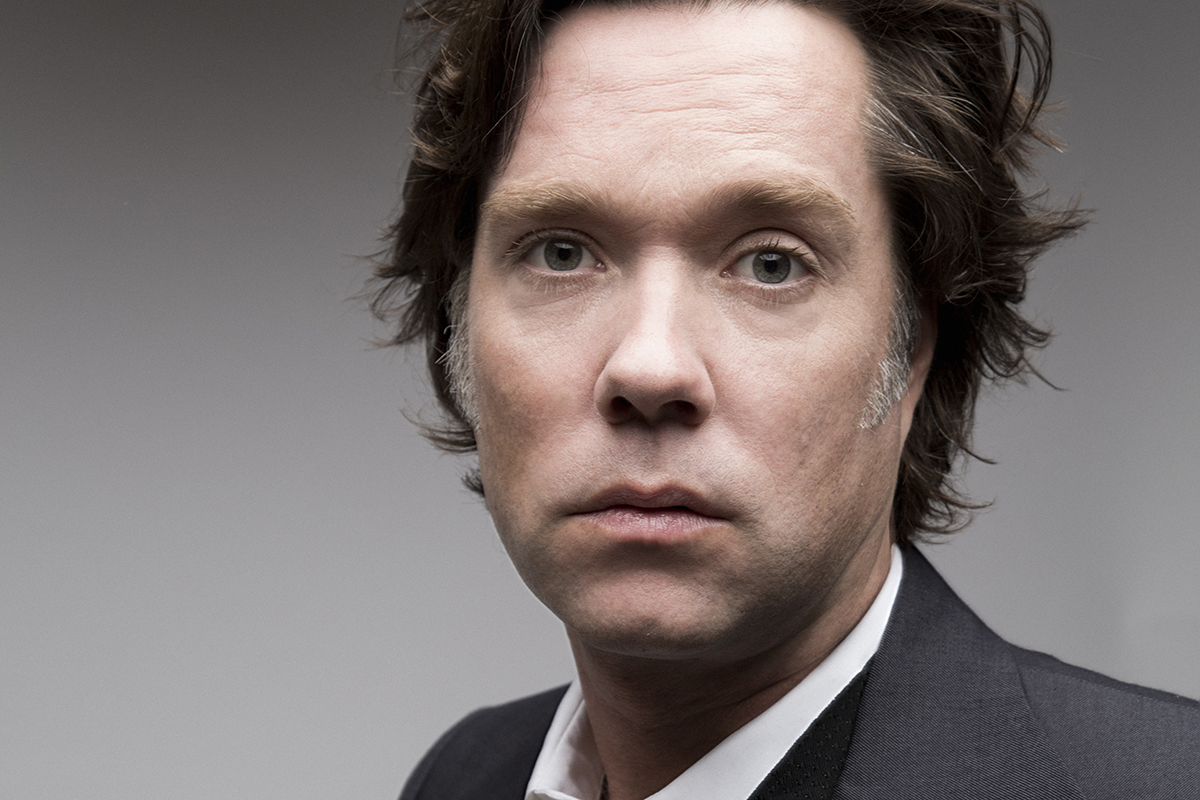
The most important operatic event of the current season happens right at its beginning. It is the Canadian Opera Company’s presentation of the world premiere of Hadrian composed by singer-songwriter Rufus Wainwright to a libretto by multi-award-winning playwright Daniel MacIvor. Hadrian is important as the first COC commission for the main stage since The Golden Ass in 1999 composed by Randolph Peters to a libretto by Robertson Davies.

Hadrian librettist Daniel MacIvor. Credit Jim RyceHadrian stars renowned baritone Thomas Hampson making his COC debut in the title role, equally renowned soprano Karita Mattila as Plotina also making her COC debut and tenor Isaiah Bell as Hadrian’s lover Antinous, last seen in Toronto earlier this year as Eurimaco in Opera Atelier’s production of Monteverdi’s Il ritorno d’Ulisse in patria. Hadrian opens October 13 and runs to October 27; it is directed by Peter Hinton and conducted by Johannes Debus. 

The plot involves the Roman Emperor Hadrian (reigned 117-138 AD), whom historian Edward Gibbon counted among the “five good emperors” of Rome, despite Hadrian’s habit of having his opponents executed and despite his bloody suppression of the Third Jewish Revolt (132-136). Hadrian was married for political reasons to his predecessor Trajan’s grand-niece Sabina, likely at Trajan’s wife Plotina’s behest, and spent more than half of his reign travelling about the empire. 

In Bithynia he met the youth Antinous, who became the love of his life. Antinous accompanied Hadrian on the rest of his travels for the next six years until Antinous’ mysterious death by drowning in the Nile in 130 at the age of about 20. Hadrian’s grief was so great he spent the rest of his life memorializing Antinous. He had the city Antinopolis built near where the youth died; he deified him, inaugurated games to honour him and established a religious cult to worship him which spread and continued for centuries after Hadrian’s death. The cult was condemned by some pagans of Hadrian’s time and by the early Christian Fathers. Historians, especially in the 19th century, suppressed mention of Hadrian and Antinous’ amorous relationship and it was not brought fully to the general public’s attention until the publication of French author Marguerite Yourcenar’s celebrated novel Mémoires d’Hadrien in 1951.

(from left) Assistant conductor Derek Bate, composer Rufus Wainwright, and COC Music Director Johannes Debus at the first read-through of Hadrian’s score, May 2018. Courtesy COCIn September just as rehearsals for Hadrian were starting, I spoke to Daniel MacIvor about the genesis and development of writing the opera. (Wainwright, in fact, had begun working on an opera about Hadrian after reading Yourcenar’s novel long before he wrote his first produced opera, Prima Donna, that played in Toronto as part of the Luminato Festival in 2010.) 

When asked how he became involved with Hadrian, MacIvor replied, “They [at the COC] were looking for someone to come on board with this; Atom Egoyan is a friend of mine and he recommended me to Alexander [Neef] who got in touch with me. Initially, I said no because I didn’t know anything about Hadrian or Antinous, and I knew very little about opera. But Alexander suggested that I look at the material about Hadrian and Antinous and as soon as I started to read about them I was floored that I had never heard of them because it seemed so incredibly important. How could I, as a gay man, never have known about it? So I became extremely interested in it. The story deals with grief which is an important theme of mine, so then I took a meeting with Rufus and we determined that we could work together.”

Though Wainwright was inspired by Yourcenar’s novel, MacIvor felt the story needed a different perspective: “We did talk about Yourcenar’s book, but I rejected reading it because I prefer not to read fiction when I’m writing fiction. Besides that, from what I had read about the novel and from what Rufus said, it seemed that the novel positioned Antinous as more an object of love, whereas I was very interested at looking at what it was that kept the couple together for six years, a relationship ended only by Antinous’ untimely death. I felt the story needed to be about a relationship that was physical, spiritual, intellectual and emotional – that they were equals in the relationship and that that equality was frowned upon by people of the time.”

(MacIvor is correct. Though sexual relationships between older men and younger men were accepted in Ancient Rome, it was expected that the older man would be dominant in all aspects of the relationship.)

As it turned out, the late playwright Linda Griffith made an important contribution: “So when I was debating doing the job I went to visit Linda Griffiths and when she learned of the topic she gave me her copy of Hadrian and the Triumph of Rome (2009) by historian Anthony Everitt that she had just finished reading and that became my source book. One of the things Everitt talks about are the various theories of Antinous’ demise. Did he sacrifice himself in an effort to improve Hadrian’s health, was it an accident or was he murdered? Everitt offered a potential for drama there so I grabbed it. Treachery and duplicitousness are richly operatic. And then there’s also the question of Judea and Hadrian’s relationship to Jewry which is also historically known and I also created drama around that.”

(from left) Composer Rufus Wainwright and librettist Daniel MacIvor at the first read-through of Hadrian’s score, May 2018. Courtesy COCMacIvor knew from the start what style of opera Wainwright intended and that affected how he approached the libretto: “I knew from the beginning that we were writing opera in the grand tradition – that I would be writing recits and arias and duets and I just went for it. I wanted the language to be formal, not casual as in [Benjamin Britten’s] Peter Grimes or in [John Adams’s] The Death of Klinghoffer

“I think that one of the things that drew Alexander to me in the first place was that if you look at my plays there’s a lot of white space on the page, so I think that might have been an early indication that I might be able to write a scene by using a minimum of words. And I love the challenge of that. It takes longer to sing a line than speak it and then there is the option that those words can be repeated over and over again.”  

MacIvor discussed the negotiations involved in collaboration: “I think structurally we landed well on the first draft, and then shifted quite a lot after that about where an aria lands or where a trio appears. Rufus and I met many times and it was a question of throwing axes and hammers with both of us feeling very passionate about the story. Opera is probably Rufus’ first musical love so he is deeply invested in it. He would speak in references to other operas for what he wanted and I would reject going there because I didn’t want to be influenced by other works. So we ended up bringing in a dramaturge, Cori Ellison, who works at Juilliard, to help bridge the very different ways we work in and I think now we are both very pleased with where we’ve landed.

“If Rufus said ‘we really need to have an aria here in this scene,’ then I would move things around and adjust what I needed to adjust. And there are adjustments in tone where a character needs to show their weakness here or their strength there, and he’d ask me to do that. There was lots of music he had written before I came on – like how he wanted to begin Act 3 which is just after the intermission and I made space for that. There is also an aria that he adapted from a pop song of his that he elevated and wanted included, so the libretto I presented four years ago has changed considerably. Yet, the four-act structure, where the main arias occur and what the story basically is, have not really changed radically.”

When asked how much of the opera he considers his, MacIvor replied: “The idea that Hadrian has the chance to relive two nights again with Antinous was something that I brought to the story. But Rufus agreed with it and the fact that he did agree also makes it his don’t you think? If you look at my other work you see that I’m obsessed with certain kinds of structures and themes and looking at the libretto you will see it’s all there, like You Are Here (2001), A Beautiful View (2006), Here Lies Henry (1995). There so much of the work that I’ve done about a person being forced to perform their life again, I think an audience who knows my work will see that in the opera.”

MacIvor has been strongly inspired by how important the story is: “Peter Hinton talks about this story really beautifully in saying that this is one of a trio of great love affairs upon which empires rose and fell. He talks about Dido and Aeneas, Antony and Cleopatra and Hadrian and Antinous. It’s all about Rome but it seems to feel weirdly relevant somehow. I think that the story of Hadrian and Antinous is an important one and I think that in giving it attention that something is served. There was a kind of homophobia surrounding it in that prevented people being able to address their story. And that fuels my passion to get this story out.” 

ON OPERA QUICK PICKS

SEP 30 TO NOV 3, VARIOUS TIMES: Eugene Onegin, Four Seasons Centre. This the COC’s first production of Tchaikovsky’s great opera since 2008.  This time it will be staged in the acclaimed production Robert Carsen created for the Metropolitan Opera.  Gordon Bintner sings Onegin, Joyce El-Khoury is Tatyana, Joseph Kaiser is Lensky and Johannes Debus conducts.

OCT 13 TO 27, VARIOUS TIMES: Hadrian, Four Seasons Centre. This the COC’s first commission for the main stage since The Golden Ass in 1999. Composer Rufus Wainwright and librettist Daniel MacIvor bring to the stage one of history’s great gay love stories – that of the Roman Emperor Hadrian and the youth Antinous. The production stars the renowned Thomas Hampson as Hadrian and Karita Mattila, both making their COC debuts, with Isaiah Bell as Antinous. Peter Hinton directed and Johannes Debus conducts.

OCT 25 TO NOV 3, VARIOUS TIMES: Actéon & Pygmalion, Elgin Theatre. This is the first time Opera Atelier has presented Marc-Antoine Charpentier’s Actéon (1683) and Jean-Philippe Rameau’s Pygmalion (1748) as a double bill – two operas based on Ovid’s Metamorphoses.  Colin Ainsworth stars as both title characters with Mireille Asselin and Allyson McHardy.  The production travels later to Chicago and Versailles.

Christopher Hoile is a Toronto-based writer on opera and theatre. He can be contacted at opera@thewholenote.com.

Judging from the playbills that opera companies have announced so far, the 2018/19 season looks to be an exciting one. Nearly every company, large or small, has a rarity or world premiere on offer to spice up the year.

Rufus Wainwright, composer of Hadrian. Photo by Matthew WelchHadrian: The most anticipated of these is the world premiere of Hadrian by Rufus Wainwright to a libretto by Daniel MacIvor. This is the first new opera that the Canadian Opera Company (COC) has commissioned for the main stage since The Golden Ass in 1999 by Randolph Peters to a libretto by Robertson Davies. Strangely enough, Hadrian also has a Roman theme, in that it focuses on how the grief of the Emperor Hadrian (reigned 117-138AD) for his lover Antinous begins to distract him from affairs of state. For the premiere, the COC has assembled a starry cast that includes Thomas Hampson as Hadrian, Isaiah Bell as Antinous, Karita Mattila as Plotina, the widow of Hadrian’s predecessor, and Ben Heppner as Dinarchus. Johannes Debus conducts and Peter Hinton directs. The opera runs from October 13 to 27.

Daniel MacIvor, librettist of Hadrian. Photo by Guntar KravisThe COC fall season begins with the Canadian debut of Robert Carsen’s production of Tchaikovsky’s Eugene Onegin. Gordon Bintner sings the title role and Joyce El-Khoury the role of Tatyana, the young woman infatuated with Onegin. Johannes Debus conducts the opera, which runs from September 30 to November 3.

The COC’s remaining operas are standard repertory but with some spicy casting – Richard Strauss’ Elektra running January 26 to February 22, Mozart’s Così fan tutte running February 5 to 23, Puccini’s La Bohème running April 17 to May 22 and Verdi’s Otello running April 27 to May 21. Elektra will be of special interest since it stars two former COC Brünnhildes – Christine Goerke as the vengeful Elektra and Susan Bullock as her hated mother Klytämnestra. Otello should also be exciting with Russell Thomas in the title role and with Gerald Finley as Iago.

Measha Brueggergosman in Opera Atelier’s 2008 production of Idomeneo. Photo by Bruce ZingerOpera Atelier begins its season with two one-act operas it has never paired before. The first is Actéon (1683) by Marc-Antoine Charpentier and the second is Pygmalion (1748) by Jean-Philippe Rameau. Colin Ainsworth sings both title roles, Mireille Asselin sings Diana in the first and Amour in the second and Allyson McHardy sings Juno in the first and Céphise in the second. The double bill runs from October 25 to November 3 in Toronto and will later tour to Chicago and Versailles.

OA’s spring opera is Mozart’s Idomeneo (1781), but the draw for many people will be the return of soprano Measha Brueggergosman to the Toronto stage after a ten-year absence to sing the role of Elettra as she did when OA premiered this production in 2008. The rest of the cast is just as noteworthy. Colin Ainsworth sings Idomeneo, Wallis Giunta is Idamante, Meghan Lindsay is Ilia and Douglas Williams is Neptune. As usual Marshall Pynkoski directs and David Fallis conducts the Tafelmusik Baroque Orchestra. The opera runs from April 4 to 13, 2019.

Tapestry Opera has much in store. From September 13 to 16 it presents Tapestry Briefs, in which four singers present short operas by four composers and four librettists. On March 29 and 30 it presents Songbook IX, a collection of highlights from Tapestry’s 39 years of opera creation.

Tapestry also will present two new full-length operas. The first is Hook Up by Chris Thornborrow to a libretto by Julie Tepperman, running from January 29 to February 9. The opera looks at the difficulties encountered by three friends when they discover sexual freedom at university, along with questions of shame and consent. The opera features three singers best known for work in musicals rather than opera – Alicia Ault, Nathan Caroll and Jeff Lillico. The second is Shanawdithit by Dean Burry to a libretto by Yvette Nolan. The opera tells of Shanawdithit (1801-1829), who was the last recorded surviving member of the Beothuk Nation in Newfoundland. In the last months of her life she created a series of drawings that expressed the loneliness of survival and her lost history. Kwagiulth and Stó:lo First Nations, English, Irish and Scottish mezzo-soprano Marion Newman sings the title role, with the rest of the cast and the performance dates in May 2019 to be determined.

Ivor NovelloToronto Operetta Theatre presents two of operetta’s greatest hits with Johann Strauss, Jr.’s Die Fledermaus running from December 28, 2018, to January 2, 2019, and Franz Lehár’s The Merry Widow running from April 23 to 28, 2019. In between these blockbusters, however, on March 3, TOT presents a major rarity in the form of Ivor Novello’s operetta Perchance to Dream (1945), the only work for which he wrote both the music and the libretto. The operetta tells the usual story of the inhabitants of the same house, Huntersmoon, in three different historical periods – the Regency, the Victorian age and in 1945. Though a huge success in Novello’s day, it has seldom been revived, though many will know its most famous song, We’ll Gather Lilacs.

Vera Causa: While we have focused so far on opera in Toronto, it’s worth noting that recently small opera companies have been sprouting up across Ontario. One of these is Vera Causa Opera, based in Cambridge and serving what has become known as the Golden Triangle, Ontario’s answer to California’s Silicon Valley. For VCO the 2018/19 season is its most ambitious since it was founded by artistic director Dylan Langan in 2015. It begins with the 1884 rarity Le Villi (The Fairies), Puccini’s very first opera, which happens to be based on the same story that provided the scenario for Adolphe Adam’s ballet Giselle (1841). The opera will have three performances in Waterloo from November 16 to 18.

VCO’s second production is the world premiere of Langan’s own opera Dracula, to be performed in Cambridge on February 15, Waterloo on February 16 and Guelph on February 17. The company’s third production is Donizetti’s L’Elisir d’amore, to be performed in the same three cities in the same order from April 5 to 7. VCO’s season concludes with its Canadian Opera Fest, which will include two brand new operas performed in the same three cities from June 14 to 16.

Busy September: In addition to the 2018/19 seasons above, September itself is very busy for local opera. Opera by Request, the concert opera company where the singers choose the repertory, is presenting an encore of its successful performance of Donizetti’s Anna Bolena on September 7, with Antonina Ermolenko as Anna and John Holland as Enrico VIII. On September 28, OBR presents Wagner’s Der fliegende Holländer, with Peter Bass as the Dutchman and Brigitte Bogar as Senta. On September 14 it presents Mozart’s Don Giovanni, with Norman E. Brown as the reprobate and John Holland as Leporello. Then OBR takes the opera on tour – first to Ottawa on September 16, then to London on September 22 and finally to Windsor on September 30. This is a great way to serve cities that once had or never had professional opera available.

Opera has returned sporadically to the Hamilton area because of the Brott Music Festival. But a new company, SOLO, or the Southern Ontario Lyric Opera, is presenting its second fully-staged opera in the area, with Verdi’s Rigoletto on September 16 in Burlington. Jeffrey Carl sings Rigoletto, Allison Cecilia Arends is his daughter Gilda and Romulo Delgado is the lecherous Duke of Mantua. SOLO founder and artistic director Sabatino Vacca conducts.

Paper Canoe and Cahoots: Also in September, running from September 9 to 30, is a play from Paper Canoe and Cahoots Theatre that ought be of interest to those curious about early North American opera. The play is I Call myself Princess by Jani Lauzon, about a modern-day Métis student who encounters the opera Shanewis: The Robin Woman, which was written for Creek/Cherokee mezzo-soprano Tsianina Redfeather (1882-1985). The opera premiered at the Metropolitan Opera in New York in 1918 and was later performed in Denver and Los Angeles. Lauzon’s play features music from Shanewis composed by Redfeather’s creative partner Charles Wakefield Cadman (1881-1946), an American composer in the early 1900s who was part of a musical movement which sought to use Indigenous music to create a distinct North American musical identity.

The question the play raises is similar to some of the issues encountered in the recent COC production of Harry Somers’ 1967 opera Louis Riel –namely, “How can we engage with tensions between representation, inspiration and cultural appropriation?” Mezzo-soprano Marion Newman sings the role of Tsianina, Richard Greenblatt plays Cadman, Marjorie Chan directs and Jerod Impichchaachaaha’ Tate conducts. 

Christopher Hoile is a Toronto-based writer on opera and theatre. He can be contacted at opera@thewholenote.com.
Back to top