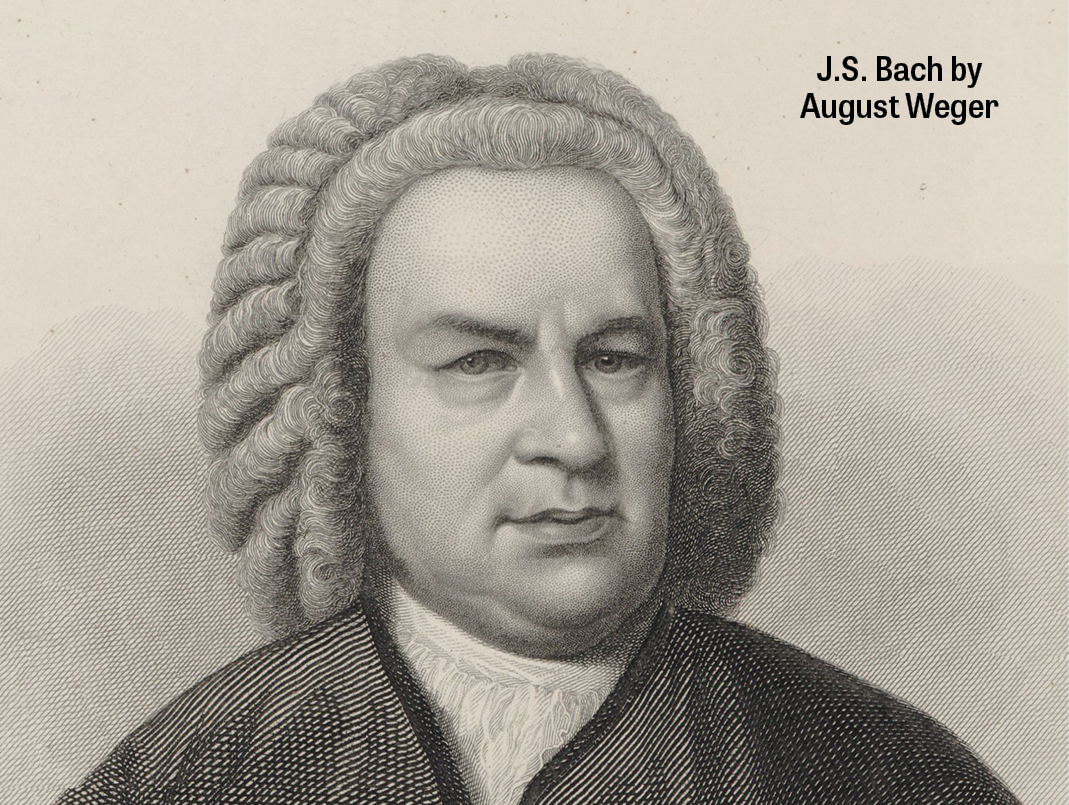
2008_-_Early_-_Bach.jpgAlthough an all-Bach program is a tempting, and ambitious project for an artist, there are two perils. One is difficulty, the other, monotony. Bach seldom found himself in a mood to write anything easy, and it’s hard to give his music the flair it often deserves in performance. It also doesn’t help that a modern concert audience demands variety, and one composer alone, even Bach, is hard pressed to carry an entire evening’s worth of music.

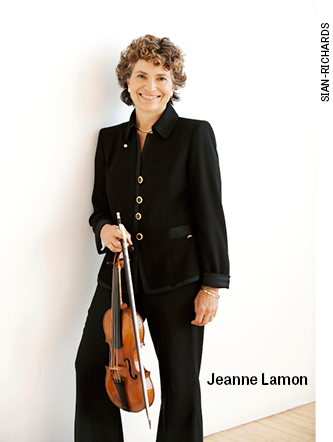
Unless of course that Bach program is an Alison McKay multmedia project. This month, Tafelmusik presents McKay’s newest production, “J.S. Bach: The Circle of Creation,” a celebration of the genius of Bach. Like McKay’s previous productions, “The Galileo Project” and “House of Dreams,” her latest combines text, music, projected images and video, with the help of Jeanne Lamon, back to lead the orchestra, and Marshall Pynkoski, providing stage direction.

The Circle of Creation promises to be more than just a tribute to Bach. McKay wants the audience to explore not just the composer’s world, but also the world of the artisans who lived in Bach’s day — the lives of a typical 18th-century papermaker, violin carver, string spinner and performer are all examined in this concert. And if anyone thought difficulty was going to be an issue (even for Tafelmusik) consider this: Tafelmusik will perform the entire concert from memory. This will be quite a stunt, as the orchestra will be expected to pull off the first two movements of the Brandenburg Concerto No.3, highlights from the First and Third Orchestral Suites, and instrumental excerpts from a slew of cantatas. If that weren’t enough, the evening will also include a pile of the master’s chamber music, including parts of the Goldberg Variations, sonatas for two and three violins, and the Allemande of the First Partita for solo violin. It’s not exactly the sort of repertoire one jumps to include in the same concert, let alone try to do all from memory. J.S. Bach: The Circle of Creation will be performed May 6 to 10 at Trinity-St. Paul’s Centre and May 12 at George Weston Recital Hall.

While Tafelmusik promises to throw every possible form of staging, multimedia presentation, and musical direction at one of the great composers of classical music, there’s another concert gong on later this month that promises to be much more down-to-earth, but no less of an impressive affair. Bud Roach, a great lover of Italian music of the 17th century, will be presenting the music of Giovanni Felice Sances and Alessandro Grandi, two Italian composers who lived late enough in the Renaissance to consider Monteverdi as part of the musical establishment, rather than a radical. Sances was well known in his own time as a composer of opera in Venice. He later moved to Vienna where he eventually became Kapellmeister under Ferdinand III. Unfortunately for Sances’ legacy, his operas were all lost, so we have no chance of performing any of his larger-scale works. Grandi was more than a contemporary of Monteverdi – he was also a colleague, and worked under the great composer at St. Mark’s Church in Venice, where the two wrote most of their best-known works. Roach will perform a selection of Sances’ and Grandi’s works as well as accompany himself on baroque guitar, on May 31 at 2:30pm as part of the Toronto Early Music Centre’s “Musically Speaking” series of concerts. This all happens at St. David’s Anglican Church. Roach is a gifted musician who is blessed with an exceptional voice – this concert will be an excellent chance to uncover some hidden gems from Italy in the 17th century.

Speaking of Italian music, there’s another concert this month that takes its inspiration from the vocal music of Renaissance Italy – albeit with a twist. Although we definitely associate the madrigal with Italy, the genre caught on in other countries, with a few changes made in transit. Every composer in Italy felt he had to compose a madrigal to be taken seriously; even Palestrina, the composer of the Pope Marcellus Mass, got in on the craze, publishing a collection of his own madrigals (although he later claimed the work as the youthful indiscretion of a young man who should have written more masses and motets). Once the madrigal had become standard fare for Italian music lovers, and composers like Monteverdi and Gesualdo had stretched the boundaries of the genre, it eventually died out in Italy. 

Not so in England. There, audiences were too busy enduring decades of religious strife, violence, and a country in political turmoil to occupy themselves much with the arts, and so discovered the form much later. Still, by the beginning of the 17th century the English had re-dedicated themselves to capital C Classical learning and culture. The result was an eccentric, derivative look at what the Renaissance could have been – a token nod to Greek and Roman culture and learning; none of the Homeric myths, mind you. No stories of gods meddling in the lives of mortals. Rather, an overall aesthetic that sought entertainment in easygoing comedy and diversion rather than in the epic tragedy found in, say, a typical Italian opera. Presumably everyone in the country had seen enough drama and tragedy after Henry VIII’s reign.

So while your typical English madrigal of the day may have had enough sighing in it to make a sizeable breeze,  it nevertheless kept a tight rein on the emotional range of its earlier Renaissance counterpart – no broken hearts, no ruined lives and absolutely no tragic deaths allowed. There’s a reason they called it “Merrie England.”

The Cantemus Singers will pay tribute to the jolly, frivolous fun of the English Renaissance in their program “Nymphs & Shepherds,” the group’s salute to the madrigal rage that swept the kingdom for the last decade of Elizabeth I’s reign and after. Highlights will include a few true masterpieces of English vocal music, such as Thomas Morley’s Hard by a crystal fountain (from his The Triumphs of Oriana), John Ward’s Come, sable night, and Thomas Bateson’s Merrily my love and I. As well as some jolly English songs, the group will perform a few more sobering compositions, including Byrd’s exceptional Mass for Five Voices and John Sheppard’s glorious motet Libera Nos. The concert will be presented at the Church of the Holy Trinity May 30 and 31.

Finally, if you’re in the mood for something French (or Turkish), consider checking out Toronto Masque Theatre’s Les Indes Mécaniques, a choreographed adaptation of Rameau’s great opera Les Indes Galantes. The show also includes The Anahtar Project, traditional Turkish music from the days of the Ottoman Empire. It promises to be an eclectic musical evening featuring one of the great 18thcentury French operas. This concert takes place at the Fleck Dance Theatre at the Harbourfront Centre May 14 and 15.

David Podgorski is a Toronto-based harpsichordist, music teacher and a founding member of Rezonance. He can be contacted at earlymusic@thewholenote.com.
2007-Early-Nosky.jpgI miss German composers. They are an unavoidable part of the musical topography for anyone playing music from Mozart to Schoenberg, but in early music, there are only a few chances to play anything German or Austrian. There’s Bach, of course, and the odd piece by Telemann, which I suppose is enough for most non-Germanophiles. Handel’s Messiah rolls around every December, too and a baroque violinist will occasionally program a Biber violin sonata, but that’s about it. There isn’t, alas, exactly a major movement in the city devoted to reviving Heinrich Schutz, nor is anyone particularly interested in programming anything by C.P.E. Bach anymore. Hasse? I never hear him in Toronto. Graun? Forget about it. So I’m particularly indebted to Opera Atelier for increasing diversity and enlivening the musical conversation in the city by adding a bit of Christoph Willibald Gluck to their regular repertoire. More specifically, I’d like to throw my support behind their decision to put on his best-known opera, Orfeo ed Eurydice, this month.

Never heard of Gluck? Don’t worry. Gluck is very much a conventional Classical (with a capital C) composer, so if you know Mozart, you’ll have a pretty good idea of what to expect. Gluck wrote Orfeo when Mozart was just a child, and given that the opera got its first performance in Vienna, it’s very likely that it was a direct influence on the young composer. It’s reasonable to say that Gluck comes across as an old-fashioned version of Mozart, with perhaps more of a French influence (accompanied recits, dance movements, a lot for the chorus to do) but his Orfeo is much more hummable, than, let’s say, Monteverdi’s. Combine this music with Opera Atelier’s diverse and estimable talents, e.g. Marshall Pynkowski’s direction, and accompaniment furnished by Tafelmusik under David Fallis, and this show is a sure-fire hit. Opera Atelier performs Orfeo ed Eurydice at the Elgin theatre April 9 to 18.

Tafel in the Underworld: The story of Orpheus, the famed musician descending into hell to charm the denizens of the underworld and rescue his princess, has captivated musicians for centuries. As epic stories featuring heroic musicians go, though, the myth of Orpheus still pales, at least in contemporary relevance, to the ongoing saga of Who Will Lead Tafelmusik. Finding yourself under scrutiny as a potential artistic director for one of Canada’s top orchestras is not unlike having to face down Cerberus, a comparison which, I would venture, is not lost on potential candidates.

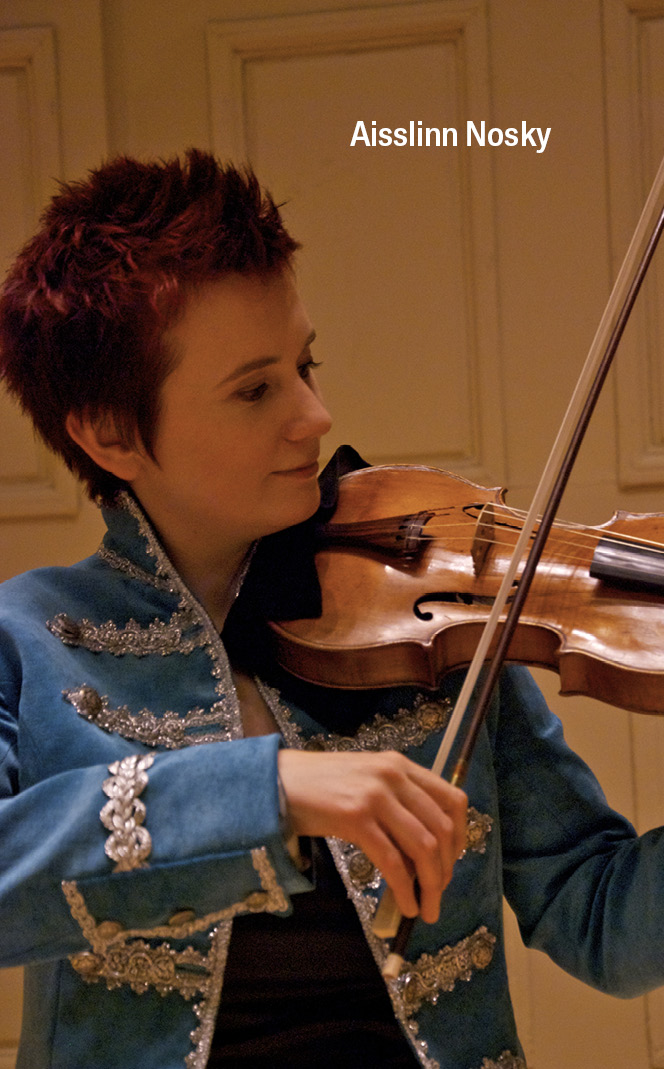
This month’s installment of the Tafelmusik audition process (a season with invited conductors/concertmasters) brings us violinist Aisslinn Nosky, who will be leading Tafelmusik in a program of music by Purcell, Charpentier and Telemann. Nosky’s got quite a few things going for her, as an up-and-coming musician with a following in Toronto (her chamber band I Furiosi has just about the youngest audience I’ve seen at a classical music concert) as well as having a long history with the group as both a student and full-time member. Is Aisslinn Nosky the next Jeanne Lamon? Does she have what it takes to beat the odds and win Canada’s most coveted music job? Well, we won’t know that until next year. You can, however check it out and decide for yourself from April 23 to 26 at Trinity-St. Paul’s Centre as well as April 28 at George Weston Recital Hall.

Ahearn at TEMC: There are a number of members of the Tafelmusik crew who are busy this month with a few smaller (and potentially less stressful) chamber music concerts. Tafelmusik violinist Patricia Ahearn will perform a solo concert under the Toronto Early Music Centre banner in a program at St. David’s Anglican Church that features a few of the Germanic stalwarts of the early music repertoire I mentioned earlier – Bach, Biber and Telemann. And what a solo program! It’s a concert of monstrous pieces – namely an unaccompanied Telemann fantasia, the Bach unaccompanied violin sonata in G minor, and the Biber passacaglia. None of these pieces is particularly easy by itself on a program, so all three together on the same bill is quite an ambitious array of difficult music. Watching Ahearn pull this off will be a thrilling experience – she’ll be performing on Sunday April 19, at 2:30pm.

Early at Eastminster: Tafelmusik’s artistic director Jeanne Lamon and principal cellist Christina Mahler are also highlighting a chamber concert at Eastminster United Church in a concert of Haydn and Boccherini on April 18 at 8pm. They’ll be joined by a couple of notable younger musicians – namely Edwin Huizinga and Kerri McGonigle, so this should be an enjoyable performance that brings together a couple of established artists with two of Toronto’s most talented up-and-comers.

Torture at Calvin: Aisslinn Nosky will also be performing earlier in the month with her regular band, I Furiosi at the group’s most regular venue, Calvin Presbyterian Church (26 Deslisle Ave., St. Clair subway). They’re calling it Instruments of Torture, which sounds either particularly unpromising or promising, depending on your bent. One thing it won’t be, though, is painful to the ear; I Furiosi is known for putting together amusing musical miscellanies that never take things too seriously. Given the title, it’s likely to include a few selections to appease your organological fetish, and the group will throw in a pop tease here and there. I Furiosi will be presenting Instruments of Torture along with lutenist Lucas Harris on Friday April 10 at 8pm.

17th-Century Avant Garde: There’s one more chamber concert featuring Tafelmusik violinists going on this month - the group Musicians in Ordinary, probably the hardest-working instrumental group in Toronto, will be presenting a concert featuring Chris Verrette and Patricia Ahearn along with their core duo of soprano Hallie Fishel and lutenist John Edwards. This particular concert, entitled In Stile Moderno, features the music of Renaissance Italy’s avant-gardists. Claudio Monteverdi broke more than a few conventions of traditional style and perceptions of good taste when he began publishing madrigals and instrumental music as a court composer in Mantua. The musical establishment of the day was outraged, but Monteverdi’s musical revolution eventually made him the most famous composer of his day. It’s also interesting to note that he didn’t do it alone - the master had a few followers in his circle who either tried to imitate his style or were just sick of the last two hundred years of tedious Renaissance polyphony. Salamone Rossi was one such disciple, and he didn’t do too badly either: although he never enjoyed Monteverdi’s level of fame, he’s still the most famous (and the most talented) Jewish  classical composer before Mendelssohn.

The Musicians will be dedicating a concert to the music of the aforementioned two audacious Italians along with some of their Mantuan “modern style” contemporaries. You can check them out at Heliconian Hall on May 2 at 8pm. 

David Podgorski is a Toronto-based harpsichordist, music teacher and a founding member of Rezonance. He can be contacted at earlymusic@thewholenote.com.


W
e don’t often connect the city of Venice with world domination, given that today it’s associated in the popular imagination with being a well-known (and increasingly soggy) tourist destination and not much else. Journeying back in time through its music, we learn that Venice the political entity was one of the major players in Europe for nearly 700 years, from the early Middle Ages to the 18th century. The Most Serene Republic of Venice comprised not only the city itself, but the rest of Northeastern Italy, the islands of Crete and Cyprus, ports north of Athens and an archipelago of various Greek islands as well as ports in Albania and Croatia. Just as Rome was an empire based on one city, so too was Venice – but the latter remained  the envy of the other European powers long after the Romans had quit. Venice came to be one of the richest cities in the world over time, the envy of The Ottomans and the Papal States. For a power no one bothered to teach us about in school, the Venetians didn’t do too badly at the game of empire.

The rich history of the Venetians, fuelled as it was by a voracious appetite for wealth and power, was, unsurprisingly, also something of a golden age for culture, and Venice’s rulers and patricians funded a galaxy of talented musicians, composers, artists and architects throughout the Middle Ages and Renaissance. Titian, Giovanni Canaletto, Francesco Guardi and the entire Bassano family remain influential artists from the period of Venice’s glory, artists who still hold significance in the art world today. Similarly, Venetian musicians were some of the greatest composers in Renaissance Europe: Diruta and Zarlino, Claudio Merulo, Cipriano de Rore, Andrea and Giovanni Gabrieli, and the father of opera himself, Claudio Monteverdi are all Italian composers who spent most of their lives in the city of Venice.

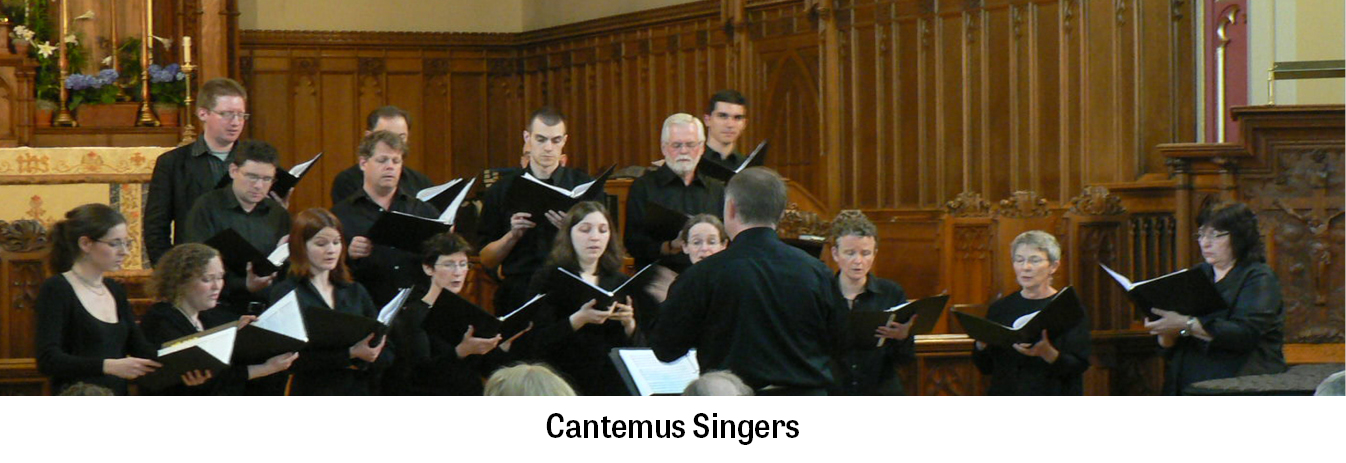
For concert programmers, especially of early Baroque and vocal music, the city of Venice is a veritable gold mine gold mine, and the Cantemus Singers, a local choral group dedicated to Renaissance and Baroque music, have tapped this Venetian vein for their upcoming concert at the Church of the Holy Trinity on March 21 and 22, In a concert titled, appropriately enough, “The Glories of Venice” the 14-voice a cappella group will be delving into a fascinating chapter in the city’s musical history by performing selections from the madrigals and motets of Adrian Willaert, de Rore, the two Gabrielis and Monteverdi. They’ll also be featuring Giovanni Gabrieli’s glorious Easter motet for double choir Angelus Domini Descendit and Monteverdi’s remarkable Missa da cappella, a tour de force of sacred music writing from the early Baroque. They’ll be joined by new members Amy Dodington and Rachel Krehm as well as lutenist Ben Stein. As choir concerts go, this program seems remarkably focused in both its scope and style, so if you’re at all interested in Renaissance vocal music or Italian music, or just enjoy choral music in a lovely intimate venue, this is definitely the concert for you.

2006-Early_Music_1-Cantemus.jpgCapella Intima’s Dido: If you’re in the mood for a vocal concert that takes you further from Italy and closer to (say) England, Capella Intima has just the concert you’ve been looking for. They’re touring a version of Purcell’s Dido and Aeneas based on its first ever public concert performance in 1780, almost a century after the work was first debuted at a girls’ school in 1688. Warming to the occasion, Intima has come up with “An Evening of Antient Music” – namely, what musicians and concertgoers of previous centuries, exhibiting both more than a little historical chauvinism and a fanaticism for new music, called a performance of any piece that was more than a half-century old. Capella Intima is touring their Dido around Southern Ontario, including performances in Hamilton and St. Catharines, and will be taking the show to Toronto for a special evening of music making. They will be joined by Sheila Dietrich, soprano; Jenny Enns Modolo, alto; Bud Roach, tenor; and David Roth, baritone, for the Purcell as well as some rounds, a few catches (like a round, but with dirtier lyrics), and airs. You can catch this at Trinity-St. Paul’s Centre, on March 6 at 7:30 pm.

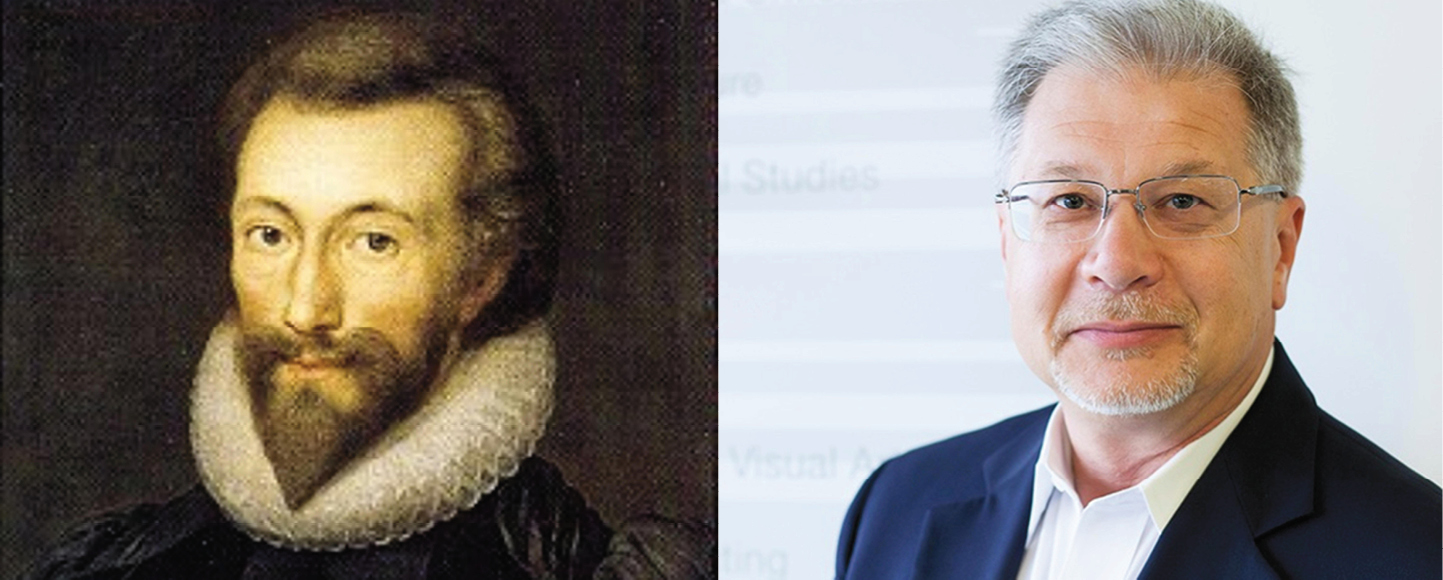
Out of the Ordinary: If you’re a fan of English poetry as well as English song, check out the Musicians in Ordinary’s concert devoted to the poetry of John Donne. Donne’s intricate poems include some of the most sensual and the most spiritual in English literature. To assist in evoking the poet’s craft, the Musicians in Ordinary have invited Seth Lerer, a scholar of Renaissance literature from theUniversity of California at San Diego, to read some of his work as part of the concert.

2006-Early_Music-Lerer_and_Donne.jpgDonne’s contemporary, the Renaissance composer Thomas Campion, was also a Donne fan and expressed his appreciation by setting a few of Donne’s poems to music. Soprano Hallie Fishel will be singing these with some accompaniment from John Edwards on lute at Heliconian Hall on March 7 at 8pm. This concert will be a musical tribute to a seminal figure in English literature. But be prepared! While much of Donne’s writing is full of light and grace, his  Nocturnal Upon St. Lucy’s Day, which is on the program, is bleakness personified.

According to St. John: Tafelmusik is helping to escort us through Lent this month with an appropriately pious concert. Johann Sebastian Bach’s St. Matthew Passion’s reputation as the composer’s magnum opus seems completely unshakeable save for his underappreciated Passion According to St. John, and it’s the latter that the orchestra will be bringing to Trinity-St Paul’s Centre on March 19 to 22. From the opening chorus, “Herr, unser Herrscher” to the closing chorale “Ach Herr, lass dein lieb Engelein,” the St. John Passion is some of the finest vocal music of the 18th century. Ivars Taurins will conduct the Tafelmusik orchestra and chorus; soloists Julia Doyle, Daniel Taylor, Charles Daniels and Peter Harvey will be on hand to deliver some spectacular arias. Whether or not you’ve ever heard a performance of the St. John Passion or any other of Bach’s vocal music, this concert is definitely a must-see.

Finally, the hardworking Musicians in Ordinary will be performing a second time this month – this time as part of their series as the ensemble-in-residence at St. Michael’s College. They will be playing St. Basil’s Church on March 16 at 7:30 pm, as part of a free tribute to that most famous of saints (and alleged inventor of whiskey) St. Patrick. The concert repertoire itself isn’t particularly Irish, but instead features some large-scale works by some 17th-century Italians: Monteverdi, Fontana, Marini and the like. With the Saint Michael’s Schola Cantorum choir joining the group along with harpsichordist Boris Medicky and violinists Christopher Verrette and Patricia Ahearn, this looks to be a concert well worth checking out – as well as being a chance to hear some of the top players in the city free of charge.

David Podgorski is a Toronto-based harpsichordist, music teacher and a founding member of Rezonance. He can be contacted at earlymusic@thewholenote.com.
 

A pattern I’m beginning to see in early music concerts in Toronto is something you might describe as musical tourism – rather than a mixed program or a concert built around a particular composer or work, groups experiment with a time and place in history and give the audience a soundtrack to that particular moment. I’m thinking specifically now of Toronto Consort’s “Paris Confidential,” which I saw late last year and quite enjoyed – it was a fascinating look at Renaissance Paris, complete with music from the City of Lights circa 1550. This month, I’d like to look at other Toronto groups who are both geeking out on history and putting together some fabulous concerts in the process.

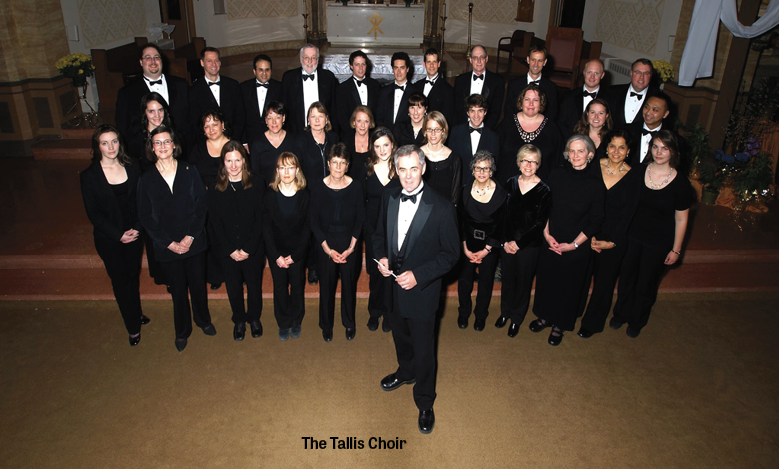
2005_-_Beat_-_Early_-_The_Tallis_Choir.pngTake for example, Leopold: you have to have at least some background in history to have heard of Leopold I, a very unlikely figure, one might think, to inspire a concert program. Nevertheless, European civilization owes quite a bit to Leopold I of Austria, who ruled over the Holy Roman and Austro-Hungarian Empires for the latter half of the 17th century. Leopold came to power as the King of Bohemia in 1655, after Europe had already been wracked by decades of brutality in the Thirty Years War, which had been waged across the length and breadth of the European continent and had ended when Leopold was just a child. You might think, after three decades of constant warfare, as well as the attendant expense and famine, that a rookie 15-year-old king would welcome a break from fighting and usher in a new era of peace, but the kid wasn’t having any of it. The first thing he did was team up with Poland to wage war against the Swedes for five years. Leopold won that war, having in the meantime become king of Austria, Croatia, and Hungary, as well as Holy Roman Emperor of Germany. This bought Eastern Europe nearly two decades of peace – until Leopold went on to battle Louis XIV of France and the Ottoman Turks multiple times from the 1670s until his death in 1705. In so doing, he established himself as the major belligerent of one of the most violent centuries in human history.

Alongside waging constant warfare and his perceived obligation to defend Christendom from the Islamic hordes, the northern barbarians and France, Leopold was, surprisingly, a generous musical patron and composer himself. Many fine Baroque composers, including Antonio Bertali, H.I. Biber, J.J. Fux and Johann Schmelzer owe their careers to his patronage. This month, the Toronto Consort will pay tribute to this magnificent sponsor of European musical life. Lutenist and conductor Lucas Harris will join the ensemble for a program based on a manuscript of music from Leopold’s court in Vienna, including that composed for the emperor’s court and chapel. This all goes down at Trinity St. Paul’s Centre on February 6 and 7.

Guadalupe: Blood-soaked European battlefields are fairly common grist for history’s mill. But history can also be built on strange events in the most unlikely of places, as in our next concert, which was inspired by an apparition seen by a simple farmer in a tiny village in Mexico. When the Virgin Mary appeared to a farmer on a hill in Guadalupe (now incorporated as a suburb of Mexico City) and told him to build a church there, the Spanish authorities honoured the pious man’s request by building a monumental cathedral. Centuries later, it is surely an inspiring place. The cathedral at Guadalupe is now a number one tourist destination for Catholics worldwide and the Virgin of Guadalupe is a cultural and religious icon for Mexicans everywhere. The Tallis Choir is dedicating a program to the basilica at Guadalupe on February 28 at St. Patrick’s Church, featuring music from 17th-century Mexico and Spain. The Tallis Choir will be joined by Philip Fournier on organ and WholeNote columnist Ben Stein on lute in music by Tomas Luis de Victoria, Guerrero and Padilla. Since it’s a very rare chance to hear music from 17th-century Mexico, I highly recommend you take this opportunity to hear it.

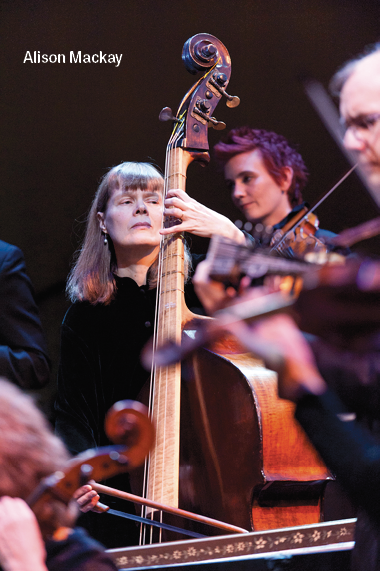
2005_-_Beat_-_Early_-_Allison_Mackay.pngParis 1737: From the emperor’s palace in Vienna to the cathedral of Guadalupe, the next stop on the musical tour this month is Paris, which probably takes the prize for being the most clichéd tourist destination of all time. Still, when Georg Phillip Telemann took a trip there in 1737, he got a chance to perform with some of the greatest musicians of the day, including the French flutist Michel Blavet and the viola da gamba virtuoso Jean-Baptiste Forqueray. Telemann prepared for the occasion by writing a dozen quartets which the group (along with a lesser-known violinist and cellist) performed, and nearly 300 years later, the composer’s Paris Quartets are a classic of the early music chamber repertoire. This month, Scaramella will present a program devoted entirely to Telemann’s Paris Quartets at their usual haunt at the Victoria College Chapel on the U of T campus on March 7. Scaramella, or rather gambist Joëlle Morton, will be joined by American flutist Kim Pineda, as well as Toronto-based musicians Edwin Huizinga (on violin) and Sara-Anne Churchill (on harpsichord). While it may not have the variety of a mixed program, the Paris Quartets make for a great concert for anyone who appreciates late Baroque music. This concert will feature top-drawer music from a composer who in his day was considered by many to be better than Bach.

House of Dreams: Of course, if you’re into musical tourism, Tafelmusik has that beat covered with their concert and multimedia event “House of Dreams,”  the brainchild of Alison Mackay, who, not coincidentally, came up with “Paris Confidential,” mentioned above. Mackay’s presentation/concerts are a great way of giving people a chance to explore the cultural and social history of the music, and are as educational as they are entertaining for audiences (besides, it gives us something to look at during the concerts). For this project, Mackay mashed up the music of Handel, Marais, Bach, Sweelinck and Vivaldi with paintings from the same time and place as the composers. As if that weren’t enough, Mackay actually collaborated with the European museums in all these composers’ hometowns, so this concert, in addition to being a giant whistle-stop tour of London, Paris, Leipzig, Delft and Venice, will actually show you what it was once like to live in those cities. As a cultural experience and musical tour, it’s hard to beat. The extravaganza will take place February 11 to 15 at Trinity St-Paul’s Centre, before launching out on an Australian tour.  This program, which spans both the length of Europe and the Baroque era, is nothing if not ambitious, but don’t let that put you off. At least you won’t have to worry about jet lag.

David Podgorski is a Toronto-based harpsichordist, music teacher and a founding member of Rezonance. He can be contacted at earlymusic@thewholenote.com.
Early 29In deference to holiday tradition, I’ll mention the Messiahs first: Tafelmusik’s sing-along Messiah will be at Massey Hall at 2pm on December 21 this year, while Aradia’s Dublin Messiah will happen on the December 20 at 7:30 at St. Anne’s Anglican Church. These are the only two Messiahs in Toronto I think you need to see. If a Messiah was all you were planning on catching over the holidays, please turn the page!

Right. Now if you’re serious about music, and you want to find some first-rate medieval, Renaissance, and baroque music this holiday season, or if you’re just looking for an antidote to every saccharine Christmas carol you’ve been subjected to in every shopping mall you’ve been to since the beginning of November, keep reading. You certainly might find something new in the Toronto Consort’s Christmas concert, “The Little Barley-Corne,” a program of Yuletide hits from Renaissance Europe. This program is based on the Consort’s fifth album of the same name, which although, or indeed perhaps because, it included very few tunes that were immediately recognizable as traditional Christmas carols, was a breakthrough hit for the Consort, and quickly established them as a Toronto-based early music group that deserved to be taken seriously. It will certainly be a special treat to revisit this seminal album again after 15 years. The Toronto Consort performs The Little Barley-Corne December 12 to 14 at Trinity-St. Paul’s Centre.

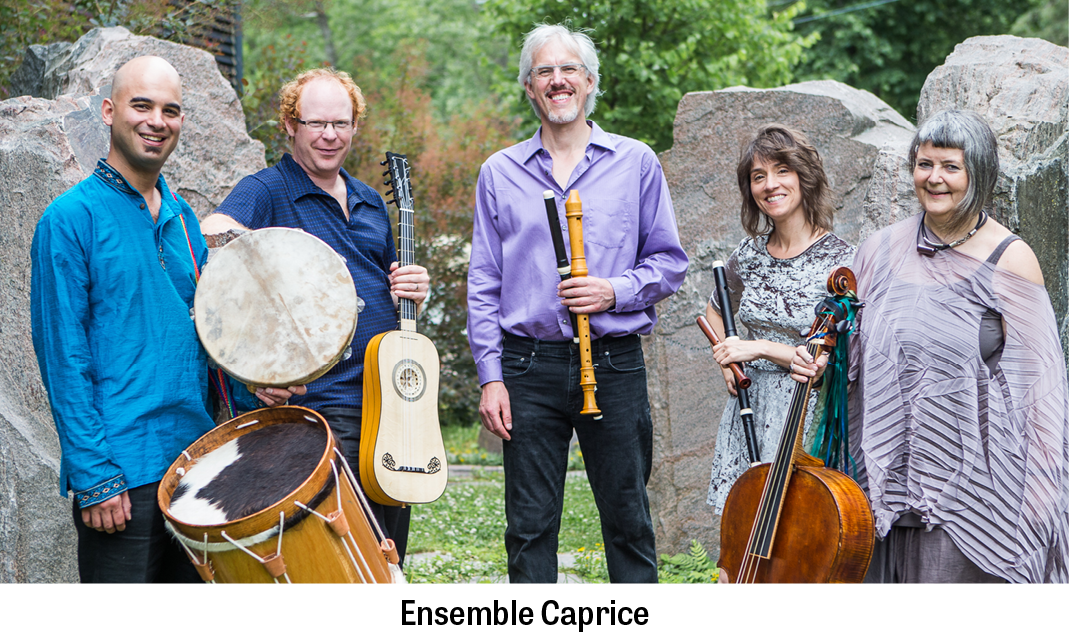
Caprice: Another early music group that deserves our attention is Montreal’s Ensemble Caprice, a recorder-based baroque ensemble that quickly gained recognition on the Montreal scene for their free, and at times bizarre, interpretations of Telemann and Vivaldi. This group can typically be trusted to blow the roof off the concert hall. Caprice will be coming to Ontario to present their Christmas program “Baroque Christmas Around the World,” which features Arcangelo Corelli’s Christmas Concerto, some 17th-century South American songs, traditional carols and music by J. S. Bach and Handel. It also has the potential to be more subdued than a typical Caprice concert – a roof-raising Christmas concert being somewhat blasphemous in the eyes of the concertgoing public – but I can guarantee the group will perform with panache. This all takes place at the Port Hope United Church in Port Hope December 12 at 7:30pm and in Barrie December 14 at Grace United Church on December 14 at 2:30pm.

Poculi Ludique: If you’re looking for something completely out there as an alternative to Christmas carols and the Messiah, or if you’re just something of a medievalist, consider checking out this group of medieval-revival performers and musicians: the Poculi Ludique Societas (or the “Cup and Game Society”). This group will be performing selections from the York Mystery Plays on December 13 at 7:30pm at St. Thomas’s Anglican Church. The York Mystery plays were a series of performances based on bible stories ranging from the Genesis creation to the Passion of Jesus that were performed in the city of York around the 14th century; some were centred around the biblical story of Christmas. Each guild in town was responsible for a specific performance (based around a Christian divine miracle or mystery, hence the name). The mystery plays seem like a particularly insightful view into what life was like in the Middle Ages, given that the typical medieval European was a devout Christian and a member of a guild of some kind, but couldn’t read the bible (or even his own name) and depended on dramatizations like the York Mystery Plays to understand what he was supposed to be believing. In any case, the Poculi Ludique Societas are all medieval scholars from the University of Toronto and can probably explain all of this much better than I can. Plus, the music is under the supervision of Larry Beckwith of Toronto Masque Theatre, so the musical part of the production is in capable hands. As an unusual form of entertainment that nevertheless captures the original meaning of Christmas, this may be exactly what the Christmas season needs.

Tafel’s Quest: But if you’re looking for good live music, there’s no need to limit yourself to holiday-themed entertainment in the coming weeks. For example, Tafelmusik’s musical quest for a new artistic director, featuring the most outstanding violinists they can find, continues in the beginning of December. Amandine Beyer, a virtuoso violinist from France, will lead the ensemble in an all-French program at Trinity-St. Paul’s Centre on December 4 to 7. It looks to be a killer program of French composers, including Rameau, Corrette, Campra and Rebel. Beyer herself will attempt to wow the crowd with a Leclair concerto, and we’ll see once and for all if the orchestra can put on a sublime performance of French baroque repertoire. It’s all very exciting, as you can probably guess.

Scaramella: Another Toronto group that’s keeping busy over the holiday season is Scaramella, led by Joëlle Morton. They’ll be playing a concert devoted to the English composer William Lawes on December 6 at Victoria College Chapel at 8pm. As a gamba-based ensemble, doing a concert devoted to Lawes just makes sense – he was great composer of music for everything viol, from duets to consorts of four, five and six gambas. As a figure from music history, he’s even more compelling, living as he did during the period of the English Renaissance and taking the laws of composition (sorry, couldn’t resist) to strange and unusual places. His music is both engaging and intelligent, but his approach to tonality is at times either extremely liberal or extremely strange. If you don’t manage to catch their Lawes concert, Scaramella is also doing a program of 17th-century German composers in Victoria College Chapel on January 31 at 8pm. This time the group will be joined by countertenor Daniel Cabena – this concert could be worth a look as well.

Out of the ordinary: If you’re looking for something to do over New Year’s Day, you might want to drop by Heliconian Hall at 2:30, where the Musicians in Ordinary will be playing their annual New Year’s Day concert. They’ll be joined by Christopher Verrette and Patricia Ahern of Tafelmusik as well as Boris Medicky on harpsichord for a mixed program including Scarlatti, Vivaldi and Corelli. The Musicians have put together a solid lineup of players to play some decent repertoire for this concert.

Finally, there are a couple of other concerts worth mentioning as we get into the coldest days of winter: Toronto Masque Theatre will be performing Handel’s Acis and Galatea at the Enoch Turner Schoolhouse on January 15, 16 and 17 at 8pm. And a group of six young Toronto-based violinists are taking an encyclopedic approach to concert programming and tackling all six of Bach’s unaccompanied solo violin partitas in one go. That concert will include Tafelmusik violinists Julia Wedman, Cristina Zacharias and Aisslinn Nosky, as well as Elyssa Lefurgey-Smith of Aradia. You can catch it all at Metropolitan United Church on January 9 at 7:30pm.

David Podgorski is a Toronto-based harpsichordist, music teacher and a founding member of Rezonance. He can be contacted at earlymusic@thewholenote.com.
If you’re looking for something to do on a weekend in November, you might be obliged to make a few tough decisions. As I write this, there are all of ten early music concerts going on in Toronto this month, no two even remotely similar to one another. It’s obviously a sign we live in a fun city with lots to do on any given weekend, but the possibility always exists that one can miss out on something fantastic, or at least something you won’t get a chance to hear ever again. I don’t have enough space to adequately discuss absolutely every early music concert going on this month (you’ll have to check the listings for that), but here are a few highlights and must-sees.

Solo harpsichord: It’s been a while since Toronto audiences have had a chance to hear a solo harpsichord concert, but audiences will get a chance to hear the instrument shine this month. Admittedly, Toronto hasn’t been graced with a superabundance of solo harpsichord concerts since Colin Tilney retired, but up-and-coming Toronto musician Philippe Fournier will entertain the public with a mixed program that will include François Couperin, J. S. Bach and John Bull. Fournier makes his home at Holy Family Church and plays with the Musicians in Ordinary from time to time. It will be well worth it to see what he’s been up to as a solo artist. Check out this concert November 8 at the Yoga Village at 8pm.

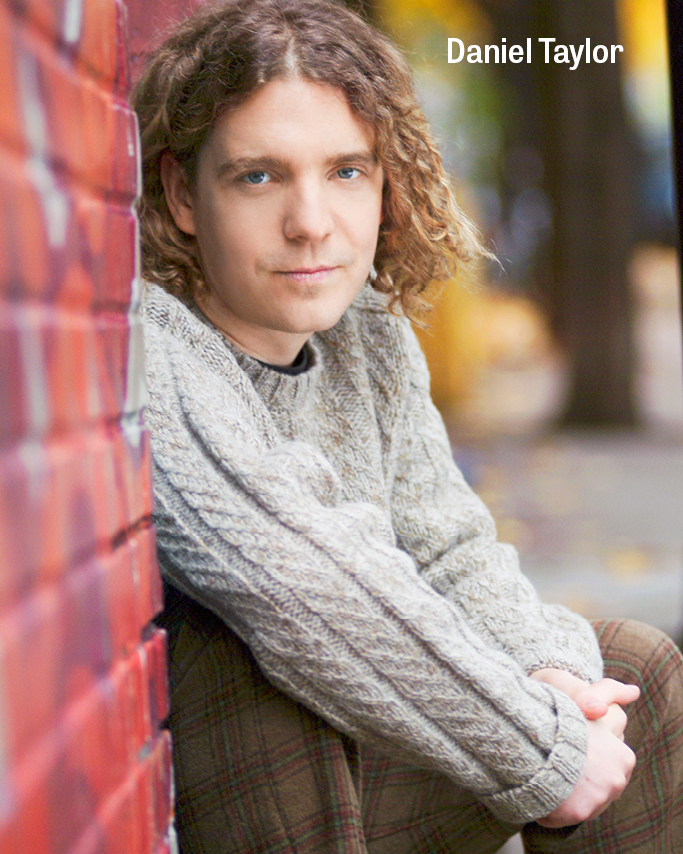
beat - early 1Schola, TEM: If you’re more in the mood for a choral concert, you might prefer hearing instead the Schola Cantorum and the Theatre of Early Music concerts the same weekend. They’re technically student concerts given by performers studying at the University of Toronto Faculty of Music’s fledgling early music program, but the program is directed by Daniel Taylor, who is probably the closest thing to a household name on the Canadian early music scene, and who brings in top-tier professional musicians for these concerts.

The Schola Cantorum will be singing some fairly standard renaissance fare (Palestrina, Tallis, Taverner) and it’s very likely that these will be fine concerts of serene sounds. Also, they’re at the beautiful Trinity College chapel on November 8 and 9 at 7:30pm. If you haven’t visited the Trinity College chapel yet, it’s one of the finest acoustic spaces in Toronto for choral music, so it would be worth it just to go and hear what a choral concert is supposed to sound like.

Paris in the Fall: If neither of these concerts are enticing enough to get you out of the house that weekend, keep in mind The Toronto Consort will be performing their own concert of renaissance music on November 7 and 8 at Trinity-St. Paul’s Centre. The Consort is calling this one “Paris Confidential,” and it’s a social and musical exploration of the city of Paris in the 16th century, when the city was leaving behind its reputation as a muddy medieval military camp and quickly becoming a European cosmopolis. The great Alison MacKay, a gifted and insightful curator of musical and cultural history, is presenting a musical program of the city of Paris as seen through the eyes of one George Buchanan, a 16th-century scholar who left behind a legacy of rich descriptions of the city in which he lived. His letters, written to describe to his non-Parisian friends what life in the city was like, are the centrepiece of MacKay’s multimedia program, which includes anecdotes by other authors, contemporary paintings, drawings, maps and illuminations. Oh right, and there’s music, too. The Toronto Consort will be playing a program of renaissance French music, a rarity in this city. The composers on the program are hardly obscure, though, and include Clement Jannequin, Claude LeJeune, Claude de Sermisy and Jehan Chardavoine.

Honestly, if there’s one early music concert you have to see this month, this is probably it. Alison MacKay has developed a reputation for putting together thoughtful, engaging, and informative concerts for Tafelmusik and the Consort. If you’re familiar with renaissance music and names like Palestrina, Josquin, and Byrd already mean something to you, this concert will give you a bigger picture of what renaissance music is all about. Sixteenth-century French music is still composed in the same style as Palestrina and the like, but French composers of the period took the same rules of composition in some very creative directions. If renaissance music isn’t your thing, Paris Confidential will still be worth going to out of sheer curiosity – the concert promises to be an interesting in-depth look at what it was like to live in a major city and cultural hub of activity in the 16th century. Think of it as tourism for time travellers.

(Personal) Rezonance: For a fun instrumental concert later in the month, you might want to check out a chamber concert being given by my own group, Rezonance, a chamber ensemble whose core members include myself on harpsichord and violinist Rezan Onen-Lapointe. We’ll be joined this month by the fabulous Montreal-based flute player Joanna Marsden for a concert of 18th-century Italian and German music on November 30 at Artscape Youngplace at 3pm. Telemann, Handel and Vivaldi are on the bill, but we’ll also feature some lesser-known Italians like Benedetto Marcello and Evaristo Dall’Abaco. Artscape Youngplace is an intimate and acoustically flawless performance space, and for a small-scale chamber concert, I know for a fact Rezonance is hard to beat for sheer flamboyance (meaning everyone in the group really, really likes to show off).

Harpsichord-Beside-the Grange: I confess that I don’t know that much about Spanish baroque music; the only two 18th-century Spanish composers I can name off the top of my head are Domenico Scarlatti and Fernando Sor. Fortunately, Spanish harpsichordist Luisa Morales can dispel my ignorance, and will do so mid-month in a program co-presented by Baroque Music Beside the Grange devoted to Spanish baroque composers on November 15 at 8pm. This is an even smaller-scale concert than Rezonance’s, consisting of just Morales, flutist Alison Melville and dancer Cristobal Salvador. It promises to be an entertaining introduction to Spanish music and culture and will include the aforementioned Scarlatti and Sor as well as Juan Ledesma, Rodriguez de Ledesma and Blas de Laserna.

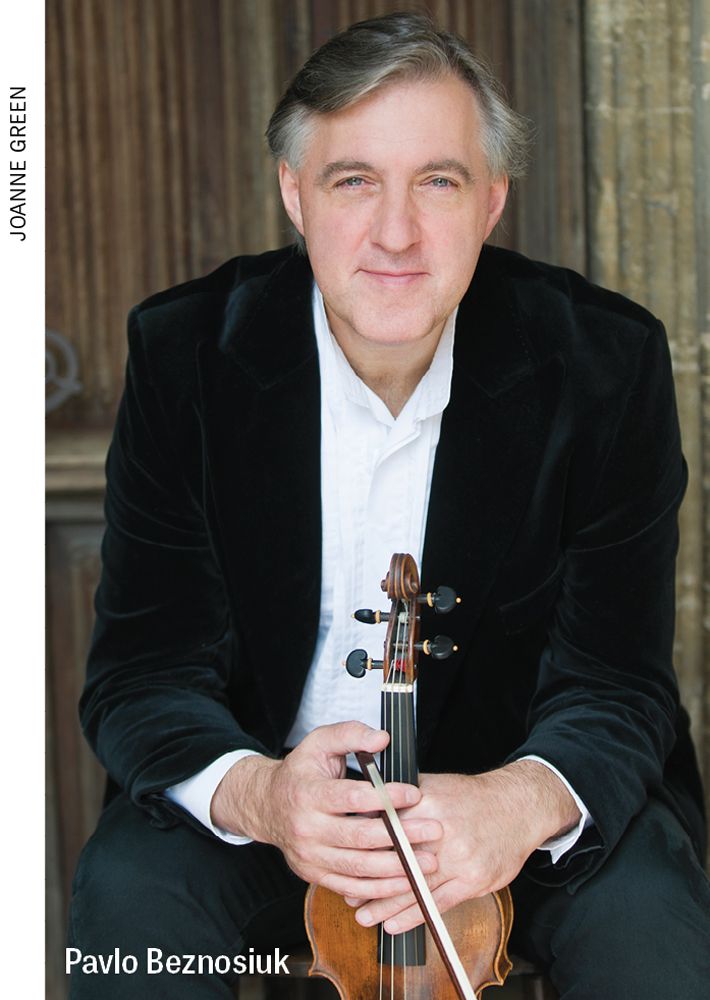
beat - early 2Beznosiuk: And finally, the Toronto group that can’t avoid being mentioned in any given month is of course Tafelmusik, performing November 19 to 23 at Trinity-St. Paul’s Centre. Tafel will be presenting a program mainly devoted to music of the English Baroque – namely Purcell, Locke and Handel. It’s familiar ground for the band and it’s safe to say they will do a good job of it, but the real draw for this show is guest violinist Pavlo Beznosiuk. Beznosiuk is a veteran violin soloist and a bit of a whiz at English music – you can find his Naxos recording of the complete Avison violin concertos on YouTube – and it’s always a treat when a great international soloist comes to town to thrill us. Plus, it will be interesting to hear what Tafelmusik sounds like under his direction as this year of “find the leader” continues. Well worth checking out.

David Podgorski is a Toronto-based harpsichordist, music teacher and a founding member of Rezonance. He can be contacted at earlymusic@thewholenote.com.
Does anyone still remember when Italian music meant either Verdi opera or Vivaldi’s Four Seasons? It turns out Italians have been making music for quite a few years before Vivaldi (and after Verdi), and much of it is still well worth listening to three or four centuries later. It’s not often that we get to hear much Italian art music in concert, but in a rare coincidence, Torontonians have the unique opportunity to take in the complete history of music of the Italian baroque this month, as artists based in the GTA will be playing the complete span of Italian music in the 17th and 18th centuries from Monteverdi all the way to Vivaldi.

Monti at Tafelmusik: Who better to play Italian music than actual Italians? Tafelmusik will do just that, devoting an entire concert to Italian music of the 18th century while being led by the Italian violinist Davide Monti. Two concertos of Antonio Vivaldi headline a program that includes many of Vivaldi’s lesser-known contemporaries such as Benedetto Marcello, Tomaso Albinoni, Baldassare Galuppi and Evaristo Felice  Dall’Abaco. Albinoni is occasionally played today, while Marcello has been revived by early-music specialists as well as having been admired in his own time by J.S. Bach. You may well enjoy these other, capable lesser-knowns who lived in Vivaldi’s shadow, but at the very least you’ll come away with a new appreciation for what a great composer Vivaldi was. Catch this concert October 9 to 12 at Jeanne Lamon Hall in Trinity St-Paul’s Centre and on October 14 at George Weston Recital Hall. (Oh, and it’s very likely that Monti is a contender for the position of artistic director of Tafelmusik, so I’m willing to bet he’ll try to burn the house down at every performance. Just thought you should know.)

Roach takes on Sances: Later this month, Bud Roach, himself a great lover of Italian music of the 17th century, will be presenting the music of Giovanni Felice Sances, an Italian tenor and composer from the generation after Monteverdi. Sances was well known in his own time as a composer of opera in Venice; later he moved to Vienna and eventually became Kapellmeister under Ferdinand III. Unfortunately for Sances’ legacy, his operas were all lost, so we have no chance of performing any of his larger-scale works. Roach will perform a selection of Sances’ surviving material, a collection of solo songs and duets, on Saturday, October 18 at St. John the Evangelist Church in Hamilton. He’ll also accompany himself on guitar and sing along with baritone David Roth in several duet performances. The pair will also bring out some other hidden gems from the Italian 17th century, including songs by Alessandro Grandi and Carlo Milanuzzi. This should be a fantastic concert for anyone who enjoys renaissance music or Monteverdi. If you can’t make it, keep in mind Roach’s Sances CD will be released later in the month. There’s also a Toronto concert in the works, but no word yet on when that’s going to happen.

Alcina at Atelier: If an extravagant Italian opera is more your style, then you’ll be pleased to make it out to Opera Atelier’s debut performance of Handel’s Alcina, later this month at the Elgin Theatre October 23 to November 1. Handel was already a mature composer when he penned Alcina in 1735 for his inaugural year at the Covent Garden Theatre in London, but sadly, it wasn’t particularly successful, and has only recently been revived by the early music movement. Whatever 18th-century Londoners may have thought of  Alcina, it’s still perfectly fine by the standards of opera seria (i.e. the arias are all catchy). The music is great, and it’s hard to go wrong with Handel when Tafelmusik is your pit orchestra. Of course the plot is ludicrous. But as long as you don’t bother paying attention to the storyline of what’s actually happening on stage, Alcina done by Opera Atelier will be the perfect night at the opera.

Monteverdi in Ordinary? You can’t think of Italian opera without thinking of Monteverdi, of course. Arguably the greatest composer of the 17th century, Monteverdi’s operas are smash hits even to this day. Besides his dramatic works, his spectacular Vespro della Beata Virgine, written for orchestra and choir, is undoubtedly a masterpiece, and his madrigals are incredibly innovative, intelligent compositions that are widely performed and enjoyed. This month, the Musicians in Ordinary present still another facet of Monteverdi’s diverse body of work – namely his sacred chamber music written for the archbishops and cardinals of Venice. Monteverdi was kept busy writing music for three concerts a week, so the Musicians in Ordinary had a vast body of work from which to choose their program. The MIO will be joined once again by Chris Verrette on violin for the Master’s Selva Morale e Spirituale, motets by Monteverdi’s assistant Grandi, and some canzonas and sonatas for strings by Biagio Marini. This concert promises to be an in-depth look at sacred music by Monteverdi and his circle in Venice in the early 17th century. Catch it at Father Madden Auditorium in Carr Hall at St. Michael’s College on October 24.

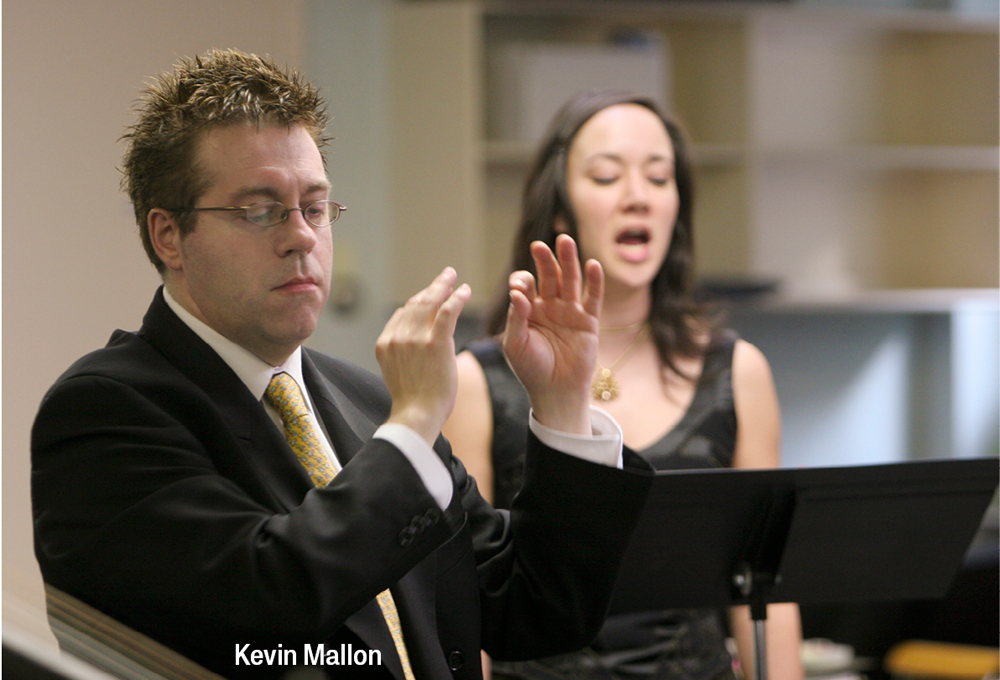
BBB-Early1Mallon’s Rameau: Of course, not all concerts this month will be dedicated to Italian music. Inveterate nonconformist Kevin Mallon will be dedicating a concert to Jean-Philippe Rameau along with his band Aradia, and given that the 250th anniversary of the composer’s death just passed last month, one hopes for more concerts by Toronto musicians in honour of the great French harpsichordist, opera composer and father of modern music theory coming up this year. For this performance, Aradia will feature two of Rameau’s wonderful Pièces de clavecin en concert, lovingly arranged for string ensemble, and the young Canadian soprano Hélène Brunet will also sing two of the composer’s best-known cantatas, Orphée and Le Berger Fidèle, with the band. Two compositions by Rameau’s contemporary Jean-Marie Leclair, Overture Op.13 No.3 and the Deuxième Recréation de Musique, will round out the concert. All of this takes place at the Music Gallery on October 26. Definitely a must-see if you enjoy French music.

Cardinal Consort: If you’re at all interested in English music or viol consort, consider checking out the Cardinal Consort of Viols. Their next concert will feature consort music from the English renaissance, including music by Byrd, Gibbons, Holborne and Tomkins. The Conrad Grebel Chamber Choir will join the Consort for some choral works, and you can catch them at the Church of the Redeemer on October 5 or at Conrad Grebel University Chapel in Waterloo on October 1.

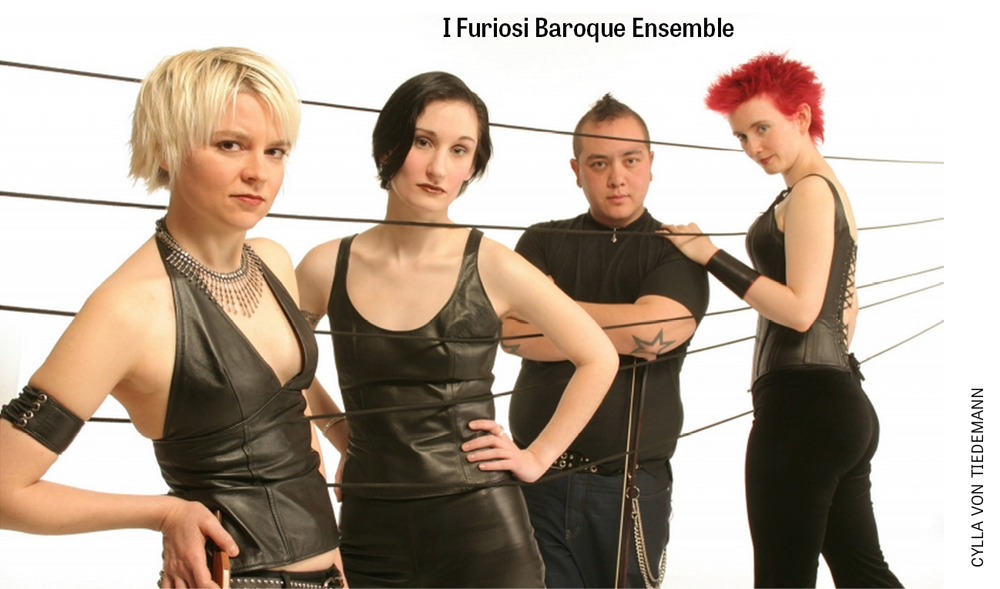
BBB-Early2I Furiosi: Finally, the always-entertaining I Furiosi ensemble will be performing at the Calvin Presbyterian Church on October 24 in a mixed program of music on the theme of work, including compositions by J.S. Bach and Christophe Graupner. I Furiosi has a devoted following, and you can count on them putting on a virtuosic, fun show with a few pop tunes thrown in.

David Podgorski is a Toronto-based harpsichordist, music teacher and a founding member of Rezonance. He can be contacted at earlymusic@thewholenote.com.
 

bbb - early musicWhile summer is not over, it’s time to start thinking more about getting back to the office and less about fishing on the lake. I’m happy to say that anyone returning to or remaining in town for the month of September will be amply rewarded musically.  Judging from the sheer number of performances between now and October, I think it’s safe to say that Toronto musicians are excited to get back to work and begin a new concert season.

One Toronto-based group eager to make an early start this year is Harmonie, a string-based baroque group that includes harpsichordist Janet Scott, violinists Sheila Smyth and Valerie Sylvester and viol player Philip Serna. Their first concert this season features a very unusual program, comprised solely of Dutch music from the 17th and 18th centuries; it’s extremely unlikely that anyone who attends will have heard any of this music before.

“It’s a really unknown area of music that’s different, exciting and quirky,” explains Sylvester when I ask her what inspired the group to program an entire concert of Dutch music. “The Dutch composers of the 17th century wrote unusual and beautiful music, and you won’t hear music like this anywhere else.” Why Dutch baroque music has been deemed unworthy of performance in the past is also something of a mystery – the country had a virtual monopoly on composers in the renaissance, and as the vast number of paintings from the period indicates, the 17th century was the Netherlands’ golden age. Seventeenth-century Holland saw levels of wealth and culture unmatched in the country’s history. International trade flourished, and the Dutch had money to spend on culture, be it in the form of tulip gardens, art collections or public architecture. So why not music? Sylvester speculates it had to do with Dutch politics and religion in the period. “Holland in the 17th century was newly Calvinist, so there was less church music than in previous centuries,” she explains. “It was also a republic, so there was no king to play for and no court to play at.”

A republic of rich Calvinist merchants meant no grand patrons in either church or palace shelling out for spectacular, expensive orchestras and operas – Holland doesn’t have a St. Mark’s or a Versailles to this day – but that also meant that chamber music, played by small groups of professionals or amateurs, could flourish. For Sylvester, it’s what makes Dutch music so interesting. Composers could experiment, writing quirky music to fit their fancy without worrying about displeasing a despotic boss. And Dutch chamber music from the period, Sylvester argues, is written out of a simple love of musical creativity. Composers like Hacquard and Schenck might not be household names today, but their music, more so than their contemporaries, was written in a spirit of intelligence and fun. Check out this concert September 27 at 8pm at St. David’s Anglican Church. The same program will performed September 28 at 8pm at the KWCMS music room, Waterloo.

bbb - early music2Off to the fair: If you’re looking to discover more musical groups in Toronto, or if you’re curious about early music in general, make a point of going to this year’s Toronto Early Music Fair. It’s actually been around for 30 years! An afternoon devoted to the early music scene in Toronto, it’s a great opportunity for anyone curious to get very familiar with early music very fast. This year, the Toronto Early Music Centre (TEMC) will present several mini-concerts by Toronto-based artists, including Bud Roach and Harmonie. It offers Torontonians the opportunity to hear a wide variety of historic instruments played by some of the finest musicians in the city. Recordings, early music books and publications are also on sale. The Toronto Early Music Fair takes place at the historic Montgomery’s Inn on Saturday, September 27 and Sunday, September 28. Given the number of concerts and presentations you can see over the course of a day, Fair tickets are a bargain at $10.

Extraordinary Ordinary: Another hard-working Toronto ensemble that’s starting up their season this month is the Musicians in Ordinary, the ensemble-in-residence of St. Michael’s College led by soprano Hallie Fishel and lutenist John Edwards. Their first concert this season is a program based around the covert Catholicism in England in the 16th and 17th centuries. Elizabethan England was a dangerous time to practise Catholicism openly, and this concert explores the music performed and sponsored by clandestine Catholics in a climate of religious persecution. The musicians will be playing pieces typical of late-Renaissance England, especially songs for solo voice and lute, and lute instrumental solos based on sung works. Violinist Chris Verrette will also be on hand to lead a consort of violins, and the Musicians will play works by Byrd (Catholic, employed), Dowland (Catholic, unemployed) and Wilbye (not Catholic, employed by Catholics). This concert takes place on Friday, September 26 at Father Madden Hall in the Carr building at the University of Toronto, 100 St. Joseph Street. The concert starts at 8pm, but come at 7:30 for the pre-concert talk, for insights into a time when doing so might have had you burned at the stake!

Eybler Quartet: For those more inclined towards slightly more conventional repertoire, unconventionally played, consider checking out the Eybler Quartet. They’re a Toronto-based string quartet comprised of Tafelmusik players (Julia Wedman and Aisslinn Nosky on violin, Patrick Jordan on viola, and Margaret Gay on cello) who will be getting together at Heliconian Hall to perform Beethoven’s String Quartet Op.18, No.2. It’s a solid choice for a string quartet concert on period instruments, but Eybler will also be throwing a couple of unusual pieces on the program. Cellist Guy Fishman will be joining the quartet for two double cello quintets by Boccherini and Dittersdorf. If you love Beethoven string quartets, you won’t want to miss this – Eybler is an ensemble of top-level string players that performs exceptionally well. Catch this concert on October 2 at 7:30pm.

SweetWater: Finally, if you’re looking for one more excuse to get to cottage country before winter hits, or if you happen to live in the Owen Sound area, try to get out and catch some of the SweetWater Music Festival. An all-star lineup of Canadian musicians, Mark Fewer (violin), Hank Knox (harpsichord) and Lucas Harris (theorbo), will team up with baroque violinist Elizabeth Wallfisch in a mixed program that will include Vivaldi, Bach, Biber and Schmelzer at Leith Historic Church (419134 Tom Thomson Ln.) on September 19 at 7:30pm. These are some of the best musicians in the country playing a program that will have something for everyone. If you’re in this part of Ontario, definitely consider going to this festival and this concert specifically.

David Podgorski is a Toronto-based harpsichordist, music teacher and a founding member of Rezonance. He can be contacted at earlymusic@thewholenote.com.
 

1909 EarlyThe Canadian summer is without a doubt one of the worst seasons anywhere in the world. Leaving aside the fact that it’s far too short, and was preceded this year by one of the longest, coldest winters in living memory, it’s still kind of hard to find things to do. I appreciate that Canadians (at least the ones in the Canadian cities where I’ve lived) take it a bit easier over the summer months and let things like having a social life or spending more time with family take precedence over work, but the same rule also applies to most arts organizations in the GTA. They all wound down their seasons in May, and while I know there are some exceptions to this rule, and I respect someone’s right to take vacations and take a couple months to prepare their next season, I’d like to suggest that a musical ensemble or theatre group could get a lot more subscribers if they let their artistic season stretch until June or start up again in August.

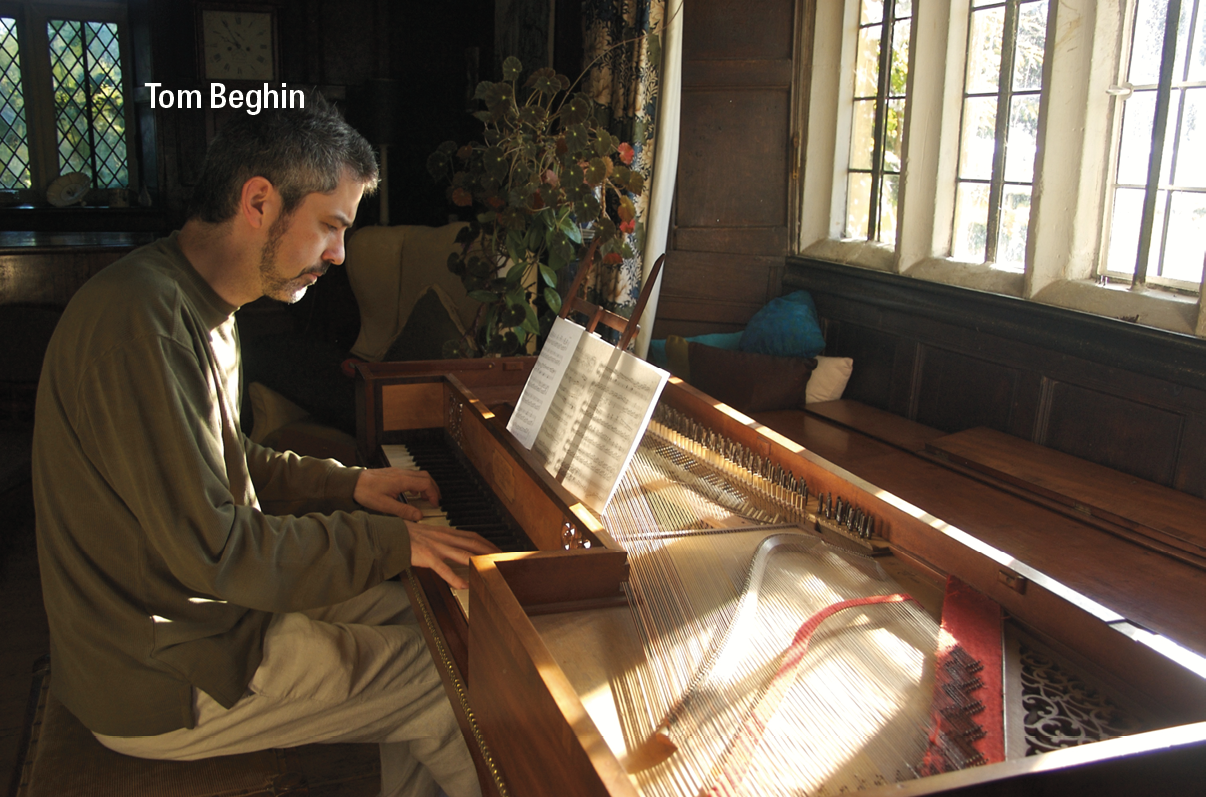
Finding things to do over the summer may be a little less obvious than in other months, but if you’re looking to catch some exceptional concerts to see, I have two words for you. Get out. Seriously. The very best concerts this summer are happening outside the city, and if you can escape Toronto for even a few days, you’ll be rewarded by some fabulous summer festivals and a chance to absorb some culture, as well as hear some great and unique music. Check out the lineup for the Montreal Baroque Festival, taking place in downtown Montreal for the weekend of June 19 to 22. Since its inaugural year in 2003, Montreal Baroque has featured some of the finest musicians in the world performing great works of music in interesting, challenging concert programs. The festival used to have pride of place as the first festival of the summer (it starts every St. Jean Baptiste weekend) taking place in Montreal’s most notorious tourist trap, the historic Old Port. It has since moved over to McGill’s main campus on Sherbrooke St., but I expect it will be no less crowded this year. Montreal has a thriving early music scene, and Montrealers come to this festival in droves. If you can make it up to Montreal for the weekend, this festival is a must-see. Check out Tom Beghin’s performance of Beethoven’s monstrous Hammerklavier sonata on fortepiano (in the MMR Studio on Friday June 20 at 5pm and Sunday at 11am) and let me know when you can hear that in concert again. Catch David Monti and Gili Loftus playing Beethoven’s “Spring” and “Kreutzer” sonatas (in Pollack Hall Sunday June 22 at 2pm): rare enough as a concert program, but almost never heard on period instruments in North America. If you’re not into Beethoven, consider two medieval concerts: Ensemble Alkenia performing the music of the 14th-century composer Johannes Ciconia (McGill main campus on Saturday June 21 at 11am) and Ensemble Eya’s concert of troubadour song (McGill main campus on Saturday June 21 at 9am). Add to that the always-solid Les Voix Humaines concert of music for three, four, five and six viols (Redpath Hall on Saturday June 21 at 4pm) and you can easily spend the whole weekend in the concert hall. This is an exceptional festival with some top-tier artists playing music that you rarely get a chance to hear in concert. I strongly advise anyone reading this column to consider clearing their calendar and vacationing in Montreal for that weekend.


Stratford Summer Music: If you prefer a day trip to Stratford over a road trip to Montreal, Stratford Summer Music has several concert weekends. If you find yourself there on either July 23 or 24, consider a couple of concerts by the Folger Shakespearean Consort at 7pm that will provide you with the soundtrack to Renaissance England. Songs by the Bard of Avon’s contemporaries, namely John Dowland, Tobias Hume and Thomas Morley, were hits very likely enjoyed by Shakespeare himself. If Shakespeare was enough of an advocate for the arts that he couldn’t trust a man who didn’t enjoy music, it would be well worth the trouble to find what sort of music the playwright liked to listen to.

If you’re no fan of Renaissance music (or just don’t trust Shakespeare as an arbiter of musical taste) Stratford Summer Music is also bringing out Tafelmusik for some very fine chamber music on August 22 and 23. Highlights from these programs include the Bach “Wedding” and “Coffee” cantatas, a Vivaldi bassoon concerto, a Telemann sonata for winds and a Bach violin sonata. These both look to be solid concerts and between Tafelmusik and the Folger Shakespearean Consort, proof that going to Stratford doesn’t need to mean just going to see a play anymore.

Music in the Garden and more: Being stuck in Toronto all summer doesn’t mean you miss out on everything. If you’re unable to get out of the city, consider visiting the Toronto Music Garden, 479 Queen’s Quay W., a unique concert space by the waterfront that functions as its own mini-escape from the tumult of the city. This summer, the Toronto Music Garden is presenting a program of early music by some young up-and-coming musicians. On Sunday July 13 at 4pm, members of the New York-based period chamber ensemble Gretchen’s Muse will present Haydn’s String Quartet in E-Flat Major, Op.33 No.2 (“The Joke”), and Beethoven’s Quartet in C Major, Op.59 No.3. Abigail Karr is the leader of this ensemble and she will be joined by Vita Wallace on violin, Kyle Miller on viola and guest cellist Beiliang Zhu. Zhu also holds the singular honour of being the first person ever to win the Leipzig Bach Competition on a period instrument, so it will be very interesting to hear her perform in a quartet. They will also be appearing the next day at Music Mondays’ free noon-hour concert at the Church of the Holy Trinity. The Music Garden will also be showcasing another fine young baroque cellist later this summer – Kate Bennett Haynes. Haynes is performing Bach’s six suites for unaccompanied cello in installments at the Music Garden; Thursday August 28 at 7pm will see her performing Bach’s Suite No. 4 in E-Flat Major in a mixed program that includes Britten and Oesterle. Haynes also happens to be an exceptional artist, and this concert promises to be an intimate and passionate experience.

Finally, a great local group that I’m proud to be playing with will kick off the summer with a concert in Parkdale. Rezonance’s next concert, “Birds, Beasts, and Rustic Revelry,” taking place at Artscape Youngplace, 180 Shaw St. #202, on June 14 at 8pm, is a program that explores Baroque composers’ depictions of nature, and will feature all manner of musical foolishness from the 17th century, including music by Veracini, Schmelzer, Biber and Couperin. Rezonance is led by the young virtuoso violinist Rezan Onen-Lapointe and will be joined by lutenist Ben Stein and cellist Kerri McGonigle. A chance to hear some brilliant performances at this concert, and the music on the program defies anyone to take classical music too seriously.

David Podgorski is a Toronto-based harpsichordist, music teacher and a founding member of Rezonance. He can be contacted at earlymusic@thewholenote.com.
Shortly after I finished university in Montreal, I got a job in the classical department of a record store. Occasionally customers would come in and ask me for the Toronto Symphony Orchestra’s recordings of Beethoven conducted by Bruno Weil and I would direct them to an album that Weil had made with Tafelmusik earlier that year.

1908-EarlyBruno Weil has never made an album with the Toronto Symphony, but to my customers at the record store, Tafelmusik and the TSO were one and the same, and I never saw the point in correcting them. Throughout its 35-year history, Tafelmusik has gone from a group of competent musicians representing early music in Canada to the biggest and best-selling early music group in the country, as well as an internationally renowned orchestra. If Montrealers think Tafelmusik is the TSO, I can’t blame them, and I’m sure Weil and everyone else who has ever appeared on a Tafelmusik album should consider the confusion a compliment.

Tafelmusik’s success is due in a large part to the leadership of Jeanne Lamon and the direction she charted for the group when she took it over in 1981. Tafelmusik’s guest artists are deeply impressed by the band’s near-military precision in following Lamon; in contrast to some early-music orchestras who function as oversize chamber groups, Lamon’s band is a disciplined unit with a clear sense of hierarchy. If you’re listening to Tafelmusik in concert or recorded, you’re listening to a sound Jeanne Lamon created.

This month marks the end of an era for early music in Canada, as Lamon will be performing her last concert series with Tafelmusik as concertmaster and artistic director. It’s still anyone’s guess as to which direction the orchestra will go after Lamon departs, but this is Toronto’s last chance to hear (officially, as I’m sure Lamon will return to play) the work of an artist who has left a profound influence on classical music in this country. The orchestra will be doing a mixed program of Lamon’s favourites, including Vivaldi, Handel, Rameau, and Bach, and members of Tafelmusik have composed a set of variations on Purcell dedicated to their boss, so I’m willing to bet the final concert will be an emotional evening. It all happens at Trinity St-Paul’s Centre on May 8 to 11 and 14 (with an additional concert at George Weston Recital Hall, May 13). I defy anyone looking forward to retiring this year to throw a better retirement party.

Elixir: Given how often musicians improvise in jazz and rock music, it’s kind of disappointing that classical musicians don’t make anything up very much. Obviously, when the music is written down for you, improvisation becomes superfluous, but making up a great solo remains one of the best ways for musicians to show off. This wasn’t always the case in classical music. Composers and musicians in the Renaissance used to jam over ground bass lines in much the same way that rock musicians do today, and famous composers from Bach through to Liszt were raised in a tradition of improvisation that was a foundation for their fame as composers. In Bach’s case, his admirers pointed to the fact that he could improvise any counterpoint right up to a six-part fugue and Liszt’s claim to fame was the ability to instantly compose endless and technically brilliant piano variations on any theme selected at random by members of the audience at his concerts.

One Toronto musician who is trying to revive the practice is lutenist (and fellow WholeNote columnist) Benjamin Stein. Stein has made Renaissance “standard” tunes a special project of his for some time now, and he’s finally trying out his experiment on the concertgoing public this month. Stein will be joined by the Elixir Baroque Ensemble in a concert of improvised and composed music featuring tunes by Uccellini, Vivaldi, Byrd, Castaldi and Collard. Stein and Elixir will add to the mix by improvising their own solos in the style of each composer on every tune they play. This is a very ambitious project and it will be exciting to see what happens – it may even revive the lost art of improvisation among classical musicians if Stein’s project gains a following in the Toronto music scene (although that may be a few years away). You can catch Ben Stein and Elixir Baroque at Metropolitan United Church on May 10 at 7:30pm.

The Toronto Continuo Collective is back and their latest concert, “Psyche: The Immortal Soul,” is a musical exploration of the myth of Psyche and Cupid, told through the music of French composer Jean-Baptiste Lully and his English contemporary Matthew Locke. The myth of Psyche is a story of love, duty and betrayal, and was adapted by Molière from the Roman story by Apuleius. Lully in turn adapted Molière’s play into an opera, after which Locke adapted Lully’s opera into his own opera/ballet. The point being that by the time Locke’s version rolled out, audiences would be fortunate to recognize anything from the original myth. The TCC is avoiding any confusion by playing only excerpts from Lully and Locke, and they will be joined by Montreal sopranos Andréanne Brisson-Paquin and Ghislaine Deschambault, as well as local singers Luke Arnason (countertenor), Bud Roach (tenor) and David Roth (bass). They will be presenting it at York University on May 8 at the McLean Performance Studio in York’s Accolade Building at 7pm. It’s also a rare chance to hear any opera originally intended to be performed in English (English opera was basically a canonical no-man’s land from the beginning of the 18th century until Britten) so that reason alone should make this concert a must-see for opera buffs.

Toronto Masque Theatre And speaking of Restoration-era English operas, another Toronto group based on the English tradition of music in the 17th century, the Toronto Masque Theatre, is venturing outside the GTA to perform a classic English opera (thus depleting the entire repertoire of English opera in the space of two concerts). TMT will be performing Henry Purcell’s Dido and Aeneas as part of the Westben Arts Festival in Campbellford.Dido and Aeneas is based on the founding myth of Britain in Roman mythology, Virgil’s Aeneid. It’s a short but tragic tale that remains, even after 300 years, a classic opera, and I sincerely hope it’s a hit in Campbellford. The performances aren’t until July 5 and 6, but on May 23 at 7pm you can catch TMT artistic director Larry Beckwith in a discussion at Westben about the operatic classic, featuring excerpts from their upcoming production. Campbellford is just up Highway 30 off the 401, before Quinte – if you’re interested in a weekend outside of the city (or if you live in the Peterborough area and feel like a night out), be sure to check out the talk, and to mark July 5 and 6 on your calendar.

Finally, there’s one more Tafelmusik concert early next month that’s worth checking out. The orchestra and choir will be performing a special noon-hour program on June 1 that features members of the Tafelmusik Baroque Summer Institute faculty. It happens at 12:30 in Walter Hall in the Edward Johnson building on the U of T campus. No word on the program yet, but it’s a chance to hear Tafelmusik for free. Skip off work or take a long lunch and check it out.

David Podgorski is a Toronto-based harpsichordist, music teacher and a founding member of Rezonance. He can be contacted at earlymusic@thewholenote.com.
It’s good to get out of the city once in a while. The Toronto early music scene is now big enough that rather than simply staying home and welcoming guest artists from elsewhere, our own artists are starting to migrate and perform on the outskirts of the GTA and occasionally further out – really as far as one could reasonably expect to drive in the course of one day. I really hope this is a positive development for both the musicians and the cities they visit. If you live in say, Stratford or Hamilton, you can get a little more variety in entertainment and nightlife, and if you’re a Toronto-based artist, you can tour not too far from home and get a chance to make some more money with a program you would otherwise only get to perform in town.

earlymusic borys-medickyVesuvius: If you live in St. Catharines, you might want to catch an outstanding Toronto group playing early this month. The Vesuvius Ensemble, founded by singer and guitarist Francesco Pellegrino, is devoted to playing traditional music from Italy, and they are performing at St. Barnabas Anglican Church at 2pm April 6 in a program of renaissance and baroque music. Painting a vivid picture of 17th-century Naples, the Vesuvius Ensemble will show the life of an exotic city and its surrounding countryside heavily influenced by Arabic and Spanish culture but with its own distinct culture that set it apart from the rest of Italy and Europe. This group also plays on a wide variety of traditional Italian instruments and guitars as well as more conventional baroque instruments, so you’ll definitely enjoy this program if you’re an Italianophile or just a gearhead.

Medicky: Another Toronto artist who has expanded outside the GTA is harpsichordist Borys Medicky. A co-founder of the Toronto Continuo Collective, Medicky has found something of a home away from home in Kitchener-Waterloo, where he leads the Nota Bene Baroque Players. April 12 Nota Bene will be putting on a fundraising concert at First United Church in Waterloo, performing Handel’s Messiah (which, I note as a musicological aside, is traditionally a concert celebrating Easter, not Christmas). Nota Bene is going all-out with this concert, which features soloists Daniel Taylor and Michael Schade, with John Thiessen on trumpet and Jan Overduin as a guest harpsichordist. And if that isn’t enough to draw a crowd, it’s also a sing-along and should be a blast. (There is a regular performance April 13.)

Lully: Closer to home, a must-see event is Opera Atelier’s run of Jean-Baptiste Lully’s Persée, which they’ll be performing at the Elgin Theatre on April 26, 27, 29, and 30 as well as May 2 and 3. Opera Atelier has the singular honour of being the early music group responsible for reviving the classic Lully opera, which had its last performance in Versailles in the 1770s and had never been heard since until the group dug up the work in the 1990s. While it isn’t the first time Opera Atelier has done Persée, they will be taking the show back to Versailles after this run in Toronto, so this is a great chance to experience the work of a local group that is among the top ranks of performing artists worldwide.

Toronto Consort: Italian opera in the 17th century wasn’t nearly as glamorous as the operas playing at Versailles (it’s hard to match the budget available to the king of France) but Cavalli’s opera Giasone is still a great piece of music that opera fans should find to be an essential part of the opera canon. Based on the story of Jason and the Golden Fleece, it was the most popular opera of the century. This month, the Toronto Consort is putting on its own production of Giasone. Laura Pudwell will join the Toronto Consort to sing the role of Jason (no castrati being available any more) and the Consort will supply the backup band of strings, continuo and winds. It all happens on April 4, 5, and 6 at Trinity-St Paul’s Centre.

Suzie Leblanc: Anyone in Toronto still looking to get their fix of opera this month should consider checking out the Toronto Masque Theatre – they’ll be presenting an opera of sorts at the Trinity-St Paul’s Centre on April 25 and 26. The opera in question is Michel Pignolet de Montéclair’s L’Europe, a cantata for soprano based on the myth of Europa. There’s only one vocal part, along with a backup band, in this cantata, so you could think of it as opera on the cheap, or alternately as really souped-up vocal chamber music. Suzie Leblanc will be singing with TMT and the concert will be further fortified by the choreography of Marie-Nathalie Lacoursière, the dancing of Stéphanie Brochard and the acting talents of Martin Julien, so it will be a fine multimedia experience that will delight aficionados of French Baroque music. Also on the program is a newly-commissioned contemporary work: Toronto-based composer James Rolfe’s Europa and the White Bull, so if you don’t want to hear something old, stick around and listen for something new.

earlymusic sine-nomine-ensembleSine Nomine: If you’re completely against the idea of new music, indulge your inner arch-conservative and consider checking out the Sine Nomine Ensemble in a program devoted to the music of Guillaume de Machaut. Machaut was the leading composer of 14th-century France and an early writer of polyphonic masses and motets. If you have any interest in medieval music at all or are looking for a good place to start, Machaut is an excellent introduction to the Middle Ages. Sine Nomine will perform at St. Thomas Anglican Church  at 8pm on April 25.

Scaramella: a chamber group with a reputation for bringing together informative and well-thought-out programs, this month Scaramella will play a concert devoted to the invention of the cello in Italy in the latter half of the 17th century and the gradual musical Darwinism that ensued as it sought to take the place in the musical world previously held by the viola da gamba. The cello ultimately won that contest, but it was a hard-won fight that lasted nearly a hundred years. Cellist Elinor Frey and gambaist Joëlle Morton will square off in an epic battle of bowed bass instruments, assisted by Daniel Zuluaga on chitarrone and guitar. Who will win? Find out at 8pm April 12 at Innis Town Hall.

Musical rivalry: it’s a great way to sell tickets, and it’s especially fun to watch in opera. Tafelmusik will commemorate one of the most famous rivalries in opera history, the battle between Faustina Bordoni and Francesca Cuzzoni. Soprano Isabel Bayrakdarian will join the orchestra at Koerner Hall on April 9, 10, 12, and 13 for a program featuring arias written for the two divas by Handel, Hasse, and Bononcini; it also includes concertos by Handel, Vivaldi, and Telemann, and a sinfonia by Zelenka. I should stress that Ms. Bayrakdarian is singing all the arias composed for the two divas herself, so it is the historical rivaly that will be on display in what should be a comparatively civilized affair.

 David Podgorski is a Toronto-based harpsichordist, music teacher and a founding member of Rezonance. He can be contacted at
earlymusic@thewholenote.com.
 

Back to top