08 Ethio JazzEthio Jazz Vol.1
Jay Danley Band
Independent (thejaydanleyethiojazzproject.bandcamp.com)

Ethiopian Jazz (Ethio Jazz) began with Mulatu Astatke, the first African student at the Berklee College of Music in the 1960s. He fused jazz with Ethiopian music to create a sub-genre which employs heavy rhythm, horns and several minor sounding scales. On Ethio Jazz Volume One, the Toronto jazz guitarist Jay Danley states Ethio Jazz has shown him “an entirely new way to play guitar, compose and most importantly how to hear” by combining the freedom of jazz with the “discipline of applying the scales, rhythms and ‘feel’ of Ethiopian music.”

The Jay Danley band has a core group of guitar, bass, drums, percussion and two saxophones. This is augmented on several tunes with “special guests” Hilario Durán on piano and Alexander Brown on trumpet. The arrangements are in a straightforward melody, solos and melody format. The rhythm is in the pocket for the whole album, creating a smooth and grooving background. The fat bass, combined with horns using fourths and fifths in their harmonized lines, creates a rich but edgy sound. The melodies and solos use the Ethio-jazz scales, which provide extra tension that contrasts with the funky background. All the musicians are excellent: Danley’s solos are well crafted and Durán’s piano playing is another highlight. Bring on Volume Two!

09 Keith ORourkeSketches from the Road
Keith O’Rourke
Chronograph Records CR054 (chronographrecords.com)

Even if the name of the disc – Sketches from the Road – is a dead giveaway, nothing can really prepare the listener for the vivid nature of the music. In fact, Keith O’Rourke may just as well be a graphic artist for the creation of these memorable works. Moreover, when O’Rourke and the other soloists get underway they become more than just painterly in the manner of their musical sojourns; indeed, they also become creators of the very landscapes that are brought to life – from New Orleans in Port NOLA with its breathtaking second line harmonic and rhythmic features to Sketch in Green, Bayswater and Lost Blues that spread their melodies in all their pastoral glory.

Make no mistake however, with all of its frequent and profound impressionism this is still very much a rollicking, swinging jazzy record. Songs such as Double Black and Early Bright are not going to let us forget that; not when they feature the smoky vibrato and rustic tone of O’Rourke’s tenor saxophone and the hushed whisper of André Wickenheiser’s flugelhorn. And there’s no mistaking the swing when both instruments collide with Jon Day’s sparkling piano, Kodi Hutchinson’s strutting bass and Tyler Hornby’s chattering drums on Sonny’s Tune. As with that material, so too with the rest of the fare on this memorable disc; O’Rourke shines in his ability to write the most interestingly complex and wonderfully arresting music.

10 Ron DavisRhythmaRON
Ron Davis
Really Records RR 17002 (rondavismusic.com)

Both subtlety and joie de vivre are pervasive qualities that pianist Ron Davis communicates performing on his first solo disc in 40 years. A sincere and persuasive musician, Davis’ playing reveals a long and fond relationship with the 13 works by an array of composers (including Davis himself) on RhythmaRON. Here Give Me the Simple Life, A Child is Born and You Must Believe in Spring are suffused with a distinctive atmosphere. Elsewhere, when the music raises its voice above the proverbial whisper as on Jitterbug Waltz and Rockin’ in Rhythm, the narratives are skillfully crafted to maintain a certain expressive decorum. And everywhere Davis alters harmonies and structural elements with impressive restraint, heading in directions that surprise and captivate the ear.

As in the recreations of familiar pieces, his own compositions unfold in a series of dramatic gestures, with droll stops to swing and dance along the way in a salute to the great pianists – jazz stylists from James P. Johnson and Art Tatum to Thelonious Monk and McCoy Tyner – who have inspired his work over the years. Also like them, his sonic palette is stretched in telling ways on RhythmaRON, Cullibalue and Swing Street through the magic of a layered, double-handed virtuoso performance. In all of the works, Davis performs with consummate artistry, blending superior control and tonal lucidity with a cohesive sense of line and motion. As a result, jazz music could hardly be better served.

Listen to 'RhythmaRON' Now in the Listening Room

11 Fukushima CD CoverFukushima
Satoko Fujii Orchestra New York
Libra Records 214-044 (librarecords.com)

Today big jazz bands only exist outside of academic institutions because of the commitment of a collection of musicians and a singularly devoted leader. That said, it becomes possible to gauge the extraordinary calling of Japanese pianist-composer Satoko Fujii and the degree to which she can inspire fellow musicians. Since 1997, when she first unveiled her Orchestra New York, she has also convened chapters in both Tokyo and Berlin. One of the most remarkable features of this new release is that most of the musicians present on the inaugural release, South Wind, have gathered again for the band’s tenth, highly exploratory release.

Fujii’s inspiration here comes from the Fukushima nuclear disaster, and the sustained merger of composed and improvised textures insists on comparison with the best of the jazz orchestral tradition, from Duke Ellington to Charles Mingus, Carla Bley and Sun Ra. From its haunting, near silent beginnings with breath passing through wind instruments, to harsh tangles of dissonance, electronics and rhythms sometimes forceful and plodding at once, then on to passages of almost bird-like subterfuge, Fukushima summons up all the dimensions of national memory and tragedy, bearing with it the hopes of an awakened population and the possibilities of change.

Along the way, Fujii is assisted in realizing her vision by a 13-member ensemble that includes saxophonists Oscar Noriega and Andy Laster, trumpeter Natsuki Tamura and guitarist Nels Cline, whose complement of electronic effects consistently enriches the music’s already varied textures. 

12 Paolo AngeliTalea
Paolo Angeli
AnNa RER OA10/ALU 25 (rermegacorp.com)

A combination technician and savant, Paolo Angeli is a Sardinian guitar virtuoso, the qualities of which he demonstrates on the 25 selections of this live two-CD set. Cello-size, with an extra bridge, pedal-operated hammers, additional criss-crossed strings plus pick-ups, his guitar is tuned from one-fourth or one-fifth below standard. With strings picked or bowed, the instrument can sound like a six- or 12-string guitar, amplified or acoustic, a balalaika or a double bass. Angeli’s facility is such that it often appears as if two guitarists are playing, feeding lines to one another. He also vocalizes at points, although his Mediterranean-Maghreb falsetto is more like another guitar add-on than a foreground trope.

Pizzicato, as on Brida, he plays straight-ahead licks until buzzing variations and shading suggest he’s become an entire string band. Meanwhile his finger-picking on S’Û is so intricate that after echoing two different lines, he slashes out arena-rock-like flanges before settling into calming tonality. Arco, as on Baska, he moves between lyrical violin-like sweeps to a chunky double-bass-style ostinato.

While other tracks have him take on the guise of a rural Appalachian picker (Vlora) or a Middle Eastern European dance orchestra player (Primavera Araba), his most profound showcase is a track like Mascaratu. Outputting melody and accompaniment simultaneously, he leaps from Spanish-styled rasgueado to near-psychedelic pseudo-feedback, until the performance climaxes with clean Reveille-like strumming. Recorded at 12 concerts in six countries, Talea aptly defines Angeli’s talent and appeal. 

13 BaroqueArtCD0031Baroque Art. Contemporary Harmony
Alexey Kruglov
FancyMusic FANCY 095 (fancymusic.ru)

The first letters of the words in this CD’s title – B-A-C-H – hint at the disc’s objective, which posits that Johann Sebastian Bach’s compositions are one of the bases of modern improvisation. Evidence is supplied by modern interpretations of 13 Bach pieces by Russians: alto saxophonist Alexey Kruglov; Igor Goldenberg, principally, or Yulia Ikonnikova, on pipe organ; plus Estonian electric guitarist Jaak Sooäär.

An illustration of this thesis occurs on Interpretation of Musette, where reed flutter tonguing and organ continuum spiritedly mix to create a piece related more to Jimmy Smith than E. Power Biggs. Other Goldenberg variations occur as the keyboardist provides a Fats Waller-like undercurrent to Interpretation of the Two Part Invention in C major and his silent-movie-like pressure on Improvisation on the Themes of Toccata and Fugue in D Minor, where his smeared crescendo is followed by Kruglov accelerating the narrative line. Improvisation on the Theme of Orchestral Suite No.2, is Kruglov’s a cappella showcase where he deconstructs the melody into peeps and whines before moving it skywards, playing only saxophone mouthpieces. As for Sooäär, he helps revise Two Part Invention in F Major with slurred fingering and responsive live electronics along with Kruglov’s reed split tones; while his long-lined picking amplifies the saxophonist’s circular breathing on Improvisation on B-A-C-H (Part 1).

Preserving the German master’s melodic artistry while dexterously reconstituting familiar modes with original adaptations confirms the performers’ hypothesis, as well as the universality of Bach’s music.

01 Lenka LichtenbergMasaryk – Národni Pisnē: Czech, Moravian and Slovak Folk Songs Reimagined
Lenka Lichtenberg
ARC Music EUCD2751 (lenkalichtenberg.com)

Is there a new wave of interest in Czech folk music among Canadian-based musicians? Two recent albums suggest so. In the last issue of The WholeNote I reviewed The Book of Transfigurations, an album of Moravian songs originally transcribed by Julia Ulehla’s Czech musicologist great-grandfather, reimaged by the group Dálava. Casting the folk music net geographically wider, in Masaryk: Národní Písně, Czech-born Toronto-based singer-songwriter Lenka Lichtenberg presents an album of Slovak, Czech and Moravian songs. She enriches them with her 21st-century world music aesthetic.

Drawing on the important songbook Národní Písně (Songs of the Nation) by Czech musician and diplomat Jan Masaryk (1886-1948), Lichtenberg and Czech musician Tomas Reindl have fashioned imaginative arrangements of 14 songs. European folk instruments such as the cimbalom, kantele and bagpipes join standard orchestral instruments in their elaborate charts, firmly placing these songs in a European context. Interestingly, Reindl’s gentle tabla playing on several songs and the didgeridoo on another serve to shift those songs’ focus slightly from the Czech lands, rendering them more universal. The album was recorded in studios in the Czech Republic and in Toronto, further underscoring its internationality.

The award-winning Lichtenberg’s unaffected vocals soar over the acoustic instrumentals, often overdubbing herself with characteristic regional harmonies. Like Ulehla, Lichtenberg has a family relationship to these songs: she grew up singing some of them.

The entire album, obviously a product of great care and love, rewards multiple listens.

Listen to 'Masaryk – Národni Pisnē: Czech, Moravian and Slovak Folk Songs Reimagined' Now in the Listening Room

02 Buffy Sainte MarieMedicine Songs
Buffy Sainte-Marie
True North Records TN0681 (truenorthrecords.com)

Buffy Sainte-Marie is an iconic, award-winning, Indigenous Canadian composer, vocalist and national treasure as well as a lifelong social activist. For the past 50 years she has written and performed her unique songs of forward motion, insight and healing as “medicine” to the people – all people. Sainte-Marie describes this new recording, as “a collection of frontline songs about unity and resistance – some brand new and some classics – and I want to put them to work.” This is the fifth collaboration between talented musician Chris Birkett and Sainte-Marie. They act as co-producers here, and Birkett has deftly recorded and mixed the 13 dynamic tracks.

The stirring opener, You Got to Run is co-written by Sainte-Marie and Tanya Tagaq and features fine vocals and a relentless arrangement defined by a perfect balance between acoustic and digital instruments, propelled by skilled keyboard, bass and drum programming by Jon Levine, Max Kennedy Roach on drums and Justin Abedin on guitar – and The War Racket is an infectious/rap-tious and rhythmic contemporary protest song that sadly is still as pertinent now as it was 30 years ago.

Standouts include the energizing Carry it On, and the charming, guitar-centric folk song Little Wheel Spin and Spin. Of special note is the final track on the CD, Alabama 3’s Power in the Blood – a wall of sound, embracing rock modalities and driving home the futility and horror of war. Sainte-Marie’s vocal instrument is as dynamic and powerful as ever, but now resounds with an even warmer tone of life experience, bringing a new musical palette to her perpetually relevant work. 

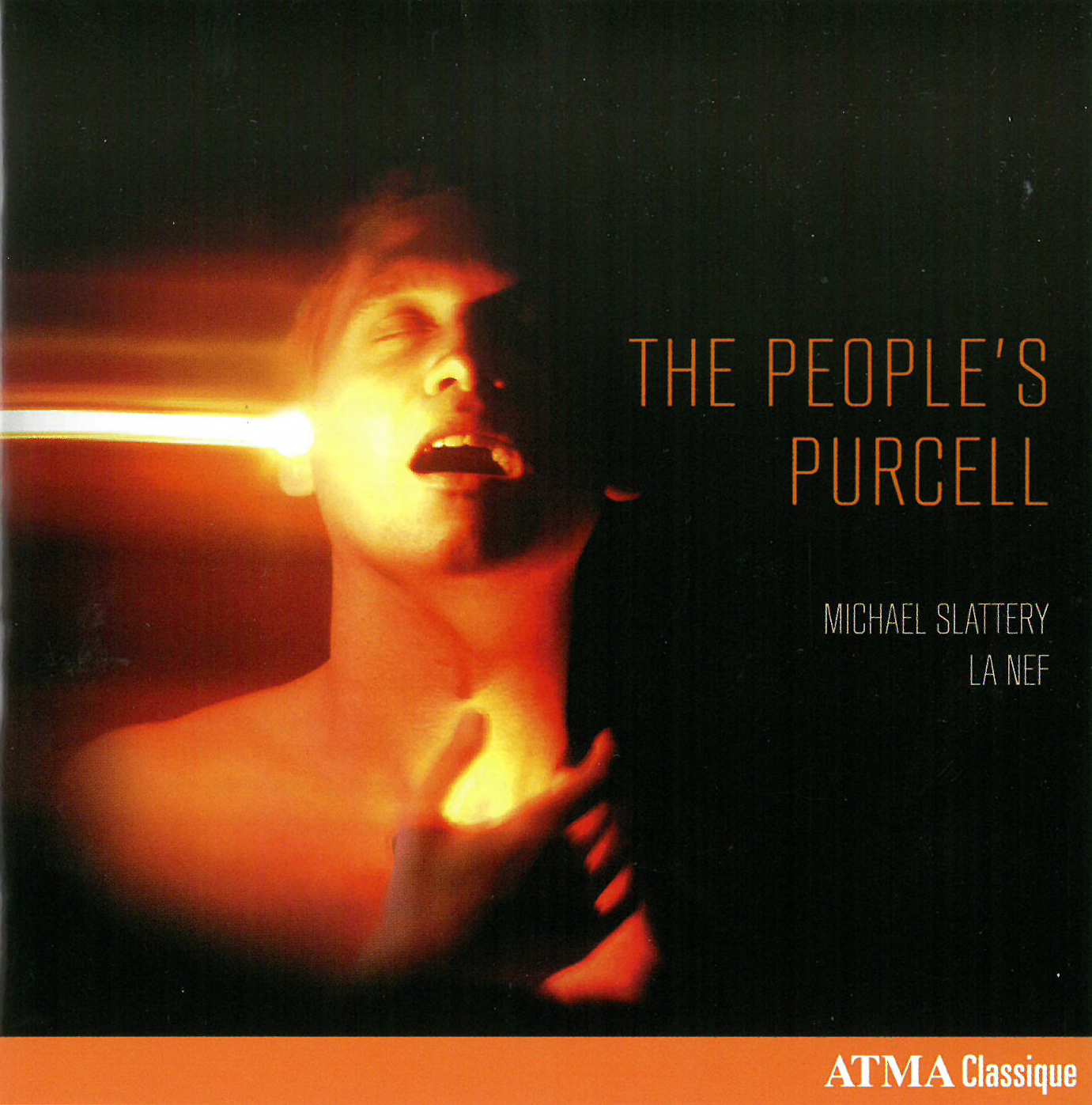
04 PayadoraVolando
Payadora Tango Ensemble
Independent (payadora.com)

Payadora Tango Ensemble has made a memorable mark on the Canadian music scene with their accomplished ensemble playing and toe tapping energetic versions of the Argentinian tango, the form the world loves to listen, play and dance to. The group – Rebekah Wolkstein (violin, vox), Branko Dzinovic (accordion), Robert Horvath (piano) and Joe Phillips (double bass) – now expands its tango horizons with a wider compositional cross section.

The traditional tango is represented by the perfect performance of Adios Muchachos/I Get Ideas. The Adios portion is a more traditional performance with guest vocals by Elbio Fernandez. Then a walk on the jazzier side happens as Wolkstein sings the English words to great bass meandering explorations and piano tinklings. There are two original arrangements of Argentinian folk songs, but most fun is hearing Brahms step across the dance floor in the unique Horvath arrangement of Hungarian Dance No.1.

There are three original tunes. The slow reflective opening of Drew Jurecka’s Niebla Oscura features high accordion tones against a violin melody, and lower accordion tones against piano chords. Longer phrases and mood shifts lead into a sneaky final tango piano section. Horvath’s Tavasz goes from reflective opening piano to tango. Wolkstein’s Volando is more contemporary with accordion shots, metrical piano groove and a soaring build to the final violin glissando.

Each musician is a star soloist in their own right. Playing together has allowed them to develop and mature turning Payadora into a superstar group.

Listen to 'Volando' Now in the Listening Room

06 Amici CanadaInspired by Canada - Notre Pays
Mireille Asselin; Amici Chamber Ensemble
Marquis Classics MAR 81485 (amiciensemble.com)

Whenever popular or folk songs are recorded in a classical arrangement and for classically trained voices, the dreaded word “crossover” raises its ugly head. But let us remember that Cantaloube orchestrated the folk songs of the Auvergne and Carmina Burana was nothing but an elaborate fake (Orff initially claimed inspiration from medieval music scores): today, both are great examples of much-beloved music from the concert stage. So it really boils down to how the song selections and arrangements are realized.

Here, Serouj Kradjian’s arrangements and the playing by his colleagues in the Amici Ensemble (clarinetist Joaquin Valdepeñas and cellist David Hetherington) are first rate. So is the voice of and interpretation by Mireille Asselin – she truly gets the spirit of French-Canadian music, which dominates on this disc. The song selection, however, may trigger some arguments. There are many other songs in the oeuvre of Leonard Cohen beyond the vastly overexposed and horribly abused Hallelujah, that would have been a better fit. Similarly, I cannot help but wonder, if River would not have been a better choice from the vast Joni Mitchell catalogue than A Case of You. The true standouts musically are La Vieux Piano by Claude Léveillée, a Canadian composer of some of Edith Piaf’s songs, and the Huron Carol (another controversial appropriation). These two pieces truly assert the rights of folk and popular songs to be given the “full treatment” and to safely dispense with the crossover label.

Listen to 'Inspired by Canada - Notre Pays' Now in the Listening Room

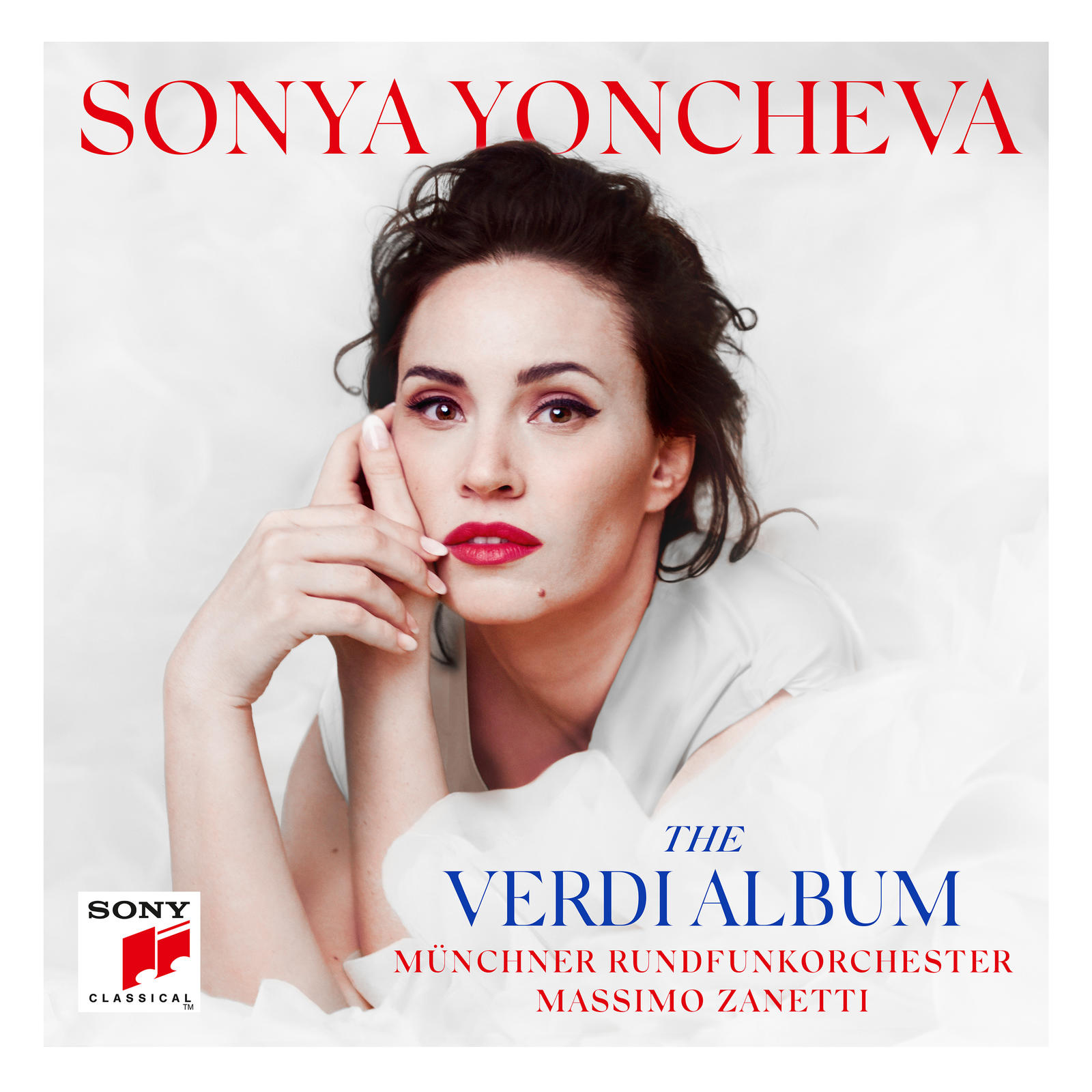
07 Laila BialiLaila Biali
Laila Biali
Chronograph Records CR-060 (chronographrecords.com)

The intense emotional realms that the music of Laila Biali inhabits pay tribute to the ecstatic world of Sufi poetry, the kaleidoscopic one of pop metaphors and to one where her own enduring spirit prevails. Each of the 12 songs on this disc probes joyful and profound corners, allowing us to enter into these private worlds in which ebullience and hope are conveyed in striking terms. Biali evokes dramatic and psychological atmospheres as if both Jalaluddin Rumi and David Bowie were looking over her shoulder, but with her own sense of urgency, rhythm and colour.

The disc opens with the joie de vivre of Got to Love and closes with an equally exuberant version of Let’s Dance. In between, Biali evokes many-splendoured romantic images and daubs these vividly coloured recreations with a seemingly infinite array of vibrant and melancholy musical idioms – including the profound and the soaring gospel-driven. In Wind and Dolores Angel respectively, her captivating vivacity rules the roost among a stellar cast that includes vocalist Jo Lawry, drummer Larnell Lewis and trumpeter Ambrose Akinmusire.

Individual listeners – depending on their familiarity with Laila Biali – will no doubt find a favourite track to latch onto here but each has its own charm. And every one of the 11 musicians’ performances – vivid and articulate – seize the attention as they exercise their skills alert to the expressive need of the vocalist and pianist’s bold and emphatic art.

08 Black ManhattanBlack Manhattan, Vol.3
Paragon Ragtime Orchestra; Rick Benjamin
New World Records 80795-2 (newworldrecords.org)

Years ago Rick Benjamin, the conductor of the Paragon Ragtime Orchestra, was thrilled to discover a rich horde of sheet music of African American composers working in New York City during the half century from the late Victorian era to the Harlem Renaissance.

Searching for their recordings however, he found remarkably few examples documenting this pioneering African American music. At the roots of ragtime, jazz, period social dance, musical theatre, silent cinema and the Great American Songbook, he felt this music was being unjustly neglected.

Three Black Manhattan albums later, PRO has recorded 60 pieces by 32 African American composers, using “carefully curated, new recordings of first-rate performances played from authentic scores.” Volume 3 contains theatre songs and instrumentals by 21 different composers. Some are relatively well known today (Scott Joplin), yet most have largely been relegated to music history’s back pages.

If I had to pick one selection, it would be the beautifully perfect ballad Love Will Find A Way from the Broadway show Shuffle Along (1921) by Eubie Blake and Noble Sissle. (I had the good fortune of chatting with Blake after his solo piano recital at York University in the early 70s. It’s one of my cherished early musical memories. Mr. Blake was in his 90s. I was… younger.)

It seems to me that Benjamin’s wish that his “efforts have started to close this gap in America’s cultural memory” and “enable the world to rediscover this magnificent music” is admirably served by this album.

Arguably the most important and least understood sound of the 20th century, Free Music, which combined jazz’s freedom with notated music’s rigour while aiming for in-the-moment creation, has now been around for almost six decades. With its advances now accepted as part of the ongoing sonic landscape, long out-of-print recordings are being reissued and reappraised for their excellence.

01 KaryobinOne of the most important, The Spontaneous Music Ensemble (SME)’s Karyōbin are the imaginary birds said to live in paradise (Emanem 5046 emanemdisc.com), has maintained its reputation since 1968. That’s because, like the first viewing of Jackson Pollock’s action paintings, it signalled that an entirely new sound had arrived from the United Kingdom. Karyōbin is also an all-star session, featuring players who would epitomize exploratory sounds for years: soprano saxophonist Evan Parker, guitarist Derek Bailey, drummer John Stevens and bassist Dave Holland from the UK, and Canadian Kenny Wheeler, already established as one of England’s most accomplished trumpeters. Amazingly Wheeler didn’t abandon the lyrical quality he developed, and his graceful bursts easily lock in with Parker’s slinky tone, which even this early is sui generis. With Stevens patting cymbals and faintly slapping drum tops and Holland pulsating, Bailey’s metallic plinks are most discordant, although his steel-guitar-like reverb isn’t upfront until Part 3. Twanging guitar licks intensify on the subsequent tracks, but the trumpeter’s hummingbird-like flutters and the saxophonist’s perceptive breaths cleanly fit into the spaces left by the others, with the bassist’s strong pulse suggesting why he was recruited by Miles Davis. Distinctively a group effort, by the CD’s defining Part 5, broken-octave guitar licks and slowly unfolding reed vibrations complement one another as the trumpet stutters out sour notes while moving the pitch upwards. Eventually clipped guitar strokes and thin saxophone trills adumbrate and complete Stevens’ rivet cymbal, gong and snare intrusions to reach a harsh polyphonic climax. Splattered percussion crackles, lengthening airy textures from the horns and a general diminishing of tone mark Part 6 as the CD’s coda and confirmation that a new sound has germinated.

02 Steve LacyUnlike the UK-identified members of the SME, American soprano saxophonist Steve Lacy, primarily a jazzer, became a major force in Free Jazz once he expatriated and collaborated with European players. Free for a Minute (Emanem 5210 emanemdisc.com), is a two-CD set that bookends Karyōbin, with tracks recorded by several-sized combos in 1965, 1966, 1967 and 1972. Tellingly, the nine tunes from 1965, featuring bassist Kent Carter and drummer Aldo Romano, are Carla Bley, Thelonious Monk and Cecil Taylor compositions, as well as Lacy originals (which are the most tuneful of the lot). Bley’s Generous 1 for instance includes a walking bass line, over which the saxophonist squeezes out a melody that becomes a rhapsodic multi-note soprano showcase aided by echoing cymbals. There’s full-fledged triple interaction among string pulls, reed puffs and meandering drum beats on Lacy’s There We Were; however Taylor’s Tune 2 is the most impressive track. With bass and drums operating on slow boil, the saxophonist’s peeping and puffing provide the piece with timbral shading as it accelerates to emotive joy prodded by tongue percussion. Since most time-in at around the one-minute mark, the 13 subsequent tracks recorded as cues for the unreleased 1967 film (Free Fall) are utilitarian to the nth degree, despite the stellar lineup of Lacy, Carter, trumpeter Enrico Rava, drummer Paul Motian and vibist/pianist Karl Berger. Less than sketches and mostly consisting of drum rattles, vibes pops and reed shrills, only Cue 30 is enlivened with a pseudo-Dixieland beat, while Cue 24 and Cue 25, which together last six minutes, set up a broken-octave challenge with graceful tweets from Rava and choked blasts from Lacy, unrolling alongside metal bar slaps from Berger and focused rolls from Motian. This set’s highpoint is CD2, with a 1966 date where six Lacy originals are played by the composer, Rava, Carter and Romano, as well as three previously unissued 1972 tracks, with a lineup of Lacy and Carter with saxophonist Steve Potts, cellist Irene Aebi and drummer Noel McGhie. Still influenced by Monk, a 1966 quartet piece like Sortie judders and jumps as scrubbing bass strings and supple drum ruffs move in pseudo-march-time as frontline tones intertwine. Ebullient and sharp, the trumpet tones gradually ascend, where they’re met by effervescent saxophone patterns. Chromatically outlining Fork New York’s theme, seconded by a purring obbligato from Rava, Lacy’s supple tone has taken on the unique colouration it would maintain until his demise. As the trumpet pitch gets peppier and brassier, it mixes with the saxophone’s lubricated contralto tone to create the equivalent of smooth spreading mustard. Subsequent contrapuntal theme elaborations don’t prevent the track from cantering to a slick and satisfying end. Content with the quintet format he would maintain for several decades, Lacy’s compositional aims expanded synchronously and became more dissonant by 1972. Consummate Free Jazz, The Rush races by at steeplechase speed, with the cello’s staccato sawing setting off a paroxysm of reed split tones and roistering glossolalia. The two-part The Thing divides between Lacy’s pinched vibrations and Potts’ low snarls, which barrel along expressing polyphonic variations. With The Thing part 1 finally slowed down for slippery stops from the cellist and bassist, The Thing part 2 is extended with a multiphonic explosion that takes in the alto saxophonist’s hardened narrative, dog whistle-like shrills from the soprano and multiplied cymbal clashes plus resonating stropping from the strings. Like the ending of a romance novel, the finale features reed kisses and cello sighs.

03 Hans ReichelBailey’s string experimentation encouraged other guitarists, with Hans Reichel one of the most iconoclastic. Recorded in Hagen, Germany in 1973, Wichlinghauser Blues (Corbett vs. Dempsey CvsD CD 033), finds Reichel using a handcrafted 11-string guitar with three pickups and at points extending the sound with a wah-wah pedal, water-glass-on-strings pressure, and on Shaved Guitar working an electric razor along the strings to append a harsh drone to his picking. Less gimmicky, but just as radical, he often mixes simple folk melodies with more radical fare. Krampfhandlungen-1st Version for instance, could be from two guitarists, one slashing bottleneck-like whines and the other strumming quieter but offbeat harp-like arpeggios. Smacking the instrument’s wood at first, Reichel ends the piece with distorted rumbles that suggest a 1960s freakout. Krampfhandlungen-2nd Version is no more than a fraternal twin, with harsh vibrations accelerating to echoing note spills and string hand pumps, then descending to brief clinks without losing chromatic motion. Caustic and menacing, the title tune uses fills to advance the narrative without negating the melody, although every tone comes with an extended echo. Tellingly, the concluding Schlafflied demonstrates his offbeat finger-picking prowess, which stays dissonant even while frequently threatening to break into a folk-pop melody.

04 Roscoe MitchellToronto’s Sackville Records regularly documented jazz advances in the 1970s, including Roscoe Mitchell’s Duets with Anthony Braxton (Delmark/Sackville SK 3016 delmark.com). Each plays a woodwind factory’s collection of reeds and flutes while interpreting five Mitchell compositions and three by Braxton. Despite graphic score titles, it’s the Braxton pieces that are more approachable. In fact Composition 40Q finds two bass saxophones waddling in tandem to a march-like tempo. Weaving elephantine snorts and farts together, the circus-style theme is briefly interrupted by reed peeps and slides before ending with more basement pitches. Completed with full, rounded tones which complement one another’s output, Composition 74B manages to link curlicue wiggles and circular breathing from paired flutes while maintaining an underlying rhythm. However, Composition 74A, the third and longest Braxton line, depends on both players instantaneously switching from flute to baritone sax to alto saxophone and on to other horns, affiliating and breaking apart timbres as one limns the melody and the other decorates it. Mitchell’s lengthy Cards: Three and Open is another superior track, with the woodwind/flute assemblage constantly pivoting from decorous piccolo pitches or altissimo reed bites to the huffing and puffing of subterranean-pitched saxophones. Modulating forward, during which each player seemingly surprises with new information, this penultimate sequence is all bellows until a sudden swing section wraps things up. Additionally, while high-pitched microtonal harmonies undulate through Five Twenty One Equals Eight, the two versions of Seven Behind Nine Ninety-Seven Sixteen or Seven, one previously unreleased, scream and judder with the dissonant audacity of 1960s Free Jazz. Somehow though, the alternating foghorn snorts and altissimo overblowing mutate into definite statements. The value of reissues like these is that those who weren’t around to experience the music first-hand can now hear what caused all the excitement.

01 Karajan RingLast year some important omnibus editions did not reach us before the closing date of the December/January issue. Here are three outstanding productions of lasting interest that missed the boat: Wagner’s Ring Cycle conducted by Karajan on one Blu-ray audio disc from DG; The Complete Recordings on Deutsche Grammophon of the Amadeus Quartet and The Complete Piano Concerto Recordings of Vladimir Ashkenazy on Decca.

Karajan’s recordings of the Ring’s four parts were made one a year, beginning in August, September and December, 1966 with Die Walküre. Rhinegold followed in December 1967 and Siegfried was made in December 1968 and February 1969, followed by Götterdämmerung that October. The venue was the much vaunted Jesus-Christus Kirche in Berlin. Longtime associate Otto Gerdes was the executive producer and the ubiquitous Gunther Hermanns was the recording engineer. The LPs of Walküre appeared in 1967 with Gotterdammerung completing the cycle in 1970. In 1998 DG issued a boxed CD edition of the complete cycle in their Original Image re-processing. Now there is a third incarnation complete on one High Fidelity, Pure Audio Blu-ray disc (DG 4797354, slip-cased with a 400-page hardcover book). Let it be understood that the original recordings were all analog, made on magnetic tape. Certainly, there would have been backup tapes and microphones at various positions. Dynamic range was some 20db less than digital. Fifty years later audio engineers have newer technology at their fingertips that can, in the right hands, reveal but not create hidden information from the originals, resulting in “lossless high fidelity.” Does all this newer technology allow us to hear anything better than on the earlier Original Image CDs? What I had mainly hoped for was a more solid bass line on a firmer footing. Unencumbered by old technology the presence in the voices and exchanges between the protagonists are more convincing and the balances between instruments, top to bottom, is exemplary. Karajan paid meticulous attention to details, including the interaction between the characters to one another and the situation. As an example, in the first act of Walküre, as Siegmund, Jon Vickers’ declaration of love, Winterstürme wichen dem Wonnemond to Gundula Janowitz as Sieglinde begins very quietly, at first gently intimate before becoming quite impassioned, leading to her spontaneous response, Du bist der Lenz. Between them they now set in motion fateful events that set up the rest of the cycle right to the very end. One of the great scenes in opera. This disc displays and names an abundance of access points so that any scene, vocal or orchestral can be easily queued. If you wish you can start at the first note of Rheingold and finish at the last note of Götterdämmerung. Already very familiar with these performances, I am thrilled with the superiority of this transparent new edition.

02 Amadeus QuartetIt was a sad time for the music world when the Amadeus Quartet dissolved in 1987 after 40 years as one of, if not the world’s most esteemed string quartets. Their history is unique and is sure to remain so. Three of the four came together in an internment camp in Britain during WW2. Being Jewish, violinists Norbert Brainin, Siegmund Nissel and Peter Schidlof left Vienna for England after the Anschluss and, as aliens, were interned lastly on the Isle of Man. After their release they studied, free of charge, with violin teacher Max Rostal who introduced them to cellist Martin Lovett. Schidlof changed his violin for a viola and in 1947 the Brainin Quartet was formed. They changed their name to the Amadeus Quartet for their premiere concert in London’s Wigmore Hall on January 10, 1948. Upon the death of Schidlof in 1987, the surviving members simply disbanded.

DG honours this 30-year anniversary with a complete edition of all the recordings that they had made, plus all that Decca had, together with the early recordings that the quartet had made for Westminster: Amadeus Quartet – The Complete Recordings on Deutsche Grammophon (DG4797589, 70 CDs with a 170-page full-colour book). As some works were recorded more than once over the years, we can make comparisons for ourselves and look for any changes in their overall interpretations or execution. For instance there are three performances of Beethoven’s Third Razumovsky Quartet, 1959 (Hanover), 1983 (Wigmore Hall) and 1987 (St. Barnabas, for Decca): one work, three dates and venues, two recording philosophies. How about four different Mozart Hunt Quartet recordings: 1951, 1956, 1963 and 1982. The quartet excelled in the Austro-German repertoire so we find much Haydn, Mozart, Beethoven, Schubert and Brahms. Favourites include works by Bruckner, Dvořák, Smetana and Tchaikovsky. Guest luminaries heard with the group include Cecil Aronowitz, Christoph Eschenbach, Karl Leister, William Pleeth, Andreas Brau, Lothar Koch, Gervase de Peyer, Walter Klein, Rainer Zepperitz, Gerd Seiffert, Clifford Curzon, Emil Gilels and Benjamin Britten. Unexpected entries include Sir Ernest MacMillan’s String Quartet in C Minor and Two Sketches on French Canadian Airs recorded in Canada’s centennial year. The 70th disc contains some surprises. If I tell you now they won’t be a surprise.

03 AshkenazyVladimir Ashkenazy has been performing for more than 65 years and is best known as a pianist, but he is also a world-class conductor. I recall around 1990 chatting over dinner with a well-informed gentleman from Decca and asking him when Decca will finish their Ashkenazy/Shostakovich symphony cycle. “Never,” he replied, explaining that a soloist cannot become a credible conductor to the record buying public. It just won’t happen. Years later Decca issued a box set of the 15 Shostakovich symphonies with Ashkenazy that is still an active title. Also an outstanding cycle of the Rachmaninov symphonies with the Concertgebouw Orchestra. Ashkenazy is much more than a pianist. He is a superb musician and this shows in his playing.

Is there a pianist other than Ashkenazy on whom his or her record company has expended the time and money to record four complete versions of the Beethoven concertos? At this moment I can’t think of one. All four, including a DVD cycle are included in Ashkenazy The Complete Piano Concerto Recordings (Decca 4831752, 46 CDs, 2 DVDs, hardbound 115-page book). As with the Amadeus set above, comparing versions is a collector’s pleasure. As well as the Beethovens, this set is a music-lover’s treasure chest including, in alphabetical order, the following concerti: Bach BWV1052, Bartók complete, both Brahms, both Chopin, the 27 Mozart, the five Prokofiev, the complete Rachmaninov twice, all Schumann’s concerted works, both Scriabin and, of course, the Tchaikovsky First. There are lots of orchestral fillers and some solo recordings. On several of the concertos he also conducts from the keyboard. Other conductors include Solti, Mehta, Haitink, Kertész, Previn, Fistoulari, Maazel, Kondrashin, Zinman and Schmidt-Isserstedt. The two DVDs contain concerts from the Royal Festival Hall during March and April 1974 broadcast and recorded by the BBC. The London Philharmonic is conducted by Bernard Haitink in inspired performances of, you’ve guessed it, Beethoven’s five piano concertos together with the overtures Leonore 2 and 3 and Egmont. Dated video but well worth enjoying.

04 Argerich RicciDoremi has, over recent years, issued an impressive resurrection of live performances of the young Martha Argerich from her earliest years. The latest is the second evening of a joint recital with the great violinist Ruggiero Ricci presented in Leningrad in 1961. The first from April 21 was issued by Doremi two years ago and here (Leningrad Recital II, DHR-8053) we have the following evening, April 22. Listening to this CD reminded me of what collecting recordings is all about. It’s about the ability to, at will, re-experience such sublime music-making as this that otherwise can be remembered only by those present or hearing the broadcast. Recordings such as this can resurrect, as they say, “immortal performances.” Not virtual reality but the next best thing. At this time Argerich was 19 years old, well before she won the Chopin competition in Warsaw and became an international celebrity. Ricci, at 42, was already well recognized as one of the leading violinists of the century. The result of two compatible intellects at work – at play – is evident. Their complete absorption into the music is profound. Quite extraordinary. You would need to hear it to appreciate it. Here is the repertoire with a comment or two. The Bach Chaconne BWV1004. Beethoven’s First Violin Sonata Op12, No1; the Franck Sonata for Violin and Piano in A Major; Bartók Six Romanian Folk Dances Sz56; Paganini, Introduction and Variations for solo violin on Nel cor più non mi sento from La bella molinara by Paisiello and finally Tartini Devil’s Trill Sonata. The Bach Chaconne is astonishingly majestic while the Paganini is humanly impossible to play… except that he does so, easily and with style. There are delights in every track. The very natural, textured recording was made by Leningrad Radio in the Great Philharmonic Hall. There’s some audience shuffling but the performances, all 82 minutes, shine through.

05 Bolshoi HallbergMany of us continue to be thrilled by the Bolshoi Ballet DVDs and Blu-rays that have arrived from their distributor over the last couple of years. The latest is The Art of David Hallberg at the Bolshoi (BelAir Classics BAC617, 2 DVDs). A performance of Auber’s Marco Spada choreographed by Pierre Lacotte from 2014 is slip-cased with the now ubiquitous Sleeping Beauty choreographed by Yuri Grigorovich from 2011. Both ballets are still available separately. Well worth owning, Marco Spada is a dashing performance, but you may not want another copy of Sleeping Beauty.

01 George CrumbLast month a CD of late works by Elliott Carter gave me occasion to muse about the brushes with greatness I have been privileged with, thanks to my relationship with New Music Concerts. A new CD – Complete George Crumb Edition Volume 18 (BRIDGE 9476 bridgerecords.com) – gives me that opportunity once again. Although it seems more recent, I realize it has been more than a dozen years since George Crumb was last in Toronto as the guest of NMC. For several decades after NMC’s founding in 1971, a tradition developed that Crumb’s new works would receive their second performances in Toronto; in the case of the celebrated Idyll for the Misbegotten for amplified flute and three percussionists, dedicated to Robert Aitken, this city was the location of its world premiere. That tradition continued in 2003 when the composer’s daughter Ann Crumb sang the Canadian premiere of the recently composed …Unto the Hills, Songs of Sadness, Yearning and Innocence, with the New Music Concerts ensemble.

On that occasion it was my great pleasure to spend several days in the company of the 74-year-old composer and his family. In the intervening years Crumb has not slowed down much, as this disc attests, with a new work from 2012 – The Yellow Moon of Andalusia, Spanish Songbook III for Mezzo-Soprano and Amplified Piano – and recently revised versions of 1979’s Celestial Mechanics, Cosmic Dances for Amplified Piano, Four Hands and Yesteryear, A Vocalise for Mezzo-Soprano, Amplified Piano and Percussion originally written in 2005. Central to the disc is a 2001 composition, Eine Kleine Mitternachtmusik, A Little Midnight Music, Ruminations on ‘Round Midnight by Thelonious Monk for Amplified Piano, a nine-movement tribute to both Monk and Mozart performed by Marcantonio Barone. Amplification is one of the key elements of Crumb’s music, not to make it louder per se, but to make audible some of the subtle effects that the performers are called upon to execute, be it whistle tones on a flute or plucked notes or pedalled washes of harmonics inside the piano. This is very much a part of the Mitternachtmusik, along with other Crumb signature sounds and techniques, from dramatic knocks on the piano’s frame to shimmering glissandi on the strings, gentle melodies juxtaposed with brash interjections – veritable explosions of sound – and vocalizations from the pianist. Crumb’s characteristically descriptive movement titles include Cobweb and Peaseblossom; Incantation; Golliwog Revisited (with a nod to Debussy) and Cadenza with Tolling Bells.

There is another personal connection for me on this recording. The soprano in the two vocal works is Tony Arnold, who performed a stunning rendition of György Kurtág’s Kafka Fragments with violinist Movses Pogossian for New Music Concerts at Gallery 345 last season. Arnold is no stranger to Crumb’s music – she received a Grammy nomination for her performance of Ancient Voices of Children – and is in fact the dedicatee of Yesteryear. That title was inspired by a line from François Villon, “Mais où sont les neiges d’antan,” rendered most famously into English by Dante Gabriel Rosetti as “But where are the snows of yesteryear?,” a line declaimed and later whispered in the original archaic French toward the end of the 11-minute work. As the composer’s preface tells us, “the singer is vainly searching for her lost youth and beauty and laments their inevitable erosion by the relentless passage of time.” There is some ritual involved in the performance, as is often the case in Crumb’s music. In this instance, over the duration of the piece the singer moves between nine stations – spread around the concert hall in the original version but restricted to the stage in the 2013 revision.

Both Yesteryear and The Yellow Moon of Andalusia are first recordings. In the latter, Crumb returns to the poetry of Federico García Lorca, which has been the inspiration for many of his works since the 1960s, including the above-mentioned Ancient Voices of Children. While the earlier works used the original Spanish, here Crumb sets English translations of the poems. The comprehensive booklet includes both the originals and the translations. We have to thank Bridge Records for their thoroughness, not only in the preparation of this recording, which also includes the piano duo Quattro Mani and percussionists David Nelson and William Kerrigan, but for undertaking such an exhaustive catalogue of works by one of the unique voices of our time.

Listen to 'George Crumb Edition, Vol 18' Now in the Listening Room

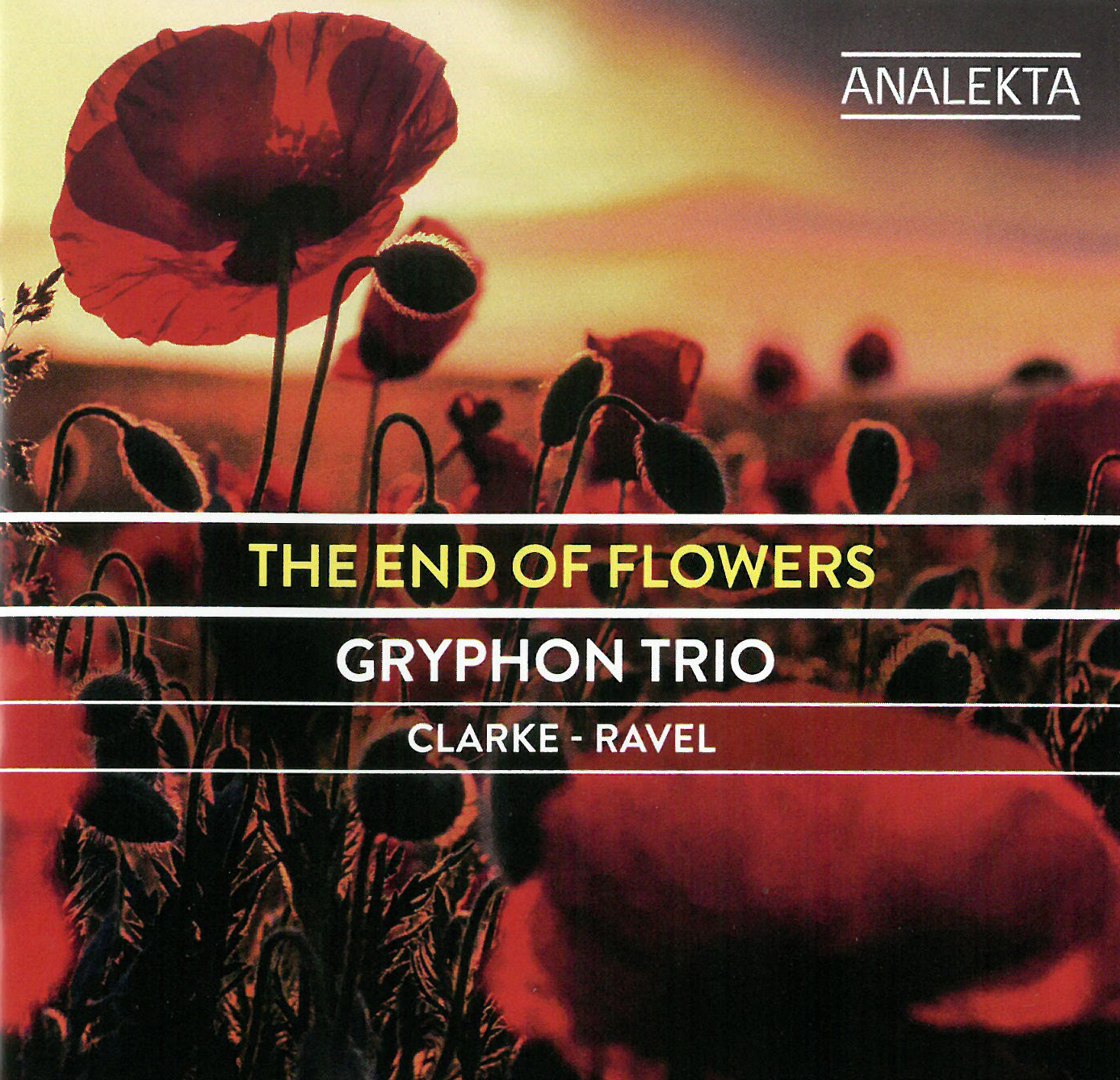
02 Jordan PalI am pleased to note that this month we have reviews of four Analekta discs, and that they all feature contemporary (or at least 20th-century in the case of André Mathieu) composers. I point this out because although this Quebec label is highly respected for its releases, for the most part they stick to more conventionally classical repertoire, even though some of their artists are renowned for their commitment to contemporary music. The Gryphon Trio has been a major “exception to this rule.” The Gryphon’s 19-title discography includes half a dozen Analekta releases of contemporary music, so kudos to them. The most recent of these is Into the Wonder (AN 2 9521 analekta.com), on which they join the Thunder Bay Symphony Orchestra under the direction of Arthur Post to perform the music of Jordan Pal. Described by Ludwig van Toronto as “the country’s current it-boy composer,” at 34, Pal is currently the RBC affiliate composer of the Toronto Symphony and his music has been performed by every significant orchestra across Canada.

Starling – Triple concerto for violin, cello, piano and orchestra was commissioned by the Gryphon Trio and the Thunder Bay Symphony in 2013. It is a scintillating work in three movements, opening with an orchestral flourish that develops into a 15-minute flight, a “murmuration” with only brief moments of respite, mostly in the form of lyrical cadenzas from the solo trio. It is exhilarating how Pal sustains the momentum throughout. The Largo second movement begins in dark brass timbres that once again give way to gorgeously lyrical passages from the soloists, especially in the cello lines. But one word of caution, or at least a cautionary tale for me. Many years ago I discovered how close the sound of a cello can be to that of a saxophone when I first heard Kabalevsky’s Cello Concerto No.2. About midway through, the solo cello gives way to an alto saxophone cadenza so seamlessly that it takes several seconds for the ear to recognize what has just gone on. I had a similar experience when I first listened to Starling, which I did on small computer speakers. I was convinced I was hearing saxophone at several points in the recording and emailed Pal to ask if this was the case because I did not see any saxophonists credited in the list of orchestra members. He assured me that he had not included saxophone in the instrumentation and subsequent listening on proper speakers has confirmed this. That’s why I make a point of listening on my stereo system before passing judgement on discs – basic computer systems simply don’t provide accurate sound. The finale, Presto – Electric and Wild is simply that, a moto perpetuo once again reminiscent of a thousand starlings soaring and swirling together in the sky.

I think I will let the composer speak for himself about the title piece, also commissioned by the TBSO, which at half an hour comprises just under half of the disc. “Into the Wonder celebrates the creative will of our universe. Evoking birth and death, creation and destruction, universal interconnectedness and the rapture of love, this piece seeks to capture the mystery, awe and wonder of life. Nature’s own great works of art are reminders that we are a part of this magnificent range of possibilities, that we are part of something much greater. This symphony celebrates all that is beautiful.” Is this simply the naïve vision of a young man couched in slick orchestral finery? This is certainly not “new music” in the sense of Carter or Crumb, but it is genuinely attractive, well-crafted and brilliantly executed. Does it succeed in its aspirations? I welcome you to judge for yourselves.

Listen to 'Into the Wonder' Now in the Listening Room

03 Margaret MariaI’m not normally drawn to so-called new age music, and I think that’s the category cellist Margaret Maria’s Carried by an Angel would most naturally fall into, yet I find myself drawn to it. In 2011 Margaret Maria Tobolowska left the position she held with the National Arts Centre Orchestra for a dozen years to pursue a solo career as cellist and chamber musician, composer and producer. I must confess that I was a little off-put by the statement on the cover of the promotional copy of the disc I received: “The beauty of the Archangel Raffaele, the bringer of healing, comfort and compassion has been brought to me. The music is full of energy that heals, sings, dances on the edge of winged spirits and brings such indescribable beauty in colours that shimmer and are full of love.” I am not a believer in angels, nor spiritual healing and at first did not think I should be the one to comment on the disc. But as a cellist, and lover of many diverse sorts of music, I gave it a try, and then another. It is ostensibly a solo cello disc, but more accurately, a solo cellist disc. There are many layerings of lines that together produce dense and lush melodic textures, a lovely wash of sound that is warm and immersive. The overall effect is orchestral, but in a unique way since all of the sounds are made by cello, with some computer processing, so there is a welcoming homophony. To me it is reminiscent of the music of Arvo Pärt if you imagine a piece like Spiegel im Spiegel on an orchestral scale. If you are curious, you can check our Margaret Maria’s website (enchanten.com) and her Enchanten channel on YouTube.

04 George LiAnd a quick final note. 2015 Silver Medalist in the International Tchaikovsky Competition George Li has just released his inaugural CD, Live at the Mariinsky (Warner Classics 0190295812942). It was recorded in St. Petersburg one year ago and it features exactly the same repertoire the young superstar performed in Vancouver in October and will perform again in Toronto in February: piano sonatas by Haydn (Hob.XVI:32) and Chopin (Op.35), Rachmaninov’s Variations on a theme of Corelli, and Liszt’s Consolation No.3 and Hungarian Rhapsody No.2. I am a little surprised that the CD booklet, which includes an extended article about the repertoire by Jed Distler in three languages, contains not a word about this fabulous young performer. There is lots of information available on his own website however – georgelipianist.com – including such tidbits as he made his first public performance at the age of ten (2005) at Boston’s Steinway Hall, and in 2011 performed for president Obama at the White House in an evening honouring Chancellor Angela Merkel. If the disc is any indication, the concert will be a barnburner not to be missed by the cognoscenti. Now, if he could just find time to learn some new repertoire!

We welcome your feedback and invite submissions. CDs and comments should be sent to: DISCoveries, WholeNote Media Inc., The Centre for Social Innovation, 503 – 720 Bathurst St. Toronto ON M5S 2R4. We also encourage you to visit our website thewholenote.com where you can find enhanced reviews in the Listening Room with audio samples, upcoming performance details and direct links to performers, composers and record labels.

David Olds, DISCoveries Editor
discoveries@thewholenote.com

01 Sylvie ProulxLes Tendres Plaintes: Works by Jean-Philippe Rameau (Centaur CRC 3603) is the second solo CD from Canadian guitarist Sylvie Proulx; it’s a collection of transcriptions, mostly of dance movements, from harpsichord suites by the leading French Baroque composer.

Three of the transcriptions, including the title track, are by Proulx, with the remaining 12 being by other guitarists including John Duarte and Andrés Segovia. Given the inherent difficulties in transcribing harpsichord music for guitar – the reduced range, the unavoidability of playing fewer notes, and in particular the handling of ornamentation – everything here works extremely well, helped no doubt by the guitar’s greater capabilities for expressive playing.

Proulx’s performances are clean and clearly defined, with a complete absence of extraneous noise and a lovely range of colour, tone and contrast. It’s terrific playing.

02 Campion GuitarThere’s more excellent – and fascinating – guitar playing on François Campion Music for Baroque Guitar (Brilliant Classics 95276), with Bernhard Hofstötter playing a Baroque guitar attributed to Matteo Sellas of Venice, from about 1640.

The colour booklet photos show an astonishingly beautiful instrument. It’s a five-course guitar, tuned the same as the top five strings of the modern guitar, with the top E a single string and the other four doubled, either in unison (A, G and B strings) or at the lower octave (D string).

In 1705 Campion published one of the last five-course guitar books, and continued to add handwritten pieces to his own personal copy throughout his life. These manuscript pieces often exceeded the published works in size and difficulty, and form the basis of this recital.

In the excellent booklet Hofstötter remarks on the instrument’s “…full-bodied and velvety dark sound which radically differs from comparable modern instruments” and is “round, fully resonating and at the same time subtle and fragile.” It’s exactly that. Hofstötter is a lutenist, and it shows; the sound here seems like a bridge between the lute and the classical guitar. It’s meticulously clean playing of some very intricate and technically demanding music – the Bach-like fugues and dance forms in particular – and a simply fascinating CD.

03 Haimovitz TroikaWhenever you see a 2CD box set from the wonderful cello and piano duo of Matt Haimovitz and Christopher O’Riley you know you’re in for something special, and so it proves with Troika, their latest release of Russian music by Shostakovich, Prokofiev and Rachmaninoff on the Pentatone Oxingale Series label (PTC 5186 608).

CD1 is devoted to Shostakovich and Prokofiev, with the former’s Waltz No.2 and Cello Sonata in D Minor Op.40 and the latter’s Troika from Lieutenant Kijé and Cello Sonata in C Major Op.119.

CD2 has Rachmaninoff’s Cello Sonata in G Minor Op.19 and his famous Vocalise before the duo takes a customary left turn into contemporary Russian music with two of their own arrangements: Kukushka, by the singer-songwriter Victor Tsoi; and Pussy Riot’s Punk Prayer – Virgin Mary, Put Putin Away, complete with Haimovitz’s use of a glass slide on the strings and a crushed Styrofoam cup behind the bridge to achieve some grunge punk bass distortion!

The duo’s arrangement of Lennon & McCartney’s Back in the U.S.S.R. completes a terrific set.

04 Dubeau RichterAngèle Dubeau and La Pietà are back with another CD in their Portrait series, this time featuring music by Max Richter, who has been particularly active in film, theatre and television (Analekta AN 2 8745).

Previous Portrait CDs featured Philip Glass, Arvo Pärt, John Adams and Ludovico Einaudi, and Dubeau says that the more she listens to composers gravitating around the minimalist movement the more she wants to interpret their music: “I enjoy the moments of introspection that these works bring.”

Those moments are possibly the result of the lack of any real development: each of the 16 short pieces here (15 are less than five minutes) essentially sets a mood and keeps it, with little opportunity for anything other than “Here’s an idea…”

Apart from the really lovely Mercy for solo violin and piano, and Winter II, recomposed by Richter from Vivaldi’s The Four Seasons, all tracks are arrangements by François Vallières and Dubeau of pieces from Richter’s solo albums Memoryhouse, The Blue Notebooks – Disconnect, Songs From Before and From Sleep, the films Waltz with Bashir and Perfect Sense, and the television scores for The Leftovers and Black Mirror-Nosedive.

As always, playing and recording standards are absolutely top-notch. It’s essentially easy, pleasant – and, yes, introspective – listening that will be warmly welcomed by Dubeau’s many regular admirers.

Listen to 'Portrait: Max Richter' Now in the Listening Room

05 Nune MelikViolinist Nuné Melik makes an impressive recording debut with the CD Hidden Treasure: Rediscovered Music from Armenia with pianist Michel-Alexandres Broekaert (DOM Forlane FOR 16886 domdisques.com).

Born in Siberia of Armenian/Georgian/Jewish heritage, Melik moved to Montreal in 2009 and began to explore the music of composers from her upbringing; this recital program grew out of the resulting Hidden Treasure project. Judging by her playing here, it’s clearly been an emotional and rewarding journey.

The central work on the disc is the Violin Sonata in B-flat Minor by Arno Babadjanian, written in Russia in 1959 and criticized as “formalist” by the Soviet authorities. Babadjanian’s close friend Dmitri Shostakovich thought highly of it, and his influence is clearly felt; there are hints of Prokofiev in the slow movement, too.

Lovely short pieces by Komitas Vardapet, Aram Khachaturian and Alexander Spendiarian complete the disc. There’s passionate, rhapsodic playing from Melik and sympathetic support from Broekaert, who also has a short solo.

Listen to 'Hidden Treasure: Rediscovered Music from Armenia' Now in the Listening Room

06 Fewer KnoxJ.S. Bach: Sonatas for Violin and Harpsichord BWV 1014-1019 with violinist Mark Fewer and Hank Knox (Leaf Music LM 216) is the third set of these works I’ve received in recent years, following the outstanding releases from Catherine Manson and Ton Koopman (harpsichord) and the Duo Concertante pairing of Nancy Dahn and Timothy Steeves (piano).

Although there is accomplished playing here the harpsichord is prominent and rather heavy, and its lack of dynamic range tends to give the performances a somewhat mechanical feel, with the violin sounding more like a separate voice than an integrated partner. Koopman’s sound is much softer and much more attuned to Manson’s playing.

There are occasional significant differences in interpretation too, notably in the Adagio of the F minor sonata, where Fewer – unlike Manson and Dahn – opts to separate and shorten the eighth note double-stops.

As always, it comes down to personal taste. If you prefer these works strong and bright and with harpsichord there is much here you will enjoy, although Manson and Koopman and Duo Concertante both offer more sensitive readings.

Listen to 'J.S. Bach: Sonatas for Violin and Harpsichord BWV 1014-1019' Now in the Listening Room

07 Akiko MeyersFantasia is the 35th studio album from violin superstar Anne Akiko Meyers, this time with the Philharmonia Orchestra conducted by Kristjan Järvi (Avie Records AV2385). The title track is by the Finnish composer Einojuhani Rautavaara, written in 2015 at the request of Meyers, who worked on it with the composer in Helsinki only months before his death in July 2016. Meyers describes it as “transcendent” and having “the feeling of an elegy with a very personal reflective mood.” It’s a lovely work that clearly has great emotional significance for her.

The Violin Concerto No.1 Op.35 by Karol Szymanowski dates from 1916, and was one of the first works to reflect the life-changing influence of his 1914 trips to North Africa and to Paris, where he met Debussy and Ravel. It’s a simply glorious single-movement work full of sensuous and exotic melody and lush orchestration, and with an extremely demanding solo part that rarely leaves the stratosphere.

Ravel’s dazzling Tzigane, in the orchestral version, completes a simply outstanding CD.

08 Kinga AugustynIn the old LP days the Bruch and Mendelssohn Violin Concertos were frequent companions, and the tradition continues on a new CD from the Polish-born violinist Kinga Augustyn, with the Janáček Philharmonia Orchestra under Jakub Klecker (Centaur CRC 3585).

The Bruch Concerto No.1 in G Minor has a lovely opening, with Augustyn displaying a big, bright tone. Tempos are never rushed, and there is beautiful orchestral support.

The performance of the Mendelssohn Concerto in E Minor follows the same pattern, with unhurried tempos, accuracy in the details and some lovely orchestral moments. There’s sweetness and warmth in the playing, but never a hint of superficiality: these are thoughtful performances that bring delightful playing from all concerned.

Massenet’s Meditation from Thaïs is the final track, and again it’s a performance that leans toward the understated – a sensitive, simple reading with great depth that makes for a very effective ending to an impressive CD.

09 Saint Saens CelloThe outstanding German cellist Gabriel Schwabe is the soloist in the complete Saint-Saëns Works for Cello and Orchestra with the Malmö Symphony Orchestra under Marc Soustrot (Naxos 8.573737).

The two Cello Concertos – No.1 in A Minor, Op.33 and No.2 in D Minor, Op.119 – are the major works here, although the lesser-known five-movement Suite in D Minor, Op.16bis from 1919 has much to recommend it. It was written for cello and piano and later orchestrated by the composer, as were the two other short works here: the Romance in F Major, Op.36 and the Allegro appassionato in B Minor, Op.43. Paul Vidal’s orchestration of The Swan from Carnival of the Animals completes the CD.

With his great tone and terrific technique Schwabe easily negotiates the difficult challenges of the second concerto, with some particularly lovely playing in the simply beautiful central Andante sostenuto. There is fine orchestral support from Soustrot and the Malmö orchestra. All in all, an outstanding disc.

10 Ashley WaltersThere’s cello playing at the complete opposite end of the spectrum on Sweet Anxiety, the first solo CD from the American cellist Ashley Walters featuring new works for cello from 2002-2013 (populist records PR014 populistrecords.com). Walters says that she seeks “to challenge your perception of what the cello… is capable of,” and she certainly succeeds.

Nicholas Deyoe provides two tracks: For Stephanie (on our wedding day) and the title track another anxiety, the latter drawing some astonishing playing from Walters. Luciano Berio’s Sequenza XIV is predominantly percussive; it’s heard here in a performing edition created by Walters.

Wolfgang von Schweinitz’s Plainsound-Litany is a hypnotic sequence of precisely tuned double stops; Wadada Leo Smith’s Sweet Bay Magnolia with Berry Clusters includes improvisational sequences. Andrew McIntosh’s Another Secular Calvinist Creed provides a serene, contemplative end to the recital.

Walters is simply brilliant throughout the disc, and the short printed examples of the scores (other than the Berio) give some idea of the challenges she faced.

11 Madeleine MitchellOn Violin Muse the British violinist Madeleine Mitchell presents a program of world premiere recordings of works by British composers (Divine Art dda 25160).

The major work here is the two-movement Violin Concerto “Soft Stillness” by Welsh composer Guto Pryderi Puw, commissioned by Mitchell and heard in a live BBC Radio recording from 2016. It’s an effective piece, with Mitchell accompanied by the BBC National Orchestra of Wales under Edwin Outwater.

Mitchell is joined by Cerys Jones in Judith Weir’s delightful Atlantic Drift – Three pieces for two violins, based on Gaelic folk tunes.

Pianist Nigel Clayton is the accompanist in the remaining works: Geoffrey Poole’s Rhapsody; David Matthews’ Romanza Op.119a; Sadie Harrison’s lovely Aurea Luce; Michael Berkeley’s Veilleuse; and Michael Nyman’s Taking it as Read.

There’s excellent playing throughout by all concerned.

Listen to 'Violin Muse' Now in the Listening Room

Back to top