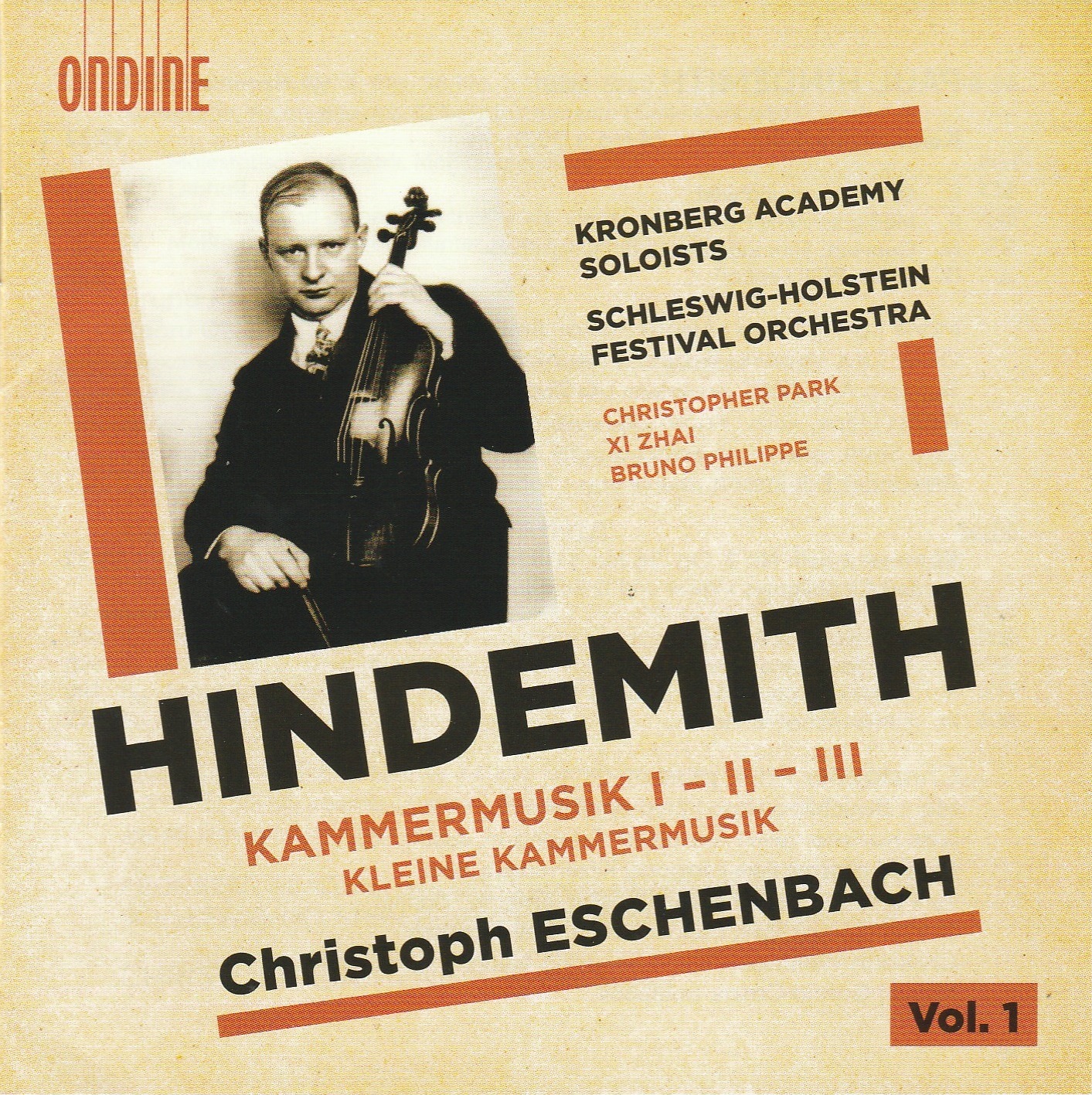
06 Hindemith KammerHindemith – Kammermusik I - II - III
Kronberg Academy Soloists; Schleswig-Holstein Festival Orchestra; Christoph Eschenbach
Ondine ODE 1341-2 (naxosdirect.com)

Over the course of his lifetime (1895-1963) Paul Hindemith, increasingly ossified by his academic obsessions, underwent a peculiar reverse metamorphosis. Born a butterfly, he eventually became a caterpillar. He was a world-famous composer, a consummate musician and an influential Ivy League savant, yet the 50th anniversary of his death in 2013 passed with little fanfare from the classical music establishment. In his early career he was considered an avant-garde miscreant, ultimately branded and banished as an “atonal noisemaker” by the Nazi regime. Noisy? Perhaps, but powerfully so. Atonal? Not in the least, though bracingly dissonant at times. 

Hindemith’s astounding orchestral mastery (he was able to play any instrument he wrote for) is amply demonstrated in the adventurous Kammermusik series composed in the 1920s, from which we have on offer here the first three suites, with future volumes presumably in the works to complete the set of seven. The first suite is composed for 12 instruments in four movements, a provocatively satirical remodelling of the Brandenburg Concertos which receives a rollicking performance under Eschenbach’s direction. The second instalment, scored for piano and ensemble, is equally enjoyable and glitteringly dispatched by soloist Christopher Park. The third, cast in the form of a concerto featuring cellist Bruno Philippe, is less convincing due to sub-optimal tempos (perhaps the soloist’s prerogative) and an over-miked solo part which obscures the inner voices. Claudio Abbado’s lively 1999 EMI recording, some two and a half minutes faster, makes a far better case for this work. An enjoyable nightcap, the beloved Kleine Kammermusik for wind quintet, rounds out the proceedings.

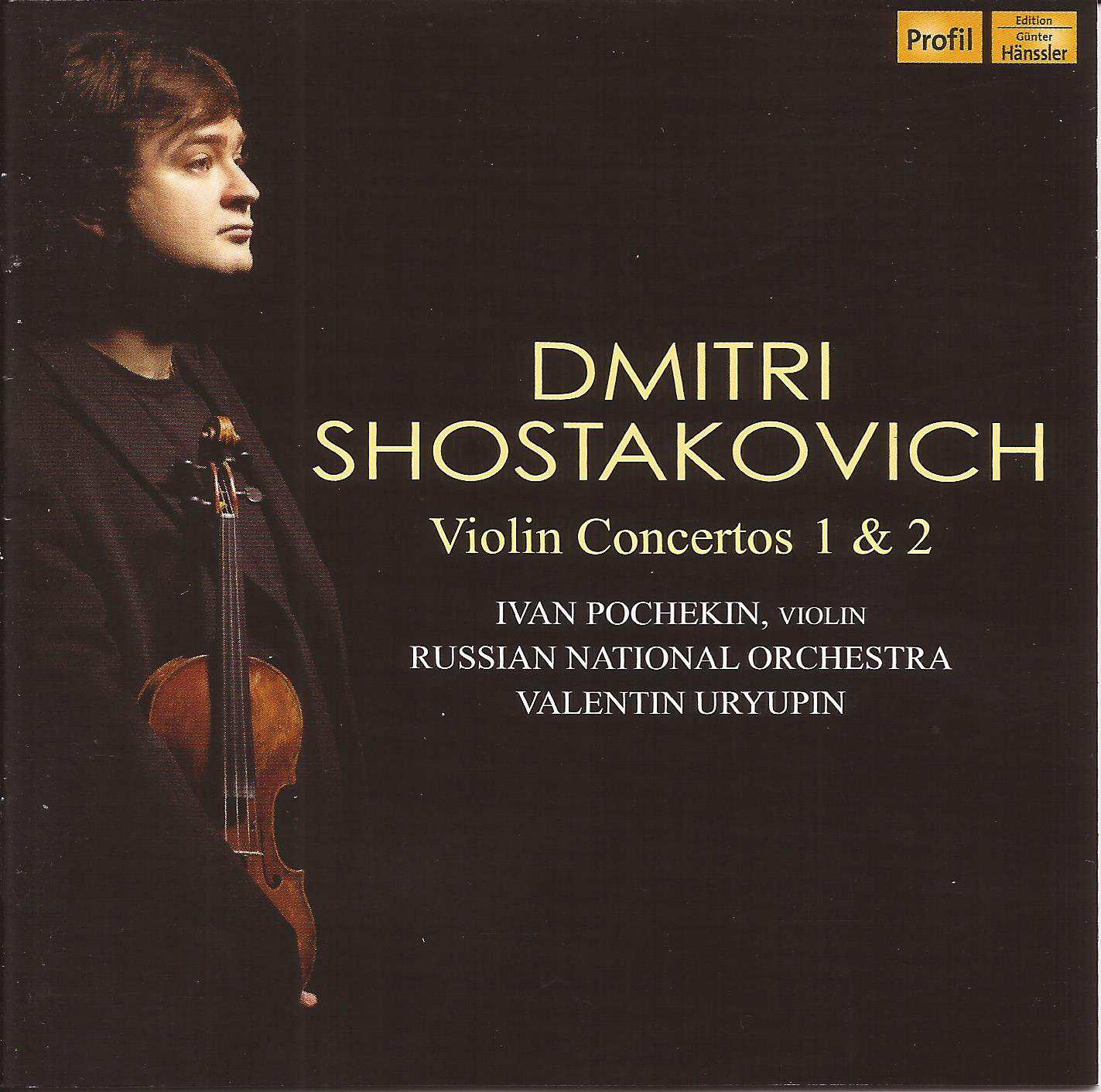
01 ShostViolinIvan Pochekin is the outstanding soloist on Dmitri Shostakovich Violin Concertos 1 & 2, with Valentin Uryupin conducting the Russian National Orchestra (Profil PH19073 naxosdirect.com).

The Concerto No.1 in A Minor Op.77 was written in the years following the end of the Second World War, but was withheld by the composer until 1955. The Concerto No.2 in C-sharp Minor Op.129 from 1967 was Shostakovich’s final concertante work.

Pochekin has exactly the right sound for these works – a dark-hued, rich and velvety tone with a strong vibrato and a fine grasp of linear phrase. There may be more strident and abrasive readings of the ferocious cadenzas available, but none with more passion. The Russian National Orchestra, founded by Mikhail Pletnev in 1990, provides excellent support in two immensely satisfying performances.

02 SkorykUkrainian composer Myroslav Skoryk (b.1938) wrote a cycle of nine violin concertos over a 45-year span, and the first four are presented on Myroslav Skoryk Violin Concertos 1, Nos.1-4. Andrej Bielow is the soloist with the National Symphony Orchestra of Ukraine conducted by Volodymyr Sirenko (Naxos 8.574088 naxosdirect.com).

The four concertos here are from 1969, 1989, 2001 and 2003, and all are essentially single-movement works of similar length – from 13 to 16 minutes. No.1 is perhaps the most modern-sounding; No.2 is “infused with a lyrical mood” (the composer’s own booklet notes) with contrasting episodes that vary “from elegy to intense expressivity.” No.3 is dominated by the opening solo violin fugue, and again varies in tone “from lyrical to intensely dramatic.” No.4 is dominated by driving rhythmic patterns.

Bielow is terrific in top-notch performances of works full of strong, idiomatic writing. Volume 2 should make this set a significant addition to the contemporary violin concerto discography.

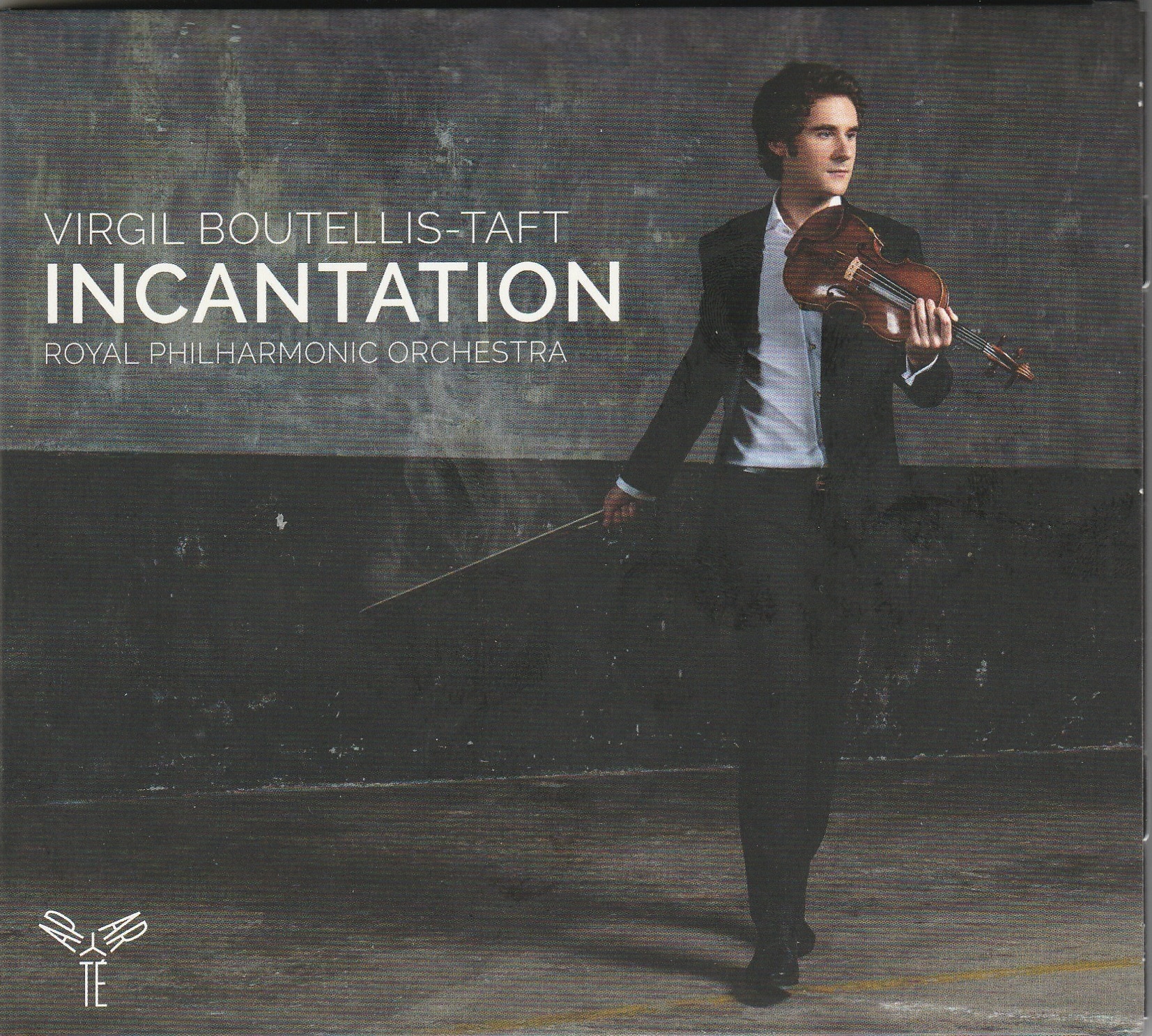
03 IncantationOn Incantation, the French violinist Virgil Boutellis-Taft explores the range of connections for the word, from simple enchantment through religious contexts to demonic spells and charms. Jac van Steen conducts the Royal Philharmonic Orchestra (Aparté AP234 apartemusic.com).

There’s a fair amount of reworking of original sources here, and some tracks consequently fare better than others. Bruch’s Kol Nidrei Op.47 is quite beautiful although “remodelled” by Boutellis-Taft with the middle section omitted. The Chaconne in G Minor, attributed to Vitali, is reworked from the original violin and bass manuscript and comes across as a bit overblown. Saint-Saëns’ Danse macabre Op.40 is newly orchestrated based on the composer’s own violin and piano arrangement. Bloch’s Nigun from Baal Shem, Tchaikovsky’s Sérénade mélancolique Op.26 and Chausson’s lovely Poème Op.25 are handled beautifully. Shigeru Umebayashi’s Yumeji’s Theme, with its abrupt ending is an odd choice for the closing track.

Boutellis-Taft plays with his heart firmly on his sleeve on a CD that has some truly lovely moments.

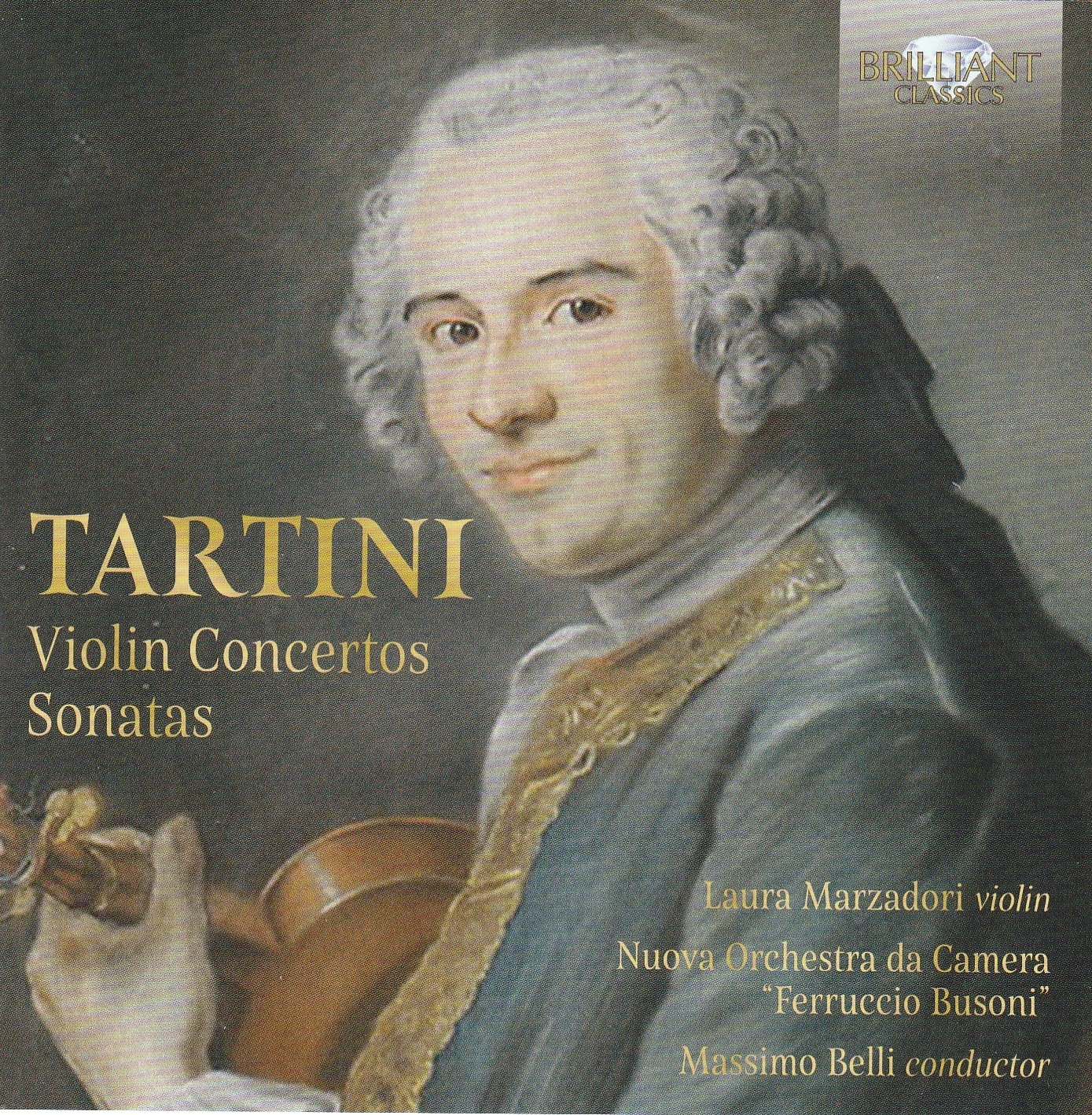
The virtuoso violinist and composer Giuseppe Tartini left over 100 concertos for violin, as well as a large number of sonatas for various string combinations, so any single CD is only going to scratch the surface of his output.

04 TartiniTartini Violin Concertos & Sonatas features two Sonatas a Quattro in D Major together with first recordings of two unpublished Concertos for violin and strings, in A Minor and B-flat Major. Laura Marzadori is the violin soloist in the concertos, with Massimo Belli conducting the Nuova Orchestra da Camera “Ferrucio Busoni” (Brilliant Classics 957690 naxosdirect.com).

In the solo violin sections Tartini reduced the accompaniment to just orchestral first and second violins, which allows Marzadori’s sweet, pure tone to be even more effective. There’s a pleasing lightness of touch in the orchestral performances throughout a pleasant but fairly lightweight (at 47 minutes) CD of finely crafted and genteel 18th-century works.

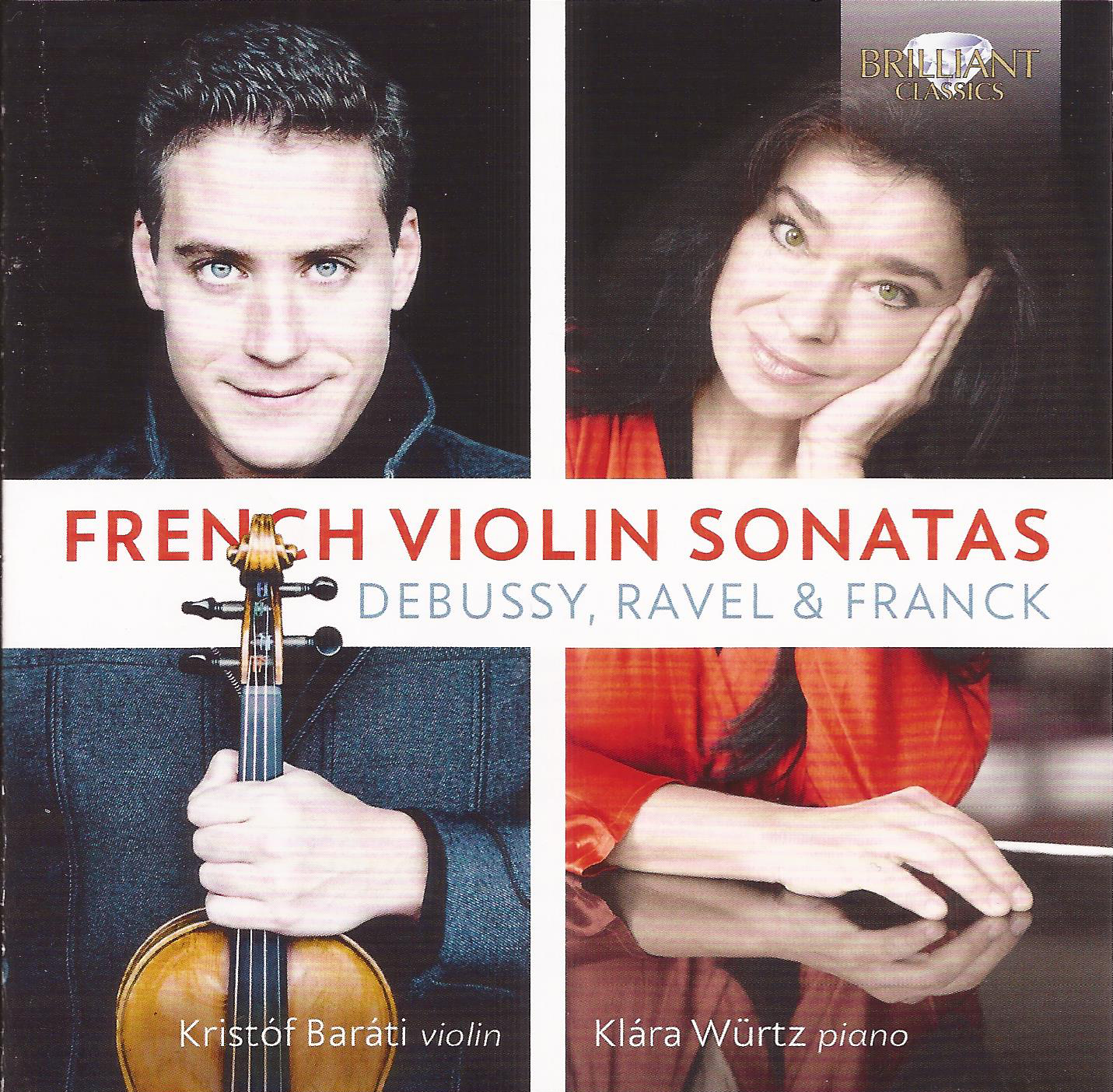
05 FrenchThree works written relatively late in their composers’ lives are featured on French Violin Sonatas played by the Hungarian duo of violinist Kristóf Baráti and pianist Klára Würtz (Brilliant Classics 95576 naxosdirect.com).

Debussy wrote his Violin Sonata in financial straits following the third winter of the Great War, and in great pain from the cancer that would kill him the following year, all of which makes its warmth and clarity all the more remarkable. There’s a lovely dynamic range and freedom of phrasing from both performers.

Ravel’s Violin Sonata No.2 in G Major dates from 1927, its jazz-influenced Blues middle movement and Perpetuum mobile finale again drawing fine playing from the duo.

Franck’s Sonata in A Major was one of a small handful of works that finally won the composer some public acclaim in the closing years of his life. There’s big playing from both performers here, with terrific piano work from Würtz in the Allegro second movement in particular, and with Baráti drawing a huge tone and sound from his 1703 “Lady Harmsworth” Stradivarius violin.

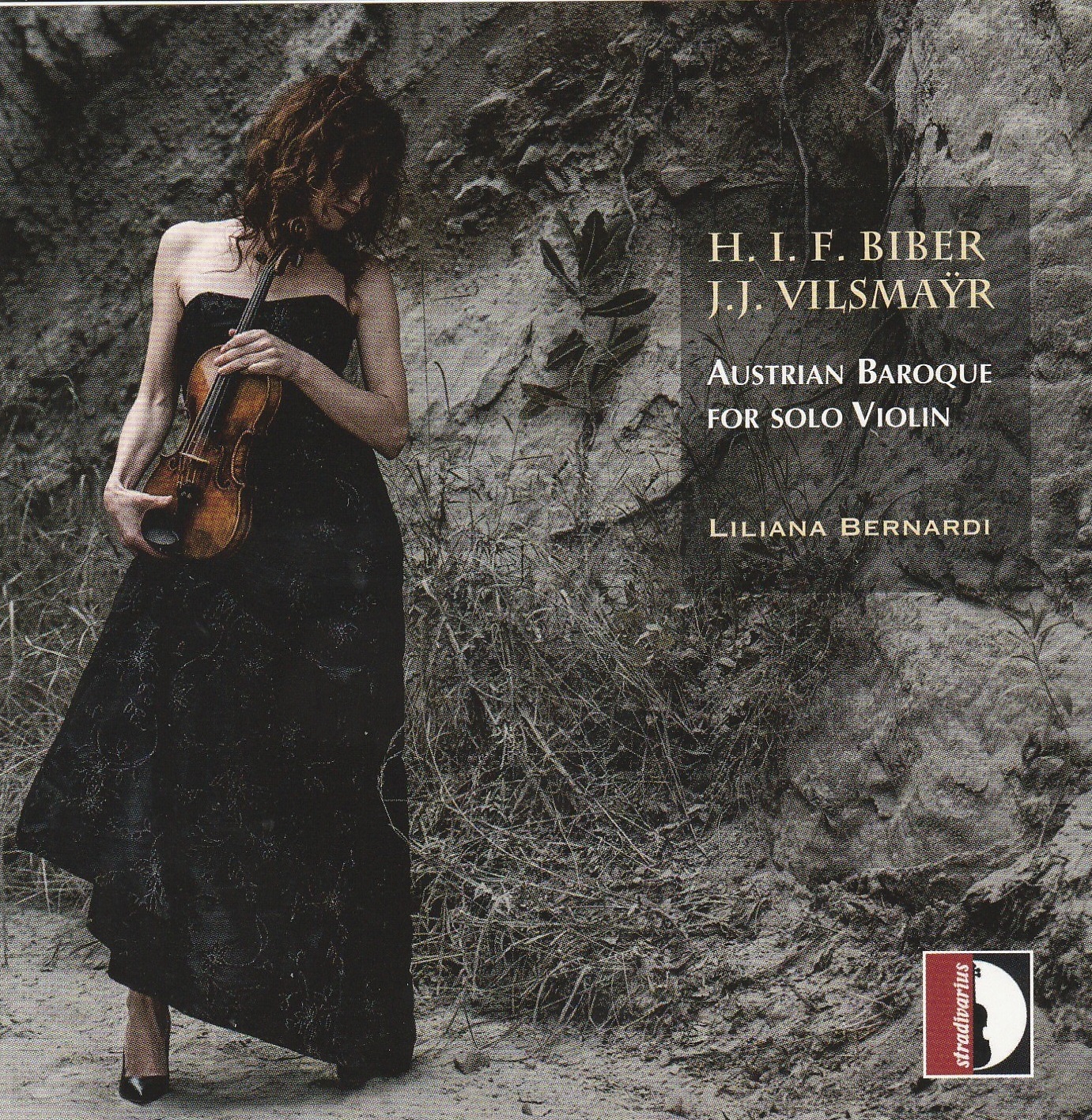
06 BiberThe Italian violinist Liliana Bernardi is excellent in music by Johann Joseph Vilsmaÿr and Heinrich Ignaz Franz von Biber on Austrian Baroque for Solo Violin (Stradivarius STR 37147 naxosdirect.com).

Vilsmaÿr (1663-1722) was a member of the Archbishopric chapel in Salzburg where Biber (1644-1704) was Chapel Master. His Partitas I and VI in A Major and V in G Minor are from the Artificiosus concentus pro camera distributes in sex partes, a set of six partitas in a collection of Vilsmaÿr’s solo violin music in the British Museum. The movements are very short – 24 of the 29 are under two minutes – but their multiple-stopping and arpeggio passages, while perhaps more reminiscent of Telemann’s 12 Fantasias, clearly point towards the Bach Sonatas and Partitas. 

Biber’s influence is clear in the scordatura (retuning of the strings) in the Partita V. His own work here, preceded by an extremely short Preludio in D is the challenging Passacaglia in G Minor (The Guardian Angel), the last of his remarkable Rosary Sonatas

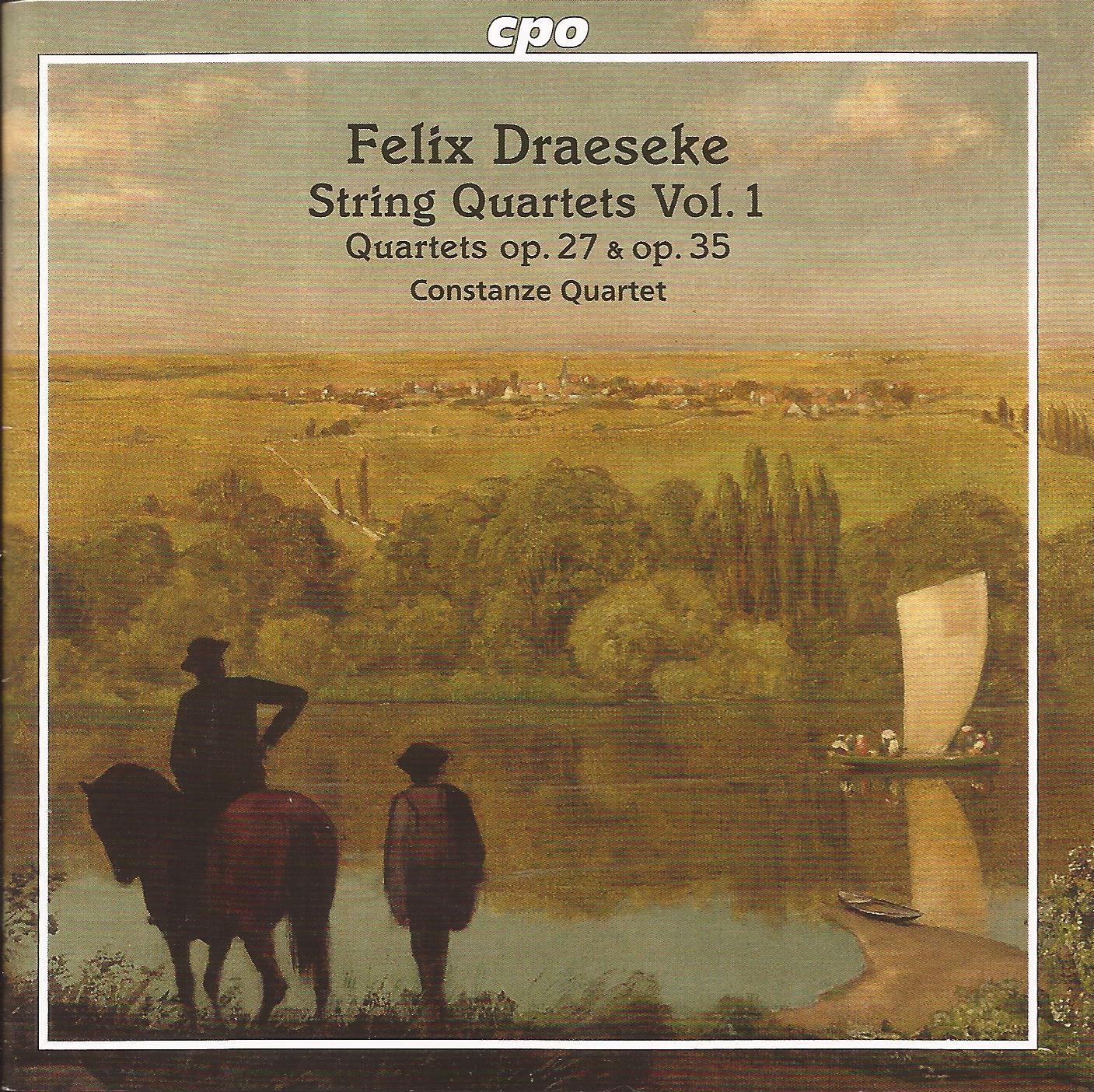
07 DraesekeThe Constanze Quartet makes its label debut with Felix Draeseke String Quartets Vol.1, the first volume in the complete recordings of the quartets by the German Romantic contemporary of Liszt, Wagner and Brahms (cpo 555 281-2 naxosdirect.com).

Early in his career Draeseke (1835-1913), was considered an extremist, but later in life he was repelled by what he felt was the exaggerated unnaturalness of the late 19th century, responding to the 1905 premiere of Strauss’ Salome with a pamphlet on Confusion in Music.

His three string quartets postdate those of Brahms, with no equivalent works by Liszt or Wagner to act as models. The two quartets here – No.1 in C Minor Op.27 from 1880 and No.2 in E Minor Op.35 from 1886 – are described as viewing the classical quartets of the Romantic era through a Wagnerian lens, especially in the way that long, melodic threads serve to hold the music together.

They’re certainly substantial and engrossing works, given fine performances by the Constanze ensemble.

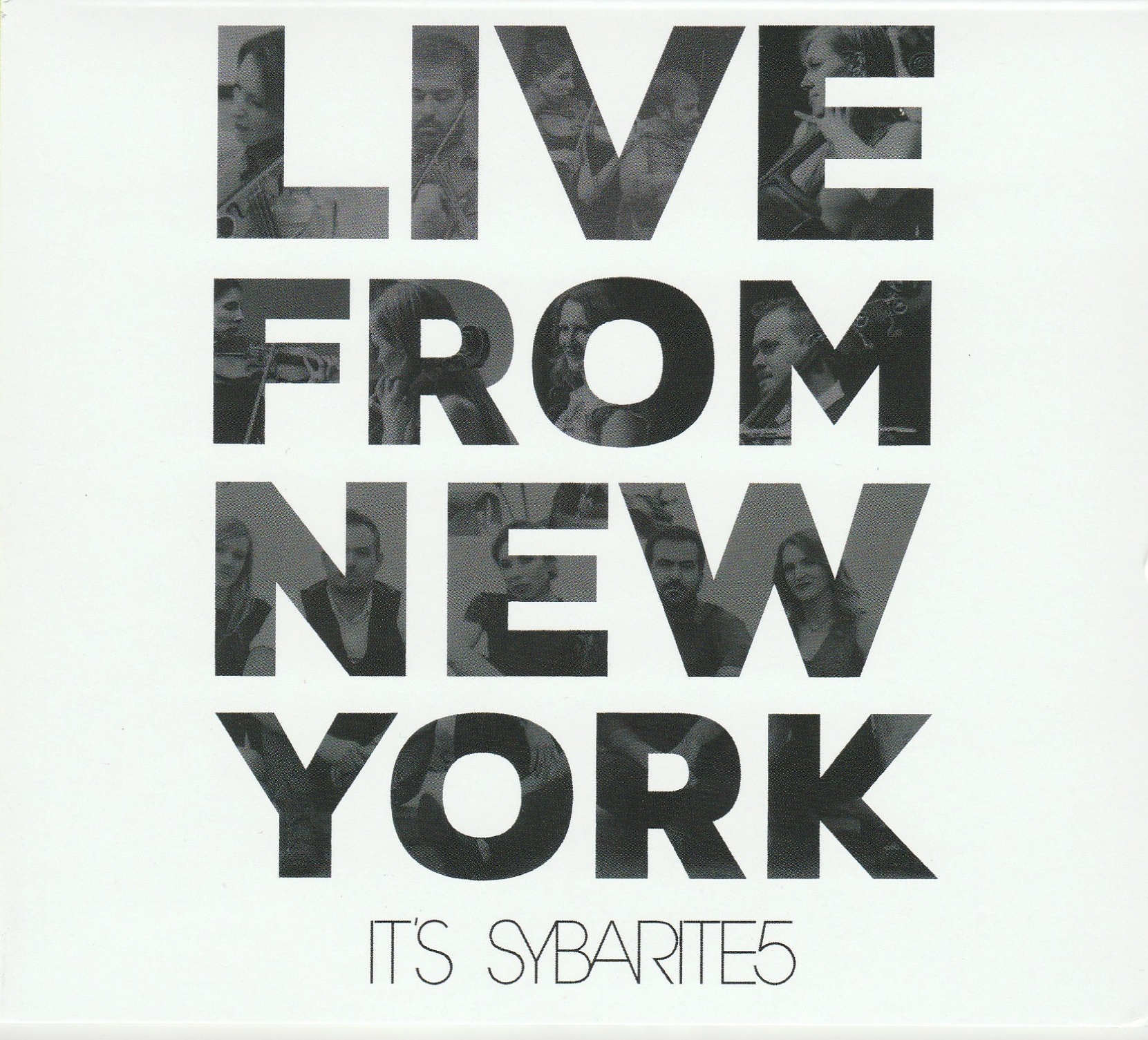
08 Sybarite5The American string quintet Sybarite5 is back with its fourth album, Live from New York, It’s Sybarite5, recorded live at their regular performance space in Chelsea’s The Cell (Bright Shiny Things BSTC-0131 brightshiny.ninja).

Silkroad percussionist Shane Shanahan joins the group for William Brittelle’s Future Shock and John Coltrane’s Alabama. Ehsan Matoori and his santoor (Persian dulcimer) are front and centre in two of his own works: Tehran When Lonely and Naqsh-e Jahan. Mezzo-soprano Blythe Gaissert sings Michael Dellaira’s Star Globe, based on a poem by Nancy Manocharian.

Other works are Brandon Ridenour’s NuPac Kanon & Jig (Pachelbel meets Tupac Shakur!), Marc Mellits’ driving Groove Machine, Steven Snowden’sTraveler No.65 and Aleksandra Vrebalov’s My Dearest, My Rose. An unlisted bonus track is a lovely arrangement of Pete Seeger’s Where Have All the Flowers Gone.

There’s not a dull moment on an album brimming with the quintet’s trademark energy and drive.

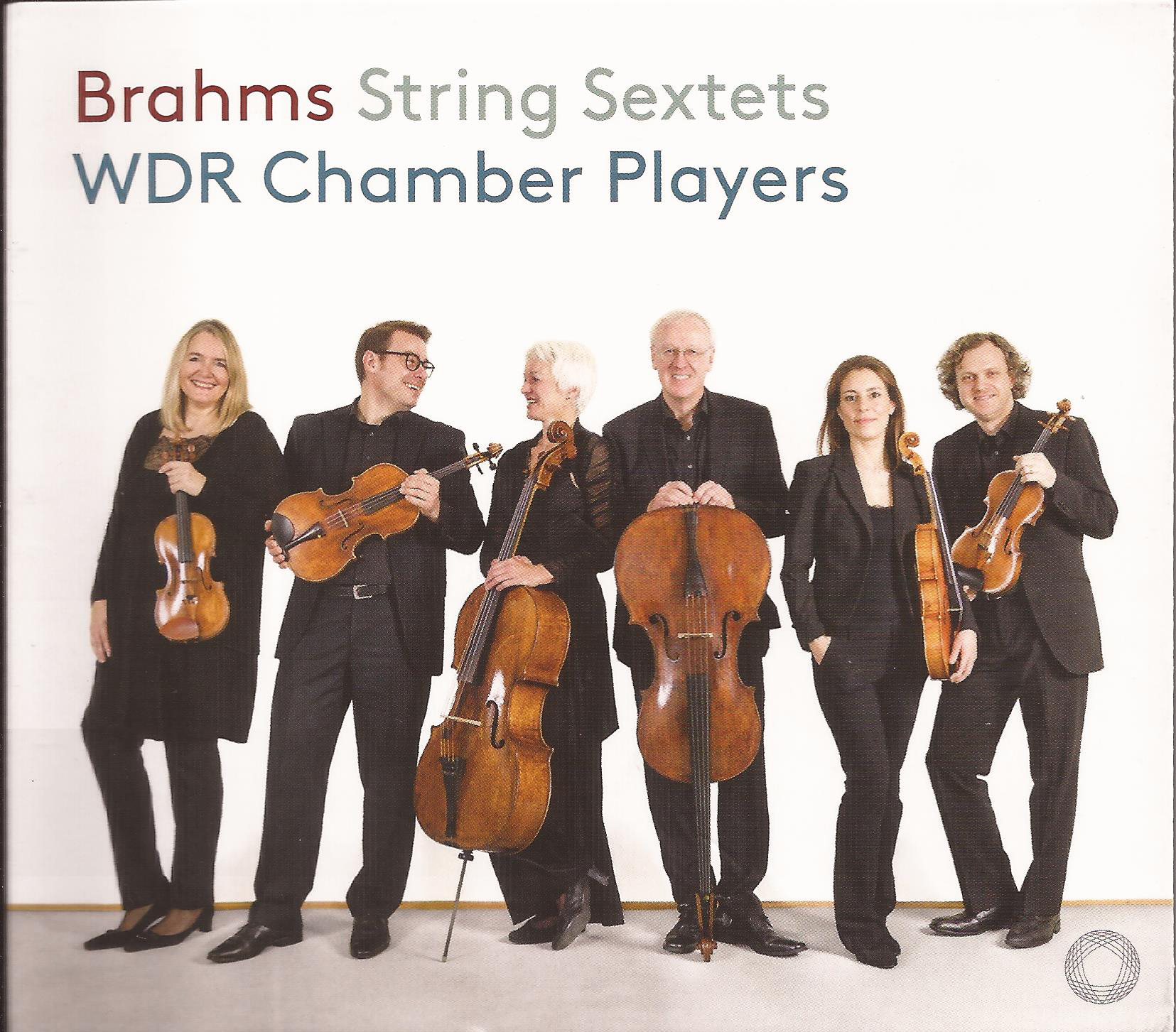
09 BrahmsIn much the same way as his orchestral serenades preceded – and perhaps acted as preparation for – his symphonies and thus avoided direct comparison with Beethoven, Brahms wrote his two String Sextets Nos.1 in B-flat Major Op.18 and 2 in G Major Op.36 before his three string quartets. They’re available on Brahms String Sextets in performances by the WDR Chamber Players, instrumentalists drawn from the WDR Symphony Orchestra of Cologne (Pentatone PTC 5186 807 naxosdirect.com).

The string sextet was not a firmly established form at the time, but the expanded string ensemble of three pairings of violins, violas and cellos gave Brahms the opportunity to explore the orchestral possibilities of chamber music while still retaining the subtlety and intimacy of the genre.

The playing here is suitably rich and warm in exemplary performances.

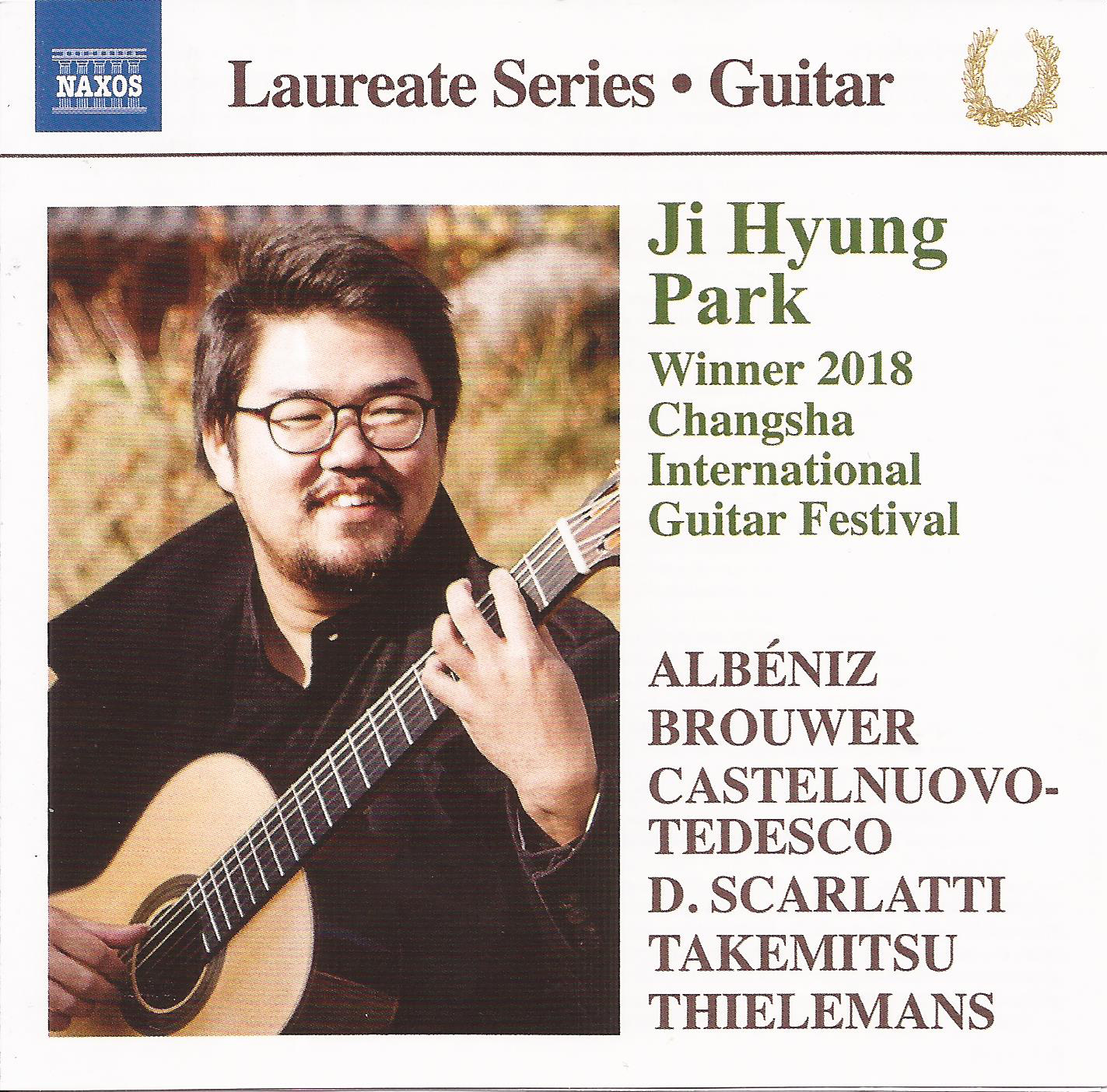
10 ParkThere’s another superb recital CD in the outstanding Naxos Laureate Guitar Series, this time featuring the Korean guitarist Ji Hyung Park, winner of the 2018 Changsha International Guitar Competition (Naxos 8.574140 naxosdirect.com).

Transcriptions of three sonatas by Domenico Scarlatti and two excerpts from Iberia by Isaac Albéniz open the disc, followed by the world premiere recording of Leo Brouwer’s Las Ciclades arcaicas from 2018. Mori no naka de (In the Woods), from November 1995, was the last work Toru Takemitsu wrote before his death the following February; the second of its three pieces portrays the trees in Toronto’s Rosedale area. 

Mario Castelnuovo-Tedesco’s Sonata in D Major Op.77 “Omaggio a Boccherini” was written for Segovia in 1934, and is heard here in its original manuscript form pre-dating Segovia’s editing. A simply gorgeous arrangement of Toots Thielemans’ Bluesette ends a terrific disc.

Park has everything you could want – tone, colour, warmth, technique, dynamics – in a recital that fully lives up to the extremely high standards of this series.

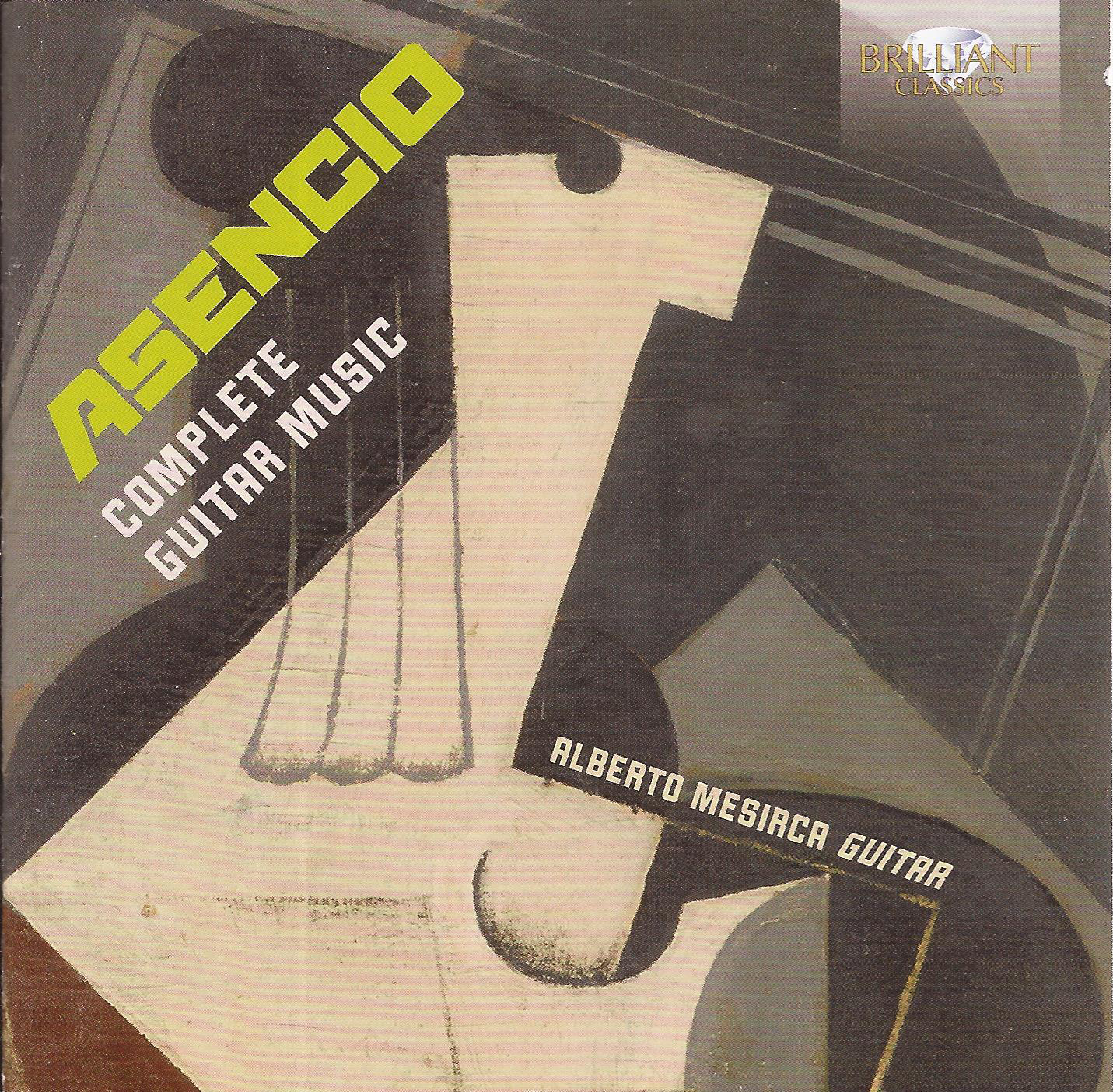
11 AsencioThere’s more excellent guitar playing on Asencio Complete Guitar Music featuring works by the Spanish composer Vicente Asencio (1908-79) played by the Italian guitarist Alberto Mesirca (Brilliant Classics 95806 naxosdirect.com). 

Asencio’s interest in the guitar grew from his teaching musical interpretation to the young Narciso Yepes in the 1940s, a relationship that resulted in the Suite de Homenajes of 1950, three homages to Domenico Scarlatti, Manuel de Falla and Federico Garcia Lorca.

Collectici Intim is a suite of five songs and dances written in 1965 at the request of the by-then famous Yepes. Suite Valenciana reflects the colour and light of the composer’s native Valencia. The three-movement Suite Mistica started life as a single piece, Dipsô, written for Holy Week in 1971; Segovia was sufficiently impressed to suggest that Asencio add a further two Passion-related items.

Two short pieces – Cançó d’hivern and Danza Valenciana – complete the CD.

Mesirca displays excellent, clean playing with a wide range of technical skills in a very interesting recital.

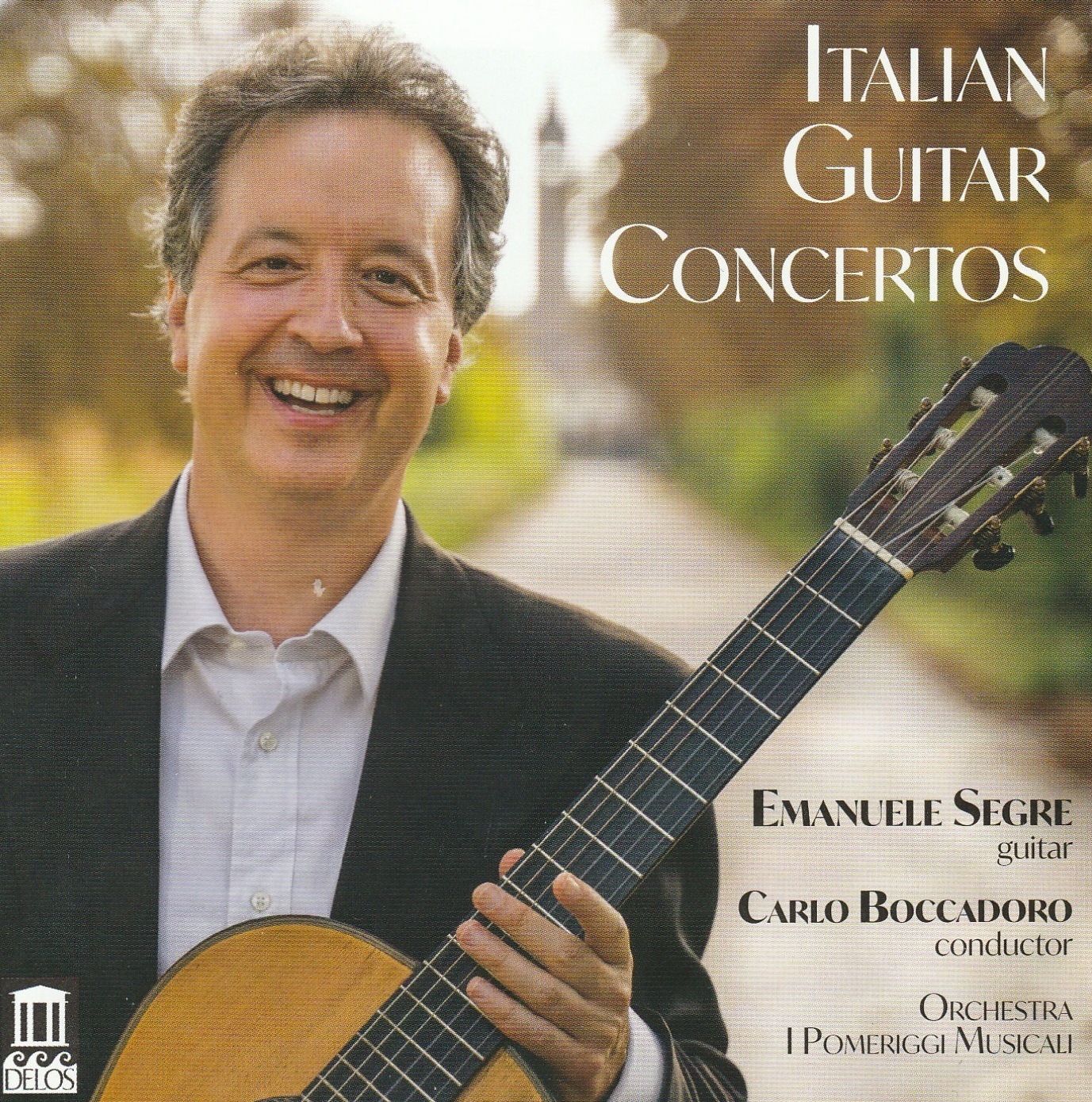
12 Italian GuitarItalian Guitar Concertos is the somewhat misleading title of a CD by the Italian guitarist Emanuele Segre with the Orchestra I Pomeriggi Musicali under the direction of composer Carlo Boccadoro (Delos DE 3546 naxosdirect.com).

 Aria for Guitar and String Orchestra is Segre’s arrangement of a contralto aria from a Vivaldi cantata, and the work by Mauro Giuliani is a guitar and string orchestra version of his Gran Quintetto Op.65. The Vivaldi Concerto in D Major is at least a true concerto, but the main interest here is the world premiere recordings of two contemporary single-movement works: The Black Owl by Giovanni Sollima (b.1962) and Dulcis Memoria II for Guitar and String Orchestra by Boccadoro (b.1962), the latter originally written for clarinet and strings in 1995. Clocking in at about 18 and 14 minutes, respectively, they’re not substantial works, but both explore a nice range of techniques and textures.

Performances throughout are fine without ever being dazzling.

01 Bach HarpsichordBach – Harpsichord Works
Jory Vinikour
Sono Luminus DSL-92239 (sonoluminus.com)

Comprised of four revered works, this album makes for a fine collection for harpsichord enthusiasts and fans of Johann Sebastian Bach. Jory Vinikour, two-time Grammy-nominated harpsichordist and conductor, has made quite a few recordings of Bach’s music so far and his expertise and passion for this composer is evident here. I enjoyed the clarity of Vinikour’s sound (his harpsichord is modelled after a German instrument of Bach’s time) and his refined and thoughtful interpretation. This recording has elegance and virtuosity, bringing out both the grand and hidden gestures of Bach’s compositions.

The collection features the buoyant Italian Concerto (written for two-manual harpsichord, thus distinguishing tutti from solo passages), Ouverture in French Style (consisting of eight dance movements), the exceptional Chromatic Fantasy and Fugue and an interesting pairing of the Prelude and Fugue in A-Minor BWV894 with Bach’s transcription of the Andante from Sonata for Solo Violin in A-Minor. I liked the progression of the pieces: traditional pairing of more formal works (Italian Concerto and Overture in French Style were even published together in 1835) is followed by expansion of virtuosic and improvisatory elements in Fantasy and Fugues

Vinikour’s impeccable knowledge and sensibility to Bach’s music makes these pieces sound very personal. Listeners are granted a sonic glimpse of the unique world where the nuances are treated with care and the sound is enriched with measured restraint.

Ivana Popovic
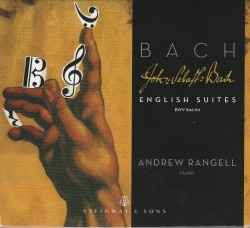
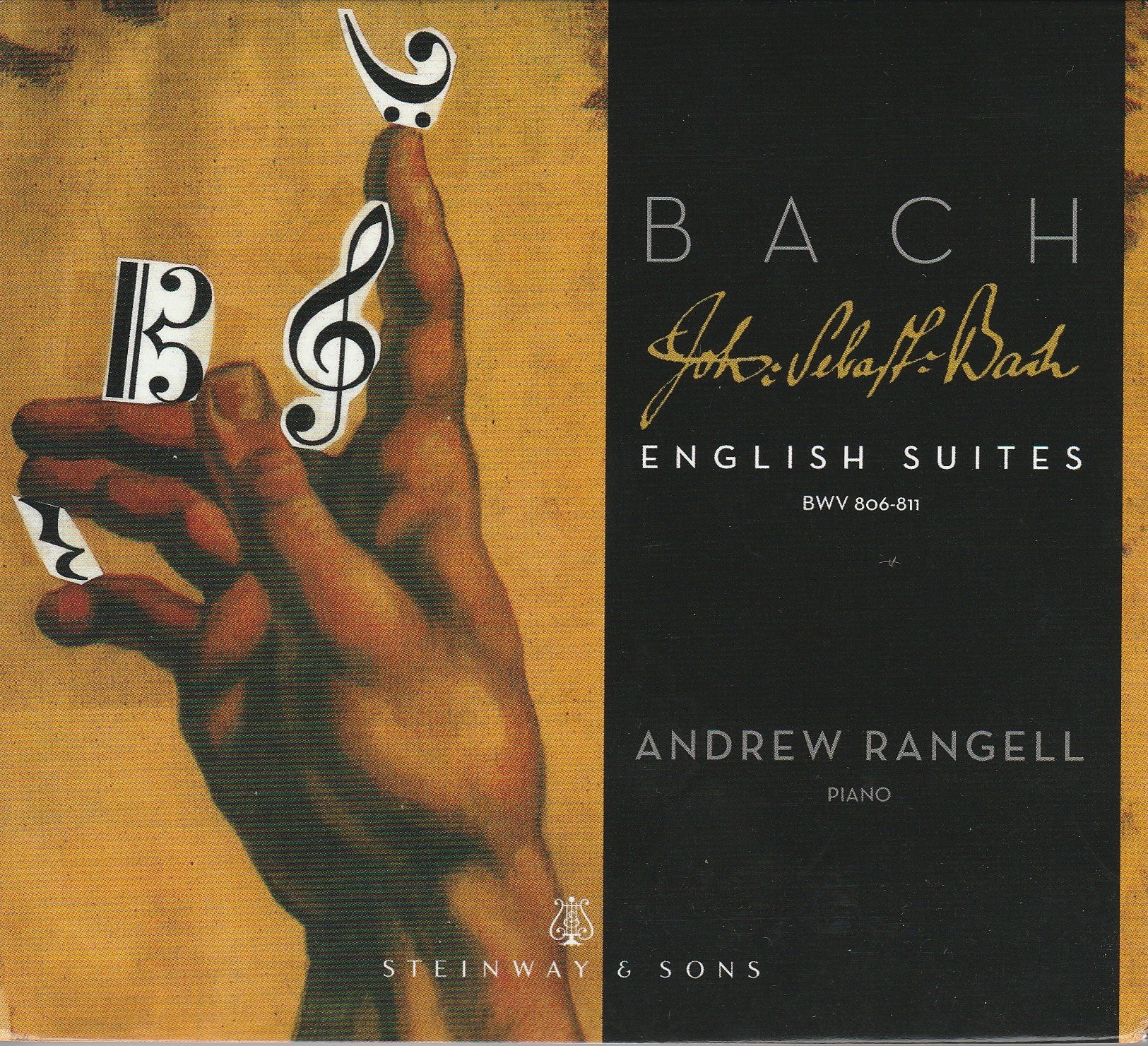
02 Rangell BachBach – English Suites
Andrew Rangell
Steinway & Sons 30136 (naxosdirect.com)

If the central tenet of music-making is the desirability of singing or playing in tune, accurately producing sound waves that vibrate at the correct frequency, then no one, it seems, did this better than Johann Sebastian Bach. Much of his keyboard music was written for the harpsichord – a near-ubiquitous instrument in his day – and it began to make a seamless transition to the piano no sooner the instrument was invented and to this day continues to be wonderfully interpreted. 

One of the most recent is the unveiling of the English Suites with these gorgeous, free-spirited performances by Andrew Rangell. The suites are decidedly more grandiose than the French Suites and written entirely for pleasure rather than for instruction. The allemandes are rock steady throughout, the gigues extremely lively; the courante sections rapid while the sarabandes are utterly noble. The six suites are altogether easygoing and exquisitely flowery and are said to have borne a slight resemblance to the style of Couperin, with whom Bach is known to have corresponded.

The English Suites are not actually English, but rather more influenced by other European compositional elements, that seemingly – and fortuitously – held Bach’s attention. They begin with a prelude which is often, as in the Suite No.3 in G Minor BWV808, a large-scale concerto-like movement. Rangell brings matchless clarity to Bach’s multi-stranded music. This set of discs shows the pianist at his most enjoyable, astonishingly fleet-fingered and full of delightful argumentative intelligence.

Raul da Gama
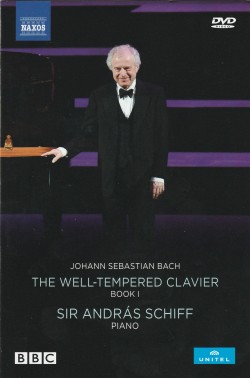
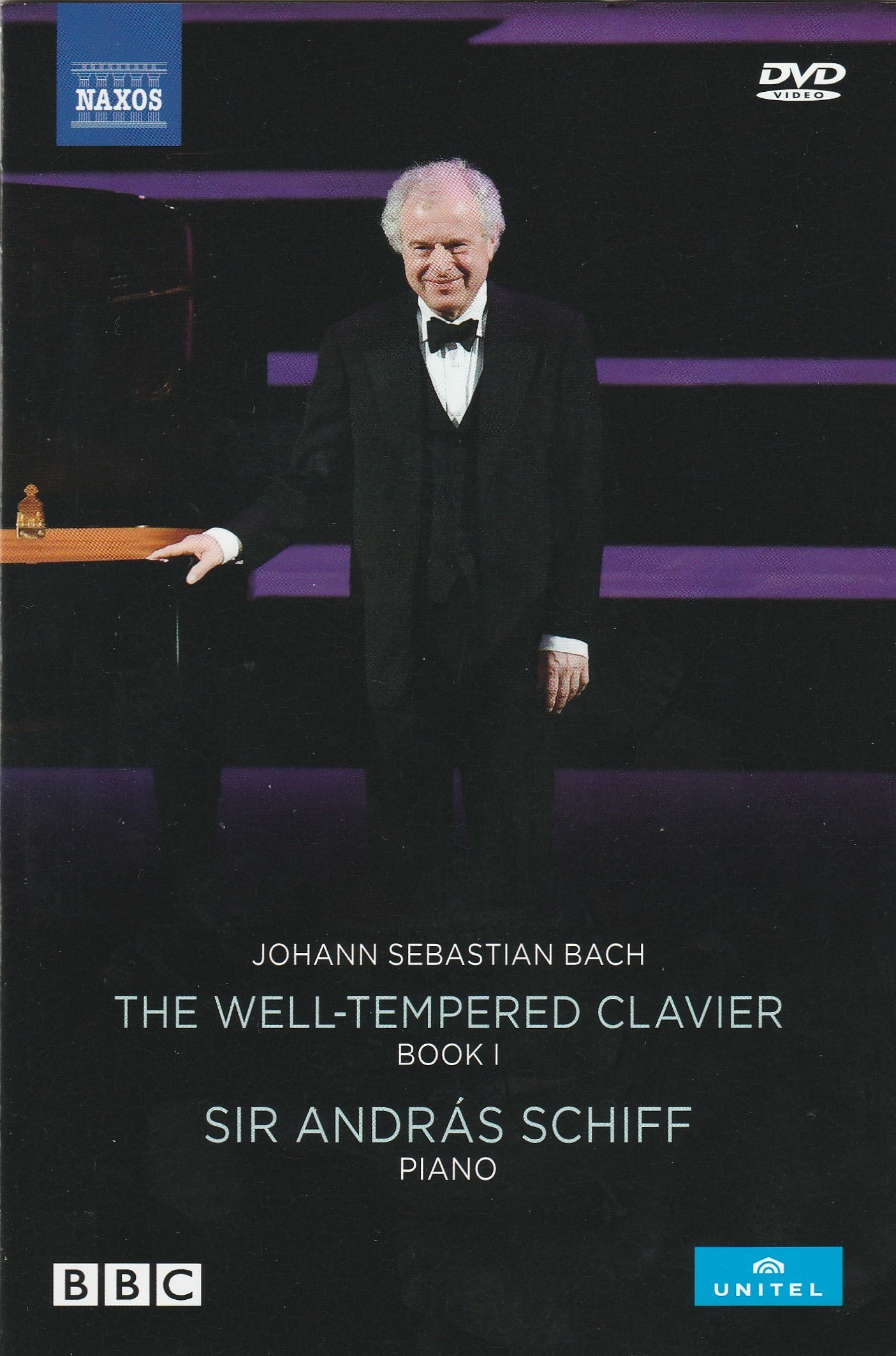
03 Schiff BAchBach – Well-Tempered Clavier Book 1
Sir András Schiff
Naxos 2.110653 (naxosdirect.com)

Bach’s renown in his own lifetime was less as a composer than as a keyboard player, both at the harpsichord and at the organ. His great ability was summarized in his obituary: “All his fingers were equally skillful; all capable of the most perfect accuracy in performance.” Today of course we know better, naturally giving due respect to the greatness of his compositions. Most notable among these – considering he was one of the greatest inventors of keyboard music – is The Well-Tempered Clavier

The 24 preludes and fugues work through the 12 major and 12 minor keys. Unequalled in the profligacy of their inventiveness, the books were intended partly as a manual of keyboard playing and composition, partly as a systematic exploration of harmony and partly as a celebration of a new development in tuning technique that allowed the instrument to be played in any key without being retuned.

Sir András Schiff’s performance at the BBC Proms (2017) is authoritative and eminently satisfying. The fact that it has been well-crafted as a DVD is cause for additional celebration. Schiff exploits the full range of the piano’s sonorities: a crisp, hard touch is used for the more rhythmically motorized preludes, yet there are no qualms about using the sustain pedal to add colour and warmth. His speeds are slow, in some of the fugues, but the shape and direction of a piece is never in any doubt.

Raul da Gama
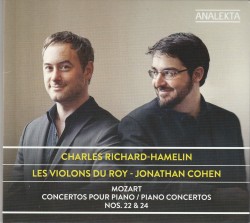
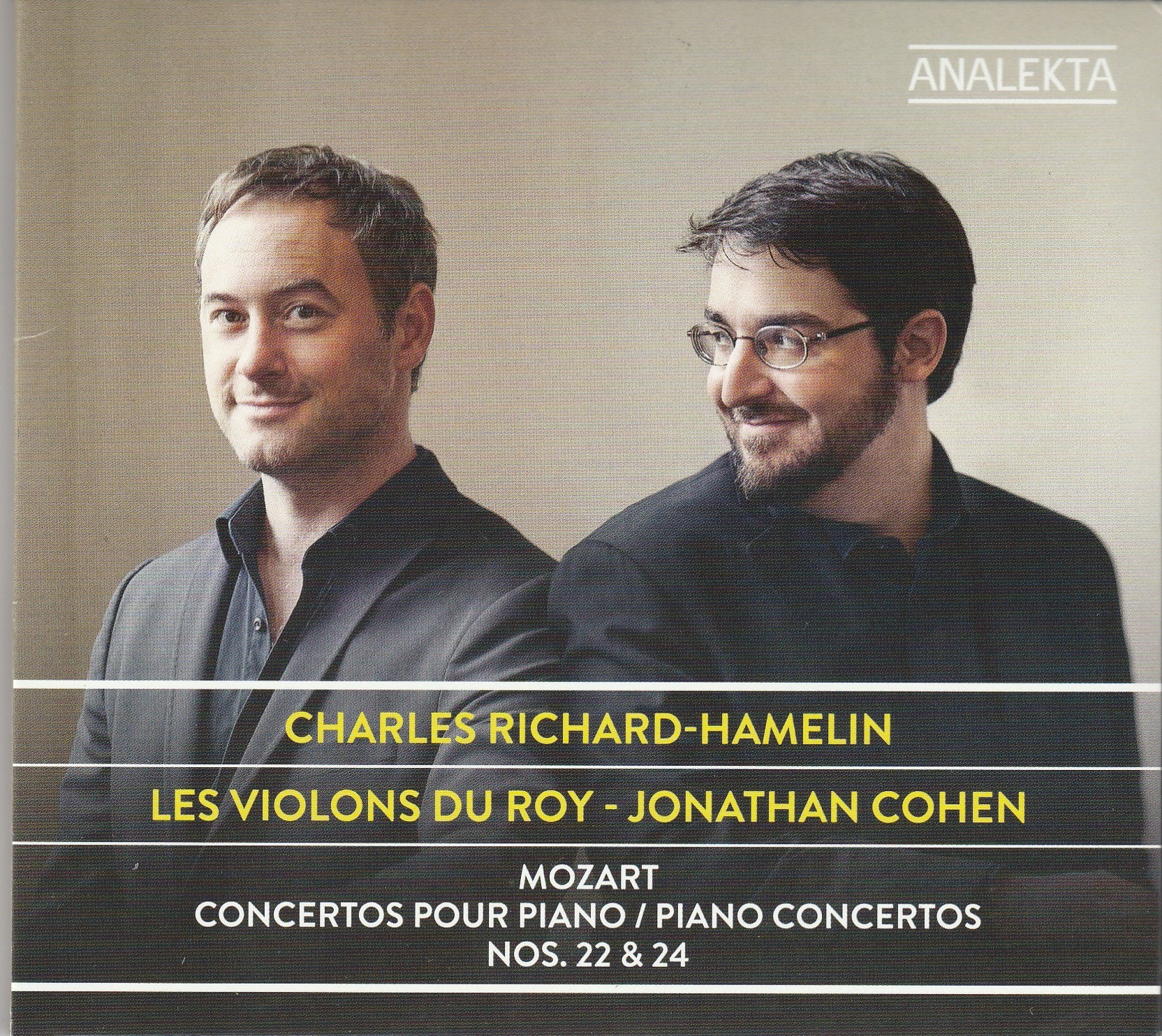
04 Mozart ConcerrtosMozart – Piano Concertos Nos.22 & 24
Charles Richard-Hamelin; Les Violons du Roy; Jonathan Cohen
Analekta AN 2 9147 (analekta.com)

Mozart’s spirit is (arguably) most evident in his piano-concerto writing – where vitality is entwined with gaiety, with brilliance and lyricism multilayered across. This first recording collaboration between acclaimed young pianist Charles Richard-Hamelin and Quebec City’s chamber orchestra Les Violons du Roy, led by Jonathan Cohen, captured that essence note by note. Richard-Hamelin’s fiery mastery is matched with the unwavering elegance of the orchestra’s responses while Cohen’s artistic vision underlines the most minute details of expression. Together they created a thrilling gem. 

Mozart composed 11 piano concertos between February 1784 and March 1786, while living in Vienna, his creativity unrivaled by any other composer that came after him when it comes to piano concerto writing. The two concertos on this album stand on different sides of his creative expression. No.22 in E-flat Major, sometimes referred to as the queen of Mozart’s piano concertos, is stately and noble in nature, with a prominent wind section throughout. On the other end, No.24 in C Minor, is uncharacteristically emotional and dark, and is considered to be one of Mozart’s finest efforts. 

I could not get enough of the beauty of Richard-Hamelin’s sound on this recording – it contains a precious combination of shimmering lightness, fluent articulation and an array of colours. Most impressive are the cadenzas he has written for these concertos, a spirited personal salute to Mozart.     

Ivana Popovic
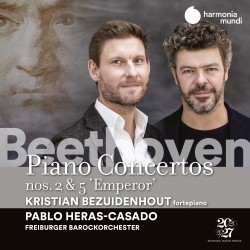
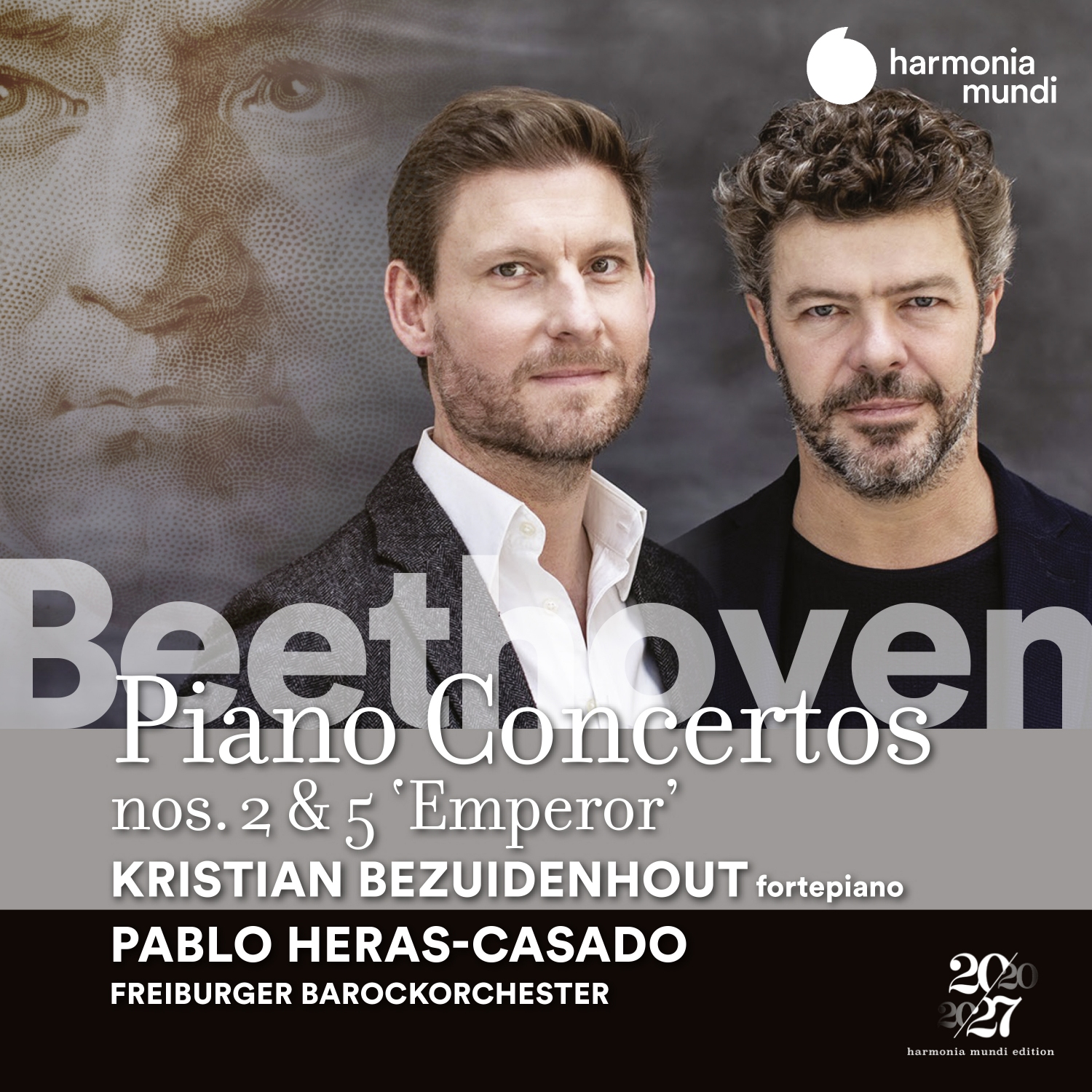
05 cover HMM902411 Kristian Bezuidenhout Pablo Heras Casado Freiburger Barockorchester Beethoven Piano concertos nos. 2 5 Emperor Beethoven – Piano Concertos Nos. 2 & 5
Kristian Bezuidenhout,  Freiburger Barockorchester; Pablo Heras-Casados
Harmonia Mundi HMM902411 (harmoniamundi.com)

Kristian Bezuidenhout has recently turned his attention to a trilogy of Beethoven concerto discs. He is known for his inspired, imaginative and revivifying approach to fortepiano repertoire, proving time and time again that communicating brave new things at the neoclassical keyboard can be attained through good taste, apt performance practice and the right dash of courage. This first of three such recordings embodies all of these celebrated attributes and, rather triumphantly, establishes new ones.

From the vibrancy of Heras-Casado’s conducting, to the sparkling lines in winds and brass; from the marvellous sonorities revealed in Beethoven’s writing when played expertly on period instruments to the glimmering, pearl-like textures Bezuidenhout attains with unshakable, inspired finesse, this disc is absolute perfection to behold. Here is the Beethoven the world needs to know. 

Brimming over with jubilant, dazzling sonic palettes, we hear musical craftsmanship on this record being set alight. The quest for innovation and (re)discovery is ever present as these gifted, impassioned artists deliver two of the best-loved piano concertos known to Western music. Bezuidenhout and Heras-Casado delight us; they astonish us, drawing us into a glorious, vivid reality from centuries gone by. In divining treasures from the past, through exceedingly hard work and a sincere love for what they do, they have set an 18th-century stage resounding with every scale, trill, arpeggio and cadence now sung afresh for the contemporary ear. Beethoven, surely, is applauding their achievement from on high.

Adam Sherkin
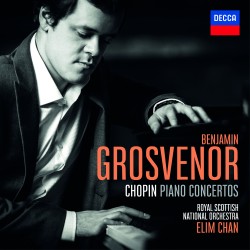
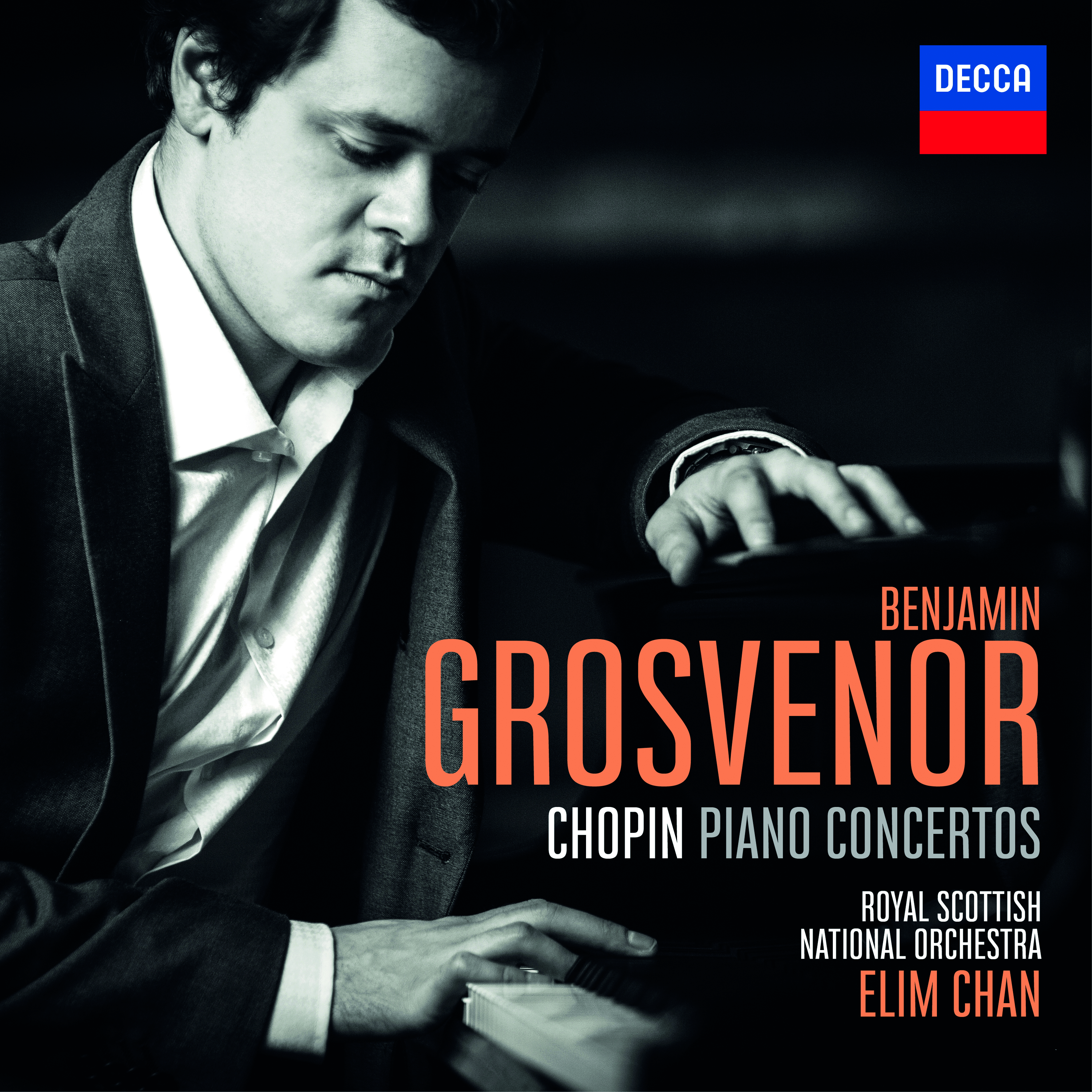
06 Benjamin GrosvenorChopin – Piano Concertos
Benjamin Grosvenor; Royal Scottish National Orchestra; Elim Chan
Decca Records 4850365 (store.deccaclassics.com)

At 27, Benjamin Grosvenor has dazzled audiences from the very brink of his extraordinary career through to what is now his fifth release on Decca Classics.

The Royal Scottish National Orchestra itself presents formidably, with a pared down ensemble and robust presence, helmed by the intrepid Elim Chan. Her command of the players is classically clean-lined, crisp and no-nonsense in its approach to such familiar music. Both piano concerti by Chopin are often criticized for their lack of fulsome orchestra writing. However, Chan seems to disregard any longstanding notions of inadequacy in the orchestration, declaring every accompaniment episode and march-like interlude with shining surety and emphatic musicianship.

As for the solo part, Grosvenor unassumingly guides his piano to the core of each concerto’s argument, with interpretations that are commanding and forthright yet never self-indulgent. Abounding with beautiful melodies and lyrical highpoints, all of this music is aptly suited to Grosvenor’s zeal for textural clarity and elegant, quicksilver conceptions of Chopin-esque expressivity. (The first movement of No.1 and the second of No.2 are examples.) His tone and balance of phrasing remain exceedingly cultivated with a personal aspect that seems to exude a deep sense of integrity. 

The poise and lucidity of Felix Mendelssohn’s keyboard writing might be a candidate for influencing Grosvenor’s approach here (and the results likely closer to Chopin’s original intentions!). No small feat it is today, to record such well-worn repertoire with fresh ears, hands – and heart.

Adam Sherkin
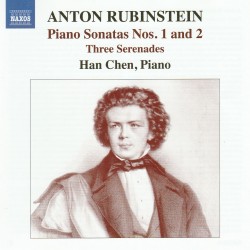
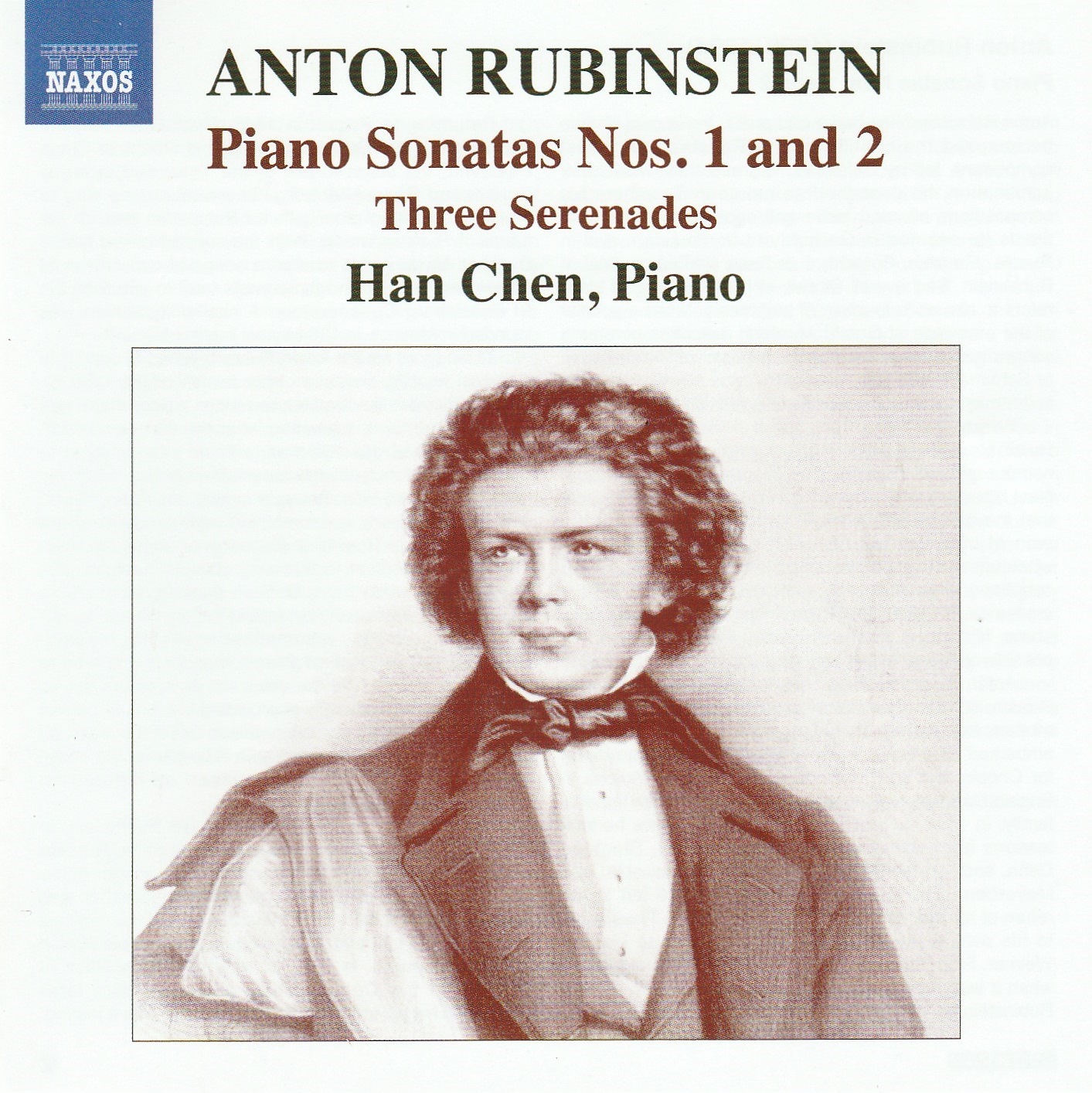
08 RubinsteinRubinstein – Piano Sonatas Nos.1 and 2
Han Chen
Naxos 8.573989 (naxos.com)

“Van the Second.” That’s what Franz Liszt called Anton Rubinstein, referring to his fellow pianistic titan’s resemblance to Beethoven’s unkempt, leonine looks and pile-driving keyboard aggressiveness. Like Beethoven, Rubinstein also composed in all genres but, unlike “Van the First,” he’s rarely performed today outside his native Russia.

The music on this CD dates from 1850-1855, when Rubinstein, in his early-to-mid-20s, was immersed in early Romanticism. As a teenager studying in Berlin, Rubinstein even met Mendelssohn, who is channelled in the restless, urgent first movement of Piano Sonata No.1. It’s followed by a soulful prayer, a pensive waltz and another chorale melody that ends the fourth movement, and the sonata, in grandiose fashion.

Sandwiched between the two sonatas, both lasting nearly half an hour, are the lovely, gentle Three Serenades, flavoured with subtle echoes of Chopin. Piano Sonata No. 2 is in three movements, the first two recalling Schumann in their inward, almost downcast, reflectiveness. The sonata ends much as the CD began, with a dramatic, Mendelssohnian surge of stormy energy.

Pianist Han Chen, born in Taiwan and now living in New York, was himself in his mid-20s when, in 2018, he recorded these works in King City, Ontario, with expert producers Norbert Kraft and Bonnie Silver, fine musicians themselves. Chen successfully conveys the music’s varied moods, from tender to agitated to triumphant. I found all these attractive works, though derivative, a pleasure to listen to. I think you may, too.

Michael Schuman
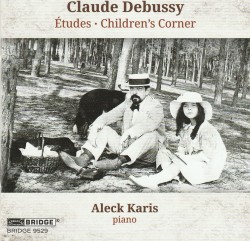
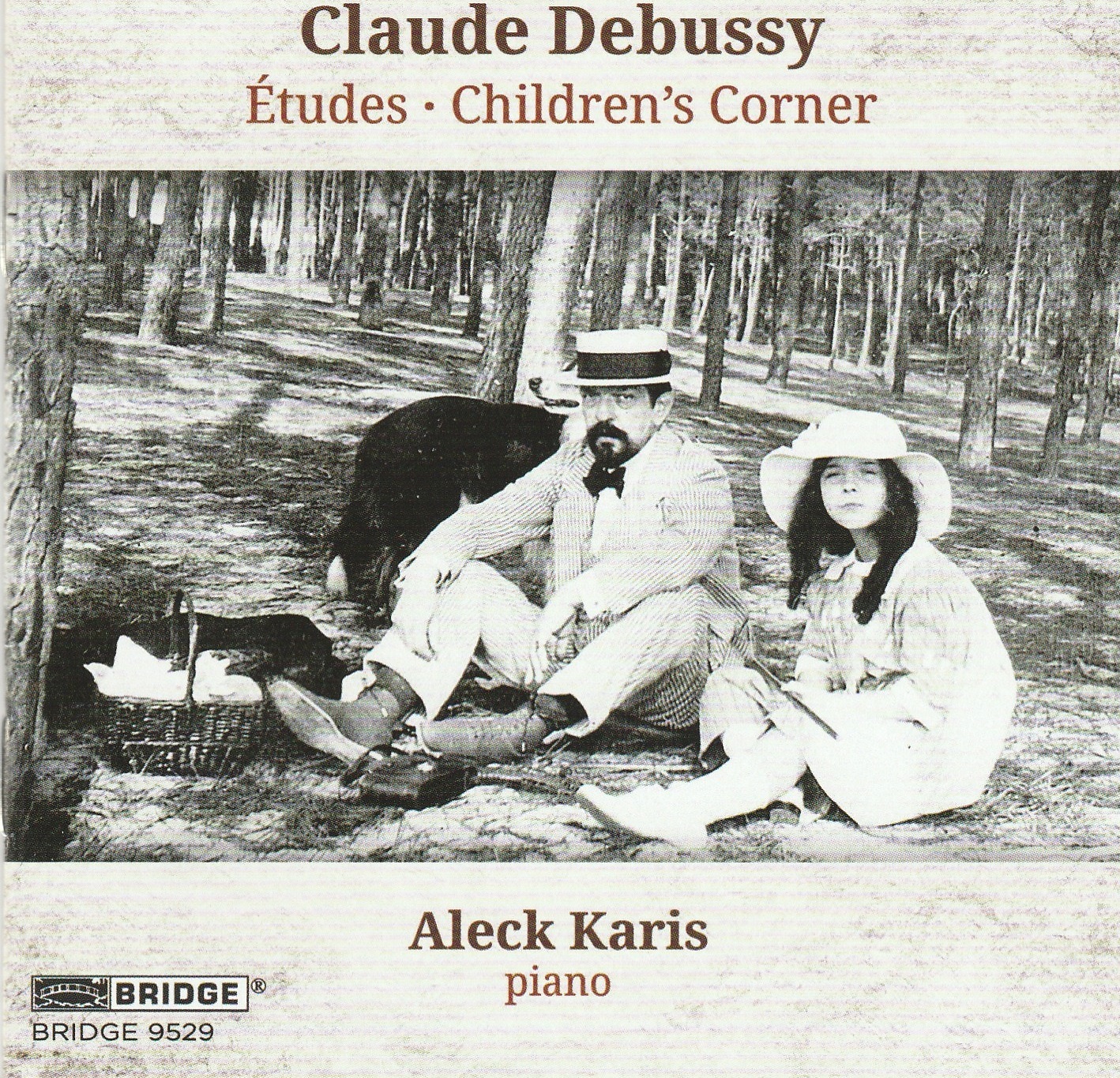
07 Debussy KarisDebussy – Études; Children’s Corner
Aleck Karis
Bridge Records 9529 (bridgerecords.com)

Claude Debussy’s two books of Études from 1915 are less well known than many of his other piano compositions and until recently, had been neither widely performed nor recorded. Written three years before his death, they are regarded by some as his last testament to his works for piano solo, the form itself having been long embraced by such composers as Clementi, Czerny, Liszt and Chopin, to whom they are dedicated and whose music Debussy adored. The two sets are technically challenging – even the composer himself professed to struggling with certain passages – but any difficulties are met with admirable competency by the American-based pianist Aleck Karis on this Bridge recording featuring both sets and the charming Children’s Corner Suite.

Beginning with the first étude in Book 1, Pour les cing doigts, Karis displays a precise and elegant touch, his interpretations at all times thoughtfully nuanced. Indeed, these pieces, ranging in length from two minutes to just under seven, are true “studies” in contrast. The first, a tribute to Czerny, features repeated melodic progressions, while number four is moody and mysterious, and the sixth, Pour les huit doigts, a relentless perpetuum mobile.

The disc concludes with the familiar Children’s Corner Suite from 1908, a heartfelt depiction of childhood from a far simpler time. Opening with Doctor Gradus ad Parnassum, Karis’ playing is refined and sensitively articulated, with just the right amount of tempo rubato. The atmospheric Jimbo’s Lullaby would induce even the most obstinate pachyderm into slumber, while The Snow is Dancing and The Little Shepherd are true musical impressions that surely would have delighted his beloved daughter Chouchou.

Rounding out the set is the popular Golliwog’s Cakewalk, all bounce and joviality, which brings the disc to a most satisfying conclusion.

Richard Haskell
09 Rachmaninov LisztRachmaninov; Liszt
Luiz Carlos de Moura Castro
Independent n/a (luizdemouracastro.com)

The Brazilian pianist Luiz Carlos de Moura Castro, who plays with extraordinary virtuosity and passion, is so self-effacing that his only presence apart from the occasional entry in a digital classical music encyclopedia is on recordings, happily as brilliant as this one he produced himself. The works by Rachmaninov and Liszt – two of the greatest piano virtuosos of all time – with which he is represented here on a breathtaking-sounding Fazioli F308, are a testament to Castro’s pianistic genius.

The Liszt Piano Concerto No.2 in A Major, like everything Liszt, demands the highest level of virtuosity with its astounding octave leaps and high pianistic drama. Castro gives an overwhelmingly powerful and authoritative reading of it. His fingerwork has a steely energy to it which is remarkable. He is well supported by the Société d’Orchestre, Bienne under Jost Meier, who conducts the concerto with extraordinary and empathetic understanding of its difficult score.

Rachmaninov’s concertos are all very difficult to play and also reflect the composer’s complete technical command of the piano. Concerto No.3 in D Minor is uncommonly taxing and No.2 in C Minor is filled with bravura. Castro brings to life both of these – as well as Liszt’s Rhapsody on a Theme by Paganini, a work almost as capricious as anything Paganini himself wrote – with the Slovenia Radio and TV Symphony Orchestra, the fiery Ligia Amadio conducting brilliantly. 

Raul da Gama
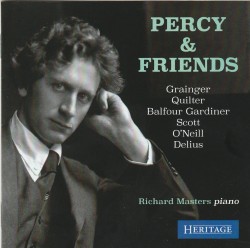
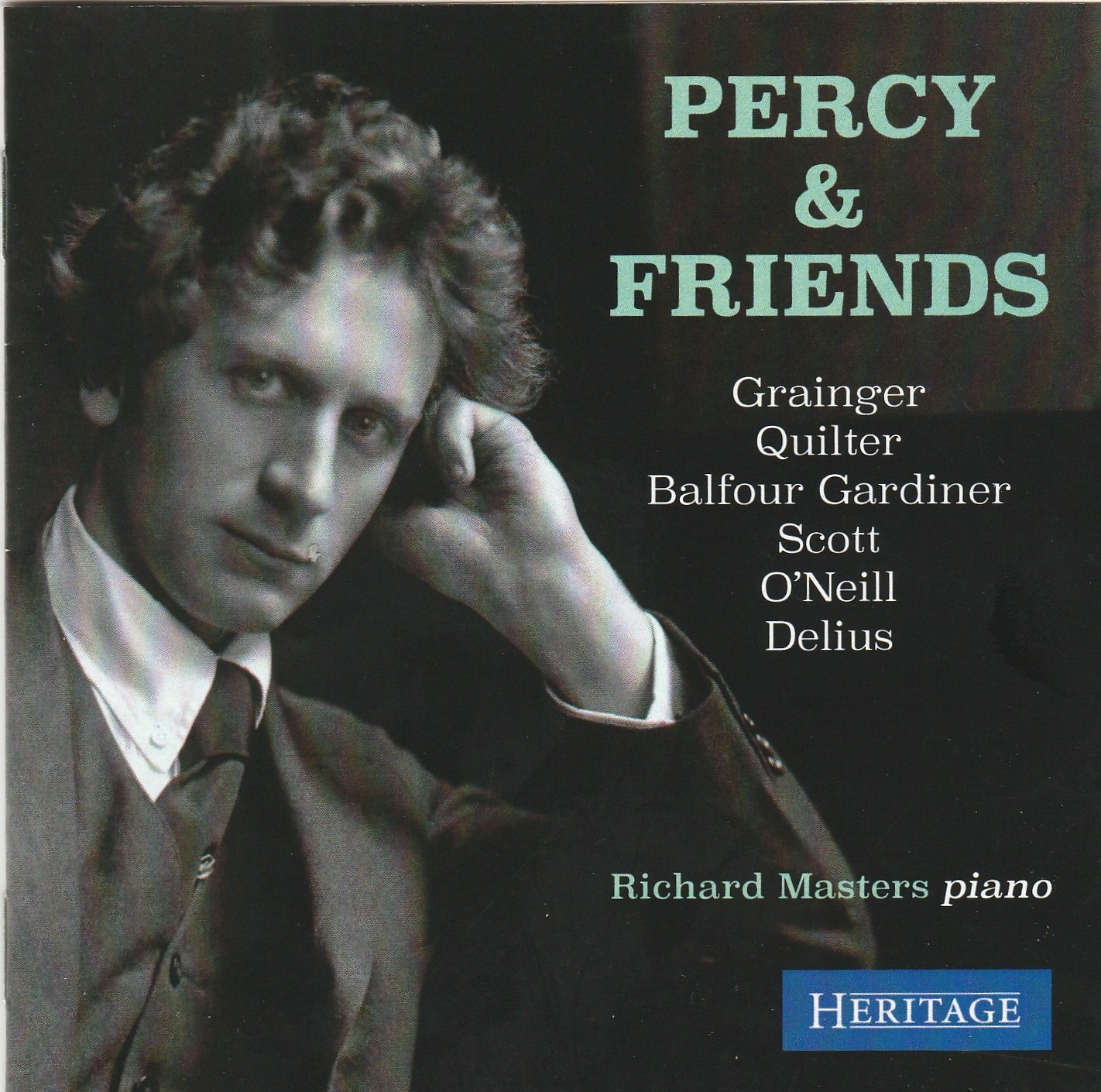
10 Percy FriendsPercy & Friends
Richard Masters
Heritage HTGCD 179 (richard-masters.com)

“Let us go then, you and I, / When the evening is spread out against the sky…” Let us listen then, of summer evenings, nightingales and shepherd’s hey; of rainbow trout, bridal lullabies and colonial songs. Pianist Richard Masters offers an attractive new disc, celebrating varied solo piano pieces from an unexpected cohort: Roger Quilter, Henry Balfour Gardiner, Cyrill Scott, Norman O’Neill, Frederick Delius and Percy Grainger.  

Such English-speaking expatriates who were, at one time, all in school together at the Hoch Conservatory, Frankfurt, became known as the Frankfurt Group, not including Frederick Delius. The other five revered Delius and often subsumed him in various articles written about the composers during their time: the New English School was profiled as an adventurous collective of young musical artists, Anglo-centric and German-despising.

The 17-track record from Masters, in combination with his fine liner notes, transports the listener to a gentle world of breezy morning strolls and wholesome sips of afternoon tea. This aesthetic never seeks to poke or to prod, nor to unseat the status quo; here is a unique strain of harmonic connectedness, always sumptuous in its tonal narrative. From such discarded chests of keyboard music emanates a sincerity of lyricism, generously set against tableaux of perfumed sonic spaces. With comely confidence and a slightly perceptible dash of American Southern charm, Masters cajoles you and me, as he brings this New English School of the early 20th century back to life.

Adam Sherkin
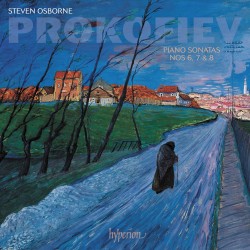
11 cover Steven Osborne Prokofiev Piano Sonatas No 6 No 7 No.8 Prokofiev – Piano Sonatas Nos. 6, 7 & 8
Steven Osborne
Hyperion CDA688298 (hyperion-records.co.uk)

With three gritty, strenuous piano sonatas that run the gamut of expression in movements now dreamy and languid, now pungent and divisive, Scottish pianist Steven Osborne proves yet again that he can tackle any corner of the piano repertory with technical prowess and innate stylistic aplomb.

In this new disc, Osborne rips into some of the most challenging keyboard music ever written by Russian composer Sergei Prokofiev. The challenges here extend far beyond the thorniness of the sonatas’ character and their assembled identity as three war sonatas, (Opp.82, 83 and 84), written during the years 1939 through 1944. These broad and complex works demand an acute understanding of modernist expression and its concept of human experience when stretched to the very edge. This edge can be extreme in some cases, compelling both listener and pianist alike to embrace the ridiculous as well as the sublime. A successful performance of such music depends on the wits (and technique!) of a multi-versed artist up to the challenge. Osborne leaves us with no doubt as to our emotional survival: we immediately jump onboard for the ride, putting ourselves in his safekeeping until the end of this disc. Therein, Osborne’s hands cast spells of colour and light that echo the deft craft of impressionist composers, betraying a kinship (rarely revealed) between the inspired music of turn-of-the-century France and that generation of Russian modernists who emerged in the 1920s, with Prokofiev at the vanguard. 

Adam Sherkin
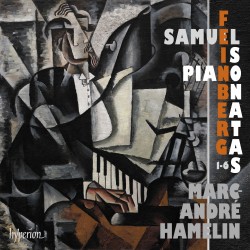
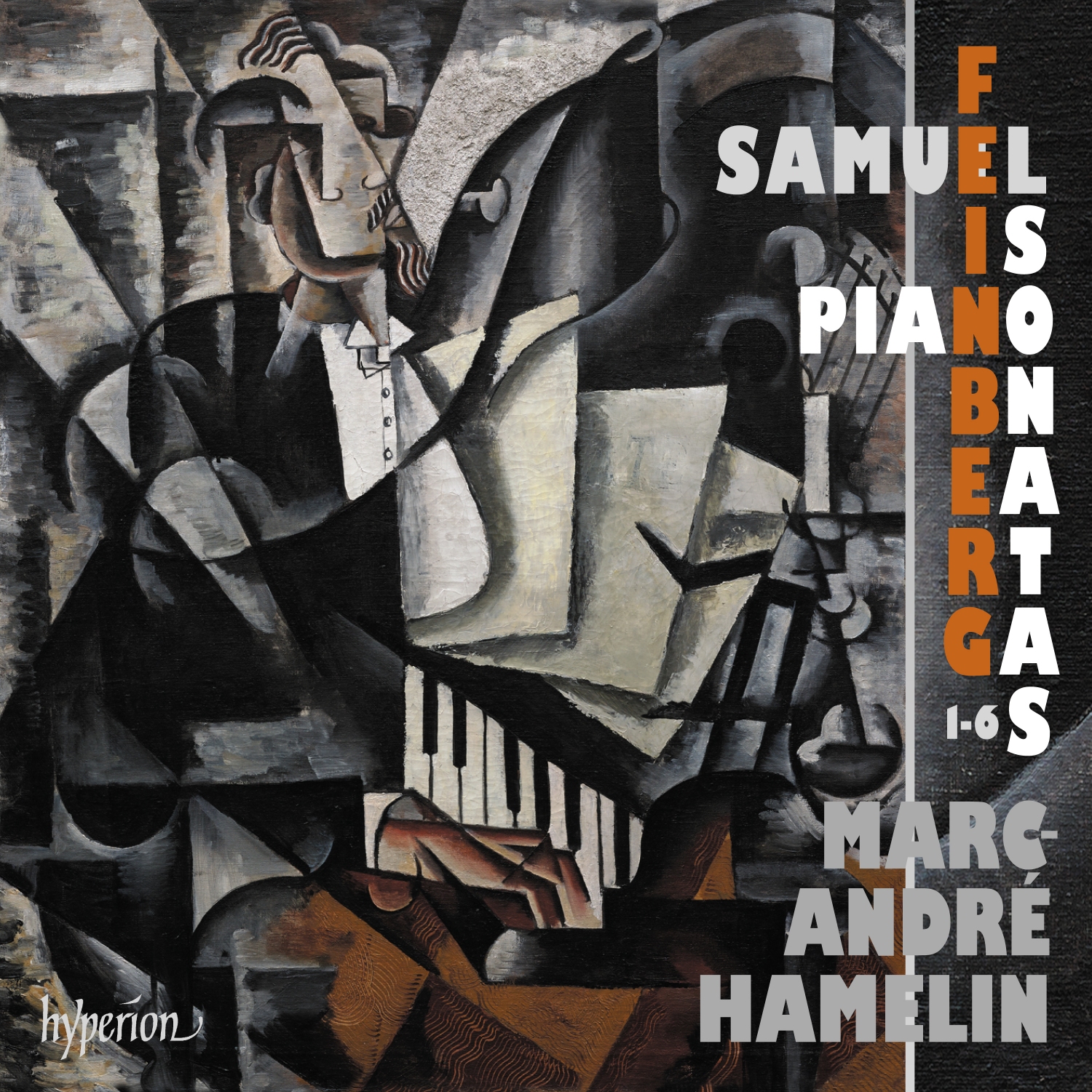
12 cover Marc Andr Hamelin Feinberg Piano Sonatas Nos.1 6. Samuil Feinberg – Piano Sonatas Nos. 1-6
Marc-André Hamelin
Hyperion CDA 68233 (hyperion-records.co.uk)

Wondrous and fair, is the music of Russian composer-pianist, Samuil Feinberg. Today, 58 years after his death, he remains little known outside of Russia. Nevertheless, veteran virtuoso Marc-André Hamelin has long championed the ravishing piano catalogue of Feinberg, peppering his own recital programs with his music. Now, for the first time in a truly voluminous discography, Hamelin has recorded six sonatas by Feinberg, Opp.1, 2, 3, 6, 10 and 13. Each one is a marvel of pianistic craft, gazing down from the pinnacle of early 20th-century Russian lineage.

Both the first and second sonatas owe a great deal to the spectrums of resonance and open-hearted romanticism found in Rachmaninoff’s piano writing, (in particular the Sonata No.2 in B-flat Minor Op.36). These works gleam with whimsical, searching melodies, buoyed up by formidable textures. Hamelin aptly leads the adventure, taking the utmost care and cultivation. In fact, Hamelin navigates every page of these fascinating, singular pieces with splendid ease and confidence. He finds ways to personalize the expressive potential Feinberg embeds in his scores.

Another highlight of the disc, Feinberg’s Sonata No.5, invites us into an eerie, unsettled world. The opening rollicks with overwrought chords that grope and sniff their way through the dark. What – or whom – might they be seeking? This disc bears repeated listening, as is so often the case with Hamelin’s artistry. Verily, today’s musical world would be a dimmer place without him.

Adam Sherkin

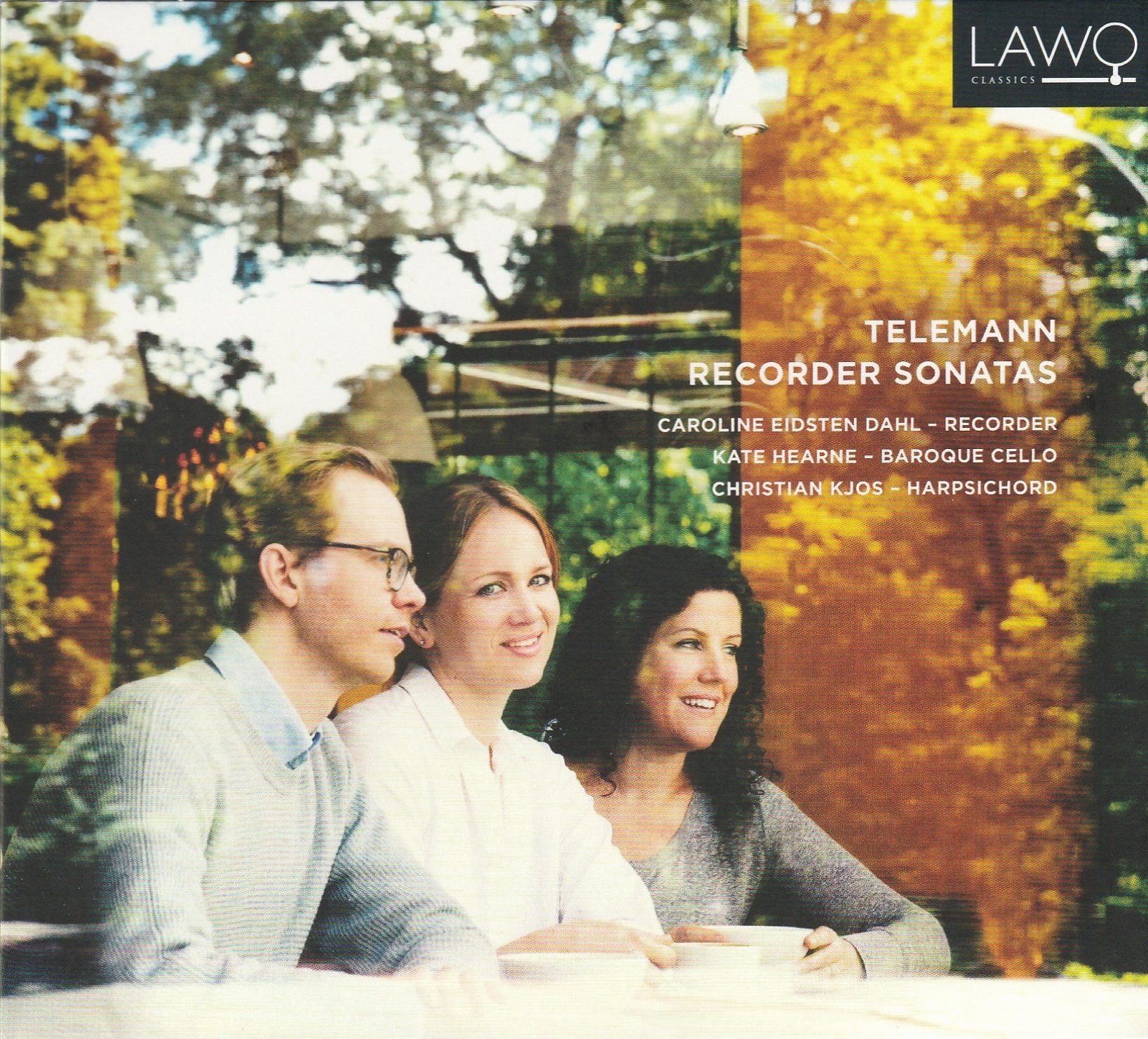
01 Telemann RecorderTelemann – Recorder Sonatas
Caroline Eidsten Dahl; Kate Hearne; Christian Kjos
LAWO LWC1181 (naxosdirect.com)

If virtuoso recorder playing is your thing, then Caroline Eidsten Dahl really delivers on this CD. Of the 34 movements, 18 are fast and she plays them at tempos that leave even the listener breathless! Her virtuosity is particularly extraordinary in the second movement of the Sonata in C Major, TWV41C2 and the first movement of the Sonata in C Major, TWV41C5. (BTW, C major is the perfect key for alto recorder virtuosity because of fingerings and because it lies in the middle of the instrument’s two-octave range.)

To focus one’s attention solely on the recorder soloist, however, is to miss much that makes this recording outstanding and Telemann’s composing remarkable. The fact is that this is a collaboration by three equal musicians, and that these “solo” sonatas are in reality trios. If you focus your listening on the cello part, played by Irish cellist Kate Hearne, you can hear it, sometimes just as virtuosic as the recorder, as the lower part of a duo. And the harpsichord, played by Christian Kjos, not only fills in the harmonies implied by the other two parts, but also supplies harmonic momentum and adds sparkling melodic solos when opportunities arise. 

In the short movements of these nine sonatas – the shortest is 47 seconds, the longest three and a half minutes – one can gain insight into the composer’s mind, crafting each movement into a unique miniature masterpiece. 

This disc offers so much, not only to recorder aficionados but also to music lovers, musicians and composers.

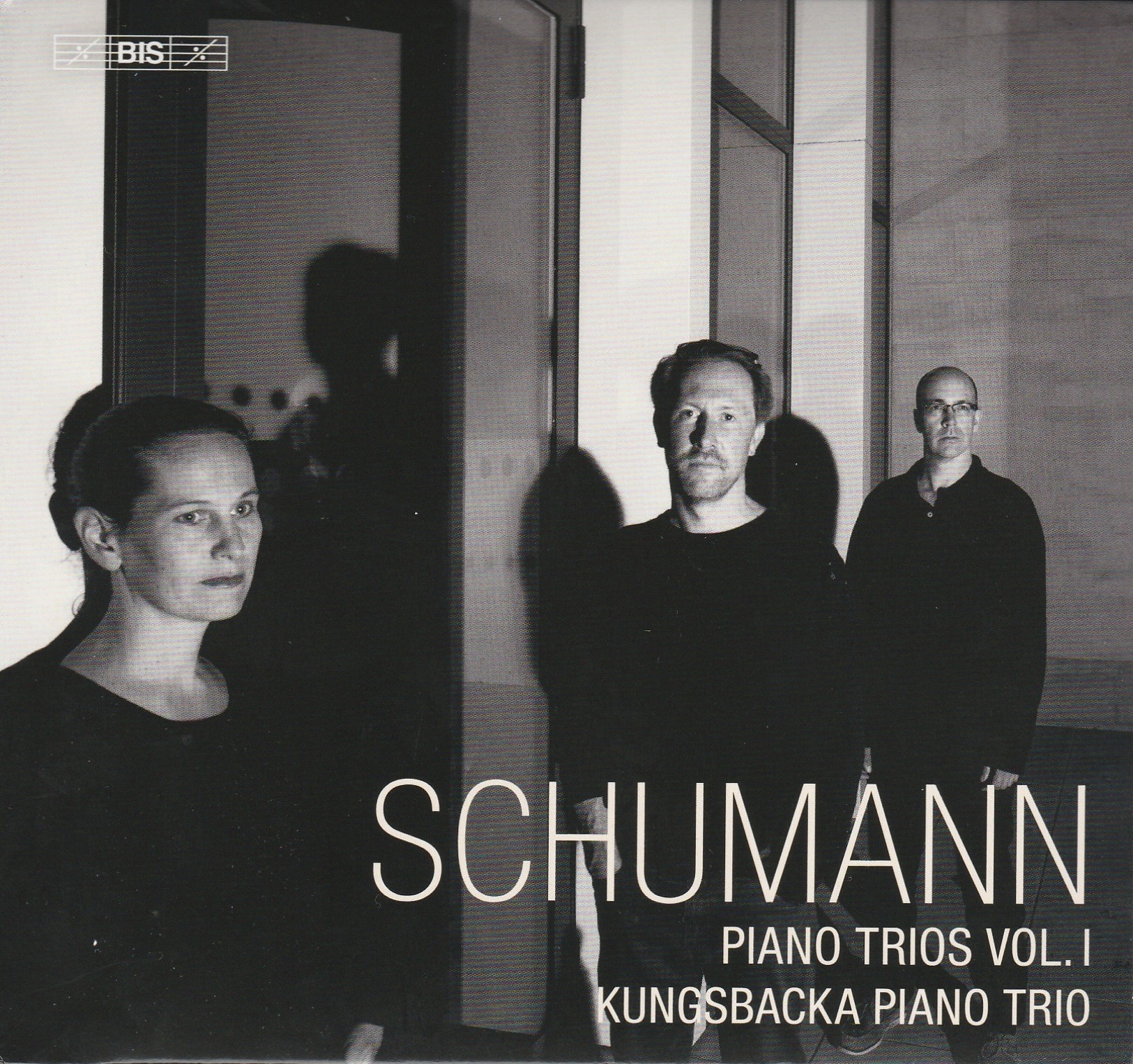
02 Schumann TriosSchumann – Piano Trios Vol. 1
Kungsbacka Piano Trio
Bis BIS-2437 SACD (naxosdirect.com)

The piano trio – namely, a combination of piano, violin and cello – has a curious history with composers of historical note, many of whom either wrote very few or none at all. One may attribute such a lack of attention to the apparent balancing issues when writing for this combination of instruments. Others will mention the string quartet taking hold of composers’ attention as the most favourable chamber music combination. An exception to this trend would be Haydn who wrote no less than 45 piano trios in his impressive output. Haydn aside, it remains true that the most celebrated composers in history paid little attention to this genre: Beethoven, Mozart, Brahms and Dvořák all writing less than ten. Robert Schumann belongs to this group, having written three piano trios and a Fantasiestücke (Fantasy Pieces, also with the piano trio instrumentation) in his lifetime. 

In this latest release, the Swedish Kungsbacka Piano Trio has included Schumann’s Piano Trios 1 and 2, and the Fantasiestücke in an impressive volume that contains masterful interpretations of these works. The Kungsbackas have earned a well-deserved international reputation since their formation in 1997. Their latest recording is an excellent example of how the ensemble continues to deliver world-class musicianship and expressiveness to listeners around the world. This recording does great justice not only to the works recorded, but to the genre itself – reminding us that this instrumental combination is indeed worthy of any composer’s attention if performed by the right musicians. 

The members of the Kungsbacka Trio have an impressive ability to merge their sound into a single instrument, a quality that brings a sonorous lyrical element to the music not present in other recordings of this kind. This high quality recording leaves the listener wanting more – a pleasing thought since there will be a second volume coming soon.

03 Max BruchBruch – 8 Pieces Op.83
Philon Trio
Analekta AN 2 8923 (analekta.com)

It is so easy to love Max Bruch’s music, and particularly these works for clarinet, viola and piano. His Acht Stücke Op.83 were composed for his son, Max Felix, a noted clarinetist of the early 20th century. They are the sole material on the recording released this year by the Philon Trio, comprised of David Dias da Silva on clarinet, Adam Newman, viola, and pianist Camilla Köhnken.

The work is quite often performed in excerpts, for the simple reason that the pieces vary so much in character and duration that there is no compelling reason to present them all as if they formed a united suite. As the only material on this disc, one might carp that something might have been added as a bolster to the value; the total playing time is just under 35 minutes. Possibly there were time or financial constraints. Still, including Schumann’s Märchenerzählungen, for context and contrast with another work for the same forces, would have been welcome.

But I won’t carp; I will stick to the positives: these are great performances. Tending more to a dreamy or meditative character for the most part, the collection is leavened by numbers four and especially seven, both of which are presented at a good pace, demonstrating how technically able these fine musicians are. Köhnken hails from Bruch’s home city Köln, and seems to have his spirit guiding her playing. Da Silva’s sound is airy and fluid at once, and while sometimes he fights the demon of sharpness, he most often wins. Newman’s playing is agile and sure. The mix seems to favour the clarinet sound overall, an odd balance anomaly that points to perhaps a hurried production or difficult acoustic.
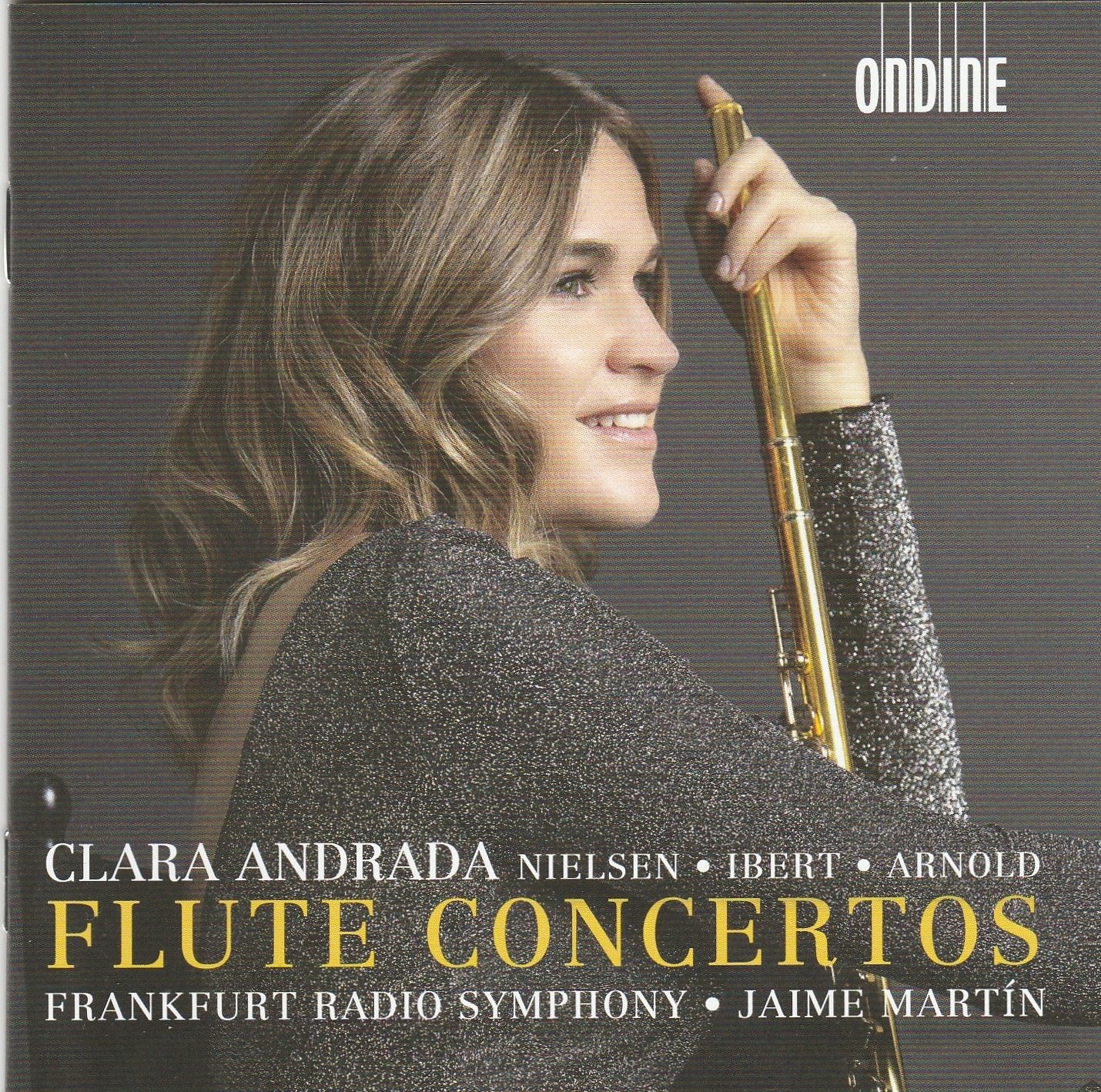
04 Flute ConcertosNielsen; Ibert; Arnold – Flute Concertos
Clara Andrada; Frankfurt Radio Symphony; Jaime Martin
Ondine ODE 1340-2 (naxosdirect.com)

What a good idea to trace the dramatic transition from Romanticism to Modernism through flute concerti by three composers of three consecutive generations: Carl Nielsen, born in 1865, Jacques Ibert, born in 1890 and Sir Malcolm Arnold, born in 1921. The age differences notwithstanding, all three concerti were written in the 28 years from 1926 to 1954.

The first movement of the Nielsen concerto (1926) seems to me to capture this strange and abrupt transition, opening with a stormy – modernist – flourish by the orchestra, answered by a long, lyrical melody, which could almost have been written by Nielsen’s Romantic predecessor, Carl Reinecke. The angular second subject, however, is without argument the product of a 20th-century sensibility, most effectively played, I might add, with calm rhythmic stability by soloist Clara Andrada.

Similarly the second movement of Ibert’s concerto (1932) begins with a long sustained melodic line, played with great grace and refinement by Andrada, before becoming progressively more disquieted, reflecting perhaps the growing tensions and anxieties of the late 1920s and early 30s.

The third movement of Arnold’s Flute Concerto No.1 (1954), fast, short, exciting – and tonal – is unquestionably a product of the 20th century. Arnold’s skill as a composer is very much in evidence in this movement, as he builds energy and excitement through the alternation of soloist and orchestra.

I must commend conductor, Jaime Martín, a flutist himself, and the Frankfurt Radio Symphony, for their exemplary rapport with the soloist – musical teamwork at its best.

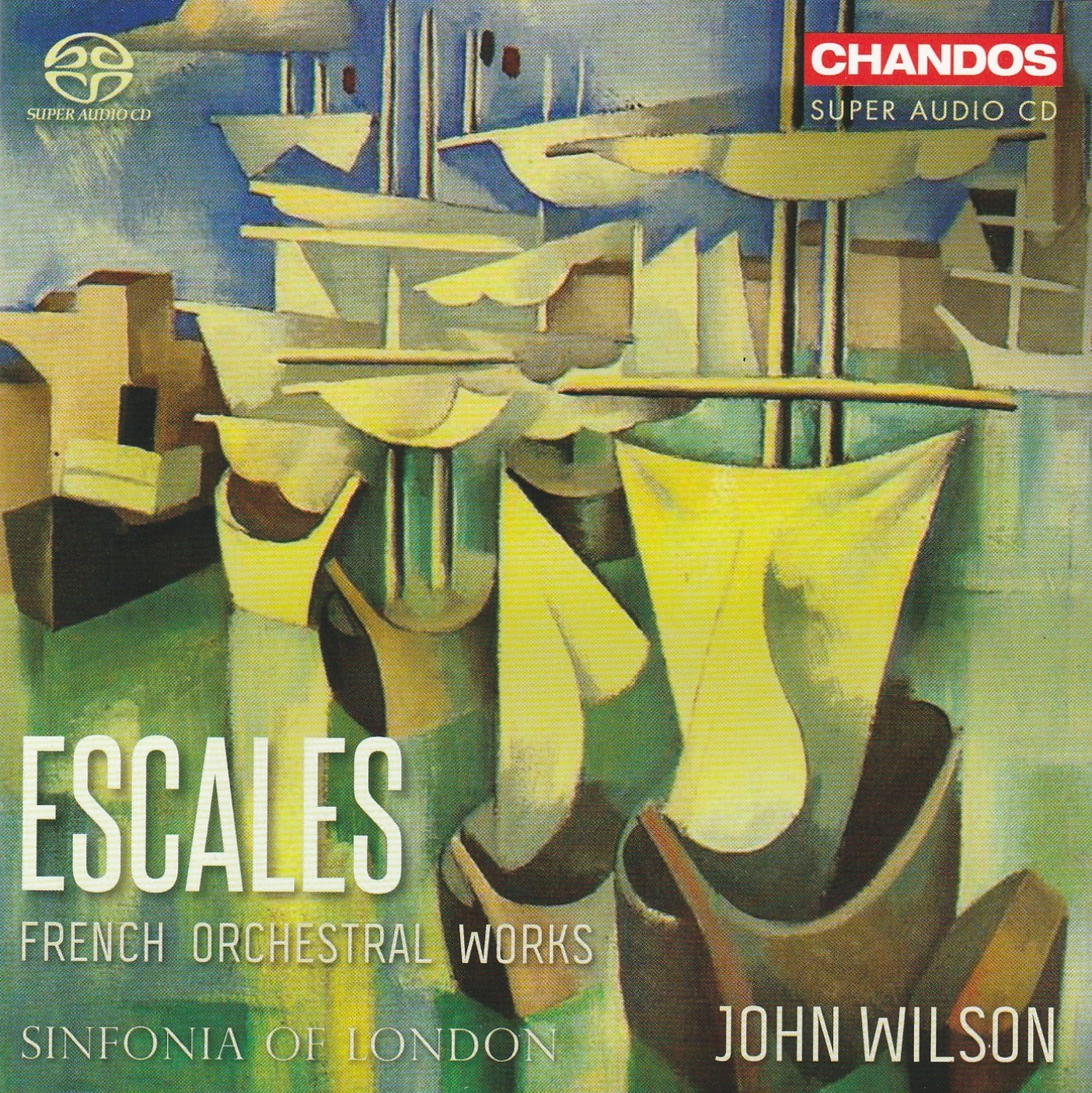
05 EscalesEscales – French Orchestral Works
Sinfonia of London; John Wilson
Chandos CHSA 5252 (naxosdirect.com)

While the subtitle of this disc is “French Orchestral Works,” it could just as easily be called “Spanish Music from France,” for that is what comprises the majority of Escales’ contents. The opening and closing tracks are Chabrier’s España and Ravel’s Rapsodie espagnole, clearly evoking a strong Spanish influence, while Ibert’s Escales outlines a three-part journey from France, through Italy, to Spain. Between these works are more standard essays in 20th century French composition, with such classics as Debussy’s Prélude à l’après-midi d’un faune and Massenet’s Méditation.

The interesting subtext to this disc is that, although the Spanish-infused pieces are clearly and deliberately exotic and meant to sound Spanish, they are immediately recognizable as being French. Perhaps this is because the works themselves are only caricatures of another style, or perhaps because they are surrounded by more characteristically familiar music of the same school; regardless of the reason, this disc makes a strong case for France’s inherent national musical identity through its composers. 

The Sinfonia of London are fine interpreters of this rich and lush material, coaxing out the timbral subtleties of each composer’s material. From the tranquil openings of Debussy’s Prélude to the driving conclusion of Ravel’s Rapsodie, the character of this music is expressed to full effect, aided in large part by the terrific quality of the sound itself. Released as a super audio CD, Escales captures a high degree of sonic detail, such as the robust spectrum of overtones produced by the divided string section, and translates these into a product that is remarkably close to a live performance in a concert hall, ideal for these colourful impressionistic works.

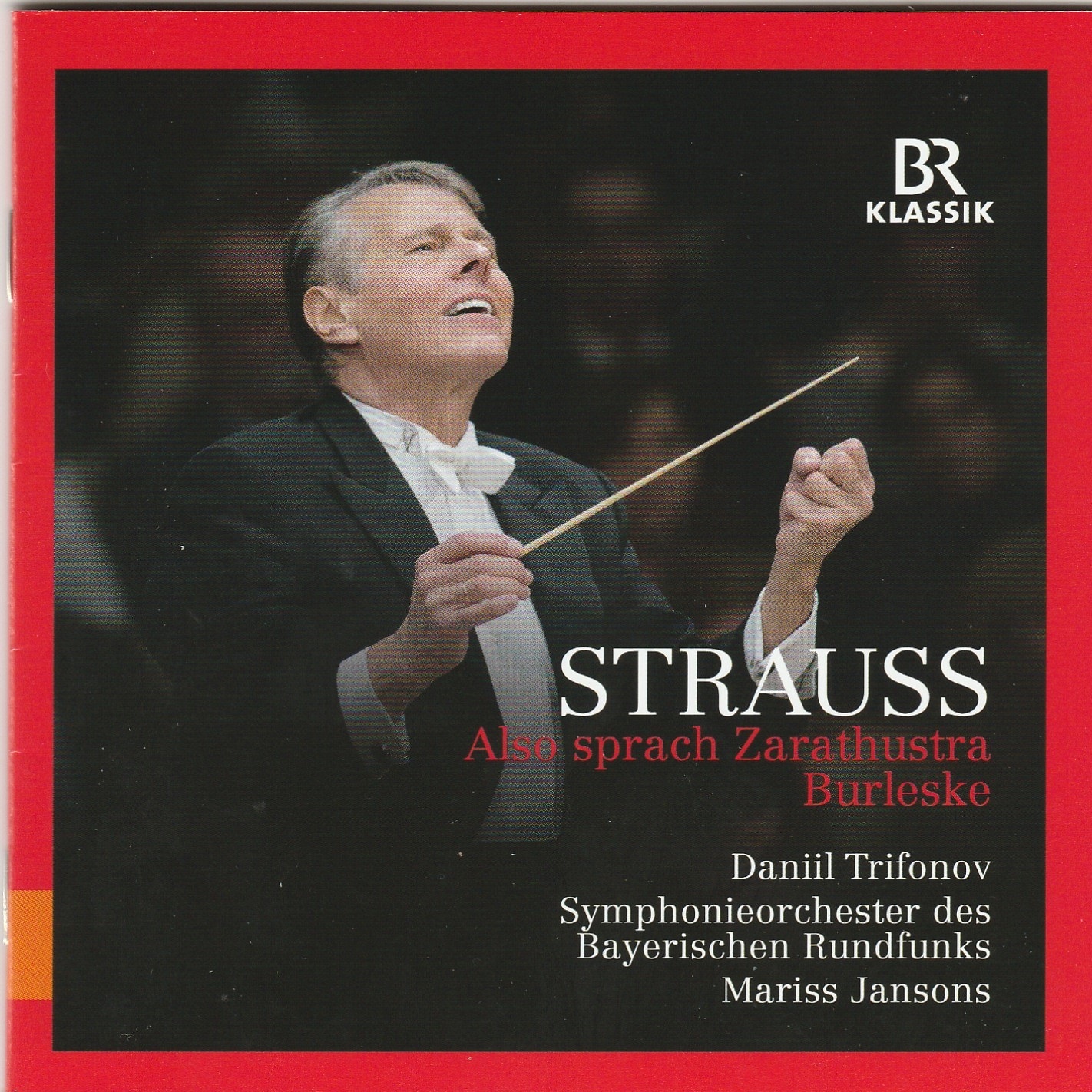
06 Strauss ZarathustraStrauss – Also sprach Zarathustra; Burleske
Daniil Trifonov; Symphonieorchester des Bayerischen Rundfunks; Mariss Jansons
BR Klassik 900182 (naxosdirect.com)

The most remarkable aspect of this iconic work – apart from the work itself – is that Richard Strauss started out as someone who was brought up to almost despise the work of Wagner and Liszt, who created the very form of one of Strauss’ most famous works. The nine-part symphonic tone poem, Also sprach Zarathustra is a spectacular homage to Nietzsche’s philosophy of the Superman and his celebration of human power and energy.

Strauss’ response to Nietzsche’s book is a work of enormous proportions, a free-flowing fantasia which, apart from its philosophical aspirations, creates some truly awe-inspiring orchestral sounds. Not the least of these is the work’s inspired “sunrise” opening, depiction of a primordial darkness-to-light so elemental that the titanic, sustained contra-octave C played on the organ, contrabassoon, contrabass and bass drum begins barely audible to the human ear.

This is a stupendous live recording. The Symphonieorchester des Bayerischen Rundfunks play with adventure and excitement under Marriss Jansons’ inspired leadership. Few other versions manage to give a convincing sense of the shape to this work. The Burleske, written ten years earlier, may belie a Brahmsian influence, but also foretells the future of a composer seized with the true immensity of symphonic sound. Pianist Daniil Trifonov is particularly dazzling with exemplary lucidity, showing why he is the darling of the cognoscenti today as he employs the sweetest tones to create a great Romantic wash of colour.

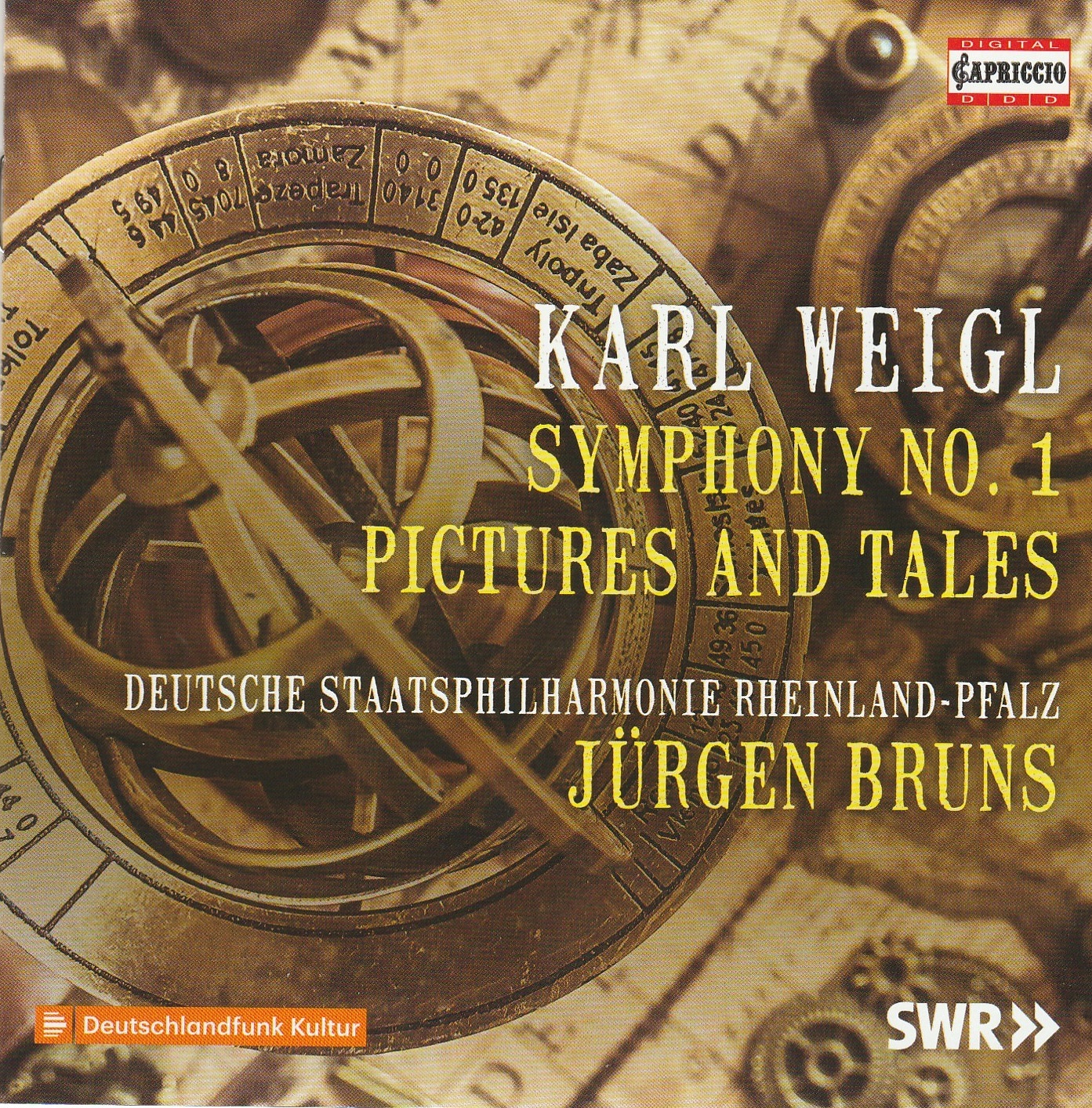
07 Karl WeiglKarl Weigl – Symphony No.1; Pictures and Tales
Deutsches Staatsphilharmonie Rheinland-Pfalz; Jürgen Bruns
Capriccio C5365 (naxosdirect.com)

Karl Weigl (1881-1949) was a succesful Vienna composer and teacher whose Jewish origins forced him to emigrate in 1938. In the United States he remained active but it has taken a long time for his relatively conservative music to receive the acclaim it deserves. The Symphony No.1 (1908) demonstrates his mastery of a personal late-Romantic style, opening with pastoral cheerfulness and a lyrical Viennese touch. The busy scherzo features chattering winds and sophisticated play with cross-rhythms and syncopations. Especially good is the slow movement – a yearning fantasy in the strings. Again in the third movement, woodwinds take a prominent role and there is a tremendous passage of multiple wind trill chains that must be heard – a true chorus of nature! In this work there is little fin-de-siècle brooding. The high-register orchestration is outstanding again in the finale, a somewhat parodistic march ending with a boisterous close.

In a much different vein, Weigl composed Pictures and Tales, Op.2 (1909), a set of short piano pieces which he orchesterated into a suite for small orchestra in 1922. The title alludes to scenes and images from fairy tales, e.g. Stork, Stork Clatter or Elves Dance in the Moonlight, with deft and transparent orchestration and appeal for children and adults alike. Jürgen Bruns is a much-in-demand conductor who has led a much-needed recording that would likely delight the composer even more than us.

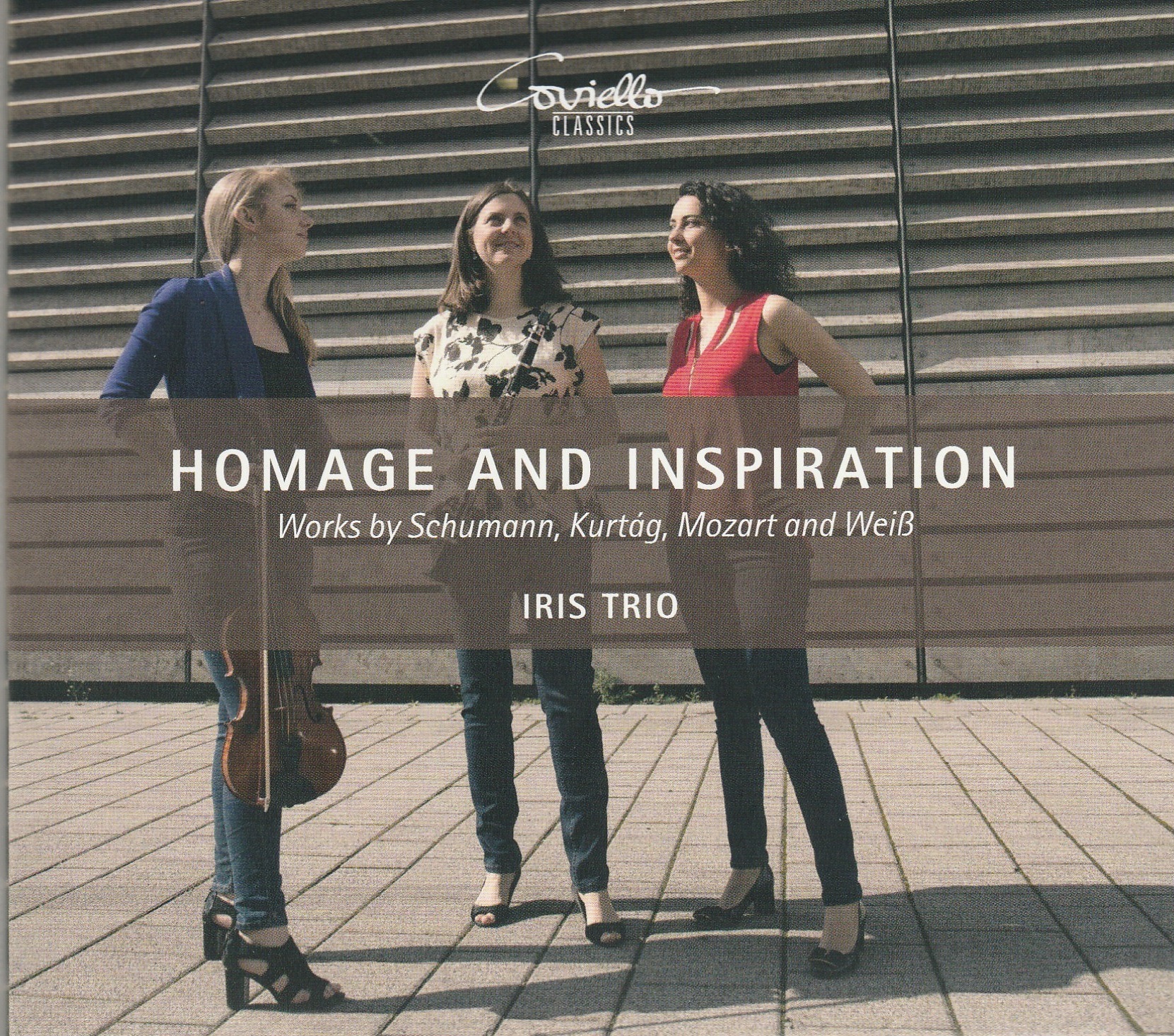
08 Iris TrioHomage and Inspiration – Works by Schumann, Kurtág, Mozart and Weiss
Iris Trio
Coviello Classics COV92002 (iristrio.com)

Reviewing a former student’s second chamber music recording in as many years nudges my feelings from pride toward sheer professional envy, especially because this is the better of two fine discs involving clarinetist Christine Carter. Cleverly compiled, the disc of music for clarinet, viola (Molly Carr) and piano (Anna Petrova) explores the way each work was influenced by the previous one.

In 1786, Mozart composed his Trio in E-flat Major, K498, known familiarly as the “Kegelstatt,” for his friend and clarinetist Anton Stadler (for whom he also wrote the Quintet for Clarinet and Strings and the Concerto K.622). Robert Schumann responded with his peculiar Märchenerzählungen, Op.132 in 1853. Hungarian composer György Kurtág wrote a reflection on the odd personae populating much of Schumann’s music, including this trio, in his Hommage à R. Sch. Op.15d. Finally on the disc is a recent commission for the same grouping by Christof Weiß (whose liner notes provide much helpful information), his Drittes Klaviertrio für Klarinette, Viola und Klavier “Gespräch unter Freunden. The works are ordered to highlight the links from past to present, rather than chronologically.

It’s lovely to hear the Mozart presented with such fresh freedom. Pulse is allowed to ease and press forward, such that the music comes close to representing what one so often hears it is meant to depict: a conversation among friends over a game of bowling. A special nod to Petrova; this is a small piano concerto in fact, and she knocks it over with grace and flair.

Working on Kurtág’s Hommage was one of many experiences for which I can thank Robert Aitken and New Music Concerts. These mysterious works are uncannily beautiful, and this rendition is absolutely breathtaking.  

Listen to 'Homage and Inspiration: Works by Schumann, Kurtág, Mozart and Weiss' Now in the Listening Room

Not many months go by without a new set of the Bach solo works for violin or cello appearing, and this month sees two new additions.

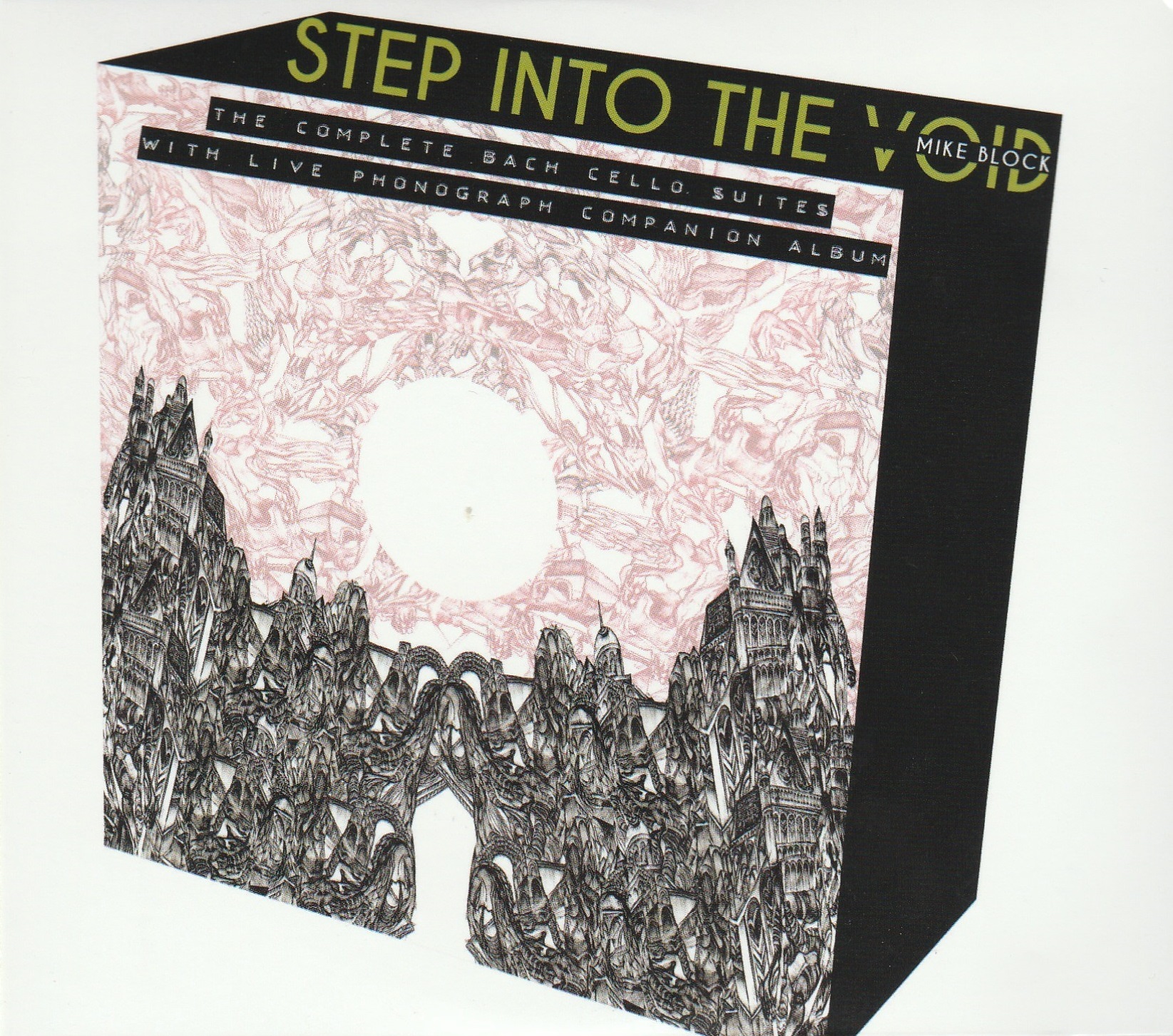
01 Mike BlockThe American cellist Mike Block is a member of the Silkroad Ensemble and inventor of the Block Strap, an attachment that allows the cellist to stand and walk around while playing. His latest release, Step into the Void (Bright Shiny Things BSTC-0132 brightshiny.ninja), is a 3CD set featuring the Complete Bach Cello Suites with a live companion album featuring phonograph performance artist Barry Rothman.

Normally with these releases the booklet notes mention a lifelong study of the works and an attempt to define a personal approach to the music before committing a performance to disc, but while Block admits to doing “the obligatory study” of various editions and recordings with the goal of creating his own consistent and historically informed interpretation, he now opts instead for spontaneity preferring to find different ways of playing them every time and not making too many performance decisions in advance, instead letting the feel of the audience and the acoustic space be his guide.

Certainly there’s a refreshing freedom and a sense of exploration in his beautiful playing here, a feeling of “let’s see where this goes” with delightful results. For this album he limited himself to two takes for each movement in order to “stay in the moment” and “play from the gut.” He also chose not to observe repeats in the dance movements (i.e. 30 of the 36 movements – all but the opening Preludes) so the two Cello Suite CDs are relatively short at about 37 and 50 minutes respectively.

The third CD, recorded live at a sold-out show a few days after the recording of the Bach Suites, grew from an earlier free-improvisation performance with Rothman. Block asked if they could play a completely improvised live duo concert with him using only material from the Bach Cello Suites. The results are quite fascinating – with less LP interaction than you might expect – although probably not to everyone’s taste.

A bonus track of Block’s own pizzicato Prelude to a Dream completes a quite special set.

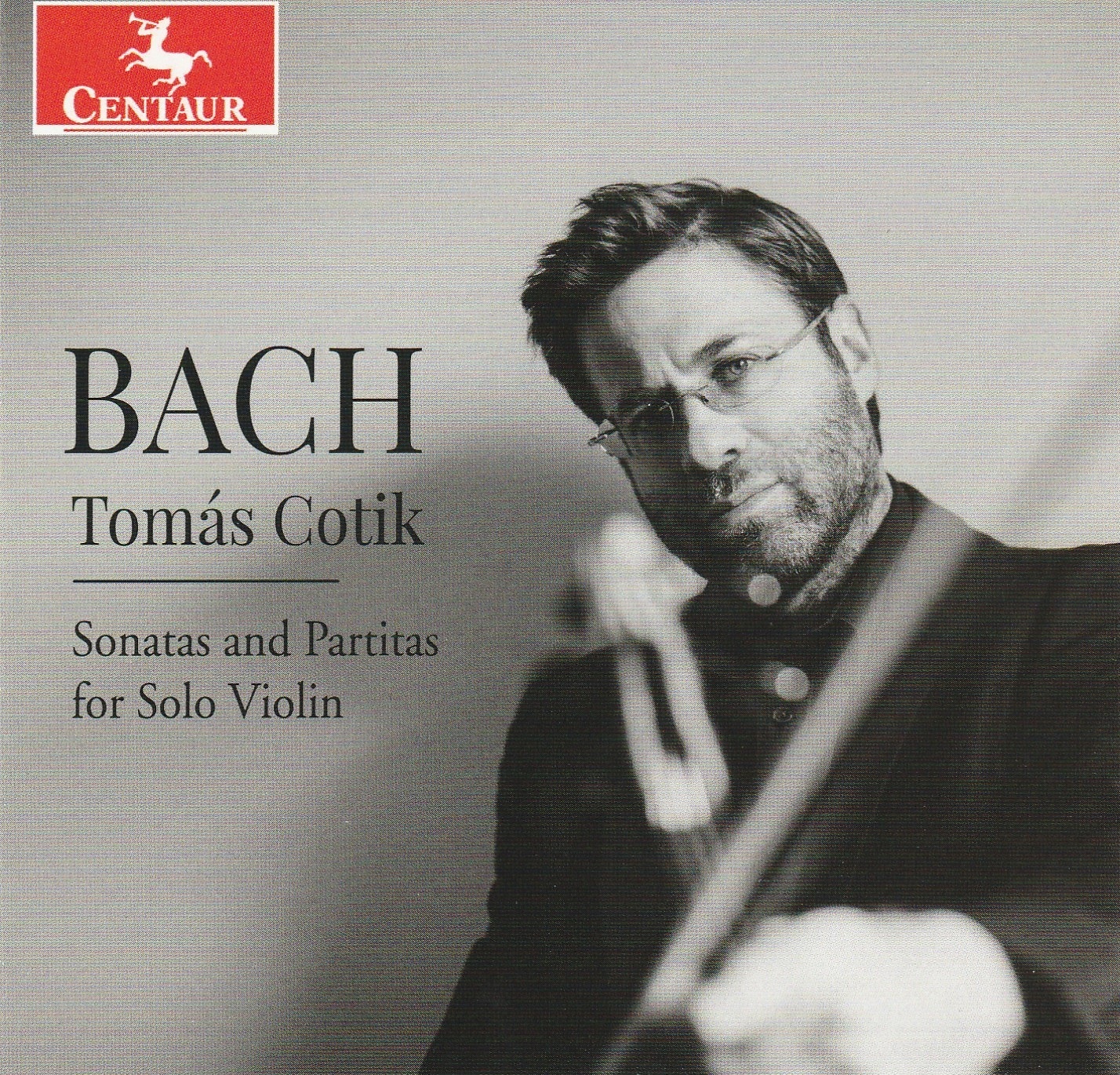
02 Bach CotikViolinist Tomás Cotik’s brilliant recording of the Bach Sonatas and Partitas for Solo Violin (Centaur CRC 3755/3756 tomascotik.com) is released this month to mark the 300th anniversary of their composition.

The promo copy came with an extremely detailed 32-page booklet which appears to be a collection of the ten brief articles Cotik wrote for The Strad magazine last year, and which can be accessed through his website at tomascotik.com. Just about every approach to performance issues is addressed – everything from the physical instrument and bow through early treatises and editions, to the implementation of slurs, dynamics, chords, vibrato, pitch, ornaments, trills and much more.

Cotik uses a modern violin – albeit with softer and more resonant strings than usual – with a Baroque bow, which he feels offers more expressive potential, subtle nuances and transparent textures and allows for “a lighter sound, quicker, more flowing tempi, and lively articulations.” That’s exactly what we get here, with Cotik producing a smooth but bright sound with a lightness and agility that is quite breathtaking and never in any danger of becoming heavy-handed or over-stressed. Slower tempos are relaxed but never allowed to drag; faster tempos are dazzlingly brilliant, with faultless intonation.

The result is a very personal and distinctive sound and style, with even the massive D-minor Chaconne never approaching the heavy and ponderous tones of some recordings.

Interestingly, Cotik repeatedly returns in his writings to the need not to be hide-bound by rules of interpretation; studying the music is just the starting point of a journey where interpretation changes along the way. He admits that many of those challenges “can ultimately be solved only by each of you in performance – not to mention differently every time” (my italics).

And perhaps, as with Mike Block, that’s the secret here; never settle for one consistent interpretation and always let curiosity be a constant inspiration. If Tomás Cotik ever revisits these works on record it will be fascinating to hear the results, but it’s hard to see how they could be better than this.

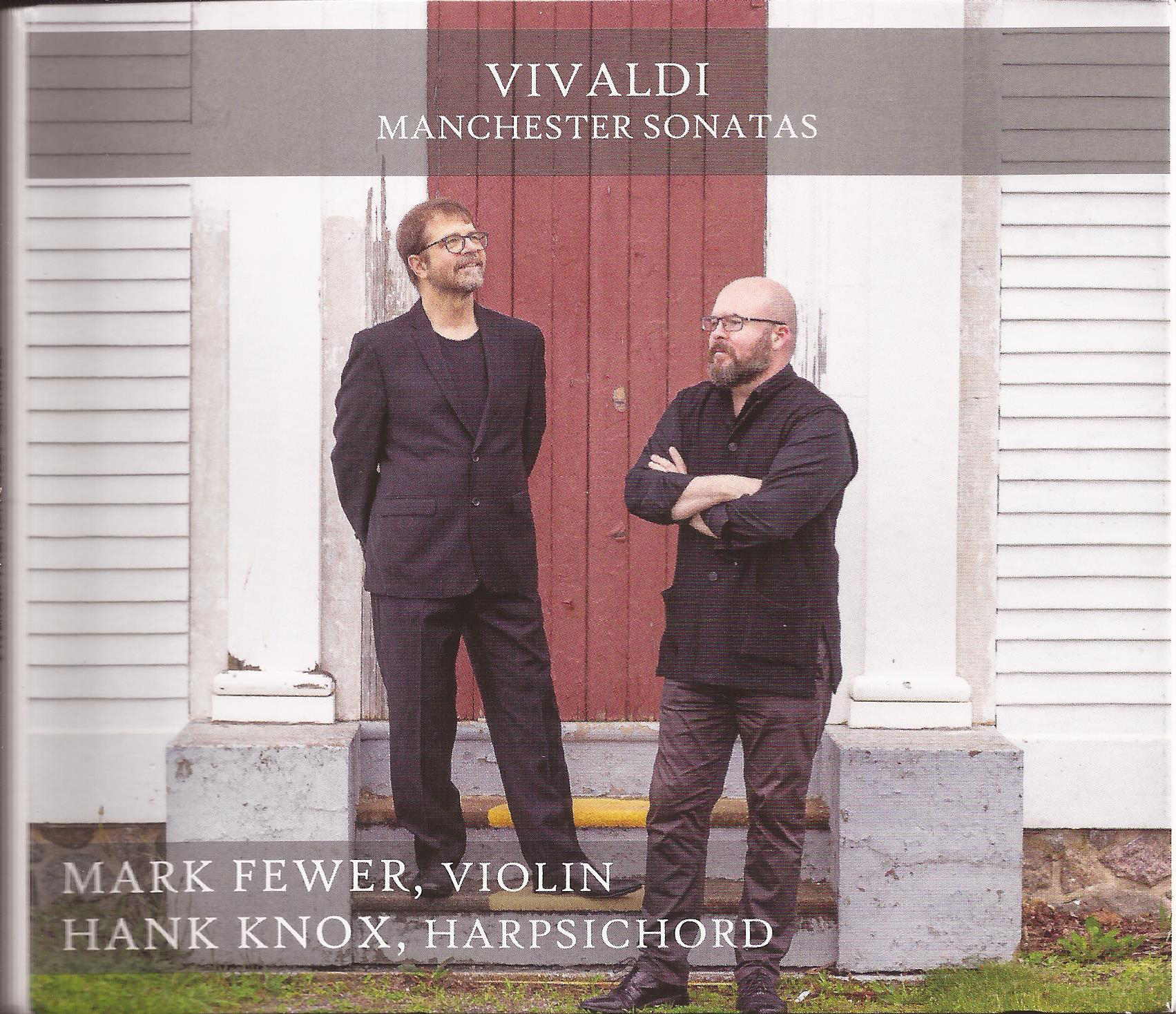
03 FewerManchester isn’t exactly a city you associate with Baroque violin sonatas, but it’s front and centre in Vivaldi – Manchester Sonatas, an excellent new 2CD set from violinist Mark Fewer and harpsichordist Hank Knox (Leaf Music LM229 leaf-music.ca).

The manuscripts for this collection of 12 works by Antonio Vivaldi originated in the private collection of Vivaldi’s contemporary Cardinal Ottoboni, passing through several owners (including Handel’s Messiah librettist Charles Jennens) before being purchased by the Manchester Public Library in 1964. Even so, they were only discovered in Manchester’s Henry Watson Music Library in 1973 by musicologist Michael Talbot.

Apparently dating from the 1716-1717 period the collection contains only four sonatas that were completely new – Nos. 5, 10, 11 and 12 – the remaining eight known to exist in earlier sources although reworked in numerous ways here to fit the duo genre. The violin part, while quite detailed for the period, still leaves room for embellishment by the performer; the harpsichord part, meanwhile, does not even feature a figured bass line most of the time, so Knox has full rein when it comes to realizing the accompaniment.

Fewer’s playing is bright, assured and technically brilliant, with Knox supplying a rich accompaniment that focuses more on harmonic support than contrapuntal interplay of melodic voices. The sonatas themselves are highly entertaining and inventive, featuring less of the usual Vivaldi arpeggios, scales and sequences than you might expect. The fast movements in particular are quite exhilarating.

There are no track timings, but the two CDs run to 68 and 63 minutes respectively.

Listen to 'Vivaldi: Manchester Sonatas' Now in the Listening Room

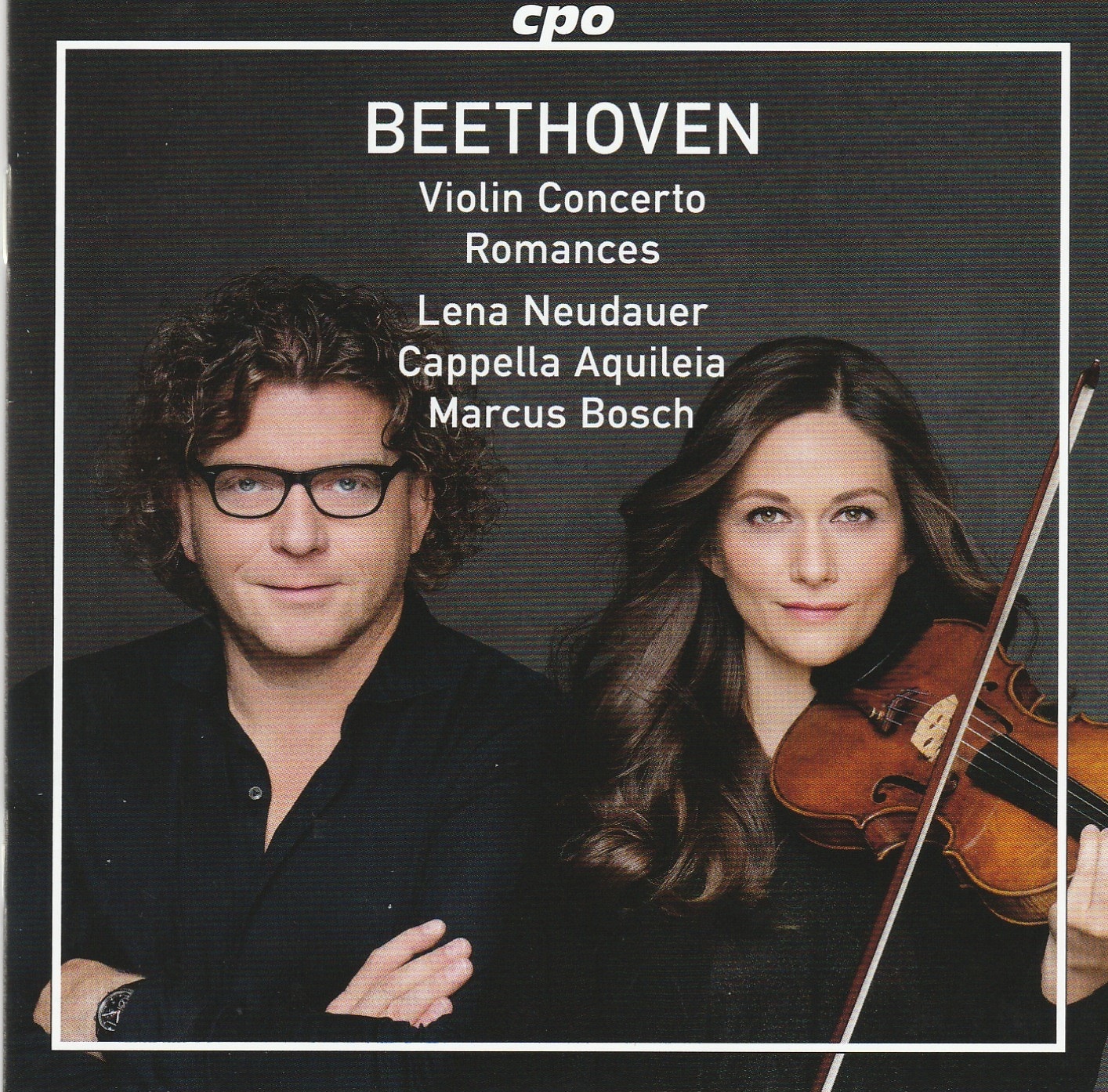
04 Lena NeudauerThere are quite lovely performances of the Beethoven Violin Concerto & Romances on a new CD featuring Lena Neudauer and the Cappella Aquileia under Marcus Bosch (cpo 777 559-2 naxosdirect.com).

The ensemble, founded by Bosch in 2011 as the orchestra for the Heidenheim Opera Festival, draws top-level musicians from across Germany and beyond, with its size based on the original chamber-symphony proportions of the Leipzig Gewandhaus Orchestra. There’s a resulting clarity and transparency to the playing that makes the concerto in particular less heavy than in many performances, the quite dry and short opening timpani strokes setting the stage for an idiomatic performance that never lacks emotional depth. The timpani also features in the first movement cadenza, Neudauer drawing on Beethoven’s own cadenza for his piano transcription of the concerto. The Romances in G Major Op.40 and F Major Op.50 have the same delightful feeling of light and clarity without ever sounding lightweight.

Neudauer’s playing throughout is exemplary and stylistically beautifully judged – hardly surprising given her admission that it was Thomas Zehetmair’s recording with Franz Bruggen’s Orchestra of the 18th Century that was the key to her understanding the concerto. Bosch provides sympathetic support on an outstanding CD.

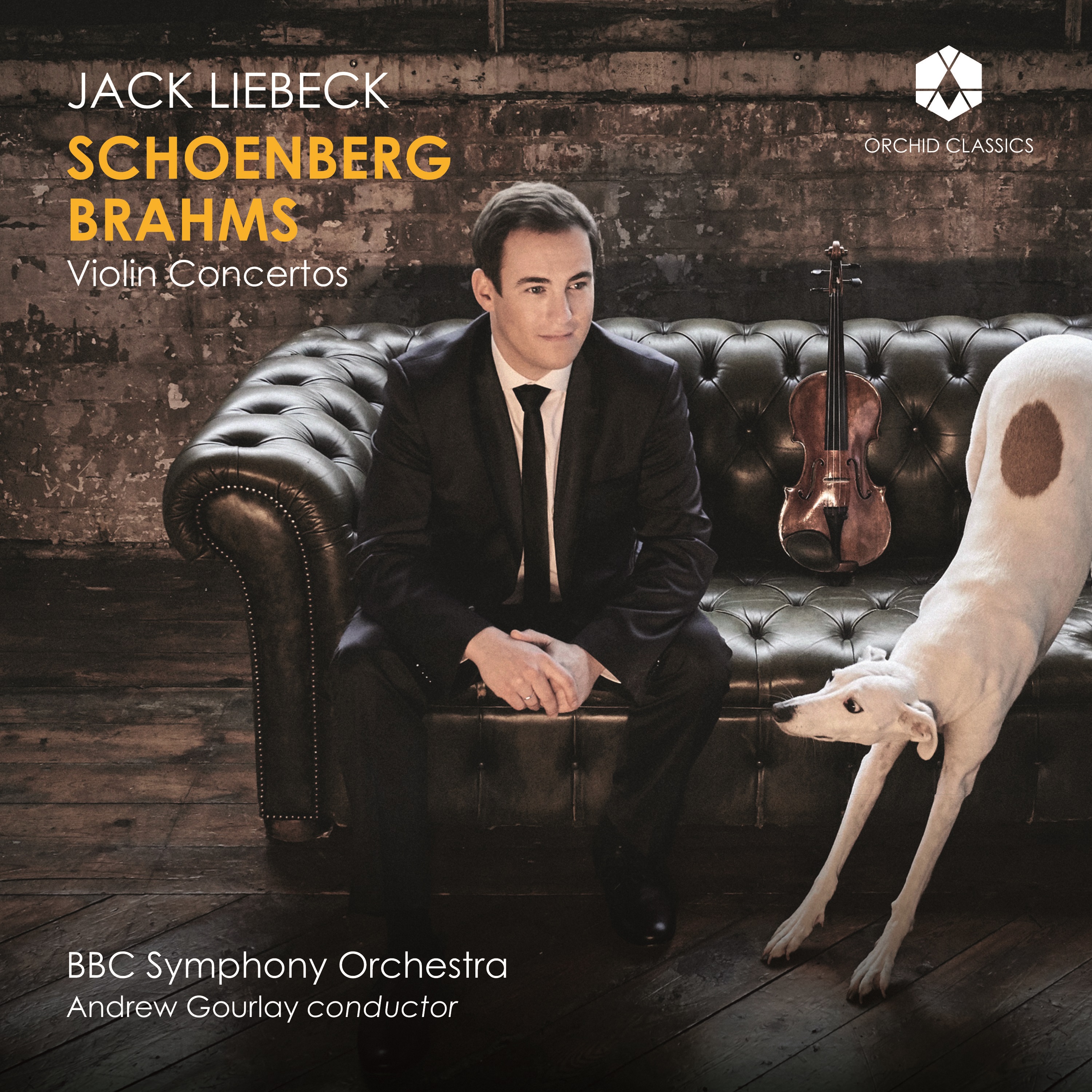
05 Liebeck LGCover 1I can’t remember when I last heard the Schoenberg Violin Concerto, which made Schoenberg Brahms Violin Concertos, the latest CD from the outstanding violinist Jack Liebeck, even more welcome. Andrew Gourlay conducts the BBC Symphony Orchestra (Orchid Classics ORC100129 orchidclassics.com).

The album, celebrating Liebeck’s upcoming 40th birthday, is a deeply personal one for him, described in the booklet notes as a “visceral and passionate portrait of two major violin concertos, emotionally drawing from the experience of his grandfather and honouring the many members of his family who perished during the Holocaust.” More than three dozen of Liebeck’s mother’s Dutch relatives died. Liebeck’s grandfather, Walter Liebeck, was a decent amateur violinist; a student in Germany when Hitler came to power in 1933, he left for South Africa the following year. The Brahms was his favourite concerto.

Schoenberg himself left Germany in 1933 for the United States. His 1936 concerto marked a return to atonality after a relatively tonal period, but despite its 12-tone basis and the composer’s own description of it – “extremely difficult, just as much for the head as for the hands” – it’s a quite stunning work that is emotionally clearly from the heart, and that really deserves to be much more prominent in the mainstream violin concerto repertoire.

Liebeck displays all of his usual qualities – clarity and strength, brilliance of tone, impeccable technique, faultless phrasing and interpretation – in immensely satisfying performances of two quite different but perfectly-paired works. Gourlay and the BBCSO are quite outstanding partners.

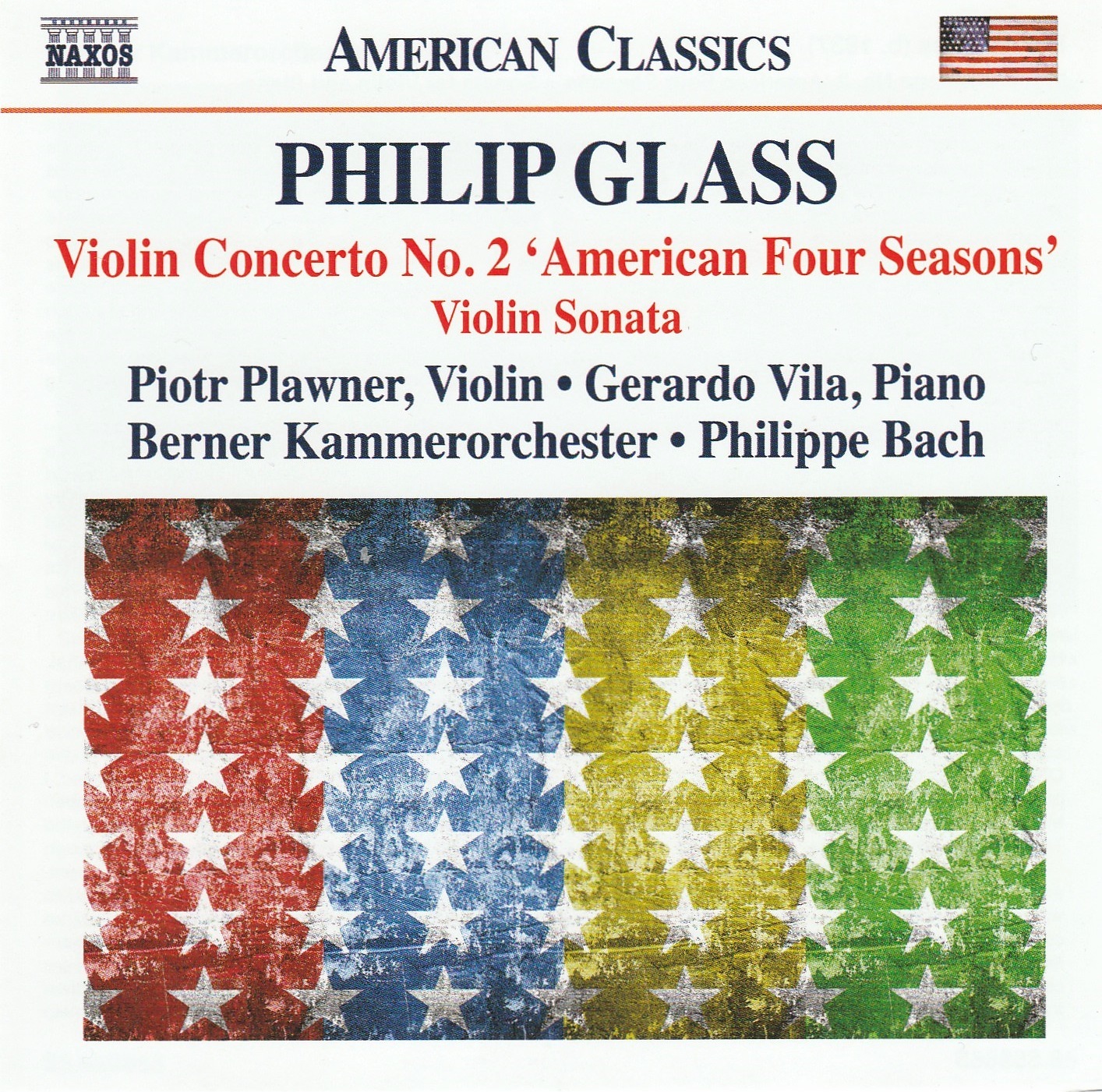
06 Philip GlassViolinist Piotr Plawner is the soloist on Philip Glass American Four Seasons, a new CD in the Naxos American Classics series that features the composer’s Violin Concerto No.2, with Philippe Bach conducting the Berner Kammerorchester, and the Sonata for Violin and Piano with Gerardo Vila (Naxos 8.559865 naxos.com).

It was violinist Robert McDuffie who, enamoured with Glass’ Violin Concerto No.1, suggested the idea of an American Four Seasons as a sequel that could be programmed with the Vivaldi classic. Jointly commissioned by the Toronto Symphony Orchestra and the London Philharmonic Orchestra, the new work was premiered by McDuffie and the TSO under Peter Oundjian in Toronto in December 2009.

Scored for strings and synthesizer (set for harpsichord sound but not used as a continuo) the four movements were deliberately left untitled by Glass, inviting listeners to decide for themselves which movement best depicts each season. A solo violin Prologue and three numbered Songs between the movements – which Glass felt could be extracted as a separate work for solo violin – act as cadenzas. Several Glass characteristics – arpeggios and sequences, for instance – provide a link with the Vivaldi era, but in a strongly tonal work the sound is unmistakably Glass.

Much the same can be said of the Violin Sonata, apparently written with youthful memories of the violin sonatas of Brahms, Fauré and Franck in mind, but again unmistakably Glass, with a show-stopping third movement.

Top-notch performances all round make for a highly enjoyable disc.

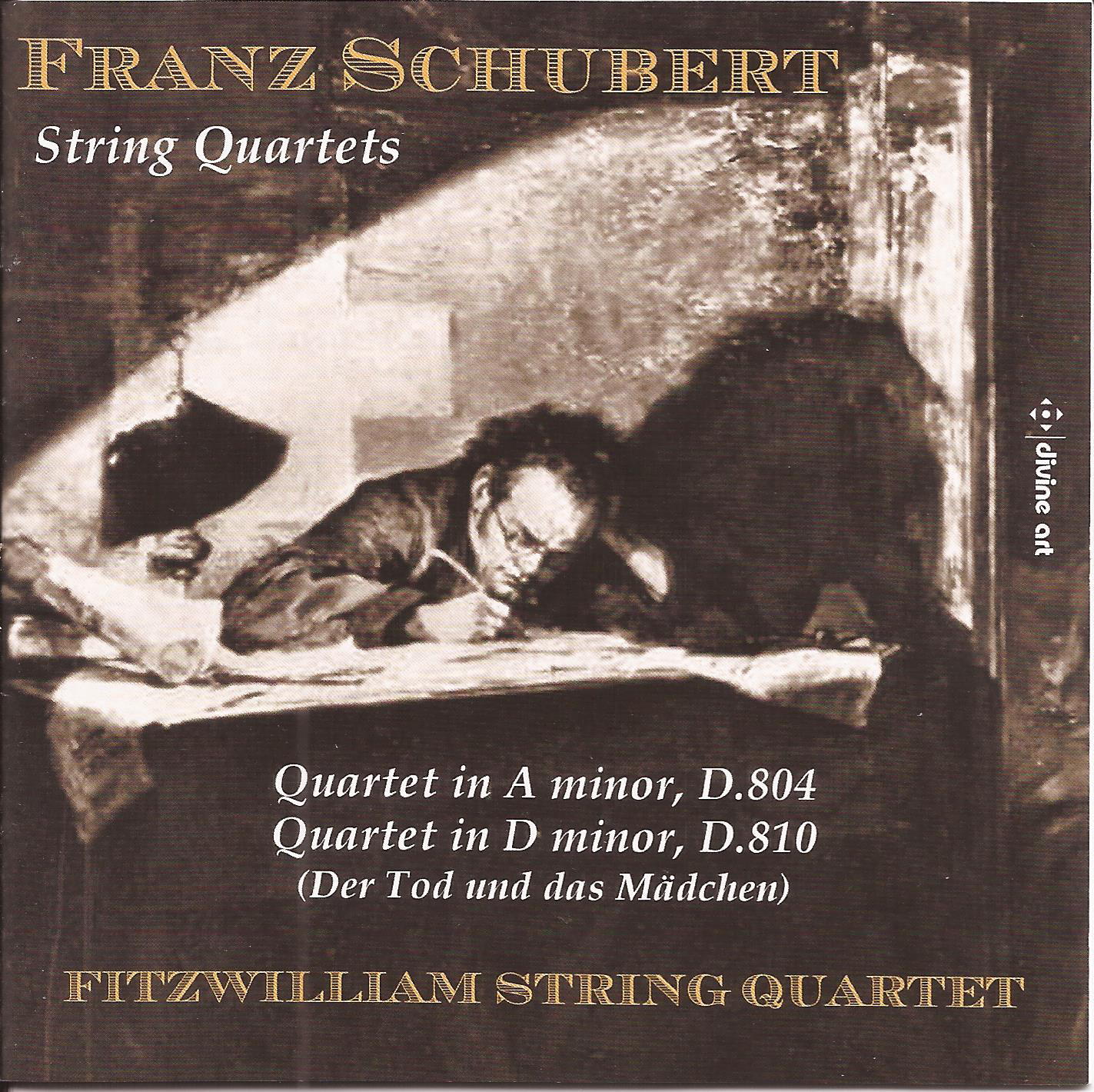
07 FitzwilliamThe Fitzwilliam String Quartet continues the celebration of its 50th anniversary with another outstanding CD following the Shostakovich Three Last Quartets reviewed here last month. This time it’s Franz Schubert String Quartets – those in A Minor D804 (often called the “Rosamunde”) and the monumental D Minor D810 “Death and the Maiden” – performed on period instruments with Viennese gut strings (Divine Art dda 25197 naxosdirect.com).

Violist Alan George’s outstanding booklet notes once again add immensely to our understanding of these almost symphonic works and the performance questions they raise – questions superbly answered by the FSQ. Vibrato – if used at all – functions as an expressive device, emphasising accents, increasing intensity and employed as decoration or ornamentation. Similarly, historically informed use of the bow, the treatment of the abundant dynamic markings and the approach to choice of tempo were all subjects with which the ensemble took great pains.

The resulting performances consequently have a feeling of authenticity that is quite remarkable and perfectly exploits the emotional range of these visionary works. In spite of knowing and coaching the Death and the Maiden quartet for many years, the Fitzwilliam only added it to their own repertoire eight years ago, although it sounds as if they’ve been performing it all their lives; the wild finale, says Alan George, “still leaves us all physically and emotionally shaking.”

01 CPE Bach
CPE Bach – The Solo Keyboard Music Vol.39

Miklós Spányi
BIS BIS-2370 (naxosdirect.com) 

Verschiedener (varied) is perhaps an understatement for the sheer variety of compositions on this CD. The 22 movements break down into forms as intense and individual as Fantasias lasting less than two minutes and as structured as a 23-minute conventional three-movement Concerto. Miklós Spányi has thus set himself a challenge. In fact, regardless of the type of movement, throughout the whole of this CD he has to draw on the tremendous expertise normally required for compositions by the (i.e. JS) Bach. The aforementioned Concerto in its Allegretto and Allegro movements bear this out.

As if the compositions themselves were not sufficiently testing, Spányi discusses at great length the problems posed by the harpsichords of the day. There was a trend at the court of CPE Bach’s employer (Frederick the Great), to commission harpsichords from one highly fashionable centre, London. These instruments often incorporated specialized attachments not usually found on other harpsichords, something reflected in CPE Bach’s work – and adding to Spányi’s task. 

While it is difficult to single out the most attractive tracks on this highly varied and attractive CD, the measured Allegro ma non troppo from the Sonata in D Minor is highly enjoyable, as are the demandingSinfonia in G Major and Fugue in G Minor.  

Spányi has taken on so much to bring us this particular demonstration of CPE Bach’s skills and ingenuity. His interpretations deserve a wide audience.

Michael Schwartz

02 Jean Muller Mozart
Mozart – Piano Sonatas Vol.2

Jean Muller
Hänssler Classics HC19074 (naxosdirect.com) 

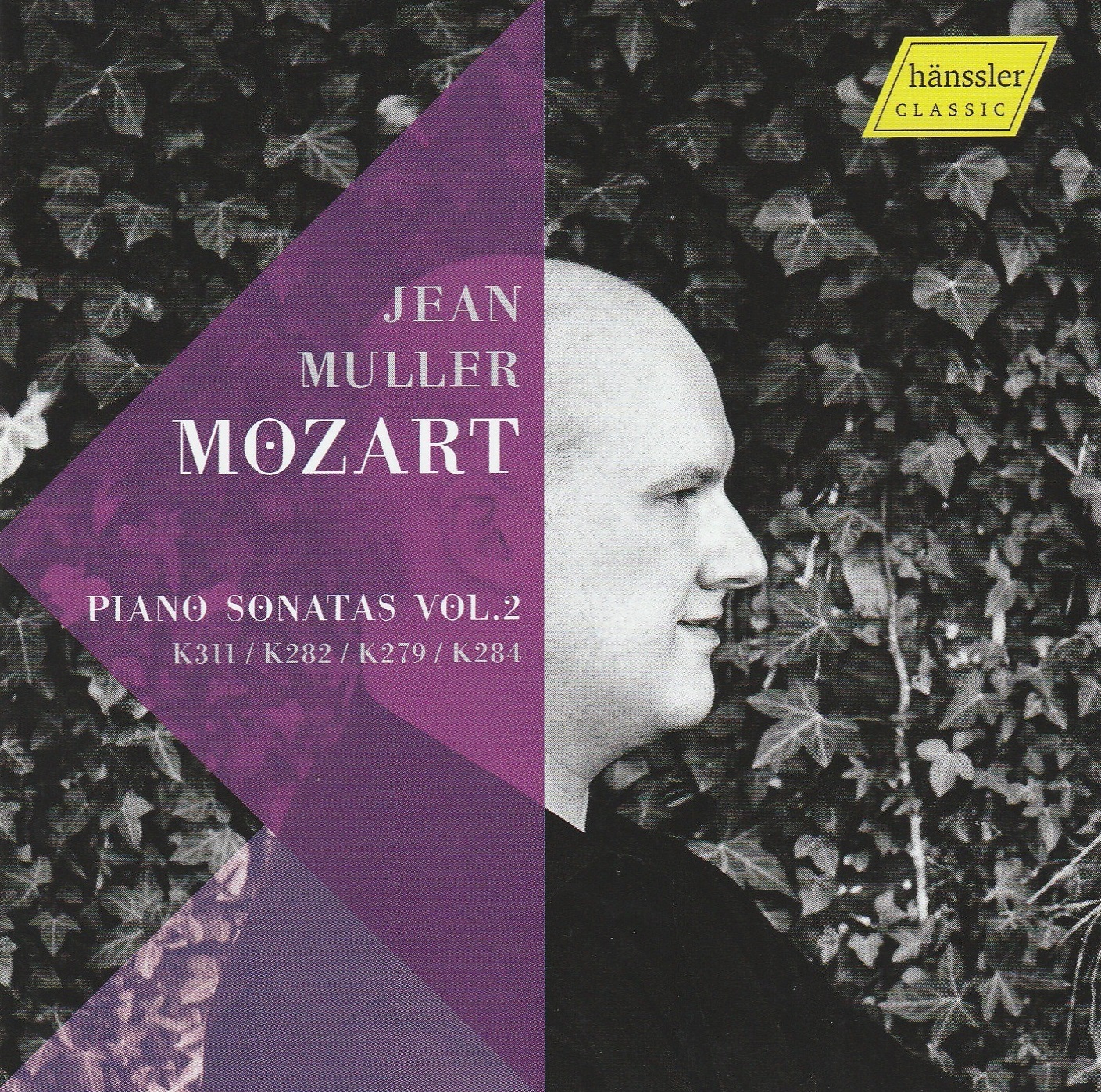
In a 21st-century sonic sea, awash with dozens of recordings of Mozart sonatas released each year, the savvy listener must scrutinize attributes from one such disc over another, divining the hallmarks of Mozartian keyboard perfection simply via one’s own tastes. In the case of Luxembourgian pianist Jean Muller’s newest release on the Hänssler Classic label, the listening experience is immediately amicable: we deeply appreciate Muller’s gifts at delivering this repertoire with expertise and humbled reverence.

Opening with Mozart’s inspired D Major Sonata, K311 – written in Mannheim in December 1777 – this record gently sets two oft-played works against two more heard infrequently; this programming is subtle and perfectly balanced. As bookends to the disc, the two sonatas in D stand as points of departure and return, closing with the earlier work of the two, K284, sometimes nicknamed the “Dürnitz” Sonata. (It was written in 1775 for a Baron von Dürnitz – a bassoonist – who infamously withheld payment for the sonata!). Incidentally, it is the longest of Mozart’s 19 solo piano sonatas.

Muller brings utter neoclassical eloquence to all four sonatas on the album, charming with cajoling melodies and playful ornamentation. The imaginative – even boyish – spirit of Mozart’s keyboard is fully on display here. Every interpretive decision Muller makes is of the highest order, historically informed and beautiful to behold. He has produced an engaging, aesthetically satisfying album, sure to make any savvy Mozart listener smile with delight.

Adam Sherkin

03 Galosi Games
Games

Melissa Galosi
Col legno CL3 1CD 15001 (naxosdirect.com) 

Italian pianist Melissa Galosi makes a strong case for the common wellsprings of both play and music on her debut album Games. She presents an argument for her thesis in piano music by master European composers of the 18th (W. A. Mozart) and 20th (György Kurtág) centuries. Kurtág rediscovered his compositional creativity in the 1970s through his observations of “…children who were spontaneously playing an instrument … who still saw the piano simply as a toy. They try to touch it, to caress it; they attack it and let their fingers run along the keyboard […] pure pleasure in the act of playing, joy of daring…” These experiences inspired his Játékok (“Games” in Hungarian), a substantial collection of piano works imbued with the creativity and wit of youthful games.

On the other hand Mozart never had a true childhood. Driven by his musician father, by the age of three he was hard at work practising the piano. His father kept him constantly practising, performing and touring: the very model of the prototypical child prodigy. Yet W.A. maintained a childlike sense of play for his entire life.

Galosi has chosen 17 aphoristic works from Játékok, interspersed with excerpts from three works by Mozart: variations on the famous Ah vous dirai-je maman (“Twinkle, Twinkle…”) and two other variation suites. I found the “mixed tape” across two centuries that Galosi presents convincing, musically delightful. Her playing is direct, unaffected, yet energetic and incisive when the music calls for it.

Andrew Timar

04 Young Ah Tak
Beethoven Piano Sonatas Nos. 23; 18; 6

Young-Ah Tak
Steinway & Sons 30106 (steinway.com) 

With his 250th birthday approaching, the popularity of Ludwig van Beethoven continues unabated for classical music audiences and performers alike. Captured here in her debut recording for the Steinway label, South Korean-born, now America-residing pianist, educator (on the faculty at SUNY Potsdam’s Crane School of Music) and academic, Young-Ah Tak, performs the late composer’s piano sonatas with a deft touch, a stylistically appropriate grand Romantic gesture and a level of familiarity with LvB’s work that is unsurprising, given the fact that her first solo recital, at age nine no less, included some of the very pieces captured here.

Recorded live at New York City’s Steinway Hall, this CD has an appropriately intimate quality to it and, as such, the engaged listener can identify, and, perhaps, even relate to the artistic struggle that occurs when an ambitious and deservedly feted pianist takes on a repertoire of well-trodden (and perhaps overly familiar) material – think Sonata No.23 in F Minor, “Appassionata” – yet desires to reify the expectations of an audience who demand that she make this material her own. Not an easy task, to be sure, but in Tak’s capable hands, new and effervescent subtleties of this music are introduced, exposed and played with to the satisfaction of both the performer and audience (and one would hope composer too). Nowhere is this more evident than in Tak’s dramatic interpretation of the clarion call “The Hunt,” (Piano Sonata No.18 in E-flat Major, Op.31, No.3). A recommended addition for piano enthusiasts and LvB collectors alike.

Andrew Scott

05 Beethoven Rosenbaum
Beethoven – Sonatas Opp.26 & 90

Victor Rosenbaum
Bridge Records 9517 (bridgerecords.com)

Victor Rosenbaum’s third recording for Bridge Records underlines his affinity for classical-era composers. Here we have a selection of Beethoven’s piano pieces ranging from early to late works and including two sonatas, variations, rondo and bagatelles. The chronological progression of pieces on this album is a wonderful treatise on the evolution of Beethoven’s compositional style and techniques.

It is especially enjoyable listening to the two sonatas on this album. Sonata in A-flat Major Op.26 is charming and unconventionally structured, opening with a relatively slow movement in the form of a theme with variations. Rosenbaum is delightfully playful in the Scherzo and introspective in his interpretation of the striking Funeral March (third movement). Written some 14 years later, Sonata in E Major Op.90 contains only two movements but they are vastly different in character. The first movement, written in E Minor, is dramatic, depicting the loneliness and anguish that will later become even more prominent in Beethoven’s music. The second movement, written in E Major is, in contrast, gentle and more Romantic in character. Rosenbaum navigates between the two worlds so naturally; his interpretation is powerful in the first movement and exquisitely nuanced in the second.

The naturalness and the candour of Beethoven’s language is very much suited to Rosenbaum, who has no difficulty communicating his musical ideas with conviction. It is as if the acumen acquired in his long performing career has been poured into every phrase, thus making this recording special.

Ivana Popovic

06 Schumann 4 hands
Schumann – Complete Music for Piano 4-Hands

Roberto Plano; Paola Del Negro
Brilliant Classics 95675 (naxosdirect.com) 

There is something deeply satisfying about playing piano duets. Perhaps it is the synergy one might feel with his fellow player or the shared delight in casual music making. The jubilant sense of teamwork is undeniable in this recording. Pianists Roberto Plano and Paola Del Negro are an unyielding force together, beautifully attuned to each other’s ideas and expressions, and clearly ardent about Schumann’s music. Here we hear it all: passion, precision, style, energy and, above all, joy.

Schumann himself loved playing piano duets and wrote an extensive collection of pieces that ranged from his beginning years as a composer to the late Op.130. This 2CD album includes the whole scope of his piano four-hands music: eight early Polonaises (homage to Schubert); 12 Vierhändige Klavierstücke fur Kleine and große Kinder (which became well-known and loved pieces of the piano repertoire); Bilder aus Osten (influenced by Eastern poetry and philosophy); and two late collections of dance pieces, Ballszenen and Kinderball.

Some of these compositions are quite complex and many became quite popular, inspiring various arrangements. Here they are played with a combination of gusto and lyricism and an evident sense of style. With this album Plano and Del Negro pay tribute to all the intricacies and wonders of Schumann’s piano music while bringing forward their own artistic perspectives.

Ivana Popovic

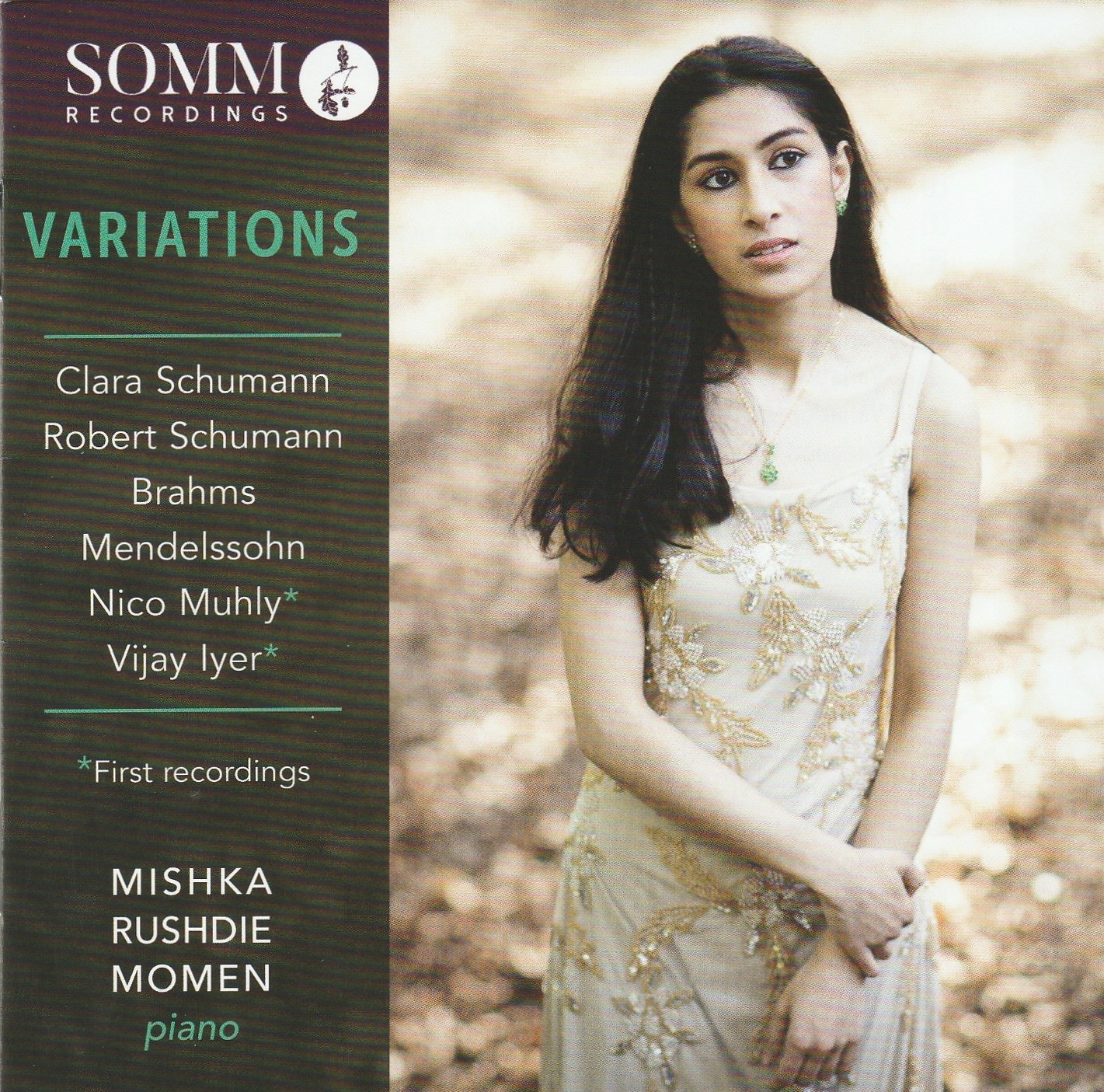
07 Mishka Rushdie Momen
Variations

Mishka Rushdie Momen
Somm Recordings SOMMCD 0603 (somm-recordings.com) 

The bright, young pianist Mishka Rushdie Momen has released a new recording that features works in variation form by assorted composers: Clara Wieck and Robert Schumann, Brahms, Mendelssohn, Nico Muhly and Vijay Iyer. Rushdie Momen’s thoughtful liner notes offer a rationale for her recording choices, explaining the “variation” thread that connects each piece on the disc. In some cases, there are direct quotes and reorganization of materials from an older piece to a newer one (Vijay Iyer’s Hallucination Party, After R. Schumann’s Op.99 is one such example). In other instances, works are referenced by thematic origin: Robert Schumann wrote variations on a theme by Clara and vice-versa; Brahms wrote variations on a theme by Robert Schumann, and so on.

Throughout the disc, one is struck by Rushdie Momen’s tonal command and wide-ranging technique as she wields the instrument in a quest for beauty of sound. This is a rare phenomenon today, particularly from a performer so young. Warmth and perfection of pianism seem at the forefront of Rushdie Momen’s musicianship; her attention to detail and technical confidence is on par with the artistry of such old master pianists as Clara Haskil, Sviatoslav Richter and Myra Hess.

Rushdie Momen can evidently manage any musical era with aplomb and the premiere recordings of works by Muhy and Iyer offer promise of exciting things yet to come from this gifted young artist. Composers – along with the rest of us – should flock to her keyboard side!

Adam Sherkin

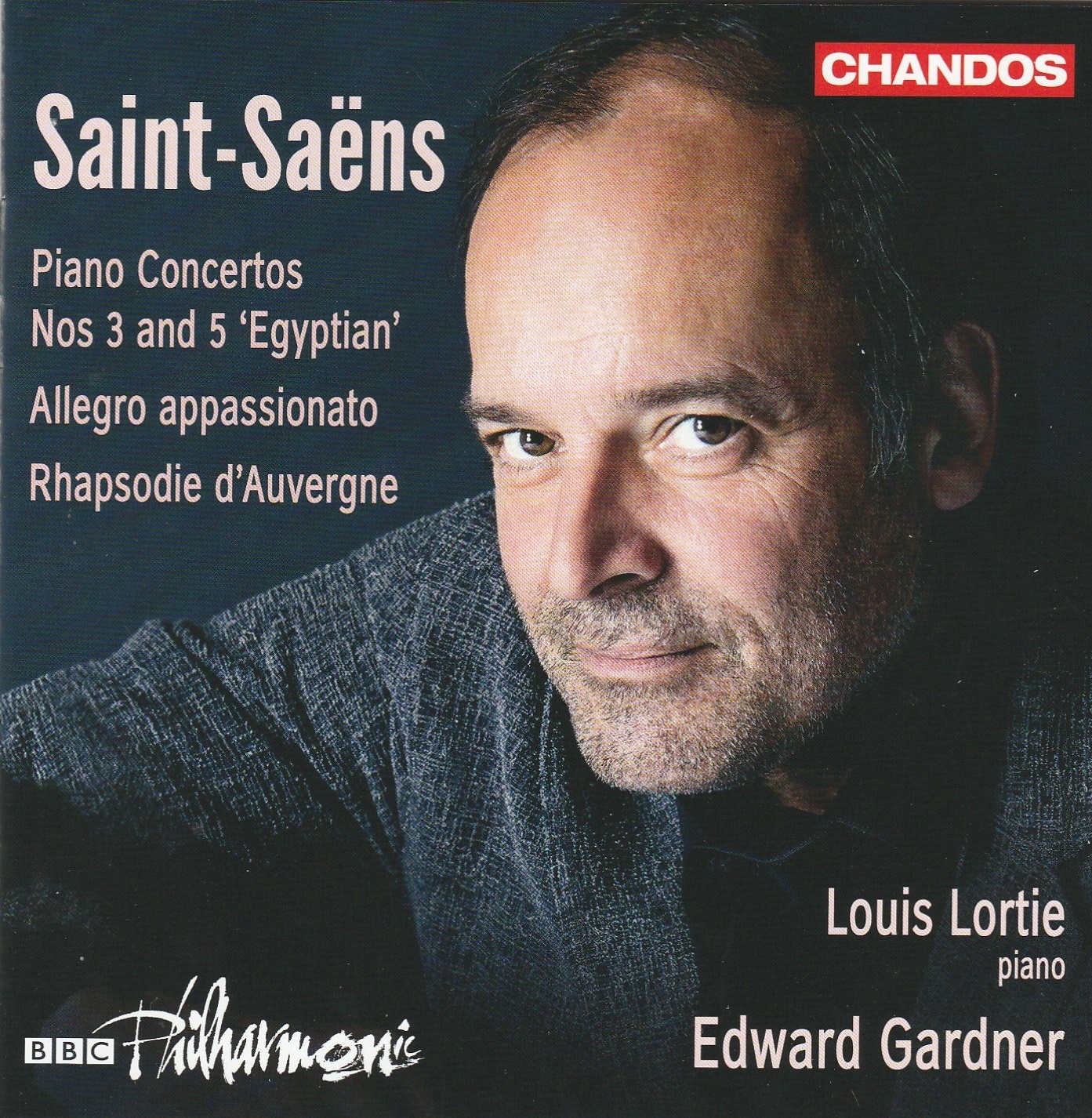
08 Lortie Saint Saens
Saint-Saëns – Piano Concertos 3 & 5

Louis Lortie; BBC Philharmonic; Edward Gardner
Chandos CHAN 20028 (naxosdirect.com) 

Camille Saint-Saëns was an exceptionally gifted pianist, admired by his contemporaries for his dexterity and grand style. Yet despite his significant output of piano music, it’s only the works for piano and orchestra – including five concertos – which seem to have stood the test of time. To be certain, recordings of these compositions are by no means scarce, but this one featuring Louis Lortie and the BBC Philharmonic conducted by Edward Gardner, is a particularly worthy addition to the catalogue.

The majestic Piano Concerto No.3 from 1869 has been often overshadowed by the others – particularly the second – but the pairing of Lortie and the BBC orchestra is a sublime one. From the mysterious opening measures with the arpeggiated piano passages, Lortie demonstrates a flawless technique, his delivery strongly self-assured. The wistful second movement Andante is but a calm interlude before the buoyant and joyous third movement Allegro non troppo.

Piano Concerto No.5 – written in Luxor between 1895 and 1896 and suitably named the “Egyptian” – has always proven more popular. The piece is a true study in contrasts – the opening Allegro alternates between slow and fast segments; the central Andante begins with an introductory blast before settling into its more lyrical section and the piece ends with an energetic Molto allegro, the opening of which simulates the sound of a paddlewheel boat up the Nile.

Interspersed with the concertos are the popular Rhapsodie d’Auvergne and the less familiar Allegro appassionato, both from 1884, and each a satisfying melding of piano with orchestra in under ten minutes. In all, Lortie proves once again he is a pianistic supernova, one who can easily conquer the most demanding repertoire. The clarity of his interpretation and his elegant touch – along with a solid backing from the BBC Philharmonic – combine to make this a stellar recording.

Richard Haskell

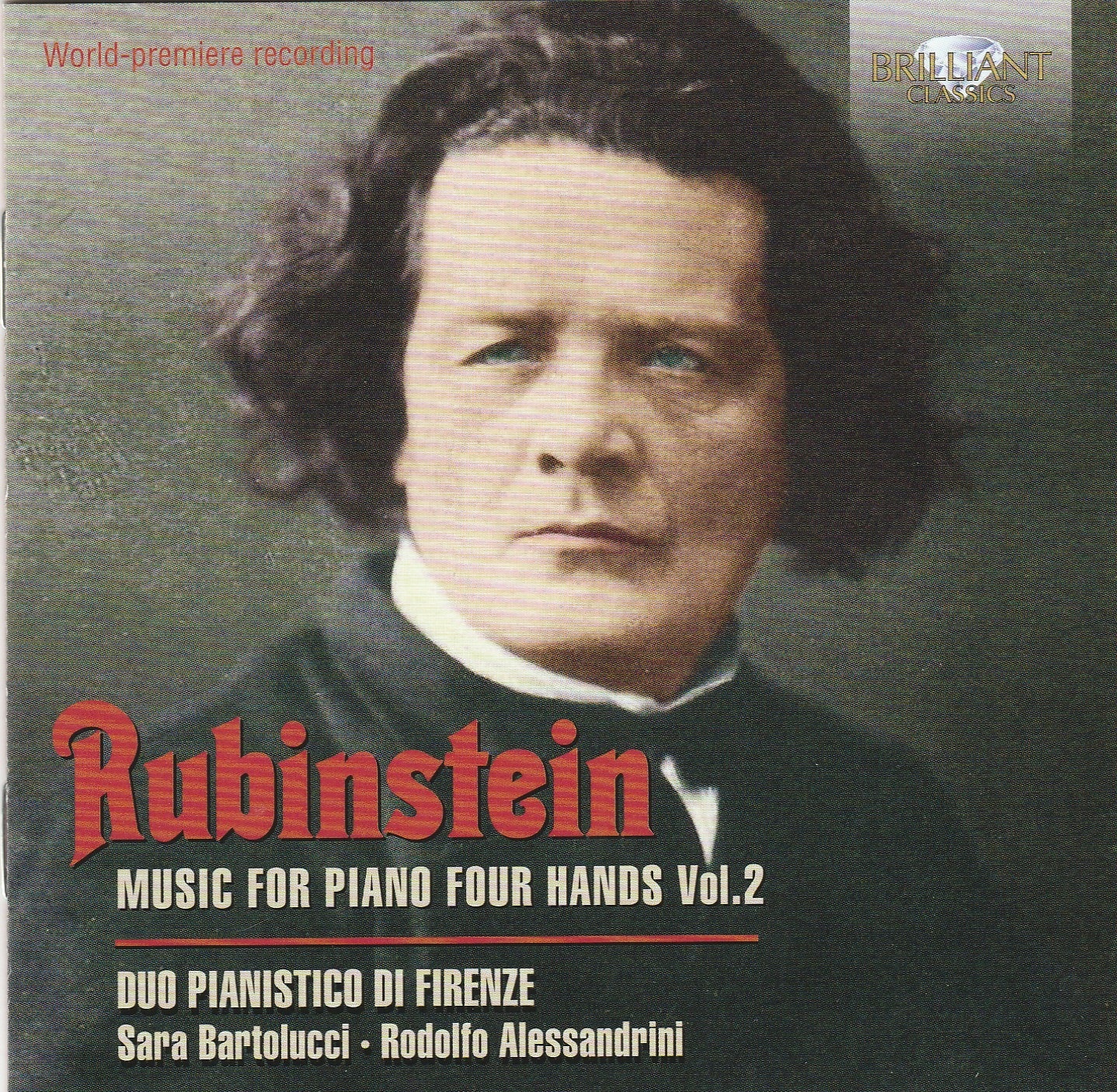
10 Rubinstein 4hands
Rubinstein – Music for Piano Four Hands Vol.2

Duo Pianistico di Firenze
Brilliant Classics 95965 (naxosdirect.com) 

Pianists Sara Bartolucci and Rodolfo Alessandrini, collectively known as Duo Pianistico di Firenze (Piano Duo of Florence) have been garnering the accolades of the classical world since 1990, mining the overlooked, rarely performed or forgotten piano repertoire of the Western art music canon on a series of recordings, concerts and artistic residencies. Here, on this sprawling 2019 double CD released on the Brilliant Classics label, the Italian duo mightily dig in to the little-known, four-hand piano work of Russian composer Anton Rubinstein (1829–1894).

A touring piano soloist, composer and educator (he is perhaps best known as the teacher of Tchaikovsky), Rubinstein’s work here, similar to some of the best-known pieces of JS Bach, is didactically pedagogical by design. As founder of the Saint Petersburg Conservatory, Rubinstein’s 20-movement long Bal Costumé is not a high-water mark of Russian pianistic virtuosity (for which Rubinstein was known), but rather is intentionally welcoming and accessible to amateur and student pianists, a collection of tuneful miniatures meant for parlour performances for attendees at a costume ball. Although Rubinstein the pianist would become celebrated for his virtuoso performances, he too included Bal costumé in his concerts, performing with Anna Yesipova or Monika Terminskaya, garnering accolades for the popular Toréador et Andalouse, movement seven from this suite. Captured here as the complete suite, this recommended CD set features the beautiful four-hand touch, playing and simpatico interaction of Bartolucci and Alessandrini seamlessly weaving together a unified tapestry of sound that is worth adding to one’s classical CD collection.

Andrew Scott

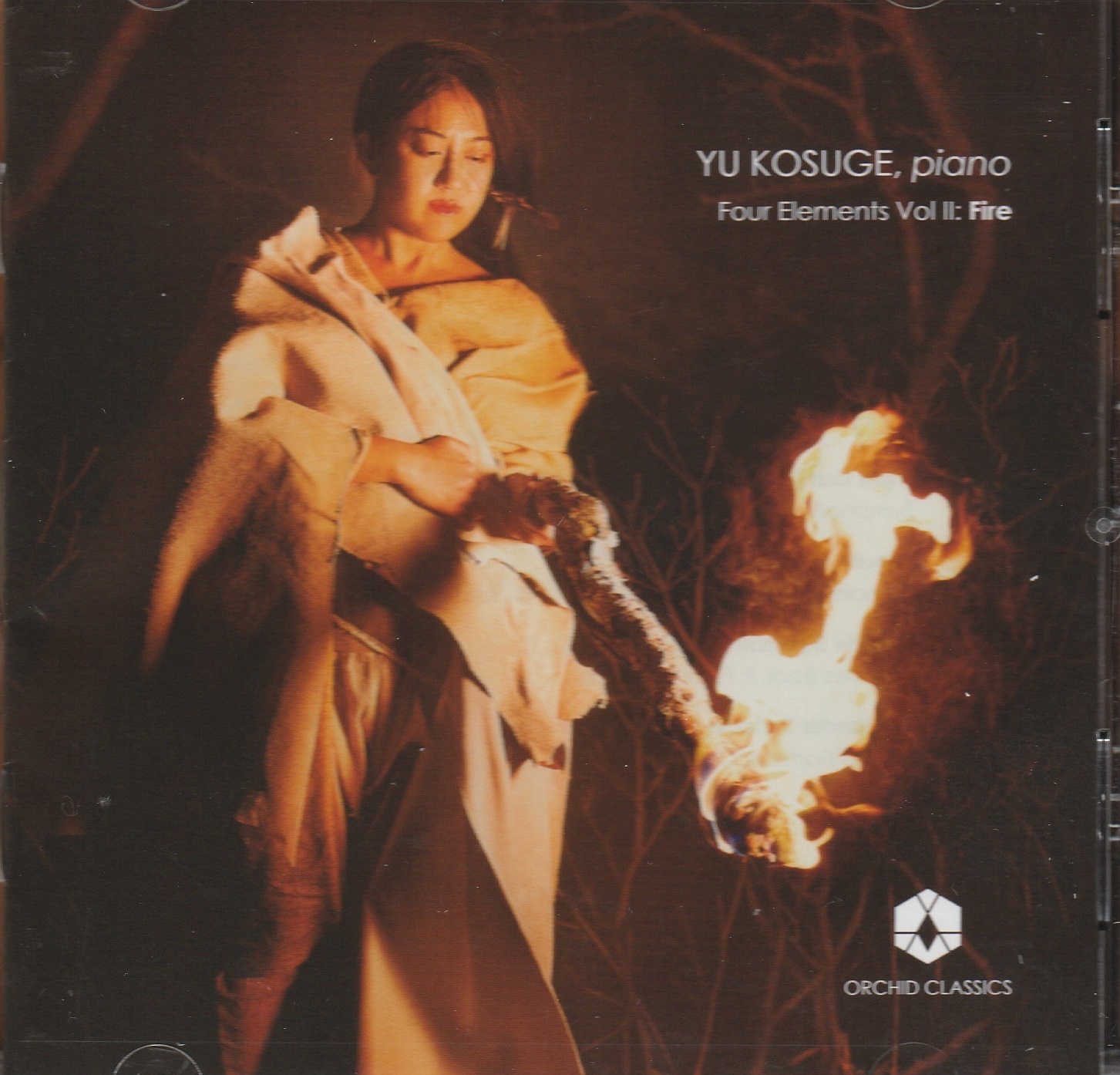
11 Yu Kosugi Fire
Four Elements Vol.2 Fire

Yu Kosuge
Orchid Classics ORC 100108 (orchidclassics.com)

This disc is Volume 2 of Yu Kosuge’s four-CD series Journey of the Four Elements. Fire begins intimately and after the pianist’s long, well-chosen program of late 19th-/early 20th-century compositions closes with grandeur. In Tchaikovsky’s January: At the Fireside, she conveys a family event’s togetherness well, along with imagined romantic passions. By contrast, five pieces from Max Reger’s Dreams at the Fireside evoke solitude. Here the composer remembers piano works from his youth: for example, piece No.2 references Brahms’ well-known Intermezzo No. 2, Op.118 in A Major. Reger adds complex harmony and voice-leading, but fortunately Kosuge clarifies the tonal structure well. Next, a storm arrives in the guise of Liszt’s symphonic poem Prometheus (arr. Ludwig Stark). Sizzling “lightning flashes,” a difficult fugue and bravura alternating octaves followed by cascading chords, present technical challenges that Kosuge masters ably.

Among succeeding short pieces, Debussy’s brief Les soirs illuminés par l’ardeur du charbon (1917) is a welcome, evocative novelty discovered only in 2001; while the Feux d’artifice (Preludes, Book II) ranks with the best recordings I have heard. Kosuge’s touch is even and crisp, her grasp of the fitful harmonic base secure. The disc’s pièce de résistance is five numbers from Stravinsky’s piano version of his great Firebird Suite (1919). Brilliant handling of the Infernal Dance’s syncopations and cross-rhythms, a mysterious mood with magical tremolos in the Lullaby and astonishing bell-like sonorities at the finale’s tremendous climax cap this marvellous CD.

Roger Knox

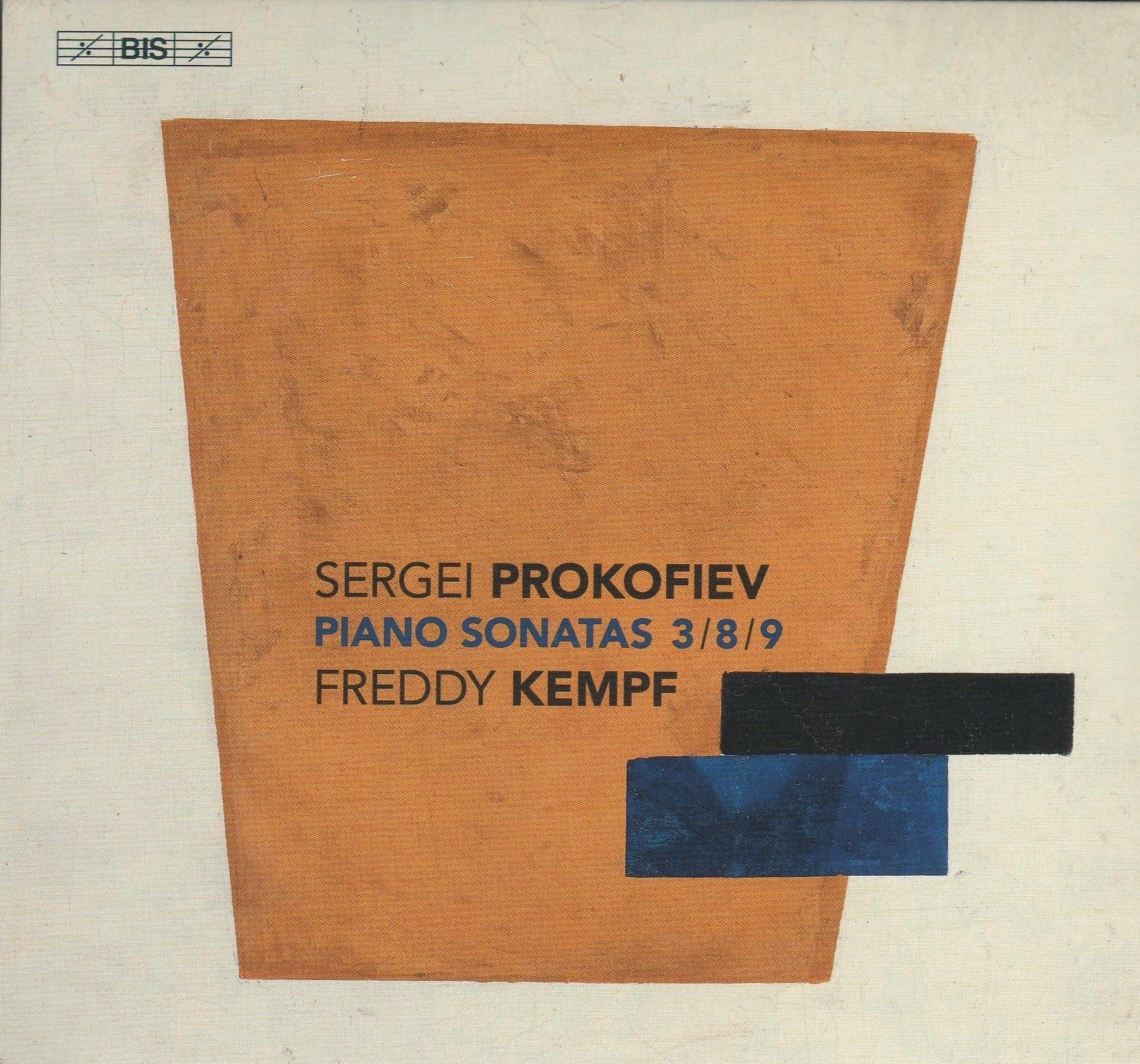
12Prokofiev Kempf
Sergei Prokofiev – Piano Sonatas 3; 8; 9

Freddy Kempf
BIS BIS-2390 SACD (bis.se)

Sergei Prokofiev’s music is a study in dramatic contrasts, not the least because the composer always seemed to look forward while harking back to the past. He was a brilliant piano virtuoso whose work was redolent of melodicism wedded to a tonality that was characterized by cascading warmth often spiked by the force of dramatic rhythms and broad dissonances. All of this is heard in these Piano Sonatas especially the last two – No. 8 and No. 9.

Prokofiev’s work always demanded fingers of flexible steel and those on Freddy Kempf’s hands seem to embody this to perfection. From the first dramatic rendering of the Piano Sonata No. 3 in A Minor Kempf plays like a man possessed, and his breathtaking variety of touch means that the less hard-driven passages of No.8 and No.9 have an unparalleled degree of subtlety and nuance. His muscular style is eminently suited to such tempestuous music.

The Piano Sonata No.3 in A Minor is the shortest and from Prokofiev’s earlier attempts at the form, while No.8 in B-flat Major and No.9 in C Major are much longer and infinitely more intricate. Yet all three live and breathe in sharply characterized music that demands a sense of structure and momentum. Kempf embraces their wide tonal range, sharply drawn contrasts and intricate detail with sublime energy and a wonderful sense of occasion.

Raul da Gama

13 Rachel Mahon
Canadian Organ Music on the Organ of Coventry Cathedral

Rachel Mahon
Delphian Records Ltd. DCD34234 (delphianrecords.co.uk) 

On the surface, this disc appears to be an interesting international essay: Canadian organ music played on an English cathedral organ, performed by a Canadian organist working in the UK. It seems straightforward enough but, if one looks into the historical relationship between Canada and Coventry, a much deeper and meaningful relationship is quickly uncovered. In 1940 the Coventry organ was destroyed by German air bombers, reducing the entire medieval building to a pile of rubble. At the same time, the (Royal) Canadian College of Organists was collecting donations from its members to assist with the rebuilding of damaged English instruments. In the end, the decision was made to dedicate the entire amount of raised funds to Coventry, paying for a major part of their new instrument. It is therefore no surprise that there is a large brass maple leaf on the west-end floor of the Cathedral, commemorating Canada’s generosity.

It is with this historical backdrop in mind that organist Rachel Mahon selected her program. The first work, Healey Willan’s monumental Introduction, Passacaglia and Fugue bridges both countries; born in England, Willan later moved to Canada and eventually became known as the “Dean of Canadian composers.” Mahon treats this tripartite tome with the focus it requires, blending rhapsodic virtuosity with careful attention towards the structure of the composition. Gerald Bales’ Petite Suite and Ruth Watson Henderson’s Chromatic Partita are smaller pieces, but no less satisfying to hear on this magnificent organ, while Rachel Laurin’s Symphony No.1 is simply breathtaking in its immensity and dramatic content.

This disc merits repeated listening for numerous reasons, both historical and immediately practical. Mahon, recently appointed the next director of music at Coventry, is a superb performer with a keen ability to craft a satisfying program, and her debut recording is highly recommended.

Matthew Whitfield

14 Lindsay Garritson
Aphorisms – Piano Music of Carl Vine

Lindsay Garritson
Independent (lindsaygarritson.com) 

The music of composer, pianist and conductor Carl Vine so often evokes the lucidity and sun of this artist’s home country: Australia. The world premiere recording of his Fourth Piano Sonata (2019) is included on a new disc by American pianist, Lindsay Garritson, a disc entirely devoted to Vine’s varied piano catalogue. Pianists tend to revel in performing Vine’s music; it is idiomatic and expressive – Romantic at heart yet fresh and buoyant, unmistakably of our time. (American composer Lowell Liebermann’s aesthetic seems a close relative to Vine’s.)

Garritson throws herself headlong into the fulsome soundscape of Vine’s newest piano sonata, in a whorl of an opener to the record, demanding the listener’s attention. Her heart is clearly devoted to every single note of this album, with a seemingly special affection for The Anne Landa Preludes (2006). These programmatic, deeply expressive pieces are aptly suited to Garritson’s musical sensibility as she relishes their expansive resonating lines and tolling chords, born of a personal mode of expression. After these (12) preludes, the record returns to sonata form, in a rhapsodic performance of one of Vine’s most popular works from his early period, the Piano Sonata No.1 of 1990.

After five Bagatelles, including the haunting Threnody (for all of the innocent victims), Garritson treats the listener to Vine’s Toccatissimo (2011), a robust and thrilling finale to this attractive new album by a self-assured young pianist, with a career on the rise.

Adam Sherkin

01 Grauns1Del Signor Graun
Ludovice Ensemble
Veterum Musica VM021 (veterummusica.com)

Music at the court of Frederick the Great usually conjures up images of JJ Quantz and CPE Bach – or even Frederick himself. That image is now under challenge due to this recording of music by the brothers Graun, who occupied key positions during Frederick’s rule.

This CD features three sonatas by each composer. Some movements are highly spirited. Listen to the Poco Allegro from the opening to the Sonata in D by Carl Heinrich and then contrast it with the Largo from the same sonata; there is an almost hesitant entry of the flute. And some movements are genteel. The Adagio from the Sonata in G is thoughtful and measured.    

Then there is the other Graun, Johann Gottlieb. The Adagio from his Sonata in D demonstrates how much freedom this composer allowed his flutist, what with this movement’s forthright and almost chirpy playing, something enhanced in the following Allegro ma non molto. Joana Amorim obviously appreciates this tuneful opportunity, although it should not be allowed to overshadow Fernando Miguel Jalôto’s harpsichord playing.

Contrasted as they are in their approaches, these two composers’ works are rarely performed these days. It is time for them to be restored to a more popular status.

02 Schumann Symphonies Nos. 2 4 Schumann – Overture Genoveva; Symphonies 2 & 4
London Symphony Orchestra; Sir John Eliot Gardiner
LSO Live LSO0818 (naxosdirect.com)

Sir John Eliot Gardiner represents a new breed of conductors, like Norrington, Jacobs and others who began their careers in Baroque repertoire with period instrument orchestras and then through the back door, came to the classics and Romantics and modern symphony orchestras. Gardiner with the LSO and modern instruments interestingly now turns to the very Romantic music of Robert Schumann.

Schumann’s symphonies have been much maligned in the past by critics saying that he couldn’t orchestrate, but actually this was caused, in Gardiner’s words, by “the late 19th century, opulent concept of Schumann” with muddied textures resulting from the over-Romantic approach of conductors of the time. Gardiner intends to rectify this by bringing “freshness, vivaciousness and clarity” and clean and transparent textures, using his previous experiences with period orchestras.

The Fourth is a particular favourite of mine and also it seems a favourite of conductors. It’s compact, optimistic, forward-looking and full of surprises. Note how Schumann links the movements together with no stops between them, the “trombone sigh” in the first movement development or the mysterious transition between the end of the third and beginning of the fourth movement. I remember Solti practically dancing the lovely melody in the last movement.

The Second is a turbulent affair, a work of genius; the first movement especially, a tremendous tour de force of a single strong rhythmic theme relentlessly driven with neverending variants towards a strong conclusion on the brass. Gardiner opts for fast speeds throughout (except for the heavenly Adagio espressivo) that can be very exciting, but can be detrimental to the beauty of the details. Bernstein’s magisterial reading with the VPO is still my benchmark.

03 Piccolo ConcertosjpgPiccolo Concertos
Jean-Louis Beaumadier; Prague RSO; Vahan Mardirossian
Skarbo DSK3192 (site.skarbo.fr) 

How extraordinary is this recording of the Prague Radio Symphony and virtuoso piccolo crusader, Jean-Louis Beaumadier! Smashing any expectations of the loud, piercing or vulgar, this first-ever CD comprised entirely of piccolo concerti with full orchestra, casts the solo instrument in a most reflective, sweet and expressive light. From the outset, the neo-Romantic/impressionist music of Florentine Mulsant offers both soloist and orchestra multiple opportunities to soar, which they do marvellously. With whole-tone passages, Ravel-like transparencies and their sensitive rendering, it is compelling listening.

The well-known staple amongst serious piccolo players, Lowell Liebermann’s Concerto follows and then a colourful, newly orchestrated version of Joachim Andersen’s Moto Perpetuo. On both, Beaumadier assures us of his utter command of the instrument through impressive technical displays and his trademark control of hushed pianissimos.

While the redundancy of both of these works being available online (in other versions) might diminish the CD’s value, the sheer magic of this album lies in the remaining three concerti and the Mulsant, all dedicated to Beaumadier and composed since 2012. Véronique Poltz‘s “Kilumac” Concertino is brooding and suspenseful and showcases Beaumadier‘s stellar flutter-tonguing. Various minimalist ostinati spin ethereal tapestries in Régis Campo’s Touch the Sky, over which the soloist weaves evocative threads. In conclusion, the final Concerto composed by the late Jean-Michel Damase is a poetic, three-movement masterpiece, filled with humour, episodic melodic sonority and brilliant orchestration. Simply forget that it’s for a piccolo; this recording is truly a musical delight.

Back to top