01 Debussy EffectA century ago we removed the boundaries that defined the general order of things in our world. Notions of social class, religious belief and art all flowed into a sea of mixing currents as we challenged ourselves to be comfortable with things much less clear than once had been. Composers, like painters, developed a powerful, post-Romantic language that guided the human experience of art beyond intellect and emotion and into something of an altered state. Less concerned with linear argument than impression, composers like Debussy mastered the vocabulary of other worlds and left us a creative legacy that has scarcely aged a day. So it seems natural that a contemporary musician like Kathleen Supové should commission a project from a group of seven 21st-century composers asking how the music of Claude Debussy has shaped their art, The Debussy Effect (New Focus Recordings FCR170).

Listening to these works in this context, they are all clearly tributes to the French impressionist, although some more tenuously than others. Still, there’s plenty of originality in this repertoire and Supové plays wonderfully, whether with or without electronic effects. Jacob Cooper’s La plus que plus que lent slows down Debussy’s waltz significantly as it plays with fragments of the original. Cakewalking (Sorry Claude) by Daniel Felsenfeld is especially creative in its unmistakable rhythms and occasional quotes from Debussy’s Golliwog’s Cakewalk.

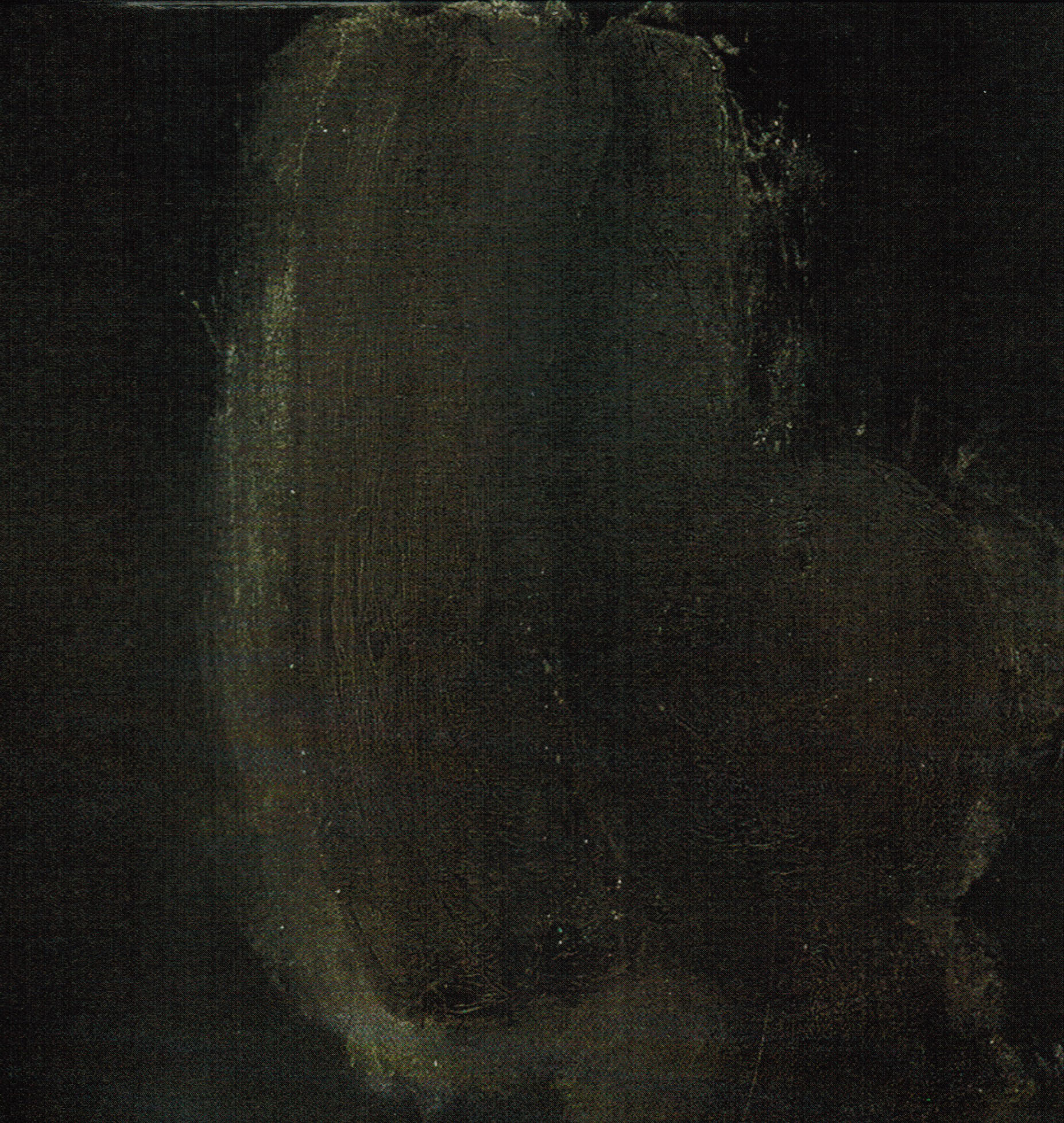
The most effective work may well be Randall Woolf’s What Remains of a Rembrandt. Here the composer argues that the essence of Debussy is the element of mystery. Supové’s playing demonstrates a complete understanding of how Woolf sets out to render this element and achieves exactly what both he and Debussy would have intended.

The Debussy Effect is a bold and creative project that is as admirably clever as it is superbly performed.

02 Bruce AdolpheAmerican composer Bruce Adolphe is often inspired by very contemporary social and political issues, and so it is that his latest recording, Bruce Adolphe – Chopin Dreams (Naxos 8.559805) is a little unusual.

The recording’s title work is an impression of how Chopin might compose today were he a jazz musician playing in a New York club. Adolphe does an artful job of borrowing Chopin’s distinctive keyboard language. He replicates the melancholy harmonies, the cascading right-hand arpeggios, the ornaments and filigree that we uniquely associate with the composer. He also writes in the forms that make up much of Chopin’s repertoire, the prelude, nocturne, mazurka and other dances.

While the premise of Chopin as a New York Jazz club pianist offers a comic element to be sure, it’s quickly dispelled by the highly informed and engaging nature of Chopin Dreams. Jazzurka, New York Nocturne, Quaalude and the other items in the set unmistakably use Chopin’s vocabulary. Even so, the frequent presence of the blue note seems entirely appropriate for Chopin, given his affection for the richness of minor keys.

Considerably more serious is Adolphe’s recent work Seven Thoughts Considered as Music (2016). Using short quotes from seven thinkers including Emerson, Chief Seattle and Kafka, Adolphe explores the transfer of deeper meaning to the voice of the piano. There’s great substance to these pieces and they merit more than one hearing.

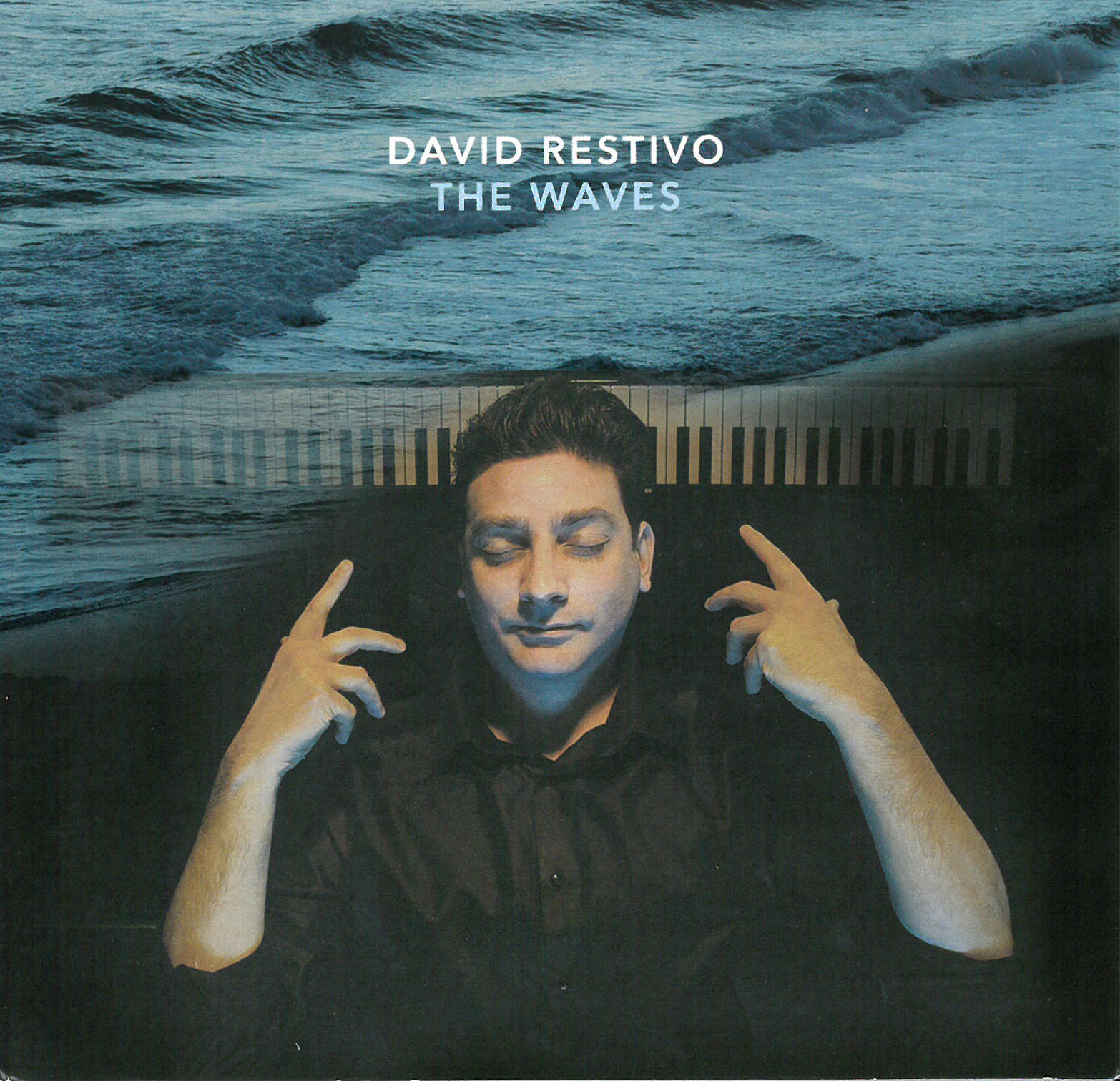
Italian pianist Carlo Grante plays the newly redesigned Bösendorfer 280VC concert grand on this CD and has a great deal of fun with the nine Piano Puzzlers, short pieces that Adolphe regularly composes and performs on the American Public Radio program Performance Today. Familiar tunes like Deck The Hall, The Streets of Laredo and many others are set in the unmistakable style of Chopin’s best-known pieces, leaving listeners grinning at the composer’s imitative wizardry.

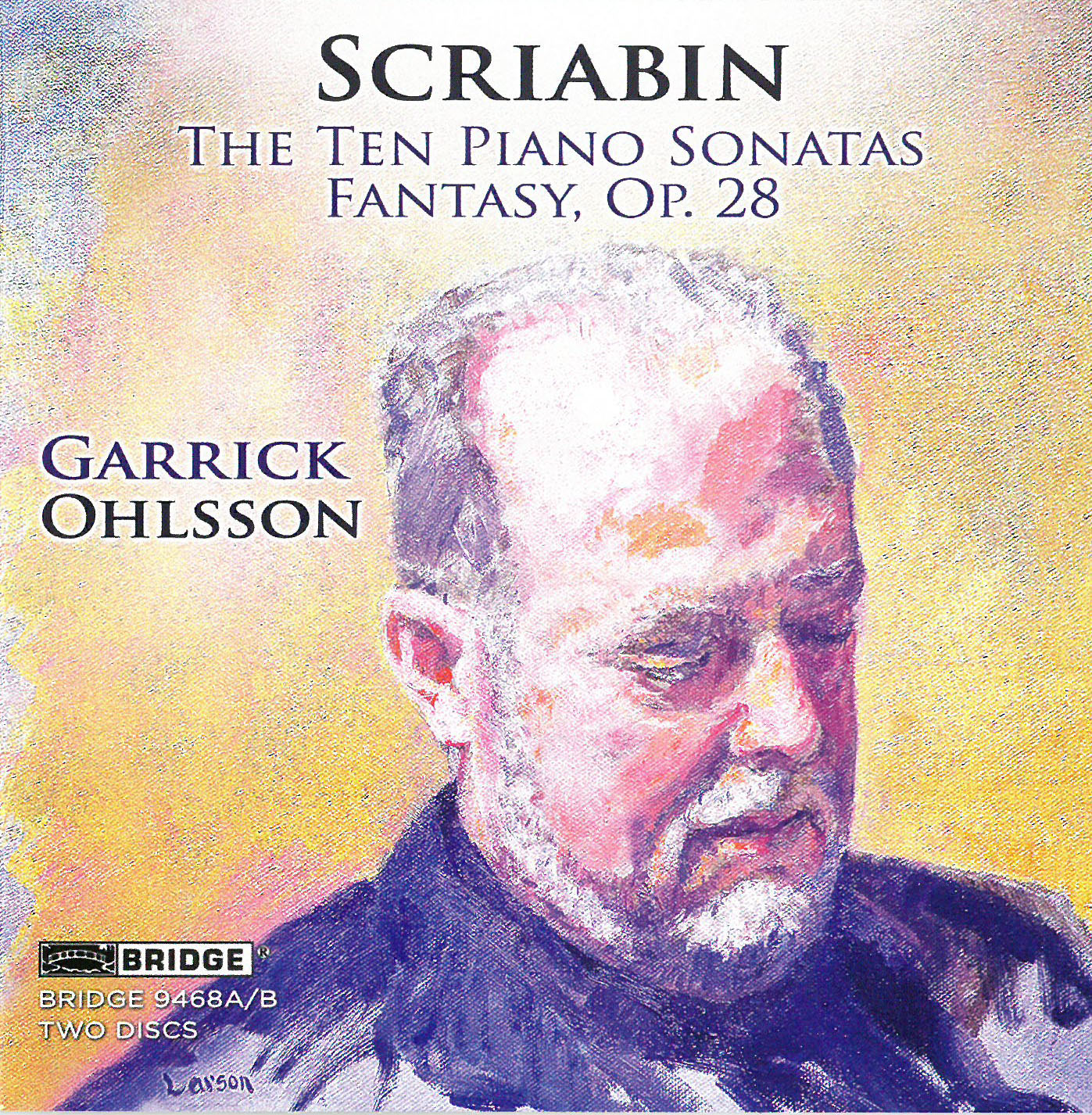
03 Horatio GutierrezHoracio Gutiérrez is a respected pedagogue and performer. His newest recording, Chopin 24 Preludes, Op.28; Schumann Fantasie Op.17 (Bridge 9479), is an impressive example of his playing. Never short of powerful expression and blazing speed at the keyboard, he is also capable of the tenderest phrasings required in Chopin’s 24 Preludes Op. 28. Each of these short pieces (some merely a half minute) is a complete idea that Gutiérrez treats as though it were entirely independent. Still, the progression of keys is logical and patterned, and so he holds the collection together for performance as a larger utterance. Many argue this was, in fact, Chopin’s intent.

Unlike Bach’s 48 Preludes and Fugues, these are not studies or practice pieces. Nor are they preludes to anything as one writer once famously queried. Instead they are best received as a kind of pianistic haiku. Short, self-contained and entirely complete.

Gutiérrez plays with a great deal of disciplined freedom that remains in control of the emotional content through a very precise keyboard technique. This is especially important for the Schumann Fantasie Op.17 where the great contrasts in mood are vital to the work’s impact. The middle sections of the second and third movements demonstrate this wonderfully as does the final, tranquil ending. Every note and phrase is perfectly placed. There is no excess. All is in perfect balance.

Gutiérrez’s students at the Manhattan School, where he currently teaches, are fortunate to have such a mentor.

04 Chopin Richard HamelinSecond-place winner of the 17th International Chopin Piano Competition in 2015, Charles Richard-Hamelin’s live performances on Chopin Sonata B Minor Op.58; Nocturnes (The Fryderyk Chopin Institute, Polish Radio NIFCCD 617-618) demonstrate why he impressed the panel of judges so profoundly. Perhaps more than anything, Richard-Hamelin plays as if no one else were present, firmly connected to the core of the music and completely given over to it. His technique is impeccable and his interpretive decisions mature and credible. Moreover, he manages to inject subtleties into his performances that would catch the judges’ attention. Micro hesitations, refinements of standard dynamics, tempo relaxations, all give his playing of well-worn works originality and freshness.

Despite the fact that the pieces were recorded at various sessions, the three auditions and the final concert, it would have been evident early on that Richard-Hamelin was a serious contender for one of the top spots in this race. Disc one of this 2-CD set closes with the Rondo in E Flat Major Op.16. It’s a piece that uses almost every one of Chopin’s devices and Richard-Hamelin sails through them effortlessly, never showing fatigue or anything less than total focus on the artistic demands of the work.

Disc two features a few more smaller pieces but offers the B Minor Sonata Op.58 as its major work. Richard-Hamelin’s capable grasp of its wide-ranging demands earned him his winning spot plus the Krystian Zimerman prize for the best performance of a sonata.

The 2015 17th International Chopin Piano Competition was the first time Canada had appeared in the rankings in the competition’s history.

05 Schubert VogtLars Vogt’s new recording, Schubert – Impromptus, D899, Moments Musicaux D780, Six German Dances D820 (Ondine ODE 1285-2) offers familiar repertoire although with a detectable inward focus.

The liner notes include a wonderful interview with Vogt in which he reveals his personal thoughts on Schubert and the repertoire in this recording. It’s worthwhile and instructive to read about the intellectual process behind the creative one.

Vogt has a unique style at the keyboard. It’s one that has all the warmth and romanticism to express Schubert’s most heartfelt passages, yet also includes a sharp, bright exclamatory touch that can be as brief as a single note or sometimes carry an entire phrase. This plays nicely against the otherwise mellow nature of Schubert’s rich harmonies.

The Six German Dances, in particular, are surprisingly tender in Vogt’s hands. Here he argues for an approach that is truer to the original style of the pieces, more down to earth and tender, perhaps even pointing to the convivial bliss of simple country folk.

The familiarity of the Impromptus D899 makes them a special challenge. Vogt does a terrific job with them all, but really makes No.4 stand out with his remarkably light staccato on all the descending runs in the treble.

The Moments Musicaux D780, too, are favourites and require something to make them distinctive. No.6 is often played with far more contrast than Vogt brings to this performance. Instead, he opts for a more wistful approach throughout and it works well. Overall, Vogt seems to raise the bar on everything without ever going too far. It’s an impressive process of balance and taste that has produced a very satisfying recording for Schubert collectors.

06 Beethoven BavouzetJean-Efflam Bavouzet has completed his recording of the Beethoven piano sonatas with the release of Beethoven Piano Sonatas Vol. 3 (Chandos CHAN 10925(3)). Do we need another Beethoven Sonata cycle? Bavouzet occupied himself with this very question before committing to the project for Chandos. Those who know and cherish these works will each have favourite interpreters who have revealed new meaning in them. Bavouzet argues that projects like this are evolutionary and therefore benefit from all those that preceded them.

As a mature artist in his mid-50s, Bavouzet indeed has something to say and he says it convincingly. His performance of the Sonata Op.57 “Appassionata” is surprisingly understated through most of the second movement. This heightens the impact of the final movement which follows very aggressively without a break. His speed and precision seem effortless. He shapes Beethoven’s phrases intelligently and manages to keep the composer’s impetuous nature teeming without boiling over.

The Sonata Op.106 “Hammerklavier” is the towering, complex work after whose final measures, a sonata cycle like this either succeeds or crumbles. Bavouzet emerges in this performance as an artist fully capable of embracing the essence of what Beethoven had to say, and how to say it. Bavouzet’s revelation in this repertoire is that Beethoven was not a mad composer pouring magnificent anger from his pen. Rather, he was an impassioned genius crafting everything with an exacting science rooted in his soul. Bavouzet obviously “gets” Beethoven – in the profoundest way.

07 Glassworlds 5In addition to his stature as a Liszt interpreter, Nicolas Horvath devotes a considerable amount of his career energy to contemporary music. The new release Glassworlds • 5: Enlightenment (Grand Piano GP745) continues his recordings of the piano music of Philip Glass.

Two large, major works nearly fill this disc. Mad Rush, written in 1979 as a commissioned organ piece under a different title, has since been renamed and performed as dance accompaniment as well as a piano solo. Glass performed it himself several times and perhaps most interestingly as music for the entry of the 14th Dalai Lama into the Cathedral of St. John the Divine.

600 Lines is a 40-minute piece built on just five pitches played in varying rhythmic patterns constantly shifting emphasis on principal notes in those patterns. If you’re acquainted with the English bell ringing tradition of “ringing changes,” this piece will surprisingly make a lot of sense.

Considerably shorter but no less engaging is Metamorphoses (5): No. 2. The work had never been published, so Horvath naturally takes some pride in performing its world premiere as a solo piano work. Horvath clearly has a deep affection for Glass’ music that goes far beyond the intellectual. His grasp of it is both passionate and revealing.

In writing his own, excellent liner notes for this recording, Horvath closes by quoting the composer, “Music is a social activity…Music is a transaction; it passes between us.”

08 Komitas VardapetThe most exotic item in this month’s collection is Keiko Shichijo’s new release Komitas Vardapet – Six Dances (Makkum Records MR.17/Pb006). It’s as unusual for its repertoire, as it is for its brevity, a mere eighteen minutes. The dances are based on Armenian folk melodies which the composer transcribed from original settings for folk instruments. Komitas is said to have notated some 3,000 Armenian folk tunes; only 1,200 survive.

Although an ordained priest, his work as an ethnomusicologist has made him an icon in the history of Armenian culture. His exposure to Western European music came from his studies in Berlin at the end of the 19th century. Shichijo chose to record his solo piano work Six Dances after performing some of his other compositions with a chamber ensemble. She is remarkably persuasive in the way she portrays the percussive, and otherwise non-Western, stylings of this music. It’s nearly all monodic, just a single melody line, sometimes in octaves, against the barest of accompaniments. There’s a definite feel of Debussy’s exoticism about Komitas’ music.

While it’s a modest recording effort, it’s a beautiful fusion of worlds that creates the temptation to hear more of this composer’s repertoire.

Review

09 Jack GallagherAmerican composer Jack Gallagher claims the piano is not his principal instrument, but his apology evaporates as soon as you hear his music. In Jack Gallagher Piano Music (Centaur CRC 3522) pianist Frank Huang captures the colour and imagination of Gallagher’s writing whether in works lighthearted or those more cerebral.

Gallagher writes with a great care for structure. Form and planning are important to him. This makes his works easy to navigate for both listener and performer while he evolves his more complex musical material.

Huang plays this repertoire with ease and familiarity. Works like the Sonata for Piano are very technically demanding as is Malambo Nouveau. Others like Six Bagatelles and Sonatina for Piano, less so. Still, works like Six Pieces for Kelly, written specifically for young performers, never lack for a mature and profoundly musical touch. Every so often a Gershwin-like harmony slips by, leaving an echo of Broadway and a reminder of how American this music is.

Huang’s performance is confident, bold and celebratory; Gallagher’s writing seems to induce those qualities. This recording is a perfect match between composer and performer.

10 Bach Partitas harpsichordHarpsichordist Jory Vinikour has released Partitas BWV 825-830 J.S. Bach (Sono Luminus DSL-92209), a wonderful example of how varied and engaging Bach can be at the harpsichord. If you need an introduction to Bach, then his 1731 self-published Opus 1 is a good place to start.

Using a two-manual instrument built in 1995 on the scheme of a 1738 German harpsichord, Vinikour takes very deliberate time to play through the six Partitas in this three-disc set. While most items in the Partitas are labelled as dance movements, some offer a very different character and Vinikour is careful to find and exploit the essence of each piece.

The Toccata of Partita No.6 in E Minor BWV830 opens and closes with waves of fantasia-like arpeggios that are a sharp contrast to the highly ordered material between them. The Overture of Partita No.4 in D Major BWV 828 begins with an extended statement that offers all the drama of an opera before moving into the discipline of a fugue. The following Allemande is a beautiful and languorous melodic wander through Bach’s harmonic world. Vinikour knows this territory well, using every technical and interpretive device to maximum effect. He knows how far to push the limits of free Baroque forms as well as complying with the rigours of Bach’s fugal treatments.

On a technical note, the recording uses terrific stereo separation that’s very effective.

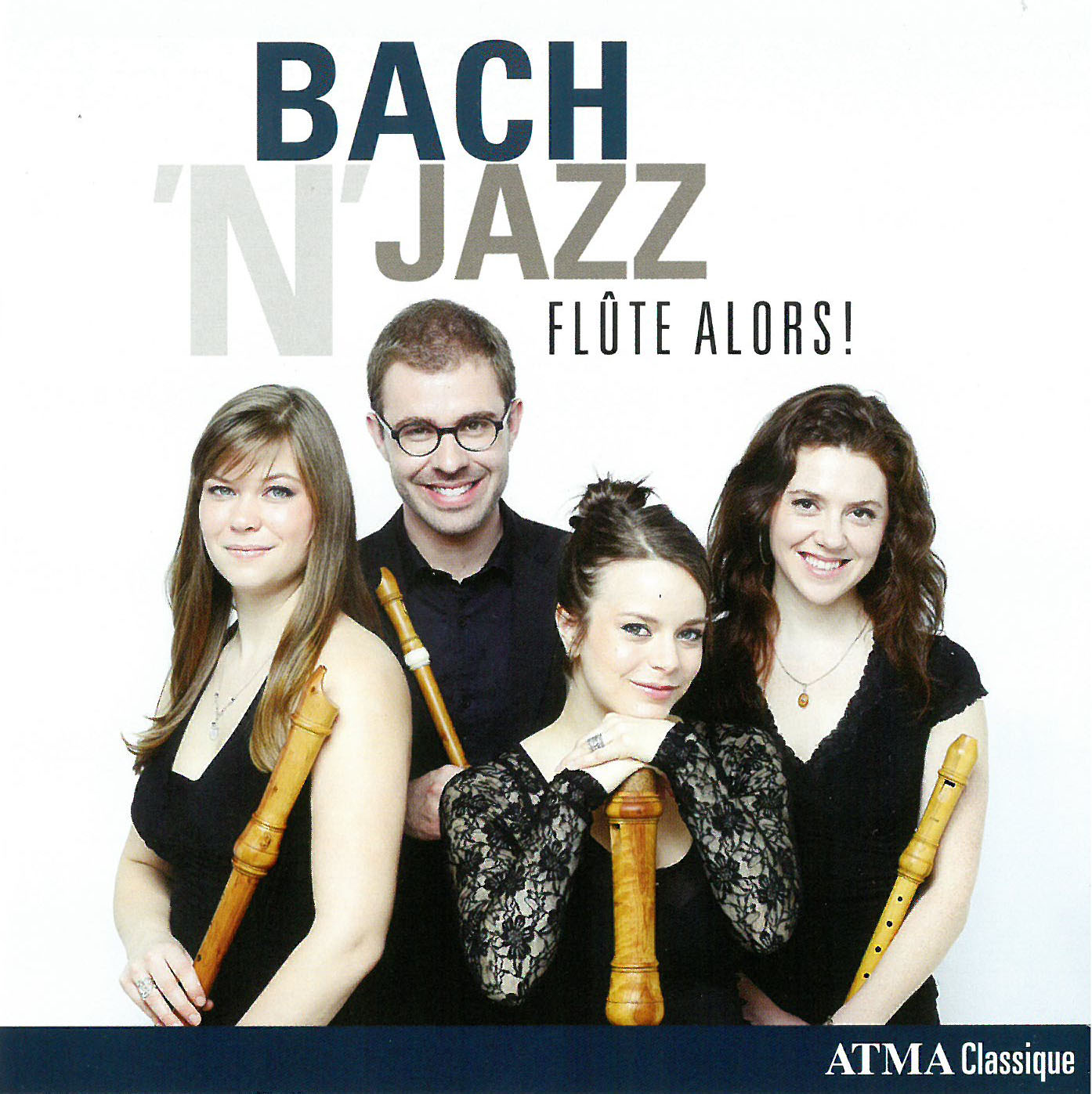
01 Bach Magnificat

Bach – Magnificat BWV243; Kuhnau – Cantate “Wie schön leuchtet der Morgenstern”
Winkel; Zomer; Laing; Wilder; Brock; Arion Orchestre Baroque; Alexander Weimann
ATMA ACD2 2727 (atmaclassique.com)

Review

Bach composed the Magnificat for Christmas 1723. The work was originally in E-flat Major but revised to the lower tonality of D Major. Like most recordings this CD presents the revised version but with two differences. The first version included four interpolations. These have been included (transposed in accordance with the D-Major tonality) on the present recording. A more substantial difference with most performances lies in the handling of the choral sections. Most performances observe a marked difference between the solo and the choral sections but Weimann’s interpretation follows the views of Joshua Rifkin and Andrew Parrott that the choral sections should also be sung one to a part. The gain in clarity in movements like Fecit Potentiam and Sicut locutus is unmistakable. There is an odd error in the Table of Contents which states that Suscepit Israel is a duet between the two soprano voices. It is actually a trio with the alto taking the lowest part.
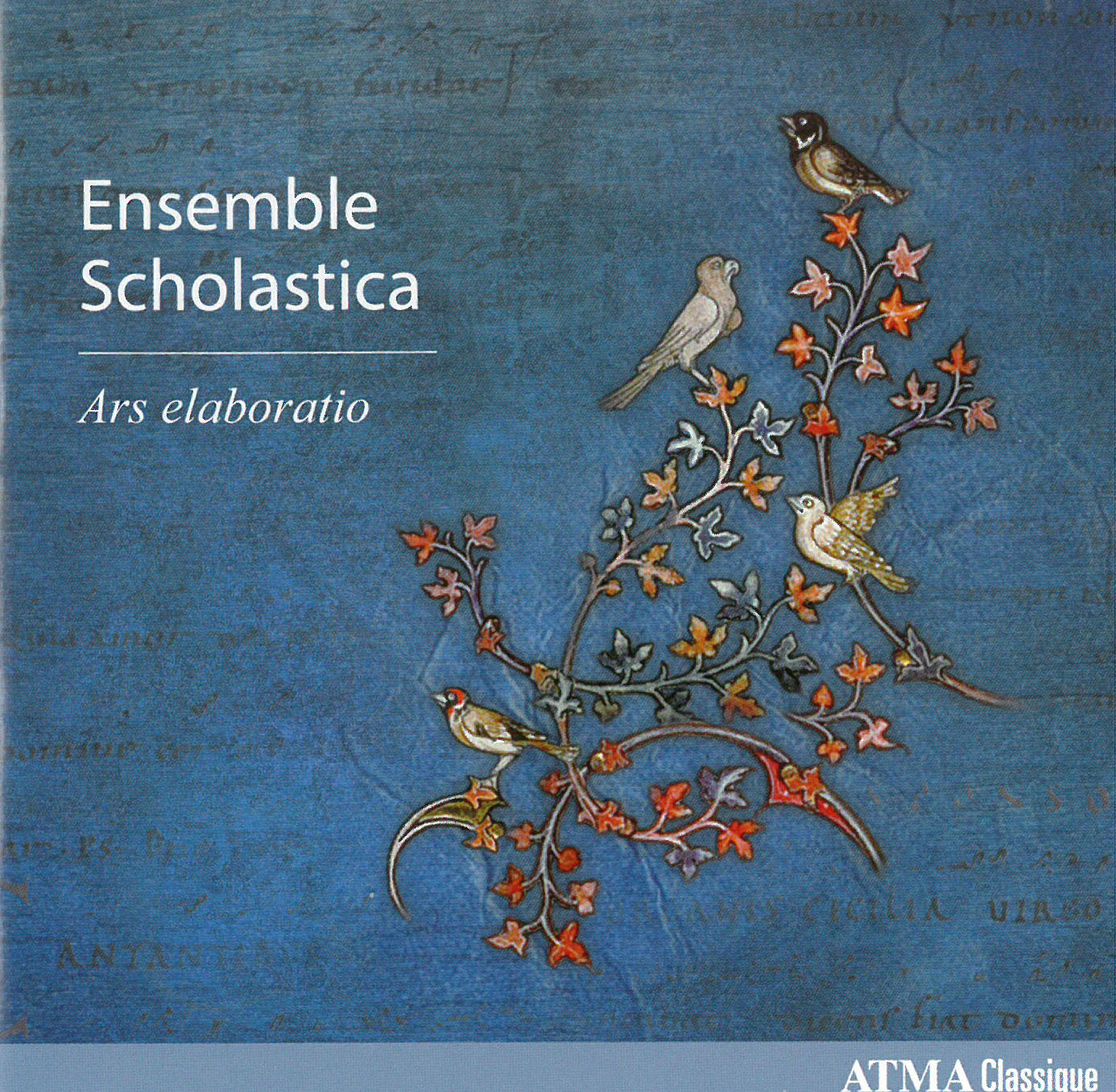
The performance is very successful and several moments stand out: the virtuoso trumpets in the opening and closing movements, the soprano solo (Johanna Winkel) and oboe d’amore obbligato (Matthew Jennejohn) in Quia respexit, the alto and tenor duet (James Laing and Zachary Wilder) in Et misericordia and the alto solo and the flutes’ obbligato (Claire Guimond and Alexa Raine-Wright) in Esurientes implevit bonis.

The CD also contains Johann Kuhnau’s Wie schön leuchtet der Morgenstern, also for five voices and also performed one to a part. It is an imaginative coupling: Kuhnau is best known as Bach’s predecessor as cantor of Saint Thomas’ in Leipzig, but he is clearly an important composer, whose works are worth listening to for their own sake.

02 Franco Fagioli

Rossini
Franco Fagioli; Armonia Atenea Choir and Period Orchestra; George Petrou
Deutsche Grammophon 479 5681

Review

The best ever? In the early 1960s I was fortunate to hear and meet Alfred Deller and Russell Oberlin, pioneers who created the standard for countertenors well before their voice type entered the musical mainstream. They were models for those who followed and eventually surpassed them, such as the splendid David Daniels.

But when I watched the DVD of Vinci’s Artaserse (Erato 46323234) I felt a new level of countertenor brilliance had been achieved. The DVD of Hasse’s Artaserse and the CD Arias for Caffarelli (Naive V5333) convinced me that Franco Fagioli’s phenomenal coloratura technique and uniquely dark timbre make him the greatest of all countertenors.

This, Fagioli’s first CD as an exclusive DG artist, focuses on Rossinian trouser roles, male characters written for and traditionally sung by mezzo-sopranos. Other than arias from Tancredi and Semiramide, four rarities are represented: Demetrio e Polibio, Matilde di Shabran, Adelaide di Borgogna and Eduardo e Cristina.
Though unfamiliar, the music is high quality, showcasing Fagioli through emotions from anguish to joy, fearfulness to triumph. I especially enjoyed the two scenes from Adelaide featuring martial choruses and Fagioli as the heroic Otto singing, of course, heroically. In the scene from Eduardo e Cristina, he spins a breathless, lyrical line before launching into the spectacular coloratura finale, also the CD’s thrilling conclusion. Special credit to George Petrou’s crackling period-instrument orchestra and chorus.

Texts and translations are included. A super disc by a super singer.

03 Verdi AidaVerdi – Aida
Lewis; Rachvelishvili; Berti; Doss; Orchestra and Chorus Teatro Regio Torino; Gianandrea Noseda
Cmajor 736908

Aida was composed to celebrate the opening of the Cairo Opera House; this production marks the reopening of the Egyptian Museum in Turin. The director is William Friedkin, mainly known as the director of The Exorcist, who has become interested in directing opera in recent years: Wozzeck and Rigoletto in Florence, Salome in Munich and Tales of Hoffmann in Vienna. His production of Aida is not particularly innovative but it is to his credit that he does not try to impose a counternarrative on the opera as so many directors now do. The balance between solemnity and intimacy is well conveyed.

Of the singers I did not particularly like the Radames, Marco Berti. He has a strong voice but tends to be unremittingly loud. If one turns to Jon Vickers’ rendition of the role (with its wonderful tenderness in Celeste Aida) one has a clear sense of how that part could be performed. The female singers are much finer: Kristin Lewis as Aida is particularly fine in O patria mia (Act III) and in O terra addio (final scene). The mezzo Anita Rachvelishvili (we recently heard her as Carmen in Toronto) as Amneris and the baritone Mark S. Doss as Amonasro are also very good. A particular mention should be made of the very fine choreography by Marc Ribaud.

04 Donizetti Roberto DeverauxDonizetti – Roberto Devereux
Marilla Devia; Kunde; Tro Santafé; Caria; Orchestra and Chorus Teatro Real de Madrid; Bruno Campanella
BelAir Classics BAC130

English speaking audiences will rejoice hearing God Save the Queen in the overture, but curb your enthusiasm because this opera is just about the most gruesome and appalling tragedy, made even more gruesome by the dark and menacing but very effective staging in red (for blood) and black (for death) and dominated by a huge mechanical spider.

Gaetano Donizetti wrote three successful operas about the ill-fated Tudor Queens as the topic seemed to have fascinated Italians. Not for long though, as all three disappeared from public consciousness for over a century. Roberto Devereux, being the least popular, didn’t see the light until the 1960s’ bel canto resurgence when the great American soprano Beverly Sills reinstated it into mainstream repertoire.

This 2015 revival by Teatro Real of Madrid was a huge success and its main attribute was the magnificent Italian soprano Mariella Devia, who literally inhabited the role of Queen Elizabeth I, and even late in her spectacular career created such a sensation in New York that people camped out overnight to get tickets, something they hadn’t done since Callas. Now at age 68 she made history with her wonderful control and vocal fireworks and a terrifying yet pitiful portrayal of a woman betrayed and crying out for revenge.

American lyric tenor Gregory Kunde as Robert, Second Earl of Essex the unlucky object of royal fury, whose voice grew more powerful recently, was a good match for Devia, passionate, heroic yet tender in the love scenes. The high vocal standard was carried even further by Spanish mezzo Sylvia Tro Santafé and principal baritone Marco Caria’s heartrendingly anguished performances. A glorious night for bel canto!

05 MefistofeleBoito – Mefistofele
Pape; Calleja; Opolais; Babajanyan; Bayerisches Staatsorchester; Omer Meir Wellber
Cmajor 73920

The story of Faust, a misguided scholar who trades his soul to the devil for another chance at youth and love, has inspired countless writers and composers. In the world of opera, it wasn’t only Gounod and Berlioz, but also Louis Spohr, Ferruccio Busoni, Sergei Prokofiev, Igor Stravinsky, Alfred Schnittke and of course, Arrigo Boito. Boito’s only finished opera, Mefistofele focuses on the devil himself, rather than the hapless professor. It is significant for another reason as well – the opera is considered an important transition piece between the Verdi period in Italian opera and its Puccini successor. But all was not smooth at the Milan premiere in 1868. Accused of “Wagnerism” and “weirdness,” Boito witnessed riots and quick cancellation of the production. Striking his own “Faustian bargain,” he rewrote and shortened the piece, giving it another premiere seven years later. As they say, the rest was history.

This production, captured here in HD, is opera-as-big-budget entertainment. Opulently staged and phenomenally cast, this is a showcase for Mefistofele, the Harley-riding Rocker and Faust, the deluded Playboy. The sublime Kristine Opolais as Margherita and consistently gorgeous playing of the orchestra under the baton of Meir Wellber add to the incredible aural power of the recording. Equal parts eye candy and feast for the ears, this is grand opera as it should be. No need to shut your eyes or suspend disbelief. Ah, I’d give my left pinkie to have seen it live!

06 Mahler SchoenbergMahler arr. Schoenberg – Songs
Susan Platts; Charles Reid; Roderick Williams; Attacca Quartet; Virginia Arts Festival Chamber Players; JoAnn Falletta
Naxos 8.573536

Arnold Schoenberg’s quixotic concert series, Vienna’s “Society for Private Musical Performances,” was established in 1918 to perform the latest new music. No applause was permitted at these events, every work (you wouldn’t know what was on offer until you got there) was heard twice, and absolutely no music critics were allowed. The towering figure of Schoenberg’s acolyte Alban Berg personally checked your credentials at the door. Over the course of three seasons some 100 works were performed. The repertoire spanned an era beginning with the works of Gustav Mahler, presented in chamber music arrangements prepared by Schoenberg and his minions. The master would mark up the original scores and leave it to others to do the donkey work.

The most ambitious of these Mahler transcriptions, the song cycle Das Lied von der Erde, was never completed as the series eventually failed under the burden of rampant postwar hyperinflation. It was not until 1983 that Rainer Riehn brought Das Lied to fruition. Over a dozen discs devoted to the Society’s Mahler arrangements have appeared since then. In the current offering the sure-footed baritone Roderick Williams makes a compelling impression in the opening Gesellen cycle which, due to the transparency of its original scoring, works well in transcription, though the feebleness of a mere two violins (members of the Attacca Quartet) is an ongoing concern. British-Canadian contralto Susan Platts, well-known for her sensitive Mahler performances, is joined by the stentorian Charles Reid in Das Lied. The latter is a true Heldentenor though I question the casting of such a powerful voice in this more intimate setting.

The ensemble of a dozen players and their direction by Buffalo-based conductor JoAnn Falletta is admirable, with special kudos for clarinetist Ricardo Morales and the noble horn of Jacek Muzyk. A peculiar low rumbling is detectable in the quieter moments from the session captured at Norfolk’s Robin Hixon Theatre in 2015; complete texts and translations are included.

07 El PublicoMauricio Sotelo – El Público
Klangforum Wien; Coro del Teatro Real; Pablo Heras-Casado
BelAir Classics BAC134

Theatrical works about theatre and its relation to the audience (“el público”) are usually metaphors for reality. There’s nothing remotely realistic, though, about this opera, a 2015 world-premiere production from Madrid’s Teatro Real.

Andrès Ibáñez’s libretto, based on a play by Federico Garcia Lorca, deals with an “underground” production of Romeo and Juliet and the conflicted relationship of the director, Enrique (baritone José Antonio López) and his lover Gonzalo (baritone Thomas Tatzl). Ibáñez’s text, despite frequent references to “love” and “masks” is as surreal as the stage action; I had to consult the booklet synopsis to get any inkling about what was happening.

Enrique’s take on Shakespeare includes horses (!) trying to seduce Juliet (soprano Isabella Gaudí), freshly risen from her tomb. When he then casts a teenage boy in her place, “the public” violently rebels, leading to Gonzalo’s death. Along the way, we see a Roman emperor, Jesus, a magician and a short silent film of animated silhouettes.

What held me throughout as a member of “the public” was the most essential element of any effective opera – the music. Mauricio Sotelo’s “spectral” orchestral score is riveting – rhythmic and atmospheric, with glittering percussion and spicy interludes of flamenco vocals and guitar.

Extended sequences for semi-nude male dancers and an array of bizarre, extravagant costumes make El Público almost as much a surrealistic modern ballet as an opera. Either way, it offers a fascinating experience both for ears and eyes.

08 Einstein on the BeachPhilip Glass – Einstein on the Beach
Lucinda Childs Dance Company; Philip Glass Ensemble; Michael Riesman
Opus Arte OA1178D

Einstein on the Beach (1976) is the groundbreaking collaboration of three New York artists in full career stride: director/visual artist Robert Wilson, composer/musician Philip Glass and choreographer/dancer Lucinda Childs. It’s been hailed as one of the most significant artistic achievements of the 20th century. LA Opera’s website touted the most recent production with “Einstein on the Beach breaks all rules of conventional opera.” Or does it? In a video interview the year previous, Glass was asked to describe the opera then being prepared for its 2012 restaging and subsequent tour. “We’re talking about the elements of movement, image, text and music,” replied Glass. “…that’s all there is.…Opera’s the only [theatrical] form that uses all four consistently.”

Einstein employs all those elements in addition to clocking in at a respectably opera-length four and a half hours, certainly qualifying in scope and scale. Its resolutely non-narrative structure plus its highly repetitive and tonal minimalist score however did pose a bracing challenge to general opera audiences of the 1970s. And Glass’ interpretation of the non-plot aesthetic of Einstein is clearly articulated in the libretto. Singers recite numbers, solfège syllables and short sections of poetry rather than lyrics employed in the service of advancing the story as in conventional opera. This was then a startling innovation, and it remains one still today to a degree.

If there is no story, then what’s the work about? Wilson’s series of powerful recurrent stage images drawn from the famous physicist Albert Einstein’s life serve as the work’s frame. The dramatic device is imaginatively underpinned by Glass’ composition for soloists, chorus and his instrumental ensemble. It’s further explored by the masterfully conceived and movingly performed modern dance sequences choreographed by Childs.

This new DVD release accurately reflects the superb 2012 production I saw at Toronto’s Luminato that same year. Highlights of that performance included violin virtuoso Jennifer Koh made up to resemble Einstein – a lifelong amateur violinist – and the impressively precise chorus masterfully conducted by the veteran Glass Ensemble member Michael Riesman. David Cromwell’s improvised soulful modal jazzy saxophone solo is a standout on the DVD, as is the reflective aria in the Bed scene, both in Act IV.

In the final scene a bus driver tenderly retells one of the oldest of stories, that of the wondrous beauty and boundlessness of romantic love. Isn’t that a theme which fuels many an opera? I find Einstein a touching, moving and oddly reassuring work, one which I’ll be revisiting soon.

09 SimoonErik Chisholm – Simoon (Opera in One Act on a play by Strindberg)
Irwin; Sheffield; Thantrey; Drummond; Music Co-OPERAtive Scotland; Ian Ryan
Delphian DCD34139 delphianrecords.co.uk

Luke 4:24 “Truly, I say to you, no prophet is acceptable in his hometown.” These biblical words must have been ringing in Erik Chisholm’s ears like derisive laughter. Born in Glasgow in 1904, the concert pianist and composer was promoting the Scottish musical tradition from the very beginning. In addition to incorporating folk music in his compositions, he also co-founded the Scottish Ballet Society and Celtic Ballet. After that, in Glasgow, he set up the Active Society for the Propagation of Contemporary Music. Aside from bringing the likes of Szymanowski, Bartók and Hindemith to Scottish audiences, he also conducted the British premieres of many operas, including Les Troyens by Berlioz.

Despite all this, he was never offered a position commensurate with his efforts in his native country. So in 1946, when he was offered the Chair of Music at Cape Town University in South Africa, his decision might have been painful, but also swift. He spent the rest of his life there, after some travels to India. He produced many operas, but also composed a great deal, including a triptych of operas – Murder in Three Keys – of which Simoon is the last part. Based on a short play by August Strindberg, Simoon was never performed in a full version during the composer’s lifetime. The subject matter, as gloomy as the uprooted Scot’s preferred music, is a tale of revenge and “murder by suggestion,” as Chisholm has referred to it. Polished orchestral characterizations, Bartók-like cascading moods and an overlapping of Western and Eastern musical idioms are just three reasons why this opera should have been recorded long ago. As it is, with the help of the Erik Chisholm Trust, it is making its long overdue debut – and rightfully in Scotland!

10 Holman PassionDerek Holman – A Play of Passion
Colin Ainsworth; Stephen Ralls; Bruce Ubukata
Centrediscs CMCCD 23016 musiccentre.ca

This Centrediscs release offers a fine selection of works by distinguished Canadian composer Derek Holman (b.1931). British-born Holman’s vocal expertise shows here in well-chosen texts and effective settings with memorable moments. His musical style addresses emotionally difficult terrain with sensitivity and a sure touch, pensive yet not morbid. Canadian tenor Colin Ainsworth’s tone, diction and phrasing are praiseworthy throughout, as are the secure support and interpretative contributions of collaborative pianist Stephen Ralls.

A few song highlights: in the elegiac cycle A Lasting Spring (2004), I especially appreciate the setting of Robert Herrick’s To Music, including the repeated text “melt my pains” as the poet asks for a glimpse of heavenly light. In The Burning of the Leaves from A Play of Passion (2010), Ainsworth delivers a heartfelt warning of poet and composer against idle nostalgia in a thrilling passage capped by the disc’s highest note (C). From the same cycle, the setting and singing of Care-charmer Sleepe (Samuel Daniel) with its insomniac repeated treble line, are hypnotic and wonderful. Another subtlety: the final song of The Death of Orpheus (2005) has an insubstantial little arpeggiated downward figure, the ghost of Greek mythology’s most famous musician not rising, but here going down to Hades a second time (post-death) to meet Eurydice in the Elysian Fields. The disc also includes Bruce Ubukata with Ralls, ably playing the clever, often bi-tonal two-piano work Variations on a Melody by Doctor Arne (1999).

11Thread of Winter

Thread of Winter
Leslie Fagan; Lorin Shalanko
Canadian Art Song Series (canadianartsong.ca)

Review

When reviewing (in early 2004) the first solo album by Leslie Fagan, I stated that “she is in a class of her own.” What a pleasure to conclude, some 12 years later, that she remains just as original. Her career has taken her to the world’s most important concert stages, providing Fagan with opportunities to present both traditional (Handel, Mahler) and contemporary (Poulenc, Kulesha) repertoire. She is also active as a voice teacher, in schools ranging from Wilfrid Laurier to Juilliard. It is that latter school’s reverence for the American Songbook that prompted Fagan to record this first album of the Canadian Art Song Series.

Much to no one’s surprise, Canadian composers such as Gary Kulesha, James Gordon, Walter MacNutt, Imant Raminsh, Jeff Smallman and others, have been steadily amassing a repertoire of songs, set to the words of both Canadian and international poets. It is perhaps our ongoing doubt about the nature of Canadian identity that prevents us from recognizing and celebrating this treasure trove in the way the American Songbook is usually feted. I have a feeling that Prof. Fagan will soon change that, at least among her students.

In this first of hopefully many recordings, Fagan is in great form: clear, lyrical, playful (in Six Nursery Rhymes by Peter Tiefenbach) and pensive. She is showcasing not only her beautiful soprano (so reminiscent of her erstwhile teacher, Ileana Cortubas), but also an interpretive range to be envied. Lorin Shalanko’s accompaniment is superb – fully supportive and intelligent, bringing to mind some of Gerald Moore’s best recordings.

12 Winter Voces

Winter
Voces8
Decca 483 0968

Review

The cover art of Voces8’s Winter accurately represents this gorgeous, chill compilation of choral pieces written and arranged by composers from countries of Northern climes. There’s an ethereal quality to the recording that evokes the Aurora Borealis, such as in the first track, Arnalds and Arnarson’s For Now I Am Winter.

And while the season pervades the album’s themes, there’s a lot of variety. Es ist ein Ros entsprungen is like a slo-mo version of the Praetorius standard, and the Balulalow text, written by the three 16th-century brothers and poets, the Wedderburns, is nothing like Britten’s version: where the Ceremony of Carols setting swells like waves off the North Sea coast, this one glides along like cross-country skis. Of course, my hero Pärt’s Nunc Dimittis is divine, as is Rachmaninoff’s Vespers. There’s harp accompaniment with a touch of the medieval in the traditional The Snow It Melts the Soonest, and the countertenors in Rebecca Dale’s premiere, Winter, reminded me of those in the Talla Vocal Ensemble. Ola Gjeilo offers up a Holst-based In the Bleak Midwinter, and it’s not so Christmasy that you can’t enjoy it now.

Perhaps most interesting are the featured Vasks pieces: three Plainscapes movements and The Fruit of Silence, the text of which was penned by Mother Teresa. All four convey the Latvian composer’s concern for and focus on environmental issues. This is a simply lovely, contemplative mood-setting release, with pristine choral and instrumental blending.

01 Goldberg Beyond Variations

Johann Gottlieb Goldberg – Beyond the Variations
Rebel; Jörg-Michael Schwartz
Bridge Records 9478 (bridgerecords.com)

Review

Johann Gottlieb Goldberg, namesake of Bach’s famous Variations, was a highly talented musician. His life (1727-1756) was tragically short, but this CD, with five of Goldberg’s sonatas, shows us just what we were deprived of. Jörg-Michael Schwarz, playing a 1668 Jacobus Stainer violin, sets the scene with some beautiful playing in the Adagio of the B-flat Major Sonata. In the Allegro he is joined by Karen Marie Marmer playing a 1660 Stainer in a highly spirited Allegro. A Ciacona, at times stately and at others very lively, ends the sonata.

Goldberg’s Sonata in G Minor is thoughtful and involves the basso continuo much more than in the preceding sonata. There is a richness to John Moran’s cello playing in the Adagio before the violinists interpret the Allegro with a real passion and zest. The final movement of this sonata is the somewhat conventional Tempo di Menuetto.

Enter the viola of Risa Browder. The Largo in the Sonata in C Minor is indeed dignified, as the viola adds an element of complexity to the sonata. This is sustained in the cheerful Allegro and Giga.

The Sonata in A Minor features an Alla Siciliana movement, a dreamy composition which brings out both the violin playing and Goldberg’s own skills as a composer. It is movements like this and the following Allegro assai which bring home what was lost to us when Goldberg died so young.

Finally, there is the Sonata in C Major with its majestic Adagio worthy of any great Baroque composer. The Gigue which concludes the sonata also concludes this CD – again, an inspired introduction to the music of someone who could have generated a lifetime of wonderful music.

02 Mi PapitaMi PalPita il Cor: Baroque Passions
Dominique Labelle; Musica Pacifica
Navona Records NV6056
(navonarecords.com)

This is a CD devoted to love – and not necessarily happy love. The sleeve notes list the manifestation of love to be discovered on this recording as “sighs, laughter, angry outbursts and lassitude.”

Venetian-born Agostino Steffani’s Guardati o core opens the CD – a frolicking aria with words warning not to be won over by Cupid because you end up with trouble, sorrow and difficulty. Oh, and continue with the recitativo (you’ll get immeasurable bitter pain) and the aria (“flee, then, the realm of the archer-boy”) and not even Dominique Labelle’s rendition can help you.

Giuseppe Sammartini was well respected for his woodwind expertise, well apparent from the dignified flourishes of his opening and more than confirmed by the first Allegro. Sammartini composed with vigour and panache. The slightly strangely specified Andante e staccato reflects a depressed lover, depressed until he or she is revived by the second Allegro.

In Handel’s Arioso e recitativo, Labelle is made to sing that she “feels her heart beating for reasons she does not know.” Worse, she sings in a slightly hushed, conspiratorial tone that although her heart has been pierced by one of Cupid’s arrows, if Cupid could possibly do the same (fatally) to one of her competitors in love then she will complain no more. Again, very depressing, but how lucky that Labelle can fill the whole range of demanding emotions.

Georg Philipp Telemann’s Quatuor No.3 (G Major, 1738) restores our spirits. Judith Linsenberg’s recorder-playing contributes greatly to the rather dreamy quality of the Légèrement second movement, the Gracieusement of the third merely adding to it. For those who love rural tableaux, there is the Vite with the spirited violin playing of Elizabeth Blumenstock, and the following Gai. Finally, there is another unusually specified movement – Lentement-Vite-Lentement-Vite. Once again, violin and recorder are allowed to entertain us.

Dominique Labelle returns for a final flourish with the cantata from Jean-Philippe Rameau’s Orphée. Enjoy the complex voice and violin combination in Que du bruit and several very short but poignant pieces. The last movement, En amour il est un moment, is a worthy representative of Baroque romance from instruments to lyrics to Labelle’s interpretation.

01 Schumann BP RattleSchumann – Symphonies 1-4
Berliner Philharmoniker; Sir Simon Rattle
Berliner Philharmoniker Recordings 140011 (2 CDs + Blu-ray)

Schumann was the consummate Romantic composer, whose compositions from consequential piano works, chamber music, song cycles, concertos, staged works and symphonies, etc. remain in the active repertoire. Except for the staged works that enjoy rare outings. Schumann was also a busy author, publisher and critic.

I have attended many performances of one or another of the four Schumann symphonies and acquired or listened to recordings by the great and not so great conductors and orchestras. Many have been mighty achievements but very few found the composer behind the printed notes. The most popular misreadings are those that emulate Brahms.

Over the years conductors had almost universally decided that Schumann lacked the skills to orchestrate and so many dutiful performances perpetuated just this. Mahler re-orchestrated all four symphonies which were recorded by Riccardo Chailly and the Gewandhaus Orchestra for Decca. In the early 1990s, conductor Florian Merz and the Klassische Philharmonie Düsseldorf recorded the four symphonies and other orchestral works for ebs. Employed were the critical editions of the scores commissioned by the Robert Schumann-Gesellschaft in Düsseldorf, which chose Schumann’s own 1851 re-orchestration of the 1841 Fourth (ebs 6088, 3CDs).The visceral Düsseldorf performances, while enthusiastic, are entirely objective. However, a genuine curiosity on a separate disc (ebs 6091) is a bold re-orchestration of the Fourth Symphony based on the original version of 1841 revised in 1891, 35 years after Schumann’s death, by Brahms and Franz Wullner.

Just as orchestras and other ensembles have learned to play Mozart with reduced forces and appropriate instruments, in order to produce the overall soundscape that Schumann envisioned it is essential to know and understand what the composer had in mind. Schumann should not be performed with the entire body of the modern symphony orchestra. Mendelssohn was Schumann’s teacher and both scored their works for the classical-size orchestra of, say, 50 players tops, to achieve the transparency and voicing intended. Rattle explains so much on this subject, making the enclosed Blu-ray disc so valuable in the understanding and background of so many facets of these works. Also by believing Schumann’s marked tempos and natural orchestral balances, the music can be incredibly profound without being heavy or slow. A fascinating and most informative part of Rattle talking about Schumann is the story of the Fourth Symphony and the reason for his decision to use Schumann’s original 1841 version…the one considered unplayable by many orchestras.

No doubt about it, this is an absolutely essential package for all Schumann appreciators and others. The set contains CDs but the exemplary sight and sound of the live performances on the Blu-ray disc moves the viewer right into the Philharmonie.

Back to top