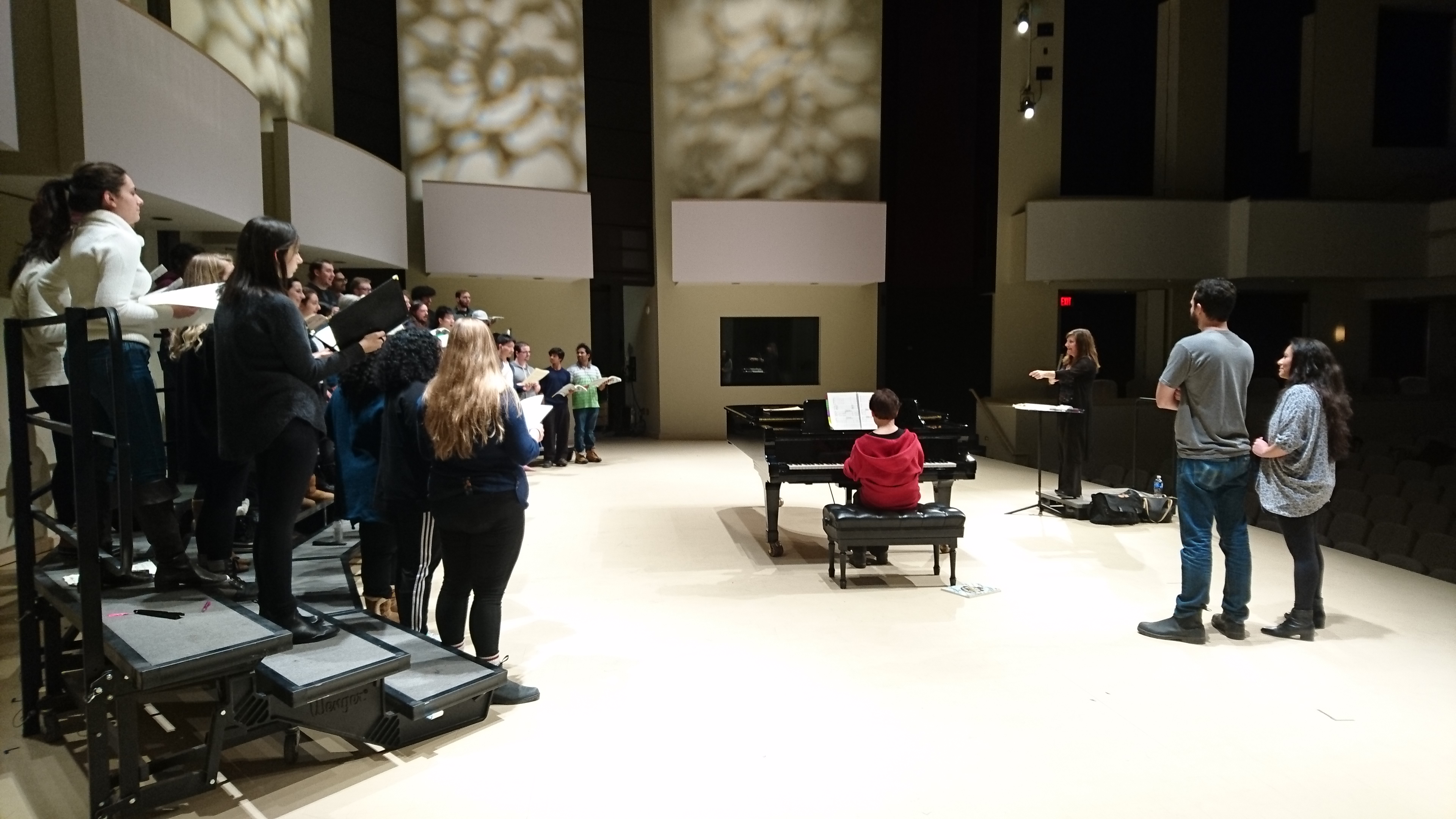
The York U choirs in rehearsal for Carmina Burana. Photo by the author.The York University Concert, Chamber, and Men’s Choirs will present Carl Orff’s Carmina Burana (Mélisande Sinsoulier and Edward Moroney, pianists; Lorne Grossman, percussion director; Lisette Canton, conductor) at 3pm on March 19, 2017, at Tribute Communities Recital Hall, York University, Toronto.

The York University choir belts out the final “Plangite (Weep)” of Carmina Burana with Lisette Canton at the helm. “No. No,” she cuts them off, “the walls better shake!” With a huge cue, high in the air, the sound rips forth and I feel it deep inside my body, vibrating my little heart. The ending to Carmina Burana is notoriously difficult to sustain, especially at a high volume. The choir brings the heat – spine-tingling, goosebump-inducing, brain-rattling excitement. I can’t wait to hear this put together with the percussion and dual piano reduction they are planning for their upcoming performance.

Carmina Burana (1937), by Carl Orff, is perhaps the most popular choral secular work ever created. It’s one of the most performed and well-loved choral works. It’s complex and interesting and equally pleasing to audience, chorister, and accompaniment alike. The text is evocative and mischievous, reflecting an odd little snippet of history created by a collection of strange monks’ poetry from about 1000 years ago. The piece is also fraught with complicated history in Nazi Germany, in which Carmina Burana was often performed and held in high-esteem. Carl Orff managed to be very successful under the Nazi regime.

Canton last led the York University Choirs in Carmina Burana in 2012. For baritone Taylor Gibbs, Carmina was part of his first year and will now be his final concert in his undergraduate studies. He’s one of only two students who have ever performed this piece before and was “so excited” when Canton announced the piece at the end of last school year. Gibbs is knowledgeable about the work, which he’s featured in as a soloist along with seven others. Rather than featuring the conventional three soloists – bass, soprano, and roasting swan tenor – Canton has spread the talent through eight soloists who also sing in the choir when not featured. Gibbs loves that Canton has played to the strengths of the soloists. “It’s great to see them, my friends, doing their thing,” says Gibbs. It’s a collegial and supportive environment to sing in.

The many soloists are helpful from an audience perspective, as well, because the roles are distinctive. The drunk Abbot of Cockaigne is a very different character than the hopeful young man of “Omnia sol temperat.” Each soloist gets to put a stamp on their performance, evoking the various characters created by the monks’ original text. I’m especially enamoured with the Blanziflor and Helena pairing. Helena (Kayla Ruiz), cradled in the arms of her Blanziflor (Sebastién Belcourt), sings “Sweetest One! I give myself to you totally.” Not only pitch perfect, the visual is simple, yet so effective.

Lisette Canton’s production is a semi-staged version of the work, not just a standard straight-up concert. The three major sections of the work will have unique staging and lighting to get at “the beauty of the experience,” says Canton. The first is titled “Spring,” the second “In Tavern,” and the third “The court of Love.” The works flow through different places and times to evoke different themes. The light freshness of “Floret Silva” (the Forest Flowers), sung earlier in the work, is markedly different than the heavy manliness of the second section’s “Estuans interius (Seething Inside)”. Canton’s production choices will shape the performance of each section differently. The choir, specifically the men, are excited about the “In Tavern” portion. They’re moving off the risers as the stage transforms into a 12th-century bar. We’ll have to see where these jaunty young men take us on the grandest choral homage to drinking ever written. The entire production is being set up to “get the whole story and the movement and intensity” of the music, says Canton.

Paying attention to the text of the work is essential to a performance of Carmina Burana. It’s racy and playful: “Mea mecum ludit virginitas (My virginity makes me frisky!)”. It’s pleasant and hopeful: “ad amorem properat animus herilis (the soul of man is urged towards love)” . It’s hilarious and light-hearted: “girat, regirat garcifer; me rogus urut fortiter (The servant is turning me on the spit: I am burning fiercely)”. At times, it’s even uncomfortable and wildly inappropriate: “Oh, totus floreo (Oh, I am bursting out all over)” (normally sung by a children’s choir and repeated many times). Orff has created a story from these bizarre writings and Carmina Burana is a fantastical musical journey.

York University’s music program continues to provide an exemplary interdisciplinary arts education in the School of the Arts, Media, Performance, and Design. The students keep coming back too, they “keep singing,” says Canton. Several alumni are part of this performance. If you’ve never been to see a York choral ensemble in action, I highly suggest you catch the choirs in their presentation of Carmina Burana. Canton promises wall-shaking sound, “top-notch soloists and choir,” and drinks in the lobby afterwards.

Follow Brian Chang on Twitter @bfchang. Send info/media/tips to choralscene@thewholenote.com.

The final concert of Choirs Ontario's SingONtario!. Photo by the author.There are two rows of little boys bobbing up and down, dressed in matching white dress shirts and bright red ties that can’t help but be oversized. They’re singing Puttin’ on the Ritz as they turn sideways and gesture to the audience. It’s incredibly cute and the audience eats up the charm offensive. This is the ASLAN Boys Choir, the second of six choirs performing at SingONtario!.

SingONtario! is a signature event of Choirs Ontario, the umbrella organization for choral music in the province. This year, there are six choirs that have been performing under renowned Venezuelan conductor and educator Maria Guinand (whose presence in Toronto was the culmination of work involving Hilary Apfelstadt at the University of Toronto, Elise Bradley at the Toronto Children’s Chorus, and Choirs Ontario). Concurrently, there are clinics being offered by various choral leaders from around the province. They finish the day with a concert and a massed performance.

The University of Toronto Women’s Chorus opened the concert and I was instantly focused on the abundance of vibrato, especially in the second sopranos. The percussive rhythms of the Mata del Anima Sola were muddied by the unsettled pitches. There are many different types of voices in these six choirs, and the diversity of the choirs involved gets to the heart of why choral education is so important – whether it’s maturing female voices like those trying to build their instrument in university music programs; very young boys who don’t yet have the physiology for much depth of sound; or emerging singers who may have never sung in choirs before a few months ago. The good thing is that these voices are supported by a host of capable choral educators. That is the strength of an organization like Choirs Ontario: to continue to advocate for not only great music, but great people, at every age and ability.

In contrast to the younger women’s voices of the University of Toronto, the Ave Choir was a welcome addition to the choral community – only one year old! There are some incredibly deep, warm, lovely alto voices in that choir. Biebl’s Ave Maria was an ambitious choice, yet ultimately unfulfilled. Young Voices Toronto brought us a great arrangement of a traditional Filipino song Orde-E, evoking birds with vocal ornamentations like swoops, caws, and slides. They also featured a drum, as did the Etobicoke Youth Choir in Sarah Quartel’s The Beat of a Different Drum. Quartel has many published works and her name is increasingly popular as a local Ontario composer. Also – a new discovery to me – it is pretty fantastic that Etobicoke has a youth choir, and has since 1976.

The Toronto Youth Choir, the last of the six choirs I’ve mentioned, managed to fill the church with a warm and balanced presence. Their presentation of Eatnemen Vuelie was especially fun; an arrangement based on the choral music popularized by the movie Frozen. The massed choir that closed the concert was guided by Maria Guinand herself, in two songs. El Campo Esta Florido (Vals venezolano), arranged by Alberto Grau and Verde Mar de Navegar, arranged by Capiba. The latter song was full of energy and the choirs exuded joy as they sang through it. Guinand added appropriate snapping, clapping and dance to the song. This kind of movement and connection in the music might come naturally to Latin Americans, but not quite so to the overly polite and stodgy Canadian. This momentary lapse of guardedness was very welcome.

Prior to the evening’s concert, I attended two of the clinics offered on choral music topics. Jackie Hawley, an Ottawa-based choral educator and founder of the Cantiamo Girls Choir, shared her experiences working on an exchange of students between Ottawa and Iqaluit. Her presentation got to the larger issue of choral music-making in a diverse country like Canada. Music doesn’t exist in a vacuum, and while community-building is a very important part of the work of a choral educator, it is a skill that is learned and developed through doing, not in textbook or university classrooms.

Hawley spoke of working in Iqaluit and trying to arrange workshops that no one was attending. It wasn’t until someone pointed out that it was because there were only 2 hours of sunlight some days, so people were spending it outside with their families, not inside away from the light. Ultimately, the process of being effective is one of preparation and adaptation.

Another key issue of tension in the workshop was that of cultural appreciation versus appropriation when Indigenous art is shared with a wider community. At what point does music or art become one or the other? Are they two sides of the same coin? A lot of that depends on the types of conversations that are being made over the art and the process of its creation. There is no straightforward answer for this tension.

This issue also arose in a later workshop on choral music and the Muslim world with Hussein Janmohamed and Shireen Abu Khader, both accomplished musicians and doctoral students at the University of Toronto. As artists interacting with the music of the Middle East and/or from Islamic tradition, they gave insight into culture and conversations of choral music that isn’t so dominated by Western influences and tendencies. Janmohamed reveled in the freedom to explore sounds, stories, and conversations about music, shaped by music, and through what he calls “meeting each other sonically.” “Sonic” is a good word, an active word that evokes doing. Abu Khader shared her insights on the rich choral traditions in Christian churches of the Levant, but the lack of secular choral work. Both clinicians presented works they have written, amongst others, and we sang through excerpts.

At the end of their workshop, Janmohamed and Abu Khader invited the participants into the creation of a song. The process was quite inspiring and wonderful. Using the templates and ideas of songs they had introduced over the last hour, they broke us into two groups and allowed us to have a “sonic conversation” based on what we had learned. After a few technical prompts amongst the group, we actually just started singing, and it all sort of settled into something lovely and improvisational. In that moment, we were able to have a conversation about music that brought ourselves directly into the creation of something new. It was a complicated conversation, conveying thoughts on education, what we were hearing, playing with text, rhythm, listening to what we liked, testing out something new, modulating to fit into the larger whole, bringing in external influences, and so much more – all in two minutes of singing with each other.

Choral music allows us to have complex conversations like this one – and with choral leaders like Abu Khader, Janmohamed, and Hawley (amongst many, many others), Choirs Ontario continues to support this important sonic work.

SingONtario! took place at Christ Church Deer Park, Toronto on Sunday, March 5, 2017. The next big event on the docket for Choirs Ontario is the annual Ontario Youth Choir program, which is being presented by Elise Bradley at Carleton University, and applications are now open. For details, visit http://www.choirsontario.org/index.jsp.

Follow Brian on Twitter @bfchang Send info/media/tips to choralscene@thewholenote.com

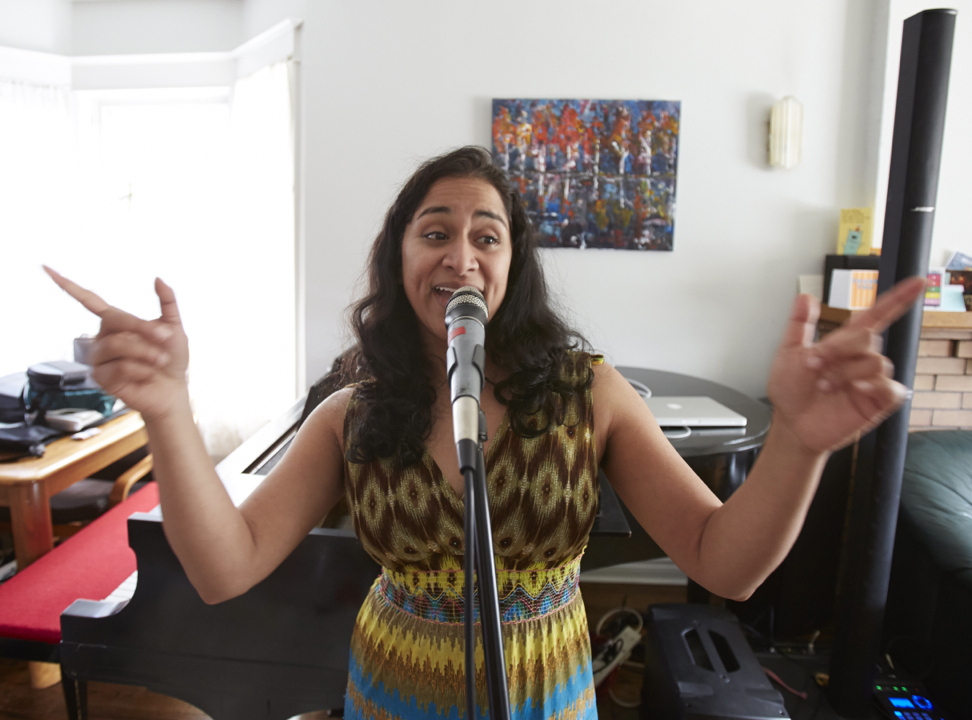
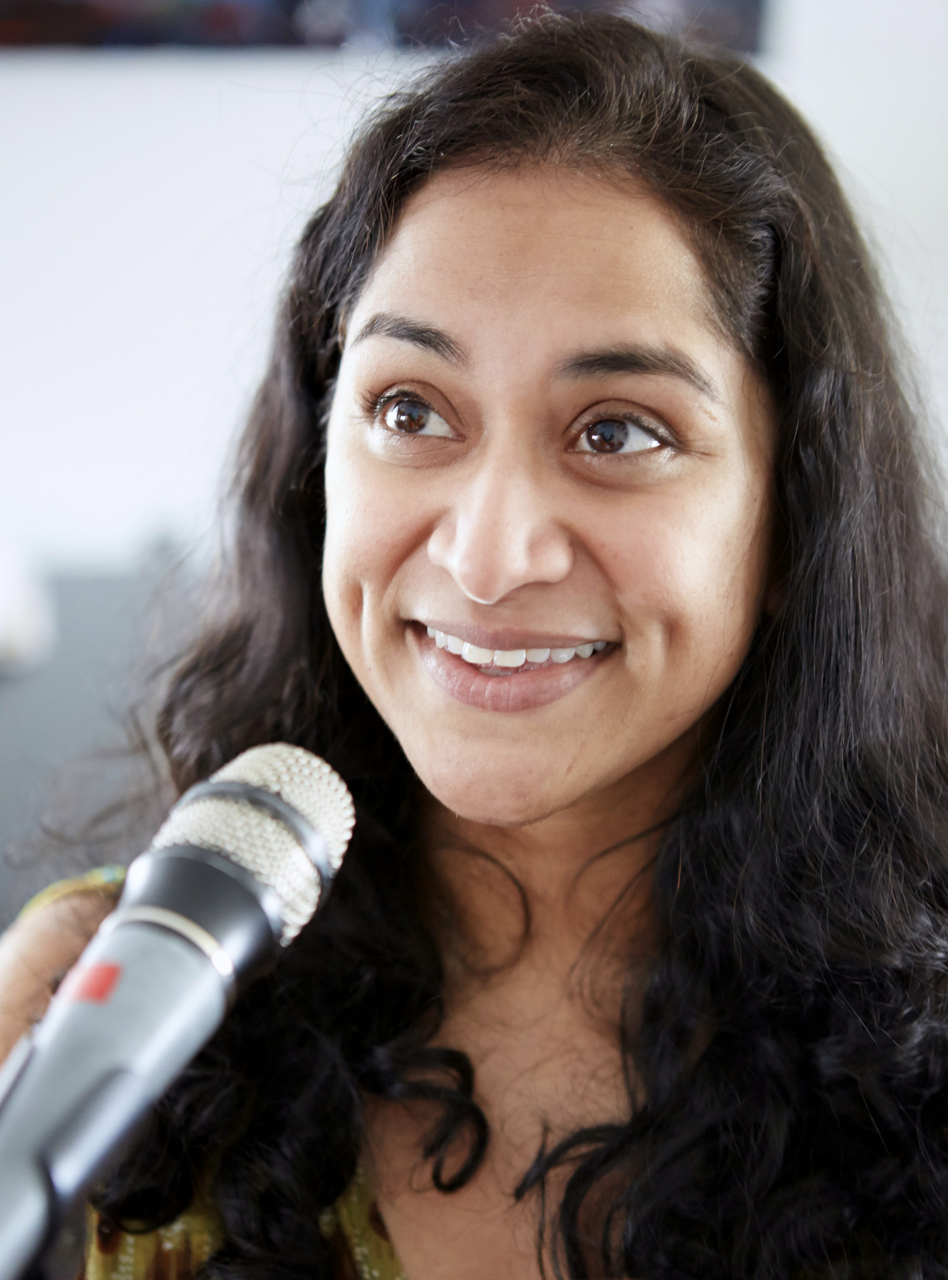
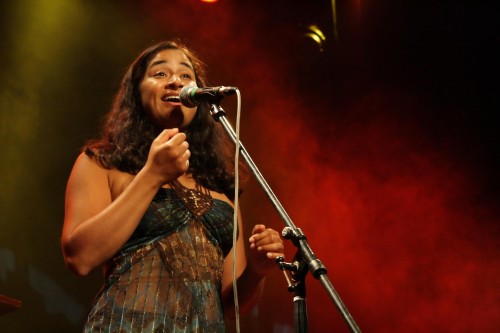
Suba Sankaran lives in a 100-plus-year-old home in east Toronto with her husband who is also her partner on and off stage, Dylan Bell. While they are without children, their Steinway and myriad of plants are their de facto children. Beyond music, Suba enjoys dancing, movie-watching, cooking, gardening, walking, reading, and being close to water, mountains and forest wherever and whenever possible. She tours and travels whenever the opportunity arises. Photo by Lucie Kalatova.Suba Sankaran is a vocalist, choral director, arranger, educator and composer. People use the word “fusion” a lot when they talk about her work, for want of a word that was especially coined for what she does. Her body of work lovingly embraces a wide world of disciplines and performance genres, and an even wider world of musical traditions. Most recently you may have noticed her as a performer and creative collaborator, in Alison Mackay’s The Indigo Project, with Tafelmusik.

Sankaran performs across North America, Europe, the UK, Asia, Australia and Africa with the trio Autorickshaw; with her father, the master drummer Trichy Sankaran; with her husband, Dylan Bell as the FreePlay Duo; and with Retrocity, an octet a cappella revue. Sankaran has composed and produced music for theatre, film, radio and dance. She currently teaches in the jazz department at Humber College, co-directs Toronto’s City Choir, is an artistic associate at Confluence Concerts, and is co-sound designer, composer, and performer with Why Not Theatre/Shaw Festival’s upcoming production of the epic story, Mahabharata.

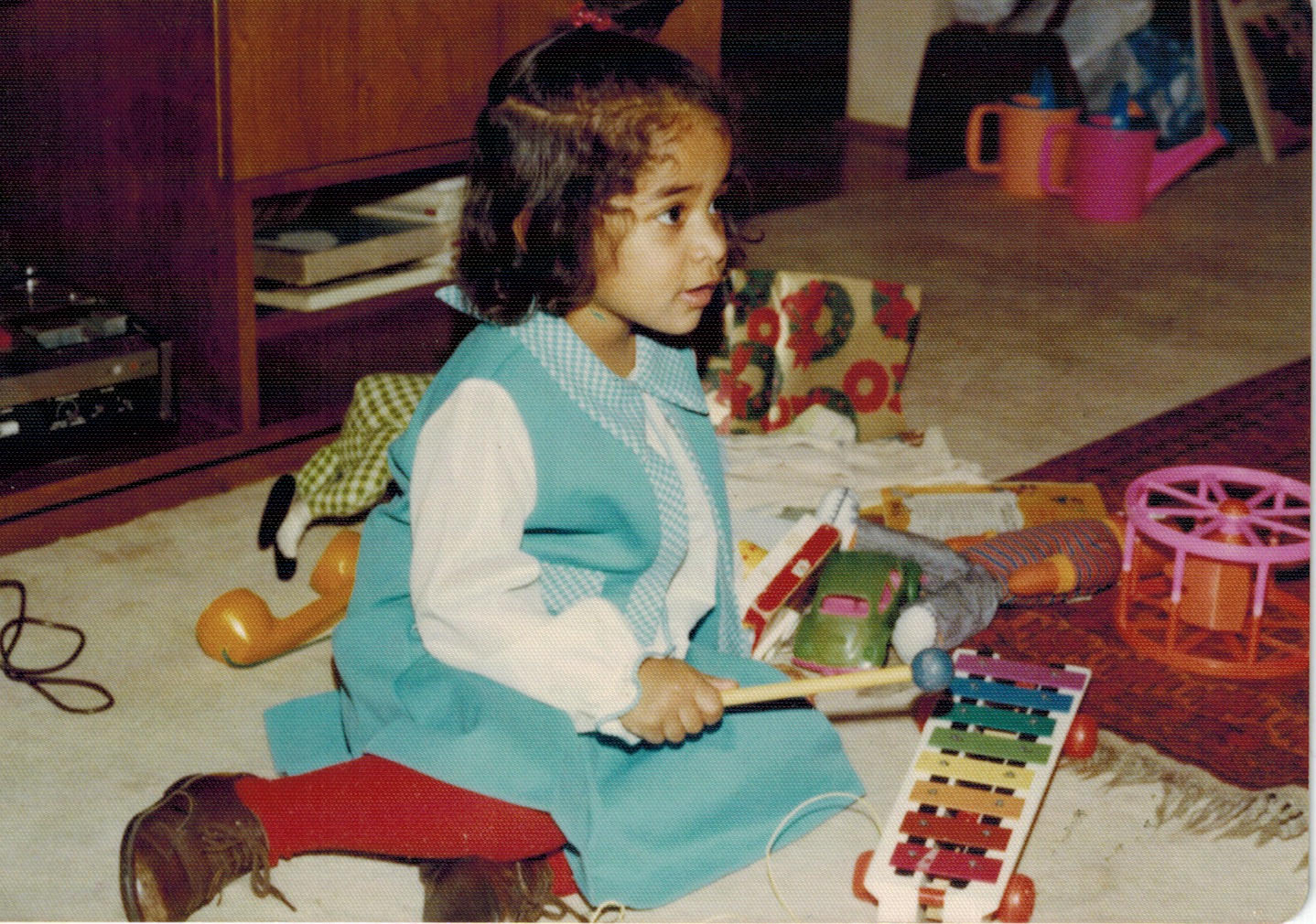
When you look at your childhood photo today?
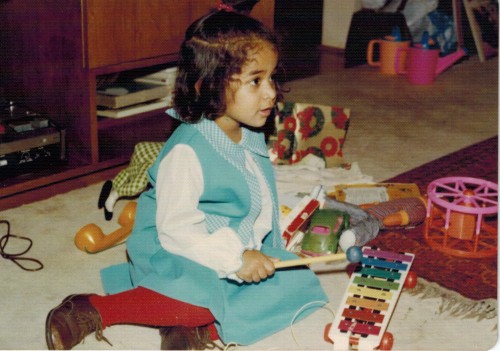
Suba Sankaran as a childI think about the curiosity and joy that is behind the mildly serious look on my face. I spent a lot of time alone, just singing to myself or playing with toys, or creating my own play space (especially when my sister was in full-day school and I in half-day school). It shows my happy independence.

Suppose a friendly child who asks what your job is? I eat, sleep and breathe music. I love my work so much that it doesn’t feel like work at all, so hopefully, when you get older, you will also find something that brings joy to your life.

People and music in your childhood home? My father is master drummer and professor/founder of South Indian music studies at York University, Trichy Sankaran. My mother, Lalitha Sankaran, in those early days felt like a Jill of all trades and right hand to my dad, They married in ’69, had my sister, Bavani, in ’70, then uprooted in ’71 to Toronto, with $8.00 in hand in the (original) Trudeau years. This is a typical yet fascinating immigrant story. I am the only one in my family (of my generation) born and raised in Toronto (Willowdale/North York). Many musicians from India visited from time to time, and they would be welcomed in our home. As per the South Indian music tradition, the senior musicians were expected to teach the children of the house some songs – a way of passing the torch and maintaining and sustaining the guru-kula (guru-disciple or teacher-student) tradition. I learned from the best of the best, from my father on down!

We sometimes had distant relations come to Canada and live with us for months at a time, as they began planting their own roots, found jobs and began establishing themselves. Again, it’s considered part of the tradition to welcome these people as our own family and to take care of them as they get their start in life.
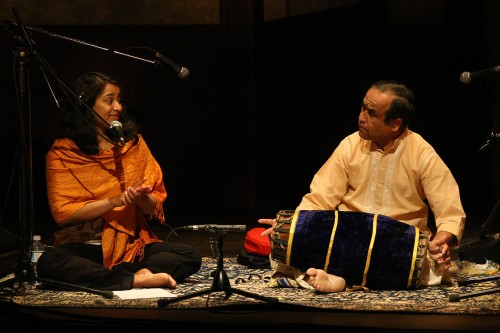
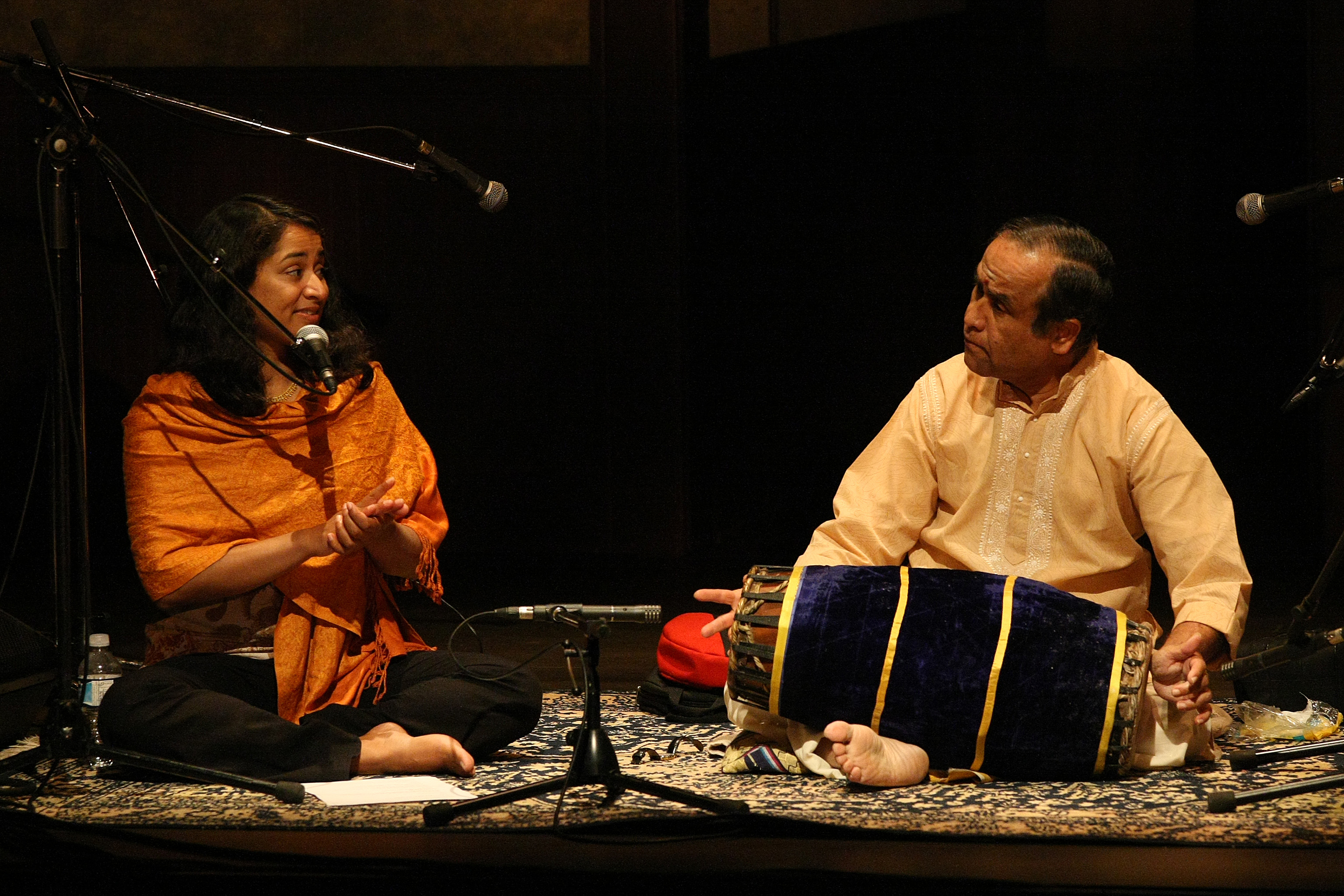
Suba Sankaran & Trichy Sankaran. Photo by Greg KingDid everyone enjoy and make music? Yes, particularly the visiting artists, and everyone in my immediate family. While my father and I are the professional musicians, my mother and sister also share not only a love for music, but they are music teachers in their own right.

Where did you attend high school? Claude Watson School for the Arts at Earl Haig Secondary School.

And right after high school? I received my BFA in music at York University where I met my husband, Dylan Bell, and he and I co-directed the student-run Wibijazz’n’ Winters College Killer Chorus, now called Wibi (and still going strong!). I went on to do my MFA at York in ethnomusicology after that.
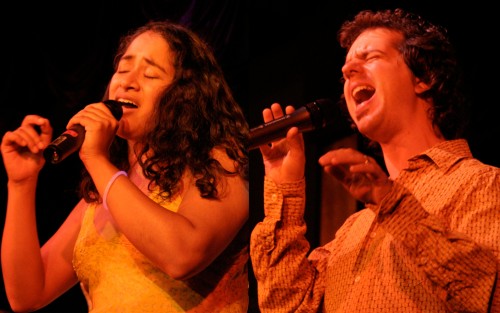
Suba and DylanYour absolute earliest memory of hearing music? I think my first memory is of my father’s mrdangam playing. It’s such a specific and beautifully melodic sound for a percussion instrument. I found it so soothing that as a child I notoriously fell asleep during many of his solos in concerts!

Where else did hearing music, recorded or live, generally fit into your life as a child? We would often listen to albums of many kinds (Indian classical, Western classical, jazz, world music and popular music), as well as what was playing on the radio – music or talk radio – generally CBC and other pop music stations that I would find on my own.

Your very first recollection of making music by yourself? I started singing when I began talking, at or before the age of two. I was taught the basic South Indian Karnatak exercises and short songs (called geethams) as well as regular children’s songs from the West from my parents and from children’s albums like Sharon, Lois and Bram, Raffi, Sesame Street, and the like.

A first instrument other than your own voice? Voice was first at the age of two, then piano at the age of six. I probably played around on the mrdangam and kanjira at this time, but not formal study until I was older.

A first music teacher? One of my first teachers that really made an impression on me was my first long-term piano teacher who was a student of my father’s and also taught through the Royal Conservatory of Music, and her name is Dale Innes. This woman was friendly, down to earth, honest and a great listener. She believed in truly making the music sing even if it was through fingers on ivory keys. These were all great tools for becoming a consummate musician.

An early memory of an audience? My first experience on stage was in the US when I was four. It was for the Navaratri festival (nine nights of celebration of various Hindu Goddesses) at Wesleyan University when I was one of the four children selected for a solo performance on stage, and I sang the hymn Santhatham Paahimaam – which was the Tamil version of “God Save the Queen” – composed by the Saint-composer Dikshitar, only it translated to something more akin to “Save Everyone!” I remember feeling my attraction to the stage and for connecting with large audiences in this moment.

When did you start composing? I started composing and arranging in high school when I attended Claude Watson. Before I really knew much about improvising as an art form, I would make songs up and simply call it “The Game”. We would do this in groups and create fugue-like songs, madrigal-type polyphony and more far-out music and would simply brush it off as part of “The Game”!

We had compositions to write in our music classes, and I think the first one I wrote was an a cappella SSAA song called In A Dark Time, poetry by Theodore Roethke. That was more of an assignment than a full-on composition, but then my friend Tanya Battaglia and I arranged the school song for our chamber choir and that made quite a splash! I think they’re still singing that arrangement if I’m not mistaken – carpe diem (inside joke)!

Your first time leading other musicians? One of my first memories of leading other musicians was also from my time at Earl Haig in the Claude Watson program. My conductor, Mary Legge, thought I was ready to conduct the choir and so she charged me with the task of conducting Murray Schafer’s Epitaph For Moonlight, for multiple voices, optional instruments and modern dancers (if I’m remembering correctly). I probably should have been petrified, but I blindly went forward knowing that it would be fine because she thought I was ready. I then started co-directing the jazz choirs after that, and haven’t stopped conducting or arranging since!
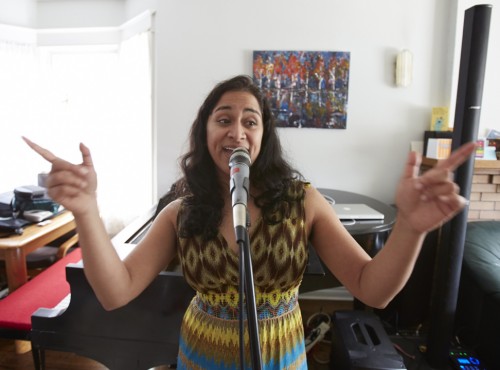
Suba Sankaran. Photo by Ed HanleyWhat experiences helped to form your adult musical preferences? It’s a mix of my upbringing in my somewhat traditional South Indian household, having a master musician for a father, along with my experiences in an arts school, and a general hunger for wanting to make up music for fun, to create, experience and hear new things. Indian music has a huge scope for improvisation as does jazz and other art forms as well. I think I gravitated to these styles in part because they have a lot of creative freedom. Connecting and communicating, trusting the musicians around me and creating new music, is very important to me.

Do you remember when you began to think of yourself as a career musician? Because I grew up in a musical household, I always thought it was possible to have a career as a musician. I thought about it more seriously at the age of 14. It was my first big “gig”: I played classical piano for my neighbour’s wedding, and got paid a whopping $50 bill for it! That was a king’s ransom in those days. My mom immediately took it out of my hands after the gig and said, I’m holding on to this and framing it as a reminder that you should be grateful for your first gig and stay humble about your talents. She still has that money to this day! In fact, she may have opened my first bank account with said money…

Ever think you might do something else? I never really thought about doing anything else in my life. Making music has always brought me so much joy. It’s allowed me to live it, to love it, to constantly learn from it, to lead through it with gratitude, and to hopefully leave a lasting impression/legacy in some way.

There was one time, a very brief but dark time in 2001, right around the time of the Twin Towers going down, and my grandmother taking ill and passing quickly afterwards, and I was sick as a dog as well. I believe I had a double whammy of pneumonia and bronchitis and some mysterious blip on an X-ray that almost led to a bronchoscopy. Thankfully it didn’t go that far, and they realized later that the blip was some random inconsequential spot on the X-ray. I thought my singing life was over and fell into a bit of a depression, mostly my mind becoming my worst enemy with all of the hypotheticals… That got me thinking about what else I would do. I still thought I would be in the field of music, but less in performance/singing, and more teaching and perhaps going back to my piano and percussion roots, as well as more composing and arranging. I had also briefly contemplated a career shift to one of my hobbies – gardening, cooking and the like. I don’t really know how serious I was about the departure, though.
Suba Sankaran. Photo by Ed Hanley

AND TODAY

Are there music-making children in your extended family? My nieces and nephews (on both my side and Dylan’s side) have a keen interest in music and music programming/technology. None are pursuing it professionally yet, but it’s early times still.

How does making and/or hearing music fit into your current personal home life? Dylan and I are constantly making music. As two full-time, gratefully over-employed musicians, every day is a different slice of the musical pie. It could be teaching at Humber College, or writing a script for SING! Radio (we are co-artistic directors of SING! The Toronto Vocal Arts Festival), creating rehearsal recording tracks for various community choirs in the city (including City Choir, for which I’m one of five directors), composing, arranging, practising …you name it, the list goes on. I’ve been trying to get out and hear more live music. Unfortunately, when you’re deep into the music business and constantly making music, sometimes the ear fatigue sets in and live music is the last thing you want to hear. I’m trying to get myself out of that pattern to support my fellow musicians. It’s very important to me…and it’s admittedly a work in progress.

What would you say to parents/grandparents hoping their young children will grow up to love and make music? Everyone will come at music in a different way. It can’t be forced. That being said, it’s good to send the message that music is communication. Music is storytelling. Music can be your best friend. Music is healing. Music will be here long after we are gone. Music is in the cosmos and it’s all around us. We just have to listen.

If you were all ALONE (in the shower, driving) and could sing along with complete abandon to ANY one recording, what would you choose? Queen’s Bohemian Rhapsody. Or many other contenders, also from the ‘80s!

UPCOMING …

March 5-15 - performing/touring with my husband, Dylan Bell with our a cappella, live-looping duo, FreePlay.

March 18-22 - adjudicating at Brandon Jazz festival, MB. The choirs are always absolutely stellar at this festival!

March 26 - performing with Aaron Davis for his Circle Of Friends show at Lula Lounge.

March 28 - performing with Barry Livingston Group at Hope United Church, 4:30-5:15pm.

April 1-8 - FreePlay at Choral Festival in Calgary and Cantando Festival in Edmonton, Alberta (adjudication, workshops, performances with FreePlay).

April 14-16 - Autorickshaw school shows (Branksome Hall, Milton, Huntsville).

April 17-May 3 FreePlay European tour (workshops and concerts mostly in northern Germany).

May 9 - Confluence Concerts presents Mandala, Toronto.

May 10 - WEE Festival, Toronto. Autorickshaw performs at 2pm.

May 25 - I am an artist mentor for Small World Music’s eMERGEnce program. This is one of several sessions.

May 19-May 31 SING! The Toronto Arts Festival.

Early June - choral competition at the Moscow A Cappella Festival with FreePlay.

Mid-June through mid-September – sound designer, composer, arranger and part of the live band for WhyNot Theatre’s Mahabharata at the Shaw Festival, collaborating with John Gzowski.

Through all this, I’ll continue juggling one teaching day a week at Humber College. These students and soon-to-be professionals in the field are really inspiring. The future looks bright!


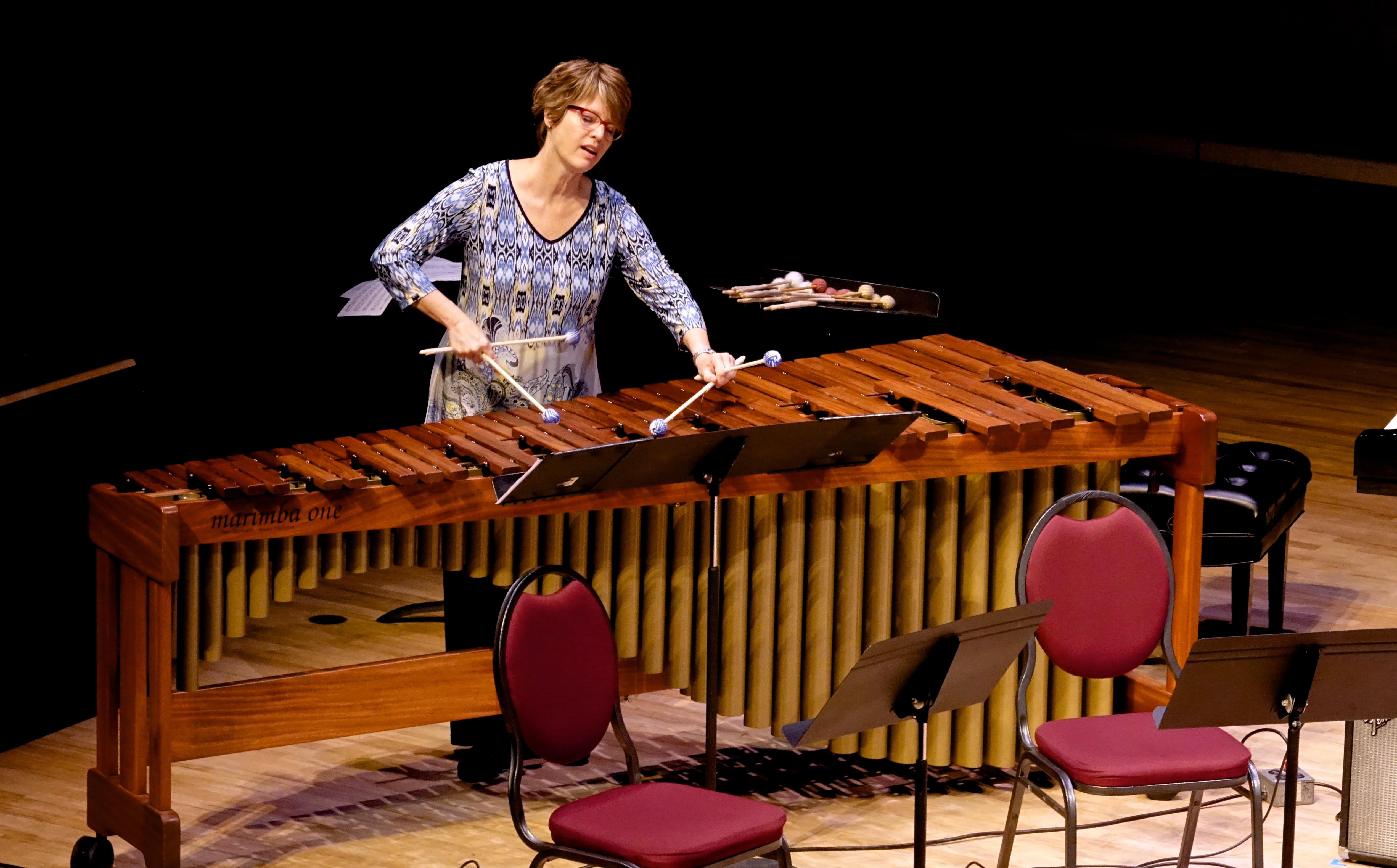
Born and raised in Lachine, Quebec, dynamic percussionist Beverley Johnston began her music studies at Vanier College in Montreal and was then accepted into the University of Toronto Faculty of Music, to study music education. Johnston is recognized as a “Canadian Music Centre Ambassador” because of her ongoing commissioning and performing of music by Canadian composers. She tours and performs frequently in Canada and internationally as a soloist and chamber musician, and is a frequent contributor at summer festivals such as Festival of the Sound and the Ottawa Chamber Music Festival. Featured in several documentaries Johnston has recorded six solo CDs and collaborated on numerous others. She has been an instructor at the Banff Centre and currently teaches at the UofT, Faculty of Music.

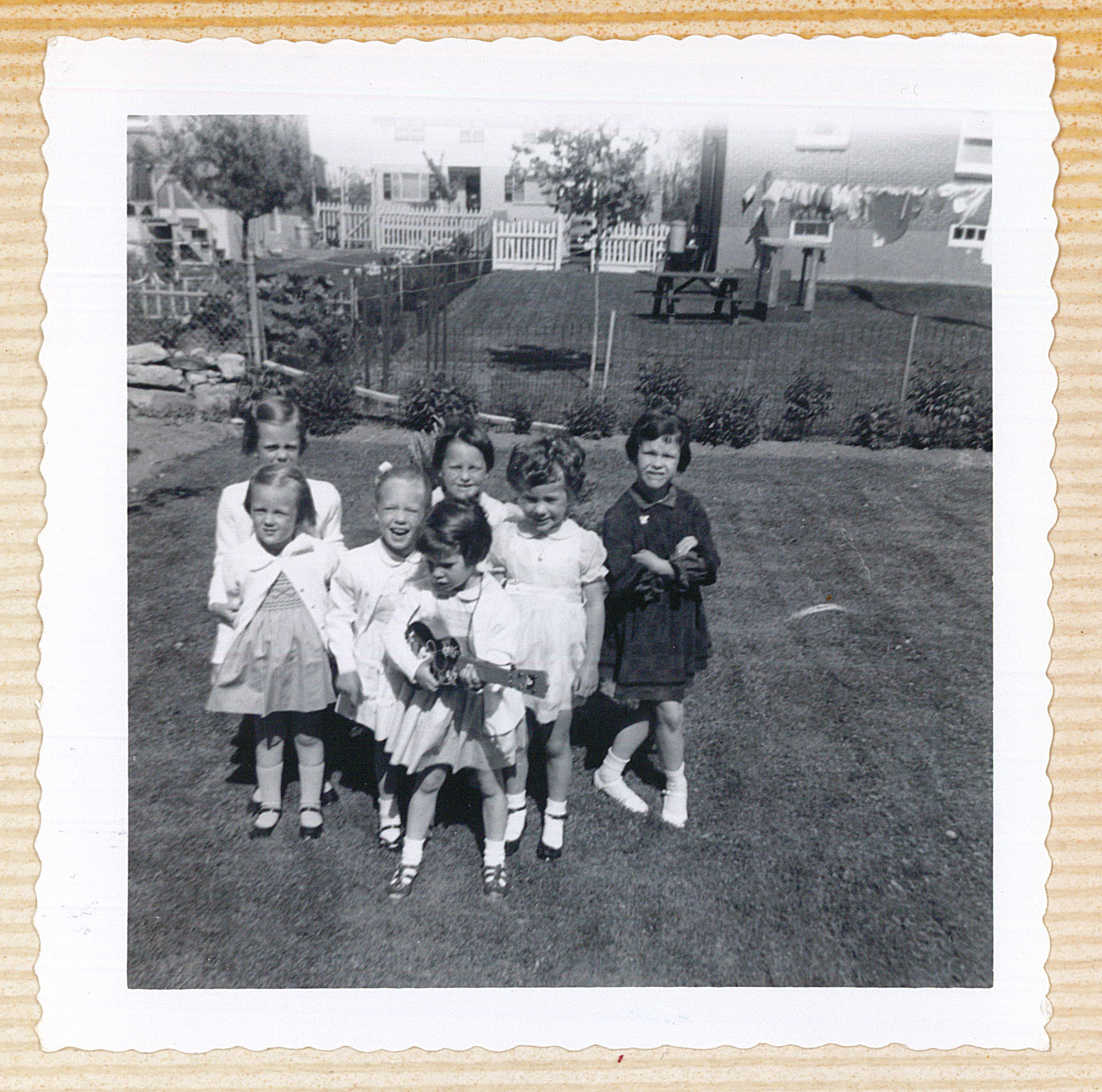
Pictured here at the 2017 Festival of the Sound (Parry Sound) Beverley Johnston lives in a rural part of Uxbridge, Ontario where she is able to make as much noise as she wants in her music studio…to the delight of the surrounding deer, rabbits, foxes and livestock! She is married to Canadian/Greek composer Christos Hatzis. Besides enjoying an active musical career, She also enjoys walks in the forest with her husband, watching old movies on TCM (without her husband) and cooking up a storm for family and friends. Although she has some beautiful natural surroundings at her home, she actually does not enjoy gardening and lets nature take its natural course. Photo by Mark RashAbout your childhood photo… I believe it was my fifth birthday party, at my home in Lachine, Quebec, with all my friends from the street and my sister. This photo makes me realize that I have not lost that sense of concentration that happens when immersed in the sound of a musical instrument. Playing an instrument is one of the most satisfying activities…the ability to create your own sounds with your own body…as opposed to just listening.

Bev JohnstonSuppose a friendly child asks what your job is? Well, I would say that I make my living from beating things! But seriously I would say that I do a number of different things to make a living: playing extra in different orchestras and chamber music with some pretty awesome musicians, teaching percussion, recording and commissioning composers to write me solo pieces!

Your absolute earliest memory of hearing music? I actually don’t remember much from when I was younger about hearing music but I suppose subconsciously music was just there and when I was very little, I would rock my body back and forth when hearing something musical. This helped me to relax and to also be in that music trance! I think the most connected memories would be when my mother would sing to me. She seemed so happy then. She would imitate the sound of castenets with her tongue which always used to make me laugh! We listened to my mother and father’s small but varied collection of LP records. These included opera and I do remember some wonderful Danny Kaye records which included him imitating different voices and characters. We had a small record player on the second floor of our house and danced around when playing the records. It wasn’t like I was going out of my way to listen to music when I was a child. It was just there, through listening to the radio, watching television and attending local musical events either through church events or through school events.

Working musicians in your family? My mother, Mary, was a substitute elementary school teacher and stay-at-home mom. My father, Gerald, was a horse-racing chemist (they tested the horses at the race track for drugs) who eventually expanded his company to include environmental testing. There were no working musicians although my grandmother on my father’s side was a great organist for the local church in Thetford Mines, Quebec. I loved listening to her play both piano and organ. But we all enjoyed music. My sister and I took piano lessons for a few years. I continued playing piano even after I finished with the lessons. I was drawn to the instrument like a magnet! My mother loved to listen to opera while my father was more interested in jazz. My sister and I loved to listen to the latest most popular rock music which, of course, included the Beatles!

Your very first recollection of making music? Making music started in the kindergarten rhythm band…playing the triangle. It’s ironic that playing the triangle was probably one of the biggest sources of income for me when I first became a professional musician….one of the first gigs I had was playing mostly triangle for the National Ballet Orchestra!

A first instrument other than your own voice? My first instrument was the piano. I started lessons at age seven until age ten. But I continued playing during lunchtime after I quit the lessons. I would grab any music available, from classical to pop tunes and sight read them on piano. I loved just getting lost in the music and the feeling of being able to instantly create melodies and harmonies and also to sing along with the tunes.

An important first music teacher? I did not enjoy my piano-lesson teacher…she was a bit harsh. But the first real influence on my musical life was Iwan Edwards, my music teacher at Lachine High School which was just up the street from where I lived. My music experience there was awesome…thanks to Iwan! He was brilliant and very encouraging to me. He thought I should become a singer….not a percussionist! Iwan has been a big name in Canada as a top choral conductor.

Early experiences of making collaborative music? Perhaps the first collaborations were singing in choirs in elementary school and with certain church groups to which I belonged. My first legitimate percussion experiences were, of course, playing in the high school band!

The first time you performed for an audience? I was involved with a few house concerts at my piano teacher’s house. I first performed as a percussionist in my high school band in Grade 7…that would be in 1969. I remember the band only had minimum percussion gear…the usual snare drum and bass drum…and then a set of chimes. We did an arrangement of Black Magic Woman and there was a bells part (probably supposed to be played on glockenspiel) which I ended up playing on the chimes with one mallet. Interesting!!!

How about composing, and improvising? I don’t compose…I leave that up to my husband who’s an expert at that. But through my career I have dabbled in structured improvisations which I thoroughly enjoy. I also love working with composers since I feel that I am a part of the creative process: developing the piece without actually having to write it myself!

And leading other musicians? I suppose that my work as a teacher has allowed me to lead other musicians. I’ve certainly been involved with many projects with which I’ve had to take the lead in aspects of organizing rehearsals, coaching ensembles and all the logistics that are involved with putting on a successful concert.

What early experiences most significantly formed your adult musical appetites? I remember the feeling of being totally absorbed and lost in my music which was a great way of dealing with my external world. I was quite shy but music was a vehicle through which I could most successfully express myself….no pressures. My parents did not pressure me into music at all so for me that was a total relief. In retrospect, I think that is why I ended up being a musician. But Iwan Edwards was the most influential mentor because he was the first person in my life who really understood music at a more sophisticated level.

Do you remember when you began to think of yourself as a career musician? I suppose just joining the Toronto Musicians’ Association was the point at which there was no looking back…yes indeed, at that point (in 1979) was when I knew I was a career musician.

Was there a time when you thought you would do something else? I never thought I would do anything else in my life, simply because I don’t feel I am good at anything else! In this world of seemingly feeling more important if we are capable of multi-tasking at a high rate, I’m the opposite…I am a good ‘uni-tasker’. I love getting absorbed at the task at hand and sticking with it.

AND TODAY

Is the music you are involved in today different from what you thought, as a younger musician, you would be play? I feel the trajectory of my career has been pretty consistent. My main focus for many years (perhaps since university) has been commissioning new works for percussion. What I’m surprised at is that I’ve been able to still play being in my 60s…although I’ve had to be really careful not to overextend myself physically. I find I am not as tolerant to lifting percussion gear. I’ve definitely had to be careful with that!

Are there children in your immediate or extended family? What music-making, if any, are they involved in? I have a stepdaughter who is not a musician but she is currently seeing a rap artist. She loves music but makes her living as a hair dresser.

How does making and/or hearing music fit into your current personal home life, and among your extended family? Both my husband and I are so absorbed into our careers. He is a composer (Christos Hatzis). He has actually written me quite a few solo and chamber works for percussion over the years. What I find as I get older is that I love to absorb creativity through other means…not just by listening to music. I love theatre and anything to do with acting. I attended a few performances at the Luminato Festival last summer and was blown away by the raw talent. I feel that I am still learning so much about performing through other means of creativity besides music. Music for me is the gateway into one’s emotions. If I can tap into creativity from other forms, I find that so enlightening. But I also love listening to music from different cultures and genres than my own. This really feeds my soul.

What would you say to parents/grandparents hoping their young children will grow up to love and make music? Even if your child does not become a professional musician, it’s so important to have them involved in extracurricular activities which involve music. The sound world and the ability to create your own sounds with your own body, is one of the most important activities one can take part in. Music is a special way to connect in a communal environment with other human beings and is so important for our mental health and brain development. It is a shame that some governments feel that these music education activities are not that necessary to fund.

If you were all ALONE (in the shower, driving) and could sing along with complete abandon to ANY one recording, what would you choose? Abbey Road. The Beatles!

UPCOMING…

FEB 21 & 22: Confluence Concerts, “Witch on Thin Ice…” based on the life and works of Yoko Ono. Aki Studio, Daniels Spectrum, Toronto

MAR 8 to 14: Drum Festival, Hugh’s Room Live, Toronto.

APR 2: Music in the Afternoon, “Beverley Johnston and Friends” with special guests Marc Djokic, violin, Susan Hoeppner, flute, Aiyun Huang and Russell Hartenberger, percussion.

MAY 8: Serenata Music presents Beverley Johnston, percussion, Susan Hoeppner, flute. Von Kuster Hall, Don Wright Faculty of Music, London.

Any new recordings, DVD or film projects in the works? My next recording will be released in a few months and it includes an all-Canadian program of works by Christos Hatzis, Richard Mascall, Norbert Palej and Dinuk Wijeratne. It will be available through Centrediscs.

New Music Concerts’ third concert of the season is “Serious Smile” directed by Brian Current, on Thursday February 13, 8pm (with an introductory chat at 7:15pm) at Harbourfront Centre Theatre. “We showcase the future of NMC by celebrating talented young composers and the latest in mind-blowing technology. We top it off with the stellar Chamber Concerto (1970) by Gyorgy Ligeti. If you have not heard this piece live, this is your chance!” MARY LOUIS and CHRISTIAN MUELLER each win a pair of tickets.

But meanwhile, you can hear the RCM Glenn Gould School’s New Music Ensemble concert “For Michael Colgrass” on Sunday, January 19, at 1pm in Mazzoleni Concert Hall, curated and conducted by Brian Current. In honour of Colgrass they will play a world premiere of Bestiary I & II by Bekah Simms for soprano, ensemble and electronics; Gabriel Dharmoo’s the fog in our poise; and the North American premiere of Aguas Marinhas by Miguel Azguime. The tickets to this concert are FREE, but will go quickly. Get yours starting Monday January 13!

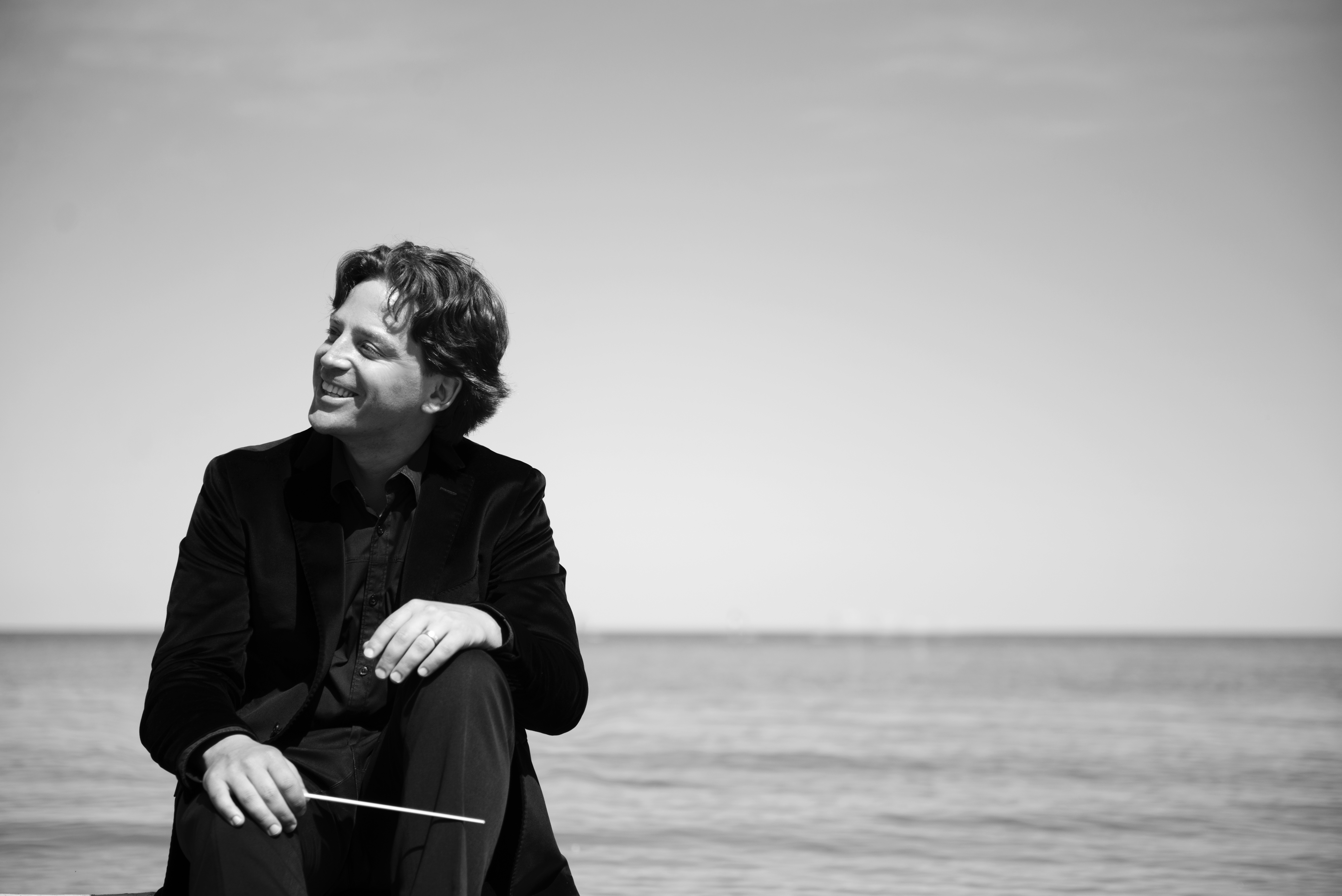
Brian Current is a proud Toronto resident who bikes around to rehearsals. He has three kids, a ridiculously accomplished wife and a small white dog. Outside of music he enjoys time with his kids, reading, travel and playing (but not watching) hockey. Photo by Bo HuangComposer and conductor Brian Current is co-artistic director, along with Robert Aitken, of New Music Concerts and has been composer adviser for the RCM’s 21C Music Festival. He’s the director of the New Music Ensemble at the RCM Glenn Gould School, and the main conductor for Continuum Contemporary Music.

As a conductor he leads a wide range of 20th/21st century repertoire, and is the champion of close to a hundred works by Canadian composers including commissioned premieres by Linda Catlin Smith, Brian Harman, Christopher Mayo, Bekah Simms, So Jeong Ahn, Andrew Staniland, Alice Ho and many others.

Current’s compositions are programmed frequently by major professional orchestras, opera companies and ensembles across Canada and internationally. The Naxos recording of his opera Airline Icarus won the 2015 Juno Award, Classical Composition of the Year. He was the inaugural winner of the Azrieli Commissioning Competition in 2016. Current’s 2017 opera, Missing, with Métis playwright Marie Clements, is about Canada’s missing and murdered Indigenous women. Missing has just completed a tour of Victoria, Regina, and Prince George and was featured on our November 2019 cover.

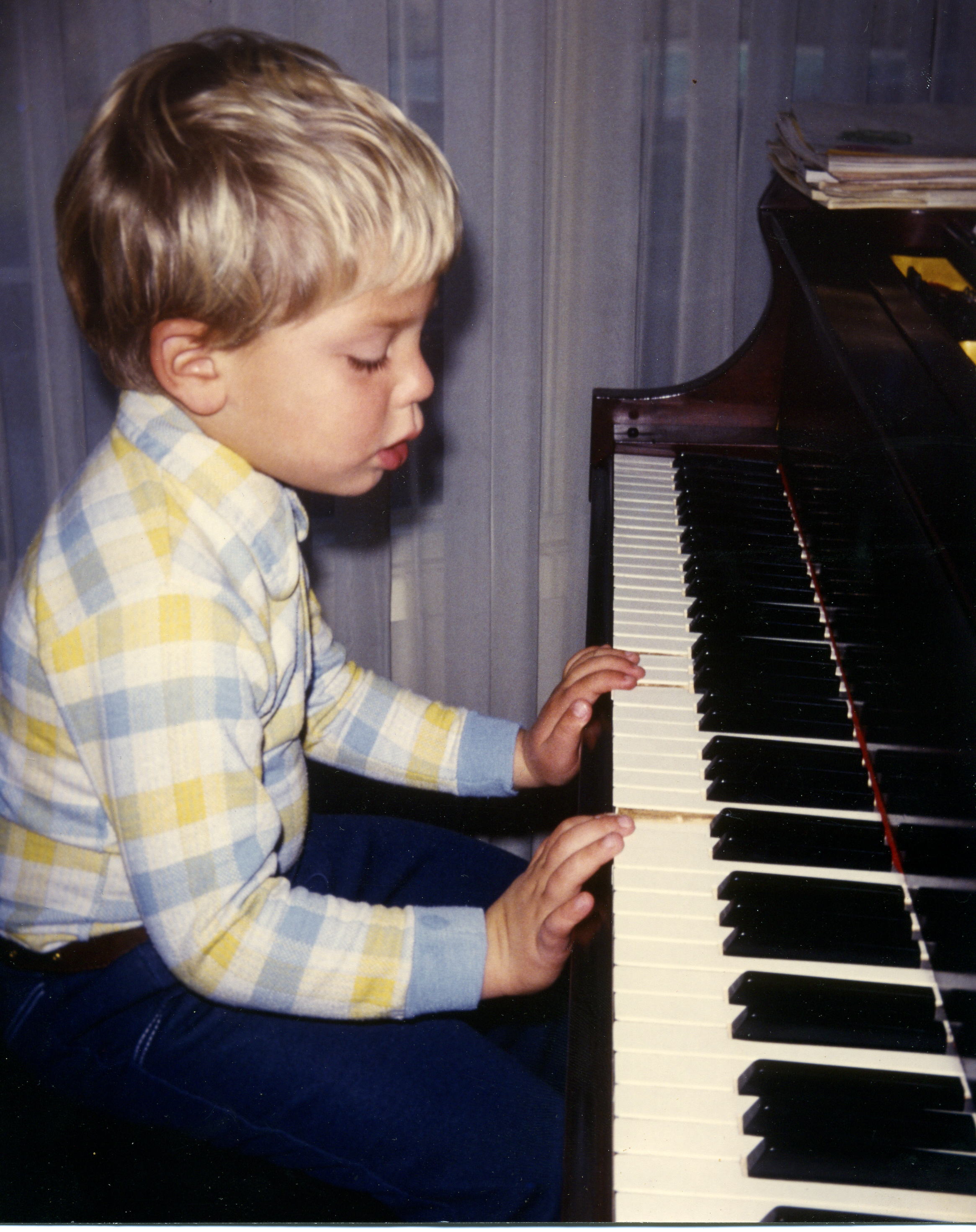
"I’m so grateful that my parents made me practise - I still use the piano in my work every day"Current was born in London Ontario, and grew up in Ottawa with his older brother Grant and younger sister Catherine. “Both my parents and siblings are very musical. My parents still sing in the Ottawa Choral Society. They may be its longest-serving members. My Dad played Gershwin and Chopin at our living-room piano, and my Mom still plays piano in retirement homes around Ottawa.”

If a friendly child asks what your job is? I draw the music so people know what to play. I also wave my arms so people know when and how to play it.

Where did hearing music fit into your life, growing up? In the car with my parents. Listening to my 80s cassette Walkman while delivering The Globe and Mail (before 7am! Ottawa winter!) as a teenager.

Your very first recollection of making up music yourself? Trying to fake out my mom by pretending to practise Mozart and Beethoven, but rather attempting (poorly) to improvise in that style. She knew.

First instruments other than your own voice? Piano, guitar and euphonium.

A first music teacher? I’d go to the home of Karen Sutherland who was a fantastic local teacher with a half-dozen children of her own.

Early collaborative experiences? My first ensemble experience was as a choirboy at Christchurch Cathedral where the starting salary was $2.10 per week.

After high school? I didn’t know that formal composition as an art form was a thing, but I nevertheless somehow convinced my parents that I should study piano and composition, rather than commerce, at McGill.

When did composing music arise? I knew before high school that I wanted to compose but didn’t know about any existing practices until John Rea inspiringly introduced the composition world to us in a third year undergrad introduction class at McGill.

When did you first conduct? I wrote a piece for tenor, bassoon, overtone singing, bowed banjo and piano and needed to put it together for a concert, and just did it. The first time conducting professional musicians was the National Arts Centre Orchestra in my 20s and it was terrifying but a huge learning experience.

Experiences that formed your adult musical appetites? When I was in the Ottawa Youth Choir, we performed Michael Colgrass’ The Earth’s A Baked Apple which was like music from another planet at the time, and in retrospect was a fantastic introduction to contemporary music.

When did you began to think of yourself as a career musician? 
I still don’t know about this. It remains a struggle. We should all ask ourselves every five years if this life is for us.

Ever think you would do something else? My secret other fantasy job is to be a political journalist in foreign countries for Harpers, The Atlantic, NPR.

Music-making in your own family today? My three kids take piano and violin, but I don’t push them to be professional musicians. More, I would just like them to get a glimpse of the world that I work in daily and love. When the kids were little – one still is – we would listen to Bach’s Well-Tempered Clavier, or the Goldberg Variations every night as they went to sleep. We would listen to the same pieces for years and not get tired of them.

What should we say to parents/grandparents hoping their young children will grow up to love and make music? They won’t regret it if they take music lessons, or if they are introduced to great works.

Back to top