Queenie and Mary Lou
We all know who Satin Doll is – but how many of you know Queenie Pie? They both inhabited the world of Duke Ellington, although one was a lot more successful than the other.
Satin Doll, a collaboration with Billy Strayhorn – and indeed there was some question as to who was the real father – saw the light of day in 1953; Queenie Pie had a much longer gestation period beginning in the early 60s and was still a work in progress at the time of Ellington's death in 1974. (I've reviewed a new recording of it in the DISCoveries section of The WholeNote this month.)
Queenie Pie was a musical, originally intended for National Educational Television in the USA, which in 1970 became PBS. The work was loosely based on the story of C.J. Walker who developed hair-care products and through her efforts and business acumen was the first known African-American woman to become a self-made millionaire.
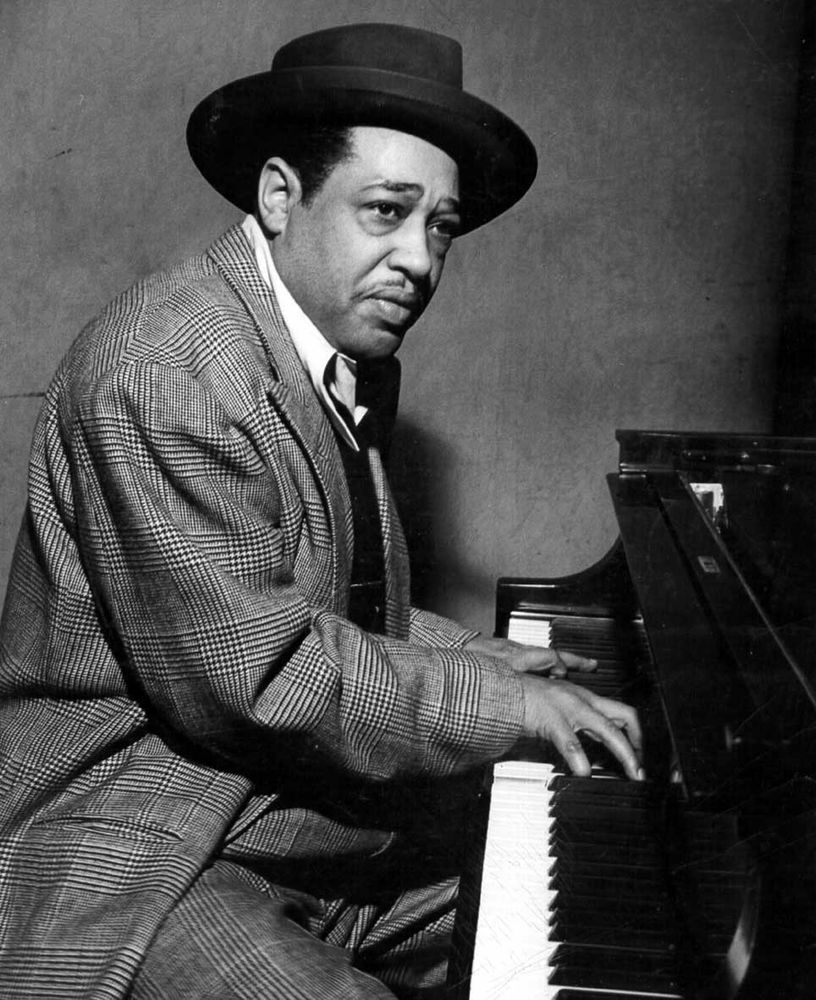 Jazz impresario Norman Granz remembered Ellington having begun the project in the early 60s and that Ella Fitzgerald was supposed to play Queenie Pie, but PBS support was withdrawn and, necessity no longer having to be the mother of invention, the work languished to the extent that when the Duke died it was still incomplete. What material there was consisted of some lead sheets, lyrics and harmonic progressions.
When the work was first performed in 1986, a libretto had been adapted from Ellington's original story, additional lyrics were written and a score in the style of Ellington had been arranged.
Now, here's the 64 dollar question: Is it still Ellington?
There are, of course many examples of unfinished works, completed by other musicians – Gustav Mahler's Symphony No. 10, Franz Schubert's Symphony No. 7 and Wolfgang Amadeus Mozart's Requiem are famous examples – but they were certainly partially completed, not simply melodic lines and harmonic suggestions.
It has to be understood also that Ellington's true instrument was his orchestra and he wrote with his own musicians, especially his soloists, in mind, and was able to experiment with colourings, tonal effects and the unusual voicings that were his hallmark. And having a working orchestra enabled him to hear his music being played. It is well known that in lean years the royalties from his "hits" subsidized the band, enabling him to keep using his "instrument." In a Newsday interview in 1969 he said, "The writing and playing of music is a matter of intent... My music fits the tonal personality of the player. I think too strongly in terms of altering my music to fit the performer to be impressed by accidental music."
It all leaves me just a bit uncomfortable about calling Queenie Pie an Ellington work. Any thoughts?
Mary Lou Williams
This month sees the centenary of one of the most significant women in jazz, a fact that is sadly overlooked by many. I'm referring to Mary Lou Williams, who was the most important female jazz musician to emerge in the first three decades of the music. She also had a bearing on the career of Duke Ellington; in 1941 Mary Lou traveled with and wrote for the Ellington Band for about six months. One of her arrangements was called Trumpet No End, based on the changes of Blue Skies and it is a prime example of just how well she could write. Duke Ellington said of Mary Lou, "Her music retains, and maintains, a standard of quality that is timeless. She is like soul on soul."
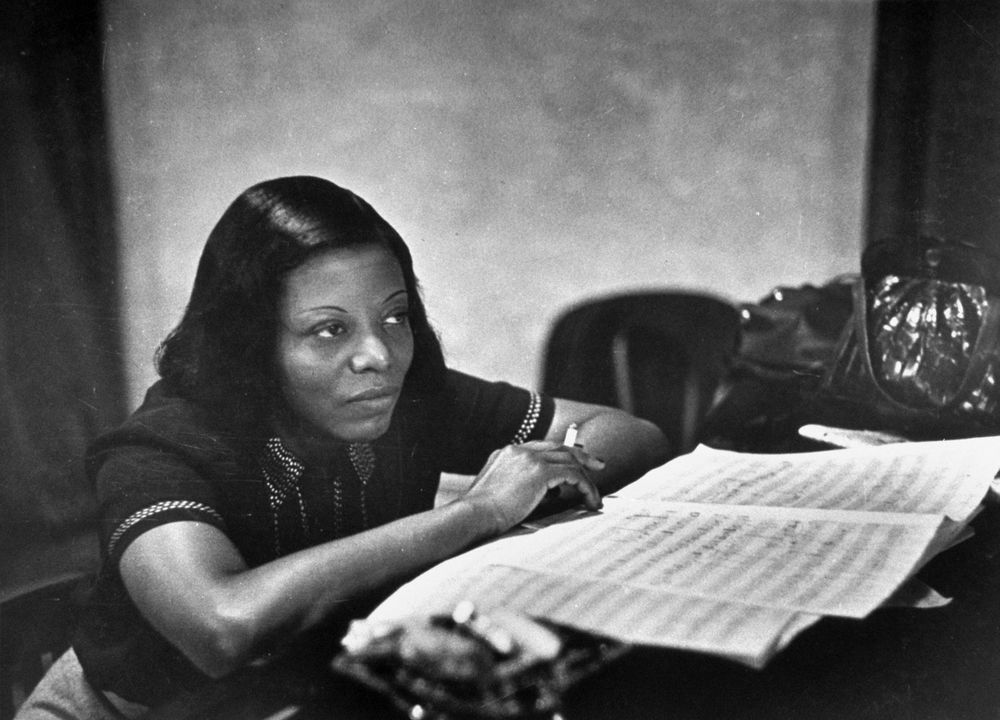 She was a composer, arranger and master of blues, boogie woogie, stride, swing and be-bop. She also had to cope with a musical environment in which women instrumentalists were hardly plentiful and women arranger/composers were as scarce as hen's teeth.
She was the first jazz composer to write sacred works. She composed three complete Masses, one of which, Mary Lou's Mass, was performed right here in Toronto. I was fortunate enough to know her and privileged to assist in presenting that performance.
If your travels should take you to Washington DC, the 15th Annual Women in Jazz Festival at the Kennedy Centre will celebrate the 100th anniversary of pianist Williams' birth with three evenings of concerts featuring top female jazz artists: vocalist Dee Dee Bridgewater, drummer Terri Lyne Carrington, pianist Geri Allen, bassist Esperanza Spalding and saxophonist Grace Kelly; vocalist Catherine Russell, drummer Sherrie Maricle and the Diva Jazz Orchestra.
There will also be a celebration in New York on Williams' birthday, May 8, at the Church of St. Francis Xavier. A very special lady indeed.
Right here in Toronto here are a few things worth the mention. On May 2 there will be a fundraiser at Koerner Hall for the Geneva Centre for Autism featuring Chaka Khan and Matt Savage and his band. For info call 416-408-0208.
On the 8th, St. George's Memorial Church in Oshawa will present Jazz at George's with vocalist Lynn McDonald, Dave Restivo, piano; Pat Reid, bass and Ted Warren, drums. Call 905-263-2791. On the 25th and 26th of the month at the Enwave Theatre, Harbourfront Centre, the Art of Time Ensemble will present "The Songbook 4," featuring vocalist Mary Maragret O'Hara, saxophonist Phil Dwyer, guitarist Rob Piltch and cellist Rachel Mercer. For reservations call 416-703-5479.
The Annual Ken Page Memorial Trust Gala fundraiser will be held at The Old Mill on May 20. Warren Vaché and brother Allan Vache, trombonists George Masso and Laurie Bower, John Sherwood, Neil Swainson, Don Thompson, Reg Schwager, Terry Clarke and Lucian Gray are confirmed at time of writing. They will also be joined by a saxophone player called Galloway. It promises to be a pretty special evening. For reservations please call Anne Page at 416-515-0200 or e-mail anne@kenpagememorialtrust.com
I hope your May days will be distress-free. Happy listening.
Jim Galloway is a saxophonist, band leader and the former artistic director of Toronto Downtown Jazz. He can be contacted at: jazz@thewholenote.com.
/Becca Whitla 3.JPG)
/Catherine Robbin 1.jpg "Mezzo Catherine Robin") The Mozart Requiem is also being performed by Hamilton’s Central Presbyterian Church choir on April 2, and by the Pax Christi Chorale on April 24-25. The King Edward Choir performs a winning combination of Mozart’s Mass in C Minor and Poulenc’s Gloria in Barrie (April 10) and the Mississauga Choral Society sings Fauré’s Requiem (April 11). Cantores Celestes Women’s Choir perform Pergolesi’s luminous Stabat Mater on April 17. A portion of proceeds from this concert will go to the Because I am a Girl foundation.
The Mozart Requiem is also being performed by Hamilton’s Central Presbyterian Church choir on April 2, and by the Pax Christi Chorale on April 24-25. The King Edward Choir performs a winning combination of Mozart’s Mass in C Minor and Poulenc’s Gloria in Barrie (April 10) and the Mississauga Choral Society sings Fauré’s Requiem (April 11). Cantores Celestes Women’s Choir perform Pergolesi’s luminous Stabat Mater on April 17. A portion of proceeds from this concert will go to the Because I am a Girl foundation./Lang Lang 2.jpg) International Touring Productions brings the Slovak Sinfonietta, conducted by Kerry Stratton, to Toronto and six other cities in Southern Ontario in late April and early May. With the orchestra will be two pianists: Haiou Zhang, who will perform Beethoven’s
International Touring Productions brings the Slovak Sinfonietta, conducted by Kerry Stratton, to Toronto and six other cities in Southern Ontario in late April and early May. With the orchestra will be two pianists: Haiou Zhang, who will perform Beethoven’s /Martin_Beaver.jpg) A frequent visitor to Toronto, thanks to Music Toronto, is the Tokyo String Quartet. While the quartet’s genesis was in the 1960s at the Toho School of Music in Tokyo, and it has been quartet-in-residence at Yale University since 1976, it also has a strong Toronto connection through Martin Beaver, its first violinist. When you hear the Tokyo String Quartet, you are hearing not only one of the best string quartets in the world, but also “The Paganini Quartet,” a set of Stradivarius instruments named after the legendary virtuoso Niccolò Paganini, who acquired and played them during his illustrious career. The Tokyo String Quartet will perform Beethoven’s
A frequent visitor to Toronto, thanks to Music Toronto, is the Tokyo String Quartet. While the quartet’s genesis was in the 1960s at the Toho School of Music in Tokyo, and it has been quartet-in-residence at Yale University since 1976, it also has a strong Toronto connection through Martin Beaver, its first violinist. When you hear the Tokyo String Quartet, you are hearing not only one of the best string quartets in the world, but also “The Paganini Quartet,” a set of Stradivarius instruments named after the legendary virtuoso Niccolò Paganini, who acquired and played them during his illustrious career. The Tokyo String Quartet will perform Beethoven’s /Lucas Harris 1.jpg)
/Borys Medicky 1 1505.jpg)
/Julia Wedman 1.jpg "Julia Wedman")
/Gilles Tremblay 1.jpg) For this tour, their second to land in Toronto, Aventa will connect to the season-long celebrations of Canadian composer Gilles Tremblay, initiated by the Société de musique contemporaine du Québec. Never one to keep things small, SMCQ artistic director Walter Boudreau has encouraged a nation-wide project to pay homage to one of our own musical heroes through a collaborative series of at least 30 different events. For their part, Aventa will perform two of Tremblay’s most distinctive works –
For this tour, their second to land in Toronto, Aventa will connect to the season-long celebrations of Canadian composer Gilles Tremblay, initiated by the Société de musique contemporaine du Québec. Never one to keep things small, SMCQ artistic director Walter Boudreau has encouraged a nation-wide project to pay homage to one of our own musical heroes through a collaborative series of at least 30 different events. For their part, Aventa will perform two of Tremblay’s most distinctive works – /Bill and Chris King 1.jpg) The announcement was not entirely unexpected. Attendance last year was very disappointing, giving Bill and Kris King good reason to ask themselves if it was worth going on with the event. What had begun 15 years ago as the Jazz Report Awards, an intimate evening in a club setting, over the years had evolved into a large and costly production.
The announcement was not entirely unexpected. Attendance last year was very disappointing, giving Bill and Kris King good reason to ask themselves if it was worth going on with the event. What had begun 15 years ago as the Jazz Report Awards, an intimate evening in a club setting, over the years had evolved into a large and costly production.