Opera performances in Southern Ontario in the summer are becoming more numerous every year. This year, a few young companies are taking opera to some municipalities that once had opera companies and to others that never had them. This is all to the good in broadening the audience for opera as well as broadening notions of what opera is, as the offerings mix standards and rarities with brand-new works.

June

Nota Bene: June 2018 begins with a rarity. The Nota Bene Baroque Players of Waterloo team up with Capella Intima of Toronto and the Gallery Players of Niagara to present Folly in Love (Gli equivoci nel sembiante) from 1679, the first opera written by Alessandro Scarlatti (1660-1725). The first performance takes place in Kitchener on June 1, the second in Hamilton on June 2 and the third in St. Catharines on June 3.

The opera concerns two nymphs, Lisetta and Clori, who are both in love with the same shepherd Eurillo. When a new shepherd Armindo arrives, the nymphs change their affections to him. After much confusion, the four sort themselves into two happy couples. Sheila Dietrich and Jennifer Enns sing the two nymphs, Bud Roach is Eurillo and David Roth is Armindo. Roach also conducts the six-member ensemble of period instruments. The opera is presented in concert in Italian with English surtitles.

Vera Causa: Also outside Toronto, the young opera company Vera Causa Opera is presenting an unusual double bill of new Canadian operas by women composers. The first is an opera in Croatian and English, Padajuća Zvijezda (The Fallen Star) by Julijana Hajdinjak, and the second is The Covenant by Dylann Miller. The first opera is inspired by a short story by the composer’s sister Danijela about two lovers in a celestial kingdom where love has been outlawed and is punished by banishment to Earth. It features Allison Walmsley as Luna, Melina Garcia Zambrano as Aurelia, Gabriel Sanchez Ortega as Solaris, Katerina Utochkina as Astra and Philip Klaassen as Stello. Rachel Kalap is the stage director and Dylan Langan conducts a five-member ensemble plus chorus. 

The second opera concerns witches, lesbians and priests and is about “empowering women to embrace their true selves from the perspective of a teenage girl in a small town.” In it Allison Walmsley sings Cate, Chad Quigley is Father Andrew, Kimberley Rose-Pefhany is Keira, Autumn Wascher is Delaney, Stephanie O’Leary is Lilith and Sam Rowlandson-O’Hara is Cate’s Mother. Rebecca Gray is the stage director and Isaac Page conducts a small instrumental ensemble and chorus. The operas will be performed on June 22 in Waterloo and on June 23 in Cambridge. As both the Nota Bene and the Vera Causa opera productions show, opera companies whose goal is to serve their local communities are springing up outside of Toronto.

By Request: In Toronto, Opera by Request has two presentations in June. The first on June 2 is Mozart’s Don Giovanni. The second on June 9 is Donizetti’s daunting Anna Bolena. In the Mozart, Lawrence Cotton sings the title role, Evan Korbut is Leporello, Laura Schatz is Donna Elvira, Carrie Gray is Donna Anna and Risa de Rege is Zerlina. Kate Carver is the pianist and music director. In the Donizetti, Antonina Ermolenko sings the title role, John Holland is Enrico VIII, Monica Zerbe is Giovanna Seymour and Paul Williamson is Lord Percy. William Shookhoff is the pianist and music director.

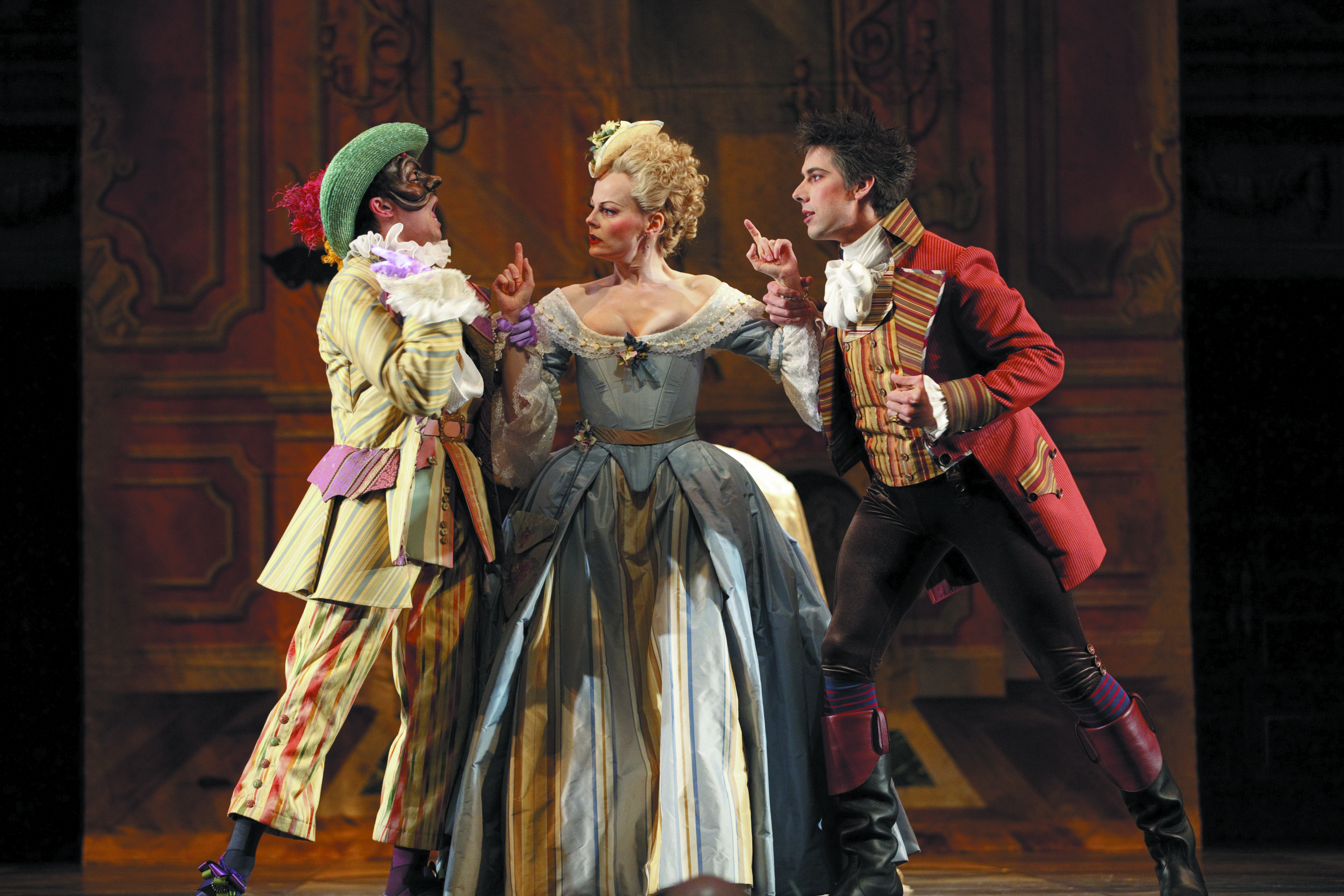
Opera 5: On June 13, 15 and 17, Toronto’s Opera 5, which up to now has focused on presenting rarities such as its Dame Ethel Smyth double bill last year, makes its first foray into a full-length opera from the standard repertory, Rossini’s The Barber of Seville. Johnathon Kirby sings the title role, Kevin Myers is the Count Almaviva, Stephanie Tritchew is his beloved Rosina, Jeremy Ludwig is her jealous guardian Don Bartolo and Giles Tomkins is her music teacher Don Basilio.

Rachel KrehmAs Opera 5 general director Rachel Krehm says, “The show will be set in the spring of 1914 in Spain just before the Last Great Summer (in which Spain declared its neutrality in World War I, a decision that would later seriously divide the country). A big feature of the set will be golden gates which symbolize Rosina’s entrapment – the outside world just out of reach. The comedy will come at you from every angle: the colours onstage, the physicality – but always inspired by the comedic genius from the score.” The opera will be fully staged and directed by Jessica Derventzis, with Evan Mitchell conducting an 11-piece ensemble.

Two from Luminato: The Luminato Festival has two opera-related offerings. From June 16 to 19 it presents Tables Turned, a remount of one of Tapestry Opera’s experimental Tap:Ex series from 2015. Soprano Carla Huhtanen and percussionist Ben Reimer join forces with Montreal composer, turntable artist and electronics specialist Nicole Lizée for a performance blending live and pre-recorded music with projections from classic films. Luminato’s other opera-like work is the production-in-progress Hell’s Fury, The Hollywood Songbook. The story follows the life of composer Hanns Eisler (1898-1962), who escaped Nazi Germany for the US in only to be rejected for his adherence to Communism in 1948 and forced to return to Europe, finally settling in the new East Germany. The opera, conceived and directed by Tim Albery, constructs a song cycle of Eisler’s many lieder to tell the story. Baritone Russell Braun is the soloist and Serouj Kradjian is the pianist. The sole performance is on June 23, but Soundstreams has scheduled the work for a full production in June 2019.
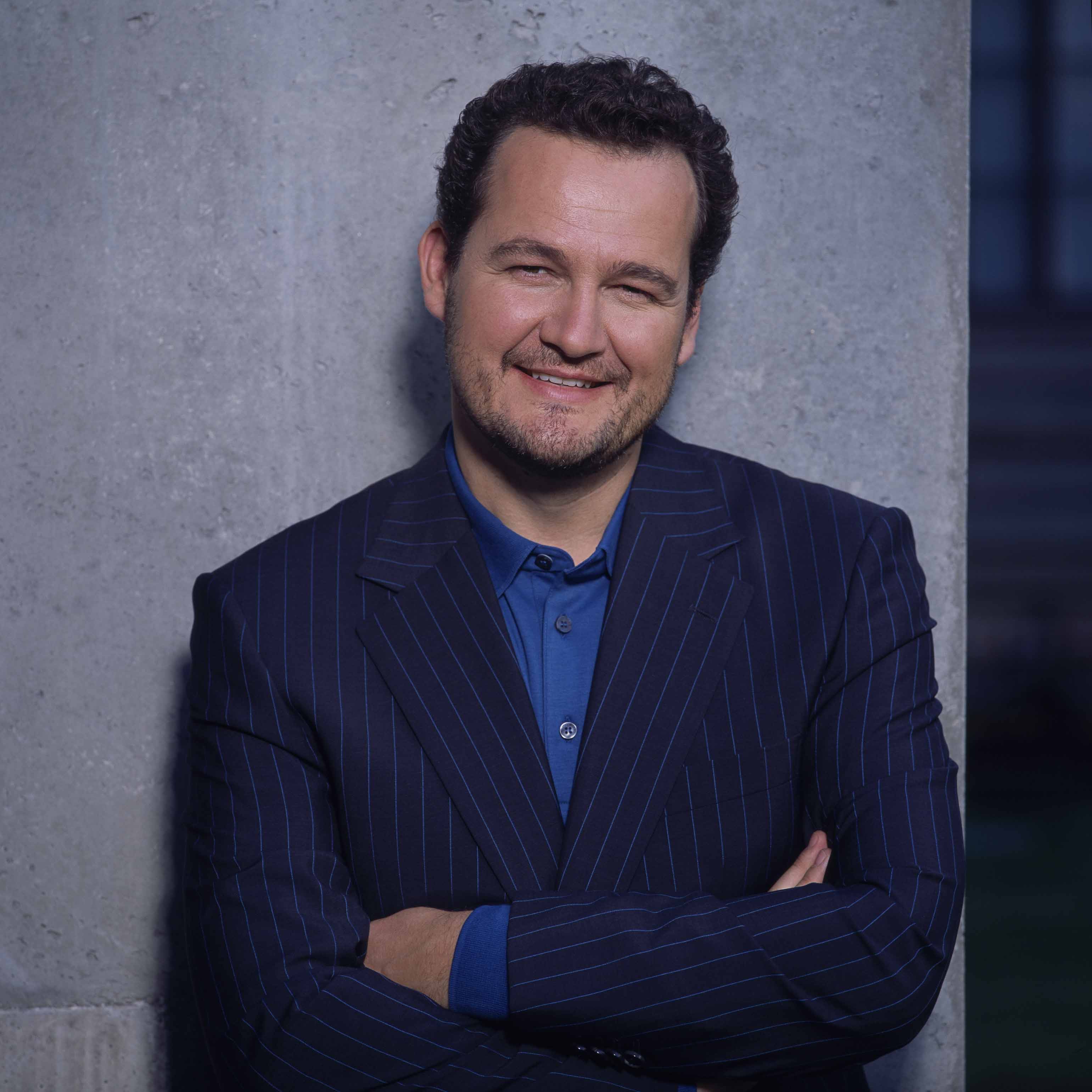
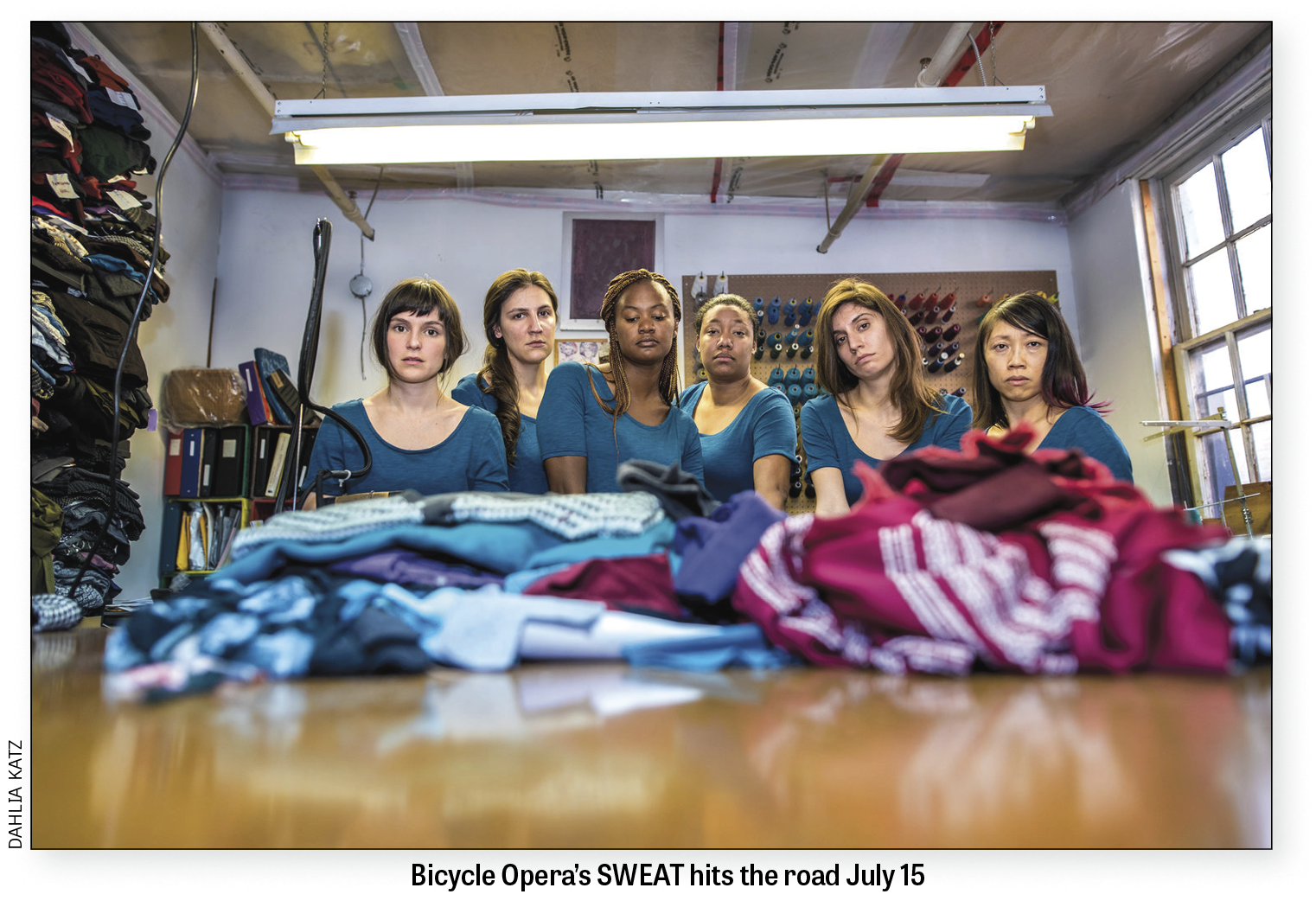
Russell Braun - photo by Johannes IfkovitsLlandovery Castle: Finishing June in Toronto is an opera workshop of The Llandovery Castle by Stephanie Martin on June 26 and 27 in association with Bicycle Opera. The title refers to the name of a Canadian hospital ship that was torpedoed on June 27, 1918, by a German U-boat in the North Atlantic. Fourteen Canadian nurses from all across Canada were among the casualties. Paul Ciufo’s libretto focuses on the lives of Minnie “Kate” Gallaher, Rena “Bird” McLean and Matron Margaret “Pearl” Fraser. The characters also include Sergeant Arthur “Art” Knight and Major Tom Lyon (two of the 24 men who survived the sinking) and German U-boat commander Helmut Patzig. The opera is directed by Tom Diamond and Kimberley-Ann Bartczak conducts a chamber orchestra. The June 27 performance will mark the 100th anniversary of the tragedy.

July

S.O.L.T Going Strong: Straddling July and August is the Summer Opera Lyric Theatre in Toronto, founded in 1986. The training program culminates in staged concert performances of three operas. This year the operas are Jules Massenet’s Manon (1884) on July 27, 29, August 1 and 4; George Frideric Handel’s Semele (1743) on July 28, August 1, 3 and 4; and a version of Mozart’s Così fan tutte (1789), renamed Fior and Dora after the heroines Fiordiligi and Dorabella, on July 28, 31, August 2 and 5.

Brott: This year the Brott Music Festival will again present a fully staged opera as part of its schedule from June 21 to August 16. This summer’s opera will be Mozart’s The Magic Flute, presented for one night only in English on July 19 at the FirstOntario Concert Hall. Anne-Marie MacIntosh sings Pamina, Zachary Rioux is Tamino, Holly Flack is the Queen of the Night, Max van Wyck is Papageno and Simon Chalifoux is Sarastro. Patrick Hansen directs the steampunk-designed production and Boris Brott conducts the Brott Festival Orchestra. 
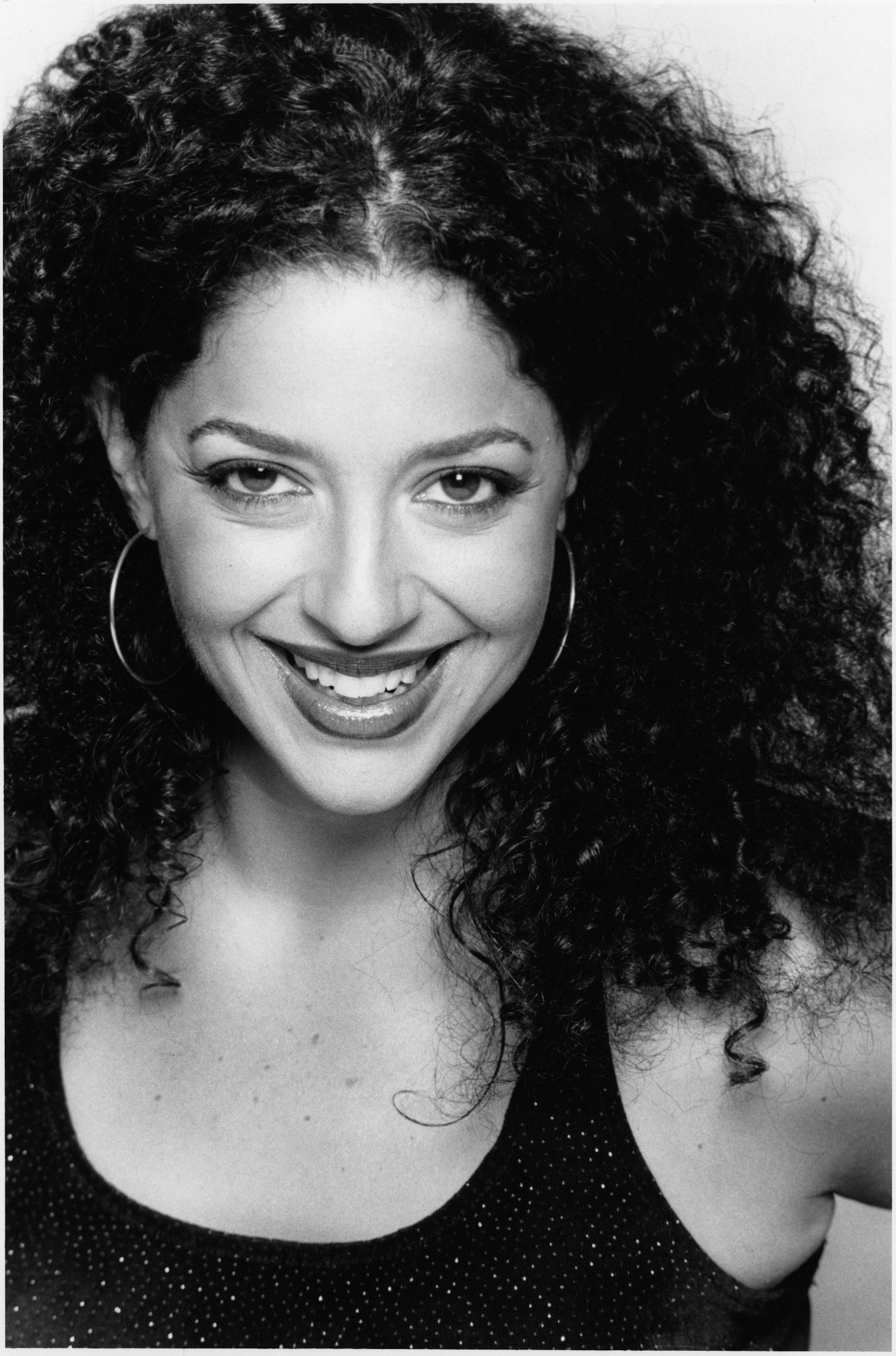
Julie NesrallahMusic Niagara: Meanwhile, Music Niagara has two mainstream operas on offer. On July 9 it presents Mozart’s Don Giovanni in Niagara-on-the-Lake, starring Alexander Dobson in the title role supported by young Canadian talent. On July 21 it is presenting a version of Bizet’s most popular opera styled as Carmen on Tap, starring CBC Radio host Julie Nesrallah in the title role with tenor Richard Troxell as Don José. The twist with this production is that the opera is abridged and is set in the cellar of Old Winery Restaurant in Niagara-on-the-Lake. The production promises to give audiences a more intimate view of the classic work.

Coffee Time: Shifting to another successful music festival, Stratford Summer Music will be presenting a staged version of a secular J.S. Bach cantata not in a restaurant but in the Revel Caffe in downtown Stratford. The work is, of course, Bach’s so-called Coffee Cantata of 1733, in which a father tries to prevent his daughter from becoming addicted to her favourite pick-me-up. Simon Chalifoux, Elizabeth Polese and Asitha Tennekoon are the three singers and Peter Tiefenbach provides the staging and the keyboard accompaniment for the three performances on July 27, 28 and 29.

Then, in early August, SSM presents a brand new response to The Coffee Cantata in the form of The Cappuccino Cantata, by the suspiciously pseudonymous “J.S. Bawk.” Set in Stratford in 2018, Gordon, who manages a coffee bar, is smitten with his barista, Stephanie, but she has a crush on the “boy with the MacBook” who comes in every day. Katy Clark, Adam Harris and Zachary Rioux are the singers and again Peter Tiefenbach provides the staging and the keyboard accompaniment. Performances are on August 10, 11 and 12, also at the Revel Caffe.

Also in August

Highlands Opera: In Haliburton, the Highlands Opera Studio is presenting three operas. On August 16 and 17 it presents an unusual double bill of two 20th-century Canadian comic operas by Tibor Polgar (1907-93). Polgar was born in Budapest and was a pianist and conductor with the Hungarian Radio Symphony Orchestra from 1925 to 1950. He fled Hungary after the Russian invasion, first to Germany and then to Canada, where he became a citizen in 1969. He was an instructor at the University of Toronto Opera Division from 1966 to 1975.

First on the double bill is The Glove, Polgar’s most performed opera, commissioned by the CBC in 1973. The libretto is based on the 1797 ballad by Friedrich Schiller about a princess who asks a knight to enter an arena of lions to fetch her fallen glove. Andy Erasmus sings the Ringmaster, Grace Canfield the Princess and Matthew Dalen the Knight. Second on the bill is The Troublemaker from 1968, based on a tale from The Thousand and One Nights. Matthew Dalen sings Abu Hussein, Andy Erasmus is Sherkan, Maria Lacey is Tamatil, Emma Bergin is Nushmet and Joseph Trumbo is The Cadi. On August 24 through 27 the Highlands Opera Studio presents Puccini’s La Bohème with two casts, one on August 24 and 26 and the other on August 25 and 27.

Opera Muskoka: The second summer opera company in cottage country is Opera Muskoka, now in its ninth year. On August 21 it presents a concert performance of Mozart’s Così fan tutte in Italian with English surtitles at the Rene M. Caisse Theatre in Bracebridge. Soprano Sharon Tikiryan is the producer and will sing the role of the calculating maid Despina.

All of this operatic activity all over the province is certainly enough to occupy any Southern Ontarian opera-goer until the fall.

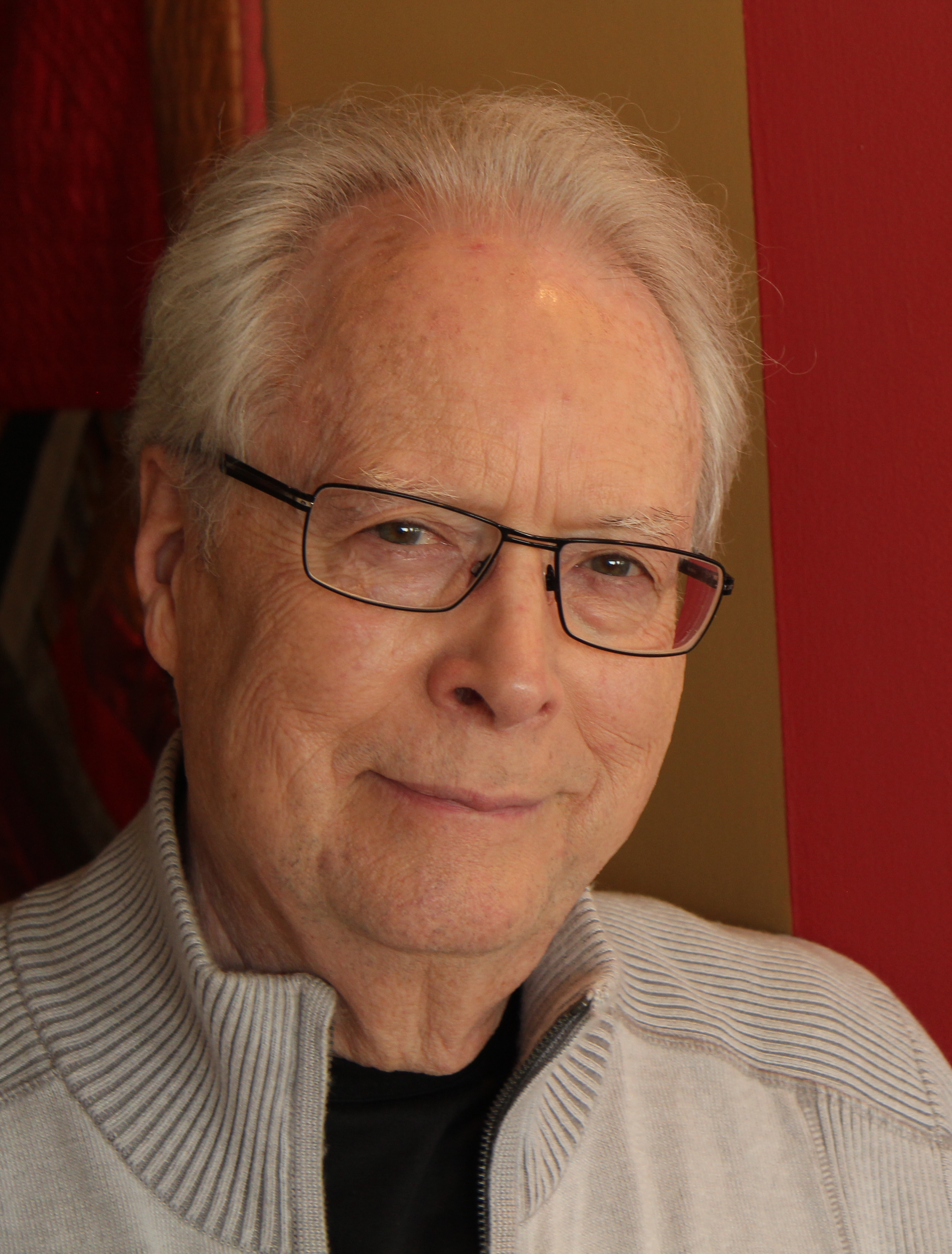
Christopher Hoile is a Toronto-based writer on opera and theatre. He can be contacted at opera@thewholenote.com.

The creation of new Canadian operas continues apace. April saw the premieres of The Overcoat: A Musical Tailoring by James Rolfe to a libretto by Morris Panych and the premiere of The Ecstasy of Rita Joe by Victor Davies to his own libretto. May will see the premieres of two more new operas that form a stark contrast in terms of subject matter, performers and intended audience. The first off the mark is Hockey Noir, the Opera by Quebecois composer André Ristic. The second is The Monkiest King by Hong Kong-born Canadian composer Alice Ping Yee Ho. While at the COC The Nightingale and Other Short Fables, featuring two operas by Igor Stravinsky, continues to May 19, and Anna Bolena by Donizetti continues to May 26, the arrival of these brand-new operas demonstrates how varied and vibrant the opera scene in Toronto has become.

Hockey Noir the Opera - illustration by Kimberlyn Porter

Hockey Noir

Hockey Noir, the Opera premieres on May 10 with a second performance on May 11. Subtitled “A bilingual chamber opera in 3 periods,” Hockey Noir is the first full-scale opera to be presented by Toronto’s Continuum Contemporary Music. It is co-produced by Ensemble contemporain de Montréal (ECM) and the Toronto Comic Arts Festival. As the title suggests, the opera is an homage to film noir, as well as a portrayal of the perennial Montreal-Toronto rivalry in hockey (which is why the libretto is in both French and English).

The setting is a fictional 1950s Canada during the playoff final between the Montreal Quabs and the Toronto Pine Needles.The action is narrated in voice-over by a Detective Loiseau, who describes the details of his investigation and the goings-on behind the scenes of the playoff series. He observes the backroom schemes of a colourful cast of characters consisting of mobsters, drag queens, hockey stars and femme fatales, whose paths all become entangled.

The plot involves Romanov, the city’s mob boss, who also has the hockey community in his grip, and Madame Lasalle, an irresistible seductress and Romanov’s girlfriend, who is under his thumb but who secretly hopes to take his place. Their problem is Bigowsky, a young hotshot player for the Quabs. Bigowsky is in love with Lasalle and deep in debt to Romanov, who is forcing him to lose the series so that Romanov will win his wager on the Pine Needles. To escape Romanov’s clutches, Bigowsky disappears, disguises himself as a female groupie for the Quabs and prowls around the stands encouraging and coaching his friend and teammate, winger Guy Lafeuille, a hockey veteran who wants to end his career on a high note by winning the cup.

The opera came about after Continuum commissioned 3 Environments by André Ristic in September 2015. At that time, artistic director Ryan Scott discussed the idea of a larger collaboration with Ristic and proposed a remount of the ECM production of Ristic’s first opera with librettist Cecil Castellucci, the highly successful comic book opera, Les Aventures de Madame Merveille (2010). By then, however, Ristic and Castellucci were already at work on the idea of Hockey Noir.

Veronique Lacroix. Photo by Pierre Etienne-Bergeron

To mount the opera, the four singers, conductor Véronique Lacroix and six ECM musicians (string quartet, percussion and synthesizer) will be onstage. They interact with projections designed by Serge Maheu based on illustrations by Kimberlyn Porter, moving from frozen to animated states, leaping from the giant screen onto the “skating rink” onstage.

Romanov will be sung by baritone Pierre-Étienne Bergeron, Madame Lasalle by mezzo-soprano Marie-Annick Béliveau, Bigowsky by soprano Pascale Beaudin and Lafeuille by tenor Michiel Schrey. All four are familiar with Ristic’s musical style of caricature and his mix of acoustic and electronic instruments because they all appeared in Ristic and Castellucci’s previous opera. Marie-Josée Chartier is the choreographer and stage director.

CCOC’s Monkiest King

In complete contrast to Hockey Noir, which is aimed at adults familiar with the various tropes of 1950s film noir, is the other new opera of the month: The Monkiest King, the main opera production of the Canadian Children’s Opera Company, celebrating its 50th anniversary. The opera, commissioned by CCOC artistic director Dean Burry, is by composer Alice Ping Yee Ho and librettist Marjorie Chan, who won the 2013 Dora Award for Outstanding New Opera for their Toronto Masque Theatre commission of The Lessons of Da Ji. After school previews on May 25, the opera will have public performances on May 26 and 27.

The story is based on the Song Dynasty mythological figure of Sun Wukong, the Monkey King. From these beginnings, the Monkey King as a mythological character grew to include Taoist, Buddhist and Hindu influences, spreading outside of China throughout East and Southeast Asia. He has appeared in many forms and adaptations, perhaps most prominently the classic 16th-century novel Journey to the West by Wu Cheng’en. The novel is best known in English under the title Monkey, in the 1942 abridged translation of Arthur Waley. The figure remains prevalent in the modern day, with appearances in Hong Kong action movies and video games. A proud trickster character reminiscent of Raven in First Nations lore or the god Loki in Norse mythology, Sun Wukong rebels against heaven, but ultimately learns humility.

The novel consists of 100 chapters and, in its latest, complete translation by W.J.F. Jenner, is 2346 pages long. In her librettist’s statement, Marjorie Chan writes that she and Ho realized that for an opera intended to be only one hour long, they would have to focus on only the first seven chapters of the novel. She says, “I wanted to steer away from a strict adaptation. I highlighted different parts of the story, changed a few details about characters for more impact, while remaining truthful to the novel’s message. So, instead of the Monkey King, we have the Monkiest King! Part of the joy for me on this project was creating a work for 50 or so diverse performers, from the very young to those out of their teenage years!”

In Chan’s version the story is told within a frame in which a child hides near a stuffed monkey in the Chinese exhibit in a museum and falls asleep. The action is thus the child’s dream. The action begins with the birth of the Monkey King and continues through the displeasure his boasting causes the Jade Emperor, who pursues and imprisons him. He manages to escape and under the guidance of the goddess of mercy, Kwanyin, begins to give up his foolish ways to do good.  

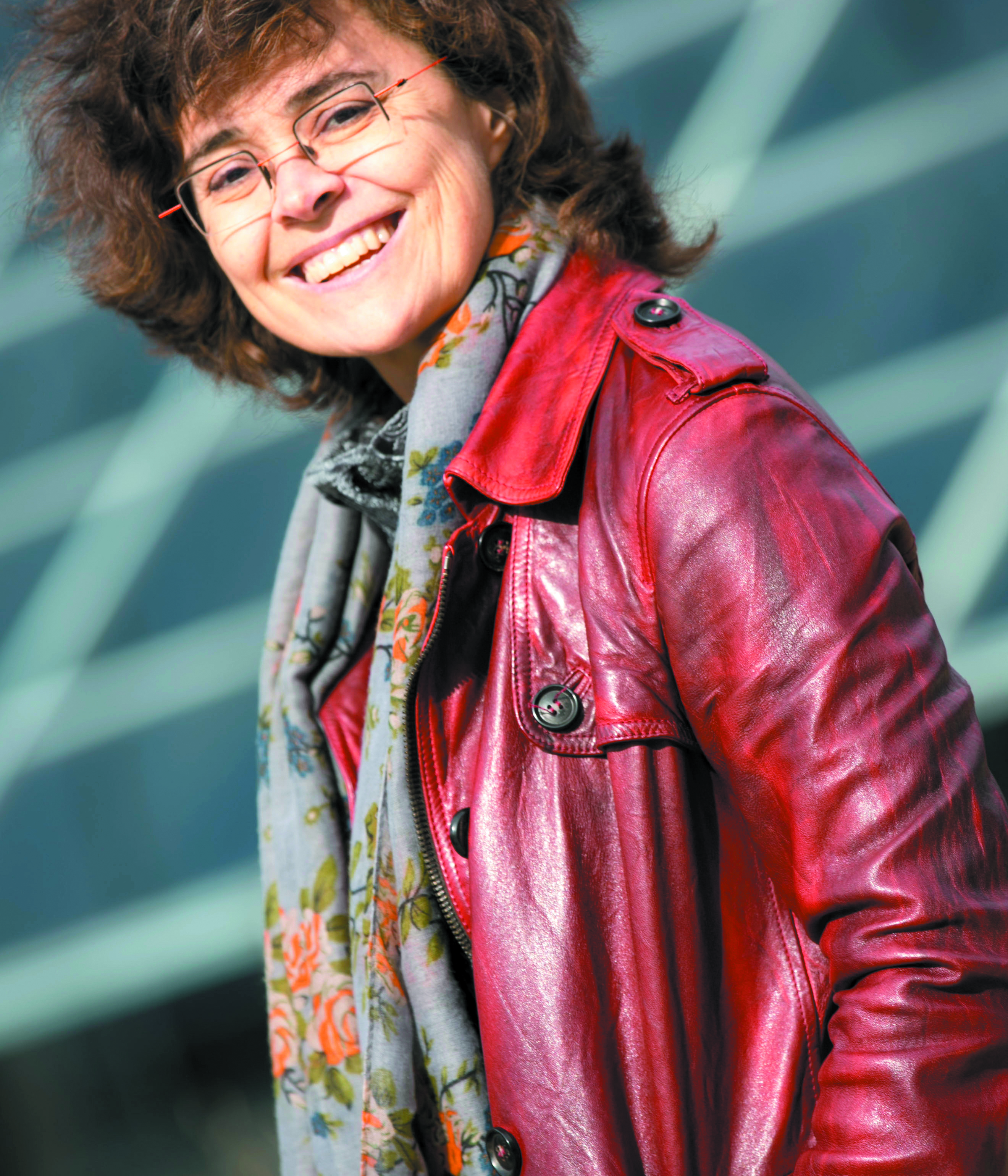
Alice Ping Yee HoIn her composer’s statement, Alice Ho writes, “The opera is written especially to showcase the talents of Canadian Children’s Opera Company: their soloists and six choruses of different ages. The young singers are featured in an abundance of roles, including a number of animal characters, soldiers of heaven, villagers, as well as the forceful Jade Emperor and the benevolent Kwanyin. The combination of Chinese and Western instruments (Western and Chinese woodwinds, erhu, pipa, guzheng, harp, percussion and string quartet) instigates an exotic sound world that depicts both the past and present, life or dream.”

The opera also explores the dramatic and expressive use of languages, Ho explains. “Though primarily sung in English, there are Mandarin songs that were composed to reflect the poetic side and spiritual philosophy of ancient Chinese culture. The occasional injection of Mandarin words and Cantonese slang also highlights the authenticity of Chinese folk culture. As a Canadian-Chinese composer, I hope this new opera will inspire and educate child performers with the magic of music and drama in a different cultural context. Taking a fresh look at Chinese folk mythology, The Monkiest King will bring new energy to a ‘cross-cultural’ children’s opera, bringing something exuberant and challenging to a diversified music community. It is a dream project for me to bring this mischievous good-natured character to life in a contemporary children’s opera setting.”

Unlike many previous CCOC operas, The Monkiest King will feature no adult singers. The only adult performer will be Yi Xi, a dancer from Toronto’s Little Pear Garden Dance Company (LPGDC). Stage direction will be by Nina Lee Aquino, choreography by LPGDC artistic director Emily Cheung and music direction by Teri Dunn. The production promises fun and challenges to all! 

Christopher Hoile is a Toronto-based writer on opera and theatre. He can be contacted at opera@thewholenote.com.
In any year, April is often the month with the single highest concentration of opera presentations in Toronto and environs – and 2018 is one of those years. In this April alone there are examples from every period of opera from the 17th century to the present. For newcomers or frequent operagoers April offers an unusual opportunity to gain an overview of the entire genre. The following are in chronological order based on the year they premiered.

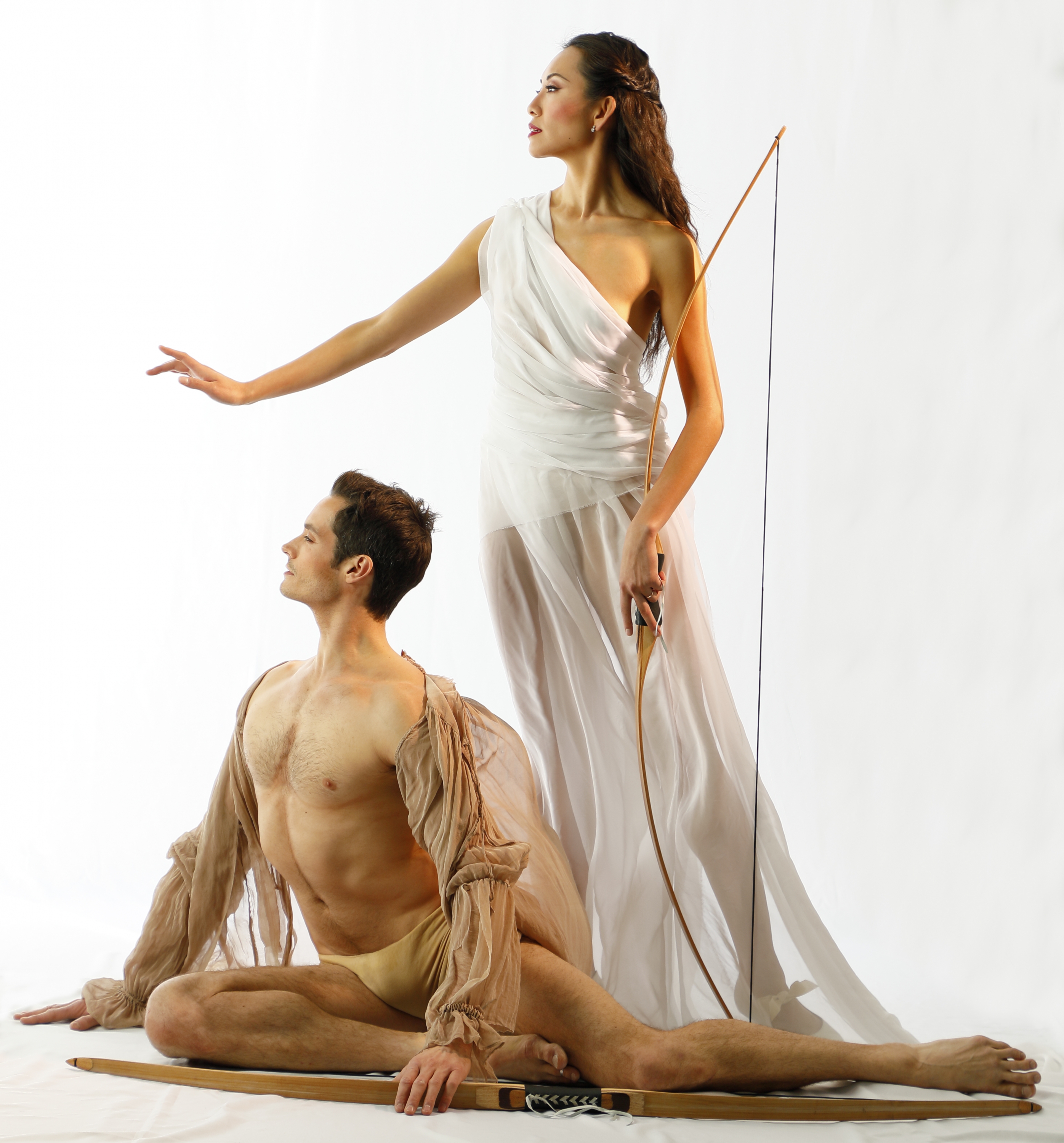
Dancers Tyler Gledhill and Juri Hiraoka pose as Ulysses and Penelope from 'The Return of Ulyssess' - photo by Bruce Zinger1639/40 – The Return of Ulysses (Il ritorno d’Ulisse in patria) by Claudio Monteverdi. Monteverdi’s Ulisse, one of the first great operas in music history, recounts Ulysses’ return to his home of Ithaca after 20 years’ absence, only to find his wife Penelope besieged by suitors convinced that he must be dead and pressuring her to remarry. Opera Atelier first staged the opera in 2007 and this will be its first remount. Krešimir Špicer, an OA favourite who has sung the title role throughout Europe, will be Ulisse. Mireille Lebel will sing his wife Penelope, Christopher Enns will be his son Telemaco, Laura Pudwell will be the Nurse and Carla Huhtanen, Kevin Skelton, Stephen Hegedus and Meghan Lindsay will sing the deities Fortuna, Jupiter, Neptune and Minerva, respectively. David Fallis conducts the Tafelmusik Baroque Orchestra and Marshall Pynkoski directs. April 19 to 28.

1733 – Orlando (composed 1719) by George Frideric Handel. The COC has been delving more into Handel’s operas but has so far not staged this work, which is counted one of the composer’s masterpieces. In it the Christian knight Orlando falls in love with the pagan princess Angelica, who is already in love with someone else. Orlando’s unrequited love drives him to madness. Opera by Request presents the opera in concert with mezzo Kinga Lizon singing the castrato role of Orlando. Vania Chan sings Angelica and Shannon Halliwell-McDonald sings Medoro, the man she loves. William Shookhoff is the pianist and music director. April 7.

1791 – The Magic Flute by Wolfgang Amadeus Mozart. Those seeking to add Mozart to their April lineup will have to travel to Windsor to see a new, young opera company there perform this classic. The company’s name is Abridged Opera and in their mission statement they call themselves “an indie opera company designed to bring a taste of this grand art form to a community that has limited access. They condense classic operatic works without compromising the opera’s integrity.” The singers have not been determined but the stage director will be Tracey Atin. April 14 and 15.

1813 – The Italian Girl in Algiers (L’Italiana in Algeri) by Gioachino Rossini. Fans of Rossini will also have to travel out of Toronto to see the work of another new, young company, Vera Causa Opera, that has sprung up in the Waterloo region in the past couple of years to provide performance opportunities for emerging artists. The operas are presented staged, costumed and with orchestra. L’Italiana is one of Rossini’s best-known comic operas (even though it has not been seen at the COC since 2003). Katerina Utochkina sings Isabella, the Italian girl of the title. Domenico Sanfilippo is the Bey Mustafà, who wants to marry her. David Boan is Lindoro, the young man in love with her, and Kimberley-Rose Pefhany is Elvira, who wants to win back the love of her husband the Bey. Michaela Chiste directs and Dylan Langan conducts. April 6 in Cambridge and April 7 in Waterloo.

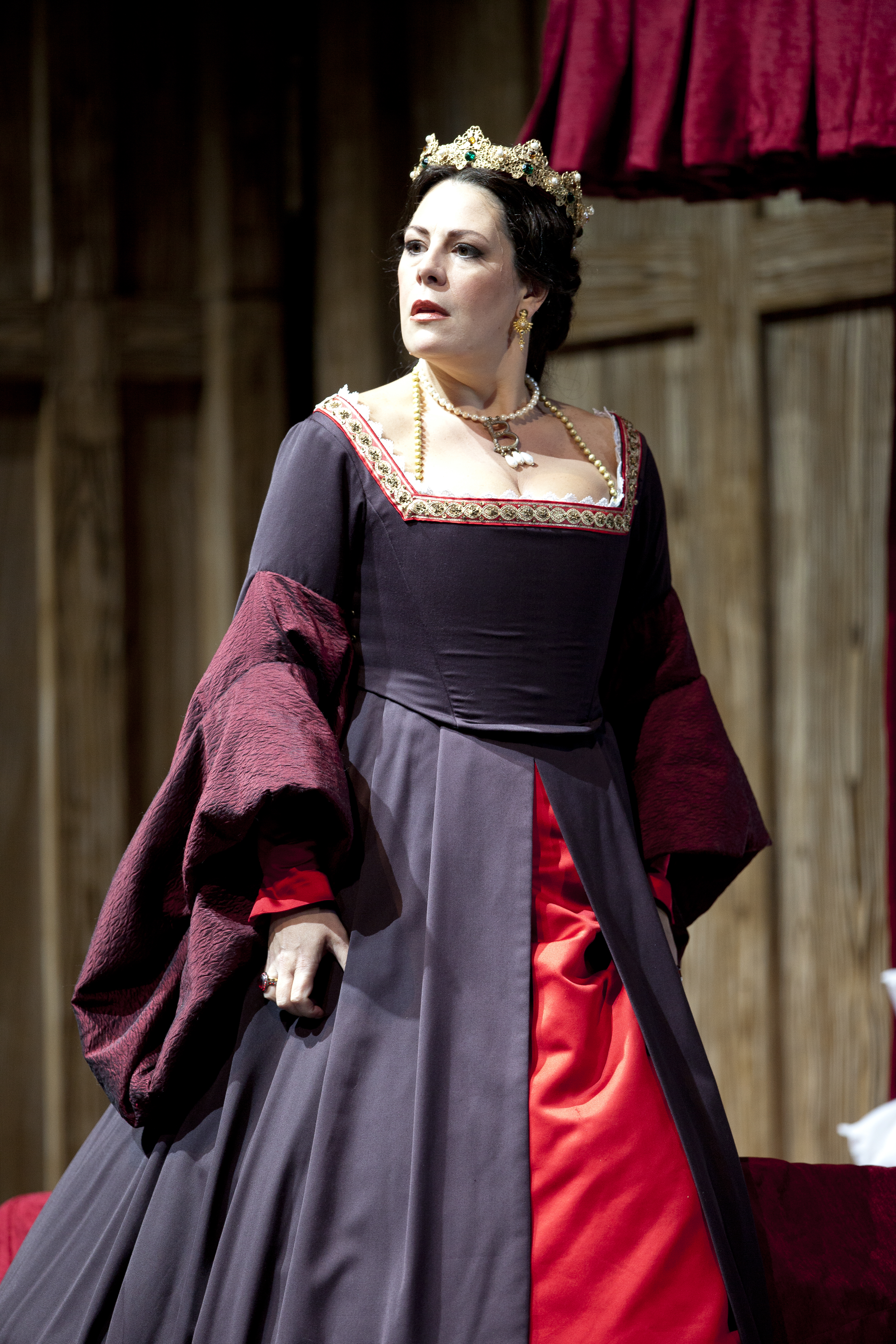
Sondra Radvanovsky as Anna Bolena in a scene from the Washington National Opera production of 'Anna Bolena.' - photo by Scott Suchman1830 – Anna Bolena by Gaetano Donizetti. With this opera the COC completes Donizetti’s so-called Three Queens trilogy of operas about Tudor monarchs, all starring superstar soprano and recent Canadian citizen Sondra Radvanovsky. In 2010 she sang the title role in Maria Stuarda and in 2014 she sang Elisabetta (Queen Elizabeth I) in Roberto Devereux. Now she sings the title role of the doomed Anne Boleyn, which Toronto audiences last heard back in 1984 sung by no less than the great Joan Sutherland. Eric Owens sings the role of Enrico VIII, Keri Alkema is his new love-interest Giovanna Seymour, Bruce Sledge sings Lord Percy and Allyson McHardy is Anna’s devoted page Smeton. Corrado Rovaris is again the conductor and Stephen Lawless, as with the previous two Three Queens instalments, is the stage director. April 28 to May 26.

1835 – Lucia di Lammermoor by Gaetano Donizetti. Opera Belcanto of York is also performing Donizetti this month in Richmond Hill. Alicja Wysocka sings the title role, Berg Karazian is Edgardo, David Babayants is Enrico and Henry Irwin is Raimondo. Edward Franko is the stage director and David Varjabed conducts the Opera Belcanto of York Chorus and Orchestra. April 19 and 22.

1843 – Don Pasquale by Gaetano Donizetti. Those seeking Donizetti in a lighter vein should look for Opera by Request’s concert performance of one of the composer’s best-known comic operas not seen at the COC since 1994. Bass-baritone Mikhail Shemet sings the title role, soprano Grace Quinsey sings Norina, the wife who tries to tame the gruff Pasquale, and tenor Fabian Arciniegas sings Ernesto, the young man who loves Norina. Claire Harris is the music director and pianist. April 21.

1848 – Lohengrin by Richard Wagner. Opera by Request can also help those suffering from Wagner withdrawal. OBR is presenting Lohengrin, a standard repertory work that the COC last staged back in 1983. Lenard Whiting sings the title role of the mysterious knight, Vanessa Lanch is Elsa, goaded into asking a forbidden question, Jillian Yemen is the scheming Ortrud, Andrew Tees is Telramund and Steven Henrikson is King Heinrich. William Shookhoff is the music director and indefatigable pianist. April 13.

1859 – Orphée by Christoph Willibald Gluck as revised by Hector Berlioz. Toronto’s enterprising Against the Grain Theatre has collaborated with the Banff Centre for Arts and Creativity, Opera Columbus and New York’s Company XIV to create a new version of Orphée et Eurydice, the 1762 opera by Gluck, revised by Berlioz in 1859. Opera Atelier presented Berlioz’s version straight in 2015. Against the Grain has different plans. It says, “In 2018, we think this would become an electronic, baroque-burlesque descent into hell. While staying true to the original score ... and honouring the traditions of Baroque opera, this new production pushes the boundaries of operatic presentation through an orchestra that mixes acoustic and electric instruments, features captivating choreography from burlesque dancers, aerial artistry and a global virtual chorus.” The global virtual chorus is made up of videos from 100 people who answered AtG’s request by singing their choral parts in the score which were then electronically mixed.

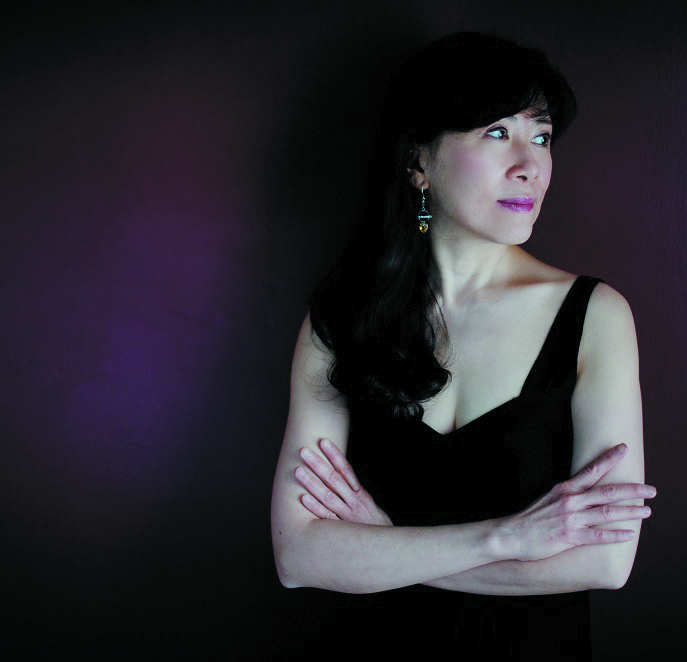
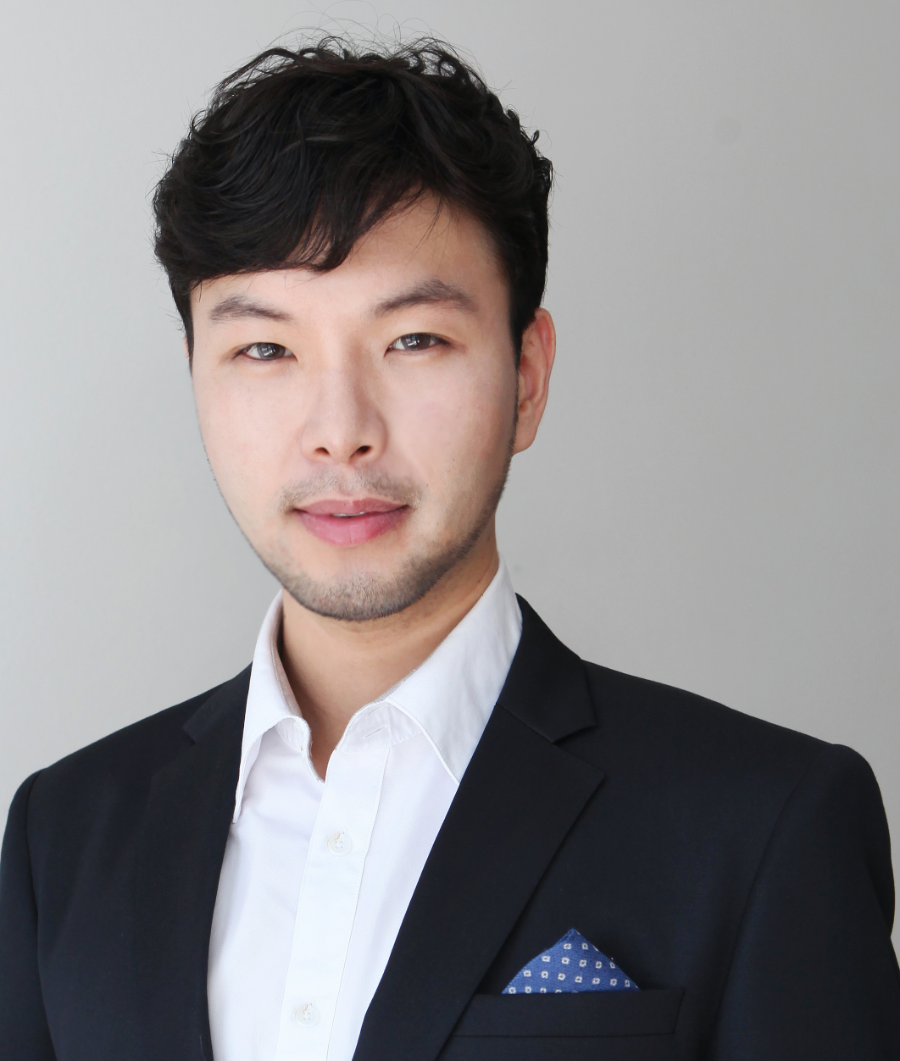
Siman Chung - photo by Soyoon MoonKorean countertenor Siman Chung sings the title role, Canadian soprano Mireille Asselin is his love Eurydice and American aerialist and soprano Marcy Richardson portrays Amour. Topher Mokrzewski conducts an ensemble of 11 musicians, including electric guitar and synthesizer, and Joel Ivany directs. As a side note, the artistic director of co-producer Opera Columbus is none other than Opera Atelier favourite Peggy Kriha Dye, who sang Eurydice for OA in 2015. April 26 to 28.

1864 – La Belle Hélène by Jacques Offenbach. Toronto Operetta Theatre concludes its 2017/18 season with the company premiere of Offenbach’s famous satirical Trojan War operetta. The COC last presented the work in 1983. Beste Kalender sings the title role, Gregory Finney is her aged husband Menelaus, Adam Fisher is her young Trojan lover Paris and Stuart Graham is Agamemnon, who thinks Helen’s abduction is a just cause for war. Peter Tiefenbach conducts and Guillermo Silva-Marin directs. April 27 to 29.

1904 – Madama Butterfly by Giacomo Puccini. The fourth Opera by Request concert presentation this month is a staple of standard repertory. Deena Nicklefork sings Cio-Cio San, Will Ford is the faithless Pinkerton, Keith O’Brien is the American consul Sharpless and Madison Arsenault is Cio-Cio San’s faithful servant Suzuki. William Shookhoff is the pianist and music director. April 27.

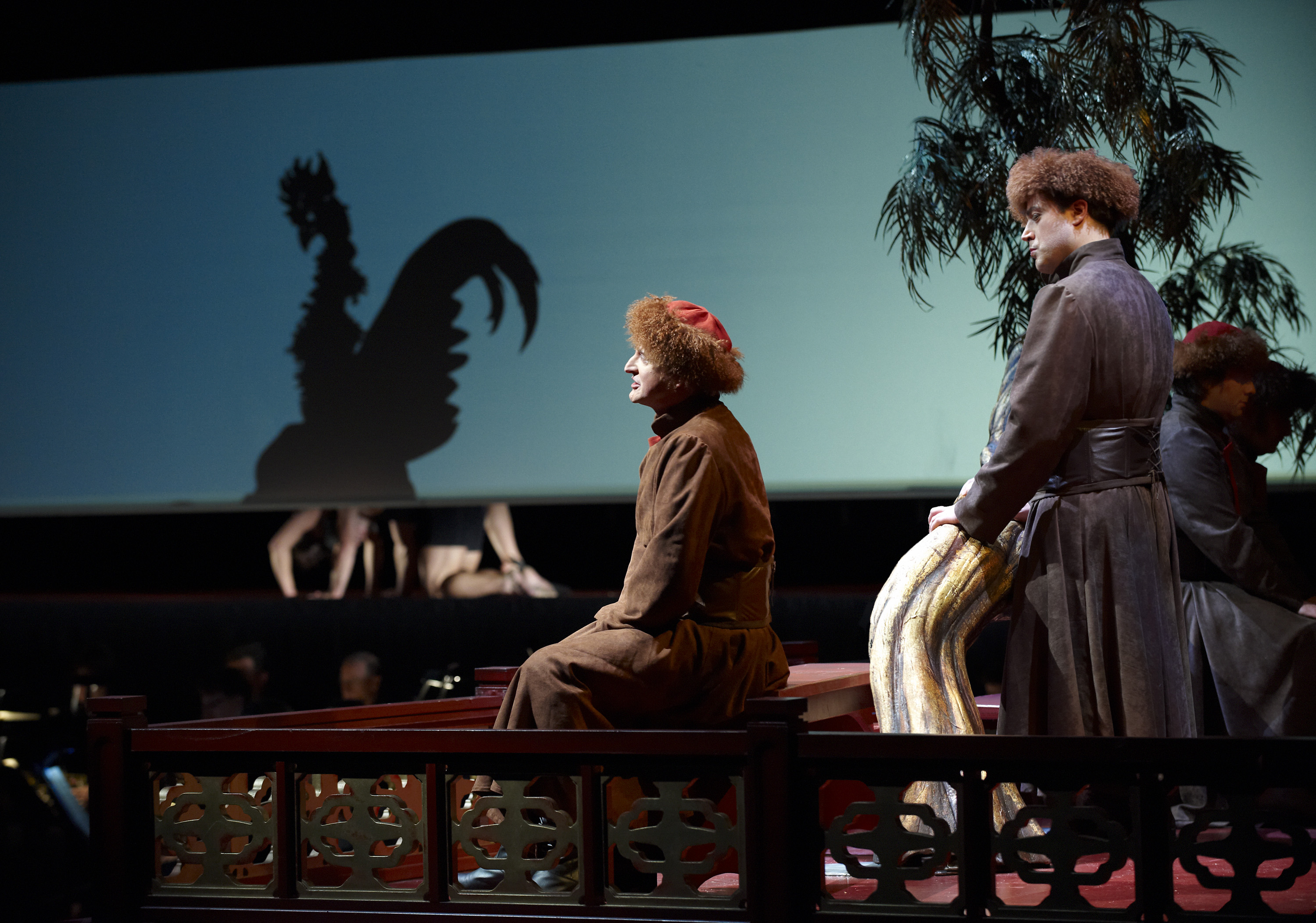
2009 – The Nightingale and Other Short Fables including Le Rossignol (1914) by Igor Stravinsky and Renard (composed 1916; premiere 1922) by Igor Stravinsky. The COC concludes its 2017/18 season with a revival of Robert Lepage’s unique take on two short operas by Stravinsky mixed with the composer’s settings of Russian folksongs. The production that premiered to huge acclaim in 2009 is most notable for placing the orchestra and chorus on stage and filling the pit with water for Vietnamese water puppets and other effects. The cast and conductor are completely different from those in 2009. This time Jane Archibald will sing the Nightingale, Owen McCausland will be the Fisherman, Christian Van Horn will be the Emperor and Johannes Debus will conduct. April 13 to May 19.

2018 – The Overcoat by James Rolfe. The first half of April will allow audiences to see the most recent Canadian opera to be fully staged in Toronto. This opera is an attempt to convert the wildly popular wordless 1997 physical theatre piece by Morris Panych and Wendy Gorling into an opera. The original piece told the 1842 story by Nikolai Gogol through movement to selections of music by Shostakovich. It told of Akaky Akakievich Bashmachkin, a government clerk who becomes obsessed with the notion that he must have a new overcoat to secure a promotion.

While the look of the opera will be the same as the theatre piece, Panych, who is also the stage director, has had to write a libretto. This has been set by James Rolfe, one of Canada’s most successful and prolific opera composers. In the 13-member cast, Geoffrey Sirett will sing Akaky, Peter McGillivray will be both the Tailor and the Head of Akaky’s Department and Andrea Ludwig will be Akaky’s Landlady. Leslie Dala conducts this co-production of Tapestry Opera, Vancouver Opera and Canadian Stage. March 29 to April 14.

2018 – Opera Peep Show. For a sampling of all sorts of opera, four indie opera companies have banded together to create a pay-as-you-go show at the Campbell House Museum. Four rooms of the 1822 downtown mansion are devoted to each company. Liederwölfe presents an assortment of some of the most famous scenes in opera. Essential Opera presents favourites from its past seasons. re:Naissance presents three dramatic scenes combining texts from Shakespeare with music by John Dowland and his contemporaries. And Urbanvessel presents the interactive performance Boots about a young woman’s relationship with her footwear. April 28 to 30.

From all of these offerings this April, new operagoers can acquire a wide background in the genre, while seasoned operagoers can easily construct their own festival.

Christopher Hoile is a Toronto-based writer on opera and theatre. He can be contacted at opera@thewholenote.com.
In this exciting month Toronto will see the world premieres of two new Canadian operas. The first, The Overcoat by James Rolfe, opens March 29 and is covered elsewhere in this issue. The other is The Ecstasy of Rita Joe by Victor Davies, which will be presented March 24 and 25 by VOICEBOX: Opera in Concert. Having interviewed Davies last month and pored through his background paper for the work, the opera looks to be one of his most important compositions.

Victor Davies - photo by Graham Lindsay Wavelength MediaAs a play The Ecstasy of Rita Joe by George Ryga is considered one of the classics of Canadian drama. It premiered in Vancouver in November 1967 as a Canada Centennial project. As Davies explains: “Its impact was electric, as no Canadian play had been written which confronted issues head-on between Indigenous and mainline society.” In simple terms it follows the life of Rita Joe, who leaves her reservation in search of greater freedom in the city only to face racism, drugs, prostitution, rape and murder. Ryga uses the word “ecstasy” to refer ironically to her final moments before death. Interwoven with Rita Joe’s life is that of her friend Jaimie Paul, who also meets a tragic end. 

The play has had many subsequent productions, most recently at the National Arts Centre in 2013 with an all-Indigenous cast. In 1971 the Royal Winnipeg Ballet produced a ballet based on it choreographed by Norbert Vesak to music by Ann Mortifee, revived most recently in 2011.

In answer to the question of how Davies came to create an opera based on the play, he writes in his background paper: “The genesis of the idea, that I should make an opera of the play, came from the insistence/encouragement of two dear friends: well-known Indigenous stage and screen actor August Schellenberg, the original Jaimie Paul in the premiere production of the play in 1967, and director/producer John Juliani who produced the CBC radio adaptation of the play for which I composed the music. Both were convinced the play contained an opera.

“Ultimately, my two friends were right. The play is wonderful material for an opera. It is richly textured and contains vibrant larger-than-life characters, a classic tragic love story, the theme of young ideas and ambitions thwarted, the clash between value systems, both societal and generational, pathos, moments of wonderful humour, the underlying inner drive which calls for music to emerge in song, and richly poetic dramatic prose to inspire heightened lyric melody.”

Nevertheless, Davies was still concerned whether today a self-described “old white guy” should write an opera about Indigenous people. To determine if he should undertake the project, he consulted Rebecca Chartrand, a singer and friend with whom Davies collaborated for the Indigenous music in the Opening Ceremonies of the 1999 Pan Am Games in Winnipeg and who is the Aboriginal Consultant for Seven Oaks School Division in Winnipeg.

As Davies explains, “Her immediate reaction was that I must write the opera. She said it spoke directly to the current and important discussion about the missing and murdered Indigenous women. This was a turning point for us both. Since this initial meeting until the present she has been a constant force in urging us to bring the opera to life.”

In addition to Chartrand, Davies consulted and was encouraged in the creation of the opera by such members of the Indigenous community as playwrights Thomson Highway and Kevin Loring, and the chiefs of various First Nations including Chief Len George (son of Chief Dan George, who appeared in the play’s premiere).

In answer to the question why the play should become an opera, Davies lists four goals: “to bring the story, characters and their issues to new life powered by music; to put the story into a new frame to engage new publics; to create an important and viable vehicle for Indigenous opera singers; and to be a catalyst in the discussion about issues between Indigenous peoples and Canadian society at large.” 

A further question Davies addresses is why a play from 1967 should become an opera now. “This opera speaks to the important topic of the missing and murdered Indigenous women. Fifty years since the play’s creation, many serious issues are still unresolved in Indigenous life: tensions between the reserve and the city and the values they represent regarding stewardship of nature vs. modernity, conflicts between generations, the Indigenous world vs. the legal system, and prejudice against Indigenous people in general, all issues which underpin the problem of the missing and murdered women, and the residential school system.”

Davies says that Chartrand and Chief Isadore Day in Toronto and Chief Nepinak in Winnipeg “all spoke about how important they felt the opera would be in bringing Indigenous issues to mainline audiences in a new, more powerful way. They felt that bringing their story to the stage for audiences to whom the Indigenous story was nothing but a TV clip or a newspaper footnote would have an enormous impact. With characters with whom the audience could identify, who were alive, had aspirations, humour, and though their lives have a tragic end, the portrayal of these lives powered by music would bring home their story.”

Davies approached Opera in Concert three years ago about producing the work, and OiC organized a two-day workshop focusing on the libretto, which he also wrote. In transforming the play to an opera Davies made many changes. One was to eliminate the character of the Singer, a figure present in the play primarily to satirize the lack of understanding of liberal white people about what is happening to Indigenous people. While the action shifts back and forth in time, Davies’s libretto tells the story in chronological order. The five times Rita Joe is called before a magistrate become part of the libretto’s organizing structure. 

In commenting on the score, Davies says: “This work will be unlike anything I have done, rooted in the ethos of the contemporary worlds of the reserve, the streets and the city. There will be no actual Indigenous music or language, but I will create music which reflects Indigenous music, the characters themselves and their place in both reserve and city with the necessary contemporary grit, energy and texture of the 60s. However melody, rhythm, accessibility and immediacy are hallmarks of my music and will be in this work too. The score will be eclectic in style as befits characters and action.” Davies says that the music will range from the tonal and melodic for arias for Rita Joe and Jaimie Paul to the atonal and dissonant for scenes of violence and conflict. The music is not organized through leitmotifs in the Wagnerian sense, but it is shaped through the use of recurring themes associated with certain characters and actions. 

Marion Newman - photo by Ellen NewmanFor the VOICEBOX: Opera in Concert production, all the principal roles will be sung by Indigenous Canadian artists. Mezzo Marion Newman will sing the title role. Baritone Evan Korbut, a recent Stuart Hamilton Memorial Award winner, will sing the role of Jaimie Paul. Mezzo Michelle Lafferty will be Sister Eileen, baritone Everett Levi Morrison will be Father David Joe and mezzo Rose-Ellen Nichols will be the Old Woman. The Opera in Concert Chorus will take on a wide array of roles: members of the court, street women, women on the reserve and in jail and more. 

For the OiC production Guillermo Silva-Marin will serve as dramatic advisor. Robert Cooper will conduct the cast, the OiC Chorus and an ensemble of piano, cello, violin, clarinet and saxophone. The latter four instruments Davies says will add more “colour and weight” to the music than would piano alone. (While his last opera for Manitoba Opera, Transit of Venus (2007), employed an orchestra of 68, Davies says that for a full production of Rita Joe, he would be happy with an ensemble of 16.)

Attending the OiC performances will be representatives of Manitoba Opera and Vancouver Opera who may determine whether Davies’ opera moves on to future productions with their companies. For now, Davies is filled with gratitude. He writes that he gives “many thanks to dear friends both past and present who have given me... the passion and joy to search for the truth in the beautiful poetry of George Ryga. My hope is that those who see it as it emerges, will feel the same.”

Revised, 20/03/18: The third-to-last paragraph of this story has been revised to remove the statement that mezzo Marion Newman, who sings the title role of Rita Joe, also served as an advisor on the project. While she met twice, informally, with the composer during the development of the project,  the nature of the input offered and the extent to which it was accepted were not sufficient to warrant describing the role as advisory. Permission was neither sought by the composer nor given by Ms. Newman to characterize her role as that of advisor.

Christopher Hoile is a Toronto-based writer on opera and theatre. He can be contacted at opera@thewholenote.com.
Christopher Hoile, our regular opera columnist, will return to his usual spot here in March, so I will leave it to him in his upcoming column, next issue, to walk you through the fine points of the Canadian Opera Company’s just-announced 2018/2019 season.

Instead, as an enthusiastic but inexpert guest columnist, I thought it might be fun to start out by addressing myself not to the column’s usual readers, but to those of you who, either as guests to our city, or new readers of this magazine, or opera newbies might benefit from some friendly advice on how to traverse the potentially tricky terrain (both geographic and semantic) of opera in our fair town. The rest of you, who know your way around both these things, can skip ahead a few paragraphs, for what’s actually on the menu.

Rule One (Geography): Be careful what you ask for – especially if you are in a cab. You might be lucky (or unlucky) enough to get a cab driver who actually knows his way around town, in which case responding to “Where to?” with a nonchalant“The Opera House, please” could result in finding yourself 3.7km due east of your intended destination, in an old Queen St. E. venue (that is actually called The Opera House!) in a throng of 1,200 or so mostly bobbing and weaving concertgoers, listening to Avatar, The Brains & Hellzapoppin’, with Gilda and Rigoletto nowhere in sight.

The actual opera house here is called the Four Seasons Centre for the Performing Arts (named after Vivaldi’s favourite hotel chain), and the city’s premier opera company, with typical Toronto understatement, is called the Canadian Opera Company. The COC shares the FSCPA, for performing purposes with Toronto’s premier ballet company, the equally modestly named National Ballet of Canada, otherwise known as NBoC, or “the Ballet.”

The Four Seasons Centre for the Performing Arts - Photo by Sam JavanouhRule Two (Semantics): Having established that “The Opera House” is not the opera house, let’s move on to an equally crucial distinction, this time semantics. It is this: in Toronto, expressing an interest in "the opera" does not mean the same thing as expressing an interest in "opera." The former is generally assumed by listeners to mean performances by the the city’s premier opera company in the city’s premier opera house. The latter can mean a far more nuanced range of things.

 So listen very carefully when someone tells you about their relationship to this particular art form! The distinction between “I went to the opera” and “I went to an opera” is as important as the difference between a residential address on the 200s block of Chaplin Crescent or on the 300s block, the latter being where, after that winding avenue of stately homes crosses Eglinton Avenue, it peters out in a little thicket of mostly post-World War II midrise apartment buildings.

(I also suspect, with only the slightest tinge of arts worker bitterness, that more residents of the 200 block of Chaplin Crescent would be likely to have tickets to the opera than their trans-Eglintonian 300-block counterparts.)

All that being said, within their respective genres the COC and NBoC are, without doubt, the definite article, towering like forest giants above the Torontonian cultural undergrowth, and well-worth a visit.

So, now that we’ve established what the opera means in this town, and how to get there, let’s take a little ramble instead through the city’s operatic undergrowth, where the fascinating biodiversity of the town’s actual operatic culture can be observed and measured.

Welcome to the Undergrowth: It must first be said that “forest giant” and “undergrowth” are highly unscientific terms. For one thing, calling everything other than the two or three tallest trees in town the undergrowth is a vast oversimplification. Passionate devotees of Opera Atelier are almost as likely to say “the opera” as to say “an opera” when asked where they have been. And there are other companies out there (Tapestry and Against the Grain) which at this point have the capacity to flip between mainstream finesse and indie panache almost at will. There are also theatre companies that have tall tree status within their own non-operatic realm that occasionally turn their attention to the art form (Canadian Stage Company is perhaps the most notable among these, and we'll have much more to say about them in a future issue.)

That being said, there’s a pleasantly rich tangle of operatic activity in town. Some of it, to be sure, focuses on rendering, on a smaller, more community-friendly scale, the repertoire most usually performed at “the opera” (Toronto City Opera, Opera York and Opera by Request come most readily to mind.)

And there is a uniquely Torontonian gem of a company around, called VOICEBOX: Opera in Concert, featuring top-flight performers in very lightly staged concert renditions, occasionally of new works but more often of rarities from the grand operatic tradition too risky or problematic, for one reason or another, for the forest giants to stage.

And then there is the mysterious thing called “Indie Opera.”

Indie Opera: At any given moment in time, Toronto seems to have 10 or 12 indie opera companies, on the go. Not always the same 10 or 12, mind you. Birth, decay and death are as necessary to a fertile operatic climate as they are to a good operatic plot. And even within the 10-or-12-company official membership of Indie Opera Toronto, it doesn’t do to generalize as to individual companies’ stated purposes.

Loose Tea Music Theatre, for example, is currently investing significant time and passion in a third-Sunday-of-every-month residency at Bad Dog Comedy Theatre on Bloor near Ossington (their next show is February 18), with a madcap improvised show called “Whose Opera Is It Anyway?” Under the inspired co-direction of Loose Tea artistic director Alaina Viau and comedy improv heavyweight Carly Heffernan, Loose Tea’s core ensemble has been steeping themselves in the standard games and structures that are the meat and potatoes of comedy improv. It’s a win-win-win. The show is a delight for fans of opera and of improv alike. And the ensemble itself is learning the conspicuous bravery of actually listening affirmatively to each other and responding truthfully in the moment – attributes that will stand them in good stead as they re-engage down the line with projects with the social and artistic heft of their 2016 Carmen.

Meanwhile, Essential Opera, another indie stalwart, is working towards an April 22 concert performance with Orchestra Toronto of Puccini’s Gianni Schicchi, an exercise in cross-genre audience building and in carrying forward the key message inherent in the company name -- namely that the essence of opera is something different than its trappings and machinery.

What these two companies, and everything in between, have in common is that at some point in their gestation some individual or individuals said “If we are going to ever get to do operatically what we are interested in, we are going to have to do it ourselves.”

As already mentioned, you can get a rough idea of the players in the indie opera undergrowth by visiting indieoperatoronto.ca. But again, a cautionary note: like its member companies are, or were, Indie Opera Toronto has sprouted from do-it-yourself, volunteer-driven roots. So the information on the website is best viewed as a snapshot of the scene, compiled at a particular moment rather than chapter and verse. It nevertheless offers a way to delve deeper into projects and plans of the companies listed there, but it sometimes takes the site a while to catch up with the scene.

The Electric Bond Opera Ensemble

Soprano Sara Schabas' newly created Electric Bond Opera Ensemble is definitely the new kid on the indie opera block, but Schabas herself is not, having grown up in the world of “the opera.” So she comes to this project with a deeply rooted, organic passion for the storytelling power of the medium. Her grandfather, Ezra Schabas, among other musical achievements, was head of the University of Toronto Faculty of Music performance and opera department from 1968 to 1978, where Sara Schabas herself went on to complete an undergraduate degree in vocal performance. “Dad was a french horn player before he became a lawyer,” she explains, “and both my parents and all my grandparents had a huge love for opera. Starting at age four, they’d put on a VHS of La Boheme, Act 1 for me. I’d listen to Saturday Afternoon at the Opera every week. I was that weird kid who loved opera from a very young age. So it’s always been a very natural thing for me.”

Sara SchabasThe ensemble's name, she tells me, is a quote from Thomas Huxley, the agnostic 19th-century British biologist, nicknamed “Darwin’s Bulldog.” “We aim to present classical and operatic works that tell untold stories, reminding audiences and performers of what Huxley called the ‘electric bond of being’ by which all people are united.”

The company’s first show dives headlong into the company's stated aims – a fully staged, Canadian premiere performance, on February 10 and 11, of “ two one-act operas of survival,” Another Sunrise​ and ​Farewell, Auschwitz, by U.S. composer Jake Heggie and librettist Gene Scheer – partners in operatic crime for Moby-Dick (2010) and the more recent It's a Wonderful Life which premiered at Houston Grand Opera in 2016.

The Toronto Another Sunrise​ and ​Farewell, Auschwitz will take place in Beth Tzedec Congregation’s Herman Hall on Bathurst Street and will represent, at several different levels, a journey of return for Schabas. We chatted briefly in The WholeNote offices.

WholeNote: So how did you discover Heggie?

Schabas: After undergrad at U of T, I went to Chicago College of Performing Arts at Roosevelt University for a master's, and from there into an internship with Dayton Opera Company. I was one of their artists-in-residence and Jake Heggie actually came and did a short residency with us – so we put on a concert of his works that he narrated and coached us on. And then we also did Dead Man Walking [Heggie’s first big hit, in 2000, with librettist Terrence McNally]. Getting to know him and hearing the personal stories behind each of his works really drew me in, as well as the visceral reaction we got from audiences in all those performances. So when I heard he had this Holocaust one-act/two-act opera I thought it would be a really interesting experience for me not only to perform more of his works but to explore my heritage through an art form that doesn’t often explore Jewish stories.”

So which was the chicken and which was the egg? You wanted to do this particular opera so you decided to do it yourself? Or you wanted to do your own thing, and this was a perfect fit?

Well, moving back from the States after my student visa expired it took a bit to re-establish myself within the community. So, like many other singers, I started producing my own concerts, and I did a lot of refugee fundraising recitals – three of them when I moved back – as well as some other volunteer work. I knew I wanted to produce my own work with this specific social-justice-oriented angle. This piece was already there as a side passion project, and it fit perfectly.

Right now I’m guessing you are in the DIY thick of things …

Exactly right. When you’re in do-it-yourself mode you’re doing your own press releases, you’re pulling together the partners and in the middle of all of it you’re learning the music and all the rest of it.

So who is the actual artistic team you've assembled? The ones who are going to force you to take off your producer’s hat when you’re on the stage? Who had you already worked with?

SS: Yeah – well Michael Shannon, our music director, I worked with earlier this year at Tapestry Opera for Bandits in the Valley. I played Henri, which was both a piano-playing and a singing character. So Michael Shannon and I got quite close because he had to help me a lot with the piano, which is not something I’ve studied extensively, and he was just such a vibrant strong leader in that experience and in the other performances that I’ve seen him in that I thought he would be a perfect person to take the helm on this project. And Aaron Willis I’ve actually never worked with before ...

Aaron is …?

He’s the director – I’ve worked with his wife, Julie Tepperman, who was the librettist for Bandits in the Valley so we did a lot of talking about our shared Jewish heritage and I initially actually reached out to her to see if she’d be interested in directing. She she said she wasn't, but her husband would be. He has never directed an opera by himself before – he assisted with Julie last year at Canadian Stage – but he’s a very interesting director: he’s done a lot of immersive theatre, some of which also has a Jewish angle. He has this one famous play called The Yehud which is a comedy about two Orthodox Jews and what happens right after they get married – there’s the yehud room. The opportunity for me taking on this really meaty acting role to work with someone – he also has a background as an actor – with a strong theatrical background was a priority. So some old, some new ...

You say it's a meaty role? Does that tie in with the “untold stories” goal you talked about?

Krystyna Zywulska is a very interesting story because she’s someone who actually hid her Jewish identity: when she was in the Warsaw ghetto she created this new identity, and when she was imprisoned at Auschwitz it wasn’t as a Jew it was as a political prisoner; her story is one of reconciling with the terrible thing she did to her fellow Jews, and then finding out if her past can exist with her present …

So how to embrace the dichotomy ...

Absolutely. So hers is a very conflicted Holocaust story and a very rich one.

And the partnership with Beth Tzedec and with the Azrieli Foundation. How does all that happen?

Well – since moving back I’ve been doing a lot of singing in synagogues, so I’ve been a member of the choir at Beth Tzedec and they’re very interested in presenting survivors’ testimonies in different ways so basically I pitched the opera to them and they were interested. Azrieli also happened to be interested ...

How did you know about Azrieli?

That was a bit of an aha moment: I was at the Canadian Children's Opera Company's Brundibár last year, for which I know they also received help from the Azrieli foundation. So then I started looking them up ...

So, getting back to the show itself, what’s the breakdown of instruments?

It’s piano, clarinet, violin, cello and bass.

Sounds like almost a klezmer feel to it.

Yeah, the clarinet voice definitely has that feel. It has this certain chant-like melody that occurs throughout the piece and I was just remarking to Michael Shannon on how Jewish it sounds at times.

So how did you find the other singers?

Again, recommendations – I sang with Sean Watson in the Beth Shalom choir and Georgia Burashko I’ve just heard wonderful things about and she was very interested.

Any other projects already in the works? Do you dare wait to get the next thing going?

Yeah ... there are some ideas floating out there ... my friend Jacques Arsenault who’s a tenor and accordion player – also from Bandits in the Valley – and a couple of other friends and I are working on a potential Satie program for next year but we’re still finding the social justice, untold-story lens for that. He was a bit of an outcast in his lifetime – Satie – and he also has a lot of interesting dichotomies in his life between his cabaret works and his more formal works so we’re looking to put together a program about that. That’s the main thing right now. But it’s true – once you do one you have to start thinking about the next

Even while you're still doing the one ...otherwise you're stuck in the middle ...

Yeah – and then you miss out.

David Perlman can be reached at publisher@thewholenote.com.

It used to be that the only operatic productions that took place in December and January were from the Canadian Opera Company and Toronto Operetta Theatre. Now there are so many new small companies that there is quite a wide range of offerings available to see out the old year and see in the new.

COC: That being said, the production on the largest scale in these two months is the Canadian Opera Company’s remount of Verdi’s Rigoletto for ten performances from January 20 to February 23. The production, directed by Christopher Alden, was last seen in 2011. There is some controversy attached to the production, since Alden had previously created it for Lyric Opera of Chicago in 2000. The action is set entirely inside a gentlemen’s gaming club in the early 1850s with the chorus onstage throughout the action. The various locations in the libretto are acted out using furniture from the club, the danger being that if people do not already know the story the staging provides no clues to help them. After its unpopular run at LOC, the production was deemed “unrevivable” and LOC now has a popular new production directed by E. Loren Meeker. When the COC and English National Opera approached Alden for a Rigoletto, he simply re-created the one he had done for Chicago.

In any case, the COC has revived the unrevivable and it features Roland Wood in the title role, Anna Christy as Rigoletto’s daughter Gilda, Stephen Costello and Joshua Guerrero (February 11, 17, 23) as the depraved Duke of Mantua, and Goderdzi Janelidze as the assassin Sparafucile. Stephen Lord conducts.

On a much lighter note, the COC has invited the public to see a new opera for children, The Magic Victrola, on December 1, 2 and 3. The opera also has a Chicago connection in that it was premiered by the LOC in 2015. In the opera, written by David Kersnar and Jacqueline Russell, two children stay at their grandfather’s place for the summer vacation. The grandfather has a Victrola and a set of opera recordings; the children find when they play the records that the characters come alive. The hour-long show includes well-known excerpts from The Marriage of Figaro, The Magic Flute, The Tales of Hoffmann, The Elixir of Love, Lakmé, Gianni Schicchi and Carmen. The opera, suitable for ages five and over, is performed by members of the COC Ensemble Studio and is directed by Ashlie Corcoran, with music direction by Rachael Kerr and Stéphane Mayer.

Toronto Operetta Theatre has been helping Torontonians bridge the old and the new years with operetta for more than 30 years. This year it revives its production of Leonard Bernstein’s Candide (1956), last staged here in 2007, which the composer himself designated as an “operetta.” The work follows the adventures of the eternal optimist Candide, whose tutor has taught him to believe that this is the best of all possible worlds. This belief is sorely tested when Candide barely survives one disaster after another. Tonatiuh Abrego takes on the title role, while Vania Chan stars as his beloved Cunegonde and sings the show-stopping coloratura aria Glitter and Be Gay. TOT favourite Elizabeth Beeler sings the Old Lady, Nicholas Borg is Dr. Pangloss, Cian Horrobin is the Governor and Mikhail Shemet is Cacambo. Candide runs for six performances from December 28 to January 7. Derek Bate conducts and Guillermo Silva-Marin directs.

Talk Is Free Theatre: This is likely the first time ever that a person can see two different productions of Candide in Ontario in the same month. The second takes place at a non-traditional operatic showcase, Talk Is Free Theatre in Barrie, which is in the process of presenting the Bernstein work in a run from November 23 to December 2. The cast includes Thom Allison, Holly Chaplin, Gabi Epstein, Mike Nadajewski and Michael Torontow; Richard Ouzounian directs and Lily Ling conducts.

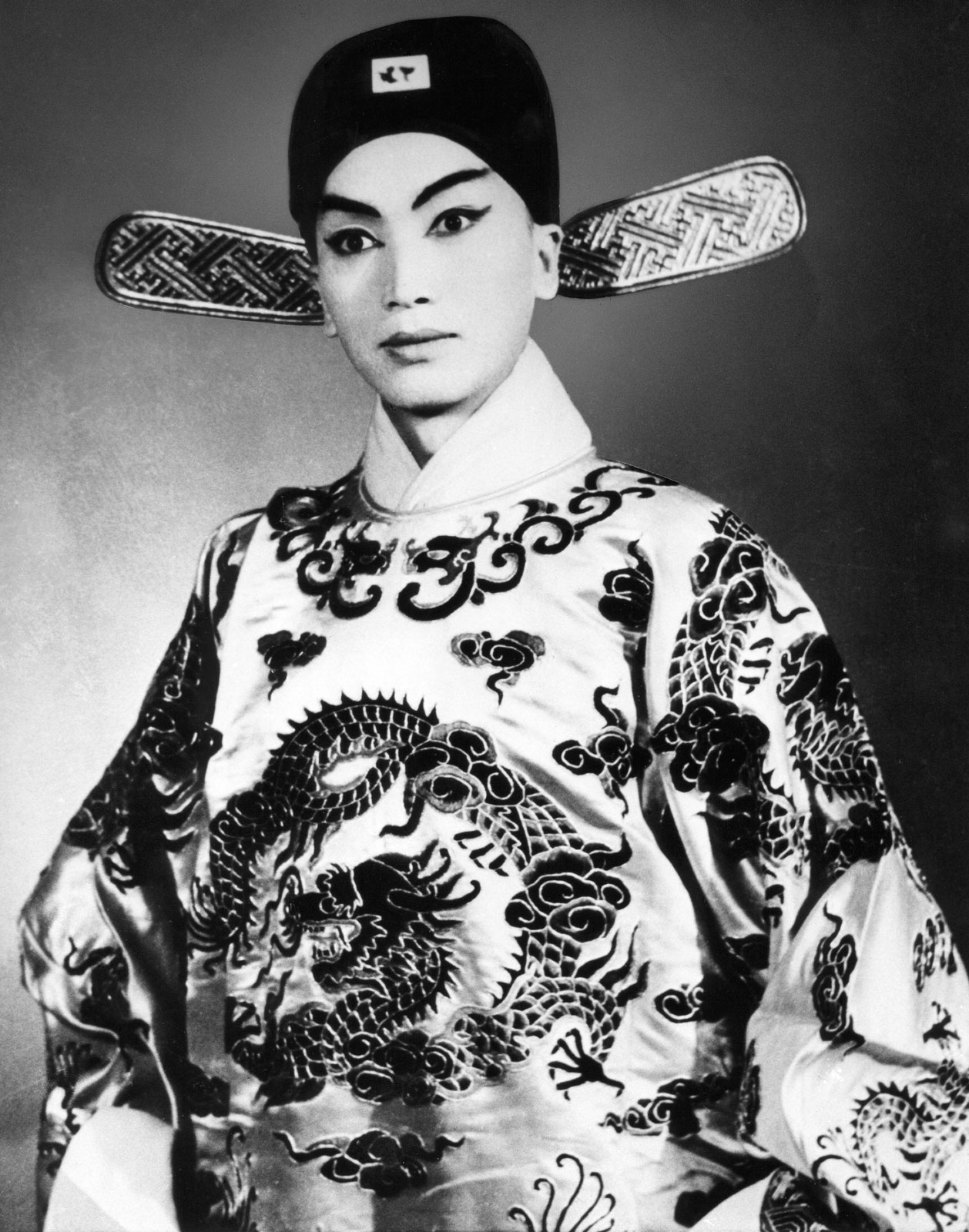
Shi Pei Pu, the original Mr. ShiTarragon Theatre, another non-traditional showcase for opera, is presenting Mr. Shi and His Lover, a one-act work by Njo Kong Kie that runs in Toronto until December 17. In the new year it plays at the NAC in Ottawa from January 3 to 13. Mr. Shi is made up of seven scenes in which two characters, Mr. Shi and Bernard Boursicot, reflect on the the strange but true story of their relationship. Boursicot, a young French diplomat stationed in China in 1964, fell in love with Shi Pei Pu, a male performer of the Peking Opera specializing in female roles, believing that Shi was actually a woman. Amazingly, Boursicot and Shi’s relationship continued for 20 years without Boursicot ever realizing Shi was a man, much less a spy recruited to entrap him. This story is the basis for David Henry Hwang’s 1988 play M. Butterfly. Jordan Cheng sings the role of Mr. Shi and Derek Kwan sings Boursicot. Njo Kong Kie conducts the singers and percussionist Yukie Lai from the piano in an eclectic score that ranges from Peking opera to traditional folk song, music hall, pop music, Western opera and the art song. Tam Chi Chun, the artistic director of Macau Experimental Theatre, directs.

Tryptych: Continuing its exploration of standard repertory with large orchestra, Tryptych Concert & Opera presents its final opera in Toronto before its co-artistic directors, Edward Franko and Lenard Whiting, move to Kenora to restart the company there. On December 9 and 10, Tryptych presents a fully-staged production of Engelbert Humperdinck’s Hansel and Gretel in English at the P.C. Ho Theatre in Scarborough, with the Cathedral Bluffs Symphony Orchestra and the Toronto Beaches Children’s Chorus. The cast features Meghan Symon as Hansel, Marion Samuel-Stevens as Gretel, Douglas Tranquada as the Father, Mila Ionkova as the Mother, Kira Braun as the Dew Fairy and Sandman and Whiting himself as the Witch. Franko directs and Norman Reintamm conducts. Despite Franko and Whiting’s move, the two plan to stage at least one opera with the CBSO in Toronto every year. Donizetti’s The Elixir of Love is already planned for next year.

Tapestry: In the realm of new music is the welcome return of Tapestry Opera’s popular Opera Briefs. This year’s “Winter Shorts” consists of ten opera scenes developed during Tapestry’s 2016 Composer-Librettist Laboratory. Creators of the shorts have drawn inspiration from current events and contemporary concerns including the Syrian refugee crisis, robot warfare, the 1984 Quebec National Assembly shooting, voyeurism, fairy tales and dysfunctional millennial relationships. This year’s operas include three composed by Afarin Mansouri, three from Iman Habibi, three from Norbert Palej and one from Kit Soden. The librettists are Bobby Theodore, Marcia Johnson, Phoebe Tsang and Jessica Murphy Moo. The performers are Alexander Dobson, Erica Iris, Keith Klassen and Jacqueline Woodley. “Winter Shorts” runs from November 30 to December 3.

Against the Grain: In contrast to Tapestry’s “bite-size” offerings, from December 14 to 16 Toronto’s indomitable Against the Grain Theatre presents a “new” full-length Handel opera in the form of Bound – A Handel Mash-up. AtG’s artistic director Joel Ivany and music director Topher Mokrzewski have collaborated with award-winning composer Kevin Lau to create a pastiche of music from Handel’s operas and oratorios that will focus on current world events. According to the AtG website, “In the wake of the world’s refugee crisis, this workshop will explore the current state of those displaced, dehumanized and mistreated, with texts and stories drawn from real-life news articles and world events.” When I asked Ivany in November what drew him to Handel instead of, say, Verdi, who also wrote about so many dispossessed people, he responded, “There is something in the form in which Handel wrote most of his music which is interesting. His draw to a formula, a repetition of text and simplicity in how he set it, is profound. Yes, Verdi is a master composer, but his music takes on a much more propelling aspect to the storytelling. Handel allows you to reflect, assess and move forward.”

Some of the pieces that Bound draws upon are Acis and Galetea, Alcina, Alexander’s Feast, Ariodante, Orlando, Floridante, Giulio Cesare in Egitto, Jephtha, Rinaldo, Rodelinda, Semele, Serse and Tolomeo. For the assembled score Ivany has written a new English libretto. The cast includes soprano Danika Lorèn, tenor Asitha Tennekoon, countertenor David Trudgen, baritone Justin Welsh and bass Michael Uloth. Ivany will direct and Mokrzewski will conduct.

Richard Margison and Lauren MargisonHighlands Opera premiere: Meanwhile, there is an important premiere outside Toronto. Opera lovers may know that the Highlands Opera Studio, based in Haliburton with Richard Margison as artistic director, presents opera in the summer. This year HOS will present a new work December 21 and 22, Mishaabooz’s Realm (Le Royaume de Michabous), with music and libretto by Cree composer Andrew Balfour. The opera, a co-production with L’Atelier Lyrique of L’Opéra de Montréal, will have its world premiere performances in Montreal on December 15 and 16 before moving to Haliburton.

The opera’s central figure is Mishaabooz, an important character in Anishinaabe storytelling. Mishaabooz is another name for Nanabozho, the great trickster spirit and shape-shifter, one of whose favourite forms is as a giant rabbit, who is often sent to earth by Gitche Manitou (the Creator) to teach the Ojibwe peoples. (Mishaabooz, in fact, means “Great Hare.”) In his composer’s statement, Balfour describes the opera as “a multi-media and multi-directional work, incorporating classical styles, unique choral and vocal perspectives, Indigenous musical and oral traditions, with a libretto in First Nations dialect, French and English, exploring contemporary issues concerning Canada’s relationship with our First People and the land of Turtle Island, past, present and future.”

Singers include soprano Lauren Margison and baritone Nathan Keoughan. Balfour and Cory Campbell will contribute vocals and play percussion while music director Louise-Andrée Baril will conduct from the piano. The chorus will be drawn from both Montreal and Haliburton. Valerie Kuinka is the stage director.

We clearly no longer have to wait until spring for variety in operatic activity in Ontario.

Christopher Hoile is a Toronto-based writer on opera and theatre. He can be contacted at opera@thewholenote.com.
Dedicated Toronto operagoers know that operatic activity in Toronto is not confined to the city’s two largest companies, the Canadian Opera Company and Opera Atelier. Numerous smaller companies have helped make the opera scene in Toronto one of the most diverse in North America. There is therefore a pang of sadness whenever one of these companies ceases operations, as did Queen of Puddings Music Theatre in 2013 and as will Toronto Masque Theatre in 2018. Some may have seen on the website for TrypTych Concert & Opera that co-artistic directors Edward Franko and Lenard Whiting will be leaving Toronto and moving to Kenora. To find out more about the history of TrypTych and how the move will affect the company, I interviewed Franko and Whiting last month.

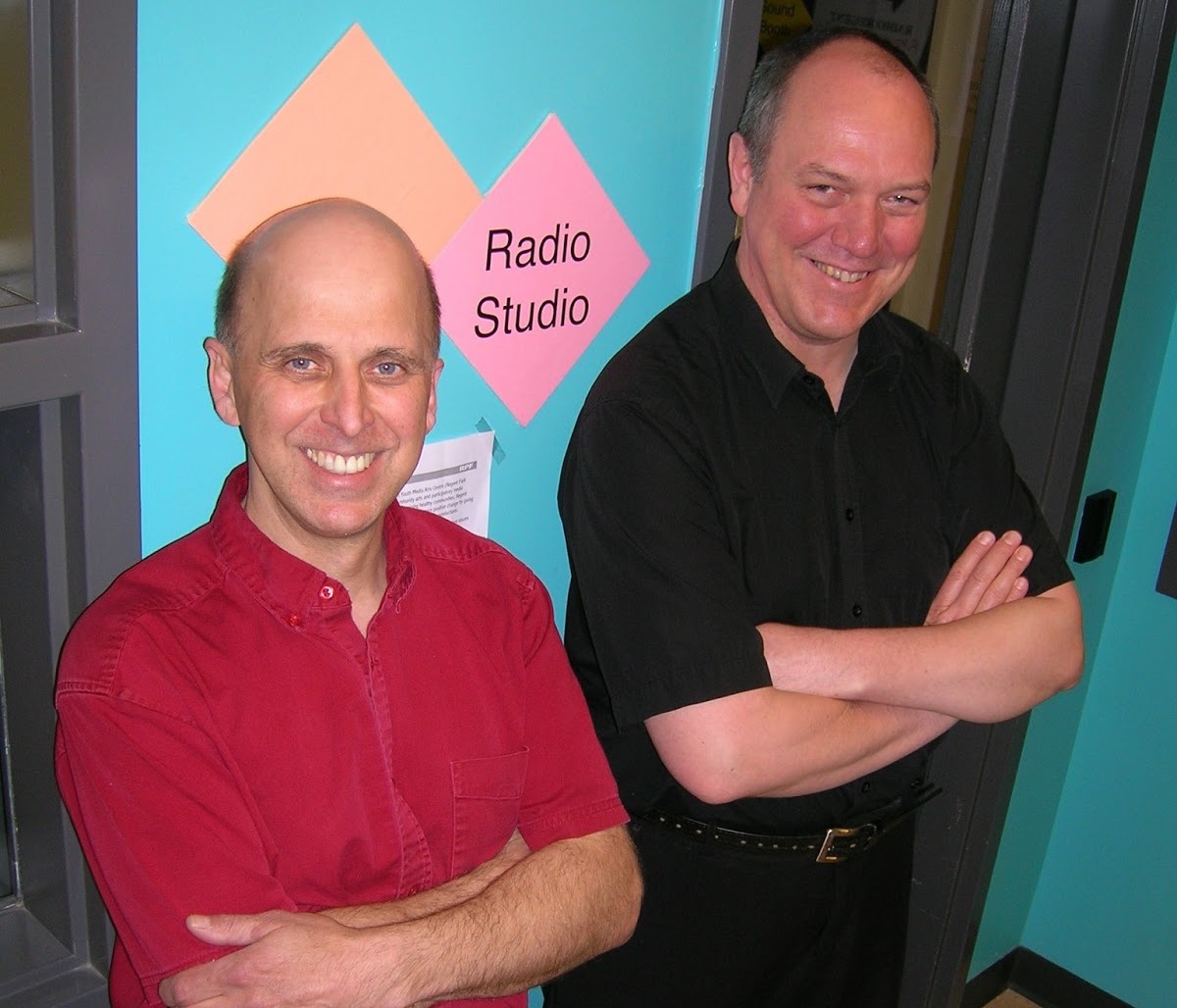
TrypTych was founded in the early fall of 1999 by Franko, Whiting and William Shookhoff. Franko had been working with Nina Scott-Stoddart’s company Opera Anonymous. As Franko says, “The three of us all got together and thought that we should do something together and utilize all our different skills and decided that with the three heads of the beast and the famous Il Trittico [by Puccini] we could convert that to TrypTych and just change the spelling.”

Then, about ten years ago Shookhoff had to pull out of TrypTych due to health reasons, leaving Franko to do the opera side of the productions and Whiting the choral side. But the TrypTych name stuck. (As it happened, Shookhoff recovered and founded his own company, Opera By Request.)

Franko emphasizes: “We were very strong at the beginning about not just being an opera company. We felt that we didn’t want to be beholden to opera even though all three of us had a very strong connection to opera. We were also working with singers from a lot of different musical backgrounds. We thought that singing as a whole isn’t just opera – you have to be able to fit into a lot of categories. That’s why we did cabarets that featured music like jazz, pop and rock and quite a wide range of things. Then we had the classical oratorio side and tried to do some things that aren’t done a lot like Dubois’ Seven Last Words, Gounod’s Messe solennelle, Saint-Saëns’ Mass for Four Voices and even the Widor Mass.”

Whiting explained the reason for this dual focus: “This is part of the reality of what Canadian singers really have to be exposed to. There’s a handful that find a really wonderful opportunity in opera, but if you don’t happen to break into that market you’ve got to find other ways to present yourself and to be diverse.”

Edward Franko (left) and Lenard WhitingTrypTych has presented quite a number of seldom-heard operas over the past 18 seasons, such as Marcel Mihalovici’s Krapp, ou la dernière bande (1961), Hugo Weisgall’s The Stronger (1952), Jack Beeson’s Sorry, Wrong Number (1996), Menotti’s The Saint of Bleecker Street (1954), Quenten Doolittle’s Boiler Room Suite (1989) and the Canadian stage premiere of Verdi’s Oberto (1839).

Franko adds: “One of the big things we’ve been really happy with over the last five years has been our relationship with conductor Norman Reintamm and the Cathedral Bluffs Symphony Orchestra, doing fully staged opera with a 60-piece orchestra at the 600-seat P.C. Ho Theatre in Scarborough. In fact, our shows get the best houses of all their concerts. We’ve done all three parts of Il Trittico now and two one-act operas last year. This December for the first time we’re doing a full-length opera, Hansel and Gretel, with the big orchestra, a children’s chorus and Lenard as the Witch with an LED screen for backdrops.

“A lot of the opportunities that opera school graduates get is singing opera in concert, which is great, but we and the CBSO give them a chance to incorporate all aspects of the art – singing, acting and movement on stage – with a full orchestra. Young people don’t get that chance very often.”

Toronto operagoers will be relieved to hear Franko affirm that “Even after we move north we’re keeping a connection with the CBSO and TrypTych so we’ll be able to do at least one production a year even though we’re far away.” Whiting has renovated the basement of their Toronto base at Trinity Presbyterian Church into a combined rehearsal space and concert/performance space for 125 people, “so there will be no need to rent since we already have space and a good working relationship all round.”

The main reason for choosing Kenora for their move is that is where Whiting is from. As Franko says, “We have a home up there on an island in Lake of the Woods and Lenard has been going back every year so that we now know lots of people in the community.”

Franko makes their goal clear: “TrypTych for us has always been a labour of love. We’ve never made money off it. Our goal now is to develop a real thriving arts company in Kenora that can operate all year round but with a summer focus. We want to work with the community and with young people to really develop a community organization. We want to make a great impact in a small place and give them a boost. We’re thinking of it as TrypTych North.”

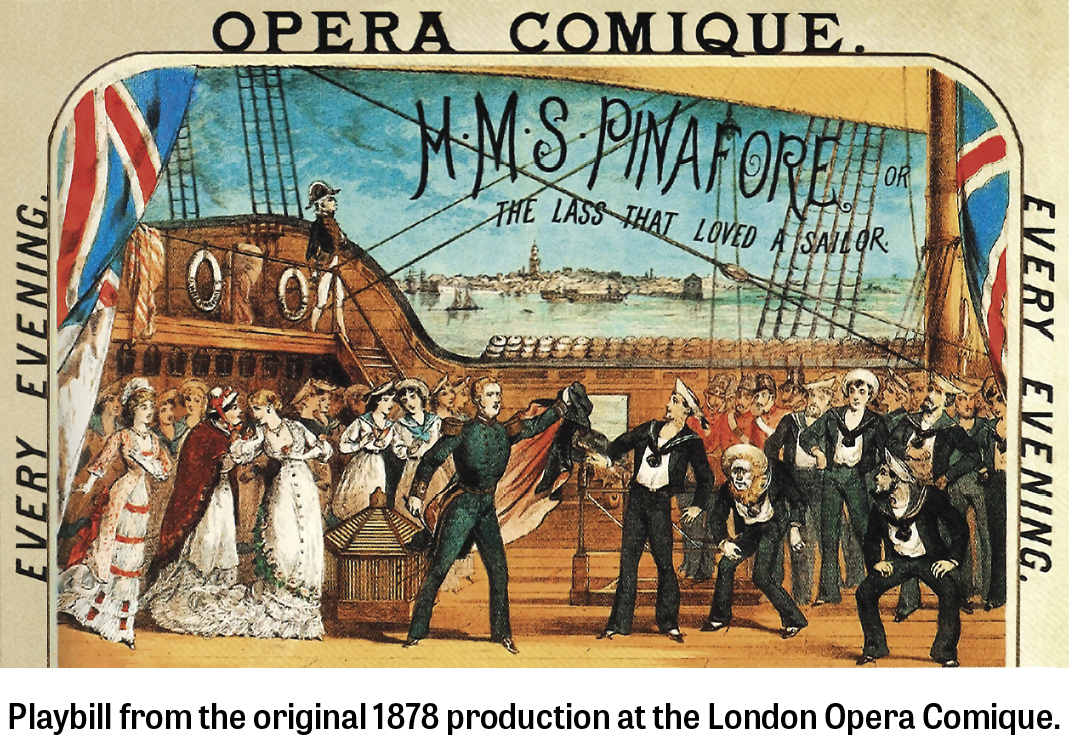
On October 28 and 29, TrypTych staged the rarity H.M.S. Parliament (1880), in which the Canadian William Henry Fuller wrote a new libretto for Sullivan’s H.M.S. Pinafore (1878) in order to satirize Canadian politics. “This will also be the first staged production we will do in Kenora,” Franko says. That being said, Franko and Whiting have already made plans for their next production in Toronto. “In February 2019 the CBSO and TrypTych will do Donizetti’sThe Elixir of Love. It will be performed in English because we’ve always been ones to make opera more accessible. We love the form and we want to make people more connected with it.”

Asked what some of the highlights were for them in Toronto, they agree that it was the workshops and the world premiere of Canadian composer Andrew Ager’s opera Frankenstein (2010). “It was a wonderful journey for us to work with him and make that piece come alive.”

Franko also lists the Canadian stage premiere of Grigori Frid’s The Diary of Anne Frank (1972), starring Shoshana Friedman. The production was invited to the Three Rings Festival in Prague and was staged in the gorgeous Spanish Synagogue. “It was overwhelming for me as a producer-director to have my work performed there,” Franko says.

For Whiting, highlights include Stanford’s Stabat Mater (1906), with piano and organ reduction, which Whiting calls “just to die for” and the company’s performance of Bach’s St. John Passion where he both conducted and sang the role of the Evangelist.

A huge challenge for Franko personally was both performing and directing himself in The Tell-Tale Heart (2006) for tenor and three cellos by German-born American composer Danny Ashkenasi, based on the tale by Edgar Allen Poe.

But they are not ready to talk about highlights only in the past tense. “We have at least 15 more years of being able to contribute to the arts scene up north in a really vital way,” Whiting says. “We have the energy and the imagination and the experience from working in Toronto, and we think that it’s time to bring our abilities to the people up north.” And when asked when they plan to retire, Franko states, “The artistic soul never retires.”

Christopher Hoile is a Toronto-based writer on opera and theatre. He can be contacted at opera@thewholenote.com.
Patrick Jang, Carla Huhtanen and Phillip Addis in Opera Atelier’s The Marriage of Figaro (2010). OA’s revival of Figaro runs from October 26 to November 4.This October offers opera lovers a wide range of choices. The COC is presenting a new production of Donizetti’s L’Elisir d’amore from October 11 to November 4. Opera Atelier is reviving its much-loved production of The Marriage of Figaro with American Douglas Williams making his OA debut in the title role from October 26 to November 4. And Toronto Masque Theatre begins its final season with a pairing of Purcell’s Dido and Aeneas (1687) and James Rolfe’s Aeneas and Dido (2007) on October 20 and 21. Besides these, there are two 20th-century works that have never before been staged in Toronto. One is Richard Strauss’ Arabella, running at the COC for seven performances from October 5 to 28. The other is Musik für das Ende by Québécois composer Claude Vivier, given ten performances by Soundstreams from October 27 to November 4.

Arabella

Arabella (1933) was Strauss’ sixth and final collaboration with his favourite librettist, Hugo von Hofmannsthal. Strauss asked Hofmannsthal for a “second Rosenkavalier” and Hofmannsthal was happy to oblige. Unfortunately, Hofmannsthal died in 1929 before he could revise the final two acts of the opera. Strauss, as a tribute to his friend, set the remaining libretto as it was.

The opera is a comedy set in Vienna in the 1860s, about a once-wealthy family who hopes an auspicious marriage for Arabella will restore the family fortunes. Erin Wall sings the title role and Jane Archibald the role of her younger sister Zdenka, a girl brought up as a boy to save money. Tomasz Konieczny is Mandryka, the wealthy man Arabella’s father hopes she will marry. And Michael Brandenburg is Matteo, the poor soldier who also loves Arabella but is secretly loved by Zdenka. Patrick Lange conducts.

I spoke with Tim Albery, who directed Arabella for Santa Fé Opera in 2012 in the same production we will see in Toronto.

Albery’s view toward directing a comedy like Arabella is that “there might be a tradition of playing it quite broad and that everyone should be aware of being in a comedy, but if that is a traditional approach, it’s not a very helpful one. I feel that the way to make a piece like this work is to play it as seriously as you can and if people laugh then it is because of the situation itself and not our intent to make it into a comedy.”

Albery finds an enjoyable paradox in Arabella: “Arabella is more concerned to reveal something of the human heart within a plot that, at one look, might seem inconsequential but at another strangely has a lot to say about how we want to live our lives; what love is and how what you think love is can change. In the case of Arabella, we see how one person can love parties and playing Beatrice-and-Benedick with men, and yet can meet someone who makes her realize that that’s utterly not what she wants at all. I find all of that within the neatness of the plot quite enticing because it’s a process we all go through in our lives. Over the course of our lives we often discover through meeting other people or being thrown into different circumstances that the life to live isn’t the one we thought ours would be.”

Erin Wall as Arabella and Zach Borichevsky as MaŠeo in the Santa Fe Opera production of Arabella, 2012Some see a dark side to Arabella, what with a family basically prostituting one daughter to raise money, and raising the other against her will as a boy. Albery agrees that there is such darkness, “but that to emphasize it is contrary to what the music is doing. And besides that, the libretto makes quite clear that both Arabella and Zdenka are bright, intelligent women who are totally aware of what their parents have done to them.” What he finds most interesting is that “the relationship between Arabella and Mandryka is really quite modern in the sense that they commit themselves to each other as equal partners.”

Some critics have felt that while it was noble of Strauss to honour Hofmannsthal by setting the unrevised last two acts as they were, this has led to Arabella being marked as “flawed.” Albery says that “there’s no doubt, especially in the third act, that we go over ground we’ve already gone over and we have conversations between characters we’ve already heard before. So there is a tradition of many cuts in the third act to remove sections that Hofmannsthal would likely have removed himself. It’s the kind of editing that Strauss didn’t like to do but which people of the future have done on his behalf. If it is not absolutely clear who knows what when, those are the kinds of decisions we have to make in the rehearsal room and as long as we know exactly what is happening so will the audience.”

Has Albery’s view of the opera changed since his production in 2012? Albery says, “What changes there are come from the different interactions of the performers, because different performers bring different things to the piece and I try really hard in my role to respond to what they offer.”

Vivier

The other major work of music theatre this month in no way fits the traditional operatic mould. It is Musik für das Ende written in 1971 by Claude Vivier (1948-83), now regarded as one of Canada’s greatest composers. The work Vivier described as a “grande cérémonie funèbre” was originally written for 20 performers divided into three groups, two of which are visible with one offstage. All the singers play instruments and are given specific physical tasks to perform. These instructions written into the score demonstrate that Vivier intended the work to be staged.

The piece was first performed in concert in 2012; Soundstreams will have the honour of presenting the world premiere staging of the work. Vivier, a devout Catholic, writes in his preamble to the score that the work was the product of his meditation that we are all surrounded by human beings destined to die: “I experienced the increasingly strange ceremony of beings disappearing forever and becoming ‘an infinite moment’ in eternal silence. This became ... a Ceremony of the End, infused with the hope that humanity would understand the real meaning of its earthly experience and ultimately purify itself.”

Chris Abraham has been chosen as the director and he explained to me in an interview the makeup of the evening, of which Musik für das Ende is both the overall title and one of the three segments.

“The evening begins with a 20-minute-long play by Zachary Russell, which is a fictional imagining of a night with Vivier (played by Alex Ivanovici) in Paris shortly after a violent encounter with a male prostitute who assaulted him. We meet Vivier just in the process of finishing what would be his final work, Do You Believe in the Immortality of the Soul? Vivier is trying to write the text for the piece which, as it turns out, prefigures his own death.” (On March 8, 1983, Vivier was murdered in Paris by a male prostitute.)

“That play is followed by a staged performance of Immortality, an eight-minute piece for tenor and soprano and 12 singers intended as the final section in an immense opéra fleuve that Vivier imagined as his magnum opus. And then we finish with Musik für das Ende.

“The reason why we approached Musik this way is that we wanted to open a door into the piece for the public who don’t know his work. We wanted to investigate the biographical mythology around his music. We wanted to demonstrate the continuity of his thought across his works. And we wanted to theatricalize what would otherwise be presented most likely in program notes, [so as to] …provide some kind of toolbox for the listener to enter into a deeper relationship with the music. Musik für das Ende has a narrative within it but it is also extremely experiential and intuitive, so we wanted to create a context where both registers would be part of the listening and viewing experience.

Musik für das Ende has a number of textual sources – the Catholic Good Friday liturgy along with mantras, some which come from Eastern traditions and some which are invented. There are also passages that require individual performers to express fragments of text about their own lives.

“We have very freely interpreted the notations Vivier has made in the score about staging. Since individuality is central to understanding the piece, we have made some changes to allow the audience to engage with the ten celebrants as individuals first before the celebrants become a group.

“…The staging is ever evolving and what guides it are the rules that are set down in the score. The score requires the passing of melodic lines from one singer to another so that the positioning of bodies onstage in relation to each other dictates itself. I have been closely observing the group’s movements, so my staging is really a kind of attempt to preserve those organic features of what happens to the group when they try to perform the score from memory.”

As someone who is primarily a theatre director, Abraham says, “It has been interesting to think of the task-based nature of music performance. The effort of the singers actually constitutes the dramatic spine of the piece and my role is to create a dramatic environment that allows the audience to come as close as they can to that effort and those tasks.”

As Abraham notes, “Much as Vivier was obsessed with death, he was also obsessed with reunion with an eternal beyond this world, and music for him was a kind of tool that he worked with to try to understand that eternal presence.”

Based on the schedules that have already been announced, the 2017/18 opera season in Toronto will see old productions of well-known operas balanced by world premieres and new productions of both rarities and familiar works. In a new development, more than one non-musical theatre company will produce a new opera as part of its regular season.

The Canadian Opera Company opens with its first-ever production of Richard Strauss’ Arabella (1933), Strauss’s sixth and final collaboration with famed librettist Hugo von Hofmannsthal. The opera is a comedy set in Vienna in the 1860s about a once-wealthy family who hope an auspicious marriage for Arabella will restore the family fortunes. Erin Wall will sing the title role and Jane Archibald will sing the role of her younger sister Zdenka, a girl brought up as a boy to save money. Tomasz Konieczny is Mandryka, the wealthy man Arabella’s father hopes she will marry. Michael Brandenburg sings Matteo, the poor soldier who also loves Arabella but is secretly loved by Zdenka. Tim Albery, famed for his COC Götterdämmerung, will direct and Patrick Lange will conduct the seven performances running from October 5 to 28.

Alternating with Arabella is a new production of Donizetti’s beloved opera buffa The Elixir of Love (1832), an opera the company has not staged since 1999. Former COC Ensemble member Andrew Haji sings Nemorino, a peasant in love with the wealthy Adina. Simone Osborne sings Adina. Gordon Bintner is Belcore the pompous sergeant, also in love with Adina. And Andrew Shore sings Dulcamera, the quack doctor who sells Nemorino a fake love potion to win Adina’s love. James Robinson directs and Yves Abel conducts the eight performances running from October 11 to November 4.

The winter season sees the revival of Christopher Alden’s 2011 production of Verdi’s Rigoletto, alternating with a new production of Mozart’s The Abduction from the Seraglio. Rigoletto runs for ten performances from January 20 to February 23 and Abduction for seven performances from February 7 to 24. Roland Wood sings the title role of the tragic court jester, Anna Christy is his daughter, Stephen Costello sings the evil Duke of Mantua for the first six performances and Joshua Guerrero takes over for the final four. Stephen Lord, who conducted Norma last year, will wield the baton.

The COC has not staged Abduction since 1980, leaving that task to Opera Atelier which has mounted the opera for two runs since then. The COC’s new Abduction will be directed by Lebanese-Canadian playwright and director Wajdi Mouawad, famed for his play Scorched (Incendies), and conducted by Johannes Debus. Mauro Peter plays the noble Belmonte and Owen MacCausland is his servant Pedrillo, who rescue their respective beloveds Konstanze (Jane Archibald) and her servant Blonde (Claire de Sévigné) from the clutches of the Turkish Pasha Selim (Peter Lohmeyer).

(from left) Lothar Odinius as Tenor 2, Adam Luther as Tenor 1 and Peter Barrett as Baritone 1 in a scene from The Fox in the Canadian Opera Company’s production of The Nightingale and Other Short Fables, 2009. - photo by Michael CooperThe COC spring season sees the return of Robert Lepage’s sensational production of The Nightingale and Other Short Fables from 2010, which has since gone on to fame elsewhere. The program includes Stravinsky’s short operas The Nightingale (1914) and Renard (1916) along with Russian folksongs, the production united by the use of various Asian forms of puppetry. The orchestra is onstage and the pit is filled with water for the Vietnamese water puppets. Jane Archibald, artist in residence with the COC this season, sings the Nightingale, Owen Mccausland is the Fisherman, Christian Van Horn is the Emperor and Meredith Arwady sings the role of Death. The production runs for nine performances from April 13 to May 19 and is conducted by Johannes Debus. 

Alternating with Nightingale is the highly anticipated Anna Bolena by Donizetti, starring Sondra Radvanovsky in the title role. With this opera Radvanovsky, who recently became a Canadian citizen, completes Donizetti’s so-called Three Queens Trilogy, although Donizetti never intended them as such. Anticipation is especially high among longtime operagoers since the last time the COC presented the opera back in 1984 it starred Dame Joan Sutherland in the title role with Richard Bonynge conducting. Joining Radvanovsky are Eric Owens as Henry VIII, Keri Alkema as Jane Seymour and Bruce Sledge as Lord Percy. Stephen Lawless will direct this third part of his unified production originally created for Dallas Opera. Corrado Rovaris will conduct.

Opera Atelier’s season features two revivals – Mozart’s The Marriage of Figaro running October 26 to November 4 and Monteverdi’s The Return of Ulysses running April 19-28. In the first, American Douglas Williams makes his OA debut in the title role with Mireille Asselin as Susanna, Stephen Hegedus as the Count, Peggy Kriha Dye as the Countess and Mireille Lebel as Cherubino. In the second, Krešimir Špicer returns to sing the title role joined by Mireille Lebel as Penelope, Carla Huhtanen as Fortuna, Christopher Enns as Telemaco, Stephen Hegedus as Neptune and Meghan Lindsay as Minerva. Both productions will be directed as usual by Marshall Pynkoski with David Fallis conducting the Tafelmusik Baroque Orchestra.

Tapestry Opera has an exciting season beginning with a brand new opera playing weekends in September with free admission. That opera is Bandits in the Valley by Benton Roark to a libretto by Julie Tepperman. Set in 1860s Toronto, it follows a group of thieves through Todmorden Mills who are aided by a travelling Gilbert and Sullivan troupe. The work features Keith Klassen, Jennifer Taverner, Jacques Arsenault, Alex Dobson, Sara Schabas and Stephanie Tritchew.

The season continues with the return of “Tapestry Briefs: Winter Shorts,” showcasing four new short operas from November 30 to December 3. As part of the “Tap:Ex” series of experimental works, Tapestry presents Forbidden from February 8 to 11, a collaboration between Iranian-Canadian composer Afarin Mansouri and spoken-word artist Donna Michelle St. Bernard in an exploration of what is forbidden and why it is tempting.

Toronto Operetta Theatre has three fully-staged revivals on offer. First, to celebrate Canada’s sesquicentennial, TOT revives The Widow (1882) by Calixa Lavallée (1842-91), composer of Canada’s national anthem, with Julie Nesrallah in the title role. Running from December 28, 2017 to January 7, 2018 is Leonard Bernstein’s Candide (1956), last staged by TOT in 2007. Tonatiuh Abrego sings the title role with Vania Chan as his beloved Cunegonde. The final offering is Offenbach’s La Belle Hélène (1864), a parody of the events leading to the Trojan War running April 25 to 29, starring Beste Kalender, Adam Fisher and Stuart Graham.

Toronto Masque: For fans of Toronto Masque Theatre this will be a bittersweet season since artistic director Larry Beckwith has decided that it will be the company’s last. The first of the TMT’s three mainstage shows will be a revival of Purcell’s Dido and Aeneas (1687) paired with Canadian James Rolfe’s piece Aeneas and Dido (2007). Playing on October 20 and 21, the operas star Krisztina Szabó, Alexander Dobson, Andrea Ludwig and Jacqueline Woodley.

From February 8 to 10, TMT presents a staged version of J.S. Bach’s Peasant Cantata (1742), followed by “All the Diamonds,” a cabaret of torch songs, lieder and madrigals featuring Patricia O’Callaghan and Giles Tomkins. TMT’s final show, “The Last Chaconne: A Celebration,” plays only on May 12 when a star-studded collection of singers and musicians celebrate the achievements of the company.

Tarragon and Canadian Stage: Theatre companies in Toronto have ventured into the realm of opera before, but it is unusual to have two such companies do so in the same year. This season the Tarragon Theatre presents the opera Mr. Shi and His Lover by Toronto’s Njo Kong Kie to a libretto by Wong Teng Chi from November 7 to December 17. The opera, based on the story behind the play and film M. Butterfly, had its world premiere in Macau in 2013 and its acclaimed Toronto premiere last year at SummerWorks. It is performed in Mandarin with English surtitles and stars Jordan Cheng and Derek Kwan. The composer conducts an ensemble of piano, marimba and Chinese percussion.

Canadian Stage, which previously presented the Canadian premiere of Philippe Boesmans’ opera Julie in 2015, this season presents the world premiere of The Overcoat by James Rolfe to a libretto by Morris Panych, based on the 1842 story of the same name by Nikolai Gogol. Panych and Wendy Gorling had previously created a wildly successful version of The Overcoat as an extended wordless physical theatre piece. This new Overcoat will thus represent a complete re-imagining of how to present Gogol’s story. The Canadian Stage production, running March 29 to April 14, is a co-production with Tapestry Opera and Vancouver Opera and is one of the dozen or so must-sees of what is already shaping up to be a very attractive opera season.

Christopher Hoile is a Toronto-based writer on opera and theatre. He can be contacted at opera@thewholenote.com.
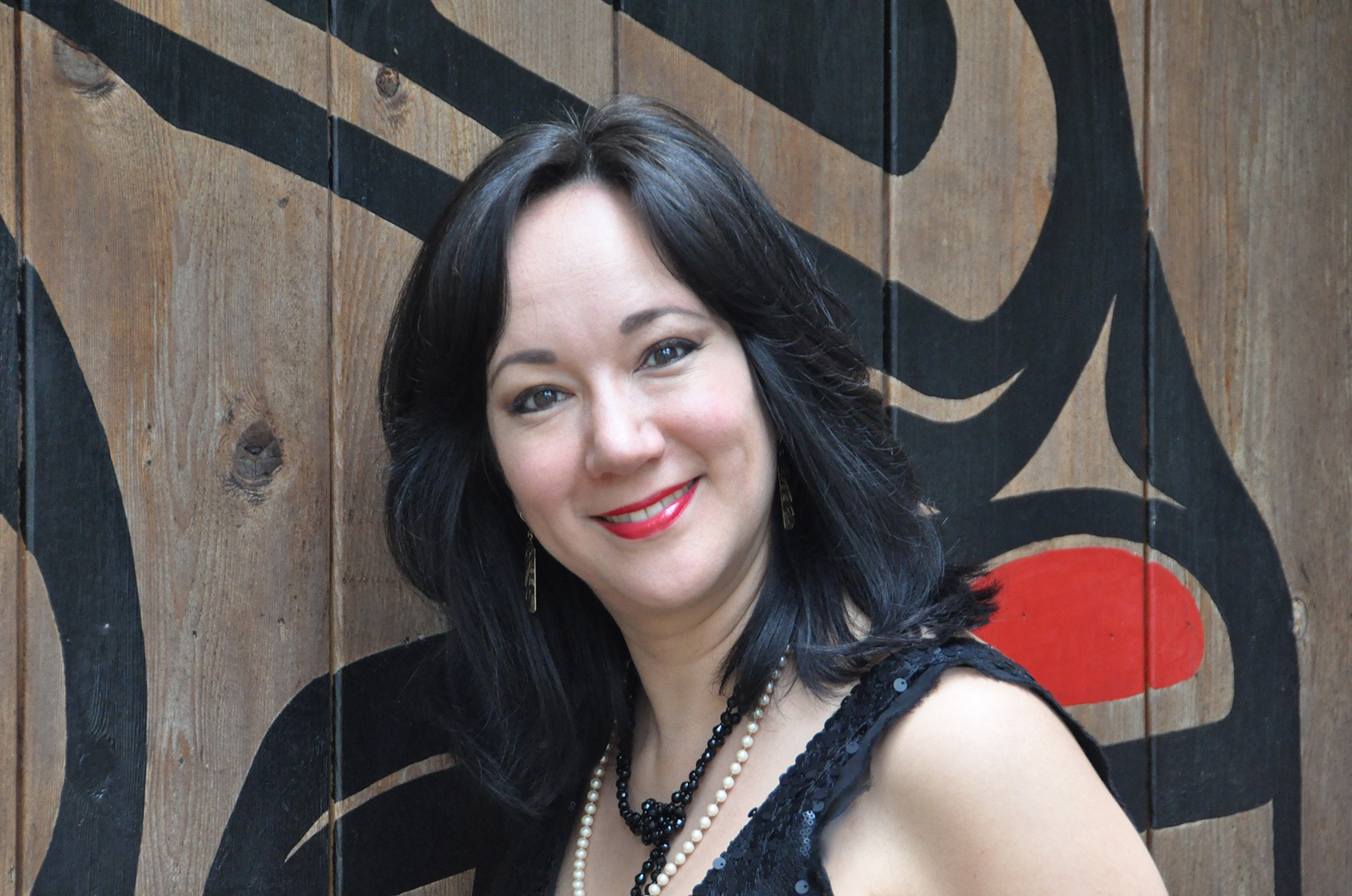
2209 opera 1Summers in Southern Ontario used to be known for their dearth of opera. Not anymore. While festivals such as Glimmerglass beckon across the border, there is so much operatic activity of interest in Ontario and Quebec that opera lovers need not venture out of Canada.

June

Stratford: Opening on May 31 and running until October 21, the Stratford Festival makes one of its occasional forays into operetta with a new production of Gilbert and Sullivan’s H.M.S. Pinafore. The 1878 work, G&S’s first big success, features the favourite Gilbertian plot device of babies switched at birth and its attendant satire of the British class system. Steve Ross is Captain Corcoran, Mark Uhre is Ralph Rackstraw, who loves above his station in pining for Josephine, sung by Jennifer Rider-Shaw, the captain’s daughter. Affairs on board are scrutinized by Sir Joseph Porter, First Lord of the Admiralty, sung by Laurie Murdoch, while Lisa Horner, well-known from Mirvish musicals, is Little Buttercup. Lezlie Wade, who directed Obeah Opera in 2015 in Toronto, is the stage director and Franklin Brasz is the music director.

TOT: Those with a taste for more operetta should check out the Galope Offenbachienne on June 4 by Toronto Operetta Theatre. There will be excerpts from La Vie parisienne, Les Contes d’Hoffmann, La Belle Hélène, La Grande-Duchesse de Gérolstein and Orphée aux enfers. Michael Rose at the piano will accompany Holly Chaplin, Meagan Larios, Michael McLean and Janaka Welihinda, and Virginia Reh will direct.

Opera by Request: As for those with a taste for opera that has operetta very much in mind, they will be pleased to see that Opera by Request, for its 10th anniversary gala, is presenting a semi-staged version of Richard Strauss’s waltz-inflected Der Rosenkavalier (1911) on June 9 and 10. Unlike most previous OBR operas, the opera will be accompanied by a chamber ensemble under the baton of William Shookhoff. Shookhoff states that Rosenkavalier will mark the debut of a new production model for OBR. Katharine Dain sings the role of the Marschallin, Barbara King is her lover Octavian, Uwe Dambruch is the Marschallin’s cousin Baron Ochs and Danielle Dudycha is the young Sophie, his fiancée who falls in love with Octavian.

TSO: On June 14 and 15, audiences can get a feel for how much changed in continental music between 1911 and 1933, when the Toronto Symphony Orchestra under Peter Oundjian presents the “sung ballet” The Seven Deadly Sins by Kurt Weill, written to a libretto by Bertolt Brecht after both had fled Nazi Germany. The story concerns two sisters, Anna I, a dancer, and Anna II, a singer, who are really two sides of the same person. The Annas’ actions are the subject of commentary by a male quartet called The Family. Anna I’s simple project is to have her own little house, but in trying to achieve this she commits each one of the seven deadly sins. Jennifer Nichols dances Anna I, Wallis Giunta sings Anna II, and the quartet is made up of tenors Isaiah Bell and Owen McCausland, baritone Geoffrey Sirrett and bass-baritone Stephen Hegedus. The much-in-demand Joel Ivany directs the semi-staged production, which also includes filmed segments. The evening program is completed with Samuel Barber’s Adagio for Strings (1938), and Bela Bartók’s Music for Strings, Percussion and Celesta (1937), and a short new work by Andrew Balfour.

Riel at NAC: On June 15 and 17, anyone who missed the Canadian Opera Company’s production of Louis Riel by Harry Somers and Mavor Moore will have another chance to see it at the National Arts Centre in Ottawa. It is the same production that played in Toronto directed by Peter Hinton and starring Russell Braun in the title role. The major difference will be that in Ottawa’s Alexander Shelley and the NAC Orchestra will replace Johannes Debus and the COC Orchestra.

Charlotte: Back in Toronto as part of Luminato on June 16 through 18 are performances of a work-in-progress called CHARLOTTE: A Tri-Coloured Play with Music. Czech composer Aleš Brezina has set a libretto by Canadian actor Alon Nashman about the life and artwork of French artist Charlotte Salomon (1917-1943), who produced over 1000 paintings between 1941 and 1942 while in hiding from the Nazis. Before she was deported to Auschwitz at age 26, she gave her book Leben? oder Theater?: Ein Singspiel to a local physician for safekeeping. The goal of CHARLOTTE is to put this modern singspiel on the stage as Salomon might have envisioned it. A cast of eight actors and singers, including Nashman, is directed by Pamela Howard and an ensemble of four is conducted by Peter Tiefenbach.

Opera 5: June closes with a major treat for rarity hunters in the form of Suffragette, presented June 22 through 25 by Opera 5. The evening is comprised of two one-act operas by British composer and women’s rights campaigner, Dame Ethel Smyth (1858-1944), the first female composer to be awarded a damehood. Her full-length opera The Wreckers (1906) is often considered one of the most important English operas ever written. Opera 5 will perform fully staged productions of Smyth’s Fête Galante (1923) and The Boatswain’s Mate (1916) accompanied by the composer’s own reductions for chamber orchestra. The first is a story about commedia dell’arte characters that ends unhappily. The second depicts a battle of the sexes and features Smyth’s own feminist March of the Women. Both works are directed by Jessica Derventzis and conducted by Evan Mitchell.

July

2209 opera 2Bicycle Opera: In July and August, the intrepid Bicycle Opera tours to towns all through Ontario. In the past the company has toured collections of very short operas or opera excerpts. This year, it is touring the Canadian premiere of a single one-act piece titled Sweat, by composer Juliet Palmer and librettist Anna Chatterton. If these names seem familiar it is because the same duo wrote The Man Who Married Himself for Toronto Masque Theatre, which had its premiere earlier this year. Sweat is an a cappella opera for a five-member chorus and four soloists about the ethical problems of the global garment industry and is performed in English, Cantonese, Ukrainian, Spanish and Hungarian. The four soloists are Stephanie Tritchew as the Union Organizer, Catherine Daniel as an Overseer, Larissa Koniuk as a Neighbour and Keith Lam as the Factory Owner. The director is Banuta Rubess and Geoffrey Sirett conducts. The tour starts in Hamilton on July 15, travels to six other municipalities in Ontario including Ottawa and ends with a run in Toronto from August 3 to 6.

Brott’s Carmen: While many still lament the disappearance of Opera Hamilton, opera in Hamilton has not completely died. In recent years the Brott Music Festival has presented a fully staged opera as part of its offerings from June 21 to August 17. This summer’s opera will be Bizet’s Carmen, presented for one night only on July 13 at Mohawk College. Beste Kalender sings the title role, Justin Stolz is Don José, Lauren Margison is Micaëla and Johnathon Kirby is Escamillo. Patrick Hansen directs and Boris Brott conducts the Brott Festival Orchestra.

The Elora Festival also occasionally features opera. This year, the opera is Henry Purcell’s Dido and Aeneas, performed in concert by the Elora Singers and Festival Orchestra for one night only on July 27 on a double bill with Pergolesi’s Stabat Mater, starring countertenor Daniel Taylor.

SOLT: Straddling the end of July and beginning of August are the three productions of the Summer Opera Lyric Theatre in Toronto, fully staged with piano accompaniment. Two of the offerings are standard repertoire. On July 29, August 1, 3 and 6 is Bizet’s Carmen and on July 29, August 2 and 4 is Mozart’s The Marriage of Figaro. What stands out in this sesquicentennial year is a double bill of two Canadian operas – Night Blooming Cereus (1953-58) by John Beckwith and A Northern Lights Dream (2017) by Michael Rose. Beckwith’s opera, to a libretto by James Reaney, was commissioned by the CBC and first broadcast in 1959, with its first stage performance in 1960. The opera concerns the healing of a family rift that coincides with the mystical blooming of a rare plant that flowers once every 100 years. Rose’s opera will be a world premiere. It is set inside Helen’s Prêt-à-Porter and Bridal Shop on a hot midsummer day near the hamlet of Shakespeare, Ontario. A client’s refusal to pay a bill brings the shop close to ruin, until Helen calls on Robin to solve the problem and ordinary Ontarians start to meld with characters from Shakespeare’s A Midsummer Night’s Dream.

August:

Stratford Summer Music: In August, opera can be found in unexpected places. For the past two years Stratford Summer Music has presented a staged opera with dinner at the Revival House (formerly known as The Church). This year, the opera will be Donizetti’s Don Pasquale (1843). Alexander Dobson sings the title role of an elderly bachelor who plans to disinherit his nephew by taking a wife and producing an heir. Irina Medvedeva sings Norina, the wily woman Don Pasquale wants to marry, and Jonathan MacArthur is the nephew Ernesto who is in love with Norina. Amanda Smith directs and designs the piece and Peter Tiefenbach is the music director. The opera runs August 18 through 20.

Highlands Opera: In Haliburton, the Highlands Opera Studio is presenting two operas. On August 27, 29, 30 and 31 it presents a fully staged production of Mozart’s Così fan tutte, with one cast on the 27th and 30th and another on the 29th and 31st. On August 19, HOS presents the first public semi-staged workshop performance of a brand new Canadian opera, Wiikondiwin (Feast/Feasting), a co-commission with L’Atelier Lyrique de l’Opéra de Montréal, by Odawa composer Barbara Croall. Soprano Adanya Dunn and baritone Samuel Chan join with First Nations actors/singers/musicians Rod Nettagog, Bradley Nettagog and Croall herself in the performance. Woodland creatures are living happily until they realize that human influence is destroying their habitat. Led by a wolf, they hold a feast to discuss how to return the Earth to its healthy state. This December, Wiikondiwin will return in a fully staged form to both Haliburton and Montreal.

Opera Muskoka: A second summer opera company in cottage country is Opera Muskoka, now in its eighth year. On August 22 it presents a concert performance of Puccini’s La Bohème in Italian with English surtitles at the Rene M. Caisse Theatre in Bracebridge. Tenor Daevyd Pepper is the organizer and will perform Rodolfo in the opera.

Those willing to travel as far as Montreal will find a major treat in store. On August 6, the Festival de Lanaudière in Joliette will give audiences a chance to hear the Metropolitan Opera’s new music director designate, Quebec’s own Yannick Nézet-Séguin, conduct his favourite opera for the first time – Wagner’s Parsifal. The singers for this concert performance include tenor Christian Elsner, mezzo Mihoko Fujimura, baritones Peter Rose, Boaz Daniel and Brett Polegato and bass-baritone Thomas Goerz. Nézet-Séguin conducts Montreal’s Orchestre Métropolitain – certainly a pilgrimage worth making.

Christopher Hoile is a Toronto-based writer on opera and theatre. He can be contacted at opera@thewholenote.com.
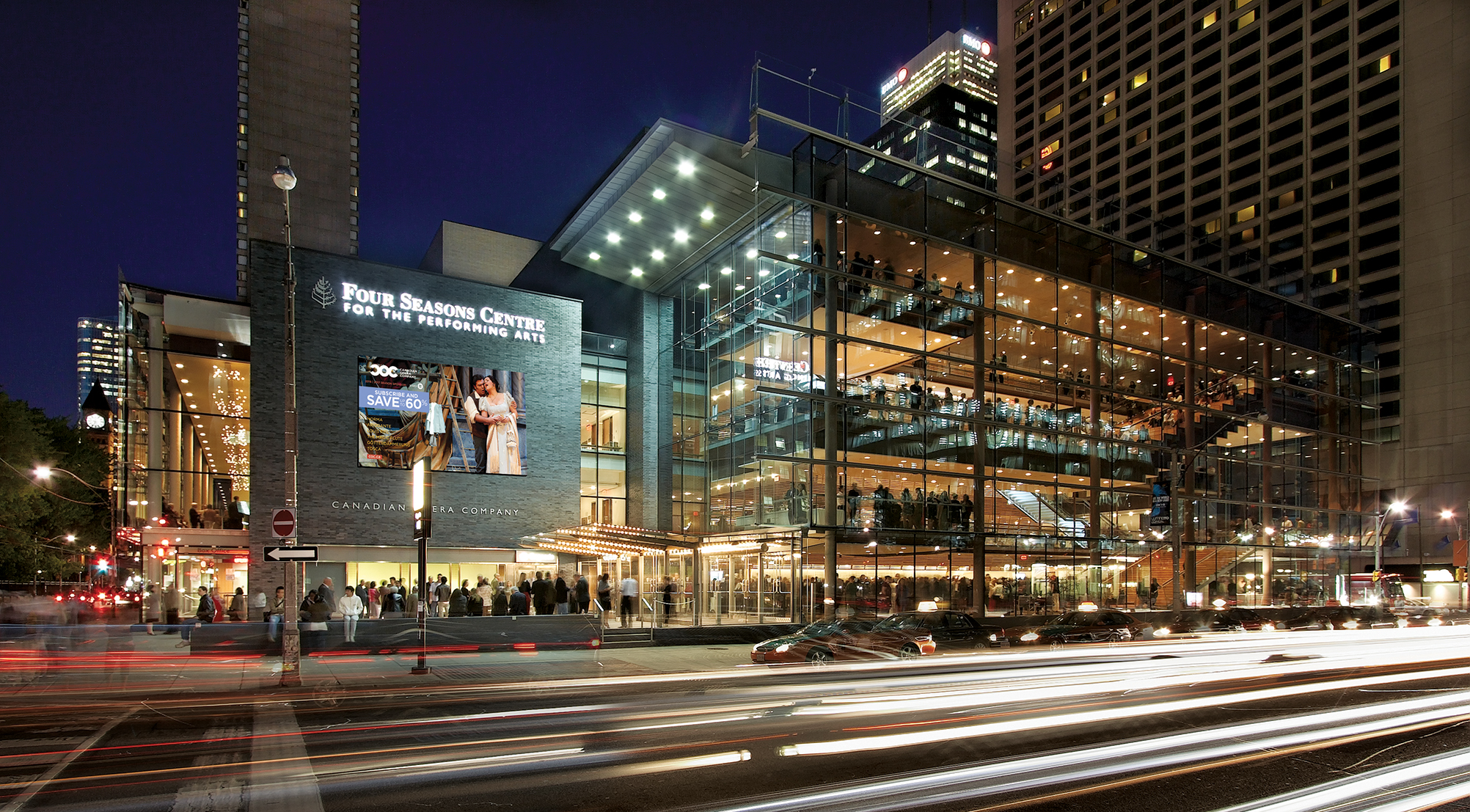
 

2208 On OperaThe focus of Toronto opera enthusiasts’ attention in April, self included, was the COC’s revival of the much heard of but seldom seen Canadian opera from 1967, Louis Riel, now running to May 13. The focus this month is on Tapestry Opera’s presentation of the world premiere of a new full-length Canadian opera, Oksana G., on May 24.

Since Oksana G. will be the largest production Tapestry has presented since Chan Ka Nin’s Iron Road in 2001, I spoke with Tapestry Opera artistic director Michael Mori in April about how the work came to be and how it was decided to expand it beyond chamber opera scale.

Mori said that composer Aaron Gervais and librettist Colleen Murphy met at a Tapestry LibLab in 2006: “In the LibLab, over the course of two weeks, four writers and four composers get to work with every one of their counterparts on a short ‘seed’ scene, in a kind of speed-dating fashion where the pressure and intensity of it are meant to encourage ideas that are free from the fetters of self-doubt. Sometimes the collaborations are just an experiment, but sometimes we strike on the kernel that shows the dynamic between the two creators that could be very exciting for something bigger.”

At the time, the subject of human trafficking was in the air. As Mori says, “Aaron and Colleen were talking about something that was more of an issue in 2006 than now, although it’s coming back with the war in Ukraine. With the fall of the Soviet Union came poverty in certain areas and with that came crime including human trafficking. This would be the world within which they wanted to explore the character of Oksana.” That collaboration led up to its performance as one of the “Tapestry Briefs” in 2006 where it had the title, The Enslavement and Liberation of Oksana G.

At that point Wayne Strongman, former A.D. of Tapestry, “felt it had the potential to develop into a fully grown opera. Even since the beginning Wayne and the creators had been thinking that this was one that needed a bit more time, a bit more breadth and scale, so that it wouldn’t be a two- or three-person piece in a chamber setting but would have both an epic-ness to the music and to the libretto, so the scalability of the staging would have to encompass that.”

Mori continues: “In those first years the Canadian Opera Creation Fund, an initiative of the Canada Council, was instrumental in first helping develop the work, as would later the COC and the Banff Centre. I came in 2012, a year before the first workshop of the second act. One of the reasons for the length of time between the Brief and and the workshop was that director Tom Diamond and Colleen felt that the characters should not sing everything in English but in the original languages the characters would be using. Colleen worked with a number of translators on giving this an element of realistic naturalism so that Ukrainian characters sing in Ukrainian among themselves and in Russian when communicating with a Russian or Italian with an Italian. Of course, this means the opera will be presented with surtitles.”

Canadian coloratura soprano Ambur Braid had originally been scheduled to sing the title role, but she had to pull out when an opportunity arose for her in Europe. Nevertheless, Mori is more than pleased with the replacement he found in Ukrainian-Canadian soprano Natalya Gennadi, who recently received her master’s degree in Operatic Performance from the University of Toronto. As Mori explains, “One reason why it is exciting to have Natalya Gennadi sing the role of Oksana is that she grew up in Ukraine at the time depicted in the opera. She has direct experience of poverty there, of hunger, of sharing shoes and of people in friends’ families who disappeared and reappeared five years later, and of some who never came back. So she will be able to sing with authority because it is her mother tongue and also because she has the greatest insight of any of us into what was happening at that time.”

Producing opera on a larger scale fits in with Mori’s overall plans for Tapestry’s future: “Oksana G. is a bigger project than we have done in about 15 years. Wayne and I wanted it to be special but we are a fiercely nimble company. I also wanted it to be within our ability to be flexible and to continue producing. One of the things I have tried to prioritize since I have become artistic director is that I want to present bigger shows in Toronto every year. So in the last four years we’ve had Shelter, M’dea Undone, The Devil Inside, Rocking Horse Winner and now Oksana. It was important to me also that this wouldn’t be so big that we would have to take a couple years off.”

Mori deliberately chose the Imperial Oil Opera Theatre on Front Street for the production because it is a non-traditional opera venue: “We want to embrace what it means to be an opera company in the 21st century in Toronto. So in creating our own theatre inside the space on Front Street, it’s going to have a much more industrial feel that won’t seem like you’re walking into one of those theatres that suggests a very prescriptive theatre experience.”

Mori emphasizes that “Oksana is a full-force opera. There will be over 40 people on stage, some as villagers, some as other trafficked women, and this lends to the breadth of her journey from a small town in Ukraine to a refugee shelter in Italy. The score was originally orchestrated for about 36 people, but since the space we’re using doesn’t have a pit, such forces would overwhelm the singers. Therefore, Aaron has reduced the orchestration to about 16. The future of the work will depend entirely on the openness of other producers in Canada and the States to this piece. This is not an opera about human trafficking but it is an opera that is framed by the challenge that that presents in the same way that Tosca [running at the COC until May 20] is framed by the politics of its time. It’s a story about survival and heroism and challenging the demons that you face and overcoming this idea that women in opera shouldn’t always be portrayed as victims.”

The key to the opera’s impact will be the empathy that we feel for Oksana: “One of the most important things is that the victims in human trafficking are dehumanized and we tend to dismiss the fact that they could be your sister, your friend; it could be anyone from any background. Just following Oksana’s story, her challenge to redemption, we take a human journey. We haven’t been given a lesson in anything but what we will always remember is that there are humans out there that this is happening to, and we do have an opportunity to know more, to help. It is an emotional journey that can help us to transcend that block that our culture has with looking at uncomfortable topics.”

To sum up, Mori is very excited about his cast and creatives and what they will do: “The team we have is really something. You never know how these things will go but I often find that if you put the right people in the room together, magic will happen.”

Oksana G. plays at the Imperial Oil Opera Theatre May 24, 26, 28 and 30. Natalya Gennadi sings Oksana. Tenor Keith Klassen is Konstantin, the man who trafficks her to the West. Tenor Adam Fisher sings Father Alexander who runs the refugee camp where Oksana finds herself. And mezzo-soprano Krisztina Szabó is Sofiya, Oksana’s mother. Tom Diamond, associated with the work since the beginning, is the stage director and the increasingly in-demand Jordan de Souza conducts.

Christopher Hoile is a Toronto-based writer on opera and theatre. He can be contacted at opera@thewholenote.com.
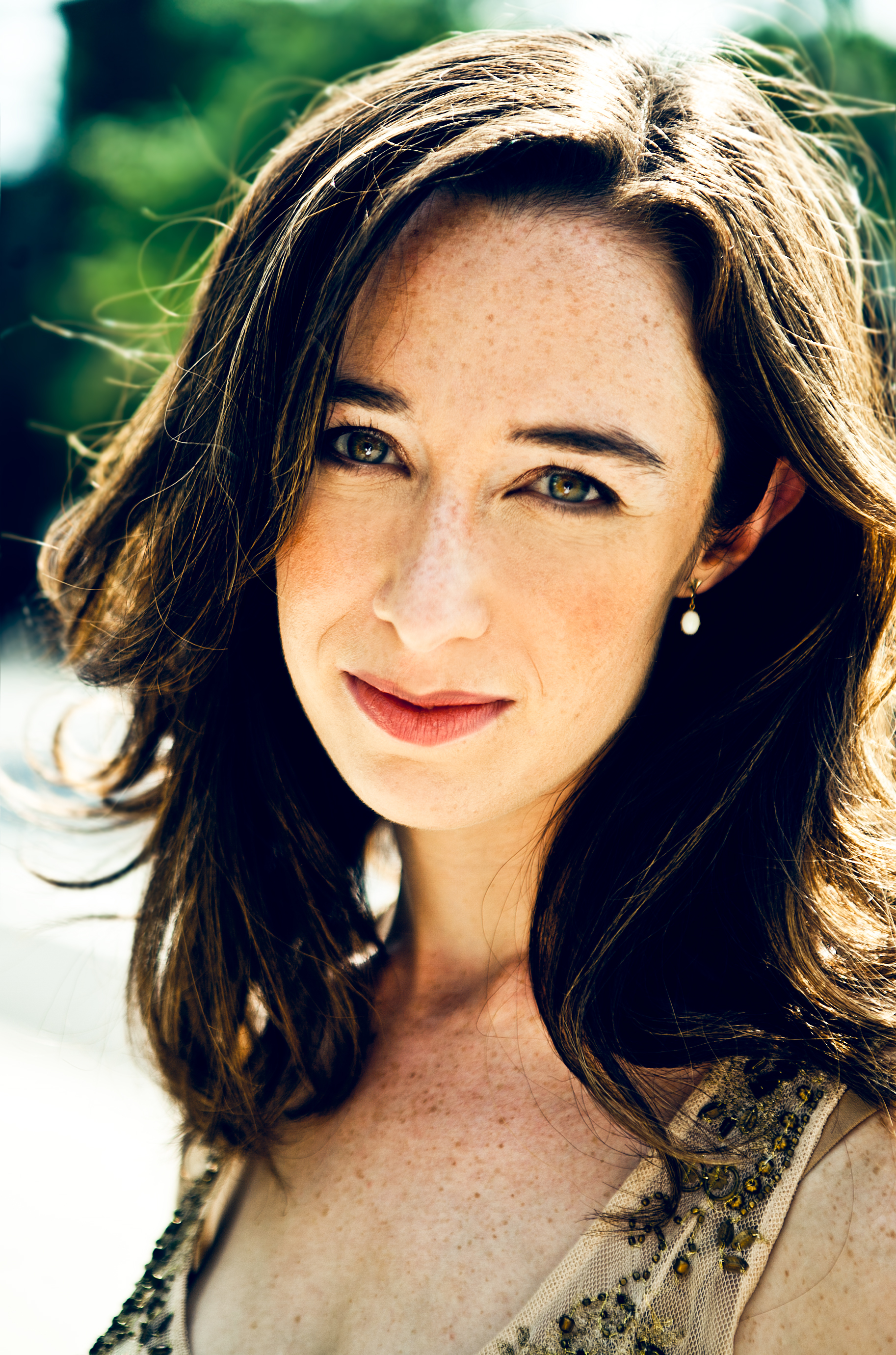
Back to top