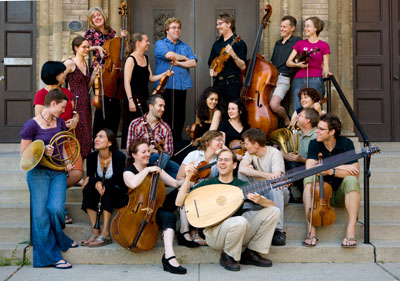
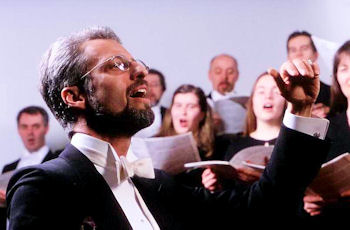
Being a university town, Kingston, Ontario, attracts interesting people. One such person is David Cameron who, after his early training in Toronto and the USA, has led a very busy musical life in Kingston for over four decades as organist, choir director, teacher and composer. He founded the Melos Choir in 1984 – a choir which, even then, had its sights on producing an authentic baroque style (Cameron’s graduate studies had involved early music and performance practice) in its execution of the major works of Bach, Handel and other composers of the era – but without the availability of period instruments or players to contribute to the authenticity to the sound.

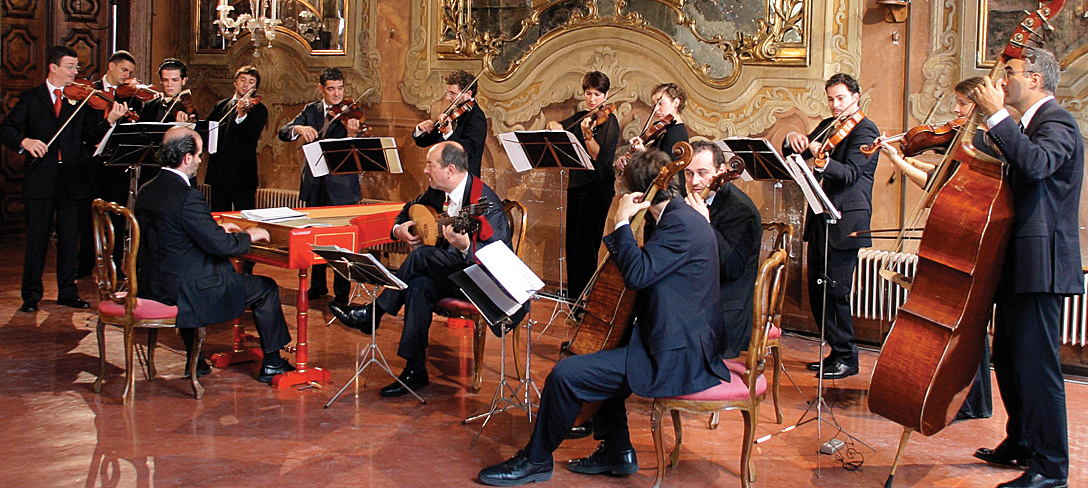
Things are changing now, though, and Cameron’s vision of a part-time but professional baroque chamber orchestra in Kingston is much closer to realization. In his words: “In recent years the arrival in town of some early-music people, with replica instruments, and a broader selection of young players who had been exposed to early music work in their training, opened up new possibilities. So we began with a complete Messiah at A equals 415, with replica woodwinds and modern strings playing with baroque bows – and several further events have led to the present attempt to establish a continuing baroque chamber orchestra here. We can’t yet afford to buy replica strings, but are seeking grants for that purpose; we have players willing to master them when they become available. So it’s a work in progress.” The hope for the long term is to establish a presence in the city modelled after Toronto’s Tafelmusik.

This newly formed baroque orchestra gives its first performance this month, assuming the role of accompanist to the choir and the organ. On November 26 in Kingston, the Melos Choir and Chamber Orchestra and soloists present “In Praise of Music,” with Bach’s Cantata 148 Bringet dem Herrn, Purcell’s Ode for St. Cecilia’s Day (a timely piece incidentally, as November 22 is the feast day of St. Cecilia, patron saint of music), Handel’s Organ Concerto in B Flat Major, and, in recognition of Wesley’s 200th anniversary, his anthem Ascribe unto the Lord. (In January, a further development: the first solo performance by the orchestra, so stay tuned for more news of this event.)

Meanwhile in Toronto, the model for Kingston’s new venture is fully into its 2010-11 season. Tafelmusik Baroque Orchestra and Chamber Choir presents (along with works by Rameau and Charpentier) Handel’s very spirited setting of Psalm 110, Dixit Dominus. This is Handel’s earliest surviving autograph, composed when he was just 22 and living in Rome. It demands extreme technical prowess from all the performers, suggesting that (to quote John Eliot Gardiner) “this young composer, newly arrived in the land of virtuoso singers and players, was daring his hosts to greater and greater feats of virtuosity.” Tafelmusik performs it four times, November 11 through 14.

Other November Concerts
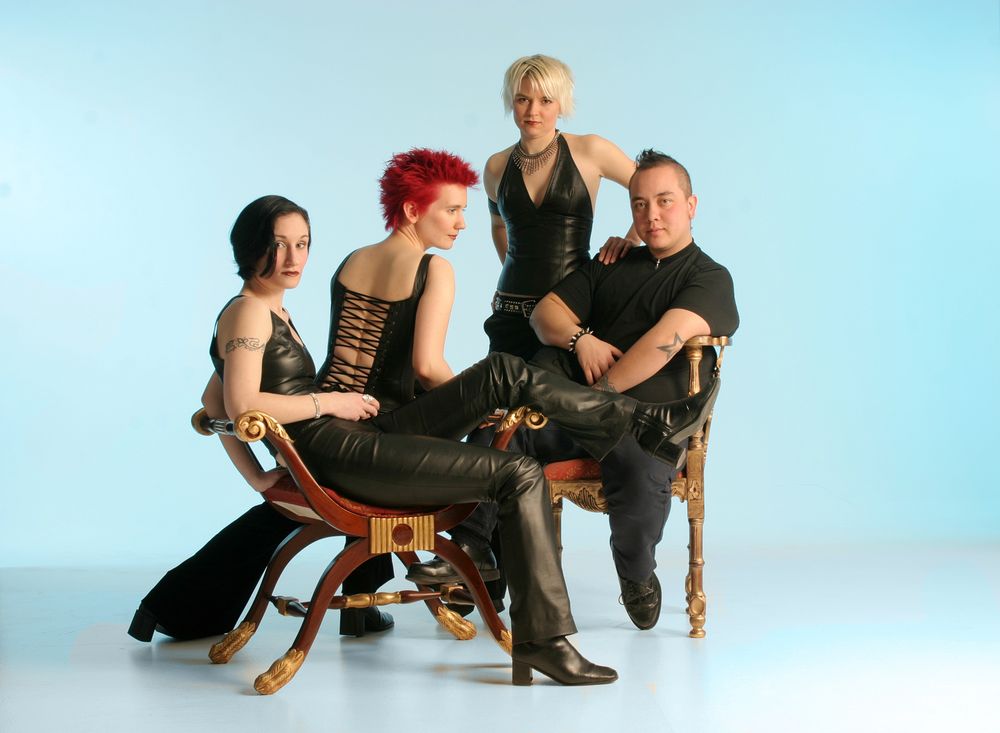
p19You never know how talent will manifest itself. Soprano and core member of I Furiosi Baroque Ensemble, Gabrielle McLaughlin, has just had a short story published in Pilot Project’s new Pilot Pocket Book 7: Baroque. You have to read it to get the flavour. (I couldn’t begin to describe it here!) But you can get a copy (which contains as an added bonus: an I Furiosi five-track mini-CD) at the launch party, complete with live performance and auction, on November 7 at Tequila Bookworm, 512 Queen Street West in Toronto. (See Announcements Etc., page 53) As well, the group’s first concert of the season, entitled “The Empire Strikes Baroque,” takes place on November 27.

Some of the loveliest Bach is found in his chamber music, sacred and secular. If you desire to spend an evening listening to the more intimate treasures of the master, go to the Academy Concert Series’ An Evening with Bach. You’ll hear a whole world unfolding in the first movement of Violin Sonata BWV 1014, tender joy woven by soprano and cello in the aria “Öffne dich, mein ganzes Herze” (from Cantata BWV 61), and an engaging gigue with an easy swing in the Trio Sonata BWV 1040, as well as other gems for baroque oboe, recorder, soprano voice, baroque violin, harpsichord and baroque cello. This concert takes place on November 13 at Eastminster United Church.
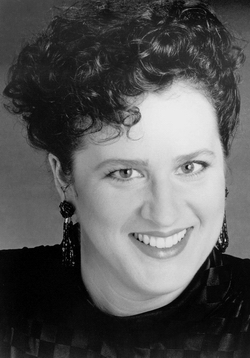
p20Anyone who’s been to a Toronto Consort performance knows Laura Pudwell – her marvellously flexible, clear and expressive mezzo voice has long been a feature in their concerts and in performances (from early music to contemporary) in Southern Ontario and internationally. With some friends of hers (Julie Baumgartel, baroque violin, Margaret Gay, baroque cello and Lucas Harris, archlute), she’ll be presenting “Laura Pudwell and Friends.” This performance is a presentation of Classics at the Registry, and it takes place in Kitchener on November 14.

Scaramella’s mission (or one of its missions) is to bring together diverse expressions of art and in so doing, reveal much about the connections that lie between them. In “Old World/New World,” the first concert of the season, this takes the form of exploring the meeting of widely separate cultures and their influences on each other. High art-music of 16th and 17th century France and Spain is juxtaposed with folk music from Brazil and Canada, much of which has only survived in oral form, transmitted from one generation to the next. The concert takes place in Victoria College Chapel – a stunning place to hear combinations of baroque guitar, recorders, harpsichord, violas da gamba and voice – on November 20.

The Community Baroque Orchestra of Toronto is perhaps the only community orchestra in Canada that dedicates itself to playing baroque music on period instruments. (If anyone knows of other such groups, would you please be in touch?) CBOT performs twice this month, with violinist Patricia Ahern as soloist in the Bach Violin Concerto in A Minor, and also with music by Muffat and Lully. Their first performance takes place in the Beach on November 21 and their second in Bloor West Village on November 28.

A glance at early December reveals that two choral concerts occur (alas!) on the evening of December 4: Cantemus Singers’ “Welcome Yule” (Sweelinck, Praetorius, Byrd, Schütz, Renaissance and Medieval carols) in Toronto’s east end (repeated later in December in the west end), and Toronto Chamber Choir’s “O Magnum Mysterium” (Palestrina, Monteverdi, Vivaldi) at Christ Church Deer Park. Not an easy choice!

For details of all these, and a whole range of other concerts, consult The WholeNote’s concert listings.


Simone Desilets is a long-time contributor to The WholeNote in several capacities, who plays the viola da gamba. She can be contacted at earlymusic@thewholenote.com.
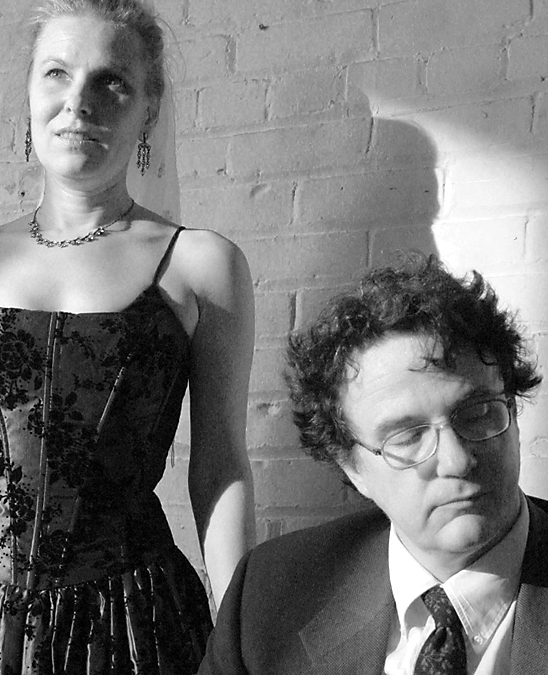
October seems to be a month of refreshment, as there’s so much interestingly new going on in the realm of “early” music. Three relatively new groups have upcoming concerts:

The debut performance of the Vesuvius Ensemble takes place on October 29, and its title, ”Fronna: Folk Music of Southern Italy,” gives some idea of the sunny and impassioned outlook of this group. Led by the Italian tenor Francesco Pellegrino (now teaching Italian art-song at the University of Toronto), who is joined by early-music specialists Marco Cera (oboist with Tafelmusik, who plays both reed and strummed instruments in this group) and lutenist/guitarist Lucas Harris, this ensemble is dedicated to preserving and performing the traditional folk songs from Naples and the Italian countryside. Besides baroque guitars and voice, other instruments such as the ciaramella (a type of traditional Italian shawm, related to the bagpipe) and the tammorra (a very large frame drum with bells attached to the sides) will contribute their colours.

Bud Roach is accomplished both as an oboist and a tenor. Perhaps it is the combination of these musical sensibilities that led him to found Capella Intima in 2008, in order to revive hauntingly beautiful 17th-century motets and cantatas, chamber music both sacred and secular, for voices and instruments. Their next concert focuses on the influence of the great Monteverdi, insofar as it reveals something of the talents of  those composers who worked with him and indeed were overshadowed by him. “In the Shadow of Monteverdi” presents music by Cavalli, Grandi and Legrenzi as well as Monteverdi, and will feature tenor, baritone and bass voices, as well as portative organ and cello continuo. It will be performed three times: on October 30 and 31 and November 1.

With the intent of presenting little-heard music for voices from the Renaissance and Baroque, Michael Erdman began Cantemus Singers. In a relatively short time this 16-voice a-cappella choir has developed a flourishing concert series, performing each one back to back in two different parts of Toronto. Its next performances pay tribute to Queen Elizabeth I, with madrigals, motets and sacred works – including Byrd’s Mass for Five Voices – all by composers whose intent was to please “Good Queen Bess” with flattering prose and glorious music. You can hear them in the city’s east end on October 2, and in the west end on October 3.

And more, in chronological order…

p23Tafelmusik, always ready to deliver the unexpected, presents 19th-century composers Chopin and Spohr in its next group of concerts, October 7 to 10. Featured soloist is pianist Janina Fialkowska, who will perform Chopin’s First Piano Concerto on a 19th-century Pleyel piano, with chamber ensemble arrangement. The French piano manufacturing firm Pleyel et Cie has a long and important history: Founded in 1807 by composer Ignace Pleyel, it provided pianos to Frédéric Chopin, and ran a concert hall, the Salle Pleyel, where Chopin performed his first and last concerts in Paris. The innovative company was the first to use metal frames in their pianos. Pleyel pianos were the choice of musicians such as Saint-Saëns, Debussy and Ravel.

On October 9, the Cardinal Consort of Viols presents “An English Harvest”: five-part music for the viola da gamba, including works by Dowland, Holborne, Gibbons and Tye. This concert affords a rare opportunity to spend an evening enjoying the delicately ravishing sound of five viols in consort.

Intrigue, secrets and wonderful music are the subjects of The Toronto Consort‘s “The Ambassadors,” presented on October 15 and 16. An exploration of the world of 16th-century diplomats (“bearers of lavish gifts, writers of secret dispatches, keen observers of courtly life”) and the musical riches they encountered, this pair of concerts was designed by the ever-inventive Alison Mackay.

In Kingston, the ensemble Trillio celebrates both the music of the Baroque and the riches of October with “Baroquetoberfest.” With a real sense of occasion, this energetic group delights in presentations that combine music with culinary feasts; and I can attest to the fact that you’ll not be disappointed on either count if you go. Music by Telemann, Bach, Pepusch, Schickhardt and others for harpsichord, baroque oboe, recorders, baroque bassoon and viola da gamba will be performed; and German-style sausages, apfelstreusel and other mouth-watering treats will be served, on October 16 and 17.

In Kitchener, Nota Bene Period Orchestra perform their programme, “The Grand Tour,” presenting music that a young 17th-century English traveller might have heard as he completed his education by soaking up the cultural climate of the continent. Featured in this concert is a sonata from “Il Giardino Armonico” by the 17th-century Dutch composer and viol virtuoso Johann Schenck – a work that was considered lost in World War II, but in reality was part of a collection hidden in Kiev, and only recently uncovered and returned to Germany. The sonata, scored for two violins, gamba and basso continuo, probably hasn’t been heard in Canada in recent memory – but now it can be heard, on October 17.

The Venice Baroque Orchestra performs at Roy Thomson Hall on October 26, in a fascinating concert that juxtaposes Vivaldi’s Four Seasons with a recent violin concerto by Philip Glass, The American Four Seasons. Violinist Robert McDuffie is the soloist, and also Glass’s inspiration when he composed this 21st-century companion piece to the Vivaldi.

p24Musicians In Ordinary launch their tenth official season on October 30 with Her Leaves Be Green, a charming mix of songs and lute solos from the English courts of James I and Charles I. This duo, soprano Hallie Fishel and lutenist John Edwards, regularly invites Toronto audiences into the Privy Chambers of English kings and queens to hear the intimate music provided for their majesties by the “musicians in ordinary for the lutes and voices.”


Simone Desilets is a long-time contributor to The WholeNote in several capacities, who plays the viola da gamba. She can be contacted at: earlymusic@thewholenote.com.

Greetings of the new season to all early music lovers – you’re in for a great time ahead! I know, because in surveying the coming months I already find a vast and fascinating variety of music to talk about. There’s far too much to mention in this column – but here are a few of the many things that have caught my eye.

The earliest composer I see represented is Hildegard von Bingen, the German abbess, musician, author, naturalist, scientist, philosopher, physician, poet and visionary. Her feast day (the anniversary of her death in 1179) will be celebrated on September 17 in the Church of the Holy Trinity with a concert and labyrinth walk, entitled “Meditation in Motion.” This is an opportunity to experience the mystical properties of her music while either sitting and meditating, or walking the spiraling 36-foot labyrinth placed in the church for the occasion, or simply listening to the music.

At the other end of the spectrum, the most recent compositions represented on the early-music scene probably have yet to be written: Aradia’s February 5 project, entitled “Baroque Idol!”, is to elicit ten new compositions from ten young composers, thereby fostering new music for baroque ensemble using the tonal possibilities of old instruments.

There’s a wide range in other areas too. For example, you can hear early music on modern instruments, such as cellist Winona Zelenka’s stylistically aware performances of Bach’s solo suites for cello (September 2 at the Toronto Music Garden; February 24 at the Four Seasons Centre for the Performing Arts; April 16 at the Almonte Town Hall). Or you can experience romantic music on period instruments, such as pianist Janina Fialkowska’s performance of Chopin’s First Piano Concerto on an 1848 Pleyel piano – a Tafelmusik presentation from October 7 to 10. Contemporary music on period instruments can be heard on September 19, as the Windermere String Quartet plays Alexander Rapoport’s Quartet written in 2006 (as well as Schubert, Haydn and Beethoven).

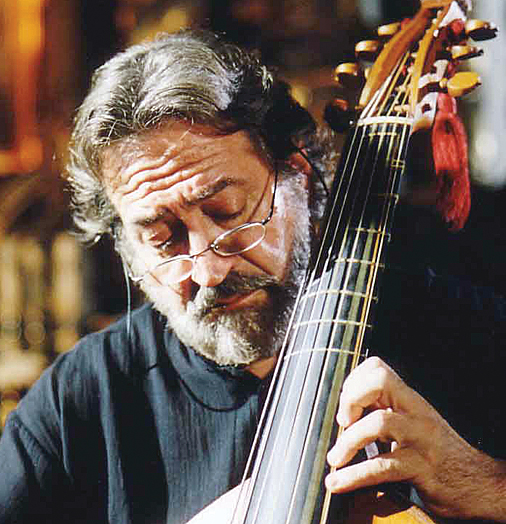
P15The theme “Old World/New World” crops up, in two interesting programmes. Scaramella’s November 20 concert (with this same title) will pair European art-music with music of the colonies (specifically Brazil and French maritime Canada). On May 8, master gambist Jordi Savall and his ensemble Hespèrion XXI will evoke Old Spain, the Mexican Baroque, and the living Huasteca and Jarocho traditions in their programme “The Route of the New World: Spain – Mexico.”

As has often occurred in the past, there are some striking correspondences to be noticed in this season’s programming. For instance, who would expect to find all three pinnacles of Bach’s choral works performed in the area, within a three-month period? That’s the case this season: the B Minor Mass is presented by Tafelmusik from February 9 to 13; the St. John Passion is offered by the Toronto Mendelssohn Choir (actually the 70-voice Mendelssohn Singers) on March 3; and the St. Matthew Passion is programmed by the Masterworks of Oakville Chorus and Orchestra on April 15, 16 and 17.

If you missed Tafelmusik’s 2009 spectacular commemoration of the 400th anniversary of Galileo’s development of the telescope – or if, like me, you absolutely have to see it again – you’re in luck: a reprise of “The Galileo Project: Music of the Spheres” takes place March 2 to 6. A production like no other, it uses music, words, images and very imaginative staging and lighting to explore the artistic, cultural and scientific world in which 17th- and 18th-century astronomers lived and worked. It also features the orchestra performing almost completely from memory as they probe the wonders of the heavens.

Perhaps it’s the present climate of environmental consciousness? Our fellow furry and feathered creatures are represented in at least three programmes: September 18, Beaches Baroque (Geneviève Gilardeau, baroque violin, and Lucas Harris, theorbo) present “Beasts of the Baroque,” featuring baroque sonatas that imitate the calls of animals. Hot on its tracks, Classics at the Registry in Kitchener follows on September 19 with “Baroque for the Birds”: music inspired by birds, performed by Alison Melville, baroque flute and recorders and Borys Medicky, harpsichord. And February 5, Scaramella’s “Birds Bewigged” features musical improvisations based on readings of haiku, and poetic readings on an avian theme.

P16And I must draw your attention to some of the visiting artists coming this season: In addition to the above-mentioned ensemble from Spain (Hespèrion XXI), here are others to be noted: On October 26, the Venice Baroque Orchestra appears at Roy Thomson Hall to play both Vivaldi and Philip Glass. This group, founded in 1997, is recognized as one of Europe’s premier ensembles devoted to period instrument performance. On March 12, the a-cappella vocal ensemble the King’s Singers graces Koerner Hall stage to sing Palestrina and others. On March 23, Soundstreams presents Norwegian vocalists Trio Mediæval together with the Toronto Consort to perform a world premiere based on ancient music: James Rolfe’s “Breathe”, which draws inspiration from the music of 12th- century composer Hildegard von Bingen. The programme also includes medieval classics, music inspired by Norwegian folk traditions, and recent masterworks.

As well as all the above, you’ll find many other fascinating programmes coming up, which I hope to do more justice to in future columns – for example the Monteverdi Vespers sung by the Grand River Chorus on October 30; a concert of Josquin Motets and Chansons presented by the Toronto Chamber Choir on April 2; the Toronto Consort’s “Canti di a Terra” on April 1 and 2 with guests: Montreal’s Constantinople (who draw their inspiration from the music of the Mediterranean, the classical Persian tradition, the Middle Ages and the Renaissance) and Corsica’s vocal quartet Barbara Furtuna (who specialize in the centuries old traditions of Corsican singing).

Finally, you might want to expand your travel plans this month to include ancient Egypt, Scandinavia and the Baltics in Viking times, and Elizabethan England, with the following events taking place: Aradia’s semi-staged production of Handel’s Giulio Cesare in Egitto plays on September 11, fresh from Sulmona, Italy, where it has had four triumphant performances. On September 27 at Barrie’s Colours of Music Festival, Ensemble Polaris presents “Nordic Music to Love,” a modern tribute to the Vikings with original, traditional and new music on a wide variety of instruments. On October 2 and 3, Cantemus Singers celebrates “Good Queen Bess” with glorious music from the court of Queen Elizabeth I.


Simone Desilets is a long-time contributor to The WholeNote in several capacities, who plays the viola da gamba. She can be contacted at: earlymusic@thewholenote.com.

P16Thinking of going on an early music treasure hunt this summer? Here are some ideas for you.

If your travel boundaries lie within Toronto and the GTA, you could spend the whole summer sampling a variety of styles and genres in many different programmes:

The Italian singer/instrumentalist Viva BiancaLuna Biffi (featured in the June early music column) presents her one-woman show, “Fermate il Passo,” a programme of Italian frottola in which she sings universal tales of love – its euphoria and torments, its ultimate triumph over adversity – while accompanying herself on the viola d’arco. This Music Mondays concert at the Church of the Holy Trinity takes place on July 5.

Beaches Baroque, a duo made up of baroque violinist Geneviève Gilardeau and lutenist Lucas Harris, presents “The Bach/Weiss Sonata.” The featured work is a seven-movement sonata for violin and lute supposedly by Bach, but striking in that the lute part began life as a sonata in its own right by Bach’s friend, the virtuoso lutenist Leopold Weiss. As well, more music by Bach, Weiss and Hagen will be presented, on July 10 at Beaches Presbyterian Church.

Hildegard von Bingen’s music broke the boundaries of expression for its time, and sounds amazingly modern today. The soaring chant of this 12th-century abbess can be heard on August 8 at the Church of Saint Mary Magdalene, sung by a group that’s been acclaimed for its performances of medieval music and Gregorian chant. The five-voice women’s ensemble Schola Magdalena is led by artistic director Stephanie Martin.

And sprinkled through the ambitious Summer Music in the Garden programme of the Toronto Music Garden – a concert almost every Sunday and Thursday from now till late September – are the following hour-long programmes, each one featuring a different aspect of early music:

July 4: On the day before her Music Mondays concert (described above), Viva BiancaLuna Biffi’s imaginative show “Fermate il Passo” can be heard here too, in this lovely outdoor setting.

July 15: “In Four Hands, Twenty-Nine Strings,” baroque violinist Linda Melsted and guitarist Terry McKenna explore a whole range of styles from the 17th to the 20th century – old English dance tunes, an opera overture, tango and more.

August 12: “Inspired by Cremona” presents some of the bold new music created to showcase the unsurpassed perfection of the stringed instruments crafted by 17th-century Italian makers. Music by Farina, Merula and Castello will be performed by baroque violinists Patricia Ahern and Linda Melsted, harpsichordist Borys Medicky and lutenist Lucas Harris.

August 22: In “Masque of the Garden,” musicians of the Toronto Masque Theatre, actor Derek Boyes and baroque dancer Dorothea Ventura celebrate the Music Garden itself, with music and dances that inspired the six sections of the garden.

August 26: “Able was I ere I heard Abel” is a tribute to the 18th century’s last great gamba virtuoso, Carl Friedrich Abel. Gambist Justin Haynes and baroque cellist Kate Bennett Haynes present music by Haydn, Schaffrath, and Abel himself.

September 2: In “Bach at Dusk,” cellist Winona Zelenka’s six-year odyssey through the Bach solo cello suites is fulfilled, with her performance of the Suite in C Minor (which is actually number five in the set).

It’s so easy to “catch the fire” of a summer festival – music springing up in various places, artists and concert-goers sharing the excitement of magical moments – and I urge you to work one or more into your summer plans. Here’s some of what you might find in various Southern Ontario festivals:

July 4: North of Toronto at historic Sharon Temple, Music at Sharon presents Les Voix Baroques, a celebrated ensemble specializing in vocal works from the Renaissance and Baroque. They’ll offer music by Charpentier and Carissimi in this imposing space.

July 18: Northwest of Campbellford, the Westben Festival presents the Toronto Consort in their presentation “Shakespeare’s Songbook.” The Consort uses the songs and dances of Shakespeare’s plays to engage the audience in the wonderful world of Elizabethan music: “music for fools, fairies and Falstaff.”

July 9-August 1: The Elora Festival takes place in a village with a spectacular setting along the Elora Gorge, north of Guelph. If you go, you’ll be able to hear four early music concerts: choral works with the Elora Festival Singers and collaborating artists on July 18 (Handel and Vivaldi) and July 22 (The Tudors); the delightfully daring group I Furiosi on July 24; and “Love: Sacred and Profane” on July 31 – a programme of renaissance music presented by Ludus Modalis Vocal Ensemble from France.

July 16-August 8: At the Festival of the Sound in Parry Sound, you can hear concerts as diverse as “Sound the Trumpet” (music for trumpet, soprano and piano by Purcell, Handel, Bach and Scarlatti) on July 29; Bach’s powerful B Minor Mass on July 30; and “Baroque on the Boat” (a morning concert on the M.V. Chippewa in Georgian Bay with the Festival Winds) on August 6.

July 19-August 22: At Stratford Summer Music, gems seem to be multiplying: Winona Zelenka, having recently recorded all the Bach solo cello suites, will perform each of them in separate concerts – and as several of these are now sold out, more performances are being added as I write. (Zelenka is featured as the cover story in The WholeNote’s June issue.) As well, Bach’s Coffee Cantata can be enjoyed in the appropriate setting of a coffee house (August 13, 14 and 15); and from it another event has been brewed: “Bawk’s” (alias Tiefenbach’s) Cappuccino Cantata (or The Lonely Barista) can be savoured the following week (August 20, 21 and 22).

July 24-August 7: If you find yourself in Ottawa this summer, you must take in some events of the Ottawa Chamber Music Festival. July 28: Les Voix Humaines (gambists Susie Napper and Margaret Little) present “Master and Pupil: Sainte-Colombe, the master, and Marin Marais, his pupil”; August 1: Ensemble Caprice explores an unlikely connection in “Bach and the Baroque Gypsies”; August 5: Helene Plouffe, Mark Simonds and friends present “Discovering the viola d’amore and chalumeau”; August 5: Ludus Modalis perform “Spiritual Songs and Psalms of the Renaissance” with music by Sweelinck, Estocart, Ferrabosco, Costelley and Le Jeune. (This list is not comprehensive, so do check the listings.)

As for me, I am enslaved by a gamba and a cat, neither of whom travels very well; so I’ll probably do most of my concert-going within the boundaries of Toronto. But you never know – don’t be surprised if you find me at any of the aforementioned events. And may your own treasure hunt be fascinating!

Simone Desilets is a long-time contributor to The WholeNote in several capacities, who plays the viola da gamba. She can be contacted at: earlymusic@thewholenote.com.

p24aAs usual, there’s no shortage of interest on the early music scene this month, as the 2009/10 season draws to a close and the 2010 summer season begins.
Viva BiancaLuna Biffi is a name I hadn’t heard before, until I was alerted to her presence at three different concert series in Southern Ontario this month. This engaging Italian musician has a solid grounding in medieval fiddle, renaissance viola da gamba, baroque cello and voice, and she’s a specialist in the late 15th/early 16th-century form of Italian secular song known as the frottola, a predecessor to the madrigal.

Biffi has revived a long-lost art practised by late renaissance and early baroque musicians, singing the upper line of the songs while performing her own arrangement of the other voices on the viola d’arco (no mean feat!) – and, judging from the audio files I’ve heard, she’s a consummate and I’ll bet completely delightful musical storyteller with a twinkle in her eye, a smile in her voice and an apt sense of accompaniment on her instrument.

The one-woman show she brings to Canada is Fermate il Passo (“Stay a moment, passer-by!”). She describes it as a mini- or proto-opera (opera as we know it had yet to be born), that charts the course of love from sunset to night to dawn. I thought it might be interesting to follow her around and have a look at this area’s summer festivals where she’ll be performing.

On June 19 you can hear Biffi at Knox United Church in Ayr, one of the Grand River Baroque Festival’s two venues. I think she’ll fit in well with the spirit of this festival – it really is a feast of wonderful performers and very unusual programming. Artistic directors Guy Few and Nadina Mackie Jackson have conjured up three days of celebration that include a masquerade gala with fireworks, a concert-combination of Vivaldi and Piazzolla, and another concert of music by Glenn Buhr, Mathieu Lussier, Vivaldi and the Chevalier de Saint-Georges. There’s early music mixed with pop (“Pop-Period Fusion”) and fencing demonstrations too. It all takes place from June 18 to 20, just west of Kitchener in the Buehlow Barn and a bit south of that in Ayr.

Then, after appearances at the Montreal Baroque Festival (June 25) and in Quebec City, Biffi returns to Toronto on July 4 for the Toronto Music Garden’s “Summer Music in the Garden” series, curated by Tamara Bernstein. The design of this lovely public garden was inspired by a Bach unaccompanied cello suite – an appropriate setting for early music – and Biffi’s performance there will be the first of this year’s early music lineup. (There will be more news of what’s to come in the July/August WholeNote.)
Biffi’s final appearance in this area is on July 5 at the Church of the Holy Trinity, in its “Music Mondays” series. Right in the middle of downtown Toronto, you can spend an hour or so on a Monday afternoon in this quiet setting, enveloped in intimate music-making.

Tafelmusik’s  “Baroque Summer Institute” is a comprehensive training programme in baroque performance, now in its ninth year and held at U of T’s Faculty of Music. It attracts about 85 participants from around the world – and no wonder: study includes orchestra and choir rehearsals, masterclasses, opera scene study for singers, chamber ensembles, private lessons, lectures and workshops, classes in baroque dance, and concerts. This year’s Institute takes place from June 6 to 19. During this time four concerts will be presented – June 7, 12, 16 and 19 – featuring either Institute participants or faculty, and ending in a “Grand Finale” with combined forces in a baroque extravaganza. Both faculty and students are top-notch, and one couldn’t go wrong in checking out the fruits of their labours.

A few more concerts

Helmuth Rilling came to town a few weeks ago to conduct the Toronto Symphony and collaborating artists in stunning performances of Bach’s B Minor Mass. A lot of it is still in my ear, and I remember having particular “heroes” within the performing forces – one of whom was the first cellist, whose sheer commitment to the beauty and inexorability of her line was riveting to hear and to see. Winona Zelenka was the cellist – featured in the magazine this month. She’ll be playing at the Glenn Gould Studio on June 6, to celebrate the release of her new two-CD recording of Bach’s cello suites.

About 40 kilometres north of Toronto stands the Sharon Temple, a unique architectural beauty and a testimonial to the vision of the Children of Peace, who built it in the 19th century. The “Music at Sharon” concert series takes place there on Sunday afternoons, and Ensemble Polaris (a group difficult to classify) appears there on June 13. While they seek to explore the music of northern countries and traditions, many of the members of this group are early-music specialists as well, and you can hear ancient influences in their varied and colourful soundscape.

Also on June 13, the Toronto Early Music Centre presents the last of its “Musically Speaking” series for this year. Ensemble L’indiscrète performs the Pièces de clavecin en concerts by Rameau, as well as music by Marais, Buxtehude and Telemann, on harpsichord, baroque violin and viola da gamba.

Another concert at the Sharon Temple that is clearly devoted to early music is a performance by Les Voix Baroques, on July 4. A celebrated ensemble specializing in vocal works from the Renaissance and Baroque, they will perform music by Charpentier and Carrisimi.

Simone Desilets is a long-time contributor to The WholeNote in several capacities, who plays the viola da gamba. She can be contacted at: earlymusic@thewholenote.com.

p14The Aradia Ensemble has not been one to remain set in what’s usually considered the “baroque music norm.” They’ve often in the past reached out to collaborate with other traditions – for example Irish performers, Isadora Duncan dancers, Balinese gamelan.

The fascinating combination of baroque music and First Nations arts is the focus of their next presentation, “Thunderbird.” Intrigued to know how these two very different cultural expressions could be put together in one concert, I spoke to some of the performers involved. I can do no better than to offer their words:

“The biggest thread that ties together baroque and Aboriginal culture would be the beat that music provides. It starts with the heartbeat, it moves to the drum, the instruments strike up, people’s feet begin to twitch and dance is born. It may seem like a crazy thing to be combining such forces, but in my heart and mind it makes perfect sense that we are doing this concert. We all need music in our lives, no matter where we came from. No matter what exact form that music took during the early periods, we’ve always celebrated through song and movement.”

These are the words of Marion Newman, whose two lives as a classically-trained mezzo-soprano and a First Nations artist merge in “Thunderbird,” a concert centred around a centuries-old legend passed down for generations through the Newman family. On stage to tell it will be revered members of that family: Marion herself, of course; her uncle George Taylor, a renowned drummer and singer of stories of his people; and his son Jason Taylor, who will dance the story using a Thunderbird mask carved by master carver Victor Newman, Marion’s father.

Also on the programme is a new work by West Coast composer Dustin Peters, who explains how baroque and aboriginal elements reside in it: “The piece is not written in a baroque style; rather, sound qualities of a baroque ensemble are heavily considered. The use of harpsichord and chamber organ, gut strings vs. steel strings, period instruments, employing little vibrato in the strings have all played an important part in conceiving the work and its ‘sound.’ The text (in Kwakwala, sourced and developed by Marion Newman) remains the fundamental inspiration. It should also be noted that there is space for improvised contributions from the drummer and dancer written into the work.”

Aradia’s artistic director Kevin Mallon tells of the choices for the other pieces on the programme: “The Thunderbird is considered a ‘supernatural’ bird of power and strength. It is described as a large bird, capable of creating storms and thundering while it flies. The exploration of birds in baroque music is fairly standard, so we have decided to go more along the baroque Tempest way. Central to the baroque element are two works: Matthew Locke’s Music for the Tempest was written in 1674 for Shadwell’s Restoration version of Shakespeare’s Tempest. Included in this incidental music is an extraordinary ‘curtain tune’ which has as one of its markings ‘violent’ – this movement certainly hits the mark with the idea of the Tempest! The other baroque work is Louis-Nicolas Clérambault’s La Muse de l’Opéra. This is like a small opera – the music includes two dynamic storms, roaring waves and the earth trembling.”

This unique event takes place on May 15 in Glenn Gould Studio.

More Concerts

May 2: Community Baroque Orchestra of Toronto. This chamber orchestra specializes in music of the Baroque era performed on period instruments and in period style. They’ll present selections from Charpentier’s David and Jonathan, Telemann’s Water Music, and Lully’s Armide.

May 4: Vicki St. Pierre, a remarkable mezzo who is completing her doctorate in vocal performance at the U of T, gives her DMA recital in Walter Hall, singing solo alto cantatas by Bach and Vivaldi’s Stabat Mater. This free recital is one of many concerts of high artistic quality at universities, begging to be discovered.

May 5 to 8: Classical Music Consort. “2010 Springtime Handel Festival.” In this 4-concert festival at St. James’ Cathedral, some of Handel’s great but lesser-known solo, chamber and vocal music is explored. Founded by harpsichordist/conductor Ashiq Aziz, this group is committed to fostering new and talented performers, as well as giving innovative and enlightened performances of baroque and classical music.

May 7 and 8: The Toronto Consort presents “Lutefest,” which you can read about in this issue’s cover story. How fascinating to bring three world lute traditions together on the same stage!

May 8: The Orpheus Choir of Toronto presents another of Handel’s lesser-performed but great works, his dramatic oratorio Athalia.

May 9: Toronto Early Music Centre’s “Musically Speaking” series deserves to be better-known. In the serene, intimate setting of the Church of the Holy Trinity, these one-hour concerts bring exquisite music and wonderful performances. The series continues with a programme of late 16th-century Spanish and Italian repertoire, featuring soprano Katherine Hill, gambist Joëlle Morton and harpist Julia Seager-Scott.

May 12 to 15: Toronto Masque Theatre presents “A Molière Celebration.” Molière’s collaborations with two giants of French Baroque opera of his time, Marc-Antoine Charpentier and Jean-Baptiste Lully, are here celebrated in abridged versions (alive with vocal soloists, dancers, actors and baroque orchestra) of Le Bourgeois Gentilhomme and Le Malade Imaginaire.

May 16 in Kitchener: Folia presents “The New Orpheus of Our Times: A Celebration of Arcangelo Corelli.” This is a tribute to the musician whose virtuosity, compositions and teaching brought the violin to new artistic heights.

May 16: Toronto Chamber Choir’s “Kaffeemusik: Bach and the German Motet.” The Choir’s afternoon Kaffeemusiks are mixtures of informative and entertaining commentary by music director Mark Vuorinen and music sung by the choir, with goodies to follow. In this presentation they’re joined by a chamber choir from Rosedale Heights School of the Arts, the school with which TCC has an educational partnership.

May 29: With intention to explore the sacred vocal music of the 17th century, Capella Intima presents a reprise of their well-received programme “Celestial Sirens,” performing a mass and motets by Cozzolani, Leonarda and others.

May 29 and 30, June 1: Tafelmusik presents Handel’s oratorio Israel in Egypt. As their press release states, “this is a tour de force of choral writing: Handel employs the choir to paint the vivid images of the Exodus on a musical canvas of massive proportions.”

June 5: With their indestructable panache, I Furiosi and guests recall the glory days of major battles and horrified, anxious soldiers, in “I (Furiosi) Declare War.”

June 5: St. Anne's Anglican Church presents “Raise the Roof with Bach.” Bach’s Magnificat in D and works by Vivaldi will be offered in a concert whose proceeds go toward repairs of historic St. Anne’s Church. The domed ceiling and chancel of this beautiful building display mural paintings dating from 1923, by ten Toronto artists, including three members of the Group of Seven.

Finally, the musical world mourns the death of Kenneth Solway, co-founder (with his wife, the late Susan Graves) of Tafelmusik. Their legacy is one of the foremost early music ensembles in the world, right here in Toronto.

Simone Desilets is a long-time contributor to The WholeNote in several capacities, who plays the viola da gamba. She can be contacted at: earlymusic@thewholenote.com.


There’s a relatively new organization in town with a unique purpose: to celebrate the art of continuo playing. The Toronto Continuo Collective was established in the fall of 2005 by Lucas Harris, player of theorbo, lute and Baroque guitar; and Boris Medicky, harpsichordist and organist. Having both worked with the New York Continuo Collective, these two musicians saw fertile ground for nurturing this art in Toronto.

Lucas Harris 1Continuo is the art of interpreting the accompaniment to a melody as practised in the Baroque era, starting with a written bass line and (often but not always) attendant symbols known as “figures.” A good continuo player (lutenist, guitarist, keyboardist or harpist) can interpret the implied harmonies, and also has a handle on the appropriate stylistic elements – ornamentation, word painting, etc. – that make the music expressive, colourful and interesting. This takes some expertise, which the musicians of the ToCC are enthusiastically immersed in developing.

Of course, having a melody to accompany is a fundamental necessity, so a Singers’ Collective was also created as a parallel workshop for singers interested in working on Baroque vocal style, technique, gesture etc. These two groups working together have produced several staged performances.

Borys Medicky 1 1505On the evenings of April 11 and 12 they’ll present the latest in their projects: a performance of scenes from Cavalli’s 1645 opera Doriclea, along with Italian instrumental music from the same period. With theorbos, lutes, harpsichord, viola da gamba, Baroque harp, Baroque guitar, a string ensemble and eight singers, they’ll tell stories of the character Doriclea who oscillates between female and male, along with suitors and foes in love and war.

Also on April 11 (in the afternoon, fortunately), there’s a concert performance by two gamba players I admire, Kate Bennett Haynes and Justin Haynes. They’ll be playing solo repertoire for bass instruments – gorgeous music from early 18th-century France, works by Marais, Barriere and Boismortier. This concert is one of the “Musically Speaking” series presented by the Toronto Early Music Centre, an organization whose name is very familiar to me. However, after thinking about it, I admitted to myself that I have a pretty sketchy idea of what, exactly, the Toronto Early Music Centre does. So I asked president Frank Nakashima to tell me a bit about the focus of TEMC’s activities.

These are summed up in its mandate: “This non-profit organization promotes the appreciation of historically informed performances of early music in the community through sponsorship of concerts and activities such as lectures, workshops, exhibitions and masterclasses with visiting and local artists.” It has been active since its founding in 1984 – and is more a “centre” in the philosophical rather than the physical sense. Its role is often behind the scenes: sponsoring and supporting events through organizing venues and advertising concert appearances.

But the TEMC also has a visible component. It hosts the well-known Early Music Fair, held at Montgomery’s Inn every September, as well as the TEMC Vocal Circle, which meets once a month to explore early choral music. And its own concert series, “Musically Speaking,” occurs monthly from January to June at Toronto’s Church of the Holy Trinity.

Concerning this series, Nakashima tells me: “We try to make it as inviting and as friendly as possible, not just enticing, but to create a learning environment. These programmes are only one hour in length, and are meant to provide an opportunity, especially for the uninitiated, to give early music a try. Pay-what-you-can admission isn’t a big financial risk. I encourage the performers to be interactive and engaging, with the intent of helping the audience to leave that concert having learned something about their music.”

Sounds like a great way to spend a Sunday afternoon.


More concerts

Julia Wedman 1April 7 to 11: Tafelmusik violinist Julia Wedman, in collaboration with Earth Day Canada, has conceived the programme “Forces of Nature: An Earth Day Celebration,” taking us on a musical journey with our Earth through the course of a single day. Not only music by Rameau, Vivaldi, Geminiani, Haydn, Telemann and Buonamente, but also a pre-concert lecture, a gallery of photography and interactive displays will be available.

April 17 & 18: My mistress has a laugh sweeter than honey…” This is just one of the many attributes of women that will be celebrated by the 15-voice a cappella Cantemus Singers in Renaissance poetry and song. This programme is presented on Saturday evening at Hope United Church, Danforth and Main; and on Sunday afternoon at the Church of St. Martin-in-the-Fields, Keele and Glenlake.

April 18, in Kitchener: Nota Bene Period Orchestra with their guest, Tactus Vocal Ensemble, presents “Meet you at the Crossroad.” In recognition that Easter 2010 marks a crossroad in the calendars of the Western and Eastern Orthodox faiths, music celebrating both traditions will be explored.

April 23: Sine Nomine Ensemble for Medieval Music presents “Fort oultrageuse et desraisonable depense – Music for medieval feasts and occasions.” Banquets, weddings, coronations could be lavish affairs, as this selection of music and readings reveal.

April 24: In their final concert of the season, “Songs of the Americas,” Musicians In Ordinary takes us to Latin America and the USA with songs and guitar solos from the 17th to 19th centuries.

April 24: Scaramella presents “Stylus Phantasticus,” featuring music that reveals all kinds of extraordinary harmonic and melodic ingenuity, by composers who were not afraid to break a few rules.

May 5 to 8: The Classical Music Consort, directed by Ashiq Aziz, presents “Handel @ St. James.” In this four-concert festival, various facets of Handel’s genius are explored in lesser-known solo, chamber and vocal music.

There’s a lot more! A brief search through this month’s listings reveals a string trio version of Bach’s Goldberg Variations, presented twice by Trio Accord (April 5 in Waterloo and April 8 in Toronto); Bach organ music played by Philip Fournier (April 17); the Pergolesi Stabat Mater sung by Cantores Celestes Women’s Choir (April 17); recorder duets from the 17th, 18th and 20th centuries played by Claudia Ophardt and Colin Savage (April 8); music by Palestrina, Victoria, Vivaldi – and other treasures for you to find.

Simone Desilets is a long-time contributor to The WholeNote in several capacities, who plays the viola da gamba. She can be contacted at: earlymusic@thewholenote.com.

Mooredale Concerts, under artistic director Anton Kuerti, is second to none in bringing artists of the highest standard from Canada and beyond to its main concert series. As well, it’s a nurturing force for young musicians through its Mooredale Youth Orchestras and Music and Truffles concerts. The next programme well illustrates the series’ various facets: on March 7, Mooredale will bring Les Violons du Roy to town.

page 13_Violons du Roy - photo by LucDelisleNow in its 25th-anniversary season, this chamber orchestra was founded by music director Bernard Labadie and is based in Quebec City. Through its many concerts, broadcasts, recordings and much touring the orchestra has developed an international reputation for the energy and vitality of its performances. Its repertoire is wide ranging – from baroque to present day – and always performed in the stylistic manner most appropriate to each era. When playing music from the baroque and classical periods, the musicians use modern instruments, but also copies of period bows to conform with the performance practice of the era.

Their March 7 concerts are dedicated to the vibrant string concertos of Vivaldi. You’ll hear why this group is so renowned: each of its members is a soloist in his or her own right, and almost all of them will be featured as such in these concerts.

Yes, I do mean the plural – “concerts.” A unique and charming feature of Mooredale Concerts is Music and Truffles: a one-hour, interactive version of the 3:15pm concert, taking place at 1:15pm and designed for children. But you don’t have to be a child to attend; all you need is the curiosity to learn more about the great music and artists being presented that day.

Please note, too, that there’s yet another chance to hear Les Violons du Roy in the southern Ontario area this month, as they’ll be presenting the same programme in London on March 6. You’ll find the details in our Beyond GTA listings.

… and more!

It’s hard to know how to continue describing the early music scene this month, as March is turning out to be such a treasure trove of riches. Some of this has to do with the approaching Christian holy days of Easter weekend, which have inspired an enormous wealth of musical creativity throughout the ages. You’ll discover music (most often involving voices) that is not heard at any other time of year. Several other concerts this month have to do with Bach, as his devotees have a penchant for celebrating his birthday (March 21) by performing his music.

Here are some concerts you might not want to miss:

The music of the early German Baroque is replete with magnificent sacred works for massed forces of voices and instruments. The Toronto Consort presents heartfelt works of anguish and redemption from this era in their programme “From Praetorius to Bach: Visions of Darkness and Light.” You will revel in the sounds of a large ensemble of rarely heard instruments including sackbuts and cornetti, as well as singers (even in works for double choir), strings, lutes and keyboards, in music by Praetorius, Schütz, Schein, Bach and others.

The Tallis Choir with its conductor Peter Mahon take us to the Royal Convent of Madrid during Holy Week, 1611, to hear some of the most glorious polyphonic music ever written for voices. Tomás Luis de Victoria’s “Tenebrae for Good Friday” is from a magnificent collection of music he wrote for this portion of the Christian liturgical year – choral music of unparalleled dramatic expressiveness. It will be performed in the enveloping acoustical setting of St. Patrick’s Church.

If you seek drama as well as poignant music in the re-telling of the Easter story, there’s no better place to find them than in Bach’s St. John Passion. Chorus Niagara with conductor Robert Cooper presents this trenchant work twice, in Grimsby and in St. Catharines.

Tafelmusik Baroque Orchestra and Chamber Choir present Bach in Leipzig, an imaginative journey to 18th-century Leipzig where Bach lived and worked from 1723 till his death. This is the latest of several acclaimed presentations designed by Tafelmusik’s own Alison Mackay, and one that is sure to bring to life a colourful array of characters and a vigorous community, as well as highlighting the variety and breadth of the music Bach composed during his long tenure in that city.

Toronto Early Music Centre’s Musically Speaking presentation is entitled “The Grand Tour.” This tradition Flourished in the 1660s as the customary English gentleman’s post-Oxbridge cultural education, serving as a rite of passage. You’ll hear music that such a traveller might have heard during Purcell’s lifetime, taking the Grand Tour from England through France to Italy.

In Port Dover, Arcady and its artistic director Ronald Beckett present “A Baroque Miscellany,” with works by Bach, Sammartini, Handel, Corelli, Telemann and Beckett played on violin, recorder and keyboard.

Aradia Ensemble presents “The English Orpheus.” In Greek mythology, the god Orpheus is credited with being the inspiration for literature, poetry, drama and music. Who might be his counterpart in later times but Purcell, who set poetry to music so brilliantly and wrote so much wonderful incidental music to plays? Aradia Ensemble under its artistic director Kevin Mallon explores some of this, presenting the original text alongside the music for plays such as Don Quixote (with excerpts from Thomas D’ Urfey’s play) and for Bonduca, or The British Heroine (with excerpts from John Fletcher’s play).

An enchantress she is, and a passionate explorer of all kinds of repertoire. In Tafelmusik’s programme entitled “Enchantress,” soprano Karina Gauvin displays her lovely virtuosity in music by Vivaldi and Handel; the orchestra does the same in complementary pieces by Vivaldi and Locatelli.


If you go to Kingston you can have a crash course in baroque music everyone should know, as the Kingston Symphony Orchestra presents “Classics 101.” You’ll hear such beloved pieces as Vivaldi’s
Four Seasons, Handel’s Water Music Suite, Pachelbel’s Canon and Bach’s Brandenburg Concerto No.3. Gisèle Dalbec, the orchestra’s concertmaster, is the featured soloist.

Buxtehude’s Passion oratorio Membra Jesu Nostri is an amazingly daring outpouring of grief, seven cantatas each based on a medieval hymn, that meditate on the feet, knees, hands, side, breast, heart and face of the crucified Christ. Scored generally for five soloists, choir, two solo violins and continuo, the emotion is softened by the appearance of a quintet of viols in the sixth cantata, “To His Heart.” Composed for Passion Week of 1680, it will be presented by the Toronto Chamber Choir with its conductor Mark Vuorinen.

If you go to Kitchener you can hear Bach’s monumental B Minor Mass, performed by the Grand Philharmonic Choir and the Kitchener-Waterloo Symphony – a performance especially notable as it will be one of the last conducted by the Choir’s director of 38 seasons, Howard Dyck. The featured soloists are an impressive quartet of Canadians: soprano Suzie Leblanc, mezzo Laura Pudwell, tenor Michael Schade and baritone Russell Braun.

Simone Desilets is a long-time contributor to The WholeNote in several capacities, who plays the viola da gamba. She can be contacted at: earlymusic@thewholenote.com.


“First there’s God; then there’s Bach; then there’s the rest of us,” was the credo of a friend of mine. Obviously a lot of people tend to agree about Bach’s supremacy in the artistic scheme of things, evident from the number of performances – even an entire concert – devoted to his chamber works this month. Bach’s creative genius is given a wide overview, as many of the pieces presented date from the early years of his career; and one, The Musical Offering, dates from three years before his death.

The Academy Concert Series


The Academy Concert Series has maintained a quiet presence in the east end of the city, yet there’s something very passionate about their presentations: an obvious devotion to presenting music in a historically-informed style with enthusiasm and integrity. Artistic director Nicolai Tarasov tells of the genesis of the series, “The beginning of the 1990s was still very much a continuation of the major discoveries and achievements in the field of “historically presented” music of the 80s. We (meaning Tarasov, a performer on several wind instruments, and founders baroque cellist/gambist Sergei Istomin and harpsichordist Viviana Sofronitsky) had our vision of how this music should sound, and wanted to share it with the audience.” Now, after almost two decades – 2010 /11 will be their 20th anniversary season – the series has broadened to include music from the early period to contemporary.


P11Their February concert, “Bach and the King,” consists entirely of one masterpiece: Bach’s Musical Offering. It was 1747 when King Frederick of Prussia gave “old Bach” that cryptic theme on which to extemporize a fugue; Bach subsequently took it home and developed it into an ingenious, multi-interpretable series of 12 canons and fugues, and one trio sonata, all displaying an incredible mastery of the art of counterpoint. There are mirror and crab canons, a never-ending canon, an instruction to “Seek and ye shall find!” – for Bach slyly set down some of the music as puzzles for the musicians to solve.

Tarasov sets the stage: “The very nature of the work offers a multiplicity of possible solutions. The open-endedness of the composer’s intentions invites players to enter into the spirit of the game and try different things. Venturing some distance down this path, we are offering a number of new realizations of Bach’s canons, as well as a  new order of the parts for better balance of the whole programme, and an entirely new instrumentation. It will be an evening of musical discoveries and delights!”

This is a wonderful and rare opportunity to hear what, in Tarasov’s words, is “a unique phenomenon in music. The symmetry and proportion, the emotional intensity and balance it exhibits are matchless even for Bach. In it is held the unfathomable and mysterious musical world, which reaches far and wide into the metaphysical Beyond, similar to
The Art of the Fugue or to the last string quartets of Beethoven.”

In addition to Nicolai Tarasov, who plays baroque oboe and recorder, you’ll hear Rona Goldensher, baroque violin; Laura Jones, viola da gamba; and Paul Jenkins, harpsichord. The concert takes place on February 13 at Eastminster United Church.


More Bach

Several upcoming concerts involve music from Bach’s younger years, for solo stringed instruments with or without keyboard accompaniment. The suites for solo cello, the sonatas for violin and harpsichord, and the sonatas for viola da gamba and keyboard are all represented:

On February 6, if you travel to Norval, near Georgetown, you’ll have a chance to hear the joyful G major suite for solo cello played by cellist Mary-Katherine Finch, as part of the Georgetown Bach Chorale’s “Cathedral Compositions”
concert – a programme which also includes choral works such as Allegri’s Miserere and Lotti’s Crucifixus.

You have
two chances to hear the grave and beautiful Cello Suite in D Minor (it contains my favourite of the sarabandes for solo cello). On February 7, in the Royal Conservatory of Music’s Mazzoleni Hall, it will be played not on cello but on double bass by the Toronto Symphony’s principal bassist, Jeffrey Beecher (a concert which also includes modern works for bass). On February 14, cellist Nathan Whittaker will perform it in the Toronto Early Music Centre’s “Musically Speaking” series (which also features soprano Linda Tsatsanis singing delicious love songs of the 17th century).

Bach’s sonatas for violin and harpsichord pour forth movement after movement of exquisitely expressive music. On February 7 in Kitchener, Folia presents the second in a pair of concerts, entitled “Bach Sonatas in the Afternoon, Part 2
.” Violinist Linda Melsted and harpsichordist Borys Medicky will perform.

And on February 13, Scaramella’s “A Bach Extravaganza”
features artistic director Joëlle Morton and harpsichordist Sara-Anne Churchill in a performance of all three of Bach’s sonatas for viola da gamba and harpsichord – a programme special not only for Bach’s music but because two Canadian works will also be featured, and because the instrument showcased is the 1699 Joachim Tielke bass viol owned by Hart House.

More Concerts


Okay, it’s true that concerts featuring Bach are not the only interesting happenings on the early music scene this month. Some of the others you’ll find in the listings are:

The Cardinal Consort of Viols present
Love & Regretz, as part of Christ Church Deer Park’s Lunchtime Chamber Music Series.

Human weakness and the iniquities of the powerful
are explored in Sine Nomine’s Vanitas et corruptio, a programme of medieval songs of parody and satire.

Nota Bene Period Orchestra teams up with La
Belle Danse baroque dance company to present Baroque Dance: Courtesans from Versailles. The concert takes place on Feb. 28 in Kitchener; there is also an open dress rehearsal on Feb. 27 in Toronto.

The Windermere String Quartet, whose mandate is to
explore the well-known masterworks as well as lesser-known gems of the string quartet repertoire on period instruments, presents a programme of Mozart, Haydn and Georges Onslow quartets.

Simone Desilets is a long-time contributor to The WholeNote in several capacities, who plays the viola da gamba. She can be contacted at: earlymusic@thewholenote.com.


Sine Nomine

Medieval music – going back from about 1500 to as far as can be reliably discerned – is often regarded as too remote and strange for 21st-century ears. But go to a concert of Sine Nomine Ensemble for Medieval Music and you’ll discover how exciting, multi-faceted and colourful this music is: rich with myriad forms, rhythms and expressions of life both sacred and secular.

The musicians who form the core of this ensemble – Andrea Budgey, Randall Rosenfeld, Janice Kerkkamp and Bryan Martin – are scholars, whose extensive research into the cultures and practices of medieval times have led to international recognition. Sine Nomine has also long been the ensemble in residence at the Pontifical Institute of Mediaeval Studies (the institute for advanced studies in medieval history and culture) in Toronto.

In their concert series, the group strives to bring to life the discoveries of their research, to present vividly a particular facet of medieval culture. Music is interspersed with readings from the day. You’ll undoubtedly hear improvisation (always based on the practices of the time), and you might well hear the vielle, rebec and gittern, as well as voices, harp, lute and flute. Always informed but never pretentious, their intention is to “create performances which are intelligible and enjoyable to modern audiences, and which would not be wholly foreign to medieval listeners” (to quote the jacket of their CD A Golden Treasury of Medieval Music).

For their first concert of the season, the setting is North-Western Europe in the 13th to the 15th centuries. As suggested by the title, Missus est angelus Gabriel – Medieval music for the Annunciation and Nativity, the music and readings will illuminate the season of advent, the period of anticipation and preparation for Christmas.

The concert takes place on December 18 at Saint Thomas’s Church. If you go, you’ll be hearing a very special presence in the artistic community.

I FURIOSI

Of quite different mettle (but in a way not dissimilar in that they are not afraid to let “slices of life” come through in their presentations) is I Furiosi Baroque Ensemble. Its superb musicians – soprano Gabrielle McLaughlin, violinists Julia Wedman and Aisslinn Nosky, and cellist/gambist Felix Deak – began this concert series eleven years ago, as Gabrielle McLaughlin tells me, to have an outlet for their own ideas. “We had lots of unique ideas that we wanted to explore,” she says. “The artistic freedom is quite refreshing.”

The concept has led them to some mighty unusual programme themes, which, as Gabrielle explains, “come up all the time as we live our lives; it’s just a matter of looking out for them. It usually happens that someone will think of something because of their situation, and that person will text-message all the rest of us. It looks something like this: ‘Next season we have to do a garbage strike theme!’ And the responses look like this: ‘Ummm...what on earth would we play?’ or ‘Yes! I have four different operas about garbage strikes and we all know that Handel was an unemployed garbage collector!’ Then we have a meeting before putting out the dates for the following year, in which we decide which of the many nutty ideas of the last year will work best.“

But don’t imagine that the music presented is less than wonderful, or tossed off without the greatest of artistic care: these four musicians remain true to their art and you’ll hear some ravishing music-making presented with high spirits and a lot of imagination.

So do go to hear their next performance: I F’s New BFF – a play on Paris Hilton’s television show Paris Hilton’s New BFF – which is a concert “about friendship and its importance, with maybe a little bit of reality show thrown in.” Guests are two other fine violinists: Patricia Ahern and Cristina Zacharias. It takes place on January 29 at Calvin Presbyterian Church.

SOME OTHER CONCERTS IN THE NEXT TWO MONTHS

Dec. 11, 8:00 The world-famous Tallis Scholars make their Koerner Hall debut, in a concert of Renaissance polyphony by Josquin, Nesbett, Tallis and Byrd.

Dec. 11 and 12, 8:00 The Toronto Consort presents “A Spanish Christmas,” in a very colourful concert of music from 16th and 17th century Spain and Latin America, with a full range of textures: guitars, percussion, winds, harp, keyboard and voices.

Dec. 12, 7:30 Cantemus Singers conducted by Michael Erdman, and joined by the Community Baroque Orchestra of Toronto ensemble, present “Nowell, Noël” – a delightful programme of seasonal carols and motets, including Charpentier’s Messe de Minuit pour Noël.

Dec. 12, 8:00 Of the many Handel Messiahs abounding, Aradia Ensemble’s “Dublin Messiah” promises to be unique, being a recreation of the first performance on April 13th, 1742 in Dublin. For this, Aradia’s director Kevin Mallon has done extensive research into what were the special characteristics of the piece as heard on that day. Soloists are soprano Laura Albino, alto Marion Newman, tenor Nils Brown and bass Sean Watson.

p19_aradia

Dec. 13, 8:00 The Bach Consort and Toronto Choral Artists present “Cantatas for Christmas” by J.S. Bach – three cantatas actually, plus the third part of Bach’s Christmas Oratorio. This wonderful group, founded by TSO bassist Tim Dawson, has at its heart the intention to present Bach’s music in the spirit of giving: the proceeds of its concerts are donated to charity, the performers donating their services to this end. The recipient of this concert’s proceeds is the Primate’s World Relief and Development Fund.

Dec. 19, 8:00 The Toronto Chamber Choir presents a joyful and surprising celebration entitled “Medieval Scandinavian Christmas,” featuring Finnish and Swedish music from a collection of late medieval Latin songs, Piae Cantiones (many of which are still beloved carols).

Jan. 1, 2:00 and Jan 2. 8:00 The Musicians in Ordinary plus guests Christopher Verrette, violin, and Sara Anne Churchill, harpsichord, present “A New Year’s Day Concert,” with music of Vivaldi, Conti and others. Last year’s single concert was a huge success, so this year they’ve added a second performance.

Jan. 20, 22 and 23, 8:00 The Kitchener-Waterloo Symphony presents “Beloved Bach.” Violinists Linda Melsted and Stephen Sitarski are the soloists in Bach’s Concerto for Two Violins in D Minor; other music is by Lully, Corelli, Leclair and Rameau.


A concert series which has a unique and vivid perspective on the world of early music is Joëlle Morton’s Scaramella, now beginning its fifth season. I’ve been struck by the imaginative eclecticism of this series: each concert offers a totally different fare from the others, with “new” music often mixed with “old,” and a varied group of musicians and instruments on stage – although a common thread running through it all is the voice of the viol.

16_morton This is not surprising. Although Joëlle’s initial training and performing were on the modern double bass, she subsequently studied the viol and viol repertoire. “I became hooked,” she explains, “by the sheer beauty of the music, by a vast quantity of previously unexplored repertoire, and by a process of making music that allowed me to make my own decisions about style and interpretation. After a couple of years, I found myself feeling ‘more like myself’ on the viola da gamba, and ‘less like myself’ on the modern double bass.” And she’s now a full-fledged performer on a wide variety of Renaissance and Baroque bowed stringed instruments.

Of the initial impetus for her series, Joëlle tells me: “When I started Scaramella in the fall of 2005, I had in mind the idea of bringing together some good friends with whom I’d worked in various different places, and of collaborating with them to explore how early music could be presented in unusual and stimulating ways, to reach a broader audience. Over the years, I’ve gotten to know a lot of phenomenal musicians, who play all manner of kinds of music, though our ‘common ground’ is historical performance. I wanted to incorporate some of their kinds of music and approaches to ‘expand the boundaries’ of my own knowledge.”

17a_mackie_jackson As for the first concert of this season, entitled A Merry Company, the brochure promises it will be “expressive, entertaining and eccentric.” It includes – unlikely as it may seem –   excerpts from Handel’s operas (transcribed for small instrumental ensemble during his lifetime), also quirky sonatas by Parcham and Mercy, virtuosic divisions, and the continental influences of Valentine, Matteis and Paisible. “Virtuosic” should also be added to the description of the concert, with the spectacular playing of the musicians involved: Alison Melville (recorders/ baroque flute), Nadina Mackie Jackson (baroque bassoon), Lucas Harris (theorbo), Borys Medicky (harpsichord), and Joëlle Morton herself (violas da gamba).

You can hear it on November 28, 8pm, in the lovely, intimate setting of Victoria College Chapel.

Tafelmusik and Purcell’s King Arthur

17b_taurins2009 has been a particularly fecund year for significant anniversaries in the musical world. The iconic, energetic Tafelmusik seize one last opportunity to honour Purcell in his 350th anniversary year, with concert performances of King Arthur.


A collaboration between Purcell and the playwright/poet John Dryden, the first performances of this “dramatic opera” were in 1691. Much of the drama is spoken, while the music is mostly incidental, intended to colour or comment on the action. You’ll discover Purcell’s unique genius for melody and form at work in the many dances, aires and choruses. Indeed, you’ll find music here to marvel at: I draw your attention to the extraordinary shivering lament of the Cold Genius, wakened unwillingly by Cupid from his icy sleep and longing only to be allowed to “freeze again to death” – an astonishing and endearing piece, even if it evokes images of pending weather.

This tale of a king, his foes and his fair maid, spells cast and battles fought, will be told in spoken word and music by an accomplished band: R.H. Thomson, actor; Suzie Leblanc, soprano; Charles Daniels, tenor; Nathaniel Watson, baritone; with the Tafelmusik Baroque Orchestra and Chamber Choir, directed by Ivars Taurins. Performances take place November 12 to 15.

Of course, as with 2009, every year has its share of anniversaries. A bit of research has revealed that 2010 is replete with significant anniversaries too. Among other things, it is: the 600th anniversary (estimated) of the birth of Ockeghem; the 550th anniversary of the death of Binchois; the 500th anniversary of the births of Diego Ortiz and Andrea Gabrieli; the 350th anniversary of the birth of Alessandro Scarlatti; and the 300th anniversary of the births of W.F. Bach, Pergolesi and Arne. Which of these composers will be celebrated during the coming year? It all remains to be seen …

A few more concerts:

November 7, 3:00 in Hamilton, November 8, 2:00 & 8:00 in Toronto: The new early music chamber ensemble Capella Intima brings glorious sacred music to two churches and to the Heliconian Hall, in their thrice-presented concert Celestial Sirens – Music of the Benedictine Nuns of 17th-century Milan. Performers include Bud Roach, tenor and founder; Dawn Bailey and Erin Bardua, sopranos; Vicki St. Pierre, alto; Sara-Anne Churchill, portative organ; and Kate Haynes, cello.

November 15, 3:00 in Waterloo: Greensleaves (Marilyn Fung, viola da gamba; Shannon Purves-Smith, viols and recorders; and Magdalena Tomsinska, lute) and guest artists present a CD Launch Concert of little-known music of the Polocki manuscript from the mid-17th century, discovered in 1960 in Krakow, Poland. Traditional period pieces (pavanes, galliards, canzonas, etc.) as well as dances and songs with a clearly Polish flavour – at times elegant and touching, at times rustic, boisterous, and humorous – are arranged by Michael Purves-Smith.

November 15, 3:30 in Kitchener: Folia presents Messengers of the Stars: Gods, Goddesses and Galileo. This fascinating programme of music and spoken word looks at the heavens as seen both by the new science of Galileo, and in music and song of his time. You’ll hear music by Caccini, Cavalli, Leonarda and others, performed by Meredith Hall, soprano; Linda Melsted and Julie Baumgartel, baroque violins; Terry McKenna, lutes/baroque guitar; Laura Jones, gamba/ cello; with Tamara Bernstein, host.

November 21, 8:00: Academy Concerts presents Glamour and Grace: French chamber music from the last decade of the Ancien Régime, a programme of refined, elegant and joyful music of Pre-Revolutionary France, presented on 18th-century original instruments and performed by historical performance scholars. Sharon Burlacoff, fortepiano; Nicolai Tarasov, clarinet; Anthony Rapoport, viola; and Robin Howell, bassoon play works by Tapray, Devienne, Dalayrac and Bréval.

November 29, 8:00: Did you know that Toronto has a flourishing Community Baroque Orchestra, founded in 2004? You have a chance to hear them in performance, playing music by Purcell, Buxtehude and Corelli on period instruments, with guests: violinist (and coach) Patricia Ahern and harpsichordist David Sandall.

For full details of these and many other concerts, see our concert listings; you can also search the listings by musical category by clicking here.

Simone Desilets is a long-time contributor to The WholeNote in several capacities, who plays the viola da gamba. She can be contacted at earlymusic@thewholenote.com.
Back to top