The writer Nick Hornby is, to the members of Generation X and the millennials, the leading authority on the art of the mix tape, and in his novel High Fidelity, he defined the poetic frustration of creating a playlist for someone, now rendered irrelevant in our current era of iTunes playlists and YouTube channels: “To me, making a tape is like writing a letter— there’s a lot of erasing and rethinking and starting again. A good compilation tape, like breaking up, is hard to do. You’ve got to kick off with a corker, to hold the attention (I started with “Got to Get You Off My Mind,” but then realized that she might not get any further than track one, side one if I delivered what she wanted straightaway, so I buried it in the middle of side two), and then you’ve got to up it a notch, or cool it a notch...” Anyone who’s ever made a mix tape knows this feeling. There’s a sense of curatorial omnipotence that making a mix tape confers on its maker: I may not play in a band, I may not know how to write any songs, but damn it, I’ve got taste!

If you thought mix tapes were a generational flash in the pan, you’d be wrong. Long before the compact disc and cassette tape, music nerds were compiling playlists of their favourite songs and sharing them, except these geeks were either composers or performers of music and were perfectly capable of making music of their own. There’s a substantial amount of evidence that Brahms, Beethoven and Mendelssohn were passionate music collectors who wanted to share their discoveries, but one composer stands above all other connoisseurs and arbiters of good taste as an obsessive hoarder, cultural pack rat, and literal all-out, all-time violator of copyright – none other than Johann Sebastian Bach.

Bach’s reputation for near-autistic complexity and perfect detail as a contrapuntalist is well-known and I won’t bore you by repeating it here. Less appreciated, though, is the obsession he had with collecting music – either for personal consumption or to share with friends and colleagues. In the last 40 or so years of Bach scholarship, scholars have focused less on Bach the immortal master of counterpoint and more on Bach the music collector, virtually to the point where every composition and theme of Bach was thought to be originally written by another composer or else was derivative of some other style of music. It’s gotten a bit out of hand, and there isn’t a whole lot of direct cause and effect linking Bach’s musical taste with what he composed.

Bach’s St. Mark’s Mix: It’s for this reason that we are very fortunate to have actual evidence of a real playlist of songs that Bach collected, assembled into a concert program and had performed for a live audience. A particular version of the St. Mark Passion was one of a few concerts that Bach had performed while employed as the Thomaskantor in Leipzig; Bach not only thought highly enough of the music to have performed it three different times in his career, but reworked the concert order, cut arias and added new pieces by different composers, with just as much care (and possibly frustration) as Nick Hornby described as being part of the process of making a good mix tape. The final cut, completed just three years before he died, included songs by Handel (the leading composer of Bach’s day) and a composer lost to history but whom Bach evidently liked – known only as Kaiser.

The man responsible for bringing this mix of Bach’s to the Canadian concert stage is none other than Kenneth Hull, the director of the Spiritus Ensemble, and he will be leading a performance of the Bach compilation at St. John the Evangelist Anglican Church in Kitchener on March 30. When I ask him about some of the great composer’s favourites, Hull is able to provide me with some clues. “Up to now we’ve known very little of what Bach had actually performed besides his own music,” Hull explains. “We know for sure that J.S. Bach performed music by his second cousin, Johann Ludwig Bach, and music composed by his relatives. Bach came from a very musical family and he had inherited a lot of family connections to good composers.” Besides the advantage of promoting family members, Bach had to select composers that were easier than his own music for the musicians at his church to perform, and playing the “Kaiser” St. Mark Passion is certainly easier than playing Bach, Hull admits.

Hull is also quick to mention that he is in fact giving this Passion its Canadian premiere – and that this is just the second time this St. Mark is being performed in North America. “The Bach Society of Houston was able to obtain a copy of the St. Mark Passion because they are the sister city of Leipzig,” he says. “I’m fortunate enough to have a close connection with the Bach Society and was able to hear about this discovery.”

I Furiosi, Biber, Lent: If you aren’t interested in Bach’s favourite composers, or if you can’t make it to Kitchener for a concert, consider checking out a few Toronto-based ensembles instead. I Furiosi, still the best classical band you can hear for ten dollars (if you’re a student, senior or just plain broke), will be joined by organist Stephanie Martin and mezzo-soprano Vicki St. Pierre to perform Giovanni Battista’ Pergolesi’s Stabat Mater on March 22 at Windermere United Church. It will be well worth it to hear this work be performed by an ensemble that can play with verve, and well, fury.

This is your last chance to catch Chris Verrette and Musicians in Ordinary play Biber’s Mystery Sonatas on March 14 at St. Michael’s College’s Madden Hall. They’ll be playing the sonatas based on the Sorrowful Mysteries, so if you’re an observant Christian, this is an excellent program for Lent – if not, be prepared to hear something sad.

Speaking of Lent, on March 1 at Trinity-St. Paul’s Centre, the Toronto Consort will perform music leading up to the 40 days’ fast with a program devoted to the Venetian Carnival represented by Italian composers Monteverdi, Banchieri and Vecchi.

Finally, Tafelmusik has a couple of programs well worth hearing: Alison McKay’s audience favourite “The Four Seasons: A Cycle of the Sun,” featuring music by Antonio Vivaldi and Mychael Danna, at Trinity-St. Paul’s Centre on March 6 to 9, 11 and 12. Tafelmusik will be doing another program later in March –“A Night in Paris” – on March 27 to 30 also at Trinity-St. Paul’s Centre. This concert will feature superb music by Telemann and Leclair as well as Vivaldi’s violin concerto “Tempeste di Mare.”

David Podgorski is a Toronto-based harpsichordist, music teacher and a founding member of Rezonance. He can be contacted at
earlymusic@thewholenote.com.
Despite the fact that musicians are some of the most dedicated of professionals, no one really pays sufficient attention to the fact that we are also incredibly strange. I mean it. Musicians are some of the weirdest people you are ever likely to encounter socially, and I like to think it helps. Toronto hero Glenn Gould famously had an obsessive fear of illness which drove him to dress in sweaters and coats in mid-summer, and an equally obsessive desire to hear every possible melody line in a piece of music which led him to record some of the most original recordings of Bach of the 20th century. Obsessive behaviour comes with the artistic territory – if you’re going to devote your life to mastering an instrument, a long-dead composer, or an artistic tradition that’s been lost for several hundred years, it kind of helps if you don’t worry about looking like a bit of a nut socially, or indeed not having much of a social life at all.

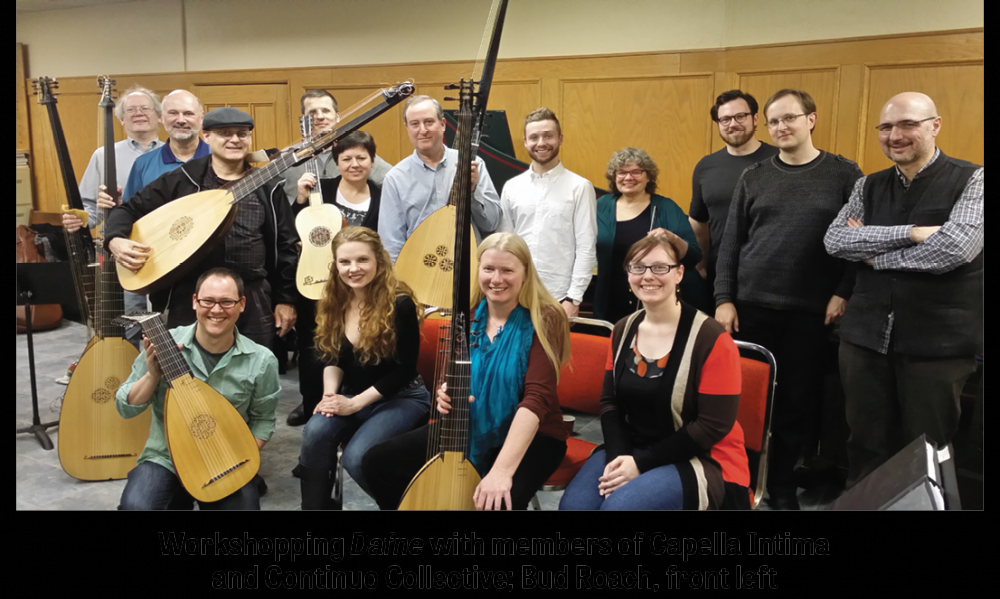
bbb - early musicBud Roach: One Toronto-based artist who has let his obsession run wild is Bud Roach, who to the best of my knowledge possesses all of the social graces one needs (like I would know), but is nevertheless very, very dedicated to Italian vocal music circa 1600. I caught up with Roach one evening in January to discuss his next concert with Capella Intima, a re-creation of Marco da Gagliano’s Dafne, which ranked as one of the most avant-garde musical art works of its time when it was premiered in 1608. Dafne, you see, was written in a musical form that da Gagliano’s Italian contemporaries couldn’t understand, and they called the work a favola in musica (a musical fable). Later generations of Italians, like music-lovers elsewhere in Europe, would later find a new name for this sung fable: an opera.

“Marco da Gagliano has all the traits of a composer of the Florentine camerata,” Roach explains, referencing the artistic movement that advocated for a new, dramatic form of vocal music in 17th-century Italy. “His music has long, singing recitatives and focuses on emphasizing the text. His music is really as much about poetry as it is about singing.” Dafne was one of the first operas ever written, but da Gagliano didn’t take that particular prize: he was beaten out by Jacopo Peri, who wrote Eurydice just eight years earlier in 1600.

Read more: The Long Lost

1904 early musicI swear i’m not a Grinch. Really. Although I find getting ready for Christmas to be the most stressful experience of the year, I do my best to get into the Christmas spirit and enjoy the holidays. I buy presents for family and friends. I help stuff and baste the turkey. I dutifully go to church every Christmas Day even though I’d probably rather stay home and open presents. I buy egg nog at the grocery store, even though I have no idea what it is. I even have the sweater, five sizes too big, that my grandmother knit me for Christmas in 1995, and I will happily wear it again this Christmas, even though it hangs down well below my knees.

I am prepared to make sacrifices in the spirit of the holidays. This does not, however, extend far enough to make me feel inclined to go see the Messiah again. No Nutcracker either. I think I sat through enough amateur productions of the Nutcracker to sing the whole score from memory, and I could probably do the same for the better part of the Messiah as well. I don’t mean to detract from those who enjoy these holiday traditions, but I find surviving the holidays stressful enough without an incurable case of earworm accompanying me everywhere I go, thank you very much.

However, if you are so inclined to take in a Messiah this holiday season, you can do no better than Tafelmusik’s “Sing-Along Messiah” December 22 at 2pm in Massey Hall. Tafelmusik has been doing this for 25 years. They know what they’re doing. Ivars Taurins will dress up as Handel. It will be fun. Bring your own score. Or, if you’d rather let someone else do the singing, catch their other performances and hear soloists Emma Kirkby, Laura Pudwell, Colin Balzer, and Tyler Duncan sing it for you in Koerner Hall December 18 to 21. If you prefer a more authentic version, you can also head down to the Glenn Gould Studio at 8pm on December 21 to check out the Aradia Ensemble’s Dublin Messiah, based on Handel’s original version composed for (ahem) Easter in 1742. Both of these productions are very good. I highly recommend them, although I won’t be there.

Delayed onset: Alternately, if you are trying to delay the onset of Christmas for as long as possible, you might want to check out a couple of concerts in December that are in no way Christmas-themed. The Rezonance Baroque Ensemble will be presenting chamber works by Telemann and Erlebach as well as solo works by J.S. Bach in an afternoon concert at the Tranzac on December 8 at 3pm. If you’re the sort of person who is more inclined to look for a pub on a Sunday afternoon than a concert hall, you’ll find the cozy and welcoming atmosphere of the Tranzac very appealing. (Also in the interest of full disclosure I will mention that I will be playing harpsichord in this concert. Please do not heckle unless I’ve given you a bad review recently.) The La Mode Quartet will also be giving a concert worth investigating that weekend on December 6 in Bloor Street United Church at 8pm with chamber works by Rameau and Guillemain as well as one of the Telemann Paris Quartets, which are some of the most beautiful (and difficult) chamber works of the 18th century. And anyone observing Advent and wanting to take in a concert might want to check out the Musicians in Ordinary’s concert for the Advent season, featuring Magnificats by Vivaldi and Telemann at St. Basil’s Church December 3 at 7:30.

Involuntary vac: If you feel like seeing a concert in the New Year, be warned — January is an extended (and largely involuntary) vacation for baroque musicians on the Toronto scene. Thankfully, the Musicians in Ordinary have put together a program for New Year’s Day that will round out the holidays quite enjoyably. This concert features the French Baroque composer Elisabeth-Claude Jacquet de la Guerre, a child prodigy and well-known composer of cantatas and solo instrumental works during her lifetime, and the Musicians in Ordinary will be performing her cantata Le Sommeil d’Ulisse (The Sleep of Ulysses). You can catch them at 2pm at Heliconian Hall.

Two Toronto-based baroque musicians who won’t be taking a vacation this winter are Daniel Taylor and Jeanne Lamon. Both Lamon and Taylor have teamed up to put together a performance of Henry Purcell’s Dido and Aeneas, which ranks as Purcell’s best-known work, a 17th century English classic, and the only major English-language opera composed before 1900 that is still performed today. (There is perhaps one other — John Blow’s Venus and Adonis, which I’m still waiting to see performed in town.) Taylor and Lamon are directing the Schola Cantorum and the Theatre of Early Music for three performances of Dido and Aeneas at the Trinity College Chapel January 17 to 19. (If you miss this program, you can still catch another Theatre of Early Music concert a week later, as they will perform works by Gibbons, Purcell, Tallis and Handel in the same hall on January 26.

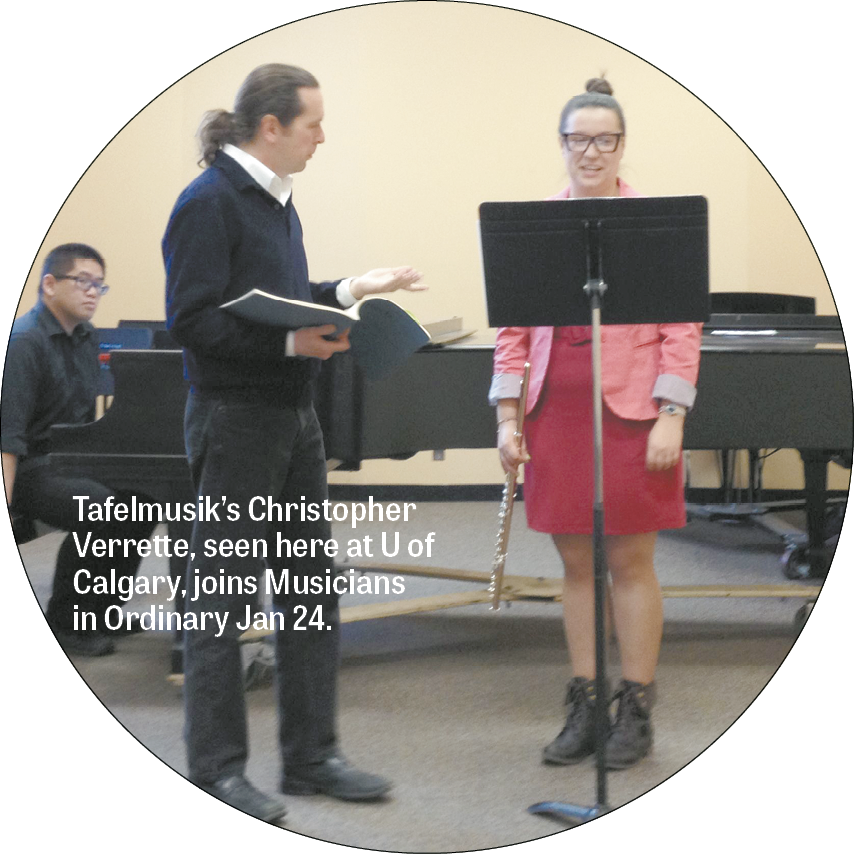
Late Jan: The concert season will pick up later in the month of January as the Musicians in Ordinary (who, I have to say, are really starting to emerge as the hardest-working musicians in Toronto in the next couple of months) have yet another performance, this time featuring violinist Chris Verrette playing five of the Biber Rosary Sonatas. Verrette, in between regular concerts with Tafelmusik, has been working his way through all 15 of these sacred instrumental works this season, and he plays them with remarkable sensitivity and grace. Definitely try to hear him if you can — this concert is at Madden Hall on January 24.

Finally, Tafelmusik returns with a program that features some exceptional chamber and orchestral music by J.S. Bach. “Intimately Bach will be a great chance to hear Bach’s Triple Concerto for flute, violin, and harpsichord BWV1044. It’s scored the same as the Brandenburg Concerto No.5 and is not as famous, but is easily as great a piece of music as the more famous Brandenburg. Soloist Grégoire Jeay will join Tafelmusik to play flute, and the orchestra will also play Bach’s Violin Concerto in G BWV1056 and his Trio Sonata in C BWV529. Tafelmusik will be back at Trinity-St Paul’s Centre for this concert January 29 to February 1 at 7 pm, with a matinee on February 2. 

David Podgorski is a Toronto-based harpsichordist, music teacher and a founding member of Rezonance. He can be contacted at earlymusic@thewholenote.com.
When fans of early music walk into a concert in November, they may be impressed by the diversity of the repertoire and the performers. Concerts coming up this month feature both wide-ranging programs from under-appreciated composers and top-level performers who are just starting to emerge as soloists on the Toronto music scene.

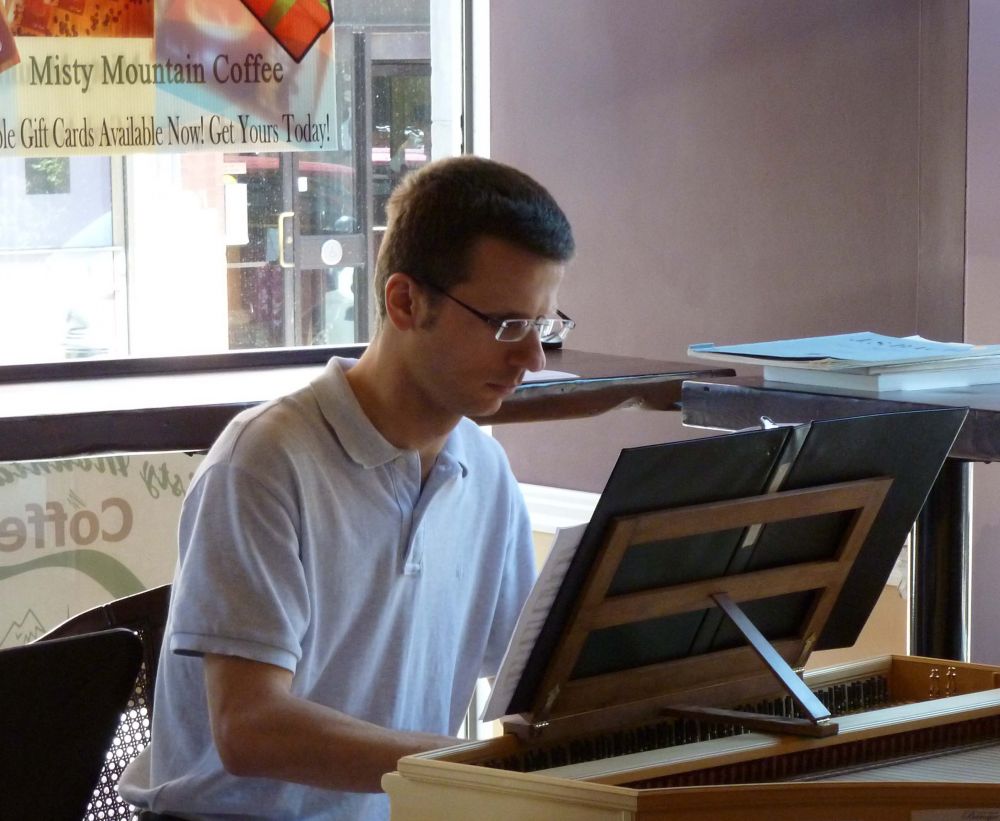
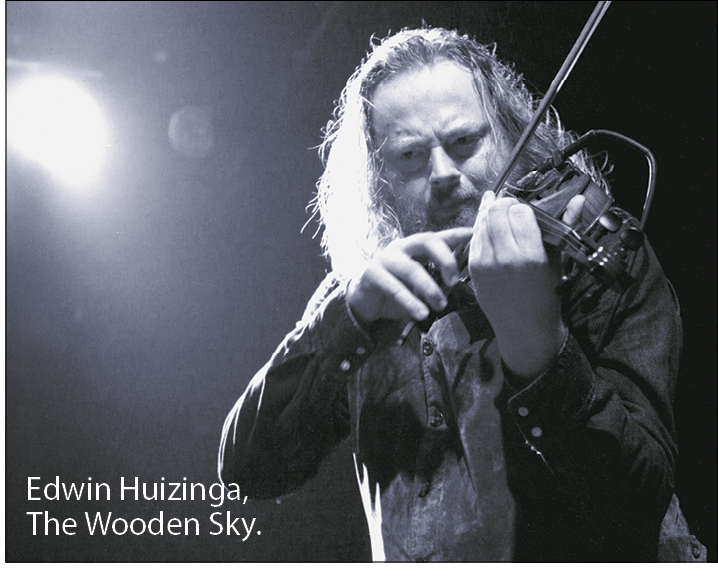
early music - old made new 1Huizinga: One such relatively new face is Edwin Huizinga, a violinist originally from California who now calls Toronto home. Huizinga is already somewhat familiar to Toronto audiences, as he’s played as a section violinist in both Tafelmusik and Aradia, but having recently returned from a tour with his indie rock band The Wooden Sky, Huizinga is ready to come into his own as a soloist on the Toronto music scene. To accomplish this, Huizinga picked some of the hardest violin sonatas in the classical canon — having already performed the first three of Bach’s six sonatas for harpsichord and violin, he’s teaming up with harpsichordist Philip Fournier to complete the cycle by playing Bach’s B minor, A major, and E major Sonatas at the Oratory, Holy Family Church, November 8.

“I have a great love for the music of Bach,” Huizinga says when I ask him about his upcoming concert with Fournier. “As a musician, I can appreciate the well-crafted nature of his music on a purely intellectual level, but to also be the vehicle creating the notes — to be able to put a smile on someone’s face using just the music that Bach wrote — that’s amazing.” Bach composed these violin sonatas for a concert series at a local coffeehouse in Leipzig — the same place where his Coffee Cantata was performed. In a similar spirit of informality, Huizinga and Fournier are giving an additional performance at a café. The Common, located at College and Gladstone, will host the duo on November 4, and Huizinga hopes giving listeners a casual — and historically correct! — musical experience will attract new listeners to the music of Bach.

“I’ve been playing in a lot of classical revolution concerts [in bars and clubs] and I really believe it’s a great way of bringing the music to people other than regular concertgoers,” Huizinga says. “As an artist, I believe I have a responsibility to find new ways of sharing the art I’m passionate about.” While a café concert would certainly do that, the coffeehouse concert starts at 9pm, so perhaps you should consider having a beer instead of a coffee while you listen to them play. Bach would certainly have enjoyed either beverage.

early music - old made new 2Scaramella: Concertgoers looking to hear an interesting and varied repertoire steeped in a rich history should be sure to check out Scaramella’s concert on November 30 at the Victoria College Chapel. The program features composers based in England from the period of the English Civil War and Restoration, a dangerous time in English history when Catholics, Protestants, Republicans and Monarchists all fought for control of the country and supporting the wrong side at the wrong time could cost a man his head. Scaramella will play music by Henry Purcell and Matthew Locke as well as some by lesser-known musicians such as William Lawes, John Jenkins, Orlando Gibbons, Davis Mell and Simon Ives.

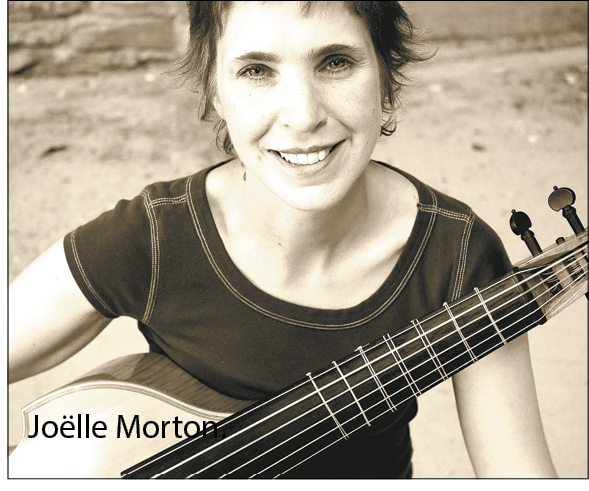
I caught up with Scaramella’s gambist Joëlle Morton and asked her what inspired her program. “The history of the times really had a huge influence on the music,” Morton explained. “Because there was no court for most of this period, the closest thing to court music was the private music people had in their homes. Composers who didn’t want to lose their jobs or their lives had to be very ambiguous about what religious denomination they belonged to.”

The result was a huge variety of secular chamber music for small ensembles that was performed in the homes of England’s wealthiest citizens. Perhaps because even a rich household couldn’t afford a full orchestra (or have enough space in the house for one) the instrumental combinations were incredibly diverse, and Scaramella has found a wide array of these unusual orchestrations for their concert. In addition to a duet for violin and viola da gamba plus continuo, the program features compositions for lyra viol, which has become a speciality of Morton’s in recent years. Lyra viol involves playing chords on the habitually melodic viola da gamba as well as retuning the instrument in one of over 40 different ways; this style of gamba playing will be represented by a fantasia by Jenkins for a lyra viol playing continuo and a piece for solo lyra viol by Ives. Combined with Purcell’s most famous sonata for strings (the “Golden”), a Locke suite and a virtuosic organ fantasia by Gibbons, chamber music lovers should get quite a kick out of this concert.

Daniels and LeBlanc: Music fans looking for a more conventional concert experience (or who just like their music sung rather than played) won’t want to miss Tafelmusik’s November concert series, titled “Purcell and Carissimi: Music from London and Rome, presented at Trinity St. Paul’s Centre from November 6 to 10. “Purcell and Carissimi” features tenor Charles Daniels and soprano Suzie LeBlanc, both of whom are world-renowned singers who have made a lasting impression on audiences across Canada. LeBlanc is probably best-known for her collaboration with countertenor Daniel Taylor and the Theatre of Early Music, and is herself the artistic director of her own opera company, Le Nouvel Opéra, based in Montreal. Englishman Daniels, best known for his interpretations of Bach, Purcell and Monteverdi, astonished audiences at the Montreal Baroque Festival in 2009 with his completion of Purcell’s ode Arise My Muse. Both Daniels and LeBlanc have sung with Tafelmusik before, most notably together in a performance of Purcell’s King Arthur during Tafelmusik’s 2009/10 season. Listening to them sing, it’s easy to tell why the orchestra wants them to keep coming back.

Others to watch: Some other early-music concerts to watch out for in November: the Community Baroque Orchestra of Toronto, performing Brandenburg Concerti 4 and 5, as well as a reconstructed “Brandenburg 9” (by the late musicologist and oboist Bruce Haynes) at the 519 Community Centre, November 9; the evening will feature violinists Valerie Gordon and Elyssa Lefurgy-Smith and harpsichordist Sarah-Anne Churchill. Soprano Hallie Fishel and lutenist John Edwards from Musicians in Ordinary will be playing an all-Dowland tribute concert for his 450th birthday at Heliconian Hall on November 16. Finally, lutenist and choir conductor Lucas Harris will present a mixed program for his master’s recital in choral conducting at the Church of the Redeemer, November 2 at 4:30. While the program will include choral works by Arvo Pärt, Clara Schumann, and Lili Boulanger, the concert will also feature Austrian sacred music from the 17th century with some help from the “Jeanne Lamon Baroque String Ensemble,” so this concert might be an opportunity to hear some Tafelmusik players free of charge 

David Podgorski is a Toronto-based harpsichordist, music teacher and a founding member of Rezonance. He can be contacted at earlymusic@thewholenote.com.
early musicI should probably just come out and say, before I describe the concerts I’m looking forward to hearing this month, that I’m starting to have high hopes for the future of culture in Toronto; and the classical musicians I meet are giving me good reason to be an optimist. There are a few artists performing in Toronto this month who are giving this city a flavour that’s a little more cosmopolitan and a little less conventional. We’re now an important enough destination that at least a few lesser-known artists are performing in the city hoping to make it big-time, while the musicians that currently call Toronto home are continually coming up with new ideas that are every bit as innovative — if not more so — than concerts I’ve heard on the best European and American stages.

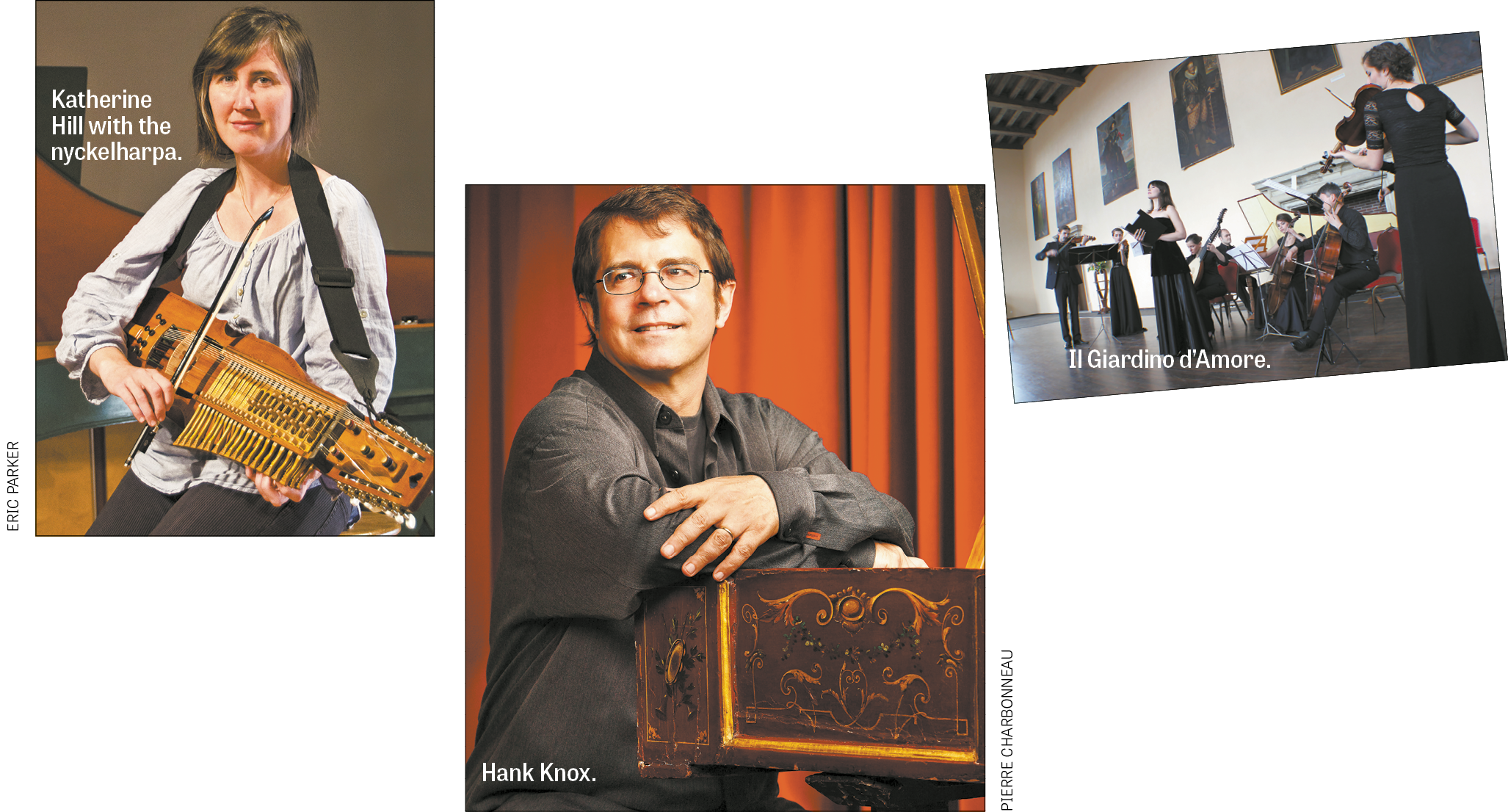
One artist that Toronto audiences will be happy to welcome back is Hank Knox, one of the leading lights of Montreal’s music scene and one of the founding members of Montreal’s Arion Baroque Orchestra. Knox has only occasionally performed in Toronto, in joint concerts with Arion and Tafelmusik. Never content to be heard behind the orchestra, Knox has struck out on a cross-Canada tour that includes dates in Thunder Bay, Ontario, and Flin Flon, The Pas and Balmoral, Manitoba, as well as a stop in Toronto. The whole trip will amount to some 3,600 kilometres by car, which is impressive enough as a road trip without even factoring in the concerts after each drive. This sounds like a truly punishing concert schedule, as Knox is making the trip halfway across Canada alone.

Apparently he doesn’t mind. “It’s good, every so often, to blast your mind out of the usual rut it’s been in,” Knox answers when I ask him how he copes with the hours of driving. “I actually enjoy the solitude of long drives, and it’s very peaceful to just sit back and focus on the road for hours without any distractions.”

Knox will be at the Canadian Opera Company for a free noon-hour concert on October 3, and will be playing a mixed program for, as he puts it, “people who don’t know anything about the harpsichord,” which one can safely claim is well above 90 percent of the Canadian population. Knox’s program includes the trance-like The Bells by William Byrd, Frescobaldi’s gloriously perverse Fantasy on the Cuckoo, transcriptions of Handel arias from Rinaldo, La Poule by Jean-Philippe Rameau, and Bach’s Chromatic Fantasy and Fugue. What makes this appealing to a curious-but-ignorant-of-harpsichords concert-goer who doesn’t know what to expect? “Let’s put it this way,” Knox says, “if you don’t like what you hear, wait five minutes and something completely different will come along for you to listen to.” Sounds like a concert with something for everyone, and maybe even a possible ride to Montreal in it for you if you offer to pay for gas.

One Toronto-based artist who’s ventured off the beaten path to pursue her musical passions is Katherine Hill, who moved to the Netherlands and eventually Sweden to study medieval music. Hill is mainly known as a singer and viola da gambist, and is the proud holder of a master’s degree in medieval studies from the University of Toronto. Together with Ben Grossman and Alison Melville, Hill is also a member of Ensemble Polaris, a group which specializes in the folk music of circumpolar countries —Arctic fusion they call it. Hill’s deep and abiding love for the traditional folk music of Sweden led her to spend a year studying Swedish folk music at the Eric Sahlström Institute in Tobo, Sweden, and she came back with a unique knowledge of a relic from the the medieval era — a keyed fiddle known as the nyckelharpa.

“The nyckelharpa was actually fairly common throughout Europe in the Middle Ages,” Hill says, “but it’s only been preserved in Sweden. It’s becoming more popular in Germany and France and there are makers producing instruments now, but because no instruments have survived from the 14th century and the instrument kept changing, there’s no real way to tell what the original instrument looked and sounded like.”

Hill will be playing the nyckelharpa together with the Toronto Consort in a program of music from Sweden from the 16th to the 19th centuries, but that doesn’t mean it will be all Swedish composers — 17th-century Sweden was still a very multicultural country. “There was a huge international influence in Sweden in the 16th and 17th centuries,” Hill explains. “The Swedish court heard and loved music from England, France, Italy and Poland, too, and wanted to import the best musicians from all over Europe.” So a cosmopolitan Swede could possibly have heard, besides music from his own country, the music of the English composer Tobias Hume (a soldier in the Swedish army), tunes from John Playford’s The Dancing Master (a hit in 17th-century Sweden), compositions by Heinrich Isaac, and traditional Lutheran chorales — and that’s exactly what the Toronto Consort will be playing at Trinity-St. Paul’s on October 18 and 19.

Incidentally, Hill will also be playing along in Toronto Masque Theatre’s production “Brief Lives: Songs and Stories of Old London,” based on the collected biographies by John Aubrey. Aubrey’s Brief Lives is a who’s who of famous Londoners from the 17th century, and includes William Shakespeare, Thomas Hobbes, John Dee, Ben Jonson and Sir Walter Raleigh as its subjects. Even more interesting than the history lesson is the gossip: Aubrey dished the kind of dirt on his subjects that would get a modern biographer sued for libel if he published that kind of information today. Toronto Masque Theatre’s production features William Webster of Soulpepper and includes ballads and popular music from Aubrey’s London of the 17th century. The show will be at the Young Centre for the Performing Arts from October 25 to 27.

If you’re looking for more conventional concert-going fare (or you’re just an opera fan or Italophile) be sure to welcome a group of young players who are making their Toronto debut for Mooredale Concerts on Sunday October 20. Il Giardino d’Amore will be performing a concert of Italian baroque music in Walter Hall at 3:15 pm. The founders, Polish violinist Stefan Plewniak and Italian harpsichordist Marco Vitale, met when they joined Le Concert des Nations, the orchestra led by gambist and early-music superstar Jordi Savall, and decided to form their own band — since only the best players in Europe get to play with Savall it’s a safe bet these are some top-notch players. Their concert features Italian cantatas sung by the Polish soprano Natalia Kawalek, and compositions by Scarlatti, Corelli, Locatelli, Geminiani and Vivaldi. Il Giardino d’Amore will also be performing an interactive concert aimed at children ages 6 to 15 at 1:15 at Walter Hall. It’s a pared-down version of the same concert meant to last only an hour; tickets for the early performance are only $13.

I’m glad to see that Toronto is becoming a destination for foreign artists like Il Giardino d’Amore, and I’m always grateful for a chance to hear something new from familiar artists on the Toronto music scene. Be sure to check The WholeNote blog to see what I have to say about the early music concerts I actually manage to get out to in the weeks ahead. 

David Podgorski is a Toronto-based harpsichordist, music teacher and a founding member of Rezonance. He can be contacted at earlymusic@thewholenote.com.
The next time you’re at an orchestra concert, take a close look at the musicians sitting at the back. Notice the looks on their faces as they play. If you have to, squint hard. Hear the brass section at full volume during an orchestral tutti, or the lutenist strumming away? Good. They’re working hard, they’re happy (or at least feeling professionally fulfilled for these few moments), and they’ll be glad you noticed them. But pay even closer attention when they’re sitting through a tacet and looking out over the orchestra with a blank look on their faces. They have nothing to do but sit and observe their co-workers, and I’m willing to bet you they’ve had a few hours to sit back and do nothing when the orchestra was rehearsing this week. They might seem idle, but this particular form of enforced idleness has great rewards.

early musicWhile their colleagues on stage are working, the musicians at the back, from their vantage point, can observe their every move. They watch stand partners glare daggers at each other through page turns, they watch the conductor wince as the flutist mangles an exposed passage and they can see everyone roll their eyes in unison as the soprano brings the entire piece to a halt to flirt with the world-famous tenor who just flew in from Milan (these are all hypotheticals, but you get the point): the backbenchers, more so than the soloists or even the artistic director are the people who really know what’s going on in an orchestra, and if you treat them right, they’ll give you all the inside info on the group that you need. Plus they return your phone calls faster.

I decided to ask Toronto’s top continuo players what they know about their respective groups and find out what concerts I should make a point of seeing (or missing) in the upcoming concert season. One continuo player who is privy to all kinds of inside information is Alison Mackay. As a bass player for Tafelmusik, she knows this year is going to be a momentous one for Toronto’s biggest baroque band. “We’re really excited that we’re going to have a brand new concert hall,” Mackay says, referring to the major renovation to Trinity-St.Paul’s. “We used to have to build the stage for every concert series and take it apart for the church services ... The new concert stage is going to make a huge difference to Tafelmusik’s sound.”

Better acoustics for any orchestra is a marvellous change, but this year is also a seminal one for Tafelmusik for another reason. This is Jeanne Lamon’s final year with the orchestra and this season’s guest conductors could be considered as potential candidates to lead the group one day. Tafelmusik will also be celebrating Lamon’s legacy as artistic director and lead violinist with the orchestra and will be taking suggestions from the audience for pieces to play in a concert featuring Lamon in a series May 8to 14.

Despite a flurry of activity behind the scenes, Tafelmusik will also be putting on several ambitious and innovative concerts, including two which were designed by Mackay and are now an international success. The first, “The Four Seasons: A Cycle of the Sun,” is a re-envisioning of Vivaldi’s Four Seasons, which he composed in 1725, and includes music from around the world that would have been heard the same year, such as pipa music from China, a raga to celebrate the monsoon and interactive performances by Inuit throat singers. It also features a re-imagining of Vivaldi’s “Winter” by Oscar-winning Canadian composer Mychael Danna. (Mackay’s other program, “The Galileo Project,” will tour Japan and Korea, but Toronto audiences won’t hear that here this year.) Finally, Tafelmusik will release a DVD based on another concert of Mackay’s, “House of Dreams,” which features music and paintings from famous art patrons in Baroque Europe.

“Some of these paintings were part of private collections that were acquired by public galleries and haven’t been seen in their original locations for centuries,” Mackay explains. “We filmed performances in places like Handel’s house in London and the house of one of Bach’s close friends in Leipzig. The movie takes you all over Europe and gives you a sense of what it must have been like to experience that music back in the 18th century.” That movie will be commercially available in a few months, and Mackay hopes it will get a public premiere some time in November.

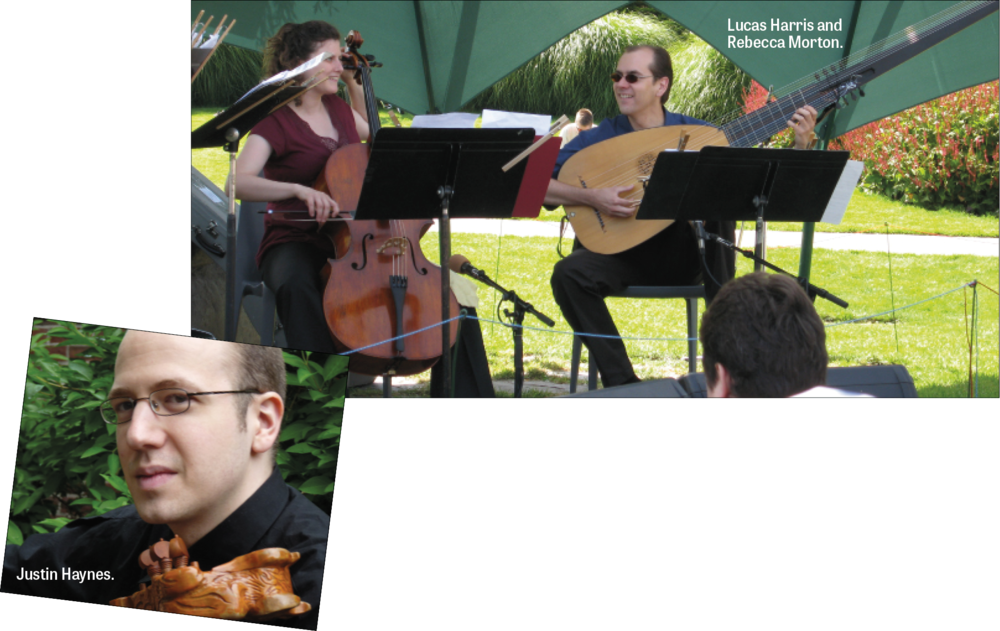
Another continuo insider I talked to was lutenist Lucas Harris. Besides providing a solid foundation to groups like Tafelmusik and the Toronto Consort, Harris makes up one-third of the Vesuvius Ensemble, a chamber group dedicated to Italian folk music. “We had a very successful concert program based on music from Naples, so we’re going to tour that to Port Hope, Cambridge and Ottawa,” Harris says. Toronto audiences will be able hear Vesuvius on November 2 when they open for Michael Occhipinti’s Sicilian Jazz Project at Koerner Hall. Harris will also have centre stage earlier that day when he conducts his final Masters recital in choral conducting at the Church of the Redeemer in a program that includes works by Arvo Pärt, Lili Boulanger and Clara Schumann. While the concert won’t be a straight early music performance, Harris will use the occasion to show off a repertoire he’s passionate about — the Austrian sacred music of the mid-17th century. “No one has really explored this repertoire before, and it’s really amazing music,” he says. “On the one hand, you have beautiful counterpoint descended from Schutz, and on the other, this incredible virtuosity from Italian music from that period.”

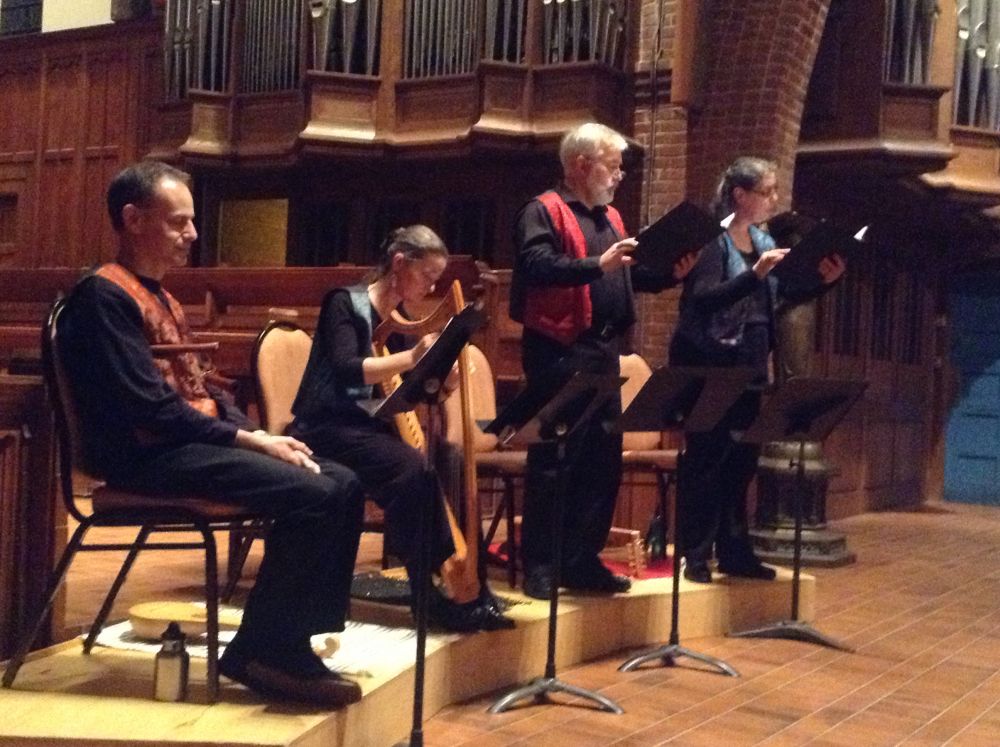
While choral and folk music fans will be keen to catch Harris’ shows, viol player Justin Haynes’ exploits will be of particular interest to lovers of chamber and orchestral music. Haynes’ main group, Elixir Baroque, is already slated to play as soloists with the Community Baroque Orchestra of Toronto (CBOT) November 9. “We get a really good sense of energy playing with CBOT,” Haynes says. “They’re amateur musicians with a deep love of baroque music. It’s great to feel that sense of passion ... sometimes professional musicians get a bit jaded.”

Besides his main gig with Elixir, which will take him to Oakville and Brampton this September, Haynes has plans for a concert that will feature some of Telemann’s Paris Quartets later this fall with Allison Melville and Kathleen Kajioka. Though perhaps under-appreciated, the quartets are exceptional chamber pieces and are a fitting example of Telemann’s musical rivalry with J. S. Bach.

And as if Haynes wasn’t busying himself enough, he also has plans to step out from behind the band and perform as a soloist with an all-Forqueray concert of his own in December. “I love French repertoire and Forqueray wrote amazing music for gamba. It’s a good chance to show off,” he says.

The end of August is still early in the classical concert season. For many of Toronto’s music groups, halls still need to be booked, guest performers flown in, concert dates confirmed. But the rank-and-file players one sees in Toronto are more than just orchestral employees; they’re increasingly turning out to be budding impresarios, conductors and soloists, sometimes even ending up exploring music that has nothing to do with what they’re playing that night. So the next time you find yourself at a concert, pay a bit more attention to the guys at the back. Next time you might find them running the show — or with a band of their own. Here’s to ambition. 

David Podgorski is a Toronto-based harpsichordist, music
teacher and a founding member of Rezonance.
He can be contacted at earlymusic@thewholenote.com.
earlymusic la-nefRambling through three months of early music performances within the space of one column might seem a bit foolhardy but it can be done; here, with the help of a few judiciously chosen madrigals, is my run-down of concert activity for the coming summer months.

June, she’ll change her tune, in restless walks she’ll prowl the night. Well, not exactly renaissance lyrics — it’s Simon and Garfunkel — yet it does describe this month of transition, the last vestiges of the winter season giving way to festivals that herald the arrival of summer.

We’ll start with a lovely ending to the TEMC’s Musically Speaking series, which has been going on monthly at Toronto’s St. David’s Church since January. What better way to draw to a close than with a program of viol music? “The English Viol” features works by Locke, Purcell and others and is performed by the Cardinal Consort of Viols on June 16.

earlymusic tafelmusik-choir-members bysianrichardsNo sooner have they wrapped up their busy regular season than Tafelmusik bursts vigorously upon the scene in June with their Baroque Summer Institute, an advanced training program in baroque performance which draws musicians from around the world. Four public concerts are offshoots of this program: June 4, “Delightfully Baroque” features music by Handel, Vivaldi, Blow and others performed by the Tafelmusik Baroque Orchestra and Chamber Choir; June 9, “Musical Interlude” is a casual concert of chamber music by Castello, Merula, Bononcini and others played by members of the faculty; June 13, “The TBSI Orchestras and Choirs” presents music by Purcell, Fasch, Vivaldi and others; June 16, “The Grand Finale” is a baroque extravaganza involving participants and faculty, with music by Handel, Rameau, Charpentier and Mondonville.

And still in June, the Tafelmusik orchestra and chamber choir appear at the Luminato Festival, joining the Mark Morris Dance Group and vocal soloists for three performances, June 21, 22 and 23, of Handel’s L’Allegro, il Penseroso ed il Moderato. Choreographed by Mark Morris, this piece is widely considered one of the great dance works of the 20th century.

On June 22, a step back to the medieval: Vocem Resurgentis presents “Journey into the Medieval Convent: Music of Hildegard von Bingen and Las Huelgas Codex,” with sopranos Linda Falvy and Mary Enid Haynes and alto Catherine McCormack, performed at the Church of St. Mary Magdalene.

If you’re in Burlington on June 29, you can experience all six of Bach’s Brandenburg Concertos performed in two concerts, by members of the Brott Music Festival’s National Academy Orchestra. And if you find yourself in Old Montreal from June 21 to 24, you have a wonderful opportunity to experience the spectacular Montreal Baroque Festival, this year titled “Nouveaux Mondes/New Worlds.” It features Motezuma, an opera by Vivaldi, and too many events both grand and intimate to list here (you can find it all at montrealbaroque.com). It also celebrates the 50th anniversary of the Montreal Recorder Society, with workshops, masterclasses and concerts focused on the recorder.

Festivals are in my mistress’ face; and July in the Garden hath place. Okay, it’s a paraphrase (and no disrespect intended) of a madrigal by Morley, but it does point out that Toronto’s Music Garden concerts are in full swing in July and that summer festivals are abounding everywhere, with lots of early music to hear. Let me tell you about a few of these:

In Exeter, the Bach Music Festival of Canada takes place July 14 to 20. While it’s not all early music, there’s a concert of Bach’s great choruses with choir and orchestra (July 15), a performance by Cappella Intima titled “Celestial Sirens," featuring the revolutionary music of Benedictine nun Chiara Maria Cozzolani (July 16) and a full performance of Bach’s St. John Passion (July 20).

The Elora Festival, July 12 to August 4, presents two concerts completely devoted to Handel: July 14, Dixit Dominus and Laudate Pueri with the Elora Festival Singers and Chamber Players, Noel Edison, conductor, and on July 27, the chamber opera Acis and Galatea, with the Elora Festival Singers and the musicians of the Toronto Masque Theatre.

At Festival of the Sound, July 18 to August 11 in Parry Sound, some of the most beautiful spaces in the area (such as the Museum at Tower Hill and St. Andrew’s Church) open their doors to the audience for “Bach Around Town,” a series of performances featuring music of Bach and others, with performers such as violinist Moshe Hammer, the New Zealand String Quartet, harpist Erica Goodman and flutist Suzanne Shulman (July 24, 26 and 30).

Ottawa’s Music and Beyond festival, July 4 to 15, has an impressive lineup of music and performers. Among the events are a performance of Pergolesi’s Stabat Mater, an Albinoni oboe concerto and love duets by Handel, with soprano Karina Gauvin, countertenor Daniel Taylor, baroque violinist Adrian Butterfield and the Theatre of Early Music (July 6) and two performances of Bach’s “Coffee Cantata” featuring the Theatre of Early Music and soloists (July 7).

Niagara-on-the-Lake’s Music Niagara festival, July 12 to August 11, offers a tasteful event for those who like to explore the wineries of the region. On July 20 the Toronto Consort will appear at the Trius Winery at Hillebrand, in a performance titled “Music & Wine.”

The Ottawa Chamberfest commands the city from July 25 to August 8, with irresistible concerts happening in many venues. Among them are three devoted to early music: July 28, Les Voix Baroques present “Beyond the Labyrinth: In Search of John Dowland” in honour of the composer’s 450thbirthday — an exploration of how Dowland’s songs may change when they are performed as lute songs, as part songs or in a grey zone between the two. Also July 28, “Dowland in Dublin” features tenor Michael Slattery and the early music ensemble La Nef, who focus on the lighter-hearted side of Dowland with new arrangements of some of his well-known airs. July 31, there’s a performance of Monteverdi’s iconic Vespers of 1610 with Les Voix Baroques and La Rose des Vents, directed by Alexander Weimann.

On Lamèque Island in northeastern New Brunswick, the three-day Lamèque International Baroque Music Festival takes place from July 25 to 27. There you can hear works for harpsichord, baroque flute and cello, instrumental and vocal music by Vivaldi, Handel, Corelli and Scarlatti, and choral music by Bach, Pachelbel and Leonarda.

early music pallade musicaMeanwhile at Toronto’s Music Garden, the Summer Music in the Garden series is in full swing. Approximately one hour in length, concerts take place in the outdoor amphitheatre and are a wonderful way to spend a Thursday evening or a late Sunday afternoon. Two in July feature baroque music: July 4, “Mediterranean Baroque” features music from baroque Italy, Spain and Turkey, played by baroque cellist Kate Haynes, baroque violinist Christopher Verrette and theorbist Matthew Wadsworth. July 18, Pallade Musica (Grand Prize winners of the 2012 Early Music American Baroque Performance Competition) presents “Terreno e vago,” an exploration of the emotional polarities found in music of the Italian Baroque.

In addition to all this, the following July events take place: July 19 in Waterloo, the Kitchener-Waterloo Chamber Music Society presents Pallade Musica, fresh from their appearance in Toronto the previous day. July 20 at the Oratory of St. Philip Neri, harpsichordist Philip Fournier brings together accomplished singers and viola da gamba for “Méditations pour le Carême,” with music by Charpentier, Marais and Couperin.

Come away, come sweet love, golden August breaks. All the earth, all the air, of love and music speaks. O dear, another paraphrase — this time apologies to Dowland — but it does serve to note that if you want to go to early music concerts in August, you’ll probably have to “come away,” as all the concerts I know about at this point are in widespread locations: Parry Sound, Stratford, Toronto and Kingston.

There’s the continuation of the Bach Around Town series at Festival of the Sound, which this month finds soprano Leslie Fagan, trumpeter Guy Few and others performing Bach, Vivaldi and Handel at St. James Church on August 6, and violinist Julie Baumgartel and the Festival Baroque returning the series to the festival’s home base, the Stockey Centre, to perform an array of baroque composers on August 9.

Tafelmusik Baroque Orchestra makes one more appearance, this time at Stratford Summer Music, with two all-Bach programs on August 17 and 18. In Toronto at Summer Music in the Garden, members of New York’s period instrument ensemble, Gretchen’s Muse, come to play two 18th-century string quartets, one by Haydn and one by Mozart, on August 22. And in Kingston, the St. George’s Cathedral Summer Concert series features the Kingston Viol Consort on August 29.

Oh it’s a long, long while from May to December, but the concerts grow fewer when you reach September ... (Will anyone argue that Frank Sinatra wasn’t a consummate madrigalist?) There’s one more at the Music Garden which shouldn’t be missed, though technically it falls outside the boundaries of this column: on September 12, the superb baroque cellist Kate Haynes returns to continue her six-year cycle of the Bach unaccompanied cello suites, with Suite No.3 in C Major. She’ll also premiere a new work by Christopher Hossfeld, inspired by the Bach.

And so good-bye to our summer tour of early music performances. Please consult The WholeNote’s website throughout the summer for updates and additional concerts as we hear about them. 

Simone Desilets is a long-time contributor to The WholeNote
in several capacities who plays the viola da gamba.
She can be contacted at earlymusic@thewholenote.com.
Two of my favourite things in life are Bach and espresso. So when someone gets the idea of actually combining the two, I get the feeling he’s done it just for me. There’s a Bach-playing duo who obviously have a plan to meet me for coffee, and they are baroque violinist Edwin Huizinga and harpsichordist Philip Fournier. Their plan: an ingenious tour of coffee houses in Toronto’s west end, designed to forever ensnare unsuspecting coffee drinkers into an everlasting love of Bach and classical music performance. The engaging Huizinga (you may have noticed him playing in any one of several groups in town — Tafelmusik or Aradia for example — he’s the imposing fellow with the long red hair who plays his violin with obvious passion) tells me more:

1808-early“The idea is that so many musicians travel the world, and often don’t really get the benefit of getting to know their community, people on their street, people in their ‘hood.’ And vice versa, where the community often doesn’t realize the talent living ‘in their own backyard.’ These evenings will be free, super casual, super intimate, super up close and personal, and will feature an hour or more of music of Bach for harpsichord and violin; we will be playing some solos and some of the obbligato violin sonatas as well. The events will also include some words about the pieces, some conversation about us and the instruments we play.”

And they are two interesting musicians. Besides being an accomplished violinist in a whole range of genres from improv to indie rock to baroque to modern, Huizinga was a founding member of the international network Classical Revolution — an organization of musicians dedicated to performing high-quality chamber music in non-traditional settings — begun in San Francisco in 2006. Fournier is organist and music director at St. Vincent de Paul, a specialist in Gregorian chant, a well-known recitalist on harpsichord and organ who has been called one of the finest organists of his generation.

You’ll find them in three coffee houses on these dates: May 6: Baluchon (Sorauren Ave.); May 7: The Common (College and Dufferin); May 8: Sam James (Harbord and Clinton). It all culminates in a concert of Bach at Holy Family Church on May 18, where hopefully some of the audience will have had the pleasure of first hearing them over a latte.

There’s a different tour you can take this month, one which centres on the theme you could call aspects of the feminine nature.

On May 10, 11 and 12, Toronto Masque Theatre’s “The Lessons of Love” pairs two masques drawn from two traditions, Blow’s Venus and Adonis of 1683 and Alice Ping Yee Ho’s newly composed The Lesson of Da Ji, which is scored for voices and an ensemble of baroque instruments including violin, lute and recorder as well as traditional Chinese instruments. The Blow piece relates the story of the beautiful and seductive goddess Venus, tragically struck as a result of her own selfish decisions. Ho’s work, on the other hand, tells of a Chinese concubine of the Shang dynasty, now understood mostly as an interfering supernatural being or a conniving seductress — ah, but is she tortured by deep inner conflicts? This presentation features among its wonderful cast Peking Opera artist William Lau, who plays a traditional female role representing the “Dark Moon.”

On May 24, 25 and 26, women of talent and vision are celebrated in the Toronto Consort’s “A Woman’s Life,” created by Alison Mackay. She is the designer of such multi-disciplinary shows as “The Galileo Project,” House of Dreams” and “The Four Seasons, a Cycle of the Sun,” each one incorporating stunning imagery, movement and gorgeous music to allow the audience to bear witness to a culture vividly brought to life. In the present production, she explores the lives and accomplishments of women composers and singers from the Middle Ages, Renaissance and early Baroque — women such as Hildegard of Bingen, Barbara Strozzi and Francesca Caccini. The Consort is joined by guests, actors Maggie Huculak and Karen Woolridge.

Aspects of Venus, even her ablutions apparently, are explored by soprano Dawn Bailey and the Elixir Baroque Ensemble, in TEMC’s last concert of the season on May 26. Bailey is surely one to watch; her extensive résumé includes art song, oratorio and operatic appearances in Canada and abroad, in new music and old. She’s especially sought after for her interpretations of music from the 17th and 18th centuries. In this concert she and the Elixir Ensemble perform music of the French Baroque, including a cantata by Colin de Blamont, La Toilette de Venus.

And finally, on May 27 the Toronto Continuo Collective presents “The Immortal Soul of Psyche.” An astoundingly beautiful mortal woman, Psyche had to overcome impossible obstacles in order to win her lover, the god Eros; through perseverence she was rewarded with immortality and everlasting happiness. Works by Locke and Lully unfold her story, performed by singers, guest instrumentalists and the Continuo Collective themselves, a group dedicated to the study of the art of expressive continuo playing.

Others of note

May 10: Michael Kelly was an Irish tenor, composer, actor and theatrical manager whose career led him to artistic centres all over Europe; along the way he met and made friends with many of the most celebrated musicians of the day. Not the least of these friendships was with Mozart, whom he met in Vienna. In Kelly’s memoir Reminiscences he describes an evening’s entertainment he attended, a quartet party where the performers were Haydn, Dittersdorf, Vanhal and Mozart — it must have been quite an event! In “An Evening with Michael Kelly,” the Eybler Quartet recreates the music heard that evening while their guest, actor R.H. Thomson reads from Kelly’s memoir and other writings. Gallery Players of Niagara present the same program May 12 in St. Catharines.

May 11: The Peterborough Singers directed by Sidney Birrell is a 100-voice choir which celebrates the conclusion of their 20th season in their hometown of Peterborough with the performance of a masterpiece, Bach’s B Minor Mass. Soloists include soprano Leslie Fagan, mezzo Laura Pudwell, tenor Adam Bishop and baritone Peter McGillivray.

May 25: Who else but I FURIOSI Baroque Ensemble would present a program titled “HIGH”? The plot is best described by themselves: “I FURIOSI rises from the depths and soars to new heights in this program of lofty heavens. Baroque gods always descended in a machine — but whence? Since those gods always returned up high, the ensemble endeavours to find out what all the fuss is about up there.” Guest for this concert, which takes place at St. Mary Magdalene Church, is lutenist and theorbist Lucas Harris.

May 30, 31, June 1 and 2: You shouldn’t be surprised to find 19th-century repertoire on Tafelmusik’s upcoming program (namely, Beethoven’s Fourth Symphony, the Coriolan and Egmont Overtures, and Chopin’s Second Piano Concerto) — after all, they’ve been pushing the boundaries of their repertoire for some years now; also, they have as their next soloist the wonderful Polish-Canadian pianist Janina Fialkowska, a Chopin specialist, playing an 1848 Pleyel piano — the same model as that used by Chopin when he gave his last concert at the Salle Pleyel in Paris in 1848, and one of very few to survive.

June 2: In a concert titled “Master Works of J.S. Bach,” organist Philip Fournier (of the coffee house duo above) plays three great works: Bach’s Prelude and Fugue in G, several fugues from the Art of Fugue, and the C Minor Passacaglia, on the Gober/Kney tracker organ at The Oratory, Holy Family Church. 

Simone Desilets is a long-time contributor to The WholeNote in several capacities who plays the viola da gamba. She can be contacted at earlymusic@thewholenote.com.
Early MusicIt seems that the arrival of spring (however tenuous it may be as I write) is an invitation for wonderful things to happen — collaborations and encounters, the influence of one element upon another, tranform what was into something new. Here, in the domain of early music, are a few examples:

The mission of Nota Bene Baroque is to bring music of the baroque and early classical periods to the Kitchener-Waterloo region. But this chamber group of strings and keyboard, whose members perform on period instruments in period style, enjoys presenting concerts “with a plus” as they say. This time it’s the addition of storytellers and a professional shadow puppet troupe — I think something magical might transpire! “Once Upon A Time” is presented on April 14 at Kitchener’s Registry Theatre, with guests including local storytellers and Shadow Puppet Theatre.

For Sine Nomine Ensemble, the collaboration with Peter Drobac, music director at Toronto’s Orthodox parish of Saint Silouan the Athonite, is a great opportunity to expose little-heard music from some of those “zones of encounter” of the Middle Ages — the “Christian West,” Byzantine civilization, the varied cultures of the Islamic world. Andrea Budgey describes the colourful variety of what will be presented: Eastern Orthodox chant from late-medieval manuscripts; Turkish late-medieval instrumental music; French-influenced polyphony from 14th-century Cyprus; 14th-century Italian instrumental music with probable Eastern influence. “Orientis partibus: A musical meeting of East and West” is presented at Saint Thomas’s Church on April 26.

The influence of Italian style was strong at the court of King Louis XIV of France. For French music this meant a general infusion of Italian exuberance, as well as the fostering of purely instrumental forms (sonata, symphony, concerto). You can hear some results of this melding of styles, the delicacy of the French mixed with the vivacity of the Italian, in the Musicians In Ordinary’s season finale “French Cantatas Mixed with Symphonies.” Cantatas by Clerambault and Jacquet de la Guerre as well as instrumental music by Marais and others are performed by soprano voice, theorbo, violin, harpsichord and viola da gamba, on April 27 at Toronto’s Heliconian Hall.

The collaboration between composer Stephanie Martin and the Windermere String Quartet on Period Instruments bore the fruit of a new quartet, which Martin composed for the group in its 2011/12 season. Titled From a Distant Island, this work closes with a fugue and that particular feature prompted the WSQ to question: Why do composers like concluding with a fugue? “Does its contrapuntal nature appeal to a sense of instrumental justice, giving each instrument an equal voice? Or is it an opportunity to display compositional virtuosity by fusing intellectual and expressive approaches?” All questions to ponder as you listen to their program “The Art of the Fugal Finale,” which presents three works, by Haydn, Beethoven and Martin, each of whose final movement is a fugue. The concert takes place on April 28 at St. Olave’s Church.

Baroque encounters Baroque Idol at Aradia Ensemble’s next show, a takeoff on the popular American Idol concept — except this time, the audience votes for their favourite new work for baroque ensemble and its composer receives not only the “Baroque Idol” award but also the commission of a new work specially for Aradia. And there’s a further catalyst in the mix: the submitting composers can bring along their own bands too — you’ll get Aradia musicians sharing the stage with “progressive pop/rock” band The Quiet Revolution, the experimental musical storytelling of Ronley Teper and her Lipliners, the easy tuneful beat of Roman Tomé. Who knows what will come of this? “Baroque Idol 2!” happens on May 3 at the Music Gallery.

Others

April 11: Virtuoso musicians are showcased in “Music for Three Violins,” a presentation of the Oratory of St. Philip Neri. Violinists Christopher Verrette, Julia Wedman and Patricia Ahern, gambist Felix Deak and organist Philip Fournier perform music by Purcell, Marini, Schmelzer, Fontana and Gabrieli.

April 12: Based in Montreal, the Quatuor Franz-Joseph has performed the complete Haydn string quartets on period instruments alongside string quartet repertoire from both early and modern eras. In Waterloo, for the Kitchener-Waterloo Chamber Music Society, they are heard in quartets by Haydn and Jadin.

April 20, 21:May no rash intruder disturb their soft hours” — this is one of the most beloved choruses from Handel’s oratorio Solomon. The complete work is presented by two different choirs this month, on the same weekend: April 20 and 21 in Oakville by Masterworks of Oakville Chorus and Orchestra; and April 21 in Toronto by Pax Christi Chorale.

April 27: Each year the Tallis Choir delights in bringing to the surface an historic event, reimagining through music and research how it might have been experienced in actuality. On the 200th anniversaryof the British-American conflict at York, the choir presents “Upper Canada Preserved: A Grand Concert for the Battle of York, 1813.” Music reflecting the tumult of the times, by Haydn, Boyce, Billings and others, will be performed at St. James’ Cathedral, the site of the makeshift hospital set up for the injured, 200 years ago.

April 28: A year-end celebration of the music of Bach takes place in Brampton, as the Georgetown Bach Chorale presents “Music from the Great Passions.” Featured are sublime choruses and instrumental selections from concertos.

April 28: Two musicians whose musical hearts reside at least partially in medieval times bring you a program of medieval and early Mediterranean folk music. Multi-instrumentalist Michael Franklin (woodwinds, reeds, bagpipes, hurdy-gurdy, voice) and percussionist-singer Gaven Dianda are featured in this TEMC presentation, which takes place at St. David’s Church.

May 1–5, 7: When Handel is the subject of a performance by Tafelmusik and its wonderful Chamber Choir, great music happens. “A Handel Celebration” features odes, serenades and oratorio choruses, “in a celebration of the human spirit” as they affirm.

May 4: Two choirs double the pleasure of one. The Toronto Chamber Choir welcomes as guests the Chamber Singers of the Kitchener-Waterloo’s Grand Philharmonic Choir. Each group will perform a set (music by Sheppard and Purcell), and then come together for Duruflé’s Requiem (which incorporates Gregorian chant) and Tallis’ magnificent 40-voice motet Spem in Alium. “Media Vita: In the Midst of Life” is presented at Grace Church on-the-Hill and will be repeated in Kitchener later in May.

May 4, 5: Expressions of love originally written in biblical verses or heard in raunchy poems were often transformed by renaissance composers into innocent-sounding ditties or lush, sensual motets. The 16-voice a cappella choir Cantemus Singers performs a varied program of these works, by early French, English and German composers. “Love Songs” is presented twice, at Holy Trinity Church and at St. Aidan’s.

May 5: In Kingston, the Melos Choir and Chamber Orchestra presents “The Tudors,” with music that includes Byrd’s Mass for Four Voices, Gibbons’ This is the record of John, and much else. Guests include tenor Dylan Hayden and a consort of viols, harpsichord and organ.

With all the riches of music abounding, we are also a little poorer for the deaths of two musicians who touched many people with their heartfelt music making. Washington McClain was a truly gentle and intensely musical soul, an esteemed baroque oboist who performed with many groups including Tafelmusik and Montreal’s Ensemble Arion. Leslie Huggett was a visionary who, with his wife Margaret and their four children, “The Huggett Family,” awakened audiences across Canada to the pleasures of medieval, renaissance and baroque music, in a day when early music was regarded mostly with disinterest. Both are remembered fondly and will be missed. 

Simone Desilets is a long-time contributor to The WholeNote in several capacities who plays the viola da gamba. She can be contacted at earlymusic@thewholenote.com.
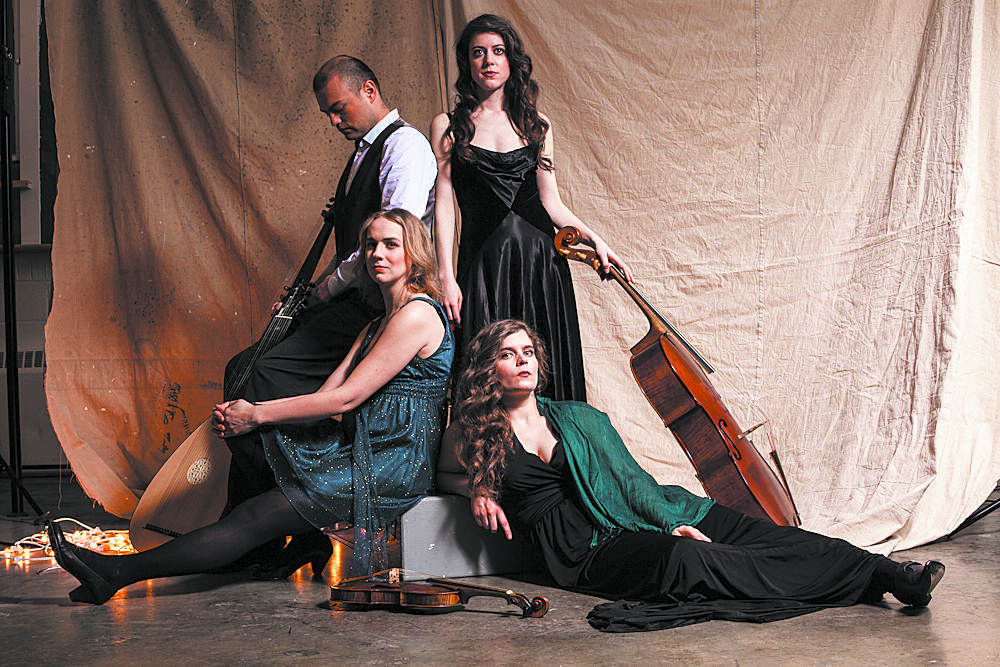
Surveying the concert scene this month, I can’t help noticing that there are several in which the central figure happens to be female — that’s a good theme, I’m thinking! So here’s my praise to the Power of Woman.

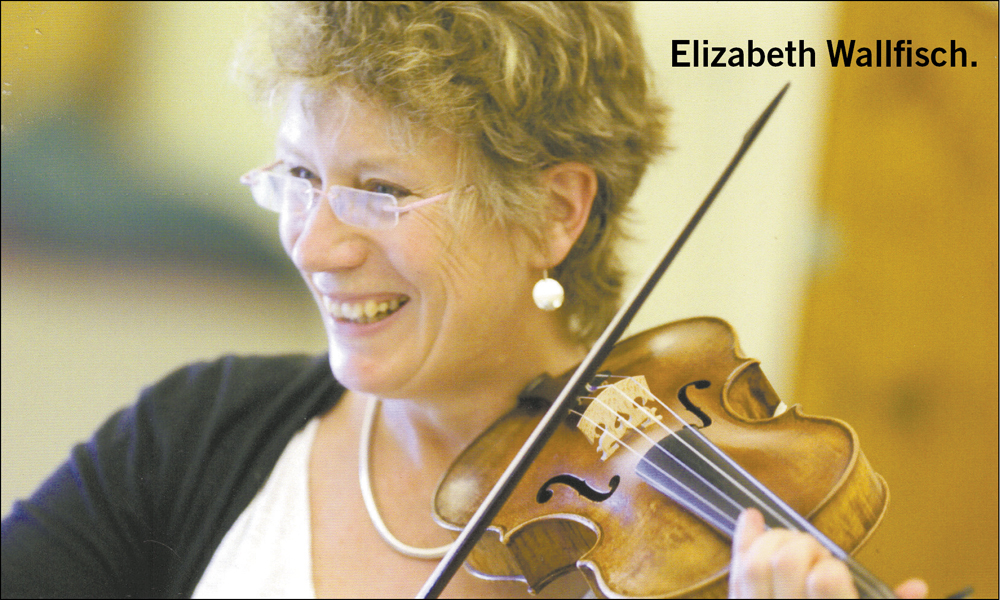
1806 Early MusicTafelmusik’s featured guest soloist and director this month is the eminent baroque violinist Elizabeth Wallfisch, an artist with a vivacious personality and a sparkling approach to the music she plays. Born in Australia into a very musical family — wind players, string players, singers — she is married to the British cellist Raphael Wallfisch. She’s long been a respected and sought-after leader and performer in the period performance movement, though she did not enter into this world until her late 20s, when she was handed a baroque instrument and bow and asked to play them in a concert in two weeks — “and I never looked back,” she says. “Suddenly I found myself in the thick of a ‘movement’ that was strong and vibrant and had a ‘truth’ to teach me. I am still learning — more and more to tell the truth.” Extremely committed to the nurturing of young artists, she’s been intensely involved with many groups such as the Carmel Bach Festival Orchestra and also has recently formed the Wallfisch Band, an international period-instrument orchestra in which young musicians play alongside mentors at the top of their profession.

The quote above is taken from an interview with Tafelmusik, published on their website (you can read the whole interview there). Here’s another Wallfisch quote, from a 2010 interview with Jesse Hamlin of the San Francisco Chronicle: “Making music defines us. It’s not a job, it’s what makes us tick.”

Wallfisch’s Tafelmusik program takes you to Madrid, with music by composers active in or having some connection to Spain — particularly Boccherini, who lived in Madrid and whose music is often highly inflected with Spanish rhythm and charm. You’ll hear his La musica notturna delle strade di Madrid, whichevokes the hustle and bustle of the Spanish capital, and his sizzling Fandango. Wallfisch and Tafelmusik are joined by flamenco dancers Esmeralda Enrique and Paloma Cortés from the Esmeralda Enrique Spanish Dance Company — a group described on their website as “passionate and driven,” whose “expressive, powerful dancers perform finely wrought pieces that hold in perfect balance tradition and classicism with a modern, contemporary aesthetic.”

“A Night in Madrid” is presented five times, March 20 to 24 at Trinity-St. Paul’s Centre.

1806 early music 2English soprano Emma Kirkby has been described as “the artist who almost single-handedly changed the way we listen to voices in early music.” Now an icon in the world of period performance, a renowned early music specialist known for her impeccable style and purity of voice, Kirkby initially spent her musical life singing in choirs and madrigal groups with no thought of making singing a career. In a world where the big operatic voice reigned supreme, she didn’t fit in, either with vocal equipment or by temperament. Her immense gifts couldn’t be hidden though, and inevitably she was “discovered” by such people as lutenist/director Anthony Rooley. Once she had found her own way as a singer, she, like Wallfisch, never looked back. She’s known as an artist of high technical skill, refinement and depth, one who conveys the meaning of the text in a powerfully poignant way.

On her website is a very telling remark, prompted by a 2007 survey of “the greatest sopranos” in which she placed at number ten: “While such things are inevitably parochial, partial, controversial and outdated as soon as they appear, (Kirkby) is pleased at the recognition this implies for an approach to singing that values ensemble, clarity and stillness alongside the more obvious factors of volume and display.”

She is joined by Swedish lutenist Jakob Lindberg for the Toronto Consort production of “Orpheus in England,” a program which pays particular homage to the 450th anniversary of John Dowland’s birth. Performances take place on April 5 and 6 at Trinity-St. Paul’s Centre.

And there’s more. As part of their residency at St. Michael’s College and in keeping with our theme, the Musicians In Ordinary present their own tribute to “Ladies that are Most Rare” on March 19, in a program of songs to poems by Lady Mary Sidney, Lady Mary Wroth and the Egerton Sisters, and music from the lute books of Mary Burwell and Margaret Board.

One of the busiest harpsichordists around, Sara-Anne Churchill is a woman on a mission to bring an awareness of her instrument to the general public. “People don’t realize how often they are exposed to the harpsichord and its music, and I want to show how ubiquitous it is, and how versatile (and amusing!) the harpsichord can be,” she says. So to draw in all those not yet seduced by the charms of the harpsichord she’s devised a program of familiar pieces (such as Handel’s Harmonious Blacksmith variations), arrangements (such as Dowland’s Flow my Tears arranged by Byrd) and some unlikely surprises too, such as the theme from The Addams Family! “The Cliché Harpsichord” is a TEMC presentation that takes place on March 24 at St. David’s Church.

Fifteenth-century French martyr and saint, Joan of Arc, has inspired countless works of art throughout the ages. Not the least of these is Carl Theodor Dreyer’s 1928 silent film, The Passion of Joan of Arc, depicting her trial and execution, for which Renée Jeanne Falconetti’s performance is described as one of the finest in cinematic history. In a co-presentation by the Toronto Silent Film Festival and Scaramella Concerts, this film is screened at Innis Town Hall on April 4 to an adventurous accompaniment: a newly composed score by Los Angeles composer Tom Peters, featuring the composer playing electric stick violone and Joëlle Morton playing amplified viola da gamba.

Others

March 9: Music at Metropolitan presents “Baroque and Beyond III: Music from the French Baroque” including Couperin’s Leçons des Ténèbres and other works. Performers are soprano Ariel Harwood-Jones, mezzo Christina Stelmacovich, theorbist/lutenist Benjamin Stein, the Elixir Baroque Ensemble and others.

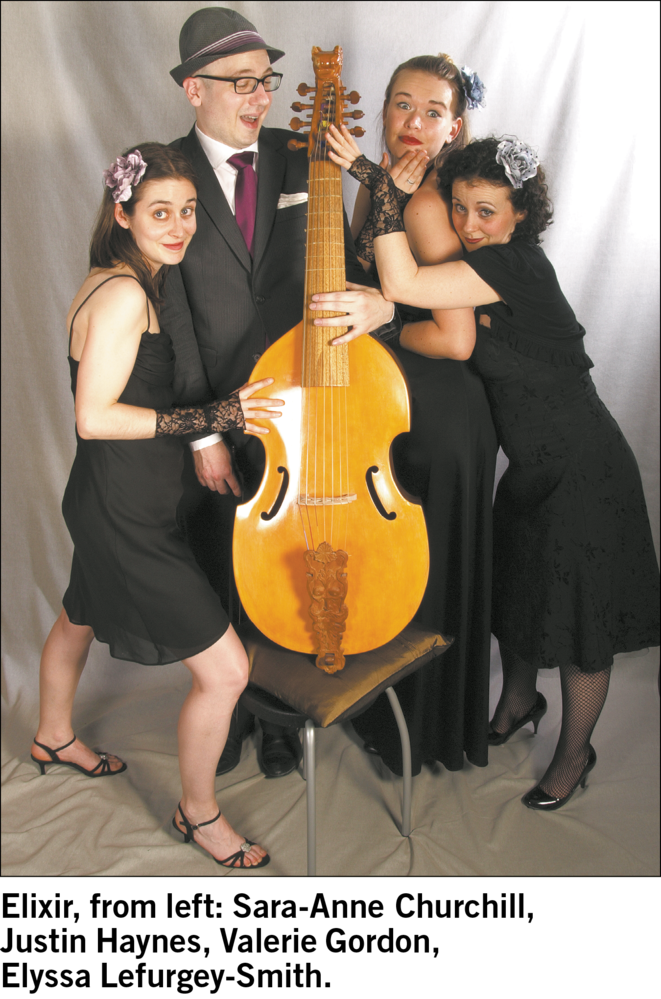
March 15: “Distres’d Innocency: The Community Baroque Orchestra of Toronto Mixes with Elixir” is the title of the next CBOT concert held at Victoria College. Their guests, Elixir Baroque Ensemble, are a vibrant new group consisting of gambist Justin Haynes, harpsichordist Sara-Anne Churchill, violinists Elyssa Lefurgey-Smith and Valerie Gordon. Together the two groups play music by Purcell, Vivaldi, Telemann and Bach; Elixir is featured on its own in music by Castello and Buxtehude.

March 16 in Hamilton, March 16 and 17 in Toronto: Capella Intima presents the anonymous oratorio Giuseppe, dating from around 1650 and discovered in the Vatican Library, for five voices and instruments. Sopranos Lesley Bouza and Emily Klassen, alto Laura McAlpine, tenor Bud Roach, and bass James Baldwin are joined by organ and gamba.

March 23: Bach’s B Minor Mass is presented at Toronto’s Metropolitan United Church by the Elmer Iseler Singers and the Amadeus Choir, soloists and orchestra, under the baton of Lydia Adams.

March 30: Ever probing life’s profound issues, I FURIOSI explores the deep, hidden things in life with music by Dowland, Scarlatti, Handel and Buxtehude. “The Down-Low” features guest Alison Mackay playing both double bass and viol, and takes place at a new venue, Windermere United Church.

March 31: At U of T’s Trinity College Chapel, the Schola Cantorum and Theatre of Early Music under director Daniel Taylor present “Jesu meines lebens leben,” with works by Buxtehude, Bruhns and Kuhnau.

April 5: Handel’s Concerti Grossi Op.6 are 12 of the finest and most attractive examples in this genre. Aradia Ensemble and the Kingsway Conservatory Strings sample from these works, in a CD release concert at Glenn Gould Studio.

For details of all these and others not mentioned here, please consult The WholeNote’s daily listings. 

Simone Desilets is a long-time contributor to The WholeNote in several capacities who plays the viola da gamba. She can be contacted at earlymusic@thewholenote.com.
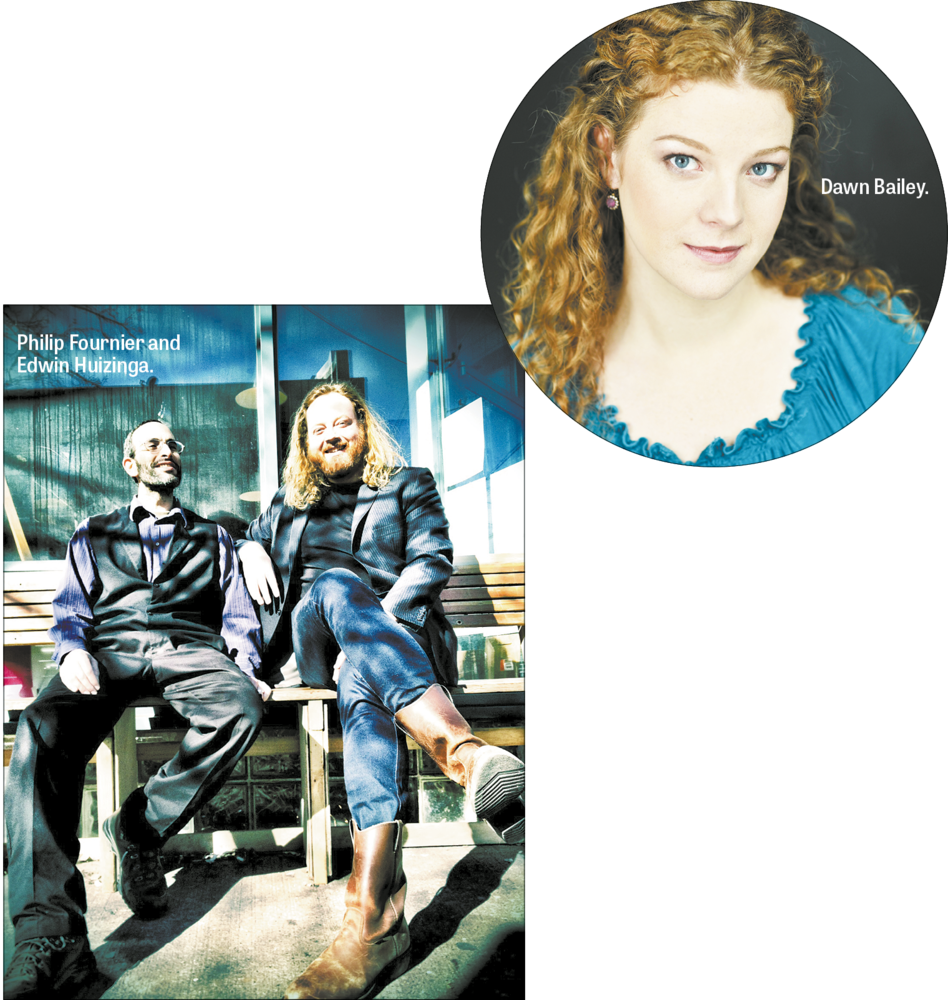
Here we are just past the top of the year, and it seems to this writer to be snowing composers — so many are represented in this month’s concerts. Some are not generally well known, so here’s a bit about five of them that I hope may whet your appetite to hear their music.

Pérotin: A man whose life is almost totally obscured by time, Pérotin is believed to have composed for the newly constructed Notre-Dame Cathedral in the late 12th and early 13th centuries. He must have been hugely affected by the spiritual power of this magnificent edifice, for he wrote monumental works in three- and four-part polyphony the likes of which had never been heard before. One of these, the complex and luminous Sederunt principes, is on Schola Magdalena’s upcoming program on February 8 at Toronto’s Church of Saint Mary Magdalene, along with music by Hildegard, plainchant, and newly-composed pieces. This six-voice women’s ensemble will also be performing at Waterloo’s NUMUS Concerts on February 7.

Cavalli: Think of a little boy with a good soprano voice, mentored by a Venetian nobleman who took him to Venice to sing in the cappella at St. Mark’s Basilica. His life was forever shaped by this early turn of events. He worked under the direction of the great Monteverdi, eventually became organist at St. Mark’s, composed sacred music and also branched out to write for the stage — 41 operas in all — becoming the most influential composer in the genre of opera in mid-17th century Venice. This was Francesco Cavalli, and his music is featured in two presentations this month: February 15 and 16, the Toronto Consort performs as an opera in concert The Loves of Apollo and Daphne; February 24, tenor Bud Roach and guests perform sacred motets by Cavalli and others as part of TEMC’s Musically Speaking series.

Taverner: Scaramella’s “Hartes Ease” (February 9) and Cantemus Singers’ “The Virgin Queen” (March 2 and 3) don’t appear at first glance to have much similarity, but they do have common elements. One of these is the 16th century composer John Taverner. Lincolnshire-born-and -buried, not much else is known about his life except that he held the position of organist and Master of the Choristers at Christ Church, Oxford; also he is alleged to have been an agent of Cromwell, assisting in Henry VIII’s suppression of the monasteries. But he is forever revered as the one who brought English choral polyphony of the period to its pinnacle. Viol players also regard him as rather notorious, for a particular sequence of notes on the words “In Nomine Domini” (excerpted from his mass Gloria Tibi Trinitas) that has forever installed itself in viol consort repertoire. You can hear one “In Nomine” by him in Scaramella’s showcasing of four antique English viols, which brings together four marvellous musicians to play them, in a diversity of music both early and modern. Taverner’s Sanctus and Benedictus from the Missa “Westron Wynde” is featured in the 16-voice Cantemus Singers’ performance, along with many madrigals and church motets.

earlymusic-feb2013Vincenzo Galilei was the father of the astronomer Galileo. In his own right he was an important musical figure of the late Renaissance, a lutenist, theorist and composer. He seems to have displayed an interesting mix of progressive thought and backward-looking sentiments: On the one hand, he made substantial discoveries in acoustics, reportedly involving his son in his experiments and encouraging him to approach scientific research in a practical as well as a theoretical way (who knows how the invention of the telescope would have played out without the counsel of Galileo the father?). On the other hand though, Vincenzo condemned modern music and championed the revival of the monodic (single melody) singing style of ancient Greece. He is one of several composers featured in the Musicians In Ordinary’s concert “You Who Hear In These Scattered Rhymes.” Soprano Hallie Fishel and lutenist John Edwards perform baroque settings of great Italian renaissance poetry on March 2.

“The greatest composer you’ve never heard of” is the Windermere String Quartet’s description of Georges Onslow, whose string quintet they’ll be presenting. Onslow was a contemporary of Beethoven and Schubert, coming from an aristocratic British family but actually born in France. He “did not mean to become an artist, even less a composer” states a website devoted to him — but obviously he was meant to be one, writing operas, symphonies and much chamber music and becoming a highly regarded composer in his time. His music is extremely beautiful and full of inspiration but, alas, has virtually disappeared from modern view. On March 3 you can hear a lovely example of his work in the Windermere String Quartet’s “The Power of Five.” Played on period instruments, with guest violist Emily Eng, this is a concert of early 19th century viola quintets — a special, dark sound that only two violas can bring.

Others

February 7 to 9: Feeling lately that you’d like to forsake the Canadian cold for a delightful evening in Paris? Well just around the corner, there’s a cabaret happening with the gaity and sophistication of Parisian life from medieval times right to the present day. Toronto Masque Theatre presents “Les Roses de la Vie: A Parisian Soirée,” with music by Marais, Couperin and more recent composers, also poetry, movement and film. Among the featured performers is acclaimed corporeal mime artist Giuseppe Condello.

February 9: The Academy Concert Seriespresents “Bach’s Blessings,” in the form of music for solo cello and solo harpsichord, a violin sonata, cantata arias and the complete Wedding Cantata. This concert features four artists well versed in the art of historically informed interpretations: soprano Nathalie Paulin, violinist Emily Eng, cellist Kerri McGonigle and harpsichordist Lysiane Boulva.

February 9, 12 and 16: The Velvet Curtain Ensemble with director Douglas Rice, orchestra and guest artists presents Purcell’s opera Dido and Aeneas. Among the stated values of this group is “to believe in our potential to shape the future of our diverse cultures and civilization by bringing strength and confidence to future generations who will endeavor to define humanity through the arts.”

February 10: In Kitchener, a celebration of food — for the ear and for the palate, as Nota Bene Baroque presents “If Music Be the Food of Love...” with food-related music by Schmelzer, Legrenzi, Bernier and others, and guest soprano Stephanie Kramer.

February 12: The Musicians In Ordinary are busy people — not only do they present their regular concert series at Heliconian Hall (March 2, mentioned above) but they are also ensemble-in-residence at U of T’s St. Michael’s College. In this capacity they present “Hail Bishop Valentine!” performing love songs from the time of the wedding of Princess Elizabeth, daughter of James I, to Frederick, Elector Palatine. Guest reader is David Klausner.

February 21 to 24: “Shrouded in mystery and speculation since Mozart’s death, the Requiem is a masterpiece for all time ...” begins Tafelmusik’s press release for their next concerts. Mozart’s Requiem features four wonderful soloists: soprano Nathalie Paulin, mezzo Laura Pudwell, tenor Lawrence Wiliford and baritone Nathaniel Watson; the Tafelmusik Orchestra and Chamber Choir are directed by Ivars Taurins.

February 22: Sine Nomine Ensemble takes you to medieval Iberia, whose musical culture was greatly influenced by that of both North Africa and neighbouring Europe. In “Musica Yspanica: Spanish music of pilgrimage and praise” you’ll hear how some of these colourful influences manifested themselves, in songs of courtly love, cantigas in praise of Mary, sacred music from the royal nunnery at Las Huelgas and songs of popular devotion from Spanish pilgrimage centres.

March 3: “Out of the depths have I called unto you, O Lord” begins Psalm 130, a stunning poem of entreaty that has inspired composers through the ages. In “Kaffeemusik,” a concert which seeks to inform and enlighten as well as entertain, the Toronto Chamber Choir presents several settings of this text by composers including Schein, Sweelinck, Schütz and Bach.

Please consult The WholeNote’s daily listings for details of all these, and others not mentioned. 

Simone Desilets is a long-time contributor to The WholeNote in several capacities who plays the viola da gamba. She can be contacted at earlymusic@thewholenote.com.
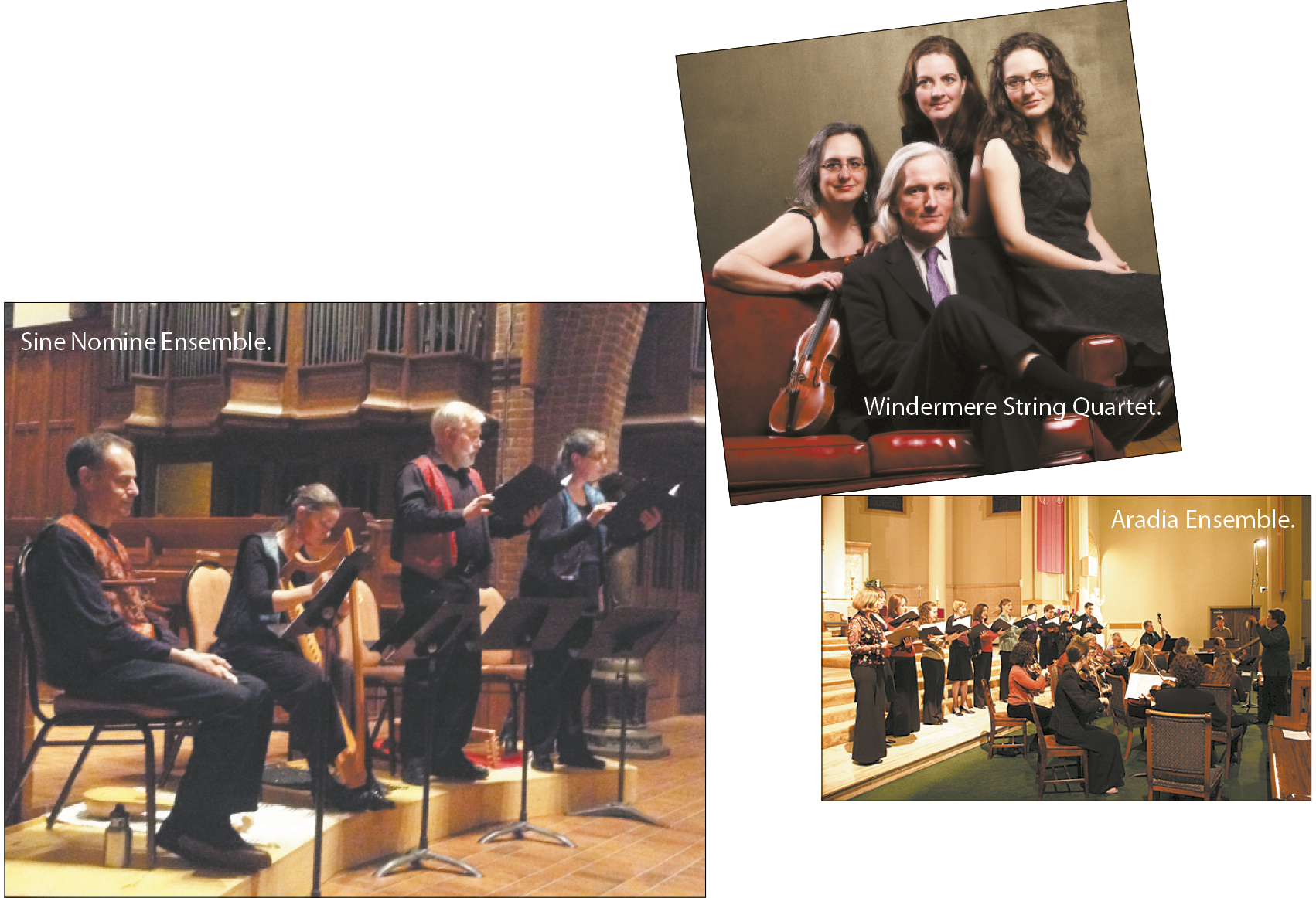
Back to top