2205 Mainly MostlyOne of my very favourite Canadian jazz albums is one called Valentina, featuring a quartet led by Italian-Canadian pianist, composer and successful entrepreneur Mario Romano. Romano’s bandmates, including Pat LaBarbera on the sax, Roberto Occhipinti on the bass and Mark Kelso on the drums, support him on his imaginative journey through yet unexplored possibilities of old standards like Green Dolphin Street, A Night in Tunisia and Nardis. Romano revamps these tunes with stretched-out interpretations of the melodies, low-end ostinatos and fun new rhythmic underpinnings that frame the heads in interesting ways (without compromising their integrity).

Valentina (released in 2010) is sometimes cerebral and complex, and sometimes primitive and aggressive, but it is, through and through, riveting and beautiful.

Romano’s playing on the album is astoundingly unrestrained. I can’t speak for anyone’s ears but my own, and this is just speculation, but it sounds to me like after the three-plus decades he spent away from the music scene, he returned with a lot of pent-up creative and physical energy. The result was Valentina; I cannot recommend this album enough.

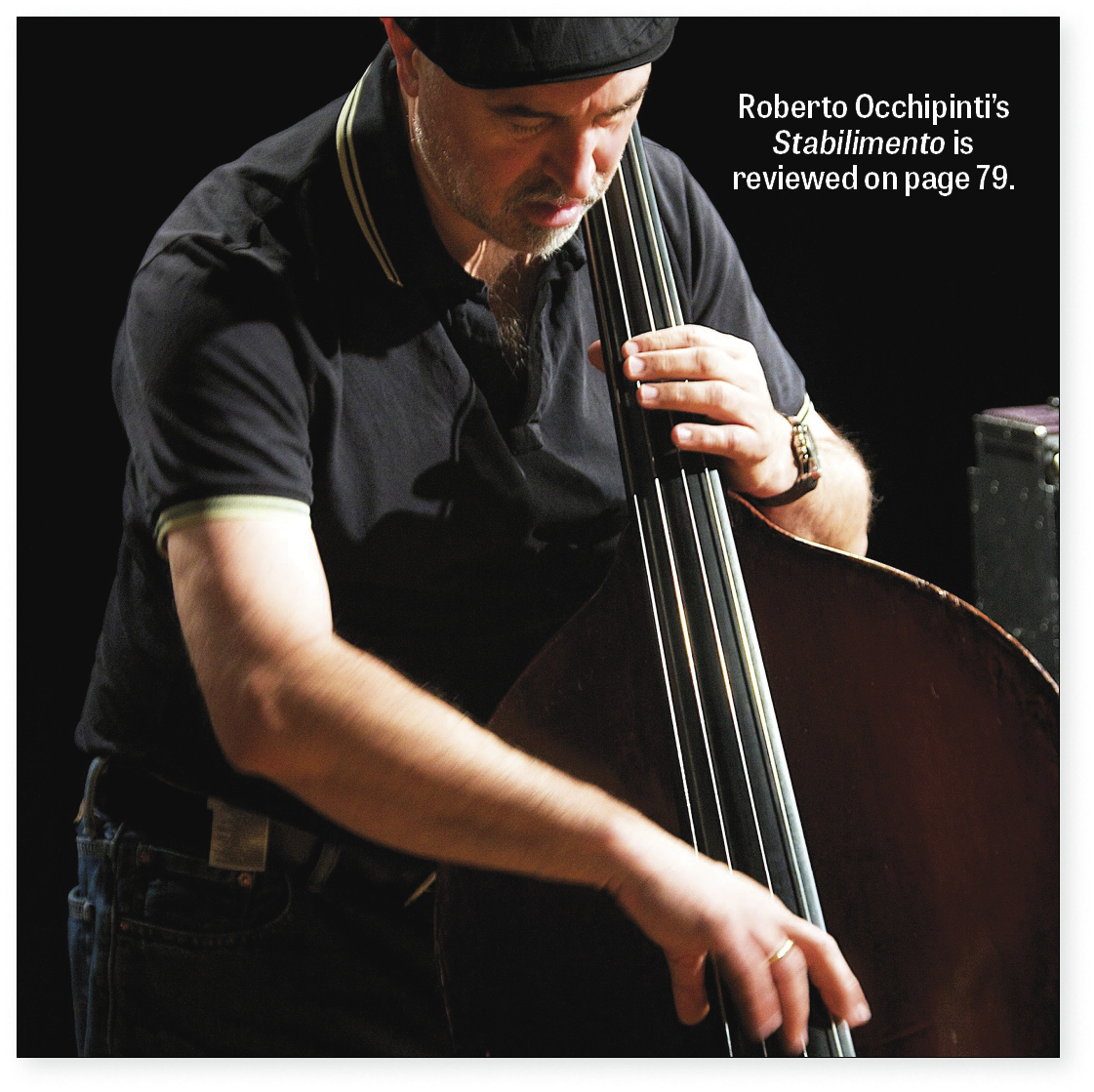
With the exception of Romano, who has been conspicuously absent from the live scene for a number of years, every member of the quartet that played on Valentina can be found leading their own fine ensembles, and acting as sidemen about town; and each can be heard this month at least once. Kelso will be behind the kit with Rich Brown’s Abeng at The Rex on the February 23 and 24; on February 10 and 11 LaBarbera will be on the same stage with an ensemble featuring Kirk MacDonald as well as drummer Adam Nussbaum (about whom I am especially excited); and Occhipinti will be playing with his own quintet (Luis Deniz, Tim Ries, Dafnis Prieto and Manuel Valera) at Jazz Bistro on February 17 and 18. Coming full circle, in Occhipinti’s case the concert is to celebrate the release of a new CD, Stabilimento, featuring the quintet.

Night School Twilight: Since she was a kid, Chelsea McBride has been writing original music. From when it started with, as she puts it, “messing around with little pop songs,” to the present in which she leads and co-leads at least five ensembles in varying styles and genres, McBride has had a drive to create; not to recreate what’s been done, but to create music that is new, interesting and authentically her own. “My whole thing is original music,” McBride says, “I love doing covers, but it’s not me as an artist and composer.”

This is an endeavour which, for any creative person, is never-ending. It’s one that requires not only curiosity and imagination, but dedication and hard work. A whole lot of hard work.

And that labour bears fruit; Socialist Night School, McBride’s large ensemble project which, for five years, has served primarily as a vehicle for her own composition and arranging, released The Twilight Fall, their first full-length album (their second recorded effort after a short, self-titled EP was released in the spring of 2014) this January, on McBride’s 25th birthday.

The music on The Twilight Fall seems to tell a story. Even though there are some tracks with words (sung by the illustrious Alex Samaras, about whom I have written before), it’s hard to decipher what, exactly, that story is. But it’s there. One song speaks to the next. Universal themes are suggested by the lyrics. Tunes range from the angular and assertive (Intransitory) to the poignant and mellifluous (In Dreams).

Like Valentina, I can’t recommend The Twilight Fall enough. It’s the kind of album that you can’t use as background music. It insists upon the foreground. It’s a time commitment of about an hour, but it will pay off.

You can see Socialist Night School live at The Rex on February 20 at 9pm. I have no way of knowing what the cover charge will be, but just like the time commitment you put into listening to the album and doing nothing else, it will be worth it.

Bob Ben is The WholeNote’s jazz listings editor. He can be reached at jazz@thewholenote.com.

2204 Mainly MostlyI am not built for the cold. Not only am I unable to handle sub-zero temperatures – I’m also incapable of acclimating to all temperature shifts. Every winter I have this problem, and every winter I don’t know how to solve it: I walk around outside wearing layer upon layer of clothing. I’m talking multiples of everything: I’ve got sweatpants on under my jeans, regular socks on under my thermal socks, and under my sweater is at least one other sweater. And I’m still cold, so I go inside. All of a sudden, I’m frantically stripping off at least three layers of clothing, but by now I’m boiling hot and sweating bullets. It’s my least favourite thing about winter.

My favourite thing about winter, on the other hand, is the irreverent stuff non-Christians do to poke fun at themselves for being the outsiders during the holiday season. One such example is Sam Broverman’s annual engagement, “A Jewish Boy’s Christmas,” happening at Jazz Bistro, in which he pokes gentle fun at the culture and the experience of being Jewish in a Christian-dominated North America. I’ve always known Broverman for his ability to write amusing alternate lyrics to tunes, which seem to work perfectly with the pacing of the tune. The comedic effect is always impeccable. In “A Jewish Boy’s Christmas,” Broverman sings such charming lines as, to the tune of Have Yourself a Merry Little Christmas, “Both my thumbs are numb from spinning dreidels / Kiss my gelt goodbye / I’ll be eating frozen latkes till July.” Broverman’s voice is unassuming and conversational. But the palpable relaxation in his sound speaks to his immense skill; singing is hard, and making it look easy is harder still.

You can hear Broverman and his guests (among them, members of the Toronto Mendelssohn Choir, with whom he has served as a chorister, and Whitney Ross-Barris, about whom I have written) at Jazz Bistro on the evening of December 11.

Monk Is Here To Stay

With a vast repertoire from which to draw, a revolving-door-style lineup and a fervent desire to explore, there’s very little risk of Toronto mainstay Monk’s Music going stale. As the name suggests, Monk’s Music is a project dedicated to exploring the music of Thelonious Monk. One of the project’s two co-founders, Dan Gauche, moved to the West Coast. The remaining co-founder, Michael Davidson, is a vibraphonist of remarkable dexterity and wit, whose fascination with Monk’s body of work has led to this weekly ongoing tribute to the jazz piano colossus. Davidson uses elements and trademark gestures of the Monkian style – playing with four mallets, in the tradition of Gary Burton, must help, I imagine, with the idiomatically pianistic phrases and textures he plays with – and he also channels the playful, curious spirit, the sense of humour and whimsy, for which Monk was known.

Monk’s Music, a project that has been happening for about seven years now, plays every Sunday evening, alternating between the Tranzac at 5pm on the first and third Sunday of each month, and the Emmet Ray at 6pm on the second and fourth Sunday of each month. There are no cover charges, and no excuses!

It’s getting really cold out there, friends. Bundle up, but don’t bundle up too much.

Bob Ben is The WholeNote’s jazz listings editor. He can be reached at jazz@thewholenote.com.

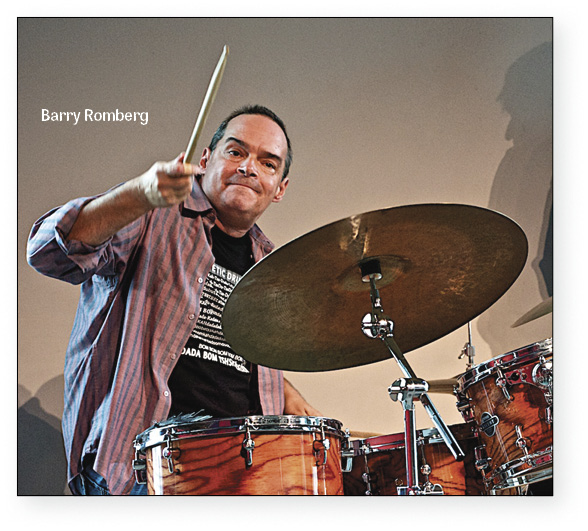
2203 Mainly Mostly 1Nobody in the world sounds like Barry Romberg. On top of the  evident influence from certain prominent drummers of the last 50 years in rock and jazz (I think of Keith Moon and John Bonham, I think of Elvin Jones, I think of Bill Stewart), and on top of the playful way he and the rotating cast of musicians who appear on stage with him will imply and weave in and out of various related tempos and grids, just to keep things interesting, and on top of the sweaty machismo with which he plays the instrument (which should not be mistaken for a lack of subtlety, but it is loud, and if you’re going to sit right at the front you should probably wear earplugs), there is a certain frankness about everything he does. Although it’s often complex, dark, ethereal, innovative, or just weird, it’s always music without pretense. Romberg presents the tunes as tepidly, casually, as would a singer-songwriter with an acoustic guitar at your local coffee house. The titles of the tunes even sometimes offer a hint as to what’s musically going on. He evidently feels that the music will speak for itself, that it requires no air of mystery, nothing to set up the mood.

2203 Mainly Mostly 2Actually watching (forget your ears for a moment) as Romberg plays the drums is a ton of fun. It’s a wonder to behold. His body language tells all that may not already be aurally apparent: when something interesting is happening that he sees fit to play off, his ear will often lean towards the responsible player, like a growing sunflower to the sun. His shirt will often become more visibly saturated with sweat as the night goes on, a tangible measure of how hard he’s been working. His facial expressions range from satisfaction to immense concentration to apparent anger. He hits the drums with almost comical aggression. Before you even hear it, it’s a thrill to watch. I have never heard Romberg play under the “Barry Romberg Group” name – only under other names such as Random Access and Three Blind Mice, so I really don’t know what will be going down at The Rex on the evening of November 27, but I’m certain, to the degree one can be certain of anything, that it’ll be, as an understatement, enjoyable.

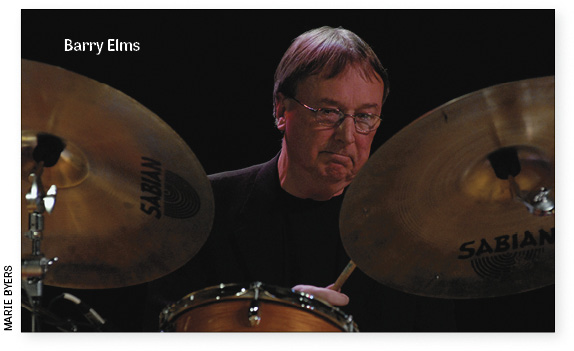
The Pilot: Just one other thing before I wish you a merry winter. A few Saturdays ago, I went to The Pilot for the first time. It seems absurd that The Pilot has been showcasing some of the best musicians in the city for every Saturday of my life and then some, without charging a cover, and I hadn’t been until just this season. I didn’t plan to go to The Pilot; I wandered in off the street. When I arrived, the place was packed, with hardly any standing room left anywhere but the patio. The band, which turned out to be the Barry Elmes Quartet, was on a set break, so I took an empty seat right near the playing area (the musicians do not perform on a raised stage) and was eventually overjoyed to find out who I was settling in to hear. Heavy names are constantly showing up in the listings under The Pilot. Names like Barry Elmes, like Neil Swainson, like Ted Quinlan, like Alexis Baro – names that make me want to perpetually book off Saturday afternoons.

I hope to see more of you warming up in the clubs this winter, and I hope you’ll see more of me doing the same!

Bob Ben is The WholeNote’s jazz listings editor. He can be reached at jazz@thewholenote.com.

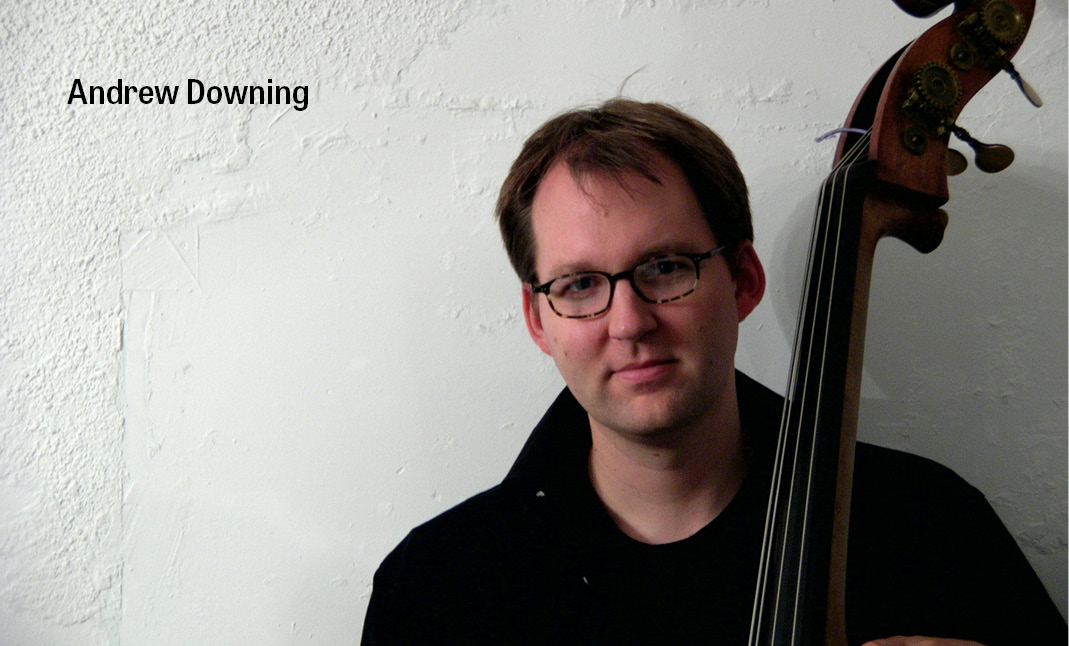
2202-MainlyMostly-Photo1.jpgIt could just be my memory showing its fallibility, but I could swear that the first time I ever heard Andrew Downing, the award-winning bassist and cellist, play live, he was leading an ensemble and had directed his drummer to play with butter knives.

Regardless of whether this butter knife memory is based in reality – something which Downing himself can confirm or deny upon reading this – it very easily could be, and might be expected of such an ensemble as his Otterville project (which you can hear on October 26 at Artword Artbar in Hamilton).

The sound and character of this quintet isn’t all that reminiscent, to my ear, of many other notable jazz bands. I hear faint similarities with The Modern Jazz Quartet. Of course, there’s the vibraphone, which they have in common, but more than that, it’s the distinct sense that this is chamber music – music in the same lineage as Western Classical chamber works, music to play at home with friends, music through which people can have a conversation.

The thing I really appreciate about Otterville, and Downing’s compositions for the group, is his refusal – whether the decision is conscious or not – to lean on stock patterns to accompany a set of chord changes and a melody he’s written … not that there’s anything wrong with that!

Each part, from the drums to the cello, is composed specially for that melody, it seems, and in fact, is a part of the melody. A melody which, in every case, is elegant, idiosyncratic, and – you may be surprised to hear – not particularly dissonant.
Sometimes two instruments will pair up, sometimes all five will wander off, but they always sound as a cohesive whole, and an irresistibly charming whole at that.

Lessons from teaching: This August, back when it was still warm outside, I spent a week in Prince Edward County, teaching kids at an arts camp in Picton how to make music with various percussion instruments, their voices, and of course, buckets. I learned a ton from the kids, but I think the number one lesson I learned was not to make assumptions about them or underestimate them.

That lesson came on the first day, when I asked a group of campers to shout out names of artists or genres of music that they liked. I expected answers in the vein of Justin Bieber, Miley Cyrus, etc. And there were those, certainly. And those tastes are completely valid.

But there were also lots of answers I didn’t expect: “Fiddle music,” one camper said, “You know, like jigs and stuff.”

“I like Bob Marley,” another said.

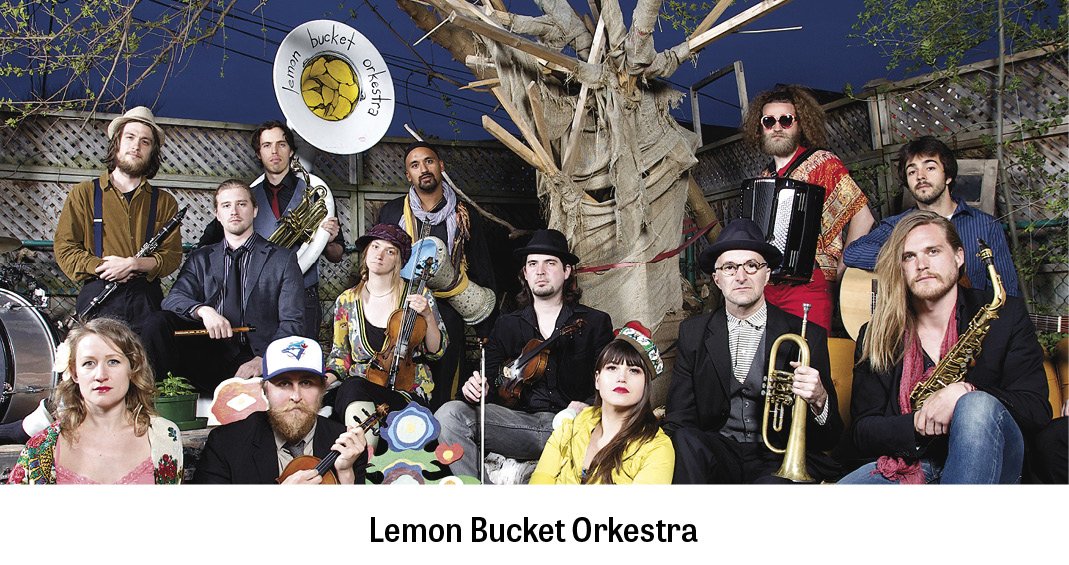
“Lemon Bucket Orkestra,”another still. Wait, what?

2202-MainlyMostly-Photo2.jpgI was just a little taken aback by the fact that the first person to mention Lemon Bucket Orkestra (LBO) – the self-described Balkan-klezmer-gypsy-party-punk-superband – to me since I was invited to go see them three years ago, was not a fully grown person from Toronto, but a child from Picton. But then again, why should I be surprised?

I can’t see why LBO wouldn’t appeal to everyone; in addition to being a well-executed musical performance combining elements of various Eastern European musical traditions with a touch of punk rock (but not so much that it’s inaccessible to those who don’t like punk rock), LBO puts on a dazzling visual performance, including dancing, a certain degree of acting, and outfits which are both figuratively and literally colourful. Theirs is a performance which implicitly but aggressively invites audience participation.

LBO has often made their shows a surprise: they once performed a concert, apparently on a whim, when a flight was delayed; they have set up in the streets of Toronto and played without any heads-up for fans. They draw big crowds and sell out venues fast. It’s no mystery.

They’ll be performing every Wednesday in October, in true LBO fashion, somewhere in Toronto. The venues are not to be announced until the day before. Unfortunately for LBO, however, The Rex – and by extension, The WholeNote – has revealed where the penultimate of their Wednesdays in October series will be held. You can’t buy tickets ahead of time, though, so you may as well go early and line up.

I have been absent from most clubs these last couple of months. I do intend to rectify that. If you see me – the guy in the loud sweater, most likely – at a concert I’ve recommended, I encourage you to recommend another upcoming concert to me. I may like it, write about it here and learn about someone new while there. So on and so on. See you in the clubs.

Bob Ben is The WholeNote’s jazz listings editor. He can be reached at jazz@thewholenote.com.

Jazz BannerJazz_Notes_1.jpgFor further back than I can remember, Kensington Market has been a hub for multiculturalism, activism, tourism and other assorted -isms. The unique culture of Kensington is one which is, perhaps more than that of any other neighbourhood in Toronto, bursting with a collective love of art that is eclectic and loudly expressed. Buskers flock to Augusta Avenue. Drum circles echo through the Market from Bellevue Square. Paintings, murals, works by highly skilled graffiti artists, cover much of the landscape, including the walls outside of Poetry Jazz Café – one of the nine venues which will be showcasing almost non-stop jazz for the duration of the first-ever Kensington Market Jazz Festival (henceforth referred to as KMJF 2016).

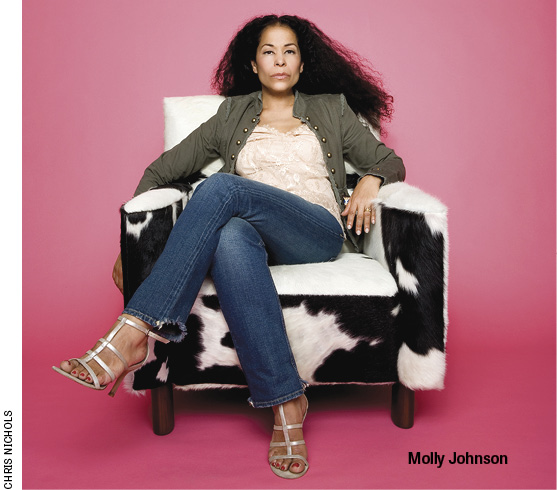
KMJF 2016, originally the brainchild of Toronto-bred vocalist Molly Johnson, will reflect the values of the community in which it takes place; rather than featuring large, ethically dubious, multinational corporations – which have been emphatically rejected by the Kensington community in the past – as sponsors, the KMJF 2016 website lists as its friends small, local businesses, well-known individuals in the music scene, arts studios, as well as multiple charities and non-profits which will benefit from the festival.

Among these is the Archie Alleyne Scholarship Fund (AASF), which has, since its establishment in honour of Alleyne’s 70th birthday in 2003, given financial assistance to particularly talented music students who have been primarily, but not exclusively, black. In this way, the AASF honours the late Alleyne (who himself grew up in the neighbourhood), not only musically, but politically, as he was outspoken on the subject of black representation in jazz. After all, despite the sea of white faces you might see in any given university jazz program, jazz has historically been a music of black creative innovation and black political resistance.

KMJF 2016, though it only lasts three days in only nine venues, will feature over 100 artists. (Three with particularly close ties to The Market are featured in their own words alongside this short article.)

Unfortunately, it is both physically impossible and financially impractical to attend over 100 concerts in three days (the best you can probably do is nine, or maybe 12 - and yes, you may take that as a challenge), but if you have enjoyed my recommendations before, I may be able to gently help push you in some of the right directions (not that there are really any wrong ones).

Two pianists. Neither of the pianists described below is one whose music I’ve experienced in person; they’re players I’ve checked out only through their live and recorded material available online. I will be discovering them alongside all of you on that third weekend of September.

Andrew Craig, the pianist, multi-instrumentalist, singer, composer, radio broadcaster and alum of the York University music program, is one act which has me particularly psyched. In videos posted on his YouTube channel like I Love You Pip, Auntie Inez and Improvisation with Audience, Craig’s idiosyncratic, exploratory style, as well as his acute awareness of how to read people and how the audience fits into the whole performance paradigm, are made apparent. It’s these two qualities which I believe you’ll find most endearing and exciting about Craig as a performer. His chops, though undeniably impressive, are an afterthought (as it should be). Craig can be heard at the clothing store, Tom’s Place, at 4pm on Saturday, September 17 (no cover), or later in the same day at Trinity Common ($10).

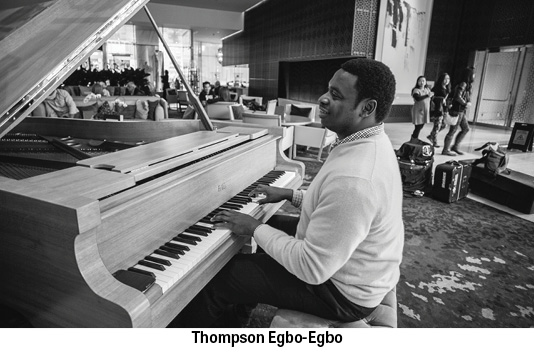
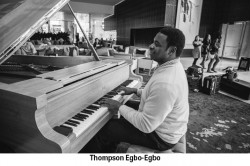
Nigerian-born, Toronto-bred pianist Thompson Egbo-Egbo, playing at Tom’s Place the day after Craig, arranges tunes very much in the Glasper-esque school of jazz infused with neo-soul and hip-hop elements. But his style also seems to reveal what I think is a strong background in classical music, developed not out of obligation but out of deep love. When you go to see Egbo-Egbo, don’t expect the music to swing necessarily, but also don’t expect it not to. If you must expect something, expect textural exploration, chords that you wouldn’t expect to belong together belonging together, and to be in a bit of a trance.

Egbo-Egbo is someone I wanted to include here, partially because I find his music intriguing, but also because of The Egbo Arts Foundation (EAF), a charity which is similar in spirit to the AASF. The EAF makes music lessons available to kids who might not otherwise be able to afford them; in other words, making music more accessible to underprivileged and at-risk youth, with the understanding in mind that access to programs in the arts in general, and music in particular, helps to improve children’s lives and is often absent from the impoverished neighbourhoods where they are most sorely needed. Needless to say, this is an admirable pursuit, and one which deserves our attention.

Of course, these are just two out of the 100-plus KMJF 2016 shows happening in Kensington Market between September 16 and 19. The full schedule for the festival is available at kensingtonjazz.com I look forward to exploring the Market at KMJF 2016 with all of you this September.

Bob Ben is The WholeNote’s jazz listings editor. He can be reached at jazz@thewholenote.com.

 What Molly Wants, Molly Gets
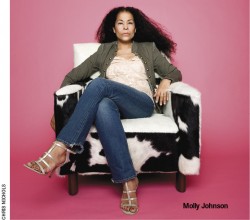
2201_-_Jazz_Notes_-_Sidebar_1.jpgHalf an hour with award-winning jazz vocalist,singer-songwriter, artist and philanthropist Molly Johnson in the ad hoc KMJF office above Kind Spirit Cannabis Clinic on Augusta Avenue is enough to convince me. She’s going after this new project with the same gusto and determination as she poured into her Kumbaya Foundation and Festival in 1992, raising awareness and funds for people living with HIV/AIDS, and the kinds of causes since then that led in part to her becoming an Officer of the Order Of Canada in 2008.

The idea of this has been going on for about ten years, in my head. I’ve been thinking about it.

I was born at Bathurst and Dundas, and I’ve lived here three times. We have reached out to artists who have really put time and love and care into their own careers. They don’t just come with their hand up, they come knowing they are going to help us build this. People who have a responsibility to their own craft. You show up with your CDs, you show up at the end of the day to pick things up.

Same with the venues. For the most part, we’re in existing venues with soundmen and sound systems. I’m not reinventing the wheel. That’s why it works. Because everybody’s already here.

There will be shows throughout the day (Friday to Sunday), with only a handful of shows after 11pm. Right from the early stages I worked with the BIA, police and firefighters.

If it lasts it will be because it’s something the community does, not something that gets done to it. In the long run it’s as much about collecting stories, the history of this neighbourhood – heritage – as about the music itself. Right from the start we’ll be collecting stories as we go. Just watch people with old roots (and new money) rediscovering this place over the course of the three days.

This is not something that starts by raising corporate or arts money for an idea, then doing whatever is possible based on a budget. It starts with doing it right. I paid for the office myself, just to make it go. It’s been a lot of fun. In fact, we will have three merch tables outside. Artists will bring in CDs; the festival isn’t taking in any money on CD sales. Artists get the door. T-shirt sales will go to charity – this year, the Archie Alleyne Scholarship Fund. The festival will be affiliated with an annex of the Boys and Girls Club. Yamaha, who are supplying the piano for Tom’s Place, will be donating instruments to the Boys and Girls Club.

My own experience with Jazz festivals hasn’t always been positive. I wanted to do something more considerate of local performers.

I love that it overlaps with TIFF and has been noticed by them. We will be mentioned in their magazine.

I want to show there’s already an appetite for this. I want every show sold out. I want you to not be able to get in. That’s my goal – sorry.

David Perlman

 Richard Underhill - Shuffle demon
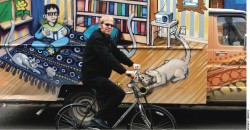
Jazz_Notes_2.jpgKensington is the perfect spot. It’s wonderful to have a concentration of great music and events in an area that is pedestrian friendly and has a real geographic focus for a festival. The Market has always been a hotbed of musical creativity and some of our most interesting artists from Bill Grove to Jane Siberry to Perry White have lived here. Why is it happening now? A few reasons, I think. First, Molly Johnson’s desire to host an event that highlights local jazz talent and her connection to the Market make it a perfect fit. Second, the Market has evolved to a point where there are enough venues to make hosting a festival here an exciting prospect. Of course, how the increase in venues may contribute to unsustainable gentrification is the tightrope wire that the Market walks every day. But Kensington has always been a creative heart of the city and this festival should only enhance that notion. Having it concentrated on one weekend is a good idea. Have the Market come alive with music for a September weekend … a perfect festival concept.

I’m really happy that the Shuffle Demons are participating from the get-go. We have a long history with the Market. We hooked up with Ida Carnevali for a costumed spring parade in 1985, Perry White lived for many years in the Market and of course, bits of the market and market characters are part of the 1985 “Spadina Bus” YouTube video. I was lucky enough to become a resident with my wife Suzie 17 years ago and have found great inspiration from my fellow marketeers and from events like PSK (Pedestrian Sundays Kensington) and the Festival of Lights. In short, Kensington is a real community and as such a genuine magnet for culture and creativity.

Founding member of Toronto’s outrageous Sun Ra-influenced Shuffle Demons and a Market resident for 17 years, Richard Underhill’s in-from-the-outside soloing, warm alto sound and great writing skills make him one of Canada’s most distinctive jazz performers. His acclaimed latest album, Kensington Suite, was nominated for a 2008 Juno Award, as his second album, Moment in Time, was in 2007. He has performed and recorded with a Who’s Who of musicians, Canadian and beyond, but still finds time to lead the Kensington Horns Community Band, the improvising electronic groove ensemble Astrogroove, and, since 2003, to be musical director for the winter solstice Kensington Festival of Lights.

 Sophia Perlman - Market born
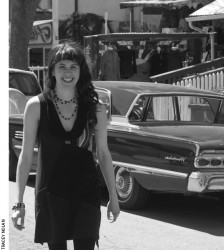
2201_-_Jazz_Notes_-_Sidebar_2.jpgGrowing up in the market often felt like living in the middle of a sort of permanent festival, with different music tumbling out of every doorway and a parade of every imaginable person going past your window. And it was especially exciting when someone in the community decided it was time to throw a party on purpose. People who couldn’t agree on anything else seemed to be able to come together if it meant a parade, or music in the park or rolling out their awnings on a Sunday so the celebration could go on come freak rainstorm or unseasonable sun.

They were community events in the truest sense, and it was that community spirit that let us build traditions that were our own, without the input of big corporate sponsors. It’s part of what built a vital, resourceful, resilient creative community here, and I love that KMJF is a festival in that tradition. I’m struck, looking at the lineup, by how many of the musicians have deep connections to the neighbourhood – as past and present residents or as artists who found a creative home here at various stages of their careers.

As a child, the market used to largely shut down at sunset, when the stores mostly closed and the shoppers all went home. Now there is no shortage of places to go and things to do and see after dark. I love the way the ticket model and concert schedule seem designed to encourage people to walk through the neighbourhood. Even if they come looking for some particular music that they want, they might go home with something new and exciting that they had never heard of. Or something old and wonderful that is completely new to them. That, to me, seems very much in the spirit of this wonderful, crazy, resilient community.

Born and raised in the heart of the Market, Sophia Perlman has become a fixture of the Ontario jazz and blues scene. Musicality, old-soul voice and skill as an improviser have made her a first-call featured singer with some of the top ensembles and musicians in the country. In addition to performing and touring with her own quartet and as part of the duo PerlHaze, with fellow vocalist/multi-instrumentalist Terra Hazelton, she is found performing regularly with numerous artists and ensembles, including Adrean Farrugia, the Toronto Jazz Orchestra, the Darcy Hepner Jazz Orchestra, the Toronto Rhythm Initiative, the Vipers, and Chuck Jackson’s Big Bad Blues Band.


Mainly_Mostly.pngIt’s Toronto Jazz Festival time again! Time for a few great players from out of town to play with and among the vast pool of equally great Toronto players. It really is eye-opening to look at the listings for the Jazz Festival (torontojazz.com ) and realize just how many of the gigs listed are gigs that happen year round, and would continue happening, festival or no. When it comes to the jazz scene in this city, we truly have an embarrassment of riches. It’s just that around the end of June we get a little richer.

And I will talk about all of that in just a minute, but first, it’s anecdote time.

When I was in high school, I was a big progressive rock geek, which, I know, is utterly unsurprising because a lot of young jazz nerds started off that way. I don’t know why – maybe it was just the challenge – but I loved working out the time signatures of songs in which it wasn’t immediately obvious, or in which the number of beats changed from bar to bar. Of course, this is neither a ubiquitous nor an essential feature of progressive rock, nor is it one exclusive to the genre, but it attracted me nonetheless. And to be frank, while counting odd time signatures fascinated me in high school, I can think of few things more tedious now.

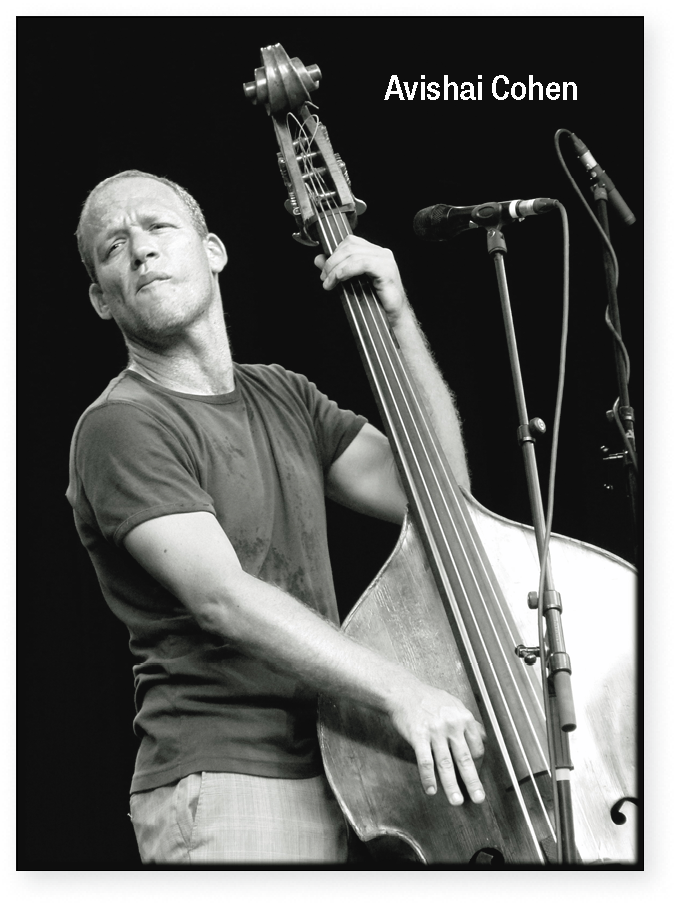
My cousin, also a music geek, offered me a challenge one day. He played me a 20-second sample of bassist (not to be confused with the jazz trumpeter of the same name) Avishai Cohen’s Ever-Evolving Etude from his 2008 album Gently Disturbed, although I didn’t know the title at the time, nor would I have remembered the name. I wasn’t into jazz back then, much less what I was hearing here. It was unlike anything I’d ever heard before. It was unconventional, complex, difficult to parse. The bass and piano threw forth a fury of notes that seemed, to my untrained ear, to have the rhythmic logic and constancy of a person trying to kill a particularly evasive mosquito.

It was chaotic, furious and wonderful.

What kept it grounded for me were the pitches, satisfyingly tonal, and the timbre, new to my ear at the time, of bass and piano playing in unison, to which I am now much more accustomed.

He asked what the time signature was. When I couldn’t figure it out, he said he’d be better off not knowing anyway; how can you enjoy it if you’re counting?

Flash forward six or seven years. I’m in the final year of my music degree and the great New York drummer John Riley is making an appearance at our school. During a large portion of his lecture, Riley deconstructs the very excerpt my cousin had showed me years earlier.

And so, I learned the answer.

I gained a lot from that lecture, but to this day I cannot count the pulse of the Ever-Evolving Etude and certainly couldn’t notate it. Not on my life. And it really is better like that.

As my ears grew (both figuratively and literally), I started to hear Cohen’s music differently. Although I always heard, and still hear, the progressive and fusion elements in it, I started to hear elements of Latin American music; when I hear a heavily syncopated vamp and complex, adventurous percussion, what else comes to mind but salsa? This is especially true on the album Unity, on which Antonio Sanchez, compared by some to an octopus for his remarkable limb independence, is responsible for the drumming.

You can explore Cohen’s music for yourself, in preparation for his Toronto appearance on June 30 at the St. Lawrence Centre.

There’s no shortage of out-of-towners I’m excited to see listed for the festival – among them Laila Biali, Phil Dwyer, Mark McLean’s Playground and Robert Glasper, the latter two of whom I’ve been lucky to see perform in person on more than one delightful occasion – but if I wrote about every single one, I would be here all night.

I also must reluctantly mention that Rich Brown’s rinsethealgorithm, about whom I’ve written in the past, will be playing a reunion show at The Rex on Canada Day after four years apart. I say “reluctantly” because I hate crowds; my rates of happiness are generally inversely proportional to my proximity to strangers’ bodies. Yet I will, and must, bear it for the music: rinsethealgorithm is back, and everyone who wants to know must know. Downbeat at 8pm.

Enjoy the festival, friends. Plan your routes carefully and buy your tickets early. May your ears be well-fed, and may your lines of vision be unobstructed.

Bob Ben is The WholeNote’s jazz listings editor. He can be reached at jazz@thewholenote.com.

Mainly_Mostly_1.jpgIt’s just my luck, isn’t it? It’s just my luck that two weeks after I plug Organic’s weekly engagement at Joe Mama’s in The WholeNote, that that gig shuts down permanently. I don’t know yet what will happen on future Sundays at Joe Mama’s. But hopefully they stick with the theme of high-level musicianship and unmistakable chemistry.

The final Organic session on April 17 was fuller than I’ve seen it in a long time, and I think there’s a lot of irony in that. I think it very loudly says a lot about our responsibility as lovers of live music. But if it wasn’t loud enough, I’ll say it louder: if we, lovers of live music, don’t go out and support the bands we claim to love, then who will? Casual listeners with fat wallets? Fat chance! Jazz concerts are tragically sparsely attended and the only remedy for that is for us to attend.

And I say “us” very deliberately here; I am not innocent in this. I do not attend every show I can, not even all the ones about which I loudly rave. And I don’t always have a good excuse. I know all the good excuses though. I know that life gets in the way, and sometimes it seems like bus fare two ways plus cover charge plus one drink is breaking the bank. I get it. I’m not trying to sit on a high horse, to lecture you, the reader, or to make it sound like not attending concerts is some egregious sin, or to imply that we are personally responsible for every gig that stops (no gig lasts forever, obviously). All I’m trying to say is that if we want to support live music, we should stop taking it for granted and go support live music. We all should. Let’s make it a new season’s resolution.

With that in mind, Justin Bacchus’ weekly engagement is still happening at The Rex for the foreseeable future, and for each Saturday in May the explosive and virtuosic R&B outfit will be joined by the marvellous Stu Harrison. I’ve only heard Stu Harrison three times – once when he sat in for one song at a Sophia Perlman gig, and twice when he subbed in the house band at Lisa Particelli’s Girls’ Night Out. He does not gig or record much, which is baffling to me – though he probably is awfully busy with his work for Merriam Music. When I heard he’d be at The Rex weekly in May, I made my plans immediately. Let’s hope I don’t break them, and let’s hope the whole city gets out to this gig – or some other gig, any gig! – at least once a week this month.

Alex Samaras was introduced to me in the summer of 2012 by a friend who hails from the States and was acquainted with Samaras through their mutual association with a music camp in upstate New York. Samaras, too, was previously written about in The WholeNote, by Ori Dagan, and by myself this past autumn, when I plugged his gig with Bobby Hsu’s A Sondheim Jazz Project, which you can read about in the September issue. Samaras has a voice of clarity, precision, finesse, power and control. He clearly knows a lot about his instrument. It shouldn’t be a surprise, therefore, that he’s also an educator, who teaches voice at the University of Toronto. You can sample A Sondheim Jazz Project’s album, City of Strangers, on YouTube, and you can buy it on iTunes. I have only sampled it (I prefer to buy albums from artists in person), but I can already confidently recommend it.

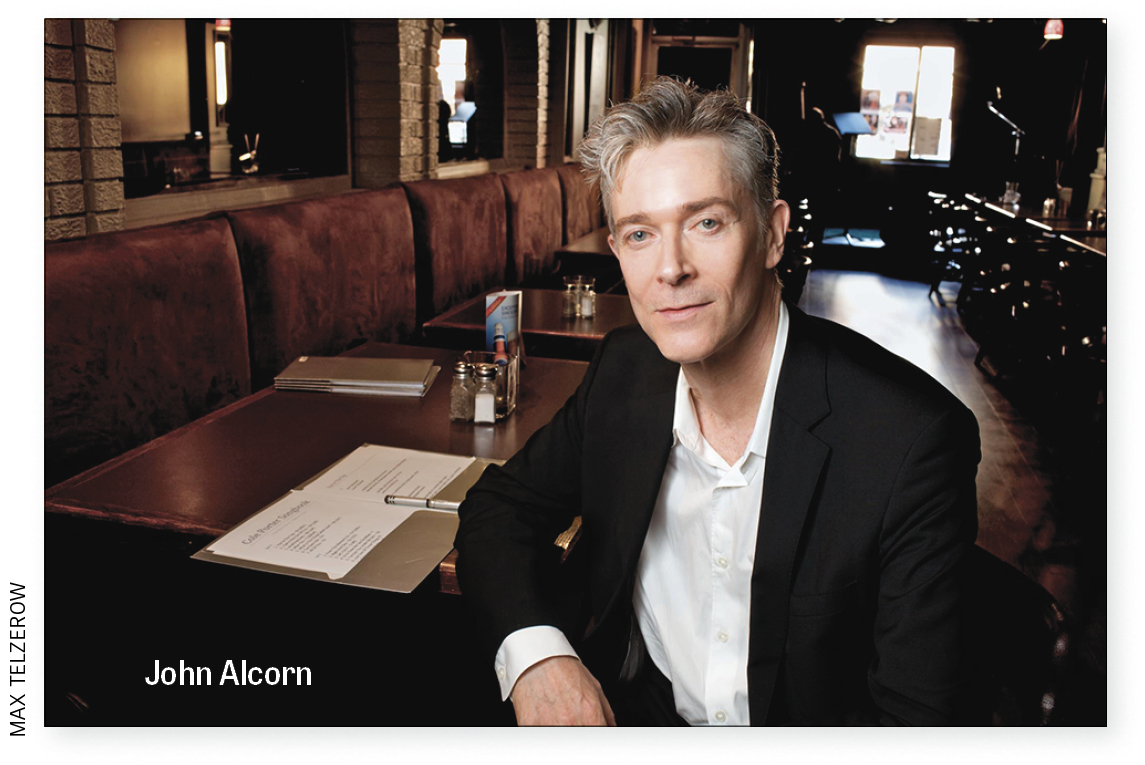
I was only introduced to John Alcorn’s voice recently: this winter. I had asked Mark Eisenman about recordings he had played on aside from his coffee-themed albums recorded with Chase Sanborne (which are also wonderful), and he told me about Flying Without Wings, an album which was reviewed in The WholeNote by Lesley Mitchell-Clarke earlier this year – so I won’t go on about it for too long. The singer and trumpeter on the album are, respectively, Alcorn and Warren Vache. Eisenman had, and I say this affectionately, pestered me about these two musicians before. Each time they’ve had gigs in Toronto in recent years, Eisenman had told me to go, and I had failed to every time. After hearing the album, I will not make that mistake again.

One of my favourite moments on the album comes on the first track, Just One of Those Things, on the final chorus, when Vache and Eisenman are sort of trading response lines in the cracks between Alcorn’s phrases, and Alcorn opens one phrase with a second – literally, one second – of what sounds like the beginning of a scat solo, before diving back into the words. It sounds so spontaneous and unhinged. There is such palpable excitement on the part of all the players, particularly the three responsible for the quasi-counterpoint of the moment.

This seems like a small thing, but something else I really respect about the album is the fact that songs with verses are done with the verse. Songs with beautiful verses which supply the rest of the song with extra clarity, or just emphasis – such as Autumn in New York, A Sleepin’ Bee, and But Not For Me, the latter of which is on Flying Without Wings – are too often performed with the verses omitted. Such recordings are valid and often great, of course, but the kind of fidelity to the song as it was originally conceived, shown by Alcorn, commands a lot of respect, especially when executed, as it is here, with such passion and faculty.

I was thrilled to come across Alcorn and Samaras listed together for the evening of May 22 at Jazz Bistro. They will be accompanied by Mike Downes on bass and Dave Restivo on the Bistro’s Red Pops Steinway piano. This will be the third time the illustrious quartet has appeared together in Toronto, but it will be a first for me. It’ll be a lot of firsts for me, actually. It’ll be the first time I see this particular quartet. It’ll be the first time I see John Alcorn live. If they’re selling CDs, it’ll be the first time I buy an album featuring Alex Samaras.

I’m going to, as I always do when I go to shows at Jazz Bistro, call for reservations the day of the concert, and I’m hoping they’ll tell me the place is almost full and my choice of seating is limited. Can this city collectively make that happen? I’m tired of empty jazz clubs. Let’s make ours unbearably crowded.

Happy spring, Toronto. See you in one club, or another. Or both. Or more.

Bob Ben is The WholeNote’s jazz listings editor. He can be reached at jazz@thewholenote.com.

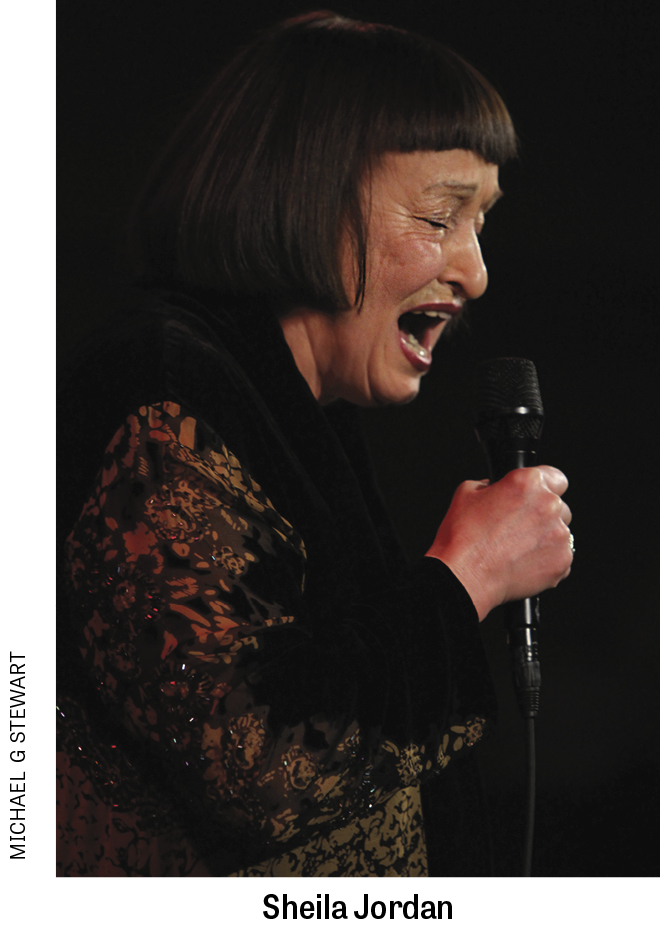
BBB-MainlyMostly1.jpgSheila Jordan. Is it April 1 or April 2 as you are reading this? If so, you should be calling Jazz Bistro to make reservations for tonight for Sheila Jordan’s first appearance in Toronto in, if I’m not missing anything, two years. Almost exactly, in fact: it was near the end of March 2014 when Jordan appeared for three consecutive nights at Chalkers Pub. For two nights she performed accompanied by Don Thompson on piano and Neil Swainson on bass, and on the third night she led a vocal workshop, accompanied by Thompson alone. I was in attendance at all three events, having volunteered, way ahead of time, for door duties.

Sheila Jordan comes across on and off stage as a warm and caring person. You can always tell whether someone has any genuine interest in what other people are saying, or whether they’re waiting for their own turn to talk. Sheila belongs to the former camp. She cares about people. She loves the world. She has a sense of humour and a sense of wonder, and all that is on display when she performs.

When she performs, she’s equal parts singer and storyteller – both during and in between songs. Her songs are both deliberate and spontaneous – rehearsed and subject to change. Each time you hear her sing, it is worth hearing. As the concerts grow chronologically further away, my memories of them become fuzzier. But almost a year ago, I wrote that “In addition to being a genuine and adventurous performer, [Sheila is] one of the sweetest, most infectiously charming people I’ve ever spoken with.” I stand by that.

I bought two CDs while I was there – one of Jordan’s, Yesterdays, which is a duo album with bassist Harvie Swartz, and the Thompson/Swainson duo album, Tranquility, both of which I will recommend wholeheartedly, and the latter of which was reviewed for The WholeNote by the late Jim Galloway earlier that year.

These concerts will take place at Jazz Bistro on April 1 and 2; the cover charge is $20 and dinner reservations are, as I write this, still available.

Nathan Hiltz: The following day, April 3, at the same venue, you can check out Nathan Hiltz’s trio, with Pat Collins on bass and Morgan Childs on drums, playing tunes by one of my favourite jazz composers, and by very far my favourite jazz lyricist, Cole Porter. On some tunes, those lyrics will be delivered by Ori Dagan, in whose mouth those lyrics can be said to be in good hands. Or, around good teeth – whatever you like.

I know I’ve taken up all this space talking about a couple of shows which, more likely than not, are in the past as you read this, so before signing off, I want to direct your attention to a weekly engagement which shows no signs of stopping. If you dig or dug Hiltz’s guitar playing in a trio setting, you may dig him in the organ jazz quartet Organic, which generally features Bernie Senensky on the organ, Hiltz on guitar, Childs on drums, and Ryan Oliver on sax. The band has been together since its genesis over a decade ago, Oliver’s brainchild, and their effortless chemistry makes that more than apparent. They play weekly on Sundays at Joe Mama’s. There is no cover or tip jar, so you can take the money you saved on that and buy more drinks at the bar than you normally would.

Musideum: You’ll notice, if you thumb through the listings this month, that Musideum is conspicuously absent. Early last month, Musideum owner and founder, Donald Quan, announced that the end of March would mark the end of Musideum as a venue for the foreseeable future. Quan is indefinitely – but not necessarily permanently – closing Musideum to focus on other understandably indispensable aspects of his life: his health, his family, his friends and his own musicianship.

Musideum was a remarkable venue, an intimate space in which to interact with other people: as a performer to an audience, as an audience to a performer, or artist to artist to artist. It will remain open as a store for the first few days of April, so I’d encourage anyone who still has the chance to, go now and check it out.

And I hope to see you all soon, in one club or another. Check the listings!

Bob Ben is The WholeNote’s jazz listings editor. He can be reached at jazz@thewholenote.com.

2106-MainlyMostly.pngArtie Roth once said to me – and I’m paraphrasing – that the drummer is the encyclopedia of the ensemble, the player who knows the repertoire most intimately, who can most immediately call up what happened on this chorus of that recording in Febtober of 19whenever. It’s a generalization, of course; all musicians should know these things. And of course, there’s a chance that Artie was saying that so that I’d go home and study the repertoire more. But when I think of drummers like Morgan Childs, or the guy who sits behind that giant bass drum at Grossman’s on Saturday evenings, it fits perfectly.

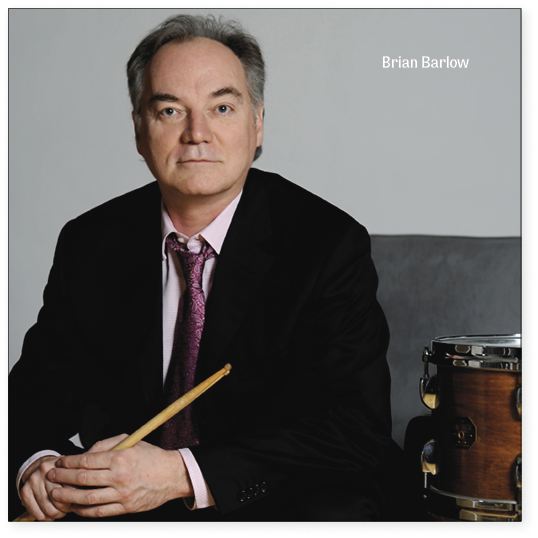
What doesn’t fit perfectly, however, is how few drummers you’ll find leading groups in town in any given month. As far as I know, the only drummer-led groups in the clubs this month are those led by Harrison Vetro, a young talent with a sound that can best be described as crisp, and Brian Barlow. Barlow is someone I’ve only heard live once, with his own big band at the Jazz Festival in 2011. He is a thoroughly seasoned professional drummer and arranger with experience all over the field, having worked with everyone from Ella Fitzgerald and Tony Bennett to Alanis Morrisette and Shania Twain to the Toronto Symphony Orchestra and the Canadian Opera Company. He’s played on dozens of film scores and musical theatre productions. He was a member of Rob McConnell’s Boss Brass. I could go on and on.

Barlow’s gigantic beat is something I haven’t forgotten in the five years since I heard him play in person. His big band was on the main stage in Nathan Phillips Square and his drums were amplified a bit too much. The band opened with some standard tune (I want to say Satin Doll?) at a relaxed medium tempo swing – somewhere around 130 to 140 beats per minute. Barlow played the swing beat on the hihat while feathering with the bass drum, authoritatively, almost but not quite aggressively. It’s said that a drummer’s feathering should be “felt not heard.” Due to the almost indecent amplification, every note played on the bass drum shook my entire body. So, yes, it was felt. Thoroughly felt.

Anyways, I’m looking forward to hearing that huge beat again in a smaller, more intimate, less amplified setting, with a smaller ensemble, at the cozy Home Smith Bar at the Old Mill.

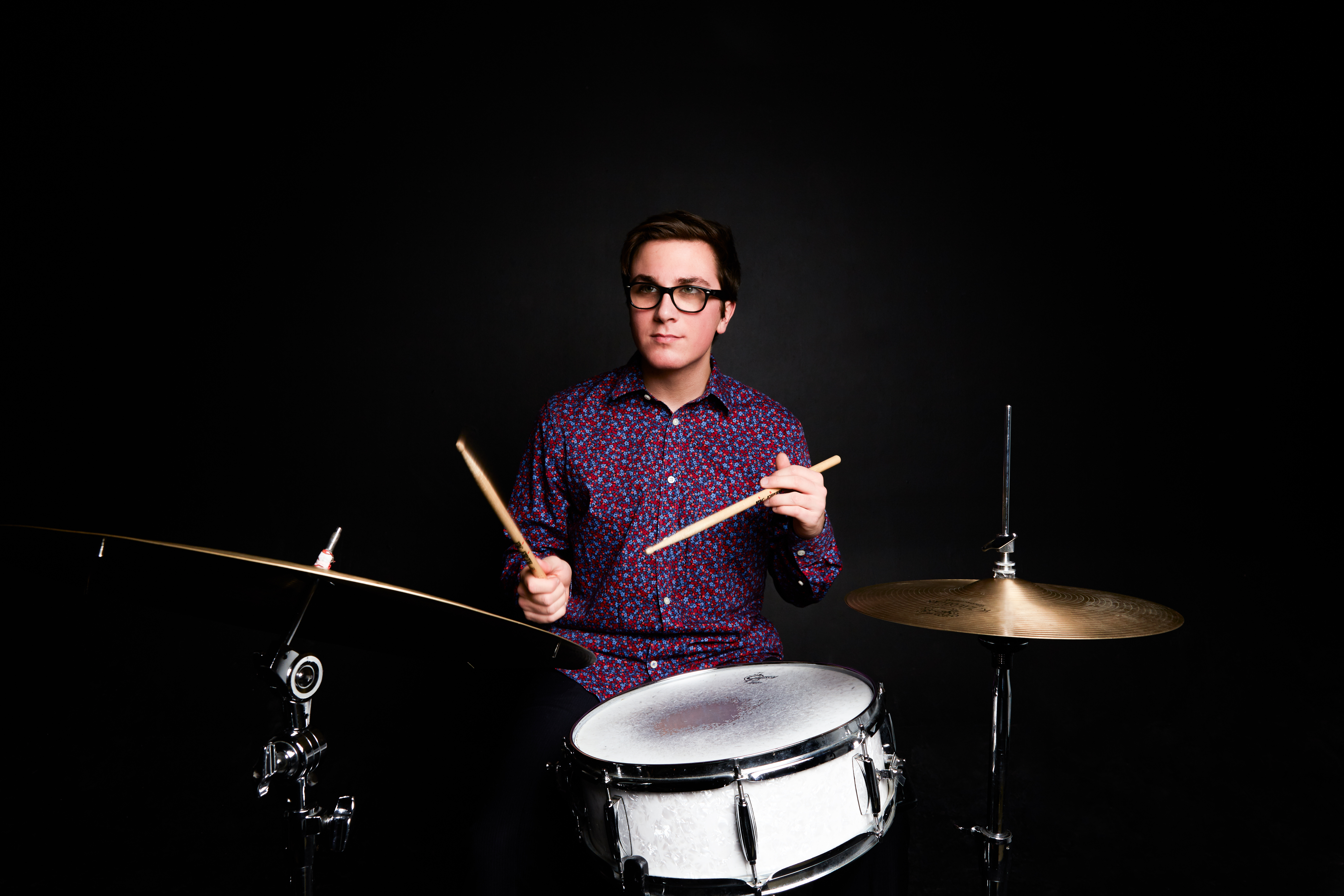
harry-photoshoot-27.jpgHarrison Vetro, the only other drummer-as-leader I’m aware of in the clubs this month, was a classmate of mine at York University. Walking around the halls in York’s music building, you can always hear people practising, because those doors, thick though they may be, are not soundproof by any stretch of the imagination. Drummers who used the rooms at York could be divided into two categories: those who play, and those who practise. Sometimes, you could walk by and hear someone blazing around the drums with (or, you know, without) remarkable speed and accuracy. That was a player. Someone who was in there to keep playing what they already do well. Or just to blow off steam.

Then, there were practisers. If a practiser was in the room, you would know it because you’d walk by and hear them either messing up or playing really slowly or both. You’d hear them playing the swing beat at 40 or fewer beats per minute, or playing some impossible pattern and being slightly less uncomfortable with it after repeating it relentlessly for longer than you could even pay attention.

Someone once said that if you sound good while practising, you’re doing it wrong. That might be a slight exaggeration, but you can see their point: instead of bolstering your strengths (which is also a valid and valuable way to spend your time), the majority of your practice time should be spent attacking your weaknesses. The players who did that, and remained truly disciplined and focused in the practice room, and tolerated not always sounding like a beast, almost invariably grew into the players who sounded more professional, cleaner, more comfortable and more individual than the rest.

Harrison was a practiser. And the cool thing about having been at York, and having known him as long as I have, is that I watched that progress happen. He sounded better every time I heard him. Noticeably better. Even after we no longer went to school together, when I would occasionally hear him on a gig (like when he led the house band at the no longer extant jam at Habits), there would be enough time in between that I would hear that improvement in leaps and bounds, while he, as each individual player does, only heard it in increments.

Harrison Vetro’s group can and should be heard on the evening of March 7 at the Emmett Ray.

Sheila Scats: One more thing to get ahead of, jazz lovers: Sheila Jordan will be in Toronto for at least three nights, starting on the last day of March at 120 Diner with a workshop, and the first two nights of April at the Jazz Bistro. Book it off now, and I’ll see you folks in the clubs, more likely than not.

Bob Ben is The WholeNote’s jazz listings editor. He can be reached at jazz@thewholenote.com.

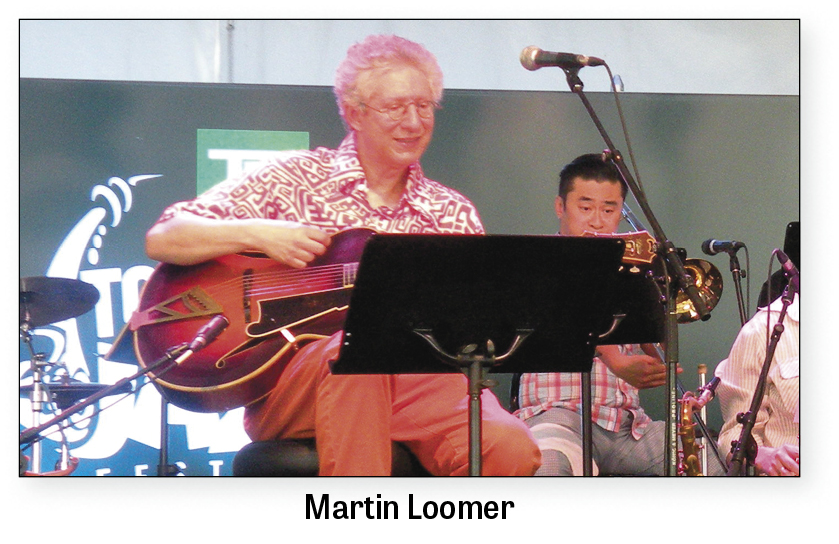
2105-MainlyMostly.jpgCutting through the huge sound of the horns behind him, Martin Loomer plays the appropriate chords in the appropriate order on his electric guitar, laying down the time as authoritatively as any drummer. He wears a contagious grin and what looks to me like a bright orange jumpsuit. Which is super cool. If there’s anything I admire, it’s a loud outfit, and there are few outfits louder than a bright orange jumpsuit.

Martin Loomer’s Orange Devils have a monthly gig, on the second Monday of every month, at The Monarch Tavern. They play music by big bands of the 1930s and 40s, like those led by Count Basie, Duke Ellington, Fletcher Henderson and more, with skill and authenticity.

And who better to bring these charts to life than someone who makes his living as a music copyist?

I first became aware of Loomer through the Orange Devils’ vocalist Rita di Ghent about three years ago – almost to the day – at the end of January 2013. Since then, I’ve chased down the Orange Devils, and Loomer himself, attended several of their gigs and bombarded him with questions, as you do with those more experienced in your field.

I guess I must have asked the maximum number of questions he could answer at a gig or on Facebook, because he eventually invited me and a friend to come to his house to talk about composing and arranging. We convened in his living room, me, my friend, Loomer, his wife Karen, their cats, and a tray of muffins and tea, and we talked about a lot: family, education, cartoons and video games and, even at points, music.

Once we migrated from the living room, Loomer showed us his score collection, which might be the largest number of scores I’ve ever seen in one room, music libraries included. This was a long while ago, but one thing I remember clearly is marvelling at how messy Duke Ellington’s handwriting was.

The Orange Devils combine Loomer's encyclopedic knowledge of the repertoire with the expertise of those sharing the bandstand with him: people like John McLeod, William Carn, and Richard Whiteman  (including, up until recently, the late Dr. Kira Payne who passed away on January 2: Payne doubled flawlessly both on alto and tenor saxophones, and as a musician and an accomplished M.D.; she is missed by the community). Go hear this band with no skepticism. Just go. I have no doubt you will like it.

Turbo Street: Another fairly large band – as distinct from a big band – I’d like to draw everyone’s attention to is Turbo Street Funk. If you don’t know them by name, you might recognize them from their busking days on major street corners around the downtown core, including Queen and Spadina, Bay and Bloor and so on. The band plays a combination of original tunes and pop standards, modern and otherwise, tightly arranged and performed by recent graduates of the big three music schools in the city. Turbo Street Funk will be bringing their outdoor dance party indoors on February 9 at Fat City Blues.

This, friends, is the month when the city begins to thaw. Or, it will be if there is any justice in the world. Come out and celebrate. With any luck, I’ll see you in the clubs. 

Bob Ben is The WholeNote’s jazz listings editor. He can be reached at jazz@thewholenote.com.

Mainly Mostly 1Until this autumn, I’d never been to Grossman’s Tavern for a show. Sure, I’d wandered in a few times in the middle of the day, and heard a song or two if a band happened to be playing. But I’d never made plans with people to go to Grossman’s and make a night of it.

A few weeks ago, on a Sunday, I was wandering in Chinatown and I walked into Grossman’s to find a band packing up their stuff. I asked the musician who seemed the least in a hurry whether there would be more music tonight. He said another band, hosting a blues jam, would be starting in an hour.

So, for an hour I sat alone in Grossman’s, looking around, inadvertently eavesdropping, and sending copy-and-pasted text messages to anyone I thought might be interested: “blues @ grossman’s? bring your ax.” Grossman’s is, like most establishments in Chinatown, completely unpretentious. The sign above the Spadina Avenue entrance is unassuming and easy to miss. The dimly lit room is decorated with posters and photos depicting performers who have played at Grossman’s, and little else. The food is standard pub fare, with no fancy additions or inventive names. The prices are downright affordable. I believe the menu states the total after tax. (I swear they’re not paying me to write this.)

Brian Cober led the 10pm National Blues Jam from the guitar, although the drummer, whose full name I never got, also seemed to have a great deal of sway. The bass player appeared to be a guest. Cober shouted form at the other members of the band, indicating stop time, dynamic shifts and chord changes. Of course, blues tunes generally draw on established conventions, so there was no danger of a train wreck. Had I not been watching, I would have assumed that this group had been playing together for years.

Of those I texted, two showed up. At peak hours, it seemed everyone was a regular but us three. They all knew the protocol, the repertoire and the people. We, huddled in the corner as a little pocket of blues jam novices, played it by ear. One of the two people I drew was a trombonist, and once he saw a bari sax player go up without being called, he did the same (after speaking to a member of the house band at intermission, of course). When I was called up to join the band on the drums, they called tunes I’d never heard before. I know jazz standards; I do not know blues standards. But again, with fairly simple forms, I caught on quick and had a ton of fun. I took a mental note. To do: learn blues repertoire.

One of my friends told me afterwards that they had a Dixieland jam on Saturdays, and that it was poppin’. So, I went; and, oh my goodness, it popped so much. I have rarely seen so many people in a jazz club – and never for a weekly thing. Residency gigs and the like are often, too often, sparsely attended. This jam, on the other hand, was full almost to the point of being a fire hazard. Usually, when I see a jazz club that full, it’s for a trendy band that attracts people of one age group almost exclusively. But here, there were quite literally toddlers and octogenarians on the same dance floor. The best thing about the jam was its overwhelming and palpable positivity. Nobody was isolated from anyone. Everyone danced together. Unprompted, folks introduced themselves to me. One woman was putting her index finger on people’s heads and spinning them like tops.

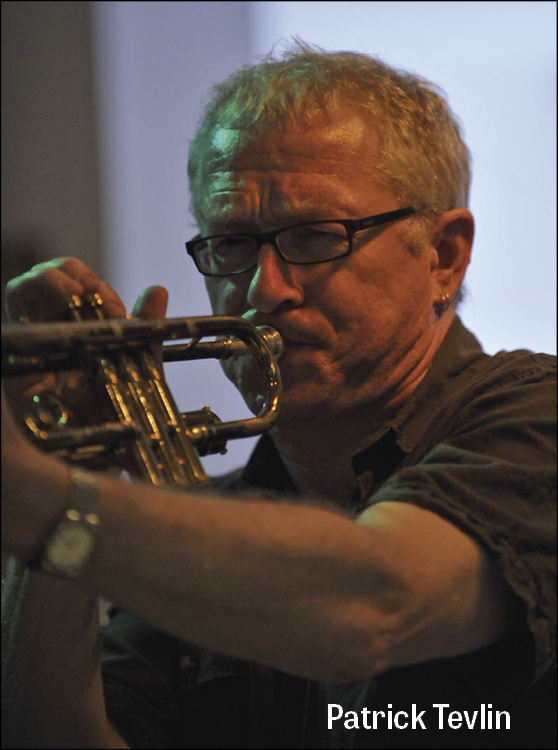
The band was authentic, as far as I could tell. I’m not a Dixieland scholar – which made it a little intimidating when I was called up. Patrick Tevlin, the leader of the house band, the Happy Pals, asked me quite abruptly before I came on stage: “You ever play old style?” I gave him the shortest honest answer that I could: “I can.” I was fairly confident that if I kept it simple, I could get across the vibe that I’d heard on records and shows but never really steeped myself in. I made another mental note. To do: listen to more “old style.”

Tevlin sits in a chair in the centre of the stage with his horn and mic within reach, horn players and guitarists seated on either side. Charismatic and relaxed, he sings the tunes like he was born singing them. When he introduced the band, he included the names of guests. It’s apparent that he thinks of the Happy Pals as a big, ever-expanding family.

The jam culminated in a parade of musicians – with the house rhythm section still on the stage, playing the changes to When the Saints Go Marching In, the horn players – guests included – marched in a circle around the venue. People moved out of the way as they cheered and sang along.

The Happy Pals Dixieland Jazz Jam has been happening at Grossman’s every Saturday for more than 45 years, and shows no signs of slowing down or stopping - certainly not this month. So come on down! Bring an instrument! Just...don’t expect to find a seat. 

Bob Ben is The WholeNote’s jazz listings editor. He can be reached at jazz@thewholenote.com.

Back to top