Well, the holiday season, with all of its almost overlapping rehearsals and concerts, is past history. Then, like mother nature (with the exception of her one or two nasty outbursts), the community ensemble scene lapsed into a tranquil, semi comatose state of inactivity. We have not heard of a single event scheduled for January or early February. Then, well after Groundhog Day and Family Day have past into history, we see the awakenings of a new season.

The first musical events for the season brought to our attention are not concerts, but are still events of considerable interest to members of community ensembles. Long and McQuade will be presenting no fewer than five free clinics on successive Saturday afternoons starting February 4. If you play clarinet, saxophone, trumpet or trombone, check for details at bloorband@long-mcquade.com. The two which particularly caught my attention were sax and trumpet. If you have never seen or heard contrabass, sopranino or soprillo saxophones, here’s your chance. The AllSax4tet will be performing on eight different sizes of saxes. As for the trumpet session, it will feature none other than the incomparable Doc Severinsen, leader of the Tonight Show Band for 30 years. Yes, he’s still actively performing.

The other noteworthy event is “International Horn Day 2012” presented by the York University Department of Music on February 10 at 7:30pm. This will feature Jacquelyn Adams with Clifton Hyde, guitar and Jeff Butterfield, drums, plus horn ensembles of all levels from across southern Ontario, including the Toronto Symphony horn section, Tafelmusik horns and more. See the listing section for details.

Two concert offerings which have come to our attention break with tradition in quite different ways. The first of these will be The City of Brampton Concert Band’s “Heroes and Villains” on Saturday, February 25. The concert will focus on the theme of heroes and villains in the broad sense of its many manifestations in life, history, nature, literature and art. Director Darryl Eaton has assembled a fantastic range of guest artists to help explore these concepts in musical terms. Perhaps the quirkiest will be William Snodgrass performing a whimsical version of The Flight of the Bumblebee as a percussion solo. For more details check their website at www.bramptonconcertband.com.

The second of these concerts with a different approach will be that of the Markham Concert Band. In a departure from more traditional programming, conductor Doug Manning decided to focus on works composed and/or arranged by Canadians. As an added feature, no fewer than four of these composers and arrangers will be in attendance. In the audience, to hear their compositions performed, will be renowned trumpeter Johnny Cowell and saxophonist Eddie Graf. As for the other two composers, they are band members Sean Breen and Vern Kennedy.

A long time member of the Toronto Symphony, Cowell also made his mark as a composer in the popular field. In fact, in the early 1960s Cowell had more compositions on the Hit Parade than anyone else. Two of his compositions were number one on the charts world wide. Walk Hand in Hand, now a wedding standard, and Our Winter Love are still popular today, almost 50 years later.

Graf was a band leader in Canadian Army shows in England and Europe during World War II. On his return to Canada, he led his own big band and was responsible for writing, arranging and conducting for many CBC shows. Now in his 90s, Graf is still playing and turning out fine compositions and arrangements.

Kennedy, composer and singer, had a long history with such CBC shows as the Juliette Show, Wayne and Shuster and the Tommy Hunter Show. In addition to playing trumpet in the band, Kennedy is a founding member of the Canadian Singers who will also be appearing in this concert. Originally an octet and now a vocal quartet, this group was established in 1994 with the goal of singing music by Canadian composers. They will sing works by both Cowell and Kennedy in this concert.

The fourth of the composers featured, and the youngest, is Breen. Still in his early 20s, Breen has been composing since his early days in high school. He plays baritone saxophone in the band, and will conduct his own Symphonic Overture for Winds.
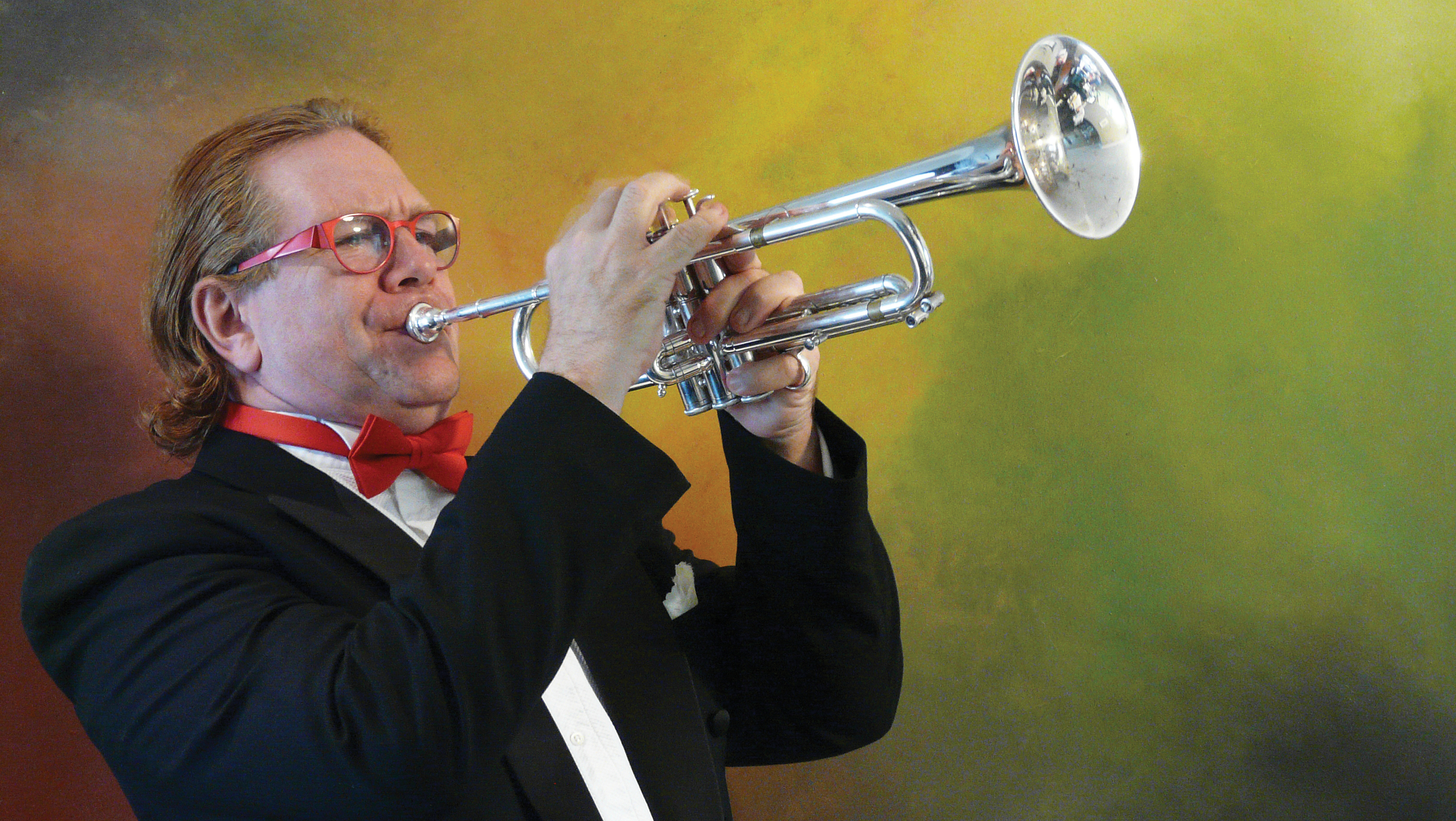
29Featured soloist for this concert will be trumpet showman John Edward Liddle. An honours graduate of the acclaimed Humber College music programme, for the past 30 years Liddle has pursued a varied musical career. From principal trumpet and soloist with many orchestras and concert bands in the GTA to smaller chamber groups as well as latin, jazz and dance bands, he has explored all facets of the trumpet repertoire. In his spare time Liddle conducts the Etobicoke Community Concert Band, the North York Concert Band and the Encore Symphonic Concert Band.

Among other works, Liddle will perform Graf’s three movement Trumpet Rhapsody and Cowell’s arrangement of La Virgin de la Macarena by legendary trumpeter Raphael Menez. In Cowell’s original composition Roller Coaster, a work for trumpet trio, he will be joined by band members Kennedy and Gord Neill.

We usually don’t receive much news about the concerts or other activities of the reserve military bands in Toronto, but one event has come to my attention that warrants mention. It’s a special “Veterans Appreciation Concert” by the naval reserve band of HMCS York. My career in the navy, which spanned a good many years in a variety of roles at sea and ashore, had its origins in music. It so happens that, while still in high school, I was enticed into a naval reserve band with the exalted rank of “Probationary Boy Bandsman.” While my time in the navy after high school did not involve music, I have always had a soft spot for naval and marine bands. This concert by the HMCS York Band will take place on Saturday, March 3 in Ajax.

Finally, I would be remiss if I didn’t give an update on New Horizons Band activities. Locally, the Long and McQuade bands have now grown to four. Starting with one beginners group in September 2010, they have grown to two daytime and two evening groups for beginners and intermediate players now numbering 100 members. Now, under the umbrella of the University of Western Ontario New Horizons Band, a New Horizons Band Camp is scheduled for July at Brock University in St. Catharines. The intent is to bring together musicians from Canada and the U.S. as a way of celebrating the 200th anniversary of the War of 1812. I’m sure that we’ll have more details in future issues, or visit
www.newhorizonsmusic.org.

On a more serious note, it is with great sadness that we note the passing of Bette Eubank, a long time member of the Northdale Concert Band. In addition to playing as a regular member of the band’s flute section, Bette was always there when someone was needed to perform the many thankless non-musical jobs in the band. Bette also devoted much of her time to entertaining in seniors’ homes where she developed a special rapport with the residents. She departed much too early.

Definition Department

For the past couple of years we have featured a variety of wacky musical terms in this spot. For a change, this month’s is one that I encountered recently during a rehearsal. It is: Passissimo. I got no help from Grove’s Dictionary of Music and Musicians, the Oxford Companion to Music or such websites as www.MusicTheory.org.uk or www.thefreedictionary.com. Can anyone help?

Jack MacQuarrie plays several brass instruments and has performed in many community ensembles. He can be contacted at bandstand@thewholenote.com.
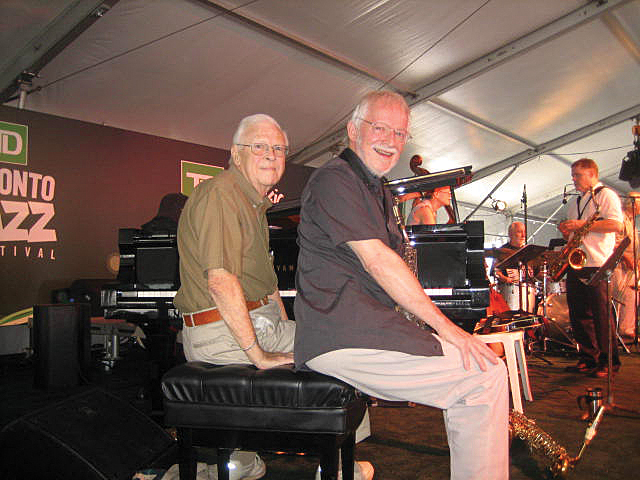
26This month’s article is a bit more serious than most of my contributions. The year began with the loss of a friend when Ian Bargh died on January 1. And with him went a treasure trove of musical know-how, a knowledge of the great standard song repertoire, including rarities that hardly anyone else knew, and the ability to interpret them, turning them into musical gems.

He also had that most desirable of qualities in a jazz musician: a sound of his own, a personal stamp that he put on everything he played.

A Scot and, like myself, born in Ayrshire, Ian in many ways was typical of the breed: careful with money, hard working, a bit of a rough diamond, but under it all, generous and sentimental.

In the last few years he and I talked quite often about death and we always agreed that we would not want a lingering end to life. Well, the end did come quickly for Ian. We came home at the beginning of last December from a cruise on which my band, the Echoes Of Swing, was playing. Ian, as they say, played his buns off and the smile on his face told us all just how much he was enjoying himself.

A month later and he was gone from us, but not in spirit, for a part of him will always be there for those of us who knew him, and his music will live on through his recordings.

Like the rest of us, Ian did have his idiosyncrasies and he certainly could have his grumpy moments when he saw the world through dark coloured glasses. I remember one occasion when, for a joke, I gave him a bottle of Famous Grouse scotch whisky. Somehow it seemed more appropriate than a sweet sherry!

I mentioned that Ian had “a sound.”

No single musical element identifies jazz musicians more than their personal sound — a sound that represents the individual. In the arts, a personal identity is something that any artist should strive for whether it be in the visual arts, literature, theatre or, of course, music. In jazz, Armstrong, Bechet, Lester Young, Bud Freeman, Miles Davis, Clifford Brown, Jack Teagarden, Pee Wee Russell and “Red” Allen are only a few who had a personal sound that makes them instantly recognizable.

The American composer, author, historian and musician, Gunther Schuller, had this to say on the subject: “It is up to the individual to create his sound, if it is within his creative capacities to do so — one that will best serve his musical concepts and style. In any case, in jazz, the sound, timbre, and sonority are much more at the service of individual self-expression, interlocked intimately with articulation, phrasing, tonguing, slurring, and other such stylistic modifiers and definers.”

In simpler terms, be your own person.

The late veteran trumpet player Sweets Edison also had his views on the subject when speaking about the early jazz greats. In his opinion, most of the musicians in those days were artists. They were individualists and had a sound of their own. If Billie Holiday sang on a record you’d know it was nobody but Billie. Louis Armstrong could hit one note on a record, and you’d know it was Louis Armstrong. Nobody sounded like Lester Young, like Coleman Hawkins, like Bunny Berigan, like Benny Goodman, Chu Berry, Dizzy Gillespie. They all had a recognizable sound.

More recently, Gary Smulyan, winner of the Downbeat critics’ poll in 2009 and 2011 for baritone sax, said that sound comes before everything ... If you listen to just the tenor saxophone — John Coltrane, Johnny Griffin, Joe Lovano, Chris Potter, Don Byas, Ben Webster, Coleman Hawkins — they all play tenor saxophone but you know who they are immediately. And to Gary, that’s the defining thing. “I’ve given a lot of thought and a lot of practice to try to really develop a sound that’s personal and unique to me” he says. “I mean you could be a great technician but if you don’t have a good sound no one’s going to want to hear you … And it’s really the identifying characteristic of who you are as a musician. And your sound is not in the instrument … The sound is something that you carry within your very being and that’s what comes out. So take someone like Sonny Rollins. I think that if you gave Sonny Rollins 50 different tenor saxes, 50 different reeds and 50 different ligatures, he’s going to sound like Sonny Rollins, with some variation because maybe the instruments aren’t comfortable … But essentially what’s going to come out is Sonny Rollins … and I tell that to my students. I say, ‘Don’t look for the magic instrument, because there’s no magic instrument.’”

I don’t mean to suggest that one should slavishly imitate one musician. As the saying goes, when you copy from one person that’s plagiarism, but if you copy from everybody it’s called research and every jazz musician is a product of what he or she has listened to and absorbed. Some musicians say they get ideas about their sound from players who don’t even play the same instrument as they do. It’s more about concept, phrasing and note choices.

It’s the same magic that makes a melody stick in our head, and the same magic that makes a particular improvised solo a classic.

And that takes us back to Ian Bargh and the very elusive personal touch he brought to his music.

Finally, if we look ahead to the beginning of next month, on March 7 at 5:30pm in the Richard Bradshaw Amphitheatre, Four Seasons Centre for the Performing Arts, one of our great Canadian musicians who has the magic in his music will be performing. His name? Guido Basso. He, along with another master musician, Don Thompson, will present a free concert of jazz classics and originals. If you are lucky enough to be there you will hear what the words in this month’s column have tried to describe.

Meanwhile, happy listening and try to make some of it live music.

Jim Galloway is a saxophonist, band leader and former artistic director of Toronto Downtown Jazz. He can be contacted at jazznotes@thewholenote.com.

If i had to pick one musical scale to take with me to a desert island, and the only choice was between an elegantly crafted Schoenbergian twelve-tone row and a plain old blues scale, I’d quickly grab the blues scale before they tossed me off the ship.

The noble musical experiments of Schoenberg and other modernist composers were enormously influential within academic and concert circles. But while these august types were busy out-moderning each other, blues and other African-derived musical styles — jazz, rhythm and blues, and hiphop, to name only several — colonized the world, holding sway in a manner akin to the complete cultural dominance of Italian music in Europe from the 16th to the 18th centuries.

February is Black History Month, and this column is going to depart from its usual listings format to explore this phenomenon in some depth. Black History Month was originally conceived as a week-long celebration encompassing the February birth dates of American abolitionist Frederick Douglass and president Abraham Lincoln. In modern times it has become an occasion for the people of the African diaspora to celebrate their history of struggle and triumph, and their formidable achievements.

One of these achievements is the degree to which African-derived techniques are part of the DNA of popular music. When yet another well-scrubbed American Idol contestant launches into a showy fusillade of vocal melismas, they are echoing (but rarely surpassing) the vocal work of Stevie Wonder. (Also a notable composer, Wonder’s work is so innovative that it has barely been picked up by anyone, but that is another story). Any good professional bass player builds on the nimble, inventive lines of genius Motown bassist James Jamerson. Fletcher Henderson’s swing orchestra arrangements are the Well-Tempered Clavier of jazz orchestra studies. In a musical sense, every month is Black History Month, whether we consciously perceive it or not.

Classical musical studies largely continue to ignore African-derived musical techniques, leaving graduating students unequipped to deal with large areas of musical endeavor and employment. It is as if drama students were taught to execute Shakespeare, Racine and classical Greek drama, but were sheltered from Beckett, television and film. Classical vocal students grapple with the demands of 20th century vocal writing — often absurdly ill-wrought for the voice — but are given no thorough stylistic understanding of jazz or blues.

It is in this area that choirs have been something of a vanguard. Choral groups often have to be stylistically diverse, and classical choirs have been executing choral arrangements of spirituals since the beginning of the last century. Singing African-derived music with European technique and aesthetic remains a trap, but choral directors are increasingly applying performance practice techniques to this music, doing the listening, research and technical practice that leads to more authentic and appropriate performances.

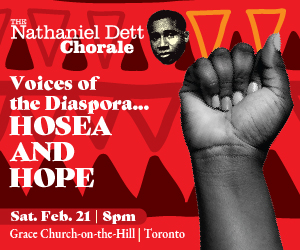
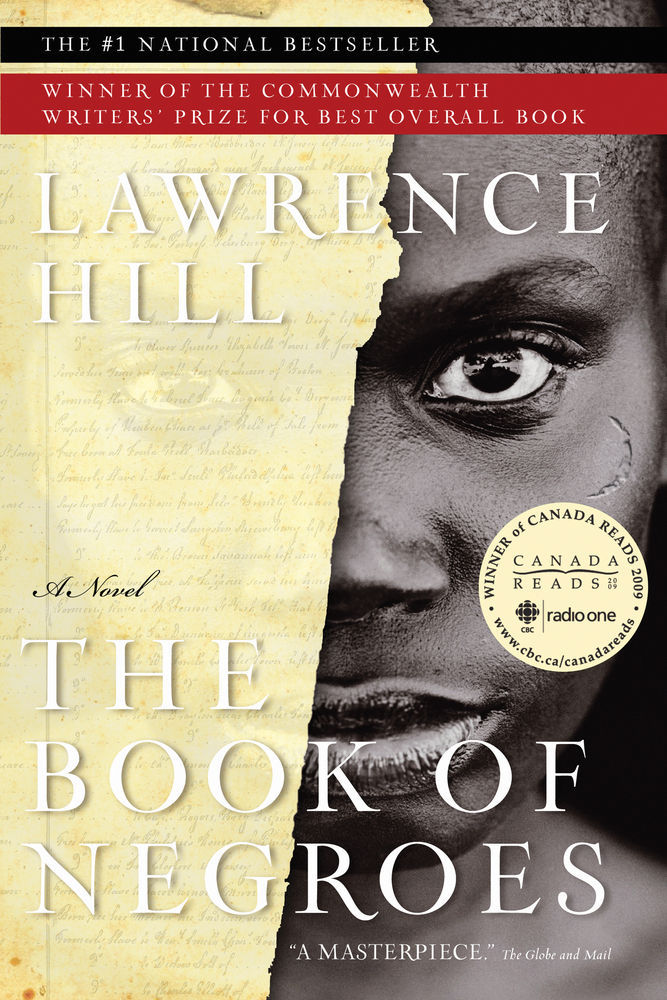
25_choral_book_of_negroes_tpbToronto’s Nathaniel Dett Chorale, founded in 1998 by Brainerd Blyden-Taylor, has provided strong leadership in this area. Named for an African-Canadian, Drummondville composer who made his career in the USA, the NDC has consistently programmed interesting and unusual works. On February 14 they team up with writer Lawrence Hill for “Voices of the Diaspora: The Book of Negroes.”

The concert is named for Hill’s book, which is named, in turn, for an actual document created in 1783. The Book of Negroes was a list of 3000 African slaves, evacuated by the British from the USA to Nova Scotia, which was still a British dominion. Hill blends historical incident with a wrenching story of a slave family trying to stay together in the midst of political tumult and violence.

The Book of Negroes has been an international success for Hill, who will read excerpts from the novel, interspersed with music from the NDC. Works by Dett himself will be featured, along with music by Haitian composer Sydney Guillaume and Canadian composer Brian Tate. Jazz pianist Joe Sealy will also perform excerpts from his celebrated Africville Suite, that pays tribute to the African Nova Scotians of Africville, who contended with prejudice and neglect until the final destruction of their community and forced eviction of its residents in the mid-1960s.

Hill’s and Sealy’s involvement in this concert highlights another problematic issue, which is the degree to which Canadian art must fight for space in Canada. Sharing a common language and history, our cultural landscape is swamped by our American neighbour, and while most musicians (and film-goers and politicians) yield willingly to the artistic tidal wave, it is always heartening to see Canadian artists carve out a space for their own ideas and dreams.

(A personal note: In grade 9 English, my daughter, along with too many other Ontario high school students, is currently being subjected to Alabama-born writer Harper Lee’s To Kill a Mockingbird. This book — the literary equivalent of warm milk and cookies for self-congratulating American progressives of a bygone era — should have been retired from our curriculum years ago. Lawrence Hill’s trenchant thoughts on the subject can be read here: www.thestar.com/article/684933.)

Hill’s The Book of Negroes — fiction informed by ground-breaking research — puts him in the fine Canadian tradition of Pierre Berton, who wrote history with the sweep and dash of good fiction. As Berton did, Hill is “shining a little light” to help his fellow Canadians understand more about themselves.

Other concerts of interest on the horizon:

On February 23, the Orpheus Choir of Toronto performs a free noontime concert at Roy Thomson Hall in a concert series that is one of the hidden gems of the Toronto choral scene.

On February 24 and 25, the Soweto Gospel Choir visits the city. Check out this clip:

On February 25, the Scarborough Philharmonic Orchestra teams up with the Toronto Choral Society to perform Brahms’ Requiem and Schubert’s Eighth Symphony, the “Unfinished.”

On March 3, the Jubilate Singers perform an all-Argentinian programme: tango composer Astor Piazzolla, Carlos Guastavino and others. The concert will also feature tango dancers from Club Milonga, accompanied by the Tango Fresco ensemble.

Also on March 3, the Toronto Chamber Choir performs “Gibbons: Canticles & Cries.” Orlando Gibbons was one of the greatest composers of the English Renaissance. Not to be missed!

Ben Stein is a Toronto tenor and theorbist. He can be contacted at choralscene@thewholenote.com. Visit his website at benjaminstein.ca.

The collective of black artists (COBA) kicks off Black History Month with a concert titled “Les Rythmes de la Forêt,” running from February 3 to 5, at the Fleck Dance Theatre, Harbourfront Centre. Founded 19 years ago, COBA has been at the local forefront of the creation and production of stage works that reflect Africanist social themes and perspectives. Using storytelling, music and drama interwoven with dance, the programme presents a suite of dances from sub-Saharan Africa accompanied by traditional drumming and singing. The production aims to represent social and ritual events in peoples’ lives including rites of passage, initiations, harvest, and moments of joy and celebration.

Harbourfront Centre itself joins in celebrating the African experience in its Kuumba festival by exploring “African roots through a 21st-century perspective.” This year the festival highlights the essential role women have played in shaping Black culture. For three days, February 3 to 5, the festival offers storytelling, fashion, film, dance, round table discussions, food, exhibitions, workshops (some musical) and children’s activities. And, of course, concerts.

A sampling: On the afternoon of February 4, join instructor Lua Shayenne in a workshop of traditional African and Afro-contemporary dance and music. Later that evening join Dr. Jay de Soca Prince on the Centre’s rink for “DJ Skate Night”— a novel Toronto combination of Trini and “skate culture.” If Ice T is more your speed than ice skating however, check out Jamaican DJ and Dub pioneer Clive Chin’s “Celebration of Jamaica’s 50th Anniversary of Independence Through Reggae” next door at Harbourfront’s Lakeside Terrace. Later, at 9:30pm, the music gets “urban” with the Known (Un)Known, a showcase of fresh local talent embracing various current African American music streams, including singer Rochelle Jordan. Vibe Magazine dubbed her the “female version of Drake.”

23Kuumba continues on Sunday, February 5. At 1pm you have a rare opportunity to explore Guinean drum-playing techniques in a workshop with Alpha Rhythm Roots, a Toronto-based company introducing the music, dance, traditions and culture of the West African country of Guinea to Canada. Then at 3:30pm, join the award-winning Pan Fantasy steelband in “Trinidad and Tobago’s 50th Anniversary of Independence Celebration.” Playing strong for 26 years, North York’s Pan Fantasy, directed by Wendy Jones, will be performing a repertoire of “classic” and contemporary calypsos. As T & T’s musical gift to the world, steel pan’s worth is possibly matched only by the calypso musical tradition. Pan Fantasy will feature homage to the patriarch calypsonian, The Mighty Sparrow, justly dubbed “King of the Calypso World.”

EMBERS: From February 9 to12, across the Harbourfront parking lot at the Fleck Dance Theatre, Toronto’s Arabesque Dance Company and Orchestra presents its production of “Jamra,” Arabic for “embers.” The live 12-piece Arabic orchestra features the rich voice of Bassam Bishara. It provides a lush musical underpinning for Arabesque’s newest production that includes over a dozen dancers. The company is led by the distinguished dancer, veteran choreographer and artistic director, Yasmina Ramzy. Among our city’s prime movers on the world dance scene, Ramzy has established what is arguably Canada’s leading Middle Eastern dance and music ensemble. Critics have praised her for taking “belly dance to another level.”

LATIN GUITAR: Playing the February Valentine card, Latin guitarist Johannes Linstead and his group join forces with flamenco guitarist Antonitas D’Havila in a concert titled “Valentine Fiesta Romantica.” The “romance and Latin passion” will be on display on February 8 at Coconuts Restaurant & Lounge Night Club and again on February 10 at the Latin Fever Night Club. Johannes Linstead, awarded the title of Canada’s Guitarist of the Year, has earned international recognition for his best selling albums in the instrumental and world music sales categories. His partner on the bill, Antonitas D’Havila, is a renowned Romany flamenco guitarist, specializing in an intense, bravura style. If you miss those concerts you can still redeem your Valentine mojo with your beloved a few days later when D’Havila performs at the Trinity-St. Paul’s Church, on February 17.

YASMIN: On February 11, the Royal Conservatory presents a concert by Yasmin Levy and Omar Faruk Tekbilek at Koerner Hall. The headliner is the Israeli Ladino (Judeo-Spanish) singer Yasmin Levy who has won high praise for her vocalism that also engages the fiery heart of flamenco. Songlines wrote, “every colour and pitch in her remarkable range and the resulting vocal pyrotechnics are unforgettable.” The brilliant Turkish born multi-instrumentalist Omar Faruk Tekbilek’s 40-year career has taken him on a global journey. His nonstop recording and touring activities place him among a small cohort of pioneer “world musicians.” I performed with Omar years ago, but distinctly recall the intimate bond he wove with the audience in his solo spot.

The RC’s Middle Eastern Music Series resumes the next day, (February 12), 3pm, at the Mazzoleni Concert Hall, with composer and pianist Malek Jandali in a programme inspired by the folk and ancient music of Syria, incorporating both Arabic and Western musical elements. The music on his new CD Echoes from Ugarit, featured on this concert, is arguably the most ancient “world music” in my column this month. It is inspired by the oldest known music notation in the world, dating to the fourth century BCE, discovered in the ancient Syrian city of Ugarit.

BATUKI: On Saturday February 11, the Batuki Music Society continues this month’s Black History theme with its “Ethiopia: A Musical Perspective” at the CBC’s Glenn Gould Studio, an ambitious expedition into Ethiopia’s musical culture starting from the music of the Azmaris, professional bards who recite stories and comment on social issues through song, moving on to varied pentatonic regional musical genres, and ending with Ethio-jazz, an exciting modern hybrid. Ethiopia, the only country on the African continent never colonized by Europeans, has a long and illustrious history. What better place than Toronto, with the largest Ethiopian population in Canada, to showcase the various musical instruments and wealth of Ethiopian expression? The musicians taking the audience on this deep journey include Girma Wolde Michael, Fantahun Shewankochew, Henok Abebe, Martha Ashagari and Gezahegn Mamo.

CONVERGENCE: Setting our sights beyond the GTA, on February 16 the University of Guelph presents the culturally diverse Convergence Ensemble with Gerard Yun playing shakuhachi, didgeridoo, and native flute, Kathryn Ladano on bass clarinet, and pianist Sandro Manzon.

SOWETO GOSPEL: Back downtown at the Sony Centre for the Performing Arts, the inspirational two-time Grammy and Emmy Award-winning Soweto Gospel Choir returns on February 24 and 25. With a new show titled “African Grace,” the Choir’s 24 singers, dancers and musicians will heat up the dreariness of late February with their joy-filled repertoire.

PAVLO: Also on February 24, multi-award winning Greek-Canadian musician and composer Pavlo performs at Roy Thomson Hall. Billed as the local stop on the Six String Blvd World Tour, the evening will appeal to the legions of fans who have made Pavlo the “most successful independent artist to come out of Canada, performing 150+ shows per year,” according to his website. On his ninth album, Six String Blvd, Pavlo has gone global inviting “the world’s most exotic instruments into his classic Mediterranean sound.” Presumably the ney, erhu, bouzouki and sitar on his CD will be there.

SEPHARDIC DIASPORA: March 1 the York University Department of Music’s World at Noon concert series features “Songs and ballads of the Sephardic Diaspora” by a leading specialist in that repertoire, singer Judith Cohen. It’s at the casual Martin Family Lounge, 219 Accolade East Building.

MUSIDEUM: The new Coffeehouse Concert Series at the low-keyed and intimate downtown venue/retail store Musideum keeps surprising us. Its delightfully eclectic programming continues with a world music spin on March 3 with the group Medicine Wheel, “bringing together a world fusion of music for the soul.” Leader David R. Maracle on native flutes and hang drum is joined by Donald Quan on guzheng, keyboards and tabla, and guitarist Ron Bankley. Percussionists Richard Best and Rakesh Tewari add the metric frame, propulsive energy and accents.

Andrew Timar is a Toronto musician and music writer. He can be contacted at worldmusic@thewholenote.com.

“It’s such an incredibly simple instrument. You can hold philosophical, physical or constructional arguments against this view, but it still won’t change the fact that it is, in its very heart of hearts, an incredibly simple instrument. And yet it is so hard to make it sound beautiful. That is what makes it so fascinating. You start practising and it sounds ridiculous. It is the most amazing challenge to create a small, but personal musical universe with this instrument.”

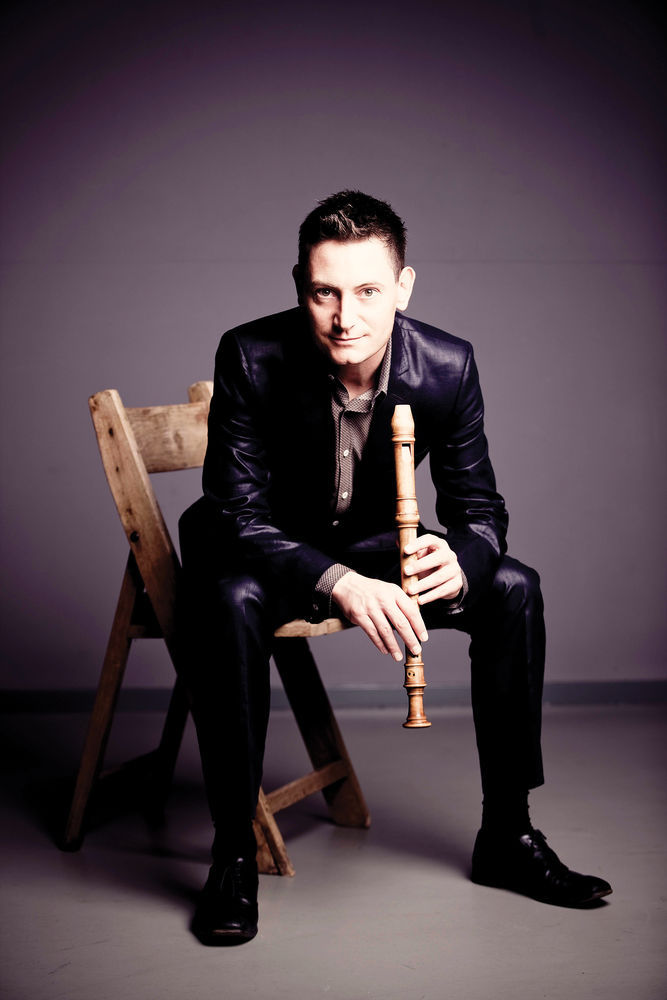
The subject of this description — the recorder — is an instrument that I personally find very beautiful. I love the organ-like chuff of its breath in consort, and the purity of its angelic voice in solo repertoire. If you’re of like mind, you’ll be very pleased at the prospects before you this month; if you are not, well, be prepared to be converted, as not one, but two internationally famous virtuoso recorder players are performing in Toronto, one at the beginning of February and one near the end. The details:

21The comment which begins this article was uttered by a truly amazing musician, the Swiss virtuoso Maurice Steger, who appears near the start of the month. Steger has been called “the Paganini of the recorder”; one concert review states that he’s “unquestionably an artist operating to the furthest boundaries of what is technically and tonally possible on the recorder.” Several reviews about him mention the spontaneity of his technique — arising, no doubt, from the challenge he gives himself to create a “personal musical universe” in the music he plays. He’ll be displaying his uncanny abilities in music by Telemann, Sammartini and Geminiani, in a concert which also features the wonderful chamber orchestra Les Violons du Roy. With music director Bernard Labadie, Les Violons will contribute music by Handel and Geminiani. The performance takes place on February 5 at Koerner Hall.

When one considers touring recorder players, one can’t help thinking of Marion Verbruggen, the celebrated Dutch virtuoso who has brought the warmth of her personality to audiences all over the world for many years. With her sheer good-natured presence and verve as a performer, I think she could win anyone over to the love of the recorder. She’s back in Toronto to add a colourful presence to Tafelmusik’s “Virtuoso Vivaldi” concerts, which feature a splash of concertos: mandolin, viola d’amore and lute, cello, bassoon, and recorder played by Verbruggen. Except for the Concerto for Recorder and Bassoon by Telemann, the music is all by Vivaldi. These concerts will take place on February 21 at George Weston Recital Hall, and February 23 to 26 at Trinity-St. Paul’s Centre.

So many musical treasures this month, with some of them unfortunately occurring on the same evening:

• February 8 to 12: One of Tafelmusik’s biggest and most ambitious artistic creations to date, “House of Dreams,” is the latest of Alison Mackay’s multi-media programmes. The audience is taken to five European cities where baroque music and art intersect. Stunning images, paintings and a concert played from memory make this truly a tour de force.

• February 17: “Anger Management,” in the hands of I Furiosi, means subtle procedures such as calling up the spirits of the dead to exact revenge on one’s enemies. With guest, mezzo Laura Pudwell, this will be “a concert of anxiety and discord” — but undoubtedly with some exquisitely performed and lovely music.

• February 18: “Fresh Baroque” are almost the first words to appear in the Aradia Ensemble’s website. Their February concert is no exception, combining glorious instrumental and vocal music from 17th- and 18th-century Venice with newly-composed works by Rose Bolton and Chris Meyer (winner of last season’s Baroque Idol competition). As well, the freshness of youth appears in the participation of the Toronto Youth Chamber Orchestra, led by violinist Elyssa Lefurgey-Smith.

• February 18: Another of early music’s shining lights is in town, for Scaramella’s concert “The Angel and the Devil.” Gambist Liam Byrne currently resides in England and is professor of viola da gamba at London’s Guildhall School of Music and Drama. He’s also in great demand as soloist and ensemble musician. Scaramella’s programme features music by rival viol players from the French Baroque — Marin Marais (who played “like an angel”) and Antoine Forqueray (possessing the virtuosity of “the devil”). Liam’s collaborators are harpsichordist Sara-Anne Churchill and gambist Joëlle Morton.

• February 18: Intriguing mini-dramas, stories of the interaction of nymphs and shepherds, make for a delightful programme of duets and dialogues from the 16th and 17th centuries as the Musicians In Ordinary presents “When Tircis Met Chloris. Soprano Hallie Fishel and theorbist John Edwards are joined by guest tenor and baroque guitarist, Bud Roach.

• February 19: in Kitchener: Spiritus Ensemble, dedicated to the performance of great religious music, presents an “All-Bach Concert” of two cantatas, the Magnificat in D, and the Sinfonia from Cantata 29.

• February 19: In their programme “The Art of Conversation,” the Windermere String Quartet, on period instruments, explores Goethe’s comment on the string quartet: “One hears four rational people conversing with one another.” They’ll illustrate this thought with works by Haydn, Mozart and Boccherini.

• February 24: Two of the Canterbury Tales are interspersed with lively English songs and instrumental pieces, and also music by the Frenchman Machaut and his contemporaries, in Sine Nomine Ensemble’s “The Road to Canterbury: Music for Chaucer’s Pilgrims.

• February 26: A programme of early 17th-century German chamber music is presented by Toronto Early Music Centre’s Musically Speaking series, featuring violinists Elyssa Lefurgey-Smith and Christopher Verrette, and harpsichordist Sara-Anne Churchill.

• March 1 in Toronto, March 2 in Kitchener: These concerts, (at Koerner Hall and Perimeter Institute, respectively), by world-renowned gambist/scholar/conductor Jordi Savall and his group Hespèrion XXI take place, in spite of the death of Savall’s partner in life and in music, soprano Montserrat Figueras.

• March 3: Tallis Choir recreates the passion of Holy Week in “Stabat Mater: Music for Passiontide. A brilliant six-voice Monteverdi mass, Missa in Illo Tempore (“Mass In That Time”) interweaves themes from an earlier motet by Gombert. Lotti’s Crucifixus and settings of the Stabat Mater by Palestrina and Scarlatti, along with plainsong for Holy Week, will also be heard.

• March 3: “God give you good morrow my masters, past three o’clock and a fair morning …” The street cries of Gibbons’ London contrast with his magnificent music for the cathedral, when the Toronto Chamber Choir presents “Gibbons: Canticles and Cries.” With organ, lute and the viols of the Cardinal Consort, they’ll perform Renaissance canticles, anthems, madrigals and vendors’ cries by Gibbons, Byrd and others.

Simone Desilets is a long-time contributor to The WholeNote in several capacities who plays the viola da gamba. She can be contacted at earlymusic@thewholenote.com.

The lack of space for a full-out “In With The New” column this month is more than somewhat offset by the fact that several of our other columnists in the issue have stolen my thunder anyway!

20Robert Wallace, page 8, talks about Obeah Opera, Nicole Brooks’ new work, as well as about Queen of Puddings’ Beckett Feck-it, at Canadian Stage. Chris Hoile, pages 18 and 19, talks about two works I would otherwise have drawn attention to: the COC production of Kaija Saariaho’s opera, L’Amour de loin, playing at the Four Seasons Centre for the Performing Arts; and Toronto Operetta Theatre’s first professional rollout of the John Beckwith/James Reaney opus Taptoo!

And there’s more. Pamela Margles, in the concert notes to her review of Kaija Saariaho: Visions, Narratives, Dialogues (“BookShelf,”) draws attention to four other concerts that will feature Saariaho’s music during the composer’s visit. (Three of these, by the way, are under Soundstreams’s auspices — and I will return to a discussion of Soundstreams.) Even our CD reviewers get into the act. Andrew Timar’s review of a Finnish Radio Symphony recording of Saariaho’s music, page 62, references L’Amour de loin. And a Leslie Mitchell-Clarke review, on the same page, of two + two, a new release by TorQ Percussion Quartet, is followed by a note pointing out TorQ’s appearance in the final concert of the U of T New Music Festival (February 5).

Of Toronto’s major presenters of new music (Array, Contact!, Continuum, Esprit, Gallery 345, Music Gallery, New Music Concerts, Queen of Puddings, Soundstreams and Tapestry New Opera), Soundstreams is the one to which we have, so far this season, devoted the least ink in this column. This month is as good as any to redress that, because the company has an extraordinary diversity of material on offer. In addition to the three Saariaho contributions referred to earlier, Soundstreams also presents two full-fledged Koerner Hall productions. The first of these, The Sealed Angel, billed as a music drama, is the work of Rodion Shchedrin, a Russian composer born in 1932. In typical Soundstreams fashion, this concert is an intensely collaborative project, involving the Amadeus Choir, Elmer Iseler Singers and ProArteDanza dance company. And then, book-ending the current listings period, Soundstreams is, as far as I can tell, the first of the aforementioned major presenters out of the blocks with a concert celebrating the 100th anniversary of composer John Cage’s birth. Titled “So Percussion: Cage @100” the concert will feature works by Cage and turntablist Nicole Lizée.

With the 100th anniversary of Cage’s birth not till September, pianist Kate Boyd is also fast off the mark, with back to back performances Thursday, February 16: first a noon hour lecture/recital on Cage’s Sonatas and Interludes at University of Waterloo; then a concert the same evening of the complete Sonatas and Interludes, for the Kitchener-Waterloo Chamber Music Society. Not to be outdone, the Music Gallery, a week earlier, on February 10, presents a programme titled “Post-Classical Series: The Cold War Songbook – Pilgrims and Progress” which also features Cage’s Sonatas and Interludes (1948) performed by Vicky Chow, piano. The “Cold War Songbook” then continues February 11 with a programme of piano works by Ustvolskaya, Carter and Feldman, featuring the pianistic post-classical virtuosity of Stephen Clarke and Simon Docking.

The next day, February 12, at the Music Gallery, it’s Continuum Contemporary Music back in action with a a programme featuring music by Ligeti, Oesterle, Current, Klanac and Richard Marsella, who also guests on the barrel organ. And it’s busy busy as usual all month at upstart Gallery 345, with concerts worth noting on February 19 (pianist Adam Sherkin), 20 (soprano Xin Wang), 25 (mezzo Marta Herman), and 28 (Les Amis Concerts); and on March 7 (Norman Adams, cello; Lee Pui Ming, piano; Erin Donovan, percussion).

It’s a bit ironic to be giving the city’s largest ensembles the shortest shrift in this column, but that’s sometimes the way things fall out. First, Esprit Orchestra continues the season’s torrid pace with their third, full-scale Koerner Hall concert, on February 26. Titled “Gripped By Passion,” it features works by Vivier, Scelsi, Rea and Schnittke, the vocal magic of mezzo, Krisztina Szabó and dazzling TSO violist Teng Li.

And March 1, 3 and 7, the Toronto Symphony Orchestra presents its eighth annual New Creations Festival of which we will have much more to say in the coming issue.

This february has become a month for new opera. Toronto will see a world premiere of a Canadian work, the professional world premiere of another Canadian work and the Canadian premiere of an acclaimed 21st century opera. In the depths of winter we already see the new growth of spring. The world premiere is Obeah Opera by Nicole Brooks running February 16 to March 4. For more on that work, see Robert Wallace’s interview with Brooks in this issue.

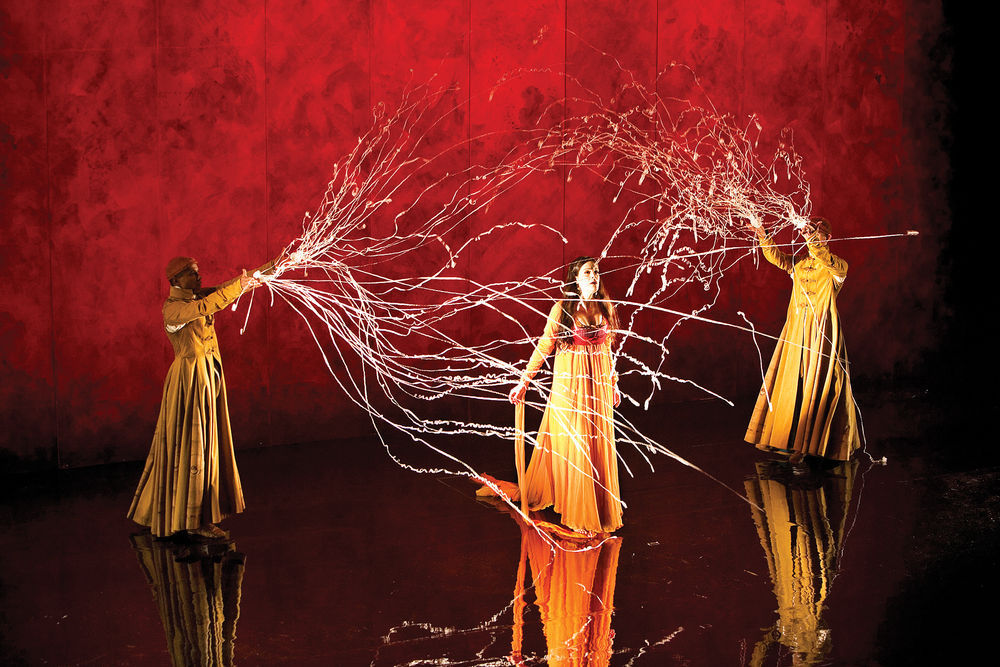
18First to appear is the Canadian premiere of L’Amour de loin (Love from Afar or more accurately “The Far-Away Love”) by Finnish composer Kaija Saariaho at the Canadian Opera Company. Not only will this be the first time the COC has staged an opera by a Finnish composer, it will also mark the first time it has staged an opera by a female composer.

This opera that premiered in 2000 at the Salzburg Festival tells the story of a world-weary 12th century troubadour from France who carries on a long-distance love affair with a beautiful woman living in Tripoli, Lebanon, whom he called in Languedoc his “amor de lonh.” Although they never see or speak to each other, their feelings develop and grow through the efforts of an enigmatic Pilgrim, who carries messages of love and yearning between the two. Saariaho drew her inspiration for the work from the life and song texts of Jaufré Rudel (died c.1147), a French prince and troubadour who wrote of his obsessive love for an ideal, unattainable woman. This is the well-known theme known as “courtly love” that swept Europe during this period. The yearning expressed has a religious component, due to the rise of Mariolatry, that leads the poet to ask whether such a love is best preserved from afar.

Reviewing the opera in 2000, New York Times critic Anthony Tommasini wrote that Saariaho’s music “combines vivid orchestration, the subtle use of electronic instruments and imaginative, sometimes unearthly writing for chorus ... The vocal writing is by turns elegiac and conversational. Her harmonic language is tonally grounded, with frequent use of sustained low pedal tones, but not tonal. Bits of dissonance, piercing overtones and gently jarring electronic sound spike the undulant harmonies, but so subtly that the overall aural impression is of beguiling consonance … Her evocations of the troubadour songs, with medieval modal harmony and fragments of elegiac tunes, are marvelous.”

The new COC production is conducted by COC music director Johannes Debus and directed by Daniele Finzi Pasca, known for his work with Cirque du Soleil. It features an all-Canadian cast. Baritone Russell Braun is Jaufré Rudel, soprano Erin Wall is his beloved Clémence and mezzo Krisztina Szabó sings the role of the mysterious Pilgrim. Sung in the original French of Lebanese librettist Amin Maaloof, L’Amour de loin (which, unlike other companies, the COC insists on calling Love from Afar) runs for eight performances from February 2 to 22. For more, visit www.coc.ca.

Taptoo! is the opera receiving its professional world premiere, with music by John Beckwith and libretto by James Reaney. The opera written in 1995 was given its world premiere by Opera McGill in 1999 and was later staged by the University of Toronto Opera Division in 2003. Toronto Operetta Theatre is presenting its professional premiere as part of the national commemorations of the bicentennial of the War of 1812. The title refers to the last drum-and-bugle signal of the day that would later expand into what is now known as a military tattoo.

19bThe work was conceived as a prequel to Harry Somers’ opera Serinette which had had a highly successful premiere in 1990 at the Elora Festival. As Beckwith writes in Unheard Of: Memoirs of a Canadian Composer, to be published in February 2012, “Where Serinette was set in York and Sharon during the 1830s, the new piece deals with the founding of York by John Graves Simcoe in 1783 and covers a time period from the American War of Independence to just before the War of 1812.” Beckwith says that the opera features a number of Reaneyesque devices: “Cast members assume a variety of roles, changing age or gender rapidly, functioning solo for one scene and in the next, as part of a chorus; the orchestral players are sometimes required to join in the action.” In the TOT production, he says, a cast of 18 singers will cover 26 characters including historical figures, like Simcoe and Colonel “Mad Anthony” Wayne, and other imaginary ones like boy soldiers Ebenezer and Seth, the aboriginal Atahentsic, settlers and adventurers.

TOT lays claim to the work because Beckwith himself says he was inspired by ballad operas, the earliest examples of what would later become operetta. As Beckwith says, “Two period productions of early music theatre affected me around this time [of composing]. John Gay’s The Beggar’s Opera and Thomas Arne’s Love in a Village were the most-often-performed ballad operas of 18th century England … I saw Taptoo! as the modern equivalent of a ballad opera, in which scraps of familiar songs and dances would now and then drift into the musical score. I included about 20 such musical references — hymn tunes, popular sentimental or patriotic songs, dances, marches and, of course, historical military music.”

The TOT cast includes Michael Barrett as Seth, Robert Longo as Wayne, Todd Delaney as Simcoe, Allison Angelo as Atahentsic, with Mark Petracchi and Sarah Hicks as Mr. and Mrs. Harple, Eugenia Dermentzis as Mrs. Simcoe and boy sopranos Daniel Bedrossian and Teddy Perdikoulias. The composer’s son, Larry Beckwith, conducts and TOT general director Guillermo Silva-Marin directs. Taptoo! runs only February 24 to 26. For more information see www.torontooperetta.com.

Beckwith says of his collaborations with James Reaney, “Without articulating our objectives further, I believe we wanted to affect our audiences in two ways — to move them and to cheer them.” We must thank TOT for giving Taptoo! a chance to achieve these goals.

Christopher Hoile is a Toronto-based writer on opera and theatre.  He can be contacted at opera@thewholenote.com.

When writing a monthly column that involves regularly working your way through over 500 detailed listings, you look for ways to inject a little bit of silliness into a task that, at times can be, shall we say, a tad dryish. So, I keep my eyes open for quirks and curiosities. This month, for example, I noticed that several of Canada’s finest pianists performing “classical and beyond” repertoire have first names starting with the letter “A.” Granted, there are also many (close to 30) whose names do not. Nonetheless, the “A list” struck me as, well, quirky; as good a place as any to start.

Another quirky thing: the proliferation of concerts (22 to be exact) featuring works by Brahms: orchestral, chamber, piano solo, piano and orchestra, violin and orchestra, piano and violin duo, solo singers, full choirs (with and without orchestra). Was there a special Brahms birthday or anniversary? Let’s see. Born May 1833, died April 1897. Nope, that’s not it. Must simply be a case of wanting to “Beat the February Blahs with Brahms.” So let’s begin.

A is for André, Arthur (x2), Anton, Angela and Aaron

André Laplante, Arthur Ozolins, Arthur Rowe, Anton Kuerti (performing three concerts), Angela Park and Aaron Chow (performing in the same concert) will all be gracing stages, both in and beyond the GTA, in February. (So will Adam Sherkin, Feb 19, and Angus Sinclair, March 6, but their repertoire falls outside my beat.)

Anton Kuerti is synonymous with great Beethoven playing, so it comes as no surprise that he will be performing works by Beethoven in all three of his concerts. First up is the majestic Piano Concerto No.5, the “Emperor,” with the Toronto Symphony Orchestra, on February 2 and 4 at 8pm. Also on the programme is Symphony No.10 by Shostakovich. The great Günther Herbig conducts. Next, Kuerti entertains the young ones in Mooredale Concerts’ Music and Truffles series with “Beethoven – Immortal Musical Genius” at 1:15pm, Walter Hall, February 12. Last, Kuerti will perform an all-Beethoven recital for Barrie’s Georgian Music on February 19.

Cathedral Bluffs Symphony Orchestra conducted by Norman Reintamm features the acclaimed Arthur Ozolins February 4, in a performance of Rachmaninov’s Piano Concerto No.2, along with Beethoven’s Fifth Symphony at the P.C. Ho Theatre.

The New Orford String Quartet will perform Brahms’ Piano Quintet in F Minor, with Arthur Rowe, for the Kitchener-Waterloo Chamber Music Society on Feb 10, at the KWCMS Music Room in Waterloo, and again the next day in London’s Wolf Performance Hall, as part of the Jeffrey Concerts; Rowe is the artistic director for that series.

Back in the GTA, the Aurora Cultural Centre has landed the always electrifying André Laplante for its Great Artist Piano Series! Laplante will perform works by Liszt (his specialty) and Schubert at the Centre on February 17, 8pm. And speaking of Liszt, all you die-hard romantics looking for a post-Valentine’s Day fix can hear Angela Park and Aaron Chow, along with soprano Eve Rachel McLeod and Rachel Mercer, cello, in “A Romantic Music Tryst with Liszt,” presented by the Neapolitan Connection, in a matinee on February 19, at the Toronto Centre for the Arts.

B is for Brahms

Space limitations won’t permit me to delve into detail on all 22 Brahms concerts I mentioned in the introduction. I’ll focus on a few (and you can check out others in Part C at the end of the column).

“Warhol Dervish” is a pretty intriguing concert title. February 3 at 8pm, at Gallery 345, the concert should prove equally intriguing, featuring, among other more twisty repertoire, Brahms’ Horn Trio and Mozart’s Clarinet Trio — both in E-flat major, both arranged for violin, viola and piano — played by John Corban, Pemi Paull and Katelyn Clark, respectively. And another winner in the concert title category, given that they’re performing sextets by Brahms and Dvořák, is Via Salzburg’s “Six Degrees of Separation.” Catch all degrees of fun at Rosedale United Church, February 10, 8pm.

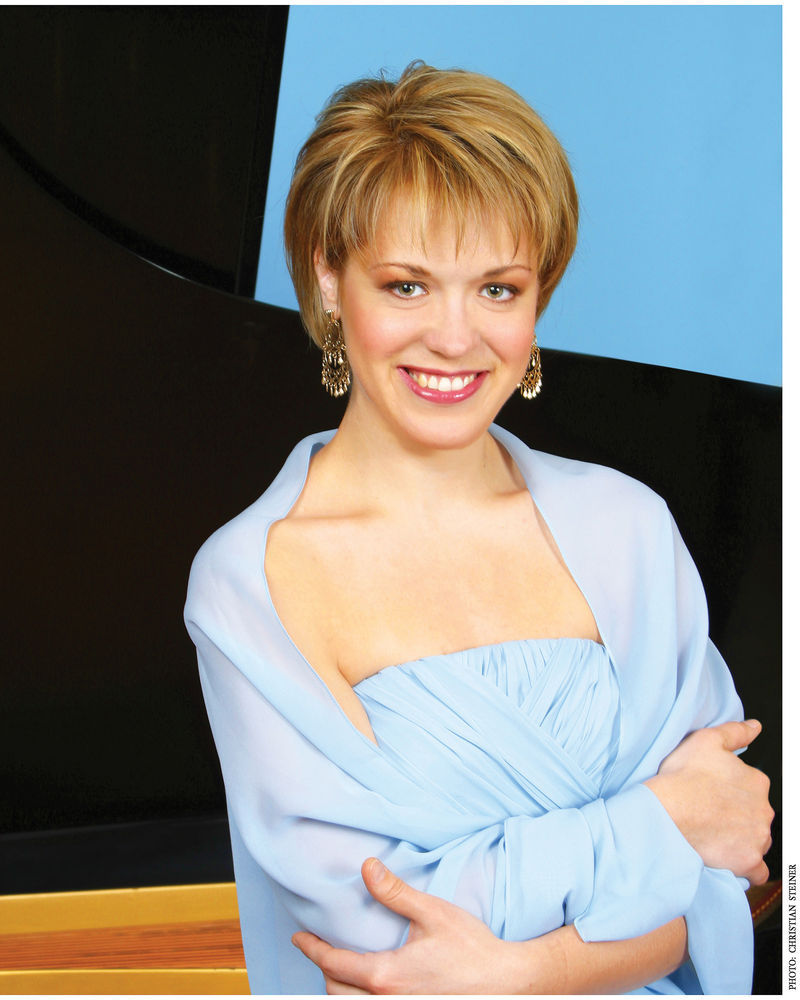
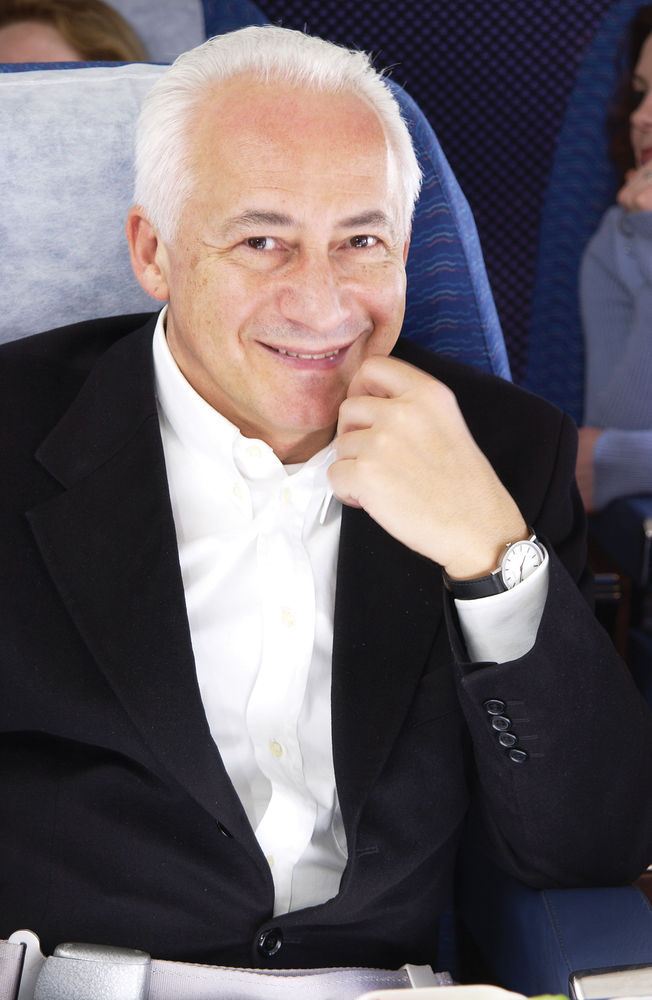
16_kern2_-_by_christian_steiner16_spivakovShow One Productions is presenting a very special event on February 23 at Koerner Hall. Legendary violinist Vladimir Spivakov and outstanding pianist Olga Kern will perform as a duo — a first for Toronto! And their programme is absolutely sumptuous: Brahms’ Sonata No.3 in D Minor Op.108; Franck’s Sonata in A; Stravinsky’s Suite Italienne (based on his ballet music for Pulcinella); and Spiegel im Spiegel by Pärt. As an added attraction, in this case “B” is also for Bösendorfer. At her request, Kern will perform on a nine-and-a-half foot, 97-key Imperial Bösendorfer grand (courtesy Robert Lowrey Piano Experts), apparently the only piano that could withstand Liszt’s powerful touch. Not only is it Kern’s preference, it was also the choice of jazz great Oscar Peterson. The magic begins at 8pm.

And last, Ontario Philharmonic Orchestra, under the baton of Marco Parisotto, has programmed a magnificent all-Brahms concert, which it will perform twice. “A Journey Into Brahms” plays on February 25, at the Regent Theatre in Oshawa, and then “journeys into Toronto” on February 28, for a concert jointly presented with Mooredale Concerts, at Koerner Hall. The exciting soloist featured in the compelling Violin Concerto in D Major is young Korean violinist, Ye-Eun Choi, in her Toronto debut. A protégée of Anna-Sophie Mutter, Choi debuted with the New York Philharmonic Orchestra under Alan Gilbert in 2009. Also on the programme is Brahms’ Symphony No.2. It promises to be a fine evening.

C is for Classical Column Concluding with Concise Quick Picks (details are in our concert listings):

February 9, 7:30: Royal Conservatory. Discovery Series: Hiroko Kudo, piano and Tobias Bäz, cello. Works by De Falla, Brahms and Martinů. Mazzoleni Concert Hall.

February 19, 2:00: Royal Conservatory. Mazzoleni Masters Series. All-Brahms programme. Members of the Arc Ensemble.

February 21, 12:00 noon: Canadian Opera Company. Passion and Poetry. Works by Schubert, Brahms and Chopin. Mehdi Ghazi, piano. Richard Bradshaw Amphitheatre.

February 22 and 23, 8:00: Toronto Symphony Orchestra. Brahms Symphony 4. Also works by Fauré and Britten. Karina Gauvin, soprano; Jean-Marie Zeitouni, conductor. Roy Thomson Hall.

February 23, 1:30: Women’s Musical Club of Toronto. Music in the Afternoon: Roger Chase, viola and Michiko Otaki, piano. Works by Ireland, Bowen, Delius, Bach and Brahms. Walter Hall.

February 25, 8:00: Canadian Sinfonietta. Wine and Cheese. Works by Brahms, Schnittke and Ravel. Michael Esch, piano; Joyce Lai, violin; Olivia Brayley Quackenbush, horn. Heliconian Hall.

February 28, 4:30: Guelph Connection Concerts. Doug Miller and Friends. Works by Bach and Brahms. Doug Miller, flute; Darius Bagli, piano. St. George’s Anglican Church, Guelph.

March 6, 8:00: Music Toronto. Piano Series: Richard Goode. Brahms: Eight Pieces Op.76; Chopin: short works tba; Sonata No.3 in b Op.58. Jane Mallett Theatre.

This month’s column was brought to you by the letters A, B and C. Avail yourself of all the listings, beat those blahs, catch a concert or two and enjoy!

Sharna Searle trained as a musician and lawyer, practised a lot more piano than law and is listings editor at The WholeNote. She can be contacted at classicalbeyond@thewholenote.com.

11In october 1995, in the second ever issue of this magazine (then known as Pulse), we ran as a cover image, not a photograph but a kind of abecedarius — a stylized alphabetical list consisting for the most part of presenters, performers or composers featured in the issue’s concert listings. The Penderecki Quartet came to our rescue for both P and Q. For Z we resorted to jazZ (where were you that month, Winona?), which was a bit lame. And A was as problematic as Z, but for the opposite reason — too many candidates rather than too few.

Read more: The Aldeburgh Connection at 30

8_in_rehearsalUntil the last few years, musical theatre buffs in Toronto and the GTA had to rely on commercial theatres to satisfy their tastes, looking to companies like Mirvish Productions to keep them up-to-date with Broadway and West End hits. Today, things have changed to the point where musical theatre regularly appears in the city’s not-for-profit (NFP) theatres in forms new and old. And performers who cut their teeth in shows produced by Mirvish, Dancap and (the now-defunct) Livent Corp. are achieving marquee status with new and different audiences.

Read more: Adamantly Off-Centre - Obeah Opera and Dani Girl

Very recently I attended bebop-singing pioneer Sheila Jordan`s 83rd birthday celebration in New York City. There was a great turnout of well-wishers present, including loved ones, friends and pupils. Seconds into the third song of the first set, a rude patron became engaged in conversation and if that wasn’t bad enough, he began snickering audibly, repeatedly, obnoxiously, as if it the Blue Note was a Yuk Yuk’s. ”Shut up, shut up, SHUT UP!” I thought silently to myself, but the insensitive man was unaware of the filthy looks he was receiving from numerous angles. Thankfully, an angered music appreciator approached the clueless culprit and aggressively shushed him, as if putting out a kitchen fire with baking soda. (Heroes like this particular shusher prove that we’ve all got to get over our shyness when it comes to shushing. Sheesh!)

QUIET NIGHTS

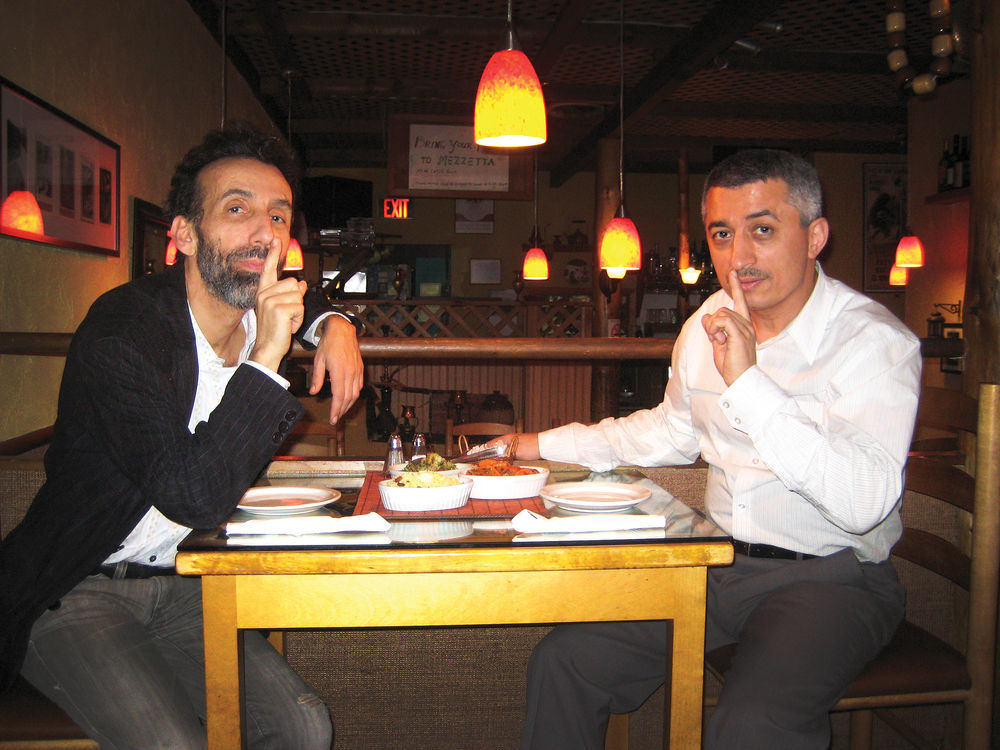
63_jazzintheclubs_mezzettaIn Toronto’s jazz spots, as well, it is usually up to audience members, rather than the venue staff to monitor those who choose to be inconsiderate. Even the most prominent music venues in our club listings do not have a strict quiet policy, in fear of losing business: the likely argument being that those who need to be shushed are often those who order enough to make the live music economically viable.

Since the early 1990s, Mezzetta has been an admirable exception: the Mediterranean restaurant at St. Clair and Christie has been presenting a weekly live jazz and world music series on Wednesday evenings, with a strict quiet policy in effect. St. Clair West has guitarist Brian Katz to thank for initiating this series. An active musician and educator in various genres including classical, jazz, folk, klezmer and free music, Katz reflects on music at Mezzetta:

“Approximately twenty years ago I noticed what appeared to be a charming Mediterranean style new restaurant in my neighbourhood and after visiting just once it struck me as an excellent place — acoustically and vibe-wise — to have a live music series. When I approached the then owner, Yossi Omessi, about the possibility of launching a weekly music series there he, surprise, surprise, seemed incredibly enthusiastic. It only got better: When I suggested that there not be talking while the music was being performed he replied, “of course!” Jane Bunnett and myself opened up the series shortly after to a packed house, and I remained the booker for the venue for twelve years, contacting musicians, writing the blurbs … and eventually running out of adjectives to describe the world class musicians who continue to grace Mezzetta’s stage.”

For the musicians and the audience, how does Mezzetta compare to other music venues?

“In terms of relating Mezzetta to the majority of small, intimate venues in Toronto, the difference is that the crowd comes with the intention to listen to the music (and enjoy a lovely dinner beforehand if they wish), and the musicians walk in knowing that they will be listened to; jazz players especially are often not used to getting such listening attention, and what is strikingly different is that those musicians who are most often accustomed to playing in noisy venues have to actually adjust to the fact that we are presenting an intimate concert, and I believe that brings their playing to a higher level — with the audience being the lucky recipients!  During the first few months of operation, I actually remember one very well-known jazz musician speaking with me just minutes before he went on the stage, insisting that he was sure that people were going to talk during his performance. Goes to show you the “normal” expectation amongst jazz players when it comes to being listened to. I assured him that people came to listen, without talking, and he was pleasantly shocked…I was truly happy to do this for many years, to support the jazz and world music communities, and even happier to see that in time the series could sustain itself without me doing the booking. Safa Nematy, the owner for many years now, does that these days.”

I asked Nemati, how strict the restaurant is about this policy, and why it is important: “At Mezzetta we take our no-talking policy very seriously,” says Nemati. “At the start of the show we remind our audience of this policy and ask them to keep their voices to a minimum volume. I believe that by creating a listening atmosphere, musicians and audience find a perfect setting to perform and enjoy music … the intimate ambience at Mezzetta enhances the experience that could only be found in much bigger concerts.”

The January schedule is not available as of press time, but there will be three concerts in December: baritone saxophonist David Mott in duet with bassist Rob Clutton on the 7th; vocalist Maureen Kennedy with guitarist Reg Schwager on the 14th; and the Roland Hunter trio on will play holiday music on the 21st.

HOLIDAY BLEND

64_jazzintheclubs_hamptonave1Speaking of holiday music, I have two concerts to recommend, both by vocal groups so polished, they sparkle. The first one is a CD release and listening party by Cadence; the group’s new holiday recording Cool Yule will be celebrated on Sunday December 4 at 7:30pm at the Trane Studio. Dubbing themselves as “four men, four microphones, no instruments,” Cadence’s formula is charm, skill, humour and heart aplenty.

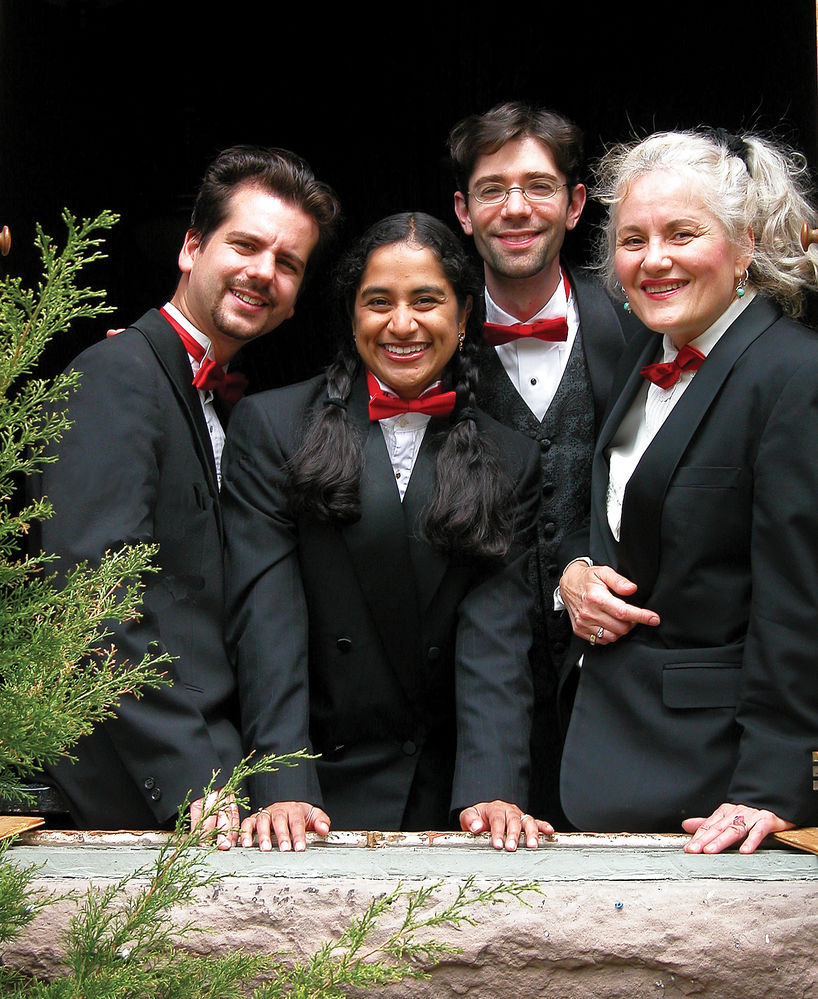
Another a cappella quartet appearance of note will take place at the Green Door Cabaret, a new venue which I wrote extensively about in the October issue. On December 9 at 8pm, don’t miss a rare appearance by the Hampton Avenue 4, a distilled version of award-winning vocal group Hampton Avenue, with vocals by Suba Sankaran, Dylan Bell, Tom Lillington and director Debbie Fleming. Expect beautiful arrangements, exceptional musicianship and infectious joy from a group that performs all too rarely these days. Hampton Avenue’s acclaimed CD All I Want for Christmas (1996) will be available for sale. Tickets are likely to sell out for this concert, so be sure to get yours in advance by visiting www.greendoorcabaret.com or by calling 416-915-6747. See you there!

Ori Dagan is a Toronto-based jazz vocalist, voice actor and entertainment journalist. He can be contacted at jazz@thewholenote.com

Back to top