04 NormaBellini – Norma
Sonya Yoncheva; Joseph Calleja; Sonia Ganassi; Royal Opera House; Antonio Pappano
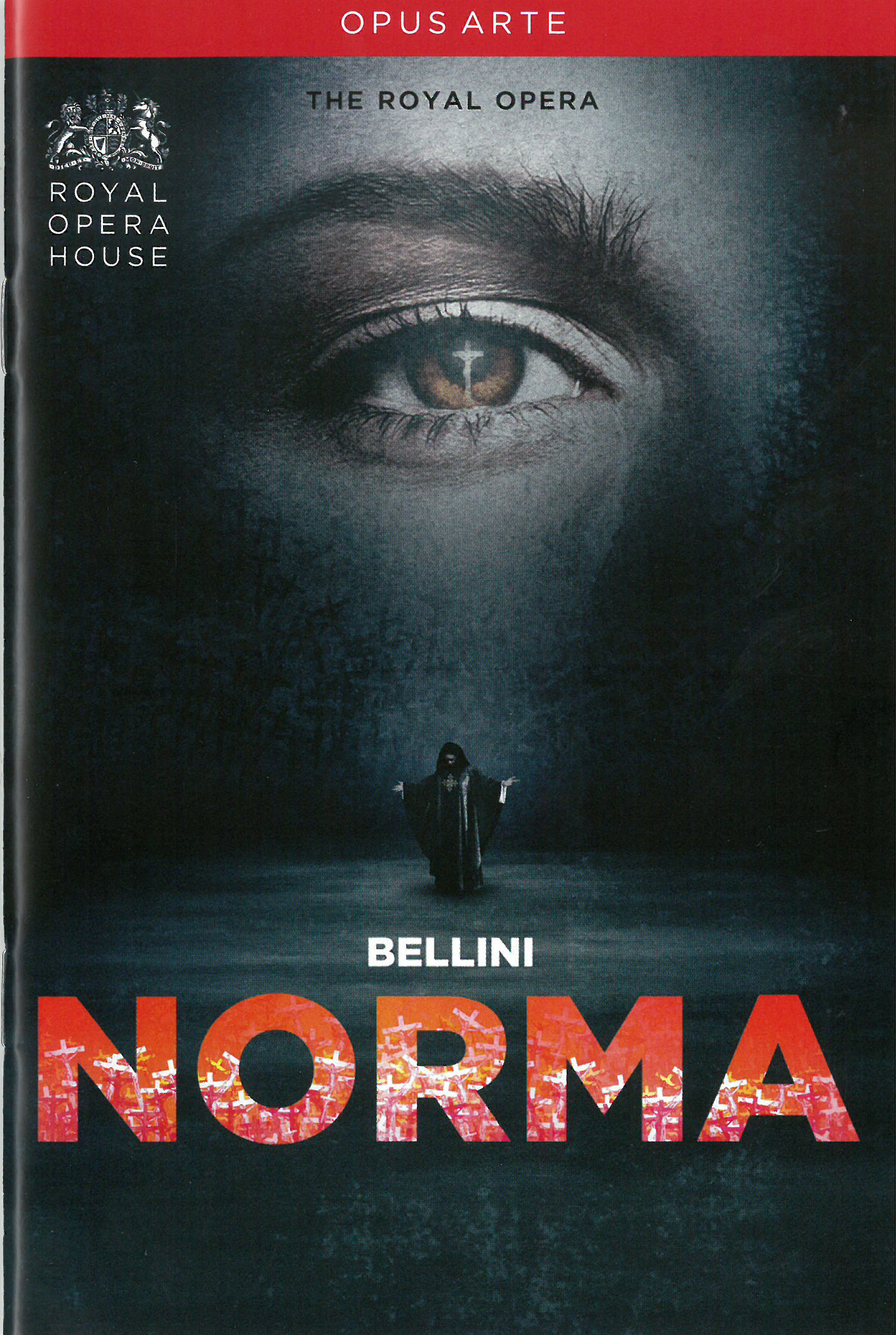
Opus Arte OA 1247 D

Ah, Norma, the opera with which young Bellini (merely 30 at the time) cemented his hold on Italian stages! He did create it as another vehicle for Giuditta Pasta, the foremost soprano of the time, yet she was followed by countless others including Rosa Ponselle, Maria Callas, Canada’s Sondra Radvanovsky, and now, Sonya Yoncheva. Breaking with Romantic and Classical tradition, however, is the fact that Norma is no damsel in distress. She is a force of nature, potent, fearless and terrifying. She is also in charge of her own, however tragic destiny. That alone is enough to experience the opera with goosebumps on one’s arm. Here, the director, Àlex Ollé of the famous collective La Fura dels Baus, chooses to present Norma as enmeshed in a religious and military apparatus, an intellectual choice. However, rather than presenting modern-day, right-wing evangelical orthodoxy, he gives us Spanish Inquisition-era ultra-Catholicism. This results in unintended humour and the need for even more of a suspension of disbelief: a woman, ordained as a top priest? So yet again, we are best left just listening to the music…

And what music! Pappano is the undisputed conductor-king of the operatic stage. The three principals are in fine form, especially Calleja, as a strong, commanding Pollione, rather than the frequently portrayed wimpy ladykiller. In the end, it seems that Yoncheva, though gifted with a silky and precise voice, does not have the dark notes with which Callas’ and Radvanovsky’s Normas strike fear in our hearts.
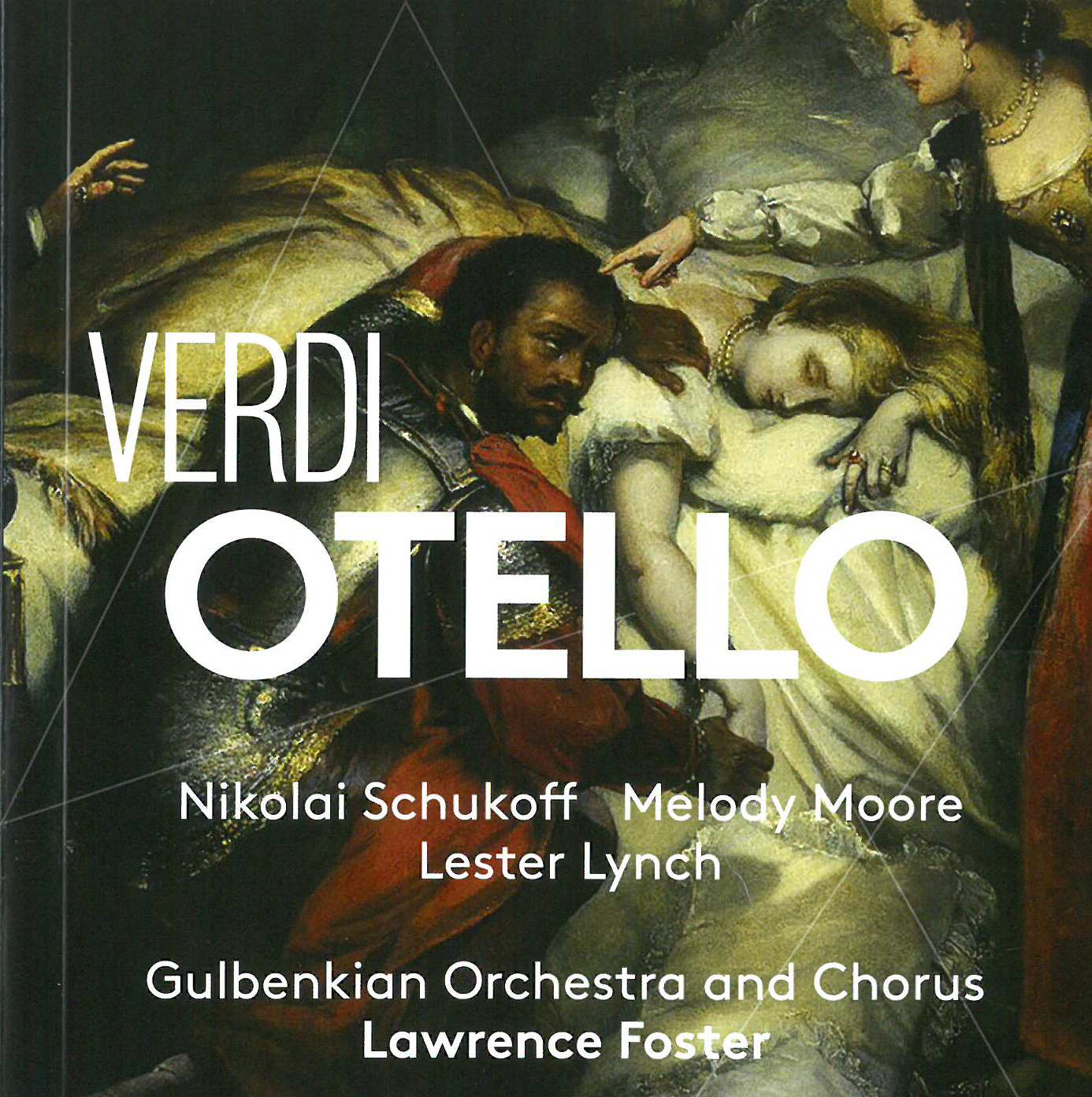
05 OtelloVerdi – Otello
Nikolai Schukoff; Melody Moore; Lester Lynch; Gulbenkian Orchestra and Chorus; Lawrence Foster
Pentatone PTC 5186 562 (pentatonemusic.com)

Apart from Nabucco, all Verdi operas contain important tenor roles, but the demands in his penultimate opera Otello are much greater than those in his earlier work. Many readers will recall the sad time when Carlo Bergonzi attempted the role (Carnegie Hall, 2000) and was unable to finish. Bergonzi was already 75 then. Perhaps he simply left it too late. I think it is misleading to call the part that of a heldentenor, yet it is worth adding that several of the finest interpreters of the role, notably Ramón Vinay and Jon Vickers, have also been known for their singing of Wagner.
The Austrian tenor Nikolai Schukoff has sung a large assortment of roles (they include a great deal of operetta) and he has also performed some important Wagnerian parts: Lohengrin, Siegmund, the Götterdämmerung Siegfried and Parsifal. These CDs show that he is certainly up to the part of Otello, both in its heroic qualities and in its more tender moments. I like the tone of the soprano (Melody Moore), although her diction is not always clear. She is very affecting in the opera’s final act. The Iago (Lester Lynch) is first-rate.

A peculiarity of the recording is that the voices seem recessed in contrast with the clarity of the orchestra. This brings out orchestral detail in ways that recordings generally don’t, but it is only by using a very high volume that one can hear the singers properly.

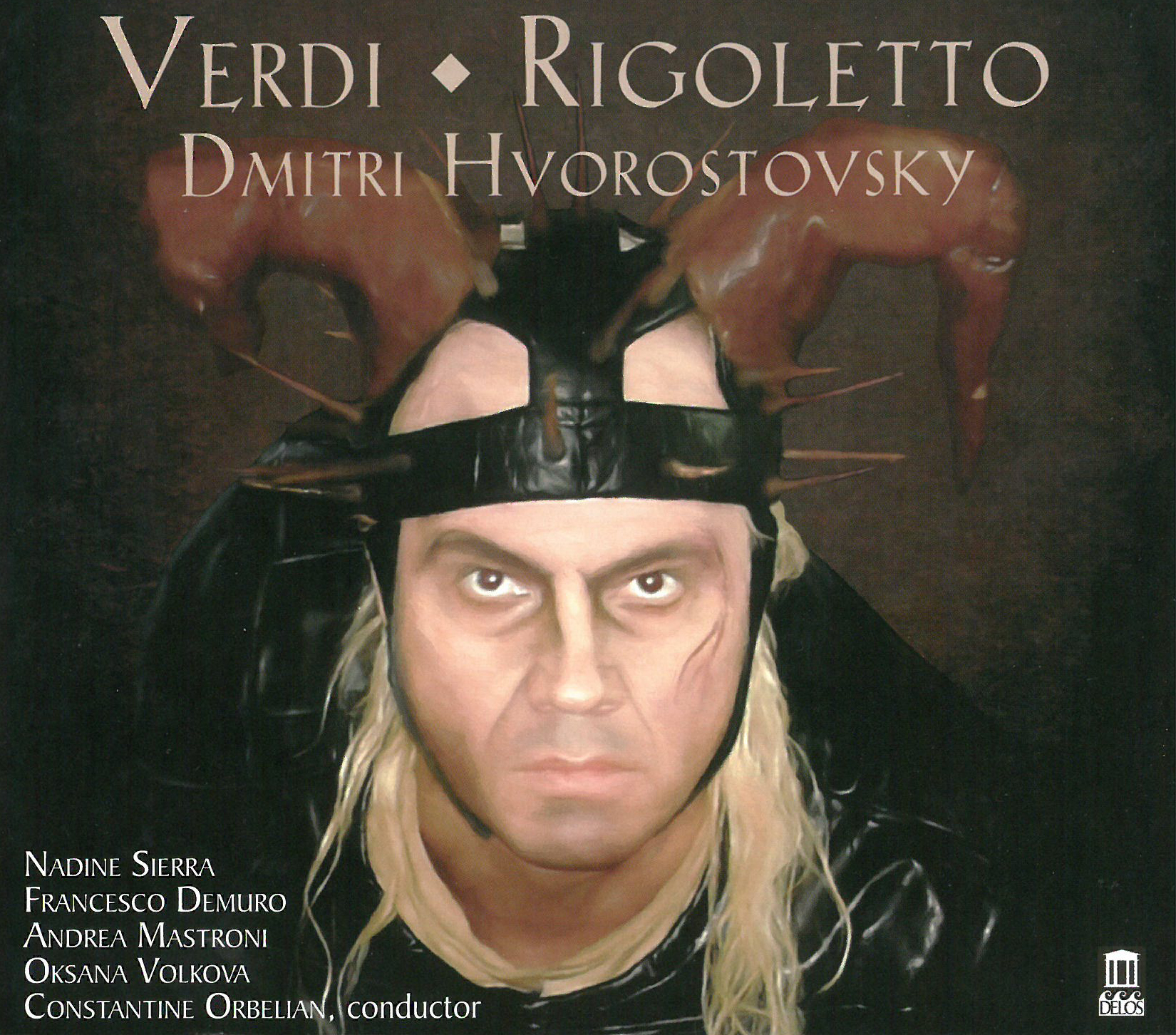
06 RigolettoVerdi – Rigoletto
Dmitri Hvorostovsky; Nadine Sierra; Francesco Demuro; Andrea Mastroni; Oksana Volkova; Kaunas City Symphony Orchestra and State Choir; Constantine Orbelian
Delos DE 3522 (delosmusic.com)

This is the final opera recording that the great Russian baritone Dmitri Hvorostovsky made before his too-early death last November. Surprisingly, it marks the first time he recorded Rigoletto, even though the cursed, tragic court jester was one of his favourite – and finest – roles.

Verdi wrote some of his most memorable arias for Rigoletto. They’re given bravura performances here, with Hvorostovsky’s harrowing Pari siamo! confirming him as a Rigoletto for the ages. Tenor Francesco Demuro’s Duke of Mantua dazzles, at times too brightly, in La donna è mobile, while soprano Nadine Sierra portrays Rigoletto’s daughter Gilda with a rich, moving Caro nome.

Rigoletto’s extended duets with his daughter provide the most dramatic moments in this opera. Sierra is persuasive as a naïve yet determined young girl, while Hvorostovsky manages to reveal the depths of Rigoletto’s anguish. During the first act duet, Figlia! Mio padre!, Rigoletto suddenly shatters the tender mood by turning on Gilda accusingly. The way Hvorostovsky darkens and roughens up his voice makes for riveting drama.

The men of the Kaunas State Choir deliver with such style that they almost steal the show. Hvorostovsky’s longtime collaborator, Constantine Orbelian, leads the Kaunas City Symphony Orchestra with delightful clarity.

Hvorostovsky performed regularly in Toronto throughout his career, though unfortunately never in a staged opera. This recording of one of the most demanding roles in all opera makes a fitting tribute to a matchless singer. He will be missed.

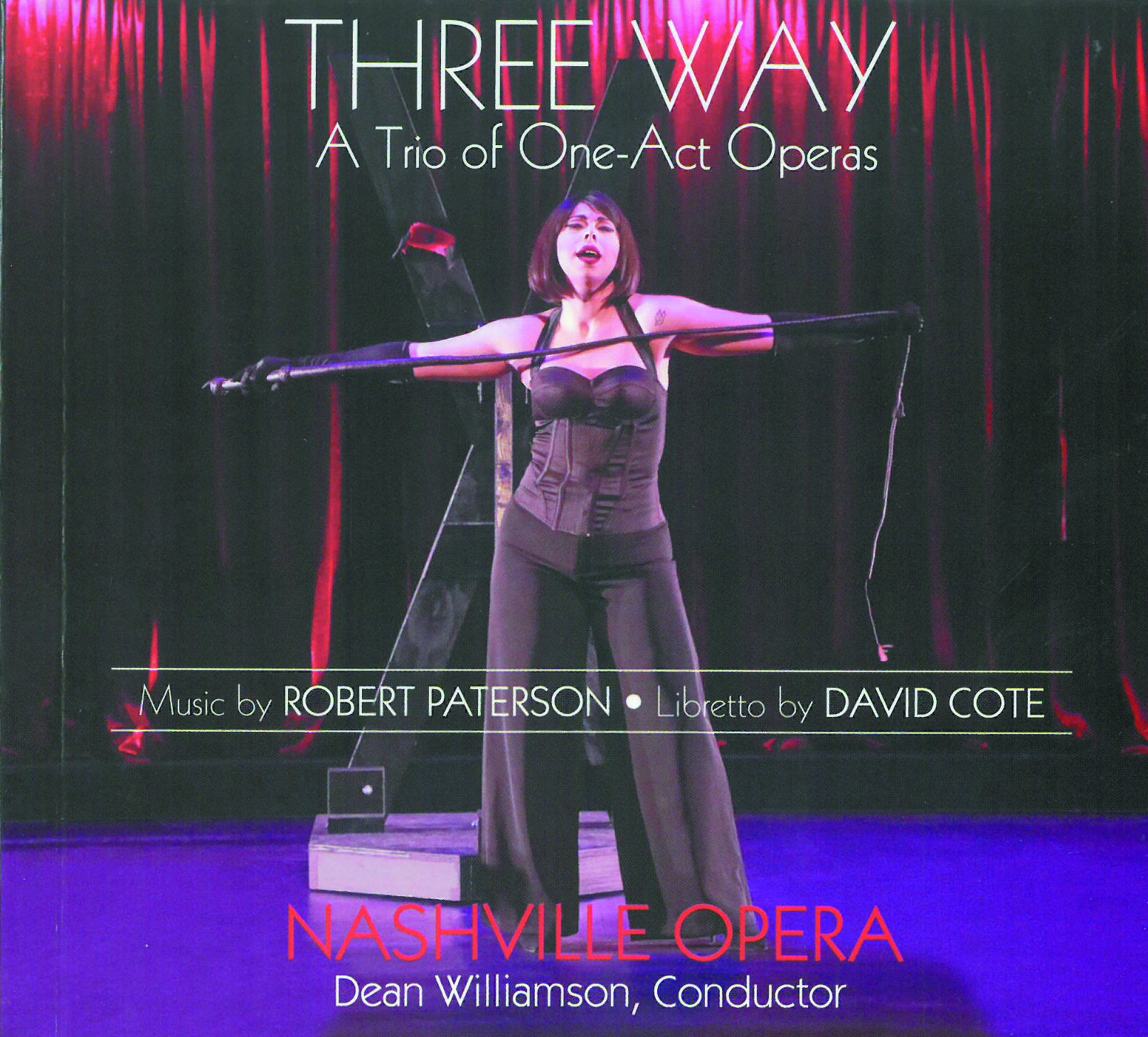
07 Three WayRobert Paterson – Three Way: A Trio of One-Act Operas
Nashville Opera; Dean Williamson
American Modern Recordings AMR1048 (americanmodernrecordings.com)

In this 2CD set’s booklet, librettist David Cote writes that “Three Way is a sex-positive comic opera” that “holds the mirror up to all sexualities – gay, straight, BDSM, bi, trans… without moralizing or treacly reverence.”

Premiered by Nashville Opera in January 2017, Three Way comprises three one-act episodes, each featuring very sexually explicit language and situations. In The Companion, tech repairman Dax opts out of a proffered three-way fling with Maya and her android sex-partner Joe, but gets Maya for himself when Joe jilts her for a female android. Safe Word finds dominatrix Mistress Salome in a surprise role reversal with the Client, a nameless married “alpha-boss.” In Masquerade, four couples, including a pair of “pansexual postgender partners,” attend a swingers party, complete with a visual and aural “shadow orgy” in which “bodies rise and fall” in “a group experience that achieves several climaxes.”

All this highly sexed material leaves much of Robert Paterson’s tonal, sauntering score serving mainly as easy-listening “incidental music.” The eight soloists are uniformly fine as they sing Paterson’s vocal lines, often redolent of Broadway musicals.

However, I, for one, found nothing to laugh about in this supposed “comic opera,” fraught as it is with the pathos of its characters’ erotic yearnings, fantasies and anxieties. But whether comic or poignant, all that sex sure holds one’s attention!

01 Boccherini ConcertoLuigi Boccherini - Arie da Concerto
Amaryllis Dieltiens; Capriola di Gioia; Bart Naessens
Evil Penguin Records Classic EPRC 0023 (eprclassic.eu)

This is an ensemble on a mission – what it calls rehabilitating Boccherini. Overshadowed by Mozart and Haydn and receiving mixed comments in Grove’s Dictionary, Boccherini’s few vocal compositions – few because Boccherini’s patrons overwhelmingly demanded instrumental music – convey, according to Capriola di Gioia, a rare insight into the potential of the human voice. And so to the seven pieces selected by the Capriola di Gioia. Caro padre, a me non dei is a worthy introductory piece with an almost jaunty interpretation by Dieltiens – an approach repeated in Se non ti moro allato.

And yet, the heart of this CD is its intense concentration on classical themes. As perhaps might be expected from a piece with an inspiration of this nature, Caro luci, che regnate begins with a more stately character, a tone taken up by Dieltiens as she sings of Jason’s predicament in Issipile. Misera, dove soni is a worthy combination of a classical theme with a text and instrumental scoring for strings which could have been written by any of the great Baroque composers who preceded Boccherini.

Capriola di Gioia’s varied choice of Boccherini’s Arie da concerto allows the listener to make up his or her mind as to whether the composer has actually been rehabilitated. This CD from Dieltiens and Naessens means Boccherini does deserve to be listened to. Indeed, the final track Se d’un amor tiranno with its sprightly string playing, deep continuo and pleading voice encapsulates all the reasons for doing just that.

03 Ottawa Bach Choir’Twas But Pure Love
Ottawa Bach Choir; Lisette Canton
Canto 2016 (ottawabachchoir.ca)

The splendid choral offerings on this recording range from Renaissance to contemporary works and it was recorded just in time for the holiday season last year in celebration of the Ottawa Bach Choir’s 15th anniversary. It includes recording premieres for two Canadian works. The first, Sailor’s Carol by Matthew Larkin (director of music, Christ Church Cathedral, Ottawa), is based on a text by Cornish poet Charles Causley. With a lovely harp intro and simple chordal accompaniment, three descriptive verses lead to the chant Ave maris stella, creating a sense of great awe at the everlasting guidance of a star. The Darkest Midnight in December by Kelly-Marie Murphy again features lovely passages by harpist Caroline Léonardelli, while the women of the choir present a gentle, yet sublimely shimmering interpretation of a 1728 text by Irish priest, Fr. William Devereux. Early works performed beautifully by the full choir include Tomás Luis de Victoria’s O magnum mysterium, an unaccompanied motet realized in all its haunting splendour. Bach’s Lobet den Herrn, alle Heiden, BWV 230 provides a lively contrast with its double-fugue passages, showcasing each of the choirs’ sections and their superb tonal and rhythmic agility, as well as deftness of hand (and foot) by organist Jonathan Oldengarm.

04 SiegfriedWagner – Siegfried
O’Neill; Goerne; Cangelosi; van Mechelen; Melton; Hong Kong Philharmonic Orchestra; Jaap van Zweden
Naxos 8.660413-16

Siegfried is the real McCoy of the Ring Cycle, the epicentre packed with scenes of high drama, superhuman achievement and much of the Ring’s most beautiful music. And it’s also the most optimistic part of the Cycle; each act ends on a high note, reserving the best to the end with the most unusual love duet ever written. There is a fairy-tale atmosphere, a happy ending as well as unforgettable musical and dramatic highlights that usually translate into a glorious night at the opera.

This dramatic new Ring is the brainchild of Dutch conductor Jaap van Zweden, former concertmaster of the Royal Concertgebouw Orchestra. Discovered by Leonard Bernstein, he is now music director of four major orchestras, fulfilling a dream to record his own Ring Cycle with an orchestra he would whip into a Wagnerian superpower and pick the best possible singers available today. Each opera was recorded as a live concert performance, one per year beginning in 2015, so this is the third installment.

The title role, Siegfried, is the biggest casting problem of any Ring attempt, but fortunately New Zealand heldentenor Simon O’Neill, a young, athletic fellow who could look good even on a rugby field, solves this problem wonderfully. He is a natural, not only powerful, enthusiastic and tireless, but also sensitive and tender. Wotan, here called the Wanderer (as he is no longer in charge of things), is Matthias Goerne, another excellent choice, one of the greatest baritones in the world today. David Cangelosi became the audience favourite with his characterful, incisive singing as Mime, the evil dwarf. In closing, it’s worth buying this set for the famous Forging Song alone. There were sounds coming out of the Hong Kong Cultural Centre never heard before!

05 MacMillan Stabat MaterJames MacMillan - Stabat Mater
The Sixteen; Britten Sinfonia; Harry Christophers
CORO COR16150

James MacMillan gained his early prominence with the orchestral piece The Confession of Isobel Gowdy. Since then he has generally been recognized as the leading Scottish composer of his generation. He is a Roman Catholic in a largely Protestant country. Sacred music has always been central to his creative work. In the last half decade he has developed a close relationship with the outstanding chamber choir The Sixteen (conducted by Harry Christophers). This CD gives us a sense of that collaboration. The Stabat Mater is an anonymous 13th-century Latin poem that depicts the Virgin Mary at the foot of the Cross and proceeds to meditate on her sorrow and appeals to her as an intercessor with her son.

There have been a number of previous attempts to give musical shape to the text. The versions by Josquin and Pergolesi are especially notable. On this CD the hymn is given in the form of the Medieval plainsong. The following four tracks give us MacMillan’s elaboration. It is a brilliant work, dazzlingly performed by the full choir, the soloists (all of them members of the choir) and the accompanying chamber orchestra, the Britten Sinfonia. In a prefatory note in the CD booklet, Christophers ranks MacMillan as one of the three great composers of religious music, along with Victoria and Poulenc. If one is only looking at the Catholic world, it is hard to disagree with that.

06 James RolfeJames Rolfe – Breathe
Suzie LeBlanc; Alexander Dobson; Monica Whicher; Toronto Consort; David Fallis; Toronto Masque Theatre; Larry Beckwith
Centrediscs CMCCD 24517 (musiccentre.ca)

The title track, Breathe, in its performance here, is by far one of the most extraordinarily beautiful recordings experienced in recent memory. The blending of texts, ancient (Hildegard von Bingen, Antonio Scandello) and modern (Anna Chatterton), is mirrored by the use of period instruments for new music. Composer James Rolfe infuses the work with connections between human emotion and the natural world represented by the four elements – water, earth, air and fire – so exquisitely. For example, we enjoy the sensation of love overflowing (as water does) with undulating chordal textures and an abundance of cascading note sequences as Suzie LeBlanc, Katherine Hill and Laura Pudwell magically intertwine their voices.

The two masques on the recording further demonstrate this Toronto composer’s exceptional gift for intermingling qualities of early music with contemporary techniques whilst coaxing subconscious elements to seep through in performance. In Europa, the roles of the title character (Suzie LeBlanc) and her long-searching fiancé Hiram (Alexander Dobson) are both composed and sung with an extraordinary measure of pathos as they submit themselves to the will of the gods. And a refreshing new interpretation of the mythical Aeneas and Dido provides a much more intimate view of the doomed romance. As Dido, Monica Whicher is both stately and vulnerable, Alexander Dobson both bold and conflicted as Aeneas, while characters such as the spritely Mercury (Teri Dunn) and the Goat (Vicki St. Pierre) provide comic relief, if somewhat malevolent. Kudos to Larry Beckwith and David Fallis for their direction of these performances.

Back to top