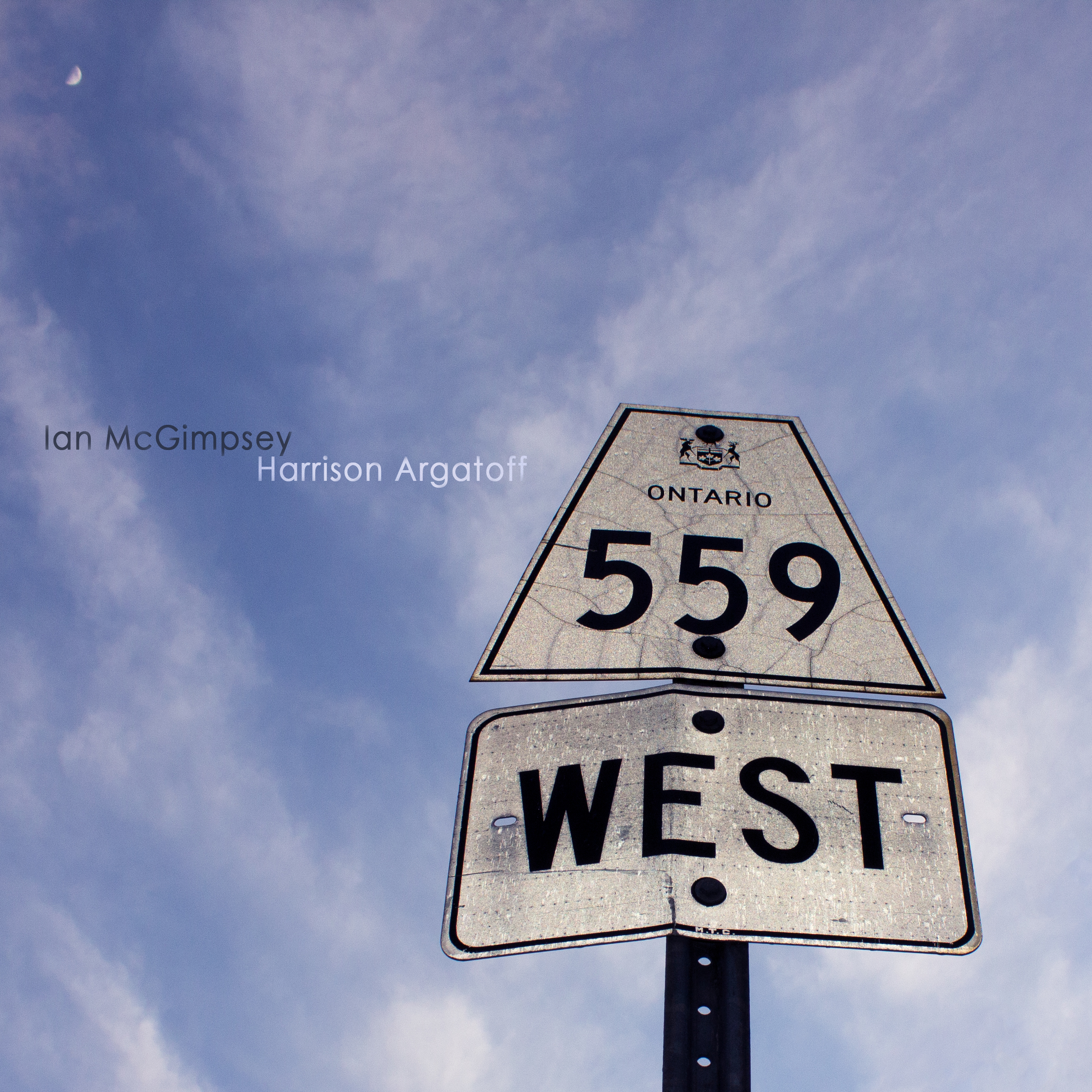
03 Ontario 559Ontario 559 West
Harrison Argatoff; Ian McGimpsey
Independent n/a (harrisonargatoff.com)

Nick Drake was a British singer/songwriter who released three albums and died in 1974. Since that time he’s attracted a larger-than-cult following who have enjoyed his soft and melodic singing, subtle guitar playing and enigmatic lyrics. His third album, Pink Moon, was his most sparse with just guitar and vocals. 

In March of 2020, Ian McGimpsey (guitar) and Harrison Argatoff (tenor saxophone) travelled on Ontario 559 West to Carling Township where they spent three days recording this album which is their tribute to, and interpretation of, Pink Moon. They have certainly captured the mood of Drake’s final album with the intricate guitar parts and luscious and melodic saxophone lines. Ontario 559 West is a genuine homage to the earlier album but maintains its own identity: I listened to Pink Moon before Ontario 559 West and could not identify any specific song or melody that is covered in the later album. The interplay between McGimpsey and Argatoff contains elements of jazz, folk and some freer improvisation. At points Argatoff’s playing and tone are reminiscent of Stan Getz (particularly in the final song Swings) and McGimpsey’s guitar is clean and nuanced. 

Ontario 559 West is an alluring concept which is executed by two sympathetic musicians.

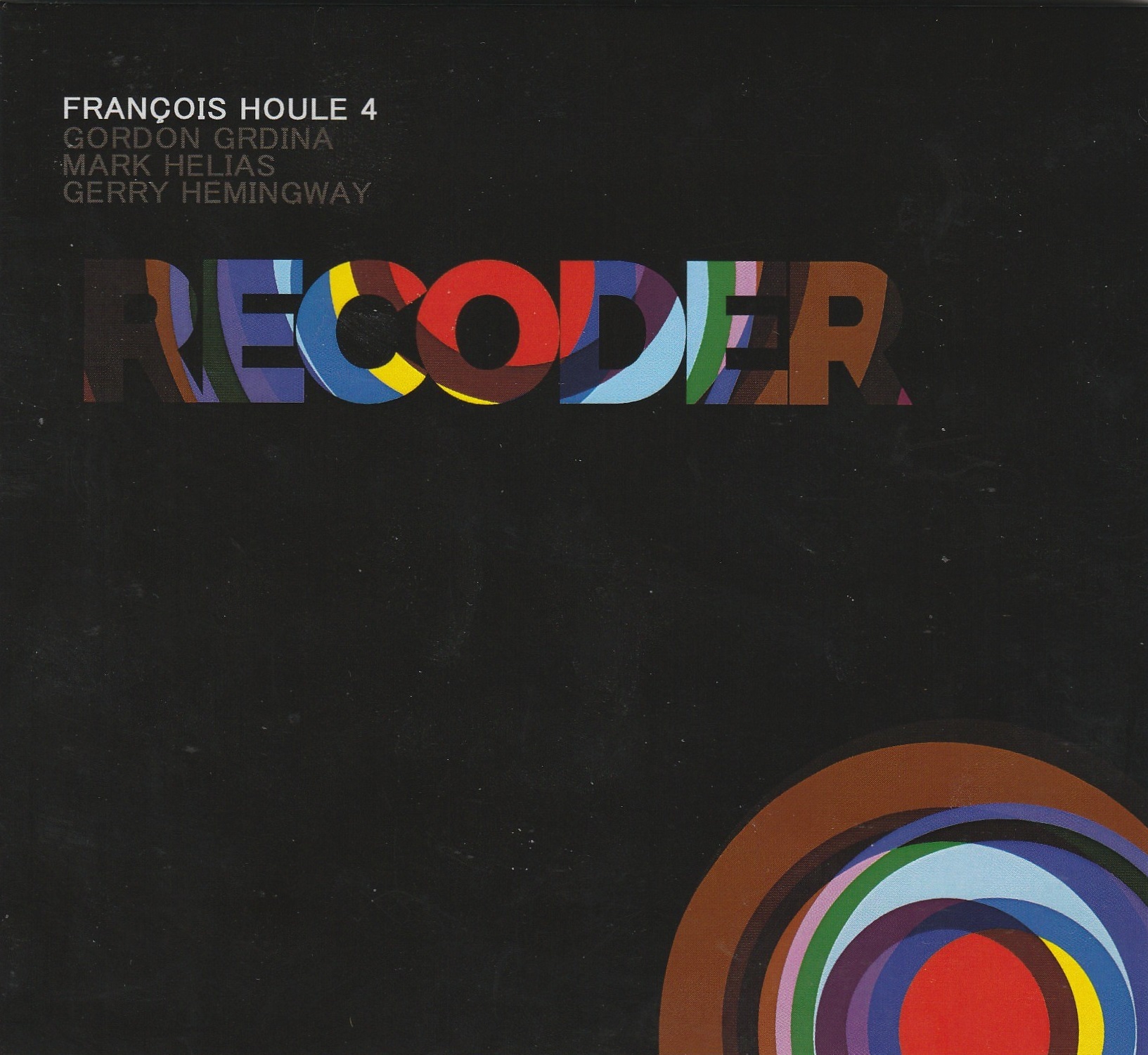
04 Francois HouleRecoder
François Houle 4
Songlines Records SGL1632-2 (songlines.com/release/recoder) 

Canadian clarinetist/composer/improviser and all-round inspiring musician François Houle works here again with Canadian Gordon Grdina (guitar), and in first-time collaborations with Americans Mark Helias (double bass/clarinet) and Gerry Hemingway (drums). The eight free-improvised Houle/Helias clarinet duets, and seven full-band Houle compositions, are memorable in their smart stylistic modern jazz/contemporary diversities and performance virtuosities.

Houle’s spontaneous single-take improvisations with Helias are short – some less than a minute – yet bursting with musical ideas. Each duet is placed between the longer Houle compositions, giving a welcome contrast. The opening Prelude features tonal, short, sweet and calming two-clarinet melodic interchanges by the two masters. At under one minute, it tweaks interest in what is to come. Interlude 1 features high-pitched contrapuntal lines, like the little birds singing outside my window, and is a great contrast to the fast, complex, dense full-band The Black Bird – the track just before it – with its slower guitar solo midsection and touches of superimposed jazz and avant-garde full-band sounds. The brilliant title track Recoder has all things musical, from pacesetting staccato guitar opening plucks, full-band, wall-of-sound effects, standard swinging grooves, amazing Houle rapid clarinet lines and clear production values.

Houle writes in his notes that he formulated “an approach that would be mindful of giving each instrument within the quartet complete involvement.” From calm to intense, his brave musical approach drives Recoder to timeless musical permanence.

Listen to 'Recoder' Now in the Listening Room

05 palladium 2020Palladium 2020
Palladium
Independent (2020palladium.bandcamp.com)

In celebration of the legendary Wayne Shorter’s 87th birthday, inspired impresario and producer Jesse Markowitz has created a two-disc, 22-track recording project featuring 30-plus musicians performing compositions written and/or made famous by the iconic saxophonist/composer. Released on Shorter’s birthday, August 25, this project is also an uplifting response to a world thrown into the harsh reality of a global pandemic. The impressive roster of artists on Palladium 2020 has been handpicked/curated by Markowitz, and reflects Shorter’s eclectic and luminous creative life, as well as many of his seminal collaborations, including those with Miles Davis, Art Blakey, Wynton Kelly, Weather Report and Herbie Hancock.

There are myriad brilliant contributions to this project, however several tracks stand out, having been culled from some of Shorter’s most memorable recordings. Embracing the length and breadth of his stellar career, it includes the ultra-cool bop exploration The Summit, taken from Art Blakey and the Jazz Messengers’ 1960 release Meet You at the Jazz Corner of the World, and features Nicole Glover’s burning tenor. Consummate pianist Eric Reed’s interpretation of Sydney (from Wynton Kelly’s 1959 Kelly Great) is not only masterful, but has captured the very essence of Shorter’s deeply sensitive soul. 

Of special profundity is legendary soprano player Dave Liebman’s journey around the galaxy, flying on Shorter’s Footprints, first released on Miles Davis’ 1966 Miles Smiles, and arranged in a fresh way – as an elemental duo with the great Willy Rodriguez on drums. Leibman is as dynamic and rife with ideas as usual. This entire project is a tribute not only to Shorter himself, but to the very elemental power of music – power to heal and transform – which is exactly what Shorter has done through his art for his entire career.

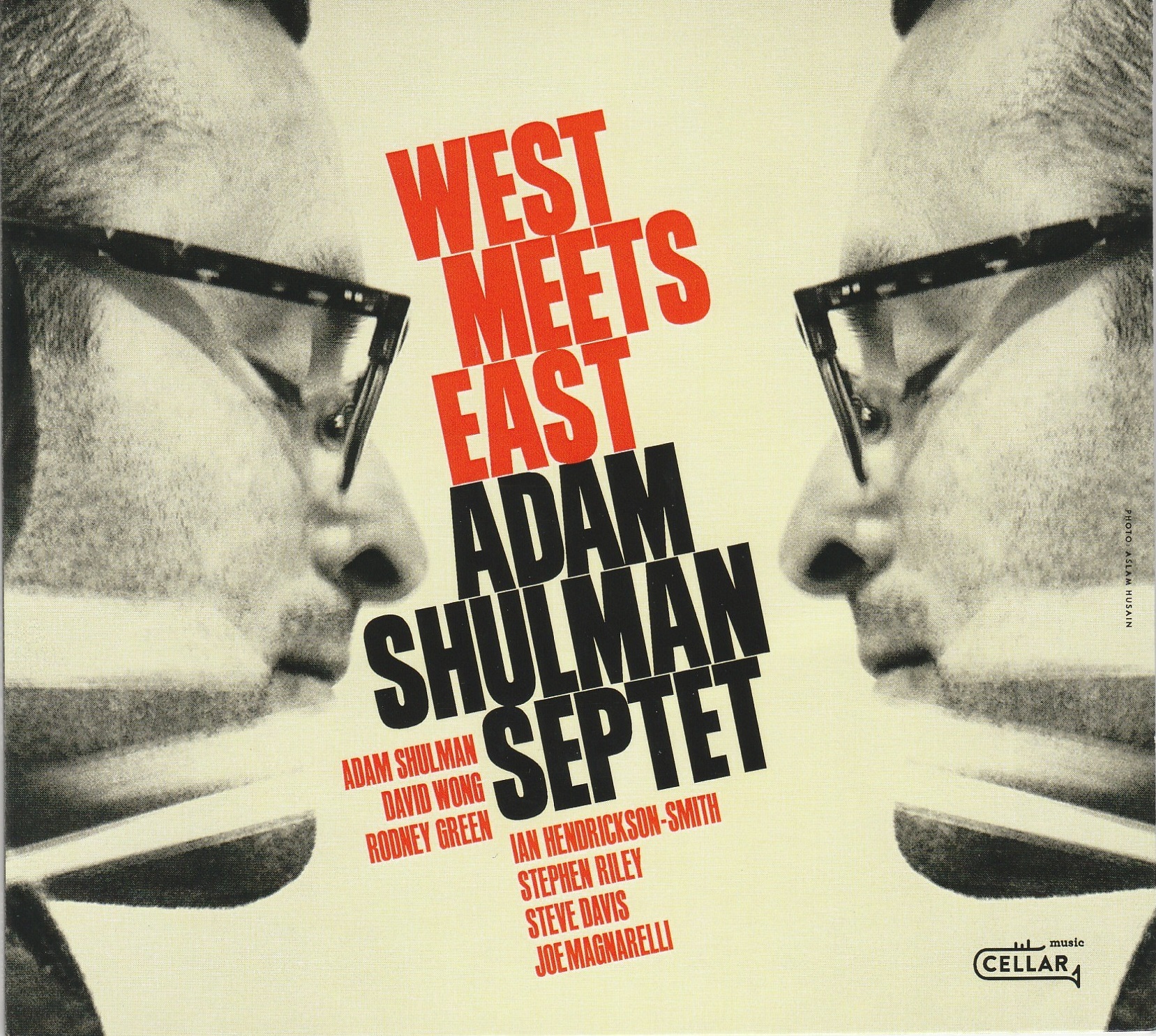
08 West meets EastWest Meets East
Adam Shulman Septet
Cellar Music CM110219 (cellarlive.com/collections/all) 

San Francisco-based star pianist, bandleader and composer Adam Shulman has let his passion for the golden era of jazz shine with this latest release featuring a stellar gathering of musicians who really bring a unique light to each piece. With key talents such as David Wong on upright bass, Rodney Green on drums and Joe Magnarelli on trumpet, the tracks take on a life of their own, as everyone’s contribution brings out a different facet and aspect within the sonorous melodies. The album does a great job of showcasing Shulman’s talent as both a pianist and composer. Seven out of eight pieces are penned by him and bring forth a tremendous horn section balanced out by driving bass lines and sultry melodies from the keys. 

The record starts off with a toe-tapping tune titled Nickel and Dimed and is a little wink at a “borrowed chord structure from Tin Pan Alley’s Pennies from Heaven.” It’s a traditional swing piece that has an addictive groove to it carried forward by Green’s constant shuffle, Wong’s moving bass pizzicato topped off by Magnarelli’s soaring and bright trumpet melody. Lean and Mean is a unique composition with the main tune following a stepped pattern that meanders along the scale and truly shines a spotlight on the gifted horn section in the septet. Traditional jazz flavour with a renewed breath and twist to it makes this album a new staple for any jazz enthusiast.

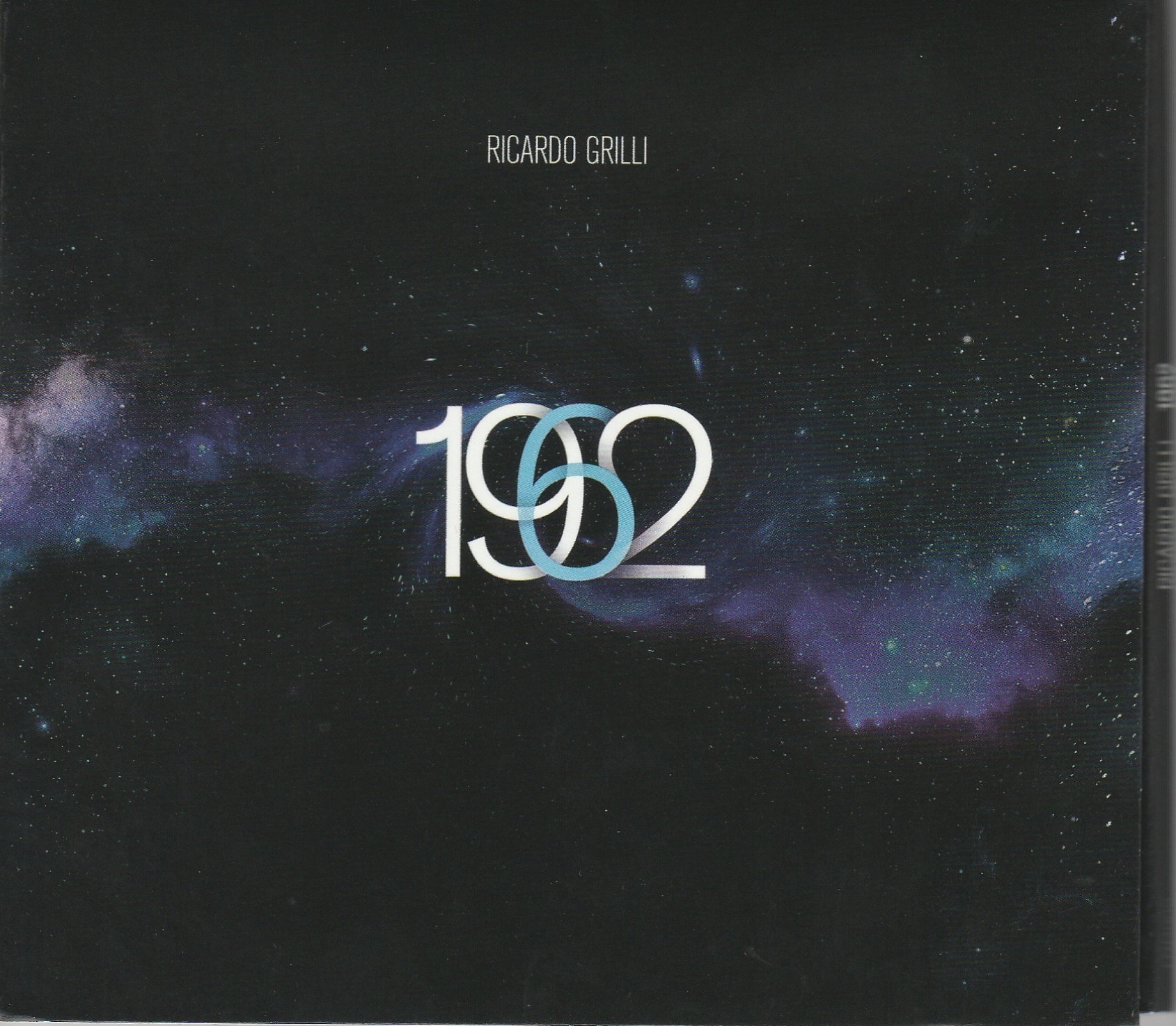
07 Grilli 19621962
Ricardo Grilli
Tone Rogue Records (toneroguerecords.com/#/1962)

An example of bona fide musical time travel, Brazilian native Ricardo Grilli has released a truly haunting and meaning-laden set of tracks that lead us into another period in both musical and personal history that has shaped who the guitarist is now. The follow-up to a similarly themed album, 1954, this record is a reflection of Grilli’s thoughts on a meaningful era which he expresses through “[focusing] on the idea of evolution and change that characterized the 1960s” and embedding it into his music. Helping to realize his musical vision, the guitarist called together a quintet of famed musicians like saxophone great Mark Turner, pianist Kevin Hays and bassist Joe Martin. 

Taking cues from the title, 1954-1962 is an ethereal and meandering piece that connects the previous record to this one, a true bridge through time with Grilli leading us on a spacious journey with his melancholic guitar melody. In Coyote, a simmering and sultry samba-flavoured song, we hear the Brazilian hark back to the history and culture of his homeland, a possible reflection of the tumultuous state his country was in at the time and a longing for something familiar. Voyager, a fittingly titled piece to close out the album, carries a note of hope and exploration within, the rollicking piano tune and driving drum groove letting us know that although our musical journey has come to a close, the future is always a continuous voyage.

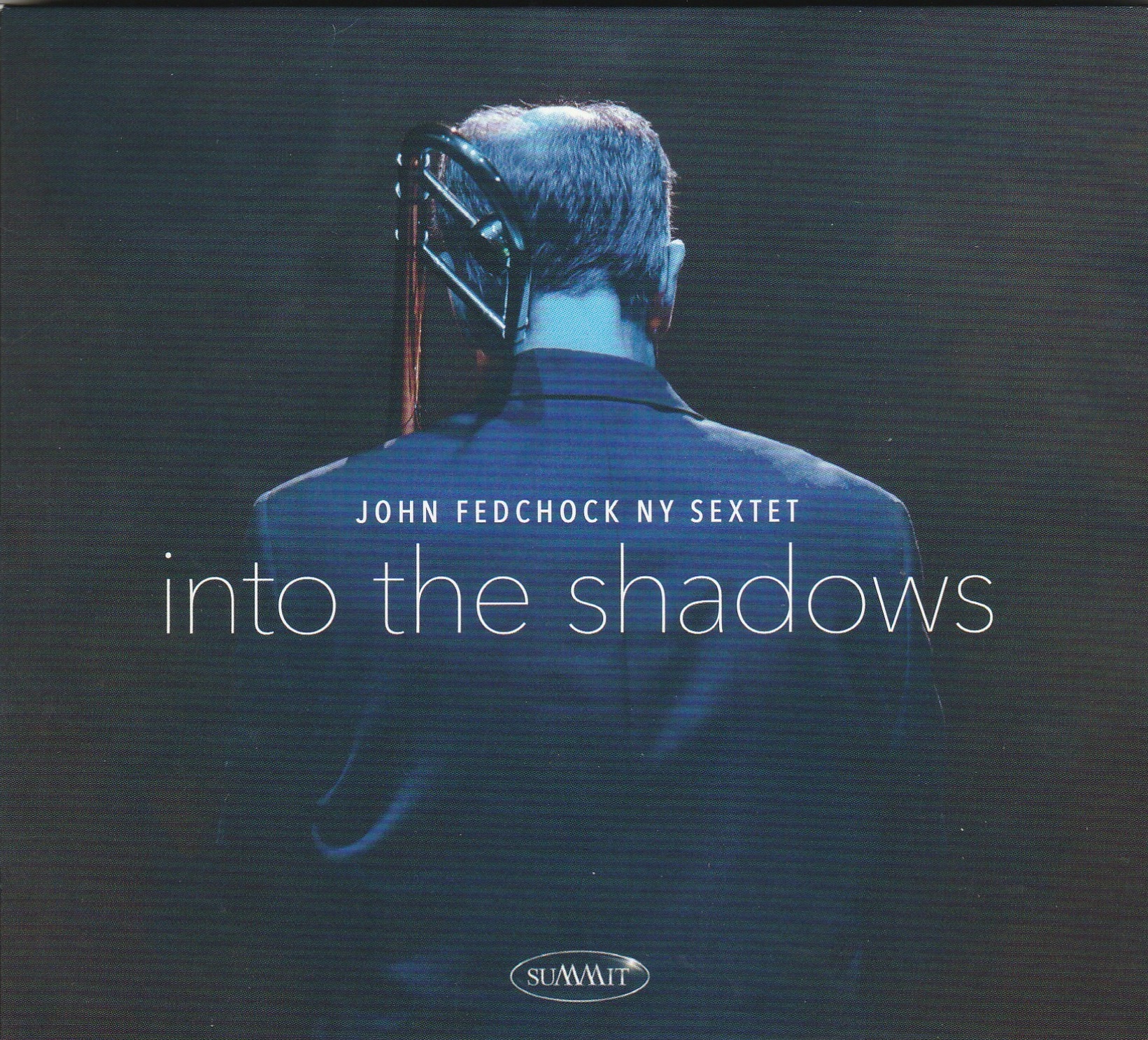
09 John FedchockInto the Shadows
John Fedchock NY Sextet
Summit Records DCD 765 (summitrecords.com) 

New York City-based John Fedchock has long been an internationally regarded trombonist, with an extensive list of credentials. On his tenth recording as a leader, Fedchock also serves as producer/composer/arranger in order to create a magnificent celebration of the jazz sextet. Perhaps better known as the leader of his multiple Grammy-nominated New York Big Band, Fedchock has chosen here to highlight the opportunities for musical and unique creative writing options while maintaining a sleek and mobile blend. Fedchock first debuted his sextet 20 years ago, and the gifted members include first-call jazz artists Scott Wendholt on trumpet and flugelhorn; Walt Weiskopf on tenor saxophone; Allen Farnham on piano; David Finck on bass; and Eric Halvorson on drums.

Of the eight compositions here, five are written by Fedchock and three are well-known standards that are rife with harmonic/dissident arranging choices – maintaining a healthy balance between pure swinging and improvisational exploration. Up first is the high-octane RSVP, a rhythmic, Latin-infused leader-penned piece, cleverly utilizing the changes from the standard Invitation and featuring masterful soloing from all, most especially tenorist Weiskopf who burns like a bonfire throughout. Alpha Dog’s Art Blakey-ish shuffle (kudos to Halvorson) is a total delight, replete with masterful solos from Fedchock, Wendholt and Farnham.

The languid title track plumbs the depth and solitude of the creative process itself, while the sextet displays some of the most symbiotic playing on the project, parenthesized by Fedchock’s sonorous trombone. Finck’s considerable skill with Latin modalities is clearly ascertainable on the compelling arrangement of Star Eyes (Raye/DePaul) and the up-tempo closer, On the Edge, embraces everything that the art form of jazz is about and also transports this sacred musical expression boldly into the future.

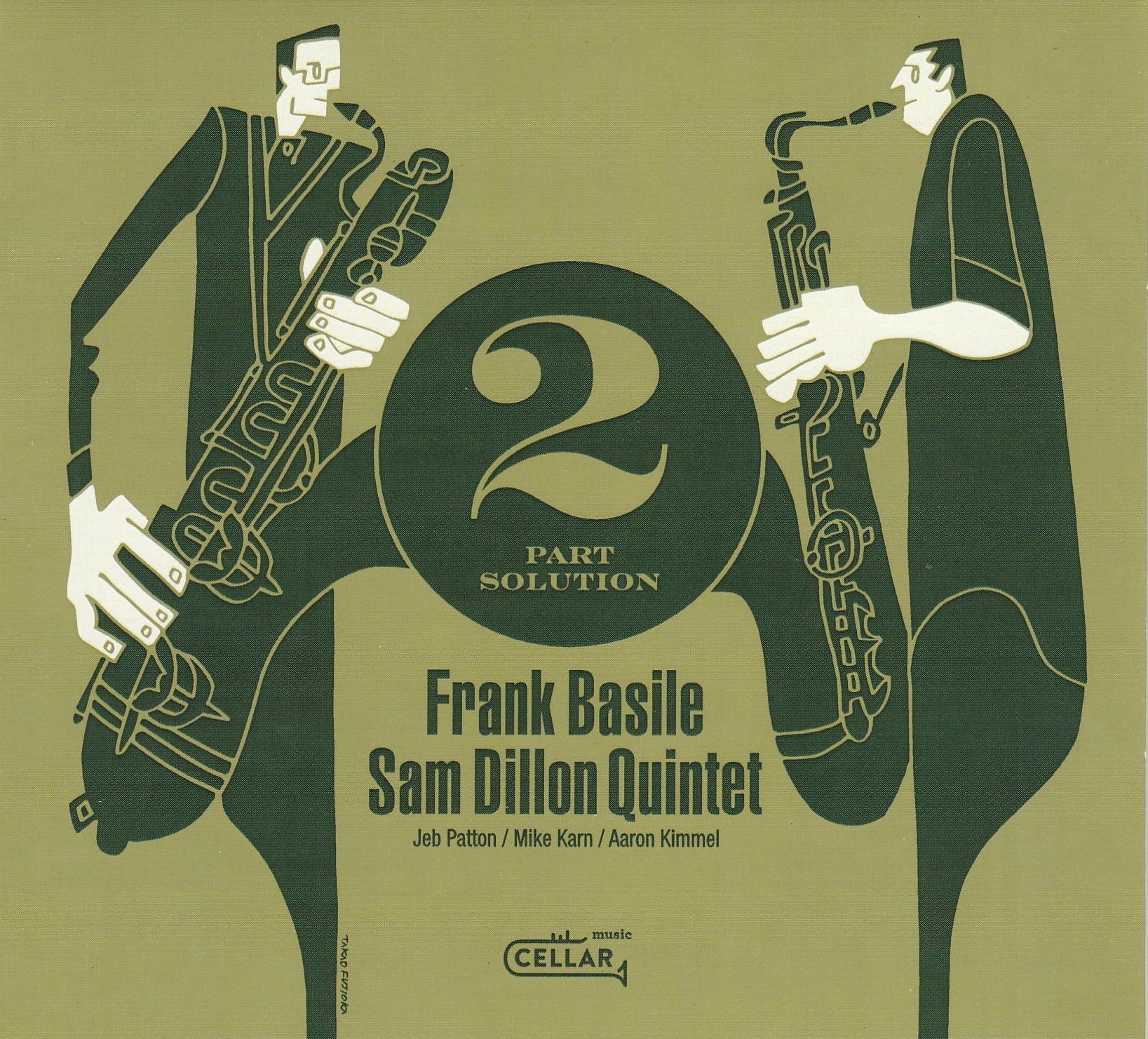
10 Part Solution2 Part Solution
Frank Basile/Sam Dillon Quintet
Cellar Music CM110519 (cellarlive.com/collections/all) 

In the art world, to make something distinctive one doesn’t necessarily have to aim for unprecedented or boundary-pushing new forms; Frank Basile and Sam Dillon have proven that relying on the tried and true can be equally effective. On their latest release, Two Part Solution, this approach takes the form of straight-ahead standard jazz arrangements. Musically speaking, the main selling point here is the tenor/baritone sax interplay that anchors each track. Basile’s rich baritone soars over the lavish mix, commanding the ensemble with impeccable phrasing and making the quintet sound almost as full as a big band. Dillon’s sheer virtuosity on tenor provides a perfect musical foil. 

The original compositions that Dillon and Basile have provided are highlights of the collection, easily measuring up to the well-chosen standards of the set. In particular, Dillon’s Monk-esque title track is a thing of beauty, featuring some of the most elegant and intricate harmony on the album. It is thanks to the unusual bottom-heavy tonality courtesy of the dynamic band-leading duo, the production efforts of Cory Weeds and the powerful contributions of drummer Aaron Kimmel that the quintet achieves such a gratifyingly dense sound. 

While far from the most left-field jazz recording this year, Two Part Solution breathes refreshing new life into a sound that has too often been presumed dead.

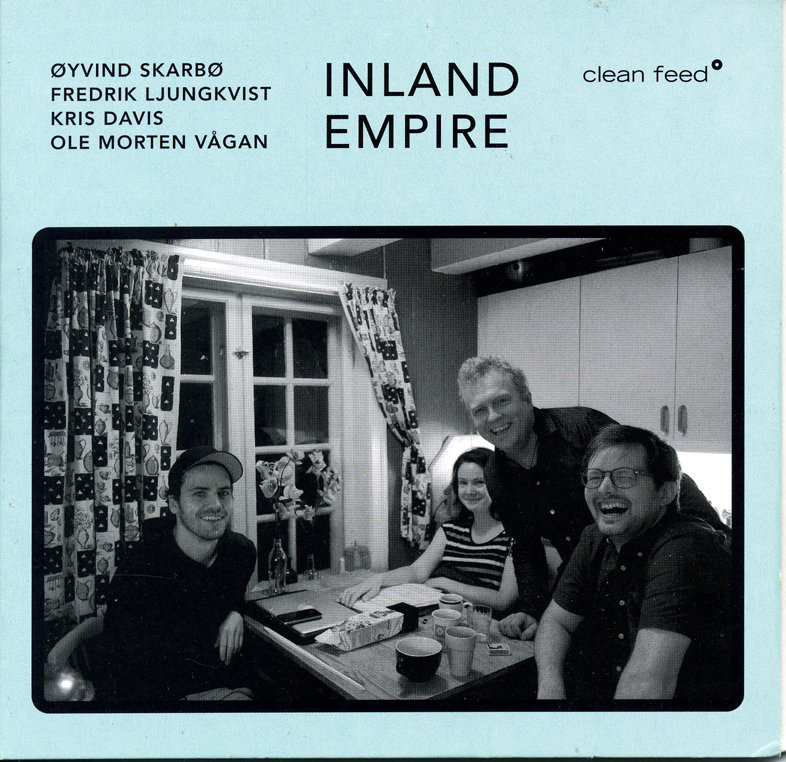
11 EmpireCD007Inland Empire
Inland Empire
Clean Feed CF 548 CD (cleanfeed-records.com)

Cementing a Northern alliance, Canadian pianist Kris Davis joins Swedish tenor saxophonist/clarinetist Fredrik Ljungkvist and Norwegians, bassist Ole Morten Vågan and drummer Øyvind Skarbø for six originals that slyly build on each player’s skills.

A mercurial stylist who often unexpectedly changes course in the middle of a tune, Davis’ Surf Curl vibrates with intermittent keyboard fluctuations. These quicken alongside reed peeps and tambourine-like smacks to invest the performance with nervous energy. Contrast this with her Arcadian patterning, evolving in tandem with Ljungkvist’s rustic clarinet squeezes on his Jag Vet Inte. It’s a tune that’s so understated that Skarbø’s beat is the result of pulsed brush work. He makes up for that on his own Fighter which carves out space for a pugnacious drum break that’s all splatters and ruffs within a composition that’s as slinky and mysterious as a cop show soundtrack. Vågan’s string thumps here and his distinctive woody reprise on his tunes Truffle Pigs and Katmandu Stray Dogs are the bassist’s only features. But his cohesive pulse is a constant. Like Davis’ crimped asides or Ljungkvist’s theme variations cycling through multiple pitches and volumes, technical interludes usually evolve in duo situations or only briefly as singular showpieces. Group sensibility and keeping cohesion paramount throughout appear to be the CD’s aim. It fits with the common view of the musicians’ respective countries as reflections of non-aggressive competence. Clichés aside, musically this is one Inland Empire worth a visit.

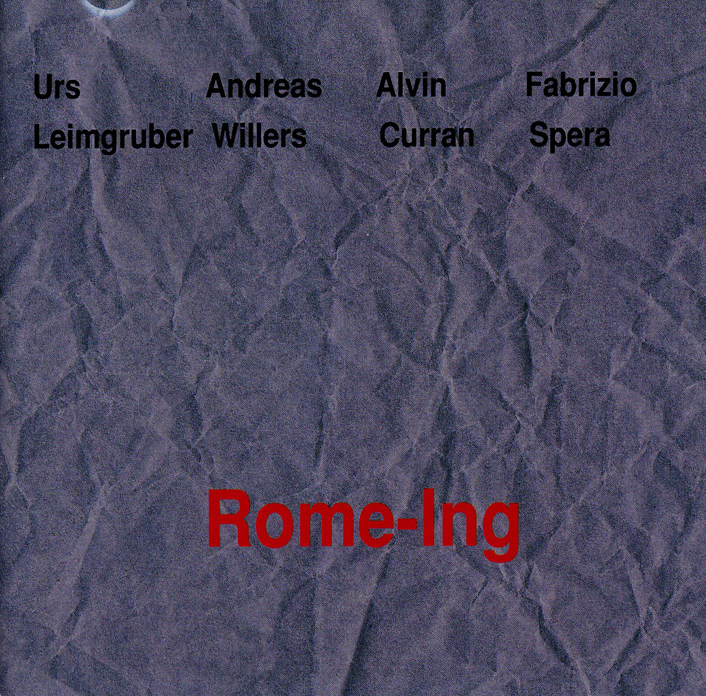
12 RomeingCD006Rome-ing
Leimgruber; Willers; Curran; Spera
Leo Records CD LR 872 (leorecords.com)

Not a formal suite, but anything but formless jamming, the four interlocking improvisations that make up Rome-ing confirm creative unity among sophisticated musicians. Doyen of the quartet is American composer Alvin Curran, long a Rome resident, on piano and sampler. His associates are Swiss soprano/tenor saxophonist Urs Leimgruber, German guitarist Andreas Willers and Italian drummer Fabrizio Spera.

Although pioneered in the 1960s by Curran in MEV (Musica Elettronica Viva), his samples and Willers’s electronics are used sparingly. There are vague suggestions of a  sharing space with accelerating reed whistles and oud-like strums on Part III, while a sampled lyric soprano voice warbles intermittently throughout the disc often ornamenting the narrative when pressurized licks from anyone become too harsh.

Other than that, the creation unfolds logically with trilling reed split tones and tremolo keyboard runs defining the exposition, backed by twangs, buzzes and shakes from the guitarist and drummer. The nearly hour-long improvisation slows and calms at the end following a final bluesy detour from a horizontal saxophone line. Earlier sonic deviations and dissections make room for logical asides such as repeated tremolo patterns and swift glissandi from Curran; Leimgruber’s passages circular breathed to display strident whistles or Bronx cheer-like tongue stops; Willers’ strums and flanges; and Spera’s unforced clanks and clip clops. Narrowed when needed or expansive elsewhere, the ongoing suite sequences expose just enough unexpected motifs and timbral insertions to make the program consistently fascinating.

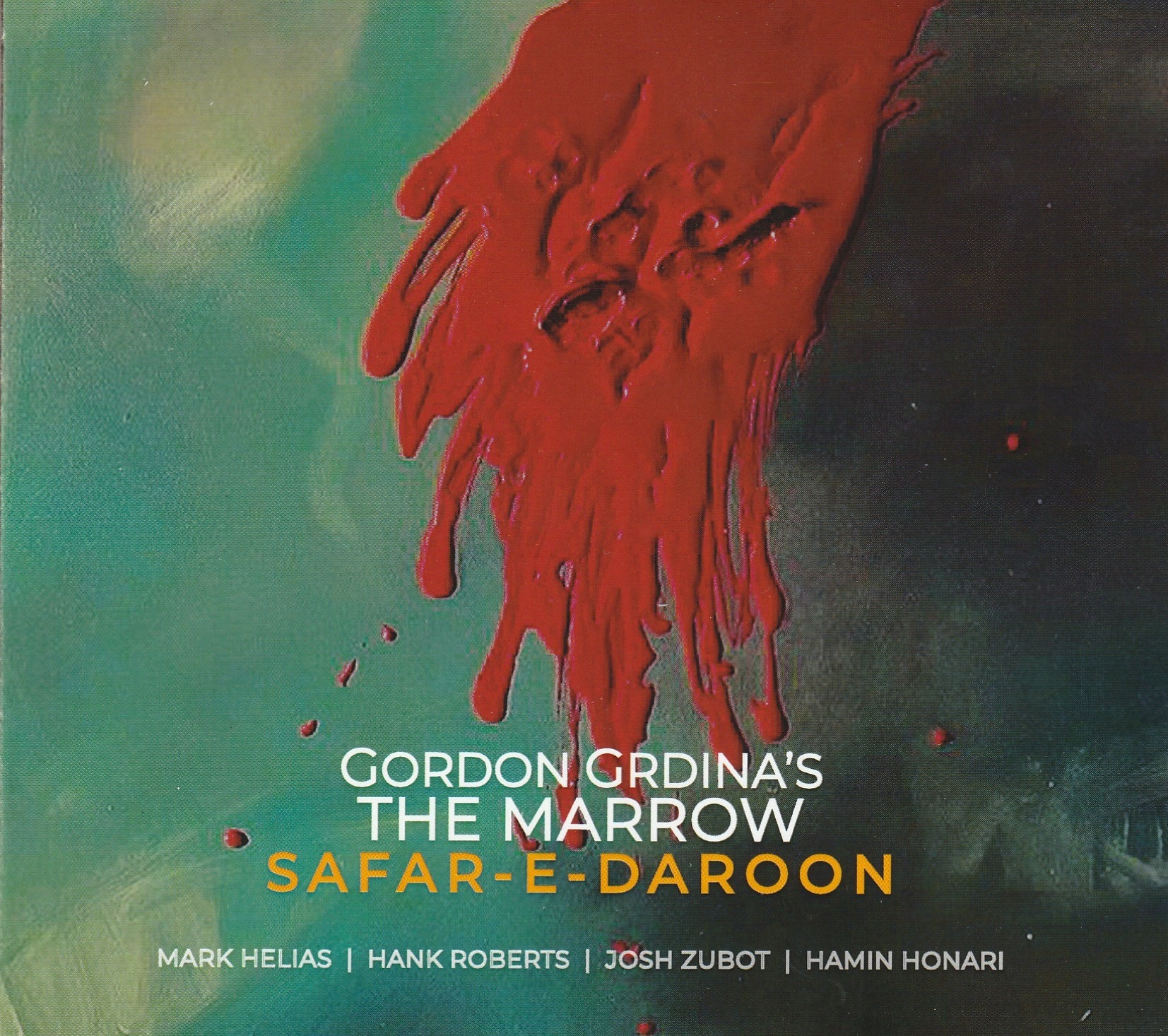
01 Gordon GrdinaSafar-E-Daroon
Gordon Grdina’s The Marrow
Songlines SGL2410-2 (songlines.com/release/safar-e-daroon)

Gordon Grdina draws on two distinct musical cultures, contemporary jazz and traditional Middle Eastern music; chooses musical partners from two different cities, Vancouver and New York; and realizes his musical visions on two distinct instruments, the electric guitar and the oud, a short-necked, fretless Middle Eastern lute. Among Grdina’s various ensembles, The Marrow is the one most strongly marked by Arabic and Persian sources; the musicians are Vancouverites (violinist Josh Zubot and percussionist Hamin Honari) and New Yorkers (bassist Mark Helias and cellist Hank Roberts); further, Grdina plays only oud in this band, making it a group of fretless strings and percussion with strong ties to the tonal inflections and compound rhythms of music that have stretched from the Eastern Mediterranean to India and Spain.

Safar-e-Daroon (inner journey) isn’t pure Eastern music (the journey East likely led for some by John Coltrane), and Western harmonic nuances supplement the focused modal intensity, but there’s a consistent emotional and spiritual dimension. Mini-con, a brooding Grdina theme launched by Helias, has a soaring improvisation by Zubot, while Roberts, one of jazz cello’s finest representatives, articulates the keening wail at the heart of Shamshir. Illumination is marked by the dense and subtle counterpoint of picked, bowed and plucked strings. 

The concluding Gabriel James, named for Grdina’s son and inspired by a moment when the two played together, has the composer strumming a harmonic pattern under the sustained strings’ melodies. It suggests the wide-open spaces of the North American West.

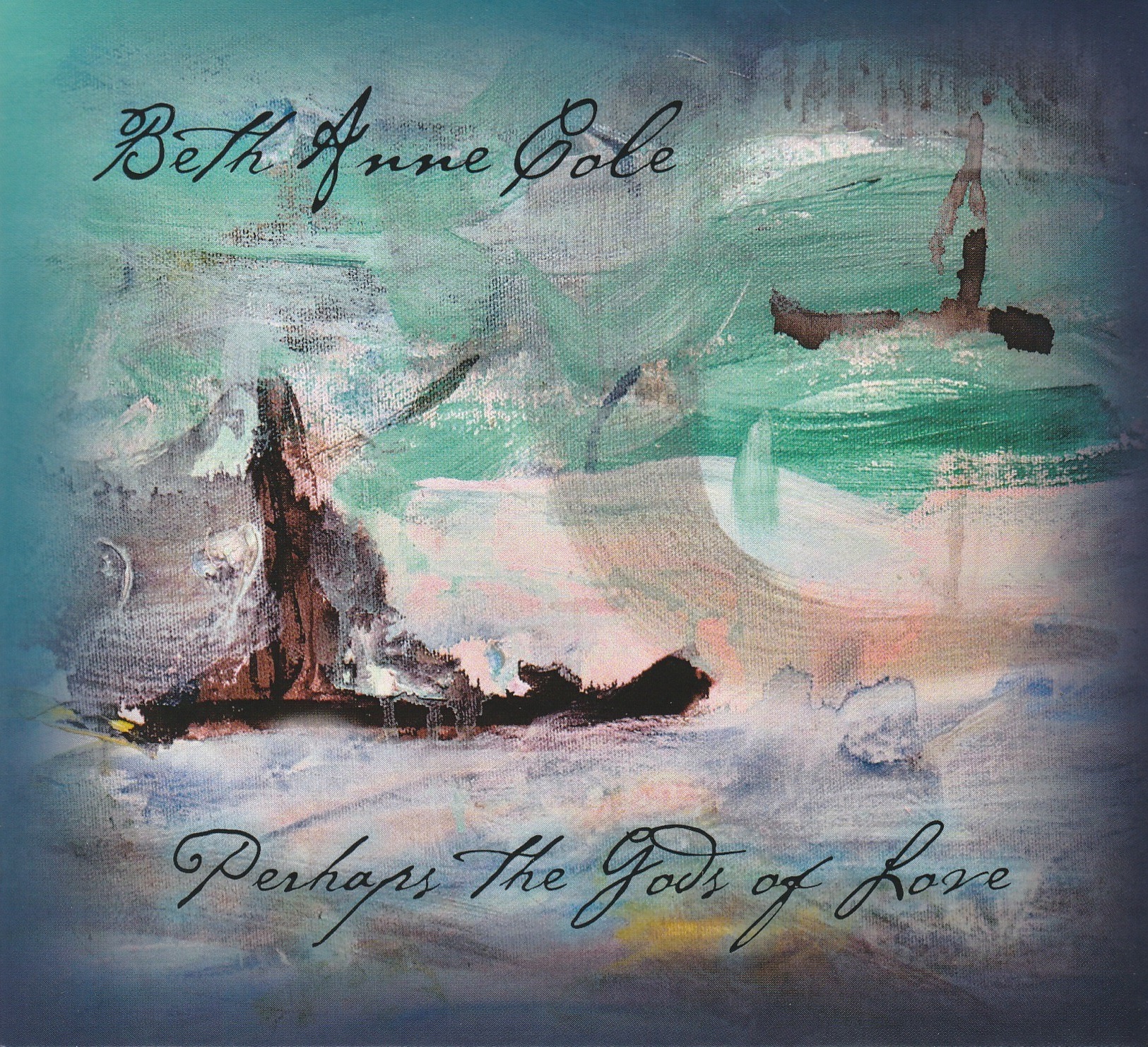
02 Beth Anne ColePerhaps the Gods of Love
Beth Anne Cole
Independent BAC103 (bethannecole.com) 

Aristotle, Horace and Longinus, all writing with passion on the art of poetry – and speaking in a forthright manner of art in the mimesis (adopting Plato’s word for the imitation) of life – have stressed, in no uncertain terms, that the rhythm of music and dance elevates the dramaturgy of art. It would seem that Beth Anne Cole declares her unstinting allegiance to those classic dictates and she appears do so with elemental facility. This is why we easily fall prey to her beguiling music.

Throughout her breathtaking recording, Perhaps the Gods of Love, Cole infuses the convention of song with an emotional intensity that can only be described as the poetry of feeling. This too seems instinctual, for she weaves recitation and singing together with one melodic invention inexorably following the other seamlessly; the instrumentation ornamenting the lyric and vice versa. 

Cole’s rendering of this music is striking; with perfect diction, intonation and expression – all this whilst singing Sailor (in English), La Fille de l’île (in French) and Amol iz Geven a Mayse (in Yiddish). In original work too, such as My Story of Ruth, Cole displays an inventiveness that comes from an uncommon understanding of character and emotion born of accuracy and sensitivity, all of which is framed in a judicious mix of traditional and modern expression. Throughout this recording, Cole’s instrument-playing cohort is fully attuned to her vision and artistry.

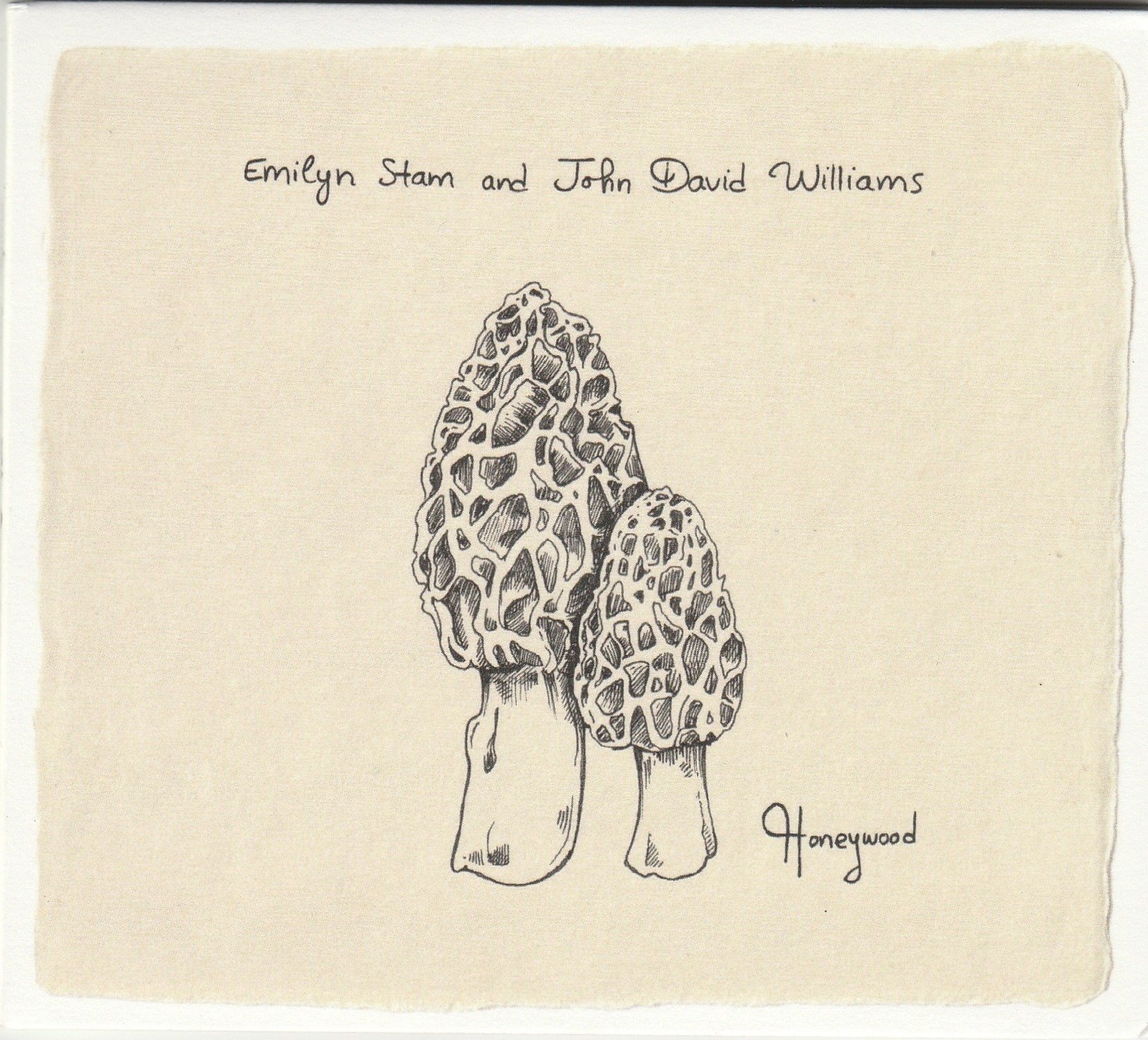
03 HoneywodHoneywood
Emilyn Stam and John David Williams
Independent (emilynandjohn.com) 

This toe-tapping, instrumental/folk 15-track release showcases the superb Ontario-based duo Emilyn Stam (five-string fiddle, piano accordion) and her husband John David Williams (clarinet, diatonic accordion) in both their original and their arranged traditional “balfolk” style tunes, a Western European Dutch, German and French style of folk dances such as waltzes, schottisches, rondeaux and mazurkas.

Great entertaining diverse musical feels throughout. Their tune J & C Mazurka opens with a reflective lead clarinet against fiddle plucks leading to a tight quiet duet. Their cover of the traditional Brittany tune Laridés features upbeat conversational fiddle/clarinet interludes, and clarinet octave shifts. Williams plays diatonic accordion with Stam’s fiddle in the lyrical, sensitive, tightly phrased cover of the traditional Dutch Marche de Roux/La Baigneuse (Marche/Waltz).

Five special guests add new colour to select tracks including upright bassist Alan Mackie’s deep low pitches in After the Snow/Autumn in the Valley (Schottische); and Nathan Smith’s great fiddling as Stam picks up the piano accordion to play backdrop grooves and doubling driving clarinet lines in Red Bay/The Stone Whale/Stukjes (Jig Chapelloise).

Stam and Williams play with joy, technique and superb musicianship. Honeywood is the Ontario town where Stam and Williams were married in 2017, and also where their first two Big Branch Festivals for balfolk were held. No festival this year due to the pandemic, but there is so much great music here to keep you dancing at home, and hopefully out and about soon!

Listen to 'Honeywood' Now in the Listening Room

01 GemingaOnce a rite of passage, solo outings for reed players have now become almost as commonplace in improvised music as jazz piano trio discs. At the same time, figuratively performing musically naked like that involves more than desire and technical skill. Cerebral planning as well as deciding which horn(s) to use, plus the suitability of the location’s acoustics are necessary as well. These new discs demonstrate how international reed players deal with the challenges.

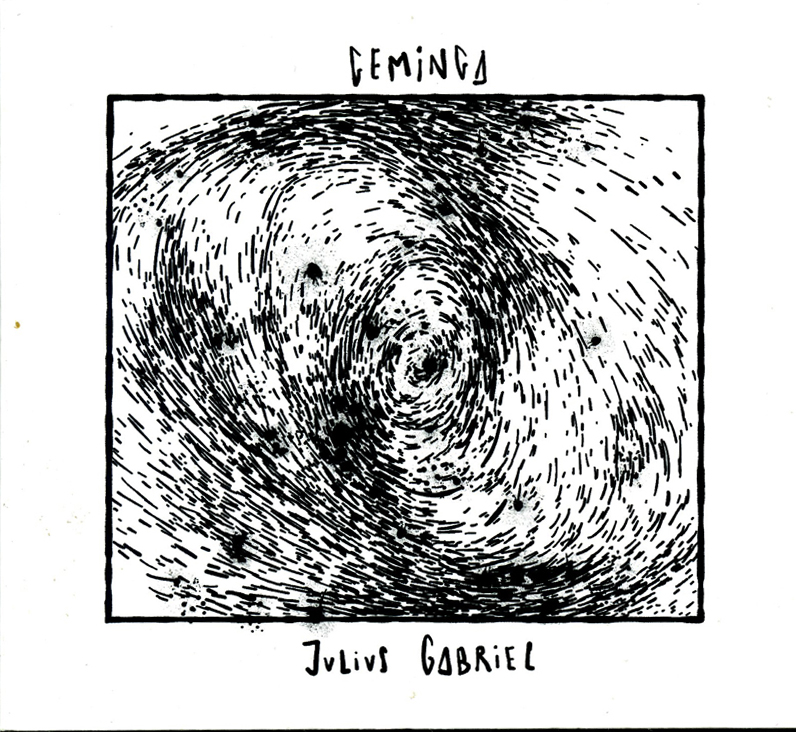
Performing on Geminga (Creative Sources CS 637 CD creativesourcesrec.com), German Julius Gabriel uses the spatial dimensions of an ancient chapel in Montemor-o-Novo, Portugal to expand his improvisation on soprano, tenor and baritone saxophones. That means that sometimes not only is he creating a thematic line and a vibrated secondary commentary but echoes from the chapel add a third aural element. Hear this at work on the extended Asteroids, as lively tones spill from his tenor saxophone augmented by a lower-pitch continuum and, following an upwards pitch shift, are joined by moderated trills that seem to vibrate from a second distant tenor saxophone. During ten tracks, Gabriel works his way to Epicycles, the circular-breathed soprano sax finale. Characterized by a surge from presto to prestissimo, his tone extensions and detours sputter and soar irregularly and broadly, but never interrupting the narrative flow. Briefer tracks are displays of blindingly fast key percussion or, on Cave Moans, just that, with gravelly razzing wails reflected by the spatial situation suggesting the noise of cave people shouting into the void. Other pieces are more focused. The Nerves finds layered baritone saxophone reed vibrations moving from nephritic honks to altissimo squeaks while displaying split-tone fluctuations. Meanwhile Juju’s Dream confirms that running through reed changes and affiliated chamber echoes with the harshest and most jagged tenor sax buzzes can climax with screaming multiphonics without abandoning a straightforward hidden melody. Jagged and smooth, sweet and sour, Walk Down’s andante exposition overlaps a jumpy theme to renal slurs and splatters before sliding to a smooth final interchange.
02 Anche

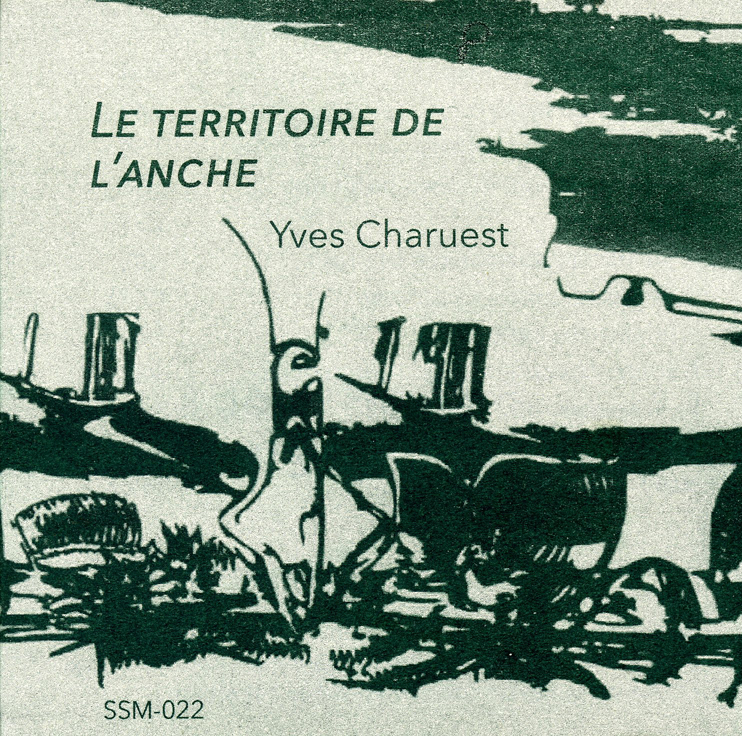
While Gabriel divides his reed attention three ways, Montreal’s Yves Charuest concentrates on the alto saxophone and spotlights the exploratory nature of his solos in the title of his CD, Le Territoire de l’Anche (Small Scale Music SSM-022 smallscalemusic.bandcamp.com). Concurrently his preoccupation is with high-pitched textures. Moving from a whisper to a scream on Arundo Donax, Adorno Don’t Ask, Charuest’s tongue-slapping variables and shrill whistles are dissected into terse peeps and screech passages at the edge of hearing using only stiff percussive breath. Subsequently, on Exquisite Corpus Callosum, he unearths slurry and slippery theme variations of temporal and timbral activity with a series of tongue stops, sliding from low pitches to elevated trills without upsetting andante motion. Charuest also uses barely there reed bites and tongue stabs to vibrate a secondary theme that is both spiky and stimulating. All together his tracks are terse, tart and throbbing and also expand the properties of the saxophone’s metal body, as exhalation digs textures from the body tube that owe nothing to reed or mouthpiece. He can also approximate mellow with connective slurs as on Rohrwurm. But his usual strategies involve moving timbres from shrill to shriller. Although these continuous eviscerated honks and piercing squeaks make the architecture of a tune like Interstitial Defect seem like a merry-go-round of musical motifs endlessly rotating, circular breathing leads to tone extensions not limitations. By the concluding Anémophile, as tongue slaps and whistles presage varied textures, he’s made a convincing case for the validity of brief, strident, metal-accented pitches as the basis for profoundly distinctive improvisations. 
03 Monkey

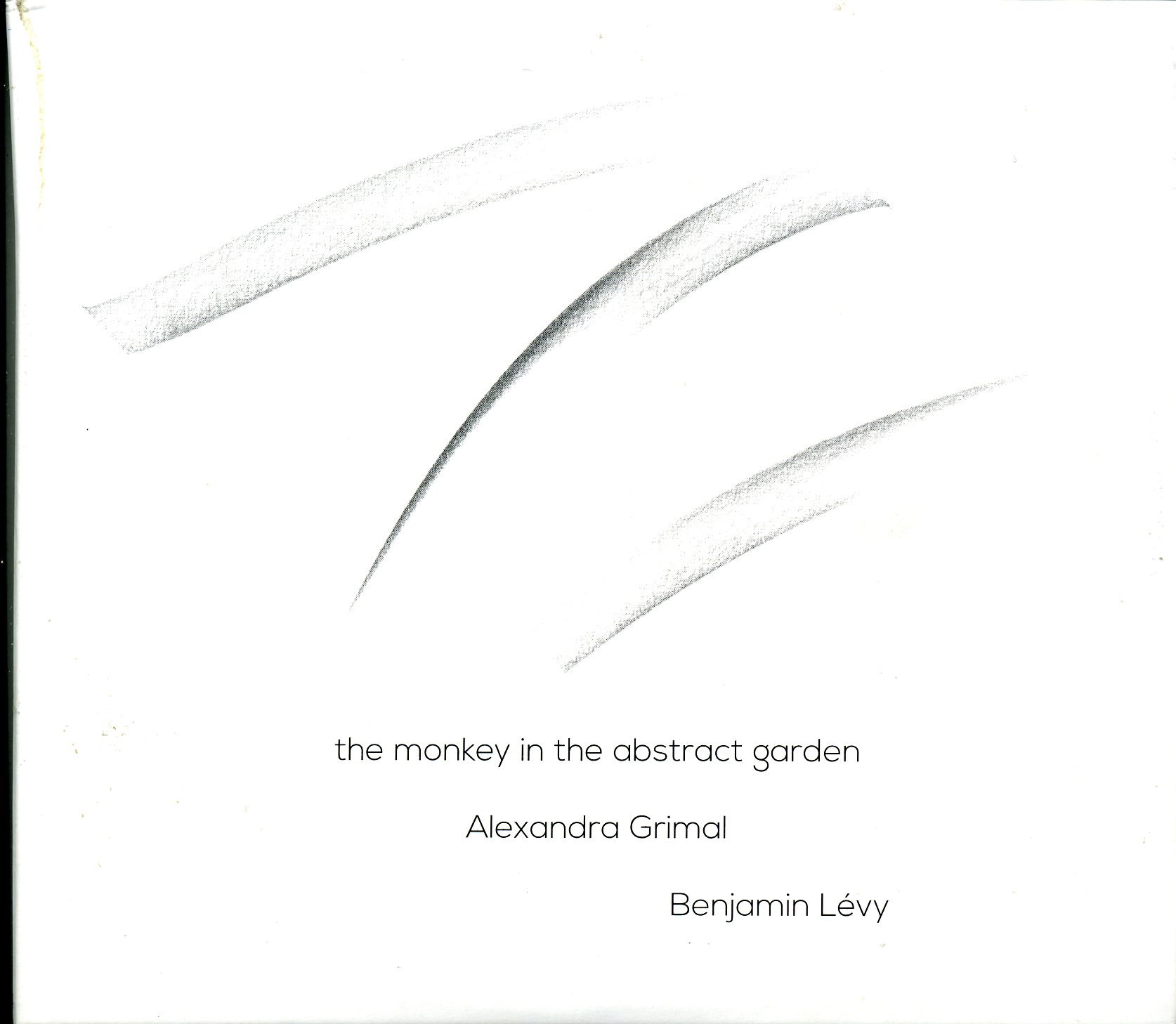
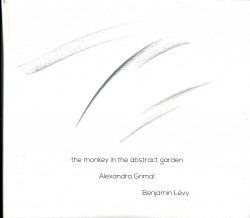
Dividing her sonic explorations in two, French soprano saxophonist Alexandra Grimal has put out the monkey in the abstract garden (Ovni OVB 0003 alexandragrimal.com) a two-CD set of which only Disc 1 is of concern. The second features her abstract vocalizing further altered and processed by Benjamin Lévy’s electronics. However, it’s her nine solo soprano saxophone variations on Ma that are fascinating. Dedicated to the intervals between and among notes, she projects a moderated tone, uses more pauses and stops than any of the other soloists here, in improvisations that are calm and dulcet without being cloying. With the tracks fluid, the sole dissident texture occurs at the beginning of Ma 5, coincidentally the shortest track, where an initial reed squeak soon settles into a horizontal patterning with an unbroken tone. More characteristic are improvisations where adagio peeps and trills curve into brief timbral emphasis, never losing exhilarating mellowness. Happily, to avoid sameness, the lengthiest instances of this allow for more development. Ma 8, for instance, emphasizes reed lowing and accelerating peeps as pauses lengthen between tongue flutters as the track slows down to largo. Eventually, as individual breaths lengthen each time they’re heard, a squeaking motif distinguishes this showcase from the other tracks. Ma 3 is also memorable, since the logically projected tongue stops and curlicue trills introduce a sequence where high and low pitches alternate so that it appears as if a ghostly second saxophonist is answering the primary reed projections.
04 Marco

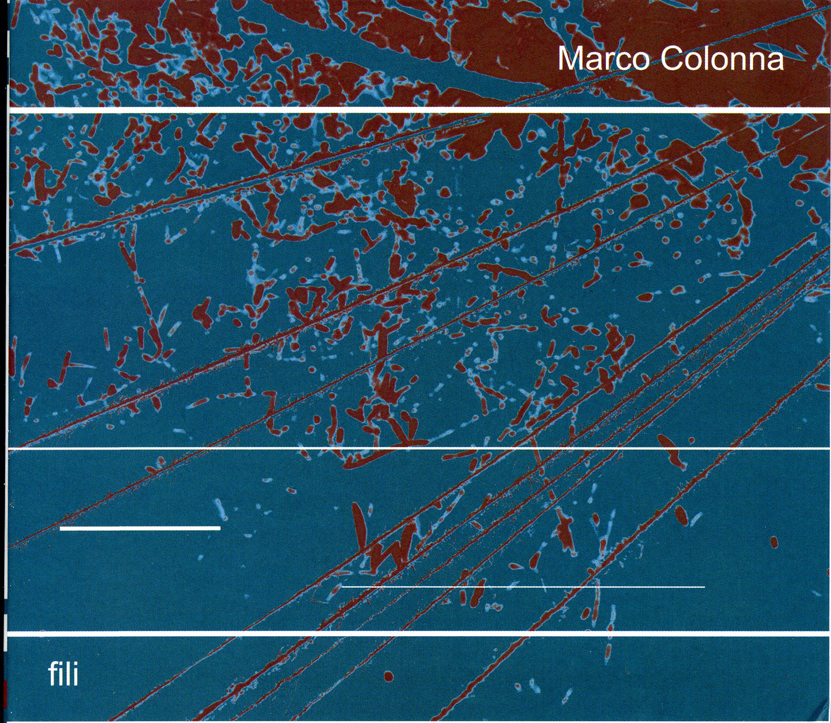
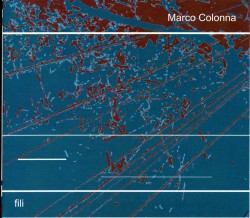
Solo reed revelations aren’t limited to saxophonists. A couple of clarinetists, Belgian Ben Bertrand and Italian Marco Colonna, are involved in similar programs, but with effects and electronics prominent as well. More animated and atonal of the two are the sounds on Colonna’s Fili (Niafunken nfk 007 niafunken.com). Playing clarinet and bass clarinet and using extended techniques and effects to overdub, dissect and multiply timbres, Colonna creates an unprecedented program. Like an actor in a one-person play, he takes all the parts himself and frequently interacts with his sonic Colonna’ssubterranean snorts from different instruments before culminating in a horizontal finale of a lone upturned trill.
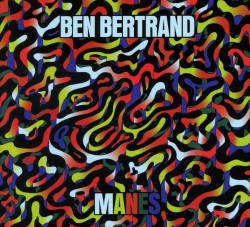
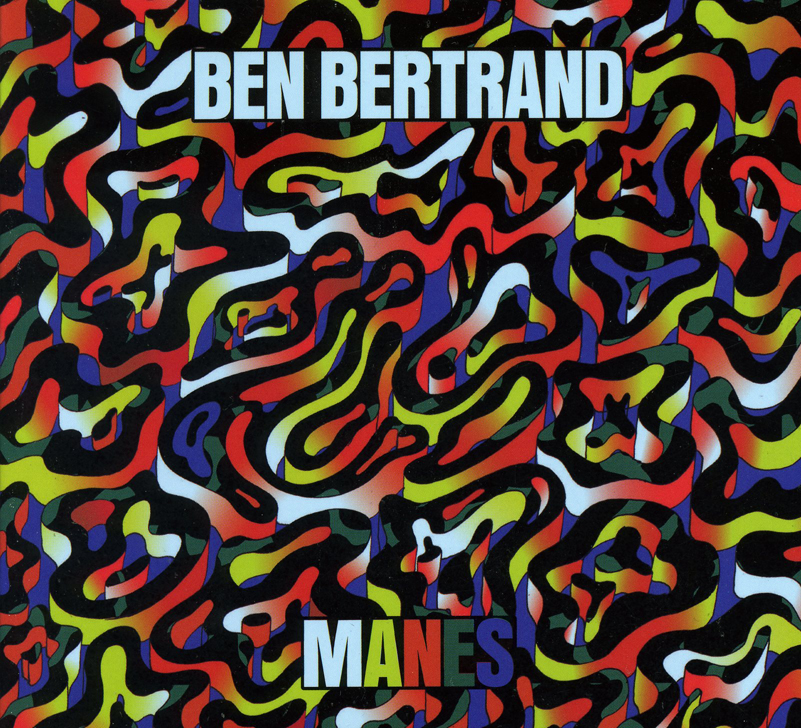
05 ManesA divergence into differently defined textures, Belgian Ben Bertrand uses his bass clarinet and numerous effects machines to stretch his improvisations on Manes (Stroom/Les albums claus STRLP-038/LAC015 lesalbumclaus.bandcamp.com) so that they relate to techno and ambient music. Most distinctively, Incantation 3 defines this lower-case strategy. Reed respirations coupled with expressive sine waves create repetitive tones that vibrate rhythmically as clarion clarinet trills soar across the sound field for a deconstructed but measured exposition. Even as they blow airily these dissected trills retain their reed identity, but elsewhere the processing and extended techniques create passages that sound nothing like the tones a clarinet produces. Although overdubbed glissandi to create clarinet ensembles produce unique reed buzzes, the addition of the disembodied voice of Claire Vailler on the concluding The Manmaipo merely puts into bolder relief Bertrand’s achievement. Distinctively, this allows for the creation of altissimo and chalumeau register pitches to engage in a distinctive call and response between themselves.

Once a rite of passage, solo outings for reed players have now become almost as commonplace in improvised music as jazz piano trio discs. At the same time, figuratively performing musically naked like that involves more than desire and technical skill. Cerebral planning as well as deciding which horn(s) to use, plus the suitability of the location’s acoustics are necessary as well. These new discs demonstrate how international reed players deal with the challenges.
Performing on Geminga (Creative Sources CS 637 CD creativesourcesrec.com), German Julius Gabriel uses the spatial dimensions of an ancient chapel in Montemor-o-Novo, Portugal to expand his improvisation on soprano, tenor and baritone saxophones. That means that sometimes not only is he creating a thematic line and a vibrated secondary commentary but echoes from the chapel add a third aural element. Hear this at work on the extended Asteroids, as lively tones spill from his tenor saxophone augmented by a lower-pitch continuum and, following an upwards pitch shift, are joined by moderated trills that seem to vibrate from a second distant tenor saxophone. During ten tracks, Gabriel works his way to Epicycles, the circular-breathed soprano sax finale. Characterized by a surge from presto to prestissimo, his tone extensions and detours sputter and soar irregularly and broadly, but never interrupting the narrative flow. Briefer tracks are displays of blindingly fast key percussion or, on Cave Moans, just that, with gravelly razzing wails reflected by the spatial situation suggesting the noise of cave people shouting into the void. Other pieces are more focused. The Nerves finds layered baritone saxophone reed vibrations moving from nephritic honks to altissimo squeaks while displaying split-tone fluctuations. Meanwhile Juju’s Dream confirms that running through reed changes and affiliated chamber echoes with the harshest and most jagged tenor sax buzzes can climax with screaming multiphonics without abandoning a straightforward hidden melody. Jagged and smooth, sweet and sour, Walk Down’s andante exposition overlaps a jumpy theme to renal slurs and splatters before sliding to a smooth final interchange.
While Gabriel divides his reed attention three ways, Montreal’s Yves Charuest concentrates on the alto saxophone and spotlights the exploratory nature of his solos in the title of his CD, Le Territoire de l’Anche (Small Scale Music SSM-022 smallscalemusic.bandcamp.com). Concurrently his preoccupation is with high-pitched textures. Moving from a whisper to a scream on Arundo Donax, Adorno Don’t Ask, Charuest’s tongue-slapping variables and shrill whistles are dissected into terse peeps and screech passages at the edge of hearing using only stiff percussive breath. Subsequently, on Exquisite Corpus Callosum, he unearths slurry and slippery theme variations of temporal and timbral activity with a series of tongue stops, sliding from low pitches to elevated trills without upsetting andante motion. Charuest also uses barely there reed bites and tongue stabs to vibrate a secondary theme that is both spiky and stimulating. All together his tracks are terse, tart and throbbing and also expand the properties of the saxophone’s metal body, as exhalation digs textures from the body tube that owe nothing to reed or mouthpiece. He can also approximate mellow with connective slurs as on Rohrwurm. But his usual strategies involve moving timbres from shrill to shriller. Although these continuous eviscerated honks and piercing squeaks make the architecture of a tune like Interstitial Defect seem like a merry-go-round of musical motifs endlessly rotating, circular breathing leads to tone extensions not limitations. By the concluding Anémophile, as tongue slaps and whistles presage varied textures, he’s made a convincing case for the validity of brief, strident, metal-accented pitches as the basis for profoundly distinctive improvisations. 
Dividing her sonic explorations in two, French soprano saxophonist Alexandra Grimal has put out the monkey in the abstract garden (Ovni OVB 0003 alexandragrimal.com), a two-CD set of which only Disc 1 is of concern. The second features her abstract vocalizing further altered and processed by Benjamin Lévy’s electronics. However, it’s her nine solo soprano saxophone variations on Ma that are fascinating. Dedicated to the intervals between and among notes, she projects a moderated tone, uses more pauses and stops than any of the other soloists here, in improvisations that are calm and dulcet without being cloying. With the tracks fluid, the sole dissident texture occurs at the beginning of Ma 5, coincidentally the shortest track, where an initial reed squeak soon settles into a horizontal patterning with an unbroken tone. More characteristic are improvisations where adagio peeps and trills curve into brief timbral emphasis, never losing exhilarating mellowness. Happily, to avoid sameness, the lengthiest instances of this allow for more development. Ma 8, for instance, emphasizes reed lowing and accelerating peeps as pauses lengthen between tongue flutters as the track slows down to largo. Eventually, as individual breaths lengthen each time they’re heard, a squeaking motif distinguishes this showcase from the other tracks. Ma 3 is also memorable, since the logically projected tongue stops and curlicue trills introduce a sequence where high and low pitches alternate so that it appears as if a ghostly second saxophonist is answering the primary reed projections.
Solo reed revelations aren’t limited to saxophonists. A couple of clarinetists, Belgian Ben Bertrand and Italian Marco Colonna, are involved in similar programs, but with effects and electronics prominent as well. More animated and atonal of the two are the sounds on Colonna’s Fili (Niafunken nfk 007 niafunken.com). Playing clarinet and bass clarinet and using extended techniques and effects to overdub, dissect and multiply timbres, Colonna creates an unprecedented program. Like an actor in a one-person play, he takes all the parts himself and frequently interacts with his sonic doppelgangers. On Pane, for instance, a low-pitched tongue-slap beat is harmonized with treble reed lines until a single clarinet breaks out from the group to propel the klezmer-like theme forward with squeaks and splats until the line is so deemphasized that it fades away. Sos Berbos on the other hand plays with the rhythm created by key percussion and nasal exhalation, followed by an interlude from a ghostly clarinet trio whose output interacts as each reflects the other’s tones, climaxing with layered slurs from both high and low-pitched reeds. Sometimes, as on A Matita, the sequences fly by with kinetic multiphonics concentrated into stacked polyphony. Or, on Farina e Pianto, the exposition suddenly changes course as a solo clarinet sounds two calming rustic tones simultaneously as low-pitched reed pressure moves up the scale with intermittent squeals. Probably the track which best reflects Colonna’s multi-pronged reed strategy is Pietra. On it, soft-drink-bottle-cap-opening pops projected by tongue slaps presage a series of clarion bites and subterranean snorts from different instruments before culminating in a horizontal finale of a lone upturned trill.
A divergence into differently defined textures, Belgian Ben Bertrand uses his bass clarinet and numerous effects machines to stretch his improvisations on Manes (Stroom/Les albums claus STRLP-038/LAC015 lesalbumclaus.bandcamp.com) so that they relate to techno and ambient music. Most distinctively, Incantation 3 defines this lower-case strategy. Reed respirations coupled with expressive sine waves create repetitive tones that vibrate rhythmically as clarion clarinet trills soar across the sound field for a deconstructed but measured exposition. Even as they blow airily these dissected trills retain their reed identity, but elsewhere the processing and extended techniques create passages that sound nothing like the tones a clarinet produces. Although overdubbed glissandi to create clarinet ensembles produce unique reed buzzes, the addition of the disembodied voice of Claire Vailler on the concluding The Manmaipo merely puts into bolder relief Bertrand’s achievement. Distinctively, this allows for the creation of altissimo and chalumeau register pitches to engage in a distinctive call and response between themselves.
Electronics aside, each of these reed players has produced individual and exceptional solo works. As their varied programs demonstrate, there’s also still scope for others to engender particular responses to the solo reed challenge. 


British pianist Solomon Cutner, who had a natural talent for the piano, was born in London on August 9, 1902. He was the seventh child of musical parents of German-Jewish and Polish-Jewish extraction and began to play the family piano aged five. He made his debut, of sorts, aged seven, in his father’s tailor shop playing his own arrangement of Tchaikovsky’s 1812 Overture. He became a pupil of Mathilde Verne, herself a former pupil of no less than Clara Schumann. He learned well. As did she. She tied him to a five-year contract with her company and toured him as “Solomon, the Child Prodigy.” Solomon made his real debut in Queen’s Hall in 1911. In 1914, the 12-year-old played Beethoven’s Second Piano Concerto at the Proms. Proms founder, Sir Henry Wood insisted that he continue his studies and he made it to Paris where he studied with Marcel Dupré and others. He appeared in the United States in 1926 and again in 1939. During WWII and after, he played for the Allied troops around the world including Australia and New Zealand.

Solomon was a mighty talent whose brilliant recordings produced by English Columbia and His Master’s Voice, EMI were treasured by discerning music lovers everywhere who appreciated his artistry and technique. He first recorded in 1929. He was in the midst of recording the complete cycle of Beethoven sonatas for EMI Records when he suffered a devastating stroke in 1956, which paralyzed his right arm. He never recorded or performed in public again, but lived on for another 32 years, dying in 1988 in London.

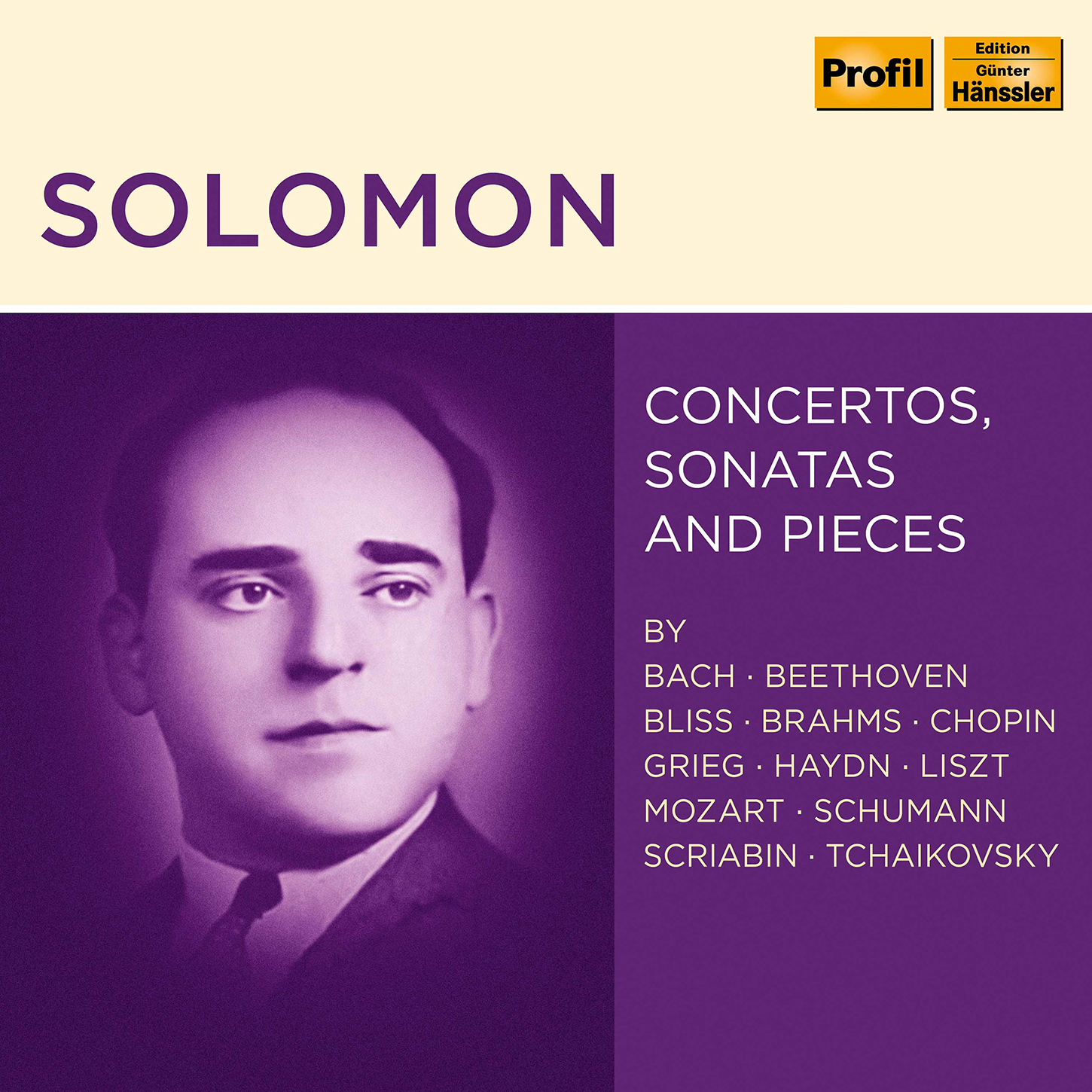
01 SolomonThe recordings that Profil selected for the collection Solomon – Concertos, Sonatas and Pieces (Profil PH20032 naxosdirect.com/search/881488200324) cover repertoire from J.S. Bach to Sir Arthur Bliss and include concertos, duos and solo works all in the best HMV/Columbia sound. There is not a single performance that is anything less than individual and many that surprise. On CD8 is the most welcome first recording of the unique and devilishly difficult 1938 piano concerto by Bliss, conducted by Sir Adrian Boult. The Bliss concerto was written specifically for the New York World’s Fair in 1939 and the familiar gestures of the grand Romantic manner were calculated to please audiences of the day. Listening to Solomon play the poetic Grieg concerto that follows, conducted by Herbert Menges, the listener can only but marvel at how, in the first movement, the keys could be depressed so gently and still be making the notes. That disc concludes with two pieces by Brahms, the Intermezzo in B-flat Minor, Op.117 No.2 and the Rhapsody in G Minor, Op.79 No.2 in definitive performances. As may be expected by now, this listener is attuned to expect Solomon’s articulation and clarity, and so, Schumann’s Carnaval is unusually fresh. On CD5, The Beethoven “Archduke Trio with Henry Holst (violin) and Anthony Pini (cello) follows the Brahms Piano Sonata No.3 Op.5. CD6 contains three of Beethoven’s most loved piano sonatas, Pathétique, Moonlight and Appassionata. To put the icing on the cake, cellist Gregor Piatigorsky joins Solomon for the Cello Sonata No.5, Op.102 No.2

What a shock on CD7 when the stentorian Liszt’s Hungarian Fantasia for Piano and Orchestra conducted by Walter Susskind lashes out following Scriabin’s Concerto in F-sharp Minor and Tchaikovsky’s First, both conducted by Isssay Dobrowen. 

On these ten discs, there are concertos by Mozart, Beethoven, Brahms, Schumann, Liszt, Tchaikovsky, Scriabin and Bliss of course, in addition to a multitude of piano works by Bach, Mozart, Haydn, Beethoven, Schumann, Brahms and Chopin. The sound throughout this valuable collection is utterly true, particularly the piano solos, a tribute to EMI’s people and whoever did the transfers to disc for Profil.

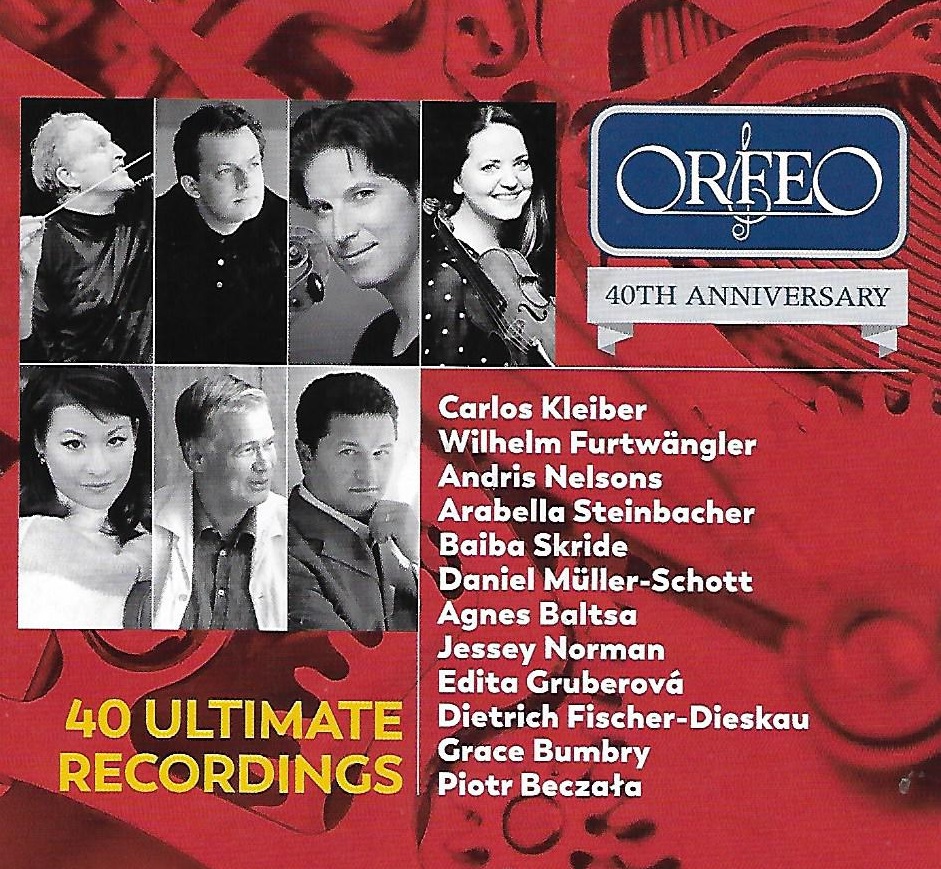
02 Orfeo UltimateThis year the German label Orfeo is celebrating its 40th anniversary of issuing significant recordings of live performances given by various artists that were not made available elsewhere. Devout collectors who look beyond the well-known labels may well own, or know of, some of the treasures in the Orfeo catalogue. Orfeo has chosen a collection featuring 20 Soloists and Conductors and 20 Legendary Voices and issued them all on two CDs as Orfeo 40th Anniversary Edition – 40 Ultimate Recordings (Orfeo ORF-C200032 naxosdirect.com/search/4011790200323). The soloists and conductors disc running just seconds short of 80 minutes contains Wolfgang Sawallisch in the overture to The Magic Flute, Otto Klemperer in Bach’s Overture No.3 in D Major; Carlos Kleiber in the Adagio from Beethoven’s Fourth Symphony; Wilhelm Furtwängler in the finale of the Haydn Symphony No.88; Rafael Kubelik conducts Rudolf Serkin in the Adagio from Beethoven’s Piano Concerto No.2; etc. etc. The generous program continues with performances featuring Gerhard Oppitz, Andris Nelsons; Oleg Maisenberg, Neeme Järvi; Vaclav Neumann and the music goes on… Sir Thomas Beecham would have called this pleasing program not “lollipops” but “bonbons.” 

The accompanying 20 Legendary Voices belong to 20 males and females singing mostly arias from operas by Rossini, Spohr, Gluck, Mozart, Puccini, Verdi, Wagner, Cilea, Bizet, Richard Strauss, Gounod, Moniuszko and the rest of the usual suspects. The voices belong to Agnes Baltsa, Jessye Norman, Kurt Moll, Julia Varady, Edita Gruberová, Carl Bergonzi, Lucia Popp, Michael Volle and others. Each of these discs is a perfect example of putting together an educated and harmonious, never-a-dull-moment program.

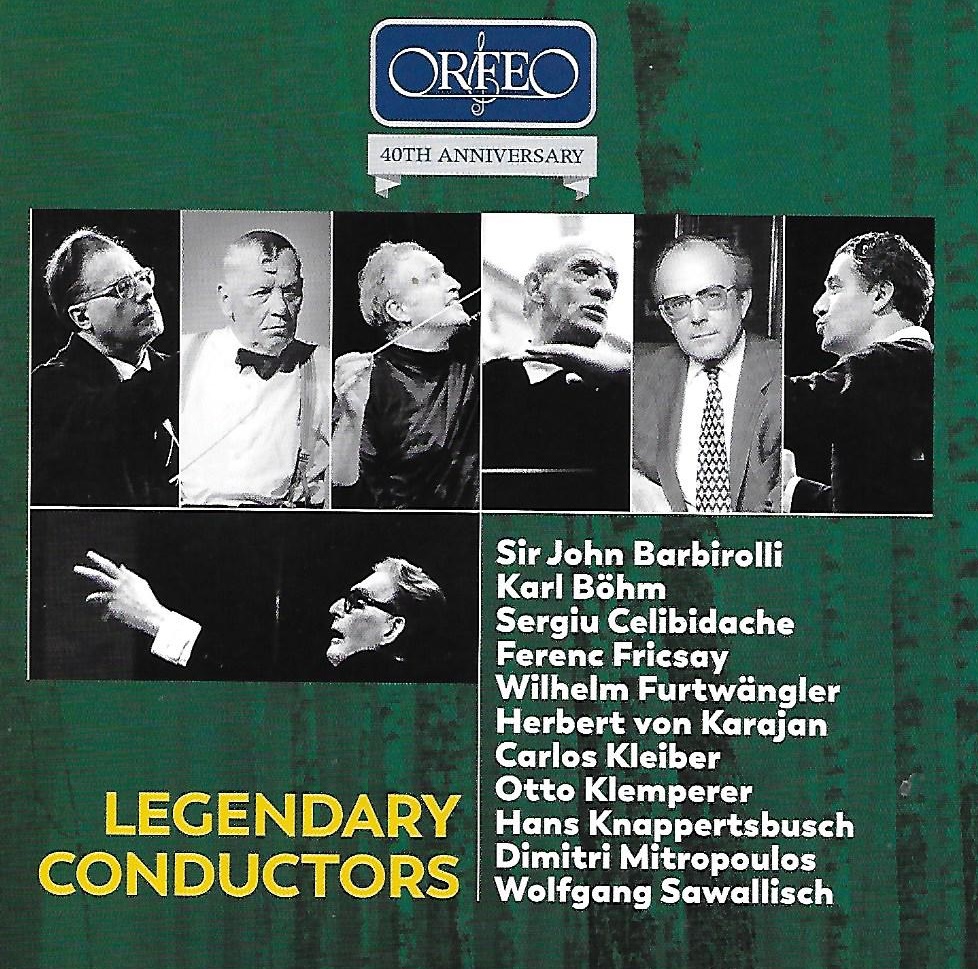
03 Orfeo ConductorsThe other offering for this Orfeo anniversary year is the ten-CD Orfeo 40th Anniversary Edition – Legendary Conductors (Orfeo ORF-C200011 naxosdirect.com/search/4011790200118) featuring 11 maestros directing complete performances of 16 masterpieces, recorded live from 1961 through 1991. Rather than choosing a few examples which amounts to deciding what not to mention, here are the entries. Karl Bohm: Schubert Second and Ein Heldenleben. Wolfgang Sawallisch: Bruckner Fifth. Carlos Kleiber: Beethoven Fourth. Dimitri Mitropoulos: Prokofiev Fifth. Hans Knappertsbusch: Beethoven Coriolan Overture and Third Symphony. Otto Klemperer: Brahms Third and Beethoven Seventh . Ferenc Fricsay: Tchaikovsky Sixth. Herbert von Karajan: Beethoven Ninth (VSO, 1955). Sergiu Celibidache: Les Preludes (Liszt) and Brahms First. Sir John Barbirolli: Brahms Second and Vaughan Williams Sixth. Wilhelm Furtwängler: Bruckner Fourth. 

These live recordings of the SWS Symphony, the Vienna Philharmonic and the Vienna Symphony Orchestras are full bodied and richly detailed and if there were such an absolute, the performances may be considered definitive.

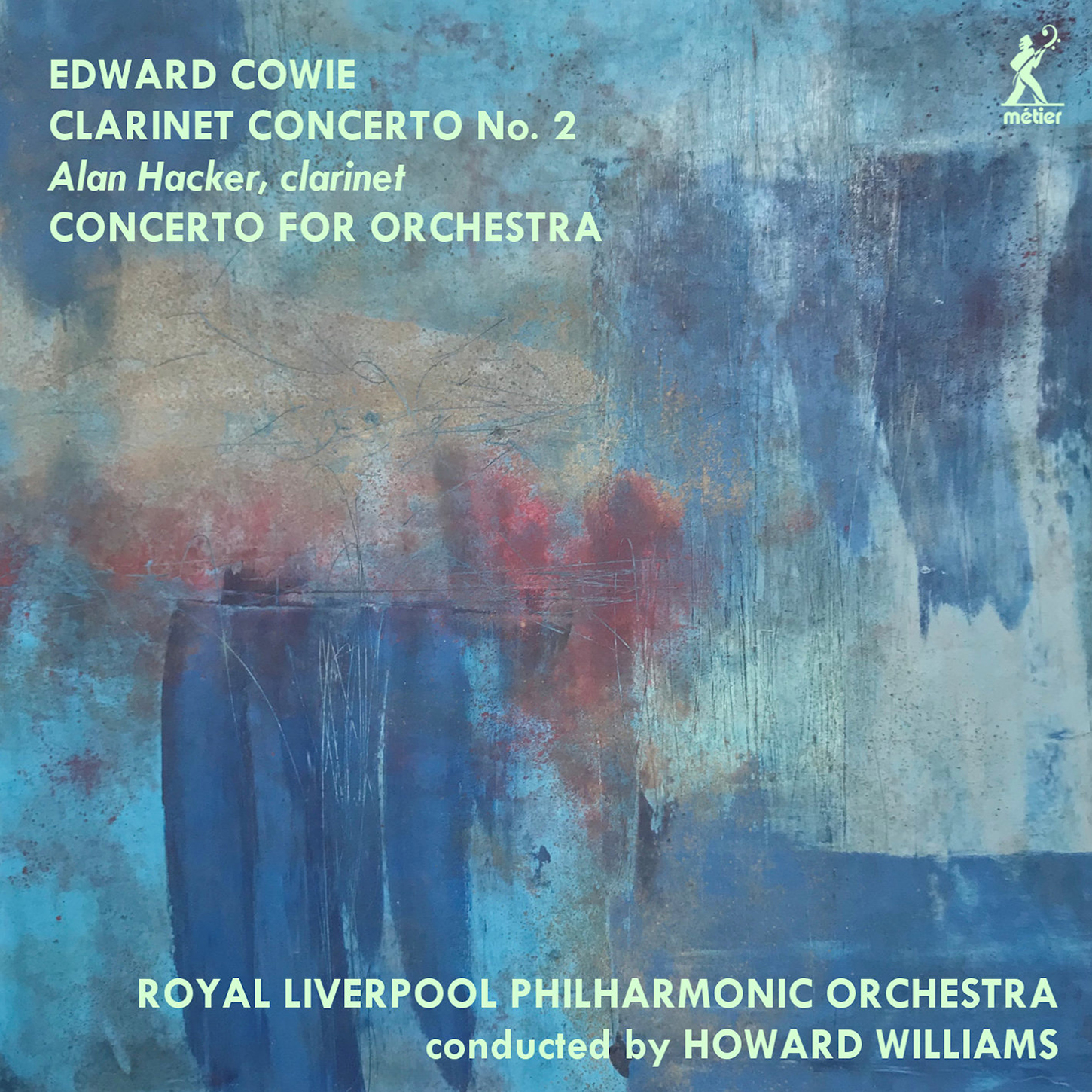
04 Edward CowieEdward Cowie – Concerto for Orchestra; Clarinet Concert No.2
Alan Hacker; Royal Liverpool Philharmonic Orchestra; Howard Williams
Metier msv 92108 (naxosdirect.com/search/809730210822)

Hearing Edward Cowie’s Clarinet Concerto is like opening the door into a room where a glorious family tragedy is unfolding; one can observe the mayhem without interrupting it. Three abrupt fortissimo pitches in the low brass and timpani, from lower to higher, initiate the action with an interrogative accusation presupposing the worst possible answer. And the arguments devolve.

Clarinetist Alan Hacker, with his excellent technique, portrays an articulate yet seemingly incoherent character. At the midpoint, the centre of this labyrinth, one encounters the motivation behind the arduous musical journey of the past century: nostalgia for tonality, and a sinking suspicion that we can’t get it back. Carl Nielsen described, in his own clarinet concerto, the disintegration of a personality; my sense is that Cowie is doing something similar in a more daring vein. In fact, the composer is inspired by natural settings, most especially the ocean. Perhaps the coda conveys the end of a storm, and not what I hear: dénouement following personal crisis.

The second piece on the disc is the Concerto for Orchestra. As in the introduction of the other work, Cowie favours jangle and jolt, though here with somewhat less of the latter. Following the introductory passage is an extremely virtuosic section for all the woodwinds, then the brass interrupt to announce a matching answer from the strings. Cowie’s strokes are clear and precise, his expression of sound via the orchestra, confident. He reminds me of Alfred Schnittke in his exploitation of quasi-tuned percussion instruments to undermine the security of pitch to which we are so accustomed. 

The material lasts just under 45 minutes in total. The recording was made in 1983-84, by the excellent Royal Liverpool Philharmonic under Howard Williams and was originally issued on LP by Hyperion.

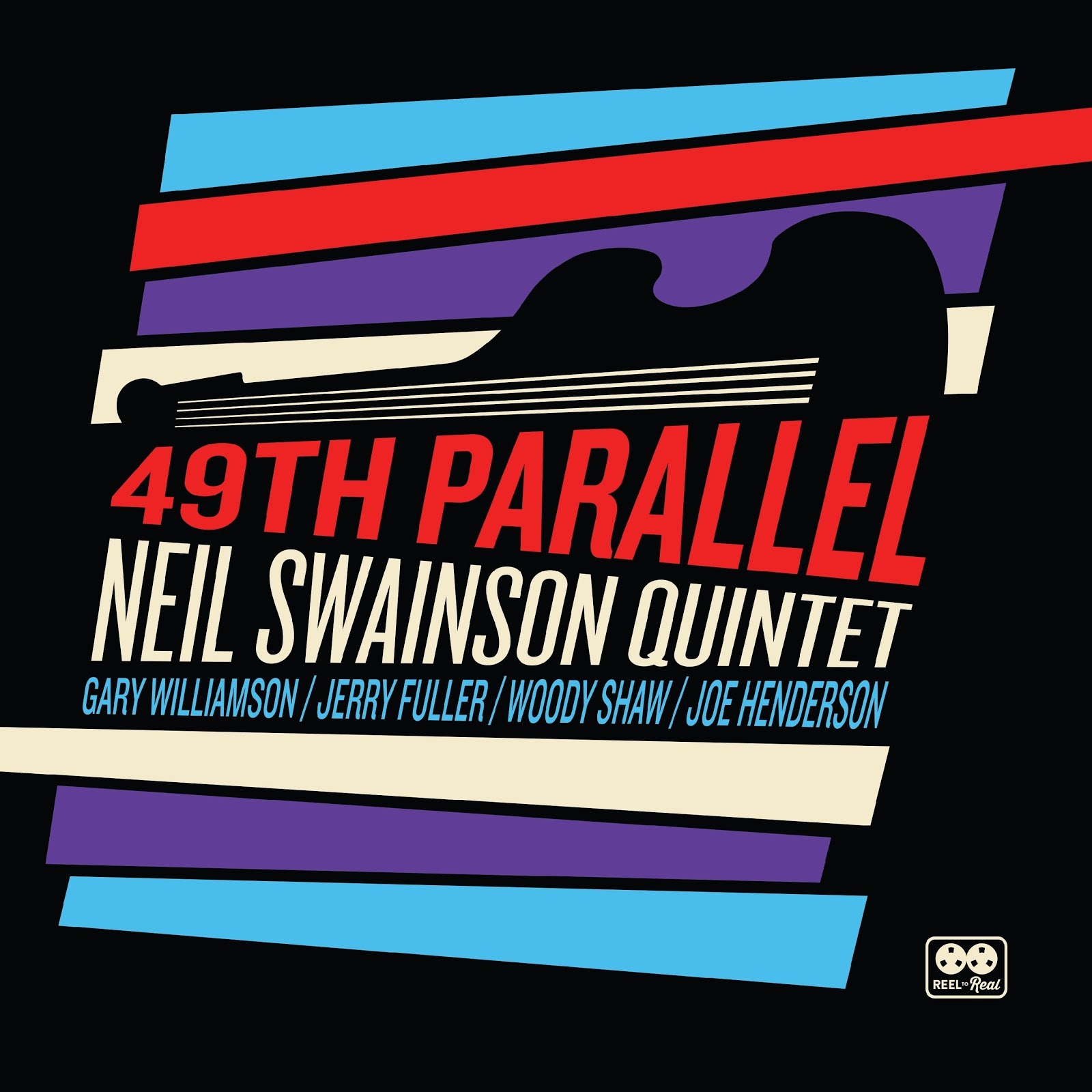
05 Neil Swainson49th Parallel
Neil Swainson Quintet
Reel to Real RTRCD004 (cellarlive.com/collections/all) 

Bassist Neil Swainson has been a significant figure in Toronto jazz for over 40 years. During that time, he has released one recording under his own name, 49th Parallel, in 1988. The style is mid-60s Blue Note post-bop, announced immediately in a frontline made up of two of the style’s stars, tenor saxophonist Joe Henderson and trumpeter Woody Shaw, musicians with few peers even in New York. Swainson had toured with Shaw and appeared on two of his recordings, a source for the empathy evident here. Two Toronto musicians deserving of much wider recognition, pianist Gary Williamson and drummer Jerry Fuller, make up the rest of the band.

Swainson crafted most of the compositions, solid idiomatic material that catches fire in the hands of this short-lived band. The session gives the Canadian contingent rare opportunities to shine at the highest levels. Swainson, as leader, gets to solo out of customary order, sometimes coming to the fore as first or second soloist, highlighting his inventive, articulate playing rather than leaving it a closing afterthought. Williamson was a fine soloist, and he also had a gift for multi-dimensional support. Port of Spain, a lyrical feature for Shaw, finds Williamson still adding energetic, expansive detail to the trumpeter’s final theme statement. Fuller gives and takes inspiration with Henderson, fuelling the saxophonist’s kinetic, bouncing lines on Southern Exposure.

This is a distinguished session, one that definitely merits its reissue on both CD and LP.

Listen to '49th Parallel' Now in the Listening Room

Back to top