Despite the difficulty of organizing large ensembles, determined musicians strive to realize the unique mixture of expanded colours and rhythm only available from this format. Although finances mean that the groups here are either occasional or organized for specific projects, what they lack in permanence they make up for in quality presentations.
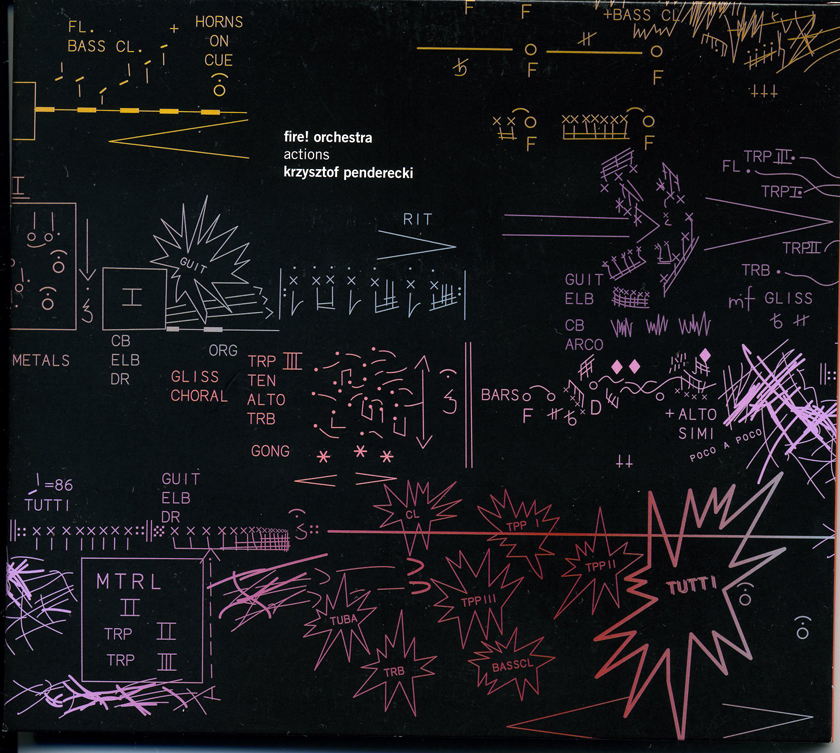
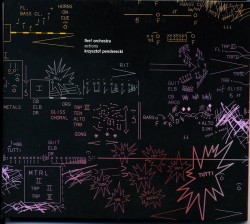 The most topical program, sadly related to the March 29 death at 86 of Polish composer Krzysztof Penderecki, is Actions (Rune Grammofon RCD 2212 runegrammofon.com). Conceived of before his death and eagerly encouraged by the composer, it’s the first performance of Penderecki’s mixture of improvisation and composition since its premiere in 1971. With the same number and almost exact instrumentation of the initial band, the 14-piece Scandinavian Fire! Orchestra, conducted by baritone saxophonist Mats Gustafsson, devises a personal interpretation. Negotiating the peaks and valleys of the creation, the group works its way from an introduction heavily weighted towards growling brass from tubist Per-Åke Holmlander and trombonist Maria Bertel to a protracted silence broached by muted tones from one of three trumpeters and propelled into a steadying groove from bassists Elsa Bergman and Torbjörn Zetterberg. From then on, until a semi-climax at the midpoint, fruitful dialogues emerge involving distorted runs from guitarist Reine Fiske and Gustafsson’s low-pitched baritone slurs. A middle section driven by kettle-drum thumps and gong resonations from Andreas Werliin plus Christer Bothén’s bass clarinet continuum is further propelled by Alexander Zethson’s ecclesiastical organ pumps that judder just below the polyphonic surface. Overblowing snorts from Gustafsson coupled with surging glossolalia from the other reeds lead to a final section of pumping guitar distortion and a capillary explosion. With the massed instruments’ layered top, middle and bottom textures equally audible as a crescendo, brief guitar frails and organ washes signal the finale.
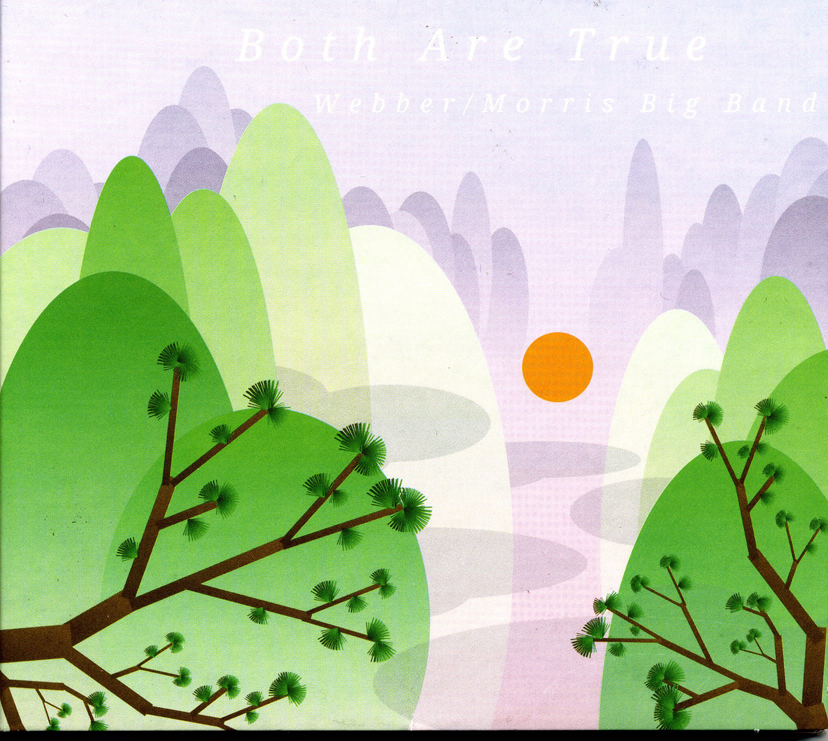
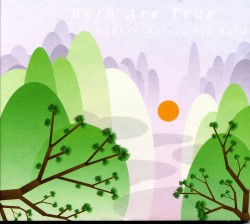 Moving from the music of an older Polish composer to that of two young Canadians is Both Are True (Greenleaf Music GRE CD 1075 greenleafmusic.com) by the Webber/Morris Big Band. The 19-piece ensemble is named for its co-leaders, now Brooklyn-based. Anna Webber and Angela Morris both compose, play tenor saxophone and flute, and split conducting chores. The other players are some of New York’s top young veterans. Lighter in tone and movement than the Fire! Orchestra’s interpretation, tracks range from the chipper to the atmospheric. The brief Webber-composed Rebonds for instance, has a slinky cartoon villain-like theme personified by the slow acceleration of guitarist Dustin Carlson’s distorted pedal frails among low-pitched snorts by four trombonists. In contrast Webber’s extended Reverses is a pensive mid-range creation of reed gurgles complemented by a rococo-like brass arrangement that slides via Marc Hannaford’s piano comping into a modulated smorgasbord of swing effects, further opened up midway through. Trumpeter Kenny Warren emphasizes flutter tonguing and grace notes upfront as textures from the other sections couple and separate in the background. A complete change of pace, Morris’ And it Rolled Right Down suggests what would happen if a C&W ditty was interpreted by crack improvisers. Interpolating a marching band motif, the piece lopes along as clarinetist Adam Schneit and bass trombonist Reginald Chapman face off earnestly before a funky plunger-muted snarl from trumpeter Jake Henry confirms the piece’s links to jazz. Elsewhere brief unaccompanied sax duets confirm the co-leaders’ improvisational skills. Overall, slick arrangements make the band’s program audacious as well as animated.
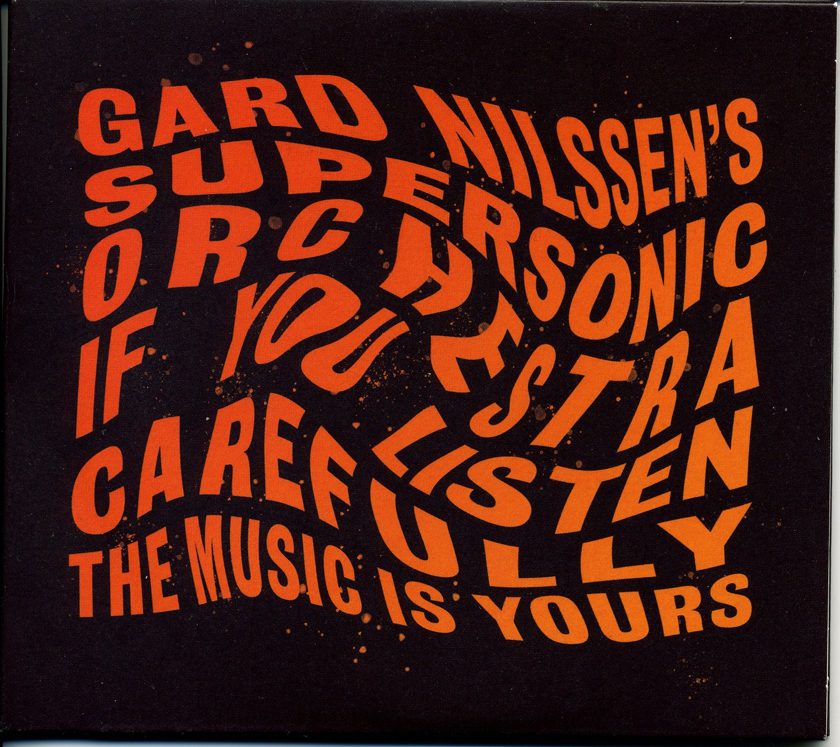
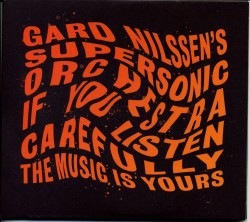 Another large group dedicated to the interpretation of a single composer’s work is Norwegian percussionist Gard Nilssen’s Supersonic Orchestra (ODIN CD 9572 odinrecords.com). With If You Listen Carefully the Music Is Yours, the 16-piece group blasts through six Nilssen tunes with the speed, exuberance and ferment that would have been apparent if Maynard Ferguson’s flashy big bands had included more sophisticated improvisers. The band’s cumulative textures are also idiosyncratic since the Supersonic features only two trumpets and one trombone along with seven saxophonists, some of whom double on clarinets, plus three double bassists and three drummers. Despite refined string patterning from some of Scandinavia’s most accomplished bassists, the band’s lack of chordal instruments means that melodic twists and turns are most often marked by short contemplative sequences that stand out from the lusty arrangement. At the same time a constant glaze of group stimulation permeates the live disc, from the introductory Premium Processing Fee to the concluding Bytta Bort Kua Fikk Fela Igjen. The first is notable as skyscraper-high trumpet tones and riffing reeds answer bass drum and cymbal patterns before settling into descriptive tongue slaps and slurs from baritone saxophonist André Roligheten and his section mates. Meanwhile the concluding Norwegian-language-titled track finds everyone slapping, scraping, bouncing and ratcheting additional percussion instruments alongside the drummers for a dancing Scandinavian variant on Afro-Cuban beats. Low-pitched brass stutters later push the narrative into an explosive, multi-vibrated finale. Along the way, players pilot a path that draws equally on John Coltrane’s large group work, Norwegian folk melodies, unforced Count Basie-like swing and African-oriented percussion. Almost all of the soloists distinguish themselves, but with so many playing similar instruments, it’s impossible to praise the unaccompanied bassist or bassists who bridge the rhythmic gap in the middle of a couple of numbers or to whom to ascribe the standout mellow tenor sax musings or the twists and tongue-slapping turns of higher-pitched alto saxophone excitement.
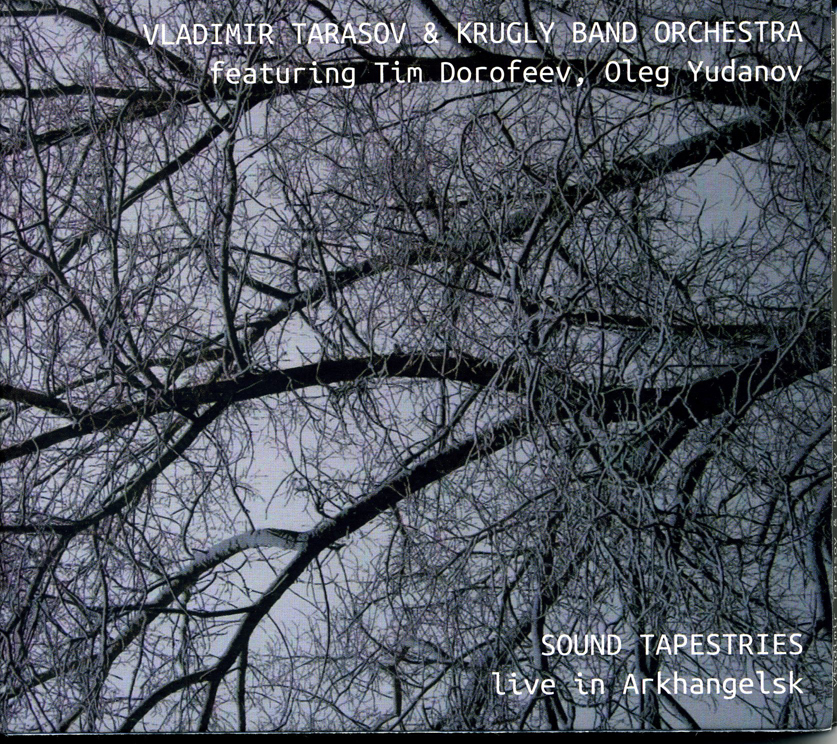
 That isn’t the problem with Sound Tapestries (SoLyd Records SLR 0440 vladimirtarasov.com), since all soloists in the Krugly Band Orchestra (sic) are named as the 17-piece ensemble plays a multi-hued, multi-sectional composition by percussionist Vladimir Tarasov. A former member of the USSR’s legendary Ganelin Trio, the drummer now splits his time between Lithuania and California. However this complex and cadenced performance features all Russian musicians and was recorded in Tasarov’s birth place of Arkhangelsk. Although like the Supersonic Orchestra three drummers are featured, the swish of cymbal, hand patting and cross rumbles are used throughout as piquant accents rather than the whole sonic meal, and integrated within the band’s well-modulated execution of the material. Especially prominent is the funky bass line of Denis Shushkov, whose heavy gauge strokes cement the rhythmic base. While he holds the bottom, the most frequent arrangement involves contrapuntal challenges as soloists alternate with full-band responses. Another standout is pianist Grigory Sandomirsky. He’s equally adept at dense swirling dynamics, as on Tapestry #7, which mates a Latin-like groove with Eastern Bloc dance rhythms, the crushing rock-like thrums of guitarist Tim Dorofeev and the yearning tones of Anton Kotikov’s Armenian double reed, the duduk. Later, Sandomirsk’s pensive and reflective chording is accompanied with taste and sensitivity by drummer Tarasov, Oleg Yudanov and Peter Ivshin in a moderated fashion on Tapestry #3 (for S.J.F), a showpiece that opens up into a sympathetic duet between the breathy expression of tenor saxophonist Alexey Kruglov and the buttery triple-tongued affiliations of trombonist Maxim Piganov. The climactic Tapestry #6 brings the polyphonic program to a masterful close as trumpet squeals and reed spurts relax from shrill scattershot explosions to casually swinging motion alongside flexible percussion claps.
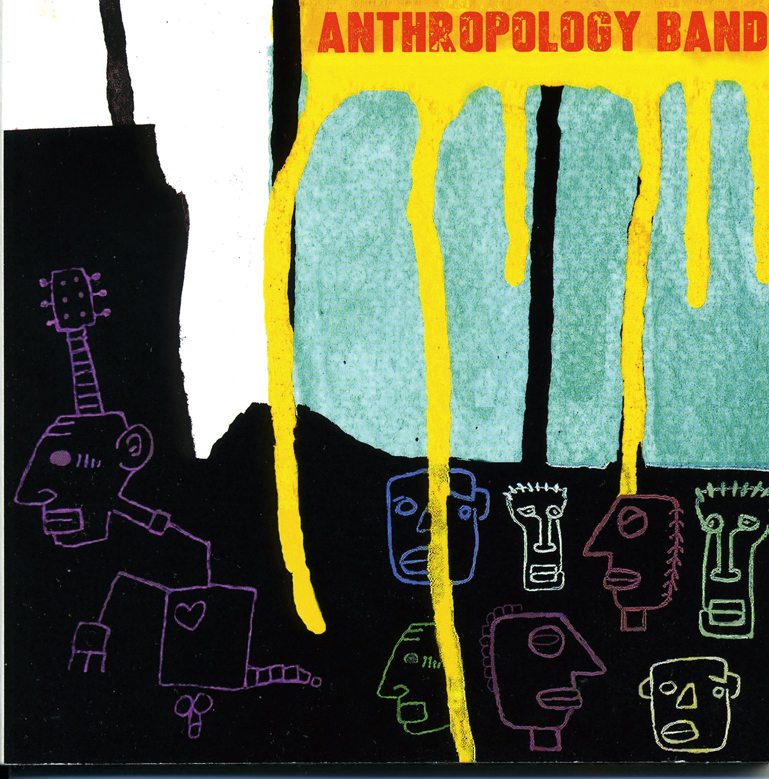
 The most unusual use of a large ensemble however is a two-CD set by the Anthropology Band (Discus 90 CD discus-music.co.uk). On the first disc a septet of mostly rhythm instruments interprets British saxophonist Martin Archer’s 15-part suite. On the second CD, ten brass and woodwind players, with Archer and trumpeter/flugelbornist Charlotte Keeffe the only holdovers, add carefully arranged tonal extensions to the same pieces. The upshot is two vastly dissimilar variations. Awash with Pat Thomas’ shaking keyboard inflections, Corey Mwamba’s crafty vibraphone accents, plus interconnecting rhythm stabilization from drummer Peter Fairclough and bass guitarist Dave Sturt, the effervescent first program vamps along with space made for slurry half-valve effects from Keeffe and waves of corkscrew multiphonics from Archer. Even as the theme is shattered with brief solos, a repetitive ostinato is maintained with shuffle drumbeats and chunky guitar twangs from Chris Sharkey. While forceful beats also keep the sequences spiralling with blues-jazz-rock affiliations, a snowflake sprinkle of vibe resonation and moderated flugelhorn fluttering maintain a lyrical centre. The swinging finale emphasizes both currents with aggressive drumbeats and distorted guitar runs as prominent as melodic Gabriel-styled trumpet blasts. Adding nine additional players transforms the suite. Evolving at a swifter pace, intertwined horn textures and solos fill in the spaces left by echoing bass lines and guitar splatters. With the subsequent sonic fullness taking on more obvious pastoral effects via orchestral instruments like Mick Somerset’s bubbly flutes. Later though, before altissimo reed screams and brassy emphasis make interpretations overly cacophonous, tracks are rhythmically grounded with logical forward motion. This strategy is most obvious on People Talking Blues as shaking keyboard riffs and pointed guitar patternings are subordinated by Nathan Bettany’s nasal oboe tones and Keeffe’s mellow flugelhorn until the rhythm unveils a cymbal-clashing climax. From that point on, the narratives rebound between sympathetic horn input including the trumpets’ bugle-like pitches and five-part reed section harmonies on one hand and a hypnotic bass guitar beat and chugging percussion on the other. With whistling horn slurs and stutters, frailing guitar licks and intensified tremolos from the rhythm section, the orchestral version of the concluding The Wrong Stuff 4 U is infused with the same equilibrium between rhythm and refinement as the septet variation.
A mature demonstration of how expanded instrumental groups can illuminate and intensify a musical program is illustrated not only on this disc but on the others as well.


 Resist