06 Schwartkopf DetachDetach
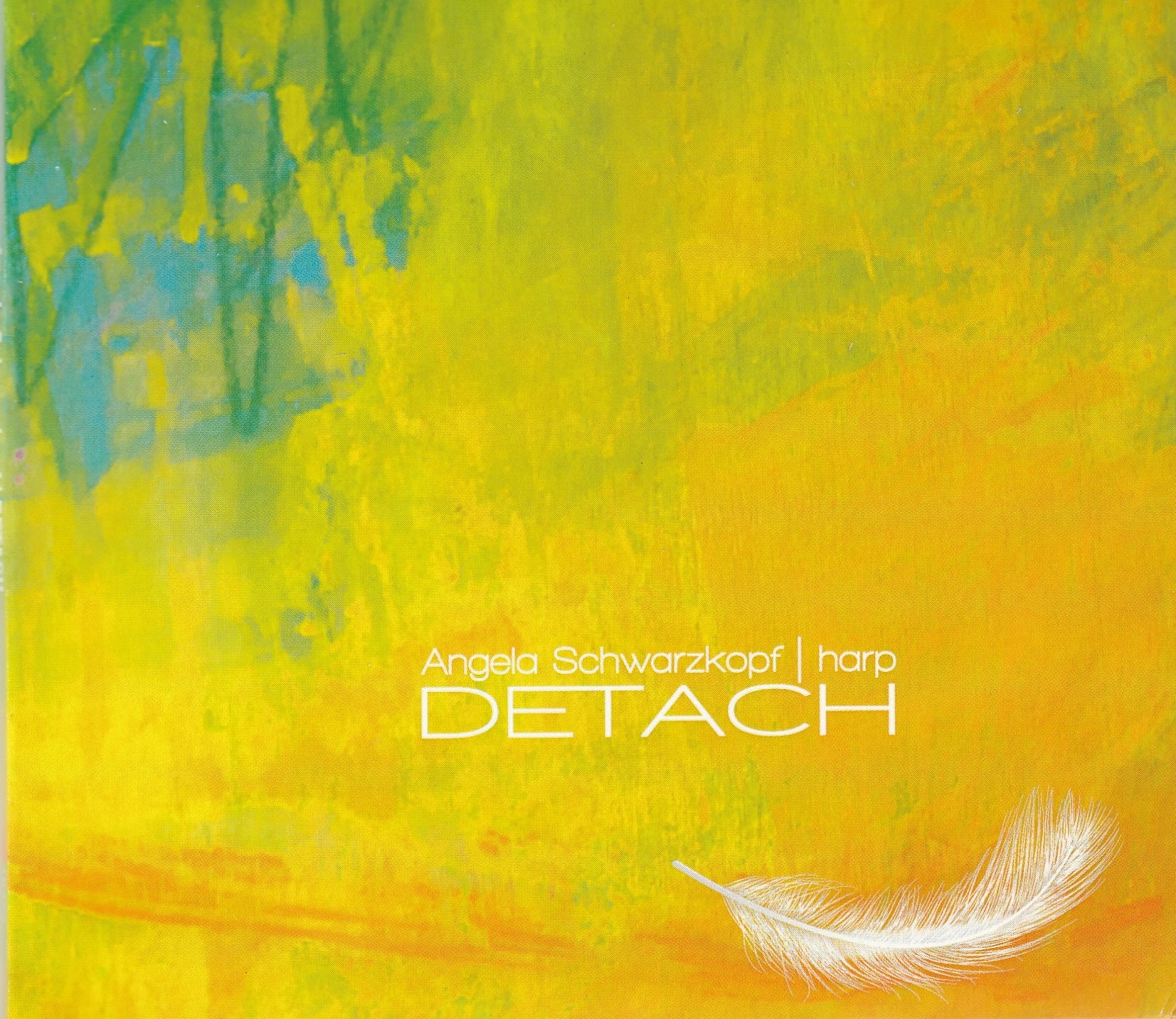
Angela Schwarzkopf
Redshift Records TK472
(redshiftrecords.org)

Often, new music, as much as that term is understood within the worlds of jazz or art music, is put forward to provoke, to be forward thinking, or to be purposefully progressive. Among the many adjectives most frequently used to describe this interesting genre, beautiful and serene are, arguably, not often heard. That is, however, not the case with Detach, the debut recording from Toronto-based harpist Angela Schwarzkopf on Redshift Records. Her sublime instrumental touch and skillful manipulation of dynamics successfully draw in and activate listenership. With the extremely capable accompaniment featuring vibraphonists Michelle Colton and Étienne Levesque, Schwarzkopf highlights and bring to life a number of compositions by new and notable contemporary Canadian composers Monica Pearce, Cecilia Livingston, Patrick Arteaga, Mark Nerenberg, Elisha Denburg and Kevin Lau. 

There is an intriguing programmatic arc to this recording. After an initial bold musical statement, Detach moves slowly and gently through the rest of Pearce’s attach/detach before traversing a tremendous terrain of harmonic and rhythmic complexity. Compositional nuance and sophistication abound, as well as wide-ranging dynamics, before ending, after a 15-minute tour de force reading of Lau’s Castles in the Sand, with an arpeggiated cascading melodic line on solo harp. 

This recording is indeed progressive, forward-thinking and modern, but it is simultaneously engagingly listenable, melodic and beautiful. Congratulations to the Ontario Arts Council for having the good sense to support these important voices in contemporary Canadian music, and to Schwarzkopf and the vibraphonists for creating such a fine recording. Picking up on the hopeful success of this debut, I trust there will be more to come. 
07 Zosha di CastriZosha Di Castri – Tachitipo
Various Artists
New Focus Recordings FCR 227 (newfocusrecordings.com)

Right from the beginning of her career, Canadian composer Zosha Di Castri has been stirring up great enthusiasm – and some controversy. This recording, the first devoted solely to her compositions, offers up the altogether worthwhile experience of entering Di Castri’s adventurous sound world. 

There is a lot going on in these works, with their constant shifts in mood and texture. But the inventive details add up to much more than a series of engaging episodes. Each work is tautly structured, creating an invigorating momentum. Above all, these works are inescapably moving, whether on a personal level, or when confronting the global issues that concern Di Castri. 

The best moments are the most unexpected. Take the burst of reflectiveness at the end of the title work Tachipito. Or the way the explosive glissandi in Quartet No.1 are interrupted by magical other-worldly harmonics. In Dux, virtuosic passages of unprompted rhapsodizing create a reassuring dream state. In Cortège, from 2010 the earliest composition here, the repetition of the opening motif throughout creates a poignant sense of longing. 

Each work is played by a different set of musicians. The array of performers gathered here is truly exceptional, from solo pianist Julia Den Boer playing Dux to the 13 musicians of the Talea Ensemble under Lorraine Vaillancourt performing Cortège.

Di Castri’s fresh, imaginative voice carries forward the vital lineage of the avant-garde at its most enjoyable. With these works she manages to both challenge and delight.

08 Mercer SistersOur Strength, Our Song
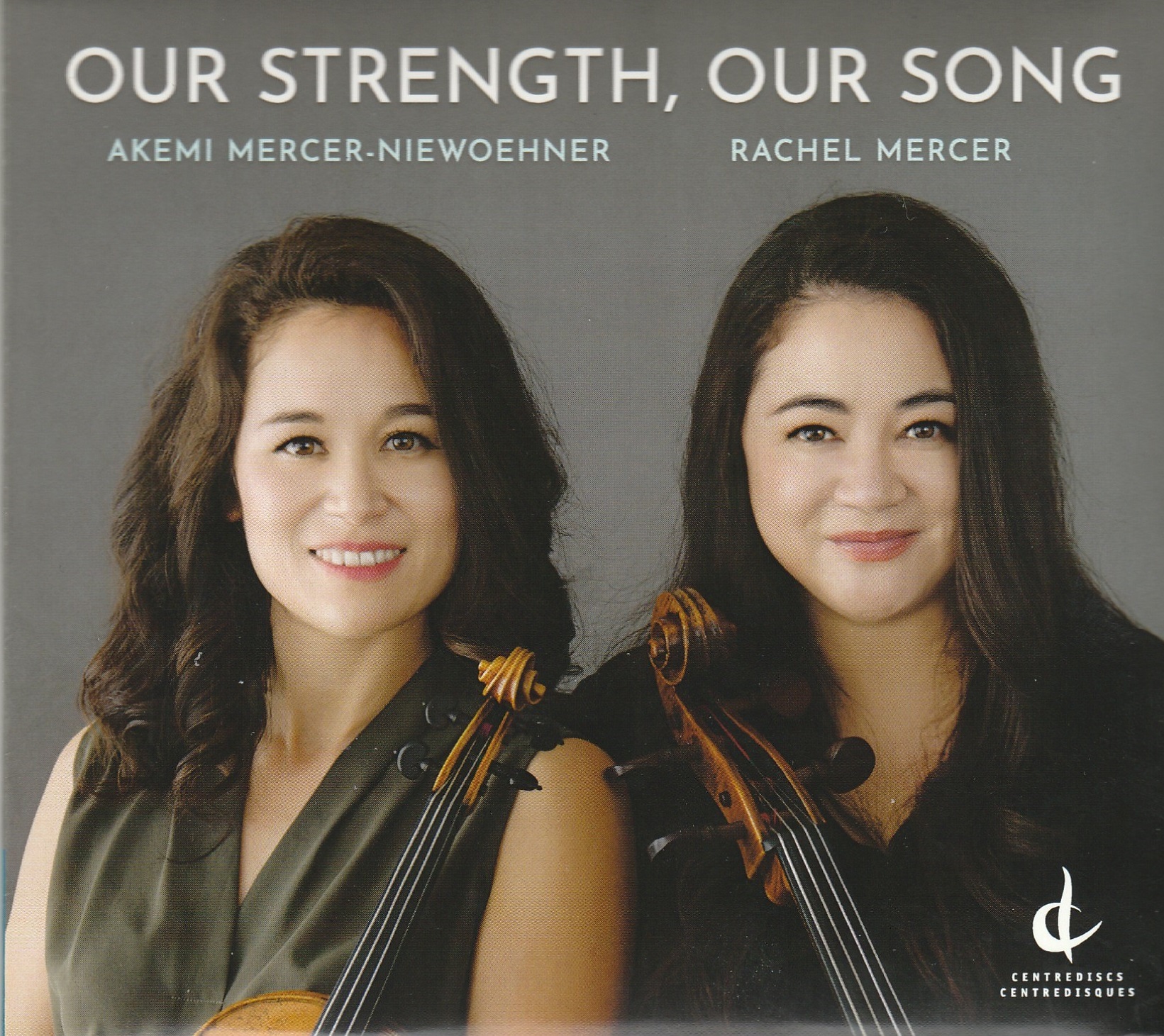
Akemi Mercer-Niewoehner; Rachel Mercer
Centrediscs CMCCD 27719
(cmccanada.org)

In a recent issue of The WholeNote, David Jaeger wrote at length about cellist Rachel Mercer. Jaeger produced this new release with Rachel and her violinist sister Akemi Mercer-Niewoehner playing six duo works by Canadian women composers. 

Violet Archer’s Four Duets for Violin and Cello (1979) is a four-movement work composed “especially” for violinist Tom Rolston and his then 12-year-old cellist-daughter Shauna. Family fun galore, as the opening Brooding movement starts with a slightly grim low-pitched cello mood leading to a more reassuring violin line. Love the upbeat plucks in the dramatic Paean fourth movement. More tonal rhythmic sounds in Jean Coulthard’s Duo Sonata for Violin & Cello (1989) as repeated patterns and plucks unite this orchestral-sounding piece. Barbara Monk Feldman‘s Pour un nuage violet (1998) is a welcome change of pace with nature-inspired subtle rhythmic original sounds.

The Mercer sisters are phenomenal in their passionate performances of their commissioned works. Rebekah Cummings’ Our Strength, Our Song (2018) features conversational counterpoint, high and low staccatos, and dynamic shifts written in traditional Bulgarian folk-singing style. Jocelyn Morlock’s (2019) Serpentine Paths’ use of intense sound effects like high violin and low cello pitch contrasts, fast intense and slower passages, is a race to the performance finish line! Alice Ping Yee Ho’s Kagura Fantasy (2018) is an exciting listen with contemporary string effects, theatrical feel, dance-like sections and Asiatic folk-music influences.

The Mercer sisters are inspirational to both musicians and families alike.

09 Focus guitar duoFocus
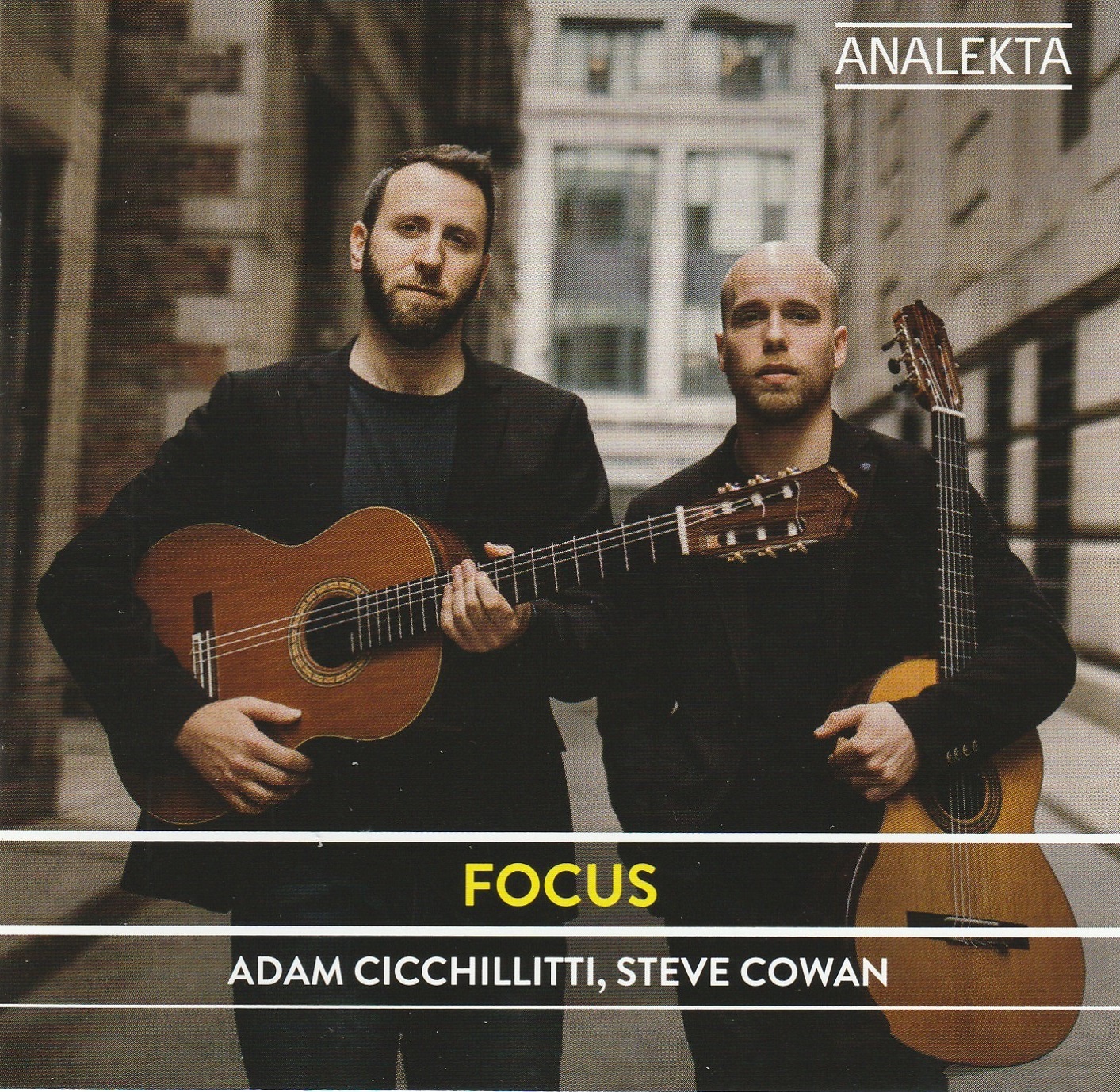
Adam Cicchillitti; Steve Cowan
Analekta AN 2 8792 (analekta.com/en)

Canadian guitarists/friends Adam Cicchillitti and Steve Cowan formed this duo in 2015. Their dedication to performing, commissioning and collaborating with living composers from contemporary classical to popular music styles is heard here in five works by Canadian composers.

A wide cross-section of styles can be heard. The duo’s Canada Council commission Focus (2018) by Harry Stafylakis is a unique mix of pop, jazz, and classical. The first movement is more pop-sounding while the more classical second movement, based on a theme from Beethoven’s seventh symphony, opens with a single-pitch melody and develops through contrapuntal writing to a strumming rock-like closing. Andrew Staniland’s Brazilian-inspired Choro: the Joyful Lament for Villa-Lobos (2017) is a virtuosic rhythmic work. Cicchillitti and Cowan’s 2017 arrangement of José Evangelista’s five-movement Retazos (2010) is impressionistic, with reflective, haunting, mellow tonal melodies and contrasting florid fast runs. Their commission Ombres et lumières (2017) by Patrick Roux has a grief-stricken lyrical first movement and a contrasting faster rock-groove-flavoured second movement. Originally for two harps, composer Jason Noble impeccably arranged his more atonal programmatic two-movement River and Cave for the duo in 2018. The opening water rippling effect is achieved by delicate repeated pattern playing. The slower low-cave section emulates cave echo effects with lower strums, longer silences and staccato drips. 

Cicchillitti and Cowan are fabulous duo guitarists who perform together to perfection in all styles. No wonder this recording is on CBC’s Top 20 Canadian Classical Albums of 2019!

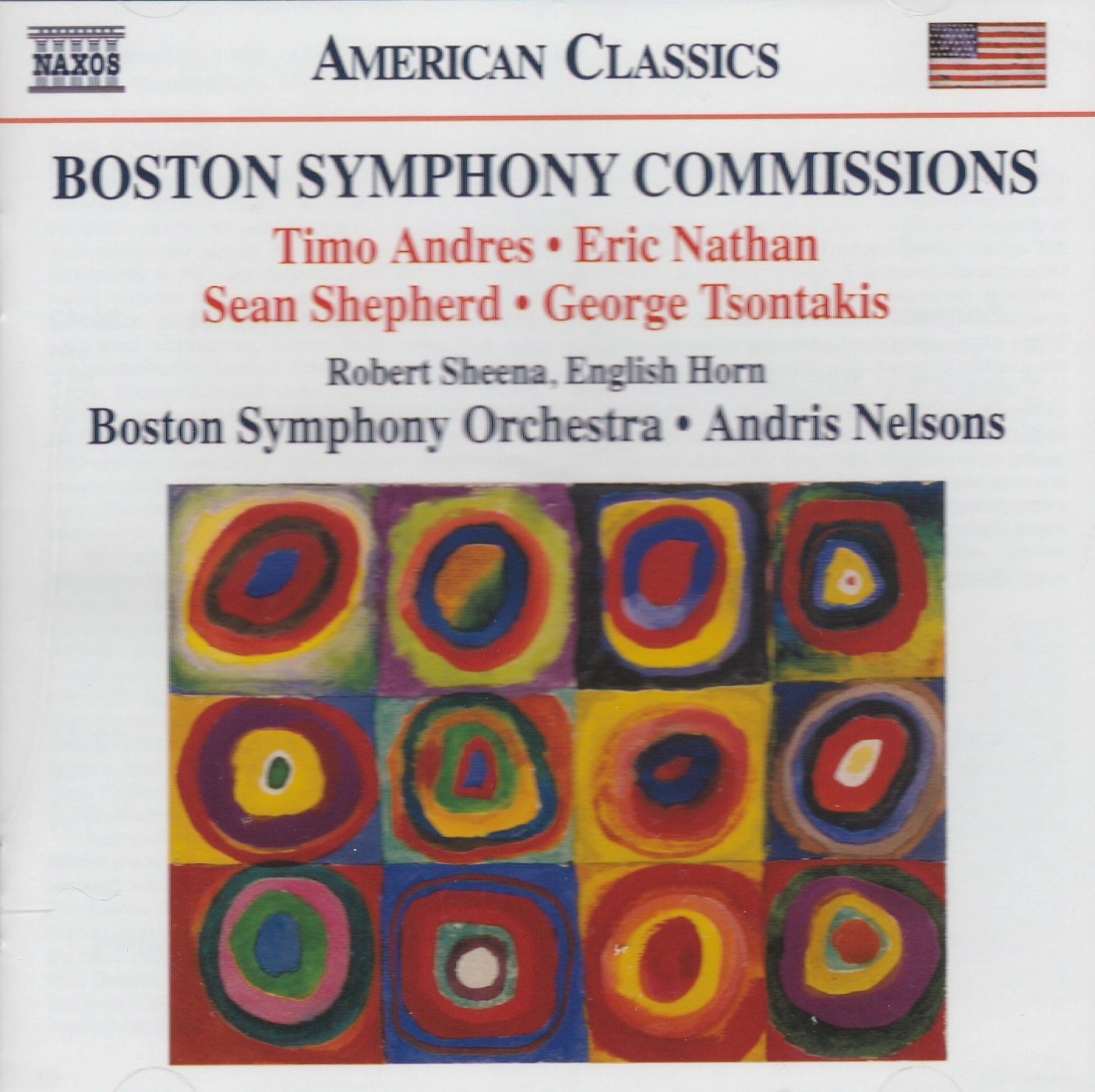
10 Boston CommissionsBoston Symphony Commissions – Timo Andres; Eric Nathan; Sean Shepherd; George Tsontakis
Boston Symphony Orchestra; Andris Nelsons
Naxos 8.559874 (naxos.com)

Four recent (2016-2017) works by American composers receive their premiere recordings on this disc.

The episodic structure of the brightly scored, 11-minute Everything Happens So Much by Timo Andres (b.1985) suggests, as per its title, a variety of things happening, as in a play, film or ballet. Similarly, the colourful episodes of another 11-minute piece, the space of a door by Eric Nathan (b.1983), also hint at a sequence of unseen events. Both of these compositions seem, to me, not quite self-sufficient, yet well-suited as soundtracks for something to be watched.

The 13-minute Express Abstractionism by Sean Shepherd (b.1979) invites visual accompaniment by its very nature. In four movements inspired by artists Alexander Calder, Gerhard Richter, Wassily Kandinsky, Lee Krasner and Piet Mondrian, Shepherd’s quirky, cleverly scored music would be even more persuasive if performed together with projected slides of the artists’ works.

The longest (24 minutes) and most substantial music on the disc, needing no visual support, is by the oldest and best-established of the composers, George Tsontakis (b.1951), visiting composer in 2008 at the University of Toronto’s Faculty of Music. His four-movement Sonnets – Tone Poems for English Horn and Orchestra, inspired by Shakespeare, is a lyrical, moody gem, its solo part beautifully played by the BSO’s Robert Sheena. It’s an English horn player’s worthy alternative to Sibelius’ Swan of Tuonela, which it closely resembles in overall impact, though boasting Tsontakis’ individual, memorable melodic expressivity.

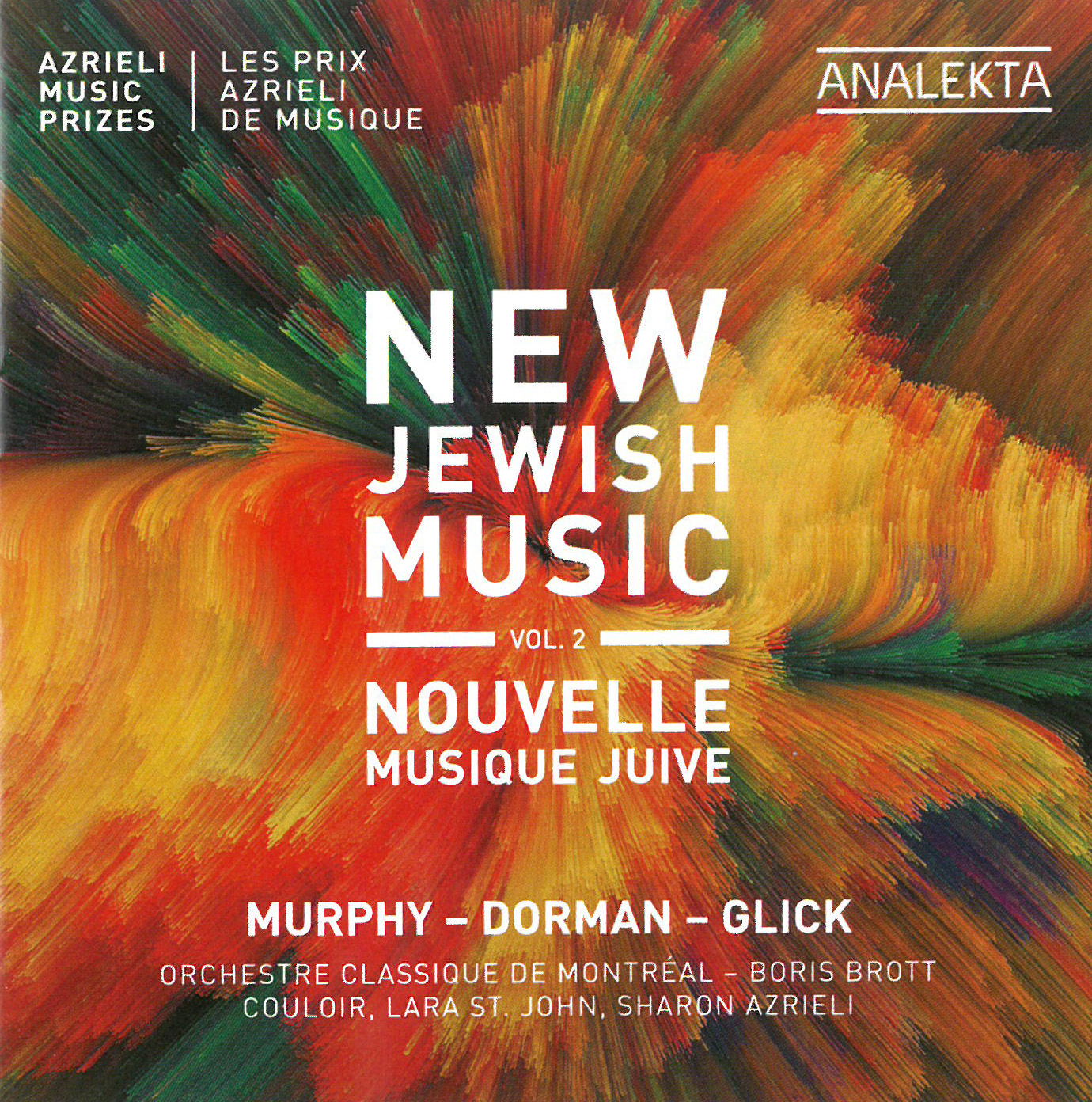
01 New Jewish Music 2New Jewish Music Vol.2
Lara St. John; Sharon Azrieli; Couloir; Orchestre classique de Montreal; Boris Brott
Analekta AN 2 9262 (analekta.com)

This Analekta release of new orchestral works features the powerful musical abilities of the Orchestre Classique de Montréal under the internationally respected Canadian conductor Boris Brott. The disc centres around the Azrieli Foundation’s prizes for newly created works. Two prizes are awarded: The Azrieli Prize for Jewish Music – recognizing an existing work – and the Azrieli commission for Jewish music, an initiative created to encourage composers to critically engage with the question of “What is Jewish music?”

The first piece on the disc – the premiere performance of En el escuro es todo uno (In the Darkness All is One) by Canadian composer Kelly-Marie Murphy – is a tour de force of orchestral imagination. Murphy is clearly a confident orchestral writer and it shows in this piece. The work is scored for solo harp, cello and orchestra, and Murphy expertly delivers a fine example of the concertante idiom. This piece represents the results of the 2018 Azrieli Commission Prize and features B.C. duo Couloir, Heidi Krutzen (harp) and Ariel Barnes (cello), as soloists.

The 2018 Azrieli Prize for Jewish Music was awarded to the Israeli-born composer Avner Dorman for Nigunim – a violin concerto in four movements. Dorman writes highly idiomatic and playful passages for the soloist answered by equally light dances and trifles in the orchestra. This work makes for an excellent showpiece for the soloist, Lara St. John in this instance, while not being overly dramatic in the virtuosic sense.

Last on the disc is a new recording of Seven Tableaux from the Song of Songs by the late Canadian composer Srul Irving Glick. This music is lyrical and melancholy. Glick had a particular affinity for creating an emotional painting with his music without being overtly sentimental. Soprano soloist Sharon Azrieli performs this work with stunning colour and musical prowess.

02 James OCallahanJames O’Callaghan – Alone and Unalone
Ensemble Paramirabo
Ravello Records rr8020 (ravellorecords.com)

While listening to music one might consider, “I like these sounds” or “I like how this music moves forward.” While neither of these thoughts can provide an adequate basis for the judgement of artistic value, the latter says more than the former and also comes closer to being such a basis. One might say that “I like how it goes” captures a feature fundamental to music’s being good at a level less abstract than that of the experience of it being intrinsically rewarding.

When listening to the highly personal, compelling and frankly compulsory environments created by Canadian composer James O’Callaghan, one invariably approves of how it sounds and how it goes. In this release of works written especially for the Montreal-based Ensemble Paramirabo, the “I like how it goes” nature of the music connects the listener with the absolutely crucial notion of following music with anticipation – but also with harmonious and welcomed disassociation. With titles such as subject/object and Alone and unalone, there is a certain amount of obfuscation – delivered on an abstract level – but also literally, as admitted by the composer himself in an effort to provide a conceptual motivation of the “transference of concrete sound into abstraction, returned to the conditions from which they were derived.” While the musico-philosophical liminality of this music would make for interesting discussion, one can’t help but simply appreciate the raw and unfettered imagination produced by O’Callaghan’s manner of putting pen to page, and with the electronic aspects of the works, world to speaker.

The ensemble brings a high amount of musical excellence and an intimate bravura to this recording – a testament to their ongoing commitment to O’Callaghan’s music. Bravo to all.

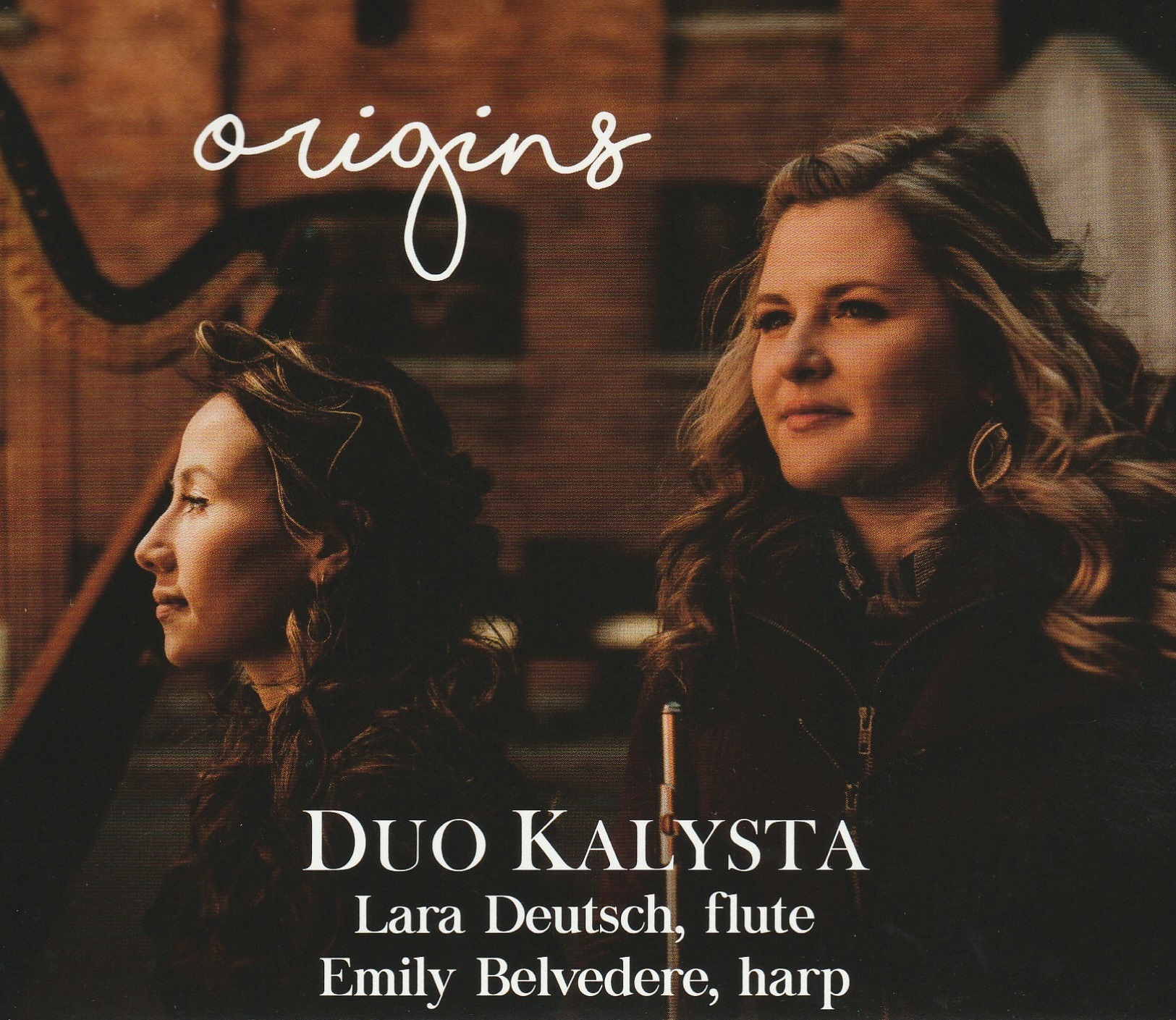
03 Duo KalystaOrigins
Duo Kalysta
Leaf Music LM226 (duokalysta.com)

Flutist Lara Deutsch and harpist Emily Belvedere first met when collaborating in 2012 at McGill University. Since then Duo Kalysta has been playing chamber music to artistic acclaim, as demonstrated by this clear-sounding release recorded in Montreal.

TSO harpist Judy Loman’s colourful flute and harp arrangement of Claude Debussy’s Prelude à l’après-midi d’un faune opens the CD. The flute beginning catches the listener’s attention, with sparkling arpeggiated harp, dreamy flute and astounding tight ensemble playing in the more rubato sections.

Two Canadian compositions follow. R. Murray Schafer’s three-movement Trio for Flute, Viola and Harp (2011) has violist Marina Thibeault joining them. Freely, flowing has melodic lines with changing volumes, tempi and note lengths creating the soundscape. The sonic space of Slowly, calmly is highlighted by long atmospheric viola notes doubled by the flute underneath. Dance-like Rhythmic is like listening to a musical story with viola plucks, high-pitched flute, harp flourishes and abrupt stops in a race to the end.

Composer Jocelyn Morlock notes that her two-movement Vespertine (2005) refers to night-blossoming plants and nocturnal animals. Twilight presents musically darker colours with longer phrases and more independent parts. Verdigris is performed with sweetly delicate harp staccato lines and contemplative flute notes, bird-like trills and higher notes.

Violinist Alexander Read, violist Thibeault and cellist Carmen Bruno add an orchestral feel to André Jolivet’s Chant de Linos (1944), an intense, dramatic composition highlighted by impressive flute playing.

Here’s to a promising musical future!

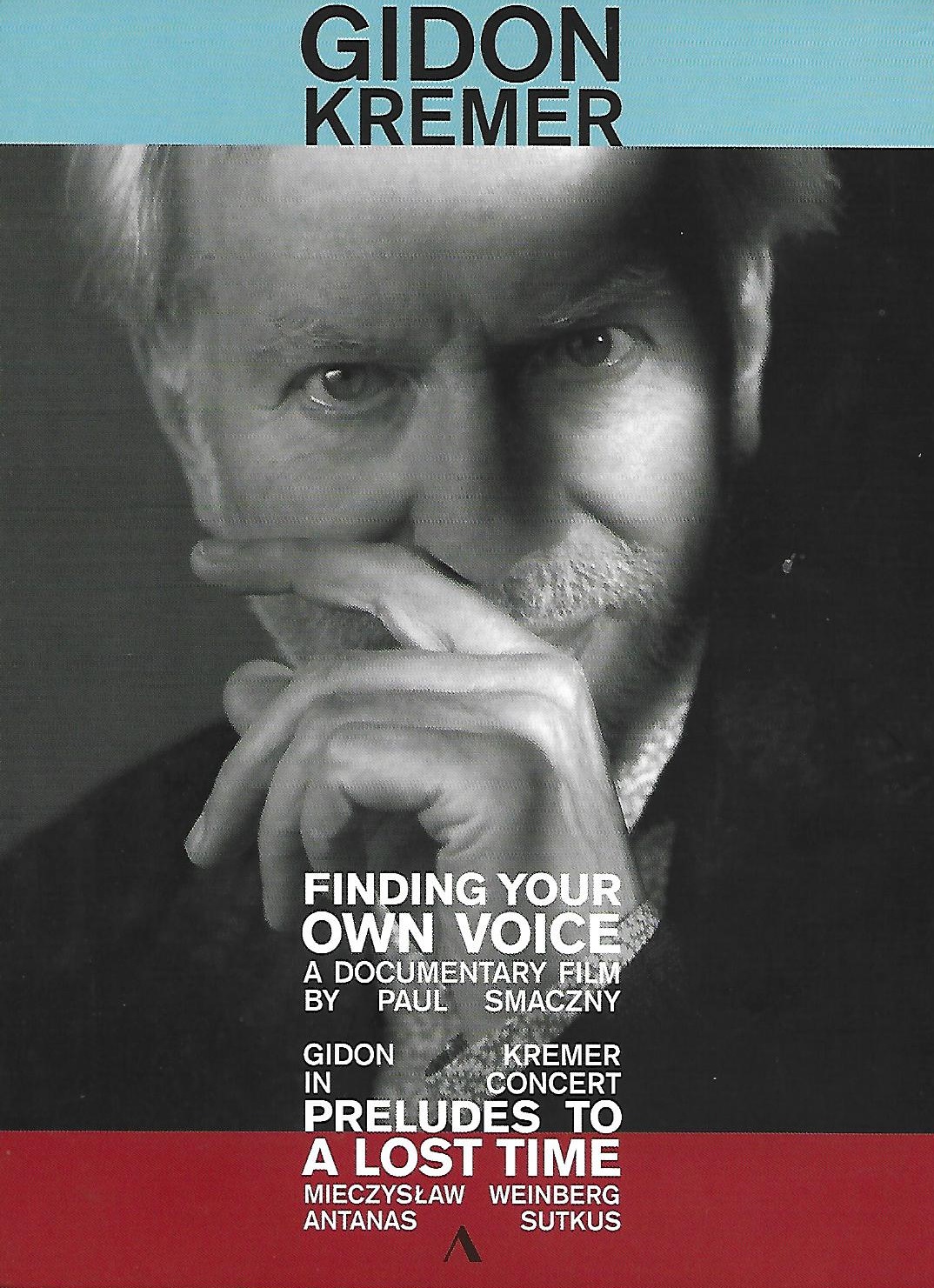
04 Kremer VoiceFinding Your Own Voice
Gidon Kremer
Accentus Music ACC20414 (naxosdirect.com)

In the September WholeNote, Terry Robbins reviewed the CD of Gidon Kremer’s recording of the late Polish composer Mieczyslaw Weinberg’s 24 Preludes to a Lost Time, Op. 100. Written for solo cello, Kremer plays his own transcription for solo violin. Robbins concluded that “His superb performance befits such a towering achievement, one which is a monumental addition to the solo violin repertoire.”

Accentus Music has since issued a DVD of that unique performance and we now see Kremer spotlit alone on the dark stage in the Gogol Centre in Moscow. Behind him in the darkness is a theatre-size, rear-projection screen on which, at appropriate times, are seen original images from the 1960s taken by photographer Antanas Sutkus. Each selected photograph illuminates the mood of the particular prelude being played, often stark, sometimes sad, sometimes amusing but so appropriate. Genius.

The documentary, Finding Your own Voice, is a film by Paul Smaczny that is a totally engrossing biography of Kremer and his world of music. It revolves about music that embraces Kremer’s life and we hear and see him with musicians including conductors and composers whose music touches him. Listen in as he discusses passages in rehearsals with the likes of Arvo Pärt and others. There are so many thought-provoking observations and philosophical reflections that one may be immediately prompted to watch it again in case you missed something. Whether or not you are a Kremer fan, you will get a lot out of this unusual and illuminating film.

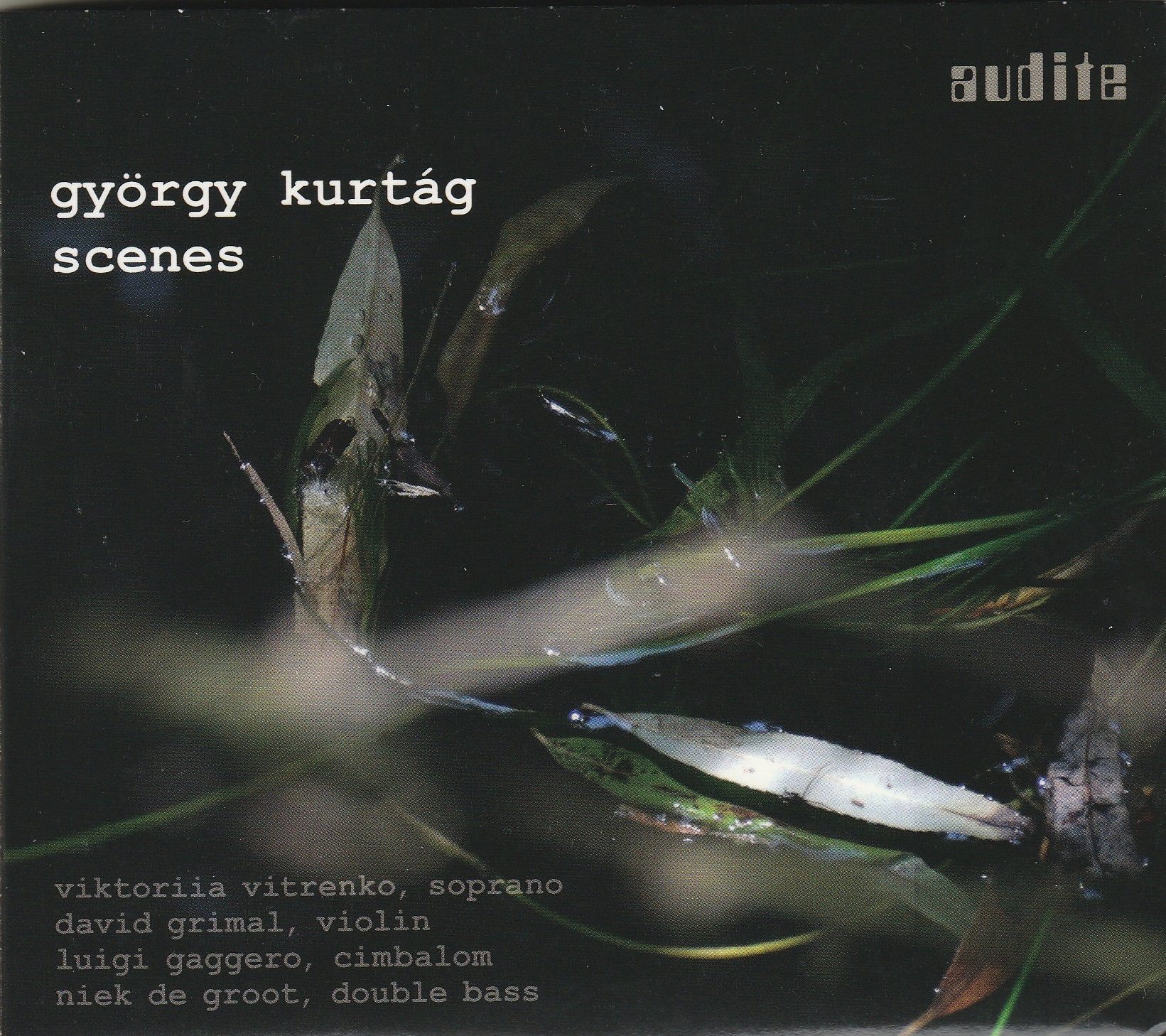
05 Kurtag ScenesGyörgy Kurtág – Scenes
Viktoriia Vetrenko; David Grimal; Luigi Gaggero; Niek de Groot
Audite 97.762 (naxosdirect.com)

The nonagenarian Hungarian composer György Kurtág ranks among the leading living modernist music masters. His precisely crafted, intense, compressed, emotion-filled and dramatic style evokes a kind of sonic haiku, demanding the utmost from instrumentalists and singers alike.

This album presents six previously unreleased songs and instrumentals by Kurtág, with lyrics from literary works in Hungarian, Russian and German. Scenes from a Novel, Op.19 (1984) for example, consisting of 15 extremely varied short movements, is a prime example of Kurtág’s oeuvre. With melancholic, introspective texts by the Russian writer Rimma Dalos, the songs feature virtuoso soprano Viktoriia Vitrenko, who nails the shifting emotional-tonal terrain. She is impressively supported by violinist David Grimal, bassist Niek de Groot and cimbalomist Luigi Gaggero. Given its masterful composition, imbued gravitas, dramatic and emotional range and the near-20-minute length of this series of epigrams, the work takes on an operatic magnitude. And I found the rest of the songs here just as compelling.

The Hungarian cimbalom is a stylistic and national marker on much of the album, a sonic through-line in addition to the voice, although novice listeners should not expect even a tinge of Magyar folkloric colour. The cimbalomist Gaggero makes a solo appearance at the end of the album on Kurtág’s Hommage à Berényi Ferenc 70. His soft, wistfully sensitive rendition feels like a relaxed puff of gently perfumed smoke after the intense multicourse sonic dinner we had just experienced.

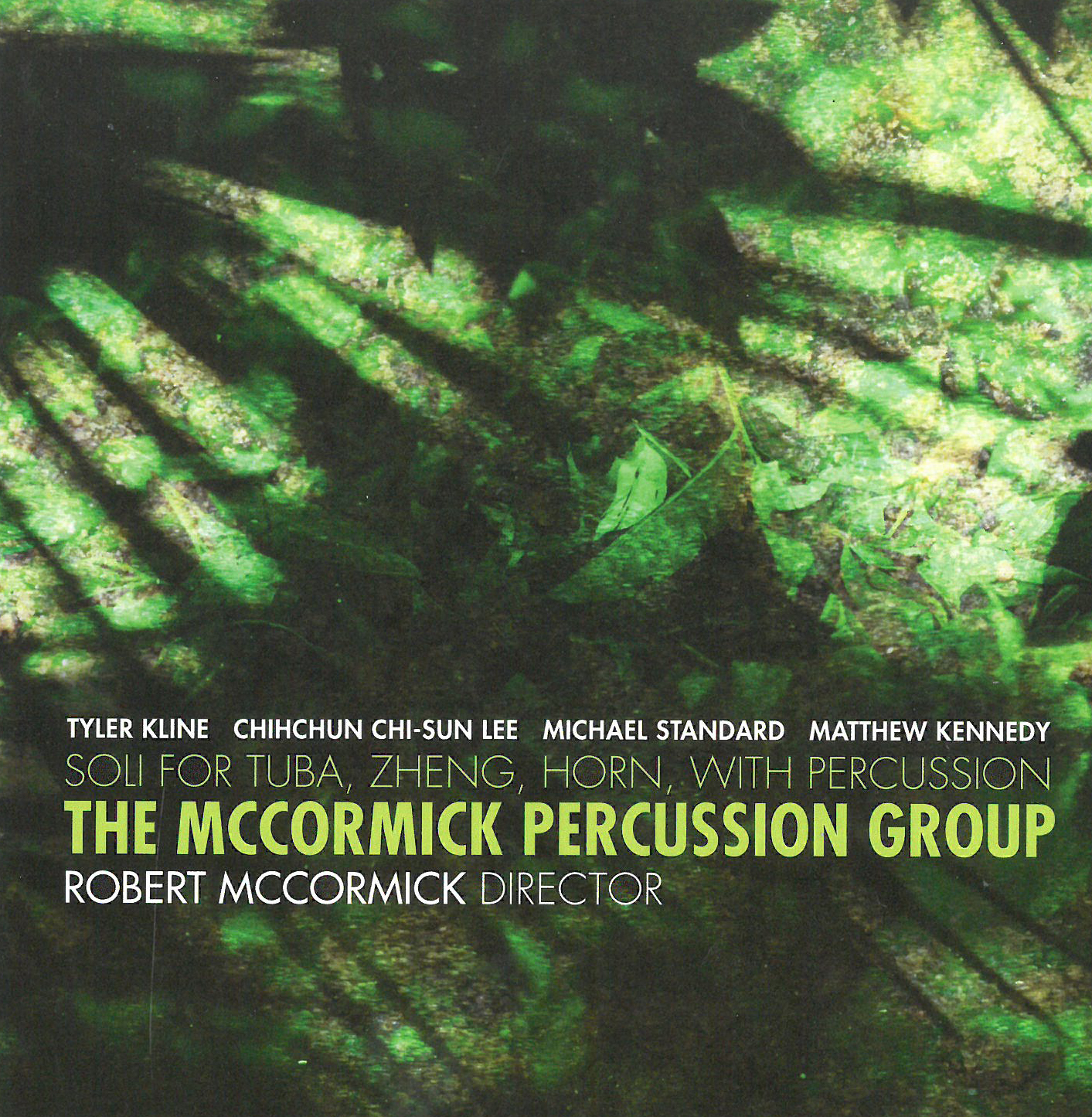
06 McCormick PercussionSoli for Tuba, Zheng, Horn, with Percussion
McCormick Percussion Group; Robert McCormick
Ravello Records rr8014 (ravellorecords.com)

The award-winning Florida-based McCormick Percussion Group specializes in interpreting non-mainstream percussion scores, often collaborating with guest non-percussionists. Its latest album presents five works by four American composers featuring one or more non-percussion soloist backed by the forces of the MPG, the size of a modest orchestra.

Album opener Loam by Kentucky composer Tyler Kline is a substantial four-movement concerto for tuba and percussion ensemble. Metaphorically, it seeks to convey the notion of natural cycles: the earth being tilled, life being born from the soil and ultimately returning to it after death. Prize-winning Taiwanese-American composer Chihchun Chi-sun Lee’s attractive Double Concerto for Tuba, Zheng and Percussion Orchestra is perhaps the first work scored for these instruments. She effectively juxtaposes the expressive upper register of the plucked strings of the zheng with the lower wind tones and multiphonics of the tuba, the texture filled in by the spatially arrayed percussion sounds. While the first movement blends colour, timbre and gesture among these disparate instruments, movement II focuses on tuba and zheng solos. The final movement balances all three forces in an energetic finale.

Lee’s other score on the album, Zusammenflusses (Confluences), is a duet for zheng and percussion, distinguishing it from the concerto forms of the other works on the album. Using a non-tonal language, Lee deftly counterposes the differences and similarities between the plucked and bowed zheng, vibraphone and various cymbals.

This album, a journey into unexpected combinations of sounds and cultures, is one well worth taking in.

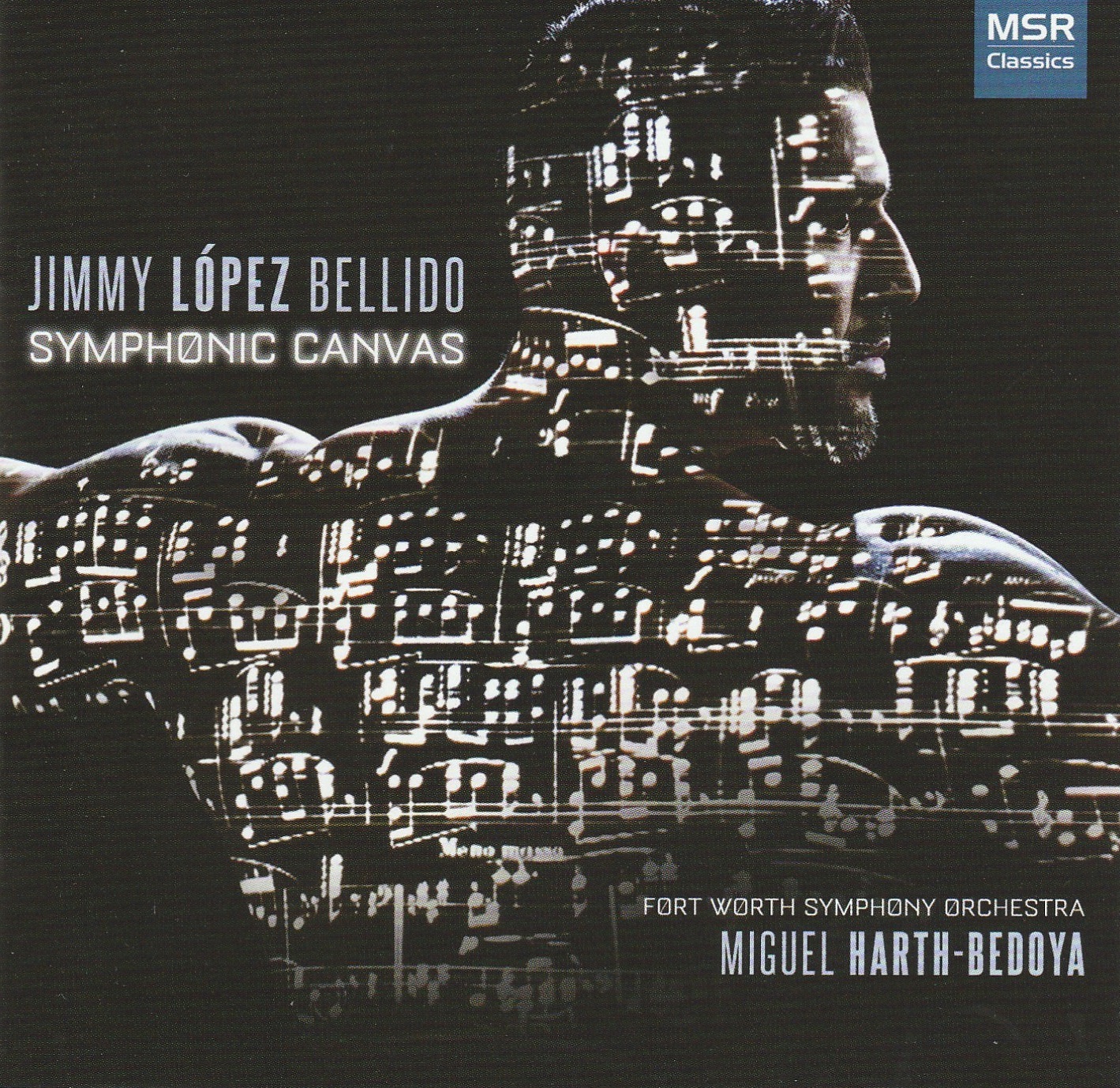
07 Bellido Symphonic CanvasJimmy López Bellido – Symphonic Canvas
Fort Worth Symphony Orchestra; Miguel Harth-Bedoya
MSR Classics MS 1737 (msrcd.com)

Two novels, written nearly 400 years apart, inspired these two works, both from 2016, by Jimmy López Bellido (b.1978), composer-in-residence of the Houston Symphony.

Miguel de Cervantes’s final literary creation described two Scandinavian nobles’ adventurous pilgrimage to Rome. López Bellido says his Symphony No.1 – The Travails of Persiles and Sigismunda wasn’t intended to portray the novel’s events, but “to convey [its] spirit, greatness and humor.” Nevertheless, the four-movement, 45-minute symphony contains many dramatic “events” – eerie forebodings leading to garishly scored, violent climaxes. The Latino-tinted third movement provides the only “humor” – jazzy and snarky.

In December 1996, Túpac Amaru terrorists took hundreds of people hostage after storming a reception at the Japanese ambassador’s residence in Lima, Peru, López Bellido’s native city. His 2015 opera, Bel Canto, was based on Ann Patchett’s 2001 novel of the same name, itself based on the four-month-long hostage crisis. The three-movement, 30-minute Bel Canto – A Symphonic Canvas, encapsulates the opera. Perú, Real and Unreal begins with the Overture and ends with the climax of Act I, the shooting of diva Roxane Coss’ accompanist. La Garúa depicts an enshrouding fog and several hostages’ plaintive emotional outpourings. The End of Utopia derives from the final scene, the attack that frees the hostages and Coss’ anguished aria, here “sung” by a trumpet, over the desolation.

Both works show López Bellido has clearly mastered the knack of building suspense and effectively ending it with climaxes of exceptional sonic power and brilliance.

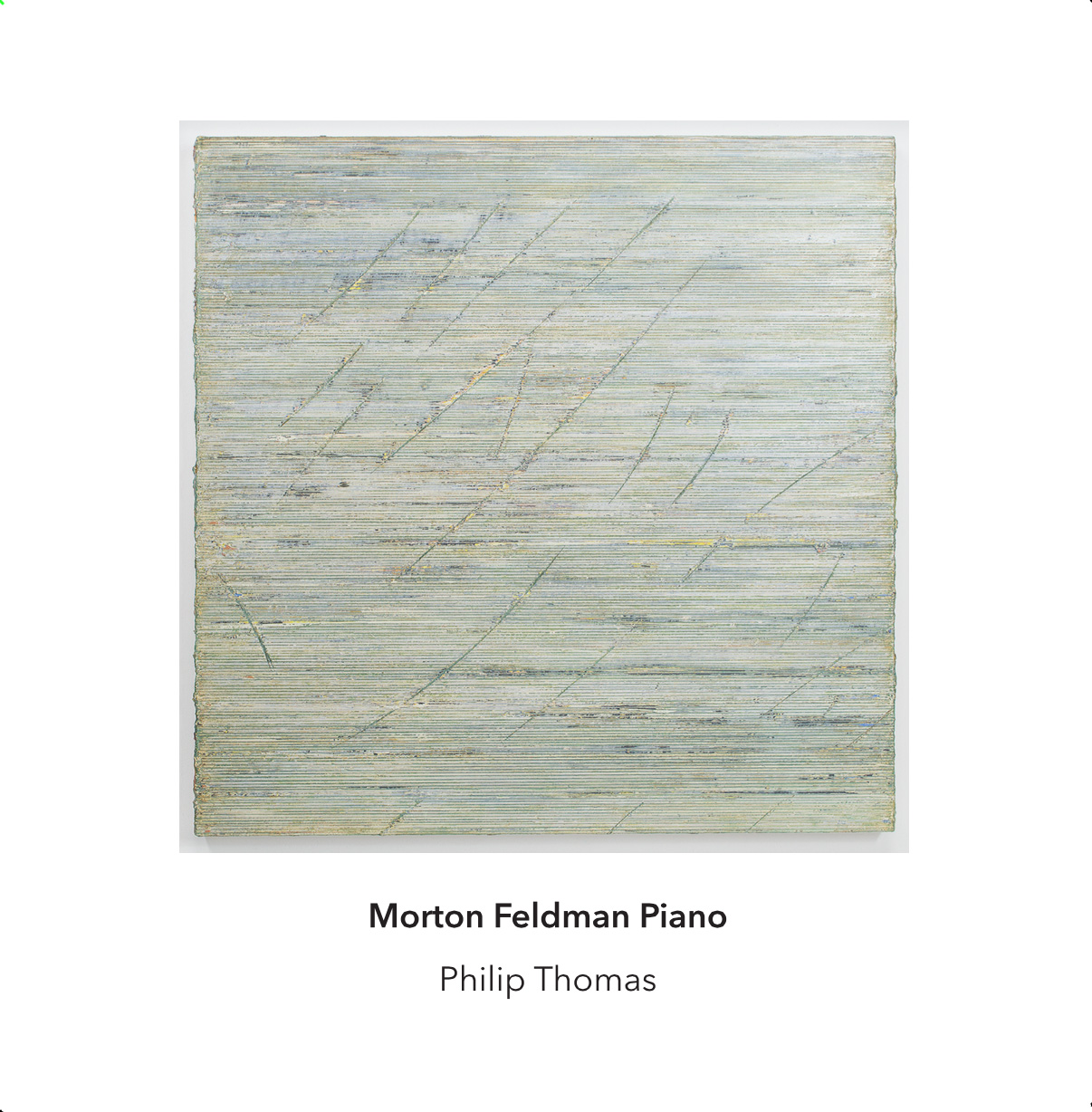
08 Feldman box front coverMorton Feldman Piano
Philip Thomas
Another Timbre at144x5 (anothertimbre.com)

2019 marks the 20th anniversary of John Tilbury’s signal All Piano, a four-CD set approaching almost all of Morton Feldman’s piano music. Here the younger Philip Thomas presents a five-CD, six-hour set of even more of these works. There’s a direct lineage: in 2014, the two pianists recorded Two Pianos and other pieces, 1953-1969 (also on Another Timbre), covering Feldman’s works for multiple pianos and some for pianos with other instruments.

Thomas explores the breadth of Feldman’s solo piano music, omitting only a few student pieces from the 1940s, while resurrecting others, like an archival minute-long Untitled piano piece, dated 1947, for a glimpse of Feldman’s nascent vision. There are also transcriptions of two pieces with lost scores, including the piano part in the soundtrack for the film Sculpture by Lipton.

Thomas brings a reflective depth to the work, emphasizing the composer’s preoccupation with sonic detail. Although Feldman didn’t alter the piano’s physical character like his colleague John Cage, he explored its sonic character and notation with a unique depth, including silent fingerings to create harmonic resonance, varied approaches to grace notes and allowing sounded notes to decay in full, the sounds isolated and appreciated individually.

While sometimes developing a kind of dislocation – even writing two-hand parts as if they were synchronous, then instructing that they be played separately – Feldman put a new emphasis on attack, duration and decay. There’s great detail in Thomas’ 52-page liner essay, including his description of a year-long recording process with producer Simon Reynell that emphasizes the music’s sound from the performer’s perspective and suggests the albeit quiet music be played loud enough for all its detail to emerge.  

Landmarks and masterworks will draw attention first. Disc One creates an immediate overview, gathering significant pieces that run throughout Feldman’s career and last between 22 and 27 minutes, from 1959’s diverse Last Pieces, to 1977’s Piano with its greater formal concerns and his final Palais de Mari (1986), with its geometric construction and enduring resolution. Still more commanding are the late and large-scale Triadic Memories and For Bunita Marcus, vast explorations of form and scale that can suggest compound bells.

Feldman’s relative miniatures, however, are just as significant: the collaborative nature of his music, including unspecified durations and sequences, clearly inspires Thomas. It’s most notable in Intermission 6 (1953), with the performer determining order and repeats. Thomas provides three versions of the piece, one in the published score, two of his own design, one of those with repetitions, the three running from less than five to over 11 minutes.

Feldman produced one of the most resonant and intimate bodies of 20th-century piano music, conditioning and opening time in the process. Philip Thomas is an ideal collaborator.

01 Michael ColgrassMichael Colgrass – Side by Side; Letter from Mozart; The Schubert Birds
Joanne Kong; Boston Modern Orchestra Project; Gil Rose
BMOP Sound 1064 (bmop.org)

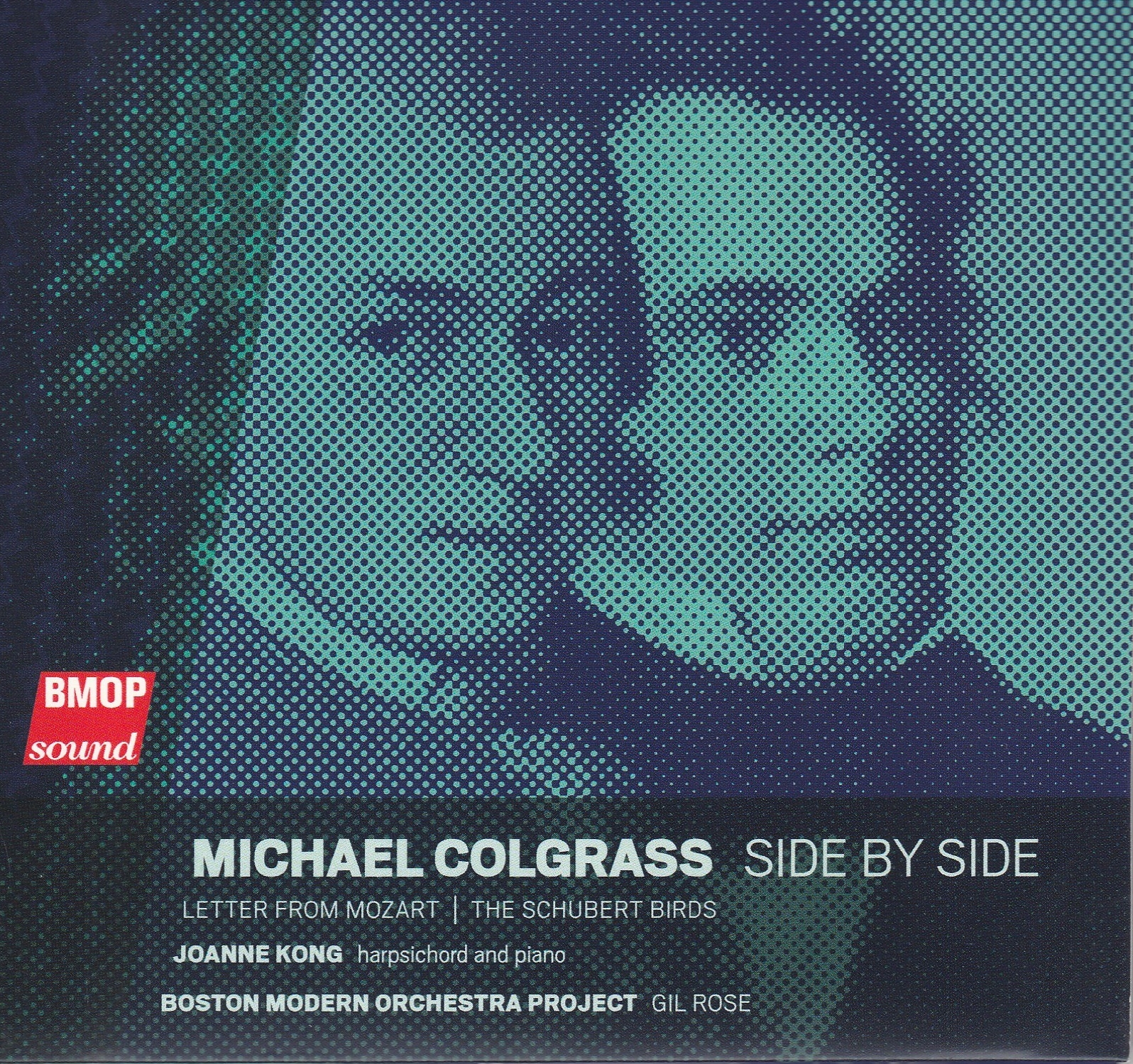
You receive a letter from “your favourite composer” signed “Your friend, Mozart,” requesting a 20th-century take on his style using extra percussion which “in my day wasn’t dignified.” The resulting 15-minute Letter from Mozart (1976) is a wonky, percussion-heavy series of dreamlike, stream-of-unconsciousness episodes, a drug-induced merging of the 20th and 18th centuries, requiring two conductors to avoid complete chaos. It’s great fun!

Side by Side (2007) presents Joanne Kong playing both piano and harpsichord, set 90 degrees to each other. To balance the disparate instruments, Colgrass first muted the piano strings, then amplified both to compete with the orchestra. Colgrass never severed his roots as a jazz drummer, so the 24-minute concerto exploits the percussive qualities of both keyboards and orchestra.

Colgrass wrote that The Schubert Birds (1989) is “a crazy quilt of theme and variations… based on Franz Schubert’s Kupelweiser Waltz, a little-known piano piece.” The title refers to “Schubert as a bird who spent his life singing, surrounded by a circle of others who… sang with him.” Like the CD’s other two works, the 19-minute piece revels in kaleidoscopic fragmentation and glittering sonorities.

The prolific, always-inventive Colgrass, the 1978 Pulitzer Prize-winner who died at 87 this past July, is less well-represented on disc than he should be. A Chicago native, he’d lived in Toronto since 1974, yet titled his 2010 memoir Adventures of an American Composer. Please, record companies, give us more CDs of the adventurous Michael Colgrass!

02 Lands End EnsembleKickin’ It 2.0
Land’s End
Centrediscs CMCCD 26819 (musiccentre.ca)

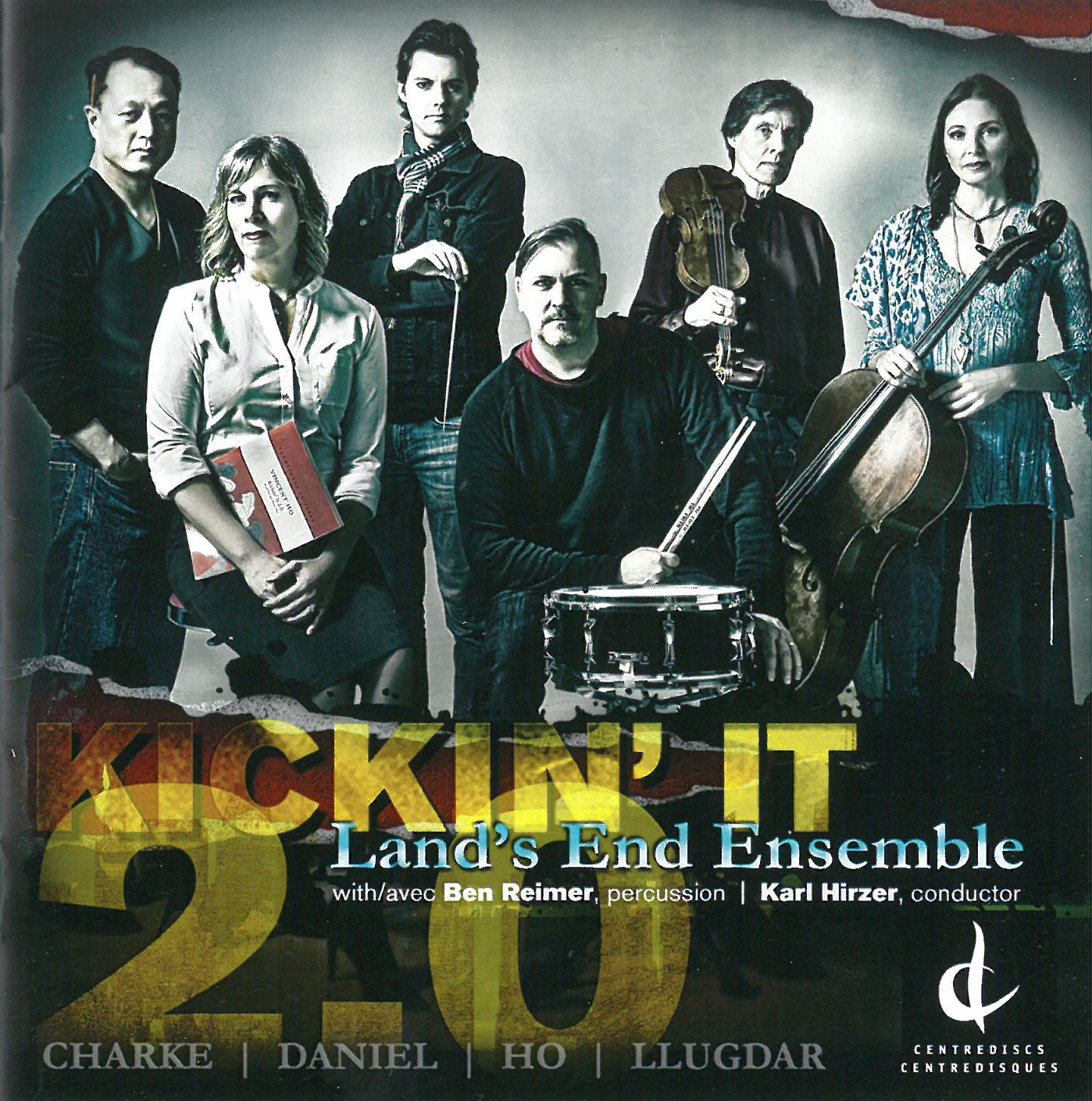
Two works by Vincent Ho, artistic director of Calgary’s Land’s End Ensemble, bookend this CD that spotlights as soloists the ensemble’s three musicians. First, cellist Beth Root Sandvoss performs Morning Sun, a lyrical, somewhat melancholy piece, just under four minutes long, that Ho composed while watching a sunrise in California.

In Derek Charke’s Tree Rings, violinist John Lowry and Ben Reimer on marimba depict a tree’s life under ever-changing weather conditions. The music’s moods and energies keep changing, too; it’s compelling listening throughout its own 11-minute “life.” Stelco is Omar Daniel’s “homage” to industrial machines and the Canadians “who risk life and limb” operating them. Pianist Susanne Ruberg-Gordon and Reimer on vibraphone manufacture ten minutes of metallic percussion, ranging from near-subsonic vibrations to pile-driver pounding, with clanging piano bass notes. The trio reunites in Analía Llugdar’s seven-minute Don Liborio Avila, based on a portrait of an old man in a small Argentinian town. “But,” says Llugdar, “violence haunts the picture.” The music is violent, too, the ensemble simulating angry electronic bursts, buzzes and squeaks.

Ho writes that Kickin’ It 2.0, performed by the ensemble plus Reimer on drum kit, was inspired by “Squarepusher, jazz, gamelan music, Chinese folk music and the crime novels of James Ellroy.” Ellroy’s novels notwithstanding, Ho’s 20-minute, four-movement work offers jazzy aggression, gentle gamelan-like tinkles, a drum-dominated cadenza and a powerful, sustained motoric finale, ending a fascinating disc that gathers steam (and steam engines!) from start to propulsive finish.

03 Carmen BradenCarmen Braden – Songs of the Invisible Summer Stars
Various Artists
Centrediscs CMCCD 27119 (musiccentre.ca)

The idea of north is central to Canadian composer Carmen Braden’s latest release, titled Songs of the Invisible Summer Stars. The imagery of shimmering icy planes at dusk – an impression imbedded within all Canadians whether physically experienced or not – is ever present in Braden’s writing for various chamber ensembles. But this imagery is not obvious, nor is it obfuscated through artistic trickery. Braden’s music is clear, and it is bright. It drifts, lingers, dances, and breathes at rest. It is at once far and near – a personal representation of a liminal landscape that is at once distant and comforting. One true gift (among many) on the release is the second movement from a piece titled Raven Conspiracy. Braden gives this movement the subtitle of Waltz of Wing and Claw. This music, written for strings, paints the density and impossible geometry of the dream cloud of birds – that dark unbroken remoulding of the sky against sun, ice and smoke. This recording is captured psychogeography – a process that asks us to embrace the playfulness of our surroundings, and to drift among those places without cause. It is clear that Braden is trying to provide a portrait – but also a release – between life and surroundings. With a wide range of instrumentations, colours, and ambiences, the sounds on this recording will haunt and comfort – much like the strange beauty of the northern terrain.

Back to top