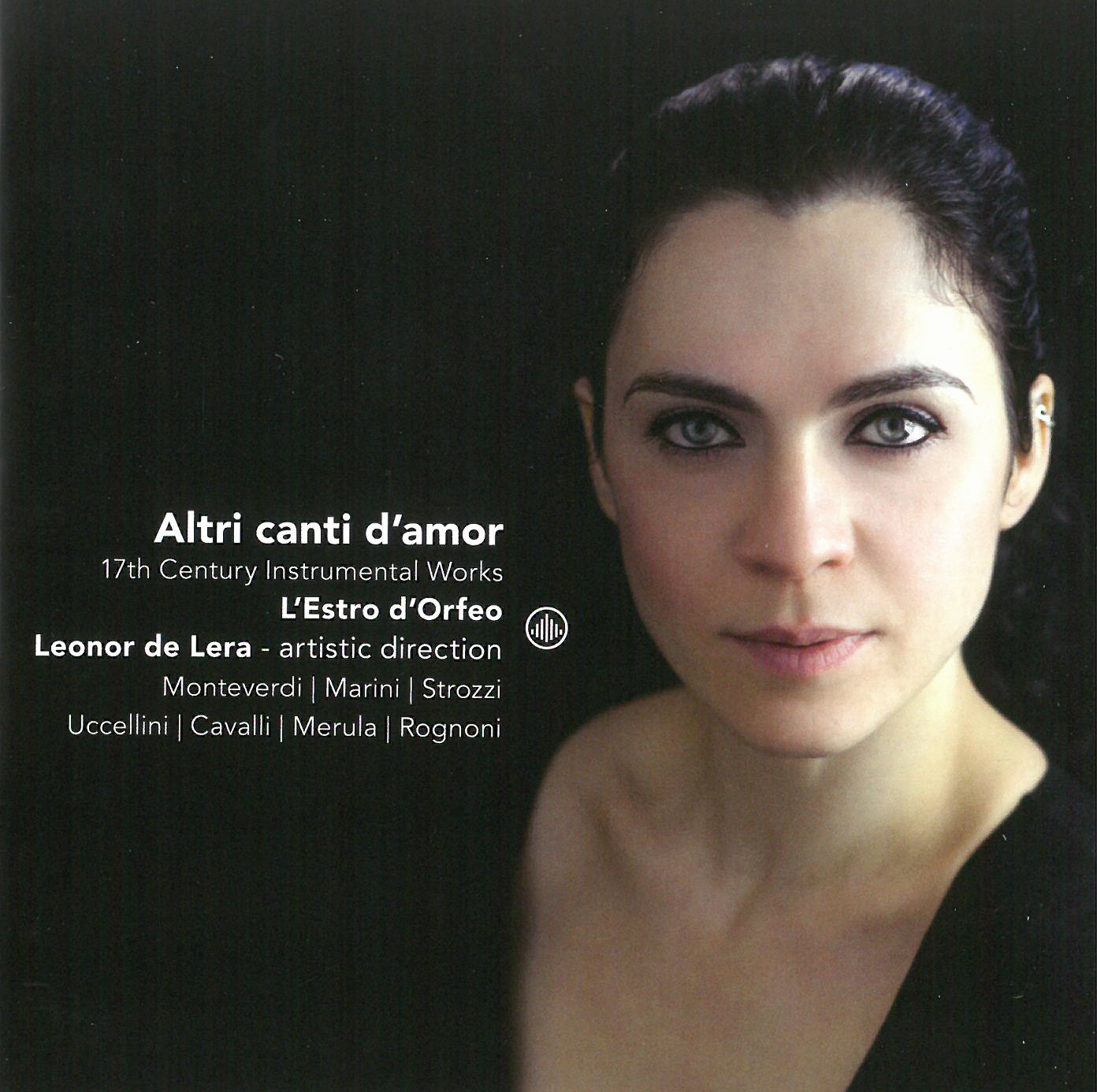
01 Lestro dOrfeoAltri canti d’amor - 17th Century Instrumental Works
L’Estro d’Orfeo; Leonor de Lera
Challenge Classics CC72760 (lestrodorfeo.com)

This is a CD with two pleasant surprises. One is a track from undervalued Renaissance composer, Barbara Strozzi. The other is a contemporary set of divisions on a Renaissance theme composed by the present-day artistic director of the CD, Leonor de Lera. Instrumental this collection may be, but the traditional description of the cornetto as being the closest instrument to the human voice is borne out by Josué Meléndez’s playing of Monteverdi’s Sinfonia; it is as if an ethereal choir is in attendance. Meléndez’s cornetto returns in L’Eraclito Amoroso by Strozzi, here as an example of diminuzioni, or extemporixed ornamentations.

The contribution from de Lera is her own diminuzioni on Apollo’s Lament, originally by Francesco Cavalli. De Lera’s playing probes the qualities of her Taningard violin built in Rome in 1739. She is admirably complemented by the plucked instrument playing of Josep Maria Martí.

The selection on this CD is enhanced by the inclusion of variations on popular tunes from the Renaissance. Fuggi dolente core is one such set, again played on Baroque violin; while this piece is often scored for voice, listeners to this particular variation will not miss that human aspect.

L’Estro d’Orfeo’s choices are centred on Venice’s prolific output and yet there is still room for pieces by Marco Uccellini of Modena. Listen once again to the brilliance in every sense of the word of the Baroque violin and basso continuo in Uccellini’s Ninth Sonata. And in his Aria Quarta sopra la “Ciaccona.”

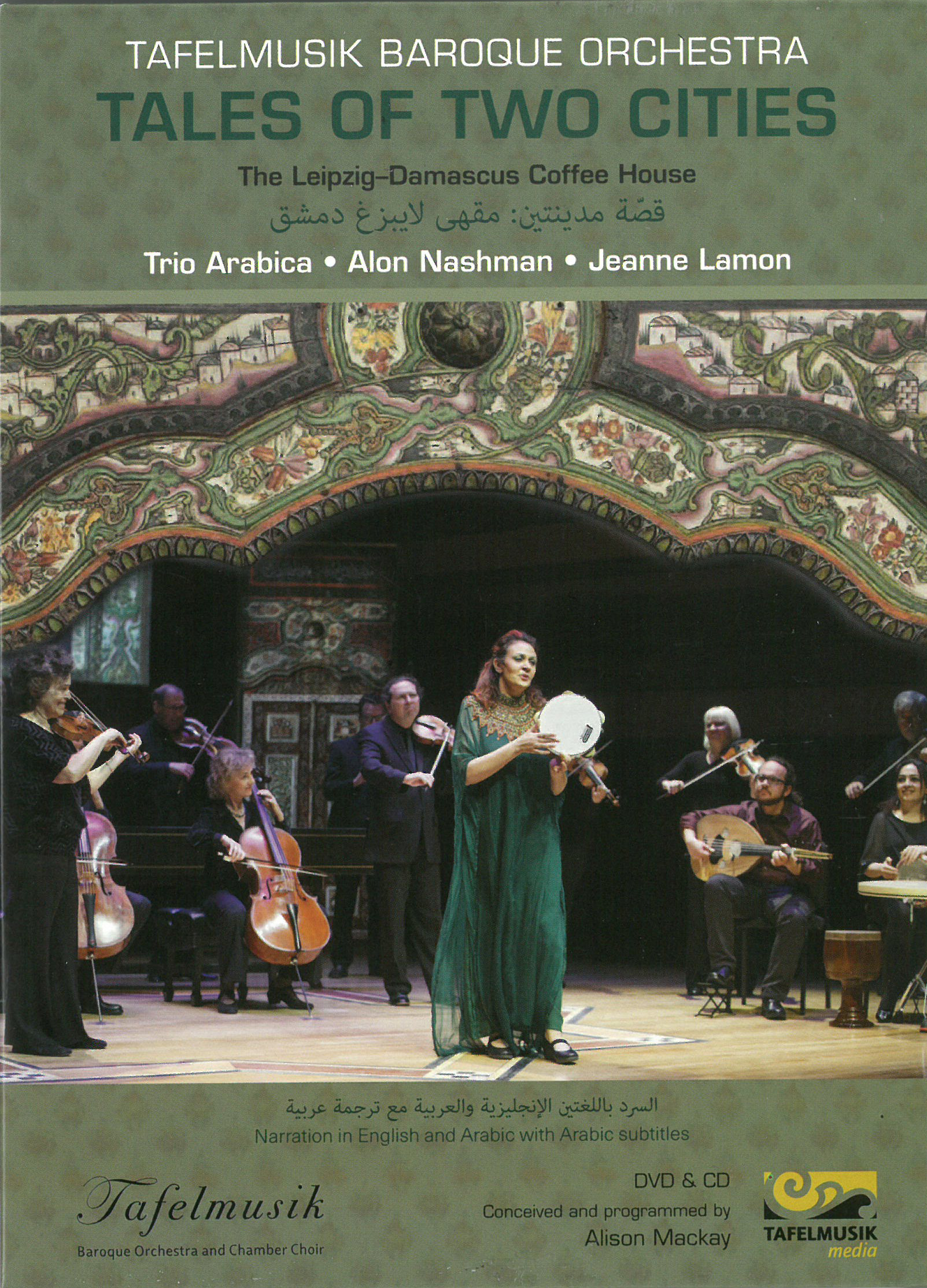
02 Tafelmusik Two CitiesTales of Two Cities
Trio Arabica; Alon Nashman; Jeanne Lamon; Tafelmusik Baroque Orchestra
Tafelmusik Media TMK 1035 DVDCD (tafelmusik.org)

Tales of Two Cities is an enchanting musical journey through the palatial worlds of two prominent 18th-century cities – Leipzig and Damascus. Although separated by 3,000 kilometres, these cities shared a surprising number of common threads; both were located at the intersections of major trade and travelling routes, both were known as cultural and learning centres, and both nurtured a tradition of coffee houses in which music performances were flowing. Cleverly conceived, programmed and scripted by the creative mind of Tafelmusik’s own Alison Mackay, and narrated by the charming Alon Nashman, Tales of Two Cities comes as a DVD/CD combo, featuring the music portion of the concert on CD. The DVD includes a filmed live performance at the Aga Khan Museum, a video on restoration of the Dresden Damascus Room, behind-the-scenes footage from rehearsals and a split-screen video of the orchestra performing Bach’s Sinfonia.

I absolutely loved Tales of Two Cities. The inventive combination of music and literary selections coupled with stunning images and historically informed narration was only transcended by the excellence of all the musicians involved. Tafelmusik Baroque Orchestra presents a fresh, vibrant, theatrical interpretation of music by Telemann, Handel and Bach (all onetime residents of the city of Leipzig). The virtuosity of Dominic Teresi (bassoon), Patrick Jordan (viola) and Aisslinn Nosky (violin) is just as entertaining as it is admirable. Trio Arabica, featuring Maryem Tollar (voice, quanun), Naghmeh Farahmand (percussion) and Demetri Petsalakis (oud), evokes the longing, beauty and delicacy of Damascus of the past with gorgeous performances of the traditional melodies. The final number, an intriguing combination of Telemann and traditional Arabic music, unites all the performers and brings the narrative to a conclusion by telling the story of young, present-day Syrian scholars working alongside German mentors on restoring the Damascus Room in Dresden. Highly recommended.

03 Brahms TriosBrahms - The Piano Trios
Emanuel Ax; Leonidas Kavakos; Yo-Yo Ma
Sony Classical 88985 40729 2

The Piano Trios form a critical, if less well-known feature of Brahms’ creativity within the world of chamber music. To an extent, Brahms picked up the torch at the point at which Beethoven had laid it down, but although he used Beethoven’s music, along with that of Schubert, as a point of departure, these trios are highly singular creations, with a sound world that is altogether unique. Each of the three instruments is stretched to its limits as if Brahms wanted to create orchestral depth and colour using just three players.

Another fascinating aspect of The Piano Trios – particularly in Piano Trio No. 3 in C Minor Op.101 – is Brahms’ treatment of the string players as soloists, giving both the violin and cello some sonorous passages that are ideally suited to their respective characteristics. Also noteworthy is the fact that Brahms’ wealth of powerfully sculpted ideas amply rewards attentive listening.

These performances of The Piano Trios by Emanuel Ax, Leonidas Kavakos and Yo-Yo Ma are without question the most authoritative and distinguished accounts of the works. Ax, Kavakos and Ma play with unique breadth of insight and a feeling of spontaneous inspiration, a quality that comes all too infrequently to studio recordings like these. The Sony recorded sound is at once brilliant and truthful, but it also has exceptional spaciousness.

04 Vaughan WilliamsVaughan Williams – Fantasia on Sussex Folk Tunes and other works
Martin Rummel; Deutsche Staatsphilharmonie Rheinland-Pfalz; Karl-Heinz Steffens
Capriccio CD C5314

This collection of shorter delights, lollipops so to say, opens with the jaunty overture to the comic opera, The Poisoned Kiss, a “romantic extravaganza.” The most interesting work is the Fantasia on Sussex Folk Tunes for cello and orchestra. Vaughan Williams was a collector of folk music and as Bartók did with Hungarian tunes, he incorporated them into his compositions. Vaughan Williams was quite familiar with Sussex County and had been collecting material there since his school days in the village of Rottingdean in East Sussex. His Fantasia, a work new to me, was premiered in 1930 with Pablo Casals as soloist. Instantly recognizable as Vaughan Williams, there are five folk tunes incorporated in a conversation between soloist and orchestra, making this a compelling and interesting workout for cellist and orchestra. It deserves to be popular.

The earliest work, the Bucolic Suite of 1900, also known as the Pastoral Suite, is just that, euphoric thoughts of countryside life. In the Fen Country is no stranger to the catalogues and paints a picture of the lonely and desolate Fen country in the east of England. There are three movements – Explorer, Poet and Queen – arranged from the 1957 inspiring film, The England of Elizabeth. The five works add up to a novel and interesting collection, brilliantly played and recorded. The Elizabeth of Three Portraits from “The England of Elizabeth” refers to the Elizabeth of the 16th century. The Armada and all that.

Review

01 Verdis GuitarThere seem to have been several CDs lately featuring outstanding Canadian classical guitarists, and you can add another one to the list with Verdi’s Guitar – Fantasies for Solo Guitar by J. K. Mertz based on operas by Giuseppe Verdi, performed by British Columbia guitarist Alan Rinehart (Ravello RR7975).

Operatic transcriptions were very popular throughout the 19th century in the days before recordings and radio, and were usually made with home performance in mind. These Mertz transcriptions, though, were clearly not aimed at amateurs, gifted or otherwise. The technical challenges of reproducing operatic scores within the limitations of the guitar must have been daunting, but Mertz – an important figure in the development of the Romantic guitar style – produced an Op.8 Opern-Revue that consisted of 34(!!) transcriptions of operas by composers from Adam to Wagner.

The six Verdi transcriptions – all included here – are from Ernani, Rigoletto, Nabucco, Il Trovatore, La Traviata and I Vespri Siciliani. They are delightful fantasia-style works, with familiar arias popping out from time to time: Ernani, involami; Caro nome; Questa o quella; and La donna e mobile.

Rinehart’s playing is clean and stylish throughout, especially in the tremolo passages in Ernani and I Vespri Siciliani, a technique later used to great effect by Francisco Tárrega.

Now, if we could only hear Wagner’s Flying Dutchman

Review

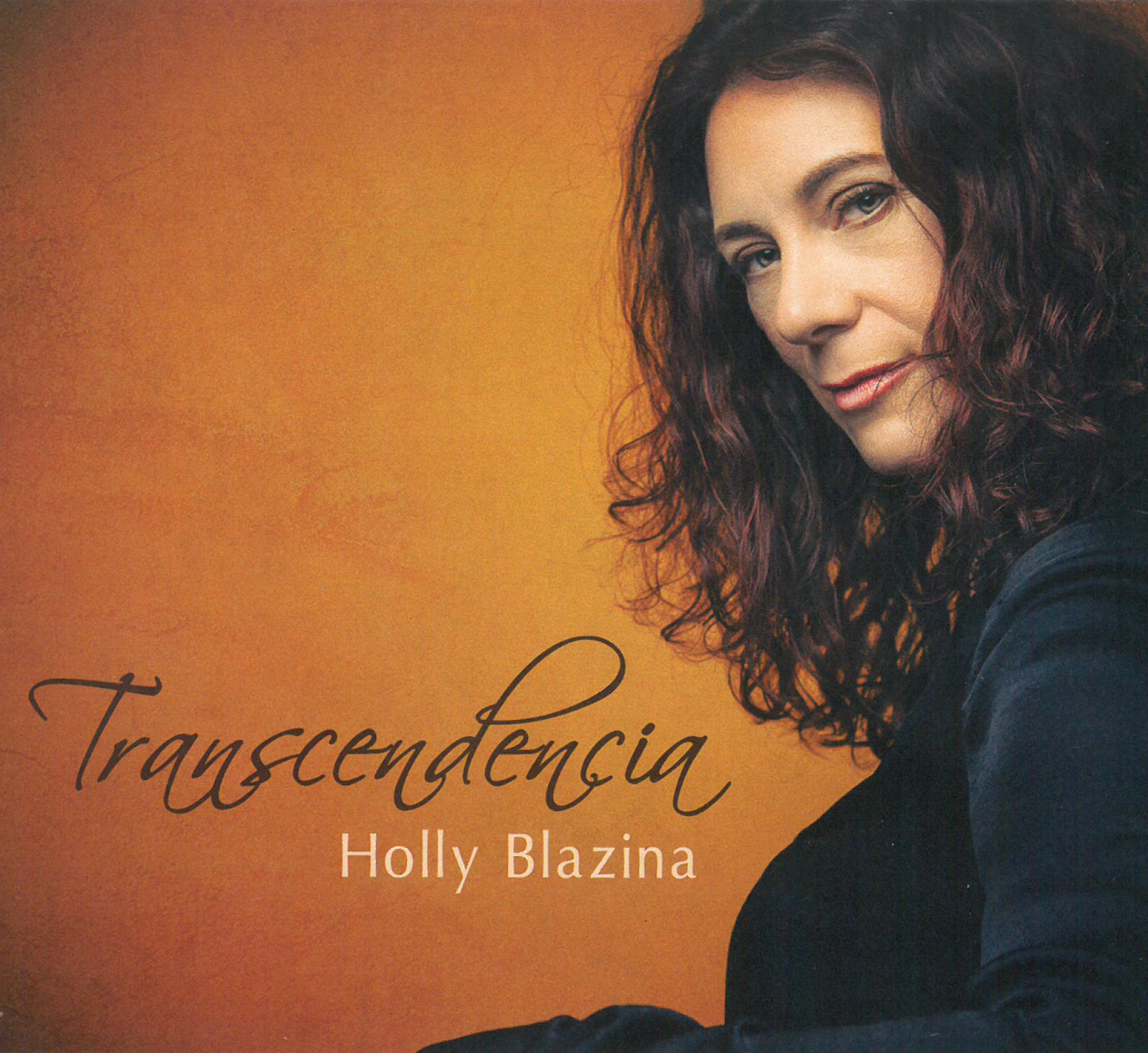
02 Holly BlazinaAnother very interesting Canadian guitar CD is Transcendencia, the debut disc from Alberta flamenco guitarist, Holly Blazina (iTunes; Spotify; hollyblazina.com).

Originally trained as a classical guitarist Blazina has a solid grounding in the traditional flamenco technique and has been composing her own pieces in the genre for more than a decade, workshopping them with noted flamenco masters Paco Fernandez in Seville and Ricardo Diaz in San Francisco. They are in traditional flamenco forms – Alegría, Bulería, Abandolao and Farruca, for instance – and mostly with the traditional accompaniment of male and female voices, palmas and percussion, but often introduce instruments from other musical worlds, such as violin (on three tracks), and saxophone, piano and Persian santur dulcimer (on different single tracks). The result is not so much a mixing of genres as an extension of the flamenco musical style with an added dimension, and it’s very effective.

Blazina’s playing is clean, crisp and idiomatic – especially in Invocación, the solo final track with its excellent tremolo – and the contributions from the nine other musicians fit in seamlessly. A lovely recorded sound adds to a highly entertaining disc.

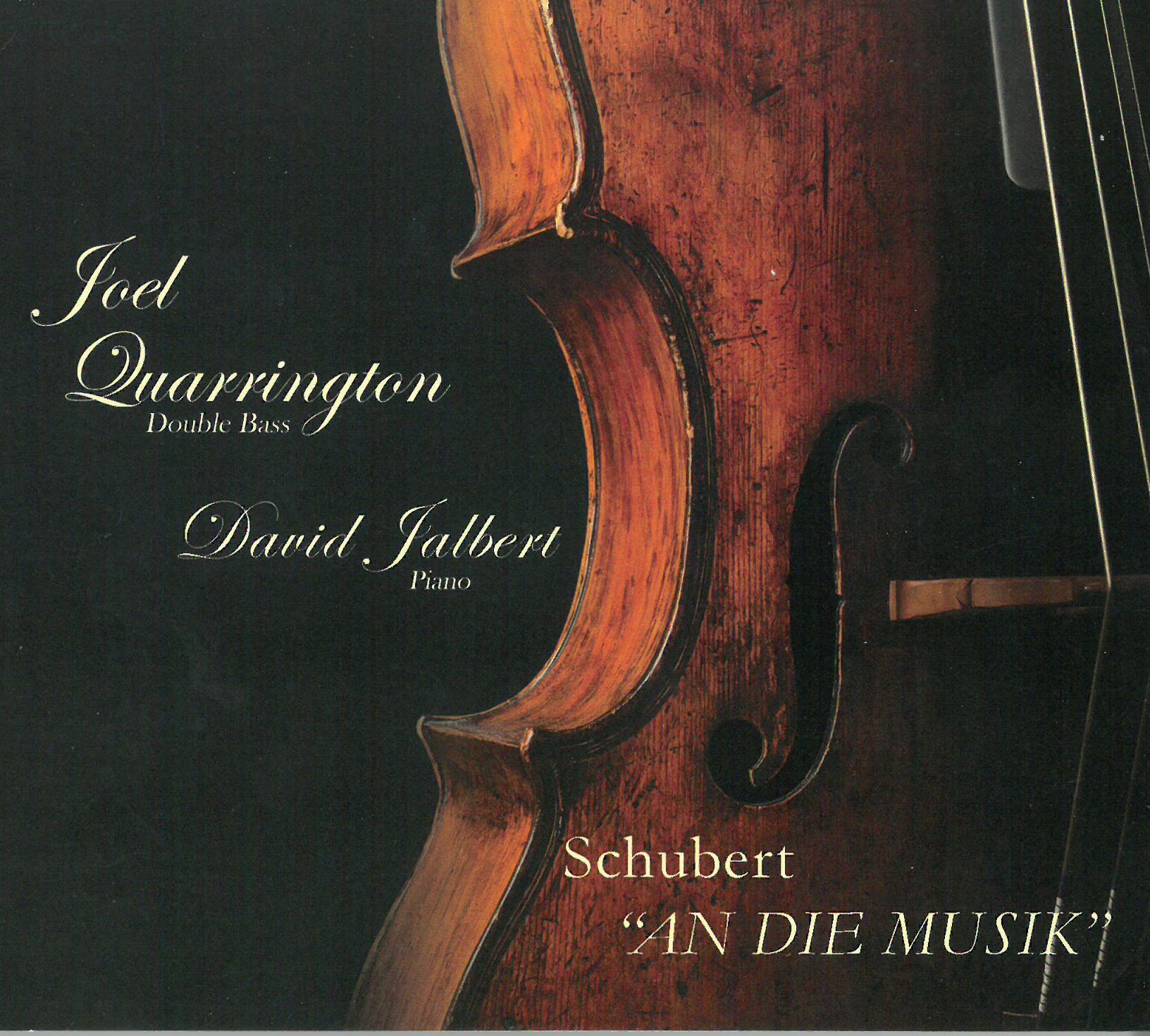
03 Joel QuarringtonTranscriptions form the entire program of another Canadian CD this month, as bassist Joel Quarrington is back with another recital disc of transcriptions for double bass and piano (his Brothers in Brahms was reviewed here in September 2013), this time in Schubert “AN DIE MUSIK” with pianist David Jalbert (joelquarrington.com).

Although transcriptions served a specific purpose in the pre-gramophone days, making otherwise unavailable music available for home performance, in many instances since then they have served primarily to enlarge the repertoire for certain instrumentations, not always with complete success. Any misgivings you may have in that respect are simply blown away by Quarrington’s playing, however, with his astonishing agility, his sensitivity and delicacy and the warmth and richness of his tonal colour dispelling any lingering doubts. Granted, part of the attraction is listening to him doing the impossible on what is usually considered a large and unwieldy instrument, but his performances go way beyond the novelty attraction – this is pure music-making of the highest order.

The title track is one of seven short pieces here, but the two major works are the “Arpeggione” Sonata in A Minor D821 and the Violin Sonatina in D Major D384. Both are completely satisfying in all respects, with the final Allegro vivace movement of the latter providing a simply dazzling end to the disc.

With the sensitive accompaniment of David Jalbert the CD is an absolute delight, as well as an absolute wonder, from beginning to end.

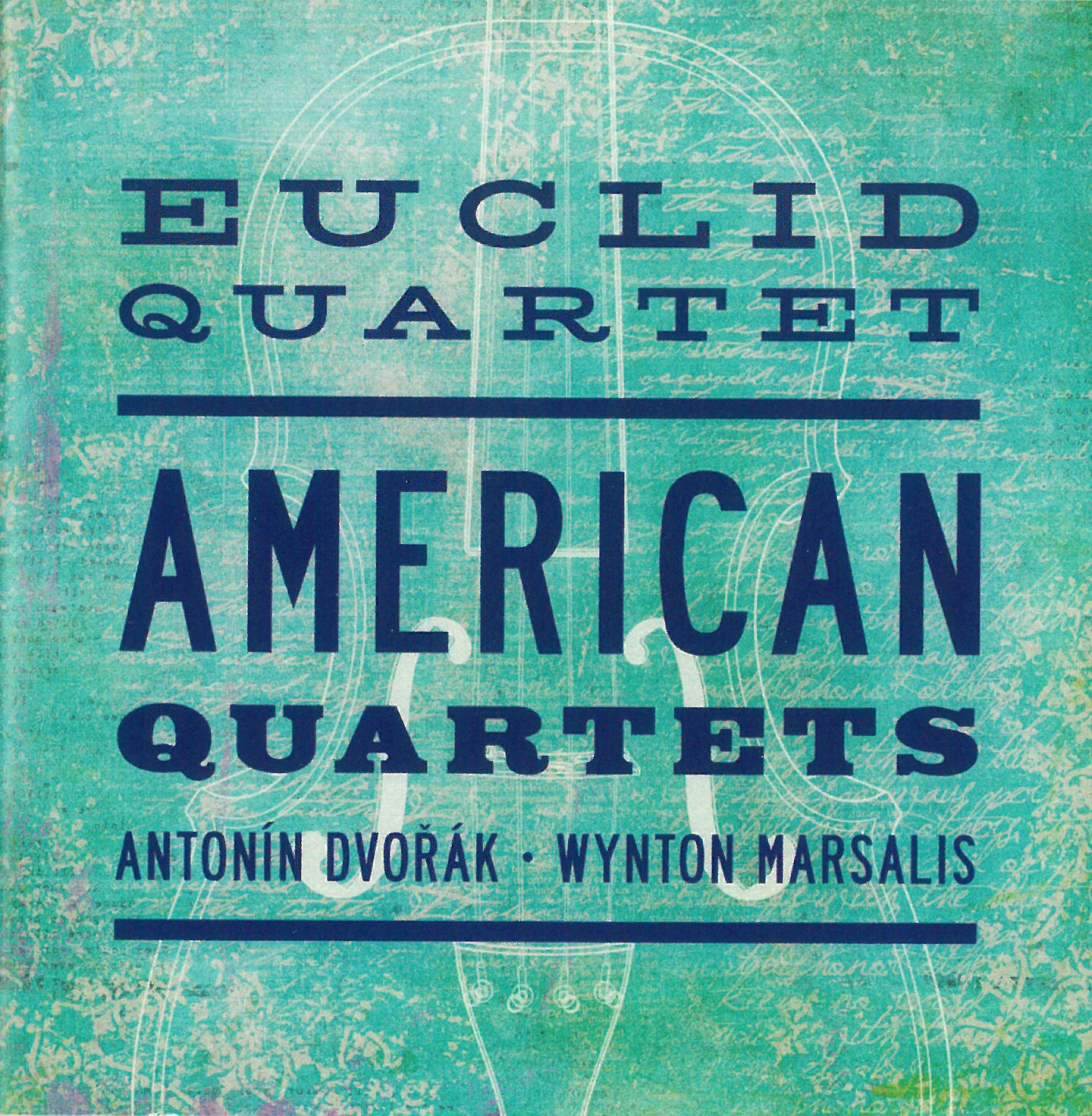
04 Euclid QuartetThe American Euclid Quartet presents two works separated by almost exactly 100 years on American Quartets, featuring works by Antonín Dvořák and Wynton Marsalis (Afinat Records AR1701).

The Dvořák is the String Quartet No.12 in F Major Op.96, “American,” written during the composer’s three years as director of the National Conservatory of Music of America in New York and first performed in 1894. The performance here is warm, effusive, vibrant and dynamic.

It seems a long journey from such a completely familiar and frequently heard work to the Marsalis String Quartet No.1 “At the Octoroon Balls,” written at the request of the Chamber Music Society of Lincoln Center in 1995, but what a fascinating contrast it presents.

The quartet is named for the legendary 18th- and 19th-century balls in the composer’s native New Orleans, described in the booklet notes as being “…given as a way to facilitate long-term relationships between wealthy White men and usually fair-skinned women of colour.” The work has been called Marsalis’ conscious exploration of the American Creole contradictions and compromises – cultural, social and political – exemplified by life in New Orleans.

It’s a long (almost 45 minutes) but utterly engrossing work of seven sections, the longest of which – at ten minutes – is the astonishing opening Come Long Fiddler for solo violin, recalling, in dazzling fashion, the old Black country dance fiddle tradition. Blues, jazz, African, folk, spiritual and ragtime influences abound in the remaining sections, with simply terrific writing and playing: Mating Calls and Delta Rhythms; Creole Contradanzas; Many Gone; Hellbound Highball; Blue Lights on the Bayou.

Finally, with Rampart St. Row House Rag, here we are at what Dvořák envisioned and encouraged – the use of New World musical material as the basis for classical composition. It makes perfect sense of an apparently diverse program on an outstanding CD.

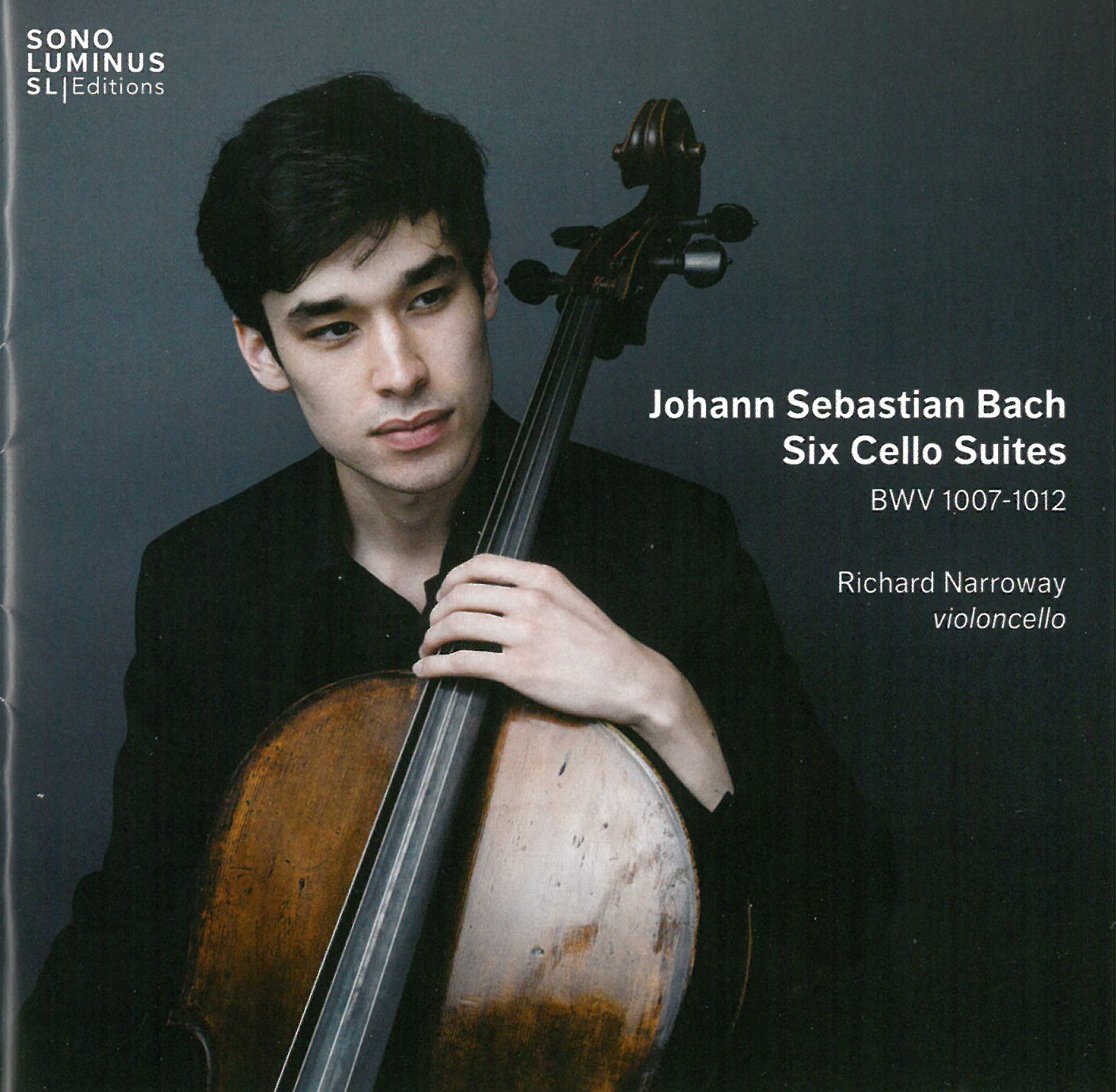
05a Bach Cello NarrowayThere are another two excellent sets of the cello suites by Johann Sebastian Bach to add to the already extensive list: Six Cello Suites BWV 1007-1012 by the Australian cellist Richard Narroway (Sono Luminus SLE-70010); and Suiten für Violoncello by the Swiss cellist Thomas Demenga (ECM New Series 2530/31).

There are several immediate differences: at the time of the recordings (2015 and 2014 respectively) Narroway was 24, Demenga 59; it’s the first recording of the suites for Narroway, the second for Demenga; Narroway uses a modern cello and bow, Demenga a Baroque bow and gut strings on 18th-century instruments; Narroway plays at modern pitch, Demenga down a full tone.

There are also similarities though: both players are fully aware of early performance issues and have made extensive study of contemporary sources; and both see these works as essentially dance suites, with lively – but not necessarily fast – tempos.

Narroway has a lovely rich sound that never overwhelms, with beautiful phrasing and a fine rhythmic sense that is given room to breathe and expand. It’s all bursting with life and sounds quite effortless.

05b Demenga Bach Six Cello Suites CD bklt Page 01Demenga’s tone can sound a bit tight at times, but again there is freedom in the phrasing and rhythms. On the down side, there is a fair amount of noise from the left-hand fingers hitting the fingerboard. You may or may not find that to be distracting, but it does mean that with Demenga you are frequently aware of the presence of the performer; with Narroway, however, rarely if ever are you aware of anything but the music, and it’s his recordings that I will keep returning to.

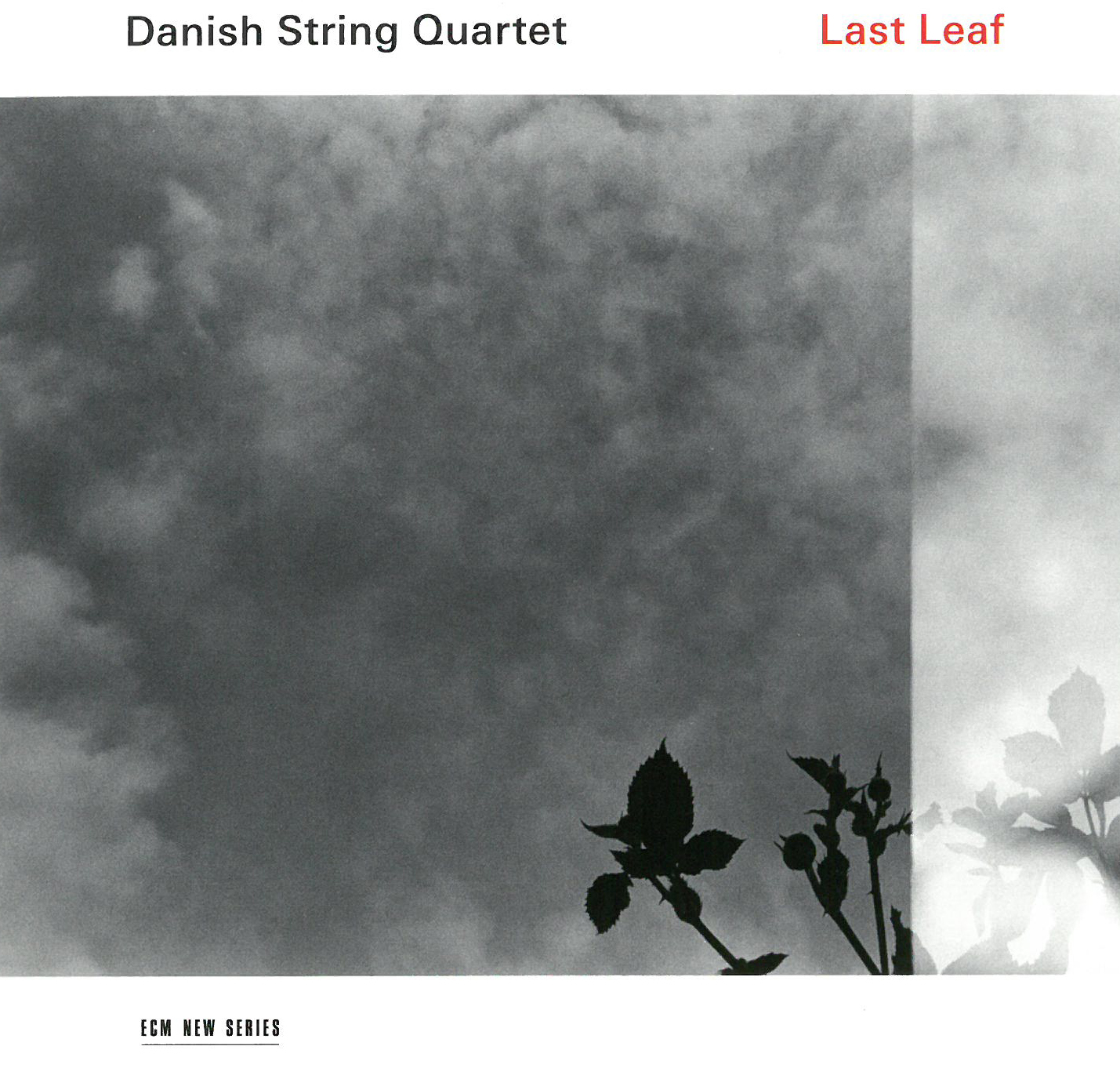
06 Danish String QuartetThere’s more immensely satisfying quartet playing on Last Leaf, a recital of Nordic folk tunes all arranged by the Danish String Quartet (ECM New Series 2550). There’s a wide range of sources for the 16 short pieces here, from ancient hymn tunes and medieval ballads to boat songs and traditional dance music. In addition, there are original compositions by two members of the quartet – three by cellist Fredrik Schøyen Sjölin and one by violinist Rune Tonsgaard Sørensen – as well as a polska by Swedish fiddler Eva Sæhter. Sjölin and Sørensen also add the occasional harmonium, piano and glockenspiel and double bass contributions to enrich the sound.

It’s a really lovely collection, beautifully arranged and played. The quartet members say that they “gathered a bunch of amazing tunes and hope you will enjoy what we have done to them.”

Well, consider it job done.

Review

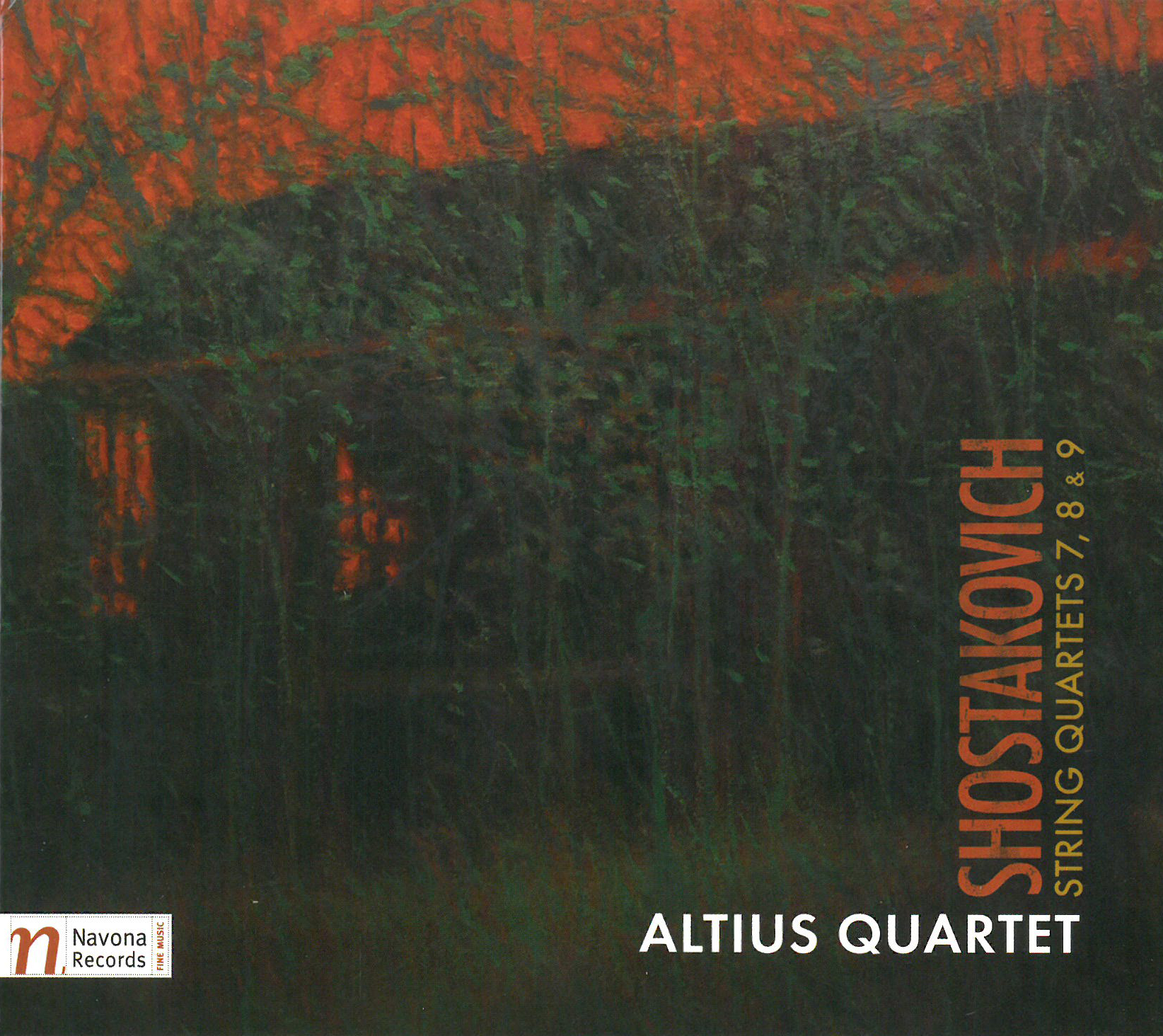
07 Altius ShostakovichDmitri Shostakovich wrote four string quartets in the period 1946-56, years in which his standing with the Soviet regime was still uncertain, so I’m not sure I agree with the statement by the Altius Quartet, on their new CD of Shostakovich String Quartets 7, 8 & 9 (Navona Records NV6125) that these three works, from 1960-64, were written “directly after World War II when art was often oppressed.” By 1960 Stalin had been dead for seven years and the composer’s rehabilitation was well under way.

There is, however, no doubting the quartet’s assertion that these three highly personal works form a triptych, dedicated as they are to the composer’s first (No.7) and third (No.9) wives and ostensibly to the victims of fascism (No.8) including Shostakovich – indeed, his daughter Galina claimed that he originally dedicated it to himself, with the published dedication imposed by Soviet authorities.

There’s a lovely feel to the playing from the outset, from the String Quartet No.7 in F-sharp Minor Op.108 through to the highly positive ending of the String Quartet No.9 in E-flat Major Op.117, but it’s the String Quartet No.8 in C Minor Op.110 that is at the heart of this group, not merely physically but also emotionally. The opening four notes D, E-flat, C and B (or D, S, C, H in German notation) that form the composer’s musical signature reappear in every movement, and the autobiographical nature of the music is constantly underlined by numerous quotations from earlier works.

It’s a committed and moving performance by the Altius, albeit perhaps with not quite the air of utter desolation and despair that some performances wring from the final pages.

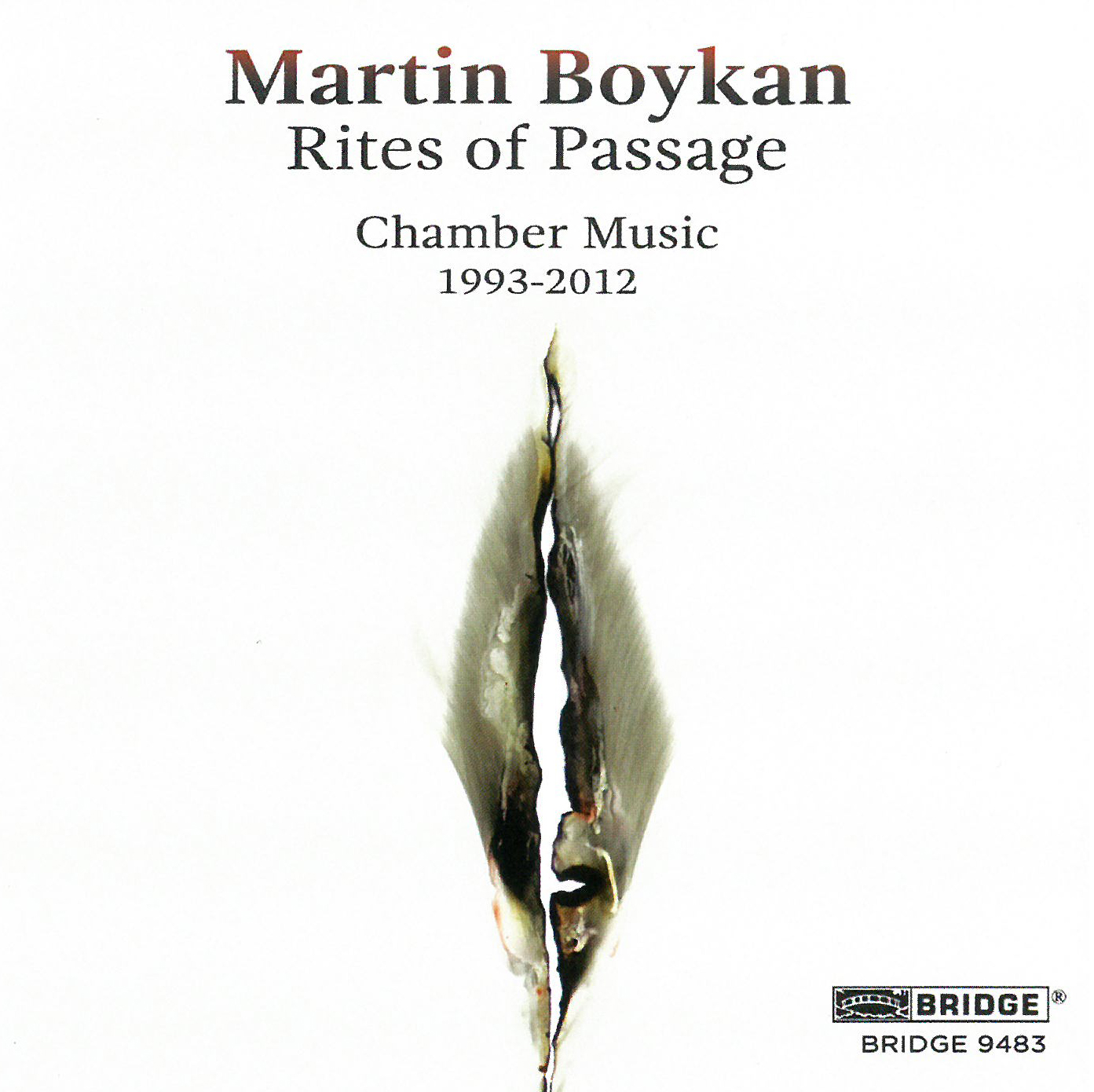
08 Martin BoykanThe American composer Martin Boykan, who turned 86 in April, may be a new name to a lot of people, but there is no doubting his pedigree: he studied with Copland, Piston and Hindemith. His output is predominantly in the chamber music realm, which probably makes the new CD Rites of Passage – Chamber Music 1993-2012 (Bridge Records BRIDGE 9483) a fairly representative introduction to his works.

A good deal of American classical music over the past 25 years or so has been unabashedly tonal, but Boykan is clearly not of this persuasion. There’s not a great deal of emotional warmth or purely melodic material, and the absence or ambiguity of tonality together with the often extreme dynamics means that it’s not always easy listening. Still, there’s no doubting that this is a strongly individual and skilled composer fully in control of his structures and material.

The works, recorded between 2011 and 2015 by combinations of ten different players, are: Impromptu for Violin Solo (1993); Sonata #2 for Violin and Piano (2009); Piano Trio #3 “Rites of Passage” (2006); Sonata for Viola and Piano (2012); and Psalm 121 (1997) for mezzo-soprano and string quartet. The violin and viola sonatas were written for the soloists here, Curtis Macomber and Mark Berger respectively.

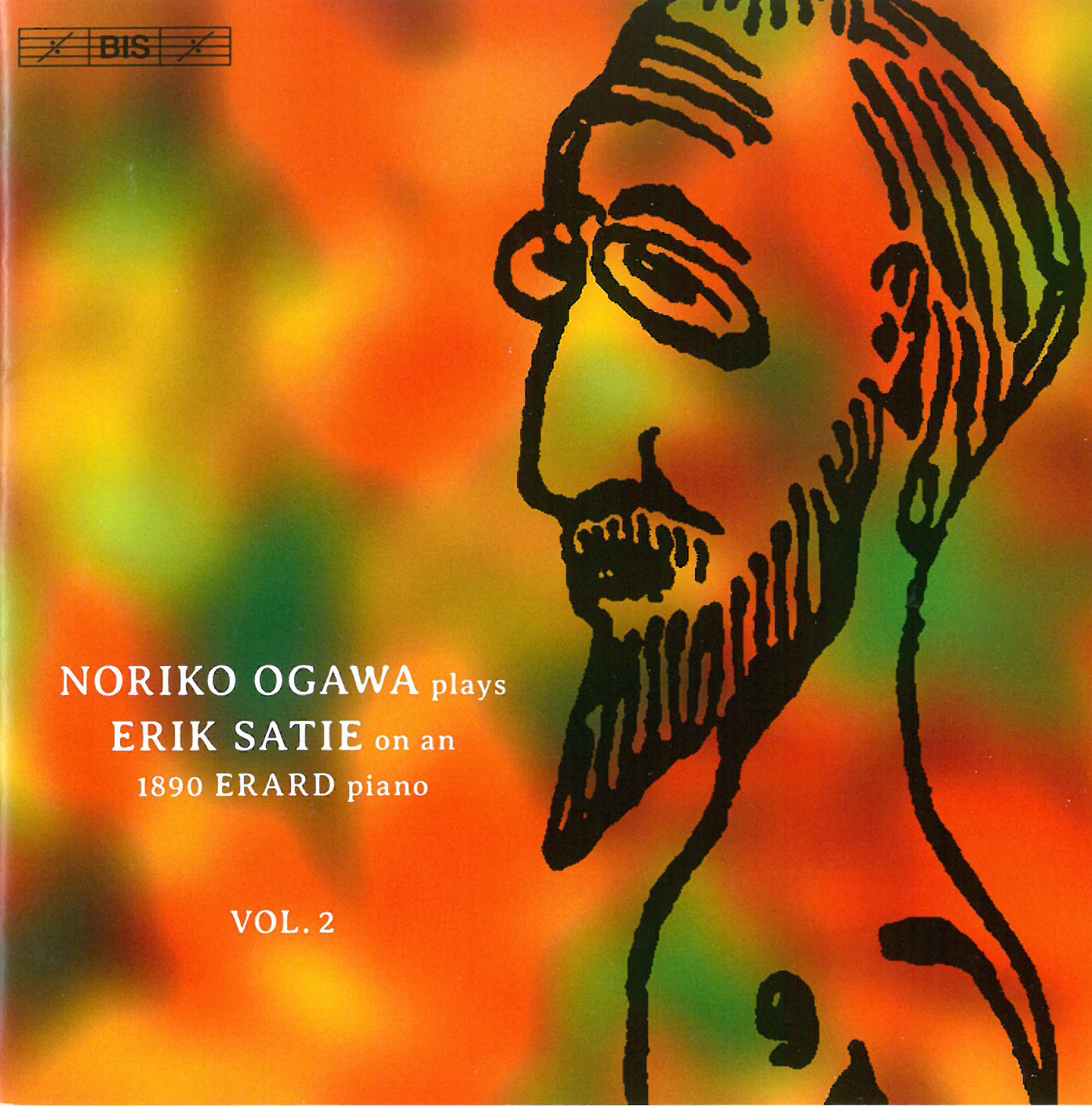
01 Satie ErardNoriko Ogawa has just released the second volume of her project to record all the solo piano works of Erik Satie, Noriko Ogawa plays Erik Satie (BIS 2225 SACD). Both this disc and Volume I are performed on an 1890 Erard grand piano, an instrument from the period of Satie’s life (1866-1925). The piano maker Erard was noted for numerous innovations in piano design, especially the double escapement action which allowed for rapid note repetition, a feature ever more in demand by composers of the late 19th century. The instrument used in this recording is in remarkably fine condition, sounding well-voiced and mechanically capable of the frequent staccato touch, often at great volume, that Satie requires.

Ogawa’s choice of repertoire for Volume II offers a more esoteric and quirky side of Satie’s personality, the two sets of preludes for flabby dogs, Préludes flasques (pour un chien) being a case in point. The Trois sarabandes are untitled early works, although the second of the three is dedicated to Ravel. These are surprisingly forward-looking, with a feel that occasionally evokes a modern jazz club. Sports et divertissements is a catalogue of 21 social pastimes, often quite comical, and each requiring less than a minute to play.

Ogawa has a very credible understanding of French music of this period, although Satie admittedly sits comfortably outside the mainstream. Still, her previous recordings of the complete piano works of Claude Debussy reveal a studious and comprehensive approach that offers a convincingly genuine feel to her interpretation of Satie’s music.

02 GodowskyEmanuele Delucchi is a young Italian pianist with extraordinary technical ability. His recording Godowsky Studies on Chopin Op.10 (Piano Classics PCL0122) is a rare opportunity to hear this unusual repertoire. Godowsky claimed his studies were equally appropriate for public concert as well as private playing. The music is always immediately recognizable as Chopin, but Godowsky has taken the material and recomposed it as a series of studies for aspiring players. They are devilishly difficult and intentionally so. Many are written for left hand alone and just one is for a solo right hand.

Godowsky takes Chopin’s main thematic material and moves it around, often from one hand to the other, meanwhile creating Chopin-style cascades of other figures around it. Some of these transcriptions are quite strict, others freer, and still others structured as cantus firmus and variation versions. It’s altogether quite an experiment and in its day would have sparked a debate about originality and legitimacy. Anticipating this, Godowsky was careful to include introductory remarks in his publication to clarify his aims. Essentially, he believed that pianists, composers and piano builders had more evolutionary potential to realize. Hence, the Herculean challenge.

Despite all the muscle and stamina, Godowsky’s music is not without its beauty. Chopin’s genius remains intact, both musically and technically. Delucchi ensures that technique is never glorified at the expense of art. He plays a beautifully restored 1906 Steinway, from Godowsky’s day.

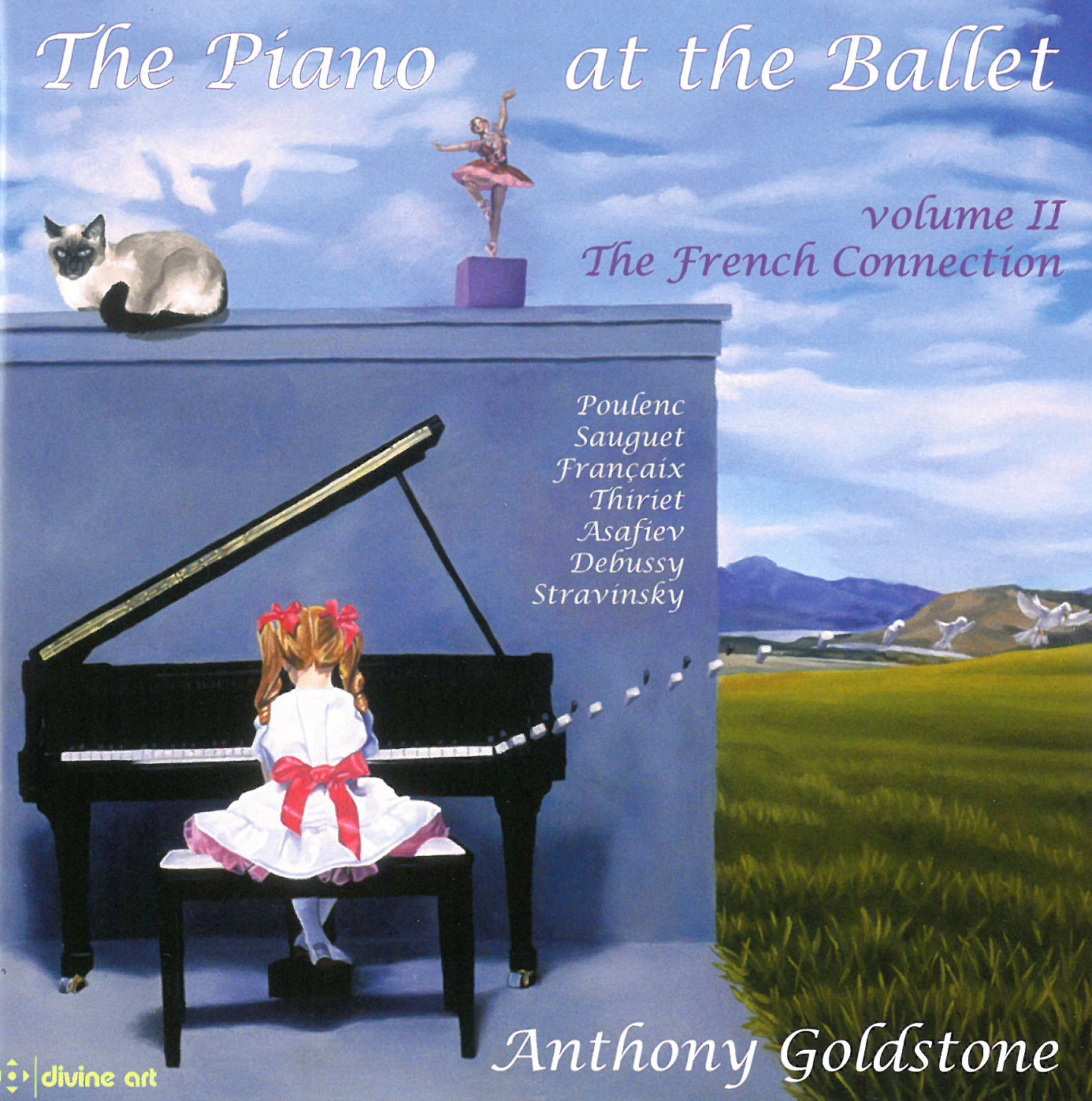
03 Piano at Ballet 2Known as “Tony” to his friends, British pianist Anthony Goldstone passed away early this year (2017) and was unable to see his last CD released. A superb pianist equally appreciated as a soloist as well as half of the Goldstone and Clemmow Duo, his final recording, The Piano at the Ballet Volume II - The French Connection (Divine Art dda 25148) is dedicated to his memory.

Goldstone delighted in transcriptions and recorded several featuring music from opera and ballet. This disc is the conclusion of the latter project and uses French composers as the thematic link. Most of the pieces are world premiere recordings, transcribed by various others, although the notes admit that Goldstone made a few improvements along the way.

Goldstone’s playing at age 72 is simply incredible. Speed, reach, accuracy and, above all, unerring musicality mark every transcription he performs. The music tends, understandably, to be extremely athletic and Goldstone’s level of sustained energy is impressive. The finales of Poulenc’s Les Biches and Maurice Thiriet’s L’Oeuf à la coque are fine examples of this. He also captures the grandness of the orchestral score in these transcriptions. Claude Debussy’s Printemps (Suite Symphonique) is the best example of this, with its great washes of sound that conclude the second movement.

04 Ivan IlicReicha Rediscovered Vol.1 (Chandos CHAN 10950) is the promising launch of a series that will see pianist Ivan Ilić record the largely unheard solo piano works of a composer better known for his wind ensemble pieces. A contemporary of Beethoven, Reicha was highly educated and musically intelligent. A number of his later theoretical and philosophical treatises were translated for major European music circles.

The challenge for Ilić is to find and integrate the unique features of Reicha’s language into his playing. The modern ear hears Reicha and understandably recognizes some Haydn, some Mozart and occasional tempestuous bursts of a young firebrand named Beethoven. But the new ground Reicha was breaking was harmonic. The disc contains three pieces from Reicha’s collection titled Practische Beispiele. Ilić encounters each of the composer’s adventurous modulations and plays through them with confidence that pianists of Reicha’s day might well have lacked.

Other tracks include a wonderful set of variations on a theme from Mozart’s The Magic Flute and a substantial mid-career Grande Sonate in C Major that reveals a composer struggling to be free of classical forms. The following volumes by Ilić look promising indeed.

Review

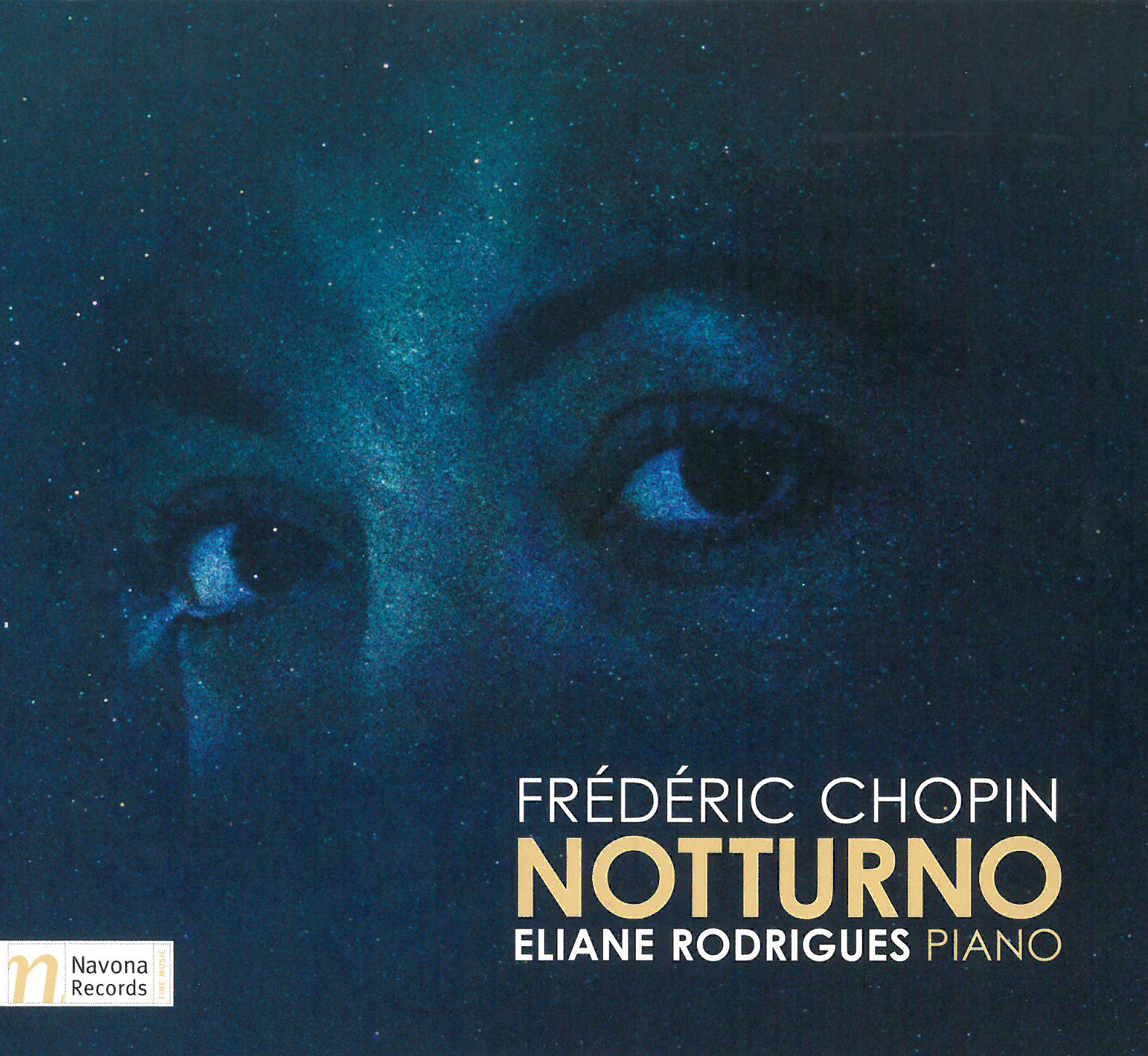
05 Eliane RodriguesBrazilian pianist Eliane Rodrigues has recorded the 21 Nocturnes by Chopin on her newest disc Frédéric Chopin – Notturno (Navona Records NV6123). The two-disc set also includes the Ballades No.1 in G Mino, Op.23 and No.4 in F Minor, Op.52.

Rodrigues teaches at the Royal Conservatoire in Antwerp, performs frequently and has more than 25 recordings in her discography. She traces her Chopin connection to her earliest years at the keyboard playing the Waltzes and Mazurkas. But her affection for the Nocturnes is more than wistful nostalgia. A passing reference in her notes suggests a very deep and personal experience made the sadness and melancholy of the Nocturnes profoundly meaningful to her. As if to underscore this, she uses quotations from a fictitious Chopin diary to capture the mood of each Nocturne.

The playing, however, is the proof of her ownership. Entirely consistent and sustained throughout both discs, her interpretations never stray from the beauty and tenderness that Chopin poured into these pieces. Rodrigues never rushes anything. Arching phrases, ornaments and grace notes are all critical to completing the composer’s every utterance, and she gives each one the time it needs to unfold. It’s an arresting and beautiful performance.

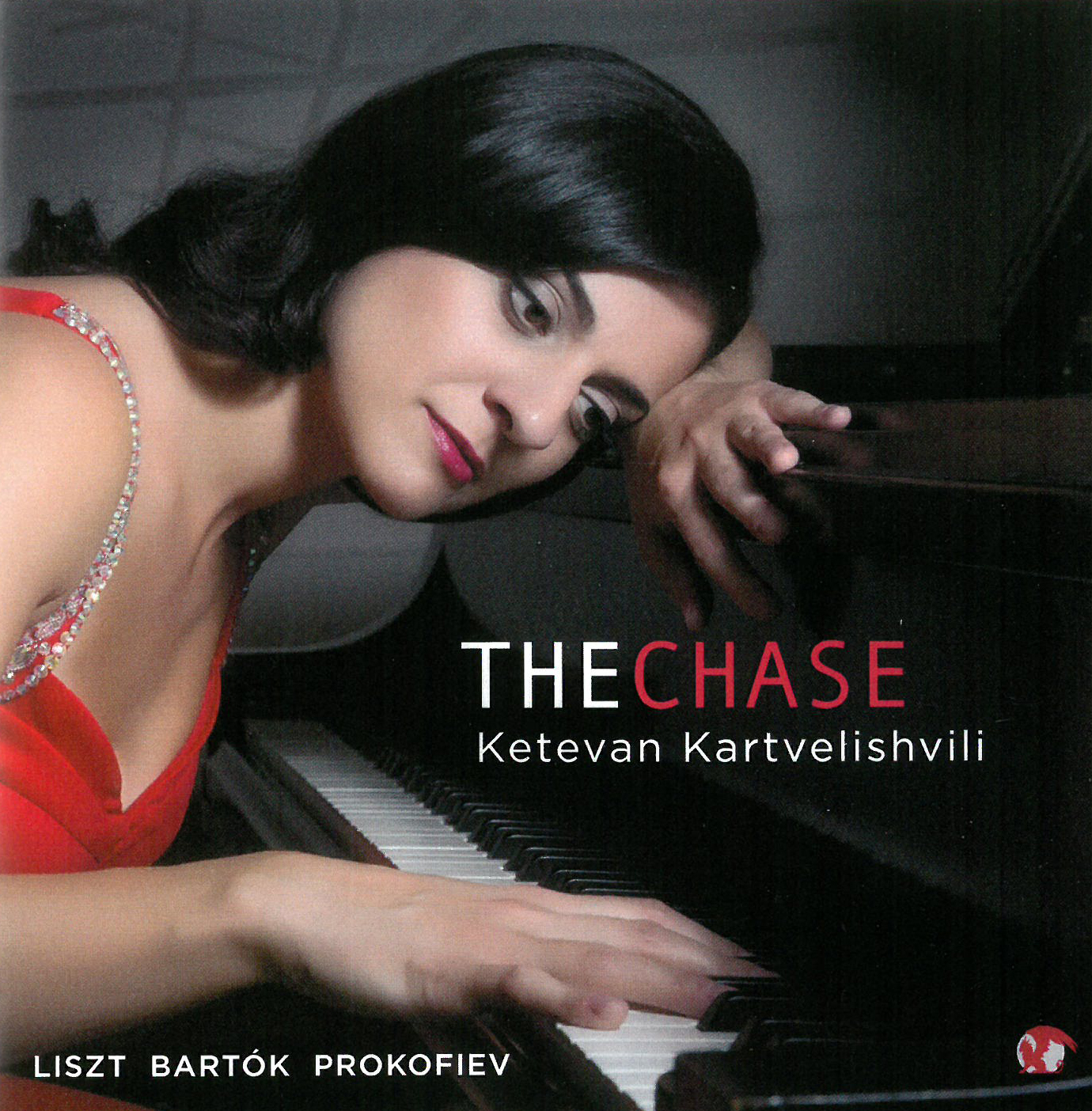
06 KartvelishviliKetevan Kartvelishvili is a power pianist. The title of her new recording The Chase – Liszt, Bartók, Prokofviev (Blue Griffin BGR 437) says it all. Using the title of the final movement from Bartók’s Out of Doors Sz.81 BB89, Kartvelishvili establishes an ethos for this remarkable disc by demonstrating her formidable technique through this relentless onslaught of musical passion. It’s not surprising that Bartók used this piece in his rather dark ballet The Miraculous Mandarin.

Kartvelishvili opens her CD with Liszt’s Mephisto Waltz No.1 S514. She takes this at a blistering speed without ever losing momentum or intensity. Her performance of the Liszt Sonata in B Minor S178 is marvellous. By this point her technical skills are beyond question and what emerges is the tenderness Liszt requires to withdraw into his crucial moments of repose. Even at the sonata’s conclusion, those final measures are powerfully hesitant and highly effective.

Prokofiev’s Sonata No.7 in B Flat Major, Op.83 concludes the disc. It’s the second of his three “War Sonatas” and is sometimes called the “Stalingrad.” The outer movements are violent and destructive and leave no doubt about the work’s origin in 1942 Soviet Russia. The middle movement offers Kartvelishvili another opportunity to reveal the depth of her musicality. With an allusion to a Schumann lied, the movement is fairly withdrawn until she builds it to a near climax in the second half before returning to a quiet ending.

Kartvelishvili plays with both impressive might and tender conviction.

07 dont push pianoFlorian Wittenburg is a German-born contemporary composer. He is active throughout Europe but his academic and early career years were spent in the Netherlands. Don’t Push the Piano Around (NurNichtNur 117 01 26) is his latest disc and it adds to an already substantial discography and body of works. Pianist Sebastiaan Oosthout performs on this disc and reveals a strong affinity for Wittenberg’s music. Wittenberg is highly creative and takes his artistic inspiration from everything around him. As a composer, he revels in playing with patterns and sequences. Whether animal sounds, words, or the spelling of a name, Wittenberg is quick to place his subject into changing structures where he plays with progressions and variants.

Oosthout’s grasp of Wittenberg’s language gives him access to the deep emotion of the music, especially in several of the Quotes. Litany for one pianist is particularly effective as a thoughtful and searching work, in which Oosthout is required to whistle along with a few specific notes he plays. But the most captivating of Wittenberg’s works on this disc is the opening track Eagle prayer. It’s based on the call of an African fish eagle, notated and harmonized in a highly engaging and creative way. This is an intriguing recording worth hearing.

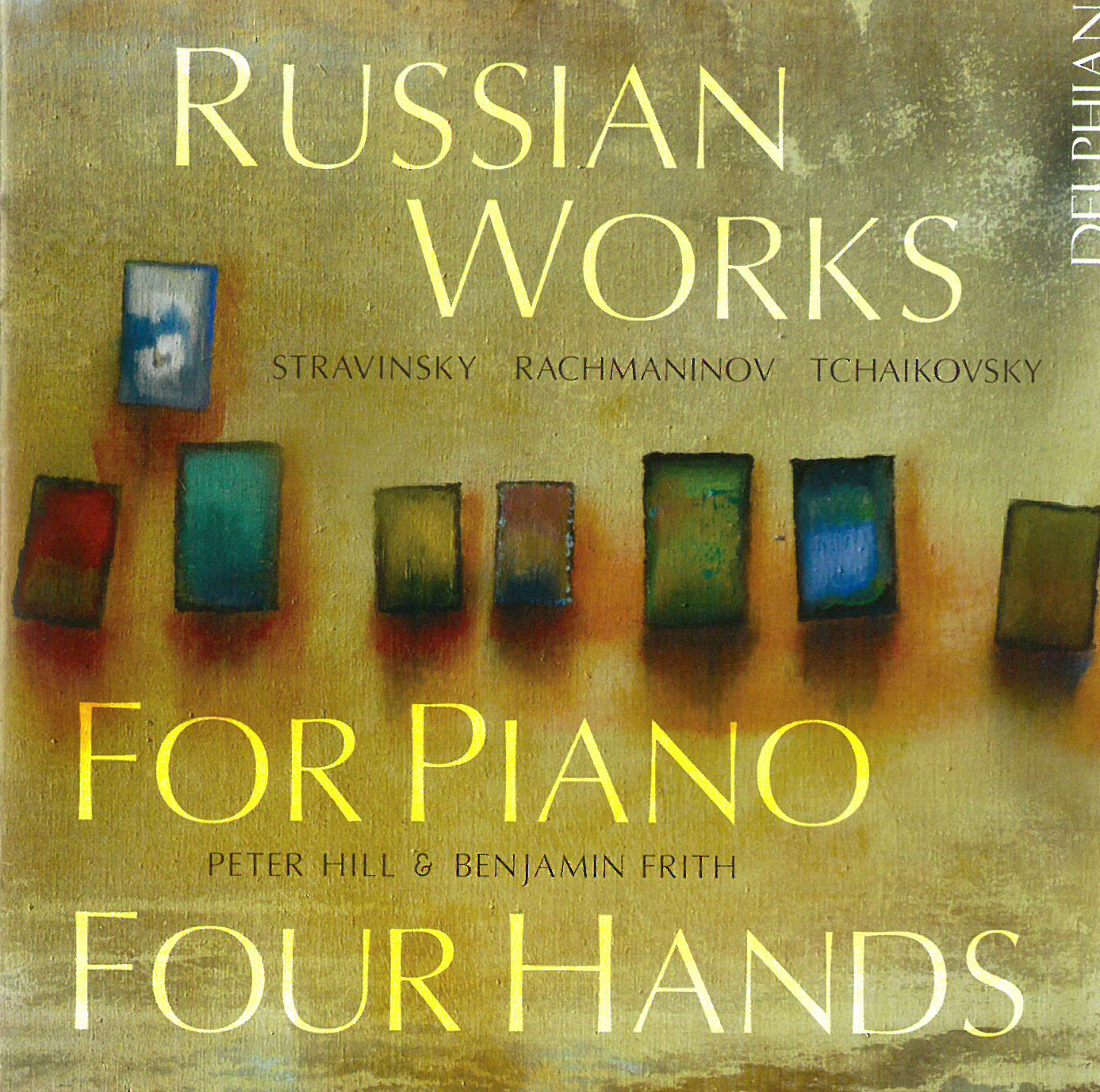
08 Russian Four HandsIt’s uniquely gratifying to hear the work of piano duos when they have performed together for many years. Peter Hill and Benjamin Frith have been crafting their sound for more than three decades into an impressive single voice. Their newest recording, Russian Works for Piano Four Hands (Delphian DCD 34191) is an example of how remarkable the combination of such talents can become. They have moved far beyond simply playing together and evolved a unified conception of making music.

This disc presents the music of three composers for whom folk music played an inspirational role. While Rachmaninov’s Six morceaux Op.11 quotes no folk material, it’s written in a style that recalls the dance and energy of folk traditions. Rachmaninov was just 21 but his writing already shows the now-familiar ability to think in large-scale terms. He uses the entire range of the keyboard without hesitation and draws on its dynamic power, amplified under the hands of two players. Hill and Frith are superb in meeting the contrasting demands of this piece, from the gentlest moments of the Romance to the magnificent ending of Slava.

The selections from Tchaikovsky’s Fifty Russian Folk Songs quote directly from folk material, although much of it very briefly; there is, however, no mistaking the focus that Hill and Frith bring to this work. Their touch and tone are wonderfully connected to the often dark modal nature of the melodies.

Stravinsky’s Petrushka is brilliantly played throughout. Flawless execution is matched by complete immersion in the music. The piano duo delivers the Russian Dance with all the wild energy it requires and Petrushka’s Death with the contrasting gravitas the composer intended. Hill and Frith are true masters of their art. clip_image009.png

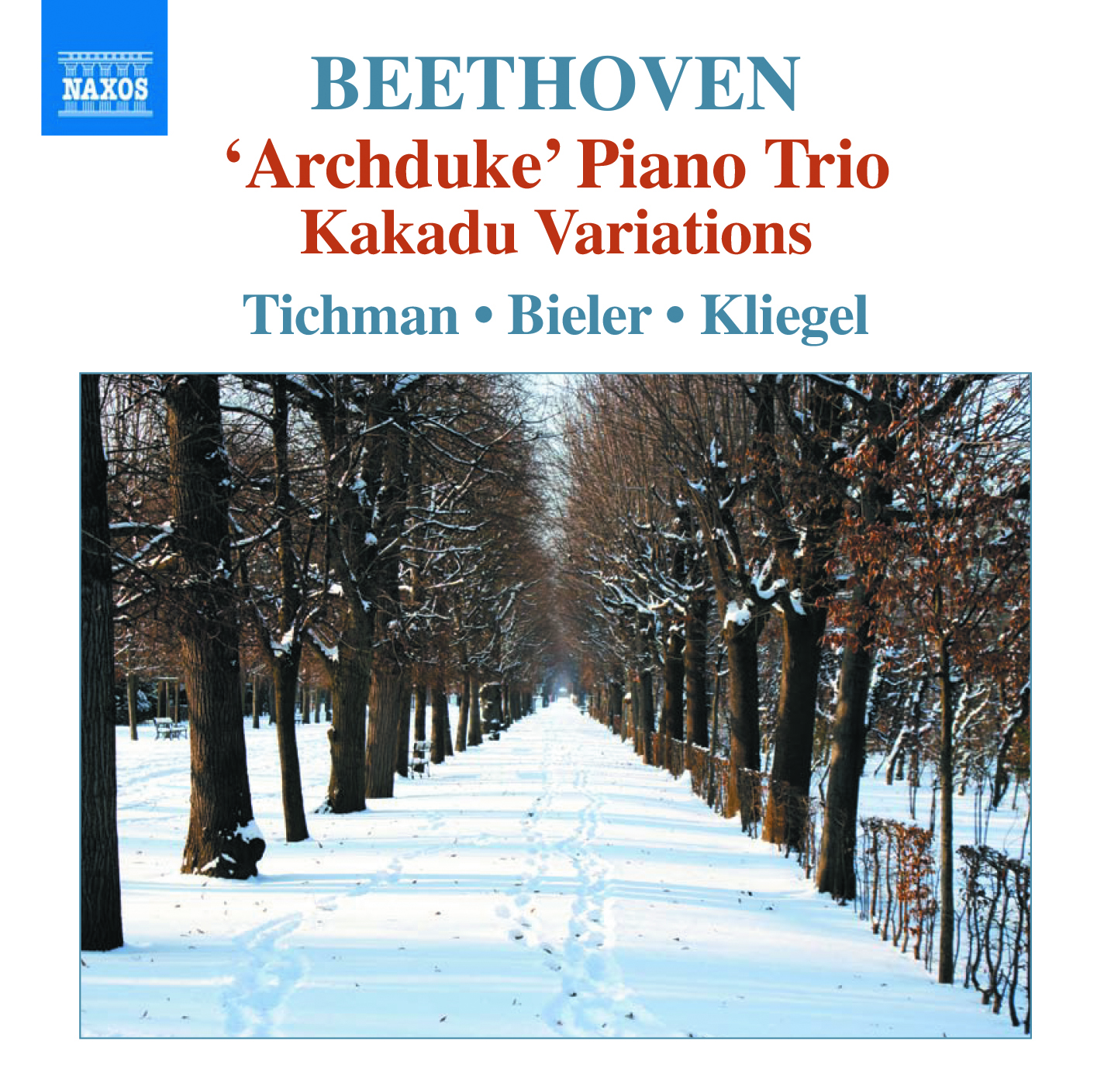
01 Beethoven Trios 260Beethoven: Piano Trios Vol.5 – “Archduke” Trio, Kakadu Variations
Xyrion Trio
Naxos 8.572343

Just like the Emperor Concerto, Beethoven’s Piano Trio in B-flat, Op.97 is also aptly named. Apart from Archduke Rudolf, Crown Prince of Austria to whom it was dedicated, it is also the grandest, most noble of the six works in this genre, a real Archduke of trios. It has an unforgettably beautiful opening theme that Beethoven breaks down into small fragments with ever-changing instrumental combinations and moods so they become sources of further surprises. My love affair with it began in my youth after hearing the legendary Cortot/Thibaud/Casals recording on EMI; it reverberated in me so much that I resisted listening to any later version. Until now that is, when I came across this new recording by three young women from Germany who have recorded all of Beethoven’s trios as their debut with Naxos, winning some prestigious prizes and world acclaim thereafter.

I was immediately surprised by the upbeat tempo, a bit faster than I remembered, and quite taken by the youthful, exuberant and fresh spirit, where the strong personalities and virtuosity of the individual artists add a new insight, achieving a “vibrant and glowing” (Fono Forum) and intense performance.

The Archduke Trio is flanked by two lesser works. First is the earlier (1803) Kakadu Variations, where Beethoven’s sense of humour is evident with its long, gloomy slow G-minor introduction that abruptly bursts into a popular ditty and a set of bravura variations. At one point one can even hear the kakadu (cockatoo) shrieking on the violin. The even earlier Trio in E-flat Major, WoO 38 from 1790 closes and adds further richness to this delightful recording.

Programs 13 & 14; Programs 15 & 16
All-Star Orchestra; Gerard Schwarz
Naxos 2.110561 and 2.110562

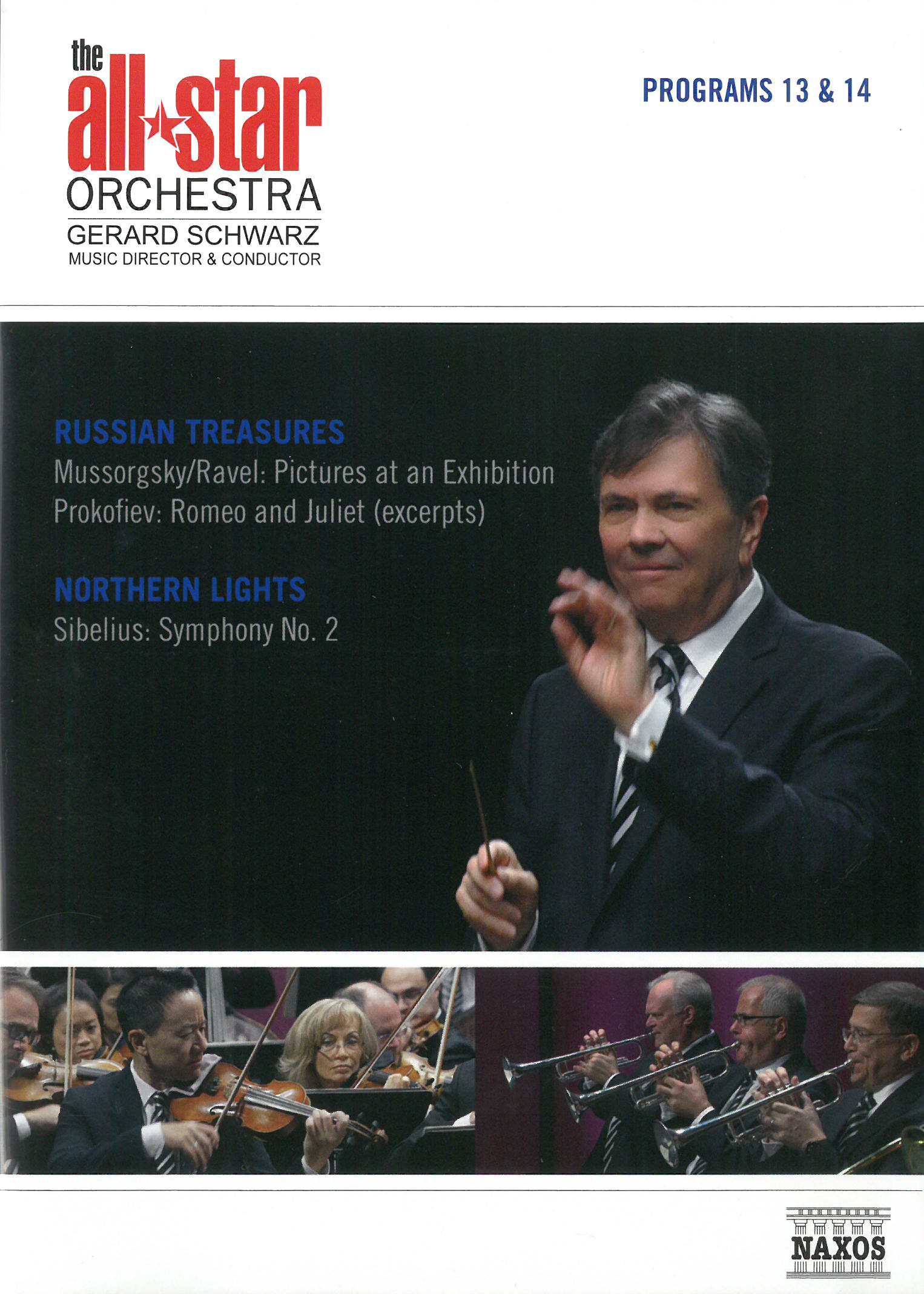
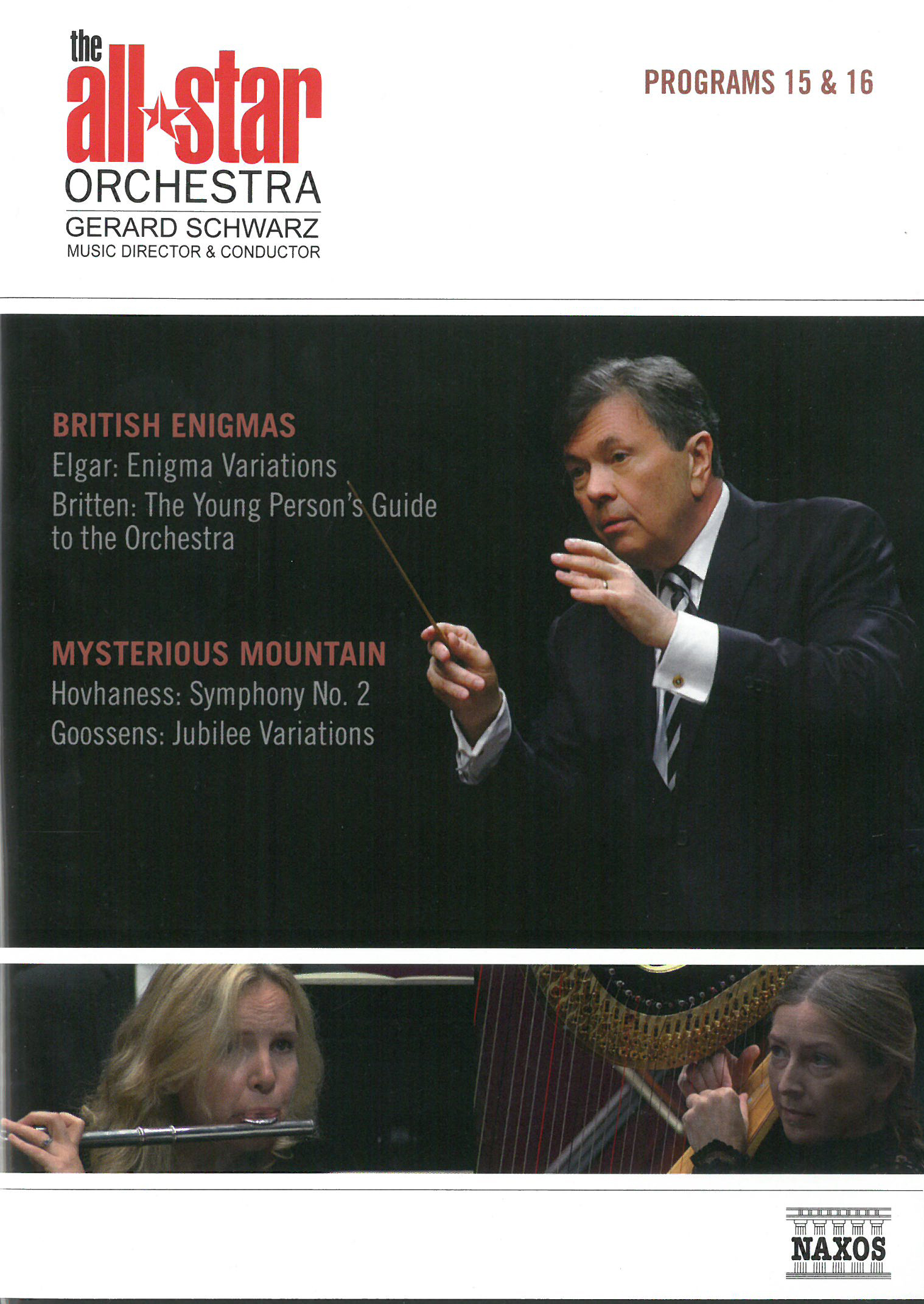
02a All Star 13 14It’s been three years now since the American conductor Gerard Schwarz embarked on an ambitious project: assemble 95 leading musicians from top orchestras across 22 states and record an annual series of concerts without an audience over a brief four-day period using high-definition video cameras. The undertaking has garnered considerable critical acclaim, and since 2014, the All-Star Orchestra has made a significant name for itself both through television performances on PBS and WNET and by means of a series of DVDs on the Naxos label. The recording sessions made during the third season have been captured on two DVDs – programs 13/14 and 15/16 respectively – and together they present eclectic programs of music from the late Romantic period to the 20th century.

The first of these, subtitled “Russian Treasures” and “Northern Lights,” features Mussorgsky’s Pictures at an Exhibition, excerpts from Prokofiev’s ballet Romeo and Juliet and the Symphony No.2 by Jean Sibelius. Prior to each performance, Schwarz provides an informal commentary, while various members of the orchestra offer their thoughts on the music as well, all of which makes for an engaging personal touch – and the myriad of effective camera angles throughout gives the ensemble a strong sense of presence. The performances of all three works are uniformly excellent. The individual movements from Pictures are finely crafted, while the familiar segments from the ballet – Capulets and Montagues, Portrait of the Young Juliet, Minuet and Death of Tybalt, are in no small way aided by the warm strings, a full and well-rounded brass section and woodwinds with impeccable clarity. Sibelius’ grand and expansive symphony from 1902 is treated with much aplomb, from the gentle opening movement to the jubilant finale.

02b All Star 15 16Programs 15 and 16 take the viewer from Northern Europe to England and America of the 19th and 20th centuries. “British Enigmas” presents Elgar’s noble and dignified Enigma Variations and Britten’s Young Person’s Guide to the Orchestra. Less well known are the ethereal Symphony No.2Mysterious Mountain” by American composer Alan Hovhaness and the Jubilee Variations, a collaborative work by English composer Eugene Goossens and ten American composer friends. The final movement of the variations, written by Goossens himself, is a true tour de force requiring the ensemble to pull out all the stops, thus bringing the work – and the DVD – to a fitting conclusion. The viewer is left almost wishing there was a live audience present to offer a round of well-deserved applause!

So to Gerard Schwarz and the ASO, a big bravo – here’s hoping this ambitious undertaking will be around for many years to come, bringing fine music-making to home audiences around the world.

03 Tchaikovsky ManfredThe Tchaikovsky Project – Manfred Symphony
Czech Philharmonic; Semyon Bychkov
Decca 483 2320

This CD is the second release in Decca Classics’ orchestral Tchaikovsky Project that features the Czech Philharmonic and conductor Semyon Bychkov. For a lonely Romantic symphony needing advocacy, this loving version of the much-criticized Manfred Symphony (1886) is the answer. An hour long and very difficult, the work here receives extraordinary endorsements in both performance and program notes. In the Lento lugubre movement, action begins with Manfred’s gloomy descending theme in B-minor, a key associated with tragedy (as in Swan Lake). The drama is well-paced, with the orchestra holding nothing back. The music of Manfred’s beloved Astarte is an abrupt contrast, delicate strings in delightful interplay with enticing woodwinds. But the mood is temporary; through a controlled build-up, brass forceful but not blaring, Bychkov ushers in her climactic death.

In the accompanying booklet, Bychkov’s rebuttals to criticisms of repetitiveness and episodic structure emphasize the work as drama. While he compares it to opera I think of ballet, for example in the light-on-its-feet second movement where grieving Manfred spots a water spirit; tremendously fast woodwind runs precede strings of supernatural virtuosity. In the following movement the ländler’s dance rhythm along with instrumental drones portray the Alpine people’s rustic life, Manfred looking on sadly. The Czechs’ idiomatic playing makes me want to get up and dance! The orchestra’s energy and aplomb through the bacchanal and ensuing fugue are remarkable, though only in heaven are the lovers reunited. Strongly recommended.

Review

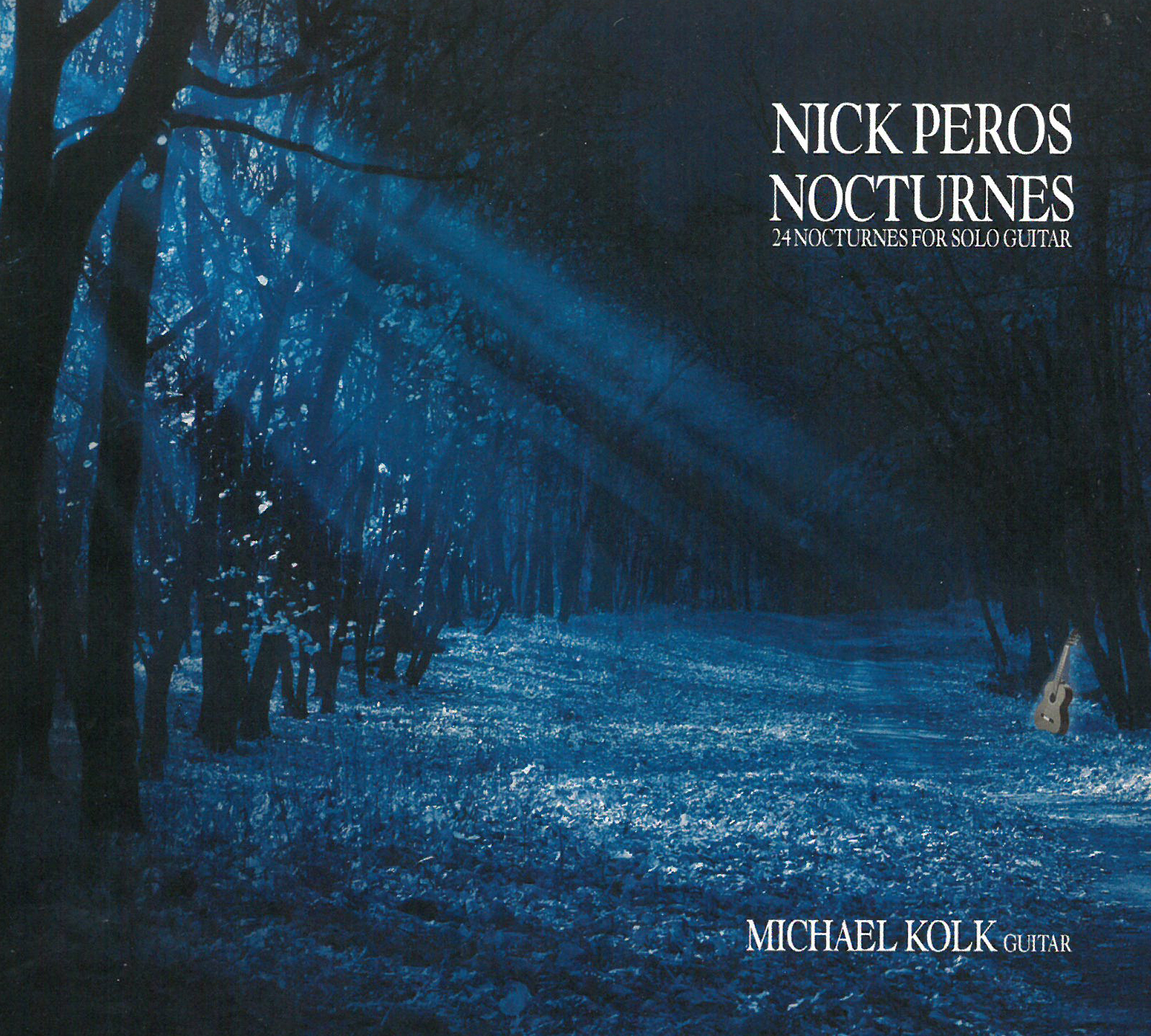
01 Michael Kolk PerosThe outstanding Michael Kolk is the soloist in the world premiere recording of Nocturnes: 24 Nocturnes for Solo Guitar by the Canadian composer Nick Peros (DeoSonic Music DSM54536 nickperos.com). Peros has written numerous other solo works for classical guitar, including five Suites and a Sonata, and is clearly someone who knows and understands the instrument’s potential for tone and colour.

The short pieces here are predominantly quiet, slow and pensive – they are nocturnes, after all – 16 of them with subtitles like relaxed; atmospheric, mysterious; reflective; as a dream; with mystery and longing; peaceful, gentle. Only two are noted as with fire and passion. They appear to be centred on traditional major and minor keys, predominantly the open guitar strings of E, A and D, but it’s never that simple – there is actually a good deal of tonal ambiguity here, and an abundance of rich chromatic expression.

They are well-crafted, attractive and quite beguiling pieces, with the occasional faster numbers in particular much in the style of the standard 19th- and 20th-century guitar etudes. The final two Nocturnes in particular are really lovely.

One thing is certain: they couldn’t possibly have a better interpreter than Michael Kolk, whose playing, as always, is of the highest musical standard – technically faultless, with a clear, clean and resonant sound, and a complete absence of left-hand finger noise. The CD was produced by the composer, and it’s difficult to view these beautiful performances as anything other than definitive.

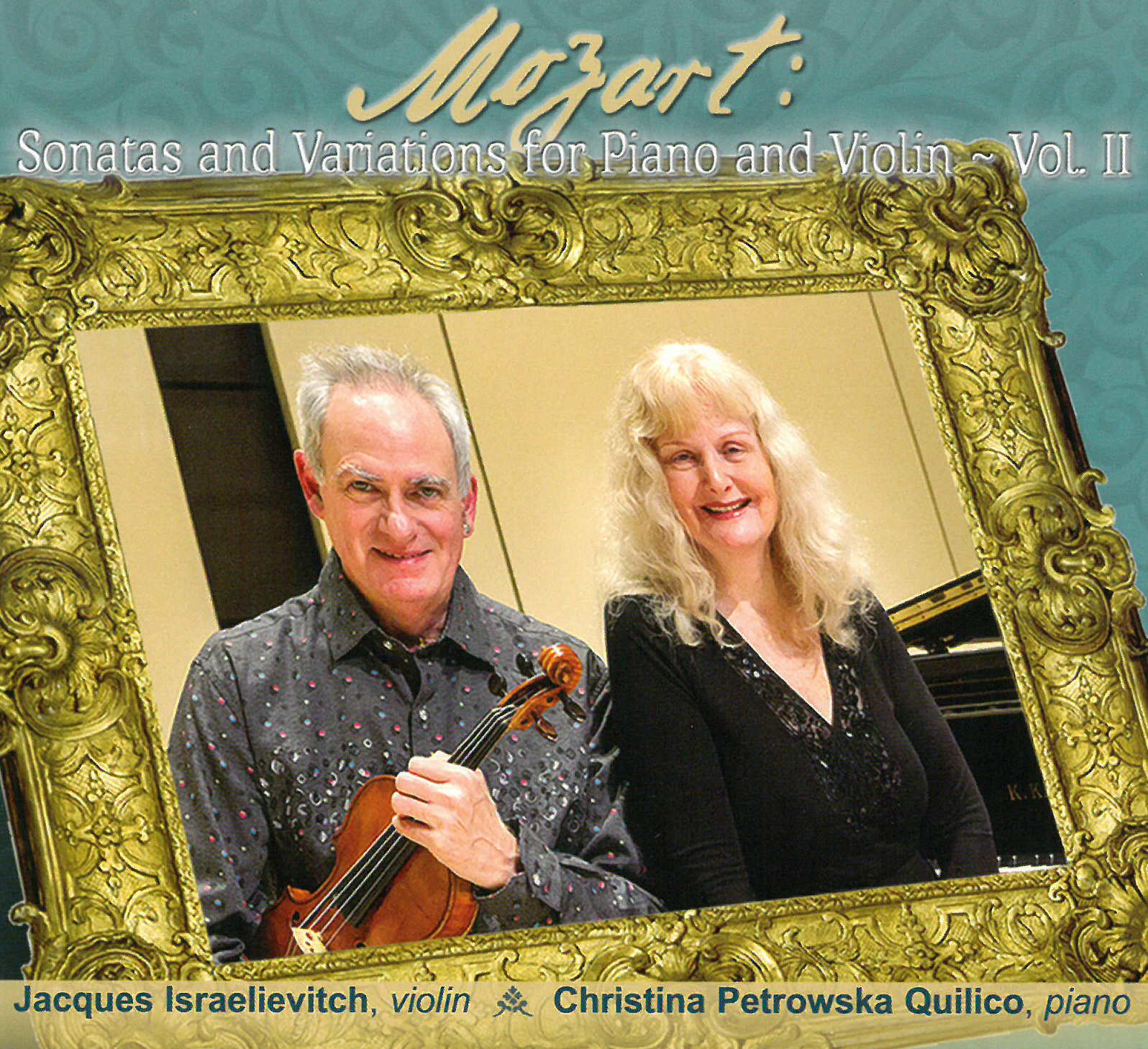
Although violinist Jacques Israelievitch was diagnosed with advanced lung cancer part of the way through the recording of the complete Mozart violin sonatas with Christina Petrowska Quilico, the duo did manage to complete the project before he passed away in September 2015.

02 Mozart Israelievitch QuilicoMozart: Sonatas and Variations for Piano and Violin Vol. II is the second release in the series (Fleur de Son Classics FDS 58040 fleurdeson.com), and features three of the sonatas from the group known as the Auernhammer set – the Sonatas No.24 in F Major K376, No.25 in F Major K377 and No.27 in G Major K379 – together with the Sonata No.33 in E flat Major K481.

When reviewing Volume I in June of last year I noted that these works are perfectly suited to Israelievitch’s distinctive style and sound, which was always warm, gentle and sensitive; it should go without saying that Petrowska Quilico’s playing is the perfect complement. Again, it’s obvious that the two are of one mind in their performances here.

It’s another volume in what will clearly be a series to treasure, and one that continues to be a wonderful tribute not only to a greatly missed and much-loved violinist but also to his companion at the keyboard.

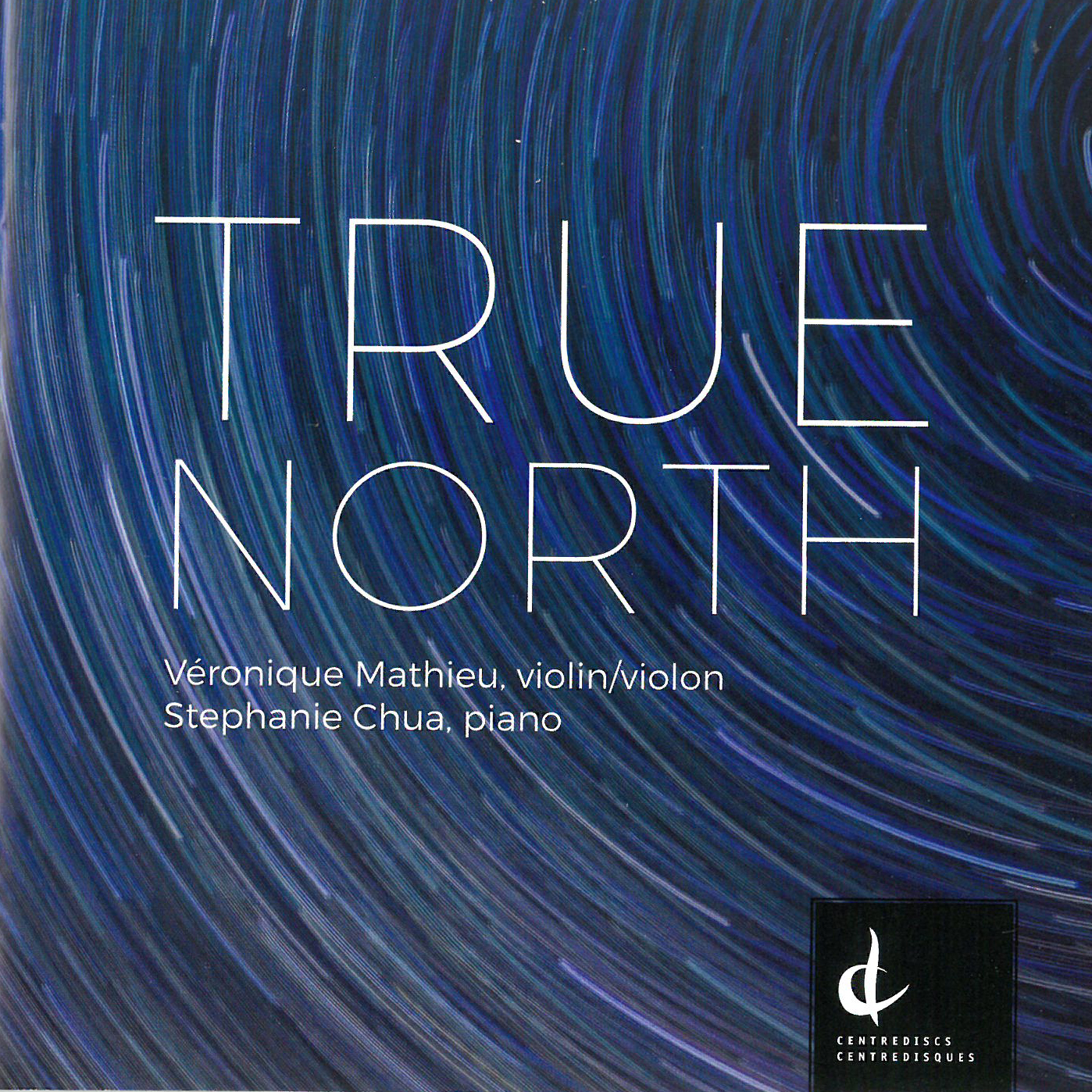
03 True NorthTrue North is a new CD on the Canadian Music Centre Centrediscs label featuring the Canadian duo of violinist Véronique Mathieu and pianist Stephanie Chua (CMCCD 24417 musiccentre.ca).

Given the CMC’s outstanding promotion of contemporary Canadian composers and the booklet description of Mathieu as “an avid contemporary music performer” it’s no surprise to see that five of the six works are from the period 1996 to 2016; what perhaps is a surprise is the inclusion of Healey Willan’s Sonata No.1 in E Minor, which opens the disc. Written a hundred years earlier than the latest works on the CD (although revised in 1955) it is a solid work, firmly in the early 1900s tradition, which sounds decidedly anachronistic in this setting. Still, its appearance is welcome.

Gradual Erasures by the Toronto composer Adam Scime was written for the duo in 2016 and dedicated to them. Its two movements were inspired by the poem Water Island by Howard Moss, which was in turn prompted by the accidental drowning death of a friend.

Brian Harman’s Cherry Beach for violin, piano and field recordings from 2016 explores connections between music, the environment and the body by combining the musical material with the sounds of running footsteps and waves, all recorded on the shores of Lake Ontario in Toronto.

Maria Molinari’s Danza is a short piece from her 1997 Tre Pezzi per Violino e Pianoforte. Heather Schmidt’s Adagio from 1996 and Alice Ping Yee Ho’s Éxtasis from 2012 complete a very interesting disc.

Mathieu has a sweet, delicate sound with a fairly slow vibrato and a tone that tends to sound a bit thin on occasion, but the contemporary technical and musical challenges as well as the Willan sonata are handled faultlessly. And let’s not forget the pianist, too often overlooked in duo recitals: Chua is terrific as well.

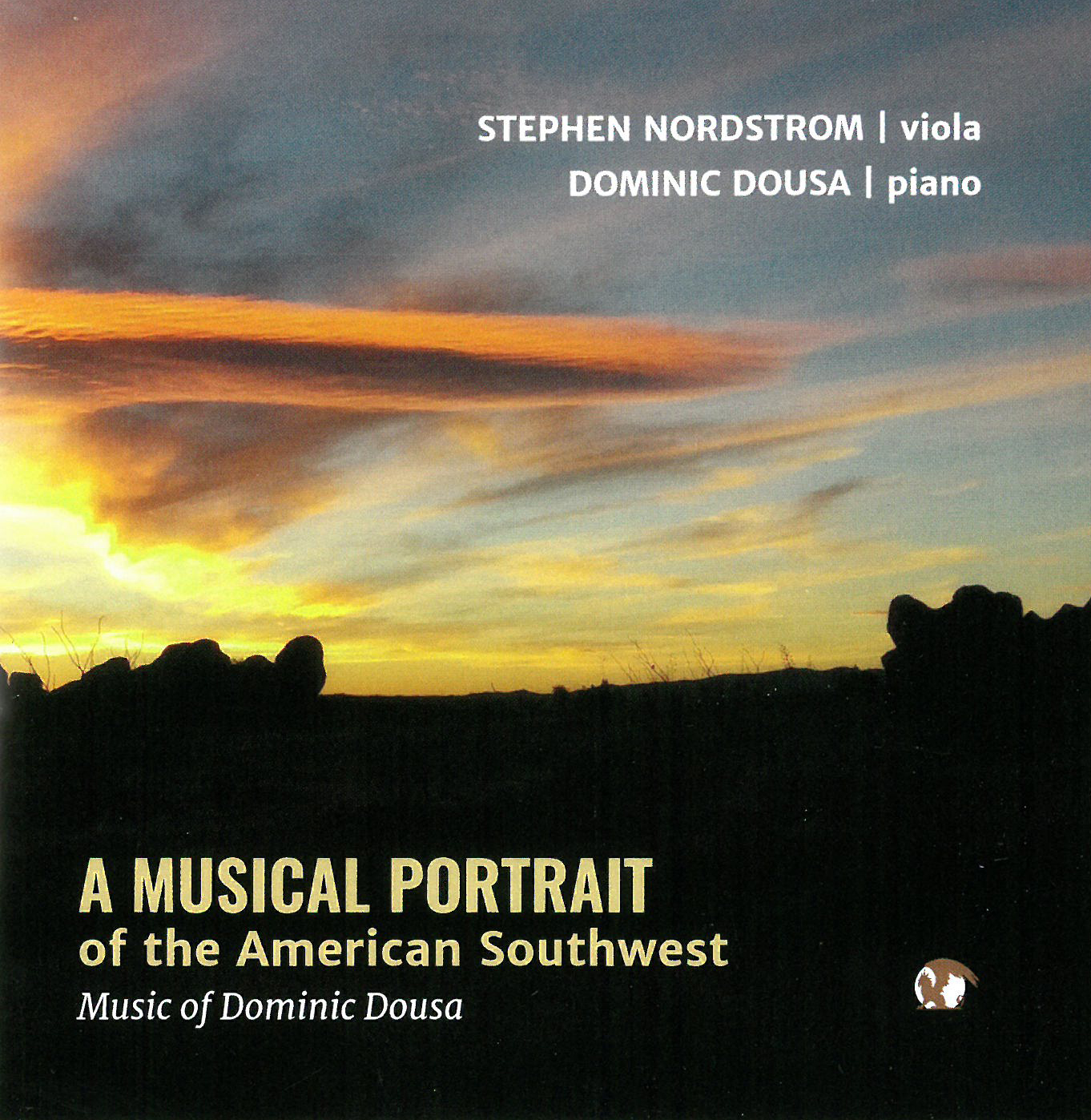
04 stephen NordstromIt would be difficult to imagine a recital CD more in contrast to True North than A Musical Portrait of the American Southwest, featuring works for viola and piano by the American composer Dominic Dousa with violist Stephen Nordstrom and the composer at the piano (Blue Griffin Recording BGR 429 bluegriffin.com).

Dousa has been on the faculty of the University of Texas at El Paso Department of Music since 2004, and has been fascinated by the landscapes of the Texas Panhandle and eastern New Mexico since moving to the region from his native Minnesota. The works on this CD evoke the spirit of this land.

Reflections on a Desert Winter is a five-movement suite inspired by travels in the desert lands of southern New Mexico in the winter of 2014/15; with titles like On the Spirit Path, Desert Glow and The Rugged Pioneer Trail it puts one in mind of the works of Ferde Grofé. Musically they’re along those lines as well: completely and unashamedly tonal; full of constantly flowing melody; and beautifully crafted, with excellent piano writing.

Mountain Song, inspired by a day in the Rocky Mountains near Denver, is in much the same mould. The Sonata for Viola and Piano, “From a Land Wild and Free” was mostly composed in 2008, but the initial ideas and themes were sketched as a result of the experience of that 2004 summer journey from Minnesota to El Paso.

Nordstrom plays with a fine tone across the full range of the instrument, and certainly has more than enough melodic writing in which to immerse himself. Dousa is a fine pianist as well as a fine composer. If I have one quibble it would just be that the music could possibly do with a bit more contrast and fire.

Dousa’s own colour photographs of the Southwest landscapes complement the booklet.

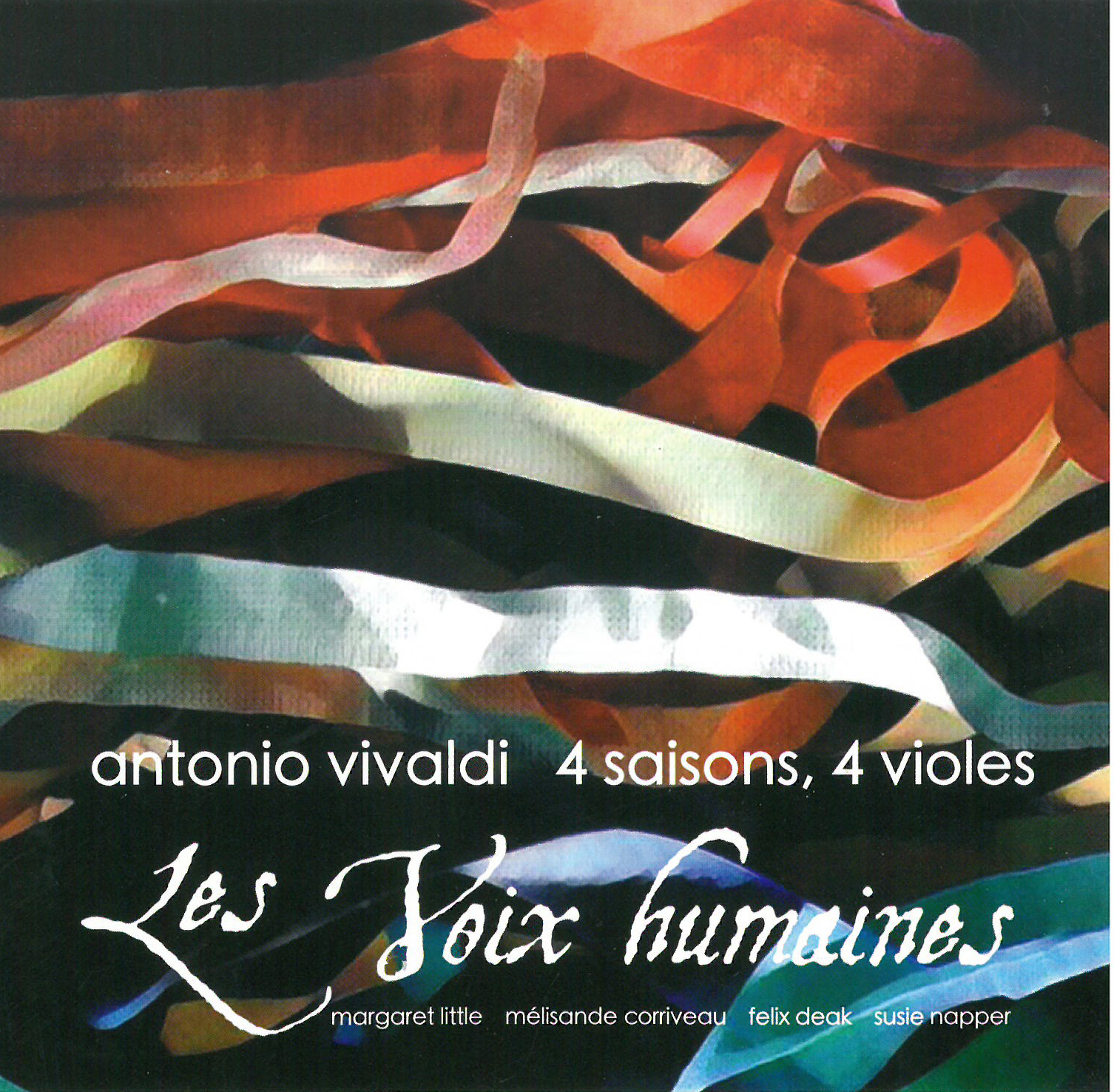
05 4 Seasons 4 ViolesThe Four Seasons concertos appear in yet another re-worked version in Antonio Vivaldi 4 saisons, 4 violes, featuring the Canadian viol ensemble Les Voix humaines – Margaret Little and Mélisande Corriveau on treble, Felix Deak on tenor and Susie Napper on bass (lesvoixhumaines.org). Founding members Little and Napper made the arrangements, Napper transcribing the Spring and Autumn and Little the Summer and Winter concertos.

The resulting performances are much more effective than you might possibly expect, with a really nice period performance feel to the concertos despite the lack of a clear solo violin line. What you won’t be expecting is the interpolation of a short appropriate insert in each of the concertos – well, appropriate from a title viewpoint, that is, but not necessarily a musical one. The traditional En montant la rivière (with tenor Philippe Gagné) is inserted in Spring; Gershwin’s Summertime (arranged by Jay Bernfeld) in Summer; Autumn Leaves (jazzed up with a pizzicato bass) in Autumn; and Petit berceuse du début de la colonie in Winter. Corriveau plays recorder in the Gershwin.

It’s an interesting concept, but obviously raises questions: Are the additions enriching the concertos, or just an inappropriate distraction? Do these additions – especially within these specific arrangements – create new works, or do they merely compromise the original scores? And most important: Do they work? That will probably depend on your personal taste, and you may like to add a further question: Does it really matter? It does certainly make for interesting listening, and given that the movements are played without breaks, the inserts really don’t stand out as much as you would imagine; they’re integrated more than inserted.

The overall sound throughout the CD has a lovely resonance, with nice dynamics, superb definition from all four performers and a satisfyingly wide range – essentially that of a string quartet. The arrangements are extremely well done, and the playing throughout is really quite outstanding. All in all, a very interesting disc, and one that becomes more satisfying the more I listen to it.

Review

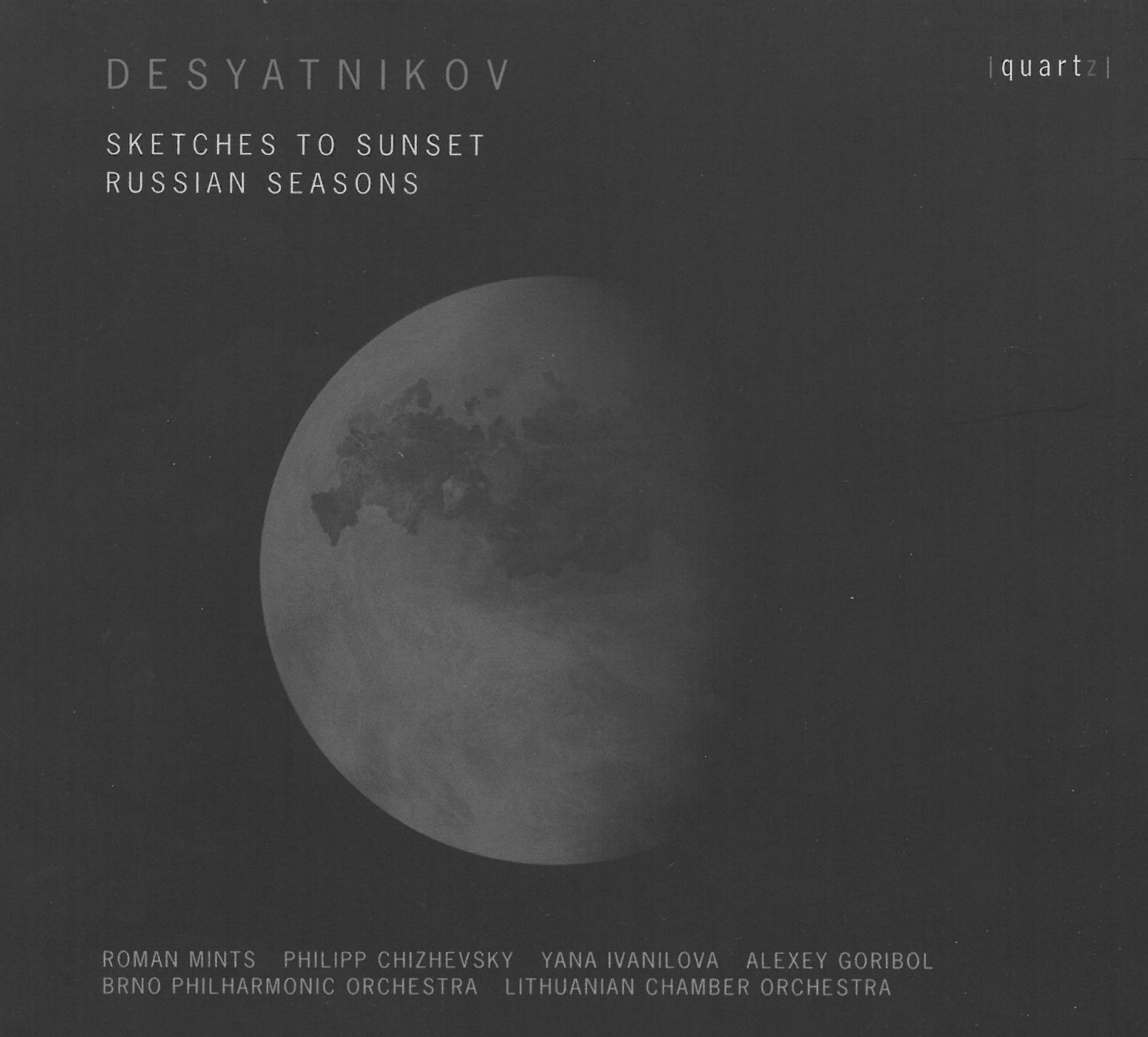
06 Roman MintsI don’t recall ever hearing any music by the Russian composer Leonid Desyatnikov (b.1955) before, but I’ve clearly been missing out on some strikingly individual compositions. Two of his works – Sketches to Sunset and Russian Seasons – are featured on a new CD on which violinist Roman Mints is the primary artist (quartz QTZ 2122 quartzmusic.com).

Sketches to Sunset from 1992 is based on music written for the film Sunset, about the lives of Jews in pre-Revolution Odessa. Written for violin, piano and orchestra and consisting of nine short connected movements, it also features pianist Alexey Goribol and the Brno Philharmonic Orchestra under Philipp Chizhevsky. Mints is superb in this eclectic work that first introduced him to Desyatnikov’s music some 20 years ago.

Russian Seasons for Voice, Violin and Strings from 2000 has a quite different feel. There are 12 movements, three for each season: Spring, Summer and Winter each have two instrumental tracks and one vocal; Autumn has one instrumental and two vocal tracks. Yana Ivanilova is the soprano in vocal sections that are strongly reminiscent of Stravinsky of Pribaoutki and Les Noces, with the orchestra this time being the Lithuanian Chamber Orchestra. It’s difficult music to describe, but in his excellent booklet notes Mints says that “while the instrumental movements feature moments of joy and merriment, utter hopelessness dominates the five vocal movements, in which the composer addresses listeners directly in words.” Shades of Shostakovich, indeed.

Both works were recorded under the supervision of the composer, with the Sketches to Sunset being a world premiere recording.

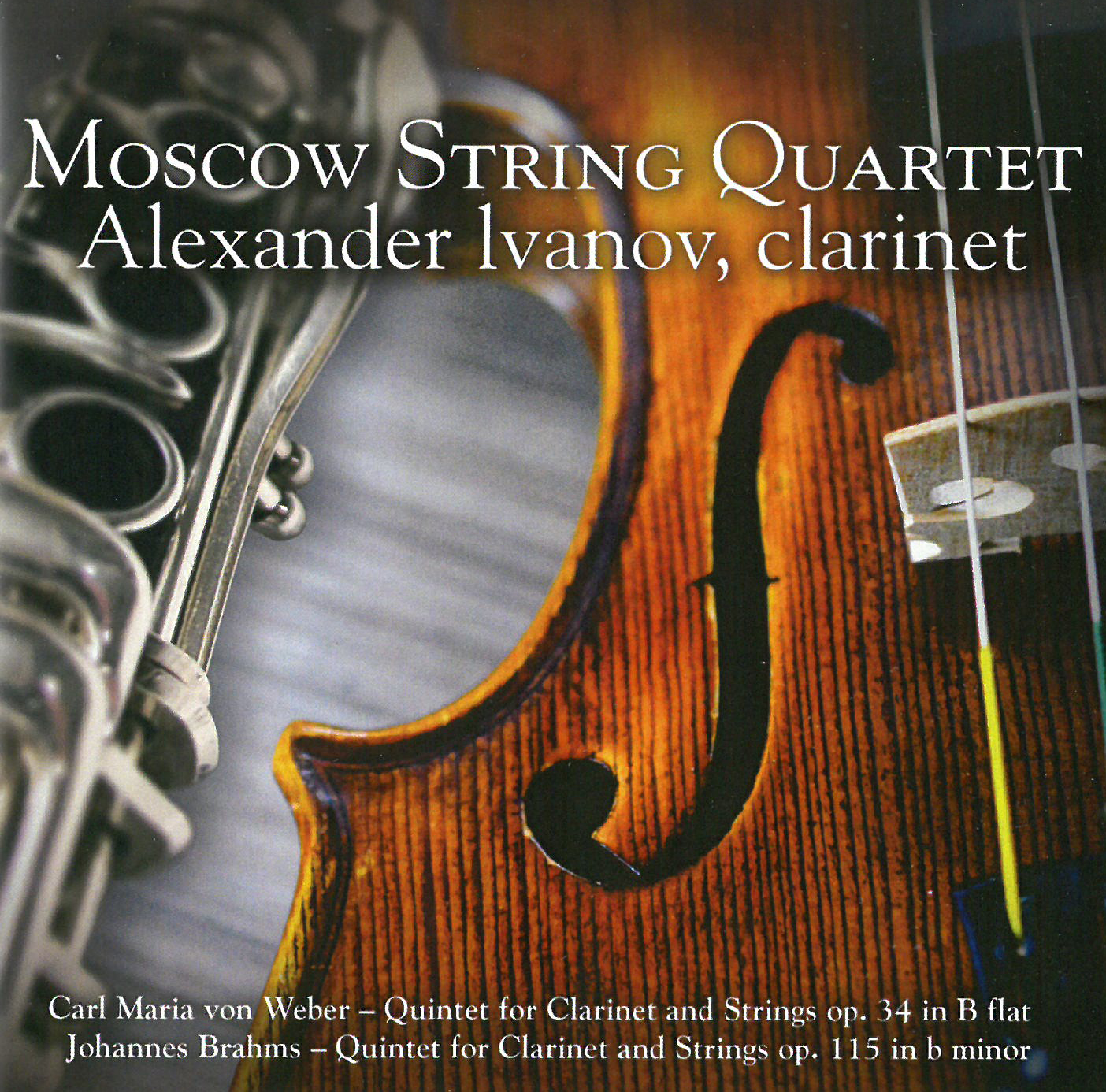
07 Moscow Quartet clarinetThe Moscow String Quartet CD of the Clarinet Quintets of Weber and Brahms with the Russian clarinetist Alexander Ivanov is a bit of a mystery disc: apparently self-issued, there is no sign of any information regarding recording or copyright dates, and the CD does not appear on the ensemble’s website (moscowquartet.com) or on any independent CD sales sites.

Still, if you can track it down, the performances are excellent. Ivanov plays with warmth, agility and fluency in the opening movement of the Weber Quintet in B-flat Major Op.34, and with great expression in the slow movement. There’s more agility in the third movement Menuetto and some superlative clarinet playing in the final Rondo Allegro.

The string playing from the Moscow ensemble is in the rich Russian tradition with full vibrato, which clearly bodes well for the Brahms Quintet in B Minor Op.115. All the Brahmsian autumnal warmth you could want is fully in evidence, and Ivanov is again in top form.

Review

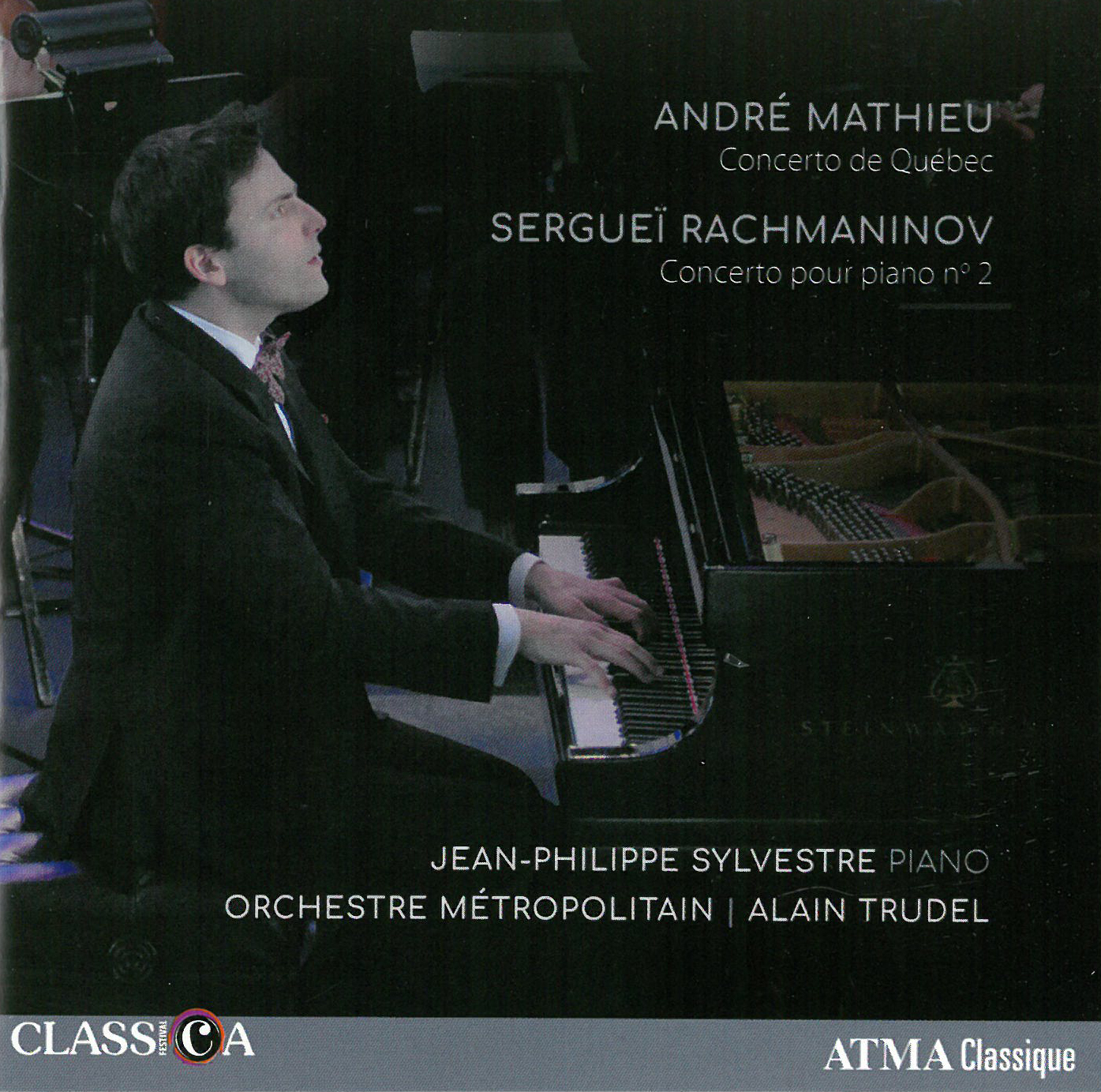
01 J P SylvestreJean-Philipe Sylvestre is the recipient of many prestigious Canadian and international piano performance awards. His new recording André Mathieu – Concert de Québec, Sergei Rachmaninov Piano Concerto No.2; Orchestre Métropolitain, Alain Trudel (ATMA ACD2 2763) is an important document for several reasons. It presents this extraordinary artist in an impressive light, revealing his technical power and profound musicality.

It also brings back to the Canadian recording marketplace the rare music of a young 13-year-old André Mathieu, trapped with his family in North America by the outbreak of the Second World War. The simple version of the story is that the young Canadian composer won the New York Philharmonic’s Composer Competition celebrating the orchestra’s centennial. His subsequent work fared less well, but his Piano Concerto No.3, written in 1942-43 and eventually renamed Concert de Québec so as to work better as a film score, is now winning renewed admiration. The score used for this recording is deemed fairly complete and authentic, based on the original score for two pianos. Still, a definitive final version is currently underway and is promised for a couple of years hence.

There’s no mistaking the affinity Mathieu’s music has with Rachmaninov’s. Mathieu’s mother long cherished and promoted the undocumented notion that Rachmaninov had seen young Mathieu’s scores in Paris and responded flatteringly to them. True or not, this music restores a creative work that brought musical life to an early French Canadian film. It’s big, gorgeous and so very Hollywood. Sylvestre and Trudel have produced a superb disc!

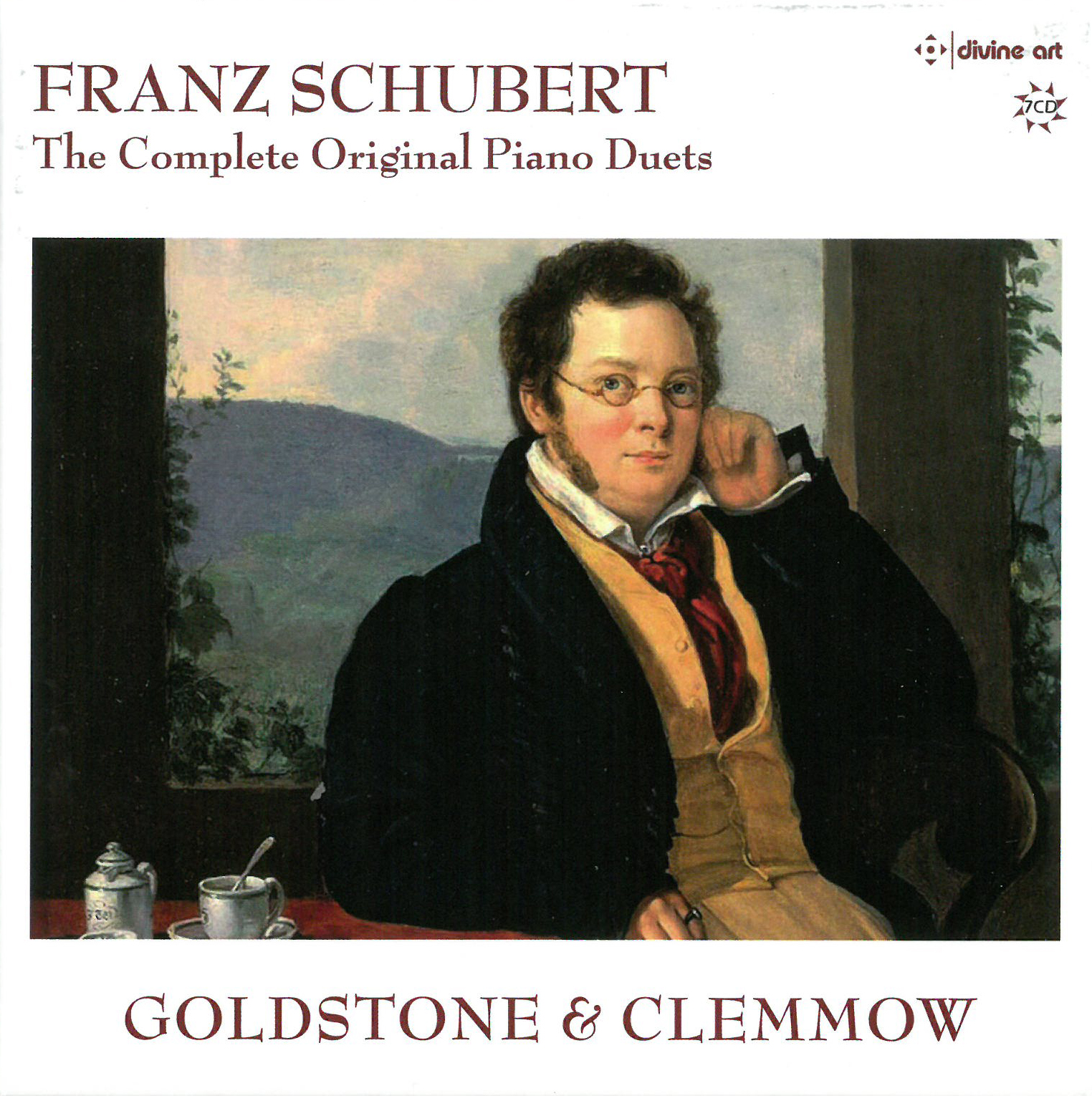
02 Schubert DuetsThe Goldstone & Clemmow piano duo have been performing together for more than 30 years. Their latest, and sadly final, release is Franz Schubert – The Complete Original Piano Duets (Divine Art dda 21701 divineartrecords.com). Anthony Goldstone passed away just as the packaging details of the current recording were being finalized. These two pianists created a remarkable four-hands keyboard presence. Unity was the hallmark of their playing. They shared every nuance of the music without hesitation, as though a single mind controlled all four hands.

Their playing has been utter perfection, with a pianistically Zen oneness to all articulation, dynamics and phrasing. It always takes a few minutes of wonder at the technical beauty of their performance before you can relax into what the composer has actually intended to say. All the more reason to laud this substantial seven-CD set as the pinnacle of their lifetime’s work.

Rather than organize the recording by genre or chronology, the duo has taken the complete Schubert piano duo repertoire and created seven recital programs, balancing key relationships, moods and artistic weight. The result is a wonderfully listenable collection that also includes a Schumann Polonaise for piano four hands, at the end of each recital disc. These date from 1828 and are believed to have been inspired by Schubert’s piano duets – a fitting match.

It’s a beautiful set, brilliantly assembled and as inspired as anything they have ever done. Goldstone & Clemmow’s final recording project is definitely an item to collect.

03 Nagano BachKarin Kei Nagano is the daughter of the conductor Kent Nagano and concert pianist Mari Kodama. Her debut solo recording J.S. Bach Inventions & Sinfonias BWV 772-801 (Analekta AN 2 8771) presents a favourite and meaningful repertoire choice from her early piano studies.

The story is well known, of how Bach intended these two- and three-part exercises to teach his students the fundamentals of keyboard playing and composition. Equally important for him was that his pupils develop a true lyrical style to their playing. For Nagano, the connection to these early studies is their beautiful melodic potential. Whether Bach uses a short motif or a longer idea, Nagano is seized by the possibilities they offer. Consequently her playing goes far beyond meeting the technical requirements of counterpoint lessons and reaches for the beauty of what only a creative mind such as Bach’s could have placed there.

Nagano’s playing reveals a level of care and consideration that directs her inquiry into the pursuit of the art before the form, as if somehow the latter will look after itself. This characteristic is more evident in her treatment of the three-part Sinfonias, where the material is richer and offers a greater reward for the player’s attention to it.

Now embarking on her 20s, Nagano is off to Yale in pursuit of medical studies. Let’s hope this recording whets her appetite to do more before too long

04 Boris Giltburg RachmaninovBoris Giltburg is a profound thinker and an original artist. His new CD Rachmaninov Piano Concerto No.2, Études-tableaux, Op.33, Royal Scottish National Orchestra Carlos Miguel Prieto (Naxos 8.573629) proves it, once again.

Giltburg’s performance of the Rachmaninov Piano Concerto No.2 demonstrates just how maniacally frenetic the opening movement can be. This kind of barely constrained raw energy has no match. It’s far more intense than it is fast, and it leaves a lasting impression. His approach to the second movement sets the expressive limits further apart than usual. The quiet moments, either solo or with a few wind players, are powerfully intimate. But he also injects a few surprising intensifications in unexpected places, consisting of a single line in the right hand. The effect is arresting.

The orchestra (RSNO) needs a laudatory remark here too. The guilty pleasure of smaller size is worth the indulgence; it lets us hear so much at a personal level. Closer recording gives us subtle sounds of bows, fingerboards and occasional wind keys. And then there’s the stunningly good horn section. Giltburg writes a little in his wonderful recording notes about the challenges of playing the Rachmaninov Concerto No.2. He cites examples of regular acoustic problems that challenge every performance and how they resolve them. It’s a brief but informative look into the dark art of recording.

The disc also includes the Études-tableaux, Op.33. Giltburg has included the missing three pieces that Rachmaninov mysteriously withdrew just before publication in 1914. The CD closes with a couple of Viennese flavoured tunes, of which the Kreisler Liebesleid is best the known.

05 Goldberg HuThe Goldberg Variations should always be a memorable experience. To that end, performers have, to be sure, taken some wildly differing approaches to them. In Goldberg Variations (Blue Griffon BGR423 bluegriffin.com), pianist Chih-Long Hu has chosen to be rather laissez-faire in his treatment, believing that the music benefits most when left largely as is. It’s certainly a legitimate approach and based on the results, a highly credible one.

This is a very contained performance. Hu is quite deliberate in adhering to the page and minimizing personally expressive deviations from the Baroque nature of the music. His most expressive playing occurs in the bookend Arias. Everything between them remains within these limits. His imposed discipline allows for interesting things to emerge. There is an immediate transparency of the forms Bach uses, a vision of both the near and the distant at the same time. Patterns begin to reveal themselves. The awareness of architecture emerges on its own without overt assistance. It’s as if Hu were an alchemist assembling elements and applying the incantation from the keyboard. After that, it just begins to happen on its own – a kind of musical chain reaction

I suspect what happens is that the ear adjusts to listening without familiar Romantic allusions to things, and suddenly new truths reveal themselves. In that vein, Hu’s own composition Afterthoughts on Bach’s Goldberg Variations, included as a bonus, is a complete table-turner. It’s his take on how the Goldberg Variations bass line might be treated by Mozart, Schumann, Bolcom and even as a deep Southern blues. It’s clever and brilliant, and sheds a revealing light on this gifted Taiwanese pianist.

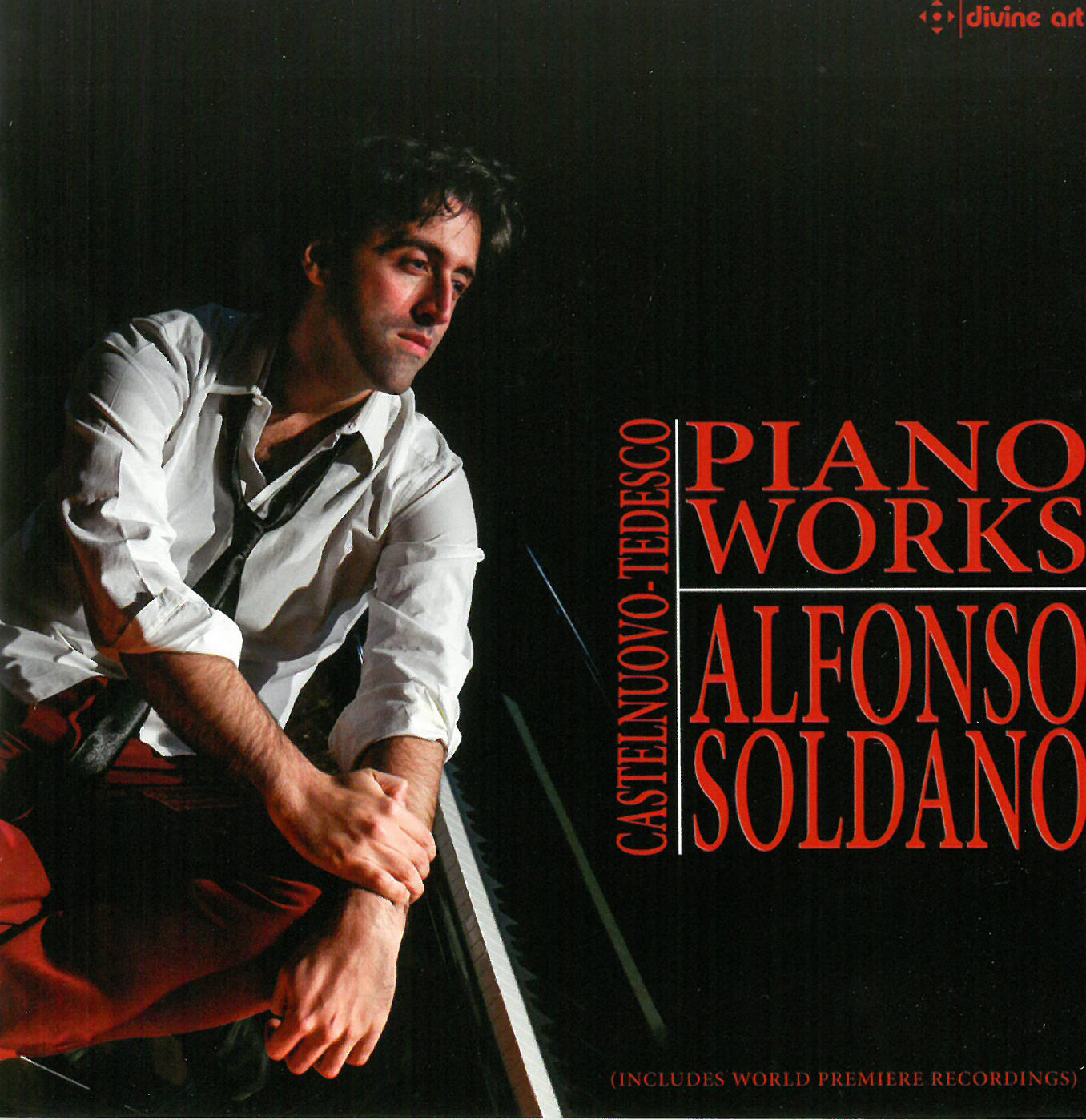
06 Alfonso SoldanoAlfonso Soldano is the new champion for the music of Castelnuovo-Tedesco. In Mario Castelnuovo-Tedesco – Piano Works (Divine Art dda 25152 divineartrecords.com), the young Italian pianist has expressed a deep urge to understand this composer of an earlier generation.

Transplanted from Italy to 1940s America, Castelnuovo-Tedesco ended up in the burgeoning music-film industry, where composers were churning out tunes daily under production-line expectations. Still, he never let go of the unique flavour that marks his writing. He always favoured the modernists and held a high regard for the French impressionists. Alt Wien Op.30 and Cantico Op.19 both make this very clear. Soldano captures the wisps of Ravel and Debussy that Castelnuovo-Tedesco threads through his work. The Sonata Zoologica Op.187 is uncannily similar in spirit to Saint-Saëns’ Carnival of the Animals. It’s a brilliant character piece, very demanding, and Soldano plays it with an inner knowledge of exactly where the composer intended it to go.

The most substantial piece in the disc’s program is Rapsodia Napolitana, Op.32. It’s a five-movement work highly charged with direct but complex allusions to the place of its title. Landscapes, feeling, winds, emotions and otherworldly things drift across the pages of this remarkable piece. Soldano is very at home with this repertoire, revealing a connection far beyond what academic understanding alone can forge.

It’s a real pleasure to hear this music presented by an artist who clearly believes in its revival, and who perhaps would enshrine more deeply the reputation of this composer as a national treasure.

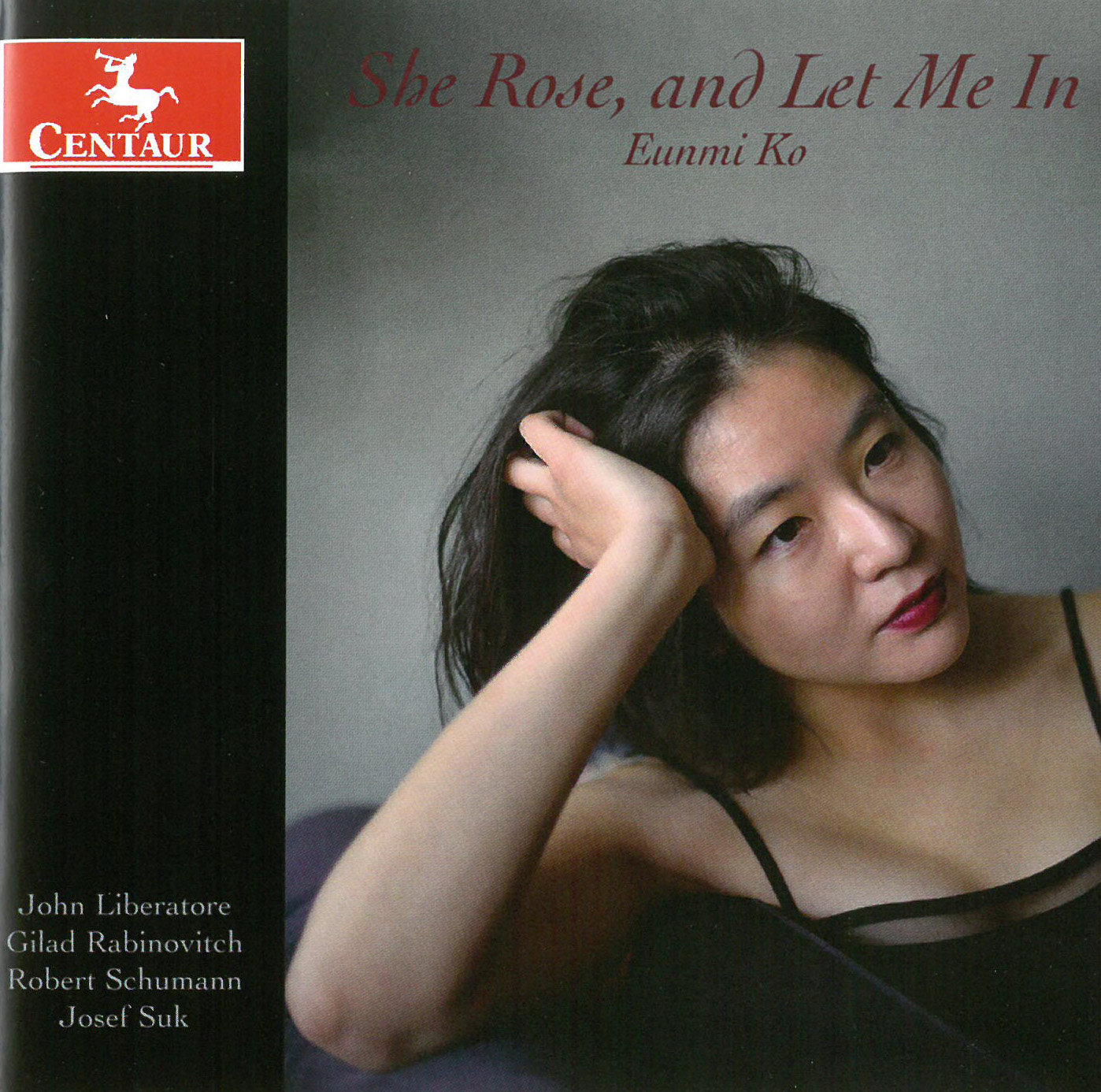
07 Eunmi KoPianist Eunmi Ko has released a new CD, She Rose, and Let Me In (Centaur CRC 3491 eunmiko.com), that offers a compelling program of contrasting repertoire. A pair of contemporary works balances the rarely heard Suk O Matince and the better-known Schumann Phantasie, Op.17. In this latter piece, Ko performs the final movement exquisitely. Schumann had intended the work to help with the fundraising for Beethoven’s memorial monument. After numerous refusals by publishers, the dedication was eventually changed to Franz Liszt. Still, the story helps explain the grandness of the work’s conception as well as the breadth and depth of sadness that pervades the final movement that Ko captures so unerringly.

John Liberatore’s title piece She Rose, and Let Me In is a set of variations and a fugue on the Scottish tune of that name. Liberatore explains his impulse to explore the intersections of the ancient and the modern. To do so effectively, he withholds the thematic material until the final movement. Consequently, listening becomes a guessing game in which you’re never quite sure if you’ve heard the old Scottish tune or not, or even a fragment of it.

Gilad Rabinovitch’s …star dazzling me, live and elate… is an extended series of very dense chords, mostly harmonic rather than clustered masses, that builds to a remarkably rich and dark finish. It’s technically demanding and Ko demonstrates both the stamina and intellect to perform it with conviction.

Beethoven
Anton Kuerti
Concertmasters AKR2017CD-1

Beethoven – Profound Passion: Diabelli Variations
Anton Kuerti
Concertmasters AKR2017DVD-1 (antonkuerti.com)

01a Kuerti CDAn icon in the world of Canadian classical music, Anton Kuerti has enjoyed a long and distinguished career, not only as a performer and pedagogue, but also as a concert organizer, artistic director and social activist – a true Renaissance man! Among his extensive recordings, the music of Beethoven has always been a focus (he won a JUNO for three recordings of Beethoven sonatas in 1977), so perhaps it isn’t surprising that he’d return to music by “the great mogul” in this two-disc set featuring Piano Sonatas 21, 23 and 26 in addition to the famous Diabelli Variations.

Sonata No.21, the Waldstein, from 1804, is surely one of Beethoven’s most formidable, both in terms of technique and nuance. Not only is Kuerti’s impressive technique clearly evident from the outset, but the sound he creates is warm and lyrical. The tranquil, gentle second movement gracefully merges into the expansive third movement Rondo, where Kuerti gives full weight to the piano, clearly allowing the music to speak for itself.

The tempestuous mood of the Appassionata is artfully conveyed, but done so with dignity and never to excess. Phrases are well articulated and while the tempos are perhaps more leisurely than the listener might be accustomed to – particularly in the third movement – they never lag. The programmatic Sonata No.26Les Adieux” from 1810 is one of Beethoven’s most challenging through the contrasts of emotions, but again, Kuerti easily meets the demands, delivering a polished and elegant performance.

The second disc is devoted entirely to the Diabelli Variations, a simple tune that Beethoven fashioned into one of his most famous compositions. Kuerti brings a special sensitivity to this performance, crafting each one with particular care – a true study in contrasts.

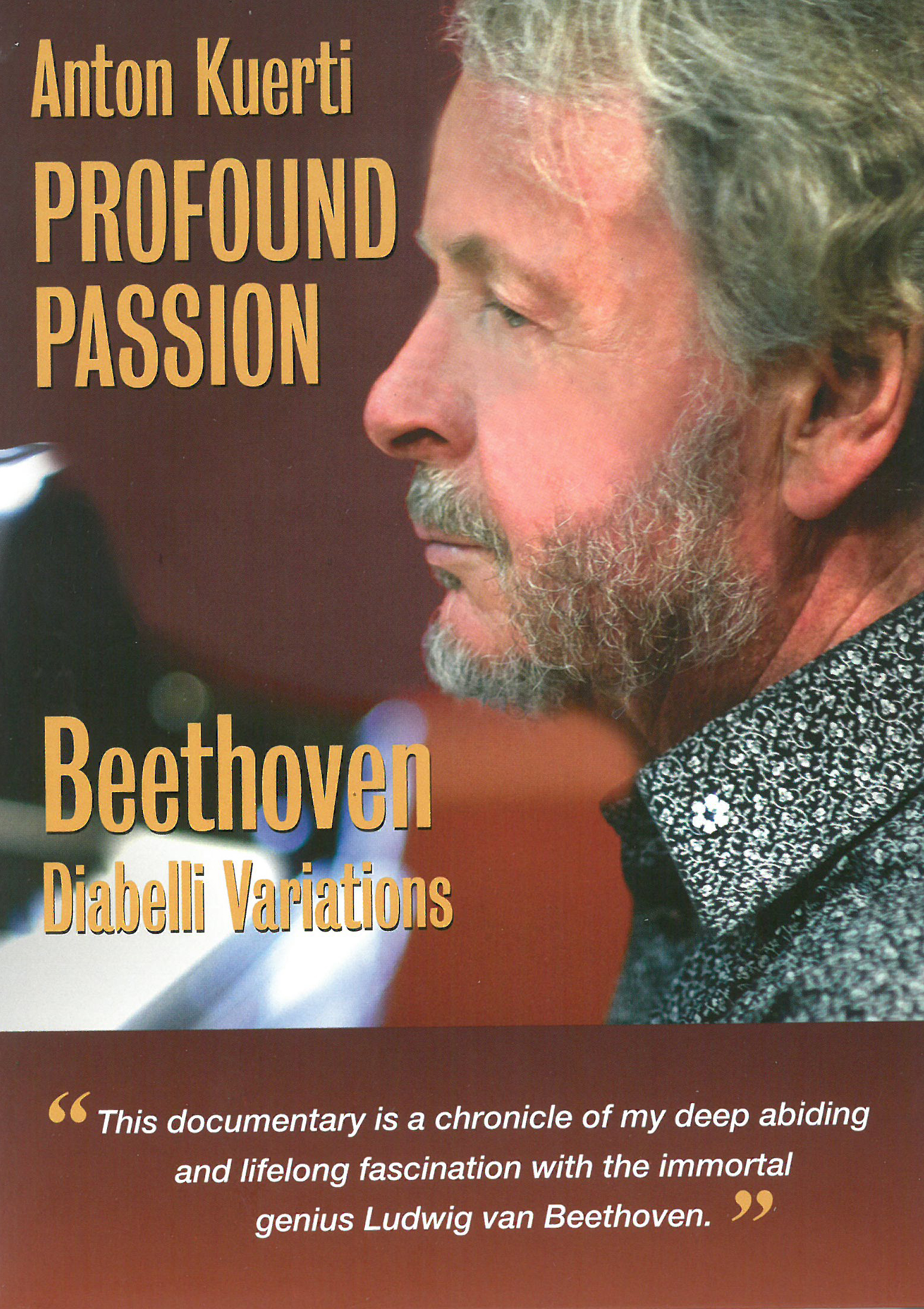
01b Kuerti DVDThe variations appear again as the sole work on a worthy companion to this set, a DVD titled Profound Passion. The introduction states that while this monumental piece has long held a particular fascination for Kuerti, its length may prove too daunting for the average listener and, without a proper explanation, it may not receive the appreciation it deserves. Hence, Kuerti provides an informal but lucid program guide prior to the performance, using various musical examples. Once again, the final performance is stellar – and for those who enjoy watching a pianist’s hands, this DVD is a treat.

Either singularly or together, these recordings are a fine tribute, both to an outstanding Canadian artist and to music written by a composer at the height of his musical creativity. Highly recommended.

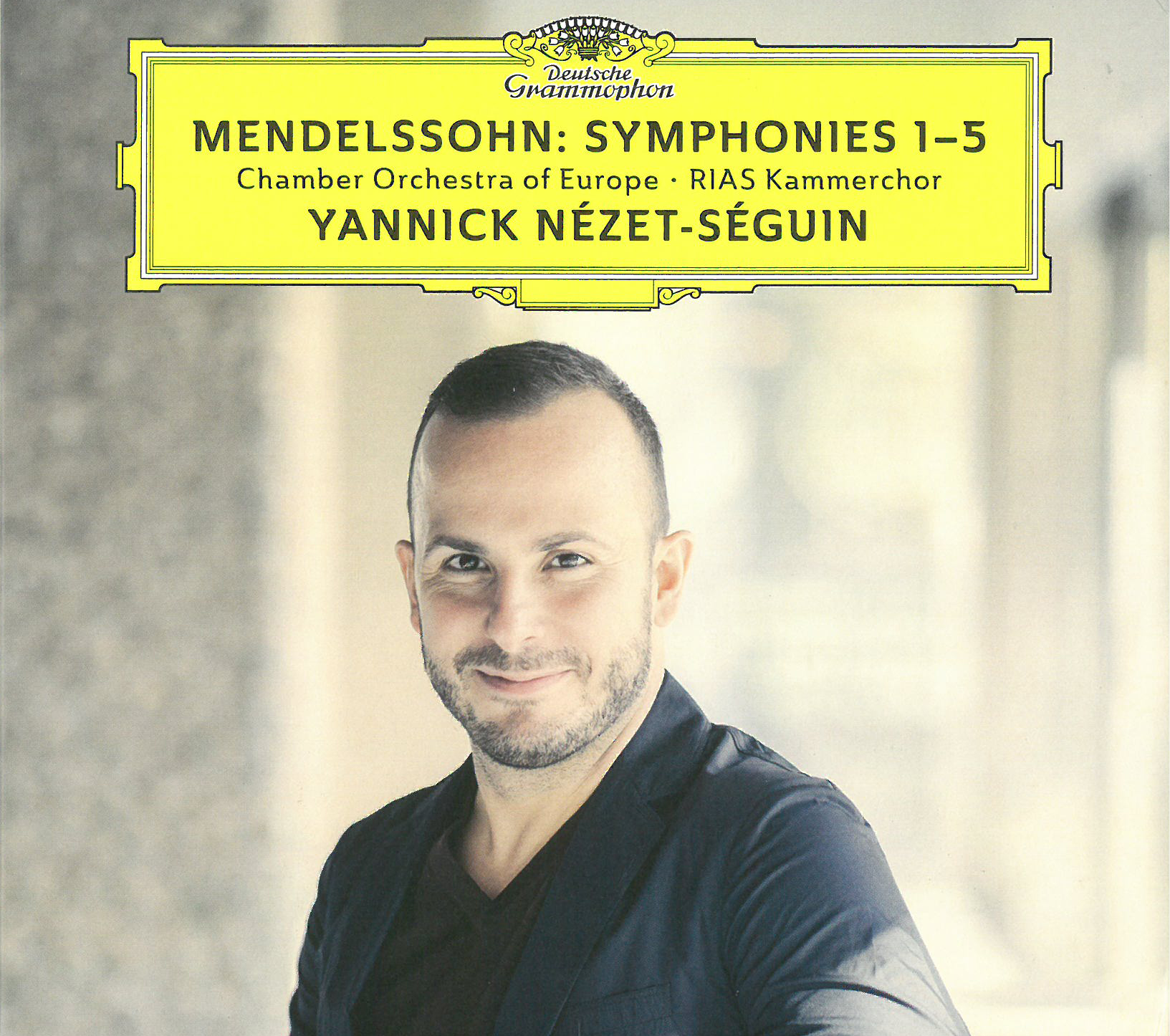
02 Mendelssohn NezetMendelssohn – Symphonies 1-5
Chamber Orchestra of Europe; Yannick Nézet-Séguin
Deutsche Grammophon 00289 479 7337

It is a genuine pleasure to take a deep dive into these remarkably diverse and interesting symphonies, especially when they are played (and sung) with such enthusiastic vigour and passion as they are here. Photos of Canada’s latest star, the charismatic Montrealer Yannick Nézet-Séguin, adorn the cover and several of the inside pages of the booklet; quotes from the maestro pepper the informative liner notes, such as “what I always admire in Mendelssohn, over and over again, are his abilities as a melodist.” You can’t argue with success and it’s clear that Deutsche Grammophon are milking their exclusive partnership with Nézet-Séguin. They have a winner with this smart and attractive recording.

The Chamber Orchestra of Europe was founded in 1981 by young graduates of the European Union Youth Orchestra. This recording was a result of a week of concerts under Nézet-Séguin’s baton, in the Philharmonie in Paris in February 2016. It has the vitality of a live performance, with fine playing from all the sections.

The numbering of Mendelssohn’s symphonies does not reflect their chronology. Their true order is 1-5-4-2-3. This doesn’t matter, though, as there is a stylistic homogeneity that runs through all five. Clear counterpoint, rugged drama hearkening back to Haydn’s Sturm und Drang (most notably in the last movement of the Fourth), nostalgic beauty and yes, those attractive melodies.

The collaboration between Nézet-Séguin and the COE shines in each of these works. The pacing and tempi illuminate the structure and breadth of Mendelssohn’s expression. There are highlights in all five symphonies: the great journeys of the First and Third, the exuberance of the Fourth, Baroque religiosity of the Fifth.

For me, the greatest achievement of this disc is the superb performance of the Second Symphony or Hymn of Praise (Lobgesang). On the surface, it’s a strange work: symphony? Cantata? Oratorio? There are obvious comparisons to be made with Beethoven’s Ninth (which don’t favour Mendelssohn), but – taken on its own and knowing that it was written as an occasional work to celebrate the 400th anniversary of Gutenberg’s invention of the printing press – the piece is an irrepressible celebration of life and intelligence. Nézet-Séguin, the RIAS Kammerchor and three fabulous soloists (including Canada’s Ruby Award-winning luminous diva, Karina Gauvin) raise the roof in a sincere and joyful rendering of a unique score.

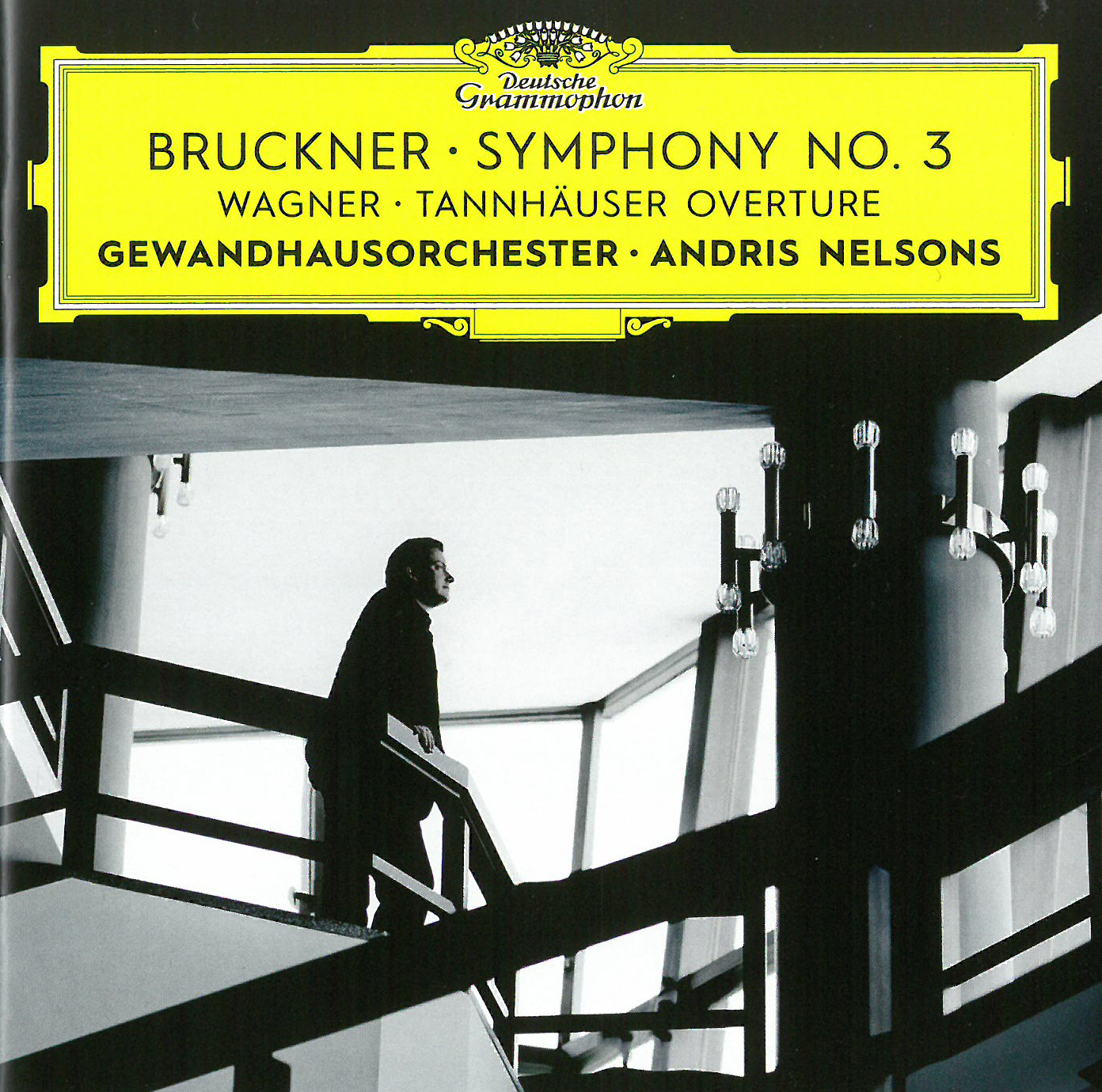
03 Bruckner 3Bruckner – Symphony No.3; Wagner – Tannhäuser Overture
Gewandhausorchester Leipzig; Andris Nelsons
Deutsche Grammophon 479 7208

Anton Bruckner moved to Linz in 1856 to take up the position of organist at the Old Cathedral, Ignatiuskirche, rapidly establishing himself as one of Europe’s greatest exponents of the instrument. Bruckner also took to studying theory and composition under Simon Sechter and later with Otto Kitzler. When the latter conducted a performance of Richard Wagner’s Tannhäuser in Linz, Bruckner fell under Wagner’s spell, melding the composer’s passion for poetry and drama with the unbounded exaltation of his (Bruckner’s) spirituality to deliver so much in the way of harmonic ingenuity, melodic sweep and sheer orchestral magnificence in his music.

Andris Nelsons delivers all of this grandeur in Bruckner’s Symphony No. 3 in D Minor (WAB 103), paired with Wagner’s Tannhäuser Overture. This live recording made with the legendary Gewandhausorchester Leipzig is the first in a proposed cycle of Bruckner symphonies. No.3 was unfinished when Bruckner took it to Wagner, who, in 1873, selected it as a dedication to him by Bruckner.

Under Nelsons’ baton Bruckner’s spiritualism and Wagnerian grandeur soar in music redolent of melodic and harmonic touches. It is a visceral and dynamic performance. Nelsons shows that he has developed a perfect bond between the orchestra’s instrumentalists, enabling them to dig deep and bring to No.3 and the Tannhäuser Overture a sublime melodic beauty – conducting the structurally complex music with outstanding naturalness, a special charisma and dignity in a way that only a great Bruckner conductor can.

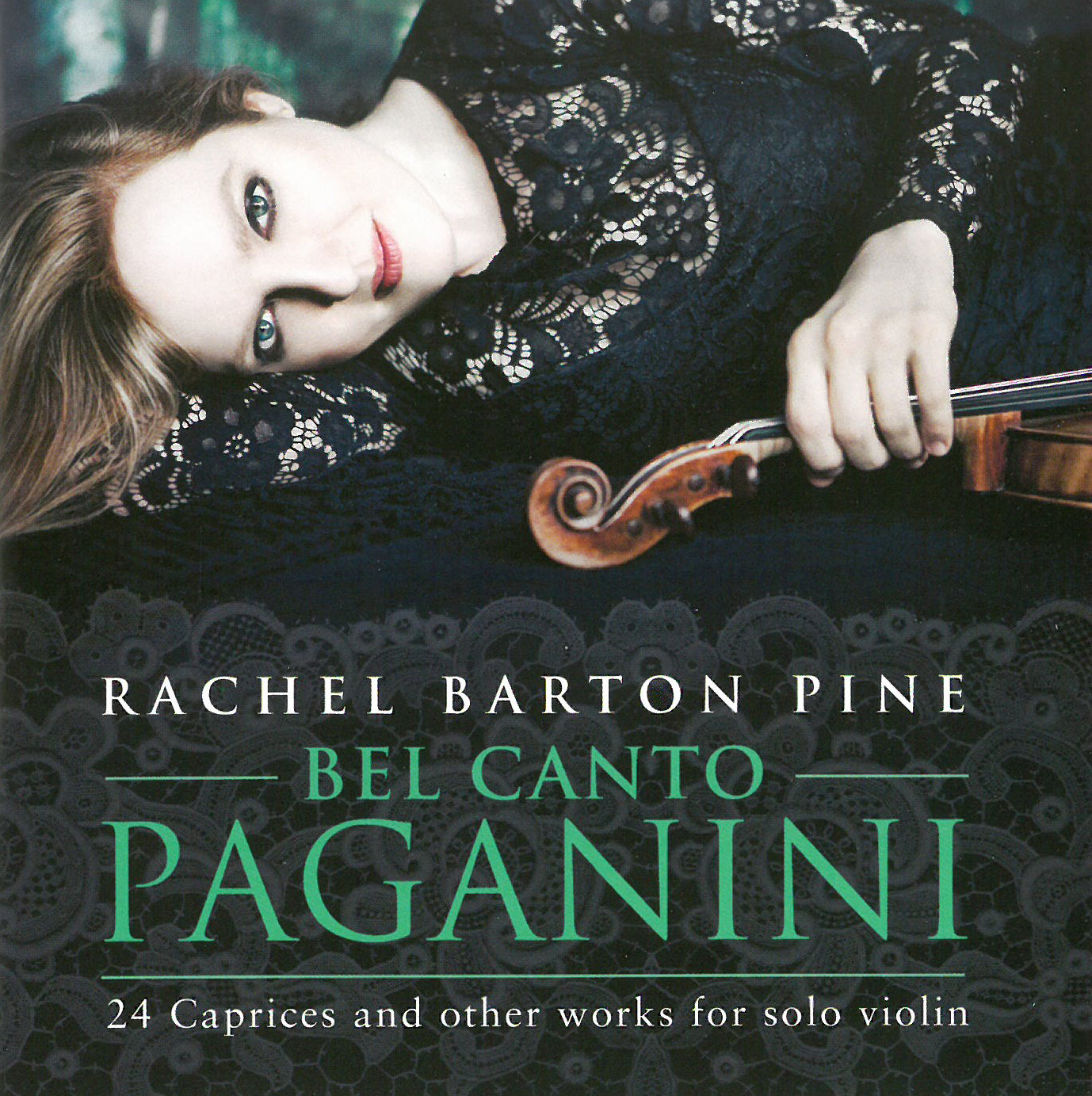
01 Barton Pine PaganiniAmerican violinist Rachel Barton Pine follows up her outstanding Testament issue of the complete Bach Solo Partitas & Sonatas with another wonderful 2CD set of solo violin works, this time Bel Canto Paganini: 24 Caprices and other Works for Solo Violin (Avie AV2374).

In her excellent booklet essay Pine quite rightly stresses the musicality of these remarkable pieces, and not just the technical aspects. Paganini was greatly admired by his operatic contemporaries, with Rossini, Verdi and Bellini all considering his compositions to be fully in the bel canto Italian vocal style, and Pine’s interpretations always stress the melodic content. There’s never a hint of anything but complete mastery of the technical issues either.

In addition to the 24 Caprices Op.1 three other Paganini solo works are here: the astonishing Introduction and Variations in G Major Op.38 on Paisiello’s “Nel cor più non mi sento; the brief Duo merveille Op.6 “Duet for One; and the Caprice d’adieu Op.68. Pine’s playing leaves you simply breathless.

Finally, in acknowledgement of Paganini’s profound influence on her, Pine adds her own brilliant Introduction, Theme and Variations on “God Defend New Zealand” which she wrote in 2000 for the end of her first tour of New Zealand. If you didn’t know, you would swear it was by Paganini. It’s a dazzling end to a remarkable set.
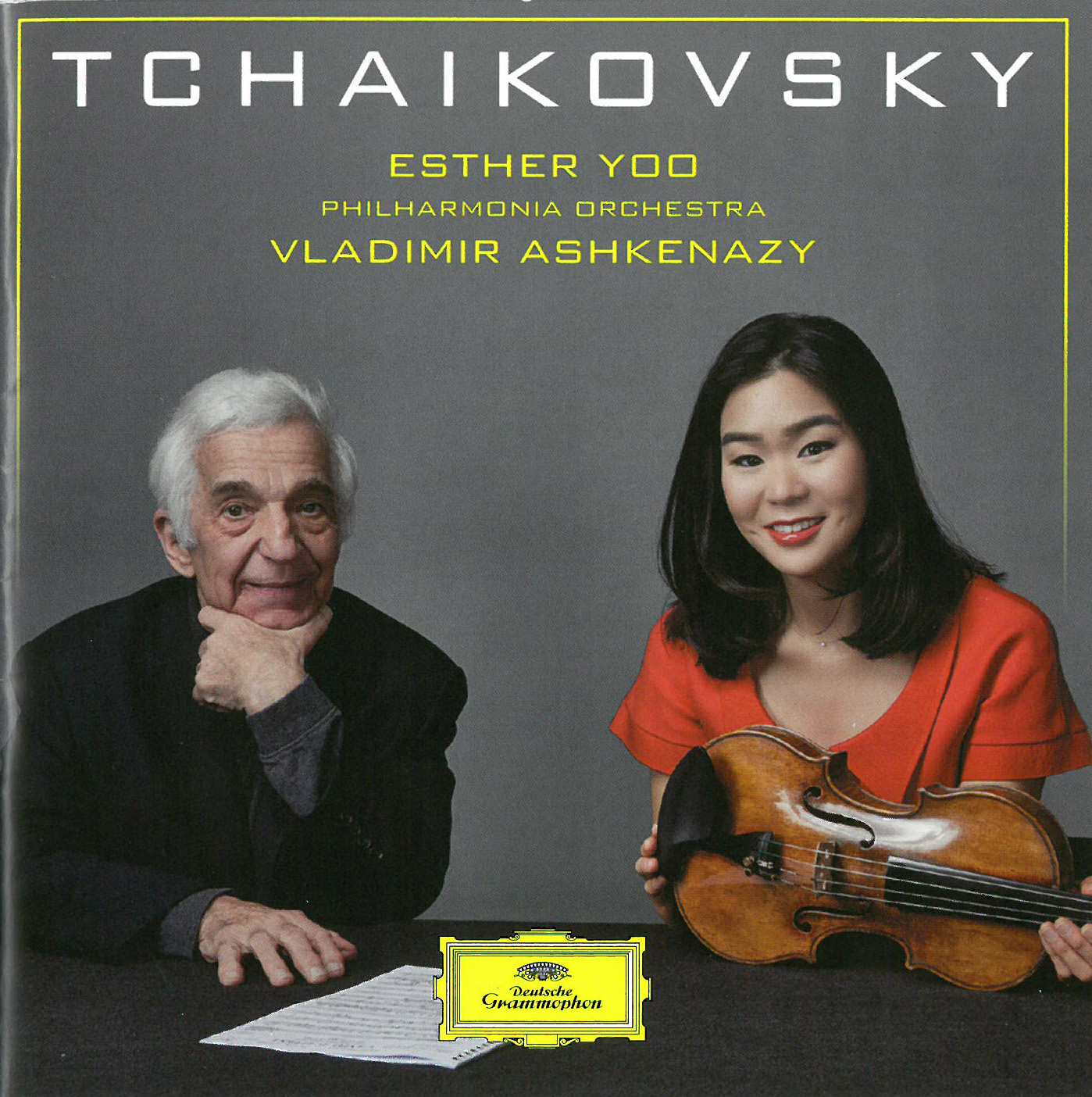
02 Esther Yoo TchaikovskyThe outstanding American-Korean violinist Esther Yoo follows up her terrific debut Deutsche Grammophon CD of the Sibelius and Glazunov concertos with another outstanding collaboration with Vladimir Ashkenazy and the Philharmonia Orchestra on the same label, this time featuring works for violin and orchestra by Tchaikovsky (481 5032).

It should come as no surprise, given Ashkenazy’s involvement, that all the performances here display a marked sensitivity and an innate empathy for the music. The Violin Concerto is the main work here, of course, and the measured, unhurried opening signals an approach that continues throughout the work, although there is never a lack of passion when needed.

The high performance standard is maintained throughout the remaining works on the disc. The two pieces from Swan Lake – the Pas de Deux from Act 1 and the Danse Russe from Act 3 – are both original violin solos from the ballet score, and not transcriptions or arrangements. The poignant Sérénade mélancolique in B flat Minor, Op.26 was the composer’s first major work for violin and orchestra. The really lovely Valse-Scherzo Op.34 and the Glazunov orchestration of the Mélodie – the last of the three pieces that comprise Souvenir d’un lieu cher, Op.42 – complete another outstanding CD from these artists.
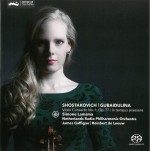
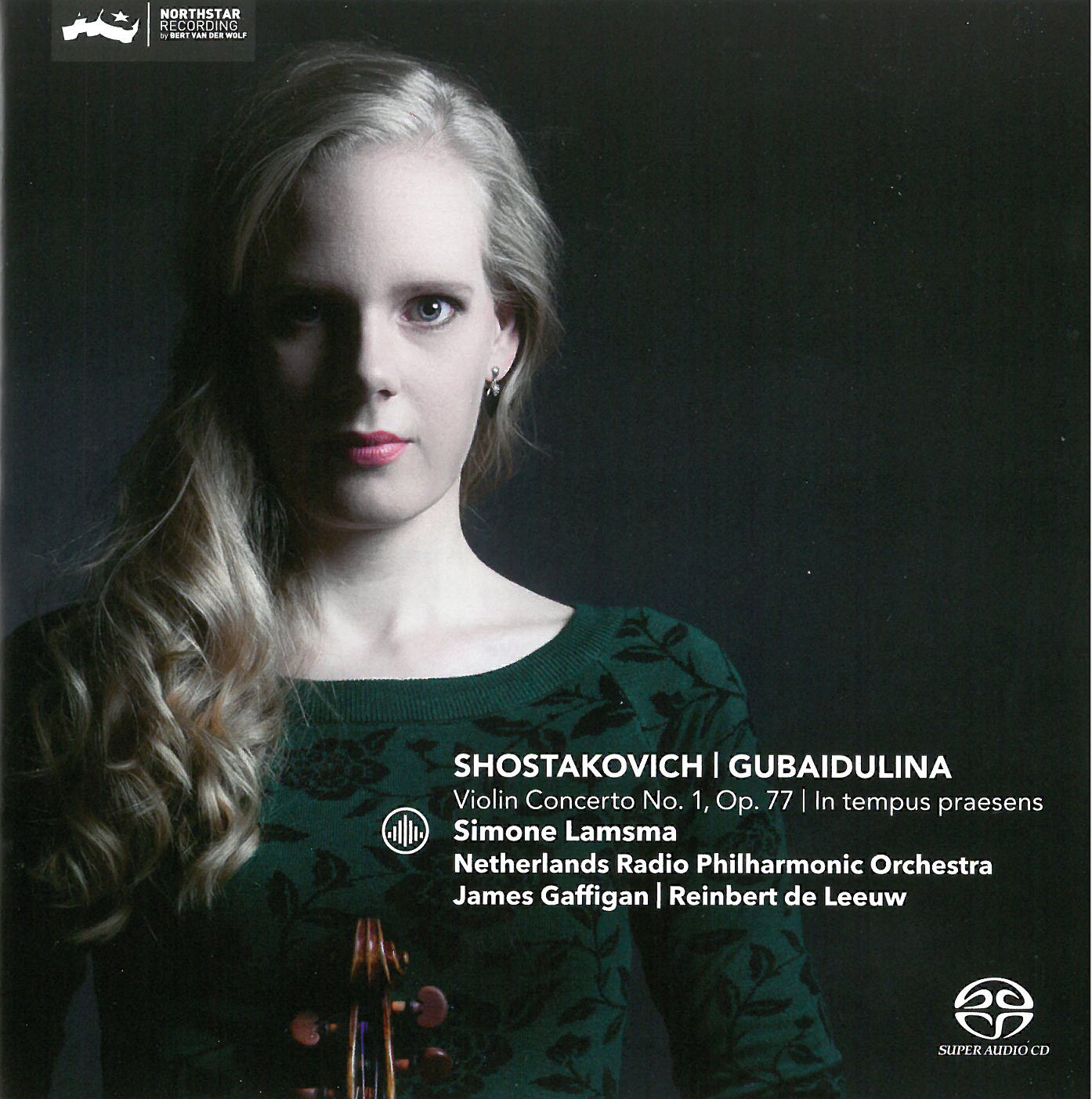
03 Shostakovich GubaidulinaThe Dutch violinist Simone Lamsma is the soloist on Shostakovich/Gubaidulina, her second CD on the Challenge Classics label and featuring the former’s Violin Concerto No.1 in A Minor, Op.77 and the latter’s In tempus praesens. The Netherlands Radio Philharmonic Orchestra is conducted by James Gaffigan in the Shostakovich and by Reinbert de Leeuw in the Gubaidulina (CC72681).

It’s an impressive performance of the Shostakovich, a deeply personal work written a few years after the end of the Second World War but temporarily shelved when the composer was once again vilified by the Communist Party in 1948; it didn’t receive its premiere until 1955. Lamsma is terrific throughout.

Sofia Gubaidulina’s In tempus praesens is her second violin concerto, an extended single-movement work written for Anne-Sophie Mutter in 2007. A work of extreme contrasts that demands great virtuosity from the soloist, it is scored for a large orchestra that does not include first or second violins, giving the soloist unchallenged freedom in the higher string register. Lamsma handles every challenge quite superbly.

The Shostakovich is a studio recording from 2016, while the Gubaidulina was recorded live in concert at the Royal Concertgebouw, Amsterdam in October 2011. The Netherlands orchestra provides excellent support in both instances.
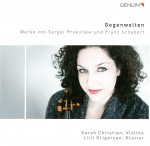
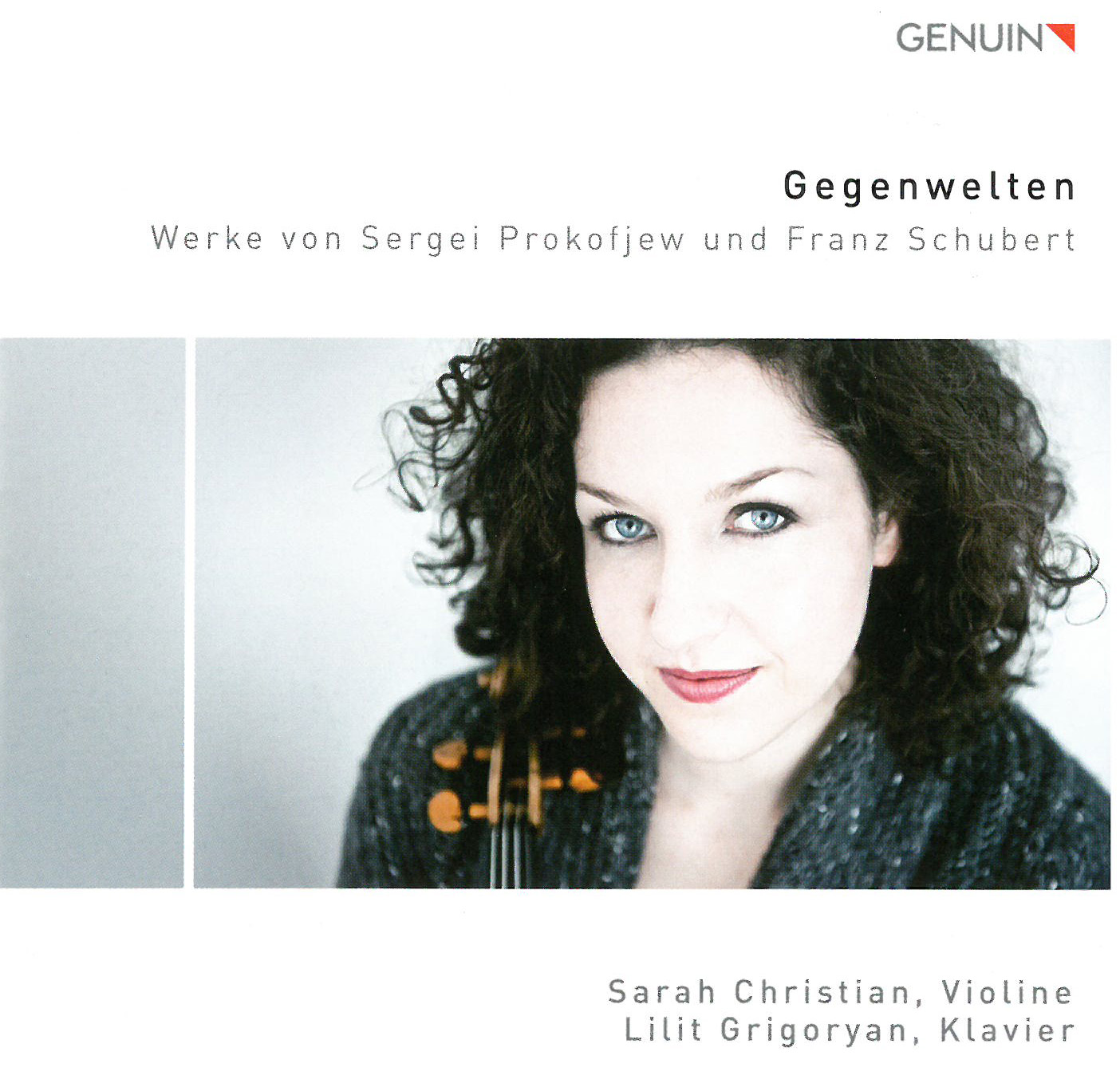
04 Sarah ChristianGegenwelten (Contrasting Worlds) is the debut CD from the German violinist Sarah Christian, accompanied by the Armenian pianist Lilit Grigoryan in a recital of works by Prokofiev and Schubert (Genuin GEN 17472).

If 27 seems to be a rather late age for a debut CD then in this particular case it was certainly worth the wait; there is a clear and undeniable maturity to both Christian’s playing and her interpretations of the Prokofiev Sonata No.1 in F Minor, Op.80 and the Schubert Fantasie in C Major, D934. The Prokofiev sonata has a dark, ominous opening movement, a strikingly strong second movement, an ethereal slow movement and a tense and desolate final Allegrissimo, all making for a memorable performance.

The Schubert Fantasie is ostensibly an extended single-movement work, but in fact consists of four loosely connected sections played without a break. Again, it’s a beautifully balanced performance, with a finely nuanced opening that sets the tone for everything that follows.

Both players are in tremendous form here, and the recorded sound is outstanding. In the publicity blurb Christian says that “When playing, I really feel everything there is to feel.” That doesn’t always come through on a recording, but on this exemplary debut disc it most certainly does.
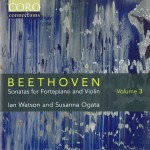
05 Beethoven Sonatas with fortepianoI didn’t see the first two volumes of the ongoing cycle of the complete Beethoven Sonatas for Fortepiano and Violin on period instruments, featuring violinist Susanna Ogata and Ian Watson on the fortepiano, but Volume 3 (CORO Connections COR16154) of the four-CD series certainly makes me wish that I had.

The works here are the three sonatas published in 1803 as Opus 30: No.6 in A Major; No.7 in C Minor; and No.8 in G Major. The fortepiano obviously lacks the power of a modern grand piano but more than compensates for this with its range of tonal colour and acoustic variation. Ogata uses gut strings and a period bow, with the resulting warmer sound perfectly complementing the keyboard and creating a sound world imbued with what The Strad magazine, in its review of Volume 2, called “a clarity rarely achieved.”

There are some outstanding sets of the complete sonatas available with modern keyboard – the Ibragimova/Tiberghien and Duo Concertante issues, for instance – but if you still harbour any doubts about the effectiveness of performing these sonatas with fortepiano then this CD series should simply blow them away.
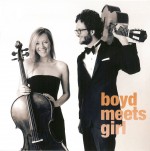
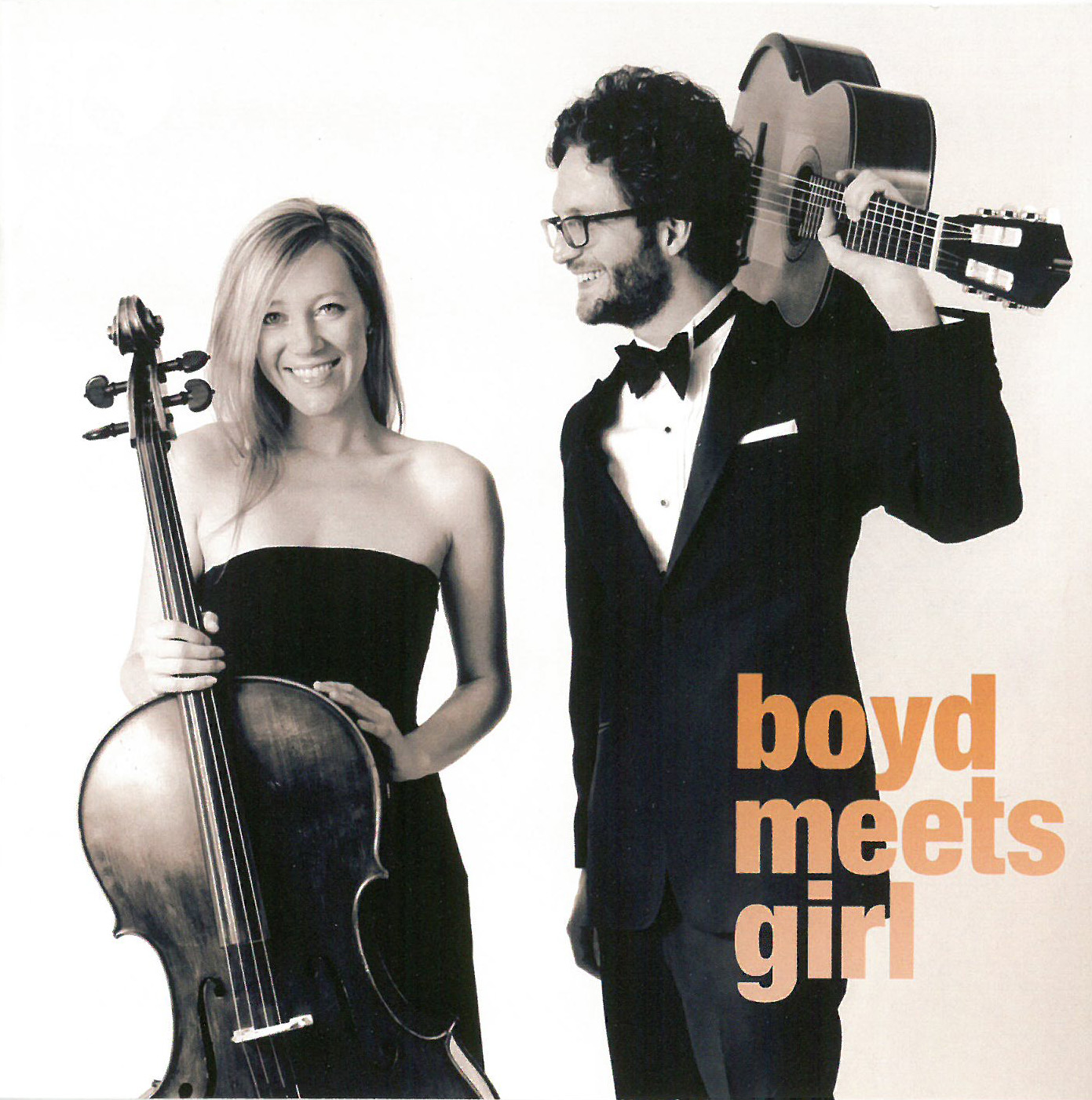
06 Boyd meets Girlboyd meets girl sees the American cellist Laura Metcalf paired with her husband, the Australian guitarist Rupert Boyd, in a really terrific selection of pieces for cello and guitar (Sono Luminus DSL-92217).

The three-movement Reflexões No.6 by Bolivian composer Jaime Zenamon is a lovely work, full of rich and sonorous cello lines and some rapid guitar work, all beautifully handled by the duo. The Allegretto Comodo, the first movement of the Sonata for Cello and Guitar by the Brazilian composer Radamés Gnattali, is the only other work written specifically for cello and guitar; it’s another terrific piece.

Apart from Ross Edwards’ beautiful Arafura Arioso, arranged especially for the duo by the Australian composer, all the other tracks on the CD are arrangements by Boyd and Metcalf. Fauré’s Pavane Op.50, four of Bach’s Two-Part Inventions, Astor Piazzolla’s Café 1930 (originally for flute and guitar) and de Falla’s Siete Canciones Populares Españolas are all extremely effective in these arrangements, but none more so than the quite stunning and ethereal Spiegel im Spiegel by Arvo Pärt, played by Metcalf at the original violin pitch over Boyd’s beautifully controlled guitar work. The final track is the duo’s arrangement of Human Nature, the Steve Porcaro and John Bettis song from Michael Jackson’s 1982 Thriller album.

A warm and resonant recorded sound quality complements a superb CD that is an absolute delight from beginning to end.
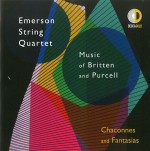
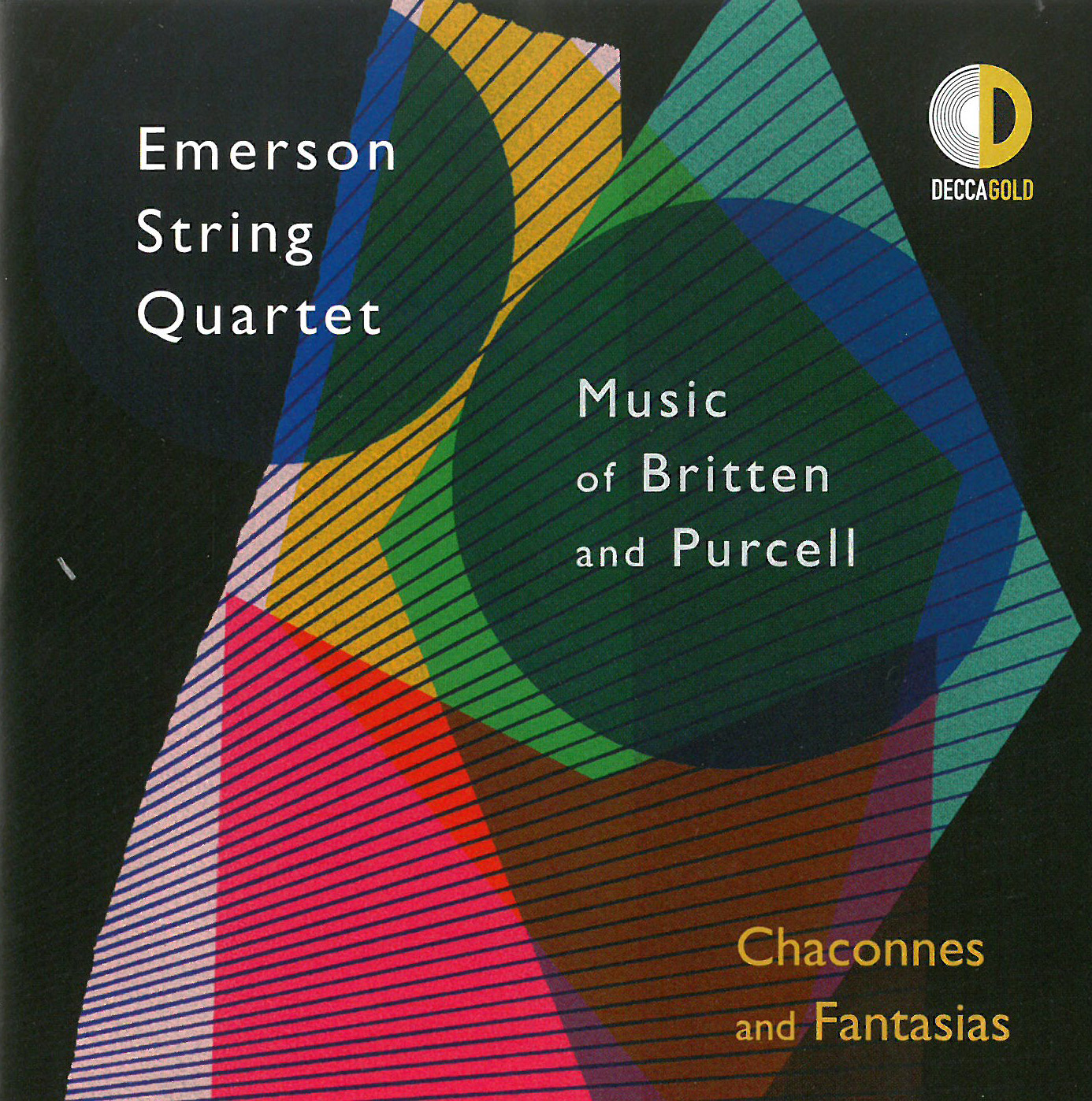
07 Emerson Britten DowlandGiven the affinities between Benjamin Britten and his predecessor Henry Purcell it comes as no surprise to see their music paired on Chaconnes and Fantasias – Music of Britten and Purcell, the latest CD from the Emerson String Quartet, celebrating its 40th anniversary (Decca Gold B0026509-02).

Purcell’s Chacony in G Minor appeared in the same manuscript as the Fantazias (Purcell’s spelling) and is played here in Britten’s performing edition. It’s a full-blooded performance, with quite heavy vibrato. The Fantazias Nos.6 in F Major, 8 in D Minor, 10 in E Minor and 11 in G Major are more idiomatic, with very little vibrato and the dissonant clashes clearly defined. In company with Britten’s music they sound decidedly modern.

Sandwiched in the middle of the Fantazias is a terrific performance of Britten’s String Quartet No.2 in C Major, Op.36 from 1945, the first performance of which took place in London on the exact 250th anniversary of Purcell’s death. Moreover, the Chacony final movement is modelled on Purcell’s own Chacony.

Another immensely satisfying performance, this time of Britten’s String Quartet No.3 in G Major, Op.94, a fascinating and highly personal work written in late 1975 just a year before his death, completes an outstanding disc.
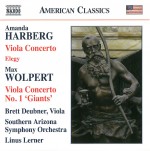
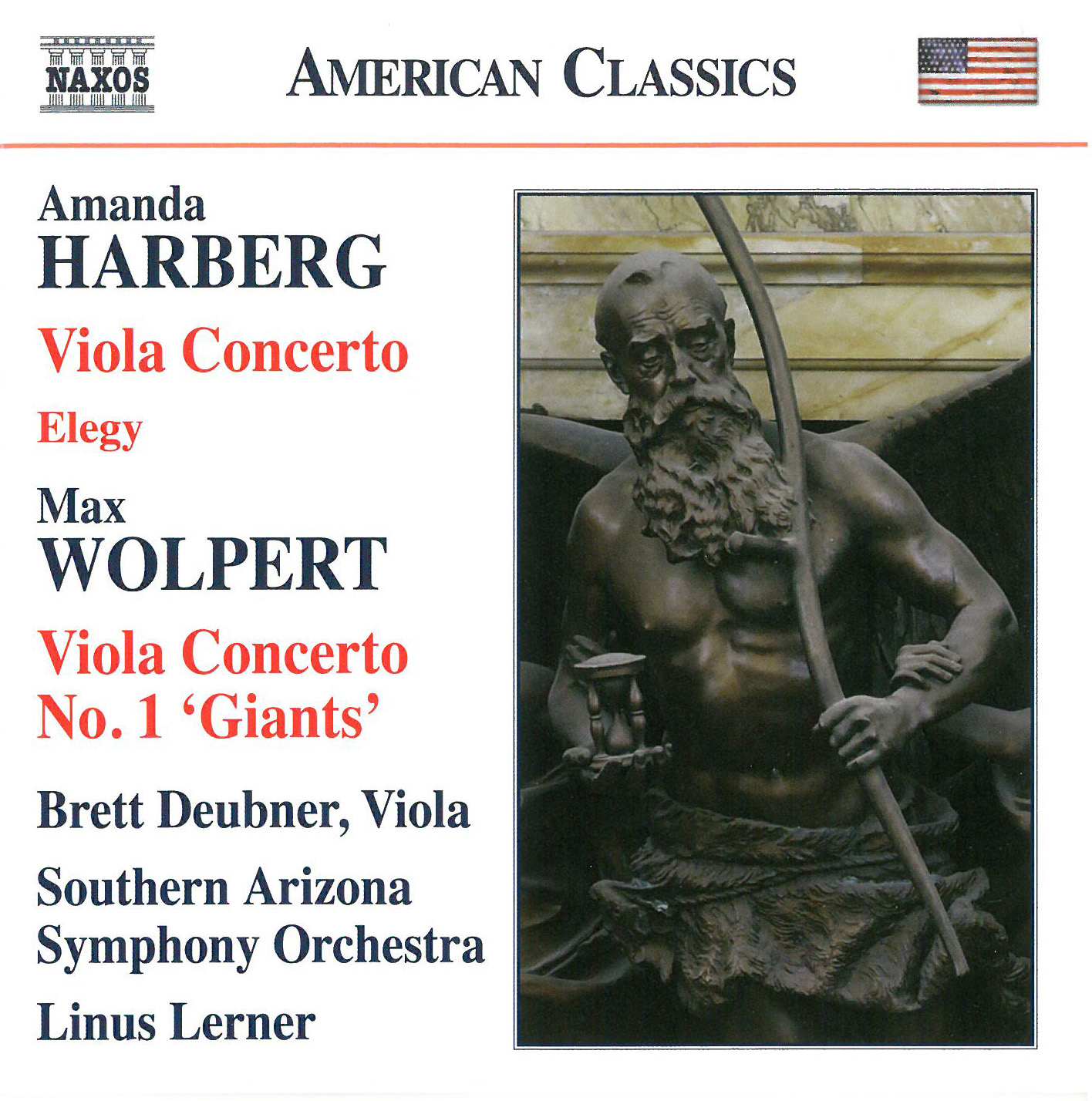
08 Harberg WolpertPremiere recordings of two very accessible 21st-century Viola Concertos by Amanda Harberg and Max Wolpert are featured on a new Naxos CD in their American Classics series, with the American violist Brett Deubner accompanied by the Southern Arizona Symphony Orchestra under Linus Lerner (8.559840).

Both works were written for Deubner, who has had more than 30 concertos dedicated to him. John Corigliano said of Amanda Harberg that she “writes truly beautiful music,” and her Concerto from 2011/12 more than supports that view, with a soaring and strongly rhythmical first movement described as a meditation on flight, a simply beautiful Aria middle movement and an energetic and joyful finale.

Wolpert’s Viola Concerto No.1, “Giants” reflects the composer’s fascination with ancient musical traditions and fable and legend as well as his extensive work in musical theatre. The three movements are Father Time, The Golden Harp and the Balkan-flavoured Dance of the Cloud Women.

Also on the disc is Harberg’s short Elegy from 2007, written for violin and piano and played here in the composer’s excellent arrangement for viola and string orchestra.

Deubner is clearly in his element with these very attractive works.
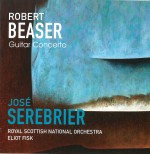
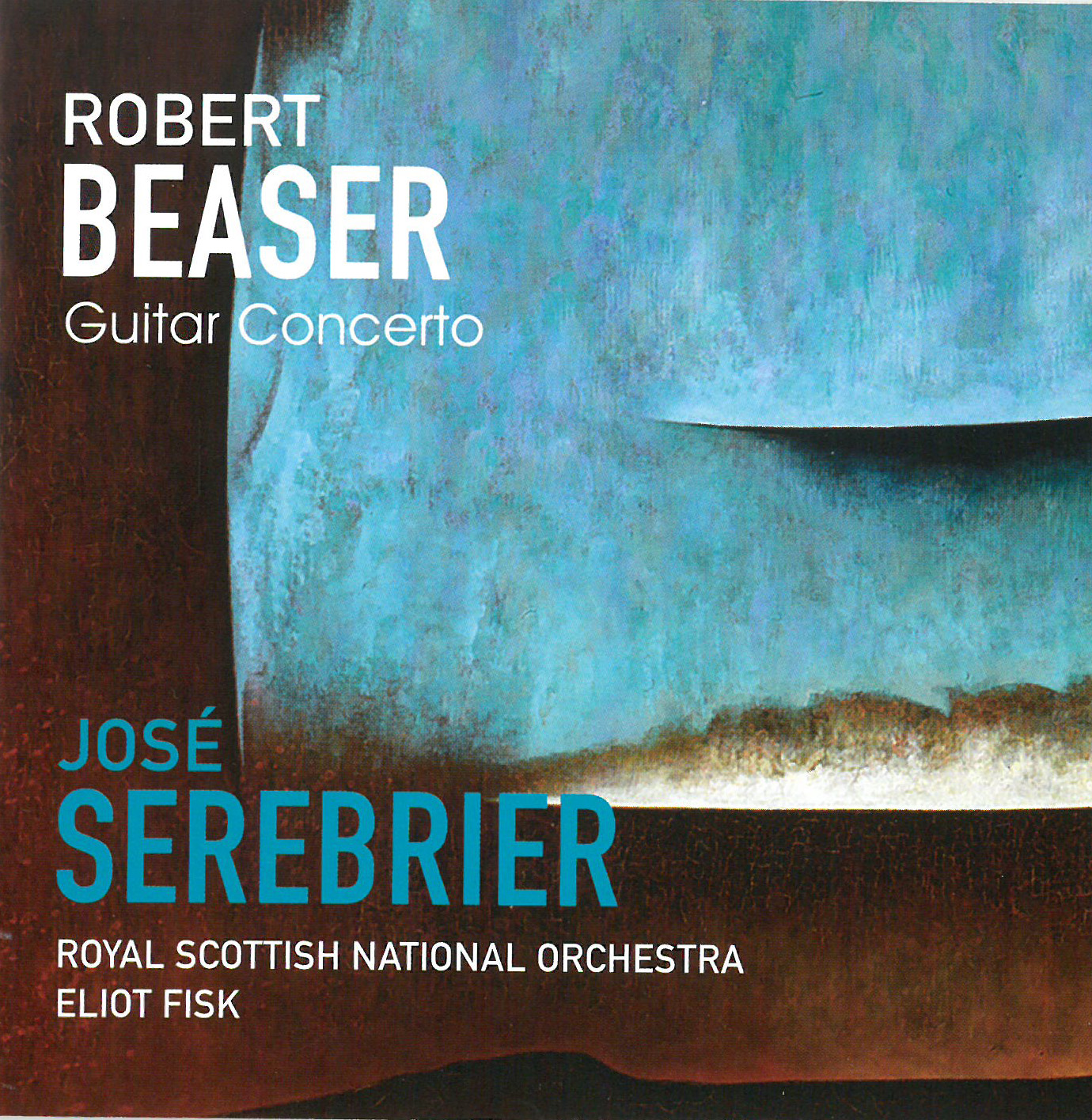
09 Robert BeaserThe American guitarist Eliot Fisk met the composer Robert Beaser in 1972 when they were both at Yale, and two of the works that resulted from their long friendship are featured on Robert Beaser Guitar Concerto, with José Serebrier conducting the Royal Scottish National Orchestra (LINN CKD528).

The concerto is an immediately attractive eclectic three-movement work; in the dazzling Phrygian Pick third movement Beaser combines the traditional Andalusian flamenco technique with American bluegrass style. Fisk’s performance is simply brilliant. It’s an outstanding concerto, and a significant addition to the guitar repertoire.

The solo guitar work Notes on a Southern Sky was influenced by the folk music of Latin America in general and Venezuela in particular. Again, the clarity, agility and tonal variation of Fisk’s playing are quite stunning.

Two orchestral works complete the disc: the superb tone poem Evening Prayer, aptly described as demonstrating the melodic and harmonic beauty which characterises Beaser’s style; and Ground O, Beaser’s own 2011 orchestration of a movement from an earlier work written within a month of the tragic events in New York in September 2001. The RSNO performance under Serebrier is outstanding, particularly in the Evening Prayer.
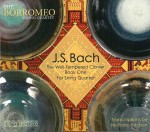
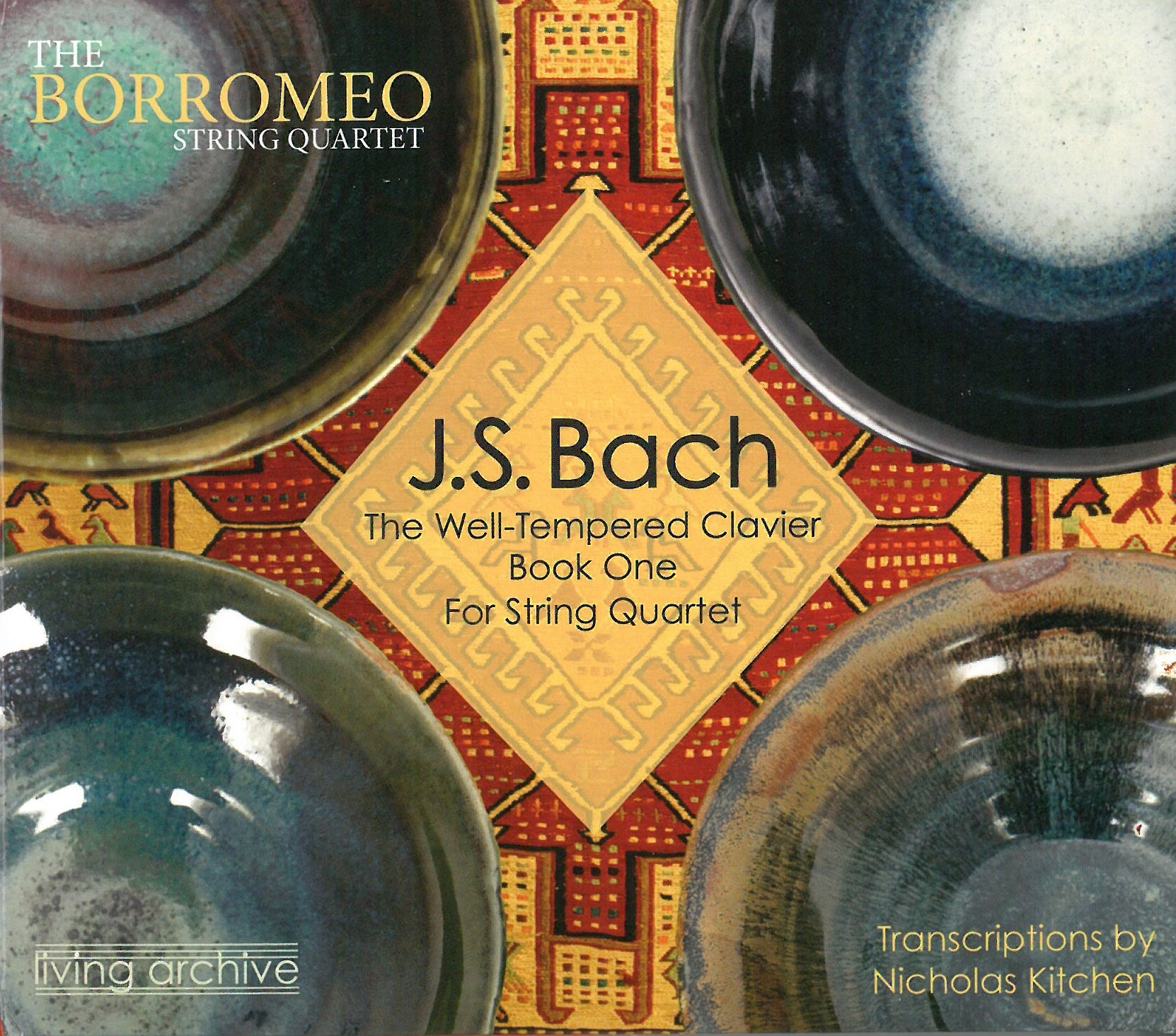
10 Well Tempered ClavierJ.S. Bach’s two books of The Well-Tempered Clavier have influenced composers since their creation, with both Mozart and Beethoven scoring some of the pieces for string quartet. In the 2CD set J. S. Bach The Well-Tempered Clavier Book One For String Quartet Nicholas Kitchen, the first violin of the Borromeo String Quartet, has finally fulfilled a long-held desire with his transcription of the music for string quartet (living archive LABSQ 101).

The process clearly produced some surprises and challenges for Kitchen and his fellow quartet members as they developed the project, but the end result is extremely satisfying, both musically and emotionally. Kitchen acknowledges that playing the 48 pieces brought the quartet into “a rarified listening-scape,” where the extreme demands on the players’ need to listen to each other resulted in “a clearer understanding of what is really the essence of musical meaning and spirit.”

Luckily, it has also resulted in an engrossing listening experience for all of us.
11 PermutationsThe English violinist Tamsin Waley-Cohen plays two solo pieces written by her younger sister Freya Waley-Cohen on Permutations (Signum Classics SIGCD496).

Permutations is a touring artwork project developed by the sisters and the architectural designers Andrew Skulina and Finbarr O’Dempsey, with Freya writing several different musical characters for both six-part violin consort and for solo violin. The performance setting is “a set of six chambers which spatially distribute the six recorded violin parts… but also give the listener the opportunity to change the acoustic properties and level of isolation for each part. Handing a certain level of artistic and creative power over to the listener was the guiding force in the creation of the artwork.”

For this recording Waley-Cohen decided to take back that power and present Permutations in perfectly balanced ensemble. The individual characters are clearly identifiable in the excellent stereo setup, and one can’t help but wonder what the effect of the original physical setting must be, given how effective and engrossing the recorded version is.

While writing Permutations Waley-Cohen wrote two other works using some of its musical characters; one of them, Unveil for solo violin, is included here.

At less than 28 minutes this is not a substantial CD, but what it lacks in quantity it more than makes up for in quality. Tamsin Waley-Cohen’s playing is exemplary.
12 Paul ChiharaTake the A Train (Bridge Records 9488) is Volume 3 of the eclectic music of the 79-year-old American composer Paul Chihara, whose wide experience includes extensive work for movies and television.

The Gavin String Trio performs the String Trio from 1985, and Jerome Lowenthal is the soloist in the fascinating Bagatelles – Twice Seven Haiku for Piano from 2010. The Girl from Yerevan is an attractive piece from 2014, played here by guitarist David Starobin, violinist Movses Pogossian and violist Paul Coletti.

The final work is a real knockout: the three-movement Ellington Fantasy performed by the Lark String Quartet. Duke Ellington’s I’m Beginning to See the Light is a great opener; the arrangement of Sophisticated Lady is quite stunning, and the CD’s title track provides a great jazzy ending to an excellent disc.
13 Mozart BeethovenAnd finally, violinist Boris Abramov and cellist Carmine Miranda combine their talents on Mozart/Beethoven Violin and Cello Duets (Navona Records NV6118).

None of the music here is in its original form. Mozart’s Two Duos for Violin and Cello are arrangements of the Duos for Violin and Viola in G Major, K423 and B flat Major, K424, both written as a favour to Michael Haydn to complete a set of six duos he was writing for the Archbishop of Salzburg. The Beethoven work is an arrangement of the Three Duos for Clarinet and Bassoon, WoO27, a set of duets that were probably early works influenced by the Mozart duos but may possibly be spurious.

With their warm tone and nice phrasing Abramov and Miranda make a good case for these versions of the works, although the music itself doesn’t allow for a great deal of dynamic range.


01 Goodyear RavelStewart Goodyear’s newest recording, Ravel – Stewart Goodyear (Orchid Classics ORC 100061) is the product of a lifelong affection for Ravel’s music that began at age five. Goodyear admits that it has taken a long time to immerse himself in the composer’s works and reach a point where he was ready to begin recording his music. He plans, in fact, to record all of Ravel’s works for piano.

What Goodyear demonstrates at the keyboard is that he is willing to take his time playing this music. It’s not so much a slower pace than a willingness to open the breathing spaces much wider than many pianists do. These suspended moments of time cumulatively lift the music to an ethereal state where Ravel’s impressionistic figures, the arpeggios and chordal clusters, are perceived more as emotion than sound. Oiseaux tristes and La vallée des cloches are powerful examples of this Goodyear effect.

Goodyear also reveals an innate ability to home in on a melody. Ravel makes this fairly straightforward, sometimes just having it played in simple octaves. But Goodyear has a way of drawing the notes out of the swirling harmonies that sets them within easy reach of the ear. It’s a matter of touch – and Ravel’s keyboard language requires absolute mastery of the technique.

Scarbo, from Gaspard de la nuit, is the dark and somewhat maniacal side of Ravel’s work. Here too, Goodyear proves his technical control is never outrun by the demands of the music.

If Goodyear’s intention to record all the Ravel piano works comes to fruition, there will be something wonderful to anticipate.

Review

02 Jean Willy KunzJean-Willy Kunz is the first organist in residence of the Orchestre Symphonique de Montréal. His debut solo recording Jean-Willy Kunz au grand orgue Pierre-Béique (ATMA ACD2 2747) contains the requisite Toccatas along with some skillfully chosen works that make this recording thoroughly entertaining.

Among the standards in the list is the Toccata from Widor’s Organ Symphony No.5. For the sake of acoustic clarity, Kunz takes this at a slightly slower pace than is often heard, so the piece comes across cleanly but still powerfully. Vierne’s Carillon de Westminster Op.54, No.6 builds beautifully to a towering and thrilling finish. Another impressive work is Maxime Goulet’s Citius, altius, fortius! in which Kunz showcases the organ’s solo and chorus reeds, and mixtures.

The CD’s highlight is Kunz’s own arrangement of Saint-Saëns Le Carnival des animaux. The colouristic potential of this symphonically planned concert instrument is exploited in each of the 15 movements. L’Éléphant, appropriately portrayed by the deepest register pedal pipes, will shake your speakers, while Le Coucou au fond des bois uses a small reed stop to sound the familiar two-note call.

It’s an excellent recording with perfect repertoire choices and brilliant playing.

03 ExordiumOrganist Erik Simmons has recorded seven CDs by American composer and organist Carson Cooman. The latest, Exordium – Music for Organ by Carson Cooman (Divine Art dda 25154) is a wide selection of Cooman’s works designed to showcase the main organ of the Cathédral Notre-Dame de Saint-Omer in northern France. The recording uses the Hauptwerk system, which digitally records the instrument note by note, storing the data in a sound library from which a performance and recording can be made anywhere, rather than in the confines of the church. The authenticity of this recording technology is impressive, creating a final product that is indistinguishable from a recording made in the original venue.

The original organ in the cathedral dates from 1717 and underwent a major restoration in the mid-19th century. Its casework is renowned as one of the most beautiful in Europe.

Many of the works on this recording use the highly coloured smaller stops or combinations of them to demonstrate the intimacy of such a large instrument. Small solo reeds and flutes are richly coloured and beautifully carry the solo melodies.

By contrast, the big divisions set close to full organ are magnificent as shown in the opening track Exordium and again in the closing selection, a fantasy on Veni Creator Spiritus. Cooman’s works are skillfully written with a contemporary harmonic sensibility that always yields to the melody. Simmons understands this and faithfully brings this great Baroque instrument into the service of a 21st-century composer.

Review

04 Bach Art of FugueDuo Stephanie & Saar have taken a novel approach to their latest recording project Bach – The Art of the Fugue, BWV 1080 (New Focus Recordings FCR181). Taking advantage of their duo nature, they perform some selections as four hands, some as two pianos and the simpler two-voice canons as solos.

The sheer weight of the genius behind the music makes focusing on any other aspect of the performance nearly impossible. As one of Bach’s final utterances, unfinished at that, it reveals the ability of this composer to think about musical development forwards, backwards, inverted, expanded and contracted, and most often in some combination of these.
In this respect the work is very much like the Goldberg Variations, where a good performance quickly yields to the content of the music while the performer is lost to the larger presence of the art form.
The Duo Stephanie & Saar (their first names) are highly disciplined and always turn their skills to the contrapuntal possibilities Bach has laid out in the score, regardless of whether it’s for two voices or four. They keep expression to a polite minimum, revealing the beauty of the growing complexity in the larger fugues.

The two-disc set is one you know you’ll play many times, waiting to find newly revealed truths.

05 Kit Armstrong GoldbergA new video release, Kit Armstrong performs Bach’s Goldberg Variations and its predecessors (Unitel 741608), is a must-watch for Goldberg fans. Armstrong performs live at the Concertgebouw, Amsterdam and plays a lengthy program that includes some stylistically related works by Byrd, Sweelinck and John Bull’s Thirty Variations on the theme “Walsingham. It’s clear at this point that Armstrong is brilliant at his period ornamentation. His trills are fast and tirelessly perfect.

Once into the Bach Goldberg Variations, after the opening aria, there’s no doubt that Armstrong is going to play this his way – unhurriedly. The first variation comes as a surprise in its deliberate, more relaxed speed. But what emerges at the same time is Armstrong’s knack for boldly pulling out melodies from the left hand, especially where the hands cross over. It’s intriguing to hear lines more familiar in the background come to the fore this way.

Armstrong is also fairly free with his rubato and sometimes applies it only in one hand, while the other moves ahead hoping its partner will catch up. It’s a thoroughly pianistic approach that impresses the audience, whose attention never wavers for a moment.

The final aria is quiet and powerfully intense as Armstrong completes it pianissimo, with a lengthy ritard holding the crowd breathless until he rises from the keyboard.

06 Scarlatti SusiNicholas Susi has just released his first recording Scarlatti Now (nicholas-susi.com), with a clever program that mixes eight Scarlatti Sonatas with Rossini, Ravel, Berio and Liszt. Susi claims that Italy is the country that gave birth to the piano then promptly turned its back on it, leaving us with a solid Germanic tradition to our keyboard thinking. His intention is to underscore the connections between Scarlatti’s keyboard style and later works, arguing that Scarlatti’s sonatas had invited future composers to think about the keyboard in ways he had already begun to explore. He describes the elements of Scarlatti’s keyboard style as “the wiry, the spastic, the risky” but he also admires them for their “variety, quirkiness and downright catchiness.”

Scarlatti’s runs, ubiquitous ornaments and often rapid-fire note repetitions are familiar elements of his writing. Susi finds these in the chatter of Figaro’s Cavatina from Rossini’s The Barber of Seville, the fluid writing of Ravel’s Une barque sur l’océan and Liszt’s transcription of Rossini’s La danza.

Susi is a gifted technician who executes the myriad ornaments in the sonatas with crispness and ease. The clarity of his playing is a delight to hear. His transitions to contemporary works by Berio and Sciarrino are not as difficult as they might promise in the track listing. He is an innovative musician and aggressive thinker with a gift for keyboard brilliance. With a freshly minted doctorate of music under his belt, he now needs to appear on a major label.

07 Haydn 6 BavouzetWith Haydn – Piano Sonatas, Vol.6 (Chandos 10942), Jean Efflam-Bavouzet has now neared the halfway point in his project to record all the Haydn piano sonatas. Clearly not intent on doing this in chronological order, Bavouzet is programming his discs for artistic interest and balance.

This disc contains five sonatas, all in major keys. The earliest is the Sonata No.11 (Hob.XVI:2) from sometime around 1760. At this point, the keyboard sonata is still in its early evolutionary form and has far more in common with its Baroque harpsichord antecedents than anything that followed. The changes in Haydn’s works are subtle and occur slowly over many years. Bavouzet follows this early work with the latest one, Sonata No.43 (Hob.XVI:28) where the final movement provides the best contrast for showing how Haydn’s thinking became more complex.

Prior to this recording project, Bavouzet finished the complete cycle of the Beethoven sonatas. He describes his renewed appreciation of Haydn’s considerably shorter thematic ideas than those of Beethoven and points out the impact this had on his approach to the music. His touch is light and articulation is impeccable. Lightly pedaled, if at all, the voice parts are clear and the sparse harmonies are completely transparent.

Because Haydn gave almost no performance indications in his scores, Bavouzet takes great freedom in applying tempi and dynamics. His choices are carefully considered and a mark of both his artistry and scholarship. Like its predecessors, Volume 6 is consistently excellent throughout.

08 Pal EidePål Eide has chosen a perfect title for his recording Grey Clouds (CDKlassisk cdk 1143). He contrasts the melancholy of twilight in works by Liszt and Debussy against even darker forebodings in the music of Stravinsky and Ravel. His playing is deeply personal and anything but grey.
Beginning with Liszt’s two similarly titled works La lugubre gondola, Eide sets a stage where the ambiguity of twilight becomes a surprisingly peaceful experience. He expands this through Debussy’s Reflets dans l’eau, La cathédrale engloutie and Claire de lune.

The contrast of threatening darkness comes from Ravel’s Gaspard de la nuit. Le gibet is especially haunting, with its repeating note emerging from Ravel’s clustered harmonies.

Eide moves his program back toward the twilight with Stravinsky’s Three Pieces from Petrouchka. His measured approach, if slower than most performances, gives both Danse russe and La semaine grasse an ominous weight. As if to place an “amen” at the end of his recording, Eide gives an exquisite performance of Liszt’s Consolation No.3.

It’s a thoughtful and effective program, beautifully played. Eide has made just two recordings but his abilities suggest he should do more.

09 a la russeAlexandre Kantorow looks knowingly from the cover of his new recording À la russe (BIS 2150) as if to invite listeners into the world of the Russian soul. Here, things are dimly lit, especially where Rachmaninoff is concerned. His Piano Sonata No.1 in D Minor Op.28 is a study in high dynamic contrast in the outer movements and deep introspection in the middle movement. Kantorow is obviously at home with this music and what he projects from the keyboard is powerfully seductive.

The tenderness of Kantorow’s performance of two excerpts from Tchaikovsky’s 18 Morceaux Op.72 would be difficult to match. It’s heartbreakingly hesitant and vulnerable. The composer’s Scherzo à la Russe is equally remarkable, though for different reasons. Here, Kantorow is virtuosic master of the great and the small. The power of his playing in the final measures echoes the dynamism and strength of his execution in the three excerpts of Stravinsky’s L’Oiseaux de Feu. This 1928 piano transcription is relentless in its technical demands. Undaunted, Kantorow delivers a blazing performance of the Danse infernale and the Finale.

Balakirev’s Islamey Op.18 concludes the disc with another virtuosic display of impossibly quick repetitions separated by stretches of languorous repose. Kantorow is a superb colourist who possesses a technique capable of anything these Russian composers have required. This super audio CD is pure pleasure from start to finish.

10 Bernstein soloIn anticipation of the centenary of Leonard Bernstein’s birth in 1918, Andrew Cooperstock has released Leonard Bernstein – Complete Solo Works for Piano (Bridge 948 SA/B). The two-disc set is a comprehensive collection of keyboard compositions and arrangements spanning Bernstein’s career. It contains the first recording of the complete Bridal Suite for piano four hands. Disc one presents all 29 of the Anniversaries he composed for his friends and family. The dedicatees include his daughter Nina, Serge and Nathalie Koussevitsky, Lukas Foss, Stephen Sondheim and many others. Cooperstock does a splendid job in capturing the deeply personal and affectionate tribute that each of these portrays.
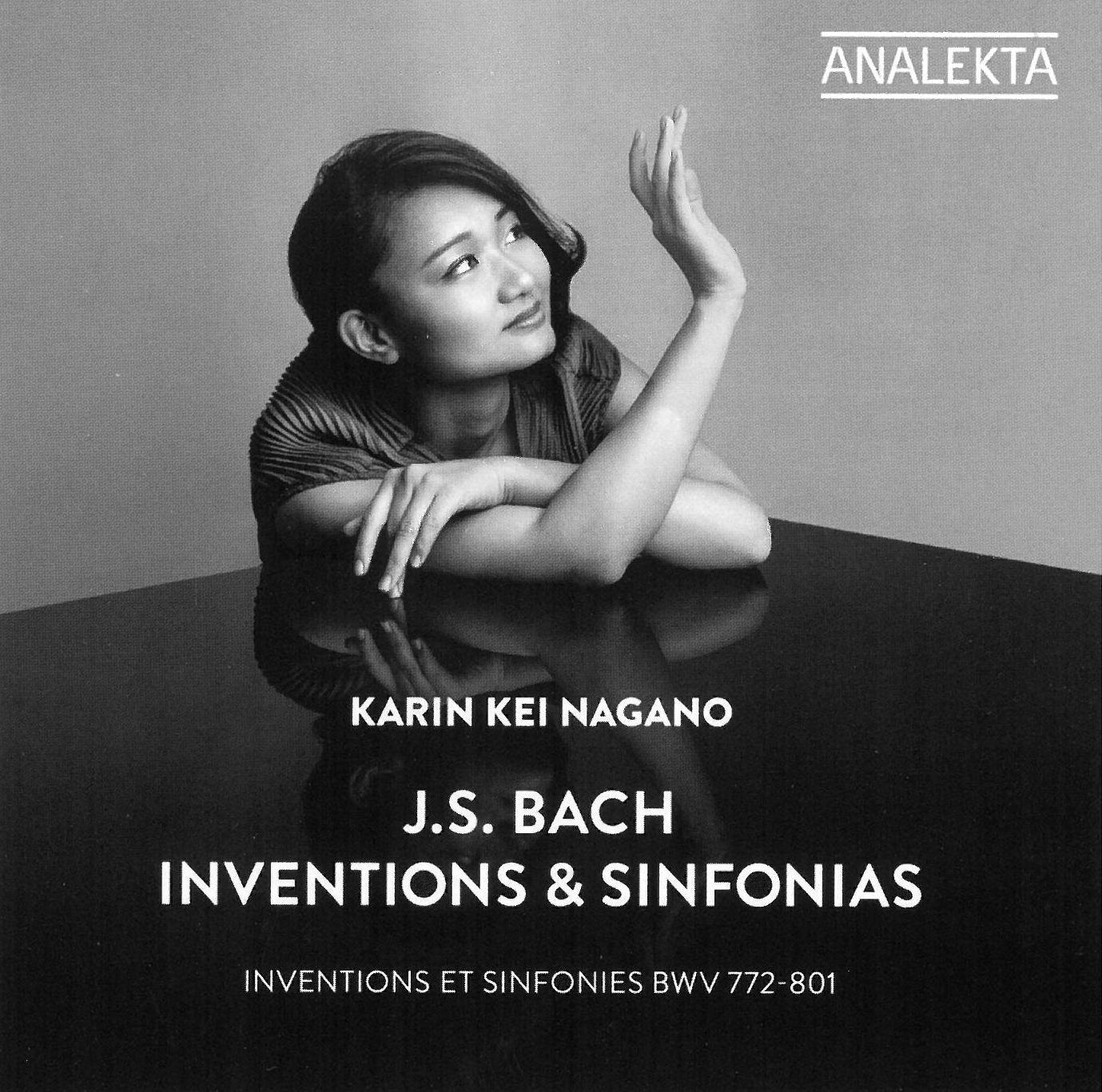
Disc two contains the balance of the Bernstein piano repertoire. Four Sabras, rarely heard, are particularly entertaining for the colourful characters with which he imbues each one. Cooperstock excels in the piano arrangement of Aaron Copland’s El Salón México. Fully in control of the piece’s technical demands, he captures the work’s fiery spirit, bringing it to a powerful and frenzied conclusion.

Cooperstock takes advantage of studio technology to play both piano parts of the Bridal Suite. It’s a collection of short, witty pieces that he performs with obvious relish and good humour.

The Leonard Bernstein at 100 project is a timely and instructive look at a musical giant through his work at the keyboard.

11 Satie 1Nicolas Horvath has released the first volume in his latest project, Satie – Complete Piano Works 1 (Grand Piano GP 761). His project takes advantage of the newest and most extensively corrected edition of Satie’s piano music by Salabert (Milan). Horvath has also chosen to record the repertoire up to 1897 on Cosima Wagner’s 1881 Erard, in an effort to create the kind of piano sound that Satie would have known and expected. The CD program includes two world premiere recordings of short works and nine others from the newly revised edition.
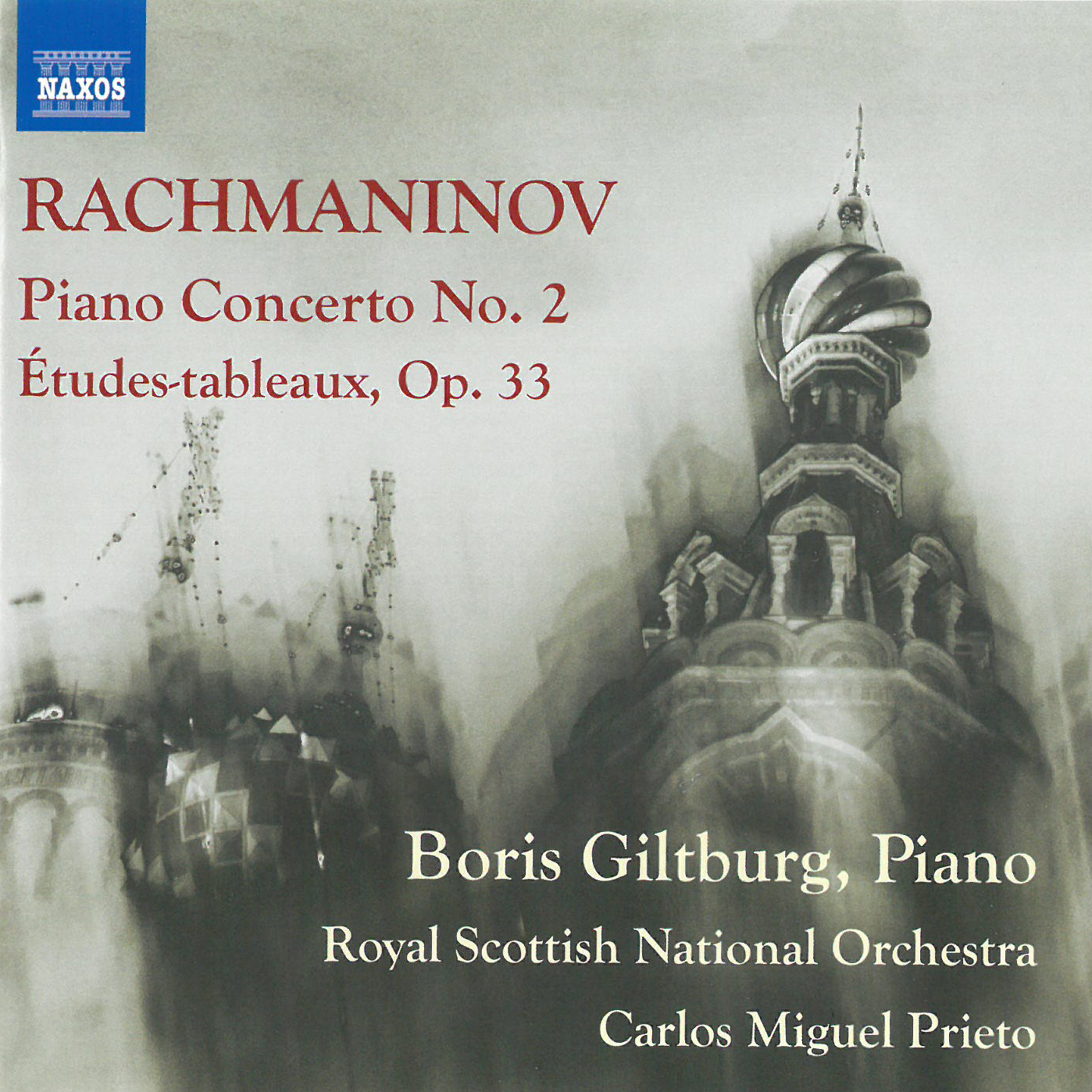
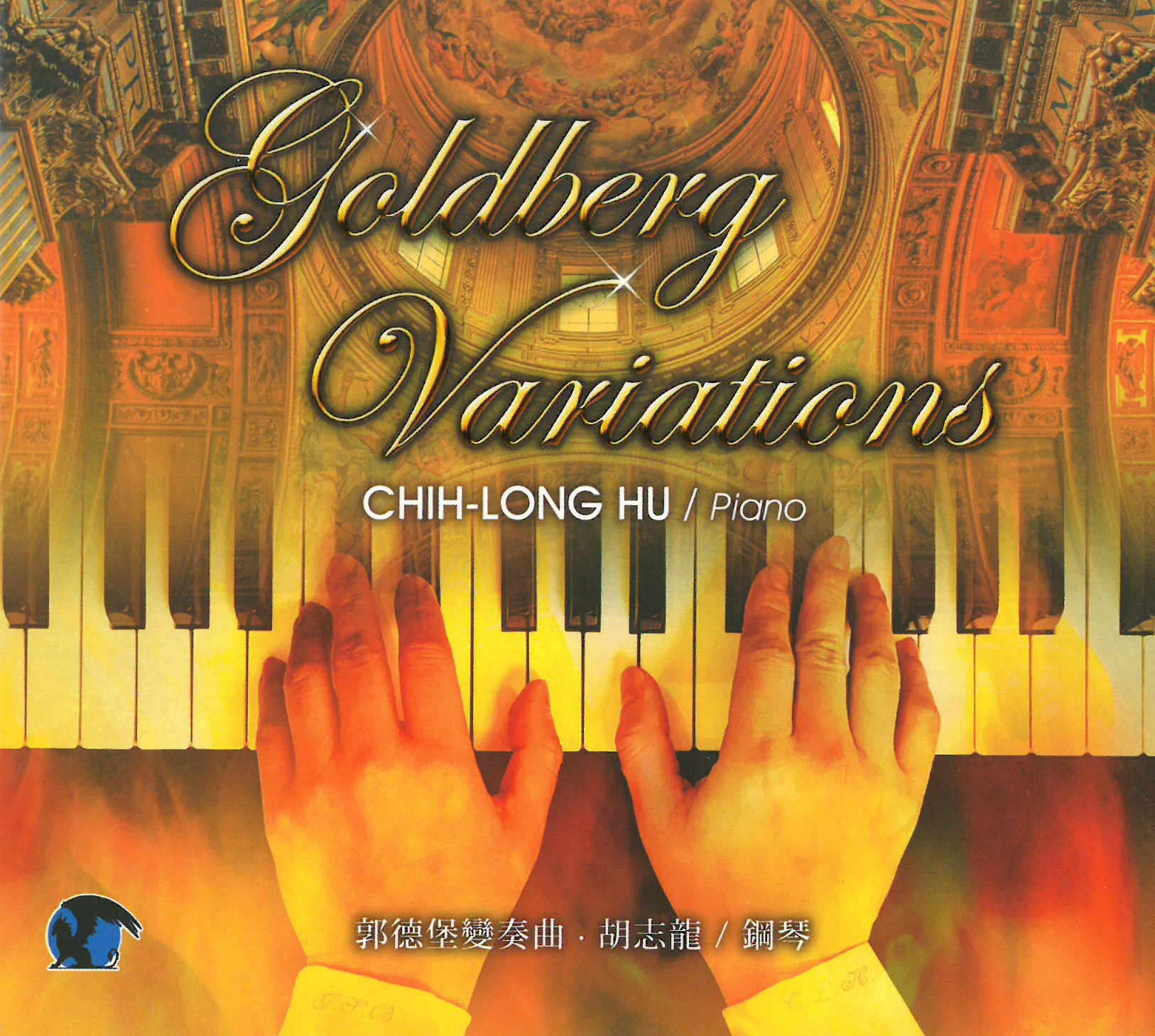
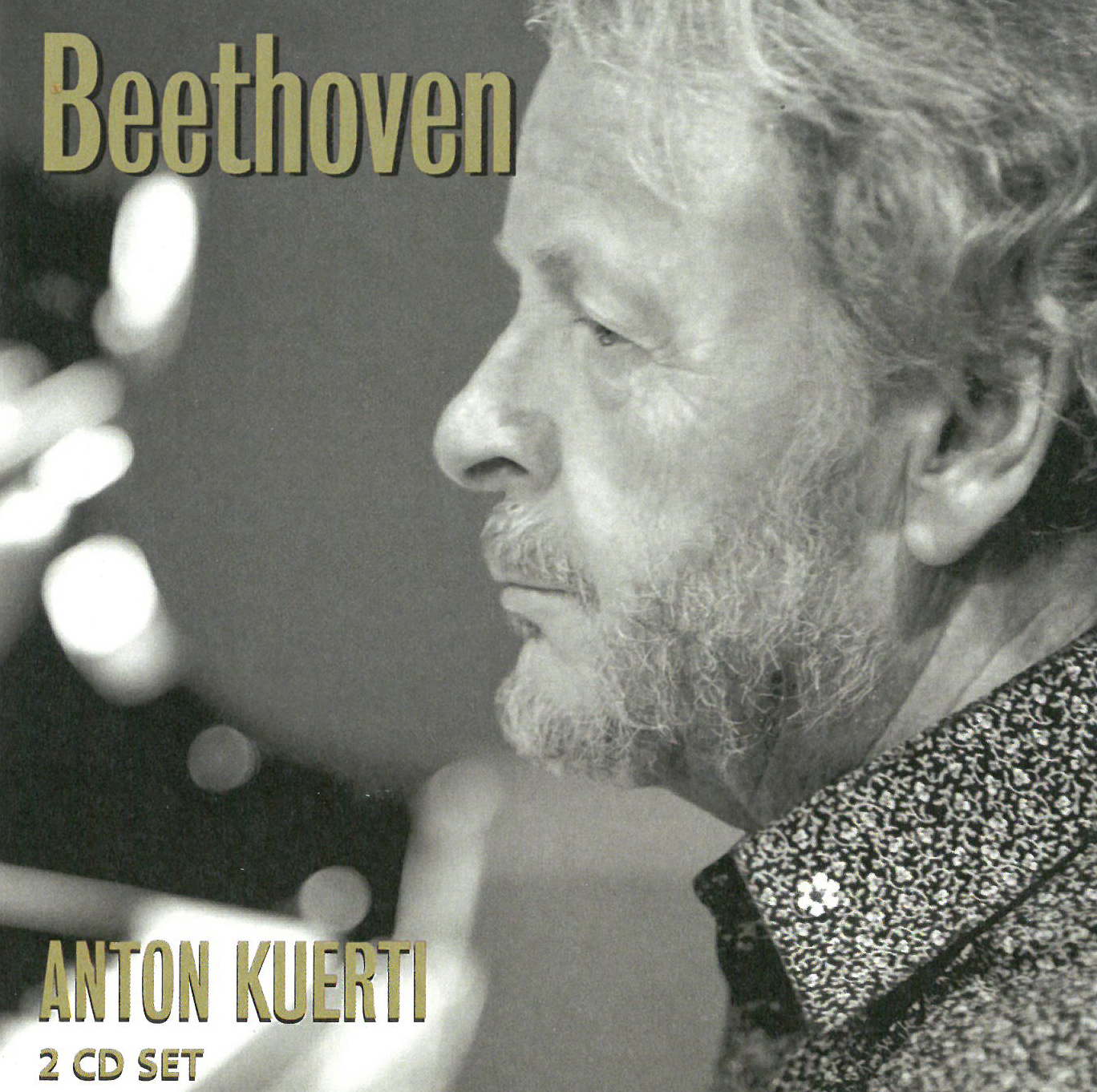
The notes to this CD contain some very fine historical autobiographical material that reminds the reader of how extraordinary Satie was. His music is never really contrapuntal or even impressionistic. He establishes an atmosphere of mysticism with pulsating chords against melodies that feel modal and something akin to Asian or Middle Eastern.

Horvath does a splendid job in presenting this unusual repertoire. The four Ogives are almost entirely vertical and hymn-like in their replication of plainchant. Said to have been inspired by the Gothic arches of a neighbouring church, these are perhaps unlike most of Satie’s other music. There’s also a fascinating, if short, monodic piece titled Leit-Motiv du “Panthée”. Chanson hongroise is barely more than half a minute but contains curious and tantalizing touches of Bartók.

With volumes two and three already designed and ready for release soon, Satie collectors will be eager to snap them from the shelves when they appear.

Back to top