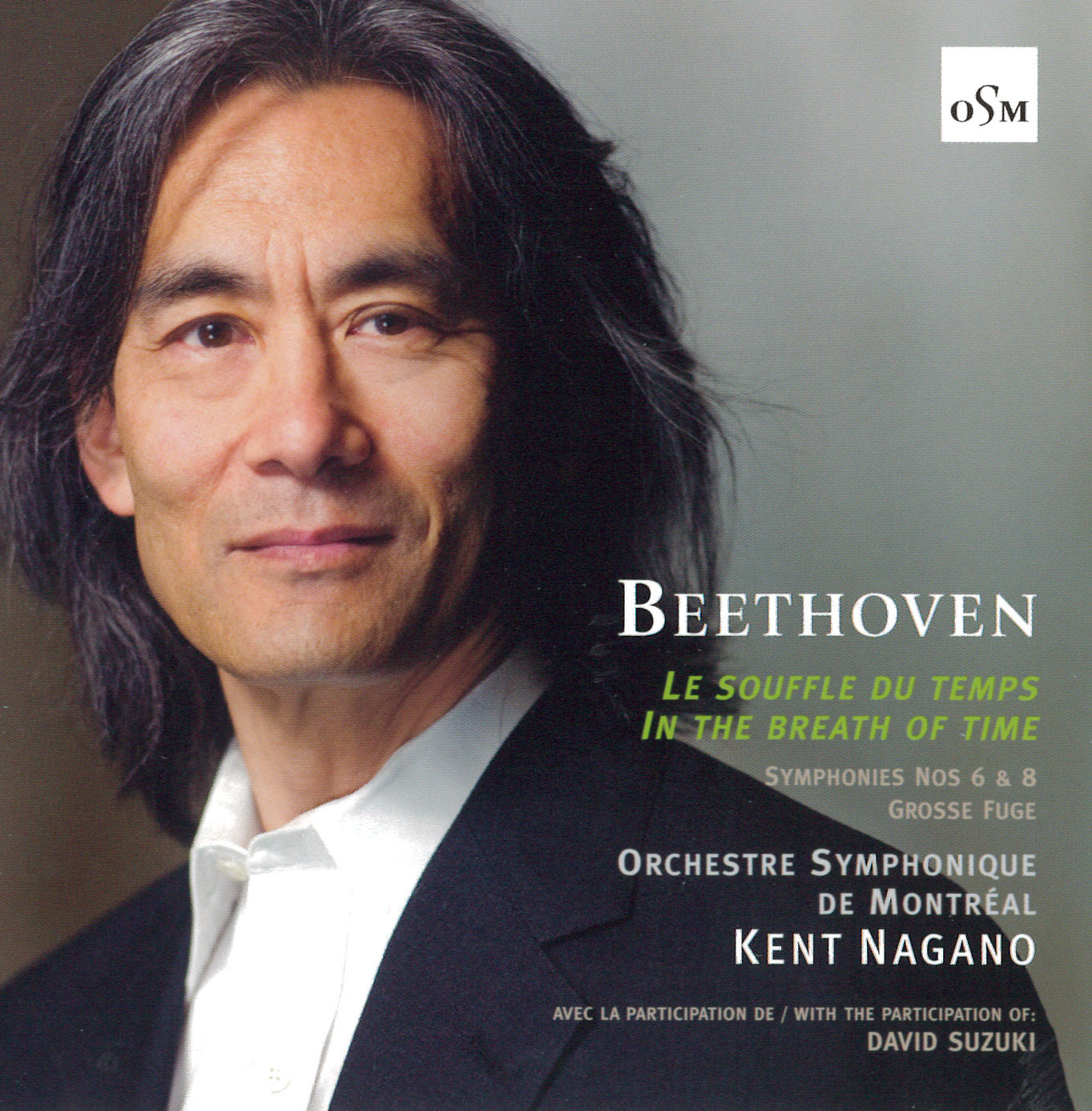
01_beethoven_naganoBeethoven - In the Breath of Time
Orchestre Symphonique de Montreal; Kent Nagano
OSM OSMCD7437

The Montreal Symphony has much to be happy about these days. Conductor extraordinaire Kent Nagano is now in his sixth season as music director and the orchestra is sounding great. This is in part because of its new hall, which opened in September and is proving to be an acoustical gem. Furthermore, the ensemble has begun to record on its own label – OSM - and this latest offering – a two-disc set titled “In the Breath of Time” is another in the series featuring music by Beethoven, specifically symphonies six and eight, in addition to the Grosse Fuge as arranged by Felix Weingartner.

As fine an ensemble as the MSO is, there are no surprises here, nor is there any ground-breaking. Instead, under Naganos’s competent baton, the orchestra concentrates on solid musicianship, performing with a particular warmth and sensitivity. The “Pastoral” Symphony is a delight – here are the familiar bird-calls, the peasant dances and the joyful mood of life in the country as Beethoven witnessed it. The more traditional Symphony No.8 is approached with a suitable spirit of nobility and the monumental Fuge – all seventeen minutes of it – with the grandeur it deserves.

In keeping with the overall theme of time and change, the second disc concludes with a brief spoken word trilogy titled Declaration of INTERdependence, written and narrated by David Suzuki. While the recitation is moving and poignant, it’s the music itself that makes this such a satisfying recording – a fine interpretation of familiar repertoire by one of Canada’s most renowned orchestras.

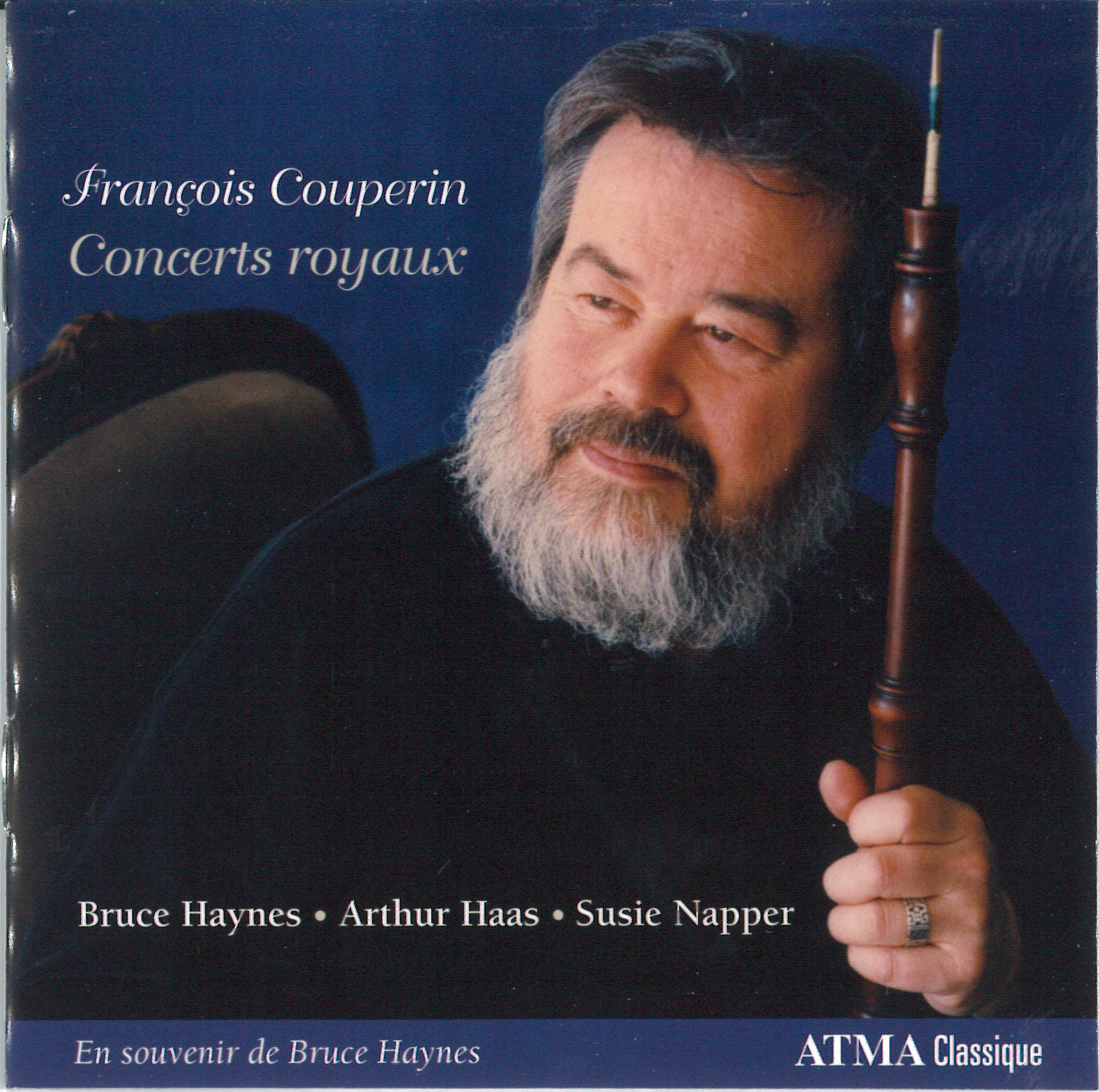
01_couperinCouperin - Concerts royaux

Bruce Haynes; Arthur Haas; Susie Napper

ATMA ACD2 2168

Around 1700 Pierre Naust crafted an hautboy in Paris – it may be the earliest hautboy (forerunner of the oboe) now in private hands. In 1703 Barak Norman created a viola da gamba in London. This recording unites these two instruments in some of Couperin’s concerts royaux, precisely the repertoire for which Naust’s hautboy would have been played.

The recording was originally released in 1999 but one very poignant reason explains its redistribution. US/Canadian Bruce Haynes, the hautboy soloist, died this year; reintroducing the hautboy into France (!) and five books and 50 articles on early music are his legacy.

Concert 7’s sarabande is the first opportunity to hear the Naust hautboy. It is both outwardly expressive and yet slightly sensitive; Couperin was well able to bring out the quality of this instrument.

In Concert 11, despite the rather stately quality of all eight movements, the standard of hautboy playing is always maintained. It is Susie Napper’s mastery of the gamba which gains exposure, reinforced in her duet with harpsichordist Arthur Haas in a track from Couperin’s third book of harpsichord pieces. In fact, Bruce Haynes returns with some of his most inspired playing in two musétes. Rural can only begin to describe the combination of hautboy, harpsichord and gamba as they imitate the sounds of the French bagpipe!

And then the even more varied Concert 3 (with another muzette - sic) to conclude this tribute to Bruce Haynes, and to the instrument he revived in the country of its birth.

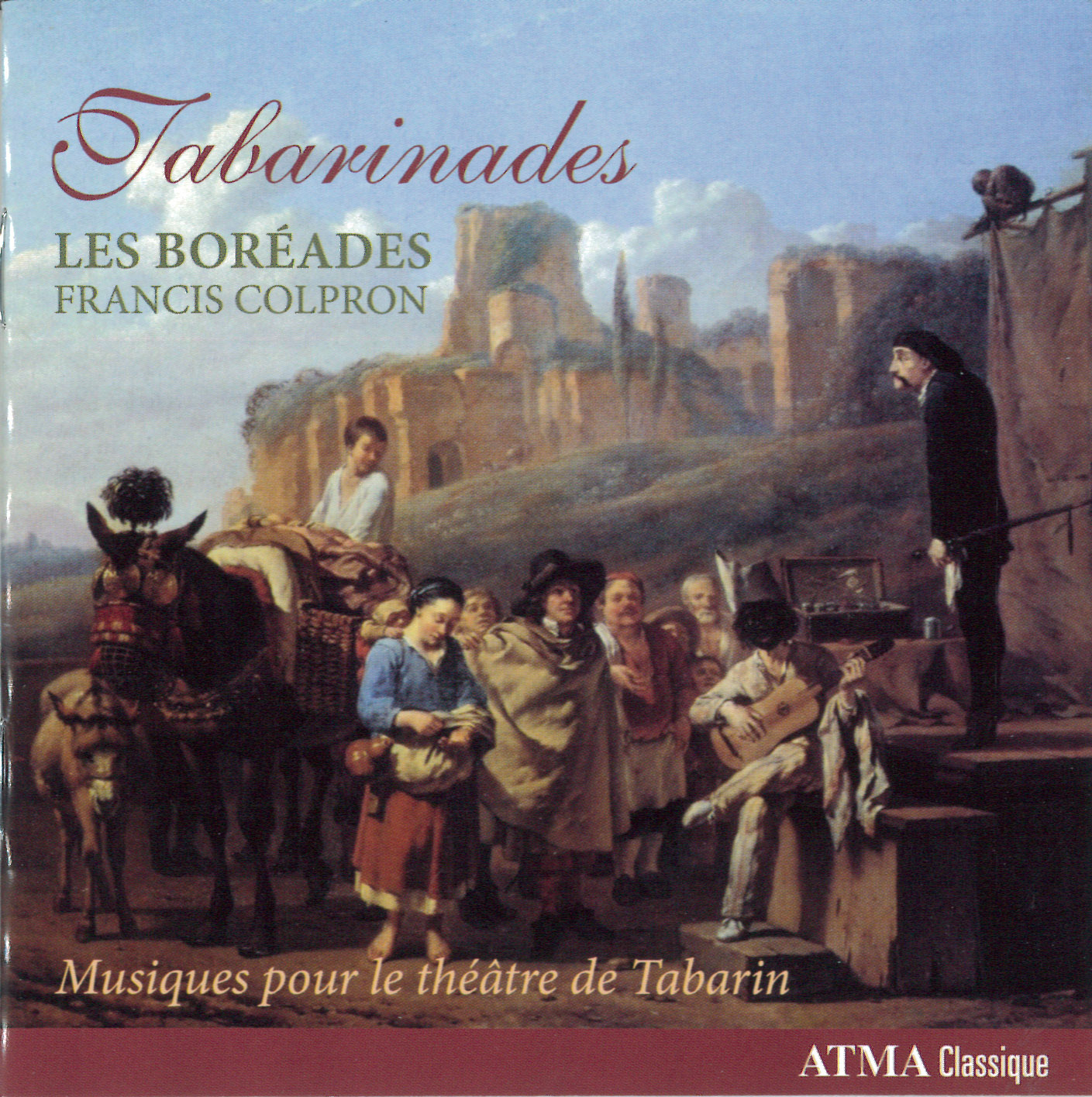
02_tabarinadesTabarinades - Musiques pour le theatre de Tabarin

Les Boréades; Francis Colpron

ATMA ACD2 2658

Tabarin was the stage name of Jean Salomon. Born in 1584, he and Antoine and Philippe Girard set up an open-air theatre in Place Dauphine, Paris. Lively shows put Parisians of all classes in good humour, promoting the sale of Tabarin’s range of quack medicines.

Music accompanied the sketches; violins and bass viol are depicted in illustrations. The comparison with commedia dell’arte is too tempting for Director Colpron, who adds the latter’s recorders, lute and guitar.

From the start, this anthology (27 tracks in one hour!) features the liveliness of the French renaissance dance tune and many tracks are very familiar to early music lovers; track 2 Les Bouffons is a case in point, although one of the “outdoor” instruments of the period (crumhorn, rauschpfeife) would perhaps have made for an even livelier performance.

Several pieces are taken from more courtly circles, ballets being an obvious example. In these cases, woodwinds liven up what might have been rather subdued string pieces.

The selection is varied, as a motet and a stately pavan find their way onto a CD of essentially French secular and theatrical music. None of this should distract the listener from an hour of highly enjoyable playing, none more so than the recorder-playing of Francis Colpron (listen to the stately quality of Da bei rami scendea). His direction brings as many as 14 early musicians together, sometimes 11 on one track - a veritable crowd for early music enthusiasts!

And one man did come to be deeply influenced by Tabarin: real name Jean-Baptise Poquelin, stage-name Molière.


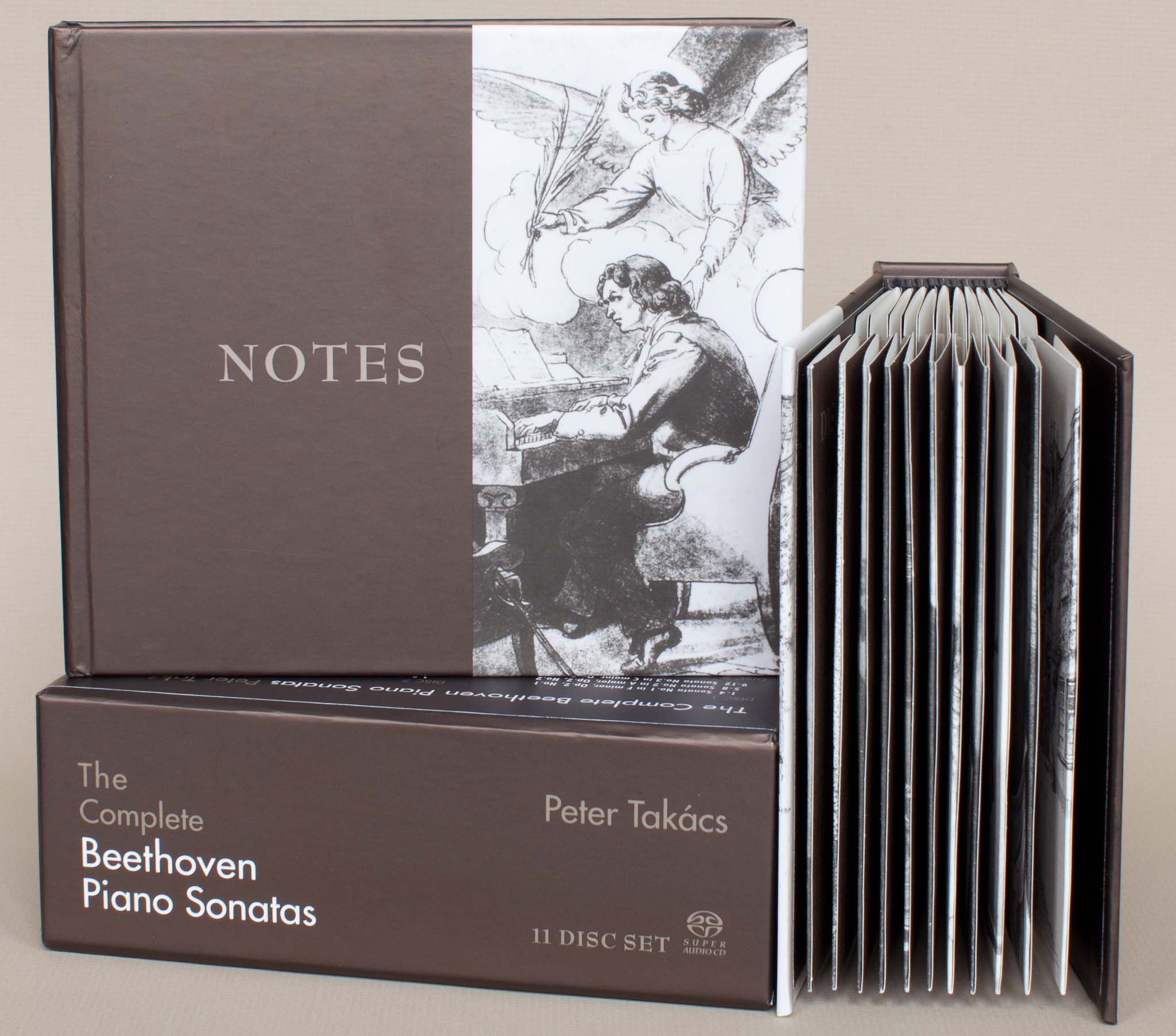
01a_beethoven_takacsBeethoven - The Complete Piano Sonatas

Peter Takács

Cambria CD1175-1185 11 (www.cambriamusic.com)


Peter Takács is a professor of piano at Oberlin College in Oberlin, Ohio. He was born in Bucharest, Romania and by four was taking music lessons and made his debut there at seven. When the family emigrated to France he was admitted to the Conservatoire National de Paris. In the United States he was awarded full scholarships to both Northwestern and the University of Illinois. It was with Leon Fleisher, with whom he maintains a close personal friendship, that he completed his artistic training at Peabody Conservatory. In addition to the usual one-on-one instruction, he gives master classes, adjudicates on music competitions, and concertizes in the United States and abroad, performing in solo recitals, chamber music and works with orchestra.

It is evident that Takács has become very close to Beethoven’s spirit, for these interpretations seem to come from within and not imposed on the score. These are not simply scholarly performances but fresh, compelling renditions by a scholar who has resolutely looked beyond the printed page. In addition to the 32 published sonatas, six extras are included: WoO 50 & 51 (1797/8); The Elector Sonatas WoO 47 nos. 1,2,3; and the sonata for piano four hands op.6 (1896/7) with Janice Weber, secondo. Plus, for good measure, the Andante Favori WoO 57. Thus, the collection is uniquely complete.

For me, Takács reveals qualities in these works that elevate them from piano pieces into musical narratives that engage the listener’s undivided attention and hold it beyond the very last note. I hated to stop any one of them or have my attention diverted in case I missed something. Even the shortest note or phrase has meaning. A poor simile but it may be like habitually viewing a sculpture from the same perspective and then seeing it from a new aspect... same piece but differently illuminated... an added dimension and a fresh appreciation of a familiar piece. Listening to these recordings aroused nostalgic remembrances of the wonderment and excitement of hearing these works for the first time. I do hope that Professor Takács will favour us with some Schumann, played with equal dedication.

Audiophiles will be very excited with these hybrid discs which are recorded in five channels that are available on the SACD track but are spot-on heard on the two channel track of the discs. The instrument is a Model 290, 9’6” Bösendorfer Imperial Grand and the recordings were engineered by Soundmirror, Inc. of Boston.

01b_beethoven_takacs_paciageFinally, I must comment on the sumptuous packaging which, itself, is a work of art: a sturdy box houses a 144-page, full colour, hard-bound book of informative essays and meticulous notes on each work written by Professor Takács. A pocket on the inside back cover contains a BEETHOVEN TIMELINE, an 18”x19” folded 2-sided almanac of significant events in Beethoven’s life with contemporary milestones in the worlds of music, literature, science, philosophy and history. The CDs are individually sleeved in a matching hard cover book.

Professor Takács visited Toronto recently and he was kind enough to sit and chat with me in the WholeNote offices. Parts of that conversation/interview with this very interesting and articulate man were recorded and I urge the reader to view this below.

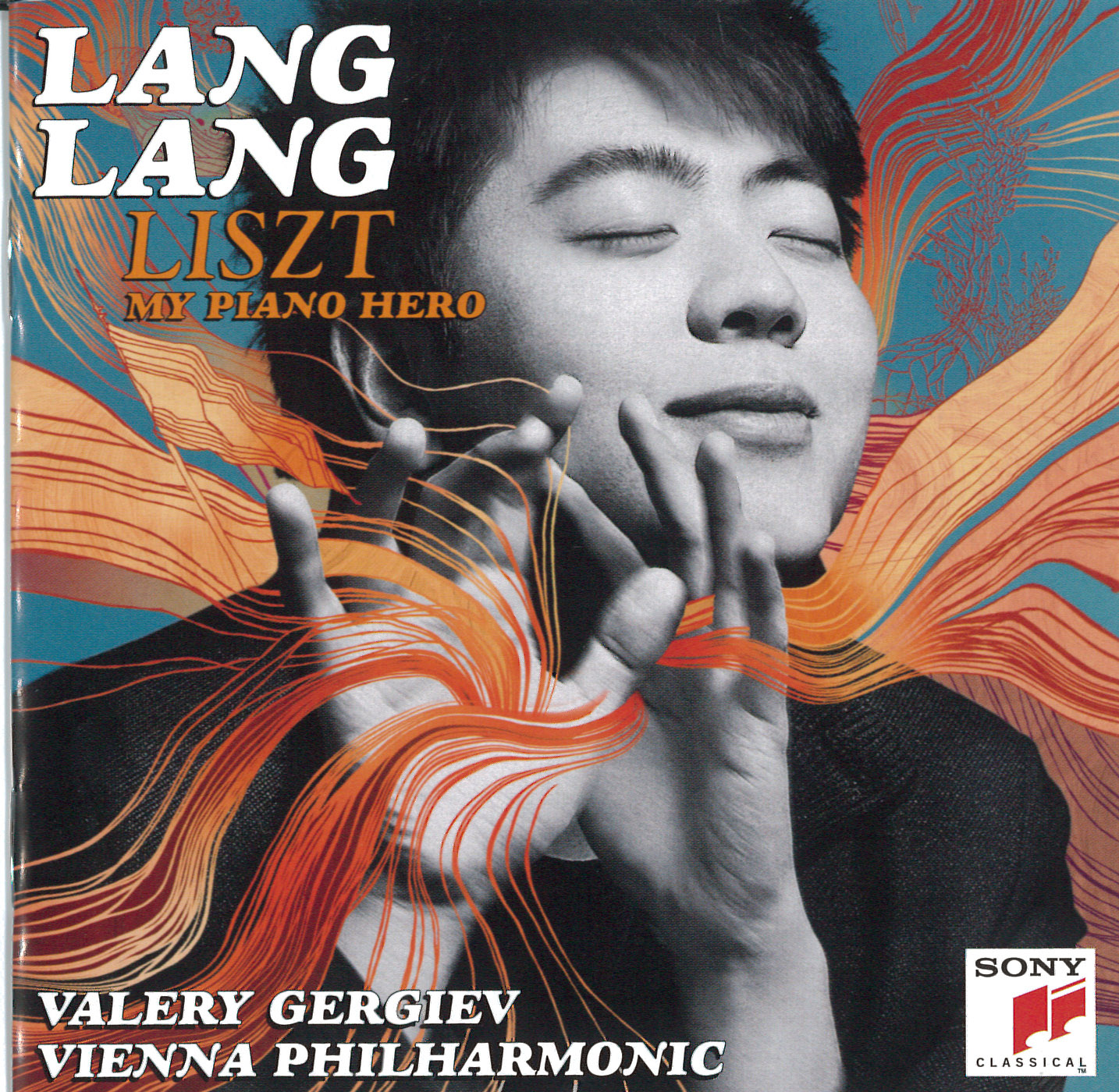
02_lang_lang_lisztLizst - My Piano Hero

Lang Lang; Vienna Philharmonic; Valery Gergiev

Sony 88697891412

For the Liszt bi-centennial most of the major record companies have issued new releases and re-releases of his work. One of these is “Liszt - My Piano Hero” by Sony Classical featuring Lang Lang. The celebrated young Chinese pianist, a former child prodigy, is now 29 years old. Over the last 10 years he has developed enormously from a dazzling showman somebody referred to as “the J.Lo of the piano,” to a maturing artist whose playing never ceases to touch your heart. Lang Lang’s main attributes, I think, are his communication skills and exuberant love of playing the piano. Recently I saw him with 100 kids playing Schubert’s March Militaire at the Philharmonie Berlin under his inspiring direction to a result of overwhelming success.

This selection contains some of Liszt’s most popular pieces like La Campanella, Hungarian Rhapsodies Nos. 6 and 15, Grand Galop chromatique and many others of similar vein, plus the Piano Concerto in E flat major with Valery Gergiev conducting the Vienna Philharmonic. A good cross section of Liszt’s works from the dazzling virtuoso pieces to the more introspective romantic, dreamy compositions (Liebestraum No. 3, Consolation No. 3, Un Sospiro) which are played with exquisite touch and delicacy. There is idiomatic playing in the Rhapsody No. 6 especially in the slow mid section (Lassu) where he captures the Hungarian spirit with the characteristic rubatos and accelerandos. La Campanella sounds like a little bell the piece was named after.

This fine recording will convert many sceptics to accept Liszt to be Chopin’s equal as a keyboard giant.

Concert note: Valery Gergiev conducts the Mariinsky Orchestra at Roy Thomson Hall on October 21. Lang Lang performs all five Beethoven Concertos (one per night) with the Toronto Symphony Orchestra November 9, 10, 12, 17 & 19.

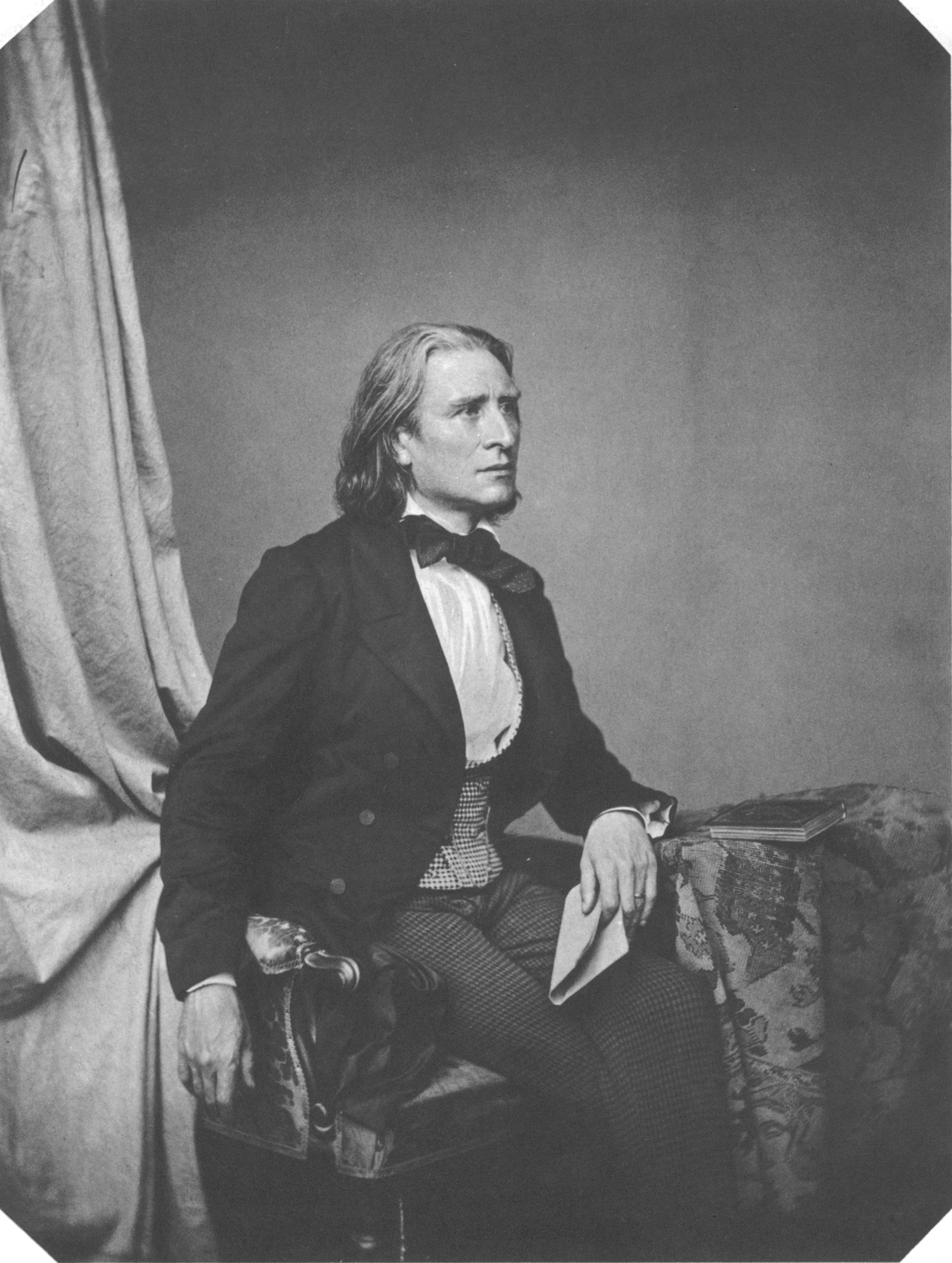
franz_liszt_articleTwo hundred years ago, on Oct 22, 1811 in the Hungarian village of Doborjan, later renamed Raiding in today’s Burgenland (Austria), one of the most influential figures in the history of Western music, Franz Liszt, was born. Although from Hungarian ancestry he never learned to speak the language as he spent most of his life in France, Germany and Italy. His father was a talented musician who worked for the Eszterhazy family and was well acquainted with Haydn. The little Liszt at age of seven already knew how to write music and played Bach fugues and transposed them while “his parents ate their dessert.” At the age of nine he gave his first concert and at the age of 10 he studied under Czerny and Salieri. His fame grew quickly and as a child prodigy his father took him on European tours.

In the French capital he met Chopin and many other prominent figures of the music world. He quickly developed into a phenomenal pianist and was idolized throughout the salons. As a glamorous society beau he fell in love and ran away with a married woman, the beautiful Countess Marie d’Agoult, and had three children with her. (One of them, Cosima later married Richard Wagner.) But the love affair didn’t last. Later he met Princess Carolyne von Sayn-Wittgenstein, a divorcee whom he wanted to marry but the ceremony was cancelled in the last minute by order of Pope, Pius IX. Instead he lived with her in Weimar where as Kapellmeister for the Saxon princes he reshaped musical life and attracted all the upcoming composers to his “court.”

He became a “conqueror of Europe” and his fame and fortune knew no bounds. He was also a most generous man: he returned regularly to Pest-Buda (now Budapest) and gave many concerts for charity. He was also instrumental in the creation of Wagner’s Bayreuth Festspielhaus with a large contribution of funds.

This age bred many Romantic heroes like Lord Byron, Robbie Burns, Benvenuto Cellini, Niccolo Paganini, and Hector Berlioz whose colourful lives imitated their art. Liszt was one of these but he did not die young like the others and lived to a relatively healthy 75.

Being a pianiste extraordinaire he composed mainly for the piano. His output was prolific and many pieces such as the Hungarian Rhapsodies, the Paganini Etudes, Années de pèlerinage and the b-minor Sonata have become immortal masterpieces, staples of the repertoire and difficult hurdles for any aspiring pianist. He revolutionized the piano concerto by compressing the traditional three movement structure into a single, free flowing, long movement, but still maintaining, in the form of episodes, the usual introduction, allegro, andante, scherzo and presto finale sequences.

Later in life he concentrated on orchestral writing and invented a new form, the symphonic poem. He wrote 12 of these of which Les Preludes became the most often played but according to critics, some of the others like Héroïade Funèbre, Orpheus, Mazeppa and Hamlet are superior. Following the footsteps of Berlioz’ Symphonie fantastique Liszt further developed the romantic symphony with his Faust and Dante symphonies, which rival Berlioz.

Disappointed in being unable to marry his Princess, Liszt took on monastic orders and retired in a monastery near Rome. He became an Abbé and lived in a cell with minimal furnishings and an old out of tune piano with the middle D missing. Monastic life, however did not suit him. He continued to travel, visiting the Princess who lived in Rome. His journeys were mainly to Bayreuth, Budapest and of course, Rome. In his seventies his health began to fail and after catching a bad cold on one of his train journeys he died in Bayreuth in the midst of his daughter’s family in 1886 at the age of 75. Ironically, his much younger son-in-law Richard Wagner had died three years earlier in 1883.

All life must come to an end, but Liszt certainly made the most of it. A dashing romantic hero idolized by women everywhere he went, he was a magician of the piano who took pianism to a level never before imagined. As a composer he revolutionized and extended, along with Berlioz, the symphony orchestra with instrumentation and orchestral effects never heard before. His influence as a composer on his contemporaries and the next generation cannot be overestimated. Franz Liszt enriched the history of music and it is unlikely there will be another like him ever again.

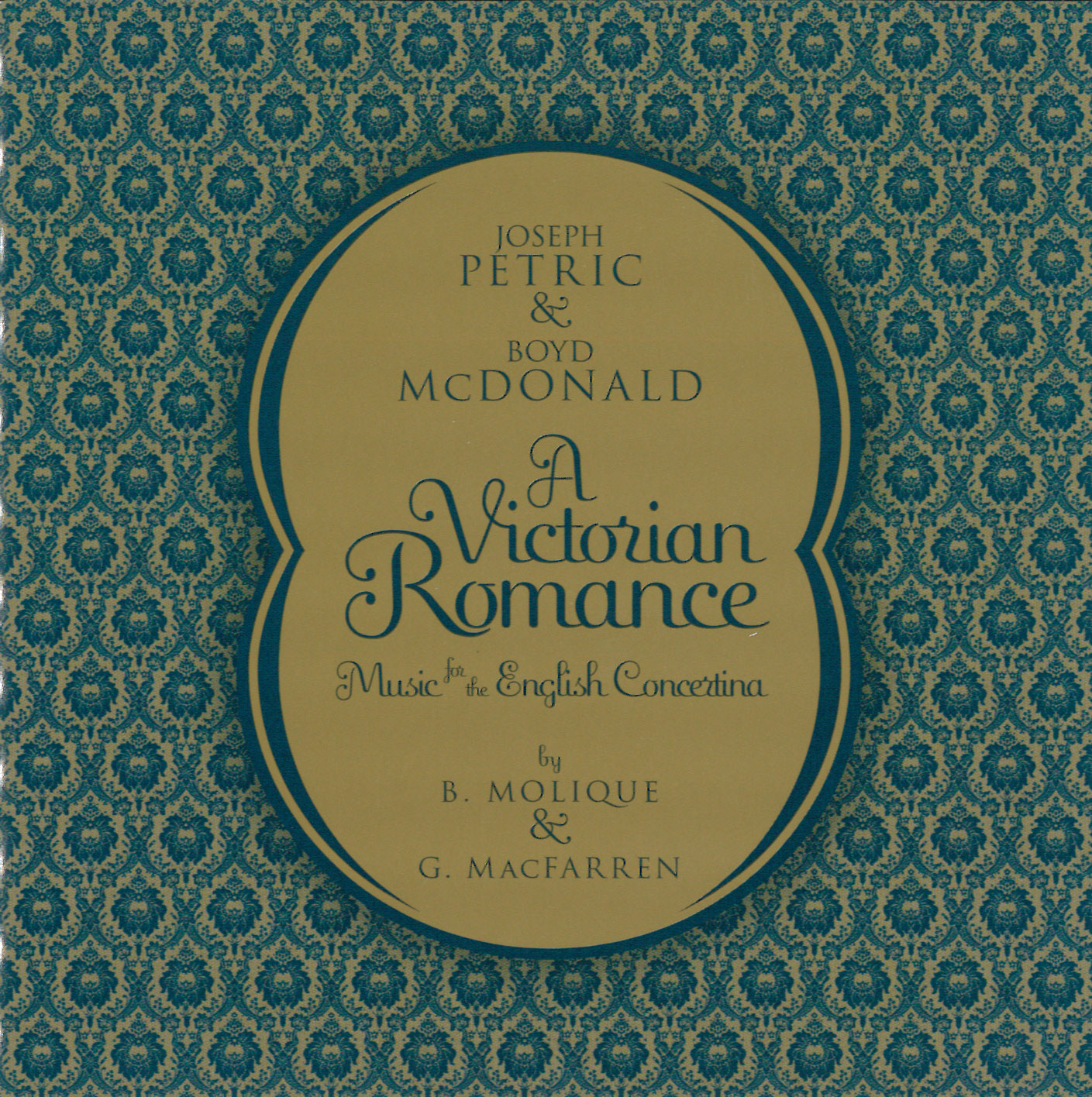
04_petric_victorianA Victorian Romance - Music for the English Concertina

Joseph Petric; Boyd McDonald

Astrila AST2322652-2 (www.midtownmedia.ca/joseph)

The concertina is a distant relative of both the accordion and the bandoneon. All three were “invented” in the 19th century. Thanks to the phenomenal success of Astor Piazzolla, his tango Nuevo bandoneon compositions and performing style is popular with accordionists around the world. Now internationally renowned Joseph Petric tackles the intricacies of English concertina music from the British Victorian era on the accordion, with help from pianist Boyd McDonald.

Two multi movement works by Bernhard Molique are featured as well as George MacFarren`s melodramatic Romance. These are not deep or challenging works but are all pretty compositions that were very much the style during the 1800s. Accordion and piano as a duet often results in a tuning and intonation nightmare, but the superb fortepiano accompaniment of Boyd McDonald tosses any such fears immediately out the window. His performance provides a solid and steady support to Petric’s musical viewpoints and exceptional phrasing and bellows control.

The sound quality superbly replicates the salon atmosphere. Petric has written comprehensive liner notes that provide historical explanations. Readers interested in more information should check out the book Victorian Music for the English Concertina available at the Toronto Public Library.

I enjoy how Joseph Petric plays. However, I am a bit disappointed in his performance on “A Victorian Romance.” Stylistically I would have liked to hear more dynamic differentiation and “attachment” to the musical flow, but that’s just a personal thing. This is still an excellent release with fine performances.


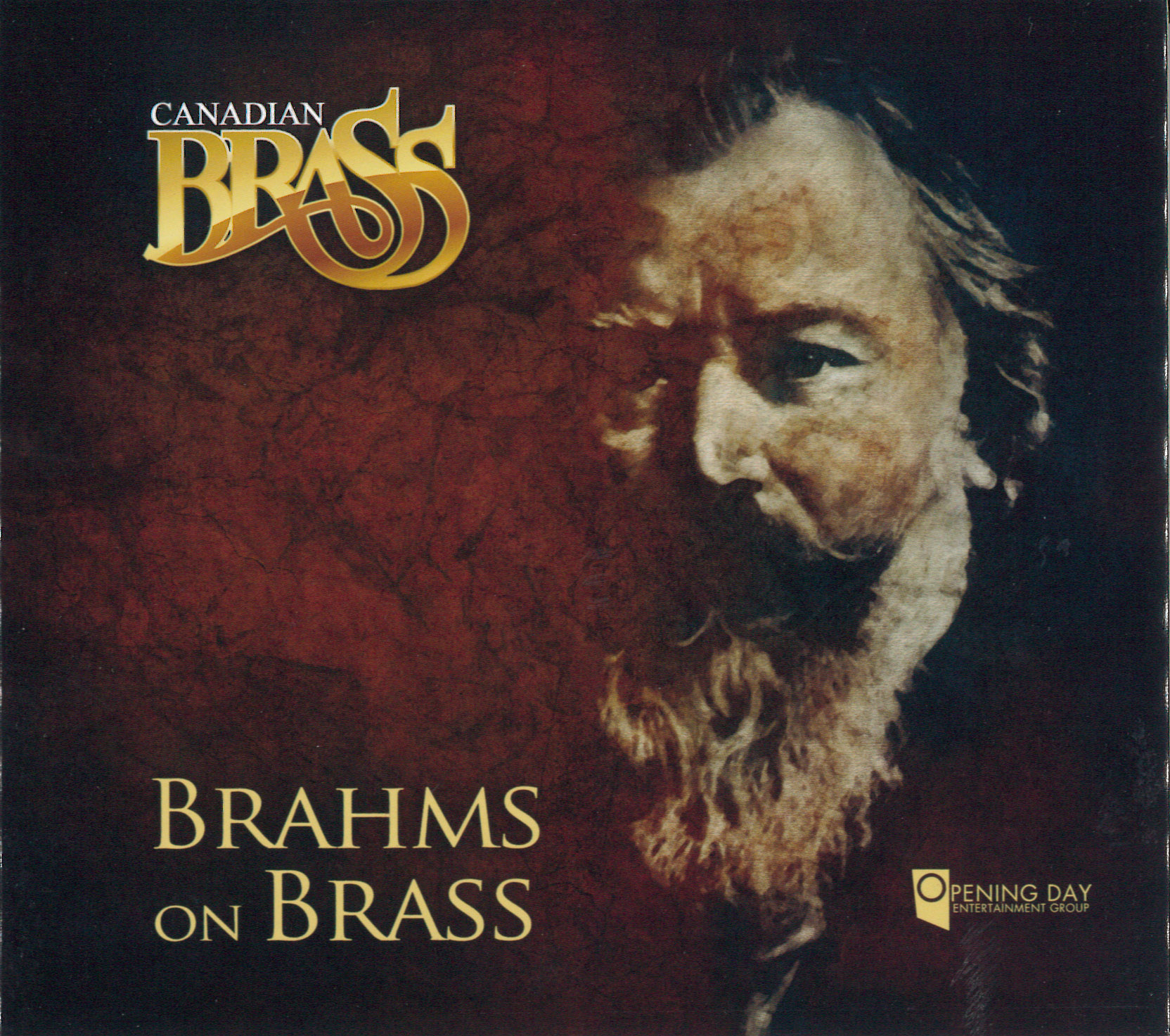
05_brahms_brassBrahms on Brass

Canadian Brass

Opening Day Records ODR 7415 (www.openingday.com)

Though raised on Brahms’s keyboard music, I was surprised by these wonderful adaptations and performances of the Sixteen Waltzes, Op. 39, Ballade, Op. 10, No. 1, and Eleven Chorale Preludes, Op. 122. Brahms was a multifaceted composer indeed. Canadian Brass trumpeters and adapters Brandon Ridenour and Chris Coletti note on their website how easily the piano waltzes became brass music. Both bumptious waltzes and tender ones like the famous Waltz no. 15 in A Flat come off well in these spotless renderings, recorded in the clear, resonant acoustics of Christ Church Deer Park. Considering the German brass bands of his time, the settings also seem historically appropriate. The Ballade evokes a sterner tradition of medieval knights and battles in Ridenour’s adaptation for brass octet. Augmented musical forces enable a wide dynamic range, building through fate-haunted clashes to a tremendous climax.

The disc’s greatest works are Brahms’ last, the beloved 11 organ chorale preludes (adapted by Ralph Sauer) reaching back to the sacred music of Bach and further (in which brass instruments were also prominent). Along with the two trumpeters, the Canadian Brass’s personnel include Eric Reed, horn, Keith Dyrda, trombone, and original member Chuck Daellenbach, tuba. All contribute equally in such gems as O God, thou righteous God and O World, I must now leave thee, in performances that promise many fruitful hours of listening and contemplation.


07_mahler1-10Wagner – Prelude; Elgar - Cello Concerto; Brahms - Symphony 1

Alisa Weilerstein; Berlin Philharmonic Orchestra; Daniel Barenboim

EuroArts DVD 2058068 or 2058064 Blu-ray

I ordered this disc to hear a new performance of the Elgar. The Brahms enjoys a satisfying, substantial performance but does not quite displace the top few favourites. Recorded live in the Sheldonian Theatre, Oxford in 2010 it is the performance of the Elgar that sets new standards in every respect.

The premier of the profoundly beautiful Elgar Cello Concerto in 1919 was a fiasco. Elgar had not been given enough time to adequately or even inadequately rehearse the London Symphony Orchestra. Cellist Felix Salmond knew his part but the orchestra was unprepared. The critics were merciless and Elgar wanted to withdraw the work but Salmond’s devotion to the score persuaded him otherwise.

The first recording was of a truncated version with cellist Beatrice Harrison conducted by Elgar in 1920. She recorded the complete score with Elgar and the LSO in 1928. The sensitive and fragile nature of the music seems to particularly suit female performers. This is best demonstrated by the young Jacqueline du Pré, who recorded it in 1965 with cellist-turned-conductor, Sir John Barbirolli and the LSO for EMI. She tuned the world into Elgar’s most introspective statement. As an aside, Barbirolli was in the cello section of the LSO in the disastrous 1919 premier.

Who could have imagined that du Pré’s mantle would have passed to Alisa Weilerstein. Weilerstein was born in 1982 and has played cello since she was four. Her father founded the Cleveland Quartet and was concert-master of the Cleveland Orchestra. Her mother is a professional pianist and well known in musical circles. In the performance captured on this video, she plays the concerto with such assurance that it sounds like she owns it. Her musicality, sensitivity and competency as a performer are complemented by a strong, electrifying stage presence. She is at one with her instrument. A paragon. Her rapport with Barenboim and the Berliners is splendid and the performance is nothing short of spectacular, certainly worth many listenings. Unquestionably, a must have. Do it now.

Editor's note: Alisa Weilerstein receives MacArthur Fellowship - Alisa Weilerstein will receive $500,000 in no-strings-attached support over the next five years after being named as a MacArthur Fellow. The 29-year-old cellist was awarded the so-called “genius” grant by the John D. and Catherine T. MacArthur Foundation.

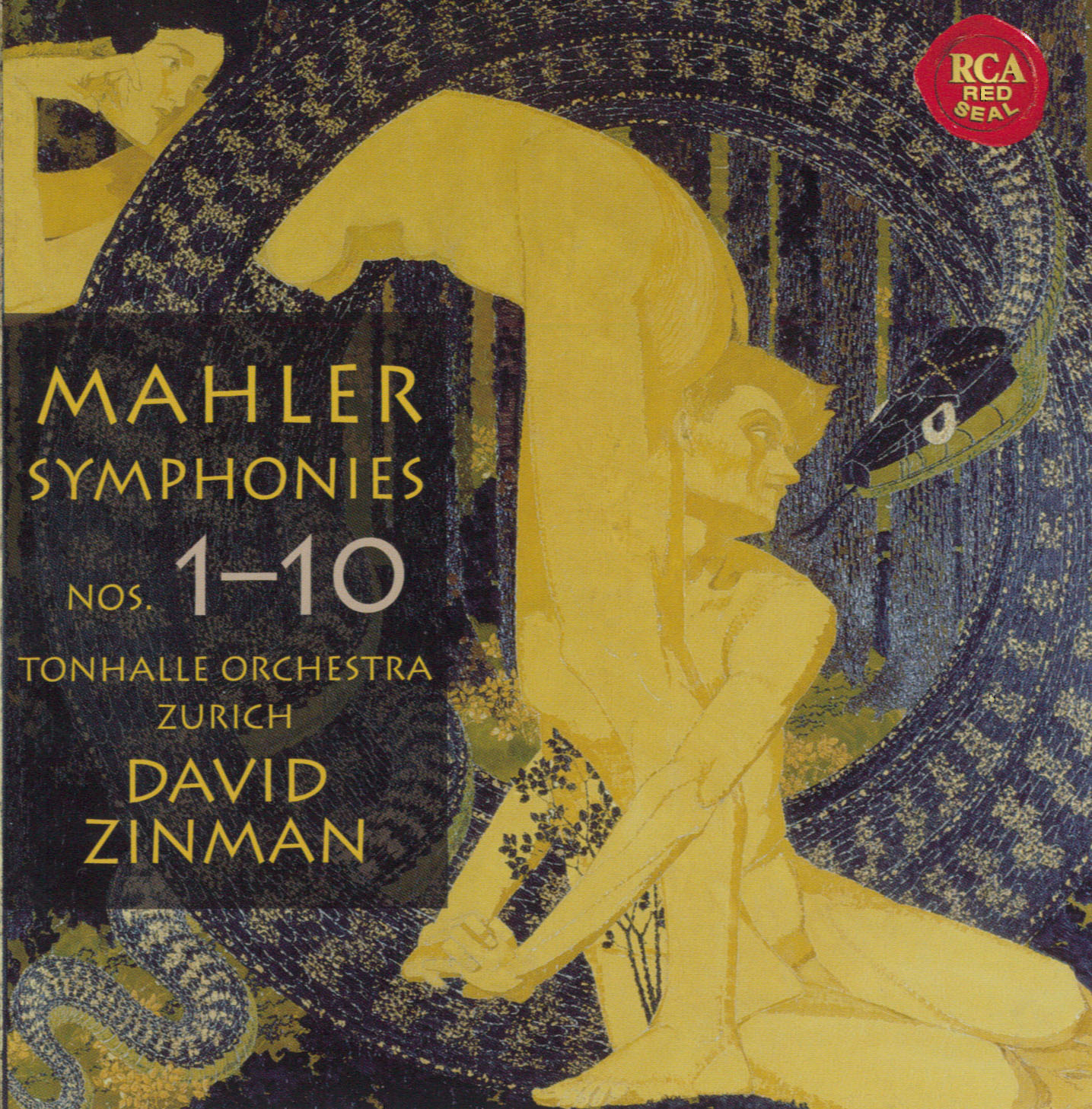
07_mahler1-10Mahler - Symphonies 1-10

Tonhalle Orchestra Zurich; David Zinman

RCA Red Seal 88697 72723 2

Until recently Switzerland’s Tonhalle Orchestra Zurich had little international prominence and, by comparison with Ernest Ansermet’s renowned Suisse Romande orchestra, a sadly meagre discography. That all changed with the arrival in 1995 of American conductor David Zinman. He brought an injection of fresh blood to this venerable ensemble and soon hit a home run with of a swiftly-paced, revisionist box set of Beethoven symphonies which sold over a million copies. The rejuvenating effect of his stewardship is confirmed by the genuine optimism and esprit-de-corps expressed in interviews with the members of the orchestra in an accompanying documentary covering the recording of the Sixth Symphony and the story behind its composition. (Incidentally, this DVD includes a visit to the control room where the producers claim with a straight face that they aren’t adjusting the balance through the mixing board. Not when the cameras are running, anyway.)

Few boxed sets of Mahler symphonies have ever proven themselves outstanding in all respects, though the Bernstein and Kubelik collections from the 1960s remain worthy contenders despite their age. Though Zinman’s excursion to the nine planets of Mahler’s known universe contains more hits than misses, there are a few disappointments along the way. The bulk of the ebullient First Symphony (Zinman includes the excised Blumine movement as an appendix) falls flat, the genial Fourth fails to smile, and the infinite longing of the first movement of the Ninth Symphony fails to register emotionally due to clumsy or non-existent tempo adjustments and less than subtle dynamic gradations.

The more objective middle symphonies fare best, with an excellent Third and Fifth and highly effective Sixth and Seventh symphonies, the latter two distinguished by the sweetest, most contented cowbells I’ve ever heard. The choral symphonies, Two and Eight, feature world-class vocal soloists including Juliane Banse, Anna Larsson, Birgit Remmert and Anthony Dean Griffey backed by the magisterial WDR Rundfunkchor Köln.

The set concludes with the incomplete Tenth Symphony in the rarely-heard Clinton Carpenter version, an interventionist realization that attempts to flesh out the harmonies of Mahler’s extant sketches and incorporates quotations from his previous symphonies. I’m not entirely convinced by the results but it’s fascinating to hear this alternate to the prim and proper Deryck Cooke version. My reservations aside, the mid-range price, ample documentation and exemplary sonics (including an offbeat 4.1 (sic) SACD layer for ye boys what have such toys) make this an attractive proposition and a leading contender among the avalanche of recent releases in the ongoing Mahler celebrations.


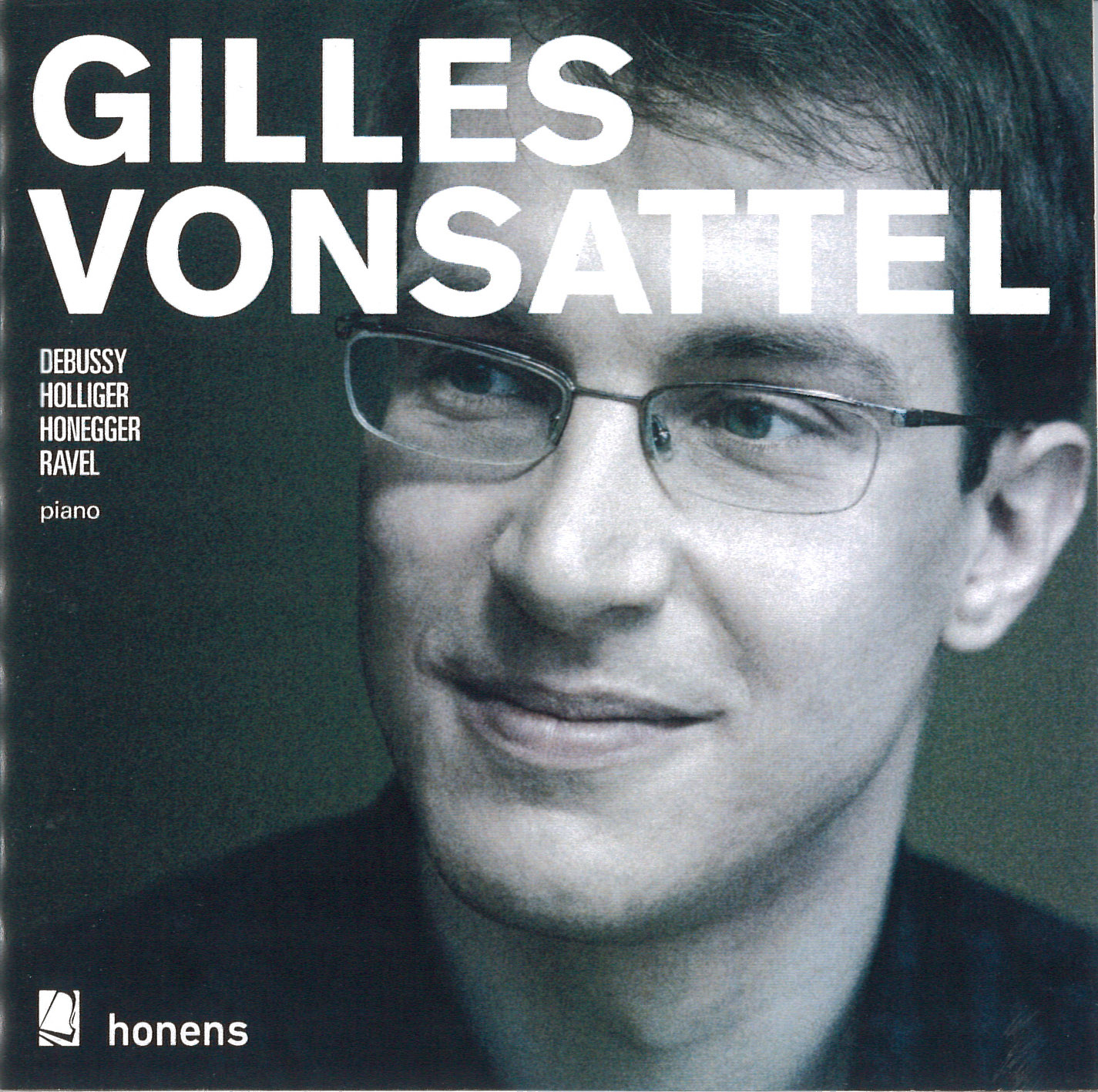
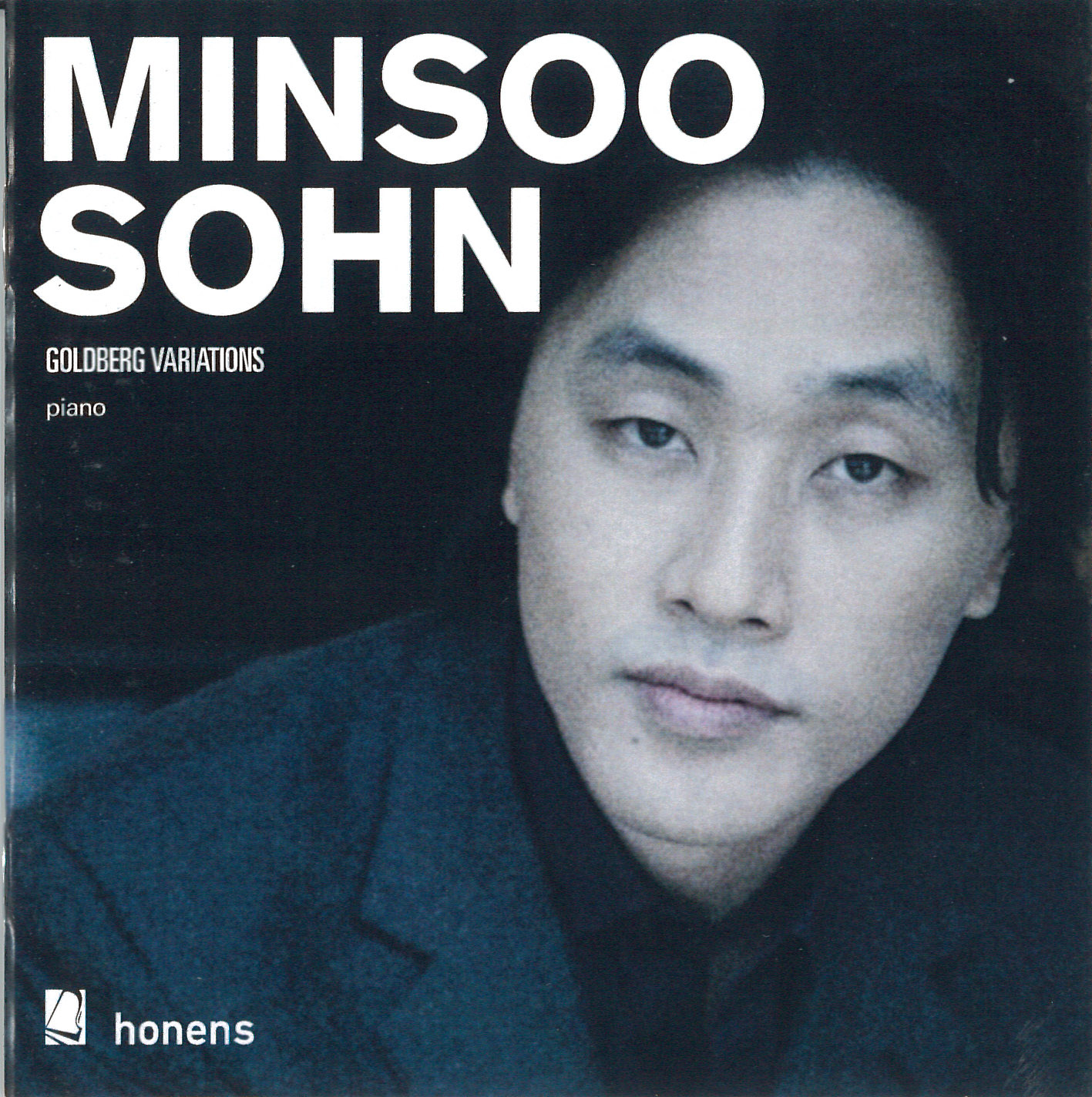
The Honens International Piano Competition, based in Calgary, commenced in the early 1990s and occurs every three years. Its next edition will take place in 2012, with a prize advertised as the largest anywhere: $100,000 cash, plus three years of management and concerts, for the first-place winner.

Another angle to the Honens Competition is the occasional issuing of CDs of past winners. Four releases have just appeared, each recorded in 2010 at the Banff Centre. They are an homage to the recently deceased Andrew Raeburn, who directed the Honens for a decade, and earlier in his career ran classical record labels in England and the US. Raeburn is listed as producer on one of these discs, the Bach release by Minsoo Sohn, a follow up to Sohn’s Liszt recording as First Laureate of the 2006 competition. The other three, featuring the 2009 laureates, were produced by Banff recording engineer Theresa Leonard.

The piano sound captured is uniformly fine, closely miked yet resonant. Music choices are diverse, and avoid much of the customary core piano repertoire - no Beethoven, Schumann, Chopin, Liszt, Scriabin, or Rachmaninoff.

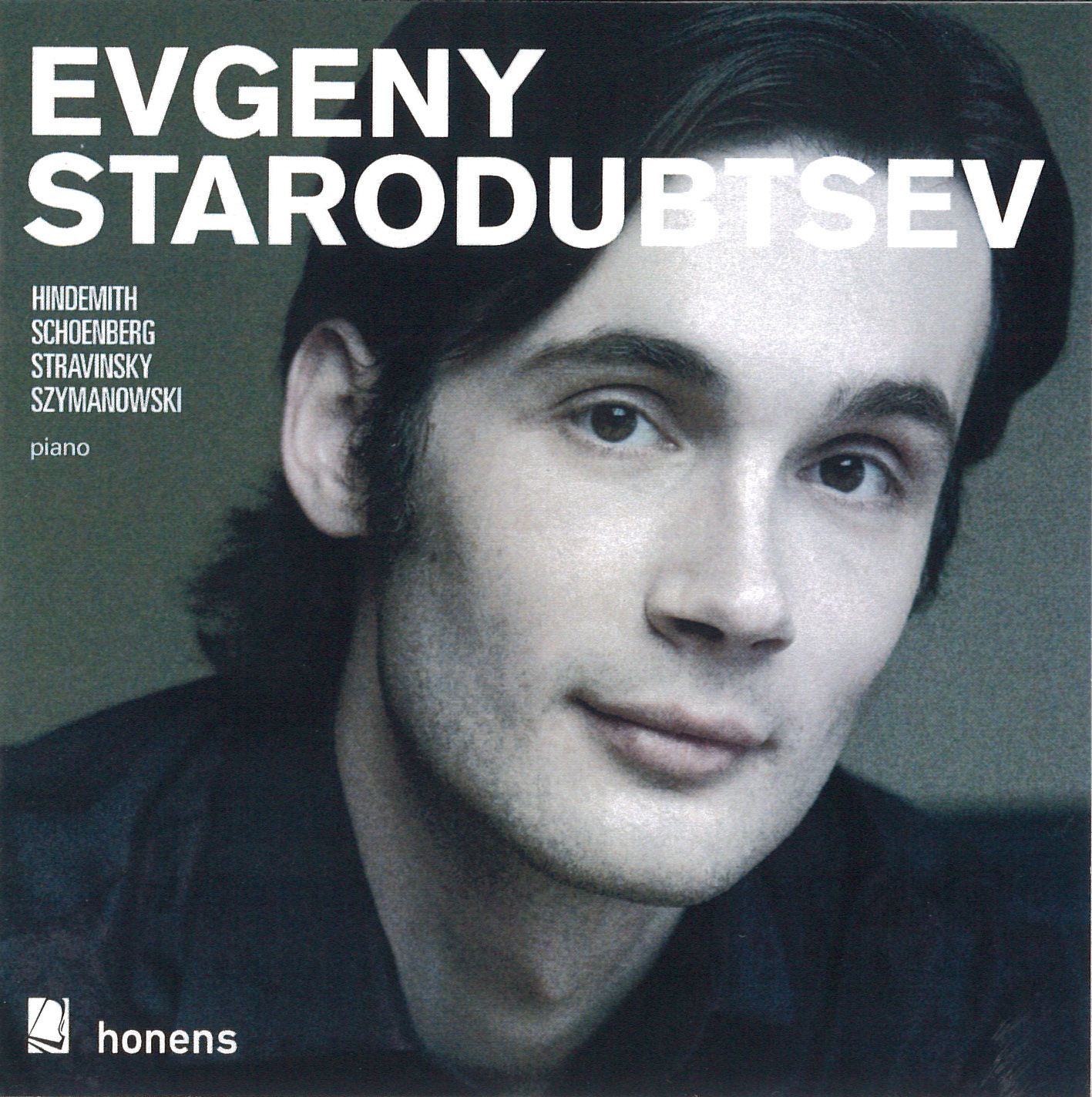
08b_honens_starodubtsevRussian Evgeny Starodubtsev presents the most interesting recital, clustered around the 1920s: Karol Szymanowski’s three bracing Masques, Paul Hindemith’s jazzy Suite (1922), Schoenberg’s Five Pieces, Op. 23 and Stravinsky’s Sonata (1924). His playing is objectivist in spirit, which may suit a neoclassical milieu.

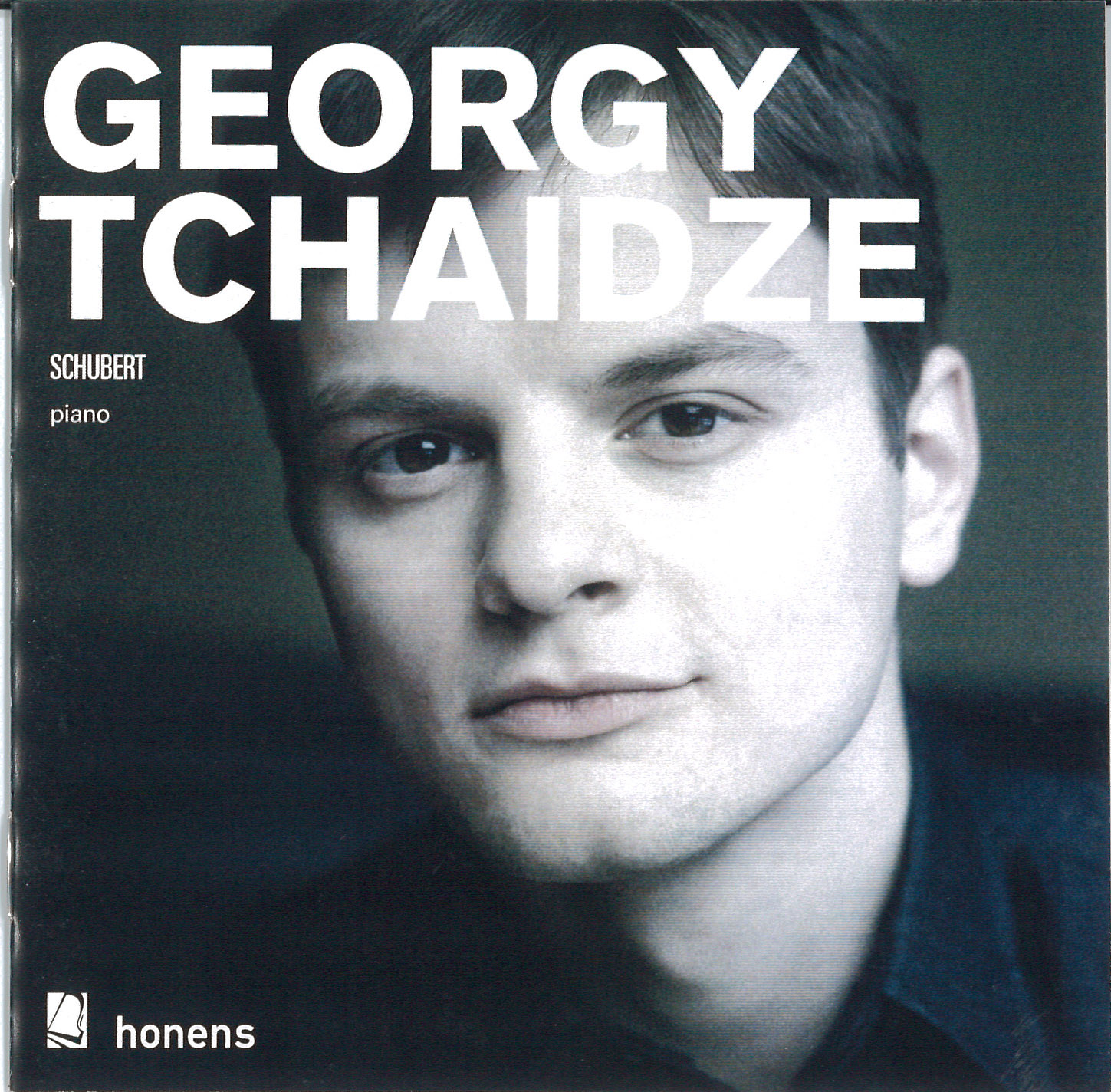
08c_honens_tchaidzeRussian Georgy Tchaidze offers a lovely Schubert program with warmth and care. He plays the songful A Major Sonata, Op. 120, the Wanderer Fantasy, and four short character pieces like he loves them.

08d_honens_vonsattelAmerican Gilles Vonsattel delivers a compelling, mostly French recital: Ravel’s Sonatine and Gaspard de la Nuit, five selections from Debussy’s Images, and short pieces by Arthur Honegger and Heinz Holliger (b. 1939). His playing is notably colorful and expressive.

08a_honens_sohnKorean-American Minsoo Sohn’s rendering of the lofty Goldberg Variations is gentle and pianistic, with fleet tempos, lyrical counterpoint, and occasional zest. Sohn observes the repeat signs in each variation, yet almost decoration-free: his Bach journey stretches to a sobering 75 minutes, when it could have been more pleasant at under 40.

While not issued as a set, all four black-and-white CD jackets and booklets look exactly alike: sternly modern in design, with frustratingly small type. Eric Friesen, the CBC classical radio broadcaster, has supplied brief conversational liner notes, taken from his interviews with the performers. For more information visit www.honens.com.

This month I’m catching up on a backlog of solo recital CDs.
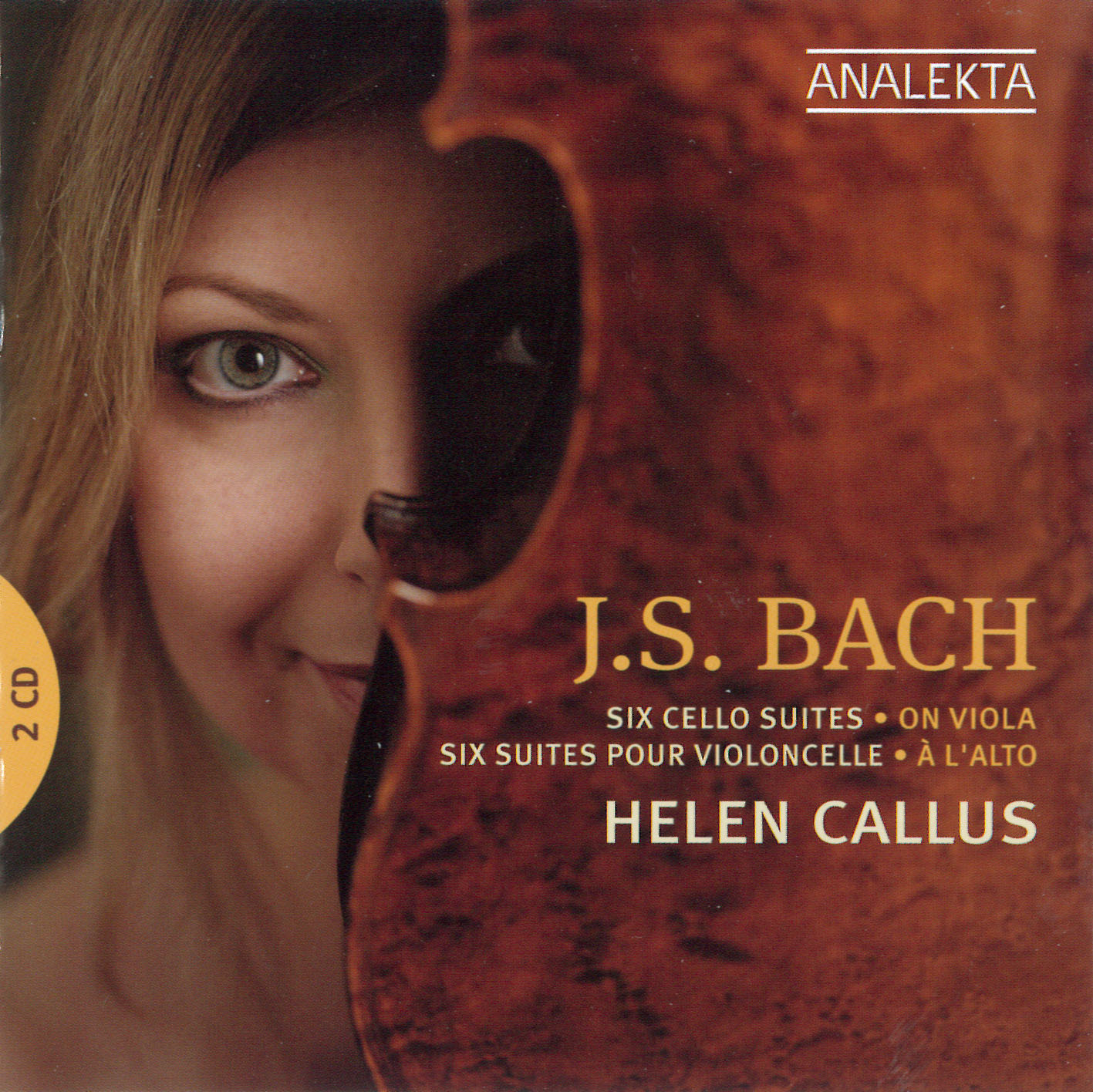
01_bach_cello_violaAnalekta has issued a beautiful 2CD set of the Bach Six Cello Suites on Viola by the outstanding English violist Helen Callus (AN 2 9968-9). Five of the Suites are in the original keys, while No. 6 is transposed up a 4th from D major to G major, apparently to enable Callus to retain more of Bach’s open-string effects. The move away from the cello tessitura – the viola is tuned one octave higher – gives the works an added brightness and a quite different feel. Callus maintains a beautiful sense of line, and handles the multiple-stopping and contrapuntal elements quite effortlessly. Recorded at Domaine Forget’s Salle Françoys-Bernier in Saint-Irénée, Quebec last year, the sound is warm and resonant.
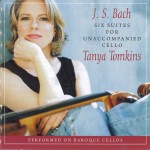
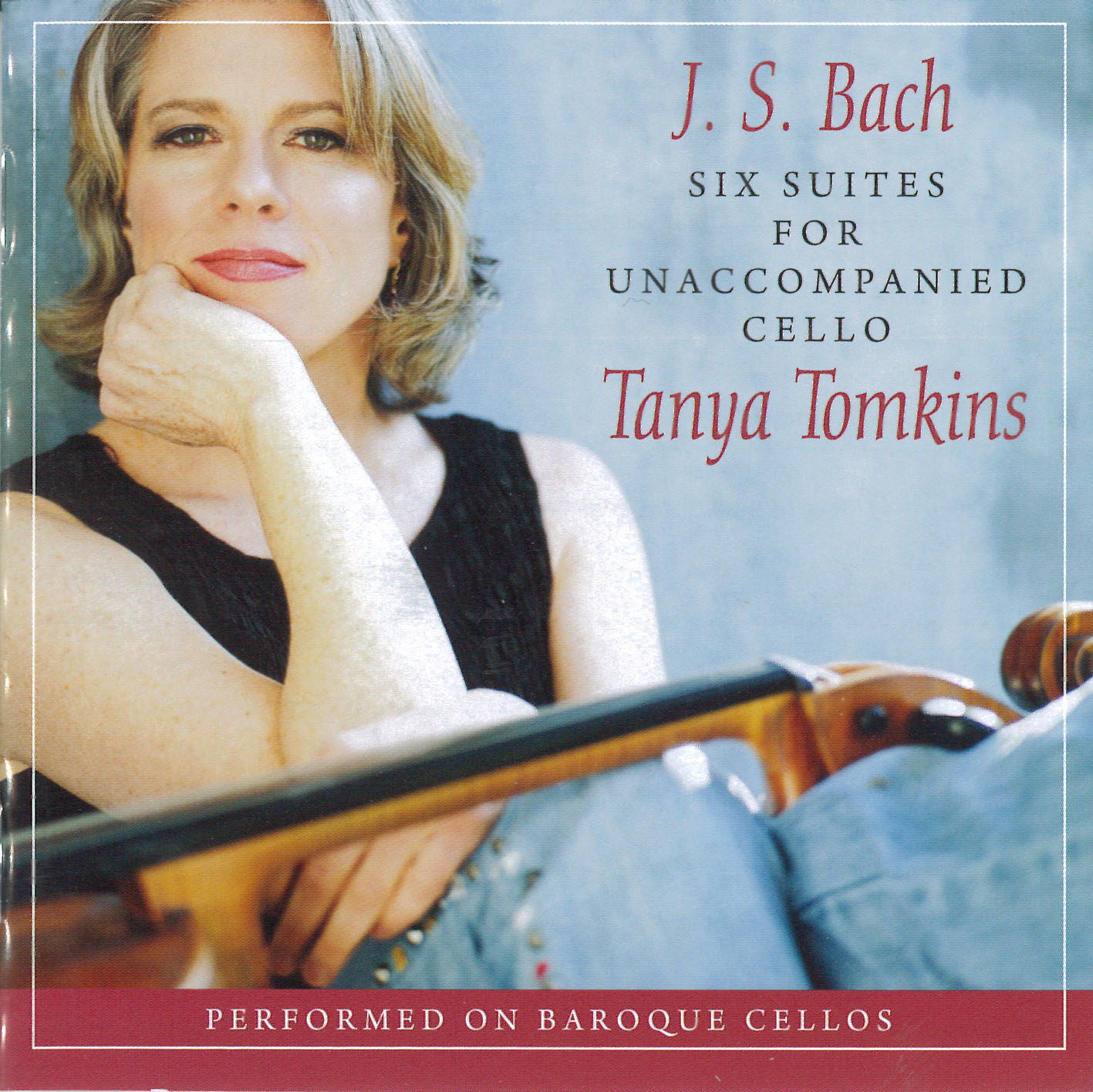
02_bach_cello_baroqueA direct comparison is provided by the Avie Records 2CD set of the Six Suites performed on Baroque cellos (although one is from 1798) by Tanya Tomkins (AV2212). The playing here seems a bit slower and more contemplative, with a tone quality closer to a viola da gamba than a cello, but I found that it didn’t hold my interest over extended listening: I had no problem listening to the Callus set from start to finish, but couldn’t do it here. Perhaps the lack of a strong sense of pulse, particularly in the dance movements, contributed to that. Don’t get me wrong though – this is thought-provoking, intelligent and carefully measured playing, albeit somewhat cool and with not the same life or spirit as the viola set – or perhaps more accurately, with a different spirit. Tomkins’ Benvenue Trio co-member Eric Zivian composed a double for the Sarabande in the Suite No.6.
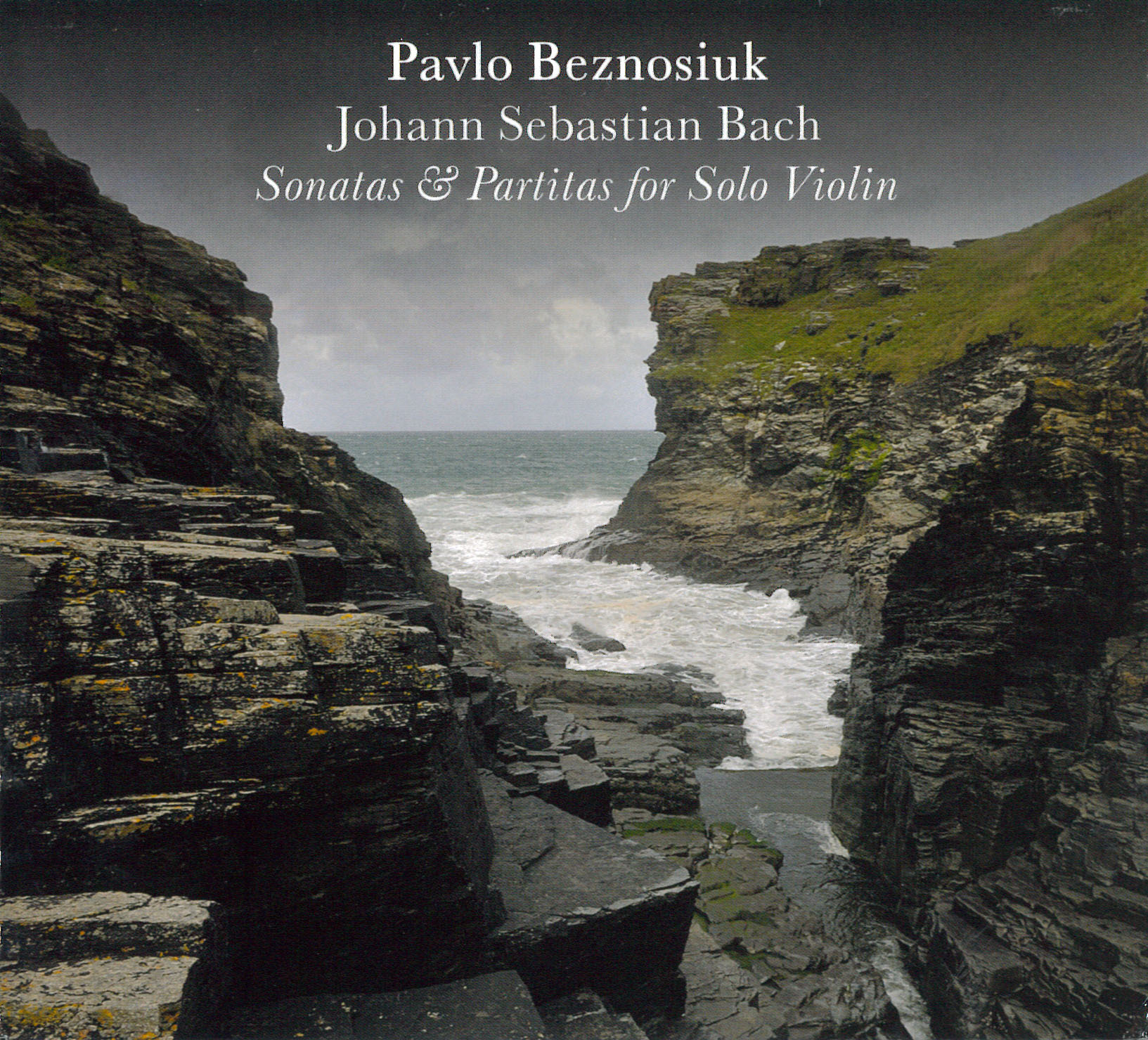
03_bach_solo_violinYou don’t have to read the booklet notes for the Linn 2CD set of the Bach Sonatas & Partitas for Solo Violin by Pavlo Beznosiuk (CKD 366) to realize that this is another performance by a Baroque specialist – the thin high register, the sparse vibrato, and the overall lack of a big sound make it obvious from the opening bars. Again, though, this is clearly a very personal and thoughtful interpretation. Tempos are not fast, but the dance movements in the Partitas are never allowed to drag. Beznosiuk makes some interesting choices with variations in some of the repeats, as well as with the inner workings of the chordal sections; he also changes or omits the occasional note from the standard editions, but he’s not exactly alone in that respect. Overall, though, this is an interpretation that didn’t engage me emotionally, a response that probably wasn’t helped by the distant nature of the recording.
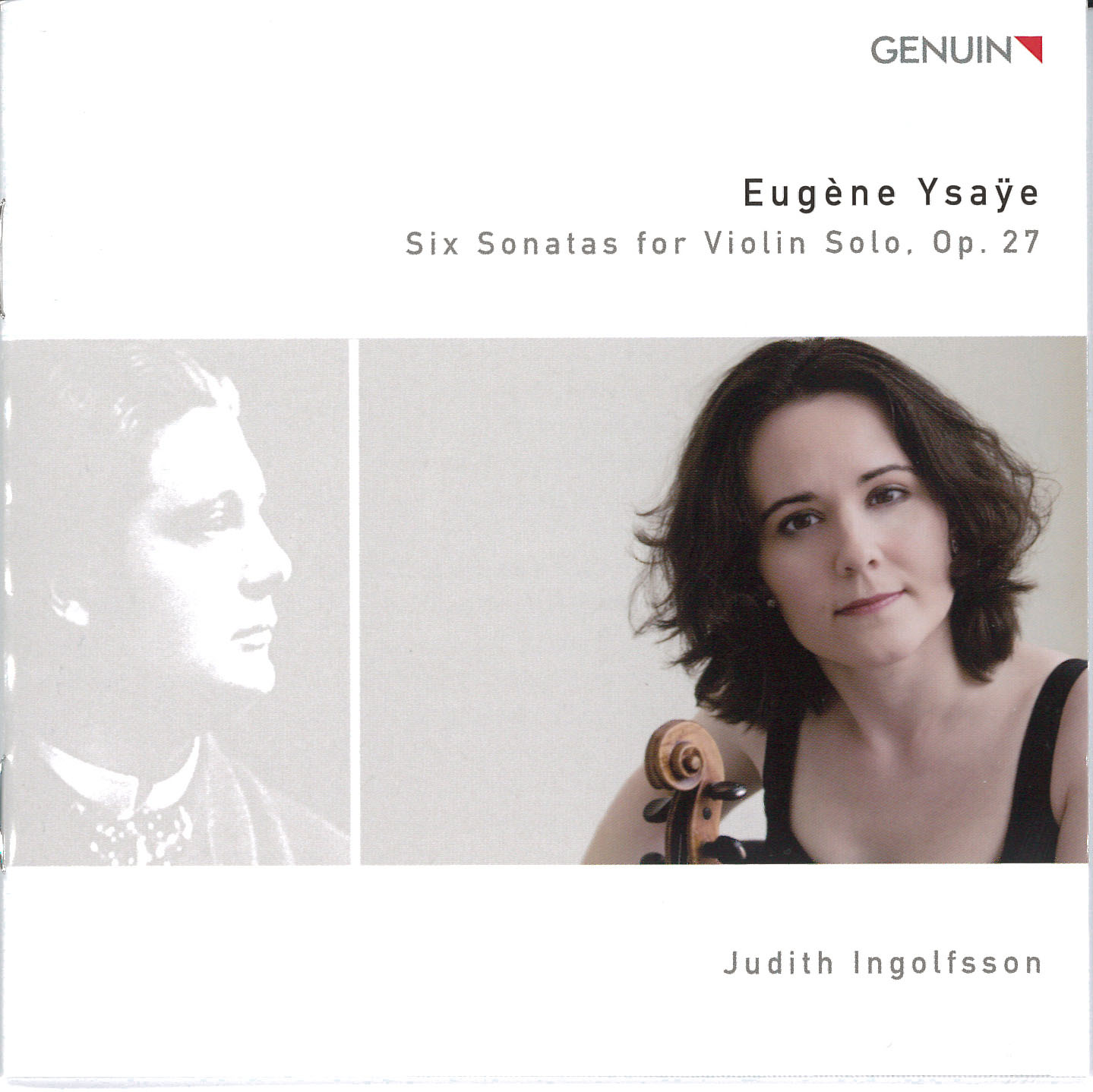
04_ysayeThere’s another terrific CD of the Six Sonatas for Violin Solo by Eugène Ysaÿe, this time by the Icelandic-born violinist Judith Ingolfsson (GENUIN GEN 1102). I reviewed the Rachel Colly D’Alba set on Warner last February, and referred then to the startling originality and individuality of these remarkable works. They’re arguably the most significant solo sonatas since Bach’s, yet despite being well represented on CD – one single web search today turned up 16 different issues – they haven’t been recorded by many of the really “big” names in the field. It’s almost impossible to offer an objective comparison with so many choices available, but this is another impressive set that never makes the pieces sound forced or awkward. And that’s saying something.
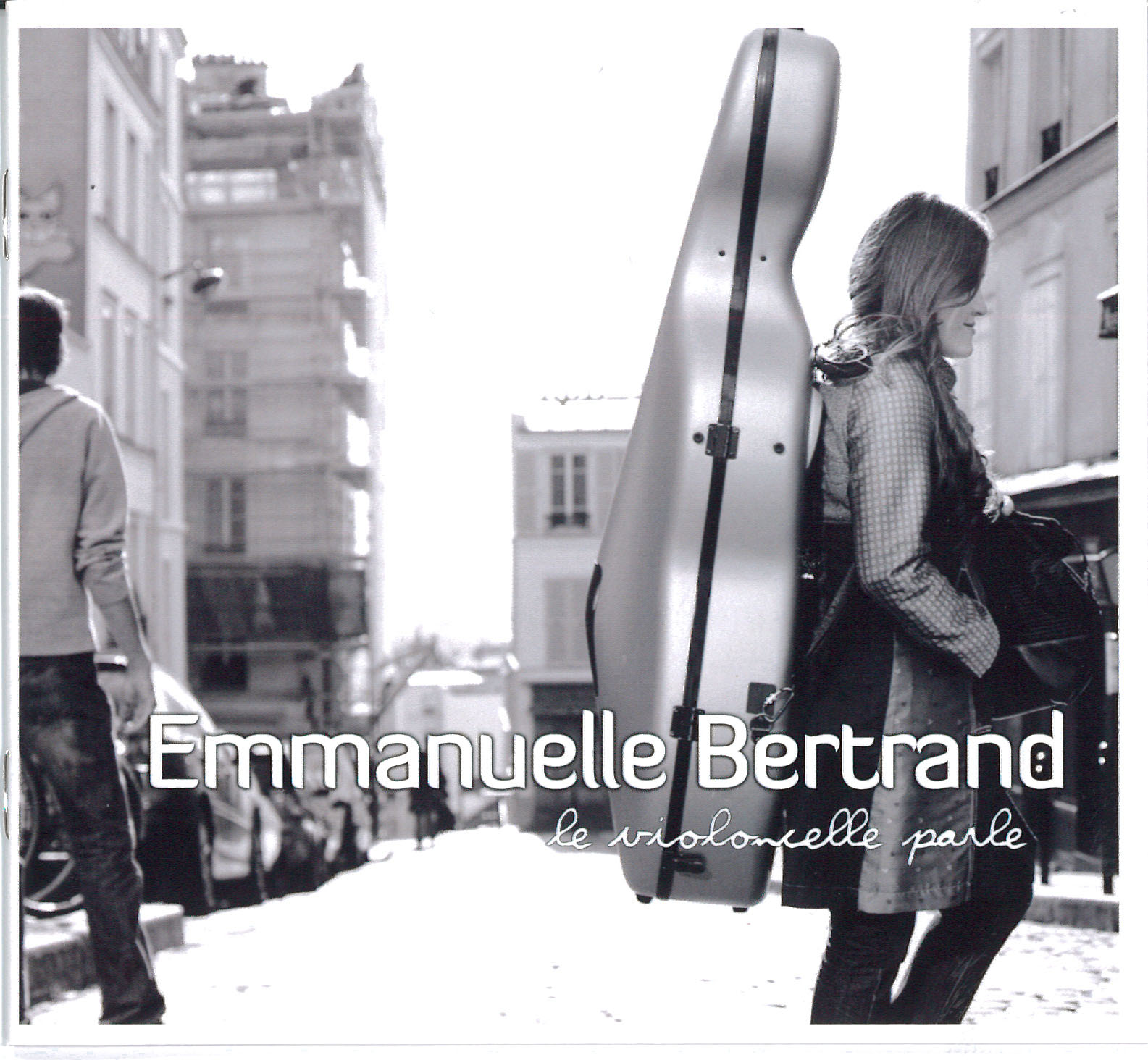
05_emmanuelle_bertrand_cello_parleOn her latest solo CD+DVD set, le violoncelle parle (the cello speaks) (harmonia mundi HMC 902078) the French cellist Emmanuelle Bertrand presents an excellent programme: Britten’s Suite No. 3 in C minor, written for Rostropovich; Gaspar Cassado’s Suite from 1926; a relatively new (2003) and quite moving work from Bertrand’s partner and regular accompanist Pascal Amoyel called Itinérance; and a knock-out performance of the Kodaly Suite Op. 8, which really doesn’t sound like it was written in 1915. Bertrand’s breathing noises are a bit intrusive at times, but nothing can detract from the wonderful playing here. The DVD is an engrossing 47-minute film by Christian Leblé that features Bertrand talking about the music (in clear, understandable French with sub-titles) along with sections of the actual CD studio recording of each work and a fascinating look at Bertrand one-on-one with one of her students in a section of the Kodaly Suite.
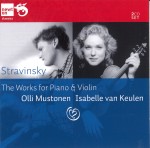
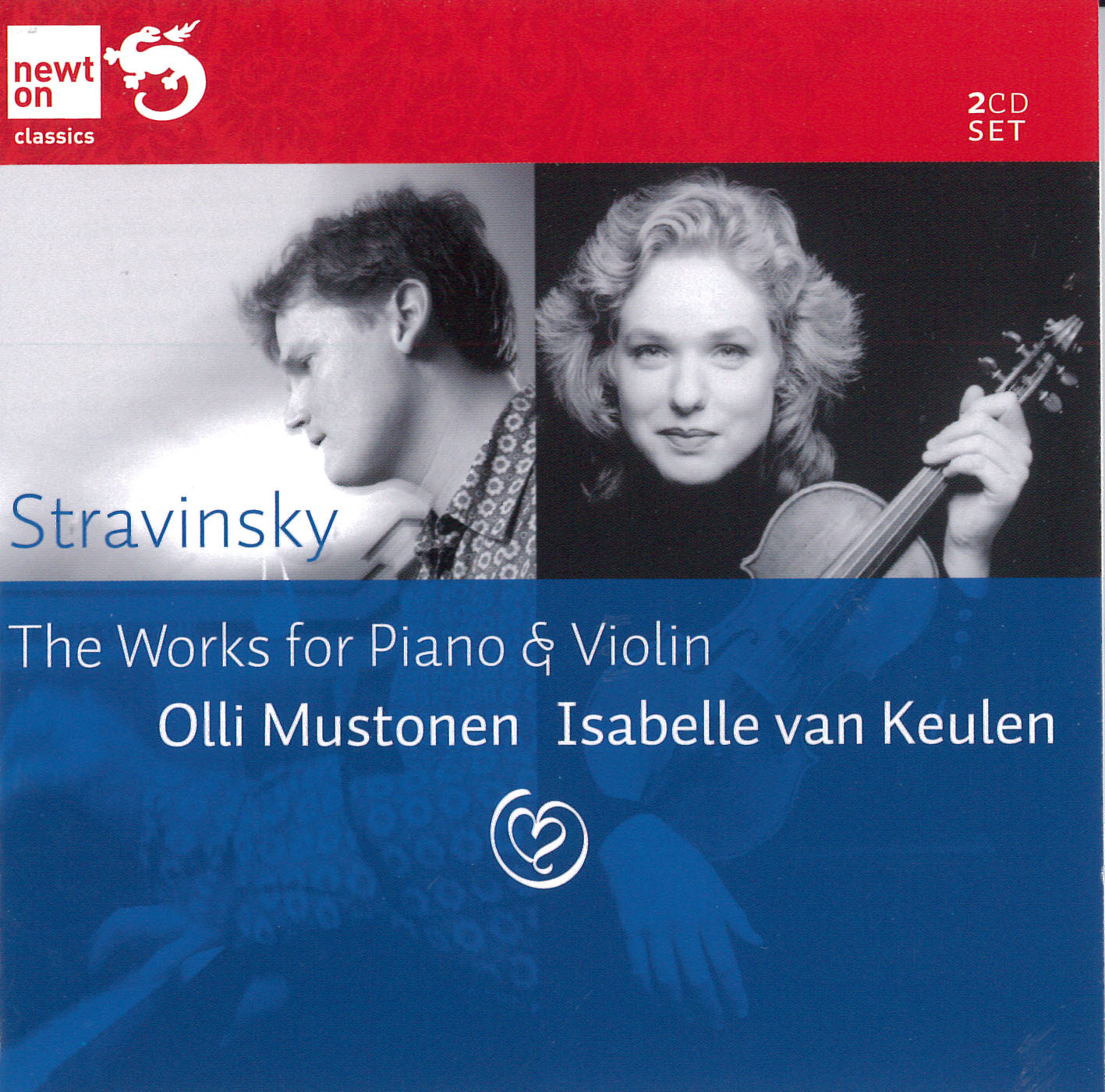
06_stravinsky_violin-pianoNewton Classics has reissued the 2CD Complete Works for Violin and Piano by Stravinsky, originally issued by Philips in 1989, and played by Dutch violinist Isabelle van Keulen and Finnish pianist Olli Mustonen (8802062 2CD). The recordings were made in 1987 and 1988 in Switzerland, but sound as fresh as if they were made last week. Most of the works here are transcriptions of Stravinsky’s own orchestral works, with virtually all of them crediting Stravinsky and Samuel Dushkin as the arrangers. Stravinsky met the Polish-American violinist in 1930, when Schott, the composer’s German publisher, suggested that Stravinsky write a concerto for Dushkin. The two got on well, and as Stravinsky needed to increase his income they formed a performing duo which toured extensively throughout the 1930s. All of the music on these CDs resulted from that partnership. Van Keulen’s playing is exemplary – clean, warm, stylish and with no trace of excessive show; it’s fitting, given that what attracted Stravinsky to Dushkin’s playing was the latter’s sensitivity and a complete lack of showy virtuosity. Mustonen provides the perfect support. Beautifully packaged, and with really excellent booklet notes, this is one of the best “complete works” sets I’ve seen in a long time. Distributed by Naxos here, the budget price makes it an even more attractive buy.
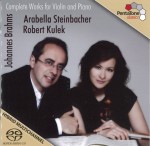
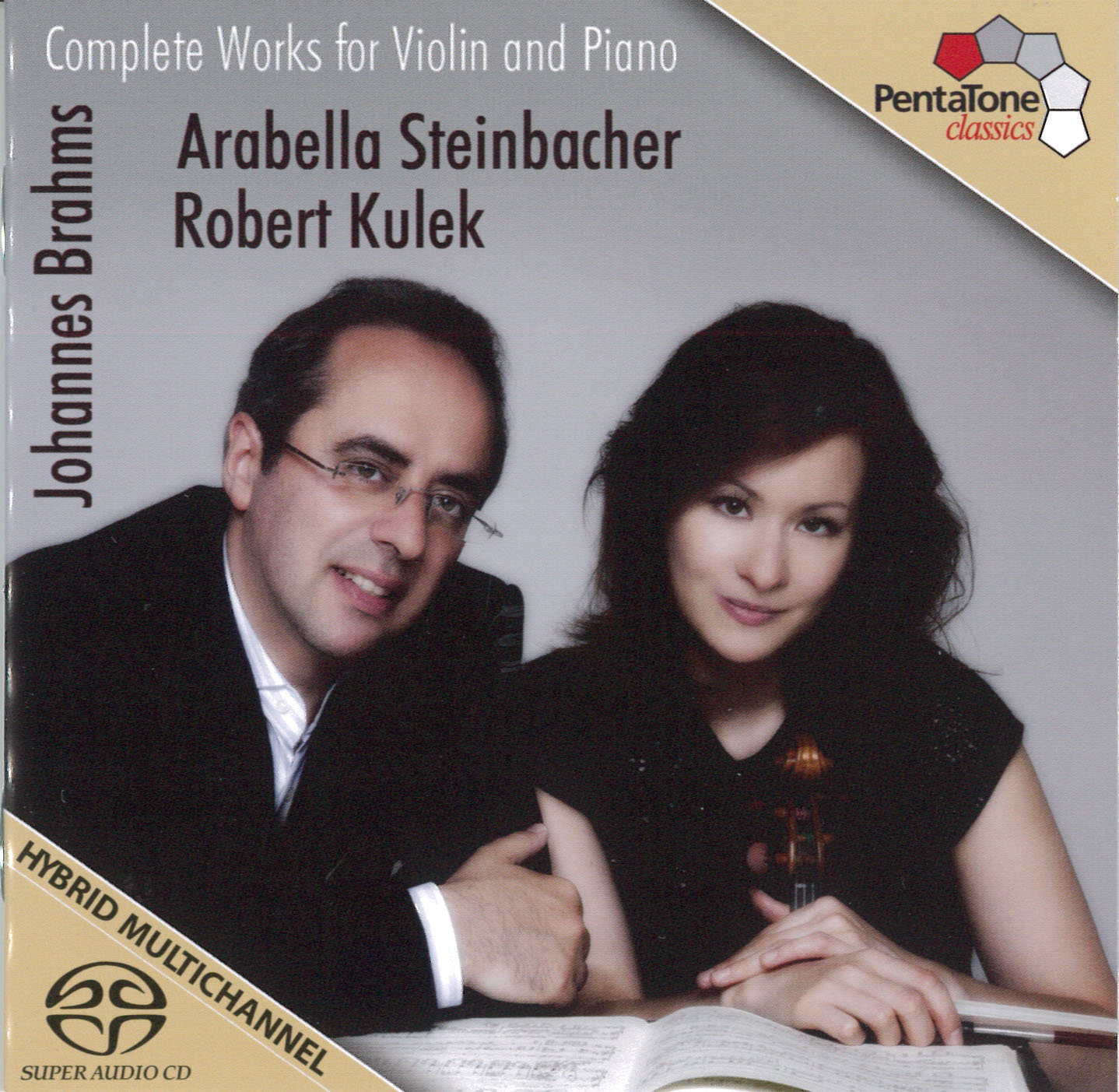
07_brahms_steinbacherAn equally attractive Super Audio CD comes from PentaTone Classics, with Arabella Steinbacher and Robert Kulek performing the Complete Works for Violin and Piano by Johannes Brahms (PTC 5186 367). I always feel you can judge how performances of the Brahms sonatas are going to turn out just by listening to the first 4 bars of the G major sonata: the two piano chords and the almost hesitant off-beat entry of the violin have to be perfectly judged in all respects – tempo, dynamics, pulse, touch, style, warmth, you name it – as they set the mood for the whole work. Well, no problems here. This is classic Brahms playing, bringing to mind all the usual adjectives: warm; glowing; expansive; autumnal. Simply beautiful. I’ll be playing this one again and again.
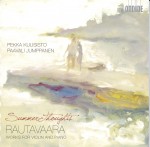
08_rautavaaraSummer Thoughts is the title of a new Ondine CD of the Works for Violin and Piano by Finnish composer Einojuhani Rautavaara, played by violinist Pekka Kuusisto and pianist Paavali Jumppanen (ODE1177-2). Rautavaara, who turns 83 on October 9, has had a highly successful career, despite apparently not understanding why: he says that he writes his music “for myself and no one else,” and is “very flattered and surprised” if someone else finds something rewarding in it. His style is very eclectic. The works here, four of which are world premiere recordings, cover most of Rautavaara’s career: Summer Thoughts and April Lines are both recent re-workings of material from the early 1970s; Lost Landscapes was a 2005 commission from Midori; Dithyrambos and Varietude for solo violin were written as the compulsory pieces for the International Jean Sibelius Violin Competition in 1970 and 1974 respectively; Notturna e danza was also an obligatory piece, written in 1993 for a youth chamber music competition. The most successful piece for me was, ironically, the only one in which the performers don’t actually play together. Pelimannit, or The Fiddlers, is a 6-movement piano suite from 1952 inspired by Finnish violin polska tunes notated some 150 years earlier. For this recording, Kuusisto hit on the idea of playing the actual fiddle tunes before the relevant piano sections. It works wonderfully – and there’s some tremendous fiddle playing!
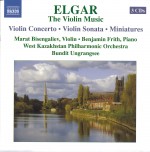
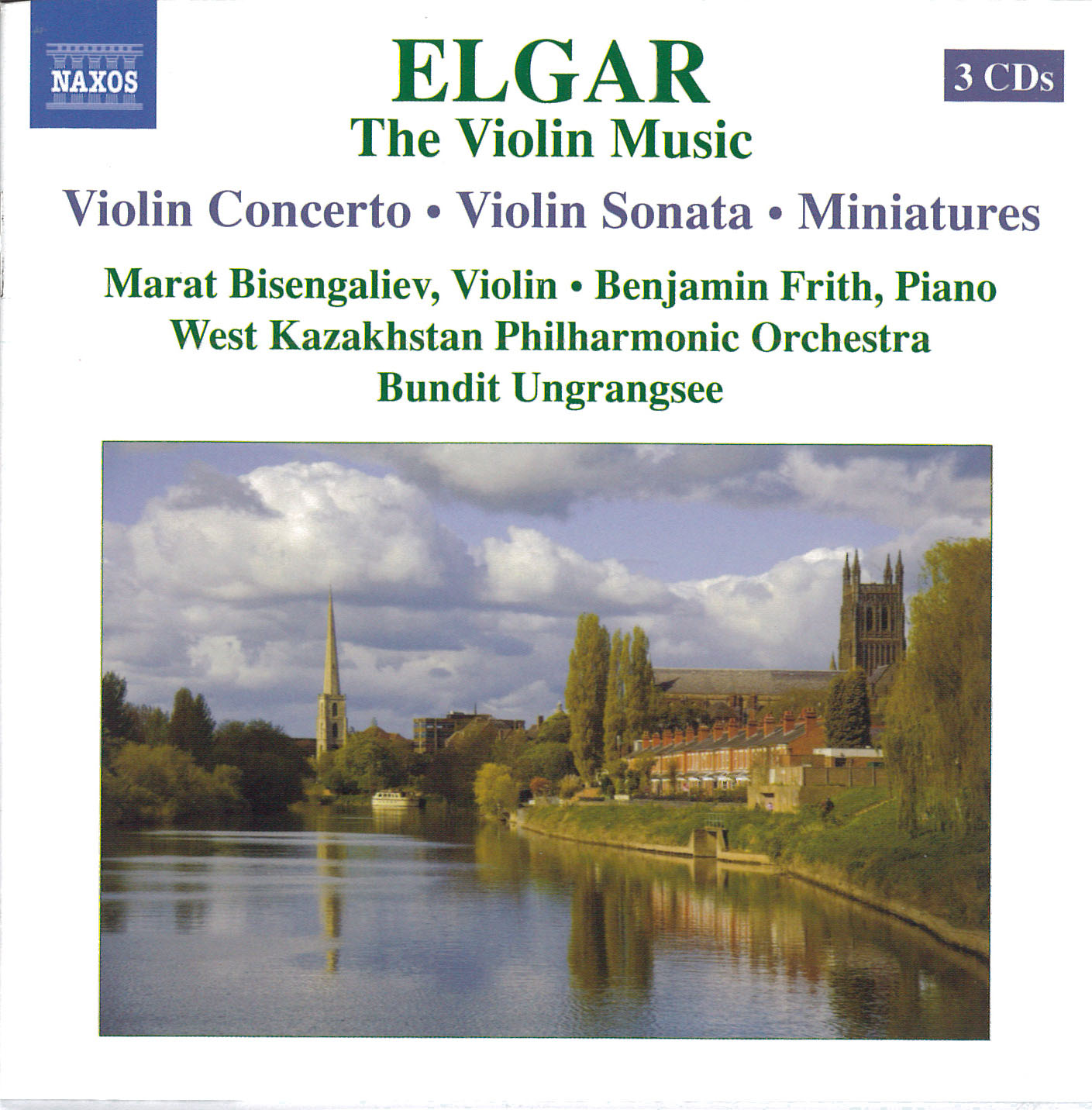
09_elgar_violinNaxos has issued a 3CD box set of Elgar - The Violin Music (8.572643-45), although the performers aren’t quite what you might expect for this most quintessentially English of composers: the orchestra for the Violin Concerto and the Serenade for Strings is the West Kazakhstan Philharmonic Orchestra under Bundit Ungrangsee. The Kazakhstan-born violinist Marat Bisengaliev, who founded the orchestra in 2003, clearly has strong ties to Elgar’s home base, however: the acknowledgements in the booklet notes include reference to his work as musician in residence in Malvern, and thanks for the loan of Elgar’s violin and bow. CD 1, recorded in 2009, contains the orchestral works; CDs 2 and 3, recorded in 1998 and 2000 and previously released by Black Box Music, consist almost entirely of works for violin and piano, with Benjamin Frith at the keyboard. The concerto receives a very presentable reading, with a nicely-balanced orchestral opening and a clean, transparent sound – no “stuffy” Edwardian approach here. Bisengaliev enters sounding more like a viola, with a big tone, quite nasal in the middle and lower registers, and with a tendency to scoop a bit between notes. Although he is much better in the faster sections of the concerto – especially the opening to the third movement – he sounds a bit strained in the quieter, slower moments, which I felt didn’t have the pensive, contemplative feel that is so essential in this music. Overall, this is a performance that occasionally scales the heights, but doesn’t really plumb the depths of this very personal and emotional work. CDs 2 and 3 contain almost 30 short works for violin and piano, both original and transcriptions, as well as the E minor Violin Sonata. Bisengaliev’s full tone and constant vibrato become a bit tiresome after a while. CD2, incidentally, ends with five remarkable Etudes caractéristiques for solo violin, which I never even knew existed!


01_jadinJadin - Quatuors a cordes, Oeuvre 1

Quatuor Franz Joseph

ATMA ACD2 2610

Child prodigy Hyacinthe Jadin premiered his own piano concerto at the age of 13 during the French Revolution, an event which both inspired and overshadowed him. He composed in almost every contemporary genre, including harpsichord and piano pieces, revolutionary hymns, conventional sonatas and trios and chamber music when it was exclusive to the aristocracy.

Quatuor Franz Joseph is certainly conventional: two violins, viola and cello. However, it introduces us to Jadin’s first quartet with a largo which very soon becomes an allegro that is tackled with relish by the quartet. The allegro and following adagio, minuet and second allegro combine to create chamber music at its most exhilarating.

Much less serious in tone are the two other quartets, in A major and F minor. Both exemplify the conventional chamber music of the pump room, albeit enlightened with the demands of the presto last movement of the A major and the folkloric quality of the F minor’s polonaise.

Jadin is said to have been influenced by Haydn, highly likely as Haydn’s influence was by then ubiquitous. Jadin was unique first in that he wrote chamber music when it was almost never publicly performed and second in that he was influenced by Haydn’s slow introductions to his symphonic works. All from a 19-year-old!

We are lucky that Quatuor Franz Joseph is bringing Jadin to the ATMA label; his spirited music makes his death at 24 all the more tragic.

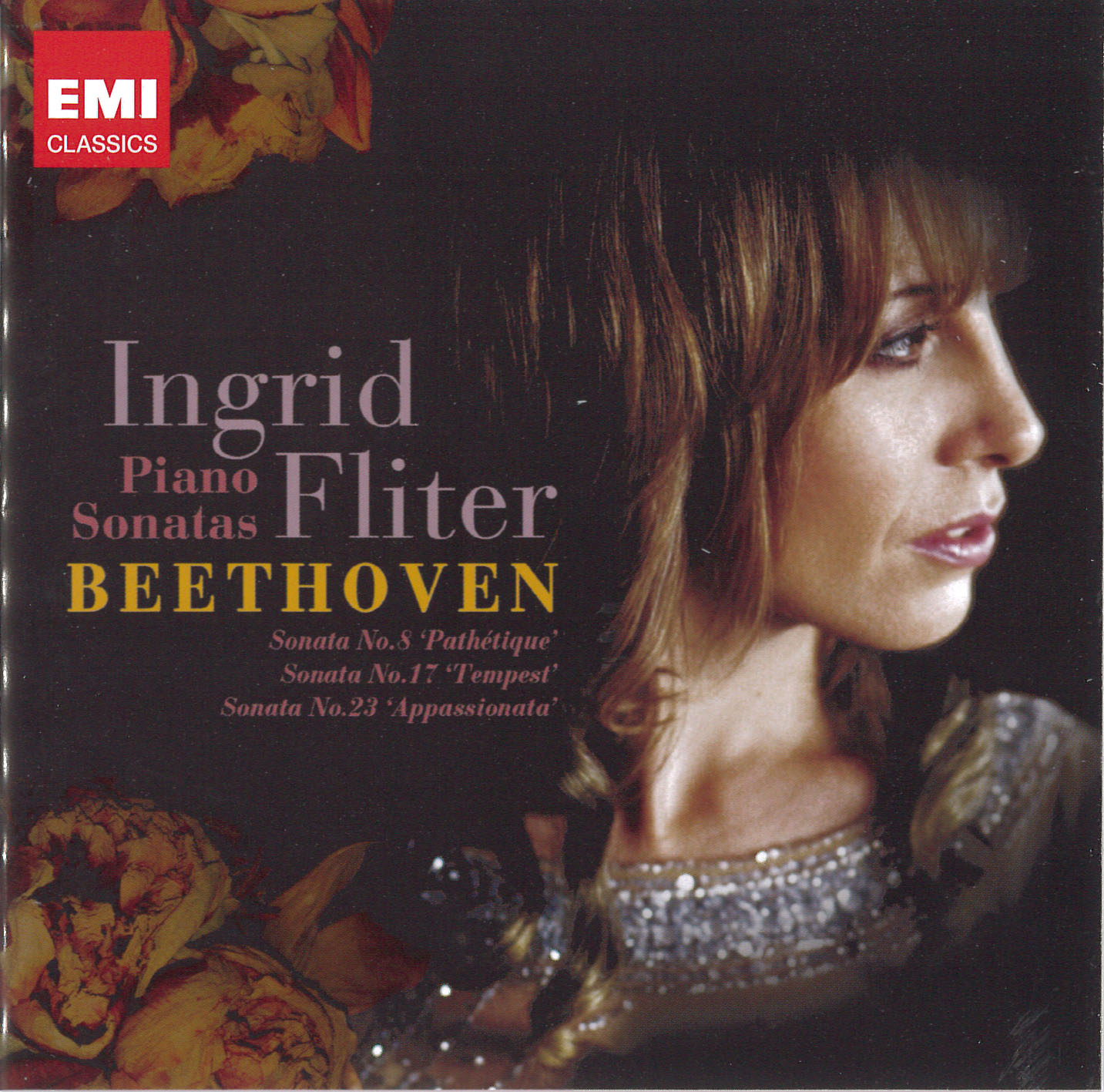
02_beethoven_fliterBeethoven - Piano Sonatas 8; 17; 23

Ingrid Fliter

EMI 0 94573 2

Beethoven’s 32 piano sonatas, with his symphonies and string quartets are among the supreme achievements of civilization in the same sphere as the work of Shakespeare, Dante and Michelangelo. The best pianists have recorded them, like Schnabel, Backhaus, Gieseking, Kempff, Rubinstein, Horowitz and Richter to name only a few. Now a new challenger by the name of Ingrid Fliter has arrived to add to the roster.

Born in Buenos Aires and studied in Europe, she has already won prizes at numerous international competitions and received the prestigious Gilmore Award. This is her 3rd issue with EMI after two very successful Chopin recordings. Here she selected works that probably best suit her temperament, three of the Master’s most turbulent and passionate sonatas, all with a nickname: Pathétique, Tempest and Appassionata.

She plays with great fervour, almost reckless passion, abandon, phenomenal technique, precision and imagination rarely found in other pianists. Nowhere does this come out better than in the performance of Op. 57, the “Appassionata”, where the nearly deaf Beethoven with violent outbursts is virtually shaking his fist to the heavens. Interestingly, it is somewhat related to the 5th Symphony. Notice the four note motive in the bass - D flat, D flat, D flat, C - very similar to the Fate motive that permeates the 1st movement of the 5th. The whirlwind, turbulent last movement where the speed and excitement just builds and builds to the breaking point, ending with an even faster frantic gypsy dance coda is guaranteed to lift you out of your seat, that is if you are not already standing.


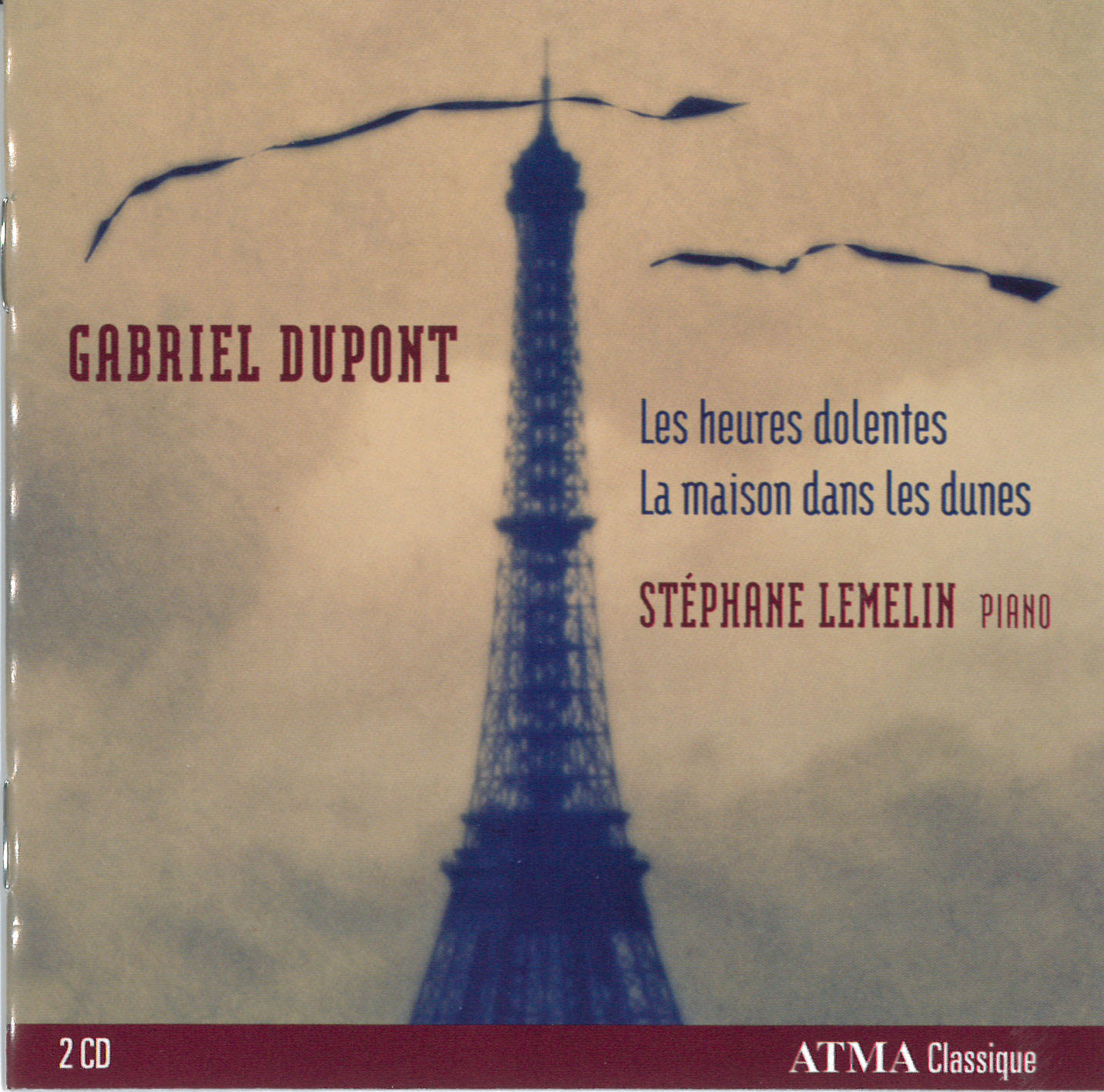
03_dupontGabriel Dupont - Les heures dolentes; La maison dans les dunes

Stéphane Lemelin

ATMA ACD2 2544

In this terrific 2-CD release, pianist Stéphane Lemelin makes a strong case for the remarkable piano music of French composer Gabriel Dupont (1878-1914). These works amalgamate late romantic and impressionist elements into a personal voice that meaningfully conveys the composer’s struggle with tuberculosis. Dupont was known in his day for operas; here too melody pours out and harmony is intriguing. The 14-piece set Les heures dolentes (Doleful Hours) is a diary from the composer’s sickbed at a spa. Particularly touching is the charming “A Friend has Come with Some Flowers” at the work’s midpoint. The last four pieces suggest confrontation and resolution: “Death Grinds,” “Some Children Play in the Garden,” the truly great “White Night - Hallucinations” with its terrifying bass figurations and dissonant harmony, and finally “Calm.”

The ten pieces of La maison dans les dunes (The House in the Dunes) reflect nature, especially the sea. Water has life-giving status in both the playful “The Sun Plays in the Waves” and the dissonant, surging menace in “Sea Swells at Night” where Lemelin delivers a tour de force of “maritime pianism.” The penultimate “Star Light” I found to be the most spiritual piece of all, on the level of the “In Paradisum” from Fauré’s Requiem. Whether the pianistic challenge is handling soft, rapid filigree around a singing melody, pedalling dense passages without getting waterlogged, or achieving transcendent calm, Lemelin can do it. Highly recommended.


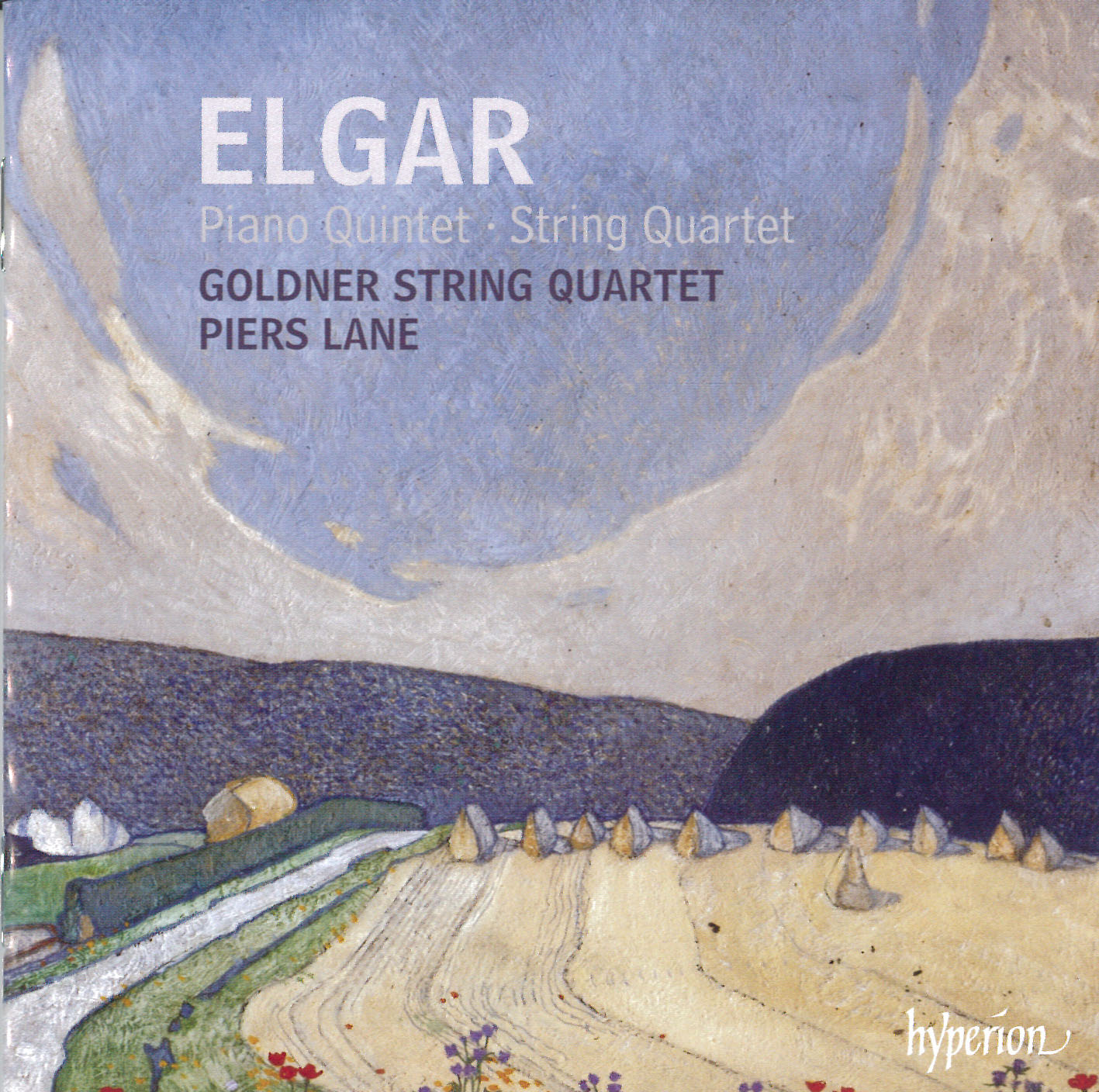
04_elgar_quintet-quartetElgar - Piano Quintet; String Quartet

Piers Lane; Goldner String Quartet

Hyperion CDA67857

Elgar has always been more famous for his large-scale orchestral and choral works than for his chamber music, but included among his output are a fine string quartet and a piano quintet. Both pieces were written over a two year period between 1918 and 1919 when the aging composer was residing in a cottage in West Sussex – and both are presented here on this Hyperion recording by the Australian-based Goldner String Quartet with pianist Piers Lane.

The quartet is an appealing anachronism. After all, only six years before, Stravinsky’s Rite of Spring had caused a scandal in Paris, while in Vienna, the Second Viennese School was making strides with serialism. Elgar himself admitted, “It is full of golden sounds… but you must not expect anything violently chromatic or cubist.” Nonetheless, this is elegant music, elegantly played, and the Goldners handle the intricate string writing with its subtle harmonic shifts with great precision and warmth.

The more expansive piano quintet is equally conservative, but is marked by a considerably more serious tone. Piers Lane and the quartet are perfectly matched, treating the tempestuous opening movement with bold assurance. Similarly, the middle movement adagio is given the pathos and anguish it deserves, while the finale, with its mood of buoyant optimism, brings the disc to a satisfying conclusion.

Between the two chamber works are four hitherto unrecorded solo piano pieces, two dating from the early 1930s, and all of them, charming examples of Elgar’s keyboard style. In all, this is an exemplary recording of music written by a composer who was nearing the final chapter of his creative life - there’s hope for us all!


Back to top