10 LSO Bruckner 4Bruckner – Symphony No.4
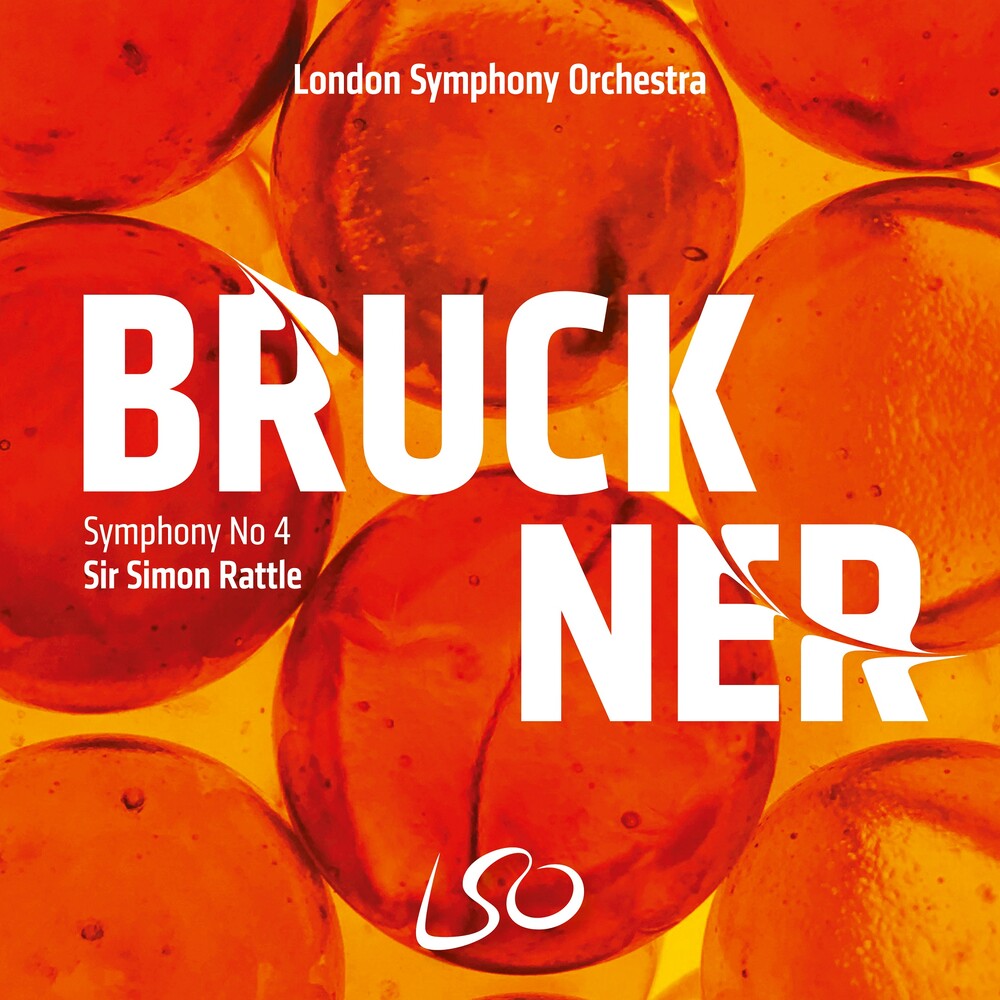
London Symphony Orchestra; Sir Simon Rattle
LSO Live LSO0875 (lso.co.uk)

I’ve seen Sir Simon Rattle conduct many times thanks to my subscription to the Berlin Philharmonic’s Digital Concert Hall and always admired his energy jumping to the podium full of excitement, eager anticipation and love for the music to come. In 2018 Rattle retired from his post in Berlin and now is back in England as the head of the London Symphony, arguably the finest of the five London orchestras.

The “Romantic” Symphony No.4 is obviously his favorite Bruckner and as I listen to this new super audio recording I must confess that I’d love to have been present at the concert at the Barbican Hall resounding with the genuine bloom of his Bruckner. “The entire evening was a Brucknerian labour of love” says The Guardian.  

Rattle has a no-nonsense approach as if he would say: let’s get on with it! He is totally relaxed, lets the music flow naturally at a brisk tempo, entirely logical with the architectonic structure always kept in mind. There are sections when the music becomes nearly inaudible from which the melody slowly emerges. The following crescendo is masterfully handled. It builds in stages with minor climaxes along the way, deliberately holding back at key moments so the ending becomes truly majestic. There is an overarching epic sweep this symphony needs. 

I must give a big credit to the first (solo) horn. At the beginning, its beautifully sustained pianissimo over an underlying tremolo in the strings produces a magical effect. The horns also feature heavily in the third movement, the Hunt Scherzo, as they start out barely audible from a primeval mist with a gradual crescendo; and when the trumpets join in the sound becomes crystal clear fortissimo and simply gorgeous. In Rattle’s hand the symphony becomes truly Romantic!

Listen to 'Bruckner – Symphony No.4' Now in the Listening Room

11 BarokbandidTwo Sides
Barokkbandið Brák
Sono Luminus SLE-70026/2 (sonoluminus.com)

It is not uncommon to find obvious and straightforward album titles within the classical music genre, leaving no doubt as to what a listener can and should expect. If one tallied up all the releases titled Beethoven: The Nine Symphonies, these recordings would make up an entire collection of their own. While it is only an entry point to the contents contained therein, a creatively titled recording can engage and entice a prospective listener, drawing them in with the promise of a unique artistic experience.

Such is the case with Icelandic period-instrument ensemble Barokkbandið Brák and their debut album Two Sides, a title which, at first glance, most clearly refers to its two discs of music. Upon reviewing its contents however, it becomes clear that Two Sides reflects the diverse nature of this extraordinary group, which has achieved renown in the interpretation of Renaissance and Baroque music but also as a commissioner of new music for period instruments.

This sense of discovery in music old and new permeates every selection on this recording, notably through the world premiere recording of the Violin Concerto in G by Swedish Baroque composer Johan Joachim Agrell and new commissions from Icelandic composers Þráinn Hjálmarsson, Bergrún Snæbjörnsdóttir, and Kristinn Kristinsson.

What is most remarkable about this entire double album is the way in which every piece of music is treated individually, performed at the highest level with convincing interpretations. Whether the Agrell Concerto premiere, Vivaldi’s enthralling Concerto for 2 Violins & Cello in D Minor, or any one of the commissioned works, nothing seems unfamiliar or out of place.

Two Sides is a magnificent debut from Barokkbandið Brák that will be a valuable addition to any collection, especially for those who appreciate broad and diverse repertoire within the realm of period performance.

12 AmericanistThe Americanist
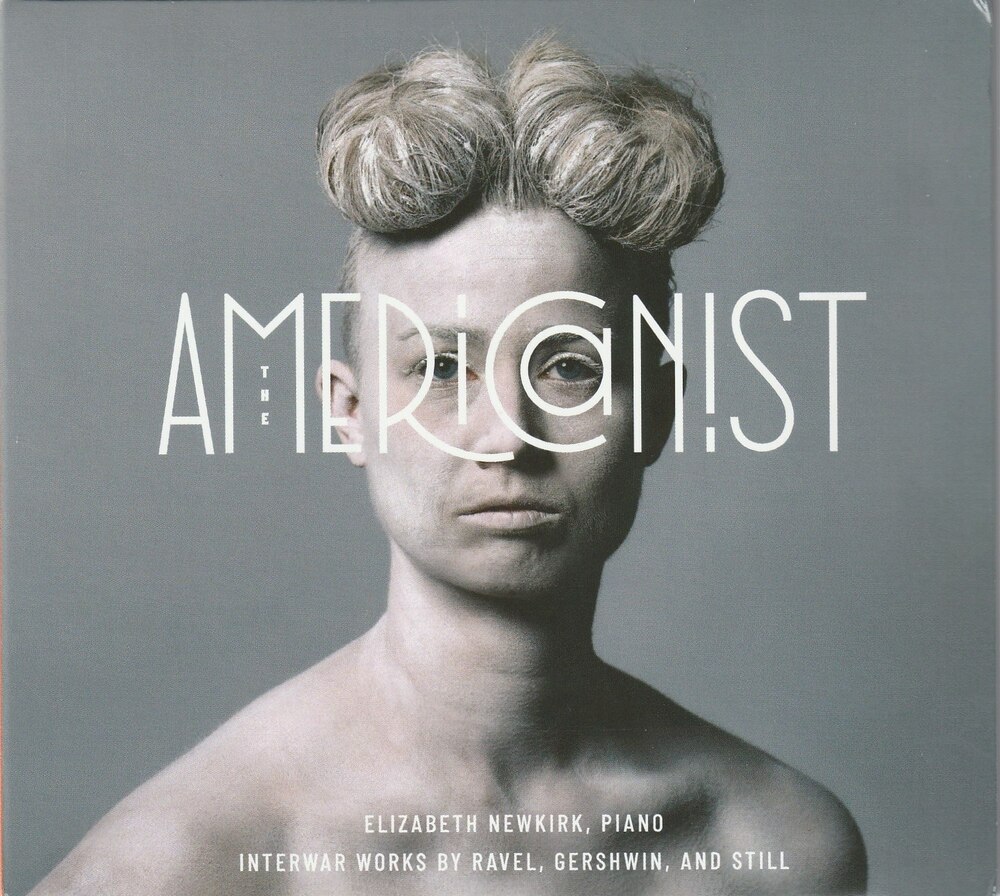
Elizabeth Newkirk
Bright Shiny Things BSTC-0166 (brightshiny.ninja)

This new release of orchestral scores reduced for solo piano by Elizabeth Newkirk stakes out grounds for how American music must maintain its connection to the vernacular. Per Newkirk’s lengthy treatise in the liner notes, the mythos of America demands inclusion and recognition of popular musical idioms in the making of “serious” music. She especially points to the styles and forms developed in the African-American culture that energizes so much of today’s music. To that end, Newkirk provides three intra-bellum works that illustrate her point, all reductions of orchestral scores made by the composers themselves, and all infused with jazz and blues. 

Maurice Ravel’s reduction in some ways satisfies the way the full version can’t. In La Valse Newkirk proves herself a fine stylist, giving a more flexible version in terms of rhythm and dynamics than a conductor might ask of a full orchestra. These waltzes swoop into dips and pirouettes. (I leave it to pianists to tell me if I’m wrong about the heavy use of the sustain pedal). Gershwin’s An American in Paris is also entirely about movement. Newkirk notes that three distinct metres are assigned respectively to the American, French and British gait. (It’s so hard to believe the piece wasn’t written with Gene Kelly in mind). More than in the Ravel, I miss orchestral colours; maybe it’s just that Gershwin’s lightness needs the weight of the band, but to my mind, there’s no replacing the trumpet, the violins, the rhythm section. Their language is integral to the musical ideas.

William Grant Still’s Africa provides the substantial finale to the disc. Still’s music follows a similar aesthetic to Gershwin’s, blending Romantic tropes with blues influences. Materially, and in terms of length, it’s more substantial than the Gershwin, and more listenable, in fact. As has been noted elsewhere, there are not nearly enough recordings of his music, which makes this release so attractive. 

Newkirk’s treatise is most interesting when she leaves the rarified discussion of myth and philosophy in order to discuss how these three works fit so neatly into her thesis.

13 Polish OrganCantius
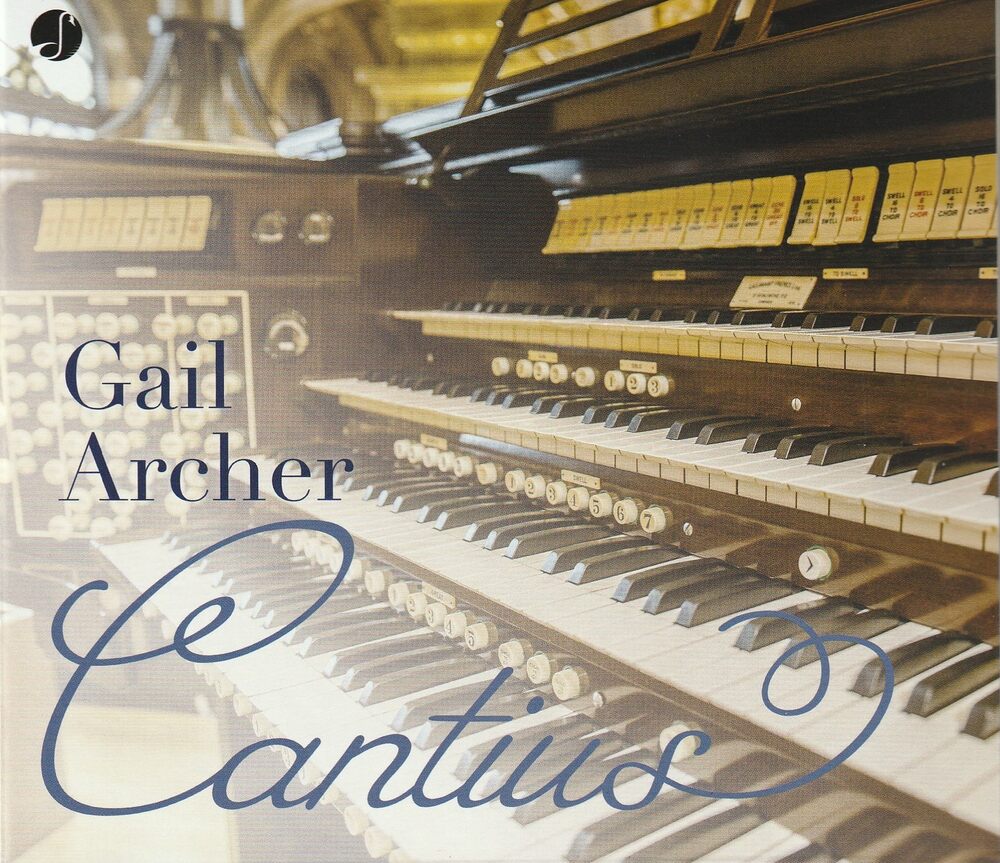
Gail Archer
Swan Studios MM22051 (meyer-media.com)

The pipe organ has been a vital part of musical history for centuries, and there are a small number of countries that have made tremendously impactful contributions to its physical construction and musical lineage, including the German Baroque composers (culminating in the works of J.S. Bach) and the 19th- and 20th-century French school, which led to the development of the organ symphony. With a heritage dominated by musical monoliths, it is easy to forget that there is worthwhile organ music written by composers in other countries not immediately considered synonymous with the pipe organ, including the Baltic States, Russia and Poland. 

It is this latter country that receives organist Gail Archer’s full focus on Cantius, a recording which presents highlights from two centuries of Polish composers and their works, ranging from Romantic symphonies to avant-garde masterpieces. Highlights include Felix Nowowiejski’s Symphony No.8 which, although written in one movement, is in three distinct sections, including a solemn funeral march, and Henryk Górecki’s Kantata. Górecki is perhaps Poland’s most famous 20th-century composer, whose Third Symphony – “Symphony of Sorrowful Songs” achieved international recognition and established his place as one of the most important contemporary composers of the time.

Although many consider the pipe organ to be an old instrument that plays old music, there is still new material being written today, and it is wonderful to encounter a variety of 20th- and 21st-century composers and their works on Cantius, expertly interpreted by Archer. It is not an easy feat to achieve convincing performances of high-density modern scores, but she does so with apparent ease and undeniable success.

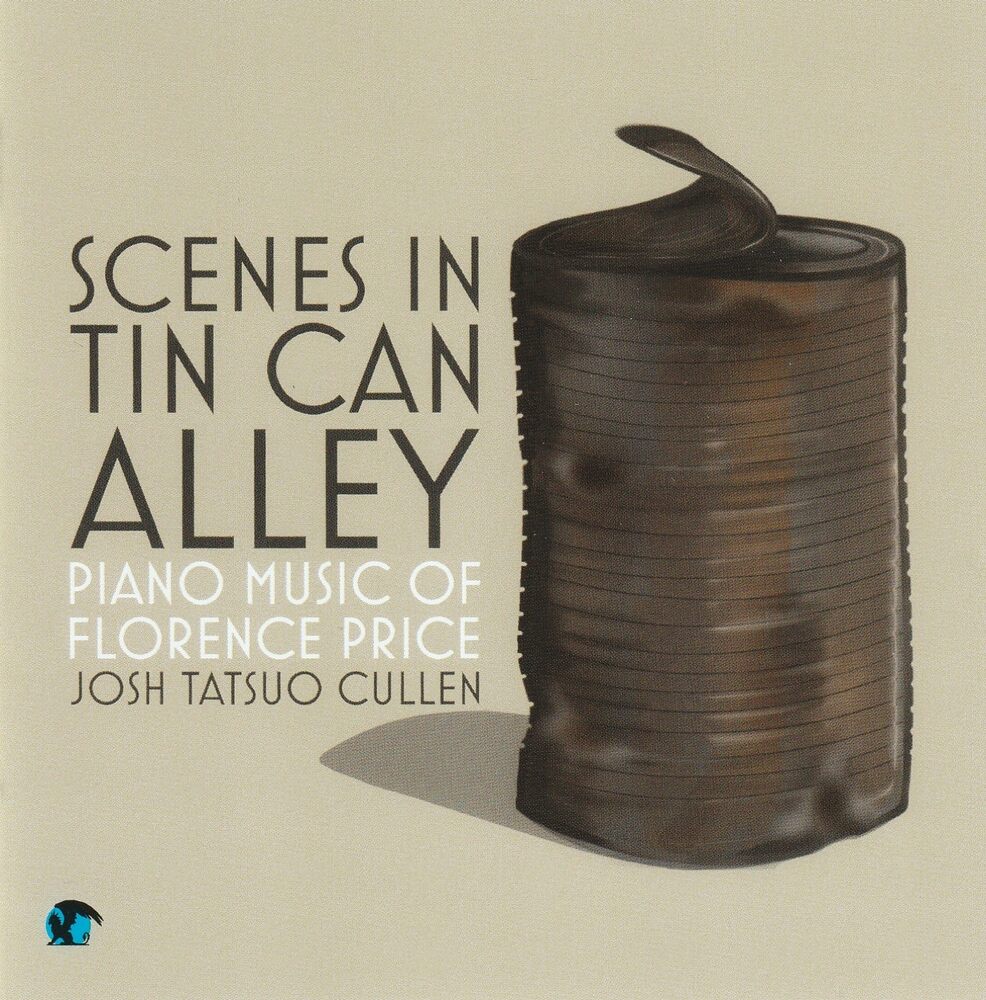
14 Florence Price PianoScenes in Tin Can Alley – Piano Music of Florence Price
Josh Tatsuo Cullen
Blue Griffin BGR615 (bluegriffin.com)

American pianist Josh Tatsuo Cullen performs a respectful tribute to African-American composer Florence Price (1887-1953) in seven of her solo piano works. Price, educated at the New England Conservatory, combined European classical music with American traditions including ragtime and boogie woogie in her over 300 compositions for various instrumentations from symphonies to vocal music. Her music is currently enjoying a renaissance.

The three-movement Scenes in Tin Can Alley (1928) opens with the energetic ragtime-influenced The Huckster. Price wrote program notes for the following movement, Children at Play. Kids play to energetic sounds until a slower melodic classical/pop sound has them stop to stare at an old woman looking for food. After a short silence, she leaves and the kids play again, to fun and fast piano. Price’s notes for Night include “the scene is sordid” with slow low-pitched, faster lines and swells featuring Cullen’s beautifully articulated calming phrase endings. Cullen’s amazing performance of the most virtuosic work here, Cotton Dance (Presto) (ca.1940s), is fast fast fast with boogie woogie sounds, chromatic lines/harmonies, high pitches and classical undertones making for fun dancing and listening. In the recently discovered five short Preludes (1926-1932) Price uniquely did not use descriptive titles. Many compositional techniques here, like No.3’s Allegro molto’s faster almost songlike quality to No.4’s Wistful. Allegretto con tenerezzaI’s slower classical sound featuring Cullen’s conversational solo playing between hands.

Price’s stylistically varied compositions are accessible listening, made all the more fantastic by Cullen’s inspired and detailed piano interpretations.

Listen to 'Scenes in Tin Can Alley' Now in the Listening Room

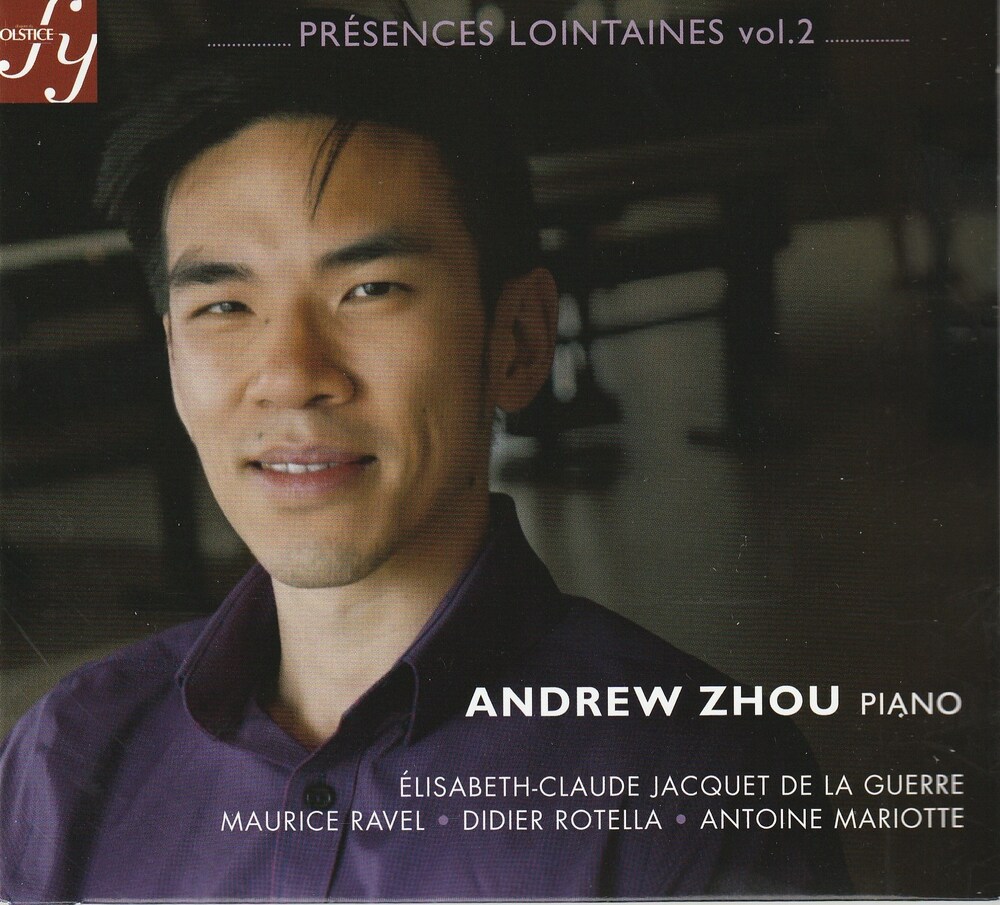
15 Andrew ZhouPrésences Lointaines Vol. 2
Andrew Zhou
Solstice FY SOCD 394 (andrew-zhou.com)

Vladimir Jankélévitch, who lived from 1903 to 1985, was a French philosopher and musician who enjoyed a long academic career both in Prague and in Paris. He had definite ideas concerning music, among them that the art form was the only path to eternal life. Présences Lointaines – Distant Presences pays him a worthy tribute with a program of French piano music spanning a 300-year period performed by American Andrew Zhou. Zhou was a second-prize winner at the Concours International de Piano d’ Orleans and is currently a visiting lecturer at Cornell University.

Elisabeth-Claude Jacquet de la Guerre was a cousin of François Couperin and also an accomplished musician in her own right. Her seven-movement Suite in D Minor from the Pièces de Clavecin of 1707 is strong evidence of her skill as a composer and Zhou delivers an elegant and precise performance, at all times carefully nuanced.

Ravel is the only familiar composer on the disc, and his Prelude from 1913 – his shortest piece, lasting a mere minute and 13 seconds – is a languorous essay, while the Étude en blanc No.2 Élégie (Hommage à Ravel) by Didier Rotella (born in 1982) for prepared piano is hauntingly atmospheric.

Born in 1875, Antoine Mariotte spent the early part of his life as both sailor and musician. He later earned a reputation as both an operatic composer and administrator. His Piano Sonata from 1905 is very much in the French late Romantic tradition requiring formidable dexterity on the part of the performer, but Zhou handles the challenges with an uncompromising technique, bringing the disc to a rousing conclusion.

Listen to 'Présences Lointaines Vol. 2' Now in the Listening Room

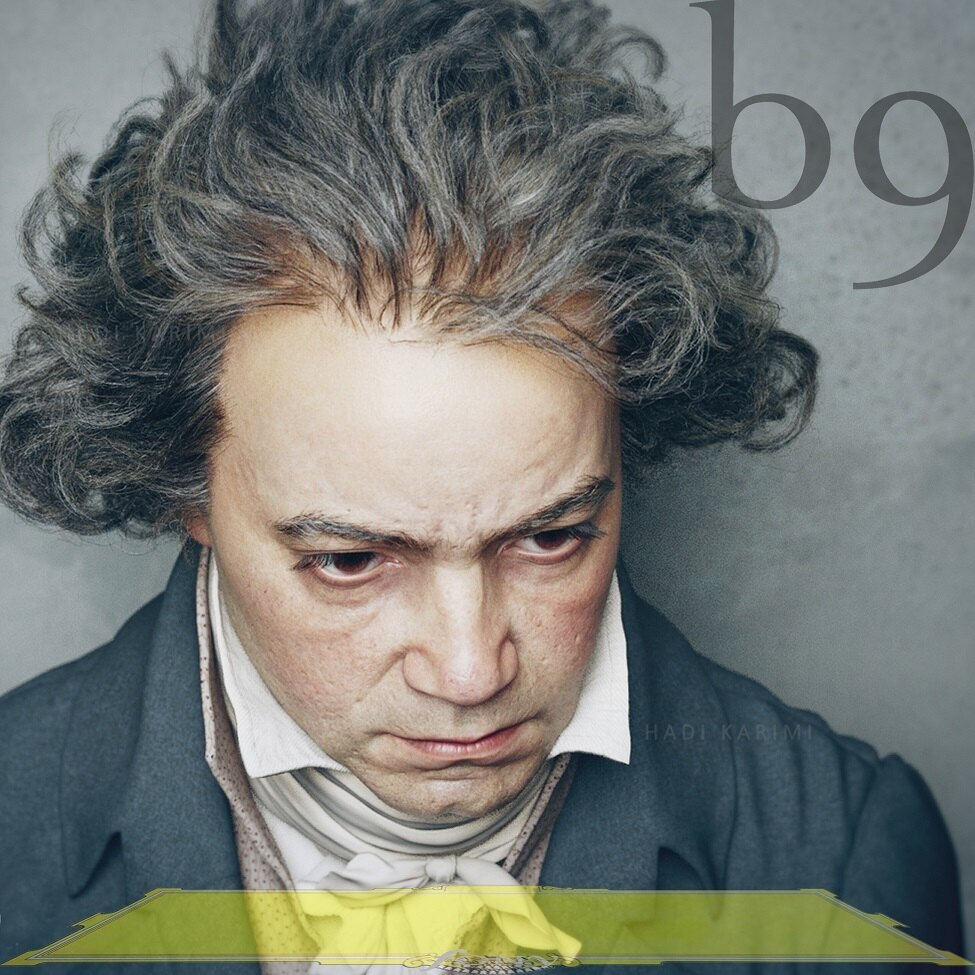
16 Oswald Ludwig 3Ludwig : vol. 3
b9 orchestra
fony (pfony.bandcamp.com)

As is heard in all his creations, John Oswald’s musical vision is remarkably original. Here, in his latest Rascali Klepitoire release, Oswald’s knowledgeable artistic creativity conquers, quotes, mimics and refigures from all nine Beethoven symphonies into a 30-minute four-movement compilation with the intent to surprise. He guides and produces his self-described  “artificial-intelligence infused” synthetic orchestra,  including winds, strings, horns, percussion and vocals, using the NotePerformer engine, produced by Wallander Instruments of Stockholm. It “includes its own sounds encompassing a large-scale modern symphonic orchestra” based on “technologies bridging the gap between samples and synthesis.”

The opening vantage is tonal, technically detailed, with strict tempos and not much volume variation except for sudden loud crashing sections. In the shortest section bade, Oswald’s bits-and-pieces collection of loud percussion, slow sections and moving string lines is an interesting cross section of his and Beethoven’s writing. Love the contrasting instrumental lines in though. In venerable, Beethoven fans will love how Oswald juxtaposes familiar fragments to make a new sound, especially from Beethoven’s famous vocals.  

Three bonus items are also included. A bootleg recording of a live b9 performance is a welcome addition with the to-be-expected real instrument subtleties also illuminating how well the synthetic orchestra version works. Concentrated following of the 44-page full musical score, prepared by John Abram, (not including an updated final page), aids listening to the whirlwind music. Oswald’s 2000-word interview discusses his creative process here.

Throughout, Oswald’s quotes and juxtapositions of his own and Beethoven’s music are incredibly smart and well produced, and they sound better and better with each repeated listening!

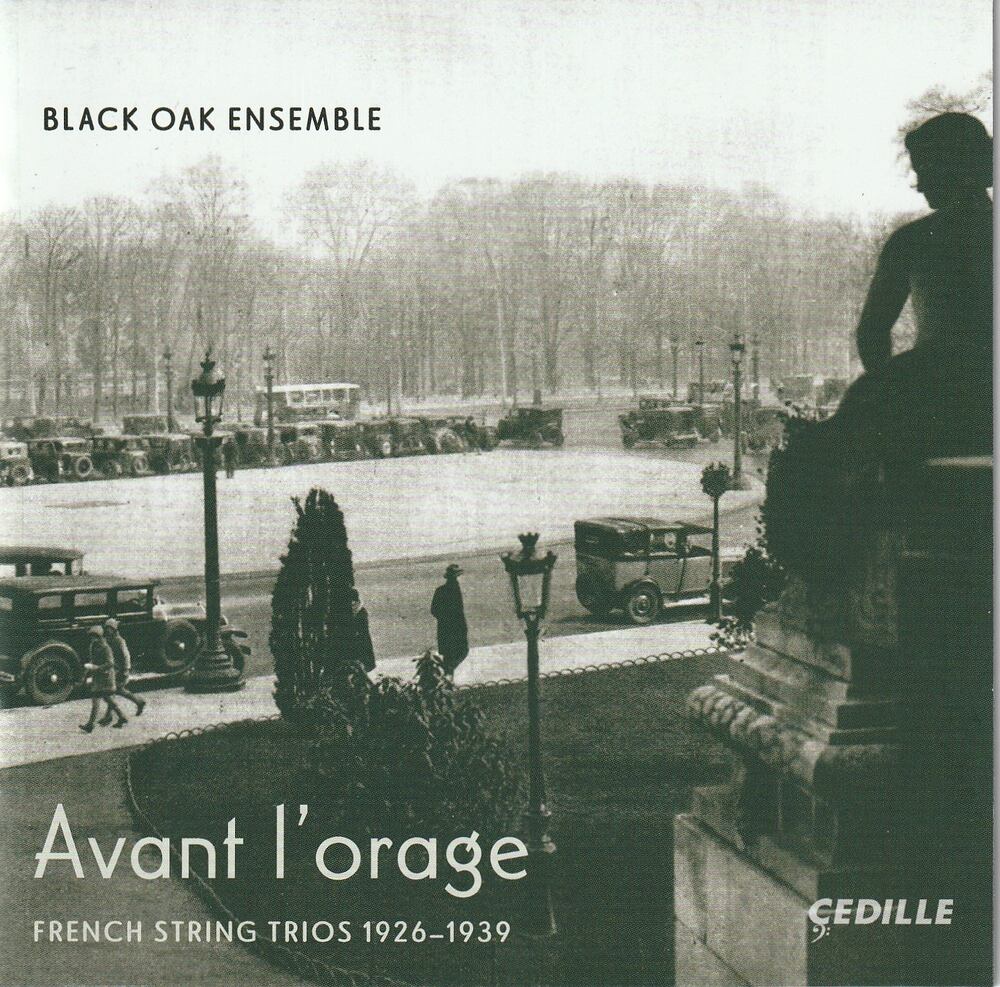
01 Black Oak EnsembleEvery now and then a CD comes along of such stunning quality that it almost leaves you speechless. Such is the case with Avant l’orage – French String Trios 1926-1939, a 2CD set priced as a single disc, featuring seven beautifully crafted works, mostly by composers who aren’t household names, in simply superb performances by the Chicago-based Black Oak Ensemble of violinist Desirée Ruhstrat, violist Aurélien Fort Pederzoli and cellist David Cunliffe (Cedille CDR90000 212 cedillerecords.org).

The trios by Henri Tomasi, Robert Casadesus and Gustave Samazeuilh are world-premiere recordings; these three works, along with the trios by Jean Françaix and Gabriel Pierné were all written for and dedicated to the renowned Trio Pasquier. The other two trios here are by Jean Cras and Émile Goué. All seven works are high quality and extremely attractive, and it’s hard to imagine their ever being played better – or with better recorded sound, for that matter. 
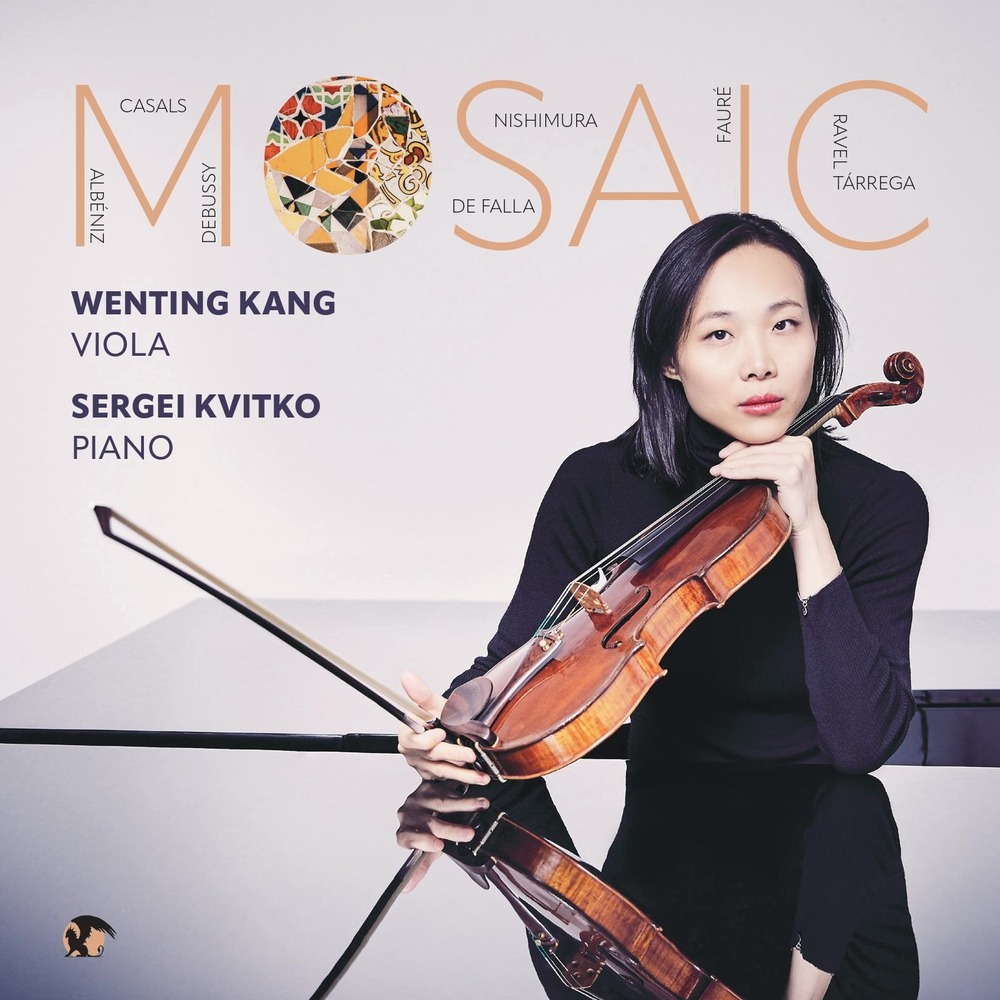
02 Kang MOSAICThe Madrid-based violist Wenting Kang, ably supported by pianist Sergei Kvitko makes her album debut with Mosaic, a CD celebrating an era in which Spanish and French composers were frequently friends and collaborators (Blue Griffin Records BGR609 bluegriffin.com).

Nearly all the tracks were adapted by Kang from violin or cello arrangement scores, to great effect – in fact, Kang sounds like a violin or cello in many of the pieces; her beautifully clear tone and dazzling technical perfection resulting in a wide range of tonal colour.

There are two pieces by Debussy, two by Ravel and four by Fauré, with Spain represented by the Tárrega Recuerdos de la Alhambra in the challenging Ruggiero Ricci solo transcription, the Albéniz Tango and the da Falla Seven Popular Spanish Songs. Casals’ Song of the Birds and a solo Fantasia on the same song by the Japanese composer Akira Nishimura round out a superlative disc.
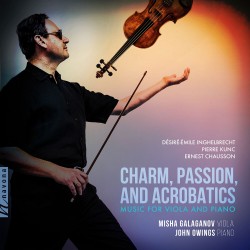
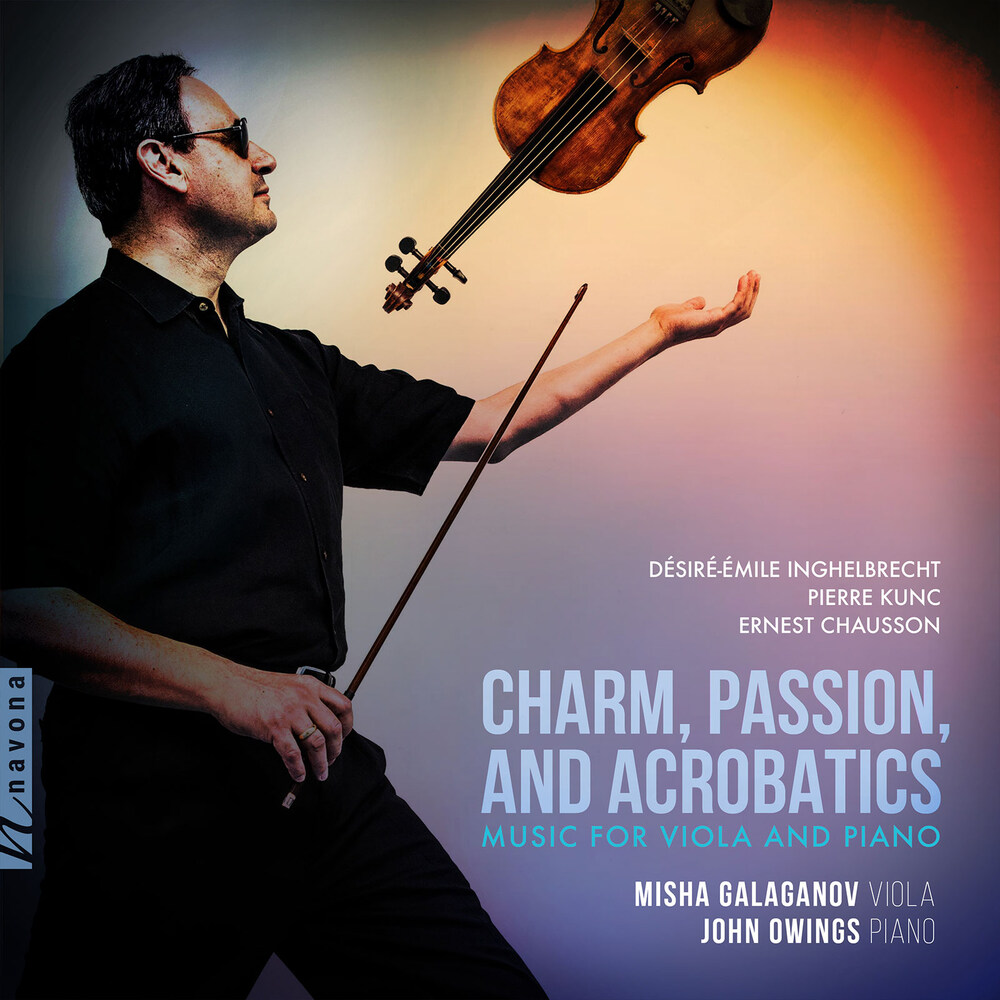
03 Charm Passion And AcrobaticsThere’s more outstanding viola playing on Charm, Passion, and Acrobatics – Music for Viola and Piano featuring violist Misha Galaganov and pianist John Owings (Navona NV6434 navonarecords.com/catalog/nv6434).

The CD resulted from Galaganov’s purchase of a collection of music scores from the library of Armand Pushman, who died in 1999 aged 98, and who studied viola at the Paris Conservatory in his youth. Among the long-forgotten works were five featured here: the Nocturne (1905), the charming Prelude et Saltarelle (1907) and the short but intense Impromptu from 1922 by the French composer and conductor Désiré-Émile Inghelbrecht (1880-1965), and the 1921 Sonata and 1939 Rhapsodie by the French composer and organist Pierre Kunc (1865-1941), whose manuscripts remained available only to copyright holders until 2021. All are premiere recordings.

Chausson’s final work, the 1897 Piece for Cello (Violin or Viola) Op.39 completes an impressive CD.
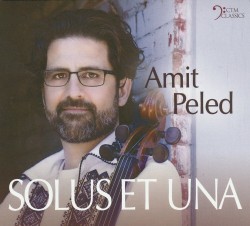
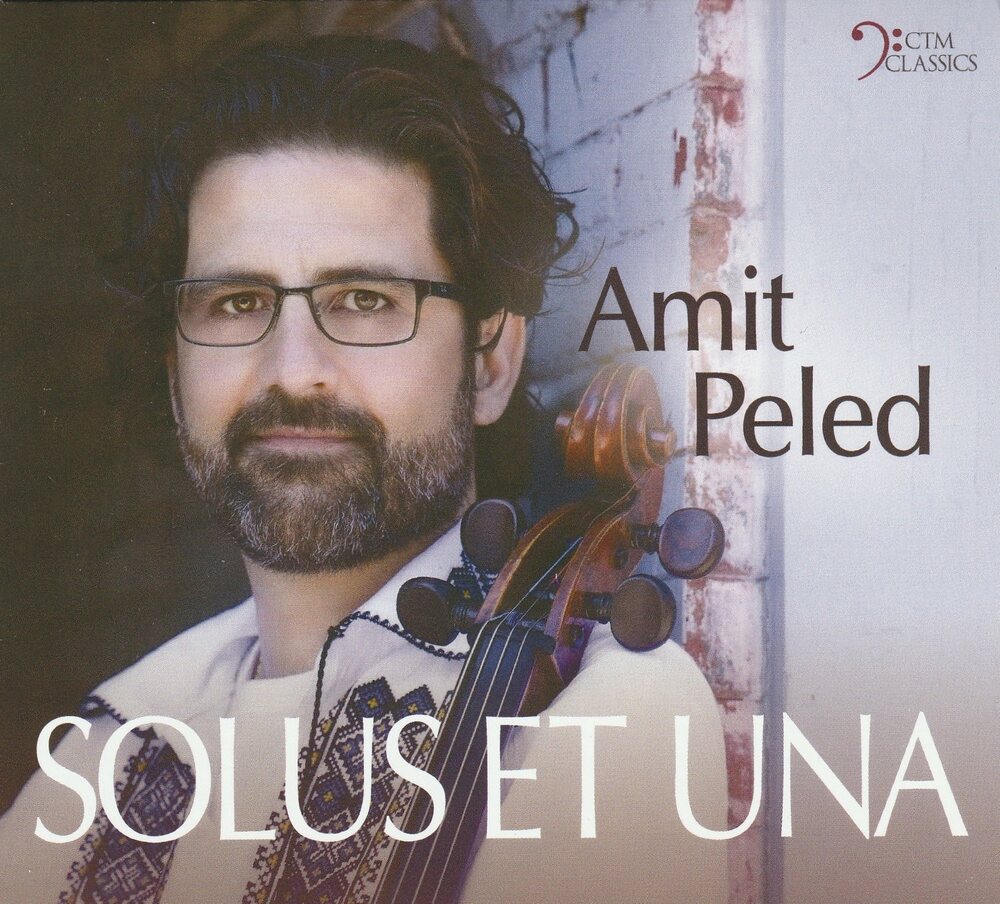
04 Amit PeledSolus et una (“Alone and together”) is a reflection on cellist Amit Peled`s journey during the COVID-19 pandemic, when he spent a lot of time playing the Bach cello suites in his home studio. The two that attracted him the most were the Suite No.4 in E-flat Major BWV1010 and the Suite No.5 in C Minor BWV1011, both presented on this deeply felt and immensely satisfying CD (CTM Classics 95269 15090 ctmclassics.com).

The cello is a Giovanni Grancino from c.1695, and Peled uses its deep, warm tone to maximum effect, creating smooth, flowing lines in beautifully judged readings that mine the emotional depths of these exceptional works.

An encore track is the one piece Peled was able to record with his students during the lockdown: an arrangement for eight cellos and piano of the Andante from Brahms` Symphony No.3. It`s a lovely end to a quite beautiful disc.
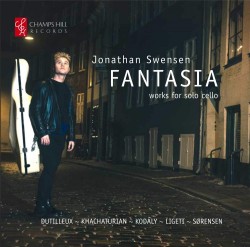
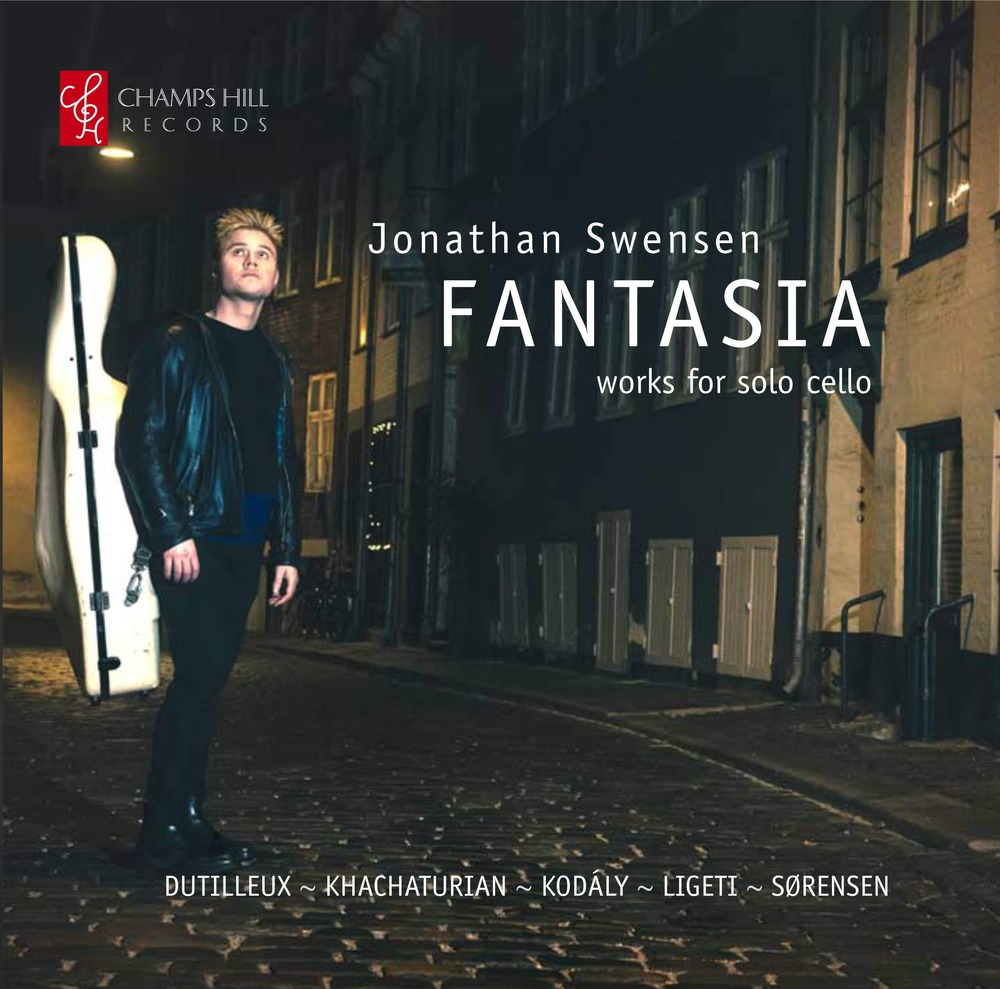
05 FantasiaWhen the Danish cellist Jonathan Swensen won the 2019 Windsor Festival International String Competition part of the prize was a debut recording with Champs Hill Records; his CD Fantasia – works for solo cello is the result (chandos.net/products/reviews/HR_168).

Swensen says that he wanted the studio recording to have “exactly the same energy that comes from a live concert,” and he certainly succeeds with a stunning recital that simply crackles with electricity and intensity.

The established works are the Ligeti Sonata for Solo Cello with a dazzling Capriccio second movement, Dutilleux’s Trois strophes sur le nom de Sacher and a towering reading of the monumental Kodály Sonata for Solo Cello Op.8. A lesser-known work – which should surely be part of the standard repertoire – is Khachaturian’s terrific Sonata-Fantasie for Solo Cello Op.104 from 1974, and the CD’s title track is the 2021 commission Farewell-Fantasia by the Danish composer Bent Sørensen.

Outstanding technique and musical intelligence combine for a superb start to Swensen’s recording career.
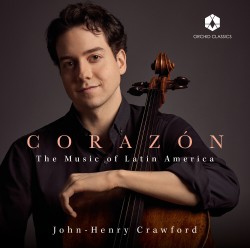
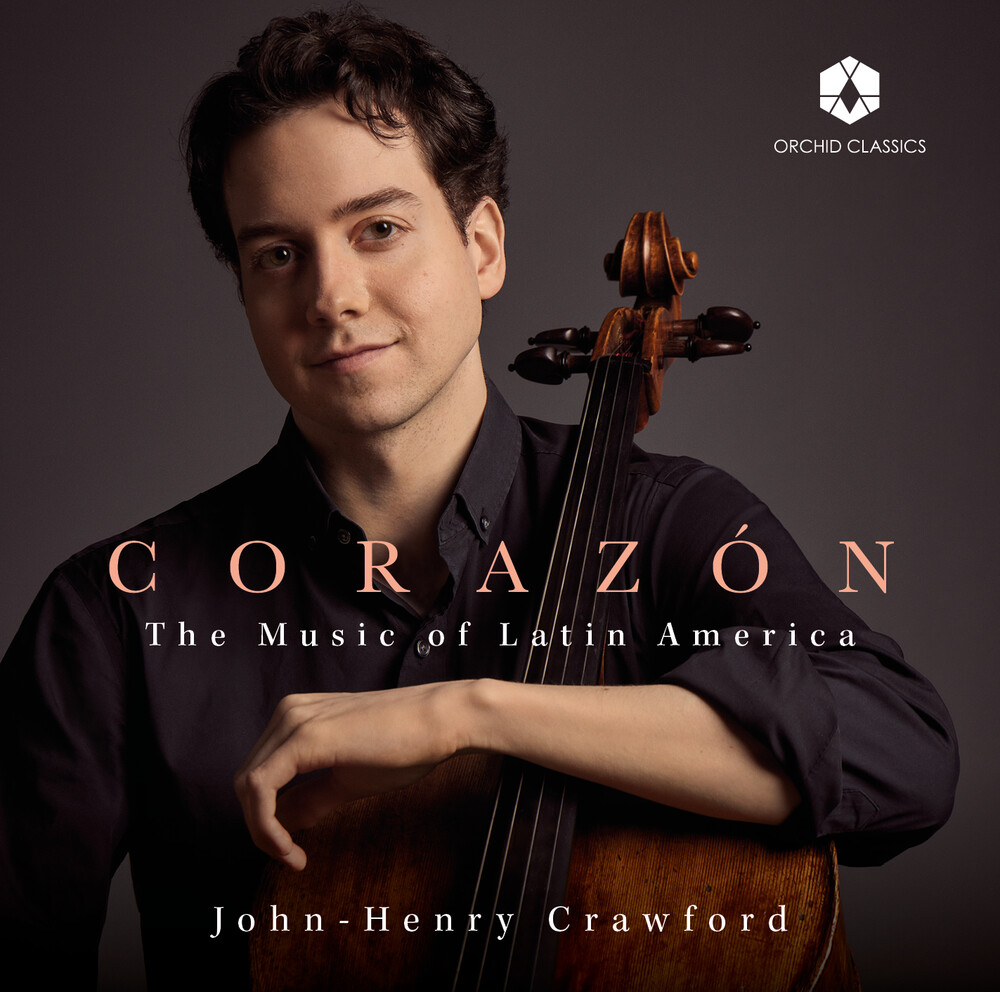
06 CorazonCorazón (Heart) is the new CD from the American cellist John-Henry Crawford, accompanied for the most part by pianist Victor Santiago Asuncion and in three pieces by the South Korean guitarist JIJI (Jiyeon Kim) in a program that reflects the cellist’s love of Latin American music (Orchard Classics ORC100198 orchidclassics.com).

The major work is the Sonata in G Minor by the Mexican composer Manuel Ponce, also represented by the well-known Estrellita and the title track Por ti mi corazón. There are short single pieces by Leo Brouwer, Carlos Guastavino and Egberto Gismonti, as well as three by Heitor Villa-Lobos and two by Astor Piazzolla, whose closing track Oblivion features Crawford on multiple-tracked cello. The guitar provides the accompaniment in Estrellita and the Brouwer and Gismonti pieces.

Every track is a gem, with Crawford quite superb in music he says “pulls at the heartstrings and exudes romance and passion” – as does the playing on a captivatingly gorgeous disc.
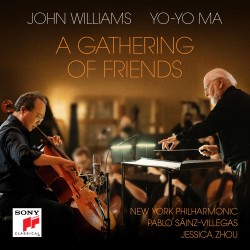
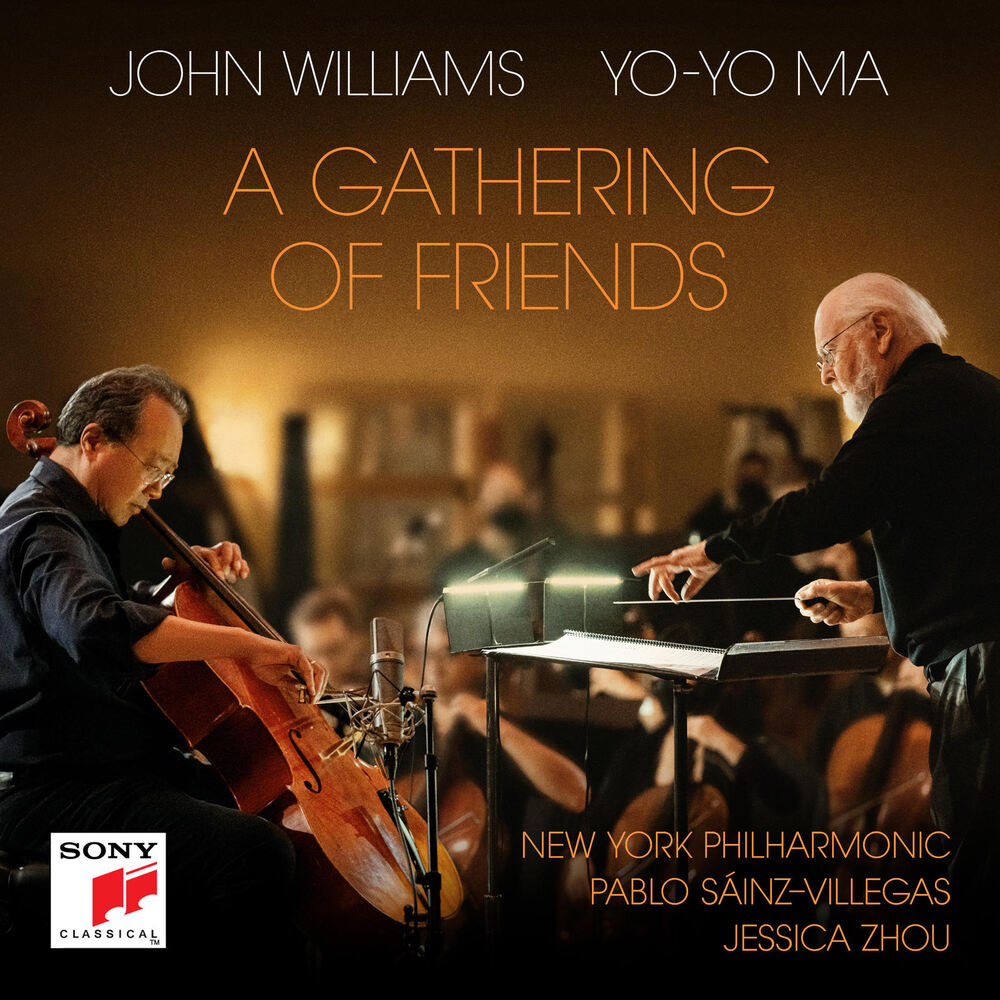
07 Yo Yo Ma John Williams jpegLongtime collaborators John Williams and Yo-Yo Ma reunite for A Gathering of Friends, their new CD with the New York Philharmonic featuring the premiere recording of the revised version of Williams’ Cello Concerto, originally written for Ma in 1994. Selections from three of Williams’ movie scores are also heard in new arrangements with solo cello (Sony Classical 886449741939 sonyclassical.com/releases).

Don’t expect any Korngold-like movie material in the concerto – it’s an intense and highly compelling work very much in a modern style, with some lovely cello writing and a beautiful tonal final resolution.

Three pieces from Schindler’s ListTheme, Kraków Ghetto Winter 41 and Remembrances – need little introduction. The other movie tracks are With Malice Toward None from Lincoln and A Prayer For Peace from Munich, the latter a duo for Ma and guitarist Pablo Sáinz-Villegas

Ma is joined by harpist Jessica Zhou in A Gathering of Friends – Highwood’s Ghost, written in 2018 for the Bernstein Centenary at Tanglewood, where there is a legend of a ghost in the manor house.
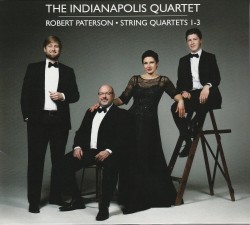
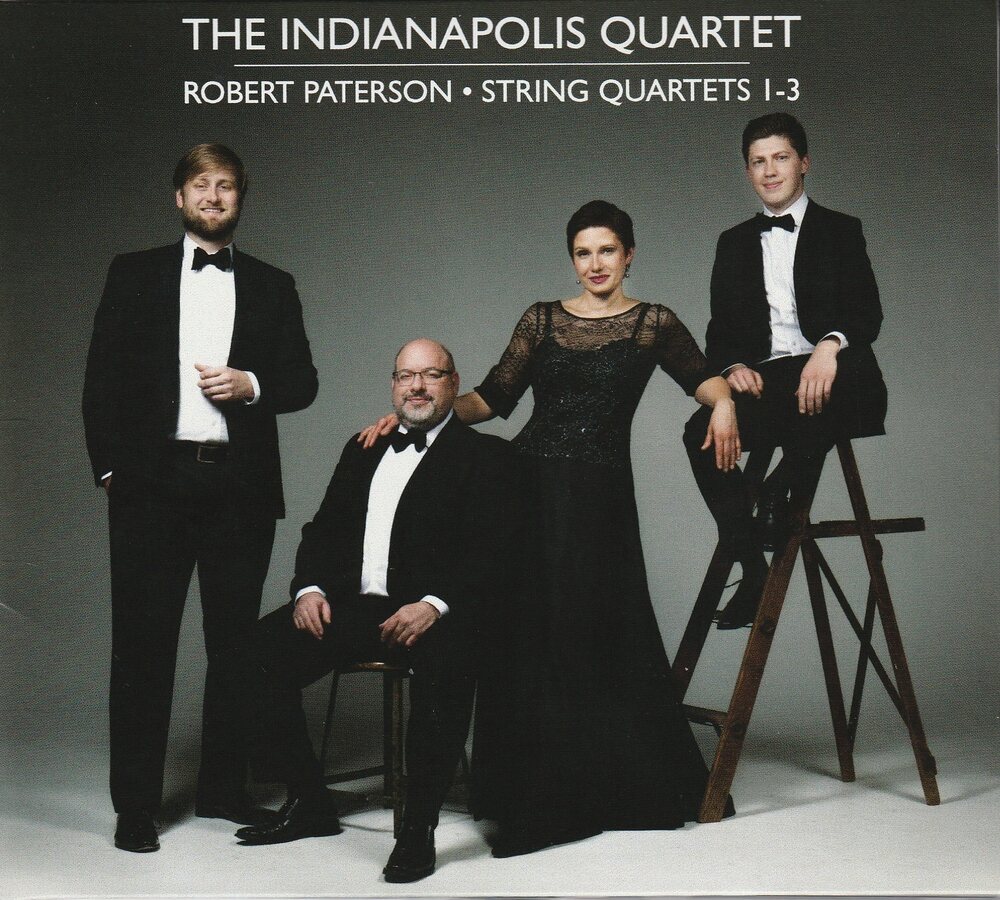
08 Robert PatersonIf you still believe that contemporary string quartets are always a tough listen then Robert Paterson String Quartets 1-3 in superb performances by the Indianapolis Quartet should change your mind (American Modern Recordings AMR1054 americanmodernrecordings.com).

This is clearly music to be enjoyed. String Quartet No.1 includes a “swing” first movement, a country waltz with a middle section called “Andrew Lloyd Webber Disease” and an Energetic Polka. String Quartet No.2 features Rigor Mortis, portraying the barking dog from the comic strip of the same name.

String Quartet No.3, commissioned by the Indianapolis Quartet explores “other voices,” including Tourette’s syndrome in Twist and Shout and an auctioneer and country fiddling in Auction Chant.

It’s imaginative, hugely entertaining and quite brilliant writing, with Paterson always in total control of style and structure.
Listen to 'Robert Paterson String Quartets 1-3' Now in the Listening Room

09 Prism IVPrism IV – Beethoven Mendelssohn Bach is the penultimate release by the Danish String Quartet in their Prism project, where a Bach fugue is connected to a late Beethoven quartet that is in turn connected to a quartet by a later master (ECM New Series ECM2564 ecmrecords.com/shop).

Bach’s Fugue in G Minor from Book 1 of the Well-Tempered Clavier opens the disc, followed by an intense performance of Beethoven’s String Quartet No.15 in A Minor Op.132, published in 1826. Crystal-clear definition, terrific ensemble, dynamics and tone all make for an outstanding reading.

The standard never drops in Mendelssohn’s String Quartet No.2 in A Minor Op.13, begun in July 1827 just months after Beethoven’s death. Mendelssohn was fascinated by Beethoven’s late quartets, and his Op.13 continues their progress towards the new Romanticism. 
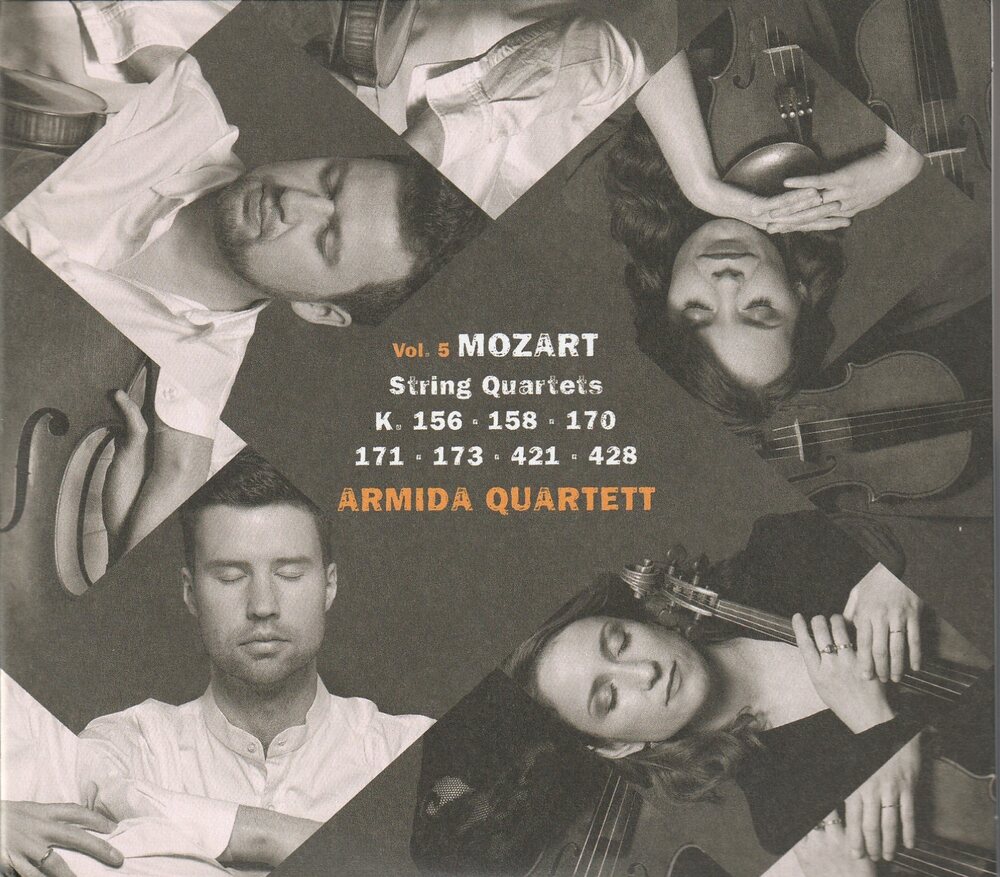
10 Mozart ArmidaThe 2CD set of Mozart String Quartets Vol.5 is the final volume in the series by the Armida Quartet (Avi 8553496 avi-music.de).

The two earliest quartets are No.3 in G Major K156 and No.5 in F Major K158 from a group of six written in Milan in 1772. The quartets No.10 in C Major K170, No.11 in E-flat Major K171 and No.13 in D Minor K173 are from the six “Viennese” quartets written the following year after Mozart’s exposure to Haydn’s recently published string quartets.

Finally, there are two works from the six “Haydn” quartets that followed the publication of Haydn’s own Op.33 set of six in 1783: No.15 in D Minor K421 and No.16 in E-flat Major K428.

The Armida Quartet is working with the publisher G. Henle Verlag on a new Urtext Edition of the Mozart quartets, and their insight and attention to detail are evident throughout finely judged performances.
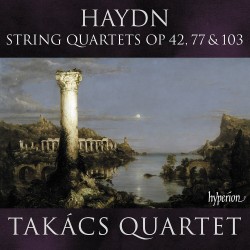
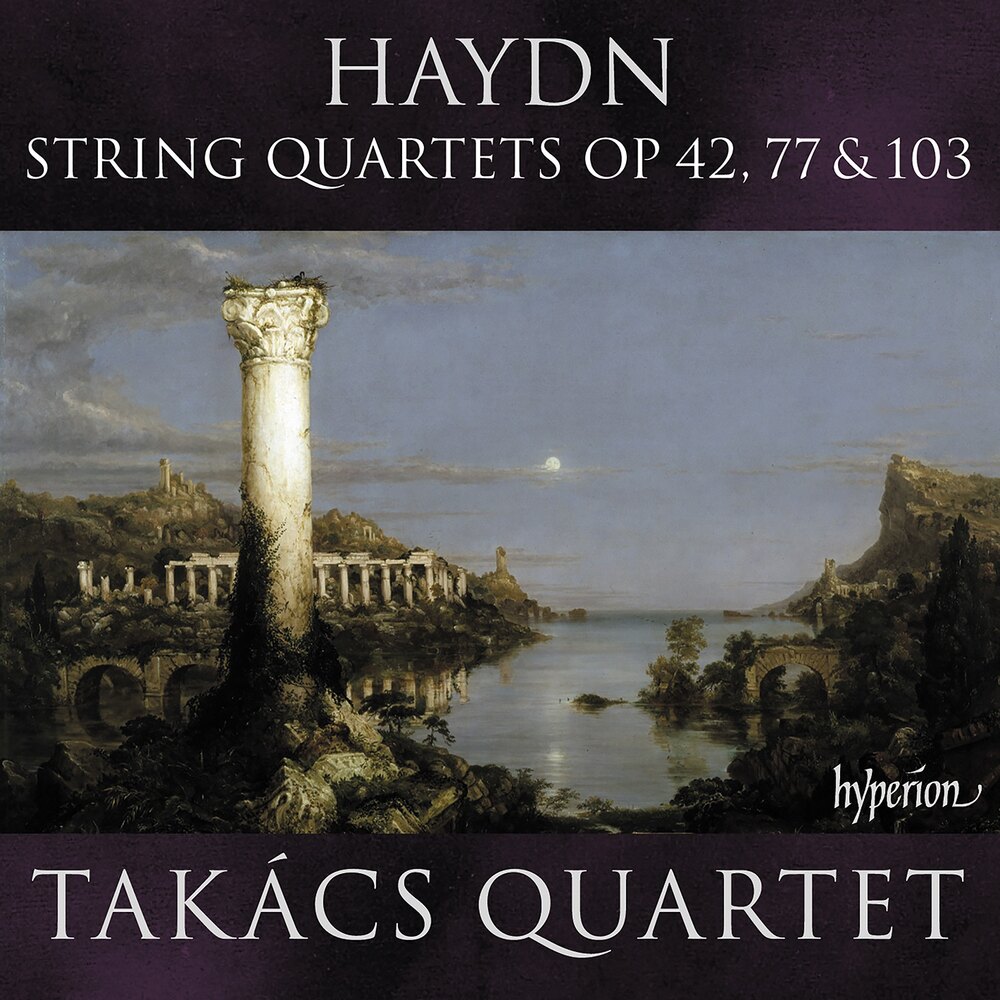
11 Haydn TakacsThere’s more top-notch quartet playing, this time from the Takács Quartet, on Haydn String Quartets Opp.42, 77 and 103 (Hyperion CDA68364 hyperion-records.co.uk/dc.asp?dc=D_CDA68364).

The String Quartet in D Minor Op.42 was the first following the huge success of Haydn’s Op.33 set. The two Op.77 quartets – No.1 in G Major and No.2 in F Major – were the final two quartets that Haydn completed, the two middle movements of a quartet unfinished at his death and published as Op.103 completing the CD.

The Takács Quartet has previously released CDs of Haydn’s Op.71 and Op.74 Quartets to great acclaim and it’s easy to hear why, with bright, clear playing, a lovely dynamic range and a resonant recording making for a delightful disc.
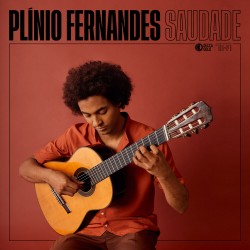
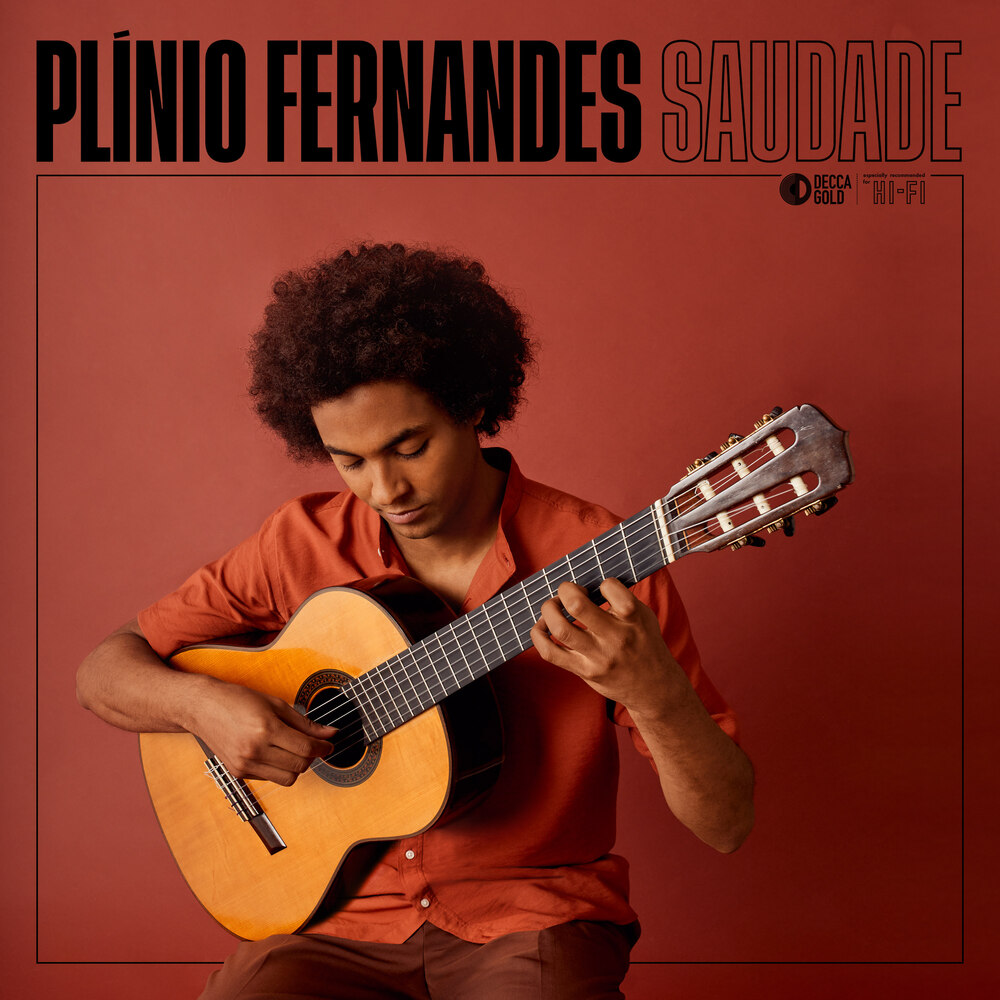
12 Saudade Pliny FernandezThe Brazilian guitarist Plínio Fernandes, now resident in London, makes his CD debut with Saudade (Nostalgia), a “virtuosic, soaring melodic set” combining his two passions – the popular songs of Brazil and the classical tradition of Villa-Lobos (Decca Gold 4857617 pliniofernandesmusic.com).

It’s the familiar Five Preludes of Villa-Lobos that are at the centre of a very attractive recital, the other 13 tracks featuring songs by, among others, Antônio Carlos Jobim, Milton Nascimento, Violeta Parra and Jacob do Bandolím, mostly in arrangements by Sergio Assad. Guest artists are cellist Sheku Kanneh-Mason, his violinist brother Braimah and vocalist Maria Rita.

“An entrancing collection,” says the publicity blurb. And rightly so.
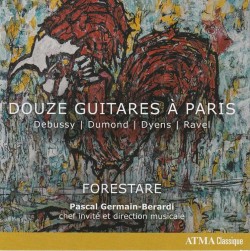
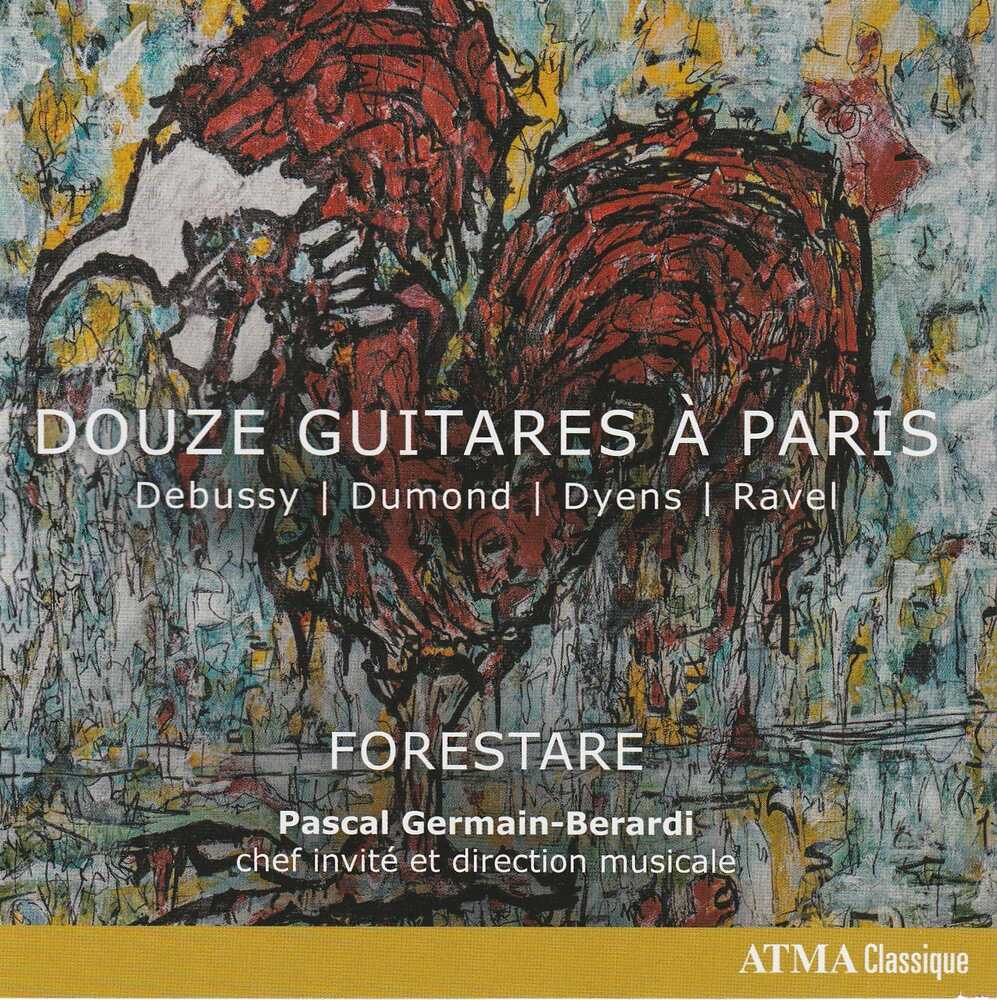
13 Douze Guitares a ParisForestare, the Montreal ensemble of 12 guitars and a double bass celebrates its close ties with France on Douze Guitares à Paris, an album dedicated to works by Debussy and Ravel and compositions by contemporary French guitarists Roland Dyens and Arnaud Dumond (ATMA Classique ACD2 2835 atmaclassique.com/en).

A dozen guitars sounds like a lot of separate voices, but the arrangements here are all in four parts with three players assigned to each, a system essentially ensuring a strong, even tone with no loss of dynamic range. 

Hamsa by Dyens (1955-2016) is followed by Debussy’s Suite bergamasque. An effective transcription of Ravel’s Ma mère l’Oye comes between the two impressive works by Dumond (born 1956): the terrific Allegro barbaro for ten guitars, double bass and two soloists, and his Lumières sur le Saint-Laurent for solo electric guitar and classical guitar ensemble.
Listen to 'Douze Guitares à Paris' Now in the Listening Room

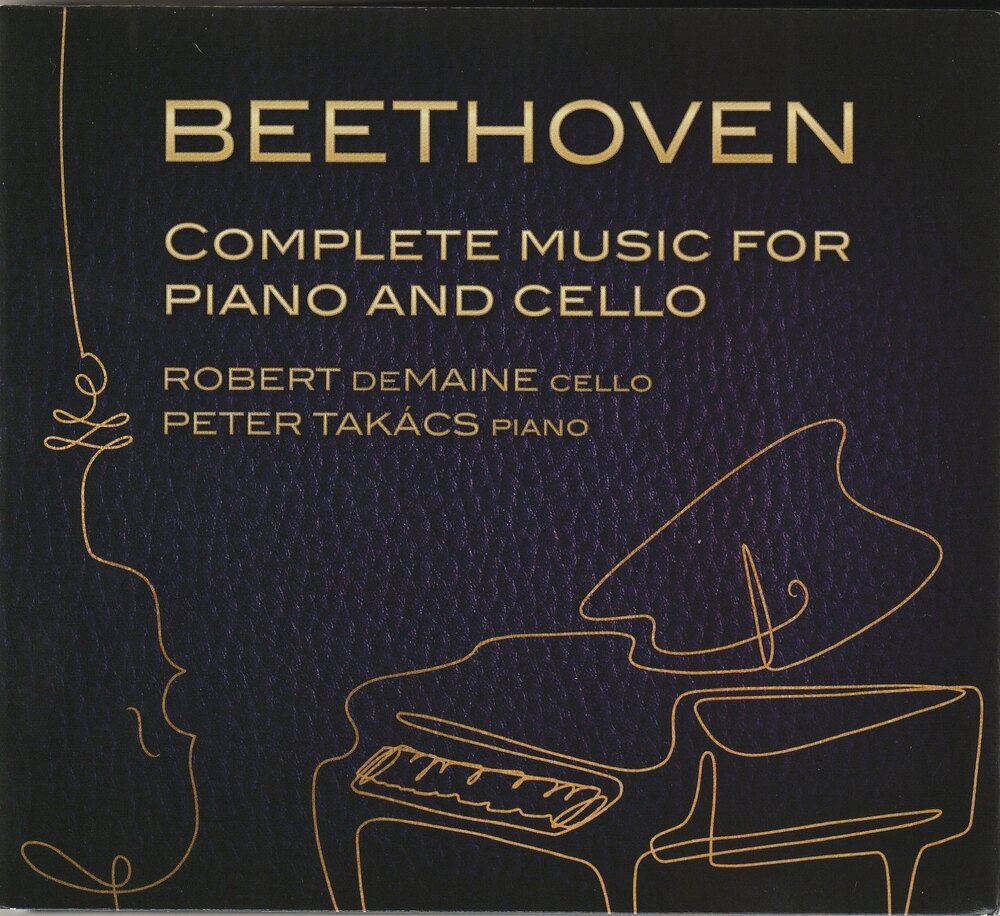
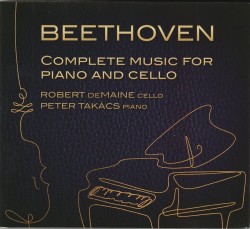
14 Beethoven DeMaineThere’s another 2CD set of Beethoven Complete Music for Piano and Cello, this time by Robert deMaine, the principal cellist of the Los Angeles Philharmonic, and pianist Peter Takács (Leaf Music LM233 leaf-music.ca).

The five sonatas – Op.5 Nos.1 & 2, Op.69 and Op.102 Nos.1 & 2 – are joined by the three sets of variations: the 12 Variations in G Major on Handel`s “See the conqu’ring hero comes, the 12 Variations in F Major on “Ein Mädchen oder Weibchen” and the Seven Variations in E-flat Major on “Bei Männern, welche Liebe fühlen”, both from Mozart`s Die Zauberflöte.

DeMaine plays with a quite dark and rich tone, but tends to sound a bit muffled or indistinct at times, as if set too far back in the balance. There’s fine playing and ensemble work here though, particularly in the really tricky Allegro vivace movements.
Listen to 'Beethoven Complete Music for Piano and Cello' Now in the Listening Room

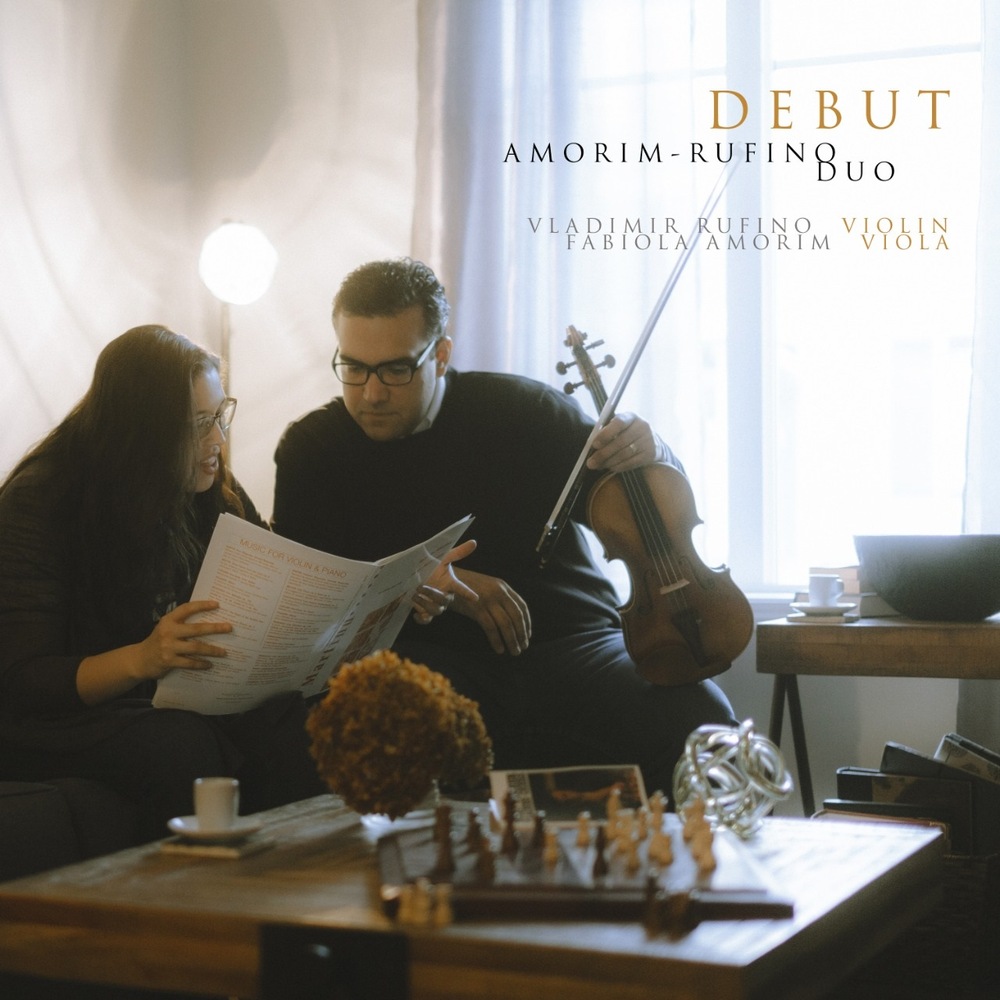
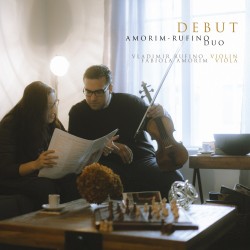
15 Debut Amorim RufinoDuoDebut is the first recording by the Brazilian-Canadian Amorim-Rufino Duo of violinist Vladimir Rufino and violist Fabiola Amorim in a recital of somewhat uneven musical and technical quality (Azul AMDA1755 azulmusic.com.br).

The 1789 Sonata No.1 by Paul Wranitzky and the 1788 Duo in C Major Op.19 No.4 by Franz Anton Hoffmeister open the disc, the latter the stronger piece with some particularly good viola work. The Villa-Lobos Duo from 1946 is followed by the world-premiere recording of Two Hearts in Concert, the short 2021 work written for the duo by Canadian composer Frank Horvat. The best work in the recital, Bohuslav Martinů’s Three Madrigals H.313, closes the disc. 

There’s competent playing of challenging works here, although the recorded sound could be better balanced and warmer.


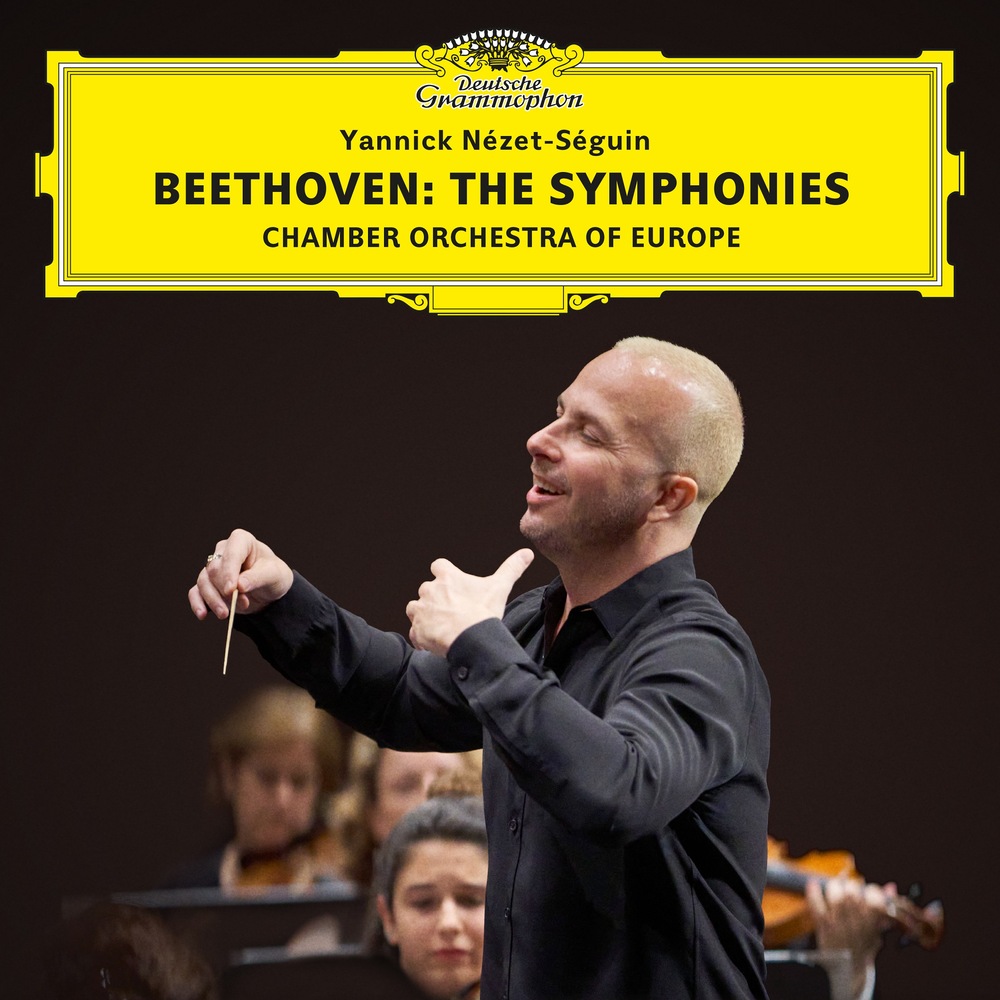
01 Beethoven Nezet SeguinBeethoven: The Symphonies
Chamber Orchestra of Europe; Yannick Nézet-Séguin
Deutsche Grammophon (deutschegrammophon.com/en/catalogue/products/beethoven-the-symphonies-nezet-seguin-12724)

The summer of 2021 was not an easy one so it isn’t hard to imagine the excitement the Chamber Orchestra of Europe must have felt when it came together to record a new version of the nine Beethoven Symphonies with none other than Yannick Nézet-Séguin, one of the most expressive and thoughtful conductors on the scene today, someone capable of truly joyous music-making. Add to this the backing of Deutsche Grammophon and you have the makings of a wonderful project: the first recording of the New Complete Edition of the Symphonies, painstakingly prepared for the Beethoven celebrations in 2020.

What is new in this edition? As a contrabassoonist myself, I’m delighted to say that the program notes make quite a lot of the fact that the most noticeable change is a much-expanded role for the contrabassoon in the Ninth Symphony. Designated contrabassoon parts in Beethoven’s hand exist for the finales of the Fifth and Ninth Symphonies but the liner notes point out that Beethoven created tailor-made versions of the Ninth for various specific performances and that the new contra part is an amalgam of six different contra parts from Beethoven’s day. I was curious to find out if these changes are audible: bad contrabassoon playing quickly makes itself obvious but a well-rendered contra part can make a performance seem rich or deep without the listener knowing exactly why. Such is the case in this set. I deliberately listened to the Ninth without any clue as to where the contra has been added, just to see if I could hear anything new and I’m happy to say that I did. Behind the baritone‘s first solo after the recitative, there is definitely more of a “spine” in the bassline, and at the Turkish March, one can hear that the contra has been moved up an octave as it used to appear in older editions. 

Are there other audible changes in this edition? In the second movement of the Ninth, the repeats have been sorted out (559 bars total vs. 954) and there is a diminuendo in the tympani part which I don’t recognize. As far as the rest of the set goes, there is an unusual ornament in the third movement of the Seventh Symphony but otherwise most listeners won’t notice anything strikingly unusual. There are many lovely turns of articulation but it’s hard to say whether this is because of changes to the edition or just good musicianship. Tempos are not always what Beethoven called for but they are always appropriate with the exception of a rather slow third movement in the Fifth. Interestingly, this tempo gives a great sense of relief when it returns in the last movement so perhaps that was YN-S’s intent. Another surprise comes at the start of the second movement of the Eroica where the grace notes in the basses seem to arrive after the downbeat: an interpretation that is, well, puzzling.

The playing of the orchestra is wonderful: tight ensemble in the strings, characterful woodwind solos, discreet brass and incisive tympani playing. My main concern is with the way the orchestra has been recorded. Producer Andrew Mellor seems to prefer a mix that locates the listener very close to the first violin section often making the firsts too present and the rest of the orchestra too vague. This is particularly true of the lower woodwinds and the horns, making many of the chorale passages sound unblended and rendering more than one duet as more of a solo with only a hint of the second line. And before you dismiss me as being partisan, I can assure you that many other recordings sound, to my ears, much more homogenous and portray the winds and strings as more equal teams. Ultimately, the buck stops with YN-S, but I’m more inclined to question the engineering.

If you can listen past the balance issues, or if it sounds just fine to you on your system, you will be rewarded with much grace and humour and some thrilling moments: the whole First Symphony is a delight and the first movement of the Seventh is pure joy. The funeral march of the Eroica seems to have a special depth to it, as you might expect, and the singing in the Ninth is first-rate, possibly because of details added in this edition. I particularly love the qualities of Florian Boesch’s baritone voice which give an almost tenor-ish spring to his solo and I have never heard a more nuanced and articulate version of the Ninth’s celli/bassi recitative.

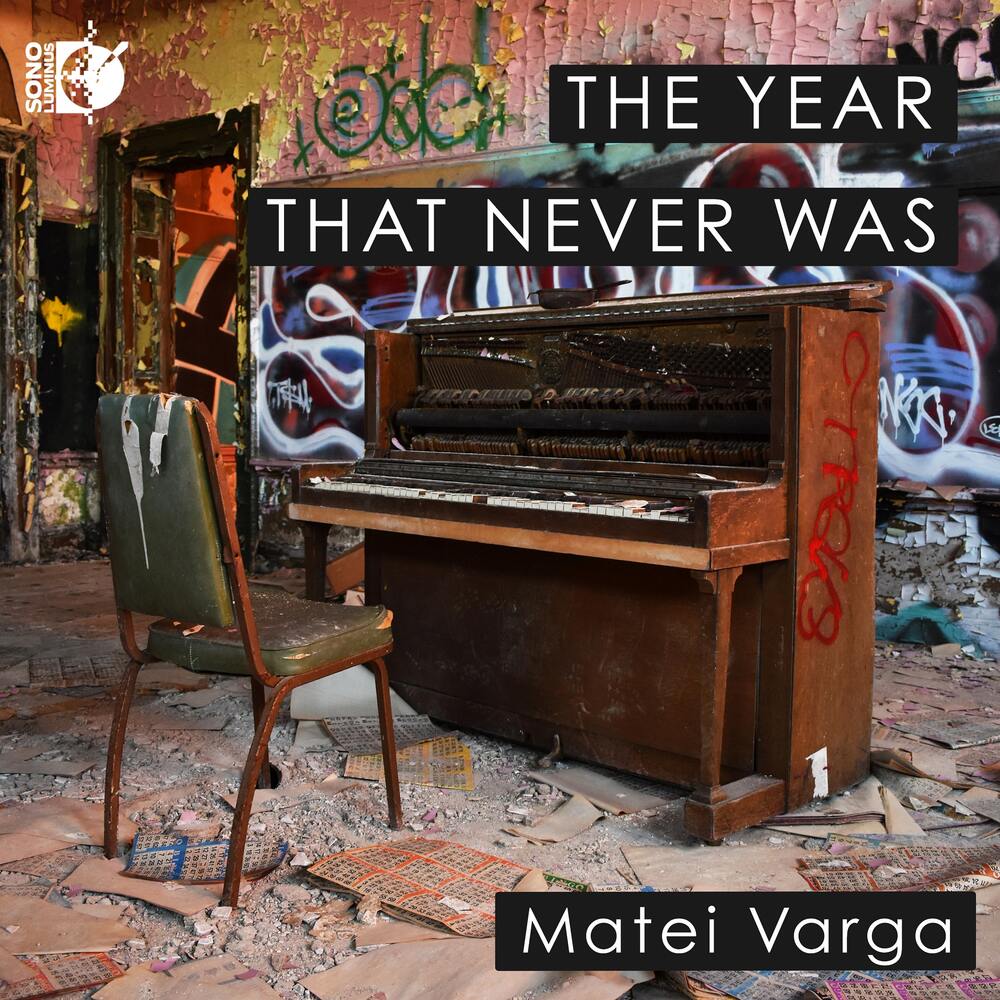
02 Matei VargasThe Year That Never Was
Matei Varga
Sono Luminus DSL-93358 (sonoluminus.com)

An eclectic, highly personal recording from Romanian pianist Matei Varga is intended “to bring joy when we really need it… to take [the] mind away from current realities.” As such, Varga offers an attractively curated disc of miniature delights, from Gershwin to Chopin to Scarlatti. The contemporary content on this disc is sourced from the salon-styled pen of Cuban master, Ernesto Lecuona and Romanian composer, Andrei Tudor, whose Ronda alla Crazy is featured as a quirky micro-highlight. This three-minute swinging track encapsulates a veritable brand of crazy, born of pandemic freneticism. (It was even delivered to Matei by the composer via Facebook Messenger!) 

Ernesto Lecuona’s music was a new (pandemic) discovery for Varga, and one that centres the vision for the record. Varga is at home in this off-beat repertoire, imputing characteristic charm and improvisatorial ease to Lecuona’s 19th Century Cuban Dances. Here, interwoven with Chopin’s “salon” music, the pairing of both composers brings credibility to Lecuona. It is a clever juxtaposition, framing Chopin less seriously and Lecuona more so. Varga reminds us that much of Chopin’s art originated from smaller stages and gentil spaces, sporadically populated by aristocrats who desired to be amused, not feverously stirred.

Varga’s signature pianism is apt in arguing for seemingly disparate musical threads. More of a recital program than a thematically directed album, The Year That Never Was nonetheless achieves satisfaction, executed with much joy and a tasteful, rollicking fondness for this personalized set list.

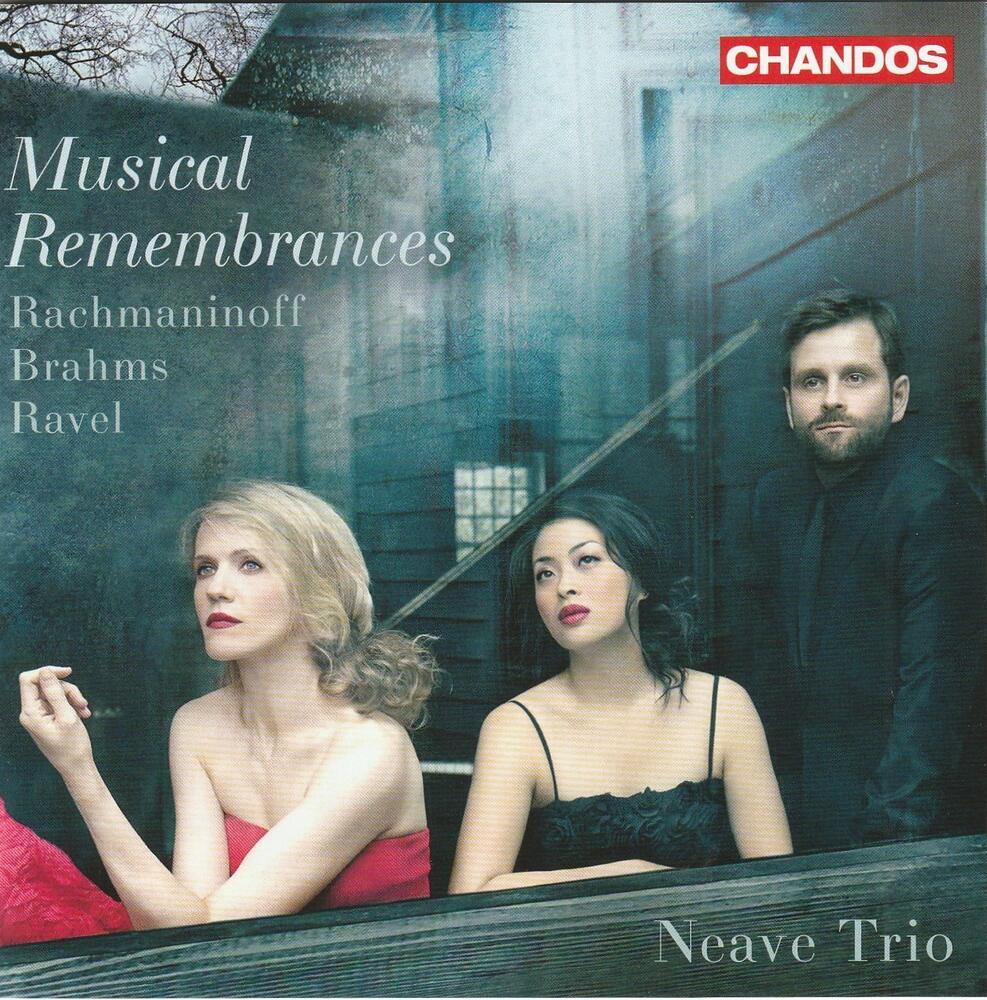
03 Neave TrioMusical Remembrances
Neave Trio
Chandos CHAN 20167 (chandos.net/products/catalogue/CHAN%2020167)

Recorded in 2021 at Potton Hall, England and released on Chandos Records, their fourth for the label, Musical Remembrances by the Neave Trio (Anna Williams, violin; Mikhail Veselov, cello; and Eri Nakamura, piano) captures the trio in a reflective mood. The album is inspired by remembrance, both in terms of repertoire selection (Ravel’s Piano Trio in A Minor, Op.67 captures the French composer “remembering” his native Basque musical tradition) and in terms of remembering what a pre-pandemic world of touring and concertizing was like for musicians of the calibre and renown of the Neave Trio. And while speculative as this recording may be, it is anything but maudlin or melancholic – the dynamic chosen repertoire pops from the stereo speakers with the same clarity, purpose and confidence of delivery that earned their previous recording, Her Voice, a best recording of the year designation by both The New York Times and BBC Radio 3

Although the entire recording is excellent, it is the Brahms Piano Trio No.1 in B Major, Op.8 where the chamber group, to my ears, shines brightest, bringing out a range of musical emotions and drawing listener ears towards new musical ideas over four movements that always centre around excellence, but leave room for new discoveries. On the faculty now at the Longy School of Music of Bard College, let us hope that this terrific trio continues to find the time to mine the depths of the great chamber music repertoire of Western Art Music and make recordings such as this that both delight and surprise.

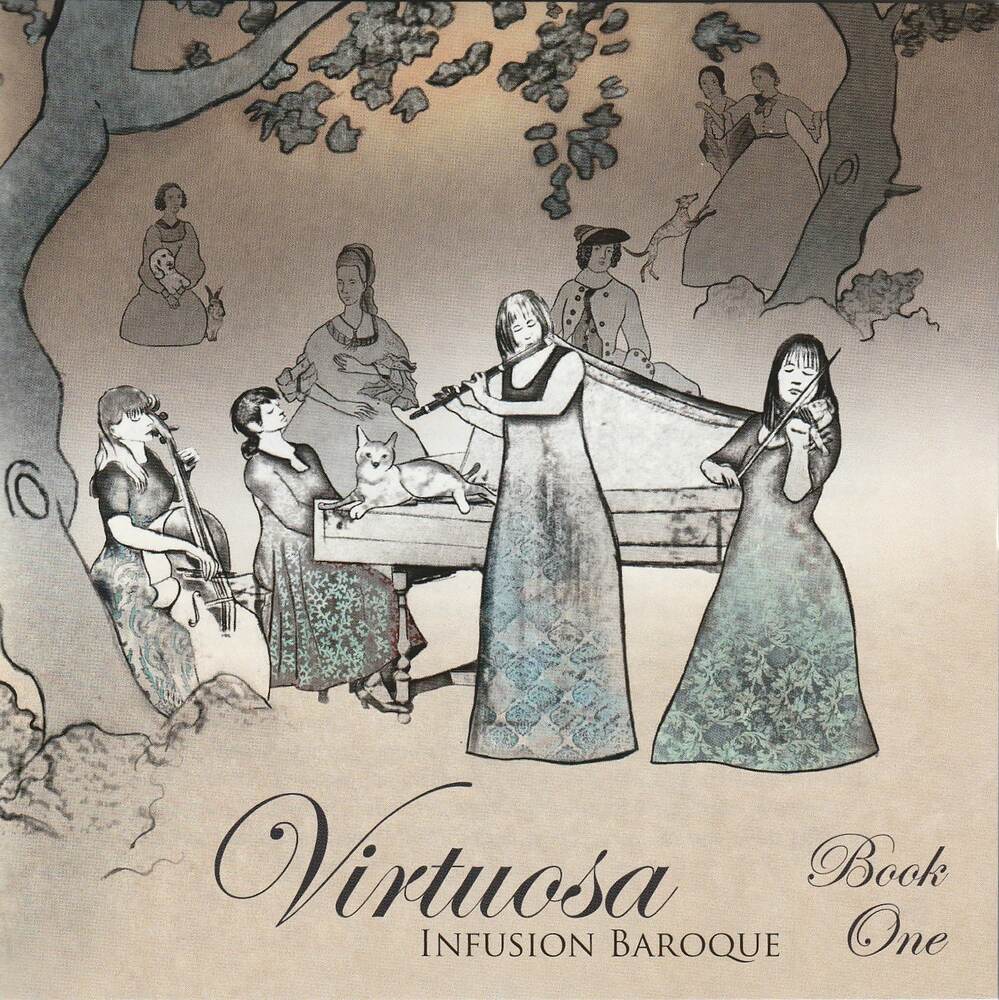
05 VirtuosaVirtuosa Project
Infusion Baroque
Leaf Music LM246 (leaf-music.ca)

The piquant new release by Virtuosa, a period ensemble form Quebec, is part of their notable Virtuosa Project, a series of concerts, lectures and web videos dedicated to women musicians prior to the 20th century. In itself, this is an impressive undertaking featuring 14 compositions, stylish interpretations and tons of heartfelt energy. Almost all of the female composers on this album remained in the shadows of their male counterparts but brought just as much knowledge, skill and talent to the European courts and concert stages. Many were courageous and imaginative performers and composers who led financially independent lives and acquired noble reputations. This album features an all-star list of powerful and talented women composers, some of whom remain relatively unknown to audiences today: Anna Bon, Anna Amalia of Prussia, Wilhelmine von Bayreuth, Maddalena Lombardini Sirmen, Elisabeth-Claude Jacquet de la Guerre, Leopoldine Blahetka, Teresa Milanollo, Hélène Liebmann and the better-known Clara Schumann. 

Ensemble Virtuosa is daring in both their programming and performance. The beauty of structure and phrasing is emphasized through a fantastic array of colours; the ensemble and their guest artists perform with a great sensitivity to each of the individual compositional languages. The inclusion of the contemporary piece Versailles written for Baroque instruments by Canadian Linda Catlin Smith is perhaps a surprising inclusion, but it works well as it binds together meditative and enigmatic feminine qualities, resulting in uniquely beautiful textural layers. 

Intuitive and reflective, Infusion Baroque celebrates the vibrant creativity and lives of these women.

Listen to 'Virtuosa Project' Now in the Listening Room

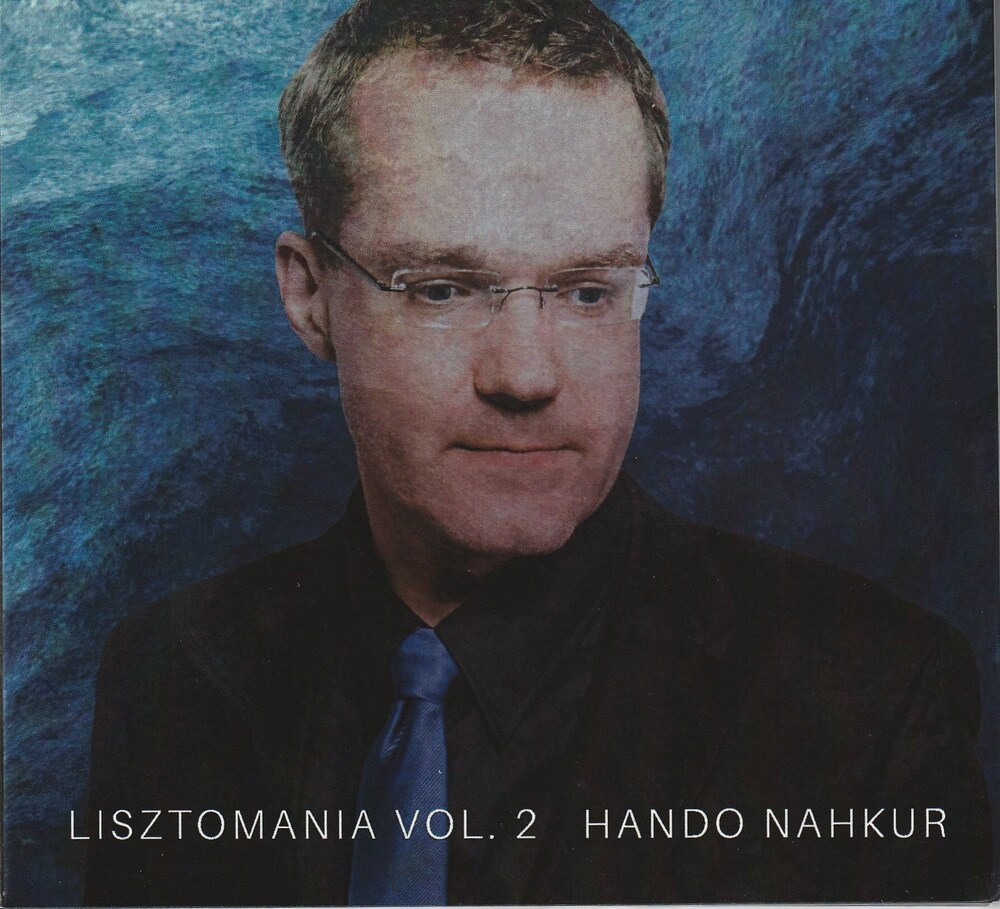
06 LisztomaniaLisztomania Vol.2
Hando Nahkur
HN Productions (handonahkur.com)

Hando Nahkur is a remarkable American pianist of Estonian origin. Actually, he has been enthusiastically reviewed on these pages in 2018 – his Lisztomania Vol.1 – and with this Vol.2 I can only reiterate and add to those accolades.

Nahkur’s credentials are too numerous to mention. As soloist and accompanist he has enchanted audiences, won competitions and received international awards. Franz Liszt is his favourite composer, and listening to this recording he certainly does more than justice to the repertoire. In fact since Estonians and Hungarians (and the Finns) are related, coming from the same roots, he must have some Magyar blood in him as he has such tremendous affinity and love for the great Hungarian composer.

According to our pianist the key to understanding Liszt is “from darkness to light” and nowhere is this more apparent than in his iconic Hungarian Rhapsodies inspired by folk tunes he picked up during his many visits to his homeland. Actually Rhapsody as a musical genre was invented by Liszt and later used by many composers. Generally these start out slowly (Lassu’) in the lower registers and gradually work toward sunlight when the pace quickens and turns into some frenetic Hungarian dance like the Csárdás and becomes an extremely difficult virtuoso piece with a spectacular ending. Hando does two of these, No.10 and my favourite No.12, played with gusto, total Romantic abandon and astoundingly perfect technique. Typical Liszt, those grace notes, rapid decorative passages that are cascading up and down the keyboard, paced perfectly evenly and light as a feather. The Liebestraum No.3 is played with loving tenderness and ardent passion and the big guns come out at the end in the Spanish Rhapsody that will lift you out of your seat.

Listen to 'Lisztomania Vol.2' Now in the Listening Room

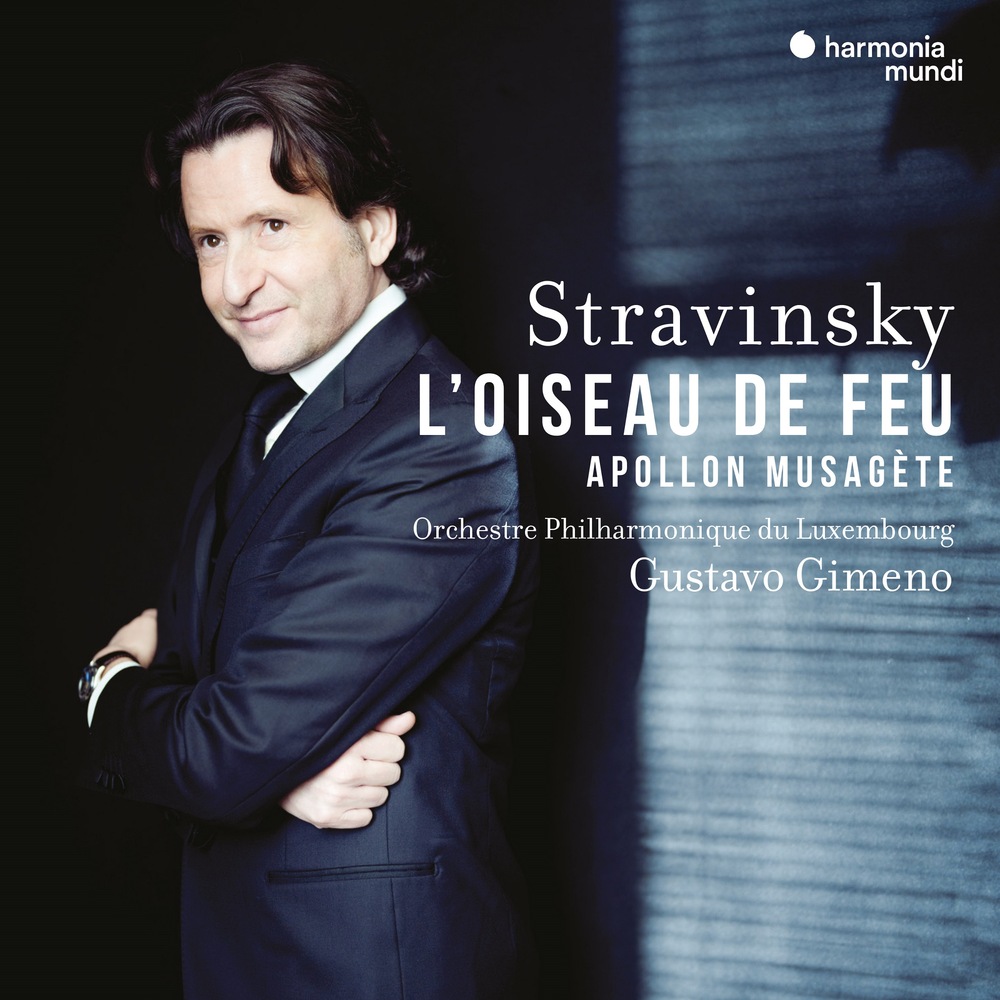
09 Gimeno StravinskyStravinsky – L’Oiseau de feu; Apollon Musagète
Luxemburg Philharmonic Orchestra; Gustavo Gimeno
Harmonia Mundi HMM905303 (store.harmoniamundi.com/release/318357)

In June of 2019, Gustavo Gimeno conducted the Toronto Symphony Orchestra in a powerful performance of Stravinsky’s 1945 suite from The Firebird. Last May, he led them in an even more memorable Firebird. This time, he took the podium as music director of the orchestra. And the version he chose was the less frequently programmed original that Stravinsky wrote in 1910 for Diaghilev’s legendary Ballets Russes. It’s more than twice the length of any of the three concert suites Stravinsky later made. But this performance left me with no doubt – more was better.

On his standout new recording of The Firebird with the Orchestre Philharmonique du Luxembourg (where he is also music director), Gimeno again opts for the original full-length ballet score. Every moment speaks persuasively. Stravinsky’s tapestry of evocative Russian folk melodies, angular textures and infectious rhythms becomes an edge-of-the-seat experience. Colourful solos, like the rhapsodic flute welcoming the 13 captive princesses, and the volcanic timpani driving the frenzied dance of the evil sorcerer Koschei’s subjects, enhance the drama.

The pairing with Stravinsky’s equally groundbreaking ballet Apollon Musagète, written 18 years later, works brilliantly. Like The Firebird, it draws on ancient tales. But these tales are from Greek mythology. In The Firebird, goodness must overcome evil to triumph. Here, goodness prevails unchallenged. Instead of conflict there’s serenity. Instead of mystery, there’s clarity. It’s all conjured up luminously by Gimeno and the exquisite strings of the Orchestre Philharmonique du Luxembourg in gorgeous, sweeping brushstrokes.

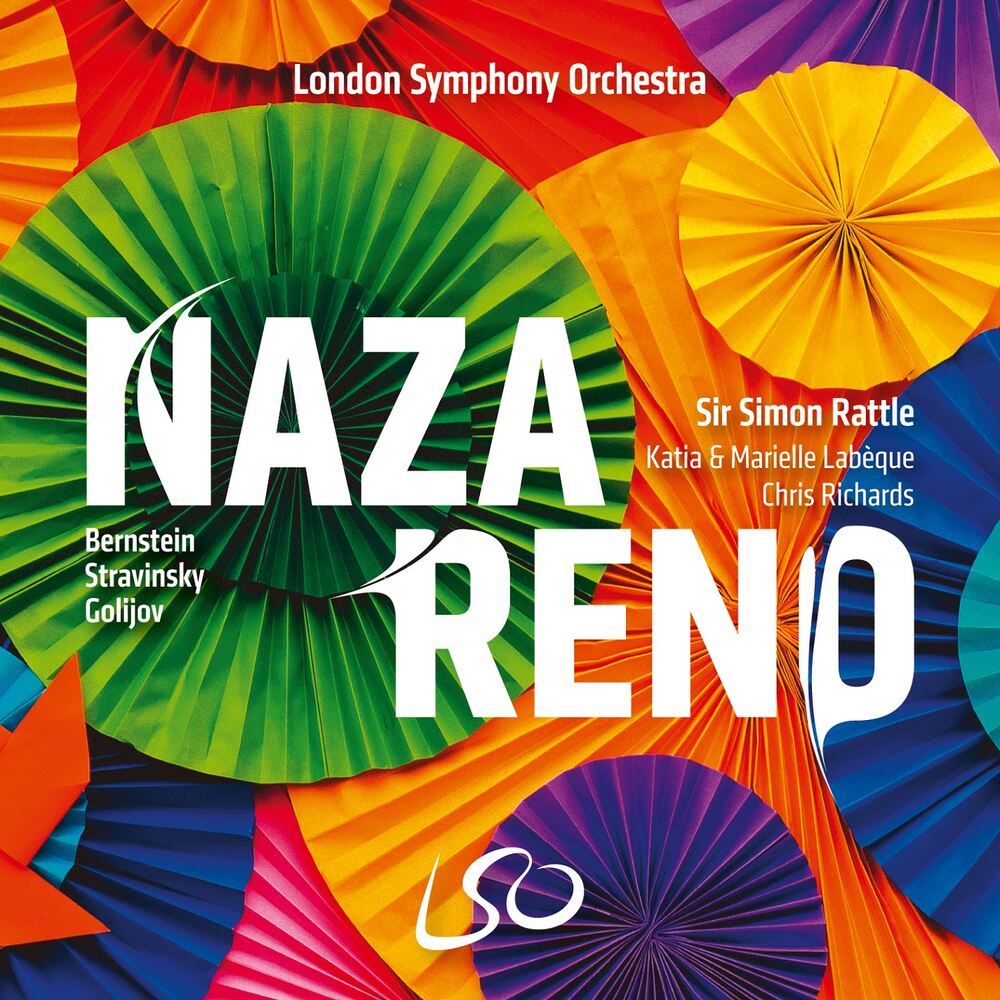
10 LSO NazarenoNazareno – Bernstein; Stravinsky; Golijov
Chris Richards; Katia and Marielle Labèque; London Symphony Orchestra; Sir Simon Rattle
LSO Live LSO 0836 (lso.co.uk)

Sir Simon Rattle and the LSO have released, concurrent with their Stravinsky: Early Ballets collection, a record offering a brief survey of the Afro-Latin influence on “serious” music of the last century. It includes two curiosities for clarinet: Prelude, Fugue and Riffs (1949) by Leonard Bernstein, and Ebony Concerto (1945) by Stravinsky. Both were commissioned by Woody Herman, and each lasts under ten minutes. They remain somewhat overlooked, perhaps on account of their offhand treatment of the solo instrument, or the fact that they both feature big band, not full orchestra. The two works are given a lively ride by LSO lead clarinetist Chris Richards and the decidedly non-orchestral backup, mainly of brass and saxes. 

Most of the disc is taken up by Nazareno (2009) a beautifully rendered adaptation (by Venezuelan composer Gonzalo Grau) of Osvaldo Golijov’s scintillating La Pasión según San Marcos (2000); this new rendering omits the vocals of the original cantata. Commissioned by Katia and Mireille Labèque, it’s scored for two pianos, Latin percussion section, plus winds and cello. Without text, I still hear how the music conveys the story of the Christian sacrifice. Powerful rhythmic dances abound, but behind the upbeat samba movements lies a much more sombre tone, especially in the slow ballad Sur. I won’t be surprised if a choreographer selects this score for a new dance work. It might serve as an answer to Stravinsky’s pagan vision of the sacrifice, made roughly a century ago.

The LSO, or the sections performing on this disc, give the selections punch and vigour. The soloists and percussionists are stars.

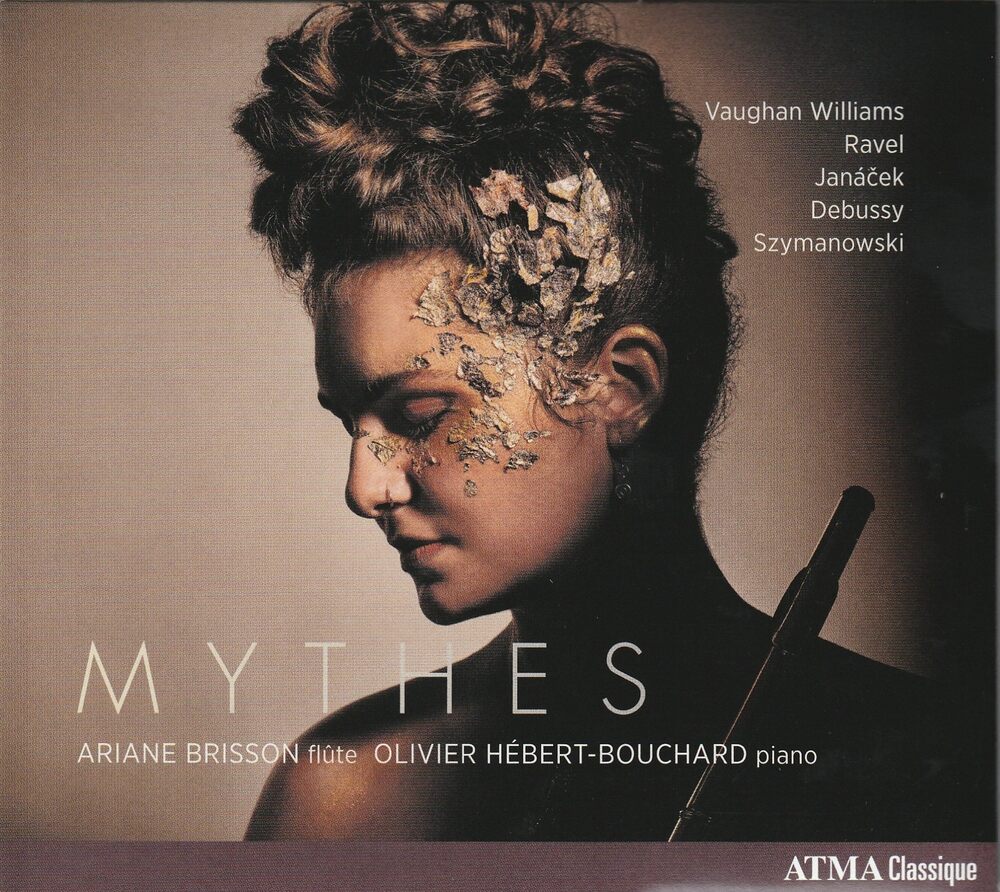
11 MythesMythes
Ariane Brisson; Olivier Hébert-Bouchard
ATMA ACD2 2842 (atmaclassique.com/en)

The flute has had a long and illustrious history as far back as prehistoric times and its appeal is again showcased on this attractive ATMA recording featuring transcriptions of compositions performed by flutist Ariane Brisson and pianist Olivier Hébert-Bouchard. Brisson was selected as “Découverte de l’année” at the Prix Opus 2019-2020 Gala and Grand Prize winner of the Prix d’Europe competition in 2013, while award-winning pianist Hébert-Bouchard is a founding member of Trio Émerillon and Prisma.

As the title implies, the disc partly pays homage to the worlds of fantasy and magic as seen through the eyes of five composers. It opens with Ralph Vaughan Williams’ haunting The Lark Ascending, music inspired by George Meredith’s 1881 poem of the same name. Here, the listener is immediately struck by Brisson’s warm and sonorous tone with Hébert-Bouchard providing a solid and sensitive partnership.

Ravel’s Sonatine was completed around 1905, and although originally scored for solo piano, the combination of flute and piano is an appealing one, particularly in the vivacious finale animé. Both Janáček’s Pohádka (A Tale) from 1912 and Debussy’s renowned Prélude à l’après-midi d’un faune clearly prove that skilful arrangements can be as convincing as the originals.

The three-movement Mity (Myths) by Karol Szymanowski was inspired by Greek mythology and was originally scored for violin and piano. Here, Narcissus, Pan and the dryads all make an appearance in this highly impressionistic score. Once again, Brisson and Hébert-Bouchard prove a formidable pairing.

These are challenging times, so Mythes just might be a perfect means of briefly escaping into a better place – a welcome addition to the catalogue.

Listen to 'Mythes' Now in the Listening Room

Back to top