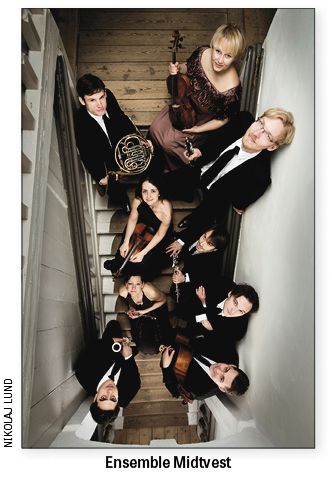
Classical_Banner.jpg2106-Classical_1.pngThe youthful and adventurous Danish Ensemble Midtvest (EMV) makes its Canadian debut, March 13, as part of Mooredale Concerts’ current season. Mooredale’s artistic director, cellist Adrian Fung told me via email how he first met the group: “My Afiara Quartet tours Denmark every two years, each time playing over 20 cities. It was on one of these trips that I met the EMV, which is managed by the same energetic gentleman (Oliver Quast) who builds our successful Danish tours.”

Based in Herning, which is in the centre of west Jutland (hence the “midwest” reference), in the Herning Museum of Contemporary Art (HEART), EMV consists of five string players, a pianist and a wind quintet. As Fung pointed out, “They bring an incredible flexibility to their playing, as the size of their ensemble shrinks and expands to the benefit of the repertoire and their programming. Think of a team of chefs that each have their specialty, but only called to the fore when the menu calls for it.”

Their Walter Hall concert will see six members of EMV joined by American clarinet virtuoso, Charles Neidich, “a celebrated luminary of the clarinet” as Fung dubbed him, in a program that focuses on the ensemble’s piano-wind nexus. Danish composer Carl Nielsen’s  Fantasy: Pieces for Oboe and Piano Op.2 opens the recital and I was able to get a sense of it by sampling EMV’s cpo CD, Neilsen: Complete Chamber Works for Winds. I was struck by the richness of Peter Kristein’s singing tone on the oboe in the Romance and look forward to hearing him and pianist Martin Qvist Hansen live. Mozart’s Quintet for Piano and Winds in E-Flat Major K452 stands at the pinnacle of writing for piano, oboe, clarinet, bassoon and horn. I have been in love with it since childhood when my father introduced me to the Angel LP with pianist Walter Gieseking and the Philharmonia Wind Quartet that included the legendary hornist Dennis Brain.

Two months after Schubert finished writing Die schöne Müllerin, he took the 18th song in the cycle (Faded Flowers) and used it as the basis of a set of variations, Introduction and Variations on “Trockne Blumen” for Flute and Piano D802 Op posth.160. A solemn introduction leads into the gentle bucolic theme and as the variations progress the flutist is called on to convey beauty, tempestuousness, vulnerability and propriety. Flutist Charlotte Norholt, who will perform the work here in March, said before EMV’s first appearance at Carnegie Hall in 2012 (in a Danish video available on YouTube) that “the quest for musical excellence is the driving force of this ensemble.”

For Brahms’ Clarinet Trio in A Minor Op.114, cellist Jonathan Slaatto joins pianist Hansen to welcome back special guest Neidich for this enduring late-in-life masterpiece that was inspired by the same clarinetist (Richard Mühlfeld) who led Brahms to write his equally memorable clarinet quintet and sonatas. Slaatto, in that same YouTube video from 2012, expressed part of what makes EMV (and any good ensemble) tick when he said, referring to finding a suitable tempo, that your own view of any piece is subordinate to the view of the group as a whole.

Fung told me that he “was lucky to nab EMV on the same trip they are playing New York’s Carnegie Hall (their third appearance with them).” I suspect the Mooredale audience will agree after hearing their March 13 concert.
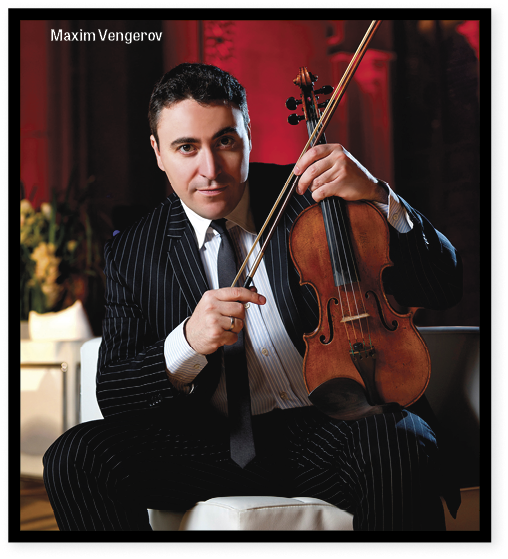
2106-Classical_3.pngMaxim Vengerov. On March 11, the universally acclaimed violinist, the extraordinary Maxim Vengerov, makes his first recital appearance in Toronto since a right shoulder injury and recovery from surgery forced him to suspend playing for four years in 2007. His Roy Thomson Hall concert with pianist Patrice Laré, presented by the Montreal Chamber Music Society, will include Franck’s emotionally rich classic, Sonata for Violin and Piano in A Major, Ysaÿe’s devilishly difficult, unaccompanied Sonata for Violin No.6 as well as music by Brahms and Paganini.

I got a sense of Vengerov’s journey back, which involved an assiduous rehab and reinvention of his violin technique from much reportage on the Internet, particularly Laurie Niles’ revelatory violinist.com interview published on January 9, 2013. In that interview, Vengerov also spoke of his close relationship to cellist/conductor Mstislav Rostropovich and pianist/conductor Daniel Barenboim, both of whom he got to know as a teenager.

Of Rostropovich, Vengerov says he was “like a musical father, he was so close to my heart; I think it was his great musicianship and also understanding of the violin repertoire, of the stringed instruments, that helped us to build an incredible chemistry that I had with no one else.”

Barenboim, Vengerov says, would “view a piece of music as an instrumentalist, as a pianist, from the harmonic point of view, from the orchestration, colouring,” whereas Rostropovich had an “instant connection with the composer, with the soul of the composer,” imagining he was the composer himself performing the music.

Of course Vengerov himself has conducted successfully (as anyone in the audience in October of 2012 at Roy Thomson Hall was only too aware, for his historic double role as soloist/conductor with the TSO in an exceptional performance of Rimsky-Korsakov’s Scheherazade), but the violin remains his “first source of communication with the audience – no doubt my first love.”

Vengerov looked at the time when he couldn’t play as beneficial to deepening his musical knowledge. “I think I have more colours to my violin playing than before, for the fact that I hear it somehow differently.” He also discovered, after surgery, that he had to change his technique so that he moves much less; he had been putting too much physical effort into his playing. Working with quite a lot of pain forced him to relax his playing. “If I had pain, that meant I was doing something wrong,” he said.

All in the service of the music, of “the great heritage Beethoven, Brahms, Shostakovich, Tchaikovsky left for us. We have to deliver these great works in the best possible way that we can. We have to find a very personal approach to them. Every soloist nowadays has to try to say something unique, something personal. Otherwise, if you’re playing just another performance of Brahms’ concerto, why do we need to hear that? That is the great lesson that Barenboim taught me…Just study the score…I want to really hear your Sibelius, your discovery, based on your new, detailed knowledge of the musical score.”

Takemitsu in Kyoto. An unexpected delivery of a DVD recently rekindled memories of Toru Takemitsu, who won the Glenn Gould Prize six years before Pierre Boulez. The DVD, Kyoto, is a quasi-documentary, part travelogue, atmospheric portrait of a place and a lifestyle, made in 1968 by the Japanese master filmmaker Kon Ichikawa (The Makioka Sisters) with a soundtrack by Takemitsu, then in his late 30s. Its 37 minutes are densely packed with artfully composed images that treat a rock garden, a Buddhist temple and a royal villa with the same aesthetic respect as that given to the people who walk the city’s streets. Takemitsu’s music, mysterious and quietly surprising but always filled with a deep humanity, acts as the foundation that illuminates these images. With a modernist sensibility always conscious of a cultural past, his score is an essential component of this fascinating piece of cinematic art. The handsomely packaged DVD is available from martygrossfilms.com. Many years ago, I was fortunate to be invited to watch Takemitsu at work one afternoon supervising the marriage of music, sound design and image in Marty Gross’ exquisite Bunraku film, The Lovers’ Exile. Takemitsu’s attention to detail, personal warmth and humility made a lasting impression.

QUICK PICKS
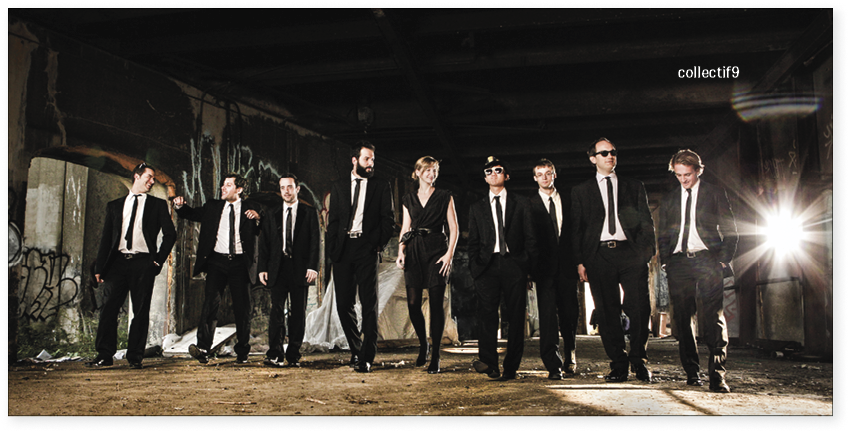
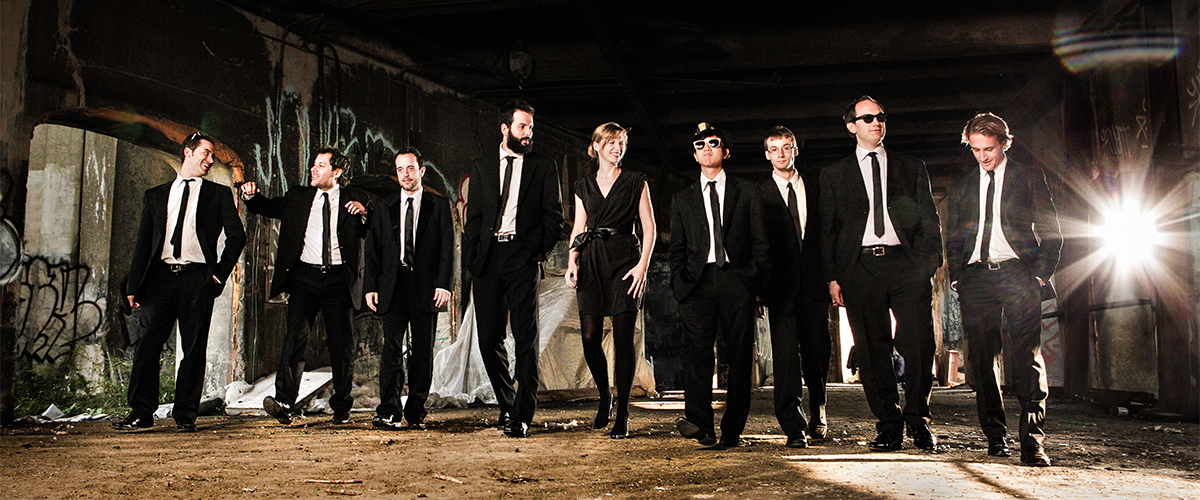
2106-Classical_2.pngMusic Toronto: If you’re quick off the mark you may be fortunate enough to hear the eminent British pianist Steven Osborne Mar 1. On Mar 10 the exuberant Montreal string ensemble, collectif9, performs a diverse program including Geof Holbrook’s Volksmobiles, from collectif9’s CD of the same name which Strings Attached DISCoveries’ columnist Terry Robbins praises elsewhere in these pages. Mar 17 the ebullient Quatuor Ébène’s strong program begins with Mozart’s delightful Divertimento K136, moves to Debussy’s Quartet in G Minor (a piece they own) before concluding with Beethoven’s immortal String Quartet No.14 Op.131. Apr 5 Duo Turgeon, husband-and-wife duo pianists, perform a heavyweight program that includes a new arrangement of Ravel’s Second Suite from Daphnis and Chloe by Vyacheslav Gryaznov, Lutoslawski’s Variations on a Theme by Paganini and Brahms’ Variations on a Theme by Haydn as well as pieces by the Russian Valery Gavrilin and the Canadian Derek Charke.

Royal Conservatory: I wrote in my last column about the talented young Norwegian violinist Vilde Frang and her Koerner Hall debut Mar 2. She’s followed Mar 4 by Canadian violinist Karen Gomyo, Swiss cellist Christian Poltéra and Finnish pianist Juho Pohjonen in an appealing program of Mittel-European fare. On Mar 20 Paul Lewis performs his first solo recital in this city since his remarkable Toronto debut with the Women’s Musical Club in the fall of 2013. In this upcoming Koerner Hall concert, he focuses on Brahms (Four Ballades Op.10; Three Intermezzi Op.117), Liszt (the transformative Après une lecture du Dante, fantasia quasi una sonata, “‘Dante Sonata” from Années de pèlerinage, Italie) and Schubert (the enchanting Sonata D575). On  Mar 29 the current crop of Rebanks fellows are on display in a recital in Mazzoleni Hall, which is also the venue Apr 7  for chamber music by Haydn, Berg (the uber-Romantic Lyric Suite) and Dvořák (the charming Piano Quintet No.2 Op.81) performed by the Musicians from Marlboro. In Koerner Hall on Mar 30 violinist Augustin Dumay and pianist Louis Lortie bring their powerful musical gifts to sonatas by Beethoven (“Spring”), Franck and Richard Strauss.

Perimeter: Best known as artistic directors of the Chamber Music Society of Lincoln Center, husband-and-wife cellist David Finckel and pianist Wu Han bring their considerable performing talents to the Perimeter Institute Mar 10, in a program of music by Richard Strauss, Chopin, Messiaen, Glazunov and Albéniz.

Nocturnes in the City: Pianist Adam Zukiewicz plays Beethoven and Liszt Mar 13. (One evening earlier, Mar 12, Zukiewicz plays a similar program at St. Basil’s Church.) The Czech-based Epoque Quartet plays Vivaldi, Jezek and others at the Praha restaurant Mar 27. Notable Czech pianist and Smetana specialist, Jan Novotný, makes a welcome visit to Toronto for a recital that includes music by Smetana, Schubert and Mozart.

Kitchener-Waterloo Chamber Music Society: The final weekend of the Attacca Quartet’s Haydn 68 series takes place Mar 18, 19 and 20; since their last appearance in the KWCMS Music Room, the quartet has a new violist, Nathan Schram. (My Q & A with the KWCMS’ Jean and Jan Narveson and interview with former Attaca violist Andrew Fleming appeared in The WholeNote’s November 2013 issue as the complete Haydn string quartet cycle began.) Mar 24 cellist Rachel Mercer and pianist Angela Park perform the complete Mendelssohn works for cello; on Apr 3 they join violinist Elissa Lee and violist Sharon Wei, their partners in Ensemble Made in Canada, for a Syrinx concert of music by Beethoven, Schumann and Omar Daniel.

Academy Concert Series presents Mozart’s masterful Sinfonia Concertante K364 for violin, viola and orchestra, and Beethoven’s first sonata for cello and piano, Op.5 No.1, transcribed by nineteenth-century arrangers for string sextet and cello quintet, respectively, Mar 19. Also Mar 19, Jeffery Concerts presents the TSO Chamber Soloists – Nora Shulman, flute, Teng Li, viola, Jonathan Crow, violin, Heidi Van Hoesen Gorton, harp, and Joseph Johson, cello, in a program of music by Françaix, Saint-Saëns, Debussy, Ravel and Jongen.

The TSO: Stéphane Denève, principal conductor of the Philadelphia Symphony Orchestra, leads the TSO in a crowd-pleasing program Mar 23 and 24 that features the charismatic Jean-Yves Thibaudet as soloist in Saint-Saëns’ exotic Piano Concerto No.5 “Egyptian.” On Mar 31 the TSO presents the Victoria Symphony conducted by Tania Miller with Stewart Goodyear as soloist in Grieg’s lyrical Piano Concerto. Soprano Carla Huhtanen, poet Dennis Lee and narrator Kevin Frank join conductor Earl Lee in two afternoon Young People’s Concert performances Apr 2 of Abigail Richardson-Schulte’s musical treatment of Lee’s iconic children’s classic, Alligator Pie. It would be a surprise if Gabriela Montero didn’t improvise her own cadenza in Mozart’s sublime Piano Concerto No.20 K466 when she appears as soloist with the National Arts Centre Orchestra under its new conductor Alexander Shelley Apr 2; two of Richard Strauss’ most exciting tone poems, Don Juan and Death and Transfiguration open and close the concert.

Massey Hall/Roy Thomson Hall presents Chopin champion Yundi in his first Toronto recital in a decade Mar 19; the famously conductorless Orpheus Chamber Orchestra features Pinchas Zukerman as soloist in Mozart’s Violin Concerto No.3 K216, a masterpiece of gallantry and lightness, and in Beethoven’s tender First Romance, Mar 20.

Canzona presents the XIA Quartet – Edmonton Symphony Orchestra concertmaster Robert Uchida and Toronto Symphony Orchestra members, violinist Shane Kim, assistant principal violist, Theresa Rudolph, and principal cellist, Joseph Johnson, playing music by Bartók, Debussy and Schubert, Mar 20 at St. Andrew by-the-Lake, on Toronto Island, repeated Mar 21 on the mainland.

Three years ago, Rashaan Allwood was the very rare recipient of a perfect 100 in his ARCT Royal Conservatory exam. Now he’s a U of T student with an upcoming free recital Mar 26 at Walter Hall of piano music inspired by birdsong and nature – Messiaen, Ravel, Liszt, Granados and others.

Last month I wrote about Andrew Burashko, Art of Time Ensemble’s founder and artistic director; the group’s unmissable next concert, “Erwin Schulhoff: Dada, Jazz and the String Sextet: Portrait of a Forgotten Master,” takes place Apr 1 and 2 at Harbourfront Centre Theatre.

Following their playing of Mendelssohn’s engaging String Quartet No.2, U of T Faculty of Music ensemble-in-residence, the Cecilia String Quartet is joined by James Campbell for a performance of Brahms’ Clarinet Quintet, a cornerstone of the clarinet repertoire, Apr 4.

The COC orchestra’s top two violinists, Marie Bérard and Aaron Schwebel, give a free noontime concert featuring music by Ysaÿe and Leclair, in the Richard Bradshaw Amphitheatre, Apr 5

Paul Ennis the managing editor of The WholeNote.
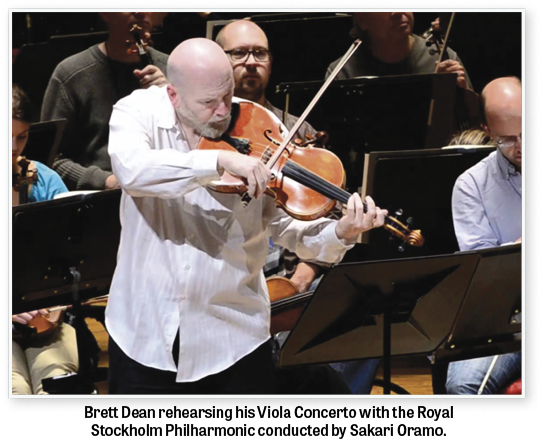
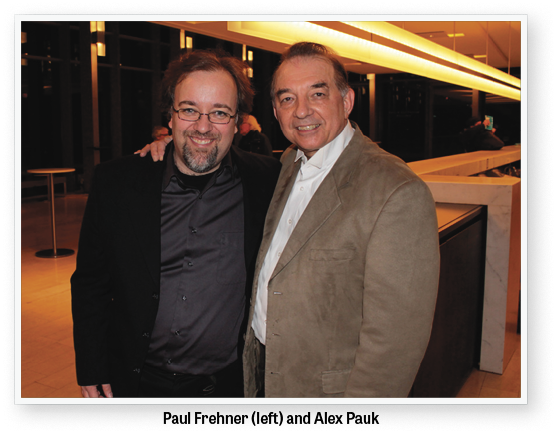
2106-New_1.pngThe month of March begins in a big way this year with the annual New Creations Festival presented by the Toronto Symphony. In last month’s issue I introduced the main features of what is being planned for the three concerts happening on March 5, 9 and 12, including the presence of guest composer, conductor, violist and co-curator Brett Dean from Australia. One of the three commissioned works for this year’s festival is a unique collaboration between composer Paul Frehner and filmmaker Peter Mettler. I had an opportunity to speak with both of these creators to find out how their piece for orchestra and film came into being and what we can expect to experience on March 9, the night of the performance.

I began by asking Frehner how the commission came to be and wondered if the two artists had worked together before. As it turned out, the project began when Frehner was approached by Gary Kulesha on behalf of the TSO with a request to be involved in the writing of a work for orchestra and film. According to Frehner, Mettler was then approached on a recommendation from film director Atom Egoyan. The two artists had never met before, so right from the beginning, they started with a dialogue that involved examples of each other’s work being sent back and forth, and engaging in conversations exploring various ideas that each were drawn to.

Writing music for film often takes a predictable path, where the composer writes to a set sequence of images. Not so with the way Mettler works. He has spent the last 12 years developing software that functions as an instrument for editing and mixing both image and sound to create a film “on the spot.” He can use this instrument to both improvise and create, providing a personal challenge that is “far more exciting than just pushing play.” In the early stages of their collaboration, Mettler sent Frehner up to 90 minutes of raw footage, some of which were extended sequences. Frehner latched onto a few of these and wrote music inspired by those scenes. Using music software to create an orchestral rendering of the music, Frehner sent his sketches back to Mettler, who then began to improvise using his bank of 2000 or more images, finding visual complements to what the music was doing. Gradually a shape began to emerge as the dynamic exchange continued and in the end, many of the image sequences that Mettler chose were not related to those that Frehner was originally inspired to write music for.

In their initial dialogues, they discovered that they shared a mutual interest in science and physics. Beginning with conversations on particle physics, they eventually decided to focus the piece on ideas of cyclical rotation – orbits, tidal rhythms, and natural cycles, ending up with the title From the Vortex Perspective. Structurally, the music has both cyclical elements and abrupt changes. Several ideas return, each time with variations in orchestration.

Frehner’s compositional style can be described as eclectic, integrating such influences as Brit and American rock, jazz pianists Oscar Peterson and Keith Jarrett, early music, as well as the music of a range of composers including Grisey, Vivier and Nancarrow. In this project with Mettler, Frehner chose to feature the brass instruments prominently in various places, incorporating unison writing and the low register instruments. In other places, the string section has the main idea, whereas at other times, strings provide a textural background. Visually, the film begins with images of an abstracted forest environment, moving into reflections on water. At one point when the music becomes heavily punctuated, the viewer is taken through a sequence of different grasses and reeds with the sunlight bursting through to create complementary accents. Some of the slowly evolving scenes created opportunities for Frehner to linger longer with some of his musical ideas, taking his time to explore them rather than looking for other directions.

For the performance, the images will be projected onto three screens – two smaller monitors surrounded by a larger screen, with the spatial aspect of the three image sources becoming an aspect of the overall composition. And just as the conductor and musicians interpret the musical score, Mettler has created his own guiding score as an aid for his real-time performance during which he will respond to the subtleties of the music to create a live version of the film. Thus this work is a true performance in both mediums of image and sound.

As mentioned above, Brett Dean is this year’s guest of the New Creations Festival. As it turns out, Frehner and Dean crossed paths over ten years ago on two different occasions – in 2002 at the Winnipeg New Music Festival where Dean was the featured composer and Frehner had a composition; and a few years later at the Malaysian Philharmonic Orchestra’s International Composers Competition where Dean was the judge and Frehner was one of the composers present. Dean’s role as curator for the New Creations Festival includes the programming of three of his own works, each substantial pieces for orchestra, as well as works by fellow Australians Anthony Pateras and James Ledger.

2106-New_2.pngNew Music for Orchestra: The New Creations Festival is not the only chance to hear new orchestral work this next month. The Toronto Symphony will perform works by three Canadian composers: Home” from New World by Michael Oesterle on March 31, Alligator Pie by Abigail Richardson-Schulte on April 2 in matinee performances, and Ringelspiel by Ana Sokolović, performed by the evening’s guest performers – the National Arts Centre Orchestra – on April 2. On March 31, Esprit Orchestra teams up with the Elmer Iseler Singers for their last concert of the season to perform two newly commissioned works with mythic themes: Soul and Psyche for choir and orchestra, composed by Esprit’s founder and conductor Alex Pauk, and Sirens by Canadian Douglas Schmidt. The program also includes Hussein Janmohamed’s choral work Nur: Reflections on Light, which weaves together Ismaili Muslim melodies, Quranic recitation and Indian ragas, and the classic orchestral dance score La création du monde by Darius Milhaud, infamous for its combination of jazz and classical rhythms from the early 1920s.

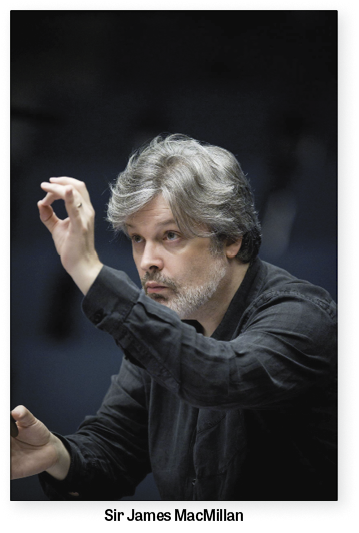
Soundstreams: Soundstreams is cooking this month with several events. Starting off in early March, they will present three concerts of the music of Scottish composer James MacMillan in three cites: Kingston (March 4), Kitchener (March 6) and Toronto (March 8). The program will highlight MacMillan’s masterpiece, Seven Last Words from the Cross, as well as selections from Schafer’s The Fall into Light. The Toronto concert will include additional works by MacMillan (The Gallant Weaver) and Schafer (In Memoriam Alberto Guerrero), along with a performance of James Rolfe’s When Lilacs Last in the Dooryard Bloom’d, a Soundstreams commission from 2006 based on Walt Whitmans’s elegy written after the assassination of U.S. President Abraham Lincoln.

Then in mid-month, Soundstreams will kick off a series of events being planned to celebrate the 80th birthday of minimalist pioneer Steve Reich culminating in a gala concert on April 14. Getting the ball rolling will be their second Ear Candy event on March 19 featuring Reich’s first major work It’s Gonna Rain, created from a surprise discovery made while fiddling about with out-of-sync tape loops. The phasing technique he developed from these experiments paved the way for the birth of his minimalist aesthetic. It’s also an opportunity to hear his Electric Counterpoint which has been recorded by such artists as Radiohead’s Jonny Greenwood, whose Water will have its Canadian premiere in the New Creations Festival on March 12. The Ear Candy evening also features a diverse array of local artists, each of whom has been influenced by the minimalist aesthetic. Four of these performers, including DJ SlowPitchSound and Brandon Valdivia, will also be performing the previous evening on March 18 at the Soundstreams’ Salon 21, which offers a historical look at the development of minimalism.

Music Gallery: The performance of Reich’s music continues over at the Music Gallery in a concert on March 17 featuring composer and performer Michael Century. In his earlier days, Century founded The Banff Centre for the Arts Media Arts program in 1988, a program that helped initiate new media practice in Canada. In this concert, Century will perform Reich’s Piano Counterpoint, an arrangement for solo piano and tape of Reich’s classic Six Pianos, as well as premieres of his own works for piano, accordion and live electronics. These works use open software and an eight-channel immersive speaker array. Additional pieces by American composers Julia Wolfe, John Cage and Morton Feldman will be heard in the second half of the evening.

The Music Gallery continues to mark their 40-year history with an installation and listening salon opening on March 11 celebrating their partnership with Musicworks Magazine. The magazine has a long tradition of including recordings with their print issues, first released as cassettes and now as CDs. Past and present editors and contributors to the cassette legacy will be speaking of their memories and experiences at the opening event.

New Music Concerts: New Music Concerts is also busy with two upcoming concerts. On March 11 (in Kitchener) and March 13 (in Toronto) in a co-presentation with the Music Gallery, the Quasar Saxophone Quartet performs music by five Quebecois composers writing for saxophone quartet and electronics, including video in one of the works. The quartet is dedicated to the creation of contemporary works with their interests ranging from instrumental music to improvisation and electronics. On April 3, the electronic theme continues with their concert entitled Viva Electronica. It will be an evening of three world premieres, all of them NMC commissions from composers Anthony Tan, Keith Hamel and Paul Steenhuisen. Each of these artists has done significant research in the world of electronics, live electroacoustics and music software programming, as well as taught the ins and outs of working with music technology at various universities.

Additional New Music Events:

Mar 6: John Laing Singers perform works by Glen Buhr and Eric Whitacre.

Mar 6: Junction Trio hosts Schola Magdalena performing works by Stephanie Martin.

Mar 10: Canadian Music Centre; “Truth North Stories” with piano works by Anhalt and Morawetz.

Mar 18 Canadian Music Centre; “Canadian Art Song Showcase” with works by Alice Ho, John Beckwith, Sylvia Rickard and Hiroki Tsurumoto.

Apr 2: Nagata Shachu with TorQ, performing works for Japanese, Western and world percussion. clip_image001.png

Wendalyn Bartley is a Toronto-based composer and electro-vocal sound artist. sounddreaming@gmail.com.

Choral-Banner.jpg“…It’s important that we also treat games as art, and when the opportunity comes along to engage with games as works of art that we take advantage of that opportunity” – Matt Sainsbury, Editor-in-Chief, Digitally Downloaded

2106-Choral_1.pngEaster marks the second busiest time of the year for the choral community, second only to Christmas. But even though much of this month’s column will be devoted to these wonderful musical opportunities, I thought I’d start out by focusing on something not often written about in Toronto – video game music.

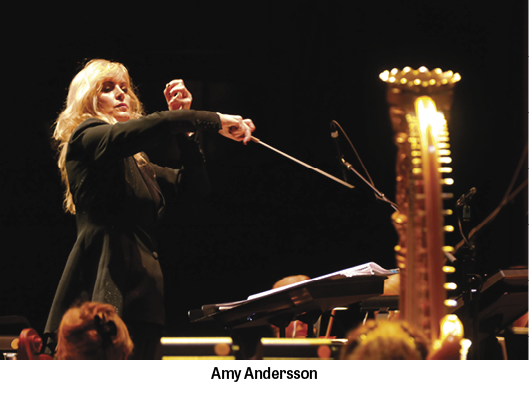
The Legend of Zelda Symphony of the Goddesses – Master Quest arrives for one night, March 19, 8pm at the Sony Centre on its international tour. This updated show returns with some of the most iconic video game music ever written, including music from the newest game, “Tri Force Heroes.” It is a massive entertainment event that always sells out, so it doesn’t need our help. But I am highlighting it here for a number of reasons: it is a chance to see a talented female conduct a major work in Toronto; there is a lot of choral music in it and not all of it is English; I have friends who have sung it and really enjoy the energy of the music; normally, travelling shows like this won’t even bother to hire a choir; they’ll just record sung chords to a synthesizer and use that; so this is a nice treat; oh, and it’s really, really fun.

Japan has long embraced both gaming and music, having done live performances of video game music as early as 1991. In 2005, the very first video game concert by the LA Philharmonic in the Hollywood Bowl saw 11,000 attendees. In 2011 and 2012, the London Philharmonic recorded The Greatest Video Game Music, volumes one and two. These were huge hits and topped classical charts. The widely popular German Symphonic Game Music Concerts take place annually in the Cologne Philharmonic Hall. This is a major art form and an incredible source of new performance opportunities for both choirs and orchestras.

In Zelda, composer Koji Kondo’s music has been arranged into a full four-movement symphony for choir and orchestra with a host of smaller pieces representing 18 games over 30 years. Conductor Amy Andersson touring along with executive producer Jason Michael Paul, leads the Tallis Choir and the Kitchener-Waterloo Symphony Orchestra.

Andersson, a former conducting fellow at the Aspen Music School, led the previous Symphony of the Goddesses – Second Quest on its international tour. A conducting veteran of Colorado Light Opera and the National Theatre of Mannheim, Andersson was married to the late Yakov Kreizberg (formerly of the Netherlands Philharmonic Orchestra) and is sister-in-law to Semyon Bychkov (BBC Symphony Orchestra). Andersson attended Mannes School of Music at the New School with both Bychkov and Kriezberg.

As I mentioned, this ever-popular event is sure to sell out. Fair warning, this isn’t your typical performance; hooting and hollering is expected. Part symphony, part celebration, it’s jovial, fun and full of amazing instrumental and choral music. And definitely dress up; green tunics and fairies will abound.

Easter

One of the highlights of every Good Friday in the Toronto Mendelssohn Choir season is the “Sacred Music for a Sacred Space” concert that takes place annually in St Paul’s Basilica. This year several pieces will be highlighted including Eric Whitacre’s stunning Her Sacred Spirit Soars, a tribute to Queen Elizabeth I; Patrick Hawe’s Quanta Qualia for alto saxophone and choir; and a new commission, Leonard Enns’ I Will Lift Up Mine Eyes for alto saxophone, soprano saxophone and choir. Topping the list is the 2013 TMC commission by Timothy Corlis, God So Loved the World. This work is a textured soundscape that is both passionate and stark. The words are simple but powerful; some of the most poignant from the entire Passion of the Christ. “Pater, dimitte illis, non enim sciunt quid faciunt”: “Father, forgive them for they know not what they do” opens the seven-movement piece. “Eloi, eloi, lama sabachthani”: “My God, my God, why have you forsaken me” – in Aramaic and set to a dissonant C-minor chord in the fourth movement of this piece – is particularly moving.

As I have mentioned before, I sing with the TMC, and while rehearsing this Corlis song I found myself musing about the place of religious music in the context of our secular world. Classical music is largely played outside of the context it was created for; masses, for example, form the bulk of grand symphonic choral work – but not everyone can be present at a Herbert Von Karajan-led Mozart Coronation Mass in St Peter’s Basilica (1985). Those familiar with the Roman Catholic Mass, or who went to Catholic school, are acquainted with the tradition and ritual of the mass, and how music often accompanies specific actions and rituals during the liturgy. Most people who attend classical music concerts, specifically, those of a requiem or a mass, are disconnected from the history and the context of these important works. I wonder when a full mass was last played with symphony and choral forces in Toronto.

This year the Toronto Mendelssohn Choir presents “Sacred Music for a Sacred Space” Wednesday, March 23, and Good Friday, March 25. Look for me in the tenor section.

TSO’s Mozart Requiem: I believe Joel Ivany, the Elmer Iseler Singers, the Amadeus Choir, and the Toronto Symphony Orchestra were able to bridge some of the disconnect of hearing sacred music in secular settings with the recent remarkable reimagining of the Mozart Requiem in January during the Mozart @261 Festival. Spectacular music making occurred in those performances and the TSO’s efforts to reach out to a younger and more diverse audience were noticeable and very welcome in the filled Roy Thomson Hall. Ivany focused our eyes on the grief and feelings of loss that come with death. These are universal core values that are relatable to many people. What may often be forgotten when listening to requiem masses is that they were created to accompany actual passing, ending, finality – the ultimate Christian passage for the faithful.

Ivany’s staging reminded me that there does exist a place for a secular mass and ritual in our daily lives and that the same emotions that drive these ancient masses continues to provide important experience and context to us centuries after they were written.

If you wish to see a more conventional Mozart Requiem, your chance comes with the massed skills of the Guelph Symphony Orchestra and the University of Guelph Choirs on March 20 at the Basilica of Our Lady Immaculate, Guelph.

S2106-Choral_2.pngoundstreams Canada features Scotland’s most celebrated composer, Sir James MacMillan, with “The Music of James MacMillan.” The Grand Philharmonic Chamber Choir, the University of Waterloo Chamber Choir, Choir 21 and the Virtuoso String Orchestra perform MacMillan’s Seven Last Words from the Cross and other works on March 6 at St Peter’s Lutheran Church, Kitchener. Soundstreams presents a similar program with Choir 21 and Virtuoso String Orchestra in Kingston, March 4, at the Isabel Bader Centre for the Performing Arts. And in Toronto on March 8, at Trinity-St. Paul’s Centre. MacMillan conducts each performance.

Quick Picks

The York University Chamber Choir performs “Musick to Heare” in the Tribute Communities Recital Hall, Accolade East Building on Mar 9. Featuring music inspired by Shakespeare’s comedies, tragedies and sonnets, Robert Cooper leads the choir in George Shearing’s jazzy Songs and Sonnets, Ralph Vaughan Williams Serenade to Music, and other inspired works by Canadian composers Allan Becan, Berthold Carriere and Michael Coghlan.

The Queen’s University Symphony and Choral Ensemble and the Perth Choir perform Schubert’s Mass in C D462 and other works on Mar 18 in Grant Hall, Queen’s University, Kingston, in celebration of Queen’s 175th anniversary and the Town of Perth’s 200th.

The Kingston Symphony performs Beethoven’s Symphony No.9 on Mar 19 and 20, at the Isabel Bader Centre for the Performing Arts, Kingston. The first half of the concert will examine sections of the work, its poetic source and inspiration, the influence it has had and explore “Why is this symphony so good?” all hosted by KSA conductor Evan Mitchell.

Voices Chamber Choir presents “Light Eternal” including Duruflé’s Quatre motets sur des thèmes Grégoriens, Gounod’s Ave Maria, Saint-Saëns’ Quam dilecta, and Fauré’s Requiem and Cantique de Jean Racine on Mar 19, at the Church of St Martin-in-the-Fields. This is a lovely chance to catch a wonderful collection of French masterworks.

Last month I mentioned the multimedia presentation of the Bach Mass in B Minor concurrent to the Bastian Clevé film The Sound of Eternity by the Orpheus Choir and Chorus Niagara in St Catherines, Mar 5, or in Toronto Mar 6, at Metropolitan United Church. For a more conventional performance, the Grand Philharmonic Chamber Choir presents the Bach Mass in B Minor on Mar 25, at the Centre in the Square, Kitchener.

Metropolitan United Church has a lovely Mar 25 lineup titled “Requiem: In a Time of Sorrow.” Featuring Bach’s Cantata No.78, Brahms’ Alto Rhapsody and Requiem, with several soloists I enjoy, including Claudia Lemcke, Jordan Scholl and the clear, strong tenor of Charles Davidson. I’d be at this performance if I weren’t performing “Sacred Music for a Sacred Space” with the Mendelssohn Choir.

And finally, Mar 31 at Koerner Hall, the Elmer Iseler Singers and Esprit Orchestra present a concert titled “La création du monde,” after the instrumental work of the same name by Darius Milhaud which opens the program. Highlight of the evening is Soul and Psyche, a new creation for choir and orchestra by Esprit music director, Alex Pauk – a five-movement “contemporary mass” with influences from Inuit poetry, Balinese prayer, and more. This is also a rare chance to catch Hussein Janmohammed’s Nur: Reflections on Light, a collection of choral miniatures inspired by the Ayat an-Nur-Verse of Light from the Qu’ran. Janmohammed’s work was commissioned for the opening of the Aga Khan Museum and the Ismaili Centre and had its world premiere there in 2014, performed by the Elmer Iseler Singers, conducted by Lydia Adams.

Follow Brian on Twitter @bfchang Send info/media/tips to choralscene@thewholenote.com

2106-Early.pngSo. Is there any point in reading Beowulf anymore? It has the distinct honour of being the first work of literature from a non-Greek or Latin source text, but while a quick glance at U of T’s course calendar would seem to indicate that the Viking Age epic will likely show up on an Old English literature course, you could very easily complete an entire English undergraduate degree without ever having to read it. In fact, reading it may well be entirely unnecessary. The poem has also undergone countless adaptations and updates to appeal to a modern audience, including Sci-Fi film versions, operas, comic books (there is a Beowulf: The Graphic Novel if you care to read it), novels (including the Michael Crichton bestseller Eaters of the Dead) and, currently, a made-for-TV mini-series created for British television and starring a cast of complete unknowns.

It’s also well worth asking if Beowulf, being over a thousand years old, still holds up as literature. For practical purposes, reading it in the original Old English is effectively impossible. And despite numerous translations into modern English spanning over two centuries (including a very fine, if overly creative, adaptation by the Irish poet Seamus Heaney), Beowulf is, as I mentioned, no longer required reading. As poetry – in the sense of an exploration of language and wordplay – it probably won’t impress a modern audience. If you’ve read it, you will probably recall that the poet’s technique of choice was alliteration not rhyme, and rhythm not metre – not particularly impressive in a digital age. Besides, the plot is next to non-existent and focuses on a series of fights between the titular hero and increasingly large and dangerous monsters. What’s up with that? as they say these days. I also doubt if too many potential readers are at all interested in the period in which Beowulf is set – that is, Northern Europe between the 8th and 11th centuries. I’m no historian, but I take historians’ word for it when they call the period the Dark Ages. (And we haven’t even touched on the issue of whether the Beowulf poet’s own audience would or could have even read the poem themselves.) What were literacy levels like in eighth-century Denmark? What was their book publishing industry like? I’m guessing not very robust. So does the literary canon still need Beowulf, or should it be stricken from the roster of classic literature?

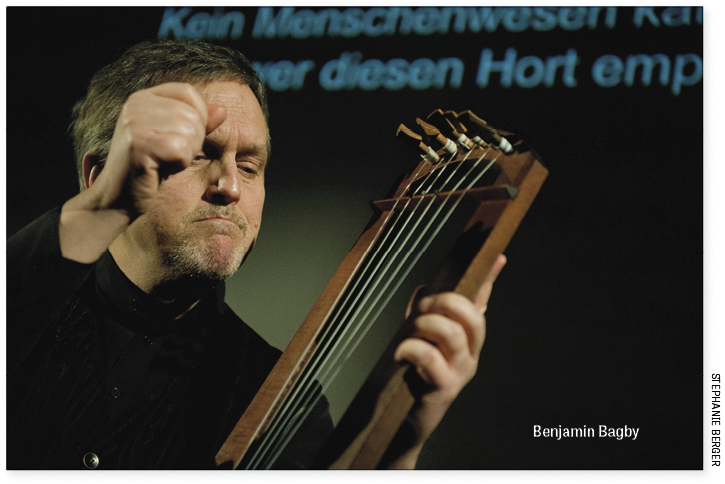
To answer this question, one need look no further than the very interesting life of one Benjamin Bagby who has made a career as (to my knowledge) the world’s only bard, meaning he travels the world performing ancient epic poetry and accompanies himself on the Anglo-Saxon harp. Yes, this is literally his day job. Bagby claims he was captivated by the Beowulf saga from the day he read it at the age of 12, and I for one am prepared to completely believe him. Since he first read it, Bagby taught himself to perform the epic in the original Old English, and has since been touring Beowulf around the world as a solo performance for the last decade. If there is any justification for Beowulf’s place in the literary canon, Bagby’s performance is it, and this month, he’ll be performing the epic poem (with English surtitles) in Toronto at Trinity-St. Paul’s Centre, courtesy of Toronto Consort, on March 11 and 12. I can’t think of any better reason for historically inspired performance than to revive classic musical or literary works and present them to the public in a manner as close to the original as modern scholarship will let us get. We still have no idea who wrote Beowulf, but if he knew his poem was still being performed over a thousand years later to sold-out concert halls, he’d be gobsmacked.

Swan of Avon: Some literary classics are more accessible than others, some because they’re written in modern English, and some because, unlike Bagby’s Beowulf, tickets haven’t already almost sold out a month in advance. So, while you still can, avail yourself of tickets to the Musicians in Ordinary who are in the midst of a three-concert series devoted to Shakespeare, featuring ornate poetry and elaborate musical arrangements (albeit fewer monster fights than Bagby’s Beowulf). But, like Bagby, “Sweet Swan of Avon” attempts to take the audience into the language of Shakespeare’s time, rendering Shakespeare’s words more the way people would have said them at the time, rather than, as is more customary these days, like a modern dude who happens to have studied Shakespeare. March 19 at 8pm, in the intimate surrounds of the Heliconian Hall, the MiO present the second of this three-concert series, “Shakespeare’s Saints & Sinners,” featuring excerpts from Hamlet, Macbeth and Romeo and Juliet read by U of T prof David Klausner, along with lute songs by Dowland and Thomas Campion, and motets with strings composed by Orlando Gibbons. Violinist Chris Verrette leads a string band along with soprano Hallie Fishel and lutenist John Edwards for a concert that’s 100 percent Shakespearean. Check it out, as well as the third concert in the series, “Shakespeare’s Sorrows,” which takes place at the same venue on April 23, the 400th anniversary of the Bard’s death.

Sweet Kisses: Shakespeare still too serious? If you’re looking to enjoy a concert that that’s passionate, emotional and exciting, but demands less gravitas than (say) Shakespeare or Old English epics, consider checking out a concert by the Cantemus Singers instead. “Sweet Kisses/Baci Soavi” is a concert of Italian madrigals on March 19 at one of the hidden gems of Toronto’s downtown core – the Church of the Holy Trinity. By the end of the Renaissance in Italy, poetry and music went from romantic and refined to a roller coaster of emotions. One really wonders how Italians of the 16th century were able to make it through the day without making themselves lovesick. Soprano Iris Krizmanic joins the Cantemus singers for a program of music by aristocrat, composer and murderer Carlo Gesualdo and the undisputed father of the musical Renaissance, Claudio Monteverdi, as well as by two lesser-knowns – Monteverdi’s contemporary Luca Marenzio, and the composer/nun Vittoria Aleotti (apparently a nun of the time could write sordid love songs and none of her colleagues seemed to mind). This sounds like a thoughtful, in-depth exploration of the Italian renaissance vocal repertoire by a group that has made madrigals their specialty. Be sure to check this concert out.

Polyphonic grand tour: For the more contemplative, the Oratory at Holy Family Church has a special concert for Lent that features sacred music from the Renaissance that transcends the everyday world of the secular. There, on March 16 at 8pm, you can hear a sung compline and a choral concert which includes choral pieces and arias by Bach, two settings of the Lamentations of Jeremiah by Byrd and Tallis, and motets by Victoria and Cristóbal de Morales. It’s a grand tour of sacred polyphony by some of the greatest composers of the Renaissance performed by some exceptional singers.

Alard’s Goldberg: Finally, Tafelmusik is presenting a special concert of chamber music featuring the French harpsichordist Benjamin Alard that is sure to delight Bach aficionados. Alard is just 30 years old but is already working his way through the master’s repertoire for solo harpsichord. This month, Alard comes to Trinity-St. Paul’s, March 31 to April 3, to play the Goldberg Variations. He’ll be joined by Grégoire Jeay, Jeanne Lamon and Cristina Mahler to play the masterful trio sonata from The Musical Offering. Alard is a Bach specialist who already established that he has what it takes to make it as a soloist before his 30th birthday, so it will definitely be worth it to hear his take on Bach’s masterpiece. 

David Podgorski is a Toronto-based harpsichordist, music teacher and a founding member of Rezonance. He can be contacted at earlymusic@thewholenote.com.

2106-Art_1.pngRachel Andrist and Monica Whicher jointly direct the Mazzoleni Songmasters Series which consists of three vocal concerts each season. Andrist is a member of the music staff at the Canadian Opera Company. Her first appointment as a vocal coach was at the La Monnaie in Brussels. Since then she has held similar positions with the Salzburg Festival, with Glyndebourne, with the English National Opera, with the Bavarian State Opera, with Netherlands Opera and with Scottish Opera. She is also a collaborative pianist and she finds both kinds of work support each other. As she points out, one meets a singer as a vocal coach and that opens up the possibility of a joint recital. Whicher is a soprano well known for her work in recitals (including a number of appearances with the Aldeburgh Connection) and her part in opera productions by the Canadian Opera Company and Opera Atelier. Both Andrist and Whicher also teach in the Glenn Gould School at the Royal Conservatory.

When Andrist and the pianist-composer John Greer began the Recitals at Rosedale series two seasons ago, the time seemed just right for such an undertaking. The Aldeburgh Connection had ceased to exist and a real vacuum developed. Yet the concerts were a mixed success. Although Rosedale Presbyterian is not all that difficult to get to, it would seem off the mental map of many, so that audiences were disappointing. Another problem was that the space at Rosedale was small and the acoustics very live. Not all singers were able to scale their voices down to an appropriate level. The move this season to Mazzoleni Hall at the Royal Conservatory seems a wise one. The hall is familiar, the acoustics are good and the series, now retitled Songmasters (with a punning reference to the already existing Mazzoleni Masters) now has the backing of the Conservatory with its good publicity.

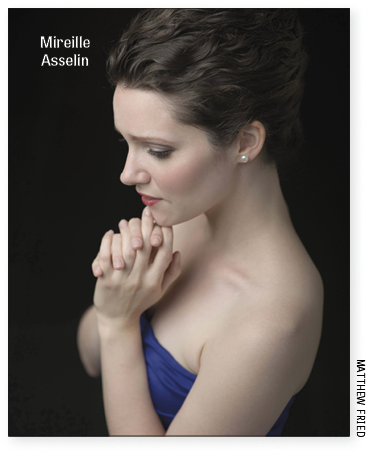
Their next concert takes place March 6. The singers are the soprano, Mireille Asselin, and the baritone, Brett Polegato. The pianists are Andrist and Peter Tiefenbach. Andrist believes strongly that for a recital to make sense it must be structured round a central theme. The theme chosen for this concert is the way in which composers have been inspired by paintings. The major work in the program is Poulenc’s Le travail du peintre. These are settings of poems by Paul Éluard and evoke the work of seven contemporary painters: Picasso, Chagall, Braque, Gris, Klee, Miró and Villon. The program also includes Debussy’s Fêtes galantes. These are based on the Commedia dell’ arte but mediated by Watteau’s painting. Two Schumann songs from the collection Aus dem Liederbuch eines Malers follow. The next group contains settings of four poems from William Blake’s Songs of Innocence: two of them by British composers (Walton, Britten); and two by Walter MacNutt (1910-96), a composer now chiefly remembered as the music director at St. Thomas’s Anglican Church in Toronto.

Asselin was a student at the Glenn Gould School (where Monica Whicher was one of her teachers) and subsequently was a member of the Canadian Opera Company’s Ensemble Studio. She has performed with the Metropolitan Opera, with the Toronto Symphony Orchestra and (many times) with Opera Atelier. Along with the tenor Lawrence Wiliford, she sings in Ash Roses, the CD of music by Derek Holman issued by the Canadian Art Song Project. You will also be able to hear her in Opera Atelier’s production of Mozart’s Lucio Silla, starting on April 7.

I first heard Polegato in the wonderful CD, To a Poet, settings by several composers of poems by Flecker, de la Mare, Housman and Hardy (CBC; not currently available). The first time I heard him live was in a Tafelmusik performance of Handel’s Messiah. I thought then that I had never heard the bass solos better sung and I have not changed my mind since. Polegato is now much in demand. One of the roles that he has made very much his own is that of Kurwenal in Wagner’s Tristan und Isolde. This spring he will again be singing it in Paris.

Bach and Brahms at Metropolitan United: In the Christian calendar Good Friday is the holiest day of the year. This year it falls on March 25. In the evening I intend to go to Metropolitan United Church for a performance of three works: the Brahms Requiem (with the soprano Gisele Kulak and the baritone Jordan Scholl as soloists), Brahms’s Alto Rhapsody (with Laura Pudwell, mezzo) and Bach’s Cantata No.78 (with soloists Alison Campbell, Claudia Lemcke, Charles Davidson and Jordan Scholl).

Lunchtime at the Richard Bradshaw Auditorium: The free lunchtime recitals at the Richard Bradshaw Auditorium in the Four Seasons Centre resume on Mar 15 when Kyra Millan, soprano and opera educator, presents a concert of arias and sing-along choruses, with artists from the COC Ensemble Studio. On Mar 17 Bob Anderson will conduct “Choral Journeys,” from the Renaissance to contemporary Canadian works, with Charles Sy, tenor. On Mar 29 you can hear four tenors: Jean-Philippe Fortier-Lazure, Aaron Sheppard, Andrew Haji, Charles Sy.

University of Toronto (Walter Hall): Megan Quick, contralto, and Andrew Haji, tenor, will sing, on Mar 21, in Schoenberg’s arrangement of Mahler’s Das Lied von der Erde. Quick will also sing Die Waldtaube from Schoenberg’s Gurre-Lieder. Mar 31 you can hear a free recital by the winners of the Jim and Charlotte Norcop Prize in Song and the Gwendolyn Williams Prize in Accompanying. “The Art of the Prima Donna” on Apr 1 is a staged and costumed program of romantic opera with works by Bellini, Donizetti, Verdi and others. The recital by the Cecilia Quartet on Apr 4 includes a new work by the composer and soprano Kati Agócs.

Quick Picks: Ilana Zarankin, soprano, and Laura McAlpine, mezzo, are the soloists in the Talisker Players presentation of “Spirit Dreaming: Creation Myths from Around the World” at Trinity-St.Paul’s Centre, Mar 1 and 2. The program includes works by Somers, Kuyas, Beckwith, Tanu, Ravel, Villa-Lobos and Jaubert. Paula Arciniego, mezzo, will sing works by composers ranging from Grieg to Theodorakis in Heliconian Hall, Mar 4. Alliance Française de Toronto presents Guy Smagghe in a selection of songs from Félix Leclerc to Francis Cabrel, Mar 5. Evelina Soulis celebrates her 50th birthday with mezzos Maria Soulis and Katerina Utochkina in music by Monteverdi, de Falla and others in Heliconian Hall, Mar 13. Bruce Ubukata will give a vocal master class at York University’s Tribute Communities Recital Hall, Mar 15. Xin Wang, soprano, and Derek Kwan, tenor, will sing an all-Canadian program with songs by Ho, Beckwith, Rickard and Tsuromoto on Mar 18 at the Canadian Music Centre. On Apr 7 the Women’s Musical Club of Toronto presents a program by the violist Steven Dann and family, including  soprano Ilana Zarankin.

And beyond the GTA: Bach’s Mass in B Minor can be heard in the Centre in the Square in Kitchener on Mar 25. The soloists are Carla Huhtanen, soprano, Allyson McHardy, mezzo, Colin Ainsworth, tenor, and James Westman, baritone. Ainsworth will also give a free noon-hour recital at Conrad Grebel University College in Waterloo on Mar 23

Hans de Groot is a concertgoer and active listener who also sings and plays the recorder. He can be contacted at artofsong@thewholenote.com.

I’ve weighed in on numerous occasions, in this column and in my WholeNote album reviews and blogs, about the vast scope of world music as a topic: its misty origins; the limits and problems associated with continued use of what was originally an academic idea, and then became a marketing term. It’s a notion that’s so hard to pin down with any precision, that some would argue not to bother.

Undaunted, I’ve endeavoured to chart its multifaceted presence at key regional venues and among presenters such as the Music Gallery, Small World Music, Royal Conservatory’s Koerner Hall and at the Lula Music and Arts Centre, as performed by its practitioners, and enjoyed – some might use the word consumed – by its myriad audiences. On a couple of occasions I have highlighted stories about its educational role at our regional institutions of higher learning. For instance, my column in the April 2014 issue of The WholeNote featured the flourishing Balinese Gamelan ensemble course offered at Conrad Grebel University College at the University of Waterloo.

For some mysterious reason, perhaps Freudian or Jungian, however, I have so far neglected to explore world music’s abiding 47-year presence at my alma mater, York University’s Music Department. Luckily this March arms me with several reasons to fill that lacuna: ten back-to-back upcoming concerts; two recent conversations; and the retirement of one of York’s key world music animators, Trichy Sankaran.

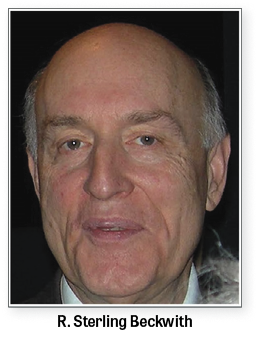
2106-World_1.pngThe first conversation: I turned first to world music's prime initiator at York, the man with the plan, York U. professor emeritus R. Sterling Beckwith. He’s the person I credit with introducing world music ensembles in Canadian universities as continuing credit courses. As York U. Music Department’s founding chair surely he could shed light on its fundamentals. He didn’t disappoint; his trenchant views and passion on the topic were as keen as ever.

“World music along with jazz has now been taken up by many American and Canadian universities; they have become fixtures there,” he began. “Long gone are the days when they considered it beneath their interest,” he added.

“Well before I arrived at York, I took [pioneering] ethnomusicologist Mantle Hood’s Javanese gamelan class at Harvard. I also spent time with the retired senior musicologist Charles Seeger. Among other things, he praised the American Carnatic singer and ethnomusicologist Jon Higgins whose bi-musical [a term coined by ethnomusicologist Mantle Hood] reputation preceded him.” Even though Higgins was still at the very start of a remarkable career, he had already concertized, broadcast and recorded a Carnatic music LP with renowned musicians in India. (Spoiler alert: Higgins became a teacher and a mentor of mine at York.)

There is a back story here which Beckwith helpfully sketched for me. Mantle Hood’s groundbreaking ethnomusicology program at UCLA, established in 1960, came complete with performing ensembles, and produced Robert Brown the person who in turn kick-started the World Music program at Wesleyan University. Through Brown, we can trace the teacher-student lineage to Higgins. Brown served as Higgins’ PhD thesis advisor at Wesleyan. “I consider other American university ethnomusicology programs such as those at Washington University also direct descendants of Hood’s groundbreaking efforts at UCLA,” Beckwith added.

“Yet another defining pre-York U. experience was the discussion I had with the late Ravi Shankar about introducing applied Indian music studies at York. He was intrigued and recommended his sitar disciple Shambhu Das, who as it turned out, was already living in Toronto. All of that was in my head when I arrived here in 1969.”

Beckwith continued, “I was determined to implement the paradigm-altering gamelan experiences I had with Hood and the inspiring conversations I had with Seeger, as well as doing what I could to bring Higgins to York. As events would have it, my last official act as Music Department chair was to be able to hire Jon Higgins, which made it possible in turn to hire the gifted percussionist Trichy Sankaran a little later.”

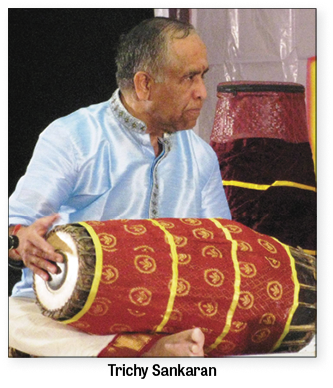
2106-World_2.pngTrichy Sankaran: One of Beckwith’s first world music hires, in 1971 – and significantly also one of the longest serving – was a mridangam and kanjira player with an international career, Trichy Sankaran. Sankaran passed a significant milestone last fall, retiring from York in September 2015 after an illustrious career spanning 44 years as a professor of music, researcher and textbook author. As well as serving as a co-founding director of its Indian music studies, one of Canada’s first university-based world music performance programs, he also developed hybrid Carnatic and Western pedagogical practices. Certainly one of Sankaran’s most significant contributions at York was his marked influence on a couple of generations of students, many of whom have gone on to become established musicians, composers and educators. His outstanding achievements as an educator were recognized with the OCUFA Award, given by the Ontario Confederation of University Faculty Associations for teaching excellence.

Along with Beckwith, I and many other Sankaran friends, colleagues and students were present at York’s Tribute Communities Recital Hall last September. Few there doubted that the event marked the closing of a long and important first chapter in the music department’s grand – and continuing – adventure in world music education.

The occasion was celebrated in style with a formal concert in which Sankaran was joined on stage by his vocalist daughter Suba Sankaran, leader of the JUNO-nominated Indo-jazz-funk fusion ensemble Autorickshaw, and her bandmates, bass guitarist and singer Dylan Bell, and tabla player Ed Hanley. The musicians gave authoritative performances of solo and ensemble works, the repertoire including original compositions by the senior Sankaran. As well as signalling the passing on of an intergenerational musical torch, it additionally asserted (at least my awareness of) the emergence of a specific family-centered kind of Indo-Canadian hybrid music-making, echoing the venerable Indian tradition of guru-shishya parampara. As for the continuity of Carnatic music education at York pioneered by Sankaran, that subject appears to be moot.

The second conversation: Throughout its first three decades, York’s world music ensemble courses remained relatively constant and few. It was only around the very early 2000s that I became aware of a dramatic increase in the number of world music ensembles. The trend only crossed my personal radar after, in 1999, I was hired, by Michael Coughlan, the incoming Music Department chair, as the founding course director of the Javanese Gamelan (ensemble) course. During the years I taught the course, the number and range of music ensembles seemed to grow almost exponentially, and the students attracted to them likewise swelled.

What’s the current state of the university’s world music ensemble program? I spoke to the ethnomusicologist, singer and instrumentalist Irene Markoff, whose research and performing activities centre on the musical traditions of Bulgaria, Turkey and the Balkans. “I began to teach there in 2001,” she told me. “At one point I taught global musicianship to music majors. Placed in the context of performance rather than listening to recorded musical examples, my approach was well received by the students.” Her ensemble courses however also include non-music major students. Markoff gave an example, “I currently have a number of students of Chinese heritage in my ensemble who can sing complex metrical parts, despite being non-music majors. They sometimes outstrip music majors in mastering some of these [perceived difficult] performing skills.”

While generally bullish on York’s music course offerings, she did express a wish: “That our music students would be required to take a world music ensemble.” Why? “For the simple reason that we live in a multicultural society and I believe such study will broaden students’ musical horizons. Also with musical hybridities [being a regular fact of musicians’ lives today], it’s important for learners to be exposed to the broad spectrum of metres, multi-part singing styles and tonal modes,” all benefits afforded by learning music outside of the Western mainstream.

I asked Markoff about the future of the world music ensembles. “I have proposed the production of ensemble music videos hosted on the department’s website as a means of attracting future students. As for their relevance, I believe these ensemble courses will continue to well serve music students, exposing them to ‘other’ musical practices and to increase their appreciation and understanding of peoples.”

In a nutshell, Markoff believes such educational ensembles, which allow students to experience the musical diversity of cultures, tend to “build bridges rather than erecting walls between cultures.”

York University’s World Music Festival runs March 17, 18 and 21 at various venues, all in the Accolade East Building.

Mar 17 the World Music Festival kicks off with the Cuban Ensemble conducted by Rick Lazar and Anthony Michell, followed by West African Drumming, Ghana, led by Kwasi Dunyo. That afternoon Lazar’s Escola de Samba rules the Sterling Beckwith Studio, followed by West African Mande, Anna Melnikoff, conductor.

Mar 18 Irene Markoff conducts the Balkan Music Ensemble at 7:30pm at the Tribute Communities Recital Hall. Earlier that day performances by the Celtic Ensemble conducted by Sherry Johnson, Chinese Classical Orchestra directed by Kim Chow-Morris, Caribbean Ensemble conducted by Lindy Burgess and Charles Hong’s Korean Drum Ensemble will echo in various Accolade East Building halls.

It’s a World Music Festival wrap Mar 21 with the World Music Chorus conducted by Judith Cohen, a course I greatly enjoyed a few years ago when I returned (yet again!) to my music studies at York. Please consult The WholeNote listings for times and venue details.

University of Toronto Faculty of Music: York University is certainly not the only world music game in town. Apr 7 the U of T Faculty of Music presents its World Music Ensembles in concert at Walter Hall. Featured are the African Drumming and Dancing Ensemble, Latin-American Percussion Ensemble and Steel Pan Ensemble. I’ve been attending these concerts since their inception and have never failed to be inspired by the enthusiasm and musical skill demonstrated.

Quick Picks

Mar 2 the COC’s noon-hour World Music Series presents Avataar. Directed by saxophonist and composer Sundar Viswanathan the all-star Toronto group often includes Michael Occhipinti (guitar), Justin Gray (bass), Felicity Williams (voice), Ravi Naimpally (tabla) and Giampaolo Scatozza (drum set). They’ll be playing selections from their recently released album Petal. Arrive early.

BRASH: It is just the sort of weather, however unseasonable, for “BRASH! A Badass Brass Festival,” presented by Lemon Bucket Orkestra (LBO) and Small World Music, on Mar 11 and 12 at the Opera House on Queen St. E. LBO with its high hipster street cred needs no further introduction in these pages. Ratcheting up the badass quotient a notch will be Toronto’s Rambunctious and Montreal’s Gypsy Kumbia Brass Band.

Mar 11, 12 and 13 at the Betty Oliphant Theatre the Raging Asian Women (RAW) Taiko Drummers perform an evening of stories from the drummers’ lives, in collaboration with Asian Canadian performers Teiya Kasahara (voice) and Heidi Chan (percussion and flute). "Crooked Lines: Stories in Between" involves video vignettes along with the taiko drummers' trademark ferocity and spirit.

Mar 26 the Small World Music Centre presents a smaller, more intimate and reflective musical experience, though in no way any less passionate: the Dilan Ensemble directed by Shahriyar Jamshidi, a kamancheh (bowed lute) player, composer and vocalist, now settled in Canada. "In the Shadow of the Fatherland" is a cross section of the repertoire the Iranian Kurdistan native has devoted his career to preserving and transmitting. Jamshidi is joined by local cellist Raphael Weinroth-Brown.

Apr 2 and 3 The Aga Khan Museum continues its impressively inclusive concert programming, partnering with the venerable presenter Raag-Mala Music Society of Toronto in two concerts titled Raags of the Gharana Tradition. Apr 2, Maihar gharana (musical school, lineage) sitarist Anupama Bhagwat and Agra gharana singer Waseem Ahmed Khan render a selected few of the vast set of Hindustani evening raags. Apr 3 at 3pm it’s time for a much rarer section of afternoon raags; many “classical” ragas/raags are associated with four three-hour timeframes and for maximum effect are performed at those prescribed times. Sarangi player Ramesh Mishra, a disciple of Ravi Shankar (of the Maihar gharana), shares the concert with the vocalist Devaki Pandit who has studied with gurus of both Jaipur and Agra gharanas.

Also on Apr 2 Nagata Shachu, with Kiyoshi Nagata as its music director, joins one of the city’s leading percussion ensembles TorQ in concert at the Brigantine Room, Harbourfront Centre. Expect an engaging, polished Japanese, Western and world percussion music mix. 

Andrew Timar is a Toronto musician and music writer. He can be contacted at worldmusic@thewholenote.com.

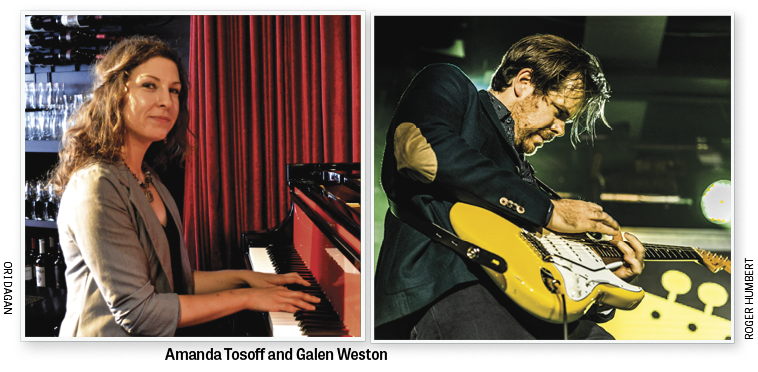
2106-Jazz_Stories.pngDollars to doughnuts Amanda Tosoff will win jazz piano fans in a flash with her stupendously swingin’ version of Rodgers and Hart’s There’s a Small Hotel from 2013’s Live at the Cellar with Jodi Proznick on bass and Jesse Cahill on drums. But aside from the odd standard or bandmate’s original tune, most of Tosoff’s recordings to date have focused on her own original compositions, including 2008’s Wait and See which was followed by the prestigious General Motors Grand Jazz Award at the Festival International de Jazz de Montréal.

Designed to showcase some of Toronto’s finest local jazz talent, the TD Discovery Series is a year-long initiative of music and educational performances created by Toronto Downtown Jazz, producers of the Toronto Jazz Festival, and supported by TD Bank Group. This year, Amanda Tosoff’s Words Project is the first of four TD Discovery Series Special Projects. It finds the pianist, composer and arranger echoing a welcome tradition in Canadian jazz and creative music: setting poetry to music with stunning results. As great as the sum of its parts, the project features the following artists: Felicity Williams, voice; Amanda Tosoff, piano; Alex Goodman, guitar; Jon Maharaj, bass; Morgan Childs, drums; Rebekah Wolkstein, violin; Amy Laing, cello. As is always the case, this will be an evening not to be missed, and advance tickets are highly recommended.

Amanda Tosoff is a daring improviser and gifted composer. Words, her fifth release, is a bold move, as evidenced by words taken directly from her website. “The desire to challenge oneself (and the audience) is a key component of the DNA of a true artist.” The concept of setting music to poetry was not planned; it was itself an improvised result of a composition exercise:

“One day I just decided to find a poem and write a melody to it – the song on the record called Owl Pellet by Tim Bowling. I had such a great time doing this that I decided to continue on with this idea, eventually choosing a bunch of poems that resonated with me. I have to admit that I hadn’t really checked out much poetry since high school, but this project has definitely made me more interested in poetry, and how poems can provide a great starting point for composition. They give you moods, images, emotions and phrasing to start with. I definitely feel that this has expanded my composition skill and also my approach to style. I really look forward to exploring this more.”

May the fans of William Wordsworth worldwide check out the opening track Daffodils – it is available for listening on Tosoff’s YouTube channel. Other sources of text include Canadian poets Carole Glasser Langille and Laura Lush and song lyrics from talented songsmiths (and members of Tosoff’s family), Melissa Mansfield and Lloyd and Ted Tosoff.

At first listen, and very much at the forefront of this project’s success, is vocalist Felicity Williams, a musician who shines consistently. Much admired within the communities of creative music, jazz, pop and beyond for her pure, unaffected sound, intense vocal range and endlessly inventive improvisational ability, the York University Music alumna has worked with a wide range of projects, from Bahamas to Hobson’s Choice.

“Felicity is amazing,” says Tosoff. “She’s such a great musician and was perfect for this project. As soon as I wrote the first piece I heard her singing it. I think it is her beautiful pure tone, but also, perhaps, her range too. I have to admit that when I was writing these pieces I was singing a lot to figure out how I wanted my melodies and phrasing to go. I think that her voice was most similar to mine in range and the way I wanted the melodies sung – so I guess I wrote these pieces for myself, but needed a fantastic singer to bring the songs to life!

Says Felicity Williams:

“Amanda found a way to make the music spring up through the words, as though both music and words were flowing from the same point of origin. I think that’s what you have to do when you take someone else’s poems and set them to music. If you make yourself receptive to the rhythm and the phrasing of the words themselves, you can get on their wavelength. And then you extend the creative process, by making something new.”

Amanda Tosoff’s Words CD release concert takes place at the Music Gallery on March 10 at 8pm, $20 or $18 in advance; and March 11 at 8:30pm at The Jazz Room in Waterloo.

Readers who find the setting of poetry to jazz interesting will want to check out a previous TD Discovery, the Sarah Yeats Project, a contemporary chamber jazz group that features the poetry of William Butler Yeats. With original music and arrangements by Sarah Jerrom, the featured poems are arranged for nine-piece instrumentation comprised of strings, woodwinds, brass and a traditional jazz rhythm section. This is a highly ambitious project and Jerrom invites you to join her crowd funding campaign to complete the recording of The Yeats Project through her Kapipal page: visit sarahjerrom.com.

Plugged-In Weston: Meanwhile, at galenweston.org you can find Plugged In, the latest recording from innovative fusion jazz guitarist Galen Weston (“Not that Galen Weston,” jokes his publicist, citing no relation to the current executive chairman and president of Loblaw Companies Limited). This Galen Weston, owner of a beautiful new recording studio called the Rose Room (roseroom.ca) has an extensive business background, although the music came first:

“I graduated from Humber College in 1997; they were nice enough to introduce me to jazz and ruin my life,” he jokes. “Prior to that I was rocking it out, two-hand tapping. I loved instrumental rock – Joe Satriani, Steve Vai, I was a huge guitar fan - then I got there and I had to learn all this vocabulary, speak this new language – but I fell in love with it.

I never achieved what I wanted to achieve in college – I wasn’t getting out there and getting to tour with Gary Burton – or anyone, for that matter. So I wasn’t sure what I would do because I had this desire to play jazz and fusion and that’s what I wanted to do, but my ability wasn’t in line with my desire at the point of doing it professionally. My reading was strong, so I would have been good enough to lose my mind in a pit band or something, but I was broke, too. Student loan debts meant that a good paying job for me at that time was eight dollars an hour at a gas station. And I wanted to stay in Toronto so I needed a job to make money.”

As a determined self-taught, self-made entrepreneur, Weston went from making 350 phone calls a day selling penny stocks to becoming RBC’s most successful rookie.

“The whole company came in and they made me talk about how I got so successful, and then the next day I quit, it just wasn’t me. I had enough money to pay off my student debt, but I needed another plan. I liked Lead Generation and working with the internet, and I really worked hard…seven years later, while the US market tanked, everyone wanted safe money so they bought annuities, and I had my entire engine set up for Lead Generation.”

Weston is considered a financial Internet marketing pioneer. His company AdvisorWorld.com has helped tens of thousands to obtain successful professional relationships with trusted advisors.

Success has allowed Weston to recently come back to music full circle, spending his time practising, writing and recording at the Rose Room Studio. The Galen Weston Band is comprised of David Woodhead on bass, Al Cross on drums, Matt Horner on keyboards, Richard Underhill on alto sax and appearances by Rick Lazar on percussion. The band’s beautifully produced Plugged In album has been slowly picking up steam online; Song For Daphne has been played over 136,000 times on SoundCloud as of this writing. As for gaining exposure in the Toronto music scene, unsurprisingly, Weston has a plan.

“I’ve always been thinking it’s hard to get Torontonians to music in general, it’s almost like you have to drag them out by the earlobe. So I thought, how do I get them there? I had to do something that opens me up to a theatre audience. I needed to make my show more theatrical – I don’t like speaking and I’m not very good at it – so this was kind of inspired by U2 and Pink Floyd – adding a visual element that people aren’t used to.”

On March 26 at the Berkeley Street Theatre, the Galen Weston Band will be appearing live – and animated! In collaboration with his uncle, award-winning animator Stephen Weston, the concert experience will take audience members to a world where “Fantasia meets Guitar Hero” and where the animations tell the story of the guitarist’s own journey, or as he puts it: “a tongue-in-cheek meditation on the struggle for identity in a genre-obsessed world.”

Kudos to the artists who take risks and the audiences who honour them with ears and cheers. 

Ori Dagan is a Toronto-based jazz musician, writer and educator who can be reached at oridagan.com.

In last month’s issue I mentioned that, for the first time, Canadian Band Association, Ontario would be holding a Community Brass Band Weekend, February 19 to 21. Unlike previous Community Band Weekends this one was devoted to the music of the British brass band movement. For those not familiar with these weekends, this is not a gathering of bands. Rather it is a weekend of music-making by individuals who enjoy playing music of the type featured, in this case, the British Brass Band style. The host band for this weekend was the Oshawa Civic Band with conductor Rita Arendz.

Most participants were members of such CBA-member bands as the Weston Silver Band, the Metropolitan Silver Band, the Whitby Brass Band, the Oshawa Civic Band and others. There were also some participants without any particular brass band affiliation. As in other such weekends, participation was open to any brass and percussion players. The rehearsal and public concert provided an opportunity for brass musicians not familiar with the genre to experience the unique sound and some of the repertoire of the brass band movement. Since there appears to be a resurgence of interest in brass bands and their music, this might be a suitable time to probe into the world of the brass band music, its performers and its devotees.


The Characteristics
: For starters, let’s look at the differences between the brass band and what is generally referred to as the modern day concert band. The principal difference is that a brass band has no woodwind instruments, i.e. no flutes, clarinets, saxophones, oboes or bassoons. As well, the brass band has no French horns. The early brass bands generally had only a single drummer. Nowadays, many have a larger percussion section including timpani and, in some cases, melodic percussion.

As for instrumentation, cornets are used rather than trumpets. Of those, the soprano cornet plays the sort of high register part which would be played by a flute in a concert band. The E-flat horns (sometimes called alto and sometimes called tenor) fill in between the cornets and the baritone horns and trombones. The bass section has both E-flat and B-flat instruments. Since all of these instruments except the trombones have a conical bore rather than cylindrical, the tone has a more mellow quality. The tone is even more mellow for the flugelhorn which has a much more conical bore.

So what is the difference between a brass band and a silver band? Silver instruments are brass instruments which have been silver plated. In the early days, silver instruments were considerably more expensive than the brass ones, and thus had some snob value for those bands which could afford them. Today the price difference is not significant.

Another major difference between brass bands and concert bands is the musical notation. With the exception of percussion, bass trombone and some tenor trombone music, all parts are transposed and written in the treble clef. This means that for every instrument, from the basses right up to the soprano cornet, the fingering is the same. So, for beginner classes, group instruction on all of the instruments is possible. My introduction to band music was in a boys’ brass band, and our instructional classes always had the range of instruments from cornets to basses in one class. With this system, if necessary, players are able to switch more easily between instruments. Thus it is easier to cover parts when a particular instrument is missing.

As I mentioned, my first band was a boys’ band. That was the norm then. Girls were usually not permitted in bands. In our band there was an exception. We actually had two girls. (Since their father happened to be the bandmaster, that might have made a difference.) It was as late as 1947 that the student council of the University of Toronto called a special debate to finally permit a girl to play in the university band. Fast forward to 2016 and this band weekend. Two of the most prominent brass bands in Southern Ontario have women as conductors. Rita Arendz leads the host Oshawa Civic Band and Fran Harvey has been leading the Metropolitan Silver Band since 2002.

Brass bands first appeared in Britain in the early part of the 19th century. With the Industrial Revolution and urbanization, employers were happy to finance ways to decrease political activity and minimize the amount of time the workers spent in the pubs. Along with that Industrial Revolution came a vast improvement in technology and mechanical skills. Fortuitously these factors coincided with the invention of valves for brass instruments. Now brass instruments, other than the trombone, could play chromatically.

It was now possible to produce, in quantity, brass instruments with good musical quality. There were some other reasons for the rapid growth in the popularity of brass instruments. Not only was it possible to mass produce these much more inexpensively than the woodwinds, but a three-valved, easy-to-hold instrument is much more user-friendly than a keyed instrument or a stringed instrument.

Company Bands: Employers were now willing and able to provide a recreational outlet for their workers. In particular, mining companies and mills fostered company bands. It has been estimated that by 1860 there were over 750 brass bands in England. It would be difficult to determine which bands still performing have been the longest running. However, no one is likely to match the claim that the Black Dyke Mills Band, founded by that name in 1855, has one of the longest traditions. It has been reported that there are now thousands of brass bands in the UK.

Since playing a musical instrument was deemed to be an acceptable social activity, if for no other reason than it kept people from the pubs and other corrupt activities, abstinence groups began forming temperance bands. Then in 1878, albeit only as a quartet, the first Salvation Army band was formed. Since the Salvation Army frequently took their message to the streets, the portability and weather resistance of brass instruments had considerable appeal. If a brass instrument is rained on, simply dry it off. That won’t do for a clarinet or a violin. While some Salvationist bands did manage to keep their activities separate from the general brass band movement, there was some cross-pollination. Long before it became acceptable in the general band movement, the Salvation Army actively recruited women for their bands.

Contests: Over time, local contests involving a few neighbouring bands grew into larger events with more bands. Then, with the backing of Sir Arthur Sullivan, the first National Brass Band Championship took place at the Crystal Palace in 1900 with twenty-nine bands competing. The test piece was an arrangement of Sullivan’s compositions and Sullivan conducted the final massed band concert. Sullivan’s name certainly gave the event an element of respectability; calls for original music were soon answered by such composers as Sir Edward Elgar and Gustav Holst.

The NBBC remains the principal competition in the British brass band world. Generally speaking, the importance of contests has a been a major factor in the development of top-notch players throughout the entire brass band movement. Cornetist Herbert L. Clarke is one shining example of the talent spawned by such groups. Another that I had the pleasure of hearing at Massey Hall some years ago was French virtuoso Maurice André. He started in a company band in a coal mining town in France.

2106-Bandstand.pngA New Award: Every once in a while I stray a bit from the band world to either praise or vilify some event in the musical world which I have either been thrilled or appalled by. This month it’s the latter. In recent years, when major sports events are being televised, it has become the norm to have some musical celebrity sing the national anthem rather than play it so that the audience can sing it in the way that was intended. Some of these soloists have the intelligence to lead the singing in that spirit. Some of them have decided that their personal styling is far more important than authenticity. For me, the anthem sank to the bottom of a new crevasse recently at the beginning of the National Basketball Association’s All-Star Game in Toronto. The “guest artist,” whose facial contortions matched those of her voice, inflicted considerable pain on all of her victims from coast to coast. O Canada will never be the same.

Be it hereby proclaimed that henceforth, every February, this column will award the ABC (the Anthem Butchery Cup) for egotistical desecration of the national anthem. Nelly Furtado wins the inaugural award hands down. Nominations for next year’s award are now being accepted. Send video links to support your case. 

Jack MacQuarrie plays several brass instruments and has performed in many community ensembles. He can be contacted at bandstand@thewholenote.com.


2106-MainlyMostly.pngArtie Roth once said to me – and I’m paraphrasing – that the drummer is the encyclopedia of the ensemble, the player who knows the repertoire most intimately, who can most immediately call up what happened on this chorus of that recording in Febtober of 19whenever. It’s a generalization, of course; all musicians should know these things. And of course, there’s a chance that Artie was saying that so that I’d go home and study the repertoire more. But when I think of drummers like Morgan Childs, or the guy who sits behind that giant bass drum at Grossman’s on Saturday evenings, it fits perfectly.

What doesn’t fit perfectly, however, is how few drummers you’ll find leading groups in town in any given month. As far as I know, the only drummer-led groups in the clubs this month are those led by Harrison Vetro, a young talent with a sound that can best be described as crisp, and Brian Barlow. Barlow is someone I’ve only heard live once, with his own big band at the Jazz Festival in 2011. He is a thoroughly seasoned professional drummer and arranger with experience all over the field, having worked with everyone from Ella Fitzgerald and Tony Bennett to Alanis Morrisette and Shania Twain to the Toronto Symphony Orchestra and the Canadian Opera Company. He’s played on dozens of film scores and musical theatre productions. He was a member of Rob McConnell’s Boss Brass. I could go on and on.

Barlow’s gigantic beat is something I haven’t forgotten in the five years since I heard him play in person. His big band was on the main stage in Nathan Phillips Square and his drums were amplified a bit too much. The band opened with some standard tune (I want to say Satin Doll?) at a relaxed medium tempo swing – somewhere around 130 to 140 beats per minute. Barlow played the swing beat on the hihat while feathering with the bass drum, authoritatively, almost but not quite aggressively. It’s said that a drummer’s feathering should be “felt not heard.” Due to the almost indecent amplification, every note played on the bass drum shook my entire body. So, yes, it was felt. Thoroughly felt.

Anyways, I’m looking forward to hearing that huge beat again in a smaller, more intimate, less amplified setting, with a smaller ensemble, at the cozy Home Smith Bar at the Old Mill.

harry-photoshoot-27.jpgHarrison Vetro, the only other drummer-as-leader I’m aware of in the clubs this month, was a classmate of mine at York University. Walking around the halls in York’s music building, you can always hear people practising, because those doors, thick though they may be, are not soundproof by any stretch of the imagination. Drummers who used the rooms at York could be divided into two categories: those who play, and those who practise. Sometimes, you could walk by and hear someone blazing around the drums with (or, you know, without) remarkable speed and accuracy. That was a player. Someone who was in there to keep playing what they already do well. Or just to blow off steam.

Then, there were practisers. If a practiser was in the room, you would know it because you’d walk by and hear them either messing up or playing really slowly or both. You’d hear them playing the swing beat at 40 or fewer beats per minute, or playing some impossible pattern and being slightly less uncomfortable with it after repeating it relentlessly for longer than you could even pay attention.

Someone once said that if you sound good while practising, you’re doing it wrong. That might be a slight exaggeration, but you can see their point: instead of bolstering your strengths (which is also a valid and valuable way to spend your time), the majority of your practice time should be spent attacking your weaknesses. The players who did that, and remained truly disciplined and focused in the practice room, and tolerated not always sounding like a beast, almost invariably grew into the players who sounded more professional, cleaner, more comfortable and more individual than the rest.

Harrison was a practiser. And the cool thing about having been at York, and having known him as long as I have, is that I watched that progress happen. He sounded better every time I heard him. Noticeably better. Even after we no longer went to school together, when I would occasionally hear him on a gig (like when he led the house band at the no longer extant jam at Habits), there would be enough time in between that I would hear that improvement in leaps and bounds, while he, as each individual player does, only heard it in increments.

Harrison Vetro’s group can and should be heard on the evening of March 7 at the Emmett Ray.

Sheila Scats: One more thing to get ahead of, jazz lovers: Sheila Jordan will be in Toronto for at least three nights, starting on the last day of March at 120 Diner with a workshop, and the first two nights of April at the Jazz Bistro. Book it off now, and I’ll see you folks in the clubs, more likely than not.

Bob Ben is The WholeNote’s jazz listings editor. He can be reached at jazz@thewholenote.com.

2105-JazzStories.jpgOn an excruciatingly cold January afternoon Gene DiNovi welcomes me into his home and provides warm smiles and a pair of slippers. He leads me up the stairs, through the kitchen, proudly showing me family photos and art pieces he has collected through the years. We finally reach “the museum,” a spacious room busily adorned with framed photos and autographed posters, shelves full of sheet music and a grand piano.

Now 87-years young, DiNovi has been in show business for seven decades and has hundreds of stories to share: We talk about his new gig at The Old Mill on the first Tuesday of every month; on his triumphant career as pianist, arranger, songwriter and musical director; on working with Peggy Lee, Tony Bennett, Lena Horne and Carmen McRae; sitting in with Dizzy Gillespie and Charlie Parker; recording with Lester Young and Benny Goodman; his native Brooklyn; a stint in Los Angeles; moving to Toronto.

But how did he get into this music in the first place? He takes a moment, stares ahead, and smiles as he remembers his first musical inspiration: “I heard a record of ‘The World is Waiting for the Sunrise’ which is a Canadian tune actually, by Ernest Seitz and Gene Lockhart. It was Mel Powell and His Orchestra – Melvin Epstein from the Bronx, who became Mel Powell. My brother Victor used to take me to the Paramount Theatre on a Saturday, or the Strand, or the Loew’s State Theatre. But I heard Mel there. Mel recorded that song a number of times with Benny. On this particular side he plays a solo which had three or four horns on it: Billy Butterfield on trumpet, George Berg on tenor, Lou McGarity on trombone and of course Benny on clarinet, Kansas Fields on drums, who I played with later. So I heard this piano solo, and it is, to me, the greatest piano solo I ever heard in my life. Mel Powell was very different from me – incredibly gifted guy. At 16-years-old he had it all together. He could play like Teddy, he could play like Tatum, he could play like everybody. Once I heard that record, that was it … and I’m still trying to do it,” he laughs. “I still get chills when I hear it!”

As for diving into the music:

“I started late, at 12 years old – the reason I got the start was, my brother would decorate houses in Brooklyn, and this guy, Frank Izzo, who was a very eclectic guy said, I don’t have enough money to pay you, can you wait? And my brother said, give my kid brother piano lessons. To this day I can’t really say if it was a good deal or not,” he chuckles.

Living in Brooklyn meant being a subway ride away from the seminal musicians of the day. “I used to hang out on 52nd Street, where you could stand in the doorway and listen to Art Tatum. You go to the next one, you listen to Billie Holiday. You go to the next one, you could listen to Red Norvo. There were six, seven, eight clubs. You could hear all of this on a summer night.”

At the age of 15 – 15 and a half, to be precise – he found himself on stage with Dizzy Gillespie and Charlie Parker, a life-changing moment.

“This was at the Spotlight, in 1945. There was still a curfew in New York City because of the war. They would start playing at four in the afternoon. I would get a ginger ale and just sit there. By that time I was on the street so much the owners and the musicians knew who I was. Dizzy had heard me at one of the other clubs … eventually he was like an older brother to me.”

By his late teens, DiNovi became a fixture on the modern jazz scene, but before long he needed a change.

“You got to remember, this was the beginning of the bebop period, which was a terrible period from the narcotics point of view,” DiNovi recounts. “And I never understood it – why the hell do you want to do that? For me, the music was enough … . Working at Birdland a couple of years later on, I turned around and realized that everyone on the bandstand was a junkie but me. And I said, wow – I have got to get away from this – where can I go to play the music I love without being around this – so I ended up with Peggy Lee, the first singer I played for. Can you believe it? Never a note out of tune. Never a note out of time. She was one of the great natural musicians.”

DiNovi spent many years as a treasured accompanist and musical director to some of the greatest vocalists of the day: Tony Bennett, Carmen McRae, Mel Tormé, and most notably Lena Horne, with whom he worked from 1955 to 1963, and occasionally after that.

Composing and arranging: Studying with Mario Castelnuovo-Tedesco launched DiNovi on another arc in his career – composing and arranging. “He trained me, he trained André Previn, Nelson Riddle, Mancini, John Williams, Marty Paich, a generation of film composers. A lovable man, an Italian Jew who had to get out of there fast when Mussolini hooked up with the other guy. He ended up in Beverly Hills where he taught all these people. Can you imagine? You walk in and Villa-Lobos is in there or Segovia is there going over the fingering, you know? (laughs) It was heavyweight stuff!”

Living in Los Angeles, DiNovi started to gain respect as an arranger and musical director and worked on six specials for Gene Kelly. But the times they were a-changin’: “Things really dried up because this was a period where you could replace 65 guys with two synthesizers.”

DiNovi pauses to ask me if I want to hear one of his tunes that Carmen McRae recorded, and how can I decline? It’s titled “Boy, Do I Have a Surprise for You” (lyrics by Spence Maxwell) from the 1968 album, Portrait of Carmen on Rhino Atlantic. To the ears of this McRae fan, she never sounded better than on this majestic recording, which DiNovi also arranged and conducted.

After a memorable engagement with McRae at the Colonial Tavern for a week in 1971, DiNovi tells me, he soon found himself back in Toronto accompanying two other MacRaes – Meredith MacRae for two weeks, followed by two weeks with her mother, Sheila MacRae.

“So I lived at the Royal York Hotel for six weeks for the lowest rate in the 20th century! It was a couple of hundred bucks for the six weeks (laughs). ... So I said hey, I like it here in Toronto! It looks like New York in 1945. In L.A. you had to drive 50 miles just to have a cup of coffee with somebody. I liked the New York feel of Toronto.”

These days DiNovi still maintains an admirable performance schedule, appearing with clarinetist James Campbell, guitarist Andrew Scott and bassist Dave Young, to name a few. And at the end of our interview he melts my heart as he gracefully tickles the 88:

“There are three tunes always on my piano: Strayhorn’s ‘Lush Life,’ Harold Arlen’s ‘Last Night When We Were Young’ and ‘The Bad and the Beautiful’ by David Raksin – those three, you’re gonna go in the swamp if you don’t play them every week.”

To experience the magic of Gene DiNovi’s playing up close and personal, and to hear some of his famous stories, do not miss the opportunity on the first Tuesday of every month at The Old Mill’s Home Smith Bar from 7:30 to 10:30pm.

Stylianou JPEC-Bound: Some 70 years after DiNovi sat in with Gillespie and Parker, it isn’t uncommon for Toronto-based jazz artists to leave the nest and head towards the Big Apple. Vocalist Melissa Stylianou, formerly a fixture at the Rex Hotel Jazz & Blues Bar, where she started out as a waitress and ended up a headliner, is a fine example. About the decision to relocate, she says:

“I did the Jazz and Improvised Music program at the Banff Centre in 2003, and many of the faculty and other musicians I met happened to be from New York. I came down to visit and to take some lessons and later received a grant from the Canada Council for the Arts to relocate here temporarily and study. I fell in love with the place and the people and decided to stay. I feel a real kinship with the large but still tight-knit group of musicians I play with and listen to here and find myself inspired to explore different musical directions as a result.” 

Stylianou performs regularly in New York City, especially at the 55 Bar in Greenwich Village, where she has held down a monthly residency for the past six years. Of all the venues in New York City, this casual, cozy and unpretentious spot is perhaps the most Rex-like.

“Toronto will always be my home, but New York is the source of much of my creative inspiration. Living in New York is an intense proposition. I’ve found I need to be really present all day long here: to navigate this crazy city and get where I need to go; ... to be aware of my surroundings in the interest of my personal safety, and to grab opportunities for connection with the people in my life. And being the parent of a toddler in the city adds some interesting elements  - what little time I have to work on my craft and the business of music is often squeezed into tiny cracks in my life.”

The silken-voiced Stylianou will be performing a concert titled “Everything I Love” at the Toronto Centre for the Arts on Saturday February 13, launching an exciting new series presented by JPEC (Jazz Performance and Education Centre).

“I’m really excited to be coming up to play this concert. Jamie Reynolds (my husband and musical collaborator) and I have been exploring the voice/piano setting since our first musical meeting in 2003, and we both love the intimacy and space this format provides. We’ll be playing repertoire which stretches from Fats Waller and Irving Berlin to Bjork and Annie Lennox, along with some of our original songs. We’ll be joined by my friend (and former member of the Melissa Stylianou Sextet back in the day!), John MacLeod on cornet and flugelhorn.”

The TCA JPEC series continues February 27 at the Toronto Centre for the Arts with “Justin Gray’s Synthesis” fusing Indian music and jazz, featuring Justin Gray on bass, Derek Gray on percussion, Ravi Naimpally on tabla and special guest Ted Quinlan on guitar. On March 5: “Jazz n’ Pizazz” with Jane Fair on saxophone, Rosemary Galloway on bass, Nancy Walker on piano, Lina Allemano on trumpet and Nick Fraser on drums. Tickets are $30 and $20 for students. Visit jazzcentre.ca for details.

Ori Dagan is a Toronto-based jazz musician, writer and educator who can be reached at oridagan.com.

2105-ArtOfSong.jpgOn March 3, a concert, with the title “Tangopéra” will be given jointly by Marie-Josée Lord and the quartet Quartango at Partridge Hall in the brand new FirstOntario Performing Arts Centre in St. Catharines. Going by the tracks on the their 2014 Tangopera CD, the concert will feature music ranging from Puccini and Bizet to Gershwin and Weill, alongside pioneers of tango such as Ángel Villoldo, Carlos Gardel and, of course, Astor Piazzolla. Half the tracks on the CD feature the tango and milonga-based, hard-driving instrumental rhythms of Quartango. Lord, backed by the quartet, sings in the others, putting a remarkable spin on repertoire much of which the audience will have heard many times, but, safe to say, not like this!

Something similar happened to Lord herself when she first encountered the Montreal-based group: “When I first heard Quartango’s version of the aria ‘Quando men vo,’ from Puccini’s La Bohème,” she says in the liner notes to the record, “I was startled, because I couldn’t quite place it, even though I’d sung the original version countless times.”

Lord is a distinguished soprano, who was born in Haiti, adopted at the age of six by two Canadians working in Haiti at the time, and grew up in Lévis, Quebec. She made her operatic debut in 2003 with the Opéra de Québec in the role of Liù in Puccini’s Turandot, and has performed several important roles with the Opéra de Montréal (Mimì in Puccini’s La Bohème, the title role in his Suor Angelica and Nedda in Leoncavallo’s I Pagliacci). At the time of a memorable Koerner Hall recital in Toronto in October 2012, she talked to Trish Crawford of the Toronto Star (October 25, 2012) about her childhood years in a nutrition centre in Haiti (“I was in bad shape. Most of the children were orphans. There we could have a meal and education.”); about how overhearing a conservatory singing lesson changed her musical direction after years of piano and violin study (“I heard a lyric class and was fascinated by the production, how to build opera and all the rehearsals”); and about her return to Haiti in 2011. (“I wanted to close the circle. I had questions about my background. … I am proud of my people.”)

As for Quartango itself, the quartet was formed an astonishing 30 years ago. The group consists of four musicians: René Gosselin, double bass, Stéphane Aubin, piano, Antoine Bareil, violin, and Jonathan Goldman, bandoneon (an instrument operated by a bellows, akin to the accordion).

In the aforementioned interview with The Star’s Crawford about her hopes for that October 28, 2012, Koerner recital, Lord talks about wanting to “invite the audience into my lyric world.” There’s no doubt that her collaboration with Quartango over the past five years has significantly expanded the boundaries of that “lyric world.” In the CD liner notes Lord talks about the group’s “love of risk-taking and the unexpected” and their ability to take “well-known melodies and blend them into … unique hybrids of tango, opera, popular song, jazz, classical and many other genres. Today, when I sing the original version of the ‘Habanera’ from Carmen,” says Lord, “I almost feel as if it’s missing something.”

Far from “missing something,” the audience at “Tangopéra” on March 3, hearing these unique treatments of familiar repertoire, will likely feel just the opposite – that something has been quite unexpectedly gained.

Dmitri Hvorostovsky at Koerner Hall on February 21The Russian baritone first became known in the West in 1989, the year in which he won the Cardiff Singer of the World Competition, beating out Bryn Terfel, who had to make do with the Lieder Prize. At the time there was a great deal of grumbling and there were many suggestions that the jurors had made a mistake, but in recent years the merits of Hvorostovsky have been increasingly recognized. In any case, a discussion of who makes the better singer seems pointless as they represent such different voice types. Terfel made a name for himself in baritone or bass-baritone roles in Mozart such as Figaro and (later) Don Giovanni; he sang Schubert and Welsh songs. More recently he has become famous for his renditions of the heavier Wagnerian roles (the Dutchman, Wotan, Hans Sachs). In contrast, Hvorostovsky is essentially a high lyrical baritone, especially known for his interpretations of Russian song, of Tchaikovsky’s Eugene Onegin and of the baritone parts in many of Verdi’s operas (La Traviata, Simon Boccanegra, Don Carlo, Un ballo in maschera)Since Terfel will be singing at Koerner Hall on April 24, audiences will have a good chance to compare the two singers. Last summer Hvorostovsky announced that he was suffering from brain cancer and would have to take the summer off to receive medical treatment. He added, however, that he would be back in the fall to sing the role of the Count di Luna in Verdi’s Il Trovatore at the Met, and that he would fulfill all subsequent engagements. So far he has been as good as his word. On February 21, he will perform songs by Glinka, Rimsky-Korsakov, Tchaikovsky and Strauss.

Tapestry Opera, as its name suggests, specializes in contemporary opera. Many will remember the production of M’dea Undone by John Harris and Marjorie Chan in April 2015. On February 5 and 6, their sixth annual “Songbook” event showcases 36 years of Tapestry’s original repertoire, in the hands of emerging singers and pianists in Tapestry’s New Opera 101 program. Rising Canadian mezzo, Wallis Giunta, and conductor/pianist, Jordan de Souza, will anchor “Songbook VI” at the Ernest Balmer Studio.

Benjamin Butterfield sings SchubertOn February 29, Butterfield and pianist, Stephen Philcox will perform Schubert’s Die schöne Müllerin at Walter Hall. I have heard Butterfield in the past (with Tafelmusik and with the TSO) but never in this repertoire, so I am very much looking forward to the recital.

Lunchtime concerts at the Four Seasons Centre: Bass Robert Pomakov joins the Gryphon Trio in “Classics Reimagined” on Feb 2; Christopher Purves, baritone, and Liz Upchurch, piano, perform in “The Art of Song” on Feb 9; COC Ensemble Studio singers perform highlights from Mozart’s The Marriage of Figaro on Feb 10; Josef Wagner, bass-baritone with Rachel Andrist, piano, performs Schubert’s Winterreise on Feb 11; Doug MacNaughton, baritone and guitar, performs in “Light and Shadow” on Feb 16.

Chelsea Hotel. Photo by Mat SimpsonVocal Quick PicksTheatre Passe Muraille presents “Chelsea Hotel: The Songs of Leonard Cohen” from Feb 3 to 21; Faye Kellerstein and Noreen Horowitz’s “The Ladies of Broadway” offers selections from Oklahoma!The King and I, Fiddler on the Roof, My Fair Lady and The Sound of Music at the Miles Nadal JCC, Feb 4; Alan Cumming sings “Sappy Songs” (by Billy Joel, Stephen Sondheim, Rufus Wainwright, Miley Cyrus and others) at the Winter Garden Theatre, Feb 6; “One Sunday” recreates a Sunday “from the Canadian Afrikan community of the 1960s” through song, script and piano, performed by Tiki Mercury-Clarke at the Neighbourhood Unitarian Universalist Congregation, Feb 7; mezzo Emily D’Angelo (who recently won first prize in the COC Centre Stage competition for a place in the COC Ensemble Studio) sings Messiaen’s Poèmes pour Mi, along with works by Korngold, Mahler and others Feb 12, with pianist Rashaan Allwood and the Junction Trio, at St. Anne’s Anglican Church. (D’Angelo and Allwood will then reprise the Messiaen at Heron Park Baptist Church on Feb 20.) Also on Feb 12, at Heliconian Hall, the Gallery Players of Niagara/Eybler Quartet concert includes a transcription of Schumann’s LiederkreisOp.39, sung by the baritone Brett Polegato; to be repeated in the FirstOntario Performing Arts Centre, St. Catharines, on Feb 14; rarely performed English art songs will be performed by Marina Yakhontova and Brian Stevens Feb 13 at Bloor Street United Church; on Feb 18 at the Canadian Music Centre, composer Michael Purves-Smith and the soprano Caroline Déry explore the connection between poetry and music in “Cabaret Lyrique: Contrasts in Love”; on the jazz front, Feb 19 Laila Biali is at the Living Arts Centre in Mississauga, while René Marie pays tribute to Eartha Kitt at Koerner Hall; and Elizabeth Shepherd is at the COC’s Richard Bradshaw Amphitheatre, Feb 24

Hans de Groot is a concertgoer and active listener who also sings and plays the recorder. He can be contacted at artofsong@thewholenote.com.

Back to top