November is almost over and two shows stood out for me recently: The Musical Stage Company’s Uncovered: Dylan & Springsteen with its brilliant storytelling through song, and the wild and wacky low-budget silliness of Christopher Bond’s Evil Dead, the Musical – an incredibly clever tribute to and parody of musicals, low-budget horror movies and Sam Raimi’s Evil Dead franchise in particular. (Good news is that the latter show’s run has just been extended to January 7.)

Looking ahead to December there is a wealth of music theatre on offer. With the holiday season approaching, there are many family-oriented shows, including at least three versions of A Christmas Carol in which music is integral to the story and production. Ross Petty Productions gives us its usual anarchic take on a classic through the prism of the traditional English panto. At the Grand Theatre in London, new artistic director Dennis Garnhum is introducing himself to audiences through his own acclaimed version of Dickens’ classic, described as “brimming with music, dance, and ... all of your favourite carols.” And the Shaw Festival is joining the fray, with what I believe is their first Christmas season, in a production adapted and directed by new artistic director Tim Carroll with music direction by Paul Sportelli, movement and puppetry by Alexis Milligan, and as Scrooge, Michael Therriault, star of last season’s Me and My Girl.

The Tale of a Town

In and among Toronto’s rich smorgasbord of music theatre offerings to choose from, many of them not tied specifically to the season, two in particular (one in December, one in January) caught my eye because of their unusual – in different ways – weaving of music with text-based elements.

The second of the two, chronologically, is the Tarragon Theatre’s rock-and-roll Hamlet commencing January 2. (You can read my interview with director Richard Rose elsewhere in the issue.)

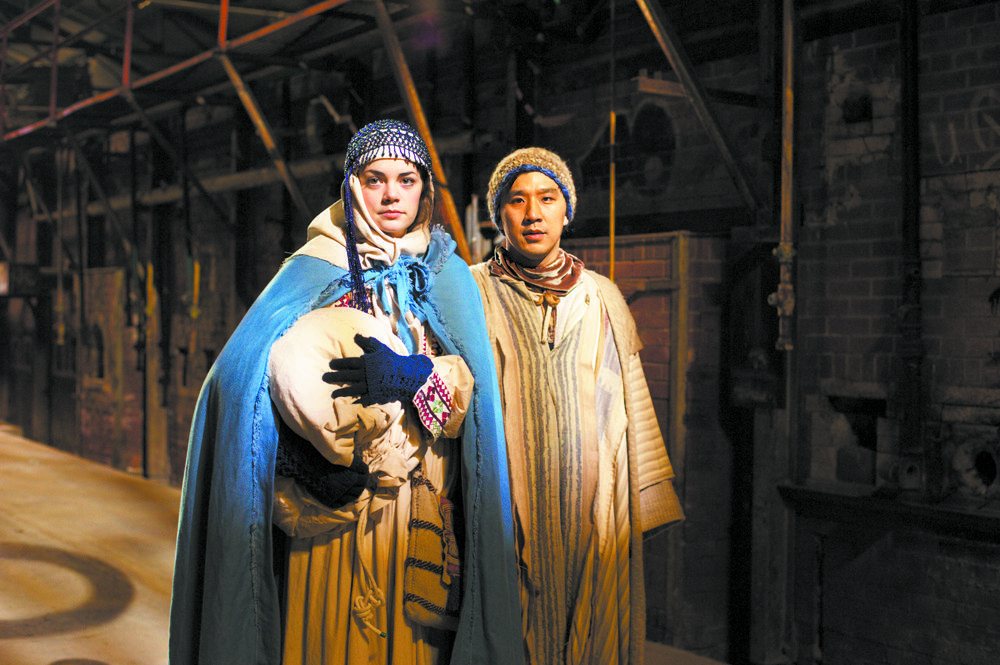
Lisa Marie DiLiberto and Charles Ketchabaw, with their Storymobile on PEI, July 2013 - Courtesy of Victory PlayhouseThe other is Fixt Point’s production of The Tale of a Town, the creation of husband-and-wife duo Charles Ketchabaw and Lisa Marie DiLiberto which returns to its starting place at Theatre Passe Muraille, December 14 to 17. Since the show’s beginnings, Ketchabaw and DiLiberto have spent three years touring the country in their Storymobile (recording studio on wheels) gathering the stories and songs of communities from the Arctic to the East Coast and creating local performance installations. They also built a national story map that not only forms part of each local show but remains in place in each community, as well as online and as a ten-part series on TVO – a kind of national story archive.

I spoke with DiLiberto as well as with the show’s current music director, Sophia Perlman, to find out some more details of the musical side of this project. What makes it “a musical”? was our starting point, and here is the essence of the conversation that followed:

DiLiberto: I wouldn’t call it a musical per se, but music is an essential part of the process and the show, which features songs and audio and performance moments which are underscored live.

Perlman: You’re right. It’s not a musical, entirely. I am coming at this production from an early background in opera and music theatre, but with the last decade or so of my career being rooted mostly in jazz, blues and improvised music. Part of what I love about this piece is the process that has gone into preparing each show, and the insight that each member of the team brings to the table in terms of how music can help shape the story.

DiLiberto: For me, this is a real homecoming. We began this project at Theatre Passe Muraille, and have since toured to every province and territory in Canada gathering stories. To return back home to this theatre feels like the project is coming full circle. The music is such a huge part of the show. It reveals the essence of where we are, how we feel throughout the journey of the show. It lifts everything up into a heightened space – like in a musical – but in the case of this show it lifts up the audio, the verbatim performances, and helps us get from place to place. I’m so excited to share this epic story here in Toronto where it all began, partly because of how far it has travelled in the meantime. This production is a culmination of several years of touring, story gathering and local installation performances. During the process, we worked with these archives and adapted a lot of the score from the ideas and music created by the musicians who collaborated on these performances locally.

Perlman: And for me, personally, Queen West was one of the first communities that The Tale of a Town gathered stories from, and several places (like the coffee shop I used to go to in Parkdale and the Cameron House) are featured in the story. I lived in Toronto’s downtown most of my life – and only left a few years ago. … After the amazing adventure I’ve had on the first part of this season’s tour, it feels especially wonderful to have the chance to bring this story so close to home.

The WholeNote: So the version of the show we will see at Passe Muraille is still in development?

Perlman: We created a score that was an overall shape for the piece back in August and September. Lisa Marie [DiLiberto] is an actor, performer and musician, and there are songs that are sung by her and guest artists. She also plays cello and guitar! Charles Ketchabaw has a background in radio and audio tech and sometimes in terms of live music my role feels a bit more like leading a silent movie orchestra! But part of what drew me to this piece, creatively, was the fact that while the score has been “set” since August, the time we took in the rehearsal room to understand those choices has meant that everywhere we go the score can be adapted to fit different instrumentation, special guests or new local content.

DiLiberto: Each place we go there will be a new band, featured local guests and some kind of a choir ... Perlman: An amazing ad-hoc of musical collaborators and volunteers, you might say … And that becomes part of the story.

After the Toronto run, The Tale of a Town will hit the road again in January for dates in St. Catharines, Burlington, Milton and Kingston. See their website (thetaleofatown.com) for details or call 416-504-7529.

QUICK PICKS

To Dec 31: YPT’s streamlined production of Disney’s Beauty and the Beast, which started November 6, is aimed particularly at families and younger children and features a young, diverse cast including Celine Tsai, one of The Musical Stage Company’s 2017 Banks Prize winners, as Belle.

Nov 23 to Dec 2: Two productions of the operetta Candide have popped up at the same time. Talk is Free Theatre present theirs at the Mady Centre for the Performing Arts in Barrie. Dec 28, 30, 31 and Jan 5, 6, 7, Toronto Operetta Theatre presents their take on the Bernstein/Sondheim classic at the Jane Mallett Theatre. Will the Barrie version have a more “musical theatre” approach?

Nov 28 to Dec 2: Randolph Academy presents the rarely seen musical Moll, with music and lyrics by Canadian composer Leslie Arden and book by Arden and Cathy Elliott, at the Annex Theatre. This is must-see for fans of Arden and Elliott.

Nov 30 to Dec 23: For fans of the comedy side of musical comedy, Theatre Orangeville presents a new Christmas musical, The Last Christmas Turkey, with book by Dan Needles, creator of the Wingfield plays, and music and lyrics by Clive VanderBurgh.

Dec 9 to Jan 21: For fans of the large-scale musical and for families over the holidays, Mirvish Productions offers a musical version of Dr. Seuss’s The Lorax – music and lyrics by Charlie Fink, adapted for the stage by David Greig – at the Royal Alex; while Dec 12 to Jan 7, also from Mirvish, Million Dollar Quartet (which always seems to be playing somewhere) moves into the Panasonic Theatre.

Jan 12 and 13: There are only two days to catch triple-threat and Stratford star Juan Chioran, starring in Podium Concert Productions’ concert version of Nine, the Maury Yeston and Arthur Kopit musical based on Fellini’s film 8 ½, at Trinity-St. Paul’s Centre.

Feb 4 to 25: Coal Mine Theatre, known for its riveting and dark-edged theatre productions, moves into musical territory with Rumours By Fleetwood Mac: A Coal Mine Concert. It will be interesting to see where this falls on the music theatre spectrum, particularly because artistic director Ted Dykstra is also well known for his accomplished work on musicals as both performer and director.

And more: for a more comprehensive overview of musical theatre listings over December and January, visit our music theatre listings on page 63 in this issue.

Toronto-based “lifelong theatre person” Jennifer (Jenny) Parr works as a director, fight director, stage manager and coach, and is equally crazy about movies and musicals.

The heart of musical theatre in any time period is storytelling through the combination of words and music, where the whole becomes more than the sum of its parts; and when the right creative team and performers come together the results can be uniquely satisfying.

October’s musical theatre season started strongly with Britta Johnson’s Life After at Canadian Stage debuting to rave reviews, sold-out houses and an extended run (so far to October 29). Audiences were bowled over with the sophistication of the music, the humanity and wit of the book, and the potential of many more new musicals to come from such a talent. An unexpectedly welcome addition to the summer and fall was the classic Euripides drama The Bakkhai (in the recent Anne Carson adapation) at the Stratford Festival, in which director Jillian Keiley made the radical and fascinating decision to have the chorus sing rather than speak and chose Vancouver composer Veda Hille (of the recent Onegin and King Arthur) to create their sound, a sultry, disturbing folk-like music. Back in Toronto, Red Sky Performance continued to assert their strength of vision with Adizokan (a collaboration with the Toronto Symphony at Roy Thomson Hall) that will continue with a remounting of Backbone at Canadian Stage Berkeley Street November 2 to 12.

As October ends and November begins there is even more of a wide range of music theatre offerings to choose from. Personally, I have been immersed in rehearsals for Opera Atelier’s production of Mozart’s The Marriage of Figaro (October 26 to November 4 at the Elgin Theatre) which, in Marshall Pynkoski’s exquisitely detailed commedia dell’arte-inspired period staging, pulls those watching as if through a window into the 18th century, where words, music and movement are inextricably intertwined to serve the storytelling, obliterating the fourth wall and delighting in sharing the space with the audience.

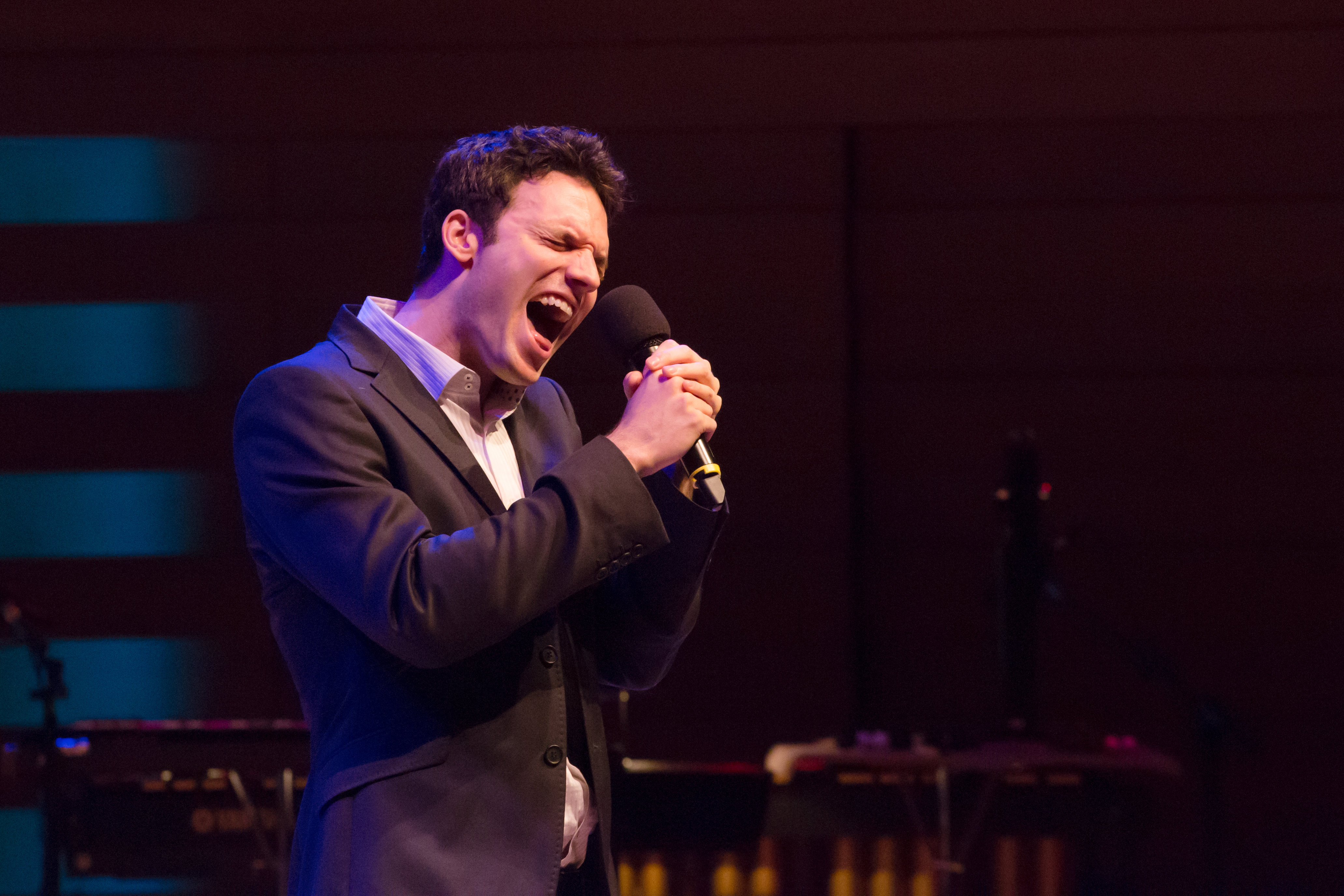
Jake Epstein performing Only the Good Die Young in Uncovered: Elton John & Billy Joel - Photo by Joanna AkyolThe Musical Stage Company’s Uncovered concert series goes to the root of the storytelling concept, deconstructing and reconstructing the songs of popular singer-songwriters to uncover and share the stories at the heart of the songs. Artistic director Mitchell Marcus works side by side with music director Reza Jacobs and the individual performers, experimenting and exploring the material to create new uniquely theatrical arrangements that clarify and heighten the stories they discover.

November 14 to 16 they present “Uncovered: Dylan & Springsteen” at Koerner Hall with an exciting cast of leading musical theatre performers featuring Jake Epstein as Bruce Springsteen and Sara Farb as Bob Dylan.

Wanting to know more details, I approached Mitchell Marcus about how the series started and his ongoing collaboration with music director Jacobs.

Here is our conversation:

WN:What was your initial impetus or inspiration to create the concert series?

MM: The first Uncovered (in 2007) explored the musical catalogue of The Beatles. We both loved The Beatles and loved musical theatre, and wondered how the songs could be interpreted with a group of singing actors. It turned out to be revelatory as audiences started to hear the stories contained in these iconic songs in a way that they hadn’t previously. The combination of a great actor and an examination of the material from the perspective of character and narrative became something we were fiercely passionate about.

Uncovered seems to have become a cornerstone of your season. Is there a connection between your choice of singer-songwriters to feature with the mainstage show(s) that you are presenting in the season or is there instead (or as well) an arc of experimentation in the choices from year to year? How do you choose which songwriters to feature?

There is no specific connection between the Uncovered concert selections and the mainstage shows, except for the hope of always presenting exciting work of the highest quality. The choice of songwriter is a strange combination of intuition and zeitgeist. Sometimes it’s an artist that one of us loves and has been waiting to tackle. Sometimes it’s a circumstance like the death of David Bowie last year which prioritized Bowie/Queen over Dylan/Springsteen (which we had [already] been debating). I think we also try to ensure that the concert doesn’t stay too stagnant from one year to another, which has frequently resulted in alternating between rock/pop and folk music.

Has the shape of the show or your approach to the material changed since the series began?

When we first started, the concert was thrown together much more quickly, so what was onstage was really the version of the song that the artist wanted to try out. Since then, we spend a lot more time in rehearsal and really try to shape the overall evening into something whole rather than feeling like a cabaret. On the musical side, this has meant a more rigorous dramaturgical process of diving into the lyrics of the songs and making clear decisions around whose story we are telling and what story is being told. This becomes the foundation from which all musical decisions are made and the lyrics of the songwriter serve as our guide. Dramatically, we also started integrating text into the concert to serve as a bridge between numbers. We exclusively use quotes from the songwriters we are featuring and it has been a very effective way to capture their spirit alongside their music.

Could you tell us about your decision to sometimes cast female performers as male singer-songwriters, for example, Maev Beaty as David Bowie last year, and this year, Sara Farb as Bob Dylan? 

Ultimately we want to pay tribute to the spirit of the artists and share their words and music with an audience, without – in any way – trying to emulate or impersonate them. As such, the key criteria – whether it’s for delivering text from the songwriter, or singing their songs – is that the artist capture their spirit and intention, both of which transcend gender or age!

There also seems to be a core group of performers who return to take part. Is that just by chance or because they have become part of an Uncovered rep company, so to speak?

Over time we have realized that being a successful Uncovered performer is harder than it looks! Koerner Hall is spectacular, but its acoustics are so good that any imperfections are amplified tenfold. So we need fabulous singers who are also really, really good actors and who collaborate very well in the rehearsal process, since we start with a blank slate and build the arrangements together. We also need a very diverse group of performers so that we can tackle a broad spectrum of songs and styles.

So we try to find the balance between introducing new artists, showcasing returning artists who weren’t in the show the previous year, and bringing back some of the artists from the year prior. Each artist who has ever worked on Uncovered has brought something so unique and special to it. So it’s also a case of just trying to find the group who are interesting as a unit and also right for that particular songwriter.

Do either or both of you find that working regularly on the Uncovered series together has changed the way you work together, or with other collaborators, on other projects?

It has certainly built a very meaningful friendship for the two of us, and a shorthand which I think comes in handy on other shows that we do together. It’s also led to a lot of lessons when it comes to developing our new musicals. Looking at good songwriting from the perspective of narrative arc has come in handy when looking at new musical theatre songs.

Do you see the Uncovered series leading in turn to further experimentation with popular music, perhaps extending to exploring staging – or do you see it staying at the simpler level of song – words and music presented/sung live to the audience with the revelations in the new musical arrangements?

I think Uncovered is meant to stay simple in its concert format, with an emphasis on teasing out stories while just focusing on the words of the songwriter. But I think it has illuminated the power of pop music and so who knows what is possible as we continue to develop new musicals and new musical projects. We wouldn’t want to create a Mamma Mia per se, but I think it’s a very interesting exploration to examine how else pop music can be used to create contemporary and important musical works.

Elsewhere

This month there is a wide range of music theatre to choose from. Music is the medium that transforms Shakespeare’s romance of forgiveness The Winter’s Tale into one of the most effective recent story ballets, through the choreography of Christopher Wheeldon combined with the score of Joby Talbot (the same team who brought us the popular Alice in Wonderland ballet). Winter’s Tale returns to the National Ballet of Canada November 10 to 19, only two years after its debut, because of its great initial success.

On the opposite side of the spectrum the record-breaking Canadian Evil Dead the Musical returns to Toronto yet again (to the Randolph Theatre November 9 to 19), proving that a cult classic musical version of a horror movie can have, perhaps, even greater staying power than the movie itself. Tickets are already selling quickly but at the time of writing there is still room in the “Splatter Zone” for the most ardent fans.

QUICK PICKS

Nov 6 to Dec 31:Young People’s Theatre presents a streamlined (85-minute) Beauty and the Beast, giving fans of one of Disney’s best musicals the chance to catch their favourite story live.

Nov 10 to 12/16 to 18: Word has just come in about another new Canadian musical, Riding Off In All Directions . . . . the telling of lies, about the relationship between Mazo de la Roche and Stephen Leacock at Mississauga’s Maja Prentice Theatre. It will be directed by the well-known stage and screen star Colin Fox, who also plays the part of Leacock. The cast includes Bó Bardós as de la Roche; James McLean as Timothy Findley, and Marion Samuel-Stevens as de la Roche’s cousin and lifelong companion, Caroline Clement.

For more information—call 529-846-2552 or go online to: bit.ly/TellingLies.

Nov 11 to Dec 3, at Factory Theatre: Trace is a one-man show that follows three generations of mothers and sons from occupied Japan to 21st-century Canada combining virtuoso original piano compositions with lyrical text.

Nov 20 to Dec 8: At Crow’s Theatre (345 Carlaw) rock ’n’ roll takes centre stage in the world premiere of a new rock fable, A&R Angels, by Kevin Drew of Broken Social Scene, directed by Chris Abraham.

Nov 10 to 25, at Hart House Theatre, the first of two musical offerings: The 25th Annual Putnam County Spelling Bee.

Nov 29 to Dec 1: Also at Hart House Theatre, the now-classic Canadian musical inspired by the old Astaire-Rogers films, The Drowsy Chaperone, arrives in a production by the Victoria College Musical Society.

Toronto-based “lifelong theatre person” Jennifer (Jenny) Parr works as a director, fight director, stage manager and coach, and is equally crazy about movies and musicals.

The fall theatre season in Toronto is usually overshadowed by TIFF, so most seasons launch after the end of that festival. One company that did start during the film festival in mid-September was Red Sky Performance, launching their 2017/18 slate of shows with the magical Miigis transforming the military colonial setting of Fort York into a site of myth and reconciliation. Red Sky is all over the city this year, it seems (as well as touring internationally), and, as such, is a perfect exemplar of two themes emerging from season announcements: the increased presence of Indigenous artists and companies on the Toronto scene on their own and in collaboration with other companies; and collaboration itself, which can be seen across the board in the arts scene.

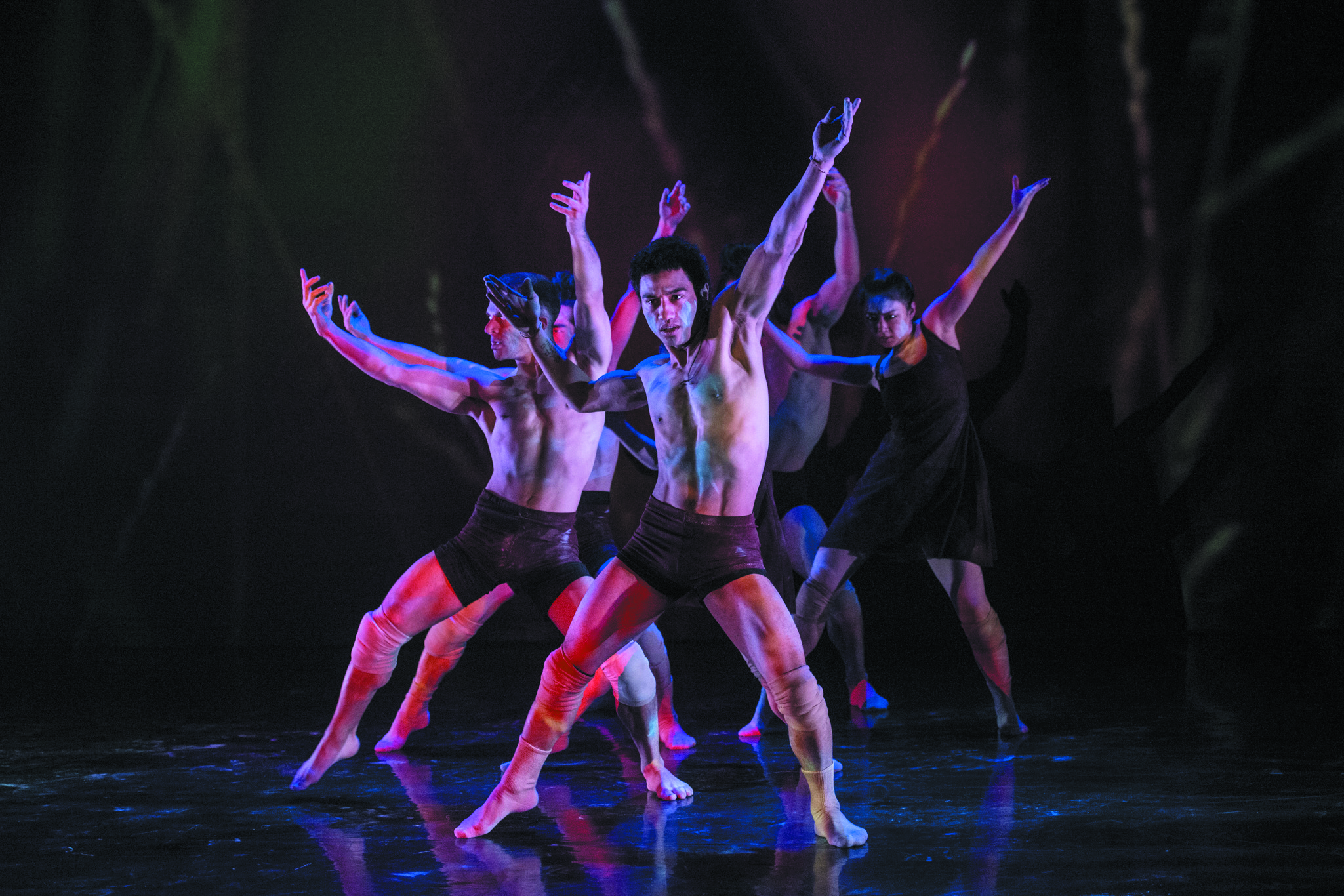
On October 7, Red Sky partners with the Toronto Symphony Orchestra to present, as part of Canada 150, the world premiere of Adizokan, a new genre-bending creation that explores an image-rich experience of Indigenous dance, video, music, electroacoustic and orchestral music. Next they collaborate with Canadian Stage to present the Toronto debut of Backbone (November 2 to 12), a cutting edge Indigenous dance creation noted for its masculine ferocity, inspired by the spine of the continents (originally co-commissioned with the Banff Centre for Arts and Creativity).

Canadian Stage

BackboneCollaboration is at the heart of the Canadian Stage season, a theme chosen to celebrate their 35th year and featuring a plethora of genre-bending creations from around the country, most involving music, and many choreographed movement, as integral ingredients. Their first production (before Backbone), as previewed in our September issue, is a collaboration with the Musical Stage Company and Yonge Street Theatricals: Life After, a newly expanded and developed version of the Toronto Fringe Festival musical hit by Britta Johnson, directed by Robert McQueen. Opening on September 29 and running until October 22, Life After is already generating a lot of buzz. Along with theatrical productions at the Bluma Appel and Berkeley Street Theatres there is also an intriguing wide-ranging music series which includes (in March) a bringing together of multi-award-winning Inuit throat singer Tanya Tagaq with trailblazing Greenlandic mask dancer Laakkuluk Williamson Bathory in a concert event combining tour-de-force vocals, kinetic movement and powerful spoken word.

Buddies in Bad Times

Bathory also collaborates with Canadian poet, composer and performance artist Evalyn Parry for Kiinalik: These Sharp Tools (October 24 to November 5) at Buddies in Bad Times, in a co-production with Theatre Passe Muraille as part of a new initiative between those two companies to share resources and introduce audiences to the work being done on other stages in Toronto. Both powerful storytellers, Parry and Bathory, who met on an Arctic expedition from Iqaluit to Greenland, will use music, movement and video as well as spoken word to map new territory together in a work that gives voice and body to the histories, culture and climate we’ve inherited, and asks how we reckon with “these sharp tools.”

Tarragon

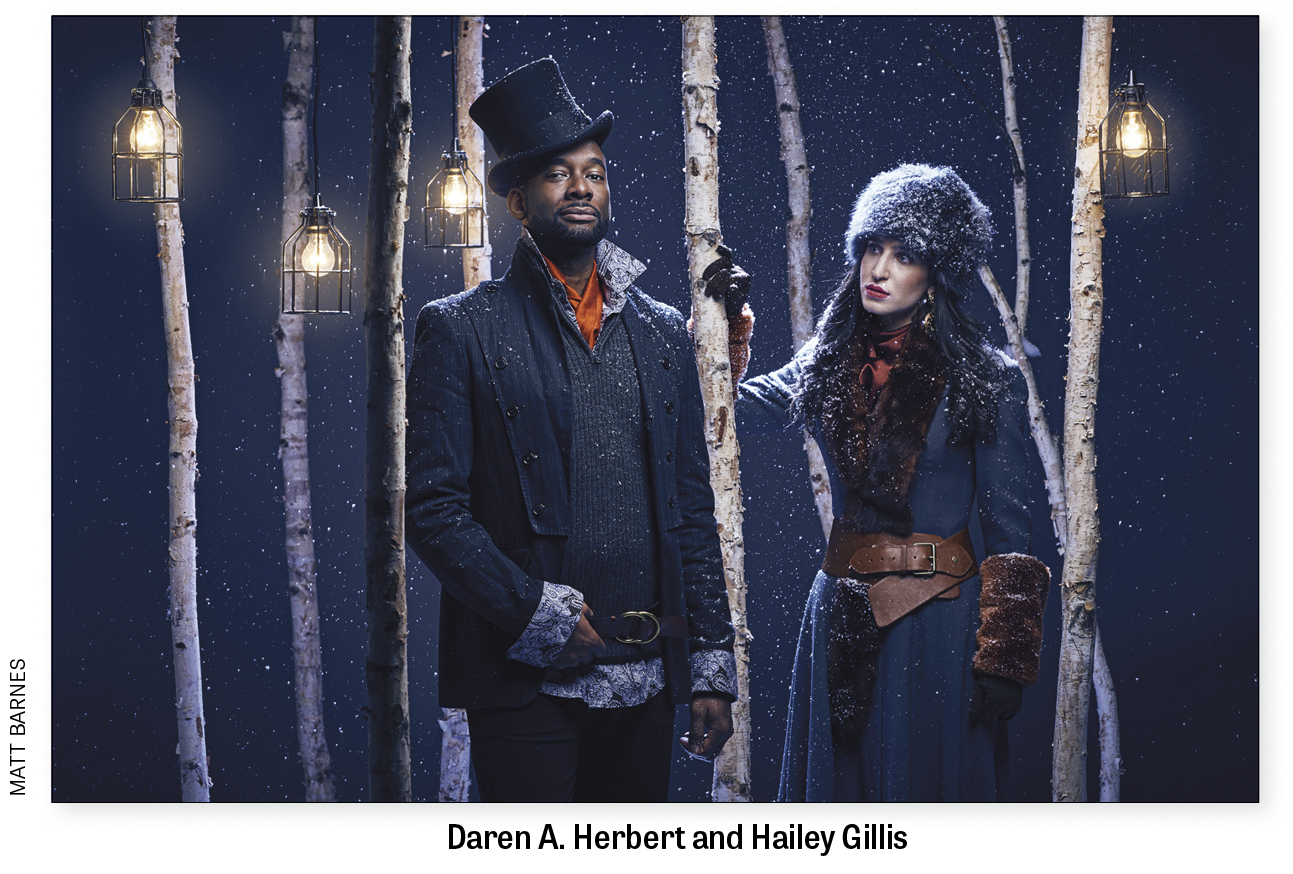
Across the city, Tarragon Theatre has two musicals as part of its mainstage season: in January Richard Rose directs a new version of Shakespeare’s Hamlet, reimagined through the powerful lens of rock ‘n’ roll with a score and music direction by Thomas Ryder Payne. Earlier, in November, Tarragon presents the Macau Experimental Theatre/Music Picnic/Point View Art Association Production of Mr. Shi and His Lover, another show that began life at a festival, in this case the 2016 SummerWorks festival where it was an award-winning hit. Performed in English and Mandarin and with performers from Toronto and Macau, Mr. Shi and His Lover, written by Wong Teng Chi and Njo Kong Kie with music and music direction by Kie, tells the real-life story of a French diplomat in China who falls in love with a mysterious opera singer. With music inspired by Chinese opera and vintage pop from both East and West, the show will be performed in Mandarin with English surtitles.

(Kie, who is also the long-serving music director of Montreal’s La La La Human Steps, also collaborates with Canadian Stage toward the end of their season [April 26 to May 6], introducing the Macau-based Folga Gaang Project in their Toronto debut with the hybrid musical performance Picnic in the Cemetery.)

Soulpepper

Almost cheek by jowl with Canadian Stage downtown, Soulpepper presents a more traditional season but again, music plays an important part, with the blues-infused Ma Rainey’s Black Bottom in the spring. Soulpepper’s expanded concert series also begins in October with Riverboat Coffee House: The Yorkville Scene (October 6 to 14), bringing to life the 1964 launching pad of Canadian singer-songwriters like Gordon Lightfoot, Ian and Sylvia, Murray McLauchlan, Joni Mitchell and Neil Young. Mike Ross will music-direct a lineup of multi-disciplinary artists as they celebrate the stories and songs that made Yorkville the place to be in the free-loving 60s. The series also includes A Very Soulpepper Christmas (December 15), Prohibition, the Concert (February 9, 10, 14) and A Moveable Feast; Paris in the 20s (March 30 to April 2). Created by Albert Schultz, with overall music direction by Mike Ross, the scripted concert series has a lively energy marked by its collaborative nature and its bringing together of different Toronto artists and musicians for each event.

Soundstreams

Michael Greyeyes - photo by Jeremy MimnaghDowntown and uptown, venue depending on the type of event, is Toronto’s eclectic and experimental yet classical Soundstreams, where music combines with dance and theatre in ever-evolving combinations.

Soundstreams’ 35th season opens very strongly with two productions in October. On October 16 at Koerner Hall, Northern Encounters celebrates Canada 150 and Finland at 100 with Europe’s northernmost professional orchestra, the Lapland Chamber Orchestra, performing music by Jean Sibelius, Harry Somers and Claude Vivier and, most interestingly for me, includes a new dance piece by powerhouse Canadian choreographer Michael Greyeyes to Vivier’s Zipangu exploring the idea of “the city of gold.”

A bit later in the month (October 26 to November 4) at Crows Theatre’s new permanent space (at 345 Carlaw) Soundstreams collaborates with Crows’ artistic director Chris Abraham (whose production of Moliere’s Tartuffe is currently electrifying and delighting audiences at the Stratford Festival) on the world premiere of the first staged production of Claude Vivier’s Musik für das Ende.

The wonderful Soundstreams Salon 21 series has also begun and continues throughout the season, offering audiences the opportunity to meet artists involved in upcoming events and to explore the inspiration behind those events, usually in the intimate setting of the Gardiner Museum. The Salon on October 19 (at Crows Theatre), “Endings: Lieke van der Voort and Jumblies Theatre,” will feature a special rapid-creation performance inspired by Vivier’s Musik für das Ende.

Quick Picks

Sept 22 to Oct 7: Hart House Theatre pushes the boundaries with what should be a strong production of John Cameron Mitchell and Stephen Trask’s rock ‘n’ roll Hedwig and the Angry Inch. (WARNING: Coarse language, mature themes and sexually explicit scenes.)

Oct 24 to Dec 24: For fans of Meatloaf, David Mirvish presents the North American premiere of Brian Steinman’s Bat out of Hell The Musical at the Ed Mirvish Theatre. A critical and popular hit already in England, the run here has quickly been extended to December 24.

October 20 and 21: Catch one of Toronto Masque Theatre’s iconic double bills in TMT’s final year: Dido and Aeneas/Aeneas and Dido, pairing Purcell’s classic with James Rolfe’s contemporary take on the same tale, starring Krisztina Szabó, Alexander Dobson, Andrea Ludwig and Jacqueline Woodley. At Jeanne Lamon Hall, Trinity-St. Paul’s Centre.

October 28 and 29: Gilbert and Sullivan fans might want to catch TrypTych’s production H.M.S. Parliament  at Trinity Presbyterian Church West Hall, 2737 Bayview Ave. With a script by Canadian William Henry Miller and music by Arthur Sullivan, it’s an intriguing music-theatre piece featuring eminent Canadian figures Sir John A. MacDonald and Sir Alexander Mackenzie.

The 2017/18 music theatre scene is starting with a bang this month with two large-scale, vastly different projects, both equally exciting.

Miigis

Miigis by Red Sky Performance: Sandra Laronde, concept/direction; Jera Wolfe, choreography; Sophia Lebessis, performer - photo by Donald LeeIn this year of celebrating Canada’s 150th birthday how perfect is it to have a new creation by Red Sky Performance taking up residence at Fort York. Red Sky, based in Toronto, is Canada’s leading company of contemporary Indigenous performance in dance, theatre, music and media.

On September 15 and 16 they are bringing to life the world premiere of Miigis, a fusion of contemporary Indigenous dance and powerful original music, with concept and direction by artistic director Sandra Laronde, choreography by associate artist Jera Wolfe, and design by Julia Tribe, exploring the catalysts, trade routes, and stories of a journey from the Atlantic coast to the Great Lakes and the “seven prophecies marked by miigis.”

The seven prophecies (or seven fires prophecy) are at the heart of the belief of the Anishinaabe people, prophecies that follow seven epochs (and predicting an eighth) in the life of the people of Turtle Island (North America) following the migration of the people from the East Coast into the interior of the continent and encompassing the arrival of the Europeans and the effects of the meeting of the two cultures. The miigis in different tellings of the prophecies are either/both the cowrie shells that mark the various lands where the migrating people should stay and settle, and the prophets that guided them.

Fascinated with Laronde’s choice of this as the heart of the new piece, I asked her a few key questions about the inception of Miigis and her production choices (her responses have been edited for length).

WN: Can you tell me more about the choice of the seven prophecies of miigis as the subject matter for the new work? What is it about the prophecy that you want to communicate through the piece and that you think is important for audiences to learn about/experience now?

SL: Miigis is akin to the holy grail for the Anishinaabe people. We followed it from the Atlantic Coast to the Great Lakes. I’m interested in the third fire prophecy given to us which was ‘to move westward until you come to a place where food grows on the water’. I’m interested in what happened along the travel and water routes, what got exchanged, what happened. The food that ‘grows on water’ is known as manoomin or wild rice which the Anishinaabe are renowned for harvesting. Its harvest life cycle is part of the structure of the Miigis production.

Our seven fires prophecy includes an eighth fire, where society could choose to go down either a dark path or a bright path, and we are in this eighth fire now. All of the warnings are here – now – especially with regard to the environment, nature, and the loss of many species.  The question is can we turn this around? Can the dominant culture move beyond a ‘take, take mentality’?

WN: Why did you choose Fort York as the location for the world premiere, and how will this location set off the work you will be creating? 

SL: We are fortunate to have wonderful partners involved in Miigis, and it is co-commissioned by the City of Toronto, The Bentway Conservancy and Fort York Historic Site. This location is perfect because the Gardiner Expressway was the natural shoreline of Lake Ontario, one of the five Great Lakes. Garrison Creek runs along Fort York which is where the Anishinaabe used its waterways. Of course, Fort York has a lot of history before it became known as a fort, as Anishinabek and Haudenosaunee shared this land that is now known as Toronto. Toronto is a Haudensaunee word that means “where trees grow in the water.” That speaks to quite a beautiful image of Toronto, and its natural beauty.

Fort York has a lot of big open spaces and it has quite a good feel there. Ironically, while creating a high Indigenous content with Miigis, we would hear cannonballs being fired off on a daily basis, and young men and women marching around outside in colonial vestments. At first, it was quite startling to hear cannonballs firing a few times a day. It’s ironic that we have something very colonial happening all around us while we are inside the Blue Barracks creating a work that goes right back to our origin story and our seven fire prophecies. It’s strangely appropriate somehow as we are giving Indigenous voice back to this tract of land.

It’s ideal to be at the Bentway and Fort York because this work has approximately 18 to 20 dancers, both contemporary and traditional, and six live musicians, so a lot of people are involved. We need the space for this outdoor spectacle experience of original live music and dance. The music is extraordinary, rich, Indigenous and surprising. It’s a big ambitious piece in many ways.

WN: Will the piece take place in one place or move about the fort? How do you see this affecting both the creation of the piece and the reaction of the audience? 

SL: We will have a procession from The Bentway area into Fort York, and we will perform outside on a low-rise stage. We all want the feeling of the performance being accessible to audiences. Miigis is a piece to be performed outdoors amidst nature and the Toronto cityscape. This land allows our production to move distances, to cover ground, and to involve a lot of artists involved in the process, including traditional dancers and singers.

I would love audiences to take away images, moments, and knowledge nuggets that swim around in their heads and hearts for years to come, to feel the urgency of what Miigis is about, to experience the Indigenous artistry, and to have a rich sonic experience of Indigenous music. We are very excited to reveal this new terrain of dance and live music that immerses audiences in the power of nature and Indigenous prophecy right here in downtown Toronto.

Miigis plays for two performances only, September 15 and16, with a third music-only concert on September 17. Performances are free.

Life After

Britta Johnson’s musical Life After, which will debut at Canadian Stage September 23 to October 22The other centrepiece of the September season is Life After, a new Canadian musical by Britta Johnson, first seen and widely acclaimed at the Toronto Fringe in 2016, workshopped again last April, and in rehearsal now for its debut at Canadian Stage September 23 to October 22 (at the Berkeley Street Theatre), in a three-way co-production with the Musical Stage Company and Yonge Street Theatricals. A funny and frank story of love, loss and vivid imagination, Life After follows 16-year-old Alice, left to navigate life after her father, a superstar self-help guru, dies in a car accident. The audience is plunged into Alice’s overactive inner world as she tries to decipher the events that led to that fateful day.

Unusually for a musical, the composer is also the writer of both book and lyrics, and the story is one she says she has been writing since her teens as it draws in part on her own experience of losing her father when she was young.

Reviews of the original Fringe production speak of how moving but also how funny Life After is, calling Johnson’s work revolutionizing and comparing her to Sondheim. In a recent blogpost, director Robert McQueen (who also directed the original Fringe production) wrote that he “can’t wait to get Life After back into the theatre and to invite audiences to hear the unique voice of this truly gifted musical theatre artist.”

Joining McQueen at Canadian Stage is a top-notch creative team and cast featuring emerging star Ellen Denny, Dan Chameroy, Rielle Braid, Tracy Michailidis, Kelsey Verzotti and Trish Lindström; leading the ensemble are Neema Bickersteth, Barbara Fulton, and Johnson’s sister Anika Johnson (who also is the production’s dramaturg).

The production is also marking a number of firsts. Britta Johnson is the inaugural artist chosen to be part of the Musical Stage Company’s new Crescendo series which gives the chosen composer a three-year residency with a commitment to produce three of her new musicals in development over that time. This is also the first Canadian musical to be programmed at Canadian Stage under artistic and general director Matthew Jocelyn. Jocelyn, whose family origins trace back to Johnson’s hometown Stratford, Ontario, caught some of her early student productions  and was immediately struck by the mature, insightful voice in her work, both as librettist and as a composer: “Life After is a searingly beautiful piece of music theatre that we are honoured to have opening our 30th anniversary season,” says Jocelyn.

We are in an exciting era of musical theatre development in Toronto with a growing proliferation of new musical incubators as well as more companies featuring music theatre of various kinds in their seasons. Canadian Stage stands out as breaking new ground in this regard with fully 10 out of 15 productions in their new season featuring music as an integral element of the production. I will be writing more on that next month.

Not Too Late

If you are still feeling the draw of summer days in small-town Ontario, head out to Stratford to see their strong production of Damon Runyon’s classic Guys and Dolls featuring Steve Ross’ perfect Nicely-Nicely Johnson at the Festival Theatre (until Oct 29) or grab the chance to see brilliant Canadian actor Michael Therriault (Golem in the ill-fated LOTR musical) starring in the 1930s musical Me and My Girl at the Shaw Festival in Niagara-on-the-Lake (until Oct 15).

Or for something more modern, watch Cirque du Soleil explode into the Port Lands with Volta, their new show about blazing your own trail (Sept 7 to Oct 29).

Toronto-based “lifelong theatre person” Jennifer (Jenny) Parr works as a director, fight director, stage manager and coach, and is equally crazy about movies and musicals.


Update 4pm, Aug 31 2017: A previous version of this article referred in one instance to Canadian Stage as 'CanStage'; this error has since been corrected.

Look-alikes Lotte Lenya and Tilly LoschAs I start to write this column I am in Versailles with Opera Atelier, and after each rehearsal I tune into the news programs - on what seems like every TV channel - all discussing the recent election of Emmanuel Macron as President of France, his choice of Prime Minister, the ensuing choosing of government ministers, and his positive and hopeful approach to the renewal of Europe. Politics is the hot topic of the moment, particularly with the general relief at Macron’s win over Marine Le Pen of the Front National.

Then there is also the current pre-election state of the UK, made even more complex with the attack on Manchester as well as the ongoing passionate debate about Brexit. And there is the undefinable situation in the good old USA, south of our own border; the international rise of populism and its frightening similarity to Fascism; the continuing war and refugee crisis in Syria, and more.

How interesting then, that in Toronto, in June, there will be two productions in the same week that can be construed as reactions, quite different reactions, to the historical antecedents of these current political situations - specifically to the rise of Facism/Nazism? 

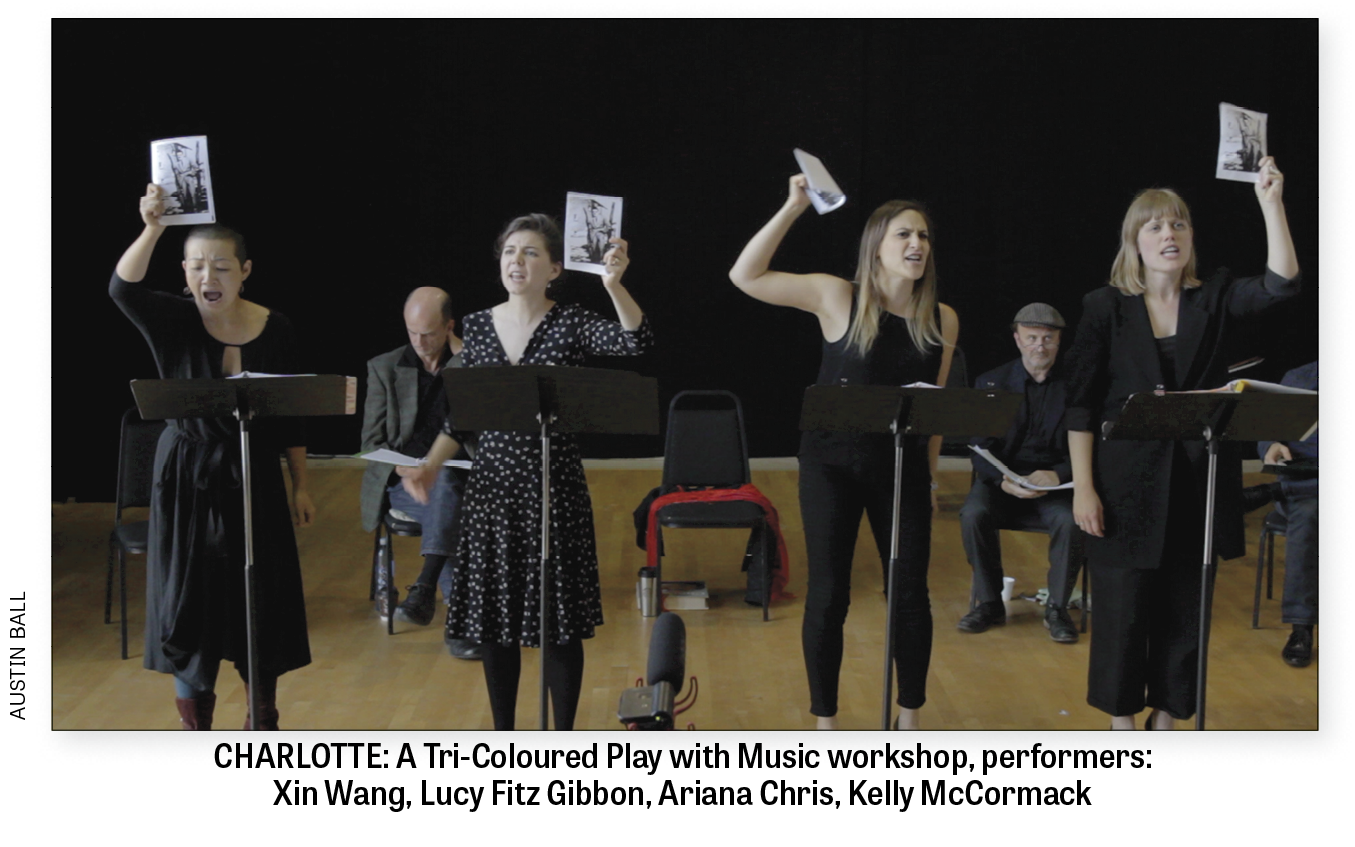
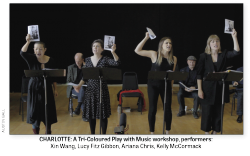
June 14 and 15, at Roy Thomson Hall, the Toronto Symphony is presenting Kurt Weill and Berthold Brecht’s 1933 classic “sung ballet” The Seven Deadly Sins in a semi-staged version by director Joel Ivany and choreographer Jennifer Nichols. Then, starting just two days later, June 16 to 18 at the Theatre Centre, Luminato presents Theaturtle’s work-in-progress production of CHARLOTTE, a genre-bending new chamber musical based on Charlotte Salomon’s life story, coming of age in Berlin during the rise of Nazism.

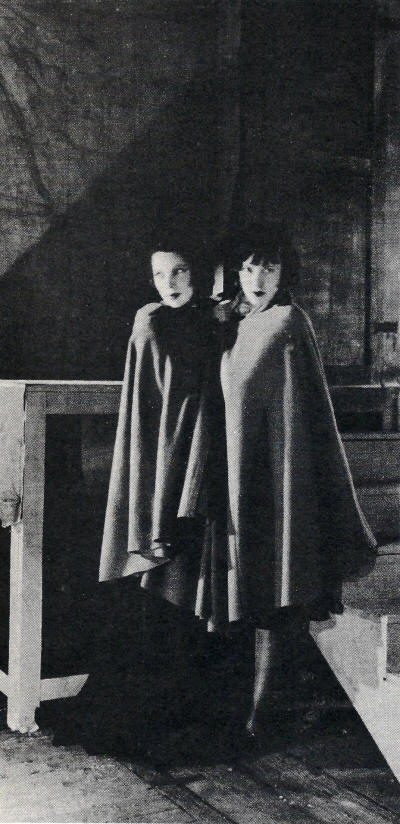
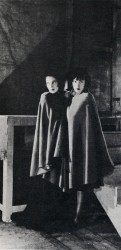
So, on the one hand we have a classic of the Brecht/Weill oeuvre, originally created for look-alikes Lotte Lenya and Tilly Losch, usually seen as a drivingly sarcastic condemnation of capitalism, as well as a wonderful vehicle for the leading singer and dancer who play two sisters - or are they the two sides of the leading character’s  personality? And on the other, we are offered a new work based on the life of a young girl who personally witnessed the rise of Nazism and recorded her experiences, her terrors, hopes and dreams in a series of over 700 gouaches - creating what has been described as possibly the first graphic novel or the story board for a musical of her life.

Curious about this juxtaposition and the approaches of the two creative teams to their respective projects, I reached out to both to talk about their own shows and this odd synchronicity. As it turns out the connections are, in the eyes of their respective producers, more apparent than real: the Brecht/Weill was written in the 1930s and is being presented as a “modern classic” by its producers. CHARLOTTE is an entirely new work based on historic/autobiographical material; the coincidence in timing is just that – a coincidence, and not particularly instructive.

So, are they connected? Yes, I think so, but perhaps more for the active observer reacting in one’s own time to the state of the world.

Brecht and Weill
2209 Music Theatre 2Let’s start with The Seven Deadly Sins. Part of the TSO’s ongoing “Decades Project,” it is being presented as emblematic of the 1930s and is accompanied on the program by Barber’s Adagio for Strings and Bartok’s Music for Strings, Percussion and Celestina (as well as a newly commissioned short work for Canada’s 150th birthday).

Styled as a satirical sung ballet The Seven Deadly Sins follows the adventures of two sisters sent to seek their fortune in the big cities in order to earn enough money to buy their family a little house on the banks of the Mississippi. In each city they encounter one of the sins of the title: Sloth, Pride, Wrath, Gluttony, Lust, Avarice and Envy.  The sisters are both called Anna. Anna 1 (the singer) whose “head is on straight” is the entrepreneur type, and Anna 2 (the dancer) is the more compassionate one and also, as Brecht calls her, “the article sold.” The family acts like a Greek chorus, commenting on the events as they fall out in each city.

Creating semi-staged versions of things is at this point right up a familiar alley for Joel Ivany (artistic director of acclaimed Toronto opera company Against the Grain) and choreographer Jennifer Nichols who have collaborated previously on AtG’s groundbreaking staged Messiah in 2013, remounted in 2016, and on La Belle Hélène at the RCM. (Joel also created a semi-staged version of Mozart’s Requiem for the TSO last year.)

I was secretly hoping to hear from Ivany that he was seeing the piece from a political angle, given the current state of the world, but he said that they had decided to stay with a very straightforward approach, treating the piece as a modern classic, and coming at it from a place of “what is the music and text saying and then how are we going to show that?” They used an exploratory week at the Banff Centre at the end of the summer as a starting point and to set the company language for the exploration.

Nothing daunted I asked choreographer, Jennifer Nichols, (who, conveniently, was with me in Versailles, dancing in Médée, if there was more she could tell me about her approach to the creation of the dance elements:

“What I am hoping to achieve choreographically is that the family is simply an extension of Anna,” she said. “That their hopes and fears and judgment are her own [judgment] of herself…. At times Anna 1 and 2 blend, as if one is the puppet and the other the puppeteer, and then this dynamic switches.” Supporting the staging will also be video elements created by Nichols with Christopher Monetti, inspired by  the layering of facial symmetry and asymmetry in Ingmar Bergman’s Persona, and “posing the question: Is Anna 1 the sister of Anna 2, or are they two parts of the same person?”

Playing the singing Anna 1 opposite Nichols’ dancing Anna 2 is Canadian star mezzo-soprano Wallis Giunta, headlining a strong cast of singer/actors: Isaiah Bell, Owen McCausland, Geoffrey Sirett, Stephen Hegedus (who just played King Creon in Médée to acclaim in Toronto and Versailles), with TSO Maestro Peter Oundjian conducting the TSO.

So, look forward to a potentially interesting and well-sung version of Brecht and Weill’s 1933 classic, the last piece they would create together.

CHARLOTTE

A much more complex and ambitious project and one very much intent on portraying the state of the world as it is now as well as how it was in the 1930s is CHARLOTTE: a Tri-Coloured Play with Music.

2017 is the centenary of Charlotte Salomon’s birth, a significant milestone, and one of the sparks that led to the creation of this new multidisciplinary chamber musical.

What were the other sparks? Where did it all begin? “Seventeen years ago,” says librettist Alon Nashman, “I encountered the artistic genius of Charlotte Salomon at the Art Gallery of Ontario. There I saw over 700 paintings, stunning in their complexity and beauty. I read every word of the text she offered for what was in essence a huge graphic novel and a thinly veiled autobiography. I listened to the music Charlotte proposed as accompaniment to her images and storytelling. I fell in love with this highly intelligent and talented young artist, whose ironic take on events I thought I already knew well is completely disarming. I mourned for the loss that her immediate death at the doors to Auschwitz represented. Here was a profoundly and articulate witness, not only to the atrocity that was Nazism, but to a complex stew of artistic, familial and societal transformation.”

Unable to shake the notion that Charlotte wanted her work to be performed publicly, Alon dreamed of adapting this painted/indicated singspiel “Life? Or Theatre?” for the stage. The next step was to find the right director who would understand from the inside Charlotte’s world and artistry. Through the help of Canadian-bred producer Liz  Bradley, Nashman found  her in British director and sceneographer Pamela Howard, who had already been thinking independently about creating a piece based on Charlotte’s work. Pamela in turn introduced Nashman to composer Aleš Březina, one of the leading lights of European composition for theatre, and director of the Martinu Institute in Thessaloniki and the Czech Republic, and the creative team was complete.

The development process began with meetings in 2013 and 2014, leading to a first three-week workshop at Canadian Stage in 2014. On their promotional video the team state that their goals were to create a fully 3D realization of Charlotte’s visions and images, in an equal partnership of text, movement/image and music. By the end of the first workshop they had an initial footprint for the production to grow from. In 2016 there was a further music workshop, and this year a double workshop residency at Kingston’s Isabel Bader Centre and at Toronto’s Theatre Centre leading up to a return visit to the Bader June 1 for a concert premiere, and then the upcoming work-in-progress performances for Luminato which will have full sets, props, and costumes, although production details will continue to evolve.

All three CHARLOTTE collaborators declined any specific political alignment or direct artistic parallel to The Seven Deadly Sins other than that of recognizing the general use of art to ridicule and expose the moral bankruptcy of the Nazi regime, particularly through the way of  theatre that Brecht and Weill established. Pamela Howard suggests that a more appropriate parallel would be Brecht’s Theatre poems or his dictat “Show what has to be shown.” Much more clearly they all three talk about bringing this specific story to life: “This beautiful portrait of a decline of a flourishing multicultural life in Berlin (or Germany or Europe) in the late 1930s…the link not only to today but to all times to come” as Březina puts it. Or in Howard’s words “The inspiration or rather determination…to create something that reinforces the power of art to survive beyond human life…not simply a reaction to Nazism, tragic as that is, but (to) the current political repetition once again that is daily witnessed (that) is motivating artists all over the world to make work together that speaks louder than words.”

Nashman says: “Charlotte did not know how the war would unfold but she had a sense that everything she associated with civilization was being destroyed. She sets the date of her creativity as ‘Year One of the New Salvation.’ Her remarkable premonition was that out of the ashes of Europe would arise a new and better civilization. And that she would likely not survive to see it.”

Charlotte in exile had only three colours of paint to create her series of 700 + gouaches images. From three colours she made a myriad colours. This “tricolour” is the tricolour of the subtitle of the show, but it also refers to the three collaborators, to the equal importance of words, images, and music coming together to communicate a world and story. All three collaborators champion this idea and process. In Březina’s words: “We were like three sides of the same person, discussing every small detail together to find out a solution, which (would) always display all three aspects inevitably intertwined.”

Finally, I asked the three what they wanted to create for their audiences, how they wanted their audiences to emerge from the experience of the project. Howard summed up their goals: “To experience a remarkable - yet horrific - story and to come out changed” she said. “I think of Beethoven’s Ode to Joy as a guiding principle. We have to be optimistic for the future otherwise…how can we go on? The Soviet Union fell, Hitler died, Idi Amin ceased to exist and Rome fell. People suffer, but the human spirit will rise, as Brecht said ‘In the dark times - will there also be singing?’”

And a last word from Nashman: “Charlotte’s artistic response to her tribulations make me wonder if there is a young woman in Aleppo today painting her life, or writing poetry or songs, in order to survive.”

 Works like CHARLOTTE: a Tri-Coloured Play with Music, giving us new windows on times we don’t want to return to, are essential to the survival of the human spirit.

Is CHARLOTTE an example of how the art of music theatre is becoming more widely and wildly experimental, pushing the envelope, breaking the box, becoming more strongly political? Or is it just that there happens to be a whole bunch of this happening clearly and visibly right now?

The rest of the line up at Luminato is an interesting case in point. More than half the productions could be described as falling under the music theatre umbrella, but from under the shelter of that umbrella are breaking and making  new rules, becoming radically diverse, more connected to the world around us, engaging with hot button topics through art, wanting to shock, perhaps, but even more wanting to engage and connect with audiences and the world around us. Active political theatre-making in the best sense.
2209 Music Theatre 3Staying with the offerings at Luminato for a moment, King Arthur’s Night, (whose composer Veda Hille also co-created Onegin which continues until June 4 at the Berkeley Street Theatre), is a new take on the classic legend, commissioned by Luminato from British Columbia’s Neworld Theatre. This world premiere is co-created by Hille, Marchus Youseff, James Long and writer/co-creator Niall McNeil - an artist living with Down syndrome who grew up in the midst of BC’s Caravan Theatre. The production  features a fully integrated professional cast, which includes actors from Burnaby, BC’s Down Syndrome Research Foundation, a live band and a 16-person choir: “An upside down world. A Betrayed Love. An unwanted child. Animals learning to walk and talk. A revolt by the subjugated masses. A kingdoms come undone. This isn’t the King Arthur you know.”

Nearby on Front Street, the Joey and Toby Tanenbaum Opera Centre will house a custom-built performance space for two very different cross-genre productions to tell epic stories from two different cultures.

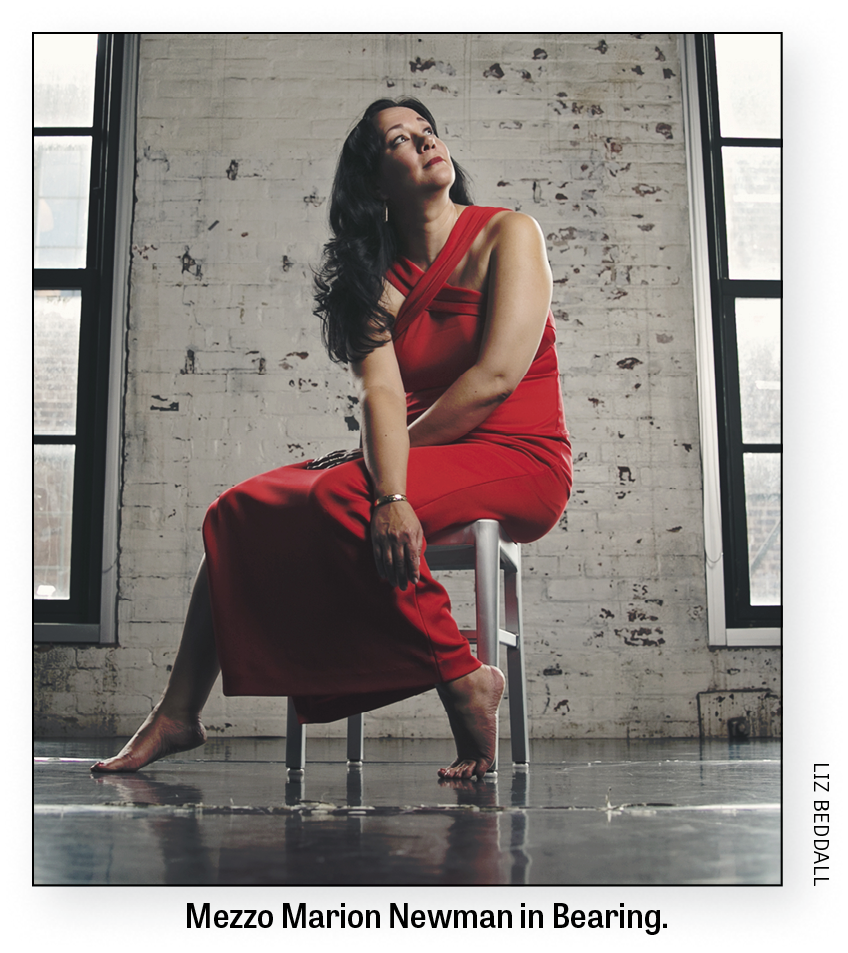
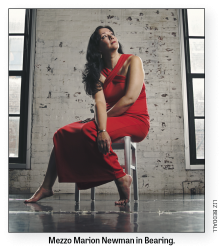
Bearing is a world premiere dance-opera by internationally acclaimed theatre-maker Michael Greyeyes (Plains Cree), playwright/director Yvette Nolan (Algonquin) and librettist Spy Denomme-Welch (Anishnaabe). It explores the legacy of Canada’s residential school system through music, dance, and spoken word, presented in three sections on a nearly bare stage with - in the words of the creators - “live music being integral to the audience’s understanding of the work,” and with music ranging from Bach to Vivier to new pieces composed for this Signal Theatre production. Actor and singer Marion Newman (Kwagiulth and Sto:lo) leads a company of actors, singers, and dancers,  a custom built choir, and members of the National Youth Orchestra in what promises to be an unflinching yet poetic look at this difficult and enduring scar on Canada’s history.

Until the Lions is a tantalizingly feminist dance/music theatre project drawn from Karthika Nair’s “Until the Lions: Echoes from the Mahabharata,” a collection of poems about the overlooked female characters in the Sanskrit epic.  Director and (award-winning) choreographer Akram Khan, who spent two years as a performer in Peter Brook’s renowned international nine-hour version of the full Mahabharata, declares that “as in many myths, the female characters are often the unsung heroes, the figures of strength and imagination and endurance. It is their unsung stories in particular that still haunt me today.” His “Until the Lions” fuses traditional kathak with contemporary dance and live music (an original score) to explore the tale of one of the these women, the Princess Amba, who invokes the gods to seek revenge when her chances of love and marriage are stolen from her.

 The juxtaposition of these two new works in a custom built in-the-round space should prove to be fascinating for the avid music theatre goer to see. How will the space affect the different productions and how will each make use of it, and to what effect?

Worth a look as well for their promised pushing of genre boundaries are Vertical Influences, an ice-skating double bill by Montreal’s Le Patin Libra aiming to move skating into the theatrical arena (one piece being about bullying); Breakin’ Convention, an international  festival of Hip Hop Dance Theatre from Sadler’s Wells, London, and UK hip hop pioneer Jonzi D; and an award-winning production of Anton Chekhov’s Uncle Vanya by the Vakhtangov State Academic Theatre of Russia which promises, in the style of theatre pioneer V. Meyerhold, a blend of words, music, mime and symbolism.

Elsewhere in the City

Soulpepper brings us Porgy and Bess in Concert (June 1-3 ) as well as the closing performances of their very successful run of “for colored girls who have considered suicide / when the rainbow is enuf.”       The National Ballet of Canada unveils their new production (and Canadian premiere, of John Neumeier’s A Streetcar Named Desire (June 3-10 using music and dance to reimagine Tennessee Williams’ famous play, focusing on exploring themes of memory and loss. The ballet has a new first act, set to romantic music by Sergei Prokofiev and picks up the familiar story in the second act to more jarring, fragmentary music by Alfred Schnittke.

On a lighter note, the Gerald Isaac studio presents a short run (June 29-July 2) of Sweet Will.

This time-bending musical transforms the Bard’s most iconic works into a new story “rife with song and sass that strikes a powerful synthesis between old and new.” The exhilarating musical hodgepodge originally from 1985 is dressed up this time in spectacular Steampunk style, with Tony Award-winning Lance Mulcahy’s original book enhanced by a new script, and is under the direction and choreography of Stratford alum and Canadian theatre great Gerald Isaac and musical direction of Dora Award-winning Bob Ashley. See their Sweet Will Facebook page for more information or universe.com for tickets.

A bit further afield

The Stratford Festival, underway from mid-April, is getting into full swing with two musicals onstage: the wonderful Broadway classic Guys and Dolls directed by Donna Feore, with Ben Carlson as Sky and Alexis Gordon as Sarah Brown; and the perennial G & S favourite  H.M.S. Pinafore directed by Lezlie Wade. For one day only, on June 24, at 2:00 pm., you can also catch Stratford Company member and Tony-Award winning singer and actor Brent Carver in concert with The Art of Time Ensemble at the Avon Theatre in a program of songs  by Charles Aznavour, Leonard Cohen, Kander and Ebb, Elton John, Jacques Brel, Noël Coward and others, arranged especially for this concert by a selection of the best composers and arrangers in Canada.

At the Shaw Festival, Me and My  Girl continues its run until October 15. The sparkling and fun British musical about whether a Cockney man can give up his old life – and love -  to join the upper class, was famously a hit in London’s West End starring Emma Thomson in full tap dancing mode in the 1980s; in the 1930s, when it premiered, it was so successful that its hit song and dance “The Lambeth Walk” was so popular across Europe during the Munich Crisis that an article in The Times of October 18, 1938, quoted a contemporary poet: “While dictators rage and statesmen talk, all Europe dances – to The Lambeth Walk.”

Summer Stock

Ontario’s long Summer Stock Season has also begun with many performances around the province featuring both new Canadian and traditional Broadway musicals.

The WWII theme continues at the 4th Line Theatre in Millbrook with David S. Craig’s musical Bombers: Reaping the Whirlwind,  a new play with music danger and romance about Canadian bomber crews “as they struggle to win the war.” The new Canadian musical about Terry Fox, Marathon of Hope by John Connolly and Peter Colley, plays at the Dunfield Theatre in Cambridge, as well as the King’s Wharf Theatre in Penetanguishene. Broadway musical favourites Joseph and the Amazing Technicolor Dreamcoat are coming to the Drayton Festival Theatre, and Huron Country Playhouse, and Thoroughly Modern Millie comes along at the beginning of July to the St Jacob’s Country Playhouse.

For more details on Summer Stock shows see our own listings and helpful websites summertheatre.ca, or summerfunguide.ca.

Toronto-based “lifelong theatre person” Jennifer (Jenny) Parr works as a director, fight director, stage manager and coach, and is equally crazy about movies and musicals.


2208 Music Theatre BannerIf any more proof was needed that the story of Eugene Onegin in all its forms continues to capture the interest of audiences, the National Ballet of Canada revived John Cranko’s Onegin just last fall, and the latest Metropolitan Opera production of Tchaikovsky’s opera will appear on Cineplex screens in May.

2208 Music TheatreSo when I received an email message from the Musical Stage Company in February that tickets were on sale for their production of Onegin, a new Canadian musical opening in May, right away my excited interest was caught. Cranko’s Onegin (beloved by Toronto ballet fans) has long been one of my favourite “story ballets,” its aloof and then passionate title role a test of star quality for every male principal dancer, and the role of Tatiana, who falls headlong and unrequitedly in love with Onegin, an equal dramatic proving ground for female principals.

Cranko’s ballet was not, apparently, the first inspiration for this new telling of the story by Amiel Gladstone and Veda Hille, two of the creators of the 2012 musical Do You Want What I Have Got? A Craigslist Cantata. But Tchaikovsky’s version of the story, a favourite of opera fans the world over, definitely was. This new Canadian Onegin had its world premiere a year ago at the Arts Club Theatre in Vancouver where it won rave reviews and an unprecedented ten Jessie awards. The Toronto production features an almost entirely new cast and is directed by Gladstone who will be working with a new creative team; Hille provides the musical direction.

Intrigued and wanting to know more I approached the show’s creators, Gladstone and Hille, as well as Musical Stage Company artistic director Mitchell Marcus. Here are those conversations.

AMIEL GLADSTONE and VEDA HILLE

Why Onegin? What was it about the story that caught your interest and inspired you to create a new musical version? After the Craigslist Cantata, which was all about disconnection and more of a revue kind of piece, we wanted to look at something that had real passion and a stronger narrative drive. It was an opportunity to push and challenge ourselves, and see what happened if we tried to make a musical like the ones we’d grown up with. We connected strongly to themes of love - bad timing and trying not to waste your life.

I read in the press release that it was a production of Tchaikovsky’s opera that gave the first spark and that you have adopted the opera’s structure. In the process of creation, did you also go back to the novel, for inspiration and/or material? Yes, many times and through many different translations. There was even an attempt to follow Pushkin’s verse structure, but that lasted for one song. If we’d stuck with that, we’d still be on the first draft. The Pushkin is one of those things that is untranslatable - the original Russian has it all, while in English we can only give an essence. So the show is our essence of “Russianness,” of being welcomed at the theatre, of creating a space to sing some songs and tell a story together. In the novel Pushkin is a rascal; we really tried to retain his sense of fun and provocation.

You have adopted the structure of Tchaikovsky’s opera and even some of the musical lines. How would you describe the music you have created and the larger musical choices you have made for this show? There are a few Tchaikovsky quotes here and there - hidden Easter eggs for true fans. The music is definitely a mix of what could be considered standard Veda Hille type fair, (piano-based indie folk?) but with a strong sense of cabaret and other musical theatre styles. We were influenced by a wide range - everything from Boney M. to Kendrick Lamar. And we try to rock out a bit.

What was your creative process as composer and book writer? Did words or music come first or did that change along the way? Although Veda is primarily a musician and Amiel a playwright, there isn’t a separate composer or book writer. Words would usually come first, then song structure, and then adapting and deepening as we went. We had to remind ourselves what life was like as virginal teenagers. In some cases, we would find a beat and then work off of that.

From the photographs it looks as though you have kept to the story’s original period setting. How have you given the story a contemporary relevance or edge? I think you are referring to the Arts Club premiere production in Vancouver. Most of the costumes in that were modern with period touches. We felt items like Onegin’s iconic top hat were important and we kept period silhouettes, but most of the costume pieces were things you could find on the rack today. For the Toronto production, we are doing a new design - similar ideas, but possibly exploring more of the Spanish and Italian fashion world. It’s a real mix of periods, just as we live now. We’ve also attempted to clear up any of our questions, along the way. Why does Lensky get so upset? What’s the deal with duels anyway? And so on.

You had a great success with the premiere in Vancouver. What do you feel the audience connected with so strongly? It’s unabashedly romantic. It’s about being together, and love.

This is a bigger project than your earlier Craigslist Cantata. Was it a very different creation and/or workshop development process in this case? The process was both similar and different. Our investigative process was similar - building ideas and themes and then looking at how to continually deepen and clarify. With Craigslist it was all about how to structure, and how to find a through-line not based on plot. With Onegin it’s been more about clarity - making it make sense for a modern audience, giving as much agency as possible to Tatyana. When should it sound classical? When should it sound like disco? When was it spoken? Those kinds of questions. We did workshops at the Arts Club and In Tune, we saw how the audience was responding, we could feel we were on the right track - that part felt very similar.

This is a new production with a new creative team other than yourselves, and an almost entirely new cast. Is it a bigger production? Will you be taking this opportunity to make any changes or to explore the material in any new ways? For the most part the design is all new - we are looking at pushing the contemporary even more. As evidenced by your earlier question, the Arts Club version may still look period, but we want to keep making it look more contemporary - or at least keep trying. And we continue to work on the writing, yes. Still many questions around how it all works.

Is there anything you would say to the audience here before they come to see Onegin, to shape their expectations? Bring someone you like, or love, or are hoping to love. We can’t wait to see you.

MITCHELL MARCUS

What was it about this show that made you want to produce it in Toronto? There were three things that really appealed to me. First off, the score is unbelievable. I can’t get enough of the songs in Onegin and knew that Toronto audiences had to have a chance to hear them. Second, we are fiercely dedicated to growing Canadian musical theatre. Onegin is certainly an impressive and surprising homegrown musical work which made me want to do anything we could to help it. I felt that giving the writers a second production in Toronto, and being able to promote the work nationally and internationally from our city would be advantageous for them. Finally, we believe in building long-term relationships with artists. We were so lucky to produce and tour Do You Want What I Have Got? A Craigslist Cantata by Ami, Veda and Bill Richardson. So continuing to collaborate with Ami and Veda on this new piece was natural and welcome.

How would you describe what makes this version of the story different from the opera and ballet - and relevant, as you have said, to a contemporary audience? I must (embarrassingly) admit to having never seen the ballet or opera. But what I love about what Ami and Veda have done is keeping the piece firmly rooted in the 19th century but giving the music and performance aesthetic a 21st-century feel. I think this highlights the universal nature of love - how we fall into it, how we are shamed by it, how we lose it. Through the hip, artistic sensibilities of Ami and Veda, this story written 150 years ago feels like it captures our contemporary world so beautifully.

Onegin opens on May 13 and plays until June 4 at the Berkeley Street Theatre downstairs.

What’s On: It has become a cliche that there is so much going on in the Toronto arts and culture scene that it has become impossible to see everything you want to see, particularly if you like different genres. Even within the genre of music theatre there are almost too many shows to see ranging from opera to traditional broadway fare, to new musicals experimenting with style and form, to various new hybrids of words, music and dance. Not that I would complain.

If you are working on a show yourself it becomes even harder. I have been immersed myself in French Baroque music theatre as fight director for Opera Atelier’s production of Charpentier’s 17th-century Medea. One of the fascinating things about this production is the modernity and level of passion in the acting, so much so that director Marshall Pynkoski describes the story as one of “domestic passion similar to that of Who’s Afraid of Virgina Woolf.”

From the shows I was able to see over the last month, two that stood out were rarely seen operas steps from each other along Philosopher’s Walk, both with clever and interesting staging experiments by their directors illuminating the stories and making them accessible to the audiences: Marilyn Gronsdal’s production of Niccolo Picinnini’s La Cecchina for the Glenn Gould School at the RCM with the mutli-level permanent set on the Koerner Hall stage and Tim Albery’s setting for the U of T Opera School of Handel’s Imeneo along the full width of the back wall of the MacMillan stage with the audience sat on risers on the stage itself.

April also saw the return to Toronto of Garth Drabinksy with Sousatzka, a new musical on a mammoth scale of ambition and sheer size featuring an ensemble of 47 led by three Broadway stars, a multi-award-winning creative team, and a good number of Canadians. Hopes were high for going to Broadway in the fall. As it turned out, the show proved not to be ready yet for that leap.

Elsewhere in the city April saw the return of Soulpepper’s popular Spoon River. Sheridan’s Musical Theatre program continued to display the initiative which gave birth to the Toronto and Broadway sensation Come from Away, with the workshop production of a new musical by Neil Bartram and Brian Hill, Senza Luce; and Neema Bickersteth brought her one-woman amalgamation of song, dance and story, Century Song, to the new Crow’s Theatre space under the banner of Nightwood and Volcano.

Looking ahead: In May, and beyond, there is much to look forward to, from one-night-only events to long-running shows beginning their season at the big festivals.

May 1: One night only at the Atrium: Toronto Masque Theatre makes a specialty of bringing back to life rarities from the past as well as re-interpretations of well-known stories. On this evening they are presenting “The Ben Jonson Project: The Vision of Delight,” a staged reading of Ben Jonson’s Jacobean The Vision of Delight, reimagined and accompanied by an array of musical styles.

May 7: One night only at the Panasonic Theatre traditional musical theatre fans will be delighted to hear and see Stephen Schwartz (award-winning composer and lyricist of Wicked, Pippin, Godspell and more) live in conversation interspersed with performances of some of his greatest hits by Cynthia Dale, Chilina Kennedy and more.

Opening May 24: Opera as musical theatre: after a long development process with Tapestry Opera, Gervais and Murphy’s Oksana G., a daring new music theatre story of human trafficking gets a full production under the leadership of brilliant stage director Tom Diamond and music director Jordan de Souza.

April 18 to May 28 at the Tarragon Theatre, veteran musical theatre performer Tamara Bernier Evans directs the new Midsummer (a play with songs) described as “the hilarious story of a great lost weekend of ill-advised romance.”

And a final note: a heads-up for creators of new musical works! May 13 is the deadline to submit for The Aubrey and Marla Dan Fund for New Musicals. The Dan Fund is the first ever fund exclusively for the commissioning of new Canadian musical works. The fund offers financial and dramaturgical support to creators in developing new musicals. Ideas that exemplify the most potential will be awarded an $8,000 commission from the Musical Stage Company and a reading or workshop of a draft. Contact the Musical Stage Company for more information.

Toronto-based “lifelong theatre person” Jennifer (Jenny) Parr works as a director, fight director, stage manager and coach, and is equally crazy about movies and musicals. 

MUSIC THEATRE covers a wide range of music types: from opera, operetta and musicals to non-traditional performance types where words and music are in some fashion equal partners in the drama.

These listings have been sorted alphabetically BY PRESENTER. Some information here is also included in our GTA and Beyond The GTA listings sections, but readers whose primary interest is MUSIC THEATRE should start their search with this section.

This section is still in development. We welcome your comments and suggestions at publisher@thewholenote.com.

Friends of Gravity. The Seven Deadly Sins. Music by Kurt Weill, text by Bertolt Brecht. Cabaret band and silent film projections. Stephanie Conn, vocals; Scott Gabriel, music director; Branko Džinović, accordion; Max Christie, clarinet; Scott Good, trombone. St. Bartholomew’s Anglican Church, 509 Dundas St. E. 416-700-5914. $25/$20(st). Tickets available in advance or at door. Sep 25 and 26 8:00.

Lower Ossington Theatre. Always ABBA. An evening of ABBA’s best hits for all ages, recreated in the original style. The Lower Ossington Theatre. 100A Ossington Ave. 416-915-6747. $34.99; $159.96(table); Plus fees and taxes. Call ahead to book table. Runs Aug 14-Sep 20; Fri (7:30pm), Sat (4pm&7:30pm), Sun (4pm).

Lower Ossington Theatre. Buddy: The Buddy Holly Story. The story of the young man with glasses, and his brief musical career during the golden days of rock ‘n’ roll. 100A Ossington Ave.416-915-6747. $49.99-$69.99. Sep 24-Oct 25. Thurs-Sat 7:30pm, Sat 2pm, Sun 4pm.

Lower Ossington Theatre. Mary Poppins. Based on the stories of P.L. Travers and the Disney Film. Lower Ossington Theatre Mainstage, 100A Ossington Ave. 416-915-6747. $49.99-$59.99. Until Sep 24. Thurs-Sat 7:30pm, Sat 2pm, Sun 4pm.

Mirvish Productions. Kinky Boots. The Royal Alexandra Theatre, 260 King Street West. 416-593-4142. From $39. Runs to November 8.

Mirvish Productions. Motown The Musical. Princess of Wales Theatre, 300 King Street West. 416-593-4142. From $49. Runs to Sept 22 to Oct 25.

National Lampoon. Full House The Musical. Randolph Theatre, 736 Bathurst Street. 416-924-2243. From $29.95. Runs to Sept 6.

Opera by Request. Weber: Der Freischütz. In concert with piano accompaniment. Vanessa Lanch, soprano; Vania Chan, soprano; Ryan Harper, tenor; John Holland, baritone; Kieran Kane, baritone; and others; William Shookhoff, music director and pianist. College Street United Church, 452 College St. 416-455-2365. $20. Sep 18 7:30

Oshawa Opera. Suor Angelica by Puccini. In-concert version. Natalya Gennadi Matyusheva, Catharin Carew, Kaili Kinnon, Rachelle Kelly, Christina Campsall, and other soloists; Oshawa Opera Chorus; Lenard Whiting, organ; Kristine Dandavino, music director/piano. Kingsview United Church, 505 Adelaide Ave. E., Oshawa. 905-995-2847. $25; free(child). Sep 27 3:00

Shaw Festival. Sweet Charity. Book by Neil Simon; music by Cy Coleman; lyrics by Dorothy Fields. Festival Theatre. 10 Queen’s Parade, Niagara-on-the-Lake. $33.90-$129.95. Runs to Oct 31.

Shoestring Opera. Mozart’s Magic Flute. A preschooler-friendly introduction to Mozart’s most famous opera. Kingsway-Lambton United Church, 85 The Kingsway, Etobicoke. 647-980-1729. $15; group rates available. Wheelchair accessible. Proceeds benefit Kingsway-Lambton United Church Special Music Fund and Shoestring Opera. Sep 26 11:00am and 2:00pm.

Stratford Festival. The Sound of Music. Rodgers and Hammerstein. Festival Theatre. 55 Queen St. Stratford. 1-800-567-1600. From $20. Runs to Nov 1.

Stratford Festival. CAROUSEL. Rodgers and Hammerstein. Avon Theatre. 99 Downie Street. Stratford. 1-800-567-1600. From $20. Runs to Nov 1. 

“Everything old is new again,” wrote Peter Allen, the Australian songwriter and performer, in one of his memorable hits of the 1980s. As if to prove the point still holds, a spate of high-profile musicals sweeps the GTA and beyond this summer, all but one more than 30 years old. Already attracting crowds at the Shaw Festival Theatre in Niagara-on-the-Lake, Guys and Dolls, “a musical fable of Broadway” based on stories and characters created by Damon Runyon during the 30s, originated as a 1950 adaptation by Jo Swerling and Abe Burrows, with music and lyrics by Frank Loesser. The most-produced American musical in history, the show has won nearly every possible award and still scores accolades. Given its strong production at the Shaw, “odds are that [it] will become the biggest box-office hit in the Festival’s history,” writes J. Kelly Nestruck in The Globe and Mail. It’s a safe bet that the Festival indubitably is banking upon.

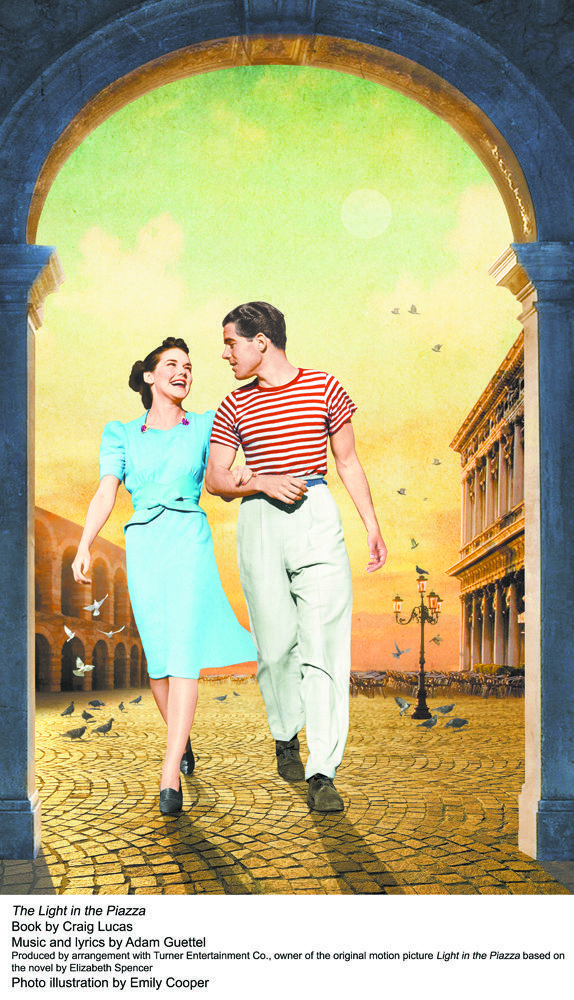
music theatre piazza promotional imageBy now, the plot of Guys and Dolls is well known — at least, to the demographic that appreciates the stylized depiction of Depression-era Broadway that Runyon creates for his motley collection of gangsters, gamblers, chorines and molls. Sky Masterson, a high-roller (played by Kyle Blair in the current production) makes a bet with Nathan Detroit (Shawn Wright), a shady entrepreneur who’s organizing a craps game for his cronies, that he can woo a pious missionary from the Salvation Army — Sarah Brown (played by Elodie Gillett) — and fly her off to Havana. While the sinner and saintly flirt, fight and fall in love, Nathan and his frustrated fiancée of 14 years, Adelaide (Jenny L Wright), a performer at the Hot Box burlesque, conduct a parallel romance that leads to the same destination — the altar, a common site for happy endings in frivolities like this. To chronicle their progress from craps to the church, Loesser provides one of the greatest scores ever written for a popular entertainment — a roster of songs that defines the term “classic” and sets the standard for American musical comedy.

A riskier gamble is the Shaw Festival’s other musical offering this season — The Light in the Piazza, book by Craig Lucas, score and lyrics by Adam Guettel, which opens in late July. One of the few musicals written in the 21st century to receive a major Canadian production this summer, Piazza also evolves from a literary source—a short story set in the 1950s when anxieties about romance and repression ran rampant, a circumstance not incidental to the show’s subject.

Originally a short story written by Elizabeth Spencer in 1960, The Light in the Piazza follows Margaret Johnson, a wealthy matron from the southern U.S. (played by Patti Jamison) as she chaperones her daughter Clara (Jacqueline Thair) on a summer trip to Florence. There, a love affair between Clara and Fabrizio, a young Italian man (Jeff Irving), forces Margaret to face the fact that her future is overshadowed by the past. While still a small girl, Clara suffered a concussion that stunted her mental and emotional growth. Now a beautiful young woman, she retains the innocence of a child, which becomes more than usually troubling after she announces her intention to marry her Italian paramour. Watching Clara’s love blossom, Margaret grapples with her responsibility to her daughter and the girl’s fiancé. Should she acquiesce to love and celebrate the young couple’s marriage, or should she intervene to stop it?

music theatre paul sportelliWriting about The Light in the Piazza, Jackie Maxwell, artistic director of the Shaw Festival, suggests that “actors and singers adore being in an Adam Guettel musical as they have to push themselves to the limit musically and emotionally.” I asked Paul Sportelli, musical director of the show, if he agreed. “Actors do love singing Guettel,” he replied. “He knows how to write for the voice and his compositions are tremendously powerful, so singing actors like to be a part of bringing that kind of composition to life.” Sportelli also suggests that “as much as one can analyze and admire [Guettel’s] composition, there is something in it that is powerful and emotional and transcendent ... that can’t be fully explained ... ” One reviewer of the original Broadway production (2005) made a similar point, observing that “the songs complicate rather than simplify the characters,” which led him to reflect that “the musical is conventionally thought of as the lightest and most disposable of theatrical genres, but The Light in the Piazza is on every level more profound than [many dramas].”

Piazza is one of the few bilingual Broadway musicals to succeed with an audience, many of its characters being fluent only in Italian. The bilingual book and lyrics make the piece more difficult to rehearse than other musicals, Sportelli notes, adding that “the dialect requirements (English with an Italian accent, English with a North Carolina accent), along with the complexity of the score” require extra rehearsal time. Mounting the production in the close confines of the Festival’s Court House Theatre also presents challenges. Using an orchestration that Guettel wrote for piano, harp, double bass, cello and violin rather than a full orchestra, Sportelli and the play’s director, Jay Turvey, hope to turn the liabilities of the space to their advantage. “It’s the orchestration I used when I did Piazza at the Arena Stage in Washington DC in 2010,” Sportelli explains, “and it is very effective: lush while achieving a more intimate ‘chamber’ feel. The five players will be on stage at the back and will be visible.”

music theatre catsAnother show that uses reduced orchestration to meet the demands of a smaller house opens in early June for a two-month run at Toronto’s Panasonic Theatre. Like Guys and Dolls and The Light in the Piazza, it also stems from a literary source, but one less time-specific. Written in the late 1970s, Cats qualifies as both a cultural phenomenon and a large-scale musical, a fact that often overshadows its considerable artistic achievements. Based on T.S. Eliot’s Old Possum’s Book of Practical Cats (1939), the show premiered in London in 1981 as a high-concept suite for dancers, with music composed by Andrew Lloyd Weber and Trevor Nunn (its director) and choreography by Gillian Lynne. The following year, the same creative team opened Cats on Broadway under the guidance of Cameron MacIntosh, its producer, where, as in the West End, the show garnered instant acclaim and set attendance records. Besides running for 21 years in London and 18 years on Broadway, Cats has since been translated into 22 languages and played around the world. The seven Tony Awards it won in 1983 represent only a few of the many honours it has accumulated during its travels.

The first of the so-called mega-musicals, Cats cost five million dollars to produce on Broadway in 1983, a figure that established a new benchmark for large-scale musical theatre. Given its unusual subject and eclectic score, this cost is remarkable. Much has been written about the initial production, primarily because the cast rehearsed without a book, plot or structure — a situation that regularly led to confusion. Inasmuch as the performers all play cats, they were required to learn a complex physical vocabulary to execute Lynne’s stylized choreography which, while much copied, has never been surpassed. Although the show is sung-through, the music intermittently accompanies spoken text, though never dialogue. Musical forms include an overture that incorporates a fugue for three voices, power ballads, rock solos and chorale recitative as well as novelty numbers that highlight the attributes of the various cats that gather for the Jellicle Ball — an annual event in this feline fantasy that provides the show’s inciting premise. Meeting in a junkyard (the musical’s only set), the phalanx of 22 cats waits for the moment when Old Deuteronomy, a revered elder, will choose the most deserving celebrant to ascend with him to heaven. Defying expectations, he eventually names Grizabella, a shabby old cat shunned by the others, whose signature song “Memory,” introduced at the end of Act One, provides the musical motif that repeats throughout the show to lend it a melancholic tone as indelible as the song’s soaring melody.

The small stage of the Panasonic Theatre is a far cry from the wide proscenium and lofty fly gallery of the Elgin Theatre where Cats received its all-Canadian premiere in 1985. The brain-child of Marlene Smith who, along with Tina Vanderheyden, raised over three million dollars to finance the show (unheard of at that time), Cats gave Toronto’s commercial theatre a long overdue kick-start. The production ran for two years before touring the country and returning for a second sold-out run at Massey Hall in 1987. Responsible, in large measure, for the restoration and refurbishment of the Elgin Theatre, its success had even more important consequences. As Mel Atkey writes in his book Broadway North, the production proved “that there was an audience for musicals in Toronto, the talent to perform (if not yet to write and direct) them and money to be made. When the suggestion of bringing in Les Misérables and Phantom of the Opera cropped up, it was feeding time at the zoo.”

Marlene Smith acknowledges that she enlisted a number of investors from her initial team for the new production of Cats that she undertook at the suggestion of her son Geoffrey, with whom she has formed a new company, Nu Musical Theatricals. To direct, she turned to Dave Campbell, who has mounted the show elsewhere in Canada. Interestingly, she sourced her choreographer and musical director from the original Canadian production: Gino Berti, a member of the initial Canadian cast, is charged with recreating Lynne’s West End choreography, and Lona Davis, another member of the original cast, serves as musical director. It was Davis who explained the show’s orchestration to me, noting that “due to space limitations we have a reduced eight-piece orchestra. The arrangements are based on an existing ten-piece version [for which] Mark Camilleri has created new programming for the three keyboards that updates some of the original sounds.” She adds that “the orchestra performs on a scaffold upstage behind the set” and that “all the performers are miked.”

A new Cats for a new generation? Perhaps, given that the set employs the designs of Rose and Thistle, a Toronto-based company whose digital technology attempts to add depth to the Panasonic’s shallow stage by projecting layers of holographic imagery. While such effects are welcome, even without them the old becomes new again as fresh faces enliven a show that has passed the test of time. The same can be said of a number of other productions that grace our stages this summer — too many, in fact, to allow more than a mention here. Tommy, the acclaimed “rock opera” that began as a record album by The Who in 1969, receives a new production at the Stratford Festival under the direction of Des MacAnuff, one of its originators and continues until mid-October. Another all-Canadian production of an oldie but goodie that promises high-tech staging, the show is sure to attract a new generation of theatregoers interested in experiencing a milestone in the history of musical theatre.

Reaching back even further, Anything Goes, in a touring production by New York’s Roundabout Theatre that won the Tony Award for Best Revival in 2011, also arrives in July for a one-month run at the Princess of Wales Theatre. Written in 1934 by the inimitable Cole Porter, this frothy confection is perfect summer fare — and the second most-produced musical in the American theatre canon, right behind Guys and Dolls. If you haven’t seen it before, you’re in for a treat. And if you have, well, as with all the other musicals available to you this summer, it’s worth seeing again — especially in this rousing production that revels in the joy of staging the past. Who knows, you might even want to sing along. I’m sure you’ll know the songs. 

Based in Toronto, Robert Wallace writes about theatre and performance. He can be contacted at musictheatre@thewholenote.com.


Two toronto theatre companies, neither known for musical production, break new ground this month by presenting on their main stages original musicals written and composed by Canadian artists. The first show, by Soulpepper theatre, opens on May 9, and while its title may lack originality, the production certainly doesn’t. An update of a “comedy with songs” that Theatre Columbus created in 1996, The Barber of Seville reunites its creators — Michael O’Brien (writer), John Millard (composer) and Leah Cherniak (director) — for a fresh look at the runaway hit that won DORA awards for outstanding musical production, score, and female performance. Needless to say, the show arrives with buzz.

1808-musictheatre“But original?” you ask. “What about Rossini’s opera?” As if to answer such a question, Michael O’Brien points out that Gioachino Rossini based The Barber of Seville on a comedy that French playwright Pierre Beaumarchais wrote in 1775, the first of his “Figaro trilogy.” Well before Rossini’s opera buffa premiered in 1816, Beaumarchais’ play (itself an opéra comique — a mixture of spoken words and music) inspired other writers and composers (most notably Mozart) to pen variations. This type of borrowing, far from exceptional in the theatre, is common, with writers and composers using a variety of sources to create work whose originality often relies on form more than content. Certainly, this is the case with the two musicals I preview here.

As O’Brien sees it, Soulpepper’s take on The Barber of Seville “combines the best elements of Beaumarchais’ play with highlights of the Rossini opera and a few twists of our own, creating an all-new contemporary version ...” Using a highly theatrical representation of 18th-century Spain as his touchstone, the Toronto playwright heightens the play’s comic elements at every turn. “Dialogue and lyrics are a colourful mish-mash of classic romance and modern irreverence. Plot and characters are faithful in spirit to both Beaumarchais and Rossini, though I’ve thrown in a few big surprises that I hope will delight those who know the source material well.”

Discussing the music he composed for the play, John Millard addresses the similarities and differences between O’Brien’s script and those of his predecessors. “Michael used the dramaturgical structure of the [Beaumarchais] play and placed the musical moments where they belonged inside it. All the recitative is gone. The songs function the way they do in most theatrical situations, in that very little action takes place inside them. Mostly they reveal states of emotion: current, past or future. Many of the recognizable themes are there [but] it’s not the opera. It’s an entertainment of our own devising, based on [the work of] Rossini and Beaumarchais.” Ultimately, Millard regards the score as a “high end folk music version” of Rossini’s creation, noting that it includes “patter songs, cavatina and arias. There is also a Scottish folk song, a couple of things of my own invention and quotes from many different sources.”

Arguably, it is the quotes and references that most distinguish the show as contemporary — a mash-up typical of late 20th-century performance that is clever, tuneful and fun. In many shows from this period, style uses content as a pretext for coups des théâtre that foreground the paradox of combining live performers with technological wizardry. Barber is no exception although, rather than treat its sources with reverence, it lampoons them with a playful vigour that is as physical as it is stylized. In the press release for the 1996 production of the show, Theatre Columbus celebrated the act of “freely plundering from Rossini’s opera” even as it reduced its summary of the plot to a cryptic sentence: “A lovesick nobleman seeks the woman of his dreams but to win her, he must enlist the help of the mercurial Figaro.” More telling of the company’s theatrical goals and achievements with the prodution was its contention that the play leads the audience “into a madcap spiral of deceit, disguise, trickery and mayhem.”

In productions such as this, style is tantamount to sensibility. In this particular Barber, the sensibility is simultaneously base and sophisticated — an appropriate combination given the show’s debt to bouffon and commedia dell’arte — theatrical styles that elevate mime and exaggerate gesture with a precision akin to dance. The style was noteworthy in the Theatre Columbus production, of which Kate Taylor noted in her review for the Globe and Mail:“From the slightest gesture to the smallest prop, every opportunity for a laugh is exploited in a hugely detailed production. It takes a great deal of control to create the appearance of reigning confusion on stage; Theatre Columbus has plenty.”

The onstage band that John Millard has assembled to accompany the Soulpepper cast promises to further extend the stylish originality that the play achieved in its first production. Millard’s use of banjo, violin, accordion, bass, guitar and flute is unconventional to musicals, let alone opera, yet “true to the spirit of Rossini,” he suggests, though he quickly adds “but it’s quite a different creature.” He explains that “In some of the pieces I’ve attempted to replicate [Rossini’s] score. In other arrangements, we’ve approached it in the form of a lead sheet. In others, a re-envisioning. It’s a broad approach.” The cast, he notes, which mixes new faces and seasoned veterans like Stratford stalwart Dan Chameroy who plays Figaro, is “discreetly miked,” a tip of his hat to current fashion.

There’s nothing discreet about our second original either: Of A Monstrous Child is a new musical that recalls Weimar cabaret in its coupling of queer provocation and steamy style in the service of a political aesthetic. Created by Ecce Homo for Buddies in Bad Times Theatre, which co-produces the piece on its main stage starting May 15, the show’s subtitle, “A Gaga Musical,” offers a key to the production’s theme that Alistair Newton, its writer and director, is happy to elucidate in an interview. “I think that Lady Gaga is a kind of climax — or perhaps denouement — of post-modernism. Gaga is the ideal cipher to explore and explode our current cultural moment, ruled as it is by hipster ersatz-irony and obsession with authenticity. […] Gaga is obsessed with persona and fantasy and self-aware self-expression, and that’s really what theatre is all about.”

Ecce Homo, like Newton (the company’s artistic director), is preoccupied with theatre in extremis — or, more precisely, “total theatre” as it was theorized by artistic visionaries like Meyerhold and Antonin Artaud in the early 20th century. For them, “self-aware self-expression” was tantamount to theatre as theatre, not as a representation of life. Ecce Homo, founded in 2005 by Newton, Matt Jackson, a production designer, and Austrian installation artist Edith Artner, defines its goal as “stylized theatrical works with strong socio-political content which synthesize text, music, dance and design to yield a total theatrical experience. Ecce Homo strives to equally balance politics and entertainment, to challenge audiences visually, intellectually and emotionally; to produce work on big themes for troubled times.”

While Lady Gaga might seem a strange choice on which to focus a musical with such lofty pursuits, Newton says otherwise. “I think Gaga is actually a deadly earnest figure in a pop-cultural landscape that prizes detachment above all. I think her project is to elicit intimacy through artifice, and my work attempts to do the same.” Besides, as he points out, Of A Monstrous Child is not about Gaga per se but, rather, one of her fans who loses his way en route to a Lady Gaga concert and encounters the ghost of Leigh Bowery, a performance artist who died in 1994.

Described by Boy George as “modern art on legs,” Bowery has become more famous in death than in life, an irony that Newton exploits by making him emcee of the evening’s shenanigans that proceed in cabaret fashion. Introducing a who’s who of artists, academics and celebrities whose work Lady Gaga has used in her rise to fame, Bowery gives “the monstrous child” (and the audience) a crash course in queer performance. Simultaneously he constructs a dialectic in which originality and fame square off. As Newton puts it: “Leigh sought the kind of fame Gaga has achieved but he wasn’t willing to compromise, even slightly [to get it]. A part of Gaga’s genius is her ability to sell downtown aesthetics to a midtown audience. I’m not sure what Leigh would have thought of her.”

For Newton, Bowery is “the rarest of pop cultural figures: a total original.” To play him, the director has cast Bruce Dow, a masterful singer and actor as well as a consummate comic whose latest incarnation as King Herod in the Stratford production of Jesus Christ Superstar landed him on Broadway. At his side, celebrated comedian and impersonator Gavin Crawford plays a host of famous artists and intellectuals that includes Bjork, Marina Abramović and Andy Warhol. To bring Lady Gaga onstage, Newton employs the talents of Kimberly Persona whose uncanny resemblance to the pop star extends the musical’s interrogation of authenticity. With her voice, movement and style Persona mimics the pop star so expertly that she calls into question the idea of personal authenticity in much the same way that the show interrogates the notion of originality.

This latter theme is best illustrated by the score of the piece which, ironically, is not credited to a composer. “I view Lady Gaga as an appropriation artist, in the tradition of painters like Jasper Johns and musicians like Girl Talk,” Newton explains. “It only seems appropriate to create a score that deconstructs and reconstructs and mashes up bits and pieces of existing pop music to create something ‘new.’” To achieve this end, Newton, along with his musical director, Dan Rutzen, and sound designer, Lyon Smith, devised a process by which Newton would suggest “how certain pieces of songs might fit together — related by a similar key, or a hook that seems to fit” at any given moment. Rutzen’s task was to translate Newton’s instincts into vocal arrangements and the basic outline of the instrumentation, which he then would give to Smith to create the final backing tracks. “Both Dan and Lyon are taking on several roles in this project — producer, session musician, vocal coach etc. — and they’ve combined their talents to create a unique musical experience.”

Unique equals original? Hardly, in that all the music in the show has been heard before, although not in the way it is presented here. Onstage: a cello, piano and live, amplified voices; offstage: recorded sound. “You’ll hear many recognizable pieces of songs throughout the show,” Newton comments, “though no part of my artistic practice is ever entirely straight ...”

A rock-show with choral singing and acoustic moments: something like a Lady Gaga concert by way of Yoko Ono and a Gregorian choir? Rossini, via banjo, accordion and flute?

See both, and then you decide on the effect ... and the label. If you must. 

Based in Toronto, Robert Wallace writes about theatre and performance. He can be contacted at musictheatre@thewholenote.com.

Music Theatre Acting up Stage Company is on a roll.  Since its inauguration in 2005, this small but visionary theatre has steadily attracted attention, its 2011/2012 season pulling an audience of over 11,000 members, landing six Toronto Theatre Critics’ Awards, and  receiving 11 Dora Award nominations, four of which it won for the acclaimed production of Caroline, or Change.  As Mitchell Marcus, the company’s peripatetic artistic director puts it, “we were blessed with a … season where all of the elements magically came together.”  Inevitably, the comment prompts him to ask, “Where do we go from here?”

            The answer, or the first half of it at least, was on view this past February and March at Toronto’s Factory Theatre. Do You Want What I Have Got? A Craigslist Cantata is a song cycle of ads from the online classified site set to music by Veda Hille and Bill Richardson that generated enthusiastic responses when it premiered at Vancouver’s PuSH Festival last year.  After seeing the show, Marcus “knew that we had to find a way to produce it in Toronto.  Our company has been known for eight years for bringing to Toronto boundary-pushing musicals that defy our expectations from the genre; in that regard, it is imperative that we also play that role with similar kinds of works that are being developed in Canada.”  Toronto critics lauded A Craigslist Cantata as much as they praised Ride the Cyclone, Acting Up’s import last season.  Audiences, concurring with critics who found the show “intoxicating, wildly creative, wonderfully witty and just downright fun,” queued nightly for rush seats.  The production sold out an extended run.

            For its second show this season, Acting Up Stage joins forces with the Harold Green Jewish Theatre to co-produce Falsettos, a new production of the Tony and Drama Desk award-winning musical whose book by James Lapine and music and lyrics by Lapine and William Finn is widely considered a break-through in musical theatre form.  Despite such regard, the show, last seen in Toronto 18 years ago, rarely is produced, a fact that surprises Marcus.  “Falsettos might be my favourite musical ever, and I [am] shocked that it hasn't received a major revival anywhere in the world since its Broadway run in the early 90s.”  Opening the show on April 23 for three-weeks at Daniels Spectrum, a new space in Regent Park, he hopes to ensure its success by hiring the Dora Award winning team responsible for Caroline, or Change to stage the production.  With Robert McQueen (director), Reza Jacobs (music director), and Tim French (choreographer) rehearsing a stellar cast, Marcus is betting on another winner.

            Most synopses of Falsettos do little to suggest the “difficult” nature of its book, or its historical significance—not to mention the wit, poignancy and sophistication that elevate its music and lyrics above standard Broadway fare.  The show incorporates three plays written over a 15-year period, each staged separately Off Broadway as one-acts before being integrated into one long production that opened on Broadway in 1992.  Significantly, that two-act presentation, despite winning Tony Awards for Best Book and Best Score, failed to take home the Tony for Best Musical of the year, an irony that attests as much to the themes of the piece as to its unusual form—fast-paced sequences of short vignettes sung-through in a non-linear and frequently self-referential fashion. 

Act One of Falsettos, titled “March of the Falsettos,” incorporates material written by Finn for “In Trousers” in 1979, the year in which the act is set, to bring to life a group of New Yorkers whose circumstance is by no means extraordinary.  Marvin, the central character, leaves Trina, his wife, and Jason, his son, for another man, Whizzer Brown.  Complications ensue when Trina falls in love with Mendel, Marvin’s psychiatrist, then moves in with him and begins to plan their marriage. At act’s end, Marvin’s dream of a tightly-knit but “extended” family lies in ruins, and his relationship with Whizzer comes to an end.  Desperate, he turns to Jason to posit a future, assuring his son that no matter what sort of man he chooses to be, he will be loved, at least by him.

            When “March of the Falsettos” premiered as a one-act production Off Broadway in 1981, the libidinous experiments of the swinging Seventies were shifting to more sombre reflection—or so popular wisdom holds.  Nevertheless, the tone of the piece was upbeat, its bitter-sweet ending promising change.  In 1992, as Frank Rich recounts in his New York Times review of Falsettos,  “When ‘March of the Falsettos’ first charged confidently forward . . . 11 years ago, nothing so bad was happening, and the high spirits of that moment pump through Act I of Falsettos as if pouring out of a time capsule.  Act II plays out in another key as lovers no longer ‘come and go’ but ‘live and die fortissimo’.”  He refers, of course, to the havoc wrecked by AIDS which, by then, had devastated communities of gay men perhaps more extensively in New York than any other American city. 

In 1981, AIDS had yet to be identified, let alone named.  The fact that Act II of Falsettos, titled “Falsettoland,” is set in that year, allows the writers to introduce a darker tone to the music as they expand their narrative to include the effects of the mysterious new illness that Whizzer contracts.  Rich notes that "[In Falsettos], Mr. Finn is not merely writing about the humorous and sad dislocations produced by an age of liberated sexual choices and shifting social rules. When 1981 arrives in Act II—and with it, a virus ‘so bad that words have lost their meaning’—Mr. Finn is not merely charting the deadly progress of a plague. . . .  [He is writing about] a warring modern family divided in sexuality but finally inseparable in love and death.”

“Falsettoland” premiered as a one-act production Off Broadway in 1990.  While it introduces two new characters—Marvin's lesbian neighbours, Dr. Charlotte, an Internist,  and Cordelia, a kosher Caterer—its focus remains Marvin and his relationships with Trina, Whizzer and Jason.  When Trina turns her considerable energy to planning Jason’s  Bar Mitzvah, the enquiry into manhood begun by “March of the Falsettos” gains a new dimension.  Simultaneously, Whizzer’s reappearance and subsequent reconciliation with Marvin ushers in the unexpected complication that has begun to unsettle Dr. Charlotte in her practice—the mystery virus killing scores of gay men.

  For audiences who saw “Falsettoland” as part of Falsettos in 1992, Rich notes, the act “[gained] exponentially in power by being seen only 15 minutes, instead of 9 years, after the first installment.”  For Toronto audiences today, it is difficult to forecast how the power of Falsettos will register, the AIDS crisis having lost the media spotlight even as it continues to blight the lives of millions of people worldwide.  Mitchell Marcus argues that the time is ripe to restage the show—not because it foreshadows AIDS but because it emphasizes the changing nature of families and the way they respond to crisis. As he says, “In a world concerned with the legislation of Prop 8, the It Gets Better campaign, and the recent repeal of ‘Don’t Ask Don’t Tell,’ Falsettos offers a platform for discussion about how far society has or has not progressed since the AIDS era.  Looking at the breakdown (and ultimate re-genesis) of family after a father leaves his wife and son for another man, Falsettos explores connections (both losses and gains) of those closest to us.”

It also revives a water-shed moment in the history of American musical theatre.  Again, I quote Frank Rich: “Falsettos is a show in which the boundary separating Off Broadway and Broadway is obliterated, a show in which the most stylish avatars of the new American musical embrace the same thorny urban landscape of embattled men and women to be found in so many new American plays.”  For this reason alone, Toronto’s production is worth seeing.  But there are other reasons as well. 

For the first time ever, William Finn has granted permission to a producing company to use the text and score of the original one-acts that comprise Falsettos to re-create the sensibility of the different time periods in which each act is set. “We are delighted to have built such a strong relationship with William Finn over the last nine seasons […] that he has endorsed our re-examination of the piece,” says Marcus, noting that his company has produced the professional Canadian premiere of Elegies: A Song Cycle and A New Brain, two of Finn’s lesser known works.  For Marcus, staging the two acts in their original form provides “a genuine snapshot of two moments in history—something utterly unique in the musical theatre. As such, we want to highlight this rarity and try to recreate for our audiences what it would have been like to revisit these characters after a decade, with a completely new perspective. So while the texts will reflect the original one-acts, the design and staging will be utterly different for each act. It's a very novel approach to this piece and one that I think will help to frame the experience of this family pre and post the discovery of AIDS….”

The approach is appropriate to Finn’s score which includes a variety of styles characteristic of the 80s.  In his review, Rich suggests that “One of the virtues of Falsettos is that you take in [Finn’s] whole, wide range in one sitting and appreciate the dramatic uses to which he puts his music, not just the eclecticism of tunes that range from show-biz razzmatazz (‘Love Is Blind’) to lullabye (‘Father to Son’) to lush ballads (‘Unlikely Lovers’). . . .”  For Marcus, the score is “one of the most unique ever heard in a Broadway musical.”  He elaborates: “Finn employs almost patter-like songs which shift quickly from one to the next, and allow characters to rapidly deliver train-of-thought information.  Nothing feels planned; it always feels like characters are discovering things for the first time as they sing their thoughts. The result feels so deeply human and raw. These characters are in a constant state of panic as they try to put their lives back together.”  Remarkably, the two acts, though different in tone, create a cohesive score.  A musical signature from Act I turns up in Act II, fractured and reformed, to highlight how life cracks and reshapes the characters.  In Act II, Finn embellishes the music that accompanies Dr. Charlotte’s lyric about “something bad spreading, spreading, spreading round” so that it itself appears to spread, a metonym for the insidious terror that accompanies the proliferation of the still nameless virus.

Like Marcus, Reza Jacobs, muscial director of the production, is thrilled by the opportunity to work with a sung-through score that is neither opera nor conventional musical.  Nevertheless, he admits that the score challenges the cast of seven, most of whom are known to Toronto audiences for their work in productions here and at the Stratford and Shaw Festivals.  One actor, in particular, I would like to mention—Michael Levinson whose performance as Noah, the privileged son in Caroline, or Change, won him a Dora nomination last year.  In the demanding role of Jason, Levinson must navigate not only the complex requirements of the score but, as well, the complicated emotions of the adult characters.  It is appropriate that Acting Up Stage uses his image in its advertising for the show for, in many ways, his character symbolizes the emotional break-throughs that all the characters pursue and, to differing measure, achieve.

Lapine and Finn end Falsettos with a scene that centres on Jason’s Bar Mitzvah—a rite of passage that celebrates a boy’s arrival at manhood in the Jewish religion.  From this time on, the child is entitled to participate in all areas of life in the Jewish community, but must do so as an adult, assuming full responsibility for his actions.  Because this ritual often occurs when a boy turns 13, his voice frequently “breaks” around the same time, so that he speaks in two registers—the modal or normal one, and the falsetto, an octave highter. The dual nature of a speaker’s voice during this period of change suggests the double nature of the boy/man—a person able to frame his perceptions of the world from two different perspectives.  This, Lapine and Finn imply, is the state of many of the characters in Falsettos who are left to celebrate Jason’s coming-of-age in the hospital room where Whizzer lays dying. 

Yes, the ending of Falsettos IS difficult, but it heralds a number of beginings.  All of them merit attention. 

Based in Toronto, Robert Wallace writes about theatre and performance. He can be contacted at musictheatre@thewholenote.com.

musictheatreoption danielle wade photo credit mirvish productionsJust in time for the holidays, the North American premiere of The Wizard of Oz settles into the Ed Mirvish Theatre for an open-ended run on December 20th, replete with Dorothy, Toto and the cast of characters known the world over. An adaptation of the 1939 film that won Academy Awards for both Judy Garland and “Over the Rainbow” (the song by Harold Arlen that became the singer’s signature), the musical is the brainchild of Andrew Lloyd Webber, the celebrated producer/composer (The Phantom of the Opera, Sunset Boulevard) who opened the show at the London Palladium, which he owns and operates, in March 2011. The Toronto production, presented under the auspices of Mirvish Productions, uses the same creative team to duplicate the staging that won accolades for Robert Jones, the production’s designer whose collaboration with writer/director Jeremy Sams transformed the fantasy world of L. Frank Baum’s 1901 novel into a visual feast as distinctive as the one Victor Fleming committed to celluloid. Considering that the film’s special effects, to say nothing of the performances of its cast, have accrued mythic status while scaling the heights of cinematic and cultural history ever since, this is no minor achievement.

It probably was inevitable that Baum’s much-loved fable would find life in the theatre, but its success was by no means assured. This helps to explain why Lloyd Webber hedged his bets when he undertook the London production. Banking on the kudos garnered by Jones and Sams for their revival of The Sound of Music at the Palladium in 2006, he gave them full license to create a new vision of Oz; in addition, he supplied them with new material — primarily, songs he himself wrote to augment Arlen’s score.

Although the original songs are memorable, their lyrics by Yip Harburg illustrate that the movie is not a musical but, rather, a story with music — too fine a point to belabour here, but one that film historians emphasize, and Lloyd Webber shares. On record as considering the film score under-written, he invited Tim Rice, his first (and best?) collaborator (Jesus Christ Superstar, Evita), to write the lyrics for his new melodies. Rice accepted, thus ending a long-standing separation from his erstwhile partner while completing the new material which, in the tradition of contemporary musicals, is more character-driven than plot-inspired. This becomes evident quickly in the production when Dorothy sings “Nobody Understands Me,” a Rice/Webber number, in Scene One. “Over the Rainbow,” her first song in the film, must wait till Scene Two.

Caroline McGinn, theatre critic at London’s Time Out, opines that Webber and Rice are “right to add [the] extra material” for “the new music is tense and atmospheric, albeit a tad cruel and campy.” In The Guardian, Michael Billington concurs, suggesting that the additions are “perfectly acceptable” and citing, in particular, Dorothy’s “plaintive” opening song and the “pounding intensity” of the “Red Shoes Blues,” a new number for the Wicked Witch of the West. Nevertheless, he suggests that the additional material, in its pursuit of a nebulous “full-blown musical” form, disrupts “the delicate balance” between fantasy and music that the film attains, ultimately making “an essentially simple fable about the importance of individual worth seem overblown.”

At its core, The Wizard of Oz is about heart — or, more accurately, its absence. While the Tin Man can openly lament his physical emptiness, other characters must reveal their heartlessness in less literal ways — unless, of course, they are downright wicked. The unmasking of the Wizard near the conclusion of the piece brings to full poignancy Baum’s parable of dashed hopes and thwarted desire in which Dorothy’s quest for a return route to Kansas stands in for her search for love and acceptance, always out of reach. What better way to fulfill her longing, and that of all the Dorothys of the world, than to make her dreams come true?

Surely, this, as well as clever marketing, influenced Lloyd Webber’s decision to cast the role of Dorothy through a national audition masked as a television show. In the UK, over 10,000 women competed for the part which, in the end, was decided by the public through phone-in votes on Over the Rainbow, a BBC One musical rendition of reality TV. Building an audience for the stage production in what amounted to a long-running television commercial, Lloyd Webber repeated the formula that worked so successfully for The Sound of Music for which, to win the coveted role of Maria, neophyte actors auditioned on BBC TV’s How Do You Solve A Problem Like Maria? Although the premise of these shows is obviously commercial, the dreams that fuel their participants’ ambitions — and the support of their fans — are more real than Dorothy’s. Winning the competition equals getting a job. Appearing on a popular television show secures exposure and opportunity. When Elicia Mackenzie won the role of Maria in the CBC’s version of How Do You Solve in 2008, she launched a career that otherwise might have eluded her. “I will never forget the feeling of that moment when they called my name!” she acknowledges. And nor should she.

In Toronto’s Wizard, Danielle Wade plays Dorothy Gale after winning the part through an audition process identical to the one taped by the BBC. Here, CBC-TV cooperated with David Mirvish and his co-producers to create a reality show also called Over the Rainbow — adding further lustre to the template that Webber can market as a success. Joining Wade, a 20-year-old student at the University of Windsor, is an all-Canadian cast of veteran performers certain to make her onstage experience real — at least for her. Cedric Smith, a Gemini-winning film and theatre performer,stars as the Wizard. Lisa Horner, featured regularly at both the Shaw and Stratford Festivals, plays the Wicked Witch. Actor and choreographer Mike Jackson takes on the Tin Man. A Dora Award winner for his play High Life, Lee MacDougall plays the Lion. Jamie McKnight, one of the Canadian Tenors, breathes life into the Scarecrow. And Robin Evan Willis, well-known for many Shaw Festival productions, plays Glinda.

And heart? Does the show have heart? Well, dear reader, that is for you to decide. With certainty, I promise that the production will have spectacle. Discussing the Palladium show, Billington notes that, “Not since 19th century Drury Lane melodramas can London have seen anything quite like it.” With the same design team at work in Toronto, local audiences can anticipate a similar experience. “The Kansas cyclone that whisks Dorothy into a dreamworld is evoked through vorticist projections (the work of Jon Driscoll) that betoken chaos in the cosmos. The yellow brick road is on a tilted revolve from inside which poppyfields and a labyrinthine forest emerge. The Emerald City is full of steeply inclined walls suggesting a drunkard’s vision of the Chrysler Building lobby. And the Wicked Witch of the West inhabits a rotating dungeon that might be a Piranesi nightmare.” Not exactly suitable for young children? Well, neither is the movie.

Snow White: If you’re looking for “family fare” of a less scary sort, albeit with less innovative staging, check out Snow White, a presentation by Ross Petty Productions that opened at the Elgin theatre on November 23 and runs through early January. The latest in a series of shows presented by this unique company every Christmas, Snow White follows the conventions of British pantomime that the London Palladium was built to present in the early 20th century. Almost always, pantomime is based on traditional children’s stories, especially fairy tales (Cinderella, Aladdin, Peter Pan etc.), performed at Christmas for family audiences. Interestingly, although The Wizard of Oz figures rarely as the subject of pantomime, Ross Petty used it here only last year to create his annual Elgin panto in which a skateboarding Dorothy was deposited in a place called Oz where, as John Bemrose put it in the National Post, “a gyrating gesticulating crew of outback yokels, whom the Wicked Witch of the West dismisses, not too unjustly, as a bunch of ethnic stereotypes” are quickly recognized as Aussies. (It’s worth noting in this context that in last year’s Petty pantomime production of Oz at the Elgin, Dorothy was played by Elicia Mackenzie, and that, by falling in love with the Tin Man, performed by Yvan Pedneault, a formidable talent that Mirvish introduced to local audiences in We Will Rock You, she helped him find his heart.)

British pantomime (or “panto” as it is affectionately termed “over there”), has been popular since the mid-19th century, its use of song, dance, buffoonery, slapstick, crossdressing, in-jokes, topical references and audience participation appealing to people of all ages. Indeed, theatrically spectacular musicals such as the Webber Oz and pantomime share similar goals — notably, reassurance of the audience’s values (hence the use of stock characters and well-known stories) coupled with emotional and visual transport.

Variations to the story of Snow White in this year’s panto, while equally audacious, are more traditionally conceived to adhere to the conventions of the form. Subtitled “A Deliciously Dopey Family Musical!” the show collapses the seven dwarfs of the original fairy tale into one character — 007, a James Bond lookalike played by Stratford leading man, Graham Abbey, whose appearance fulfills the convention of a celebrity guest star. As usual, the convention of the crossdressed older woman (known as the “pantomime dame”) is addressed by Petty himself who, by performing the role of the evil Queen, adds another drag performance to the long list of comic portrayals that makes him a fan favourite. Playing the title character is Canadian Idol winner Melissa O’Neil who made her panto debut as Belle in Petty’s 2010 production of Beauty and the Beast. Fresh from appearing in the Broadway production of Stratford’s Jesus Christ Superstar, she perpetuates an unofficial connection between Petty and Mirvish that the work of Andrew Lloyd Webber continues to facilitate.

musictheatre the story photo credit jacqui jensen royThe Story: Moving further afield, geographically if not aesthetically, a third show provides a unique form of spectacle even as it depicts a narrative traditional to the season. The Story, a production by Theatre Columbus, conceived and written by Martha Ross, returns to the Evergreen Brick Works on December 4th where it plays for the remainder of the month. Now in its 29th year, Theatre Columbus has a prestigious history of innovative play creation and production, with roots firmly planted in the creative compost of clown, commedia and buffoon. Ross, a co-founder of the company, unites her performance experience and writing skills to create the script for The Story which uses various locations in the Brick Works and its adjacent parkland to imbue the tale of the nativity with comic irreverence and visual beauty.

Based on the gospels of Matthew and Luke, the events of The Story are widely known. In this hour-long version, they occur mainly outdoors as the audience follows the flickering lantern of a solitary shepherd as he guides them past kilns, under iron girders, along gravel paths, through various interiors and into open spaces. With a strong eye for visual composition, director Jennifer Brewin uses the industrial and natural geography to imaginative effect, ably supported by Catherine Hahn (set and costumes), Glenn Davidson (lighting) and John Millard who, as sound and musical director for the production, oversees the local choirs (a different one each evening) that serenade the audience with seasonal songs while it weaves its way to each location.

Brewin’s DORA award for her direction of the premiere of this show last year is well deserved. Her decision to bring a physical approach to the material encourages the actors to develop their characters with broad, clown-like techniques at which they excel. The Three Kings are lost and disoriented; Mary is impatient and tense; King Herod is paranoid and petulant; and Gabriel, the herald, overwhelmed by the message he must deliver, has a dizzy quality reminiscent of a befuddled fairy in a panto. In fact, all the characters resemble those of a pantomime, their slapstick and buffoonery foregrounding psychological states and, ultimately, infusing their situation with a winning humanity.

The Story is short, sweet, and, at times, stunningly beautiful—the majesty of a star-lit winter sky providing a backdrop so unexpected that it hardly seems real. But it is, and so is the weather. Dress warmly and treat yourself to the hot chocolate on sale at the site — unusual directions for my hot tip of the month. 

Based in Toronto, Robert Wallace writes about theatre and performance. He can be contacted at musictheatre@thewholenote.com.


Back to top