2203 World ViewI’ve been writing this column for almost seven years. Loyal readers will observe that I’ve approached my World View beat from many different – sometimes even conflicting – points of view. Last month I disclosed aspects of my private life, inviting you to fly with me and my bride to our Hungarian honeymoon, a journey which reconnected me to my culture of origin.

That story, shared from my personal album, segued neatly to a case study of the Toronto musician Richard Moore. He actively pursues a very rare double professional life: as a career percussionist he is also a Hungarian cimbalom and hammered dulcimer player. (Quite coincidentally – or is it? – I’m dipping even deeper into these transatlantic, transcultural waters in my examination of 60 years of musical Hungarians in Canada in a feature elsewhere in this issue.)

In order to mix things up a little, for this column I’ve decided to undertake a brief survey of what programmers across our great “multi-culti” (in the words of Deiter, my ethnomusicologist German friend) metropolis have planned for our musical entertainment and edification.

North in the South: Inuit throat singing todayStarting things off on Saturday November 5, The Music Gallery along with Native Women in the Arts present the “Inuit Showcase,” part of the Kwe Performance Series at the Music Gallery. Three Inuit women share the program, a concert and associated workshop. The focus is pulled tight on Inuit throat singing as practised in various regions of the Arctic by these Inuit performers who seek to both preserve and innovate within their received throat-singing traditions. Throat singing was originally a competitive female-centred game for two which imitated the Arctic land-, sea- and animal-scape. In the last decade, however, this folk performance art form has been taken into new and innovative musical regions and showcased on international stages alongside internationally known musicians such as Björk, by the abundantly gifted Inuk vocalist Tanya Tagaq.

Kathleen Ivaluarjuk Merritt, also known as IVA (ee-vah), is a poet, writer and throat singer from Rankin Inlet, Nunavut. She has collaborated in performance not only with established Inuit singers such as Susan Aglukark and the aforementioned Tagaq, but also with the singer-songwriter Owen Pallett, the American electronic, experimental hip hop musician DJ Spooky and the National Arts Centre Orchestra. Taqralik Partridge, originally from Kuujjuaq, Nunavik, in Northern Quebec is best known as a poet and spoken-word performer. While her English poems illuminate the life of Northern people seldom experienced by Southerners, Partridge is also a throat singer and voice actor, appearing on Canadian and European stages.

Nukariik, on the other hand, consists of two sisters, Karin and Kathy Kettler. An important aspect of their performance is the preservation and sharing of their inherited culture. While the sisters have lived most of their lives in Southern Canada, they have maintained strong connections to their culture as it is practised in Kangiqsualujjuaq, an Inuit village located on the east coast of Ungava Bay in Nunavik, Quebec.

Nagata Shachu and Ten Ten: Toronto taiko and minyoAlso on November 5, Toronto’s preeminent taiko group Nagata Shachu presents “Music from Japan and Beyond” at Kobayashi Hall, Japanese Canadian Cultural Centre. Artistic director Kiyoshi Nagata notes that “Nagata Shachu is excited to be collaborating with virtuoso multi-instrumentalist Shogo Yoshii, who represents a new generation of Japanese musicians pushing the boundaries of traditional music.” Yoshii, who is coming from Japan for the concert, is an acclaimed taiko (Japanese drums), shinobue (Japanese bamboo transverse flute) and kokyu (Japanese violin) player.

November 8 at 12:30, York University’s Department of Music presents the younger Toronto taiko group Ten Ten in a free concert in its Music at Midday series at the Martin Family Lounge, Accolade East Building, York University. Directed by taiko and shamisen player Aki Takahashi – also a member of Nagata Shachu since 2003 – Ten Ten has performed in theatres, concert halls and festivals featuring her own compositions. Takahashi is a specialist in minyo (Japanese folk song) and has published an astounding 200-plus videos of her repertoire on YouTube, hosted on the Bachido channel.

Small World Music presents African and Andalusían hybrids: November 11, Small World Music, in association with Za & Zoey, presents Oliver Mtukudzi and the Black Spirits at The Opera House. Considered a national cultural treasure by many in his Zimbabwean homeland, Mtukudzi, an eloquent vocalist, nimble fingerpicking guitarist and prolific composer (having released some 50 albums), is his county’s most successful musician. He began performing in 1977 and has earned a large fan base across the world. A member of Zimbabwe’s Kore Kore tribe, he sings in the nation’s dominant Shona language as well as in Ndebele and English. He also wears the non-musical hats of businessman, philanthropist, human rights activist AIDS/HIV and UNICEF Goodwill Ambassador for the Southern Africa Region focusing on young people’s development and HIV/AIDS prevention. He’s the sort of musician I want to be when I grow up.

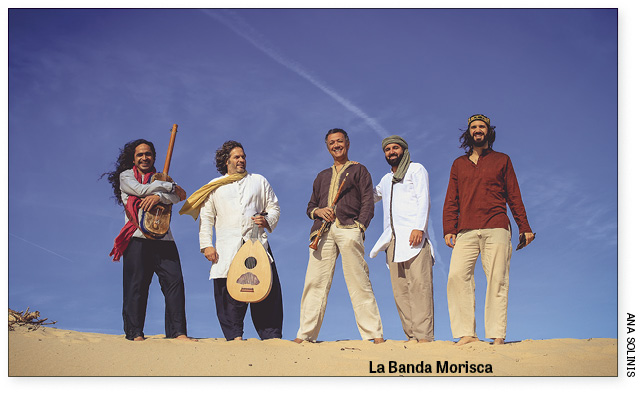
November 12, La Banda Morisca appears on the Small World Music Centre stage, presented by Small World Music. The septet from Jerez de la Frontera in Andalucía aims to fuse original and re-creative views of traditional regional music. They present attractive vocal-driven mashups of southern Mediterranean genres like Muwashshah secular music, the festival and dance-centric North African Chaabi, flamenco from Jerez, Andalusían rock, as well as several other regional music genres.

ECCG explores the “classical” through musical border crossings and cultural hybriditiesDecember 3, the Aga Khan Museum presents the Evergreen Club Contemporary Gamelan in its Classical Music Series. (As usual I want to flag the fact that I’m 33-year founding member of ECCG – yes it’s been that long, and yes I’m still having fun with it!) This concert series has a fascinating curatorial premise which dovetails with ECCG’s long-term artistic goals. It’s articulated on the AKM’s website in the following manner: “Often used to solely describe Western traditions, the term ‘classical music’ is re-examined within the context of cultural diversity in this special series of performances. Our Classical Music Series presents the sights and sounds of North Indian, Indonesian, Italian and Syrian musical traditions. Redefine your understanding of classical music through performances that explore melodic scales, historical recordings and new interpretations of Western repertoire.”

ECCG, a group of eight Toronto-based musicians, has made a career out of commissioning new, often modernist, scores with the end game of performing and recording them on its Sundanese gamelan degung. At the same time the group has always also performed (often in its own arrangements) the core repertoire of the West Javanese (Sundanese) degung, a kind of gamelan music with past aristocratic roots which some may think of as “classical.” On the other hand ECCG also performs its own instrumental arrangements of popular Sundanese songs, on occasion inviting Canadian singers to interpret them with English lyrics. It’s a complex world of music out there and ECCG aims to present that complication from a Canadian perspective. In its concert it explores various border crossings and cultural hybridities in works by American (Lou Harrison), Canadian (Paul Intson) as well as Sundanese, Indonesian (Nano Suratno, Burhan Sukarma, Ade Suparman) composers.

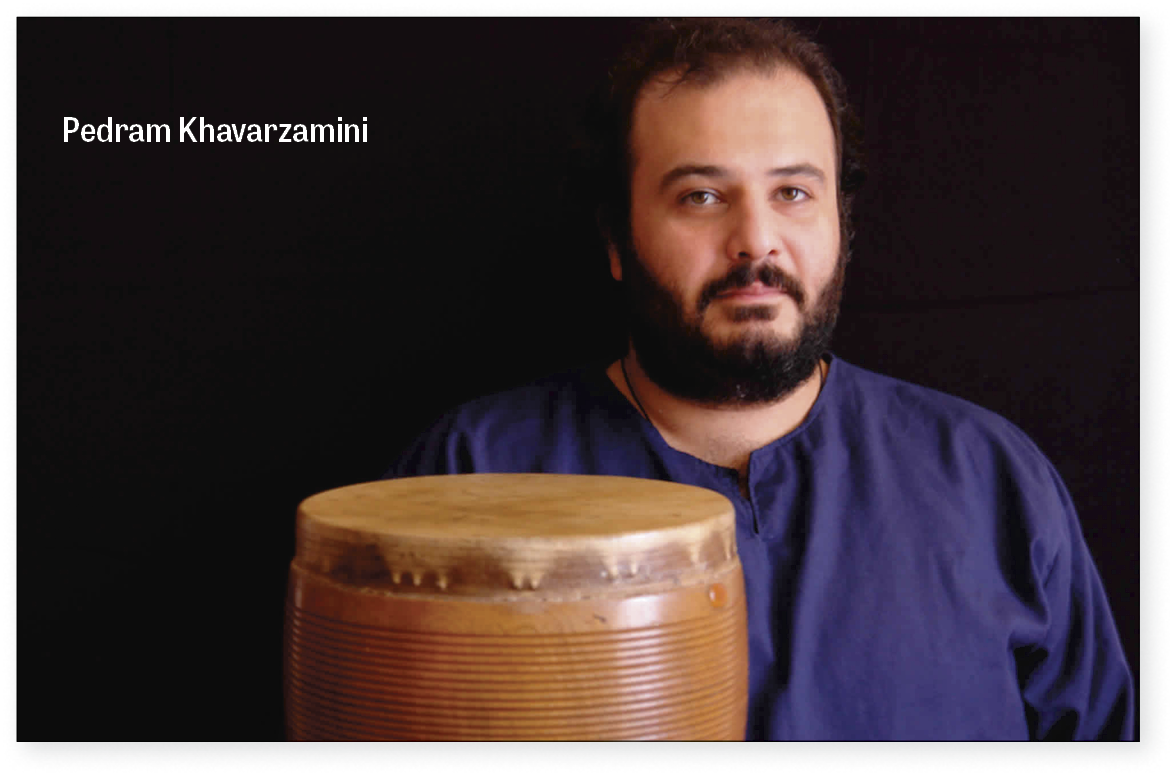
Quick pick: Also on December 3, the University of Toronto’s Faculty of Music presents its annual free, fall World Music Ensembles concert at Walter Hall, Edward Johnson Building. The Iranian Music Ensemble is directed by the Toronto tombak virtuoso, composer and researcher Pedram Khavarzamini, this year’s world music artist-in-residence. The guitarist, composer and educator Brian Katz leads the Klezmer Ensemble, while the Japanese Drumming Ensemble is directed by seasoned taiko drummer, group leader and teacher Gary Kiyoshi Nagata.

Andrew Timar is a Toronto musician and music writer. He can be contacted at worldmusic@thewholenote.com.
2202-WorldView.jpgI don’t usually mention my personal life much in these pages. On the other hand the eventful month since my last WholeNote column has been marked by one of life’s major milestones. I would feel remiss not to share a few of the highlights with you, faithful reader.

In August I enjoyed a joyous pre-wedding reception at Array Space here in Toronto with my bride-to-be, family and friends. On its heels was a bells-and-whistles wedding on Jericho Beach in Vancouver. It was raining for much of the week on the “wet coast,” yet the sun actually beamed and bestowed its blessings on us on the appointed day.

From Vancouver we immediately flew to Hungary for our honeymoon. Over 27 years since my last visit, it was a jam-packed whirlwind tour of the Western Transdanubian region of the country, graced all the way with unseasonably hot and sunny weather. Family, friends, food and wine, vistas and music featured prominently, along with the ever-present rich history of a mixed glorious and painful legacy of 1200 years which surrounded us at every turn. Back only a few days, my bride and I are still wiping jetlag cobwebs from our eyes.

One of my semi-musical tasks in Budapest was to connect with a prominent Hungarian player of the cimbalom – the Hungarian concert hammered dulcimer – on behalf of busy Toronto percussionist and cimbalom player Richard Moore, and that is where this month’s musical story starts.

I first met Moore at York University a few years ago where we were each pursuing our respective graduate degrees. He often spoke to me about his research on the history and repertoire of the cimbalom. His passion for it has clearly shaped his career choices as a gigging musician. Moore’s command of the instrument has made him that rara avis of doublers: a percussionist who also plays the cimbalom and hammered dulcimer. His highly honed skill set is so rare in Canada that he is often the first call cimbalomist in concert chamber, symphonic and film soundtrack work.

October 26 and 27, for example, Moore performs the cimbalom solo in Hungarian composer Zoltán Kodály’s Háry János Suite (1926-27) with the Toronto Symphony Orchestra. Curious about his unusual choice of instrumental doubling, I spoke with Moore on an unusually hot mid-September Toronto afternoon.

We talked first about the origins of the cimbalom scored for in Kodály’s Suite. “The cimbalom has an important voice in Hungarian music of the last 135 years, often being characterized as the country’s ‘national instrument,’” Moore stated. “The piano-like chromatic cimbalom I play today was first developed in Budapest in 1874 by the piano maker József Schunda, probably based on hammered dulcimer predecessors commonly played amongst the Romani in Austria-Hungary.”

It was a large and elaborate instrument, equipped with a pedal damper mechanism and possessing a range of four to five chromatic octaves. “It was immediately put to use by Ferencz Liszt,” Moore says. “The cimbalom entered the western orchestral world via Liszt’s patriotic 1875 Ungarischer Sturmmarsch (Hungarian Assault March) and his Hungarian Rhapsody No.6 with generations of composers following.

I then asked him about the hammered dulcimer, the roots of which, I’ve read, can be traced back, under many various names, thousands of years. “Yes, the roots of the hammered dulcimer extend back many centuries and span numerous regions of Asia and Europe,” Moore asserted. “A modal and diatonic, rather than a chromatic, instrument, it was also brought by European immigrants to North America, and had a presence in the vernacular music of 17th-, 18th- and 19th- century America and Canada.” It appears that many Hungarian Romani musicians adopted the Schunda cimbalom very early on, he told me. “For example there is contextual stylistic evidence in Liszt’s scores that Roma cimbalom playing influenced some of his Hungarian Rhapsodies,” a significant part of his oeuvre.”

So, how did Moore’s own interest in the cimbalom develop?

“It all started in 1998 when I was a music student in Munich where I heard a Roma cimbalom player on the street. I was immediately drawn to its sound and timbre. Thinking like a percussionist, I made a connection right away between the two beaters he was using and the two-mallet techniques on the percussion instruments I was used to playing. The two performance techniques appeared similar to me. I could see adapting my existing percussion techniques to the cimbalom.”

He soon learned, however, that it is unlike any keyboard percussion instrument in its unique layout of strings, which directly dictates its pitch series. “Instead of the left-to-right horizontal layout typical of keyboards, the notes on the cimbalom are arranged vertically in front of the player.”

Moore continued: “The second obstacle was finding a cimbalom teacher in Munich. I couldn’t find one, so I studied with an instructor of the Hackbrett-cimbalom, a German hybrid chromatic instrument.”

Early in our conversation Moore talked about Liszt’s use of the cimbalom in two of his orchestral works, valorizing its patriotic symbolism as much as its timbral identity. But what of its presence in 20th-century scores?

Moore jumped right in, “In late January 1915, Igor Stravinsky heard Aladár Rácz, the important Romani cimbalomist, playing at Maxim’s, a café in Geneva. The result of that meeting fired the composer’s instrumental imagination, compelling him to purchase one for his personal compositional use.” The experience proved so powerful that it inspired Stravinsky to score for the cimbalom in several major works: the ballet Renard (1915-1916), and in 1917, in the Ragtime for 11 Instruments, a draft instrumentation of Les Noces, and in an early instrumentation of his Four Russian Songs. “Then in 1928 Béla Bartók featured it in his mature Rhapsody No.1 for Violin and Orchestra, underscoring melodies derived from Hungarian folk songs which infuse the work.”

Returning to Kodály’s Háry János Suite in which Moore will be playing the prominent cimbalom part with the TSO this month, Moore notes that “the instrument is found throughout the opera, evoking a mythical Hungarian past.” Illustrating how his rare doubling career works in practice, Moore will play both parts in these concerts, rendering the percussion part in movements of the Suite without the cimbalom.

The Kodály work has, over the years, retained its popularity in the symphonic repertoire. Moore played it with the Winnipeg Symphony around six years ago and also performed it with the Toronto Philharmonia. “By the way, the Toronto jazz pianist Rudy Toth (1925-2009), the son of a cimbalom maker, also doubled on the concert cimbalom until his retirement in 1989, performing it in the Háry János Suite with the TSO and other orchestras.”

New Passion: Beginning in the 1950s, Hungarian modernist composers like György Kurtág embraced the instrument with a new passion. “Kurtág included it in over a dozen works,” Moore says. “His colleague Péter Eötvös has extended the cimbalom’s repertoire further with a concerto and chamber works, one of which I performed with New Music Concerts in Toronto a few years ago under the baton of the composer.”

Is the concert cimbalom only the preserve of Hungarian composers? “British composers like Harrison Birtwistle and Peter Maxwell Davies also included it in their works starting in the 1960s,” says Moore. “French composer Pierre Boulez was a notable advocate. He told me he very much enjoyed writing for the instrument when I worked with him in 2006 on the Glenn Gould Award concert in Toronto.” In addition, Frank Zappa scored for the cimbalom in his Yellow Shark (1992-93) score and live concert DVD, possibly influenced by Boulez’s example.

I seem to recall hearing the cimbalom in TV and film soundtracks. “Yes!” enthused Moore. “The Gladiator film soundtrack uses it. I performed it at live screenings in Toronto and Montreal last year. Howard Shore, the multiple Oscar-winning Canadian film composer included it in each of his three Lord of the Rings film scores. The TSO will be performing live to the first of those films on December 1, 2, and 3, 2016. For those concerts I’ll be playing not only the concert cimbalom, but also hammered dulcimer and other percussion parts, since technically these hammered string instruments are considered part of the percussion section,” and thus may be considered doubling instruments of the percussionist.

The Canadian National Ballet’s The Winter’s Tale, its 2013 score composed by English composer Joby Talbot, features two different types of hammered dulcimers on stage. Moore performed the onstage parts and he adds that “its successful 2015 premiere run in Toronto was replicated in 2016 at the Kennedy Center in Washington, DC, and also at Lincoln Center, NYC, in which I also performed.”

Moore’s dedication to this string percussion instrument has led him to performance opportunities at the heart of European concert music, as well as in recent popular film soundtracks and ballet scores. I asked him how he sees his cimbalom-playing career evolving. “In the future I see myself working closely with film composers to develop its expressive potential and ability to evoke a particular, though hard to define, sonic atmosphere, often used by composers to depict the exotic ‘other’ landscape – whether Celtic Ireland, a Central or Eastern European folk milieu, or rural 19th-century North America.”

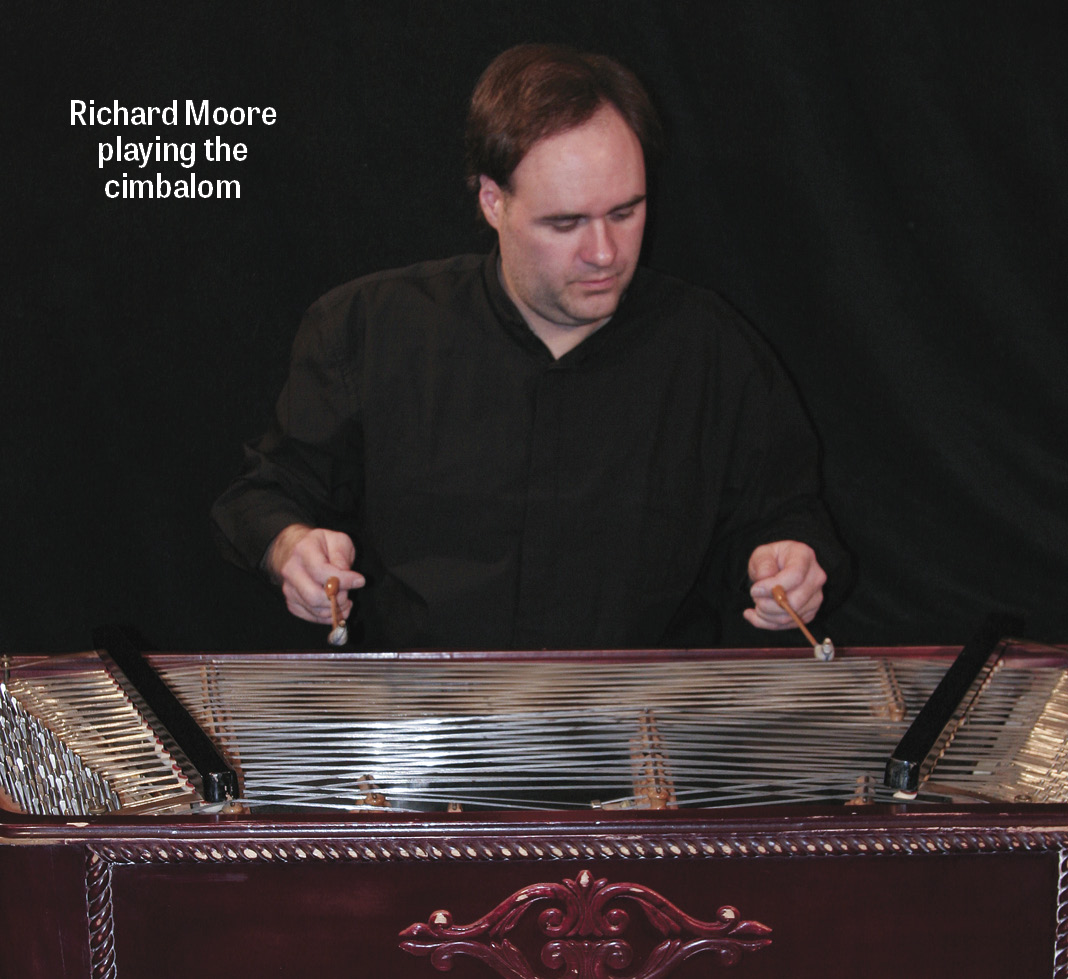
For me, what’s particularly intriguing about Moore’s advocacy of hammered dulcimers is how these instruments have emerged and have been adapted to various performance disciplines and genres. Another intriguing – and as yet little explored – facet is the connection between the cimbalom’s discovery in 1914 by the major modernist music composer Stravinsky and the living Romani tradition which had already long adopted the concert cimbalom by that time. This connection is a living one in Moore’s career. The instrument he is pictured with in the photograph accompanying this story and which he plays in the October TSO concerts was purchased from a Hungarian musician specializing in Romani cimbalom music.

Andrew Timar is a Toronto musician and music writer. He can be contacted at worldmusic@thewholenote.com.
2201_-_World_1.jpgIn my summer 2016 WholeNote column I mused on Luminato’s repurposing of the cavernous decommissioned Hearn Generating Station. Would it work as a venue for symphony orchestra, for community cultural engagement, visual art, for Shakespeare? In the end, the capacious,  though out-of-the-way, venue turned out to be a gamble that paid off handsomely for Festival organisers as well as for concertgoers. It appears to be part of the continuing recognition in our collective urban zeitgietst of the importance of reclaiming, revitalizing and honouring Toronto’s industrial-commercial past.

In September it’s the turn of another large scale 20th-century man-made structure to be repurposed as an artistic venue. Originally opened on May 22, 1971, Ontario Place, the government of Ontario-owned amusement park, was imposed into Lake Ontario, sited on three artificially constructed and landscaped islands. The futuristic buildings and entertaining amenities along Toronto’s shoreline included the world’s first IMAX theatre, the geodesic-domed Cinesphere, and the province’s first waterpark.

Some of us old enough to have attended concerts there might fondly recall the spacious, leisurely rotating stage of the Forum. It’s where I took my young kids for free summer concerts, including the memorable time we saw jazz great Miles Davis and his band. We bonded over cool jazz with attitude that sunny afternoon. Then early in 2012 most of the public sections of the park were closed for redevelopment – its 2017 projected completion date aimed to celebrate Canada’s sesquicentennial.

in/future: After the venue has been shuttered for four years, Art Spin in partnership with Small World Music is re-animating Ontario Place’s scenic 14-acre West Island. They’ve cooked up an ambitious menu consisting of 11 days and nights of arts programming from September 15 to 25, dubbing the festival in/future. Wishing to dig deeper, I spoke to Small World’s executive director and in/future co-curator Alan Davis one hot sunny summer day.

“It’s the 15th anniversary of Small World’s fall festival,” Davis began, “and we’re delighted that Art Spin invited us to showcase part of our current season at in/future.” Art Spin – Layne Hinton and Rui Pimenta’s brainchild – has been active as a presenter for over seven years, re-activating decommissioned venues and public spaces to produce group exhibitions along with curated bicycle-led art tours.

“The festival will host site-specific projects by over 60 visual and sound artists,” Davis continued, “with close to 50 music acts on the Small World stage (presented by Exodus Travels).” Films and videos will also be presented in the Cinesphere, as well as dance performances, a lecture series, and kid-friendly programming and activities at various sites.

“We’re excited by this opportunity to connect with the larger community. Nostalgia for Ontario Place’s illustrious musical past is one part of the draw, but so is engaging with young audiences. For example, site DJ activations will encourage a party vibe.”

“We have also tried to squeeze the envelope with regard to genres, to mix things up, to embrace the entirety of the global musical spectrum. Cross-fertilization is one of the things we’re aiming for. Though it’s easy to say, it’s hard to do,” he added with a knowing smile.

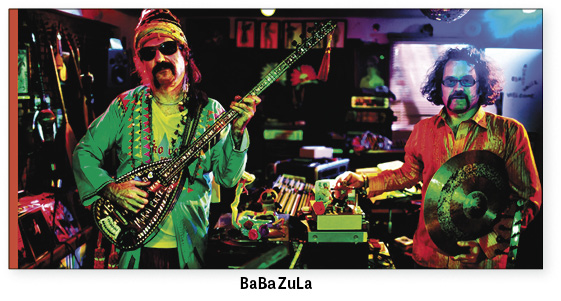
I asked Davis to pick a few highlights. “We are leaning toward high-energy, festive acts suitable for an outdoor stage. An example would be BaBa ZuLa, Istanbul’s legendary psychedelic dub band, which takes the stage Friday September 16 with a wide variety of influences and a truckload of instruments. They are followed by Mariachi Flor, a feminist Mexican mariachi group based in New York” he explained.

Saturday September 24, at the other end of the festival, is a day so chock full that space here permits only a partial mention. Headlining is the Dhol Foundation, a leading bhangra band making its Canadian debut. It’s led by the U.K.- born master-dhol drummer and artistic director of the group, the “bhangra king” Johnny Kalsis. His London-based 12-piece band, which he first established about 17 years ago, places the musical focus tightly on the massive sound of closely miked multiple dhol drums, those icons of Punjabi bhangra music. Kalsis has since waded into transnational waters by fusing bhangra with a mixed bag of popular global genres including Afrobeat, reggae, hip-hop, EDM, and Bollywood with a Celtic fiddling twist. The resulting thumping beats are designed to lift audiences’ spirits, moving everyone to dance.

Also performing on September 24 is the Shanbehzadeh Ensemble. It was formed in 1990 by Saeid Shanbehzadeh, a virtuoso of the neyanbān (Persian Gulf bagpipe) and the ney-e jofti (Persian Gulf double reed pipe). He is well known as a forceful performer of the traditional song, music and dance of the southern Iranian province of Bushehr, on the Persian Gulf. It’s a region of Iran strongly influenced by African as well as Arabic culture, and its music and dance amply demonstrate those influences. Shanbehzadeh is no stranger to Toronto. In 1996 he taught a world music studio course at the University of Toronto and at the time I was impressed with his brilliant and charismatic solo performances, full of the feeling of his culture of origin. Now a resident of France, in recent videos he’s increasingly playing alto sax, and including an electric guitarist and a DJ in his sets, in addition to the regional acoustic instruments he made his reputation with. It looks like in/future audiences can expect a mix of trance-y traditional dance music of the Persian Gulf merged with contemporary beats from Shanbehzadeh.

Much of the rest of the ambitious festival music program likewise appears to echo Alan Davis’ dictum of high-energy, populist leaning, multiple genre-inclusive and at the same time genre-smearing music performances. While there is a place for nostalgia, this is perhaps the sort of non-nostalgic au courant musical cross-fertilization needed to re-activate the 45-year-old old Ontario Place and make it fun and relevant again – at least for 11 days this September.

Follow Your Heart:

2201_-_World_2.jpgMy second story is about a single production, but one which is no less ambitious in the size of its cast and the scope of national cultural elements and themes portrayed.

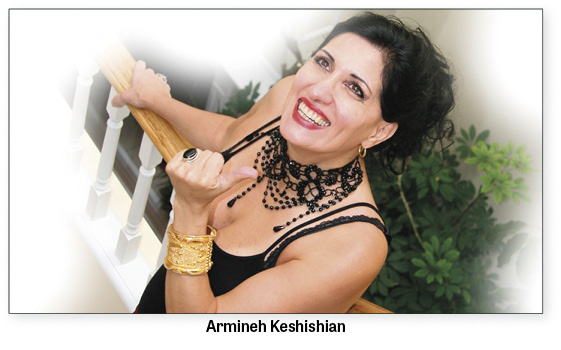
Four years in the making and workshopped at the Fleck Theatre in 2014, Toronto’s Evolution Dance Theatre presents the premiere of Follow Your Heart, a “Broadway-style Middle Eastern multimedia extravaganza.” The multimedia and multidisciplinary production runs September 22 to 25 at the Richmond Hill Centre for the Performing Arts. Follow Your Heart was conceived, written and directed by EDT founder and artistic director Armineh Keshishian. Rooted in the rich traditions of Middle Eastern dance and culture, the production tells its story with sound design, lighting, actors, dancers and three sets of musicians, 45 performers in all.

The production has both pre-recorded sound design cues, as well as live music, the latter provided by three culturally distinct groups of three musicians each. The Middle Eastern section is led by Persian percussionist Naghmeh Farahmand, the African section by master drummer Amadou Kienou and the Indigenous Canadian section by singer Sue Croweagle. In the show’s finale, the three groups perform together, directed by Kienou accompanying dancers who likewise represent ethnic, cultural and gender mutual respect and harmony.

I spoke with Keshishian in between rehearsals about her show. “Follow Your Heart is a tale of love and struggle, with a special emphasis on the empowerment of women,” she told me. “Our story centres around Almaza, a modern Middle Eastern woman, who falls in love with Jivan, a traditional Middle Eastern man – in contemporary Toronto. It’s the journey of a woman who fights for love against all odds, a love story marked by both taboo and tradition.” She concluded, “the story in the end explores unity and mutual understanding between peoples, a relevant theme in these troubled times,” particularly in the Middle East.

Whether or not a “Broadway-style multimedia extravaganza” is your cup of tea, Follow Your Heart’s inclusive and optimistic vision of a world where people born three continents apart can share their indigenous music and dance – even if it’s only modelled for us briefly on stage – is cause for celebration.

Andrew Timar is a Toronto musician and music writer. He can be contacted at worldmusic@thewholenote.com.
World_View_1.pngSummer in the city for me also means music in the city. No longer constrained by indoor concert halls and clubs, audiences can now enjoy an expanded range of venues and even performance genres, taking a cue from the rising temperatures shirtsleeve and sandals weather (at last!). That means outdoor venues like those at North York’s Cultura Festival, Harbourfront Centre’s weekend festivals and Toronto Music Garden, plus those at Roy Thomson Hall’s Live on the Patio are animated with relaxed crowds. These and many other outdoor Toronto spaces resound for the summer with globally conscious music.

And that’s just a partial urban list. It doesn’t begin to touch on the wealth of outside summer folk festivals across Ontario or the curated concerts at city parks. Moreover, music presentations in the summertime include a huge range of genres, presenting an ideal opportunity to sample music you have been meaning to try, or never even knew existed – the latter’s always a treat for sonic explorer types like me. This is a sneak peek at just a few.

Luminato at the Hearn: Every year for the last decade, Toronto’s warm weather music season seems to begin with Luminato. The festival that set out to animate the city with music in June is ten years old this year. It also happens to be artistic director Jörn Weisbrodt’s swansong year, a golden period in the tenure of any CEO. As it is for the present President south of the border, it’s a tempting opportunity for Weisbrodt to affix his personal visionary seal on the organization he is about to pass on to other hands.  And this year’s festival is indeed a radical revisioning.

As opposed to the multiple outdoor venues of past years, music at Luminato will resonate from six sites all located within the caverns of the decommissioned Hearn Generating Station, as well as in one outside site, the Biergarten. Weisbrodt has chosen to program almost all Luminato events at the Hearn, dubbed by one wag “Toronto’s concrete cathedral.” It’s an immense edifice of interconnected industrial buildings most notable today for its imposing mid-century industrial brick and concrete presence on Toronto’s waterfront.

At one time the largest enclosed space in the country, the Hearn is three times larger than the Tate Modern art gallery in London. How big is that? The festival promo puts it into perspective: the “Statue of Liberty fits in it upright (or on its side).”

With 17 days of programming under one roof, “creating an exceptionally rich and uniquely integrated global cultural experience” becomes a more achievable lofty aim than past efforts to try to animate the whole downtown core. That being said, finding a world music through-line in their programming this year has proven to be a more difficult task than in some past years. One site however where it does appear is at the Bavarian-style Biergarten, where senior music curator Derek Andrews has programmed a lively mix of daily evening performances at the New Canadian Music Stage. Sponsored by Slaight Music, some of the themes Andrews explores this year in his roster of 14 acts include music from Francophone, Persian, Aboriginal and “roots” artists.

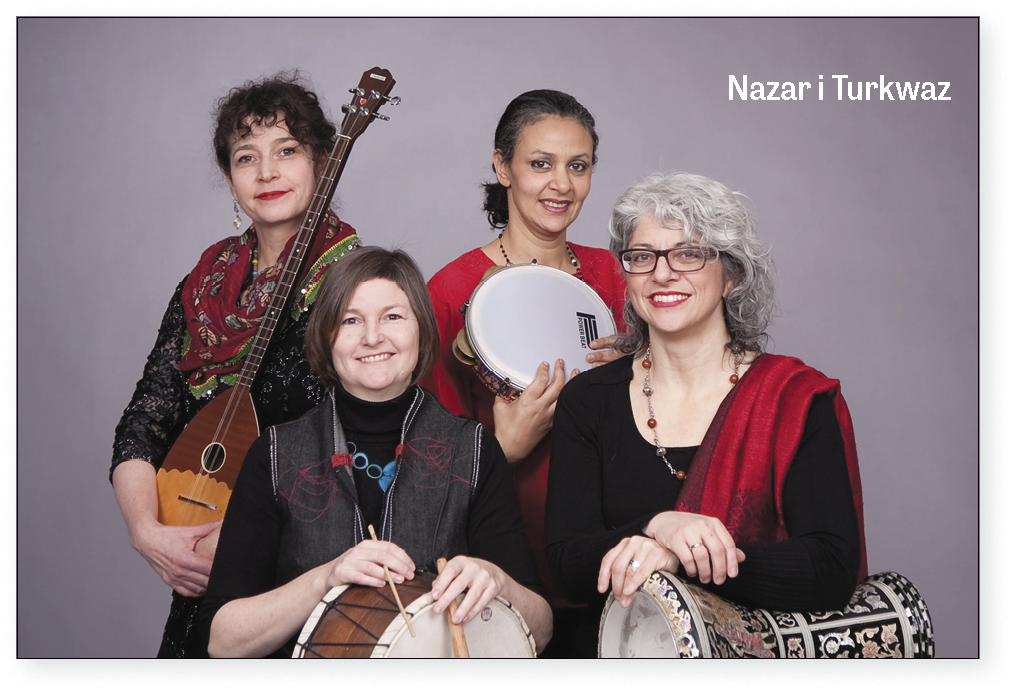
Andrews, in a late May phone interview, drew my attention to a Biergarten performance by the exciting Toronto female vocal quartet Nazar-i Turkwaz (My Turquoise Gaze), Saturday, June 11. The quartet is  comprised of Brenna MacCrimmon, Maryem Tollar, Sophia Grigoriadis and Jayne Brown, four remarkable musicians who have, over their careers, immeasurably enhanced Toronto’s world music scene, as well as individually performing on numerous video and film soundtracks and theatrical productions. For over three decades they have collected and performed traditional repertoire from the Middle East and Turkey, Greece and the Balkans. In Nazar-i Turkwaz, they collectively explore this repertoire, creating their own arrangements, cultivating in their vocal alchemy a very satisfying sonic union.

Sunday June 26, at the other end of this year’s Luminato Festival, Biergarten-goers will find the Toronto-based band Zuze. As far as I could find out, it is comprised of Iranian and Azerbaijani musicians. Relatively new on the Toronto scene, Zuze presents a self-described signature mix of “popular & folk melodies of Iran and Azerbaijan set to Afrobeat rhythms.”

The most unusual and perhaps the most inclusive event at this year’s Luminato is scheduled for June 22. “Iftar at the Hearn” is billed as a “free, inclusive event welcoming newcomers from Syria.” Iftar is the meal served to break the daily fast during the month of Ramadan. A social event involving family and friends, iftar provides an opportunity to share food as an act of kindness and generosity with members of the community. Toronto has recently welcomed thousands of Syrian refugees and Luminato brings together performers from across the city, as well as food and refreshments, to welcome and celebrate the presence of the newest arrivals to our famously multicultural city.

The free event opens with a greeting by the Ojibwe elder Duke Redbird, a journalist, activist, businessman, actor and administrator, followed by music by the Nai Children’s Choir, a Toronto community group singing in Arabic, English and French. JUNO nominee Cris Derksen then performs on cello in an artistically edgy set with her trio which includes Aboriginal hoop dancer Nimkii Osawamick and drummer Jesse Baird. Derksen aims to blur genre expectations with her “electro-aboriginally influenced” cello compositions.

Capping the Iftar at the Hearn evening, just prior to the communal meal with traditional Syrian and Middle Eastern food, is a performance by Toronto dancer-choreographer Sashar Zarif. His set features collaboration with two leading young Azerbaijani musicians, the kamancha virtuoso Elnur Mikayilov and award-winning mugham singer Mirelem Mirelemov. Zarif is a multi-disciplinary performing artist, educator and researcher whose “artistic practice…is steeped in the artistry and history of traditional, ritualistic, and contemporary dance and music of the Near East and Central Asia.” He has toured widely “promoting cultural dialogue through intensive fieldwork, residencies, performances and creative collaborations.” Integrating dance, music and poetry the trio take themes from Sufi poetry in an enactment of sama (sufi ritual of dance music and poetry) for iftar, thereby celebrating the peaceful spirit of Ramadan and setting the mood for the communal supper to come. It sounds lovely.

Harbourfront Centre: Perhaps the granddaddy of all current Toronto summer music festivals happens down at Harbourfront Centre. For more than 40 years it has striven to present a cross-section of the “mosaic of cultures from within our country and around the world.” I was among its early-adopter audiences and a frequent visitor, along with my children when they were young, enjoying its eclectic, though typically high quality music programming. Along the way I learned a great deal about diverse musics. It served me well in my various future careers – including this one!

One of Harbourfront’s charms is the intimacy of most of its venues. It’s where I saw and met many international musicians over the years, some of whom, like the Malian singer and guitarist Ali Ibrahim Farka Touré, subsequently went on to grand international careers. I saw him perform a laid-back but nevertheless memorably musical concert at the 150 to 250 seat Lakeside Terrace within sight of the sunlight glinting off the lake.

This summer’s family-oriented themed weekend festivals in July include too many to discuss in detail here. I will however give my picks. Starting with “Ritmo y Color: The Streets of Mexico,” July 15 to 17; we move to the Caribbean in “Island Soul” July 29 to August 1. The following month “Habari Africa” co-produced by Batuki Music Society, highlighting the “cultural diversity of global Africa,” will take over the Centre’s venues August 12 to14. The next weekend “TAIWANfest: A Cultural Tango with Hong Kong” is in the house August 26 to 28.

September 3 to 5 Harbourfront’s festival season comes to a close with the “Ashkenaz Festival,” produced by the Ashkenaz Foundation in partnership with Harbourfront Centre. It is North America’s largest celebration of Jewish music, art and culture and its musical breadth and depth warrants a story of its own, perhaps in the next issue of The WholeNote.

Summer Music in the Garden: Another summertime music success story has been the annual Summer Music in the Garden concert series. It is produced by Harbourfront Centre in partnership with City of Toronto Parks, Forestry and Recreation, with the support of corporate and individual supporters. Located in a pleasant garden setting along the lakeshore, it’s free, though donations are welcome. The 17th edition of Summer Music in the Garden runs most Thursdays at 7pm and Sundays at 4pm, weather permitting, from June 30 to September 18 in the Toronto Music Garden.

With Tamara Bernstein returning to her artistic director duties, the 18-concert program this year looks as eclectic and exciting as usual. I won’t pretend to be all-inclusive; but here are my picks from the Garden’s crop.

July 21: Persian percussion specialist Naghmeh Farahmand and young setar soloist Pejman Zahedian present “Becoming One with Universal Love: Ancient Persian Music for a New Age.”

July 24: Toronto-based Subhadra Vijaykumar, violin, Vasudevan Govindarajan, mrdangam, and Ramana Indrakumar, ghatam, present “From the Banyan to the Willow Tree,” featuring the melodies and rhythms of Carnatic classical music of South India.

July 28: Tamara Ilana and Ventanas have been making waves in the city’s world music scene for a number of years. The six-member group presents a “trans-Mediterranean” program of North African, Balkan, Turkish and Spanish music.

August 7: Multiple JUNO-winning banjoist extraordinaire Jayme Stone, and his friends (Kristin Andreassen, voice; Sumaia Jackson, fiddle; and Joe Phillips, bass) return to the Summer Music in the Garden with “Deep River of Song.” They will perform from their impressive album Tabula Rasa, featuring songs collected by American song collector Alan Lomax.

August 11: Sadie Buck and the He hi ye Girls present traditional and contemporary Haudenosaunee (Iroquois) music in their concert, “The Sweet Sound of Our Nature.” It’s rare to hear these songs cherished by the people who made their homes here before most of us, performed in public in the city. This is one opportunity I’ll be sure not to miss.

August 18: Nagata Shachu, Toronto’s leading taiko ensemble, returns to the lakeside garden with roaring rhythms and soaring melodies performed on Japanese instruments made of wood, metal and skin.

August 21: The Bachands, consisting of Qristina Bachand, violin/voice, and Quinn Bachand, guitar/banjo, perform “All in the (Celtic) Family.” Expect Celtic roots music by the award-winning brother-sister duo.

QUICK PICKS

Lulaworld 2016, presented by Lula Music and Arts Centre, continues its festival into the second week of June with concerts every evening until June 10. Check the listings for details.

Aga Khan Museum: June 12 World Music Series: “Dusk to Dawn” features the renowned dancer Pandit Birju Maharaj in a program of kathak dance and Hindustani music. August 4 the Fanna-Fi-Allah Sufi Qawwali Party perform Sufi devotional music. August 11 The World Music Series presents the Mehmet Polat Trio in a program of Ottoman, Anatolian, Balkan and West African musical traditions played on the ngoni, oud and ney.

Cultura Festival, North York: Mel Lastman Square is home July 8, 15, 22 and 29 to an un-ticketed outdoor community-centric family-oriented arts festival. Each Friday night in July different musicians, buskers, art activities, international street food and films are featured. As of press time the programming hadn’t yet been released, so check the festival website or print media closer to the festival dates.

Roy Thomson Hall: Live on the Patio: The concerts, which take place throughout the months of June, July and August, transform the Roy Thomson Hall patio into an outdoor downtown music venue. Groups such as Lemon Bucket Orkestra, Hampaté and Sahel Blues, Salsa y Fusion, Samba e Forró with Flavia Nascimento and World Fusion with the Villalobos Brothers and Alberto de la Rosa help enliven the large space a level down from King Street. Again, the listings hold the keys to the dates.

If you see me relaxing at one of these concerts, please say hello. And may you have a pleasant music-filled summer.

Andrew Timar is a Toronto musician and music writer. He can be contacted at worldmusic@thewholenote.com.
To quote the chorus of a 1980s song, Up Where We Belong,“Love lifts us up where we belong/Where the eagles cry on a mountain high.” Substitute the word “Spring” for “Love” and I’m singing along at this season with its onset of new green growth, and with its promise of renewal. All it takes is the first stretch of warm weather to melt even this crusty scribe’s professorial attitude. So seasonally activated, my mind wanders easily far beyond my concrete condo to the wilds of the mountain high, to the sound of the soaring eagle’s cry – the song’s haunting metaphor for human love surmounting obstacles.

Though those lyrics seem to evoke a geo-spiritual alpine terrain far removed from our urban landscape, yet the two-metre wingspans and the morning cries of the majestic bald eagle are making a regional Ontario comeback. Along the vast stretches of the northern shores of the Great Lakes, hundreds of confirmed breeding pairs have been reported in the past decade. It’s a heartening sign that efforts to rehabilitate our near-urban local environment appear to be bearing fruit. Mind you, I don’t feel compelled to personally witness those high-flying raptors in action; even the thought of their living presence nearby is enough to make this confirmed urban Torontonian’s heart soar.

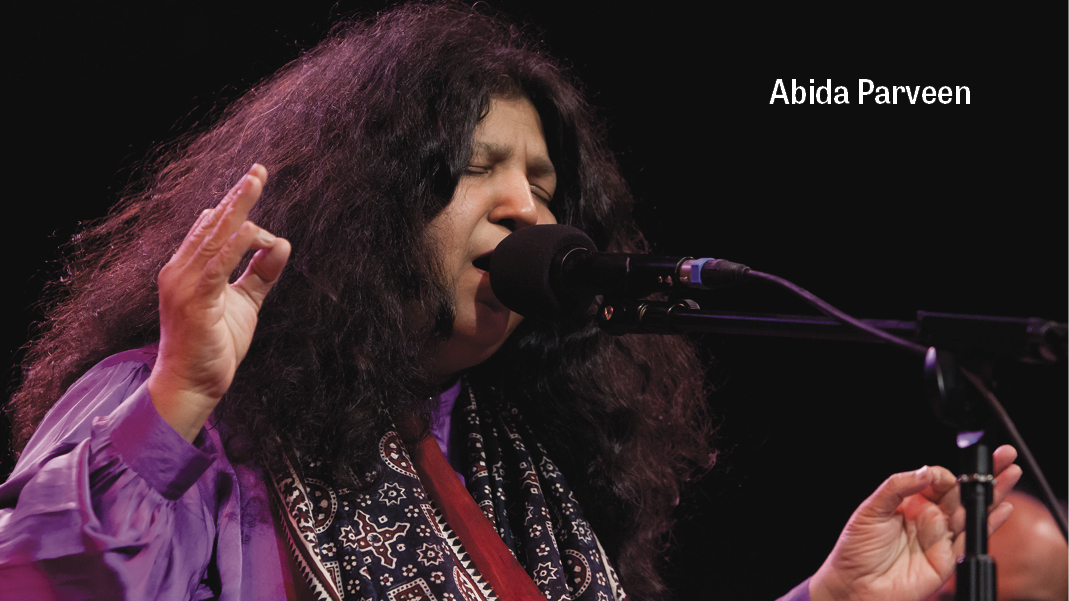
World_1.jpgAbida Parveen, “My audience is my God”: This season is full of human music too. May 15 the voice of Abida Parveen, unequivocally described by The Guardian as “the greatest female Sufi singer in history” – an opinion shared by many others by the way – will echo in the cavernous aerie of Roy Thomson Hall, her voice expressing the various colours of our species’ yearning for union with the divine.

The Pakistani singer is an acclaimed Sufiana kalaam (Sufi music) exponent. Her primary mode of expression is through two poetic song genres, ghazal and kafi (a solo genre accompanied by drums and harmonium that uses a repertoire of songs by Sufi poets in Urdu, Sindhi, Saraiki, Punjabi and Persian). Taught by her father, Ustad Ghulam Haider, and by Ustad Salaamat Ali Khan, she has amassed legions of fans in her four-decade international career. The Icelandic diva Björk, a shrewd judge of both extreme vocalism and passion,  counts herself among them.

Co-presented by the Aga Khan Museum and Roy Thomson Hall, this concert is undoubtedly a special one. RTH’s director of programming and marketing, Chris Lorway, has dubbed it a “once-in-a-lifetime opportunity for Toronto.” In his comments prepared for this column, Lorway emphasized its inter-institutional dimensions. “The chance to present an international icon like Abida Parveen is a thrill for us, and we could not have done it without the partnership with Amir and his team at the Aga Khan.”

Lorway also underscored the importance of reaching out to the diverse enthic, national and faith-based communities in the city. “As we strive to make our venues more reflective of the city of Toronto, these collaborative initiatives are the only way forward. They allow us to combine our collective audiences of music lovers and the culturally curious in a way that has long-term benefits for both organizations.”

For his part Amirali Alibhai, head of performing arts at the Aga Khan Museum, noted that Abida Parveen “has taken the kafi form of musically rendering the poetry of great mystics to new heights, which is quite significant for a practice that is traditionally dominated by men. Performing in several languages, Parveen’s interpretations cross barriers of understanding through her passionate and possessed vocal expression.” Making a bold comparative leap across cultural boundaries, Alibhai aptly observes that “she is to Sufi music what Aretha Franklin is to soul.”

In addition he makes a well-observed case for the important role concert venues can play, “to bring such presentations out of less-than-ideal stadium and make-do venues into respectful spaces, bespoken for art and possessing exceptional acoustics, as is fitting for esteemed artists such as Abida Parveen.”

A respectful space is what Parveen’s spiritually motivated performance deserves. “My culture – our culture – is rich in spirituality and love,” she told The Guardian reporter Nosheen Iqbal in 2013. “Sufism is not a switch, the music isn’t a show – it’s all of life, it is religion. If I want to be recognized for anything, if we should be recognized for anything, it’s the journey of the voice. And that voice is God’s.” Parveen has been known to enter an altered consciousness while deep in performance. As The Guardian article observed, “she regularly sends her audiences in Pakistan and India into swaying raptures, swooning and fainting being quite standard reactions.”

And her fans admire and adore her as much as they do her fellow compatriot singers, the late Mehdi Hassan (1927-2012) and Nusrat Fateh Ali Khan (1948-1997). She freely returns that love. “Poor people, rich people – we are all God’s servants…I’m lucky. My audience is my God.”

World_2.jpgLulaworld: From June 1 to 11 is the annual Lulaworld festival, presented by and at the Lula Music and Arts Centre. Now in its 11th year, Lulaworld is a showcase for Toronto’s world, jazz, blues and Latin musicians, providing them a welcoming stage to present their latest work to local audiences, and encouraging collaboration, this year with more than a dozen celebrated international guests. The goal of the festival is to highlight “the incredible breadth and calibre of the Toronto world and Latin music scenes.”

In addition, the festival will also include a day of free outdoor programming as part of Dundas West Fest on June 11, plus family workshops and a Brazilian parade that anyone can participate in. As in years past there’s just too much going on during the festival to weigh in on every concert, so I’ll just have to be satisfied with providing a little colour swatch of the entire 11-day tapestry.

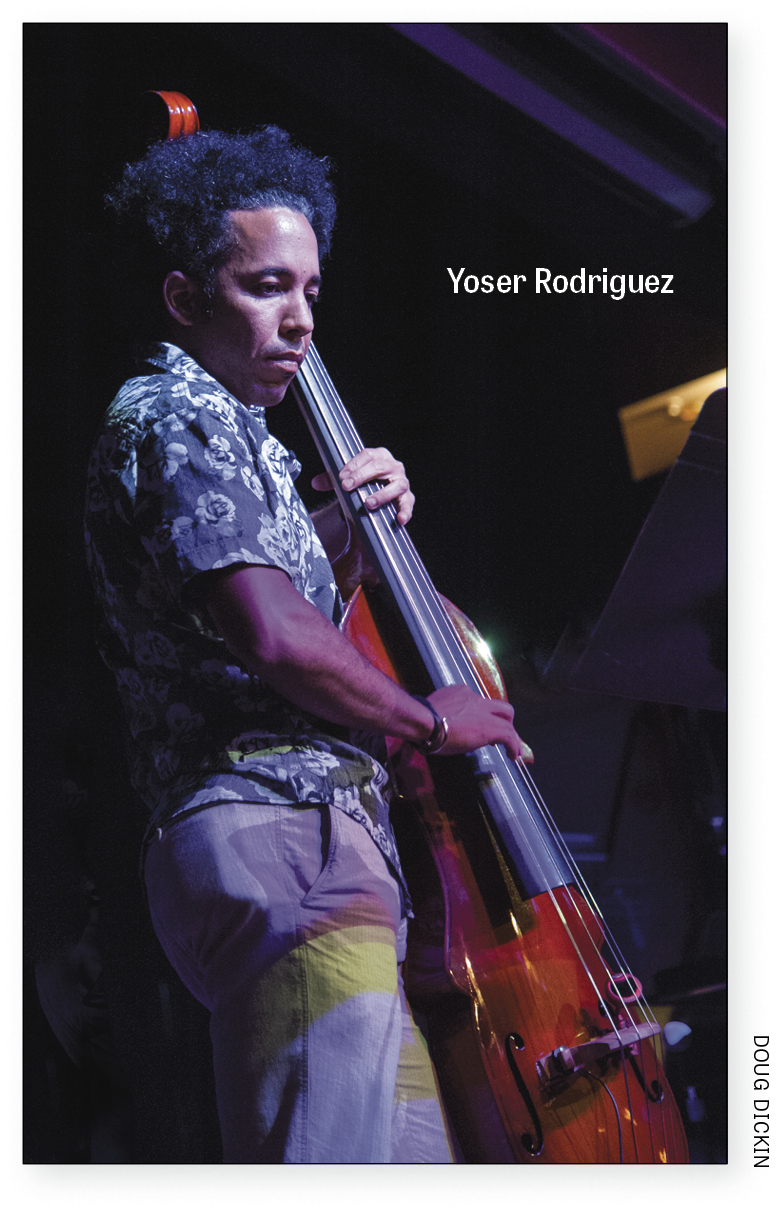
Kicking things off June 1 is “Lulaworld: Opening Night Party,” a night chock-a-block with Latin, jazz, pop, blues and world music, co-presented with the Toronto Blues Society. Added bonus: arrive before 8pm and you’re joining the party for free. Headliners include Cuban-born, Toronto bassist, Yoser Rodriguez, whose debut album, Pollen, employs the talents of some of Toronto’s finest Latin jazz players. Rodriguez has been touted as “the next generation of genre-defying Cuban singer-songwriters.” Taking the stage next is Hamilton-based Laura Cole, her soulful and bluesy voice reflected in her debut album, Dirty Cheat. The album was crafted by Grammy-winning producers Steve Bigas (Taj Mahal), and longtime multiple top-tier album producer Daniel Lanois.

Rounding out the night is the guitarist, singer-songwriter Cécile Doo-Kingué. While her parents were from Cameroon, she was born and raised in NYC. Now based in Montreal, she blends blues, soul and jazz with her African roots with a sure hand, having shared the stage with the Blind Boys of Alabama and opened for Angélique Kidjo and Youssou N’Dour.

June 3 the Gabriel Palatchi Trio and Charangón del Norte take over the Lula Music and Arts Centre. Led by Toronto-based multi-instrumentalist Wilver Pedrozo, his 13-piece ensemble Charangón del Norte fuses Eastern Cuban changüí with other Caribbean music-dance genres including merengue, calypso, soca and Latin jazz. The group boasts a distinctive triple trombone section reflecting bandleader Pedrozo’s upbringing in Southeastern Cuba where influences from Colombia, Mexico and Jamaica are part of the region’s everyday musical fabric.

Evergreen: Whenever it comes to writing about concerts by the Evergreen Club Contemporary Gamelan, Canada’s pioneer ensemble exploring common grounds between world and avant-garde musics, I mention, in the interests of full disclosure, my career-long involvement with the ensemble. There. Just did it again.

That being said, May 19 ECCG celebrates its latest CD, Higgs Ocean: New Music for Gamelan and String Quartet, in performance at the Music Gallery. The concert highlights its artistic director and soloist, Blair Mackay, plus its guest the Accordes String Quartet. Ten years in the making, ECCG’s CD is surely among the first albums dedicated to the striking combination of ECCG’s tuned percussion-rich gamelan degung indigenous to West Java Indonesia, and the string quartet indigenous to central Europe. The album contains Canadian composer Michael Oesterle’s powerful Higgs Ocean (2008) for that instrumentation. Innovative works by Mark Duggan, Ana Sokolović, Peter Klanac and Linda Catlin Smith round out this all-Canadian album by the Toronto ensemble. Audiences will hear samples of that repertoire.

In addition, the ECCG has commissioned a new work for this exciting transcultural sound combination: Canadian composer Linda Bouchard’s as yet untitled piece will receive its world premiere at the concert. A work for gamelan soloist and electronics by another Canadian composer Ronald Bruce Smith is also on the premiere docket.

World Fiddle Day: May 21 is the fourth annual World Fiddle Day Toronto, the second held at Toronto’s Fort York National Historic Site, at the Blue Barracks. Last year’s event hosted 96 players in the Around-the-World Jam – WFD’s signature concert featuring music from at least 25 cultures – accompanied by a top-level house band led by violinist, ethnomusicologist and WFD artistic director Anne Lederman.

Aiming to present a global musical perspective, last year’s “Fiddles at the Fort” featured both workshops and a concert with South Indian violinist Subhadra Vijaykumar and The Metis Fiddler Quartet, among others. The young violin students of Sistema Parkdale and Rosedale Heights School of the Arts participated in the workshops. This year’s roster includes fiddlers Rosalyn Dennett (Appalachia), Dan MacDonald (Cape Breton), Mark Marczyk (Ukraine) and Yosvani Castañeda (Latin America), each representing their own cultural practice as it has evolved in Toronto today. Dozens of fiddlers of all stripes have been practising tunes from around the world for the Around-the-World Jam, some for as long as three months. I expect moments of the jam will take some listeners soaring well beyond the confines of Fort York’s Blue Barracks.

Andrew Timar is a Toronto musician and music writer. He can be contacted at worldmusic@thewholenote.com.
 

BBB-World.jpg

This month I have two tales to tell of musical diversity in this city:  a tale of two presenters. One is of beginnings and continuity, while the other of (perhaps temporary) endings. Each story has a different focus, yet they run parallel in their organizers’ mission of service to our city’s heterogeneous communities of musicians sounding the music of the world’s peoples and in their sincere dedication to serve globally curious listeners.

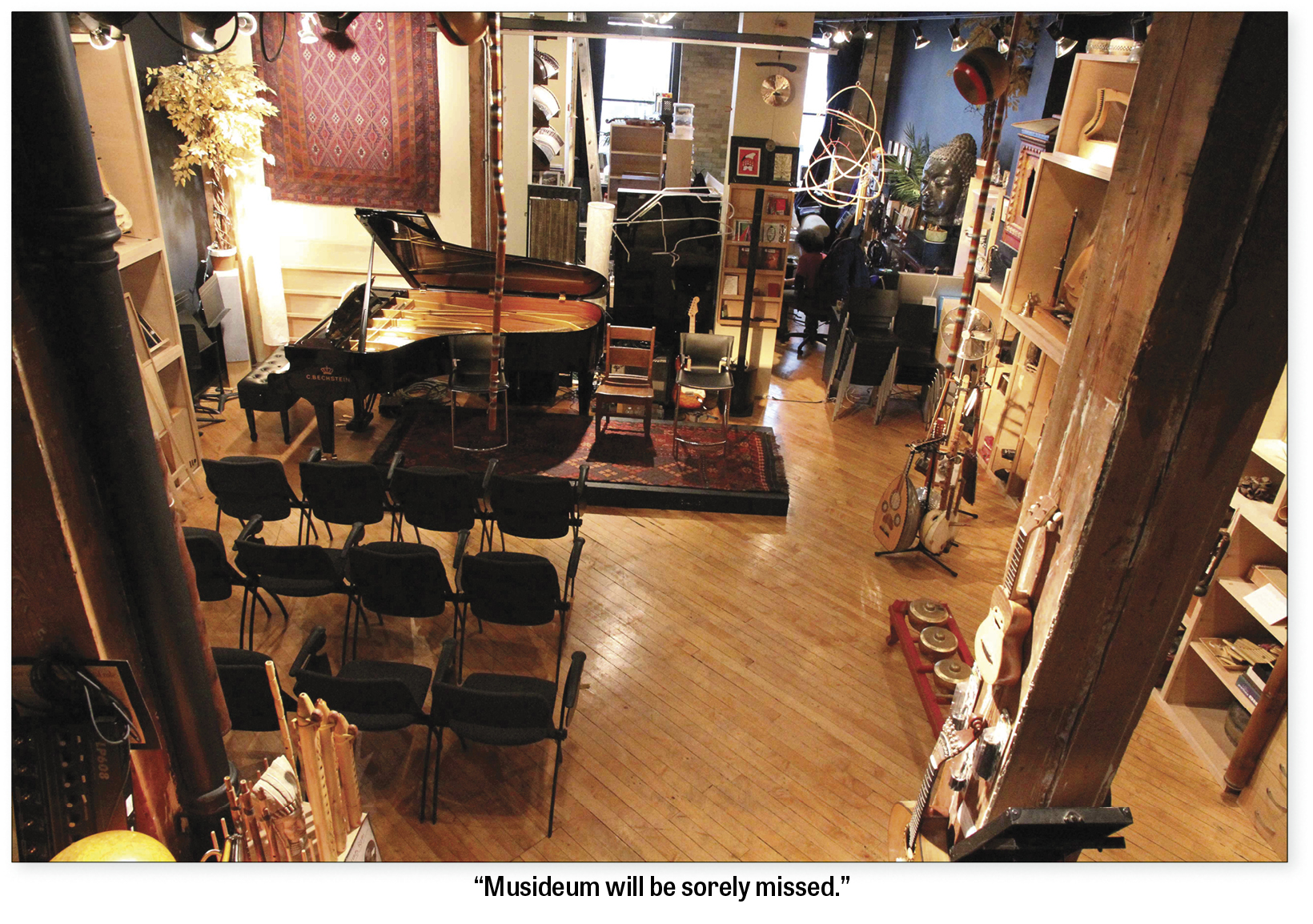
One door closes: The first story began early in March 2016 when I read Donald Quan’s post on his “Musideum Performers & Supporters” Facebook group page. I’ve often written about what happens at Musideum - A World of Musical Instruments in these pages. Quan opened its doors in late 2007. He summed  up his retail music store enterprise as a “look at music through the eyes of [ethnically diverse] musical instruments.” He explained the name is an amalgam of three concepts: museum, music and deum. Inspired by his own challenging life journey over the past six years, he then morphed the Musideum into a special live concert room, inspired by an inclusive vision in which “everyone, regardless of their beliefs, religion, age or what part of the world they are from, can truly love one another and coexist in peace simply by speaking the magical language of music.” And he’s kept the place buzzing until today.

For those unfamiliar with its activities, Musideum has been a unique fixture in Toronto’s music scene. It serves as a retail world-music instrument store by day. By night, starting about five years ago, it’s been the venue for a very dense schedule of concerts in its intimate living room-like space - that’s if your living room was chock-a-block with working instruments from around the world.

It’s also the only store I can recall where John Cage’s seminal score 4’33” was on prominent display, not as a prop but as a potent symbol of musical diversity – and merchandise.

John Terauds put his fingers on the special mojo of Musideum in a May 24, 2008, article The Star. “One customer was so inspired by the movie Kill Bill that he had to go out and get himself a Chinese bamboo flute. Until now, finding an ethnic folk instrument from a culture not one’s own […was quite problematic]. But the mix of world cultures in Toronto has finally reached a point where an enterprising local musician thinks it worthwhile to open a store that offers musical instruments from several cultures from around the globe.”

Quan’s recent Facebook announcement, however, signalled a fundamental change in direction: “As I am extending my personal hiatus until late 2016, I am sad to announce that Musideum will be closing its doors as a store and venue at 401 Richmond on April 2, 2016. The Musideum name will live on and will be parked until a new opportunity arises. It will reawaken when the time is right.”

The Toronto-born Quan, a musician and multiple award-winning composer of hundreds of television, film, radio and multimedia productions, stated that he needed to “take a well-deserved break, travel to see family, rest [his] weary brain and formulate some new and exciting projects for perhaps late in the year.” He continued that although the impetus for this “change was mostly for health reasons, it is also [because of] the need to watch my kids grow up and to spend more time with family and friends. I also need a few months dedicated to practising to get my playing up to where I was before the [2007] stroke.”

Musideum will be sorely missed. From the earliest days, Quan has thrown its doors open across numerous musical genres that thread through the city. I counted over 20 active Facebook pages he set up with straightforward names like “Musideum Invites Indigenous Music.” (Long a contributor to the Canadian Aboriginal music scene, Quan was honoured in 2007 with the Music Industry Award at the Ninth Annual Canadian Aboriginal Music Awards.)

Other communities were encouraged to participate too on their own Facebook pages. “Musideum Invites Indian, South Asian Music,” “Musideum Invites Experimental/Improvised/New Music,” “Musideum Invites Singer-Songwriters” and “Musideum Invites World” are just a few examples of his global embrace. These pages collectively garnered thousands of “likes.”

Within a week of his announcement to close, Quan reached out to community musicians, again on social media, to help in programming six concerts during the second half of March. Or as he put it, “to squeeze some final concerts in before Musideum closes up shop.” True to form, each show had a different genre focus. I was invited too, and that’s how I found myself on the pocket-sized stage playing Indonesian suling (bamboo ring flute) with Iranian drummer Naghmeh Farahmand and cavaquinho player Nuno Cristo on the designated World Music night, Thursday, March 17. About 14 other Toronto musicians took their turns too, including flutist Ron Korb, recently nominated for Best New Age Album at the 2016 Grammy Awards.

Fittingly, Quan served as MC. He spoke passionately about his dream space where he had tirelessly programmed well over 1,600 concerts in the last five-or-so years. Given that pace, and the fact that Musideum has been a hands-on manifestation of one man’s passion, it’s no wonder he needs an extended break.

Though closing his store/venue was “one of the most difficult decisions in my life to make,” Quan nevertheless views it as a “decision that heralds a new positive, healthful, personal and creative direction for me.” As a parting gift to the larger Musideum community of musicians and store customers, he has announced a “special inventory sale” for performers on April 3 and for the public on April 4.

I already miss Musideum. I, for one, will treat Quan’s wish to “awaken [the space] when the time is right” as a promise, not just a hope.

Another door opens: From April 6 to May 29, in some 14 staged concerts and many more events at several venues across the GTA,  Small World Music presents its 14th Asian Music Series, with the financial support of the TD Bank and in partnership with an array of other presenters. Fittingly, this year the series marks Asian and South Asian Heritage Month.

This year’s AMS program features “a strong female presence, with two of the most significant artists in South Asian music - Anoushka Shankar and Abida Parveen - performing.” As well as Indian and hybrid Indian music on stage, GTA audiences will also have the opportunity to witness leading performers of Japanese, Chinese, Pakistani and Iranian music, along with Latin, ethnic chaos and “telematic music.” The latter is described on the Small World Music website as “live performance via the internet by musicians in different geographic locations, celebrating the notion of a smaller world.”

In a bid to reach core audiences, AMS concerts take place at venues big and small, in and out of town. Roy Thomson Hall and Koerner Hall alternate with the Flato Markham Theatre, Japanese Canadian Cultural Centre, Aga Khan Museum Auditorium and Lula Lounge. The charming, intimate Small World Music Centre holds down home base.

New this year, Small World Music Society executive director Alan Davis and his team have cooked up an intriguing way to bundle concerts for audiences. These curated concert sets are conveniently tagged City, Fusion, Soul, Global, Classical and Legends. Those buying into a set of concerts also receive additional coupons for South-Asian themed self-improvement activities such as yoga, tabla or bansuri lessons, in addition to more typical bundle benefits of a coupon (e.g. admission to the Royal Ontario Museum) and of course discounted prices. It’s an interesting way to systematically extend the tools of partnership, a presentational and marketing skill that Davis and Small World has honed to a keen edge over the years. It is perhaps a key ingredient in the company’s success, a success which in turn enriches our entire community. It echoes a central aspect of Small World’s mission: “to promote understanding between cultures.”

Equitably reflecting such a sprawling mosaic of concerts is certainly beyond my means here. Probably the best tack is to put the spotlight on a select few April AMS concerts, leaving the later May shows to the next issue of The WholeNote.

April 6 AMS launches with a Koerner Hall presentation of the reigning diva of the world music sitar, Anoushka Shankar. About eight years ago, I reviewed her last appearance there with her late father, Ravi Shankar, for readers of this magazine. She has emerged since with increasing assurance not only as a sitar player, but also as as a composer in her own right, and as a collaborator with djs, dancers, flamenco musicians and singers and with Western orchestras. In her commercially successful albums, she has explored the interstices between Hindustani music and other genres, plus paying musical tribute to her father’s vast legacy. Her fourth album, Land of Gold, is slated to be released just days before the concert, so I have no details to share of it yet. I am, however, sure that the audience will hear Shankar and her accompanists featuring music from the new album.

The next day on April 7 the venue switches to the Japanese Canadian Cultural Centre which presents a concert titled “Tsumugu.” Featuring Japanese musicians, Keita Kanazashi, Anna Sato and Chie Hanawa, it’s a mixed program: folk songs from Amami Island along with  “bluesy” Tsugaru shamisen of Aomori prefecture, and coming to a thunderous climax with taiko drumming aimed to evoke the Japanese spirit.

Saturday April 9 Wu Man and the Shanghai Quartet take the stage of the Flato Markham Theatre, just north of Highway 7. That’s unfortunately well beyond the reach of the TTC for those who love “The Better Way,” but judging from pipa virtuosa Wu Man’s moving performance last year with the Silk Road Ensemble at Massey Hall, it’s a journey this downtown music lover will want to make. Presented in association with Flato Markham Theatre, the concert headlines Wu Man; abundantly gifted as a musician she has been called a “force of nature” by Gramophone magazine. Dusted magazine also praised her performance, describing it as deftly combining “earthly energy and celestial delight.” Her masterful musicianship has also inspired several composers, including Terry Riley and Tan Dun. The Shanghai Quartet, among today’s leading string quartets, will join Wu Man in a program of music composed or arranged by Chinese musicians called “A Night in Ancient and New China.” Perhaps I’ll see you there.

Our last peek into the Asian Music Series this issue: Indian master sitarist Shujaat Khan and Toronto vocalist Ramneek Singh take us deep into North Indian cultural poetics and centuries-old mystical traditions. Presented by Aga Khan Museum on April 29, the double bill concert, titled “Reflections on Kabir and Khusrau,” is presented in the museum’s Great Poets Series. Kabir was an important fifteenth-century Indian mystic, poet and saint. Amīr Khusrau (or Khusraw, CE 1253–1325) of Delhi was a Sufi musician and is often regarded as the father of Qawwali. His contributions to the advancement of poetry and music were immense and place him at the heart of the cultural history of the Indian subcontinent. In music, Khusraw is credited with the introduction of Persian, Arabic and Turkish elements into Hindustani classical music, as well as with originating khayal and tarana forms, features still central to the music today. It’s a pretty safe bet we will hear vivid performances in both forms by Shujaat Khan and Ramneek Singh.

From Anoushka Shankar, one of the newest and most syncretistic voices in Hindustani music today, we get to sonically travel to one of the tradition’s oldest innovators, represented by Khusraw - all in the space of one Toronto festival!

Like Donald Quan’s Musideum, that’s some story too!

Andrew Timar is a Toronto musician and music writer. He can be contacted at worldmusic@thewholenote.com

I’ve weighed in on numerous occasions, in this column and in my WholeNote album reviews and blogs, about the vast scope of world music as a topic: its misty origins; the limits and problems associated with continued use of what was originally an academic idea, and then became a marketing term. It’s a notion that’s so hard to pin down with any precision, that some would argue not to bother.

Undaunted, I’ve endeavoured to chart its multifaceted presence at key regional venues and among presenters such as the Music Gallery, Small World Music, Royal Conservatory’s Koerner Hall and at the Lula Music and Arts Centre, as performed by its practitioners, and enjoyed – some might use the word consumed – by its myriad audiences. On a couple of occasions I have highlighted stories about its educational role at our regional institutions of higher learning. For instance, my column in the April 2014 issue of The WholeNote featured the flourishing Balinese Gamelan ensemble course offered at Conrad Grebel University College at the University of Waterloo.

For some mysterious reason, perhaps Freudian or Jungian, however, I have so far neglected to explore world music’s abiding 47-year presence at my alma mater, York University’s Music Department. Luckily this March arms me with several reasons to fill that lacuna: ten back-to-back upcoming concerts; two recent conversations; and the retirement of one of York’s key world music animators, Trichy Sankaran.

2106-World_1.pngThe first conversation: I turned first to world music's prime initiator at York, the man with the plan, York U. professor emeritus R. Sterling Beckwith. He’s the person I credit with introducing world music ensembles in Canadian universities as continuing credit courses. As York U. Music Department’s founding chair surely he could shed light on its fundamentals. He didn’t disappoint; his trenchant views and passion on the topic were as keen as ever.

“World music along with jazz has now been taken up by many American and Canadian universities; they have become fixtures there,” he began. “Long gone are the days when they considered it beneath their interest,” he added.

“Well before I arrived at York, I took [pioneering] ethnomusicologist Mantle Hood’s Javanese gamelan class at Harvard. I also spent time with the retired senior musicologist Charles Seeger. Among other things, he praised the American Carnatic singer and ethnomusicologist Jon Higgins whose bi-musical [a term coined by ethnomusicologist Mantle Hood] reputation preceded him.” Even though Higgins was still at the very start of a remarkable career, he had already concertized, broadcast and recorded a Carnatic music LP with renowned musicians in India. (Spoiler alert: Higgins became a teacher and a mentor of mine at York.)

There is a back story here which Beckwith helpfully sketched for me. Mantle Hood’s groundbreaking ethnomusicology program at UCLA, established in 1960, came complete with performing ensembles, and produced Robert Brown the person who in turn kick-started the World Music program at Wesleyan University. Through Brown, we can trace the teacher-student lineage to Higgins. Brown served as Higgins’ PhD thesis advisor at Wesleyan. “I consider other American university ethnomusicology programs such as those at Washington University also direct descendants of Hood’s groundbreaking efforts at UCLA,” Beckwith added.

“Yet another defining pre-York U. experience was the discussion I had with the late Ravi Shankar about introducing applied Indian music studies at York. He was intrigued and recommended his sitar disciple Shambhu Das, who as it turned out, was already living in Toronto. All of that was in my head when I arrived here in 1969.”

Beckwith continued, “I was determined to implement the paradigm-altering gamelan experiences I had with Hood and the inspiring conversations I had with Seeger, as well as doing what I could to bring Higgins to York. As events would have it, my last official act as Music Department chair was to be able to hire Jon Higgins, which made it possible in turn to hire the gifted percussionist Trichy Sankaran a little later.”

2106-World_2.pngTrichy Sankaran: One of Beckwith’s first world music hires, in 1971 – and significantly also one of the longest serving – was a mridangam and kanjira player with an international career, Trichy Sankaran. Sankaran passed a significant milestone last fall, retiring from York in September 2015 after an illustrious career spanning 44 years as a professor of music, researcher and textbook author. As well as serving as a co-founding director of its Indian music studies, one of Canada’s first university-based world music performance programs, he also developed hybrid Carnatic and Western pedagogical practices. Certainly one of Sankaran’s most significant contributions at York was his marked influence on a couple of generations of students, many of whom have gone on to become established musicians, composers and educators. His outstanding achievements as an educator were recognized with the OCUFA Award, given by the Ontario Confederation of University Faculty Associations for teaching excellence.

Along with Beckwith, I and many other Sankaran friends, colleagues and students were present at York’s Tribute Communities Recital Hall last September. Few there doubted that the event marked the closing of a long and important first chapter in the music department’s grand – and continuing – adventure in world music education.

The occasion was celebrated in style with a formal concert in which Sankaran was joined on stage by his vocalist daughter Suba Sankaran, leader of the JUNO-nominated Indo-jazz-funk fusion ensemble Autorickshaw, and her bandmates, bass guitarist and singer Dylan Bell, and tabla player Ed Hanley. The musicians gave authoritative performances of solo and ensemble works, the repertoire including original compositions by the senior Sankaran. As well as signalling the passing on of an intergenerational musical torch, it additionally asserted (at least my awareness of) the emergence of a specific family-centered kind of Indo-Canadian hybrid music-making, echoing the venerable Indian tradition of guru-shishya parampara. As for the continuity of Carnatic music education at York pioneered by Sankaran, that subject appears to be moot.

The second conversation: Throughout its first three decades, York’s world music ensemble courses remained relatively constant and few. It was only around the very early 2000s that I became aware of a dramatic increase in the number of world music ensembles. The trend only crossed my personal radar after, in 1999, I was hired, by Michael Coughlan, the incoming Music Department chair, as the founding course director of the Javanese Gamelan (ensemble) course. During the years I taught the course, the number and range of music ensembles seemed to grow almost exponentially, and the students attracted to them likewise swelled.

What’s the current state of the university’s world music ensemble program? I spoke to the ethnomusicologist, singer and instrumentalist Irene Markoff, whose research and performing activities centre on the musical traditions of Bulgaria, Turkey and the Balkans. “I began to teach there in 2001,” she told me. “At one point I taught global musicianship to music majors. Placed in the context of performance rather than listening to recorded musical examples, my approach was well received by the students.” Her ensemble courses however also include non-music major students. Markoff gave an example, “I currently have a number of students of Chinese heritage in my ensemble who can sing complex metrical parts, despite being non-music majors. They sometimes outstrip music majors in mastering some of these [perceived difficult] performing skills.”

While generally bullish on York’s music course offerings, she did express a wish: “That our music students would be required to take a world music ensemble.” Why? “For the simple reason that we live in a multicultural society and I believe such study will broaden students’ musical horizons. Also with musical hybridities [being a regular fact of musicians’ lives today], it’s important for learners to be exposed to the broad spectrum of metres, multi-part singing styles and tonal modes,” all benefits afforded by learning music outside of the Western mainstream.

I asked Markoff about the future of the world music ensembles. “I have proposed the production of ensemble music videos hosted on the department’s website as a means of attracting future students. As for their relevance, I believe these ensemble courses will continue to well serve music students, exposing them to ‘other’ musical practices and to increase their appreciation and understanding of peoples.”

In a nutshell, Markoff believes such educational ensembles, which allow students to experience the musical diversity of cultures, tend to “build bridges rather than erecting walls between cultures.”

York University’s World Music Festival runs March 17, 18 and 21 at various venues, all in the Accolade East Building.

Mar 17 the World Music Festival kicks off with the Cuban Ensemble conducted by Rick Lazar and Anthony Michell, followed by West African Drumming, Ghana, led by Kwasi Dunyo. That afternoon Lazar’s Escola de Samba rules the Sterling Beckwith Studio, followed by West African Mande, Anna Melnikoff, conductor.

Mar 18 Irene Markoff conducts the Balkan Music Ensemble at 7:30pm at the Tribute Communities Recital Hall. Earlier that day performances by the Celtic Ensemble conducted by Sherry Johnson, Chinese Classical Orchestra directed by Kim Chow-Morris, Caribbean Ensemble conducted by Lindy Burgess and Charles Hong’s Korean Drum Ensemble will echo in various Accolade East Building halls.

It’s a World Music Festival wrap Mar 21 with the World Music Chorus conducted by Judith Cohen, a course I greatly enjoyed a few years ago when I returned (yet again!) to my music studies at York. Please consult The WholeNote listings for times and venue details.

University of Toronto Faculty of Music: York University is certainly not the only world music game in town. Apr 7 the U of T Faculty of Music presents its World Music Ensembles in concert at Walter Hall. Featured are the African Drumming and Dancing Ensemble, Latin-American Percussion Ensemble and Steel Pan Ensemble. I’ve been attending these concerts since their inception and have never failed to be inspired by the enthusiasm and musical skill demonstrated.

Quick Picks

Mar 2 the COC’s noon-hour World Music Series presents Avataar. Directed by saxophonist and composer Sundar Viswanathan the all-star Toronto group often includes Michael Occhipinti (guitar), Justin Gray (bass), Felicity Williams (voice), Ravi Naimpally (tabla) and Giampaolo Scatozza (drum set). They’ll be playing selections from their recently released album Petal. Arrive early.

BRASH: It is just the sort of weather, however unseasonable, for “BRASH! A Badass Brass Festival,” presented by Lemon Bucket Orkestra (LBO) and Small World Music, on Mar 11 and 12 at the Opera House on Queen St. E. LBO with its high hipster street cred needs no further introduction in these pages. Ratcheting up the badass quotient a notch will be Toronto’s Rambunctious and Montreal’s Gypsy Kumbia Brass Band.

Mar 11, 12 and 13 at the Betty Oliphant Theatre the Raging Asian Women (RAW) Taiko Drummers perform an evening of stories from the drummers’ lives, in collaboration with Asian Canadian performers Teiya Kasahara (voice) and Heidi Chan (percussion and flute). "Crooked Lines: Stories in Between" involves video vignettes along with the taiko drummers' trademark ferocity and spirit.

Mar 26 the Small World Music Centre presents a smaller, more intimate and reflective musical experience, though in no way any less passionate: the Dilan Ensemble directed by Shahriyar Jamshidi, a kamancheh (bowed lute) player, composer and vocalist, now settled in Canada. "In the Shadow of the Fatherland" is a cross section of the repertoire the Iranian Kurdistan native has devoted his career to preserving and transmitting. Jamshidi is joined by local cellist Raphael Weinroth-Brown.

Apr 2 and 3 The Aga Khan Museum continues its impressively inclusive concert programming, partnering with the venerable presenter Raag-Mala Music Society of Toronto in two concerts titled Raags of the Gharana Tradition. Apr 2, Maihar gharana (musical school, lineage) sitarist Anupama Bhagwat and Agra gharana singer Waseem Ahmed Khan render a selected few of the vast set of Hindustani evening raags. Apr 3 at 3pm it’s time for a much rarer section of afternoon raags; many “classical” ragas/raags are associated with four three-hour timeframes and for maximum effect are performed at those prescribed times. Sarangi player Ramesh Mishra, a disciple of Ravi Shankar (of the Maihar gharana), shares the concert with the vocalist Devaki Pandit who has studied with gurus of both Jaipur and Agra gharanas.

Also on Apr 2 Nagata Shachu, with Kiyoshi Nagata as its music director, joins one of the city’s leading percussion ensembles TorQ in concert at the Brigantine Room, Harbourfront Centre. Expect an engaging, polished Japanese, Western and world percussion music mix. 

Andrew Timar is a Toronto musician and music writer. He can be contacted at worldmusic@thewholenote.com.
2105-World.jpgIt’s February. It’s still dark before you arise, and cold, with nary a sign of green outside. February is also Black History Month and all over Toronto politicians, schools and cultural organizations are marking it in various ways.

On its events page, the Music Gallery’s David Dacks writes that from its earliest days the MG “has welcomed adventurous Afro-diasporic sounds [such] as free jazz, the science fact/fiction of Sun Ra’s Arkestra and the advanced musical theories of George Lewis. This commitment has intensified over the past several years with events with saxophone titan Matana Roberts, jazz elder Henry Grimes, mbira innovator Evelyn Mukwedeya, and ‘world music 2.0’ theorist DJ/rupture.”

For Black History Month 2016, the MG presents a two-part event which pushes these explorations further.

Val-Inc: body and spirit: the first of these starts at 5pm Saturday, February 20, with a free panel discussion called “The New Black: Challenging Musical Tropes” with Val-Inc and Witch Prophet, two “Black artists who create stereotype-challenging music” on the panel, along with  moderator Alanna Stuart (Bonjay, CBC), Garvia Bailey (JazzFM) and Amanda Parris (CBC). They plan to delve into ways in which awareness can be raised around “under-represented facets of Afro-diasporic cultural expression, specifically within Black Canadian culture.”

Putting these concerns to the musical test that same evening at 8pm, will be a concert titled “Val-Inc + Witch Prophet.” Val-Inc is Val Jeanty, once a member of Norah Jones’ band. Her music was described by the New York Times as blending “traditional-sounding music from Haiti with synthesized sounds and instruments to develop a genre she calls ‘Afro-Electronica.’” Her audiovisual installations have been showcased at the Brooklyn Academy of Music, Whitney Museum, Museum of Modern Art and in European galleries.

Val-Inc’s own characterization of her music is more inclusive; she describes it as evoking “the musical esoteric realms of the creative subconscious by incorporating African Haitian musical traditions into the present and beyond, combining acoustics with electronics and the archaic with the postmodern.”

Just how does she do that? I called her in New York City to find out.

I asked first about the accuracy of a media depiction I had read of her music as “Big Apple Vodou.” “I grew up in Port-au-Prince, Haiti,” she responded, “attending Catholic schools as well as practising Vodou within my family, learning to drum [in that context] when I was five years of age.”

So how does this joint spiritual and musical practice influence how she sees the relationship between sound, music and spirituality? “In Vodou there’s no separation between sound, sounds and prayers to the ancestors, as in the case of Guédé, in the spiritual realm,” she explains. [Fête Guédé, the Festival of the Dead, is celebrated on November 2, All Souls’ Day]. “It’s something that has to be experienced. I practise it to sustain life … not in order to produce a commercial music product.”

And her drumming practice since childhood and its echoes in her electronics? “There’s not a conscious connection between Vodou drum patterns and my electronics, but [rather a path I find] through improv. I trust the spirit to help me via the looper [digital looping station].”

In one track I listened to (“V-iPod #222” on Soundcloud) it’s hard to tell if the track features a machine or an acoustic tabla. “Whatever it is, it sounds convincing,” I say to her. “I played that on the Roland HandSonic HPD-20, a kind of drumpad, a digital hand percussion device. With practice (and understanding of hand drumming) you can transfer your personal energy into the machine. In the end such tools are just tools, carrying the spirit. Bypass skin colour, distance, language and what you’re left with is spirit,” she concludes.

“[The spiritual in music] … is speaking to the soul … feeding the soul … I’m not trying to connect the spirit to music – but rather it’s trying to do me – it’s doing the work! [Let’s not forget that] everyone around the world has a spirit.”

In our chat, Val-Inc’s all-embracing universalist vision came clearly into focus for me: spirit transcending perceived human distinctions such as skin colour, race, geographical origin, religious affiliation and other potentially divisive cultural factors. Makes sense to me.

Pura Fé highlights African-Native American music: Jim Merod, in his 1995 essay Jazz as a Cultural Archive, proposed that jazz is not only a reflection of North American culture but also serves as an archive of that culture. The work of singer, guitarist, songwriter, activist and teacher Pura Fé extends that notion to other vernacular music genres, presenting a rich fabric woven of many cultural strands and colours, so that it is near-impossible to unravel them all: namely the role of indigenous peoples in African-Native American contact, cohabitation, cultural sharing and performance practice.

It is something which occurred in multiple intimate and sometimes complicated and layered ways, arising from shared histories over several hundred years and reflected in various features of the music their descendants created and make today.

I spoke to Fé via Skype, one frigid January afternoon (she now makes Northern Saskatchewan her home), to discuss her upcoming Friday, February 26, concert at the Music Gallery. Long active in transcultural music making and touring in Europe, her album Follow Your Heart’s Desire won the 2006 l’Académie Charles-Cros Award for Best World Album.

During the course of our conversation Fé’s expansive knowledge and passion about indigenous influences on the blues, jazz, country, rock, gospel and other vernacular American musics was infectious. It’s an intensely personal subject for her. She traces the roots of her family and personal musical culture to indigenous North Carolina Tuscarora, Tutelo, as well as Corsican ancestors, the latter via Puerto Rico. (Her name given by her father means “Pure Faith” in Spanish.)

“On my mother’s side we’ve got eight generations of Tuscarora singers. While my mother was a gifted Wagnerian soprano it was difficult to make a career as a woman of colour in classical music in her generation. She also performed in several of Duke Ellington’s Sacred Concerts and my grandmother sang gospel.” Growing up in New York City, sampling her parents’ Native music record collection and participation in Pow Wows gave her the sense of identity she sought as a teen. “I found myself the day I was able to reconnect with my indigenous roots.

“People generally aren’t very aware of it yet, but Native peoples have played a major role in the development of American music, whether it’s jazz, blues or rock ‘n’ roll,” observes . “This includes a typical blues rhythm, the shuffle, a rhythmic feel which is much like certain Native drumming.”

In Fé’s own intense bluesy and other times jazzy singing, she makes an eloquent case for the close and productive relationship between the African and indigenous people of the American South, a union that gave birth to a rich new culture blending religion, dance, food and music. “Many of their grandchildren became influential musicians,” she says, “like Charley Patton (Choctaw) and Scrapper Blackwell (Cherokee). We can continue the roll call with Duke Ellington, Thelonious Monk, Charlie Parker, Don Cherry, Miles Davis, Jim Pepper and Don Pullen in jazz. Let’s add Little Richard, Jimi Hendrix, Tina Turner, Link Wray and Jesse Ed Davis for good measure.”

Early in her career singing with rock bands in NYC, her role models - in addition to her mother and grandmother - were the leading female singers of the previous generation: Joni Mitchell, Buffy Sainte-Marie and Aretha Franklin. Fé was “drawn by their spirit and style.”

All this is the rich hybrid motherlode extensively mined by Fé. Aiming to explore the bluesy voice of Native Americans as well as their self-determination, in 1987 she formed the singing trio Ulali with Soni Moreno and Jennifer Kreisberg, a project which continues as a quartet. Seven albums followed. Her latest, Sacred Seed (2015) for Nueva Onda Records, captures those multi-faceted influences, featuring her multi-tracked voice with a backup studio band consisting of guitar, banjo, piano, percussion and cello. The tracks resound with references to the Tuscarora Nation whose musical traditions she carries with indelible ardour.

At her February 26 Music Gallery concert, however, Fé will present her music more intimately with just her voice, accompanying herself “with guitar, drum and a loop station which gives me the choral background I crave.” Her repertoire will focus on her Sacred Seed set list: her own songs like “Idle No More,” plus jazz classics like Duke Ellington’s “In a Sentimental Mood.” Roots blues legend Taj Mahal glowingly summed up Fé’s music: “With her voice soaring, foot stomping, this beautiful songbird transcends time and brings the message of our Ancestors who have sown this beautiful seed [through her] powerful music.” 

Andrew Timar is a Toronto musician and music writer. He can be contacted at worldmusic@thewholenote.com


World Music 1Here, patrolling The WholeNote world music beat, most months bring a consistent flow of concerts to preview. There’s always too much going on in the GTA to include more than just a sampling in this column for my trusting WholeNote readers. In the extent of its exclusions, this December-January column is no exception.

However, as my deadline rushed ever closer, it initially seemed that something unusual was taking place, namely a large hole in the January World View concert listings. Just as I thought I would have to leave out the first month of 2016 entirely, an announcement surfaced for a late January concert of newly discovered Yiddish music from WWII – with a most intriguing backstory. While that concert is well into 2016 (Happy Lunar New Year, dear reader?!), it is as good a place to start as any.

Lost Yiddish Songs of the USSR: January 27, Svetlana Dvoretsky/Show One Productions present “Yiddish Glory: The Lost Songs of Life and Fate” at the Richmond Hill Centre for the Performing Arts. A mixed ensemble of outstanding Russian, Jewish and Canadian musicians premiere Yiddish songs discovered in Ukraine. Their creation, collection, banning and recent discovery tell a story of resistance and reclamation, describing a wide historical and musicological sweep.

Our compelling story begins during the turbulent late days of World War II when leading Soviet linguists and ethnomusicologists including the eminent Moisei Beregovsky collected and notated the songs of Jewish refugees, Jewish soldiers in the Red Army and Holocaust survivors in Ukraine. Their extensive collection documented these survivors’ defiance of the Third Reich in song. Our narrative takes a dark turn when in 1949 the Soviet government arrested Beregovsky and his colleagues, confiscating and hiding the documents. Researchers had long considered them lost.

We pick up the story a few years ago, in the holdings of the Ukrainian National Library in Kiev. Enter Anna Shternshis, associate professor of Yiddish and Diaspora Studies at the University of Toronto. When she opened the sealed boxes she found a trove of thousands of hand-notated Yiddish songs which had lain unheard for nearly 70 years, until now.

Shternshis worked closely with Psoy Korolenko, the Russian poet, philologist, “avant-bard” singer/songwriter and renowned klezmer performer, to produce performing versions of these songs. Selections will receive their world premiere in “Yiddish Glory: The Lost Songs of Life and Fate” performed by Korolenko, the virtuoso Russian trio Loyko, plus Canadian vocalists including the JUNO Award-winning singer Sophie Milman. Accordionist extraordinaire Alexander Sevastian, award-winning trumpeter David Buchbinder and clarinetist/conductor Shalom Bard round out the international cast. A recording of this music is being produced by Shternshis and Dan Rosenberg.

Going Home Star. February 5 and 6 another musically powered story of suffering, resistance and the ultimate reassertion of personal and cultural identity is being performed, this time at the Sony Centre for the Performing Arts. The critically acclaimed ballet Going Home Star – Truth and Reconciliation has a story by Joseph Boyden, score by Christos Hatzis and choreography by Mark Godden. It explores the all-Canadian story of loss, resistance and reconciliation: that of the Indian residential school system, its survivors and their families.

The ballet’s richly textured, cumulatively powerful music is not just the work of the Canadian veteran composer Hatzis, enthusiastically performed by the Winnipeg Symphony Orchestra, but also enfolds important contributions of indigenous voices whose communities have been directly and profoundly affected by the Indian residential schools and their aftermath. They include Cree actor Tina Keeper, the boundary-breaking Inuk vocalist Tanya Tagaq, who won last year’s Polaris Prize, pow-wow stars Northern Cree Singers, as well as songs by Steve Wood (Mistikwaskihk Napesis).

I’ve had a chance to listen to the impressive, recently released 2-CD recording of Going Home Star – Truth and Reconciliation. It comes chockablock with Hatzis’ signature inclusions of music in multiple vernacular music genres, as well as acoustic and electronic soundscapes diffused from the studi0-produced digital audio track, in addition to the symphonic core. I found the contribution of North American indigenous voices, however, to be the key to the work’s ethical and aesthetic fabric. These voices are essential texts in the story centred on the suffering imposed on children in Canada’s infamous Indian residential schools. While the narrative contains much pain, loss and suffering, the ballet ends with the possibility of personal and intercultural redemption and reconciliation. It’s an important story for all of us to understand. Witnessing this production is, in my estimation, a fitting way to start a new year.

Quick Picks

 Dec 1 Tanya Tagaq and her band share the stage with Owen Pallett and the guided improvising Element Choir directed by Christine Duncan, at Massey Hall.

 Dec 1 The Toronto-based group Ventanas, featuring Tamar Ilana (vocals, dance) and guest Justin Gray (double bass, bass veena), presents an evening with flamenco, Balkan and Sephardic music at Lula Lounge.

 Dec 2 “Roots of India, Grown in Canada” performed by the all-Canadian pop, folk and Indo-fusion group Autorickshaw at the Richard Bradshaw Amphitheatre, Four Seasons Centre for the Performing Arts.

 Dec 3 University of Toronto Faculty of Music presents its World Music Ensembles including the Klezmer Ensemble, Japanese Drumming Ensemble and world music artist-in-residence Pedram Khavarzamini at Walter Hall, Edward Johnson Building.

 Dec 5 “Routes of Andalucia,” at Koerner Hall, features David Buchbinder, trumpet. He leads a group with divas Roula Said and Tamar Ilana plus their “crew of cross-cultural

musicians on a journey into the magic musical realm of ancient Andalucia … where Arabic, Jewish and Gypsy cultures connect.”

 Dec 5 The Aga Khan Museum presents the leading proponent of Indo-Afghan classical vocal music, Ustad Eltaf Hussain Sarahang.

 Dec 12 The Aga Khan Museum presents “Under the Sun,” a concert of “internationally-inflected” jazz performed by musicians from Palestine, Afghanistan and Toronto. Musicians include Jamey Haddad, percussion; Ali Amr, qanun; Salar Nader, tabla; Michael Ward-Bergeman, accordion and Billy Drewes, saxophone.

 Dec 11, 12, 13 The Toronto Consort performs “Christmas at the Monastery of Santa Cruz” at Trinity-St. Paul's Centre in a program of villancicos and Brazilian-influenced dances found in the Monastery’s archives. Žak Ozmo plays the lute and guest directs.

 Dec18 Flutist Ron Korb and Celtic harpist Sharlene Wallace perform a program of Celtic and Christmas favourites, capped by original globally inflected compositions at Pickering Village United Church, Ajax. December 19 they repeat the program at the Maple Grove United Church, Oakville.

 Dec 27 Gary Morgan and PanAmericana! take the Lula Lounge stage with a Latin jazz orchestra in a Christmas-themed concert. Musicians Hilario Duran, Mark Kelso, Paco Luviano, Rick Lazar and Juan Carlos Medrano are featured.

 Feb 5 West coast blues and raga guitarist, singer-songwriter Harry Manx appears in the “Folk Under the Clock” series at the Market Hall Performing Arts Centre in Peterborough.

Andrew Timar is a Toronto musician and music writer. He can be contacted at worldmusic@thewholenote.com.
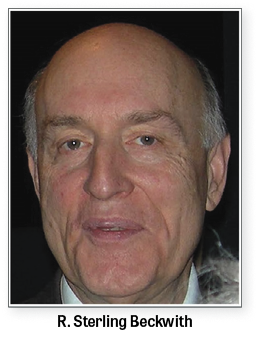
In previous columns I’ve explored something I called hybridity in Toronto music -- transculturalism as it manifests itself musically, both in the disciplines of composition, improvisation and performance practice, and in the way audiences respond to music reflecting these hybridized values. This column connects the dots between a few Toronto concerts featuring hybrid sounds.

WorldPedram Khavarzamini is World Music Artist-in-Residence at the U. of T.’s Faculty of Music. Over the last decade or two the GTA has been the beneficiary of a wave of talented, primarily emerging career Iranian musicians. The tombak (principal Iranian goblet drum) virtuoso, teacher and composer, Pedram Khavarzamini, stands prominently among them. Moving to Toronto last year, this accomplished musician and scholar has steadfastly maintained the traditions of tombak technique and repertoire and introduced new audiences to them. He is also known for his innovations in cross-cultural collaboration and musical experimentation. Both the traditional and collaborative sides of Khavarzamini’s work were on ample display in his exciting May 16, 2015 Music Gallery concert, “East Meets Further East,” which he shared with Montréal tabla soloist Shawn Mativetsky. Their drum duo at the end of the night was a memorable marvel of musical respect and communication. It reminded the audience that transcultural challenges can be met and honoured at the highest level.

A pioneer in another – and more hybrid - arena too, Khavarzamini also composes for Persian-centric percussion ensembles. His main outlet is Varashan, a group he directs and composes for. Its performance was yet another musically satisfying feature of the May 2015 Music Gallery concert I attended.

In addition to his eloquent performances set in international halls with leading Persian and international musicians, Khavarzamini has also taken tombak teaching onto the global stage. Offering conducting workshops and individual instruction to scores of students in Iran, Europe and North America, live and via Skype, he has become a leading instructor on his chosen drum and its indigenous musical idioms.

Khavarzamini’s activities as a virtuoso percussionist, composer, teacher and group leader have already attracted the attention of learning centres. His appointment this fall at U of T’s Faculty of Music provides proof of this. Searching for insights into this development in his career, I exchanged several emails and Facebook chats with Khavarzamini in the penultimate weekend of October. He confirmed that his Artist-in-Residence duties will, among others, include “leading masterclasses and the newly formed U. of T. Iranian Music Ensemble,” activities which will involve several dozen music students.

An excellent opportunity to witness the impressive breadth and depth of Khavarzamini’s work can be had at a November 17 free concert at University of Toronto’s Walter Hall, where he will lead the Iranian Music Ensemble and members of Varashan. The Persian instrumentation will include multiple tombaks, the dayereh (medium-sized frame drum with jingles), santoor (hammered dulcimer), kamancheh (bowed lute), tar (plucked lute) and perhaps a vocalist. Then on December 3 the Iranian Music Ensemble directed by Khavarzamini takes part in a World Music Ensembles concert at Walter Hall alongside the Klezmer Ensemble and the Japanese Taiko Ensemble. These biannual public concerts, along with their York University counterparts, have for decades subtly influenced the general Toronto reception of non-mainstream European- and American-centred musics, perhaps even laying the groundwork for the kind of hybrid creations increasingly appearing in a whole range of venues.

David Virelles: Gnosis featuring Román Díaz at the Music Gallery. David Dacks, the Music Gallery’s artistic director, has certainly not shied away from engaging in musical hybridity, as he made clear in an X Avant festival story in The WholeNote last year.

However he remains very aware of the inherent complications of mixing and matching musical genres, especially the ever-prickly notion of authenticity. “If one is attempting to join culture A to culture B in a coherent musical statement, one must be really attuned to power relationships, comparative structures/forms/tuning/language, your own personal experience and other points of connection or difference between musical ingredients one is working with.” He gives a down-home example: “randomly sampled African chants over breakbeats just won’t fly anymore.”

Fortunately we’re mostly in good hands, Dacks adds. “In crazy, diverse Toronto, many musicians are cognizant of these factors, not just academically, but internally. The resulting hybrid musical creations are way more than pastiches, they are declarations of one’s transcultural (going back to last year’s term) life experiences.”

For Dacks the November 27 and 28 concerts, “David Virelles: Gnosis featuring Román Díaz,” at the Music Gallery, co-presented by the Music Gallery, Arraymusic and Lula Music & Arts, are a case in point. For those unfamiliar with Virelles’ music, the billing “futuristic Afro-Cuban chamber music” gives a taste of what one might expect.

Immigrating to Canada from Cuba at 18, pianist and composer Virelles began his musical studies at Toronto’s Humber College and continued them at the University of Toronto. He came under the mentorship of saxophonist Jane Bunnett, long celebrated for her support of both Cuban music and musicians. Virelles has since developed into a cutting-edge jazz innovator. Achieving career success along the way, last year he released his first ECM recording Mboko, in the words of Dacks, “taking Cuban music places it’s never been.”

The 32-year-old Virelles is “capable of tropically intense polyrhythms and irregular but internally logical phrasing, which befits an artist who came to jazz through Thelonious Monk, Andrew Hill, and Bud Powell.” About five years ago Virelles moved to New York to further his career and has since worked with jazz leaders like Henry Threadgill, Andrew Cyrille and many more. Earlier this year he scooped the Downbeat Rising Star – Piano award.

The Music Gallery partnership with both Arraymusic and Lula Music & Arts in presenting Gnosis is part of the story. As Dacks explains: “Gnosis, is a big project (hence a rare two-night stand at The Music Gallery). It’s a chamber piece, requiring some 12 musicians. Rick Sacks … [has committed members] of the Array Ensemble to the group, plus most of the rehearsals will be at their Arrayspace. It’s turned into a big part of their season too.” As for Lula Music & Arts, they’re “a natural promotion partner in this project. Virelles played there frequently [when he was a Toronto resident] and it’s the nerve centre for so much Latin music in Toronto.”

Another significant element in the work is the inclusion of Abakuá drums by Cuban master drummer Román Díaz with four other Cuban drummers. Hermetic and little known even within Cuba, Abakuá is an Afro-Cuban men’s initiatory fraternity, a secret society, with roots extending back to Nigeria and Cameroon. Despite its secret nature, the percussion and vocal dance music of the Abakuá, as well as other music of West African origin, have been found by researchers to have collectively infused and influenced virtually all genres of Cuban vernacular music, including rumba and son.

Dacks notes that Díaz “has been playing with Virelles for quite a while now” drawing on Cuba’s deep African musical heritage as an essential element of the performance. Rather than using Abakuá songs and drumming as a superficial pinch of ethnic spice in a jazz score, they have instead chosen to perform it as it occurs in Afro-Cuban ritual practice (echoing Dacks’ earlier comments about authenticity). “Abakuá drums have never been in a concert hall setting, so this is absolutely a new form of music that Virelles is exploring.”

For Dacks, it’s not “just a ‘local guy makes good’ show, it’s bigger than that. Virelles is already the most experimental pianist of Cuban origin I’ve ever heard, and he has become a major creative force. As such, this is a unique opportunity for the Music Gallery and our partners to help him take the next, ambitious step.”

Quick Picks

Continuing with this month’s theme of musical hybridity, the Aga Khan Museum presents two concerts which can easily be included in that portfolio.

November 28 the Kinan Azmeh City Band mounts the AKM’s auditorium stage with a concert blending jazz, Western classical and Syrian music. Kinan Azmeh, clarinet, Kyle Sanna, guitar, John Hadfield, percussion, and Petros Klampanis, double bass, perform works from their album Elastic City.

December 5 the spotlight shifts to the Indo-Afghan music of the veteran singer Ustad Eltaf Hussain Sarahang. Starting his career as a young court musician – appointed as Royal Musician to the Court of King Zahir Shah of Afghanistan (reigned 1933–73) – Sarahang has enjoyed a career spanning decades as a leading exponent of the hybrid traditions of Indo-Afghan music. 

Andrew Timar is a Toronto musician and music writer. He can be contacted at worldmusic@thewholenote.com.
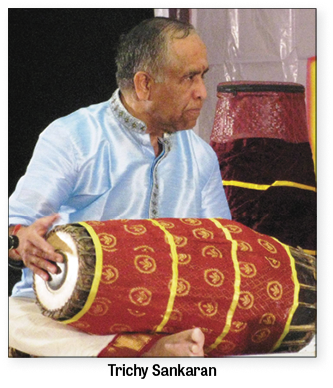
This year’s summer weather has drifted gracefully on right to the end of September. While some 2,500 years ago the Greek physicist-philosopher Parmenides argued that “nature abhors a vacuum,” it also surely needs a rest. Or is September slowly becoming another August in our corner of the concert world?

Whether or not it’s because the seasons themselves are shifting and smearing established concert-going cycles, the warm September we have just experienced was oddly reminiscent of the rest of the summer music break. Several series of concerts with a world music component, and a hint of summer to them, are commencing in late September or even October. These include the Small World Music Festival, Music Gallery’s X Avant Festival, and concerts at Massey Hall, the Aga Khan Museum and the always well-attended noon-hour shows at the COC’s Richard Bradshaw Amphitheatre. And Kingston, Ontario’s new jewel of a venue, the Isabel Bader Centre for the Performing Arts, launches the premiere concert of its Global Salon Series this month. Welcome aboard!

Ukrainian BanduristUkrainian Bandurist Chorus: Before I touch on a few of those concerts however, and departing from my usual chronological presentation, I would like to explore the fascinating story of the Ukrainian Bandurist Chorus. On October 24 it is presenting “Celebrating the Bandura: Past, Present and Future” at Massey Hall with Ruslana, its Ukrainian guest star. The UBC is an American-Canadian group with a history spanning two continents, but it also has a strong local membership.

Ukrainian Canadians are a significant presence in this country. They are the ninth-largest ethnic group, representing the world’s third-largest Ukrainian population after that of Ukraine and Russia. Following the collapse of the Soviet Union, Ukraine became an independent state in 1991. Canada swiftly recognized it, the first country to do so. Strong bilateral ties, as many readers will know,  have characterized the relationship ever since. Fewer, however, may realize that the first of these cultural links was forged generations ago.

The Detroit-based Ukrainian Bandurist Chorus’ website states that the “first professional bandurist chorus was formed in Kyiv in 1918 during the height of the country’s brief period of independence.” It was during the subsequent 1920s, a transformative period of Ukrainian national awakening, that language, culture, and specifically the UBC, “developed into a professional touring troupe,” among the most prominent of its kind.

By the next decade, however, the UBC narrative quickly turns very dark. Under Soviet leader “Joseph Stalin’s rule, artists and intellectuals were arrested, exiled or executed in an attempt to eradicate every remnant of Ukrainian culture,” states the website. “Many conductors, chorus members and blind bandurist-minstrels were accused of enticing the populace to nationalism and were executed ... their songs banned throughout the Soviet Union.”

But perhaps I’ve gotten ahead of myself here. What is a bandura, and how does its Ukrainian history tie into the group that will perform in October at Massey Hall? Ray (Roman) Beley and Orest Sklierenko, both veteran Toronto members of the UBC, helped me understand a few key notions. We spoke via a conference call on September 14.

The bandura, a kind of large-bellied lute with features of a zither, is a “multi-string plucked instrument, the voice and soul of Ukraine,” noted Beley. From all I’ve heard and read, the bandura is much more than a mere musical instrument; it symbolically embodies Ukrainian national identity, its songs reflecting the turbulent history of the Ukrainian people.

Pre-20th-century folk banduras usually had fewer than two dozen strings in diatonic tunings. Typically handmade by the musicians, no two banduras were exactly the same. The oral tradition bandurist (a.k.a. kobzar) was a troubadour who sang a wide-ranging repertoire of para-liturgical chants (kanty), psalms, social dances and epics (dumy) accompanying himself on the bandura. On the other hand the more recent Kyiv or Kharkiv style bandura, played in ensembles today, is a grander affair. It possesses 65 or more strings, some with levers enabling the bandurist to change keys during the performance. (There’s a strong GTA connection here too. I was intrigued to learn that among the leading contemporary bandura designers and makers is the Oshawa native Bill Vetzal.)

Beley picks up the story. “After years of exploitation and persecution under Soviet and Nazi regimes, in 1949 some 17 members of the all-male Ukrainian Bandurist Chorus immigrated to the United States.” Many established a home base in Detroit and Cleveland, where they continued to perform the UBC repertoire of four-part songs – tenor I, tenor II, baritone, bass – accompanied by banduras in several ranges.

“In North America, the UBC carried the torch for songs with lyrics that were banned under Soviet rule,” continued Sklierenko. “We carried on Ukrainian historical and religious traditions free of the censorship that made it impossible in the homeland at the time.” An active member of UBC since 1990 when he was just 13, Sklierenko pointed out that Canadians of Ukrainian descent have played key and very early roles in the group, “perhaps ever since the Chorus’ first Toronto performance on October 22, 1949.”

The UBC “has performed in Massey Hall several times since the 1950s,” added Sklierenko, so the upcoming 97th anniversary concert on October 24 is somewhat of a homecoming – with a special twist. Joining the Chorus on stage will be Ruslana, the 2004 Eurovision Song Contest and World Music Awards winner, an artist who can boast the best selling Ukrainian album ever, the 2003 Dyki Tantsi (Wild Dances). This remarkable singer, songwriter, producer, musical conductor and dancer also served as a deputy in the Ukrainian parliament and is an internationally recognized social activist. In 2013 and 2014 she played a prominent role in the pro-EU Euromaidan movement. Beley, a current bass bandura player with UBC, told me that Ruslana “will perform her pop hits at Massey Hall before joining forces with us in Ukrainian songs in our repertoire.”

In previous columns I’ve written about several other Toronto ensembles with proud Ukrainian roots. The activist community-minded women’s Kosa Kolektiv, and the self-proclaimed “Balkan-klezmer-gypsy-party-punk-super-band” Lemon Bucket Orkestra, presently winding up its international tour, come readily to mind. Sklierenko knows them well. “Playing a core role in community building and also on an official international level, the UBC represents the Ukrainian diaspora in Canada and in the U.S.A. In addition we are eager to reach out to both bandurist and non-bandurist groups like Kosa and Lemon Bucket. I see great potential for synergy here.”

I asked why the bandurist choruses are all male. Were they consciously modelling themselves on the practices of the earlier, exclusively male, kobzar troubadours? “Interest among Ukrainian women in taking part in the bandurist tradition has been steadily building,” noted Sklierenko. “In fact there’s an all-women’s North American bandurist chorus being formed right now.”

As co-chair of the UBC’s 2018 centennial anniversary celebrations, Sklierenko laid out the group’s ambitious three-part plan to reconnect with the homeland and to ensure the continuation of the bandurist legacy. These include “a Ukrainian tour, a fund to fuel R&D and to pass on the craft of bandura building, and an educational component including workshops.” The latter category also includes support for UBC’s summer camps in Pennsylvania, since 1979 the central site for passing on bandurist traditions and recruiting new talent. Partly reflecting the success of the camps, today the majority of UBC members are second and third generation Americans and Canadians, all of them volunteering their time to further the mission of the ensemble.

The evidence of the UBC’s plans, and of the passion and commitment to pursue them, all points to the bandurist performance legacy, sparked nearly a century ago in Ukraine, surviving well-rooted in the diaspora. The legacy also appears well-positioned to be passed on to future generations of performers in both North Americans as well as in its threatened land of origin.

Small World Music Festival: The 14th annual iteration of Small World’s signature fall Music Festival runs until October 4 this year. Its ambition is no less than to “capture the world in a ten-day festival.” This year it brings international and Canadian performers representing music from Mali, Korea, Cuba, Ethiopia, Palestine, Spain and Estonia to Toronto stages.

October 1 at Revival Bar, Vieux Farka Touré and his band makes a return Toronto visit presented in association with Batuki Music Society. Touré is best known for his virtuoso guitar style blending African guitar techniques with Western blues and rock, and an easygoing onstage charm. There’s a family touring connection to this town. I well recall seeing his Malian father Ali Farka Touré lay down seamless guitar grooves and plangent vocals accompanied by a lone gourd drummer one summer in a small open room at the Harbourfront Centre.

October 2 the emerging Estonian singer and violinist Maarja Nuut appears at the Small World Music Centre. She repurposes old Estonian village songs, dance tunes and stories, often to live looped fiddle accompaniment and solo improv melodies. Nuut’s music cumulatively builds with a minimalist texture, one which can support emotional intensity, yet never losing sight of what the composer calls a peaceful, yet “lively relaxed state which … makes you want to prolong being in the moment and concentrate.”

Krar CollectiveOctober 4 the Krar Collective will rock Lula Lounge, the trio armed with a krar (six-stringed bowl-shaped Ethiopian lyre), kebero (drums) and impressive vocals. Judging from their videos, they’re purveyors of sold grooves, expressive melismatic melodies and a huge sound. Bandleader Temesgen Zeleke uses an octave pedal as well as wah-wah on his electric krar but also plays an acoustic five-string model that is quieter and plucked rather than strummed, to support his eloquent vocals. The Krar Collective is a musically compelling, neo-traditional band taking traditional instruments, songs and genres, combining them into a new mode of delivery for their audiences. NB: for full enjoyment, come ready to dance.

End of an era, and passing it on: On October 1, the York University Department of Music presents “Faculty Concert Series: Rhythms of India” featuring Trichy Sankaran with the Autorickshaw trio at the Tribute Communities Recital Hall. After 44 years of service at York, where he has taught generations of students, me included, Professor Sankaran has recently retired – from teaching at York, not from performing or teaching elsewhere. This concert is his parting gift to the institution he served so long. He will share the stage with the next generation, including his daughter, vocalist Suba Sankaran, co-leader of the JUNO-nominated Indo-jazz-funk fusion ensemble Autorickshaw and her bandmates, bass guitarist Dylan Bell and tabla player Ed Hanley, Sankaran students all. The musicians will perform solo and ensemble works by the master percussionist and composer. I invite all whose life has been touched by this outstanding musician – and there have been many from around the world – to attend this once-in-a-lifetime celebration. 

Andrew Timar is a Toronto musician and music writer. He can be contacted at worldmusic@thewholenote.com.
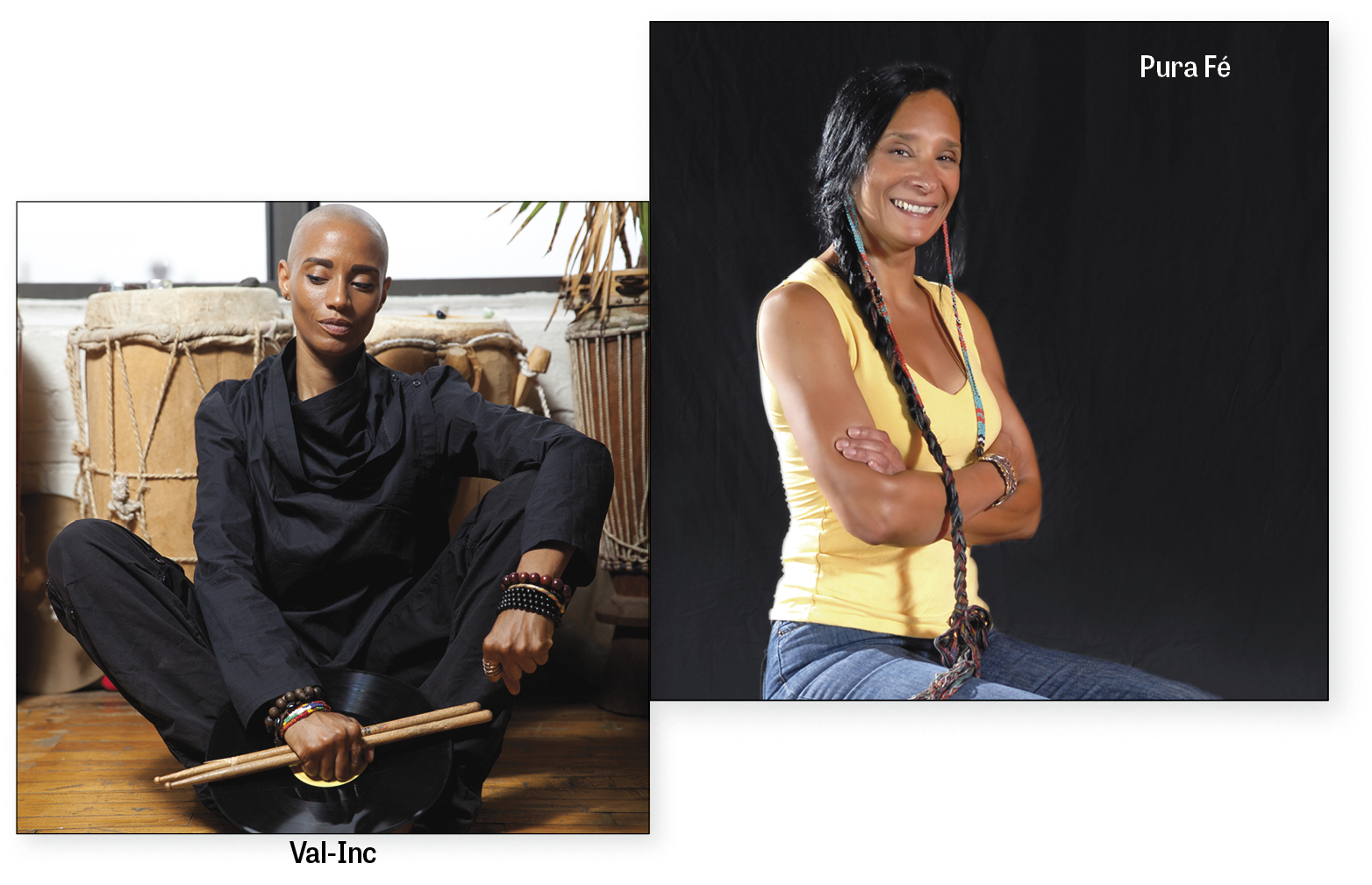
Back to top