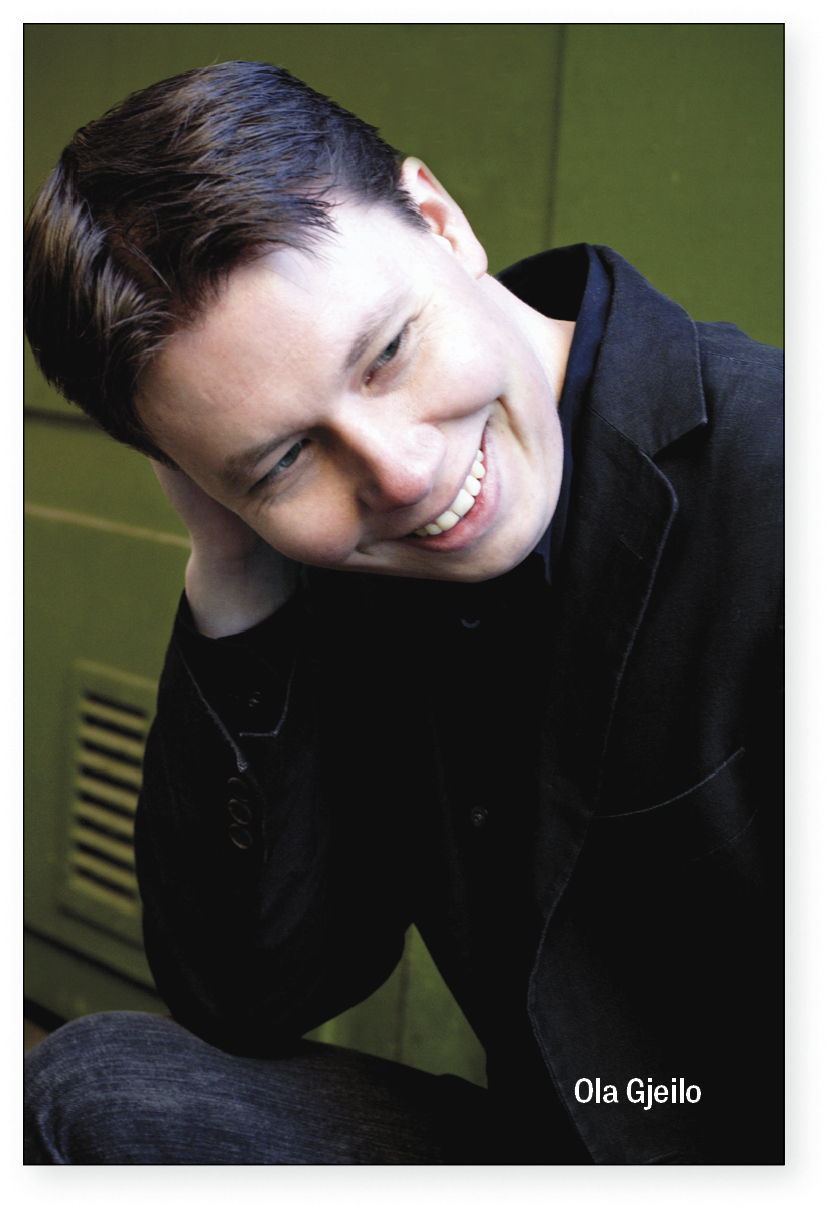
BBB-Choral1.jpgLyrical, lush, evocative, and stirring – all words that help describe Sunrise Mass by Ola Gjeilo (pronounced Yay-lo). He is a new composer to me and one that I have been mesmerized by as I delve into his repertoire. First premiered in Oslo, Norway, in 2008, Sunrise Mass has captured the imagination of choirs across the world. It had its Toronto premiere in the final concert of the Orpheus Choir’s 2014/2015 season. But I have the Mississauga Festival Chamber Choir and artistic director David Ambrose to thank for my introduction to Gjeilo’s music as they present this work in “Spring Serenade” on April 2 at 8pm.

Gjeilo is a Norwegian-American composer educated at the Norwegian Academy of Music, Juilliard and the Royal Academy of Music in London. He is composer-in-residence for the popular British a cappella octet – VOCES8 (who were in Ontario last fall on their first-ever Canadian tour which included a stop at the Elora Festival, both in a solo concert and in a joint one with the Elora Festival Singers and Studio de musique ancienne de Montréal in the Bach Mass in B Minor under Noel Edison). Ola Gjeilo himself will be in Toronto in the fall as part of a festival of his work sponsored by the University of Toronto, Orpheus Choir and the Yorkminster Park Baptist Church. Before then, there are lots of opportunities to enjoy his work over the next month – make it to as many as you can!

Gjeilo’s Dark Night of the Soul makes an appearance as part of the Hart House Chorus spring concert, April 3 at 4pm. Conductor Daniel Norman leads the Gjeilo and Haydn’s Missa in tempore belli (Mass in Time of War). For this free concert, donations are being accepted on behalf of Sistema Toronto, a free, accessible childhood music education organization that started in Venezuela. Great Hall, Hart House, Toronto.

The Kingston Choral Society and Kingston Community Strings present “Sunrise: A Musical Celebration.” Gjeilo’s Sunrise Mass will be performed along with Spring from Haydn’s Seasons, selections from Schubert’s Mass No.2 in G Major and Aaron Copland’s The Promise of Living on April 22 at 7:30pm.

The Cantores Celestes Women’s Choir present Gjeilo as part of “Songs of the Universe” on April 23 at 7:30pm. Director Kelly Galbraith features Gjeilo’s Song of the Universal which was inspired by the Walt Whitman poem of the same name. Also included are the world premiere of Sergey Khvoshchinsky’s Hymn to Her Hands and the Canadian premiere of Mozart’s Missa in C Major (Sparrow Mass) arranged for female voices, and more. Cantores will mark this performance with a donation to support Syrian refugees to Toronto. April 23, 7:30pm, Runnymede United Church, Toronto.

Markham’s Village Voices present “Faces of Love,” featuring Gjeilo’s The Ground, an adaptation of the final movement of his Sunrise Mass. Other works include Bernstein’s West Side Story and Whitacre’s Five Hebrew Love Songs. May 7 at 7:30pm.

VOCA Chorus of Toronto presents “Vast Eternal Sky” on May 7 at 7:30pm. Artistic director Jenny Crober has chosen to feature Gjeilo’s Across the Vast, Eternal Sky, a beautiful musical setting to text by Charles Anthony Silvestri, inspired by the idea of a phoenix. The first half of the concert will feature the Fauré Requiem accompanied by the Talisker Players. Other works by Daley, Lauridsen and more promise to make this a most lovely evening.

Just the First Weekend!? On the first weekend of April alone, there is so much happening on the choral landscape it’s almost demoralizing. It’s as if every choir in the region has conspired to compete for your attention. From Kingston to London, there is a performance on everything from Broadway to Gospel. Here are some highlights:

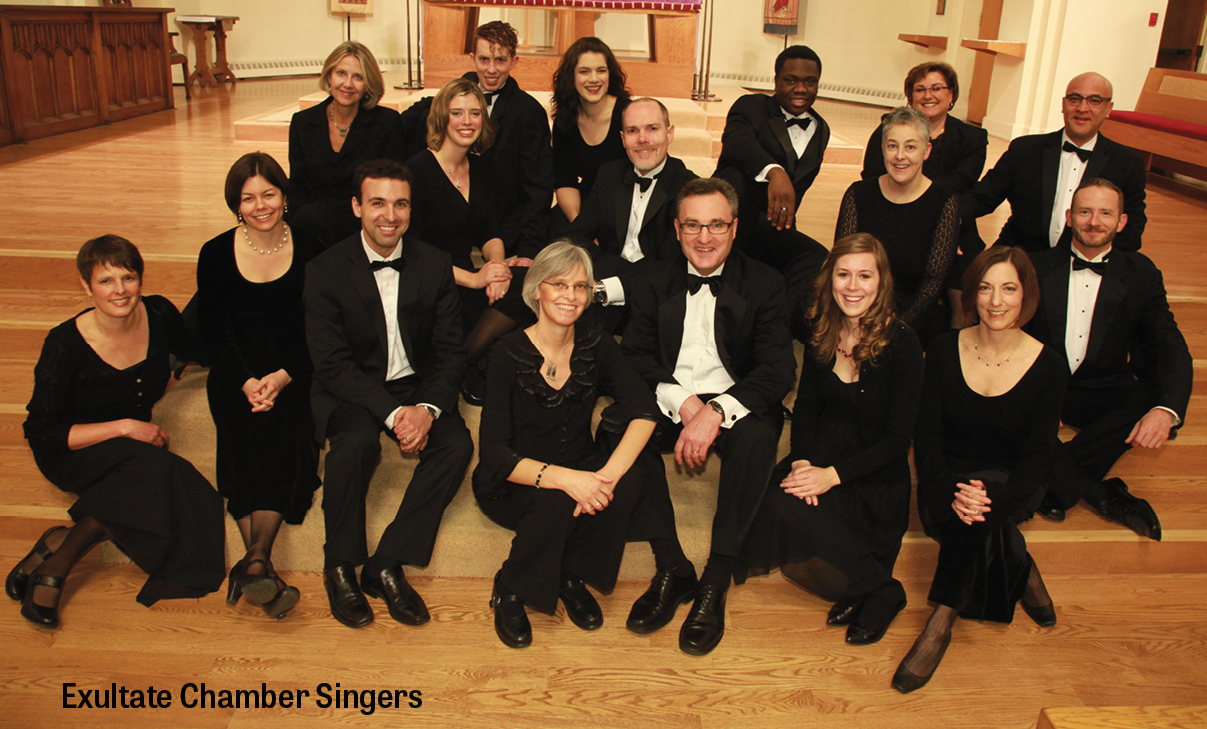
BBB-Choral2.jpgHilary Apfelstadt is well-known in the choral community and has had a hand in the choral education of many conductors and students around town as director of Choral Programs at the University of Toronto. As well as director of several choirs at U of T, she also conducts Exultate Chamber Singers. April 1 at 8pm Exultate presents “Stories of Love and Longing,” featuring Brahms Op. 52 Liebeslieder Waltzes, Palestrina’s Sicut Cervus and several other works by Britten, Vissell, Jeff Enns, Mechem and more on.

On April 3 at 2:30pm, Apfelstadt is back, leading the University of Toronto choral ensembles in “Heart Songs,” an end-of-term concert featuring the University of Toronto Symphony Orchestra, Women’s Chamber Choir and Men’s Chorus. Highlights include music by Timothy Corlis set to a poem by Mohawk poet Pauline Johnson: Heart Songs of the White Wampum (which was a joint commission with Elektra Women’s Choir, Vancouver, and Bella Voce Women’s Chorus, Vermont). Beethoven’s Choral Fantasy will join all the musical forces together. Doctoral Choral Conducting Candidates Elaine Choi (Timothy Eaton Memorial Church), Mark Ramsay (Exultate) and Tracy Wong (Mississauga Festival Youth Choir and Young Voices Toronto) join Professor Apfelstadt in marshalling the choral forces.

The Toronto Northern Lights Chorus is the 2013 Barbershop Harmony Society World Champions. These “Silly plants” (YouTube them, seriously, it’s amazing) made Toronto proud with their award-winning top-place finish at the Air Canada Centre and are returning to defend their title at the international convention in Nashville later this year. They present “Genius of Music” with an ensemble from the Toronto All-Star Big Band on April 2 at 2pm and 7:30pm.

The Toronto Children’s Chorus and the Cawthra Park Secondary School Chamber Choir team up for “Good Vibrations.” The TCC main choir was on tour in Boston and New York City at press time. With stops at Sanders Theatre in Boston, Carnegie Hall in NYC and the Aaron Copland School of Music, they were also invited to sing at the Canadian Consulate for the Prime Minister who happened to be in town. What a treat for those kids! Catch them in action back home on April 2 at 4pm.

Barrie’s Choralfest presents “A Night at the Opera: Bizet’s Carmen in Concert,” featuring the Lyrica Chamber Choir, King Edward Choir, Bravado the Huronia Symphony Orchestra and various soloists. This grand and well-loved work is sure to provide a stellar evening of music. April 2 at 7pm.

Univox and Florivox are two of the busiest and most accessible community choirs out there in Toronto at the moment. Dallas Bergen, founder and artistic director is on a sabbatical, so in his stead, accomplished soprano, Univox sub-conductor and actor Tahirih Vejdani has taken the reins. Vejdani conducts Univox in a presentation of “Everything Beautiful: The Music of Broadway,” featuring cabaret superstar Chris Tsujiuchi and  performers from Theatre 20’s composium and conservatory in hit songs from West Side Story, The Phantom of the Opera and Wicked on April 2 at 8pm.

Florivox, usually helmed by Vejdani, is being led by Gillian Stecyk in “Shadows and Light: A Journey Through Dark Corners and Open Spaces.” In community partnership with Red Door Family Shelter – one of the only shelters in Toronto that accepts families in crisis – Florivox will present songs by Adam Guettel, Leonard Cohen and more on April 3 at 3pm.

The Etobicoke Centennial Choir presents “When Daffodils Begin to Peer,” featuring Paul Halley’s Love Songs for Springtime and Holst’s Choral Hymns from the Rig Veda amongst others on April 2 at 7:30pm.

The Karen Schuessler Singers present “London Composers Exposed! Creativity Up Close and Personal.” Featuring works by local composers, the event is followed by a post-concert reception and a chance to meet the composers and artists on April 2 at 8pm.

Carmina Burana – Carl Orff’s unrivalled musical masterpiece of medieval monkish debauchery – continues to be an impressive display for an effective choir. The Amadeus Choir will doubtless do the work justice, with the added support of the Buffalo Master Chorale and the Bach Children’s Choir on April 3 at 4pm.

Other great works this early spring:

The Elmer Iseler Singers and Toronto Ukrainian Male Chamber Choir join Vesnivka Choir’s “50th Anniversary Gala Concert” on April 17 at 3pm in Glenn Gould Studio. Conductor Halyna Kvitka Kondracki founded the Vesnivka Ukrainian Women’s Choir in 1965.

The Oakville Choral Society presents “Wings of a Dove,” featuring works by Mendelssohn, Haydn, Mozart, Beethoven and Brahms on April 22 and 23 at 7:30pm.

The Achill Choral Society presents “Celtic Spirit,” featuring Irish, Scottish and Eastern Canadian songs including Londonderry Air and Fogarty’s Cove. In true Celtic fashion the Achill Choral Society will be joined by NUÀ, a traditional trio featuring fiddle, guitar and bodhrán (Celtic drum) on April 23 at 3pm in Alliston and April 30 at 7:30pm in Caledon.

Just before the end of the month you can catch the Toronto Mendelssohn Choir’s presentation of Haydn’s The Creation. An ever-popular piece, Haydn’s classical masterpiece fits very comfortably in the ear and is always a treat. Look for me in the tenor section on April 27 at 7:30pm in Koerner Hall.
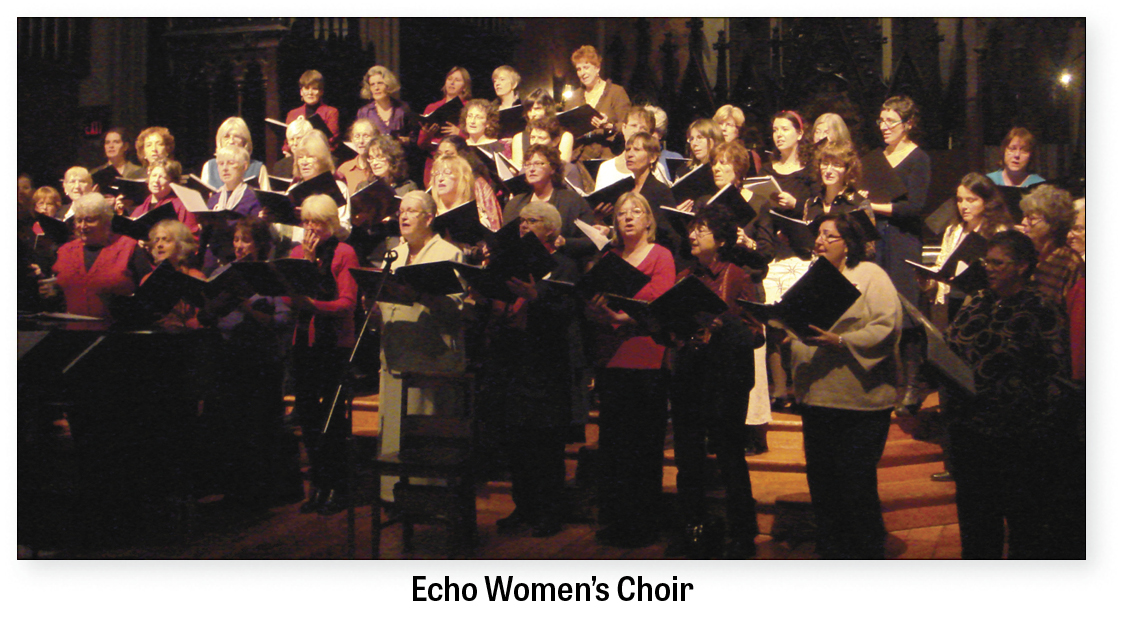
BBB-Choral3.jpgEcho Women’s Choir presents “Songs of Hope and Resistance: Celebrating May Day and International Workers’ Day.” A bold idea, Becca Whitler and Alan Gasser lead Echo in a variety of labour-themed works including Chilean Victor Jara’s Plegaria a un Labrador (Worker’s Prayer); French revolutionary song Le temps des cerises and more, on May 1 at 3pm.

The combined talent of Chorus Niagara, Choralis Camerata and Chorus Niagara Children’s Choir join with TorQ Percussion Ensemble and pianists Karin Di Bella and Lynne Honsberger in a compact, but-no less powerful version of Carmina Burana on May 7 at 7:30pm. The Toronto Mendelssohn Choir used a similar format in its performance with TorQ in 2012 and it was very effective.

Univox will join Masterworks of Oakville in a presentation of Mendelssohn’s grand Elijah on May 7 at 8pm in Oakville and May 8 at 4pm in Toronto. Always a pleasure to hear, this magnificent piece of music was once more popular than Handel’s Messiah.

Finally, make sure to check out singtoronto.com to see all the fun of Sing! The Toronto Vocal Arts Festival running from May 4 to 15.  We will have much more about this festival in the May issue of The WholeNote.

Follow Brian on Twitter @bfchang Send info/media/tips to choralscene@thewholenote.com.
Choral-Banner.jpg“…It’s important that we also treat games as art, and when the opportunity comes along to engage with games as works of art that we take advantage of that opportunity” – Matt Sainsbury, Editor-in-Chief, Digitally Downloaded

2106-Choral_1.pngEaster marks the second busiest time of the year for the choral community, second only to Christmas. But even though much of this month’s column will be devoted to these wonderful musical opportunities, I thought I’d start out by focusing on something not often written about in Toronto – video game music.

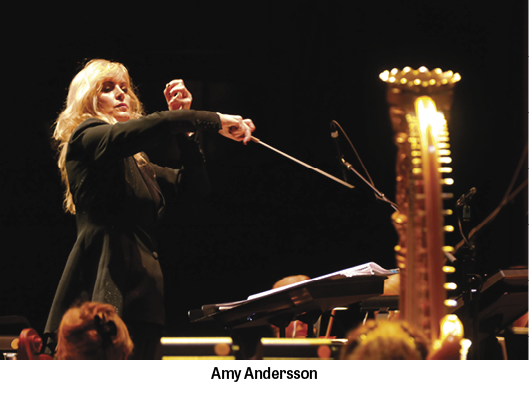
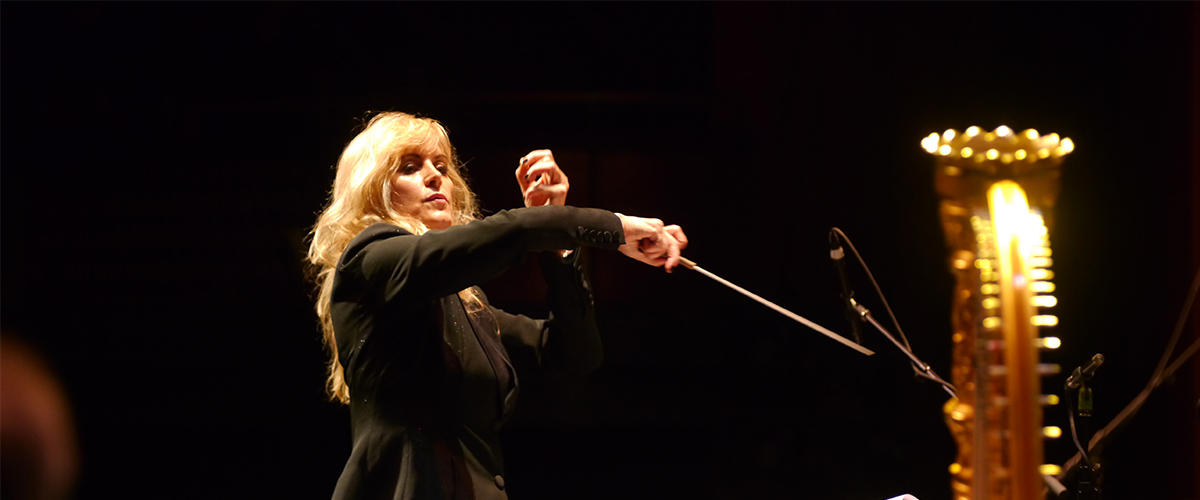
The Legend of Zelda Symphony of the Goddesses – Master Quest arrives for one night, March 19, 8pm at the Sony Centre on its international tour. This updated show returns with some of the most iconic video game music ever written, including music from the newest game, “Tri Force Heroes.” It is a massive entertainment event that always sells out, so it doesn’t need our help. But I am highlighting it here for a number of reasons: it is a chance to see a talented female conduct a major work in Toronto; there is a lot of choral music in it and not all of it is English; I have friends who have sung it and really enjoy the energy of the music; normally, travelling shows like this won’t even bother to hire a choir; they’ll just record sung chords to a synthesizer and use that; so this is a nice treat; oh, and it’s really, really fun.

Japan has long embraced both gaming and music, having done live performances of video game music as early as 1991. In 2005, the very first video game concert by the LA Philharmonic in the Hollywood Bowl saw 11,000 attendees. In 2011 and 2012, the London Philharmonic recorded The Greatest Video Game Music, volumes one and two. These were huge hits and topped classical charts. The widely popular German Symphonic Game Music Concerts take place annually in the Cologne Philharmonic Hall. This is a major art form and an incredible source of new performance opportunities for both choirs and orchestras.

In Zelda, composer Koji Kondo’s music has been arranged into a full four-movement symphony for choir and orchestra with a host of smaller pieces representing 18 games over 30 years. Conductor Amy Andersson touring along with executive producer Jason Michael Paul, leads the Tallis Choir and the Kitchener-Waterloo Symphony Orchestra.

Andersson, a former conducting fellow at the Aspen Music School, led the previous Symphony of the Goddesses – Second Quest on its international tour. A conducting veteran of Colorado Light Opera and the National Theatre of Mannheim, Andersson was married to the late Yakov Kreizberg (formerly of the Netherlands Philharmonic Orchestra) and is sister-in-law to Semyon Bychkov (BBC Symphony Orchestra). Andersson attended Mannes School of Music at the New School with both Bychkov and Kriezberg.

As I mentioned, this ever-popular event is sure to sell out. Fair warning, this isn’t your typical performance; hooting and hollering is expected. Part symphony, part celebration, it’s jovial, fun and full of amazing instrumental and choral music. And definitely dress up; green tunics and fairies will abound.

Easter

One of the highlights of every Good Friday in the Toronto Mendelssohn Choir season is the “Sacred Music for a Sacred Space” concert that takes place annually in St Paul’s Basilica. This year several pieces will be highlighted including Eric Whitacre’s stunning Her Sacred Spirit Soars, a tribute to Queen Elizabeth I; Patrick Hawe’s Quanta Qualia for alto saxophone and choir; and a new commission, Leonard Enns’ I Will Lift Up Mine Eyes for alto saxophone, soprano saxophone and choir. Topping the list is the 2013 TMC commission by Timothy Corlis, God So Loved the World. This work is a textured soundscape that is both passionate and stark. The words are simple but powerful; some of the most poignant from the entire Passion of the Christ. “Pater, dimitte illis, non enim sciunt quid faciunt”: “Father, forgive them for they know not what they do” opens the seven-movement piece. “Eloi, eloi, lama sabachthani”: “My God, my God, why have you forsaken me” – in Aramaic and set to a dissonant C-minor chord in the fourth movement of this piece – is particularly moving.

As I have mentioned before, I sing with the TMC, and while rehearsing this Corlis song I found myself musing about the place of religious music in the context of our secular world. Classical music is largely played outside of the context it was created for; masses, for example, form the bulk of grand symphonic choral work – but not everyone can be present at a Herbert Von Karajan-led Mozart Coronation Mass in St Peter’s Basilica (1985). Those familiar with the Roman Catholic Mass, or who went to Catholic school, are acquainted with the tradition and ritual of the mass, and how music often accompanies specific actions and rituals during the liturgy. Most people who attend classical music concerts, specifically, those of a requiem or a mass, are disconnected from the history and the context of these important works. I wonder when a full mass was last played with symphony and choral forces in Toronto.

This year the Toronto Mendelssohn Choir presents “Sacred Music for a Sacred Space” Wednesday, March 23, and Good Friday, March 25. Look for me in the tenor section.

TSO’s Mozart Requiem: I believe Joel Ivany, the Elmer Iseler Singers, the Amadeus Choir, and the Toronto Symphony Orchestra were able to bridge some of the disconnect of hearing sacred music in secular settings with the recent remarkable reimagining of the Mozart Requiem in January during the Mozart @261 Festival. Spectacular music making occurred in those performances and the TSO’s efforts to reach out to a younger and more diverse audience were noticeable and very welcome in the filled Roy Thomson Hall. Ivany focused our eyes on the grief and feelings of loss that come with death. These are universal core values that are relatable to many people. What may often be forgotten when listening to requiem masses is that they were created to accompany actual passing, ending, finality – the ultimate Christian passage for the faithful.

Ivany’s staging reminded me that there does exist a place for a secular mass and ritual in our daily lives and that the same emotions that drive these ancient masses continues to provide important experience and context to us centuries after they were written.

If you wish to see a more conventional Mozart Requiem, your chance comes with the massed skills of the Guelph Symphony Orchestra and the University of Guelph Choirs on March 20 at the Basilica of Our Lady Immaculate, Guelph.

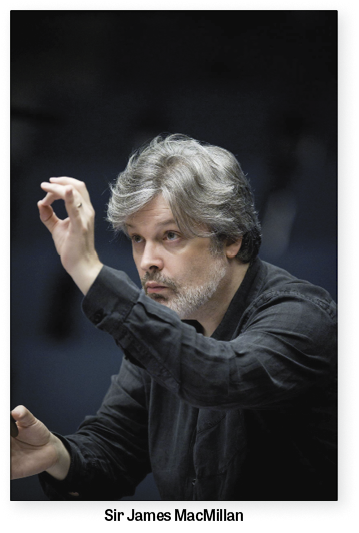
S2106-Choral_2.pngoundstreams Canada features Scotland’s most celebrated composer, Sir James MacMillan, with “The Music of James MacMillan.” The Grand Philharmonic Chamber Choir, the University of Waterloo Chamber Choir, Choir 21 and the Virtuoso String Orchestra perform MacMillan’s Seven Last Words from the Cross and other works on March 6 at St Peter’s Lutheran Church, Kitchener. Soundstreams presents a similar program with Choir 21 and Virtuoso String Orchestra in Kingston, March 4, at the Isabel Bader Centre for the Performing Arts. And in Toronto on March 8, at Trinity-St. Paul’s Centre. MacMillan conducts each performance.

Quick Picks

The York University Chamber Choir performs “Musick to Heare” in the Tribute Communities Recital Hall, Accolade East Building on Mar 9. Featuring music inspired by Shakespeare’s comedies, tragedies and sonnets, Robert Cooper leads the choir in George Shearing’s jazzy Songs and Sonnets, Ralph Vaughan Williams Serenade to Music, and other inspired works by Canadian composers Allan Becan, Berthold Carriere and Michael Coghlan.

The Queen’s University Symphony and Choral Ensemble and the Perth Choir perform Schubert’s Mass in C D462 and other works on Mar 18 in Grant Hall, Queen’s University, Kingston, in celebration of Queen’s 175th anniversary and the Town of Perth’s 200th.

The Kingston Symphony performs Beethoven’s Symphony No.9 on Mar 19 and 20, at the Isabel Bader Centre for the Performing Arts, Kingston. The first half of the concert will examine sections of the work, its poetic source and inspiration, the influence it has had and explore “Why is this symphony so good?” all hosted by KSA conductor Evan Mitchell.

Voices Chamber Choir presents “Light Eternal” including Duruflé’s Quatre motets sur des thèmes Grégoriens, Gounod’s Ave Maria, Saint-Saëns’ Quam dilecta, and Fauré’s Requiem and Cantique de Jean Racine on Mar 19, at the Church of St Martin-in-the-Fields. This is a lovely chance to catch a wonderful collection of French masterworks.

Last month I mentioned the multimedia presentation of the Bach Mass in B Minor concurrent to the Bastian Clevé film The Sound of Eternity by the Orpheus Choir and Chorus Niagara in St Catherines, Mar 5, or in Toronto Mar 6, at Metropolitan United Church. For a more conventional performance, the Grand Philharmonic Chamber Choir presents the Bach Mass in B Minor on Mar 25, at the Centre in the Square, Kitchener.

Metropolitan United Church has a lovely Mar 25 lineup titled “Requiem: In a Time of Sorrow.” Featuring Bach’s Cantata No.78, Brahms’ Alto Rhapsody and Requiem, with several soloists I enjoy, including Claudia Lemcke, Jordan Scholl and the clear, strong tenor of Charles Davidson. I’d be at this performance if I weren’t performing “Sacred Music for a Sacred Space” with the Mendelssohn Choir.

And finally, Mar 31 at Koerner Hall, the Elmer Iseler Singers and Esprit Orchestra present a concert titled “La création du monde,” after the instrumental work of the same name by Darius Milhaud which opens the program. Highlight of the evening is Soul and Psyche, a new creation for choir and orchestra by Esprit music director, Alex Pauk – a five-movement “contemporary mass” with influences from Inuit poetry, Balinese prayer, and more. This is also a rare chance to catch Hussein Janmohammed’s Nur: Reflections on Light, a collection of choral miniatures inspired by the Ayat an-Nur-Verse of Light from the Qu’ran. Janmohammed’s work was commissioned for the opening of the Aga Khan Museum and the Ismaili Centre and had its world premiere there in 2014, performed by the Elmer Iseler Singers, conducted by Lydia Adams.

Follow Brian on Twitter @bfchang Send info/media/tips to choralscene@thewholenote.com

“Ballet cuts right to the heart of what’s most beautiful, physically in humanity and what’s most beautiful in story. We are taking a very European form and introducing it to a First Nations experience.” – Joseph Boyden

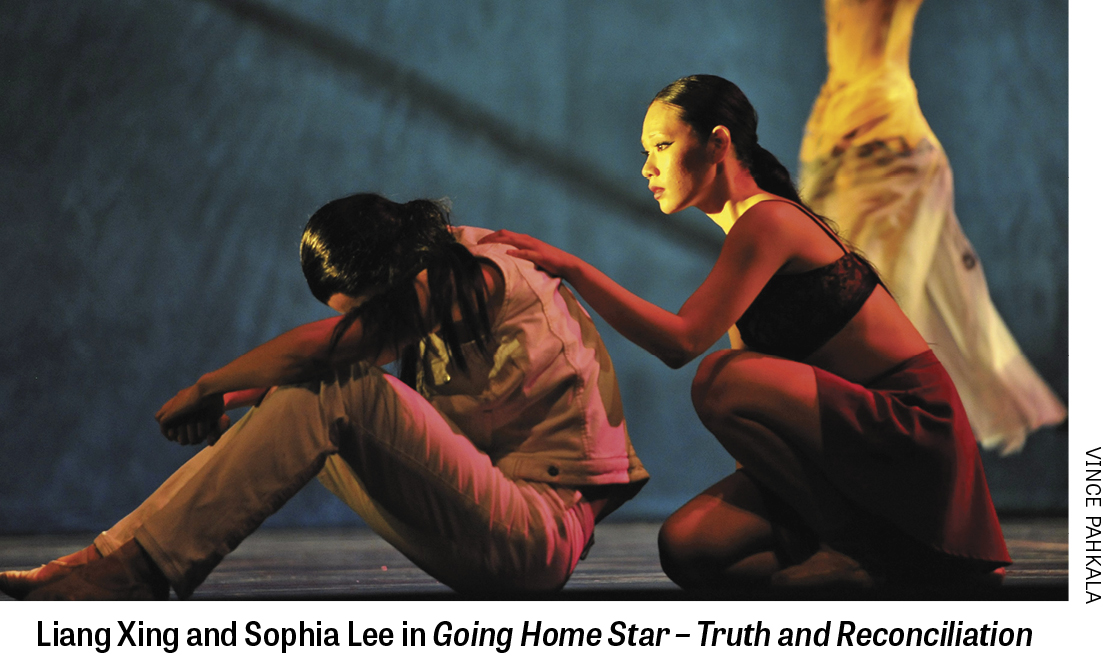
2105-Choral.jpgA remarkable moment in history arrived on December 15, 2015, when the Truth and Reconciliation Commission of Canada presented its final report on the dark history of Indian Residential Schools. Beginning in 2008 the TRC has gathered testimony from 6,000 survivors of, and witnesses to, a 120-year legacy of institutional racism, neglect and destruction. The report makes 94 specific calls to action to help create a better future and to acknowledge and repair the damages of the past and present. The Royal Winnipeg Ballet’s production of Going Home Star – Truth and Reconciliation, which is being presented in Toronto at the Sony Centre for three performances on February 5 and 6, can be seen as a swift response to this call for action.

With the support of the TRC of Canada, the Royal Winnipeg Ballet commissioned a story by author Joseph Boyden to be set to music by composer Christos Hatzis and choreographed by Mark Godden for the RWB’s 75th anniversary. In this story, Boyden, the Giller Award-winning author of Through Black Spruce, brings together Annie, “a young, urban First Nations woman adrift in a contemporary life of youthful excess,” and Gordon, “a homeless First Nations man who escaped the Residential School system … [who] possesses the magic and power of the trickster.” Accompanying the RWB is the the Winnipeg Symphony Orchestra. Vocal music is provided by the incredible Tanya Tagaq, Steve Wood and the Northern Cree Singers, with Tagaq’s voice as an ancestral presence, powering Annie’s story and her reconnection to history. The power of voices joined in song is also there in the show, with the Pow Wow of the Northern Cree Singers bringing the final scene of the first act to its culmination, with wild drumming creating the sound of a train. The music is truly invigorating.

The show’s composer, two-time JUNO Award recipient Christos Hatzis, is no stranger to working with Aboriginal peoples, having spent considerable time producing music inspired by the Inuit, including the award-winning radio documentary Footprints in the Snow. During the year he spent working on the music for Going Home Star, he developed anxiety and was briefly hospitalized as he came to terms with the difficult stories that inform the work. It is no light undertaking. As Boyden says “[It’s] a way to allow Canadians to begin to understand something of such huge pain [and] … to absorb not just the pain and the anger but the beauty as well.”

It’s a thought mirrored in the TRC report itself: “Residential schools were a systematic, government-sponsored attempt to destroy Aboriginal cultures and languages and to assimilate Aboriginal peoples so that they no longer existed as distinct peoples …. Across the globe, the arts have provided a creative pathway to breaking silences, transforming conflicts, and mending the damaged relationships of violence, oppression, and exclusion.”

I will be in the audience for Going Home Star – Truth and Reconciliation, and I hope you will be too.

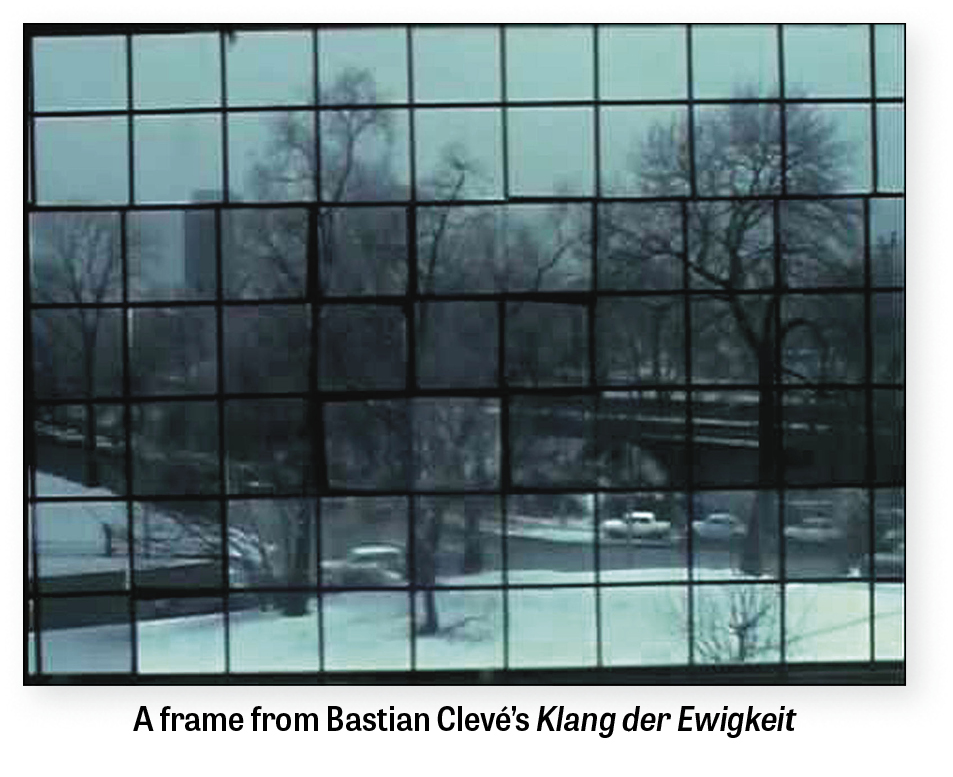
2105-Choral2.jpgKlang der EwigkeitI am a big fan of cross-disciplinary music collaborations, so I’m very excited to see the Orpheus Choir/Chorus Niagara presentation of the Canadian premiere of German filmmaker Bastian Clevé’s 2005 film, Klang der Ewigkeit (Sound of Eternity), a multimedia presentation of the Bach Mass in B Minor. Consisting of 27 short episodes inspired by the 27 movements of the mass, Clevé’s scenescapes were filmed across the globe from Germany to Morocco, India to the United States. Originally created for Helmuth Rilling at the Bach Oregon Festival, the setting was controversial since the B Minor Mass is beloved by many and thought to be perfect in its existing form. But crossing the lines between music and visual art is not new. Another current example, The Decades Project, unites the Toronto Symphony Orchestra and the Art Gallery of Ontario in an exploration of the ways in which visual art has inspired music and music has inspired visual art. Earlier this year the presentation of Claude Debussy’s La Mer accompanied an impressionist painting by Armand Guillaumin at the AGO.

The Orpheus Choir, along with Chorus Niagara, performs Klang der Ewigkeit with the Talisker Players on March 5 at FirstOntario Performing Arts Centre in St. Catharines and on March 6 at Metropolitan United Church in Toronto.

In the (not very) bleak midwinterThere is so much happening in choral music the first weekend of February, you’ll be hard-pressed to choose:

Tafelmusik’s epic journey to record every Beethoven symphony comes to a head with the most thrilling of them all – Beethoven’s Symphony No.9. As Beethoven’s last symphonic work, and largely, his most popular, Tafelmusik’s Choir and Orchestra will fill Koerner Hall with unforgettable music in four performances beginning February 4.

On February 6, the Toronto Mass Choir, under director Karen Burke, will be presenting a concert in collaboration with the Toronto Jazz Orchestra at Bloor Street United Church at 7:30pm. (And if you miss Mass Choir then, you can catch them later in the month when, along with York University, they  will be hosting “Power Up,” a gospel music workshop. With workshops ranging from Introduction to Steelpan to Choir 101 to instrument coaching to dance, this three-day intensive event runs February 19 to 21, finishing with a concert at Islington Evangel Centre. With live instruments and well over 100 singers, the Toronto Mass Choir will definitely raise the roof.)

Also on February 6, the Mississauga Festival Choir presents its annual “Festival of Friends.” Ten years on, this concert has raised $25,000 for local charities, this year’s beneficiary being Alzheimer Society Peel. Six choirs will be featured including the very well-known Cawthra Park Secondary School Boys in B & Chamber Choir, the Mississauga Festival Chamber Choir, the Mississauga Festival Youth Choir, the Mississauga Choral Society Chorus and the Queensmen Male Chorus. Singing en masse and separately, highlights include Timothy Corlis’ Gloria (Missa Pax), Eric Whitacre’s Water Night and Stephen Hatfield’s Jabula Jesu.

February 7 is even more jam-packed. At 7pm the Victoria College Choir and the Toronto School of Theology Choir present a free performance of Vivaldi’s Gloria in the Victoria College Chapel. Earlier in the day, at 2:30, VOICEBOX: Opera in Concert presents Salieri’s Falstaff at the Jane Mallett Theatrewith the VOICEBOX Opera in Concert Chorus ably supporting a fine cast of soloists. Half an hour later, at 3pm, at Grace Church-on-the-Hill, the U of T Faculty of Music’s New Music Festival presents a “Choral Contemporary Showcase Concert” featuring the U of T Men’s Chorus and Women’s Chamber Choir with Hilary Apfelstadt, Elaine Choi and Tracy Wong conducting. And at 4pm, the Toronto Children’s Chorus is presenting a free outreach concert at St. Paul’s Basilica on Power St., featuring their Chorale Choir and Youth Choir; Elise Bradley and Matthew Otto conduct.

Also of note: Speaking of the Toronto Children’s Chorus, the TCC Chamber Choir will be going on tour in Boston and New York City in early March, performing with Coro Allegro and the Boston City Singers in Cambridge, singing in the Choirs of America Nationals and performing at Stern Auditorium in Carnegie Hall. Before they go, they’ll be warming up in a concert titled “Poles Apart,” February 27 at Yorkminster Park Baptist Church.

The following day, February 28 at 4pm, and right across the road at Christ Church Deer Park, the Toronto Classical Singers and the Talisker Players Orchestra present “Fauré’s Requiem and Duruflé’s Requiem, along with other music these popular pieces have inspired.

Later that same day at 7.30pm, the Schola Cantorum Choir and the Theatre of Early Music Orchestra present choruses from a variety of popular masterworks including Bach’s St. Matthew PassionSt. John Passion and Handel’s Messiah and Israel in Egypt in the Trinity College Chapel at the University of Toronto.

This being a leap year, there’s an extra day in February, and what better way to celebrate it than with the massive 200-voice Bach Children’s Chorus, as part of Roy Thomson Hall’s free noon-hour concerts. These concerts feature the grand organ and are a lovely break from a day’s work.

And on into March, right at the beginning of the month, the Kaleid Choral Festival takes place in Kitchener. Under the leadership of Jennifer Moir, this two-day festival for young voices culminates in a performance on March 3 in St. Peter’s Lutheran Church, Kitchener. Artist-in-residence of the festival, Rajaton, will be performing as well. This small Finnish a cappella group produces music unlike any other heard in Canada. 

Follow Brian on Twitter @bfchang Send info/media/tips to choralscene@thewholenote.com

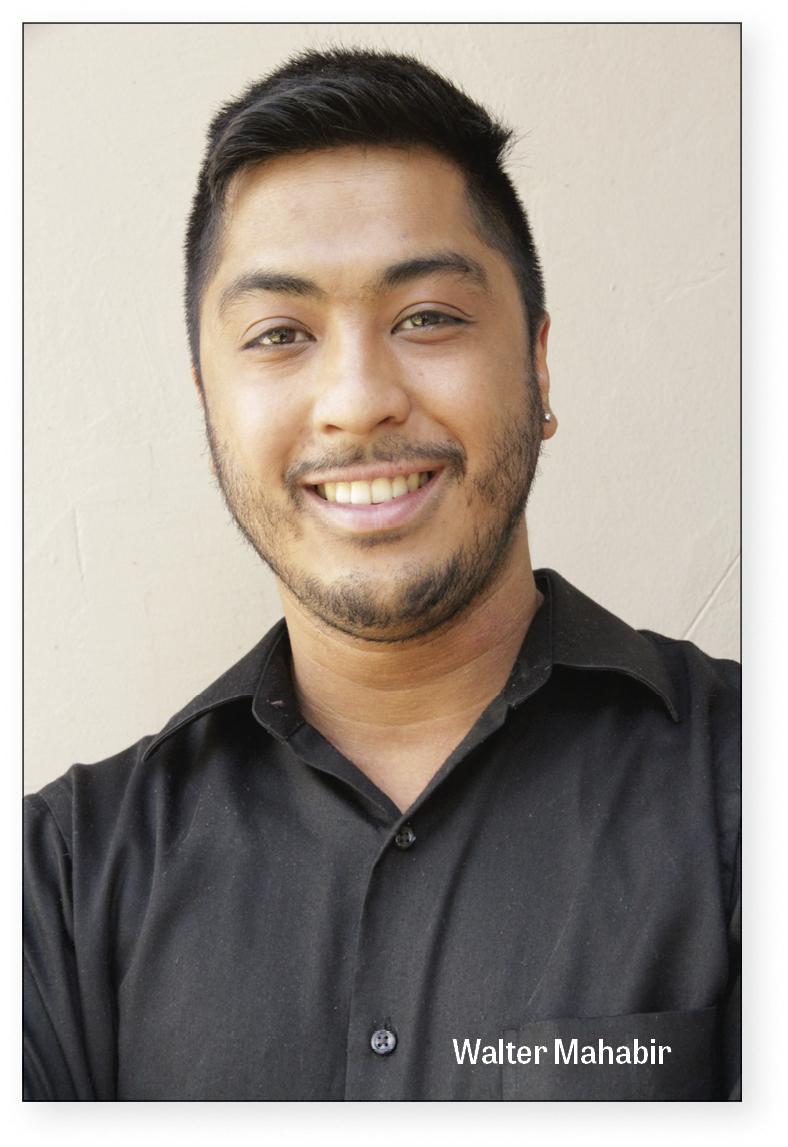
Choral Scene 1Walter Mahabir greets me with a big hug and a huge smile on his face. We’re in the busy Coffee Pub at the Centre for Social Innovation Annex, the home of The WholeNote. We haven’t seen each other since Luminato’s staging of Apocalypsis where we sang in separate choirs that made up the monumental work. He’s the new assistant conductor of the Orpheus Choir and one of the reasons I’m focusing on emerging conductors this month. He’s younger than I am by a few years and represents the exact kind of fresh air in choral conducting that I’m looking for and that I respond to. He’s young and attractive, has a gentle yet firm approach and even broke into song uninhibited during our interview.

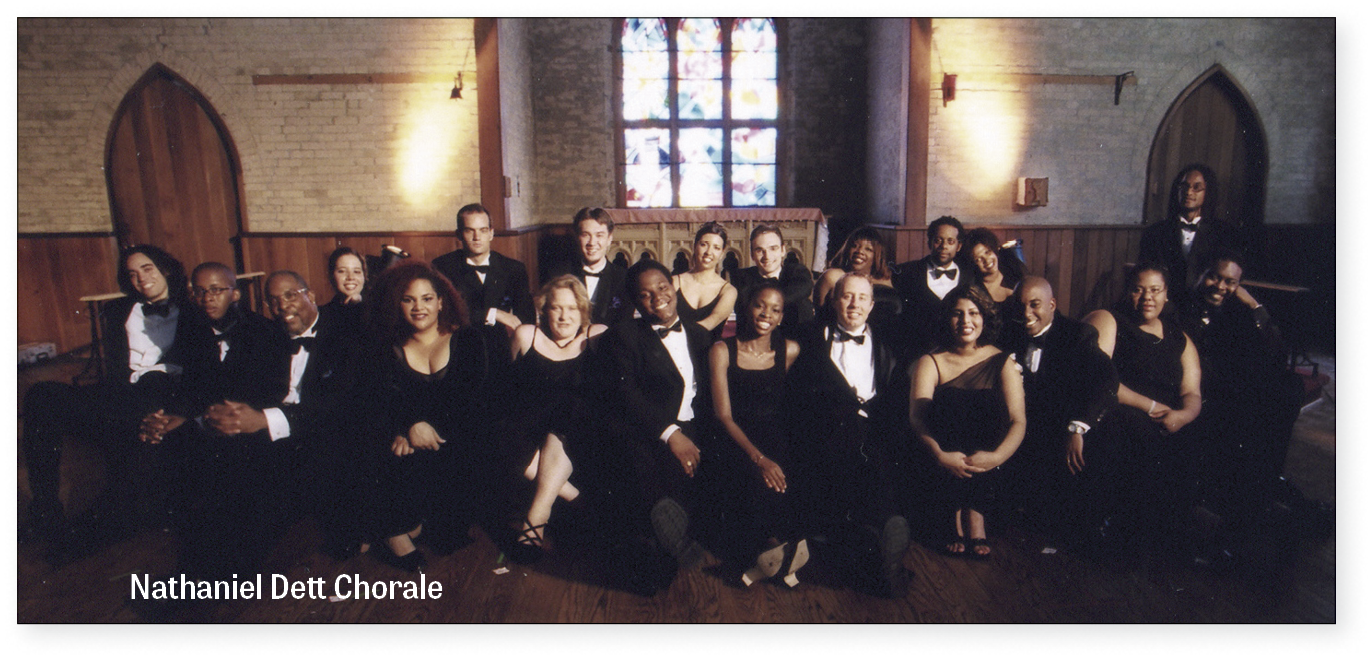
For him, choral music has been fully intertwined with his life from an early age. He’s a proud graduate of the musical halls of St Michael’s Choir School. He has a breadth of experience behind him as well. At York University he studied conducting under Lisette Canton. He’s sung tenor with the Cantabile Chamber Singers, the Canadian Men’s Chorus, the Nathaniel Dett Chorale and the Orpheus Choir.

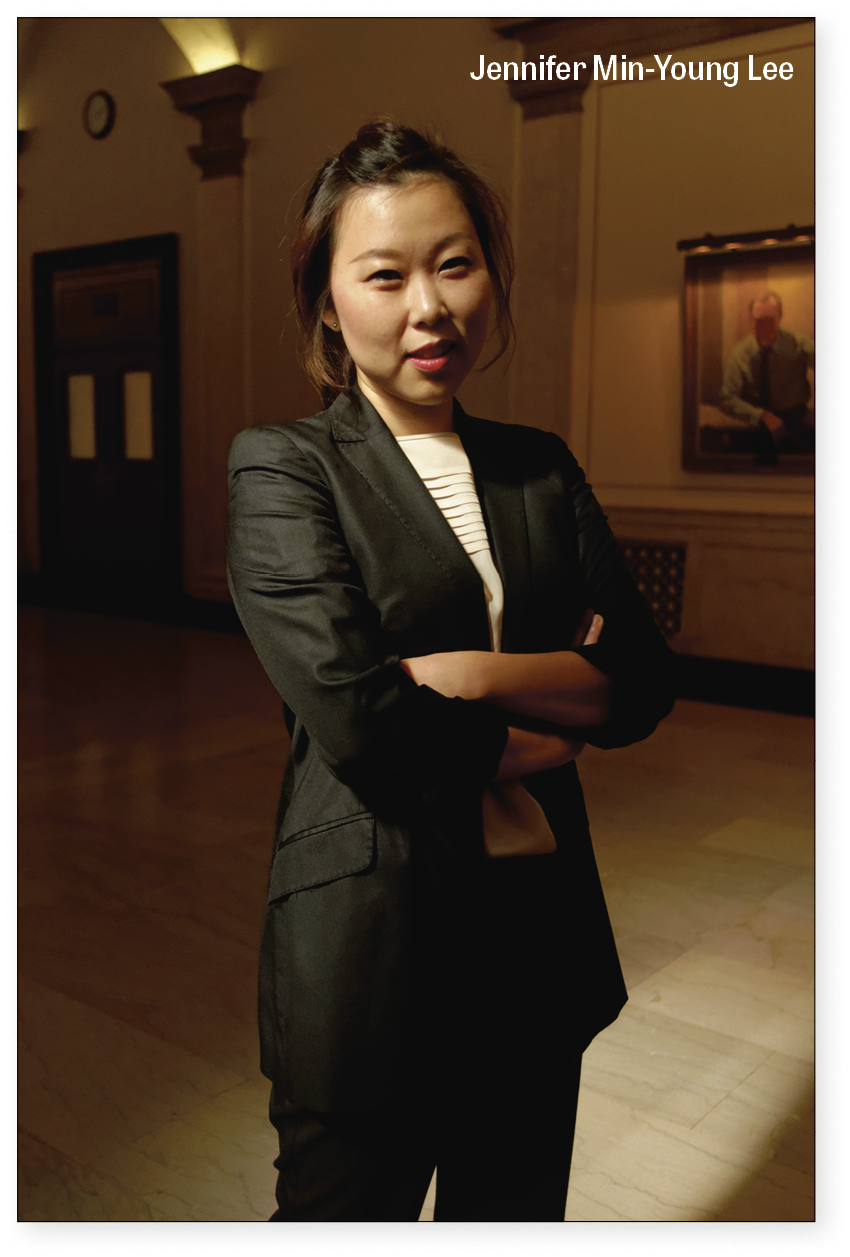
Jennifer Min-Young Lee: The second individual in this month’s focus is Jennifer Min-Young Lee, the new associate conductor of the Toronto Mendelssohn Choir. As a child she was fully immersed in a hybrid youth leadership, skills-building and education program all revolving around music. Born and raised in South Korea, Jennifer spent many summer and winter breaks immersed in the World Vision Children’s Choir. In 1960, children who lost their parents in the Korean War were organized by World Vision into a choir to share love and hope while building their skills and experience. The legacy of this choir continues to this day. Lee explains that this was how she came to learn and interact with music. This intensive musical experience occupied her every break from school. With a master’s in choral conducting from the Eastman School of Music at the University of Rochester and an undergraduate degree in music and education from the University of Western Ontario, Jennifer has solid credentials and solid skills.

She’s a powerhouse of a conductor and educator. She laughs nervously as she lists all her musical obligations. It’s a gentle way to express humility. She’s a full-time music teacher at Bur Oak Secondary School in York Region. She helms a vocal program of over 100 students as well as piano majors. Most of her students have never had any formal musical education. She takes them as they are and teaches them key skills as they grow and come to embrace the creativity of music. Beyond teaching she has sung in the Exultate Chamber Singers (who also performed in Apocalypsis) and has served as apprentice conductor for Orchestra Toronto, all on top of her considerable experience in Rochester and London during her studies.

When we think of conductors, our ingrained expectation is someone akin to Leonard Bernstein or Peter Oundjian. While maestros like Bernstein were powerhouses, their vernacular and approach to music were far removed from the average person’s. Lee’s true skill lies not just in her profession, but her ability to teach and reach students without musical education. The fact that she has guided students who previously had no musical experience through years of successful music education is significant and incredibly valuable. These are the kinds of skills and teachings that make a difference in our communities.

Bur Oak is in the heart of a new development and in an area filled with newcomers, mostly from East Asia and South Asia. Many of her students had never had music offered in educational curricula until they came to Canada. These are kids who have no idea who Von Karajan or Bach are, and don’t know music beyond catchy YouTube vids. But these kids understand Lee, watching her conduct and teach. For many of them, singing in a choir is the first time they have ever learned to step back and be part of a greater whole. And some of these kids will one day grow up to lead ensembles of their own.

Every year at the end of January the Toronto Mendelssohn hosts one of a handful of choral conducting symposiums in North America. It is a weeklong intensive event that culminates in a free concert. Rarely does one get to see so many conductors with different styles in play at one time. Over the years, I’ve spent time cataloguing the various physicalities of these conductors. From “lego hands” to “stacking cups” to “the octopus” to “wings about to take flight “ - there is no shortage of physical interpretations and expressions of music. The first performance I ever did of Handel’s Messiah with the Toronto Symphony Orchestra was under guest conductor Christopher Warren Green. At the end of All we like sheep have gone astray the music becomes suddenly sombre and slow after a much faster and energetic beginning. In the last few bars the maestro just held his hands up to the choir with pleading on his face and barely conducted as we sang “the iniquity of us all.” It was incredibly effective. Lee participated in the Choral Conductors Symposium a few years ago before returning to the Mendelssohn Choir in her new role as associate conductor.

Walter Mahabir speaks of his own inspirations on the podium. When I ask him questions about conducting influences he lists many noting Lissette Canton’s precise technicality, Robert Cooper’s balance, and Brainerd Blyden-Taylor’s emotion. Mahabir says he is learning from them all as he finds his own way. He explains that no matter what he does, he sees himself as an entertainer and he enjoys movement as a basketball player and dancer. The physicality of conducting suits his style very well.

Mahabir and I come from similar parts of the city, he from North Etobicoke and I from North Scarborough. These are parts of the city that are socially, economically and racially diverse and in many ways divergent. Transit is minimal, City Hall and Queen’s Park are far away, schools are in disrepair, parents are working multiple jobs, and arts programs are woefully underfunded if they exist at all. These places do not lack culture and community; they are in fact some of the most diverse in the entire country. However, music education is not always prevalent. Mahabir teaches a junior kids choir that was born out of the growth of musical programming offered by the Regent Park School of Music. And he teaches piano in the Jane and Finch neighbourhood. He’s committed to making it more than just a place for after-school hanging out and to turning it into a learning experience where the kids can grow creatively. And he loves it most when he sees the energy and joy they get out of performing – of showing them that they can do it, and they can do it well. Mahabir exudes this energy as does Lee. Their respective students are very lucky indeed.

These two conductors have a breadth of education and experience behind them and ahead of them. Their careers are only better because they represent everything that music needs to be in the coming years – younger, bolder, and diverse.

Choral Scene 2It’s the most wonderful time of the year!

Choirs are on full display with their holiday offerings. It’s a wonderful time for music! Here’s a mix of fun and beautiful highlights:

Jennifer Min-Young Lee can be seen conducting selections at the Toronto Mendelssohn Choir presentation of “Festival of Carols” on December 9 at 7:30pm, Yorkminster Park Baptist Church. David Briggs will be featured on the impressive church organ and the Salvation Army Staff Band will be performing alongside the choir.

Walter Mahabir will be part of the Orpheus Choir presentation of “Welcome Christmas” on December 15 at 7:30pm, Yorkminster Park Baptist Church. They will be performing with the Hannaford Street Silver Band and the absolutely incredible Jackie Richardson.

Singing Out! presents “All I want for Christmas is you.” Toronto’s LGBTQ gender-diverse and voicing-diverse choir performs fun holiday selections on December 5 at 3pm and 7:30pm in the Jane Mallett Theatre. The choir always dances and I’ve been told there will be bells.

Univox presents the gospel cantata Great Joy by Joubert, McElroy and Red, featuring a five-piece band on December 9 and 11 at 8pm in the Al Green Theatre at the Miles Nadal JCC. The band will feature Chris Tsujiuchi on piano who also helms his own “A Very Christ-erical Christmas Cabaret” at the ever-fabulous Buddies In Bad Times Theatre on December 12 and 13 at 7:30pm.

The Toronto Symphony Orchestra and the Toronto Mendelssohn Choir perform Sir Andrew Davis’ grand interpretation of Handel’s Messiah. This year is a special treat as it will be recorded live by Chandos. December 15, 16, 18, 19 and 20, various times, at Roy Thomson Hall.

The Oakville Children’s Choir and the Oakville Symphony Orchestra provide a fun pairing for holiday fun at 1:30pm and 4:30pm on December 13 at the Oakville Centre for the Performing Arts. These annual family fun concerts are audience participation and include some lovely highlights from John Williams’ Home Alone score.

The New Year!

January always provides a quieter month of respite for choristers with the exception of two notable events. One being the aforementioned Toronto Mendelssohn Choir Choral Conductors Symposium free concert on January 30 at 3pm at Yorkminster Park Baptist Church. Second, the Toronto Symphony’s Mozart festival featuring the Amadeus Choir in Mozart’s Requiem on January 21 and 23 at 8pm in Roy Thomson Hall. Special note: Philippe Sly, bass-baritone, is featured in the Requiem and he is one not to miss. 

Please stay in touch! Feedback: choralscene@thewholenote.com or Twitter @thebfchang

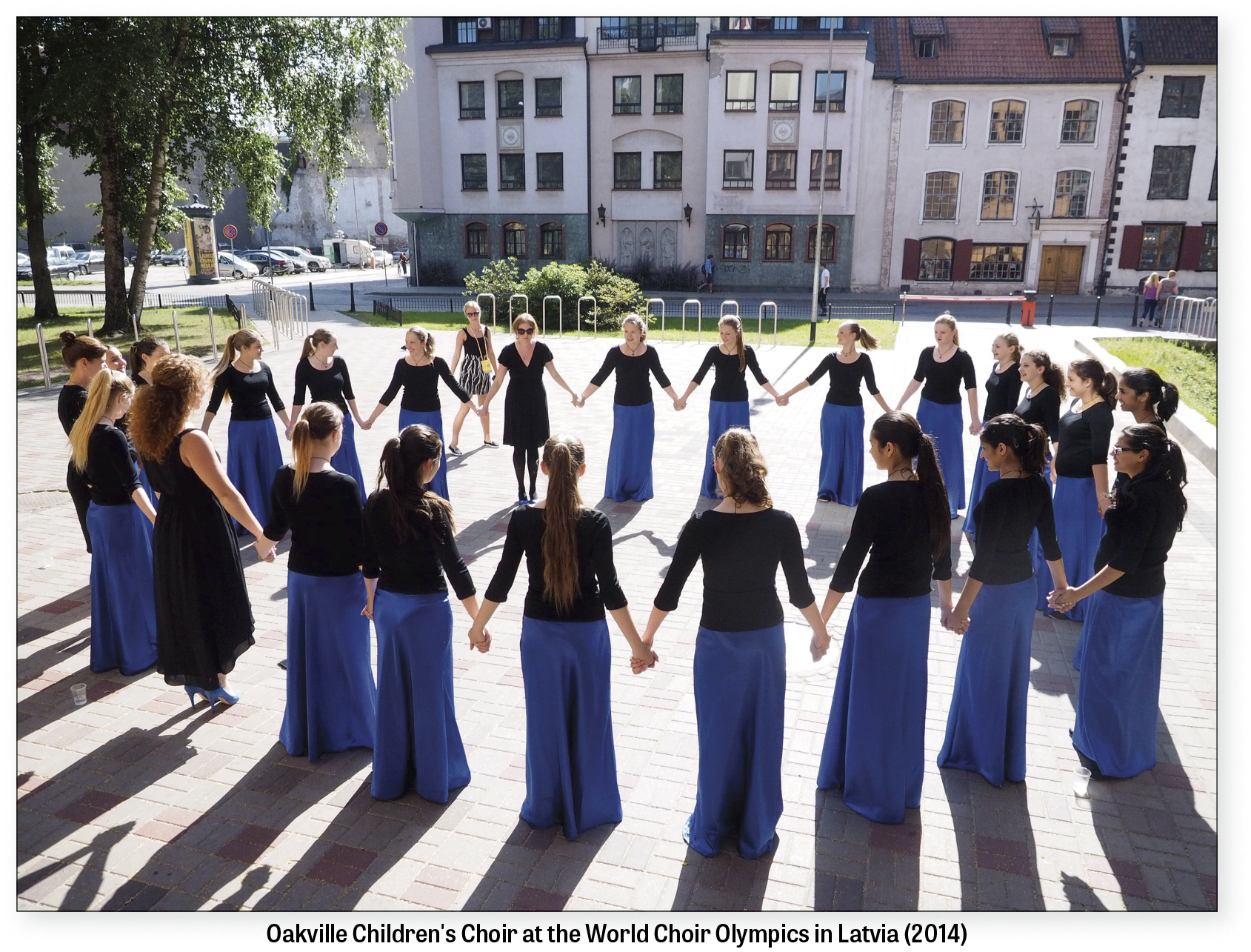
Oakville Children's Chorus at the World Choir Olympics in Latvia (2014)The GTA has a host of fantastic children’s choirs. From Oakville to Mississauga, Hamilton and Niagara, these choirs are often-times the entry point for a lifelong engagement with music and the arts. They provide important exercises in strengthening the fabric of social engagement, inside and outside of music, helping to provide key skills as children age and move on to other adventures – some of which may be still be musical. There are some skills essential to choral music that directly benefit later-life experiences, such as knowing when to blend in and be part of a greater whole; paying attention to difficult situations and implementing plans and practices to address them; learning to follow instructions/direction and applying them to your personal situation/physicality; and learning how to engage contructively with people who ignore all these things. There is so much that these ensembles do in creating and building communities.

Here are some of them: The Toronto Children’s Chorus has eight separate choral programs for different skills and levels of engagement including six choirs. The VIVA! Youth Singers are featured every year in the National Ballet’s performances of The Nutcracker and have five ensembles. The Oakville Children’s Choir has seven programs including six choirs. (Artistic director Sarah Morrison led the Oakville Children’s Choir to a double gold finish at the World Choir Games in the Summer of 2015.) The Hamilton Children’s Choir with Zimfira Poloz was featured in R. Murray Schafer’s Apocalypsis during Luminato, as well as the Pan American Games closing ceremonies. These are some of the hardest working choirs out there year after year. And there are many others throughout Southern Ontario.  It’s also important to note that these are also ensembles who have a presence in their communities beyond their membership. The Oakville Children’s Chorus has begun a project in partnership with ErinoakKids, the largest children’s treatment centre for a variety of disabilities. Members of ErinoakKids and the OCC sing together regularly in a glee club that was created to share music. Sarah Morrison speaks of the joy and learning that is shared when choirs reach out into their communities. And, as she says, more often than not, it’s the kids who have the ideas, the energy and the enthusiasm for these collaborations. The Hamilton Children’s Choir also performs regularly for seniors in their communities.

A functional musical vocabulary is another benefit of early involvement in a choir.  As a policy analyst by educational training and trade, I spend a lot of time around people who have no formal musical background. These are not people who don’t have music in their lives – far from it. But they aren’t playing clarinet in a wind ensemble or violin in a string quartet or singing alto in a mixed-voices choir. They have a musical vocabulary made up of words like “rocking,” “energetic” and “soft,” instead of “chromatic,” “largamente” and “that suspension in the time change before the major chord was innovative.” Children’s choirs have an important part to play in the evolution of how larger communities engage in music. Because really, who looks at a bunch of kids singing and goes “Wow. I really don’t like this.” These kids inevitably grow up and in time share their experiences in music with a new generation. Moreover, the skills they learn will continue to serve them and us throughout their lives.

That being said, we should beware of making the jargon of music into a kind of closed door club. I take friends to concerts who have never been or go infrequently to live instrumental or choral music. The musical fabric of the city is built into their lives in bars, pop concerts, street performers and music theatre, but the same cannot be said of instrumental music. On a recent trip to the Toronto Symphony Orchestra’s presentation of La Mer and A Sea Symphony, I brought a friend who had been to a symphony only twice before. I gave a briefer on the Sea Symphony and used many of the words that I used in last month’s column: bombastic; imperialistic; grand. This worked for him. For a person untrained in music, who cannot usually tell the difference in sound between a trombone or a horn, or what a cadence is, he understood because he felt it. And this is where the great power of instrumental music lies, in common experience. His vocabulary didn’t need to be RCM certified to convey the commonality of experience. So the languages trained musicians use to communicate widely should not exclude others. The languages of what we could describe as music in the widest sense are as varied and many, as diverse as the living things that make up this planet. One doesn’t need to analyze the pitch and program of toads in the Caledon Hills during mating season to appreciate that something grand and exceptional is happening. Similarly, one can listen to A Sea Symphony and interpret a military sound without knowing that trumpets and snare drums are creating that sound.

It is also worth considering the information we get as to the state of choral music making in our communities not by what the established choirs are doing, but by what is happening on the fringes, and anywhere children and young voices are concerned. Where are younger people engaging with music? EDM, DJ Skratch Bastid, Choir!Choir!Choir, Pentatonix, music theatre and film soundtracks are just some of the sources of music I find my friends going to that aren’t mega-scale, heavily produced pop concerts. And for this, and an even younger crowd, Disney movies continue to be a source of deep and powerful musical tradition (That Choir recently had a Disney-themed cabaret).

In September, That Choir did a season launch that wasn’t a choral performance. This is unusual and welcome in an attempt to build a community of relationships that support a choir and its work. The TSO does this as well, with donors of much more privileged wallets. One day I might make it through the doors of the Maestro Club or the fancy Amex lounge at Roy Thomson Hall. For now, having a drink at No One Writes to the Colonel and singing “I can’t feel my face when I’m with you” by the Weeknd with 100 other people hits the spot pretty well. And importantly, it does for a lot of other people as well.

Children’s Choir Concerts

The Toronto Children’s Chorus is going on tour to Boston and New York City in March 2016. These talented kids will light up the hallowed walls of Carnegie Hall in the Choirs of America National Competition. The Toronto Children’s Chorus presents “Spectral Contrasts” on Saturday November 7, at 4pm, in Calvin Presbyterian Church. Proceeds will go towards the competition.

The Hamilton Children’s Choir will be part of the City of Hamilton’s Remembrance Day ceremonies on November 8, at 10:30am in St George’s Church.

The VIVA! Youth Singers present “Shanti!: Our Native Land” on November 29, at 3:30pm in Trinity-St Paul’s Centre.

The Oakville Children’s Choir presents “Songs for a Winter Night” on Saturday December 5 at 7pm in St. John’s United Church in Oakville.

Chorus Niagara’s Children’s Choir presents “The Time of Snow” at Beacon Christian School on Saturday December 6 at 2:30pm in St Catharines.

Other Concerts

Chorus Niagara is pulling together the McMaster University Choir and the Niagara Symphony Orchestra in presenting “CELEBRATE!: The Explosive Power of 160 Voices in Partridge Hall” on November 7, at 7:30pm in FirstOntario Performing Arts Centre in St Catharines.

Further east, another conglomeration of choirs is assembling for “Choralpalooza,” featuring the Kingston Chamber Choir, She Sings, the Kingston Townsmen, the Kingston Choral Society and Open Voices Community Choir. This will take place November 8, at 12pm in the Isabel Bader Centre for the Performing Arts, Kingston.

Bel Canto is just one of many choirs in Scarborough. They perform “The Most Wonderful Time of the Year” on December 6, at 2:30pm and 7:30pm, in St. Dunstan’s of Canterbury.

Two sets of German choral works are being presented: one by the Toronto Mendelssohn Choir on November 25, at 7:30pm in Koerner Hall; the other by the Hart House Chorus on November 29, at 4pm in the Great Hall of Hart House. clip_image001.png

Please stay in touch! Feedback: choralscene@thewholenote.com or Twitter @thebfchang

Choral_-_Dett.pngTeddy Abrams is the 28-year-old conductor of the Louisville Orchestra. His youth is not for a lack of experience and talent. At the end of the summer he was featured by PBS as the youngest artistic director of a major American orchestra. He spoke of many philosophical questions that are affecting live instrumental music. One in particular has stuck with me, and that’s his belief that artistic organizations need to continue to create a positive direction for our society. He challenges himself and his musicians to think about the ways in which they can bring together, collaborate with and energize the communities they touch. And he sees important elements of civic, social and political life in music.

These big questions are inevitably lost in the competitive musical life of Toronto and the surrounding areas. I have yet to meet a musical organization that exists solely for the creation of a better society, in so many words; but, on the other hand, if so many of us did not have positive experiences with live music, why would we contribute so much of ourselves towards it?

In the Toronto Mendelssohn Choir (of which I am a member), each chorister spends over 150 hours in more than 50 rehearsals each season, apart from personal practice time. Add my other ensembles to the mix, the Scarborough Concert Band and Incontra Vocal Ensemble, and easily eight hours of my week are spent in rehearsals or doing music. When I conducted the UTSC Alumni and Community Choir the commitment was drastically higher with preparation, technique, and score study. Live music is not an insignificant commitment to bring to fruition. But the result is unlike any other. The collaborative nature of music requires the blending of myriad forces into a cohesive engine that can lead in many directions. And yes, they can present ideas, stories and thoughts on deeply political and social issues. A few upcoming performances truly showcase this ability.

Hail October! With October hailing the true start to the musical performance season, there are many performances ahead. Bravo Niagara’s North Star Festival is early in the month from October 2 to 4. This inaugural festival is endorsed by the UNESCO Slave Route Project. At St. Mark’s Anglican in Niagara-on-the-Lake on October 3 at 7:30pm the Nathaniel Dett Chorale presents “Freedom has a Voice.” The Chorale will be featuring Lift Every Voice and Sing by James Wheldon Johnson, a song written in 1899. A contemporary of Canadian Nathaniel Dett, Johnson would make his name as a writer, composer and dignitary in his position as executive secretary of the U.S. National Association for the Advancement of Colored People (NAACP) for a decade. During the civil rights era, Lift Every Voice and Sing would become an anthem of the people throughout the movement.

Niagara, an important terminus on the Underground Railroad, is the perfect place for Bravo Niagara to honour the important goal of many looking for freedom. Such spirituals as Wade in the Water and Swing Low, Sweet Chariot have histories connected to the Underground Railroad. These songs are now staples of modern choral tradition but were once relegated to minstrel shows, their powerful history perverted in racist processes of minstrelsy and blackface.

Dett and Johnson were two of many musicians who revived these spirituals and re-elevated them from their degradation. With Polaris, the North Star, leading people onwards to Niagara, the region was a haven unlike any other. And the culture and peoples who braved this perilous journey have left an indelible and beautiful history for us to commemorate. I hope this is the first of many years for this festival.

Wilfred Laurier University’s “Sing Fires of Justice 10th Anniversary Concert,” honouring missing and murdered indigenous women, takes place at St. Matthews Lutheran Church in Kitchener, October 4 at 7pm. Choirs from WLU, the University of Waterloo, the Mino Ode Kwewak N’Gamowak (Good Hearted Women Singers) and many other guests are featured: music continues to be a salient and powerful tool in exploring communal trauma, sharing stories and celebrating. Admission is by freewill donation with funds going towards the Mino Ode Kwewak N’Gamowak.

Buffy Sainte-MarieBuffy Sainte-Marie: The pathways that lead to the creation of music, the sharing of music, and the performance of music are many. These deeply social, economic and political issues are heightened through music. Dett’s and Johnson’s history, stories and sense of justice were strongly linked to their musical expression. And for indigenous women in Canada, one only has to look at the artistic practices of the last two years of Polaris Prize winners – Tanya Tagaq and Buffy Sainte-Marie – to recognize a similar, albeit stylistically very different, linking of music and social justice.

Check it out: One sure treat this fall is the October 30 presentation of The Phantom of the Opera by the Orpheus Choir. A unique, one-night-only accompaniment to the 1925 silent film, the blend of cinema and music should inspire more work like this. Movie soundtracks have long incorporated choral music. With the recent involvement of the Tallis Choir with the Kitchener-Waterloo Symphony Orchestra in the Sony Centre’s “Gladiator Live,” I can only hope for more opportunities that blend film and music in the city. It’s also worth noting that these film concerts, of which the TSO is doing a few this year (Psycho and Back to the Future), are often the only time under-30s are not greatly outnumbered in instrumental music audiences.

A gospel powerhouse hosted by York University, “G.I.V.E., the Gospel Inter-Varsity Explosion,” will feature more than 150 voices drawn from the York University Gospel Choir, University of Toronto Gospel Choir, McMaster University Gospel Choir and Humber Gospel Choir. G.I.V.E. will perform October 24 at 7pm at the Islington Evangel Centre under conductors Karen Burke and Corey Butler, with special guests the Toronto Mass Choir and Gospel Joy, a choir from Warsaw, Poland.

Toronto Mendelssohn Choir will be singing with the Toronto Symphony Orchestra in Ralph Vaughan William’s A Sea Symphony. Soprano Erin Wall was a pleasure to sing with during last year’s Mahler’s Second Symphony with the TSO. She returns to share her talent on the stage of Roy Thomson Hall. A bold and bombastic work, A Sea Symphony’s  premiere in 1910 was at a time of perhaps unrivalled patriotic and imperialist fervour. The work is a perfect example of a deeply political  and nationalist (dare one say jingoistic)message brought stunningly to life through music. Come and watch us at RTH on October 21 and 24 at 8pm.

Kaffeemusik: A unique performance will be hosted by the Toronto Chamber Choir in its afternoon Kaffeemusik series. Classical 96.3FM’s Kathleen Kajioka will narrate the life of Matteo Ricci (1552-1610), considered to be the first European allowed into the Forbidden City of China’s emperors. The China Court Trio will provide accompaniment with period music from Italy, Portugal and China at the Church of the Redeemer, November 1 at 3pm.

Remembrance: Commemorations for Remembrance Day begin over the next few weeks. Exultate Chamber Singers perform “Stories of Remembrance” at St Thomas’s Anglican Church on October 23 at 8pm. Included are smaller works by Eleanor Daley – In Remembrance and For the Fallen – but the feature is American composer Donald McCullough’s Holocaust Cantata. Written in 13 movements for choir, cello, piano and narrators, this piece is in English, translated from real-life accounts of letters found in the American Holocaust Memorial Museum archive. 

Brian Chang is a tenor in the Toronto Mendelssohn Choir and a policy analyst during the day. Follow him on Twitter @bfchang

An unusual but fantastic summer has just passed, filled to the brim with culture and sport. With Toronto playing host to the Pan Am and Parapan Am games, the concurrent Panamania cultural events truly allowed our city to showcase its diversity and love of music. Unprecedented energy filled many corners of the GTA as facilities opened their doors and neighbourhoods flew their colours and opened their arms in welcome. Choirs from across the GTA were highlighted across the GTA, from the University of Toronto Scarborough to Nathan Phillips Square to Ajax and the Milton Velodrome. The Element Choir was everywhere, supporting Polaris Prize winner Tanya Tagaq in her transformative music on several occasions. Perennial favourite, the  inclusive, open concept Choir! Choir! Choir! also featured in a Panamania event in the Distillery District with their pop culture approach to choral music. And who can forget the fantastic Hamilton Children’s Choir singing “Shine Your Light” in front of a sold-out Rogers Centre and millions on TV?

Choral_1_-_Tagaq.jpgApocalypsis: For those of us lucky enough, the beginning of summer was enriched by the revelatory powerhouse that was Luminato’s presentation of Apocalypsis. As a tenor in the Toronto Mendelssohn Choir, I sang in one of the 12 choirs that made up the second half of this grand masterpiece of art. One thousand performers brought this uniquely conceived piece to fruition for only the second time since its premiere in 1980. Unfortunately, the choristers caught only a brief glimpse of the staging and choreography. I wonder if the audience was even aware of about 400 of us entering towards the end of the first act as Babylon is crumbling. I relished this moment, entering into the darkness of the dim balcony amidst the cacophony of thick chain metal crashing as the Seven Seals of Myth are broken;  and then, in the residue of the broken world, an old woman emerged. I never saw her but the privilege of hearing her was humbling: Tanya Tagaq in her evocative portrayal of the old woman. We are lucky she was around so much this summer.

Luminato Artistic Director Jörn Weisbrodt has one more festival under his helm before he passes on the reins. Luminato has been good for choirs in our region right from the start with such pieces as R. Murray Schafer’s The Children’s Crusade. But this summer’s Schafer work, Apocalypsis, was Luminato’s largest act of civic engagement so far; it was a truly monumental task to produce and assemble the forces needed for this. One thousand performers will forever remember this unique event in history. I myself made friends with choirs and people from Ottawa to Kitchener. Between the festivities of the Parapan Am and Pan Am games and the grandeur of Apocalypsis, city-building through choral music has been given a real shot in the arm. Here’s to much more!

Building time: Followers of choral music are aware of the rehearsal hours and planning that go into a full season of music. There is often a lag between the start of the season and the first choral performances. It takes time to get a choir back into itself. Noel Edison puts it well when talking about the 130-voice Toronto Mendelssohn Choir: “There’s a lot of humanity in this room.” All choirs, regardless of size, need this time together to build good sound.

As adults we may forget the mix of elation and comfort kids feel after returning to school from summer vacation. But this fun, slightly nervous feeling hits me afresh as choirs return from break and begin making sound anew. Most choristers will spend the first few rehearsals listening to funny quips from conductors about the dismal quality of the sound or cries of tone deafness, flat basses and sharp sopranos. (Tenors are always on pitch. Always.) The reality is that it takes a while for an ensemble to get back into it. Ensembles may have new members, they definitely have new repertoire. For choral music audiences, September is a quiet month as choristers get back into the habit. But for those of us in the choirs, we are busy at work.

A few early birds, of course, are always the exception to the rule:

Intersection: Toronto continues to offer some exemplary opportunities to experience the civic experience of choral music with Contact Contemporary Music’s Intersection: New Music Marathon on September 5. Christine Duncan and the Element Choir will be making an appearance at Yonge-Dundas Square along with a host of other performers in a display of performance and interactive installations. Check them out starting at 2pm.

Wilfrid Laurier leads its school year performances October 4 with “Sing Fires of Justice 10th Anniversary Concert.” Held at St Matthew’s Lutheran Church, donations are accepted in lieu of ticket sales. For ten years now, WLU has used this concert as a commemoration of murdered and missing indigenous women across Canada creating a fusion of community-based music and social justice.

Sweetwater: In the last couple of years there have been quite a few productions of Bach’s Mass in B Minor (one of which I performed in with the Toronto Mendelssohn Choir). I am excited to see it on the lineup for the Sweetwater Music Festival staged as a sing-a-long September 19 at 1pm in Owen Sound. There are quite a few moments of emotion in the piece that are a pleasure to sing as a performer. The Gloria in Excelsis Deo is one not to miss with its bold trumpets and the choir going almost at full tilt before settling into the beautifully gentle Et in Terra Pax. Conductors Kenneth Slowik and Adrian Butterfield have rightfully chosen the Gloria as a feature in the sing-a-long. Unless one is in the Amadeus, Oakham House Choir or Tafelmusik’s sing-a-long Messiah how often does one get to sing with an orchestra? The Bach’s Mass in B Minor can be watched in full the next day, September 20 at 3pm.

Singsation: The Centre for Social Innovation and the Toronto Mendelssohn Choir are offering a free Culture Days’ Singsation. Singsation Saturdays are a mainstay for hundreds of people throughout the season and offer enjoyers of choral music a chance to sing some fabulous music with fantastic local conductors. A highlight of last year was COC chorus master Sandra Horst’s Opera Choruses Singsation. This year VOCA conductor Jenny Crober leads off with a smattering of diverse choral music. Culture Days runs from September 25 to 27 across the country. The Culture Days Singsation takes place September 26 at 10:30am. Free. Last year over 100 people sang, some of them for the first time ever with a choir, some of them for the first time since they were children.

So the new season is upon us. I haven’t yet got any of my new music and rehearsals have yet to start. Like most choristers out there, I’m ready to get back into it and to tackle new works. With a chamber choir, a full symphonic choir and a concert band ahead this year – I’ll be busy. Rehearsing is often considered the painful part with performances as the reward. I very much feel that rehearsing is where the community is built, where the people come together and where choirs truly become great. Performances are merely evidence that everything else is working well. In this, choirs become fantastic acts of community, working together towards a goal. At the start of a new season, there is no time like this in the life of a chorister. A new season. New voices. New music. New challenges. It’s all very exciting. Now is the best time to find an ensemble, try it out and reignite or stoke that love for music and performance. clip_image001.png

Brian Chang is a bass clarinet- and horn-playing policy analyst who sings tenor. Follow him on Twitter @bfchang

Choral-Score.jpgThe term avant-garde has come to mean art on the edge – work that is provocative and disturbing. Many people are not aware that avant-garde was originally the military term for soldiers whose task was to scout terrain ahead of an advancing army. To be a member of the avant-garde, therefore, was to be at a higher risk of first contact and combat than other members of the force, and like many that are first over the top in any combat situation, members of the avant-garde were not expected to have a high survival rate.

Frequently, the artistic avant-garde faces a kind of annihilation as well; not death, thankfully, but the loss of their cutting-edge relevance. Their innovations are subsumed into the mainstream, their work ceases to provoke and the public moves on to new outrages and diversions.

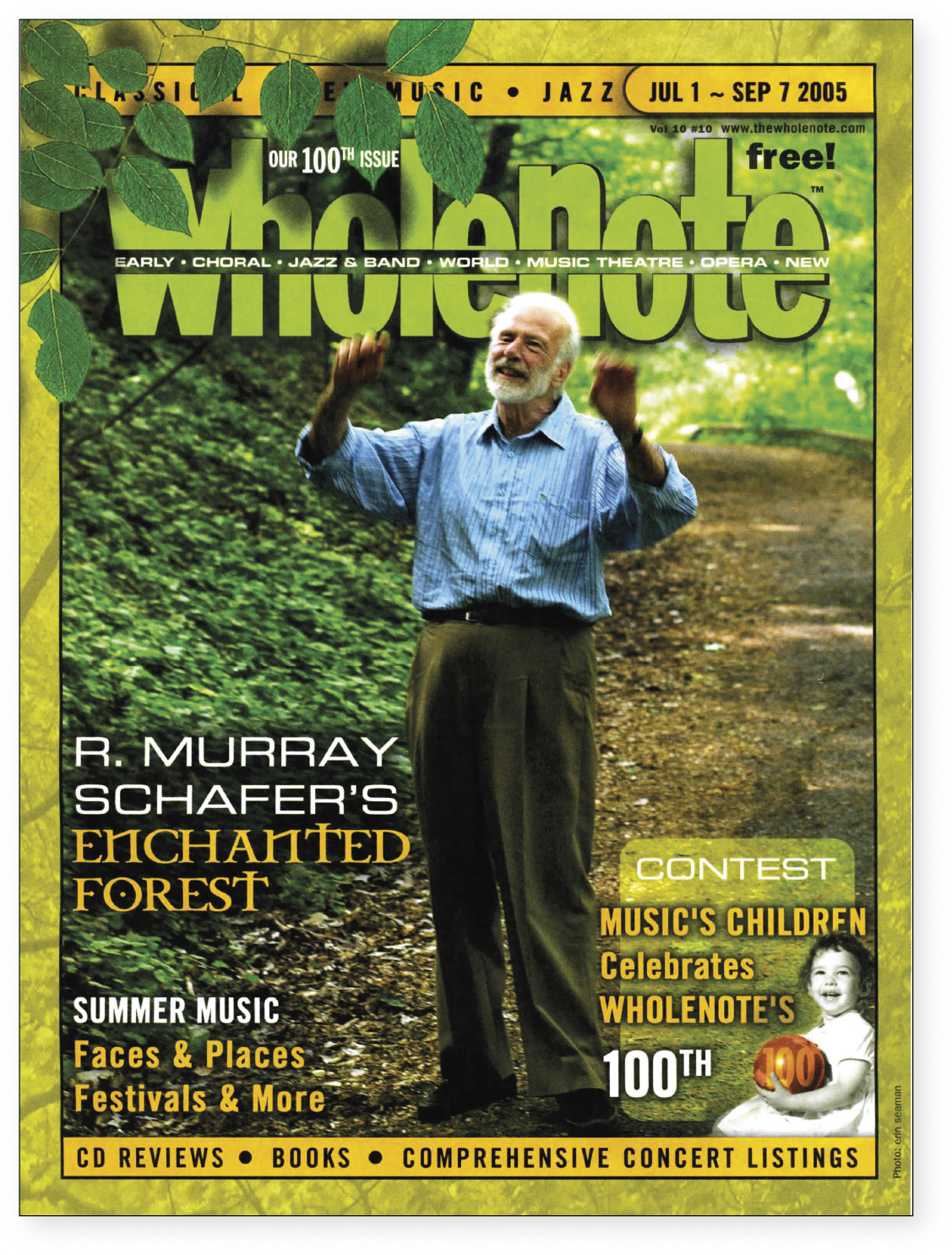
Choral-Fallis.jpgIn artistic terms, what happens to a member of the avant-garde who has survived their encounter with a hostile or receptive public and lived to tell the tale? Do they become venerated elder statesmen, losing their indie cred as they join the establishment, or do they stay on the cutting edge? Canadian composer R. Murray Schafer has enjoyed both rebel status and critical success, amassing a performance history that many composers must envy. His work has never been mainstream, but it has extended beyond the small contemporary music audience to which many composers find their work consigned.

Schafer has been credited with inventing the term “soundscape.” It may be hard for young musicians and their audiences, accustomed to opera productions in vodka bars and symphonies on bicycles, to appreciate how revolutionary it was for Schafer to mount his productions in forests, lakes and other spaces beyond the concert hall. But while there can be a gimmicky quality to some non-traditional staging, Schafer’s work was always rooted in a simple but profound belief that (to paraphrase conductor David Fallis) music changes depending on how and where it is heard. Schafer’s staging needs, his graphic scores and sound innovations were a passionate attempt to get both performers and audiences to listen with fresh ears.

Schafer has been scathing in the past about certain concert music traditions that he finds stultifying. I read one memorable essay in which he compared the classical piano itself to a prostitute. Whether you agree with this or not – I’m not sure that much is achieved by denigrating keyboard instruments or sex workers, either on their own or juxtaposed – it certainly made for provocative reading.

But Schafer’s ire was partly a reaction to what he regarded as the ossified concert culture which unfortunately remains with us still. Schafer’s approach to actual musicians, and the concert audience itself, has been anything but stern and insulting. On the contrary, it has often been playfully generous, notably in his works for children. Unlike some avant-garde artists, Schafer’s lack of contempt for the audience, and his clear desire to connect using musical language that is accessible as well as challenging, has been in part responsible for the positive response to his work.

And so, despite avant-garde aspects in Schafer’s music, I have always thought of him as the last Romantic, a Canadian Mahler of the North. While his tonal language uses extended harmonies and non-traditional soundscapes, his music is rooted in the techniques of earlier eras, including his ability to write a good old-fashioned catchy melody, the most deceptively simple and undervalued of a composer’s skills. Schafer’s fascination with nature, and his frequent depiction of metaphysical battles between good and evil, connect his work to traditions that seem at odds with this era’s self-referential irony and arch diffidence. I would urge both those of advanced and conservative tastes to give Schafer a listen, if they have not done so before.

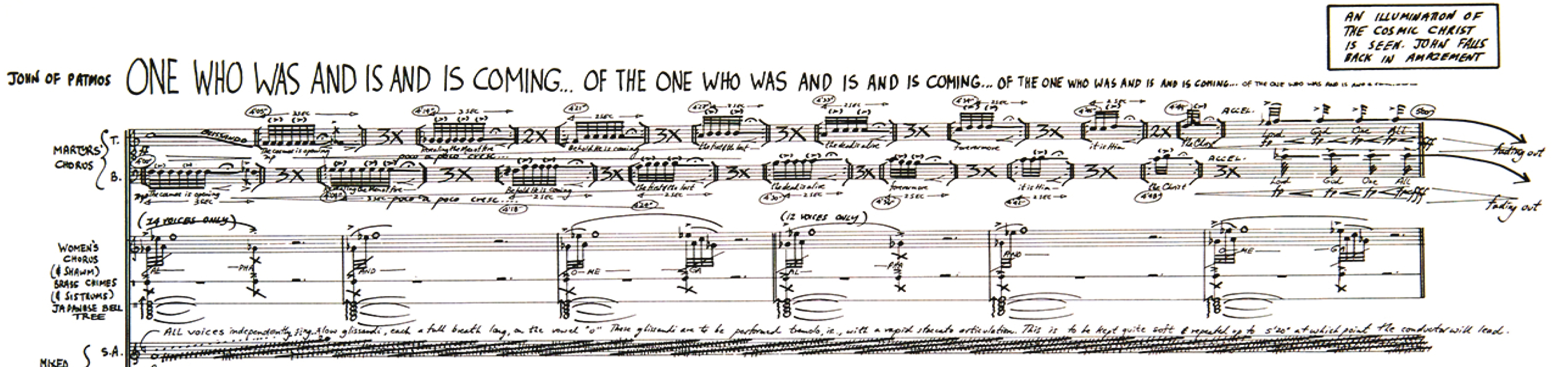
Choral-Cover.jpgThis month brings the opportunity to do just that, by attending a performance of one of Schafer’s most ambitious works. In June, Toronto’s Luminato Festival will mount a new production of Schafer’s Apocalypsis. This is the first time that the work will be heard in its entirety since its 1980 premiere in London, Ontario.

Apocalypsis is a two-part work. The first half is based on the Book of Revelation, the Christian text that has contributed so many images to literature and popular culture – the Four Horsemen of the Apocalypse, the Seven Seals, the Whore of Babylon, the Beast and the False Prophet, all of whom are defeated by the forces of good. The second part, Credo, is an extended chorus that has been performed several times as a concert work. The text is a translation of writings by Giordano Bruno, a 16th-century Jesuit priest who was also a philosopher and astronomer. Bruno’s ideas of spirituality, and the place of the world in the universe, were so disturbing to Catholic authorities that he was imprisoned and put to death in 1600.

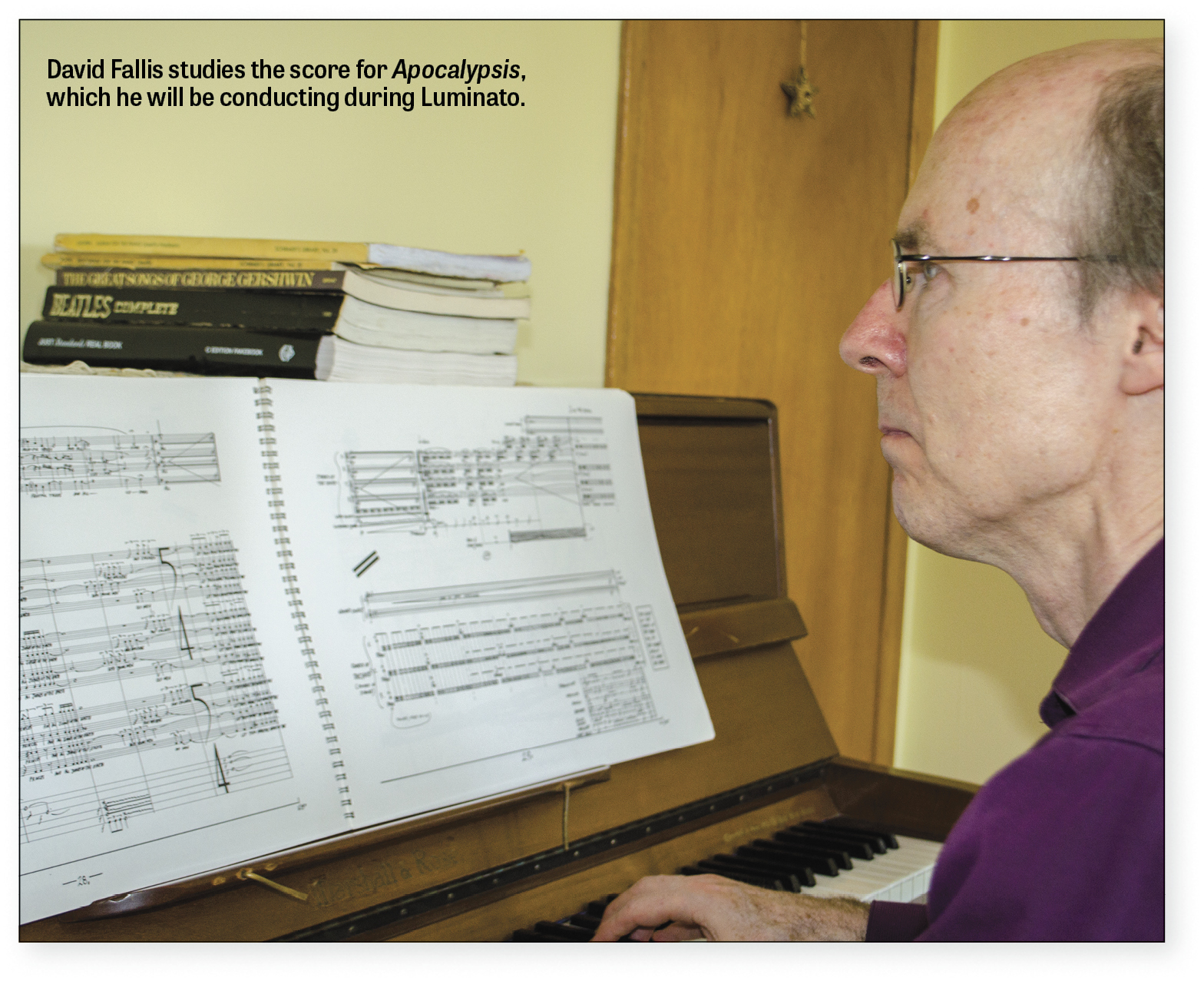
Part of the difficulty in restaging Apocalypsis has been that the forces that Schafer specifies for performance are enormous, requiring a muster that evokes the original military meaning of avant-garde. Toronto conductor David Fallis, who has performed Schafer’s work in the past, will be leading the advance. Samoan choreographer Lemi Ponifasio and MAU, his ensemble, will be the central group involved in the staging. Canadian star performers Brent Carver, Tanya Tagaq, Denise Fujiwara and Nina Arsenault have solo roles. New Zealand opera singer Kawiti Waetford will join them, and performance art legend Laurie Anderson will have a video cameo as well.

Then there are Apocalypsis’ ensemble requirements. The list of performers constitutes a music festival in its own right. Groups from all over Ontario are participating – see the list of choirs at the end of the column, which does not even include the many instrumentalists involved. There will be close to 1,000 performers – dancers, soloists, choristers, conductors, brass, strings (including 12 string quartets!), winds and percussion – in the Sony Centre in three performances on June 26, 27 and 28, making Apocalypsis a Mahlerian endeavour indeed.

That the performance of such a large work has been made possible is a tribute both to the producers of Luminato and the commitment of Canadian ensembles to indigenous modern composition. Conductor Fallis speaks with enthusiasm about the conductors and choirs that he had never worked with, and whose drive and excellence he has come to admire. Considering that the last complete performance of Apocalypsis  took place 35 years ago, for many this one may well be a once-in-a-lifetime experience – but hopefully not. It is exciting to witness many Ontario groups joining together to make arts events take place, so let’s hope this will be a model for future collaborations, especially with Canadian works.

For tickets and further information, see luminatofestival.com. 

Choirs Involved with Apocalypsis:

Bell’Arte Singers
Cantabile Chamber Singers
Cantores Celestes Women’s Choir
City Choir
Concord Vocal Ensemble
Da Capo Chamber Choir
The Element Choir
Exultate Chamber Singers
Grand Philharmonic Choir
Guelph Chamber Choir
Hamilton Children’s Choir
Tallis Choir of Toronto
That Choir
Toronto Chamber Choir
Toronto Mendelssohn Choir
Oakham House Choir
Ontario Youth Choir Alumni
Orpheus Choir of Toronto
Ottawa Bach Choir
Pax Christi Chorale
Regent Park School of Music
Seraphim Men’s Chorus
St. James Cathedral Choir
Singing Out!
Univox Choir Toronto

Benjamin Stein is a Toronto tenor and lutenist. He can be contacted at choralscene@thewholenote.com. Visit his website at benjaminstein.ca.
The human voice is an astonishingly versatile instrument, capable of an infinite variety of tones, timbres and inflections. Something primal in us is touched by the extremes of range in the sound of a coloratura soprano or a basso profundo; the virtuoso melismatic technique of a Hindustani or R&B soloist; the mysterious, elusive harmonies of Tibetan and Tuvan throat singing; and the street-corner, sandpaper tones of Tom Waits, Billie Holiday and Joe Turner.

We have an inexhaustible fascination with vocal music. Historical documents about music that ignore technical and artistic questions often go into great detail about the sound of voices. Today’s recording industry is centred around the sound of the human voice, and our ability to mechanically engineer and manipulate sound has reached an astonishing level of ease and complexity. Paradoxically our interest in music’s most basic expression, unaccompanied or a cappella singing, is unabated and may actually be increasing.

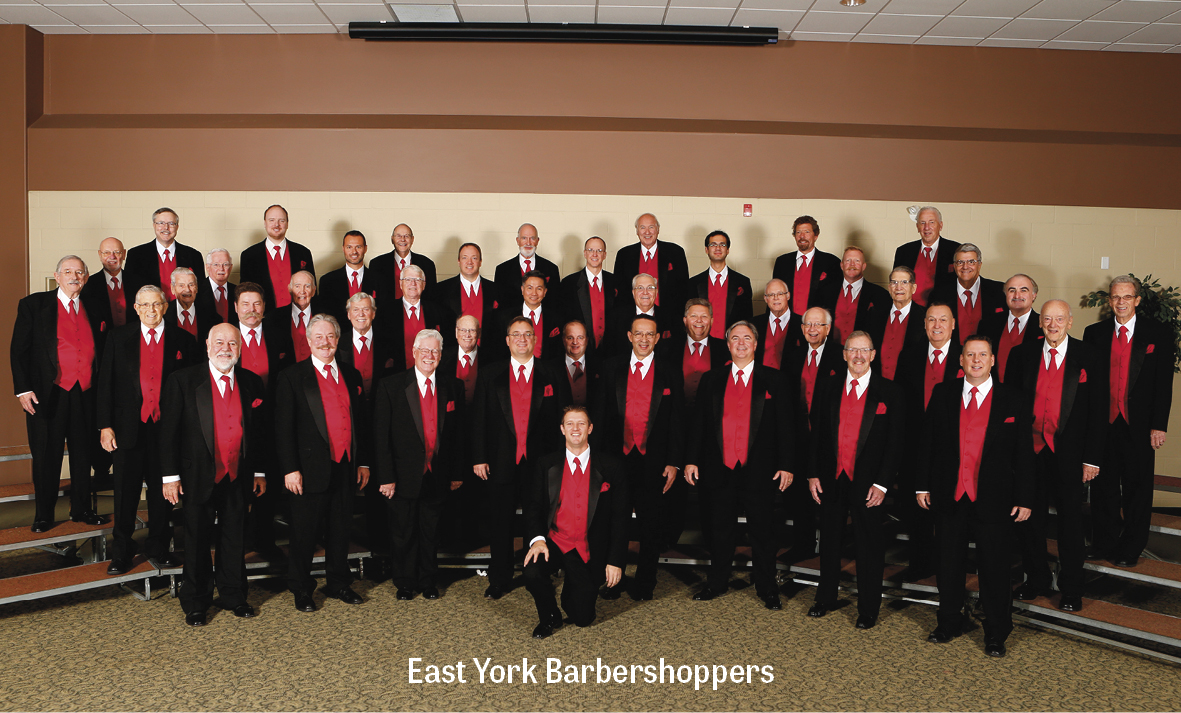
2008_-_Choral_-_East_York_Barbershoppers.jpgEast York Barbershoppers: The awareness of tuning necessary to execute a cappella music, unsupported by instruments, can be a challenge even to experienced vocalists. In April I had the pleasure of attending a rehearsal of the East York Barbershoppers, in preparation for their May 23 concert. This event celebrates the group’s 65th year, which makes them one of the longest-running ensembles in the city. For more information see eybs.ca

Barbershop singing is an internationally popular a cappella genre of vocal music. It is notable not only for its particular nature – close harmony singing by male or female ensembles centred around (but not limited to) Anglo-American parlour song of the 19th and 20th centuries – but also for the rehearsal process that trains singers to listen and harmonize, and the continuing vitality of the art form all over the world. The USA-based Barbershop Harmony Society has roughly 25,000 members internationally, with chapters from Sweden to South Africa to New Zealand. Continuing to flourish without the aid of mainstream commercial promotion or institutional instruction, Barbershop has managed to sustain itself in the face of neglect on many fronts.

The East York Barbershoppers have have an ongoing lease agreement with several levels of government that allows them to rehearse regularly in Harmony Hall, 2 Gower St., a community space near Dawes Rd. in what, pre-amalgamation, was called East York. The rehearsals take place in the gym/theatre space on the main floor, but downstairs there is the specially named Quartet Room for small ensemble rehearsals and the President’s Room, a wonderful historical space filled with pictures, trophies and medals that attest to the group’s ongoing presence within the community.

Chatting with some members of the EYB prior to the rehearsal, I am regaled with an intriguing mixture of historical and technical knowledge. Ron Whiteside is a baritone who joined the EYB in 2000 and took his own ensemble, the Scarborough Dukes of Harmony, to competition wins in the 70s and 80s. He gleefully discusses a version of “Jeannie With the Light Brown Hair” that scandalized a 70s era barbershop judging team, or the pitch issues involved in tuning close-harmony seventh chords in vocal standards like “Five Foot Two, Eyes of Blue” and “Ain’t She Sweet.”

Close harmony singing is challenging; you can’t assume, as a classically trained musician or experienced choral singer, that you will automatically be able to tune barbershop chords. Classical singers generally sing accompanied by piano, and the tempered tuning of the piano does not always foster sensitive ears. Piano and orchestral accompaniment can become a kind of aural crutch in which a sounding pitch is approximately matched and really sensitive intervallic tuning is neglected.

Barbershop rehearsals make very little recourse to piano, either for harmonies or melodic lines. Singers instead are given a root tone from a pitch pipe, and are expected to be able to build their harmonies from that information alone. They use sheet music in rehearsal – performances are always memorized – but are often working as much by ear and from memory as from a printed score. The singers I talked to all showed an awareness of the nature of pitch relationships and of the necessity of microtuning to give a chord a more vibrant sound, in a manner that would befuddle many musicians with more formal training.

I met some singers who had recently begun singing in the EYB and others who had been singing in barbershop ensembles literally almost all their lives. Director emeritus George Shields continues to sing with the ensemble, along with his, brother-in-law, Jack Kelly, who was a founding member 65 years ago. George and Jack are 89 and 90 years old.

Lindsay-born Pat Hannon, the ensemble’s young director, identifies himself as a fourth generation barbershopper, who grew up with the sound of close harmony in his home. Hannon points out that modern barbershop singing has both branched out from its original repertoire to include arrangements of songs such as Pharrell Williams’ “Happy” and Jason Mraz’s “I’m Yours,” and at the same time is beginning to rediscover and explore its own roots in African-American culture, from which many of its traditions originated.

Before I left, the ensemble serenaded me with Hank Snow’s “You’re as Welcome as the Flowers in May,” keeping perfect tune as every member of the group filed by and shook my hand, one by one. Walking out of Harmony Hall into the cool spring night, I was glad to see that in this corner of East Toronto this charming and rigorous tradition  of a cappella community singing is healthy and thriving.

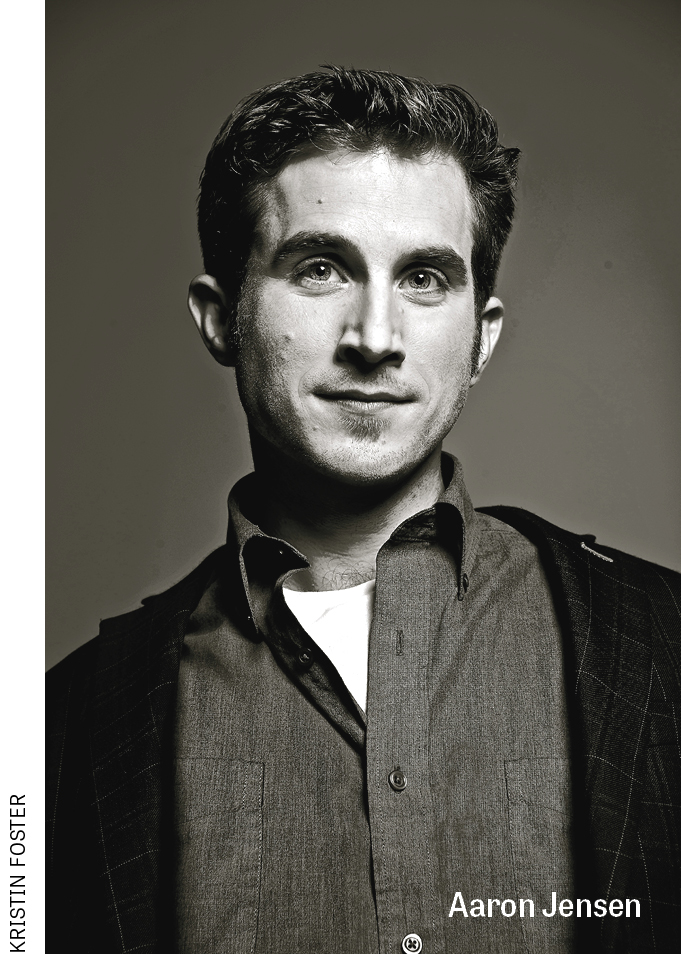
2008_-_Choral_-_Aaron_Jensen.jpgTime to SING! Barbershop and many other a cappella groups of all sizes and styles can be found at Toronto’s SING! festival, a dynamic event now in its fourth year. SING! The Toronto Vocal Arts Festival will take place May 27 to 31. SING! was co-founded by the energetic and passionate Aaron Jensen, a composer/singer/conductor involved in so many different vocal music projects that he clearly does not have time to sleep. Still, he sounds more than alert when discussing his love of singing. In response to a follow-up email question, Jensen writes: “There is no human culture, no matter how remote or isolated, that doesn’t sing. We sing to build personal bonds, to celebrate, to venerate gods, to mark rites of passage and to pass along ancient stories. Singing boosts your mental health, calms nerves, sharpens your memory, reduces anxiety and raises your spirits. Singing is intimate, evocative, empowering, and it’s just plain fun.”

Jensen’s vision for the SING! festival is one that welcomes and celebrates many genres of music in the context of unaccompanied singing. His mandate is to make the festival and attendant events throughout the year a resource and hub for vocal training and performance in Canada. Jensen has also reached out to other North American cities, and there will be an upcoming SING! festival in Austin, Texas in October 2015.

Most of the activities in the Toronto event will be centred in the Distillery district just east of Parliament and Front Streets, but concerts will also take place at Koerner Hall and Glenn Gould Studio, as well as several Toronto churches, which are some of the best performance spaces in the city.

R.A.M. to Rajaton: The Estonian National Male Choir, known in Estonia as the R.A.M. Koor performs at Christ Church Deer Park May 28. This ensemble, which celebrates its 70th anniversary this year, has recorded for both Deutsche Grammophon and Sony records. Their performance includes a premiere by acclaimed Estonian Composer Arvo Pärt : his setting of the Da Pacem Domini text, in a new version for string orchestra and male choir. The choir’s SING! concert is part of a seven-concert tour of southern Ontario. More details about the tour’s dates and locations can be found at this Facebook group: facebook.com/estotour.

Two other acclaimed vocal chamber ensembles will be visiting Toronto for SING! 2015. Take 6 is a jazz harmony marvel that has performed with Ray Charles, Quincy Jones and Stevie Wonder. Finnish ensemble Rajaton, less well known in North America, are multi-platinum recording artists in Europe.

The Canadian contingent: This year Canada is represented at SING! by a number of different groups, including the Nathaniel Dett Chorale, with guests Countermeasure, one of Aaron Jensen’s ensembles. In a concert titled “Jubilate Deo: Great Sacred Choral Music through the Ages,” four Toronto choirs will sing together: the Cathedral Church of St. James, Rosedale United Church, Kingsway-Lambton Chancel, and All Saints Kingsway Anglican.

There will also be a series of intriguing workshops geared towards musicians and arts managers interested in networking, developing skills and building viable ensembles. Workshop topics will address subjects such as securing funding, the logistics of management, composing music for film and television, vocal care, and songwriting and audition strategies, among others. The Take 6 and Rajaton ensembles will be hosting workshops that investigate the technical and artistic aspects of their concert work. For information on the SING! concert and workshop schedule – there are many other groups performing that are not mentioned here –go to singtoronto.com.

Other May/June concerts:

On May 9 the Orpheus Choir of Toronto, one of the city’s staunchest choral champions of living composers, presents “Touch the Earth Lightly.” The concert features the premiere of Canadian composer (and Da Capo Chamber Choir conductor) Leonard Enns’ Ten Thousand Rivers of Oil and the Toronto premiere of Norwegian composer Ola Gjeilo’s Sunrise–Symphonic Mass .

On May 10 the ECHO Women’s Choir presents “My Mother is the Ocean Sea.” The concert features special guests Lemon Bucket Orchestra’s Mark Marczyk and singer/ethnomusicologist Marichka Kudriavtseva.

On May 23 the Masterworks of Oakville Chorus & Orchestra will give a tenth anniversary concert, performing two popular modern works, Poulenc’s Gloria and Stravinsky’s Symphony of Psalms.

On May 24 choral audiences will be forced to choose between two different womens’ voices ensembles. The Oriana Women’s Choir performs “The Voice of Oriana: Music for a New Day,” with works by Eleanor Daley, Harry Freedman, Derek Healey and others. And the Florivox Choir performs “This Woman’s Work,” a concert that includes music by Kate Bush.

On May 31 the male vocal ensemble, the Victoria Scholars, performs “Simple Gifts,” with what the choir bills as “easy on the ears”: works by Casals, Copland, Debussy, Kodály and Lauridsen.

On June 6 the Etobicoke Centennial Choir performs “Songs of Hope, Songs of Inspiration,” a concert that includes modern choral favourites such as Paul Halley’s catchy Freedom Trilogy and Samuel Barber’s serene Sure on This Shining Night.

Also on June 6 the Voices Chamber Choir performs “Brother Sun, Sister Moon,” with a theme of choral music for the morning and the evening,  The concert includes current American choral starMorten Lauridsen’s Nocturnes and Canadian Healy Willan’s Magnificat and Nunc Dimittis.

A final thought on the subject of a cappella singing: Our love of the voice stems from our love of music, defined very roughly as pitched and coherently organized sound. The reasons why we love music are varied, complex and usually expressed with too much flowery verbosity to suit me. Music, executed well, makes us feel good. We don’t need any more justification for its pursuit than that. But there is a special and unique quality to music’s expression through the human voice. The act of singing affects us in a manner we scarcely understand, but feel at the most elemental level.

When we sing, our vocal chords become the reeds that translate vibration into pitch. Our throats become conduits for air flow, our bones conduct sound and our bodies become the echo chambers that give life and resonance to the tones we create. No matter where voiced pitch finds expression – the shower, a concert hall, a school gym, a digital or analogue recording – its source is ultimately flesh and bone. Singing is the closest we come not just to making music, but to being music. It’s the nearest a process of transmutation that human beings can experience. As we embody music, music embodies us.

Benjamin Stein is a Toronto tenor and lutenist. He can be contacted at choralscene@thewholenote.com. Visit his website at benjaminstein.ca.
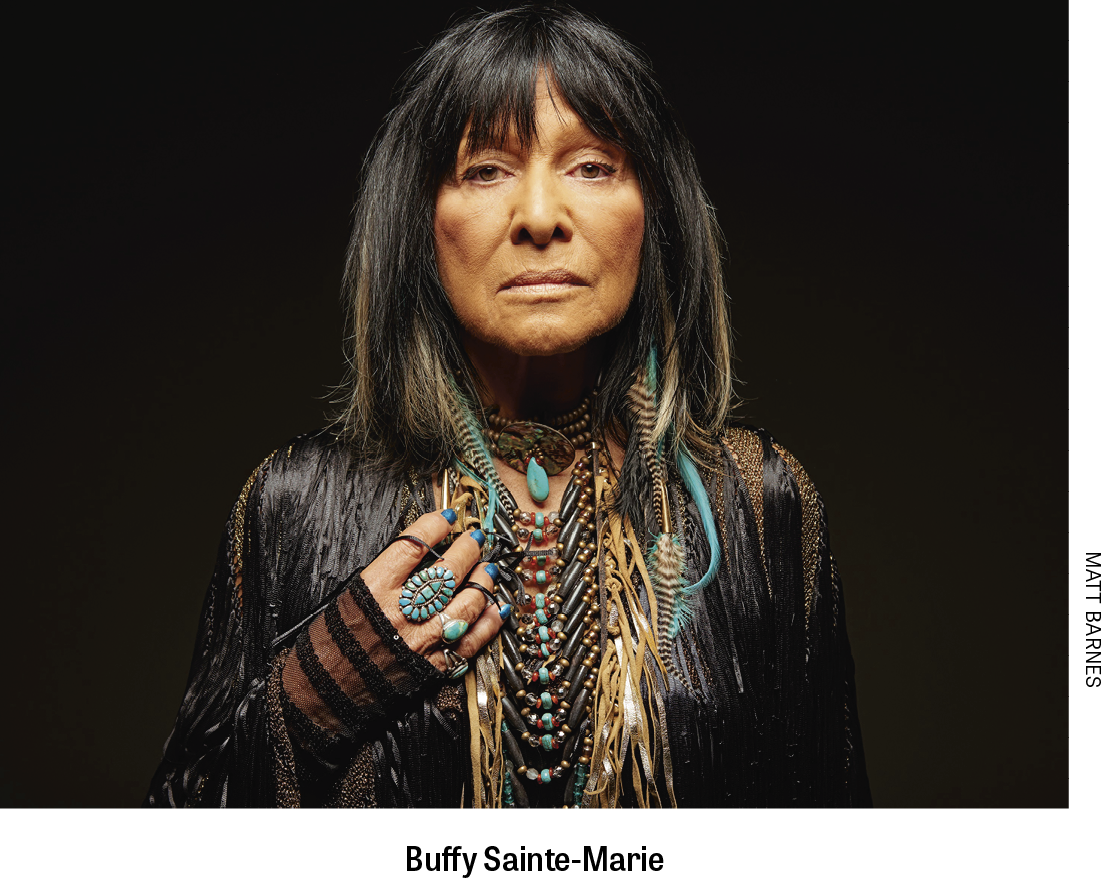
I wonder if we’ll ever overcome our tendency to judge people by their musical taste? When I see social media memes that make lofty pronouncements about the Power of Music (common elements: sunset; a violin bow; Mozart; a rose on a grand piano), I know what I’m in for when I get to the comments section: predictable complaints about today’s lousy songs; the ignorant new generation; hip hop; Taylor Swift; heavy metal, etc.

I have no problem with honest snobbery, I just wish snobs would be consistent. If your musical preferences are elevated ones, you can’t stop there – Benjamin Britten and cheeseburgers don’t mix. Your tastes in literature, dance, film, visual art, clothes, food and architecture need to be on the same haute plateau. If you’ve achieved that, congratulations, your superb acumen is beautifully integrated into every aspect of your life. Unfortunately, you’re probably insufferable. More likely, you don’t actually exist.

Here’s the key – snobbery works best in opposition. It’s not enough to like something – what are you, eight? To be a true aesthete you have to hate something as well. Our love of Sondheim’s tart rhymes is made keener by our dismissal of Lloyd Webber’s sugary melodic hooks. Our veneration of Bach requires a good sneer at the burghers who preferred Telemann for the prestigious post at the Leipzig Thomaskirche. We hone our love of Hank Williams by sharpening our disdain for Clint Black. Louis Armstrong vs. Wynton Marsalis? I Can’t Even, as the status updates say.

Lovers of choral music yield to no one in their readiness to indulge in a good love it/hate it status fest. But there are elements of choral culture that mitigate this unfortunate tendency and may make us a little more tolerant than say, indie-rock fans or free improv obsessives.

For one thing, there is a strong amateur aspect to choral music, in both the modern and ancient sense. We usually love what makes us feel good, and the modernist asceticism that produced so much defiantly listener-unfriendly music in the last century made less headway in choral circles than, say, orchestral ones. For another, the kind of singing that takes place in liturgical settings, or even plain old group singalongs, has had its influence on choral composers. And finally, children’s choirs are a main entry point of apprenticeship both for musicians and choral music audiences, and composers who write for them know that their music must be visceral, energetic, and above all, fun.

Unfortunately, choral audiences also have a tendency to stick with what they know, and our preference for familiarity and adherence to the cult of the masterwork means that a good deal of interesting music goes unheard. We’re willing to listen to minutiae and fragments from our musical gods – our love of Mozart’s final musical sketchbook, the Requiem in D Minor, proves that. But coming up this month is an exciting revival of a work by a composer who is familiar to us for only a few pages of his entire musical oeuvre.

2007-Choral-Martin.jpgParry’s Judith: Anyone who has attended a Last Night of the Proms concert knows Sir Charles Hubert Hastings Parry’s Jerusalem, and anyone who’s sung in a church choir knows his “Dear Lord and Father of Mankind.” Parry’s name alone situates him firmly in the 19th century, a time when British imperialism dominated politics and culture. But isn’t that the kind of facile dismissal I deplored above? If music of 18th-century Austria still speaks to us, what about British music from closer to our time, and from a culture that many of us still understand and share?

Parry (1848–1918) had a distinguished career as composer, essayist and teacher. Among other achievements, he wrote some of the first articles in the Grove Dictionary of Music and Musicians, a resource that remains central to music research today. Unlike composers such as Vaughan Williams and Holst, whose music seems to have been able to bridge the gap between the Victorian/Edwardian eras and our own, Parry’s has been ignored or dismissed since his death, surfacing most often in the types of settings mentioned above.

On May 3 at Koerner Hall, Toronto conductor/composer Stephanie Martin and her ensemble, the Pax Christi Chorale, are undertaking the North American premiere of a neglected oratorio by Parry, Judith. First performed to great success in 1888, it tells the biblical story of the heroic Jewish heroine who saves her people by her daring assassination of the Assyrian general Holofernes.

Martin’s interest in the piece turned into something of a quest when she discovered that the orchestral parts for Judith were not available from the original publisher. Assembling a research team and enlisting the help of British Parry scholar Jeremy Dibble, Martin created a performing edition of the score on her own. You can read her thoughts about Judith and its recovery process on her blog, at this address: stephaniemartinmusic.com/judith-at-koerner-hall/. Martin and the Pax Christi Chorale have worked incredibly hard on this historic project – which will also include the first full recording of the work – and I truly hope that they get a strong audience turnout for the performance.

2007-Choral-Rozario.jpgTavener Explored: Another British composer is celebrated in Toronto this month – John Tavener, who died in 2013, almost a century after Parry. On April 16 Soundstreams presents “Song for Athene,” a concert devoted to Tavener’s works, that will also feature music of Jonathan Harvey and Canada’s own Christos Hatzis. David Fallis will lead Choir 21, and Elise Bradley will conduct the Toronto Children’s Chorus. The concert is notable both for the special participation of British soprano Patricia Rozario, a musician who is especially associated with Tavener, and for whom he wrote over 30 works, and for the North American premiere of Tavener’s setting of the Missa Brevis text. For more information see
soundstreams.ca/Song-for-Athene.

Like the Judith concert, I think this exploration of Tavener is an event not to be missed this month. Parry, once celebrated, may be re-emerging from the shadows. Tavener, recently deceased, is greatly popular in choral circles. What will be his fate in the century to come?

Once again, I’m uneasily aware of having neglected many excellent concerts while focusing on just two. Please have a look in the listings and stay informed about what’s taking place this month. In May I will take an in-depth look at the art of a cappella singing. 

Benjamin Stein is a Toronto tenor and lutenist. He can be contacted at choralscene@thewholenote. Visit his website at benjaminstein.ca.

2006-Choral-Exultate_Chamber_Singers.jpgGoing back to graduate school this year has made me terrified of making declarative statements about music, choirs or pretty much everything else. What I had previously assumed to be safe, boring statements of fact have turned, each and every one,  into points of heated argument.

For instance, previously I would have in all innocence said things like “next week I am going to hear Mozart’s Mass in C Major.” Now, no sooner are the words out of my mouth than I feel compelled to explain   (before someone points it out) that I am actually attending a concert, not a church mass like the one at which Mozart’s music would have first been heard; and that I realize that the C Major chords being sounded will not bear any resemblance to the timbre and tuning of those imagined by Mozart; and that I am aware that the sweeping assumptions about the nature of Time implied by my use of the words “next” and “week” are presumptuous and not provable.

I’m not kidding! Individual words are the subject not just of discussions and articles, but of entire books. Heavily contested terms to both ponder and avoid: “music,” “metre,” “sound,” “sonata,” “Haydn,” “Beyoncé,” etc.

Masses: I mention all this because of the nature of March and April choral concerts, many of which feature musical settings of the Mass, and other sacred texts, to coincide with the Christian holiday of Good Friday and the six-week season of Lent. The last time I was at a traditional church mass was almost 20 years ago at a friend’s wedding. But I have sung in and attended performances of many masses of all types and styles since that time, and that is probably not an uncommon experience, especially for people involved in choral music.

When we hear a concert version of a mass, what is our relationship to the music? Is it a religious experience, an aesthetic one or some kind of combination of the two? How – and why – did Mozart and Haydn become part of a pantheon of classical music demigods, rather than the down-to-earth musical civil servants of the European courts they actually were? (Short answer: it’s kind of Beethoven’s fault, but let’s not get into that now.)

Speaking of Mozart, Haydn and masses, on March 15 Hart House Singers perform Haydn’s Paukenmesse (Mass in Time of War), a crowd-pleaser since its premiere in 1796. And on March 20 and 28 the excellent Exultate Chamber Singers perform “O Be Joyful,” a concert that includes one of my favourite Mozart pieces, his Vesperae Solennes de Confessore K339 (Solemn Vespers), as well as settings of Psalm 100 by Palestrina, di Lasso, Schütz and Mendelssohn. On March 7 Orpheus Choir performs “The Soul’s Journey,” featuring English composer John Rutter’s appealing Requiem setting. The concert also includes a rare opportunity to hear James MacMillan’s Seven Last Words from the Cross. MacMillan is a Scottish composer who has been recorded and performed extensively in the U.K., and it’s great that the OC is making his work available to be heard live. On March 28 Orillia’s Cellar Singers perform “Light Perpetual,” a concert that features Canadian Eleanor Daley’s setting of the Requiem mass as well as Fauré’s celebrated version.

Passions: Passion settings, which describe the events of the Christ’s crucifixion and resurrection, also take place this time of year. These are usually settings of the Christian Gospel texts. As with Mass settings, Passions have moved to a concert experience from their original church role.

On March 10 and 11 Toronto Mendelssohn Choir performs Arvo Pärt’s Passio, a setting that at least one critic found too reflective for the savagery and drama of the Passion story. I disagree. Pärt’s version is haunting, and a large group like the TMC can convey the work’s scope and grandeur. Audiences from all over the world have responded enthusiastically to Pärt’s modern take on classical tonal structures. For those who would like to explore his work further, on March 7 and 8 Kitchener’s DaCapo Chamber Choir perform his setting of the Magnificat text in a concert titled “O Earth, Return.”

Bach’s St. John Passionis the textbook example of this genre, and Tafelmusik’s interpretation of this work, performed every few years under the direction of Ivars Taurins, has become something of an institution in the city. Performances this year take place between March 19 to 22. As well as the virtuoso choir and orchestra, the performances offer a chance to hear the acclaimed English tenor Charles Daniels in the role of the Evangelist.

On April  3 The Georgetown Bach Chorale will be performing the same work in their home town. This month there is also an opportunity to hear another noted Bach tenor, Rufus Müller, in Kitchener-Waterloo, in the Grand Philharmonic Chamber Singers performance of Bach’s St. Matthew Passion. This companion piece to the St. John is performed more rarely, in part because of its larger scope and instrumentation needs, but many consider it Bach’s greatest choral work.

Personal: I try not to use this column to mention any concert in which I’m taking part, but I have to make an exception for the Metropolitan Festival Choir’s “The Grace of Mourning: Music for Good Friday” on April 3. Along with the crowd-pleasing Fauré Requiem and German Romantic composer Josef Rheinberger’s Stabat Mater, the MFC is performing a rare work that merits the interest of choral aficionados, Hugo Distler’s haunting Totentanz (Dance of Death). Distler was a German composer of great courage and principle, who actually committed suicide rather than be drafted into the German army during WWII. His musical language borrows from the Lutheran motet tradition that extends from Bach back to composers like Schütz, Schein and Eccard. Borrowing rhythmic and modal elements from this 16th- and 17th-century repertoire, Distler’s music offsets the harsh austerity of the text with great empathy and compassion.

Quickly: Two younger choirs deserve your attention and support in upcoming concerts. On March 15 That Choir performs “That Choir: Unplugged,” with choral versions of music by Pentatonix, Mumford & Sons and Imogen Heap, among others. And on March 28 the Univox Choir performs “Kühl/Caliente,” a concert in support of Doctors without Borders.

The Vienna Boys Choir is a venerable choral institution well-established for crowd-pleasing concerts and enjoyable repertoire. They are performing in Midland on March 24, Guelph and Brampton March 25,  Burlington March 26, Kingston March 27 and St. Catharines March 28.

And finally, a special note: this month the Elora Festival Singers will be travelling to New York to perform at Carnegie Hall. They will be performing a sneak preview of their program on March 8 in Elora.

Benjamin Stein is a Toronto tenor and lutenist. He can be contacted at choralscene@thewholenote.com. Visit his website at benjaminstein.ca.
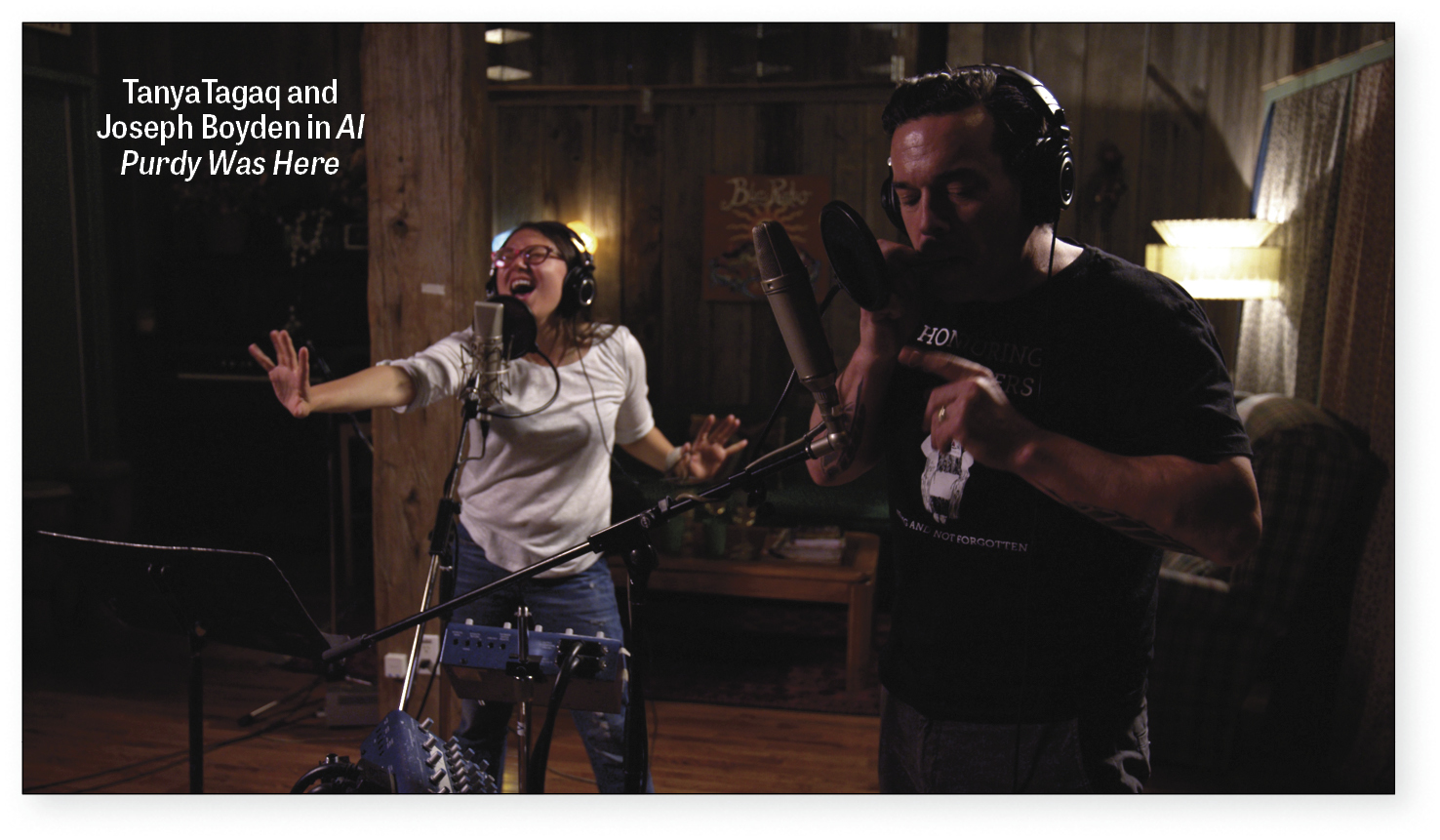
Back to top