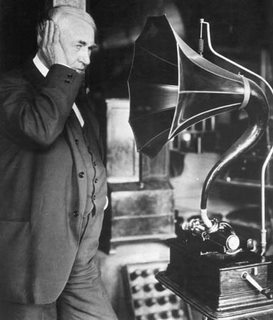
And the band played on…?
When Curtain Call Players’ production of Titanic sails into Fairview Library Theatre on April 1 for a two-week run, you will have a great opportunity to hear Maury Yeston’s sweeping score in all its majesty and beauty. You had a similar opportunity four years ago, when Civic Light Opera presented the show in the same theatre, but there is one crucial difference this time around: whereas CLOC used a full 18-piece orchestra, in the Curtain Call production there won’t be a live musician in sight – or out of sight either, for that matter.
Every community theatre group has choices to make regarding the music itself whenever it stages a musical, and the issues aren’t necessarily simple. What type of show is it? What size show will it be? What’s the orchestration? Are reduced versions available? What shape and size is the theatre space, especially the backstage facilities? What’s the orchestra budget? How many players can you afford? How good are they? How tough is the score?
Generally speaking, there are four options. Go with the original orchestration, or, if it’s too large, with as many players as you can accommodate and/or afford. Go with a reduced orchestration, if there is one. Use a small combo, with just the critical instruments covered, keyboard only. Use a pre-recorded track, usually synthesizer
This last option has always been viewed by virtually everyone – and not just the musicians – as quite literally the last choice. Apart from the huge issue of sound quality, the major problems have been always been the lack of atmosphere and – most crucially – the inflexibility of the recorded track. A singer misses a verse? Tough. You want the tempo to pick up when the show is really jumping? Sorry. Need an emergency vamp for a few bars? Nope.
With the huge developments in music technology over the past few decades, especially in the professional Broadway and West End theatres, it was surely only a matter of time before the community theatre world was forced to address the issue of pre-recorded show scores. Sound and lighting have embraced computer technology, so why should the orchestra pit be considered sacrosanct?
Is this really the way of the future, though? Are theatre musicians really a doomed species, dinosaurs waiting for the technological asteroid to crash into their planet and change their world for ever? A production of Titanic seemed the perfect invitation to explore the issue – after all, the eight musicians on the original ship played on to the very end, despite the knowledge that they were almost certainly doomed.
For Keith O’Connell, founder and artistic director of Curtain Call Players, the cost of a full orchestra, perhaps surprisingly, was not the major consideration – in fact, he will be spending more on the music by not having one. His production values for this show are high, with a two-level 40-foot wide set that uses hydraulics to tilt 6 feet in the second act, and it wouldn’t have been possible to put a full orchestra either on stage or in the wings.
Moreover, he didn’t want to. Maintaining the integrity of the set and the score were key considerations, and while a big orchestra would also have been wrong for the period, a small orchestra would have been unable to do justice to the score.
The solution? Sinfonia!
Sinfonia, which CCP also used for their recent production of Cats, is a technology developed by Realtime Music Solutions of New York, and provides either full orchestra or orchestra enhancement capability for all levels of music theatre. It runs the gamut from the top-of-the-line Sinfonia Grande (for professional touring productions and theatres) through Sinfonia Molto (for smaller spaces) and Sinfonia Mezzo (for regional and community theatre) to Sinfonia Piccolo, which offers lap-top orchestra enhancement for amateur and community groups.
What is so hugely significant about it, though, is that it has apparently solved all of the problems associated with pre-recorded music: it sounds great; it’s flexible; it will vamp on the fly; it will jump back to a certain bar number; it will transpose; you can use live musicians with it and mute or unmute instruments of your choice; it has tempo variation and control, and can follow a conductor and the constantly-changing nuance during a live performance.
Two of the three major rights organizations have warmly embraced the new technology, both Music Theatre International and the Rodgers & Hammerstein Organization now have alliances with RMS, and their own specialized systems. MTI currently offers OrchExtra for 20 of their shows, while R&H have AccompanEase for rehearsal/practice purposes, and InstrumentEase as a performance enhancement tool for a whole range of top shows, including most of the Rodgers & Hammerstein classics.
Ironically, the only one of the three organizations that apparently has no interest in pre-recorded music of any description being used in their shows is Tams-Witmark – the rights holder for Titanic! The orchestration is already available on Sinfonia, however, with composer Maury Yeston’s full approval, and after checking with Yeston Tams-Witmark agreed to make an exception and allow CCP to use the system in their upcoming production.
Not that it is saving O’Connell any money: not only will CCP be paying over $3,000 for the Sinfonia system rental, but they will also still have to pay Tams-Witmark for the orchestral parts rental even though, says O’Connell, “We won’t even get to open the box!”
It’s difficult to see live music completely disappearing from the community stage – apart from anything else, pre-recorded systems are clearly not going to save anyone any money in the short run – but groups are obviously now going to have more options when it comes to the sound of the music they present to their audiences.
If you have the chance, go and see Titanic at Fairview: you will hear Yeston’s score in all its glory, and it may well be a sneak peak at the future of community musical theatre as well. Curtain Call Players production of Titanic runs April 1, 2, 3, 4, 8, 9 & 10 at Fairview Library Theatre; tickets are $24 from (416)703-6181 or curtaincalltickets@hotmail.com.
Terry Robins is a musician and musical theatre enthusiast. He can be contacted at: musicaltheatre@thewholenote.com.
/Becca Whitla 3.JPG)
/Catherine Robbin 1.jpg "Mezzo Catherine Robin") The Mozart Requiem is also being performed by Hamilton’s Central Presbyterian Church choir on April 2, and by the Pax Christi Chorale on April 24-25. The King Edward Choir performs a winning combination of Mozart’s Mass in C Minor and Poulenc’s Gloria in Barrie (April 10) and the Mississauga Choral Society sings Fauré’s Requiem (April 11). Cantores Celestes Women’s Choir perform Pergolesi’s luminous Stabat Mater on April 17. A portion of proceeds from this concert will go to the Because I am a Girl foundation.
The Mozart Requiem is also being performed by Hamilton’s Central Presbyterian Church choir on April 2, and by the Pax Christi Chorale on April 24-25. The King Edward Choir performs a winning combination of Mozart’s Mass in C Minor and Poulenc’s Gloria in Barrie (April 10) and the Mississauga Choral Society sings Fauré’s Requiem (April 11). Cantores Celestes Women’s Choir perform Pergolesi’s luminous Stabat Mater on April 17. A portion of proceeds from this concert will go to the Because I am a Girl foundation./Lang Lang 2.jpg) International Touring Productions brings the Slovak Sinfonietta, conducted by Kerry Stratton, to Toronto and six other cities in Southern Ontario in late April and early May. With the orchestra will be two pianists: Haiou Zhang, who will perform Beethoven’s
International Touring Productions brings the Slovak Sinfonietta, conducted by Kerry Stratton, to Toronto and six other cities in Southern Ontario in late April and early May. With the orchestra will be two pianists: Haiou Zhang, who will perform Beethoven’s /Martin_Beaver.jpg) A frequent visitor to Toronto, thanks to Music Toronto, is the Tokyo String Quartet. While the quartet’s genesis was in the 1960s at the Toho School of Music in Tokyo, and it has been quartet-in-residence at Yale University since 1976, it also has a strong Toronto connection through Martin Beaver, its first violinist. When you hear the Tokyo String Quartet, you are hearing not only one of the best string quartets in the world, but also “The Paganini Quartet,” a set of Stradivarius instruments named after the legendary virtuoso Niccolò Paganini, who acquired and played them during his illustrious career. The Tokyo String Quartet will perform Beethoven’s
A frequent visitor to Toronto, thanks to Music Toronto, is the Tokyo String Quartet. While the quartet’s genesis was in the 1960s at the Toho School of Music in Tokyo, and it has been quartet-in-residence at Yale University since 1976, it also has a strong Toronto connection through Martin Beaver, its first violinist. When you hear the Tokyo String Quartet, you are hearing not only one of the best string quartets in the world, but also “The Paganini Quartet,” a set of Stradivarius instruments named after the legendary virtuoso Niccolò Paganini, who acquired and played them during his illustrious career. The Tokyo String Quartet will perform Beethoven’s /Lucas Harris 1.jpg)
/Borys Medicky 1 1505.jpg)
/Julia Wedman 1.jpg "Julia Wedman")
/Gilles Tremblay 1.jpg) For this tour, their second to land in Toronto, Aventa will connect to the season-long celebrations of Canadian composer Gilles Tremblay, initiated by the Société de musique contemporaine du Québec. Never one to keep things small, SMCQ artistic director Walter Boudreau has encouraged a nation-wide project to pay homage to one of our own musical heroes through a collaborative series of at least 30 different events. For their part, Aventa will perform two of Tremblay’s most distinctive works –
For this tour, their second to land in Toronto, Aventa will connect to the season-long celebrations of Canadian composer Gilles Tremblay, initiated by the Société de musique contemporaine du Québec. Never one to keep things small, SMCQ artistic director Walter Boudreau has encouraged a nation-wide project to pay homage to one of our own musical heroes through a collaborative series of at least 30 different events. For their part, Aventa will perform two of Tremblay’s most distinctive works – /Bill and Chris King 1.jpg) The announcement was not entirely unexpected. Attendance last year was very disappointing, giving Bill and Kris King good reason to ask themselves if it was worth going on with the event. What had begun 15 years ago as the Jazz Report Awards, an intimate evening in a club setting, over the years had evolved into a large and costly production.
The announcement was not entirely unexpected. Attendance last year was very disappointing, giving Bill and Kris King good reason to ask themselves if it was worth going on with the event. What had begun 15 years ago as the Jazz Report Awards, an intimate evening in a club setting, over the years had evolved into a large and costly production./marion_portrait2005_3.jpg)
/Asha Bhosle 1.jpg)
/Alex Cuba 1.jpg) Recently back from performing at the Olympic Games, Juno award-winning Cuban musician Alex Cuba has a busy touring schedule this month. In Ontario, he’ll be performing at London’s Aeolian Hall on April 6, the Brock Centre for the Arts in St. Catharines on April 7, Mississauga’s Living Arts Centre on April 9, the Mod Club in Toronto on April 10 and the Neat School Stage in Burnstown (an hour northwest of Ottawa) on the 11th. After several performances in Quebec later in the month, he’ll be heading to Europe in May. His newest CD will be released on June 8.
Recently back from performing at the Olympic Games, Juno award-winning Cuban musician Alex Cuba has a busy touring schedule this month. In Ontario, he’ll be performing at London’s Aeolian Hall on April 6, the Brock Centre for the Arts in St. Catharines on April 7, Mississauga’s Living Arts Centre on April 9, the Mod Club in Toronto on April 10 and the Neat School Stage in Burnstown (an hour northwest of Ottawa) on the 11th. After several performances in Quebec later in the month, he’ll be heading to Europe in May. His newest CD will be released on June 8. “January 28 was available, so we took it, and it sold out quickly, so we booked January 31 and when that sold out we got February 1. It was so fast - the poster never even went out! I felt funny asking the musicians if they were available for a third night.”
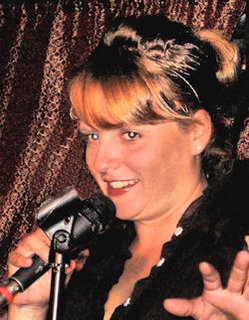
 Affectionately nicknamed Jenni B, Miss Burke is a contagiously warm, funny and versatile stage presence. Her open mic “Curtains Down” is a weekly Mo
 Seeking inspiration? Canada’s “Sweetheart of Swing” is a walking, singing miracle that sweetly swings from her great big heart. After years of fiercely battling cystic fibrosis,