01 Srul GlickSrul Irving Glick – Suites Hébraïques
James Campbell; Angela Park; Elissa Lee; Sharon Wei; Cameron Crozman; Barry Shiffman; Wallace Halladay; Susan Hoeppner
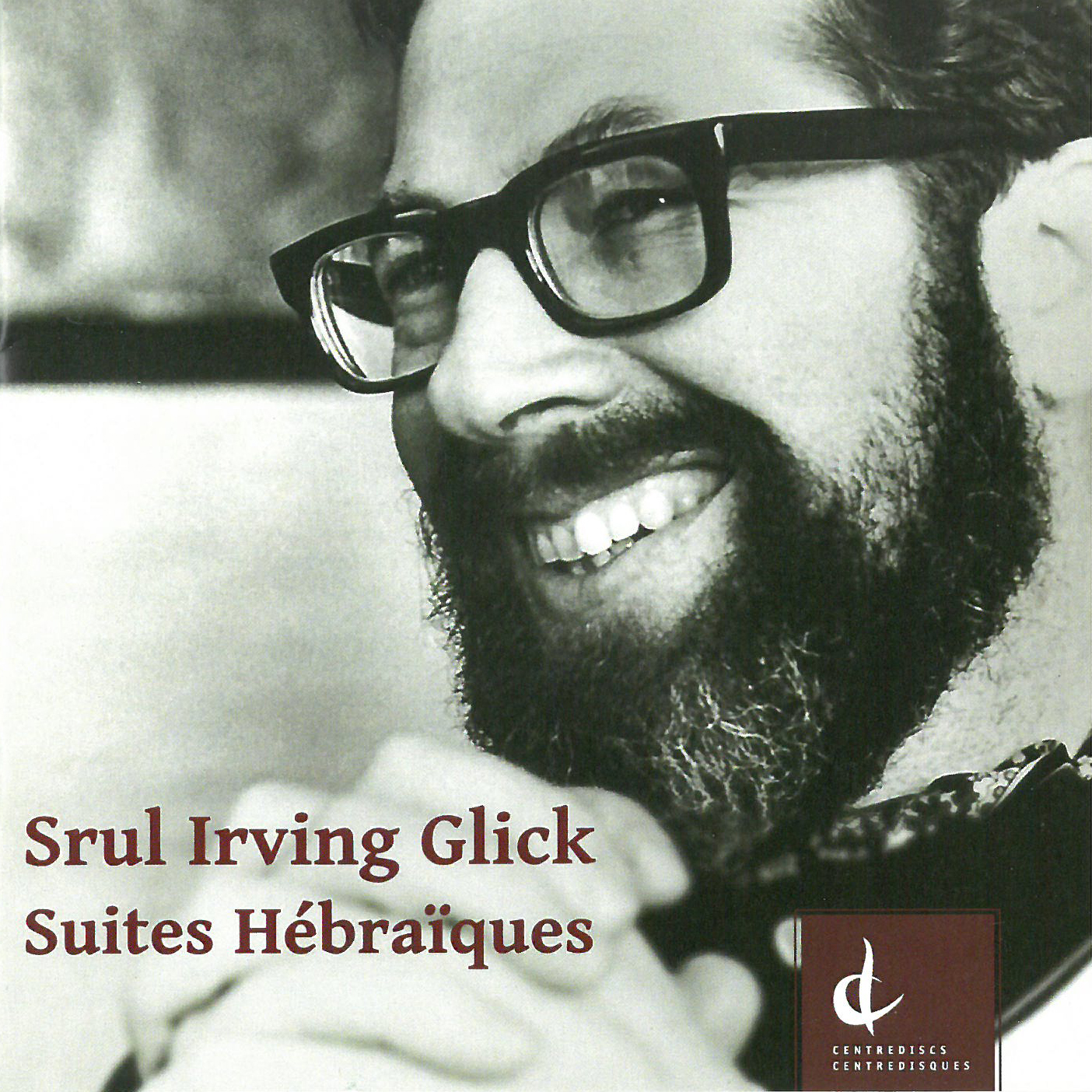
Centrediscs CMCCD 24817 (musiccentre.ca)

Srul Irving Glick (1934-2002) composed six Suites Hébraïques between 1961 and 1984, each a multi-movement work ranging between ten and 20 minutes in length. Three are written for solo instrument with piano accompaniment, and three for a variety of chamber ensembles. This release is the first to compile them all under one cover, and features some of Canada’s finest instrumental performers.

Modest in means and range, the pieces are nonetheless pure expressions of the composer’s love for Jewish traditional melodies, harmonies and forms. Not one movement exceeds six minutes, while most are much shorter. Glick didn’t write them to claim a place atop Parnassus, but rather to celebrate the music he heard and loved growing up the son of a cantor, singing in his father’s choir and at home. For that reason, pay particular note to Suite No.4, for saxophone and piano, played (sung) by Wallace Halladay with Angela Park on piano. Also on the second disc is the final suite, played by violinist Barry Shiffman with Park again at the piano. Both soloists perfectly express the singing quality called for in Glick’s music. Park took on the lion’s share of playing on this recording. She performs beautifully in four of the six suites.

Because they are based in the traditional forms, there is a repetitiveness to the titles: Circle Dance occurs in five and Cantorial Chant in four of the six suites; other titles, such as Nigun and Hora, variously find their way into several of them. It’s not a stretch to compare this to the work of Baroque composers, who also explored forms repeatedly in dance suites. However, nowhere does the music repeat itself. In fact, Glick seems to have been one of those composers for whom there was little effort in devising new material. In the jacket note Dorothy Sandler-Glick is quoted thus: “The melodies came easily as if they were waiting for him to lift them out of his soul.” So they sound.
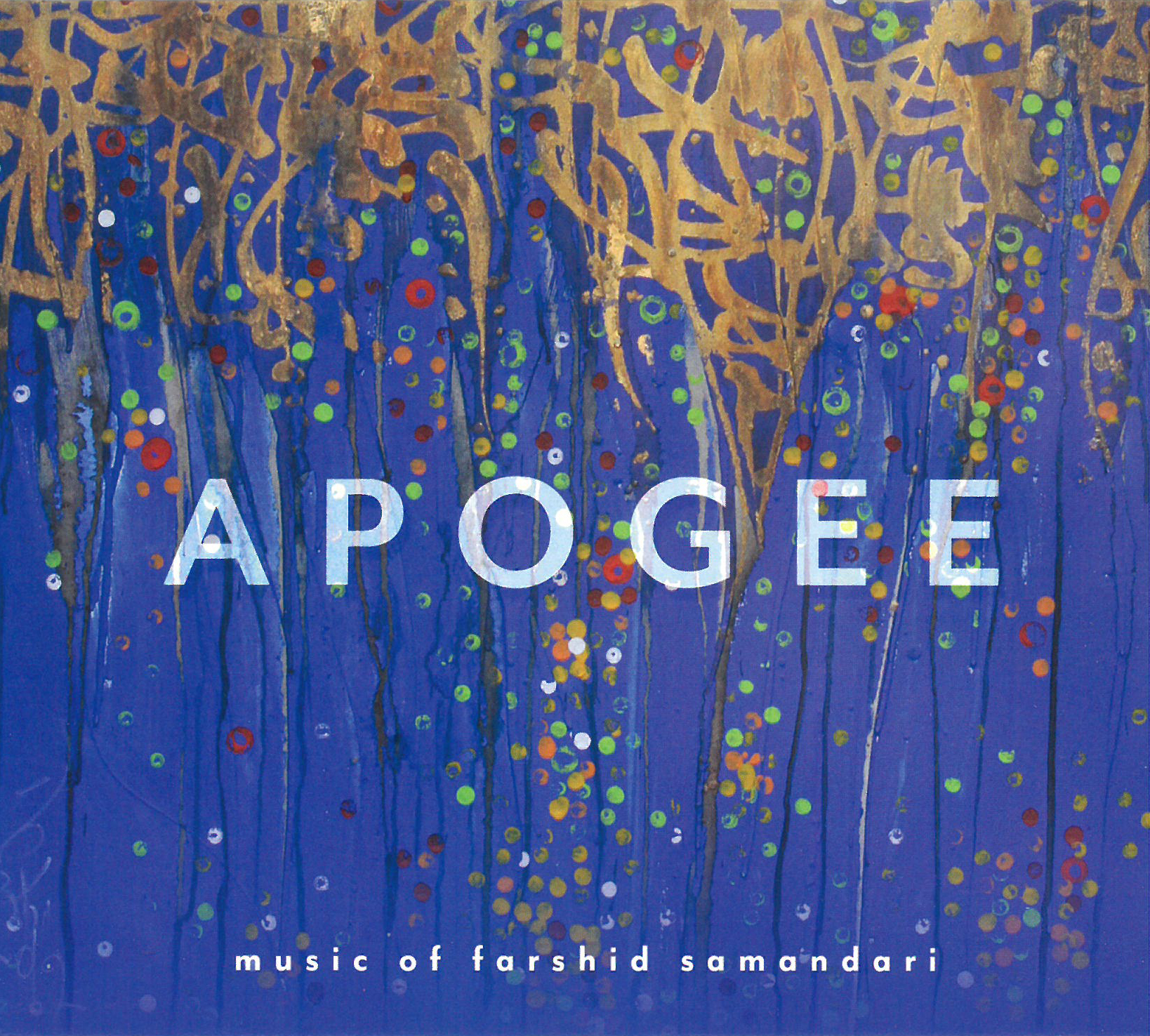
03 ApogeeApogee – Music of Farshid Samandari
Mark Takeshi McGregor; Ariel Barnes; Brian Nesselroad; Marcus Takizawa; Joy Yeh
Redshift Records TK453 (redshiftrecords.org)

Vancouver-based composer Farshid Samandari (b. Tehran 1971) arrived in Vancouver in 2001. He quickly embedded himself in the regional contemporary concert music scene, serving in 2013 as composer-in-residence of the Vancouver Inter-Cultural Orchestra. That position has helped him build bridges with global musicians resident in the culturally diverse hub of the greater Vancouver area.

Apogee features Samandari’s works for conventional Western instrumentation stylishly played by Onyx Trio’s Mark Takeshi McGregor (flute), Marcus Takizawa (viola), and Joy Yeh (harp), plus Brian Nesselroad (percussion). His compositions primarily reflect his interest in contemporary Western musical vocabulary, spectral analysis, as well as extended instrumental techniques. But Apogee also provides a window into subjects that inform his work, including modal Persian classical music and literature.

Another key ingredient is referred to in the liner notes: the autobiographical nature of the compositions played here. Exile and the search for a home are recurring narratives. And it’s the orchestral flute which takes centre stage in many of the five works here, serving as the composer’s voice. The flute is also the listener’s guide through Samandari’s life journey, connecting his old and new worlds. My favourite moments on the album are in the lonely, expressive and virtuoso flute solos of Apogee (2005) and the very substantial 16-minute Nuclide (2014), both sparkling played by Takeshi McGregor. These works belong in the Canadian flute solo playbook.

Samandari’s moto is “Unity in Diversity.” We get a sense of his personal peregrinations from Iran to Canada’s west coast in Apogee.

Listen to 'Apogee – Music of Farshid Samandari' Now in the Listening Room

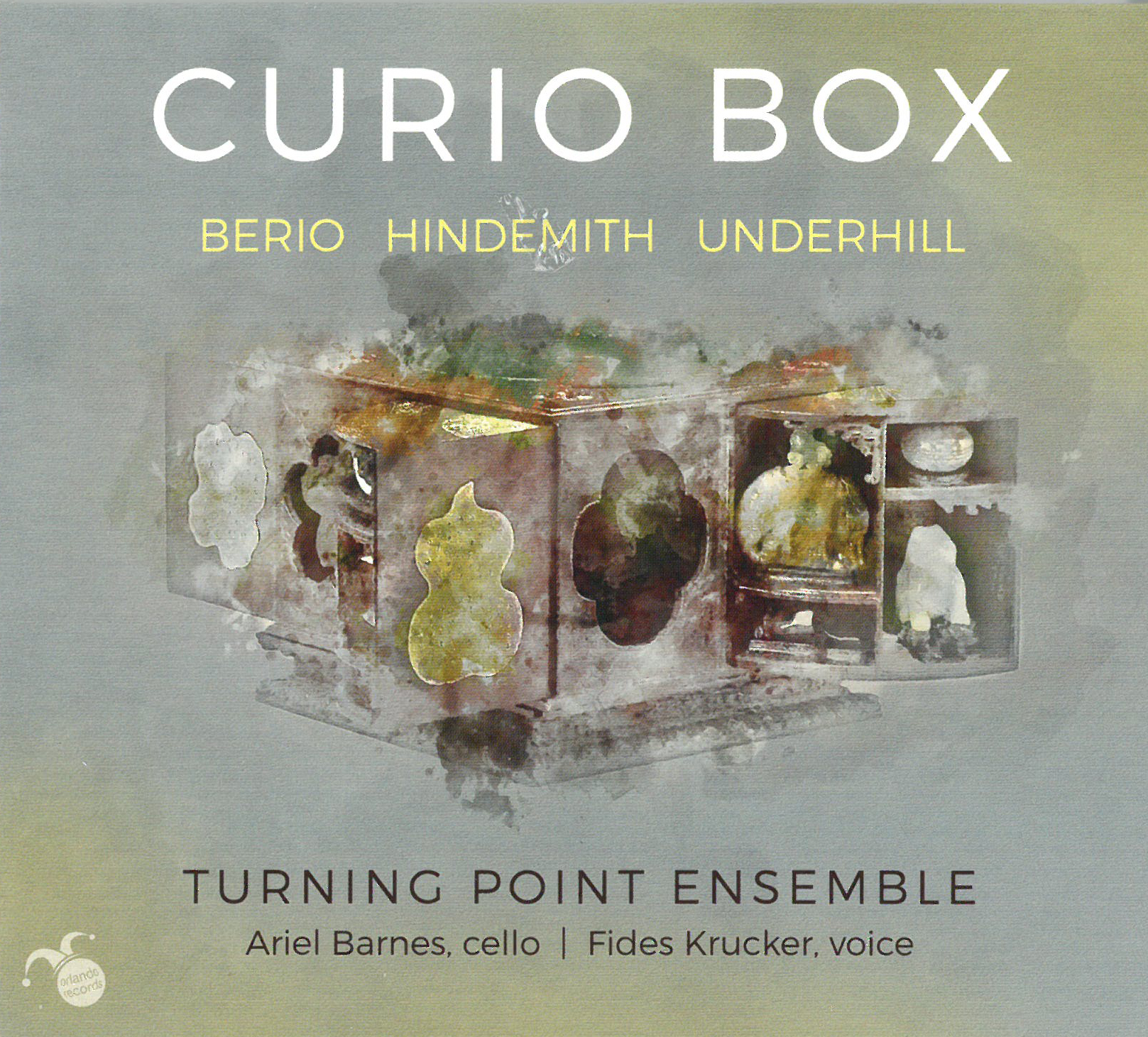
04 Curio BoxCurio Box – Berio; Hindemith; Underhill
Ariel Barnes; Fides Krucker; Turning Point Ensemble; Owen Underhill
Orlando Records OR 0037 (orlando-records.com)

This disc is a standout, with terrific performances and a compelling program of works, all confronting the relationship between the past and the present.

In Kammermusik No.3 from 1925, German composer Paul Hindemith looks back to the Baroque, especially to Bach’s Brandenburg Concertos. The Vancouver-based Turning Point Ensemble, under Owen Underhill’s direction, handles the inventive contrapuntal textures with stylish buoyancy, while Canadian cellist Ariel Barnes brings out Hindemith’s lyrical side. Barnes’ restraint with vibrato and Romantic phrasing is especially appropriate to Hindemith, an accomplished violist who was deeply involved in historical performance practices.

At the same time that avant-garde Italian composer Luciano Berio was creating his pioneering experimental works like Sinfonia, he was working on arrangements – and rearrangements – of music of the past, from Monteverdi to Puccini. In Folk Songs, from 1964, he creates altogether new accompaniments for traditional folk tunes (plus a few composed songs) from around the world. The result is an extraordinary mélange of styles and harmonic languages. Canadian vocalist Fides Krucker’s blazing theatricality and playful brilliance put her in the same league as the fabulous American singer Cathy Berberian, who premiered this work.

Canadian composer and conductor Underhill’s own Cello Concerto from 2016 takes us through the fragmentation and reassembling of memories of the past, triggered by a Chinese curio box full of precious objects. The virtuosic, responsive Turning Point Ensemble under Underhill’s precise direction creates evocative, colourful interplay with Barnes’ adventurous and dramatic cello playing.

I enjoyed the anecdotal liner notes and bios, but I do wish there were texts for the songs – with translations.

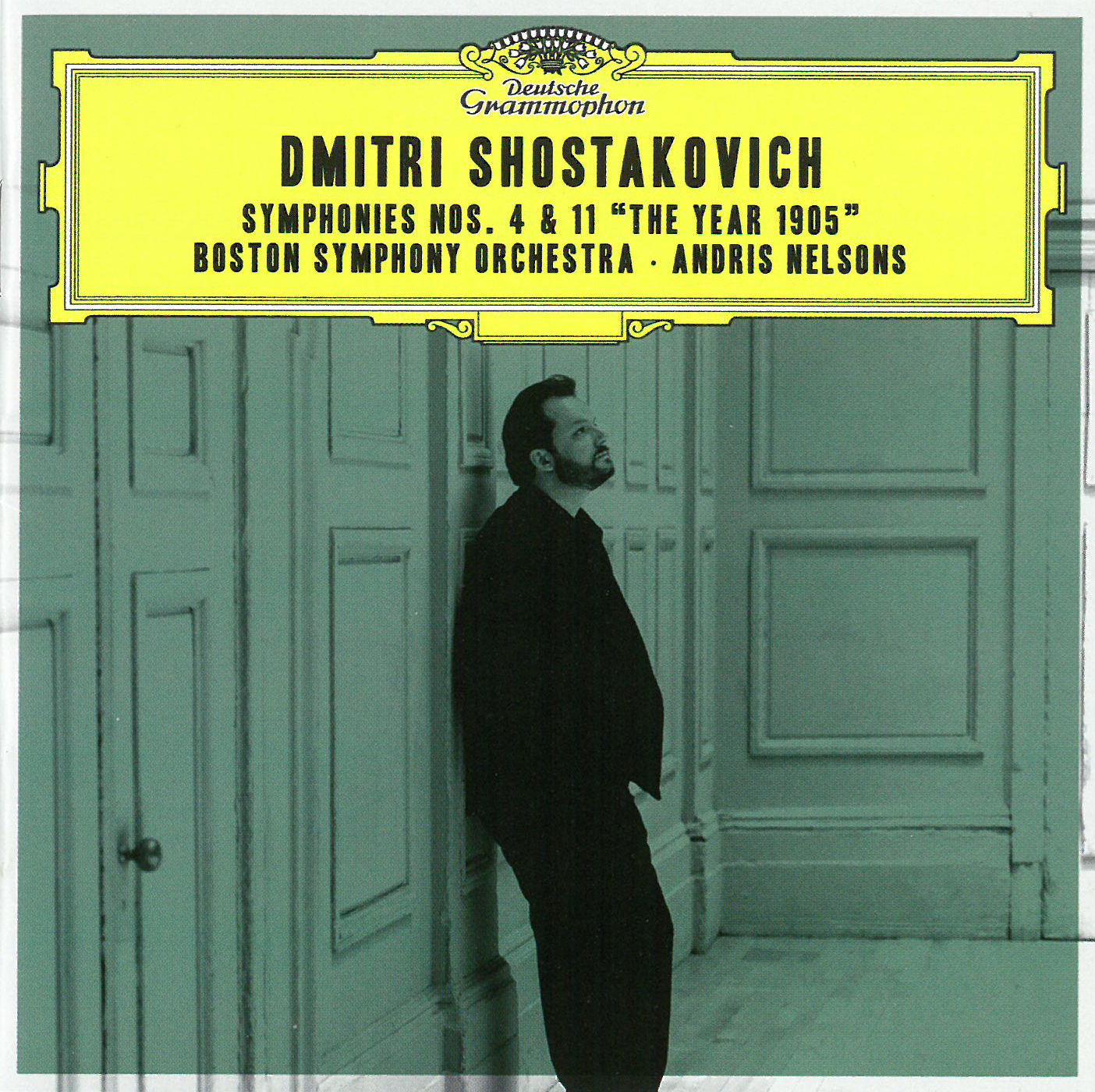
05 Shostakovich 4 11Shostakovich – Symphonies Nos. 4 & 11 “The Year 1905”
Boston Symphony Orchestra; Andris Nelsons
Deutsche Grammophon 80028595-02 (deutschegrammophon.com)

It says here there was no greater symphonist of the 20th century than Shostakovich. Don’t @ me, as they say on Twitter. This DG recording of the Boston Symphony, led by Andris Nelsons, is part of their ongoing project to record the complete cycle by the beleaguered Russian artist.

The story behind his Symphony No.4 is relevant to any reading of the piece, although much too involved to fully recount here. Suffice it to say he fell into sudden disfavour with Stalin while working on it, and finally chose to withdraw the work before its premiere. The move, while an illustration of how little freedom an artist had during the era, likely saved the composer from exile to the Gulag. (An excellent fuller version of the story is available here: michaellewanski.com/blog/2014/10/8/shostakovich-symphony-no-4-in-c-minor-op-43).

Too many adjectives can attach to the puzzling work: at turns horrifying, melodramatic, sarcastic, madcap, maudlin, macabre, morose. Shostakovich might have been passing a note to his compatriot colleagues like Alfred Schnittke and Edison Denisov: “Here is as far as you can go, and not in any safety.”

Nelsons wrings a full accounting of the hair-raising piece, all 65 minutes of it, from the redoubtable BSO musicians. I defy anyone to listen to James Somerville’s horn playing here without feeling simultaneously uplifted and devastated.

The second half of the two-disc release makes a curious pairing. Symphony No.11 was composed more than two decades later in 1957, followed an overt “program” in depicting the events of the brutally quashed 1905 Russian workers’ uprising, and was written to satisfy a government-mandated (“suggested”) recognition of the 40th anniversary of the 1917 revolution. Perhaps the idea is to contrast the work of a brash young idealist, an artist who believed he was free, to the more mature output of one who knew he never would be. Clearly in his music he felt the humanity of those starving workers, murdered a half-century earlier by a despot. There are subtexts to all of his music, and the question remains about whether this symphony reflected the composer’s views about more recent crimes.

Programmatically structured to the point of pedantry, it is nonetheless brilliantly played. Hearing these excellent players gives the heart ease.

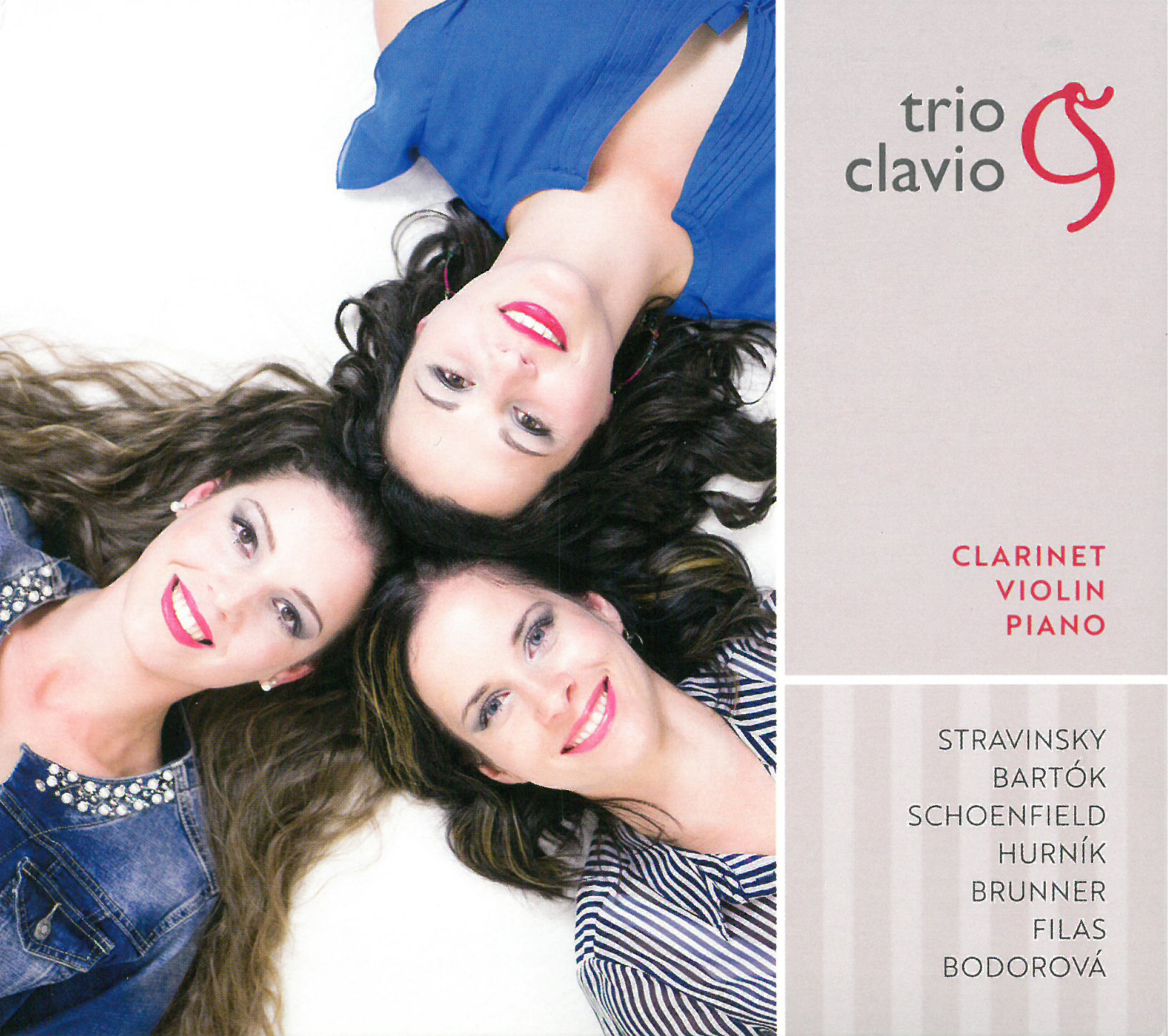
06 Trio ClavioTrio Clavio
Trio Clavio
ArcoDiva UP 0204 (arcodiva.cz)

Established with the help of Polish clarinetist/conductor Jakub Bokun in 2013, this Czech trio has been performing as Trio Clavio since its successful debut at Wrocław, Poland’s Clarimania Festival. The three talented members – pianist Lucie Soutorová Valčová, violinist Lucia Fulka Kopsová and clarinetist Jana Černohouzová – are each superstar soloists and chamber musicians. In their debut self-titled two-CD release, they demonstrate solid technique, musicality, ensemble playing, personal musical risk-taking, integrity, and the joy of performing music.

CD One has these younger-generation musicians playing music by three 20th-century composers. Highlights from Stravinsky’s trio suite from L’Histoire du soldat include colourful low and high pitches, clear articulation of individual notes, and mood-making intense playing, especially at the almost spooky Danse du Diable closing. Bartók’s three-movement Contrasts features a tighter full-orchestra sound, with classic Bartók dramatic musical conversations between the instruments. Paul Schoenfield’s Trio for Clarinet, Violin & Piano is a four-movement, Jewish-based work. The opening Freylakh has a nice klezmer feel, especially in the held violin and clarinet notes. March opens with exciting low-pitched mysterious piano notes and ascending and descending glissandos, leading to subsequent virtuosic trio performance. Nigun is a fugal klezmer piece and the final Kozatske is an exciting fast klezmer-flavoured movement.

CD Two showcases diverse works by living composers. Love Czech Lukáš Hurník’s witty work, Alphabet. After a short introduction, each capital letter of the alphabet is given a musical score resulting in a piece packed with diverse ideas and sounds. E is a fugue with three instruments emulating its three horizontal lines; D is all played on the violin D string; G is brought to sound life with a florid piano line. Czech Martin Brunner composed his self-described childishly playful Like Children while thinking of trio-member Valčová’s son. The three movements delight with touches of lullaby, reflection and running-around sounds. Trio Clavio commission “Chiaroscuro” Trio by Slovak Juraj Filas is a single-movement, tonal, expressive, Romantic-flavoured sonata reminiscent of film music, including subtle and sudden dramatic musical shifts from loud rhythms to slower reflective sections, high pitches and lengthy held notes. Closing is Czech Sylvie Bodorová’s Vallja e malit “Dancing Mountain,” a folk-music rooted work with a tight Ballata opening, and a faster, closing, toe-tapping, intense, rapid line-filled Danza movement.

Trio Clavio is musically wonderful, unique and breathtaking in all they play!

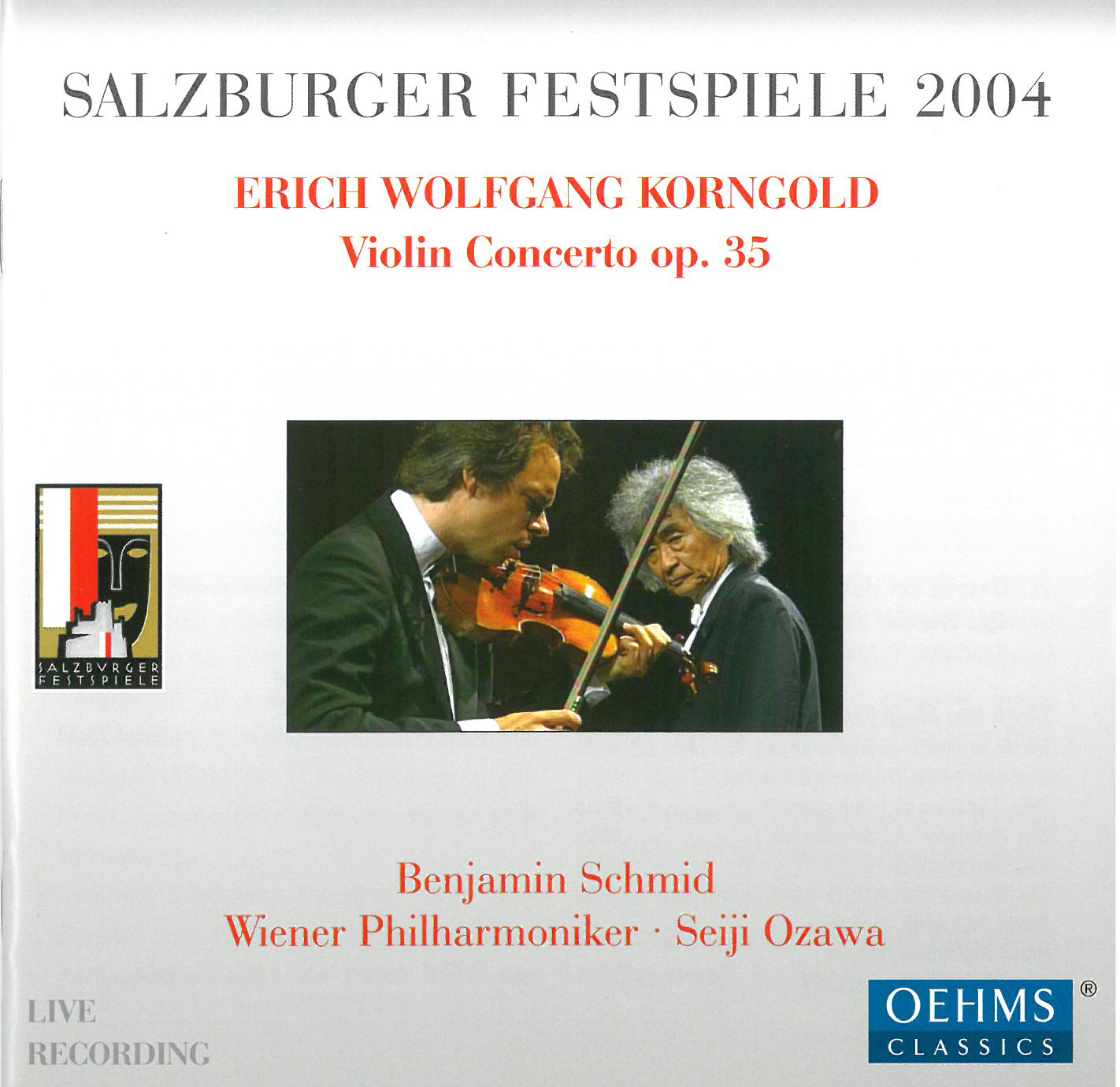
01 KorngoldKorngold – Violin Concerto; Much Ado About Nothing; Suite Op.23
Benjamin Schmid; Wiener Philharmoniker; Seiji Ozawa
Oehms Classics OC 537 (oehmsclassics.de)

This is a set of live performances from the Salzburg Festival of 2004 entirely devoted to Erich Wolfgang Korngold, a composer of extraordinary talent, whose music was forbidden in the Nazi era. He escaped Austria in 1937 and settled in the USA and had a successful career in Hollywood writing film scores, but gave it up and continued writing symphonic and chamber music of the highest calibre – as proven by this recording. Korngold was also the last bastion of tonality, continuing the Romantic vein of Richard Strauss and Mahler as opposed to Schoenberg, Webern and Berg, the atonalists.

I came to Korngold via his opera Die Tote Stadt (1920) a post-Romantic masterpiece that haunted my imagination for years, but his Violin Concerto is a later work written in 1947 and I would rate it after the Sibelius as one of the best in the 20th century. It starts off with an enchanting, heavenly melody on the solo violin that makes us fall in love with it immediately. And the love affair lasts through the wonderful first movement and the ensuing extraordinary harmonies of the celestial Romance and exuberant Finale. It was premiered by Jascha Heifetz, but here Benjamin Schmid gives a more subtle interpretation with his “Lady Jeanne” Stradivarius that “sings and pipes, hops and thrills, languishes yearningly and sings dreamily.” Not to mention the Wiener Philharmoniker under Seiji Ozawa’s subdued and brilliantly integrated support in a performance to be cherished through the ages.

In the chamber Suite Op.23, with a left-hand-only piano part, Korngold is playing with traditional forms in an entirely original manner but with “imagination full of powerful imagery” and “sweet melodies that suggest a R. Strauss-Puccini even Lehár connection.” (Gottfried Kraus)

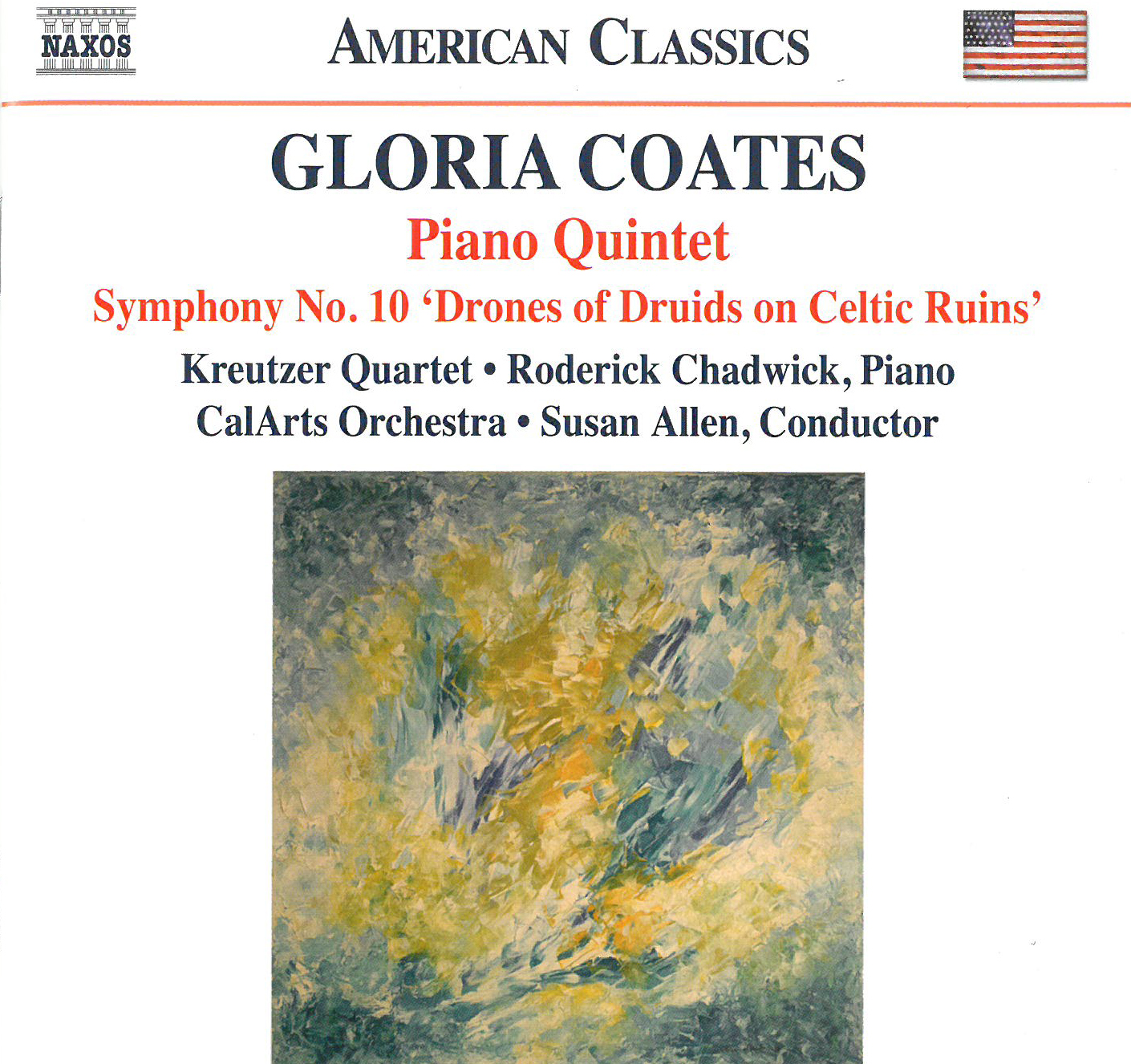
02 Gloria CoatesGloria Coates – Piano Quintet; Symphony No.10 “Drones of Druids on Celtic Ruins”
Kreutzer Quartet; Roderick Chadwick; CalArts Orchestra; Susan Allen
Naxos 8.559848 (naxos.com)

Gloria Coates’ mesmerizing music combines Penderecki’s complex textures from the 1960s – glissandi, clusters and microtones – with the trance-inducing repetitions of age-old ritual music, as adopted by today’s “mystical minimalists.” Coates, who turns 80 this October, was born in Wisconsin but has lived in Munich since 1969. She’s composed prolifically across all genres, including 16 symphonies and ten string quartets, many available on Naxos CDs, her abstract-expressionist paintings reproduced on their covers.

In the four slowish movements of her 22-minute Piano Quintet (2013), the Kreutzer Quartet, half of them tuned a quarter-tone higher than the others, sustain solemn, wordless, monkish chants over sporadic bass chords from pianist Roderick Chadwick, evoking a bell tolling each stanza.

Coates’ 36-minute, three-movement Symphony No.10 (1989), subtitled Drones of Druids on Celtic Ruins, is scored for brass and percussion, the second movement for percussion alone. Coates writes of “reading how the Celts keened and clapped over their dead with wild, trembling voices.” The symphony ends, she says, “with frightening keening and anxious drumming that seem to harbour the screams and crying of the banshees.”

Every movement of the Quintet and the Symphony has a title taken from Emily Dickinson’s poems. Coates describes how they connect to the music, but I couldn’t hear the connections, hearing only her truly enthralling sonorities. Moreover, not being mystically inclined, I found that even these, eventually, became somewhat tedious.

Hear her unique music, judge for yourself.

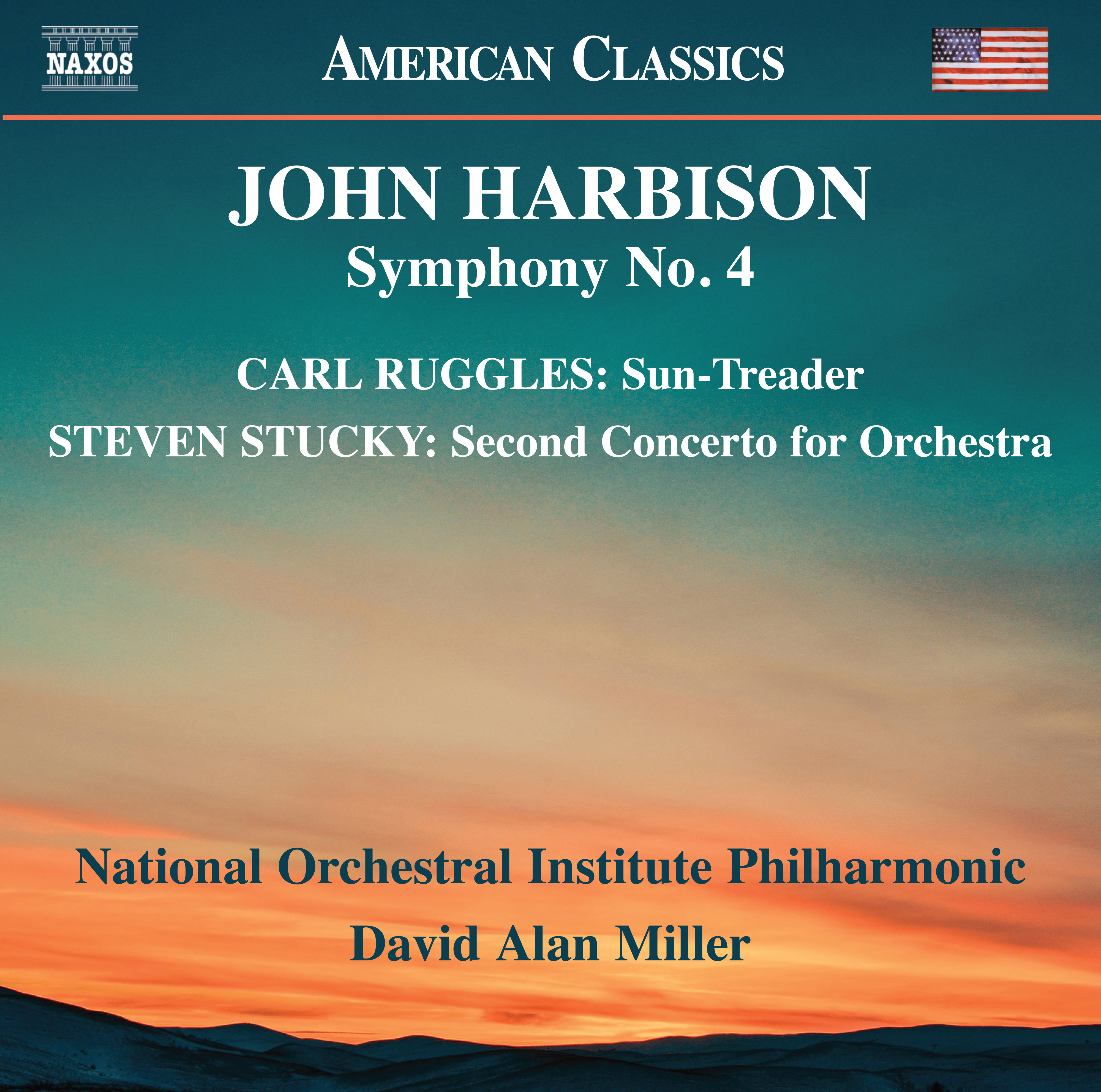
04 Harbison RugglesJohn Harbison – Symphony No.4; Carl Ruggles – Sun-Treader; Steven Stucky – Second Concerto for Orchestra
National Orchestral Institute Philharmonic; David Alan Miller
Naxos 8.559836 (naxos.com)

The University of Maryland-based National Orchestral Institute Philharmonic brings together outstanding young musicians who, based on this disc, produce exceptional results. Contemporary American music expert David Alan Miller conducts the orchestra in Carl Ruggles’ classic Sun-Treader (1931) followed by two works by Pulitzer Prize-winning composers dating from 2004: John Harbison’s five-movement Symphony No.4 and the late Steven Stucky’s three-movement Second Concerto for Orchestra. The highly dissonant Ruggles even now has an abrupt in-your-face quality, though the composer’s road to completion was long. Achieving consistency of melodic, harmonic and rhythmic aspects in a new idiom is difficult, yet Ruggles achieved it. Great brass buildups to a brutal refrain of pounding timpani symbolize the sun’s power in “giant steps,” alternating with briefer moments of repose. Kudos to the excellent brass and percussion players.

I have always enjoyed Harbison’s bracing music and the Symphony No.4 demonstrates his expanded orchestral mastery. After an invigorating Fanfare, the Intermezzo features enticing pitched percussion and harp in dialogue with declamatory strings, leading to paradisiacal wind and string solos. But a jumpy Scherzo interrupts; the following Threnody is the work’s emotional core.

From Harbison to Stucky we arrive at an overtly virtuosic orchestral showcase of first-rate music-making in every sense of the word – Ravel carried much further! In the Second Concerto for Orchestra, the precision and energy of conductor Miller and the orchestra, and the beauty and variety of sound pictures realized, are breathtaking.

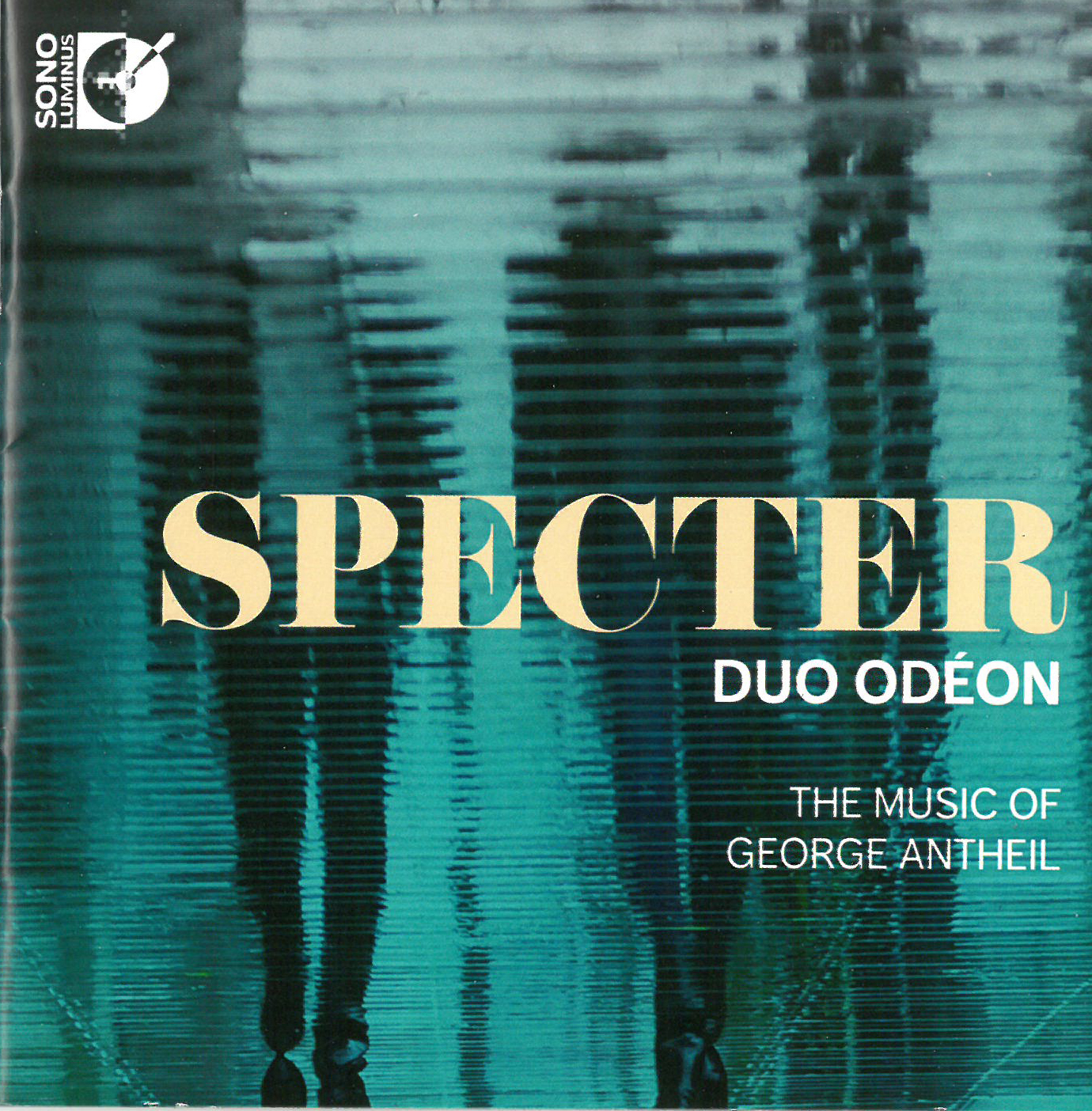
03 Antheil violin and pianoSpecter – The Music of George Antheil
Duo Odéon (violin/piano)
Sono Luminus DSL-92222 (sonoluminus.com)

Praised in 1927 by Ezra Pound, who spoke of him in the same glowing terms as he did the painter Pablo Picasso, sculptor Henri Gaudier-Brzeska and writer Wyndham-Lewis – members of the Vorticists – George Antheil was hailed as revolutionary for his methods of harmonic conception. According to Pound, Antheil was annoyed with the term “architecture” when applied to music; he instead preferred the term “mechanisms” to describe his unique structural style.

Antheil, however, remained on the fringe of French music of the early 20th century and, despite attempts by performers to redress this situation, much of Antheil’s music remains very much in the shadows. This impressive disc might just change the equation if enough commercial muscle is put behind its promotion. Duo Odéon, comprising violinist Hannah Leland and pianist Aimee Fincher, have – first and foremost – selected important repertoire from Antheil’s canon. The dramatic Sonatina for Violin and Piano, together with the diabolically challenging Concerto for Violin and Orchestra – originally written for Pound’s violinist-mistress Olga Rudge – and the lyricism of Valses from Specter of the Rose present Duo Odéon in devastatingly good form throughout.

Every layer of Antheil’s inventive orchestration can be heard in Leland’s fiery double-stops which make the music leap off the page, and with the remarkable physicality of Fincher’s pianism, Duo Odéon brings Antheil’s genius to life again in an utterly memorable performance of his works.

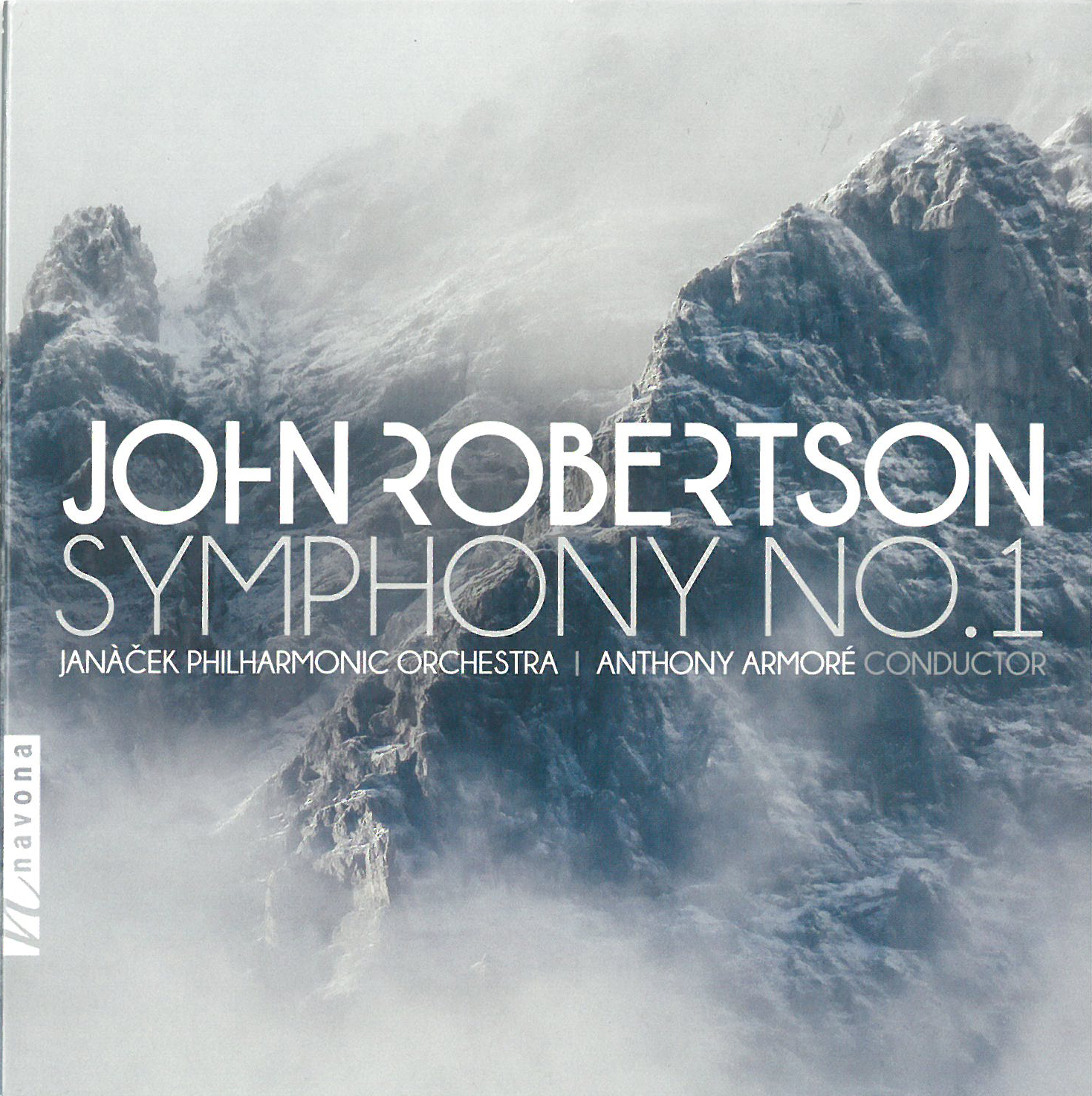
05 John Robertson SymphonyJohn Robertson – Symphony No.1
Janáĉek Philharmonic Orchestra; Anthony Armoré
Navona Records NV6167 (navonarecords.com)

Judging from this CD, the music of Kingston-based John Robertson has long been unfairly neglected in his adopted country. Arriving in Canada from New Zealand in 1967, Robertson, who turns 75 this October, was a late bloomer, receiving no significant public performances until 1987, when the Nepean Symphony presented his Variations for Small Orchestra, Op.14.

The 18-minute Variations opens with an original theme filled with quirky pauses, syncopations and intervallic leaps. The six variations that follow feature prominent solos for clarinet, trumpet, French horn and timpani. There’s a tango and a waltz leading to a triumphant finale containing reminiscences of earlier variations.

Robertson’s 34-minute Symphony No.1, Op.18 dates from 1988 but was unheard until a 2014 performance in Bulgaria. Two brightly scored, energetic movements bookend a gorgeous slow movement, music that should be welcomed by Canadian orchestras and audiences.

The 25-minute Suite for Orchestra, Op.46, was premiered in 2010 by the London (UK) Gay Symphony Orchestra. The opening Fanfare for brass and percussion is followed by the Waltz, at first wistful as played by woodwinds and strings, becoming raucous when the rest of the orchestra joins in. Elegy, the longest movement, again shows Robertson’s lyrical gift, while the March ends the Suite in celebratory fashion.

In these neo-Romantic works, Robertson displays a sound of his own – colourful and inventive scoring, unpretentious and essentially cheerful. This music deserves to be heard and heard again.

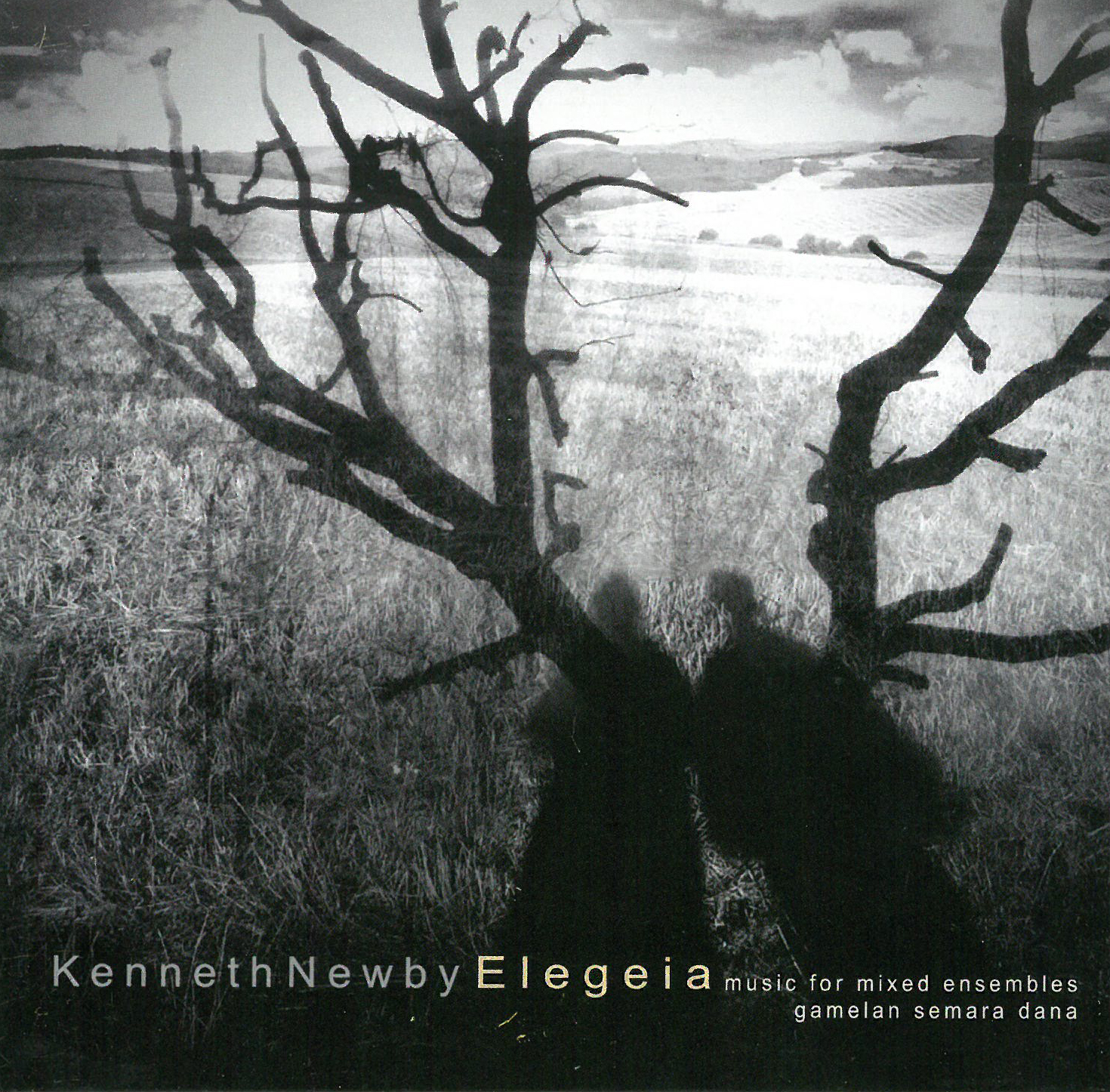
Emergence Trilogy Vol.2: Elegeia
Flicker Ensemble
Flicker Art Collaboratory FAC 201702

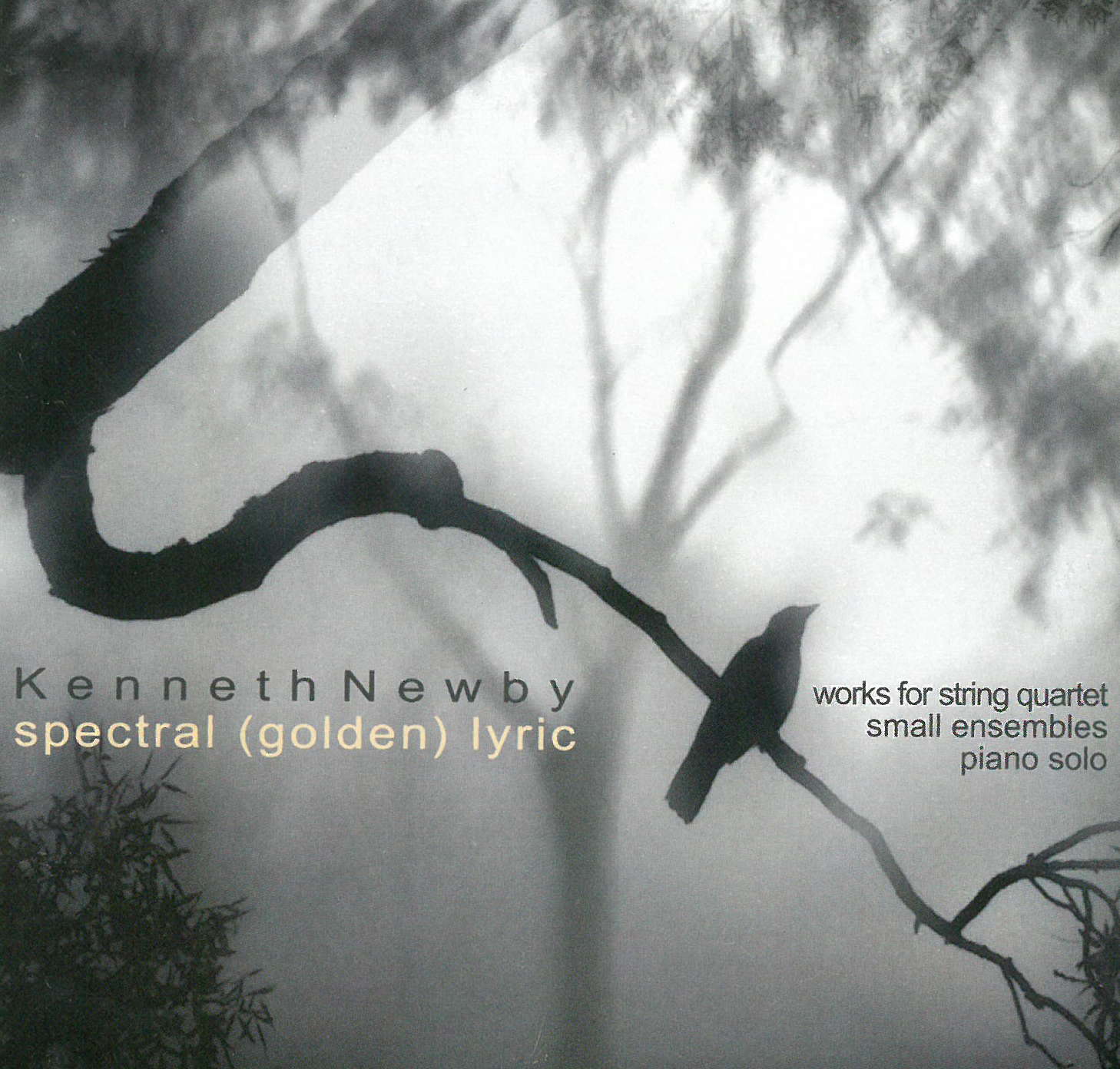
Emergence Trilogy Vol.3: Spectral (Golden) Lyric
Flicker Ensemble
Flicker Art Collaboratory FAC 201703
(store.cdbaby.com/Artist/FlickerEnsemble)

06a Ken Newby ElegeiaI first encountered BC composer Kenneth Newby’s ambitious Emergence Trilogy, consisting of three albums of his compositions, online. I reviewed Chambers: Volume 1 in The WholeNote summer 2018 issue. Flicker Art Collaboratory has now released all three albums on CD, prompting me to explore the fascinating, multivalent music on Volumes 2 and 3.

Newby’s discography reaches back to the early 1990s when he co-founded the group Trance Mission. The San Francisco world fusion quartet incorporated elements of fourth world, ethno-ambient, improvisation and jazz, releasing four albums. Faint echoes of some of those elements still reverberate in Newby’s music today. In addition, his compositions make reference to 20th-century modernism, various branches of electronic sound synthesis and acousmatic music, plus his in-depth studies and performance of Balinese and Javanese gamelan music.

Elegeia showcases Newby’s quest for discovering complexity and multicultural identities in his work. It extends to the instrumentation of the five works here. Swarm I is scored for string octet; Snark for muted trumpet and orchestra; Swarm II for string octet and brass; Khôra for Pauline Oliveros for mixed ensembles, and Crépuscule for Barbara for prepared piano and strings. Not unexpectedly, the effect of the works varies tremendously. For example, the asymmetrical melodic motifs – methodically organized via numerical sequences found in English bell ringing – in Symmetries II, movement IV of Khôra for Pauline Oliveros, are performed exclusively on the Semara Dana. A type of Balinese gamelan, it’s the sole work for gamelan on these albums. The sensuously recorded Crépuscule for Barbara directly appropriates the piano preparations from John Cage’s Sonatas and Interludes (1946-48). Newby then cannily adds what sounds like pizzicato and harmonics played on high orchestral strings. The result is an elegant Cagean tribute – with a Newby twist.

06b Ken Newby SpectralThe last album, Spectral (Golden) Lyric, with ten works in total, is even more eclectic in instrumentation than the others. The brief Orchid March, scored for Chinese erhu, guzheng and percussion, is another instrumental cultural outlier. On the other hand, given that these Chinese instruments effectively perform Newby’s personal compositional language, this work exemplifies his 21st-century transcultural musical aesthetic. Adopting a less overt approach, Newby has given several works titles borrowed from Javanese gamelan performance practice. There are four (spectral) pathetan, a palaran, and the last string quartet is titled Toccata and Imbal. Imbal refers to a technique in Javanese gamelan music in which two (or more) players perform interlocking melodies, thereby producing a dense, highly energized musical texture.

Newby’s Toccata and Imbal was for me the particular high point of these three exhilarating albums.

Listen to 'Elegeia' and 'Spectral (Golden) Lyric' Now in the Listening Room

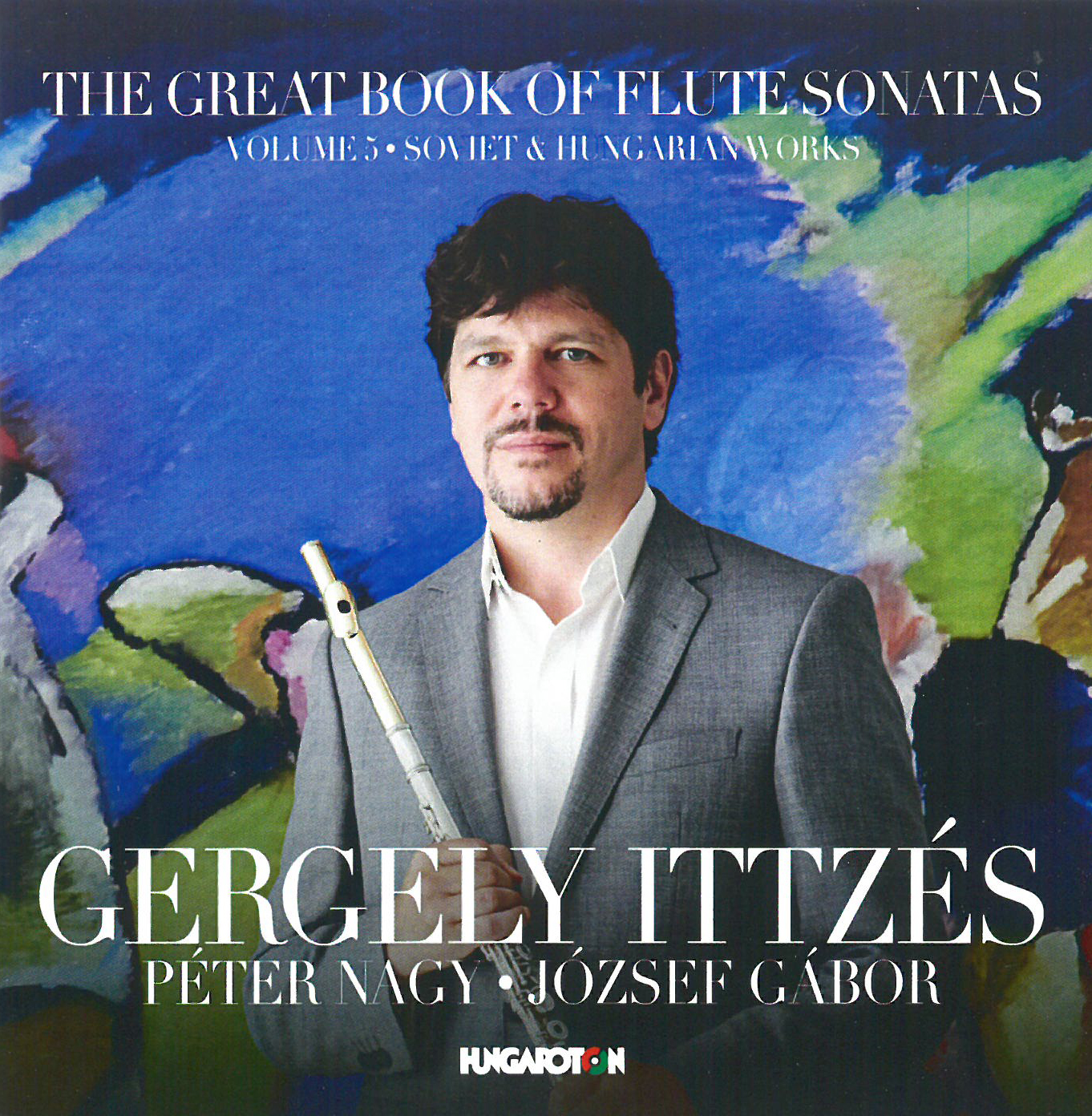
07 Ittzes FluteThe Great Book of Flute Sonatas Vol. 5 – Soviet and Hungarian Works
Gergely Ittzés; Péter Nagy; József Gábor
Hungaroton HDC 32777

The mid-career Hungarian flute virtuoso, teacher and composer Gergely Ittzés lists over 20 albums on his bio. Perhaps the most ambitious item is his seven-volume CD set The Great Book of Flute Sonatas, beginning with J.S. Bach’s Flute Sonata in B Minor. Volume Five is dedicated to four mid-20th-century Soviet and Hungarian flute and piano sonatas. Except for the well-known neoclassical Prokofiev Flute Sonata in D Major (1943) they are new to me. Ittzés superbly renders the lyricism of the Prokofiev, as well as in sonatas by Edison Denisov (1929-96) and Otar Taktakishvili (1924-89). But it’s the László Lajtha album opener that is the real discovery for me here.

Hungarian composer, ethnomusicologist and conductor Lajtha (1892-1963), a younger contemporary of Bartók and Kodály, produced a considerable body of high-quality work. His Sonata en concert for flute and piano (1958) is surprising, dramatic – almost cinematic in scope. After WWII, performances of Lajtha’s compositions were effectively repressed by Hungary’s Communist regime due to Lajtha’s anti-Soviet views (especially his support for the 1956 Revolution). In recent years however his place among leading 20th century Hungarian composers has begun to be restored.

Lajtha’s Sonata is a sheer bravura delight. I hear echoes of his Magyar folk music research, his Parisian composition studies, evocative tone painting, as well as the influence of the advanced early 20th-century harmonic language of his illustrious Hungarian compatriots. The Sonata concludes with a light-handed musical joke. No spoiler alert here: you’ll have to listen to Ittzés’ brilliant rendition of this gem to enjoy it.

08 John AdamsJohn Adams
Berliner Philharmoniker; Gustavo Dudamel; Alan Gilbert; Kirill Petrenko; Sir Simon Rattle
Berliner Philharmoniker Recordings BPHR 170141 (berliner-philharmoniker-recordings.com)

This set of recordings is uniquely presented in an elegant, creatively designed package of quality. In his forward, Simon Rattle writes “John Adams is the Berliner Philharmoniker’s first official composer-in-residence during my 15 years as chief conductor of the orchestra. We have known each other for more than 30 years. I was in my late 20s when I first became aware of his music. Ed Smith, who ran the City of Birmingham Symphony Orchestra with me, played me Harmonium. It made a huge impression on me. It’s one of his earliest works for orchestra and chorus and it packs a huge and ecstatic punch. His music has unbelievable energy and joy and hunger for life that transmits itself to people of all ages…. John is such an open, generous, self-deprecating person that it’s sometimes hard to believe that he is a great composer as well. He’s managed to keep a special depth of humanity, and I think that comes through in the music.”

There are seven works in this collection, including the three larger works on CD, all duplicated with extras and documentaries on the Blu-ray video discs. Harmonielehre, for orchestra is conducted by Adams and the dramatic symphony, Scheherazade.2 has Adams in charge with an astounding Leila Josefowicz, violin. The Gospel According to the Other Mary is an oratorio in two acts devised by Peter Sellars who selected the texts. Rattle conducts three prime soloists, three countertenors, chorus and orchestra.

It is predictable that a conversation between Adams and Sellars would be both fascinating and enlightening as they discuss The Gospel According to the Other Mary. The meaning and message of the oratorio’s text and its impact inevitably leads to reflections on much of the world today.

Here is what the others batoneers did: Alan Gilbert, Short Ride in a Fast Machine and Lollapalooza; Gustavo Dudamel, City Noir; Kirill Petrenko, The Wound-Dresser.

This is a most enjoyable creative concept, with authoritative performances in state-of-the-art sound and vision.

01 HovhanessAlan Hovhaness – Music for Winds & Percussion
Central Washington University Wind Ensemble; Larry Gookin; Keith Brion; Mark Goodenberger
Naxos 8.559837 (naxos.com)

This spellbinding, beauty-filled CD, featuring several world premiere recordings, will delight Hovhaness’ fans (like me). For anyone unfamiliar with Hovhaness’ luminous exoticism, these ten short, varied works spanning the years 1942-1985 are a perfect introduction.

Hovhaness’ amazing output over his long life (1911-2000) includes 67 symphonies (!) among 434 opus numbers (!), many drawing upon his father’s Armenian heritage, as well as other Eastern musical traditions. Mystically inclined, the Massachusetts-born composer revered mountains as sacred, referencing them in the titles of over 30 works, including two on this CD.

October Mountain for six percussionists highlights the marimba in music recalling Balinese ceremonial song and dance. In Mountain under the Sea, a chanting saxophone floats above throbbing harp and percussion, suggesting magma welling from an underwater volcano. The Overture to Hovhaness’ opera The Burning House, scored for flute and percussion, evokes the austere stateliness of Japanese court and theatre music. Vision on a Starry Night for flute, harp and percussion is sweet and dreamy, while melancholy informs Meditation on Ardalus for solo flute and The Ruins of Ani for eight clarinets, a threnody for a medieval Armenian city destroyed by the Turks.

The most lustrous gems in this musical jewel box are works for band. Hovhaness exulted in solemn, incantatory brass and woodwind melismas, spotlighted in the Armenian processional Tapor No.1, Three Improvisations on Folk Tunes (from India and Pakistan), Hymn to Yerevan and the six-movement Suite for Band.

A truly entrancing disc!

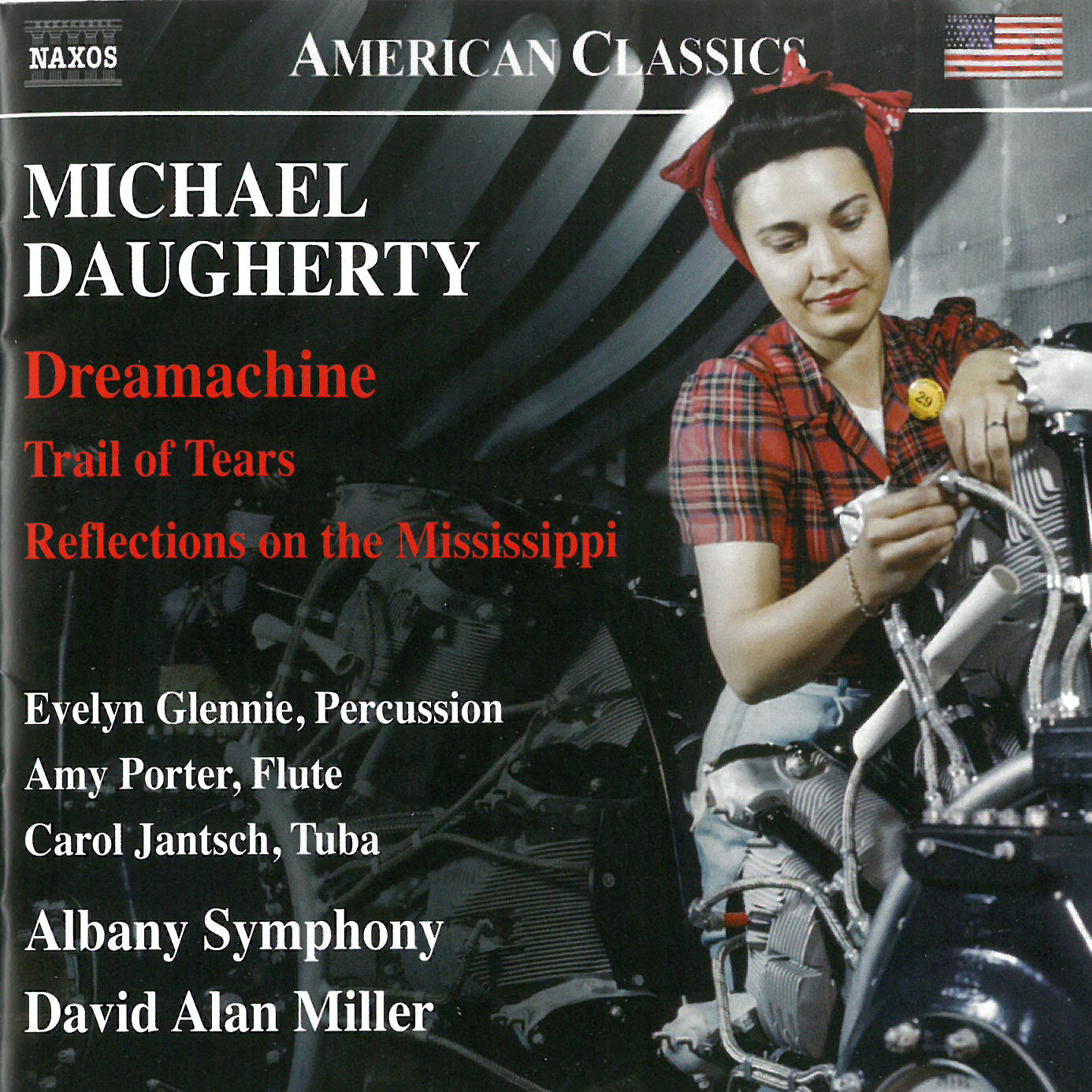
02 Daugherty DreamachineMichael Daugherty – Dreamachine; Trail of Tears; Reflection on the Mississippi
Amy Porter; Evelyn Glennie; Carol Jantsch; Albany Symphony; David Alan Miller
Naxos 8.559807 (naxos.com)

Among the younger composers prominent in the fecund musical topography of the United States, Michael Daugherty stands out as being fascinating, compelling and yet profoundly revolutionary in his ability to use the timbral palette of orchestral instruments, squeezing haunting and intuitive, drone-like modalities to evoke feelings of sadness and joy, nostalgia and anticipation, on a grand and sweeping scale. His music on this disc has been rendered with urbane and stylish theatre by the Albany Symphony conducted by David Alan Miller.

The cloudy sound masses of Trail of Tears have been created out of microscopic tangles of intrepid instrumental lines. These gradually become clearer as the work progresses through its ferociously revelatory second movement. This micropolyphony of the melodic line, pursued by flutist Amy Porter, entwined with the percussive outbursts of the Albany Symphony, comes to a mighty resolution in the finale.

In Dreamachine and Reflections on the Mississippi – considerably darkened by the Delta’s history – Daugherty summons his visionary skills to create a compelling musical world, at once eerie and beautiful. The music receives an epic fillip with the inclusion of Dame Evelyn Glennie on percussion and Carol Jantsch on tuba. Orchestral tensions mount in the darkened imagery of Reflections on the Mississippi; the visceral drama of Dreamachine is completely re-contextualised in Glennie’s inimitable manner and expressed in a magisterial rhythmic style, where complex layers of tempi are used to drive the music forward.

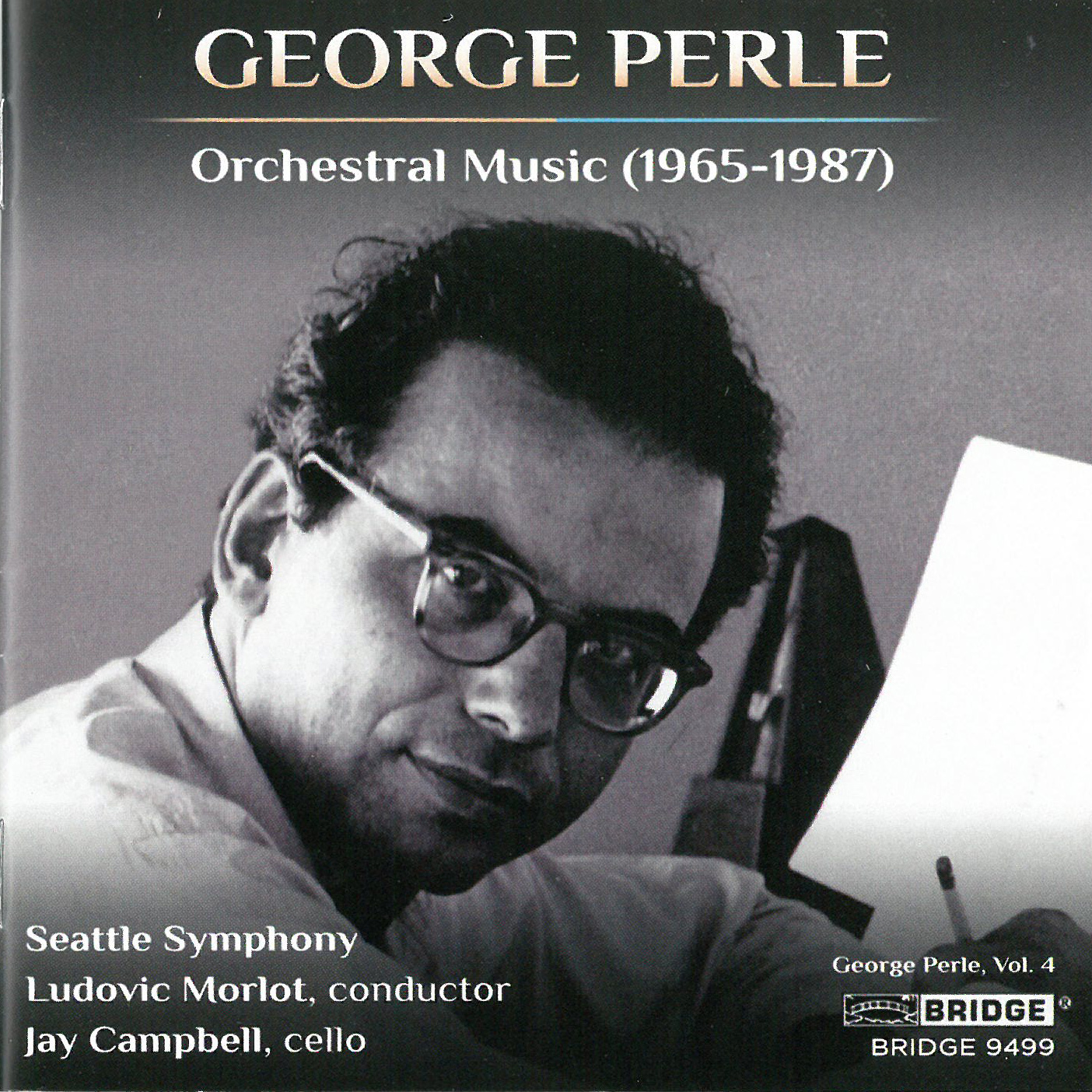
03 George PerleGeorge Perle – Orchestral Music (1965-1987)
Jay Campbell; Seattle Symphony; Ludovic Morlot
Bridge Records 9499 (bridgerecords.com)

Christopher Hailey’s excellent accompanying notes to this release quote American composer George Perle (1915-2009) on his intentions: “Music that was going to do what music used to do, with its basis being the 12-tone scale instead of the diatonic [seven-note] scale.” Based on these premiere recordings, Perle succeeds with clear phrasing and textures, melodic and rhythmic interest, consistent pitch content and colourful, inviting instrumental groups. The Sinfonietta 1 (1987) exemplifies these traditional virtues, opening with a propulsive neo-classical feel. Perle’s string writing is exemplary both in part-writing and mood creation; in the second movement, the Seattle Symphony’s string section supports a questioning clarinet solo beautifully. Other works differ; A Short Symphony (1980) is more influenced by Alban Berg’s expressionism, especially in the intriguing last movement where Perle’s in-depth involvement and analytical insight into Berg’s works produce remarkable results.

Six Bagatelles (1965) are miniatures. No.5 is notable for its otherworldly high divisi strings that surge and recede. In No.4, a solo cello emerges powerfully, contrasting with sustained woodwinds. This piece led to the Concerto for Cello and Orchestra (1966), where the solo-orchestra juxtaposition becomes a natural fit with Perle’s style. He contrasts one orchestra section with another or with the cello in an idiomatic and imaginative way. American cellist Jay Campbell is expressive and assured, conductor Ludovic Morlot balances all wonderfully, and the Seattle Symphony shines. The clever Dance Fantasy (1986) rounds off this remarkable disc.

Back to top