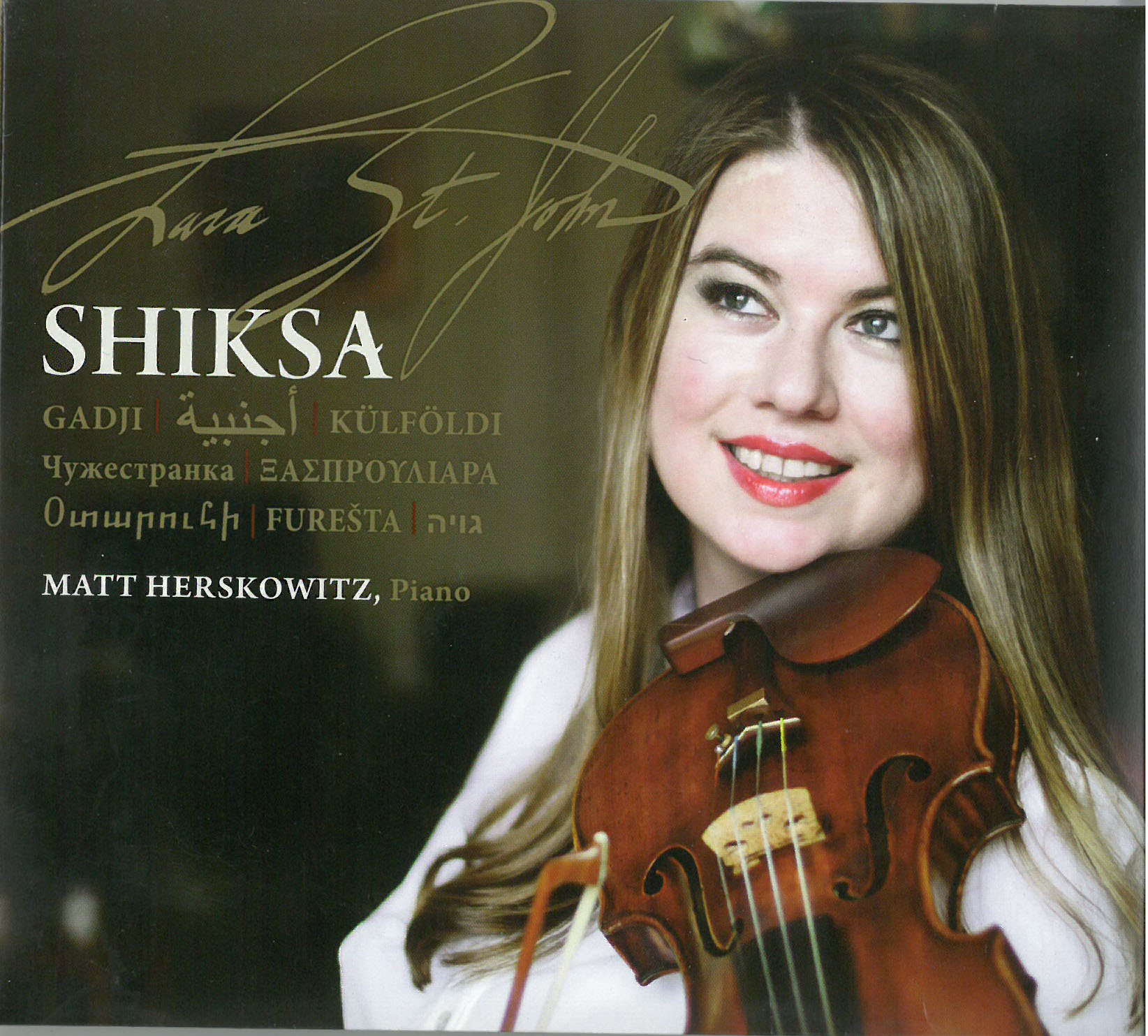
01 ShiksaWhen you listen to the simply astonishing opening track of Shiksa, the new CD from violinist Lara St. John and pianist/composer Matt Herskowitz on St. John’s own Ancalagon label (ANC 143 larastjohn.com/ancalagon) you could be forgiven for thinking that the rest of the CD couldn’t possibly match up – but you would be wrong!

The Czardashian Rhapsody is Martin Kennedy’s fiendishly difficult take on the traditional Czardas, with hints of Liszt’s Hungarian Rhapsody No.2 thrown in for good measure. It’s stunning, but there’s much more to come in this program of predominantly Middle Eastern and Eastern European music. All 14 tracks are based on traditional material, and feature creative arrangements by Milica Paranosic, John Kameel Farah, Yuri Boguinia, Serouj Kradjian, David Ludwig, Gene Pritsker, John Psathas, Michael P. Atkinson and the two performers themselves. Herskowitz’s Nagilara, his own take on Hava Nagila, is another showstopper, as is St. John’s Oltenian Hora, a dazzling display of what she calls “a bunch of improvised Romanian violin tricks, twists and turns.”

These are all much more than just mere showpieces though, and in many instances they clearly have personal resonance for both the composers and performers. What is truly remarkable is the way in which St. John effortlessly and completely captures the sound, style, mood and flavour of these evocative works; Shiksa may be a Yiddish term for a non-Jewish woman, but there’s no hint here of St. John’s being an outsider or anything other than totally and genuinely immersed in this music – you get the feeling that she’s playing these pieces from the inside out. The recorded sound, especially for the piano, is superb – hardly surprising, given that the recording was made in the beautiful acoustics of Le Domaine Forget de Charlevoix in Saint-Irénée, Québec.
02 Haimowitz BachI’ve noted before that it’s almost impossible to do comparative reviews of Bach’s unaccompanied violin and cello works; all you can do is look at the performer’s approach and the creative process and report on the result. Luckily, cellist Matt Haimovitz has virtually done this for us in his new 2-CD set of J. S. Bach: The Cello Suites According to Anna Magdalena (PentaTone Oxingale Series PTC 5186 555). In the extensive booklet essay Haimovitz details his journey so far with these wonderful and challenging works, starting with his hearing the legendary 1930s Casals recordings when he was nine, having a teacher at the time who had been a pupil of Casals and who required Haimovitz to play two movements of Bach each day as part of his regular practice routine, and having the privilege in his mid-teens of playing the Goffriller cello used by Casals.

The year 2000 saw Haimovitz perform all six suites in Germany, relying primarily on the Bärenreiter edition and the manuscript copy by Anna Magdalena Bach, the composer’s wife – Bach’s original manuscript has never been found. On his return, he launched the new Oxingale Records label with a 3-CD set of the suites, only to find that within a few years he could no longer agree with his interpretations.

Since then he has turned increasingly to the Anna Magdalena manuscript, which he feels is closest in spirit to the original and provides many keys to the playing style and interpretation. He discusses these in detail in the essay.

The performances here, needless to say, are an absolute delight. The cello used is a Matteo Goffriller made in Venice in 1710, with a cello piccolo by the 18th-century maker Georg Nicol. Köllmer used for the Suite V; the bow is a baroque replica made by David Hawthorne. Tuning is A=415 and not the current A=440, so the suites are all down a semi-tone from present-day pitch.

Haimovitz says that “with humility, and no small dose of courage, I continue on my journey with Bach and The Cello Suites, studying the gospel according to Anna Magdalena.” I just hope he continues to take us along with him.
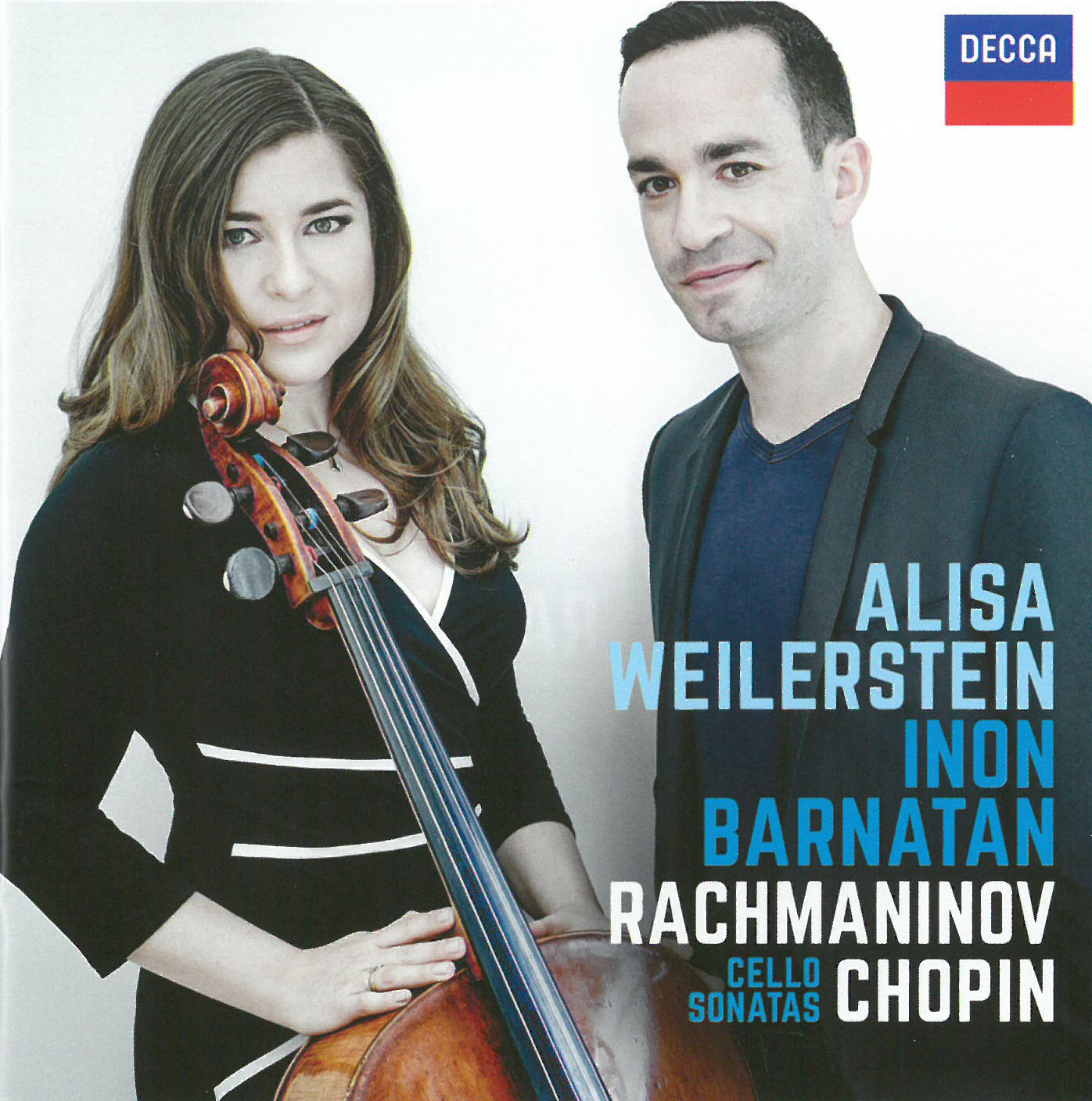
03 WeillersteinFollowing her solo recital disc and CDs of the Dvořák, Elgar and Carter cello concertos the latest CD from American Alisa WeilersteinRachmaninov & Chopin: Cello Sonatas (Decca 478 8416) with the New York-based Israeli pianist Inon Barnatan shows just how much she has to offer in the chamber music field. From the opening bars of the Rachmaninov Cello Sonata in G Minor, Op.19 it’s clear that this is going to be gloriously expansive playing from both performers. Barnatan is simply superb at the keyboard, with a beautifully judged use of legato in the long, flowing Rachmaninov phrases, and Weilerstein displays the qualities so often mentioned in reviews of her playing: technique, passion and intensity. It’s a captivating and engrossing performance.

The high standard continues through the Vocalise, Op.34 No.14 to the Chopin Cello Sonata in G Minor, Op.65, written mostly during the composer’s last summer on his lover George Sand’s estate in Nohant. The first movement in particular clearly gave Chopin a great deal of trouble, and was dropped for the premiere performance. It’s a strong, turbulent work very similar in mood to the Rachmaninov, and the two make an ideal pairing here.

The sonata was dedicated to the French cellist Auguste Franchomme, who gave the first (albeit truncated) performance in 1848 in Chopin’s final public concert. It was Franchomme who arranged the Étude in C-Sharp Minor, Op.25 No.7 for cello and piano, one of two shorter Chopin works on the CD. The Introduction & Polonaise Brillante in C Major, Op.3 dates mostly from Chopin’s youth – the Introduction was added later for Franchomme – and provides a lovely end to a truly beautiful CD.

Review
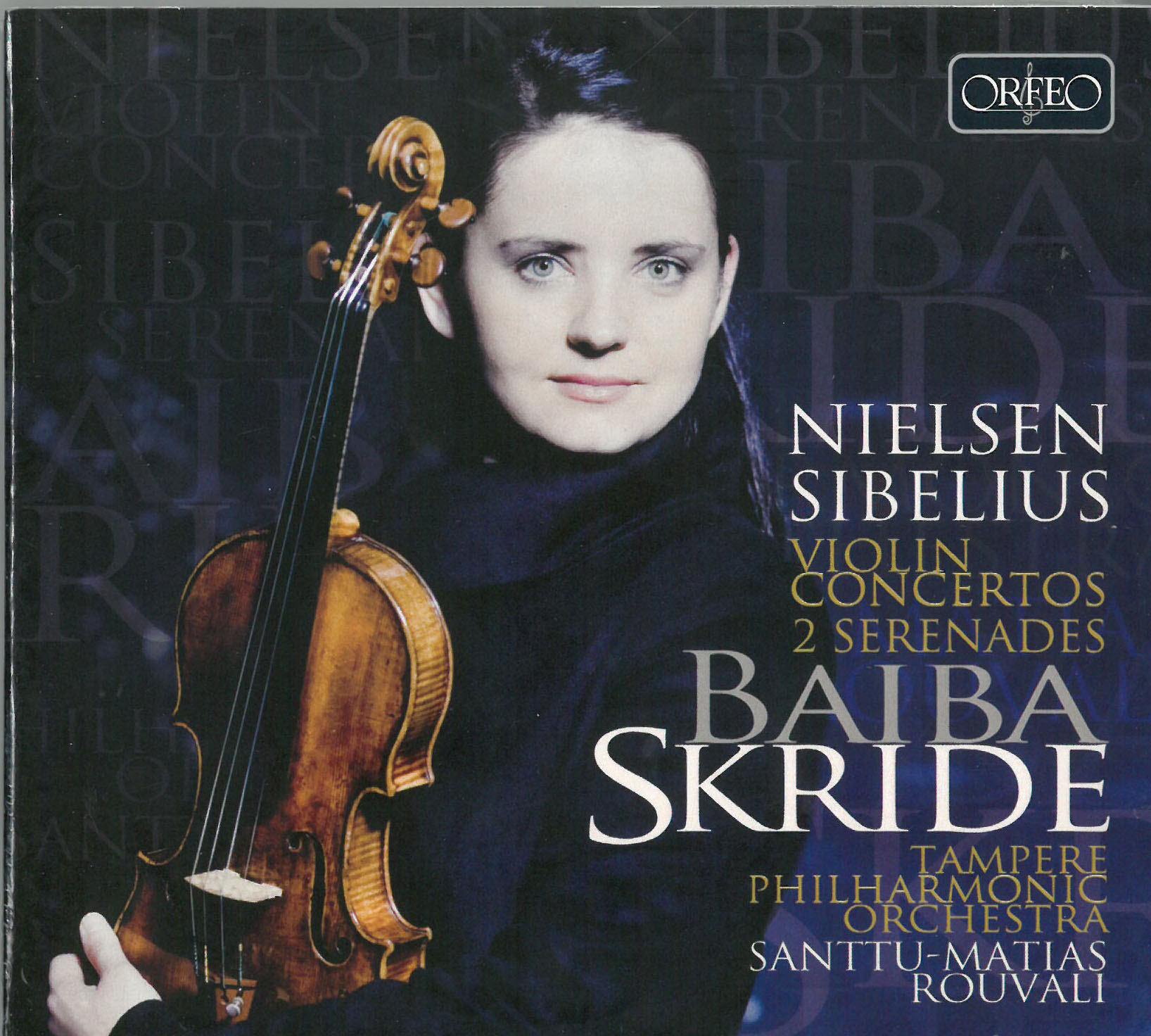
04 Baiba Skride

The Sibelius & Nielsen Violin Concertos make an excellent and natural pairing on the new 2-CD set from Latvian violinist Baiba Skride, with Finland’s Tampere Philharmonic Orchestra under Santtu-Matias Rouvali (Orfeo C 896 152 A). Both composers were born in 1865; both were violinists; both became the leader of their respective country’s Nationalist musical movement; and the concertos were written within a few years of each other in the first decade of the 20th century.

Skride is terrific in the Sibelius, with her rather fast and somewhat narrow vibrato providing a steely edge to the lush tone and phrasing and giving the work a real Nordic feel. The Two Serenades for Violin and Orchestra Op.69 complete the first disc; written in 1912-13, they are not heard all that often, and are a welcome addition here.

The Nielsen concerto is a lovely work that should really be more widely known; indeed, Nielsen’s music in general has never quite gained the recognition outside of his native Denmark that it deserves. In this case it may be the length and shape of the work that’s to blame: it’s almost 40 minutes long, and although ostensibly in four movements is actually in two sections, with the brief first and third “movements” – the latter the only slow movement – acting more as introductions for each half. Also, the simply glorious theme that appears after the brief flourish at the beginning of the work never reappears, and nothing else quite matches it. The performance here is outstanding, though.
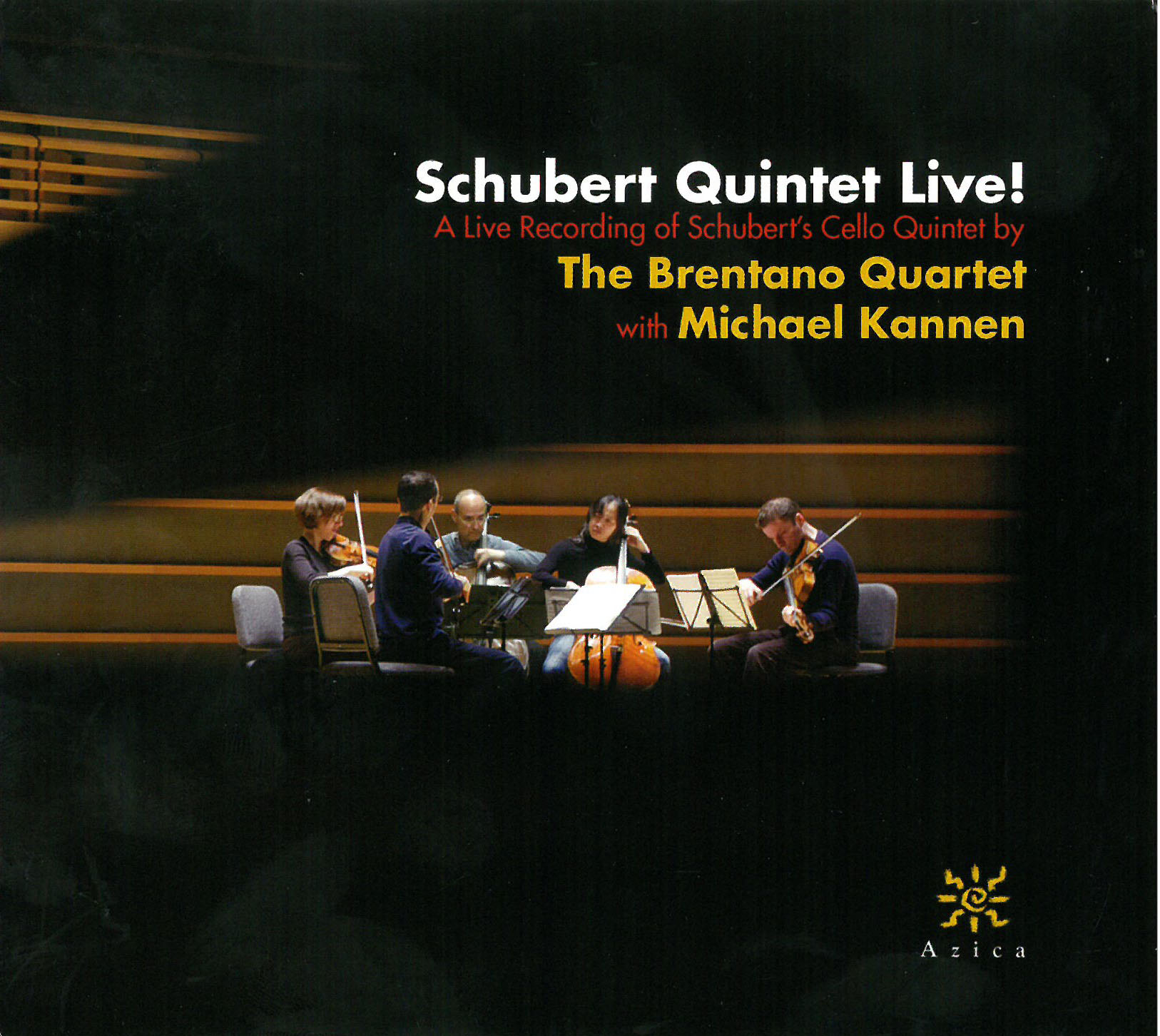
05 Schubert LiveAlthough leaving the group within eight years of its inception in 1992 the Brentano String Quartet’s founding cellist, Michael Kannen, continued his association with the ensemble, joining them on second cello in numerous performances of Schubert’s String Quintet in C Major D956 over the years, always harboring the hope that he would be able to record it with them one day. In September 2014 his wish came true in a quite exquisite way when the Brentano Quartet decided to make a live recording of the work at Amherst College in Massachusetts. An interactive weekend was built around three performances over three days, and the result was the new CD Schubert Quintet Live! (Azica ACD-71304).

The booklet notes include fascinating reflections on the recording challenges by Alan Bise, the producer and mix engineer for the project, as well as reflections on the performances by Kannen and violinist Mark Steinberg. Bise says that any minor blemishes had to be left in where fixing them would spoil the musical feel of a section, but he notes that “the energy and spirit represented here are almost impossible to capture in a closed recording session without an audience.” Other than the applause at the end there is very little to signify the physical presence of an audience, but the energy and spirit that Bise noted, and that they helped to create, clearly make a major contribution to the emotional effect of the music. It is indeed a wonderful performance of one of the greatest works in the chamber music repertoire.
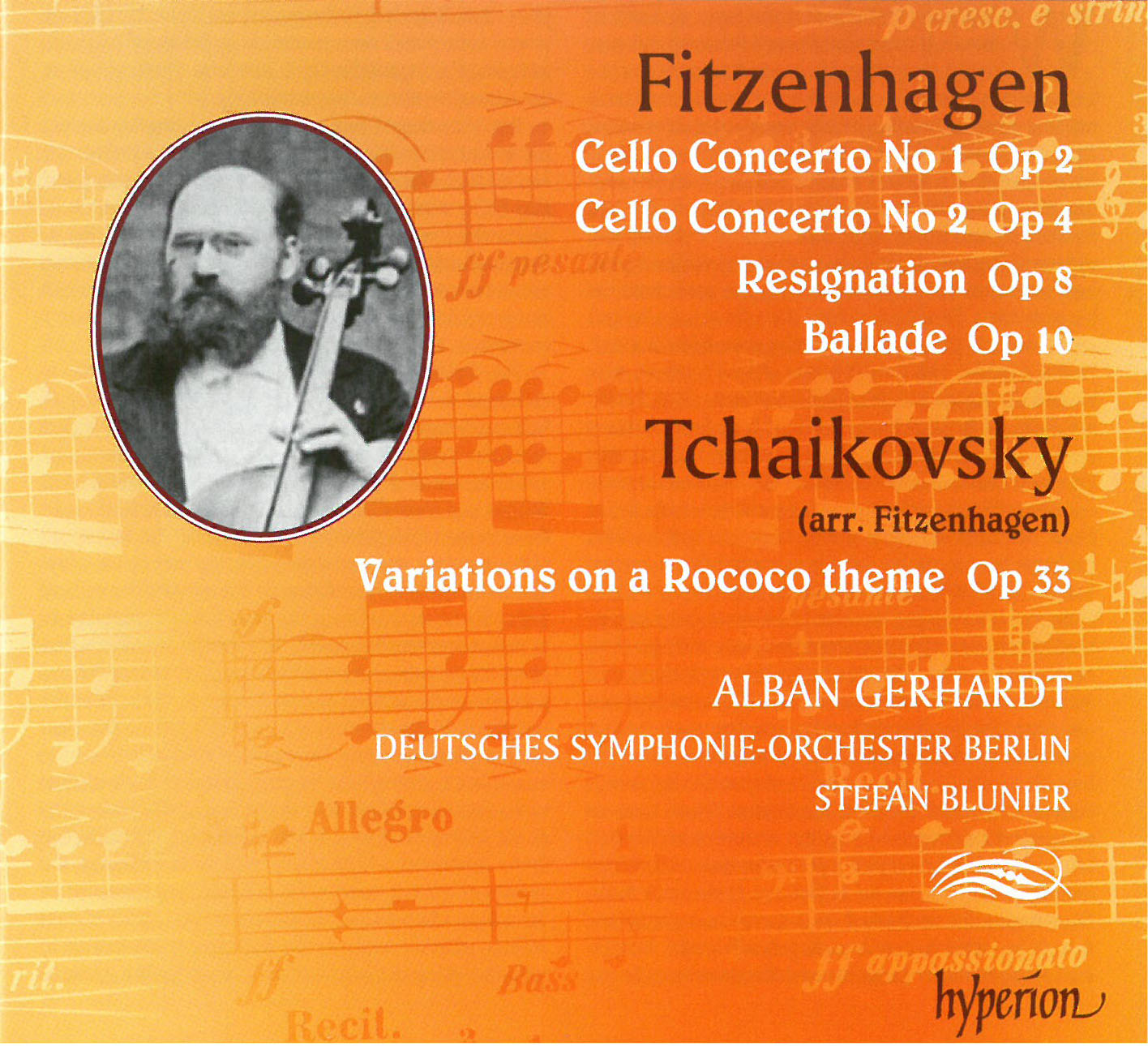
06 Romantic Cello 7The outstanding Hyperion series The Romantic Cello Concerto reaches Volume 7 with works by the German composer and cellist Wilhelm Fitzhagen (1848-1890), featuring cellist Alban Gerhardt and the Deutsches Symphonie-Orchester Berlin under Stefan Blunier (CDA68063). Fitzhagen was apparently mostly self-taught as a composer, but his two concertos for his instrument are solid, competent and attractive works very much in the German style of the period. The Concerto No.1 in B Minor, Op.2 and the Concerto No.2 in A Minor, Op.4 “Fantastique” are both early works, from 1870 and 1871 respectively, round about the time that Fitzhagen became professor of cello at the Imperial Conservatoire in Moscow. The First Concerto is a short work in three movements played without a break; a dazzling and challenging cadenza at the end of the first movement leads into a very brief (just over three minutes) but lyrical and simply beautiful Andante. The Second Concerto is also quite short, but again displays Fitzhagen’s fluently melodic style.

The central track on the CD is Tchaikovsky’s Variations on a Rococo Theme Op.33 from 1877. On moving to Moscow Fitzhagen had quickly established himself as a cellist, and soon came to know Tchaikovsky, who dedicated the Variations to Fitzhagen and sent him the manuscript for his comments. The cellist went a good deal further, making cuts and tempo changes, adding his own passages and changing the order of three of the variations. Somewhat reluctantly, Tchaikovsky let the radically altered version stand, and it is the work for which Fitzhagen is most remembered.

Fitzhagen’s Ballade – Concertstück Op.10, a single-movement work which is longer than the First Concerto, and Resignation – Ein geistliches Lied ohne Worte Op.8, a very brief but simply lovely piece, round out the CD.

Alban Gerhardt has been the soloist on five of the seven releases in this terrific series that never fails to delight and impress, and he is once again in his element with this music.
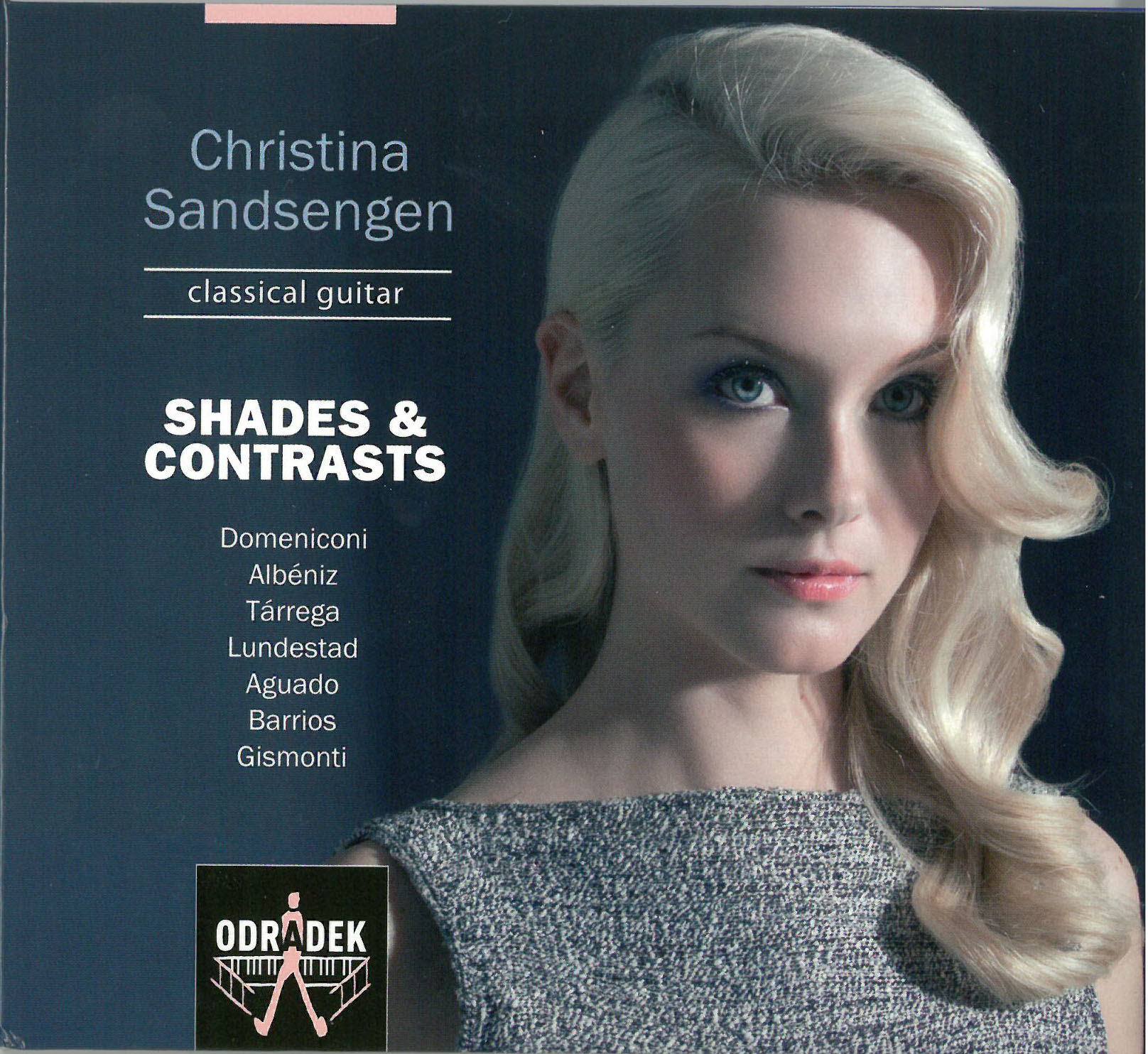
07 SandsengenShades & Contrasts is a quite stunning debut CD from the Norwegian guitarist Christina Sandsengen (Odradek ODRCD326 odradek-records.com). Standard works by Albéniz, Tárrega, Aguado and Agustin Barrios Mangoré are mixed with contemporary works by Sven Lundestad, Carlo Domeniconi and Egberto Gismonti in a varied and highly impressive recital. These are outstanding performances, delivered with a flawless technique and sumptuous tone. Expect to hear a lot more of this artist.
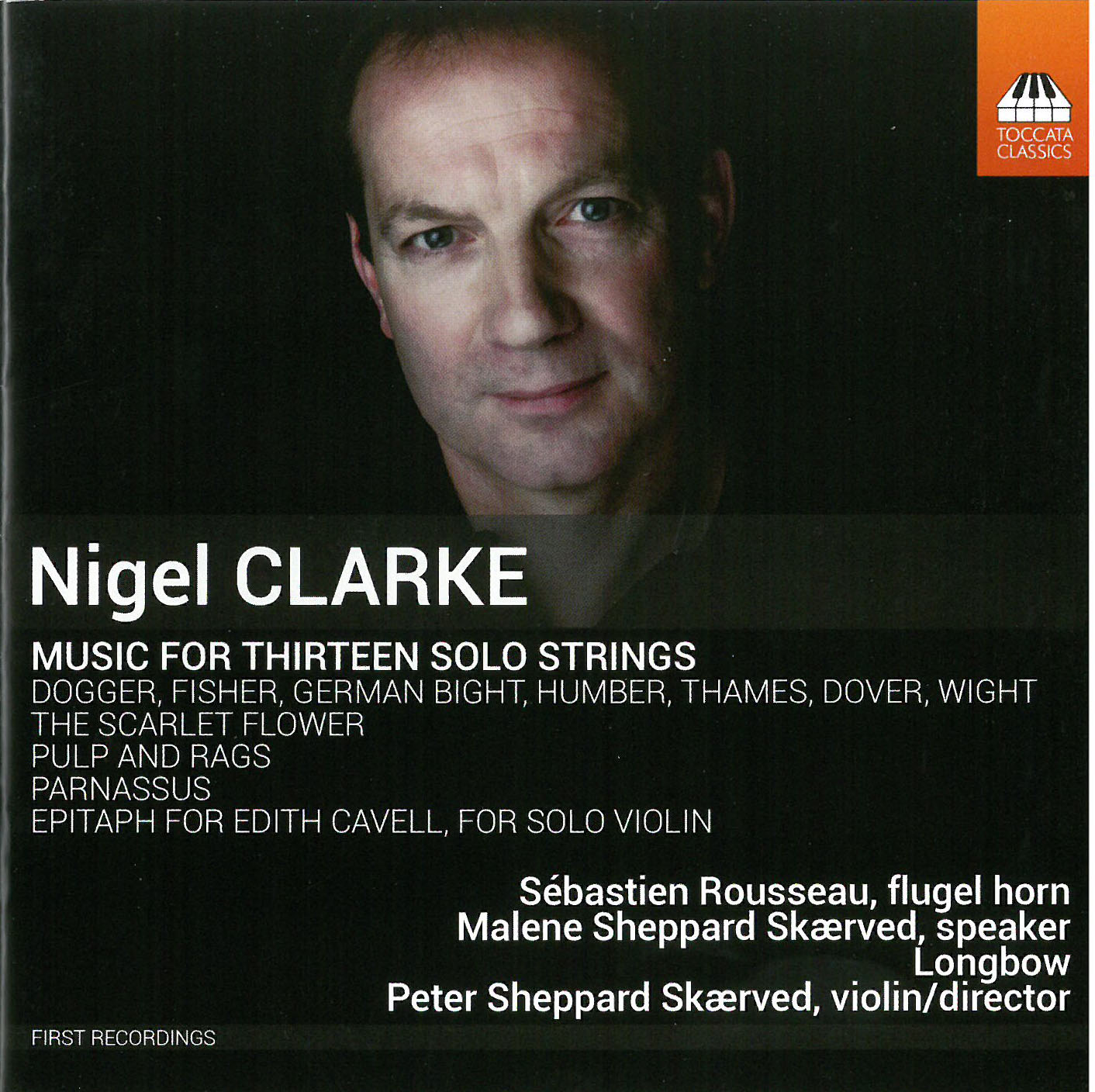
08 Nigel ClarkeThe English composer Nigel Clarke (b.1960) is featured on Music for Thirteen Solo Strings, a new CD from Toccata Classics with the 13-member string ensemble Longbow under the direction of violinist Peter Sheppard Skærved (TOCC 0325). Clarke and Skærved have enjoyed a close collaboration for almost 30 years. Their shared interest in music for divided strings (as opposed to string ensembles working in sections) led to Parnassus for Thirteen Solo Strings in 1986. It’s music that sounds a bit chaotic at first, but soon bears out Skærved’s observation that the frictional interchange between adjacent players playing contrary but related material can produce a sort of ensemble “fire-making” that generates a good deal of instrumental energy; there’s energy here in abundance.

The other four works on the CD are all from the past three years, two of them the result of an artistic collaboration with Dover Arts Development in Clarke’s home county of Kent and two of them tributes to Edith Cavell, the English nurse shot by the Germans in the First World War. Dogger, Fisher, German Bight, Humber, Thames, Dover, Wight, for Speaker, Thirteen Solo Strings and Sound Design is described as a diptych, Clarke’s music being preceded by a lengthy poem sketching Dover’s history written and delivered by Skærved’s wife, the Danish writer Malene Skærved. The title will have immediate meaning for anyone who has ever listened to the Shipping Forecast on BBC Radio; the seven names are of the sea areas from off the eastern coast of England, around the southeast corner and along the south coast past Dover. The music has clear – and self-confessed – references to sea music, including Britten’s Four Interludes from Peter Grimes and Debussy’s La Mer. The Navy Hymn (Eternal father, strong to save) emerges from the chaos of a storm to guide the piece to a serene and mostly tonal ending. Pulp and Rags, also linked to a Malene Skærved poem (not quoted), was inspired by the machinery in Buckland Paper Mill, an old mill near Dover that closed in 2000 after 230 years.

The Scarlet Flower for Flugel Horn and Thirteen Solo Strings features soloist Sébastien Rousseau in a work written as a memorial to Edith Cavell, the opening horn solo later being reworked for solo muted violin as Epitaph for Edith Cavell, with which Skærved closes an intriguing disc.
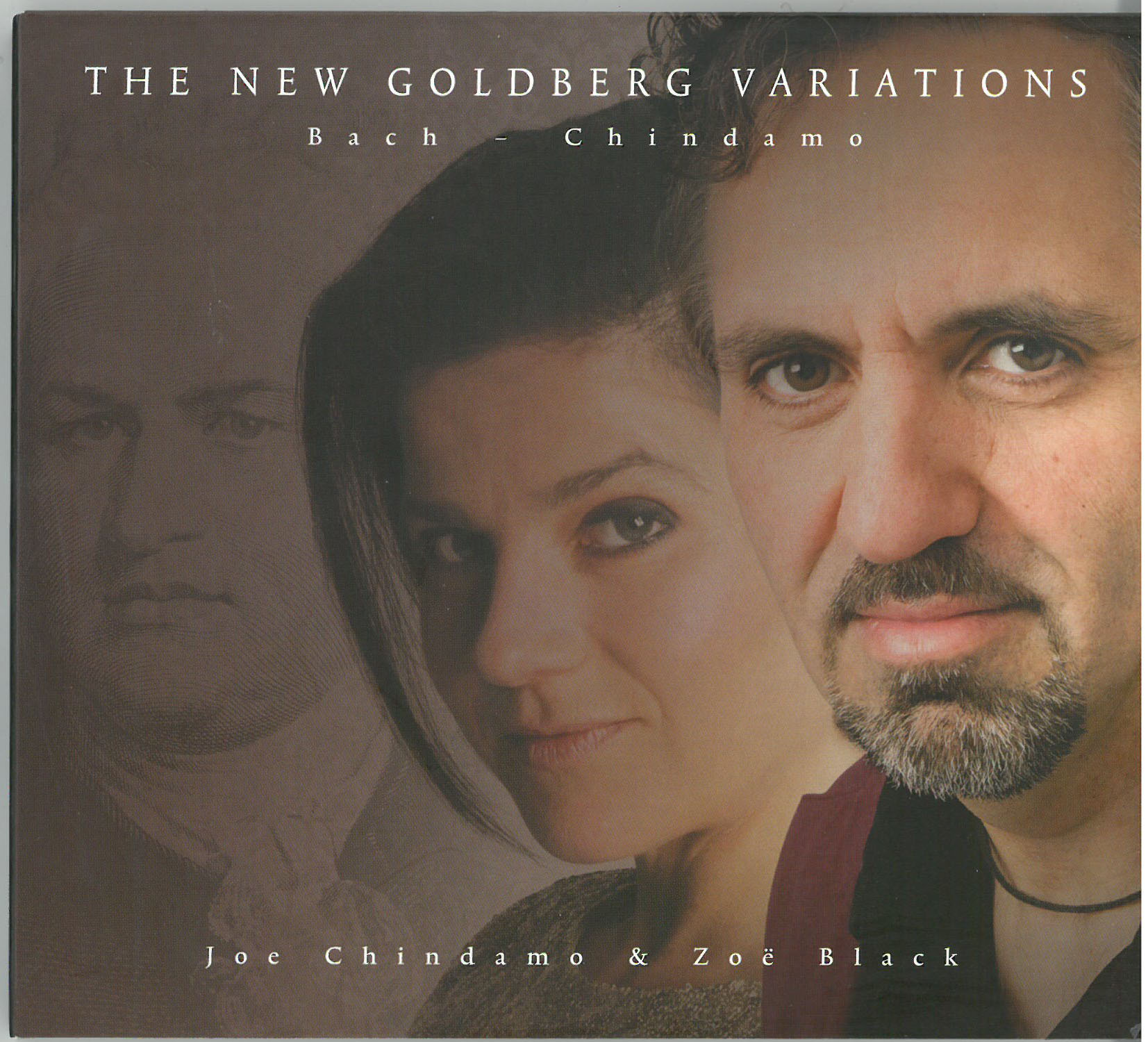
09 New GoldbergsThe New Goldberg Variations, a CD from the Australian duo of composer/pianist Joe Chindamo and violinist Zoe Black (Alfire Records ALFI15002) is described as “J. S. Bach’s original and complete Goldberg Variations with a newly composed counterpart for violin.” The violin part was written by Chindamo at Black’s request, and Chindamo says that the only self-imposed rule was that he would not alter a single note Bach wrote, and that he would adhere to Bach’s language and aesthetic.

The first Variation offers a continuous violin line as opposed to an occasional commentary, and from then on there’s a tendency for the violin to become the primary listening focus, although it does assume a background role quite often. One thing is clear – any misgivings you may have about the project are certainly not the result of any lack of quality in the writing or playing of the violin part; both are done with consummate skill. It’s all beautifully played, with a clean, bright and warm violin sound, and plenty of thoughtful keyboard work which, ironically, made me want to hear what Chindamo would do with the original Goldberg Variations on his own.

Purists may well object – imagine listening to Glenn Gould’s recordings and then saying “Yeah – I think I’ll write a violin part….” – but it is well-written, sympathetic and imaginative. However – and here’s the rub – it really is a different, collaborative work now, not merely an added commentary on the original; indeed, the CD cover shows Bach – Chindamo as the joint composing credits. It certainly makes for highly enjoyable listening, but whether or not it will ever be accepted as a bona fide concert work is open to question – and an interesting one at that.
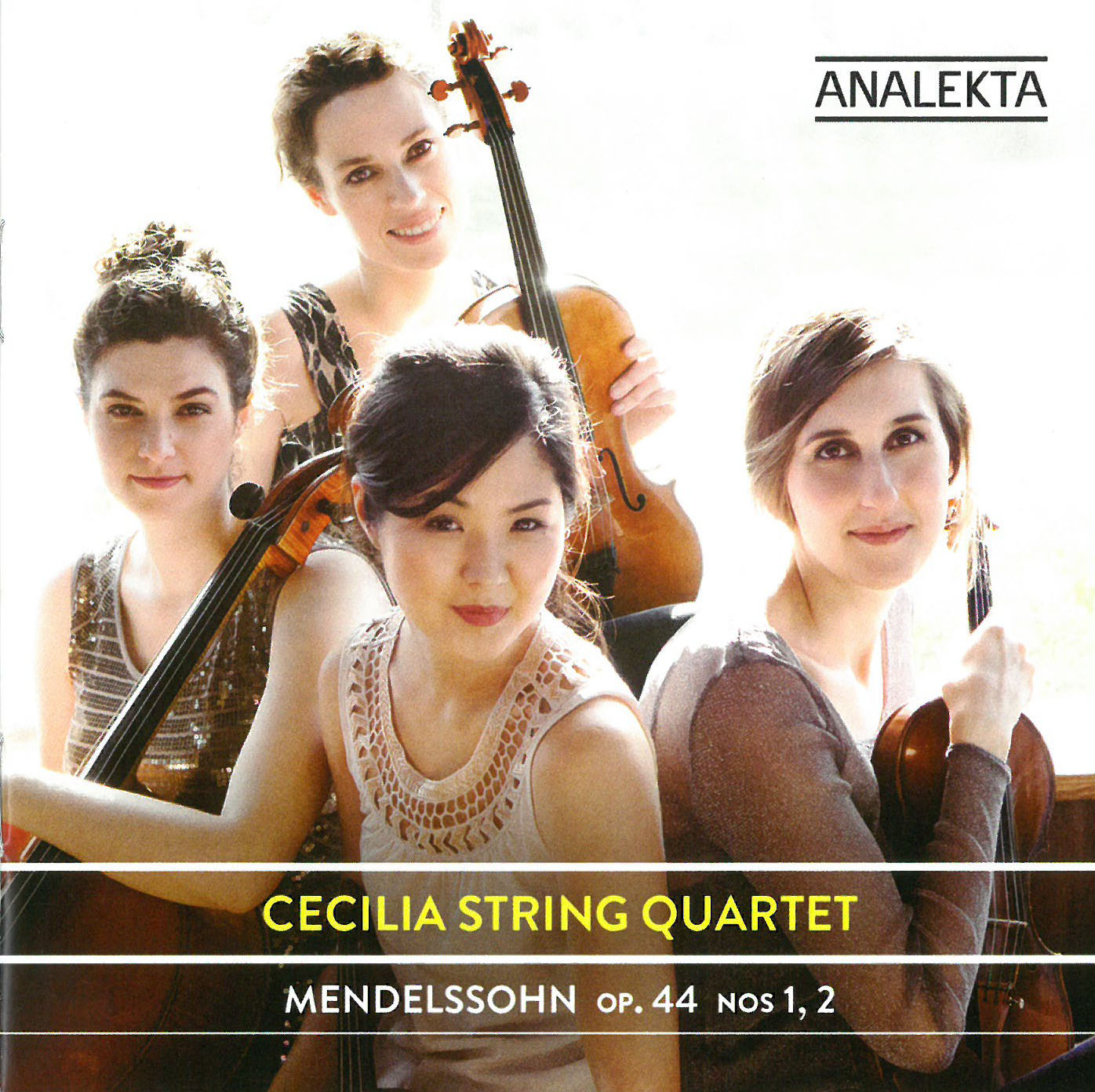
01 Cecilia MendelssohnMendelssohn – String Quartets Op.44 Nos.1&2
Cecilia String Quartet
Analekta AN 2 9844

Having played these two quartets many times over the years and listening to them, one way or another, countless more times, I am still amazed at the enchanting influence Mendelssohn’s quartets hold over string players and their audiences. His penchant for combining beautiful melodies with the intricate underlying textures seems especially suited to the Cecilia Quartet, who bring out a weaving of the voices in the most enticing manner. Sonorous, youthfully energetic, refined and exuberant at the same time – all are characteristics of this recording, but what I was most impressed with was the element of subtle understatement that Cecilia Quartet mastered throughout. This ensemble did not put the emphasis on the most obvious elements of Mendelssohn’s music (though they are, of course, undeniable) but, rather integrated it with the delicate texturing of phrasing and enunciation.

The three quartets opus 44 were written within a year (1837-1838), at the most prosperous time of Mendelssohn’s life. The newly married composer began working on them on his honeymoon and the opening of the Quartet in D Major, Op.44 No.1 carries through the buoyancy and generosity of happiness discovered. Two middle movements are more classical in nature, while the finale brings out the spirited dance elements.

Mendelssohn was the master of combining a sense of urgency with melancholy and such is the opening of the Quartet in E Minor, Op.44 No.2 in contrast to the sentimentality of the third movement. Cecilia Quartet is particularly adept at highlighting the nimbleness of the Scherzo with their impressive bow technique but they certainly don’t lack power in the final movement.

Recommended to all the admirers of notes ingenious and pleasing.

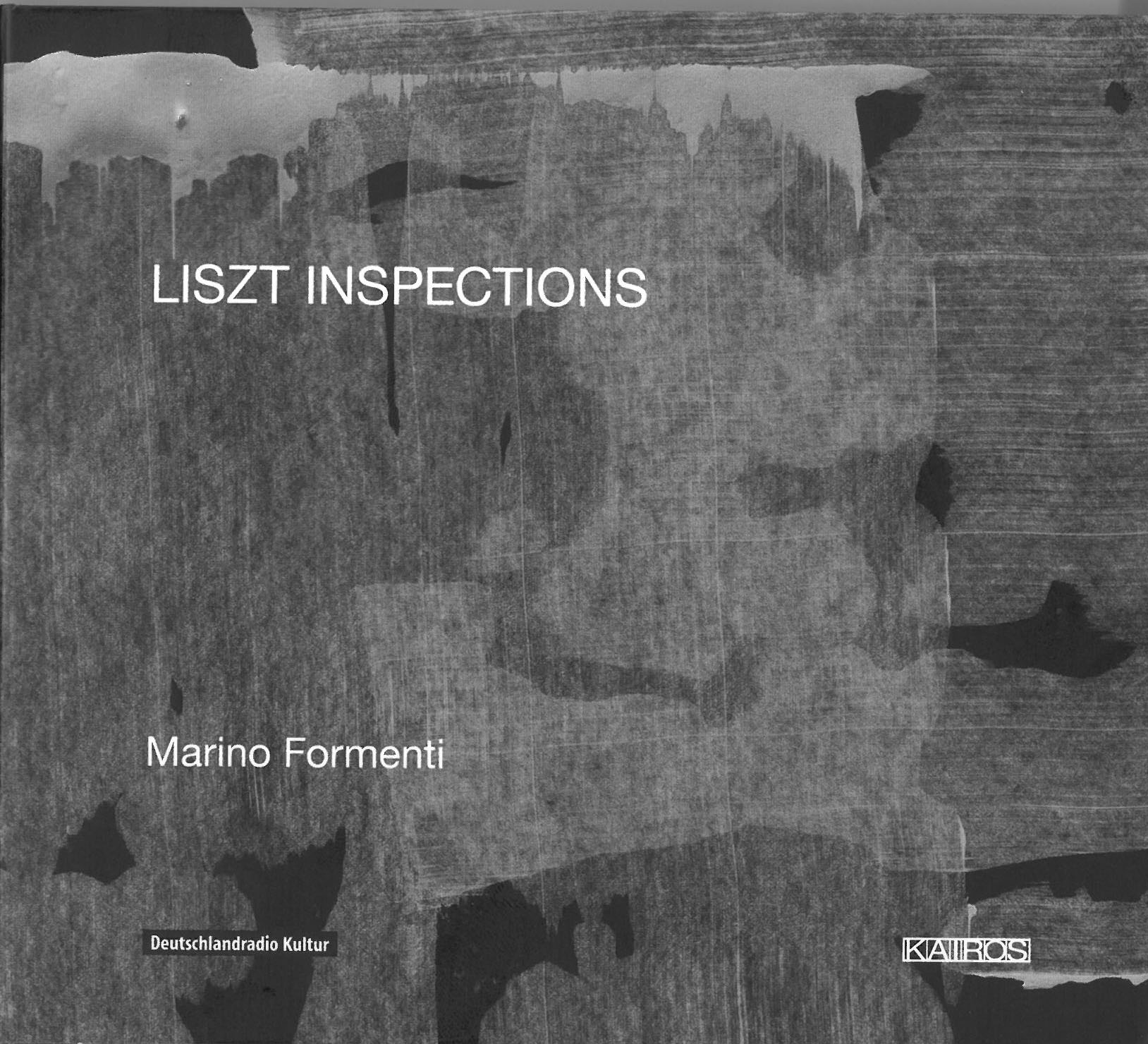
02 Liszt InspectionsLiszt Inspections
Marino Formenti
Kairos 0013292KAI

The magician of the keyboard, Franz Liszt started early and lived a long life playing, composing and experimenting. His son-in-law Wagner already blew apart traditional harmonies with Tristan, but Liszt introduced atonality for the first time (see Faust Symphony, first movement). Atonality of course later became the cornerstone of the Second Viennese School of Schoenberg, Webern and Berg and also the starting point of Italian pianist and conductor Mario Formenti’s remarkable journey: Liszt Inspections.

Formenti selects over a dozen of Liszt’s less familiar pieces, played so sensitively that those alone would make this an attractive set to have, but that’s not his purpose at all. Instead he looks into various aspects (he calls it Vocabulary) of music common to both Liszt and a number of avant-garde composers and builds a well-argued thesis unearthing and proving these relationships. Each of the Liszt compositions illustrates one point of the Vocabulary (e.g. constructivism, sound, minimalism, death, remembering-forgetting, elimination of the metre, silence and more) and by this process he achieves two things: 1) proving Liszt’s genius and his vision into the future and 2) bringing a number of contemporary pieces into focus highlighting them so the average listener who’d otherwise willfully reject new music, is enticed to listen. I am willing to bet that the next time any of these composers’ music is played he will do so with interest. There are at least a dozen composers, like Adams, Berio, Kurtág, Ligeti, Rihm, Stockhausen etc., each with his own unique style that up to now I had considered so much noise and hogwash. In the shining light of Liszt these begin to shine as well. Nice achievement for Signor Formenti.

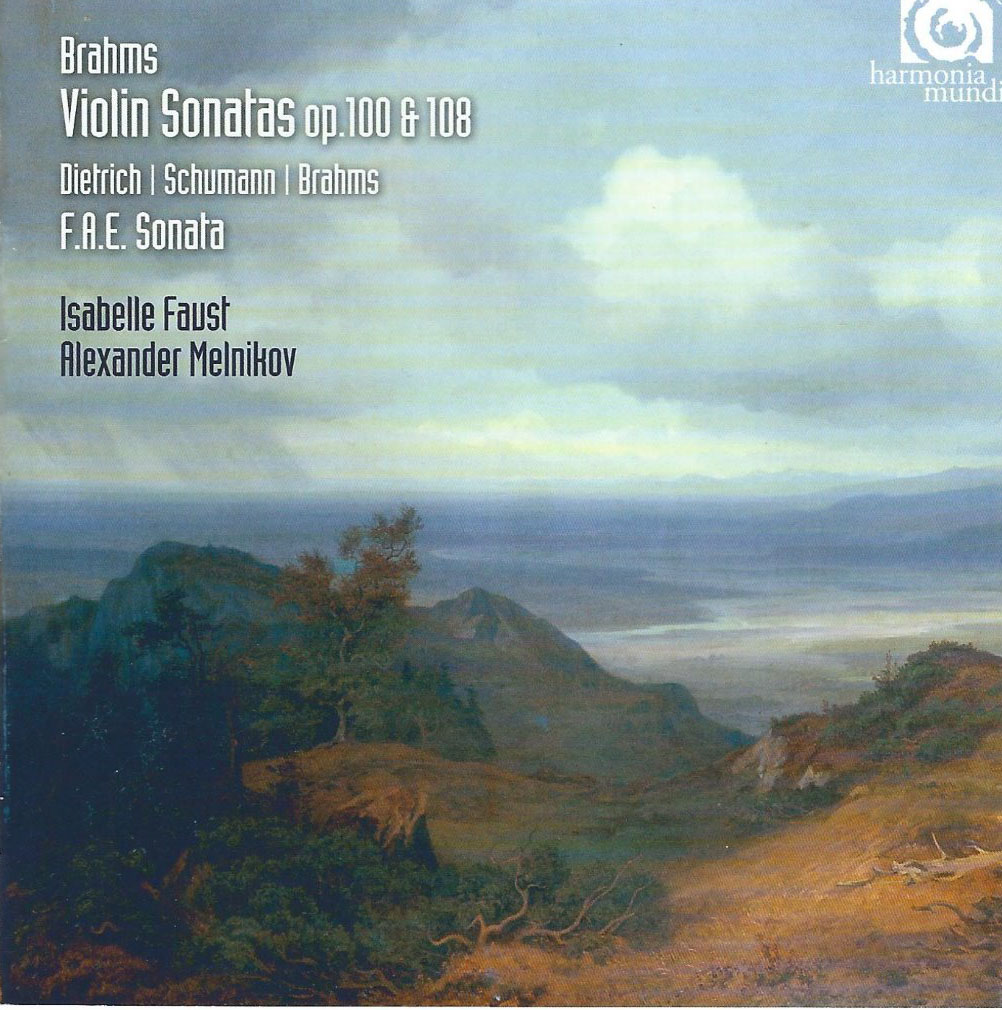
03 Brahms FaustBrahms – Violin Sonatas; Schumann – Romances; FAE Sonata
Isabelle Faust; Alexander Melnikov
harmonia mundi HMC902219

Isabelle Faust has become famous for her performances on a gut-strung 1799 Strad that in almost every case have become models of period performance practice successfully extended into works of the mid-19th century. To today’s ears, her return to the more intimate, late romantic values could sound reticent with her unusually delicate, lean tone, very simple and deeply penetrating. Her recent Schumann piano trio recordings are shining examples of her persuasive approach, with its chaste, almost textured tone. She had already recorded Brahms First Violin Sonata (HMC901981) and this new disc once again features the like-minded approach of Alexander Melnikov playing his own 1875 Bösendorfer which can hardly be mistaken for the more recent instrument to which we have become attuned. The employment of this earlier practice versus the more viscerally robust esthetic of today’s Brahms is illuminating. Here Brahms is speaking rather than being spoken about. Melnikov has a rare affinity to perform Brahms and he and Faust are of one mind. The Schumann pieces are wonderfully poetic, leaving no doubt that they have the exact measure of this gentle, tragic composer.

The unusual F.A.E. Sonata is a four-movement work written in 1853 by Albert Dietrich, Schumann and Brahms for violinist Joseph Joachim to identify the composer of each movement. He had no trouble doing so.

The flawless sound places the listener about five rows back, at which point the two instruments are correctly balanced. This very successful album is most enthusiastically recommended.

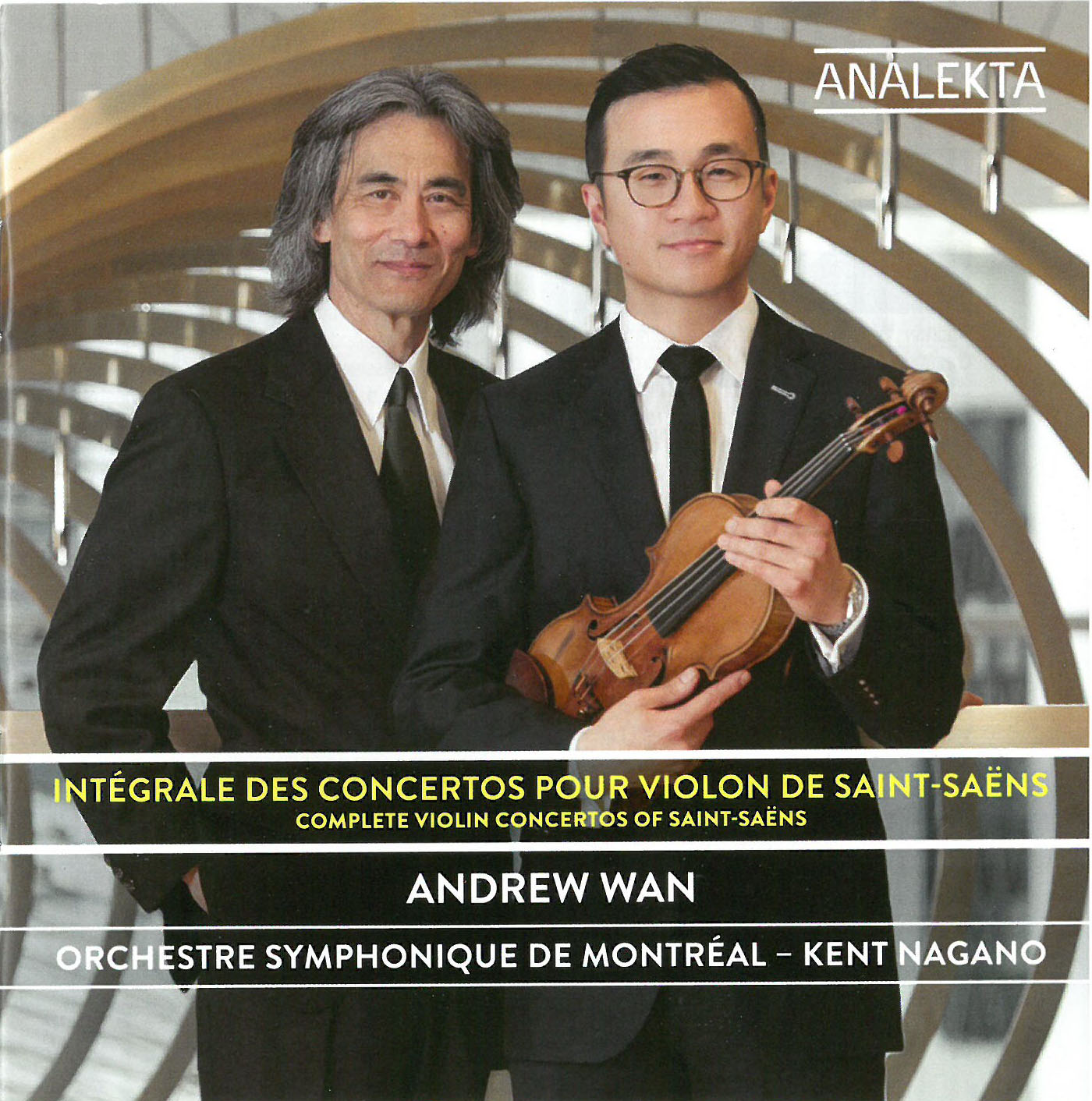
05 Saint Saens Violin

Saint-Saëns – Complete Violin Concertos
Andrew Wan; Orchestre Symphonique de Montréal; Kent Nagano
Analekta AN 2 8770

Review

Even though Camille Saint-Saëns was an exceptionally prolific composer, it seems that his temperament was especially suited to the form of the solo concerto, allowing him to blend virtuosity (which he held in high regard) with the wealth of his musical ideas. He also had a special fondness for the violin, especially after meeting Pablo de Sarasate (the 19th century violin superstar) to whom he dedicated his first and third violin concertos. It comes as no surprise that Andrew Wan, another violin superstar (though from an entirely different era) and one of the youngest concertmasters of a major symphony, has performed and recorded Saint-Saëns’ complete violin concertos with the Orchestre Symphonique de Montréal, the very orchestra he leads. This certainly has an advantage point – the soloist and the orchestra have an astonishing rapport on this recording.

Captured here are live recordings from a series of concerts held at Maison symphonique de Montréal in November 2014. It is no small accomplishment to be able to perform all three concertos, as they are not only technically demanding but also ask of the soloist to be both versatile and flexible in their interpretation. Andrew Wan stands up to this task easily and fiercely – while technically superb in the live performances, he captures his audiences even more with his passion and the constant changes of sound colour.

The first two concertos have been unfairly neglected on the concert stage – they are every bit as exciting and expressive as the third one – but this recording just may change that.

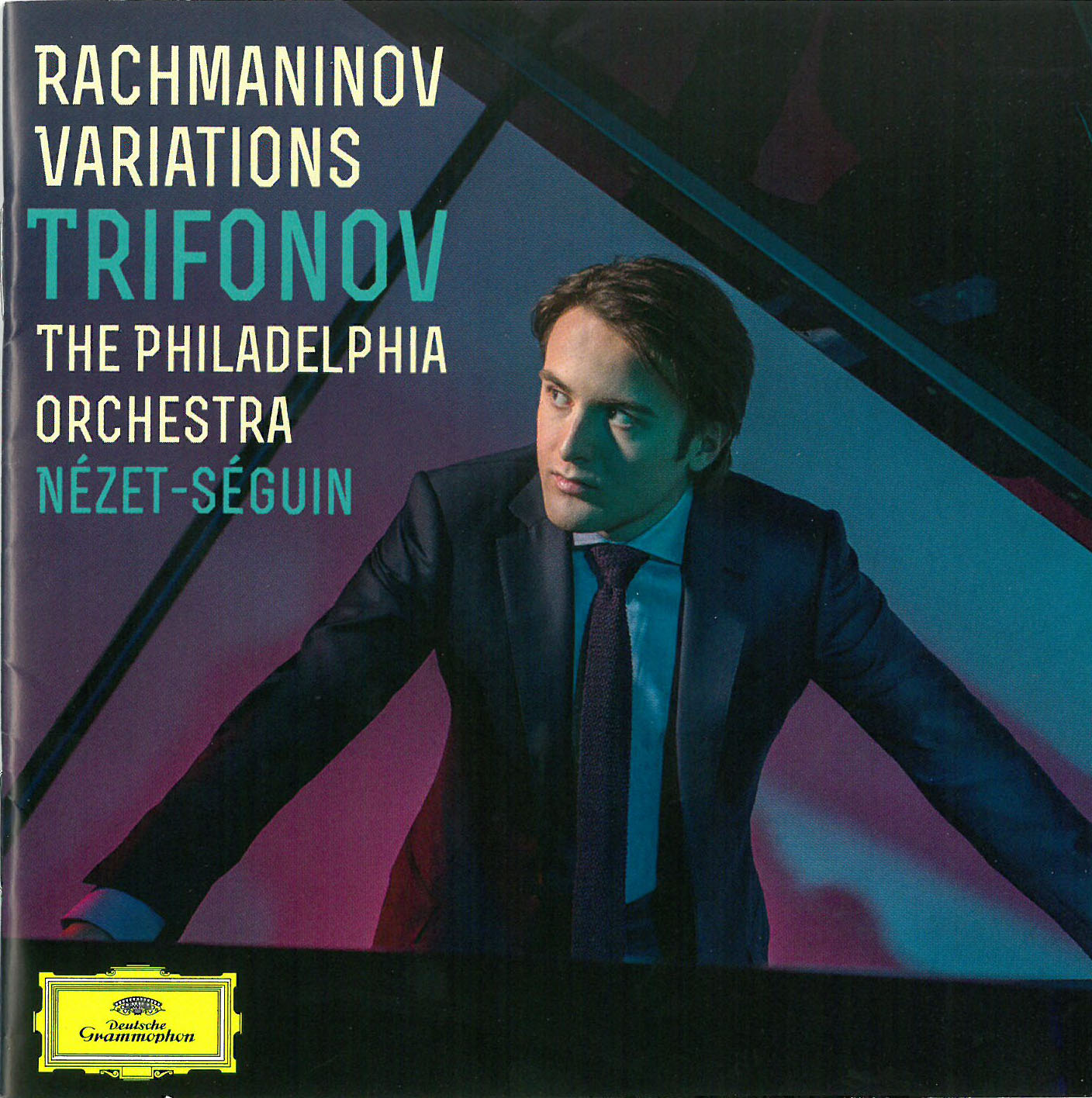
06 Rachmaninov

Rachmaninov Variations
Daniil Trifonov; Philadelphia Orchestra; Yannick Nézet-Séguin
Deutsche Grammophon 4794970

Review

How appropriate that a pianist by the name of Daniil Trifonov would record a disc of music by Sergei Rachmaninov plus a composition of his own titled Rachmaniana. To be honest, I was unfamiliar with his name, but it seems this 24-year-old already has more than a few feathers in his cap. Not only has he been the recipient of numerous prizes, including first prize in the prestigious Arthur Rubinstein competition, but he is making a worldwide name for himself. In this recording – his sixth – he has teamed up with Canadian conducting superstar Yannick Nézet-Séguin and the Philadelphia Orchestra, resulting in a fusion of two great artists.

There are innumerable recordings of the Rachmaninov Paganini Variations, but this is surely one of the finest. Trivonov’s flawless technique is matched throughout by the Philadelphia Orchestra’s full-bodied and robust sound. The variations literally fly by the listener in rapid succession, each a musical microcosm, notwithstanding the poetic and familiar No.18 which is treated with the heartfelt lyricism it so deserves. Both soloist and orchestra make ease of the enormous technical demands presented in the variations leading to the tumultuous finale, doing so with a sense of strong self-assurance.

Rachmaninov’s Variations on a Theme by Chopin Op.22 are based on the familiar Prelude Op.28 No.20. Trifonov approaches the music with great sensitivity, deftly capturing the kaleidoscopic moods of the 22 movements. His own set of variations, Rachmaniana, was written out of homesickness for his native Russia while temporarily residing in the U.S. While there is much originality within the score, the style also draws from Rachmaninov’s own musical idiom – the work opens in a quietly introspective manner, but the finale is a burst of technical exuberance.

The familiar Variations on a Theme of Corelli predate the Paganini Variations by only three years. Despite the myriad of moods conveyed within, Trifonov creates a unified whole, demonstrating intelligence and an innate musicality for this most demanding repertoire. While a Russian artist performing Russian music doesn’t always guarantee a stellar performance, in this case it did – this recording is bound to be a benchmark.

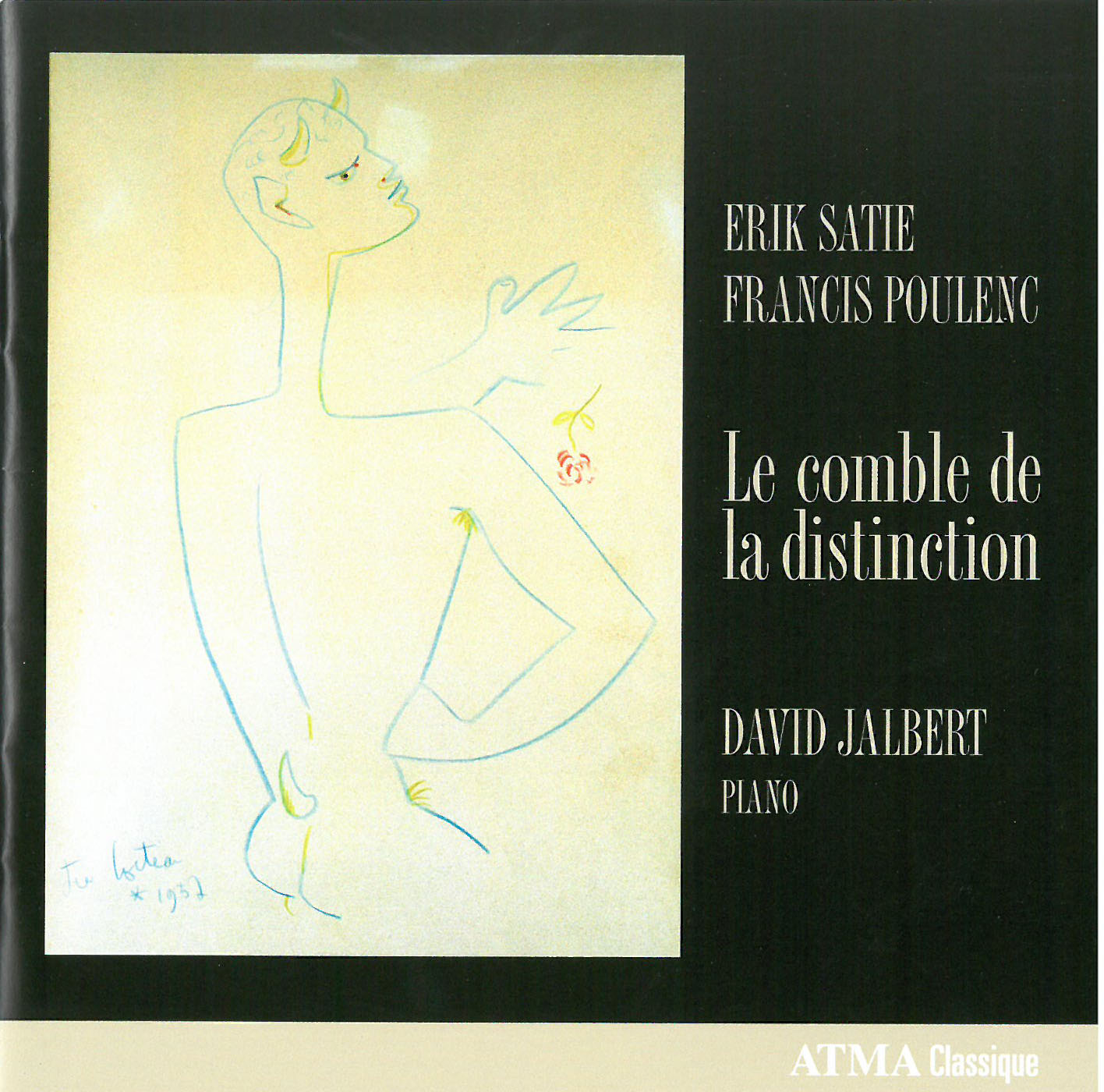
07 Satie Poulenc

Satie; Poulenc – Le comble de la distinction
David Jalbert
ATMA ACD2 2683

Review

Francis Poulenc (1899-1963), composer and pianist, was a man of many contradictions, perpetually vacillating between the sacred and profane. Paradoxically, this bipolar anxiety constitutes the very essence and charm of his music. His sometimes drastic stylistic mood swings are exemplified in Jalbert’s deeply affectionate performance of Poulenc’s Soirées de Nazelles that opens this album, a lengthy work for solo piano consisting of a series of 11 musical portraits of personalities he encountered while on vacation in central France. The music of Erik Satie (1866-1925) is interspersed throughout this album in a compelling dialogue with Poulenc’s. Poulenc himself greatly enjoyed the company of Satie in that composer’s twilight years, finding him “marvellously funny” and a fertile source of musical and spiritual inspiration. In fact, Poulenc’s public debut composition, the Rapsodie nègre of 1917, is dedicated to him. Jalbert’s hypnotic performance of Satie’s austere Trois Gymnopédies is followed by Poulenc’s three unusually focused Mouvements perpétuels. Poulenc the magpie is here too, in the form of two Improvisations honouring Schubert and Edith Piaf. The subsequent selections of Satie’s Valses distiguées… and Je te veux invoke the spirit of the cabaret that Poulenc also expressed so well. Poulenc the miniaturist returns to centre stage in the final selection, a masterly rendition of the kaleidoscopic Nocturnes composed over the course of 1929-1938.

In an age of knuckle-busting keyboard technicians fixated on a single era, composer or concerto it is a great pleasure to encounter an artist of Jalbert’s stature for whom the piano is simply a transcendent means of human expression. My only frustration with this admirable disc is the generic program notes which fail to explain the ironic subtitles of the two Poulenc suites. For the record, the title track has been rendered elsewhere as “The epitome of distinction.”

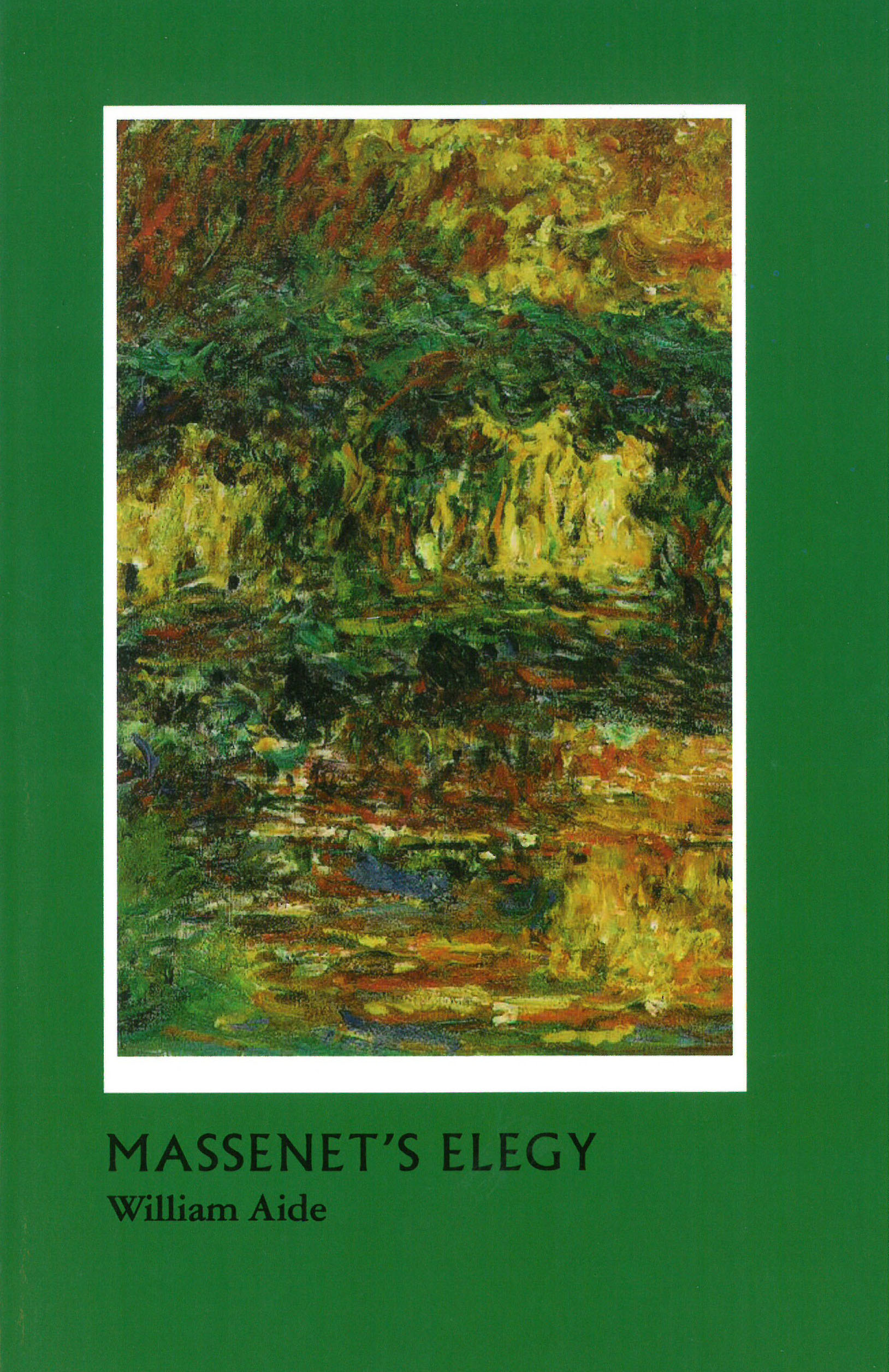
08 Massenets Elegy

Massenet's Elegy
William Aide
Oberon Press 978 0 7780 1429 4 (oberonpress.ca)

Review

When you open the back cover of this book of poems, you find a CD tucked into a plastic sleeve. It contains a collection of live recordings spanning 30 years by one of Canada’s premier pianists and teachers, William Aide. The sound quality is variable, but the performances all dazzle – from his incisive Chopin and colourful Schumann to two luminous Debussy pieces. But it’s the poems that are the main attraction here. Aide is that rare musician who uses words as expressively as music. His irrepressible search for grace has universal appeal. For music lovers there’s the way he invokes composers like Schubert, Chopin, Schumann, and – surprisingly – Massenet, whose Elegy inspired Aide to become a pianist.

Here is how he begins To an Old Executor:

“Skip the need to dig the sod
Buy a flowering linden tree
And sentimental as can be
Commit to Schubert, not to God.

Some of Aide’s most affecting poems are tributes to people who changed his life, like his first piano teacher Miss Myrtle McGrath, who taught him the Elegy, his later teacher the Chilean master Alberto Guerrero, who taught so many of Canada’s finest pianists (see John Beckwith’s excellent biography), his fellow student Glenn Gould, and his own student Peter Vonek, whose death from AIDS left him bereft.

Aide has long been recognized as a significant voice in Canadian music. With four fine books (one a gutsy memoir) under his belt, he is unquestionably a voice that matters in Canadian literature as well.

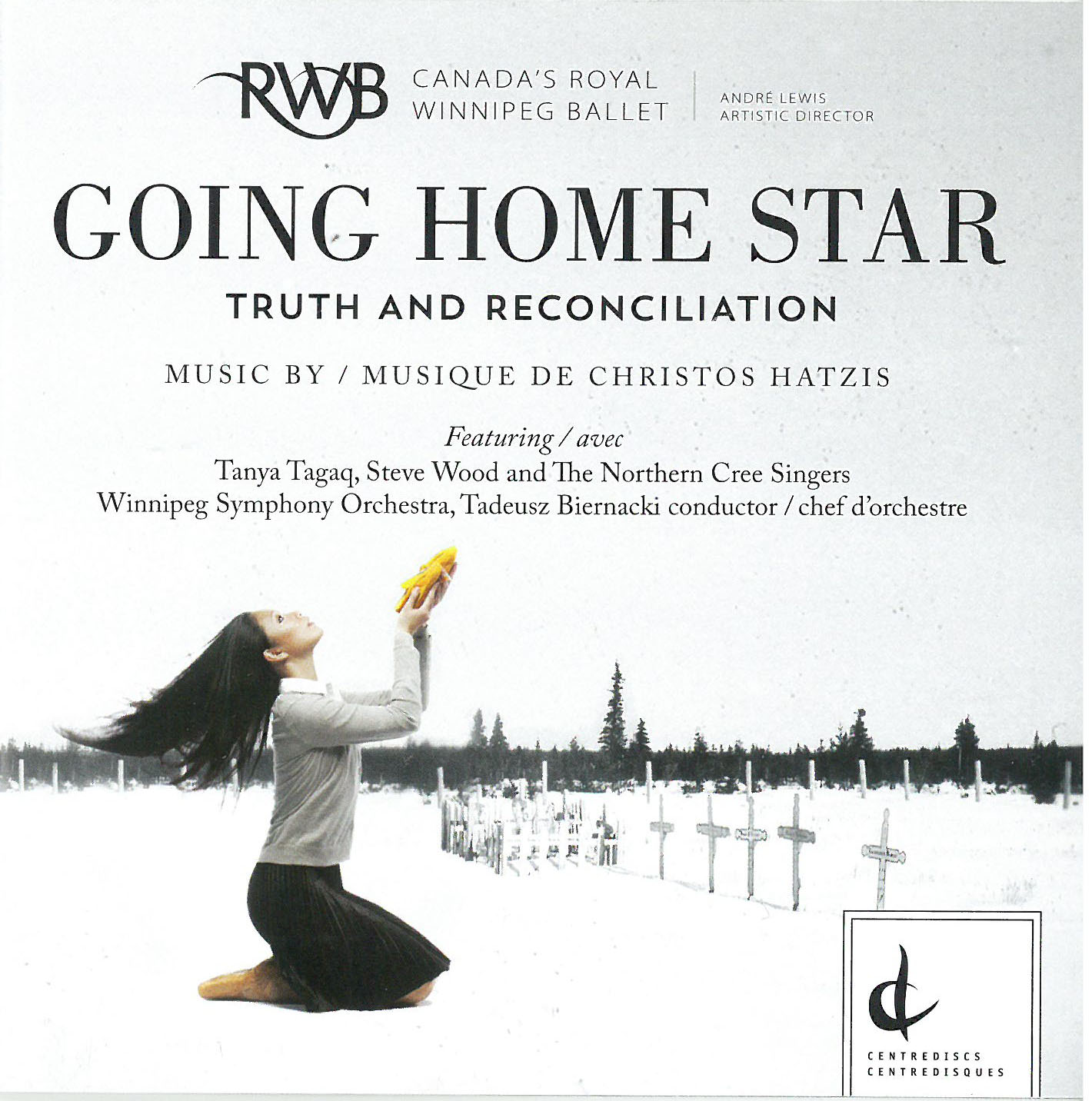
01 Hatzis Going Home StarGoing Home Star – Truth and Reconciliation (music by Christos Hatzis)
Tanya Tagaq; Steve Wood and The Northern Cree Singers; Winnipeg Symphony Orchestra; Tadeusz Biernacki
Centrediscs CMCCD 22015

The richly textured, eclectic cinematic score by veteran Toronto composer Christos Hatzis furnished for the ballet Going Home Star – Truth and Reconciliation for the Royal Winnipeg Ballet was premiered in October 2014 to considerable audience and critical acclaim. This impressive work is a superimposition of at least three culturally defined layers.

Hatzis directly quotes and echoes sections of iconic 20th-century European ballets Rite of Spring, Swan Lake and Prokofiev’s Romeo and Juliet. In addition Christian liturgical chorales, medieval chant and dance music by Jean-Baptiste Lully are all skillfully reworked in Hatzis’ characteristic tonal-centric style. To this he adds elements in multiple vernacular music genres, as well as acoustic and electronic soundscapes, diffused from the studio-produced digital audio track.

Another significant layer of this 2-CD musical journey is the contribution of North American indigenous voices. They are essential texts in this narrative centred on the suffering imposed on children in Canada’s infamous Indian residential schools – with musical detours into the early contact between Europeans and First Nation peoples – ending with the possibility of personal and intercultural redemption and reconciliation.

Based on a story by Joseph Boyden, the ballet score is given a human voice by the extraordinary Polaris Prize-winning Inuk singer Tanya Tagaq, in the last scene’s Morning Song eloquently performed by the Cree singer Steve Wood and through the pow-wow energy of the Northern Cree Singers infusing a visceral power into several scenes.

Is Going Home Star “the most important dance mounted by the Royal Winnipeg Ballet in its illustrious 75 year history,” as described by one CBC TV commentator? Hatzis’ cumulatively moving, highly eclectic score compels me to see Mark Godden’s choreography and to find out how this important national story plays out on stage. I invite my fellow Canadians to join me on this journey during the RWB’s upcoming 2016 national tour.

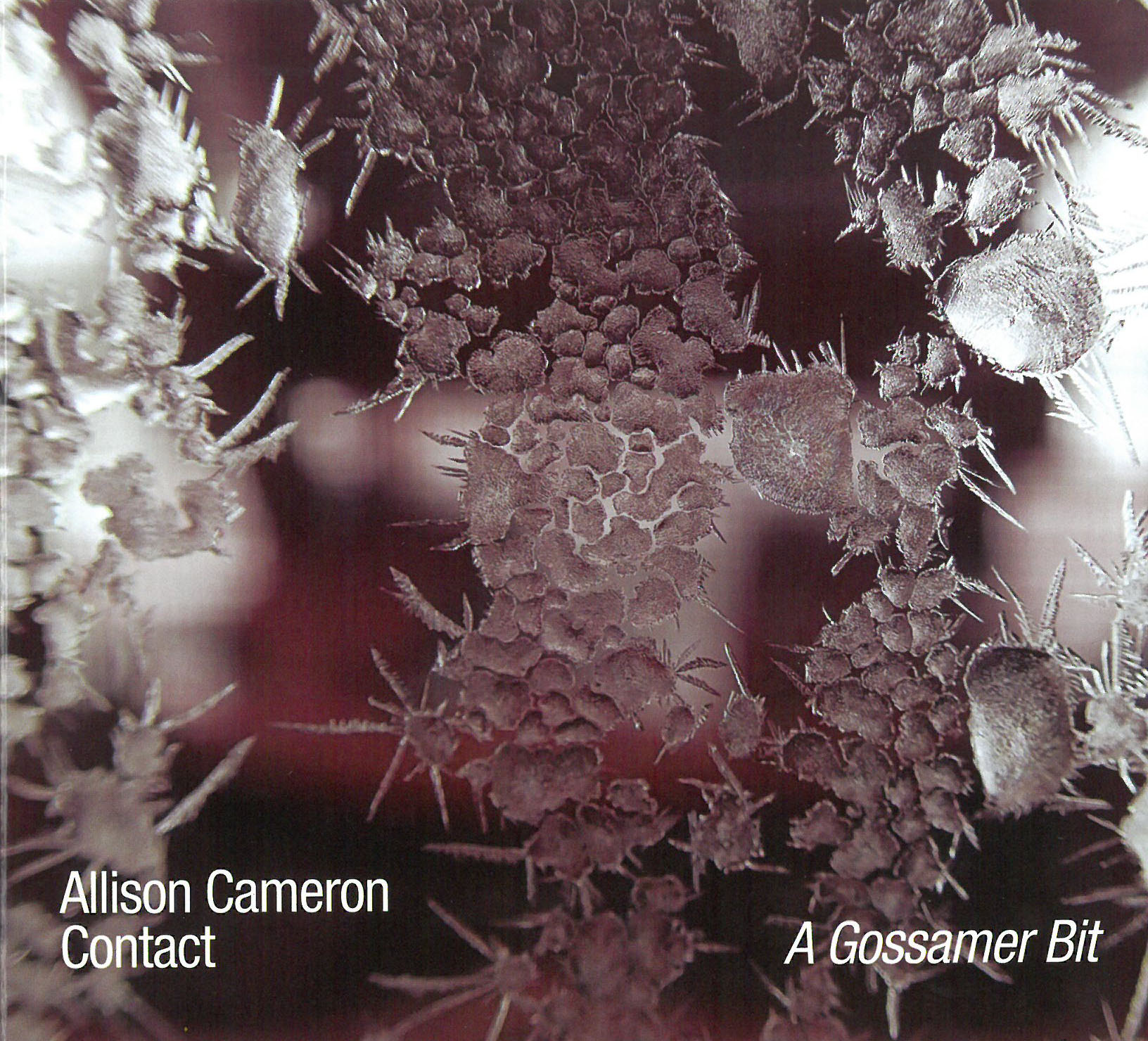
02 Allison CameronAllison Cameron – A Gossamer Bit
Contact Contemporary Music
Redshift Records TK445 (redshiftmusic.org)

This distinctive 2015 CD with four new pieces by the ever-wonderful contemporary composer Allison Cameron is sure to garner her much positive attention among the cognoscenti. A Gossamer Bit, produced as what is rightfully described as a palimpsest, is a stimulating though very different programme. Here Cameron presents pieces that represent myriad aspects not only of music – as in 3rds, 4ths & 5ths – but also great flights of the imagination – as in the song, Gossamer Bit, which is a dazzling overlay on Charles Ives and which, in turn is an eloquent sojourn across manipulated pitches and dramatic quarter-tones. In Memoriam Robert Ashley shapes the relentless octaves of Ashley’s music (overlapping the directions to that composer’s In Memoriam Esteban Gomez with great melodic cogency. D.I.Y. Fly combines written and improvised sections and finds a wider dynamic and colouristic scope using just this composerly device.

Allison Cameron is, of course, the Alberta-born, Toronto-based musician and composer who has built a sizeable reputation in contemporary composition but remains relatively little-known even in her native Canada. It is hoped that this attractive and well-recorded program, which hints at impressionistic antecedents, will greatly enhance her reputation. Look out, of course for the balletic leaps across her work especially in this repertoire. Cameron also has an acute sense of humour and this is delightfully hinted at in this music which is also rendered with a telling sensuous reserve.

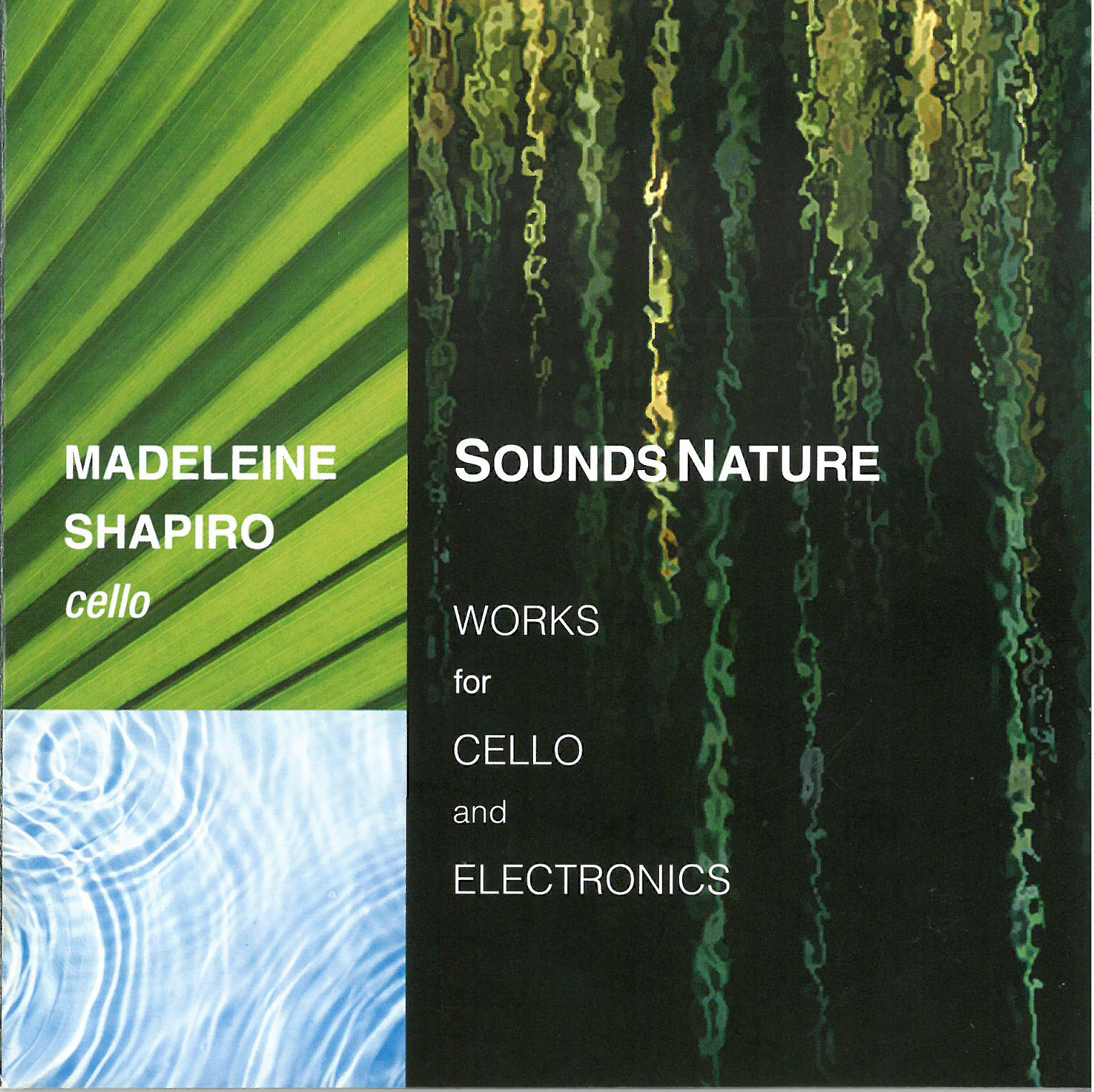
03 SoundsNature

SOUNDSNATURE – Works for Cello and Electronics
Madeleine Shapiro
Albany Records TROY 1577 (albanyrecords.com)

Review

SOUNDSNATURE is a series of pieces performed by cello innovator Madeleine Shapiro combining the sounds of the cello with electronic sources to bridge the gap between the listener and the heart of the natural world. The disc includes compositions by Morton Subotnick, Judith Shatin, Matthew Burtner, Tom Williams and Gayle Young.

Although it may seem an oxymoron to use electronic means to bring us into a closer relationship with nature, it is precisely through using the microphone that we can enhance our experience with the soundscape. This is particularly evident in the works by Judith Shatin, Matthew Burtner and Gayle Young. Shatin’s For the Birds consists of four movements, each one using recordings of different types of birds found in the Yellowstone region. These visceral and intimate recordings are heard in both their original and digitally transformed states. Burtner’s Fragments from Cold takes us into the parallel terrains of outer snow and inner breath, creating the silent stillness of a skier gliding along the snow.

Young’s Avalon Shores features soundscape recordings of waves along the stony shorelines of Newfoundland’s Avalon Peninsula. Shapiro becomes improviser in this work, following the course of the waves, highlighting patterns and responding through timbral variations. I found this an evocative partnership, returning to listen several times. Shapiro is a dynamic performer, and her passion for the environment is evident in this recording as she brings to life her deep reverence for the nonhuman worlds.

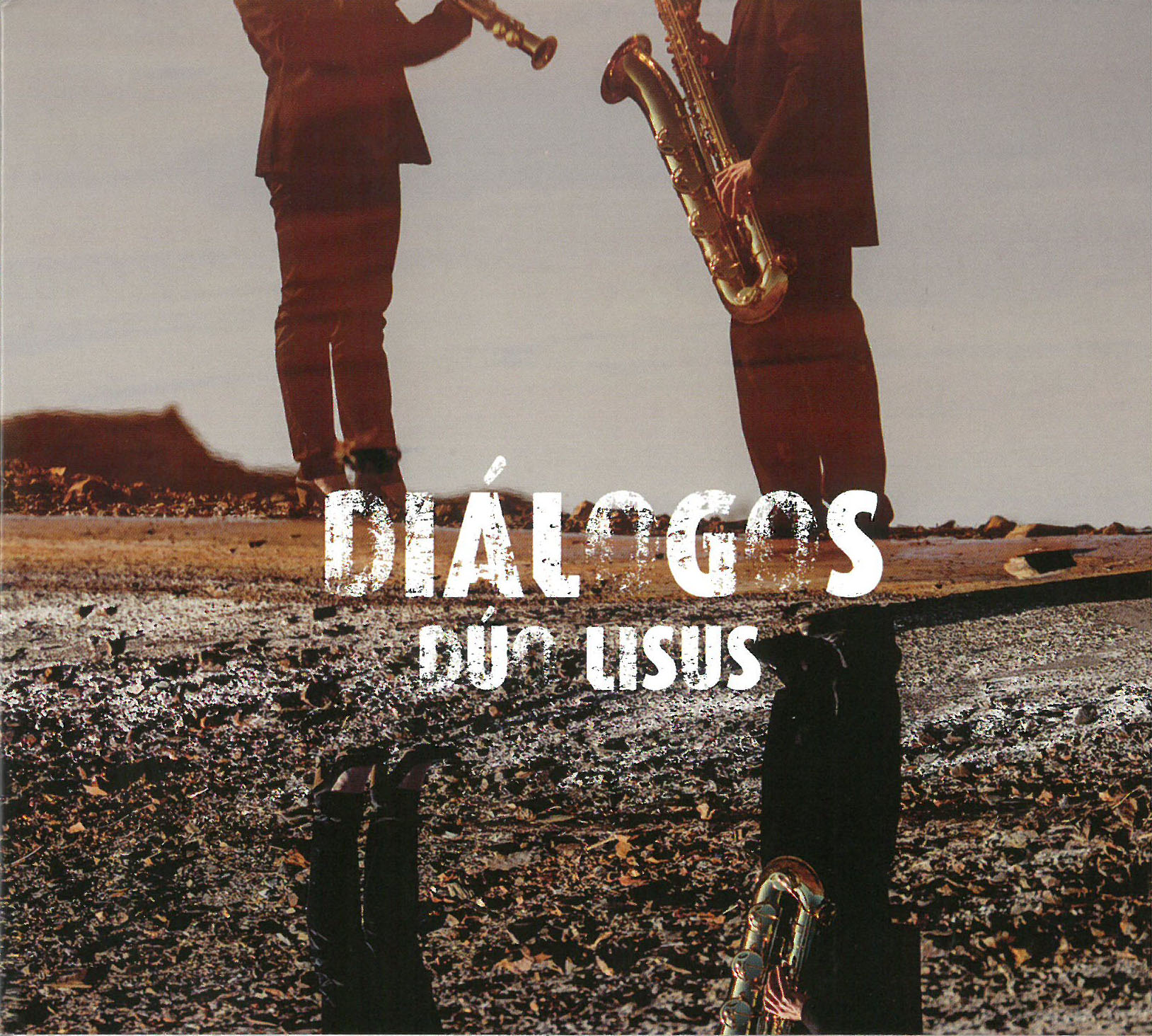
04 Duo LisusDiálogos
Dúo Lisus (Lidia Muñoz; Jesús Núñez)
FonoSax FONOSAX001 (duolisus.wix.com/duolisus)

Though France is still the European Mecca of the classical saxophone, a contender for Medina might be Spain; the country has recently seen hothouse growth in its classical saxophone community. The result has been a lot of excellent saxophone recordings from south of the Pyrenees. One such disc is Dúo Lisus' Diálogos, released this year on the FonoSax label.

Five of the seven pieces on the disc are by Spanish composers and every single composition is recorded here for the first time. With music, the duo and even the record label making their debuts on this disc, the unified impression, especially combined with composer José de Valle's opening maelstrom, is a kind of ex nihilo new music big bang. The momentum of this first burst carries through to American Eliza Brown's Apart Together, an entropic canon which seems to disintegrate under the energy received from the previous piece – a narrative arc which accurately describes the entirety of the disc as the saxophones are subsumed by electronics.

The other inclusion to break from the all-Spanish theme is Canadian composer Robert Lemay's Deuce. These heterogenizing selections were carefully chosen, and it's clear why Lemay made the cut: his extended techniques here always complement and never overshadow his finely wrought spectral and contrapuntal textures.

Leonard Feather may have called Spain a “jazz desert,” but the saxophone, a hardy plant, still finds a home there in spite of it; both Dúo Lisus and FonoSax are worth watching.

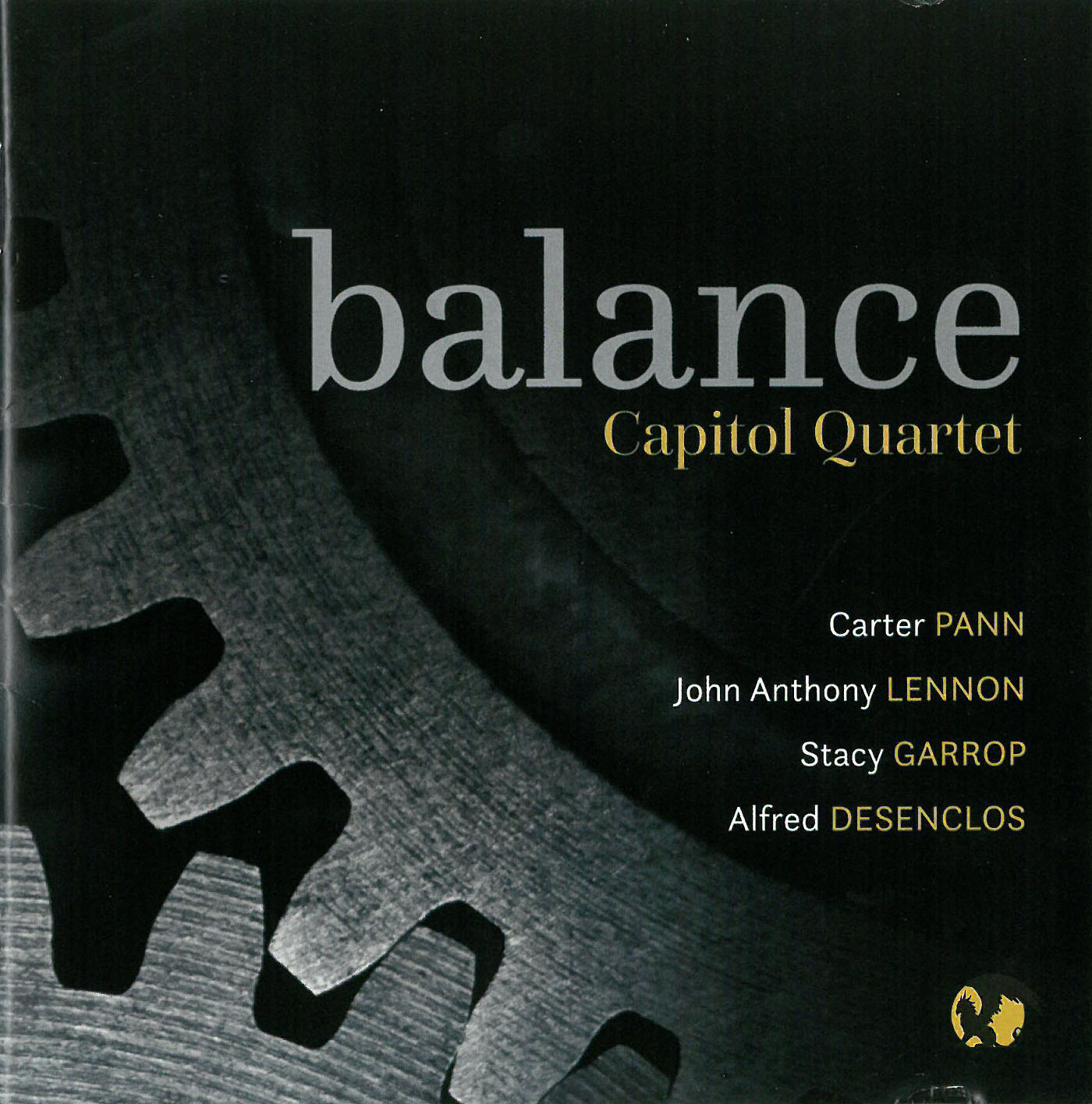
05 Capitol QuartetBalance
Capitol Quartet
Blue Griffin Records BGR367 (bluegriffin.com)

As a result of the orchestral works of composers such as Bartók, Prokofiev, Berg – and many others – the saxophone has become a standard instrument of classical pedagogy and taught in many highly regarded conservatories. These classically trained saxophonists naturally began to seek out performance opportunities outside the jazz scene. Thus, the 20th century saw the birth of a new ensemble: the saxophone quartet. Like its predecessor, the string quartet, the saxophone quartet has been a place composers turn to for experimentation and exploration. The Capitol Quartet, is certainly no exception when it comes to celebrating and commissioning new works from today’s leading composers. In their release balance, Capitol has recorded four impressive works, three of which are commissions from the group. Carter Pann’s The Mechanics is a dizzying array of driving rhythms and clever gestures providing a playful and charming opening to the disc. American minimalism meets postmodern lyricism in John Anthony Lennon’s Elysian Bridges. A somber mood permeates Stacy Garrop’s Flight of Icarus, throughout which beautifully contoured chorales evoke the sadness of loss, a mood inspired by the Greek legend of Icarus. This piece is more about Daedalus’ loss of his son than the thrilling flight itself.

Last on the disc is a piece by French composer Alfred Desenclos (1912-1971). As the history of the saxophone quartet continues to grow, there inevitably will be pieces that remain to comprise a body of standard repertoire. Desenclos’ Quatuor will undoubtedly have a place in this canon. Wonderfully orchestrated themes and rich harmonic colours reminiscent of Debussy will surely provoke future quartets to embrace this work as a significant contribution to the genre.

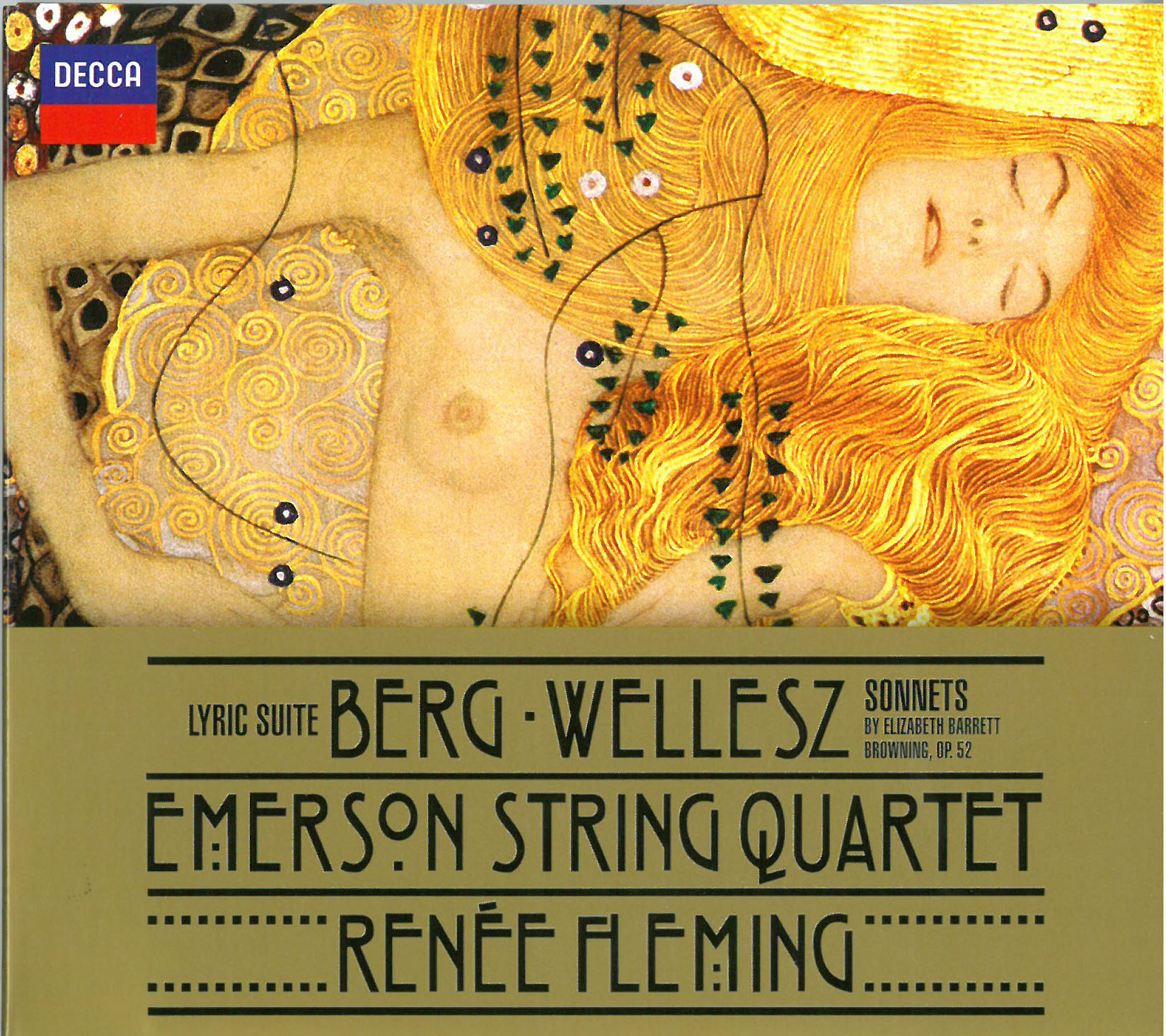
06 Berg Wellesz

Berg; Wellesz
Renée Fleming; Emerson String Quartet
Decca 478 8399

Review

In 1977, composer George Perle examined the annotated printed score of the Lyric Suite that Alban Berg presented to Hannah Fuchs-Robettin. Berg’s adulterous affair with her had provided the Suite’s encoded program. Berg had appended Stefan George’s translation of Baudelaire’s De profundis clamavi to the final movement in her score. Nothing suggests that Berg ever intended this text to be sung, yet it has since been incorporated, musically, into several performances and recordings, notably by Dawn Upshaw (Nonesuch 79696-2) and Marie-Nicole Lemieux (Naive V 5240).

In her own brief contribution to this “alternative” movement, superstar soprano Renée Fleming adds some emotional warmth following the Emerson’s robust traversal of the Lyric Suite’s erotically charged music.

Even more satisfying is their performance of Sonette der Elisabeth Barrett-Browning by Egon Wellesz who, like Berg, was born in 1885 and studied with Schoenberg. Wellesz’s rarely heard, expressive and expressionistic settings of five sonnets in translations by Rainer Maria Rilke, draw plenty of passion and intensity from Fleming and the Emerson.

Closing the CD is Eric Zeisl’s pleasant but unmemorable setting of Komm süsser Tod, enhanced by Fleming’s lush, lustrous voice. Zeisl (1905-1959), a Jew, fled his native Austria in 1938, and wound up composing film scores and concert works in Hollywood.

This CD will appeal to those interested in little-known but rewarding 20th-century repertoire (the Wellesz) and, of course, to Renée Fleming’s justifiably innumerable fans (including me).

07 Meyer

Krzysztof Meyer – Piano Quartet; Piano Quintet
Piotr Salajczyk; Silesian String Quartet
Naxos 8.573357

Review

Polish composer and pianist Krzystof Meyer (b.1943) is new to me but not to my Baker’s Biographical Dictionary (7th ed. [1984], rev. Nicolas Slonimsky), which says his “musical intelligence and acoustical acuity are of the rarest quality.” Based on this CD I concur heartily. The extended, single-movement Piano Quartet (2009) is an unusually formed work. To my ears, imaginative process and compelling content are equally involved. Declamation, dialogue, perpetual motion, stasis and recurrence are prominent yet unpredictable modes of presentation. To be sure there is considerable dissonance, yet the tonal centre and interval structure are clear. Passionate expressiveness of three Silesian String Quartet players complements pianist Salajczyk`s virtuoso performance.

The Piano Quintet (1990-91) is a larger work in the traditional four movements. Its opening establishes a severe but still tonal musical language based on hierarchy of pitches. In the second movement I was especially taken by Meyer’s mastery of the mid- and late-twentieth century vocabulary of sound and texture, even though he does not use extended instrumental techniques. Throughout, the quartet and Salajcyzk never falter in ensemble, tone quality or dynamic control. Triplets in the more lively third movement suggest a vestigial scherzo; as perhaps also do sudden outbursts and high, scratchy strings. I enjoyed also the last movement’s drama and variety of effects – ornamental scrambles around main pitches, high dissonant bells in the piano and closing silences interrupted by retreating pizzicato whispers.

08 RzewskiFrederic Rzewski – The People United Will Never Be Divided; Four Hands
Ursula Oppens; Jerome Lowenthal
Cedille CDR 90000 158

The first time I heard Ursula Oppens perform was in a masterclass of Rosina Lhevinne at the Juilliard School in New York. Ursula and I were both students of the legendary Mme. Lhevinne. Listening to this CD I remember the lovely and rich tonal colours Oppens had in her classical repertoire. I am delighted to find the same lyrical palette in the Rzewski. It is so easy to make some of the Rzewski variations harsh and brittle. This is not the first recording Ursula Oppens has made of this work and this CD is far more reflective and poignant. There is a fluidity that connects the disparate movements. Rzewski gives many instructions to the pianist and each variation comes with informative titles: “with determination, delicate but firm, tenderly, in a militant manner,” and so on. In this performance each different style, whether folkloric, jazzy or lyrical does unite with sensitive and intuitive musicianship.

Technically it is brilliant playing. From pounding chords to effervescent riffs of extreme delicacy Oppens is in control and commands the keyboard. There are numerous recordings of this work but this CD is definitely in a class by itself.

For Rzewski’s piano duo work Four Hands, pianist Jerome Lowenthal, a Juilliard faculty member, joins Oppens. Their touch on the piano is so unified that it sounds like one pianist. It is a quirky piece with lovely moments and this work deserves more performances. However, this duo piano team would be difficult to improve on.

Excellent performances. Highly recommended CD.

Back to top