01 AutobahnOf the Tree
Autobahn
Independent (autobahntrio.com)

Toronto-based trio Autobahn is a magical, whimsical and rocking jazz trio. Band members Jeff LaRochelle (tenor sax and bass clarinet), James Hill (piano) and Ian Wright (drums) are equally astute in just playing the notes on set tunes, improvising on them and exploring soundscapes in a freer improvisational style. The absence of a bass instrument in the group opens up new sonic territory both for the listener and the musicians, adding to Autobahn’s distinct original sound.

The 12-track release features many highlights. The opening Grounded sets the listening stage with its abstract ambient colours and dynamics. The more mainstream Forgiveness features both soaring sax and driving piano solos over an upbeat energetic drum kit backdrop. Roots (Of the Tree) is a welcome diversion as LaRochelle plays a solo sax track with spontaneity and musicality. The slower Tribute features LaRochelle now on a lyrical bass clarinet with Hill’s tinkling piano lines and repetitive chords, and Wright’s atmospheric drums creating a futuristic jazz ballad grounded in the past. The closing track Airborne is reminiscent of the initial track, with its opening washes of sound leading into a brief rhythmic rocking segment before ending the show with a long-held tone.

Autobahn is a band capable of playing solidly both in the classic jazz tradition and more contemporary atonal styles. Of the Tree is the perfect aural calling card for the band and its individual players.

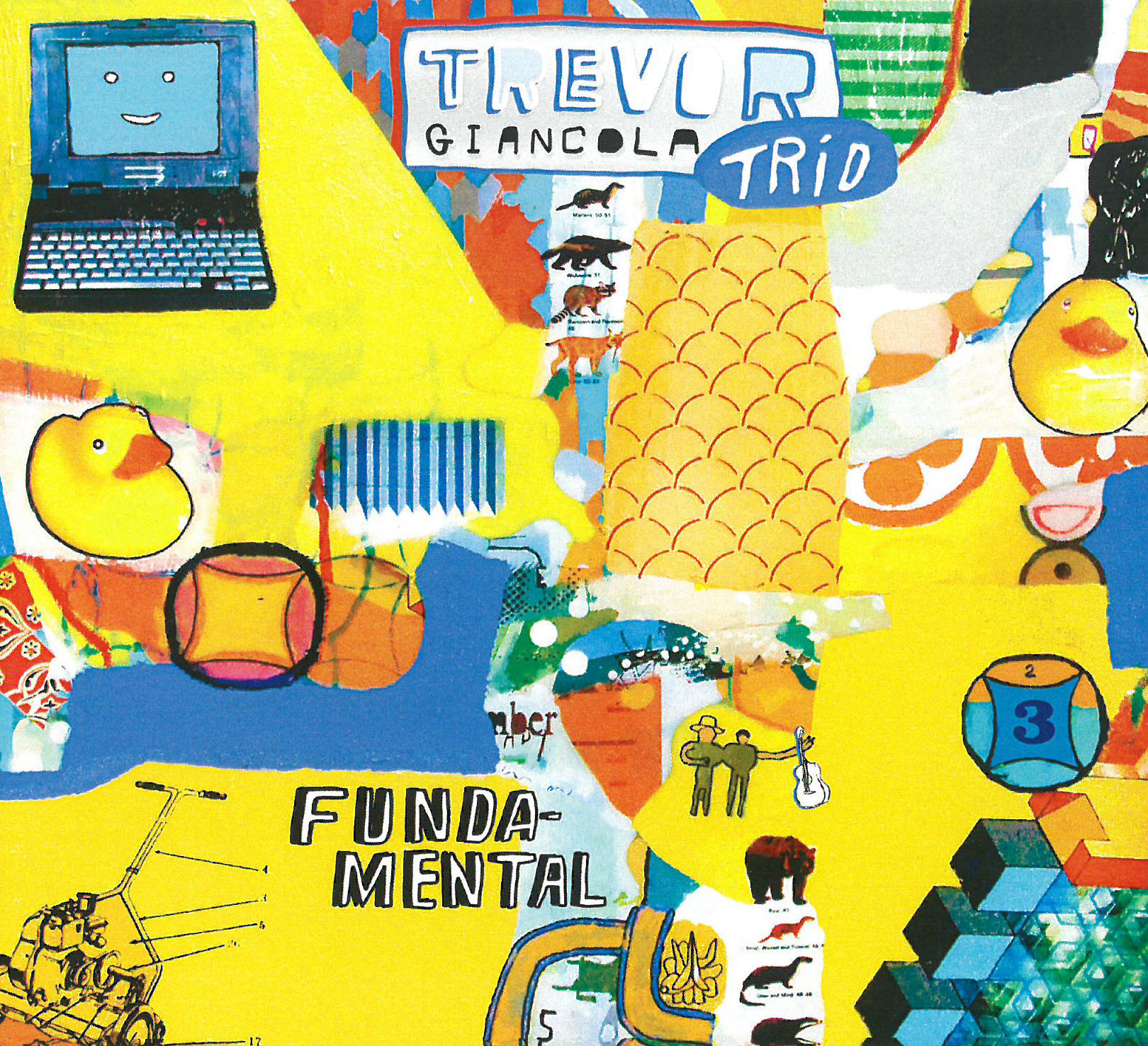
02 Trevor Giancola TrioFundamental
Trevor Giancola Trio
Independent (trevorgiancola.com)

It is still a brave thing for a young guitarist, fresh from playing with Mike Murley, Seamus Blake, Sophie Millman, Dave Douglas and a slew of other contemporary musicians, to resist the blandishments of management, producers and well-wishers to record his debut disc. But that is exactly what Trevor Giancola has done. And that’s not the only thing about Giancola that counts as a victory of sorts. The guitarist’s deep feelings for music are obvious in the breadth and emotional resonance he brings to Just One Of Those Things, Turn Out The Stars and You Go To My Head. The fluttering figurations of his guitar speak with a delicate poignancy and the music blossoms into exaltation so characteristic of this music. Playing with innate grace and beautiful, loping lines, Giancola plays wise beyond his years.

Especially striking is the pristine clarity that he invests in the music’s often murky textures. Giancola’s lean sound is especially welcome in Joe Henderson’s Punjab, where it helps activate the forward thrust of the musical argument. Everything stays on the rails, with an abundance of skill and sentiment, veering perilously at times, but never derailing from preciousness of purpose. The guitarist’s energy provides bracing contrast with flight paths tethered to Neil Swainson’s bass. The trio interaction with Swainson and drummer Adam Arruda makes for a truly impressive first outing for this talented guitarist. Surely Giancola will return to share with us his evolving love of more challenging music.

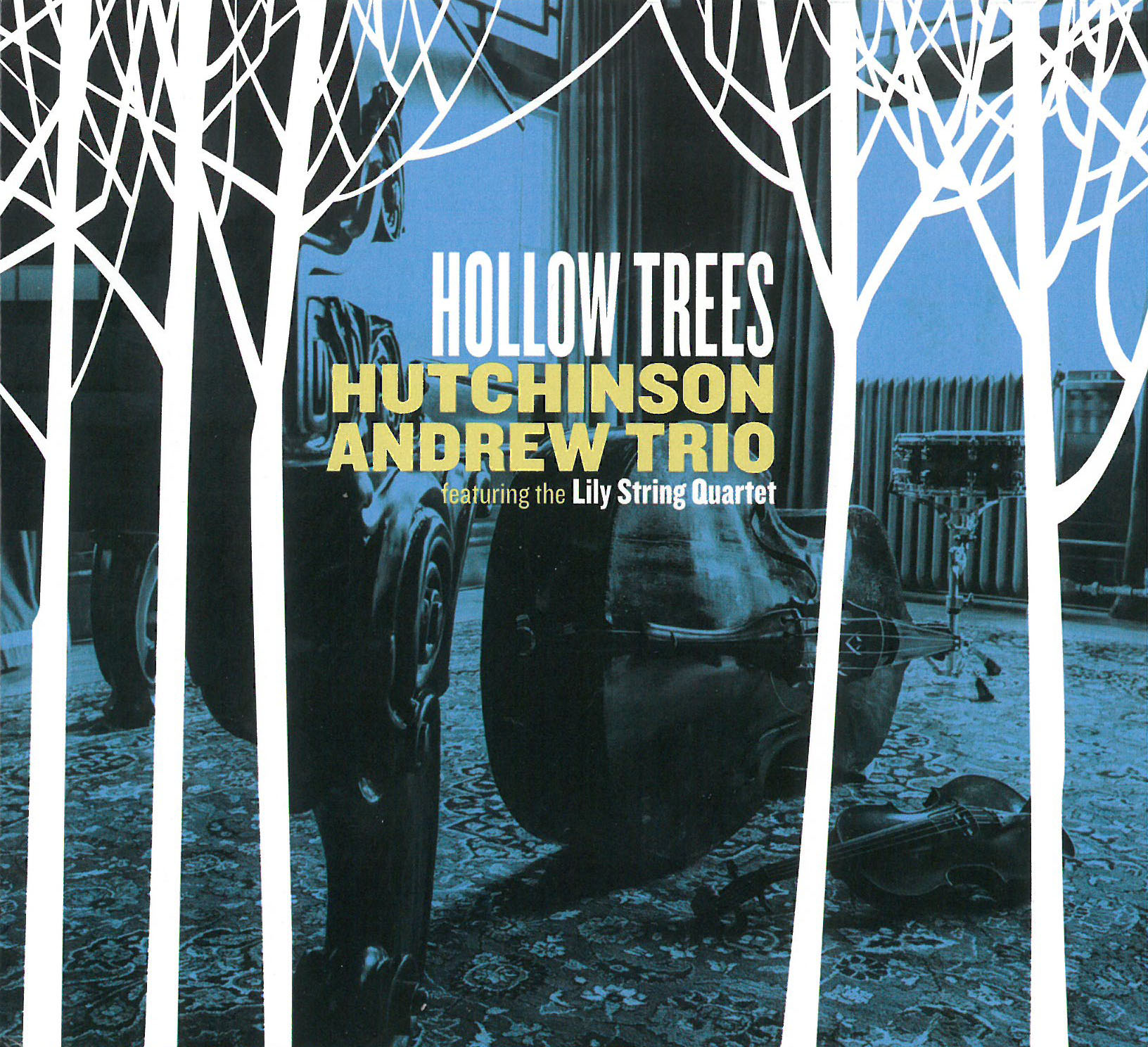
03 Hutchison Andrew TrioHollow Trees
Hutchinson Andrew Trio; Lily String Quartet
Chronograph Records CR 048 (chronographrecords.com)

Review

Chris Andrew appears to savour the experience of rising to the challenge. The Edmonton-based musician is the composer of this daring project. Hollow Trees is an adventurous work that tests the versatility of the musicians who participate in it, especially in the wonderfully provocative and angular manner of the contrapuntal writing that pits the trio (pianist Andrew, bassist Kodi Hutchinson and drummer Karl Schwonik) against the string quartet. Andrew conveys the striking image of his “hollow trees” through an elemental, whispering melody that he creates on the piano and the intoxicating and lyrical harmony that ensues as the Lily String Quartet puts its indelible stamp on the proceedings. The performance juxtaposes utmost delicacy with eruptive power.

The musicians’ playing is intensely alive to expressive nuance, textural clarity and elastic shaping, all delivered in a recording that maintains the glow of the music from end to end. The noble artistry of the Hutchinson Andrew Trio is as vibrantly controlled in the dramatic episodes on this disc – Zep Tepi and Wilds, for instance – as it is in music of lilting pensiveness of which Grey Dawn and Peaceful Journey are outstanding examples. Most compelling of all is the interplay between the trio and the string quartet, a magical encounter that treats the listener to the luminosity, spaciousness and enthusiasm of a striking chamber performance. The stellar arrangements also allow solo instruments to assert themselves with lyrical and expressive urgency. It’s a lovely release that makes one eager for more.

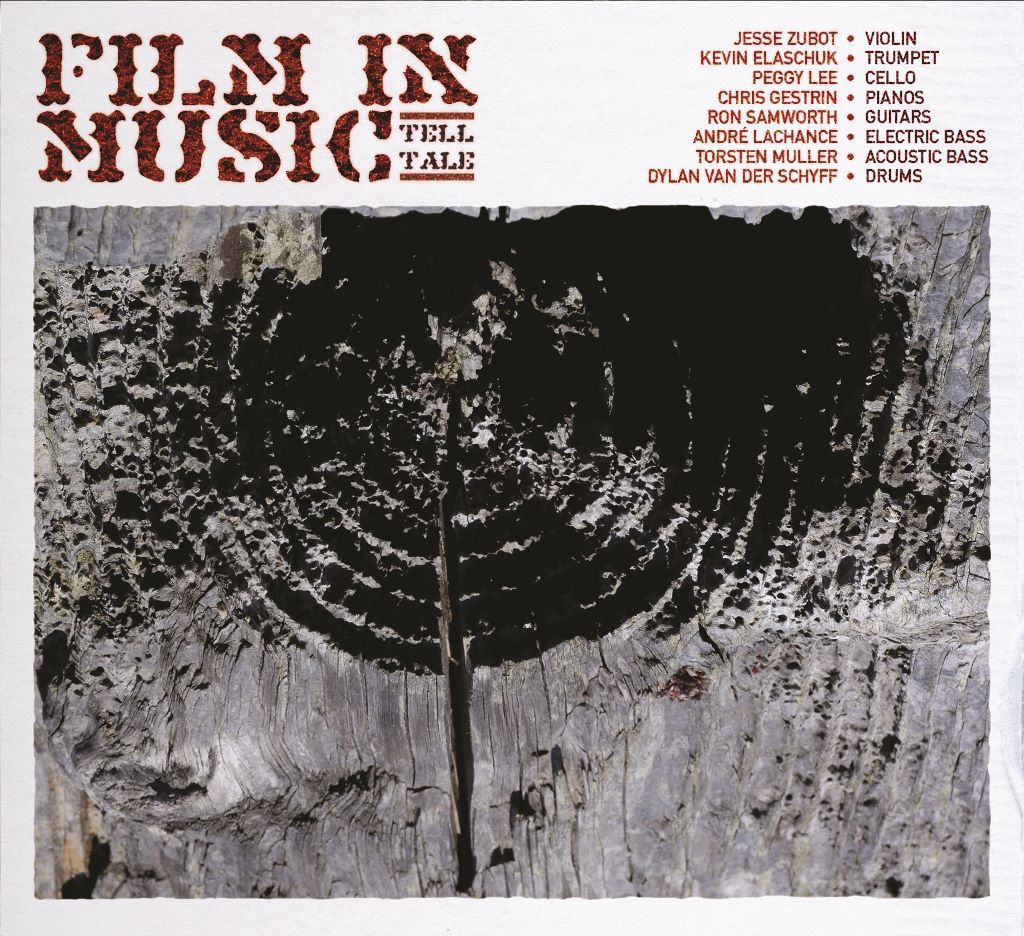
04 Film in MusicTell Tale
Film in Music
Drip Audio DA01207 (dripaudio.com)

Led by cellist Peggy Lee, Film in Music is an octet formed in 2009 that includes many of Vancouver’s most creative improvisers. Originally inspired by the HBO series Deadwood, the project develops a strong sense of mood and narrative through Lee’s compositions for the full ensemble with their structured solos, while interludes of individual and small group improvisation create contrast.

String textures predominate in a mix of Lee’s cello, Jesse Zubot’s violin and Torsten Muller’s acoustic bass along with Ron Samworth’s electric guitar and André Lachance’s electric bass adding gravity. Combining these with the additional colours of Kevin Elaschuk’s trumpet, Dylan van der Schyff’s drums and Chris Gestrin’s keyboards lends an almost orchestral depth. The compositions are strongly tonal, even tuneful, and there’s a kind of drifting feeling that suggests the Old West touched by a certain dissonant grit, the combination strongly suggestive of Bill Frisell’s off-kilter Western themes, most notably the opening A Turn of Events and the keening Epilogue to Part 1.

The improvised episodes are marked by extended techniques and free dissociation, like Muller’s Gruesome Goo, an exploration of the bass’ more exotic timbres, and the evanescent Nagging Doubts by the duo of Lee and Gestrin. Eventually ensemble composition and free improvisation intersect in the concluding Finale: God’s Laughter and a Parade, looming, intense writing that’s overlaid with skittering free improvisations, most notably from Gestrin and Samworth.

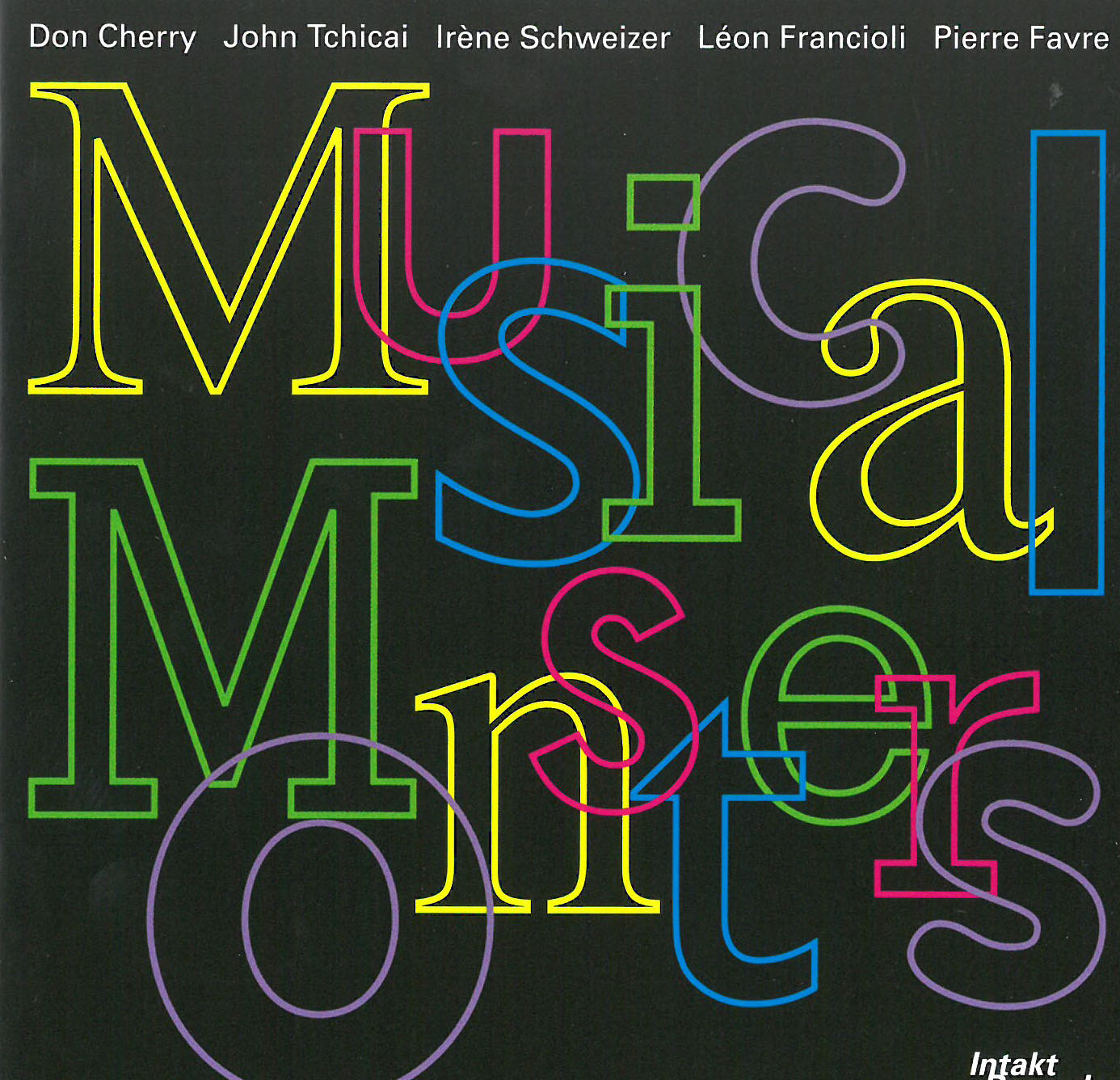
05 Cherry TchicaiMusical Monsters
Don Cherry; John Tchicai; Irène Schweizer; Léon Francioli; Pierre Favre
Intakt Records CD 269 (intaktrec.ch)

This previously unreleased concert recording from 1980 presents a special confluence in the development of free jazz as a wholly international language, with trumpeter Don Cherry and his personal evolution at the centre of the music.

Cherry was one of the key architects of free jazz, first as frontline partner to Ornette Coleman in the latter’s 1958-60 quartets, perfecting a spiky, splintering harrowing line that served as foil in great bands that followed (Sonny Rollins, Albert Ayler) as well as his own groups. By 1980, Cherry was working toward his “Multikulti” concept: modal, polyrhythmic, ostinato-driven music that incorporated elements from Asia, Africa and the Middle East. Setting down here at Jazz Festival Willisau in Switzerland, Cherry is joined by the Danish-African alto saxophonist John Tchicai, an associate since the early 60s, whose lines are tight coils, explosive and laconic in turn. They’re supported by the potent rhythm section of pianist Irène Schweizer, bassist Léon Francioli and drummer Pierre Favre, early converts to Cherry’s inclusivist and liberated language.

The themes were composed by Tchicai and Danish guitarist Pierre Dørge, but they serve essentially as brief launching points for long, loose forays. Musical Monsters 1 begins as a joyous traffic jam, trumpet and saxophone sounding like car horns; 2 covers tremendous ground, moving in and out of free time and layered ostinatos that inspire literal chanting from Tchicai. Whether it’s coiling sinuously or exploring raw, unfettered sound, this is music from the vaults that breathes and pulses with fresh life.

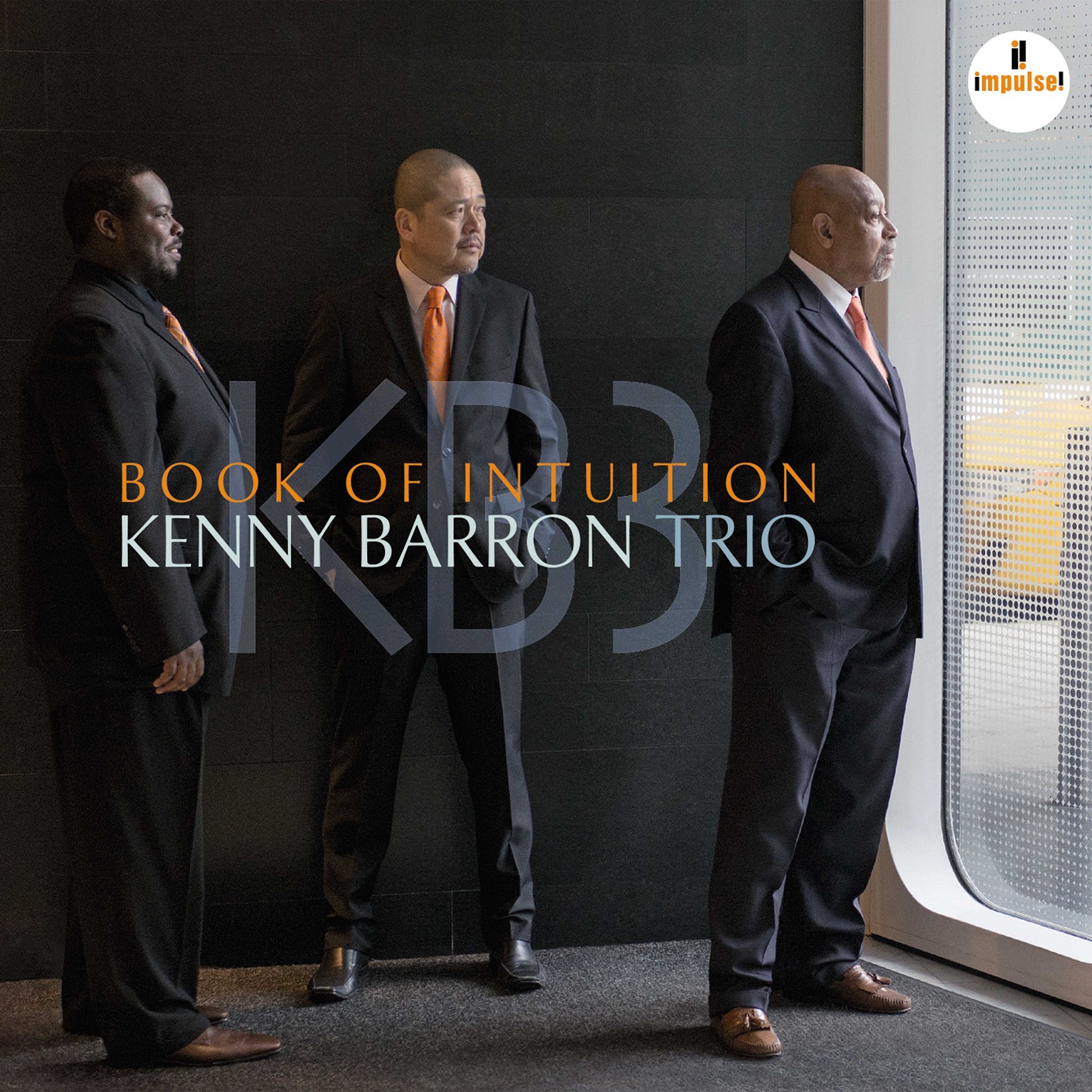
06 Kenny Barron Trio Book of Intuition ArtBook of Intuition
Kenny Barron Trio
Impulse! 4777802

Review

Pianist Kenny Barron is one of the grand masters of modern jazz. At 73, he can look back on a distinguished career that had him recording with Dizzy Gillespie and James Moody before he was 20. The incarnation of a great tradition, he combines invention, energy and lyricism, drawing on the work of Bud Powell and Art Tatum. He’s also a probing interpreter of the compositions of Thelonious Monk.

Book of Intuition is the first recording by Barron’s working trio with bassist Kiyoshi Kitagawa and drummer Johnathan Blake, a group that has acquired a hand-in-glove familiarity during more than a decade together. It’s apparent from the Brazilian-tinged élan of the opening Magic Dance to the elegiac grace that the group brings to the late bassist Charlie Haden’s Nightfall. Along the way, the trio reveals its deft handling on some of Barron’s touchstones. The rhythm section feeds Barron’s own fierce drive on Bud-Like, the pianist’s tribute to Powell achieving something of its subject’s own creative urgency. There are also two Thelonious Monk compositions: the trio brings inventive buoyancy to Shuffle Boil, with Blake demonstrating wittily melodic phrasing; Barron plays Light Blue solo, emphasizing Monk’s own sources in the Harlem stride pianists and Art Tatum.

Barron’s own compositions here possess a consistent lyricism, with Kitagawa lending a solid foundation and Blake supplying bright, shifting accents, whether it’s to the Latin-infused Cook’s Bay and Dreams or Barron’s ballads, like the aptly titled Prayer. For traditional jazz trios, this is state of the art.

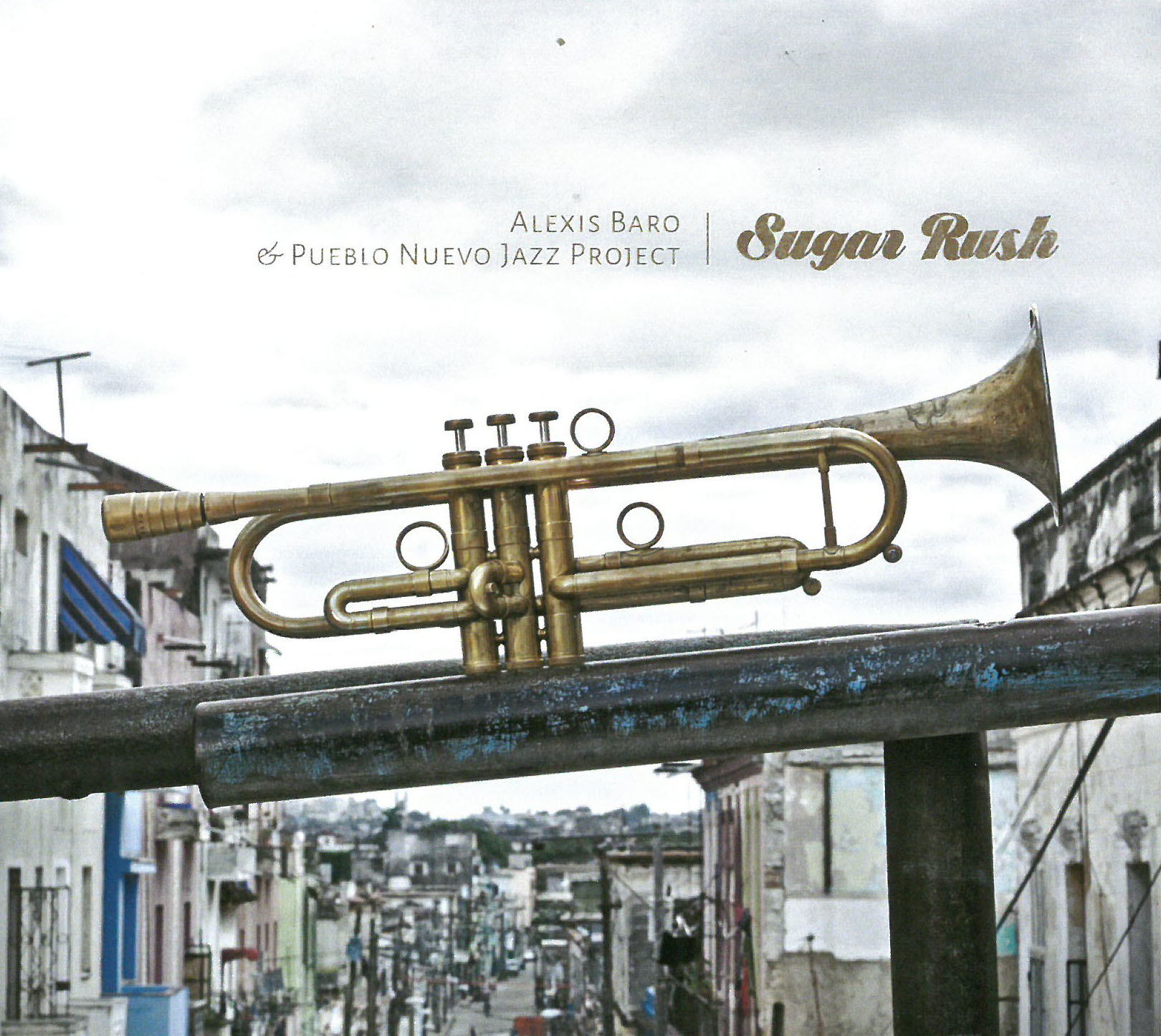
07 Alexis BaroSugar Rush
Alexis Baro & Pueblo Nuevo Jazz Project
G-Three GT0009 (alexisbaro.com)

Without question, trumpeter/flugelhornist Alexis Baro is a propelling and innovative force in the contemporary jazz/Latin jazz scene. His warm, round, energy-infused sound is immediately recognizable, and with the release of his new CD, Baro has clearly come into his own as both a consummate musician and as a composer. All of the material on Sugar Rush has been written and arranged by Baro, who not only freely taps into sacred earth rhythms, but fully utilizes the terrific musicality of his ensemble. The muy picante septet includes goosebump-raising musicians Adrean Farrugia on acoustic piano, Jeremy Ledbetter on keyboards, Yoser Rodriguez and Roberto Riveron on bass, Amhed Mitchel on drums, Jeff King on tenor sax and Jorge Luis “Papiosco” Torres on percussion.

Standouts include: Sigueme (Follow Me) – relentless pumpitude, burning horn lines and high octane piano and bass work define this track. King’s sax is simultaneously rhythmic and fluid, and Baro easily soars into the sonic stratosphere, while still remaining umbilically attached to the heartbeat of Mother Earth. La Guarida (The Lair) is a bop-ish exploration of ultimate coolness, with Baro’s purity of tone, off-the-hook chops and informed harmonic choices resounding throughout – almost reminiscent of a young Freddy Hubbard – and Farrugia’s piano solo is a sonic cascade of beauty and power. Also, Sugar Rush (the aptly named title track) envelops the listener with an onslaught of percussive and irresistible musical sweetness. Drummer Mitchel and percussionist “Papiosco” work in symmetry, mercilessly driving the band down the camino with the most relentless Latin grooves.

This well-conceived, well-recorded project is a masterful mélange of superb contemporary jazz and indigenous Latin sensibilities, and is arguably one of the most important Canadian jazz recordings of the year.

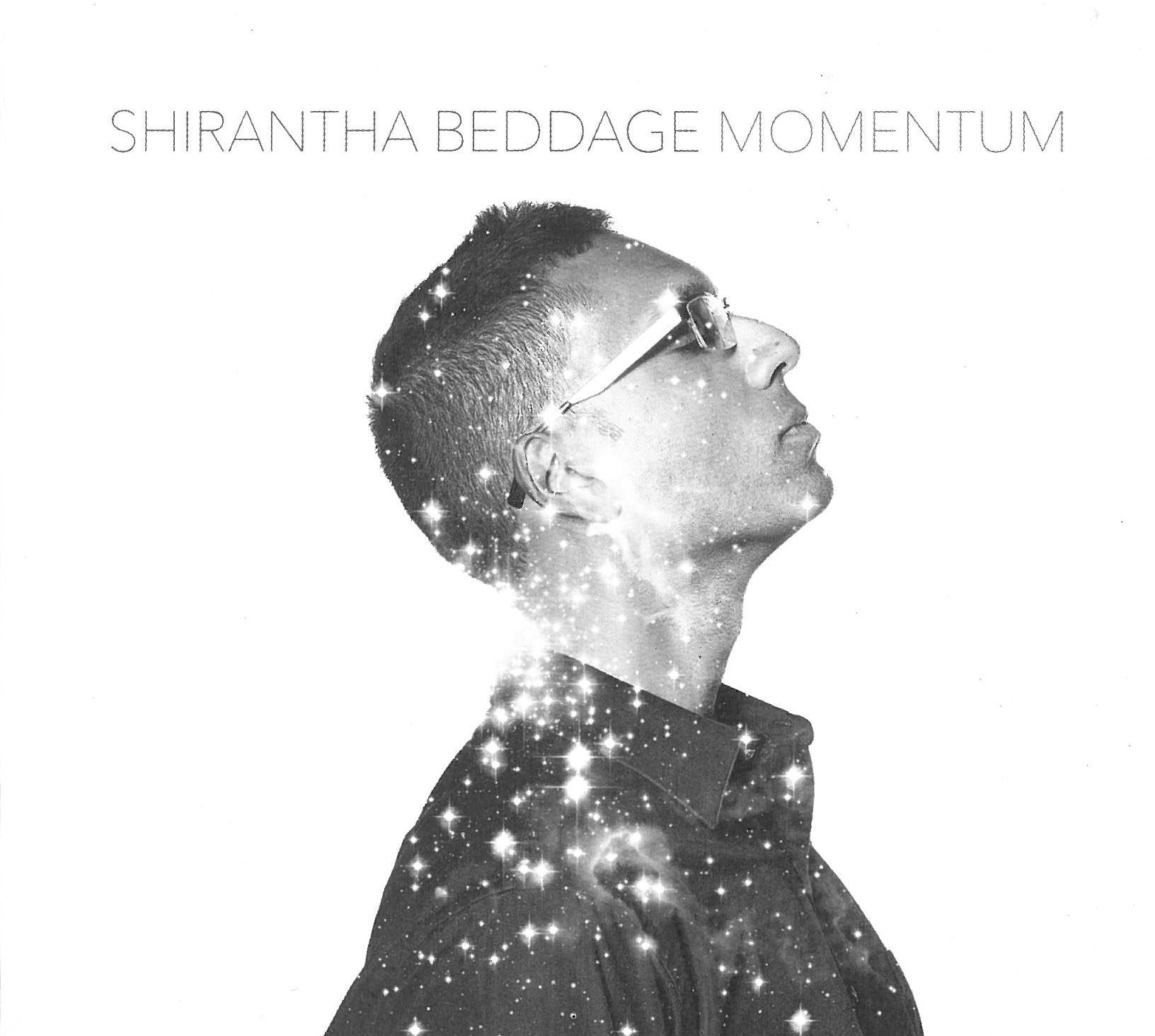
08 Shirantha BeddageMomentum
Shirantha Beddage
Independent SB 001
(shiranthabeddage.com)

With the release of his latest superb, well-recorded CD, British-born multi-instrumentalist and composer Shirantha Beddage explores the theme of his lifelong fascination with the physical sciences and the cosmic forces that propel us, inhibit us and also flood our lives with powerful waves of attraction and repulsion. All of the tunes here have been composed and arranged by Beddage, who also acts as producer; he performs masterfully on a variety of woodwinds (including clarinet, bass clarinet, alto sax, flute and particularly baritone saxophone) as well as keyboards. The fine lineup of Beddage’s musical collaborators include Dave Restivo on piano and keyboards, Mike Downes on acoustic bass, Rich Brown on electric bass and Mark Kelso and Will Kennedy (of Yellowjackets fame) on drums.

Included in the eight engaging original tracks are standouts Pork Chop – a funky, cool, baritone-driven exploration with an agile and percussive piano solo by Restivo as well as plenty of sonic and rhythmic surprises; the multi-textured blues – Drag and Drop which features Beddage on bass clarinet, moving seamlessly from legato passages to intensely powerful choruses and back again; and the impressive title track, which is aptly dedicated to the Oscar-winning film composer Bernard Herrmann. This composition is non-linear in its approach and seems to musically plumb the depths of human desire and also evoke misty, cinematic images. On the tender closing track, The Long Goodbye, Beddage wrings every last ounce of emotion out of each eloquent phrase.

This thoroughly satisfying recording honours classic jazz motifs and also fearlessly explores contemporary, uncharted waters, instrumentation and compositional possibilities, ensuring that jazz is alive, healthy and in fine hands.

09 Martel EstintoEstinto
Pierre-Yves Martel
e-tron records ETR C025 (pymartel.com)

Postmodern to the tip of his orchestral bow, Montreal-based Pierre-Yves Martel has created a single track, 54-minute CD dedicated to estinto or extinguished timbres, that is, ones sounded briefly and barely audibly. Yet he’s created this futuristic equivalent of a visual artist’s sparse canvas using primordial and Baroque-era instruments – harmonica and soprano viola da gamba respectively – often played synchronously if not in harmony.

Interlaced among these textures, which at points can suggest ratcheting percussion or harmonium-like euphony, are protracted silences. Their frequent but intermittent presence becomes as much a part of the album’s soundtrack as the tones which sometimes swell northwards of pianissimo. Overall, many of his narrative tones seem as fine as micron wire. Eventually though, the peeping wheezes and single-string sweeps attain polyphonic crosstalk encompassing varied tempi and pitches. Likely using non-standard tuning to extend his viola da gamba’s range and techniques during certain passages, Martel produces electronic-reminiscent tones acoustically. With the track’s concluding minutes enlivened by a brief harmonic upsurge of bell-like peals before subsiding, the unique program continues to makes its haunting presence felt as much through cerebral memory as aurally.

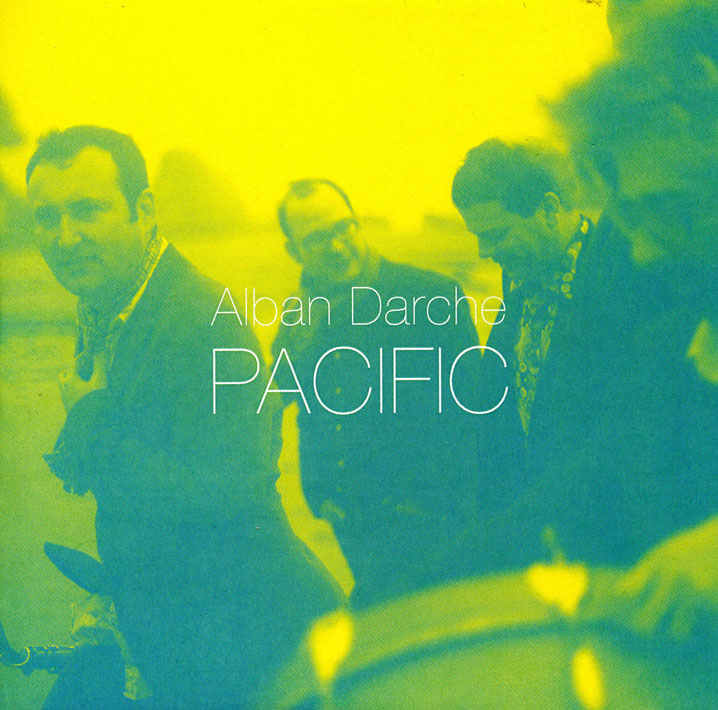
Darche PacificPacific
Alban Darche
Pépin & Plume P&P 004
(pepinetplume.com)

As serene and amicable as the word it describes, this session by French alto saxophonist Alban Darche is his salute to the polyphonic West Coast jazz of the 1950s. But like dramatists who recast an oft-told story in a new setting to point out the universality of the art, Darche’s Cool Jazz doesn’t copy the concepts advanced by the likes of Gil Evans, Lee Konitz and Paul Desmond.

Instead of re-recording some Cool Jazz classics, the CD consists of ten Darche compositions played by a quintet consisting of some of Europe’s most accomplished young veterans: trumpeter Geoffroy Tamisier, trombonist Samuel Blaser, Jozef Dumoulin on piano and Fender Rhodes and drummer Steve Argüelles. Dumoulin’s electric keyboard is particularly important: like an iPhone plugged into a stereo outlet, its distinctive shimmers are prototypically contemporary, not mid-20th century. This is especially obvious when a snatch of the original California-style music is quoted on the sardonically titled Birth of the Coocool and when other Cool School motifs are especially obvious on Pacific 2, Fugue nº3.

Pre-eminently a group effort, frequently balancing on the bucolic harmonies available via unison horn buffering, Darche leaves enough space for brief solos. His own work updates Desmond and Konitz with enough steel glimpsed through the silkiness to mix it up with feathery piano chording on Pacific 3 or advance in concordance with trombone slides on Kenny. On the same tune, Swiss-native Blaser, whose low notes add definition to the horn’s musical shape elsewhere, is involved in hide-and-seek with Dumoulin’s piano. More defining still is the fissure resulting when Blaser’s muted mellifluousness is contrasted with lead guitar-like ringing strokes from the pianist on Pacific 2, Fugue nº3. Usually muted, Tamisier confirms that standout improvising can also be self-effacing; while Argüelles is so tasteful he’s felt rather than heard. If Pacific has a drawback it’s that, like its antecedents, too often the band whispers and noodles instead of shouts. But if the reverse took place, wouldn’t it upset the delicate balance here?

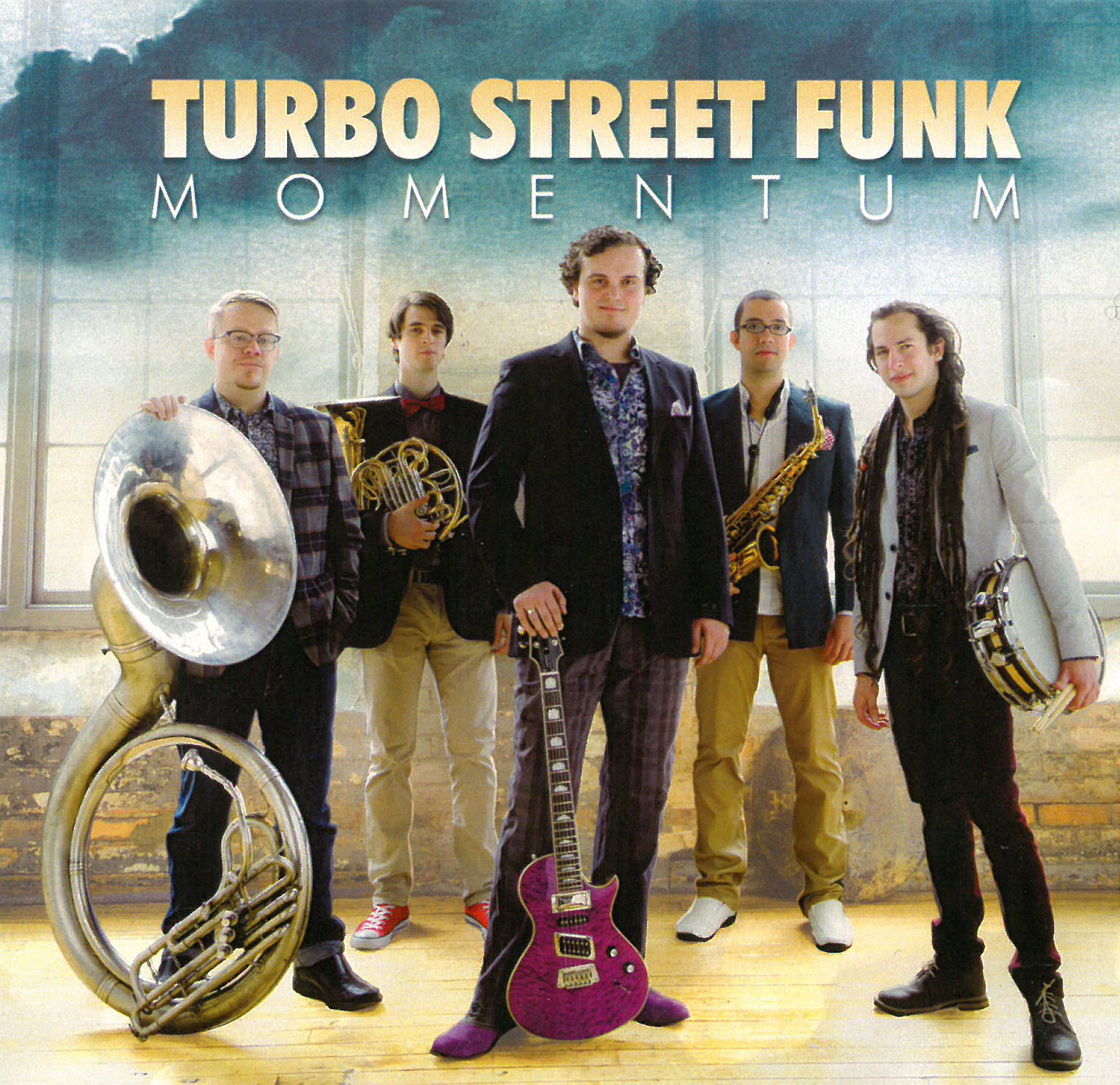
01 Turbo Street FunkMomentum
Turbo Street Funk
Independent TSFCD002
(turbostreetfunk.com)

My first introduction to Turbo Street Funk was witnessing their live Toronto street corner bouncing performances which made any lengthy wait for public transit a joyous experience. Their busker street spirit is remarkably captured on this, their second release, though now they can also be heard playing lively gigs at festivals, clubs and on air!

The nine tracks feature both original tunes and covers. The original title track Momentum is a big rock concert hall funky anthem with sing-along arm-waving melodies. In contrast, the jazzier original Never Been to New Orleans moves along in blues-based harmonica and sax solos, and fun double-time speedy Cajun-flavoured middle and ending sections true to their street roots. The other originals are good too and indicative of their developing songwriting skills.

Covers are the band’s forte especially in Seven, an unlikely combination of the White Stripes’ Seven Nation Army, the Eurythmics’ Sweet Dreams (Are Made of This) and yes, Edvard Grieg’s In the Hall of the Mountain King. Technical performance precision, precise listening skills and superb individual musicality weave an almost new musical genre highlighted by in-your-face guitar solos and dance-in-your-living-room grooves.

Each Turbo Street Funk band member is an accomplished musician whose youthful artistic essence is captured by the excellent recording production. Infectious musical energy, a driving beat, booming bottom end tuba, wailing solos and boisterous vocals make Momentum a jubilant release.

Ice Age Paradise
Sienna Dahlen
Independent SEN06 (siennadahlen.com)

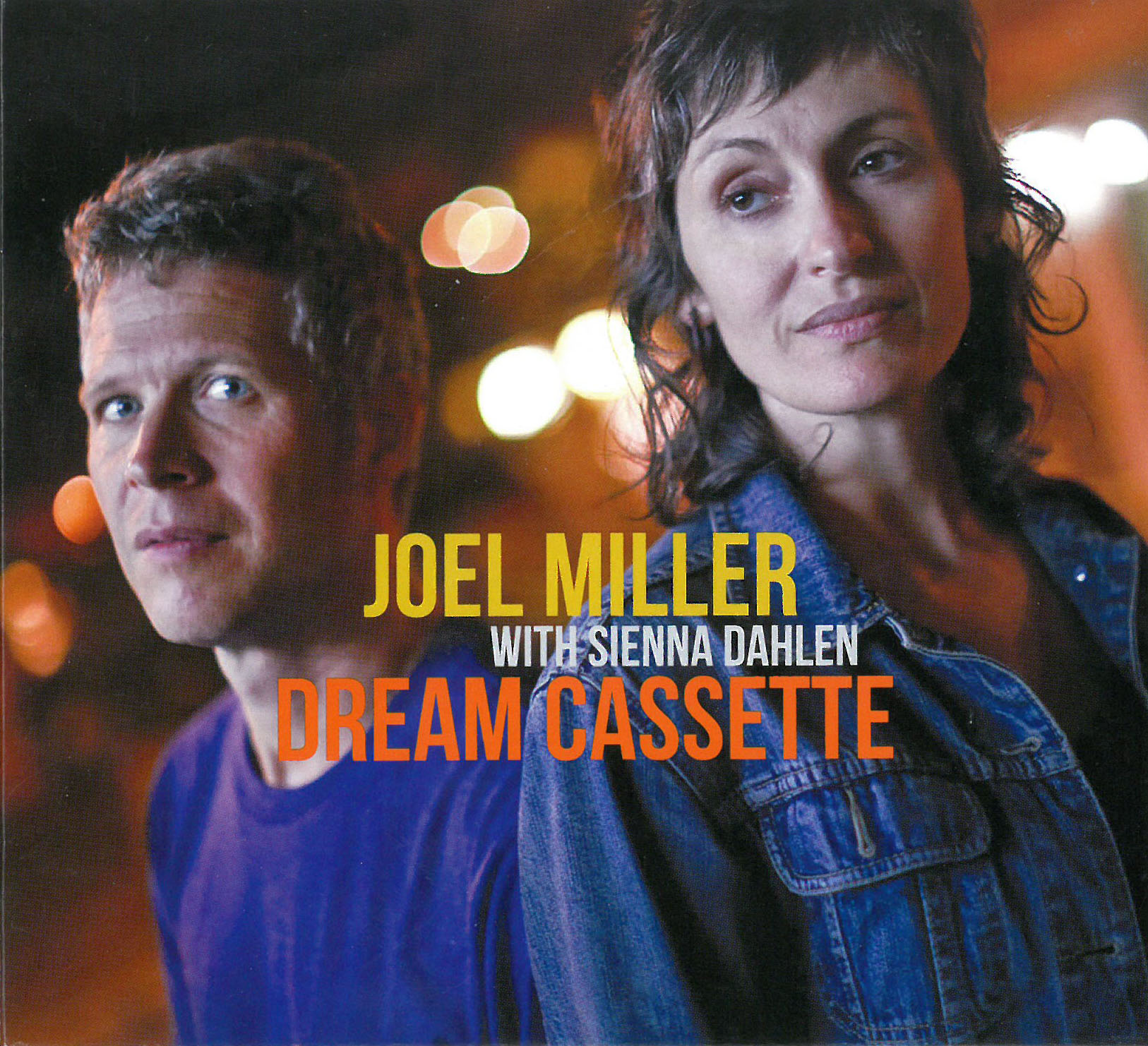
Dream Cassette
Joel Miller; Sienna Dahlen
Origin Records 82713 (originarts.com)

02a Sienna DahlenSienna Dahlen follows the great line of Canadian vocalists who commit to disc the poetry of music written from the heart. She also reveals that she is a queen of bright timbre and contrasting colours; a lyrical vocalist par excellence. On Ice Age Paradise she plays characters that are elementally flawed and tragic, revealing the raw wounds of their emotions as they rise up in the throat. The performance is a visceral one that flirts dangerously close to music’s nerve endings. Dahlen has in her sights a pure kind of poetry. How beautifully Venezia dances its ghostly waltz here, the flowing speed perfectly judged by conductor Andrew Downing to give the rhythms a lift and allow Dahlen to phrase the poem in unbroken sentences with total naturalness. Throughout, Dahlen is an engaging storyteller who brings to life a narrative almost completely visualized in monochrome. But as surely as night turns to day, voice, piano and bass, horns and cello, guitar and drums open the door to an attractive, songful luminosity that glimmers as if from a rainbow-coloured gossamer web.

02b Joel Miller Sienna DahlenOn Dream Cassette, Dahlen teams up with an extraordinarily gifted multi-instrumentalist and songwriter, Joel Miller who, in each of 12 original songs here, has tempered his arsenal of sophisticated compositional resources with fond and haunting reminiscences reflecting the contours of New Brunswick’s rich and yet starkly dramatic cultural landscape. The mostly unfamiliar tunes serve as unifying devices, which in the hands of Miller and Dahlen, together with a crack ensemble, elevate their intentions through deconstruction in a variety of unexpected ways. Songs such as Flying Dream and Corey Heart are densely evocative and hypnotic musical embroideries while the audacious Streamlined is at once raucous and poignantly eloquent. There is a wonderful kaleidoscopic palette of vocal colours from Miller’s saxophones throughout, with plenty of sonorous bloom for high and lonesome notes. For her part, Dahlen brings an ethereal beauty to this recording, singing gloriously as she rises fluently to the stately melodic lines of Miller’s music.

03 Emilyn and John DavidEmilyn Stam and John David Williams
Emilyn Stam; John David Williams
Independent (emilynandjohn.com)

This self-titled CD is a fetching collection of original tunes by the Toronto-based duo Emilyn Stam (on fiddle and accordion) and John Williams (on clarinet and harmonica). Drawing on their individual and joint experience in a broad range of musical genres, they deftly blur the lines between the traditional/folk and experimental/improv worlds with inventive artistry. Fiddle and clarinet are the predominant colours throughout; these blend remarkably well here – kudos to the engineer for capturing such a great sound from the tricky-to-record clarinet!

Whether in waltzes, jigs, blues or more-outside-the-box tunes – my personal favourites being the Tim-Burton-meets-the-klezmorim Sleepless Waltz and the quizzical Waltz from Hawaii Bar – there’s a whole lot to enjoy here. Stam and Williams play with colourful and expressive nuance, and their enjoyment of what they’re doing is palpable. Much instrumental virtuosity is on display here too but it’s all in good service to the music, and the occasional forays into what some of us might call “extended techniques” just add to the pleasure. Some very hot clarinet playing can be heard in The New Rule, and when Stam switches to accordion halfway through this tune, the blend of the two reed colours is brilliant.

This is creative, witty and beautiful music making, and I hope we all hear a lot more from this duo. I first knew of Emilyn Stam’s playing through her work with the late great Oliver Schroer; as I listen here, I can almost see him beaming in the background.

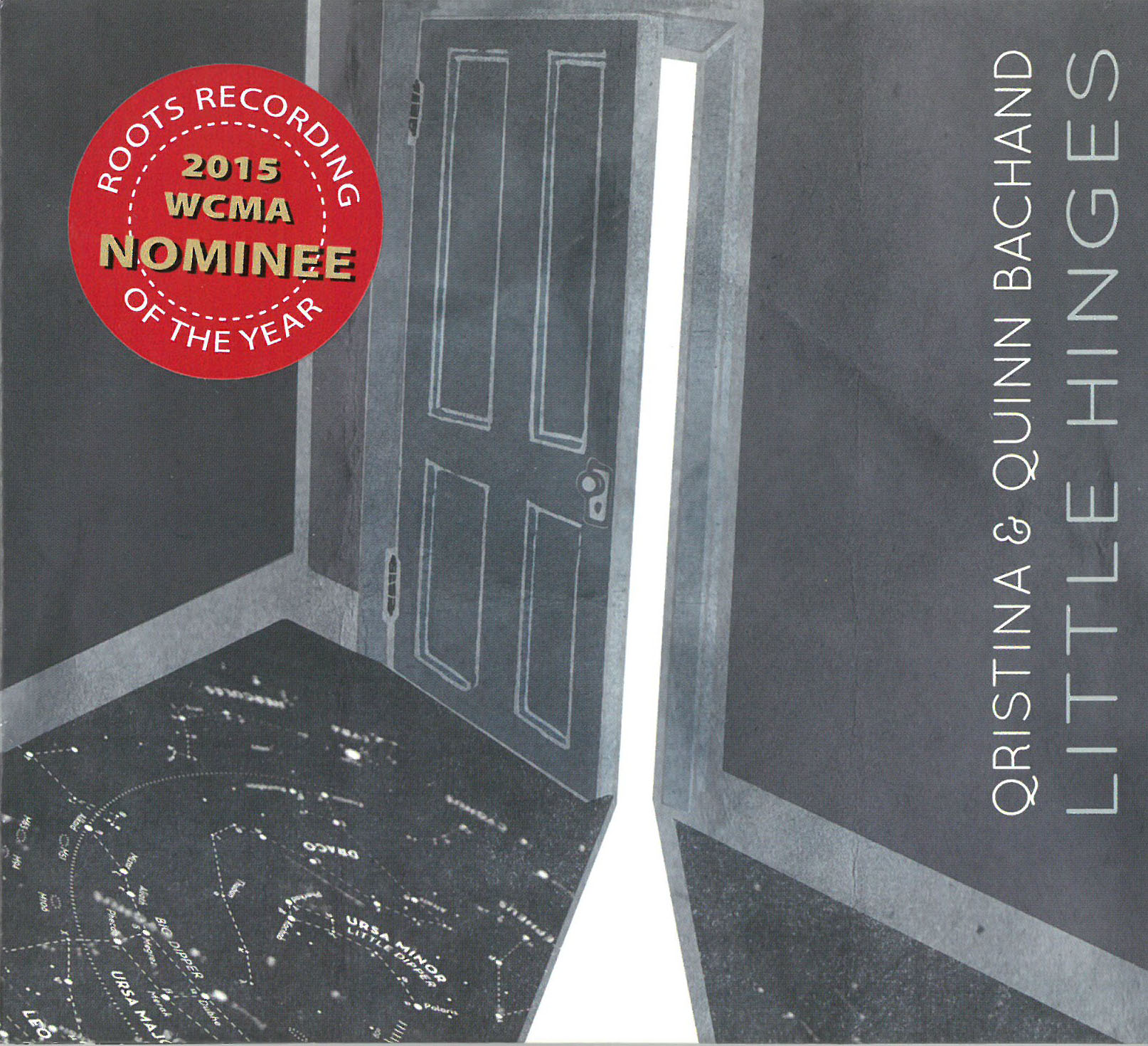
04 Little HingesLittle Hinges
Qristina & Quinn Bachand
Beacon Ridge Productions BRP15 (qbachand.com)

Little Hinges is the third album by Qristina and Quinn Bachand, a brother-sister folk/roots duo from the West Coast. Split into two distinct sections, this album is a curious blend of old and new – traditional songs are mixed with original tunes, and numerous sound fragments (such as steps, doors, crackles – adding an interesting textural component) are incorporated throughout. The first half of the recording, although containing a couple of original tunes, has a traditional Celtic roots feel to it. The moving Crooked Jack is a standout with captivating vocals, textured claw-hammer banjo and lovely violin lines. The short interlude Little Hinges sets the mood for the second half of the album – dreamier, darker, with a hint of the cinematic, a glimpse into a different world. Hang Me is dark and gloomy, with many textural layers and beautiful arrangements. Three Little Babies smartly increases the distorted textural sounds throughout to emphasize the emotion of the song. The album concludes with a bright traditional tune with a homey feel – Hangman’s Reel – showcasing both Qristina and Quinn on fiddles.

I appreciated the notes and descriptions relating to each song in the liner notes – it added a layer of intimacy, a sense of familiarity with the music. Although young, Qristina and Quinn are both award-winning musicians and engaging performers. Their synergy captivates the listener on every level – truly enjoyable.

Interpreting Roscoe Mitchell’s Challenging and Influential Music

Confirming once again the continued vitality of the first generation of Free Music avatars, at 76, saxophonist Roscoe Mitchell is still innovating with divergent aspects of instrumentation and arrangements. One demonstration of this will occur Sunday, October 16, when he leads a mixed, 15-member, Montreal-Toronto ensemble through several of his compositions as part of the Music Gallery’s annual X-Avant Festival. Other components of note include concerts by the likes of composer Pauline Oliveros and violinist Sarah Neufeld, but Mitchell, co-founder of the Art Ensemble of Chicago (AEC), and a stalwart of Chicago’s Association for the Advancement of Creative Musicians (AACM), has a long relationship with Toronto going back to the early 1970s when he recorded some groundbreaking LPs in the city.
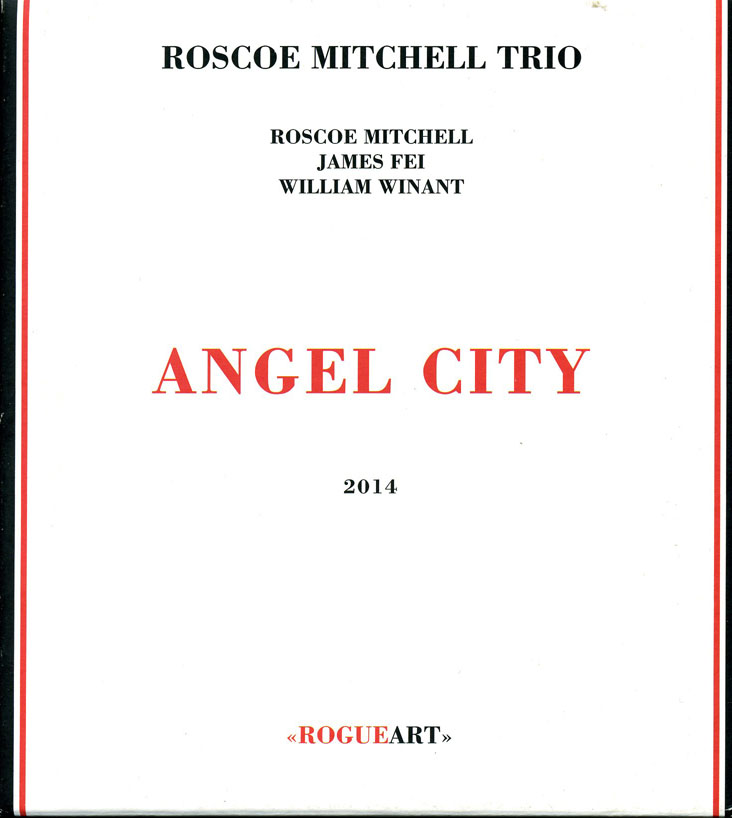
01 Mitchell AngelCityAn instance of Mitchell’s skill as a composer and performer in a miniature yet multi-instrumental context is Angel City (RogueArt ROG-0061 rogueart.com). Developing a single, 55-minute variant of his composition, Mitchell plays sopranino and bass saxophones, bass recorder, baroque flute, whistles and percussion. His associates are James Fei on sopranino, alto and baritone saxophones, bass and contrabass clarinets and analog electronics, plus William Winant expressing himself via marimba, timpani, bass drum, snare, cymbals, gongs, wood blocks, percussion and three types of bells: orchestral, tubular and cow [!]. Literally beginning with bells and whistles, Angel City advances logically with alternating sequences of solo and group work, gentle and harsh timbres, light and dark shadings, plus a judicious balance between sound and silence(s). With so many instruments, the three devise notable motifs that balance contrapuntal high-and-low-pitched reed elaborations as Winant clips, clanks, clinks and crashes through percussion development, deviating to textures from a disassociated reed shrill and singular marimba-like plonk as solitary as a prairie landscape. Another interlude encompasses bell jingling that backs droning growls from matching bass and baritone saxophone. Sophisticated in utilizing little (percussion) instruments, plus using compositional ploys, Mitchell interpolates false climaxes throughout Angel City, marking them with protracted pauses as carefully as if on score paper. Unexpectedly, counter themes arise and are repeated, with a couple roaring like cannons from the 1812 Overture, with others propelled by recorder sequences so courtly they’re almost florid. From menacing kettle-drum foreshadowing to delicate-as-microsurgery mallet work on triangles, Winant confirms his knack as a sound colourist while maintaining percussion continuum. Fei is equally supportive. But since he and Mitchell share work on reeds of similar timbres, it’s difficult to assign individual kudos. Many times one pushes the theme forward while the other cunningly decorates and amplifies the initial line. Eventually Mitchell’s bass sax burping out a swinging but sophisticated line joins with Winant’s polyrhythmic cacophony that appears to vibrate every struck instrument at once to create a multiphonic finale which slurs away into silence.
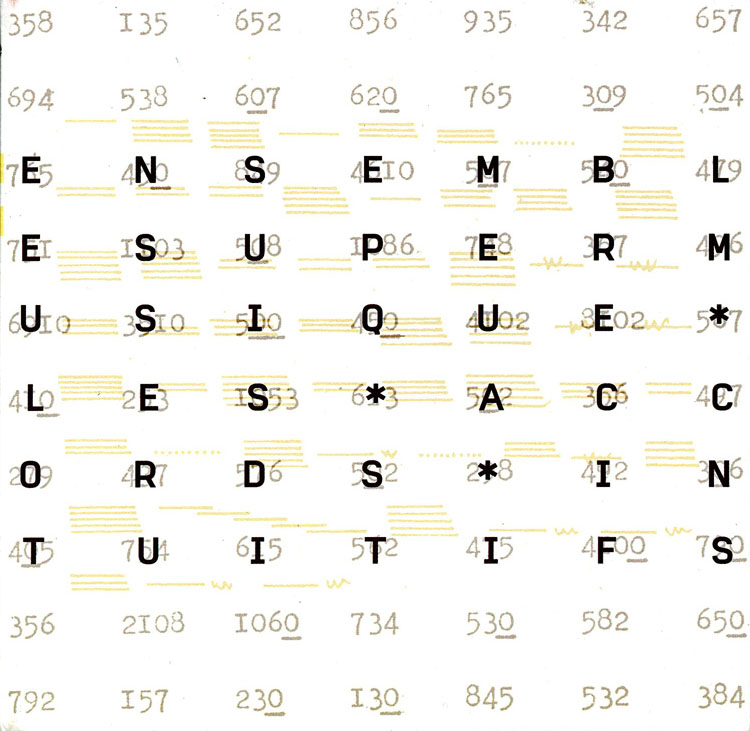
02 Ensemble SupermusiqueAbout half the musicians interpreting Mitchell’s Music Gallery compositions reside in Montreal. Ensemble SuperMusique’s Les accords intuitifs (Ambiances Magnétiques AM 222 actuellecd.com) features a large group of improvisers playing compositions by alto saxophonist/vocalist Joane Hétu and guitarist Bernard Falaise, as well as contemporary pieces by violinist Malcolm Goldstein and two mid-1970s scores by Montrealers Yves Bouliane and Raymond Gervais. All tracks are moored in the territory where group concert music conventions, free-form soloing and rock-music tempi collide. Like researchers experimenting with space medicine discovering unexpected futuristic tropes, new currents arise when Martin Tétrault’s turntables, Vergil Sharkya’s synthesizer and Alexandre St-Onge or Nicolas Caloia’s electric basses are given leeway. Although the stop-time climaxes, cycling marches and the semi-serious vocalizing on Hétu’s Pour ne pas désespérer seul appear related more to Frank Zappa than Iannis Xenakis, Mitchell would recognize asides created by percussive AEC-pioneered little instruments, as well as sharpened saxophone cries that play off against Scott Thomson’s plunger trombone and Craig Pedersen’s soaring trumpet. Unsurprisingly, although Goldstein’s Jeux de cartes expands and contracts with tremolo flutters prodded by Danielle P. Roger and Isaiah Ceccarelli’s percussion, most of the crackling excitement is engendered by Joshua Zubot’s violin glissandi. Another standout performance is Gervais’ title track. Uncommonly contemporary, the piece mixes overhanging crescendos growled by the entire ensemble with spidery contrasts between the solo strategies of St-Onge and acoustic bassist Aaron Lumley. The ending is left unresolved as cymbal-clanking finality is subverted by synthesizer squeaks and guitar string pops.
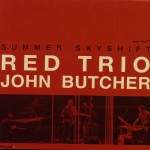
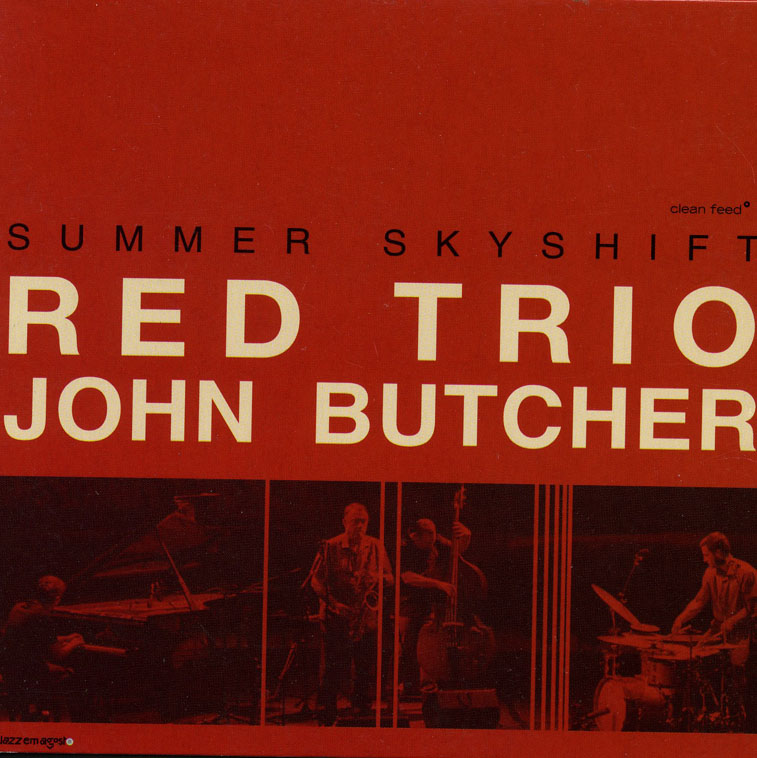
03 RedTrioBritish soprano and tenor saxophonist John Butcher would likely name as his antecedents European stylists like Evan Parker and contemporary notated and minimalist music. But when paired with the Portuguese Red Trio – pianist Rodrigo Pinheiro, bassist Hernani Faustino and drummer Gabriel Ferrandini – on Summer Skyshift (Clean Feed CF 372 CD cleanfeedrecords.com), the performance suggests a fantasy film in which mild-mannered types are transformed into superheroes. Syncopating at jet engine speeds with irregular vibration emanating from both of Butcher’s horns, congruent zealous string stretching and screeched percussion advance the parallels to the AEC or similar Mitchell ensembles. Playing with devastating power as he double and triple tongues, Butcher appears to be vacuuming up every tone from the atmosphere, then ejecting the outcome in a variety of shadings and pitches. With his timbres on the lower-pitched horn cramped and dissonant as a freeway at rush hour, he’s equally fierce on soprano, puffing and gargling timbres that twirl and twist as Pinheiro’s speedy playing creates resonating accompaniment. Faustino adds to the high-pressure narrative, contrasting his chunky string strums with Butcher’s tongue slaps that could levitate a bowling ball. Craggy and barbed, the extended final track is more adroitly cadenced. Ferrandini’s percussive smacks and sprawls plus equivalent intensity from the others’ strings and keys push Butcher’s initial flatline tone to passionate timbre-spewing. Like an Olympic competitor reaching the finish line, the high-strung exposition relaxes into downward piano chords and a bowed bass turn.
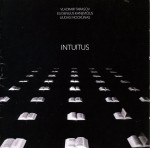
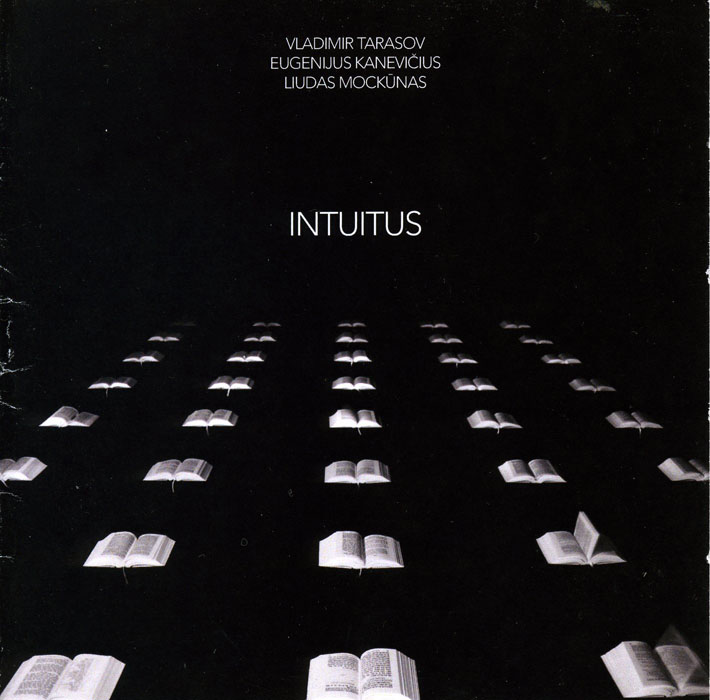
04 IntuitusWestern European musicians aren’t the only ones influenced by sound conceptions. Many of the tropes used regularly on Intuitus (NoBusiness NBLP 93 nobusinessrecords.com) had their origins in Mitchell’s extended sound experiments. As an indication of that reach, the players on this Vilnius-recorded set are two Lithuanians, Liudas Mockūnas, who plays soprano and tenor saxophones, clarinet and bass clarinet and bassist Eugenijus Kanevičius, plus Russian percussionist Vladimir Tarasov. Tarasov applies textures available from cimbalom, bells, xylophone and hunting horn to break up and personalize the rhythmic thrust here. Using an upright bass with electronic extensions, Kanevičius’ texture is not only reliable, but also adaptable enough to add plectrum-instrument-like colouration to the ten selections. A track such as Time Loop Backwards, for instance, bristles with tones propelled by the bassist’s Charles Mingus-like bulkiness as Tarasov’s hand drumming curdles like cheese churned from curds and whey into polyrhythmic bass drum whacks inset with cymbal clacks. Exhibiting a Jekyll and Hyde duality, Mockūnas moves from narrow clarinet puffs to outsized split tones and peevish snarls. Following an introductory grounded bass solo on Once around the Corner, the reedist demonstrates his mainstream-oriented tenor saxophone facility, propelling the theme with relaxed forward motion. True to AACM precepts, though, the comfortable narration is shaken up with circular-breathed clarinet puffs and an archer-like propelling of arco tones from Kanevičius as the pitch rises before the conclusion. Capable of nasal asides or slide-whistle-like peeping elsewhere, with equivalent responses from the other two, the saxophonist’s authoritative tenor tone defines the concluding Searching for Peace. As the bassist’s tremolo strategy solidifies the exposition, the drummer tickles small percussion instruments. The heaving Baltic qualities of Mockūnas’ vibrations confirm that Mitchell’s American ideals adapt well to local musical use.
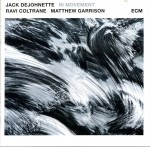
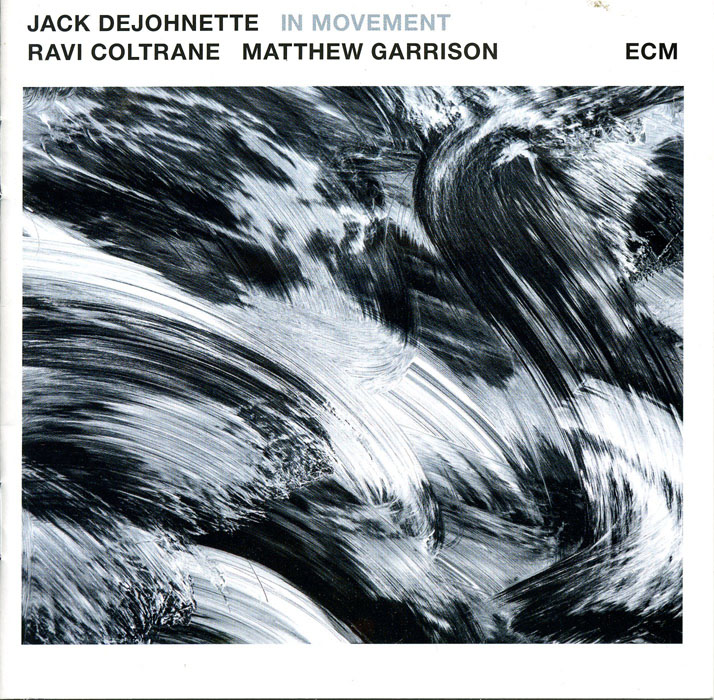
05 DeJohnetteAnother AACM member who has matched Mitchell’s accomplishments as an instrumentalist, albeit in more conventional jazz, is drummer Jack DeJohnette. Best known for his decades-long collaboration with Keith Jarrett, DeJohnette, 74, is like a harlequin clothing himself in two-tone popular and progressive music-garments on his own discs. In Movement (ECM 2488 ecmrecords.com), for instance, finds him playing electronics and piano plus percussion, with his own improvisations mixed into a program of lines from Bill Evans, John Coltrane and Earth Wind & Fire (EWF). His associates here are sons of jazz legends: Coltrane’s son Ravi, 51, who plays soprano, sopranino and tenor saxophones, and the son of bassist Jimmy Garrison, Matthew, 46, whose instruments are electronics and electric bass. More conventional soloists than their respective fathers, Garrison has the facility to thump a beat as well as output sympathetic guitar-like strokes. As for Coltrane, he loses when measured against a musician whose stature in jazz is comparable to that of a combination of Beethoven and Frank Sinatra. Playing his father’s Alabama, Ravi’s sense of dynamics proves he’s more talented that Frank Sinatra Jr., but most of the drama comes via DeJohnette’s crystal clear drumming and Garrison’s flamenco-like strumming. EWF’s Serpentine Fire allows him to stretch his soprano into double tongued tone flutters, Garrison’s rhythm guitar-like strums and drum backbeat add some fire, but the result is more restrained fusion than outright funk. More notable are improvisations such as Two Jimmys and Rashied. The former reaches the soul inferences aimed for elsewhere, shoehorning some Orientalism via synthesizer licks as well. DeJohnette’s beat is again faultless and on tenor saxophone Ravi Coltrane smoothly outputs the theme honouring John Coltrane’s final drummer, the other piece opens up enough to let DeJohnette demonstrate that he could easily have filled that kit chair. With cupped cymbal splashes and rugged ruffs aimed at him, Coltrane is like a boxer challenged by a seasoned opponent, flying through the material with a bellicose combination of split tones and overblowing. Like an Olympian who competes in both swimming and track, DeJohnette demonstrates his versatility on Soulful Ballad, where he propels the mood from the piano with Romantic glissandi reminiscent of Evans and Jarrett. 

Verve was one of if not the best source of recordings by new generations of jazz musicians who had new ideas and things to say beyond arrangements generated for dance bands and popular vocalists. In 1944, impresario Norman Granz (1918-2001) devised an evening-long jam session to be held in the Philharmonic Auditorium in Los Angeles. The word auditorium didn’t appear on the posters and the affair was referred to as Jazz at the Philharmonic, an appellation that Granz held on to. Musicians on the very first live recordings included Lester Young, Illinois Jacquet, J.J. Johnson, Les Paul, Nat King Cole and Meade Lux Lewis, the early JATP regulars. Over the years from 1944 until 1983 the regulars evolved with new artists, many of whom became known through one of Granz’s own record labels, of which there were eventually five, the culmination of which was Verve.
 

Review

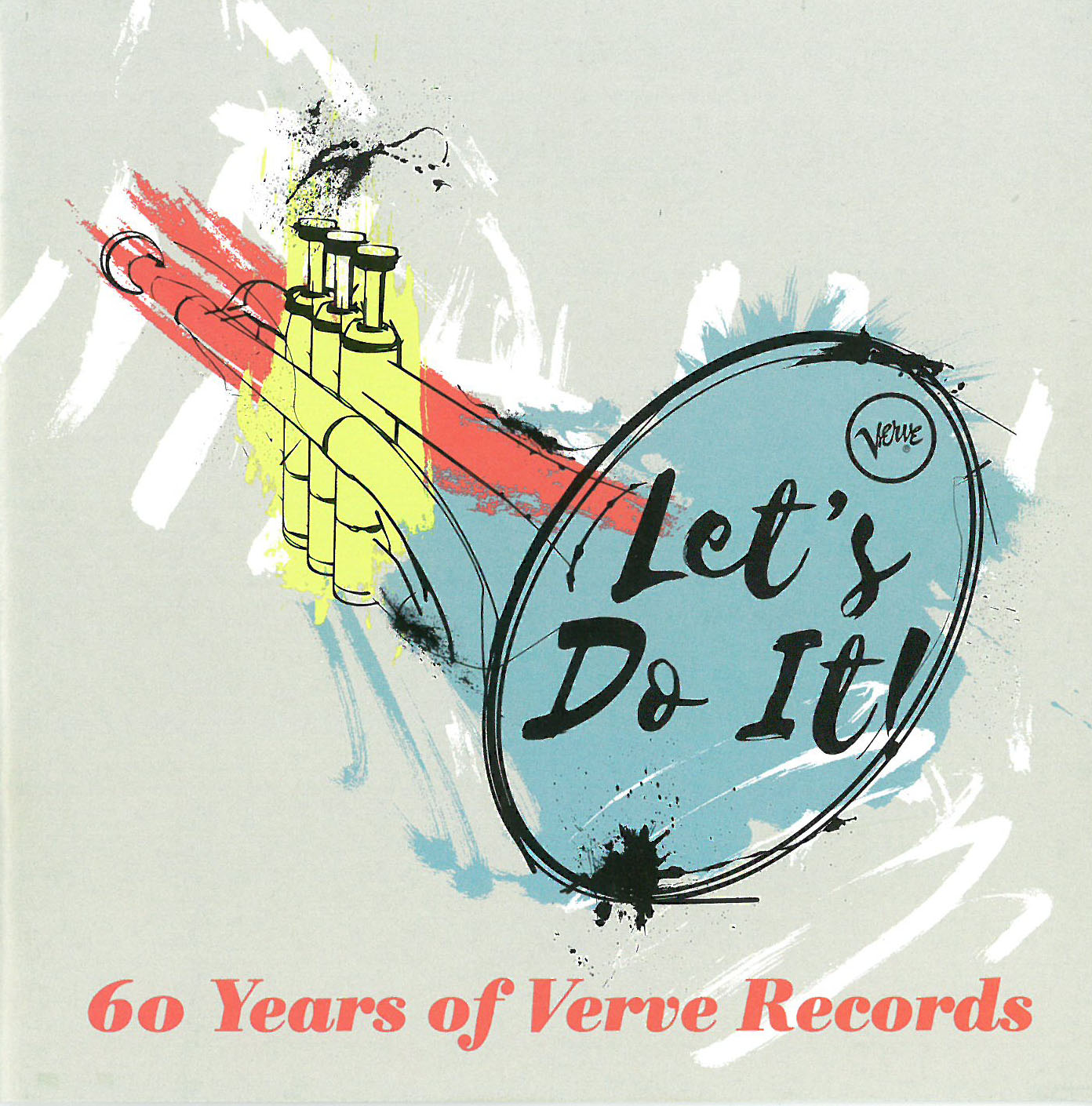
01 Lets Do ItA long-time fan of JATP through their concert recordings and individual albums of many of their artists, I was intrigued about the contents of Let’s Do It! (Verve 4782558, 4CDs), selections from across 60 Years of Verve Records. As it turns out, the choice of 47 memorable tracks, the earliest from 1953, could not be more pleasing or better sequenced. Featured artists include the Oscar Peterson Trio alone (C Jam Blues) or collaborating with Louis Armstrong, Ella Fitzgerald, Bill Henderson (in a haunting version of The Lamp Is Low), Coleman Hawkins, Ben Webster and Milt Jackson. Listeners are reminded of, or introduced to, the artistry of Johnny Hodges, Stan Getz, Herbie Hancock, Tal Farlow, Kenny Barron, Jimmy Smith (The Cat), Cal Tjader, Count Basie, Roy Eldridge, Billie Holiday, Anita O’Day, Arthur Prysock, Diana Krall and, of course, Astrud and João Gilberto forever sighing over The Girl From Ipanema with Stan Getz.

The recorded sound should be mentioned. We are so accustomed to hearing recordings and video soundtracks that are a product of manipulations in the control room that it is like a breath of fresh air to hear exactly what the microphones heard, clearly, dynamically correct and distortion free. What one hears on these four discs is the real deal, deserving the highest recommendation.

Michael Gielen, for those who may not recognize his name, is an Austrian conductor whose career has been an interesting one. He was born in 1927 in Dresden and two years ago this month he officially retired from the podium for health reasons. His family moved to Buenos Aires in the 1930s where he studied piano, introducing audiences there to the entire piano music of Arnold Schoenberg in 1954. His uncle was Eduard Steuermann, who was a recognized advocate for Schoenberg and remembered today for his arrangement of the sextet Verklärte Nacht for piano trio. Steuermann was a teacher of Alfred Brendel. Returning to Europe in 1950 Gielen became a répétiteur at the Vienna State Opera coming into contact with Karajan, Bohm and other luminaries of the era. In 1952 he conducted the Vienna Konzerthaus Orchestra and made LPs for American companies. 1954 found him conducting the Vienna State Opera in addition to concerts of contemporary music elsewhere. From 1960 to 1964 he was conductor of the Royal Opera in Stockholm and from 1964 to 1984 he was to be found in Stuttgart conducting the Radio Symphony Orchestra, working for a time with Sergiu Celibidache. During that period he was also principal conductor of the Belgian National Orchestra (1968-1973) and principal conductor of the Dutch Opera in Amsterdam (1973-76). He was first guest conductor of the BBC Symphony (1978-1981) and from 1980 to 1986 he was music director of the Cincinnati Symphony. Later he was principal conductor of the SWF Orchestra in Baden-Baden (1986-1999). He was professor of conducting in Salzburg from 1987 to 1995. He conducted his last concert with the NDR Orchestra in 2014.

Normally the above brief outline of his career would not belong here but as many casual music lovers and collectors are unfamiliar with Gielen, his recorded performances, even if they were noticed, could very possibly be passed by without a second thought.

Review

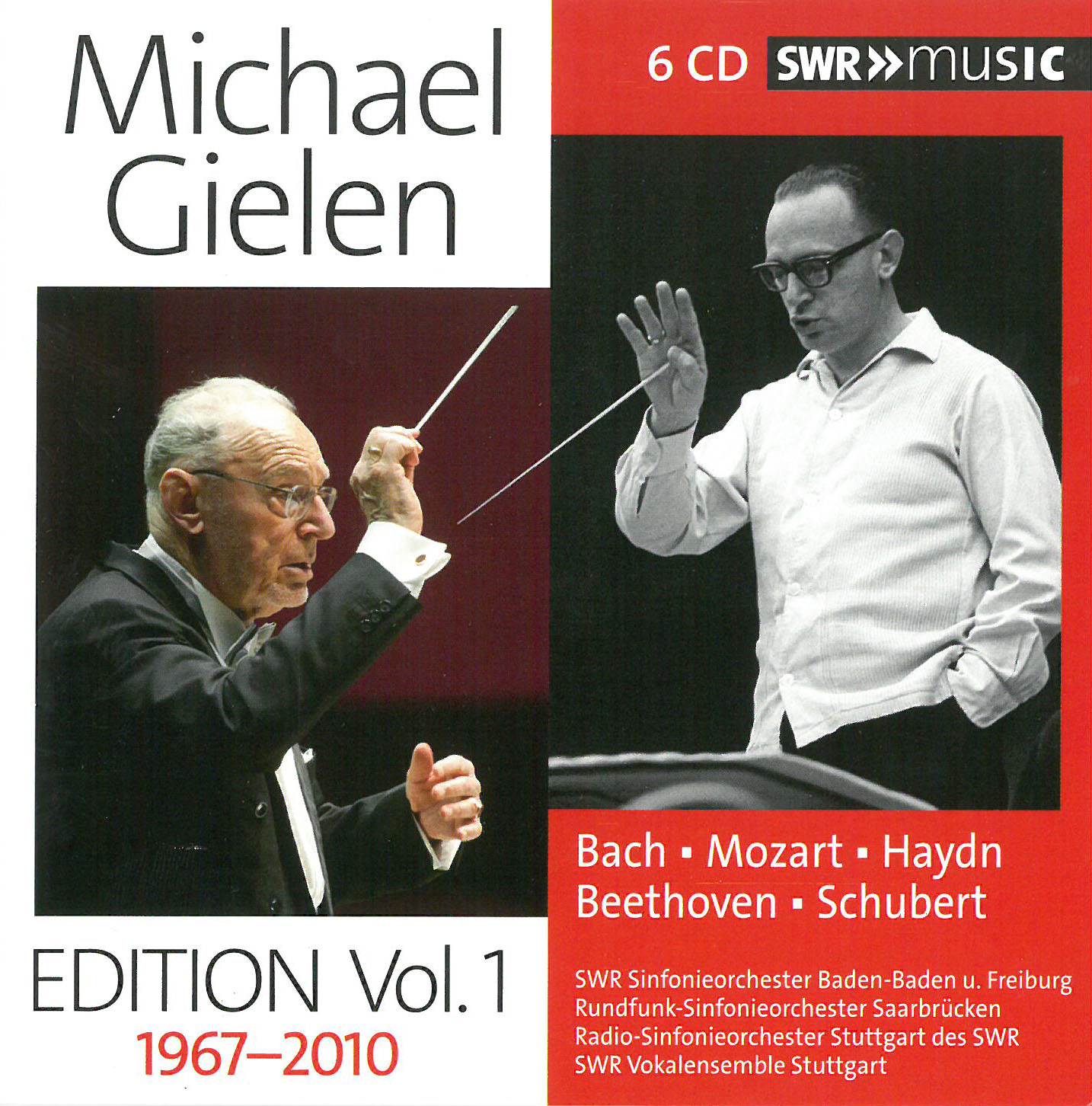
02 Michael Gielen Vol.1SWR Music has issued the first of a ten-part series of Gielen performances, Michael Gielen Edition Vol.1 1967-2010 (SWR19007CD, 6 CDs), a good percentage of which are first releases. There are two pieces by Bach, the Prelude and Fugue Book 1 No.4 BWV849 and an excerpt from Cantata BWV50, followed by Mozart: Symphonies 30, 35 and 36, German Dances, Overtures and Minuets. Haydn’s Symphonies 95, 99 and 104, then Beethoven’s three Leonore Overtures and Coriolan followed by the Triple Concerto with Edith Peinemann, Antonio Janigro and Jörg Demus. Schubert is well represented by music from Rosamunde; the Overture, Ballet Music and the Entr’acte after the third act; Mahler’s transcription for string orchestra of the quartet Death and the Maiden; Intende voci – Offertorium for tenor, mixed chorus, organ and orchestra D963 sung by Thomas Moser, the Slovak Philharmonic Choir of Bratislava and the SWR Symphony of Baden-Baden and Freiburg followed by the Mass No.5 in A Major D678.

Usually, in any collection of this kind some performances are less interesting – they have to be. Not so here. Every performance is quietly engaging in tempi, choice of phrasing and subtle variations in volume – not for the sake of doing something differently from accepted practices but because it sounds exactly right, prompting one in each case to hang on to the work with fresh interest. These are performances that invite the listener in and hold her or his interest through to the last note, especially if that person is familiar with other versions. The sound is very good; only one or two pieces have that tight rundfunk studio sound to which the ear quickly adjusts.

The Gielen Edition is off to an auspicious start. Talk about great expectations!

The American pianist Julius Katchen was signed to English Decca in 1946, just ahead of the LP revolution. As Decca had the very finest engineers behind them in England and elsewhere, they were in the forefront of the trend, getting superior quality discs into the stores with EMI years behind. In the early years of the LP, it seemed that every new Decca release schedule featured Julius Katchen, who it seems could play anything with impeccable authority.

Katchen was born on August 15, 1926, in Long Beach, California. His grandmother, formerly on the faculty of the Warsaw Conservatory, was his first piano teacher and his grandfather taught him theory. His mother was also a concert pianist. In 1937, Eugene Ormandy engaged the 11-year-old to play the Mozart D Minor Concerto on October 21, 1937 with the Philadelphia Orchestra, and a month later he performed with the New York Philharmonic-Symphony. Critic Lawrence Gilman wrote: “His fingers are fleet, his conceptions clear and intelligent. He has a musicianly feeling for the contour and flow and rhythm of a phrase and a sense of what is meant by Mozartean style.” He continued his scholastic studies majoring in philosophy and English literature.

1946 found him the toast of Europe in Paris, where inexplicably he was more popular than in his own country. That’s when he signed with Decca. He played the entire piano works of Brahms in recitals and that composer was the backbone of his recorded repertoire: concertos, chamber music and solo piano. His artistry was unique including Bartók (no Bach), Beethoven, Britten, Chopin, Gershwin, Grieg, Liszt, Mozart, Mussorgsky, Prokofiev and Rachmaninoff, Ravel, Saint-Saëns, Schubert, Schumann and Tchaikovsky. He died on May 29, 1969, in Paris.

03 katchenJulius Katchen, The Complete Decca Recordings (4839356, 35 CDs) contains 69 (or more, depending on how you count) performances, every note that he recorded including the 78 rpm discs and an unissued item, Franck’s Prélude, choral et fugue from April 21, 1949. These recordings are clear evidence of his artistry and insights beyond mere technique, documented at the peak of his career. One can only contemplate upon what might have developed in his later years.

Assisting artists include conductors: Karl Münchinger, Peter Maag, Piero Gamba, Ataúlfo Argenta, István Kertész, Pierre Monteux, János Ferencsik, Georg Solti, Adrian Boult, Anatole Fistoulari, Ernest Ansermet, Mantovani, Skitch Henderson and Benjamin Britten; pianists Jean-Pierre Marty and Gary Graffmann; violinists Ruggiero Ricci and Josef Suk; clarinetist Thea King; cellist János Starker; and actress Beatrice Lillie.


Back to top