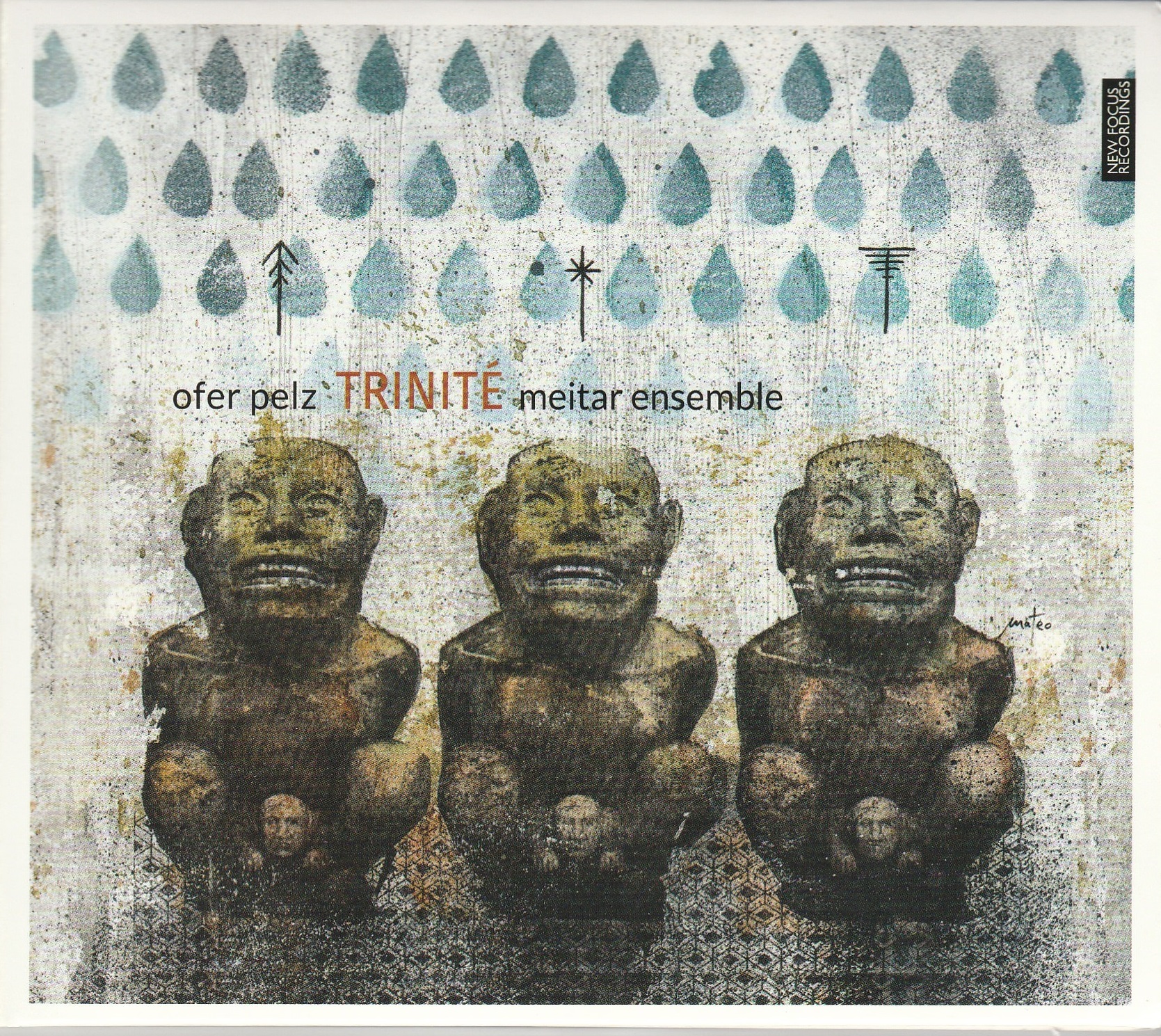
06 Ofer PelzOfer Pelz – Trinité
Meitar Ensemble; Quatuor Ardeo
New Focus Recordings FCR303 (newfocusrecordings.com)

Intricate prepared-piano ricochets and barbed ensemble alchemy converge to permeate the Meitar Ensemble’s latest release – a portrait of music by Montreal-based Israeli composer Ofer Pelz. The five pieces on the disc represent an eight-year collaboration between the composer and the virtuosic ensemble. 

Pelz’s clear and punctuated sound world is well suited for the bravura and precision of intent capable by the Meitar musicians. The first work, Backward inductions, for augmented piano, evokes a process whereby reverse reasoning achieves a sequence of optimal actions. This dynamic music produces fluidity through compartmentalized yet spinning lines and tempestuous interruptions. A piece titled Convergence for alto flute and electronics is a wondrous barrage of granulated tinctures that envelopes the ear and the mind. The chamber work, marchons, marchons, performed in Toronto when New Music Concerts presented Meitar at the Music Gallery in 2017, offers delicate and distant conversations spoken in metallic whispers. Finally, a piece written in two movements for flute, prepared piano and amplified string quartet titled Blanc sur Blanc begins with a dance-like mysteriousness followed by windswept panorama. 

The confident nature of Pelz’s music is propelled forward by what is clearly a process-oriented approach – yet this attribute also contains a wealth of originality and expression. The music and performances on this release are as compelling as they are refreshing. Bravo to all.
Listen to 'Ofer Pelz – Trinité' Now in the Listening Room

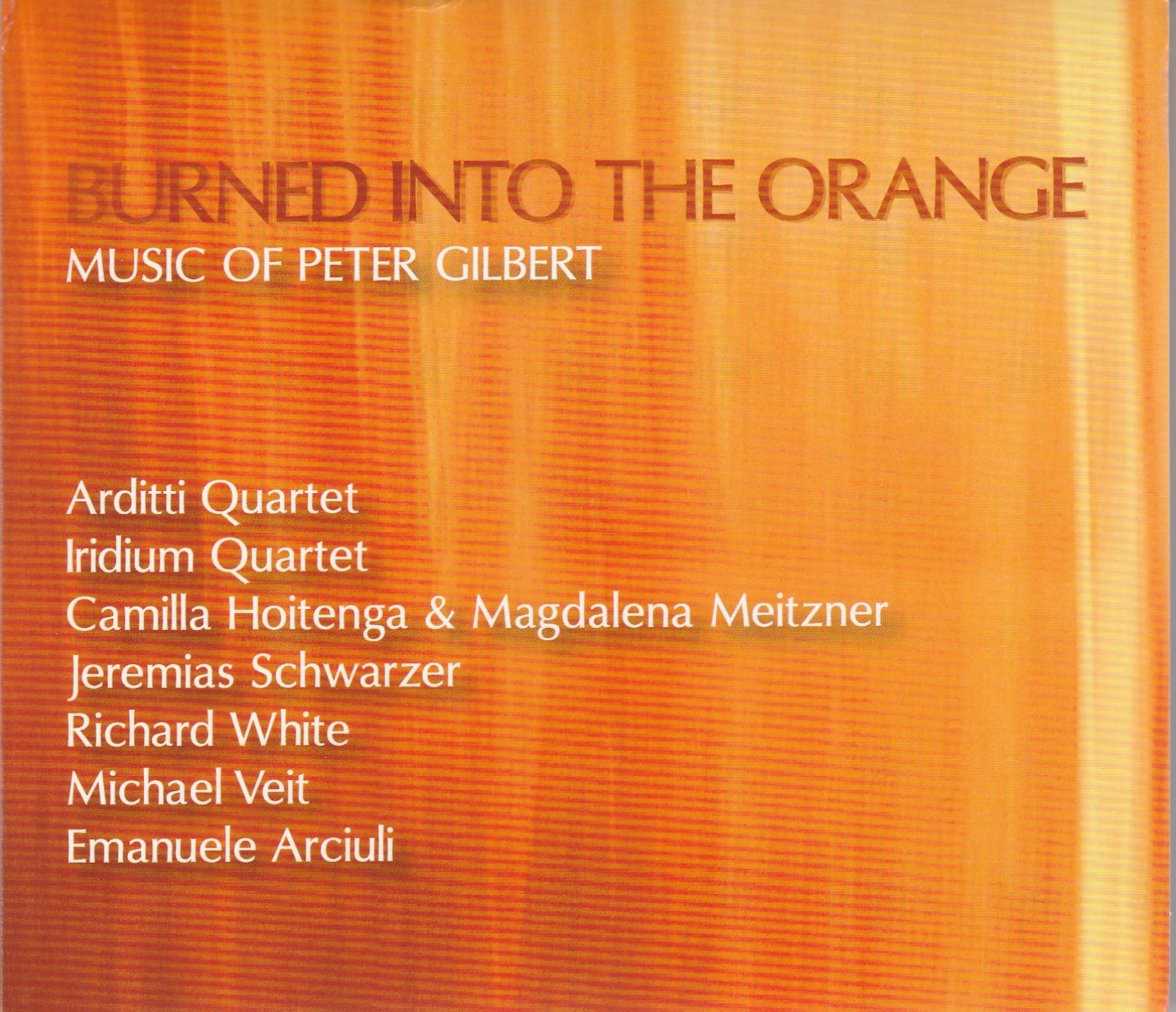
07 Peter GilbertPeter Gilbert – Burned into the Orange
Arditti Quartet; Iridium Quartet; Various Artists
New Focus Recordings FCR300 (newfocusrecordings.com)

Composer Peter Gilbert’s second full-length album – Burned into the Orange – is a collection of chamber works that explore rich and sensuous textures performed by the Arditti Quartet, Camilla Hoitenga, Magdalena Meitzner, Jeremias Schwarzer, Richard White, Michael Veit, Emanuele Arciuli and the Iridium Quartet. 

The seemingly ever-rising pulsation of the voice opens wide to forget that which you are singing produces an ephemeral hypnosis. The title track, scored for saxophone quartet, evokes sonic tendrils creeping among the sinuousness of a liquid cathedral. The almost violent gestures of Channelling the Waters produces a musical energy that tunnels through unknown timbral pathways. A piece titled By the Lonely Traveller’s Call, for tuba and amplified mute, transduces extreme guttural bellows into resonant sonic clouds. The lingering harmonic canopies of Soon as the Sun Forsook the Eastern Main evaporate monumental piano sonorities into monoliths of aural brilliance. 

This album is saturated with aural enchantment – each piece seems to be on a journey from unaltered impetus to transcendent harmoniousness. Burned into the Orange will surely burn into memory for those who listen.

Listen to 'Peter Gilbert – Burned into the Orange' Now in the Listening Room

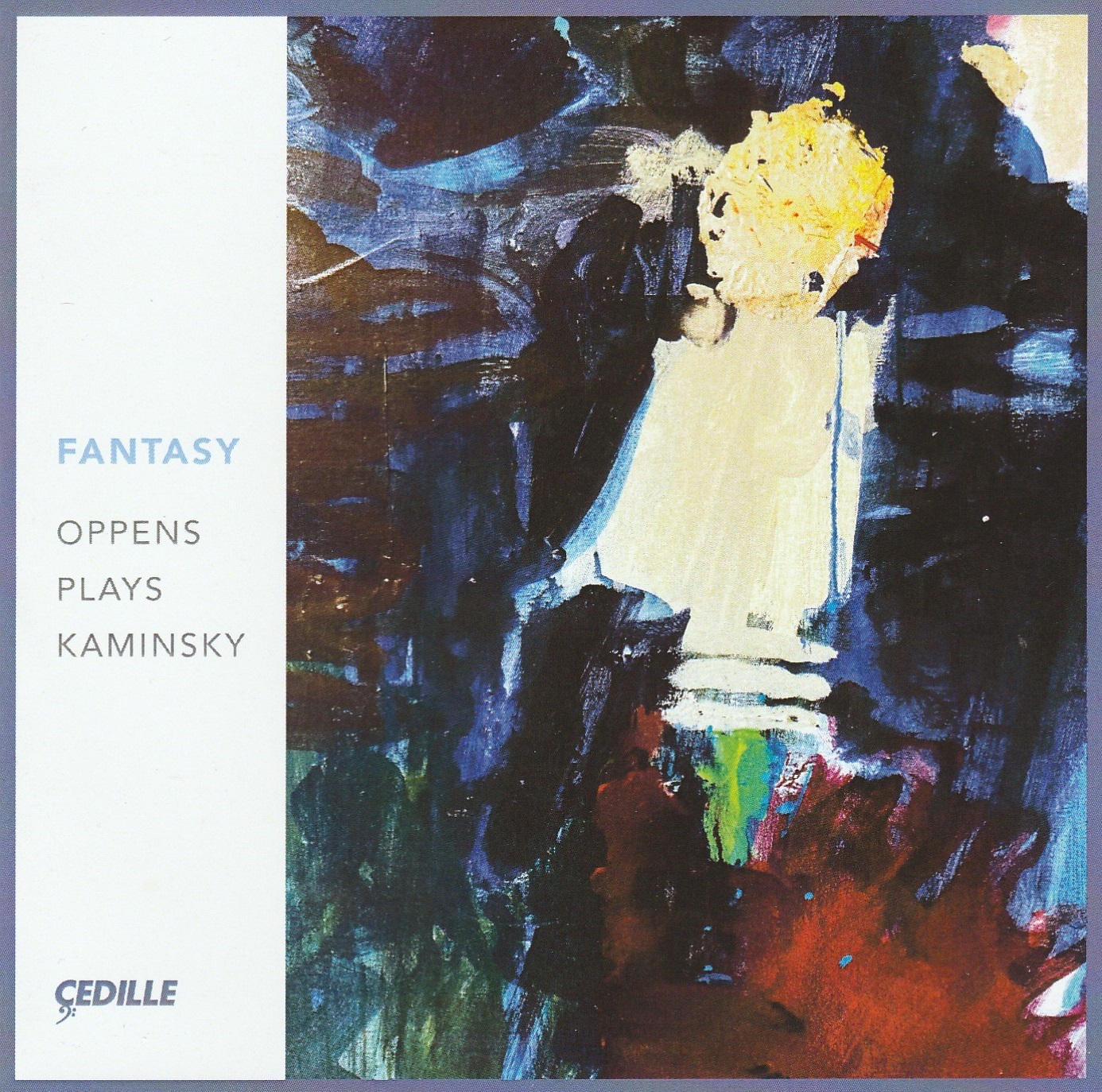
09 Oppens play KaminskyFantasy – Oppens plays Kaminsky
Ursula Oppens; Jerome Lowenthal; Cassatt String Quartet; Arizona State University Orchestra; Jeffrey Meyer
Cedille CDR 90000 202 (cedillerecords.org)

Titan of the contemporary keyboard, Ursula Oppens is a rarity among artists living today. She is the stalwart bearer of a mid-century musical torch that apparently burns eternal. How fortunate we are to have such musicians as Oppens still making music with fortitude, passion and tireless faith.

A most recent episode for Oppens has been a record made with the Cassatt Quartet and Arizona State University Orchestra showcasing music of American composer Laura Kaminsky. This disc, themed “Oppens Plays Kaminsky” seems a testament of friendship (these two impressive musicians have been longtime pals). Presently, they come together in a variety of idioms to demonstrate Kaminsky’s portfolio in a traversal of quintet, fantasy and concerto.

Despite evocative titles such as Maelstrom, and…, or Hurtling. Still. the music isn’t always convincingly first rate. Nevertheless, there are moments of tunefulness and poetry. The affinity between Oppens and Kaminsky radiates throughout, leaving a palpable sense of fellowship and mutual joy amongst colleagues.

Oppens wields her piano at the album’s centre, steering a varied vessel with consistent skill and surety. Even in brief piano passages, as she peeks out from dense ensemble material, Oppens’ artistry sings unmistakably. The 20-minute solo Fantasy (2010) should be considered a tour de force in and of itself. When it comes to a career such as Oppens’, dedication and staying power carry the day. May she always urge us to listen close and listen well, ever compelling our ears toward the future.

10 Danielpour DinnersteinRichard Danielpour – An American Mosaic
Simone Dinnerstein
Supertrain Records 025 SR (richard-danielpour.com)

The ever-engaging American pianist, Simone Dinnerstein, has been rather active during the COVID-19 pandemic. Early on, in lockdowns last spring, she retreated into studio – inspired by nourishing walks through Brooklyn’s Green-Wood Cemetery – to lay down some favoured works by Schubert and Philip Glass. (See my review of the album A Character of Quiet, in the October 2020 issue of The WholeNote.)

She has now embarked on an attractive new project with Grammy Award-winning composer, Richard Danielpour: an album of pieces written expressly for her. This is a sequence of 15 miniatures, each offering comfort and musical solace during the difficult pandemic months of 2020 and 2021. The disc is capped by three arrangements of Bach’s music by Danielpour, as a tribute to Dinnerstein. He was first inspired by Dinnerstein’s celebrated recordings of Bach and set pen to staff paper in a generous outpouring of sound portraits of American society (usually in slow tempi!) over the past months of crisis: parents, teachers, first responders, religious leaders and even politicians. This recipe makes for a rich and varied (albeit lethargic) musical feast, contemporaneously narrating an era of suffering in which we still find ourselves. But why not take stock at such a close vantage point, reflecting on recent traumas still evolving? 

As for Dinnerstein herself, how could she not record such music? This set was made especially for her quintessential artistry, quietly singing through at every corner. Here is the optimal example of performer-meeting-composer-meeting-performer-again; the results are worthy of a two-eared listen in these fraught, often one-eared times.

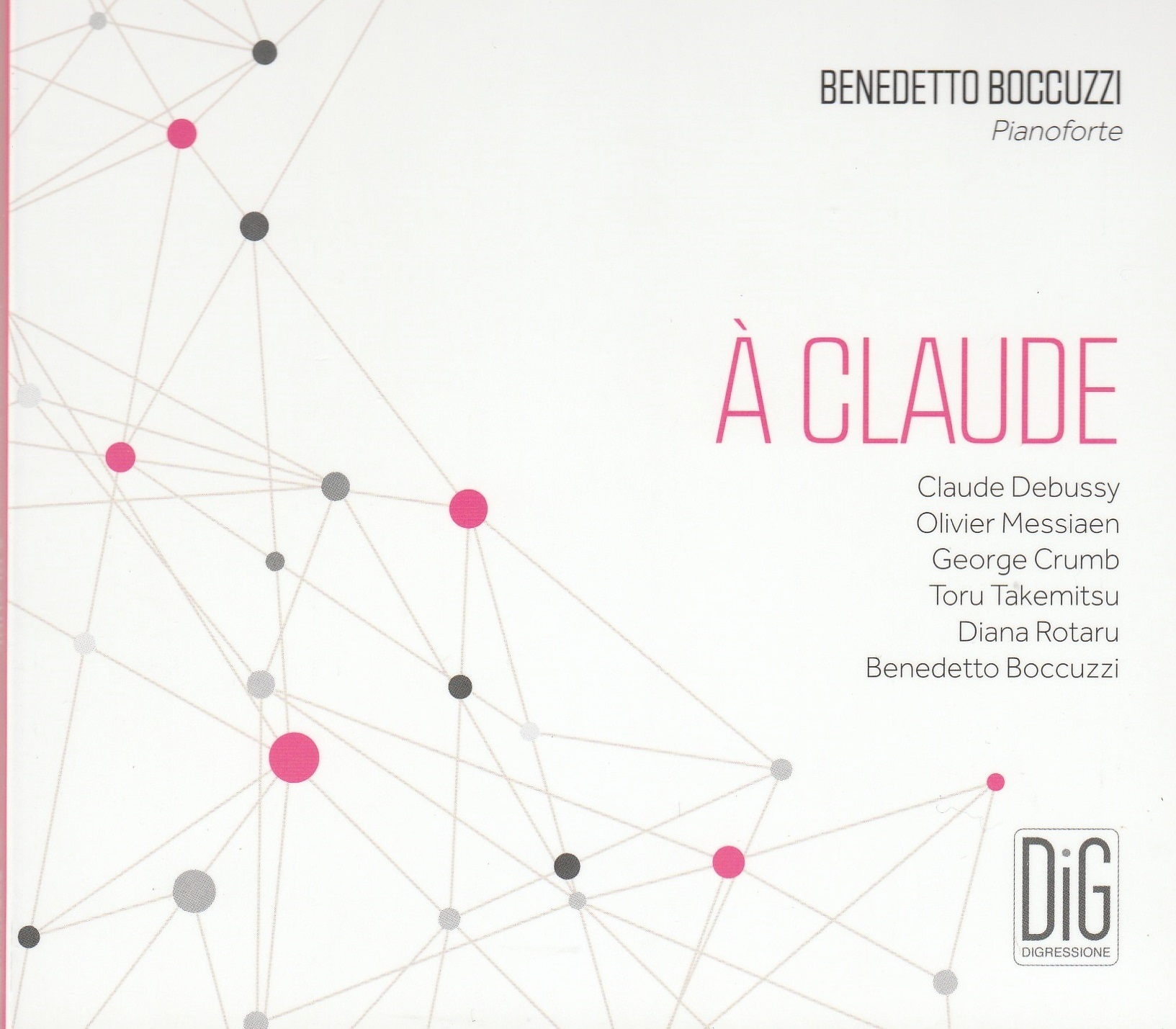
11 A ClaudeÀ Claude
Benedetto Boccuzzi
DiG Classic DCTT111 (naxosdirect.com/search/8054726141112) 

Twentieth-century piano-repertoire specialist, Benedetto Boccuzzi (b. 1990), is not only a concert pianist but also a composer, improviser and teacher. He regularly performs in Italy and conducts workshops on contemporary piano repertoire, extended techniques and improvisation.

À Claude, Boccuzzi’s debut album, is an eclectic keyboard feast, featuring works by Claude Debussy, George Crumb, Toru Takemitsu, Olivier Messiaen, Diana Rotaru and Boccuzzi himself. The programmatic conceit of the album pays homage to Debussy, before moving on to a selection of the French maître’s musical heirs.

Beginning with three miniatures from Debussy’s Images: Cloches à travers les feuilles; Et la lune descend sur le temple qui fut; and Poissons d’or (1907); the album sets a relaxed, impressionistic atmosphere inviting the listener to let imagination roam. Boccuzzi then very effectively renders six of American composer George Crumb’s texture- and allusion-rich Makrokosmos I (1972-1973). This collection of aphoristic piano pieces describes the temperaments of the houses of the zodiac, famously using an encyclopedic range of colouristic effects including plucking the strings, producing massive tone clusters, coaxing overtones from depressed keys not played and directly quoting music of composers such as Chopin.

Three pieces of the Vingt regards sur l’enfant-Jésus (1944) by French composer Messiaen receive a muscular performance here, though sections of Regard de la Vierge exude a poignant cantabile quality. Particularly admirable is Boccuzzi’s precise rendering of the demanding birdcall references throughout.

Listen to 'À Claude' Now in the Listening Room

Back to top