ROCKING HORSE WINNERRecently several colleagues had urged me not to miss Tapestry Opera’s world premiere production of Rocking Horse Winner. This co-commission with Scottish Opera had been playing since the end of May and I was interested to see how the spare narrative of D.H. Lawrence’s short story, required reading in high school literature classes of my generation, would be translated to the operatic medium.

Perfectly sized for the Berkeley Street Theatre, the production by Tapestry’s artistic director Michael Hidetoshi Mori was skillfully paced, permitting the cast of eight to fill the intimate space. Music director Jordan de Souza led an accomplished string quartet plus piano in Gareth Williams’ sparse score which provided ongoing commentary comfortably suited to the shifting moods of the hour-long drama.

Traditional wisdom says that English is one of the hardest languages to sing clearly. This was not the case on Saturday evening, June 4. From soprano Carla Huhtanen’s first tentative lines in the role of Ava, the deceptively simple, poetic libretto by Anna Chatterton rang out distinctly, even in the quietest moments, easily inviting the audience into the drama from the outset. In the challenging role of Paul, Ava’s young son, tenor Asitha Tennekoon captured the right tone and physicality to convey the obsessed yet endearingly damaged boy who uncannily predicts horse race winners. His scenes with his mother, also a broken victim, were particularly moving. Completing the cast were tenor Keith Klassen as Paul’s greedy Uncle Oscar and baritone Peter McGillivray as Bassett, Paul’s equally mercenary caregiver. As Paul’s major male influences, both presented contrasting portraits of avaricious protectors who were out for themselves while still professing to care for their young charge. A unique feature of this work is the four-member chorus which embodies the spirit voices of the stifling house. Tenor Sean Clark, baritone Aaron Durand, mezzo-soprano Erica Iris, and soprano Elaina Moreau, fashioned an atmosphere at once terrifyingly believable and haunting.

Camellia Koo’s two-level set ushered us into a cozily domestic but claustrophobic home with the upper part reserved for Paul’s cramped bedroom with its eerily over-sized rocking horse. This platform also served well as the race track where Oscar, Bassett and Paul excitedly cheered on the winners (and losers) of the horse races.

Overall, this was a compelling theatrical experience and can easily rest alongside Tapestry Opera’s other successes such as Nigredo Hotel, Sanctuary Song, Iron Road and M’dea Undone. The company continues to grow in stature as an alternative source for new opera of the highest quality.

Lydia Adams and the Elmer Iseler Singers Koerner. Photo Bo Huang

The Esprit Orchestra with guests – the Elmer Iseler Singers – provided their audience with a lovely evening of new and newer music on March 31. The fourth concert of their current season opened with Darius Milhaud’s La création du monde (1923). Its first movement of trembling strings against a militaristic timpani set up the introduction of the saxophone, the featured instrument of the piece. The emergent jazz was clearly an invocation of George Gershwin.   

The Elmer Iseler Singers, led by Lydia Adams, were simply exquisite in their presentation of Hussein Janmohamed’s Nur: Reflections on Light (2014). In the second and fourth movements, the Singers proved why they are considered in the top rank of choral music performers in this city and beyond. The Singers are lucky to have the Janmohamed in their repertoire and I can’t imagine the composer would have been disappointed with the performance. Clear, crisp and intentional, the choir surrounded the audience from the balcony, in the aisles and from the stage. I have never appreciated the acoustics of Koerner Hall more than through this experience. The graceful presentation was accentuated with Adams’ clear mastery and deep understanding of the work. First premiered at the opening of the Ismaili Centre and Aga Khan Museum in 2014 – this rarely performed piece was a pure pleasure.

Douglas Schmidt’s Sirens (2016), which concluded the first half of the concert, sat beyond my ability to synergize. I have never actually seen a harmonium pump organ (an instrument that is rather noisy to play and noisy sounding) on stage with an orchestra. I found myself thinking that two very distinct things were at play, a coherent orchestral composition and a bellowing organ. Whether or not that was the intention, each seemed to me to exist irrespective of the other.

Alex PaukThe final, and largest, piece of the evening was Esprit music director and conductor Alex Pauk’s new work, Devotions (2016). The Elmer Iseler Singers, under Adams, were the draw for me as a choral beat writer. It’s rare to find new works for orchestra and choir; so it was refreshing to have this opportunity to listen to Alex Pauk’s.

A big, thick work, I found myself thinking of cinematic movie scores, particularly those akin to Howard Shore’s. Inspired by many religious texts, Devotions fits into a larger conversation that choral composers specifically are having about the secularization of religious music. Or in many cases, the sacredization of secular music. Using religious texts in a non-religious setting is a spiritual experience nonetheless. Pauk’s joins the ranks of other works like Christopher Tin’s Calling All Dawns (2009) and Karl Jenkins’ The Armed Man (1999).

The Elmer Iseler Singers were the dynamos of the evening. Pauk’s composition was not easy or straightforward music and these singers were impeccable. With the skillful use of tuning forks, some of the entries were consistent and well done.

Esprit continues to provide Toronto audiences with a world-class new music experience.

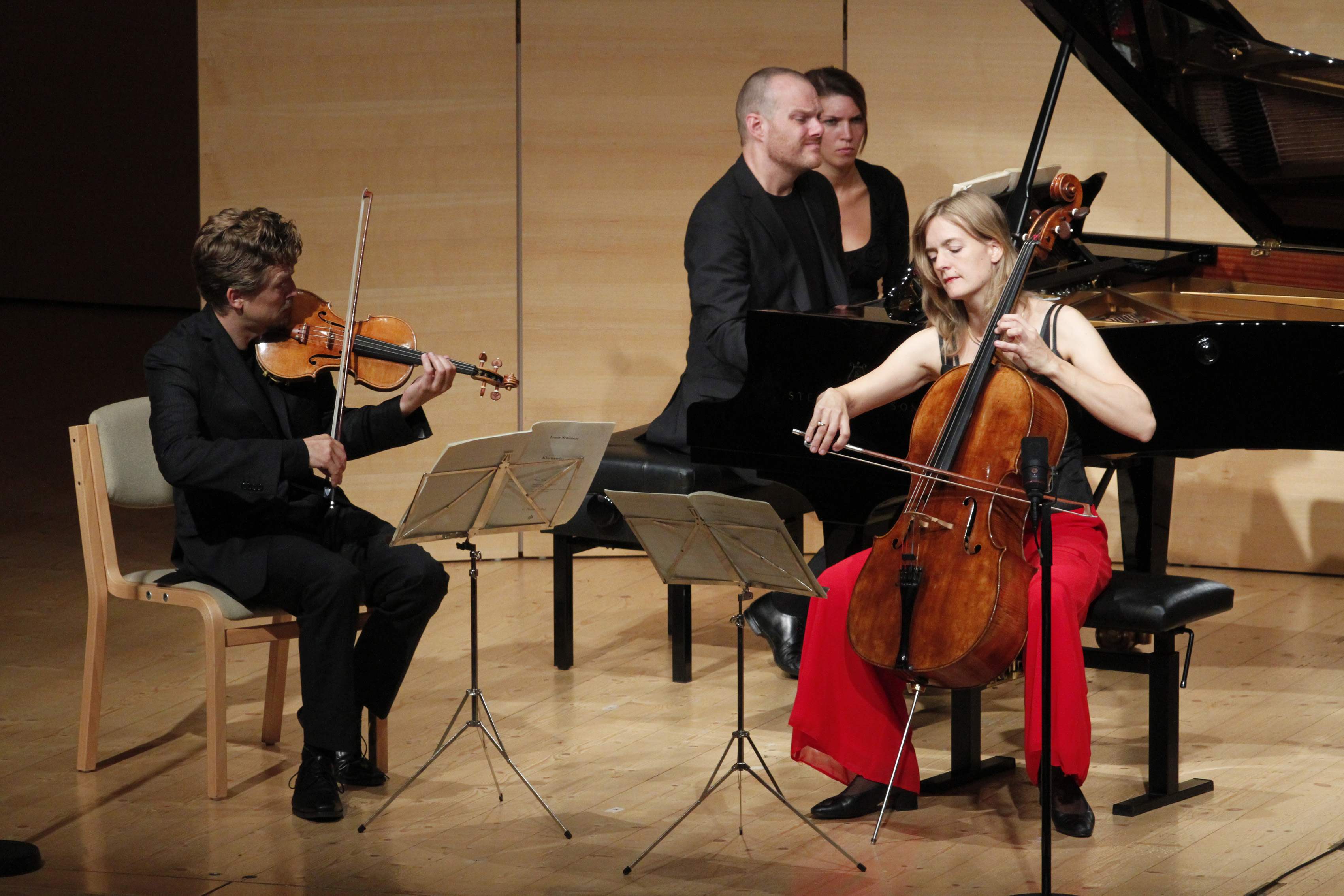
Hamelin_Banner.jpg Christian Tetzlaff, Lars Vogt and Tanja Tetzlaff CREDIT Robert Torres

Koerner Hall was nearly full on Friday, February 26, for a concert of impeccably played 19th-century chamber music featuring the consummate musicianship of violinist Christian Tetzlaff, his sister Tanja Tetzlaff and pianist Lars Vogt. Christian Tetzlaff’s musical intelligence and the secure pianism of Vogt anchored the trio for what was very well-balanced ensemble playing. The communication between the three was palpable. (The Tetzlaff siblings have been playing together since childhood.)

It was sophisticated music making, joyously conveyed and received in kind, a rare and memorable evening.

Schumann’s Piano trio No.2 in F Major Op.80 began with a colourful dialogue initiated by Christian Tetzlaff’s solo pianissimo. An onrush of intense thematic development saw the trio playing as if they were one instrument. The slow beauty of the second movement contained moments of awestruck wonder, with the violinist devoutly maintaining a ppp dynamic without being overpowered by Vogt’s sensitive piano. As the violin became transfixed by Schumann’s notes, the piano brimmed with life. The third movement epitomized an ideal balance among the three musicians, close to perfection, before the piece came to a satisfying end with the finale’s low-key charm.

Dvořák’s Piano Trio in E Minor Op.90 “Dumky” consists of six movements, each one built around the Slavonic folk element dumka, each melody of which Dvořák transformed from melancholy to exuberance. In the first movement of the Trio, the composer’s trademark dark cello line was initially coupled with the violin to form a mournful tune. As the piece progressed, the music became richer, more textured, until a sense of abandonment took over and all three players were consumed by the dance. The second movement began with another soulful cello theme, this time supported by Vogt’s lovely piano before the invitation to the dance was taken up enthusiastically by the entire trio. In the fourth movement, filagrees of dance and rhythm co-mingled in the Koerner Hall air, grounded in the keyboard. The wonderful spontaneity of the cello pizzicati greeted a particularly sublime ending.

Youthful streams of emotion became rivers of maturity in the first movement of Brahms’ Piano Trio No.1 in B Major Op.8. The light and jovial Scherzo was a cousin of the composer’s symphonic universe as its Beethoven-like theme thickened and grew. Beginning in the piano with a slow call to a hushed pair of strings in dialogue, the Adagio’s melodic phrases were carved shards of beauty in the trio’s capable hands while the waltz-like Allegro concluded the very satisfying program.

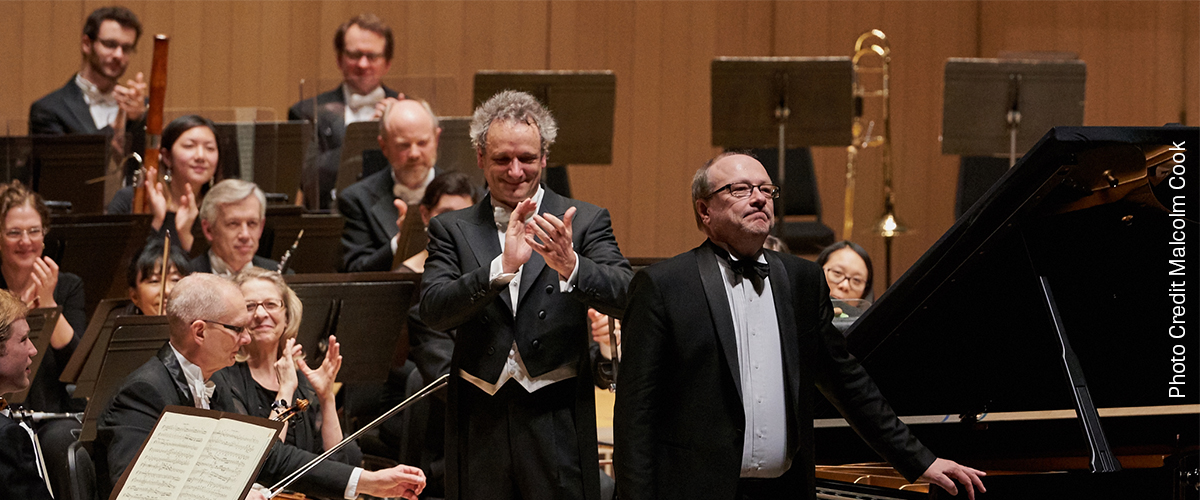
  Marc-André Hamelin and the TSO CREDIT Malcolm Cook

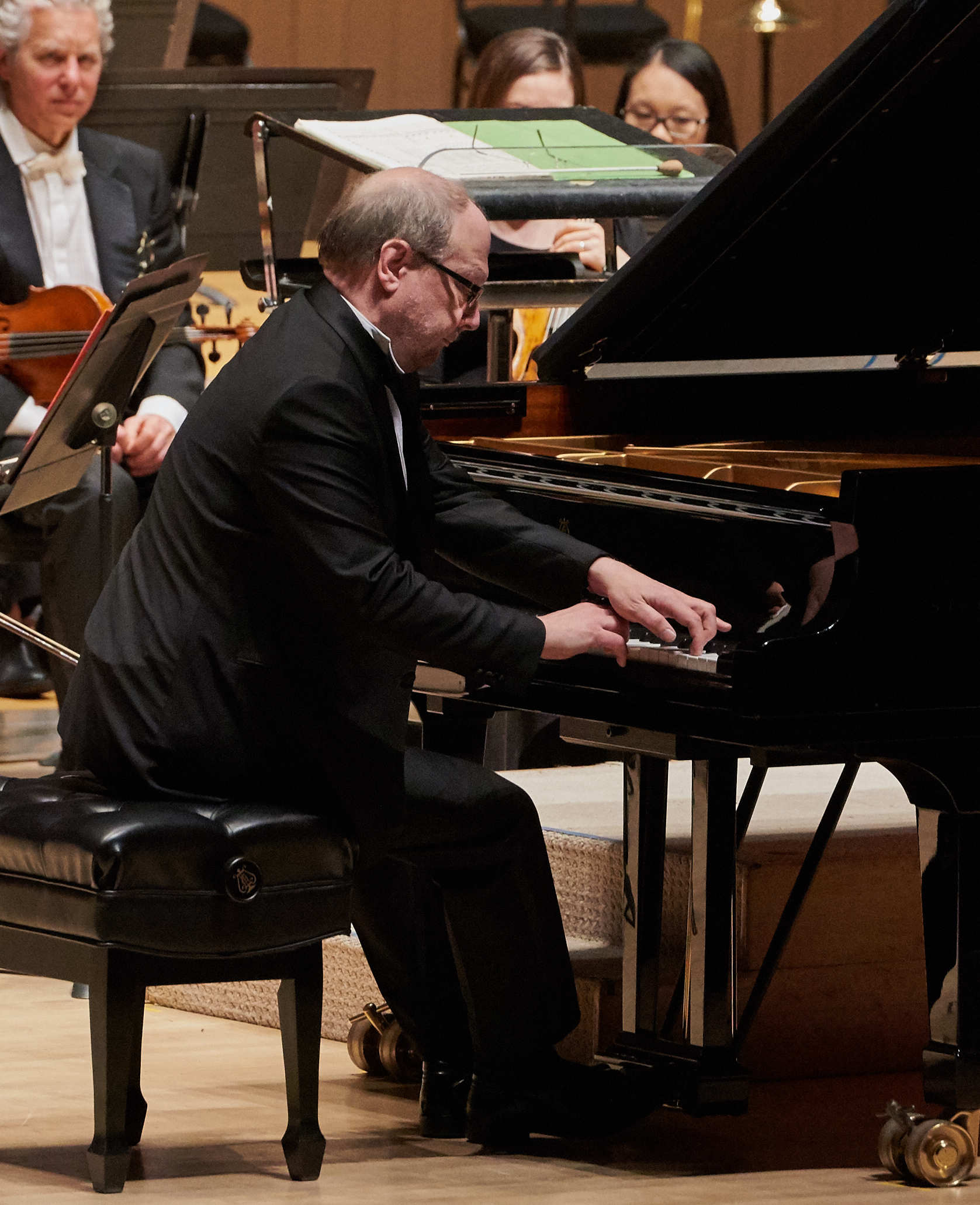
The next day in Roy Thomson Hall, the TSO, under the warm baton of guest conductor Louis Langrée in a program of 19th-century orchestral music, provided solid support for the amazing Marc-André Hamelin in a rousing rendition of Mendelssohn’s Piano Concerto No.1 in G Minor Op.25. Hamelin’s well-judged technical pyrotechnics in the outer movements of the three-movement work glittered under his sensitive touch amidst the composer’s triumphal exuberance. But the highlight was the sublime Andante second movement where Hamelin’s limpid touch and clear approach slowed time down and transported the listener to a higher plane.

The capacity crowd which overflowed into the choir loft gave the Quebec-born pianist a well-deserved standing ovation but showered Langrée and the orchestra with even more enthusiasm at the conclusion of Schumann’s Symphony No.4 D Minor Op.120. The conductor brought an incisive clarity to the density of the symphony’s first movement, coaxed hushed solos from principal cellist Joseph Johnson and concertmaster Jonathan Crow in the second and brought the audience to its feet with the finale’s optimistic climax.

Langrée conducted the Schumann, and Beethoven’s Leonore Overture No.2 Op.72 which opened the program, without a score. He made the most of the overture’s dramatic excitement, much of it reminiscent of the composer’s Symphony No.6 and to a lesser extent, No.5, which were written shortly before. Emphasizing the many silences that followed big orchestral tuttis, added to the overarching fact which I couldn’t resist: that Beethoven’s shadow loomed over both concerts just as it did over much of the entire 19th century.

Hamelin_Banner.jpg

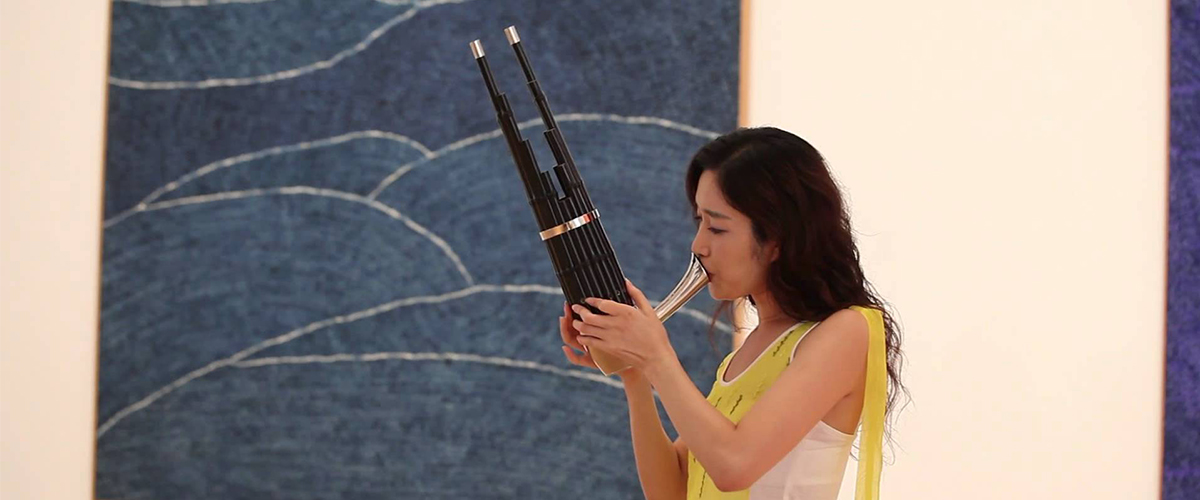
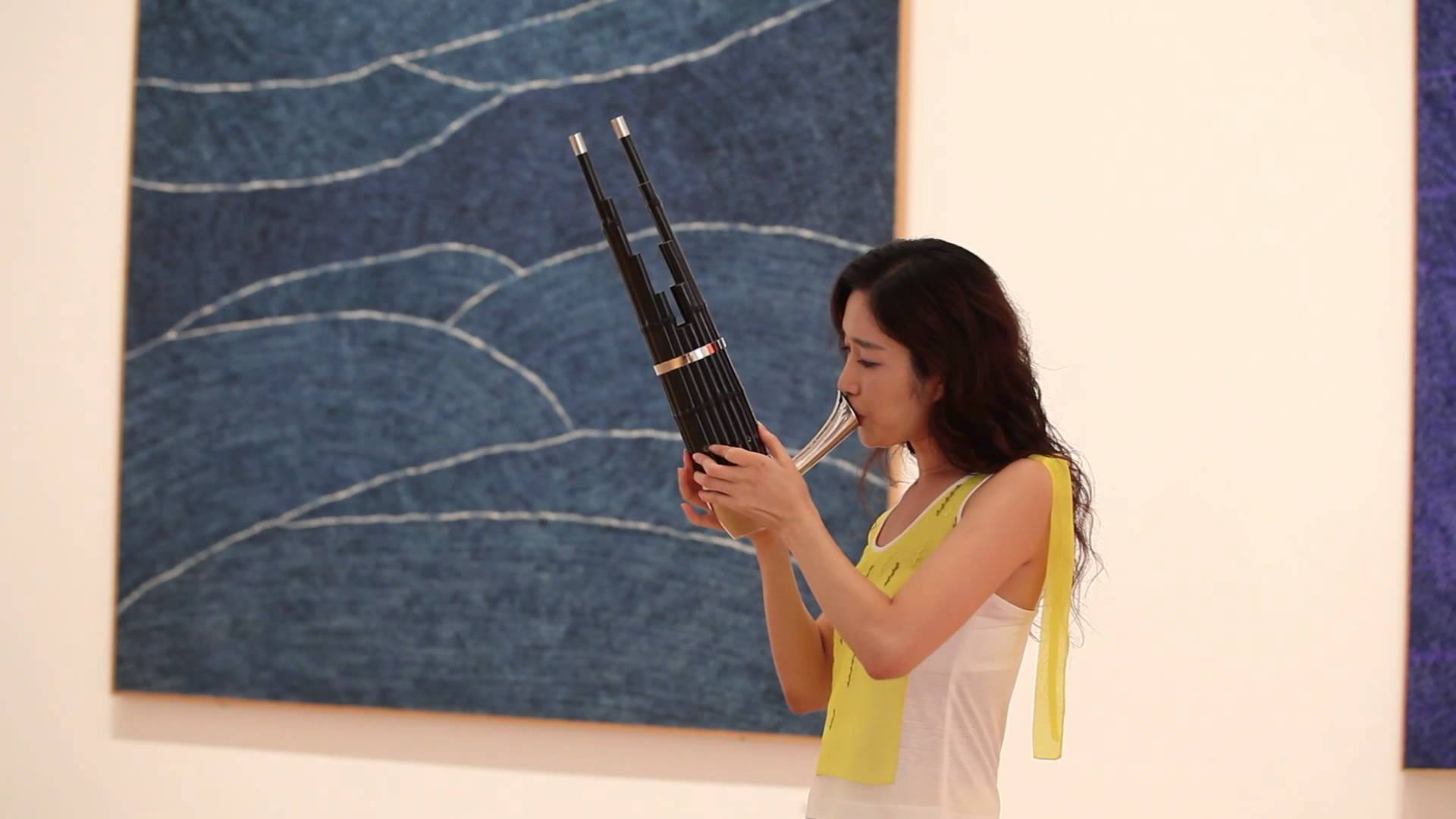
gamin playing the saenghwang

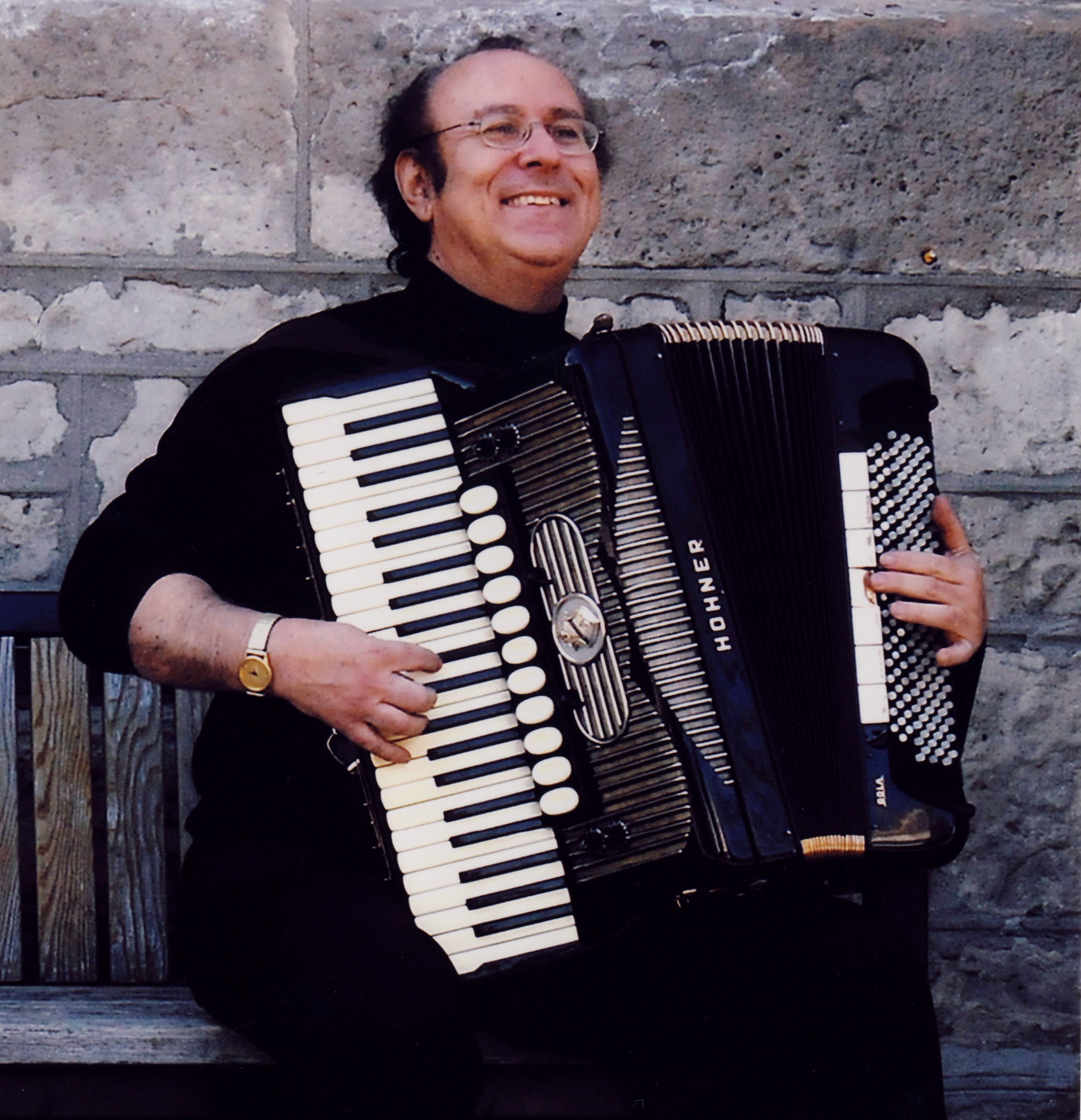
Joseph Macerollo

The recent Soundstreams “Squeezebox” concert on February 10 was a surprisingly playful and inspiring display of music for several fixed-reed instruments, including the accordion, the bandoneón (an instrument associated with the tango music of Argentina) and the Korean saenghwang.

 Gamin playing the Saenghwang

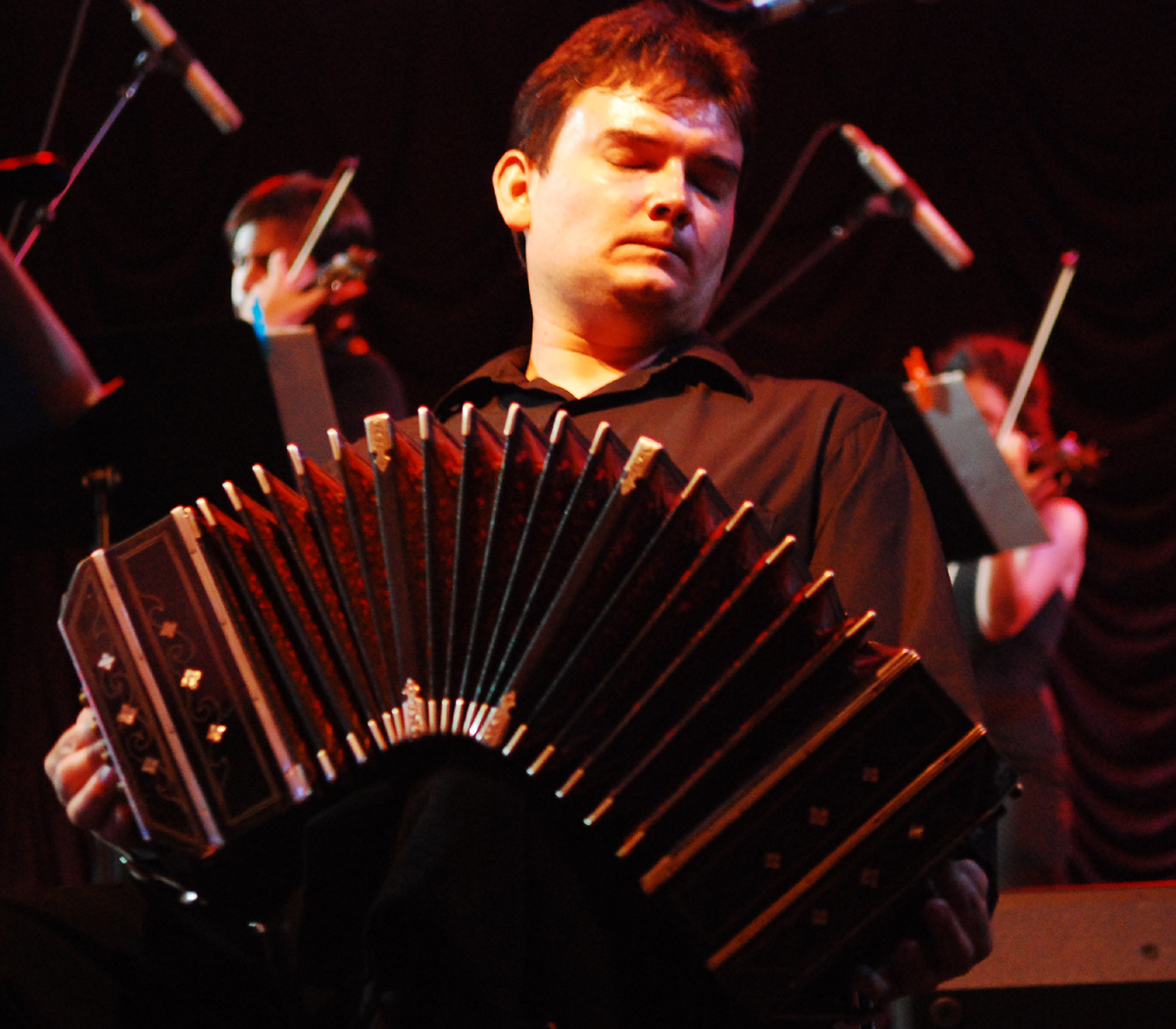
The evening began with three of the evening’s performers giving a short demonstration of the characteristic sounds of their instruments. The saenghwang was immediately compelling, as the performer, gamin from Korea, introduced the unique sound of her instrument played by blowing through 17 bamboo pipes mounted vertically in a windchest. The pleasures of sitting in a café with accompanying tango music were evoked by the strains of the bandoneón, performed by Argentinian virtuoso Héctor del Curto.

Héctor del Curto

Then suddenly, in the midst of a short demonstration by accordionist Michael Bridge, the doors at the back of Trinity-St.Paul’s Centre began to rattle loudly and in walked accordionist Joseph Macerollo dressed like a circus barker. Macerollo is renowned for his pioneering work in raising the profile of the accordion in the concert hall. Shouting at the others onstage, he proceeded to interrupt and eventually take over our attention as he walked toward the front, all the while telling us the mythic Cretan story of Ariadne, Theseus, the Minotaur and the labyrinth. Thus began R. Murray Schafer’s work from 1978, La Testa d’Adriane.

On the stage was a colourful enclosed cabinet with a circular object on top, covered by an equally colourful scarf. Macerollo lifted the scarf to reveal the lifeless head of Adriane, performed by soprano Carla Huhtanen. He proceeded to awaken her with his sounds, following up with a dialogue between accordion and an array of vocal shouts, percussive utterances and bel canto outbursts. I had been eagerly awaiting the performance of this work, as I had very vivid memories of its premiere back in 1978 when New Music Concerts presented the piece at the MacMillan Theatre with Mary Morrison performing the role of Ariadne. Part of the appeal for me personally was the unique approach to vocal writing that Schafer displayed in this work, which is an example of an entirely different form of vocal writing that had gained prominence in the late 1960s and 70s with pieces such as Luciano Berio’s Sequenza III for a singing actress and Peter Maxwell Davies’ Eight Songs For A Mad King.

But back to the accordion and the rest of the program, which featured two other pioneering works for the instrument composed by Alexina Louie and Marjan Mozetich, both commissions for CBC’s Two New Hours. Each work was originally composed for Macerollo in combination with other instruments; we heard Louie’s Refuge from 1981, performed by its original trio of Macerollo, Erica Goodman(harp) and Bev Johnston (percussion).  A new commissioned work by Anna Pigdorna, based on the mating dance rituals of birds-of-paradise, was displayed both musically and choreographically between gamin on the saenghwang and Michael Bridge on accordion. As she walked from location to location within the hall and on stage, gamin’s performance was spellbinding, completely embodying the female partner of the dance, testing and ultimately rejecting the advances of the male partner.

Equally compelling throughout the evening were the various interludes between pieces. While set changes were being made on stage in darkness, the spotlight shone on different soloists in various parts of the hall, each one in turn playing more traditional repertoire for their instrument. One highlight for me was hearing gamin play a different more nasal-sounding instrument up in the balcony, walking from one side to the other as she played. It was again like a ritual dance bringing all the ears of the hall into one focused and intimate moment. I highly recommend watching her video performances to experience for yourself her mesmerizing abilities as a performer: gamin-music.com/video.

The evening ended with a lively and upbeat tango set of pieces by Astor Piazzolla, performed by del Curto along with Tania Gill on piano and Timothy Ying on violin.

Back to top