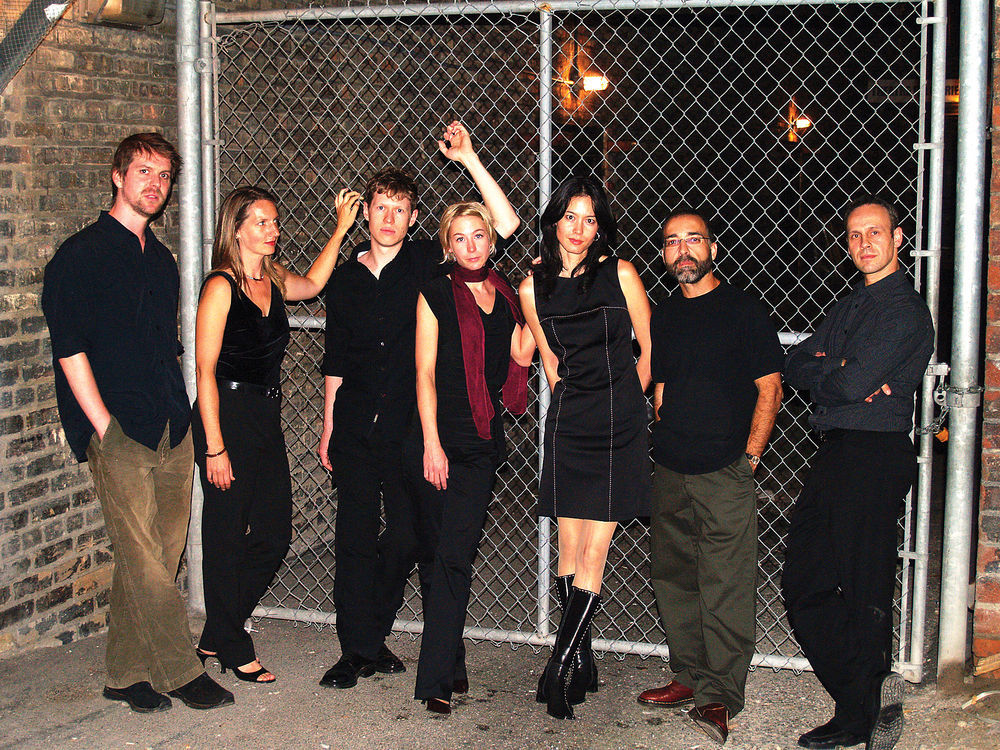
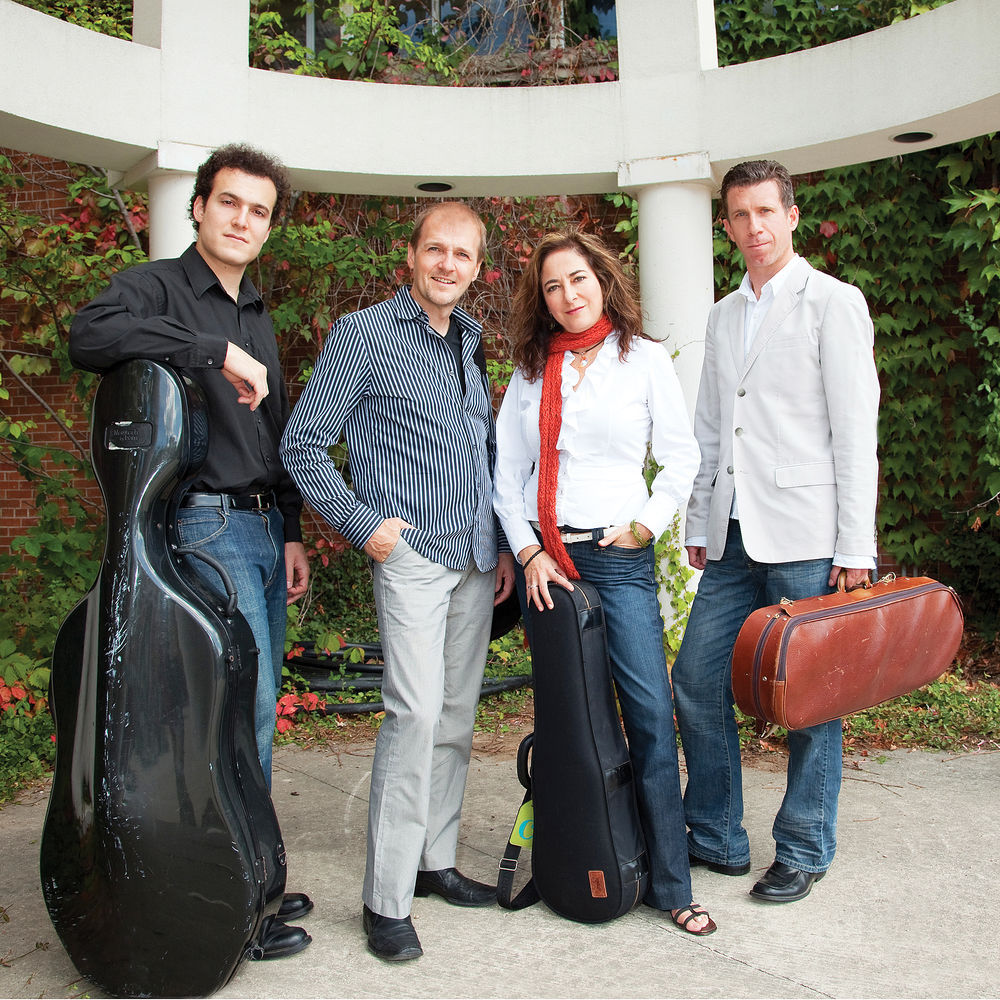
“Sound art” is a performance genre, I think it’s safe to say, that will not ring bells, tuned or otherwise, for the majority of readers of The WholeNote. “We are, as a culture, obsessed with the new,” says blogger John Terauds in a recent entertaining post at musicaltoronto.org, “but it takes only the shallowest scratch on the surface to discover that what we all seek is comfort and continuity — flowers, sunsets, barbequed ribs, cheesecake and a bit of Mozart.”
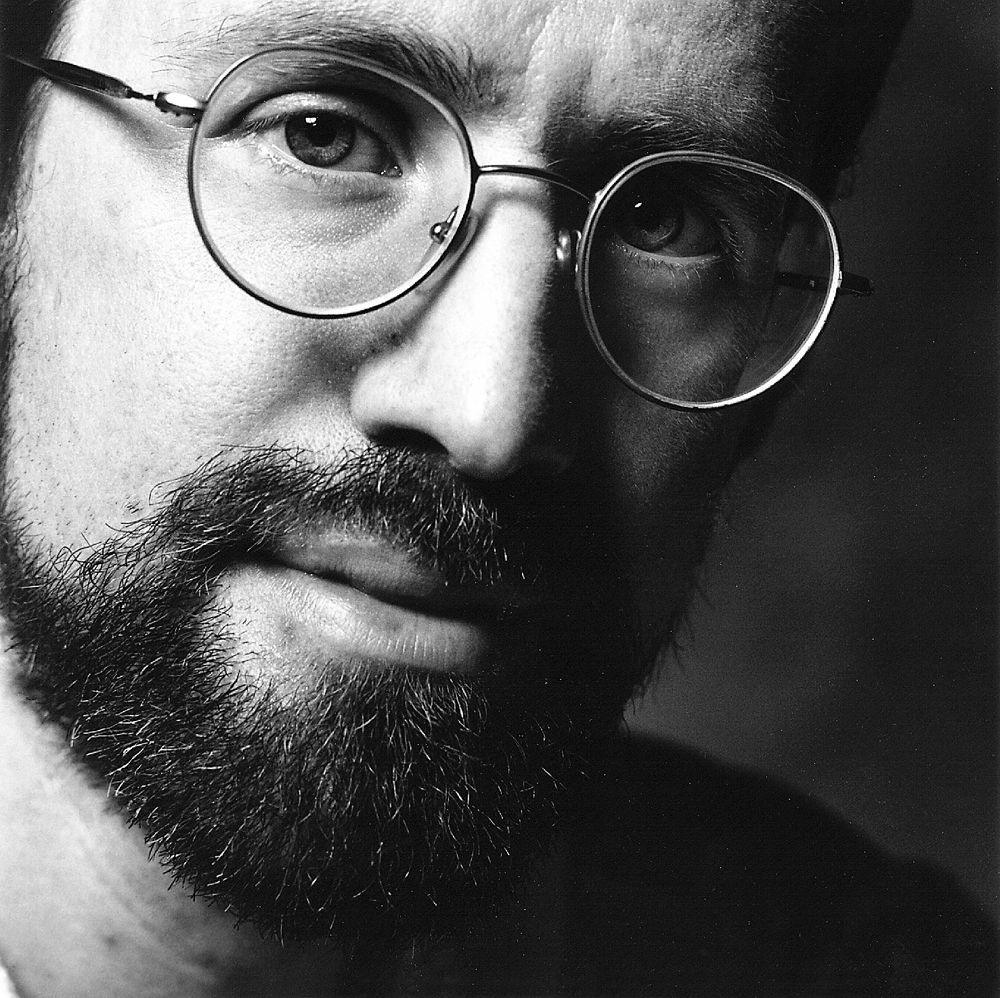
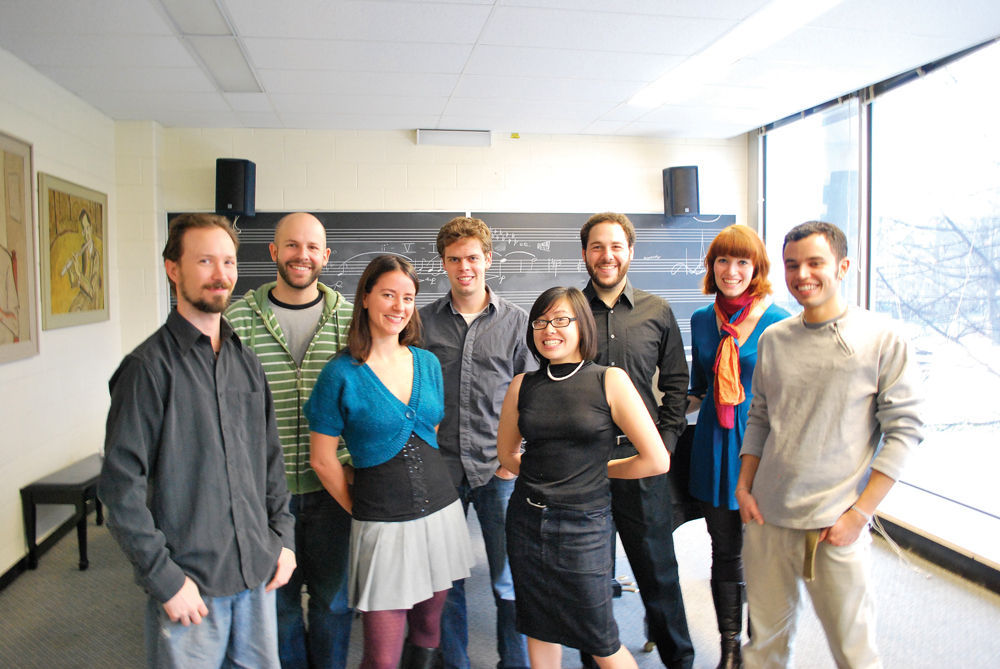
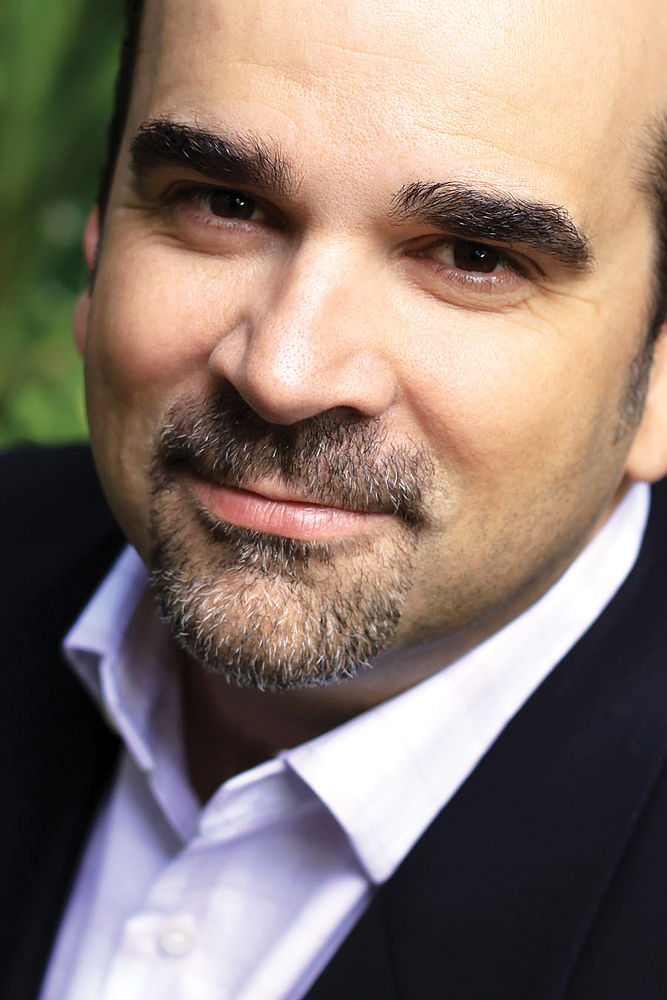
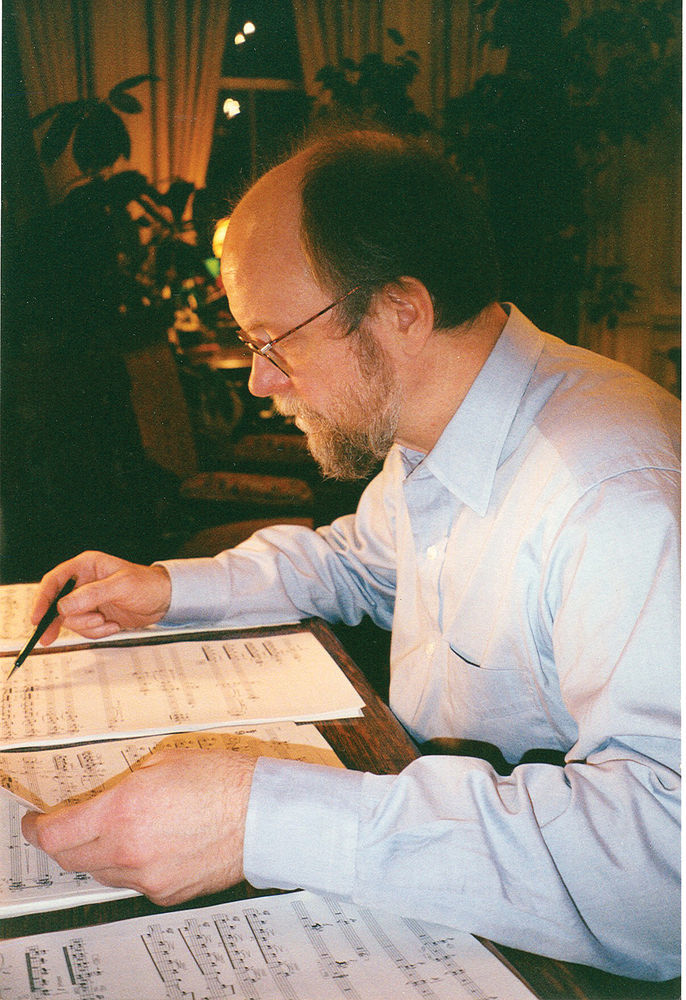
new_darren_copelandMost of us, maybe, but all? Two mid-career contemporary composers in our midst, both being honoured with significant awards this month, Darren Copeland and Brian Current, would doubtless disagree.

Composer Copeland is probably best known in the new music community as the inspiration for New Adventures In Sound Art (NAISA). NAISA, as their website explains, is a non-profit organization, based at Toronto’s Wychwood Barns, that “produces performances and installations spanning the entire spectrum of electroacoustic and experimental sound art … to foster awareness and understanding … in the cultural vitality of experimental sound art in its myriad forms of expression … through the exploration of new sound technologies in conjunction with the creation of cultural events and artifacts.”

Mind you, Copeland would probably not object to being told that what he does “isn’t music.” In fact you’ll search long and hard for the M-word on NAISA’s own website (among such other terms as noise art performance, soundscape composition, multi-channel spatialization and layered listening excursion). Copeland is nevertheless an associate composer with the Canadian Music Centre, and just this month was selected to receive the Harry Freedman Recording Award by a national jury. Named for a pioneering Canadian composer, the award contributes towards the creative costs associated with making an audio recording of Canadian composers’ music, and is administered by the Canadian Music Centre. In Copeland’s case the award goes toward the recording of his piece called Bats and Elephants which will be published by empreintes DIGITALes. The award will be presented at a performance of the piece, at Gallery 345 on June 23.

The work has an interesting premise: humans can’t hear the full range of sounds uttered by bats or elephants unless these sounds are transposed within the range of human hearing (at which point they start to take on the identity of other animal species, such as birds). Copeland and his guest Hector Centeno play with this concept, using echo-location, the way bats do, to bounce sounds, from two hyper-directional speakers, off the Gallery’s walls. It’s a neat variation on the philosophical question posed at the outset of the column: when does a squeak become a song? Or a bellow turn into a bassline? Or noise into music? I suspect that the answer has as much to do with the tuning of the ears of the listener as the tuning of the frequencies from the source. It should make for a fascinating event.

(A brief digression before moving on to talk about our other award winner, Brian Current: it is entirely unsurprising to me that the Copeland concert is taking place at Gallery 345 — the “little gallery that could” just keeps chugging away with one playfully provocative event after another: “Composers Play” (including the aforementioned Brian Current) Friday June 1; “40 years of Foley” on Sunday June 3; “Art of the Piano” with R. Andrew Lee on June 4; the Architek Percussion Quartet on June 6; astonishing violinist Conrad Chow in his debut CD release concert, June 28; … the list goes on.)

Now, to Current. Just today (May 29) the Canada Council for the Arts announced that seven “mid-career arts innovators” were being honoured with Victor Martyn Lynch-Staunton Awards. The prize carries a $15,000 cash award so it’s “not nuthin,” as these things go. “Sculptor Valérie Blass; contemporary dancer Nova Bhattacharya; interdisciplinary artist Manon De Pauw; playwright, actor and director Denis Lavalou; composer and conductor Brian Current; poet Sylvia Legris; and filmmaker and multimedia artist Graeme Patterson are this year’s winners” the announcement goes. “These seven artists are pushing the envelope in their respective disciplines and are definitely seven to watch” said Canada Council director and CEO Robert Sirman.

Given our focus, Current is the one of the seven we’ve been watching this year, both as a composer and as the conductor of the Royal Conservatory’s New Music Ensemble. His composing and conducting seem to feed off each other. Given the economics of concert music, few contemporary composers get to write for large ensembles; fewer still get the opportunity to explore, using other composers’ works, the creative energy that a composer can alternately harness and unleash in a large ensemble. Some of you may have caught parts of his 2009, 12-hour, 200-person installation-performance of James Tenney’s In a Large Open Space, at the opening of the Conservatory’s new Koerner Hall, or taken in his students’ performance, in the dark, of G.F. Haas’s In Vain last December.

It was while doing some research on Current in the context of this award that I stumbled across the comment from Terauds’ blog with which I started this column. (The blog in question was about Current’s and Anton Piatigorsky’s recently completed chamber opera Airline Icarus).

“It’s no surprise that today’s composers feel … compelled towards the new, the unexplored, the unusual,” Terauds went on to say. “In his recently published memoir, Unheard Of, Toronto composer John Beckwith mentions at least a half-dozen times how he tried to not repeat himself in a new work. It’s a mantra for most contemporary composers. It’s also something I’ve heard many times from the musicians devoted to commissioning and performing new music. But there are two prices to pay for this fetish for the new, I think: Superficiality on the part of the composer, and alienation on the part of a potential audience. … So what does a composer do? Either give in and write film scores, or concert pieces at which serious critics will turn up their noses, or bravely go where their instincts and sense of adventure lead them. It’s a crazy tightrope that, most days, is actually quite thrilling to walk.”

Every living composer must discover his or her own balancing act, on this tightrope between superficiality and alienation. Arguably no one has done a better job of it than Philip Glass, whose Einstein on the Beach is undoubtedly one of the musical talking points of this year’s Luminato. One has only to think of the final aria in his life-of-Ghandi opera Satyagraha where the same eight-note phrase is repeated, but where you’d be hard pressed to persuade a mesmerized audience that all they had listened to was mi fa so la ti do re mi (in the scale of C, no less), 30 times in a row.

One of the truly festive things Luminato does, by the way, is to surround a work of art with opportunities to immerse in the context in which the work arose. Check out our ETCetera listings, on page 44, for example, for some of the screenings and colloquia that will surround the opera itself. And, perhaps best of all, the final moment in the festival will be an outdoor performance by the Toronto Symphony Orchestra, in David Pecaut Square, featuring a performance of Tchaikovsky’s 1812 Overture, paired with the premiere of a new work by Glass, titled The 2012 Overture.

There’s a shiny intelligence in the idea of it, one has to say. How new the adventure in sound art turns out to be, time will surely tell.

David Perlman has been, for this past season, the patroller of The WholeNote’s new music beat. He can be contacted at publisher@thewholenote.com
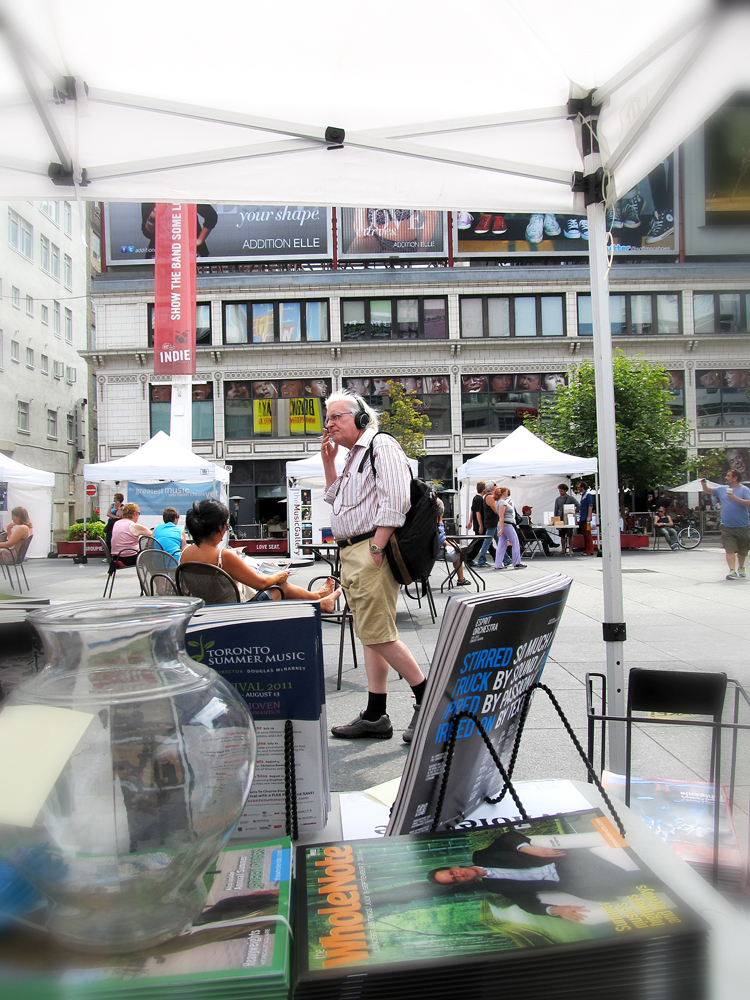
Sometimes by may the new music season is starting to sputter a bit. But not this year. Thanks in part to an astonishing number of events at the two “Galleries” there’s no shortage of sonic solace for adventurous ears. But even without Gallery 345 and the Music Gallery, there is much on offer. The season it seems is going out like a lion.

24_forty_years_of_foley_24Once again, music theatre columnist Robert Wallace, has scooped me on a story with serious new music credentials, Coleman Lemieux & Compagnie’s From the House of Mirth which runs, with various start times, May 9 to 13. (Wallace’s treatment of the show starts on page 15.) Of particular interest for this column are the Rodney Sharman/Alex Poch-Goldin score and libretto. My awareness of composer Rodney Sharman’s work in the genre goes back to the opera Elsewhereless, with Atom Egoyan in 1999. Librettist Poch-Goldin comes to mind, most immediately, for his work with composer Omar Daniel in The Shadow, probably the most striking full-length work of Tapestry New Opera’s 2009 season. Both Elsewhereless and The Shadow, in fact, are the product of partnerships that were struck in Tapestry’s unique composer/librettist laboratory — the “LibLab” as it is called — and came into being through numerous iterations over an extended period of time.

It’s not surprising, therefore, to see another Tapestry alumna, composer Abigail Richardson, drafted for a recent “wordy” Toronto Symphony Orchestra commission. “The Hockey Sweater,” based on the iconic Roch Carrier short story, will premiere Saturday May 12 at the child-friendly hour of 1:30pm, with Carrier himself delivering the text. Richardson’s compositional ability to stick-handle music and text is well earned. With librettist Marjorie Chan, she won a 2009 Dora Award for outstanding new musical/opera for Sanctuary Song, inspired by the true story of an elderly elephant’s journey to freedom. While the show officially “premiered” at the 2008 Luminato festival it too went through successive Tapestry-fostered stages of development after Chan and Richardson first met at “LibLab” in 2003.

CONTINUUM: Returning, for a moment, though, to Coleman Lemieux: Laurence Lemieux’s name caught my eye a second time while working on this month’s column, in the context of yet another interesting, musically significant show coming to the 918 Bathurst Centre, which is rapidly coming into its own as an alternative venue for ambitiously scaled productions. In the fall, 918 Bathurst hosted bcurrent’s production of Nicole Brooks’ Obeah Opera, profiled in the November WholeNote. Now, from May 27 to May 29, it will be home to Continuum Contemporary Music’sContes pour enfants pas sages: 8 cautionary entertainments.” (Caution: The middle two of the four performances are daytime school shows.) “Contes” is billed as “wisdom and bewilderness from the animal kingdom: a multi-layered, multi-media setting of all eight fables of French poet Jacques Prévert by Canadian composer Christopher Butterfield.” Not surprisingly the British Columbia-born Butterfield has other operatic and multi-media fare under his composing belt. During 15 years as a performance artist in Toronto, he played in a rock band (Klo) and worked as a freelance composer and conductor.

It is not surprising to see Lemieux involved in the project, either. For one thing she and Butterfield have collaborated extensively before. For another, the show’s combination of zany edginess and potentially cumbersome large forces (Choir 21, Continuum Ensemble, tenor, soprano, light show) make it a perfect challenge for Lemieux’s deftness at mise-en-scene. David Fallis, no mean musical traffic cop either, will conduct.

While on the subject of Continuum, I should also point out that at time of writing there are still two of the four “New Music 101” Monday evening events to go (May 7 and May 14) and Continuum is “at bat” during the May 7 event, along with Contact Contemporary Music. Jointly presented by the Toronto New Music Alliance and the Toronto Reference Library, and hosted by writer/critic Robert Everett-Green, the two music presenters bringing works to each lecture/demonstration as often as not bring slices of works in progress. So no guarantees, but attendees at the May 7 event might just get a sneak preview of Continuum’s ambitious new work.

Contact Contemporary Music also has a show this month, May 12 at the Music Gallery, titled “Short Stories,” and billed as “an exploration of the symbiotic relationship between sound and vision, from narrative to abstract storytelling.” Expect some insight into that one, too.

And speaking of the Music Gallery, check our listings (or their website), for Saturday May 5, Monday May 7 and Tuesday May 15, all at 8pm, for three events, two of them with out-of-town partners, reflective of the Gallery’s mission and mandate.

CHORAL TO THE FORE: One of these years someone better qualified than I will do a thesis on the subject of the role choirs and choral music play in keeping a culture of contemporary classical and post-classical composing alive. So in honour of The WholeNote’s tenth annual choral Canary Pages, here’s a head-spinningly dense list (the “Begats” we call them round here) illustrative of this choral/new symbiosis: May 5 at 7:30pm, Toronto Children’s Chorus’ “Mystery and Mastery” includes works by Daley, Halley and Patriquin; May 5 at 8pm, Da Capo Chamber Choir presents “Celebrating Home,” including works by Schafer, Chatman and other Canadian composers; May 5 at 2pm, King Edward Choir presents “Feathers on the Page” the world premiere of a commission by playwright/composer Leslie Arden; May 7 at 7:30pm, the Elmer Iseler Singers’ “Get Music! Educational Outreach Concert” is largely built on Canadian works; May 12 at 8pm, Bell’Arte Singers present “Communal: Ways of Being” including a newly commisioned work by Sirett; also May 12 at 8pm, Oriana Women’s Choir’s “Earth, Air & Water” includes works by Telfer, Smallman, Daley and Watson Henderson and premiered works by Barron and Sawarna; May 13 at 4pm, the Canadian Men’s Chorus’ “Out of the Depths: An Exploration of Sacred Music” offers Murray’s Book of Lamentations (a world premiere); May 16 at 7:30pm: Toronto Choral Society presents “Civic Spirits,” song and story inspired by Toronto’s ghost tales including a Finley premiere and other new works; June 2 at 7:30pm, Mississauga Children’s Choir’s “City Scapes” comprises music exploring sounds and sights of modern cities including a new work by M. Coghlan; June 2 at 8pm, Jubilate Singers “A World in Canada” is built on music by Canadian composers with various cultural influences, including Glick, Raminsh, Robinovitch and others.

All that being said, I’ve not mentioned perhaps the nerviest new music choral offering of the lot, namely a performance in Waterloo, Saturday May 5 at 8pm, of Christine Duncan’s Element Choir. The ensemble sometimes consists of 75 singers or more, augmented by percussion, bass, trumpet and organ. For those who think that “choral” and “improvisational” go together about as well as a fish and a bicycle, this is a performance not to be missed. “With these extraordinary sonic resources in these capable hands, the Element Choir promises to be a spectacular experience, a joyful celebration of the human voice in creative music” says NUMUS’ own blurb about the event. And they’re probably right.

GALLERY 345: last, I want to return to a topic I started the “regular” season with: kudos to Gallery 345 at 345 Sorauren. Between Friday May 4 and Sunday June 3, I count no fewer than ten events (May 4, 9, 11, 13, 22, 24, 25 and 26, and June 1 and 3), that are likely to be of interest to readers of this column.

Again, check our listings for details, or scroll the Gallery 345 website. It’s very functional. You will find yourself viewing in microcosm the astonishing range of performances and events that keep the new music scene ticking along. I will single out only one, because it exemplifies the aspect of community that places like Gallery 345 serve to foster: Sunday June 3, at 8pm, in celebration of composer Daniel Foley’s 60th birthday, Gallery 345 presents “40 Years of Foley” featuring chamber works by Daniel Foley composed over the past four decades, in celebration of his 60th birthday, and performed by the likes of Robert Aitken and Dianne Aitken, flutes; Scott Good, trombone; Joseph Petric, accordion; Trio Poulet (violin, cello, piano); Tiina Kiik, accordion; Richard Herriott, piano; and others. The event is free.

David Perlman can be reached at publisher@thewholenote.com.

Composer ann southam, who died November 25, 2010, continues to live through her music, appearing on concert programs with an insistent frequency far beyond the initial spate of “tribute concerts” one might have expected. What is becoming clearer with the passage of time is that the music, as much as the memory, is of enduring value. That being said, two gifted pianists in the community, Christina Petrowska Quilico and Eve Egoyan, are doing much to keep the Southam legacy alive, both through their recordings and through live performance.

for_uno_in_with_the_new_tdt_-_company_members_in_rivers_rehearsal._photo_by_guntar_kravisThis month, for example, on April 1, with the Kindred Spirits Orchestra in Markham, the indefatigable Petrowska Quilico performs three Southam works as part of Kindred Spirits’ one-night “New Music festival” concert. And then, April 25–28, she provides the entire accompaniment to a new ballet, Rivers, choreographed to Southam’s music by Toronto Dance Theatre’s Christopher House. Egoyan, meanwhile, brings Southam’s Simple Lines of Enquiry to a benefit concert for MusicWorks magazine, April 19 at Gallery 345. Both are events worth saying more about.

I first became aware of the TDT Rivers project last fall during a 20-minute video interview I did with Petrowska Quilico for The WholeNote’s ongoing video interview series, Conversations@TheWholeNote.com.

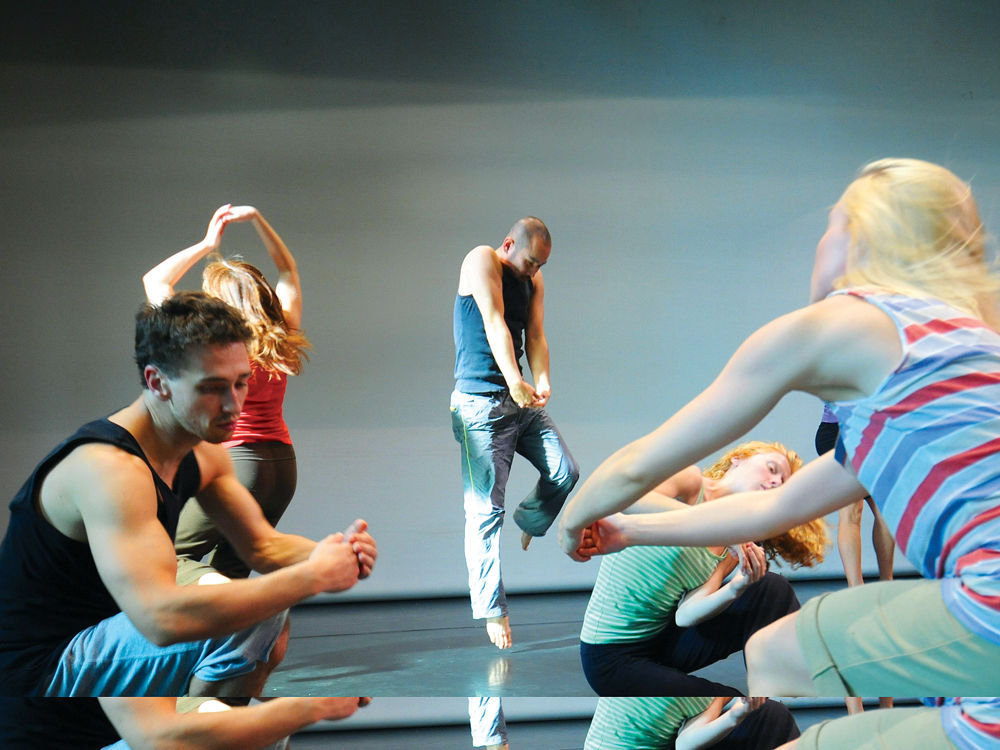
I have to admit, the scope of the undertaking didn’t fully register at the time. House has worked for a year with Petrowska Quilico and then TDT’s ten dancers to create what he calls “a fluid and unpredictable counterpoint to the music, reflecting the rushing cascades, luxuriant eddies and attentive stillnesses in the score … alternating between large-scale, kinetic strokes and intricately-crafted movement conversations. I hope to build a work” he says, “in which both music and dance retain autonomy yet their marriage feels surprisingly, deliciously inevitable.”

“I think that is a brilliant quote” says Petrowska Quilico. “Christopher and I have met many times during the year and began with a first rehearsal in September. It was a revelation for the dancers to perform with live music. They had previously been using my Centrediscs CD of the complete Rivers. I felt an unbelievable electricity while playing. Although I couldn’t really watch the dancers I felt the vibrations of their movements or their stillness. This is real chamber music, intimate, structured yet spontaneous in a mutual give and take. The dancers take their cue from my music and tempo and I adjust the music and tempo to their movements.”

Southam’s music, she says, is what makes it all possible. “I believe that this is her masterpiece, written in her prime and showing her mastery of fast and slow music. I love performing these pieces more than any other of her works. I never tire of the changing patterns and the spontaneous and improvisatory mood of the music.”

House and Petrowska Quilico collaborated on the choice of music structuring it so there is an ebb and flow. Rivers will play as an hour long piece “with swirling fast sections and reflective intimate and introspective segments” Petrowska Quilico says. “I can’t wait to perform with the dancers.”

As mentioned, Rivers will play at the Fleck Dance Theatre, Harbourfront, April 25–28.See the listings for details.

By comparison, Eve Egoyan’s evening of Ann Southam this month will be a very intimate affair, with all eyes on the piano, and in a venue entirely befitting the piece. Of Egoyan’s earlier performance of Simple Lines of Enquiry in November 2009, reviewer Stanley Fefferman wrote, for showtimemagazine.ca, “being in the concert hall while Eve Egoyan plays the 12 movements of Ann Southam’s Simple Lines of Enquiry for solo piano is like being in an art gallery where 12 abstract canvases hang on white walls. Just as the experience of visual art occurs in a silent gallery, so these sound paintings generate an atmosphere of silence. This results in a kind of melting of the affections, as if Ms. Egoyan’s concentrated discipline develops a musical posture that enables a sense of fluidity to flow towards relaxation and the possibility of bliss.”

Fitting, then, that this performance should actually be in a gallery, with paintings on the walls. Gallery 345 continues to develop as a musical venue, attracting an eclectic range of performers with its intimacy and (literal as well as metaphoric) lack of veneer. Great, too, that the event is a benefit for MusicWorks magazine, a true original and one of the best little magazines around.

Speaking of intimate events, I’ll be holding my breath that the Toronto Public Library labour dispute resolves itself speedily (and satisfactorily), because the Toronto Reference Library is getting set to host the second annual New Music 101 — four consecutive Monday evenings, in the Elizabeth Beeton Auditorium, commencing April 23. The series, devised and curated cooperatively by the Toronto New Music Alliance, was hosted last year by music journalist John Terauds, formerly a Torstar standout, and now, among other things, the host of one of the better (and busier) musical blogs around — musicaltoronto.org. “The only reason I’m not back this year is that I’d committed myself to teaching on Monday evenings before they asked me to return for this year’s series” Terauds explained. “I thoroughly enjoyed last year’s series. It ended up providing a cross section of new music genres and performance styles while also providing people with an intimate setting in which to interact with the artists.” (This year’s host will be another Toronto journalistic standout, Robert Everett-Green.)

Format this year will be the same as last year: the events run for one hour, with two new music presenters sharing the time. A short work, or work in progress, is introduced and performed, with time for discussion afterwards. April 23, for example, New Music Concerts will reprise a commissioned work for two accordions, performed by Joe Macerollo and Ina Henning, from their opening concert of the season. And the Array Ensemble will serve up selections still being rehearsed, for an upcoming concert (in partnership with Toy Piano Composers), April 28 at the Music Gallery.

“This [approach] is, in my opinion, the best way to break down many of the inhibitions people have about sampling new music,” Terauds says. Best of all, because the Library itself does the outreach to its members, the series reaches a genuinely new audience.

So, as I say, I’m holding my breath that the current ugliness of city hall politics doesn’t cut off at the knees a truly hopeful initiative.

for_uno_in_with_the_new_groupshottpcGetting back to the aforementioned Array/Toy Piano Composer concert at the Music Gallery April 28, Toy Piano Composers may sound like a flippant name, but the collective’s intentions, while infused with light-heartedness, are certainly not flip. Formed by Monica Pearce and Chris Thornborrow in July 2008, TPC is now a a ten-composer group, has presented 12 concerts and 85 new works, and has collaborated with TorQ Percussion Quartet, junctQín keyboard collective, and the Sneak Peek Orchestra to name a few. Co-Founder Thornborrow had this to say about the upcoming Music Gallery event. “We are honoured to be collaborating with the Array Chamber Ensemble. They have been dedicated to the performance of new music for 40 years and it’s very exciting for us to be writing for an ensemble that has been so inspirational with their daring concerts and composers’ workshops. I think the audience is in for quite a memorable evening.”

David Perlman can be reached at publisher@thewholenote.com.

Peter Eötvös

If you are a follower of new music but didn’t know the name of Hungarian composer/conductor/educator Peter Eötvös till now, don’t be too hard on yourself. According to Robert Aitken, “There are many like him, with huge careers in Europe, and correspondingly busy, but they have no reputation on this side, until someone invites them here, and sometimes not even after that.” New Music Concerts artistic director Aitken extended such an invitation to Eötvös more than three years ago to come and do a concert, of Eötvös’ own devising, for NMC. “I’d have liked him to come in 2011,” Aitken says, “but when I reached him I was told there were already plans under way for him to come in 2012, and there was a very slim chance he would have time for both.”

Those “plans under way” were for Eötvös to play a leading curatorial role in this year’s TSO New Creations Festival, a series of three concerts, March 1, 3 and 7 at Roy Thomson Hall.

With the same blend of pragmatism and cooperation that manifested itself between Soundstreams and the Canadian Opera Company during composer Kaaija Saariaho’s visit last month, Aitken hitched the NMC wagon to the TSO calendar. The upshot is that three days after the March 7 final concert of New Creations, Eötvös will also do a concert with NMC, on March 10, at the Glenn Gould Studio.

Aitken’s connections with Eötvös come from Aitken’s many years teaching in Freiburg, Germany, with Eötvös based in Karlsruhe, “one town away.” Aitken is looking forward immensely to the whole visit, not just the NMC leg of it. “He [Eötvös] is well respected as a composer in Europe, and it is deserved. He just doesn’t make mistakes. Clever like a fox, is what I would call him, a French expressionist but with an absolutely distinctive Hungarian accent! And his conducting is as good.”

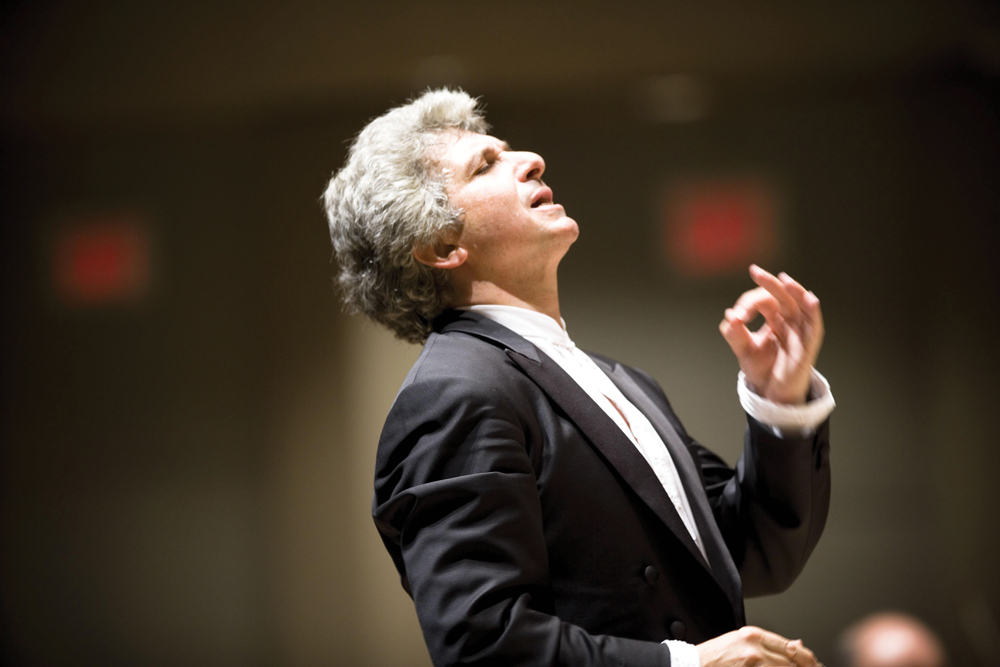
18-19-New-Music_peter_oundjian_formal_08It’s interesting to compare the role of Eötvös as “curator” as it applies to the NMC and TSO legs of the visit. The NMC concert is very tightly knit, as befits its smaller scale, and it’s possible to see how each of the choices on the programme comes directly from Eötvös himself. But in the case of New Creations, with the best will in the world, there are many more factors at play. There are works that have been commissioned from local composers to fit in with a theme. There are the happy accidents arising from meetings on the road. The significant presence of clarinettist/composer Jörg Widmann in the series, for example is as likely to have materialized from Widmann’s playing a Mozart concerto under Oundjian’s baton somewhere in Europe, as from a connection between Eötvös and Widmann. But of such happy accidents is true creative ferment born. Every year Oundjian’s and the TSO’s genuine commitment to the New Creations Fedtival as a significant part of their cultural mandate becomes more clearly defined. And the event itself becomes more focused and exhilarating. With the steeply reduced ticket price at RTH, there’s no reason the Hall shouldn’t be rocking for three days with symphonic sound that invigorates the players’ and the audience’s ears.

Esprit Orchestra

At the other end of the month, March 29, Alex Pauk’s Esprit Orchestra continues its drive to bring symphonic music to a hall large enough to handle an orchestra with serious new music chops. “Turned On By Texture” is their fourth and final Koerner Hall concert this season, featuring, among other works, Jamie Parker in Harry Somers’ Third Piano Concerto, and Xenakis’ Jonquaies. (If it wasn’t too late to organize, I’d suggest that Esprit offer half price rush tickets to anyone who shows up with ticket stubs from any two of the three New Creations concerts that kicked off the month!)

By the way, for a really interesting insight into what keeps Pauk motivated, check out Jack Buell’s Q&A with Pauk in “We Are All Music’s Children” this month (page 68). What’s in the magazine is just part of a much longer piece on the web.

The Classical Continuum

Returning to Eötvös’ concert with NMC March 10, it was interesting to me that he chose to programme Stravinsky as part of the mix. There’s a striking number of concerts this month where to a significant extent presenters seem to be emphasizing the classical/post-classical continuum, rather than the great divide. March 11, for example, the Stuttgart Chamber Choir and Soundstreams Choir 21 are bringing a programme to the Carlu that includes Ligeti, Mahler, Bach, Penderecki and a Frehner world premiere. And on March 22, in a Music Toronto Discovery Series concert, Véronique Mathieu, violin, and Stephanie Chua, piano, present a programme of works that includes, among others, works by Sokolović, Clara Schumann and Heather Schmidt. And another example: Kindred Spirits Orchestra’s Markham New Music Festival on April 1 offers Stravinsky, Current, Bartók, Honegger, Richard Strauss and Southam.

Straight Up

And, all too briefly for those who prefer their new music straight up, check out:

• March 9: Music Gallery. Emerging Artist Series: Emergents II: Ina Henning, accordion and Marc-Olivier Lamontagne, guitar.

• March 12: Arraymusic. Array Session #11: An Improv Concert.

• March 16: Toronto New Music Projects. Stefan und Steffen: The Music of Wolpe and Schleiermacher.

• April 3: Canadian Opera Company. Chamber Music Series: Primitive Forces.

And finally a reminder: details on all these, and a whole lot more new music, can be found in our magazine listings, or, even more readily by searching “New” in the listings on our website.

Cage Watch: 180 days & counting

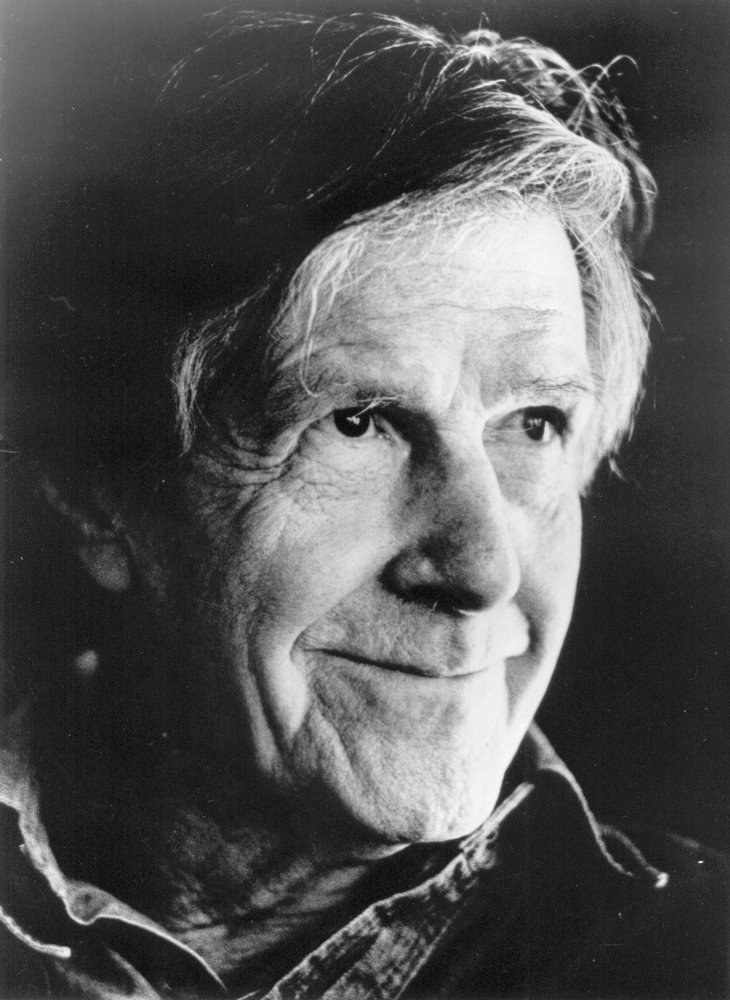
18-19_New_Music_JohnCageLast issue I pointed out that although the 100th anniversary of John Cage’s birth will not be until September 5, 2012, among presenters of music, large and little, the celebratory clock has already started to tick. So, from now, and for the next 180 days (February 29 to September 5), let The WholeNote Cage Watch begin.

(Bemused readers should take a moment to read Pam Margles review, on page 69, of the reissue of Cage’s seminal book Silence for a visceral sense of what the fuss will be about.)

March 2 at Koerner Hall, Soundstreams/Royal Conservatory present “So Percussion: Cage@100,” works by Cage and a new work by turntablist Nicole Lizée.

March 22 at Gallery 345, Daniel Gaspard, piano, and Ellen Furey, dancer, present “John Cage, Sonatas in Movement.”

October 25 to 28 a conference,“The Future of Cage: Credo,” will be presented at the Graduate Centre for Drama, U of T. Details to follow.

The lack of space for a full-out “In With The New” column this month is more than somewhat offset by the fact that several of our other columnists in the issue have stolen my thunder anyway!

20Robert Wallace, page 8, talks about Obeah Opera, Nicole Brooks’ new work, as well as about Queen of Puddings’ Beckett Feck-it, at Canadian Stage. Chris Hoile, pages 18 and 19, talks about two works I would otherwise have drawn attention to: the COC production of Kaija Saariaho’s opera, L’Amour de loin, playing at the Four Seasons Centre for the Performing Arts; and Toronto Operetta Theatre’s first professional rollout of the John Beckwith/James Reaney opus Taptoo!

And there’s more. Pamela Margles, in the concert notes to her review of Kaija Saariaho: Visions, Narratives, Dialogues (“BookShelf,”) draws attention to four other concerts that will feature Saariaho’s music during the composer’s visit. (Three of these, by the way, are under Soundstreams’s auspices — and I will return to a discussion of Soundstreams.) Even our CD reviewers get into the act. Andrew Timar’s review of a Finnish Radio Symphony recording of Saariaho’s music, page 62, references L’Amour de loin. And a Leslie Mitchell-Clarke review, on the same page, of two + two, a new release by TorQ Percussion Quartet, is followed by a note pointing out TorQ’s appearance in the final concert of the U of T New Music Festival (February 5).

Of Toronto’s major presenters of new music (Array, Contact!, Continuum, Esprit, Gallery 345, Music Gallery, New Music Concerts, Queen of Puddings, Soundstreams and Tapestry New Opera), Soundstreams is the one to which we have, so far this season, devoted the least ink in this column. This month is as good as any to redress that, because the company has an extraordinary diversity of material on offer. In addition to the three Saariaho contributions referred to earlier, Soundstreams also presents two full-fledged Koerner Hall productions. The first of these, The Sealed Angel, billed as a music drama, is the work of Rodion Shchedrin, a Russian composer born in 1932. In typical Soundstreams fashion, this concert is an intensely collaborative project, involving the Amadeus Choir, Elmer Iseler Singers and ProArteDanza dance company. And then, book-ending the current listings period, Soundstreams is, as far as I can tell, the first of the aforementioned major presenters out of the blocks with a concert celebrating the 100th anniversary of composer John Cage’s birth. Titled “So Percussion: Cage @100” the concert will feature works by Cage and turntablist Nicole Lizée.

With the 100th anniversary of Cage’s birth not till September, pianist Kate Boyd is also fast off the mark, with back to back performances Thursday, February 16: first a noon hour lecture/recital on Cage’s Sonatas and Interludes at University of Waterloo; then a concert the same evening of the complete Sonatas and Interludes, for the Kitchener-Waterloo Chamber Music Society. Not to be outdone, the Music Gallery, a week earlier, on February 10, presents a programme titled “Post-Classical Series: The Cold War Songbook – Pilgrims and Progress” which also features Cage’s Sonatas and Interludes (1948) performed by Vicky Chow, piano. The “Cold War Songbook” then continues February 11 with a programme of piano works by Ustvolskaya, Carter and Feldman, featuring the pianistic post-classical virtuosity of Stephen Clarke and Simon Docking.

The next day, February 12, at the Music Gallery, it’s Continuum Contemporary Music back in action with a a programme featuring music by Ligeti, Oesterle, Current, Klanac and Richard Marsella, who also guests on the barrel organ. And it’s busy busy as usual all month at upstart Gallery 345, with concerts worth noting on February 19 (pianist Adam Sherkin), 20 (soprano Xin Wang), 25 (mezzo Marta Herman), and 28 (Les Amis Concerts); and on March 7 (Norman Adams, cello; Lee Pui Ming, piano; Erin Donovan, percussion).

It’s a bit ironic to be giving the city’s largest ensembles the shortest shrift in this column, but that’s sometimes the way things fall out. First, Esprit Orchestra continues the season’s torrid pace with their third, full-scale Koerner Hall concert, on February 26. Titled “Gripped By Passion,” it features works by Vivier, Scelsi, Rea and Schnittke, the vocal magic of mezzo, Krisztina Szabó and dazzling TSO violist Teng Li.

And March 1, 3 and 7, the Toronto Symphony Orchestra presents its eighth annual New Creations Festival of which we will have much more to say in the coming issue.

10_vinko_globokar_-_kolo_1992Like many in the global village, I have become a fan of the Metropolitan Opera’s LIVE from the Met in movie houses, combining as it does all the lazy pleasures of movie going (a director telling you where to look, a soundtrack telling you what to feel) with an almost voyeuristic immediacy. I am behind the scenes of one of the world’s great opera houses, or face to face with the four feet tall tonsils of the world’s greatest bass-baritone, as the case may be. Add to this usual movie stuff the additional thrill, usually reserved for NASCAR or other such blood sports, of knowing that the whole thing might crash and burn right before my eyes, but almost never does, and I am hooked. Why? Because it’s LIVE!

Except that it isn’t. It’s “live from,” but not live at. At, in this case, is the Queensway Cineplex Odeon, TimBits, mint tea and all. Even the Met’s celebrity greeters acknowledge as much. One of them always comes on screen during one or the other intermission, backstage, to remind us, the TimBits audience, that watching this way isn’t the real thing, and that to fully experience the magic of opera we should pop down to New York, or [tiny pause] go out and support our local opera company. My most recent foray to the Odeon was for an enormously satisfying production of Phillip Glass’s Satyagraha, during which bass baritone Eric Owens (Alberich in the Met’s current Ring Cycle) appeared during the intermission to do the mandatory “live opera is real magic” speech. Even in his sonorous tones it came off stilted and, dare we say it, just a titch insincere.

More’s the pity, because it’s the absolute bottom-line truth. There is an innate, unmatchable theatricality in congregating live for music. It cannot be matched or emulated in other media, no matter how grand. And nowhere is this more evident than in the performance of new music.

Ironically, the first performance I want to draw to your attention, as an example of theatrical spectatorship, seems to negate that principle, because, to a significant extent, it takes place in the pitch dark. I heard about it from composer Brian Current, director of the New Music Ensemble of the Glenn Gould School. The work is Austrian spectral composer Georg Haas’ monumental In Vain, for 24 musicians and lighting (2000) Thursday December 8, 7:30pm and Friday December 9, 2:30pm, in the Conservatory Theatre of the Royal Conservatory.

“It’s a 70 minute piece, really a spectral wonder, a beautiful and substantial work, based almost entirely on musical colour,” Current says. “Sometimes they play in the pitch black, other times there are ghostly flashes of light.” They will be blocking the windows out on the Conservatory Theatre to get complete darkness. “The ensemble is all graduate students and they have been working hard on this difficult material, even memorizing the portions in the dark. We are also very fortunate that GF Haas is also coming in for these shows from Austria, just to work with us and to deliver a talk at 6pm before the Saturday performance.”

As it happens, the two In Vain performances fall slap bang right in the middle of what is undoubtedly December’s new music main event (the Vinko Globokar invasion, November 29 to December 11) so here’s hoping it won’t be overlooked. After all, somewhere in the tranformation of noises in the night to sounds in the dark, the truly theatrical nature of music has its beginnings.

By contrast, Queen of Puddings Music Theatre’s presentation of Galgenlieder à 3 (Gallows Songs) by Sofia Gubaidulina affirms its theatricality quite explicitly, billing itself as “a concert drama.” Queen of Puddings has always had an aesthetic of physical, singing theatre, going all the way back to their first production, “Mad for All Reasons” in 1996, which was built around Peter Maxwell Davies’ Eight Songs for a Mad King. Part of that aesthetic is curatorial, latching onto music that has an intrinsic theatricality rather than adding visual cheap tricks to jazz up the musically ordinary.

Gubaidulina’s Galgenlieder fits the bill. “It’s a 15-song cycle — sung in the original German — featuring the text of German poet Christian Morgenstern (1871–1914)” says Dáirine Ní Mheadra, QoP co-founder and director. “Gubaidulina’s stature in the world of contemporary music is enormous — she is one of the pre-eminent composers alive today. Her music is dramatic and intense.”

Born in Christopol in the Tatar Republic of the Soviet Union in 1931, Gubaidulina’s music was an escape from the terrifying socio-political atmosphere of Soviet Russia, Ní Mheadra says. “For this reason, she associated music with human transcendence and mystical spiritualism. Bringing these qualities plus a wicked sense of humour to her settings of Morgenstern is a knockout combination. And to have a star singer like Betty Allison singing this Galgenlieder is sumptuous. Betty’s sound has voluptuousness and an emotional depth to it that is profoundly moving.”

From Ladysmith, BC, by way of the Canadian Opera Company ensemble, Allison has been exercising her new music “chops,” coming to town hot off the title role in the Pacific Opera premiere of Mary’s Wedding (music Andrew P. MacDonald, libretto Stephen Massicotte.) In Galgenlieder she shares the stage with Ryan Scott, percussion, and Joseph Phillips, double bass, both accustomed to swimming outside of the mainstream as well as in.

Phillips, a former student of “tune ’em in fifths” bass virtuoso Joel Quarrington, has made frequent appearances with Art of Time Ensemble and is a member of Hotland Trio, a moody Balkan/Canadian trio (with violinist Aleksandar Gajic and accordionist Milos Popovic) that brings serious classical muscle to moody, driven, strongly rhythmic repertoire.

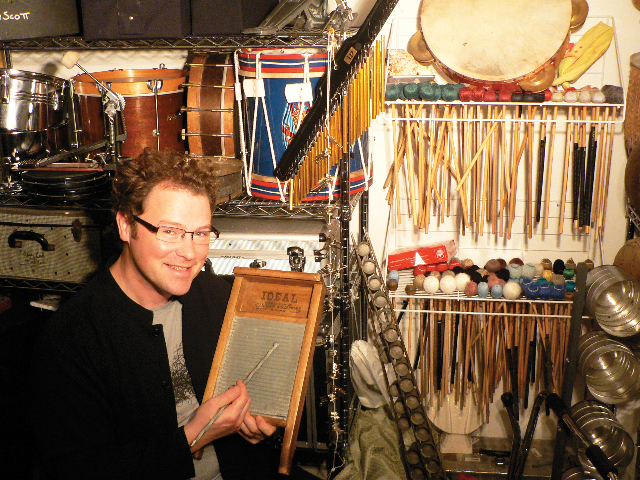
12_percussionists_kitchen_ryan_scottAnd Ryan Scott is one of the most versatile, accomplished (and busy) percussionists in this or any other town. Case in point, he will take the stage for Galgenlieder a week after a scorching performance of 20th century Japanese percussion titan Maki Ishii’s South-Fire-Summer for Esprit Orchestra at Koerner Hall November 30 — a work of extraordinary complexity requiring a percussion array the size of (and better stocked than) the average kitchen. And just one day later, December 9, it will be out of the proverbial frying pan into the improvational fire for Scott, as he anchors the second half of the first of the two Vingko Globokar concerts to which I referred briefly at the beginning of this column and to which I now return.

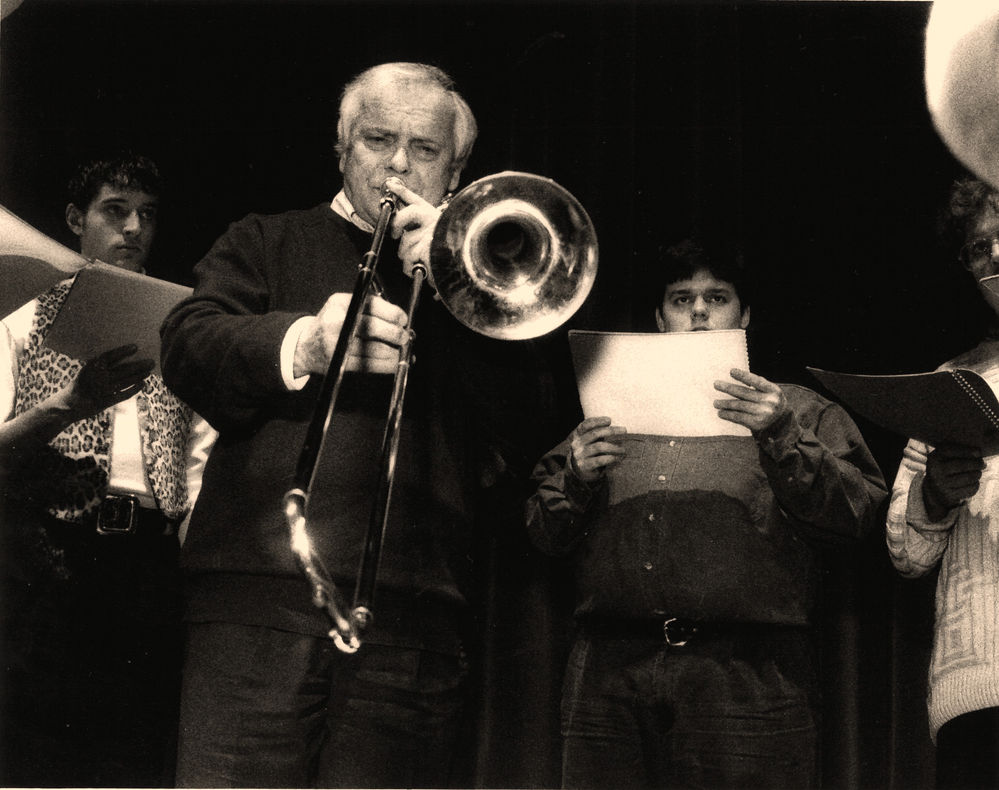
Vinko Globokar, French avant-garde composer and trombonist, returns to Toronto at the invitation of New Music Concerts’ artistic director Robert Aitken, almost forty years (1972) after Aitken brought him here in the first place.

He’s been back in between, but this is a 12-day Vinko-fest, culminating Sunday December 11, at Betty Oliphant Theatre, 8pm, in an NMC presentation of works spanning four decades, ranging from Fluide (1967) for brass and (very extended) percussion through Eppure si Muove (2003) for solo trombone (Globokar) and an ensemble of 11 disparate instruments including cimbalom, accordion, saxophone, synthesizer and electric guitar, without conductor. In between are Discours VII (1987) for brass quintet, which “attacks problems posed by spatialisation of sound, mobility of sound sources and different degrees of communication between five people,” and Eisenberg (1990) for four groups of four: brass instruments ad libitum (such as Tibetan horn, Moroccan nafir, conch), melodic instruments, harmony instruments and musicians who work with noises (unspecified percussion).

Even this mere recitation of ideas and instrumentation gives a tiny taste of the infinite variety, and jest, of this pioneer of modern trombone technique. Quite simply this is an individual who never repeats himself compositionally or artistically, challenging audiences and players (be warned, they are not always entirely distinct!) anew with every new outing and every new work.

Events in his visit will already be under way by the time this issue hits the street: at the University of Toronto, where Globokar is the Michael and Sonja Koerner Distinguished Visitor in Composition — improvisation workshops, forums, lecture, and a Globokar Colloquium at the Robert Gill Theatre. The following week Globokar will work extensively with the musicians of the New Music Concerts Ensemble and give masterclasses and improvisation workshops through the auspices of the Music Gallery. Some of the results of all this activity will be on display at the Music Gallery, Friday December 9, in the first half of the concert, titled “Back to Back.” The second half of that concert is an extended music/theatre piece Terres brulées, ensuite co-presented by Toronto New Music Projects and Continuum, which bring me back to percussionist Ryan Scott.

Earlier, you may recall, I mentioned that, for Scott, going from Galgenlieder on December 8 to Globokar at the Music Gallery the next day would be like going from frying pan to fire. Here’s how he described it (in the Continuum Contemporary Music November newsletter).

“After intermission is the epic Terres brulées, ensuite (Burned Lands, Then). Prepare for global annihilation! This trio for saxophone, piano and percussion featuring Wallace Halladay, Stephen Clarke (piano) and myself, is of legendary proportions and is rather difficult to describe: 6 saxophones, a prepared (and lightly abused) piano, over 70 percussion instruments (e.g. #43 “plank”) spread around the stage in 7 stations, 115 performance instructions (e.g. #21 Saw the plank and hammer in a nail), … live electronics … What else? Hmmm … a motet … a foghorn … oh, and explosions with fire (well, we’re working on that).”

There’s a wonderful interview with Globokar by British composer John Palmer available on the website of the Canadian Electroacoustic Community. For the curious it’s a great place to start.

What I got from it was the sense of energetic decades of musical inquiry, endlessly parsing and reparsing the relationships between music and speech, and rendering into music the theatricality of relationship. Part of his secret, I suspect, is a thick skin, the ability not to judge his own work in terms of success or failure. As he puts it:

“What is sure is that a musical work is a document which will remain. It’s a document that testifies certain things that happened at a certain time in society. This is an historical truth which cannot be denied. In one hundred years people will say, ‘This music reflects certain events that happened in those years.’ … L’art pour l’art as such does not interest me, at all.”

AND ALL TOO BRIEFLY

“Beyond Sound,” the 2012 iteration of the annual New Music Festival at the University of Toronto Faculty of Music, coordinated by composer Norbert Palej, features Swedish composer Anders Hillborg as the Roger D. Moore Distinguished Visitor in Composition and runs from January 22 to February 5. It’s billed as an exploration of “the diverse scientific and artistic interests that form the musical landscape of the 21st century,” with a focus on Hillborg’s work. It’s an event warranting much more of a mention than this. Happily, it’s well covered in our concert listings, and in “The ETCeteras” (page 67), our regular compilation of musical workshops, forums, lectures, etc. It is also very well described on the Faculty’s own website under “Events.”

Once upon a time, we regularly ran, alongside this column, a companion piece called New Music QuickPicks. The idea of QuickPicks was to give the new music aficionado a filtered list of all the concerts that might be of interest. But since these QuickPicks consisted of short form listings only (i.e. date, time, presenter name, concert title), one still had to go to the main listings for the details if something in the QuickPicks caught one’s eye. It was very handy, but also very irritating when the main listing in question turned out to be only of passing interest.

So we built in a rating system: NNN before a listing meant that new music was the main event (usually with a live composer or two in attendance). NN meant new music was not the main thrust but was of more than passing interest. And N meant, well … that was the problem. What did N mean? Did it mean there was a work of Britten’s on the programme, so you should come to pay homage to the pioneer? Or did it mean that the 10-minute contemporary work right before the intermission had actually been commissioned a few years back and/or had already been played more than twice?

That was the problem: the N’s started out as a time saving device; once they became viewed as a comment on the worth of events they lost their utility. It’s a pity, though, because at each of these three levels of intensity, N to NNN, so much is happening this month, and all of it plays its part: keeping composers busy, and enabling players and audiences to break new sonic ground.

19_estacioheadshot2010_colour900Starting with the Ns: Born in Newmarket, Ontario, John Estacio has single works on two different upcoming symphonic programmes: Friday November 4, the University of Western Ontario Symphony Orchestra plays his Variations on a Memory; Wednesday, November 9, Symphony on the Bay plays his Frenergy.

Frenergy’s highest profile performance in our catchment area was with the Toronto Symphony Orchestra September 26, 2009 —
the season opener with violinist Joshua Bell. “The concert opened with John Estacio’s Frenergy,”wrote The Globe and Mail, “a splashy short work full of propulsive rhythms and dramatic flourishes that should have tipped us off, when the piece was new in 2003, to Estacio’s future career as an opera composer. Somebody should use it for a film score.” And of Estacio as an opera composer (Filumena and Frobisher) arts writer Paula Citron, also in The Globe, wrote “If ever a contemporary opera deserved a shelf life, Filumena is the one.”

There are several other noteworthy single new works on upcoming programmes. Abigail Richardson-Schulte’s “Crossings” for cello and piano in four movements (2011) will be performed by Rachel Mercer and Angela Park at a Les Amis concert, Tuesday November 8 at the Toronto Heliconian Club, along with works by Mahler, Mozart and Brahms. Saturday December 3, East York Choir’s Winter Solstice: Seasonal 25th Anniversary Celebration features a world premiere by Stephen Hatfield. Sunday November 6, Antonín Kubálek Projects’ Music for Anton features a premiere — Daniel Foley’s Music for the Duke of York. Thursday November 17, at Music Toronto, The Gryphon Trio includes the Ontario premiere of Calgary-based William Jordan’s Owl Song in their programme, between Beethoven and under-performed late nineteenth century Russian composer Anton Arensky … The list goes on.

Moving up to NN on the intensity scale, a number of presenters this month provide main portions of new music in well rounded programmes. Saturday November 5, Vesnivka Choir/Toronto Ukrainian Male Chamber Choir present a concert titled 120th Anniversary of Ukrainians in Canada. Their guests will be Het Lysenko Koor (The Lysenko Choir) from Utrecht, a choir that focuses on Ukrainian folk and Byzantine sacred repertoire. The concert features two Canadian composers with strong Ukrainian ties — Laryssa Kuzmenko and Roman Hurko. Kuzmenko’s newest work Behold the Light helped to kick off both the 2011 TSO and Toronto Children’s Chorus seasons. And one of Hurko’s works, Panachyda/Requiem for the Victims of Chornobyl was performed in concert at Toronto’s Roy Thomson Hall on April 9, 2006, by the combined Elmer Iseler Singers, Orpheus Choir, Amadeus Choir, Vesnivka, and the Ukrainian Male Chamber Choir. It was then rebroadcast on CBC Radio 2 on April 26 that year (the 20th anniversary of the disaster).

There’s more: Friday November 18, Sinfonia Toronto gets into the NN act with Gems Old and New, including two premieres: Rob Teehan’s Zephyr (Toronto premiere) and a world premiere by Christos Hatzis, titled Extreme Unction (In Memoriam Gustav Ciamaga); Thursday November 24 the Royal Conservatory’s Discovery Series presents Véronique Mathieu, violin, in works by Donatoni, Dufour-Laperrière and Boulez; also on November 24 is a recital titled Fallen Realm by pianist/composer Adam Sherkin, that will include works by Brahms, Rihm, Froberger and Sherkin himself; and on Friday November 25, Alliance Français de Toronto, who seem to be getting into music programming in a serious way, present a programme with the self-explanatory title Maurice Ravel, Omar Daniel: One Century, One Ocean.

Also steadily climbing the ladder in terms of a commitment to new music programming are the COC’s regular lobby concerts in the Richard Bradshaw Amphitheatre. Tuesday November 8 Array Ensemble present a programme titled Three. T(w)o. One, featuring music by Komorous, Kondo, Riley and Array director Rick Sacks himself. (And this is by no means the last you’ll hear of Array this month: they also have a concert at the Music Gallery, Saturday November 19, followed by an “improv concert,” in their own Atlantic Avenue space on Saturday November 26.)

But returning to the Richard Bradshaw Amphitheatre for a moment: make sure also to check out Thursday November 17, What to Do ’Til the Power Comes On, featuring the TorQ Percussion Quartet in works by Lansky, Ligeti, Southam and Morphy (premiere).

Top of the NNN ladder: the good news for true new music aficionados is that the higher up the ladder we go, the more crowded it gets. Friday November 4, York University Department of Music presents Improv Soiree. Thursday November 10, Music Gallery/Goethe Institut Toronto/Istituto Italiano di Cultura presents Pop Avant Series: Whitetree. Saturday November 12 Hannaford Street Silver Band/Amadeus Choir present The Armed Man: A Mass for Peace. Tuesday and Wednesday November 15 and 16, the Talisker Players Chamber Music Series has an intriguing programme called Rumours of Peace. And Tuesday November 29 and Wednesday November 30, Soundstreams and Esprit Orchestra respectively are back for the second concerts of what promise to be thoroughly compelling seasons.

20_eve_egoyan-david_rokeby_2To conclude, two NNN concerts that nicely bookend the month: Sunday November 6, at the Music Gallery, Continuum Contemporary Music kicks off their season with a programme titled Fuzzy Logic, which is also the name of one of the works, by Alex Eddington, premiered on the programme. “How would you make music that sounds like a sheep? And more importantly, why? It’s a cheeky start to what looks like a delightfully eclectic programme.

And last, Friday December 2 brings an eagerly awaited Earwitness Productions/Eve Egoyan CD release concert. The disc is called Returnings and consists of works by Ann Southam for solo piano, including Returnings II: A Meditation (world premiere). Count on this CD to add to a burgeoning appreciation of Southam as a composer, and to Egoyan’s reputation as a wholly truthful and compelling interpreter, not only of Southam’s work, but of new music in general.

“New music in new places” is the name of a Canadian Music Centre initiative, now in its eighth year, to assist Canadian composers in “taking their music out of the concert hall and into the community where they work and live.” The CMC’s annual contribution to Scotiabank Nuit Blanche, Toronto’s annual all-night contemporary art festival, has been one of these events. This year, from 6:59pm October 1 till sunrise, it’s bells and more bells at Chalmers House (the CMC’s home on St. Joseph) “blended with electronic musical material and video projections in a continuous and evolving flow.” Titled “The “Crown of the Bell,” the installation is by Rose Bolton and video artist Marc de Guerre. Its companion piece, downstairs, by sound artist Barry Prophet is titled “Post Apocalyptic Belfry” and features glass lithophones, percussion, and electronics. For those of you getting October off to a flying start, it will be a great way to untune and retune your ears for what promises to be a chock-a-block new music month.

Gallery 345

“New music in new places” may well be the name of a CMC initiative, but it also describes a trend. Take Gallery 345 for example. South of Dundas Street W. at 345 Sorauren Avenue, five or six blocks west of where Dundas and College meet, this L-shaped gallery space is definitely “on the wrong side of the tracks” for a new music audience that traditionally gets nose bleeds north of St. Clair and fumbles for passports east of Parliament.

The place reminds me of the Music Gallery in some ways; even 30 people feels like a decent crowd, and you can cram a bunch more than that through the doors. It has the advantage of two decent pianos well maintained, a bright sound, and the cheerfully genre-blind, indefatigable curatorship of gallery owner Edward Epstein.

Even a partial list of concerts there gives you some idea: Saturday October 1 is AIM Toronto’s Interface Series with Sylvie Courvoisier, piano and composer, Marilyn Lerner, piano, and others. Wednesday October 5 it’s “The Art of the Piano Duo: Pieces of the Earth,” a CD release concert featuring original compositions and improvisations by John Kameel Farah and Attila Fias, pianos. “Improvisation unfolds over the evening” says their press release. Sounds like just the spot for it.

October 8 its “Trikonasana.” Friday October 14 it’s Arraymusic with “The Piano Music of Ann Southam” (mentioned in this month’s cover story). Saturday October 15 Toy Piano Composers Ensemble is there with “Avant-Guitars,” the 13 member Aventa Ensemble on Friday Oct 21; Jurij Konje on October 27; Vlada Mars on October 28; and the Tova Kardonne Octet on October 29.

Wuorinen

18_newmusic_charleswuorinenArraymusic’s October 14 foray into Gallery 345 also provides a neat segue into New Music Concerts’ next big event. It was Arraymusic artistic director and gifted percussionist Rick Sacks who persuaded NMC’s Robert Aitken to take on the challenge of presenting Charles Wuorinen’s “Percussion Symphony for 24 Players,” the work that anchors NMC’s upcoming October 30 concert at the Betty Oliphant Theatre. The work includes two pianos and a celesta (think Sugar Plum Fairy) and an entire platoon of top-flight percussionists, so it’s not that often performed. Rarely enough, in fact that Charles Wuorinen himself is coming to town to direct. (He will, as others before him, be astonished by the depth of musical talent in this town.) If you are going, get there 45 minutes ahead for Aitken’s “Illuminating Introduction.” Aitken is as deeply into the music as his interviewees and it makes for fascinating listening. There’s also a new piece by Eric Morin on the programme, matching Joseph Petric on accordion with the Penderecki String Quartet — that’s three accordionists in two concerts this season already for NMC! And those of you who also take in the Women’s Musical Club concert on October 16 will have an all too rare opportunity — the chance to hear a new work (Chris Paul Harman’s Duo for flute and cello) performed twice in four days!

MassBrass

Betty Oliphant Theatre, 8pm Oct 30, will be the place to hear the drums go bang and the cymbals clang. But for the horns that blaze away, Koerner Hall, five hours earlier, is the place to be. MassBrass promises to be one of those Soundstreams initiatives that Lawrence Cherney is famous for — throwing together players who’d otherwise be more likely to cross paths in an airport, adding a conductor who responds to what he hears, and watching the sparks fly. Copland, Schafer, and works by André Ristic (world premiere), Gabrieli and more will be the ingredients. The Stockholm Chamber Brass, Simón Bolivar Brass Quintet, and True North Brass will provide the heat. And conductor David Fallis will stir the pot.

Esprit’s Stirred So Much

20_newmusic_shaunarolston_-_photo_courtesy_of_the_banff_centreSpeaking of Koerner Hall, Alex Pauk’s Esprit Orchestra was the first of the core new music presenters to move its whole season to Koerner. Having an extra 400 seats to sell was a daunting challenge, but with curiosity about the new hall high last season it was a good time to take the plunge. After all, without extra seats how do you take on the challenge of outreach? This year they are taking it a step further, switching from a Sunday night format to include three week nights, making reaching out to a school audience viable.

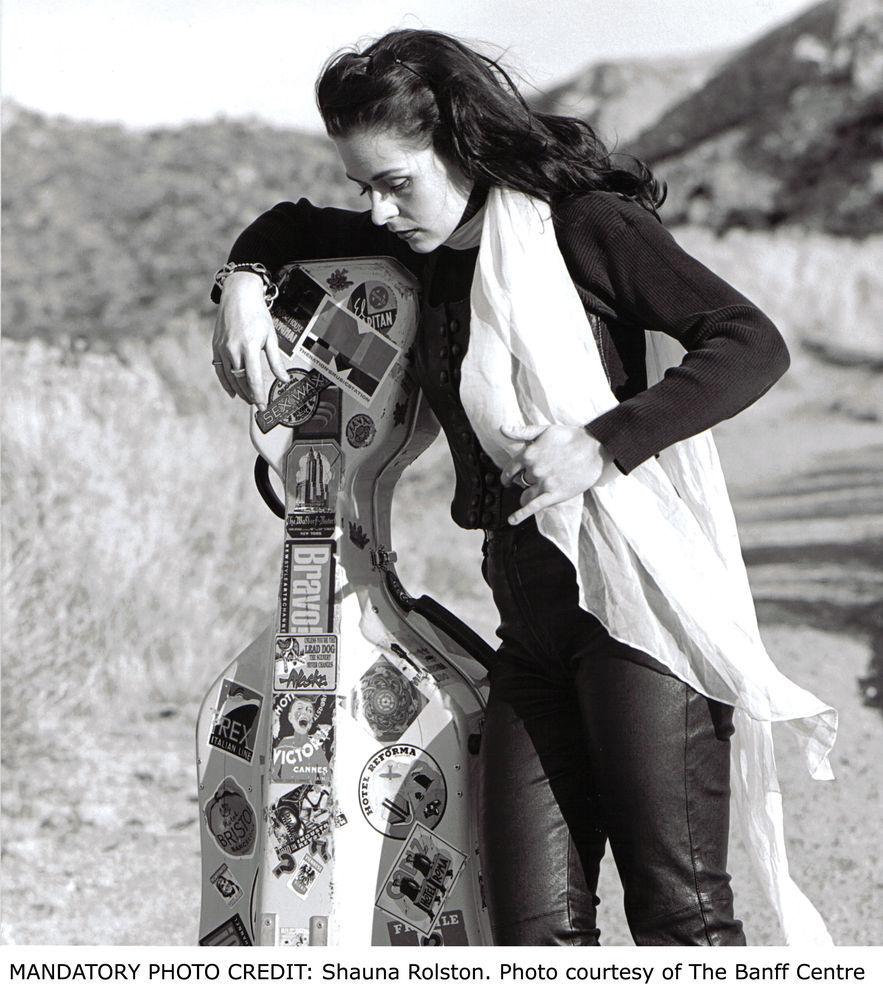
First of these week nights is Wednesday October 19 and it’s a stirring programme, as befits a band big enough to make some complex noise in a hall big enough to handle it. Douglas Schmidt’s new work on the programme “The Devil’s Sweat” caught my eye: “Carbon Concerto for carbon cello and orchestra” it says. Solo cellist Shauna Rolston’s carbon fibre cello is billed as “indestructible” so it sounds like she’s in for an unorthodox workout!

Over the past 15 or 16 years we’ve seen Toronto’s new music community taking a wider and wider detour around the 11 days (September 8–18) during which the Toronto International Film Festival is the biggest circus in town. Some sneak in ahead, like InterSection, this year’s fifth annual New Music Marathon, which runs noon till 10pm, Saturday September 3 at Yonge/Dundas Square. (We’ll be there!) But after that, with one notable exception, it’s mostly bits of this and that until New Music Concerts’ Opening Gala on September 25. After which it’s into October before some of the other local heavyweights like Soundstreams and Esprit kick into action.

The notable exception is Kitchener-Waterloo based presenter NUMUS Concerts, which rolls into town September 17 — the day before TIFF folds its tents — with a Glenn Gould Studio concert featuring the Manitoba Chamber Orchestra in a program of the film music of Philip Glass.

Founded in the mid-80s by composer Peter Hatch, NUMUS has become a catchword in Kitchener-Waterloo, where the organization is associated with contemporary music productions, occasionally on the wild side, like Jeremy Bell’s production — Nude Show — a few years ago. “The poster for that concert,” says current artistic director, composer Glenn Buhr, “showed composer Omar Daniel shirtless and hanging upside down from a trapeze pole while he manipulated some electronics. That was our all time best seller.”

18_buhr_option_2Toronto audiences may also remember their more recent “Battle of the Bands” concert last January at the Music Gallery. “I curated that show,” says Buhr, “and it featured my progressive jazz/blues ensemble the Ebony Tower Trio (Rich Brown, electric bass, Daniel Roy, drums, and myself on piano) doing battle with the Penderecki String Quartet. The idea was to contrast contemporary music with roots in old Europe alongside new music with roots in the blues and jazz traditions of North America. I think it’s still there on CBC’s Concerts on Demand.”

I joked with Buhr about invading Toronto during TIFF. The plan, I suggested, was a) crazy like a fox, b) just plain crazy, or c) a stroke of genius. But he refused to rise to the bait.

“NUMUS is a presenter as well as a producer,” he said, “so I’m always looking for projects to buy in to our season. I was approached by the Manitoba Chamber Orchestra about the Philip Glass program. I was particularly interested in the new Piano Concerto adapted by Michael Riesman from Glass’s music for the film The Hours. Riesman has been playing those Philip Glass arpeggios for quite a while and has developed a formidable technique.”
“So my answer is neither. It’s pure accident. The MCO wanted to tour this material in preparation for a recording and was looking for a presenter. The fee was so reasonable that we decided to present them in Toronto and Guelph as well as Kitchener-Waterloo. The overlap with TIFF is serendipity; this was the only possible date for the MCO. I have no idea if TIFF will work in our favour or otherwise.”

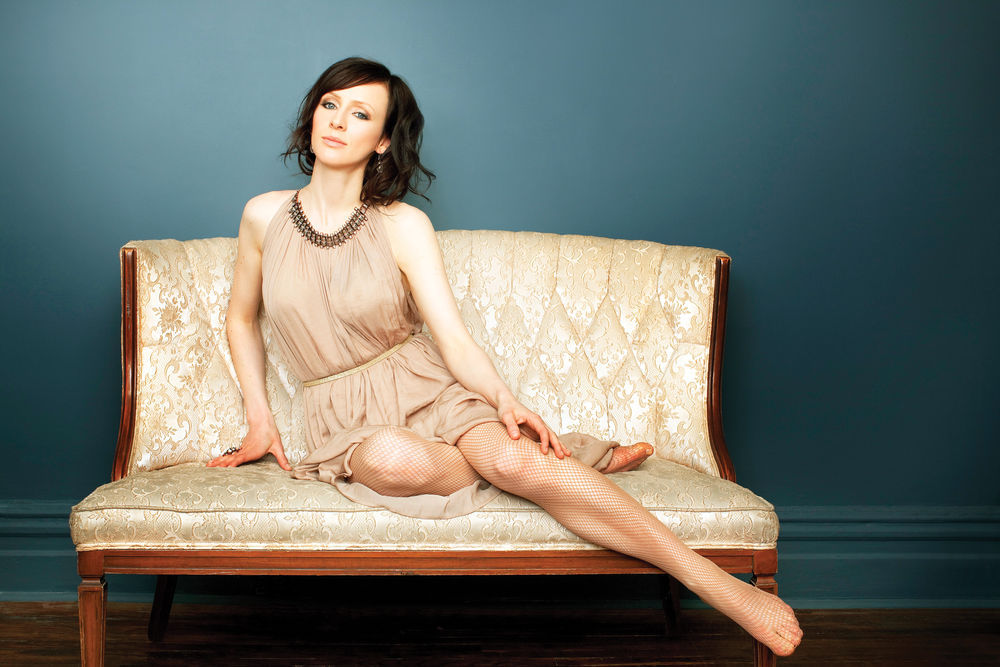
20_sarah_slean_photo_by_ivan_otisThe September 17 concert will be the first of two NUMUS visits to the Glenn Gould Studio within this issue’s listings period. The second, October 6, will also ring bells for Toronto audiences. Titled “Song of the Earth,” it was presented August 10, 2010, at Walter Hall — one of Agnes Grossmann’s final programs as artistic director of Toronto Summer Music. It paired a new commission, Song of the Earth, by Buhr himself, with Mahler’s master work. “Yes. I vowed to repeat that program if I was given the opportunity,” says Buhr, “because I felt that it could be curated a bit differently — by ending with the contemporary work and beginning with the Mahler. Also, we’ve hired popular songstress Sarah Slean to sing, and also record my work. I’m more interested in contemporary singing styles than I am in European classical singing, and I’ve worked with Sarah before. She was soloist in my third symphony (a choral symphony). Her presence on stage, and also the Margaret Sweatman libretto — which alludes to the Gulf of Mexico oil disaster in 2010 — puts the Mahler masterpiece into a more contemporary context. The new work is still a ‘Song of the Earth,’ but it poetically underlines our more current concerns.” You can read more about NUMUS at www.numus.on.ca.

Other TIFF tamers

Though it’s fun to think of NUMUS as the only new music mouse brave enough to bell the TIFF cat, I don’t want to overstate the case. There is new music throughout the middle of the month, if you pick your spots. Sunday September 11, the Music Gallery’s Pop Avant series presents Esmerine with guest Muh-he-con. Music Toronto’s Thursday September 15 season opener (the Tokyo String Quartet with Markus Groh, piano) features a world premiere of a new work by Music Toronto’s composer advisor Jeff Ryan. And on September 18, Contact Contemporary Music presents “Walk on Water,” at Gallery 345, with Wallace Halladay, saxophone, Mary-Katherine Finch, cello, Ryan Scott, percussion and Allison Wiebe, piano.

Once the curtain falls on TIFF, the pace picks up: Friday September 23 Tapestry New Opera’s “Opera Briefs” gets under way at the Theatre Passe Muraille Main Space, with new works from their annual Composer-Librettist Lab. And the same day the Toronto Heliconian Club presents Emily, The Way You Are, a one-woman opera celebrating the life and work of Emily Carr, with music by Jana Skarecky and libretto by Di Brandt.

The following day, Sunday September 25, will see many of us back at the Glenn Gould for the opening gala concert of New Music Concerts’ 41st season — a concert titled “Secret of the Seven Stars” that will showcase not only NMC’s stellar players, but a numinous constellation of Canadian composers and works.

Friday September 30 and Saturday October 1 bring two concerts by AIM Toronto in their “Interface Series” at Gallery 345, featuring Sylvie Courvoisier, piano and composer.

To close, it would be remiss of me not to mention several out of town festivals that not only extend the summer well into September, but pay more attention to new music than one might expect. The Prince Edward County Music Festival, September 16 to 24, has Ana Sokolovic as composer-in-residence; and Barrie’s Colours of Music, September 23 to October 2, has the forward looking Ames Quartet on board, and several other notably adventurous programs on display.

David Perlman can be reached at publisher@thewholenote.com.

June is an important time of transition. This is true not only for the seasons (the 21st marks the summer solstice and a promise of consistently better weather) but also for the live music scene, where the closing concert season makes way for a flourishing of summer music festivals.

p16_inwiththenew_electronicaunplugged_.photo_by_colin_savageIt is also true for me: I am making a transition away from the music field to take up new challenges in the arena of arts and learning. This means that I will also be stepping away from writing this column, which has given me endless opportunity to explore how Toronto’s new music community has made its own remarkable transitions over time. The most noticeable of these is in the sheer range of appropriations, influences, inspirations and collaborations new music makers employ to create and showcase exciting new work.

We can look to a handful of this month’s concerts to see this notion at play.

One group that has been constantly pushing at the boundaries of what it means to be “new music” is CONTACT Contem-porary Music. Their multidisciplinary approach crosses between live and electronic, traditional and site specific, popular and avant-garde, audiovisual and interactive, in ways that many other ensembles would be too timid to try. If that weren’t enough, the content of each CONTACT show treads into touchy territory – from transexualism to transcendentalism, popular music to electro-eroticism, and just about everything in between. Ultimately, CONTACT seeks to unlock the power of artists, leveraged through music-based collaborations, to create situations that eliminate barriers, open new dialogues, find new perspectives and advance new understandings of current, contemporary challenges. It would be absentminded not to mention their “Electronica Unplugged” lunchtime concert on June 8 at the Richard Bradshaw Amphitheatre, which features original electronic works by David Bowie, Brian Eno, Robert Fripp, Gavin Bryars and Philip Glass arranged for the unique forces of the CONTACT ensemble. You can learn more at www.contactcontemproarymusic.ca

Another case in point is the deliriously eclectic Adventures of the Smoid, a creative concoction from the ever-adventurous percussionist/composer/artistic director Rick Sacks for the Evergreen Club Contemporary Gamelan. Drawing on the growing popularity of visual story telling through comic books and graphic novels, Sacks inventively connects a diverse series of dots to link this world to the tradition of gamelan and Indonesian shadow puppetry. Sacks asks the Club to do double duty as musicians and puppeteers to tell a humorous tale about an astronaut’s adventures in space. Adventures of the Smoid is prefaced by a song cycle from iNSiDEaMiND, the wildly experimental turntable duo. New music crossover eclecticism doesn’t get much better than this. The boundaries are definitely pushed once again for these June 13 and 14 events at the Music Gallery.

Tapestry New Opera Works has long been exploring new paths to collaboration between composers, writers and musicians in the creation of the highest of musical forms: opera. Over the last quarter century and beyond, this hallmark company has expanded beyond its Canadian roots to provide a haven for an increasingly international network of creators to develop some of the most promising new work in the field. Tapestry’s season-closing New Opera Showcase will no doubt be another exhilarating adventure through a collection of shorter pieces in development, ranging from those by veteran creative partners to new collaborations. The inspirations range just as far, from Ancient Greek tragedies to modern-day Irish pub love stories, from Icelandic mythology to Canadian immigrant stories filtered through Old Testament morality tales. Be sure to visit www.tapestrynewopera.com to get full details for the June 14 and 15 performances at the Ernest Balmer Studio in the Distillery District.

These three events are just the tip of an iceberg of musical innovation at work in our local music community; I hope to find such radical minds and creative connections in my future work. Don’t miss your chance to catch such new sounds while they are still summer fresh! Be sure to get in with the new via The WholeNote concert listings here and online at www.thewholenote.com.

Jason van Eyk, The WholeNote’s longtime New Music beat writer is stepping down from this column and from his position as Ontario Regional Director of the Canadian Music Centre.

Contemporary music concerts are springing up in bunches this month, with a trio of themes each containing a quartet of events.

Quartet 1: Celebrations

19April’s sense of celebration flows into May, with a greater emphasis on new musical voices.

On May 15, the Esprit Orchestra will reach the peak of its five-day New Wave Composers Festival, exploring a range of musical inspirations from Bach’s A Musical Offering to the cosmic “music of the spheres” and the mythological Phoenix. This Koerner Hall concert also offers three other reasons to celebrate: it features the world premiere of composer Chris Paul Harman’s Coyote Soul for orchestra; it recognizes the 60th anniversary of the venerable Canadian League of Composers; and it trumpets the return of the Toronto Emerging Composer Award by announcing its first winner in five years. For more details about Esprit and its New Wave Composers Festival, visit www.espritorchestra.com and follow the links.

Array will celebrate in its own way on May 29 with its Young Composers’ Workshop Concert. [See “The ETCeteras” section of listings.] This afternoon event is the culmination of a month’s intensive work completed by a carefully selected foursome of emerging music creators. The resulting pieces will receive their world premiere in the very urban Array Space at 60 Atlantic Avenue. For more info, visit www.arraymusic.com.

The Toronto music community will come together on June 1 at Walter Hall to celebrate the 80th birthday of musical polymath Derek Holman. The concert will feature a variety of Holman’s music for choir, strings, clarinet, voice and pianos, in performances by the Talisker Players, Choir 21, Canadian Children’s Opera Company, pianists Bruce Ubukata and Stephen Ralls, and clarinetist Peter Stoll. A special treat will be the world premiere of Holman’s latest work for tenor and harp, featuring Lawrence Wiliford as soloist. Stay on after the concert for a big, belated birthday party!

Pushing into June, we’ll find the Penderecki String Quartet celebrating its 25th anniversary. To mark the occasion, the PSQ has commissioned seven new works from a cross-section of Canadian composers. We’ll get to hear some of the early results with world premieres from Michael Matthews and Norbert Palej during the Penderecki’s annual QuartetFest (co-produced with the Kitchener-Waterloo Chamber Music Society) – an intensive string quartet training and performance program that runs June 1-7 at several locations throughout Kitchener-Waterloo. For more info about Quartetfest and this year’s invited ensembles, visit www.quartetfest.ca. To buy tickets, call 519-886-1673.

Quartet 2: Intersections

The connection of new music to other genres and art forms has been sprouting up more often in Toronto, with this month offering four interesting examples.

On May 3 and 4, the Talisker Players continue their explorations into words and music with their season-closing concert “Façade.” Alongside the title-bearing work by William Walton, and others by Harry Freedman and Alex Eddington, is a world premiere from Toronto’s Alexander Rapoport based on the poem “Jabberwocky.” Soprano Xin Wang and tenor James McLennan join the Taliskers in this program that explores how we look for coherence in words that sometimes hold no meaning. Visit www.taliskerplayers.ca.

The Music Gallery’s Emergents Series will explore a totally different type of intersection, that of genres and styles which collide. The Dupuis/Clark Duo combines harpsichord and electric bass to bridge the distance between four centuries of musical creation. The stretch between these two worlds is not as far as we think, if we conceive of a rock rhythm section as the modern baroque continuo. Sharing the program is GREX, a vocal ensemble that claims to defy easy description. Their set of Meredith Monk, Ned Rorem, R. Murray Schafer and traditional Georgian folk songs makes the claim clear. Visit www.musicgallery.org.

The Canadian Opera Company’s Chamber Music Series unites music and dance in a short, free concert of Beethoven and Golijov, on May 17. Toronto’s celebrated Tokai Quartet will perform the String Quartet Op.131 alongside Golijov’s bittersweet Tenebrae in its original version for soprano and clarinet. Jacqueline Woodley and Kornel Wolak join the Tokai’s as guest performers. Toronto-based dance maverick, Matjash Mrozewski, offers new choreography for four dancers to illuminate the music’s intentions.

Near the end of the month, on May 28, the Music Gallery presents “From Eye to Ear,” an exploration of visual influences in contemporary music, tracing a re-emerging movement towards non-conventional notation and graphic representation. New “scores” by the mercurial John Oswald and the more minimalist Chiyoko Szlavnics are works of art whether sounded or not. Live video will allow the audience to view each piece as it is performed by pianist Eve Egoyan and Quartetto Graphica. More Szlavnics scores, part of the Intimate Music exhibition on loan from the Canadian Music Centre, will be on display.

Quartet 3: Globalization

From Finland to Malaysia, Toronto regularly welcomes the global flow of contemporary music creation. This quartet of concerts demonstrates the range of international ideas on our local stages.

Paris-based Finnish composer, Kaija Saariaho, seems to be popping up everywhere in Toronto classical concert calendars. On May 6, a set of her solo works will appear at the Music Gallery, including her From the Grammar of Dreams for two female voices set to texts of Sylvia Plath, NoaNoa for flute and electronics, Sept Papillons for solo cello and Six Japanese Gardens for percussion and electronics. Singers Carla Huhtanen and Marion Newman, percussionist Aiyun Huang, cellist Rachel Mercer and flautist Camille Watts bring a powerhouse of talent to these demanding and beautiful works.

On May 8, New Music Concerts continues its exploration of music from the Far East in a concert titled “Malaysian Voices.” The program has been curated by Kee-Yong Chong, currently Malaysia’s leading composer. He is credited with a rare musical talent, expressing a highly innovative yet deeply spiritual style. The programming hinges on several pieces by Chong, including a new flute concerto for NMC Artistic Director Robert Aitken. The remaining works by Chow Jun Yi, Yii Kah Hoe, Tazul Izan Tajuddin and Neo Nai Wen will bring a mix of Canadian and world premieres to a portrait of new music from an underrepresented community. Visit www.newmusicconcerts.com.

A little further afield, but also on May 8, the Elora Festival Singers will demonstrate the diversity of voices that makes up the Canadian multicultural mosaic. Simply titled “Oh! Canada,” this program of recent works by Mark Sirrett, Gary Kulesha, Derek Holman and Leonard Enns will bring us some of the best voices in Canadian choral writing as performed by one of our leading choirs. For more information about this afternoon event, and to buy tickets, visit www.elorafestival.com.

Our global tour will end at Roy Thomson Hall on May 26, when the Toronto Symphony Orchestra performs Chinese composer Tan Dun’s Water Concerto and Paper Concerto. Both works reflect the composer’s ideas of an organic music, which embodies sounds of nature and the mind. He claims, “The environment is related to our lives, and spiritually, everything germinates from one seed of creativity.” Tan Dun made a great splash in Toronto with his appearance during the 2009 New Creations Festival. He returns to conduct the TSO in his own imaginative works for unconventional solo instruments. For more info and tickets, visit www.tso.ca.

This is a larger list than I normally offer, but May is a month of many new sounds. But there’s still plenty more music to be discovered, so be sure to get in with the new via The WholeNote concert listings here and online at www.thewholenote.com.

Jason van Eyk is the Ontario Regional Director of the Canadian Music Centre. He can be contacted at newmusic@thewholenote.com.

Back to top