2105-New.jpgDespite chilly temperatures outside, the accumulation of new music events occurring in both Toronto and the main cities of southern Ontario, in February and early March, can be likened to a pot of water coming to a vigorously rolling boil. Bookending the dates covered by this issue are two major new music festivals – the University of Toronto’s New Music Festival (January 30 to February 7) and the Toronto Symphony’s New Creations Festival, opening March 5 and concluding on March 16. Since these festivals straddle the listings period, let’s begin with them, for those readers ready to jump in early in February and for those who are planning well ahead for March.

U of T New Music Festival: As was previously mentioned in the December-January issue of The WholeNote, the highlight of this year’s U of T New Music Festival is the opportuniuties it presents to experience the music of Canadian composer Allan Gordon Bell from Calgary, as well as one concert featuring music of his former students. A key aspect of Bell’s compositional approach is the way he maps his listening experiences of the Canadian soundscape to the acoustic world of instruments, whether that be orchestra, string quartet, opera or jazz ensembles.

It also has a fine crop of workshops, master classes and guest lectures, so I suggest perusing the listings and the festival website for the full scope of what is to be experienced. (The Land’s End Ensemble will also be performing a concert of works by Allan Bell and Omar Daniel on February 5 at Western University in London.)

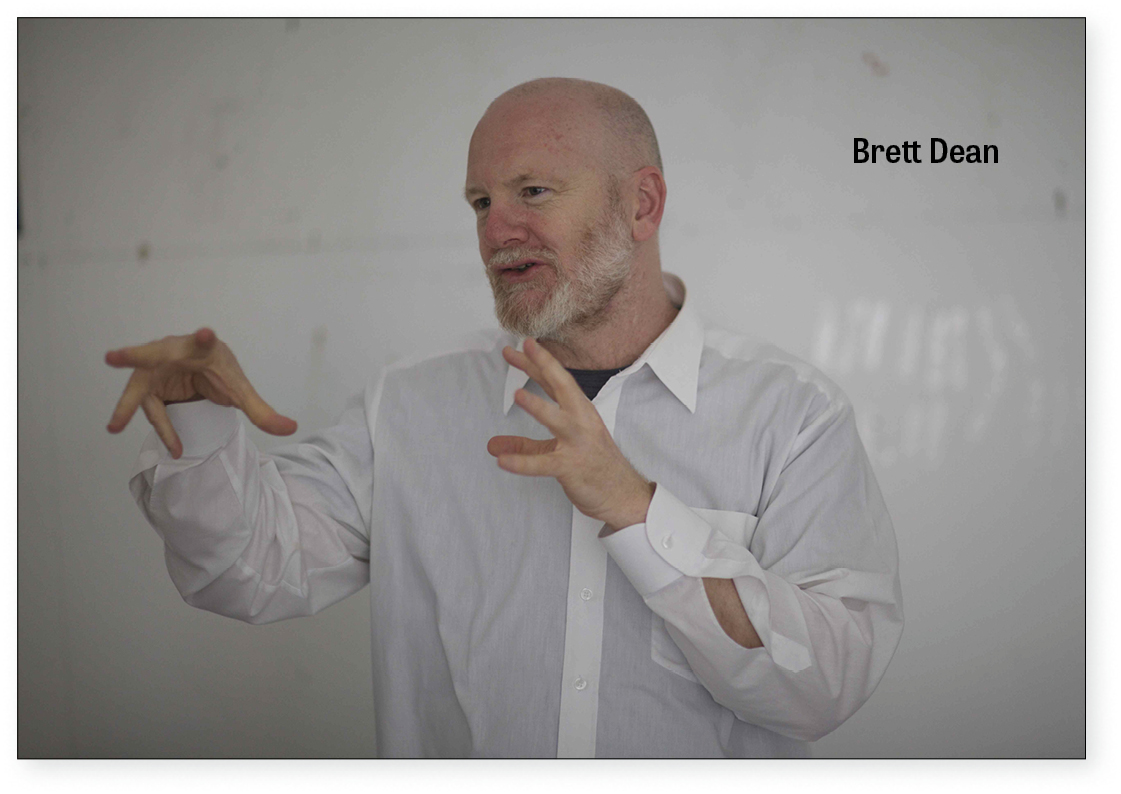
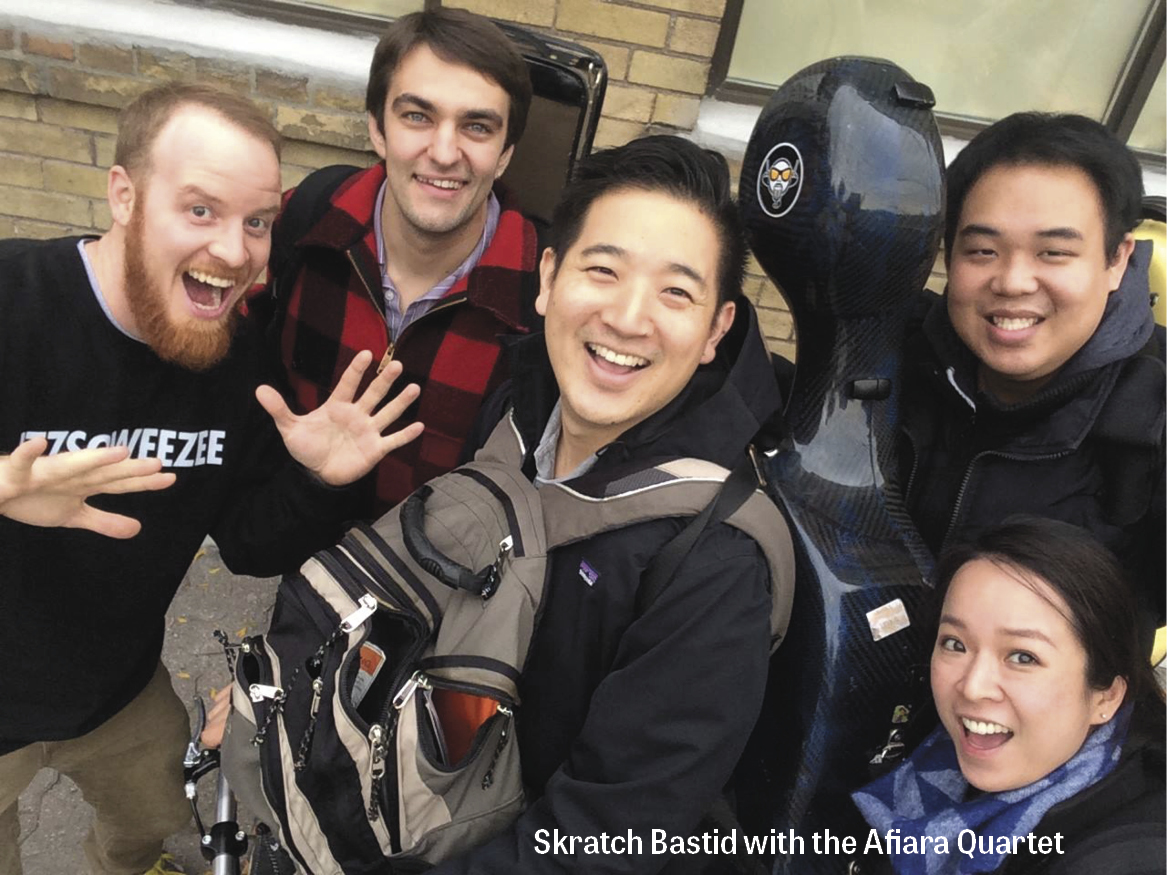
New Creations: Jumping ahead into March, it’s not too early to take a peek into the upcoming New Creations Festival. This year’s featured guest is Australian composer, violist and conductor, Brett Dean, who is currently artist-in-residence with the Sydney Symphony Orchestra. Dean spent a good part of his career in Europe playing viola for 14 years in the Berlin Philharmonic, eventually turning to composition as he approached the age of 40. One of his signature works – his Viola Concerto – will be performed by the composer at the opening concert on March 5. Festivalgoers will hear two additional orchestral works composed by Dean, along with a piece by fellow Australian Anthony Pateras. Local DJ legend Skratch Bastid, who appeared last May at the 21C festival, will be performing, along with the Afiara String Quartet in a commissioned work by Kevin Lau; Bastid has also been commissioned to create a Festival Remix for the final concert on March 12. The festival will also offer a world premiere collaboration between composer Paul Frehner and filmmaker Peter Mettler, a composition by Australian James Ledger that pays tribute to Anton Webern and John Lennon, and a piece by Jonny Greenwood of the iconic English rock group, Radiohead. A more in-depth look at some of these artists and concerts will appear in the March issue.

Pick of the Crop: February offers a broad scope for aficionados of new music no matter what your stylistic preferences may be.

These early weeks of 2016 have seen the passing of several iconic creative people from various artistic fields, among them French composer and conductor Pierre Boulez, whose artistic ideas changed the course of 20th century music. Boulez’s legacy will be celebrated in a New Music Concerts program on February 15.

At the other end of the new music spectrum, the Art of Time Ensemble offer a concert on February 19 and 20 that focuses on the music of Frank Zappa, a musician whose work ranged from rock to orchestral to musique concrète.

Somewhere in between, stylistically, Soundstreams has chosen to highlight music for instruments of the squeezebox family for their February 10 concert. This includes the accordion, the Argentinian bandoneón and the Korean saenghwang, each performed by virtuosic performers, such as Toronto’s own Joe Macerollo and Héctor del Curto from Argentina, playing compositions by several Canadian composers. R. Murray Schafer’s work, La Testa d’Adriana for soprano and accordion, for one example, features the spectacle of only the head of Adriana sitting on a table as she sings in interaction with the accordionist.

Going Home Star: The Royal Winnipeg Ballet along with the Winnipeg Symphony Orchestra is making a visit to the Sony Centre on February 5 and 6 to perform a new work entitled Going Home Star – Truth and Reconciliation, ballet, written by Joseph Boyden based on stories that emerged during the Truth and Reconciliation Commission tour of indigenous communities. 

Contradictory as it may seem to use the European art forms of ballet and orchestra to tell these stories, the creative team has worked to bring aspects of indigenous culture into the overall mix in order to push the boundaries of the form. With a score composed by Christos Hatzis, the music includes the powerhouse vocals of Tanya Tagaq as well as the Northern Cree Singers. Tagaq’s experimentalist approach to traditional Inuit throat singing combines the influences of electronica and industrial music to create an unforgettable experience. (Looking ahead to May, Tagaq will be one of the featured artists of the upcoming 21C festival – but more on that in a couple of issues’ time.)

RoundupThe Music Gallery presents their second Emergents concert of the season on February 5 with saxophone improvisations by Linsey Wellman and a song cycle by composer Lisa Conway, based on myths from Ovid’s Metamorphoses. The literary theme continues the next evening on February 6 with Spectrum Music’s concert featuring works by members of their composer collective based on modern literary gems, including one work by Brad Cheesman inspired by the novel Infinite Jest, written by the acclaimed American author David Foster Wallace. On February 12, the Thin Edge New Music Collective performs a series of premieres by both Canadian and international composers at the Array Space. And on March 6, they will be performing in a pop-up afternoon concert there. Now in their fifth year, Thin Edge is currently in the midst of their ensemble-in-residence stint at Arraymusic, which will continue into next season as well.

The Array Space is flourishing as a home for improvisers, with several opportunities in February for fans of this scene to check it out, including Audiopollination on February 13, coexisDance on February 20, and various Toronto improvisers appearing on February 16, 19 and 28. In this vein, I want to also mention two Improv Soirées at York University on February 11 and March 3.

Mixed repertoire: A sure sign of the flourishing new music scene is the increasing appearance of new music within concerts of more standard classical repertoire and there are several examples of this in February. The group of 27 chamber orchestra performs the world premiere of Paul Frehner’s bassoon concerto, Apollo X on February 5. The Junction Trio will perform new works by Ron Korb on February 21 and by Stephanie Martin on March 6. Music Toronto performs a work by Schafer on February 4 and music by Oskar Morawetz can be heard performed by Adam Sherkin on March 3.

And then there is the Off Centre Music Salon, an organization with a tradition of providing opportunities for different musical traditions to dialogue and engage. Their concert on February 25 at the Music Gallery, inspired by the friendship between Vladimir Horowitz and Art Tatum, will pit jazz and classical pianists against each other, as well as singers from the improv, indie-folk and classical traditions.

To close things off, there is new music happening in concerts in various southern Ontario cities throughout the period, many of which also combine the new with the traditional. On February 6, the Hamilton Philharmonic Orchestra performs A Thousand Natural Shocks by Kelly-Marie Murphy. This concert also marks the debut of the HPO’s conductor and music director, Gemma New. The Isabel Bader Centre for the Performing Arts in Kingston presents Scottish composer James MacMillan’s piece Seven Last Words of Christ as well as Schafer’s The Fall into Light on March 4The electroacoustic music of Adam Tindale will be featured at the Kingston Community Strings concert on February 19. The Peterborough Symphony Orchestra will perform the violin concerto Erika’s Violin written by Elizabeth Raum and performed by her daughter Erika on February 6.

In the Kitchener/Waterloo/Guelph area there are several concerts. As part of their Mix Series, NUMUS presents emerging pianist Jason White on February 21 performing Rzewski’s De Profundis as well as a world premiere by Colin LabadieTwo members of the junctQín Keyboard Collective will perform works by Canadian composers Emily Doolittle and Martin Lachance on February 24 as part of the K-W Chamber Music Series.

And finally, if you are a fan of the theremin, an early electronic music instrument, two early-month concerts on February 3 at the University of Waterloo and on February 4 at Guelph University will give you an opportunity to hear this music as performed by Eric Ross with video art by Mary Ross. 

Wendalyn Bartley is a Toronto-based composer and electro-vocal sound artist. sounddreaming@gmail.com.

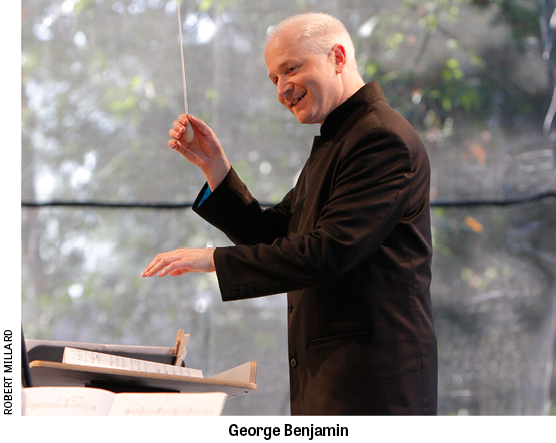
Over the past year in Toronto’s new music scene, composers working within the spectral and post-spectral composition aesthetic have been making their voices heard. First of all, in March we heard the music of Britain’s George Benjamin, the featured composer at the TSO’s New Creations Festival, followed by the music of guest composer Kaija Saariaho from Finland at the 21C Music Festival in May.

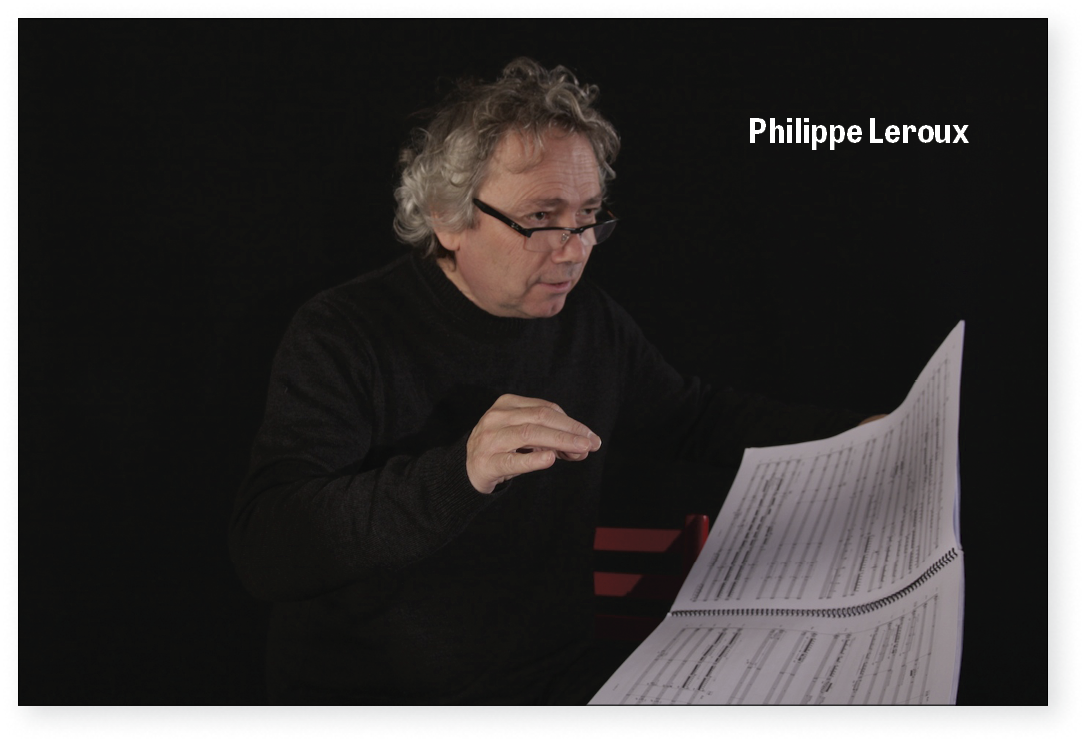
In With The New 1Philippe Leroux: And now in the early days of December, another major figure is coming to town – Philippe Leroux. Although originally from France, Leroux now calls Montréal home, thanks to his permanent teaching position at McGill University. His influence on the compositional aesthetics in North America is growing fast, with many students being drawn to working with him.

WholeNote readers may not be that familiar with Leroux, but three concerts planned for December 6 and 8 can change that unfamiliarity into an opportunity to dive deeply into the creative oeuvre of this remarkable composer. First, on December 6, New Music Concerts is performing two of his chamber works: AAA for seven instruments and Ailes for baritone and 15 instruments. And December 8 is a double concert day with the performance of his piece Total SOLo for 28 instruments as part of the COC’s free noon-hour concert series, followed by five of his works at a special concert at the Music Gallery. Leroux is this year’s Michael and Sonja Koerner Distinguished Visitor in Composition at the U of T Faculty of Music. It’s interesting to note that both concerts on December 8 will be performed by advanced student musicians: artists of the Glenn Gould School New Music Ensemble conducted by Brian Current (the COC event) and doctoral students from U of T’s gamUT Contemporary Music Ensemble, conducted by Wallace Halladay (Music Gallery concert). Not surprisingly, both Current and Halladay have been personally influenced either by their studies or performance experiences with Leroux’s music.

I got together with Halladay to find out more about that relationship and discovered the passionate commitment Halladay has for Leroux’s music. In answer to my question as to how they met, Halladay told me how he went out on a limb and contacted the composer, still living in France at the time, when he discovered that Leroux was coming to the Université de Montréal as a visiting guest artist. He had been a fan of Leroux, within a contemporary trend in European music, and wanted an opportunity to talk with him. He followed up that meeting by organizing a concert in Toronto of Leroux’s music in 2011, hiring local professional musicians.

What he discovered was a composer who was completely committed to working generously with musicians, helping them to interpret the score; and musicians, in response, absolutely stimulated by the interaction. This type of communication is, in part, what has led to Leroux’s appeal to different ensembles – performers just love working with him, resulting in many commissions. If you’d like to experience this firsthand, the public are welcome to attend a talk at the Faculty of Music on December 7 (5:30 to 7pm) as Leroux works with performers in preparation for the December 8 concert.

For Halladay, the excitement comes from the challenge of the scores, which often call for a wide range of sounds not always translatable into standard notation. This is why the communication between composer and performer is so important. Leroux is always learning and listening carefully to the sounds being made by the performers, open to how they could be notated, or other possible ways to achieve what he is imagining.

In my conversation with Leroux, he amplified this idea: “I compose to create a relationship with the listener as well as with the musicians. I write a page or two, and then try to listen as if I was the first listener. I always try to listen to my music as a normal listener, not as a composer.”

No doubt this refined approach to listening is one of the results of the years Leroux spent working at IRCAM, a research centre for sound and electroacoustic music in Paris. This research allowed him to become completely immersed in the complex nature of sound itself, and understand all the variables that make up a given sound. This knowledge of the full spectrum of the sound and how it can be used to define the compositional structure is what defines the spectral school of composition, which originated in France in the 1970s with the work of Gérard Grisey and Tristan Murail.

As someone influenced by this aesthetic, Leroux continues the tradition in his own way. During my conversation with him, he spoke about how his starting place is with sounds he finds both interesting and beautiful, sounds that have the biggest potential for development and variation, whether that be in their harmonic colour or their trajectory of movement. After the computer-based analysis of these sounds, he may come up with as many as 400 different chords, each one created by the different pitch components – the spectrum – of the different sounds. He takes up to three weeks to just play those chords over and over on a piano or synthesizer, many of which will have microtunings. Finally, through an intuitive process, he selects up to ten chords to use as his structure in any given composition.

Halladay elaborates on the importance of the spectral approach to composition. Working with timbre or using extended techniques on traditional instruments “is not unique to the spectralists, but what is different is they are using timbre for the structural organization of music.” This approach contrasts with the majority of compositional strategies where melody and harmony are the mainstays of organization, even if the music itself is pushing boundaries as in minimalism, post-serialism, chance procedures, the use of extra-musical ideas, or the fusion of different musical traditions. With spectral composition, “the process opens a window to all the elements that make up a sound, especially those aspects beyond the audible range” Halladay says.

University of Toronto’s New Music Festival. As Halladay emphasized during our talk, the educational aspect of presenting Leroux’s music is important, introducing unfamiliar music to students who would otherwise never be exposed to it. They are always impressed with “how good the music is.” So it is fitting that U of T’s New Music Festival follows up this experience with Le Roux’s work early in the new year with over a week of concerts running from January 30 to February 7, centred around the music of Canadian composer Allan Gordon Bell. One of the highlights of the festival will the performance, February 2, by Calgary’s Land’s End Ensemble of Bell’s work Field Notes, a JUNO award-winning work inspired by the prairie landscape. On February 1, the Gryphon Trio will perform works by Bell’s former students – Carmen Braden, Heather Schmidt, Kelly-Marie Murphy and Vincent Ho. The final concert of the festival on February 7 will premiere a newly commissioned choral work from Bell at the Contemporary Showcase Concert. During the festival, various student ensembles – including the Wind Ensemble, the Symphony Orchestra and the gamUT Contemporary Music Ensemble – will also be performing a wide range of works by Bell and others including an electroacoustic concert.

Music and Dance. One aspect of Leroux’s music that I didn’t mention above is his fascination with the ideas of movement and gesture in his music, whether that be physical movements made by performers, or metaphorical gestures realized through sounds that imitate a real gesture created by a human body. For example, to compose one of his pieces, he worked with data generated from a Bluetooth pen with a camera inside. An old musical manuscript was rewritten with this pen, which was tracking the speed or the thickness of the lines. This information was used as material for the piece. Other ways of exploring the relationship between sound and movement are highlighted in several other upcoming concerts.

For the opening concert of the Music Gallery’s Emergents series on December 10, curator and percussionist Germaine Liu has created a multidisciplinary ensemble to explore the unique space of the Gallery’s church sanctuary. Inspired by the collaboration of John Cage and Merce Cunningham, members of the ensemble will perform, compose and choreograph a series of new pieces that seek to blend the two disciplines of dance and music into an interdependent relationship.

Similarly, four improvising musicians, a painter and a dancer will explore the possibilities of interdisciplinary improvisation and communication in the NUMUS concert on December 13 in Kitchener-Waterloo. And on February 5 and 6, the Royal Winnipeg Ballet, in Toronto as part of their Ontario tour, will perform Mark Gooden’s choreography which was inspired by the stories of Residential School survivors, with music by Christos Hatzis and a performance by Tanya Tagaq.

Additional Concerts

Jan 11: Various composers’ works will be performed by Pamelia Stickney on the theremin, an early electronic music instrument, at Gallery 345. The evening will also include improvisations and a demonstration of the instrument.

Jan 14: Audiences will have a great opportunity to hear the brilliant and dynamic JACK Quartet in a concert co-presented by Music Toronto and New Music Concerts. This high-voltage quartet will perform works by John Luther Adams, John Zorn, Iannis Xenakis and an arrangement of a work by medieval composer Rodericus.

Jan 20: A celebration of American composer Nancy Van de Vate’s 85th birthday with a series of her mini-operas at Walter Hall.

Wendalyn Bartley is a Toronto-based composer and electro-vocal sound artist. sounddreaming@gmail.com.

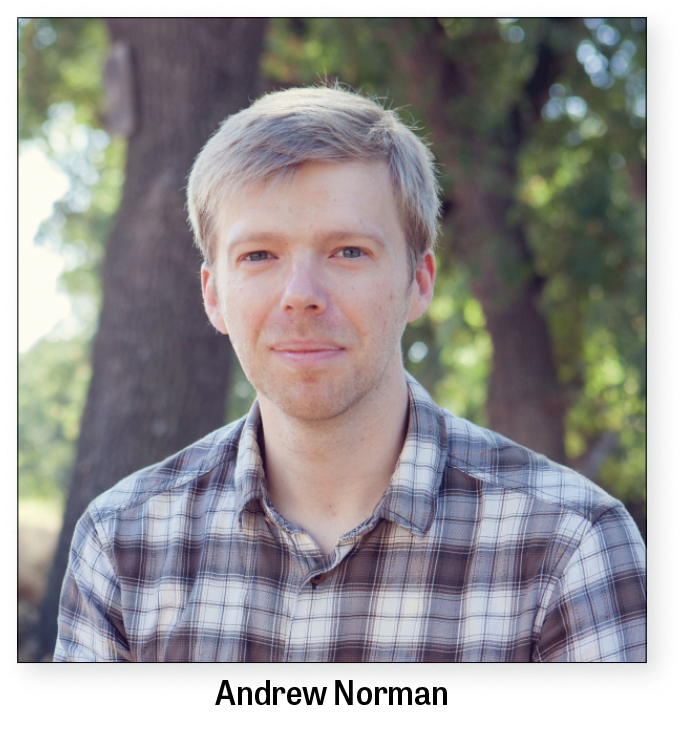
Andrew NormanOnce there was a time when aspiring Canadian composers were discouraged from writing pieces that required large ensembles, such as an orchestra. “No one will play it” was the advice given. But in Canada, that was before Esprit Orchestra came along. Formed in 1983 by conductor and director Alex Pauk, the orchestra is still going strong after more than 30 years of programming exclusively new orchestral music. Recently Pauk was recognized for his outstanding contributions to Canadian life and was appointed as a member of the Order of Canada.

That followed on the heels of a wildly successful tour this past spring to China, where according to Alexina Louie’s blog posts, they performed to cheering packed houses, with audience members clamouring to have selfies taken with members of the orchestra afterwards. Such was the reception of Canadian orchestral music in China! To read more about the tour, I recommend reading Louie’s posts, which can be found by going to espritorchestra.com and clicking on the blog link.

Play: The opportunity and possibilities that Esprit gives composers are about to be displayed to the maximum in their upcoming concert on November 15 with the programming of a piece titled Play by American composer Andrew Norman. Play is a massive and sprawling 47-minute work originally written in 2013 for the Boston Modern Orchestra Project and is described as being akin to a “Symphony No.1.” In researching Norman’s work, I came across a November 18, 2014 episode of the Meet the Composer podcast series produced by Q2, an online radio station connected to the Classical WQRX station based in New York. Luckily, the last segment of the episode (44 minutes in) was dedicated to a conversation with Norman about Play. He talked about how he was given free rein to write anything he wanted, so he decided to go “really big.”

The podcast begins with a collage of different voices, each one describing their response to the piece. “Like a roller coaster ride, a jack-in-the-box, exhilarating, expansive, breathless, frightening, frenetic, and risky” are some of the terms used. With such a description, it’s best to go straight to Norman’s own words about the inspiration for the piece: the structure of video games. Although not a gamer himself, what intrigues him the most is the idea of “trying things again and again until you get it right. You try something, and you fail. You try again, and choose another door.” For him, this gaming process is very much about structural or formal design, the architecture of a piece. He even goes so far as to equate classical symphonic form itself as sharing similarities with video games. For example, in a Beethoven symphony, several ideas are first presented, but all mixed up. The ideas return in different ways until finally they appear in the right arrangement in the finale.

A similar process happens in Play, where the listener is confronted with a vast array of ideas at the beginning, a “gazillion ideas,” as Norman describes it. As the piece unfolds, some of those ideas become important and are transformed, while others are like wrong doors and are discarded. There are even multiple climaxes – each one coming up with a different answer, which turn out to be the wrong one, until the final climax appears with the right answer close to the end of the piece. He also uses the percussionists in a fashion analogous to the different operations in a game environment – pause, fast forward, rewind, etc. For example, every time a certain percussion instrument is played, that’s the signal for the orchestra to pause. It’s actually how he wrote the piece, thinking “what would it sound like if I randomly paused the music at any moment, sped it up, or moved it fast forward?”

Norman’s other interest in the piece is to explore the human potential of the orchestra, rather than just limit himself to using the orchestra as a field of sonic resources. Thus the orchestra members become different protagonists, interacting on an interpersonal level. This also extends to the underlying meanings of the word “play,” which suggests something both fun and also something more dark, like a chain of control with the musicians being “played” by the conductor. And given the role of the percussionists, they too become more like a conductor, playing the orchestra. In all, it sounds like it will be quite the ride on the evening of November 15. Joining in on the Esprit express that night will be two other works – Tevot, written in 2007 by English composer Thomas Adès and Canadian John Rea’s Zefiro torna (Zephyr Returns) from 1994.

Seismic Waves: There are several other upcoming musical events that also promise to create seismic movement in the local airwaves. In early December, Soundstreams is launching “Ear Candy,” a new series designed to engage the audience with new forms of presentation in more intimate venues. The first one happens on December 7 and 8 and features an electrified version of the Christmas classic, the Messiah. “Electric Messiah” puts together electronic musicians (John Gzowski, Doug Van Nort), extended vocals (Christine Duncan) and sound poetry (Gabriel Dharmoo) along with the Electroacoustic Orchestra of York University. The evening at the Drake Hotel will be bookended by DJ sets. Before all this gets going though, Soundstreams will be collaborating with Canadian Stage to present the North American premiere of Julie, which runs from November 17 to 29. This chamber opera composed by Belgium’s Philippe Boesmans is an adaptation of Strindberg’s 1888 play, Miss Julie, and is an example of Strindberg’s naturalism aesthetic that sought to create theatrical characters who were more realistic with multiple motivations for their behaviour. The story pits an aristocratic and desperate Julie against the ambitious social climber Jean, who inevitably become involved with each other, but not seemingly for love or mutual attraction. The score is minimalistic with the composer’s aim being to distill the music so that the narrative shines through.

Tagaq and Pallett: To get us rock and rolling into the Christmas season, what surely will be an explosive event will be happening at Massey Hall on December 1 when two previous Polaris award winners - Tanya Tagaq and Owen Pallett – take the stage. Pallett is a Canadian composer and violinist whose creative output spans writing orchestral music and performing in the indie music scene using programmed loop pedals to send his sound into multiple speakers. Tagaq, who appeared in R. Murray Schafer’s Apocalypsis back in June, is renowned for her extreme range of primal vocal sound that arises out of her Inuit throat singing heritage. She will appear with members of her band, percussionist Jean Martin and violinist Jesse Zubot, with a special appearance by the improvising Element Choir directed by Christine Duncan.

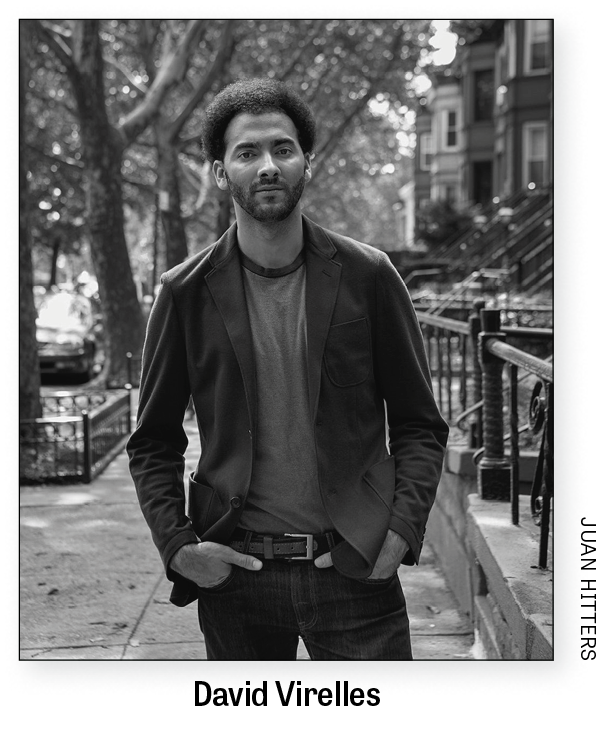
David VirellesGnosis: Shock waves will also spread on November 27 and 28 when Arraymusic and the Music Gallery team up to present the world premiere of Gnosis, a large-scale work created by former Torontonian David Virelles. Virelles sought out the Music Gallery as his venue of choice to present this work which offers a kaleidoscopic ride through the percussive rhythms of Cuban music. The evening will be an opportunity to hear the unique drums used by the Afro-Cuban secret society Abakuá, as well as master drummer Román Díaz performing with members of the Array Ensemble.

Thin Edge, Spectrum, Toy Piano: Three of Toronto’s younger and blossoming presenters are hot at it this month with their opening concerts of the 2015/16 season.

Founded four years ago in 2011, the Thin Edge New Music Collective begins its season with “Light Show” on November 29, including the Toronto premiere of Music for Lamps, an installation and performance work for 12 sound and light emitting lamps. Other works by Oesterle, Murail and Bolaños Chamorro complete a program that also includes visual illuminations and silent film.

Spectrum Music, founded in 2010, opens its season on November 14 with a concert delving into the complexities of colonial exploration. The program is made up of a suite of works narrating the adventures of explorers from the 15th century that left the world forever changed. As an interesting twist, each new work is paired with a reimagined classic folk song performed by singer-songwriter Alex Lukashevsky.

Kicking off their eighth season on Novembert 21, the eclectic Toy Piano Composers presents “To Be Announced III”– a program of six world premieres by emerging composers curated from TPC’s national call for new works.

Additional Concerts and Performances of contemporary music

New Music Concerts has two events this month. On November 8, an R. Murray Schafer CD benefit concert and on December 6, a program featuring two works by French composer Philippe Leroux, who currently teaches at McGill University, works by Gérard Grisey and Elliott Carter, and a newly commissioned piece by one of Leroux’s former students, Scott Rubin.

group of 27 and Eric Paetkau presents Loved and Were Loved by Canadian composer John Burge, November 6, in a novel venue: the ground floor “Garage” at the Centre of Social Innovation at 720 Bathurst Street.

New Music Kingston: Works by John Estacio, Vivian Fung and Jordan Pal, November 11, in the new but already muscally thriving Isabel Bader Centre for the Performing Arts in Kingston.

Music Toronto presents a world premiere commission by Nicole Lizée, performed by the Cecilia Quartet, November 5.

Heliconian Club celebrates the music of Canadian composer Kye Marshall, including a world premiere for harp duo, November 20.

University of Toronto Faculty of Music: Works by Christos Hatzis, Dean Burry, Julie Spencer, Dinuk Wijeratne and George Kontogiorgos, December 7.

Wendalyn Bartley is a Toronto-based composer and electro-vocal sound artist. sounddreaming@gmail.com.
Lori FreedmanTo say it’s a month of music by Canadian composers may seem like a redundant statement for this In with the New column, as the majority of concerts I write about always feature music from our homegrown composers, improvisers and performers. However, this month is still a bit unusual, in that almost all the upcoming concerts consist of exclusively Canadian works. One composer, Linda Catlin Smith, is so lucky as to have three of her works performed all in the same weekend. Even she admits that’s a rare occurrence.

X Avant: A good example of this is the signature concert of the Music Gallery’s X Avant festival, which runs from October 15 to 18. On October 16, the MG is presenting “MG Encore” as part of the celebrations marking their 40th anniversary. In the October 2014 issue, WholeNote published an article written by Andrew Timar that spoke about some of the early history of the MG and the curatorial direction of the current artistic director David Dacks. The MG Encore concert takes a retrospective look at the gallery’s history by programming six compositions by people who have been part of that history. The entire festival, “X Avant X: MG40,” combines two concerts that provide a look back at the past and two concerts that look forward toward the sounds of the future. I spoke with Dacks about his vision for the festival.

The Encore concert was curated by Chelsea Shanoff with help from Dacks and a few members of the MG community. Using information sent to them by the Canada Council that listed all the grants they had ever received, they noted the number of pieces that had been commissioned by the MG. That list made them aware of what Dacks called “premiere culture” – the fact that so many commissioned pieces receive one performance but fail to have a second life. The Encore concert addresses that phenomenon in part and it influenced the final selection of repertoire (which was also based on a balance of musical style, era and gender).

The concert will present works by composers Ann Southam, Allison Cameron, Martin Arnold, Linda Catlin Smith, Erik Ross and Nic Gotham and will be performed by a custom-built ensemble made up of new generation players, thus giving these younger musicians an opportunity to acquaint themselves with music they may not have heard before. The concert is also a tribute to Nic Gotham with a performance of Miniatures, his final composition. These instrumental works were composed for an online installation related to Martha Baillie’s novel The Whale’s Ear, also known as The Search for Heinrich Schlögel. Postcards with excerpts of the novel were sent to friends who recorded themselves speaking the words on the card. The music was composed to accompany these extracts, and can be heard online on the In situ page at schlogel.ca along with images of the postcards and novel extracts.

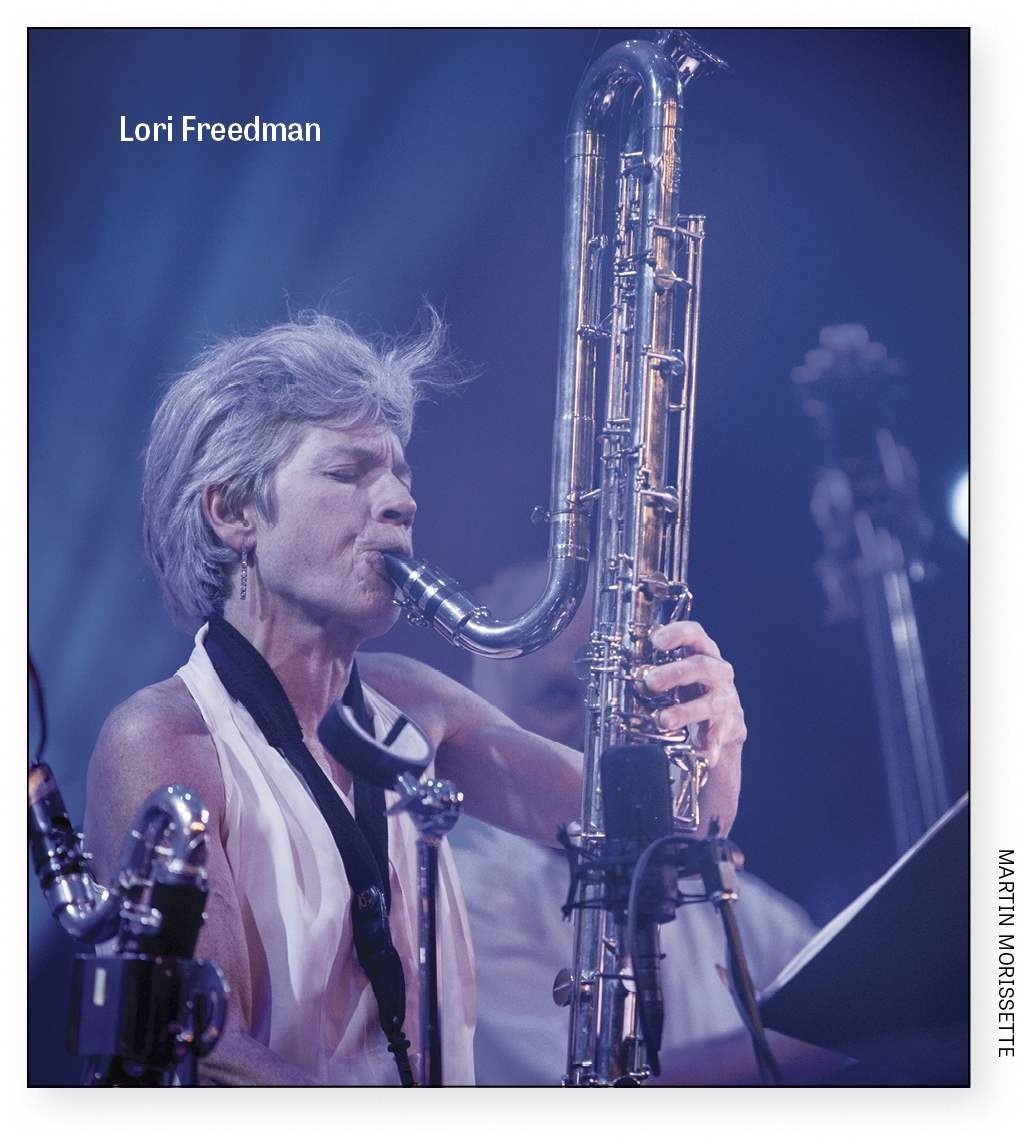
Going beyond the MG Encore concert, there are a few other retrospective events to bring your attention to, both at the MG40 festival and in the upcoming season. On the festival’s opening night – October 15 – there will be a concert featuring the current members of the CCMC, the original free music orchestra that established the MG in 1976, coupled with a performance by frequent MG visitor, clarinetist Lori Freedman, performing several new commissions, including one of her own works. Before the concert begins that evening, there will be an historic gathering of former MG artistic directors who will discuss their different approaches and the artistic direction they took while at the helm.

Forthcoming in this year’s season, Dacks is programming a retrospective of Musicworks magazine, which began as part of the MG. For that event, the OCADU Student Gallery will be turned into an installation of the Musicworks cassette archives. The season’s final concert, MG Finale, is being designed as a counterpart to the Encore event. It will be a remix concert using materials from the audio and visual archives of the MG to create an installation-like experience. Stay tuned for the date on that one.

The two other concerts of the festival present an array of music that represent current and future trends and reflect the programming interests of Dacks, who loves to create hybrid evenings of music from a variety of genres and traditions. On October 17, Tyondai Braxton, son of Anthony Braxton, will perform his complexly structured music for laptop followed by New Chance, a project by Toronto multidisciplinary artist Victoria Cheong. The evening concludes with the sounds of Pantayo, an all-women gong ensemble. The following night, October 18, the rhythms heat up with the Absolutely Free trio, electronic artists who rap and create, in Dacks’ opinion, the most interesting hip-hop music in Toronto, particularly in how they work with words.

Dacks concludes our conversation by saying that there is no better time for the Music Gallery to exist. “People are looking for complex statements of what’s going on in their lives in this city. In a beer-driven environment you just don’t get to think about these things, or present them that often.” The Music Gallery has served as a home for experimental thinking about music and sound for several generations, creating really strong memories for so many people. And with those memories come strong viewpoints of what the MG is and what it should be. “That’s OK – better that there is creative tension rather than all smooth sailing,” says Dacks. To that end, the public is invited to contribute their voices and opinions at a Town Hall gathering on the afternoon of October 17 as the MG opens it up for input as part of their strategic planning activities.

New Music Concerts. NMC opens their new season in a similar way as last year with a concert by a touring Canadian ensemble. This year it’s the Vancouver-based Turning Point Ensemble led by Owen Underhill. Beginning the tour in their hometown on October 7, the ensemble will make stops in Edmonton, Winnipeg and Montreal, arriving in Toronto the evening of October 17. Celebrating their tenth season, Turning Point is a large chamber ensemble of top-notch performers with a commitment to presenting Canadian music and the commissioning of new repertoire.

And the programming for this tour is no exception. It includes the music of one of Canada’s most internationally respected composers, Alexina Louie, with a newly commissioned work, A Curious Passerby At Fu’s Funeral, which will be premiered throughout the tour in four of the five cities. What is unique about the Toronto concert is that the entire event is comprised of music by Canadian women composers. Knowing that TPE has commissioned many works by women, New Music Concerts requested a program comprised of a selection of these pieces. When I initially saw the program list, I couldn’t help but think of my September column in which I spoke about the rising presence of women in contemporary music programming. Here is yet another example of that trend. Alongside the work by Louie, the Toronto concert presents compositions by Ana Sokolović, Jocelyn Morlock, Dorothy Chang, and Linda Catlin Smith.

Louie’s new work is structured in three movements, which she says in her program note “create a dramatic composition full of highly charged emotions and extreme ranges of heightened activity.” Part of the inspiration for this piece comes from the sounds of the sho – a multi-reed Japanese mouth organ that requires the performer to inhale and exhale through the instrument, creating clouds of sound. The sho-like chord clusters are featured in the second movement, while Asian drumming inspires the third. Overall, Louie is creating an imagined scenario between both mysterious and explosive elements.

Linda Catlin Smith’s piece Gold Leaf was originally commissioned in 2010, with a revised version just recently completed for the Turning Point Ensemble. In the piece, Smith creates a rich tapestry of sound that reminds one of a painting – some parts are thickly layered with colour, while others are thin and almost transparent, with the percussion adding a shimmering quality, like a gold leaf applied to the surface. Another TPE-commissioned work in the program is Dorothy Chang’s Three Windows, inspired by the far-western coastline of Vancouver. While in town, Chang will be interviewed by composer Paul Steenhuisen for his podcast series of in-depth conversations with composers. This series also include conversations with Morlock, Catlin Smith and Louie and is available for free download or streaming on iTunes (apple.co/1OVGJtF).

Eve Egoyan and Linda Catlin Smith. If you’ve been paying close attention to the composers listed above, you’ll note that the music of Linda Catlin Smith will be performed at the MG Encore concert on October 16, and at the NMC on October 17. In addition, the weekend offers another occasion when her music will be performed – at the recital and CD launch of Thought and Desire, a new release by pianist Eve Egoyan comprised of world premiere recordings by Catlin Smith. The event will be presented at the intimate Small World Music Centre housed in Artscape’s Youngplace and will run for three nights, from October 16 to 18 where Egoyan will also perform music by John Mark Sherlock and Nick Storring. Egoyan is renowned for her intensely focused performances that bring audiences into an intimate connection with music they may not be familiar with.  This makes for a potent partnership in the interpretation of Catlin Smith’s piano works which are born out of her own intuitive connection with the instrument. As for the multiple performances of her music within one weekend, Smith says: “It will give me a chance to hear how these works are in conversation with each other and in what way there might be some kind of common thread.”

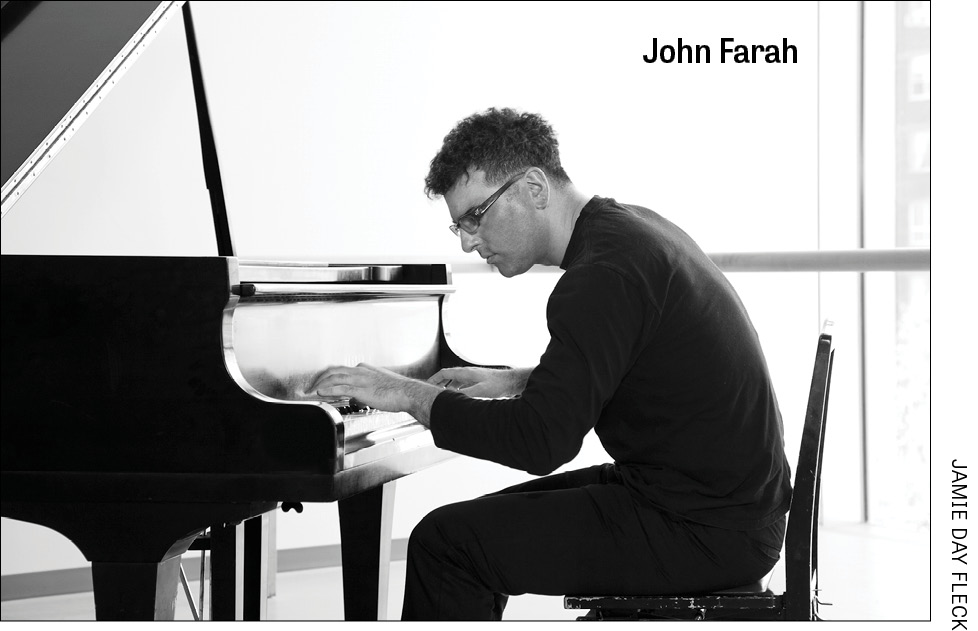
TorQAdditional October Concerts. Two notable events presented by the Canadian Opera Company this month include the world premiere of Barbara Monk Feldman’s opera Pyramus and Thisbe running October 20 to November 7, which I have written about in depth elsewhere in this issue. And as part of the COC’s Piano Virtuoso Series on October 8, a performance by John Kameel Farah of his compositions mixing a wide variety of styles and influences – early music, electronic dance, world and contemporary classical.

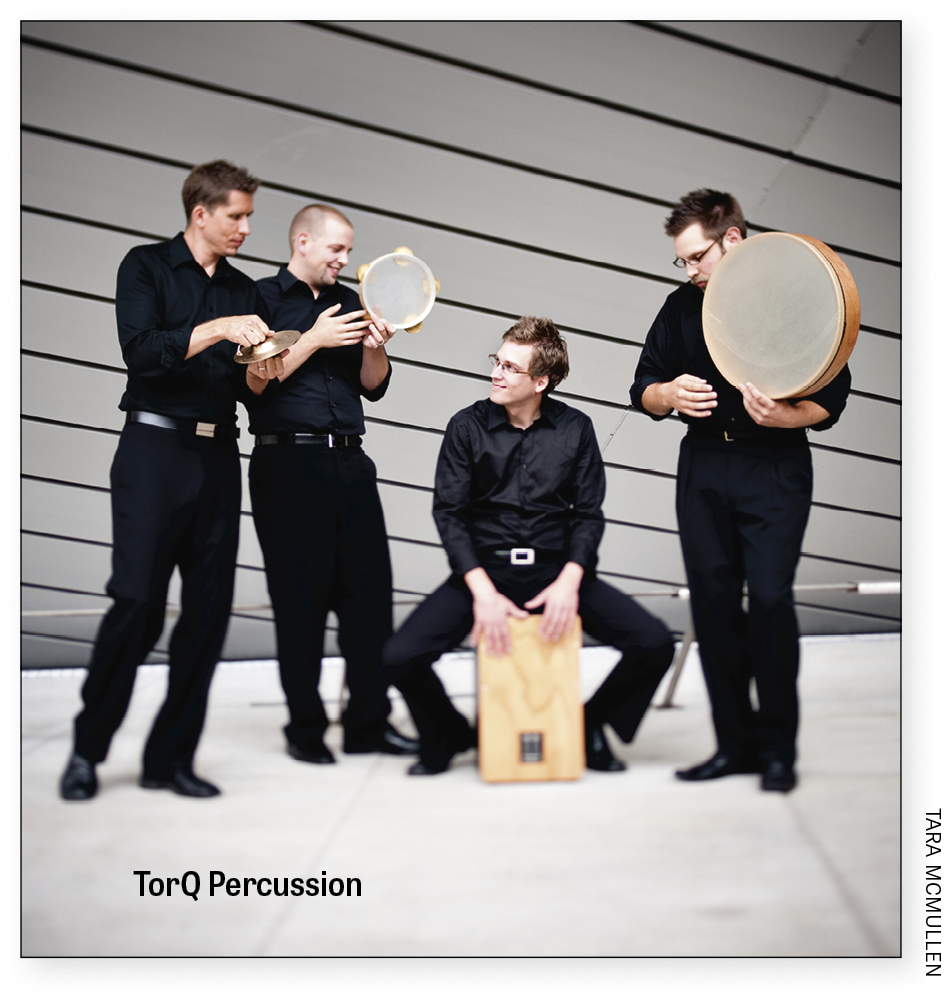
The TorQ Percussion Quartet presents world premieres on October 28 by Michael Oesterle and Andrew Staniland, and arrangements of works by composers Oesterle, Tim Brady and John Psathas (New Zealand). Early on in the month, on October 8 and 9, you can catch a workshop performance of Selfie, an opera composed by Chris Thornborrow presented by Tapestry Opera. Another early month event happens in Kitchener in celebration of the 30th anniversary of NUMUS on October 2 – the performance of Ghost Tango, a new chamber opera by Tim Brady with libretto by Douglas Burnet Smith. Also in the Kitchener-Waterloo area on October 17 at the Perimeter Institute, an homage to Italian minimalist painter Giorgio Morandi will take place combining improvised music with drawing gestures. The bass clarinet and percussion will recreate the voice of the Euphonopen, an instrument created for the live performance of drawing.

QUICK PICKS

Two not-to-be-missed concerts in early October, already covered in the September In with the New column:

October 4: Esprit Orchestra. Compositions by Zosha Di Castri, Jörg Widmann, Omar Daniel and Thomas Adès.

October 7 and 8: Toronto Symphony Orchestra. “Barbara Hannigan Sings & Conducts” includes works by groundbreaking 20th century composers Luigi Nono and György Ligeti.

And also take note of:

October 8: Canadian Music Centre. Piano works by Canadian composers performed by Moritz Ernst.

October 10: 5 at the First’s chamber music concert includes a work by John Weinzweig (Beyond GTA).

October 15: Canadian Music Centre. Allison Angelo and Simon Docking perform and launch the CD Loves Its Light.

October 24 and 25: Aga Khan Museum. Performance of the multi-disciplinary OYAN! Project (Awakening), a work inspired by the music of internationally acclaimed Azerbaijani composer Franghiz Ali-Zadeh.

October 28: Canadian Music Centre. Ensemble Made in Canada, a rising piano quartet, performs works by John Burge.

October 30 and 31: Kitchener-Waterloo Symphony’s concert includes Steps to Ecstasy by Marjan Mozetich. 

Wendalyn Bartley is a Toronto-based composer and electro-vocal sound artist. sounddreaming@gmail.com.
As things go, the sweet sounds of summer are winding down as we gear up for the beginning of a new concert season. Three highlights of the summer for me personally were joining with 1000 other performers as a choir member in R. Murray Schafer’s Apocalypsis, singing with the Element Choir backing up the mind-blowing Tanya Tagaq at Nathan Philips Square and experiencing the purely delightful piece DIVE, featuring singer Fides Krucker and the music of Nik Beason. In all three, the voice was a predominant player. As I looked over the listings for this coming month, I couldn’t help observing the number of concerts and events featuring music by women composers and leading performers. One can question whether a point should be made about this, but given the long struggle for gender equality in both composition and conducting, it is worth noting that something is shifting. One element that appears in common among several of these events is the presence of the female voice.

New_1_-_Thierry_Tidrow.jpgMonk Feldman and Caitlin Smith: On September 29 Arraymusic is collaborating with the Canadian Opera Company to present the works of two women composers – Barbara Monk Feldman and Linda Caitlin Smith – for the free noon hour series at the COC’s Richard Bradshaw Amphitheatre. Monk Feldman’s piece, Love Shards of Sappho, originally commissioned by Arraymusic in 2001, is being presented in celebration of the COC’s premiere in late October of her opera Pyramus and Thisbe. The piece is built around texts written by the Greek lyric poet Sappho, who lived during the 600s BC on the Greek island of Lesbos. Renowned during her time, only a few fragments of Sappho’s writings remain. The texts used by Monk Feldman are clear and full of musicality. The words begin: Harmony clear voiced/I shall go/Clear voice I go/Clear voice/Garlanded/Adorned/ Delightful choir. Feldman’s music has been described as quiet and full of an intense intimacy. One can easily imagine the inspiring pairing these words and musical style will create, particularly in the hands of soprano Ilana Zarankin.

The other work on the program is Hieroglyphs, written in 1998 by Linda Caitlin Smith. Smith’s music is characterized by great attention to the sensuous qualities of sound and is a perfect concert companion in this program. Hieroglyphs consists of definitions of nine words drawn from dictionaries dating from 1859, 1906 and 1939. The list of words and definitions was assembled by Elissa Poole and Linda C. Smith and will be sung by Danielle MacMillan. The Arraymusic ensemble accompanies both works. 

Hannigan conducts: In the February issue of TheWholeNote, I interviewed soprano and conductor Barbara Hannigan regarding her upcoming vocal performances in the TSO’s New Creations Festival. During the interview, Barbara spoke about breaking new ground as a conductor, another field predominantly occupied by men. Part of her own unique twist on taking up this new professional path was to do away with the traditional conductor attire and wear clothing that allowed her to be fully expressive with her bare arms as she conducts. On October 7 and 8, she returns to Toronto to conduct the Toronto Symphony in a program of works that span from Mozart and Haydn to Stravinsky and Ligeti. She will begin the program by singing Luigi Nono’s Djamila Boupacha before turning to the orchestra to conduct Haydn’s Symphony No. 49 “La Passione.”

Lorca to Lludgar: Another Canadian soprano who has been making international waves with her “impeccably pure and iridescent” voice is also returning to Toronto to perform in Soundstreams first concert of the season on September 29. In “Beyond the Aria,” Adrianne Pieczonka will take the stage along with Toronto-based mezzo-soprano Krisztina Szabó to perform a collection of works, including one of my personal favourites, George Crumb’s virtuosic Ancient Voices of Children, composed in 1970.  Drawing on the evocative poetry of Federico García Lorca, the piece uses a variety of sonic techniques, such as the soprano singing into the piano strings, and incorporates temple bells, musical saw and toy piano to convey Crumb’s essential vision: a request to God to “give me back my ancient soul of a child.” Other pieces on the program include selections from Crumb’s American Songbook, Luciano Berio’s arrangements of songs by Lennon and McCartney and a world premiere by Argentinian-Canadian composer Analia Llugdar. A Jules Léger Prize winner in 2008, Llugdar’s works frequently incorporate singing and speaking voices while pursuing her aesthetic vision of a search for “the core of the sound.” Her piece in this program, Romance de la luna, luna is inspired by the Lorca poem of the same name. Soundstreams’ press release is in sync with the theme of this month’s column: a concert celebrating the soaring voices and talents of Pieczonka, Szabó and Lludgar, three exceptional musical women.”

Companion events: At a companion event to the September 29 concert, Soundstreams will present one of their popular Salon evenings on September 18 further exploring the poetry of Lorca as interpreted by poet Beatriz Hausner. Krisztina Szabó will perform new compositions by Anna Atkinson, Juliet Palmer, James Rolfe and Christopher Thornborrow, each of which was written using the same Lorca excerpt. Other events that offer insight into the concerts mentioned above include a discussion of the sources that inspired Barbara Monk Feldman’s opera on September 24 at U of T’s Faculty of Music. Arraymusic will present a talk on Linda Smith’s Heiroglyphs and the extended piano techniques in the work of Barbara Pentland on October 3 as part of the Toronto Public Library’s Music 101 series. In addition, at the Canadian Music Centre, September 26 will see the launch of Pioneers of Electronic Musica new book by Norma Beecroft, as well as a special performance by the Canadian Electronic Ensemble. David Dacks, artistic director of the Music Gallery, will interview Beecroft about her research covering both international and Canadian composers working in this medium.

ACWC: As is evident from these numerous events, the focus on the musical artistry of women is rising fast and strong. It wasn’t always this way, and in 1981 a group of women met to find a way to address the absence of women composers in concert programming across the country. The Association of Canadian Women Composers was formed the next year and is currently working to actively promote the organization and present concerts. On September 18, their “Earth Music Concert in Waterloo will feature music by 12 ACWC composers.

New Beginnings: With the Labour Day weekend marking the end of the summer, I want to bring your attention to an event that occurs each year at Yonge-Dundas Square – the New Music Marathon and Musicircus! produced by Contact Contemporary Music. Because Labour Day falls a bit later this year, you just might be reading this in time to go and check it out. On Saturday, September 5 there will be a series of performances and interactive installations, including John Oswald’s epic composition Spectre recreated for 1000 string instruments. Then on September 6 in an intimate setting in an east-end loft space – The Jam Factory – Montreal’s ensemble Shalabi Effect will be performing, among others.

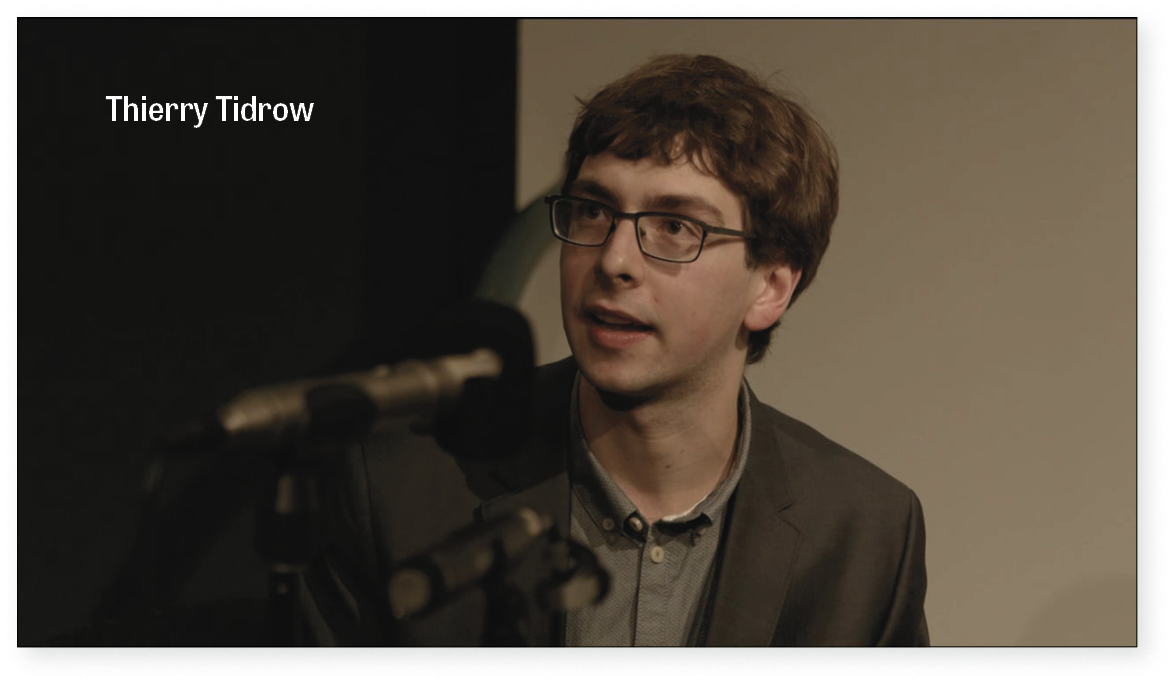
Continuum Contemporary Music begins their season on September 19 with their program “At the Seams.” On centre stage will be the awarding of the Jules Léger Prize to Thierry Tidrow for his composition Au fond du cloître humide commissioned by Continuum. The program will go on to feature world premieres by three other former Léger Prize winners: Chris Paul HarmanAndré Ristic and  Alec Hall. Rounding out the program will be a work for Gergory Oh by New York-based composer Caroline ShawEsprit Orchestra starts off with their “Con Brio” concert on October 4 with a newly commissioned work by Omar Daniel, a thriller inspired by the Nordic myth of the husband killer that uses Estonian folk idioms. The other Canadian composer represented on the program is Zosha Di Castri whose piece is treated as an evolving narrative recreating the sounds of a fictitious culture. Two other works by Jörg Widmann from Germany and Thomas Adès from England complete the theme of musically creating other worlds.

New_2_-_The_Visit.jpgThe Music Gallery season gets underway on September 25 with a program of contrasting cellos. The Visit, a group comprising cellist Raphael Weinroth-Browne and vocalist Heather Sita Black, will perform and launch their new CD Through Darkness Into Light. Europe-based Tristan Honsinger joins Montreal’s In The Sea, an improvising trio formed by Nicolas Caloia.  Honsinger has returned to his former home of Montreal where he got his start improvising more than 40 years ago to join up with the younger Montrealers of In the Sea.

Quick Picks:

September 19: Canadian Music Centre. ∆TENT New Music Ensemble. Tsurumoto and others.

September 21: “Hybridiana: Canadiana Music from the Modern Era.” Works by Somers, Palmer, Buczynski, Archer, Kunz, Lustig and Coulthard. Featuring Hybridity (Shaelyn Archibald, Daniel Wheeler, Emily Hill and Michael Bridge).

September 24: “Hogtown Brass at the CMC.” Music composed especially for brass quintet.

September 5: Music Gallery /Bicycle Opera Project. “Shadow Box.” Works by Thornborrow, Burge, Höstman, Rolfe, Burry, and others.

September 13: The Oratory. Missa Septem Dolorem. New composition for two sopranos and organ by music director Philip Fournier.

September 20: Shrinking Planet Productions. “Canadian Visionaries I.” Works by Schafer, Glick, Buczynski, Coulthard and Pentland.

September 25: Isabel Bader Centre for the Performing Arts. “New Music Kingston Series: Dynamic Percussion/Piano Duo,” Kingston.

October 4: Kitchener-Waterloo Chamber Music Society. “Moveable Feast.” Two Bach cello suites plus two newly commissioned works related to them. 

Wendalyn Bartley is a Toronto-based composer and electro-vocal sound artist. sounddreaming@gmail.com.
New-Element.jpgThere’s a big show coming to town in June – and it’s all about the apocalypse. The piece I’m referring to – Apocalypsis by Canadian composer R. Murray Schafer – is an epic work divided into two parts, the first being a dramatic retelling of John’s vision from the biblical Book of Revelation and the second a serene multi-choir Credo that leads the listener from chaos into order. The performance of this monumental work, which runs from June 26 to 28, has been taken on by the Luminato Festival and involves an interdisciplinary cast of 1,000. Originally performed in 1980 in London, Ontario, this version will be vastly different in its staging and artistic vision with all sorts of gender-bending happening with the main characters. What I will focus on in my column is the role of the Element Choir and its director Christine Duncan in this production.

I sat down with Christine to talk about Apocalypsis as well as other performances she and the choir will be involved in this summer. Christine defines the Element Choir as “an improvising choir that uses a sonic vocabulary based on a system of hand cues to create instant compositions.” In Apocalypsis the choir will perform the role of The Choir of the Lost which in the 1980 version was performed by drama students. “The choir was a perfect fit for this text-based role, as they are already very comfortable in moving freely in the world of sound texture and non-sung elements,” Duncan said. Their role functions like a Greek chorus, commenting, responding and reacting to the main drama. And even though choir members can utter the text however they like, the structure of both the timing and dynamics of their utterances is very specific, with word comprehensibility being key. This departs from the usual Element Choir practice which is usually “anything is possible.” Before the performance begins however, some members of the choir will be improvising and babbling bits of biblical texts in multiple languages in both the lobby and the hall.

The story of how the Element Choir came into being is fascinating and a testament to the creative and innovative spirit of both Duncan and her partner, drummer and recording producer Jean Martin. Back in 2006, Duncan and Martin were creating an album on the Montreal label Ambiances Magnétiques. For the release concert, Martin came up with the idea of putting together a group of singers to expand and support the voices of the CD’s vocal performers – Duncan and DB Boyko. It was a brilliant move, as this more choral element added possibilities for textural changes and polytonality, giving a counterpoint to the voices and percussion. Inspired by this experience, Duncan pursued her own research on how to develop an articulate vocabulary for an improvising choir. Rather than re-inventing the wheel, she studied the “conduction” methods used in the London Improvisers Orchestra as developed by Butch Morris, as well as picking up ideas from John Zorn’s Cobra, Anthony Braxton, Phil Minton’s Feral Choir and Sarah Weaver’s Soundpainting system. She consulted with various composers to get a better sense of which musical elements this language would need; and she studied different world music-based singing techniques. This wealth of material was workshopped with a volunteer choir in the original Somewhere There space and her own unique language and approach was born. It’s a language that is shared among the choir members, with new ideas for hand cues often coming from the singers. She also credits Jean Martin, who is constantly envisioning new ideas and directions for what is possible, with playing the strongest advisory role. However, Duncan adds, years before any of this began, it was Western Front’s DB Boyko (in Vancouver) who first introduced her to the idea of conducting a vocal improvising ensemble at one of the WF’s community block parties.

The Element Choir’s reputation and performing schedule continues to grow, and this summer’s schedule is no exception, particularly as part of the cultural activities surrounding the Pan Am Games. After the Apocalypsis performance, the choir is right back at it with their involvement in the Singing River project, an interdisciplinary site-specific piece directed by composer Juliet Palmer and her Urbanvessel company. Running on July 4 and 5, the piece is a Pan Am Path event that is all about restoring our relationship with the Wonscotonach (Don) River. Both the Element Choir and Christine Duncan are part of the core performers’ team, along with the TorQ Percussion Quartet. The choir has played a role in developing improv-based material for the piece through a series of community-based workshops with members of Native Earth’s emerging artists program Animikiig, street artist Roadsworth (who will be creating a stencil installation inspired by the improvisations on the Lower Don cycling path) and the Regent Park School of Music Youth Choirs. The project also includes audio installations by Palmer and sound artist Chris Willes and a vast array of interdisciplinary performers, workshops, talks and guided walks. Check out Urbanvessel’s website for all the details.

The second Pan Am-related performance by the Element Choir is with the explosive Tanya Tagaq on August 8 as part of Panamania and the free staged events at Nathan Philips Square. Creating her own unique style based on the traditional Inuk throat singing she grew up with in Nunavut, Tagaq recently won the Polaris Music Prize for her Animism album, stunning audiences with her performance on the awards night. And the Element Choir was right there backing her up, along with Jean Martin and violinist Jesse Zubot, who produced her album. For Duncan, folding the Element Choir into this sea of sound created by Tagaq and her two-man band was not too much of a stretch, as she has performed with Tagaq and knows the arc of her shows with Zubot and Martin. However, in this type of situation, the choir sounds need to be unified and simple, functioning more like a textural device for dramatic impact. Incidentally, Tagaq will be playing the role of the Old Woman in Schafer’s Apocalypsis.

For Duncan, the Element Choir project is all about creating and maintaining relationships, building community and fostering a safe and supportive environment. It offers a playing field for experimenting with a diverse range of sounds and morphing textures, while offering opportunities for choir members to improvise their own solos. She has increasingly found an open door of support for her aesthetic sensibilities and approach to the voice as an instrument in educational environments such as the jazz program at U of T. And at the heart of it all, she is continuing to cultivate improvisational strategies that are more refined, intentional and artful.

New-Krucker.jpgMore Singing Stories: This summer is turning out to be the season of new dramatic works for the voice in various configurations. Back in the April edition of The WholeNote, I wrote about singer Fides Krucker’s role in creating vocal improvisations for the dancers in Peggy Baker’s locus plot production. This summer, Krucker is presenting and performing in DIVE, a work of sonic theatre set within a cabaret-styled environment, running from July 30 to August 9 and created in collaboration with composer Nik Beeson. DIVE is based on a play by Richard Sanger, which is in turn derived from Giuseppe di Lampedusa’s short story The Professor and the Siren. I spoke to Beeson and Krucker about their collaboration which combines electroacoustic tracks with vocal improvisations. Krucker plays the role of the Mermaid, a character who is “perfectly divine and wild,” an elemental force who shifts into a series of different characters and scenes as she interacts with the two male actors. Her shapeshifting qualities allow for a variety of musical styles to be used throughout, including composed music inspired by Greek Rebetiko protest music, and the Mussolini-era fascist anthem known as the Giovinezza used in the startling aggressive opening. An intimate setting amongst tables enables Krucker to travel around the audience, at times singing gently into their ears while her character’s nonhuman nature embodies such elemental forces as a storm and the animal spirits of whale and wolf. Beeson’s electroacoustic score ranges from recorded instrumental sounds and synthesizer textures to the use of a collection of Harry Partch-inspired cloud bowls made from glass jugs. DIVE is a story that juxtaposes the terrifying forces of fascism with those of the wild, raw and at times equally overwhelming elements of nature, set within a human story of intimacy, regret and the desire for ecstatic union.

Speaking of storms and political power, How it Storms, an erotic opera composed by Allen Cole, will be performed on June 17 and 18 featuring the sounds of the Evergreen Club Contemporary Gamelan along with four operatic singers. The piece is inspired by a story from the Hindu epic The Mahabharata but set within Canada, with a female protagonist motivated by her desire to be free from patriarchal domination.

On June 13, the Music Gallery presents Fossegrimen,” a multi-stage event with three main sets that offer various takes on folklore, fairy tales and legend. Included are an opera composed by Chris Thornborrow based on the Grimm fairy tale The Moon, music by members of the fusion band Ensemble Polaris and the premiere of Elliot Cole’s Babinagar, a 20-minute work based on an Afghan folktale.

The final dramatically inspired new work which caught my eye in this summer’s season is Wendake/Huronia, composed by John Beckwith to mark the 400th anniversary of Champlain’s arrival in the southern Georgian Bay area. The concert on July 30 will feature the Toronto Consort, the Brookside Festival Chamber Choir and First Nations singers and drummers.

The Summer Festivals: After a long meandering walk through the voice-based performances of new works for this summer, it’s time to take a quick look at what’s happening at the various summer festivals. I promise you, this will be chronological, just to help with your planning.

Open Ears Festival (Kitchener): June 20 and 21

On June 20, Myaudia, a series of guerilla-styled sound interventions created by Peter Hatch, will take place in Kitchener’s Victoria Park, followed by the Open Ears Regatta with multiple musicians ringed around the civic square for listeners to drift between. On June 21, an offering of music/dance works with scores by Antoine Bédard, Justin Rutledge and Rodney Sharman, and improvisations by Lori Freedman.

Music Mondays (Toronto): June through August

A number of new works will be presented in this downtown Toronto series of lunchtime concerts. Here’s a summary lineup: a piano work by John Burge (June 8); composer and cellist Raphael Weinroth-Browne performing his own compositions (June 29); Jean Coulthard’s Image Astrale (July 6); works by Marjan Mozetich and Jack Behrens performed by Mary Kenedi (July 20); flute and piano works by Marchettini, Beaser and Schafer (July 27) and finally, a specially commissioned work for Music Mondays – Benedicite by Peter-Anthony Togni (August 24).

Ottawa International Chamber Music Festival: July/August

Interspersed amongst the festival concerts are the following premieres and new works: a performance by Dutch cellist, composer and improviser Ernst Reijseger (July 24); a remount of the mixed-media piece Illusions from the recent 21C Festival that intermingles new music by Canadian composers with Charles Ives’ enigmatic Piano Trio (July 26); a performance of James Rolfe’s contemporary masque Aeneas and Dido (July 27); the premiere of Andrew Staniland’s The Ocean is Full of its Own Collapse (July 29); and the performance of Czech composer Sylvie Bodorová’s Three Sonnets (August 2).

The festival also offers their regular six-concert New Music Now series on August 3 and 4. Composers represented in these concerts include Canadians Michael Oesterle, Paul Steenhuisen, Marc Sabat, Nicole Lizée, and Claude Vivier, along with internationally-based Nicolaou, Zorn, Rzewski and Birtwistle, among others.

Summer Music in the Garden (Toronto): July/August

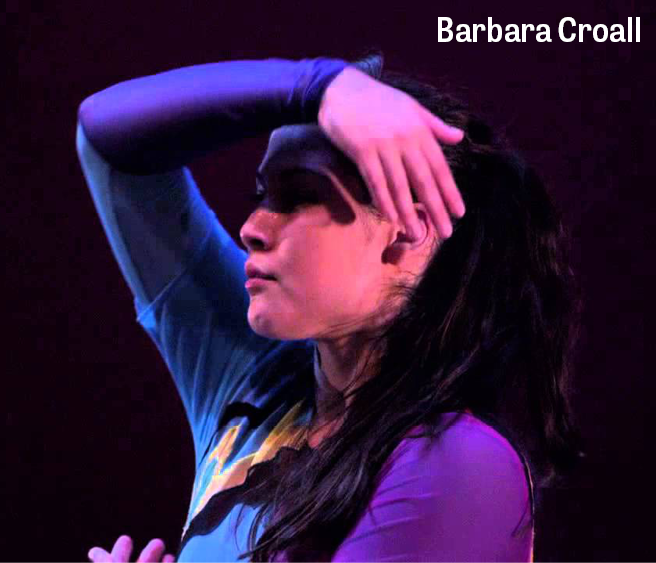
Down at Harbourfront’s Music Garden, the outdoor performances include composer Barbara Croall (Odawa) performing a new commissioned work for pipigwan, a type of cedar flute (July 2); newly commissioned works by Canadian composers Scott Godin and Isaiah Ceccarelli performed by Elinor Frey on her five-string cello (July 5); Toronto’s Ton Beau String Quartet performing Bill Rowson’s String Quartet No.1 (July 30); and the Blythwood Winds performing new works by Lau and Estacio (August 13).

Stratford Summer Music: August 7 to 9

R. Murray Schafer’s music is often featured at this festival and this year, audiences can enjoy three outdoor morning concerts from August 7 to 9 featuring works from his choral nature-themed repertoire works. On the evening of August 7, a number of professional choirs will join together to sing some of his more spiritually-based music within a specially choreographed setting at St. James Anglican Church.

QUICK PICKS

Improvised Music at Array Space:

June 9 and 27: Audiopollination

June 14: Somewhere There/Arraymusic: In Concert

June 19: Evoid Collective

June 28: Toronto Improvisers Orchestra

Canadian Music Centre:

June 4: Opus: Testing Workshop and Concert. Compositions created using sounds from the NASA Audio Archive.

June 11: Jacques Israelievitch/Christina Petrowska Quilico CD Launch, with works by Rolfe and Kulesha.

June 13: A Journey Inwards: Iranian-Canadian Composers of Toronto.

June 24: Elaine Keillor CD Launch. Works by Cardy, Morawetz, Weinzweig, Louie and E. Miller.

July 6: Gryphon Trio CD Release. Works by Current, Oesterle, Staniland and Wright.

July 24: Regent Park SongBook Premiere. Works by Gervais, Hamidi, LeBel and Daniel.

Additional Picks:

June 4, 6 and 7: Toronto Symphony Orchestra – John Adams’ Short Ride in a Fast Machine.

June 13 and 14: Toronto Symphony Orchestra – Gary Kulesha’s Torque.

June 17: Opera by Request – Tremblay’s A Chair in Love.

June 20: Rough Idea – Michael Snow and Ken Vandermark.

July 9: Music and Beyond Festival (Ottawa) – Voces8 concert including works by David Blackwell and John Tavener. 

Wendalyn Bartley is a Toronto-based composer and electro-vocal sound artist. sounddreaming@gmail.com.
In the end, listening and creating with sound is totally intertwined with the ear – that part of human anatomy that is always active. It’s not so easy to close our ears when we don’t want to hear something, unless we use earplugs or noise-cancelling headphones. In contrast, it’s relatively straightforward to shut out visual images – we just close our eyes. But just because we’re always hearing something, doesn’t necessarily mean we are actually listening. What happens when we are truly listening is complex, and the stakes can get really high when we’re exposed to sounds that are unusual, unfamiliar or even shocking.

2008_-_New_-_Skratch_and_Afiara.jpg21C: Starting from Skratch. This is exactly one of the driving forces behind the upcoming 21C Music Festival – to create opportunities for the presentation of courageous music, music that stretches the ear beyond what it’s used to. Now in its second year and presented by the Royal Conservatory of Music with its partners, the festival runs from May 20 to 24 and offers 60 works with 34 world, Canadian or Ontario premieres. One of the distinguishing features of this festival will be the bringing together of artists and creators from different genres and backgrounds to generate a lively onstage dialogue of new sounds and ideas.

One of the more fascinating collaborations of 21C is happening on May 23 between Afiara (the Royal Conservatory’s resident string quartet), four composers and DJ artist Skratch Bastid. Afiara violinist Timothy Kantor told me that at the heart of this combination is a meeting along the borders, a place that Bartók believed provided the most fertile ground for innovation. This particular meeting ground seeks to create a remix of what makes Toronto sound unique, given its unique cultural mix.

What is a Toronto sound? is the question under investigation. All four composers, each coming from their own distinctive backgrounds, were originally commissioned to write new works for string quartet that were influenced by popular styles. But what makes this project stand out is that things don’t stop there.

Each of the four pieces was then recorded and handed over to the renowned Maritimes-born, Toronto-based Bastid, who has created a worldwide following based on his versatility in different dance music styles and his capacity to always stretch himself in new directions. He remixed the string quartet recordings using all sorts of sounds, songs and genres as part of his response, including recording snippets of string sounds he needed from the Afiara members. To keep the musical conversation going, his remixes were then given back to the composers, who then created a new piece for string quintet in response. This step gave the composers an opportunity to listen to”the Bastid’s” sonic imaginings and then take specific ideas even further to create a live performance piece for the quartet and Bastid. All three stages of the process will be presented at the concert, so the audience can listen in to how the whole project developed. All twelve pieces will also be available on the upcoming CD Spin Cycle scheduled for release in mid-May.

21C: Saariaho. One of Europe’s leading composers, Finland’s Kaija Saariaho will be the featured artist this year, with five Canadian premieres of her works in two different concerts. Saariaho will also be involved as a mentor in Soundstreams’ week-long Emerging Composers Workshop with the final pieces performed as part of the festival. Saariaho’s music is distinctive for its ability to take the listener deep into the terrain of the subconscious through the use of sound colours or timbres. In an email correspondence I had with her recently, she talked about how different sounds, and the sounds of nature, as well as the acoustics of specific places, have always been important to her, beginning when she was a child. Her brilliance lies in how she has translated environmental sound, as well as aspects of human behaviour such as dreaming, into musical form. Because her sound palette encompasses both instrumental and electronically based sounds, she has devised ways of creating seamless connections and transformations between these two worlds.  Her approach is to use the results of a computer-based analysis of how specific sounds are constructed to create harmonic and timbral structures for her music.

You can hear how this alchemical mix of scientific analysis and creative imagination comes alive on the Koerner Hall stage on May 21 at 8pm. This concert includes three solo instrumental pieces as well as the North American premiere of her piano trio Light and Matter. Saariaho drew inspiration for it while watching the continuous transformation of the colours and light visible on the leaves and tree trunks in a nearby park outside her window. Her vocal work Grammaire des rêves (to be performed May 23 at 5pm) translates research on how our moving body affects our dreams into musical sounds and form. It will also be interesting to hear the results of her mentoring the four composers chosen to participate in Soundstreams’s Emerging Composers Workshop in the After Hours concert on May 22. Saariaho sees her role as encouraging composers “to search for their personal compositional voice, without trying to calculate what could be the most successful path to take.”

21C: At a Glance.Other collaborations that promise stimulating results include the opening 21C concert on May 20 which features a RCM-commissioned work from drum legend Stewart Copeland of The Police – a duet between himself and Canadian pianist Jon Kimura Parker. This work presents another approach to the remixing idea, with Copeland and pianist Kimura Parker combining their own pieces with renditions of the likes of Stravinsky, Prokofiev, Bach and Ravel. And yes, this theme of the mixing up of elements continues on May 22with the 70-minute multimedia work Illusions, which combines new compositions from three different composers (Nicole Lizée, Gabriel Dharmoo and Simon Martin), Ives’ Piano Trio and visuals (projections designed by Jacques Collin, a longtime associate of Robert Lepage).The festival concludes May 24 with a concert of music influenced by Latin American musical styles and rhythms presented in partnership with Soundstreams. Acclaimed guitar virtuosos Grisha Goryachev and Fabio Zanon, Argentine bandoneon player Héctor del Curto, Colombian singer María Mulata and pianist/composer Serouj Kradjian will be setting the tone on stage, along with two world premieres by Canadian composers Andrew Staniland and Mark Duggan.

Because the list of new premieres and featured performers is extensive, I recommend checking out the complete schedule for the festival.

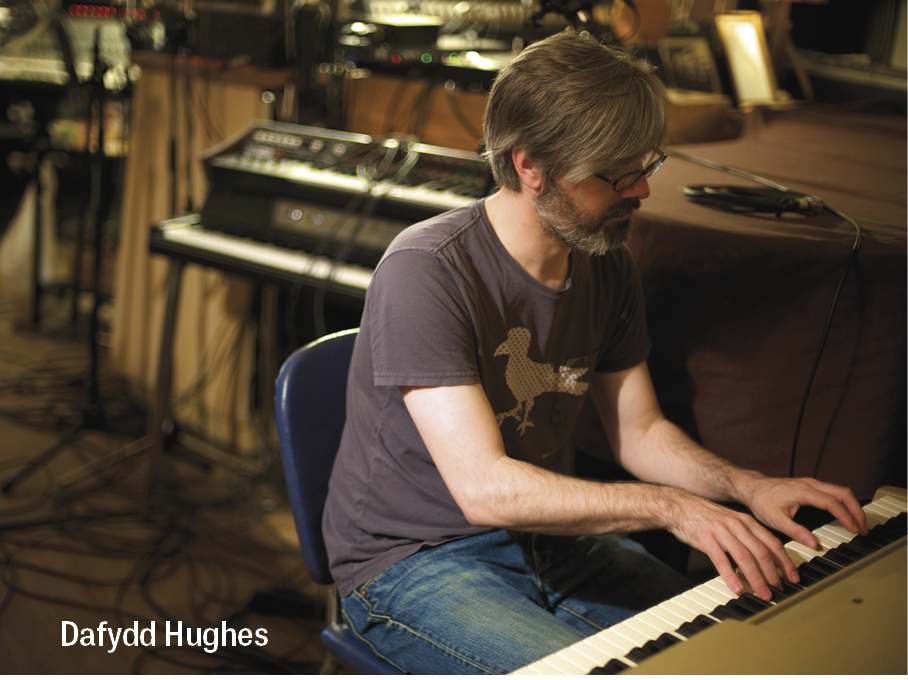
2008_-_New_-_Dafydd_Hughes.jpgSubtle Technologies Festival. Returning to this article’s opening theme of the human ear, it’s inspiring to see how the scientific world is expanding its reaches into sound. Now in its 18th season, this year’s Subtle Technologies six-day festival, “3rd Ear: Expanded Notions of Sound in Science and Art,” runs May 25 to 31. Combining speaker and panel sessions with performances in sound, music, film and other multidisciplinary works, the festival is exploring the mind- and body-altering properties of sound, including a look at how we can work with sound as a resource for better living and social progress. Toronto’s Continuum Music is a major partner in this endeavour, and will be hosting an evening of team collaborations on May 28 between leading Canadian composers, scientists and contemporary artists. An example of the nature of these collaborations is the piece titled Ice, an immersive mixed-media and sound installation created by media artist Fareena Chanda, composer Jimmie LeBlanc and scientist Stephen Morris. To experience the full sensory process of water slowly transforming into ice, audience members are invited to completely commit their mind and body to the installation space. Other musical performance events include an algorithm-based improvisation piece by Ian Jarvis, and a collaboration of computer music and live video projections with Dafydd Hughes and Rob Cruickshank on May 29. Other highlights include the participation of composer/performers Kathy Kennedy and Nicole Lizée. Again, I encourage you to check out the full listings for the complete lineup.

Other New Music concert and opera events:  May offers new listening ground for innovations in instrumental music and opera.

Tapestry Opera presents a new twist on the traditional Medea myth with a world premiere collaboration between librettist Marjorie Chan and Scottish composer John Harris. Presented at the revamped industrial space Evergreen Brick Works, M’dea Undone runs from May 26 to 29 and offers a gripping investigation into power, influence and identity for the 21st century.

Over at the Music Gallery, the Emergents series continues on May 8 with a concert curated by Ilana Waniuk from the Thin Edge New Music Collective. She offers us an evening that combines a new work by Icelandic cellist-composer Fjóla Evans and a performance by Architek Percussion. Evans’ piece combines Icelandic folk songs, found sound, extended cell, and rímur, a unique way of intoning poetry. Architek Percussion specializes in the performance of experimental, minimalist, multidisciplinary and electroacoustic chamber music.

The veteran New Music Concerts series winds up its concert season on May 17 with a concert curated by Montrealer Michel Gonneville who brings together the music of Henri Pousseur, with whom Gonneville studied in the 1970s, and other influential Belgian composers. One aspect of Pousseur’s legacy was the vision he had for composition – that it will need to go beyond the production of finished objects and move towards a process that is more collective in nature.

Improvisation and Beyond: Certainly the rise of improvisation embodies the spirit of collective creation, and Toronto is becoming increasingly known as a hub for such activities. In May alone, several events demonstrate this trend, many of which are happening at the Arraymusic space and are ongoing monthly events: Arraymusic Improv Sessions on May 5 and June 2, Somewhere There on May 10, Audio Pollination on May 12, coexisDance on May 16, eVoid on May 22, and Toronto Improvisers Orchestra on May 31. Other concert events at the Arraymusic space include a multimedia performance work by Linda Bouchard on May 8, a Martin Arnold Curated Concert on May 18, and the Toy Piano Composers performing with TorQ Percussion Quartet on May 23 and 24. The Arraymusic ensemble presents their own events this month as well: the “Cathy Lewis Sings” concert on May 4, the Arraymusic Ensemble in their fundraising concert on May 6 and the annual Young Composers’ Workshop Concert on May 30 featuring premieres of electronic works with original projections by OCAD students.

Over at the Canadian Music Centre, there are two piano-focused events this month: JunctQin Keyboard Collective with premieres from Canada and around the world on May 3; works by Fung, McIntyre and Murphy on May 13. More Canadian piano works are part of Adam Sherkin’s concert at the Jane Mallet Theatre on May 9, with works by Gougeon, Murphy, Coulthard, Eckhardt-Grammaté and Sherkin. And a special evening of improvisation making use of Gallery 345’s beautiful grand pianos happens on May 7 with Marilyn Lerner, Casey Sokol and others.

New in Choral: To close out this very busy month, I note several contemporary works included in a variety of choral concerts:

May 4: Elmer Iseler Singers: Canadian and international composers.

May 9: Bell’Arte Singers: Hatfield, Somers, Sirett and others.

May 9: Orpheus Choir of Toronto: Enns and Gjeilo.

May 24: Oriana Women’s Choir: Luengen, Chan Ka Nin, Freedman, Healey.

May 29: Exultate Chamber Singers: Henderson, Enns, Somers, Freedman, Healey.

Wendalyn Bartley is a Toronto-based composer and electro-vocal sound artist. sounddreaming@gmail.com.
2007-New-Farah.jpgPart of what makes writing this In with the New column so stimulating for me is getting a front row seat on what exactly is defined as new moment by moment in the midst of our information-saturated and cross-pollinated culture. It’s an absorbing challenge. If you’ve been following this column for a while, you’ll recall an earlier discussion here, about the Music Gallery’s XAvant series, that focussed on how to define the current impetus to combine influences and genres within music. The XAvant series, each fall, has presented music that highlights wildly diverse ways in which various musicians and artists have created their own version of this trend, and how various descriptive words and labels, such as urban abstract music or transculturalism arise to define this music. (As part of the XAvant series in the fall of 2013, a talk was even given on the movement towards going beyond traditional categories and identifying music as genreless.) It is through festivals such as XAvant that we are given the opportunity to encounter all at once numbers of artists with unique takes on this phenomenon – get to taste from the whole menu of what’s cooking in this area.

This month we get to see what happens when you combine musicians who are exploring these edges in their own individual work, and mix in an insatiably curious creator who works in another art form. In Toronto-based choreographer and dancer Peggy Baker’s latest work, locus plot, which runs from April 24 to May 3, we get a glimpse of what is possible when this happens. Through my conversations with the two musical creators of this piece, composer John Farah and vocalographer Fides Krucker, it became evident that this collaboration is creating something beyond what we normally think of as interdisciplinary or even music for dance. Something expanding beyond what even interdisciplinary might imply.

As a composer and pianist, Farah has been working with Baker for the last few years. As she became more familiar with the breadth of his compositional style, she began planning ahead to create a piece that would make “full use of him, and allow him to pull out all the stops,” as Farah describes it. What makes Farah’s work unique is the way in which he combines quite disparate styles and sound sources to create his own signature sound palette. A true creator of genreless music, you could say. To give you a more detailed overview of his style, I refer you to a review of his most recent album Between Carthage and Rome published in The WholeNote’s February issue. It turns out that these qualities of Farah’s music were exactly what Baker wanted from him – to use all parts of his toolbox in wrestling with how to co-exist musically with both Baker’s dance and the vocal soundscore created by Krucker.

Farah’s main musical pillars for the piece include what he calls sound sculpture (or electroacoustics) created through a circuitry of electronic software-based effects and processors alongside synthesizer sounds; also quasi-tonal and modal minimalist piano music; highly rhythmical beat-oriented electronics; prepared piano John Cage style; and elements of improvisation. Part of the challenge for Farah was to create a large-scale work where all these quite different components come together to create an artistic whole that makes sense for the listener.

The result is not a series of movements that stop and start, but rather a continually evolving piece that Farah himself performs throughout. For example, at one point in the piece there is music for electronic drums that has a definite rhythmical beat, which then changes into an atmospheric electronic sound with no specific pitch that floats for four minutes before developing into a solo piano part that is mic’d and processed using different effects in the computer.

Work on the piece began with a math lesson by mathematician and playwright John Mighton, hence the word locus in the title. Locus is a math term referring to a set of points plotted in space to create different shapes such as a parabola or circle. During the performance a series of Mighton’s original drawings, diagrams and notes is projected onto the back screen, which helps the audience make the connection. Before any of the music was composed, Farah thought that the math focus would mean his music would be primarily complex rhythms, but that hasn’t necessarily happened. In fact, Baker has encouraged him to follow his impulses upon seeing what the dancers are doing, which at times has meant that the music he intuitively wants to compose creates a contrasting accompaniment to the dancer’s movements.

One example of this occurs in the first 12 minutes of the piece. As the composer describes it, “the dancers are doing what appears to be a strange type of square dance where they look at each other, then switch places, look at each other again, and switch places again. What you see is the constant creation of geometrical forms. Each time the way in which they switch places is different, so you’re watching the same thing happening with endless permutations. I began with music that I thought I should compose – something rhythmical to match the movements of the dancers, but it turned out that’s not what Peggy wanted. I ended up with something that just floats and sits there, using drones and minimalist piano patterns with reverb and delays. It’s something I never would have done normally if it wasn’t for the type of freedom that this piece allows me. It’s a freedom within certain constraints.”

2007-New-Baker_and_Burashko.jpgIt may seem that Farah’s full toolbox of musical possibilities interacting with Baker’s choreography would make for a complete work. But that was not all that Baker had in mind for the piece. Something had stirred in her creative mind as a result of working with music designer and vocalist Krucker on Baker’s piece land / body / breath. In this work, the soundscape of folk songs that Krucker and singing partner Ciara Adams were performing was expanded to include various sounds of bird songs and calls performed by the dancers. This made such an impression on Baker that when Krucker showed up for her initial meetings to work as dramaturge on locus plot, Baker asked: “What sounds do you want the dancers to make?” Thus a surprised and delighted Krucker became the vocalographer of the piece, a term Baker created to describe her role.

Krucker’s approach to the voice has been rigorously and expertly cultivated over many years, incorporating both the traditional bel canto style along with the body/breath extended sound approach of the Roy Hart tradition. In February’s WholeNote, I wrote about Barbara Hannigan, another singer who combines these two traditions. Paying attention to how a sound is made in the body has become Krucker’s primary way of working, both as a vocal performer of contemporary music and as a teacher and mentor of voice practice. So it’s completely natural that she would approach working on locus plot from this perspective of embodied sound.

Upon seeing what the dancers were doing with their bodies, she imagined what she would do vocally if she were capable of doing that particular movement. She then translated her sounds into ones the dancers would feel comfortable making within their skill set. A series of tightly scripted improvisations were then set up, connecting specific movements with qualities or textures of sound and experimenting with how one sound interacts with another. Some sounds are quite quiet, and others very loud and extended, encompassing a range of sounds that we often equate with the emotional states of “sad, mad and glad.” In the end, the dancers are making sound more than 50 per cent of the time resulting in an extensive nonverbal voice score. This way of working has also sparked Baker’s creativity. “Because she is so used to looking at movement, there’s something obvious about it for her,” says Krucker. “But as soon as the dancers are having to breathe in a certain way to make the sounds, all of a sudden it engages her in a very different way.”

One interesting feature Krucker noted in our conversation was that because the point of departure for the piece is based on math formulas, it creates an ambiguity as to who the dancers are in relation to each other. “We never need to know if those two men are lovers, or brothers for example, even though specific feelings in the body can still arise.” The piece is not just about love or other common human experiences that are the usual focus of staged works, although all sorts of human stories could be made out of what we see and hear.

The challenges of a three-way collaboration with two musical creators are met because of Baker’s respect for everyone’s contribution and creativity. To balance the two soundworlds of musical score and the more vulnerable vocal sounds of the dancers requires an attentive adjustment of timing, tone and volume. The result of this alchemy of ingredients is, in Krucker’s words, “something that feels holistic, and also very new. It’s a complete melding of art forms, beyond being interdisciplinary, in a very practical, three-dimensional flesh and bones way, and this weaving is completely held in the dancers’ bodies.”

One might wonder too, how much of the math legacy was left after being filtered through the creative artistic process. But after watching a rehearsal, Mighton was beaming and reflected that it was a deeply satisfying meditation during which he was able to feel and hear the math in it all. I suggest that witnessing this weaving and melding of elements and forms be high on your priority list for the end of the month.

Music Gallery Events: Continuing on with the Music Gallery’s tradition of presenting hybrid style artists, they team up with Contact Contemporary Music to perform Professor Bad Trip on April 18. This work, in three sections, is written for 11 instruments and electronics and combines techno, psychedelic rock and spectral techniques. It’s described as the Doors meet Pierre Boulez, with the Doors definitely winning out. Written by the late Italian composer Fausto Romitelli, this piece has created a cult following with its appealing mix of hypnotic ritual-like repetitions while riding the wave between order and chaos. His work is seen as having a major influence on a whole generation of younger composers. The evening also includes The Michael Eckert Large Earth Ensemble, who combine elements from various world cultures with classic rock guitar and synth sounds. For rock and roll fans who like an experimental edge to their music, this entire evening is not to be missed. Other Music Gallery events in April include British improvised music masters Trevor Watts and Veryan Weston on April 24; and the Blythwood Winds present their “Hogtown Roundup” concert featuring three world premieres by Toronto composers Barnes, Rowson and Lau on April 13.

John Tavener: One of Britain’s most distinguished liturgically inspired composers Sir John Tavener will be honoured by Soundstreams in a concert on April 16 to commemorate his passing in 2013. Tavener’s Song for Athene, performed at the funeral of Princess Diana, exemplifies the skill of this composer who knew how to create contemporary works that were accessible to many. Tavener wrote over 30 works for British soprano Patricia Rozario, who will be performing four of them in the Toronto concert along with Choir 21 and the Toronto Children’s Chorus. Christos Hatzis (Canada), Jonathan Harvey (Britain), and Vanraj Bhatia (India), all of whom create music that expresses a spiritual dimension, will also be represented in the program. Tavener’s The Lamb is part of a Mooredale Concerts event on April 12 that features the Dublin Guitar Quartet and also includes compositions by Philip Glass, György Ligeti and Leo Brouwer.

Infiltration! This month also offers several opportunities for concertgoers of classical and baroque music to hear premieres of new Canadian works. Here’s a listing of these events:

The Toronto Symphony Orchestra premieres Ararat by Mychael Danna, which is a newly created suite of music from the soundtrack originally written for Atom Egoyan’s film by the same name. April 22.

Tafelmusik premieres a newly commissioned work entitled “Snow White” by Michael Oesterle in their concert entitled Baroque Misbehaving. The concerts run from April 23 to 28.

Sinfonia Toronto performs Alice Ho’s “Mira for Violin and Orchestra” on May 2.

Syrinx Concerts Toronto presents Sofya Gubyak performing Jean Coulthard’s Piano Sonata No.2 on May 3.

Women’s Musical Club of Toronto presents a world premiere by Christopher Mayo, a WMCT commission, performed by the piano quartet Ensemble Made In Canada May 7.

In With The New (Briefly):And finally, a listing of other concerts of new music happening in Toronto and beyond:

New Music Concerts: The Ukrainian-Canadian Connection, with dompositions by Silvestrov, Pauk, Pidgorna, Kulesha, Tsepkolenko, April 4. (see my March WholeNote column for more details).

Canadian Music Centre: Amarok Ensemble performs works by Morlock and Murphy, April 14.

Kitchener-Waterloo Chamber Music Society presents the Penderecki String Quartet in a concert of Serbian and Croation Chamber Works, with works by Katarina Čurčin, Michael Pepa, Norbert Palej, and Sanja Drakulić, April 15.

Sara Constant concert, with works by Denisov, Lutosławski:, Meijering, Stockhausen, and Tanabe, April 24.

Music Gallery at Arraymusic: Tim Berne’s Snakeoil plus Barnyard Drama, April 29.

Royal Conservatory:Glenn Gould School New Music Ensemble performing works by Canadian composers Alexina Louie and Andre Ristic, and others. April 30.

JunctQin Keyboard Collective performs works for piano solo, piano six hands, toy piano, melodica and electronics, including a premiere by Jason Doell, winner of the 2014 Emerging Composer Award, May 3. 

Wendalyn Bartley is a Toronto-based composer and electro-vocal sound artist. sounddreaming@gmail.com.
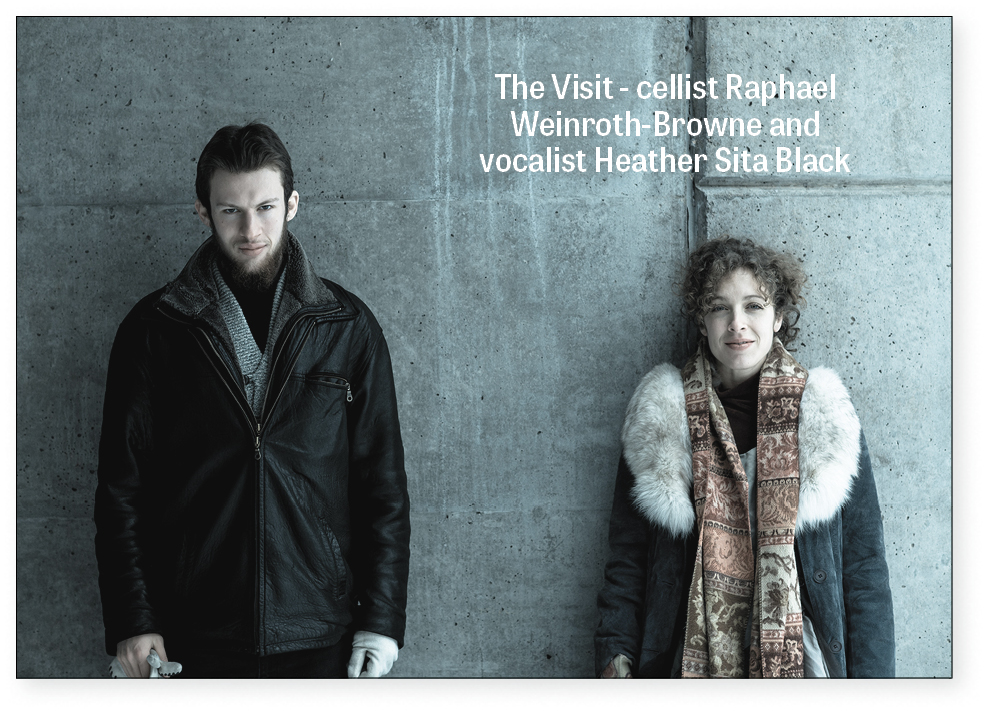
2006-New-Ryan_Scott.jpgAs we sit here in late February waiting for spring to show its face, you could say that we’re waiting for a change to happen, a change that we know from past experience will eventually occur, although there are not many signs of it currently visible. Spring’s emergence is of a particular kind – from one known state to another, by a process of predictable transformation. But sometimes things that emerge come from an unknown place of obscurity into an unpredictable prominence.

In the world of contemporary music (as elsewhere in the arts) the idea of emergence is often bandied about – as in the phrase “emerging composer” or “emerging artist.” As such it is often used to help define funding structures and award guidelines. The distinction being drawn seems to be between those who are emerging and those who have been around for a while – the established ones. Often in our minds, the word becomes synonymous or interchangeable with being young and just starting to make one’s way in life.

Not necessarily so, according to two presenters/curators I spoke to recently: Ryan Scott, current artistic director of Continuum Music, and Christopher Willes, curator of the Music Gallery’s March concert in the Emergents Series.

Continuum: In the life of Continuum Music, this season is special; they are celebrating 30 years of existence, having formed in 1985. At the beginning, Continuum was a collective of composers and performers with associations to the University of Toronto’s Faculty of Music. As emerging musicians they were frustrated with the lack of opportunity to hear and present the new works they were composing or interested in performing. So, as an act of rebellion, they formed Continuum Music. The list of those initially involved in the first few years is an impressive one; many of them are still making waves in the new music world.

One of those early rebels was flutist Jennifer Waring, who went on to become Continuum’s artistic director for the next 29 years. Under her guidance, Continuum has become a major presenter and performing ensemble of new music, commissioning over 100 new works, engaging in touring and recording opportunities and developing interdisciplinary and educational projects. One of her signature contributions was establishing a strong connection with composers and performers in the Netherlands, resulting in a festival of Dutch and Canadian music, film, literature and visual arts in 2008/09 and an ongoing relationship with many Dutch composers. Another early member was Barbara Hannigan, who appeared on the cover of last month’s WholeNote. It’s clear that Hannigan’s continual commitment to being an ambassador for new and original repertoire was seeded in those early heady days of her involvement with Continuum.

Percussionist Ryan Scott has also had a long association with the organization – initially as a performer, and now taking over as artistic director. This year’s anniversary concert, “30 More!,” on March 8 is a program entirely curated by Scott and showcases the spirit that lies at the heart of Continuum’s mandate. Combining the works of UK-based seasoned composers Richard Ayres and Joe Cutler, the very young and unknown Turkish composer Mithatcan Öcal and two Torontonians,  Anna Höstman and Jason Doell, Scott has created a program that amplifies Continuum’s rebellious roots.

When asked about what is important for him in selecting works for programming, Scott told me that “as artistic director, I search out composers who are experimentalists by nature, who are committed to pushing boundaries and are searching for something different with each new piece rather than relying on a seasoned bag of tricks. You can find these types of composers at any level – emerging or established.”

 Interestingly, Doell and Höstman are both recent recipients of Toronto’s Emerging Composer Award (2013 and 2014 respectively). Scott points out that although they are both considered emerging, they are actually people who are not so young in life but entered into composition after engaging with other interests and commitments. That process results in a different kind of emergent creative voice, one already informed by life experience. Fittingly, the Toronto award is not defined by age, but open to anyone who takes up composing at whatever stage of life.

Doell was commissioned to write a new work for this concert after Scott heard him perform on his percussion installation during last year’s Emergents Series at the Music Gallery; the selection of Höstman’s piece was inspired by the brilliant performance given last season by ensemble pianist Laurent Philippe in Continuum’s presentation of Höstman’s Singing the Earth.

As for the other works on the March 8 program, Scott defines Richard Ayres’ music as zany, off the wall and creating unusual combinations of sounds. Joe Cutler’s music is intriguing for its continual surprises, taking the listener onto an unanticipated path. And as a twist on the “emerging” theme, the music of the 22-year-old Öcal has a maturity and hyper–complexity to it that Scott finds shockingly brilliant.

Another aspect of Continuum’s 30-year legacy is the commitment to educating the younger generation. Following closely on the heels of their anniversary celebration is a concert on March 31 that features the compositions of students from across the GTA. This project is a collaboration between Continuum, Toronto District School Board music education advocate Doug Friesen and composer Christopher Thornborrow. The student scores are initially created in a software designed for intuitive and creative decision-making. Thornborrow then takes these pieces and arranges them for the instrumentation of the Continuum ensemble. These professionals then become the principals in a larger ensemble made up of student performers which performs all the selected pieces at a public concert. This program has received strong support at multiple levels, and is pioneering a new way of introducing the creative process of music-making to the younger generation.

2006-New-Johnathan_Adjemian.jpgEmergents at the Gallery: One of the major opportunities for the emerging creative voice has been the Emergents Series at the Music Gallery. Each concert in the series is curated by someone whose own work was presented during the previous Music Gallery season. The March 19 concert has been programmed by Christopher Willes whose own work explores ideas of the spatialization of sound. His choice of artists – Geoff Mullen and Jonathan Adjemian – indicates that he too has a distinctive take on what constitutes an emerging artistic voice. Both Mullen and Adjemian are individuals who’ve actually been practising artists for some time now, but have recently changed direction and begun exploring new materials and approaches to working with sound. For Willes, this qualifies them as emergents.

Mullen’s work expands the idea of site-specific work while simultaneously challenging and re-evaluating the idea of composing to include new ways of hearing and listening. A week prior to the concert, Mullen will begin work in the Music Gallery space, setting it up somewhat like an audio installation and using old recordings from the Music Gallery label as sound sources. It will be an experimental process, placing sounds in the space and observing what happens to both. The installation however will not be static; Mullen himself will be animating the space through his own improvisations and interaction with the recordings. When the audience arrives, Mullen will be continuing his week-long process, with audience members witnessing what is occurring at that moment in time. Willes describes Mullen’s way of working as “site-responsive,” achieved in part by turning the microphone in on itself. The acoustics of the space itself play a significant role in what one hears, and by using the recorded sounds of the gallery’s history, the early spaces of the Music Gallery (St. Patrick Street and Queen/Dovercourt) are brought into the present. Everyone will be listening to the final results.

Adjemian’s interest with sonic materials focuses on text, language and perception in combination with live electronics. Coming from a theatre and philosophy background, he will use actors and dancers as speaking voices in his new piece created for this concert. The result will be a constant wash of text that will collide and rebound with the creation of sound waves and difference tones coming from the electronic instruments as well as being generated through software. His interest in difference tones, which are like phantom or ghost sounds that occur when two tones are sounded simultaneously, was inspired by U.S. composer Maryanne Amacher who loved to create novel acoustic events that could even make you lose your balance. We’ll have to wait until March 19 to experience the outcome of Adjemian’s sound experiments.

To wrap up this discussion of what constitutes an emerging artist, I’d like to give the last words to futurist author and visionary Barbara Marx Hubbard who spins the idea somewhat differently. Not only does the term refer to new turns on the life cycle or the taking up of a different direction, she states that “we are all emerging into what we are becoming.”

New Music Concerts: An inspiring co-presentation on March 14 between New Music Concerts and Organix, a local presenter of organ music, will bring together German percussionist Olaf Tzschoppe, who plays with the legendary Les Percussions de Strasbourg, and Hungarian organist Zsigmond Szathmáry. The concert comprises an evening of music composed by six different European composers including a piece by each of the two performers. It’s rare to hear the organ within a new music context, and in this concert, the organ from the Church of the Holy Trinity will be on display. The concert will repeat on March 15 at St. Cuthbert’s Anglican in Oakville.

Next up after that in the NMC season will be an April 4 concert exploring the Ukrainian-Canadian connection with works by three Ukrainian composers and two Canadians – Esprit’s Alex Pauk and Gary Kulesha. The Ukrainian composers include Karmella Tsepkolenko, a prolific composer and festival organizer in her native country, and a newly commissioned work from Anna Pidgorna, a Ukrainian-born, Canadian-raised composer and media artist. Featured soloist on the program is soprano Ilana Zarankin who will premiere a new oratorio by Tsepkolenko.

2006-New-Andrew_Staniland.jpgEsprit: The March 29th concert by Esprit Orchestra’s, with guest soloist Stephen Sitarski on violin, will be the last of their season. The prgram creates an intriguing dialogue between music and science-inspired ideas. For example, the world premiere of Andrew Staniland’s Vast Machine creates a sonic version of the Large Hadron Collider particle accelerator, the largest single machine in the world, located in a tunnel beneath the Franco-Swiss border. Scott Good’s world premiere of Resonance Unfolding 2 digs into the realm of spectral composition, an aesthetic that focuses more on timbre than melody, and how sound evolves over time. This idea of continuous transformation is also the focus of Color by French composer Marc-André Dalbavie. The program is rounded out by a piece by Chinese composer Xiaogang Ye.

Quick Picks:
Canadian Music Centre Presentations:
Mar 13: Portrait of a Pioneer: The Vocal Music of Jean Coulthard.
Mar 14: JUNO Awards Classical Nominees’ Showcase. (in Hamilton)
Mar 27: “Baroque Meets Modern in The True North!” Works by Gougeon, Dawson, Arcuri, Manzon and others.
Others:
Mar 1 & 10: Audiopollination
Mar 4 & 7: New Creations Festival, Toronto Symphony Orchestra.
Mar 6: TorQ: Music by Steve Reich, Louis Andriessen and Jamie Drake.
Mar 7-8: DaCapo Chamber Choir: Concert includes the 2014 NewWorks winning composition.
Mar 21: “Hands, Fists, Arms” – a program featuring solo piano works by Cowell, Lachenmann, Ristic, Saunders, and Ustvolskaya – performed by Stephanie Chua at 8pm at the Music Gallery [Not in the Listings]. For more information visit musicgallery.org..
Mar 27: Philip Thomas premieres piano works by Skempton, Wolff and Finnissy.
Mar 27: Maureen Batt. Crossing Borders: A Celebration of New Music from New Mexico to Nova Scotia.
Mar 29: Toronto Improvisers’ Orchestra

Wendalyn Bartley is a Toronto based composer and electro-vocal sound artist. sounddreaming@gmail.com

2005_-_Beat_-_New_-_George_Benjamin.pngEven though the temperatures are still fairly frosty this month, adventuring outside to take in some of the hot new creations and sonic explosions will be sure to warm you right up. It’s that time of year again when the Toronto Symphony offers up its annual festival of New Creations, which regularly features the works of a specific composer. This year, that composer is George Benjamin from Britain, who will also be conducting in the three festival concerts on February 28, March 3 and March 7. This year’s festival is also highlighting soprano Barbara Hannigan, widely acclaimed for her impeccable performance of contemporary music. For the full scope of Hannigan’s musicality and her contribution to the festival, check out the cover story.

Back in his teens, Benjamin was fortunate to have been one of Olivier Messiaen’s last pupils, and by the time he was 20, he was seen as one of the brightest stars in British contemporary music. His compositions are full of sensuous colours that breathe an air of newness, all the while containing the fluency of earlier musical languages. And despite the resulting fluidity, when asked how he begins creating a new piece, his answer is a surprising “with confusion. The clarity of sound and form I desire can take many months to attain.” Festivalgoers will have an opportunity to hear this for themselves in his two works: Duet for Piano and Orchestra (2008) and A Mind of Winter (1981) one of his earlier works. His compositions enjoy a popular following in Britain and in Europe, yet nothing prepared audiences for the emotionally raw intensity of his opera Written on Skin, which premiered in France at the Aix-en-Provence Festival in 2012. Seen as a watershed work for not only Benjamin but also for British opera as a whole, this work combines cannibalism, suicide, sex and murder. In the festival we will hear the opera-in-concert version with some of the original cast, including Hannigan who performs the role of Agnès.

This year’s festivalgoers also have an opportunity to hear works by two composers not so well known in Toronto – Dai Fujikura from the U.K. and Hans Abrahamsen from Denmark. Fujikura, originally from Osaka, Japan and a former student of Benjamin’s in the UK, brings his passion for the Venezuelan El Sistema music education project into his composition Tocar y Luchar (2011).  Receiving its Canadian première at the festival, the title means “to play and to fight.” This practice is part of the El Sistema program that provides opportunities for children to perform and compose music as a way of helping them cope with difficult living situations. Hans Abrahamsen’s let me tell you, an orchestral song cycle composed in 2013, is a project initiated by soprano Barbara Hannigan and uses the text of a novel by the same name by Paul Griffiths. The orchestral music breathes an air of mystique with its glistening textures, while the voice soars into the upper limits of the soprano range.

The Toronto Symphony will also be performing the world premieres of two festival commissions by Canadian composers Chris Paul Harman and Vivian Fung. Harman’s piece Lieder und Arien (performed March 3), draws on music published in the appendix of Bach’s 371 harmonized chorales. The resulting composition is a series of musical episodes created by moulding and shaping the original sources into a new being that may or may not be recognizable. Vivian Fung’s work, Of Snow and Ice, to be performed on the February 28 “A Mind of Winter” concert, is a violin concerto written for the TSO’s concertmaster Jonathan Crow. Fung’s piece is one continuous movement in five sections and is inspired by recent nostalgic thoughts of her childhood growing up with the harsh but beautiful winters of Alberta.

Whispering and Raging: Given our increasingly moment-by-moment dependency on the internet, I’m sure most readers can relate to the notion that there are some things we’re comfortable revealing about ourselves online, and yet in person, we would never expose those same things. This contemporary reality is what forms the backbone of New York composer David Lang’s the whisper opera being presented by Soundstreams from February 26 to March 1. With a libretto assembled from search-engine responses to intimate key words and phrases, the performance is structured in such a way that only an audience of 52 people can experience it live. Lang’s intent is to highlight the contradiction between our collective outrage over government surveillance as exposed by people like Edward Snowden, and our acceptance of how advertisers have free access to our personal online activity. The work calls for intense listening skills on the part of the audience, as the singer and musicians are playing and speaking so softly that you can only fully perceive the sounds as each performer passes you by. What one person hears will be quite different from what another experiences sitting elsewhere in the room.

The opera is performed by members of the International Contemporary Ensemble (ICE), a New York-based modular-like ensemble with up to 35 participating musicians. The ensemble not only performs works, but is also dedicated to presenting concerts that help promote a greater awareness and understanding of innovative musical practices. During their stay in Toronto, they will be performing a concert of pieces on February 28 selected to showcase the extensive range and depth of contemporary music written from the 1960s to the present day. The concert will include pieces by Pauline Oliveros, Michael Finnissy and Mark Applebaum.

In stark contrast to the quiet and intimate setting of the whisper opera, the Thin Edge New Music Collective from Toronto and Ensemble Paramirabo from Montreal are joining forces on February 19 to present an evening full of sound and driving rhythms. It’s a rare opportunity to hear music from two of the giants of minimalism: Steve Reich’s Pulitzer Prize-winning Double Sextet alongside Louis Andriessen’s politically charged Workers Union. Presented at the Music Gallery, the evening is titled “Raging Against the Machine” and is an expression of the challenges artists are currently facing in Canada. The evening will also include premieres of works by Brian Harman, Anna Höstman, and Patrick Giguère. And to make sure the message is heard across the country, the two ensembles will be presenting this concert in Edmonton, Calgary, Winnipeg, Vancouver and Victoria.

The intensity will continue on March 6 when the TorQ percussion ensemble takes its turn at the Music Gallery space. It seems that the energy created by pairing Reich and Andriessen is in the air in early 2015. In this concert it will be Reich’s Sextet as well as a sextet version of Andriessen’s Workers Union that will be performed by the four members of TorQ and pianists Greg Oh and Wesley Shen. A new work by TorQ’s own Jamie Drake will complete the program.

China and Canada: In the previous issue of WholeNote, I wrote about the upcoming new music festival presented by U of T’s Faculty of Music which pairs music by composers from China and Canada. As a reminder, this series of concerts and lectures runs throughout the first week of February, with the final program on February 8. But another opportunity to hear and compare music from these two distinct countries occurs on February 14. The New Music Concerts program titled “New Works from East and West” presents a unique evening of five world premieres, all commissioned by NMC from both Chinese and Canadian composers. Canadians Adam Scime, Laurie Radford, and Norbert Palej (who is also the main organizer of the U of T festival) have each written pieces for soprano Stacie Dunlop, a passionate performer and commissioner of contemporary music. Dunlop will be joined by members of the NMC Ensemble and in Scime’s piece, by violinist Véronique Mathieu. The Chinese composers Fuhong Shi and Yan Qiao Wang have written their pieces for virtuoso pipa player Lan Weiwei from Beijing. The pipa is a plucked string instrument on which Lan performs both traditional Chinese and contemporary orchestral and chamber music.

To wrap up this month, I want to add a quick heads up for two concerts just on the edge of the listings period for this issue. On February 7, Spectrum Music presents “Starry Night,” a concert dedicated to exploring the mysteries of the cosmos through music, projections and immersive staging. And on March 8, Continuum Contemporary Music continues to celebrate their 30th anniversary season with British radicals Richard Ayres and Joe Cutler, 22-year-old Turkish wunderkind Mithatcan Öcal and works by Anna Höstman and Jason Doell.

Additional Listings:

Canadian Music Centre: Feb 13 “Prelude to Brocade” and Feb 15 “Brocade.” Works by Ceccarelli (Montreal) and L.S. Smith performed by the rocKeys duo on piano and harpsichord.

Canadian Opera Company: Feb 24 Vocal Series includes a performance of Schoenberg’s String Quartet No.2 with soprano Barbara Hannigan.

Scarborough Philharmonic Orchestra: Feb 21 “A Canadian Panorama for Winds” features compositions by Cable, Eddington and Royer, and premieres by Meyer and Rapoport.

DaCapo Chamber Choir, Kitchener: Mar 7 “O Earth, Return” features the 2014 New Works-winning composition, Mathew Emery’s Night on a Starry Hill and works by Jonathan Dove and Arvo Pärt.

Wendalyn Bartley is a Toronto based composer and electro-vocal sound artist. sounddreaming@gmail.com.
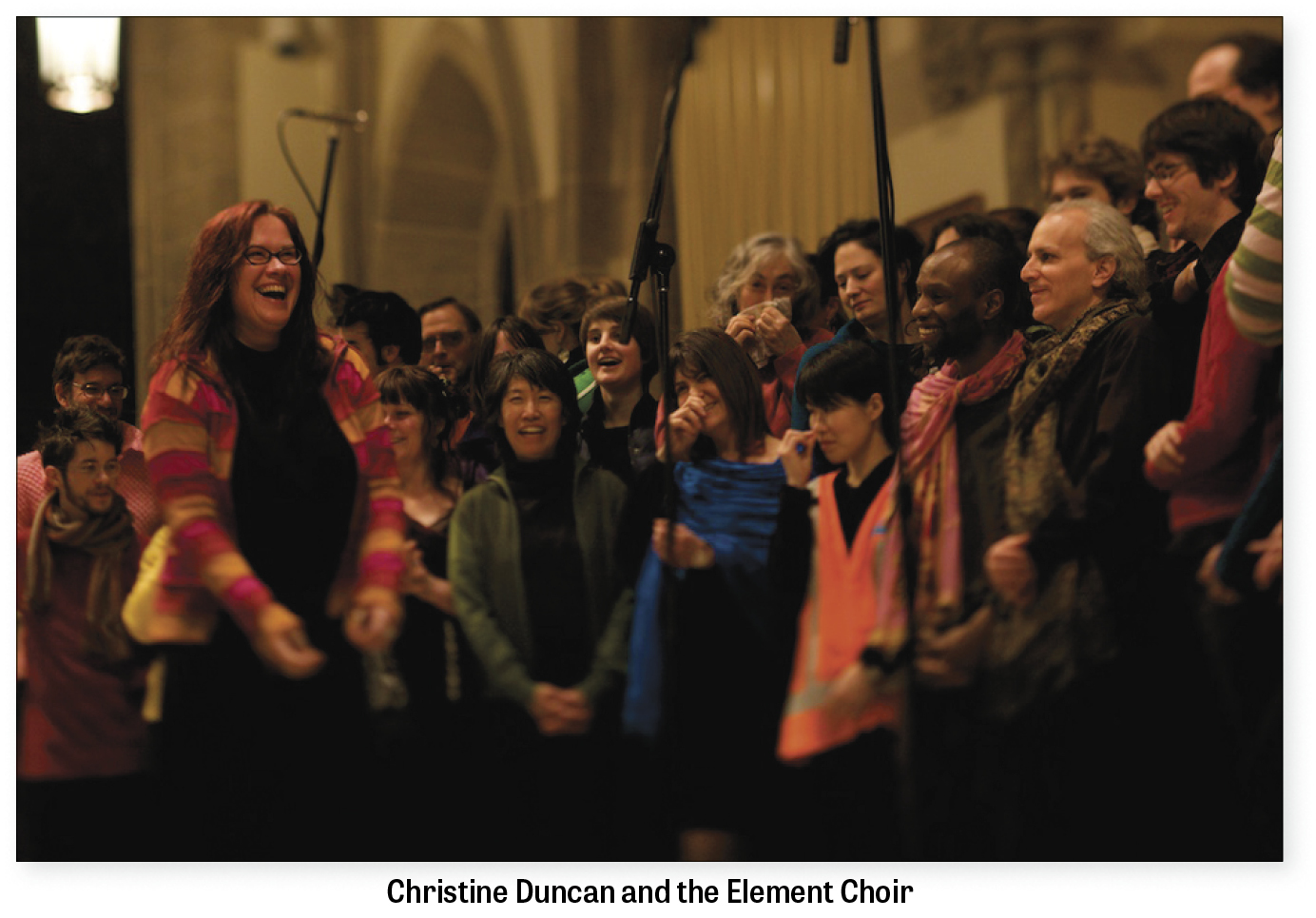
New 22With the climate debate and pipeline protest actions heating up, along with the coming of winter with its potentially destructive storms, we can’t help but feel something is stirring of critical significance that can no longer be ignored. Our very survival as a species is under threat, as we are well aware. Not jolly holiday thoughts to ponder, I know. However, many movements are under way pointing towards a green revolution with a commons-oriented economy and clean energy sources. One of the major voices offering an alternate way comes from the indigenous community with a world view steeped in the traditions of honouring the wisdom of the land and the practices of how to live in a balanced relationship with all creatures and the elemental forces. Music and storytelling is just one of the ways these traditions and knowledge are passed on through the generations.

Manitoulin Island-born Odawa First Nations composer Barbara Croall has risen to the challenge of this cultural moment in her new work titled Manidoog, which translates into English as the spirit beings who dwell in the waters. In this epic work in ten movements, she weaves together ten traditional stories that speak to the importance of our right relationship with water. The work was commissioned by Trio d’Argento and will be premiered on December 11 as part of Music Toronto’s season. I spoke with one of the trio members, flutist Sibylle Marquardt about the work, the upcoming concert, and the trio’s relationship with Croall.

Manidoog opens with a story that summons the presence of the underwater panther. As the piece progresses stories of different creatures and beings weave their presence onto the stage: the spirit turtle emerging from the waters; the rising of the Venus morning star; the pregnant skywoman falling through a hole down onto earth; the winds and a swan catching her as birdcalls fill the air. Stories of the underworld play an important role as well: music brought forth by the guardian of the underworld, the mermaids and mermen luring people disrespectful of the waters down into the underworld; the trickster energies of the little people who live in the forest and along the river banks; the rising and falling of the giant underworld serpent; and, finally, the protective energy of the thunderbird who flies over the world and its waters. Overall, this combination creates something akin to a visionary narrative highlighting a fundamentally different way of living in relationship with the spirit of water and all relations.

New 23bhu-xiao-ouThe piece is fully staged with lighting design and the players moving from station to station to play out the different characters of the stories. Croall herself is one of the performers, playing traditional instruments and singing and speaking in the Ojibwe language. Trio member Peter Stoll performs on the full family of clarinet instruments, recorder and whistle, while Marquardt performs on the full range of flutes. Pianist Anna Romai performs on the keys while Croall joins her at times playing inside on the piano strings. There is also a recorded soundtrack with environmental sounds to add to the mix.

Marquardt has enjoyed a long relationship with Croall, at one time performing in Croall’s Ergo Ensemble. She is passionate about the importance of this work and the need for us to rethink our relationship with the earth and in particular, the waters. The rest of Trio d’Argento’s concert that evening blends together a work by Beethoven, a piece by French composer Jacques Ibert and a funky, jazz/world music-inspired piece by Minnesota-based composer Russell Peterson. The evening will also be a celebration of Trio d’Argento’s new CD just being released on the Opening Day label that includes the Ibert piece. To learn more about this rising virtuosic ensemble, I encourage you to check out their website (triodargento.ca).

Concerts in December

New Music Concerts: On the theme of new music talents named Barbara, the January 20 New Music Concerts joins with Music Toronto January 20 to present a program performed by Halifax-based pianist Barbara Pritchard. In 2009 Pritchard was awarded the Canadian Music Centre’s Music Ambassador title for her work in promoting and performing the music of Canadian composers. This concert includes 11 Canadian works by composers primarily from the Atlantic region, and an aria from Bach’s Goldberg Variations. Prior to this event on December 11, New Music Concerts joins up with the Music Gallery to present two Canadian premieres of pieces by Italian-German guest composer Marco Stroppa, along with a new commissioned work from Paul Steenhuisen and a performance of Elliot Carter’s final work entitled Epigrams written in 2012. Stroppa worked for part of his career as a composer and researcher in Paris at IRCAM, an institution devoted to computer music. He will bring his electronic expertise to this concert, performing alongside trombonist Benny Sluchin and saxophonist Wallace Halladay.

More in December: In amongst all the traditional holiday music available in December, the Music Gallery is offering a unique way to tune into the holiday spirit with “Unsilent Night,” an outdoor walking event created by Phil Kline on December 19. Audience members are invited to bring their own portable sound system (boom box, etc) to play back one of four tracks of music, while being led on a guided walk through alleyways, crowded streets or empty spaces. You will experience your own unique mix of the tracks and the specific acoustics of each place visited. (And after the walk, at 9pm, you can return to the Music Gallery for a festive fundraiser with the O’Pears a female a cappella trio performing folk, R&B, celtic, and bluegrass music.)

Up on St. Joseph St., on December 13, the Canadian Music Centre presents festive Canadian music in its 21st century Virtuoso series with tenor Sean Clark. December is also CD celebration time at the CMC, with two concerts of new releases: on December 12, composer and turntablist Nicole Lizée with her Bookburners launch and on December16, composer and oboist Elizabeth Raum with her Myth, Legend, Romance CD.

And speaking of CD-related concerts, I’ll be presenting works in 5.1 surround sound from my Sounddreaming CD at Array Space on December 5. Another celebration, also at Array, salutes the iconic work of experimentalist Udo Kasemets spread over two days with screenings of Kasemets’ videos December 6 and a concert on December 7. These concerts are part of this season’s ArrayMusic’s concert series.

January

The University of Toronto’s New Music Festival: Moving into January/February, we have the U of T annual New Music festival running from January 30 to February 8. This year’s festival was inspired by a meeting between University of Toronto’s Faculty of Music composer Norbert Palej and China’s Hu Xiao-ou during the Beijing Modern Music Festival a few years ago. What began as a friendship has grown to a cultural exchange. This past October, Palej travelled with 11 colleagues from the Faculty of Music to China and Hong Kong presenting lectures, masterclasses and concerts of music from U of T faculty composers and students. Now, Palej is organizing this year’s New Music Festival to present the works of Hu and several of his students from the Sichuan Conservatory in Chengdu, as well as a work by Wendy Lee, who currently teaches in Hong Kong. Both Hu and Lee will be in attendance in Toronto, and interestingly, both have Canadian connections. Hu is a part-time resident of Vancouver and Lee was a former student at U of T studying with Chan Ka Nin. The concerts on February 4 and 5 will feature chamber music by the guest Chinese composers, including the performance of a new work by Hu by the Cecilia Quartet.

The festival will finish off with a collaboration Palej developed with the Kitchener-Waterloo Symphony. On February 6 and 7, the orchestra will perform concerts featuring the world premiere of Hu’s new pipa concerto with Lan Weiwei as soloist. Also on the program will be the premiere of Palej’s Shan Shui Miniatures based on Chinese folk themes, and the winning pieces of the Friendship Orchestral Composition Competition. Other festival events include concerts on January 30 and February 1 of student operas based on a libretto by Michael Albano and on February 2, works by international emerging composers performed by the Ecouter Ensemble. The festival will finish on a lighter note with a modern jazz concert on Sunday February 8. The full schedule of events will be on the Faculty of Music website early in December.

Esprit Orchestra: Esprit’s January 29 concert brings us the world premiere of English composer Philip Cashian’s the world’s turning inspired by the sculptures of Stephen Vince. The visual theme continues with Icelandic composer Daniel Bjarnason’s Over Light Earth which pays tribute to painters Mark Rothko and Jackson Pollock. The program is rounded out with works by New Music Concerts’ artistic director Robert Aitken, whose Berceuse explores the balance of Yin and Yang while commemorating those “who sleep before us” and an Esprit-commissioned new work by Canadian Samuel Andreyev titled The Flash of the Instant.

Overview: And finally to finish off 2014 and move into 2015, an overview of other noteworthy new music concert events for December and January.

Canadian Music Centre: December 18 with the Toronto Guitar Society. Premiere of works by Leggatt, Oickle, Sandquist and Tse. January 13 the CMC’s 21st Century Virtuoso series presents works from Messiaen’s Catalogue d’Oiseaux and Gilles Tremblay’s Musique de l’eau performed by Ryan MacEvoy McCullough

Music Gallery Emergents Series: December 4 curated by Melody McKiver. Works by Clarinet Panic Deluxx and Cris Derksen, two cellist/composers. January 30 curated by Felicity Williams: Dan Fortin and Robin Dann/Claire Harvie.

Exultate Chamber Singers: December 5. Works by Canadian composers in their “A Canadian Noël” concert.

Spectrum Music: December 6. Concert titled “Journeys” with works for guitar and string quartet by Alex Goodman and Graham Campbell with the Ton Beau String Quartet.

Syrinx Concerts Toronto: December 7. Concert includes Stillness of the 7th Autumn by Brian Cherney

Toy Piano Composers: January 24. Concert titled “Grit” with works by Brophy, Labadie, Pearce, Puello, Tam and others. Performances by Chelsea Shanoff and Nadia Klein with the TPC Ensemble.

 group of 27: January 30. Concert includes Voyageur by Andrew Staniland.

Wendalyn Bartley is a Toronto based composer and electro-vocal sound artist. sounddreaming@gmail.com.
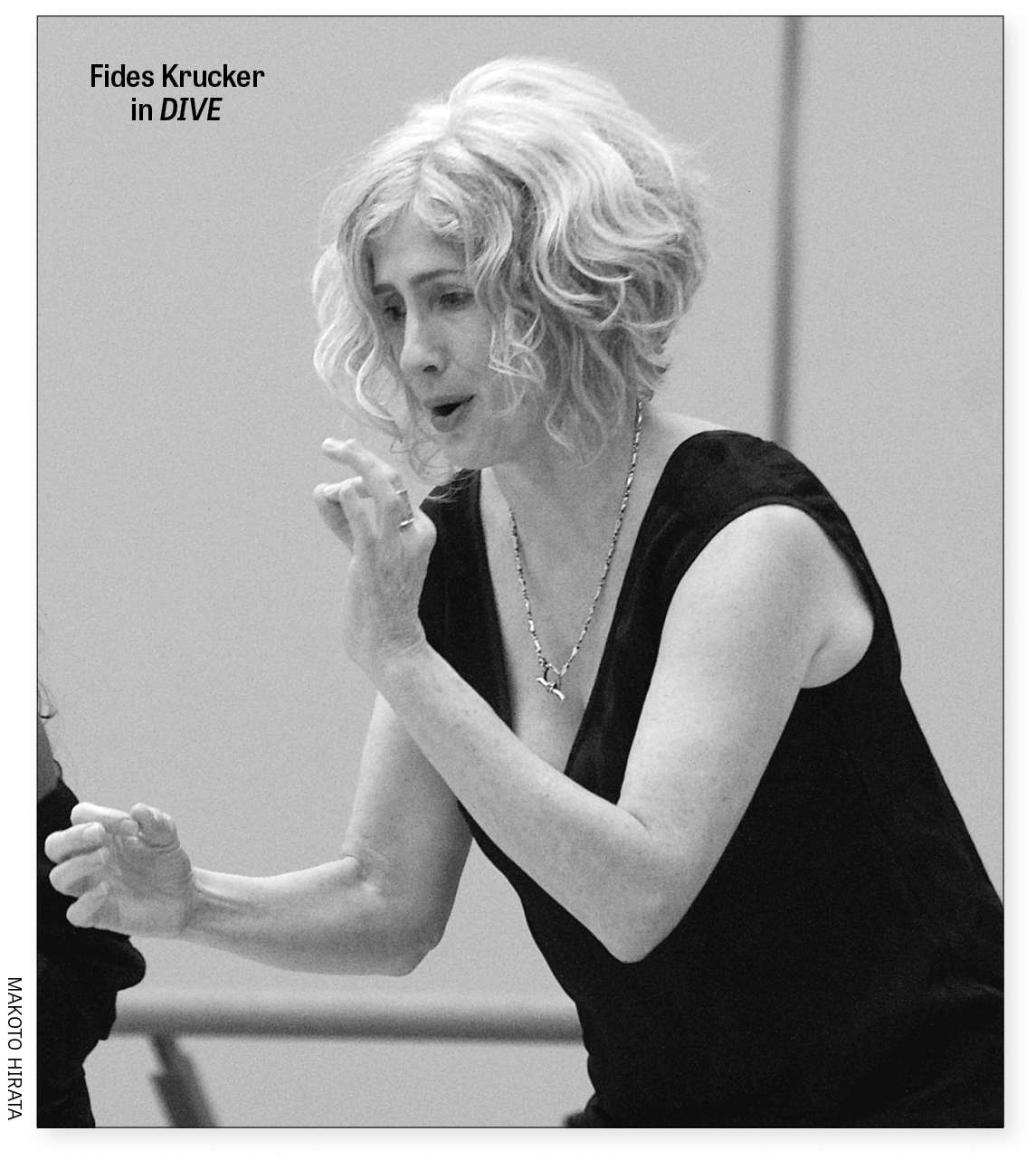
Back to top