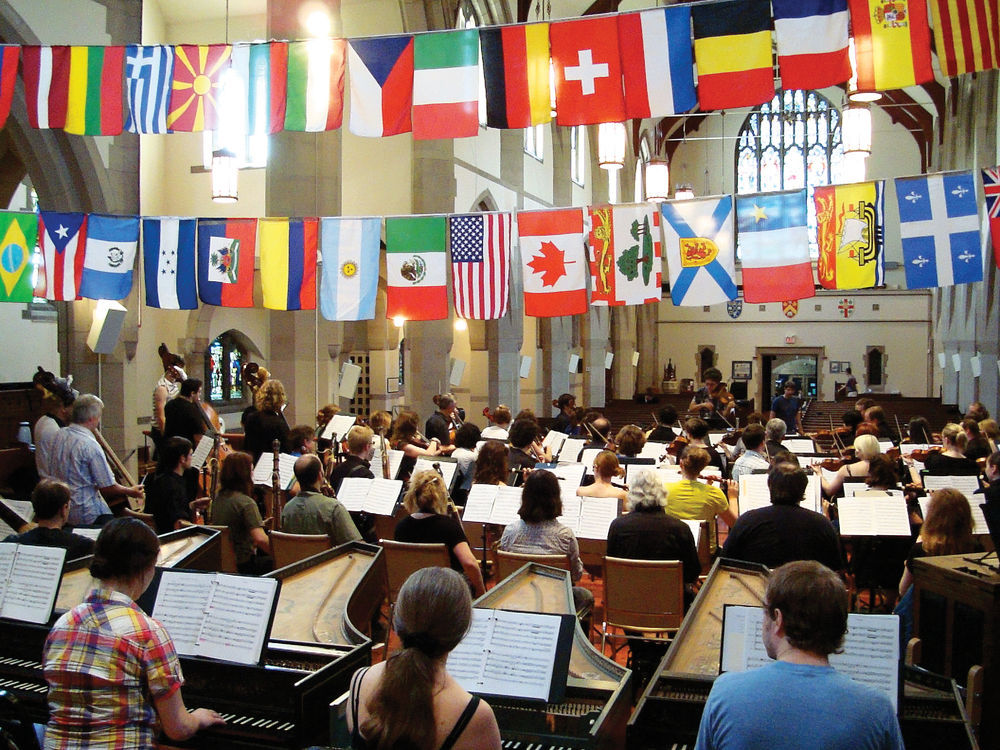
Tallis Choir

The year is 1725, the night is Christmas Eve. In the colonial city of Quebec it is crisp and clear; snow upon snow has fallen and tonight lies in vast expanses, sparkling under the stars. Life is not easy — in no small measure because of the extreme cold — ah, but inside the church this night there is warmth and a sense of wonder at the holiness of this yearly ritual. And there is wonderful music: a marvellous Messe de Minuit pour Noël by the late French composer Marc-Antoine Charpentier is being performed. Brought over from France, it’s filled with delightful melodies of French carols. Its sections are surrounded and interspersed with other Christmas music too, noëls and motets by composers both from the French court of King Louis XIV and from the New World; a carol in an aboriginal language; also lovely organ music from a book recently brought over from France by the new organist of Notre-Dame parish. For the sophisticated congregation of Quebec, it truly is a glorious feast of music.

Every year, the Tallis Choir presents a concert programme, built around an imagined but possible historical event such as the above, with music that was performed in the period. They do this with obvious joy in the extensive research involved in the preparation, by people such as choir member Douglas Cowling and director Peter Mahon. On December 10 at St. Patrick’s Church, you can hear this season’s offering as the Tallis Choir, the Talisker Players, organist Philip Fournier and director Peter Mahon recreate a high mass for Christmas Eve as it might have been celebrated in colonial Quebec city, “Midnight Mass for New France, 1725.”

Messiahs
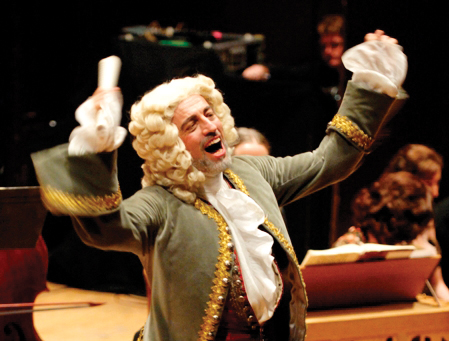
18_early_messiah_herrhandelThere’s no dearth of annual Messiahs in the offing, each one special in its own way. Here’s a sampling of some which offer a particularly unique approach:

Georgetown Bach Chorale takes an historical approach in terms of location and musical presentation. Director Ronald Greidanus waxes enthusiastic about the venues: “The buildings are as incredible as the music, Acton’s Old Town Hall being very similar to the theatre Handel would have performed his Dublin premiere in; the second location (east of Georgetown) even more breathtaking — an isolated wooden Catholic church situated in the middle of a field, lit by candles, decorated by incredible byzantinian icons. Listeners will be bemused by a beautiful chorale sound (complete with 22-member choir, two harpsichords, baroque chamber organ, baroque strings and brass) in an intimate church that seats only 180 — it truly is like going back in time, it’s like the best kept secret!” December 3 in Acton, December 4 in Brampton.

Pax Christi Chorale’s performance, under the direction of Stephanie Martin, acknowledges children. “The Children’s’ Messiah” is designed especially for youngsters, in a condensed version with narration and a casual, child-friendly setting. December 10 at Church of St. Mary Magdalene.

Aradia Ensemble’s “The Dublin Messiah” recreates the first performance of Handel’s famous work using the original version of the score, as presented in Dublin on April 13, 1742. And there’s a nod to the dress code of the day: as in the original performance, they request that, “The Ladies who honour this Performance with their Presence would be pleased to come without hoops (hoop framed skirts), as it will greatly increase the Charity by making room for more company.” December 17 at Glenn Gould Studio.

Tafelmusik’s “Sing-Along Messiah,” celebrating its 25th anniversary, is directed by none other than Handel himself (aka Ivars Taurins). Taurins received a Gemini Award nomination this year for the film version; his immersion in his character is based on painstaking research — from Handel’s ruddy complexion (he was fond of drink) to the type of starch (not powder!) Handel used in his wig. As their press release says: “Does the audience notice these subtle distinctions? Maybe not, but they completely buy into the illusion that Handel has come back after 270 years to conduct them in this three-hour annual ritual.” December 18 at Massey Hall.

A Host Of Others To See Out The Old And Welcome In The New:

• December 8: The Tallis Scholars appear at Royal Conservatory’s Koerner Hall, in a programme that features diverse composers’ settings of the Magnificat — glorious choral music from 15th century John Taverner all the way to late 20th century Arvo Pärt.

• December 9, 10, 11: Toronto Consort celebrates “A Spanish Christmas” — Christmas with a Latin flavour as it might have been experienced by the Spanish-speaking nations of the world on both sides of the Atlantic in renaissance and baroque-period times. This is a world the Consort revisits every two years; this year’s presentation includes solemn motets, lively villançicos, pieces in native languages and dialects, some in African rhythmic inflections. Music of “irrepressible spirit, flashing rhythms and soulful sonorities.”

• December 10: I Furiosi Baroque Ensemble presents “Hell Hath No Fury” …  like I Furiosi scorned! “Not your average Christmas concert” so be prepared to be surprised.

• December 16: Sine Nomine Ensemble for Medieval Music presents “Puer natus est nobis: A 14th-century Mass for Christmas Day,” a musical reconstruction of a nativity mass from Avignon. This year the ensemble celebrates 20 years of inventive programming, combining vocal and instrumental music from medieval courts and churches with readings, drama, and liturgical action, to provide insight into the fascinating artistic and intellectual culture of the Middle Ages.
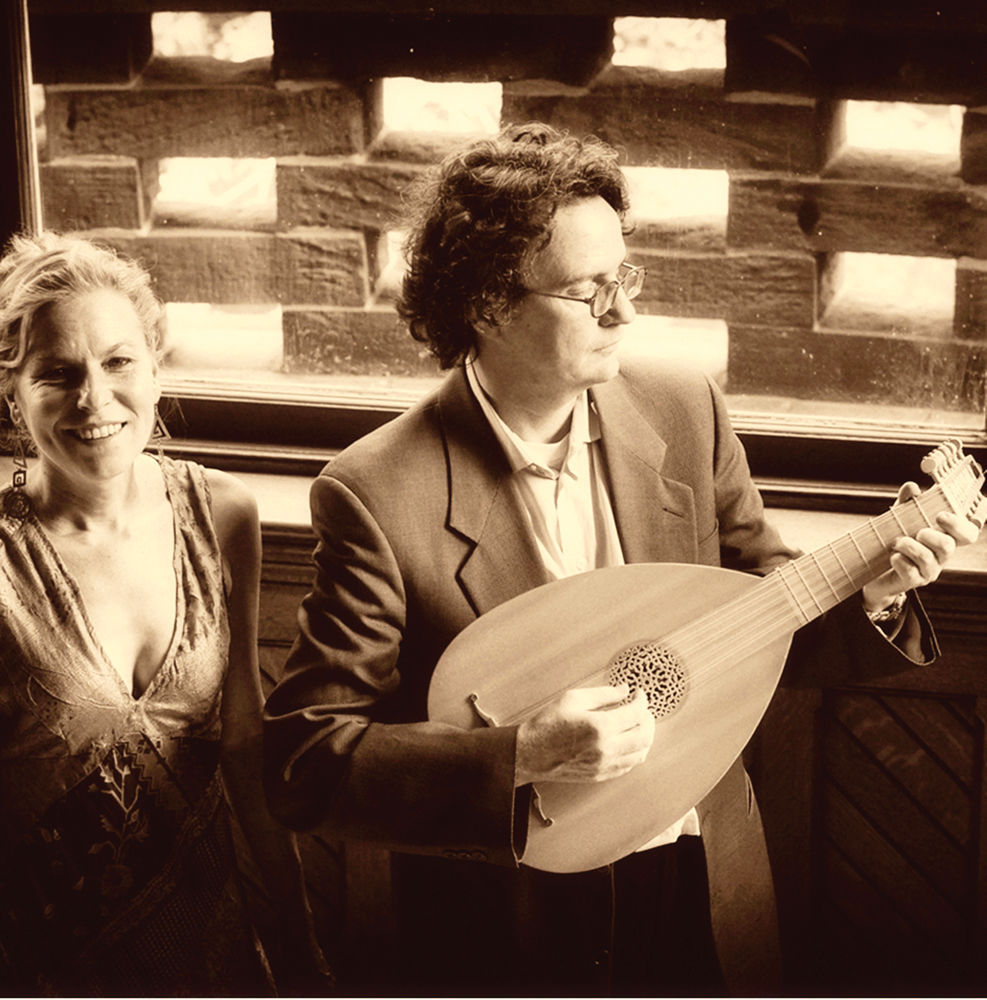
20_early_hallie_fishel___john_edwards_-_the_musicians_in_ordinary_-_500__-_alexandra_guerson• January 1 and 2: Musicians In Ordinary’s annual New Year’s Day concerts offer an elegant alternative to the traditional New Year’s fare, with cantatas by Vivaldi and Alessandro Scarlatti, a trio sonata by Corelli and music for solo archlute by Zamboni. Soprano Hallie Fishel and lutenist John Edwards are joined by violinists Edwin Huizinga and Christopher Verrette, and others.

• January 15: Toronto Early Music Centre’s “Musically Speaking” series resumes at its new location of St. David’s Anglican Church, 49 Donlands Ave. Music by Guillemain, Leclair and Telemann is performed by Alison Melville, recorders/traverso; Elyssa Lefurgey-Smyth, violin; Justin Haynes, viola da gamba; and Sara-Anne Churchill, harpsichord.

• January 19 to 22: What a way to celebrate your 30th anniversary! Jeanne Lamon’s “gift” to herself is to direct Tafelmusik Baroque Orchestra and Chamber Choir, along with spectacular guest soloists, in a semi-staged performance of Handel’s rarely performed music drama Hercules — a dramatic story “seething with the destructive power of sexual jealousy” inspired by a Greek tragedy written by Sophocles more than 2500 years ago.

• January 27: In Kingston, the Melos Choir and Chamber Orchestra presents “The Italian Connection: Gabrielli to Vivaldi,” welcoming guest guitarists Jeff Hanlon and Chad Yacobucci.

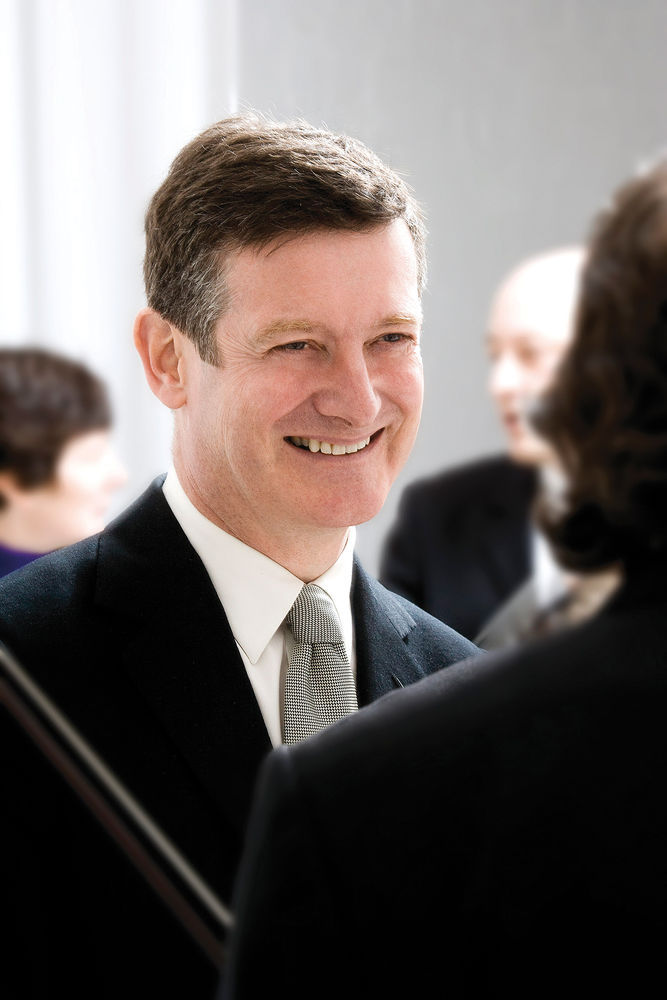
• January 27 and 28: Perhaps you’ve heard him singing with Tafelmusik: the passionate evangelist in Bach’s St. John Passion, the tenor soloist in the B Minor Mass, or the tenor voice in Purcell’s opera King Arthur. Or with the Toronto Consort, in the Monteverdi Vespers or the opera Orfeo. If so, you’ll not have forgotten the remarkable agility of his voice, or the intensity of his commitment to the text. Now the Toronto Consort presents the English tenor Charles Daniels in recital, in “It was a lover and his lass,” a concert of exquisite lute songs from the English and French Renaissance. He’ll be accompanied by lutenist David Miller, in works by Morley, Danyels, Campian and Moulinié.

• January 28: The years 1788 to 89 were incredibly creative ones for Mozart; he was then at the height of his powers. Academy Concert Series performs three of his major chamber works written during that time, in “Mozart: A Year In Vienna.”

• February 4: Fellow columnist, lutenist Benjamin Stein, makes the point that “Improvisation was a natural part of Bach’s musical milieu, and this skill, neglected in much classical music training, is one that has reappeared as an essential aspect of training in early music.” In Music at Metropolitan’s “BachFest II: Jam Sessions with Bach,” performances of works by Bach and other German composers are combined with improvisations on baroque dance forms and hymn tunes. Taking part are four talented musicians: Benjamin Stein, theorbo/lute; Sara-Anne Churchill, keyboard; Daniel Rubinoff, saxophone; Elyssa Lefurgey-Smith, violin.

• February 4: In “Pergolesi’s Inspiring Stabat Mater,” Barrie Concerts brings internationally renowned musicians to their stage: soprano Dame Emma Kirkby, countertenor Daniel Taylor and the Theatre of Early Music will surely inspire with their performance. The series is sold by subscription only and is virtually sold out; lucky are those who already have their tickets.

Finally, a correction to last month’s column: it’s not often I mistake Schubert for Gounod. Granted, they both wrote Ave Marias, but only one of these is based on Bach’s Prelude No.1 from the Well Tempered Clavier Book I, and it definitely wasn’t the Schubert as I stated in the print version of last month’s issue. I guess The Well-tempered Sleeper finally awoke … Better late than never!

Simone Desilets is a long-time contributor to The WholeNote in several capacities who plays the viola da gamba. She can be contacted at earlymusic@thewholenote.com.
What does Elvis Presley’s Can’t Help Falling in Love have in common with a song by 18th century composer Jean Paul Martini? Or the musical Kismet with Alexander Borodin? Or Gounod's Ave Maria with Bach? If you know the answers, you’ve already tapped into a musical phenomenon that stretches in a long continuum back to ancient times: out of existing music emerges new music — which is to say that throughout musical history, composers have seized upon a good tune when they’ve heard one and known how to capitalize on it in ways appropriate to their time and purpose. This is one of November’s themes.

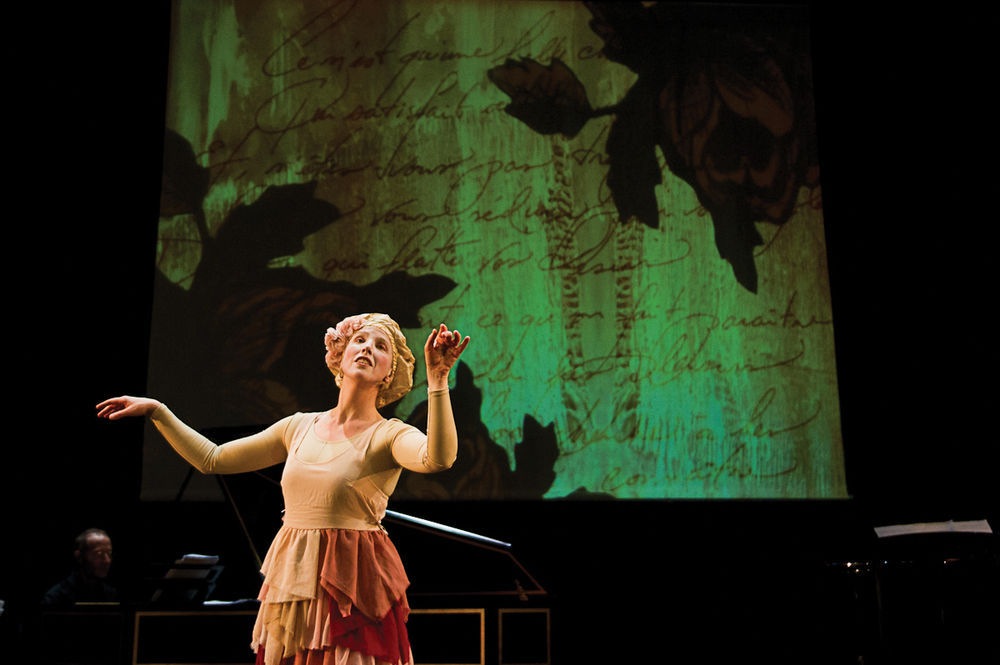
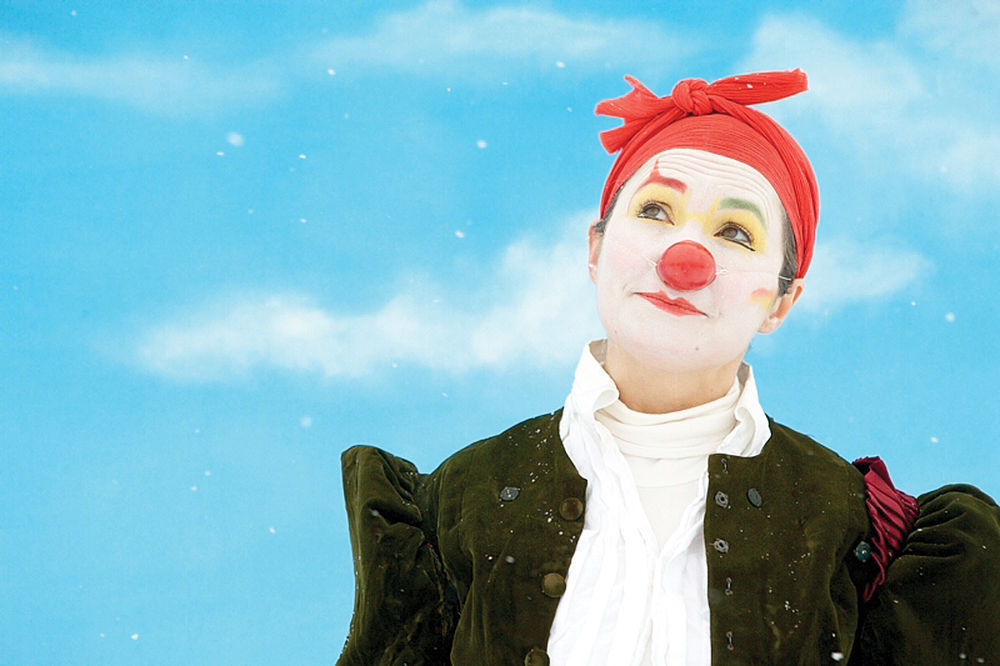
21_early_diana_kolpak_as_the_clown_in_scaramella__photo_by_kathleen_finlayScaramella: Scaramella’s upcoming concert “Hit and Run” is built upon this well-known and widespread practice, taking some of the baroque era’s “good tunes,” beloved and popular in their day, and revealing how 16th century composers have transformed them into new pieces. Artistic director Joëlle Morton explains: “In some rare instances, the new pieces were spoofs — making fun of the original tunes. But in most situations, the new composers referenced the older pieces in a respectful way by quoting the text, resetting an old melody or bass line with completely new parts, composing additional lines that could be added to the older work or creating elaborate virtuosic showpieces out of one or more of the original lines.”

Thus you’ll be able to hear Diego Ortiz’s gamba-inspired flights of invention on the melancholy song Doulce Memoire, by earlier composer Pierre Sandrin, as well as how a ciacona (or chaconne) has been treated in three ways: the first two in 15th and 16th century settings, the third by contemporary composer (and recorder virtuoso) Matthias Maute — a recently completed tribute to the late wife of a dearly-respected man.

Running concurrently with the musical presentation is another delight: a clown, who will dramatize the texts involved, in the manner of the commedia dell’arte movement, which was so popular at the time.

“Hit and Run” takes place on November 26 at Scaramella’s usual gracious venue, Victoria College Chapel.

Ensemble Chaconne: A related theme, seen in several concerts this month, is that of the interrelationships between music, words and drama. In Shakespeare’s England these were well and flourishing, as popular tunes, both their melodies and text, were so familiar that musicians used them as the basis for sets of variations; also, poets set new verses to known tunes, often based on news of the day. The Bard himself assiduously incorporated well known songs into his plays and wrote poems for new songs. And many composers from Shakespeare’s own time — Thomas Morley, for example — and from every era since, have contributed music for specific use in his plays.

A group which is perhaps not well known to Southern Ontario audiences brings a colourful programme entitled “Measure for Measure — the Music of Shakespeare’s Plays” to our area this month. Ensemble Chaconne is dedicated to vivid, historically informed performance of renaissance and baroque music on period instruments. Based in the Boston area, it has a 25 year history and has concertized widely. Its core ensemble is a trio, whose distinguished members play renaissance/baroque flutes, viola da gamba and lutes/theorbo/early guitars; for the upcoming pair of concerts, so replete with song, they’ve added mezzo-soprano voice.

If you’re in the Kitchener-Waterloo area on November 17, you can hear them at the Kitchener-Waterloo Chamber Music Society concert; if you’re in Hamilton on November 18, you’ll find them performing at McMaster University.

Academy Concert Series: The Academy Concert Series’ season opener features interwoven themes of music and drama too. Its centrepiece is a love story, which unfolds in a trilogy of Vivaldi chamber cantatas (one having only recently been discovered in Vienna) collectively known as L‘Amore per Elvira. We witness the declaration of love, the lover’s sad news that he must go away, the return amid fears and hopes and finally, the lovers’ reuniting — all poignantly expressed in both words and music.

Along with this is another parallel but modern day love story, placed in Vienna, woven throughout the performance and enacted by actor Vanessa AvRuskin. And interspersed between the cantatas are chamber pieces by Vivaldi that highlight the violin — the instrument on which he was known for his excellent playing.

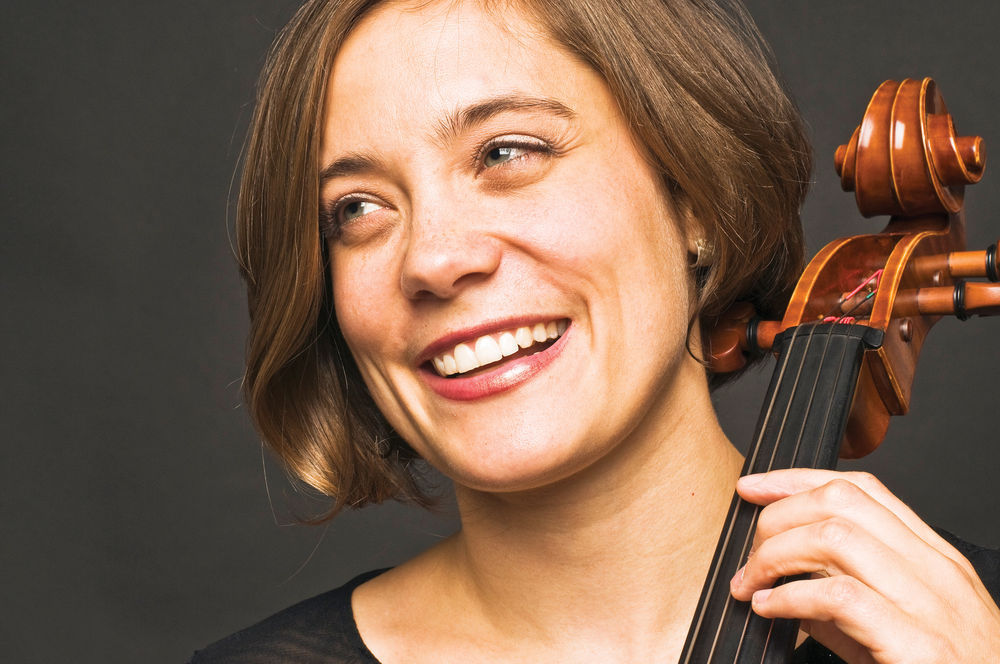
22_early_kerrimcgonigle_photo_by_raymond_coburnThe evolution of what might be called a musical love story is the story of the Academy Concert Series itself. Founded over 20 years ago, it has been constant in its mission to bring historically informed chamber performances to Toronto’s audiences. After a 16 year run as artistic director, multi-instrumentalist Nicolai Tarasov has now decided to largely hand over the reins to talented cellist/baroque cellist Kerri McGonigle — a passionate and accomplished musician, who I’ll bet will bring fresh life to an already lively series.

“Vivaldi Visits Vienna” takes place on November 12 at Eastminster Church.

A diversity of others

• November 13: In Kitchener, Classics At The Registry presents “Guitarra Barroca: A tour of baroque music for the guitar,” featuring a guitarist known for his musicianship and versatility, Kevin Ramessar, in collaboration with Larry Larson, trumpet and Graham Hargrove, percussion. (Note: This information arrived too late to make it into the printed listings; see the online listing at www.thewholenote.com. Click on “Just In,” and see New Listings–Beyond the GTA or go to the searchable Concert Listings and click “Concerts Beyond the GTA”);

• November 18: In Kingston, the Melos Choir and Chamber Orchestra presents a concert for St. Cecilia’s Day and celebrating the 300th anniversary of the birth of William Boyce. Programme includes Purcell’s Cecilian ode Welcome to all the Pleasures, Te Deum and Jubilate by Boyce, and other lovely music;

• November 19: “Glory – Sounds of Baroque Exultation” is the aptly-chosen title of a concert by the Larkin Singers, featuring Handel’s sacred motet Nisi Dominus as well as Vivaldi’s Gloria and Bach’s cantata Wachet Auf.

• November 19 and 20: In Toronto and Hamilton, Capella Intima presents “Venice and Beyond,” highlighting composers of the Venetian school who left Venice later in their careers: Grandi, Merula, Agostini, Sances, Valentini and Milanuzzi. Music for tenor and baritone voice, baroque guitar, organ, harpsichord and gamba.

• November 23: “In the Shadow of the Volcano,” traditional music of southern Italy including the villanelle, tarantella, fronna and tammurriata, is presented by the Vesuvius Ensemble as part of the Canadian Opera Company’s Richard Bradshaw Amphitheatre series.

• November 25: In the first of four concerts honouring Bach, spread throughout the season, Music at Metropolitan presents “BachFest I: Christmas Oratorio, Parts 1–3.”

• November 26 and 27: The 16-voice a cappella choir Cantemus Singers presents their annual Christmas celebration, “Nowell Sing We,” with carols and motets from the renaissance and baroque periods, Giovanni Gabrieli’s Hodie Christus Natus Est for double choir, Telemann’s Deutsches Magnificat in G for choir, soloists and orchestra, and other works.

• November 27: In Kitchener, there’s a treat of two wonderful Bach cantatas (Wie schöen leuchtet der Morgenstern and Lobet den Herrn), in Spiritus Ensemble’s programme “Bach Vespers for Advent.”

• December 1 to 4: Tafelmusik Baroque Orchestra is joined by guest director and oboist, Alfredo Bernardini, to present “Baroque Splendour – The Golden Age of Dresden,” with stunning and virtuosic music created for Dresden’s remarkable court orchestra by Zelenka, Fasch, Pisendel, Telemann and Vivaldi.

Simone Desilets is a long-time contributor to The WholeNote in several capacities who plays the viola da gamba.She can be contacted at earlymusic@thewholenote.com.

several capacities who plays the viola da gamba.

Interesting personalities: the world of music is full of them. I’d like to tell you about a few who will be gracing our stages and charming our senses during the coming month.

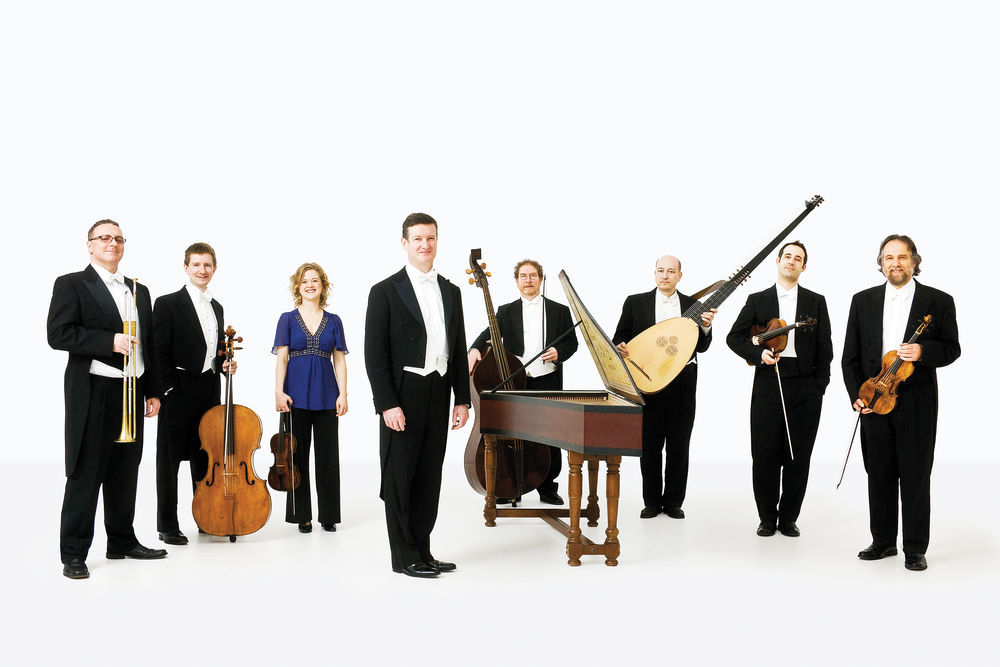
early__harry_bicket_and_the_english_concertTake, for example, Jan Dismas Zelenka, one of those talented people whom history might well have completely forgotten, had it not been for the determination of some who “discovered” and sought to revive his music long after his death in 1745. This Bohemian composer, whose lifetime spanned more or less the same years as that of J.S. Bach, spent most of his career at the Dresden court (a flourishing centre of music and the arts in 17th- and 18th-century Germany) where he played double bass, conducted the Dresden Court Orchestra and became Court Composer of Church Music. His music is acknowledged as being extraordinarily creative, with unexpected turns of harmony and a freshly expressive outlook.

Of course, as part of his duties he wrote masses. One of these, the Missa votiva, has quite a touching genesis: Zelenka wrote it to give thanks after recovering from a long illness, dedicating it as follows: “J.D.Z. composed this Mass ad majorem Dei gloriam to the greater glory of God in fulfillment of a vow, after having recovered his health through God’s favour”.

You can hear it, along with a beloved motet by one of his acquaintances and admirers, in Tafelmusik’s “Glorious Bach and Zelenka” performances, which take place on various days, and at various times, between October 14 and 20.

And consider Johann Rosenmüller, 17th century German composer and virtuoso trombonist, who is credited with being an instrumental figure in the transmission of Italian musical styles to Germany. He had a promising career as teacher and organist in Leipzig, and was in line for the position of cantor at the Church of St. Thomas, but his career was abruptly halted in 1655 when he and several schoolboys were arrested and imprisoned on suspicion of homosexuality. Aha; he escaped, fled Germany and next turned up in Italy, where by 1658 he had established himself at St. Mark’s in Venice as a trombonist and composer. Years later he also held the post of composer at the Ospedale della Pietà (the girls’ orphanage soon afterward to become famous as fertile ground for Vivaldi’s prolific creative output).

Rosenmüller’s music was clearly inspired by the brilliant acoustic of the Cathedral of St. Mark’s. You’ll be able to hear the effect of this magnificent space when, on October 21 and 22, the Toronto Consort brings together voices, strings, cornetti, sackbuts, lutes and keyboards to present “Venetian Splendour: The Music of Johann Rosenmüller.”

A towering figure of the 15th century, the Franco-Flemish composer Johannes Ockeghem led a life that is somewhat obscured to us now, some five or six centuries later. We know that he was employed as a bass singer in the chapels of various royal courts, most notably the French courts of Charles VII, Louis XI and Charles VIII; that his life was very long; that though his surviving output of compositions is not large, it reveals a highly innovative style; also that he was admired throughout Europe for his expressive music and his technical prowess.

It’s obvious that he revelled in creating musical problems and working out solutions — for example, his motet Deo Gratias is a magnificent, pulsating canon for four nine-part choruses (36 parts in total). His Missa Cuiusvis Toni is a mass that may be sung in any one of four different modes, at the performers’ choosing. Enormous technical feats of composition, these — yet (to quote one account) “music of contemplative vastness and inward rapture”.

Both these works will be performed this month — the Deo Gratias in “surround sound,” the Missa Cuiusvis Toni in — well, you’ll have to attend the concert to find out which mode. They’ll be heard in the Toronto Chamber Choir’s first concert of the season, “Ockeghem: Medieval Polyphony,” on October 23.

A much-admired musician of the 21st century, the acclaimed English conductor and keyboard player, Harry Bicket, will be bringing his ensemble, the English Concert, to town — alas on one of the same nights as the Toronto Consort performs. Bicket is renowned for his interpretations of the baroque and classical repertoire and for his work in opera, though his biography is chock-full of music making in wide-ranging styles and periods, all over the world. It’s especially telling that he was chosen in 2007 to succeed Trevor Pinnock as artistic director of the English Concert, one of the finest of the U.K.’s period orchestras.

The concert takes place in an ideal venue for this group, the Royal Conservatory’s Koerner Hall, on October 21. The music is ideal too, a true representation of their art: suites from semi-operas by Purcell, solo and orchestral concertos by Vivaldi and Telemann.

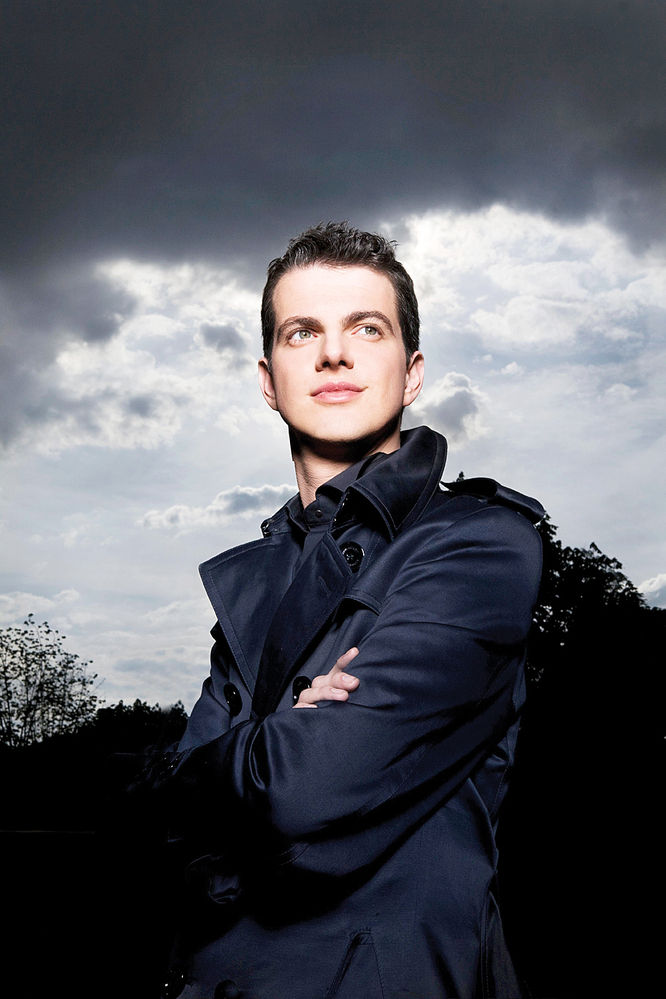
early_philippe_jaroussky2_by_simon_fowlerA compelling musical personality whose star is definitely on the rise is the French countertenor Philippe Jaroussky. He’s been described as a “young singer with the tone of an angel and the virtuosity of the devil.” Perhaps because he began his musical life as a violinist, his singing displays a very pure sound quality and high, sweet timbre; this combined with his dazzling vocal feats, expressive phrasing and handsome stage presence have catapulted him into an international career in a relatively short time.

Jaroussky’s art is ideally suited to the virtuosic coloratura of the baroque; this will be evident when, on November 1 at the RC’s Koerner Hall, he’ll be joined by the acclaimed baroque orchestra from Cleveland, Apollo’s Fire, in a programme of fiery operatic arias and orchestral music, entitled “Handel and Vivaldi Fireworks.”

Others in a nutshell

• October 8: “Apt for Voices, Viols or Violons”: For its first concert of the season, the Musicians In Ordinary presents a programme of consort songs, dances, lute songs and solos from the Elizabethan and Jacobean courts, by Holborne, Byrd and Dowland. Soprano Hallie Fishel and lutenist John Edwards are joined by a renaissance violin band of five parts, led by violinist Christopher Verrette.

• October 8: Cardinal Consort of Viols presents “Oktoberfest!”:

Beautiful German music from the 16th and 17th centuries, with refreshments included, in a relaxed, friendly atmosphere at Royal St. George’s College Chapel.


• October 15 and 16: “Best of Baroque”: Andrew Davis conducts the TSO, and plays harpsichord and organ in a rich tapestry of music by Bach, including Brandenburg Concerto No. 5, Concerto for Oboe and Violin and Davis’ own orchestrations of Bach organ works.

• October 16: Windermere String Quartet on period instruments presents the fourth in their six-concert survey of “The Golden Age of String Quartets,” juxtaposing three great works by Haydn, Mozart and Beethoven.

• October 22: “A Celebration of Victoria: 1611–2011”: Tallis Choir commemorates the 400th anniversary of the death of Victoria, presenting some of his greatest works and those of his contemporaries, Guerrero, Lobo and Esquivel.

• October 29: Our ever-energetic friends in Kingston, Trillio, present their third annual “Baroquetoberfest” with music on period instruments by Telemann, Bach, Matthes and others — not to mention home-prepared German food including choucroute garnie and a German beer sampling!

Simone Desilets is a long-time contributor to The WholeNote in several capacities who plays the viola da gamba. She can be contacted at earlymusic@thewholenote.com.

And so a new season begins. From late summer’s vantage point, I can already see a huge range of early music activities shaping up in the coming year, from Scaramella’s “Hit and Run” in November, featuring triple harp and clown among other things, to the Royal Conservatory’s presentation of French sopranist-countertenor Philippe Jaroussky with Cleveland’s baroque orchestra Apollo’s Fire, also in November; to Tafelmusik’s period performance of Beethoven’s Eroica Symphony in May; to Nadina Mackie Jackson’s developing project “Vivaldi’s Lost Girls” (a celebration of Vivaldi bassoon concertos); and much in between. But first to the events of the present month.

Schola Magdalena

schola_magdalenaA small ensemble of six women’s voices, expressive and pure in intonation, produces an ethereal sound not too often heard in concert. Schola Magdalena is just such an ensemble, founded in 2007 and based in Toronto. You can hear them twice in the coming month, as they’ll be launching a new CD at their home venue of the Church of St. Mary Magdalene and then performing at Barrie’s Colours of Music.

The group’s director, Stephanie Martin, is organist and director of three choirs at St. Mary Magdalene, director of Pax Christi Chorale and a professor at York University. Interested in knowing what prompted her to add yet another ensemble to her very busy life, I asked her to talk a bit about Schola Magdalena’s formation and its projects.

Schola Magdalena gives her great satisfaction, she told me, “because it is a democratic group. My other ensembles require a leader/follower model, and, although a totalitarian system is efficient, it can be an undue burden on the leader. I enjoy solving musical problems with Schola Magdalena since we work as peers. Everyone is a leader; everyone is a follower … Six voices allow us to sing early polyphony which is often three parts; that gives us a nice balance of two voices on each part … Coming up with our interpretation takes a while, but we arrive at an interpretation we all like. It’s a great model for problem solving.”

Regarding plans for the future: “We’d like to tour back to Quebec where many of our French-speaking supporters are. We’ve included notes and translations in French in the CD booklet because we often sing to French-Canadian audiences — often Roman Catholic church choirs, who have a deep connection to Gregorian chant. We have an invitation to visit Spain but we need to find baby sitters for six children!”

And as for that above-mentioned CD, titled Virgo Splendens, it includes “quite a bit of Hildegard, some wonderful early English polyphony — a setting of the Magnificat — some traditional Gregorian chants which we still use in our liturgy at St. Mary Magdalene. There are also fragments from a mass by Dufay. One important element is the recording of the four “Marian anthems” that are sung throughout the liturgical year.”

Both the CD launch on September 24 and the Barrie concert on October 1 feature a selection of the above repertoire. And besides the beauty of the music on this disc, you’ll treasure it also for its cover: a reproduction of a beautiful icon — Madonna and Child — lurking obscurely in the Church of St. Mary Magdalene.

A random mention of others:

Two concerts highlighting English music for voices occur this month: On September 16, Aradia Ensemble’s “Music of the English Chapels Royal” presents anthems from the time of Charles II — music by Purcell, Turner, Blow, Locke and Humfrey. On September 24 and 25, the 16-voice Cantemus Singers offer a programme called “Rule Britannia” madrigals, motets and bar songs from the times of Henry VIII all the way to George I’s reign.

From September 21 to 25, you can hear music for courtly celebrations at the baroque courts of Poland, Sweden, England, France, Germany, Spain, Russia and Austria, presented by Tafelmusik Baroque Orchestra.

On September 10 in Waterloo: Nota Bene Baroque holds a “Fundraising Extravaganza” to celebrate its 10th Anniversary Season and the launching of its new name, with mini-concerts, Baroque-inspired refreshments, an instrument petting zoo, and guest, baroque dancer Daniel Gariepy.

At the Toronto Music Garden: On September 8, you can let dusk fall over you joyfully, as baroque cellist Kate Bennett Haynes inaugurates a cycle of Bach’s Six Suites for Unaccompanied Cello with Suite No.1 in G Major. On September 18, the Vesuvius Ensemble closes the season with “I canti a Maria — Music for the Madonna,” passionate traditional songs to the Madonna from some of the many sanctuaries in the region of Naples.

There’s more! Do peruse The WholeNote’s listings to discover all that’s out there.

She can be contacted at earlymusic@thewholenote.com.

It’s time to pack your knapsack, your suitcase or your picnic basket and head out of town in search of different impressions. For the early music aficionado this doesn’t necessarily mean abandoning the music you’re fond of, just that you’ll have lots of chances to experience it in new places.

Bach Music Festival of Canada

First I must tell you about a new summer festival emerging in South Huron, that area situated on Lake Huron which includes several small communities such as Exeter and Zurich. The Bach Music Festival of Canada takes place from July 11 to 17, and is actually an interesting mix of Bach, contemporary and other music, culminating in a performance of Bach’s B Minor Mass with soloists, orchestra and over one hundred singers. At its helm is artistic director Gerald Fagan, known nationally and internationally as a choral conductor and pioneer.

The week is packed with concerts, workshops and master classes. Trio Alla Grande, an extremely musical and sensitive guitar trio, opens the festival with a concert of contemporary and original music, and gives an interactive discussion and workshop. Violinist Lara St. John, known as a passionate exponent of Bach, performs a recital and offers a masterclass. Renowned basso Thomas Paul, now in his 70s, shares his expertise on the singing of Bach arias in intensive workshops, with a resulting concert, “The Art of the Aria.” The Harvestehuder Chamber Choir from Germany performs with London’s Gerald Fagan Singers in a concert of Bach, Canadian and German choral repertoire.

All this, combined with participation of locally-based choristers, make this Festival an ambitious project indeed, and a wonderful gift of music to the area.

Other summer festivals:

At the Ottawa Chamberfest there’s too much to mention here, but they have a website to guide your hunt through medieval, renaissance, baroque and other categories (www.ottawachamberfest.com). I’ll point out just two performances: on July 25, Ensemble Caprice presents “Et In Terra Pax” featuring vocal and instrumental works by Vivaldi and Zelenka; on August 4, “La Poésie noble du violon sous Louis XIV” features Lully, Jacquet de la Guerre, Clérambault and others — all with brilliant performers involved.

July 19 at the Hamilton Organ Festival, you can hear organ music by Bach, Byrd and Buxtehude played by organist Matthew Coons; and during Stratford Summer Music’s “Organ Week,” music by Gibbons, Purcell and Handel will be performed on July 29, and some of the most glorious of Bach’s organ music on July 30, by Robert Quinney from Westminster Abbey. The organ in collaboration is highlighted on July 26 at Parry Sound’s Festival of the Sound: organist William McArton is joined by flutist Suzanne Shulman and trumpeter Guy Few in works by Handel, Viviani and Rameau.

Other early music can be found here too, such as a concert of solo Bach works for flute, cello and keyboard on July 27. This is one of three July concerts I’ve noticed which feature Bach solo cello suites. At Festival of the Sound it’s the first suite, played by cellist Marc Johnson. On July 2, cellist Rachel Mercer will perform suites nos. 2, 3 and 6 in Waterloo — not in a “summer” venue but in the ongoing series of the Kitchener-Waterloo Chamber Music Society. And on July 5 yet another performance, this time at Campbellford’s Westben — Concerts at the Barn, with Brian Manker, principal cellist of the Montreal Symphony Orchestr, playing suites nos. 2, 4, and 6.

At the Elora Festival, on July 16, there’s a most interesting concert of Telemann sacred cantatas — he completed several cycles of these for the church year —performed by tenor Kevin Skelton (more about him in a moment), along with recorder, harpsichord and gamba.

15_earlymusic_kevin_skeltonAt Stratford Summer Music, there’s a lovely touch of the early, “a delicious combination of musicianship and cuisine,” as lutenist/guitarist Terry McKenna performs short concerts (each showcasing a particular aspect of renaissance/early baroque music) at Rundles Restaurant, every Saturday and Sunday throughout the festival.

Whereas urban-based artists and audiences tend to migrate to out-of-town summer venues, some will also arrive in town from elsewhere. Kevin Skelton, who lives abroad, is a Canadian tenor of great accomplishment as performer, director, founder of several ensembles, contemporary dancer and published scholar who holds degrees in voice, conducting and musicology. In addition to the above-mentioned performance at the Elora Festival on July 16, he’ll be appearing at the Toronto Music Garden on July 17 with other wonderful musicians in a presentation entitled “With Joy and Light Encircled.” And, (too late to make The WholeNote’s print deadline; you’ll find it on the website at “Listings: Just In”), on July 30, Toronto’s Church of St. Mary Magdalene will resound with Gregorian chant as Schola Gregoriana Aurea Luce, a choir of men’s and women’s voices from Venice, Italy, perform.

I’ll leave it to you, the early music seeker, to find out more: The WholeNote’s summer listings, and individual websites, have all the details. The opportunity to design your own summer early music festival awaits!

Simone Desilets is a long-time contributor to The WholeNote in several capacities who plays the viola da gamba. She can be contacted at earlymusic@thewholenote.com.

TAFELMUSIK BAROQUE SUMMER INSTITUTE

What makes a musician a “baroque” musician? The answer to this question has evolved dramatically over the years, as consideration of how baroque music should be played moves from presenting it from a completely modern standpoint, to awareness of a sound more “informed” by the stylistic elements present in baroque times.

One of the world’s premiere baroque music training programmes is right in our midst: The Tafelmusik Baroque Summer Institute, which takes place every June in Toronto, is about to begin its tenth season. As TBSI music director, Jeanne Lamon, writes on the website, the Institute is dedicated to developing the period performers of the future. With an impressively comprehensive programme of study and first-rate teachers, it attracts student participants from all over the world.

p13_tafelmusik1There’s a component for instrumentalists, with in-depth study of their instrument in a variety of solo, chamber and orchestral settings, and for players new to period instruments, an introduction to baroque instruments, their technique and repertoire. There is even a number of baroque flutes, oboes, bassoons, stringed instruments and bows available for loan.

There’s a component for singers, offering study in solo, choral, ensemble and operatic repertoire; Opera Atelier’s Marshall Pynkoski leads workshops in scenes from baroque operas, focusing on gesture and deportment and their relation to music and text in the 17th and 18th centuries.

There’s a component for conductors and directors, too – a self-directed study for the most part – during which participants are encouraged to audit vocal and instrumental masterclasses, sit in on orchestra, choir and chamber ensemble rehearsals and attend opera workshops, lectures, demonstrations and concerts.

There are classes in baroque dance, led by Opera Atelier’s Jeannette Lajeunesse Zingg; continuo classes for keyboard players and lutenists/guitarists; classes for conductors and directors with Tafelmusik librarian, Charlotte Nediger, on sources and editions. There are private lessons, lectures and workshops on a range of topics. There is even an international exchange programme with Jeune Orchestre Atlantique, a European training orchestra specializing in classical and romantic repertoire on period instruments and directed by Philippe Herreweghe.

But wait! Why not let the voices of some who have studied at the Institute speak for themselves? Those I asked came back with a flood of enthusiastic stories, from which I’ve distilled just a little here:

p14tafelmusik2_option_1Roseen Giles, baroque flutist, relates how TBSI teachers guided her in moving from the modern to the baroque flute, and says: “Eventually it became clear that the best way to learn how to play a period instrument is through immersion in baroque playing and style, which is exactly what TBSI provides. Two weeks of having nothing but well-played early music in my ears was exactly what I needed to help me understand that baroque music was not dry and academic like I’d previously been taught, but vibrant and alive. After TBSI, I traded my silver for wood, my keys for pure intervals, and never looked back since!”

Elizabeth Loewen Andrews, baroque violinist, tells of the journey that led her through TBSI and Jeune Orchestre Atlantique to professional work with Aradia Ensemble, the Windermere String Quartet and Tafelmusik Baroque Orchestra as an extra, and concludes: “So, how has TBSI impacted my musical and professional life? Pretty much in every way! It started me on the road to a much more diverse performance career, opened my mind and ears to a different world of sound, and has helped open so many doors to me in the first five years of my career. My life today would certainly not be the same without that summer!”

From soprano Johane Ansell: “The major impact that TBSI has made on my musical life: not only did it assist my solo performance skills but it also encouraged and facilitated the development of my ensemble singing, which is a useful skill to have and is applicable in all facets of vocal singing, not limited to early music singing. It is also one of the few programs that emphasize the study of the different styles of early/renaissance music: French baroque, Italian, etc., as well as the styles of different composers such as Bach, Lully and Handel. There is a reason people return to TBSI to participate more than once: it is a unique program with a LOT to offer and you get to work with the best in the business.”

Baroque violinist Alice Culin-Ellison says: “This will be my third summer attending the Institute. The first summer (at) TBSI was the first time I ever played on gut strings and learned the period performance techniques of how to hold the instrument (chin off with no chin or shoulder rest). I have nothing but fantastic things to say about TBSI. It led me to be in the process of getting my masters in early music (violin) and I have recommended it to many, many people, at least three of whom are attending this summer due to my recommendation.”

Even if you aren’t planning to participate as a student in TBSI, you can participate as an auditor of individual classes, full days or the events of the entire institute. There are also four public concerts featuring faculty and/or student performers, on June 3, 8, 12 and 15 – find details in The WholeNote’s festival listings or at www.tafelmusik.org/tbsi.

OTHERS

Just north of Newmarket lies a building of exquisite proportions, a National Historic Site known as Sharon Temple. Its interior space, with beautiful acoustical ambiance, is a natural venue for music (and was intended so by the Children of Peace, who built it). For several years now it’s been the home of a summer concert series, and this year co-artistic directors Larry Beckwith and Rick Phillips planned five Sunday afternoon concerts. The first one took place on May 29 and the other four run throughout June. Early music is featured in two of these. On June 5, celebrated countertenor Daniel Taylor brings his Theatre of Early Music to perform arias and duets by Handel. On June 26, the Toronto Consort presents their programme “Shakespeare’s Songbook”, featuring songs and dances from the plays of the immortal bard. A lovely way to spend a Sunday afternoon, I’d say.

The Church of St. Mary Magdalene in Toronto is famous as the place where composer Healey Willan focused much of his musical life, directing and composing for the choir and adding his musical voice to the Anglican liturgy for over 45 years. A new Friday evening concert series entitled, “Concerts Spirituels,” is beginning at the church which, as artistic director Stephanie Martin says, hopes to keep Willan’s dream alive by continuing the tradition of singing and playing wonderful music. Three concerts are planned – June 3, 10 and 17 – each featuring an a cappella renaissance mass (Victoria, Guerrero and Palestrina), a baroque chamber ensemble and organ music played on the three manual Healey Willan Memorial Organ.

FOILED

Isn’t it just the luck! You write enthusiastically about the pending appearance of a special artist, then an injury prevents the concert – the whole North American tour! – from happening! The concert by Jordi Savall, Hespèrion XXI and La Capella Reial de Catalunya, that was discussed in last month’s column, and was supposed to have taken place at Koerner Hall, was cancelled, as you probably all know. But all being well, it will happen on March 1 of next year, and be enthusiastically heralded again in this column.

She can be contacted at earlymusic@thewholenote.com.

If I were looking for a theme for this month’s column, I might find it in the idea of music as the bringer of gifts.

Giving was certainly the intent when, in 1992, bassist Tim Dawson and his two friends, baritone Gord MacLeod and soprano Monica Whicher, performed a fundraising concert for adults with disabilities. Dawson told me a remarkable story of how this first event of The Bach Consort blossomed into a twice-yearly series which has raised significant funds for local charities over the last 19 years:

“Monica and Gord had been presenting annual fundraising recitals on behalf of adults with disabilities. I had always been interested in the music of Bach; so we simply put the two ideas together. We connected with some wonderful local charities that inspired us by their dedication and love. One of the main ones for us was Camphill Village Ontario – the local chapter of a worldwide group of rural communities for adults with disabilities. Literally dozens of other groups connected with the Bach Consort from this point and the group has raised over $400,000 for charity since its inception.”

15Remarkable too is the stature of the artists who, it seems, have clamoured to be included: among others, singers Russell Braun, Michael Schade and Kevin McMillan; conductors Nicholas McGegan, Ivars Taurins, Dame Jane Glover and – a special point of pride – Yannick Nézet-Séguin, now one of the most sought-after conductors in the world today, and who has worked with the Bach Consort five times to perform five of Bach’s major choral works. Says Dawson: “In those days it seemed that every concert with the Bach Consort celebrated another step in his rocketing career. All along the way he was generous, modest and open-hearted. Bach is a passion for Yannick and we were blessed to share those times with him.”

And throughout, all musicians and conductors have performed gratis, donating their fee to charity.

Dawson (“Head Dreamer”) concludes: “Bach’s music is so full of humanity – it seems fitting that we can enjoy and share these incredible riches while at the same time lending a helping hand to deserving groups in our community.”

On May 13, renowned Handel scholar Harry Bicket (in town to conduct Gluck’s Orfeo ed Euridice with the COC), will moonlight with the Bach Consort, leading from the harpsichord a performance of Handel’s cantata Silete Venti, with soprano Monica Whicher as soloist. The rest of the programme is Bach, and other featured soloists are flutist Julie Ranti and baritone Phillip Addis. This concert’s recipients are Eva’s Initiatives and the TSO Adopt a Player Programme – two charities which benefit the lives of young people in Toronto.

Jordi Savall

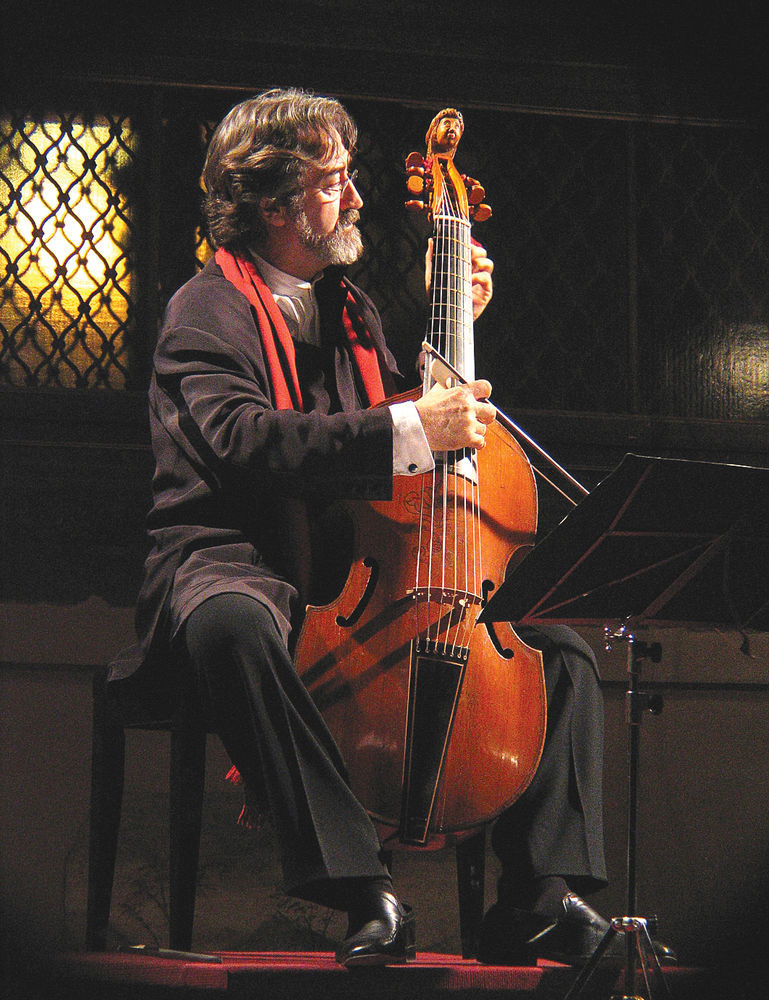
16As a viol player, I can’t help being excited about the upcoming concert of a master of the viol and its music, Jordi Savall. As well as a wonderful gambist, he’s a conductor, teacher, scholar and musical philosopher; his work has had wide-ranging impact in practically all aspects of early music performance over the past several decades. He speaks of “restoring musical memory,” in the sense of awakening our awareness of cultural roots – not only Western cultures, but all co-existing ones – in order that music can proceed into the future. (“A people with no memory has no future,” he says.) To this end, his research, recording and performing are geared to recreating authentic early musical environments, always with great artistry.

On May 8, with this philosophy in mind, he’ll bring to Toronto’s Koerner Hall his own two groups – Hespèrion XXI and La Capella Reial de Catalunya – along with his wife, soprano Montserrat Figueras and the Mexican chamber group Tembembe Ensamble Continuo, to present The Route of the New World: Spain – Mexico. The concert is described as a musical dialogue, featuring works by the foremost composers from Old Spain, the Mexican Baroque, and the living Huasteca and Jarocho traditions. It has been praised for its “exuberant and spontaneous creative energy,” with a presentation that is “lavish and scholarly.”

Savall says, “When you sing or play something, you touch somebody; the performer is in the process of mastering the art, and the listener becomes a kind of pupil who learns according to his or her sensitivity and abilities. The most important thing is that music is a dialogue. A musician doesn’t exist unless there is someone there with whom he or she is communicating. And the more sensitive this someone is, the more the musician can communicate. A truly living relationship is established between the two.”

A live appearance by Savall and his ensembles doesn’t happen in these parts very often, so don’t miss receiving its riches!

Others, Briefly

• May 3 to 8: An explosion of Handel, as Classical Music Consort presents Handelfest 2011, their second annual springtime Handel festival – six concerts over six days featuring some of the composer’s lesser-known music, plus a Handel Singing Competition.

• May 8: In Kitchener, Nota Bene Period Orchestra presents “Harmony in Chaos,” a programme of musical representations of disasters, both natural and man-made (nonetheless including beautiful music by composers such as Telemann, Vivaldi, Falconieri and Tomkins).

• May 11 to 14, 17: Virtuoso violinist and conductor Stefano Montanari returns to Tafelmusik, for a programme of exuberant Italian symphonies and concertos. (Note: Due to injury, Stefano Montanari will only be conducting.)

• May 13: In Kingston, the Melos Ensemble and Chamber Orchestra present “Recorders, Viols and Voices” – music from the Renaissance including a mass by Victoria, Elizabethan and Italian madrigals and instrumental music on period instruments.

• May 14: Aradia Ensemble. Bach + 1. Bach plus a singer, Bach plus a dancer and Bach plus an artist.
• May 15: Toronto Chamber Choir explores Bach’s fascination with numbers, in “Kaffeemusik: Bach and Numerology,” uncovering numerological secrets to be found hidden in the St. Matthew Passion, the B Minor Mass, and the cantata Christ lag in Todesbanden.

• May 23 and 24: Toronto Continuo Collective, the Cardinal Consort of Viols and guests present “Joyne Hands!: Chamber Music from Seventeenth-Century London,” which includes Lanier’s dramatic lament for Hero and Leander (considered the first piece of English recitative), and the sublime Royal Consorts by Lawes for four viols and two theorbos.

• June 5: Toronto Early Music Centre’s” Musically Speaking” series presents baroque music by women composers, in the Church of the Holy Trinity’s lovely acoustic.

If all this isn’t enough, don’t forget other compelling concerts mentioned in last month’s column: Toronto Masque Theatre’s “Masques of Orpheus” (May 5 and 6); Toronto Consort’s “Songs of the Celestial Sirens” (May 6 to 8); I Furiosi’s “Baroqueback Mountain” (May 7); Tallis Choir’s “Handel: Coronation Anthems” (May 7); Cantemus Singers’ Saints and Sinners (May 7 and 8).

Simone Desilets is a long-time contributor to The WholeNote in several capacities who plays the viola da gamba. She can be contacted at earlymusic@thewholenote.com.


17_early_torontomasque_muse6Last season, I attended an absolutely beguiling production of a double bill: two Molière comedies, Le Bourgeois Gentilhomme and Le Malade Imaginaire, performed as masques, with acting, dance, and their respective music by Lully and Charpentier played by a period instrument orchestra. Though presented in 21st century Toronto, these pieces had all the charm, wit, inventiveness and sparkle that one could imagine in 17th century French comedy. The presenting company, Toronto Masque Theatre, has another pair of masques upcoming: the story of Orpheus and Euridice as told in the 17th century by M.A. Charpentier and in the 21st century by James Rolfe (music) and André Alexis (text).

I posed a number of questions to TMT artistic director Larry Beckwith. Here’s a little of what he told me:

So what is a masque?Our wide-ranging definition of a masque is: music theatre that involves some combination of the performing arts – music, dance, poetry – and pieces that explore a common theme or story from different points of view.”

Your three artistic directors (Beckwith, Marie-Nathalie Lacoursière and Derek Boyes) are a goldmine of complementary talents! How did you find each other and get together to produce masques?I’ve known Marie-Nathalie Lacoursière for close to 15 years now and think she’s an absolute genius. She was in the great Elaine Biagi-Turner’s network of dancers and we worked together a few times, back when I played with Arbor Oak (baroque trio). In addition to being a meticulous dancer, she has a deep knowledge of music and theatre, a terrific sense of humour and fun, and when she’s working she really goes for it. I met Derek Boyes on an Opera Atelier tour to Singapore about 12 years ago and we hit it off. He’s a very special actor. There’s a powerful humanity to all of his work. We work very well together. I feel tremendously lucky to be working with them on a regular basis!”

Any thoughts on how masque is, and is not, related to opera? “I think masque is very closely related to what opera was in its beginnings. Thinking of Monteverdi’s Orfeo (another amazing version of the story) of 1607, you have a strong literary base, lots of room for dancing and an intimate and charming setting. Of course, most people now think of opera as being very grand and larger than life, which also relates to one of the goals of masque, which is to take the audience out of their own lives for a little while and beguile them with a combination of art forms.”

How have Toronto audiences responded to your productions? I am amazed and delighted at the extent to which Toronto has embraced TMT. Our audience continues to grow and we offer gentle educational talks and material to give them a context for what they are seeing. At the end of our seventh season, we look back and are very proud of what we’ve accomplished so far, and look forward to building on our strengths as we move forward. Touring is definitely in the plans!”

Masques of Orpheus takes place on May 5 and 6 (there’s a student matinee on May 4), with what Beckwith calls an “amazing cast”: Lawrence Wiliford, Shannon Mercer, Teri Dunn, Peter McGillivray, Alex Dobson; the whole production is directed by Marie-Nathalie Lacoursière. You won’t be disappointed if you go.

Feast of Bach

Bach wrote some of his greatest works for the Christian feast days of Good Friday and Easter Sunday which are approaching.

You can hear the Mass in B Minor twice this month: On April 3, the Elora Festival Singers, conducted by Noel Edison, presents it in Guelph; on April 10, the Georgetown Bach Chorale with music director Ron Greidanus, gives a period performance of the work in Georgetown. The St. Matthew Passion (for me the most profoundly touching of all Bach’s music), will be performed on April 15, 16 and 17 in Oakville, with Masterworks of Oakville Chorus and Orchestra and their conductor Charles Demuynck. The St. John Passion can be heard on April 22, with the Grand Philharmonic Choir under director Mark Vuorinen in Kitchener.

On April 3 in the Royal Conxervatory’s Koerner Hall, revered pianist Leon Fleisher presents Bach from the standpoint of his own long life as an artist. He’ll play “Sheep May Safely Graze” from Cantata No. 208; Capriccio in B-flat Major, “On the Departure of a Most Beloved Brother”; and “Chaconne for the Left Hand” from the Violin Partita in D Minor, among other works.

Some Others, In Brief

• April 8: One of the world’s premier male voice choirs, currently touring, makes one Canadian stop at Toronto’s Grace Church on-the-Hill. Christ Church Cathedral Choir of Oxford England presents English sacred music by Taverner (Christ Church’s first music
director), Tallis, Gibbons, Bach, Purcell and Handel.

• April 10: Toronto Early Music Centre’s Musically Speaking series presents A Modern Troubadour. Benjamin Stein sings and plays on lute and theorbo: baroque and renaissance songs from France, England and Italy, and his own theorbo transcription of a Bach
cello suite.

• April 15: Vesuvius Ensemble presents I canti a Maria: Music for the Madonna, celebrating (with voice, baroque and renaissance guitars, chitarrone, hurdy-gurdy, percussion and rustic Neopolitan instruments) a rich folk heritage: ancient dances, rhythms, feasts, processions and pilgrimages which recall seasonal traditions repeated today.

• April 16: Grace, passion and elegance characterize The Musicians In Ordinary’s À Sa Lyre: musical settings of 16th century French poetry and dances for lute from the country that would invent ballet.

• April 29: “Greenness” is the overriding theme of Sine Nomine Ensemble’s final concert of the season. O viriditas! The greenness of life’s rising is celebrated with music from medieval times.

• May 6, 7 and 8: The Toronto Consort has among its members a contingent of wonderful female singers. Their beautiful sound and virtuosity are displayed in Songs of the Celestial Sirens, a program of music by and for women from 17th century Italy.

• May 7: Never a group to be left behind in the dust, I Furiosi Baroque Ensemble presents Baroqueback Mountain. With music by Handel, Geminiani and Rosenmueller, they urge you to “Park your horses outside, remove your Stetsons, sit back and enjoy the view.”

• May 7: Handel composed his four magnificent Coronation Anthems for the coronation of King George II and Queen Caroline in 1727. Their power to enthrall has never waned, nor has their popularity; you can hear them performed by The Tallis Choir under its director Peter Mahon, with guest artists The Talisker Players.

• May 7 and 8: Saints and Sinners mingle in this pair of concerts by Cantemus Singers, with some saucy English, French and German songs from the 16th century, balanced by Palestrina’s Missa Papae Marcelli and motets by Byrd, Hassler and Clemens non Papa.

• May 3 to 8: Classical Music Consort’s second annual Springtime Handel Festival brings to light some of Handel’s rarely performed works in six concerts at Trinity and Victoria College Chapels. n

Simone Desilets is a long-time contributor to The WholeNote in several capacities, who plays the viola da gamba. She can be contacted at earlymusic@thewholenote.com.
Locations might be taken as a theme that loosely ties this month’s events together, in an oblique sort of way. To start with, Toronto is the lucky location of several appearances by visiting artists I’d like to tell you about.

12_barbara_furtuna_photo_3On March 12, The King’s Singers appear at the Royal Conservatory’s Koerner Hall. This six-voice male ensemble from England hardly needs an introduction; their unique blend of impeccable intonation, flawless articulation, incisive timing and British humour have ensured their fame around the world for over 40 years. I myself fondly remember a performance of theirs at U of T Faculty of Music in November 1973 – I unearthed the program (this is true), which reveals that they did Renaissance motets by Victoria, Jacob Handl and Byrd, Italian madrigals and French chansons from the 16th and 17th centuries, 20th century works and some lighter fare too. Of course, no one in that early group still remains in the present incarnation some 37 years later; but it’s sure that the versatility and aplomb which have always characterized their performances have remained constant through all the changes in personnel. At Koerner Hall their artistry and expertise in early music will be evident in works by Bennet, Tomkins, Palestrina and Striggio; more contemporary works are on the programme as well.

A concert not strictly of early music but of a world premiere inspired by the music of 12th century musician and mystic Hildegard von Bingen takes place at St. Anne’s Church on March 23. It brings to Toronto an extraordinary women’s vocal trio from Norway, Trio Mediæval, who, with The Toronto Consort, will perform James Rolfe’s new commissioned work Breathe. This presentation of Soundstreams offers an added bonus on March 21: a free “Salon” at the Gardiner Museum, at which you can hear Trio Mediæval perform excerpts and talk about Rolfe’s composition.

The pure and expressive voice of Daniel Taylor, one of the world’s most sought-after countertenors, will grace the Tafelmusik stage in performances from March 24 to 27 (Trinity-St. Paul’s Church) and again on March 29 (Toronto Centre for the Arts). His is an amazingly busy life – his website tells us “Professor of Voice at the Conservatoire de musique in Montreal and at the University of Ottawa, Adjunct Professor at McGill, visiting scholar at the University of Victoria, Artist-in-Residence at the Banff Centre, Artistic Director and Conductor of the Theatre of Early Music, which performs over 30 concerts every year all over the world” – and this description doesn’t even mention his many appearances as recording artist and performer in opera, oratorio and concerts. In Toronto he’ll be singing Bach (the ravishing solo Cantata 170 Vergnügte RuhContented Rest) as well as virtuosic Italian arias. Definitely a desirable place to be on one of those dates!

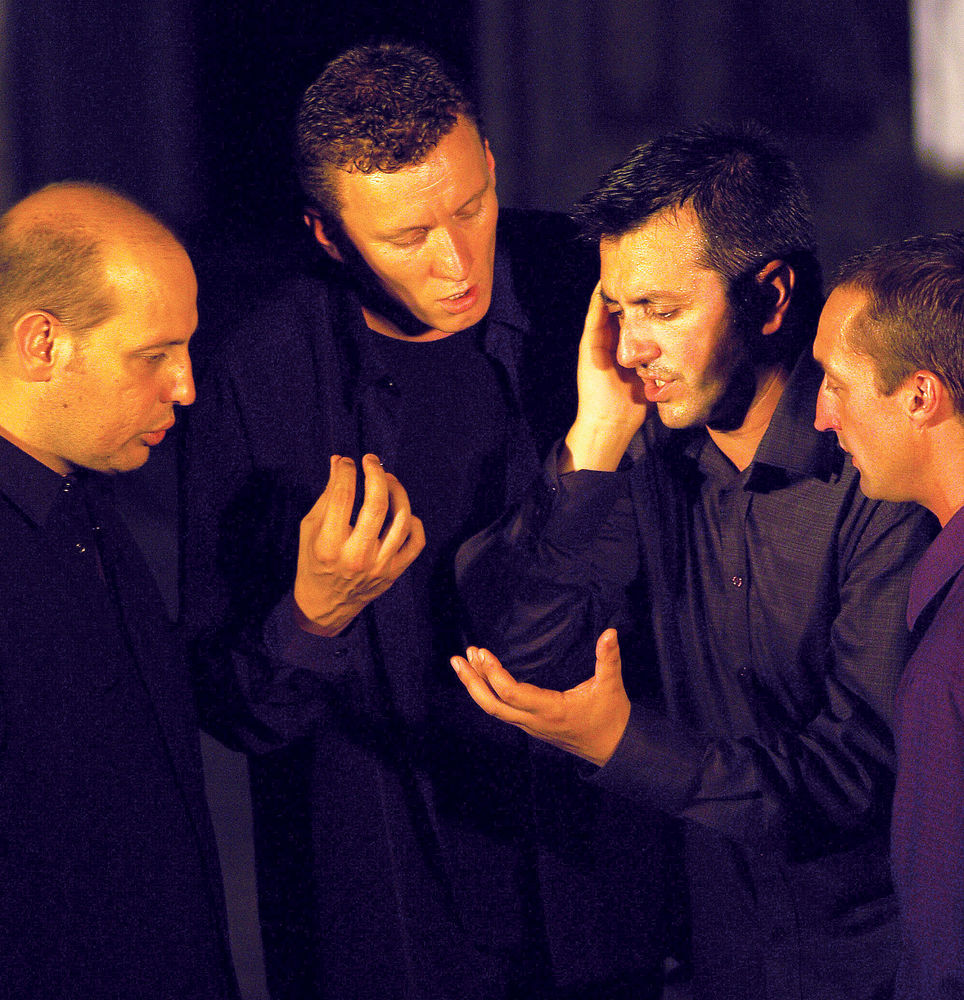
Each season, The Toronto Consort introduces a guest ensemble to its audiences. But this April, it brings two: the richly-flavoured Montreal-based Constantinople, an instrumental ensemble inspired by musical traditions of the Middle Ages, the Renaissance, the Mediterranean and the Middle East; and Barbara Furtuna, a remarkable male vocal quartet from Corsica that specializes in the centuries-old traditions of polyphonic Coriscan singing. To listen to Constantinople is to travel back to ancient places and times when Eastern and Western cultures blended and influenced each other’s arts and philosophy; to listen to Barbara Furtuna (the name means “cruel fate”) is to hear stories of the long, troubled and impassioned history of their island. Together, they’ll take the audience on a voyage from the heart of the Mediterranean where lies the island of Corsica, to ancient Persia and medieval Europe. “Canti di a terra” is presented on April 1 and 2 at Trinity-St. Paul’s Church.

Other locations – Sweden, Leipzig, restoration London, coffeehouses, ladies’ boudoirs – are also within reach, and once again there’s too much to do justice to:

Meeting friends for coffee is always an enjoyable way to spend a couple of hours. You can do this in the 18th century European way on March 4, as Baroque Music Beside the Grange invites you to Heliconian Hall for “The Coffeehouse Collective,” music by Telemann, Bach and others, played in an informal but attentive atmosphere with an array of instrumental colours, and served with coffee and cider. An hour-long version of this concert will be presented on March 6 in the lovely acoustic of Church of the Holy Trinity, the latest in Toronto Early Music Centre’s “Musically Speaking” series.

As lutenist/guitarist John Edwards explains, pre-Revolution France was an era “where men like the encyclopaedist Diderot, liberal thinkers like Rousseau and even a pre-imperial Napoleon would gather, literally, at the foot of the bed of great ladies. After they finished describing their hard work or how the plotting of the Revolution was progressing, chamber music would have offered a perfect diversion.” Music that might well be heard then is performed on March 12 by The Musicians In Ordinary in a concert called “Rococo!” with soprano Hallie Fishel, baroque guitarist John Edwards and guest violinist Christopher Verrette.

Also on March 12, you can hear a touch of Sweden at Victoria College Chapel, in Scaramella’s “Fiddle Me This,” as three bowed instruments are showcased – the Swedish nyckelharpa, the hurdy gurdy and the viola da gamba. There’ll be a mix of folk-inspired music and music coming from the high art tradition, especially pieces associated with the 17 th century Swedish Queen Kristina. Of special interest: a newly-composed piece for these three featured instruments, by hurdy gurdy and percussion player Ben Grossman.

Church of Our Lady Immaculate in Guelph is the location of Tactus Vocal Ensemble’s concert “Il Mio Sole” on March 12. With organist Christian Teeuwsen, this eight-voice ensemble will perform works by Allegri, Marenzio, Monteverdi, Palestrina and Sanders.

In Kitchener on March 13, Nota Bene Period Orchestra takes you back to “Bach’s Leipzig,” presenting music by Bach and his contemporaries including Telemann, Kuhnau and Rosenmüller. The trip is further enhanced with a slide show of Leipzig’s historic beauty and maybe even a little strudel.

With music ranging from restoration London to 21st century Toronto, Music at Metropolitan presents “Shakespeare in the City” on March 26 – a cross-cultural jam session on the lyrics of Shakespeare featuring singers, dancers and instrumentalists including composer/saxophonist Daniel Rubinoff and composer/theorbist (and The WholeNote’s choral columnist) Benjamin Stein.

On March 27, there’s a unique opportunity to celebrate the Age of the Enlightenment and its legacy with music, talks and readings of inspiring historical texts. Amnesty International and the Windermere String Quartet present “The Age of Enlightenment and Human Rights.” String quartets by Mozart and Beethoven will be performed on period instruments, and the location is First Unitarian Congregation.

THIS JUST IN: In the wake of the exciting news reported last month, of Aisslinn Nosky’s appointment as concertmaster of the prestigious Handel and Haydn Society in Boston, a solo violin recital arises. Nosky will perform three works: Bach’s Partita No. 3 in E Major (a very famous and joyful work); Ysaÿe’s second solo sonata ”Obsession” (a work “obsessed” with both the above Partita and the Dies Irae); and the world premiere of Stand Still, a new commissioned work by Michael Oesterle. Presented by I Furiosi, “The Good, The Baroque and The Ugly” takes place on April 2 at Church of St. Mary Magdalene. A recital “not for the faint of heart,” Nosky says, and this is certain; but I think it must also be a celebration of hope and joy in the prospect of a bright future.

Simone Desilets is a long-time contributor to The WholeNote in several capacities, who plays the viola da gamba. She can be contacted at earlymusic@thewholenote.com.
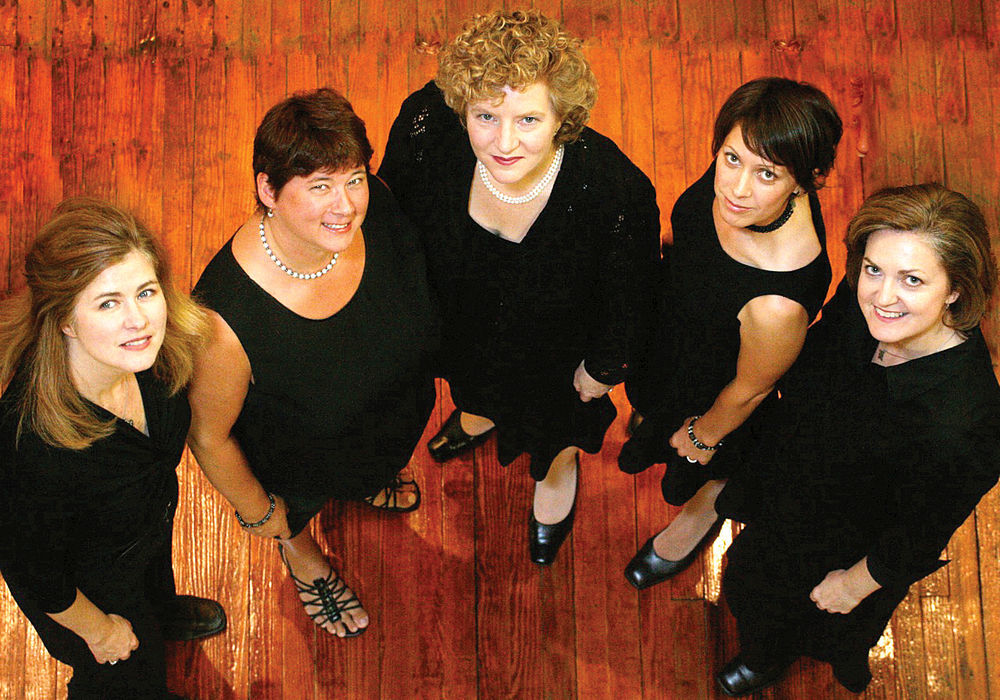
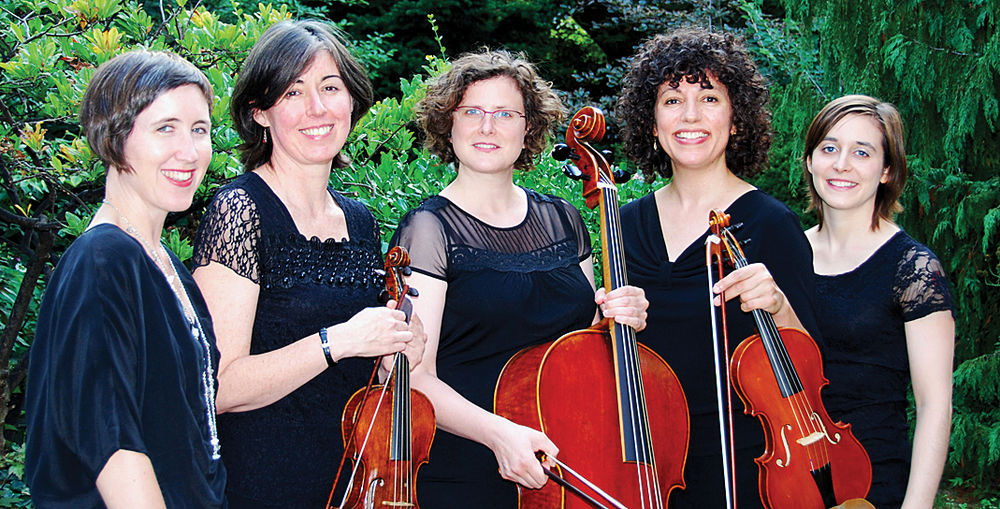
The early music of 2011 sometimes includes the new. Consider, for example, the inaugural concerts of newly-formed Musathena, a group of five accomplished women (soprano, baroque violins, baroque cello, harpsichord) who, when asked to perform as part of Primavera Concerts’ celebration of the International Women’s Day Centenary, conceived a program of beautiful but rarely heard baroque music by women composers. But as one thing led to another, a new idea crept in: to commission a musical setting of an ode by Renaissance English poet Mary Sidney (1561-1621). As a result, a new work by Canadian composer Elizabeth Raum has emerged and will be premiered at Musathena’s first concerts, alongside music by Élisabeth Jacquet de la Guerre, Barbara Strozzi and other women of the baroque.

p12_13musathenaAnd take, as another example, Scaramella’s Birds Bewigged, an avian-themed program of music and poetry (performed by soprano voice, recorders and traverso, violas da gamba, harpsichord and narrator) featuring not only works by Scarlatti, Rameau, Couperin and others from the baroque era, but also contemporary Canadian music. Harry Somers’ 12 Miniatures will be heard, a work centred on twelve Japanese haiku and composed in 1964, for the above instrumentation; and Emily Doolittle’s Music for Magpies, a fascinating piece written in 2003, will reveal to the audience the mischievous magpie’s own rendition of five attractive birdsongs, stolen from other birds, sung in its voice of solo bass viol with quarter-tone frets.

Then there is the Aradia Ensemble, a group normally concerned with baroque performance (though never afraid to take a new idea and run with it – I remember with enthusiasm last season’s Thunderbird – A First Nations/ Baroque Collaboration). Their whole upcoming program is devoted to new music for baroque instruments “where baroque meets the 21st century,” as ten very-much-alive composers (Rose Bolton, Ron Royer, Caitlin Smith and others) have been invited to write a five-minute work each for the ensemble. The programme title Baroque Idol! suggests the playful spirit of this concert (“à la American Idol”); but as artistic director Kevin Mallon says, the aim is to produce new music for baroque ensemble, using the tonal possibilities of old instruments.

Treatises could easily be written – probably have been written – on the various aspects of combining the new with the old in music. Performers from each of these groups have had some interesting reflections on the subject, a tiny bit of which I’ll pass on to you here:

From Sheila Smyth of Musathena: “It’s interesting that there seems to be an overlap of people who do both early music and new music. Perhaps it’s the sense of exploration and discovery in both new and old frontiers that is compelling… New music written for early instruments tends to make great use of the colours and wide range of articulation detail available on these instruments. We’ll approach the new piece in the same way as we would all vocal-instrumental music – the music serves the text, and it’s our job to bring the piece to life in a way which makes the poetry and its musical setting each seem indispensible to the other.”

From Scaramella’s artistic director Joëlle Morton: “As a performer who these days mainly plays ‘traditional early music,’ I really enjoy taking on the challenge of modern compositions. Contemporary composers often write very demanding parts– through rhythmic complexity, unusual tonal palettes and calling for special effects and techniques. In order to ‘understand’ this music, let alone perform it well and convincingly, I find I need to spend a lot of time, thinking as well as working at the technical demands. The intense involvement can be extremely satisfying. I have found that the process of learning a modern work can also have a benefit on the traditional repertoire on the programme – once my soul is engaged in such an intense process, I find that I tend to also listen and experience the older music deeply, as well.”

From Aradia’s Kevin Mallon: “When we play baroque music, it doesn’t occur to me that it’s old music; I just think we’re playing music – and then I think ‘Oh yeah, but it’s on old instruments.’ So we do think of ourselves as a contemporary ensemble; and we want to be really based in the time of today.”

Scaramella’s Birds Bewigged takes place in Toronto on February 5. Alas! – a terrible choice awaits you: Aradia Ensemble’s Baroque Idol! also takes place on February 5 in Toronto. Musathena’s Baroque Music by Women Composers will be presented on March 5 in St. Catharines and on March 6 in Waterloo. For full details, please consult WholeNote’s concert listings.

As for all the other early music performances this month, there’s plenty of variety to tempt a wide spectrum of tastes. Here, in brief, are a few of this month’s offerings:

Bach is gloriously represented, with two of his major choral works: The B Minor Mass is given five performances by Tafelmusik Baroque Orchestra and Chamber Choir, February 9 to 13. The Toronto Mendelssohn Choir presents the St. John Passion on March 3 in Koerner Hall.

Two solo recitals for gentle instruments can be heard. The Musicians In Ordinary presents Blame Not My Lute, music for the solo lute from Elizabethan and Jacobean England, performed by MIO’s John Edwards on February 5. On February 13, the Toronto Early Music Centre’s Musically Speaking series features harpsichordist Sara-Anne Churchill performing music by Byrd, Bach, Scarlatti and others.

Some of Beethoven’s most sparkling music was written during his early years in Vienna, the years before his deafness finally took hold. Youthful and uplifting chamber works from this period are presented on February 12, in The Academy Concert Series’ Beethoven’s Happiest Years, played on period instruments (violin, cello, classical clarinet and fortepiano).

The Toronto Consort’s The Marco Polo Project: Part 2, February 18 and 19, takes you on an exotic musical journey, imagining the sounds that Marco Polo might have encountered on his travels up the coast of India and back to his native Venice – with the help of two special guests: vocalist Suba Sankaran, and Sampradaya Dance Creations with its artistic director, Lata Pada.

Scholars of the arts and culture of medieval times, Sine Nomine Ensemble always brings interesting stories. On February 25 they sink into bawdy revelry in observance of the pre-Lenten carnival, the Feast of Fools and other occasions, with Wanton and riotous living – Medieval songs of lechery, drunkenness, and other altered states.

Don’t forget Tafelmusik’s reprise of The Galileo Project: Music of the Spheres, March 2 to 6. This spectacular homage to the 400th anniversary of Galileo’s development of the astronomical telescope was first presented in Toronto in January 2009, and has toured internationally to great acclaim.

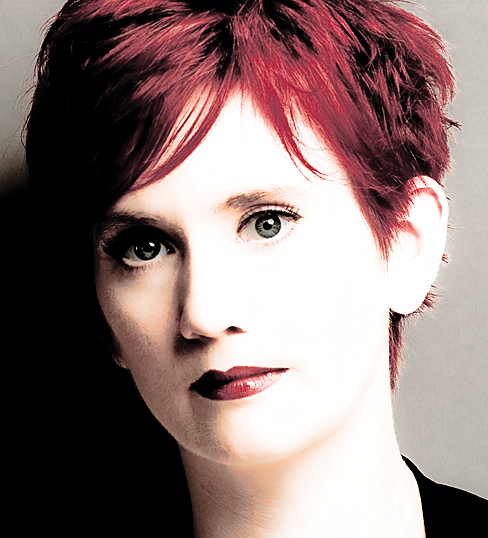
p12_13_aisslinn_noskyAnd finally, some good news to report: Local audiences will know Aisslinn Nosky, the fiery violinist with the red hair who plays so passionately in such groups as Tafelmusik, I Furiosi, the Kirby and the Eybler Quartets, and in many other solo, chamber and orchestral situations. She has been appointed concertmaster of the Handel and Haydn Society in Boston, a period instrument orchestra and chorus of international renown. This group is recognized as a leader in the field of historically informed performance and is the oldest continuously performing arts organization in the United States, having been founded in 1815. Artistic director Harry Christophers is impressed with Nosky’s “great style and leadership as guest concertmaster”; and says “she has the right combination of energy, experience and talent to fill this important position and assist in leading the Society toward its Bicentennial in 2015.”

More good news: Canada is not to lose Nosky forever; she’ll still perform as a core member of Tafelmusik (with a little flexibility in scheduling); and (who knows?) this might open up new possibilities: May we look forward to appearances here of the Handel and Haydn Society, with Aisslinn Nosky in the first chair?

Simone Desilets is a long-time contributor to The WholeNote in several capacities, who plays the viola da gamba. She can be contacted at earlymusic@thewholenote.com.
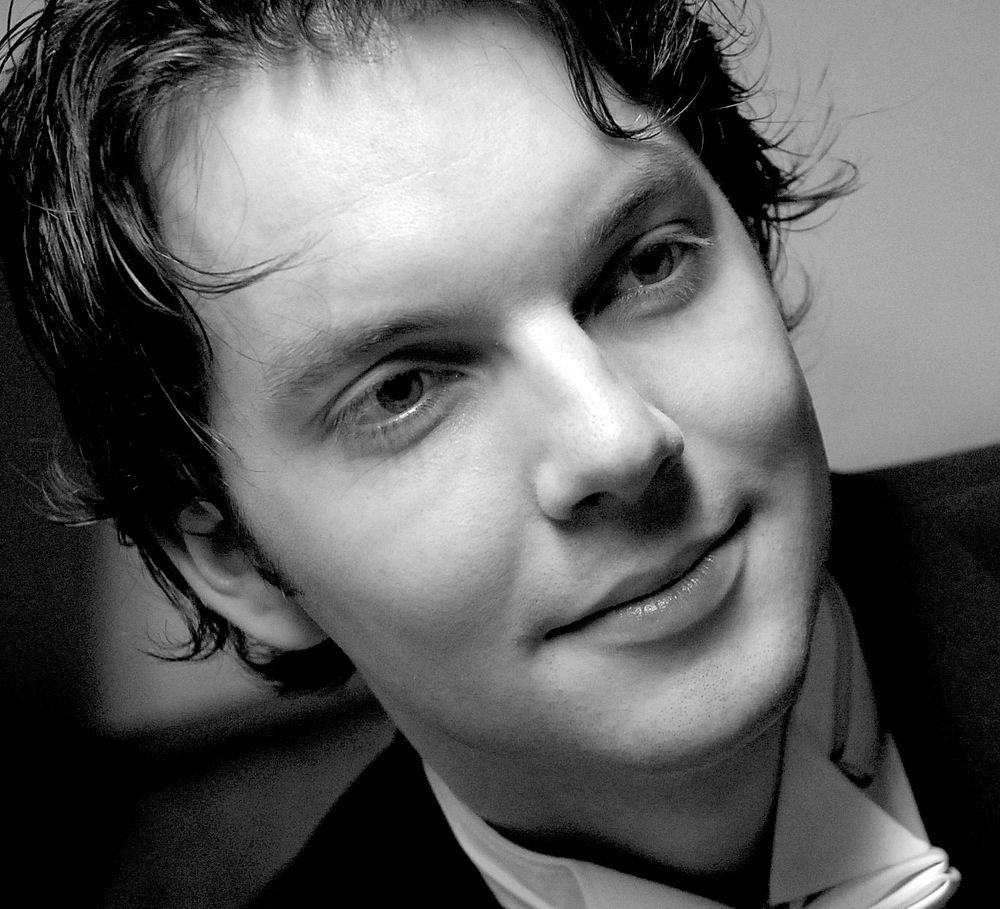


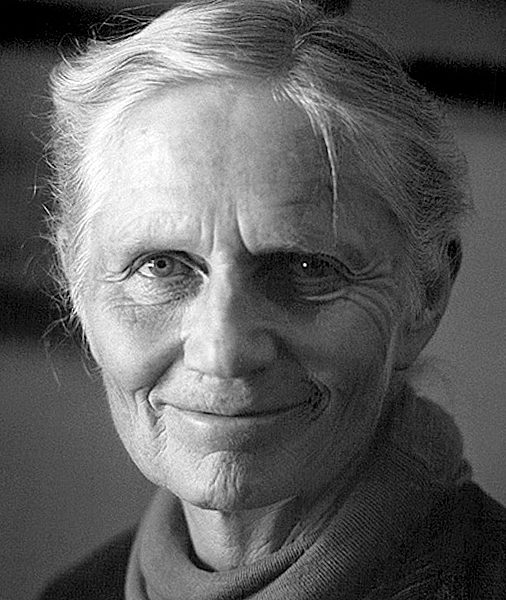
p12fRecently, a most engaging talk fell into my hands, a CBC radio interview from 2002 between Eric Friesen and gambist, cellist and educator Peggie Sampson, on the occasion of her 90th birthday. During the course of the interview, Dr. Sampson reflected on various possible ways of presenting early music in concert. One way to do it, she said, is to recreate an occasion: “to be in somebody’s court, on a definite day – the marriage of this princess to that prince or something like that, and then you try to reproduce the whole scene.”

Her comment led me to observe that more than one group have thought to celebrate this season of “definite days” by recreating an occasion, bringing the audience as close as possible to an experience of what that event must have been like. So I asked the artistic directors of three of these groups to tell me a bit about the genesis and development of this idea in their performances. Here is some of what they told me.

The Tallis Choir and its artistic director Peter Mahon very much enjoy taking this approach in their programming, devoting one concert per season to a reconstruction of the musical content of an historic event. Choir member (and enthusiastic researcher of programme material) Douglas Cowling notes: “These reconstructions allow us to hear the classic repertoire in the musical sequence which the composer intended. In the upcoming Gabrieli mass, we will be unable to recreate the cannon volleys on the Grand Canal which punctuated the service at significant moments, but we will see how Venetian composers assembled a mass with seemingly independent movements, hear for the first time Orlando di Lasso’s polyphonic settings of the mass responses, and experience Gabrieli’s famous brass music as ‘cover’ for grand ceremonial in San Marco. It will be a unique concert experience – and a lot of fun.” And so on December 4, the Tallis Choir takes the audience back to 1605 with a recreation of Christmas Eve in the ducal chapel of San Marco in Venice. Featured is Giovanni Gabrieli’s Mass for Twelve Voices, interwoven with more glorious sacred music by Giovanni and Andrea Gabrieli, Lasso and Grandi.

p13On December 11, the Aradia Ensemble and its artistic director Kevin Mallon take their audience to Dublin, Ireland, in April 1742 for “The Dublin Messiah,” recreating the premiere of Handel’s famous work. Mallon is enthusiastic about this presentation and the reasons for it: “As early music performers, we try to recreate the instruments so they sound as the people of the time and the composer would have heard; we try to get as close as possible to a performing style they would have expected; we try to get as close as we can to the text the composer wrote, etc. So, the notion of recreating a particular event from a definite time or place is all part of that. However, I have found that the audience get a real kick out of the recreation. We can have fun with it – for example, pointing out that the tradition of King George standing at the ‘Hallelujah Chorus’ came from the London performances which post-dated the premiere in Ireland. So in my strong Irish accent I ask them to sit and enjoy it! The first audience was asked: ‘The Ladies who honour this Performance with their Presence would be pleased to come without hoops, as it will greatly encrease the Charity by making room for more company. The Gentlemen are desired to come without their Swords.’ So we ask our audience to do likewise!”

On December 10, 11 and 12 the Toronto Consort presents “Praetorius Christmas Vespers,” recreating the joyful celebration of Christmas Vespers as it might have been heard under the direction of Michael Praetorius in 17th-century Germany. As in all Toronto Consort presentations, a great deal of scholarship has gone into the preparation of this concert. Artistic director David Fallis talked a bit about the research involved – everything from determining the permissible elements of the Lutheran Vespers service as distinct from the Catholic service (for example cutting down the number of psalms to only one or two, and the addition of the Creed), all the way to delving into Praetorius’ complete works to create parts, thereby enabling the performers to play and sing the music. Praetorius, as you’ll discover if you go, loved groups of strings and groups of brass; and there’s something very warming in being enveloped by the massive chords of singers, violins, cornetti, sackbuts, theorbos and keyboards as they resound from the balconies and all around the church – a joyful invitation to join in the celebration of a north German Christmas.


Some upcoming concerts

There’s no possibility of doing justice to the amazing flurry of early music concerts in December and January – you’ll have to go on a listings treasure hunt to find them all. Here are but a few:

• December 4: A night to make a choice. In addition to the Tallis Choir concert, discussed above, there is: Toronto Chamber Choir, “O Magnum Mysterium” (serene motets of Palestrina, expressive harmonies of Monteverdi, beautiful voices and strings of Vivaldi); Flutes by Night, “Bach, Bach and More” (J.S. Bach, C.P.E. Bach, Telemann and Hotteterre for traverso, recorder, cello and harpsichord); Cantemus Singers, “Welcome Yule” (renaissance and medieval carols; Sweelinck, Praetorius and Byrd; Schütz’s delightful Christmas Oratorio). Fortunately, this concert is repeated on December 12.

• December 18: Sine Nomine Ensemble for Medieval Music, “Minstrels at a Christmas Court” (In this English romance, the faithful Sir Cleges, benefactor of minstrels, becomes the beneficiary of a Christmas miracle. Around this compelling narrative framework is woven a mixture of seasonally evocative 14th- and 15th-century English Christmas music for voices and instruments).

• January 15: I Furiosi, “My Big Fat Baroque Wedding” (We are not just staging a wedding, but the clothes will be designed by Canadian designer extraordinaire Rosemarie Umetsu who is presenting eight to ten new garments at the show. Works by Bach, Campion, Handel and more. We encourage audience members to come wearing bridesmaid gowns that they have never reworn.)

• January 28 in Kingston: Melos Choir and Chamber Orchestra, “Handel’s and Haydn’s London” (J.S. Bach, J.C. Bach, Handel, Geminiani, Haydn and Greene – the second concert of this newly-formed, mainly baroque-spirited, chamber orchestra).

Simone Desilets is a long-time contributor to The WholeNote in several capacities, who plays the viola da gamba. She can be contacted at earlymusic@thewholenote.com.
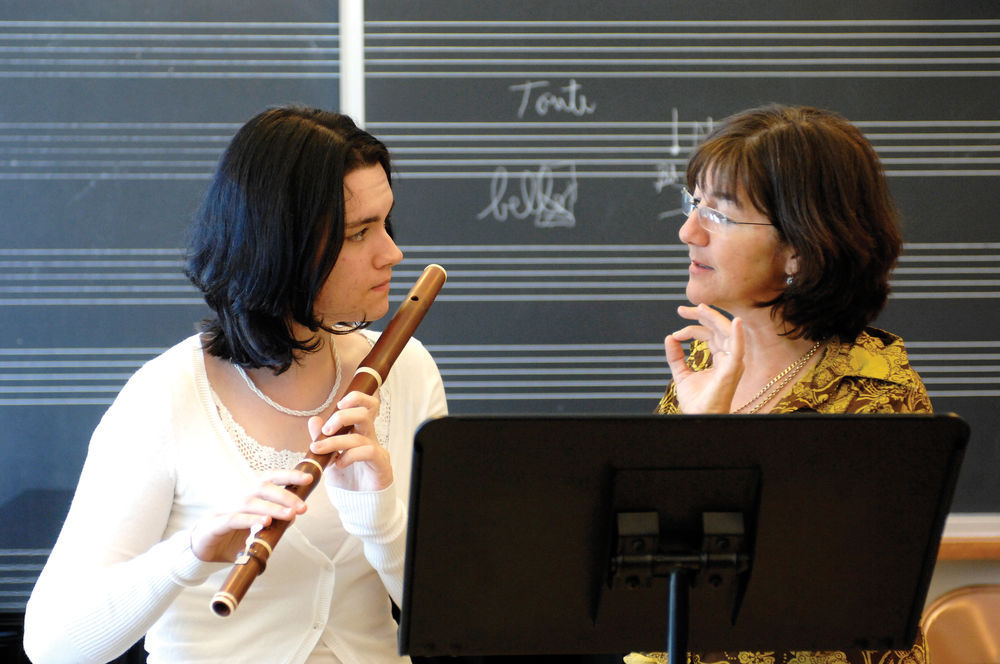
Back to top