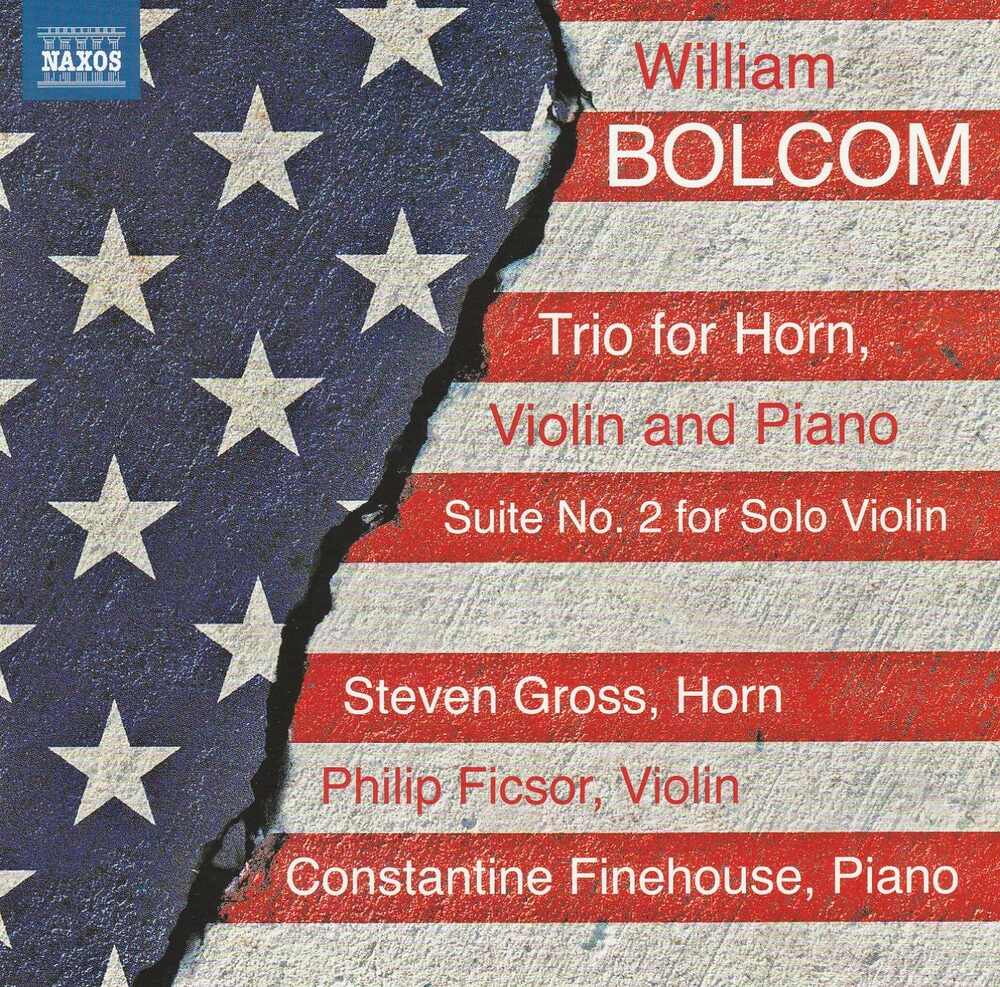
06a Bolcom HornWilliam Bolcom – Trio for Horn; Solo Violin Suite No.2
Steven Gross; Philip Ficsor; Constantine Finehouse
Naxos 8.579102 (naxos.com/catalogue/item.asp?item_code=8.579102)

William Bolcom – The Complete Rags
Marc-André Hamelin
Hyperion CDA68391/2 (hyperion-records.co.uk/dc.asp?dc=D_CDA68391%2F2)

William Bolcom (b.1938) is a renowned American composer whose works are wide-ranging, genre-bending and utterly fascinating. While Bolcom’s compositions from around 1960 employed a modified serial technique, under the influence of Pierre Boulez, Karlheinz Stockhausen and Luciano Berio whose music he particularly admired, in the 1960s he gradually began to embrace an eclectic use of a wider variety of musical styles. In addition to four large-scale operas and numerous concertos, Bolcom has also written nine symphonies, twelve string quartets, four violin sonatas, numerous piano rags, four volumes of gospel preludes for organ, four volumes of cabaret songs, three musical theatre works and a one-act chamber opera.

Chamber Works features two pieces, the Trio for Horn, Violin and Piano (2017) and the Suite No. 2 for Solo Violin (2011). The Trio showcases each instrument to its fullest in both soloistic and ensemble capacities and, while mostly atonal, the work incorporates brief moments of tonality that reorient the listener’s ears and provide a grounding element, especially in the more tumultuous movements. The Suite, conversely, is exquisitely tuneful and is clearly structured around the dance forms of Baroque solo violin suites, especially those of J.S. Bach. Rhythmic vitality and instrumental virtuosity reign supreme here, and the performance given by violinist Philip Ficsor is both admirable and noteworthy.
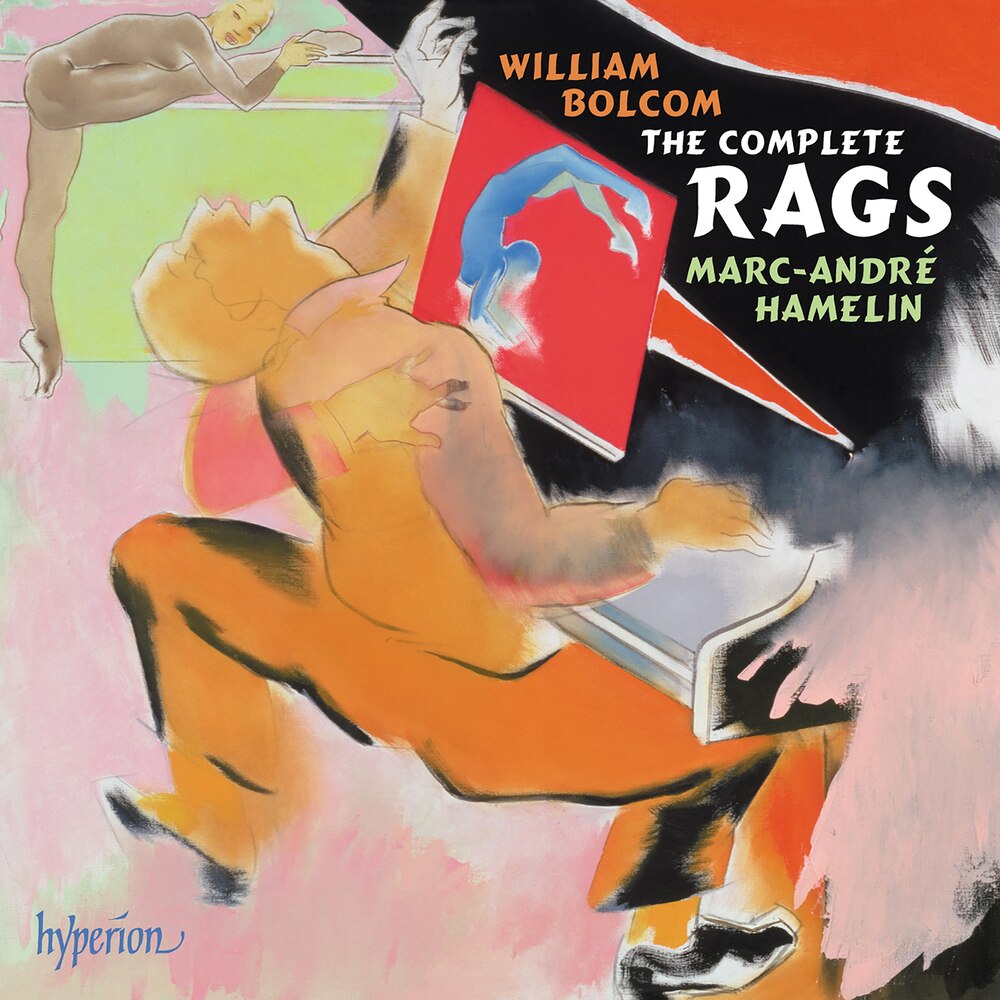
06b Bolcom HamelinThe piano rag, (i.e. ragtime), is a musical style that reached its peak popularity between 1895 and 1919. A precursor to the development of jazz, ragtime is characterized by its syncopated or “ragged” rhythm and was popularized during the early 20th century by composer Scott Joplin and his school of classical ragtime. Although it fell out of favour in the 1920s, composers and performers alike have revived the styles and forms of the genre in the decades since, including Bolcom. His collection of rags is among the finest adaptations of ragtime within contemporary music, achieving a blend of stylistic familiarity and artistic creativity that is unique while avoiding appearing derivative or gauche.

And who better to handle Bolcom’s ingenious rags than Marc-André Hamelin, perhaps Canada’s premier interpreter of contemporary music? As someone who successfully handled the seemingly insurmountable piano works of Kaikhosru Sorabji and Charles-Valentin Alkan, Hamelin’s name is synonymous with “unplayable” scores that transcend the conventional understanding of virtuosity. Here, however, he lends his deft touch to material that is considerably less demanding from a technical perspective yet has certain stylistic requirements, the challenges of which he meets with precision and sensitivity.

For those familiar with the music of Bolcom, both of these recordings are guaranteed to be a delight; they also serve as fine starting points for those who are unfamiliar. The Complete Rags adapts an old yet familiar style through a master performer’s touch, while Chamber Works provides a glimpse into Bolcom’s more modern approach, a perfect pairing for anyone interested in this icon of American modernism. 
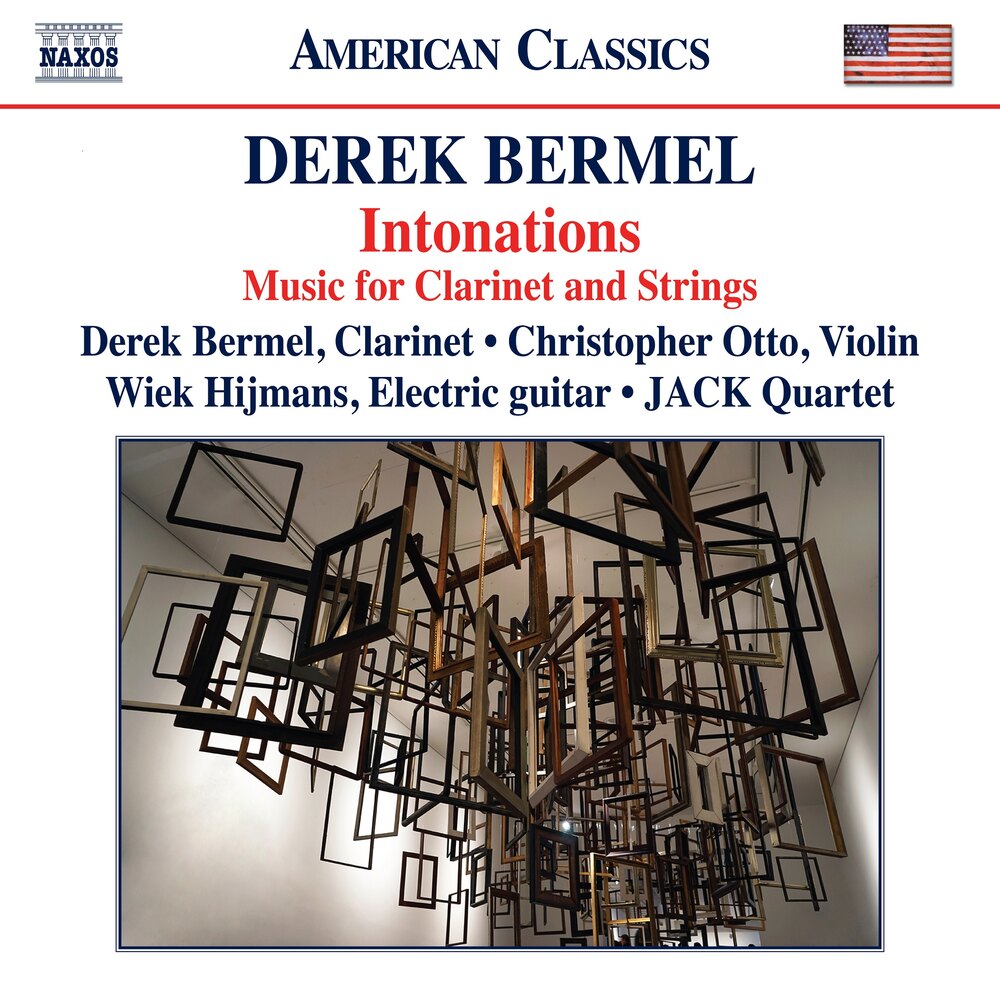
07 Derek BermelDerek Bermel – Intonations – Music for Clarinet and Strings
Derek Bermel; Christopher Otto; Wiek Hijmans; JACK Quartet
Naxos 8.559912 (naxos.com/CatalogueDetail/?id=8.559912)

What amazing art evolves from decaying empires! Consider this new release by Derek Bermel. Widely travelled, juxtaposing American styles like twangy folk and wrenching blues, adding elements from farther afield (South American, African, Thracian), Bermel fashions wonderful curiosities from this mittful of influences. Intonations, played with surly strut by the JACK Quartet, is all bending pitches and grinding gears, although the second movement, Hymn/Homily is poignant and sweet. Ritornello is a single-movement work for string quartet and electric guitar (played by Wiek Hijmans). After the ear-stretching dissonance of the prior tracks, this at first sounds pop, even a bit like Classical Gas. Briefly. Then it’s Death and the Maiden meets R2D2, and into the multiverse we go.

Composer turns clarinetist on Thracian Sketches. A deep and mellow low register melody emerges, exploring the world of octave-plus-tritone, and eventually becoming tired of that limited space. As the melody careens upward, Bermel vocalizes while playing, adding a menacing buzz to the line. Sure enough, once the upper register is breached, all heck breaks loose. It’s one of those pieces that will take all the player’s endurance. Doubtless circular breathing is a featured asset, so seldom does the sound actually stop. It’s a brilliant piece for solo clarinet, ending with a fantastic race down and back up the range of the horn, the explorer thrilled with the view.

Five brief Violin Études haunt the ear thanks to excellent renditions by Christopher Otto. To close the disc, Bermel and the JACKs perform A Short History of the Universe. Its second movement, Heart of Space, could be a parody of the theme from Love Story. Balkan dance and Lutheran chorale jockey for position in the good fun of Twistor Scattering, and then refer back to the atonal pointillism of Multiverse, the first movement. 

Excellent liner notes enhance the many pleasures of Bermel’s music.

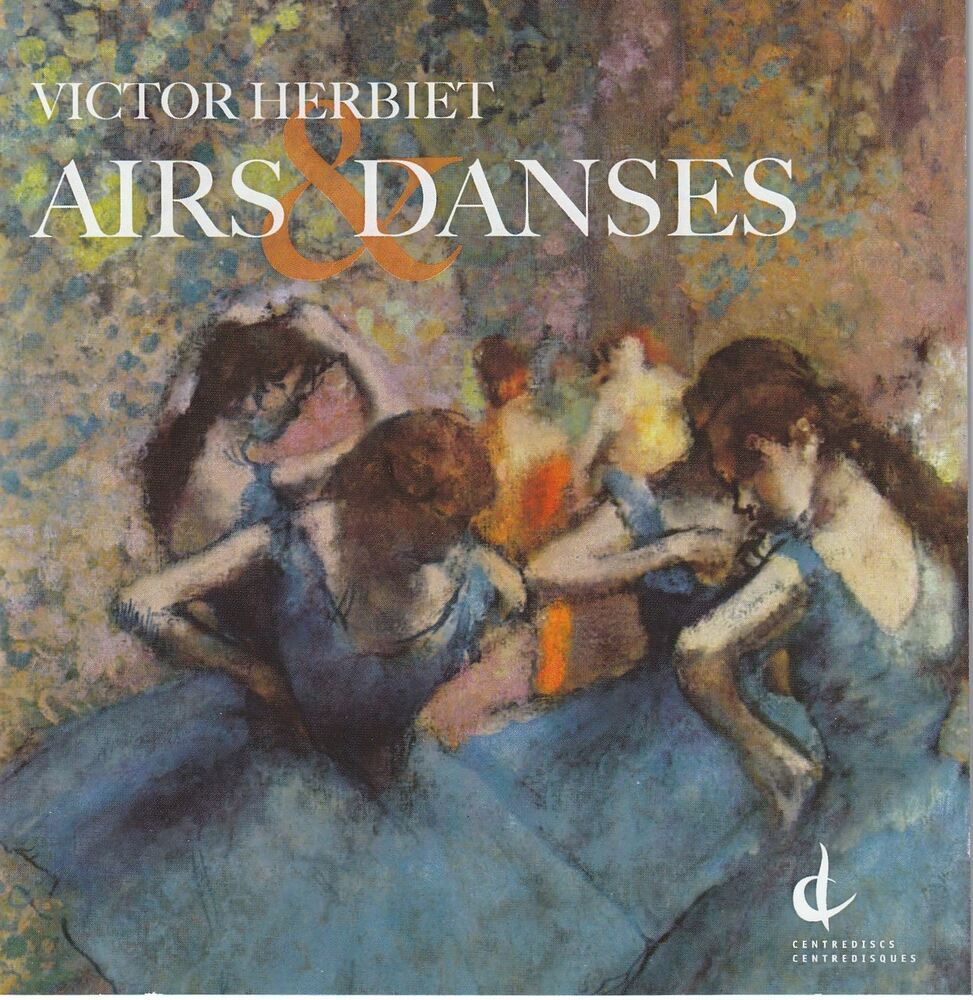
09 Victor HerbietVictor Herbiet – Airs & Dances
Victor Herbiet; Jean-François Guay; Marc Djokic; Julian Armour; Jean Desmarais
Centrediscs CMCCD 29822 (cmccanada.org/website-search/?q=CMCCD29822)

Looking back to the era when the saxophone was elbowing its blustery way to the front of composers’ to-do lists, Victor Herbiet offers a diet of 20th-century stylings for a variety of chamber settings all featuring his instrument. Airs & Dances is exactly what it says it is, and the writing is every bit as capable as the playing. It seems a good strategy for saxophonists to provide themselves with fresh repertoire, should they feel so inclined. Herbiet does, in a way that is both pleasant and certainly challenging to the player, and fun for the listener. 

The opening track, Troika, purports to reference the more jazzy side of Shostakovich, but I hear a good deal of Milhaud or Poulenc as well. Wherever it hails from, it’s a romp. Much of the disc is lighthearted and fun, veering into uncloaked Romanticism in track seven, Pas de Deux for soprano and alto dance-aphonists. Herbiet is ably abetted on several tracks by fellow saxist Jean-François Guay, and aided ably on others by the very fine pianist Jean Desmarais. The other collaborators are fellow Ottawans Marc Djokic on violin and cellist Julian Armour. 

Herbiet touches down somewhere closer to the current century in Paris Rush, a sparkling duo again featuring Guay, again for soprano and alto saxes. Imagine the Beatles’ tune from Sergeant Pepper’s, A Day in the Life, but mimed out by two saxes in a French accent. Trois Valse-caprices are solo etudes in the style of an early 20th century composer/dentist, Dr. Gilles Amiot. Herbiet’s solid technique is on full display, and perhaps he’ll consider filling (get it?) a whole study book with these types of pieces.

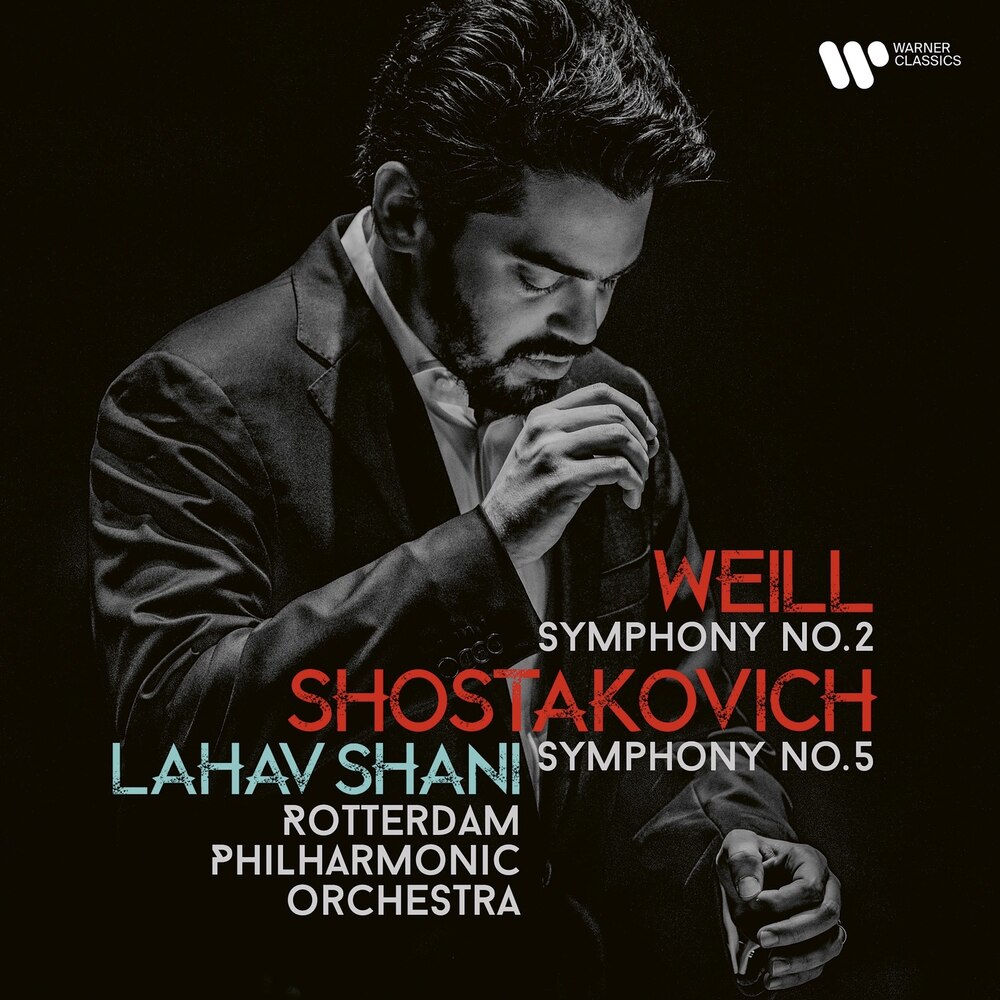
10 Weill ShostakovichWeill – Symphony No.2; Shostakovich: Symphony No.5
Rotterdam Philharmonic Orchestra; Lahav Shani
Warner Classics (warnerclassics.com/artist/rotterdam-philharmonic-orchestra)

“Kurt Weill, symphonist” doesn’t jibe with the reputation of the composer from post-WWI Germany. Known more for his theatre work and songs, Weill was discouraged in his early efforts at the large abstract form; unlike his contemporary, Dmitri Shostakovich, his “serious” works remain overlooked. 

Weill’s Second Symphony (1933) is presented in a clever pairing with the well-known Fifth Symphony (1937) by the Russian titan, comparing the work of the older man who was forced from his home by the rising Nazi peril to the younger one who stayed put in Stalinist Russia. It’s a shame Weill’s symphony is sidelined by most orchestras. His was a mature, original voice; early criticism missed the mark, calling him a melodist whose ideas were fit only for the cabaret. Weill wrote tonal but edgy, hyperbolically dramatic music, and this is an excellent rendering. 

Shostakovich wrote his Fifth to keep the wolves at bay, ticking the boxes that Stalinists insisted were proper to good Soviet Art: strife overcome by struggle, a triumphant finale, and no experimental formalisms. Somehow the effort produced a masterpiece of veiled irony.

The Rotterdam Philharmonic under Lahav Shani makes a capable team. The recording favours bombast in the fortissimo passages, so the answering dolce colours are sweet relief. The piano entry and fugue in the Fifth’s first movement sends chills. The edges are sharp, and the tempi barely hold the road around the curves. I’ve heard faster, but not more hair-raising. The fierce delicacy of the scherzo is a total delight, if you appreciate comic terror. The largo will make anyone with a soul weep, an over-the-top, haunting lament. The finale, or “a triumph of idiots” per Rostropovich, was disguised parody.

Shani and company emphasize the darkness and perhaps even the despair Shostakovich must have felt, and the fear he sustained of being “disappeared” for improper artistic ideas. Weill was perhaps the luckier of the two, having escaped Nazi Germany to publish his “degenerate” music without fear of being detained for it, let alone for being Jewish.

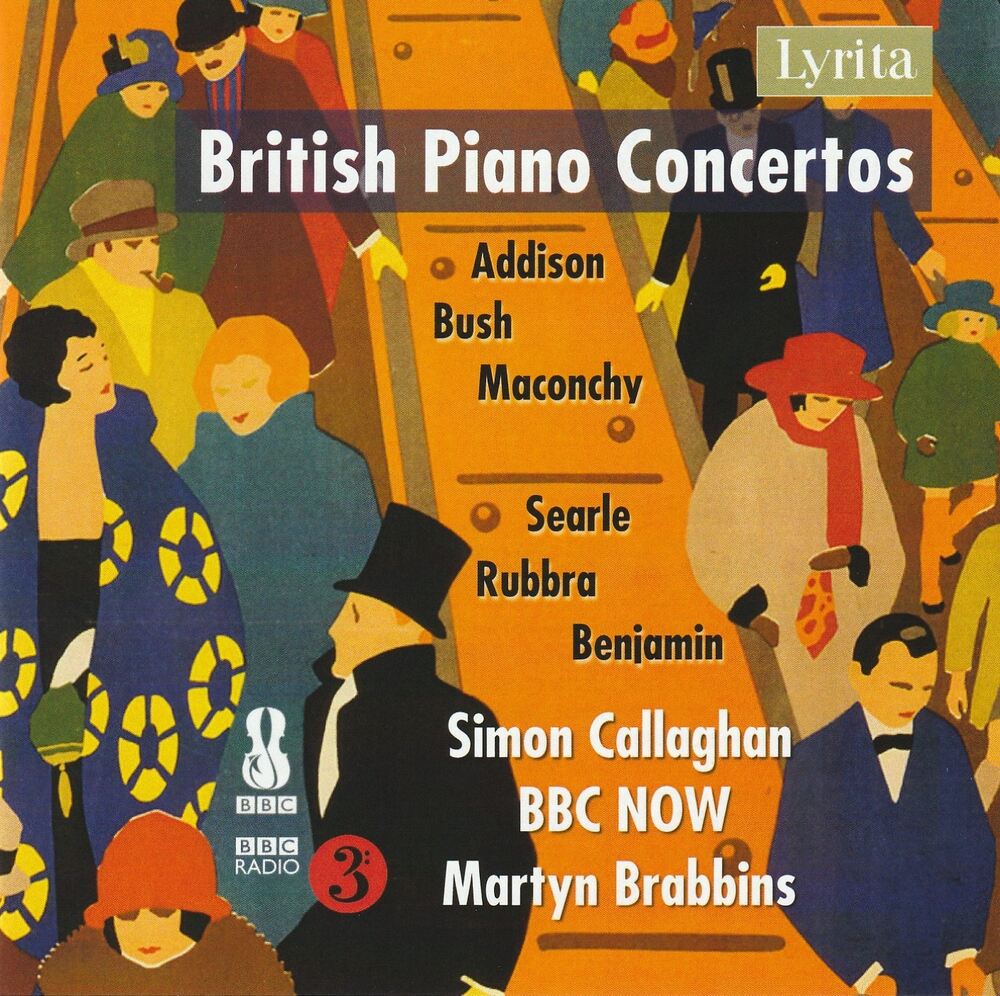
11 British Piano ConcertosBritish Piano Concertos: Addison; Bush; Maconchy; Searle; Rubbra; Benjamin
Simon Callaghan; BBC NOW; Martyn Brabbins
Lyrita SRCD.407 (wyastone.co.uk/british-piano-concertos-addison-bush-maconchy-searle-rubbra-benjamin.html)

Be forewarned: there aren’t any actual piano concertos here and one composer isn’t British, but don’t let that deter you from this disc’s pleasures.

Oscar-winning film composer John Addison’s 17-minute, five-movement Wellington Suite for two horns, piano, percussion and strings was written for the 1959 centenary of Wellington College, Addison’s alma mater. Occasional “wrong notes” add humour to the jaunty, vaudeville-inflected set of dances.

The non-Brit, Australian Arthur Benjamin, modelled his 15-minute, one-movement Concertino for Piano and Orchestra (1927) after Gershwin’s Rhapsody in Blue. It’s genial and jazzy, featuring prominent parts for trumpet and alto saxophone. In Elizabeth Maconchy’s sharply etched, 12-minute Concertino for Piano and String Orchestra (1949), two syncopated, neoclassical Allegros surround a haunting, reflective Lento. It’s a real gem!

Intended for students, Humphrey Searle’s dodecaphonic Concertante for Piano, Percussion and Strings (1954) packs lots of drama – portentous chords and pounding percussion – into its mere four minutes. Edmund Rubbra’s nine-minute Nature’s Song (1920), subtitled Tone Poem for Orchestra, Organ and Pianoforte, was composed during Rubbra’s studies with Gustav Holst. I found it much more martial than pastoral. Geoffrey Bush’s ten-minute, four-movement A Little Concerto on Themes of Thomas Arne for Pianoforte and Strings (1939) is an affectionate pastiche of charming melodies by the 18th-century composer of Rule, Britannia.

Pianist Simon Callaghan and the BBC National Orchestra of Wales conducted by Martyn Brabbins sparkle in these varied works, all, except for Benjamin’s Concertino, here receiving their first-ever recordings.

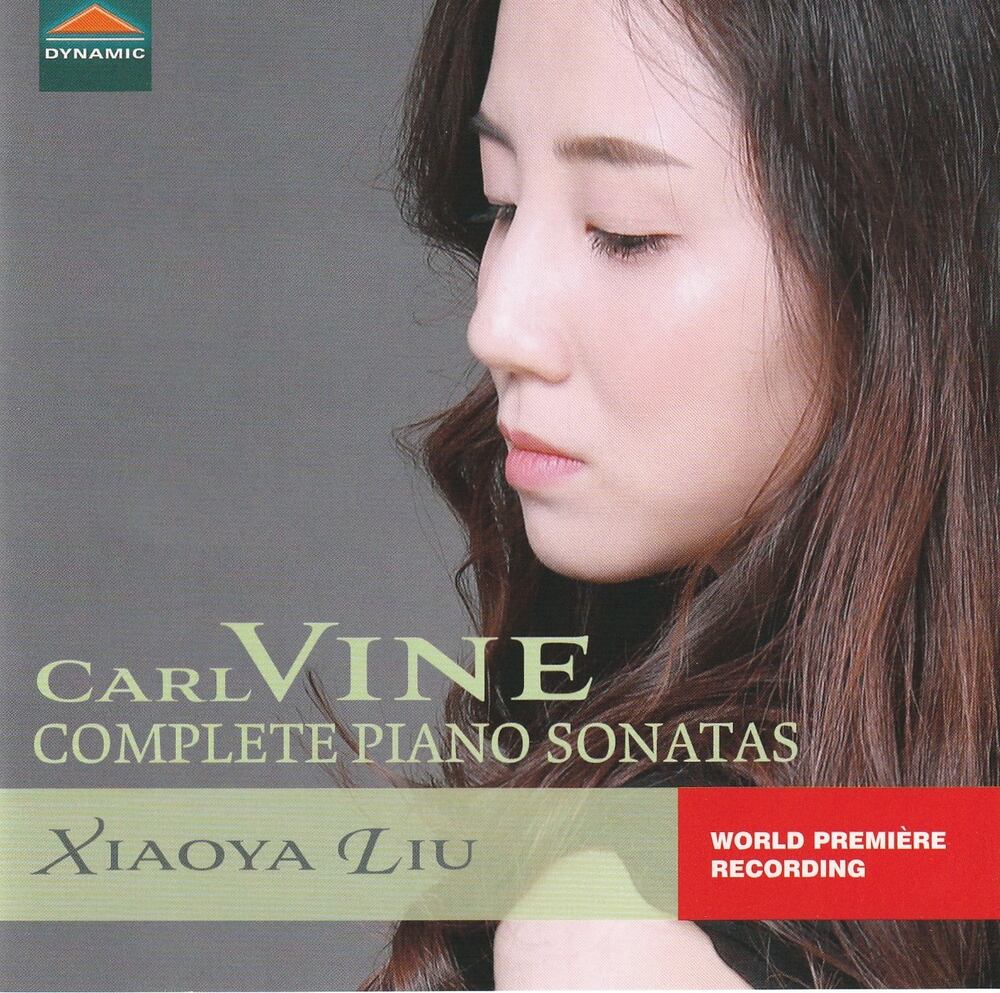
12 Carl VineCarl Vine – Complete Piano Sonatas
Xiaoya Liu
Dynamic CDS7931 (xiaoyaliupiano.com/press)

Australian Carl Vine (b.1954) has written at least eight symphonies, nine concertos, six string quartets and 40 scores for dance, theatre, film and TV, but “only” four piano sonatas, ranging from 15 to 19 minutes in duration.

Vine’s two-movement Piano Sonata No.1 (1990) was commissioned and choreographed by the Sydney Dance Company, where Vine was resident composer and pianist. Beginning gloomily, it soon erupts with driving, irregular rhythms, repeated rapid phrases over syncopated thumping, glittering sonorities, headlong accelerandos and booming climaxes.

Distant echoes of Debussy and Rachmaninoff inhabit the first movement of No.2 (1997). Propulsive, jazzy syncopations fill the concluding second movement until a slow, suspenseful interlude leads to an enraged plunge to the sonata’s final, brutal explosion. No.3 (2007) is in four movements: Fantasia opens with slow drips over dark chords, followed by distorted Chopinesque melodies; in Rondo, meditative passages separate surging, percussive rhythms; Variation presents elaborations of Fantasia’s drips and chords; Presto begins and ends violently, interrupted by a gentle, disquieted ambulation.

The three-movement No.4 (2019) starts with Aphorisms, its slow, aimless melody wandering over burbling arpeggios. In Reflection, delicate droplets over low rumbles bookend a restless, yearning central section. Pummelling barrages surround plaintive lyricism in Fury, expressing, says Vine, “relentless and unfocused anger,” ending in a ferocious prestissimo-fortissimo.

Pianist Xiaoya Liu, top-prize-winner of several major piano competitions, brilliantly surmounts all the extreme virtuosic challenges of these intense, turbulent works – gripping music that definitely deserves your attention.

Listen to 'Carl Vine – Complete Piano Sonatas' Now in the Listening Room

Back to top