04 classical 06 quartetskiQuartetski Does Stravinsky
Quartetski
Ambiances Magnétiques AM 213 actuellecd.com

Jazz and modernism both erupted in the early 20th century, and the lines of concordance are many, including the polyrhythms of jazz in Igor Stravinsky’s masterpiece of primordial impulses, Le Sacre du printemps. Its opening melody has been referenced by jazz musicians such as Carla Bley, Rahsaan Roland Kirk and Ornette Coleman. Celebrating the work’s 100th anniversary, Montreal’s transformative Quartetski Does Stravinsky, follows a loose and reduced score while interpolating and overlaying improvisations either anarchic or folk-inspired. The instrumentation is constructed for maximum chronological association, leaping from the sound of a medieval consort with founder Pierre-Yves Martel’s viola de gamba, Phillippe Lauzier’s bass clarinet, Isaiah Ceccarelli’s percussion and Josh Zubot’s violin to guitarist Bernard Falaise’s very electronic approach. Alternately homage and deconstruction, it’s a fearless work, casting Stravinsky’s masterwork in a new light — at once more intimate, flexible and playful.

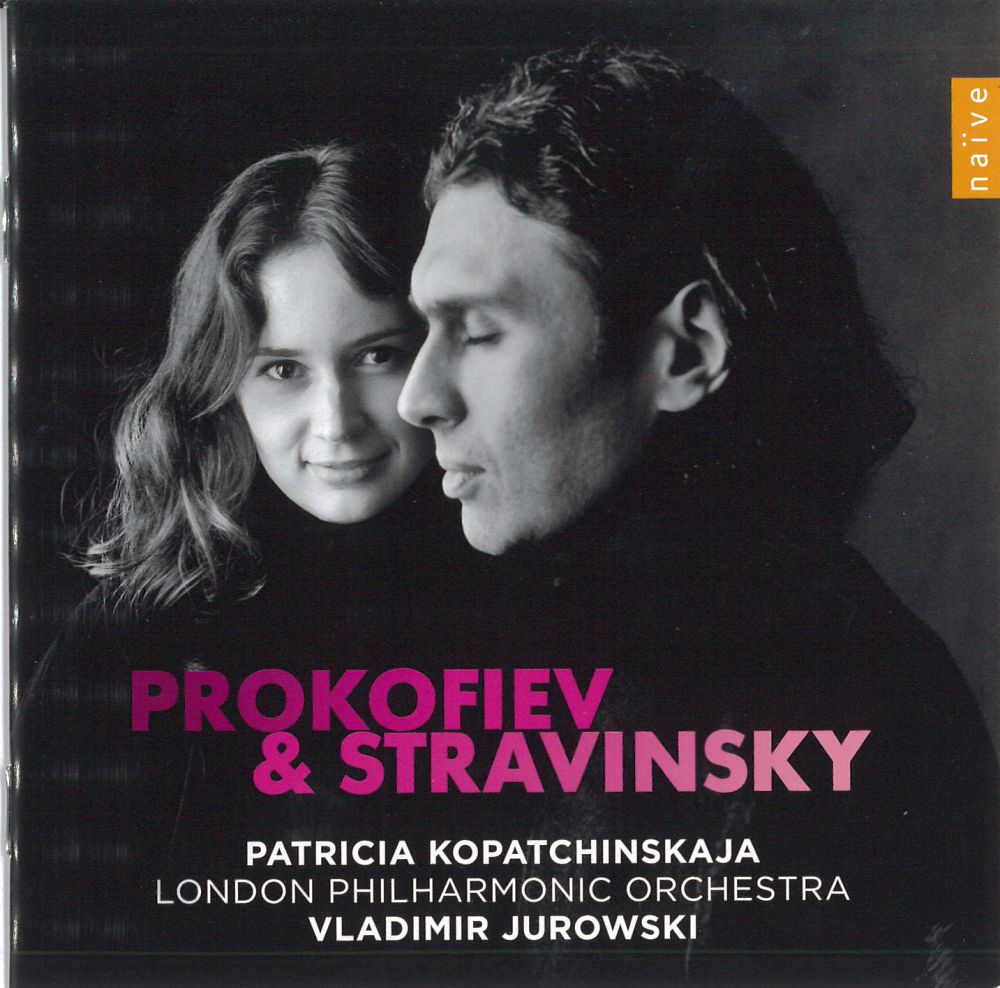
Two Russian violin concertos written within four years of each other by composers who had both left their native country for political reasons are featured on the new CD Prokofiev and Stravinsky, with Patricia Kopatchinskaja and the London Philharmonic Orchestra under Vladimir Jurowski (naïve V 5352).
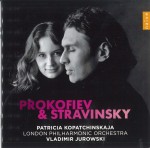
robbins 01 prokofiev stravinskyStravinsky’s Concerto in D was written in 1931; it takes more than just its individual movement titles from the Baroque era, and is in the composer’s neoclassical style. It’s probably heard less frequently than the Prokofiev, and with its prickly nature seems to be slightly less approachable. Kopatchinskaja, though, is a wonderful interpreter, capturing the strident nature of the music while fully illustrating that this is not a work lacking in colour and warmth.

The concerto is followed on the CD by a short uncredited cadenza in which Kopatchinskaja is joined by the LPO’s leader Pieter Schoeman.

Prokofiev’s Concerto No.2 in G minor dates from 1935, when Prokofiev had decided — unlike Stravinsky — to return to the Soviet Union. It’s a beautifully lyrical work, albeit with typical Prokofiev moments of spiky percussiveness, and Kopatchinskaja always finds the perfect balance. The opening of the slow middle movement is particularly striking, with the solo line held back in a quite mysterious way, but with beautiful tonal colour and shading. The orchestral support is excellent on a truly outstanding disc.
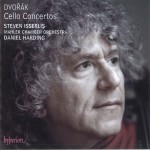
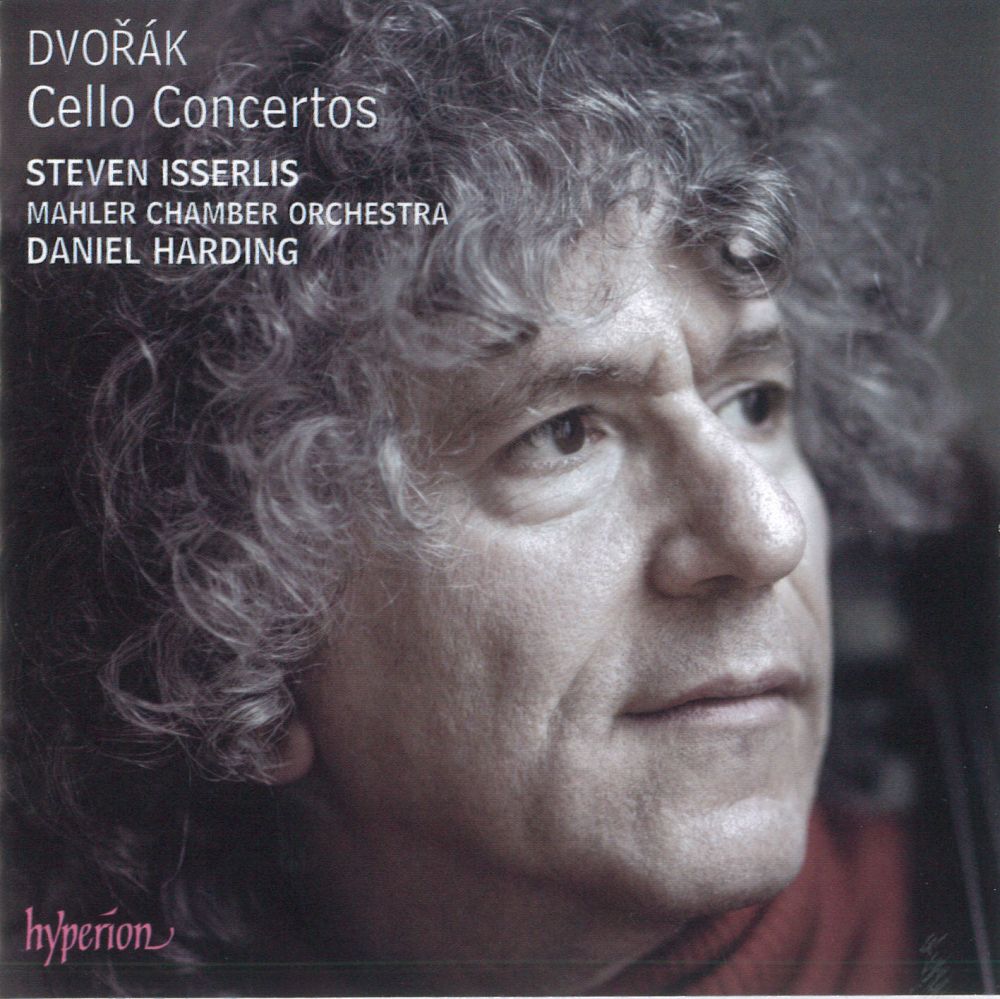
robbins 02 isserlis dvorakAnother excellent concerto CD is Dvořák Cello Concertos, the latest issue from Steven Isserlis and the Mahler Chamber Orchestra under Daniel Harding (Hyperion CDA67917). Concertos,” you say? — “Surely there is only one?” Well, yes and no. Some 30 years before his celebrated B minor concerto, the young Dvořák had written an A major concerto for the cellist Ludevit Peer, an orchestral colleague of the composer’s in Prague. It was never orchestrated, and the piano score manuscript stayed with Peer when he moved to Germany; Dvořák presumably considered it lost. It is now in the British Library.

There have been two attempts at orchestrating it, the latest in 1975 closely following the manuscript; Isserlis, however, has chosen a 1920s reworking of the concerto’s material by the German composer Günter Raphael, who clearly envisioned the mature Dvořák returning to the work with a critical eye. It’s understandably not in the same class as the B minor concerto, but it does have some lovely moments and a particularly beautiful slow movement. However, given that Dvořák’s original work was virtually rewritten by Raphael, who also provided all of the orchestration, it’s a bit difficult to regard it as anything other than an interesting hybrid. Isserlis plays it beautifully, though, as he does the real concerto on the disc.

There are two interesting additions to the CD. On learning of the death of his sister-in-law and first love, Dvořák rewrote the ending of the concerto to incorporate her favourite of his songs, “Lasst mich allein”; an orchestral version of the song is included here, along with the original ending of the concerto.
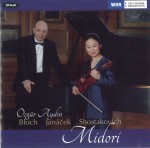
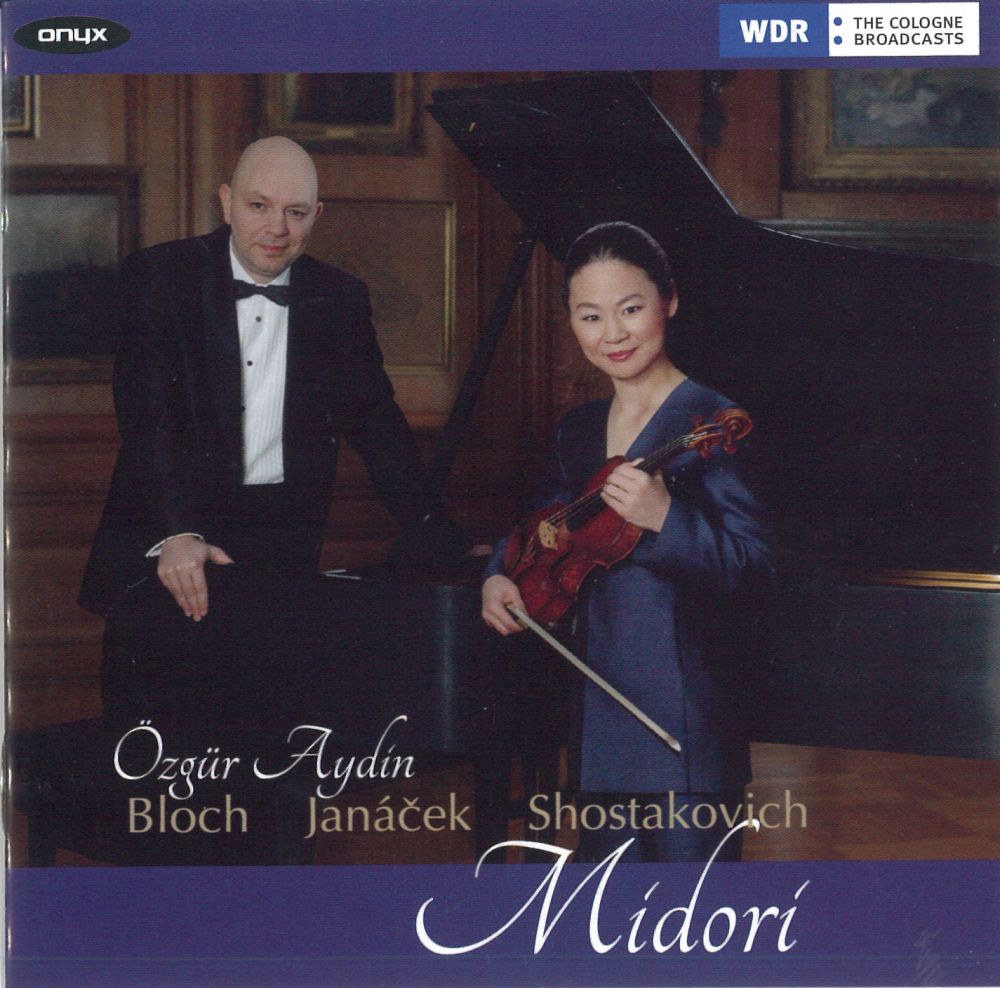
robbins 03 midoriMidori performs Violin Sonatas by Bloch, Janáček and Shostakovich on her latest CD, accompanied by Özgür Aydin (Onyx 4084). During the early years of the 20th century — and especially after the Great War — many composers strove to find a new expressive language, and each of the three represented here developed a highly individual voice. Midori says that the sonatas drew her in, “as they represent a new era in their genre.”

Ernest Bloch’s Sonata No.2 “Poème mystique” is a lovely, rhapsodic single-movement work from 1924, written as a counterpart to his war-influenced first sonata from 1920. Leoš Janáček’s lone violin sonata spanned the years of the Great War and the composer’s sixth decade, the period in which his unrequited love for a young woman led to an outburst of highly personal and idiomatic compositions; started in 1914, it was completed in 1922.

The Shostakovich sonata, written in 1968, is everything you would expect from this most tortured of composers: an ominous slow first movement; an explosively percussive “Allegretto”; and a devastatingly personal closing movement which seems to end in bitterness and resignation, and devoid of any hope.

Midori and Aydin are superb throughout a recital recorded by the German radio station WDR in Cologne, and first broadcast there in 2012. 
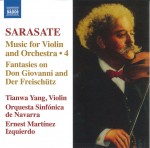
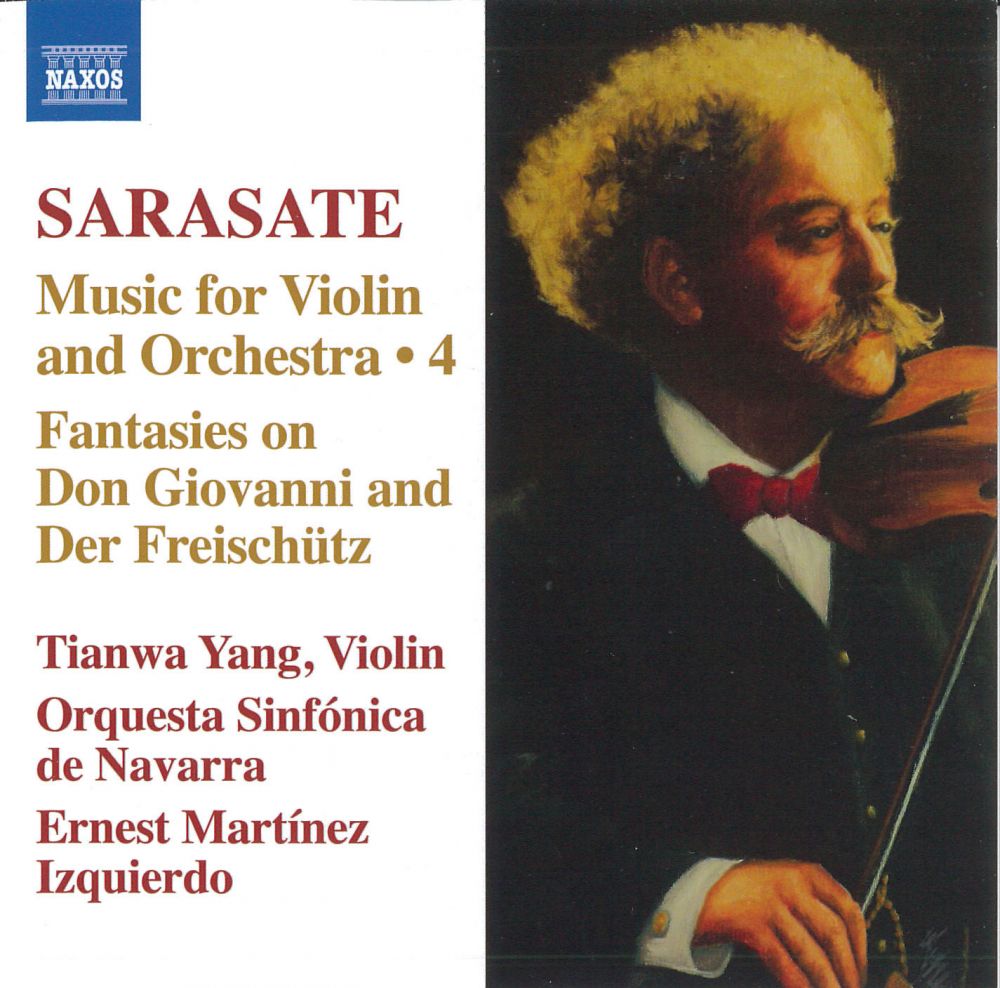
robbins 04 sarasate 4Naxos has issued the fourth and final volume of Sarasate’s Music for Violin and Orchestra (8.572276), featuring the outstanding team of Tianwa Yang and the Orquesta Sinfónica de Navarra under Ernest Martínez Izquierdo. Sarasate was not only one of the greatest players of his or any era, but also a prolific composer for his instrument. What is remarkable, however, is not simply the number of works he produced but their consistently high musical quality. They are, needless to say, extremely difficult, fully exploiting every technical trick in the book while never becoming mere pyrotechnic displays. The range of technical challenges is huge, but Yang once again surmounts them all with apparent ease. Yang sets the bar extremely high right from the opening track, with a pure, bright tone at the start of the Introduction et Tarantelle, Op.43 before the Tarantelle simply explodes in a stunning display of agility and virtuosity.

The larger works on this disc are the Fantasies on Mozart’s Don Giovanni and on Weber’s Der Freischütz, and the absolutely beautiful Le Rêve. The shorter works are: Jota de San Fermín, Op.36; Jota de Pamplona, Op.50; Airs écossais, Op.34; and L’Esprit follet, Op.48. There are some really lovely touches in the orchestration here, an aspect of Sarasate’s composition that is often overlooked and under-appreciated.

Yang’s playing is absolutely top-notch throughout, with some outstanding double-stopping and immaculate bowing. The booklet notes tell us that Sarasate was noted for “the purity and beauty of his tone, perfection of technique and musical command.” That’s also just about a perfect description of Yang’s playing on this outstanding CD.

The orchestral support is again of the highest calibre, and stylistically perfect – hardly a surprise, as this is the orchestra founded by Sarasate himself in his home town of Pamplona in 1879. Yang’s Naxos series of Sarasate’s Music for Violin and Piano, currently at three volumes, is apparently due for completion in 2014. It will surely round out one of the best series of complete violin works currently available.
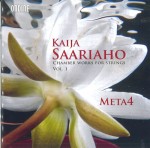
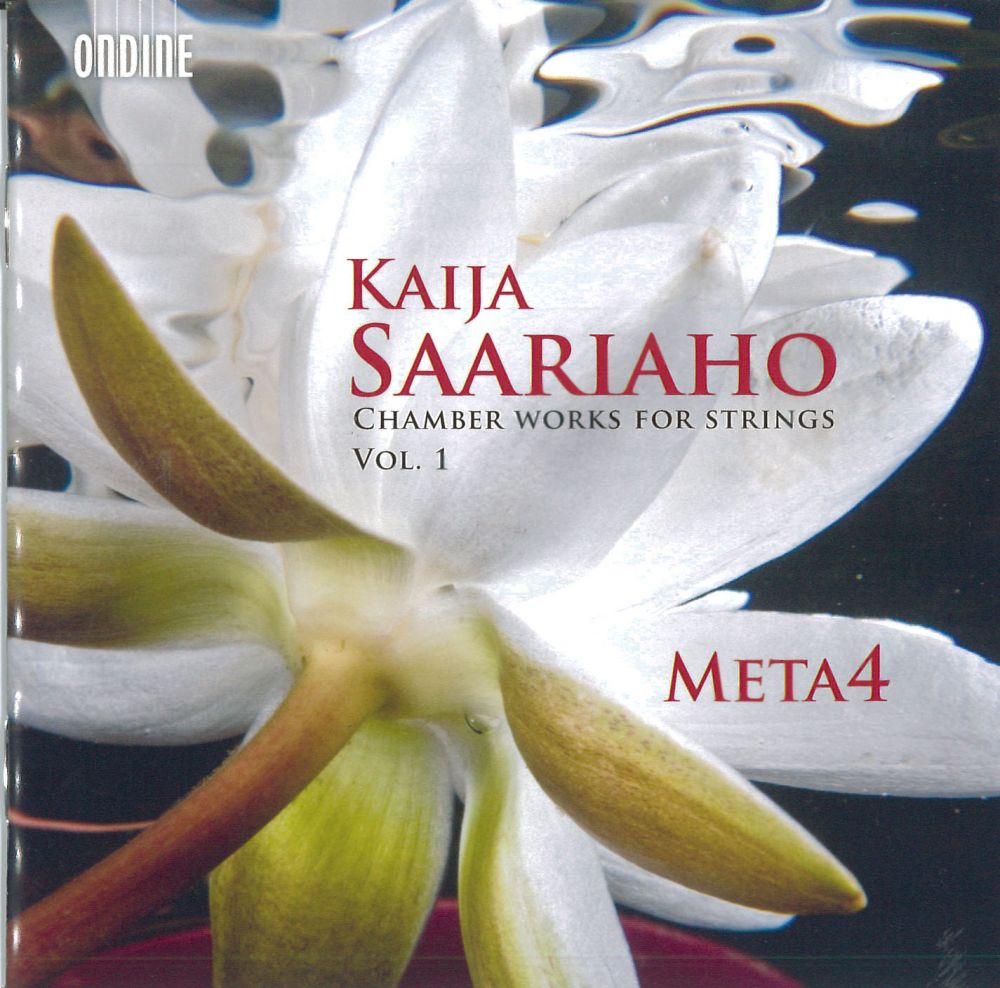
robbins 05 saariahoAnother new Ondine CD features the chamber music of the Finnish composer Kaija Saariaho, who turned 60 last year, on Chamber Works for Strings Vol.1 (ODE 1222-2). The performers are members of the Finnish string quartet META4, pianist Anna Laakso and Marko Myöhänen on electronics. The works are described as a broad cross-section of Saariaho’s writing for strings and her various approaches to this group of instruments, and the compositional years range from 1987 to 2010. The two works for violin and piano are the most recent: Tocar is from 2010, and Calices, a three-movement work close to a sonata in feel, is from 2009.

The two solo works – Nocturne for violin (1994) and Spins and Spells for cello (1997) – are both quite sombre, effective pieces, with extensive and imaginative use of harmonics. The violin piece was written at very short notice for a memorial concert one week after the death of the Polish composer Witold Lutosławski; the cello piece was the compulsory competition work at the Rostropovich Cello Competition in Paris. Vent nocturne for viola and electronics (2006) has an electronic contribution that is mostly the sounds of breathing and wind. Nymphéa for string quartet and live electronics (1987) is the longest piece on the disc, and also the earliest, although it doesn’t sound like it; it’s certainly the most challenging work on the CD on first hearing. It was written for the Kronos Quartet, so it should come as no surprise to read that the electronic sound processing “extends the scope of expression far beyond that of a traditional string quartet.” Indeed, the extreme sounds that the string players are required to produce seem to be part of the electronic score at times.

The technical level of the playing throughout the CD seems to be extremely high, and while it’s always difficult to tell exactly how good the interpretations are when you listen to works of this nature for the first time, the booklet portrait of the composer with the META4 quartet members suggests that we are certainly in good hands.
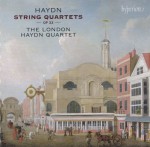
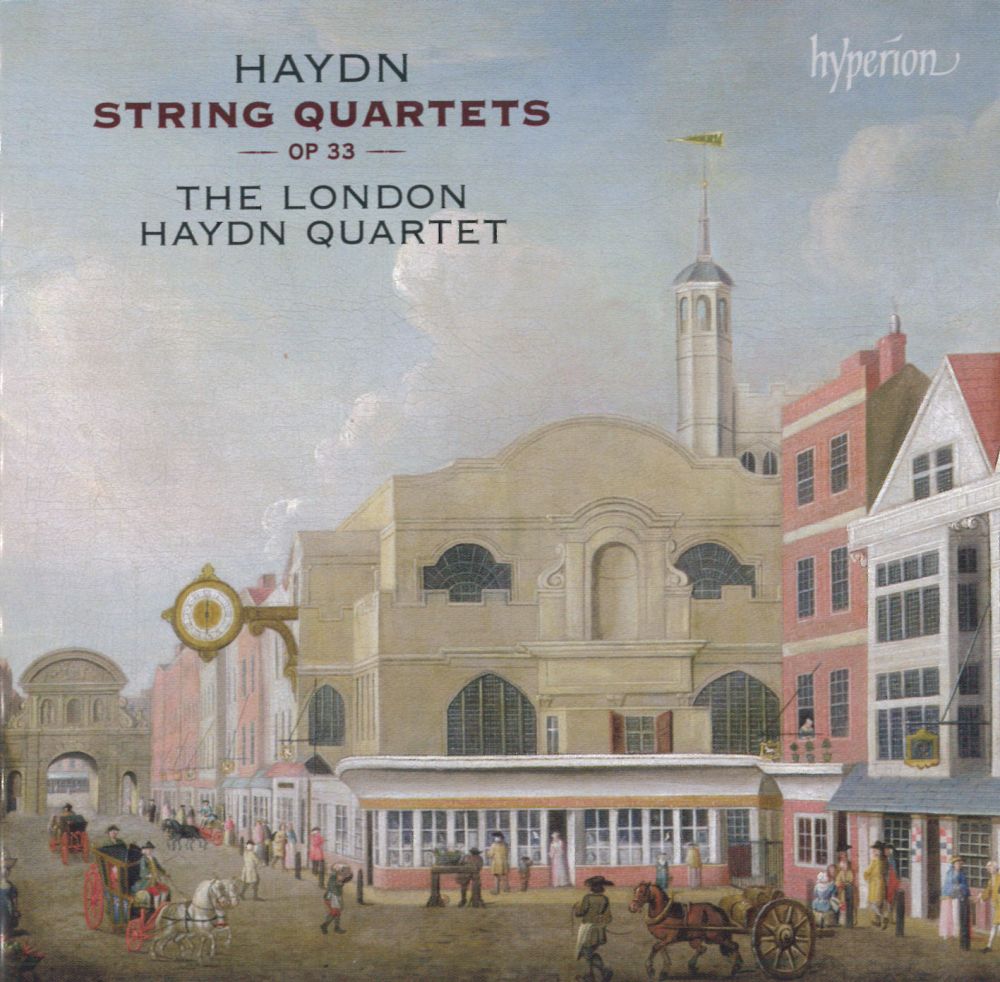
robbins 06 haydn 33In the past six years or so the London Haydn Quartet has been making people sit up and listen with its “historically informed” performances of the Haydn string quartets, and their recent 2-CD set of the six String Quartets Op.33 on the Hyperion label (CDA67955) makes it easy to understand why. Previous releases of 2-CD sets of the Op.9, Op.17 and Op.20 quartets drew absolutely rave reviews from journals such as The Strad, The Times, Gramophone and other music magazines, and much was made of the fact that the group plays so perfectly on gut strings, usually an invitation to intonation problems. Certainly the sound is somewhat softer and sweeter than you might expect, but that shouldn’t for a moment imply any lack of strength – these performances are simply bursting with life. The dynamics are terrific, and the articulation and the ensemble playing quite astonishing, especially in the dazzling “Presto” movements. And yes, the intonation is faultless.

Classic FM magazine called the 2007 Op.9 set “Without a doubt one of the all-time great Haydn quartet recordings…” and it would appear that the standard is in no danger of falling as this remarkable series of recordings continues.
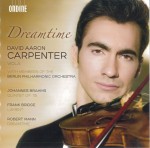
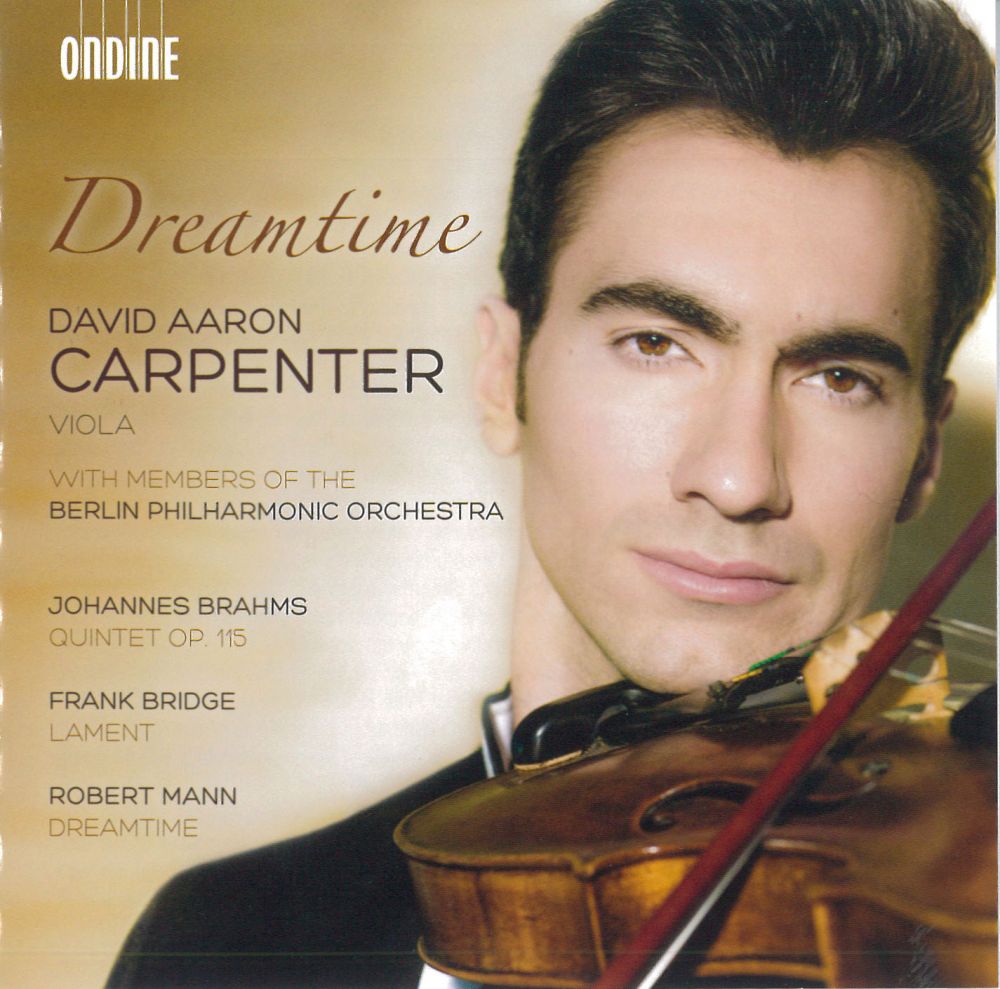
robbins 07 dreamtimeDavid Aaron Carpenter is back with another CD of viola music on Dreamtime, with members of the Berlin Philharmonic Orchestra (Ondine ODE 1246-2). The music is by Brahms, Bridge and Robert Mann, but unfortunately the major work on the disc is something of a disappointment. Although I’ve long been aware of the viola transcriptions of the Brahms clarinet sonatas, I didn’t realize that there was also a viola version – prepared by Brahms himself – of the Clarinet Quintet in B minor, Op.115. It appears to have been more a straight substitution of viola for clarinet than a true transcription, as the two instruments essentially share the same range – and therein lies the problem. The clarinet part is intricately woven into and around the string writing in the original version, but its sound qualities – the warmth of the lower chalumeau register and the plaintive higher register – always allow it to stand out. Replace it with a viola, however, and the very qualities that make the clarinet an integral part of the work are mostly lost: what you now have is essentially a string quintet with two violas, and what was the solo clarinet part becomes all too frequently buried in the general string writing. At times it is simply not possible to tell how well Carpenter is playing, because you just can’t tell which voice is his. The work still has some truly beautiful moments in this version, but it simply can’t touch the original. Bernhard Hartog and Rüdiger Liebermann are the violinists; Walter Küssner the violist; Stephan Koncz the cellist.

Two short pieces – less than 15 minutes combined – complete the CD. Küssner joins Carpenter for the Lament for Two Violas by Frank Bridge. Bridge wrote the work in 1912 to perform with Lionel Tertis, but it was not a success; in fact, the somewhat sparse booklet notes tell us (somewhat puzzlingly) that there wasn’t even a published performing edition until “another violist-composer, Paul Hindemith, prepared his own version 68 years later” – by which time Hindemith had been dead for 17 years! It’s a very careless error: the edition was actually edited by Paul Hindmarsh, whose Thematic Catalogue of Bridge’s music has become the standard reference work on the composer. At least the track listing gets it right.

The final track is the album’s title track: Dreamtime for solo viola by Robert Mann, the founder and former first violinist of the Juilliard String Quartet. Originally written in the early 1980s as a solo violin piece for Itzhak Perlman, it’s a two-part work with a “Slow Rubato” section followed by a quite discordant “Presto Tarantella.”

The Brahms and Bridge works were apparently recorded in concert in Berlin this past February, but there is no trace of audience noise. The sound quality is excellent throughout.
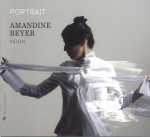
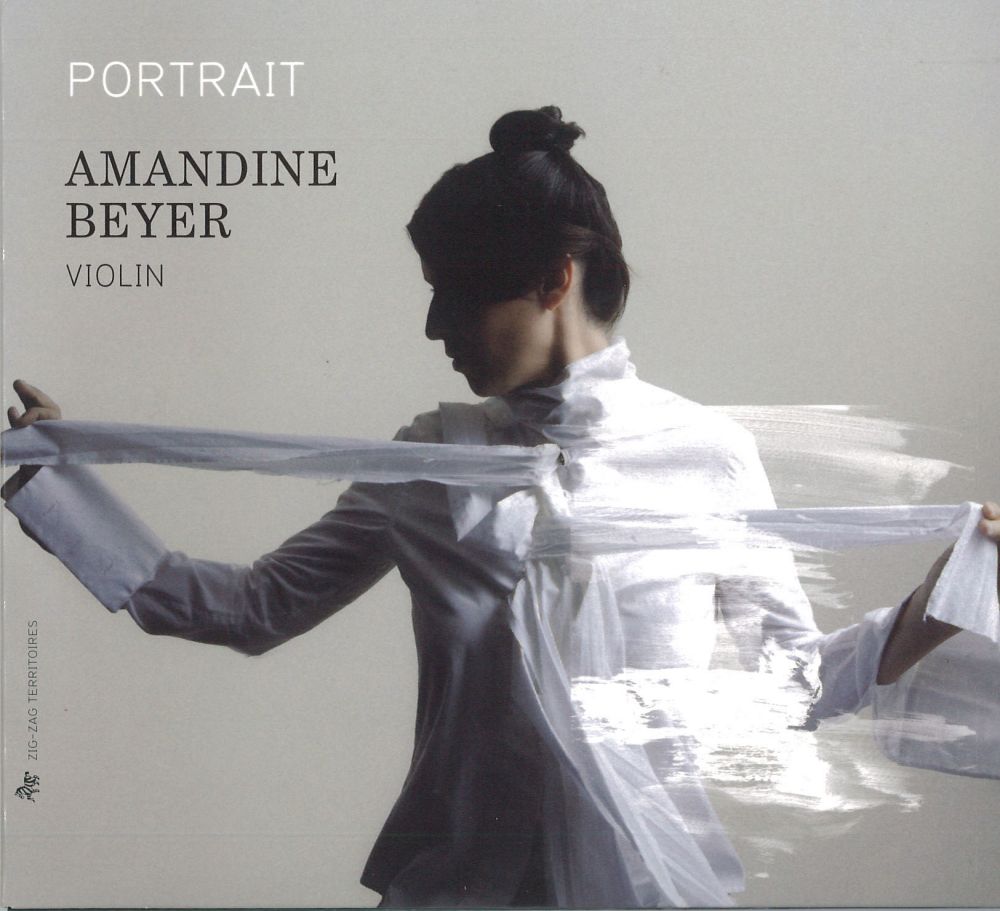
robbins 08 amandine beyerI’m normally a bit wary of compilation CD sets, as they tend to highlight works rather than present them in full, but the 2-CD set Portrait (outhere music/Zig-Zag Territoires ZZT325) by the French Baroque violinist Amandine Beyer is a welcome – and simply terrific – exception. The works included here, selected from nine of her CDs, were recorded between 2005 and 2013, mostly with the musicians from her own outstanding group Gli Incogniti. Disc 1 features short works by Nicola Matteis, De Visée’s Suite for Theorbo and Violin, sonatas by Jean-Féry Rebel and C. P. E. Bach, and the Partita No.2 in D minor of J.S. Bach. Disc 2 has Corelli’s Concerto grosso in G minor, Op.6 No.8, Bach’s E major Violin Concerto and three concertos by Vivaldi, including “Winter” from The Four Seasons. The latter is a dazzling performance, with a very distinctive and quite different slow movement.

There is an exceptional fluency, warmth, character and sense of freedom in Beyer’s playing, and something quite magical and captivating about her performances. If you haven’t heard her, then you’ve really been missing something; this eminently satisfying set at a really attractive price is the perfect opportunity to put that right.
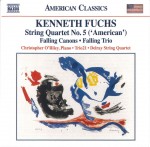
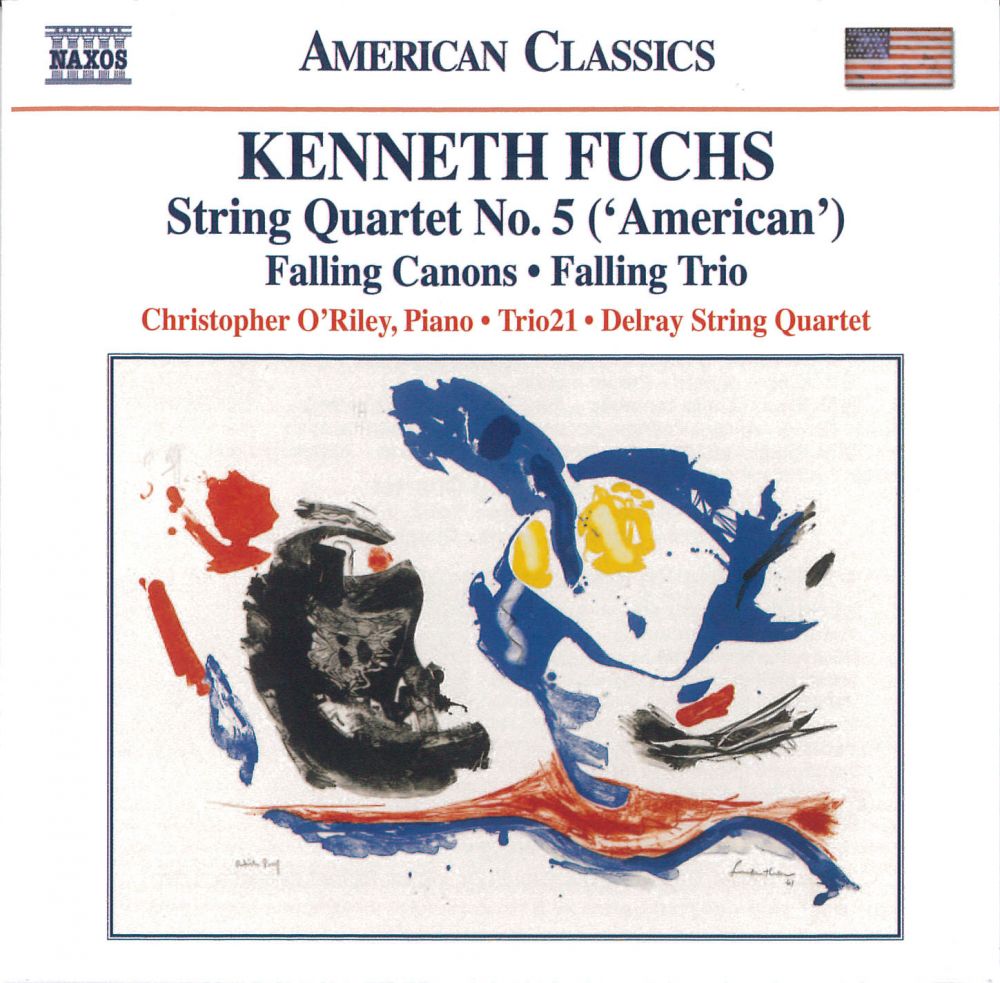
robbins 09 fuchsA new Naxos release in its American Classics series features the String Quartet No. 5 (“American”) of Kenneth Fuchs performed by the Delray String Quartet (8.559733), together with Falling Canons (seven movements for piano) with Christopher O’Riley as soloist, and Falling Trio (in one movement), a piano trio performed here by Trio21. All three works are thematically related in some way to Fuchs’ Falling Man, a work for baritone voice and orchestra based on the post-9/11 novel of the same title by Don DeLillo.

The string quartet takes up almost half of the CD, and was commissioned for the Delray ensemble. Like much of Fuchs’ orchestral music it’s a strongly tonal and immediately accessible work, Fuchs noting that it embraces the stylistic influences of the American symphonic school that were reflected in such recent scores as Atlantic Riband and Discover the Wild, both of which were featured on a recording reviewed in this column in October of 2012.

Falling Canons is a highly effective piece consisting of seven canons written at the unison and at intervals of the second, third, fourth, fifth, sixth and seventh, and pitched on each of the seven degrees of a descending C major scale. Falling Trio works in a somewhat similar manner, with a three-part canon followed by a set of seven variations, this time on an ascending series of pitches. Falling Man, incidentally, has recently been recorded by Naxos at the Abbey Road Studios in London, and on its release will be the fourth CD of orchestral music by Fuchs available on the label.


03 early 01 passaggiPassaggi
Vincent Lauzer; Mark Edwards
ATMA ACD2 2637

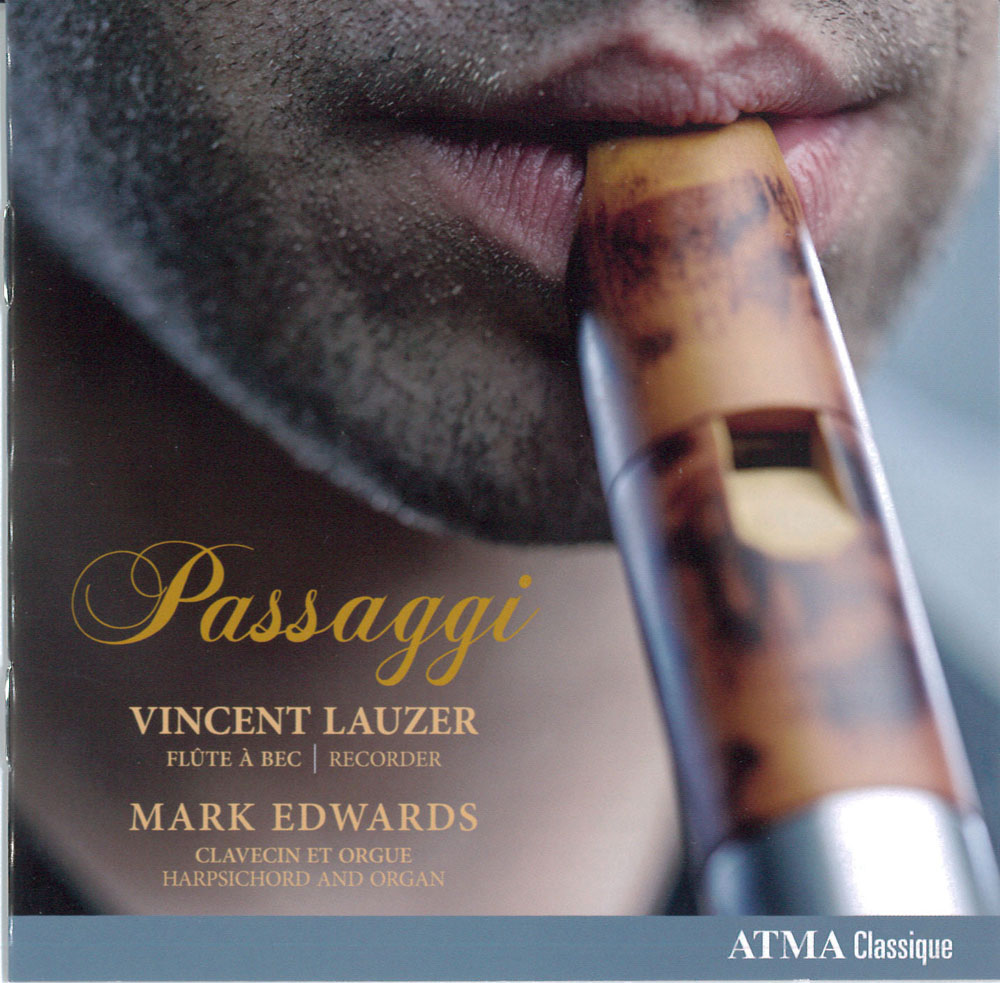
Having just recently enjoyed a CD of late 16th and 17th century music for the cello, it’s timely to hear Passaggi, a recording of repertoire from the same era but this time for recorder and keyboard. This disc includes diminutions, sonatas, sinfonias, canzonas and Frescobaldi’s extravagant Cento Partite for harpsichord, and features two players familiar to Montréal audiences, Vincent Lauzer and Mark Edwards.

They work well as a team and play this program with affectionate invention. Edwards’ alternation between organ and harpsichord is often witty, for example in Berardi’s Canzona and Schmelzer’s sonatas, and his take on Frescobaldi’s Cento Partite is impressive. I particularly enjoyed his laid-back ambling through the sections displaying the savoury nature of the temperament he’s chosen. Lauzer provides impressive displays of nimble fingerwork, for example in the Notari canzona and the Schmelzer, and plays with a sweet sound. It’s also very good to hear him employ the g alto recorder, the favoured “solo” recorder of the era, as well as the soprano. He creates some nice changes of colour and volume with the use of alternate fingerings, but in the 17th-century pieces I miss the ornamental affetti described by musician/composers of the time, which are commonly heard in baroque violin and cornetto performances of this repertoire. They provide a broader expressive palette to the wind player and assist in making a greater distinction between diminution practice and the “seconda prattica” of the 17th century.

That aside, this is an enjoyable musical exploration of some wonderful music, from two of North America’s fine younger generation of players. Kudos to all involved!

03 early 02 bach knoxBach – Keyboard Works
Hank Knox
EMCCD-7775
earlymusic.com

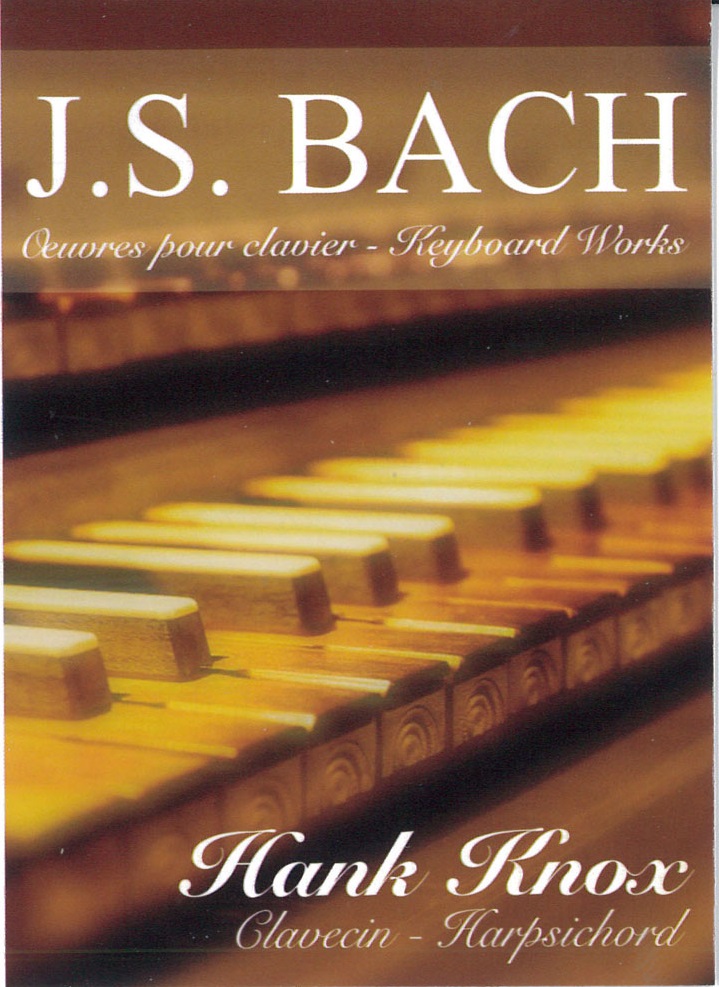
It took performers like Wanda Landowska — and more recently, William Christie and Kenneth Gilbert — to take the harpsichord out of the museum and put it into the concert hall or the recording studio. Among the instrument’s most recent champions is the Montreal-based performer and pedagogue Hank Knox, whose talents are admirably showcased on this recording on the earlymusic.com label featuring selected works by J.S. Bach.

Early keyboard instruments have been a big part of Knox’s life for many years. He studied harpsichord with Kenneth Gilbert in Paris and also at McGill University, where he currently directs the Early Music program. A founding member of the Arion Ensemble, Knox has also performed, toured and recorded with the Tafelmusik Baroque Ensemble and the Studio musique ancienne de Montréal, and this newest release is further evidence of his deep affinity for music from this period.

What a wonderful program this is! The disc features some of Bach’s most formidable works for solo keyboard, including the Toccata in E minor, the great Chromatic Fantasy and Fugue, the Fantasia in C minor and the French Overture BWV831. From the opening chords of the Toccata, it’s clear to the listener that Knox is in full command of this repertoire, the playing confident and self assured. The challenging Chromatic Fantasy — a true “tour de force” among Bach’s solo compositions — displays not only his redoubtable technique, but also a deeply-rooted musicality.

Published in Leipzig in 1735, the Overture in the French Manner was undoubtedly Bach’s way of transferring the French orchestral suite to the keyboard. Knox has no difficulty in conveying the subtle nuances required of the music, from the stately “Ouverture” to the brisk “Echo,” bringing this most satisfying disc to a close.

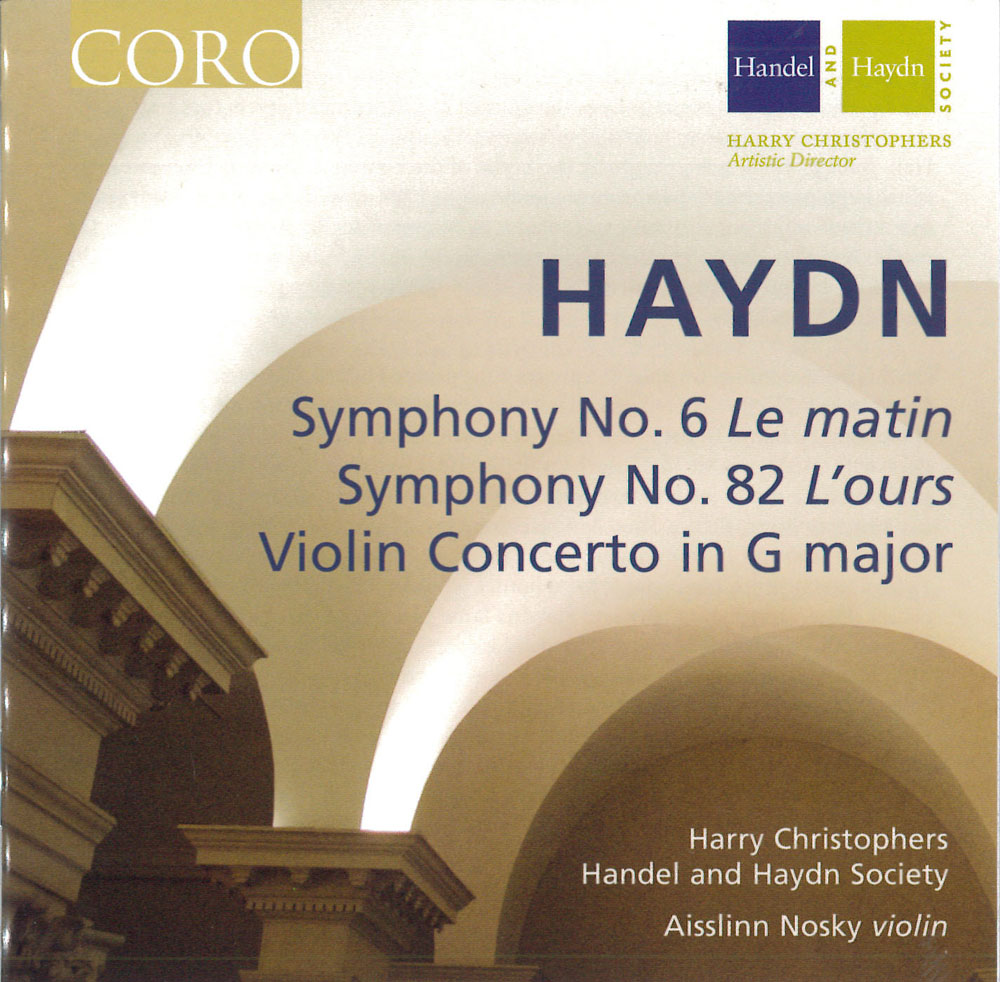
03 early 03 haydn aisslinnHaydn – Symphonies 6 & 82;
Violin Concerto in G
Aisslinn Nosky;
Handel and Haydn Society;
Harry Christophers
CORO COR16113
handelandhaydn.org

The energy that emanates from this recent recording is palpable. Now in his fifth season as the artistic director of the venerable Handel and Haydn Society, the multi-talented conductor Harry Christophers brings a wonderfully rustic and open personality to this terrific CD, without losing one iota of elegance and charm.

The cover promises two symphonies and one concerto, but indeed the early Symphony No.6, written in 1761 at the beginning of Haydn’s illustrious career at the court of the Esterhazys, is less a symphony and more a “sinfonia concertante” featuring extensive and virtuosic solo work from many different areas of the orchestra. Christophers leads a brisk, smile-inducing performance of the piece, nicknamed “Le Matin” for its warm and evocative musical “sunrise” and generally perky spirit. Special mention goes to violinist Aisslinn Nosky, flutist Christopher Krueger and bassoonist Andrew Schwartz for their brilliant solo contributions.

Toronto-based Nosky, who has been the concertmaster/leader of the orchestra since 2012, moves front and centre for the Violin Concerto in G. Her trademark tone, technique and sense of abandon are present throughout this delightful and moving performance.

The crowning glory is Christophers’ powerful rendering of the Symphony No.82, written in the mid-1780s for performance in Paris. It’s an endlessly fascinating piece, full of contrast, humour, poignancy, sensuality and grandeur. Christophers and the orchestra give a detailed, lively and majestic performance, reminding us at every turn of Haydn’s inventiveness and wit.

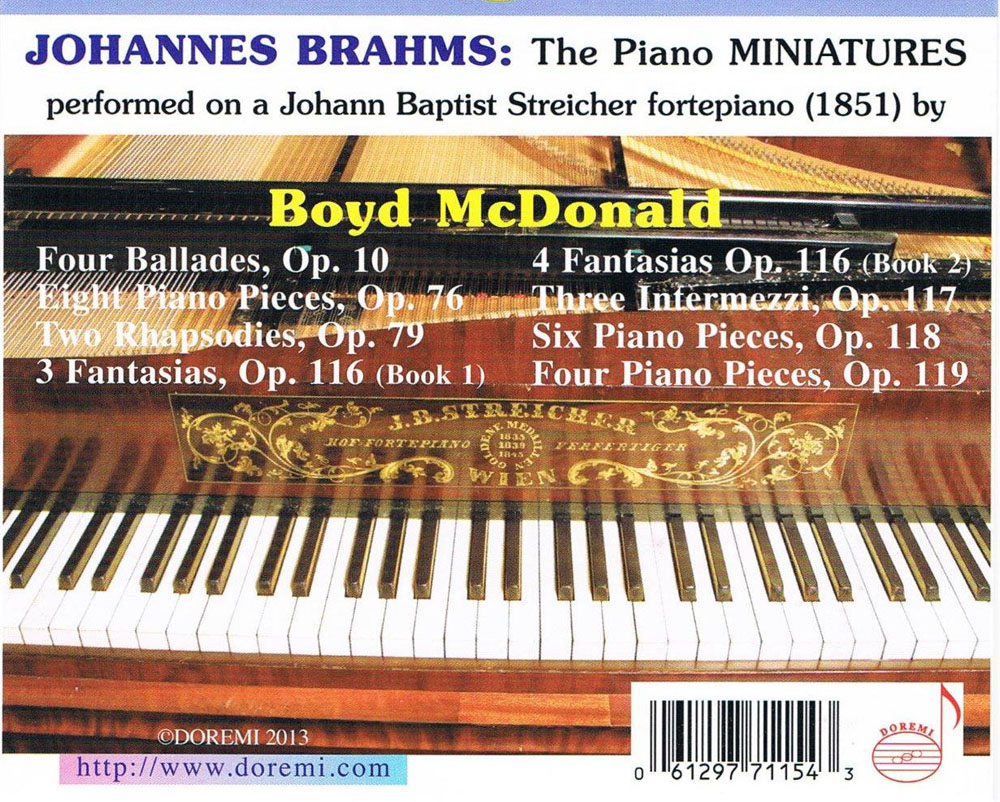
03 early 04 mcdonald brahmsBrahms – Piano Miniatures performed on a Johann Baptist Streicher fortepiano (1851)
Boyd McDonald
Doremi DDR71154/5

Veteran pianist, composer and musicologist Boyd McDonald, now professor emeritus at Wilfrid Laurier University in Waterloo has, for the better part of his career, been exploring and performing on period pianos and their ancestors of the last 200 years. A former student of Nadia Boulanger and winner of the Leschetitzky Prize, McDonald is a recognized authority on Brahms’ own instrument made by Johann Streicher in 1851, on which instrument he has now released this set of Brahms miniatures.

While I find his performances are pleasant, the raison d’être of this set is to reveal to modern ears the instrument that Brahms himself used, as did Schumann and others. For historical reasons, this is an important documentation of a chapter in the development of the keyboard instruments. Compared to the modern piano, the sound is slim and percussive and so may not be to everyone’s taste. Heard are Four Ballades, Op.10; Two Rhapsodies, Op.79 and shorter works opp. 76, 116, 117, 118 and 119.

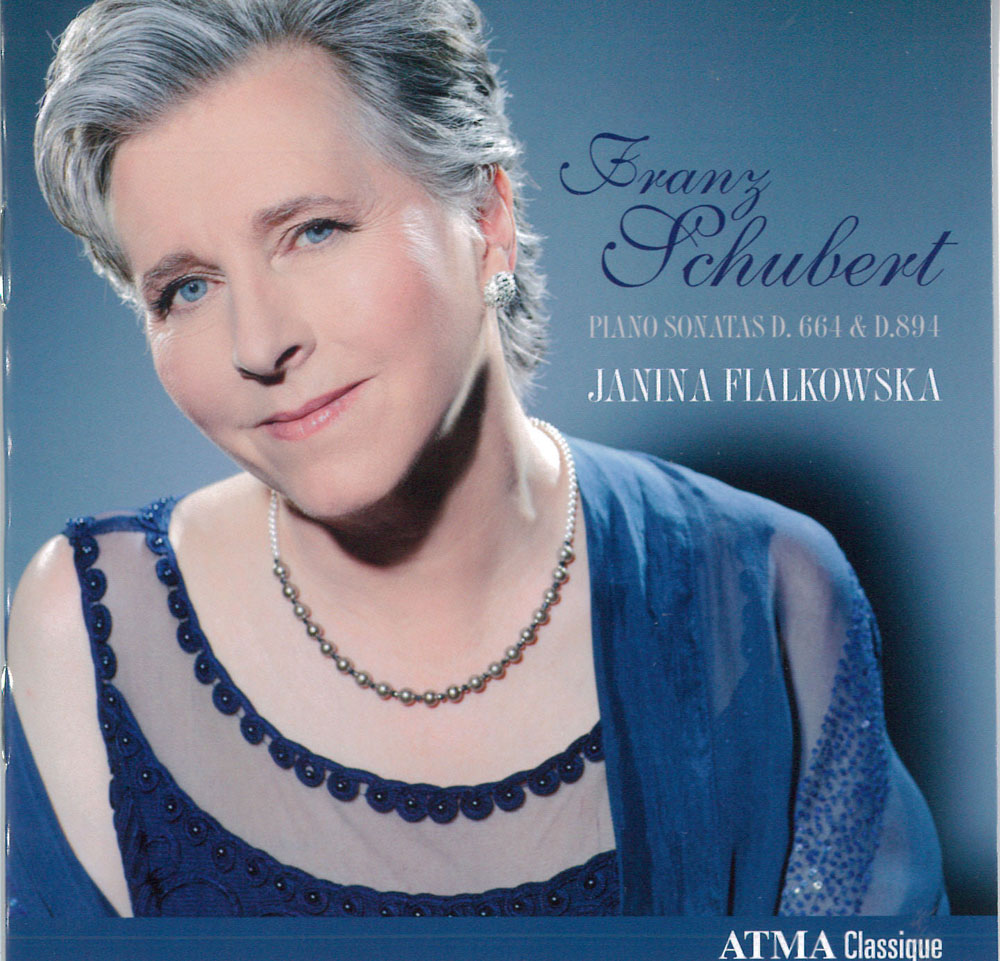
04 classical 01 fialkowska schubertSchubert – Piano Sonatas D664 and D894
Janina Fialkowska
ATMA ACD 22681

These two sonatas are dissimilar works, coming as they do from very different periods in Schubert’s life, albeit only seven years apart. The earlier Sonata in A Major is thoroughly pleasant with familiar echoes of Mozart and Haydn throughout. Altogether, it’s a finely crafted piece with a conventional three-movement structure and competently developed ideas.

While this description sounds bland, the beauty of Fialkowska’s approach is that she actually understands this and refuses to make more of the sonata than it deserves. Instead, she plays each movement with a strict no-nonsense approach leaving aside the over-romanticized interpretations attempted by some other pianists. She finds just the right balance between the technical requirements of the music and the smaller but clearly still-emerging voice of the composer in this musical form.

In the second sonata (G major) Fialkowska acknowledges the more substantial content. Here, Schubert places technical demands in greater service of the music’s development allowing the performer new heights of invention and emotion. The opening movement is huge and Fialkowska plays it with a sustained commitment to holding its thematic ideas together until the triple forte ending.

The succeeding slow movement weaves a tender melody around a more stormy response which Fialkowska never allows to grow out of control. After a light dance movement, she plays through a fourth and final movement that ends quietly with a tasteful sense of anti-climax.

Throughout both sonatas, Fialkowska’s seasoned touch is a tribute to her mature understanding of Schubert’s actual intentions. Fialkowska’s Schubert is the real McCoy.


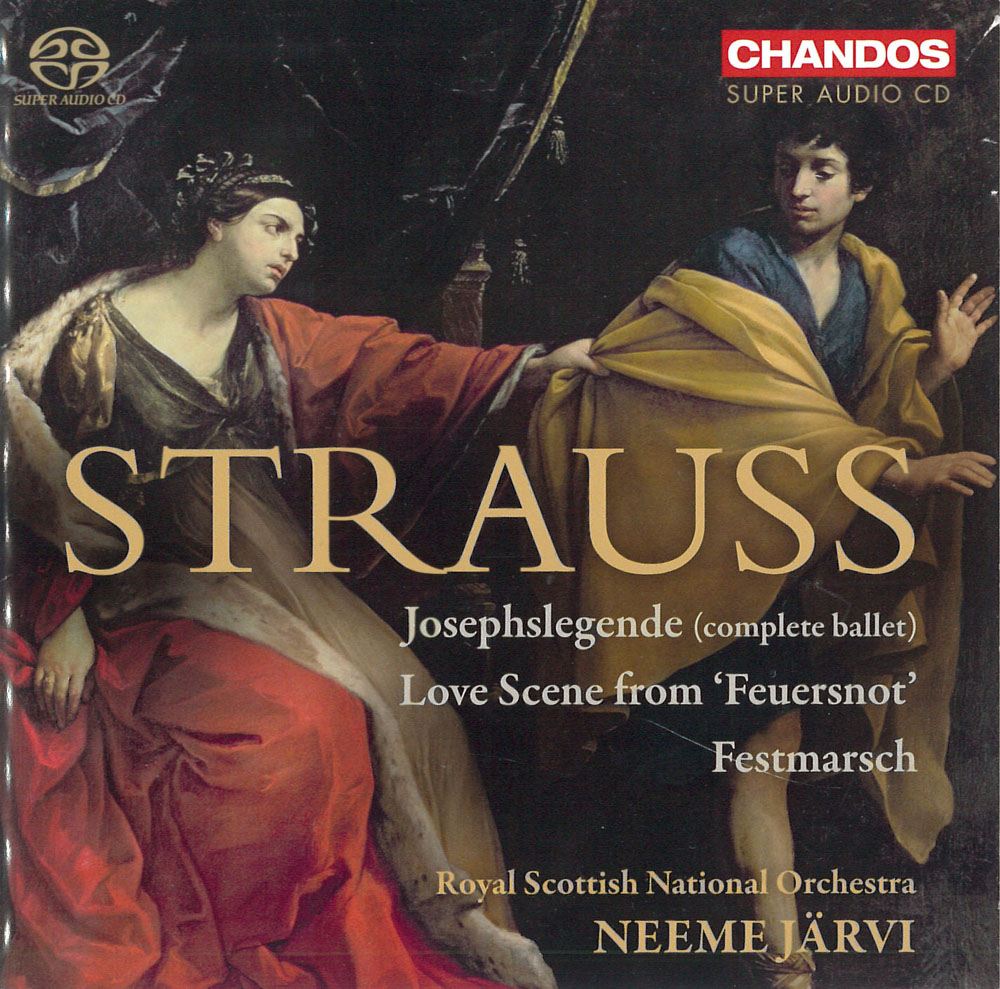
04 classical 02 strauss raritiesStrauss – Josephslegende; Love Scene from Feuersnot; Festmarsch
Royal Scottish National Orchestra;
Neeme Järvi
Chandos CHSA 5120

Richard Strauss, reigning overlord of the orchestral tone poem and emerging monarch of the operatic stage at the turn of the century, had been seriously intrigued by the prospect of writing a ballet since 1900, partly because, as he confided to his parents, “One does not have to worry about singers and can storm about in the orchestra.”

In 1912 he witnessed a sensational performance of Sergei Diaghilev’s Ballets Russes in Berlin and, through his librettist Hugo von Hofmannsthal and the diplomat Count Harry Kessler, arranged a commission from the celebrated troupe. The end result was a gargantuan, 65-minute pantomime (subtitled “Action in One Act”) with an incredibly detailed scenario based on the biblical episode of Joseph’s enslavement at the Egyptian court by Potiphar, updated to the era of the Venetian Renaissance for the sake of sumptuous costuming. The central role of Joseph was designed for the stupendously talented Vaslav Nijinsky, though by the time of the premiere Strauss was disappointed to learn that Diaghilev had dismissed him after a lover’s quarrel and replaced him with Léonide Massine. Strauss himself conceded that while composing the work he felt frustrated with the “boring” piety of the saintly young Joseph and the angel that guards him but even so his score roars to life with his grandly erotic depictions of the suicidal attempts by Potiphar’s wife to seduce the reluctant underage Israelite. Sadly for Strauss and all concerned, the 1914 Parisian premiere was swiftly followed by the onset of the Great War and the ballet fell into obscurity.

Josephslegende demands such an immense orchestra that stagings of the work are quite rare and there are precious few recordings available (notably by Sinopoli and Iván Fischer) for comparison. This compelling new performance by Neeme Järvi, conductor laureate of the Royal Scottish National Orchestra, is a welcome addition, plushly recorded by Chandos in a hybrid SACD format. Two brief works, an orchestral excerpt from the early opera Feuersnot and the juvenile Festmarsch Op.1 (composed at the age of 12!) fill out the disc. Though Josephslegende is perhaps not among the composer’s greatest achievements, the sheer orchestral magnificence of this little-known score is immensely captivating.

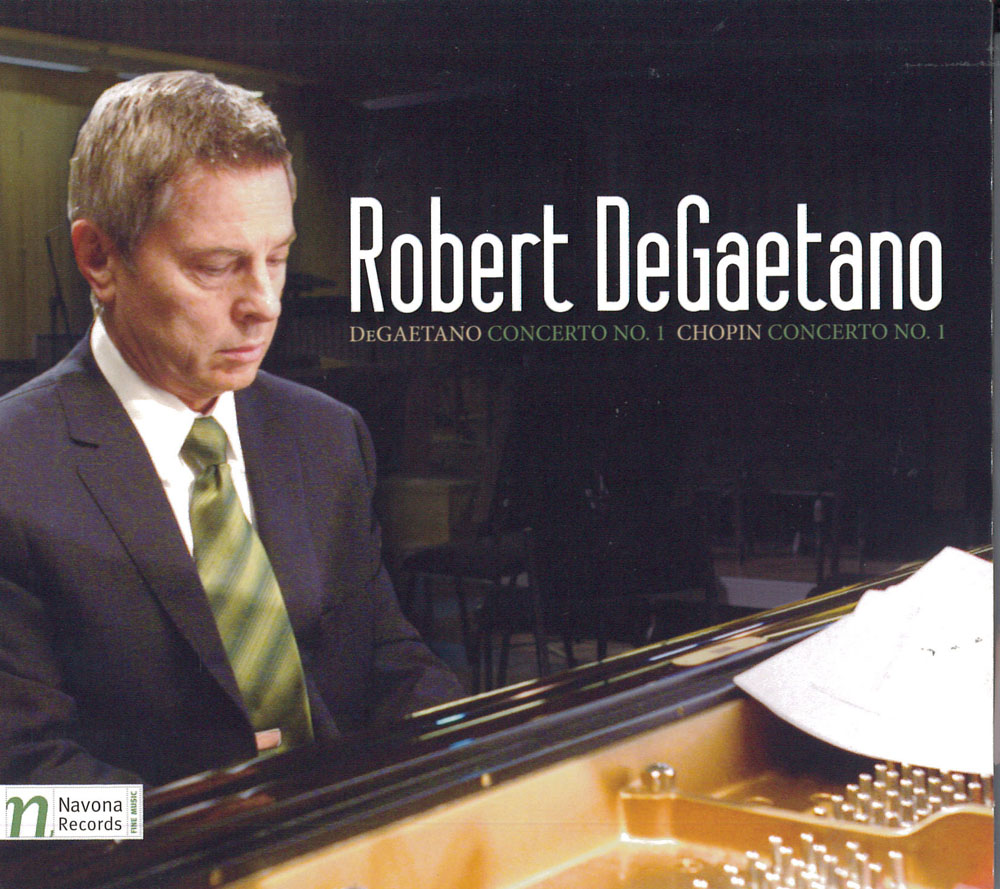
04 classical 03 degaetano chopinDeGaetano – Concerto No.1;
Chopin – Concerto No.1
Robert DeGaetano;Moravian Philharmonic Orchestra; John Yaffé
Navona Records NV5929

I always look forward to CDs that feature composer/pianists. The results usually portray the performer in their best light. The composer/pianist knows the instrument intimately and shows off the pianists’ unique skills to their best advantage. Such is the case with Robert DeGaetano’s first piano concerto. Virtuosic technique blazes through this concerto. Scintillating runs and octaves are spectacular. I loved the opening, which reflects the composer’s intent on showing the universe breathing. I would have liked more development of that mood however, instead of the constant runs. The second movement was charming with hints of the rhythms and jazz of New York. The orchestration sounded retro in a good way. The third movement was a more intimate, reflective performance and a prelude to the last dance-like movement. Hints of Italian tarantellas, overtones and brilliant technique brought this dazzling concerto to its finale. Bravo for an imaginative first piano concerto.

The idea of programming Chopin’s First Piano Concerto with his own has merit. DeGaetano went the extra mile in having John Yaffé revise the orchestration due to questions about the originality of Chopin’s. Yaffé began his work with the 1910 version by Mily Balakirev as the point of departure for his own. It will be available for other performers in a published version. There is not enough room in this review to discuss orchestration so I will address the performance. DeGaetano is an excellent technician and musician. He has a lot of fire and energy in his playing. I would prefer more breadth and breath in both the opening orchestral tutti and the piano. More singing tone and a vocal approach would help elevate this into a stunning performance. The third movement is dancelike and the syncopated rhythms could convey this more. However, I think the CD is valuable in showing off two opus one concertos and with exemplary performances they deserve a listen.

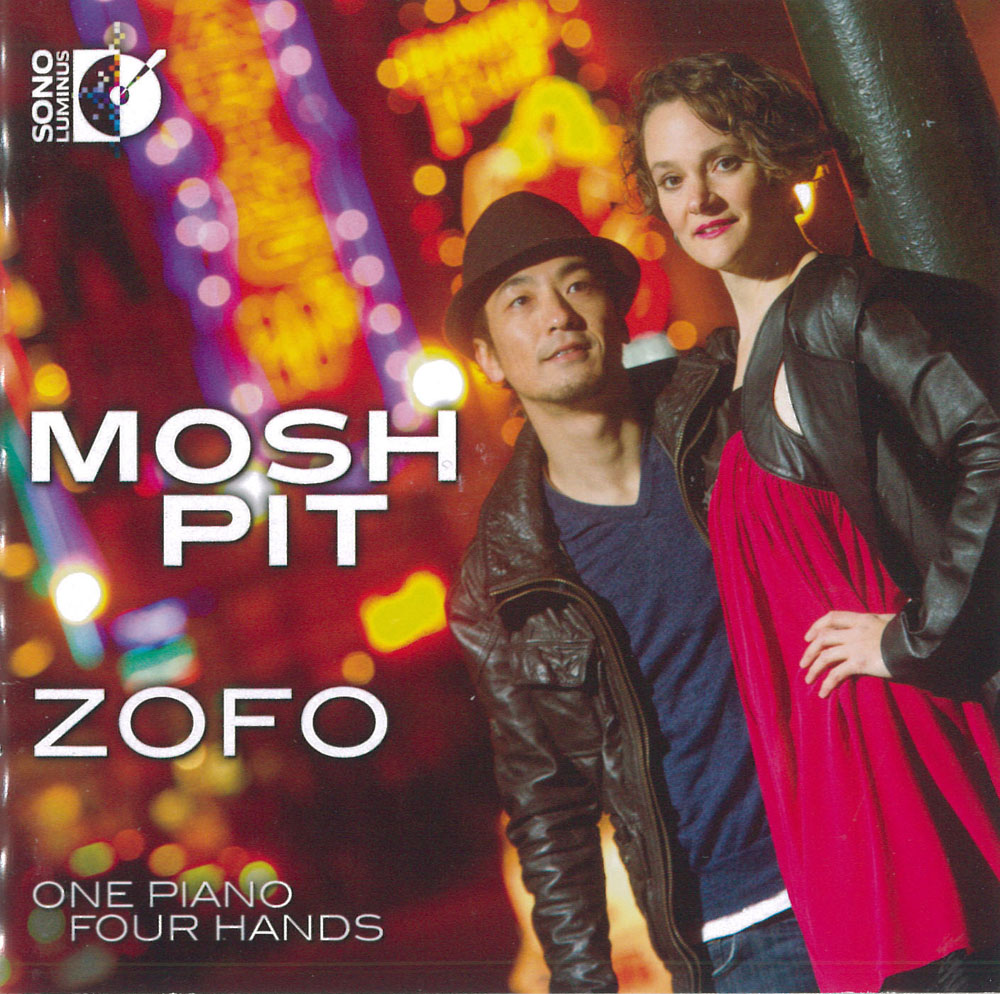
04 classical 04 mosh pitMosh Pit (One Piano Four Hands)
Zofo
Sono Luminus DSL-92167
sonoluminus.com

Listening to two pianists at a single keyboard usually sets up an expectation of something slightly heavy and possibly ungainly. Zofo, however (love that name!), blow all that away with their euphoric energy. These two are young, driven and fearless. There is no repertoire from which they shrink. They exude a “take no prisoners” approach yet perform with an interpretive competence and originality that leaves listeners wanting to hear more.

Gershwin’s Cuban Overture is so fresh and alive I hardly recognized it and checked the liner notes to ensure it was really Gershwin’s own version of his orchestral score. This is a terrific way to open the disc and it grabs you instantly.

Nancarrow’s Sonatina immediately shifts to an intense and delicate discipline that is by contrast, quite arresting. Zofo’s gift for extracting and delivering melody makes this work seem all too short. Likewise, Samuel Barber’s Op.28 Souvenirs, a bouquet of tuneful post-romantic ideas, are also played with profound engagement.

Two sets of dances by John Corigliano and Allen Shawm set a new stage for Zofo as the pair work ever so seductively with shifting rhythms to leave listeners embraced by the constant sense of movement.

Finally, the disc’s major work, Schoenfield’s Five Days from the Life of a Manic Depressive, isn’t nearly as frightening as the title suggests. Rather, filled with a humourous cynicism about contemporary music, it becomes a good-humoured showpiece by its end, closing the CD with the same kind of energy that opened it.

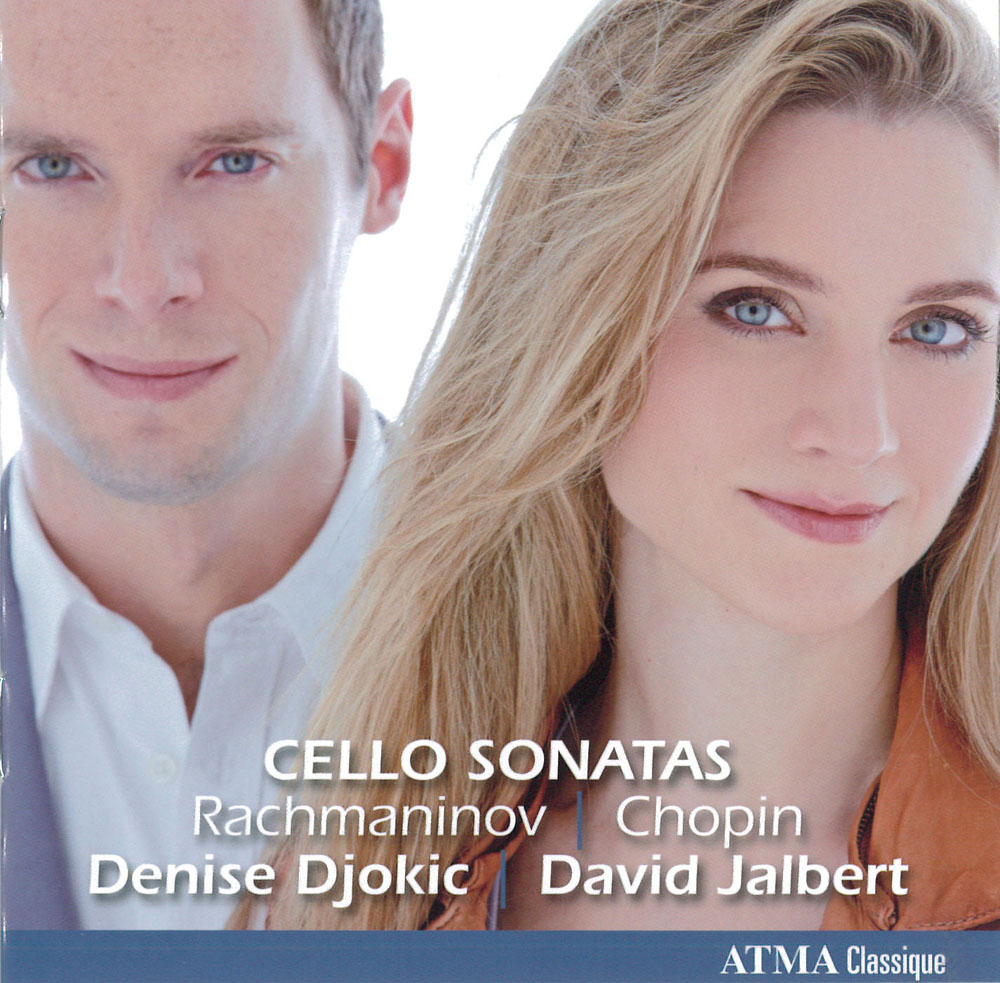
robbins 01 djokic jalbertCello sonatas, featuring the G minor sonatas by Rachmaninov and Chopin, is the outstanding new release by the Canadian duo of cellist Denise Djokic and pianist David Jalbert on the ATMA Classique label (ACD22525).

The Rachmaninov Sonata Op.19 is a relatively early work, written at the same time as his Second Piano Concerto and at the end of a three-year period of depression caused by the failure of his First Symphony. It’s a marvellous work, melancholy at times, but passionate and virtuosic, and full of those typical Rachmaninov melodies.

When Chopin wrote his Op.65 sonata in 1846, his health was failing and his affair with the writer George Sand was coming to an end; three years later he would be dead. Listening to it back-to-back with the Rachmaninov, it’s quite striking how similar their moods are at times; despite the gap of over 50 years between them, they seem to be soulmates.

The final track on the CD is Rachmaninov’s Vocalise, written in 1915 following the deaths of the composer’s friends and colleagues Sergei Taneyev and Alexander Scriabin. The transcription is by Leonard Rose. Not surprisingly, it’s no mere afterthought but a perfect fit with the two major works.

Djokic is in tremendous form throughout the disc, as is Jalbert, a top soloist in his own right — in fact, you only have to look at the composers’ names to realize how demanding and virtuosic the piano writing will be. The instrumental sound is warm and vibrant, and the interpretation everything you could ask for.

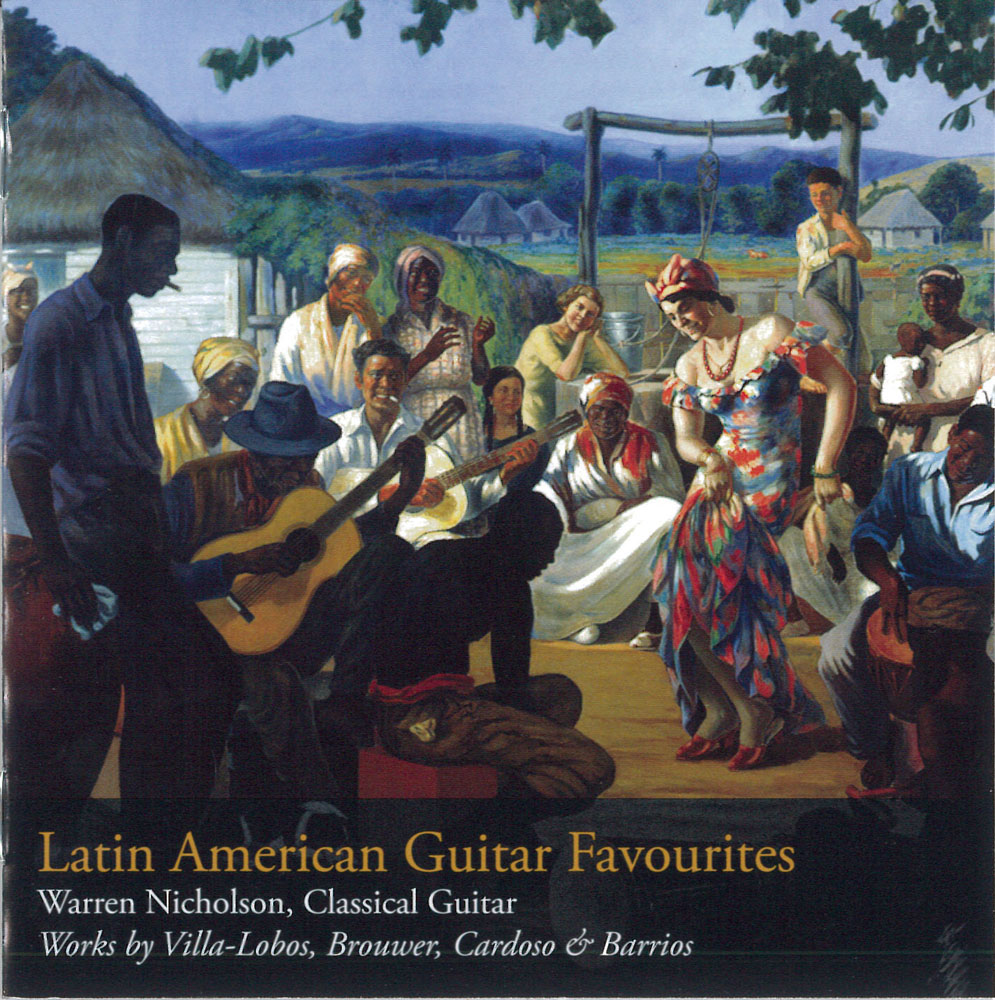
robbins 02 latin american guitarToronto-based guitarist Warren Nicholson is a graduate of Hamilton’s McMaster University and the Manhattan School of Music, and made his solo debut at New York’s Weill Recital Hall in 1998. He has been active as a teacher and performer ever since, but Latin American Guitar Favourites (warrennicholsonguitar.com) is his debut CD. It features works by two early 20th century South American guitar masters, together with works by two contemporary Latin composers.

The program opens with the Cinq Préludes by the Brazilian Heitor Villa-Lobos, followed by four pieces by Cuba’s Leo Brouwer: his Dos aires populares Cubanos and Dos temas populares Cubanos. Milonga, by the Argentinian Jorge Cardoso, and five pieces by the Paraguayan Agustín Barrios Mangoré complete the recital. In the final track, Una limosna por el amor de Dios, Nicholson displays a fine control of right-hand tremolo.

The playing throughout is accurate, clean and thoughtful, although perhaps a little too reserved at times. The guitar tone is lovely and the recorded sound is warm and clear.

There is, unfortunately, no information at all regarding recording dates or location, and there are no timings for the individual tracks; the CD clocks in at just under 50 minutes.

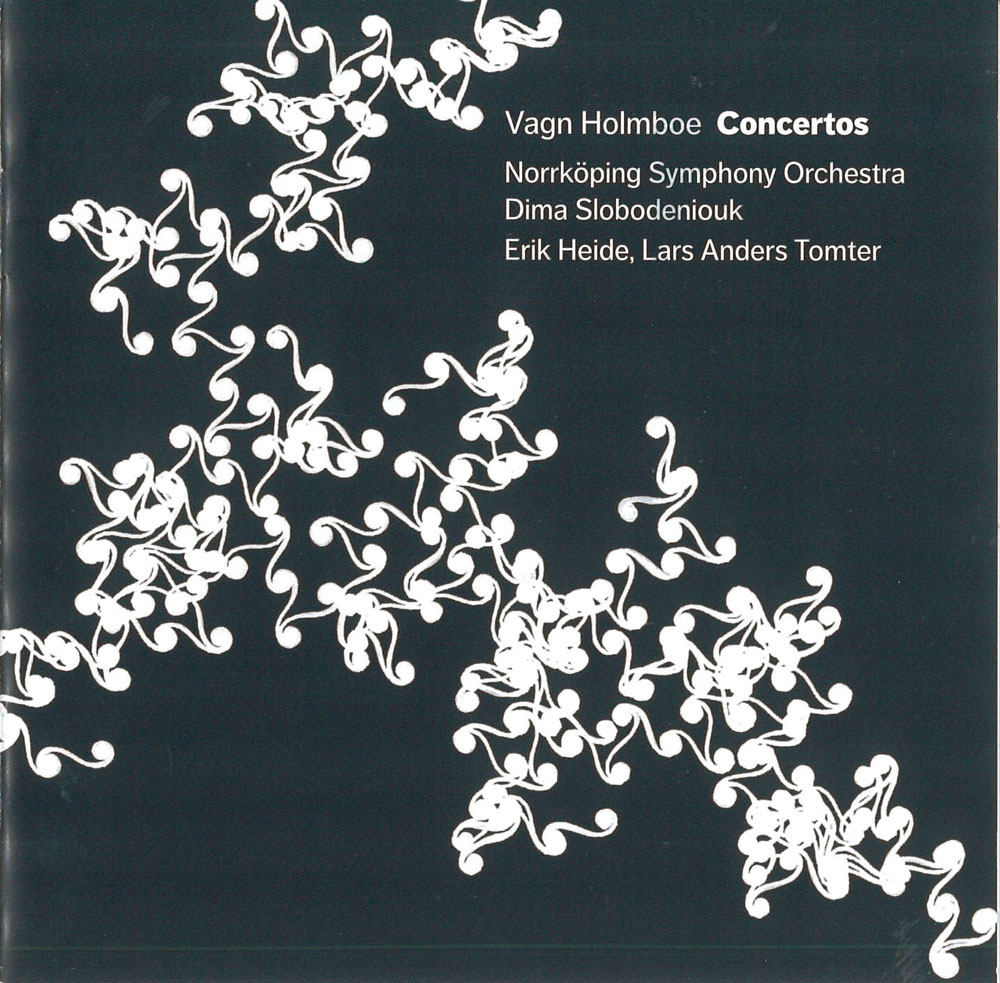
robbins 03 holmboe concertosThere is another excellent release from the Danish national label, Dacapo Records, this time featuring Concertos by the Danish composer Vagn Holmboe (6.220599). Holmboe, who was 86 when he died in 1996, produced an enormous number of strongly tonal compositions, many of which have inevitably been overlooked. The three highly accessible works on this CD are all world premiere recordings, and one — the Concerto for Orchestra (1929) — is believed to be a world premiere performance as well.

Lars Anders Tomter is the soloist in the Concerto for Viola Op.189 from 1992. Written for Rivka Golani, it’s a work which immediately shows strength and personality. Violinist Erik Heide performs the Concerto for Violin No.2, Op.139 from 1979, although the number is somewhat misleading; there is an earlier violin concerto from 1938 that carries the designation No.1 but has never been performed, and this current work is apparently regarded as “the” violin concerto. Again, it’s a two-movement work, with hints of Samuel Barber as well as Carl Nielsen, especially in the beautiful slow movement.

robbins 04 wendy warnerDima Slobodeniouk conducts the Norrköping Symphony Orchestra in the concertos, and the orchestra takes centre stage for the Concerto for Orchestra, a single-movement work from 1929 that has apparently never been performed. It’s a very attractive piece, quite heavy on brass and percussion, and again with distinct hints of Nielsen, who was the examiner when Holmboe auditioned for the Royal Danish Academy of Music, and who clearly influenced the young composer’s early works.

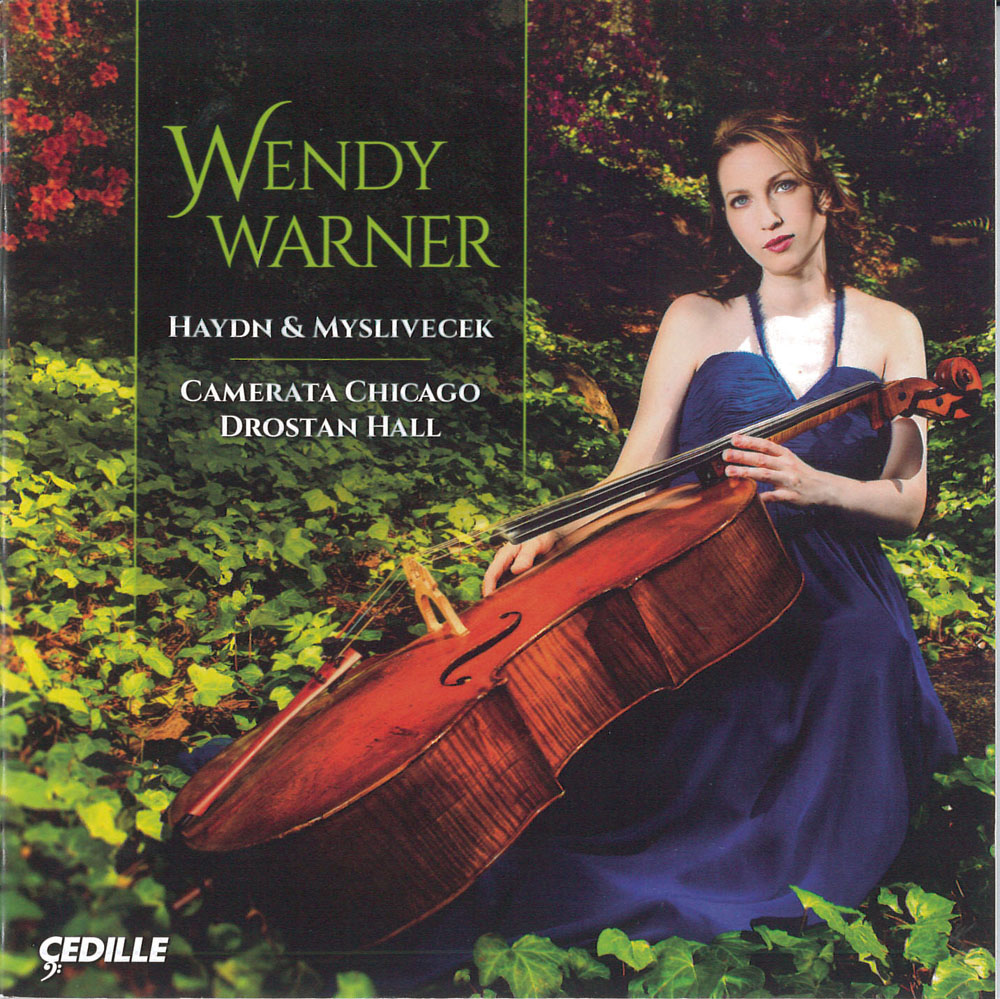
Cellist Wendy Warner adds to an already impressive discography with a CD of the two Cello Concertos of Joseph Haydn, paired with the Cello Concerto In C major by Josef Mysliveček (Cedille CDR 90000 142). Drostan Hall leads Camerata Chicago in excellent orchestral support.

The Haydn concertos are relatively recent additions to the cello repertoire, the C major work having been discovered and first performed in the early 1960s. The D major concerto was long believed to have been written by Anton Kraft, a cellist with Haydn`s Esterhazy orchestra, until Haydn`s original score was discovered in the 1950s. The virtuosic cadenzas here are by Maurice Gendron and Emanuel Feuermann.

Mysliveček was a contemporary and acquaintance of Mozart, and known at the time mostly for his operas and concertos. His cello concerto is actually a transcription of one of his violin concertos and features a good deal of playing in the higher register.

Warner is a simply marvellous player, with great tone, lovely phrasing, and agility and technique to burn. She effortlessly holds our attention throughout a simply dazzling and delightful CD.

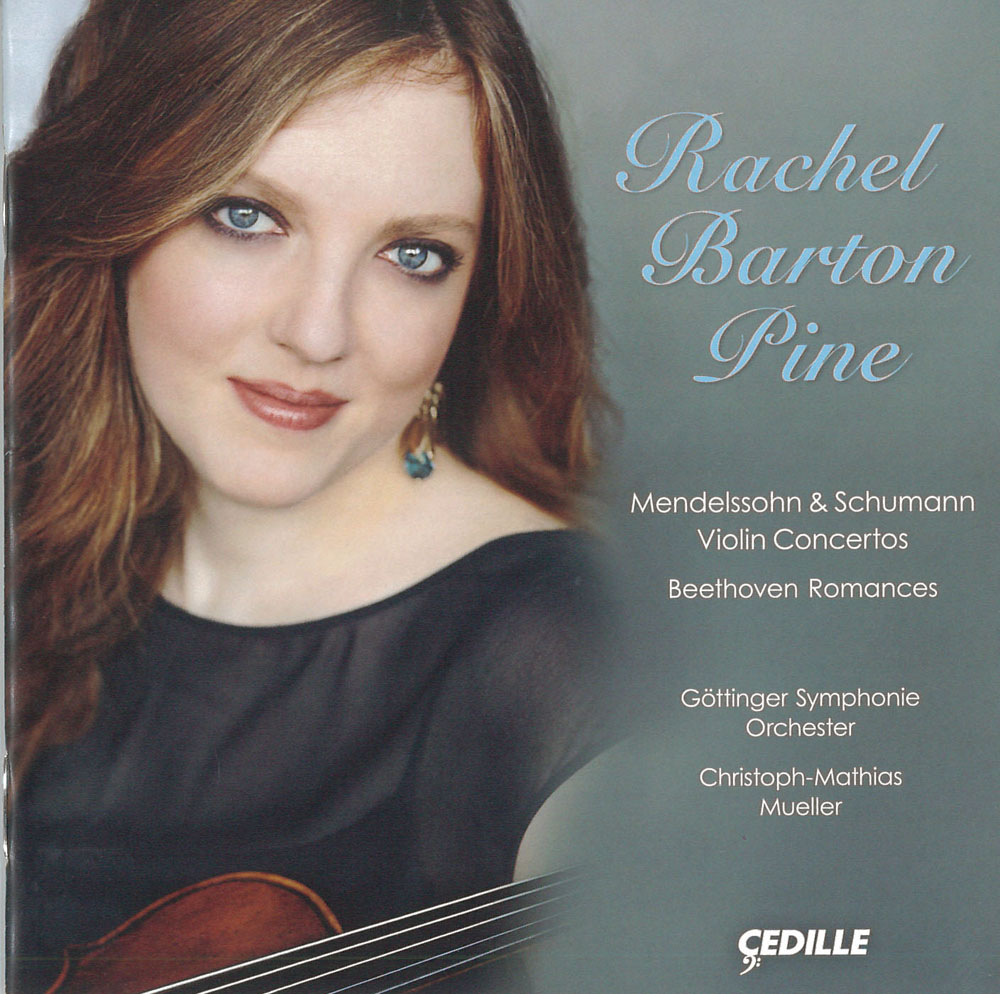
robbins 05 rachel barton pineThere is more thoughtful and intelligent playing of the highest order on Mendelssohn & Schumann Violin Concertos, where violinist Rachel Barton Pine is joined by the Göttinger Symphonie Orchester under Christoph-Mathias Mueller (Cedille CDR 90000 144). The two Beethoven Romances are also included.

It sometimes seems that there can’t be anything left for a soloist to say with the Mendelssohn, but Barton Pine would doubtless disagree; “The older I get,” she says, “The more difficult this ‘easier’ concerto becomes.” Her approach here is sensitive and low-key, but no less effective for that. It’s thoughtful playing with a light touch, and with tempi that are kept moving; no time for wallowing in sentiment here, but no lack of feeling either.

The Schumann concerto has had a troubled history. Written shortly before Schumann’s 1854 suicide attempt that led to his entering the sanatorium in which he would die two years later, it was never fine-tuned to the composer’s satisfaction, and was suppressed by its dedicatee, Joseph Joachim, not long after Schumann’s death. It resurfaced in Germany in the 1930s due primarily to the efforts of violinists Jelly d’Arányi and Yehudi Menuhin, but plans for a premiere were hijacked by the Nazis, who hoped to promote it at the expense of the Mendelssohn concerto, with its Jewish connection. The concerto has its technical problems, in particular an exceptionally difficult solo part in the last movement which makes an ideal tempo almost impossible, but it has a particularly beautiful slow movement. Mueller was responsible for Barton Pine’s deciding to record the work, and the soloist has done her work here, making judicious changes where she felt necessary; in particular, she and Mueller make the final movement work extremely well.

The performances of the Beethoven F major and G major Romances follow the approach set in the Mendelssohn, with a clear tone, slow and spare vibrato and a nice sense of movement.

Barton Pine’s own extensive and excellent booklet notes contribute to another top-notch Cedille issue. 

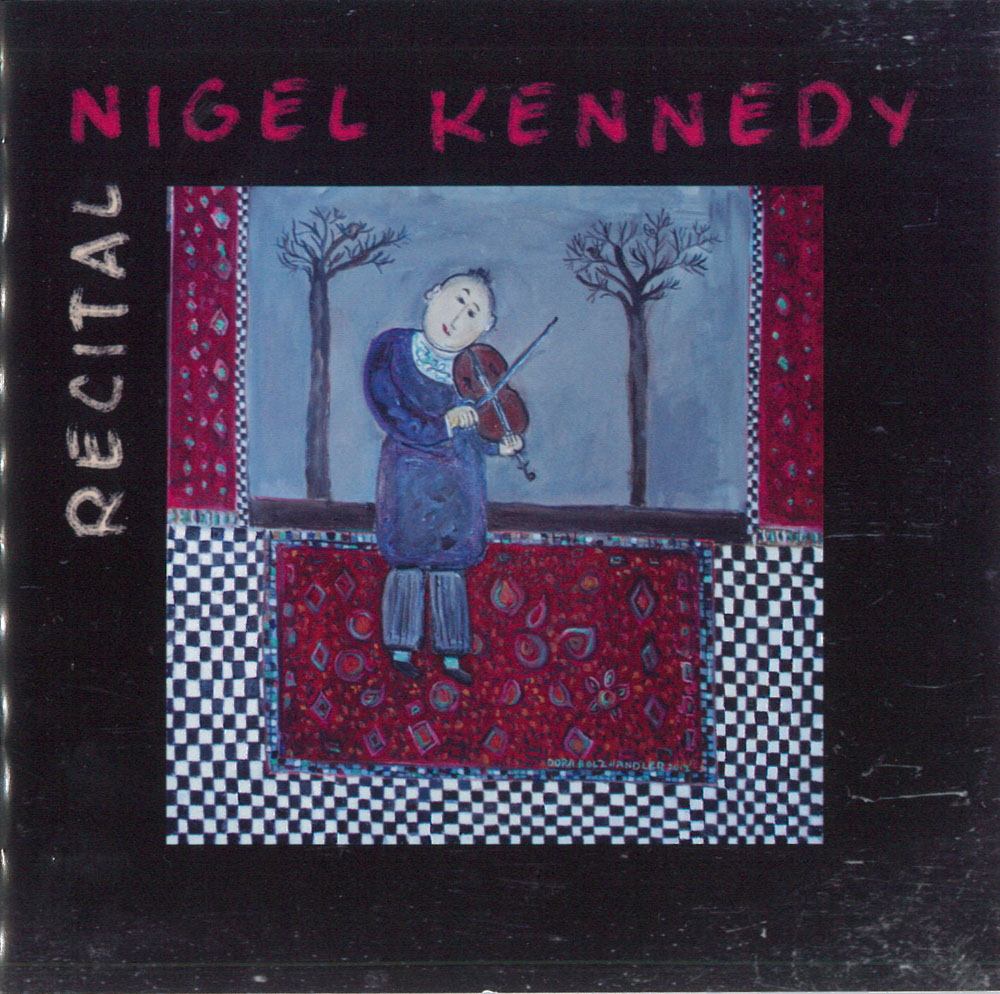
robbins 06 nigel kennedyI must admit to having approached the latest Nigel Kennedy CD, Recital (Sony 88765447272) with a great deal of trepidation. Kennedy’s huge talent has never been in doubt, but he has often been a lightning rod for controversy; some of his career choices have been – well, a bit puzzling, to put it mildly. In particular, his crossover rock/jazz CD projects have been wildly erratic, and at times almost inexplicably bad.

“Music inspired by Fats Waller, J .S. Bach, Dave Brubeck and more…” says the sticker on the front of the jewel case, and perhaps that’s the clue to why this particular CD is such an overwhelming success: the standard of the basic material is much higher than on some of Kennedy’s other projects, particularly the Polish ones. It’s also music which Kennedy says he has either grown up with or feels as if he has grown up with, so there is clearly a strong affinity with the material.

There are four Waller numbers here, and one Brubeck – Take Five, of course – plus numbers by Ze Gomez and Yaron Stavi and two originals by Kennedy himself. The Bach tracks were inspired by the Allegro from the Sonata No.2 in A minor for Solo Violin and the first movement of the Concerto in D minor for Two Violins.

Kennedy is joined by Rolf Bussalb on guitar, Yaron Stavi on bass, Krysztof Dziedzic on drum (singular, note) and Barbara Dziewiecka on second violin and viola on selected tracks.

Kennedy is not the greatest of jazz violinists, but his playing on this disc is very sophisticated, very original and highly entertaining. He uses his enormous technical skills to great effect, creating a quite different sound to most jazz players. Even in the standards he “shreds” in places – and it works! The Fats Waller tracks in particular are simply terrific, and the takes on Bach are a real blast.

The sense of freedom – and of fun – is obvious throughout the disc, with group laughter clearly audible on some of the tracks. This is Kennedy being Kennedy at his best: sounding like no one else, having a ball, and making terrific music. The entire CD is an absolute delight, and a real winner.

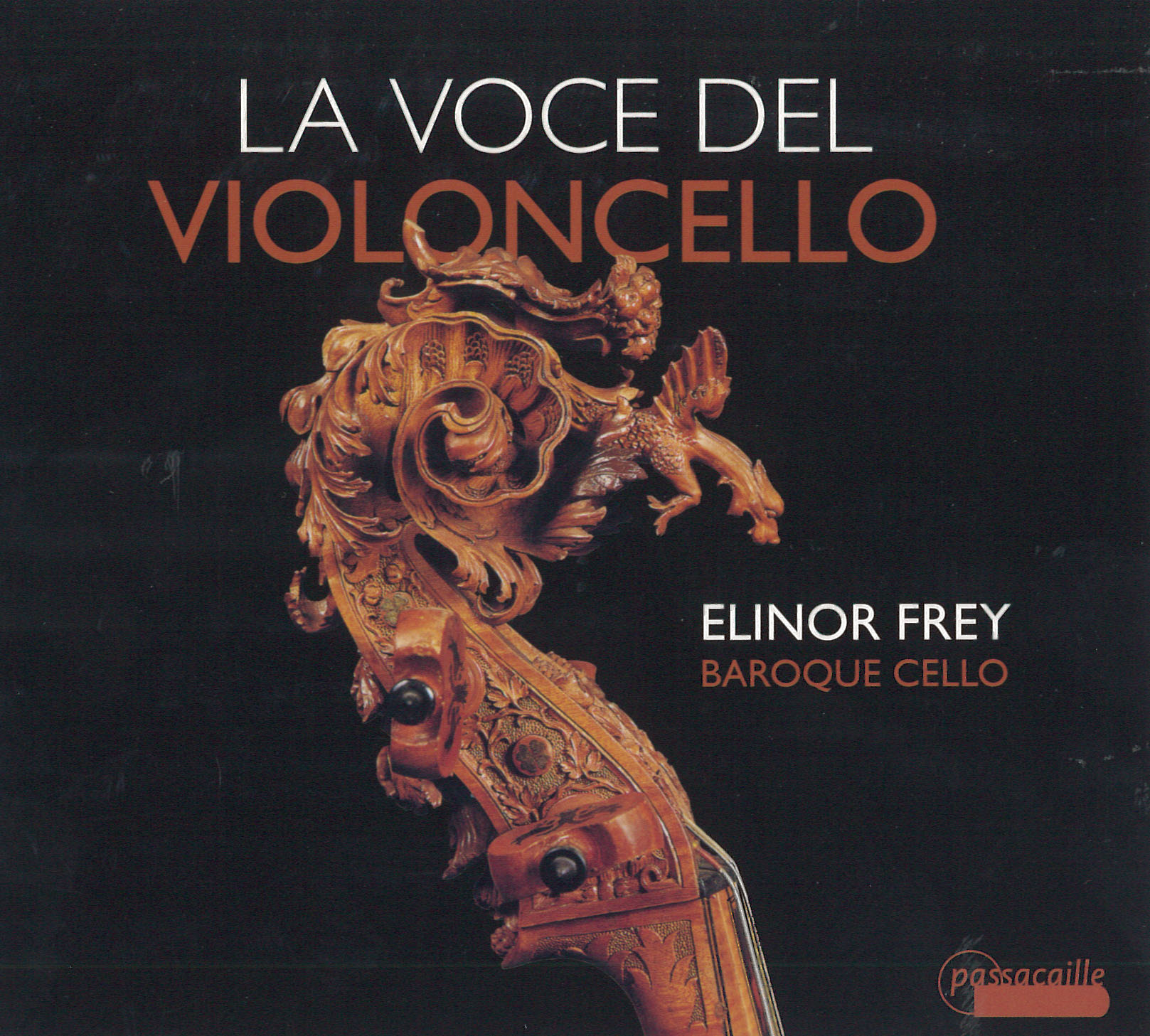
01-Voce-VioloncelloLa Voce del Violoncello: Solo Works of
the First Italian Cellist-Composers
Elinor Frey; Esteban la Rotta; Susie Napper
Passacaille 993
passacaille.be

The program of this very welcome new disc spotlights the earliest solo repertoire for the violoncello, dating from the mid-1600s to the first half of the 18th century in Italy, showcasing music by Colombi, Vitali, Galli, Ruvo, Domenico Gabrielli, Dall’Abaco and Supriani. Not household names to be sure, but they all wrote some great music for the cello — and in Elinor Frey, they have an advocate of the first order.

As one might expect from a recording of early Baroque music, many shorter pieces are featured here: ricercars, toccatas, capriccios, short sonatas and a few pieces on dance basses. Most are unaccompanied, with a few accompanied in tasteful fashion by theorbo or guitar by Esteban La Rotta, or by the continuo team of La Rotta and cellist Susie Napper.

The variety of this well-paced program makes for intriguing listening, as does the use of various historical tunings and pitches — what a palette of colours! Vitali’s lovely Bergamasca and Passa galli, Giulio de Ruvo’s diminutive Romanelle and Tarantelli, Dall’Abaco’s sonatas and Colombi’s Ciaccona were my personal favourites the first time around, but as I revisit this CD I’m sure that every piece will get its turn in the limelight. What a pleasure. Frey’s playing is adroit, expressive and engaging; and she also appears to have the happy ability to marry her own voice to those of the composers, rather than getting in their way.

02-Bach-StringsBach – Reconstructions and
Transcriptions for Strings
Furor Musicus; Antoinette Lohmann
Edition Lilac 110910-2
editionlilac.com

When I first learned of this disc, I had it in my mind that it was no more than a compilation of Bach arrangements along the lines of those overly lush and romantic versions as orchestrated by Leopold Stokowski c.1958. On the contrary, nothing could be further from the truth on this Edition Lilac label CD titled Reconstructions and Transcriptions for Strings with music by the Leipzig cantor stylishly presented by Furor Musicus under the direction of Antoinette Lohmann.

Formed by Lohmann in 2008, Furor Musicus comprises a group of Dutch musicians who have all played together in various other ensembles over the years and who wished to continue to perform music from the Baroque period. This is a delightful disc featuring four works, the Orchestral Suite No. 2 BWV1067, a short fugue, the Concerto BWV1053 and seven movements from the famous Goldberg Variations, all the pieces in the form of reconstructions or transcriptions that could have existed for strings.

Lohmann points out that the suite — most often heard performed by flute and strings — was probably based on an earlier work written a whole tone lower and conceived for strings alone. With all due respect to flutists, this interpretation is utterly convincing, the ensemble achieving a wonderful sense of poise and transparency. On the other hand, the concerto is most often heard performed by keyboard, although Bach’s original intentions remain unclear. Nevertheless, Lohmann’s skilful and elegant performance on the viola in the solo part seems very natural, and that Bach was a violist himself makes for a convincing argument that he may well have intended this concerto for his own use. The two remaining pieces — the short Fugue BWV539 and seven movements from the Goldberg Variations— are both transcriptions, and once again demonstrate a keen affinity for the music and further proof that under Lohmann’s careful direction a baroque string ensemble is a viable means of enjoying this well-known fare.

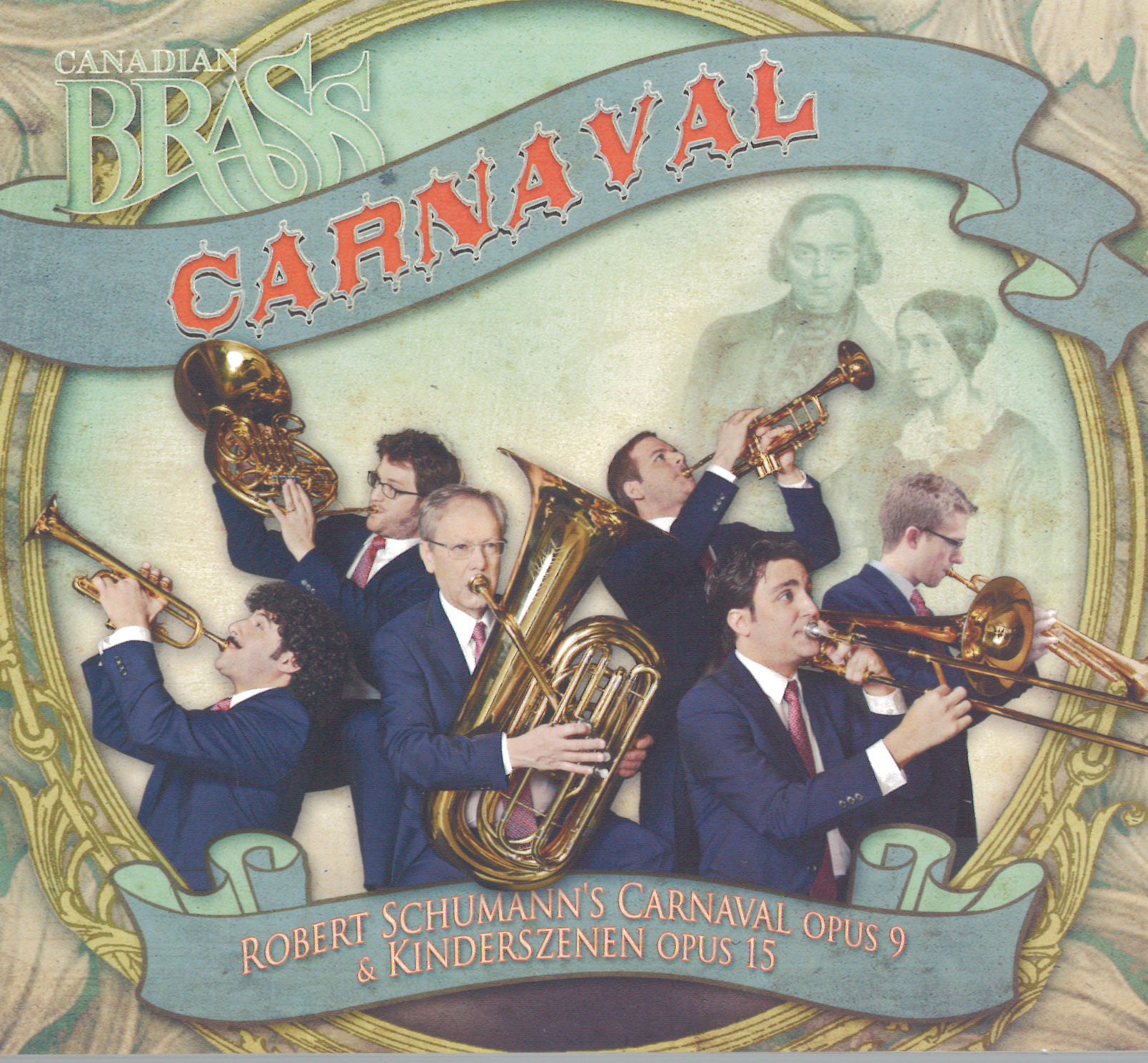
02-Canadian-BrassCarnaval – Robert Schumann’s Carnaval and Kinderszenen
Canadian Brass
Opening Day ODR 7438
openingday.com

The Canadian Brass has their work cut out for them in this recording of brass adaptations of Robert Schumann’s piano compositions Carnaval, Op.9 and Kinderszenen, Op.15.

Both works are mainstays of the piano repertoire, being musically and technically daunting, humbling and gratifying to perform. In these versions by Brass members Chris Colleti and Brandon Ridenour, the same challenges are remarkably conquered.I am familiar with the original piano compositions so I do miss the subtlety of colour and sentiment in both the fast contrapuntal lines and slower melodic sections that the pianist achieves. However, the performances on brass instruments add new elements of expression.

The brass choir sound such as in the opening “Preambule” of Carnaval works extremely well. The technical brilliance of the ensemble is proven again in the speedy Intermezzo: Paganini. Surprisingly, the most “piano specific” movements work the best. In Chopin, the pianistic arpeggio-like lines are transformed into a steady backdrop against the soaring melody. “Traumerei” from Kinderszenen transforms into a brass anthem of contrasting instrumental phrases. Also fun is to hear the low instruments in “Fast zu Ernst” and in the closing cadence of final track “Der Dichter spricht.” I only wish there was more sense of spontaneity and abandon in the performances.

No surprise in the excellent sound quality achieved by recording in Toronto’s Christ Church Deer Park. This is a worthy venue to record in. And this is a worthy recording to listen to.

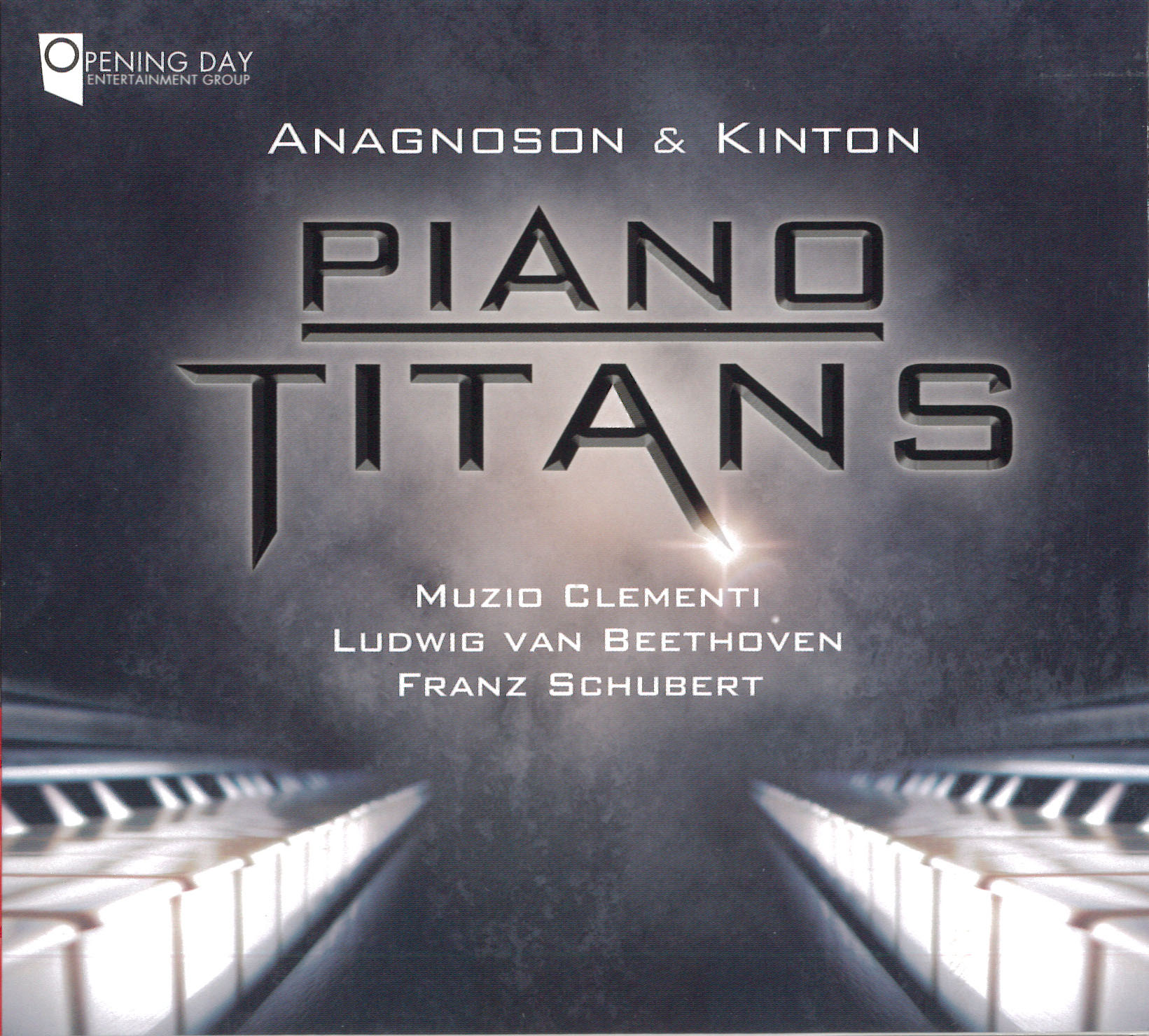
01-AnagnosonKintonPiano Titans
Anagnoson & Kinton
Opening Day ODR 7432
openingday.com

Has it really been almost 40 years that the Toronto-based pianists James Anagnoson and Leslie Kinton have delighted audiences with their exemplary keyboard skills? The two pianists met as students while at the Aspen Music Festival. Nine discs and more than 1,000 performances later, they’re recognized as one of the world’s foremost piano duos and this latest CD, titled Piano Titans with music by Clementi, Beethoven and Schubert, is a testament to their ongoing success.

To be honest, the title may be a bit of a misnomer. While Anagnoson & Kinton could rightly be regarded as piano titans, (as could Beethoven and Schubert), most of the music on this CD — apart from the great Schubert Fantasie — wouldn’t be regarded as “titanic.” Instead, it comprises small musical gems, as pleasing to listen to as they are to perform.

The disc opens with two short piano sonatas by Clementi, famous during his lifetime as a pianist, composer and piano manufacturer. Nowadays Clementi’s works are performed more by students than by professionals, but his music is not without its charm, and the duo does it justice, exhibiting a particular precision and elegance of phrase. Three Marches Op.45 by Beethoven follow, scored for four hands at one piano. Complete with musical depictions of treading feet and drum-roll effects, these pieces are great fun, undoubtedly conceived for performance in amateur Viennese drawing rooms.

Anagnoson & Kinton save the best for last in a compelling performance of the great Schubert Fantasie in F Minor D940. Written for one piano, four hands, the piece is now regarded as one of the finest piano duet compositions in the repertoire. Here the two are in perfect sync, easily capturing the dramatic intensity of the music through a strong and assured performance, thus rounding off the CD in a most satisfying way.

Well done, gentlemen. May you continue to face each other across the expanse of two grand pianos for many years to come!

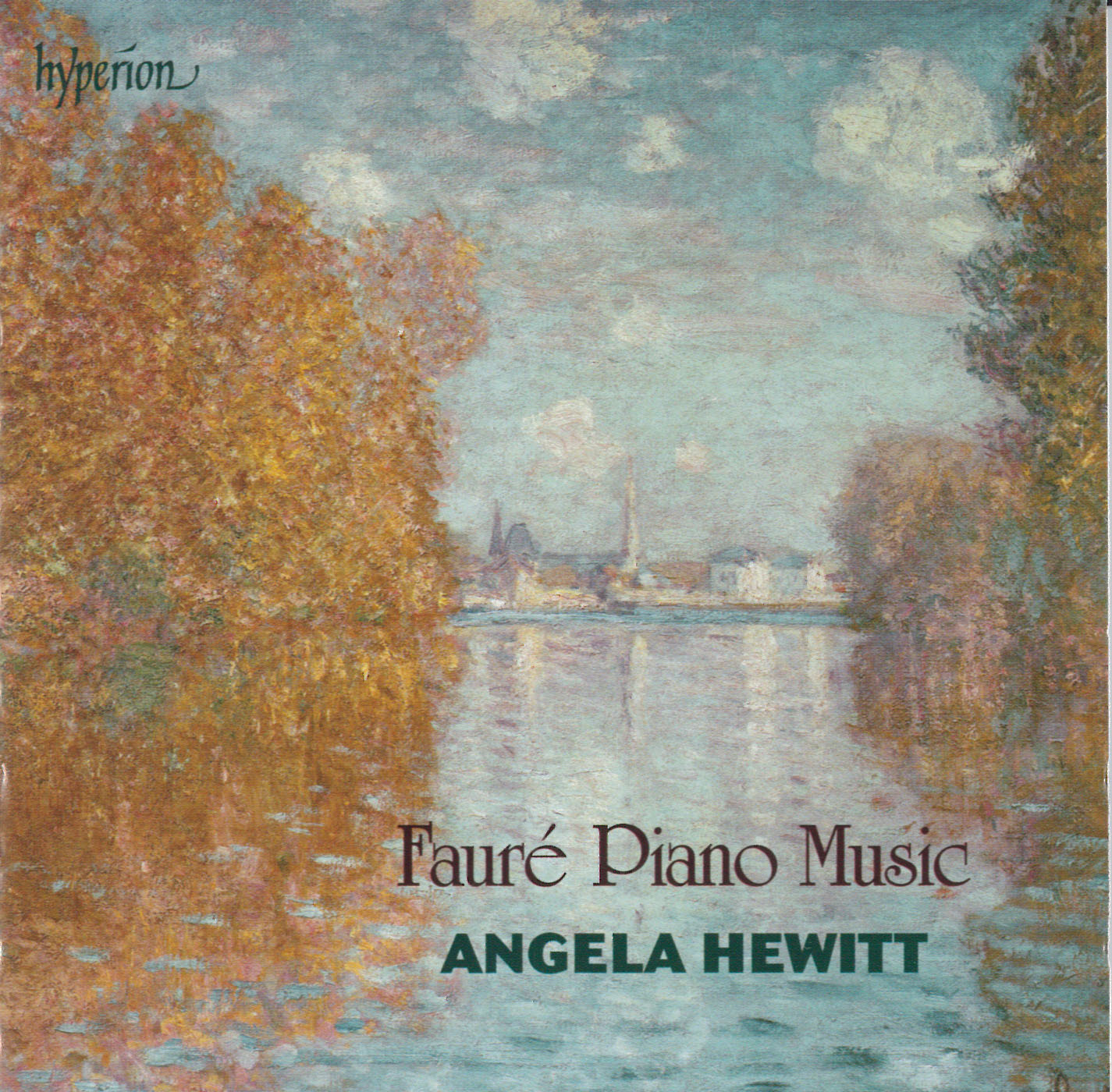
03-Faure-HewittFauré – Piano Music
Angela Hewitt
Hyperion CDA67875

In her informative liner notes, pianist Angela Hewitt writes in her commentary about Gabriel Fauré’s Nocturne No.5 in B-Flat Major, Op.37 that “there is a grace combined with a contained strength behind every note.” This description can also be used to describe Hewitt’s powerhouse performances here.

Thème et variations, Op.73 opens with a march-like statement reminiscent of Hewitt’s Bach performances. The abrupt changes in dynamics from loud to soft are executed perfectly by Hewitt, with heartfelt beauty and an inherent sense of romantic melodic line. Each variation is flowing, clear and spontaneous. After variation 10, Allegro vivo’s dramatic ending, it is Hewitt’s intelligent and emotional interpretation of the more sparse variation 11, Andante molto, moderato espressivo that foreshadows more moving performances of the following two sparkling Valse-caprices and three dreamy Nocturnes. The slightly chromatic nature of the opening melody combined with the darkness of the harmonies of the above-mentioned technically demanding Nocturne No.5 leads to a carefully crafted work of wide-ranging moods. The Ballade pour piano seul, Op.19 is the earliest piece featured. Hewitt’s sense of cadence resolution and manipulation of tempo supports well-defined and tonally colourful melodies and trilling ornamentation.

Hewitt writes that she was first introduced to and learned Fauré’s Ballade as a 15-year-old student. Her decades-long dedication to his work is apparent here. This is not salon music — it is substantial piano repertoire performed unforgettably by a passionate and brilliant pianist.

Back to top