03_bach_organJ.S. Bach - Organ Works

Nicolas-Alexandre Marcotte

XXI-21 Productions; XXI-CD 2 1713

Organist Nicolas-Alexandre Marcotte plays a magnificent organ built in 1973 by Karl Wilhelm for Église Saint-Matthias (Montréal). It is entirely mechanical (tracker action) and voiced in the very best Baroque style. Marcotte’s repertoire choice (some duets, a Fantaisie, a Trio Sonata, etc.) is far from standard Bach but carefully chosen to demonstrate the Baroque keyboard technique of note detachment, the very antithesis of the Romantic tendency for legato in nearly everything. The playing is brilliant and the acoustics perfect – an altogether outstanding recording achievement.


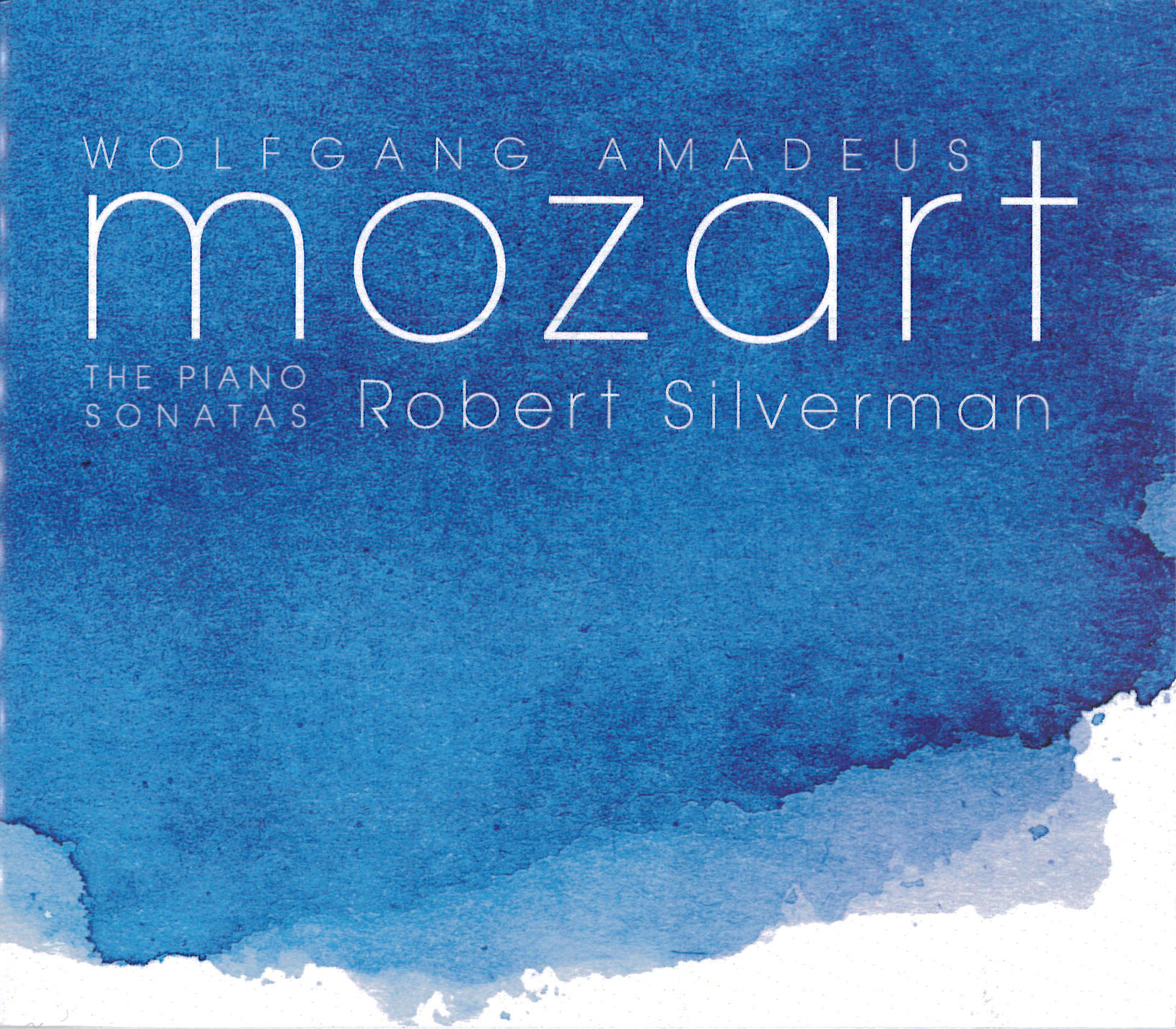
01_mozart_piano_sonatasMozart - Piano Sonatas

Robert Silverman

IsoMike 5602 (www.isomike.com)

If we accept Hans von Bulow’s decree to pianists that “Bach is the Old Testament and Beethoven is the New Testament of music,” where does that leave Mozart? As a kind of musical John the Baptist?

But if Mozart has been relegated to the role of a pianistic voice crying in the wilderness, it’s not the composer’s doing, but the fault of the musical world. Some pianists, such as Glenn Gould, have disdained his piano music as lightweight. Others, such as Alicia De Laroccha, have unwittingly given credence to this view by performing Mozart with a mannered superficiality. And then there are folks who feel that Mozart’s piano music needs to be performed on a period fortepiano – as if he can’t quite compete with “important” piano composers when played on a modern instrument.

Enter Robert Silverman, the Vancouver-based pianist who has earned a reputation as a Beethoven interpreter with a penchant for complete sonata cycles. Now, in this seven-disc boxed set on the audiophile IsoMike label, Silverman has recorded all 18 Mozart sonatas, and also the Chromatic Fantasy in C Minor.

What makes these performances so consistently engaging is the breadth he brings to his interpretations. He’s not out to directly overthrow traditional ideas about Mozart, but rather to enfold them within a broader vision: while there’s sometimes a “Mozartkugel” sweetness to his playing, there’s much more than that. In Silverman’s hands, this music is dramatic, humourous, effervescent, calm, blissful, tragic, and many other things as well.

For instance, there’s Sonata No. 15, which Silverman, in his notes, describes as “the most curious work in Mozart’s entire keyboard oeuvre.” In this recording, the first movement begins as a lively romp, but with the underlying strength of supple and flexible steel. The second movement is less complex, perhaps, but inward-looking and carefully shaped. And the last movement is pure innocence and charm – until the change from major to minor brings just a touch of wistfulness.

The only non-sonata on these discs, the C Minor Fantasy, is no less impressive. Contrasts are sharply drawn, intensity builds and recedes, colours range from light to dark, and the music is always going somewhere.

Sonically, these discs are as clear as a bell and as pure as the driven snow. And speaking of Glenn Gould (whom I mentioned four paragraphs back), can Silverman be heard very quietly humming in some lyrical passages? It sounds like he might be.


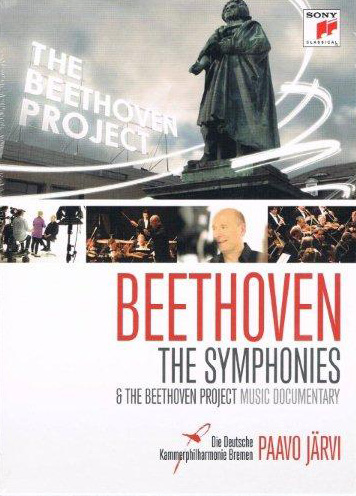
02_beethoven_symphoniesBeethoven - The Symphonies & The Beethoven Project

Die Deutsche Kammerphilharmonie Bremen; Paavo Järvi; Christiane Oelze; Annely Peebo; Simon O’Neill; Dietrich Henschel; Deutscher Kammerchor

SONY 86977814396 (4 DVDs)

“As long as we will be performing the Beethoven symphonies they will always be slightly different. There is no way of making an identical performance... it simply doesn’t work that way. One of the things that I value most by doing those cycles is that I feel that the next one can be a little bit better because I have learned something from the one before and I feel that I know how to do them better and I feel that the orchestra and I have a closer communication because we’ve been through this process.”

Paavo Järvi and the Deutsche Kammerphilharmonie had already recorded the Beethoven Symphonies for CD release over a period of four years from 2004-2008. Those performances had positive reviews and I was very impressed by the clarity and energy of the playing and the hard-edged recording.

The new cycle on DVD was recorded not in four years but four consecutive days, September 9-12, 2009 in the Beethovenhalle in Bonn. It is plain to hear that the ensemble has refined into a more personal style that is far more engaging and persuasive. The thrilling live performances are both inspired and inspiring, a tribute to Järvi’s panache and inspiration; they glow from within... a refreshing experience. The sound dynamics, whether heard in stereo or 5.1 surround sound are exceptional, as they must be here.

Play the extra DVD, “The Beethoven Project Music Documentary,” first as it tells how this event came together and also get to know a few of the players and experience the orchestra’s general camaraderie. More valuable are the rehearsal excerpts in which Järvi works with the players on matters of tempi, phrasing, dynamics, and balance and illustrates Beethoven’s sense of humour. Later, one of the players relates a conversation between players on the last day as to whether they should play it safe in the Ninth. They decided to go all out and hold back nothing.

I promise that even the most jaded listener will be listening with new ears.


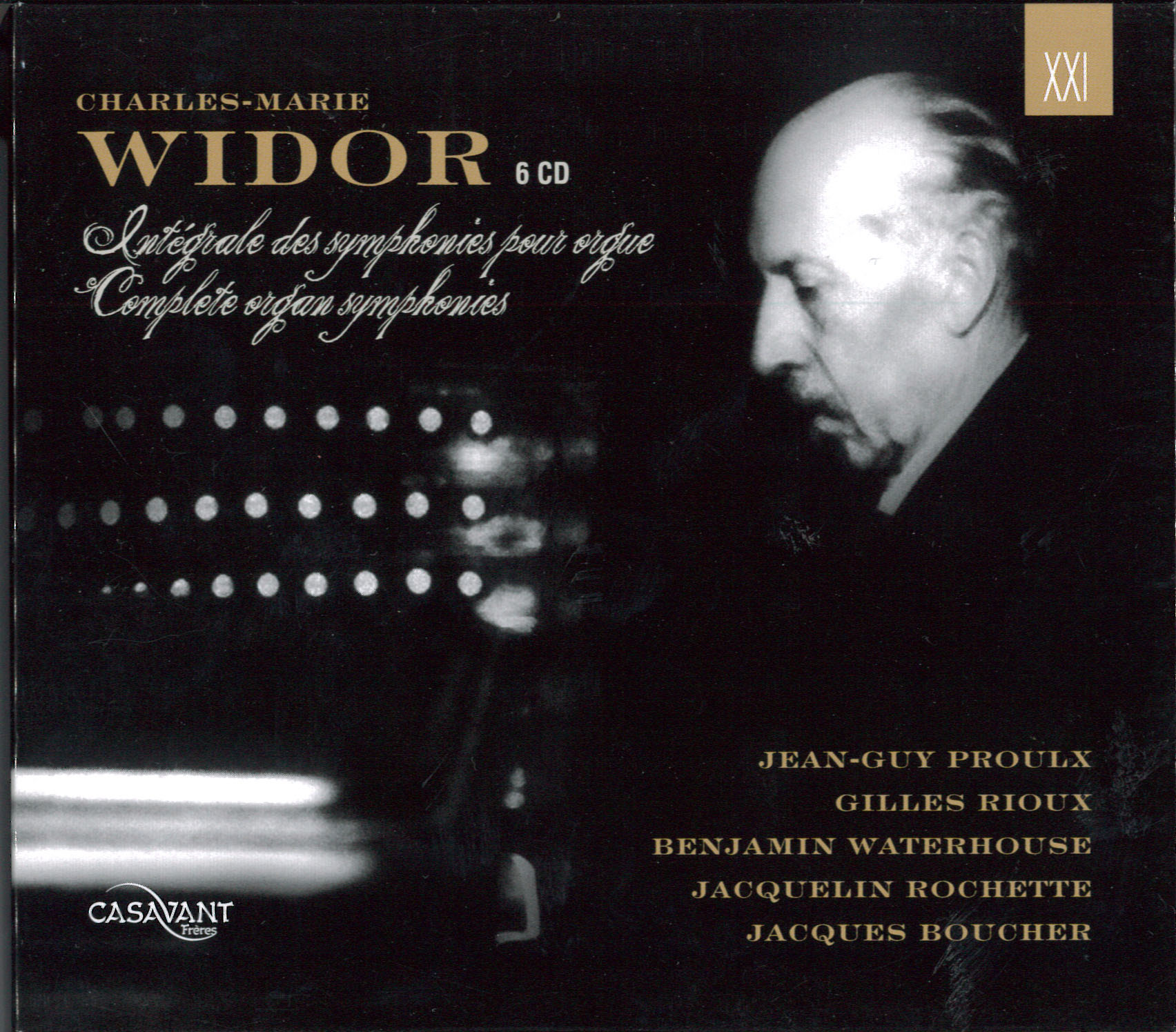
03_widor_organ_symphoniesWidor - Complete Organ Symphonies

Jean-Guy Proulx, Gilles Rioux, Benjamin Waterhouse, Jacquelin Rochette,  Jacques Boucher

XXI-21 Productions; XXI-CD 2 1720

Organ recordings are as much about the instrument as they are about the performer and the repertoire, so it’s often hard to say what should really get top billing. XXI presents us with a complete set of Charles-Marie Widor’s 10 (Organ) Symphonies performed by five different organists on five different instruments built by Canada’s Casavant Frères of Saint Hyacinthe, Québec. This set is a substantial document. It illuminates a unique period of French music history in the early 20th century when advancing technology had a huge impact on pipe organ building. New materials, better mechanisms and electrification gave builders the opportunity to design “orchestral” instruments with broad palettes of colours. Moreover, a growing body of organ works in this “orchestral” genre was waiting to be heard and Widor’s 10 symphonies are among the best to illustrate this phenomenon. These six CDs offer many outstanding examples of how skilful organists can register (colour) the complex inner voices of Widor’s writing. Some remarkable highlights deserve special mention.

Symphony No.1 is a collage of contrasting dynamics and colour. Organist Jean-Guy Proulx plays the 1921 Casavant restored in 1979 by Guilbault-Therien (Cathédrale Saint Germain de Rimouski) and makes the Marche Pontificale the most memorable movement. Proulx also plays the Symphony No.4 in what is the most skilfully registered (tonally coloured) and virtuosic performance in the entire set. Superb.

Benjamin Waterhouse performs Symphony No.2 at Cathédrale Saint Hyacinthe on one of Casavant’s earliest instruments (1885, rebuilt in 1978). The fugal 4th movement Scherzo is a playful dance of solo reeds and the Symphony’s Finale is truly magnificent.

Symphony No.3 is played by Gilles Rioux on a 1964 Casavant, rebuilt in 1990 in the Basilique Notre-Dame-du-Cap, Cap-de-la-Madeleine. The 2nd movement Minuetto is an utter delight and the 3rd movement Marche is simply explosive!

Organist Jacquelin Rochette plays the 1943 Casavant (rebuilt 1995) in Église Saint-Roch, Quebec City. Her performance of the Symphony No.5 features the famous Toccata every organist either plays or wishes they played better. Her Symphony No.6 Finale is even more spectacular and shows Widor at his rhythmic and inventive best.

Symphonies 9 and 10 are both more compact works with fewer movements. Organist Jacques Boucher has the advantage of playing the 1995 rebuild of the 1915 Casavant in Église Saint-Jean-Baptiste de Montréal. Of all the organs this one seems most solidly in tune throughout its entire set of ranks. Most others show some minor tuning issues, though not serious enough to detract from their performance.


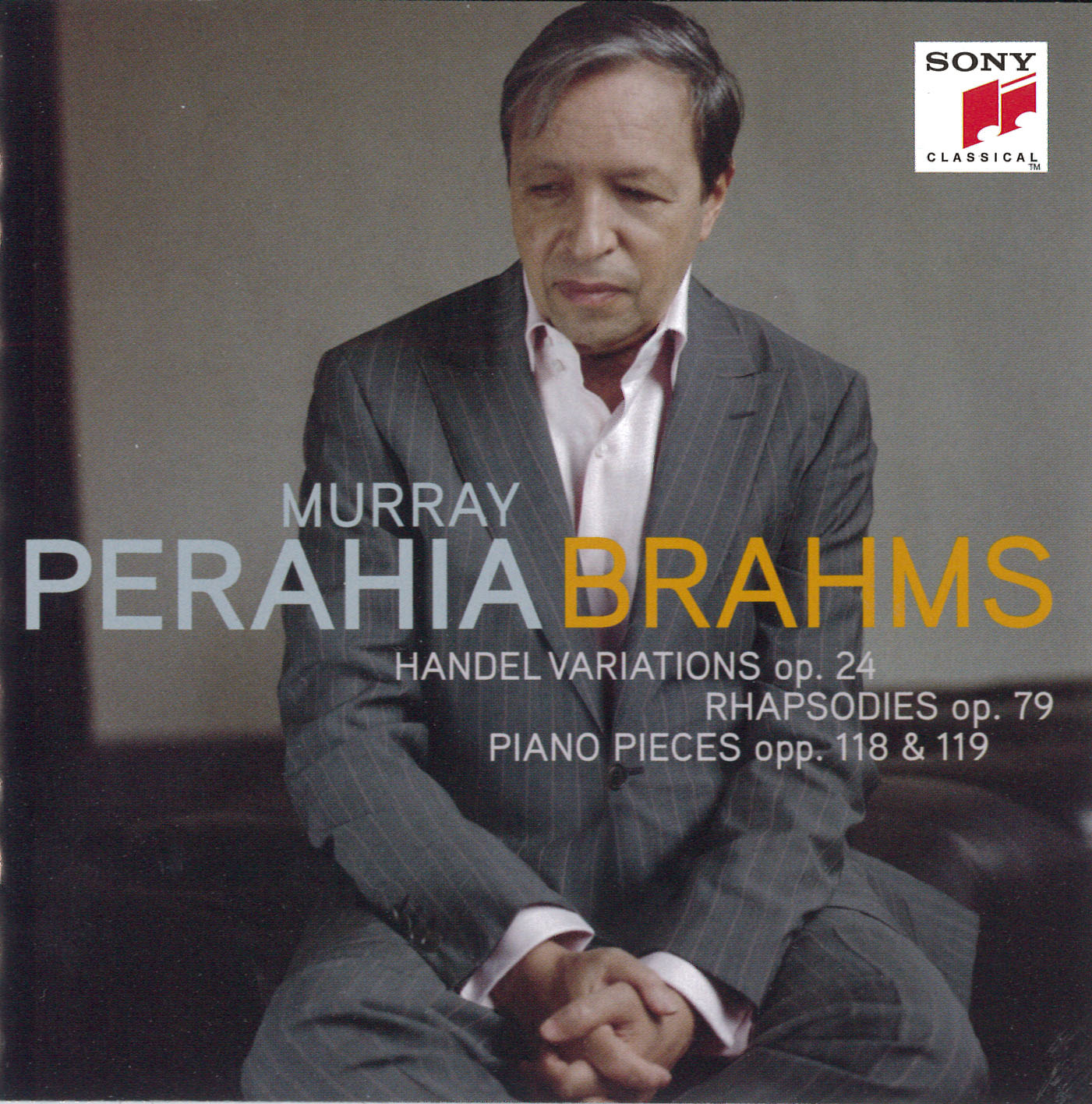
04a_brahms_perahiaBrahms - Handel Variations; Rhapsodies; Piano Pieces

Murray Perahia

Sony 88697794692


04b_brahms_sylvestreBrahms - Works for Solo Piano

Stéphan Sylvestre

XXI XXI-CD 2 1717

As youthful in appearance as pianist Murray Perahia may be, he is now rightfully regarded as one of the veterans of the concert-stage, having enjoyed a successful international career ever since making his debut at New York’s Carnegie Hall in 1966. His recordings cover most of the major repertoire, yet for some reason, the music of Brahms has never figured prominently in his creative output. (Perhaps he felt that Bach was better suited for his recurring hand ailment.) Nevertheless, he has finally returned to the master from Hamburg in this Sony recording which features the Handel Variations, the two Rhapsodies Op.79, and two sets of Piano Pieces, Opp.118 and 119. From the very opening measures of the Handel Variations, the listener senses that this disc is a winner. True to his pianistic style, the playing is controlled, elegant, and naturally, technically flawless. This is decidedly Brahms for the 21st century, clean and straight-ahead without being fussy and over-sentimentalized. I did find some of his tempos a bit brisk, such as in the first rhapsody, and the first two Intermezzos in the set of piano pieces Op.118. And I also found the tone a little bright – a little more bass please! But this is the Perahia we have come to know and respect, at all times allowing the music to speak for itself.

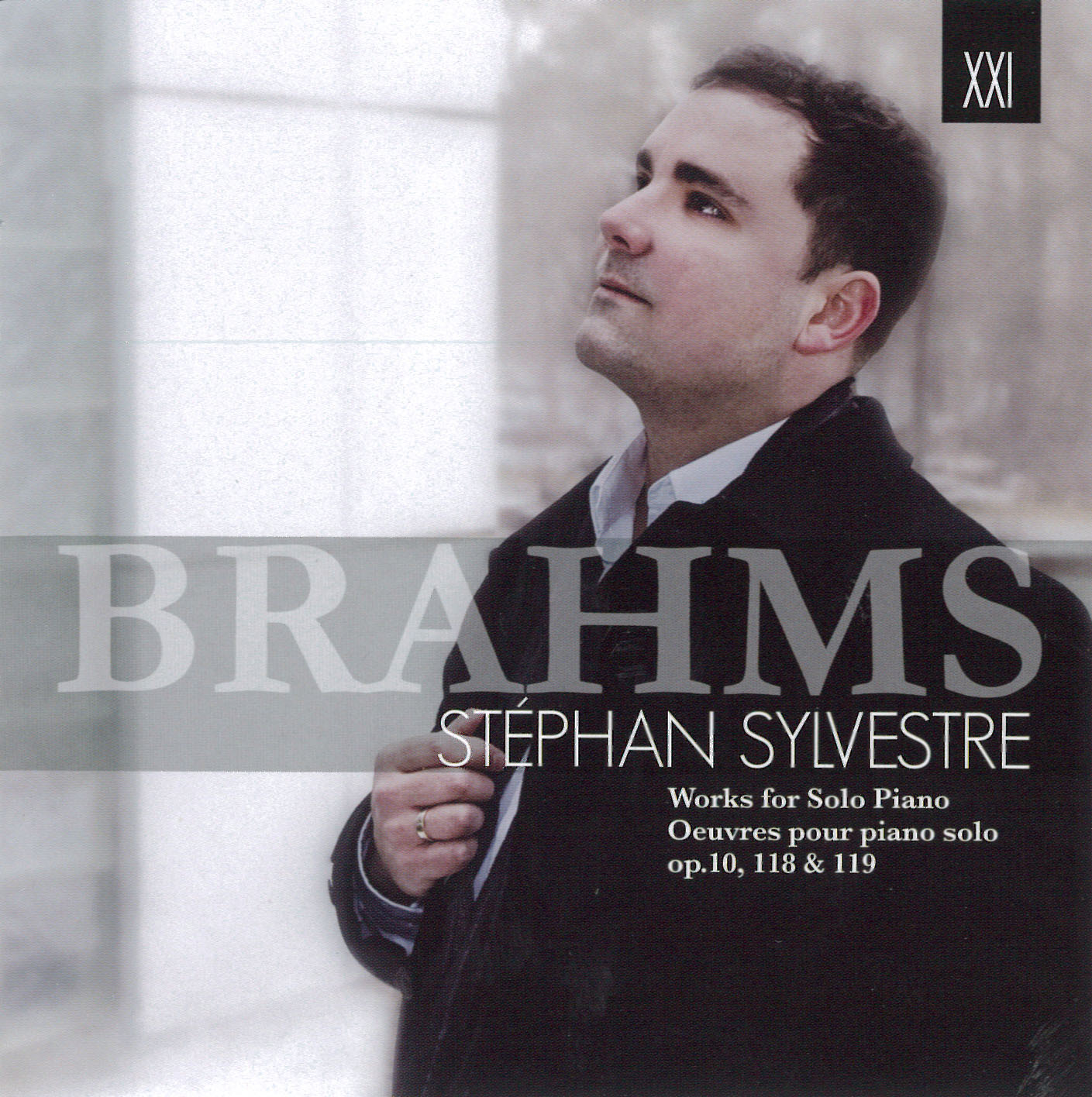
From a veteran, we go to music of Brahms as performed by a young Canadian artist, Stéphan Sylvestre. Currently on faculty at the University of Western Ontario, Sylvestre is a graduate of the Université de Montréal and the Glenn Gould School. He was twice a prize-winner at the Jeunesses Musicales of Canada, and also a winner at the Prix d’Europe, the Canadian Music Competition, and the Montreal Symphony Orchestra Competition. This CD, on the XXI label, is his fourth, and features the Brahms Ballades Op.10, and the two sets of Piano Pieces Op.118 and 119. In contrast to Perahia’s no-nonsense interpretation, Sylvestre’s approach is much more romantic, but equally appealing. His playing is introspective and thoughtful, imbued with a deep sensitivity. Tempos are considerably more languorous, and he produces a wonderfully warm and resonant tone from the instrument. If this is Brahms for the 19th century, so be it – Sylvestre’s masterful performance is a welcome presence in our sometimes harsh and too- technologically advanced world.

So for all lovers of Brahms’ piano music (and there should be many), these are two fine recordings, both of them welcome additions to the catalogue.


05a_jacques_boucher_organItinéraire

Jacques Boucher

XXI-21 Productions XXI-CD 2 1718


05b_anne_robert_organMusique française pour violon et orgue

Anne Robert; Jacques Boucher

XXI-21 Productions; XXI-CD 2 1716


“Itinéraire” is really a sampler but still worth having for its wide content and overall substance. Drawn from organist Jacques Boucher’s large discography, these tracks present 11 composers whose excerpted works are heard on 11 different instruments ranging from a small chapel organ (1874 - Église-Saint André de Kamouraska) to the great giants of Quebec’s major cathedrals. Bouchard’s playing is scholarly, virtuosic and musical. His treatment of historical styles from Couperin to Dupré is fresh and exhilarating. The truly stunning track on this CD is the Dupré Placare Christe servulis from Le Tombeau de Titelouze op.38.

Collaborations between organists and solo instrumentalists are fraught with the difficulty of balance. Boucher and violinist Anne Robert avoid this pitfall by teaming up with a good recording engineer and using the natural acoustics of Église-Saint-Jean-Baptiste de Montréal to produce a flawlessly balanced and artistically satisfying recording. Robert’s playing is intensely passionate whether nurturing the subtleties of a Guilmant Méditation or the angularities of contemporary works by Joubert, Reboulot and others. Boucher creatively selects various organ voices to weave around the violin line without detracting from it. The Bréville Prière is the best example of this and demonstrates the extent to which Boucher is a fully integrated duo partner with Robert making music on respectfully equal terms.

Anne Robert has another Duo CD with this label with pianist Sylviane Deferne (XXI-CD 2 1715), another recent release of French repertoire by Pierné, Tournemire and Franck. Here too, Robert shows her skill at knowing how to manage the dynamics of a duo performance.


06a_mahler_4_ruckertMahler - Symphony No. 4; Ruckert-Lieder

Magdalena Kožená; Lucerne Festival Orchestra; Claudio Abbado

EuroArts 2057988


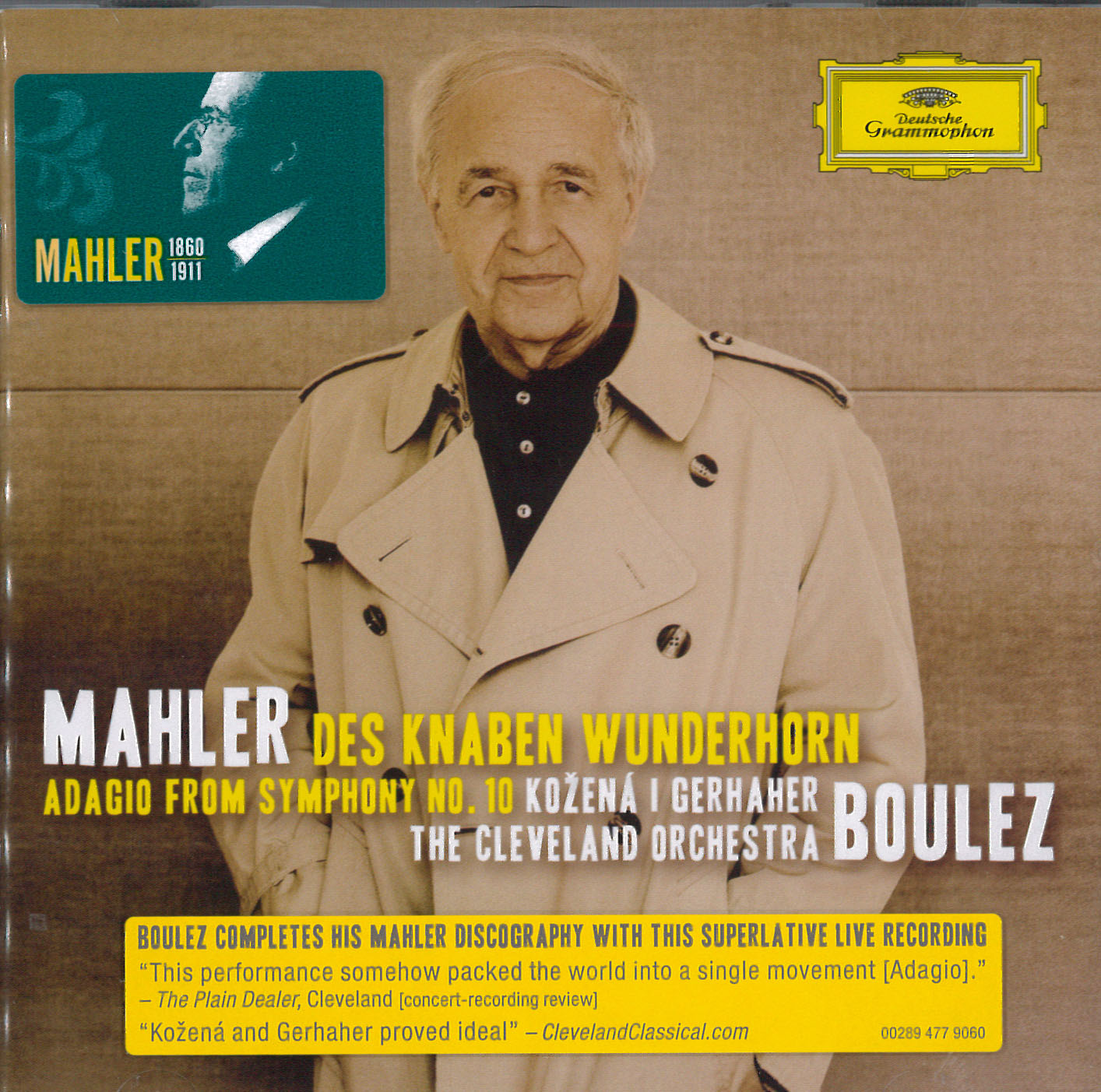
06b_mahler_knabenMahler - Des Knaben Wunderhorn; Adagio from Symphony No. 10

Magdalena Kožená; Christian Gerhaher; Cleveland Orchestra; Pierre Boulez

Deutsche Grammophon 477 9060

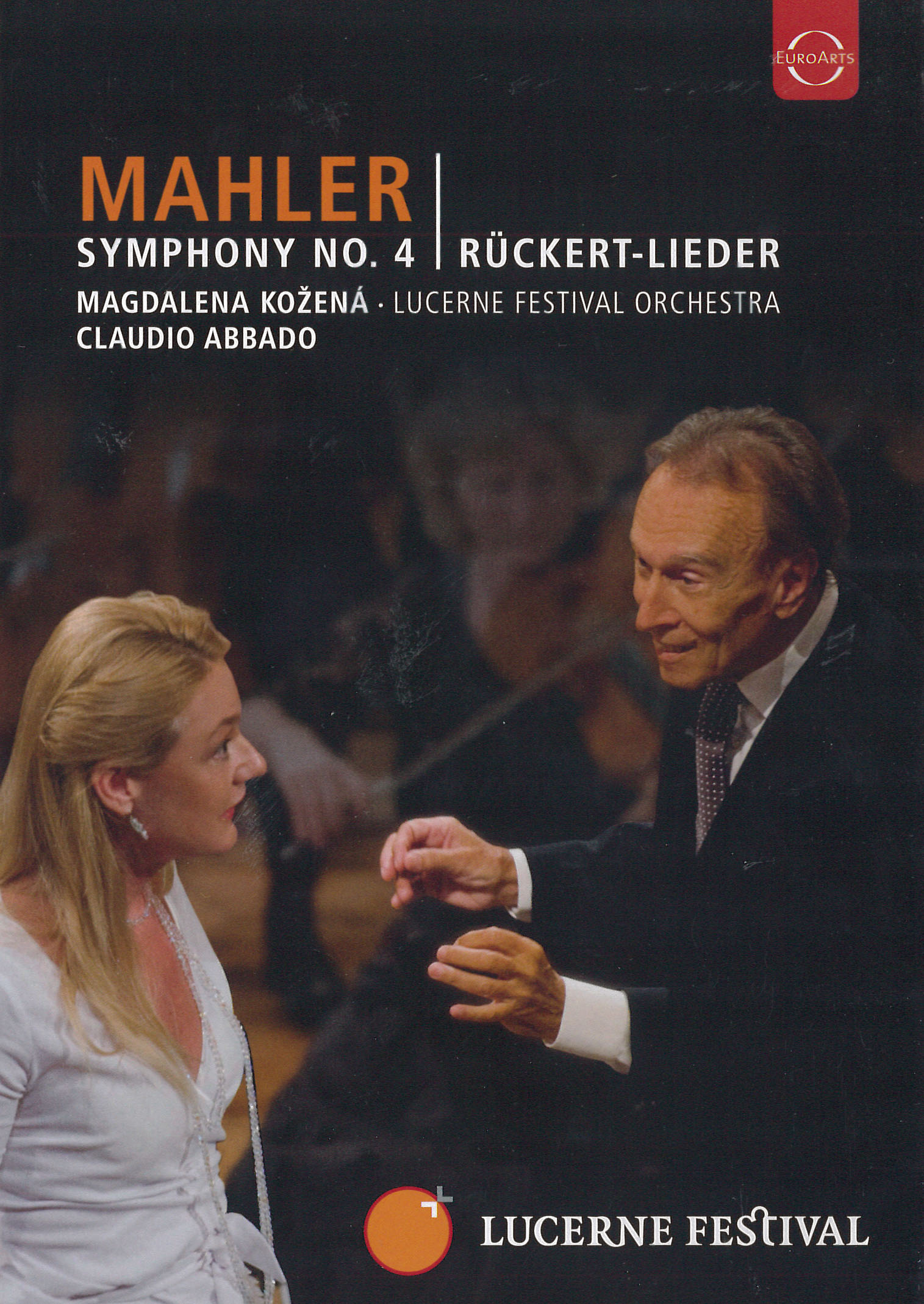
These two exceptional performances can be counted among the crown jewels of the flood of recent discs celebrating the legacy of Gustav Mahler. The mezzo-soprano Magdalena Kožená, an artist of exceptional intelligence and sensitivity well known for her artfully calculated interpretations, features in both of these items. Kožená is at her best in her performance of the Rückert-Lieder with the superb Lucerne Festival Orchestra. This hand-picked ensemble of Europe’s finest musicians meets each summer under Claudio Abbado’s direction and possesses a clairvoyant ability to respond instantly to his minutest gestures. Their stunning live performance of the Fourth Symphony captured here on a EuroArts DVD is a miracle of gracefulness, though the macabre sarcasm of this most accessible of Mahler’s symphonies is equally pointed. The highlight of this disc is the beautifully paced third movement, which flows seamlessly into the bucolic vocal finale.

Ms Kožená is joined by the admirable baritone Christian Gerhaher in twelve selections from Mahler’s Des Knaben Wunderhorn song cycle on the Deutsche Grammophon label. This is a live performance with The Cleveland Orchestra and completes the cycle of Mahler’s orchestral works recorded by Pierre Boulez over the past 15 years with various orchestras. Unfortunately the rustic charms and barnyard humour of these early songs of Mahler’s do not seem particularly well suited to the über-urbane Boulez, who adapts some curiously strait-laced tempos and, with the exception of Gerhaher’s chilling account of the militant masterpiece Revelge, delivers a generally mundane though admirably dapper performance. Boulez redeems himself utterly however with his supple, near-ideal rendition of the posthumous Adagio from the incomplete Tenth Symphony. This highly chromatic, searching movement culminating in a shattering, ten-note dissonance points to the future and as such is clearly dear to his heart. The Cleveland Orchestra yet again distinguishes itself as the finest band in the land.


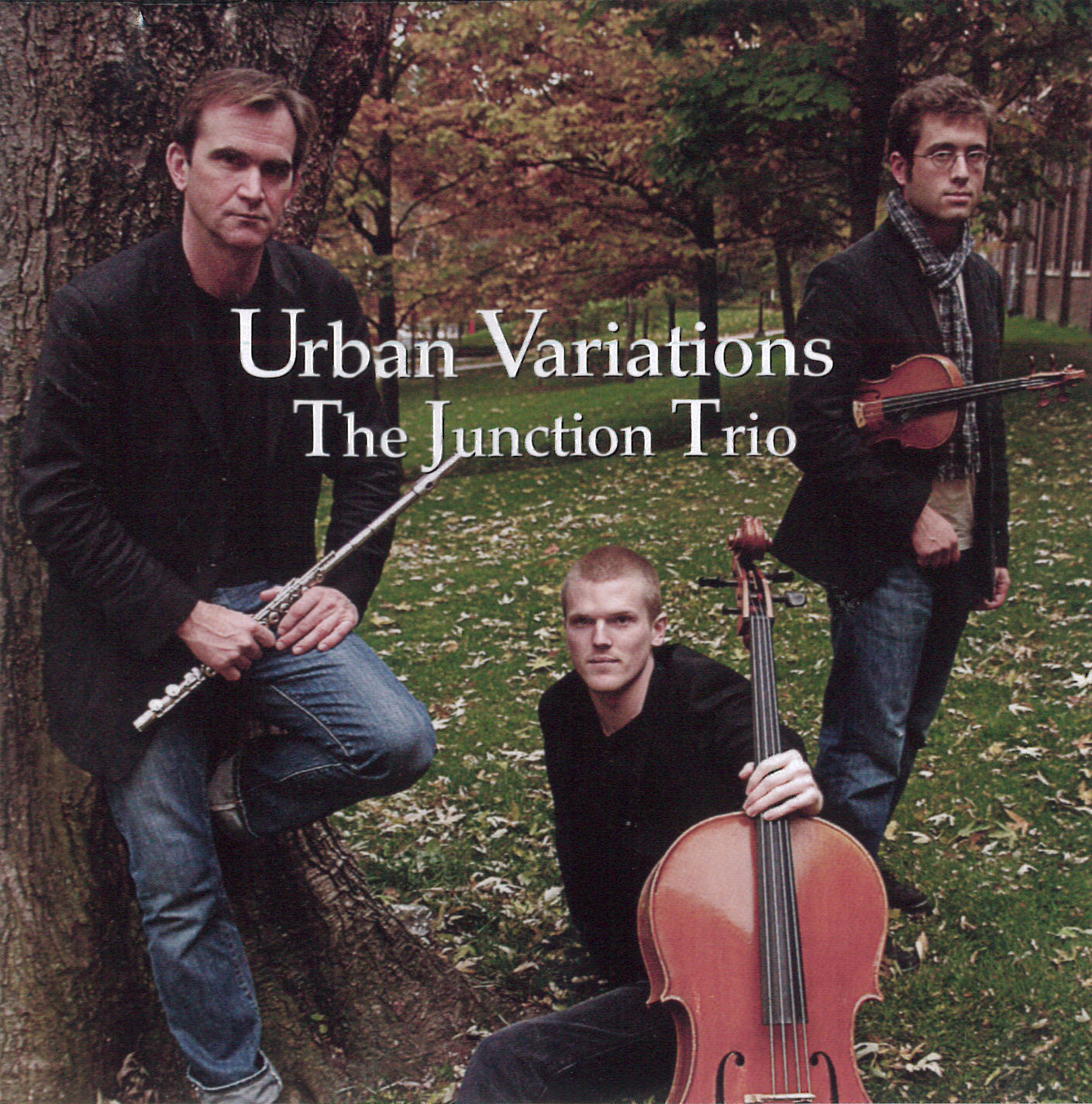
07_urban_variationsUrban Variations

The Junction Trio

Independent TJTCD201101 (www.myspace.com/thejunctiontrio)

In their cover photo they look gritty and hard-edged, staring expressionless into the camera, in the style of punk rockers.  A part of Jamie Thompson’s Urban Flute Project, which has a history of seeking out unusual urban performance spaces, where acoustics trump décor, this presentation of the Junction Trio seems appropriate enough. Even a cursory listening to the CD, however, reveals that art trumps the visuals, with accomplished readings of music by Bach, Borodin, Haydn and Vivaldi.

The highlights of the CD for me, however, were the two compositions by the trio’s violinist, Max Scheinin. The first of these is his arrangement of Radiohead’s song, Where I End and You Begin, which it is no mistake to refer to as a “composition.” In the tradition of so many composers, Scheinin has taken this piece from its over-amplified rock concert beginnings - contemporary “folk?” - and transformed it into an exquisite piece of chamber music, which, to my ears anyway, sounds more contemporary than the original! In his other work on the disc, Flutter, built on a repeated ostinato pattern introduced by the unaccompanied flute, he builds to a climax by adding the other instruments, including percussion, played by the ensemble’s versatile cellist, Lucas Tensen. Best of all in these two works by Scheinin, the players seem most at home and most able to find and convey the meaning behind the sounds. Kudos to the Junction Trio for bringing us something that is both classical and contemporary.


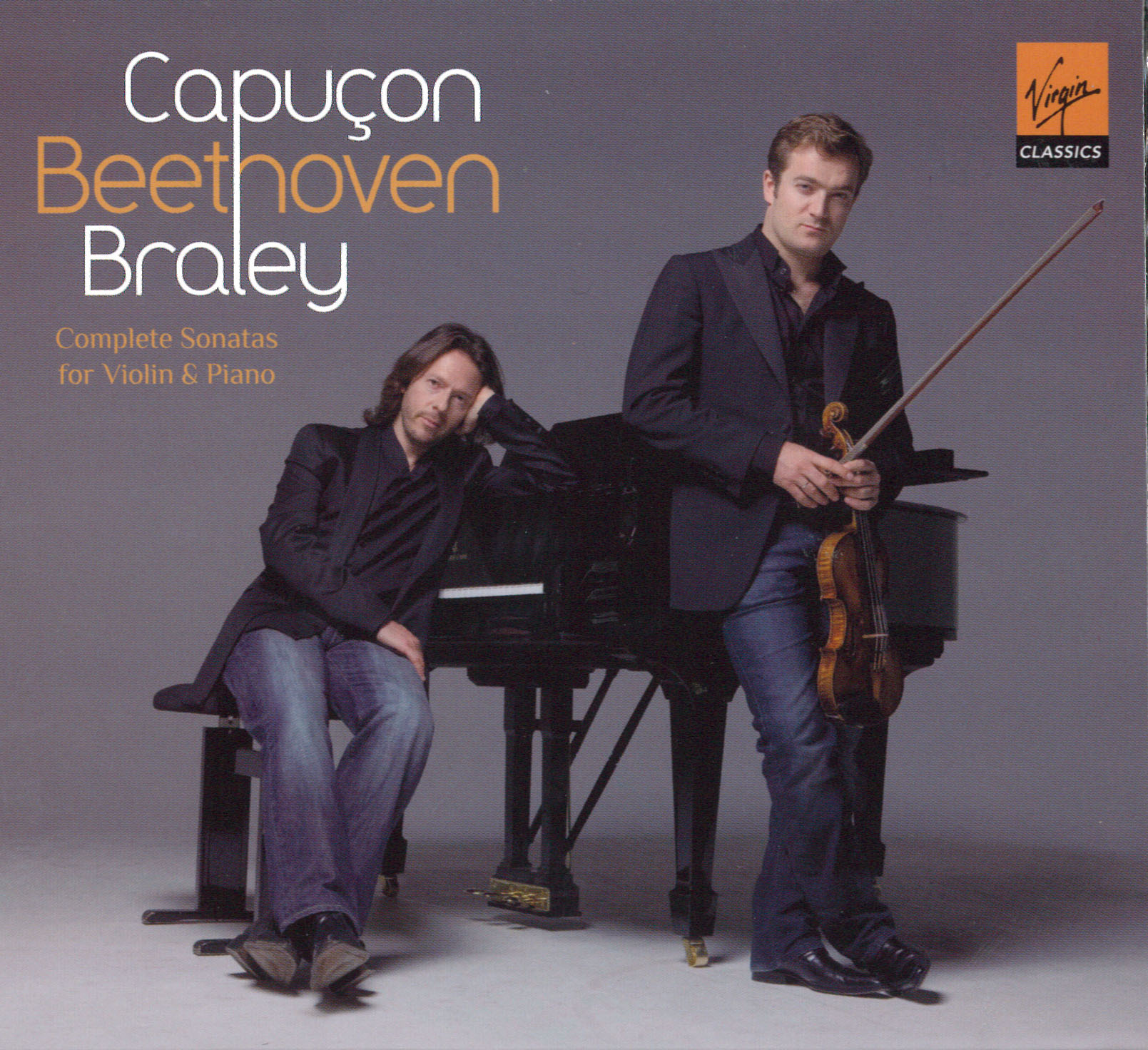
01_capucon_beethovenDespite his undisputed talents, I’ve always been a bit unsure of how I feel about the playing of the French violinist Renaud Capuçon. When I first started listening to his new 3-CD set of the Beethoven - Complete Sonatas for Violin & Piano with Frank Braley (Virgin Classics 9 64200 1) I didn’t think that was going to change, but I was wrong. True, the early Op.12 sonatas do seem to get off to a lacklustre start, but Capuçon and Braley have been working on this project for 14 years, and it soon shows. The second CD opens with a beautiful reading of the “Spring” sonata, and the quality never lags. There’s a terrific No.7 - the C minor - and a marvellous “Kreutzer”, with a particularly superb opening movement. Throughout, tempos seem perfectly judged, and there’s a wonderful range of dynamics. The balance feels a bit uneven at first, with the piano possibly a bit far back, but it actually enables the individual players to be clearly heard, and their obvious understanding to emerge. And what an understanding it is. I realized I didn’t know some of these sonatas as well as I thought; this outstanding set is a tremendous and welcome way to put that right.

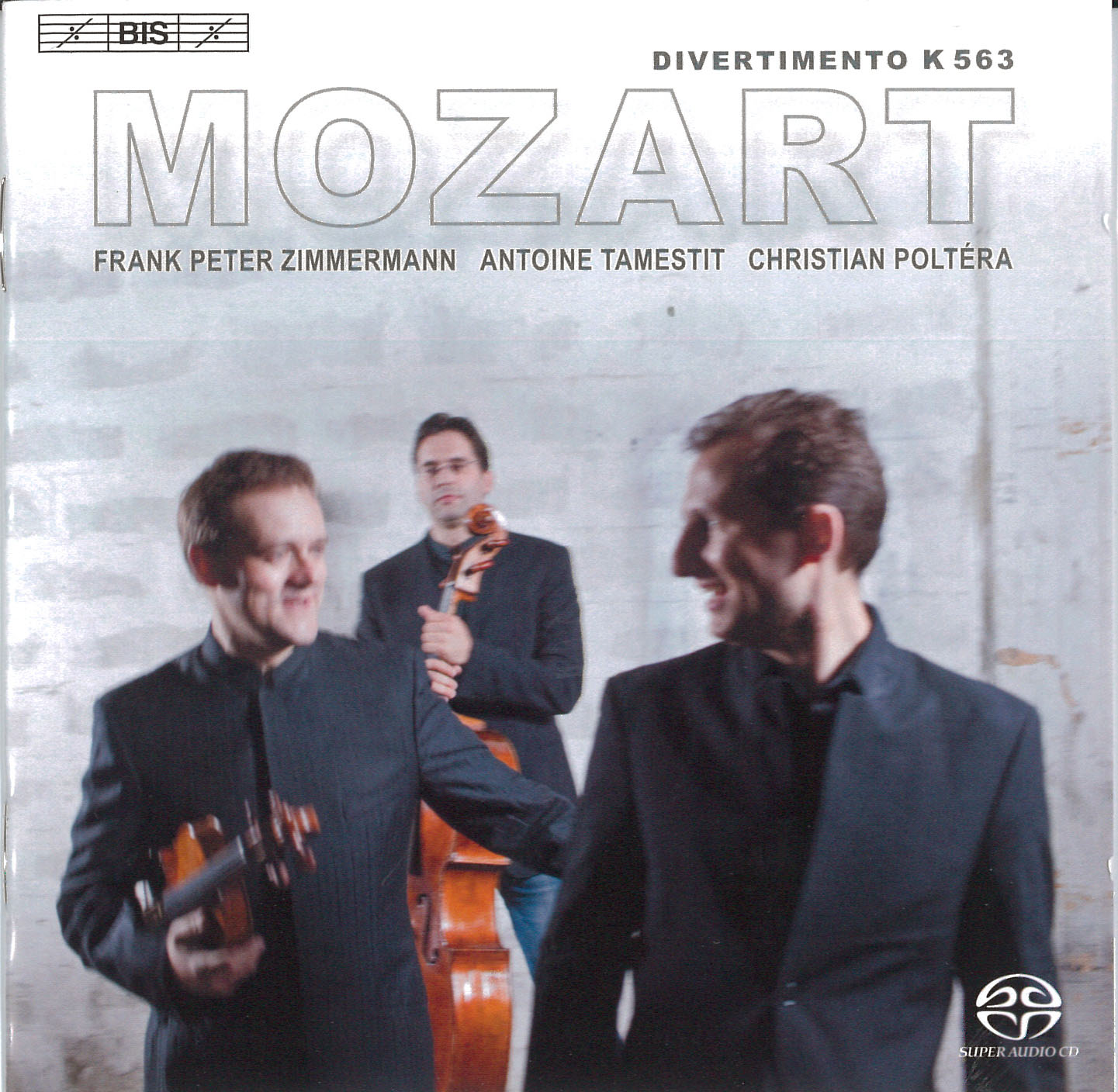
02_mozart_divertimentoYou only have to listen to Mozart’s string quintets to appreciate that the string quartet does not have sole claim to the ‘perfect string family’ designation, and the same composer’s Divertimento in E flat K563, for Violin, Viola and Cello, proves conclusively that ‘one less’ can be just as satisfying as ‘one more’. Violinist Frank Peter Zimmermann only formed the Trio Zimmermann with violist Antoine Tamestit and cellist Christian Poltera in 2007, but their playing on this Super Audio CD (BIS-SACD-1817) is simply remarkable; you would think they had spent a lifetime playing together. Despite its title, this Divertimento is a large-scale string trio. A mature work from 1788, its 6-movement structure follows that of the whimsical Divertimento popular in Vienna at the time, but musically and emotionally it’s in a different world. The Mozart scholar Alfred Einstein went so far as to call this work “the most perfect and the finest that has ever manifested itself in this world.” Listening to this enthralling and beautifully recorded performance, it’s hard to disagree. Schubert’s String Trio in B flat, D471 – actually a single Allegro opening movement for a work started and abandoned in 1816 – completes a marvellous CD.

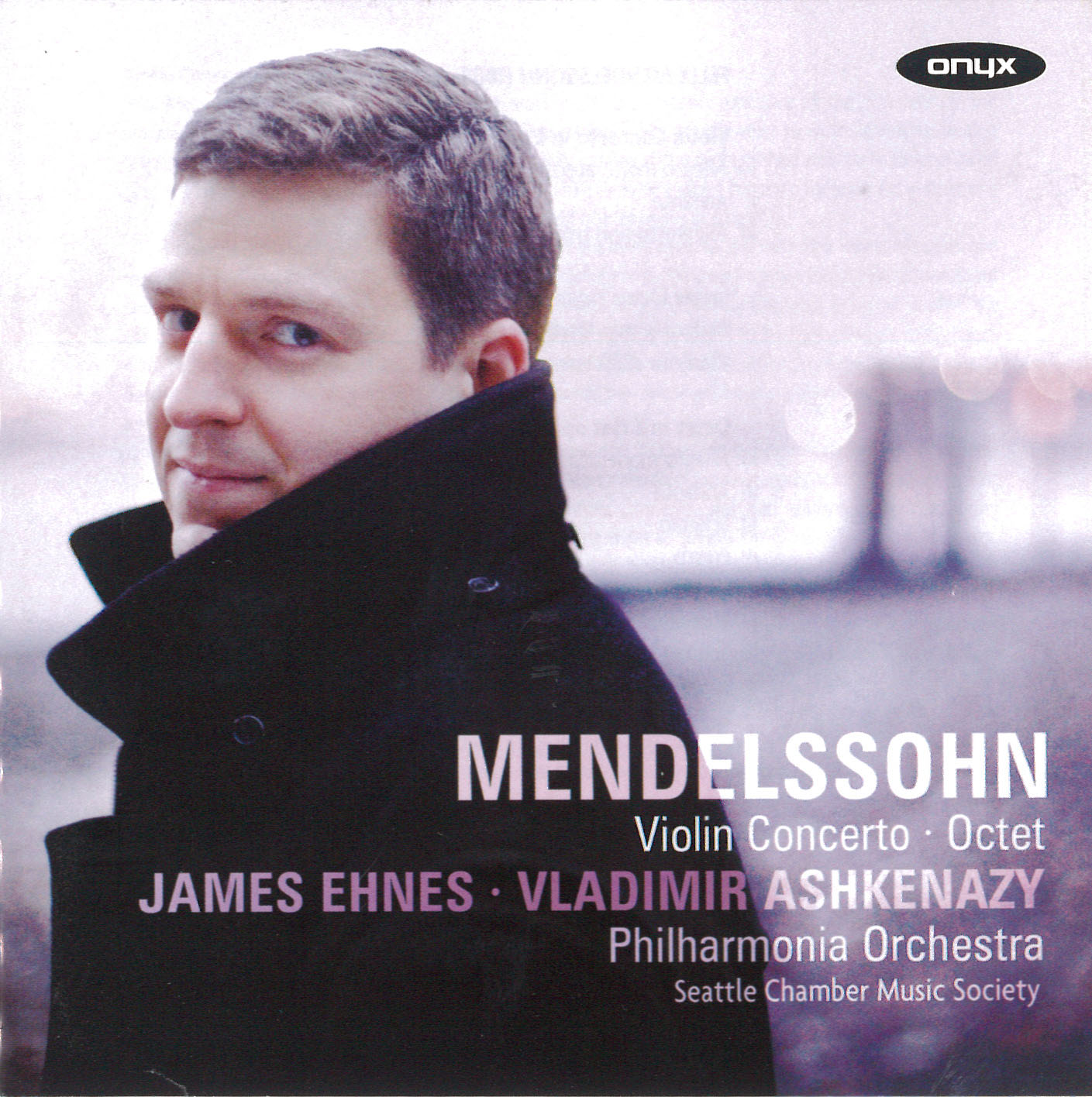
03_ehnes_mendelssohnWhen I saw that the latest CD from Canadian violin sensation James Ehnes was the Mendelssohn Violin Concerto (ONYX 4060), my first thought was “Do we really need another recording of probably the most popular - and most frequently recorded – concerto in the repertoire?” Well as it turns out, yes, we do. The Mendelssohn is also probably the most perfect of all violin concertos, and simply can’t be avoided by any player who reaches the top rank. The real challenge, of course, is not to try to find “something new to say,” but to find the best way of simply letting the music speak for itself. This CD reunites Ehnes with the Philharmonia Orchestra, partners in his 2007 recording of the Elgar concerto, but this time with Vladimir Ashkenazy conducting. The qualities most often mentioned in Ehnes reviews – his impeccable technique and sumptuous tone – are fully evident here in another top-notch performance. Ehnes joins forces with members of the Seattle Chamber Music Society for a terrific performance of the Octet Op.20, a simply astonishing work written for double string quartet when Mendelssohn was only 16. Both performances were recorded live in concert, the concerto – with an occasionally muddy orchestral sound - at the Warwick Arts Centre in the UK, and the Octet at Benaroya Hall in Seattle.

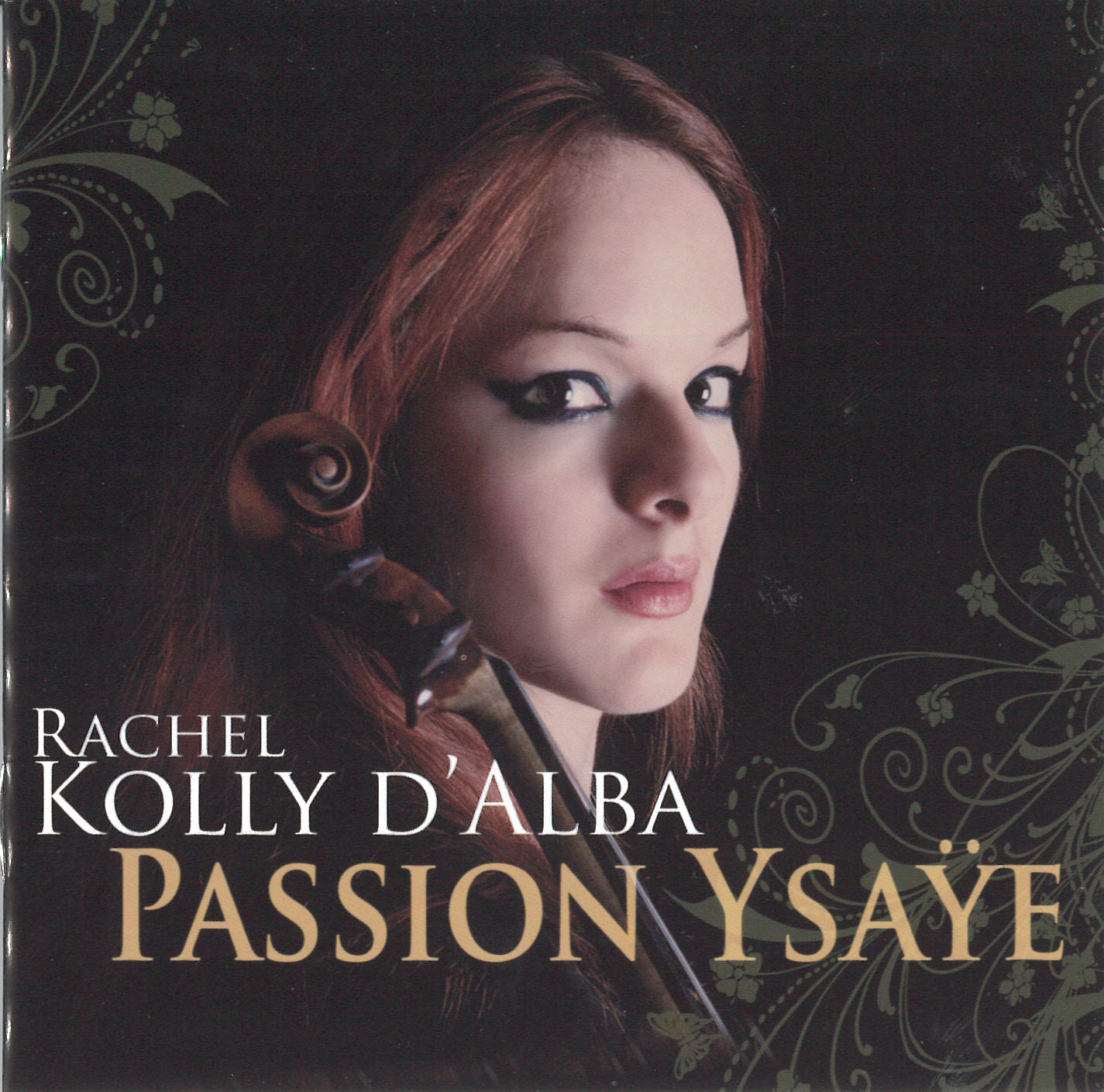
04_passion_ysayeIt’s somewhat surprising that the Ysaÿe Six Sonatas for Solo Violin Op.27 aren’t better known. Eugène Ysaÿe – a colossus of a performer, in all respects - is often referred to as the first ‘modern’ violinist, and the sonatas, written in 1923 when he was 64, not only summed up the polyphonic achievements of the preceding 200 years but also introduced new techniques that were to influence the solo works of Bartok, Hindemith and Prokofiev. Each sonata is dedicated to – and reflects the character of – a colleague of Ysaÿe’s: Joseph Szigeti; Jacques Thibaud; George Enescu; Fritz Kreisler; Mathieu Crickboom; and Manuel Quiroga. Consequently, they differ greatly in form and content, but this simply makes the startling originality and individuality of these remarkable works even more apparent. Perhaps surprisingly, given their fiendish difficulty, the sonatas have been well served on CD, albeit by few of the really elite performers. The Swiss violinist Rachel Kolly D’Alba provides all that you could possibly ask for on Passion Ysaÿe (Warner WCJ 2564 68385-5), combining a dazzling technique with a sensitivity and artistry that earned her the stamp of approval from Jacques Ysaÿe, the composer’s grandson.


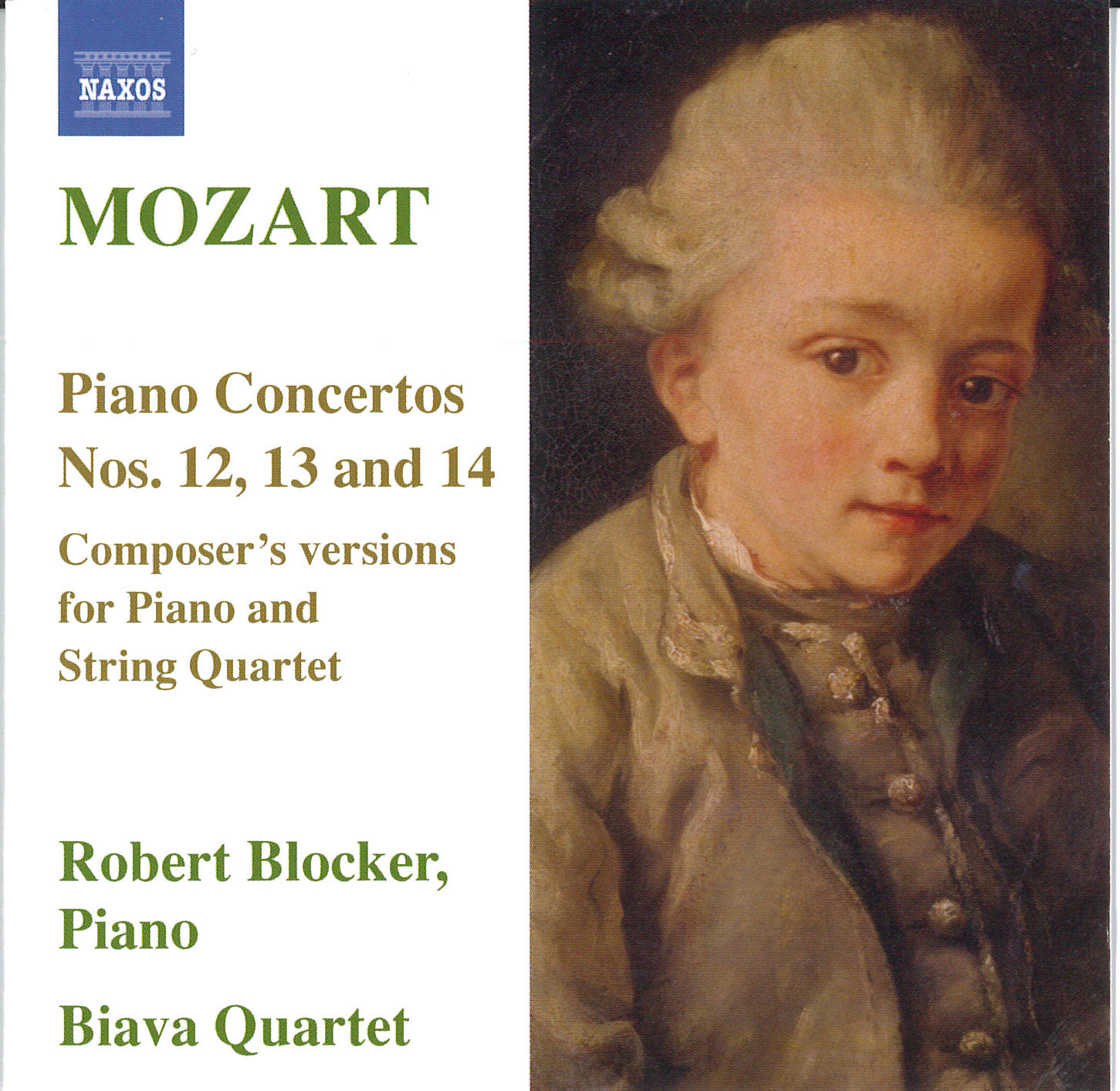
01_mozart_piano_concertosMozart - Piano Concertos 12, 13 & 14

robert Blocker; Biava Quartet

Naxos 8.557881

In January 1783 there appeared an advertisement in the Wiener Zeitung from no less a composer than Mozart who was announcing the publication of three new piano concertos that could be performed “either with a large orchestra… or merely a quattro, that is, with 2 violins, 1 viola, and violoncello.” These concertos were the first Mozart wrote after his move to Vienna in 1781, and are presented here performed by the Biava Quartet with pianist Robert Blocker.


The Biava was formed at the Cleveland Institute of Music in 1998, and since then, has gone on to win top prizes including the London International Competition and the Nuremberg Chamber Music Award. The American-born Blocker has enjoyed a multifaceted career as pianist, educator (at Yale University), and music advisor for such prominent institutions as the Avery Fisher Artist Program, and the Curatorium of the Ferenc Liszt Academy of Music in Budapest.


What a joyful sound these musicians create – this is surely “Mozart with a smile on his face!” The Biava plays with a keen precision, providing a solid accompaniment for Blocker’s lucid and sensitive interpretation. This most sympathetic pairing between quartet and piano is clearly evident, for example, in the cheerful opening movement of concerto No.12, the languorous second movement of No.13, and the sprightly finale from the fourteenth, all duly presented in a stylish manner of which Mozart surely would have approved. Indeed, to my mind, the smaller resources found here result in a wonderful sense of intimacy, transporting the listener from the vast space of the concert-hall to a private chamber in 18th century Vienna.


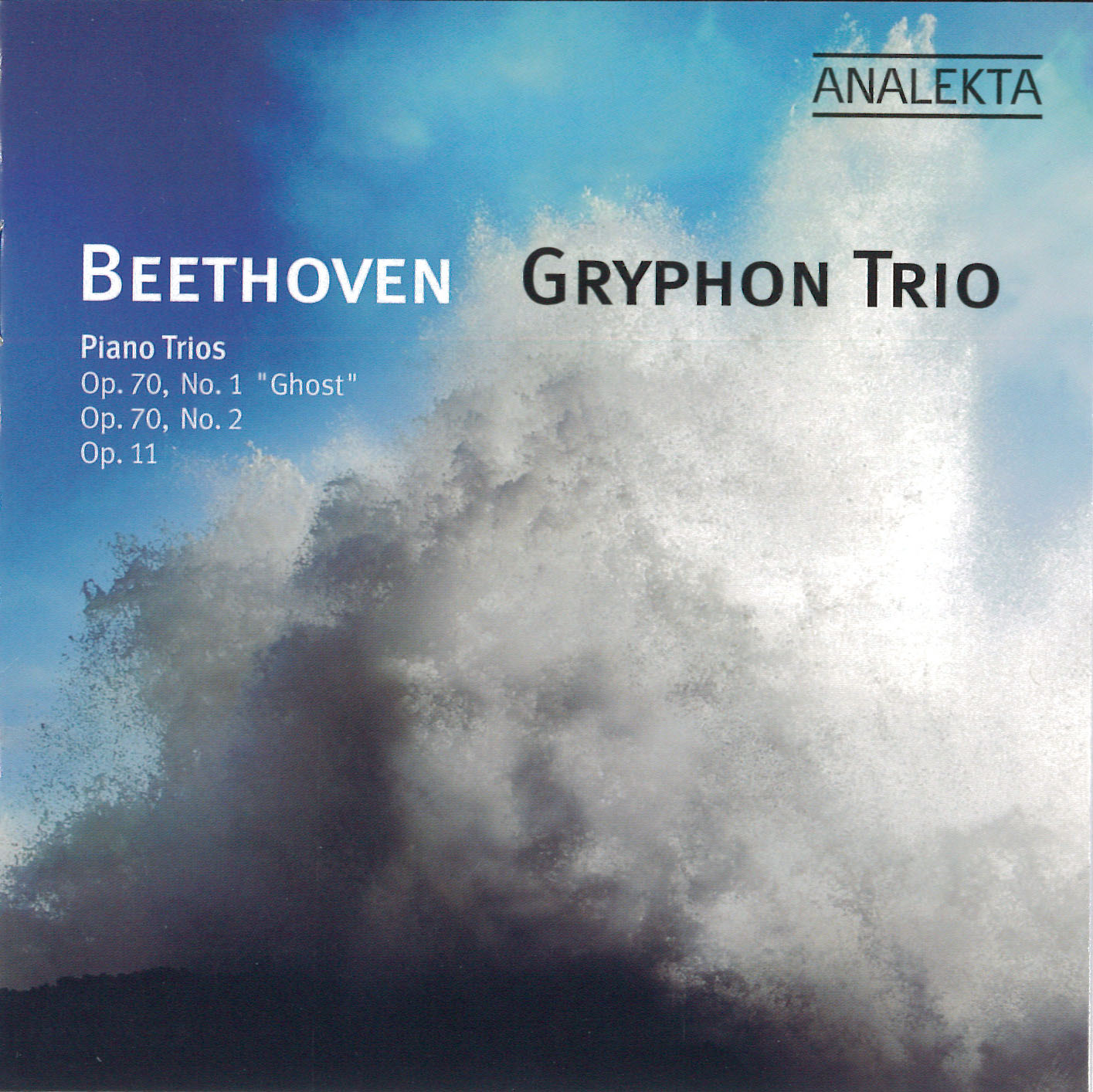
02_beethoven_gryphonBeethoven - Piano Trios Op. 70 Nos.1/2; Op. 11

Gryphon Trio

Analekta AN 2 9860

It will surely come as no surprise to learn that the wonderful Gryphon Trio are in their usual superb form on this latest CD, the third and final volume in their recording of the complete Beethoven Piano Trios.


Included on this disc are the two Op.70 works from 1808 – the D major “Ghost” Trio and the E flat Trio – and the Op.11 B flat Trio from 1798, originally conceived for clarinet, cello and piano but published for clarinet or violin, apparently to increase the sales potential.


The Gryphons have been together for 17 years now, and their mutual understanding and sense of ensemble is unsurpassed. From the cascade of unison notes that opens the “Ghost”, through the lengthy and eerie slow movement that prompted the work’s sub-title, to the ebullient closing bars of the Op.11, there is never a moment when you don’t feel that this must surely be the only way to play this music.


Jamie Parker, as usual, anchors the performances with his immaculately brilliant piano playing, and violinist Annalee Patipatanakoon and cellist Roman Borys are every inch his equal. In every possible respect – tempo, phrasing, dynamics, ensemble, style – this is playing and interpretation of the highest quality, and the result is an outstanding CD that adds to the Trio’s already impressive catalogue of recordings.


Recorded in the Salle Francoys-Bernier at Domaine Forget in St. Irenee, Quebec, the sound is warm and resonant, and the balance ideal.


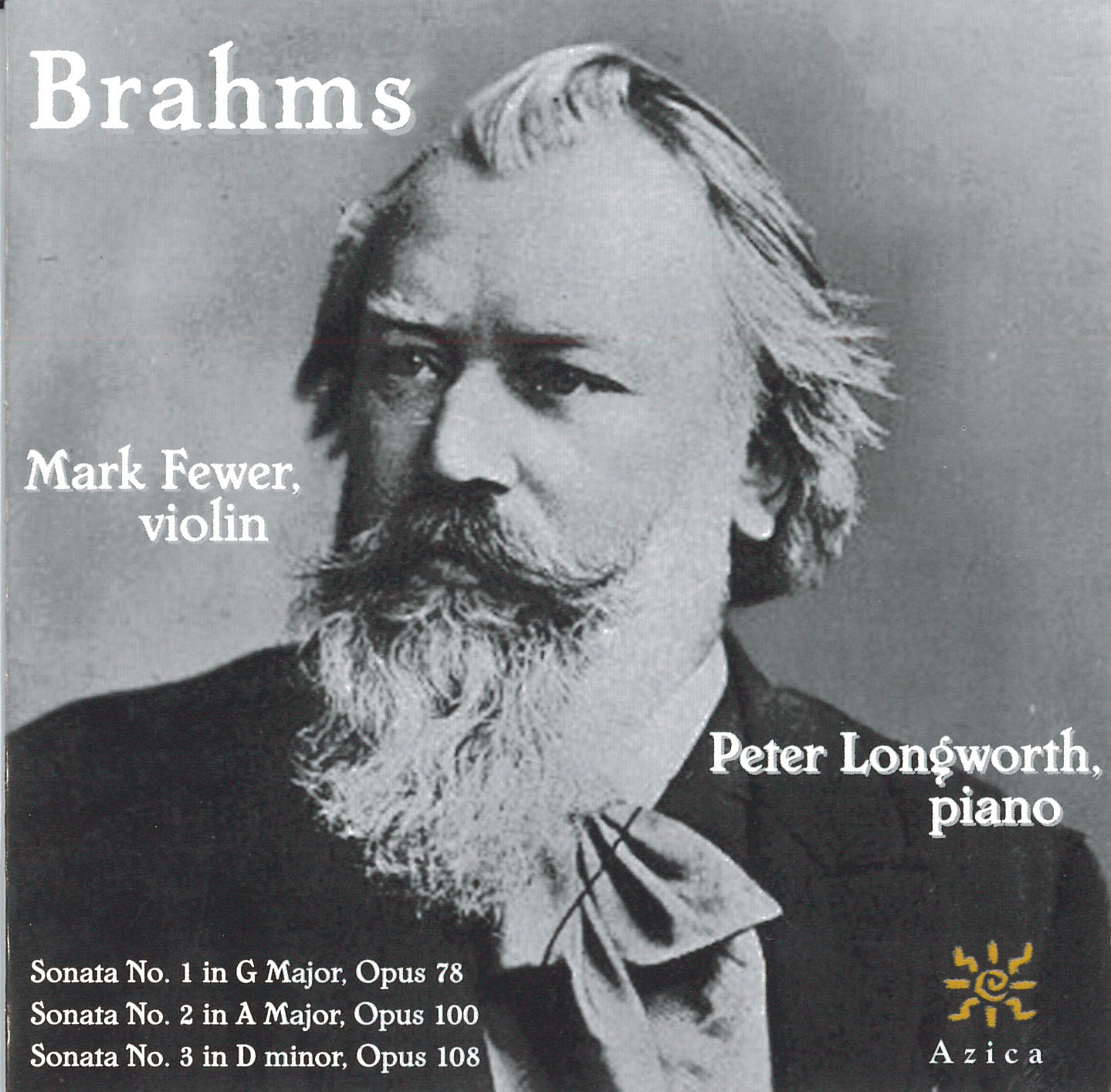
03_brahms_violinBrahms - Violin Sonatas 1-3

Mark Fewer; Peter Longworth

Azica ACD71259

Long-time collaborators Mark Fewer and Peter Longworth have produced a fascinating and thought-provoking CD of the three Brahms violin sonatas. This is not necessarily the sonatas the way you would expect to hear them: first impressions are that they’re possibly a little too restrained, and perhaps lacking a sense of urgency and tension at times, but this soon proves to be irrelevant.


The opening bars of the Op.78 G Major sonata – the two warm piano chords and the almost hesitant off-beat entry of the violin – always set the tone for the whole work, and Fewer and Longworth set up their stall from the outset. The tempo is perfect, with a gentle, rhythmic lilt that never falters, and a fine sense of melodic line. Fewer’s tone and vibrato are warm but never large or effusive, allowing Longworth to shine and establish a true balance and sense of partnership. No histrionics here – just subtle, reflective playing.


This mood of thoughtful interpretation continues throughout the work, and throughout the Op.100 A Major sonata as well. Finally, when the mood changes in the Op.108 D minor sonata, the duo dispel any possible doubts about their commitment with a passionate ending to a deeply satisfying CD.


The Salle Francoys-Bernier in Domaine Forget was the venue for the warm, resonant and intimate recorded sound.


These are intelligent and richly rewarding readings that offer more each time you hear them. I’ll be playing them again and again.


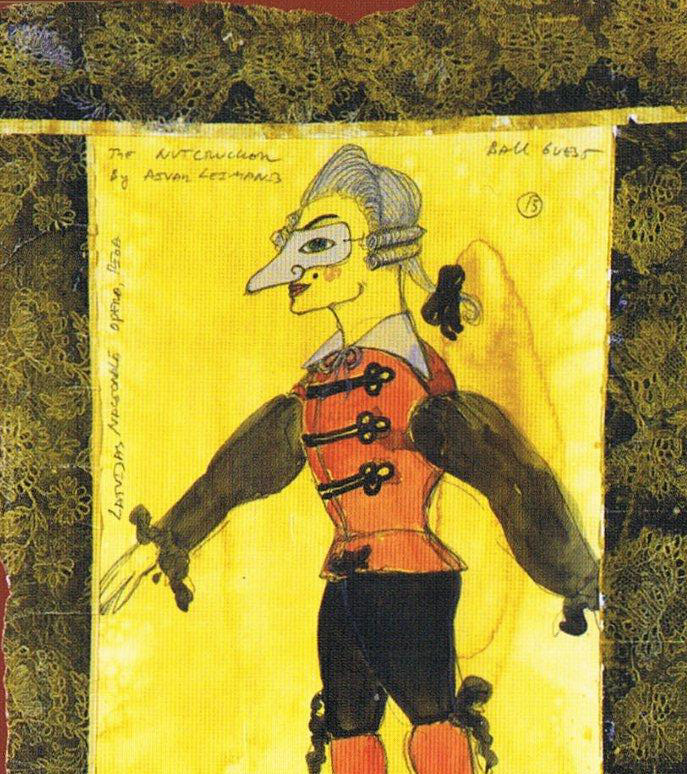
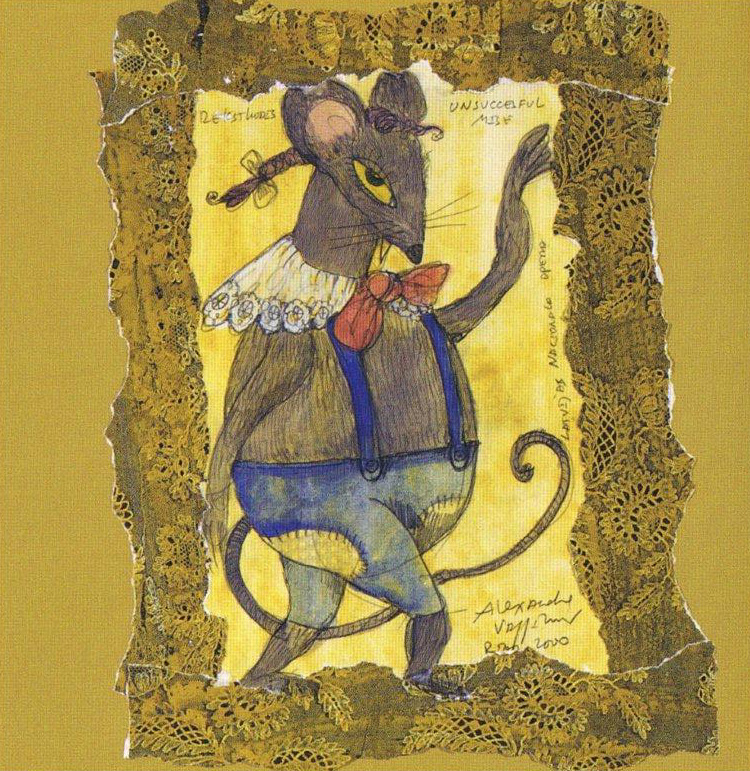
04b_nutcracker_experience1Tchaikovsky - The Nutcracker

Berlin Philharmoniker; Simon Rattle

EMI: two editions: 509996 4638522 2CD set;

509996 3162127 Experience Edition

Surely there is no more beloved score in all music than Tchaikovsky’s enchanting Nutcracker, traditionally enjoyed by young and old alike at this time of year... at least in North America. Many countries regard Humperdinck’s “children’s opera,” Hansel and Gretel as the must-see event of the season.


For those who know the music only from the Nutcracker Suite, there is another hour of equally enchanting, instantly captivating music. The electrifying Pas de deux from Act II is sometimes played as an encore by visiting Russian Orchestras, to thunderous applause. Without fail, many of the audience are at a loss to identify it or else confirm that it is from Swan Lake. Collectors will remember the Philips CD of selected excerpts (not the suite) from The Nutcracker played with astonishing intensity by Mravinsky and The Leningrad Philharmonic. After hearing the Rattle, the Mravinsky excerpts, while still very impressive, sound inflexible and the Russian orchestra does not exude the flavour and the joy of the subject matter as the Berliners do. The complete ballet is rarely, if ever, heard at a symphony concert and, according to Rattle, the 1st Act music presents a challenge to even a great orchestra.


Checking a few other complete versions for comparison the Rattle has the edge with its infectious exuberance and good feelings. The recorded sound is stunning in its delineation of details, width, depth and dynamics.


04a_nutcracker_experience204b_nutcracker_experience1The regular set includes access to live concert footage and a one day free pass to the online Berlin Philharmonic Concert Hall. The Experience Edition is a beautiful little hard-bound 60 page art book with the two CDs included; adding exclusive interviews, and downloads to the regular edition. A handsome package for only a few dollars more.

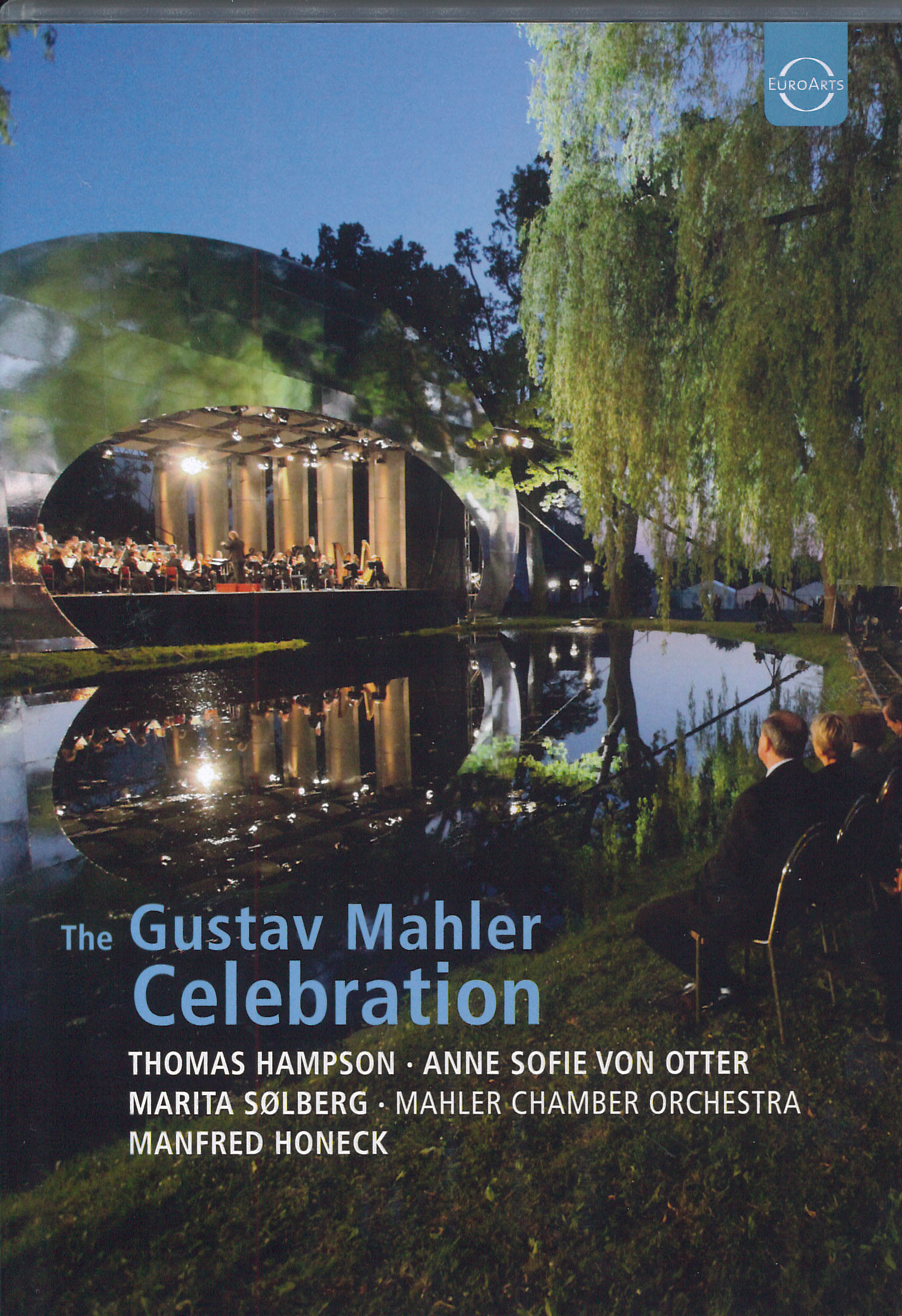
05a_mahler_celebrationThe Gustav Mahler Celebration

Thomas Hampson; Anne Sophie von Otter; Marita Solberg; Mahler Chamber Orchestra; Manfred Honeck

EuroArts 2058148


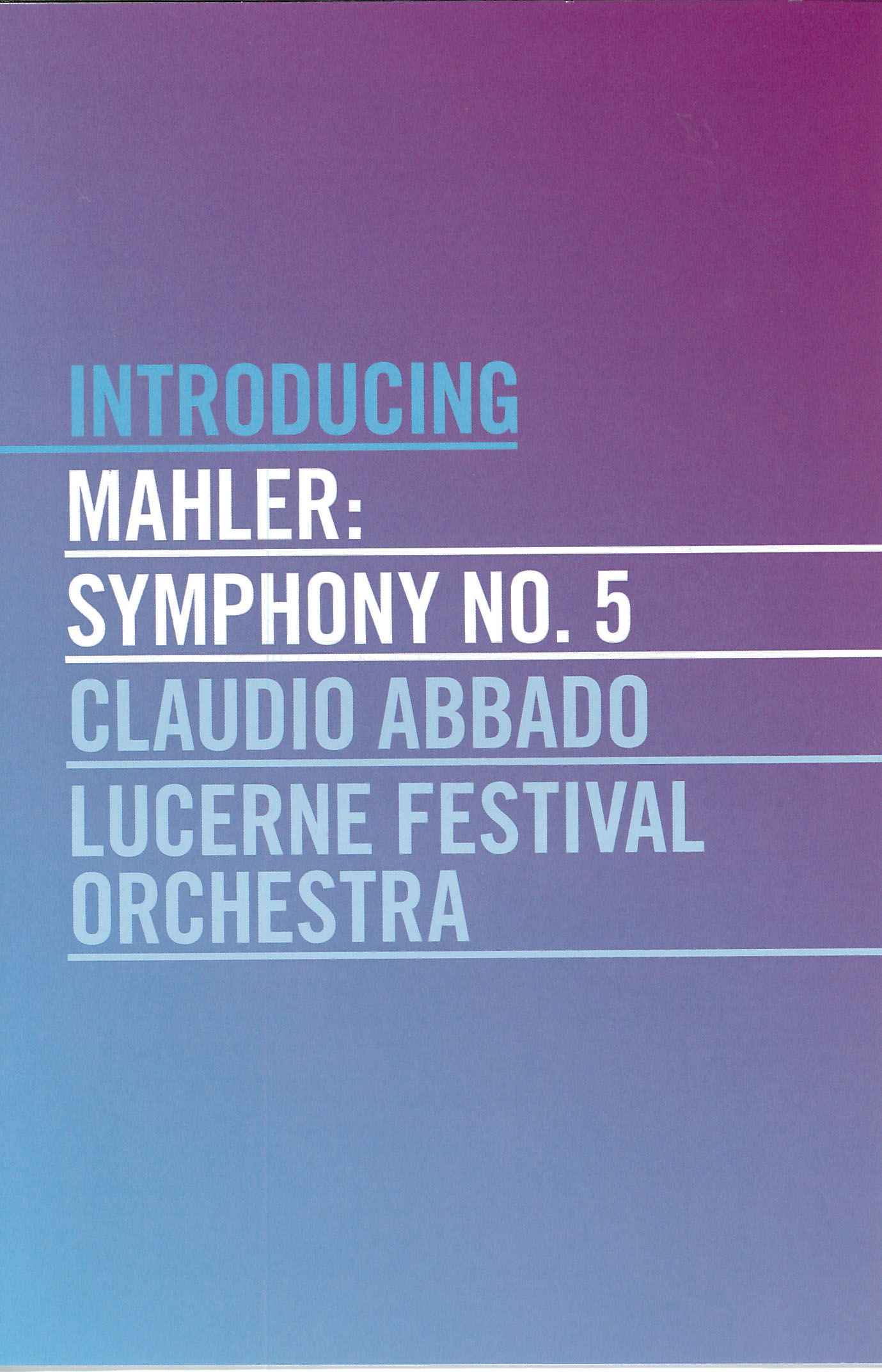
05b_introducing_mahlerIntroducing Mahler - Symphony No.2

Lucerne Festival Orchestra; Claudio Abbado

EuroArts 2056178

There’s not a lot to see in Kaliště, the tiny enclave of some 330 souls in the present-day Czech Republic, but on July 1 this past summer the town was inundated to celebrate the 150th birthday of their most famous son, Gustav Mahler. Set in a temporary outdoor structure, the greatly augmented Gustav Mahler Chamber Orchestra (originally founded by Claudio Abbado) appeared under the direction of Manfred Honeck for a festival performance of excerpts from Mahler’s towering Second Symphony and a handful of his more intimate songs with orchestra featuring baritone Thomas Hampson and soprano Anne Sofie von Otter. Despite the compromised acoustics of the band shell the sound of the performance is actually quite good; while von Otter is content with the conventional park-and-bark position to deliver her considerable vocal gifts, hammy Hampson relishes the opportunity afforded by his wireless headset microphone to roam the stage both back and front in a riveting performance of the great anti-war song Revelge. Though little of the town that Mahler knew remains, the camera glimpses a ghostly military band in the distance and briefly roams through the local Jewish cemetery. The Czech Boy’s Choir and Prague Philharmonic Choir chime in remotely from the local church in Es sungen drei Engel and appear on the bandstand to great effect for the concluding paean of the Symphony.


Introducing Mahler is an episode from a music documentary series on EuroArt, Introducing Masterpieces of Classical Music. It features a succinct explication of the Fifth Symphony by British musicologist Jeremy Barham, with piano excerpts leading into the corresponding orchestral segments augmented by appropriate visual footage, scrolling music examples, and additional commentary by anonymous voices reading from period documents. Unfortunately these secondary narrative sub-tracks are at times near-inaudible in the stereo mix. The real draw of this DVD is the magnificent performance of the symphony by Claudio Abbado and his hand-picked Lucerne Festival Orchestra, repackaged from an earlier incarnation of this 2004 once-in-a-lifetime concert. The expertly directed camera work brings an extra dimension to the intense concentration and amazing ensemble work of this distinguished ensemble responding as one with the greatest Mahler conductor of our time.


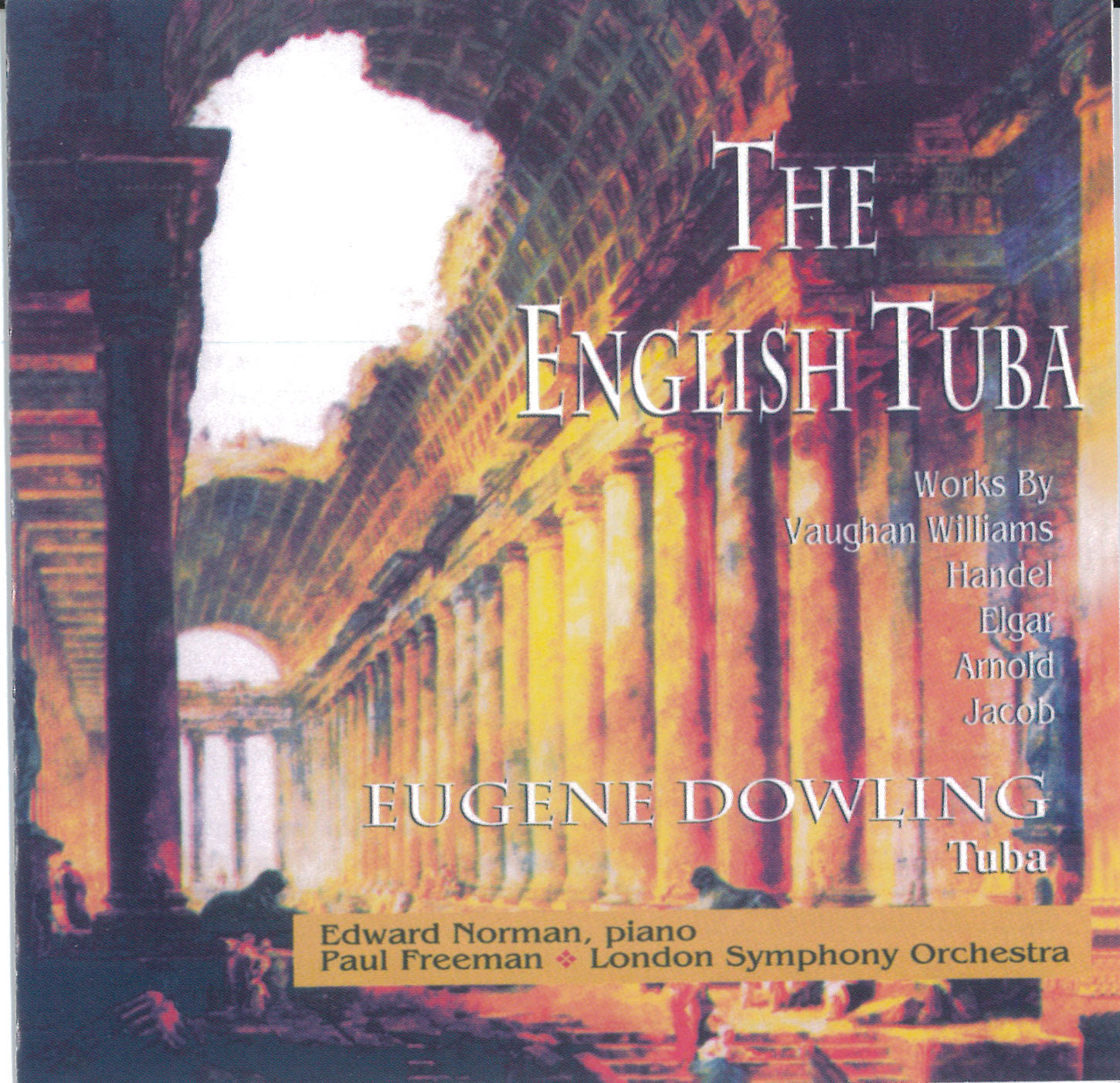
01_english_tubaThe English Tuba

Eugene Dowling; London Symphony Orchestra; Paul Freeman; Edward Norman

Tromba Bassa Records TBCDD595 (www.cdbaby.com/cd/EugeneDowling)

While one of my personal all time favourite recordings is a collection of duets for tuba and guitar, the tuba isn’t usually thought of as a solo instrument. Therefore when a complete recording of tuba solos appears, it warrants more than passing mention. This is doubly so when all of the works on the record are by English composers. In that regard we give Mr. Handel the benefit of doubt and call him English.

More than any other composer of note, Ralph Vaughan Williams liberated the tuba from the back of the orchestra to centre stage when his Concerto for Tuba and Orchestra was premiered in 1954. Since its introduction, this work has become the benchmark for aspiring tubists. In this performance with the London Symphony Orchestra Canadian Eugene Dowling, a long time member of the Victoria Symphony and faculty member of the University of Victoria, proves beyond any doubt that the tuba deserves to be recognized as a solo instrument capable of many moods and styles.

On the balance of the recording, Dowling is accompanied by pianist Edward Norman. These works include Elgar’s Romance for bassoon, Malcom Arnold’s Fantasy for Tuba and Six Studies in English Folk Song arranged by Paul Droste. Gordon Jacob, a student of Vaughan Williams and teacher of Malcom Arnold, is represented by his eight movement Tuba Suite. The most familiar work for aficionados of band music, will be Handel’s ubiquitous Harmonious Blacksmith, long a part of the repertoire of euphonium soloists. Dowling’s skill is such that in places it is hard to realize that we are hearing a tuba and not its more agile cousin, the euphonium.

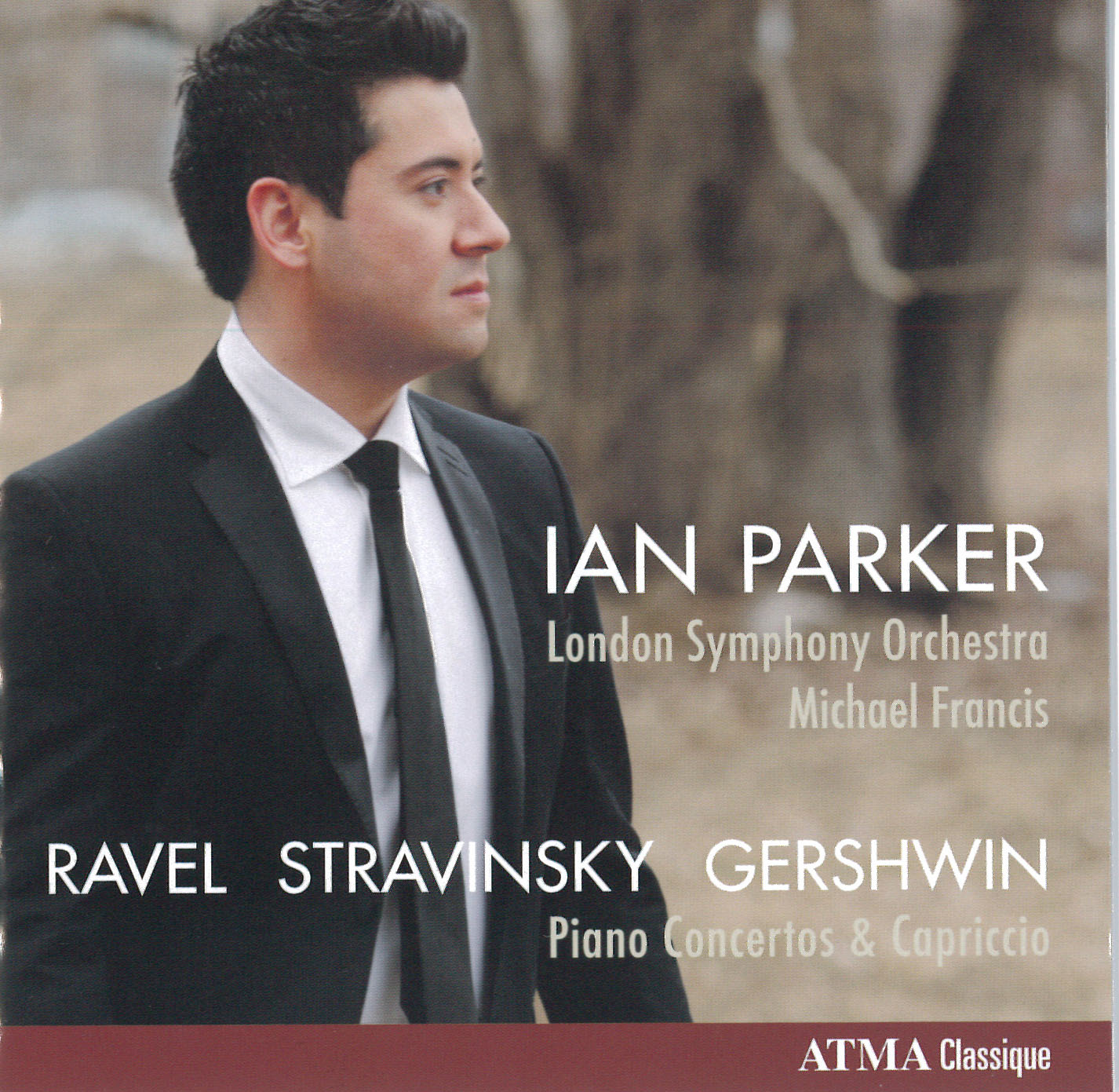
02_ian_parkerRavel; Stravinsky; Gershwin - Piano Concertos & Capriccio

Ian Parker; London Symphony Orchestra; Michael Francis

ATMA ACD2 2656


This is Vancouver born, New York City based, Ian Parker’s debut CD, and what an auspicious debut it is! For starters, the CD was recorded at Abbey Road Studios, “the most famous recording studio in the world,” Parker notes with delight in a YouTube clip taken during the recording session. Secondly, Parker records the Ravel and Gershwin concerti, in G major and F respectively, and the Stravinsky Capriccio, with the acclaimed London Symphony Orchestra, under Michael Francis.

No stranger to accolades and awards himself, Parker, who hails from piano-playing Parker pedigree – he is a younger cousin to concert pianists (and brothers) Jon Kimura and Jamie Parker – made his Lincoln Center recital debut in 2004 and his debut as a conductor with the Windsor Symphony in its 2008/2009 season. During his studies at Juilliard (where he completed both Bachelor and Master of Music degrees), he was awarded the Canada Council for the Arts’ Sylva Gelber Career Grant, given annually to the “most talented Canadian artist.”

Parker tackles this 20th century repertoire with gusto, sensitivity and intelligence. The featured works were written between 1925 and 1931; all three composers knew and admired each other, their works being influenced by one another’s compositional styles to varying degrees. In Parker’s masterful hands, the Ravel, with its hints of jazz, sparkles and shimmers in all the right places, the Stravinsky is playful, charming and spirited, and the Gershwin, sophisticated in its use of French melodic and harmonic idiom, is a complex, jazz-infused joy.

Clearly, Parker is in his element here, and judging by the smile on his face and the enthusiasm in his voice in that YouTube clip, he enjoyed every minute of the experience. It comes through in his playing. In all three pieces, Parker demonstrates controlled, restrained phrasing, a refined sensibility and a precise, uncluttered technique.


Back to top