69_Cage_-_Silence_for_catalog_C-300-X_1Silence: Lectures and Writings – 50th Anniversary Edition
by John Cage
Wesleyan University Press
310 pages; $30.00 US

This special edition of American composer John Cage’s Silence celebrates two milestones in 20th century music — the 50th anniversary of Cage’s first and still most influential book, and the 100th anniversary of his birth.

Throughout the writings and lectures gathered here, Cage is looking for various ways to say that all sounds are material for music. “Silence, like music, is non-existent,” he writes. “There always are sounds. That is to say, if one is alive to hear them.” When Silence was first published, the impact was explosive. Today, many of Cage’s most controversial ideas have become commonplace. But his probing questions about sound, silence and life in general resonate just as intensely, and his answers still open doors. Reading him today we realize that the opportunities for musical experiment he offers have yet to be fullyexplored.

Cage is an irrepressible storyteller, and he embellishes these writings with stories. In fact, one of the most well-known pieces here, Indeterminacy, is nothing but a series of stories. Many of his stories are exceptionally funny, some are delightfully absurd, a number are poignant, and a few are simply baffling. But they all hit home. In Edgard Varèse he describes a visit to his Aunt Marge. “She was doing her laundry. She turned to me and said, ‘You know? I love this machine more than I do your Uncle Walter.’” Then later, in Indeterminacy, he reveals that there is something more going on here when he writes, “Uncle Walter insisted, when he married her, that Aunt Marge, who was a contralto, should give up her career.”

In Composition as Process Cage takes inquisitiveness to new extremes by asking an extended sequence of questions such as, “Why do I have to go on asking questions? Is it the same reason I have to go on writing music?”. Like everything else here, these questions add up to something powerful.

For me, the actual beginningof this book is at the very end, when, in Music Lovers’ Field Companion, he describes his joy in performing 4’33” (which he refers to here as “my silent piece”) all alone in a field where he has been gathering mushrooms. “The second movement,” he writes, “was extremely dramatic, beginning with the sounds of a buck and a doe leaping up to within ten feet of my rocky podium.”

This edition has been reprinted with care, using the original typeface and layout. The only difference from the original, apart from the cover design, is the addition of a perceptive and appropriately provocative introduction by composer, critic and Cage expert Kyle Gann, who writes, “He thought his way out of the twentieth century’s artistic neuroses and discovered a more vibrant, less uptight world that we didn’t realize was there. Silence is the traveler’s guide to that world.”

Concert Note: Soundstreams presents “So Percussion: Cage @ 100” on Friday March 2, 8pm at Koerner Hall, with a pre-concert chat at 7pm. The programme includes 4’33”.

A conference on John Cage, “The Future of Cage: Credo,” will be held at the Graduate Centre for the Study of Drama at the University of Toronto from October 25 until October 28, 2012. Further information is available at www.humanities.utoronto.ca/event details.

69_Illuminated-Man_00333166Antonio Carlos Jobim: An Illuminated Man
by Helena Jobim
translated by Dàrio Borim Jr.
Hal Leonard Books
314 pages, photos; $27.99 US

Like John Cage, Brazilian composer Antonio Carlos Jobim was as much an inventor as a composer. But what Jobim invented was a new style, rather than new sounds. By infusing traditional Brazilian samba with jazz rhythms, he came up with what became known as bossa nova.

Jobim’s sophisticated melodies, complex rhythms, and unusual harmonies proved irresistible, and his popularity soon reached far outside of Brazil, with songs like Girl from Ipanema, Corcovado (Quiet Nights of Quiet Stars) and Desifinado becoming huge international hits.

Poet and novelist Helena Jobim has written a tender portrait of her older brother, who died 18 years ago. She is able to offer insights into the anguish and self-destructive insecurities that drove him. With her special access to his spiritual life she is equally able to reveal the deep sensitivities of a man who thrived on a tight-knit family atmosphere, and who, even after the break-up of his first marriage and subsequent marriage to a woman younger than his daughter, managed to maintain professional as well as emotional ties with his adult children.

Helena Jobim sets the stage for Jobim’s disarmingly elegant and cool music of the 1950s and 60s by introducing the circle of gifted poets, musicians and intellectuals who contributed to his songs, like João Gilberto, whose 1958 recording of Vinícius de Moraes’ and Jobim’s Chega de Saudade marked the first time bossa nova was put on disc. It was Gilberto’s wife at the time, Astrud Gilberto, who created a sensation with her singing on the legendary 1964 recording of the English versions of The Girl From Ipanema and Corcovado, with Stan Getz joining Gilberto and Jobim.

One of the things I enjoyed most about this biography is the way Helena Jobim shows the direct influence of Jobim’s physical surroundings on his music, especially in Rio de Janeiro, where he spent most of his life. She describes his overwhelming need to be able to see Corcovado mountain from his window wherever he lived in Rio, and she evokes the atmosphere of the neighbourhood of Ipanema, where the family lived when Helena and Carlos were growing up.

Though Helena Jobim doesn’t overplay her own role in Jobim’s life story, she does have an essential part in it. So I was confused by the way she sometimes refers to herself as “I,” and at other times as “Helena.” Her focus is clearly on her brother, which leaves little room for a broader perspective on the development of bossa nova, the volatile political and intellectual currents it reflected, and its eventual decline. Yet Helena Jobim’s writing, here sensitively translated by Dàrio Borim Jr., resonates with the power and sweep of a great romantic family saga centred around an altogether extraordinary musician.


Concert Note: The Art of Time Ensemble, with singers Guinga, Monica Whicher and Luanda Jones, presents “Brasil,” a programme of Brazilian music featuring songs by Antonio Carlos Jobim, on March 3, 8pm at Koerner Hall.

01a_Galileo_ProjectThe big news this month is the launch of Tafelmusik Media, a new initiative which will include CDs and DVDs, a digital concert hall and internet television productions, all under the auspices of the Tafelmusik Baroque Orchestra and Chamber Choir. By launching its own record label Tafelmusik is taking charge not only of its back catalogue, re-releasing the best of previous Sony and CBC recordings, but also its march into the digital future. This month sees the release of a DVD+CD set of the stunning multi-media Galileo Project (TMK1001DVDCD) conceived and programmed by Alison Mackay, along with re-issues of the 1995 JUNO award winning Bach Brandenburg Concertos (TMK1004CD2) and the critically acclaimed Vivaldi Four Seasons (TMK1007CD) both originally released by Sony.

Having already enjoyed these recordings for years, as is the case for many Tafelmusik fans I’m sure, for me it is the new material that is of most interest. If the production values on the Galileo Project are any indication, there are good things in store indeed. Upcoming projects include Beethoven’s “Eroica” symphony and a full-length audio recording of Handel’s Messiah. As a precursor to this, a DVD of a live “Sing Along” performance of Messiah is scheduled for release in April. Tafelmusik has also launched a new “Watch and Listen” section on its website www.tafelmusik.org where you can find a host of streaming videos and full details of the label’s developments, including highlights of Alison Mackay’s latest extravaganza, House of Dreams, which premiered in Banff and Toronto last month and which Tafelmusik is currently touring in the U.S.A.

Concert Note: The Tafelmusik Baroque Orchestra and Chamber Choir can next be heard in Toronto March 29 through April 1 at Trinity-St. Paul’s Centre. “Choral Anniversary: Celebrating 30 Years” includes works by Bach, Charpentier, Purcell, Rameau, Handel, Poulenc, Saint-Saëns and Rolfe. Ivars Taurins, directs.

02_Saint_John_QuartetOther news of course includes the announcement of the 2012 JUNO nominations. A week of festivities will take place in Ottawa this year, culminating with the April 1 awards ceremony broadcast. You can visit WholeNote columnist Ori Dagan’s blog at www.thewholenote.com for a full list of nominees in the categories relevant to our magazine and links to the reviews of these discs which have appeared here over the past year. With Robert Tomas’ enthusiastic assessment of Marie-Josée Lord’s debut CD, Daniel Foley’s “the home team wins” review of Yannick Nézet-Séguin’s Bruckner Fourth and Allan Pulker’s appreciation of Susan Hoeppner’s American Flute Masterpieces to be found further on in these pages, I’m pleased to note that we have reviewed all but one of the 20 contenders in the classical categories. And that missing one? I will rectify that right now. The Saint John String Quartet’s latest recording, Saint John String Quartet & Jacques Dupriez (www.sjsq.ca) includes one of the five nominated works in the Best Classical Composition category, String Quartet No.2 Op.50, written in 1991 by the late Jacques Hétu. Hétu (1938-2010) was perhaps the foremost “Romantic” composer of his generation and although his music always showed strong ties to the past there was an innate modernity to his language that belied any sense of anachronism. The second string quartet is an apt example of this in his mature style. The dark and sombre opening movement, with viola lines that almost sound like an oboe, is haunting. This gives way to a rhythmic scherzo somewhat reminiscent of Shostakovich. The finale returns to the lush and pensive mood of the opening movement and sustains this sense of introspection to the quartet’s end. The other works on the disc include Brahms’ Quintet in B Minor Op.115, written exactly one hundred years before the Hétu, and a mid-20th century string quartet by Belgian composer Flor Alpaerts. It is a nicely balance programme, with Hétu’s quartet growing seamlessly out of the Brahms and the sunny opening of the Alpaerts, with its more complex but still quite tonal palette, providing relief from the doleful music that comes before.

Of special note in the Brahms is the use of a baritone violin in place of the original clarinet. This rare 18th century instrument, which fell out of favour due to its large size, is tuned an octave below the violin – halfway between viola and cello – and has a dark tone particularly well suited to this repertoire. Paganini, who had exceptionally large hands, was evidently the last major champion of the baritone violin and it is thanks to Jacques Dupriez that the instrument has come to light again in modern times.

03_Pieces_of_the_EarthA highlight of my listening this past month has been an ebullient two piano recording by local artists Attila Fias (www.attilafias.com) and John Kameel Farah (www.johnfarah.com). Pieces of the Earth (AFJKF-01) was recorded at the Music Gallery last year and intersperses four formal compositions by each composer with brief, often playful improvised interludes. The disc opens in full minimalist fashion with a lively piece entitled Fluttering by Fias. This motoric romp sets the pace for the bulk of this presentation, but there are moments of contemplation such as Farah’s My Parents’ Garden with its quiet jazzy treatment of some Messiaen-like harmonies, and of foreboding in Warning and Plumes, two works that consider the devastation that oil spills wreak on our oceans. These two accomplished artists have been collaborating for a number of years and it shows, especially in the spontaneous improvised bridges between the composed works. With technical abilities to spare, Fias and Farah delight us with virtuosic panache and thoughtful musicality.

The following discs caught my eye as a result of my activities as general manager of Toronto’s New Music Concerts.

04_LutoslawskiNext year will be the centenary of one of the giants of 20th century composition, Witold Lutosławski, and I am sure there will be a wealth of recordings to mark the occasion. Chandos may well be first out of the gate with Muzyka Polska Volume Three featuring the BBC Symphony Orchestra performing works of Lutosławski under the direction of Edward Gardner (CHSA 5098). Subtitled “Orchestral Works II” the disc spans the entirety of Lutosławski’s creative life from the early Symphonic Variations, completed at the age of 25, to the Symphony No.4, one of the very last works he would finish before his death in 1994. Of particular interest are the works with piano performed by Louis Lortie and once again covering a broad timeframe. The Concerto for Piano and Orchestra, completed in 1988, is a prime example of the composer’s mature style. We hear the piano gradually rising up out of a primordial ooze of squealing wind instruments and muted strings to eventually dominate the landscape. Variations on a Theme of Paganini, on the other hand, is much more traditional, orchestrated by the composer in 1978 from a virtuosic work composed for two pianos in 1941. “Paganini Variations” has become a classic of the genre and is one of Lutosławski’s most performed works (along with the Concerto for Orchestra). It is the late symphony however that is the crowning jewel of this collection. Once again we begin in near silence, but this time it is a haunting clarinet, followed by flute and then a brief trumpet fanfare that leads us toward the light. On a local note, another work dating from these final years, Chantefleurs et Chantefables (not included here), was part of the last concert Lutosławski ever conducted. This took place in Toronto in 1993 at the Premiere Dance Theatre, Harbourfront, presented by New Music Concerts, featuring soprano Valdine Anderson and violinist Fujiko Imajishi. That historic performance is available on the Naxos release Lutosławski’s Last Concert (8.572450).

05_Harvey_Bird_ConcertoAnother work with near-local connections is the Bird Concerto with Piano Song written in 2001-3 by Jonathan Harvey in homage to Olivier Messiaen. I say “near-local” because the poor health of the composer forced the cancellation, back in March 2010, of a residency at the University of Toronto Faculty of Music and a planned performance by New Music Concerts with guest pianist Hideki Nagano. Fortunately there is a new recording by the London Sinfonietta of this extended and eccentric work featuring Nagano on the British NMC label (NMC D177). The bird songs of the title are programmed into an electronic keyboard, controlled by the soloist, which is piggy-backed on the grand piano. Some of the sounds seem convincingly authentic, but most are distinctly synthetic and only suggestive of the avian world. The orchestration is for large ensemble, single winds and strings, but calls for some unusually low instruments including contra-bassoon and contra-bass clarinet. This is a live performance from the Warsaw Autumn Festival of 2009 conducted by David Atherton and it gives Toronto audiences a chance to hear what they missed. Harvey is well known as a pioneer in the field of live electronics and the disc also includes works for solo oboe, trumpet and cello with interactive media.

We welcome your feedback and invite submissions. CDs and comments should be sent to: The WholeNote, 503 – 720 Bathurst St. Toronto ON M5S 2R4. We also encourage you to visit our website www.thewholenote.com where you can find added features including direct links to performers, composers and record labels, “buy buttons” for on-line shopping and additional, expanded and archival reviews.

David Olds, DISCoveries Editor
discoveries@thewholenote.com

01_Marie-Josee_LordMarie-Josée Lord
Marie-Josée Lord; Orchestre Métropolitain; Giuseppe Pietraroia
ATMA ACD2 2649

“A star is born” should be the headline in The WholeNote on the occasion of the announcement of the 2012 JUNO nominees. I speak in particular of one contender for Classical Record of the Year, Vocal and Choral Category, the self-titled Marie-Josée Lord. Alas, it takes a long time to become an overnight success. Lord has been charming Quebec audiences with her magnificent voice since her debut in the fall of 2003. Be it Liu, Mimi, Nedda, Suor Angelica or Carmen – passionate, dispossessed or heartbroken heroines are her royal domain. But there is also Gershwin’s Bess and Marie-Jeanne of Plamondon’s super-hit Starmania. Each of these roles gets transformed by Lord’s smoky, fascinating voice. Soft and velvety in the lower registers, it has a lovely, robust and crystalline quality in the upper range. To call her “a soprano” is like describing Mozart as “a composer.” Her voice has the power to send shivers down your spine, make you grip the armrest and lean forward in your seat. This artist is all her own, not emulating anybody else’s style, rendering her instantly recognizable and unforgettable. With all this attention on the vocals, one barely notices the competent, if sometimes ham-fisted playing by the Orchestre Métropolitain under Giuseppe Pietraroia.

These selections are well known, but you have never heard them sung like this. I have yet to see Lord sing on stage, but if this recording is anything to go by, it will be a memorable occasion.

02_Faure_RequiemFauré - Requiem; Cantique de Jean Racine
Philippe Jaroussky; Matthias Goerne; Choeur et Orchestre de Paris; Paavo Järvi
Virgin Classics 50999 070921 2

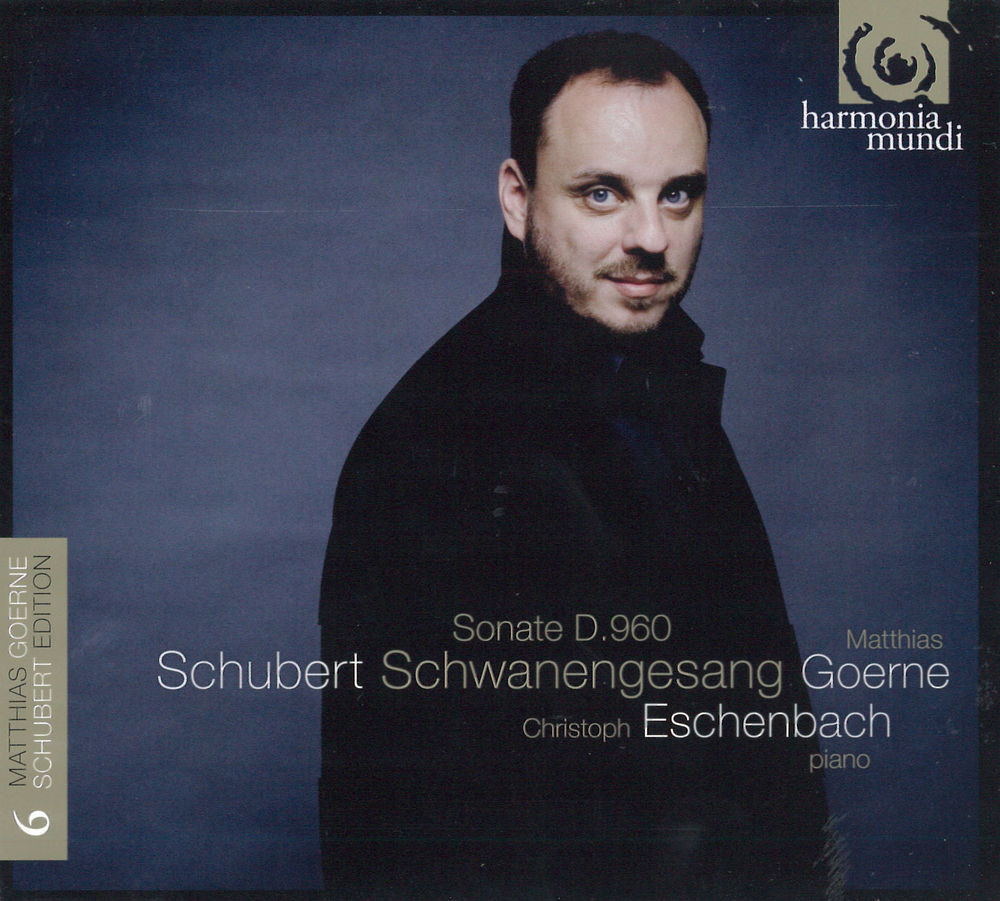
Fauré once described his requiem mass as “gentle in temperament, as I am myself.” He believed that a funeral service should provide comfort and solace to those in mourning, and therefore chose the liturgical texts “which are prayer-like, which plead for something and which look towards the heavens rather than towards hell.” For example, Fauré abandoned the fiery “Dies Irae” except for a fleeting appearance in the “Libera me” and conductor Paavo Järvi, despite large forces at his disposal, respects Fauré’s intention, bringing forth the transcendent beauty of the piece by using a light touch throughout. At the start, the orchestra and chorus are barely perceptible with the subsequent crescendo sublimely subtle and gradual. It is within the harmonic framework that the composer imbues this work with emotion and Järvi ensures a warm and lush delivery through the subtle metamorphoses. Warm, rich and deep tones from baritone Matthias Goerne mirror the orchestration perfectly, while a delightfully unconventional twist is provided by engaging the pure, yet mature timbre of countertenor Philippe Jaroussky for the “Pie Jesu.”

The other choral works included on this CD are the deeply inspirational and gorgeously performed Cantique de Jean Racine, the playfully quirky Pavane and the recording debut of a youthful (and hence more volatile) work, Super flumina Babylonis (By the rivers of Babylon). There is one instrumental work, the magnificent Elégie for cello and orchestra, featuring Orchestre de Paris’ superb principal, Eric Picard.

Concert Notes: The Hart House Singers present Fauré’s Requiem and Tavener’s Three Songs with soloists and orchestra under David Arnot-Johnston, in the Great Hall, Hart House, on March 24. The Choir of the Church of St. Nicholas Birchcliffe features Fauré’s Requiem and Messe Bass in a programme of music for Lent on March 30 at 7:30pm. The Amadeus Choir will perform Fauré’s Requiem at All Saints Kingsway Anglican Church at 4pm on April 1.

03_GiocondaPonchielli - La Gioconda
Deborah Voigt; Elisabeth Fiorillo; Ewa Podles; Richard Margison; Carlo Guelli; Carlo Colmbara; Gran Teatre del Liceu; Daniele Callegari
ArtHaus Musik 107 291

This latest video production of La Gioconda from 2005 is most notable for its staging and sets by architect and theatre designer Pier Luigi Pizzi. The stylized set of interconnecting stairways and a colour scheme dominated by greys with accents of deep blue, scarlet and orange creates an all-pervasive sense of approaching death in decaying Venice during the terror of the dreaded Council of Ten. The effect is so dazzling that one is reminded of frescoes of the 16th century Paolo Veronese.

It is an extremely difficult and expensive opera to produce mainly for its demand of top singers, six in all, in all vocal ranges. In today’s world there are no more Callases, Tebaldis, Bergonzis and Pavarottis (even Domingo is now a baritone), the great stars of the late 20th century who brought their glory to this formidably demanding opera. Today we have Deborah Voigt, one of the few remaining dramatic sopranos with stamina and power to cope with the gruelling title role. Her voice and characterization have what it takes and it’s a great thrill to hear her carry over the top of the choruses and the orchestra. In terms of power Canadian tenor Richard Margison surely belts out the murderous high notes, but the Italianate inflection and charm of the likes of a Pavarotti is unfortunately missing. Still … the beautiful aria “Cielo e il mar” is very successful and warmly applauded. Another great credit to the performance is Ewa Podles, familiar to Toronto audiences, whose sympathetic portrayal and mellifluous alto voice of the abused blind mother is simply heartbreaking. Neither Carlo Guelfi as the evil Barnaba nor Elisabetta Fiorillo as Laura measures up to the historic legends in these major roles, but the conducting of Daniele Callegari is outstanding especially in the exquisitely choreographed, beautifully executed “Dance of the Hours.”

04_Mahler_LiederMahler - Lieder eines fahrenden Gesellen; Kindertotenlieder
Julie Boulianne; Ensemble Orford; Jean-Francois Rivest
ATMA ACD2 2665

The emerging Canadian mezzo-soprano Julie Boulianne makes her debut solo recording on the ATMA label with an exquisitely sung pair of orchestral song cycles by Gustav Mahler, in relatively unfamiliar chamber versions, along with five lieder by Mahler’s wife/muse and notorious Viennese femme-fatale Alma Schindler-Mahler-Gropius-Werfel.

The arrangement of the first of the song cycles, the formative Lieder eines fahrenden Gesellen (Songs of a Wayfarer, 1884-5), was prepared by Arnold Schoenberg in 1920 for his short-lived concert series, the ultra-exclusive Society for Private Musical Performances. Though the glowing canvas of the symphonic original has been reduced to a monochrome ensemble of ten instruments (including the rarely-heard harmonium, uncharacteristically perfectly in tune and unobtrusive in this recording) the integrity of the composition still shines through. The same can be said for conductor Reinbert de Leeuw’s masterful reduction for Amsterdam’s Schoenberg Ensemble of the Kindertotenlieder cycle (1901-4), Mahler’s settings of the elegies poet Friedrich Rückert wrote commemorating the tragic deaths of his two children.

Boulianne’s voice, precise and well balanced with a voluptuous lower register, is ideally suited for this repertoire. Jean-François Rivest conducts a well-balanced though emotionally reticent ensemble. The album closes with five very attractive songs by Alma Mahler which her husband, upon the advice of Sigmund Freud, edited and arranged to have published in 1910 as recompense for his ill-considered ban on her own composing career upon their marriage in 1902. Accompanied by pianist Marc Bourdeau, Boulianne brings to life the captivating charm of these scarce remnants of Alma’s youthful dreams.


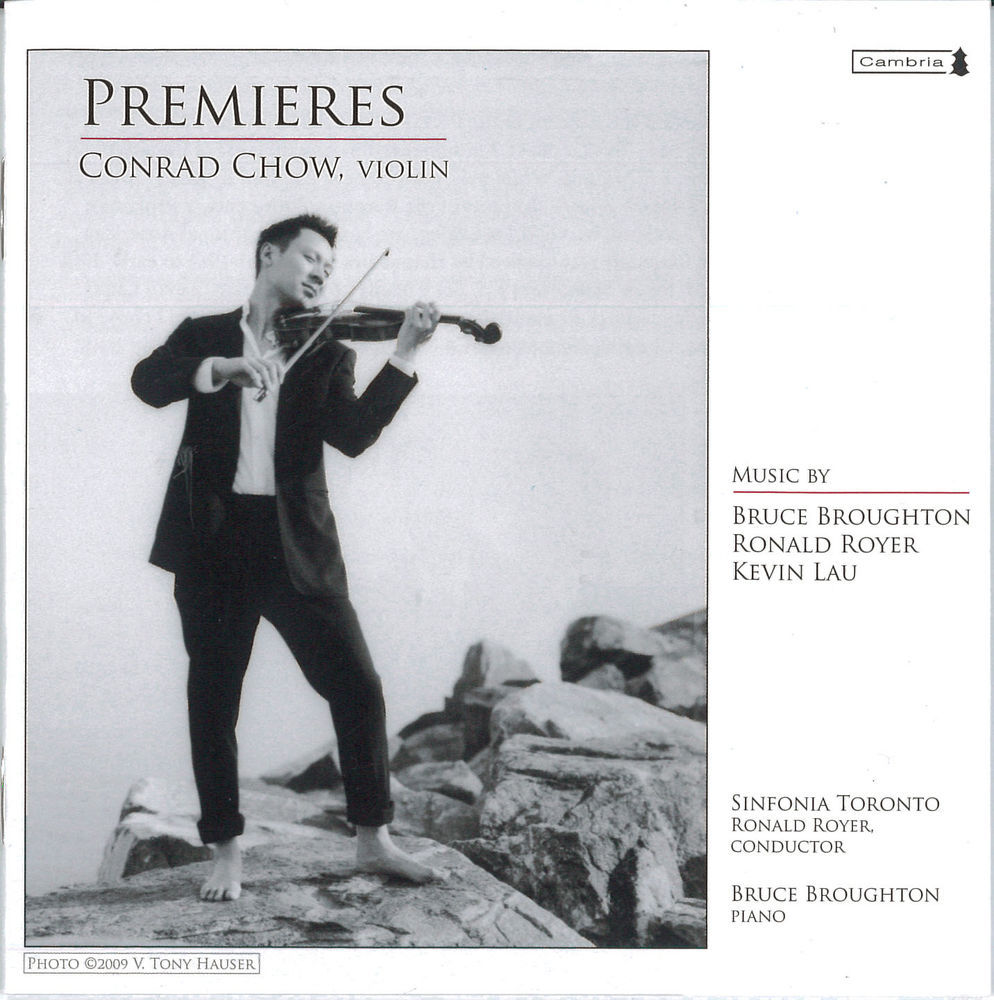
Flute_KingThe Flute King - Music from the Court of Frederick the Great
Emmanuel Pahud
EMI Classics 0 84230 2

The programme of this two-CD set of music from the court of the flute-playing Prussian emperor Frederick the Great provides an intriguing snapshot of a significant time and place in the flute’s repertoire. The first disc features concertos by C.P.E. Bach, Benda, Frederick II himself and his flute teacher Quantz, in which flutist Emmanuel Pahud is accompanied by the geographically appropriate Kammerakademie Potsdam. The playing from everyone involved is pleasant enough, though a sameness of musical character and lack of nuance pervade the performance of these pieces, some of which require extra imaginative “juice” to bring them completely off the page. On the other hand, the inherent dynamic theatricality of CPE Bach’s Concerto in A Minor isn’t exploited well enough.

Disc Two presents us with J.S. Bach’s Musical Offering trio sonata and sonatas by Frederick, his sister Anna Amalia, J.F. Agricola and C.P.E. Bach and here the playing is imbued with greater creativity of spirit. Pahud, perhaps inspired by his colleagues, harpsichordist Trevor Pinnock, cellist Jonathan Manson and violinist Matthew Truscott, plays with increased variety of colour and articulation. J.S. Bach’s inestimable trio sonata receives an affectionate and thoughtful rendition, and of special note are Anna Amalia’s Sonata in F Major and the opening Siciliano of Frederick’s Sonata in B Minor.

Although it’s unfortunate that this recording doesn’t take more of Quantz’s own interpretive advice into account, it’s still a worthy compilation of music from 18th century, flute-focused Potsdam.

Concert Notes: Alison Melville curates and performs in “A Musical Bestiary” featuring vocal and instrumental music about creatures of earth, sea, sky and myth for the Toronto Consort at Trinity-St. Paul’s Centre March 23 and 24. Melville is also involved in “The Bird Project” which will be featured in a noon-hour multi-media presentation at Walter Hall, University of Toronto on March 15.

01_SchubertSchubert - Piano Sonatas
Boris Zarankin
Doremi DHR-71153

If the listener didn’t know it before, this CD confirms that Boris Zarankin possesses an ardent empathy with Schubert. From the opening bars of the first movement of the great Sonata in B-Flat Major, marked molto moderato, there is almost a quasi religious awakening and as the music unfolds, further dimensions are revealed that one does not hear in other versions of this familiar work. Well, not quite. Hearing Zarankin conjured up the performance by Valery Afanassiev recorded live at the Lockenhaus Festival in 1986 that has lingered in my memory as an interpretation with the same intense, poetic introversion. However, listening to that performance once again, as attractive as it is, Zarankin is the more poetic, realizing the tragedy of Schubert playing out the last chapter of his life.

In both sonatas Boris Zarankin is in a class of his own, fully justifying his venturing into such frequently charted repertoire. Zarankin has his own ideas about playing these sonatas but I sense that they are also Schubert’s.

These recordings were made last August in Glenn Gould Studio in Toronto and engineered by Clive Allen who is responsible for the eminently truthful and dynamic, wide-range sound.


03a_Bruckner_4_Haitink03b_Bruckner_4_NezetBruckner - Symphony No.4
London Symphony Orchestra; Bernard Haitink
LSO Live LSO0716

Bruckner - Symphony No.4
Orchestre Métropolitain du Grand Montréal; Yannick Nézet-Séguin
ATMA ACD2 2667

This is Bernard Haitink’s third commercial recording of Bruckner’s popular Symphony No.4, in this instance using the Nowak edition of the score and culled from a pair of live performances from June 2011. The London Symphony Orchestra is unquestionably an outstanding ensemble with an exceptionally impressive string section, seated here in the European style with the violins divided right and left and the double basses to the left rear. The orchestra responds adroitly to the stolid octogenarian Haitink, a celebrated master of elucidating the ofttimes shambolic structure of Bruckner’s symphonies. Ultimately, however, all this excellence is undermined by the problematic acoustics of London’s Barbican Centre. The resplendent string tone is noticeably recessed and the sound-stage, though wide, lacks depth. Some tremendous brass playing, particularly from the closely-miked horn section, offers considerable recompense however.

No such problems mar the lively sound of Nézet-Séguin’s conventionally seated Métropolitain string ensemble, though they are a comparatively lean and slightly underpowered force compared to the LSO ensemble, with two fewer players in each section. The response from the judiciously balanced full orchestra is consistently precise, electric and blessed with a contagious enthusiasm and attention to dynamic shading that renders even the most meandering passages of Bruckner’s rambling discourse riveting. The performance utilizes the 1936 Haas edition in splendid studio sound recorded at Québec’s Église Saint-Ferdinand. Some may consider Nézet-Séguin’s overtly theatrical approach rather over-the-top in the Scherzo movement, where he drives his forces into a Berliozian frenzy, but for my money this is one of those rare Bruckner performances that commands my complete attention. The clear winner? The home team!

01_Lara_St._JohnThe Canadian violinist Lara St. John, by her own admission, never managed to really connect with the Bach Sonatas for Violin and Harpsichord; somehow, she says, she “never thought they quite clicked,” either with harpsichord or modern piano accompaniment. Several years ago, when St. John was staying in Berlin with Marie-Pierre Langlamet, the principal harpist of the Berlin Philharmonic since 1993, the two read through some Bach sonatas. It was, says St. John, “a revelation.” Bach Sonatas, her new CD with Langlamet on her own Ancalagon label (ANC 139) is the result, and it is, indeed, a revelation. The switch from harpsichord to harp is obviously the major factor here. There might be very little dynamic range on the keyboard instrument, but it’s scarcely any bigger on the harp. Moreover, the crisp, precise incision of the note attack on the harpsichord is replaced by a softer, gentler and more luminous sound on the harp, especially in the bass lines of the lower register. This completely changes the nature of the accompaniment, and poses significant questions for the violinist: straightforward, by-the-numbers playing, especially in the faster contrapuntal passages, simply won’t work anymore. St. John, however, has the perfect answer, playing not only with unerring accuracy but also with a wonderfully expressive sensitivity, almost as if thoughtfully probing and exploring the music rather than simply presenting it. It’s intelligent and nuance-filled music-making of the highest level, and matched for both nuance and sensitivity by Langlamet.

This is by no means a complete set of the six sonatas. The performers chose sonatas where the keyboard part could be played as written (and the harpsichord parts for these works were fully written out, and not just a figured bass part) with no need for transcription for the harp. Two violin sonatas – No.1 in B Minor BWV1014 and No.3 in E Major BWV1016 – are here, together with the Flute Sonatas in G Minor BWV1020 (possibly not written by Bach) and in B Minor BWV1030, and the Siciliana from the Flute Sonata in E-Flat Major BWV1031.

Beautifully recorded in Berlin, the result is a supremely satisfying CD that presents these works in a quite different light.

Concert Note: The Lindsay Concert Foundation’s Kawartha Concerts Series presents Lara St. John and Marie-Pierre Langlamet in music of Bach, Saint-Saëns, Debussy and Fauré at Glenn Crombie Theatre, Fleming College in Lindsay on March 4.

02_Russian_QuartetsThe two-CD set The Soviet Experience Volume 1 is the first in a series on Chicago’s excellent Cedille label devoted to String Quartets of Dmitri Shostakovich and his Contemporaries (Cedille CDR 90000 127). I can think of few quartets that are as immediately recognizable as those of Shostakovich, and of no music that is more imbued with personal pain and a sense of utter resignation, together with a heart-breaking sense of nostalgia for better days, now long gone. Listening to his music often seems like eavesdropping on a private and intimate conversation. The Pacifica Quartet performed the complete Shostakovich cycle in five Chicago concerts over a four-month period in 2010/11 as part of The Soviet Arts Experience, a 16-month-long project showcasing artists who worked in the old Soviet Union, and they have obviously developed a deep understanding of these works. The four quartets Nos. 5 to 8 are included on this first volume and the Pacifica members are terrific throughout, scaling the heights of the music as convincingly as they plumb the depths. The overwhelmingly autobiographical – and achingly personal – Quartet No.8 Op.110 is particularly effective.

Nikolai Miaskovsky was 25 years older than Shostakovich, but was also included in the notorious 1948 Zhdanov decree that accused many of the Soviet Union’s leading composers of “formalism.” He was 36 when the 1917 Revolution took place, and, as the excellent booklet notes by William Hussey point out, was the only major Soviet composer who was also a member of the pre-Revolution generation of Tchaikovsky and Rimsky-Korsakov. His String Quartet No.13 in A Minor was written in 1950, not long before his death, and – not surprisingly, given the circumstances – in a fairly conservative style. If it has nowhere near the personal depth of the Shostakovich quartets, it’s still a fine work and receives an equally fine performance here.

Presumably, the complete cycle will be made available on CD before too long. If this first volume is anything to go by, it will be a significant addition to the Shostakovich catalogue.

03_Joshua_BellFrench Impressions is the title of the latest CD from Joshua Bell and Jeremy Denk (Sony Classical 88697 82026 2). At first sight, it seems slightly misleading, as the Ravel sonata is the only Impressionist work on the disc; the other two works are the Violin Sonata No.1 of Camille Saint-Saëns and the Sonata in A Major of César Franck. On first hearing, however, the title makes more sense. These are all works that invite flashy virtuosity, but although the virtuosity is clearly present the “flash” is absent; instead, the technical assurance is combined with an expressiveness and a musical maturity that presents all three works in a thoughtful, illuminating manner. The clue to this approach lies in the informal but very informative booklet notes, where Jeremy Denk considers what makes French music French: “sounds that float, hover, harmony like a scent, a perfume evaporating into air.” Add his comments about light and color, and it becomes clear that the performers are concerned more with impressions here than with virtuosity. The Saint-Saëns sonata is the one with the dazzling finale full of cascading octave runs, and while Bell might not be quite as hair-raising as James Ehnes in this movement, it’s perfectly balanced with the rest of the sonata. The Franck, so familiar as to easily risk becoming stale in the wrong hands, is beautifully judged, with some particularly outstanding piano playing from Denk, and the Ravel is a delight from start to finish. Bell plays brilliantly and intelligently, with a great tone and lovely phrasing, but never a hint of virtuosity for its own sake; Denk is simply stunning at the piano. The balance and recorded sound are excellent.

04_DiotimaThere is a startling mixture of compositional styles on American Music, the new CD from the French ensemble Quatuor Diotima that features string quartets by Steve Reich, Samuel Barber and George Crumb (naïve V 5272). Reich’s Different Trains for string quartet and tape, from 1988, was inspired by the childhood railway journeys he made with his governess between 1939 and 1942. Struck by how different the circumstances and experience would have been for a Jew riding on trains in Europe at that time, he conceived a work that combined a pre-recording of the quartet with train sounds from the period and with snippets of the recorded voices of his old governess and survivors of the Holocaust.

The three movements are “America – Before the War,” “Europe – During the War,” and “After the War,” but while Reich’s minimalist-driven style successfully creates a sense of mechanical perpetual motion, and while the instrumental doubling of the vocal scraps is very effective, I couldn’t help feeling that the middle movement failed to create an emotional centre for the work. For a middle movement that not only serves as the focal point of the work but also assumes a life of its own, you need look no further than Barber’s String Quartet in B Minor Op.11; the Molto adagio second movement became one of the most popular and widely-performed pieces of all time when the composer transcribed it as his Adagio for Strings. It’s certainly interesting to hear it in its original form and context, especially when the performance is as sensitive and as understated as it is here. It’s impossible to imagine any work farther away from the Barber than Crumb’s Black Angels for electric quartet, and what a startlingly original and stunning soundscape it is! Written in 1970 and subtitled 13 Images from the Dark Land, it requires the performers to use extended playing techniques as well as to play other instruments (glass rods, crystal glasses, maracas, tam-tams) and occasionally to use their own voices. The thirteen short sections are divided into three movements: I. Departure; II. Absence; and III. Return. The booklet notes call it “a deathly ceremonial, a sort of black mass,” and there are constant musical references to Death, Hell (the Dark Land) and the Devil throughout the work. The quartet’s construction is apparently governed by numerology – in particular the numbers 7 and 13 – but Crumb has increasingly played down their significance since 1970. It’s a simply astonishing work, complex and difficult enough to make any objective review of the performance – in comparison, say, to the Kronos Quartet’s performance – almost impossible, and certainly irrelevant. Suffice it to say that it’s a stunning aural and musical experience.

Schumann_Doric_QuartetRobert Schumann, more than any other composer, chose to concentrate on one particular form of composition at a time. 1842 was devoted to chamber music, and his three String Quartets, Op. 41 were written in a matter of eight weeks in the middle of the year, after he had spent several months studying the quartets of Haydn, Mozart and – in particular – Beethoven. The influence of the latter is easy to hear, but the voice that really leaps out at you on a new CD from the Doric String Quartet (Chandos CHAN 10692) is that of Mendelssohn, to whom the quartets were dedicated on their publication in 1848. These are top-notch performances in all respects, but the Doric Quartet is particularly outstanding in the Mendelssohn-like scherzo movements, where their articulation, ensemble playing and dynamics in the scurrying passages are simply superb. There’s some rather obtrusive breathing in the slower movements, but not enough to detract from a terrific CD.

06_Meyer_QuartetsNaxos has added another excellent CD to its already outstanding catalogue of contemporary string quartets with the Wieniawski Quartet’s performances of the String Quartets Nos. 9, 11 and 12 by Polish composer Krzysztof Meyer (Naxos 8.572656). Meyer, born in 1943, was a student of Penderecki and is a recognized authority on the life and works of Shostakovich. There is more than a hint of the Soviet composer in Meyer’s quartets, but there is also no doubting that there is a highly competent and individual craftsman at work here. Meyer’s ongoing series of string quartets currently stands at 12 works and covers 42 years, from 1963 to 2005. Quartet No.9 dates from 1990 and No.11 from 2001. All three works on this CD are quite different in form: No.9 is in five movements; No.11 is a single-movement work; No.12 is nine mostly short movements joined together in a manner similar to Beethoven’s Quartet in C-Sharp Minor Op.131. Meyer employs a range of compositional techniques, but you’re never aware of them; these quartets are always accessible, engrossing and highly effective. It would be difficult to imagine more suitable interpreters of these works than the all-Polish Wieniawski Quartet, who have been together for 15 years. Their playing is exemplary in all respects. They have already recorded Quartets Nos. 5, 6 and 8 for Naxos (8.570776). “Intensely dramatic and eloquent,” says the jewel case blurb in describing these works and they are exactly that. The recorded sound is excellent, the booklet notes adequate but somewhat technical in nature. At the bargain Naxos price, these discs are a terrific buy.

01_Hoeppner_American_FluteAmerican Flute Masterpieces
Susan Hoeppner; Lydia Wong
Marquis 774718141323

This CD is itself a little masterpiece: the six works on it by 20th century American composers, already recorded by many other flutists, are performed with such style, panache, and artistry that it is a welcome and justified addition to the catalogue.

The first track is the opening movement of Eldin Burton’s Sonatina. Susan Hoeppner’s phrasing is mesmerizing, to the point that I want to play this over and over again! Her interpretation of the Canzone from the second movement of Samuel Barber’s Piano Concerto is serene and measured, but perhaps a little too dispassionate. The most wonderful moments in the entire CD, for me anyway, come in the second movement of Lowell Liebermann’s Sonata Op.23. Hoeppner and Lydia Wong build on the strength of each other’s playing to come to a thrilling and almost superhuman intensity. Their performance of John Corigliano’s Voyage, while embracing the simplicity of the piece, infuses it with great sensitivity and tenderness and at times intensity that arises entirely out of the sound and colour of the flute. Hoeppner and Wong give stirring performances of the last two compositions, Aaron Copland’s lyrical Duo for Flute and Piano and Robert Muczynski’s technically challenging Sonata Op.14.

This CD brings us definitive performances of music from an ongoing “golden age” of composition in the United States, which continues to thrive in the protective enclaves of universities despite the vicissitudes of these tumultuous times. Kudos to both artists; this CD is a winner.

02a_Tim_Brady_102b_Tim_Brady_224 Frames - Scatter
Tim Brady; Bradyworks
ambiences magnetiques AM 206 CD www.timbrady.ca


24 Frames - Trance
Tim Brady; Martin Messier
ambiences magnetiques AM 203 CD-DVD www.timbrady.ca

Tim Brady’s most ambitious composition to date must surely be 24 Frames consisting of a series of 24 movements each of which he identifies as a “frame.” Adding up to three CDs and a DVD (AM 905), it amounts to well over two hours of sometime meditatively calm and at other times challenging and exhilarating music. While a soprano voice, baritone sax, bass clarinet, viola, bass trombone and percussion make appearances one at a time in substantial though supporting roles, the through-line here is Brady’s writing for electric guitar and his masterful virtuoso playing in every section of his sprawling opus.

Indeed the 8’53” section called “Scatter – Frame 1” could easily stand as a self-contained work. Featuring the nuanced vocalise of Karen Young, her vocal performance is so densely processed at times that it becomes a virtual choir. Yet Brady reminds us that this is a human voice first and foremost, by having vocalist Young imitate a wow-wow pedal effect acoustically about halfway in. It only lasts a moment but for me it is such deft and delicate touches which impress the most in 24 Frames. At the end of this section the guitar’s distant bell-like sonorities admirably support Young’s soft cooing.

Frame 2 is subtitled “In Almost Unison” and it’s an apt description of the relentless tempo guisto and metrically complex character of the joint duo of guitar and baritone sax, marvellously played by Jean-Marc Bouchard. Frame 3 on the other hand, featuring Lori Freedman’s dramatic bass clarinet, has many more contrasting angles and emotional facets to it.

Frame 4 – “Still” is a highlight, a lyrical, spacey and languid essay in viola long tones, chords and slow, surprisingly moody mid-20th century melodic passages. It’s underpinned by a lexicon of exposed delicate electric guitar effects: I heard reverb, precise string harmonics, thick gong-like chords, chorus effects and perhaps even pitch-shifted other-worldly echoes. This is a gorgeous, satisfying movement that I’ll be returning to repeatedly.

Frame 5 partners the electric guitar with bass trombone, in several sections juicily modulated with electronic effects. Indeed an outstanding aspect of this movement, as well as several others, is the astonishing range of the blend between the acoustic sounds of the instruments and their sounds electronically morphed.

The sonic shape-shifting continues in Frame 6 which introduces percussionist Catherine Meunier into the mix. She plays the vibraphone and afterward the marimba joined by Brady’s electric guitar, providing a welcome crisp contrast to several of the previous atmospheric sections, many of which did not posses a definable pulse. Here we have melodic lines, many founded on broken arpeggios, which sometimes interlock between instruments. At other moments the duo sounds in melodic and/or rhythmic unison, set in an increasingly complex metric and spectral framework. This first CD culminates in a satisfying crescendo supported by a sort of electric guitar trill stretto perhaps referencing heavy metal.

Reviewing such an immense, assured and accomplished work – and I’ve only touched on about a third of it – is truly an insurmountable challenge given the constraints of this review. I hope my listening notes have successfully reflected the scope of Brady’s fertile compositional imagination, and my own pleasure and enthusiasm for the music in his multi-CD project.

02_Melissa_LaurenThe Other Side
Melissa Lauren
Independent ML1111 (www.melissalaurenmusic.ca)

Singer-songwriter Melissa Lauren has been a part of the Toronto music community for a few years now, but with her sophomore release, The Other Side, she’s really making her mark. Lauren has a beguiling voice that mixes sweet playfulness with solid technique, control and range. Which would be plenty, but on top of that she has songwriting abilities that put her in another category from the legion of lovely crooners who enlist others’ work to tell their musical story. Harmonically speaking, Lauren’s songwriting doesn’t push a whole lot of boundaries, and she’s got a clever way with words that goes enough beyond cute to make things interesting without getting overly heavy. All of which suits the breezy, jazzy air of the album. The dozen songs each have a whiff of a bygone era hovering somewhere between the 1930s and the 60s, without being too derivative of any time or genre. So we get a bit of Mancini-esque cool on the opening Art Class, a touch of twangy longing on Somehow, a slightly Eastern European edge to Your Fool and an old tyme rollick from the title track. It all adds up to a special sound, much of the credit for which should be shared with guitarist Nathan Hiltz who is the main instrumental support and negotiates the shifts in style with taste and personality that never overwhelms. The rhythm section is ably rounded out by Ernesto Cervini on drums and Ross MacIntyre on bass. Lauren’s CD release event is March 1 at The Rex in Toronto. Check melissalaurenmusic.ca for details.


Over the past few years as post-modernism has made anything fair game for musical interpretation, sophisticated improviser/composers have taken inspiration from the most unlikely sources, far beyond the motifs, historicism and pastels of earlier times. Canadian bassist in New York Michael Bates for instance, has organized a salute to Dmitri Shostakovich (1906-75), using his own music and variants on the modern Russian composer’s oeuvre. Iconoclastic American composer/saxophonist Fred Ho has produced a five-part suite honouring boxer Muhammad Ali (b.1942) as a militant, outspoken fighter for social justice. The luminous canvases of American visual artist Cy Twombly (1928-2011) stimulate Israeli saxophonist Ariel Shibolet’s creativity, while Polish saxophonist Adam Pierończyk recasts in his own fashion the distinctive film scores of composer Krzysztof Komeda (1931-69).

01_Bates_AcrobatMichael Bates’ masterful arrangements on Acrobat: Music For, and By, Dmitri Shostakovich (Sunnyside SSC 1291 www.sunnysiderecords.com) are so perceptive that during the course of nine tracks he almost reveals symphonic colours using only a top-flight quintet: his double bass; the perfectly timed drums of Tom Rainey; Russ Lossing’s shuddering smears from electric and regular pianos; trumpeter Russ Johnson’s brassy blasts; and the fluid lyricism of Chris Speed’s sax and clarinet. This is apparent from the first track, “Dance of Death,” from Shostakovich’s Piano Trio No.2 in E Minor. Very quickly the bouncy melody is transformed with plunger trumpet work and well-modulated reed trills to a motif that’s as much 1970s Miles Davis as it is a mazurka. Later Silent Witness uses fusion references to atmospherically suggest the composer’s Stalin-era paranoia, with Speed’s singular reed slurs becoming progressively lower-pitched and tonal as Rainey`s drums smack and rebound while Lossing’s ratcheting licks make it seem as if he’s playing electric guitar not piano. Held together by Bates’ reliable thumping, the cacophonous final section gives way to repeated theme variations and conclusive keyboard echoes. Elsewhere, with music derived from the Russian composer’s work or not, the tunes use varied strategies. Intermezzos can be atmospheric and formal, with the reedist approximating oboe-like burrs and timed runs arising from Lossing’s acoustic instrument; as loose and swinging as a Benny Goodman-led combo; or exploding with tougher near-Jazz Messengers-like harmonies. Arcangela is another highpoint, allowing both Russes sufficient solo space. The pianist showcases a series of repeated glissandi centred by Bates’ stentorian pulse; while the trumpeter’s capillary slurs evolve into a quicksilver flow cushioned by harmonized keyboard and reed textures. All in all the wrap-around themes simultaneously celebrate Shostakovich’s intent while exposing improvisations that are true to jazz’s ethos.

02_Komeda_PieronczykTransforming the sounds of another musician, whose short-lived but prolific career defined Polish jazz, popular and even notated sounds for years after his untimely death, is the task of Krakow-based tenor and soprano saxophonist Adam Pierończyk on Komeda-The Innocent Sorcerer (JazzWerkstatt JW 104 www.jazzwerstatt.eu). Luckily he has the help of Brazilian guitarist Nelson Veras, countryman Łukasz Żyta on percussion, including typewriter (!) plus two American veterans, bassist Anthony Cox and tenor saxophonist Gary Thomas. Actually it’s Veras who often sets the pace, since his delicate nylon-string strumming brings a bossa nova-like lilt to, and encourages equivalent horn harmonies on, later-period Komeda tunes like After the Catastrophe. Two of Komeda’s best-known themes are treated most substantially by the quintet: Sleep Safe and Warm used in Rosemary’s Baby and Crazy Girl from Knife in the Water. Typewriter sounds produced by Żyta underlie contrasting rubato split tones from Thomas’ tenor and Pierończyk’s soprano sax obbligato during variants on the first tune. Meanwhile sul ponticello bass work makes the theme more menacing, with the piece reaching a crescendo of sharp guitar licks and overlapping horn parts, drastically truncated as the sound of a typewriter’s carriage return completes the track. Bustling cool jazz-like harmonies give way to contrapuntal horn vamping, rapid twangs from the guitarist and broken-metre drumming on Crazy Girl. With the percussionist waving Latin percussion and Cox sliding up and down his strings, Thomas’ hard-toned blowing and Pierończyk’s parallel tongue fluttering define the song’s repeated motif, as the two reedists circle back to recap and draw out the initial head.

03_Fred_HoMoving on from celebrating masterful musicians’ compositional influences to appreciating the political subtext of someone dubbed “Athlete of the Century,” is The Sweet Science Suite (Mutable/Big Red Media 003 www.bigredmediainc.com), a five-part suite Fred Ho composed for his 19-piece Green Monster Big Band. An activist as well as a musician, Ho’s arrangements are as outstanding and unique as Muhammad Ali’s boxing style. Unafraid of outside references, on Shake up the World the piece’s staccato exposition quotes liberally from Cream’s Sunshine of Your Love for a proper period feel, although that theme is intertwined with vamping section work echoing the Count Basie band, a funky backbeat, fiery brass triplets and a slinky boppish tenor sax solo. Other variants, such as Rope-A-Dope frame Salim Washington’s muscular big-toned tenor saxophone in a lusty big band arrangement that’s part ballad and part free form. Still other tunes expose and bury references to interludes ranging from Chinese court music to American TV show themes, to speeding train-like riffs plus Charles Mingus’ particular blend of gospel and blues. Other examples of bravura (over)blowing include Ho’s double-tonguing a staccatissimo baritone sax interlude from pedal point to altissimo range that is outlined clearly among brass fanfares and gruff snorts from two bass trombones plus broken beats from percussionist Royal Hartigan. The climactic key to the suite is the constantly expanding No Vietnamese Ever Called Me a Nigger, where Hartigan’s stylized gongs and hammered cross tones suggest the sounds of the Vietnam War that Ali avoided, costing him his championship status. Throughout the more-than-16-minute narrative, sonic interpolations, encompassing split-second theme inferences, bluesy harmonies from the six-piece sax section, twanging guitar riffs, discordant trumpet blasts, pedal-point bass trombone snorts and a final, unexpected, smoothing coda describe the discordance of the era and its final resolution. This resolution, personified by abrasive guitar solos and split-tone reed explosions, leads to Worthy of Praises Most High, a concluding theme that acknowledges Ali’s undiminished skill. Triumphantly fortissimo and atonal, the finale highlights guitarist Amanda Monaco’s rock-like chording arching over sequences of juddering pitch dislocation from brass triplets until decisive orchestral calmness prevails.

04_Shibolet_MarriageIn contrast to the other CDs’ inspirations, Ariel Shibolet’s Scenes from an Ideal Marriage (Kadima Collective KCR 28 www.kadimacollective.com) expresses in music his interpretation of Cy Twombly’s acrylic and pencil painting of the same name. Part of a trilogy of CDs by the tenor saxophonist dedicated to the recently deceased visual artist, Scenes also features violist Nori Jacoby. Despite obvious differences, like partners in an ideal marriage, the timbres from Shibolet’s soprano saxophone and Jacoby’s viola are sometimes indistinguishable, especially when involved in intertwined dialogue. At times polyphonic, polytonal or polyharmonic, the instruments’ textures mix without blending or losing individual identities. Masterful in his use of multiphonics, the reedist lip burbles, pushes unaccented air through his horn’s body tube, hums through his mouthpiece while sounding a tone, and squawks wet glissandi. Meantime the fiddler’s strategy involves sul ponticello scrapes, flying spiccato scrubs and jagged, angled vibrations. By the time the climactic second theme variant is heard, Shibolet’s pinched ney-like whistles and Jacoby’s sul tasto strokes surmount abrasive atonalism. The defining intermezzo is unexpectedly lyrical in contrast to the exposition, but doesn’t neglect pressure for prettiness. When each player’s timbres become as thin as pencil strokes, the subsequent split tones (from the saxist) and angled strokes (from the violist) stretch the sound without breaking it and eventually combine for wide-bore smears which advance then conclude the recitation.

Sonic inspiration can come from anywhere. It’s up to the canny improviser to do the best he or she can with it, as these musicians demonstrate.

01_Mahler_DVDLast month some of us, in fact many of us around the world, “attended” the MET’s production of Gotterdammerung, the final opera of their “Ring Cycle” live in HD at local movie houses. The conductor was Fabio Luisi who has taken over at the MET from the incapacitated James Levine. Luisi can be seen and heard on many CDs and DVDs, one example of which is a live performance of Mahler’s First Symphony that is outstanding in every way. The concert took place in the Philharmonie in Gasteig, Munich, with the Staatskapelle Dresden of which he was the music director at the time, in April 2008. From the first few bars of the first movement Luisi emerges as a true Mahlerian. His tempos and pacing are flawless as are the dynamics. It’s a gift to know what to do between the notes and, at least here, Luisi gets it. When he lets the orchestra out in the coda of the fourth movement the effect is spectacular in the grand manner. Earlier, the concert opens with a performance of the Beethoven Piano Concerto No.1 with pianist Margarita Hohenrieder. Her brilliant performance is engaging, witty and animated, proving that one can play Beethoven and smile at the same time. She and Luisi are on exactly the same page (EuroArts DVD 2057718).

Back to the MET …

Some of their productions have been issued on DVD by other companies but recently the MET has begun issuing selected performances from their archives that were broadcast live. The tapes of the selected performances are produced, transferred, restored and re-mastered by the MET themselves. Sony, who publishes them, has issued eight new two-CD sets since our first reviews some months ago and, as before, offer singers and conductors no longer with us.

02a_Bizet_Carmen02b_Offenbach_HoffmannRisë Stevens, one of the favourites of the day, stars with Richard Tucker and Nadine Connor in Bizet’s Carmen, conducted by Fritz Reiner in the performance of February 16, 1952 (Sony 88697 96189). Reiner was then a staff conductor at the MET but a year later he was appointed music director of the Chicago Symphony, a post that lasted for an illustrious ten years. Risë Stevens and Richard Tucker are featured again in Offenbach’s Les Contes d’Hoffmann with an all star cast including Roberta Peters, Lucine Amara, James McCracken and Martial Singher conducted by Pierre Monteux (88697 96190). This production was broadcast live on December 3, 1955, and the sound, as it is in all these sets, is clean and clear monaural, complete with some sounds of stage business that contributes, for me at least, to the illusion. In this case, however, the home listener of the time would not have heard the fidelity we have here. Hoffmann is one of my favourite operas and I listen to it regularly. This production does in no way disappoint.

03_Thomas_MignonRisë Stevens is joined by James Melton, Mimi Benzell and Ezio Pinza for Thomas Mignon from January 27, 1945 (88697 96192). Canadian Wilfrid Pelletier is the conductor and Pinza, who would retire from the Met in 1948 after 22 years, was still four years away from playing Emil de Beque. Handsome James Melton was a popular tenor in the 20s and 30s until the popularity of ballad singers and the romantic repertoire declined. He sang at the MET in suitable roles for just a few years only and here is a rare chance to hear him.

04_Donizetti_FilleDonizetti’s La Fille du Régiment was once the property of Lily Pons and here she is on December 28, 1940 assisted by Raoul Jobin, Salvatore Baccaloni and others conducted by Gennero Papi (88697 96191). It is the great bass Baccaloni as Suplice who dominates every time he opens his mouth and Lily Pons and the rest of the cast are swamped. Still, she has her moments and the whole production is good fun. Very good sound, too.

05_ErnaniMoving into the 1960s, the usual suspects included Carlo Bergonzi, Leontyne Price, Cornell MacNeil, Carlotta Ordassy, Giorgio Tozzi, Roald Reitin and Robert Nagy and here they are in Verdi’s Ernani from December 1, 1962 under Thomas Schippers (88691 90996). The opera is basically about ill-fated lovers … the same old story of girl meets bandido, conspirators, revenge, the Holy Roman Empire and 16th century Spanish politicking. A good plot for an opera which this cast makes believable. A new production was seen in HD in movie theatres on February 25 with an encore presentation for those who missed it, or wish to see it again, coming up on March 31.

06_LElisirFrom March 5, 1966, we have Roberta Peters, Carlo Bergonzi, Frank Guarrera and Fernando Corena in Donizetti’s L’Elisir d’Amore conducted by Thomas Schippers (88691 90991). Love makers again, this time between a “poor villager and the beautiful, alluring landowner; the pair exude charm and vivacity...” It’s an amusing story with many comic situations that the cast have a great time conveying to the audience.

07_Luisa_MillerThomas Schippers also conducts Verdi’s Luisa Miller from February 17, 1968, featuring Sherrill Milnes, Montserrat Caballé, Richard Tucker, Ezio Flagello and Giorgio Tozzi … a dream cast if there ever was one (88691 90994). This opera is a fine example of love – both requited and unrequited – deception and betrayal, with a tragic last scene. In other words, melodrama at its best. The artistry of the entire ensemble draws the listener in and holds on until the final curtain.

08_CavalleriaFinally, the double bill of “Cav & Pag,” Cavalleria Rusticana and Pagliacci broadcast on April 14, 1954 (88691 90999). “Cav” features Richard Tucker, Eileen Farrell, Lili Chookasian, Cesare Bardelli and Mildred Miller. “Pag” stars Anselmo Colzani, Franco Corelli, Franco Ghitti, Lucine Amara and Calvin Marsh. Nello Santi conducts. The evening could not have been in better hands. Each singer brings his or her character to life, reacting seamlessly to the various situations. These really are marvelous performances.

Concert Notes: You can hear an abridged version of La Fille du Régiment at the University of Toronto Faculty of Music’s annual Opera Tea at MacMillan Theatre on April 1. The Canadian Opera Company presents The Tales of Hoffmann in performances at the Four Seasons Centre April 10 to May 14.


Back to top