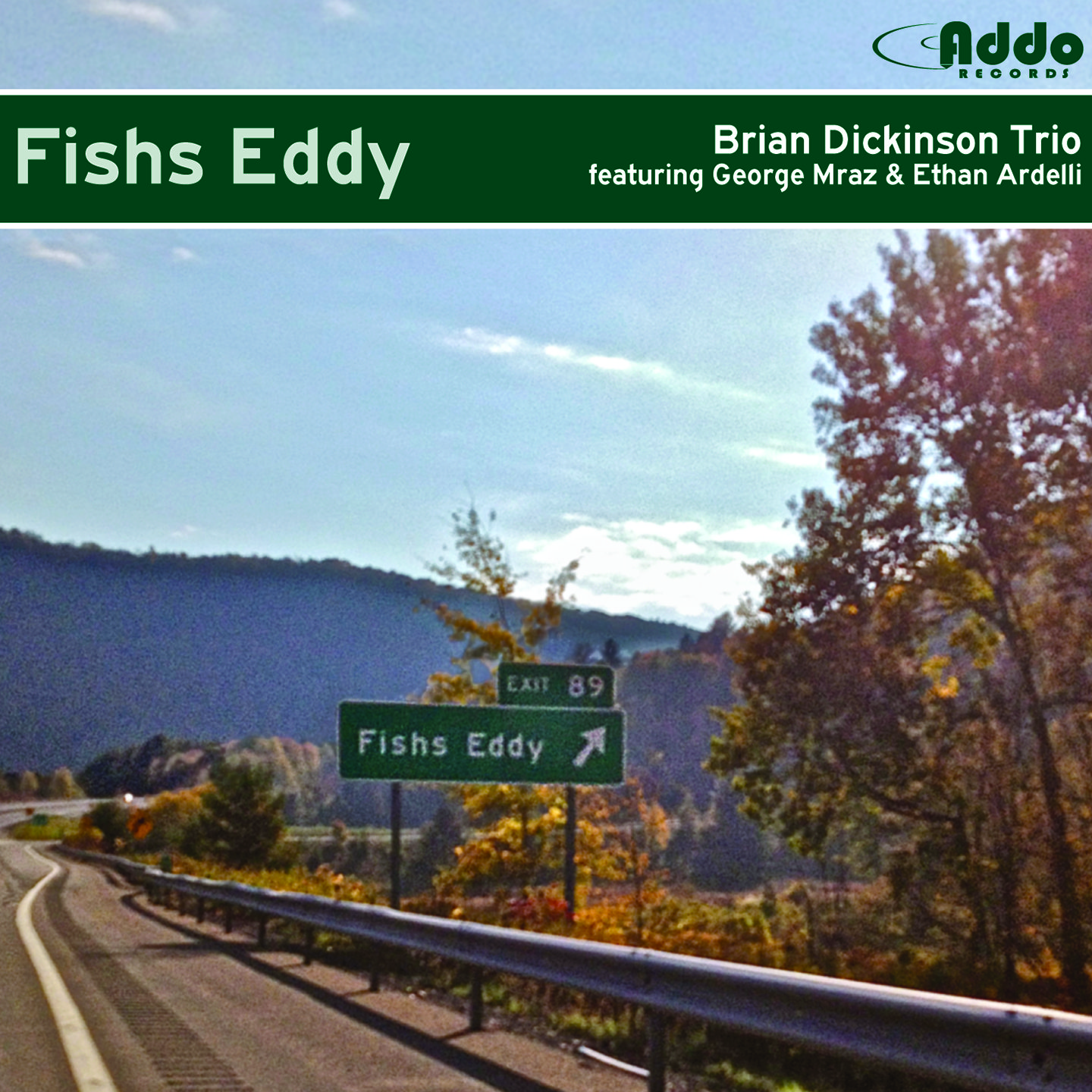
01_Dickinson.jpgPianist Brian Dickinson continues to build on a distinguished career that reaches back to the 1980s. The latest release by his trio, a nominee for the 2015 JUNO Jazz Album of the Year – Group, Fishs Eddy (Addo Records AJR023, addorecords.com) matches him with young drummer Ethan Ardelli and senior bassist George Mraz, whose long CV includes work with Oscar Peterson, Stan Getz and Elvin Jones. It’s a perfect match given Dickinson’s roots in Bill Evans’ harmonically rich, lyrical style and Evans’ evolution of the piano trio, giving a prominent place to the bass to develop strong countermelodies. There’s a keening, reaching, welling lyricism here, a passionate rush of emotion rising from reverie. It begins on familiar melodic ground, George Gershwin’s I Loves You Porgy, explored for over nine minutes, then turns largely to Dickinson’s originals, the trio developing intense interactions around their harmonies and repeating figures.

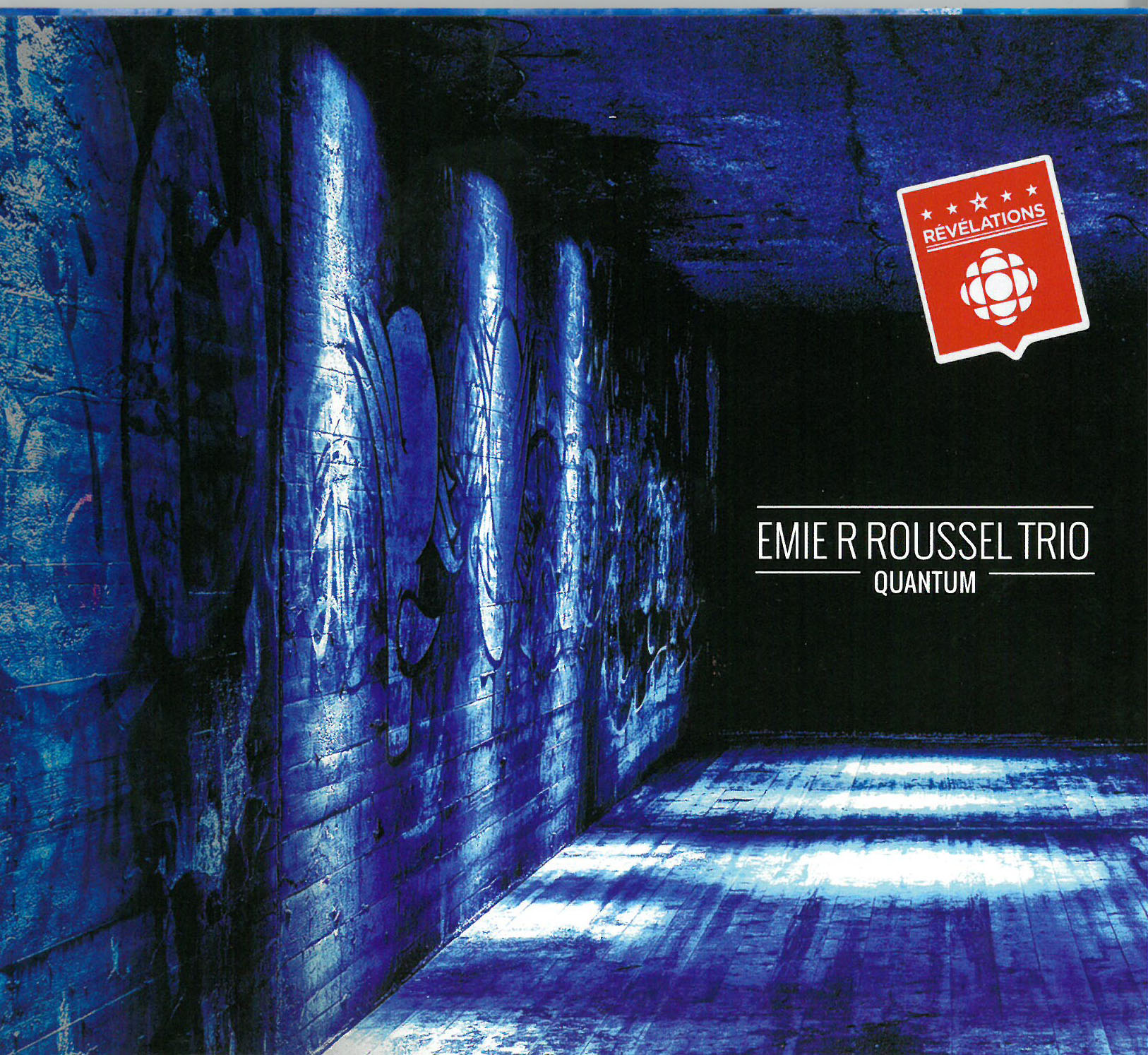
02_Roussel_Trio.jpgQuantum (Effendi FND 139, effendirecords.com) is the third CD from the Emie R Roussel Trio, a young group that has been consistently nominated for Quebec festival and media awards since its inception in 2010. It’s easy to hear why. It’s consistently engaging music, well thought out with an almost architectural sense of form. Building on rock-solid foundations provided by bassist Nicolas Bédard and drummer Dominic Cloutier, pianist and composer Roussel compounds a personal idiom that fuses post-bop jazz with R&B (think Joe Sample and George Duke), the instrumentation moving readily from acoustic to Fender Rhodes piano and electric bass. The acoustic highlight is Ipomée, a fine demonstration of Roussel’s ability to construct tension by making incremental shifts in short figures, then contrasting short and long phrases; the electric Marée haute combines a deep groove and extended melodic development.

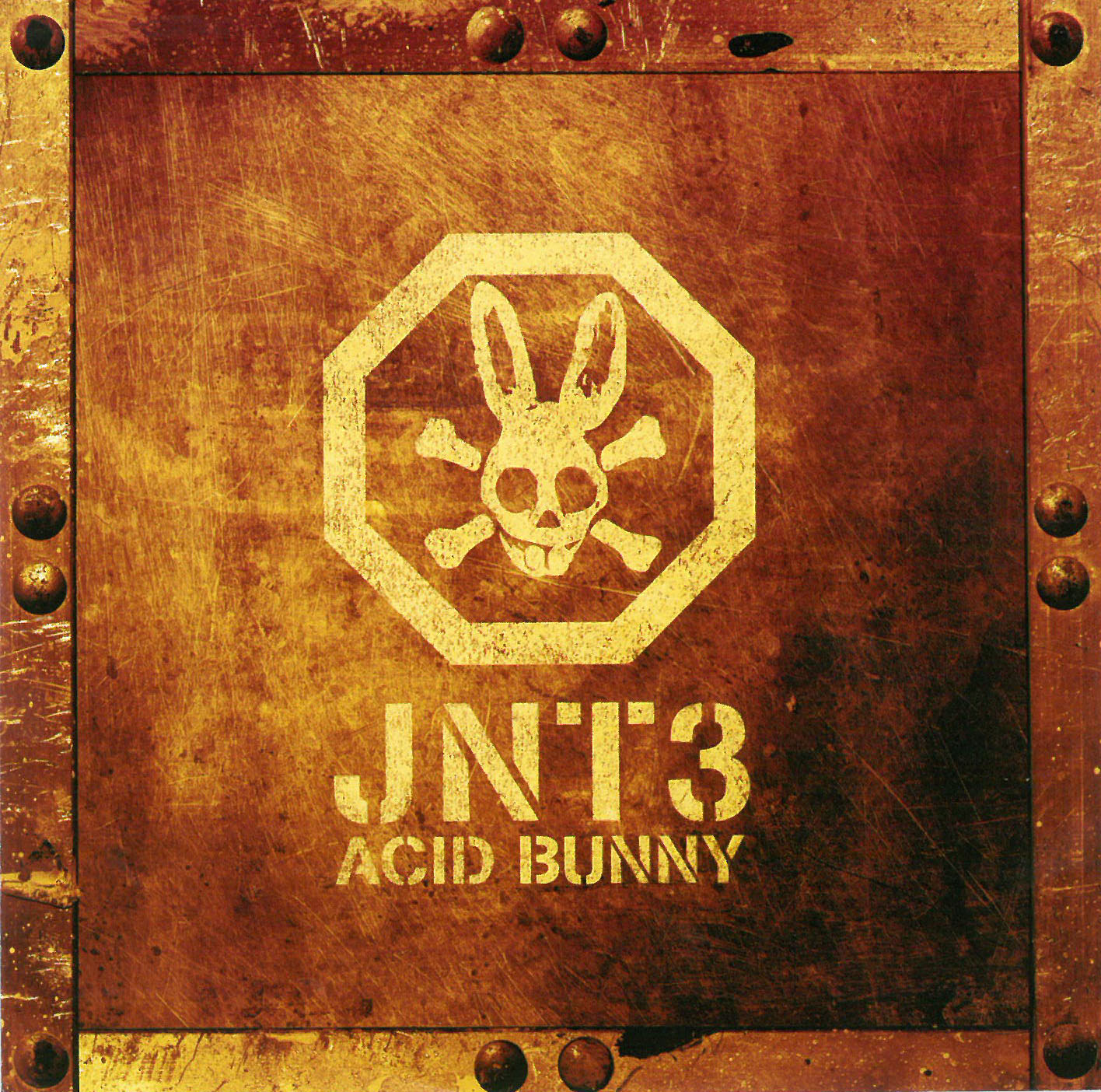
03_JNT3_Acid_Bunny.jpgWhile the Roussel trio is happiest with a detailed road map, trombonist Jean-Nicolas Trottier builds energy through the exchange of ideas based on brief heads. Trottier is something of a big band specialist, but he pares it down to a trio on Acid Bunny (Effendi FND135). His JNT3, with bassist Rémi-Jean LeBlanc and drummer Rich Irwin, is a band of rare chemistry, quickly overcoming anyone’s doubts about the limited range of a trombone and rhythm trio. Trottier has technique and energy to spare, making effective use of mutes and a bright high register to change things up. Reemy-Jeeny-Leblee is a fine example of the band’s detailed rhythmic interaction and intense swing, while the elegiac Nouveau Patente has LeBlanc’s arco bass line countering Trottier’s elegant line, Irwin negotiating a ground between military ceremony and rubato.

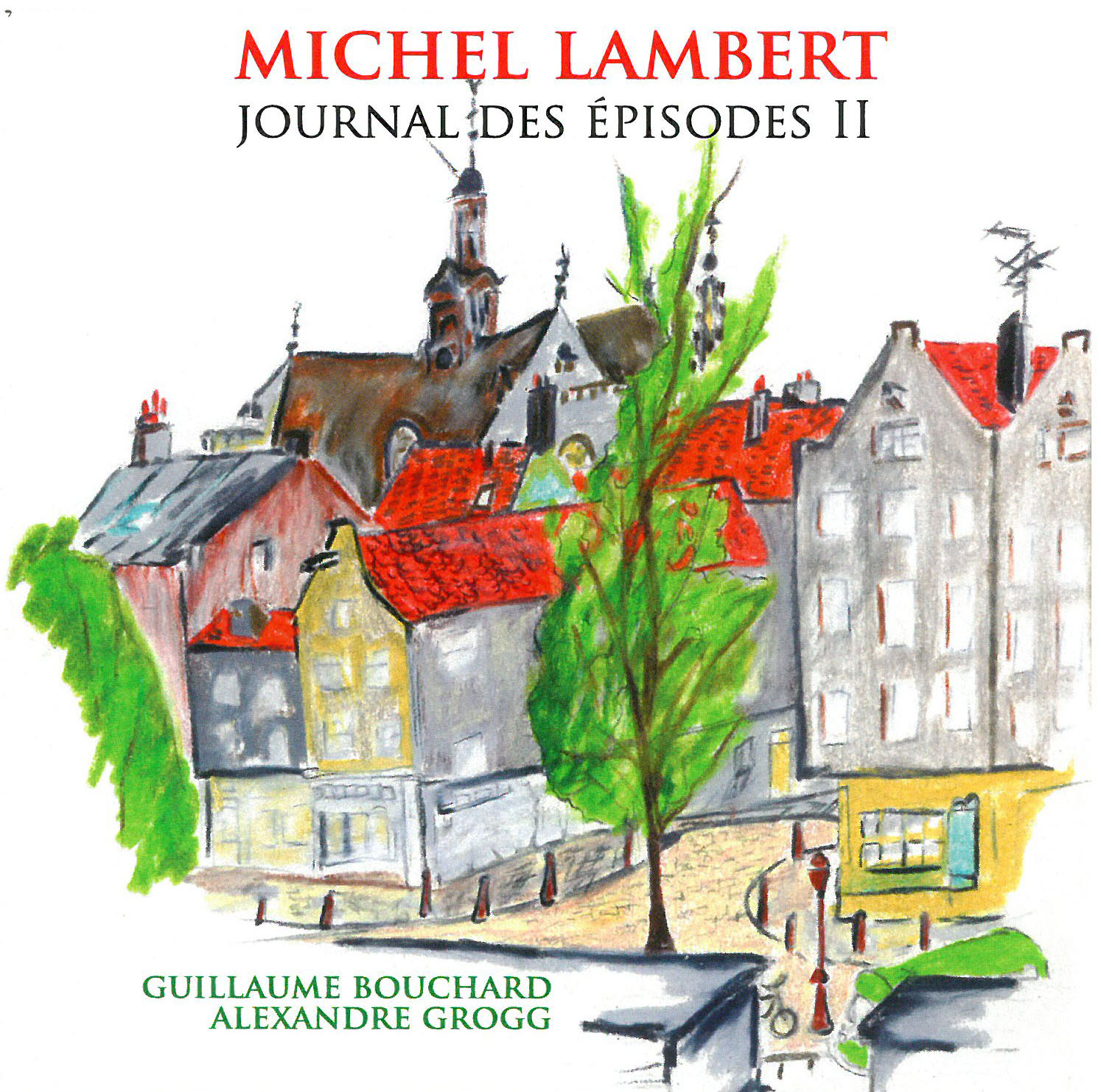
04_Michel_Lambert_Journal_II.jpgMichel Lambert is a real creative force, whether considered as a painter, percussionist or composer. His compositional vision is particularly evident in Journal des Épisodes II (Rant 1448, jazzfromrant.com), an exploration of a daily diary of compositions and paintings from the last six months of 1988. His group here is a traditional piano trio with pianist Alexandre Grogg and bassist Guillaume Bouchard; what makes it highly untraditional is the presence of 97 tracks on a 44-minute CD. Lambert’s compositions can be as brief as seven seconds, as long as a couple of minutes, but whether microscopic or developed, they’re compelling musical messages that achieve a kind of formal perfection, continuous with their surrealist aesthetic of the unconscious and their Webern-like economy. The material is at once so fragmentary and dense that each trip through the CD is another experience, tiny fragments in time creating new refractions with one another and with the sustained trio pieces.

Review

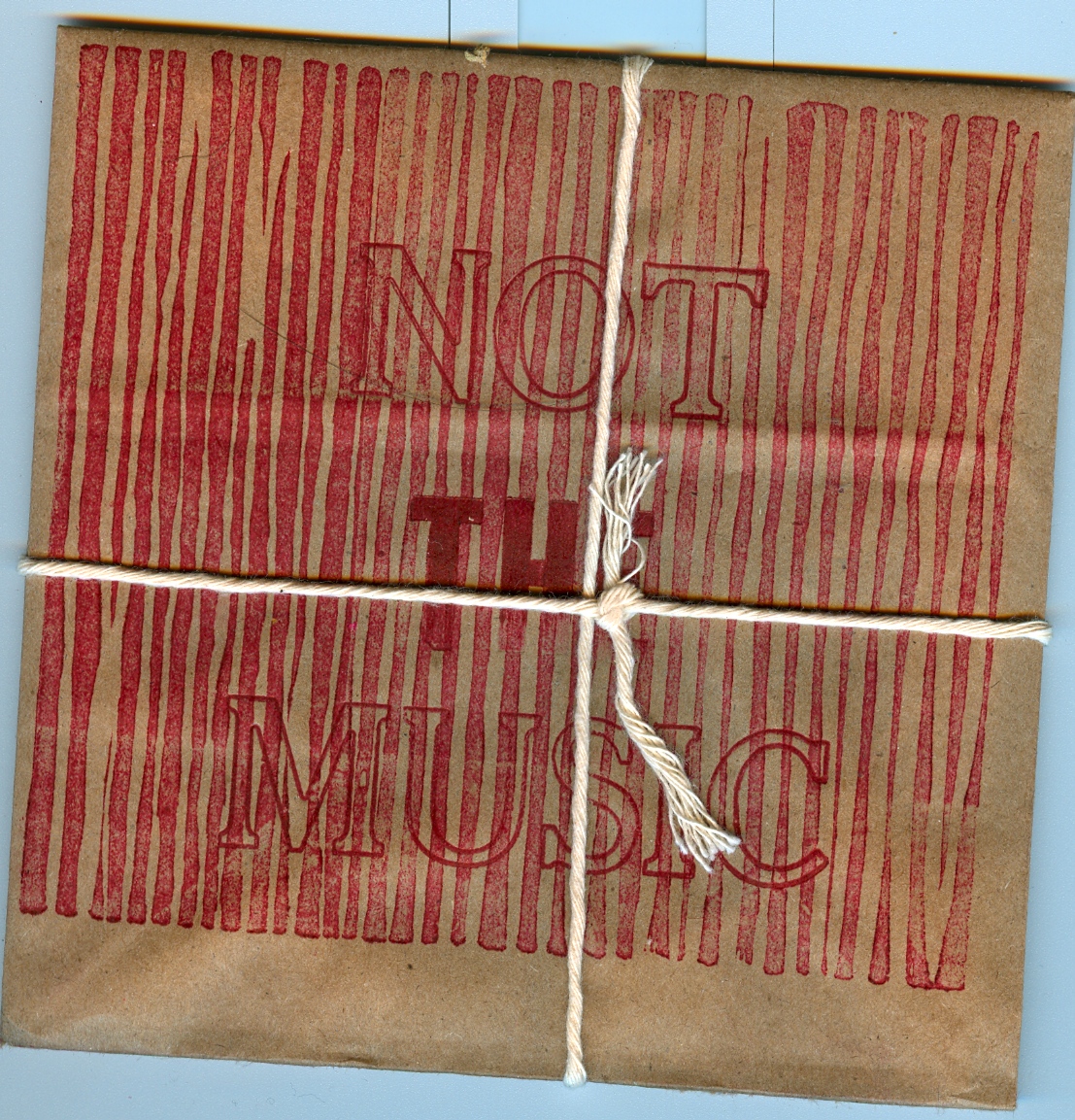
05_not_the_music.jpgÉric Normand is another fount of creativity, working from his unlikely home base in Rimouski to form both a large improvising ensemble, the Grand Groupe Régional d’Improvisation Libérée, and the wide-ranging Tour de Bras record label, as creative in its design as in its music. While a recent GGRIL release appeared as a red vinyl LP, Normand takes a diametrically opposed route to packaging for Philippe Lauzier and Éric Normand’s Not the Music / do (Tour de Bras, tourdebras.com), issuing the CD in a brown paper lunch bag with a printed cover. The music is just as provocative – sustained minimalist improvisations in which Lauzier’s soprano saxophone and bass clarinet extend from single tones to circular breathing against a backdrop of Normand’s electric bass and a snare drum that Normand sometimes plays and often uses as a vibrating surface.

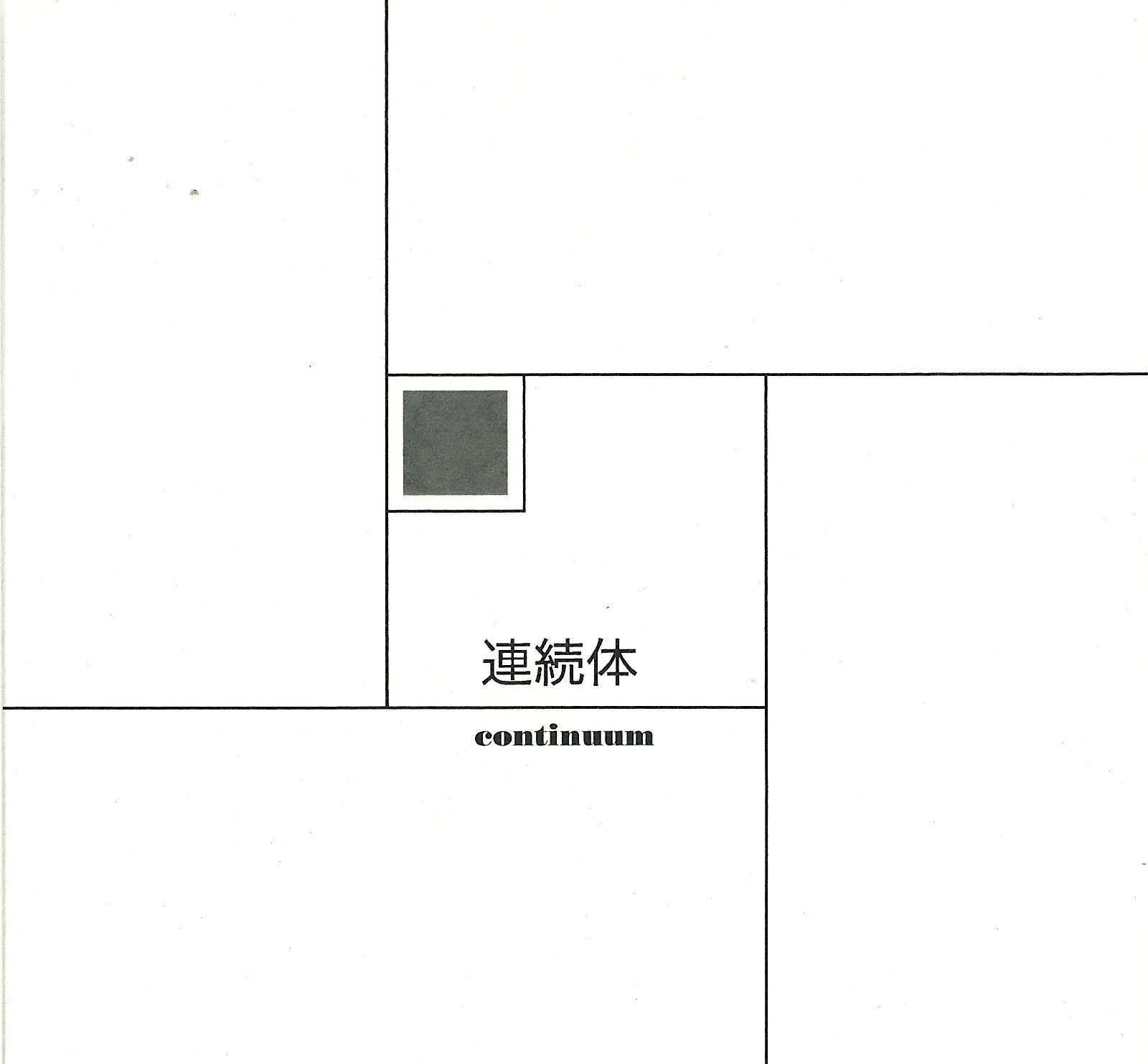
06_continuum.jpgMontreal sound artist Pierre-Yves Martel creates dauntingly minimalist improvisations contrasting single tones on a renaissance viola de gamba and a harmonica with silences on Continuum (Tour de Bras TD89011CD). It’s demanding work (Martel’s intent extends to letting “the music ‘play’ both the performer and the listener”), an experience in which the act of listening may be dissected and stitched back together, the music developing a severe and icy beauty in the process. Available as limited edition CDs or downloads, extensive portions can be heard at the label’s website.

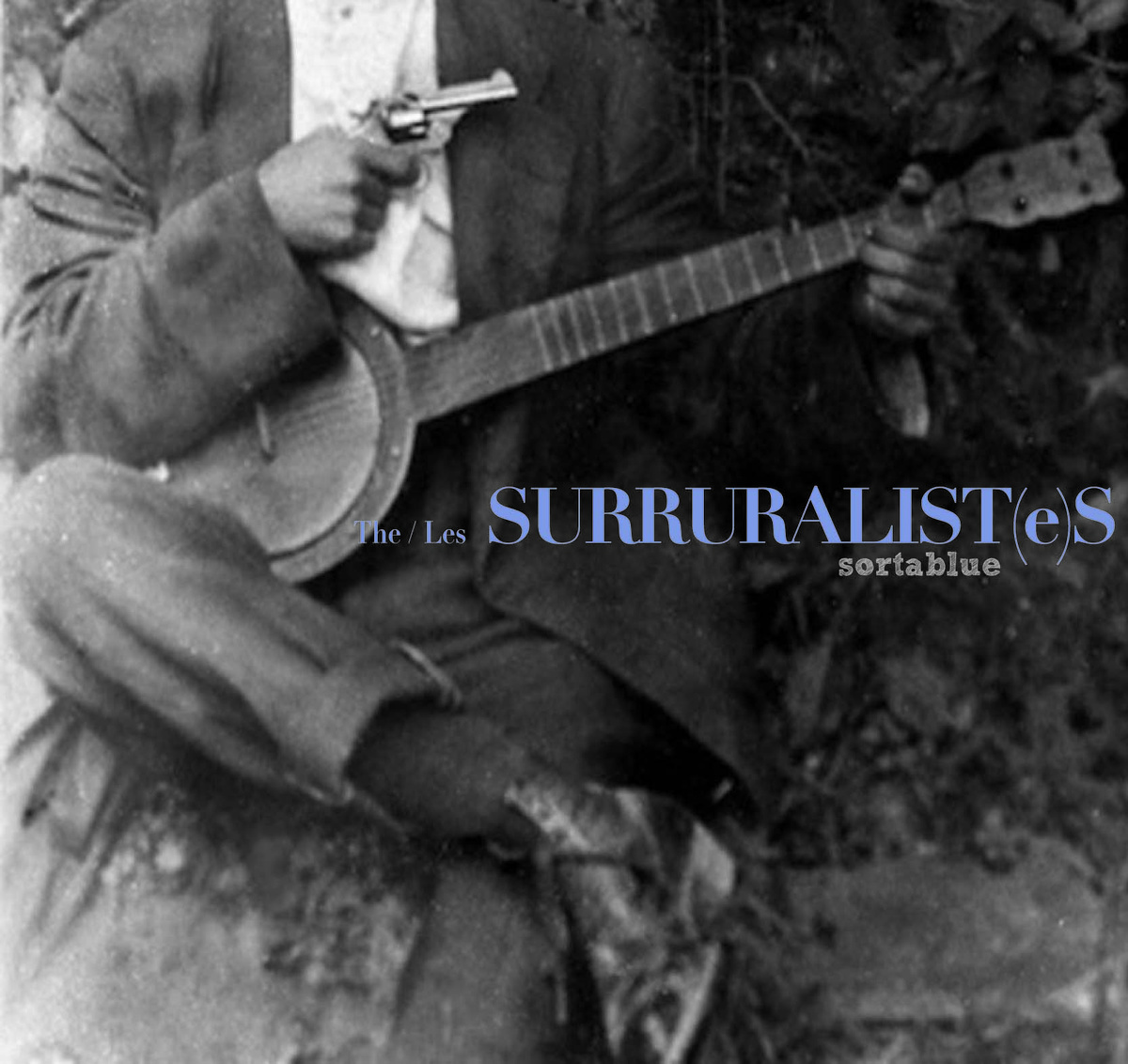
07_sortablue.jpgAmong music’s stranger documents is a letter from Woody Guthrie to John Cage, greeting his music as “a keen fresh breeze.” It might have inspired The/Les Surruralist(e)s on Sortablue (SURRU 01, actuellecd.com). The duo of Nova Scotia-based Arthur Bull (guitars, harmonica and voice) and Normand (electric bass, tenor banjo and voice) explore early blues and folksongs from perspectives shaped by free jazz and improvised music, adding a raw electric edge and weirdly dissonant accompaniments to traditional instrumental approaches and songs like La Femme Du Soldat and Stagger Lee. The two create a new tradition in the same breath that they pay homage to others.

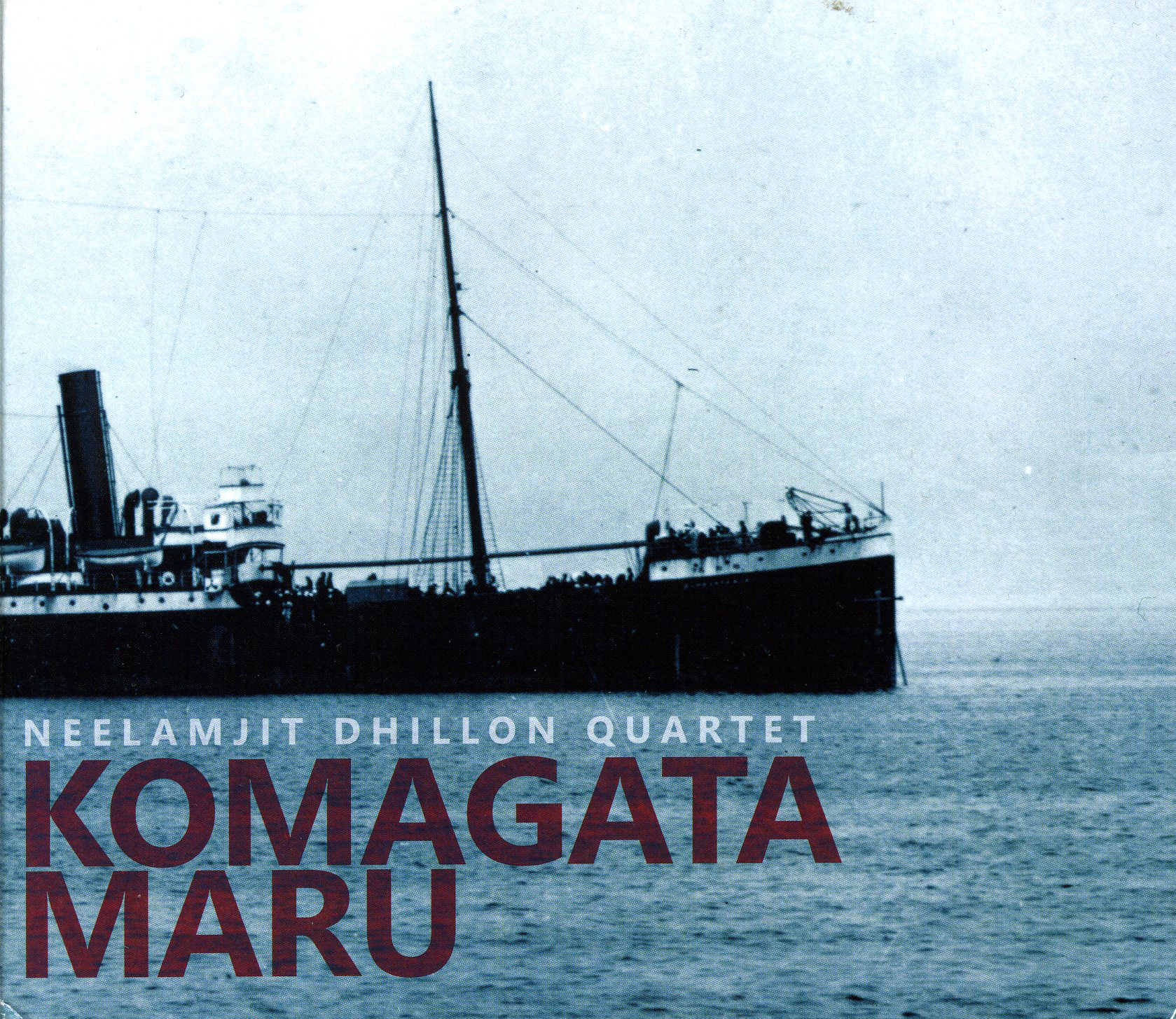
When it comes to welcoming immigrants to North America, Canada and the United States have long had different policies. To Americans the ideal is the melting pot with all foreigners persuaded to become true-blue Yanks. Modern Canada, once it shook off fealty to Britain, has long promoted multiculturalism, where immigrants become Canadians without giving up their homeland identity. Generalities should be avoided, but it’s informative to see these concepts played out in improvised music. Thus Neelamjit Dhillon, born in Vancouver of Sikh background, has created a notable CD based on the infamous 1914 incident when 376 mostly Sikh immigrants were refused entry to Canada. To do so he mixes traditional Indian instruments with Western ones. In contrast, American performers who are his contemporaries, and with similar immigrant roots, have recorded sessions exclusively linked to the un-hyphenated jazz continuum.

01_Komagata.jpgA notable work, that evolves through nine related sequences, Komagata Maru (neelamjit.com) manages to tell this shameful story of anticipation, betrayal, violence and ultimately hope for the future with only four musicians, admixing Indian sub-continental and Western sounds. Besides Dhillon, who plays alto saxophone, tabla and bansuri, a transverse bamboo flute, the others are bassist André Lachance and drummer Dan Gaucher plus Chris Gestrin, who plays sympathetic, whimsical piano throughout; and who produced, recorded and mixed the disc. With Gestrin’s strong accompaniment, Dhillion’s proficiency allows him to create swinging, unforced jazz lines throughout, no matter which instrument he’s playing. Even the tabla’s distinct timbres are used to make specific points rather than for exoticism. On Shore Committee: Bonds of Ancestral Kinship and later on British Clash at Budge Budge, for instance, the Carnatic drum’s textures contrast sharply with Gaucher’s martial-styled drumming, together symbolically depicting a full-scale riot on the first tune; and add to the sonic bellicosity of the second, further intensified by keyboard clips and harsh reed slurps. In the same way the expansive Munshi Singh: Trial for a Sanguine Tomorrow has its relaxed mood, set up by Lachance’s double-time strumming, disrupted by contrapuntal screeds, although they come from the bansuri rather than an alto saxophone. Crucially as well, the sonic representation of police-passenger combat on Debris from the Sky: Confront with the Tools at Hand, relies on the divergence between very Westernized double bass strokes and the distinctively Indian tabla patterns. Finally, the unforced Lee Konitz-like saxophone riffs Dhillon uses to underline the exposition here not only relate back to the introduction but portend the concluding Reconciliation: Evoke the Fallen and Persevere. Part elegy and part anticipation, the tune’s mellow hopefulness suggests why incidents like that of the Komagata Maru are rare in Canadian history. As well this meticulously crafted CD posits that Dhillon and company will soon be creating more intriguing sounds, either straight ahead or with a sub-continental lilt.

As more immigrants or children of immigrants begin to fill the ranks of Canadian improvisers it will be instructive in the future to observe whether an American-inflected national style takes hold, or if Canadian musical sensibilities will still include distinctive overseas links.

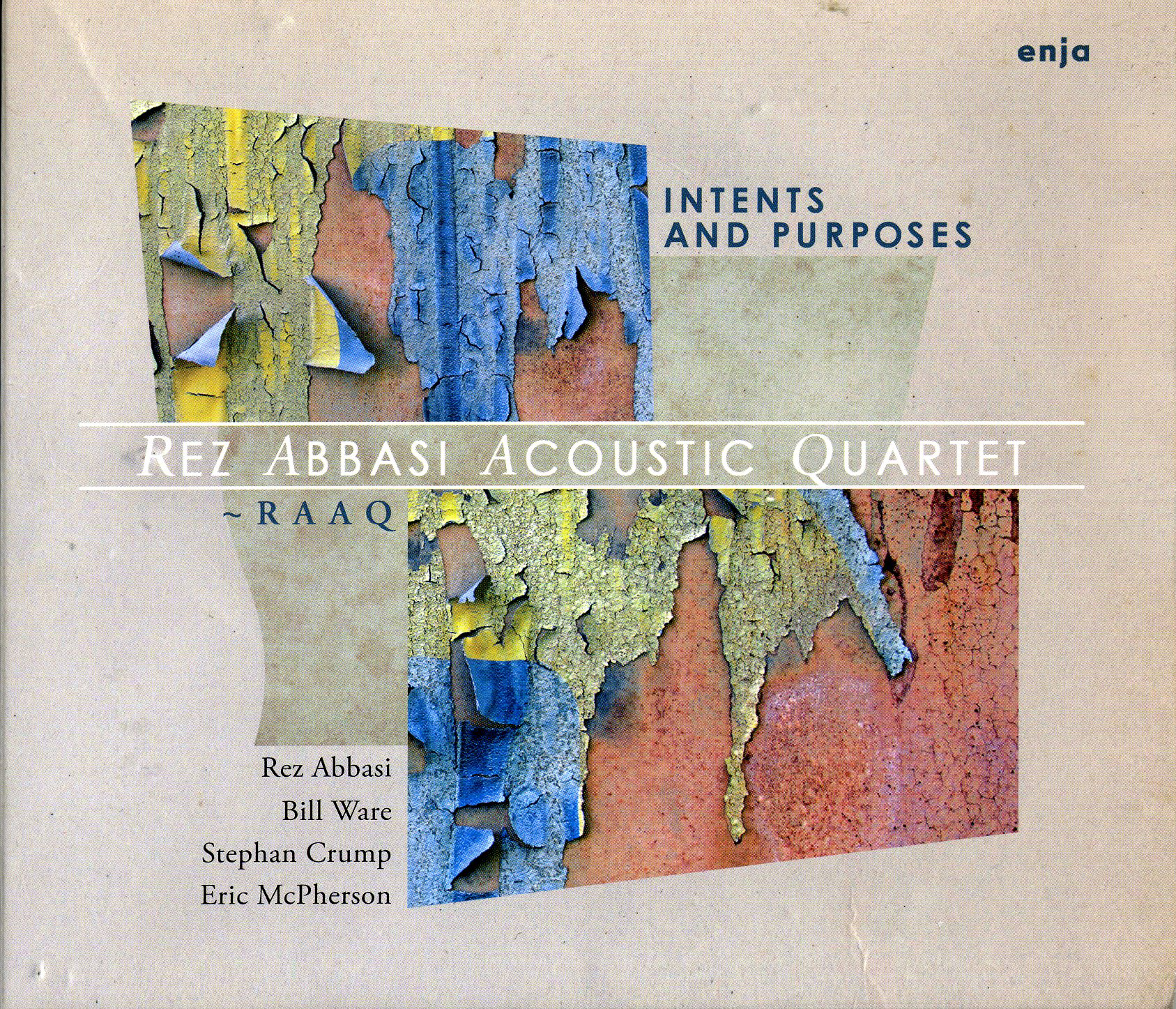
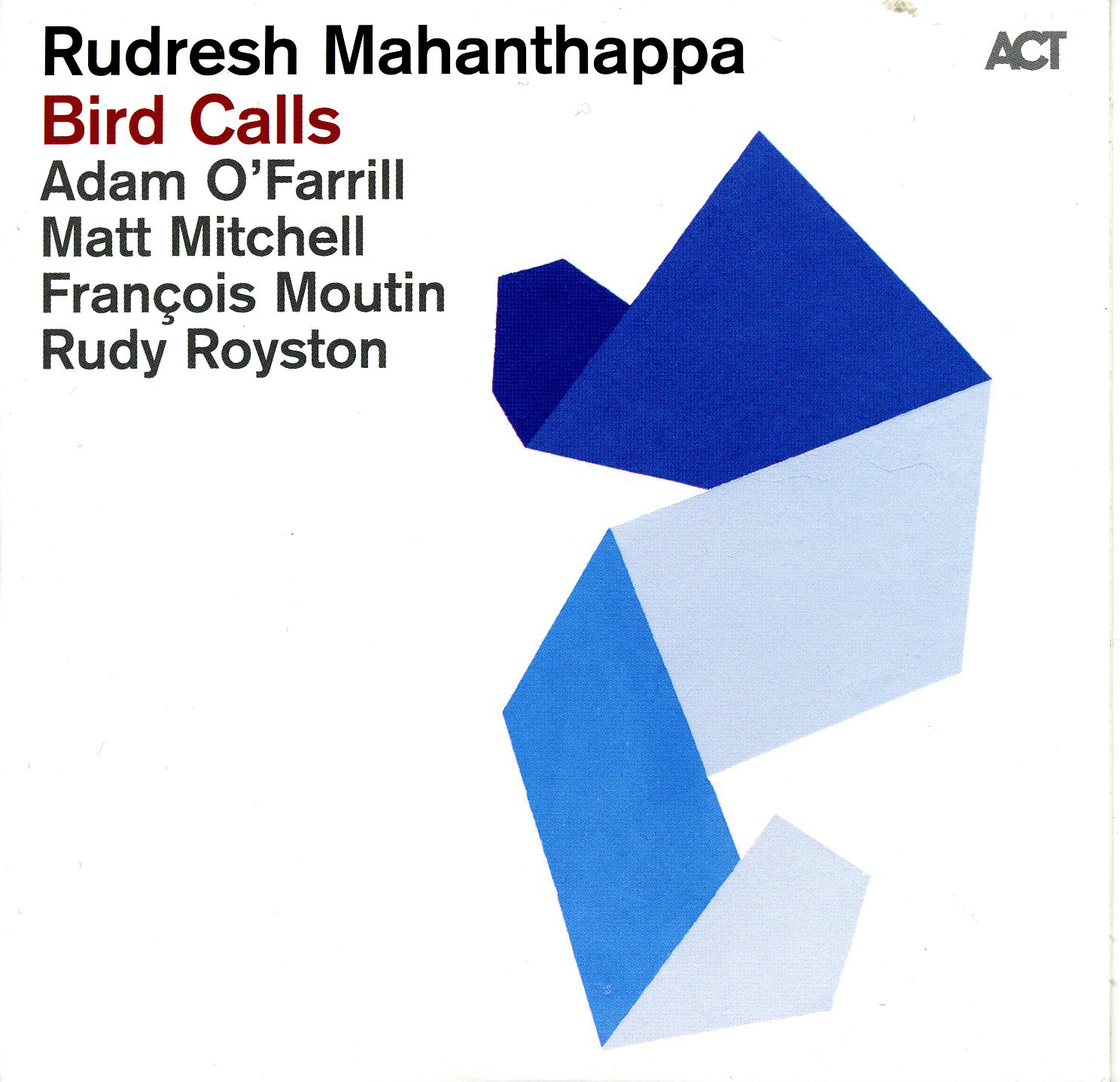
02_Rez_Abbasi.jpgMoving south of the 49th parallel a different musical ethos takes hold. Alto saxophonist Rudresh Mahanthappa, whose parents are Indian, and guitarist Rez Abbasi, who was born in Pakistan and immigrated to the U.S. as a small child, have in the past recorded discs reflecting their South Asian roots. But both these New York-based players’ newest sessions are jazz, without ethnic subtitles. Mahanthappa’s Bird Calls (ACT 9581-2 actmusic.com) consists of 13 of the saxophonist’s compositions based on familiar Charlie “Bird” Parker lines; while Abbasi takes on eight jazz-rock classics of the 1970s on Intents and Purposes (Enja Records ENJ-952-2 enjarecords.com), and recasts them using only his acoustic guitars, Bill Ware’s vibes, Stephen Crump’s bass and the drums of Eric McPherson. Although hints of sarod-like shimmers from Abbasi’s fretless instrument peek through on Herbie Hancock’s Butterfly, the intent and purpose of this disc lies in post-modern interpretation. Decelerating and relaxing the themes, Abbasi and company transform them from arena jazz-rock showpieces to subtle improvisational vehicles. Instructively enough the tracks that work best are those such as Joe Zawinul’s Black Market, Chick Corea’s Medieval Overture and Tony Williams’ There Comes a Time written by composers who played other instruments than the rock-associated guitar and who had the strongest pre-fusion jazz bona fides. With McPherson’s percussion hovering in the background, these restrained interpretations usually take impetus from Crump’s bass line; while leaving room for his solo work as well. Medieval Overture for instance, features a sequence of time and tempo changes where the string build-up is divided between, and nearly identical from, bass and guitar interpretations. Ware’s buoyancy animates most of the sequences as well, showcasing resonating textures that are often voiced alongside Abbasi’s finger-style lead. Meanwhile There Comes a Time, the concluding – and climatic – track is painted in the most vibrant and captivating colours, with strong four-mallet vibraphone smacks blending with thick baritone guitar strums that almost resemble tenor saxophone licks. Keeping it and the other pieces in a proper groove, Intents and Purposesreclaims them all for the jazz canon.

03_Bird_Calls.jpgIf transforming fusion into straight-ahead jazz is the attained challenge of Abbasi’s CD, then Bird Calls is an even more daunting task: finding a new way to interpret Parker’s legacy. Using a standard bop formation of saxophone, trumpet (Adam O’Farrill), piano (Matt Mitchell), bass (François Moutin) and drums (Rudy Royston), Mahanthappa’s contrafacts are up-to-the-minute statements which still intuit Parker’s essence. Putting a brake on bebop’s sometime frantic performance velocity, these interpretations are helped immeasurably by the saxophonist’s tone, which is wider and more rounded than Bird’s, often moving into the tenor range. In contrast, while O’Farrill frequently shows his age (20), by incessantly reaching for the most elevated capillary patterns, his excesses are reined in by the others. Oddly enough it’s the trumpeter’s Hispanic background which also comes into play giving a Latin feel to some of his work. As for Indian echoes, they’re practically non-existent, unless the obvious references to Hindu chanting on Gopuram can be counted. But even so this contrafact of Steeplechase gives more prominence to breakneck ripostes from piano, trumpet and saxophone. The remainder of the disc emphasizes a variant of mainstream jazz over all else. The rhythmic riffs that characterize Talin is Thinking (taken from Parker’s Mood) for example, go back as far as the Count Basie band’s elevation of the bluesy harmonies that came from Parker’s Kansas City hometown. Meanwhile Chillin’ (based on Relaxin’ at Canarillo), takes its shape from classic bop. The trumpeter and saxophonist face off with equivalent harsh lines while the bassist’s woody clunks and the drummer’s rolls and ruffs properly pace the galloping rhythms. Seconding both horns and carving space for himself throughout the tune, Mitchell demonstrates a command of the idiom as well as a casual, almost carefree pacing in his solos.

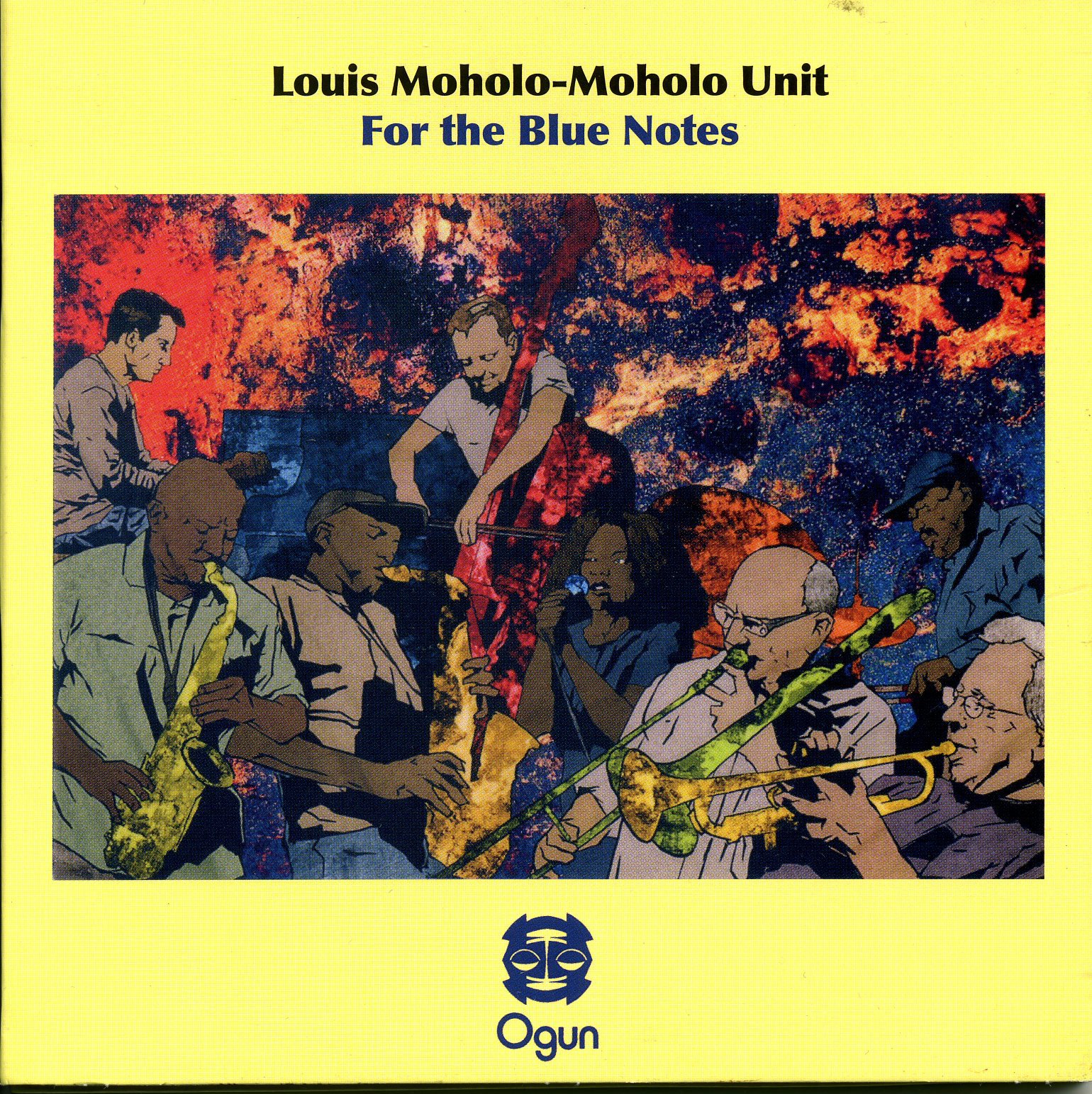
04_Blue_Notes.jpgYet another variation on this theme shows up on For The Blue Notes (Ogun Records OGCD 042 ogunrecords.com). Although the musicians featured have ancestral backgrounds from Martinique, Guyana and South Africa as well as parts of the United Kingdom, these ancestral memories are subsumed in this salute to the combo that left Apartheid-era South Africa to mingle high-life rhythms with British free jazz, creating an unmatched hybrid sound. Led by percussionist Louis Moholo-Moholo, the last surviving Blue Note, the octet’s repertory was mostly composed by original Blue Note members. What that means is that tracks such as Sonke and Zanele are fully in the South African style even though the associated vocals are by French-born (of Martinique background) Francine Luce. When she trades licks with the horns as well, the end product is high quality jazz that soars without labels or hyphens. Furthermore, listening to other creations like the title track, it’s bassist John Edwards’ solid timekeeping and pianist Alexander Hawkins’ kinetic chording that drive the undertaking as much as tie keening solos from saxophonist Jason Yarde and Ntshuks Bonga. Closer to the American rather than the Canadian concept here, the ancestral background of the players hardly influences the notable sounds issuing from their instruments.

As more immigrants or children of immigrants begin to fill the ranks of Canadian improvisers it will be instructive in the future to observe whether an American-inflected national style takes hold, or if Canadian musical sensibilities will still include distinctive overseas links.

It is Friday afternoon and my daughter Adrienne just called me and asked what I was doing now. “I’m having a wonderful afternoon, wallowing in the music from a box of mono recordings.”

01_Decca_mono_years.jpgThe Decca Sound The Mono Years 1944-1956 (Decca 4787946, 53 CDs) is a treasure trove of exemplary performances of symphonic and instrumental music by artists in the Decca stable at the time. FFRR, the ear and ffrr logo, standing for “full frequency range recording,” were registered trademarks and their appearance on the label informed the consumer that this recording sounded better than anything else on the market. For sure, the tipping point into the classical market was when Ernest Ansermet came to London and recorded Petrouchka with the London Philharmonic Orchestra to be released on five 78rpm records. Records are what recordings were called at the time. In November 1949 Ansermet recorded Petrouchka once more, this time in Geneva with the orchestra he had founded in 1918, L’Orchestre de la Suisse Romande. Issued, as before on ten 78rpm sides, it also appeared as Decca’s first Long Playing Microgroove record in June 1950 (years ahead of EMI, as usual) and three months later on, yes, as five 78s. As American Columbia, who developed the LP, had trademarked the name and the lp symbol, other companies could not call their LPs, LP. Phillips, who was Columbia’s partner in Europe, for example, coined “mini-groove.” Eventually however LP became generic.

That Geneva Petrouchka elevated Decca as a label and equally important spotlighted Ansermet and his orchestra. The Petrouchka is on the first disc in this Decca box along with their Le Sacre du Printempsrecorded in October 1950. Both are fine performances that are still admirable, dynamic and cleanly recorded, the harbinger of the many wonderful, highly sought-after Decca recordings to come from Ansermet conducting the Suisse Romande and other orchestras in an astonishingly wide repertoire. Included here are Roussel’sThe Spider’s Feast; Ravel’s Le Tombeau de Couperin; Rachmaninov’s Isle of the Dead; Dukas’ Le Peri and Debussy’s Six Epigraphes antiques and Jeux.

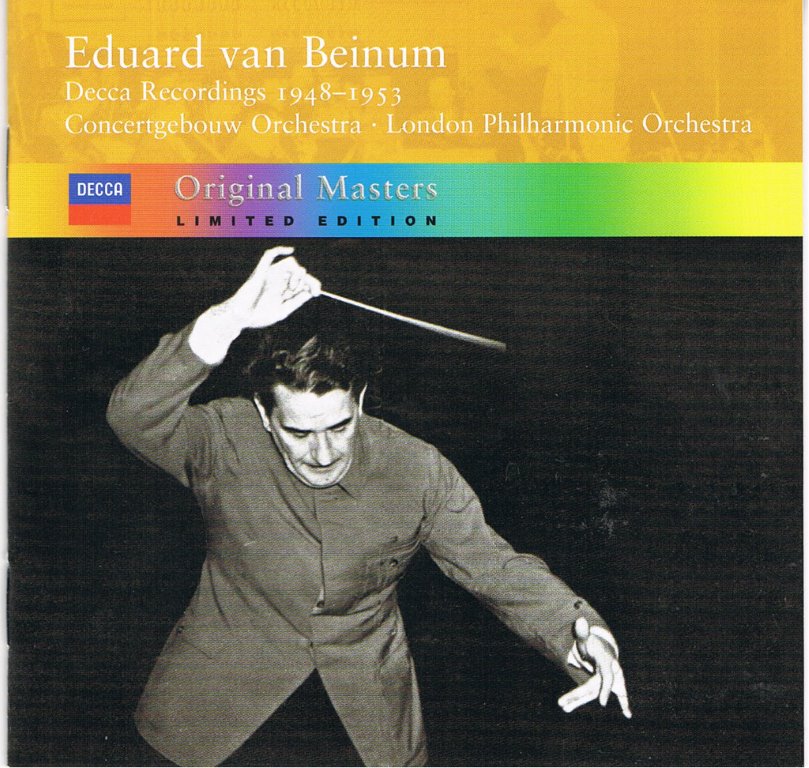
01b_von_Beinham.jpgThe world’s expanding demand for more ffrr recordings necessitated finding new artists and the recruiting began, acquiring many now-familiar names. The young Georg Solti was signed in 1947 as a pianist and made several recordings with violinist Georg Kulenkampff. Solti was itching to conduct and so he did with the Zurich Tonhalle Orchestra in Beethoven’s Egmont Overture. Many of his recordings from the time are included here: with the LPO are Bartók, Kodály and Haydn and with the LSO Mozart. In March 1946 The Concertgebouw Orchestra under Eduard van Beinum visited London and in the Walthamstow Assembly Hall they had their first recording session with Decca. Their sessions in mid-March 1947 included the Leonore Overture No.2 that was issued on two 10” 78s and hasn’t been heard since. Decca made regular trips to Amsterdam, where in September 1948 Bartók’s Concerto for Orchestra was taken down and in 1953, Decca’s final year before the orchestra went to Philips, van Beinum recorded William Pijper’sThird Symphony and a suite from Diepenbrock’s Marsyas produced by John Culshaw who had joined Decca in 1946. Many more items of the Eduard van Beinum recorded legacy with Decca are available on a 5-CD set Decca Original Masters (4731102).

One wonders why EMI let Benjamin Britten change record companies. Britten and Peter Pears had already recorded folk songs for EMI who also released an abridged Peter Grimes and Rape of Lucretia but as heard here, Decca has Britten conducting his Sinfonia da Requiem, Diversions for Piano left hand (with Julius Katchen),Four Sea Interludesand Passacaglia from Grimes and The Young Person’s Guide to the Orchestra.

On a personal note; from 1952 to 1955 Decca had recorded Sir Adrian Boult in the complete Vaughan Williams Symphonies (seven at the time) with the London Philharmonic Orchestra. Those performances were assembled and issued in a uniquely packaged set soon after. My wife presented me with that set for my 25th birthday. Some great wife!

Long gone are the many, many artists who live on in their performances documented by Decca, always in technology ahead of state of the art. The hi-fi era was ushered in by Decca’s ffrr recordings. The CDs in this set are sensibly arranged by artist with a composer’s directory in the booklet. Surprisingly, there is no duplication of any work. Here are but a few of the artists represented in this collection with a significant work:

Alfredo Campoli: Lalo’s Symphonie espagnole (with van Beinum), Elgar Violin Concerto (with Boult); Amadeus Quartet: Mozart Piano Quartets (with Clifford Curzon); Adrian Boult: Vaughan Williams Job and the Suite from the Wasps; also Tchaikovsky and Prokofiev; Sir Arthur Bliss conducts his Colour Symphony and his Violin Concerto (with Alfredo Campoli); Anthony Collins: Walton/Sitwell Façade (with Sitwell and Pears) and Elgar, Falstaff; Clifford Curzon: Brahms Piano Concerto No.1 (van Beinum); Mischa Elman: Beethoven Violin Concerto (with Solti); Christian Ferras: Brahms Violin Concerto (with Carl Schuricht); Anatole Fistoulari: Graduation Ball and ballets by Gluck, Grétry and Tchaikovsky’s usual three; Pierre Fournier: Brahms’ two cello sonatas (Backhaus); Maurice Gendron: Schubert’s Arpeggione Sonata (Jean Françaix), Schumann Cello Concerto (Ansermet); Griller Quartet: Bloch’s four string quartets and Sibelius Voces Intímae; Friedrich Gulda: Beethoven’s Piano Sonatas 26 & 29 and Eroica Variations; Quartetto Italiano: Quartets by Haydn, Boccherini, Schumann and Verdi; Thomas Jensen: Sibelius Lemminkäinen and Karelia Suites; Erich Kleiber: Beethoven Symphonies 6 & 9 plus Wagner; Hans Knappertsbusch: Bruckner Third Symphony (third version, Schalk & Loewe) VPO; Moura Lympany: Rachmaninov Third Concerto (Anthony Collins), Khachaturian Concerto (Fistoulari); Peter Maag: Mozart Symphonies 28 & 29, Serenade in D major K203I; Jean Martinon: Lalo, two Namouna Suites; Fauré and Françaix Concertino (with Kathleen Long); Boyd Neel: Handel 12 Concerti Grossi, Op.6; Zara Nelsova: cello sonatas by Rachmaninov and Kodály; Ruggiero Ricci: two violin concertos by Paganini (with Anthony Collins); Trio de Trieste: Beethoven Archduke Trio, Brahms Trio No.1; Erik Tuxen: fifth symphonies by Prokofiev and Sibelius; Vegh Quartet: string quartets by Smetana, Kodály and Schubert; Wiener Oktett: Mozart Divertimenti 10 & 17, Mendelssohn Octet, Brahms Clarinet Quintet (Alfred Boskovsky).

Because British Decca and American Decca were unrelated, the records were re-labelled London for distribution in North America and elsewhere. The offerings in this box are not presented as a sonic spectacular but as a true reproduction of the original truth of the monaural recordings heard better now than then.

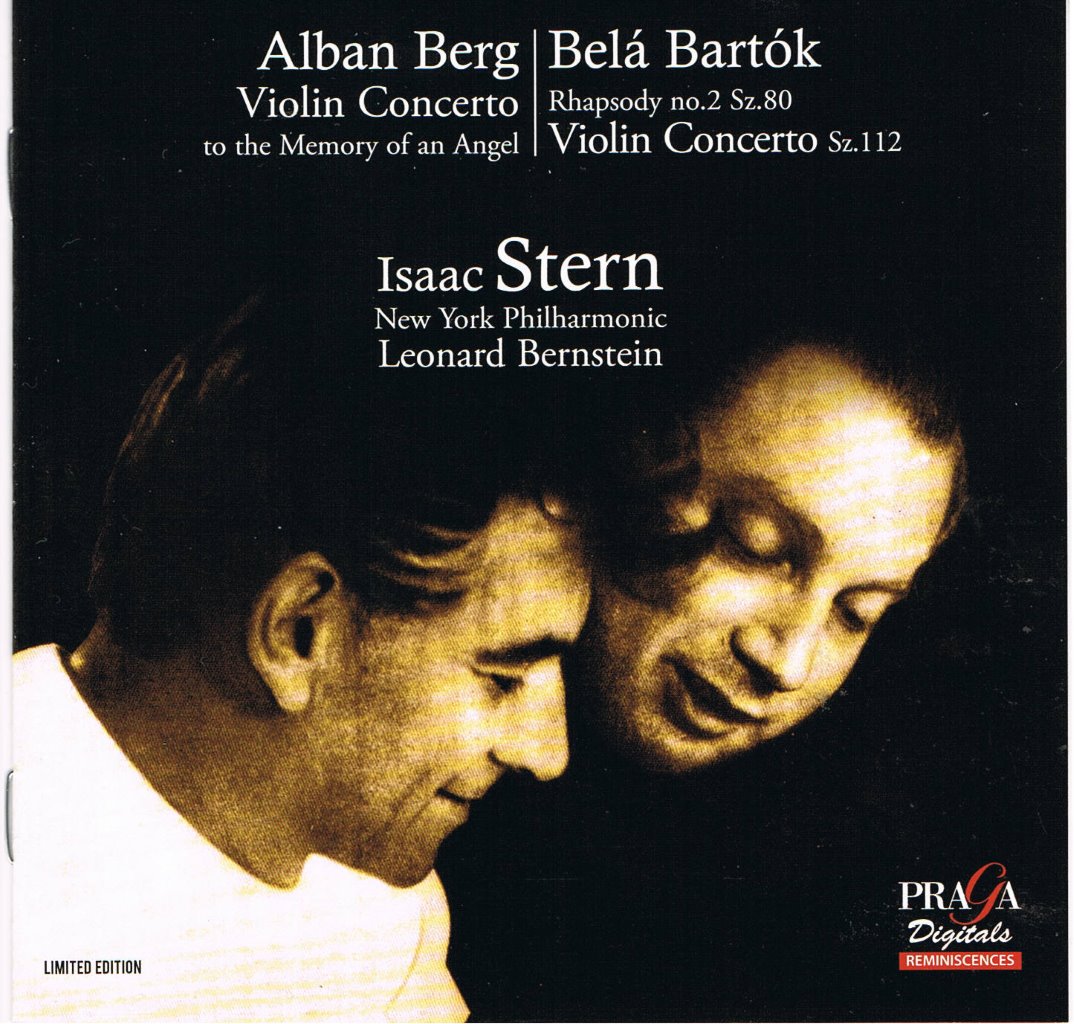
02_Stern_Berg_Bartok.jpgLast month I mentioned attending a Boulez 1969 concert in the Royal Festival Hall that included the Berg Violin Concerto with Isaac Stern. There is no Boulez/Stern recording but in 1959 Stern recorded the concerto in New York with Leonard Bernstein conducting. Praga has produced an SACD “DSD remastered from the original quadraphonic tentatives…without artificial back effect.” (Praga PRD/DSD 350099 hybrid). The disc-mates are the Bartók Violin Concerto and Rhapsody for Violin and Orchestra. Stern had a unique, recognizable timbre that makes this an attractive disc particularly in view of the interpretative insights all around and the ideal sound.

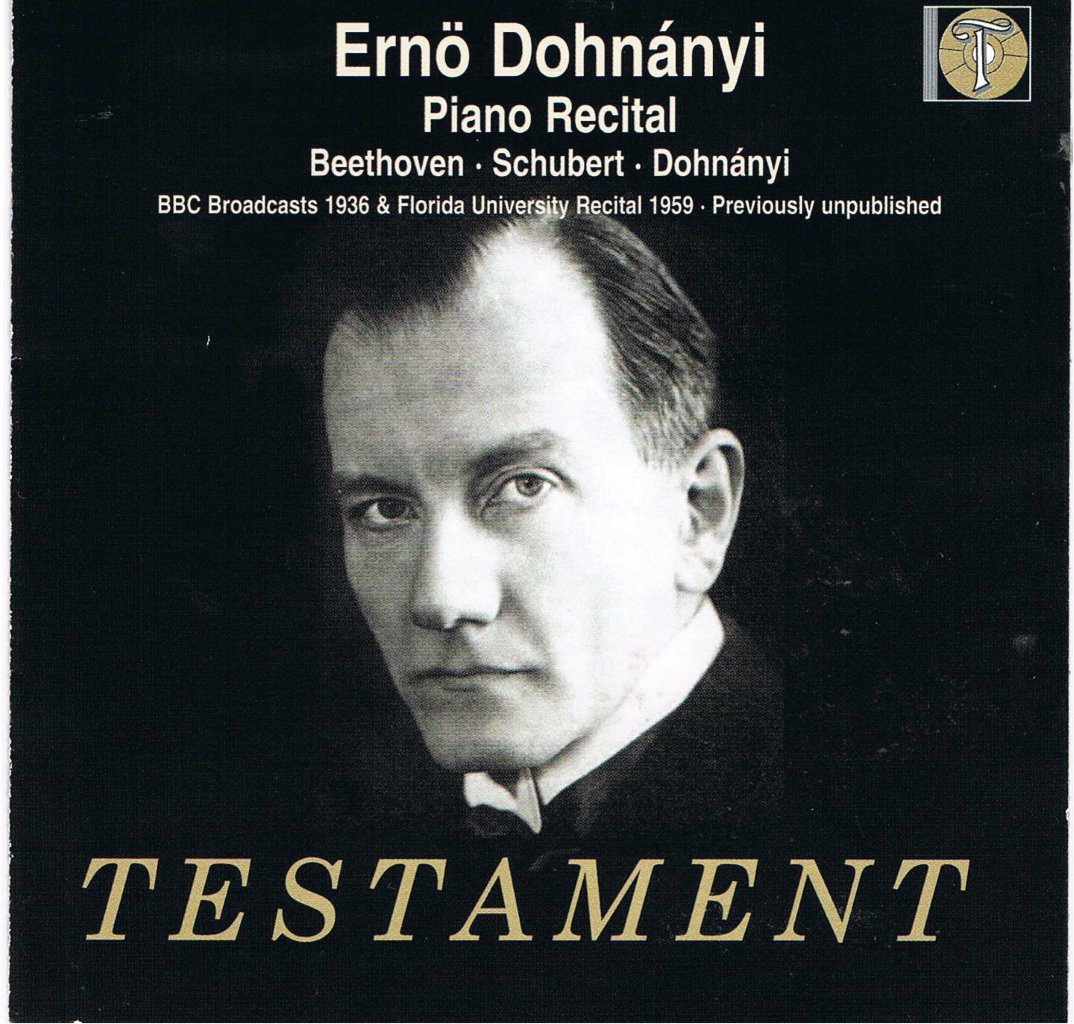
03_Dohnanyi.jpgBack in the days of classical AM stations, there was a place for attractive works of lasting interest but of shorter rather than longer duration. There was a Dohnányi piece that surfaced regularly, the Rhapsody in C Major, Op.11 No.3 played by the renowned pianist Eileen Joyce. Testament has issued some previously unissued concert performances by Ernö Dohnányi (AKA Ernst von Dohnányi) recorded live at the Edinburgh Festival in 1956, at Florida University in 1959 and a couple of BBC transcriptions (SBT2 1505, 2 CDs). Born in 1877 in Bratislava (then Pozsony), Dohnányi attended the Franz Liszt Academy in Budapest where he studied with Istvan Thomán, a pupil of Liszt. As did Béla Bartók and György Cziffra. Dohnányi became a composer, pianist and conductor. Through the first half of the last century he was regarded as a pianist of the first rank but today most music lovers might only recognize him as the composer of Variations on a Nursery Tune for piano and orchestra. He did however write a significant amount of chamber music, which is well represented in the catalogue, and composed major symphonic works.

The Florida recital opens with Beethoven’s Piano Sonata No.16, Op.31. No.1, Schubert’s No.18 D894 and three pieces of Dohnányi’s  own. Disc two contains six solo pieces and a concerto, Symphonic Minutes, Op.36. This is a brilliant, interesting four-movement work of which there are another two performances in the catalogue – neither of which I have heard – but this one has the composer-pianist playing. It must be noted that because of the variation of recorded quality of the originals, this release is intended for avid collectors and archivists who can listen through the artifacts. However, I find that the brain soon adjusts and diminishes the steady extraneous distractions. 

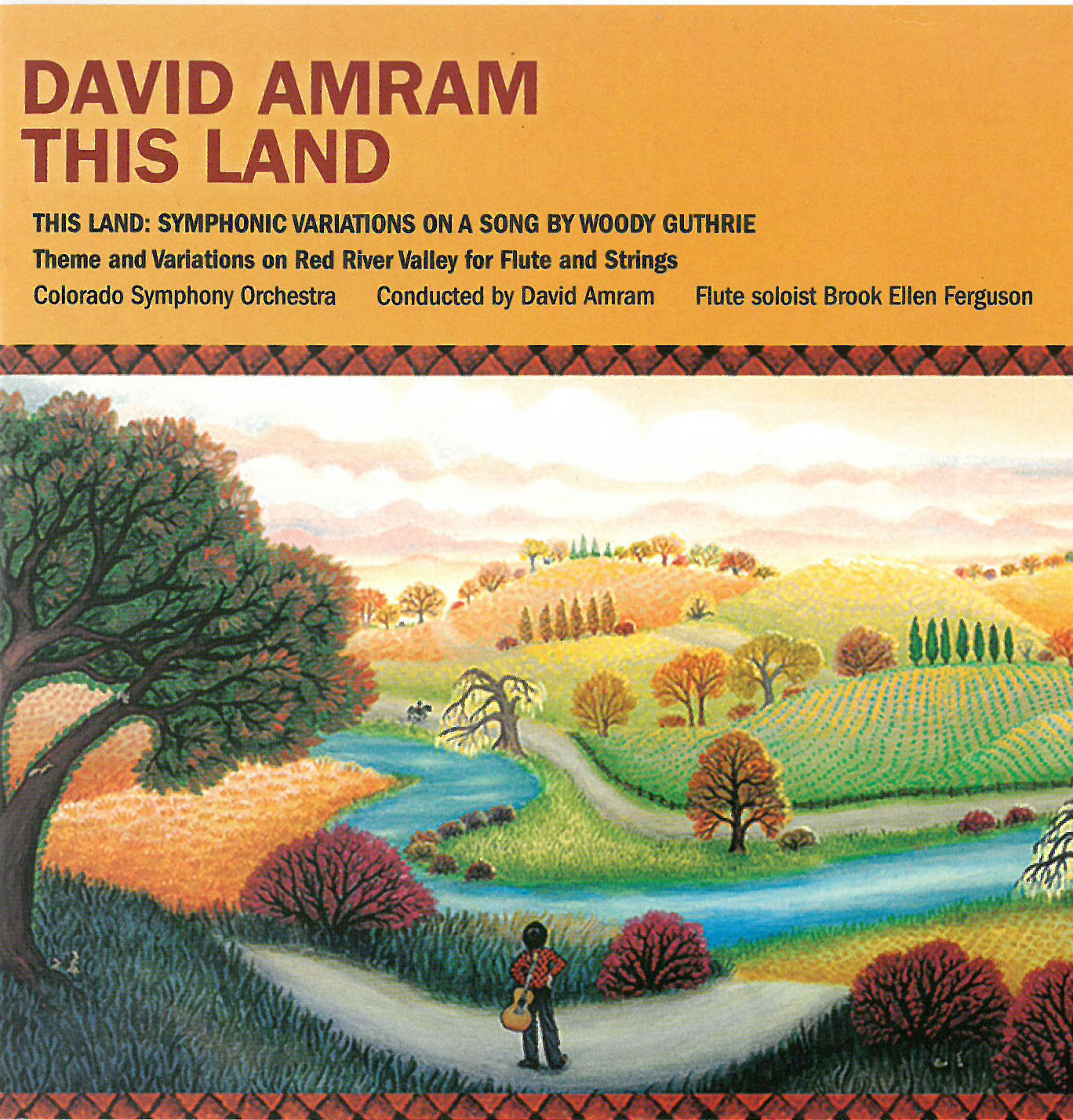
April_Editor_scans_01_Amram.jpgI was intrigued to receive a package from Woody Guthrie Publications in New York City and more so when I opened it to find it contained This Land: Symphonic Variations on a Song by Woody Guthrie by David Amram performed by the Colorado Symphony Orchestra (coloradosymphony.org). I first encountered the music of David Amram almost half a century ago on the soundtrack to the seminal Beat Generation film Pull My Daisy directed by Robert Frank and Alfred Leslie. The film included Amram’s jazz setting of the title poem written by Allen Ginsberg, Jack Kerouac and Neal Cassady. The somewhat haunting theme proved to be an earworm that has stuck with me since first hearing. (If you haven’t seen the film you can check it out at ubu.com/film/leslie_daisy.html.) My next exposure was at the Mariposa Festival one of the years it took place on the Toronto Islands where Amram was featured in a variety of guises, including in the children’s tent with Raffi who sang a catchy song to the tune of Arkansas Traveler with the words “Peanut butter sandwich made with jam, One for me and one for David Amram…” which still pops up in my ears from time to time. Amram is a renaissance man who is seemingly comfortable in all genres and on almost all instruments. A pioneer of jazz French horn and a trailblazer of the World Music movement, he is equally at home in the concert hall, having conducted more than 75 orchestras and performed as orchestral soloist on a host of different instruments. In 1966 Leonard Bernstein appointed him as the first composer-in-residence with the New York Philharmonic and his oeuvre extends to more than 100 orchestral and chamber works, several operas and a couple of notable film scores (Splendor in the Grass and The Manchurian Candidate). All of which is to say that he has impeccable credentials to pay tribute to one of the most iconic songwriters and chroniclers of American life.

Lasting nearly 40 minutes, This Land uses the orchestral palette to paint a vast pastoral portrait of the land that Guthrie traveled so extensively and described so aptly in his songs. The work is divided into six main movements with descriptive titles: Theme and Variations for the Road (in which we first hear the familiar tune from the marimba) & Variation I: Oklahoma Stomp Dance; Variation II: Sunday Morning Church Service in Okema (Guthrie’s home town); Variation III: Prelude and Pampa Texas Barn Dance; Variation IV: Dreaming of Mexico; Variation V: Dust Bowl Dirge; Variation VI: Street Sounds of New York’s Neighborhoods (which includes Caribbean Street Festival, Klezmer Wedding, Salvation Army Hymn and Block Party Jam). The melody of This Land Is Your Land is cleverly woven throughout the textures of the work, sometimes hidden but never far from the surface, and appears in some surprising contexts such as the ground bass for the klezmer clarinet solo. My only concern is the overall subdued nature of the work. It never gets truly raucous or rambunctious and we never hear the hard edge of Guthrie’s gritty side, his working class hero with the emblem “this guitar kills fascists” etched on his axe. This Land is complemented with another pastorale, a mellow set of variations for flute and strings on the American classic folk song Red River Valley.

April_Editor_scans_02_Monk_Feldman.jpgA disc that met all my expectations was recently released by New World Records (80765-2)Soft Horizons features works by Canadian composer Barbara Monk Feldman performed by pianist Aki Takahashi, the Flux Quartet and the DownTown Ensemble. It opens in a very contemplative mood with the title piece, a solo piano work reminiscent of the composer’s late husband and mentor Morton Feldman. The sparse, gentle, meandering work gives each note time to breathe before moving on, producing a wondrous sense of calm while at the same time creating a sense of anticipation as we await the next quiet event. Written in 2012, Soft Horizons is the most recent work presented.

Although currently residing in Guelph, Monk Feldman lived for many years in New Mexico. Her 2004 String Quartet No.1 is subtitled Desert Scape and presents two visions of that geological phenomenon. The first begins with a consonant viola melody commented upon by bird- or insect-like sounds from the violins. As the movement develops the harmonies get closer in a kind of gentle abrasiveness which is supplanted by melodies echoed in higher octaves and later a Bartókian “night music” section, but in slow motion. The second movement maintains the sense of uneasy calm, this time with high melodies and commentaries in the lower strings. As the piece gradually unfolds we are drawn into a delicate soundworld where the sense of disquiet gradually seems to become the new normal.

The final piece, The Chaco Wilderness (2005), while maintaining the overall sonic mood of gradual progression adds a wealth of colour to the textures through its use of vibraphone, flute, clarinet, guitar/mandolin and piano. The work is in three contrasting movements and is the shortest by far on the disc. It may seem surprising that it contains the most “activity” per se, but I rather think that this is indicative of Monk Feldman’s style. The pieces in which “nothing happens” need a longer time frame to unfold.

All of the artists on this recording are masters of the genre. Aki Takahashi has been in the forefront of the avant garde since the 1970s, working with Cage, Xenakis, Boulez and Takemitsu to name but a few. In 1980 she was invited by Morton Feldman as a Creative Associate of the Center of the Creative and Performing Arts at SUNY, Buffalo. FLUX, which includes Canadian violist Max Mandel, was founded nearly 20 years ago and has been active on the New York scene ever since. Among their achievements is the performance (and recording for Mode Records) of Morton Feldman’s stunning five and half hour String Quartet No.2. The DownTown Ensemble, founded by Daniel Goode and William Hellermann, is now in its fourth decade of presenting experimental music in virtually all of its diverse forms.

April_Editor_scans_03_Gonzales.jpgComing at it from a very different angle, Europeanized Canadian MC/pop arranger/composer/performer Chilly Gonzales (aka Jason Charles Beck) has been working extensively with the Hamburg-based Kaiser Quartett lately and has just released a disc of original compositions for piano and string quartet. Chambers (Gentle Threat Records GENTLE016, chillygonzales.com) is intended as a reimagining of “Romantic-era chamber music as today’s addictive pop” and the project succeeds, with catchy melodies and warm harmonic writing. While it certainly doesn’t push any boundaries of new classical vocabulary it will open the ears of people who don’t normally have occasion to listen to string quartets or thoughtful instrumental music. The overall feeling of the disc is surprisingly laid-back, with only three of the twelve tracks proceeding at anything faster than a moderato pace, but this makes for a sense of continuity throughout. The titles are playful, including clever wordplay as in Prelude to a FeudFreudian Slippers, and Green’s Leaves. One surprise is a slightly melancholy piece called Odessa, dedicated to the Ukrainian-born Russian composer Reinhold Glière. Another is a haunting vocal ballad, Myth Me, the earworm which concludes the disc. Concert Note: Chilly Gonzales and the Kaiser Quartett perform at Koerner Hall on April 21.

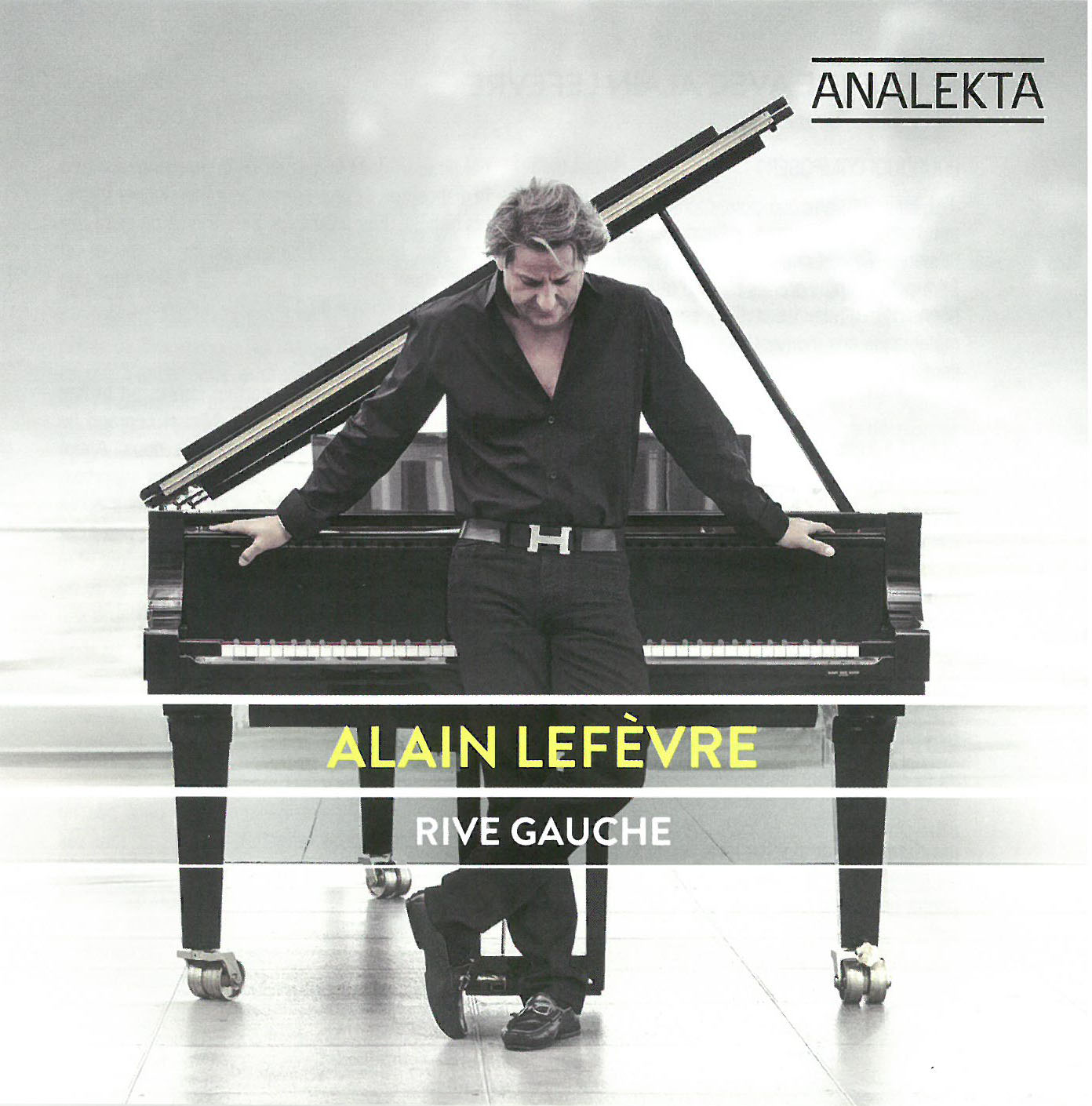
April_Editor_scans_04_Lefevre.jpgAnother album with a somewhat similar feel comes from renowned classical pianist Alain Lefèvre who is known for his recordings of Chopin, Liszt and Mozart and also for his championing of the music of Canadian wunderkind André Mathieu (1929-1968). Rive Gauche (Analekta AN 2 9295) is a collection of Lefèvre’s own compositions, in his words “films for the ear, images for the piano” so it is likely no coincidence that the disc begins with a piece entitled Cinema Lumière. There is an overall sense of nostalgia in these warm, melodic pieces that range from swinging solo piano miniatures to chamber jazz tunes with the addition of bass (Michel Donato) and drums (Paul Brochu). Violinist Angèle Dubeau makes a cameo appearance on the tune Paris de mes souvenirs, a lovely ballad full of longing, and Léane Labrêche-Dor adds her pleasing jazz-infected voice to the closing track Au bout de mes rêves.

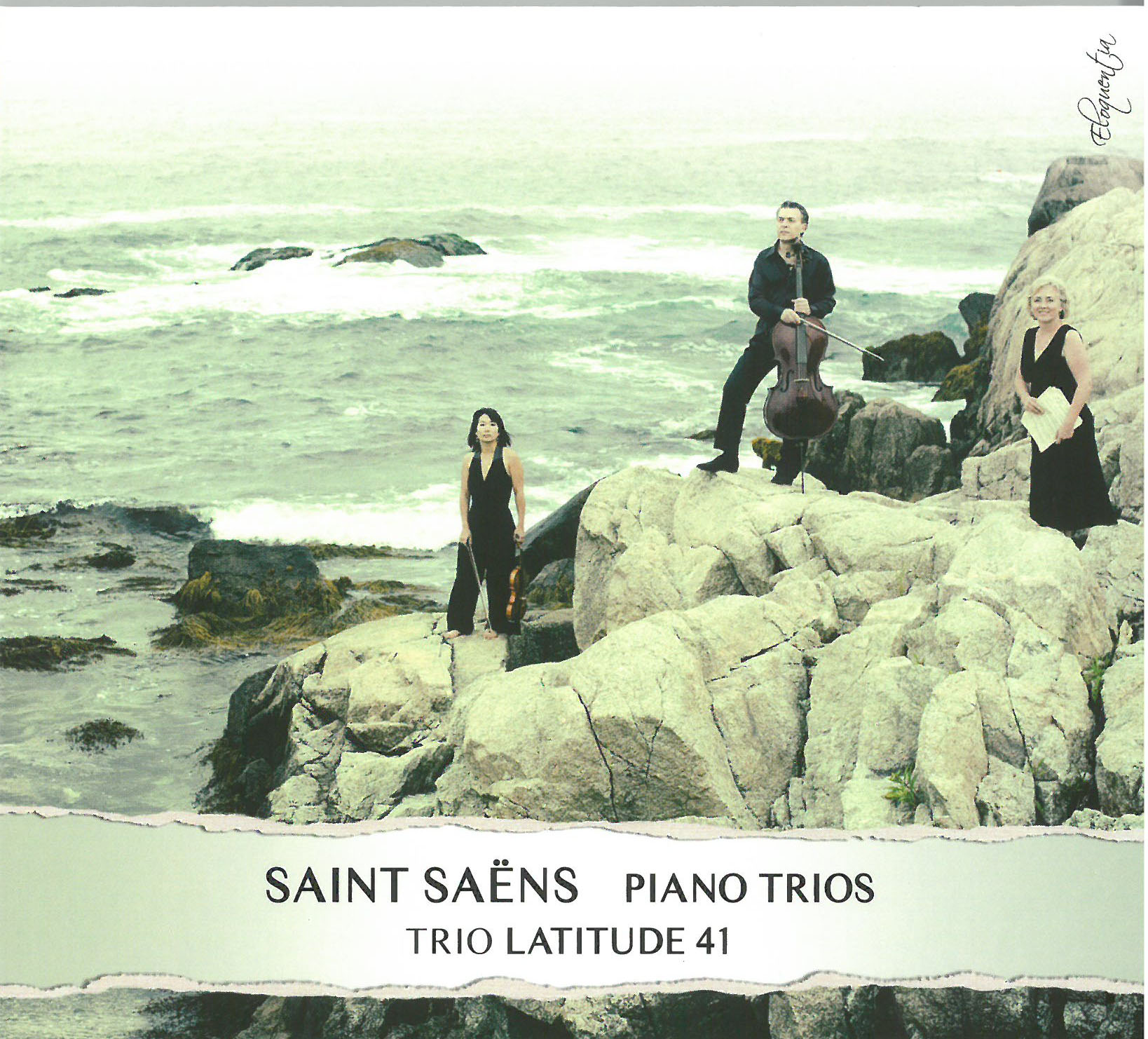
April_Editor_scans_05_Saint-Saens.jpgWhen we think of Camille Saint-Saëns (1835-1921) such works as the Carnival of the AnimalsDanse macabre and the magnificent Organ Symphony come most readily to mind, but he also left some chamber gems behind, including a number of sonatas for various instruments, a piano quintet, a piano quartet and two piano trios. It is the Piano Trios which are featured on a new disc by Trio Latitude 41 (Eloquentia EL 1547 eloquentia.fr). The curious name of the trio stems from the geographical placement of both their first engagement in Rhode Island and the city of Rome, where the Italian cellist Luigi Piovano lives. The other members are American violinist Livia Sohn and Canadian-born pianist Bernadene Blaha, who for the past two decades has made her home in Los Angeles where she teaches at the University of Southern California.

While far from unknown, these trios are quite underrepresented in the catalogue – only three other recordings of the two together, including one by the Vienna Piano Trio who appeared in Toronto recently courtesy of Mooredale Concerts, turned up on a quick search at Grigorian.com – and these sensitive and nuanced performances are a welcome addition. The trios were composed three decades apart, the first having been written in 1863 and the second not until 1892. The disc opens with the latter, with rumbling bass from the piano’s left hand and a welcoming melody from the strings accompanied by ebullient passages from pianist’s right hand. Although not a work we hear very often it sounds familiar in wonderful way, with hints of Mendelssohn’s A Minor Trio without seeming derivative. At 35 minutes it is an exhilarating and at times intense journey. The charming earlier trio, itself nearly half an hour long, is lighter and more playful, perhaps indicative of the youth of the composer, but balanced and well crafted. Both receive compelling performances in this rewarding release. I thank Trio Latitude 41 for bringing these works (back) to my attention.

Review

April_Editor_scans_06_McBirnie.jpgAnd in closing, something completely different – the latest from Mr. “Extreme Flute” Bill McBirnie. On Grain of Sand (EF07 extremeflute.com) McBirnie once again teams up with Latin multi-instrumentalist Bruce Jones, revisiting a partnership which resulted in the 1998 album Desvio. Jones wrote all the music, some of the tunes in collaboration with McBirnie, and the results are predominantly Brazilian-inspired samba and bossa nova style with plenty of Jones’ distinctive nylon-string guitar and vocals. Although only the two musicians are involved they have used the recording studio to good advantage, creating a multi-layered offering that is especially effective in the flute duet over guitar and ambient drone in Lembrando Paul Horn (Remembering Paul Horn). Other influences include hip-hop and funk and the end result is a diverse mosaic ranging from the mellow Vai Bem Devagar  (Proceed with Caution) to the bouncing Cê Tá Com Tudo (You Are Everything), while maintaining an integral continuity. McBirnie’s flute, although not particularly “extreme” in this instance, is lively and lilting as it soars over the bed tracks laid down by Jones, in the forefront in the instrumental tunes where it has the dominant melody and tastefully in the background or heard in duet with Jones’ voice in the songs with lyrics. I only wish they had included the words and translations in the package. This is good time music, well played and obviously enjoyed by McBirnie and Jones. It takes me back to my introduction to this genre back in the 1970s when I first heard Brazilian icon Jorge Ben (Jor). Thanks for the memories!

We welcome your feedback and invite submissions. CDs and comments should be sent to: DISCoveries, WholeNote Media Inc., The Centre for Social Innovation, 503 – 720 Bathurst St. Toronto ON M5S 2R4. We also encourage you to visit our website thewholenote.com where you can find added features including direct links to performers, composers and record labels, expanded and archival reviews. David Olds, DISCoveries Editor discoveries@thewholenote.com

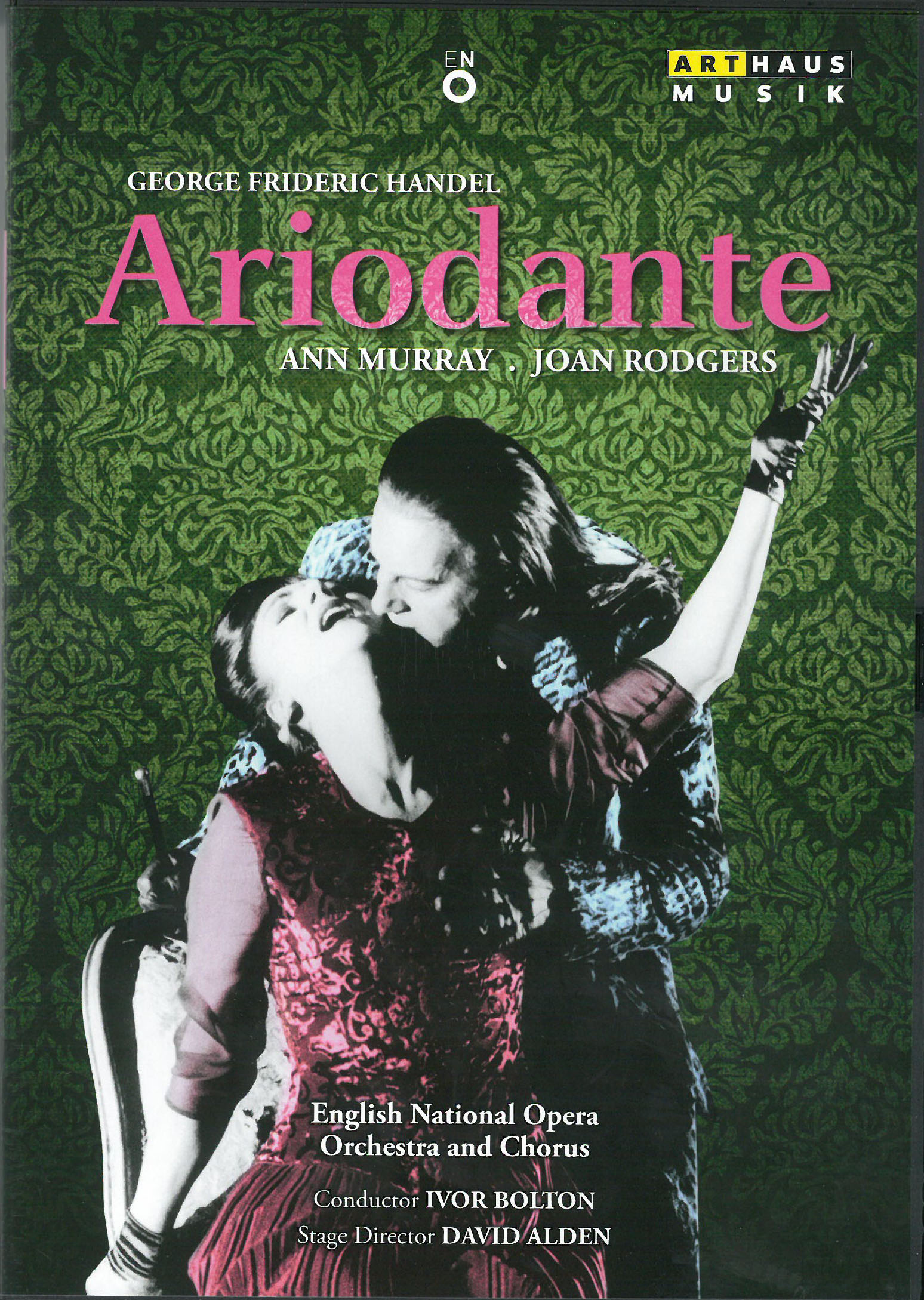
01_Vocal_01_Handel_Ariodante.jpgHandel – Ariodante
Ann Murray; Joan Rodgers; English National Opera Orchestra and Chorus; 
Ivor Bolton
ArtHaus Musik 100065

Ariodante is a late opera by Handel. It is also one of his finest. It broke new ground in a number of ways: there are important ballet scenes; there is a real chorus; and there are substantial parts for the tenor and for the bass. This DVD is a record of the English National Opera production of the work, first mounted in 1993, then revived in 1996. Like all ENO productions it is sung in English. I think there is some point in translating a libretto into the language of most people in the audience in the case of comic operas or works with spoken dialogue. I don’t think it helps with an opera seria by Handel.

The production is by David Alden, who has in recent years given us several controversial productions for the Canadian Opera Company. There are a number of directorial excesses such as the quite gratuitous dream sequences, while the ballets that conclude both the second and third act are abominable. Moreover, the artists whom we see and hear are singers, not film stars. Several of the women are heavily made up and would no doubt look splendid from the second balcony. They do not in close-up and yet close-ups are what we get much of the time.

The conductor, Ivor Bolton, is very good and there is some fine singing from Ann Murray and Joan Rodgers, from Lesley Garrett and Gwynne Howell. But if your main interest is in the music you are better off listening to one of the CD sets available such as the version conducted by Raymond Leppard on Philips (with Janet Baker and Norma Burrowes) or that conducted by Alan Curtis on Virgin (with Karina Gauvin and Marie-Nicole Lemieux).


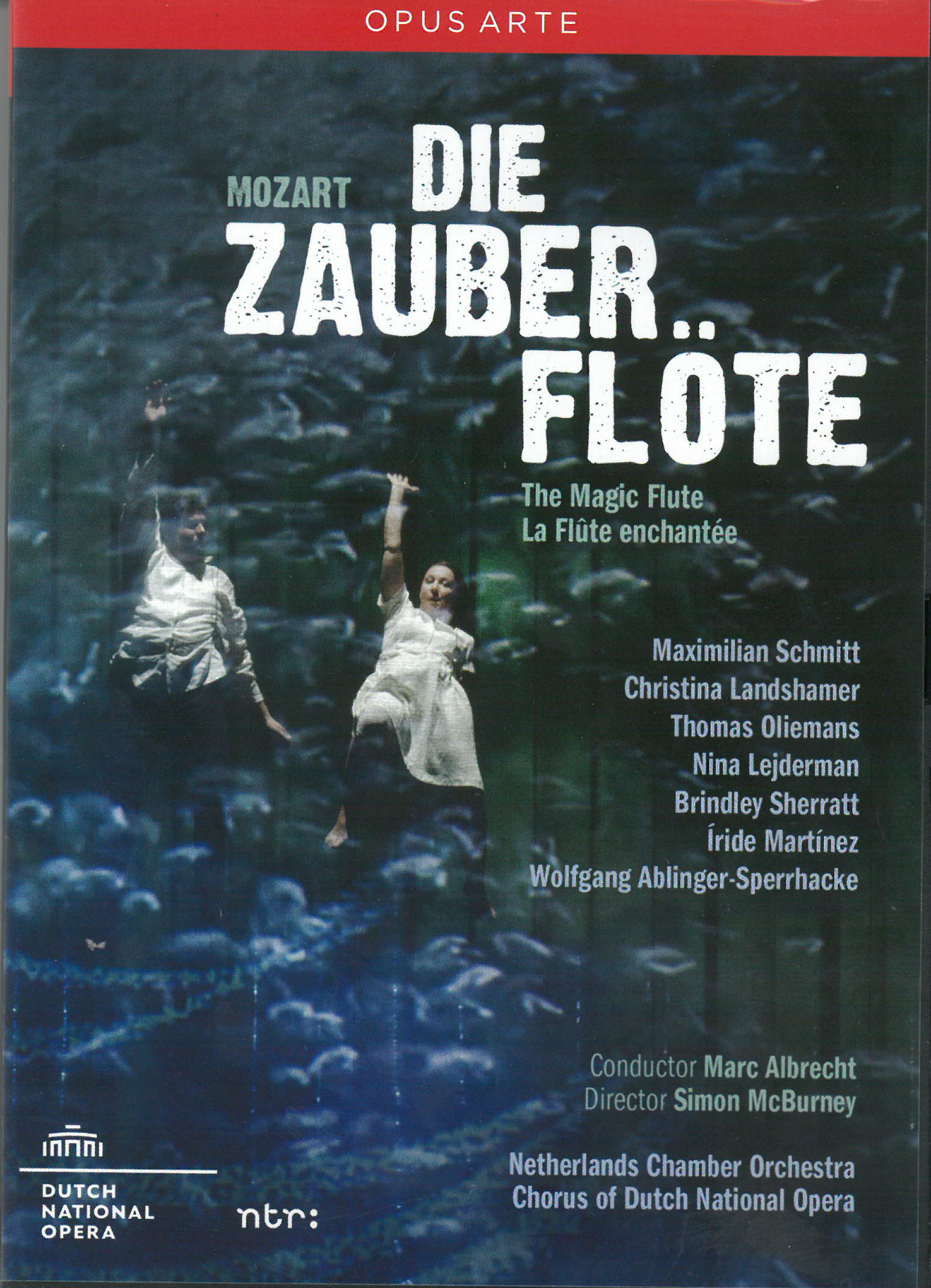
01_Vocal_02_Mozart_Zauber.jpgMozart – Die Zauberflöte
Schmitt; Landshamer; Oliemans; Lejderman; Dutch National Opera; Netherlands Chamber Orchestra;
Marc Albrecht
Opus Arte OA 1122 D

Die Zauberflöte is not an easy opera to pull off, as it needs a director who is able to present the farcical elements such as the serpent that threatens Tamino at the beginning of the opera and the antics of Papageno, but is also in tune with the sense of ritual needed for the scenes with Sarastro and his initiates. This production, directed by Simon McBurney, is on the whole quite successful. I did not like everything: I could have done without the crowds of actors running on the stage, waving pieces of paper and pretending to be birds. I thought the initiates in their suits and with their neckties looked too much like the personnel of an insurance company. I don’t understand why the Queen of the Night was in a wheelchair or why the Three Spirits (very well sung by three boy sopranos) were made to look like wizened old men or why the Speaker was so grim and unsympathetic.

But there are marvellous moments. Pamina (the wonderful Christina Landshamer) and Papageno (Thomas Oliemans, a fine actor and a fine singer) set up a great relationship in their first scene together which then leads to a beautiful performance of the duet: Bei Männer welche Liebe fühlen. In several scenes Tamino plays his (magic) flute. Clearly unless the tenor is also a flutist he will mime these scenes while the flute is played by an orchestral musician. McBurney has taken the conventional presentation a stage further by either having the flutist join Tamino on stage or moving Tamino down into the orchestra pit. This is an inventive production set on a bare stage without any emphasis on theatrical illusion. Michael Levine’s set designs complement the production very well. The whole opera is well sung and there is no weak link in the cast.

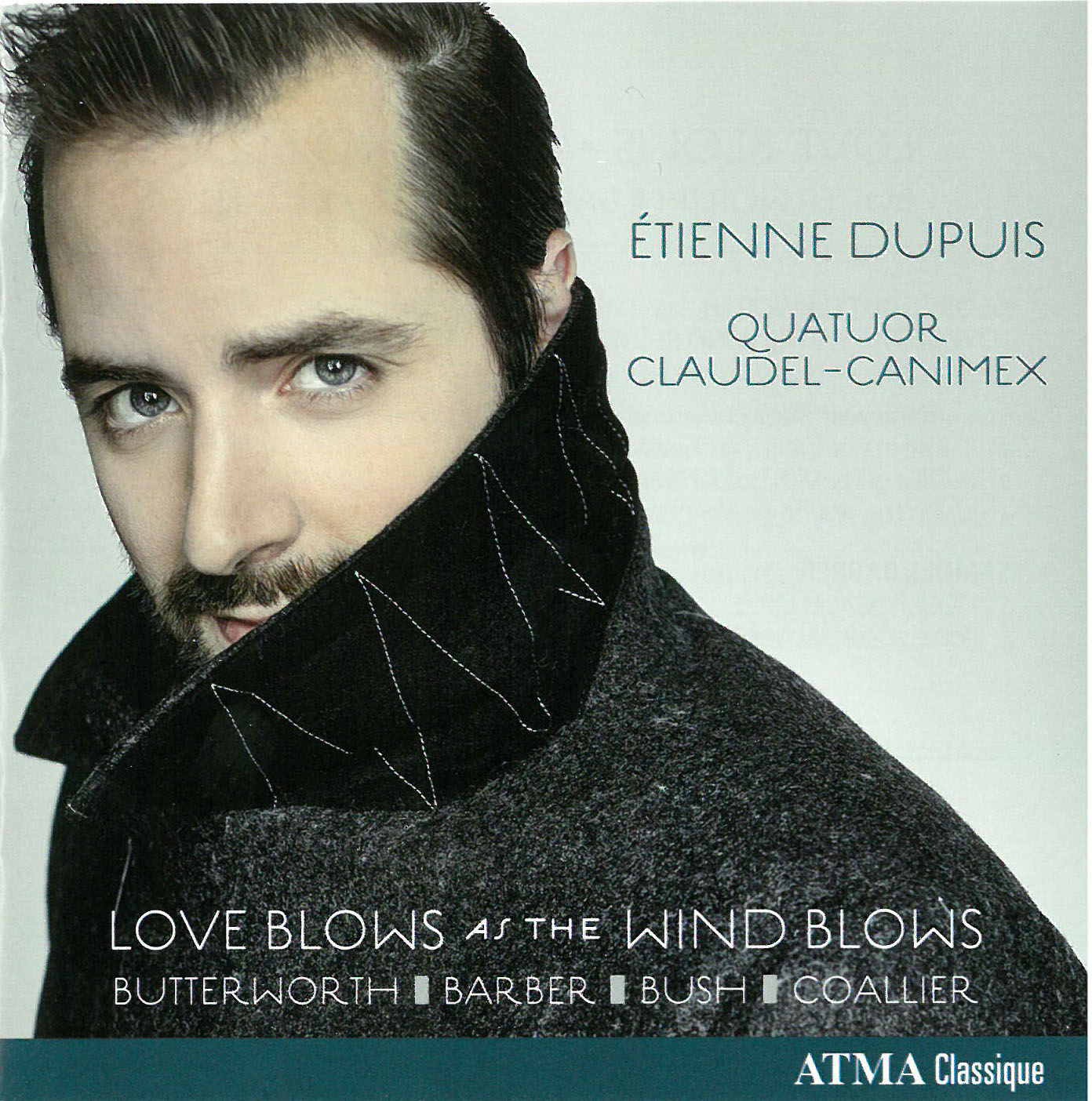
01_Vocal_03_Etienne_Dupuis.jpgLove Blows as the Wind Blows
Etienne Dupuis; Quatuor Claudel-Canimex
ATMA ACD2 2701

Etienne Dupuis developed for himself a reputation of being a clown – first with his classmates at the Schulich School of Music at McGill University and then with the attendees of his concerts. In this recording, Dupuis is all (most) business, as the mood called for in the songs of British composers is sombre. Loss of faith, end of life ruminations and such are only occasionally relieved by the wonders of nature (“O, the month of May, the merry month of May”). His voice is full and robust, and yet Dupuis uses vibrato, not very often associated with the baritone, to an interesting result in Barber’s Dover Beach. The accompaniment of Quatuor Claudel-Canimex, whose members are the mainstays of the Orchestra of Lanaudière – Canada’s best-loved classical music festival – harmonizes beautifully with his voice. The mood continues with the Adagio for string quartet by Barber – a piece no doubt demonstrating the Quatour Claudel-Canimex’s abilities, but in my opinion, unnecessarily omnipresent.

Speaking of omnipresent, the imp in Dupuis raises its head, with the hammed-up rendition of Danny Boy – though I cannot deny the beauty of the last note! The true gem of the album hides at the very end: Réjean Coallier’s setting of poems by Sylvain Garneau. Garneau died at the age of 23, leaving behind a small body of lyrical works. Coallier, a Montreal-based pianist, composer and teacher, offers a loving treatment of the poetry, with beautiful melodies lining the words with silky gentleness. Again, Dupuis sounds great – which he does whenever he overcomes his inner clown.


01_Vocal_04_Marshall_Songs.jpgNicholas Marshall – Songs and Chamber Music
James Gilchrist; Various Artists; Manchester Chamber Ensemble
Metier msv 28552 divineartrecords.com

This CD showcases songs and instrumental music by British composer Nicholas Marshall, born in the 1940s and still busily at work today. Marshall’s musical influences and talents are many and varied, and while certainly having his own inventive voice he follows in the musical footsteps of Warlock, Delius, Vaughan Williams and Sir Lennox Berkeley, with whom he also studied. The disc opens with The Birds, a song cycle of poetry by Hardy, Belloc, Yeats and others set beautifully for tenor voice, recorder and piano.  A brief but evocative Plaint for cello and piano precedes The Falling of the Leaves, another cycle set for tenor voice, alto recorder, cello and harpsichord on six poems by Yeats. The balance between all three voices is delicately well struck, in the writing as well as in performance; tenor James Gilchrist sings exquisitely, and Harvey Davies sounds equally at home on both harpsichord and piano.

Other songs on the program feature the poetry of James Reeves (Music in the Wood) and G.K. Chesterton (Three Short Songs), very deftly matched in character and spirit by Marshall’s writing. Two pieces for recorder and string quartet round out the program: Marshall’s Recorder Concerto, of which the slow movement is particularly beautiful, and The Nightingale, a short and sweet fantasia on a Welsh folk song. These are played with attentive affection and deserve more attention from other recorder players out there!

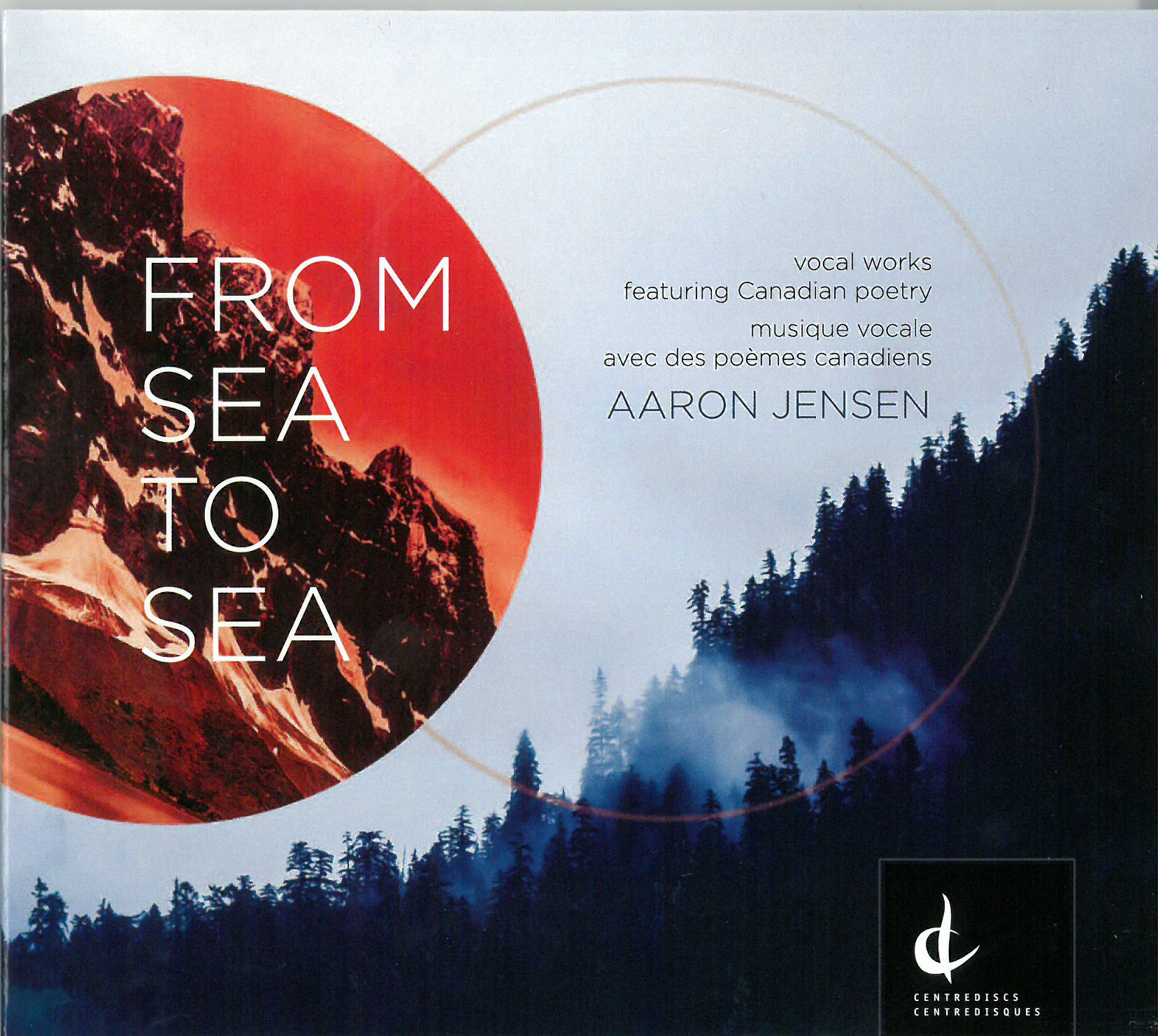
01_Vocal_05_Jensen_From_Sea_to_Sea.jpgAaron Jensen: From Sea to Sea – Vocal works featuring Canadian Poetry
Various Artists
Centrediscs CMCCD 20815

In an interview with The WholeNote’s David Perlman, composer/singer/impresario Aaron Jensen stated that “vocal music is flourishing in Toronto, and we plan on leading the singing revolution.” And he went on to do just that as artistic director of the Harbourfront SING! Festival. That and more so, representing all of Canada with the 2013 debut of his song cycle From Sea to Sea. It was eight years in the making, with Jensen first choosing poetry from each province and territory. Then came the arduous task of obtaining rights from each poet (or poet’s estate), and then the craft of honouring each poem with its own unique musical treatment. The result is a delightful and most interesting variety of styles within the one work, perfectly matching Jensen’s description of the “abundance of wit, craft, and poignancy” of the texts. In addition to expressing through the genres of folk, classical and jazz, he invokes overtones of Inuit throat singing (Uvavnuk Dreams), pointillist notation mirroring the Braille alphabet (Poems in Braille), bodhrán rhythms (Rain in the Country), as well as many more highly effective musical sketches and characterizations. Most of the vocal groups who performed the work at SING! appear on the recording and deliver exquisite performances: The Elmer Isleler Singers, The SING! Singers, Countermeasure, Cawthra Park Chamber Choir, KAJAK Collective and the Canadian Men’s Chorus.

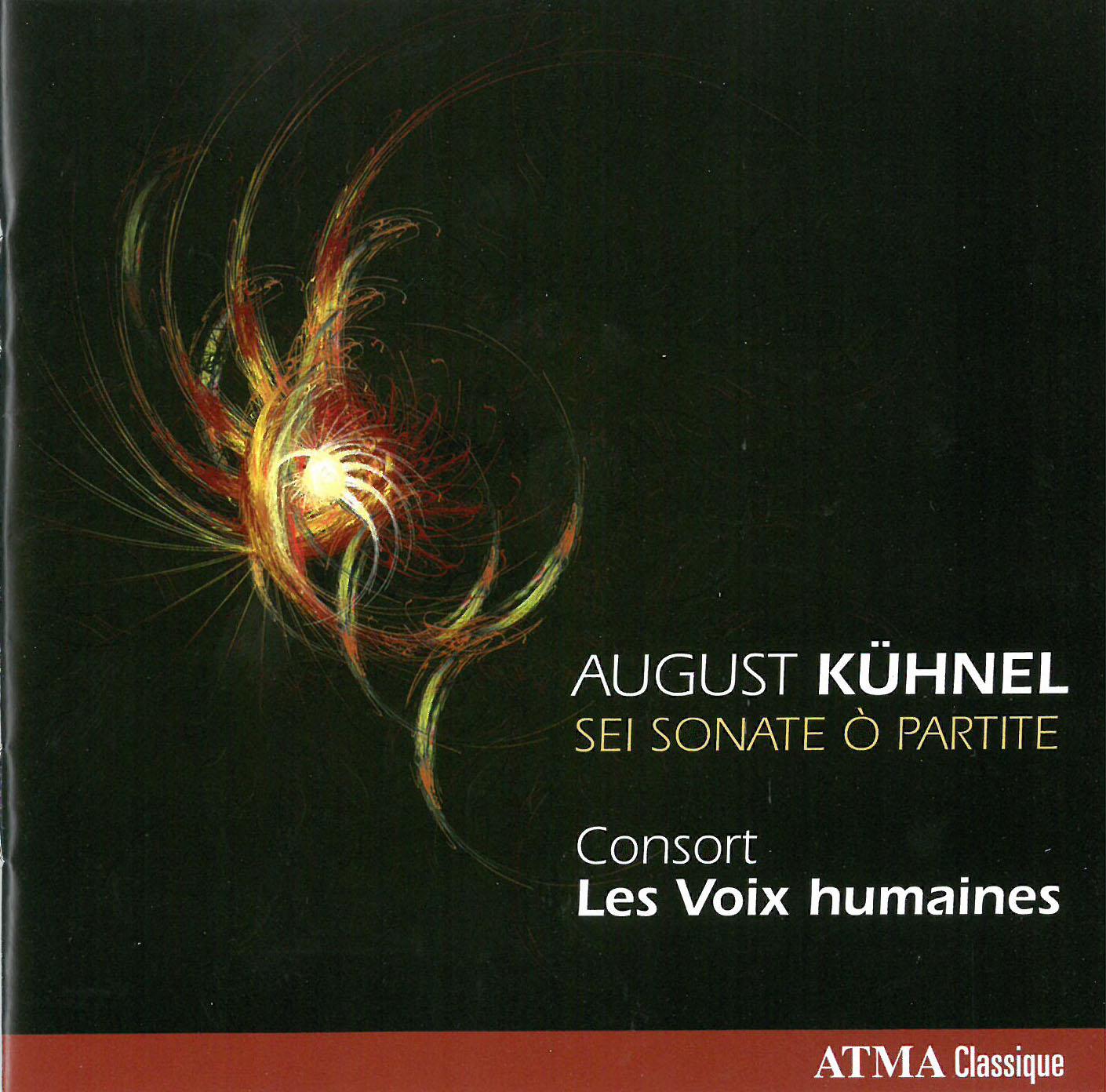
02_Classical_01_Kuhnel_Voix_humaines.jpgAugust Kuhnel – Sei Sonate O Partite
Les Voix humaines
ATMA ACD2 2644

Solo, rather than consort performances of the bass viol increased in popularity – not to say melodic and harmonic potential – in Europe in the mid-17th century. France emerged as a key centre for bass viol solo music but Germany was not so far behind. August 1645 saw the birth of August Kühnel in Saxony. Kühnel’s father Samuel, himself a composer and viol player, trained him to the extent that he was appointed viola da gambist to the court orchestra of Maurice, Duke of Saxe-Zeitz.

Only Kühnel‘s six sonatas or partitas were published; the rest of his music survives as manuscripts. In fact, the partitas deserve a wider audience. They start with a prelude which features rich embellishments and follow with rigorous allegros and adagios. Susie Napper, Margaret Little and Mélisande Corriveau tackle these movements with gusto. Their playing is reminiscent of what was called stylus phantasticus, a demanding interpretation which tests the bass viol player with its rigorous scoring.

Sonata I sets the pace in this respect even if Sonata II is more restrained; the former could almost be one of the folk-tune settings which had inspired early 17th-century viola da gamba players. Sonata III falls somewhere between its predecessors. This is not surprising as it is annotated solely as aria variata by Kühnel.

It is Kühnel himself who encourages the spirited playing of the Voix Humaines Consort as he himself acknowledges that it is impossible to annotate everything: he places an apostrophe where he requires an ornament to be played, leaving performers free to choose trills, vibratos, appoggiaturas and many others! It is a bit like leaving schoolchildren free to roam in the chemistry laboratory or, in the sleeve-note writer’s words, “the telepathic communion of a pair of jazz saxophonists.”

And the last three sonatas? The country-dance characteristics of some of their movements is certainly brought out, particularly in Sonata V, while Sonata VI is very reminiscent of the music accompanying baroque dramas. It is easy to see why Napper and Little are so admired for their interpretations of this genre.


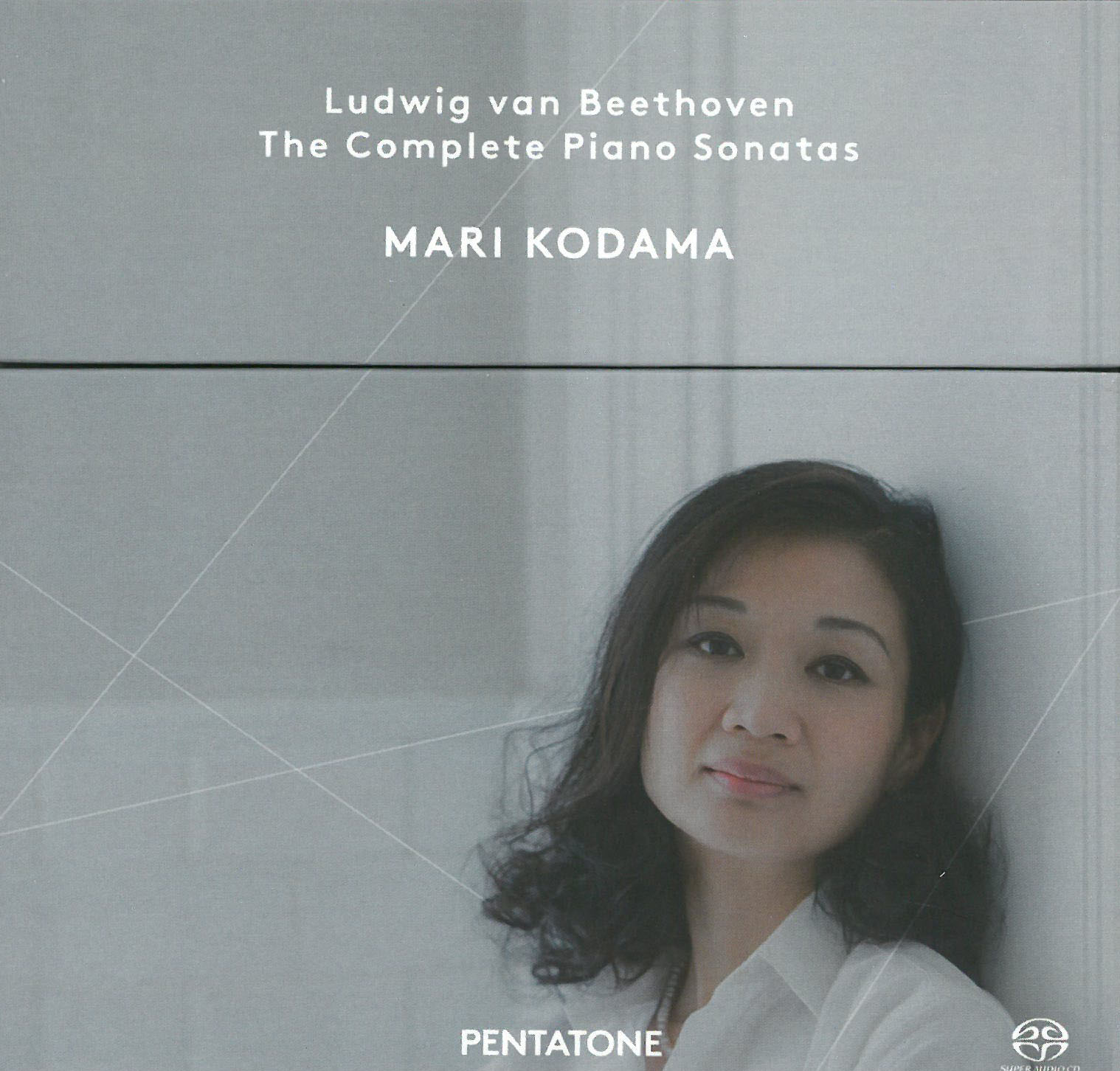
02_Classical_03_Beethoven_Kodama.jpgBeethoven – Complete Piano Sonatas
Mari Kodama
Pentatone PTC 5186 490

The 32 sonatas of Beethoven are a milestone in musical history and one of the marvels of human civilization. The piano was Beethoven’s own instrument; he first became famous as a concert pianist. The sonatas also trace the development of the instrument itself; with technical improvements it became more and more articulate and expressive, noticeable throughout the sonatas. Interpretation dates back to the time of Liszt and complete recordings by some of the piano giants are many, but almost exclusively by male pianists.

I met Mari Kodama at the time of launching her new set for PentaTone. She immediately impressed me as quiet, unassuming, rather reclusive and modest but very dedicated to her art. Well, quiet waters run deep as I certainly found out later in listening to her play. It took her some ten years to complete this project and “time was her greatest gift” as she thoroughly researched each sonata and understood the compositional process from the inside out as her extensive notes demonstrate. Kodama was virtually unknown when she started this project and so it was doubly difficult to make herself known as well as make a new statement on this field. Comparisons are limitless as everyone has his/her favorites they swear by, although it wouldn’t be fair to this relatively young pianist and the enormity of her effort and accomplishment.

Her playing can be summed up as impeccable, painstakingly observing the composer’s original metronome markings, usually on the fast side of what we are used to with amazing technical brilliance and rhythmic precision as well as a tremendous range of expression and structural coherence. Her playing is essentially delicate, but this is advantageous for the more light hearted, humorous pieces like the second movement of the Hunt Sonata, Op.31, No.3 and elsewhere where she is distinctly delightful in making the piano literally “swing” (Op.31, No.1). Even more challenging is the Pastoral Sonata Op.28, notoriously difficult to interpret, in which she excels. Her youthful joy of playing, especially her favourites, is infectious, which makes this set extra special.

But Kodama is certainly no lightweight. She makes an enormous impact with the Hammerklavier, Op.106, more than 41 minutes long, immensely difficult, an endurance test even for the likes of Richter. Her bold attack with the magnificent fanfare-like chords immediately rouses the listener. The long Adagio, often a stumbling block for pianists, is held together well and the enormous fugue that requires almost superhuman endurance and stamina comes off with such abundant energy that it’s simply breathtaking.

Nine CDs richly documented with Kodama’s own analysis of each sonata, the PentaTone sound is state of the art with gorgeous piano tone as if it was in your own living room.

Concert Note: Mari Kodama and Karin Kei Nagano, her 15-year-old daughter (with her husband MSO conductor Kent Nagano), perform April 25 as part of Bravo Niagara!’s second annual “Spring into Music @ Stratus festival, Stratus Vineyards, Niagara-on-the-Lake.

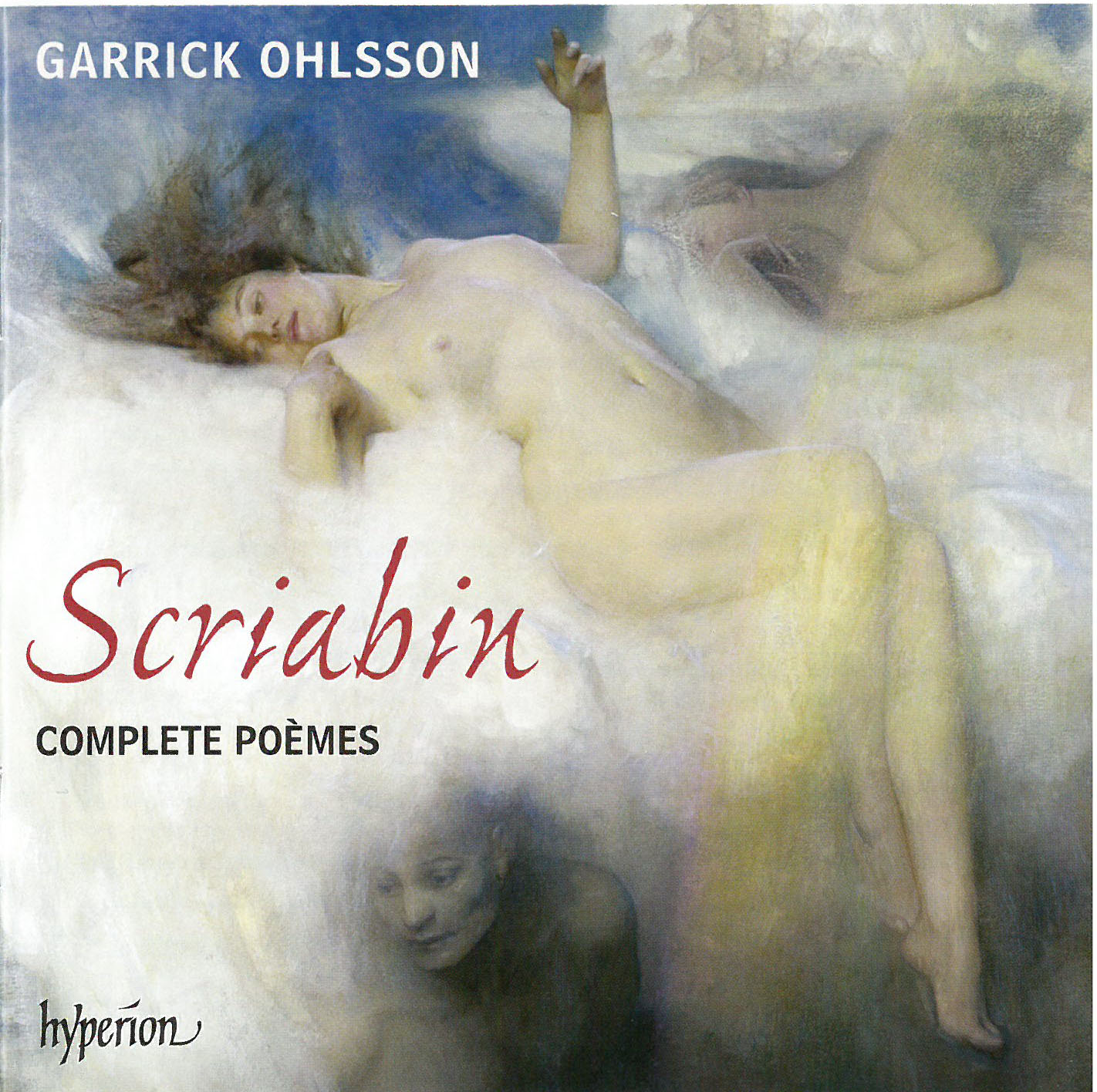
02_Classical_04_Scriabin_Ohlsson.jpgScriabin – Complete Poèmes
Garrick Ohlsson
Hyperion CDA67988

Titling a piano piece a “poem” is not mere affectation. Simon Nicholls’ disc notes are packed with examples of symbolist correspondences between the arts in Scriabin’s music. But on this recording of the complete Poèmes for piano, filled out with brief character pieces, the musical variety and originality of tonal structure, articulation and texture are to me more interesting than extra-musical associations. Garrick Ohlsson’s stylistic mastery makes it so.

A Chopinist among many other things, Ohlsson brings to the Chopin-influenced Scriabin’s early Deux poèmes, Op.32 moods of a sensuous nocturne (No.1) and an intense prelude (No.2). Ohlsson’s technique is clean and bass lines are well-organized. The exquisite Poème, Op.41 is melodically distinguished and full of pianistic colour in Ohlsson’s reading. Scriabin’s tonal explorations widened in his miniatures: the results range from caprice and wit (Scherzo, Op.46) through yearning (Quasi valse, Op.47) to languor (Rêverie, Op.49, No.3), the latter a unique take on the hoary sequence of fifths. Through attentive pedalling Ohlsson manages to balance and shape Fragility, Op.51, No.1, a favourite of mine, floating right hand chords over a left hand playing both melody (thumb) and accompaniment (fingers). Much more could be written about the remarkable late Poème-Nocturne, Op.61 and Vers la flame: poème, Op.72; it is in handling varied textures, fleeting motifs and nuanced dynamics within the overall nocturnal ambience that Ohlsson creates his magic.

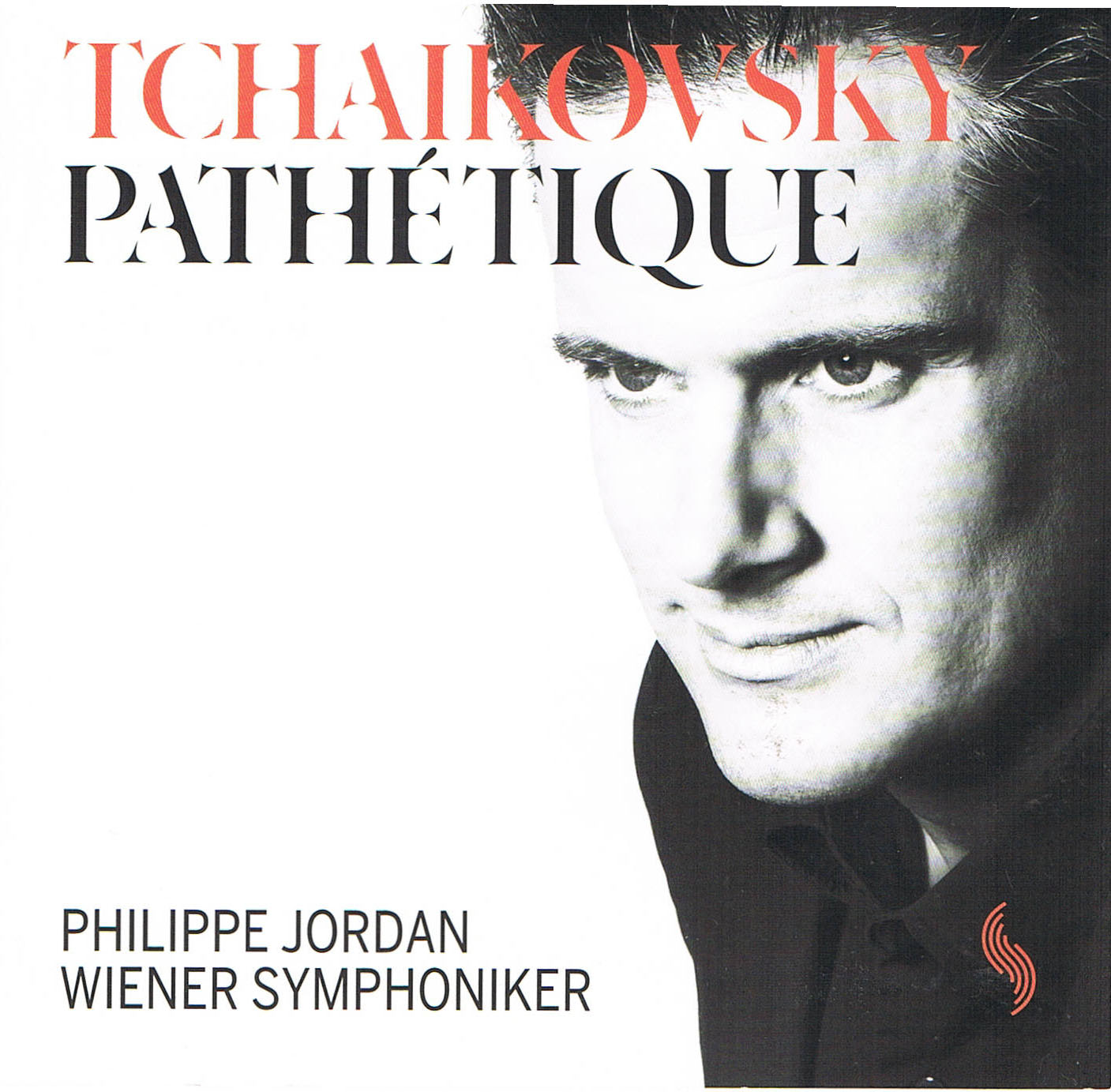
02_Classical_05_Tchaikovsky_6.jpgTchaikovsky – Symphony No.6 in B Minor, Pathétique
Vienna Symphony Orchestra;
Philippe Jordan
Wiener Symphoniker CD WS 006

This CD was issued late last year and has just come my way. It is rather special. Philippe Jordan is a young Swiss conductor, now 40, the son of conductor Armin Jordan. He is presently music director of the Opera National de Paris and conducts in opera houses around the world. Included in his operas on Opus Arte DVDs are the unforgettable Covent Garden Salome with Nadja Michael and the flamboyant Glyndebourne Carmen with Anne Sophie von Otter.

As the new chief conductor of the Vienna Symphony Jordan turns in a meticulously prepared, articulate performance worthy of top honours among the legions of available recordings. Over the years conductors have fallen into the inherited conventions of drawing out the maximum drama and pathos at many accepted points in the score. And audiences attending concerts or at home look for and expect these.

Jordan does little more than make incremental changes in tempi which may be noted or not as we listen to the most refreshing performance around. The orchestra’s sound is easily distinguished from the Philharmonic, being not nearly as opulent but with impeccable ensemble and polish, particularly in the strings and winds. The listener may wish Jordan would let the orchestra loose at certain places but that doesn’t happen until the last movement and the climax of the entire work comes with the final outburst a few pages from the close.

In sum, all the conventional performance traditions are gone and a clearer Tchaikovsky emerges. The dynamic range of the performance is extraordinary, particularly in the first and last movements. Recorded in the Musikverein we are privy to every nuance, so well-captured in every detail.

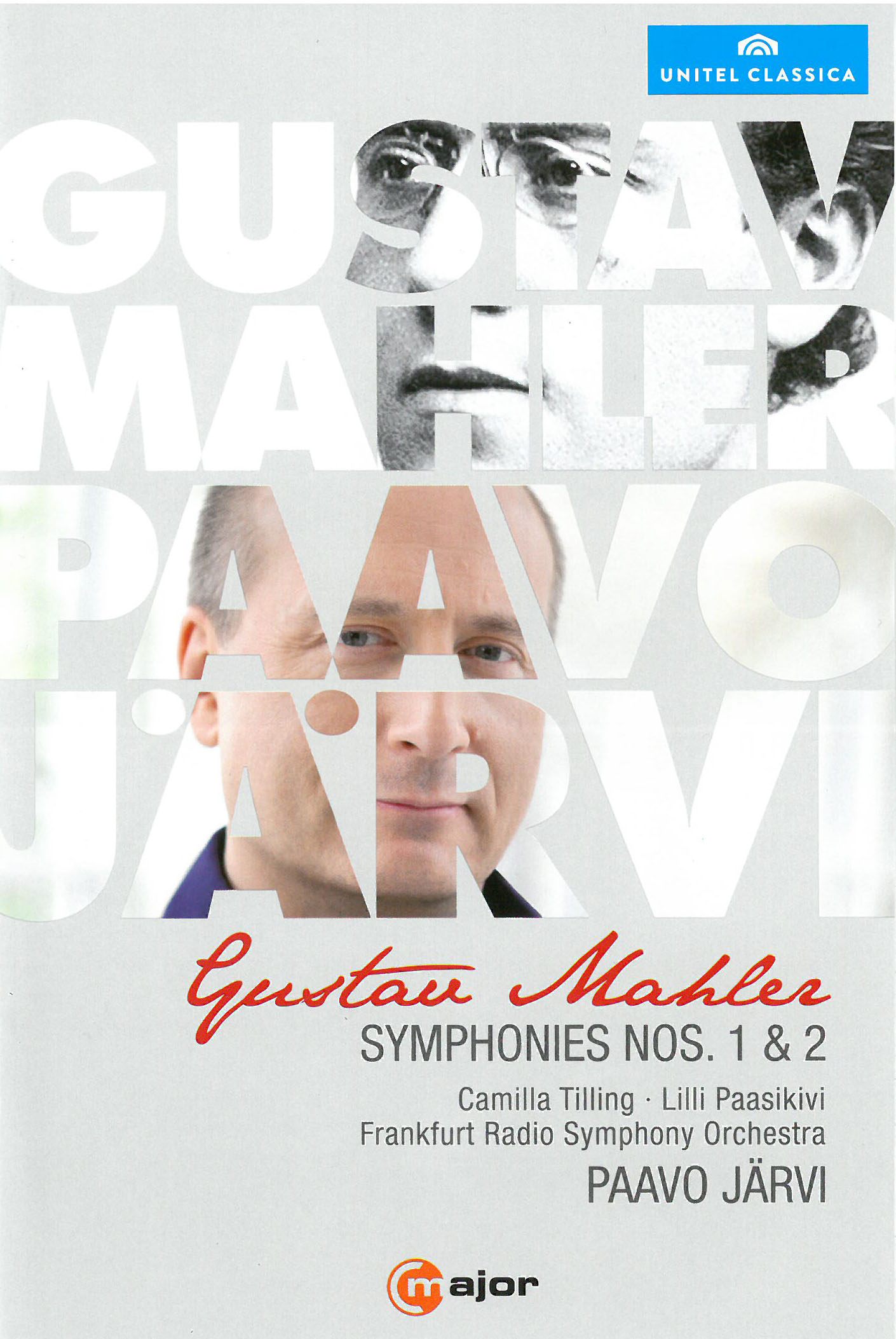
02_Classical_06_Mahler_12.jpgMahler – Symphonies 1 & 2
Camilla Tilling; Lilli Paasikivi; Frankfurt RSO; Paavo Järvi
Cmajor 718008

The genial Paavo Järvi, scion of his ubiquitous father Neeme’s musical clan, is evidently well-regarded in Frankfurt where he served as music director of the Frankfurt Radio Symphony Orchestra from 2002-2013. During his tenure there he presented a televised broadcast cycle of Mahler symphonies for Hessian Radio which is only now reaching these shores on the C major label. The First Symphony was filmed in the spa town of Wiesbaden in 2012. It is a curiously inconsistent performance, the highlight of which is a superbly paced third movement. I was quite taken aback to find Järvi’s take on the Scherzo movement stealing a move from the 2009 playbook of Gustavo Dudamel, namely broadening the first four bars of the bass ostinato in an oafish manner then gradually and elegantly leading into a lively dance tempo. Unlike Dudamel, in Järvi’s hands the gesture is merely clumsy and inconsistent. The grand finale is well enough done but suffers from incompetent video direction: a clear shot of the stunning coup de théâtre of all seven horns standing for the triumphant final peroration of the movement is totally missed! In sum this performance brings to mind the saying attributed to Samuel Johnson: “The part that is good is not original, and the part that is original is not good.”

The presentation of the Second Symphony fares far better. It was filmed at the former monastery of Kloster Eberbach over the course of two afternoons in June 2010. The extraneous studio lighting in daylight gives the unexceptional 720x480 video a decidedly washed-out look and the unfortunate Järvi sweats profusely, resembling an anxious Vladimir Putin caught under a searchlight. The performance of the first movement is solid though underwhelming, with Järvi applying an unusually broad tempo to the lyrical secondary theme and a rather too fast tempo in the coda. Matters improve considerably in the following movements, with a coyly fetching Menuetto and a Scherzo à la Bernstein being most impressive for the care taken to deal with the abbey’s long echoes. The penultimate “Urlicht” movement features the heartfelt mezzo solo of Lilli Paasikivi, who also excels in the subsequent movement. The performance catches fire in the Finale with an impressively frightening and tightly played “march of the dead” development section. Sadly, the combined NDR/Bavarian Radio choruses are set so far back in the apse of the cloister that their hushed entrance for the movement’s grand apotheosis is barely audible; furthermore the voice of the soprano soloist Camilla Tilling is intended to emerge imperceptibly from this choir but as she is placed far to the front of the orchestra the effect is ruined. Fortunately the dome above them serves as an effective resonator for the resounding passages later on. There is also an organ to be heard – though mysteriously unseen – in the closing pages. The DVD will certainly be of interest to Järvi fans and the orchestra is quite a fine one but the mundane television production values fail to approach the superb videos of Claudio Abbado from the Lucerne Festival.


Review

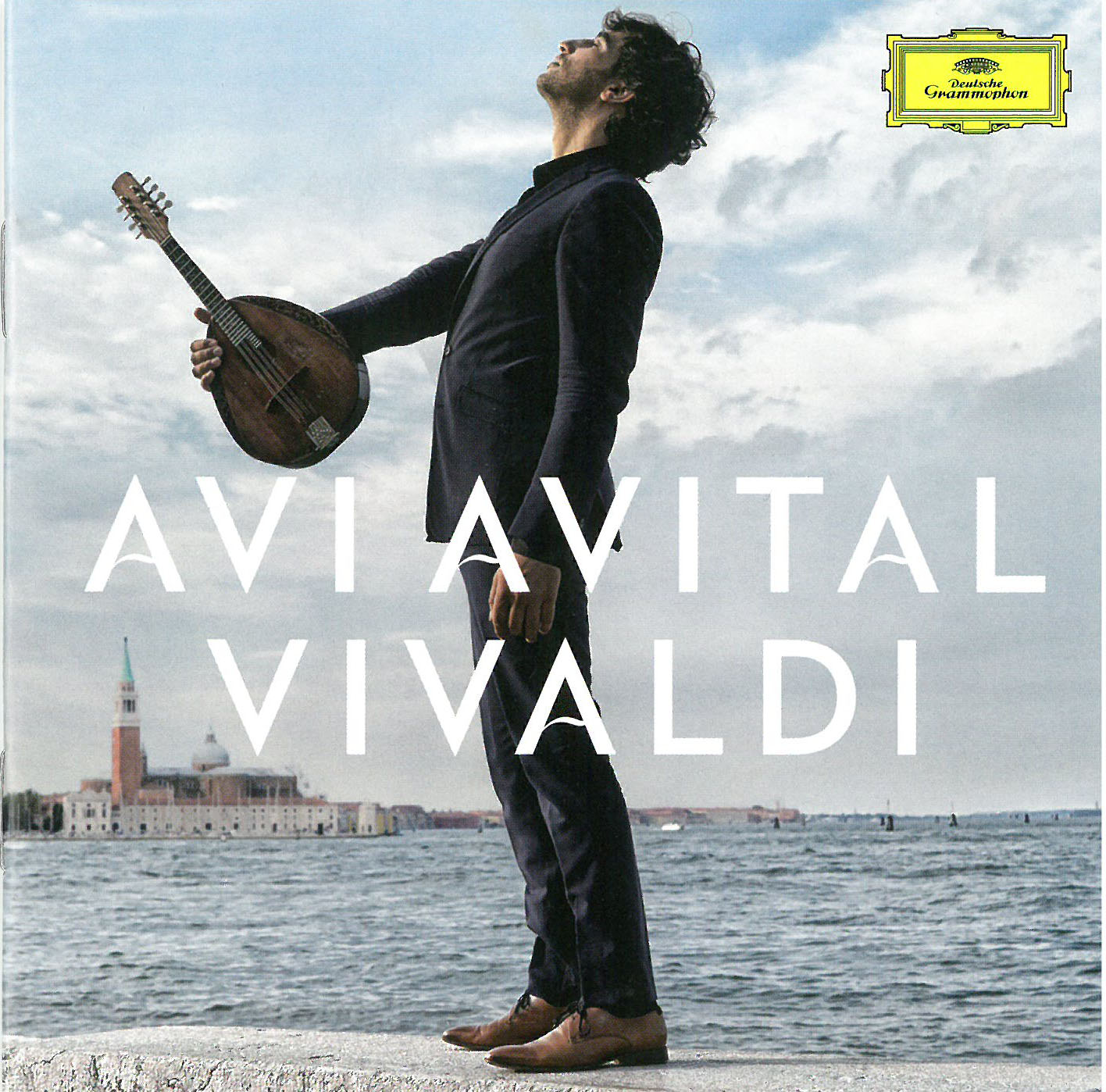
Robbins_01_Vivaldi_Avital.jpgIf you listen to Classical 96.3FM on anything resembling a regular basis you’ve probably heard the Israeli mandolinist Avi Avital’s astonishing rendition of Monti’s Czárdas (if you haven’t, you can always watch it on YouTube). It certainly meant that I approached his latest CD, Avi Avital Vivaldi (Deutsche Grammophon B0022627-02) with keen anticipation, and I wasn’t disappointed.

The mandolin has its roots in 17th- and 18th-century Italian music, and is particularly well suited to the style of Vivaldi. The composer’s one concerto for the instrument, the Concerto in C Major RV425, is featured here along with three concertos, a sonata and a short movement all transcribed for mandolin by Avital.

Two of the concertos – the A Minor RV356 and the G Minor RV315, “Summer,” from The Four Seasons, were originally for violin, and work particularly well on the mandolin, the two instruments sharing the same tuning. The Concerto in D Major RV93 was originally for lute. These are not huge pieces – the RV356 and RV425 concertos are both three-movement works less than eight minutes in length – but the predominantly upbeat tempos and Avital’s clean, agile playing along with the lovely, light and airy accompaniment by the Venice Baroque Orchestra make for delightful listening.

The Trio Sonata in C Major RV82, originally for violin and lute, features a beautifully full continuo sound contributed by harpsichord, lute and cello. The short movement is the Largo from the Concerto in C Major RV443, originally for flautino.

Avital is joined by tenor Juan Diego Flórez in a beautiful rendition of the traditional Venetian song La biondina in gondoleta, which provides a lovely end to an extremely pleasant and entertaining CD.
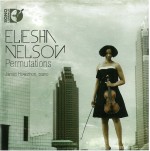
 

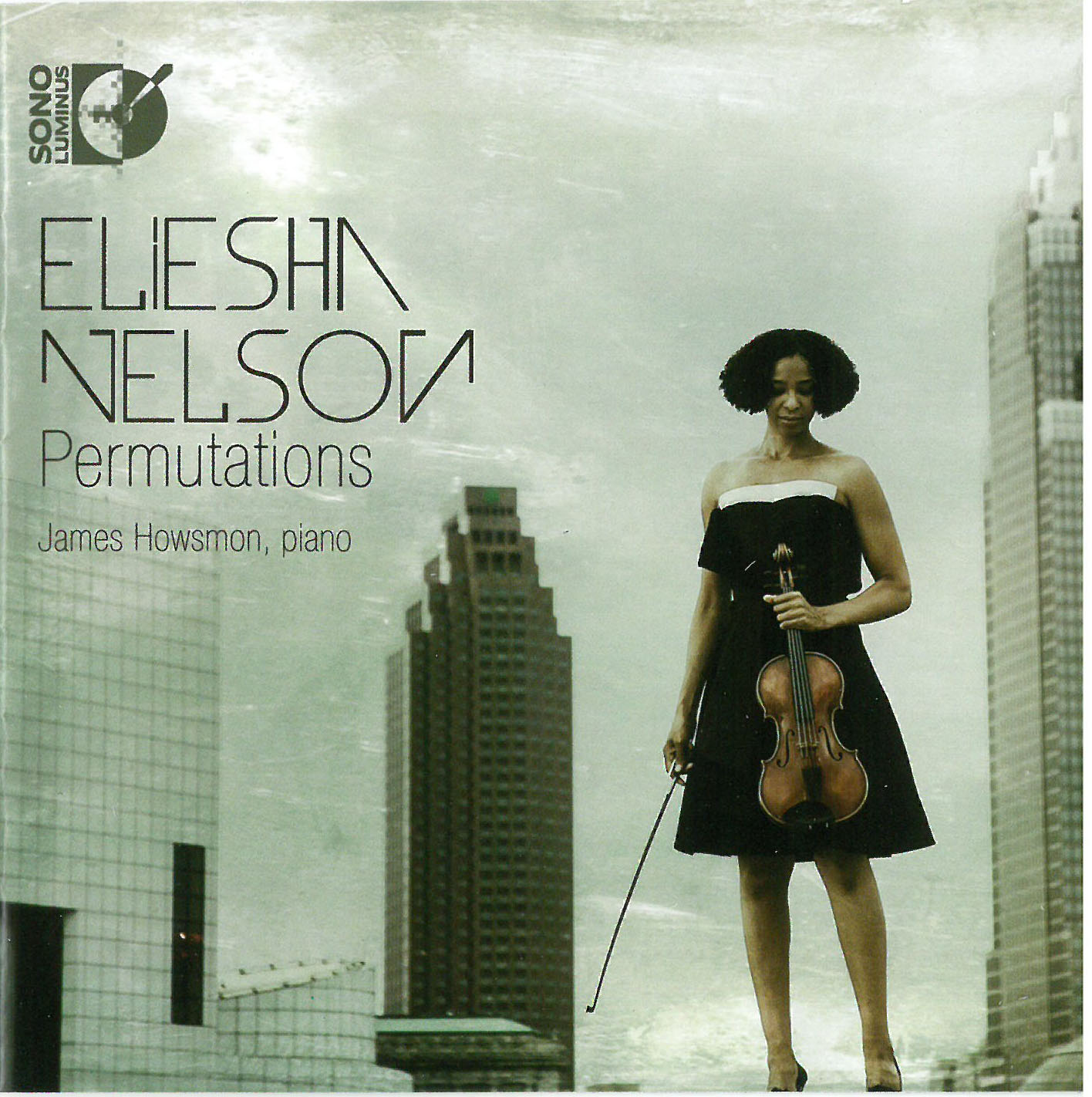
Robbins 02 Eleisha NelsonPermutations is the third CD from the American violist Eliesha Nelson, with pianist James Howsmon (Sono Luminus DSL-92186). The theme of the CD is American Classical Music and the Viola, although the earliest work on the disc only dates from 1953.

At first sight the opening work seems out of place, but the contemporary Russian composer Nikolai Kapustin has been greatly influenced by American jazz. His Sonata for Viola and Piano Op.69 doesn’t have quite the frenetic quality of his astonishing piano études, but is a spiky, jazzy work with a Gershwinesque middle movement.

The Two Pieces for Solo Viola by John McLaughlin Williams are a real tour de force, and Nelson is particularly outstanding in the technically demanding Toccata, with its echoes of the Dies Irae.

The Second Sonata for Viola and Piano by Ross Lee Finney (1906-97) is a 12-tone work, but this is serialism clearly influenced by the Romanticism of Alban Berg, and an extremely effective composition.

Wending, by Jeffrey Mumford (b.1955) is another challenging but very interesting solo work that draws another terrific performance from Nelson.

The Sonata for Viola and Piano by George Walker (b.1922) is an atonal – but quite accessible – work written in 1989. Another excellent performance by both artists rounds out a really interesting CD.

As with her previous CD of Russian Viola Sonatas, I find Nelson’s viola sound a bit nasal and tight at times, but her playing here really makes the most of the instrument’s full tonal range and colour. In addition to the standard CD, the package comes with a Pure Audio Blu-ray CD equipped with the mShuttle application, enabling you to access portable copies of the tracks on the disc.
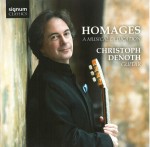
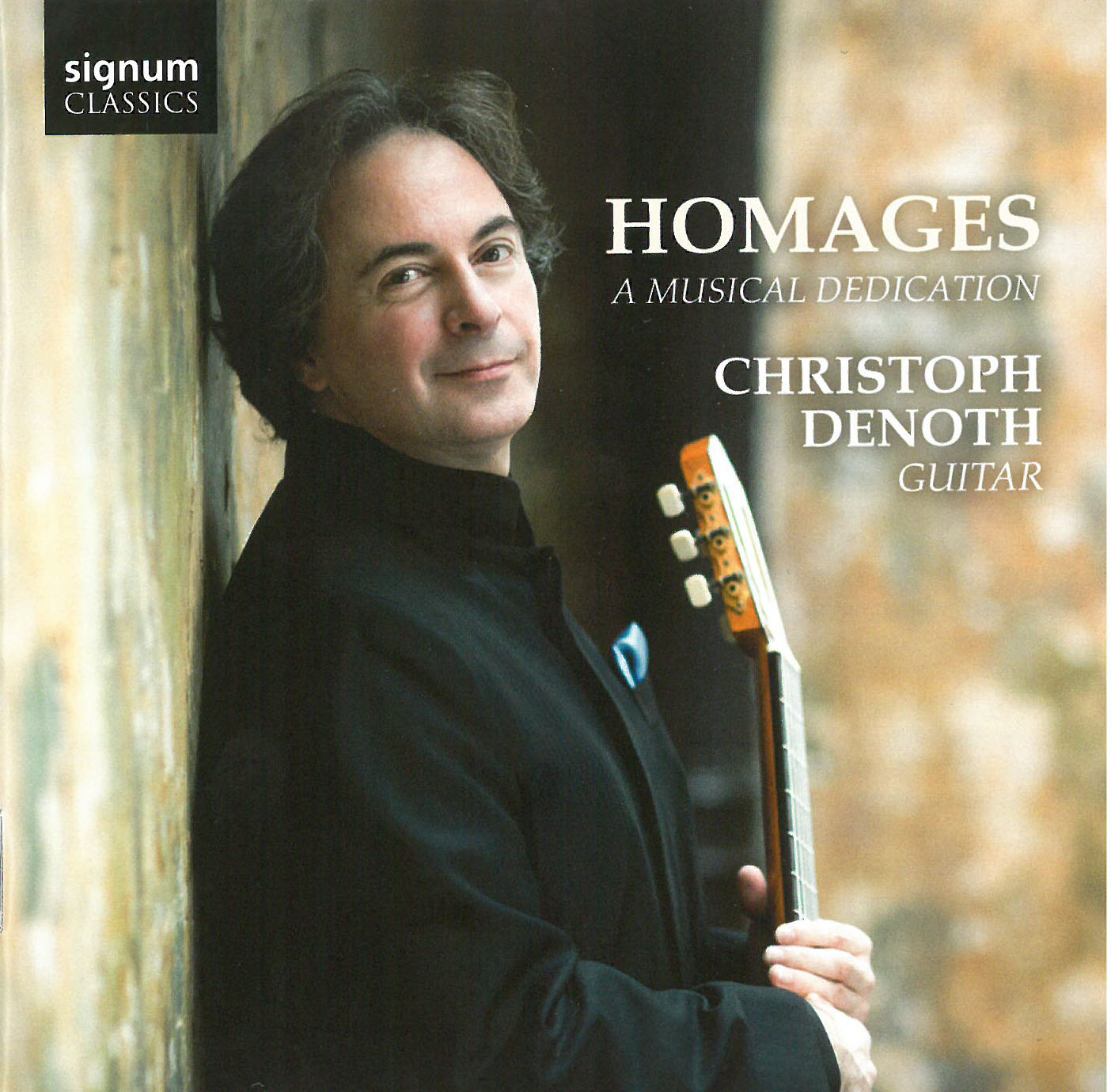
Robbins_03_Homages.jpgHomages – A Musical Dedication is the latest CD from Swiss guitarist Christoph Denoth, and presents a fairly traditional recital of predominantly Spanish compositions spanning more than four centuries (Signum Classics SIGCD404).

There are short pieces here by Joaquín Malats y Miarons, Luis de Narváez, Miguel Llobet, Fernando Sor, Manuel de Falla, Joaquín Turina, Isaac Albéniz and Joaquín Rodrigo, but the centrepiece of the CD is music by the Brazilian composer Heitor Villa-Lobos. His Schottish-Chôro is the second movement of his Suite popular brasileira, but the real gem here is Denoth’s performance of the five Preludes, four of them written as a specific homage to aspects of Brazilian life and one reflecting the influence of Bach’s music on the composer. The CD’s title connection is quite clear here, although with some of the other works on the disc it’s somewhat tenuous at best.

Still, no matter, for this is a lovely and substantial (over 70 minutes) program, beautifully played, and with a clear, resonant and not-too-close recording quality.
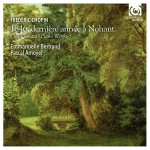
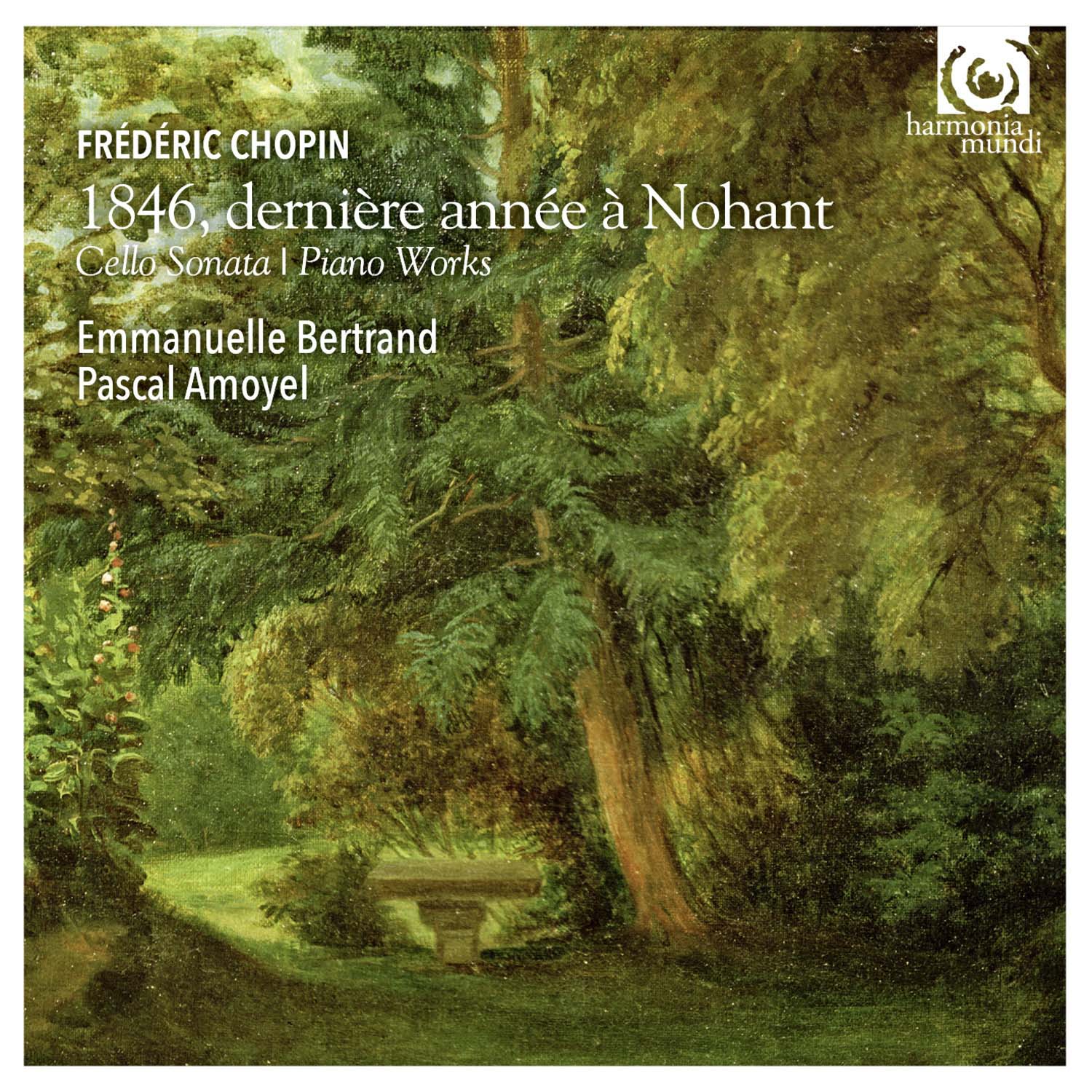
Robbins_04_Chopin_1846.jpgIt’s been a while since I’ve received anything featuring the terrific French cellist Emmanuelle Bertrand, but she’s back with her regular partner, pianist Pascal Amoyel, on Chopin: 1846, dernière année à Nohant (harmonia mundi HMC 902199). The CD celebrates Chopin’s last summer on his lover George Sand’s estate, where he had spent seven years composing the majority of his works; the two would finally separate the following year. The beautiful Cello Sonata in G Minor Op.65, the last work published during Chopin’s lifetime, is at the heart of the CD, while Amoyel takes the spotlight for performances of the Barcarolle Op.60, the three Mazurkas Op.63, the three Valses Op.64, the Mazurka Op.67, No. 4 and the two Nocturnes Op.62.

The Cello Sonata wasn’t completed until the time of Chopin’s separation from Sand in July 1847. It’s a strong, turbulent work that is given a passionate and nuanced performance by Bertrand and Amoyel, who clearly have an innate understanding of how each other plays. Amoyel’s sensitive interpretations of the solo piano pieces, beautifully recorded, are a pure delight.
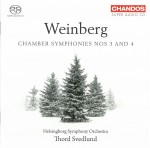
Robbins_06_Weinberg_Chamber_Symponies.jpgThe music of the Polish Soviet composer Mieczysław Weinberg, 3 friend and colleague of Dmitri Shostakovich, certainly seems to be turning up on CD more frequently these days. The Swedish conductor Thord Svedlund has already directed four Chandos Super Audio CDs of Weinberg’s concertos and symphonies, and now conducts the Helsingborg Symphony Orchestra in excellent performances of Weinberg’s Chamber Symphonies Nos.3 and 4 (Chandos CHSA 5146).

Both works, from 1990 and 1992 respectively, were written late in the composer’s life, although three of the four movements of the Chamber Symphony No.3 Op.151 for string orchestra recycle material from his 1945 String Quartet No.5.

The Chamber Symphony No.4 Op.153 was the last work Weinberg completed, and is scored for string orchestra with obbligato clarinet and triangle, the latter having just four notes in the entire piece. It incorporates quotes from some of Weinberg’s earlier works, but apparently was never intended as a summation of his life and work.
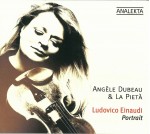
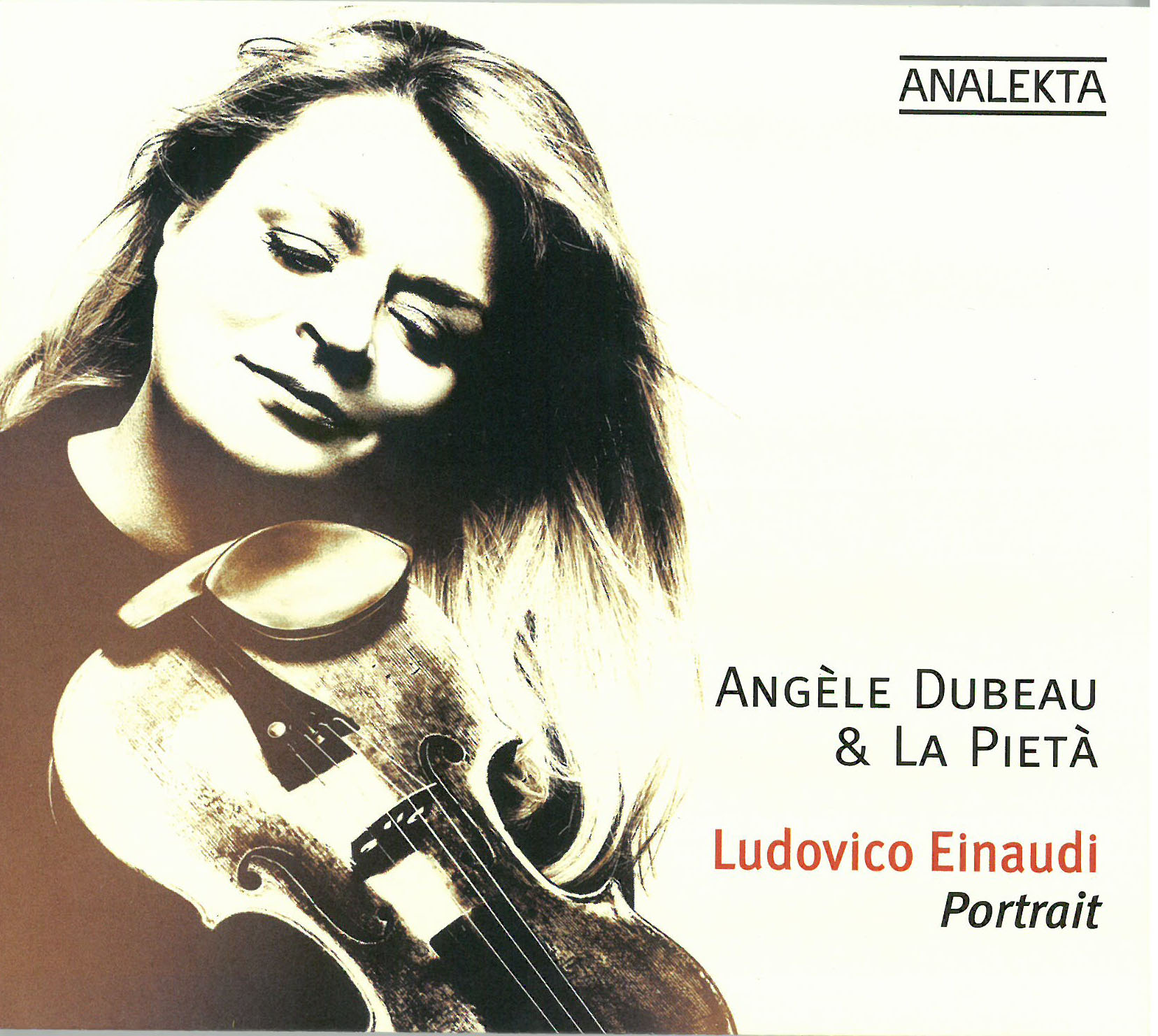
Robbins_07_Dubeau_Einaudi.jpgIt’s difficult to know exactly what to say about Ludovico Einaudi – Portrait, the new CD from Angèle Dubeau & La Pietà (Analekta AN 2 8738). It’s very similar in content to some of her previous CDs, which will be good or not so good news depending on your point of view.

The Portrait series presents contemporary composers who write with what Dubeau calls a unique musical signature, although Glimpse might be a more accurate title. Einaudi is a classically trained composer and pianist who has achieved great commercial success in what is generally termed the World Music field, and is represented here by 13 short pieces with titles like Life, Experience, Run, Time Lapse and Giorni dispari.

Eleven of the pieces, though, are arrangements by François Vallière and Angèle Dubeau – what Dubeau calls “rethinking its character while bringing a new sonic dimension;” moreover, they are nearly all essentially the same length, hovering around the five-minute mark – a cynic might think with radio playlists clearly in mind.

They also tend to sound much the same: there is very little harmonic, rhythmic or melodic variation or adventure, and while they are clearly well-crafted, attractive and communicative on a certain level there is very little change of mood.

The booklet notes again highlight Dubeau’s career album sales figures, which are in excess of an astonishing 500,000; it’s easy to hear why. Dubeau’s CDs in this particular vein may well be aimed at a specific commercial market, but with excellent arrangements of pleasant, undemanding popular music, beautifully played and recorded, they nevertheless unfailingly provide high quality performances of music that clearly continues to appeal to many.

It’s probably a bit too simplistic to say that if you hear a string work that sounds like some Dvořák that you haven’t heard before, then it’s probably by his son-in-law Josef Suk (although that certainly works for the Serenade for Strings) but there’s no getting away from the huge similarities in their music.
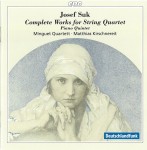
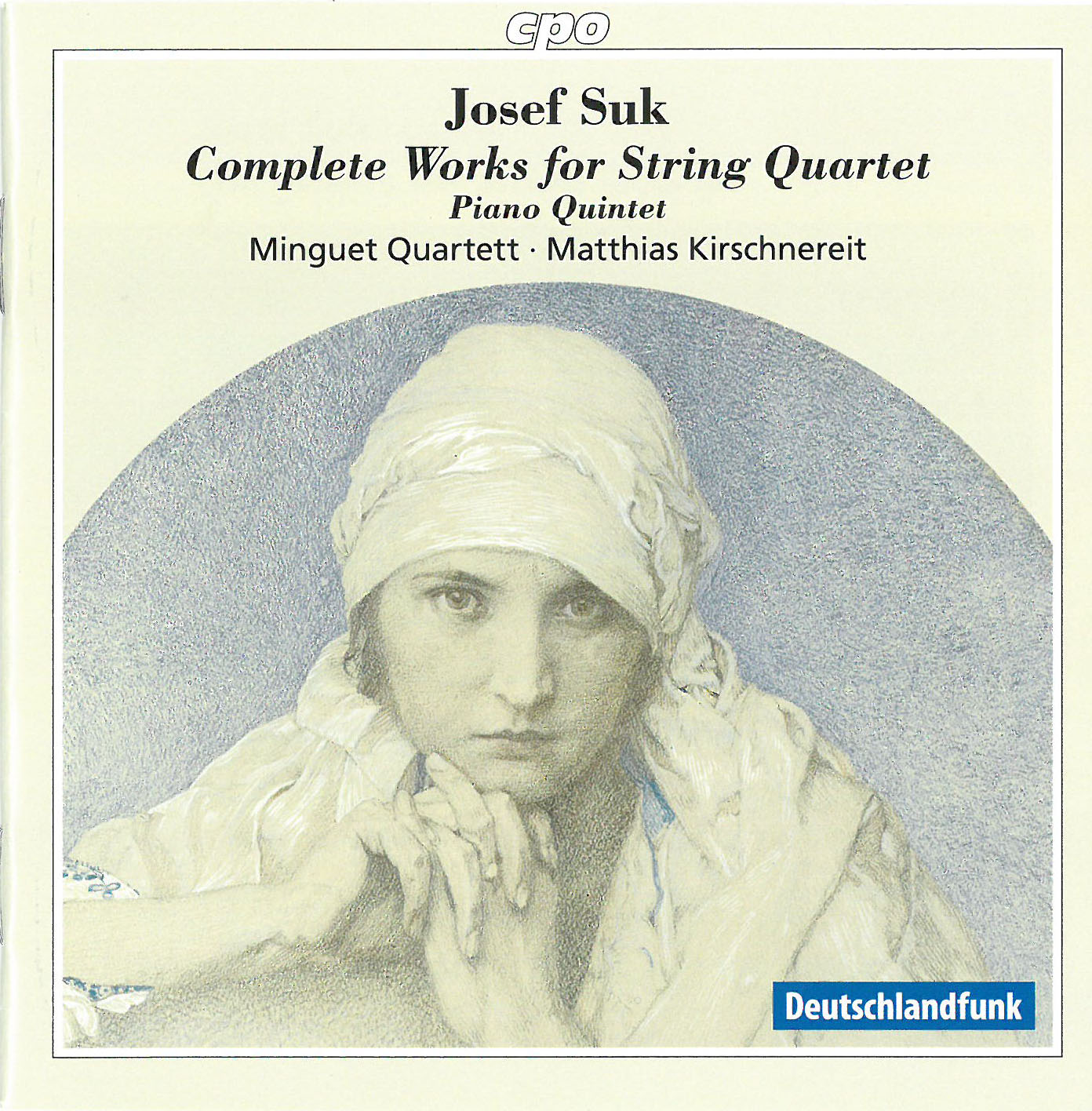
Robbins_08_Suk.jpgJosef Suk Complete Works for String Quartet is a new 2-CD set featuring the Minguet Quartett (cpo/Deutschlandfunk cpo 777 652-2). CD1 has the two String Quartets, while CD2 has a selection of short single movements as well as the Piano Quintet Op.8, in which the Minguet is joined by pianist Matthias Kirschnereit.

The String Quartet No.1 in B-Flat Major Op.11 is an early work from 1896, when Suk was 22, and is a lovely work with a particularly beautiful slow movement. Not surprisingly, there’s a good deal of Smetana influence here as well. Some 20 years later Suk revisited the work and re-wrote the final movement, although the resulting Quartet movement in B-Flat Major, also included here, never established itself as part of the complete work.

In the String Quartet No.2 Op.31 from 1910-11 we are in a quite different world; the Bohemian feel of Dvořák and Smetana is still there, but there is a heightened chromaticism – particularly in the second movement – and an almost Impressionistic character to the writing.

The Piano Quintet in G Minor Op.8 is another early work, from 1888, but was revised by Suk in 1915; it is again redolent of Dvořák, but the combination of its purely Romantic themes with Suk’s more modern later style makes for some interesting moments.

Two of the four short pieces that complete CD2 had their origins in early works: the Minuet in G Major from 1911 first appeared in two piano works a dozen years earlier; and the Barcarolle is a 1923 re-working of a middle movement from an early 1888 string quartet that Suk did not include in his list of recognized works.

The Ballade in D Minor was one of three Ballades the teenage Suk wrote in 1890, and the Meditation on the Old Bohemian Hymn “St. Wenceslas” Op.35a is a patriotic piece written in 1914. All four short pieces are quite delightful.

Performance and recording standards are fine throughout.
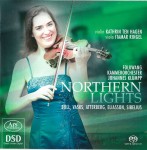
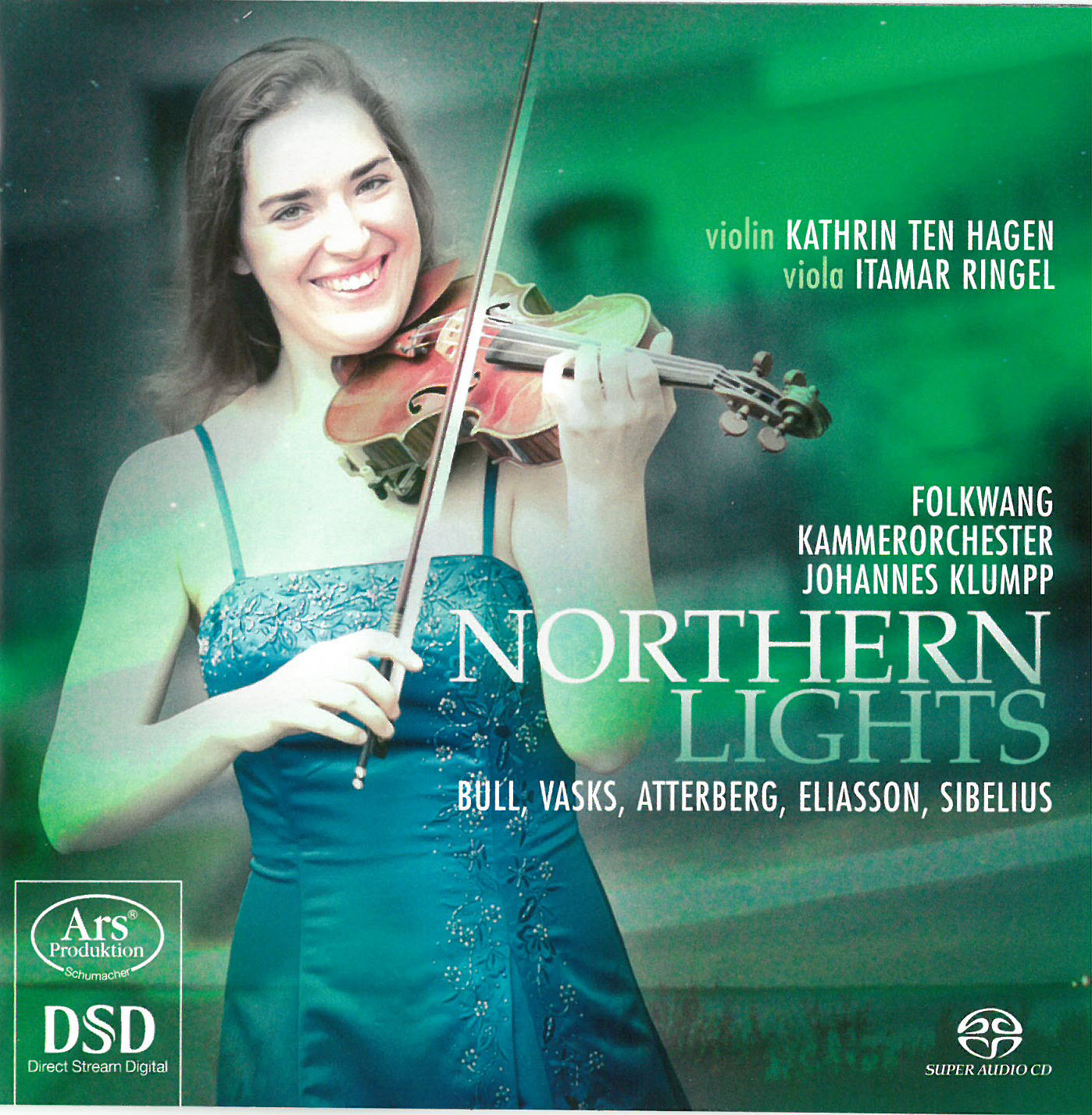
Robbins_09_Northern_Lights.jpgIt’s always gratifying when you have no idea what to expect from a CD and it turns out to be an absolute delight. That’s exactly what happened with Northern Lights, a new Super Audio Hybrid CD that covers a period of more than 150 years of Scandinavian music and features violinist Kathrin Ten Hagen and the Folkwang Kammerorchester under Johannes Klumpp (ARS 38 157).

Solitude sur la Montagne is composer Johan Svendsen’s string orchestra arrangement of the lovely Herd-Girl’s Sunday by the 19th-century Norwegian violin virtuoso Ole Bull. It’s a short, wistful melody with more than a touch of Grieg (Bull’s brother was Grieg’s uncle).

The Latvian Peteris Vasks (b. 1946) is one of three composers on this CD whose work I didn’t know. His Vox amoris: Fantasy for violin and string orchestra is a quite lovely tonal work that draws some simply beautiful playing from Ten Hagen.

Sweden’s Kurt Atterberg (1887-1974) wrote his Suite No.3 Op.19, 1 for violin, viola and string orchestra in 1917. It’s a short, accessible work in three movements in which Ten Hagen is joined by violist Itamar Ringel.

Anders Eliasson (1947-2013) was also Swedish, and is represented here by his Concerto for violin and string orchestra from 1992. It’s quite different to anything else on the CD – very rhythmic, energetic and complex, and tonally quite challenging.

Sibelius’ Suite for violin and string orchestra Op.117 from 1929 was written at the prompting of Carl Fischer, his American publisher, who then decided that the work wouldn’t be profitable and did not publish it. It remained unpublished during Sibelius’ lifetime, and wasn’t performed until 1990. Its three short movements – Country Scenery, Evening in Spring and In the Summer – are everything you would expect them to be, and bring an entertaining and highly satisfying CD to a close.


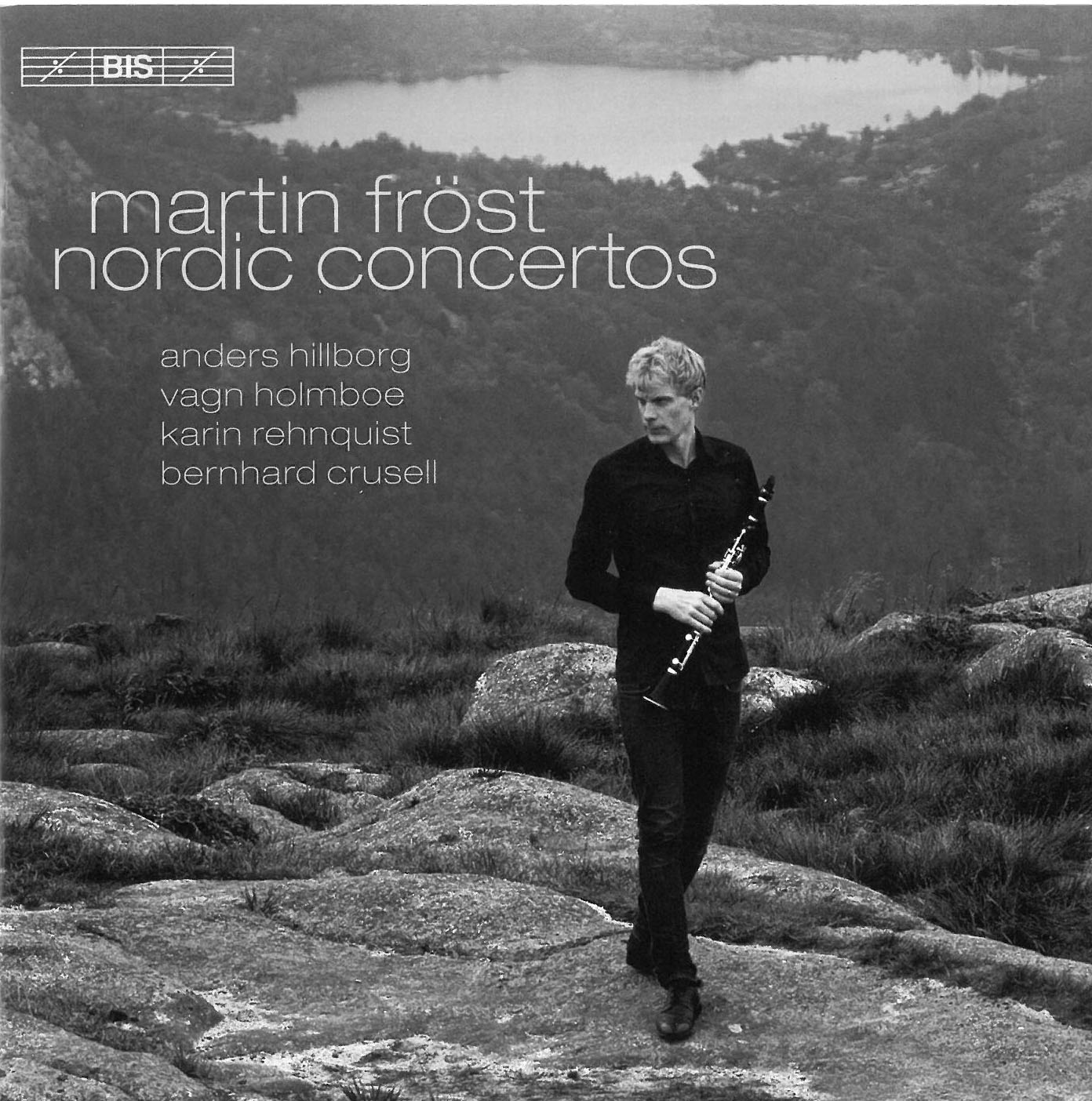
03_Modern_01_Nordic_Concertos.jpgNordic Concertos
Martin Fröst; Various Orchestras
Bis BIS-2123 CD

This disc is a repackaging of previous recordings, made between 1996 and 2003. The four performances feature four different orchestras and conductors. Three of the works are from modern or contemporary Nordic composers, the last from the early Romantic. They all demonstrate Fröst’s mastery of the clarinet.

Fröst plays his strongest card at the outset. Peacock Tales by Anders Hillborg is an exciting work tailored to Fröst’s outrageous abilities (which include dance). After an unaccompanied prologue the orchestra enters to provide the frame and backdrop for the peacock’s haunted cries. A Turkish MarchBig Band Battle and Gallop Macabre follow in harrowing sequence. A return to the opening material is accompanied this time by Copland-sweetened harmonies, and after some super-fast pointillist boogie-woogie, the piano and clarinet join in a last melancholic duet.

Concerto No.3, Op.21 by neo-classicist Vagn Holmboe opens with a fanfare followed by a mournful solo (must be a Nordic thing). The exceedingly prolific Holmboe produced over 400 works, including 13 symphonies and 21 string quartets along with more than a dozen concertos for varying instrumental combinations. Op.21 is listenable and satisfying, a clean spare aesthetic. It’s suit and tie music, comfortable and finely cut.

Karin Rehnqvist’s tone poem On A Distant Shore is the dourest of them all. Its five sections are The Dark (another brooding soliloquy!); The Light (blinding rather than illuminating); The Wild  (ferocious, carnivorous music); The Singing (more pavane than song); and The Call (a call for…to…of… siren or seagull?). Understated and masterful writing.

Barging in on the solemn proceedings, like a jolly elder relative drunk at a funeral, Bernard Henrik Crusell’s Introduction, Theme and Variations on a Swedish Air qualifies on account of its Nordic provenance. Why not include Nielsen’s wonderful concerto instead? Perhaps it would have been one too many melancholic flights through madness.


Back to top