Agnès in George Benjamin’s Written on Skin, and soon to be Isabel in another world premiere by the same composer, Lessons in Love and Violence. Title character in Toshio Hosokawa’s Matsukaze. Ophelia in both Brett Dean’s Hamlet and in Hans Abrahamsen’s song cycle let me tell you. Vermeer’s model in Louis Andriessen’s Writing to Vermeer. The She character in Pascal Dusapin’s Passion. Title character in Gerald Barry’s Alice’s Adventures under Ground. Mélisande in the Katie Mitchell-directed paradigm-shifting production of Pelléas et Mélisande. Berg’s Lulu in productions by Christoph Marthaler and Krzysztof Warlikowski. Voice of Salvatore Sciarrino’s cycle La nuova Euridice secondo Rilke per soprano e orchestra.

This is just a tiny selection of the world premieres and roles brought to life by Canadian soprano of global renown, contemporary music advocate and now also conductor, Barbara Hannigan. She returns to Toronto on November 10 for a Koerner Hall recital programmed around the Second Viennese School and the preceding generation of composers. Dutch pianist, composer and conductor Reinbert de Leeuw will be at the piano. De Leeuw has been music director and conductor of the Schönberg Ensemble since its founding in the mid-1970s. The ensemble, now known as Asko|Schönberg, continues to prioritize new music and perform the works of the 20th and 21st centuries exclusively.
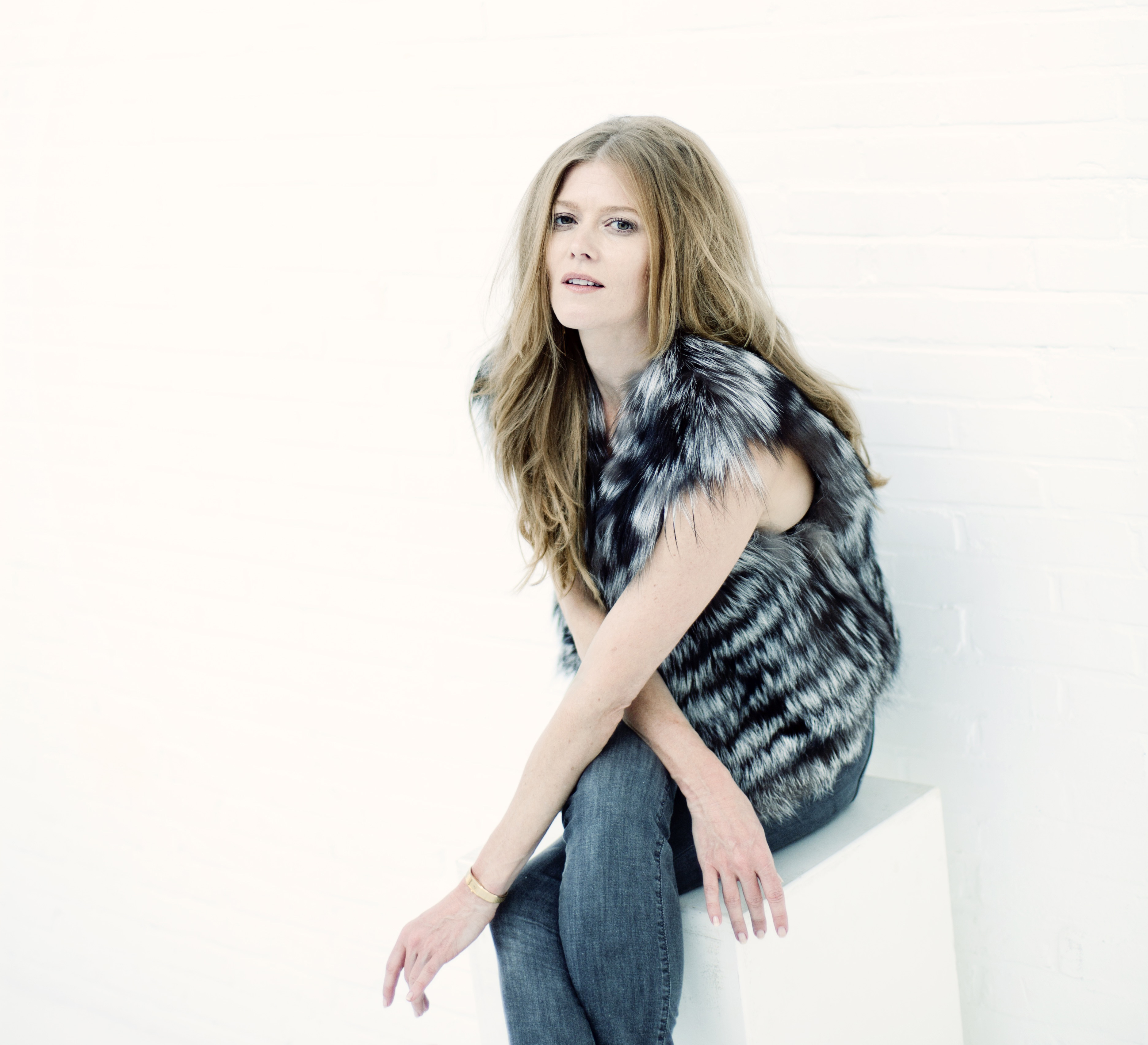
Barbara Hannigan - photo by Elmer de HaasHannigan is based in Paris, where she lives with her partner, actor and filmmaker Mathieu Amalric. I asked her a few questions via email about the forthcoming Toronto recital and its program consisting of songs by Schoenberg, Webern, Berg, Zemlinsky, Alma Mahler and Hugo Wolf.

WN: Schoenberg’s Four Lieder, Op.2 and Webern’s Five Lieder have poet Richard Dehmel in common. Does this also make Schoenberg and Webern musical siblings? (They sound like it to me, I could be wrong.) Both atonal and Sprechgesang, poetry-driven, rather than songs as we know them from the Romantic and post-Romantic eras?

BH: Dehmel… well, he wrote a very important book in the 1890s called Weib und Welt, for which he was put on trial for obscenity. I mean, we read those poems now and we don’t feel that at all, but in the time, just to try and express sensual feelings, and from the imagined woman’s perspective… WOW! He was using imagery like… reflections in water, a beckoning hand from a window, a kiss outside marriage, a woman pregnant from a man she did not know or love… it was shocking. Dehmel was a huge influence for Schoenberg’s early vocal works (his writing was the reason we have Schoenberg’s Verklärte Nacht) and Berg, Webern and many others. So…is the music related because of Dehmel? Not necessarily. There are images, reflections, a fluidity of the music which was a musical development and style at the time. If it hadn’t been Dehmel it would have been Stefan Georg, who was a later influence for Schoenberg. The tonalities are not yet what I think of as atonal…that came a little bit later. Certainly the Schoenberg Op.2 are closer to Strauss than anything (but better than Strauss!). Webern’s five Dehmel songs are absolutely atonal. They avoid harmonic centre, though their endings always seem to confirm some kind of tonal centre which was elusive for the entire song.

How does the singer make them dramatic, as something unfolding before the audience? We rarely get to hear songs like this in recital, and the Romantic and post-Romantic songs have spoiled us in terms of drama, contrasts, things happening, and big, legible emotions.

I don’t need to make them dramatic. They already are dramatic. I just have to sing them, rather than interpret. I find the idea of “interpretation” very foreign. The emotions are deep, pure, full of instinct and that very Viennese idea of Sehnsucht… longing. It’s all there. I just need to get inside it. And with a pianist such as Reinbert de Leeuw…a huge mentor to me for over 20 years…this is a kind of musical heaven for me. An earthly heaven.

Berg’s Seven Early Songs come across as more varied. The texts are from different poets – but the songs differ musically too, for example the intense, soaring Die Nachtigall vs. the playful Im Zimmer. How do you approach this cycle? Berg is very much “your” composer, if I can put it that way – you’ve sung Lulu of course and your new CD is planned around the character of Lulu.

The Berg are more accessible I suppose. We have to remember that in this late-Romantic period, the song was still the centre of a composer’s expression. Every composer began with writing songs. They developed their harmonic style through the very intimate union of piano, voice and text. And from that, they expanded to larger works. Nowadays things are very different...
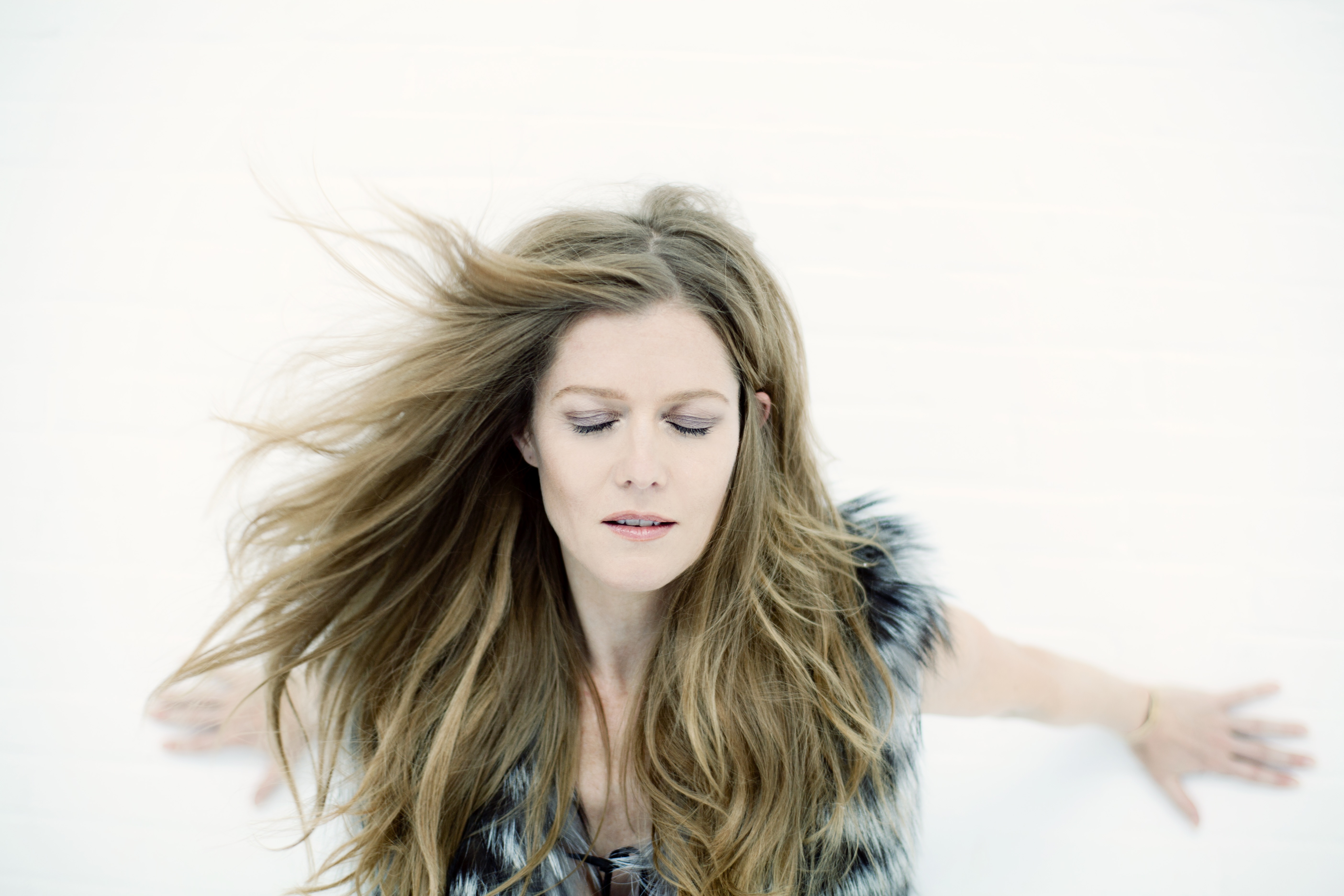
Barbara Hannigan - photo by Elmer de HaasIntriguing that there’s Alma, but not Gustav Mahler on the program. We rarely get to hear her in recital. How would you describe her songs? (I thought Laue Sommernacht probably the most melodic song on the entire program?)

The Alma Mahler songs we chose were in part written when she was a student (and love interest) of Zemlinsky. And the songs we present of Zemlinsky were, by the way, written when he was teaching her. They seemed to be in love, before she met Mahler. Honestly, her songs are good but they are not great. They are the weakest on the recital program but we included them because she was such an important figure at that time. A muse, later a patron. She was the lover of Kokoschka and inspired his work, also Klimt, also the writing of Werfel; and the early death of her daughter Manon (with Gropius) inspired Berg’s violin concerto. She was a very, very important figure in the musical world of the early 20th century. These four songs show her potential but she did not develop it. Mahler told her before they married that she had to stop composing. So she only achieved a certain niveau in her work and then she stopped, and became Mahler’s wife. Laue Sommernacht … is it the most melodic? I don’t think so. Die Nachtigall of Berg is more soaring, I’d say. Or Irmelin Rose, the strophic fairytale song of Zemlinsky. And really, what does melodic mean? Something with a tune? I don’t know. I think melodic means something different to everyone.

The concert ends with Wolf’s extraordinary, almost operatic Kennst du das Land. How does a singer conserve the energy, physical and dramatic, up to that point and then deliver that Mignon mini-opera at the end?
I don’t know how other people do it but for me, there is a degree of strategy in the pacing of the recital and then… I count on adrenaline to get me through the final four songs of Hugo Wolf. I love them so much, I love Mignon and her need for secrecy. I just slip into her skin and she carries me through the music; her need to try to reveal herself, without explaining herself, is so powerful that the songs just… pour out. This recital program was devised by Reinbert de Leeuw. As I wrote earlier, my mentor. He is the guide and inspiration for me through this musical journey. And he carries me through it… every rehearsal reminding and insisting that I attempt the most delicate adherence to the composer’s wishes. Always searching for the real pianissimi that the composers demand, rather than the verismo of the earlier part of the 19th century. This world is one of reflection, of suggestion, of intimacy without explanation. And I am so thrilled to bring this program, with Reinbert, to Toronto.

Lydia Perović is an arts journalist in Toronto. Send her your art-of-song news to artofsong@thewholenote.com.
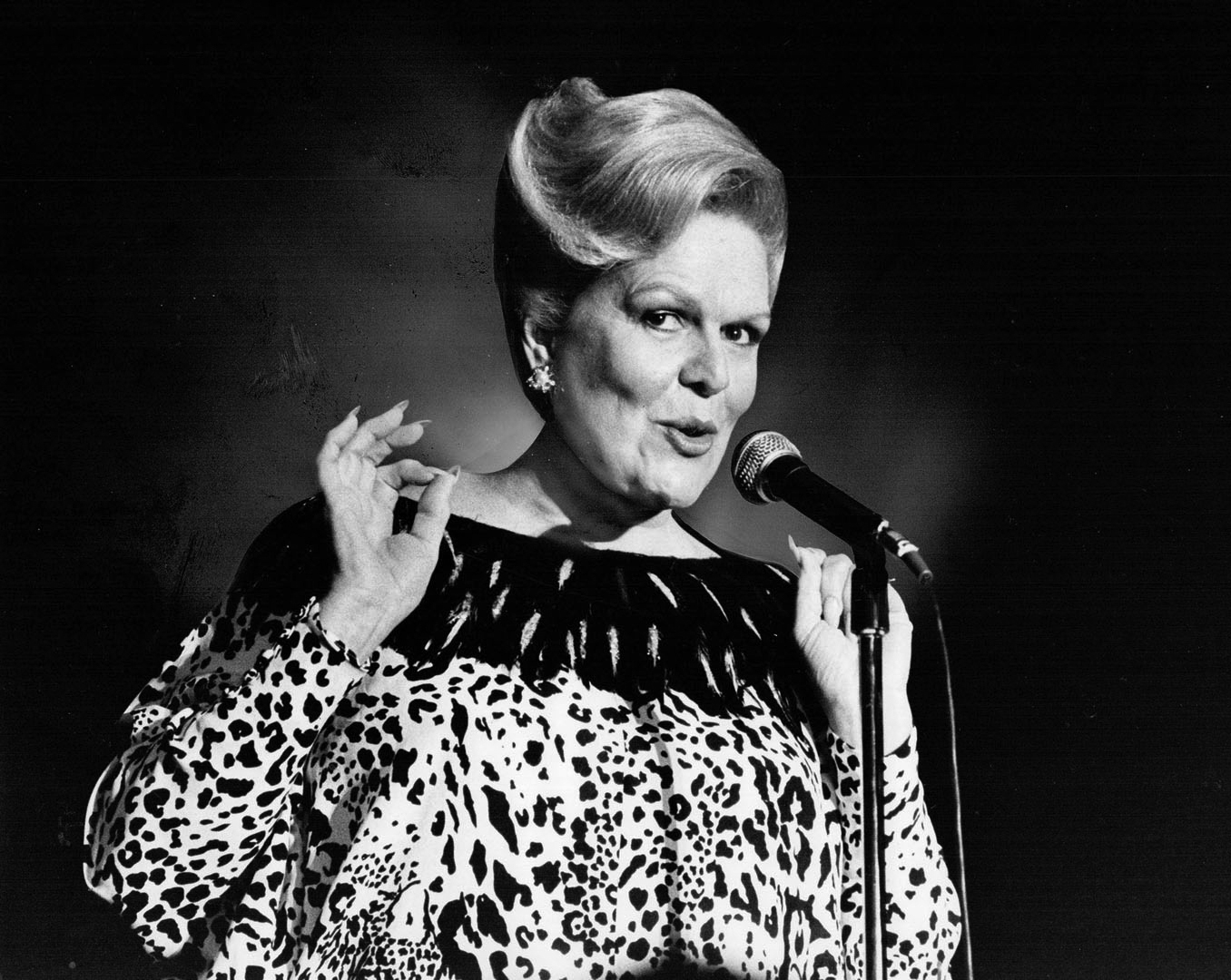
Maureen Forrester - photo by Frank Lennon GrayDer Abschied (The Farewell), the longest movement of Mahler’s Das Lied von der Erde (The Song of the Earth), is among the greatest achievements of humankind. I can already hear some readers objecting, why not the entire Song of the Earth – yes, the cycle is a superb creation, but other songs are overshadowed by the final chapter. I’ve always found the preceding short songs that Mahler gave to the tenor something of a prank, especially The Drunkard in Spring. Is this a sly comment on the silliness of tenor characters in the history of opera, one wonders? The tenor song that opens the cycle, The Drinking Song of Earth’s Sorrow, cuts to the chase a little too quickly. His third song, Youth, sounds comparatively simple-minded, bordering on folksy, even though the lyrics are more ambivalent. The contralto or mezzo, the second voice in the cycle, is on the other hand immediately given gravitas and complex sonic tapestry in both of her shorter songs, The Solitary One in Autumn and Beauty. But I rush to any live performance of The Song of the Earth that I can find for the 30-minute mezzo-sung Der Abschied. I worship it impatiently, that I will concede. It is this song cycle’s summit; more precisely, it is its realization.

Susan PlattsOn October 19 and 20, it will be the TSO’s turn. Das Lied von der Erde will conclude the two concerts in honour of Maureen Forrester, Canada’s best known contralto of the previous generation, who has sung Mahler under the baton of Bruno Walter and Otto Klemperer and was in fact a crucial part of the postwar revival of interest in Mahler. While the hour-long cycle could warrant a concert all on its own, two shorter pieces are also on the program: the 15-minute-long TSO-commissioned L’Aube for Mezzo-Soprano and Orchestra by Howard Shore and a two-minute sesquie by John Abram titled Start. Mezzo Susan Platts and tenor Michael Schade will sing; Peter Oundjian conducts; Ben Heppner hosts.

The poetry of The Song of the Earth has roots in classical Chinese poetry, but only loosely and by way of multiple mediations. It can be tracked down to the 1867 Le Livre de jade, a collection of adapted (read: rewritten) Chinese poetry by a 22-year-old amateur translator, Théophile Gautier’s daughter, Judith Gautier. Gautier was in her late teens when her father hired a tutor of Chinese origin, Ding Dunling, for the benefit of her and her sister’s education. Judith Gautier was an eager apprentice; so eager that a few years later, still not quite fluent in Chinese, she started copying Chinese poems from the French national library archives and took it upon herself to translate them. Very little Chinese poetry had been translated to any European language at the time, but there was clearly demand for it: The Book of Jade has since accrued many reprints and editions (latest French reprint was in 2004) and translations to several other European languages, including German. The version that reached Mahler and affected him so was the book’s third German adaption, Die chinesische Flöte by the poet Hans Bethge (1876-1946), sent to him by a friend in 1907.

Mahler was recently bereaved (he had lost a daughter at the time) and had just learned of his own heart condition, a diagnosis that did not leave much reason for optimism (in fact, he died soon after, in 1911). For Der Abschied, he used two of Bethge’s poems attributed to Mong Kao-Jen and Wan Wei, to which Mahler liberally adds his own verses. The end result is beautiful, undemonstrative text – devastating yet somehow unsentimental, like the music Mahler set to it. A first person narrator awaits a friend for their final farewell, while observing nature’s quieting of a sunset. The friend finally arrives, goodbyes are said, departure takes place, but the final verses are given to the life that goes on, the cyclical regeneration of the natural world, the Earth that will continue even if we are not around to see it. Structurally, interludes, recitatives and arias alternate, orchestration ebbs and flows until the Funeral March gives rise to its own song within the song. The melodic material moves between the woodwinds, horns and violins, in physical, almost tactile ripples, twirls, sweeps and risings. When thoughts of the beauty of life appear among the verses, the music swells. Sometimes, the sound recalls familiar voices of nature, and at other times things get complicated; we are there to give in, not understand. Pauses are important. Each part gets extinguished before we move on to the next one. Morendo appears among Mahler’s markings in the score. Structurally, too, there is dying in Der Abschied.

Then, a change of voice mid-way. After the Funeral March, the first person narration turns to the descriptive third person – from an “I” that shares its impressions and feelings (“I stand and wait for my friend …where are you?”) to a “he” as if narrated by an observer. (Bethge’s version maintains the first person address; this change is entirely Mahler’s.)

So what is happening here? Interpretations vary greatly, but I was struck by the one I found in musicologist Andrew Deruchie’s paper in a 2009 volume of the journal Austrian Studies (‘Mahler’s Farewell or The Earth’s Song? Death, Orientalism and Der Abschied,’ Austrian Studies, Vol. 17, Words and Music), discovered while I was trawling the TPL article databases looking for new writing on Das Lied von der Erde. Death does not take place at the end of Das Lied, Deruchie argues; the first-person narrator dies before the Funeral March and the Funeral March is precisely for him/her, not in anticipation of departure. “In Part I the protagonist is the speaking (singing) subject, but in Part II his voice has vanished, and his words are merely quoted by the narrator. The music, one might say, no longer emanates from him,” writes Deruchie, connecting this to the Taoist tradition, “where in death individual subjectivity is folded into nature’s eternal cyclicism: just as spring follows winter, the narrator tells us, the earth blossoms anew after the protagonist’s death.”

I don’t know that it is exclusively about Taoism. Buddhists among my readers will interrupt with “But that’s us, too” and so could the atheists and the scientists. What’s certain is that Das Lied steps away from and leaves behind the Christian paradigm, not a small gesture by a composer who has used that same paradigm without moderation in many of his other works. (I cannot stand the Resurrection Symphony. It offers a coy, calculating consolation, as opposed to the radical, uneasy one of Das Lied.)

What the final part of the final part of Das Lied von der Erde, the ultimate song on finality, always brings to my mind is the pages near the end of the Dutch novelist Cees Nooteboom’s book The Following Story. It too is a unique and extraordinary work of art on trying to accept the fact of dying. Its protagonist goes to bed alone in his Amsterdam apartment one night, only to wake up in Lisbon next to the love of his life, except many years earlier than the present day. What is he doing there? The journey goes back in time (protagonist’s) and deep time (through antiquity, as the narrator is a classics professor) and we gradually gather that he has crossed the Lethe, and that time and space are not anymore how he’s known them to be. He is perhaps still lingering, for the duration of the novel, in the in-between before the final farewell, just like the spirits of George Saunders’ Lincoln in the Bardo tarry and refuse to understand their condition and really pass on. But in due course, Nooteboom’s professor too is ready to go (in translation by Ina Rilke):

It was not my soul that would set out on a journey, as the real Socrates had imagined; it was my body that would embark on endless wanderings, never to be ousted from the universe, and so it would take part in the most fantastic metamorphoses, about which it would tell me nothing because it would long since have forgotten all about me. At one time the matter it had consisted of had housed a soul that resembled me, but now my matter would have other duties.

There are several song events worth your time this month, but the one that stands out will require a trip to upper Parkdale and Gallery 345, an unusually shaped space that’s becoming the recital hub of West Toronto. On the program for “The Imperfect Art Song Recital” (September 23 at 6pm), conceived by the soprano Lindsay Lalla, there is music by two living composers – Toronto’s Cecilia Livingston and Brooklyn-based Christopher Cerrone – as well as Strauss’ Mädchenblumen, an Anne Trulove recitative and aria from Stravinsky’s The Rake’s Progress, and a brief musical theatre set with Carousel and Showboat songs.

Lindsay Lalla - photo by Marc BetsworthThe imperfect as a recital theme may sound unusual, but it’s a question as old as the arts. It’s also a personal notion that kept Lalla focused on teaching and the vocal health of her students and at a distance from performing and concert stage. “My strong technical focus in my teaching carried over to my singing and I felt almost paralyzed trying to find perfection,” she explained when I asked what the story was behind the title. After years of working on other singers’ voices, the minutiae of their development, health and rehabilitation, the goal of perfection struck Lalla as a little overbearing. What if she created a whole program around the fact that there’s no such thing as perfect singing, a perfect lover, a perfect human?

The theme of imperfection runs loosely – er, imperfectly – through the texts of the pieces on the program. “The Strauss songs compare women to flowers and to me represent ‘old school’ classical music where perfection is an appreciated aesthetic,” she says. Livingston’s songs “explore the theme of an absent lover, and I find it really interesting that absent lovers are always perfect.” The character of Penelope, that mythical perfect wife of antiquity, appears in a Livingston song as well as Lalla’s own drawings (she admits to something of an obsession about Penelope) which will be on display at the gallery along with art by clarinetist Sue Farrow created during rehearsals.

Then there’s the Cerrone song cycle on the poetry of Tao Lin. The 18-minute piece for soprano, clarinet, percussion and piano, I Will Learn to Love a Person, can be found in its entirety on the composer’s website; on first listening it sounded to me like plainchant meets American minimalism, with shades of Ann Southam. Its engagement with text is fascinating – and I don’t use this word lightly. Lin is now primarily known as a novelist – Shoplifting from American Apparel, Taipei, Eeeee eee eeee – but he had published poetry as a young writer and Cerrone made a selection of poems that rang particularly true to his experience. The composer’s own statement highlights Lin’s accuracy about “millennial lives” and Lalla agrees, but this Gen X-er can tell you that Cerrone’s piece, like any good music, speaks to all cohorts. (Some of Lin’s fiction, Shoplifting for example, a novella of young impecunious lives in NYC’s emerging ‘creative classes’ flowing on vegan smoothies, band following, brand savvyness, internet, psychological opaqueness of characters and overall scarcity of explicit feeling will remind of Douglas Coupland, who’s probably an ancient writer to the millennials.) Lin made a selection of his poems available online, and I’d recommend listening to I Will Learn to Love a Person alongside the poem i will learn how to love a person and then i will teach you and then we will know to appreciate fully how they enhance one another.

The first piece by Cerrone that Lalla ever heard was this song cycle, and it impressed immediately. To wit: “It hit me hard!” She decided to do the chamber music version and invited two of her best friends, husband and wife Brian Farrow (percussion) and Sue Farrow (clarinet). The pianist and Lalla’s accompanist in other songs on the program, Tanya Paradowski, happens to be their niece. “We’ve been rehearsing up at their cottage, with the sounds of vibraphone over the lake… I can’t imagine what the neighbours must think.

“Because there is so much repetition on just a few notes, the focus goes to the text,” she says of the inner mechanism of the cycle. “Just like in the recitative of an opera, it’s now about the words, and the emotion behind the words. And the accompanying instrumental part is very repetitive, so you instinctively listen to the words to find out what’s going on. So, over top of this unconventionally textured background (quite an unusual mix of instruments!), you get just words. And they happen to be on notes. I think this is a brilliant way that Cerrone is highlighting the directness of Tao Lin’s text.”

Cecilia Livingston - photo by Kaitlin MorenoIt was actually composer Cecilia Livingston who first recommended Cerrone among a few other composers to Lalla (the two women have known each other from high school). Livingston’s own songs, too, Penelope, Kalypso and Parting, are going to be in the recital. Livingston’s website lists an impressive number of commissions, collaborations and fellowships – including a recent research fellowship at King’s College in London with one of the most interesting Verdian thinkers today, Roger Parker – but also an array of publications and papers both academic and journalistic, including her U of T PhD thesis on “the musical sublime in 20th-century opera, with a particular focus on the connections between the sublime, the grotesque, minimalism and musical silence.” There are also audio files of her work, including a good number of songs. I was eager to ask this vast and curious creative mind about her work.

In which art song features prominently, it turns out. “I just finished a commission for the Canadian Art Song Project, which reminded me that art song is one of my favourite things to write, period! It calls for this very strange close reading: scrutiny of a text combined with a huge, bird’s-eye view of its emotional terrain,” Livingston says. “Northrop Frye wrote about this, and he titled his book from Blake: The Double Vision – seeing a text both for what it is, and for what it can be in the imagination. And then also – for a composer – in the musical imagination, in the ear.”

Her three songs in the Imperfect recital explore a style that she describes as “somewhere between art song and torch song. Penelope and Kalypso are both portraits of Homer’s characters, of women who are waiting; both songs have weird, dark middle sections: one is sort-of-aleatoric and one isn’t, and I can see I was working out different solutions.” With Kalypso, Livingston was looking for a new way to write for coloratura soprano and ended up thinking about scat singing and the Harold Arlen songs she loves, like Stormy Weather. “I think Duncan [McFarlane]’s lyrics for Kalypso are one of the most extraordinary texts I’ve ever worked with: beautiful, intricate layers of language; so much that the music can shade and shadow and shape.”

A pianist by training, Livingston composes by singing as she writes: “It helps me build on the natural prosody of the language and makes sure the vocal line is comfortable: that there’s time for breath, that it’s well supported musically, that it sits comfortably in the tessitura, etc. – even when it’s challenging.” The process of finding a text that will lead to a song is more intuitive, harder to pin down. “I’m looking for something that catches my inner ear: an image, mood, the sound of a phrase. When I come across that, I can sort of hear the music for it, and then I know I can work with it. I don’t hear actual music yet, but I can hear the intensification that music can bring. Which sounds slightly bizarre; it’s probably easier to say I get a particular feeling in the pit of my stomach.”

She doesn’t entirely buy the argument that simple, unambitious or bad poetry makes better (because easier) text to set to music. “Look at the riches of Alice Goodman’s libretti, or the ways that Britten illuminated all sorts of texts. If a writer savours language – its sounds and its meanings – then I’m interested.”

Among the larger projects on Livingston’s agenda, there’s a full-length opera in the works for TorQ Percussion Quartet and Opera 5, with the world premiere in Toronto scheduled for the 2018/19 season and a European premiere in 2020. “I’ve admired TorQ Percussion Quartet’s musicianship since we met in 2008, and I wanted to write an opera with them the moment I saw their incredible performance of John Luther Adams’ Strange and Sacred Noise,” says Livingston. “They have a dramatic physicality to their performances that is perfect for contemporary opera.” And Opera 5 produced her first chamber opera: “We built the kind of really supportive friendship that I wish all young composers could have.”

And what does her music feel like to a singer? Let’s let Lindsay Lalla have the last word: “I adore how lyrical and melodic Cecilia’s songs are. I feel that they were written like mini operas, with so much emotion to explore in once piece… One of her musical instructions in the Kalypso (over the introductory coloratura) says: “Ella-Fitzgerald-meets-Chopin, vocalise-meets-scat.” As a singer, I fell in love with her just from that.”

Lydia Perović is an arts journalist in Toronto. Send her your art-of-song news to artofsong@thewholenote.com.
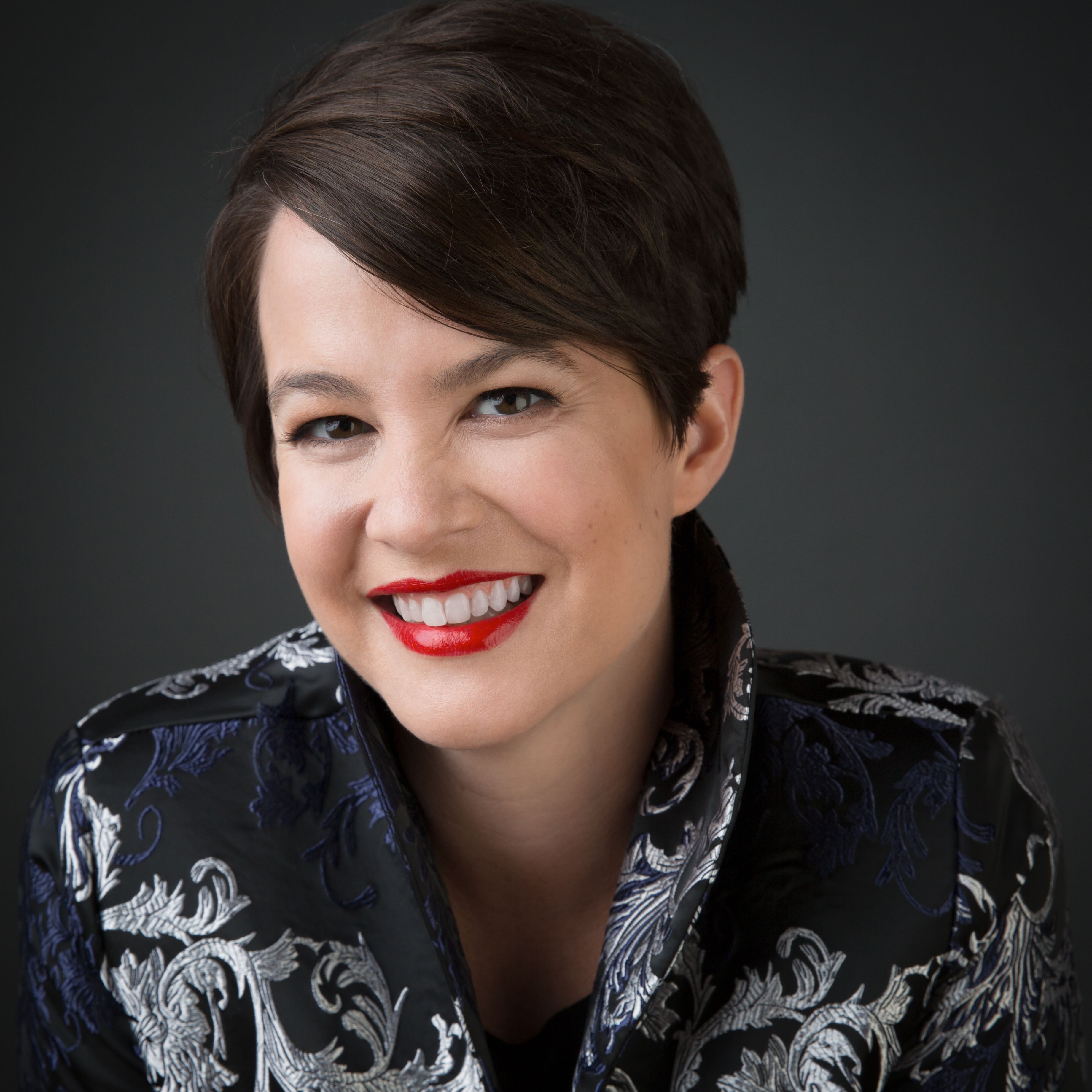
2209 art 1While Toronto’s concert scene is winding down for the summer, it’s still possible to work out a solid, if lighter and necessarily more travel-filled, art song schedule for the next three months.

June kicks off close to home, with the Music Gallery and Off Centre Music Salon/DÉRANGÉ co-presenting #IMWITHHER, a June 8 concert that puts women composers and soloists centre stage. An evening of electro-pop, modern jazz and contemporary art music is an intriguing enough mix; the contemporary segment with the mezzo Lucy Dhegrae and Lara Dodds-Eden at the piano, which includes so many composers that never get heard in Toronto, makes it a must.

One of Pauline Oliveros’ Sonic Meditations, “Heart Meditation,” is on the program. Oliveros was a fascinating twentieth-century avant-gardist – she passed away last year at the age of 84 – whose creative life spanned all the way from deep experimental electronics to an almost total withdrawal from performing and to sound creation as personal practice for staying sane and capable of listening in a disintegrating world. She also studied movement, kinetic awareness and the effect of social conditioning on the human body, and gradually merged her kinetic awareness and sonic practices into one. A group of women formed around these musical practices at the same time that the Second Wave of feminism began creating consciousness-raising groups. This new performing ensemble formed and reformed each time it would meet at Oliveros’ home. “They had been held down, musically, so long,” Oliveros said, explaining the reason behind the women-only group in an interview in late 1970s.

That composing is a whole-body activity, that it can be done by a collective, and that it can effect social and psychological change are notions that will sound foreign to our ears, but that just shows how far back our own era has retreated from the questions on the philosophy and politics of music that the musicians of the avant-garde have left us with.

Since there is no such thing as the definitive edition of Sonic Meditations, and since they tend to be textual (one recommends walking in absolute silence; another teaching oneself how to fly), what Lucy Dhegrae will do in this “Heart Meditation,” we can only guess. Actually, we probably can’t even guess. But to give you an idea of the Oliveros magic, I would recommend her Sound Patterns and Tropes, recorded on the 25 Years of New York New Music CD set, and her early Four Electronic Pieces 1959-1966 (both recordings are available in the Naxos free online music library via your library card).

Icelandic composer Anna Thorvaldsdottir’s song Hvolf, Sky Macklay’s Glossolalia and Tonia Ko’s Smoke and Distance are also on the program. Each has already been performed and digitally preserved and can easily be found on Vimeo and SoundCloud. The art song section completes with an as-yet untitled world premiere by NYC-based composer Leaha Villarreal. And that is just one third of #IMWITHHER: Toronto-based electro-pop band Bernice will perform a selection of old and new songs (their new EP Puff is out in June) and FOG Brass Band, headed by the trumpeter Rebecca Hennessy, will complete the program. June 8 at 8pm at Heliconian Hall; tickets via Off Centre Music Salon and the Music Gallery websites and at the door.

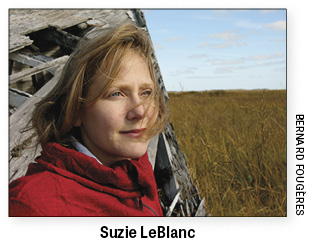
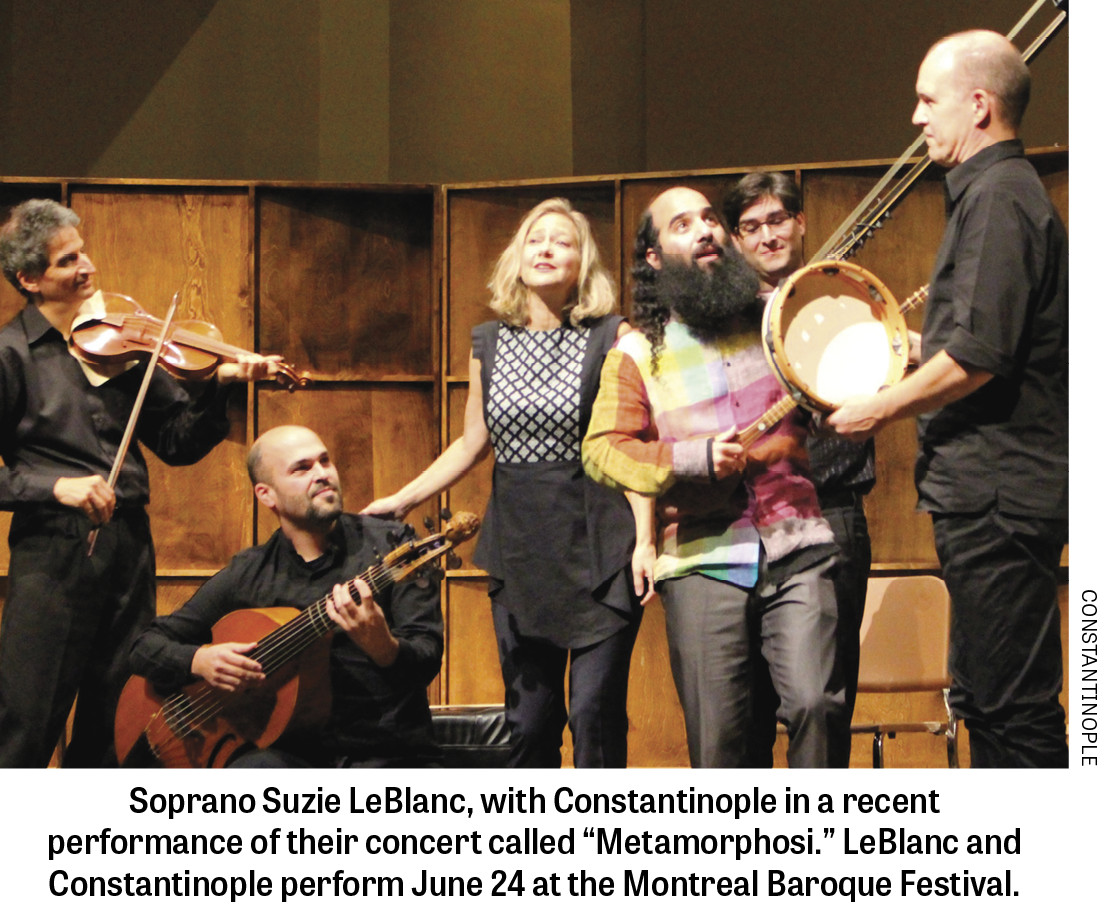
Later in June, and quite out of town, there’s the Montreal Baroque Festival with some promising vocal offerings. On June 23, “Le Cracheur de feu,” with soprano Andréanne Brisson-Paquin and the ensemble Pallade Musica, is a program consisting of Purcell, John Eccles, Angelo Berardi, Alessandro Stradella and a world premiere by the young Quebec composer Jonathan Goulet. On June 24, Suzie LeBlanc and the musicians of the ensemble Constantinople will perform “improvisations on Italian masterpieces” (that is all the festival is willing to give away). Equally cryptic is the description of the concert by the ensemble Sonate 1704 with soprano Jacinthe Thibault scheduled for June 25, but we do know that that it will be a battle of sorts between Catholic and Protestant cantatas and sonatas that were written or published in France around the time of the early Reformation.

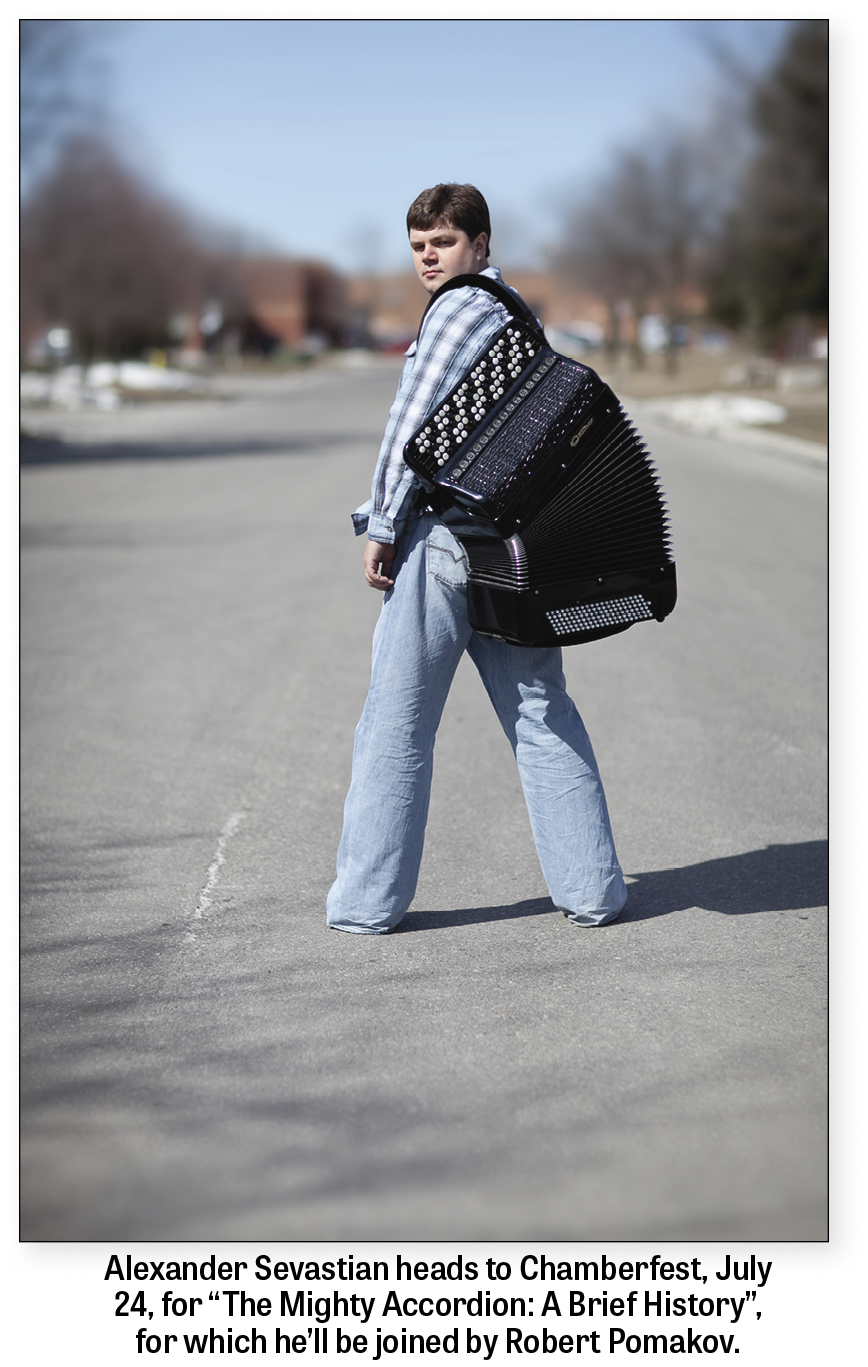
2209 art 2July: My suggested art song trip is to Ottawa for the Chamberfest (July 22 to August 4). July 24 is going to be particularly packed. A free daytime concert at the National Gallery led by accordionist Alexander Sevastian, titled The Mighty Accordion: A Brief History, will include operatic bass Robert Pomakov singing a selection of Russian folk-songs to accompaniment by Sevastian. At 7pm on the same day, the Toronto Consort is reprising the Catherine de Medici concert originally performed last November in Toronto, this time at Ottawa’s Dominion-Chalmers United Church. The Consort’s Laura Pudwell, Michele DeBoer, Katherine Hill, music director David Fallis, Paul Jenkins and John Pepper sang back in November, and I expect that the lineup of voices will remain similar for Ottawa. Most of the composers on the program, with the exception of Orlande de Lassus, are little known today, though some of the poets will score better (Ariosto and Pierre de Ronsard are still being read today). For those among us who regret having missed The Italian Queen of France in November, this second chance will be travel-worthy.

On that same night at 10pm at La Nouvelle Scène Gilles Desjardins, the Bicycle Opera Project presents a new production of Juliet Palmer and Anna Chatterton’s garment workers opera, Sweat. I remember seeing its precursor, Stitch, on the night of its world premiere at the old and decrepit Theatre Centre almost ten years ago, and am curious to see how the musical ideas in that similarly themed opera have evolved into Sweat in the intervening years. Sweat was commissioned by Soundstreams and premiered at National Sawdust in Brooklyn last year. It’s still a cappella with five soloists, but with an added chorus, about 15 minutes longer and, in addition to English, includes lyrics in Cantonese, Ukrainian and Hungarian.

Think of August as the month for classical music in unusual venues. Classical Unbound Festival opens on August 18 in Prince Edward County, with a concert in a privately owned restored barn that doubles as a wine-tasting hall: the Grange of Prince Edward Estate Winery, which seats an audience of 80. There are two “libation-intermissions” which can also be used for the consumption of comestibles, given that picnic baskets will be on hand too. Prince Edward wine country meets Glyndebourne? Why not: Canadian land- and mansion-owners, take note, and consider starting your own festival or concert series.

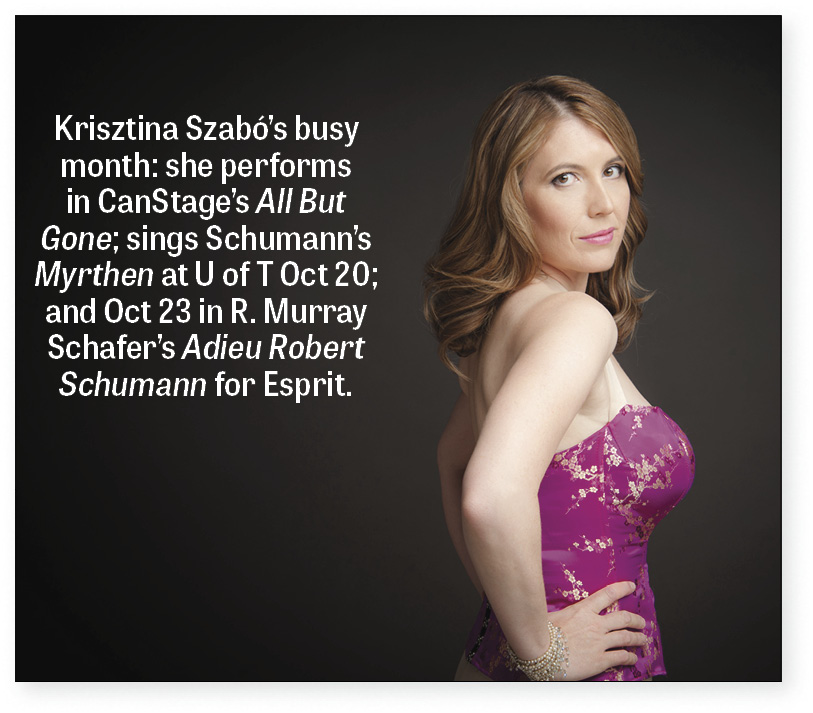
Krisztina Szabó headlines the event, which opens with Haydn’s “Sunrise” Quartet Op. 76 No. 4 with Yosuke Kawasaki (violin I), Jessica Linnebach (violin II), Yehonatan Berick (viola) and Racher Mercer (cello). Berick and Mercer will return for John Burge’s Pas de deux for violin and cello (2011) and the entire quartet will accompany Szabó in Respighi’s Il Tramonto (1914) at the end. In the first two vocal pieces, however, the mezzo will be paired with Joanna G’froerer on flute. Szabó will sing John Corigliano’s Three Irish Folk Songs Settings for Voice and Flute (1988) and after the second intermission, Harry Freedman’s Toccata for Soprano and Flute (1968).

I asked Szabó how unusual the voice and flute pairing is in art song. “I have performed with flute before – with the Talisker Players, André Caplet’s piece Écoute, mon coeur – but I haven’t experienced this pairing more than a couple of times prior to this,” she emails back. “I think there is a fair amount of repertoire for voice and flute out there, though probably more for soprano.” Does the timbre react to the brightness of the flute, I wondered? Brightness is not the first image she associates with flute, Szabó tells me. “Of course, brightness is an aspect of its tone, but what strikes me about the flute is its warmth and roundness of tone, particularly in the middle register. I think that warmth will lend itself well to Corigliano’s Songs.” 

Freedman’s vocal piece uses phonemes for their sound rather than meaning and comes with its own set of demands and pleasures. “Because the voice and flute are equal partners and there is interplay and no words, I will be focusing on being more of an ‘instrument’ in duet with the flute. Freedom from words in art song really frees the singer up, I think, to play with colours more, and this piece has an improvisational, almost jazz-like feel.”  

Respighi’s Il Tramonto Szabó has sung before – in 2010 with Thirteen Strings – and knows it well. What should we be listening for? “It’s a beautifully expressive piece and I think audiences will be struck by the intimacy of the sound world created by the voice and ensemble, and the poetry and the drama of the storytelling. The dramatic arc makes the piece almost operatic: there is a real climax and dénouement to the story, a real scena. The music is lush and yet intensely intimate.”

Perfect for bringing summer to a close.

Lydia Perović is an arts journalist in Toronto. Send her your art-of-song news to artofsong@thewholenote.com.
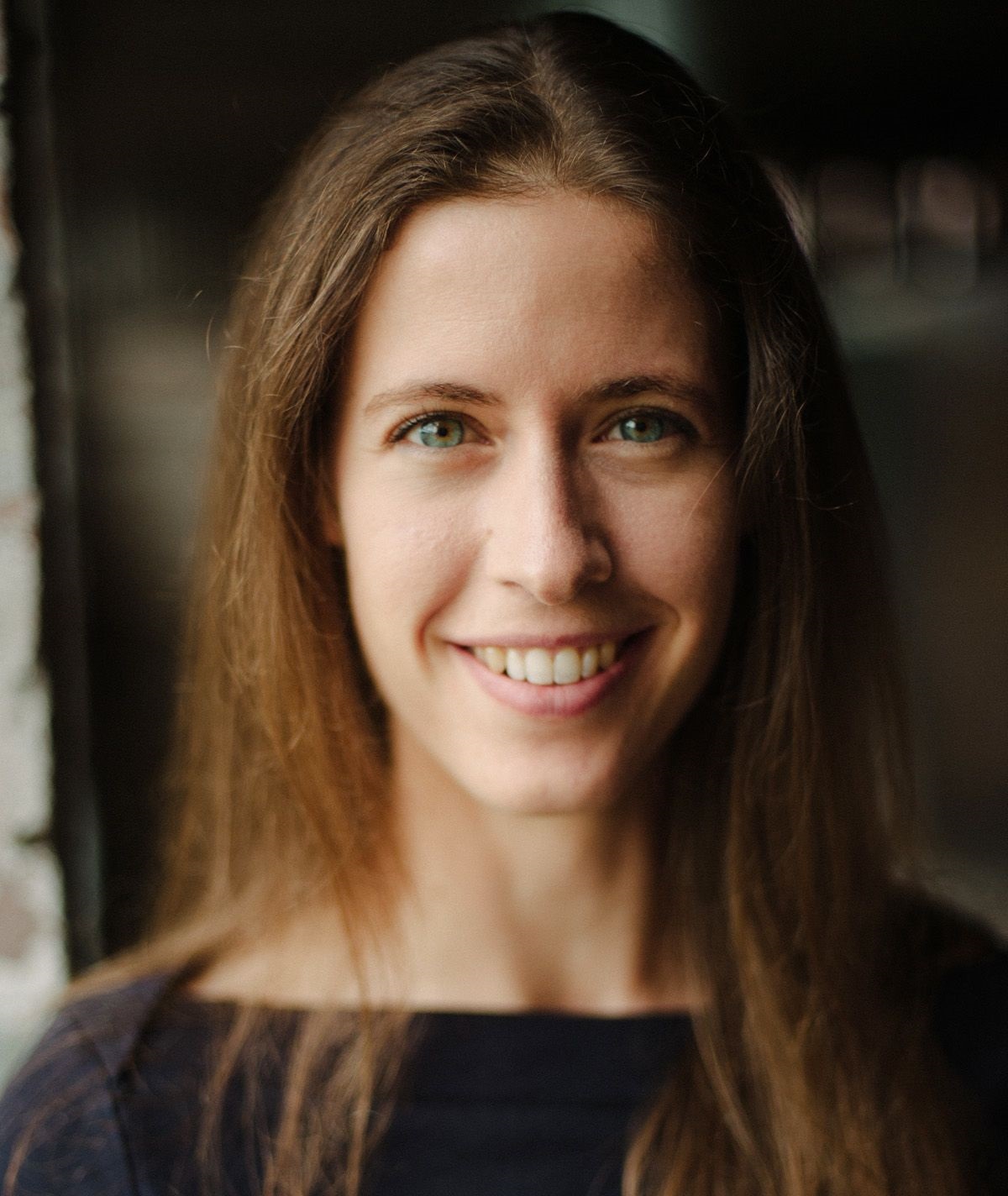
2208 Art of SongThe Canadian Art Song Project is going big for the 150th birthday of the federation and Toronto’s biggest contemporary music festival 21C will host the party: 12 poets in a song cycle world premiere with four singers and a piano, alongside two song cycles for baritone and piano both performed for the first time in Ontario. And when I say party, I am not exaggerating. All three composers will be in attendance on May 25 at the Temerty Theatre at the RCM, as will most of the poets (Lucy Maud Montgomery and E.J Pratt have good excuses), and will stay after the concert together with the singers and pianists for an open panel conversation with the audience and to answer questions.

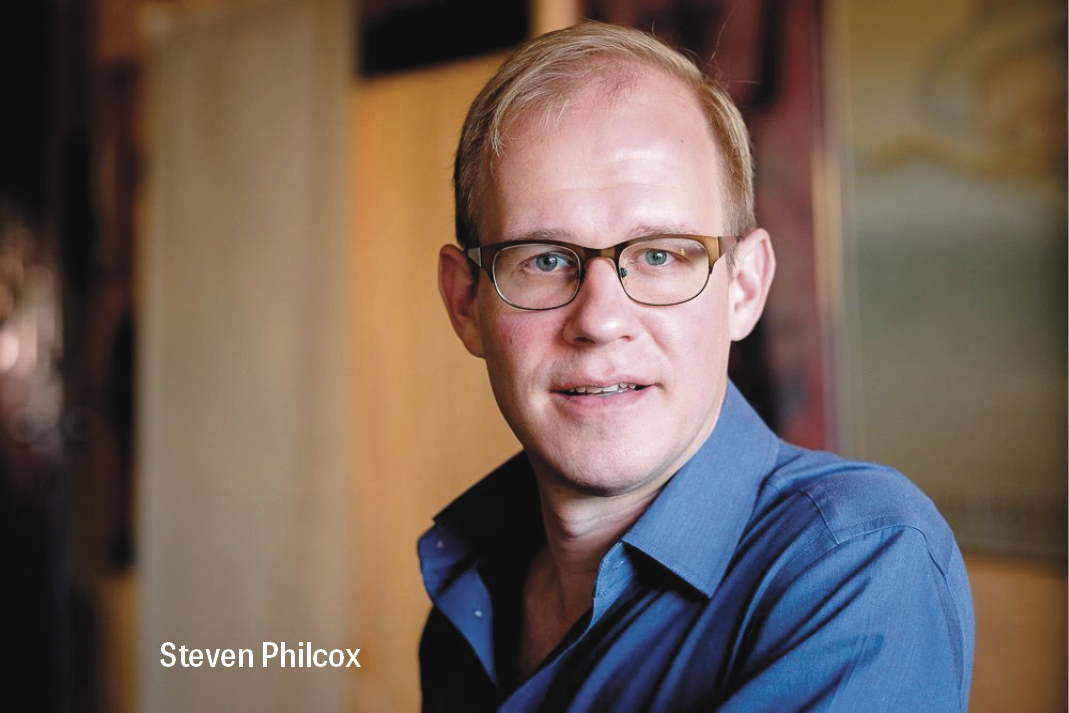
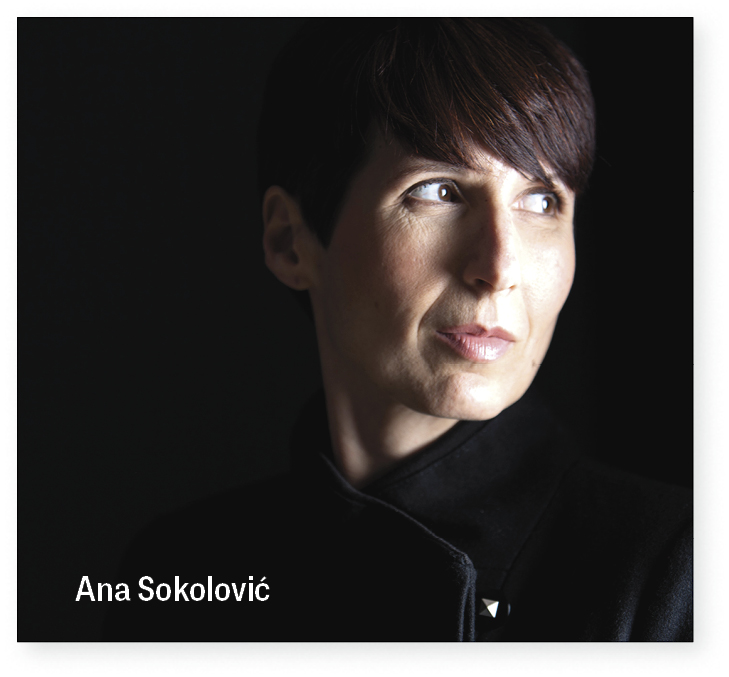
Marilyn Dumont’s lower-case titled poem dawn always begins in the bones is where composer Ana Sokolović got the title for the largest work on the program, a cycle commissioned by the CASP’s two artistic directors, Steven Philcox and Lawrence Wiliford. “We wanted something quite substantial to celebrate the sesquicentennial,” explained Philcox when we caught up with him in late April. “Both of us wanted to find a piece that would be a bit larger in scope, and that would possibly be breaking some of the established traditions of the song cycle.” They asked Sokolović, a composer known for her flair for incorporating the dramatic and the visual into her music as well as for the keenness to experiment, to create a cycle for four voices (SMTB) rather than one. She used texts by a wide range of poets; they hail from all the provinces, ethnic backgrounds, ages and poetic philosophies. There are poets from the past (E.J. Pratt and L.M. Montgomery) but most of the poems are by our contemporaries: Marilyn Dumont, George Elliott Clarke, Lorna Crozier, Christian Bök, Herménégilde Chiasson, Rienzi Crusz, Roo Borson, haiku writer Nick Avis, Ariel Gordon and the late Quebec Automatist Claude Gauvreau. Musically too, says Philcox, “Sokolović managed to capture the vivid and varied landscape of Canada.”

Sometimes a song may start as a solo and proceed as a duo or start as a duo that progresses into a trio. Everything will be in flux over the 40 minutes of the duration of the piece. There are times in the cycle when singers are tasked with playing ukulele and percussion instruments, and playing on the exposed piano strings with mallets. The young director and frequent collaborator with MYOpera, Anna Theodosakis, was hired as the “directorial eye” in putting this piece with a strong visual component together.

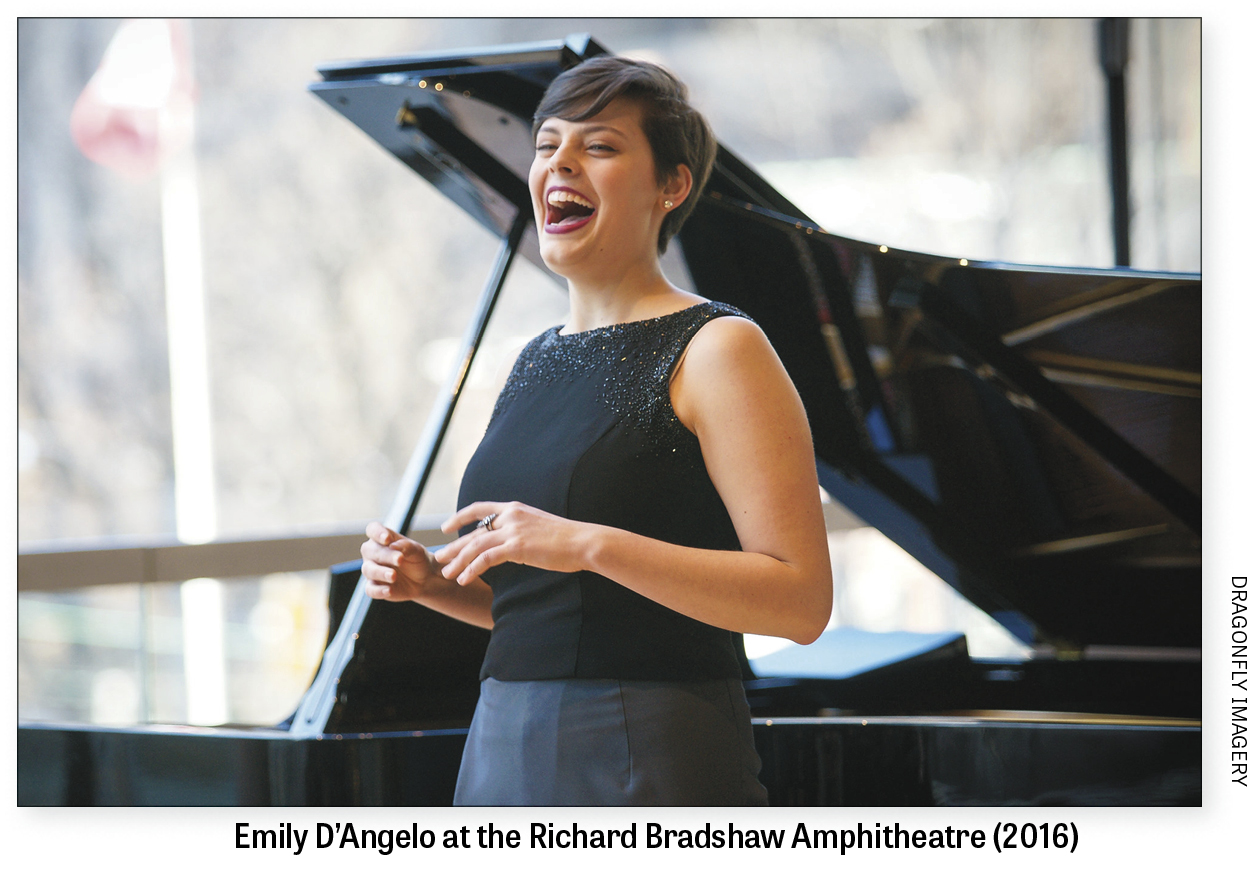
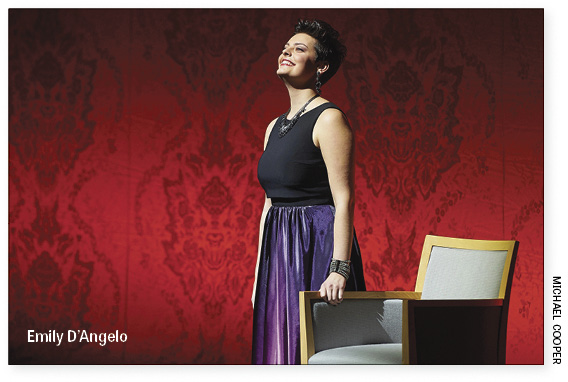
By the time of the two workshop performances they already knew, Philcox says, that the work would have the alchemy of that rare perfect combination between the creators and performers. It was clear to them from the beginning that “It’s Canada’s youngest talent who should be presenting it – those who will carry us into the bicentennial.” Four of the Canadian Opera Company Ensemble Studio members sing the songs, soprano Danika Lorèn, mezzo Emily D’Angelo, tenor Aaron Sheppard and baritone Bruno Roy, and will be accompanied on the piano by the head of the Ensemble Studio, Liz Upchurch. Their enthusiasm for the project and their youthful energy further fuelled the cycle. Sokolović has gotten to know the singers over time and has occasionally made adjustments to play to their specific strengths. Lorèn and D’Angelo went to meet with her in Montreal and after hearing them sing the composer was so inspired by their companionship in timbre and their joint beauty of sound that she wrote a song for them literally overnight: she rushed to find the suitable poem immediately after the meeting and worked on it, sleep be damned, until it was done.

For those of us impatient to hear it, Dawn Always Begins in the Bones will have its ante-premiere in the COC’s noon-hour vocal series at the Richard Bradshaw Amphitheatre of the Four Seasons Centre on May 17. On May 25 at the RCM, however, it will be presented in a full-sized concert (plus the post-performance discussion) with two other vocal works, by Andrew Staniland and by Lloyd Burritt.

2208 Art of Song 2

Staniland’s Peter Quince at the Clavier for baritone and piano was originally composed for American Opera Projects: Composers and the Voice in 2008 and had its world premiere in Santa Fe with an American cast of musicians. The poem by Wallace Stevens is very distantly based on the character Peter Quince, the director of the tradesmen-players ensemble in Shakespeare’s A Midsummer Night’s Dream. The text actually dwells more on the story from the biblical Apocrypha about Susanna and the voyeur elders – and the unnamed woman who brought the story to the narrator’s mind. Thinking of your blue-shadowed silk / Is music. It is like the strain / Waked in the elders by Susanna and on and on; perhaps it is a Peter Quince-like figure attempting art song composition with no music other than Wallace Stevens’ poetic sense. On the music inherent in the poem itself a lot has been written (there’s a compilation of key excerpts from a number of studies on the University of Illinois’ English Department poetry pages) so adding actual music to it must have been an intriguing kind of a challenge. You can find out how Staniland solved this puzzle by heading to YouTube, where the composer generously uploaded the entire piece with the visuals closely following the score. “Writing is often sparse and rhythmically fraught and quite ferocious,” Philcox says about the music. “The baritone gets to do a lot of interesting things, including sing in the falsetto range.” Iain MacNeil will be accompanied by Mélisande Sinsoulier from the piano.

Sinsoulier and MacNeil will also perform the final song cycle in the program, the BC-based composer Lloyd Burritt’s Moth Poem set to the serial poem of that name by Robin Blaser (1925-2009). “It’s a piece that harkens back to the more traditional musical landscape and complements the rest of the program,” says Philcox. “It’s very evocative, lush at times, very melodic and tonal.”

Quick Picks

Natalie Dessay returns to Toronto for a recital at Koerner Hall May 2 with the always brilliant Philippe Cassard at the piano. (Search for his name in the French public radio stations France Musique and France Culture websites; he unfailingly gives enlightening and entertaining interviews.) The program, conceived under the very broad umbrella of “Women’s Portraits,” includes Mozart, Gounod, Schubert, Pfitzner, Debussy, Bizet and Chausson, plus possible encores. Dessay is not best known for her Lieder singing, but after her soft retirement from the stage she is now moving into the art song territory – her latest CD is an all-Schubert recording with Cassard at the piano.

The COC’s lunch-hour Vocal Series is particularly rich this month. On May 9, mezzo Allyson McHardy will sing Schumann’s Poèmes de la reine Marie d’Écosse, Zemlinsky’s Six Songs after Poems by Maeterlinck. Rachel Andrist is at the piano. May 10, COC’s Ensemble Studio tenor Aaron Sheppard sings Finzi’s A Young Man’s Exhortation based on the poetry of Thomas Hardy and May 11 one of Ensemble Studio’s mezzos Lauren Eberwein and the members of the COC orchestra present a program of two Bach cantantas, Ich habe genug, BWV82, and Vergnügte Ruh, BWV 170. Tenor Charles Sy and pianist Hyejin Kwon will perform Schubert’s Die schöne Müllerin in their final Ensemble Studio graduation concert on May 18. All concerts are free and start at noon in the Richard Bradshaw Amphitheatre, Four Seasons Centre for the Performing Arts.

The very last two concerts to be played by Talisker Players as a presenting ensemble are their May 16 and 17 performances of “A Mixture of Madness. Soprano Ilana Zarankin will sing Purcell’s Mad Songs for soprano, strings and continuo, Ralph Vaughan Williams’ Songs of William Blake for soprano and oboe and Marina Tsvetaeva’s Insomnia set to music by John Plant (with saxophone and piano). Baritone Bruce Kelly will sing a song from Mitch Leigh’s musical Man of La Mancha, “The Impossible Dream,” in the chamber ensemble arrangement by Laura Jones. He will also interpret Peter Maxwell Davies’ Eight Songs for a Mad King. The Talisker Players-commissioned Alice Ping Ye Ho’s The Madness of Queen Charlotte (text by Phoebe Tsang) for flute, viola, cello and piano will have its world premiere on the same night. Actor Andrew Moodie will read from select letters, diaries and memoirs. Concerts start at 8pm but there will be pre-concert chats starting at 7:15pm on both nights; at Trinity-St. Paul’s Centre.

Lydia Perović is an arts journalist in Toronto. Send her your art-of-song news to artofsong@thewholenote.com.
2207-ArtOfSongBanner.jpg2207 Art of Song 1Much of Brahms stays well apart from pop culture, but one piece is a colossal exception: the third movement of his Third Symphony has had a prolific afterlife no other piece by any Romantic composer can match. Serge Gainsbourg uses the melody for the song Baby Alone in Babylone written for Jane Birkin, and Carlos Santana lifts it for Love of My Life. John Cleese as Basil Fawlty plays it loudly to irritate his wife Sybil in Fawlty Towers (“Brahms’ Third Racket”). In the 1961 romantic drama Goodbye Again, based on Françoise Sagan’s novel Aimez-vous Brahms?, it appears in the score alongside other Brahms and reappears as a jazz song Say No More, It’s Goodbye sung by Diahann Carroll. Both the film and the novel are about an obstacle-ridden love affair between an older woman and a younger man, perhaps a nod to Brahms’ own love life (Clara Schumann was 13 years his senior).

Few have dared tackle the Brahms lieder in pop and singer-songwriter register. The only one who did it in Canada in recent years is pianist and composer Lewis Furey. The Lewis Furey Brahms Lieder project is the result of years of translating, adapting, transposing and arranging lieder, a selection of which he performed last year in concert in Montreal. The only one that made YouTube, Forget You, after Nicht mehr zu dir zu gehen, is an intriguing piece of musical (re-)creation, but it’s probably too complex to be anywhere in the vicinity of pop.

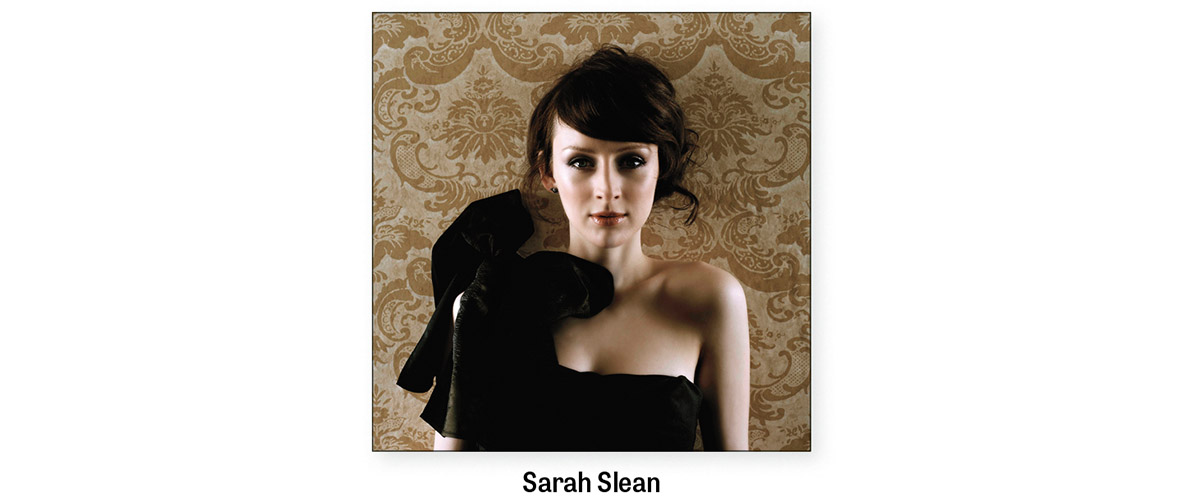
For readers quick off the mark this month, Art of Time Ensemble’s March 31/April 1 “Johannes Brahms: Portrait of a Musical Genius” program bodes well on this score. The always innovative ensemble under artistic director Andrew Burashko may yet turn Brahms into a contemporary pop star, since all the elements seem to be there: an actual pop singer – Sarah Slean – lending her distinct and recognizable voice; Burashko at the piano; and four Brahms’ lieder adapted in English and arranged, fingers crossed, to keep the intricacy of Brahms’ originals while also achieving the easy communicability and immediacy of pop songs. Benjamin Bowman (violin), Jethro Marks (viola) and Rachel Mercer (cello) make up the rest of the performing ensemble. Piano Quartet No.1 Op.25, Violin Sonata No 2 in A Major Op.100 and a selection of piano Intermezzi are also on this all-Brahms program. Will the strings be employed for the lieder too? It remains to be seen.

Slean will sing four reinvented Brahms songs for the occasion. Sommerabend (Summer Evening) Op.85 No.1, to the poem by Heinrich Heine, tells of a quiet walk through the woods and meadows that ends with a secretive glimpse of a wood fairy bathing under the moonlight. Bei dir sind meine Gedanken (My Thoughts Are with You) Op.95 No.2, poem by Friedrich Halm, is a tad more lively: the piano flutters as do the excited and confused thoughts around the beloved, unwilling to leave her side, even if it means their wings will be burned “in the flame of your eyes.” Feldeinsamkeit (Solitude in the Fields) Op.86 No.2, poem by Hermann Allmers, sounds least amenable to pop treatment, but I hope to be proven wrong. It’s a resigned, deceptively brightly coloured, slow-paced meditation on mortality—through a description of nature, of course; a frequent Romantic device. Finally, Wie Melodien zieht es (Like Melodies It Passes) Op.105 No.1, to the poem by Klaus Groth, is a witty yet still melancholy take on writing poetry and putting the elusive to words. Among the many recorded versions of the song, the ohne Worte arrangement for cello and piano by Mischa Maisky and Pavel Gililov is probably the most unusual one around.

These are the four challenges then. Art of Time, Slean and Burashko will take them on at Harbourfront Centre Theatre March 31 and April 1 at 8pm.

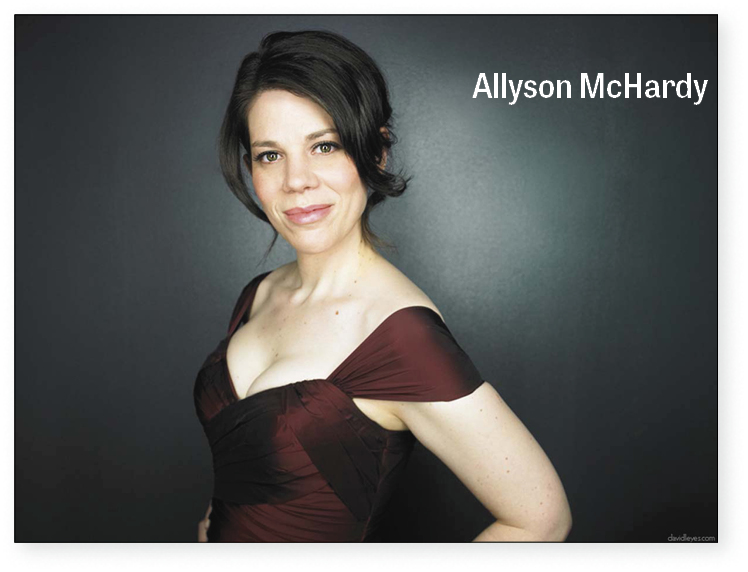
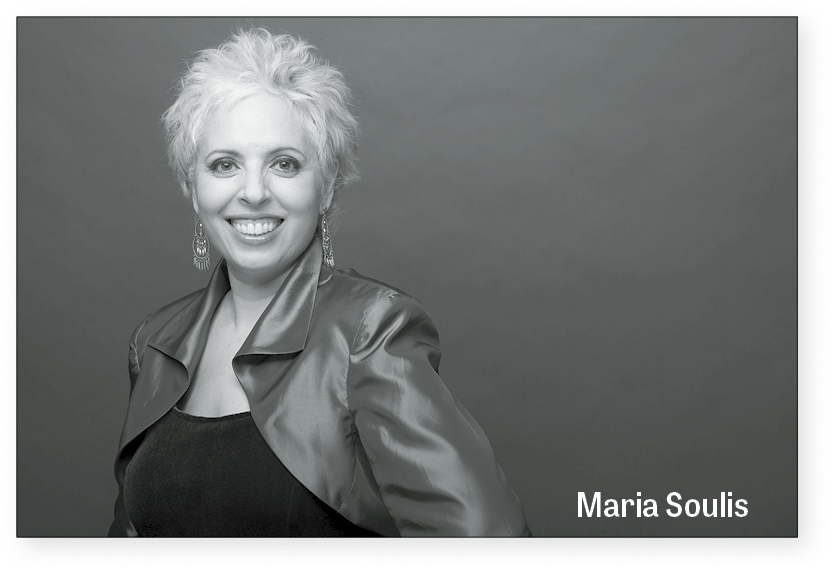
2207 Art of Song 2Mezzos: There’s more Brahms of the traditional kind coming up later in April and early May. Torontonians will be able to hear two mezzos in the same Brahms piece, Two Songs for Alto, Viola and Piano on different occasions: Allyson McHardy with the Montrose Trio (April 28 at Koerner Hall) and Maria Soulis with Canadian Sinfonietta (May 6 at Heliconian Hall). Brahms wrote the two songs published as Zwei Gesange Op.91 for two of his friends, mezzo Amalie Schneeweiss and her husband, violinist Joseph Joachim. Gestillte Sehnsucht (Longing at Rest) is a sort of a secular lullaby for grownups, to words by poet Friedrich Rückert, full of rustling tree leaves and restless desires quieting down. Geistliches Wiegenlied or Cradle Song of the Virgin (Emanuel Geibel, translating Lope de Vega) borrows from Christian folklore. It opens and closes with a musical citation from a carol, it’s the palms of Bethlehem that swish, and it is Mary who rocks her child and hints at what is to come for him. Good things didn’t befall the real couple in the composing story either: they divorced in acrimony, after Joachim unjustifiably accused Schneeweiss of an affair with an acquaintance. Brahms took her side, and Joachim severed ties with both.

2207 Art of Song 3In Two Songs, there is a lot of room for the mezzo to show off her spectrum of inflections and her subtle mastery over text (of which there’s a considerable amount) while steering clear of the pitfalls of the saccharine that come with Wiegenlied. The Canadian Sinfonietta concert with Soulis will feature two other vocal pieces, Jake Heggie’s Some Times of Day for mezzo and piano trio and a selection of Mikis Theodorakis’ Greek songs.

Agostino Steffani: Chiefly thanks to Cecilia Bartoli’s tireless work in favour of his revival – Donna Leon’s mystery The Jewels of Paradise might have played a part in his popularization – Agostino Steffani (1654-1728) is gaining a foothold in the operatic repertoire. On April 28, at Heliconian Hall, as part of their new chamber series Close Encounters, Tafelmusik will make the case for his return to the concert repertoire too.

Diplomat and bishop as well as a composer, Steffani left behind a great many vocal pieces and operas, but only six secular cantatas, considerably fewer than Vivaldi or Scarlatti. Hai finito di lusingarmi (lyricist anonymous) is written for high voice, two oboes and continuo. Italian secular cantatas of the era are structured into aria and recitative components, and Hai finito unfolds in the A R A R A scheme. Arcadian characters recur in cantatas – Fileno, Tirsi, Dorilla, Elvira – with verse metered at 11 or 7 syllables, the dominant metres of Italian poetry since Petrarch. The lines in arias tend to rhyme in some form, but in what form and how consistently is up to the poet (there are rime baciate, alternate, intrecciate and incatenate – words for the types of rhymes themselves sound like poetry). Digging deep into the cantata as a poetic and musical form can lead to some fascinating places. The chapter on the cantata genre in Michael Talbot’s The Chamber Cantatas of Antonio Vivaldi is an excellent general introduction to the form.

You will never again lure me, Steffani’s title in English, is a monologue by a certain Clorindo addressed to Filli by the end of which, alas, he is lured by Filli again. Antonio Lotti’s aria,Vieni pur ferisci impiago (Come then wound again) will also be performed in Close Encounters. It is from his cantata Ti sento, o Dio bendato (I Feel Thee, Oh Blind God), and belongs in the same general category of wrestling with Cupid. Its structure is A R A A and the oboe returns as the melody instrument atop the continuo.

Amid some instrumental Zelenka, Telemann and Fasch, the sampling of cantatas concludes somewhat incongruously with a highly religious aria Ich hab mich ihm ergeben (I have given myself over to Him) from Bach’s Cantata 97 In allen meinen Taten. Musically, however, it’s a playful number with woodwinds dialoguing and stealing the show.

Said woodwinds will be manned by John Abberger and Marco Cera (oboes) and Dominic Teresi (bassoon). Charlotte Nediger will be continuo-ing from the harpsichord. Soprano Ellen McAteer sings the three cantatas.

Fête: Toronto vocal ensemble Collectìf, co-founded by COC Ensemble Studio soprano Danika Lorèn, presents staged vignettes of art songs based on Verlaine’s poetry cycle, Fêtes galantes (various composers) and Reynaldo Hahn’s Douze Rondelles. Danika Lorèn, Whitney O’Hearn, Jennifer Krabbe, Tom King, Adam Harris and Matthew Dalen perform in the Richard Bradshaw Auditorium  on April 18 at noon.

Countertenor Philippe Jaroussky returns to the Koerner Hall in a program of Handel arias from operas Flavio, Siroe, Imeneo, Radamisto and Tolomeo with Les Violons du Roy conducted by the ensemble’s associate conductor Mathieu Lussier. Also on the April program: Fux and Graun.

Lydia Perović is an arts journalist in Toronto. Send her your art-of-song news to artofsong@thewholenote.com.
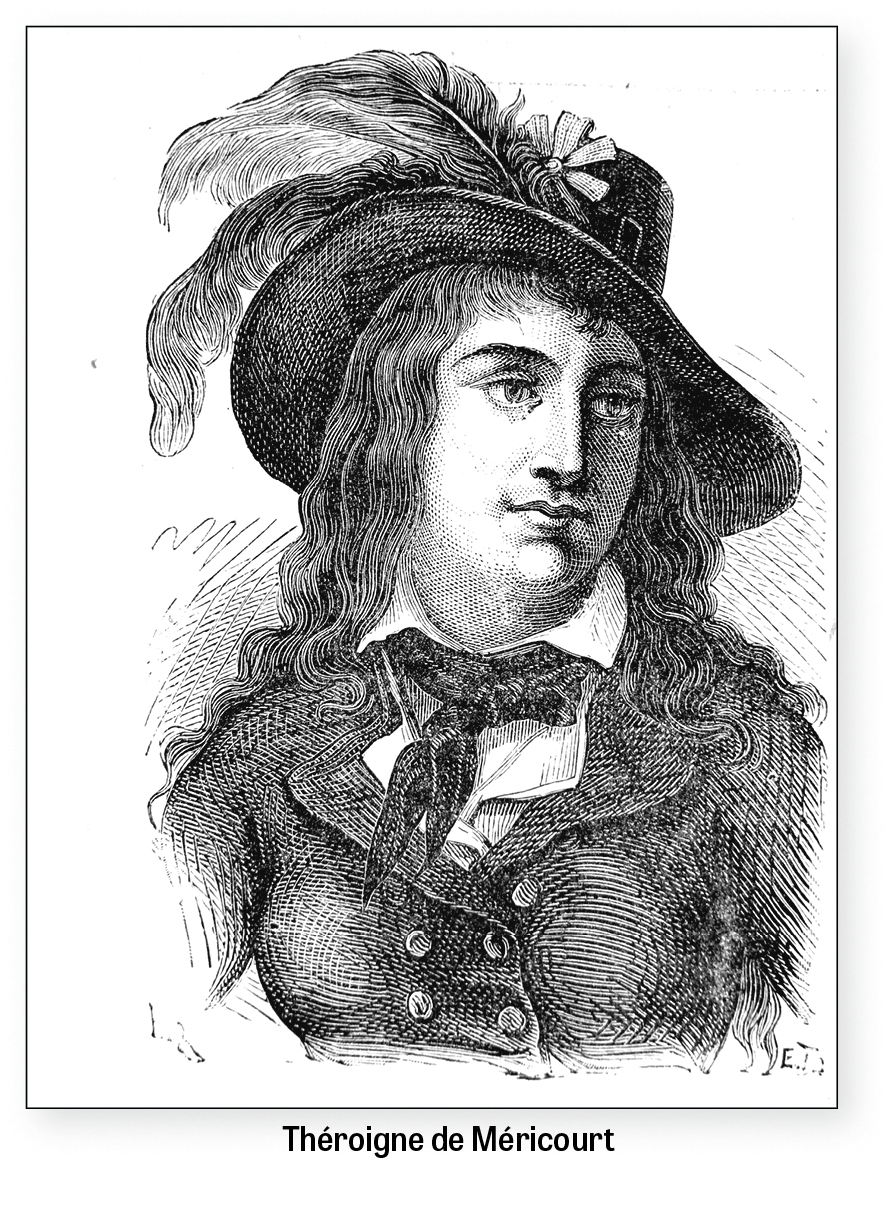
2206- BBB - Art of Song 1.jpgThe French Revolution is an inexhaustible source of fascinating characters, but I would bet my culottes that most of us would draw a blank before the name of Théroigne de Méricourt. This goes even for those of us who seek out female characters in history and for whom Olympe de Gouges, Charlotte Corday or Madame de Staël do ring a bell or two. Yet de Méricourt was a figure of immense notoriety in her own era, both veiled and amplified by myth, royalist propaganda and gossip by her contemporaries and the 19th-century historians alike.

She was a demimondaine who moved from job to job and region to region, and before 1789 mostly worked on trying to build a singing career. She moved to Paris when the Revolution called, attended the debates at the National Assembly, joined revolutionary clubs, argued for inclusion of women in them, and founded her own short-lived one before joining the Cordeliers. (During this time, her alter-ego concocted by the royalist pamphlets lived a life of insatiable promiscuity and fighting at the barricades. Plus ça change for women in public life.) Austrians arrested her as a “revolutionary spy” during a visit to her home region, then under Austrian occupation. She spent several months in a fortress and in between interrogations wrote her biography which would have to wait 100 years to be published.

2206- BBB - Art of Song 2.jpg

Freed thanks to the intervention of the Austrian emperor, she returned to Paris to find the tenor of the Revolution radically changed. She sympathized with the Girondins, but the Jacobins were ascending, and during the Terror she was captured and publicly whipped by a group of sans-culottes women for her politics. This brought about a breakdown from which she never recovered. Soon after, de Méricourt was committed to an insane asylum and spent the remaining years of her life locked in cells, increasingly demented, occasionally under the watch of a conservative pioneer of clinical psychiatry Dr. Esquirol who, like a great number of historians since, argued that her life was proof that a revolutionary shakeup of the hierarchies can clearly only have one outcome: madness. (In 1989, Élisabeth Roudinesco made a better argument in her Théroigne de Méricourt biography: a woman who found her voice during the Revolution lost it – together with her reason and liberty – when the Revolution betrayed its own ideals.)

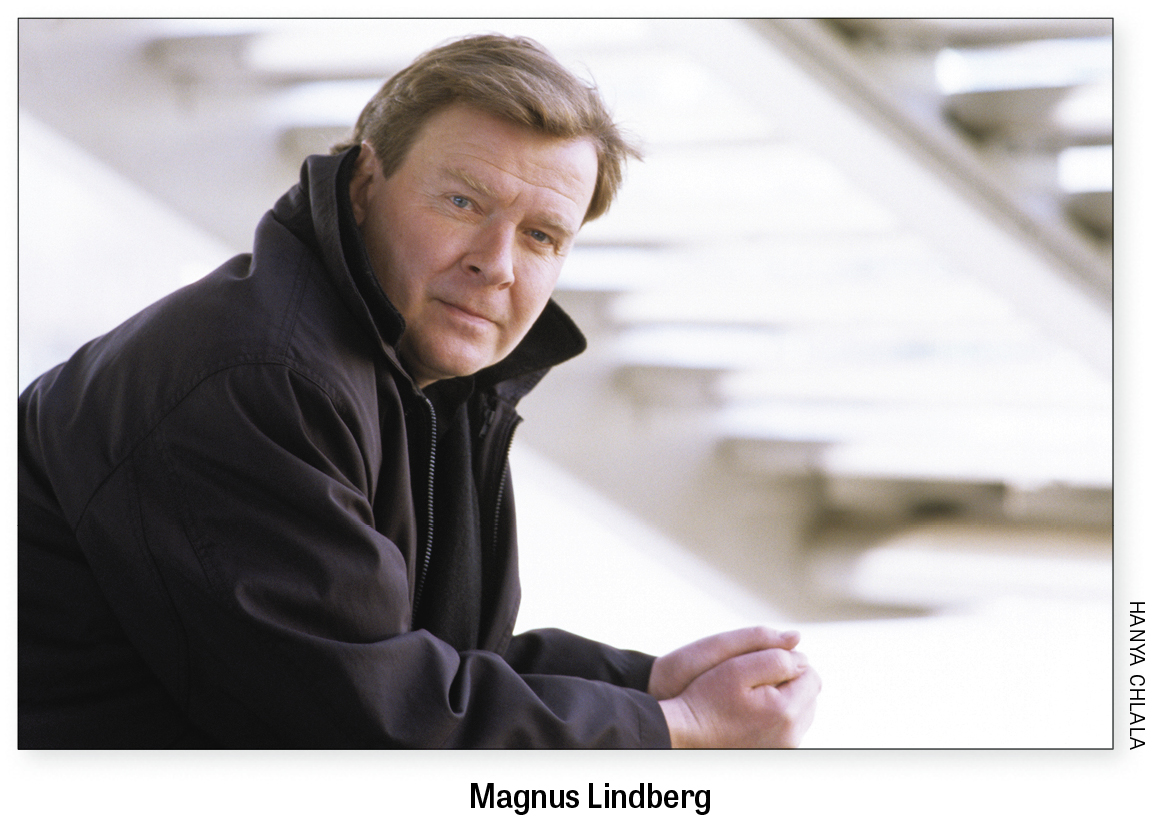
It’s the Théroigne (her name brings to mind the word témoigne, the French word for bearing witness) in Austrian captivity that we will hear as one of the three voices in Magnus Lindberg’s Accused: Three Interrogations for Soprano and Orchestra on March 22 and 23 with the Toronto Symphony Orchestra and Finnish soprano Anu Komsi. The TSO co-commissioned the piece with Radio France, the Gothenburg Symphony Orchestra, Cleveland Orchestra and NYC’s Carnegie Hall. This will be its North American premiere. To quote the composer’s publisher Boosey & Hawkes, “ Accused explores three documented cases of the individual under attack from the state, from three countries and three different centuries.”The world premiere took place in London in 2015. For the occasion the soprano (Barbara Hannigan) was placed within the orchestra, vocal line at times intentionally submerged by the orchestral forces. The text in the middle part is from a 1960s Stasi interrogation in East Germany, while the final one is adapted from the trial of Chelsea Manning, the US army whistleblower sentenced by a military court to 35 years of imprisonment for leaking 700,000 classified documents to WikiLeaks, including the infamous 2007 US Apache gunsight video that shows the killing in a public square in East Baghdad of a handful of Iraqi civilians suspected of insurgency, a Reuters journalist holding a camera and his driver. In one of the last acts of his presidency, U.S. President Obama commuted Manning’s sentence (the 29-year-old is expected to head home to Maryland in May this year). There is a final twist to the story of Accused. The course of time has cast a shadow over WikiLeaks itself, which was potentially enlisted by subterranean actors with connections to the Russian government in an attempt to influence the 2016 presidential election. But that’s material for another composer.

There are few reviews around and no recording of Accused just yet. The available accounts from concertgoers suggest that Lindberg did not compose the vocal line in concertante with the orchestra, but in an often losing struggle of contrast and friction against the orchestral power. In interviews Lindberg cites Luciano Berio’s 1965 Epifanie as a model. Epifanie is a better-documented work, with a recording on the Orfeo label available, and a couple of streaming captures on YouTube, all with Cathy Berberian in the vocal role, and a good page on IRCAM online archives, should the fancy strike. The text for the Epifanie was built up by none other than Umberto Eco from quotes from Proust, Joyce, Brecht, Antonio Machado, Edoardo Sanguinetti and Claude Simon.

How to introduce oneself to Lindberg, one of the busiest and most productive European composers around, commissioned by the Berlin Philharmoniker and the Concergebouw, past composer-in-residence at the New York Philharmonic and London Philharmonic? Here are his own words from the liner notes of a recent recording: “Though my creative personality and early works were formed from the music of Zimmermann and Xenakis, and a certain anarchy related to rock music of that period, I eventually realized that everything goes back to the foundations of Schoenberg and Stravinsky – how could music ever have taken another road? I see my music now as a synthesis of these elements, combined with what I learned from Grisey and the spectralists, and I detect from Kraft to my latest pieces the same underlying tastes and sense of drama.” Kraft is one of Lindberg’s earliest breakthroughs, a dramatic noise piece for electronics, a large orchestra and an ensemble of soloists which includes clarinet, two percussionists, piano, cello, a sound master and a conductor, each of whom is expected to leave their respective station and perform extended techniques on a set of makeshift instruments. There’s a solid online record of Kraft performances and history, including backstage and instructional videos, all of which is a hoot to explore. If you prefer an intimate listening of a piece for which you don’t have to do anything but let it wash over you, go for Lindberg’s Second Cello Concerto (commissioned by the LAPhil in 2013), which is a marvel.

Kurtag’s Fragments: A performance of Kafka Fragments is never to be missed if opportunity presents itself. Last heard in Toronto in 2014, the György Kurtág work for soprano and violin is an intense, technically demanding set of short pieces with bits of text taken from Kafka’s diaries and letters. Two of the world’s best known interpreters of the work, soprano Tony Arnold (of International Contemporary Ensemble) and violinist Movses Pogassian, will perform it in Toronto and Kitchener-Waterloo on March 26 and 27, respectively. Both musicians rehearsed the Fragments with Kurtág himself in 2008 and preserved a video document of the collaboration on their Kafka Fragments DVD+CD from 2009. The two have performed the work in over 30 venues since. The Toronto concert is a fundraiser for New Music Concerts at Gallery 345 and it’ll include a screening of the Kurtág collaboration, gourmet comestibles and socializing with other new music lovers. The ticket for the whole event is $100 ($150 for two), with charitable receipts issued for the CRA allowable portion. For a regularly priced performance ($35) at an even cosier venue, head to Kitchener-Waterloo where the K-W Chamber Music Society will be hosting the same concert the day after. KWCMS is a chamber music series privately run by Jan and Jean Narveson and hosted in the Music Room, a concert hall in his own house, professionally equipped for recitals and seating 85. Kafka Fragments in such a setting will be quite an experience.

Royal Canadian College of Organists is throwing a movable Bach concert with walking, organ showcasing and quite a lot of singing: soprano Jennifer Krabbe, tenor Matthew Dalen and baritone Daniel Thielmann are all listed as soloists. (Wo)manning the organ in each of the churches will be Michelle Cheung, with Mel Hurst accompanying. The program has not been made available as of print time, but the three church locations have – the organ and the acoustics will be put to test in Kingsway Baptist, All Saints Kingsway Anglican and Our Lady of Sorrows Roman Catholic. Rain or shine (or March sleet), March 18, 1pm to 3pm. starting at Kingsway Baptist. Free, though donations are welcome.

Lydia Perović is an arts journalist in Toronto. Send her your art-of-song news to artofsong@thewholenote.com.
2205 Art of Song 1There was a time when men loved lesbians and considered them essential for their own artistic output. No, stay with me, it’s true: that time is the latter half of the 19th century, the place is France, and the men are the poets of emerging modernism.

Charles Baudelaire’s Fleurs du mal’s working title was Les lesbiennes and the section that got him censored and fined includes poems Lesbos and Delpine et Hippolyte. (Femmes damnées somehow got away, in spite of its cries of solidarity: “Vous que dans votre enfer mon âme a poursuivies / Pauvres soeurs, je vous aime autant que je vous plains”). Paul Verlaine’s series of sonnets around amorous encounters between young women, Les amies, is more specific, more explicitly visual and sensual. His Ariette oubliée IV from the later Romances sans paroles is a poetic embrace of the carefree female same-sex coupledom that, some critics argue, masks the poet’s own embrace of male homoeroticism. “Soyons deux jeunes filles / Éprises de rien et de tout étonnées,” says the poem to the reader of either sex.

Sappho was mythologized and loomed large for male poets of the era, and Théodore de Banville and Henri de Régnier were just two of the poets who wrote lesbian poems set in some version of ancient Greece. In the words of Gretchen Schultz who wrote an entire book about this era of literary cross-sex fascination (Sapphic Fathers: Discourses of Same-Sex Desire from Nineteenth Century France), male poets’ quest for selfhood took detours through lesbian personae.

Best known in the classical world of all the lesbophile song cycles of this era remains Pierre Louÿs’ 1894 Les Chansons de Bilitis, an elaborate pseudotranslation of an “ancient Greek” Sappho-like figure, Bilitis–in fact, entirely concocted by Louÿs–whose biography of the senses the song cycle follows, from heterosexual beginnings through lesbian blossoming to the reminiscing of old age. Louÿs’ friend Claude Debussy set three of the poems to music in 1897 to create the lush piano and voice opus now known as Trois Chansons de Bilitis. Debussy then worked on another, longer cycle titled Musique de scène pour les Chansons de Bilitis with 12 of Louÿs’ poems, but the text there is recited within the tableaux vivants with musical interludes scored for a small orchestra of flutes, harps and celesta. Recorded only a modest number of times-there’s a Deutsche Grammophon recording with Catherine Deneuve as the recitant-this other version of Chansons is extremely rarely performed.

The three-song cycle with piano is another story: it is widely claimed by both mezzos and sopranos and has been recorded frequently. February 9, at the noontime Ensemble Studio concert at the COC, it will be sung by the young mezzo-soprano Emily D’Angelo accompanied by Hyejin Kwon at the piano. Both piano and vocal writing are of great richness, both of heightened sensuality of the Anaïs Nin kind. The well-curated program that abounds in literary references will also include baritone Bruno Roy with Stéphane Mayer at the piano in Poulenc’s cycle La fraîcheur et le feu set to poems by Paul Éluard, as well as Ravel’s last completed work, the colourful and energetic Don Quichotte à Dulcinée set to Paul Morand’s poems. D’Angelo rounds out the event with Messiaen’s Trois Mélodies, one of which is based on a poem written by the composer’s mother, poet Cécile Sauvage; the remaining two are Messiaen’s homage to her words.

The Lieder are another cultural domain where the poetic “I” wanders across the sexes and rewrites the lover and the beloved, primarily thanks to the performers who interpret them. While traditionally the poetic subject has always been male and the object of his interest female, many composers would bestow the same cycle to a variety of voices, and singers and pianists themselves would adopt song cycles however they saw fit. But performing traditions get established and listening habits settle in, and today Berlioz’s Nuits d’été is sung primarily by mezzos and sopranos, while Schubert’s Die Winterreise primarily by baritones or tenors. Only a handful of mezzos have dared record the Schubert cycle: Christa Ludwig, Brigitte Fassbaender, Nathalie Stutzmann and Alice Coote. Fassbaender’s 1988 recording (with Aribert Reimann at the piano) in particular ruffled misogynist feathers. “Can a Woman Do a Man’s Job in Schubert’s ‘Winterreise’?” pearl-clutched a New York Times critic in 1990 and proceeded to explain all the reasons the answer is no. Even fewer sopranos have recorded or performed it; one notable recent recording is by Christine Schaefer with Eric Schneider.

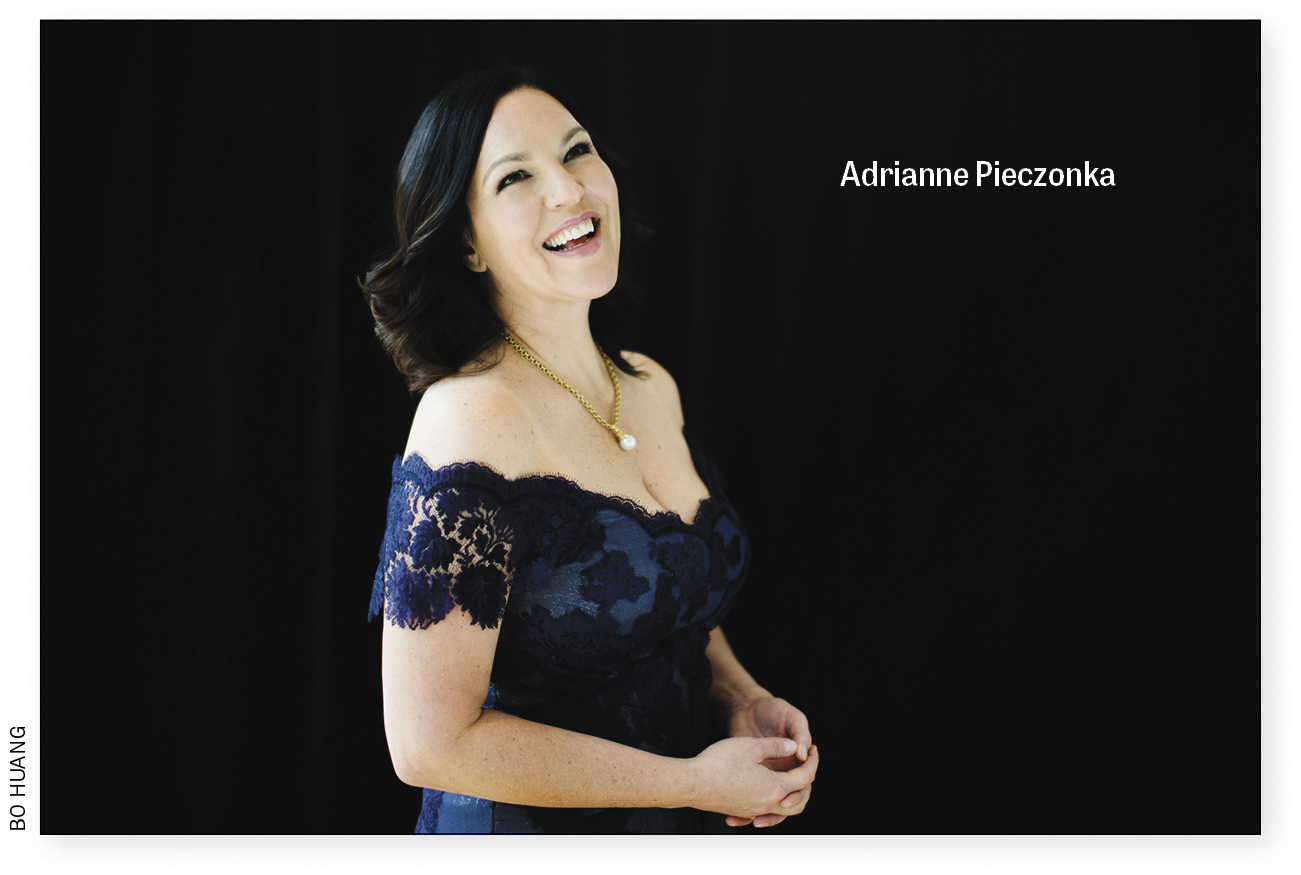
2205 Art of Song 2Lyric soprano Adrianne Pieczonka will be adding her unique voice and approach to the small but valiant contingent of Winterreise women this month, in the Mazzoleni Masters Concert Series at the RCM on February 12. Each singer brings a different personality to the narrator, and Pieczonka is likely to bring her deep knowledge of German language, her Vienna savvy and her impeccable Straussian pedigree-including her Marschallins-to the fore. A bright female voice will sing the dark poems to the ghostly presence of the beloved woman, and in this case it will be the voice of a singer who is indeed married to another woman. An important cultural first.

The cycle itself is ink black and non-negotiably so. “I came a stranger, I depart a stranger.” The first of Wilhelm Müller’s 24 poems, Gute Nacht, sets the tone. The narrator is leaving the house and his beloved, never to return. There was even talk of marriage, but all came to naught. He could have been a music teacher or a tutor there. We are never told; or why he is leaving, by choice or by somebody’s demand. “We are drawn in by an obsessively confessional soul…who won’t give us the facts,” as Ian Bostridge writes in his recent book Schubert’s Winter Journey.

He walks through the snow-covered wood, but equally through the landscape of his memory. Objects and trees appear that are heavy with meaning and pain, a postman rings but brings no mail, a graveyard is called an inn, and the snow and the ice remain constant. The final song takes us before the barefoot hurdy-gurdy busker: “Wunderlicher Alter!” Strange old man! Will his be the music to accompany the poet? Should the poet, in this apparent but not a little sinister break from the solitude, now follow him?

Stage directors have been taking interest in Winterreise’s scenic potential at least since the 90s. The 2014 semi-staging by William Kentridge with elaborate video projections behind baritone Matthias Goerne and pianist Markus Hinterhäuser will be available on DVD later this month, and it’s easy to predict more and more directors having a look at the piece. With Adrianne Pieczonka, and Rachel Andrist at the piano, we will finally have a chance to hear an all-female edition of the cycle which is to this day chiefly performed as an all-male enterprise.

QUICK PICKS

Feb 1 and 2: Two solos (Karina Gauvin in Pie Jesu and Russell Braun in Libera me) in Fauré’s Requiem with the Toronto Symphony Orchestra might on their own be worth going to the concert for, but of course the entire Requiem will be played, with the Amadeus Choir and Elmer Iseler Singers; Stéphane Denève conducts.

Feb 3 and 4: Jeremy Dutcher – whom you might have noticed in Soundstream’s Electric Messiah – is a young singer/songwriter/composer to watch. He combines a training in Western classical music with the musical traditions of his Wolastoq Nation and a gusto for contemporary creations. “Shapeshifting between classical, contemporary, traditional and jazz” is how he describes his approach and once you hear him live, you get what he means. He will be one of the soloists at Toronto Consort’s “Kanatha/Canada” program at Trinity-St. Paul’s Centre, the mainstay of which will be the choral piece Wendake/Huronia by John Beckwith, a reflection on Samuel de Champlain’s first and only passage four centuries ago through what is now known as Ontario and his encounters with Ontario’s First Nations. Alongside the instrumental and vocal core ensemble of the Toronto Consort, including Laura Pudwell as the alto soloist, and singers of the Toronto Chamber Choir, the program will feature Huron-Wendat poet and historian Georges Sioui as the narrator and First Nations singer-drummers Shirley Hay and Marilyn George. The Consort will also perform a selection of early French-Canadian folksongs, including Le Prince Eugène, Renaud and Dans les prisons de Nantes.

Mar 3: The Cecilia String Quartet, with the always subtle Lawrence Wiliford, perform Amoretti for Tenor and String Quartet: five of Elizabethan poet Edmund Spenser’s sonnets set to music by British composer Edmund Rubbra (1901-1986). The rest of the program at the Isabel Bader Centre for the Performing Arts in Kingston, is also of interest: Schubert’s Death and the Maiden string quartet and the Britten-arranged Purcell Chacony for strings in G Minor.

Lydia Perović is an arts journalist in Toronto. Send her your art-of-song news to artofsong@thewholenote.com.
2204 Art of Song 1Many years ago, in the mid-90s, I sang in the Toronto Classical Singers. When an orchestra was needed, the choir as often as not engaged a newly formed group, the Talisker Players Chamber Music Orchestra, to accompany us. Talisker was set up under the leadership of the violist Mary McGeer and violinist Valerie Sylvester to provide amateur choirs with needed instrumental accompaniment. Within ten years, the Players were accompanying between 20 and 30 choirs a year and they maintain an active schedule to this day, with McGeer still active in the ensemble. Important as the orchestra is on the choral scene, within five years of its founding, the Talisker Players Chamber Ensemble had also come into being, and it is for the latter that the group is now best known, particularly for their ongoing series of chamber concerts (four or five a year) at Trinity-St. Paul’s Centre, which almost always offer carefully curated thematic explorations of the relationship between poetry/spoken word and a widely eclectic and challenging range of music.

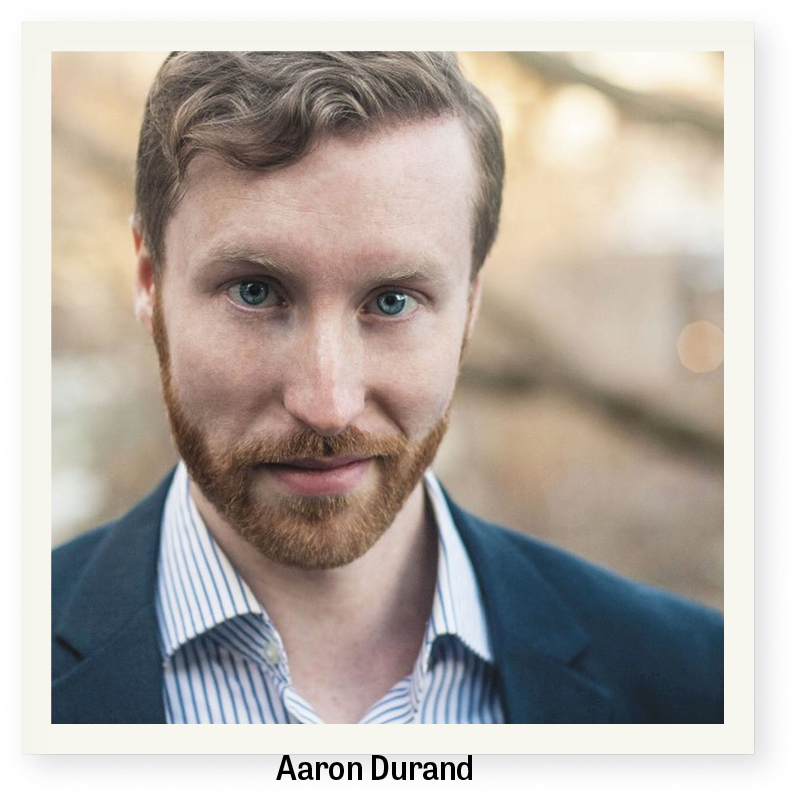
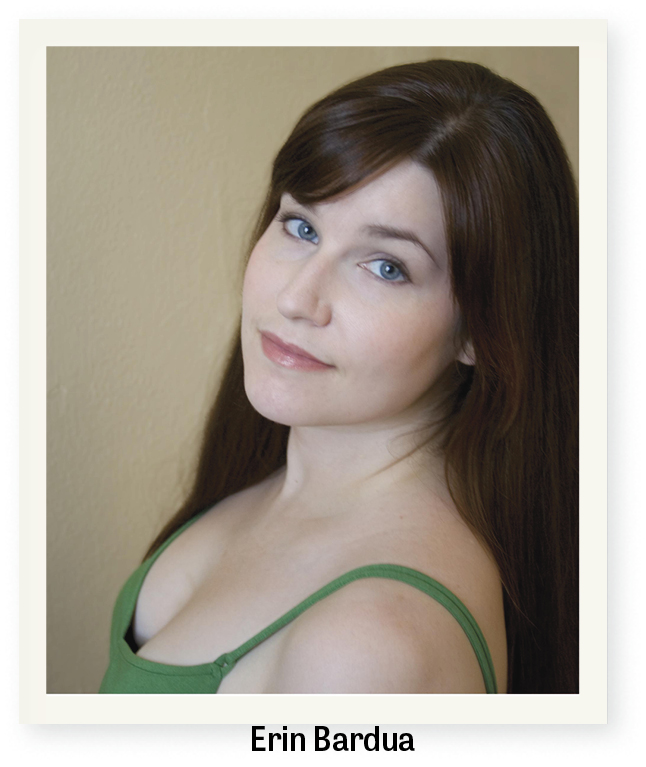
2204 Art of Song 1.5Their concert on January 29 is their second for this season and is a bit of a departure from the norm, in that the words and music are not separate. Titled “’S Wonderful,” it presents the music of George and Ira Gershwin, who gave us some of the most memorable songs of the 20th century. The soloists are Erin Bardua, soprano, and Aaron Durand, baritone.

The Talisker Players’ two remaining concerts this season are “Land of the Silver Birch” and “A Mixture of Madness.” Both are more reflective of the Players’ trademark style.

“Land of the Silver Birch” on March 28 and 29 is an exploration of folk song reflective of British and French settlement in Canada over time, with music ranging from Ludwig von Beethoven’s Scottish Folk Songs to Four Canadian Folk Songs for flute, viola, cello and piano, a new work by Alexander Rapoport. Whitney O’Hearn, soprano, and John Allison, baritone, will be the soloists, and John Fraser is the reader.

“A Mixture of Madness” on May 16 and 17 is trademark Talisker. Featuring rising soprano Ilana Zarankin, and Bruce Kelly, baritone, as soloists, and with Andrew Moodie as actor/reader, it promises to be an erudite and yet entertaining romp from Aristotle to Peter Maxwell Davies’ Eight Songs for a Mad King, by way of Purcell, Vaughan Williams and (a new commission) Alice Ping Yee Ho’s The Madness of Queen Charlotte (for flute, violin cello and piano).

Looking back (and looking forward): The Canadian Opera Company has announced the winners in its annual vocal competition. Top prize went to the mezzo Simone McIntosh, while Samuel Chan and Gregory Schellenberg (both baritones) received the second and third prizes respectively. The audience prize went to the soprano Myriam Leblanc (and that marks the first occasion, as far as I can recall, that the first prize awarded by the jury and the audience prize did not coincide). Winning a prize does not automatically guarantee entrance to the COC Ensemble Studio but most prizewinners are offered a place there and I look forward to hearing them in opera or in concert.

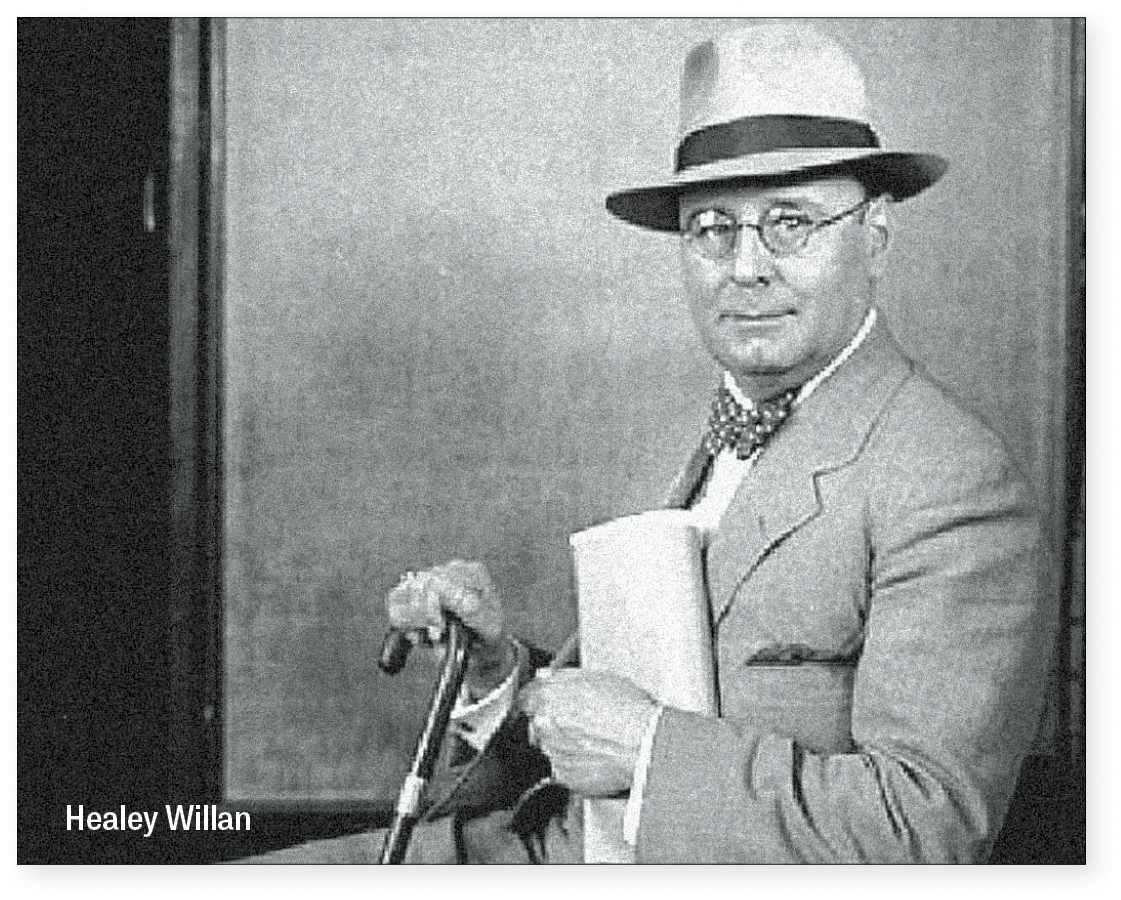
2204 Art of Song 2Anyone who has ever sung in a Canadian church choir will be familiar with Healey Willan’s anthems, but the November 18 concert presented by the Canadian Art Song Project presented us with a much less familiar part of his compositions. Willan composed over 100 art songs, most of them now out of print. They were beautifully sung by Martha Guth, soprano, Allyson McHardy, mezzo, and Peter Barrett, baritone. A particular pleasure was to hear Guth sing O Littlest Hands, a song composed in 1920 for Willan’s baby daughter Mary. Mary, now Mary Mason and in her mid-90s, was in the audience and the concert provided the first occasion for her to hear the song. The Canadian Art Song Project intends to make a new volume of Willan’s art songs available. Will there eventually also be a CD? I certainly hope so. I recommend the Project’s next concert: on May 17 you will be able to hear Dawn Always Begins in the Bones, a newly commissioned work by Ana Sokolović.

Canadian Opera Company Free Vocal Concerts:

Dec 1: Chelsea Rus, soprano, the winner of the Schulich School of Music’s Wirth Vocal Prize, performs.

Jan 5: Marion Newman, mezzo, sings in Echo/Sap’a by Dustin Peters among other works.

Jan 24: Goran Jurić, bass, sings works by Tchaikovsky and Sviridov.

Jan 26: Jacqueline Woodley, soprano, sings Baroque music with members of the COC Orchestra Academy.

Jan 31: Philip Addis, baritone, and Emily Hamper, piano, perform works by Ross, Ravel and others.

Feb 2: The soprano Elizabeth Polese sings Debussy and Stravinsky.

U of T Faculty of Music Free Concerts:

Jan 19: Colin Ainsworth, tenor, and William Aide, piano, perform works by Duparc, Schumann and Liszt.

Jan 25: Singers from the faculty of music will perform as part of the Singer and the Songs Series.


QUICK PICKS

Dec 1: Music Toronto presents a recital by Suzie LeBlanc, soprano, and Robert Kortgaard, piano, with recently commissioned settings of poems by Elizabeth Bishop. The program, at the St. Lawrence Centre, will also include works by Schumann and Villa Lobos.

Dec 2: Toronto Early Music Centre presents Emily Klassen, soprano, and Meagan Zantingh, mezzo, in “Stella di Natale: A Journey from Advent to Christmas,” in a concert featuring a cantata by Scarlatti and other works, at St. David’s Anglican Church.

Dec 3: Kelsey Taylor, soprano, and Eugenia Dermentzis, mezzo, will be the soloists in an Oakham House Choir Society concert. The main works to be performed are Vivaldi’s Gloria and Mendelssohn’s Christmas cantata From Heaven on High, at Calvin Presbyterian Church.

Dec 10: Soulpepper presents “What the World Needs Now (Songs of Love and Hate),” a musical journey through the Mad Men era. The singers are Wendy Lands and Jim Gillard, at theYoung Centre for the Performing Arts.

Dec 11: OriginL Concert Series presents Brenda Enns and Susan Suchard, sopranos, and Hubert Razack, countertenor, in “Celebrate Life!” at Lawrence Park Community Church.

Dec 11: The Aga Khan Museum presents Maryem Tollar in “Arabica Coffee House Concert” featuring traditional songs from Syria’s Arabic classical and popular repertoire.

Dec 12: Andrea Ludwig, alto, and Bud Roach, tenor, will sing in “O Tannenbaum: The Tree of Life,” presented by the Toronto Masque Theatre at The Atrium at 21 Shaftsbury Avenue.

Dec 13 to Dec. 23: Coal Mine Theatre presents Louise Pitre singing in A Coal Mine Christmas which includes Dylan Thomas’ story A Child’s Christmas in Wales read by Kenneth Welsh.

Dec 31: Attila Glatz Concert Productions and Roy Thomson Hall present “Bravissimo! Opera’s Greatest Hits.” The soloists are Donata D’Annunzio Lombardi, soprano, Diletta Rizzo Marin, mezzo, Leonardo Caimi, tenor, and Lucio Gallo, baritone (Roy Thomson Hall).

Dec 31: Free Times Cafe presents Sue and Dwight, Michelle Rumball and Tony Laviola in a concert celebrating the folk songs of Pete Seeger, Joan Baez, Peter, Paul and Mary, and Woody Guthrie.

Jan 19 to 22: The baritone Peter Harvey will perform with Tafelmusik, at Trinity-St. Paul’s Centre, in a concert of German Baroque music that will include the lament Wie bist du denn, o Gott? by Johann Christoph Bach and the cantata Ich habe genug by J. S. Bach. Jan 21: Harvey will give a free masterclass beginning at 1pm in the same location.

Jan 20: John Greer will give a free vocal masterclass at York University’s Tribute Communities Recital Hall.

Jan 20: Lorna McDonald, soprano, will sing songs from New France at the Alliance Française, as well as selections from the opera The Bells of Baddeck (libretto by Macdonald, music by Dean Burry). Jan 29: Alliance Française presents Judith Cohen leading a concert of medieval songs of courtly love, with Michael Franklin, Andrea Gerhardt and others.

Feb 1 and 2: Karina Gauvin, soprano, and Russell Braun, baritone, are the soloists with the Toronto Symphony Orchestra in Fauré’s Requiem by and Detlev Glnert’s orchestration of Brahms’ Four Serious Songs by Brahms.

Hans de Groot is a concertgoer and active listener who also sings and plays the recorder. He can be contacted at artofsong@the wholenote.com.

2203 Art of Song 1Last year the mezzo-soprano Emily D’Angelo won both First Prize and the Audience Choice Award at the annual vocal competition for a place held by the Canadian Opera Company. She went on to win the very prestigious First Prize at the National Council Audition Finals of the Metropolitan Opera.

I have long had a special fondness for the warm sound of the mezzo-soprano, a fondness which probably began with my hearing the great Janet Baker in concert, on the opera stage and in recordings. Later I enjoyed the singing of Jennifer Larmore and Anne Sofie von Otter, of Elina Garanča and Allyson McHardy and, most recently, Jamie Barton and Isabel Leonard.

D’Angelo is still at the beginning of her career but she is already such an assured performer that there is nothing odd in writing about her in this context. She herself names Cecilia Bartoli as a model, not only for the beauty of her singing but also for her scholarship in finding and reviving long forgotten works. D’Angelo also admires the English mezzo Alice Coote. She will have had many opportunities to hear Coote recently as she understudied her for the title role in Handel’s Ariodante in the COC production.

She recently appeared at one of the lunchtime concerts in the Richard Bradshaw Auditorium at the Four Seasons Centre and gave a lovely performance of the music-lesson scene of Rossini’s Barber of Seville. She had also sung that aria at the Ensemble Studio Competition but before that, in the afternoon portion of the event, she had performed Cherubino’s Voi che sapete from Mozart’s Marriage of Figaro. That I did not hear, but Bruce Ubukata, no mean judge, tells me that she was wonderful.

D’Angelo clearly has a special affinity with the music of Rossini, an affinity that recalls the career of Marilyn Horne. When I talked to D’Angelo, she emphasized that the situations may be comic on the surface in Rossini but for her there is an underlying seriousness and that Rossini’s characters are believable. We shall be able to hear D’Angelo next on November 10 when she will perform with other emerging artists at Koerner Hall. There she will sing Rossini’s cantata Giovanna D’Arco. That work is not entirely unknown to Toronto audiences (I remember hearing Janet Baker sing it in concert), but it represents a facet of his work that is less well known than the comic operas.

2203 Art of Song 2Suzie LeBlanc and Elizabeth Bishop. The soprano Suzie LeBlanc is best known for her performances of early music and also of Acadian folk song. Recently she has been commissioning and performing new work. A major influence has been the American poet Elizabeth Bishop. LeBlanc’s interest in Bishop’s life and poetry began in the summer of 2007 when, quite by chance, she found a leaflet about Bishop in a church in Nova Scotia. That leaflet not only dealt with the time Bishop spent as a child in Nova Scotia but also recorded a walking tour she undertook in Newfoundland in 1932. LeBlanc and a friend retraced that tour in 2008. She continued to immerse herself in Bishop’s poetry and commissioned several settings from four Canadian composers: Emily Doolittle, Christos Hatzis, John Plant and Alisdair Maclean (all have been recorded on the disc I am in need of music, issued by Centredisc).

On December 1, in a Music Toronto concert at the St. Lawrence Centre, LeBlanc will perform settings by Doolittle, MacLean and Plant and will add two world premieres, also settings of Bishop’s poetry: Paris 7am by Ivan Moody and Lullaby for the cat by Peter Togni. LeBlanc, who will be accompanied by the pianist Robert Kortgaard, will also sing Six Songs Op.107 by Robert Schumann as well as Heitor Villa-Lobos’ Cançao do Poeta do século XVIII. The program is rounded out by two other works by Villa-Lobos: Serra Da Piedade de Belo Horizonte (played by Kortgaard) and the first three movements from his String Quartet No.1 (played by the Blue Engine String Quartet). Bishop lived in Brazil for many years and the concert will bring together the two places dear to her: Brazil and Nova Scotia.

Russian Song at the Off Centre Music Salon: The next Off Centre Music Salon concert at Trinity-St.Paul’s Centre, November 13, will have an all-Russian program: songs by Tchaikovsky, Rachmaninoff and Prokofiev as well as the Canadian premiere of Valery Gavrilin’s Seasons and the Piano Trio in D Minor op.32 by Arensky. The singers are Joni Henson and Ilana Zarankin, soprano, and Ryan Harper, tenor.

Healey Willan and the Canadian Art Song Project: The Canadian Art Song Project and Syrinx Concerts present “The Art Song of Healey Willan” at Trinity-St. Paul’s Centre, November 18. The singers are Martha Guth, soprano, Allyson McHardy, mezzo, and Peter Barrett, baritone. The pianist is Helen Becqué.

The 2016 COC Annual Vocal Competition: The COC has released the names of the finalists in this year’s Ensemble Studio Competition to be held at the Four Seasons Centre; November 3. They are: Myriam Leblanc, Maria Lacey, Andrea Lett, and Andrea Nunez, soprano; Simone MacIntosh, mezzo-soprano; Samuel Chan and Geoffrey Schellenberg, baritone.

Toronto Masque Theatre: At one time, a long time ago, a rumour circulated that the great baritone Dietrich Fischer-Dieskau had become interested in performing early music, that he had consulted some early music guru but that he had been told not to bother, as performing this music required special abilities. I am very skeptical about the authenticity of that story. First, because Fischer-Dieskau has never struck me as the kind of singer who allowed anyone to tell him what he could and could not sing. But also because it cannot be true: Fischer-Dieskau performed and recorded a great deal of early music, much of it by Bach but also works by other composers. One of the works he recorded was the part of Apollo in Handel’s cantata Apollo e Dafne. For some reason that LP was never issued as a CD and has become something of a collector’s item. (I have seen it offered on eBay.)

The Toronto Masque Theatre will perform the cantata on November 17, 18 and 19, with the baritone Geoffrey Sirett as Apollo and the soprano Jacqueline Woodley as Dafne. There is a double bill: the other half consists of Richard Strauss’ monodrama for speaker and piano, Enoch Arden, a setting of Tennyson’s poem. (Glenn Gould was interested in this work and recorded it; his performance is still available in a CD version.) In the Toronto Masque Theatre performances the pianist is Angela Park, a fabulous musician, perhaps especially known as a member of the trio Made in Canada. The speaker is Frank Cox-O’Connell.

QUICK PICKS

Nov 2 to 6: a celebration of the Tafelmusik Chamber Choir, now 35 years old, at Trinity-St. Paul’s Centre. The soloists are Sherezade Panthaki, soprano, Philippe Gagné, tenor, and Jonathan Woody, bass-baritone. The concert will include works by Handel, Rameau, Lully and Zelenka (Trinity-St. Paul’s Centre).

Nov 11: Deborah Voigt, soprano, and Brian Zeger, piano, will perform works by Bach, Strauss, Tchaikovsky and Bernstein at Koerner Hall.

And looking ahead: Show One’s Svetlana Dvoretsky, in collaboration with the COC, has announced the Canadian debut of Trio Magnifico, at the Four Seasons Centre, April 25. This new opera trio consists of Anna Netrebko, soprano, her husband, the Aberbaijan-raised tenor Yusif Eyvasov and the baritone Dmitri Hvorostovsky. Tickets for this event are now on sale.

Hans de Groot is a concertgoer and active listener who also sings and plays the recorder. He can be contacted at artofsong@thewholenote.com

2202-ArtSong.jpgMooredale Concerts was founded in 1988 by the cellist Kristine Bogyo. After Bogyo’s death the organization was led by her husband, the well-known pianist Anton Kuerti. The present artistic director is Adrian Fung, like Bogyo a cellist. From the beginning the organization had two aims, one of which is educational. Mooredale Concerts presents us with three string orchestras. But they also give us a series of concerts, generally in pairs. The first installment is a scaled down children’s concert called Music and Truffles in the early afternoon; later in the afternoon the full-length concert is performed. Most of their concerts consist of instrumental chamber music.

This season’s second Mooredale offering, at 3:15pm on November 6, foregoes Music and Truffles and offers up something different in the way of repertoire. Taking as its subject the words and music of one of the most important, and one of the most appealing, songwriters of the 20th century – Noel Coward – the program will include such favourites as I’ll See You Again, I’ll Follow My Secret Heart, Some Day I’ll Find You, If Love Were All and Why Do the Wrong People Travel? The guiding spirit behind the concert is the pianist, composer and arranger John Greer. The singers are Monica Whicher, soprano, Norine Burgess, mezzo, Benjamin Butterfield, tenor, and Alexander Dobson, baritone. (Those who like the songs may also be interested in seeing a performance of Coward’s play Cavalcade by students of George Brown College at the Young Centre for the Performing Arts; November 9 to 19.)

Beckett at CanStage: In recent years there have been a number of Samuel Beckett’s late minimalist plays presented including three at the Berkeley Street Theatre last season directed by the gifted Jennifer Tarver. Beginning October 11, Canadian Stage presents All But Gone, a new work juxtaposing Beckett’s short plays with the operatic voices of Shannon Mercer, soprano, and Krisztina Szabó, mezzo. At the Berkeley Street Theatre, it runs until November 6. Jennifer Tarver is again the director; musical direction by Dáirine Ní Mheadhra.

Core Contemporary: In recent years there have perhaps been more opportunities to hear contemporary music in the classical mainstream than used to be the case, with such works being programmed more vigorously by the Toronto Symphony Orchestra, the U of T Faculty of Music and others. But there have also been, for decades, organizations entirely devoted to core presentation of contemporary music, including vocal works (New Music Concerts, Soundstreams and the Esprit Orchestra, to name a notable few).

The first concert of the Esprit Orchestra this season at Koerner Hall, October 23, is a tribute to the eminent Canadian composer R. Murray Schafer. It includes Schafer’s Adieu Robert Schumann for mezzo, orchestra and electronic instruments, which was commissioned by John Roberts and the CBC for the contralto Maureen Forrester in 1976 (it was revised in 1980). The work uses passages from the diaries of Clara Schumann as she witnesses her husband’s descent into madness. The work also includes allusions to some of Robert Schumann’s compositions. The singer is Krisztina Szabó, who is having an especially busy month.

COC Ensemble Gala: The annual Ensemble Studio Competition is always an important event for the Canadian Opera Company, both in terms of an early opportunity to glimpse potential operatic stars of the future, and as an important fundraiser for the Ensemble itself. In recent years that competition has brought forward such outstanding young singers as the bass-baritone Gordon Bintner, the soprano Karine Boucher and, most recently, the mezzo Emily D’Angelo. Hosted by Ben Heppner, the 2016 competition will be held on November 3 at the Four Seasons Centre.

Mazzoleni Songmasters consists of a series of three recitals jointly curated by Rachel Andrist and Monica Whicher. Its first concert this season – “Welcome and Adieu” – will be on October 23. The sopranos Nathalie Paulin and Monica Whicher will sing English and French duets.

QUICK PICKS

Oct 1: The baritone Adam Harris sings six songs from Butterworth’s A Shropshire Lad with the U of T Symphony at the MacMillan Theatre.

Oct 1: Marc B. Young is the singer in a concert which will combine songs by Rachmaninoff with the poems he set; at the Chapel, Trinity-St. Paul’s Centre.

Oct 4 and 5: The Ensemble Rajaton presents the music of ABBA, with the Toronto Symphony Orchestra at Roy Thomson Hall.

Oct 6: The tenor Benjamin Stein, former choral columnist in The WholeNote, sings and plays the lute and the theorbo in a free noon-hour concert at Metropolitan United Church.

Oct 6: The Women’s Musical Club of Toronto’s opening concert of the season at Walter Hall presents tenor Issachah Savage singing music by Beethoven, Schumann, Strauss and Quilter as well as spirituals.

Oct 14: Allison Arends is the soprano soloist in a concert that includes English and Canadian folk songs arranged by Britten and Vaughan Williams as well as the song cycle Cuatro madrigales amatorios by Rodrigo; at the Heliconian Club.

Oct 14 and 15: Mirvish Productions presents Kacee Clanton in An Evening with Janis Joplin at the Princess of Wales Theatre.

Oct 16: The Amici Chamber Ensemble performs the work of Johann and Richard Strauss at Mazzoleni Concert Hall with Russell Braun.

Oct 19: There will be a singalong tribute to the songs of the 1960s at Free Times Café, featuring If I Had a Hammer, Walk Right In, Turn! Turn! Turn!, Tom Dooley and others. The singers are Sue and Dwight Peters and Michelle Rumball.

Oct 20: U of T Faculty of Music presents a selection from Schumann’s Myrthen performed by Nathalie Paulin, soprano, and Krisztina Szabó, mezzo at Walter Hall; free.

Oct 21: York University department of Music presents a vocal masterclass with the tenor Lawrence Wiliford. Young singers from the studios of Catherine Robbin, Stephanie Bogle, Norma Burrowes, Michael Donovan and Karen Rymal will perform at Tribute Communities Recital Hall, Accolade East Building; free.

Oct 23: The mezzo Maria Soulis will be the soloist in Elgar’s Sea Pictures with Orchestra Toronto at George Weston Recital HallThe program will also include Vaughan Williams’ Fifth Symphony.

Oct 25: Another free midday recital by students at York University will be given at Tribute Communities Hall.

Oct 25: The Talisker Players give us readings and performances of poems and songs in “Songs of Enchantment: Tales of Wonder, Spells and Transformation.” The concert includes work by Schafer, Purcell, Arnold, Morlock and Louie. The singers are Miriam Khalil, soprano, and Lauren Segal, mezzo; at Trinity-St. Paul’s Centre.

Oct 30: Songs from Georgia will be performed by Diana and Madona Iremashvili and Bachi Makharashvili at the Heliconian Club.

Oct 31: “Manhattan: Midtown – 42nd Street and Broadway,” the second installment of Soulpepper’s exploration of 20th-century American music, opens on October 31 and runs to November 5. At the Young Centre for the Performing Arts.

Nov 1, 2, 3: Music by Queen and David Bowie will be performed by the Acting Up Stage Company at Koerner Hall.

Nov 3: The U of T Faculty of Music presents a free lunchtime concert of music inspired by Hamlet and Macbeth. The singers are Monica Whicher, soprano, and Laura Tucker, mezzo.

Nov 5: The Toronto Mendelssohn Choir will perform Mendelssohn’s Elijah. The title part will be sung by the bass-baritone David Pittsinger and other parts will be performed by Leslie Bouza, soprano, Christina Stelmacovich, mezzo, and Michael Schade, tenor, at Koerner Hall.

Nov. 5 and 6: The Bicycle Opera Project are the guests in Pax Christi Chorale’s performance of Mendelssohn’s Elijah at Grace Church on-the-Hill.

And beyond the GTA:

Nov 5: Another performance of Elijah, this one featuring Chorus Niagara, takes place in St. Catharines at FirstOntario Performing Arts Centre. Russell Braun (as Elijah), Leslie Ann Bradley, Anita Krause and Adam Luther join Chorus Niagara.

Nov 5: Haydn’s Lord Nelson Mass will be performed by the Stratford Concert Choir in St. James Anglican Church, Stratford. The soloists are Catherine Sadler, soprano, Anna Tamm Relyea, alto, Mathias Memmel, tenor, and Gary Relyea, bass.

Hans de Groot is a concertgoer and active listener who also sings and plays the recorder. He can be contacted at artofsong@thewholenote.com  

Back to top