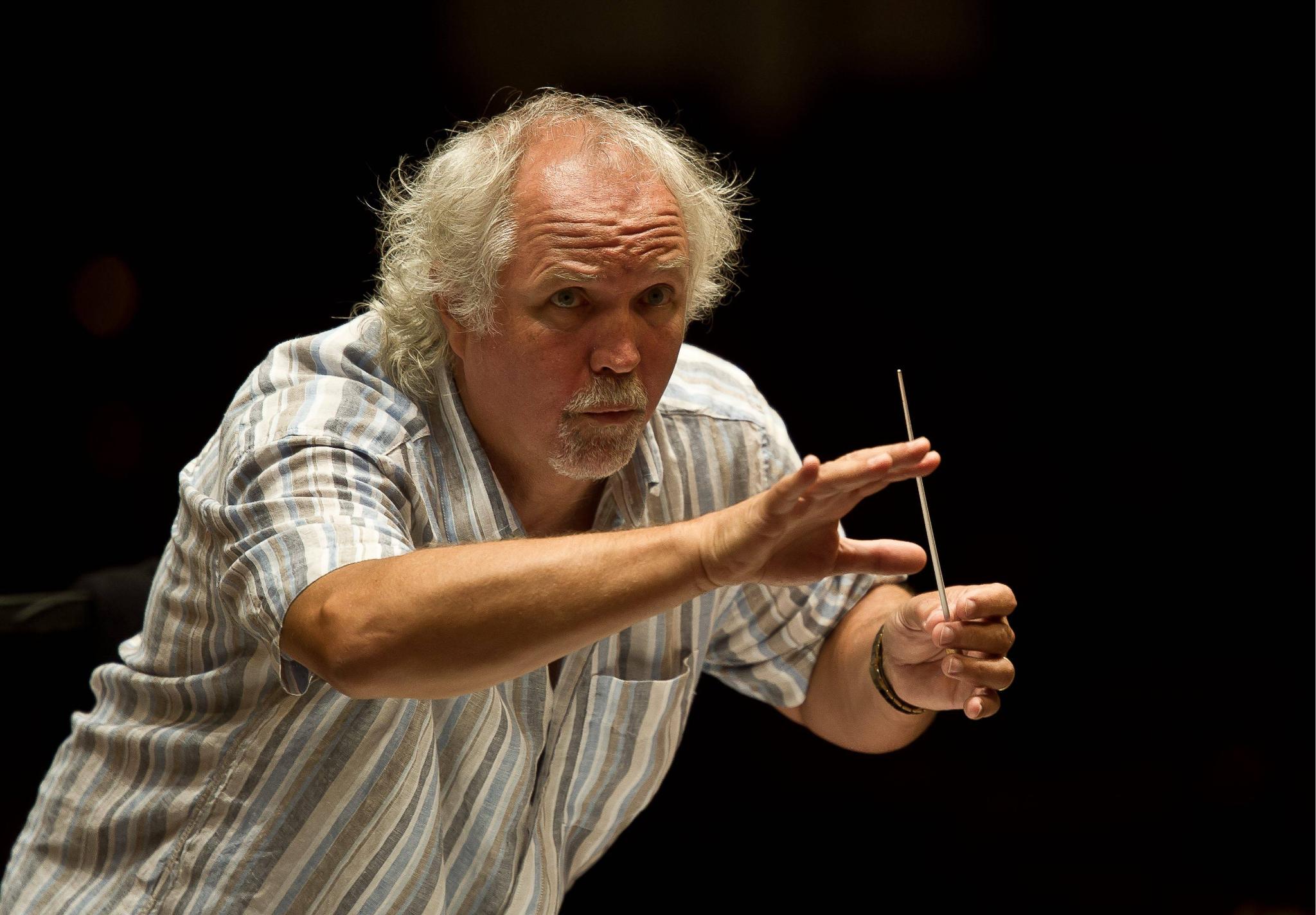
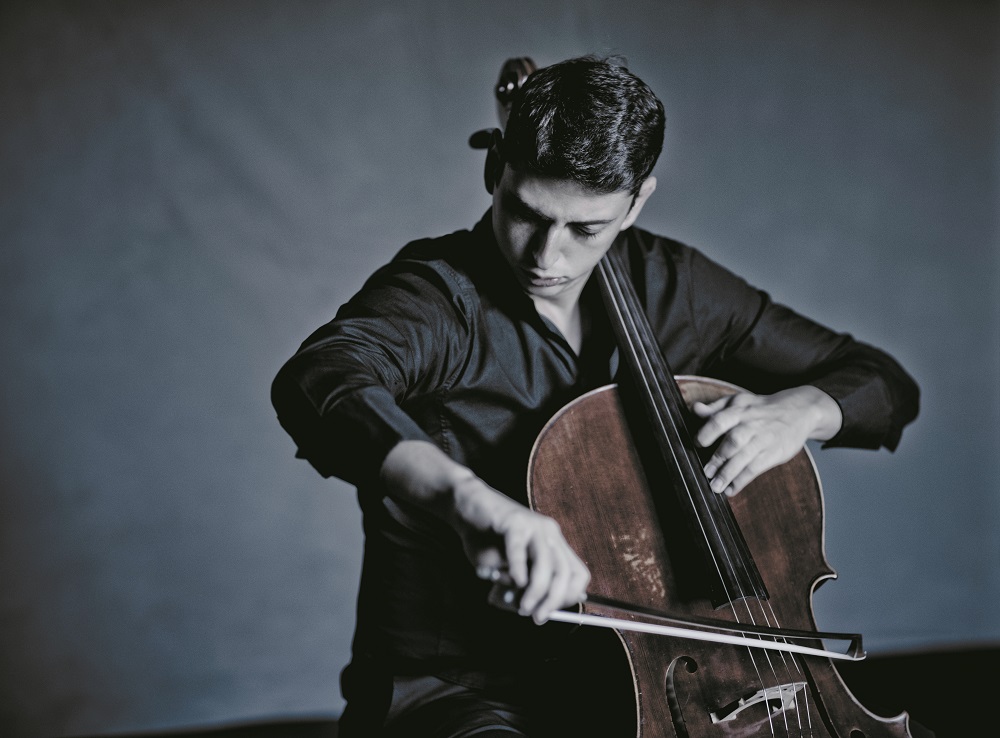
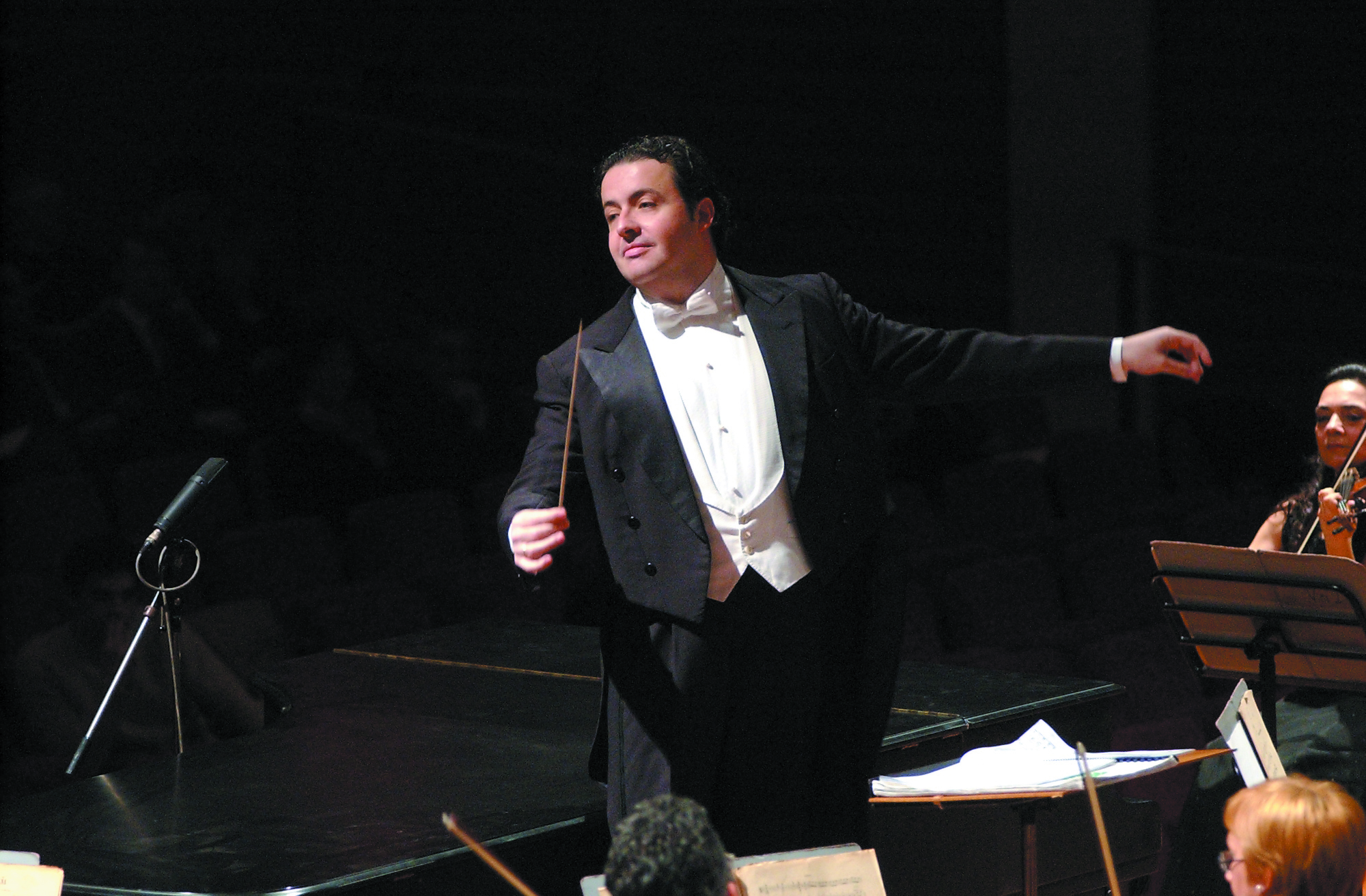
Now in its 13th year and divided into six smaller series – vocal, chamber music, piano virtuoso, jazz, world music and dance – there are very few series in town that cover so many WholeNote areas of interest as the Canadian Opera Company’s remarkable Free Concert Series in the Richard Bradshaw Amphitheatre. This month, for example, in addition to five concerts that jumped out at me, both Lydia Perović in her Art of Song column and Jazz Notes columnist Steve Wallace found noteworthy concerts in their respective beats. It struck me as an opportune moment to ask the series’ program manager Dorian Cox how the curatorial process works.

He told me that he programs each series in a slightly different way. The vocal series, for example, “is largely comprised of artists who are already involved with the COC (on the mainstage or part of our Ensemble Studio), whereas the world music and jazz series are largely comprised of artists who have approached me or whom I have sought out.” Overall, about a third of the performances are COC artists, a third are presented in collaboration with other institutions and the last third are independent artists.

Cox is always on the lookout for artists who he thinks might want to participate and whom he thinks his audience will appreciate. “It’s a 24/7 job in that way,” he says. “The wheels are always turning and I try to see as many concerts as possible, which can truthfully get a bit overwhelming when I already have 72 that I’m presenting this season.” He feels fortunate to be approached by many performers and connected to others through mutual contacts. And based on what his network is interested in, he finds social media to be a helpful tool.

“Remembering Kristallnacht” on November 8 was the first concert that caught my own eye this month. Cox told me that a meeting last January with the German Ambassador to Canada, Sabine Sparwasser (“a huge supporter of the COC”), led directly to it. “She was keen to present a concert and it was her idea to do something that would commemorate the 80th year since Kristallnacht – the wave of violent anti-Jewish pogroms which took place across Germany on November 9 and 10, 1938. Berlin-born pianist Constanze Beckmann (a recent RCM graduate from the studio of John Perry), joins her regular chamber music partner (Glenn Gould School faculty member, Lithuanian-born violinist Atis Bankas), to perform music by Edwin Geist, Joseph Koppel Sandler, Szymon Laks and other persecuted Jewish composers. With the support of the Consulate General of Germany in Toronto, the concert is also part of the Neuberger 2018 Holocaust Education Week.

Cox has a strong connection to “From the Diary of Virginia Woolf” (November 13) which is a major focus of this month’s Art of Song column. It’s the first project of Muse 9 Productions, the brainchild of stage director Anna Theodosakis and pianist Hyejin Kwon, both of whom he knows well. Kwon is a graduate of the COC Ensemble Studio and Theodosakis has been the director or assistant director of many projects at the COC. “This particular project was very engaging when I saw its premiere [in April].”
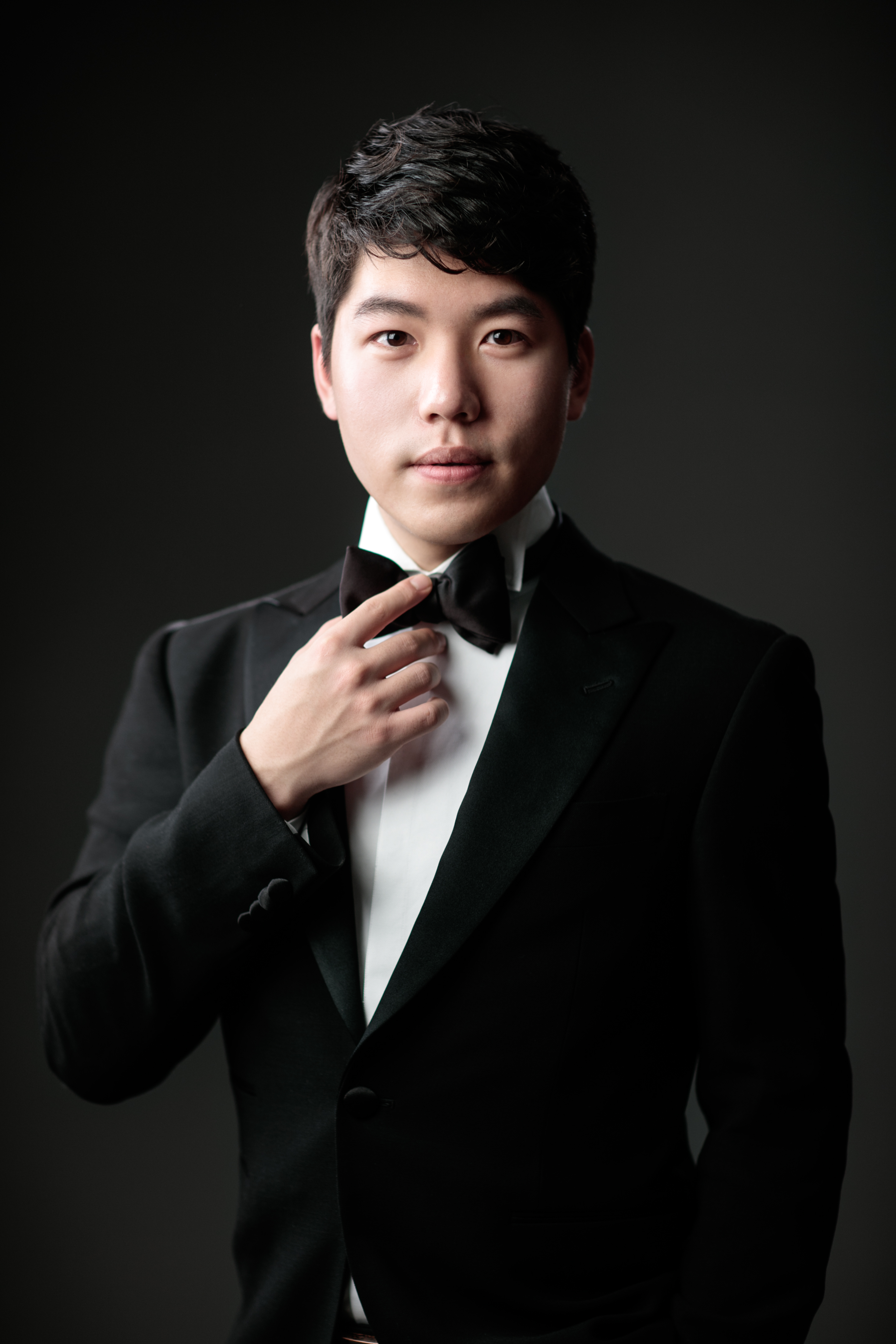
Sae Yoon ChonNovember 14’s “Piano Teatro” program features Glenn Gould School fourth-year B.Mus. student Sae Yoon Chon performing Bach’s Chromatic Fantasy and Fugue in D Minor and Brahms’ Piano Sonata No.3 in F Minor. Chon recently won First Prize at the Dublin International Piano Competition and Cox calls him “a pianist who is on the rise in the international music scene.” (I was fortunate to hear Chon’s impressive playing of the Bach for Leon Fleisher in a masterclass on October 12, where Fleisher told Chon he was “filled with admiration for the way you play the piano, for the amount of finger control you have.”)

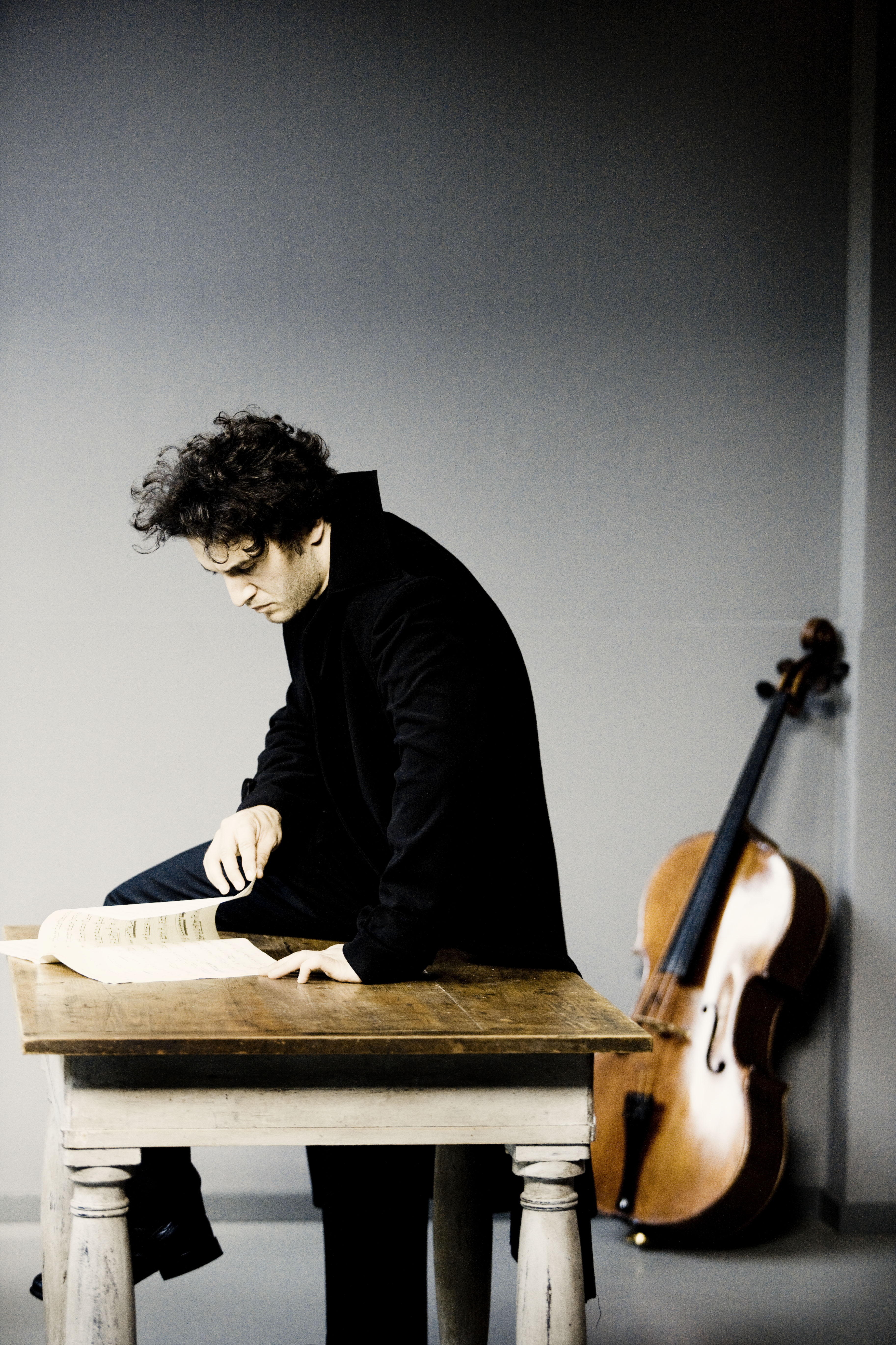
“Like the Glenn Gould School, the Schulich School of Music at McGill University is another powerhouse music school and another one of our educational institution partners,” Cox says. “November 20, their critically acclaimed cello professor, Matt Haimovitz will be travelling to Toronto with Uccello, an all-cello ensemble, to showcase the best of the best from their program.”

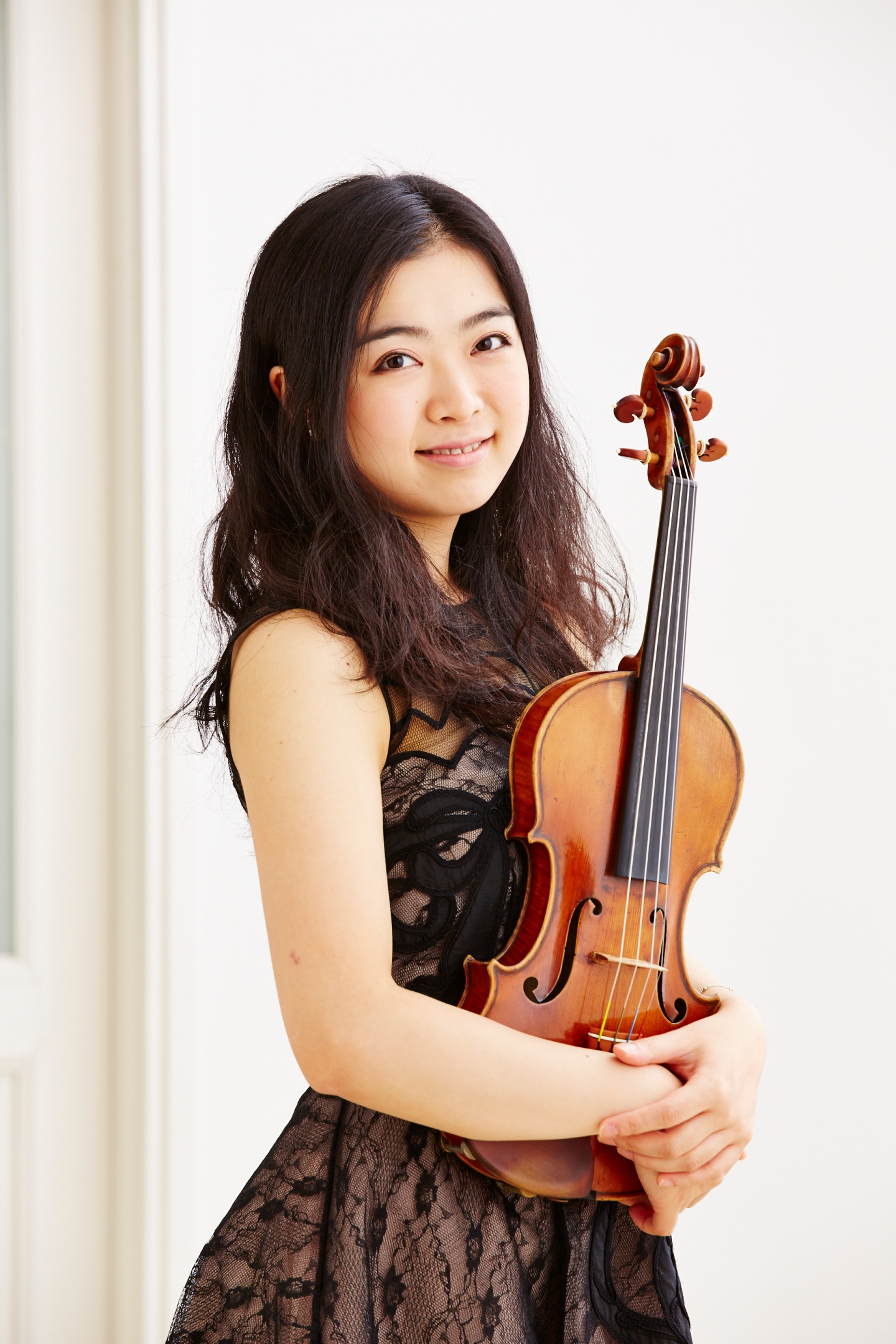
The Golden Violin Competition has been held every year at McGill since 2006. The 2017 winner of its $25,000 prize, Maïthéna Girault, performs on November 21 at noon. Her program had not been finalized by the time our November issue went to press; but programs for each week are posted on the COC website on the Friday before.

You can read why “Songs in the Key of Cree” (November 28) caught Steve Wallace’s attention in his Jazz Notes Quick Picks this month. As for Dorian Cox, it “is an example where I was connected to one artist through another. Ian Cusson a Canadian composer and pianist of Métis and French-Canadian descent, had worked with Tomson Highway, Patricia Cano and Marcus Ali on this project as a rehearsal pianist. Ian will be performing in a concert of his own compositions on March 5 and during those conversations I asked about his work with Tomson Highway. Ian connected me to Patricia and I was thrilled that everything fell into place from there!”
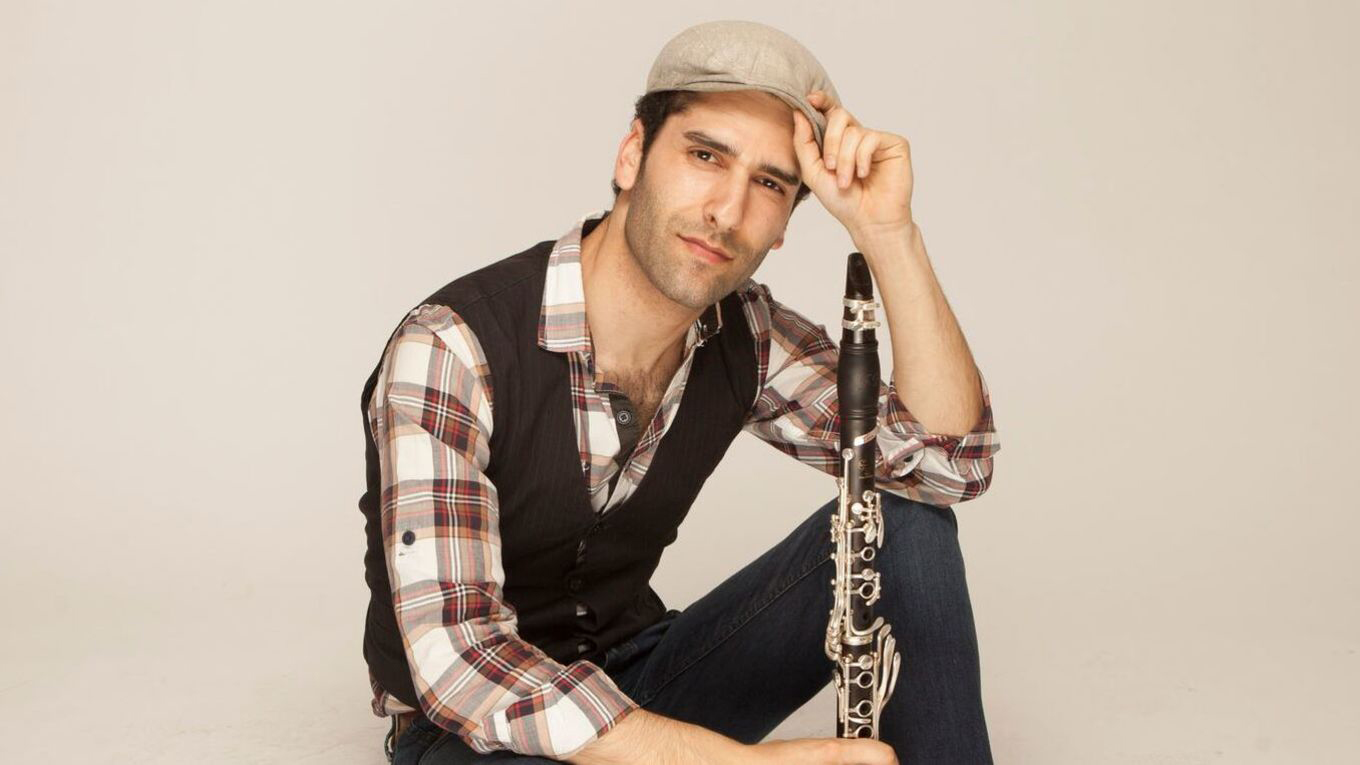
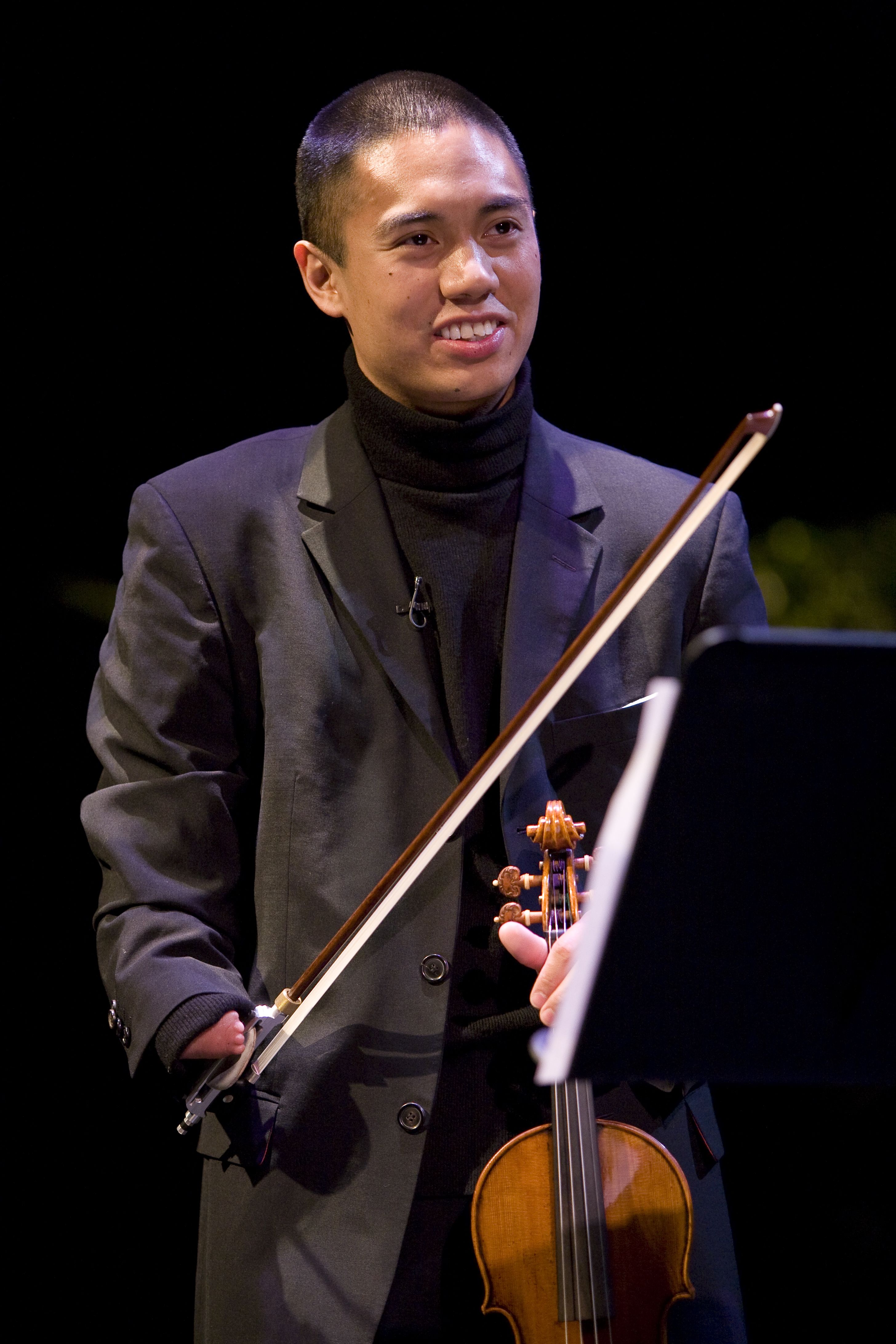
David Dias da SilvaClarinetist David Dias da Silva and pianist Olivier Hébert-Bouchard have been touring “Portraits and Fantasias” across Ontario and Quebec with the support of Jeunesses Musicales du Canada (JMC). “JMC is yet another one of our amazing partner organizations,” Cox said. “They help young professional musicians to develop their careers and are experts in coaching the artists to create cohesive and unique programs.” The November 29 concert has yet to be finalized but will include a portion of their touring program: Luigi Bassi’s Fantasia da concerto su motivi del Rigoletto; Debussy’s Première rhapsodie for B-flat clarinet and piano; Schumann’s Fantasiestücke, op.73: I. Zart und mit Ausdruck.

The Free Concert Series is justifiably popular. Seating and standing room are limited. Plan on arriving at least 30 minutes in advance.
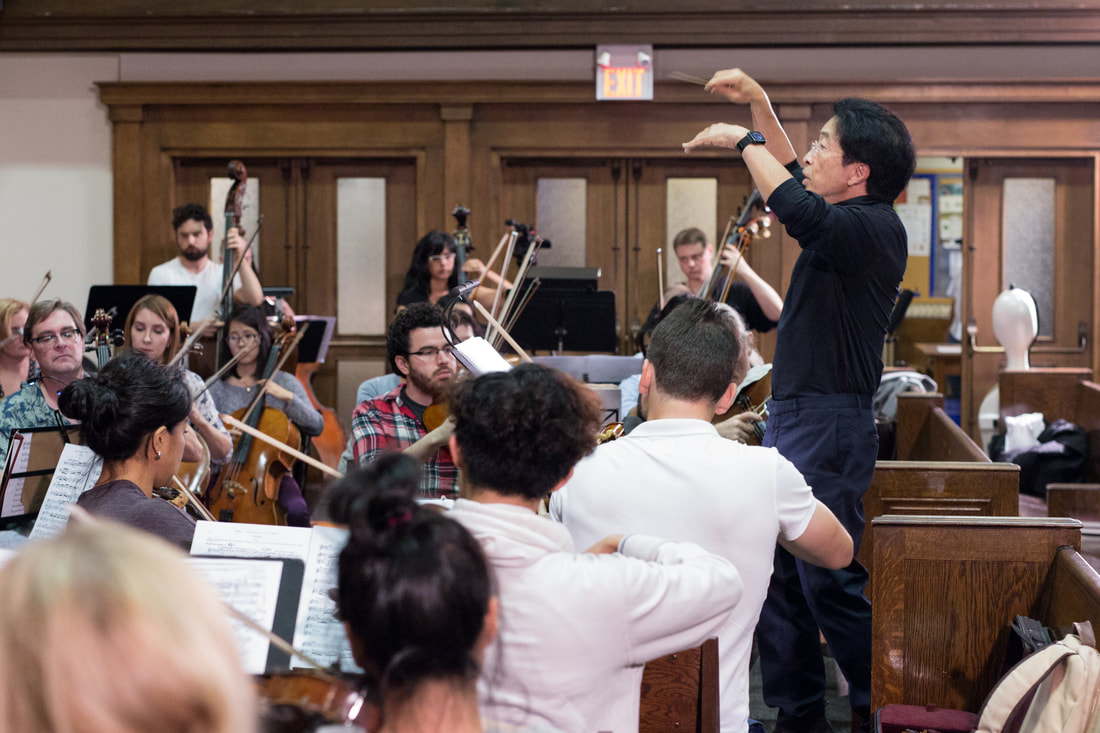
Mandle Cheung conducts his orchestra.One of a Kind: Mandle Phil

“The very first piece of classical music I heard was Saint-Saëns’ Third Violin Concerto,” Mandle Cheung writes on his website. “I was 13, listening to a pocket-sized radio with earphones. I was born and raised in Hong Kong, and though my family wasn’t particularly musical, from that point, I was hooked on music ever since. “ After he moved to Canada in 1968, he stuck to a sensible major, computer science – but he managed to pick up some music courses along the way, eventually taking up conducting with Arthur Polson and leading the orchestra in Beethoven’s Third Piano Concerto for their graduation concert. Later, he was invited to perform Arthur Benjamin’s Harmonica Concerto with the CBC Winnipeg Orchestra, Eric Wilde conducting.

That was his last musical activity for a few decades. He moved to Toronto in 1975, working for large corporations in software and networking. In 1987 he struck out on his own, which brought him business success. Then one day in 2015, “I woke up thinking that if I still dream of conducting, I better get researching.”

At 70, Mandle Cheung decided to pursue that longtime dream. And with his brand-new orchestra, comprised of almost 70 professional musicians based in the GTA, “All Awakens with Joy.” is finally happening. Mandle Cheung and the Mandle Philharmonic perform Beethoven’s Symphony No. 5 in C Minor, Op.67 and Mahler’s Symphony No.4 in G Major. (Jennifer Taverner is the soprano soloist in the fourth movement of the Mahler.) November 9 at 8pm at the Glenn Gould Studio will see the dream fulfilled, fuelled by passion and hard-won through tireless rehearsal and meticulous study. Admission is by donation. Proceeds will go directly into a career development grant fund – grants will be awarded to promising early career musicians, to aid in professional development.

Gallery 345

There’s a cornucopia of concertizing at Gallery 345 this month. Here is a sample of the bounty. On November 1, fans of Gregory Millar’s chamber music get an opportunity to hear him as a soloist in the Gallery’s ongoing Art of the Piano series. His recital ranges from CPE Bach to Barbara Pentland, from Beethoven and Chopin to Brahms and Prokofiev. The Mexican-born Alejandro Vela continues the series on November 10 with a program of Gershwin, Granados and Chopin, anchored by Rhapsody in Blue and the Funeral March Sonata.

Cellist Noémie Raymond-Friset was recently named one of the 30 hot Canadian musicians under 30 by CBC Music. For her contribution to the Art of the Cello series on November 11, she will perform music by Schumann, Stravinsky, Poulenc and WholeNote contributor David Jaeger (Constable’s Clouds). Peter Klimo is the collaborative pianist. Pianist Jean-Luc Therrien teams up with violinist Jean-Samuel Bez for a program of music by Schubert, Fauré, Lili Boulanger, Enescu and Kreisler on November 22. And TSO assistant principal cello Winona Zelenka continues the Art of the Cello series – with the Gryphon’s Trio’s pianist, Jamie Parker – on December 1, with a fascinating program of Bach, Ligeti, Pärt, Crumb and Bjarnason.

Music Toronto

The long-running chamber-music series continues its 47th season with three auspicious concerts.

On November 15, Ensemble Made in Canada bring their ambitious Mosaïque project to the Jane Mallett stage. This recently commissioned suite of piano quartets by 14 Canadian composers, each inspired by a particular region of Canada, is currently on a nationwide tour of all ten provinces and three territories. After intermission, look for the Ensemble to bring out the subtleties of Schumann’s Piano Quartet in E-flat Major, Op.47.

Next, the whole world is the subject of pianist Louise Bessette’s November 27 recital. From John Adams’ China Gates to Percy Grainger’s In Dahomey, Bessette’s musical grand tour consists of 15 diverse selections.

Music Toronto stalwarts, the Gryphon Trio, celebrate their 25th anniversary season on December 6, with a variety of works – Mozart, Silvestrov, Pärt and others – before moving into Paul Frehner’s Bytown Waters (commissioned to celebrate the Trio’s milestone), and Brahms’ fully packed Piano Trio in C Major, Op.87

CLASSICAL & BEYOND QUICK PICKS

NOV 2 AND 3, 8PM: Pianist Charles-Richard Hamelin (recently named piano mentor at TSM 2019), is the soloist in Brahms’ dramatic Piano Concerto No.1 with the Kitchener-Waterloo Symphony led by Andrei Feher.

NOV 4, 6:30PM: Sheila Jaffé, violist in the COC Orchestra, puts on her violinist hat as she joins violinist Jeffrey Dyrda (who recently concluded three seasons as second violin of the Rolston String Quartet), Emmanuelle Beaulieu Bergeron (TSO associate principal cello) and Pocket Concerts co-director, violist Rory McLeod, in Mendelssohn’s String Quartet No.2, Op.13 and Garth Knox’s Satellites, one of the Kronos’ Quartet’s 50 for the Future commissions.

NOV 12, 8PM: The Kitchener-Waterloo Chamber Music Society presents two former members of the fondly remembered Cypress String Quartet, Cecily Ward, violin, and Ethan Filner, viola, and Aaron Schwebel (concertmaster of the National Ballet of Canada Orchestra and associate concertmaster of the COC Orchestra), performing works for two violins and viola by Dvořák, Prokofiev, Kodály and more.

NOV 15, 7:30PM: York University Faculty of Music presents Duo Forte – Christina Petrowska Quilico and Shoshana Tellner – in a program of danceable four-handed piano repertoire that includes Barber’s Souvenirs, Gershwin’s Cuban Overture, Arthur Benjamin’s Jamaican Rhumba, Kapustin’s jazzy Slow Waltz, Ravel’s brilliant La Valse and Piazzolla’s urgent Libertango.

NOV 16, 7:30PM: U of T Faculty of Music presents the New Orford String Quartet and guests performing two cornerstones of the chamber music repertoire: Brahms’ masterful Piano Quintet in F Minor, Op.34 and Mendelssohn’s dazzling Octet Op.20.
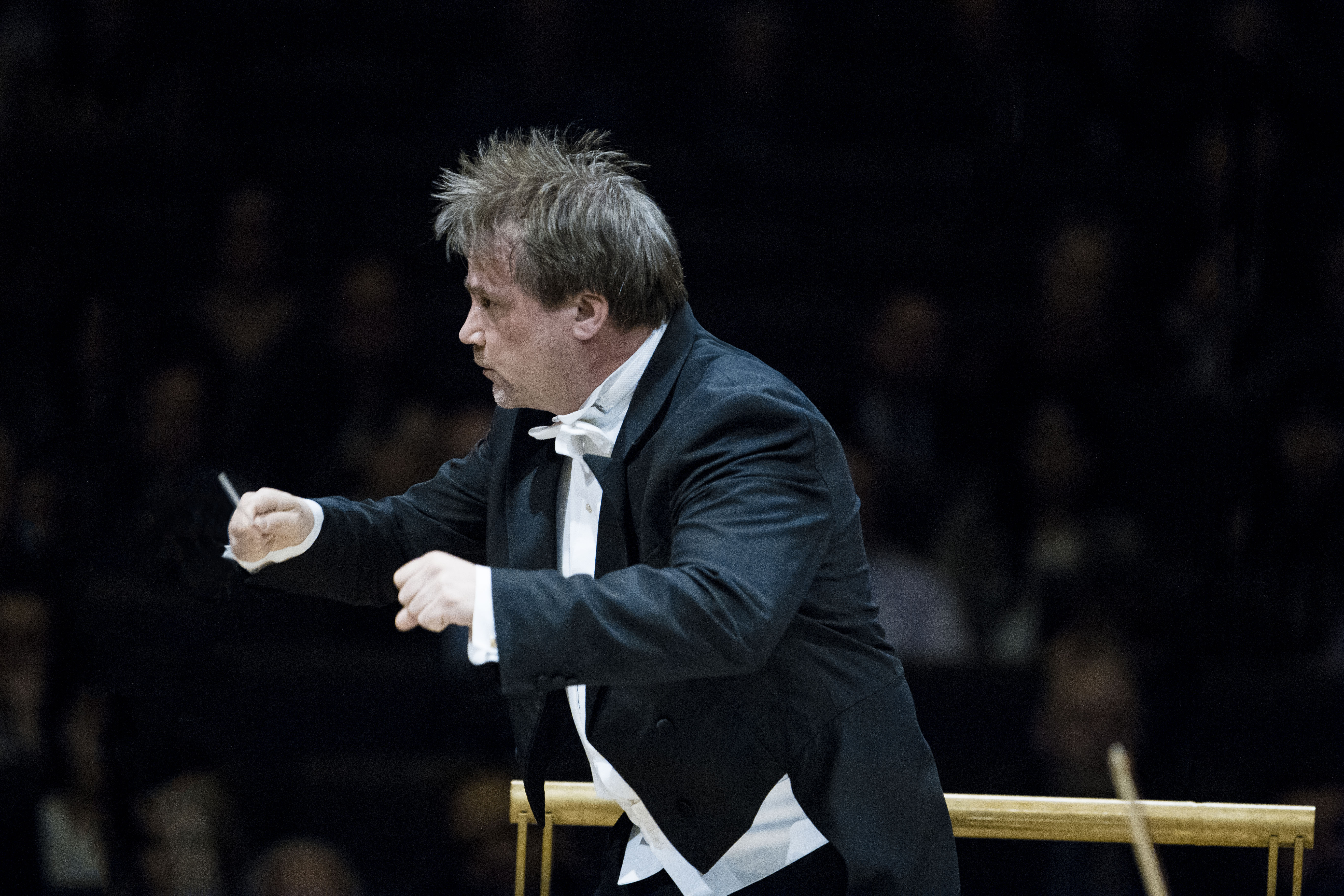
John Storgårds conducts the TSO in November. Photo by Marco BorggreveNOV 21, 8PM; NOV 23, 7:30PM; NOV 24, 8PM: Pianist Kirill Gerstein brings his improvisatory sensibility to Beethoven’s free-flowing Piano Concerto No.4 in G Major, Op.58 while John Storgårds conducts the TSO; the not-to-be-missed program also includes Ravel’s kinetic Boléro.

NOV 25, 2:30PM: Violinist Aisslinn Nosky returns to conduct the Niagara Symphony Orchestra in Beethoven’s essential Symphony No.3 “Eroica,” as well as taking the solo part in Haydn’s Violin Concerto in G Major.

NOV 30 AND DEC 1, 8PM: Stewart Goodyear, piano, Bénédicte Lauzière, violin, and John Helmers, cello, join conductor David Danzmayr and the Kitchener-Waterloo Symphony in Beethoven’s Triple Concerto in C Major, Op.56, a rare opportunity to hear this underrated work for an unusual combination of soloists.

DEC 2, 3:15PM: Mooredale Concerts presents the aptly named Artistic Directors Trio in works by Schumann, Handel and more. Pianist Wonny Song is the artistic and executive director of Orford Music (Quebec) and Mooredale Concerts. Violinist Tien-Hsin Cindy Wu is artistic partner of the Da Camera Society (Los Angeles) and assistant director of the New Asia Chamber Music Society (New York City). Violist Wei-Yang Lin is artistic director of the New Asia Chamber Music Society. Intriguing.

Paul Ennis is the managing editor of The WholeNote.
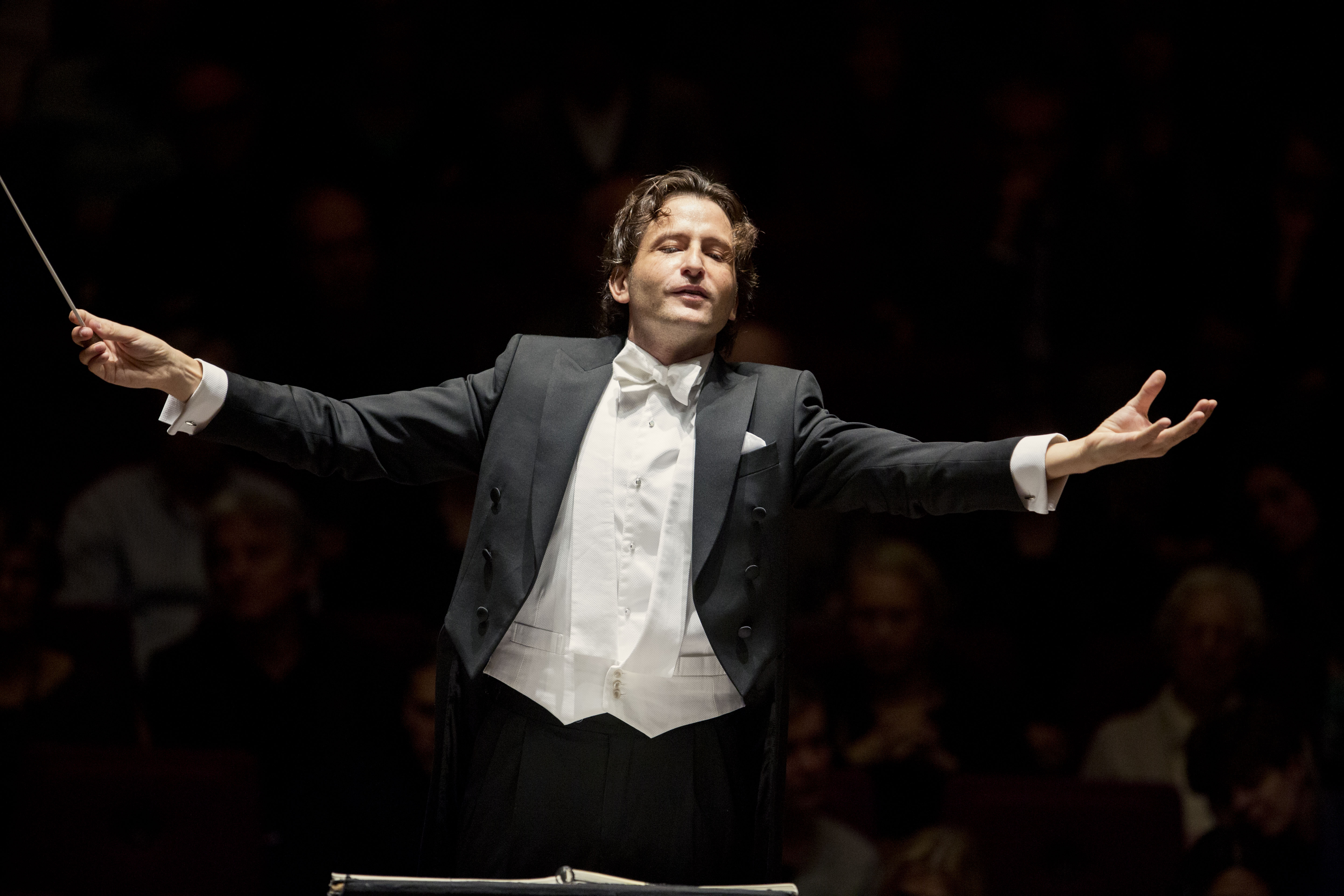
Gustavo Gimeno. credit Marco BorggreveThe Toronto Symphony Orchestra announced mid-September that Gustavo Gimeno will be its next music director, having signed a five-year contract beginning with the 2020/21 season.

Some of you may have heard the 42-year-old Valencia-born native of Spain make his début with the TSO last February, in a program that included the Dvořák Cello Concerto (with Johannes Moser), Ligeti’s Concert Românesc and Beethoven’s Symphony No.4. Reports from attendees were that his connection with the orchestra was palpable. Gimeno began his international conducting career while principal percussionist at the Royal Concertgebouw Orchestra in Amsterdam. As assistant to Mariss Jansons and protégé of the legendary Bernard Haitink and Claudio Abbado, he developed a musical foundation that led him to head the Orchestre Philharmonique du Luxembourg and propelled his career onto the world stage.

“Maestro Gimeno has an ability to connect with people, onstage and off,” said TSO concertmaster Jonathan Crow. “He has a musical charisma and technical ability that is remarkable – he pulls you into the musical moment. Gustavo is absolutely the right match for the TSO, and we are looking forward to a truly unique partnership that will blend his musicianship with the amazing flexibility of our orchestra. Together, we will create something very special for music lovers in Toronto.”

Gimeno returns to conduct the TSO in the last pair of concerts of the current season, June 29 and 30, 2019. Mark your calendar.

And Meanwhile… Thirty-year-old Uzbekistan-born conductor Aziz Shokhakimov’s breakthrough was winning second prize in the 2010 Mahler International Conducting Competition. He makes his TSO debut October 13 and 14 in a program anchored by two pillars of the repertoire, Dvořák’s Symphony No.9 “From the New World” and Rachmaninoff’s Rhapsody on a Theme of Paganini. George Li, winner of the Silver Medal at the 2015 International Tchaikovsky Competition, is the piano soloist. I was fortunate to hear Latvian-born violinist Baibe Skride’s electrifying performance of Brahms’ Violin Concerto with the TSO in February 2016 and eagerly anticipated her return. On October 18 and 20, she will play Britten’s Violin Concerto, a masterful work from the composer’s mid-20s that has been coming into its own in recent years. Thomas Søndergård conducts a program that also features Debussy’s iconic La mer. Russian-born, UK-based 33-year-old violinist Alina Ibragimova continues the TSO’s lineup of classical greatness on October 24, 25, 27 and 28 with Mendelssohn’s Violin Concerto, a work that never fails to astound. Conductor Andrey Boreyko also leads the orchestra in Tchaikovsky’s Suite from The Sleeping Beauty.

Nocturnes in the City

Eighteen years ago, Nocturnes in the City started as a five-concert series at Prague Restaurant at Masaryktown in Scarborough. It was a great success from the beginning and five years later, the classical concerts were moved to downtown Toronto. Many Czech and Slovak artists have performed in last 17 years to mainly Czech-Canadian audiences: singers Eva Urbanová, Zdeněk Plech, Gustáv Beláček, Eva Blahová; pianists Antonín Kubálek, Karolina Kubálek, Jan Novotný, Boris Krajny and Martin Karlíček; violinists Ivan Ženatý and Bohuslav Matoušek; and famous quartets -- the Panocha, Zemlinsky, Pražák and Kocian.

This season, Nocturnes in the City marks the centenary of the birth of Czechoslovakia in 1918 with a special concert on October 28 when the prize-winning Zemlinsky Quartet with pianist Slávka Vernerová-Pěchočová present two Dvořák string quartets and the ever-popular Piano Quintet No.2, Op.81. One week earlier on October 21, the same pianist will give a solo recital of works by three Czech composing giants – Dvořák, Smetana and Janáček.

The Zemlinsky Quartet also take advantage of their presence in Ontario to perform all 14 of Dvořák’s string quartets, as well as his Cypresses and Op.81 Piano Quintet (with Vernerová-Pěchočová), under the auspices of the Kitchener-Waterloo Chamber Music Society, October 18, 20, 22, 24, 25 and 27. Not to be missed. 

CLASSICAL & BEYOND QUICK PICKS

OCT 10, 12PM: The Rosebud String Quartet, led by COC principal violist Keith Hamm and COC associate concertmaster/National Ballet concertmaster Aaron Schwebel, gives a free noon-hour concert of music by Haydn and Beethoven at the Richard Bradshaw Amphitheatre.

OCT 10, 8PM: The Jeffrey Concerts (London) presents Canadian violinist supreme, James Ehnes, and his usual collaborative pianist, Andrew Armstrong in works by Beethoven, Brahms and Corigliano. The same program can be heard OCT 11 at 7:30PM in Kingston at the Isabel Bader Centre for the Performing Arts and OCT 12 at 7:30PM in Niagara-on-the Lake presented by Bravo Niagara!

OCT 11, 12PM: Pianists Rosemarie Duval-Laplante and Jean-Michel Dube honour the artistic legacy of “the Quebecois Mozart,” Andre Mathieu, on the 50th anniversary of his death by performing a selection of works for two and four hands composed by Mathieu, his father Rodolphe and by some of the composers that inspired them in a free noon-hour concert at the Richard Bradshaw Amphitheatre.

OCT 18, 8PM: The St. Lawrence Quartet bring their infectious energy and consummate musicianship to the Jane Mallett Theatre in a wide-ranging program of Haydn, Golijov, Barber (Dover Beach with baritone Tyler Duncan) and Beethoven (Op.135). Music Toronto says it’s the only performance of this program anywhere!

OCT 28, 3:15PM: Mooredale Concerts present the legendary Dorian Wind Quintet in a program of works by Bach, Perle and Dvořák.

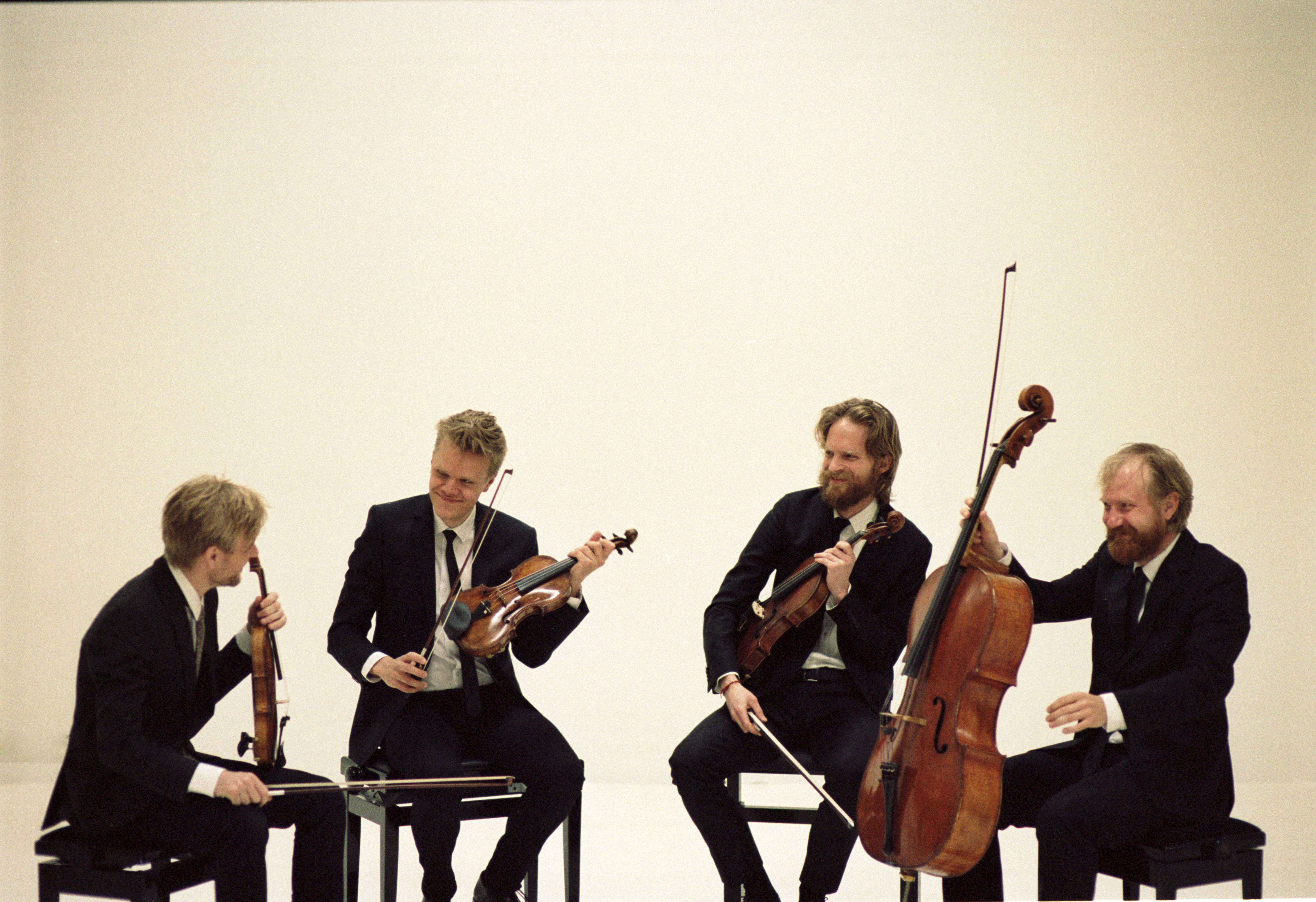
Danish Quartet. Photo by Caroline BittencourtNOV 3, 7:30PM: The Isabel Bader Centre for the Performing Arts presents the acclaimed Danish String Quartet playing Haydn, Abrahamsen and Beethoven (the indelible Op.59 No.1). The same program can be heard NOV 4 at 3PM, presented by the RCM in Koerner Hall.

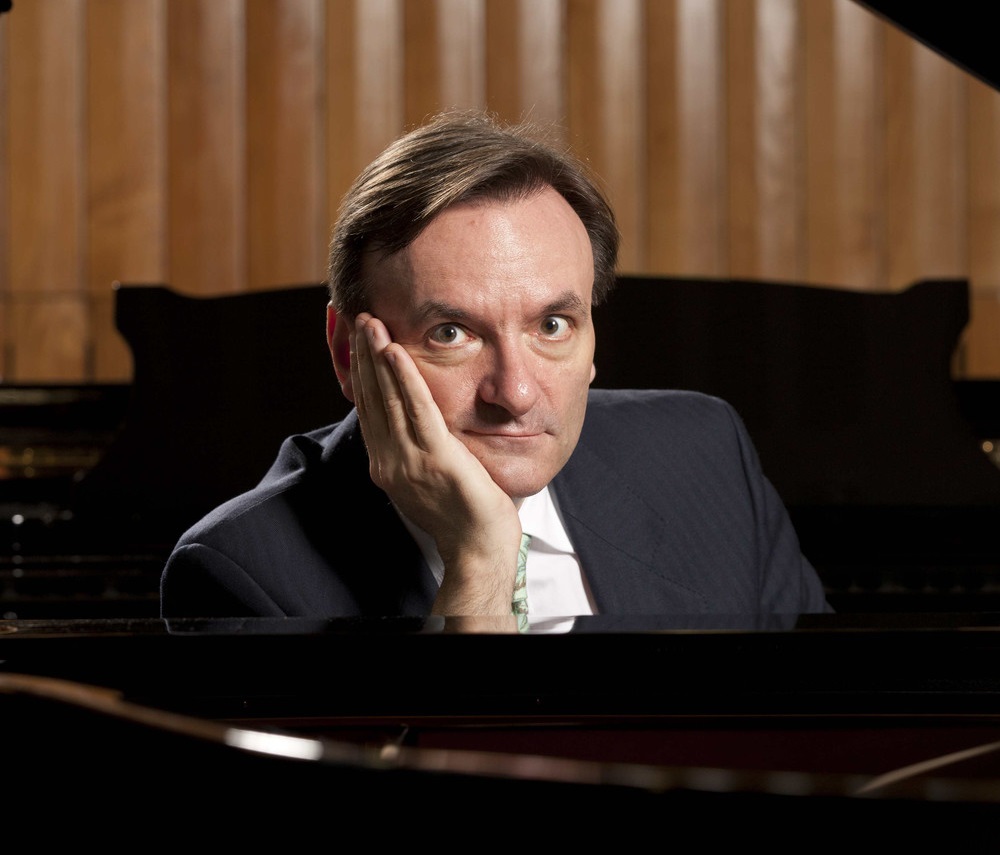
Stephen HoughNOV 6, 7:30PM: A recital by Stephen Hough is always worthwhile. For this appearance at the Isabel Centre for the Performing Arts, the British polymath brings his intelligence and flawless technique to a program of Debussy, Liszt (The Mephisto Waltz) and Chopin’s Sonata No.2.

Paul Ennis is the managing editor of The WholeNote.
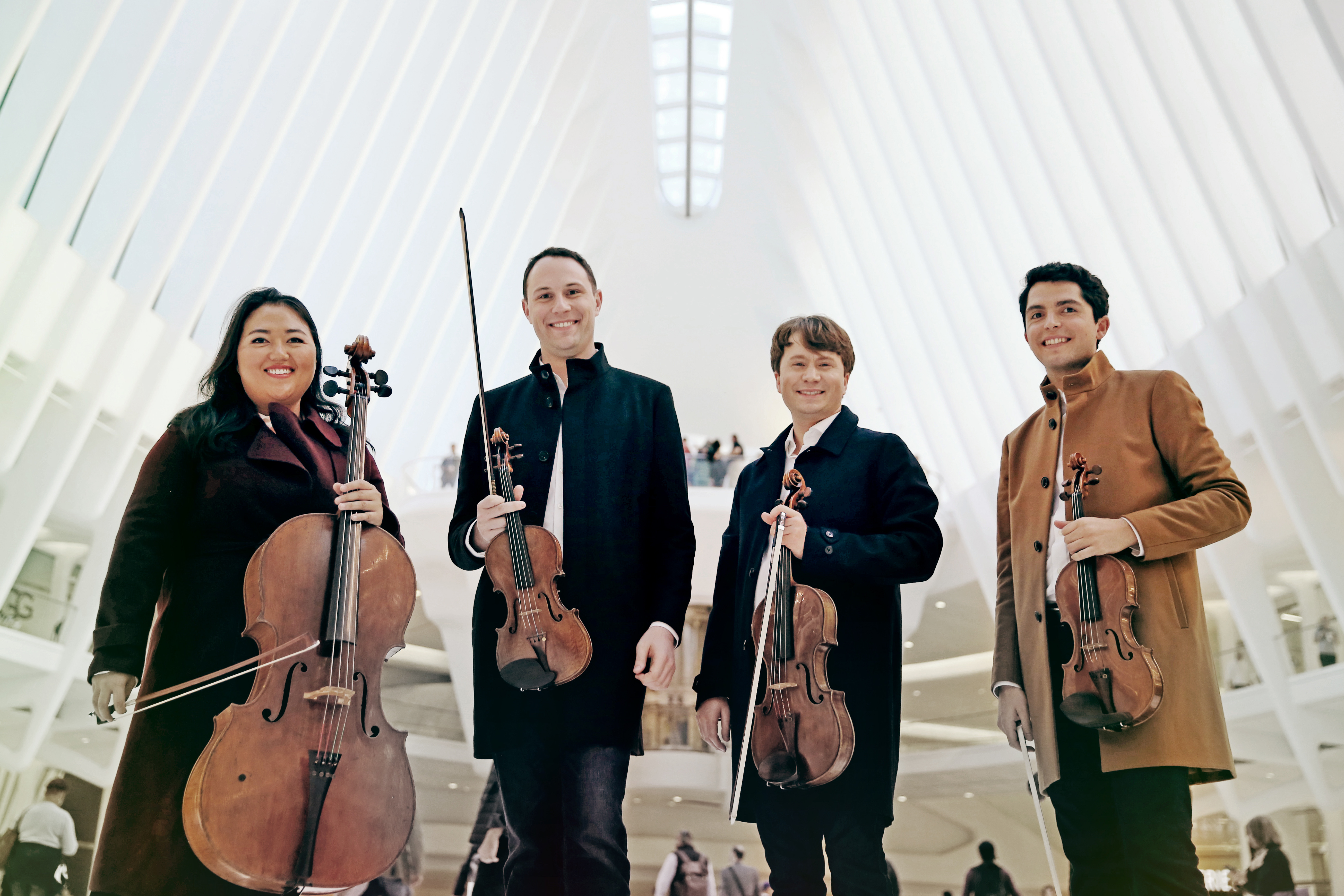
Calidore String Quartet. Photo by Sophie ZhaiThe Calidore String Quartet (Jeffrey Myers and Ryan Meehan, violins, Jeremy Berry, viola, and Estelle Choi, cello) made a name for themselves in 2016 by winning the $100,000 Grand Prize in the inaugural M-Prize International Chamber Music Competition, the world’s largest chamber music prize. More recently, they were awarded the 2018 Avery Fisher Career Grant. During the upcoming season they will complete their three-year residency with the Chamber Music Society of Lincoln Center. They took time in August for an email Q&A in advance of their Mooredale Concerts recital of their “Music and Conflict” program in Walter Hall, on September 30.

WN: Please tell us about when and where the Calidore String Quartet began.

CSQ: We met at the Colburn School in Los Angeles where we were completing our music studies. Estelle and Jeff had been in a different quartet and we were looking to continue working together. Jeremy on viola was the next addition followed shortly by Ryan on second violin. The quartet officially formed in 2010.

How was your “Music and Conflict” program conceived?

Given the chaotic and uncertain world that we live in, we wanted to find guidance in the music that we spend our lives studying and performing. How did the great artists in our field take conflict and channel it creatively? How did they make their voice heard? Taking the Mendelssohn Op.80 as the anchor piece of the [new] album, we then began building the program by looking at composers who faced different challenges throughout their lives. This led to the addition of Prokofiev’s Second String Quartet, Janáček’s “Kreutzer,” and finally Golijov’s Tenebrae.

What is your approach for each of the four works on that program?

We tried to learn as much as we could about the circumstances each of the composers faced that led to them to write the works. Where were they in their lives, both physically and mentally? How did they resolve the cacophony around them?

In the Prokofiev, the composer was evacuated due to the Nazi invasion of Moscow, so this displacement must have left him feeling homesick and unsure of the future. Despite all of this he wrote a piece drawing on the folk music that surrounded him and produced a piece that evokes a sense of pride and an optimism for the days ahead. Prokofiev also conveys a wistfulness in the second movement, perhaps recalling better days.

While Prokofiev faced an external war, Janáček battled a personal struggle in his marriage. It is no wonder he felt that Leo Tolstoy’s novella, The Kreutzer Sonata, spoke to his own situation of being locked in a loveless marriage. In the novella, a husband becomes increasingly mad from jealousy. His pianist wife has begun learning Beethoven’s “Kreutzer” violin and piano sonata with a dashing violinist. He arrives home late at night to find the two of them conversing intimately. This drives the husband to kill his wife out of madness. In this piece, we become actors, playing all the different roles from the married couple to the new violinist and even including the husband’s growing insanity. This string quartet requires a playing style that is very physical and aggressive while also being able to sing with lyricism and tenderness. It is a visceral experience that Janáček has created, so it is important to highlight the physicality of the work.

From the brutality of the Janáček, we felt a sense of calm was needed to balance the tumultuous story of Tolstoy. Golijov’s Tenebrae acts as the fulcrum to the album. It takes the quiet serenity of the cosmos, and intersperses it with the chaos and conflict of the Middle East, drawn from the composer’s experiences closely tied to each. The experience of seeing the world as a tiny blue dot at the planetarium contrasted with the devastating violence in Israel and led Golijov to write this piece that brings light to a world often shrouded in darkness.

Finally, the Mendelssohn Op.80 string quartet closes the album. This work is a sharp contrast to all of his others and was written towards the end of the composer’s short life. Having lost his sister unexpectedly, Mendelssohn was swimming in grief, unable to write music from the sheer weight of the tragedy. In an attempt to elevate himself from the loss, he took to composing to channel the hurt, frustration and anger of the departure of his family member and dearest friend. The nostalgia of the slow movement evokes the tenderness of their relationship which launches the listener back to the turmoil of his mourning in the fourth and final movement. Even in his darkest days, Mendelssohn gave the world an outlet to help both himself and the audience to cope and rise above the difficulties of life.

How did your relationship with the Emerson Quartet come about? How important was it to your development as a quartet?

Our relationship with the Emerson Quartet first began when we first played for David Finckel in 2012 at the Aspen Music Festival and School. We simply approached him and asked if he would have any extra time to hear us. He graciously took time out of his busy schedule to coach us on our repertoire for a few upcoming competitions. We kept in contact over the next few years and as our time studying at the Colburn School came to an end we were looking for possible residency programs for which to apply. At this point David recommended us for an opportunity to work with the Emerson at Stony Brook University. We were incredibly fortunate to get to study with the Emerson String Quartet for the next two years.

The Emerson Quartet has played an instrumental role in the development of our quartet. Not only have they provided us with profound musical insight, but they have offered us advice on everything that makes the life in a string quartet work.

On The Horizon

Toronto Symphony Orchestra. The TSO’s post-Oundjian journey begins in earnest September 20 to 22 with interim artistic director Sir Andrew Davis conducting. The program brackets Jacques Hétu’s Variations concertantes with Berlioz’s rarely heard Fantasy on Shakespeare’s The Tempest from Lelio, or The Return to Life and his Symphonie fantastique, one of the cornerstones of the orchestral repertoire. The parade of guest conductors begins on September 26 and 29 with the TSO debut of Ukrainian conductor Kirill Karabits, the chief conductor of the Bournemouth Symphony Orchestra. The program includes Karabits’ countryman Valentin Silvestrov’s Serenade for String Orchestra, Rachmaninoff’s Symphony No.3, and charismatic Scottish violinist Nicola Benedetti as the soloist in Prokofiev’s Violin Concerto No.2 with its lovely middle movement. The ever-popular Mahler Symphony No.5 is coupled with Ravel’s jazz-tinged Piano Concerto in G on October 3 and 4. Spanish pianist Javier Perianes is the soloist; artistic leader and chief conductor of the Trondheim Symfoniorkester, South Korean-native Han-Na Chang makes her TSO debut.

Han-Na ChangRoyal Conservatory (RCM): The Academy of St Martin in the Fields Chamber Ensemble get the RCM-Koerner Hall regular season underway on October 3, with music by Nielsen, Françaix (his Octet for clarinet, bassoon, horn and string quintet) and Beethoven (his celebrated Septet for clarinet, bassoon, horn, violin, viola, cello and bass). Worth hearing alone for the distinctive timbre the unusual instrumentation produces. When Yannick Nézet-Séguin and his Orchestre Métropolitain made their exciting Koerner Hall debut in April 2015, they brought the cello phenom Stéphane Tétrault; for their return visit, October 5, to augment a program that includes Sibelius’ Symphony No.1 and Nicolas Gilbert’s Avril, it’s the well-established pianist Nicholas Angelich who will be the soloist in Rachmaninoff’s first work composed after leaving Russia for good, the Piano Concerto No.4.

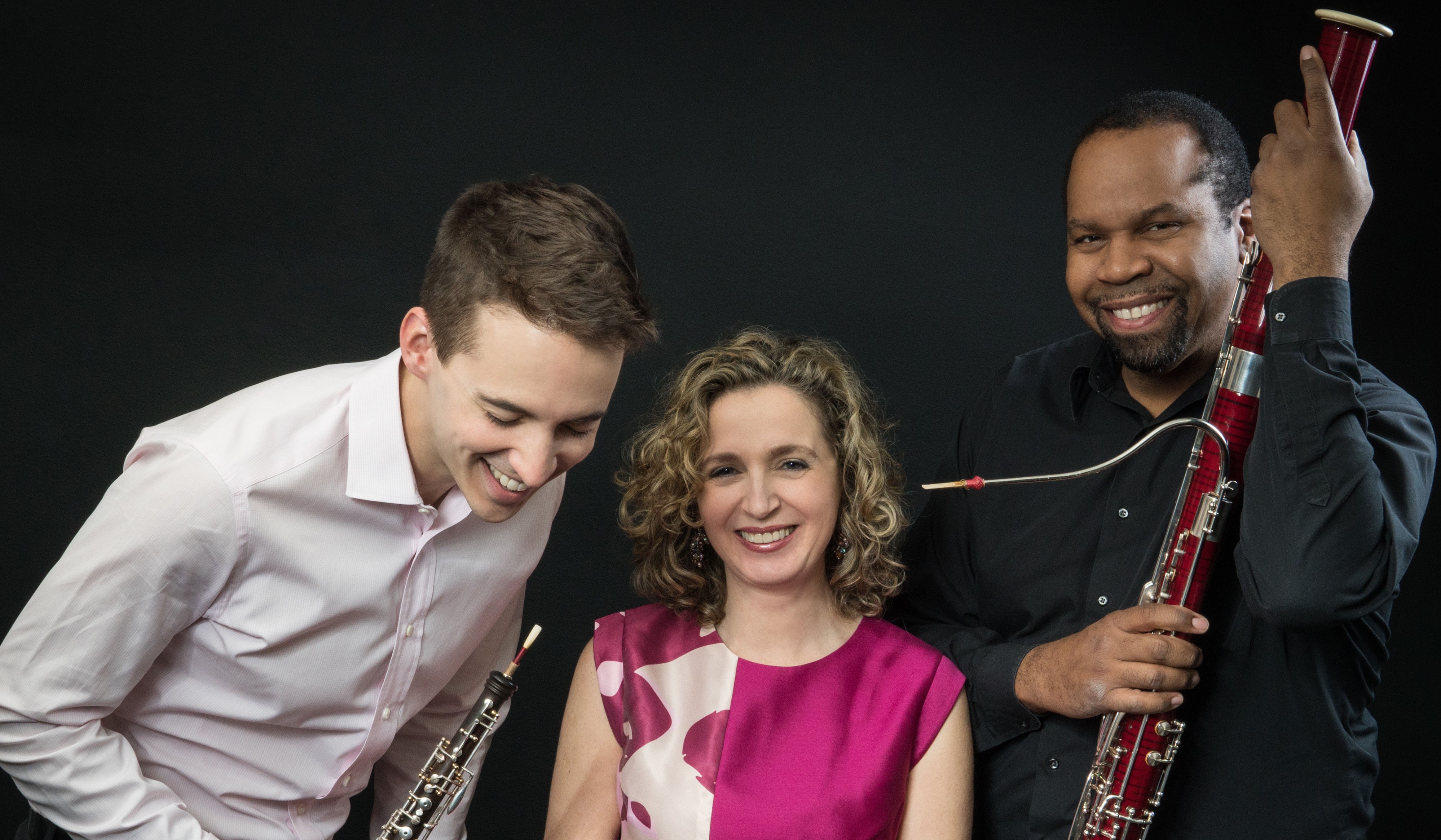
Poulenc TrioMusic in the Afternoon. Francis Poulenc’s invigorating, amusing, noble and otherworldly Trio for Oboe, Bassoon and Piano is the best-known example of music written for this unusual combination of instruments. No double reed player can resist its charms, so it’s no wonder that the Poulenc Trio (pianist Irina Kaplan Lande, bassoonist Bryan Young and oboist James Austin Smith) named themselves for its composer. They launch the 121st season of the Women’s Musical Club on October 4 in Walter Hall, with a modernist program of music by Schnittke, Viet Cuong, Shostakovich, Previn and their namesake (whose famous trio they will perform) should enliven the first afternoon of the new month.

Summer continues. It’s still summer for the Prince Edward County Chamber Music Festival. Artistic directors, the enterprising New Orford String Quartet, open this year’s edition on September 7 with Mozart’s “Dissonance” quartet along works by Burge and Ravel. André Laplante’s ambitious program on September 9 includes Schubert’s delightful Sonata in A Major D664 and a significant Liszt component: Three Sonetti del Petrarca, from Années de pèlerinage, deuxième année: Italie and his revolutionary masterpiece, the Sonata in B Minor. September 15 violinist Mark Fewer heads a jazz evening heavy on Ellington, with pianist David Braid and bassist Joseph Phillips. The next afternoon it’s Fewer with his classical pals doing a variety of chamber music headed by Dvořák’s Piano Quintet Op.81.

CLASSICAL & BEYOND QUICK PICKS

Jarred DunnSEP 20, 8PM: Brampton-native Jarred Dunn, a former assistant to, and collaborator with, the well-known author, pianist and teacher David Dubal, performs works by Szymanowski, Debussy, Górecki, Liszt and Chopin in his recital at Gallery 345.

SEP 23, 2PM & SEP 29, 2PM: Pocket Concerts launches their sixth season of chamber music in an intimate setting with Montreal-based violinist, Andrea Tyniec and Pocket Concerts co-director pianist Emily Rho in music by Beethoven, Sokolović and Debussy. In his Strings Attached column in our Summer 2016 issue, Terry Robbins praised Tyniec’s faultless technique and outstanding musicianship.

SEP 27, 7:30PM: Gallery 345 presents Payadora Tango Ensemble-member, Rebekah Wolkstein, performing music from Norway on the nine-string Hardanger fiddle. Tom King is the collaborative pianist.

OCT 2, 8PM: Marc-André Hamelin’s virtuoso program for Music Toronto’s new season continues his current examination of Samuel Feinberg with the Russian pianist-composer’s Sonata No.3, Op.3 and showcases old favourites like Alexis Weissenberg’s charming Six Arrangements of Songs Sung by Charles Trenet. Busoni’s arrangement of Bach’s famous Chaconne and Mario Castelnuovo-Tedesco’s Cypresses bring out Hamelin’s astonishing technique, which of course also supports the Chopin Polonaise-Fantaisie and Scherzo No.4 that conclude the recital.

Paul Ennis is the managing editor of The WholeNote.
Across Toronto, throughout Ontario and into the rest of Canada, wherever you travel, this summer promises music to suit the most discerning listener. What follows is meant to augment our Green Pages supplement, concentrating on the Toronto Summer Music Festival in particular and highlighting other noteworthy events beyond the GTA.

Toronto Summer Music

This year’s edition of the Toronto Summer Music Festival (TSM), July 12 to August 4, commemorates the 100th anniversary of the end of World War I by focusing on works written during, or inspired by, wartime. It’s an intriguing premise that makes for some thought-provoking programming. As artistic director and TSO concertmaster Jonathan Crow put it: “Some of the most beautiful, emotional and challenging music has been written during times of war and conflict as artists struggled to find meaning and give expression to the horrors gripping the world.”

Borodin QuartetBut the programming is not limited to such works; they become central to or merely part of a greater whole. For example, the Borodin Quartet’s two concerts that begin the festival do include Shostakovich’s intense String Quartet No.8 Op.110 (1960) dedicated “to the memory of the victims of fascism and war,” but overall spotlight Russian-themed compositions. So the Shostakovich is followed by Tchaikovsky’s String Quartet No.1 Op.11, which contains the famous Andante Cantabile melody. The next evening, July 13 in Walter Hall, Russian pianist Lukas Geniušas joins the Borodins for Shostakovich’s justly popular Piano Quintet in G Minor, Op.57 written in 1940 as WWII was just beginning. Geniušas opens the program with Rachmaninoff’s 13 Preludes (1910) then moves to Prokofiev’s Sonata No.7 Op.83 (1942). When I interviewed Geniušas two years ago he called the Prokofiev one of the central pieces of 20th-century piano music: flawless in form and matchless in its violent brutality inspired by the outrage of WWII.

The overall arc of this year’s TSM ranges widely over the musical spectrum, encompassing a myriad of chamber music offerings, big band vocals, early music, gospel music, the pianism of Angela Cheng, lyric tenor Christoph Prégardien and a multi-disciplinary musical journey into the life of Francis Pegahmagabow, the renowned Ojibwe WWI sniper and decorated officer of the Canadian military. And of course, a series of concerts by art song and chamber music academy fellows is back, spotlighting a core element of TSM’s mandate in which musicians on the cusp of professional careers are mentored by, and perform with, seasoned artists.

There are many instances where the war theme yields a bounty of masterpieces. Stravinsky’s L’Histoire du Soldat (1918), in which a naive soldier sells his soul (and his violin) to the devil, is an indelible concoction filled with memorable tunes and asymmetrical rhythms. Performed in its full version with narrator and dancer, the July 19 Koerner Hall performance presents a rare opportunity to experience one of Stravinsky’s masterworks. And what does it tell us about the human spirit that Copland’s sunny Appalachian Spring, with its unfailing optimism, was written in the last year of WWII? TSM will present this enduringly popular work, in its original version for 13 chamber musicians, on the same program.

Messiaen wrote most of the Quartet for the End of Time after being captured as a French soldier during the German invasion of 1940. The premiere took place in an unheated space in Barrack 27, where the German officers of the camp sat shivering in the front row. “This is the music of one who expects paradise not only in a single awesome hereafter but also in the happenstance epiphanies of daily life,” Alex Ross wrote in The New Yorker. “In the end, Messiaen’s apocalypse has little to do with history and catastrophe; instead, it records the rebirth of an ordinary soul in the grip of extraordinary emotion. Which is why the Quartet is as overpowering now as it was on that frigid night in 1941.” Take advantage of the opportunity to hear this spellbinding work when Jonathan Crow (violin), Julie Albers (cello), Miles Jaques (clarinet) and Natasha Paremski (piano) perform it in Koerner Hall at 10:30pm on July 19.

Crow and pianist Philip Chiu base their tribute to the great violinist, humanist and teacher Yehudi Menuhin (in Walter Hall on July 30) on concerts Menuhin performed at liberated concentration camps and military bases during WWII. The program, anchored by Beethoven’s Violin Sonata No.9 in A Major, Op.47 “Kreutzer,” includes works by Corelli, Ravel and Kreisler. More joyous music, in this case represented by Schubert’s ineffable “Trout” Quintet, seemingly apart from TSM’s war theme, is the feature of another Walter Hall recital, July 20. Taking advantage of the presence of art song mentors, tenor Christoph Prégardien and pianist Steven Philcox, the evening also includes Schubert’s song, Die Forelle, which is the basis for the theme-and-variations fourth movement of the quintet. Filling out the program are works by Shostakovich, Rachmaninoff (his unforgettable Vocalise) and Paul Ben-Haim (who fled the Nazi regime for Palestine).

Another unmissable highlight of TSM’s musical abundance includes the pairing of two recent American classics in a July 24 concert at Lula Lounge by the New Orford String Quartet: Steve Reich’s haunting Different Trains, which contrasts the composer’s nostalgic feelings for the trans-American railway trips he made as a child in the early 1940s with the horrific train rides that Jews were forced to make at the same time in Europe, and George Crumb’s searing response to the Vietnam War, Black Angels (1970), written for electric string quartet. The following day, July 25 at the Church of the Redeemer, Jonathan Crow’s soloist role in Vivaldi’s Four Seasons is paired with Biber’s Battaglia (1673), a realistic instrumental depiction of war.

Beethoven’s Sonata No.31 in A-flat Major, Op.110 and Chopin’s Ballade No.1 in G Minor Op.23 are major pillars of the piano canon. Angela Cheng performs them July 31 at Walter Hall before being joined by her husband Alvin Chow for three contrasting French works for piano four-hands by Debussy, Milhaud and Ravel. Ravel put all his disillusionment with the horror of WWI into La Valse, which takes an elegant waltz and ultimately twists it into madness and mayhem. Brilliant.

The New Orford String Quartet and pianist Pedja Muzijevic’s program (July 27) mixes Debussy’s Sonata for Cello and Piano, written in the early days of WWI, and Beethoven’s “Serioso” String Quartet, which may have been influenced by Napoleon’s occupation of Vienna the year before it was written, with Elgar’s expansive Piano Quintet, completed just as WWI was ending.

Chiu, along with violinists Aaron Schwebel and Barry Schiffman, are among the musicians taking part in two more chamber music concerts, one (August 1) bearing the weighty title “War in the 20th Century” and the other (August 3) focusing on a cornerstone of string players’ repertoire, Brahms’ Sextet No.1 in B-flat Major, Op.18.

Apart from the mainstage events, there are reGENERATION concerts, in which TSM academy fellows and mentors perform together; and members of the academy also participate in lunchtime concerts. There are pay-what-you-can hour-long late afternoon performances by TSM artists and daytime chats that provide insight into the world of classical music. However much you decide to take in of TSM’s ambitious programming, you will be well-rewarded.

Stratford Summer Music

Founder and artistic producer John Miller’s 18 years at the helm of Stratford Summer Music come to an end this year (July 16 to August 26) with a festival filled with something for everyone, from Bach brunches to the Blind Boys of Alabama, and Tanya Tagaq interpreting the classic silent film Nanook of the North. My personal must-see list has Marc-André Hamelin and Jan Lisiecki at the top. Miller has been trying to book Hamelin since day one; he’s finally got him in a typical Hamelinesque program that mixes the well-known -- Schumann and Chopin -- with the lesser-known: Weissenberg and Castelnuovo-Tedesco. Be assured that Canada’s greatest pianist will charm and astound. Lisiecki, who has been on a stellar trajectory over most of his young career, makes his ninth appearance in Stratford (and Miller warns it may be his last for a while, since he’s in so much demand).

Montreal Chamber Music Festival

Getting an early start on summer, the Montreal Chamber Music Festival has several attractive concerts in mid-June. The Rolston String Quartet continues their Banff Competition grand tour pairing Shostakovich’s String Quartet No.7 (his shortest at 13 minutes) with Steve Reich’s powerful Different Trains (June 12). Later that night, the Rolstons and Andre Laplante perform Schumann’s iconic Piano Quintet Op.44. Amit Peled plays Bach and Bloch on Pablo Casals’ 1733 Matteo Gofriller cello (June 15). Four pianists (Alon Goldstein, David Jalbert, Steven Massicotte and Wonny Song) in various combinations play Mozart, Wilberg (his Fantasy on Themes from Bizet’s Carmen), Stravinsky’s Petroushka and more (June 15). The New York Philharmonic String Quartet (the principals of the famous orchestra) make their Canadian debut with a program of Haydn, Shostakovich and Borodin (June 16).

Festival of the Sound

The 39th edition of the Festival of the Sound is varied and extensive: from the world premiere of Sounding Thunder, Timothy Corlis and Armand Garnet Ruffo’s work honouring the renowned Ojibwe WWI sniper, Francis Pegahmagabow, to a series pairing Bach with Mozart, Debussy, Dvořák, Schubert, Schumann and Brahms; from concerts featuring the emerging pianist Charles Richard-Hamelin, to The Mosaïque Project, for which Ensemble Made in Canada commissioned 14 award-winning Canadian composers to each write a four-minute movement for piano quartet inspired by a particular province, territory or region, thus creating a unique musical quilt representing the diversity of Canada. The breadth and depth of this beloved festival on the shore of Georgian Bay continues to astonish.

Clear Lake Chamber Music Festival

Under the artistic direction of father-and-son pianists Alexander and Daniel Tselyakov, Manitoba’s first chamber music festival is a long weekend of well-chosen repertoire set in Riding Mountain National Park (July 26 to 29). This year’s highlights include Alexander Tselyakov performing Mozart’s “Elvira Madigan” Piano Concerto No.21 K467 arranged for piano and string quartet; an evening of masterworks by Bruch, Poulenc and Dohnányi with Alexander and strings; Mozart’s Piano Quartet No.2 K493 with Daniel Tselyakov; and a midday seriously fun concert complete with coffee and pastries. A unique festival.

Ottawa Chamberfest

Ottawa Chamberfest celebrates its 25th season July 26 to August 9 with a star-studded roster. Highlights include Marc-André Hamelin (July 27) extending his exploration of the piano music of Samuel Feinberg (and Chopin) as well as teaming up with the exceptional Danel Quatuor for Shostakovich’s Piano Quintet Op.57. Israel’s Ariel Quartet and Banff winners, the Rolston String Quartet, combine for Mendelssohn’s great Octet (July 30); Quatuor Danel (July 29) and the Rolstons (July 31) each give additional concerts. OSM concertmaster   Andrew Wan and rising-star pianist Charles Richard-Hamelin play Beethoven sonatas (August 5); the Gryphon Trio celebrates their own 25th anniversary with an evening of greatest hits and favourite stories (August 5); the masterful Pražák Quartet delves into their Czech heritage (August 7); and Angela Hewitt brightens her visit to her hometown with programs featuring Bach’s Well-Tempered Clavier Book One (August 4) and Goldberg Variations (August 6).

Blythwood Winds - Terry Lim PhotographySummer Music in the Garden

An oasis of calm downtown by the lake, Harbourfront’s Music Garden is one of Toronto’s best kept secrets. And it’s free! Now is the time to spread the word. Here are some highlights. The Venuti String Quartet (violinists Rebekah Wolkstein and Drew Jurecka, violist Shannon Knights and cellist Lydia Munchinsky) performs Ravel’s breathtaking String Quartet June 28; The New Zealand String Quartet illuminates Beethoven’s String Quartet No.7, Op.59 No.1 as well as Stravinsky’s little-heard Concertino for String Quartet July 19; Blythwood Winds, a classic wind quintet, present a program spanning the last century, including Elliott Carter’s Wind Quintet, Abigail Richardson-Schulte’s nature-inspired Emerge and music from the score to Disney’s Beauty and the Beast, July 20. Famous for their marimba-duo version of Ann Southam’s Glass Houses, Taktus (Greg Harrison and Jonny Smith) brings it all back home to Toronto on July 22. Playing violin, mandolin and the nine-string hardanger fiddle, Rebekah Wolkstein and Drew Jurecka perform music by Brahms, Bartók, Mozart and Grieg, along with folk music of Norway, August 16. 

Paul Ennis is the managing editor of The WholeNote.
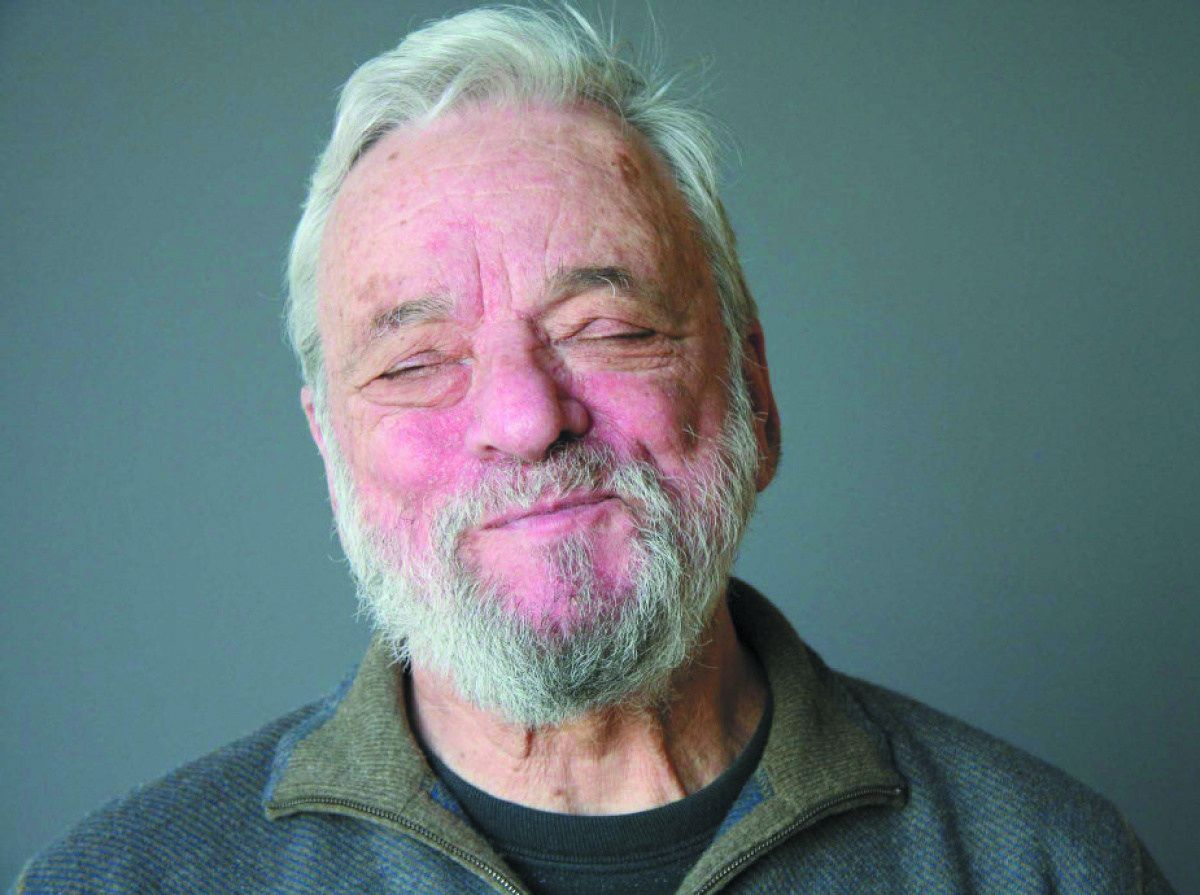
A protégé of legendary lyricist Oscar Hammerstein and student of serialist composer and electronic music trailblazer Milton Babbitt, Stephen Sondheim is equally famous as a lyricist and tunesmith. Midway through the first decade of the 21st century, American pianist Anthony de Mare acted on his lifelong immersion in Sondheim’s work and commissioned a wide net of composers from multiple genres to create their own “re-imaginings” of a favourite Sondheim song for solo piano. By the time the Liaisons project was completed in 2014, 36 composers (31 men and five women; 32 of whom were American-born) had contributed and de Mare’s love affair with Sondheim’s music had borne a bountiful harvest.

Drawn from 12 shows – A Funny Thing Happened on the Way to the Forum (1962) to Passion (1994) – Liaisons explores the sound world of the foremost creator of American musical theatre in the last half of the 20th century through the singular lenses of composers from Steve Reich to Gabriel Kahane. “Each of the composers is having a conversation with Mr. Sondheim,” de Mare told The New York Times, “with his material but also his influence, his musical wit and his craft.”

The lone Canadian contribution, Rodney Sharman’s Notes on “Beautiful,” written in the Valentine Studio, Leighton Arts Colony, Banff, Alberta, “is a transformation of the duet between mother and son, Beautiful, from Sunday in the Park with George, and dedicated to Anthony de Mare and the memory of my mother.” Sharman’s piece is one of 14 de Mare will be performing in Mazzoleni Hall on May 24 as part of the 21C Music Festival. A second concert, the following evening in Temerty Theatre, contains ten additional works concluding with a reprise of Reich’s Finishing the Hat.

Anthony de MareWN: How does it feel, as a lifelong fan of Stephen Sondheim’s music, to play a dozen or two of the Liaisons transcriptions in an evening?

AdM: It is always an exhilarating experience for me to perform these works, no matter how many are included on each program. And because I’m so enamoured with the entire canon of Sondheim’s work, there are just so many of his shows in addition to dozens and dozens of his songs that I love so much. He has often said that Sunday in the Park with George is the show “closest to his heart” and I would say that has [also] always been one of my favourites. And I would just add that for myself, the more I work and live with this material, the more I learn – it has become a body of work that I hold very close to my own heart and it is an honour to be able to share it with the world now.

The flexibility of the project allows me to create programs based on what each individual presenter desires coupled with my own instincts and choices. Some presenters have had me perform two to three concerts as a series covering a vast portion of the collection.

However, selecting the program content is very important to me, as is its shape. I actually consider the entire program (and its sequencing) to be its own “piece,” carefully assembled to guide the listener on a journey through these fascinating works. Each piece is very much a marriage between the composer’s individual style and Sondheim’s original material. Add to this the inclusion often of audio and video clips of the composers speaking about their relationship to Mr. Sondheim and his work, in addition to the short film of Sondheim himself speaking (extracted from the interviews that were part of the Liaisons premiere concerts at Symphony Space here in NYC). Audiences have often commented favourably on how satisfying the entire experience is for them.

What was the first Sondheim song you fell in love with? What did it mean to you?

The first Sondheim song I encountered was the iconic Send in the Clowns from A Little Night Music. The first recording I heard of it was Judy Collins’ classic version back when I was in high school in the 1970s. I was so enamored with the shape of the melody, the beautiful sequence of harmonies, the eloquent lyrics, and of course her gentle interpretation, which made it memorable.

What is the first Sondheim song you remember hearing? How old were you?

Along with Send in the Clowns, there was Comedy Tonight from A Funny Thing Happened on the Way to the Forum. Shortly thereafter, I began listening over and over to the original cast recording of Company – the opening song of which became an immediate favourite, along with Another Hundred People. Again, this was around junior high and high school.

What prompted you to embark on such an ambitious project of commissioning piano re-imaginings of Sondheim songs? What was the genesis of the project?

This massive project was the culmination of a series of musical endeavours that I had created in years past. I have long been referred to as one of the leading exponents of contemporary music and my love of musical theatre has played a distinctive role in establishing myself as the “pioneer” of the speaking/singing pianist genre which I created in the late 1980s, commissioning a variety of composers to create specific theatrical works that I would perform solo at the piano. This in turn led to a large multimedia concert project I created titled “Playing with MySelf” – which involved a wide variety of contemporary works, video, projections, lighting, set design, costumes, etc. – which had a successful run here in NYC and abroad.

My love for Stephen Sondheim’s work dates back to my teenage years, having discovered such shows as A Little Night Music, Company, Follies and Pacific Overtures – which led to an obsessive immersion into his work, especially each time one of his new shows appeared on the theatre scene. I had always wondered what his amazing songs would sound like transcribed as legitimate piano works, much in the same vein as what pianists like Earl Wild had accomplished with Gershwin’s songs, and what Art Tatum did for so many his contemporaries. This tradition goes back as far as Franz Liszt, but no one had ever approached Sondheim’s work like this for the piano, so I thought it was about time.

In the late 1980s, I was invited to create a transcription of one of his songs [Children and Art from Sunday in the Park with George] to perform at a summer music festival and from there I decided I would like to possibly create about five or six more of these transcriptions. My performing and teaching career started to take off and got in the way of focusing on the project, so I had to shelve the idea for a while – actually a long while. Several composer friends and colleagues kept asking me throughout the 1990s (and into the new century) when I was planning to do it. Finally, in 2006, my good friend – Pulitzer Prize-winning composer Paul Moravec – and I sat down and he encouraged me to seriously pursue this. My idea at the time was to cast the net wide to a variety of composers from multiple genres (contemporary classical, jazz, theatre, film, opera, indie, pop, etc.) to create their own settings or “re-imaginings” of a favourite Sondheim song. With the help of a very talented and dedicated fund-raising producer named Rachel Colbert, the project was set afoot.

Stephen SondheimHow long did it take to complete the project from the time of the first commission? What was the first commission?

The first commissions were put forth in 2008/09. There were many composers commissioned all at once, but not the total amount that it ended up being. The first completed work to arrive was Ricky Ian Gordon’s setting of Every Day A Little Death from A Little Night Music. Following that, a few more trickled in (William Bolcom, David Rakowski, Jake Heggie) and then they started coming one after the other between 2009 and 2014.

What were your criteria for which composers you invited to participate in the project?

The project was originally going to be about 20 to 25 works, but the roster kept expanding as the composer genres expanded. Also, Steve would suggest more composers along the way who seemed perfect for the project and it gradually climbed up to 36 – “a nice round number” as the producer said – and this provided many options for presenters in addition to emphasizing the possibilities for flexible programming on my part.

I wanted to be sure from the beginning that each composer involved felt a true “connection” to Mr. Sondheim’s work and that they wrote well for the piano. Over the years, several composers continued to contact me asking to participate, but we were committed to keeping a balance within the genres.

Was it intentionally multi-generational?

Yes, definitely. We wanted to have a wide range in age, and the final roster encompassed composers ranging in age from their late 20s to their 80s.

Did you have any guidelines you asked the composers to follow?

The word re-imagining is key to this project. I presented each composer with five parameters when they started. First, they were free to choose any song they felt connected to. There was a wish list, but they didn’t need to adhere to that list per se. Second, they were asked to retain the original melodic material of the song. Third, to retain most of his original harmonies. Fourth, they were free to play with the structure, especially since they would now be creating an instrumental piece from an original song, which is where much of the re-imagining seems to have originated for many of them. And finally, I requested that they not “deconstruct the material,” although a few actually did.

Did any composer ask to transcribe a song that had already been chosen by another?

They were of course free to choose a song that had already been chosen. However, the situation occurred only a few times where they asked about a song that was already taken. Once they knew that, they each decided to choose a different one. Nearly all of them had so many favourites, it wasn’t very hard for them to choose another.

Which of the commissioned works surprised you the most?

Let me just say that each piece was a revelation and each was quite unique from all the rest. Therefore, all of them were actually wonderful surprises. There were those that chose to either add an audio track accompaniment, while others incorporated unexpected “bells ’n whistles.” In each case, the approach was usually indicative of their individual style of writing.

Sondheim is so well known for the quality of his lyrics, how did the composers deal with the absence of words in their transcriptions?

One of the core missions of the project from the start was to illustrate Sondheim’s genius as one of the great composers of the 20th/21st century.

Since Sondheim’s original musical material in each song is expanded by lyrics and narrative, the challenge for many of the composers was to capture and encapsulate the essence of the lyrics, the overall ambience/mood, the character singing it, and the core of its message through an instrumental setting of his brilliant musical material.

Some composers found this a mighty challenge – many commented that the songs were already “perfect.” Therefore, some went the route of direct transcription for piano, some more fantasia-like. Each again is unique to each composer’s individual style, active within the fabric of Sondheim’s original musical material.

Three examples: Steve Reich’s two-piano setting of Finishing the Hat – enhancing the original passionate melody with his own signature pulsing metre-shifts; David Rakowski’s ingenious setting of The Ladies Who Lunch – capturing the complete musical material combined with the pathos, sadness, humour and bitterness of the character who sings this song. Andy Akiho’s prepared piano setting of Into the Woods, where he animates the piano by orchestrating each character’s voice and personality using prepared piano techniques (dimes, poster tacks, credit cards) and exotic timbres in lieu of the text.

There are actually numerous more examples, too many to cite, especially since each piece accomplishes something unique in terms of the individual direction each composer chose to take.

What, if any, was Stephen Sondheim’s involvement with the project?

Steve was quite intrigued by the idea of the project from the start and also very humbled by the fact that so many of these “A-list” composers (as he referred to them) were so interested in setting his melodies at the piano. He has been extremely generous throughout the entire ten-year trajectory of this project, offering suggestions, commissioners, constructive ideas and a strong foundation of support. We would check in with him periodically to give him updates and he always provided a very enthusiastic “go ahead.” He seems to have a very deep respect for all of the compositions in the collection.

How eager would you be to participate in a project that examined the evolution of the musical elements of Sondheim’s songs the way Sondheim himself examined his lyrics with Finishing the Hat and Look, I Made a Hat?

Oh I would be very eager. Over the past several years, I often present workshops and classes for students and the public illustrating the connections of each re-imagined piece to its original song both from a musical standpoint as well as from a dramatic one. This has oftentimes also included exploring the composers’ process in creating and re-imagining the works – their challenges and their breakthroughs.

Anthony de Mare performs selections from Liaisons: Re-Imagining Sondheim as part of the 21C Music Festival in Mazzoleni Hall May 24 and Temerty Theatre on May 25.

Paul Ennis is the managing editor of The WholeNote.
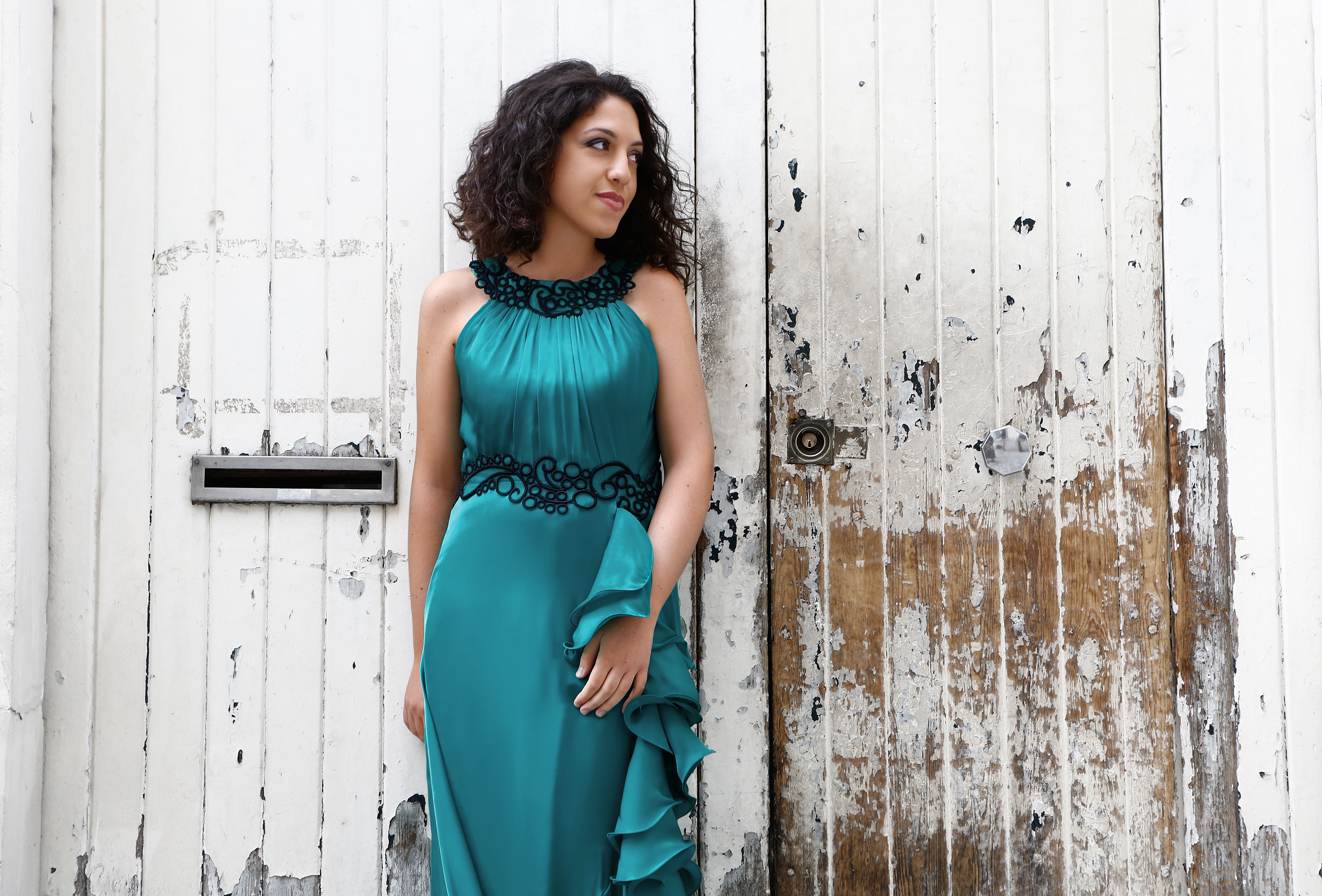
Gramophone’s 2017 Young Artist of the Year, 25-year-old Italian-born pianist Beatrice Rana, makes her Koerner Hall debut April 8. I remember fondly her Toronto Summer Music concert in 2014, where she brought the Walter Hall audience instantly to its feet with a heartfelt, technically gripping performance of Prokofiev’s Sonata No.6. Her career was clearly on the rise then; it continues on its upward path. I recently had an email Q&A exchange with her.

Beatrice Rana - photo by Marie StaggatWN: What are your first memories of playing the piano?
BR: I began studying piano when I was four, but before that I have some little memories of me trying to repeat the melodies of cartoons four hands with my father. I also remember my parents taking me out for concerts on Friday nights; it was always a very special feeling.

Your parents are professional pianists and your younger sister plays the cello. Please describe the musical atmosphere in your home growing up.
I would say that music is really part of our daily life, as much as drinking water or eating lunch. The house could be pretty noisy at times (!), but it was absolutely wonderful to grow up in a family that really understood and supported our musical choice.

Who was the first composer you fell in love with as a child?
The first musical challenges when I was a child were some pieces by Mozart and Schumann, but the composer that was giving me the biggest sense of accomplishment was Bach, and I ended up playing a lot of his music. I still have a very special relationship with Bach’s music, even though I constantly fall in love with so many other composers.

Who were the first musicians you fell in love with?
Martha Argerich and Glenn Gould.

Do you have any piano idols?
I wish I could have listened live to Horowitz and [Arturo] Benedetti Michelangeli.

How life-changing was winning the Silver Medal and Audience Award at the Cliburn piano competition in 2013?
It was absolutely a shock – a good shock of course! The first big change in my musical career came with [winning] the Montreal competition in 2011, but after the Cliburn I really reached what I was looking for, which was having the chance to be a concert pianist. The thing is that you don’t know what it really means to be a concert pianist until you become one: it’s an amazing life, full of travel, people, different cultures, but sometimes it can be tiring.

I’d like to focus on your upcoming Koerner Hall recital on April 8. What is it about Schumann’s music that speaks to you in general? And what about Blumenstück and the Symphonic Etudes in particular?
I always loved Schumann, probably also because of my close relationship to Bach with whom there are many connections. Blumenstück and Symphonic Etudes really reflect Schumann’s aesthetic with his two opposite personalities: on one hand there is Blumenstück, which represents Eusebius with his poetic, intimate and dubitative approach to life; on the other, the Symphonic Etudes are Florestan, incredibly extroverted and brilliant, inspired also by the bigger sonorities of an orchestra.

What fascinates you about Ravel’s Miroirs?
The choice of Miroirs is connected to the choice of the piano as a symphonic instrument. Ravel was an incredible orchestrator and two pieces of the Miroirs were in fact orchestrated. What strikes me the most in this music is the imagination and plasticity of sound, which is able to recreate vividly either the hysteric movement of a butterfly in the night or a ship moving on the ocean and struggling with the storms.

What are some of the challenges of Stravinsky’s The Firebird?
Again, the piano is imitating an orchestra but this time the process is the opposite: The Firebird was originally written for the orchestra, and [Guido] Agosti – an incredible pianist of the last century – wrote this amazing transcription. The main challenge is of course to recreate the different sounds that such a big orchestra can reach, but on the other side, the advantage is the freedom with the interpretive choices that it’s impossible to have with an orchestra.

What do you find most rewarding and most challenging in your professional life?
It is very fascinating to travel so much and get to know so many audiences: every country is completely different, because of its culture and its musical traditions. Still, being able to communicate with all of them through music is a real privilege, and sharing moments of such authenticity on so many different stages is just incredible.

Alison Chernick’s Itzhak

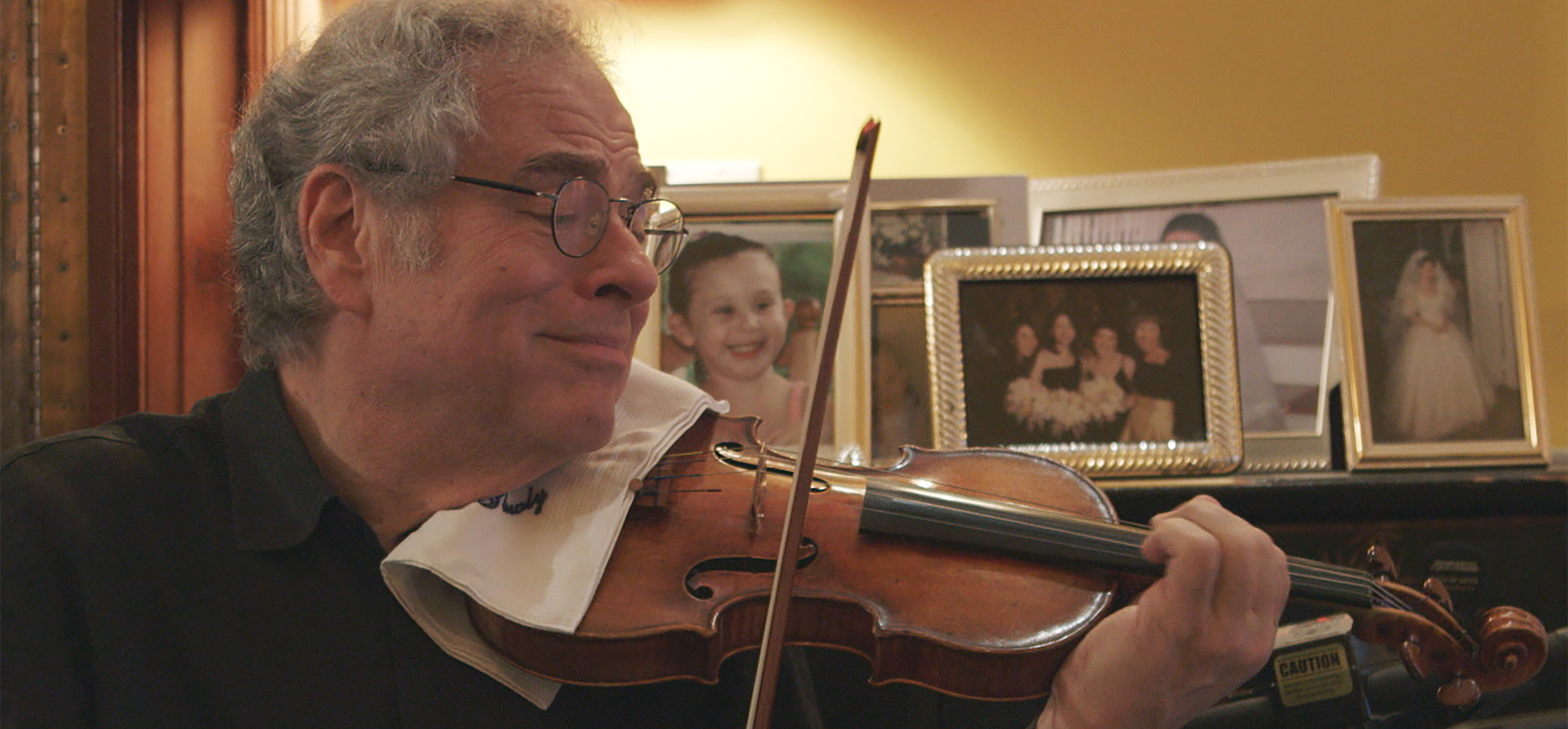
“When you finally get the sound [of the violin], you are really getting something out of yourself,” the young Itzhak Perlman says in black and white footage from Israeli television in 1974, during Alison Chernick’s new documentary Itzhak. “The more you have in your heart, the more you have to give,” he explains, having noted that to get a sound out of a piano you merely have to strike a key. The Israeli-born Perlman has given an enormous amount over his long professional career; and he’s been in the public eye since his appearance in 1958 as a 13-year-old on The Ed Sullivan Show playing an excerpt from Mendelssohn’s Violin Concerto. Itzhak is a congenial portrait of the living legend, from the child crippled by polio to the 70-year-old musical icon travelling out to the CitiField pitcher’s mound in his motorized wheelchair to play The Star-Spangled Banner in the home of the New York Mets.

Itzhak Perlman in 'Itzhak' - photo by Films We LikeWith the aid of old video, photographs and home movies we get a sense of what drove the young violinist to succeed. More recent footage records the love and devotion of his wife Toby and the importance to him of their family and Jewish heritage. His physical challenges are constant, his triumph over them as a performer, teacher, husband and father implicit throughout.

But it’s the singularity of his musical life and the joy he brings to it that is the raison d’être of Chernick’s film. Where does she lead us from the baseball diamond? To a rehearsal of Tchaikovsky’s Piano Trio Op.50 with cellist Mischa Maisky and pianist Evgeny Kissin. Then the star-spangled musical trio takes a break in Perlman’s New York City kitchen where the host animates the eating of takeout Chinese food with a hoary old Russian-Jewish joke.

Richard Strauss’ Violin Sonata, Bruch and Wieniawski Violin Concertos, Brahms, Respighi and Ravel, Vivaldi, Bach, Mozart and Schubert all resonate on the soundtrack. Marian Anderson’s singing of the spiritual Crucifixion has a special place in Perlman’s iconography. As his playing of klezmer music with The Klezmatics does in ours. And what is the most requested piece of music in his repertoire? The theme from Steven Spielberg’s Schindler’s List by John Williams.

You can watch how Perlman evokes the beauty of a phrase and marvel at the way he brings out the colour of a melody when Itzhak plays at the Hot Docs Ted Rogers Cinema April 6 to 12, followed by a run at the Mt. Pleasant Theatre beginning April 13.

Massey Hall/Roy Thomson Hall presents Itzhak Perlman and pianist Rohan De Silva in recital at Roy Thomson Hall April 22, performing works by Schubert, Beethoven and Dvořák.

Paul Moon’s Absolute Beauty

Recently I celebrated what would have been the 108th birthday of American composer Samuel Barber by watching Absolute Beauty, a comprehensive portrait of a man who wrote some of the most beautiful music of the 20th century. H. Paul Moon’s documentary has just now become available via internet streaming or purchase, having made the rounds of film festivals over the last several months. I found Moon’s assemblage of Barber scholars, musicians, personal reminiscences, film footage and photographs so touching that I immediately put on two of my personal Barber favourites: his Violin Concerto with its lovely first two movements; and his evocative Knoxville: Summer of 1915 for soprano and orchestra, the setting of James Agee’s clear-eyed nostalgic picture of family life from the point of view of a five-year-old boy. I had just learned that Agee and Barber were the same age and that Agee’s text spoke directly to Barber’s own youthful memories.

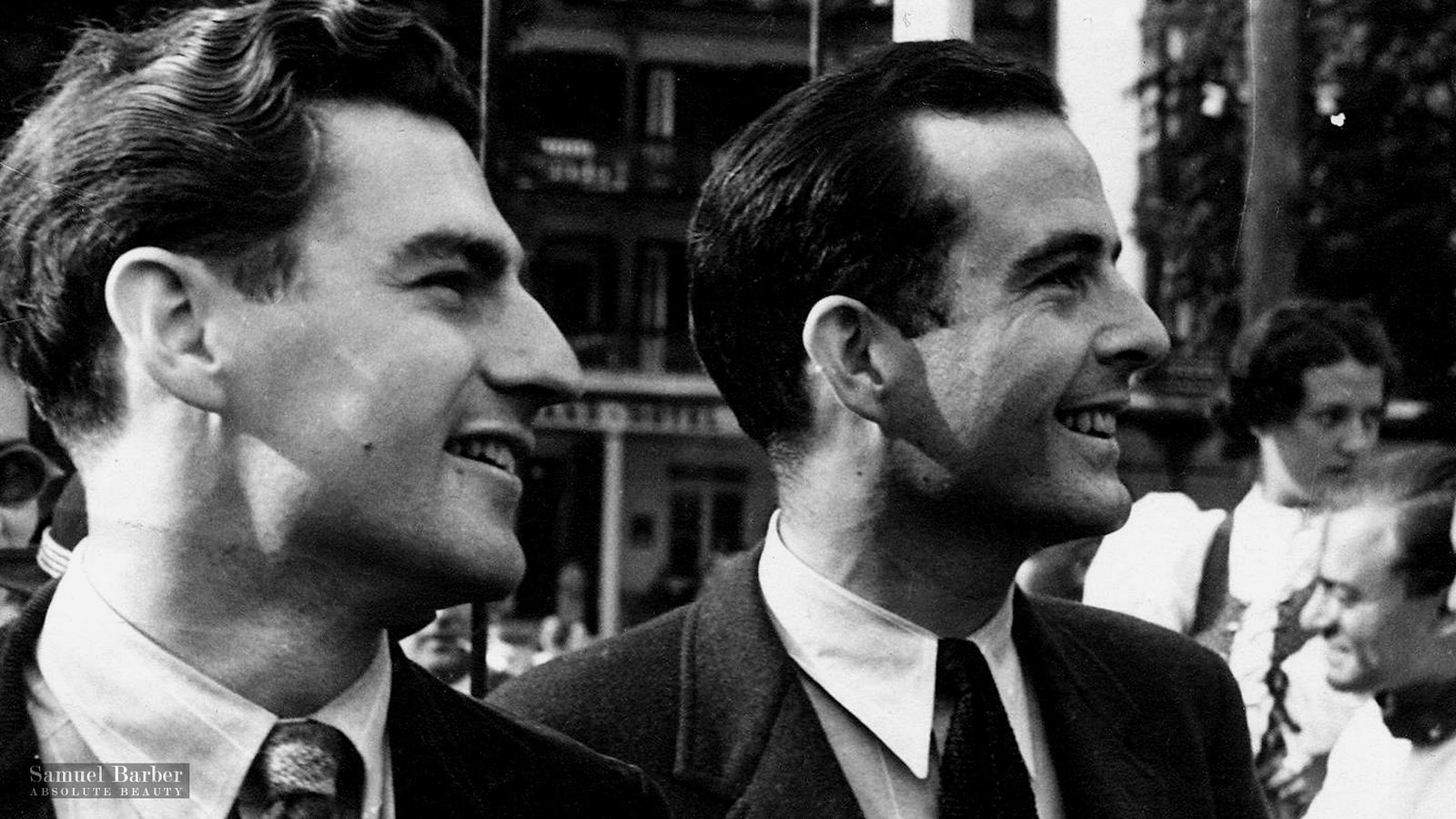
Gian Carlo Menotti (left) and Samuel Barber in the summer of 1936 from 'Absolute Beauty' - photo by HP MoonMoon took the film’s title from Leonard Bernstein: “I’ve always associated Sam’s music in my mind with Plato – I think, in terms of what Plato called the Absolutes, he’s a Platonic composer… the concept that there is an absolute truth and an absolute beauty and the absolute rightness of things… that all Sam’s music has tried to form one version or another of absolute beauty.”

The documentary begins with the transfixing melancholy of Dover Beach Op.3, written for baritone and string quartet (from the poem by Matthew Arnold) when Barber was 21 and still a student at the Curtis Institute. “Barber found the profound essence of the poem in very small motives,” Thomas Hampson says. The film moves through Barber’s compositional output from the Cello Concerto, Symphony No.1, the justly famous Adagio for Strings, the Piano Sonata (written for Horowitz, a frequent visitor to Barber’s Mt. Kisco home), Hermit Songs (and his collaboration with Leontyne Price) et al, ending with his 1966 opera Antony and Cleopatra and its misplaced stage direction by Franco Zeffirelli that blinded the critics to its musical qualities. Conductor Leonard Slatkin, one of Absolute Beauty’s roster of talking heads, says that he was enchanted listening to the opera on the radio when he was 22.

Barber wrote very little after those negative reviews and spent the last years of his life without his longtime partner Gian Carlo Menotti. Unable to afford Capricorn, their country home with its sylvan setting, Barber moved back to New York City where a Fifth Avenue apartment was of little consolation. He left us with a legacy of blissful melancholy as Absolute Beauty’s moving soundtrack depicts.

Absolute Beauty is available for purchase through Amazon and for rental at watch.samuelbarberfilm.com and at
https://vimeo.com/156522774.

TSO and Friends

Up-and-coming violinist Ray Chen is the soloist in Bruch’s beloved Violin Concerto No.1; Sir Andrew Davis leads the orchestra in Sibelius’ magnificent Symphony No.2 Apr 5, 7 and 8. Christian Tetzlaff performs Berg’s ineffably beautiful Violin Concerto; Kent Nagano leads the OSM in Bruckner’s ever-popular Symphony No.7 Apr 13. Violinist Blake Pouliot, recently named Women’s Musical Club of Toronto’s 2018 Career Development Award Winner, plays Beethoven’s lyrical Romances 1 and 2 as part of an all-Beethoven program under the baton of resident conductor Earl Lee that also includes the iconic Symphony No.5 Apr 14 and 15. The Associates of the TSO perform two of the greatest string chamber works: Schubert’s Quintet in C D946 and Brahms’ String Sextet No.1 Apr 23. Bramwell Tovey conducts the 1993 concert version of Leonard Bernstein’s brilliant musical Candide (essentially Bernstein’s 1989 recording with a few excisions) Apr 26 and 28. The legendary pianist Leon Fleisher brings the wisdom of his 89 years to Mozart’s Piano Concerto No.12; Peter Oundjian conducts Bruckner’s immense Symphony No.8 May 2 and 3 (RTH), May 6 (Montreal) and May 8 (Ottawa).

QUICK PICKS

Apr 6: The indefatigable Stewart Goodyear joins Nurhan Arman and Toronto Sinfonia for Vinzenz Lacher’s chamber version (originally for piano and string quintet) of Beethoven’s masterful Piano Concerto No.5 “Emperor.” Also in Barrie Apr 7. Later in the month Goodyear joins the estimable Trio Arkel (COC concertmaster Marie Bérard, TSO principal violist Teng Li and associate principal cellist Winona Zelenka) and Silk Road Ensemble bassist Jeffrey Beecher for a performance of Schubert’s sublime Trout Quintet Apr 27. Music by Schoenberg, Boccherini and Barrière complete the program.

Apr 8: Syrinx Concerts presents three internationally known musicians who happen to be on the faculty of the Schulich School of Music at McGill University – Ilya Poletaev, piano; Axel Strauss, violin; and Yegor Dyachkov, cello – performing music by Beethoven, Ravel and Oesterle.

Apr 12: Music Toronto presents the German-based Schumann Quartet, proteges of the Alban Berg Quartet and winners of the BBC Music Magazine Newcomer Award 2016 in a program of Haydn, Shostakovich and Schumann.

Apr 14: WholeNote Early Music columnist Matthew Whitfield is the organist in “The Wagner Effect” presented by Abendmusik at St. John’s Norway. (Apr 21 Whitfield plays harpsichord and organ in Bach’s The Musical Offering with Molly Evans-Stocks and Jimin Shin, violinists, another Abendmusik presentation.)

Apr 21: Cathedral Bluffs Symphony Orchestra’s Annual Fundraising Concert features two young soloists, cellist Alik Volkov in Tchaikovsky’s charming Variations on a Rococo Theme and pianist Lauren Esch in Grieg’s enduring Piano Concerto.

Apr 22: Pocket Concerts has decided it’s time to tackle Late Beethoven. Shane Kim and Katya Poplyansky, violins, and Amy Laing, cello, join co-director Rory McLeod, viola, in a performance of String Quartet No.12 Op.127.

Apr 22: Nocturnes in the City presents pianist Karolina Kubálek (Antonín Kubálek’s daughter) performing music by Mozart, Rachmaninoff, Chopin and Ravel.

Apr 26: The dean of Canadian pianists, Robert Silverman (soon to turn 80), gives an all-Chopin recital at Gallery 345. The program is repeated Apr 28 in the Music Room of the Kitchener-Waterloo Chamber Music Society.

Apr 27: Soprano Isabel Bayrakdarian joins Amici to celebrate the ensemble’s 30th anniversary in a program of works by Respighi, Dohnanyi and much Bernstein.

Apr 28: Charismatic French cellist Gautier Capuçon and his longtime duo partner Jerome Ducros grace the Koerner Hall stage with a selection of Fauré, Brahms and Rachmaninoff plus French and Russian short pieces from their latest CD Intuition.

May 3: The Women’s Musical Club of Toronto’s final concert of the season “Cellodrama!” features principal cellist of the Regina Symphony Orchestra, Simon Fryer, who also happens to be artistic director of the WMCT. He’s programmed himself along with seven cellist friends and special guest soprano Sarah Slean in a recital featuring works for solo cello, four cellos and eight cellos by Barrière, Penderecki, Jocelyn Morlock, Bach, Kelly-Marie Murphy, Queen and Villa-Lobos (the incomparable Bachianas Brasileira No.5).

May 3 to 6: Tafelmusik, with guest conductor Bruno Weil at the podium, takes a fresh approach to Beethoven, dipping into two classics from his fertile middle period. Music director emerita Jeanne Lamon is the concertmaster for the evening. Current music director Elisa Citterio is busy as the soloist in the Violin Concerto, which opens a strong program that ends with the Pastoral Symphony.

May 4: Festival of the Sound artistic director James Campbell gets ready for summer with music for clarinet, piano and cello in various combinations by Beethoven, Ravel, Fauré, Saint-Saëns and Brahms, at the Aurora Cultural Centre.

Paul Ennis is the managing editor of The WholeNote.
I recently had an email exchange with Edward Dusinberre, first violinist of the celebrated Takács Quartet, in anticipation of the Takács’ upcoming recital in Koerner Hall on March 25. I began by congratulating Dusinberre on his recent book, Beethoven for a Later Age (The University of Chicago Press, 2016), which I found to be a wonderful reading experience, rich in its multi-layered outlook and filled with keen insights into the string quartet experience in general and his in particular. The way he integrated the historical context of Beethoven’s own involvement with his quartets into the narrative was novel and instructive. And tying the history of the Takács to specific performances of specific Beethoven quartets was, I told him, an organic and deft touch.

The Takács Quartet: (from left) Geraldine Walther, viola; Edward Dusinberre, violin; András Fejér, cello; Károly Schranz, violin.WN: Does the quartet still rehearse four hours at a time? How much rehearsal time per week? Your Koerner Hall concert on March 25 begins at 3pm. What effect will that have on your rehearsal process?

ED: I’m glad you enjoyed the book! We rehearse between three to three and a half hours a day, five days a week when we are at home. On the road it’s more a matter of “maintenance” rehearsals, tweaking things here and there. The hard preparation work is done in Boulder. For an afternoon concert we usually meet two hours before the concert.

Please speak about the importance of conveying emotion in the music.

Conveying emotion is the end goal, but each audience member’s emotional response to a piece is unique. So we spend a lot of time discussing what character we want a phrase, section or movement to convey. The means for achieving that are of course many: bow stroke, type of sound, pacing, dynamic contrast, body language, etc. We hope if the characters are vivid and immediate, then the emotional responses they inspire will be stronger.

How does the Koerner Hall acoustic influence your playing there?

What a gorgeous hall and acoustic! Such a space creates the possibility for more varied dynamics and colours of sound: in particular it is more rewarding to play very quietly. Also timing can be affected. The last chord of a slow movement will fade beautifully into silence, where in a less good hall it might stop abruptly, so one is encouraged to linger.

You wrote extensively about the interpretive challenges and your various approaches to Beethoven’s string quartets in your book. “Performing Opus 131 is always an adventure,” you wrote. And: “Of all the Beethoven quartets, Opus 131 is the most ambitious.” Please elaborate on those two statements.

The emotional range of the piece is staggering. And often the juxtapositions of fiercely contrasting emotions require a nimble approach from the performers. For example, after a lyrical fourth movement full of whimsy and fantasy, one is hurled into a helter skelter scherzo which requires fast fingers and finesse. Immediately after that, the sixth movement is a lament, again with the minimum of time to prepare. The piece is an adventure because traversing such a range of emotions feels a bit different each time.

What is your approach to Opus 131 today? How might it change on March 25 in Toronto? How does the energy of the audience bear on it?

The opening bars of the piece are like the beginning of a long story. Sometimes the opening feels introspective, sometimes more overtly despairing. This is music that can accommodate many different approaches, just like a Shakespeare play. The purpose of rehearsing Opus 131 is to feel comfortable enough to be open to minute changes of character, balance and pacing that can occur spontaneously onstage. Beethoven modestly remarked that in this music there is “less lack of fantasy (imagination).” It is hard to predict from one concert to the next how our feeling about performing the piece will change but our job is to be open to how that fantasy may unfold.

How would you characterize the two other works on your Koerner Hall program – The Haydn E-flat Major, Op.76 No.5 and the Shostakovich No.11 in F Minor, Op.122?

The Haydn is a wonderfully varied piece with a luminous slow movement worthy of a late Beethoven quartet. The outer movements are full of surprises. The first movement starts rather gently before delivering a rambunctious coda. The last movement is full of high spirits, comic turns and pregnant pauses – one of our favourites.

The Shostakovich is an extraordinary piece. Like Opus 131, the movements are played without a break. And like Beethoven, Shostakovich takes simple thematic material and transforms it in imaginative ways, creating a satisfying narrative arc.

Speaking of Quartets (2): The Rolston String Quartet’s international profile has recently been raised even higher, having been selected as the recipient of the 2018 Cleveland Quartet Award, the first time a Canadian ensemble has received this prestigious biennial award which honours young string quartets on the cusp of a major international career. It is given out by the Cleveland Quartet, Chamber Music America and eight notable chamber music presenters across the United States. Winning quartets receive a concert tour of the United States, including performances at Carnegie Hall and the Smithsonian in Washington DC. The prize is the latest in a string of accolades for the fast-rising ensemble since winning the top prize at the 12th Banff International String Quartet Competition in 2016. Currently the fellowship quartet-in-residence at the Yale School of Music, the Rolstons now join the ranks of previous Cleveland Quartet Award winners Brentano, Borromeo, Miami, Pacifica, Miro, Jupiter, Parker, Jasper, Ariel and Dover Quartets.

As Bill Rankin wrote in La Scena in June 2017, Barry Shiffman, a founding member of the St. Lawrence Quartet and associate dean and director of chamber music at the RCM’s Glenn Gould School (GGS), recognized the group’s adventurous spirit from the outset. “There’s a bit of craziness to them, which I like in a young quartet,” he said. “They’re risk takers. They don’t play it safe. They have a concept, and they go for it.”

“Some people think of a string quartet as a 16-string instrument; others see it more as four individuals, with a very distinct identity and characteristics. We lean more toward the latter,” Rolston cellist Jonathan Lo said.

Cellist Norman Fischer, an alumnus of the Concord Quartet and a specialist in contemporary music, explained that at Rice University, the Rolstons found a deeper way of listening. During their three years of study there, they developed “the ability to hear sounds in very specific ways, the ability to hear what’s going on with all the players around you – to be able to anticipate changes in the music, but also to be able to anticipate changes from one another and to quickly respond. This is really complicated perceptual training.

“You’re always looking for that X factor, the exceptional thing in the playing that you’re not expecting, that makes the performance of music at the moment something memorable, and the Rolstons have that capacity.”

Shiffman says: “They bring a joyous A game to everything they do. I’m sure at times they’re tired and crabby and they don’t want to be on the road. But you would never know it. They’re as excited to play for you whether it’s Carnegie Hall or it’s Timmins, Ontario.”

The Rolston String Quartet plays at the Kitchener-Waterloo Chamber Music Society March 7, the Jeffery Concerts in London March 10, the Burlington Performing Arts Centre March 11 and the Royal Conservatory’s Mazzoleni Hall April 8. The programs will include combinations of Haydn, Beethoven, Debussy and Tchaikovsky in support of Schumann’s hugely popular Piano Quintet.

The Eybler String Quartet came together in late 2004 to explore the works of the first century of the string quartet, with a healthy attention to lesser-known composers such as their namesake, Joseph Leopold Edler von Eybler. The group plays on instruments appropriate to the period of the music it performs. Violinist Julia Wedman and violist Patrick G. Jordan are members of Tafelmusik Baroque Orchestra; violinist Aisslinn Nosky is concertmaster of the Handel and Haydn Society and principal guest conductor of the Niagara Symphony Orchestra; Wedman and Nosky are also members of I FURIOSI Baroque Ensemble. Cellist Margaret Gay is much in demand as both a modern and period instrument player. Their March 9 Heliconian Hall recital includes early Haydn, late Mozart and their contemporary Franz Asplmayr (1728-1786).

The Elias String Quartet has been together since they were students in Manchester in 1998. Music Toronto’s Jennifer Taylor brought them here in March 2015 for a memorable local debut which I chronicled in these pages: “French sisters Sara and Marie Bittloch on violin and cello set the tone for the quartet’s intimate sound and its impeccable sense of ensemble. Equally attentive were second violinist Scotsman Donald Grant and Swedish violist Martin Saving. Together the foursome brought heavenly pianissimos and wonderful silences that allowed Mozart’s music to breathe in his ‘Dissonance’ Quartet K465 and unrelenting anger and passion to Mendelssohn’s last string quartet without losing the ruminative lyricism of its slow movement.” Their upcoming recital for the Women’s Musical Club of Toronto on March 8 features three pillars of the repertoire: Schubert’s Quartettsatz, Janáček’s heartfelt String Quartet No.2 “Intimate Letters” and Beethoven’s mighty String Quartet No.12 Op.127. The following day the Elias performs the same program in Carnegie Hall.

The Penderecki String Quartet, currently celebrating their 25th year as quartet-in-residence at Wilfrid Laurier University in Waterloo, returns to Music Toronto March 15 for a concert of Schumann’s String Quartet No.3, Kelly-Marie Murphy’s Oblique Light (2016), commissioned as a sesquicentennial project by the Pendereckis and meant to depict the quality of light in our northern land, and Elgar’s Quartet in E Minor Op.83, which captured the spirit of his country cottage where it was written at the end of WWI. As we go to press Music Toronto has announced their 2018/19 season. Highlights include two appearances by Marc-André Hamelin: a season-opening solo piano recital and a Valentine’s Day chamber music concert with the Juilliard String Quartet; and Cleveland Quartet Award winners, the Ariel Quartet, who make their local debut.

Assorted Strings. The final concert of the Academy Concert Series season on March 10 sees the return of violinist Scott St. John and guitarist Lucas Harris, joining cellist Kerri McGonigle and violinist Emily Eng in a remounting of one of ACS’ most talked about and popular concerts from five years ago, “A Portrait of Paganini.” The repertoire will include a Paganini guitar quartet – he wrote 15 – his amiable Terzetto Concertante (for viola, cello and guitar) and one of his 24 virtuosic solo violin caprices. The Kitchener-Waterloo Chamber Music Society brings together the estimable Lafayette and Saguenay (formerly the Alcan) Quartets on March 25 for a rare evening of octets for strings by Mendelssohn, Niels Gade and Russian-Canadian composer Airat Ichmouratov. (Music Toronto will present the identical program March 14, 2019.) A completely different string confection will be served on March 31 when 5 at the First Chamber Music Series presents Arensky’s String Quartet No.2 for violin, viola and two cellos; Jocelyn Morlock’s Blue Sun for violin and viola; and Dohnányi’s String Sextet in B Minor.

Dénes Várjon - photo by Andrea FelvégiAnd a Pianist. Dénes Várjon, admired by professional musicians and European audiences but less well-known in North America, makes a return visit to the Jane Mallett Theatre on March 27 under the auspices of Music Toronto for a recital laden with music by his Hungarian countrymen Bartók and Liszt. It begins with Beethoven’s late Bagatelles Op.126, the composer’s final music for the piano. Beethoven described it as “Six bagatelles or trifles for solo piano, some of which are rather more developed and probably the best pieces of this kind I have written.” Fiona Maddocks wrote in The Guardian in February 2012 that Várjon’s ECM recording of Liszt’s Sonata in B Minor “demands attention for its grandeur, clarity and incisive virtuosity. Várjon makes rigorous sense of the work’s episodic structure, showing powerful ease in the fugue but enjoying the rhapsodic nature of the rest.” It will be exciting to hear him play it live.

TSO and Friends. Stéphane Denève, recently appointed music director of the St. Louis Symphony (effective 2019/20) leads the TSO in Rachmaninoff’s Symphonic Dances, the composer’s last completed work. Fun facts: it was the first time Rachmaninoff wrote for the saxophone and he got advice from violinist extraordinaire Fritz Kreisler on string bowings. Also on March 28 and 29, versatile German pianist Lars Vogt is the soloist in Brahms’ ravishing Piano Concerto No.2.

Born in Taiwan and raised in Australia, violinist Ray Chen won the Yehudi Menuhin Violin Competition in 2008 and the prestigious Queen Elisabeth [of Belgium] Music Competition the following year. Adept at social media and elegantly clad in Armani, Chen is the epitome of a modern musician. He is the soloist April 5, 7 and 8 in Bruch’s beloved Violin Concerto No.1 under Sir Andrew Davis, who also leads the orchestra in one of Mendelssohn’s programmatic concert overtures and Sibelius’ magnificent Symphony No.5.

Then, on March 24, the TSO cedes the Roy Thomson Hall stage to the National Arts Centre Orchestra and its conductor Alexander Shelley for performances of a new work, Earworms, by Vivian Fung, Brahms’ serene Symphony No.2 and Shostakovich’s lively and sardonic Piano Concerto No.2 (with Russian-born Israeli pianist Boris Giltburg, winner of the 2013 Queen Elisabeth Music Competition).

The Associates of the Toronto Symphony present “The Companion’s Guide to Rome” on March 26, featuring Amanda Goodburn, violin, Theresa Rudolph, viola, Emmanuelle Beaulieu Bergeron, cello, and Samuel Banks, bassoon, in Mozart’s Sonata for Bassoon and Cello K292, Devienne’s Quartet for Bassoon and Strings Op.37 No.3 and Andrew Norman’s string trio, The Companion Guide to Rome.

QUICK PICKS

Mar 10: Bravo Niagara! Festival of the Arts presents the exceptional pianist Jan Lisiecki.

Mar 18: Salzburg-born-and-raised cellist Clemens Hagen (of the celebrated Hagen Quartet) and Russian-born American, multi-faceted pianist Kirill Gerstein perform three of Beethoven’s five cello sonatas, Op.5 No.2, Op.102 No.1 and Op.102 No.2 as well as his 7 Variations in E-flat Major on “Bei Männern, welche Liebe fühlen” from Mozart’s The Magic Flute; presented by the Royal Conservatory in Koerner Hall.

Mar 22 to 24: In “Sound and Colour: Scriabin and Synesthesia,” Art of Time artistic director, pianist Andrew Burashko, performs Scriabin’s 24 Preludes in conjunction with lighting designer Kevin Lamotte’s light-field show.

Mar 23: Belgian pianist Olivier de Spiegeleir adds his own commentary to his Debussy recital presented by Alliance Française de Toronto, 100 years after the composer’s death.

Apr 6: The Royal Conservatory presents “Bernstein @ 100,” featuring German pianist Sebastian Knauer, Jamie Bernstein (Leonard Bernstein’s daughter), mezzo-soprano Wallis Giunta and the ARC Ensemble. 

Paul Ennis is the managing editor of The WholeNote.
How does it happen that a young conductor from Birmingham, UK makes his Canadian debut leading the Kitchener-Waterloo Symphony in a pair of concerts? How is it that a young Taiwanese-American violinist makes his Toronto debut at Mooredale Concerts? And what accounts for a young German-French cellist making his Toronto debut at Koerner Hall? The coincidence of three emerging young professionals all arriving in our area over the next few weeks sparked the above questions (and several more). Their answers in a series of emails mid-January were as diverse as their backgrounds but all shared the common thread of personal connections.

Alpesh Chauhan, the 27-year-old conductor from Birmingham, told me that his management are on very good terms with the management of the Kitchener-Waterloo Symphony and keep in touch sharing information on their clients. The invitation to guest conduct on February 9 and 10 developed out of interest on the orchestra’s part; a grateful Chauhan attributes it to strong trust between the parties.

Twenty-seven-year-old Paul Huang’s route to his February 18 Toronto recital travelled directly through pianist Wonny Song, Mooredale’s artistic director, who is also artistic director of Quebec’s Orford Music Festival. Huang, the recipient of the prestigious 2015 Avery Fisher Career Grant and the 2017 Lincoln Center Award for Emerging Artists, told me, “Both Wonny and I have won the Young Concert Artists International Auditions at some point in our careers and Wonny first heard me during a trip to New York and we were introduced through a patron of YCA.” That meeting led to Song booking Huang for his Canadian debut last summer at Orford. “He must have liked what he heard and here I am, making my first visit to Toronto!”

Versatile soloist and chamber musician, 35-year-old Nicolas Altstaedt, was chosen by Gidon Kremer to succeed him as artistic director of the Lockenhaus Chamber Music Festival; and he was selected by Adam Fisher to follow him as artistic director of the Haydn Philharmonic. Altstaedt spoke to RCM executive director Mervon Mehta, who books their concerts at Koerner Hall, in March of 2016 when the cellist visited Toronto with his friend and sometime chamber music partner, violinist Vilde Frang, who was giving a recital at Koerner Hall at the time. Altstaedt expressed his desire to play there and the confluence of this season’s cello series and Mehta’s familiarity with pianist Fazil Say (Altstaedt’s collaborator) sealed the deal for the March 2 recital.

Alpesh Chauhan. Photo by Patrick Allen.Alpesh Chauhan: Chauhan first discovered classical music at school, when a cello teacher performed in his school assembly in Birmingham. He was instantly hooked, and went home later that day with a cello under his arm, much to the surprise of his parents who were born in East Africa (father in Tanzania and mother in Kenya) of Indian descent (Gujarati). He became increasingly passionate about classical music throughout school and later studied cello at the Royal Northern College of Music, while at the same time conducting friends in concerts he arranged for charity. “That was my first real conducting experience and I knew it was something I wanted to pursue,” he said. “I quickly grew an obsession with the people at the front, and the sound they created from the podium.

“Following several years of training, studying and being mentored by great conductors like Andris Nelsons and Edward Gardner, I have now conducted two concerts at the BBC Proms, a production of Turandot at the Teatro Lirico di Cagliari, the BAFTA-winning children’s film Ten Pieces II with the BBC Philharmonic and a main season concert at the Barbican Centre with the London Symphony Orchestra. I also became principal conductor of the Filarmonica Arturo Toscanini last year.”

Asked specifically which conductors inspire him, Chauhan continued: “I love the gestural genius of such conductors as Carlos Kleiber and Gennady Rozhdestvensky,” he said. “One learns so much about the interaction between conductors and the sounds they wish to inspire (and the success thereof) from both of these conductors. I am very inspired by Sir Simon Rattle too as well as other visiting conductors that I assisted as guests at the City of Birmingham Symphony Orchestra [where he held the position of assistant conductor] including Edward Gardner, Walter Weller and Vassily Sinaisky. A huge inspiration for me was Andris Nelsons who I was assistant to at the CBSO in his period as music director. Some of what I learned from him includes trust and respect of the orchestral musicians, freedom in performance and concert and strength of musical ideas and interpretation.”

Paul Huang. Photo by Marco Borggreve.Paul Huang: “I was mesmerized by the sound of the violin when I was a kid,” Huang told me. “It was the singing quality and the sound that is so close to the human voice that drew me to the instrument. As a child, I was terribly shy and was not good with words, so playing the violin was a way to express myself without using words!”

I asked who his musical idols were in his formative years and he told me it was a hard question to answer. “But I will say that there are several violinists (mainly the ones from the past) that I would constantly listen to (and still do), people like Kreisler, Oistrakh, Milstein, Hassid and the young Menuhin. Outside of the violin world, Frank Sinatra and Judy Garland are some of the singers that I constantly listen to and find myself feeling so inspired every time I listen to their voices.”

As to what violinists inspire him, he said those violinists who have a strong viewpoint and a voice that is convincing and unique. “I find that most of the violinists from the past generation all have a sound that is so distinctive from each other. They are all inspiring to listen to.”

Nicolas AltstaedtNicolas Altstaedt: When I asked Alstaedt what drew him to the cello he told me that his father played the piano a bit as well as the cello. His older brother started playing piano so when he was six he picked up the cello. “Once I started playing, I didn’t think of doing anything else in my life.”

He never “idolized“ interpreters he told me, “though I have certainly been influenced by artists I admired such as Gidon Kremer or Nikolaus Harnoncourt. I have always found deep fascination in the process of composing and creating an artwork. There is a danger in our society in idolizing performers rather than recognizing and understanding the achievements of true creators.”

As to whom he considers to be his musical mentors, he pointed to violinist and chamber musician Eberhard Feltz as the most influential figure in his life for almost ten years. “I met him through the Quatuor Ébène, who have been working with him for a long time. They regularly came to Berlin, staying at my place while i was attending classes for sometimes up to eight hours a day. I started to study with him in 2009 and still see him on a regular basis. He keeps surprising me every time and each encounter leaves food for thought for several weeks.”

Next, I asked each musician to comment on the repertoire they will be performing.

AC: We have a great program for my KWS debut. A flashy overture by Magnus Lindberg, Aventures, which quotes many popular classical music works including Prokofiev’s Classical Symphony and even Berlioz’s grand fantasy-themed Symphonie Fantastique which we perform in the second half of the concert. In between we’re joined by pianist André Laplante for Beethoven’s Fourth Piano Concerto. I have a long relationship with the Berlioz as I conducted rehearsals as an assistant in Birmingham, went on to assist it a couple of times in my time at the CBSO and then conducted it in Scotland in 2016 in a program that also included Debussy’s La Mer!

PH: In general for my recital programs, I want to give audiences a variety of musical styles and a sound world palette which the violin is able to convey. For this program with my duo partner Helen Huang, we will be bringing the Dvořák Sonatina, a piece which Dvořák wrote while in America but very much had nostalgia towards his roots, with several joyful Czech dances throughout the movements. The Prokofiev F-Minor Sonata is perhaps one of the darkest sonatas ever written (like a Russian epic novel). It was written during WWII, a sonata that almost in a way documents history through the notes. In the second half we have prepared two miniature pieces (Sarasate and Kreisler) to lighten up the mood from the dark first half and make a transition to the finale of the program, which will be the colourful and brilliant Saint-Saëns’ Violin Sonata, a piece that is very dear to my heart.

NA: The repertoire for Altstaedt’s recital consists mostly of the works on his recent Warner Classics CD with his Koerner recital partner, Fazil Say. “I met Fazil seven years ago and commissioned a sonata while I was on the BBC New Generation Artist scheme. We started to play recitals and the following program evolved. I have a strong passion for the music at the beginning of the 20th century; Janácek and Debussy are two very different exemplary masterpieces of that period. Shostakovich has been the most influential composer in my childhood and his sonata is very similar to Fazil’s in term of architecture.”

I concluded my virtual symposium by asking each musician the question: What do you find most rewarding and most challenging in your professional life?

AC: I think one of the most important elements of my professional life is the musical and emotional reward I enjoy when playing and conducting live music. The most challenging, however, is the travel and unsettled lifestyle, which can be very tiring. I also find constantly changing repertoire to be a challenge! For example, the week before I conduct the Kitchener-Waterloo Symphony, I will be in Italy conducting Shostakovich 11. I’ll then travel straight to KWS for Berlioz Symphonie Fantastique, followed by the Netherlands to conduct Tchaikovsky 4 and then back to Italy for Shostakovich 10!

PH: Very often when I get together with musicians we ask each other is all the stress, travelling, hours of practising, the nerves of getting on stage night after night, is this really worth it? But the answer at the end is always yes. Because when I see people coming up to me after concerts telling me how much they enjoyed the evening or sometimes how it made their lives more meaningful or even made some positive impact in their lives, for me, that’s what makes everything worth it. I believe music is the most wonderful and powerful way of bridging different roots, different cultures, different languages, different religions and different backgrounds. In the world of music, we are all on this wonderful musical platform where we are all the same and can share something in common and can understand and respect each other on a much deeper level.

NA: It is very rewarding to spend your life communicating with people in the most diverse and powerful language. I am very aware and grateful for that every day. I am currently working on The Seasons by Haydn and it has been a revelation. The same goes for pieces I have already performed like the concertos by Dutilleux and Dvořák and the complete Bach Suite Cycle, that I am playing the following week. To be in touch and discover artworks that widen your awareness on a daily basis is the most wonderful thing to grow in life.

George Li

Last month I did a Q&A with pianist George Li whose Toronto debut recital in Koerner Hall on February 4 has been postponed with no new date announced as of press time. The Q&A prompted a comment by New England Conservatory visual assets manager Andrew Hurlbut who pointed out that Li’s musical education owed a great debt to the NEC and to his studies with Wha Ryung Byun as part of the NEC/Harvard dual degree program. “It seems to me that long through line in his training is at least somewhat responsible for his current well-deserved success,” he wrote in an email. We appreciate and welcome the comments of readers far and wide.

QUICK PICKS

Feb 5: The Kitchener-Waterloo Chamber Music Society is taking full advantage of charismatic clarinetist Dionysis Grammenos’ stint as assistant conductor for the COC’s production of Mozart’s The Abduction from the Seraglio. K-WCMS is connecting him with the popular piano quartet, Ensemble Made in Canada, for a performance of Brahms’ Clarinet Quintet Op.115, another exquisite work from the composer’s last creative output. The performance will be repeated Feb 7 in Toronto as part of the COC’s free noontime concert series.

Feb 11: Anyone who was fortunate enough to experience the electricity of Stravinsky’s Petrushka at David Jalbert’s and Wonny Song’s duo piano Mooredale Concerts recital January 14 need not be reminded of Jalbert’s next appearance in our area. For his K-WCMS solo concert, the Ottawa-based virtuoso will burnish his reputation as one of Canada’s finest pianists with three Prokofiev sonatas – Nos. 2, 3 and 5 – on the same program.

Feb 15: TSO principal violist Teng Li brings her warmth and sensitivity to a program of transcriptions by the celebrated 20th-century violist William Primrose in a free noontime recital at U of T Faculty of Music’s Walter Hall. Lydia Wong is the collaborative pianist.

Feb 16: Leon Fleisher, who turns 90 later this year, conducts the Royal Conservatory Orchestra performing Beethoven’s Egmont Overture, Strauss’ Four Last Songs and Sibelius Symphony No.1 in Koerner Hall. He will give masterclasses in Mazzoleni Hall Feb 11 and 17. Masterclasses with Fleisher are inspirational and memorable, strewn with anecdotes. It’s no surprise, considering his close connection to Beethoven through his teacher, Artur Schnabel, a student of Theodor Leschetizky, who studied with Beethoven’s pupil, Carl Czerny. A few years ago, Fleisher said he once had “the pleasure of performing with three guys named Jascha, Grisha and Bill [Heifetz, Piatigorsky and Primrose]. And it really was a pleasure.”

Feb 22: Music Toronto presents the Apollon Musagète Quartet in a program of Haydn, Arensky and Grieg. The dynamic young Polish quartet made a memorable debut in the Jane Mallett Theatre in November 2015 and their return is eagerly anticipated.

Feb 25 and 26: Canzona Chamber Players give us another chance to hear Brahms’ great clarinet quintet (along with with Hindemith’s) with Canzona co-founder Jonathan Krehm joining Csaba Koczo, Jessica Tong (violins), Robin Howe (cello) and Pocket Concerts’ Rory McLeod (viola).

Mar 1: Lang Lang, recovering from tendinitis in his left arm, will share the keyboard with 15-year-old Maxim Lando (a Lang Lang International Music Foundation Scholar) in a piano four hands arrangement of Gershwin’s exuberant Rhapsody in Blue. Peter Oundjian conducts the TSO. 

Paul Ennis is the managing editor of The WholeNote.
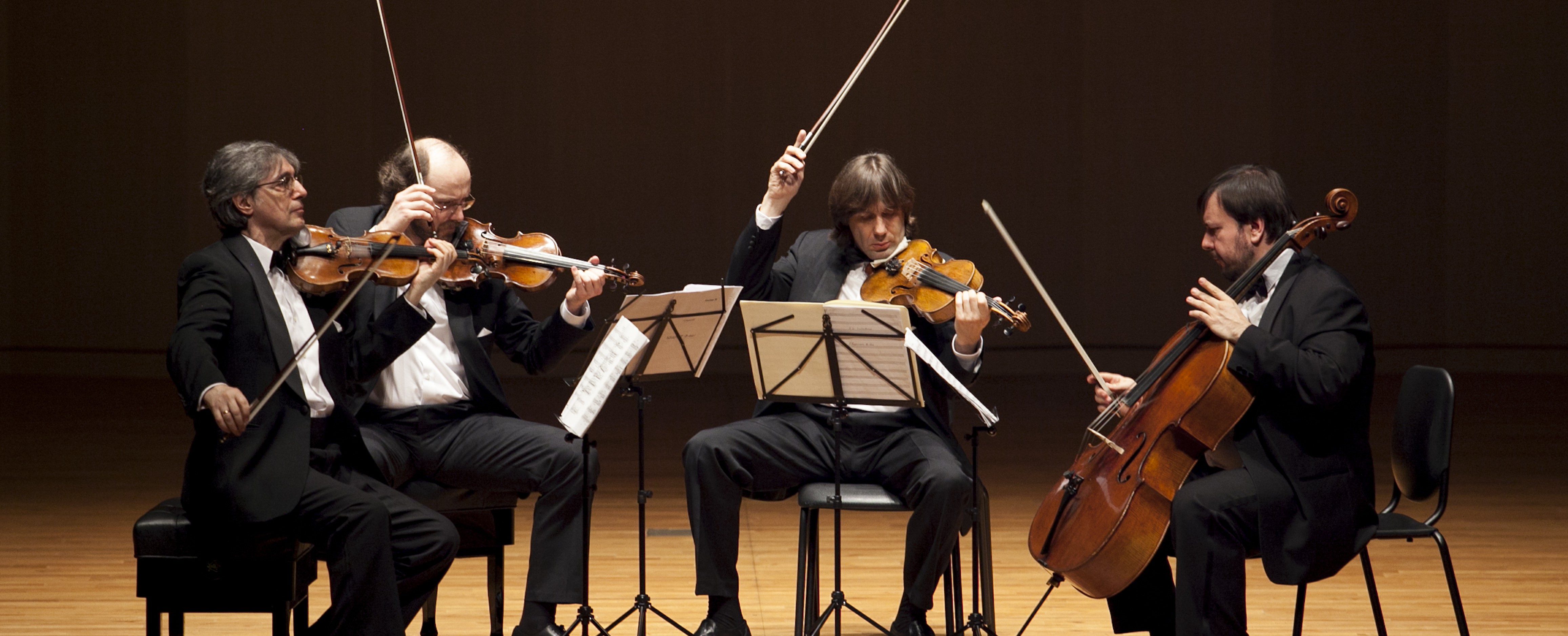
The extra coverage in this double issue of The WholeNote has prompted me to consider its entire nine-plus weeks of listings as fodder for constructing my personal musical winter wonderland. You are welcome to come along for the ride!

On thewholenote.com I find the LISTINGS tab and click on the indispensable JustASK feature. It’s early in planning my journey so I opt to see the entire listings for the first week in December. (Later in my wanderings, to refine my search I may choose to JustASK specifically for chamber music or piano.) In this case, I decide on a free RCM event, pianist Francine Kay in a Sunday Interludes recital at Mazzoleni Hall on December 3. Chopin’s Barcarolle has always been a personal favourite and its rolling rhythms will get my festive juices running. Besides, the eminent Princeton University faculty member (and Analekta recording artist) will be giving two masterclasses the following Friday in the same space. Depending on what the students will be playing, I may sit in.

My next stop brings me to Koerner Hall on December 5 for a concert I wrote about in the November WholeNote: Messiaen’s Quartet for the End of Time, a 20th-century touchstone, played by some of the newest stars in Europe’s musical firmament. I have high hopes for pianist Lucas Debargue, violinist Janine Jansen, cellist Torleif Thedéen and clarinetist Martin Fröst. Next stop, December 10 (and I still haven’t budged from Bloor Street) I’m looking forward to the return of Khatia Buniatishvili. This time she’s opening with Mussorgsky’s majestic and intricate Pictures at an Exhibition before moving on to Liszt showpieces. (And while I’m waiting, there’s the Rebanks Family Fellowship concert December 6 in Mazzoleni Hall, where young musicians on the cusp of professional careers display their craft.)

Sorry to say, you’ll have to JustASK for yourself for the balance of December. That’s because my annual visit to longtime friends in the cabin they built themselves in the middle of a hundred-acre wood will take me through the month. A festive Christmas feast of turkey and trimmings baked in a wood stove will serve all of us well while a curious, sociable parrot provides live entertainment.

January 4 and 6, Ryan Wang: When Ryan Wang was five years old he performed at Carnegie Hall in the American Protégé International Piano and Strings Competition. A charming child with no pretentious airs, his celebrity shone soon after, in his first appearance on The Ellen Show. When not playing a concerto with the Shanghai Symphony, for example, he enjoys biking, road hockey and Harry Potter in West Vancouver. In a YouTube video made last year, he talks about being a piano prodigy who began playing when he was four. “Kids in school think I’m just a famous pianist,” he says unabashedly. “But I’m just an ordinary kid.” He calls Harry Potter his hero “because he’s brave. And if you’re brave, you can overcome anything … Sometimes life is really challenging, but I never give up and never lose hope.”

Martha Argerich debuted at four, Claudio Arrau at five. Ryan Wang at ten has been on the stage for half his life. The Li Delun Music Foundation presents him on January 4 at the Fairview Library Theatre in recital playing Bach’s French Suite No.6 – his Bach on YouTube is refreshingly without any affect – a Haydn sonata, a Poulenc Villageoise, Debussy’s Arabesque No.1, the two Chopin Waltzes Op.64 and a Bartók Romanian Dance. An excursion to North York may be a New Year’s resolution worth keeping. Two days later, January 6, Wang is the soloist in Beethoven’s Piano Concerto No.2 with the Toronto Festival Orchestra conducted by Dongxiao Xu in the Li Delun Music Foundation’s “New Year’s Concert 2018” at the George Weston Recital Hall.

January 7, Rachel Barton Pine: She began learning the violin at three; at five she “self-identified as a violinist.” At ten, she performed with her hometown band, the Chicago Symphony Orchestra; at 17, she won the Bach International Competition in Leipzig, Germany. At 20, her violin case straps caught in the closing doors of a Chicago commuter train; the accident cost her part of a leg and mangled a foot. Her determination and discipline from her years of violin study brought her all the way back musically. On January 7, she performs the first Sunday Interludes concert of the year in Mazzoleni Hall.

January 10 to 21, Mozart @ 262: I’m back on Bloor again for some of this next part of my private winter festival. I am about to come face to face with the TSO’s Mozart @ 262 Festival that begins January 10; it will be the TSO’s 14th annual celebration of that prodigy’s genius, and the final one with Peter Oundjian (the festival’s creator) as TSO music director. Roy Thomson Hall (three performances), Koerner Hall (two) and the George Weston Recital Hall (one) will all be involved. On January 17 and 18 concertmaster Jonathan Crow and principal violist Teng Li will be the soloists in Mozart’s Sinfonia Concertante for violin and viola K364/320d in what might very well be the single highlight of the festival.

Adrian AnantawanOundjian’s sole conducting gig, however (January 19 to 21), is the one program I’m most focused on, though (and the only one that’s in all three venues). Anchored by Mozart’s exhilarating final symphony, No.41 in C Major “Jupiter,” the concert showcases two talented young Canadian artists. Charles Richard-Hamelin will weave his colouristic alchemy in the Piano Concerto No.23 in A Major K488 – the understated grandeur of its Adagio served as the main theme of Terrence Malick’s film The New World, underscoring the pristine beauty of its first act. And Adrian Anantawan will be the soloist in the Rondo for violin and orchestra K250/248b “Haffner,” and the Adagio for violin and orchestra K261. Anantawan, who grew up in Toronto, was born with no right hand, only a stunted appendage with tiny stubs instead of fingers. At nine he took up the violin, which proved to be a great equalizer for him. Needless to say, it changed his life. Now in his early 30s, he works with cutting-edge technology to help others; he’s also given a TED Talk. He told CNN in 2013 that “it’s never about the technique or technology that is important, but the desire to live life authentically and creatively. We often forget even ‘traditional’ musical instruments are technological adaptations in their own right – they are tools to manipulate sound in a way that we couldn’t do with our bodies alone.”

January 11, Brentano and Dawn Upshaw: I plan on abandoning Mozart to take advantage of a rare opportunity to hear Schoenberg’s pivotal String Quartet No.2 when Music Toronto presents the Brentano String Quartet and soprano Dawn Upshaw in the Jane Mallett Theatre. Completed in 1908, the quartet’s extreme late-Romanticism loses its harmonic bearings by its final movement, a change that can be considered the beginning of atonal music. The third and fourth movements are settings of poems by the symbolist poet Stefan George. Alex Ross in The Rest Is Noise talks about the extraordinary moment in the fourth movement when the soprano sings the line I feel the wind of another planet and then the “transformation,” I dissolve in tones, circling, weaving … The Schoenberg is preceded by Respighi’s intimate, lyrical setting of Shelley’s Il Tramonto. Before intermission, the Brentano (without Upshaw) will interweave Webern Bagatelles with Schubert Minuets before performing Argentine-American Mario Davidovsky’s String Quartet No.4 (1980), a piece I look forward to hearing for the first time.

The next morning, January 12 at 10am, Upshaw will give a masterclass in Mazzoleni Hall. I’ve marked my calendar. Maybe I should just move to Bloor Street!

Sunday, January 14, David Jalbert and Wonny Song: these two top-rank Canadian pianists return to U of T’s Walter Hall and Mooredale Concerts following their acclaimed 2014 appearance there, for “Piano Dialogue,” a program inspired by dance, theatre and visual art. Rachmaninoff’s Suite No.1 for two pianos and his four-hand arrangement of Tchaikovsky’s Sleeping Beauty Waltz share the stage with Milhaud’s Scaramouche Suite for Two Pianos and Stravinsky’s kinetic Petrouchka, also for two pianos. Elsewhere in this issue Alex Baran writes in his DISCoveries Keyed In column about Jalbert’s latest CD of music connected to what Jalbert and Song are playing in their recital: “[The CD] shows why he’s considered one of the younger generation’s finest pianists. His performance of Dance russe from Petrouchka explodes into being with astonishing speed and alacrity. Jalbert possesses a sweeping technique that exudes ease and persuasive conviction.”

January 23, Stephen Hough: In October 2016 the brilliant British pianist Stephen Hough revealed on BBC Radio 4’s Desert Island DIscs that he discovered he liked playing the piano when he went to visit his aunt’s house and could pick out more than one hundred nursery rhymes on her piano. After much pestering, his parents bought him a cheap second-hand piano from an antique shop. So began the storied career of this polymath, whose first novel, The Final Retreat, is to be published in March 2018. On January 23, he makes his fourth appearance for Music Toronto since 1996 with a program mixing four Debussy works (two of which, Images Bk 1 and II, appear on his latest Hyperion CD, anticipating the centenary of the composer’s death in 1918) with Schumann’s rapturous Fantasie Op.17 and Beethoven’s colossal Sonata in F Minor, Op.67, “Appassionata.” The next morning, Hough will make the trek north to Mazzoleni Hall for a public masterclass. Having been to two of these, I have no doubt it will be an insightful and inspirational experience.

January 27, the Dover Quartet: The Dovers came to wide attention in 2013 when they won the Banff International String Quartet Competition. I wrote about their memorable Beethoven concert at Toronto Summer Music in 2016: “Musically mature, vibrant and uncannily unified in purpose and execution, the youthful players brought passion and grace to the first two movements [of Op.132], took a decisive approach to the fourth and emphasized the rhapsodic character of the finale.” Chamber Music Hamilton, a top-flight regional series, is presenting the young Americans in a recital of Schumann’s Second, Ullmann’s Third and Zemlinsky’s Second String Quartets, Sunday January 27 at 2pm at the Art Gallery of Hamilton.

January 30, RCM and Hot Docs Ted Rogers Cinema (although the name has changed, the address remains Bloor Street) present Stefan Avalos’ compulsively watchable Strad Style, a film I saw at Hot Docs 2017. The documentary chronicles the improbable but triumphant story of a reclusive Ohio violin maker, Daniel Houck, whose confidence that he can produce a copy of “Il Canone,” the Guarneri violin built in 1742 that Paganini played, carries him through an eight-month journey that threatens to be derailed more than once. A violin aficionado who loves listening to old masters like Oistrakh and Heifetz and idolizes violin makers Amati, Guarneri and Stradivari – all from Cremona, Italy – Houck suffers from bipolar disorder but functions with medication. He befriends Razvan Stoica on Facebook when he discovers the Romanian-born violinist has won the Strad Prize at a Salzburg festival and offers to make him the Canone replica. There is magic stuff here.

After the screening Jonathan Crow will bring out his own Guarneri for what promises to be a fascinating show-and-tell Q&A. And that’s why I’ll be there.

And on into February: The astounding young pianist Daniil Trifonov continues his homage-to-Chopin tour February 1, with a sold-out concert at Koerner Hall. I’m lucky to have a ticket but unlucky to miss the St. Lawrence String Quartet’s annual Music Toronto visit the same evening. Fortunately I can attend the SLSQ’s masterclass in Mazzoleni Hall the next day at 10am.

In 2008, clarinetist Dionysis Grammenos became the first wind player ever to be named European Young Musician of the Year. Two years later at 21, having been guided by Bernard Haitink, Christoph Eschenbach and Robert Spano, he made his conducting debut with the Vienna Chamber Orchestra. Johannes Debus hired him as assistant conductor for the COC’s 2018 production of Mozart’s Abduction from the Seraglio February 7 to 24. “You find in him a musician who exudes an enthusiasm for music from every single pore and who equally has the talent to communicate and share his enthusiasm and euphoria with others – no matter if it’s about an audience or fellow musicians,” Debus says. Grammenos’ appearance at noon on February 7 in the Richard Bradshaw Amphitheatre with Ensemble Made in Canada (they will perform Brahms’ late masterpiece, the sublime Clarinet Quintet in B Minor Op.115) is the last stop in my winter festival.

Given the abundance of live music available to all of us in the Toronto area, there’s an ad hoc personal winter festival out there for the making for every musical taste. How? JustASK.

Paul Ennis is the managing editor of The WholeNote.
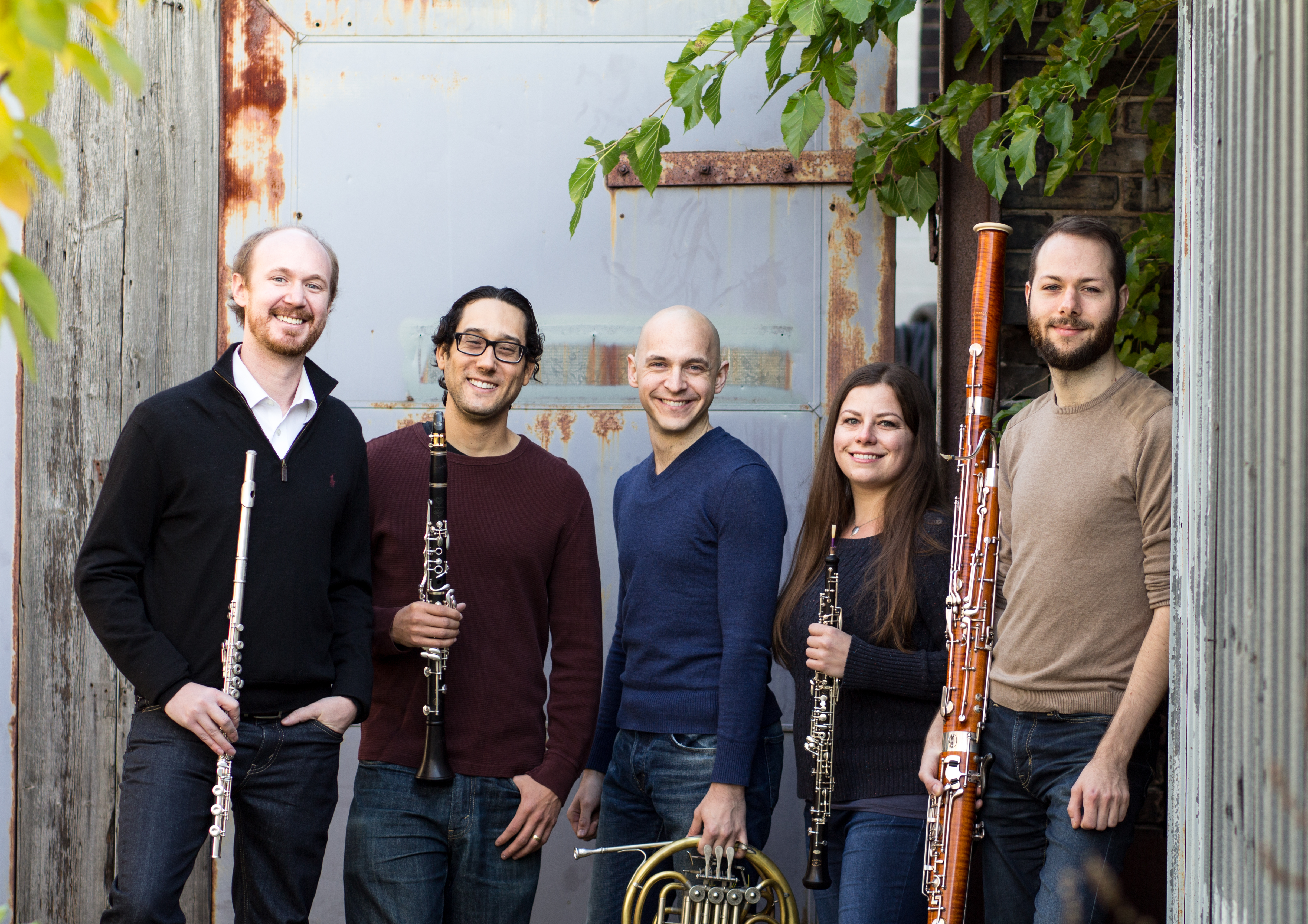
Mai Tategami began studying the violin at the age of six. As an orchestral player, she was concertmaster of the Seiji Ozawa Ongaku-juku Orchestra and became an academy student and temporary contract member of the Rundfunk Sinfonieorchester Berlin (2012-2015). During the 2015/16 season, she performed with the Beethoven Orchester Bonn as concertmaster. At 28, she won the first edition of the Orford Music Prize in 2016. She makes her Toronto debut with a free Music at St. Andrew’s noontime recital on November 24 and follows that up November 26, when she joins the Rebelheart Collective in Mooredale Concerts’ third program of the season to play the second violin part for a performance of Mendelssohn’s exuberant String Quintet in B-flat Major, Op.87.

Mai TategamiShe told me in a mid-October email conversation that she started her musical education at three with the piano. “My teacher gave me some Bach to practise,” she told me. “His music was like a magical world. I have always felt peaceful and relaxed when I play/listen to Bach. He is still one of my favourite composers.” So Bach was the first composer she fell in love with. What about musicians? “I don’t remember which one was the first violinist that I liked, but I loved Itzhak Perlman and Gil Shaham when I was small. They were my superstars, and I fell in love with their brilliant and sweet Romantic sound.”  A few years ago, she had the chance to play with Gil Shaham as a member of the orchestra. “It was one of my great memories as a musician in my life.”

I asked when she knew she would devote herself to music and she told me that there had been two turning points in her life. When she was 12 years old she had to choose which private junior high school to get into. One was the best junior high school in the Osaka/Kobe area, but to get in there she would have had to go to cram school and give up on playing the violin as a professional player. The other was the academy connected to her elementary school. To enter it no cram school was necessary so she could continue practising the violin as much as she wanted. Her other dream was to be a lawyer and to pursue that dream she would have had to go to the best school and forgo studying the violin altogether. After much self-examination, she realized she couldn’t imagine her life without playing music so she decided to go to the academy which would allow her to study and play violin. “I think it was the first decision I made to devote my life to music,” she said.

I asked how winning the Orford Music Prize had changed her life. She was playing in the Beethoven Orchester in Bonn, Germany at the time, she told me, but winning the prize gave her opportunities to play solo and chamber music concerts in Asia and Canada, so she quit playing in the orchestra and concentrated on her music, studying again to get ready for her next step. “I think it was one of the biggest decisions I have made in the past few years,” she said.

At her St. Andrew’s recital she will be playing Mozart’s Violin Sonata K526 and Poulenc’s Violin Sonata with Canadian pianist Jean-Luc Therrien, whom she met at the Orford Music Festival a few years ago. They played an all-Mozart recital together in Salzburg last summer that included K526. The second movement of the Poulenc sonata was the encore piece that evening, but they had so much fun playing it they included it on their Canadian tour. She thinks the audience will enjoy hearing such “totally different style composers.”

She didn’t know the Mendelssohn Quintet until she was asked to play it at Mooredale but she relates to “this wonderful piece” in her own unique way. She explains that Mendelssohn wrote the piece when he was 36, just two years before his death. “He was resting in Frankfurt after spending a very busy few years in Leipzig including his musical trip to England,” she said. “I think he very much enjoyed his stay in Frankfurt, because I could feel his excitement in the music. And the fact that I have been to Leipzig and Frankfurt helps me think of how he liked it there and how it influenced his music. I somehow can feel his happiness and normal everyday life.”

She added: “I’m very much looking forward to playing in Toronto. I’ve never been there but heard many good things about the city. And of course to be able to play with such wonderful musicians is a great honour for me.”

Quartet for the End of Time

“The most ethereally beautiful music of the twentieth century,” Alex Ross wrote in The New Yorker (March 22, 2004), “was first heard on a brutally cold January night in 1941, at the Stalag VIIIA prisoner-of-war camp, in Görlitz, Germany.” Messiaen wrote most of the Quartet for the End of Time, Ross goes on to explain, after being captured as a French soldier during the German invasion of 1940. The premiere took place in an unheated space in Barrack 27 where the German officers of the camp sat in the front row “and shivered along with the prisoners.” Ross concludes: “This is the music of one who expects paradise not only in a single awesome hereafter but also in the happenstance epiphanies of daily life. In the end, Messiaen’s apocalypse has little to do with history and catastrophe; instead, it records the rebirth of an ordinary soul in the grip of extraordinary emotion. Which is why the Quartet is as overpowering now as it was on that frigid night in 1941.”

Pianist Lucas Debargue discussed Messiaen’s Quartet for the End of Time for medici.tv in advance of his Verbier Festival performance of it earlier this year:

Lucas Debargue“It’s a very challenging piece… but most of the difficulties are musical because you can consider this is a work still impressionist in the writing -- there are some effects with pedalling tonal pedal and right pedal -- some writing of chords with some modal harmonies, but at the same time there is a very moderne aesthetic that Messiaen has already developed. It’s a mature work. He knows exactly what he is doing and he has found his style and how to organize it to create a peak piece. Messiaen himself was very inspired by spiritual matters. He considered himself a very, very strong Catholic and so the whole work is inspired by some mystical subjects. The piece is not the traditional four-movement chamber music piece; it’s in eight movements. And Messiaen says himself it’s like the seven symbolic figures plus another one -- eight -- which symbolizes eternity. And it ends very peacefully with the most melodic movement of all; just the solo violin with piano accompaniment. It’s like a scale to heaven, to the sky. It’s an incredible piece to just go out of this pragmatic, material world. Because it’s all out of here. We are somewhere else, from the first notes.”

Debargue and his cohorts, Dutch violinist Janine Jansen, Swedes Torlief Thedeen (cello) and Martin Fröst (clarinet), have been on a mini-trans-Atlantic tour since recording the Messiaen earlier this year for SONY (release date is November 3). Beginning at the end of May in Stockholm, they’ve performed the Quartet to great acclaim in Wigmore Hall, London and the Verbier Festival, Switzerland. A concert in Quebec City takes place on December 4, the day before their Koerner Hall performance December 5. An appearance in Zankel Hall, Carnegie Hall wraps it up December 7. Jansen, incidentally, is the Perspectives Artist at Carnegie Hall this season. The North American tour’s program begins with Bartók’s Contrasts for violin, clarinet and piano, commissioned in 1938 by Joseph Szigeti and Benny Goodman. Bartók downplayed the piano part as if in deference to the skills of his commissioners but played up the three instruments’ differences in timbre. There is a 1940 recording of the three of them available on YouTube. Szymanowski’s incandescent Mythes for violin and piano completes the first half of the recital.

WCMT Career Development Award

The Women’s Musical Club of Toronto’s Career Development Award (CDA) is presented every three years to an exceptional young Canadian musician (or small ensemble) embarking on a professional performing career. The winner gets $20,000 and the opportunity to give a recital in the Music in the Afternoon concert series. The process for choosing the 2018 CDA winner is now well under way with the recent announcement of the ten candidates under consideration.

Five of them are likely familiar to our readers: Toronto native, mezzo-soprano Emily D’Angelo, well-known to local audiences, took a giant international step forward in March 2016, when she was one of five winners of the 2016 Metropolitan Opera Auditions at 21. Violinists Boson Mo and Blake Pouliot and pianists Mehdi Ghazi and Tony Yike Yang are also familiar fixtures here. Now, on November 4 and 5, another of the CDA candidates gets an opportunity to make his mark in the GTA. Timothy Chooi is the soloist in Bruch’s hugely popular Violin Concerto No.1, a piece that unabashedly wears its heart on its sleeve; it promises to be a highlight of the Oakville Symphony Orchestra’s “50th Anniversary Fireworks” program.

Music Toronto gathers steam

The 46th season of Music Toronto is well under way with four concerts taking place under the umbrella of this issue of The WholeNote, beginning with pianist Benjamin Grosvenor’s highly anticipated return to the Jane Mallett stage on November 7. On November 16, Britain’s brilliant Anglo-Irish quartet, the Carducci, will fly in especially to perform a heavyweight program -- Beethoven’s Quartet No.11, Shostakovich’s Quartet No.4 and Debussy’s Quartet in G Minor -- following the unexpected cancellation (for medical reasons) by the Škampa Quartet. Described by The Strad as presenting “a masterclass in unanimity of musical purpose, in which severity could melt seamlessly into charm, and drama into geniality,″, the internationally-known Carducci Quartet studied with members of the Amadeus, Alban Berg, Chilingirian, Takács and Vanbrugh quartets. A Toronto solo piano recital debut by Timothy Chiu, who is profiled elsewhere in this issue, follows on November 28. And finally the Gryphon Trio, now in its 23rd year, makes its annual Music Toronto visit December 7 with a typically diverse program of Haydn, Mozetich and Brahms.

Donald Runnicles conducting the Orchester der Deutsche Oper BerlinQUICK PICKS

Nov 5: Nocturnes in the City presents the eminent Czech violinist Ivan Zenaty (who continues the Czech violin tradition he learned from his mentor Josef Suk) in works by Franck, Tchaikovsky and Dvořák (with pianist Dmitri Vorobiev).

Nov 5: Trio Arkel (with guest, cellist Shauna Rolston) paints a musical picture of Russia in the years before the Revolution: Taneyev’s Trio for Strings (1907), Arensky’s Cello Quartet (1894) and Cello Duos (1909) by Glière.

Nov 9: Women’s Musical Club of Toronto presents the Zodiac Trio in a recital geared to their unusual makeup: piano, violin and clarinet. Formed in 2006 at the Manhattan School of Music under the guidance of famed clarinettist David Krakauer and Beaux Arts violinist Isidore Cohen, the trio has made a career out of their unique sound palette.

Nov 12: Pocket Concerts’ ebullient co-directors, pianist Emily Rho and violist Rory McLeod, in a rare duo recital, play music by Kenji Bunch, Brahms and Rachmaninoff.

Nov 15 and 16: Peter Oundjian leads the TSO in an all-Vaughan Williams program showcasing orchestra members Sarah Jeffrey (oboe) and Teng Li (viola) as well as Canadian superstar Louis Lortie (who also gives a solo recital Nov 19 at The Isabel in Kingston). On Nov 23 and 25, Deutsche Oper Berlin general music director Donald Runnicles leads the TSO in Mahler’s biographical Symphony No.6, a massive work the composer wrote as an answer to Strauss’ Ein Heldenleben.

Paul Ennis is the managing editor of The WholeNote.
Narek HakhnazaryanJoshua Bell began taking violin lessons when he was four years old after his mother discovered that he had stretched rubber bands across the handles of his dresser drawer to pluck out music he had heard her play on the piano. Several decades later in January 2007, Bell performed incognito as a busker at a public transit station in Washington DC. More than 1,000 people passed by but only seven stopped to listen. He collected $52.17 from 27 people (including $20 from the one person who recognized him). Now in his 50th year, the celebrated American virtuoso returns to Toronto for a recital in Koerner Hall on November 4. The program, with the gifted Italian pianist, Alessio Bax, includes sonatas by Mendelssohn, Grieg and Brahms, as well as additional works to be announced from the stage. But the concert is sold out (one of several in that category this season) so unless you’re already a ticketholder (or one of the fortunate few able to secure rush seats on the day of the recital), you’ll miss the chance to hear the musician who has become only the second music director (after Neville Marriner) of the Academy of St. Martin in the Fields chamber orchestra.

There is consolation the following afternoon, however. After winning the Cello First Prize and Gold Medal at the XIV International Tchaikovsky Competition in 2011 at the age of 22, Narek Hakhnazaryan was named a BBC New Generation Artist in 2014 and welcomed by the world’s most prestigious venues. His concert (75 minutes with no intermission) on November 5 in Mazzoleni Hall at 2pm is FREE (ticket required). Mentored by Mstislav Rostropovich, this is Hakhnazaryan’s Toronto recital debut after several orchestral performances, including the TSO in 2015. “I try to be honest with the composer’s music,” he told an interviewer last year. “I don’t really show off or do anything for the audience. The scores don’t need any changing because they are genius already. The musician is just the narrator, and the script is already written. It’s all about how you read it. It’s like Shakespeare: there’s millions of actors doing different things with his original works.”

Still on the subject of the Royal Conservatory’s new season, making their Canadian debut October 20 at Koerner Hall, the Khachaturian Trio (pianist Armine Grigoryan, violinist Karen Shahgaldyan and founding member, cellist Karen Kocharyan) has been active since 1999, taking the name of their Armenian countryman Aram Khachaturian in 2008. Their handful of recordings focus on the music of Armenian modern composers as well as Khachaturian, Tchaikovsky, Arensky, Babadjanian and Shostakovich. The program for their Toronto recital includes Tchaikovsky’s intense, demanding, symphonic Piano Trio in A Minor, op. 50, “In Memory of a Great Artist”; Rachmaninoff’s Trio élégiaque No. 1 in G Minor, the composer’s personal memorial to Tchaikovsky whom he called the most enchanting of all the people and artists he had ever met (“His delicacy of spirit was unique.”); Khachaturian’s Adagio of Spartacus and Phrygia from Spartacus Suite No. 2, Op.82b (the music for the Spartacus ballet from which this suite was taken is among Khachaturian’s most acclaimed works); and Babadjanian’s richly romantic, melancholic Trio in F-sharp Minor.

Music in the Afternoon

Violinist Lara St. John and pianist Matt Herskowitz open the Women’s Musical Club of Toronto’s 120th season on October 5. What began in 1899 when a group of women musicians and music lovers met to share their passion has become Music in the Afternoon, a five-concert series on Thursdays in Walter Hall. After performing Franck’s justly celebrated Sonata in A Major for violin and piano, written as a wedding present for famed Belgian virtuoso Eugène Ysaÿe in 1886, St. John and Herskowitz will play selections from her Shiksa CD (2015). Its 14 tracks feature traditional folk tunes from the Jewish diaspora, Eastern Europe, the Balkans, the Caucasus and the Middle East, reimagined for the concert stage by contemporary composers. When St. John does a similar program two weeks later, at Wolf Trap outside of Washington DC, the program will include John Kameel Farah’s Ah Ya Zayn (Levant), Matt Herskowitz’s mashup of Hava Nagila, Nagilara (lsrael), Serouj Kradjian’s Sari Siroun Yar (Armenia), St. John/Herskowitz’s Adanáco and Martin Kennedy’s Czardashian Rhapsody (Hungary). That’s the kind of music the Toronto audience can expect, followed perhaps by an encore like the rambunctious Oltenian Hora, which St. John calls  “improvised Romanian violin tricks, twists and turns.”  

St. John told Laurie Niles on violinist.com (November 5, 2015) that the idea for Shiksa had been percolating for a long time – since her first trip to Hungary when she was 11 years old. “I was astonished by all the music everywhere and thought that maybe I had been kidnapped by some Canadian family, because I felt like I belonged there. Since that time, and especially since my year of living in the Soviet Union when I was 17, I’ve been fascinated with songs and music from many cultures in, shall we say, that general area. The borders are always changing, but the music is the one thing that folks always respond to and recognize.”

U of T Faculty of Music/TSO

As Toronto audiences have come to recognize from the many appearances in the recent Toronto Summer Music Festival by the concertmasters of Canada’s two major symphony orchestras, Jonathan Crow of the TSO and Andrew Wan of the OSM, the two are consummate, generous musicians dedicated to conveying their joy in the music they play. And despite their considerable commitments to their principal orchestral roles, they still find time to come together for several concerts each season with the New Orford String Quartet, where they alternate in the first and second violin positions. Such is the case when the U of T Faculty of Music presents the New Orford on October 5 in Walter Hall. Ravel’s wistful, melancholic String Quartet in F Major, arguably the most performed string quartet of the 20th century, shares the stage with Tchaikovsky’s moving String Quartet No.3 in E-flat Minor and Steven Gellman’s Musica Aeterna (1994).

Faculty of Music free noontime concerts continue on October 19 with Crow joining his colleague Joseph Johnson, TSO principal cellist, to play music of Ravel and Kodály. Johnson’s TSM Shuffle Concert last August was enlightening and entertaining, with the personable cellist’s onstage patter illuminating his impeccable playing of selections from Bach’s solo cello suites mixed in with works for two, three and four cellos! Brooding, intense and sedate Bach contrasted with showpieces featuring Viennese musical twirls and swoops and Lisztian Hungarian rhapsodies, all smoothly led by Johnson at his collaborative best.

On October 30 Johnson teams up with the Gryphon Trio’s pianist, James Parker, in a U of T recital at Walter Hall with a substantial program comprising Debussy’s rapturous Sonata in D Minor, Beethoven’s densely packed, forward-looking Sonata No.2 in G Minor, Op.5 and Brahms’ bold and passionate Sonata No.2 in F Major Op.99.

Marc-André Hamelin 

Juanjo MenaCrow and Johnson’s day jobs with the TSO find them supporting Marc-André Hamelin in Ravel’s ingenious one-movement Concerto for the Left Hand on October 25 and 26. It was the most successful of the works commissioned by Austrian pianist Paul Wittgenstein after he lost his right arm during World War I. When Wittgenstein first saw the long solo cadenza that opens the piece he said: “If I wanted to play without the orchestra, I wouldn’t have commissioned a concerto.” But Ravel refused to change a note. When I spoke to Hamelin last winter he confirmed my suspicion that Ravel’s one-movement concerto in D Major was a piece he really enjoyed playing. “Very much so,” he told me. “Although I’ve also for the first time recently played the G Major [in Montreal with the OSM and Kent Nagano]. Can you believe? And that’s worked out well. I would like to offer a program in which I play both in a single evening. Which is perfectly fine.” Indeed, that would be quite a program.

This time, however, under the baton of visiting Spanish conductor Juanjo Mena (principal conductor of the BBC Philharmonic), the TSO program is augmented by the Canadian premiere of Alberto Ginastera’s expressionist, dance-driven Ollantay, inspired by a pre-Columbian Inca poem and sounding like Aaron Copland’s music transposed to the Argentine landscape. Mena’s Chandos recording of this and other Ginastera works is considered by its publisher Boosey & Hawkes to be definitive. The major work of the evening is Schubert’s Symphony No.9 “Great,” an extensive melodic and rhythmic quilt that deserves its apt nickname. Schubert began writing the symphony in the year after he heard Beethoven’s Ninth and inserted a quote from the Ode to Joy melody into the middle of the last movement of it. See if you recognize it when you hear it.

Back to top