After a long, dreary, weary winter, spring is finally deigning to show us some sun. Yet springtime signs are still meagre. In the midtown city park across the street the trees remain starkly bare. On the bright side, a few brave bird chirps can occasionally be heard. It’s surely a harbinger of kinder weather to come when we can venture out of doors to hear human as well as nature’s music.

Written while still firmly in the grip of winter, my column last month, World Music Goes to School explored the commitment of several Ontario universities to global music education. The focus was on world music ensemble courses as seen through the perspectives of several current teaching and performing practitioners.
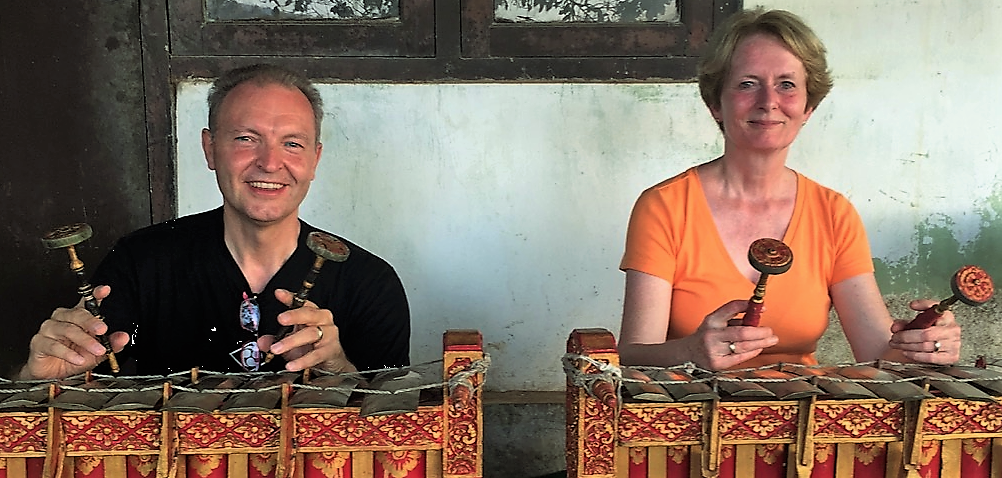
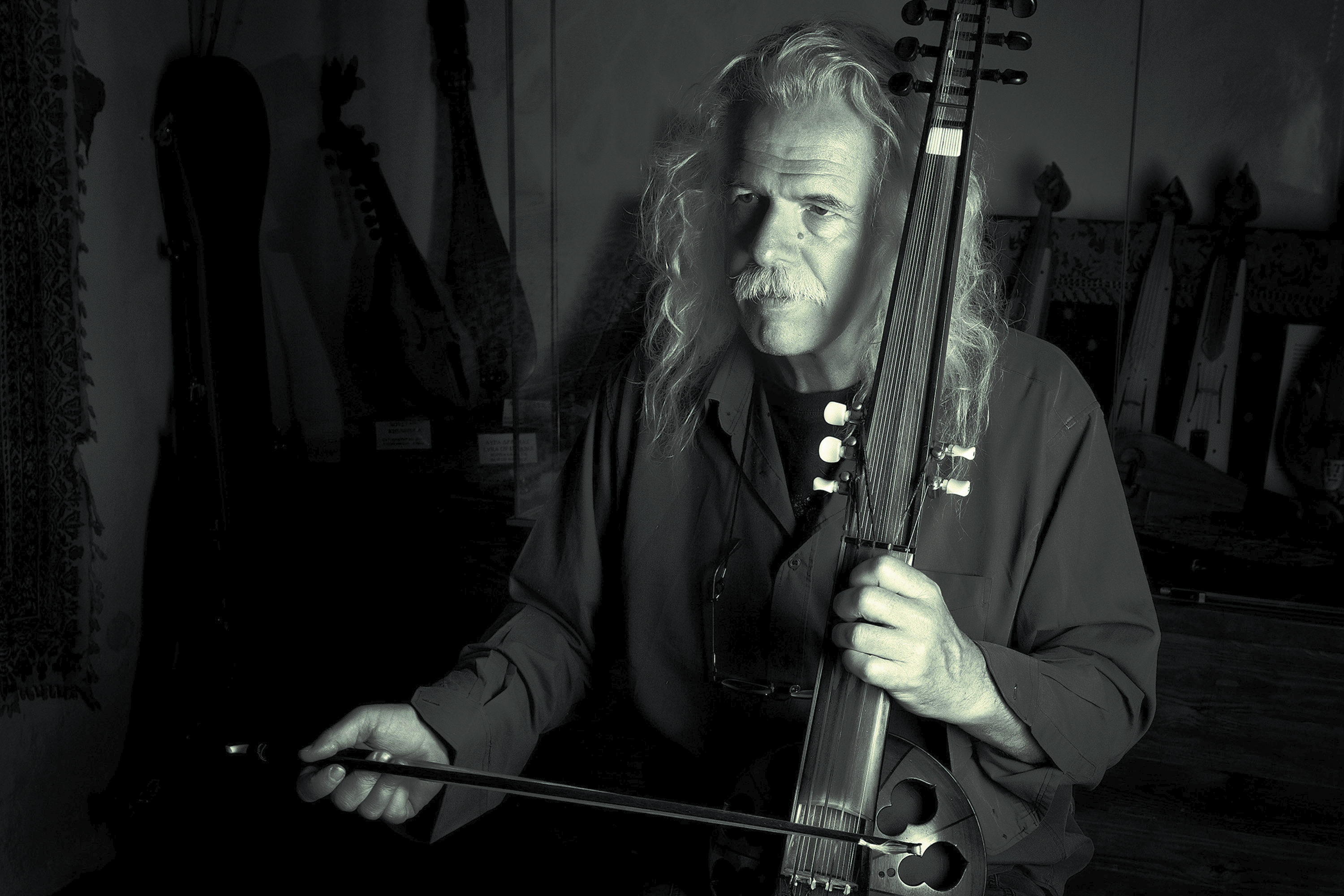
James Kippen and Annette SangerPerforming Scholars: Annette Sanger and James Kippen

We did not hear however from Annette Sanger and James Kippen, veteran University of Toronto ethnomusicologists, musician-educators and partners in life. And that’s because I found out only recently that, by the time this issue is well and truly launched, the university’s Faculty of Music will have honoured them with a rare two-day symposium and concert on March 29 and 30, in celebration of their distinguished university careers.

An expert on tabla performance and the life and music of communities of hereditary drummers in North India, Kippen has authored several books and numerous articles on the subject. He began his career at the Faculty of Music in January 1990 where he has taught and mentored several generations of students. He’s also been active in several musical groups in our town.

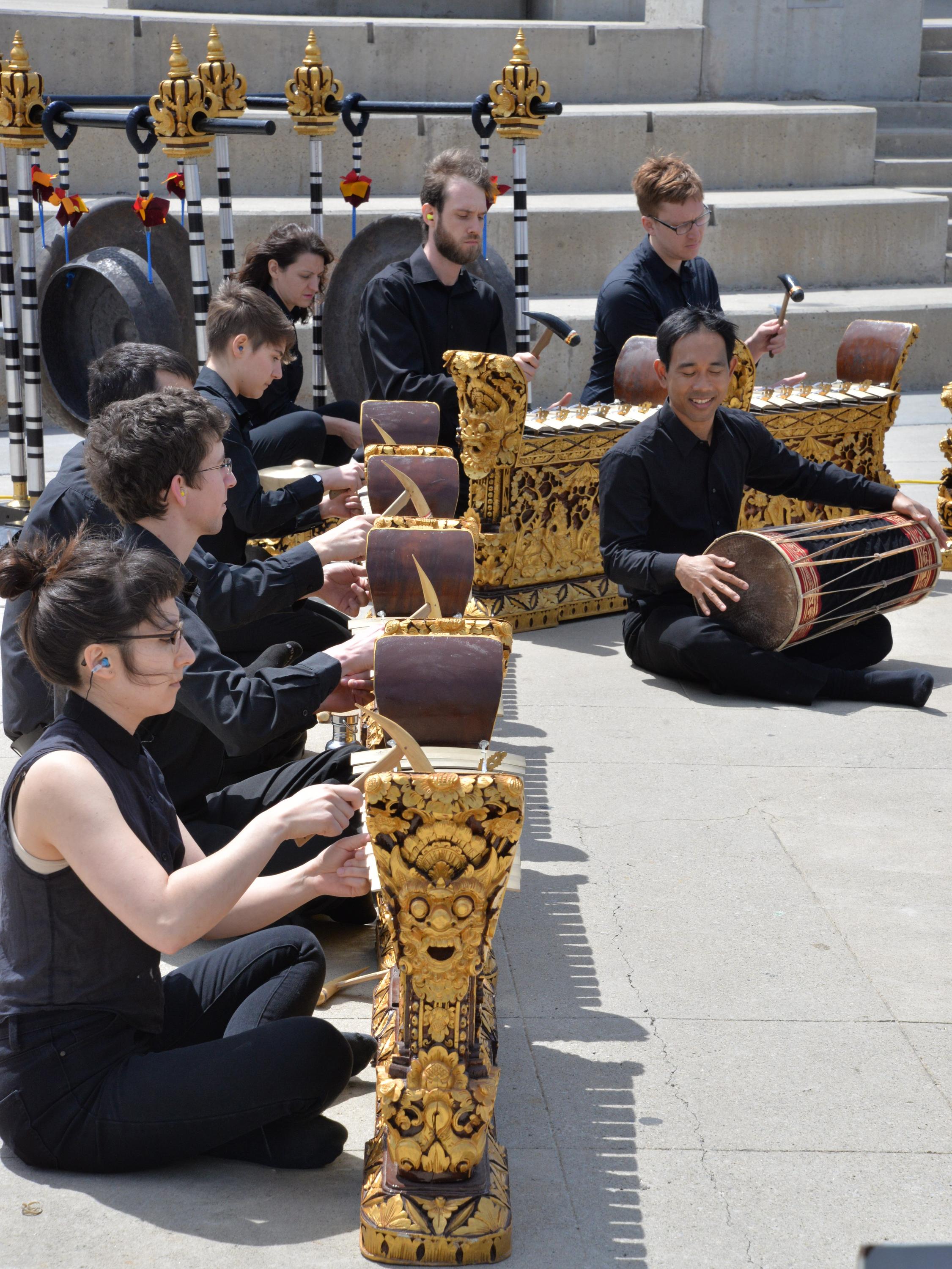
Sanger received her PhD for her research on the music and dance in Balinese society. That background served the GTA well, as she is a pioneer of Balinese music performance here. Commencing teaching in 1990 at the university’s Scarborough Campus, within a few years she arranged to have the university purchase a complete Balinese gamelan, inaugurating the Semar pegulingan gamelan ensemble course in the fall of 1993. That launched the first Balinese ensemble and course in Canada west of Montreal, an ensemble she led for a remarkable 25 years. Later she formed the performing ensemble Seka Rat Nadi – more of which further on.

Outside academia, Sanger served Toronto’s larger music community in many roles. Just two examples: from 1990 to 2000 she was the director of the Music & Arts School at the University Settlement House, the first community-based social service centre in Toronto. For several years she also reviewed CDs for The WholeNote.

Titled “Constant Flame: A concert honoring the retirements of Professors Annette Sanger and James Kippen,” the March 29 event features a performance by Seka Rat Nadi with Sanger, Kippen plus Toronto musicians Albert Wong and John Carnes. Seka Rat Nadi is the name of the group consisting of four Balinese gendèr (metallophone instruments), a quartet traditionally called a gendèr wayang. In addition, several guest musicians will perform Hindustani classical and other musics.

The symposium is called “The Performing Scholar,” reflecting the interlocking twin aspects of Kippen and Sanger’s careers. (It also rather accurately describes the lifelong work of most of the musician-educators I interviewed for my March 2019 column.)

By the time most of you read this, the symposium honouring our two performing scholars will have probably already taken place. But I couldn’t leave you, dear reader, hanging like that. I asked them what they intend to do now that they’ve officially retired.

“We plan to return to Bali to learn more gendèr repertoire including more unusual regional styles that are fast becoming eclipsed by inevitable standardization,” replied Sanger. “As well, we will go to India where Jim will continue to work on his research into the history of the tabla. As always, we are open to doing occasional performances and demonstrations in and around Toronto.”

It’s clear they don’t intend to hang up their performing scholar hats anytime soon.

Small World Music Society’s Asian Music Series

Toronto’s oldest and largest presenter of culturally diverse music, Small World Music Society celebrates springtime with the 17th annual edition of its Asian Music Series. Marking Asian and South Asia Heritage Month, throughout April and May, 11 concerts, a film screening, plus a talk will be held at the intimate Small World Music Centre (SWMC) in downtown Toronto, as well as at grander venues across the GTA.

I asked SWM’s founding director Alan Davis about his longstanding relationships with his programming partners. “We’ve always embraced partnerships as a way to get Small World’s message out to as many people as possible,” he replied. “This is increasingly true in recent years, as more and more larger presenters embrace diversity and cross paths with artists who are part of our musical ecosystem.”

Davis is confident that with SWM’s hard-won reputation for community outreach and deep connections, they can bring value to their partners by connecting them to audiences that they may not otherwise intersect with. “This speaks to both audience taste and geography. [For example]… audiences going to the Markham Theatre will be aware of events at the Rose Theatre in Brampton, Koerner Hall and the Small World Centre downtown, and a wide variety of presentations from traditional to modern. Collectively, the hope is … audience-building and community intersection. ‘Cause that’s how we all succeed!”

Let’s explore a few of the concerts in this year’s Asian Music Series.

Mahmood Schricker – thoughtful sadness of the electric setar: April 4 the Series launches at the SWMC with the music of Mahmood Schricker, the Toronto musician-producer of electronic music for film and commercials. An electric setar (Persian long lute) performer, Schricker’s concert is a release of his new instrumental album El Muerte, inspired by the Persian dastgah (tonal modal system), the delicate strumming of the setar, international dub and techno, all supported by electronics and drum machine sounds. Nima Dehghani’s videos provide a backdrop for Schricker’s live music, reflecting moods of “thoughtful sadness…” onto the screen.

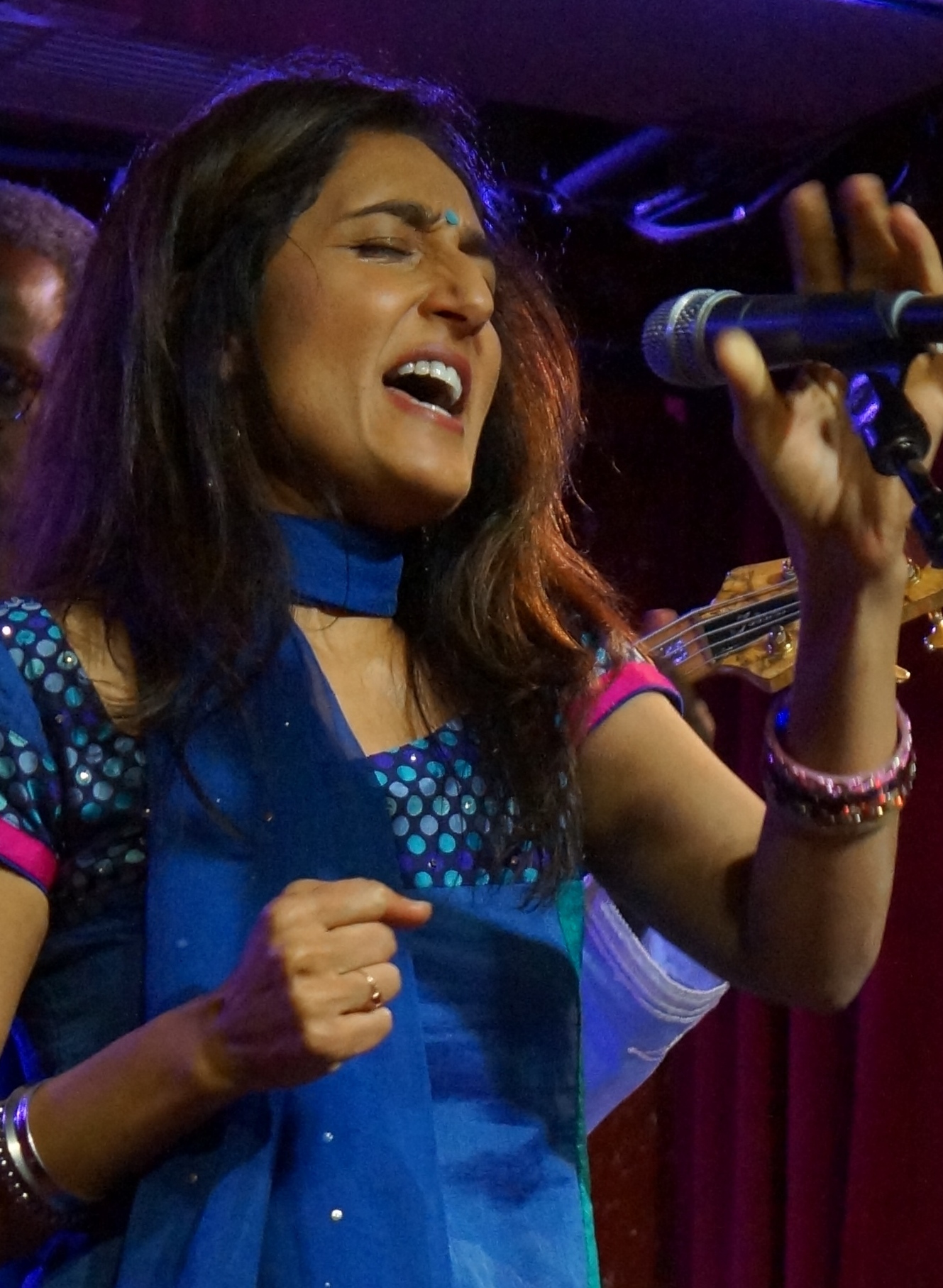
Bageshree Vaze – Global Bollywood: April 5 at 7pm, SWM in association with The Rose presents “Bageshree Vaze: Global Bollywood” at the Rose Theatre, Brampton. The show is a celebration of the widely popular music and dance featured in the globe’s biggest film industry. Starring Indo-Canadian GTA resident vocalist and dancer Bageshree Vaze, the concert is a tribute to the songs, instrumentals and extravagant dance numbers that have propelled Bollywood to international fame. Featuring a cast of Toronto musicians and dancers, Global Bollywood is also choreographed and directed by the multitalented Vaze.
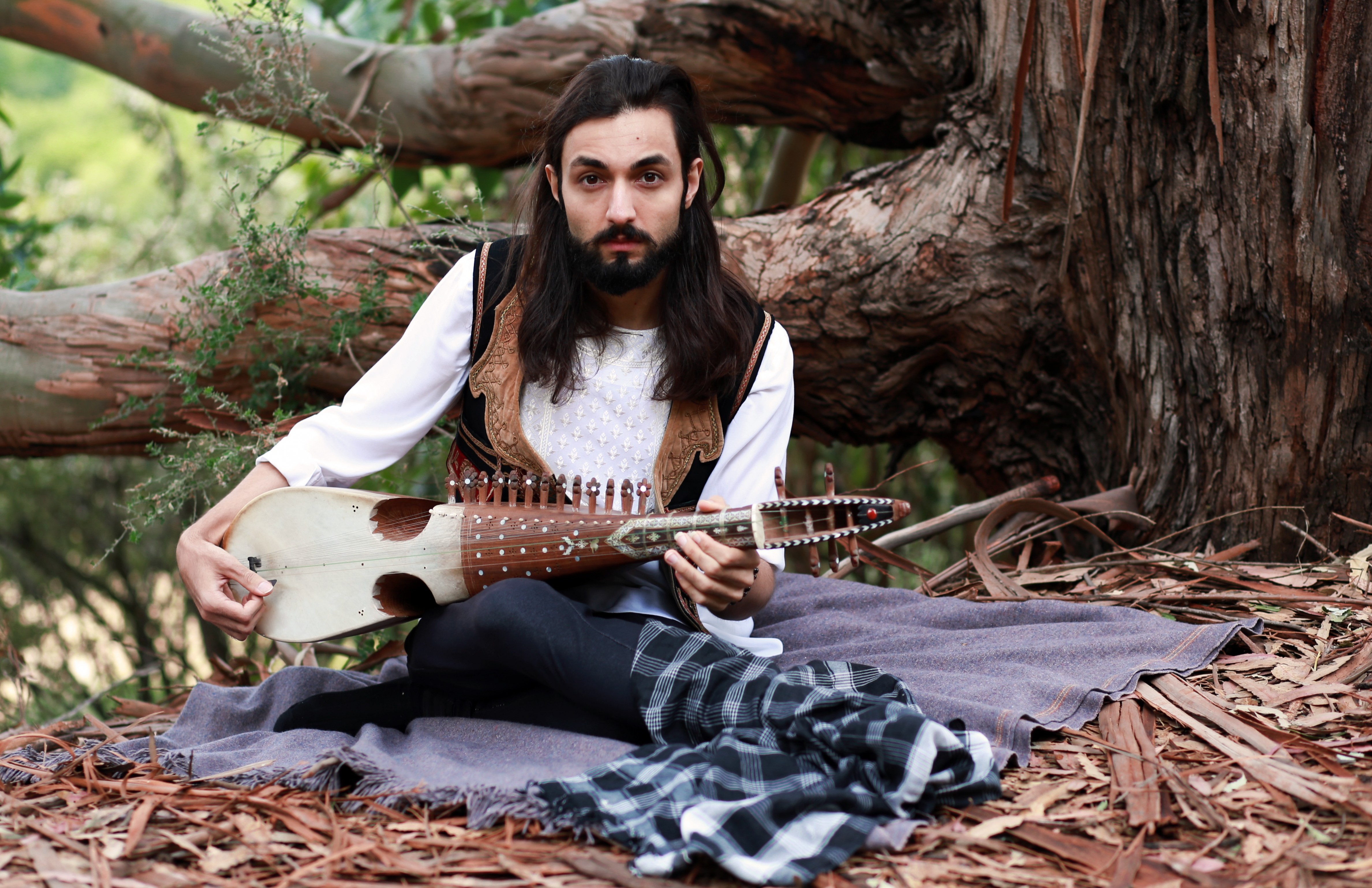
Qais EssarQais Essar and Fazelyar Brothers – Afghani instrumental: April 11 at 8pm, SWM and the Tawoos Initiative co-present Qais Essar x Fazelyar Brothers at SWMC. Qais Essar is a GTA-based Afghan composer, instrumentalist and producer, a specialist on the rubab (a.k.a. rabab), a short-necked Afghani lute. He has toured extensively visiting international stages, releasing two LPs, five EPs plus a live album.

Essar contributed original music to feature films such as the Golden Globe and Oscar-nominated film The Breadwinner (2017) and earned a Canadian Screen Award for Best Original Song for his work The Crown Sleeps. He will be playing selections from his recently released EP I am Afghan, Afghani is a Currency, Vol. III. The concert also features the Afghani-Canadian duo Fazelyar Brothers, consisting of tabla player Haris Fazelyar and Wares Fazelyar a rubab student of Essar.

Dang Show – Iranian musical hybridity: Both April 12 and 13 concerts at the SWMC by the Dang Show sold out well in advance. Dang Show is a popular Iranian four-piece band which regularly sells out Tehran venues. The band has also composed and recorded soundtracks for over ten major Iranian movie releases. Its unusual name in Farsi evokes, in the words of the band, “mountainous vocals as well as velvety textures, jazz saxophone, medieval counterpoints, rock rhythms, [a sound which is] lush, rich and brassy like the best Balkan bands. Dang Show could be defined as a fusion of Persian classical and jazz.”

With an instrumentation of piano, saxophone, Persian vocals and percussion, Dang Show’s ambitious goal is to satisfy traditional Iranian classical music aficionados as well as those primarily interested in pop-flavoured music. In 2018 Dang Show was awarded Best Fusion Album for Mad O Nay in Iran. No wonder both their SWMC shows are sold out.
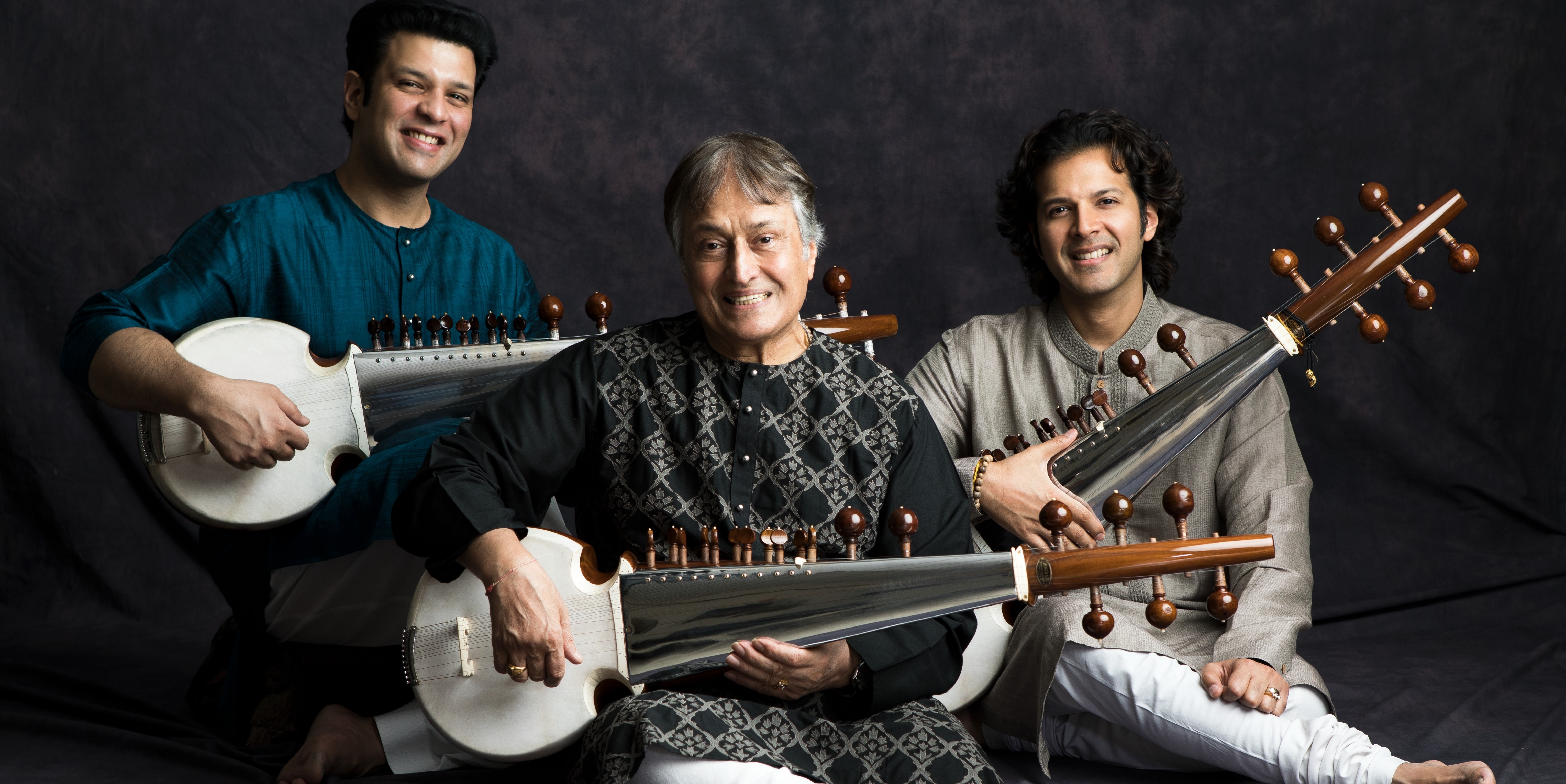
Amjad Ali Khan and sonsAmjad Ali Khan – sarod master: April 13 at 8pm, The Rose in association with SWMS present Amjad Ali Khan, with his sons Amaan Ali Bangash and Ayaan Ali Bangash at the Rose Theatre, Brampton. The multiple award-winning veteran sarod (a.k.a. sarode) master and composer, Amjad Ali Khan, was born into a renowned Indian classical musical family and has toured internationally since the 1960s. Over the course of his distinguished career he has garnered numerous international accolades.

The sixth generation exponent of the Senia-Barash gharana (a North Indian music lineage), Khan is at heart a classicist with a populist’s need to “communicate with the listener who finds Indian classical music remote,” as he once put it. You can expect khayal (the Hindustani classical music genre) musicianship at its finest in his recital.
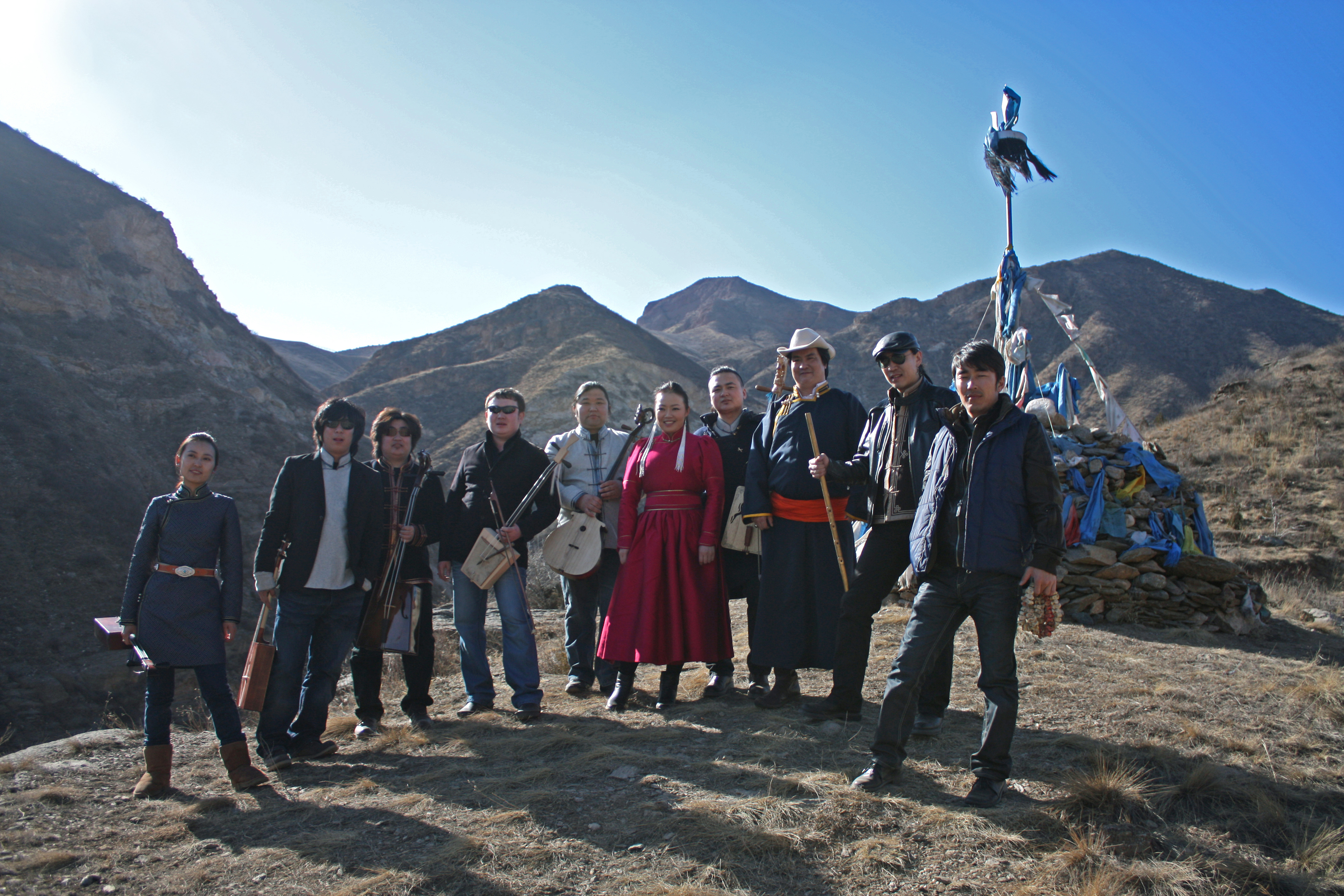
Anda UnionAnda Union – Mongolian fusion revival: April 17 at 8pm, SWM and Flato Markham Theatre explore Northern Asian culture in their presentation of the Mongolian fusion group Anda Union at the Flato Markham Theatre in Markham. Hailing from Hohhot, the capital of the Inner Mongolia in northern China, the versatile nine-piece band has deep cultural roots in the vast grasslands where many of their families still live. Its mission: to rework the region’s music, filled with ancestral stories of nomadic customs and beliefs.

The band brings together tribal and musical traditions from all over Inner Mongolia playing a wide variety of Indigenous instruments and vocal throat singing styles. Its 2018 set at the London UK Songlines Encounters Festival was dubbed “a rousing masterclass in folk revivalism,” by The Guardian.

Qawwali – demystified and performed: April 18 at 8pm, SWM’s executive director Umair Jaffar gives a free talk titled “Demystifying Qawwali” at the SWMC. He notes that “Qawwali is the most popular Sufi devotional music from South Asia and, in recent years, has gained increased attention from worldwide audiences. Despite its popularity, upbeat rhythm and emotional appeal, qawwali’s origins and lyrics are shrouded in mystery.” Jaffar explains the genre, exploring its history, and demystifies the hidden messages in its poetry.

April 19, the series moves to the Aga Khan Museum with “Hamza Akram Qawwal and Brothers.” The 26-year-old singer Hamza Akram’s music is deeply rooted in the Pakistani Sufi devotional tradition. The group is becoming known in the subcontinent, across Europe, Middle East and North America. Akram and his brothers are the 26th generation of their musical lineage, the Qawwal Bachon ka Delhi Gharana, and are dedicated to sharing qawwali with the world. Their performance is part of the Aga Khan Museum’s 2018/19 Performing Arts season titled “The Other Side of Fear,” featuring artists who seek to transcend fear through music, dance and spoken word.

Anoushka Shankar – continuing a legacy of transcultural collaborations: The Asian Music Series continues well into May, but the last concert we will look at in this column takes place early that month. May 2, the Royal Conservatory of Music and SWM co-host sitar virtuosa and composer Anoushka Shankar and party on the Koerner Hall stage. Being groomed by her illustrious father from an early age, she has developed into one of South Asia’s most celebrated instrumentalists. In March 2019, Shankar released her latest Deutsche Grammophone album, Reflections, a retrospective of her career so far, focusing on musical collabs.

I last saw her live at Koerner Hall almost ten years ago with her father Ravi, who was a still musically vibrant 89 at the time. She has, since his death in 2012, taken his musical legacy into several new territories, crossing classical and vernacular, South Asian and Euro-American. Audiences at her concert can expect more transcultural musical dialogues while she demonstrates the versatility of her sitar across musical genres. 

Andrew Timar is a Toronto musician and music writer. He can be contacted at worldmusic@thewholenote.com.

World music: a sometimes contentious term that entered the lexicon twice, 25 years and two continents apart.

Too few sources reflect that the term “world music” was first used around 1962 in US academia as an inclusive catchall for performance and lecture courses; they focus, rather, on its re-application as a new marketing tag by UK record producers, label owners and retailers in 1987.

The 1962 US world music ensemble course bug took a few years to infect schools north of the border. But after a rocky initial startup period, it slowly spread across Canada, mostly in the decades bracketing the new millennium. Although it should be said that York University was probably the site where world music ensemble credit courses were first launched in this country by its Music Department founding chair, R. Sterling Beckwith, as early as the 1969/1970 academic year.

Fifty years later, world music courses are no longer the exotic music school outliers they were initially seen to be by many. They have become mainstays at some of the largest Ontario universities and colleges, offering practising professional musicians teaching opportunities, while introducing thousands of students to a wide diversity of approaches to making music – far beyond what classical and jazz programs can offer. I would argue that they prepare students to open their minds via practical experience, potentially allowing them to meet the challenges of cultural diversity in our increasingly multicultural urban and internet spaces.

York U’s Department of Music’s pioneering commitment to global music doesn’t show signs of slowing down, with nine concerts alone in its March World Music Festival and an advertised “20-plus international cultures represented.” It’s followed closely by early April concerts by the University of Waterloo Balinese Gamelan and University of Toronto’s World Music Ensembles.

UW Balinese Gamelan directed by I Dewa Made Suparta (November 2018)So, What’s In a Name?

Judging from the liberal use of the term “world music” at these three universities, all appears to be well with this 20th-century term and learning approach. Looking deeper however the tag is facing increasingly frequent challenges from voices on all sides: academics, presenters, labels and performers.

So let’s take the pulse of three Ontario university world music ensembles today, and the direction they may be headed, by looking at what they are up to, and talking with some of the instructors.

York University’s World Music Festival, March 14 and 15: report from the front lines

Produced by Prof. Sherry Johnson, York U’s mid-March World Music Festival, according to the Music Department website “…[is a] global sonic tour … of York’s world music program.”

All the concerts are at the Tribute Communities Recital Hall, Accolade East Building, York U.

March 14 at 11am the festival launches with the Cuban Ensemble directed by Rick Lazar and Anthony Michelli. Lazar also directs the Escola de Samba later the same day. West African Drumming: Ghana directed by respected master drummer Kwasi Dunyo, West African Drumming: Mande directed by Anna Melnikoff, and Caribbean Music Ensemble directed by Lindy Burgess, all on March 14. Then on March 15, Charles Hong directs the Korean Drum Ensemble, Sherry Johnson the Celtic Ensemble, and Kim Chow-Morris conducts the Chinese Classical Orchestra. It then wraps, March 15, with an evening concert by the Balkan Music Ensemble directed by Irene Markoff. (Please refer to our listings for exact times for all concerts.)

Rick Lazar: Escola de Samba and Cuban Ensemble director

I contacted Lazar about his world music teaching practice. He emailed a very detailed report on his teaching approach and on the music his students are presenting.

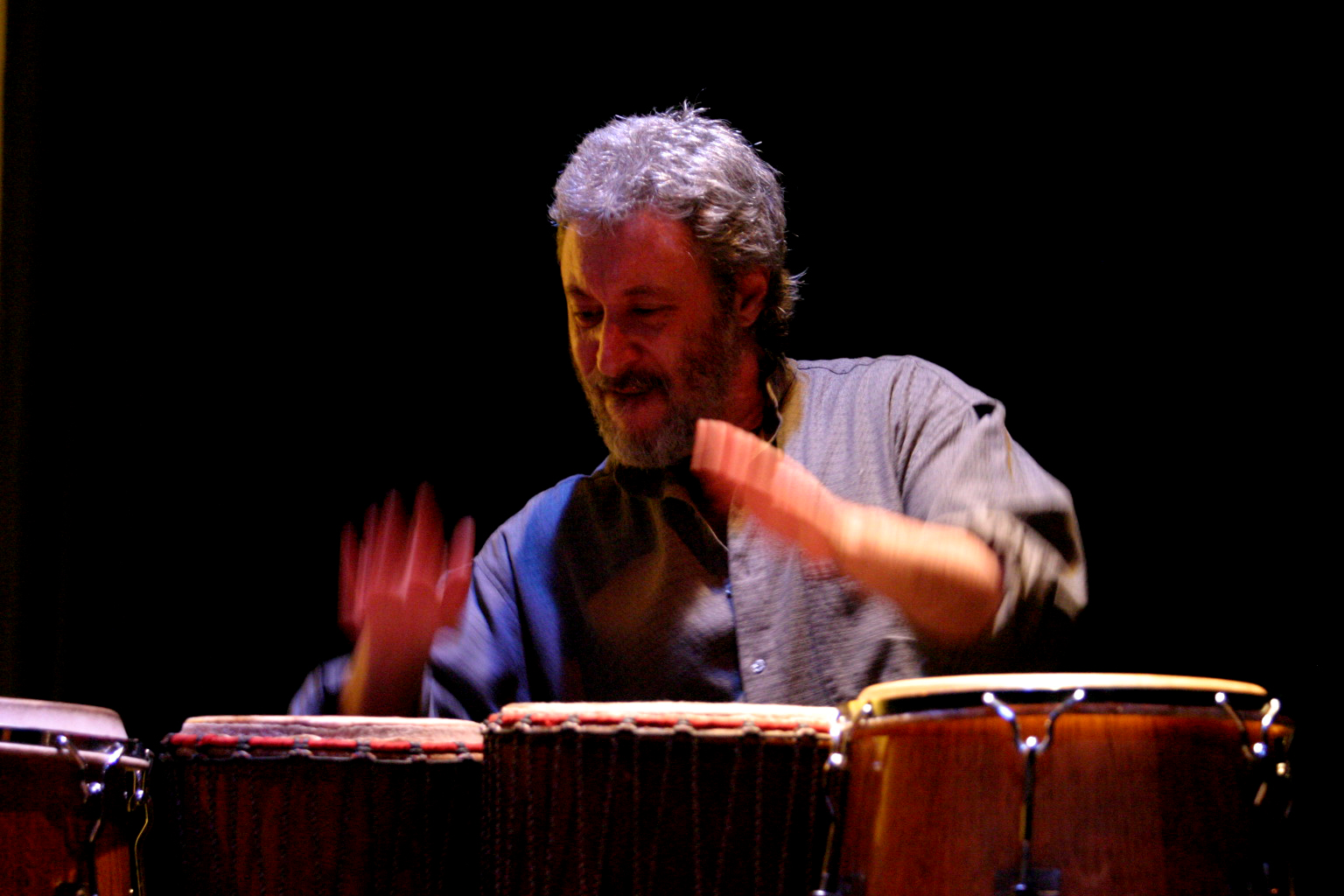
Lazar has had extensive experience teaching various ensembles at Humber College (1995 to 2005) and since 2003 at York University. Make no mistake; he’s no ordinary sessional instructor. His knowledge of and passion for world drums makes him a first-call drummer for a diverse array of artists. Voted Percussionist of the Year five times by Jazz Report magazine for his work with many bands and headline singers, his popular Toronto groups Montuno Police and Samba Squad (celebrating its 20th anniversary this year) have both released multiple albums.

At York, “I teach two ensembles: Escola de Samba and Cuban Music, each divided into two classes,” he began. “My classes are mostly made of non-music majors. While most of the class time is devoted to getting these often untrained students to gel into a group, I also provide notes on the history of the music [giving students essential cultural context] – and test them on it too!“The Escola de Samba classes feature hands-on percussion: all the students have to play a standard samba instrument including the surdo (bass drum), caixa (snare drums), agogo (bells), tamborim and ganzas (metal shakers). These classes may have up to 30 participants. [As for genres in our repertoire] this year we’re covering samba, samba reggae, and axé another popular music genre from Bahia, Northeast Brazil.

“[My teaching strategy] is to simplify rhythmic patterns for the lead instruments as none of the students are drummers and can’t play the typical patterns up to speed. For example, while the students won’t be able to master the tamborim carreteiro (“ride” technique) in a single term they can learn idiomatic fanfares and rhythmic patterns.

“For the March 14 concert, one class is doing a samba reggae dance feature [since dance is integral to the genre]. Songs we’ll be doing this year are  (samba), Enquanto Gente Batuka in the pagoda genre, , and Embala Eu in samba de roda, an older Afro-Brazilian dance type.”

“In the Cuban Music ensembles I teach a section of first and second year undergrads plus a section of senior-level students. Both perform Cuban folkloric music with drums, dance and songs. Most of the rhythms only have six to eight drum parts, so the class must also learn the dances and the songs which go with them. The Cuban class is a little harder than the Escola de Samba as it takes time to get a decent sound out of the hand drums, while in the Samba class all the instruments are played with a stick or mallet so you can have many players on each part.

“I teach bell, kata (woodblock),  (gourd shaker) and tumbadora (conga drum) parts, one learner on a part. Class A is doing Palo, Guanguanco, and Bata Toque Yesa, all with songs and dance. They are also performing Comparsa, the Cuban carnival rhythm, with songs and dance.”

Lazar concludes: “In Class B we learn the makuta  along with dances and five different songs, including  and. We’re also performing [originally ceremonial music] from the santeria tradition along with several songs. Most of these songs are in the Yoruba language and students learn the lyrics phonetically.”

Irene Markoff, Balkan Music Ensemble director

I asked the ethnomusicologist, musician, conductor and veteran York U. lecturer and ensemble instructor about her geographically inclusive course:

“We cover music from the Balkans (Croatia, Serbia, Bosnia, Macedonia, Bulgaria, Greece, Albania),” Markoff wrote, “as well as Azerbaijan and Turkey (a better part of the Balkans were a part of the Ottoman Empire for almost 500 years). We also perform Kurdish music from Iran, music of the Roma, and a little repertoire from Iran, as I often have Iranian students in my ensemble.

“This year there’s a Greek student in the class who helps with Greek pronunciation and also two Iranian students who help with Farsi pronunciation. I transcribe and arrange music for the ensemble according to the instruments the students play and sometimes teach vocal music by rote as that is the way the repertoire would be taught in the village context.

we will perform repertoire from all the countries I mentioned including Ederlezi by Goran Bregovic, based on a .”

Markoff sees the debate about terminology this way: “I don’t have a problem with the term as it has been used and accepted by ethnomusicologists and universities for many years now. In a general sense world music means music of the world’s cultures.

“Also, there is a lot of hybridity happening in countries such as Turkey these days. Folk music ensembles seen on national TV and elsewhere include Western instruments such as acoustic/electric guitars and electric bass guitars, adding harmony to a music that was essentially monophonic [and modal]. … What do we call that music then?

As for other candidates for an accepted term, Markoff notes: “Finding a general cover term is problematic … You may be aware that in the past other terms used were ‘primitive,’ ‘non-Western,’ ‘ethnic’ and ‘folk.’ Some have suggested ‘roots’ and ‘local.’ I don’t believe that any of those are appropriate overall terms.”

University Of Waterloo Balinese Gamelan Ensemble

April 3, the UW Balinese Gamelan and the Grebel Community Gamelan perform at the Humanities Theatre, University of Waterloo. Ethnomusicologist Maisie Sum introduced world music ensembles at UW in Waterloo ON in 2013 with a Balinese gamelan semaradana course.

Directed by Sum and featuring Grebel artist-in-residence I Dewa Made Suparta, the Balinese gamelan will perform a mix of contemporary and traditional Balinese repertoire. As they did last year, they may include Balinese dance in the concert, a near-essential performative ingredient in Bali. After the free concert the audience is invited to try their hand playing the instruments.

University of Toronto’s World Music Ensembles Concert

April 6 at 2:30pm, University of Toronto Faculty of Music presents its World Music Ensembles at Walter Hall, Edward Johnson Building, University of Toronto. Directing their groups are Ghanaian master drummer Kwasi Dunyo, Steel Pan Ensemble director Joe Cullen, and Alan Hetherington directing the Latin American Ensemble.

While I was unable to reach these instructors before press time, this time round, I was able to connect with percussionist and composer Mark Duggan. Active on Toronto’s world music, jazz and classical concert music scenes for decades, he’s taught ensembles at Humber College as well as at U of T, with a specialty in Brazilian musics. He’s taking a sabbatical from U of T this year, but generously weighed in on the topic.

“Unfortunately, the term ‘world music’ does serve to hegemonize all music traditions outside the Western mainstream,” he said, “so these days I choose to not use it. My students do use world music freely to refer to a plethora of different styles of traditional and/or hybrid musics, including pop and jazz. [But I believe] the term has outlived its usefulness.”

 Judith R. CohenJudith Cohen, World Music Performer

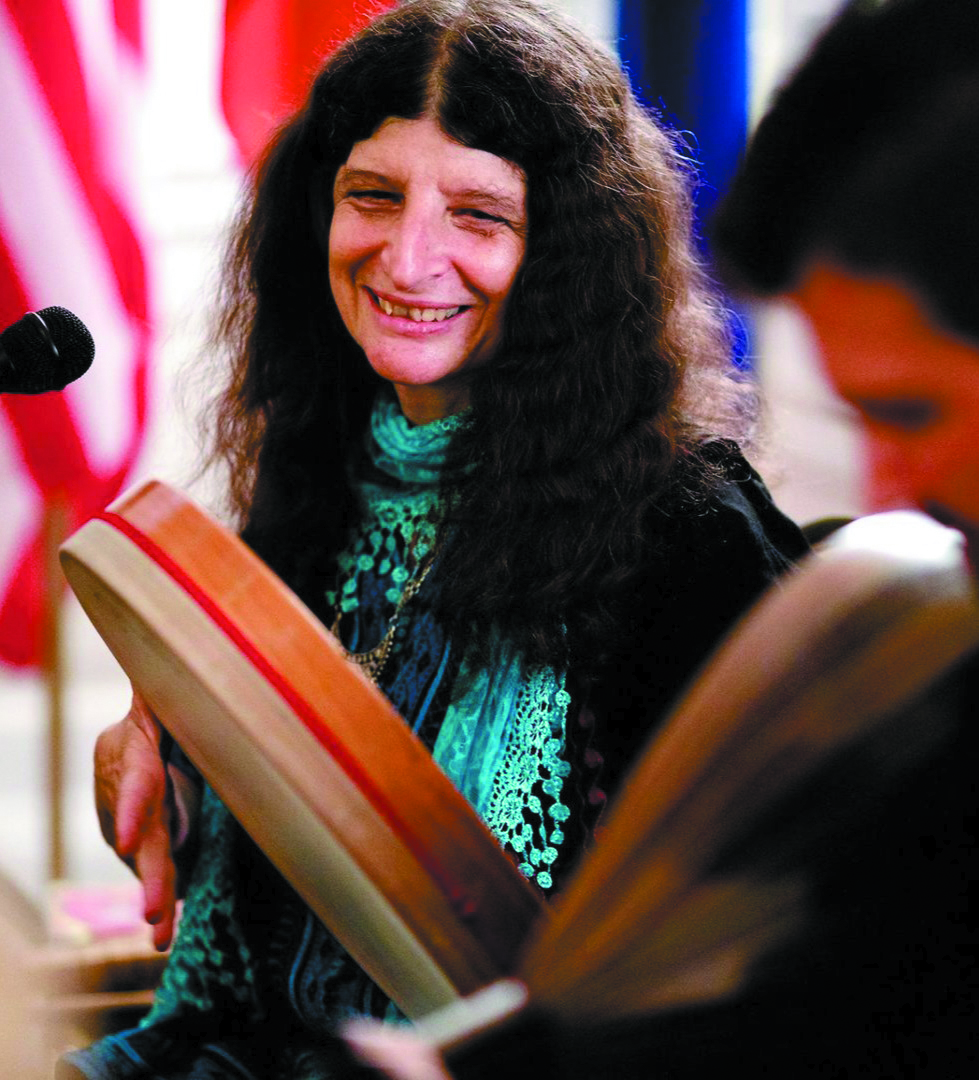
Ethnomusicologist, musician and long-time York University faculty Judith R. Cohen is also very active as a world music performer. March 16, Alliance Française Toronto presents “Judith Cohen & her guests: Women of the World” at the AFT’s Spadina Theatre with Kelly Lefaive (vocals, violin, mandolin, guitar), Naghmeh Farahmand (Persian percussion), Veronica Johnny (Indigenous hand drummer, vocals) and other surprise guests.

I emailed Cohen about my topic of the month, and she wryly replied, “Haven’t noticed anyone making music who is not part of the world. And what are the alternatives? ‘Global’? And the difference between the world and the globe is…?”

She was just returning from the February ethnomusicology summit at the Folk Alliance International Conference (FAI) in Montreal. The FAI held a panel critiquing “world music.” However, “We did not end up condemning the term, even though FAI dropped it some years ago,” Cohen noted.

Moreover, she doesn’t see the benefit of yet another moniker. “Commercial showcases such as FAI and WOMEX are going to market, brand and sell no matter what term people come up with. Is ‘culturally diverse’ a candidate for replacing that increasingly (and needlessly, I think) shamed term ‘world music’? It sure doesn’t have the marketing zip of ‘world,”’ Cohen concludes.

So what’s the future of culturally diverse music teaching and performance in Ontario music education? 

Irene Markoff is encouraged: “York U [Department of Music] is now trying to find ways to draw more music majors to the world music ensembles, which is a good sign. … I believe that any Ontario music university student who has a desire to teach at the public or high school level should be required to take a few world music ensemble classes when offered. That would prepare them to meet the challenges of cultural diversity in the classroom.”

Rick Lazar adds: Mark Duggan gets the last word among these contributors in our discussion: “The reality is that we have to start referring to specific styles of music or specific regions with their proper names, the names that the creators and purveyors of those traditions use. I think the next step is to stop exoticizing non-Western musics and put them on equal footing with privileged traditions. Like integration in a multicultural society, that means giving them equal space in music schools, or perhaps creating schools that specialize in one or more non-Western traditions without including any European classical perspectives.”

At the same time as we reach toward increasing diversity, entrenched attitudes remain in music education – as in other reaches of our society – which marginalize certain musics, particularly non-Eurocentric ones, such as Indigenous voices. What music is “ours”? And what place should so-called “other” musics have in our music education today?

These are bracing, far-reaching questions.

Footnote:

Regular readers of this column over the years will know that this is not the first time I have delved into aspects of these topics. My September 2018 column Rebooting the Beat: Thoughts on the “World Music” Tag explored the implications of the 1962 and 1987 disparate points of entry for the “world music” tag. For more on the spread of world music as a discipline in Canada, see my March 2016 column, York Music’s World Class Role. And for more insights into the Waterloo Balinese Gamelan Ensemble, see my April 2014 conversation with ethnomusicologist Maisie Sum in Smartphone Serendipity Not The Only Way.

This column has been revised (March 12) to accurately reflect Judith R. Cohen's current teaching status at York University.

Andrew Timar is a Toronto musician and music writer. He can be contacted at worldmusic@thewholenote.com.
Welcome to the first WholeNote World View column of 2019.

Calendar years are human constructs, as is time itself. Yet as we all learned in Music 101, and as Leonard Bernstein repeated in his 1955 Art of Conducting TV lecture, “music exists in the medium of time.”

As we all know, the familiar Gregorian calendar, in use since 1582, and itself a correction of the earlier Julian calendar – both based on the Earth’s revolution around the Sun – pins January 1 as the very beginning of the year. The more ancient lunar calendar on the other hand is built on the monthly cycles of lunar phases.

Chinese culture has observed both a lunar and a solar calendar for millennia, complex computations resulting in a blended lunisolar calendar which reckons years, months and days according to astronomical phenomena, in 12-yearly cycles. The Chinese lunisolar New Year falls this year on February 5, initiating the Year of the Pig, which in some related Asian zodiacs is represented by its wild cousin the boar. Widely called chunjie (Spring Festival), it technically lasts 15 days in mainland China.

Participants mark the ritual start of a new year by planting crops, feasting, gifting, praying to the gods and the ancestors, and seeking to attract good fortune. Bright red auspicious decorations and lanterns are hung, negative forces are purged, fireworks fill the sky, and much more.

Lunisolar New Years are celebrated not only in mainland China and Taiwan but also widely in East and Southeast Asia and by Chinese and other communities around the world. One estimate pegs the number of participants at a quarter of the world’s population.

In modern China, workers travel home to enjoy reunion dinners and family visits at this time of year. Called chunyun, this roughly 40-day period has been tagged as the world’s largest annual migration. The numbers are truly mindboggling, like many things in China. Over 2.9 billion individual passenger journeys are projected during chunyun this year, well over twice the actual population of the country.

Chinese New Year in the Greater Toronto Area

The Chinese Spring Festival is undoubtedly the most significant community-wide celebration in China and the diaspora. In the GTA it already began in January.

I discussed how the Spring Festival season impacts GTA Chinese musicians, their repertoire and community patronage, in a series of late January messages with Canadian Chinese Orchestra artistic director and conductor Amely Zhou. (She was too busy for a sit-down due to her intensive rehearsal schedule.)

What is the New Year season like for Chinese musicians? Does it result in performing opportunities? “Very much yes… it’s a busy time for all Chinese musicians,” replied Zhou. “Private individuals, businesses and mass entertainment providers like TV stations want live Chinese music to demonstrate their allegiance to their culture of origin at this auspicious time of year.” It’s a significant form of community support for Chinese musicians in the diaspora, as well as for their Chinese instruments and repertoire.

The patronage of Chinese music and affiliated performing arts such as dance and opera are closely tied to GTA and international commercial interests. “These are ultimately linked to the economic strength of today’s China,” added Zhou. It reflects a complex and ever-evolving economic, cultural – and even at times political – dynamic between Canada and China, one which has very recently become significantly more tense.

Canadian Chinese Orchestra

Fête Chinoise at the AGO

A good example of this patronage at work was the Canadian Chinese Orchestra’s first Chinese New Year gig at an event organized by Fête Chinoise, the Markham, Ontario magazine and lifestyle event programming company. Held at the Art Gallery of Ontario on January 26, the event, also called Fête Chinoise, seeks to “empower individuals to deepen the connection between their [Chinese] identity and culture,” through a “curated lens and critical thinking.”

CCO’s repertoire for this event included Festive Overture for Chinese orchestra by veteran Chinese composer Jiping Zhao and the pop instrumental Summer by Japanese film ccomposer Joe Hisaishi, arranged by Malaysian composer Junyi Chow. CCO’s set was, however, only one among many experiences that night. They included fashion, art and design as well as food, drink and stationery that reflected motifs of abundance, opulence, wealth and philanthropy, all significant themes in Chinese New Year celebrations. The sold-out event presented aspirational products and experiences which put a curated, contemporary and urbane spin on ancient Chinese cultural customs.

Chinese New Year Gala 2019 at the Sony Centre

February 4, on the eve of the Year of the Pig, The 6th Chinese New Year Gala 2019 takes over the substantial stage of the Sony Centre, Toronto, produced by Canada National TV, a Chinese-Canadian television station.

The Sony Centre event page describes the event as follows: “Chinese and Western artists will sing and dance, and we will drum the bell to welcome the arrival of 2019. It will be Canada’s largest Chinese Spring Festival Evening by far! … The largest overseas Chinese New Year celebration, [the show] connects millions of viewers at home and abroad… through live television.”

A portion of the ticket sales will benefit a local hospital and the Yee Hong Centre for Geriatric Care. It’s part of a long Chinese tradition of giving back to the community and taking careful care of elders.

The CCO performs a set at the New Year Gala 2019 including Dance of the Golden Snake (1934), a fast-paced orchestral composition by Nie Er, popular during New Year celebrations, drawing on Shanghai region folk melodies and featuring lively percussion. the CCO plays an arrangement of this work by Hong Kong composer and conductor Ng Chiu Shing.

“We’ll also be playing my Chinese orchestra arrangement of Billie Jean, Michael Jackson’s hit 1982 song…just for fun,” added Zhou (with smile emoticon attached).

Why choose to cover a 1982 American pop song on Chinese instruments?

“I wanted to challenge old misconceptions of traditional Chinese music being sad and quiet.” And also, “because everyone [in China] knows Billie Jean … I made the arrangement for the CCO Youth Orchestra tour to China last summer and it was very well received, with audiences clapping and dancing. My drummer was particularly popular with the girls!”

Toronto Chinese Orchestra director Patty Chan.Toronto Chinese Orchestra

City Hall, Pacific Mall

The Toronto Chinese Orchestra (TCO) is the region’s oldest such orchestra. Under music director Patty Chan on the morning of February 4 – the eve of the Year of the Pig – it plays festive music at Toronto City Hall, our region’s civic hub and usually its political epicentre. Then at 10pm the same day the TCO reconvenes at the Pacific Mall playing a late-night set just before New Year. Located on the City of Markham side of Steeles Ave., the three-level Pacific Mall has reigned as the largest Chinese shopping mall in North America since opening its doors in 1997, a popular hub of an explicitly commercial kind. Both free concerts are open to the public.

COC’s World Music Free Noon-Hour Series

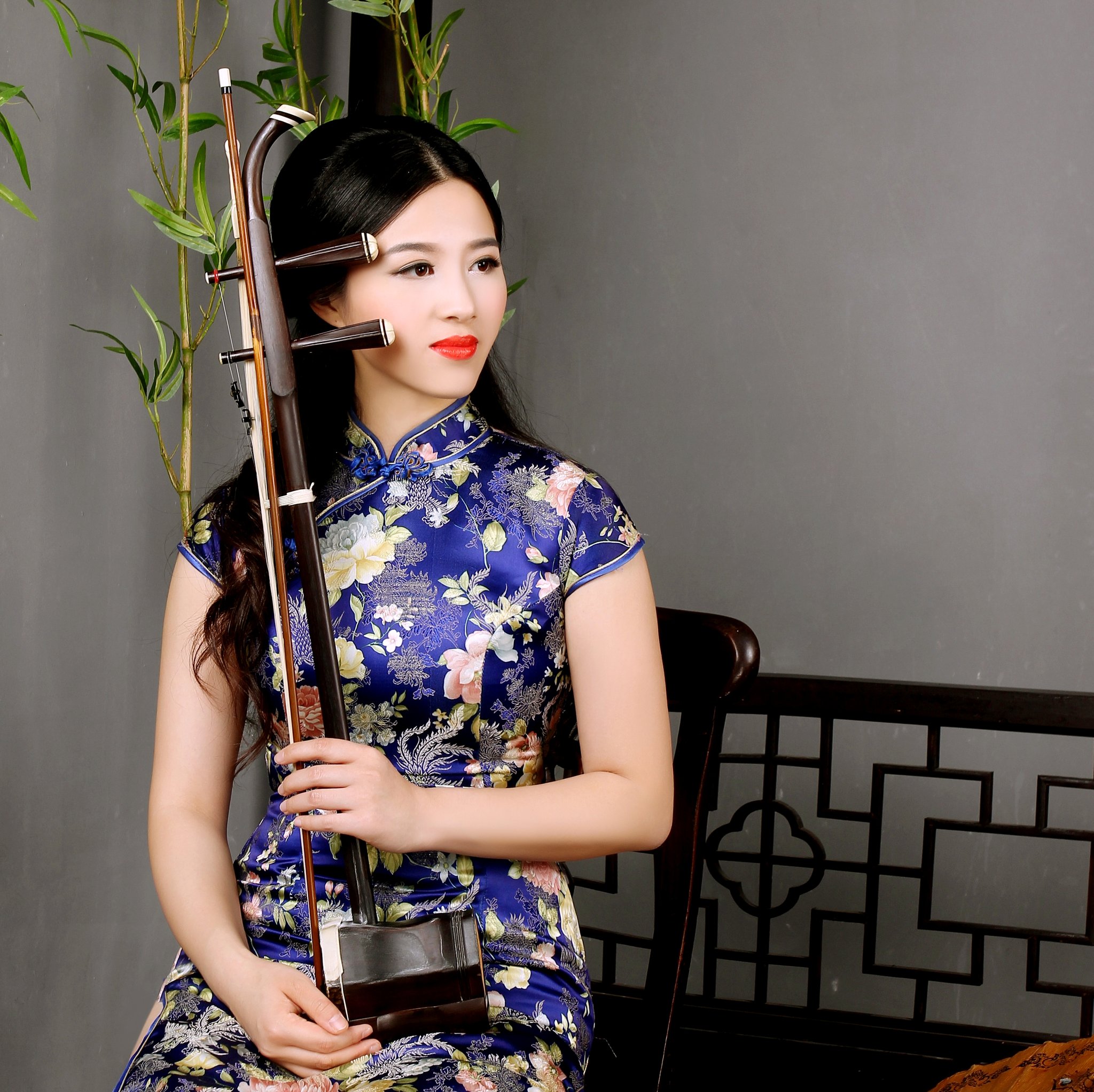
February 5 at 12 noon the TCO’s Chamber Players celebrate Chinese New Year in the Canadian Opera Company’s free World Music Series at the Richard Bradshaw Amphitheatre, Four Seasons Centre for the Performing Arts. Led by its erhu player Patty Chan, the Chamber Players form the professional core of the TCO, including Kenny Kwan, percussion; Dora Wang, dizi and Wendy Zhou, pipa. Boosting the lower end of the sound spectrum is cellist Jaimie Chan who was recently added to the TCOCP roster.

Their varied program celebrates the Year of the Pig with a mix of traditional and contemporary Chinese music. It continues with Colourful Clouds Chasing the Moon composed by Ren Guang, the traditional Purple Bamboo Tune, Jiang Xianwei’s Journey to Gusu, Lu Wencheng’s Rising Higher Step by Step, and Romance on the Grasslands by Wang Luobin/Patty Chan. The program then concludes with Dance of Yi Tribe by Wang Huiren, Hand in Hand by Su Shi/Patty Chan, and the popular Racing Horses composed by Huang Haihuai.

ROM Gods in My Home: Chinese New Year

The TCO remains active during the New Year season playing public and private events. For example on February 16, 17 and 18, mornings and afternoons at the Royal Ontario Museum, its youth and small ensembles perform ensemble pieces and instrumental solos. They will also offer demonstrations and opportunities for the audiences to try playing selected instruments.

These interactive performances are part of the ROM’s current exhibition Gods in My Home: Chinese New Year. Drawn from the Museum’s permanent collection, the exhibition features a selection of ancestral portrait paintings and deity prints that were an integral part of Lunar New Year observances in Chinese households. Gods in My Home “explores the connections between the domestic, material and spiritual life of Chinese society…during the late Imperial period to the early 20th-century Republic era.”

Fo Guang Temple of TorontoPlenty of other events

I’ve focused attention on just two Chinese Orchestras in this account of Chinese New Year music in the GTA. Of course there are plenty of other events taking place in Chinese communities throughout the GTA. For example the Chinese Cultural Centre of Greater Toronto holds its signature Year of the Pig Banquet on February 8 at its sprawling Scarborough facility, featuring an evening of community entertainment, many including Chinese music.

Finally, for those seeking musical experiences with a spiritual aim, the Fo Guang Shan Temple of Toronto marks the Chinese New Year with several activities in its Mississauga Mahayana Buddhist temple. In a message from the Venerable Master Hsing Yun, the founder of Fo Guang Shan, the Year of the Pig both symbolizes endings and brand new beginnings. “One homophone for pig is ‘all’ or ‘everything,’ which also represents a good wish for everyone to have a well-rounded and auspicious year.”

From January 26 to February 10, the Temple hosts Chinese New Year Festival activities such as lighting lamps to the Buddhas, sounding the bell of peace, and participating in Dharma services to welcome the New Year.

The Chinese New Year’s Eve Chanting Service is on February 4 starting at 8pm, while the New Year Chanting Service is on February 5 and 10 at 10am. The Temple invites everyone to visit during Chinese New Year. Please see their website for more details.

Perhaps, as the temple suggests, you will be among those fortunate enough to “bring home auspicious blessings and wisdom.”

In this KonMari-fuelled “tidying and purging” era, those are two possessions I wouldn’t mind more of. 

WORLD VIEW QUICK PICKS

FEB 2, 8PM: Lemon Bucket Orkestra and Aline Morales at Koerner Hall, Royal Conservatory of Music. Toronto’s guerilla-punk-Balkan-folk-brass band shares the stage with Aline Morales, the Brazilian-Toronto singer, percussionist and member of KUNÉ – Canada’s Global Orchestra.

FEB 7, 12:30pm: York University Department of Music presents music professor Rob Simms playing a rare concert of tanbur and setar solos in its Faculty Spotlight Series in Room 235, Accolade East Building, York University.

FEB 9, 7:30PM: The “Queen of Klezmer” Alicia Svigals, a founder of the Grammy Award-winning Klezmatics and “the world’s foremost klezmer violinist” takes the stage of the Isabel Bader Centre for the Performing Arts in Kingston, with her band.

FEB 9, 8PM: The Royal Conservatory of Music presents Cuban-Canadian piano giant Hilario Durán and his Latin Jazz Big Band with Horacio “El Negro” Hernández and Sarita Levya’s Rumberos; at Koerner Hall.

FEB 21, 22, 23 AND 24: Tafelmusik restages its moving transcultural Tales of Two Cities: The Leipzig-Damascus Coffee House at Koerner Hall. Maryem Tollar serves as the gracious narrator and vocalist while Tafelmusik guests, Persian percussionist Naghmeh Farahmand and oud specialist Demetri Petsalakis, musically illustrate the Damascus end of the tale. Elisa Citterio conducts from the violin.

Jane Bunnett and MaquequeFEB 23, 8PM: The powerful Cuban female bolero, canción and son vocalist Yaima Sáez and her group splits the night with Jane Bunnett and Maqueque, her band of deep-groove, early-career Cuban women musicians, at the RBC Theatre, Living Arts Centre, Mississauga.

Padideh AhrarnejadMAR 3, 1PM: The Royal Conservatory of Music presents Padideh Ahrarnejad, Iranian tar player and member of KUNÉ, performing a free concert (ticket required) with her sextet Partow at Mazzoleni Concert Hall, RCM.

Andrew Timar is a Toronto musician and music writer. He can be contacted at worldmusic@thewholenote.com.
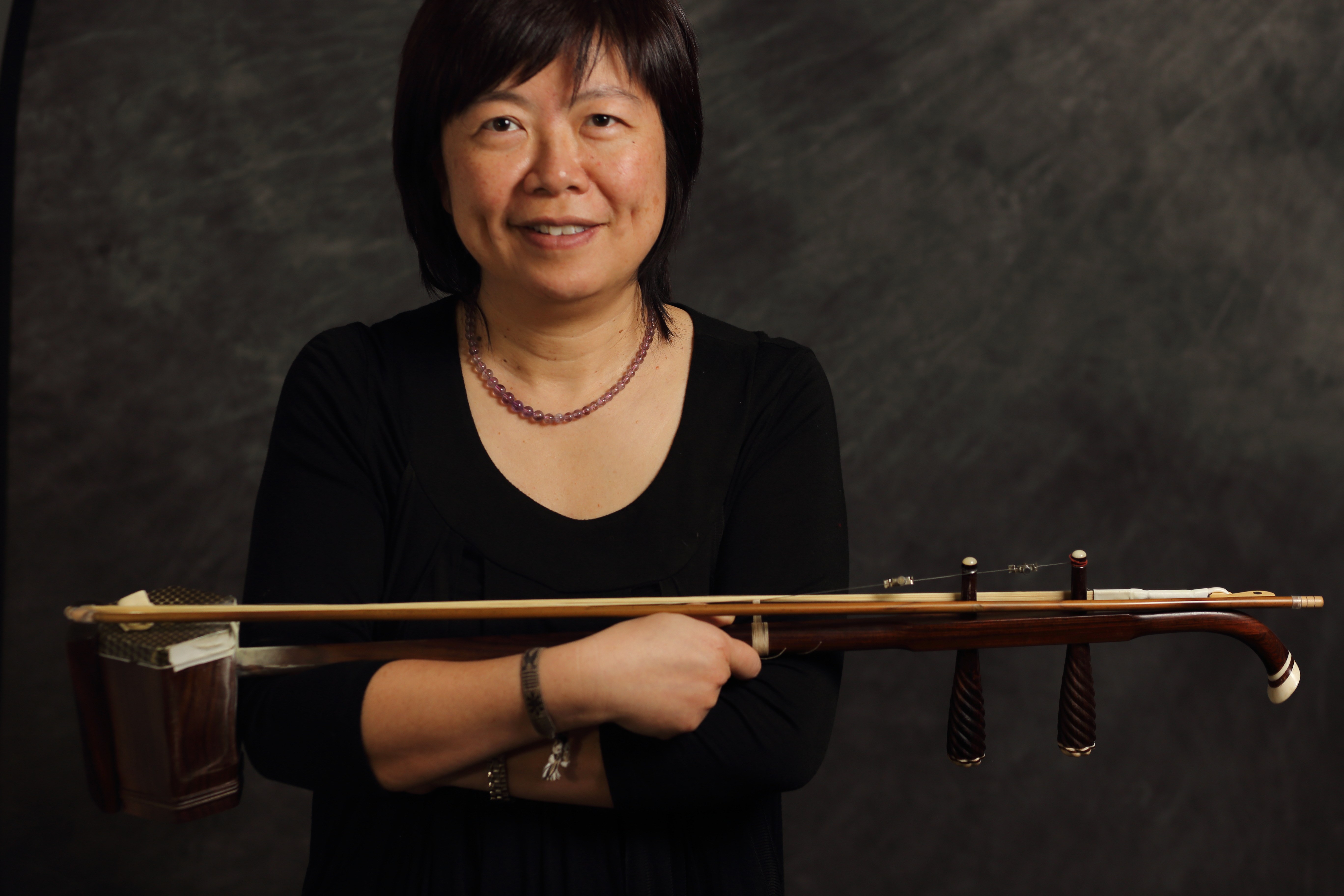
At times in this column I have gone deep into a particular world music theme, presenter, musician, ensemble, audience or school. For example, last month in this column I explored in some detail, the 150-year lineage of Chinese music performance in Canada, then pulled a tighter focus on the world of Chinese Orchestras active in the GTA today. Concerts by two of those ensembles bookend the two-month-plus period I’m covering here.

At other times I’ve painted our region’s worldly music pulse with a broad brush. For this December-January-early February column I’ve chosen the latter approach, surveying the seasonal tapestry of our region’s astonishingly diverse music scenes. So, consider this column the tip of the GTA winter season’s live music iceberg.

Toronto Chinese Orchestra “Scenic Sojourn: A Night of Chinese Music”

December 1: The Toronto Chinese Orchestra is the oldest such continually operating regional orchestra. It’s presenting a concert on December 1 at North York’s Yorkminster Citadel titled “Scenic Sojourn: A Night of Chinese Music” with Matthew Poon conducting. Angela Xu is the yangqin (Chinese hammered dulcimer) soloist, while Charlotte Liu is featured on the dizi (Chinese transverse flute).

On the program is music by both Chinese and Canadian composers chosen to underscore the concert’s geographic and seasonal themes. They paint portraits of village life in Jiangsu, scenic views of mountain ranges in Taiwan and Kyrgyzstan, as well as evoking the prototypical Canadian winter chill.

Works include Whiteout by Matthew van Driel and Reincarnation Suite by Marko Koumoulas, both early-career Toronto composers. IMHO the performance of these works signals a healthy active engagement with the broader non-Chinese Canadian music community. Composers Hua Wu (Taiwan Folk Song Rhapsody), Xianyu Jiang, arr. Chunmin Zhang (Touring Gusu), and He Huang (Tian Shan Poetry) present Chinese approaches to orchestral writing. Rounding out the evening, a performance by the TCO’s Toronto Youth Chinese Orchestra ensures essential interpretive orchestral skills are passed on to the younger generation.

Payadora: “Tango and Argentine Folk Music”

Payadora Tango EnsembleDecember 2: The warm and intimate Gallery 345 hosts the tango-centric Toronto quartet Payadora in concert. “Tango and Argentine Folk Music” is the aptly concise title of its committed tribute to the tango repertoire and ethos. Payadora regulars, violinist Rebekah Wolkstein, Drew Jurecka, bandoneon, pianist Robert Horvath and bassist Joseph Phillips are joined by guest vocalist Elbio Fernandez in a program drawn partly from the roots of the Buenos Aires’ early 20th-century tango heyday.

The group typically plays scores which favour instrumental tangos designed for listening in a concert setting rather than those intended for couple dancing. The evening continues with Astor Piazzolla’s well-known, trend-setting nuevo tango compositions of the second half of the 20th century.

In my May 1, 2017 review of a Payadora concert in The WholeNote, I wrote that in addition to tango they “also performed two Argentinian vernacular dance music genres. The zamba is set in a slow 3/4 meter – or is it in 6/8? – while yet another couples’ dance, the chacarera, also plays on similar hemiola syncopation.”

Audiences at the December 2 concert can certainly expect similar rhythmically compelling folkloric renditions. Founded in 2013, with its playful and virtuoso approach to the musically accessible tango repertoire, we can see why Payadora has, in a few years, garnered a healthy regional fan base.

Christmas musical themes

Every year at this time I look at music traditions of those who celebrate Christmas in its many guises. For those who don’t, it may be time for Hanukkah, Kwanzaa, Solstice or just simply “The Holidays.” This year is no exception.

I’ve assembled a few picks from the many seasonal musical offerings that highlight diversities in our region.

December 5: The Toronto Choral Society, Geoffrey Butler conductor, presents “Navidad Nuestra (Our Christmas)” at Koerner Hall. The concert features two of the best-known works of popular Argentine composer Ariel Ramírez (b. 1921). The 150-voice TCS choir is joined by the Latin ensemble (and past collaborator) Cassava, led by Rodrigo Chavez, with tenor soloist Ernesto Cárdenas.

Ramírez’s Navidad Nuestra for choir and Andean instruments is a “folk drama of the Nativity” based on Hispanic-American traditions. His earlier Misa Criolla (1964), a Creole Catholic mass in a South American hybrid mixture of Iberian and Indigenous musical genres, swiftly became a big hit among international choirs and on LP. A pioneering mass written in a regional Indigenous dialect, Misa Criolla’s bright, optimistic sound exuded an unpretentious spirituality, in tune with the changing times in which it was produced.

Founded in 1845, the TCS is the city’s oldest and largest community choir and it is impressive to see them tackle these Ramírez scores again. Feliz navidad!

December 8: Celtic-themed music appears alive and well, particularly during the holiday season. Here’s just one concert example at the eastern end of our own “fertile crescent.”, the Isabel Bader Centre for the Performing Arts presents “The Kingston Connection: A Celtic Christmas with Kelli Trottier” at its beautiful Kingston Ontario hall.

A member of the North America Fiddlers’ Hall of Fame, Kingston fiddler, step dancer and vocalist Trottier’s musical vocabulary is steeped in her deep Scottish and French roots, reflected in her ten albums. Trottier and her backup musicians present an album of Canadian and Celtic Christmas songs and fiddle music.

Chris McKhool brings his Holidays of the Global Village with Chris McKhool and Friends to the Kingston Road United Church, December 9. Then he puts on his Sultans of String hat for a whirlwind six-city Beyond the GTA tour from December 12 to 18 with a stop in Markham on December 13 in between. Photo Jake JacobsonDecember 9 at 2pm: “Holidays of the Global Village with Chris McKhool and Friends” plays at the Kingston Road United Church. Kid-friendly Canadian violinist, guitarist and singer-songwriter McKhool is bringing two armloads of world music friends to help him fete the “multicultural mosaic of our country.” Inclusive songs about “Bodhi Day (Buddhist), Carnival (Quebec), Chanukah, Chinese New Year, Christmas, Diwali, Halloween, Kwanzaa (Pan-African), Native Traditions, Ramadan and Winter Solstice” will ring out in the church. Assisting McKhool with his ecumenical vision are Toronto-based musicians Aviva Chernick, Shannon Thunderbird, Maryem and Ernie Tollar, Kevin Laliberté and Drew Birston.

December 20: in keeping with the Celtic theme – and at the southern end of our fertile crescent – The Gallery Players of Niagara present “Glissandi & Guy Bannerman: A Celtic Solstice” at Silver Spire United Church, St. Catharines. Guy Bannerman provides the Celtic-themed narration with the Glissandi trio playing the soulful music of Ireland, Wales and the Scottish Highlands. The program is repeated December 21 even further south at Grace United Church, Niagara-on-the-Lake.

Congratulations! We’ve made it to the New Year

KamancelloJanuary 8, 12pm: Kamancello plays on the Canadian Opera Company’s World Music Series at the Richard Bradshaw Amphitheatre. Kamancello is an innovative bowed string duo with Shahriyar Jamshidi on kamanche (Persian spike-fiddle) and Raphael Weinroth-Browne on cello. Theirs is an East-meets-West artistic partnership that “blurs musical genre conventions and cultural boundaries with their highly evocative improvised performances,” ranging in tone from soulful to incendiary.

January 20, 4pm: Folk Under the Clock presents Harry Manx at the Market Hall Performing Arts Centre, Peterborough. Manx is a veteran of the Canadian music fusion scene who has released 11 albums and garnered multiple industry awards by successfully merging Hindustani classical music with acoustic blues. It’s all propelled by the hybrid sitar-guitar he plays: the mohan veena. His ability to gracefully wed the blues with the classical Indian ragas is unparalleled. It’s an unusual musical mix that has led him to be labelled the “Mysticssippi Blues Man.” Manx and Steve Marriner (vocals, harmonica, guitar) will play tracks from their new album Hell Bound for Heaven.

January 24, 12pm: The Canadian Opera Company presents “Volando: Tango Takes Flight” as part of its World Music Series. The Payadora Tango Ensemble takes over the Richard Bradshaw Amphitheatre space in a noon-hour master class on contemporary tango listening music, performing from their latest album Volando, inspired by a “beautiful sunset in the clouds as seen from a flight home by violinist Rebekah Wolkstein.”

February 2: Lemon Bucket Orkestra and Aline Morales perform at the Royal Conservatory of Music’s Koerner Hall. I’ve written appreciatively about both the Orkestra and Morales numerous times in this column. The quotes, “Adventurous, multicultural and amazing!” (The Wall Street Journal), and “Toronto’s guerilla-punk-Balkan-folk-brass band that started on the streets of Toronto” (their website) about sum up the Orkestra. And we know Morales as the Toronto-based Brazilian singer, percussionist, bandleader and member of KUNÉ: Canada’s Global Orchestra. It’s bound to be a good time.

Also on February 2: Alliance Française Toronto and Batuki Music Society present Les Frères Cissoko Bannaya Family from Senegal, part of their Musique du monde series at 9pm. Les Frères Cissoko’s illustrious Malinke (aka Mandika) musical lineage stretches back several centuries in West Africa, along with their primary instrument, the kora. The kora (21-string long-necked harp lute) was traditionally played by a griot (a.k.a. jali, or jeli) who combines the bardic roles of a historian, storyteller, praise singer, poet and musician. As a main repository of regional oral tradition the griot therefore has often been an influential advisor to the West African ruling classes.

Malinke oral tradition recounts that Jali Mady Fouling Cissoko, one of the three Cissoko brothers’ ancestors, a griot in the Kaabu Empire (1537–1867), was responsible for the development of the kora, launching a family tradition still in force today.

Senior brother Noumoucounda has taken his family’s practice considerably further afield however, embracing international vernacular music genres. Formerly with Positive Black Soul, among the first hip-hop groups based in Dakar, Senegal (founded in 1989), he has played with Youssou N’Dour, Ki-Mani Marley (son of Bob Marley) and others, earning him the colourful sobriquets “the hip-hop griot,” and “the Jimi Hendrix of the kora.”

Finally, welcome the Year of the Pig (Boar)!

February 5, 12pm: The Canadian Opera Company celebrates the Chinese New Year featuring the Toronto Chinese Orchestra Chamber Players (TCO-CP) at the Richard Bradshaw Amphitheatre.

Led by erhu virtuosa Patty Chan, TCO-CP forms the professional core of the Toronto Chinese Orchestra. Marking the Chinese New Year they perform a mix of Chinese music plus contemporary works by Canadian and international composers.

TCO-CP members are established Toronto musicians and music teachers. Their repertoire embraces not only demanding Chinese works, but also contemporary scores by Canadian and international composers. This demonstration of transcultural musical solidarity is a marvellous way to bring in the year of the – carefree, honest, trusting, sincere, brave and wealthy – boar (aka pig). clip_image001.png

Andrew Timar is a Toronto musician and music writer. He can be contacted at worldmusic@thewholenote.com

In my story on the Festival of Arabic Music and Art (FAMA) in my October 2018 column I explored the GTA’s Arabic music scene. That festival is still in full swing, so consult our concert listings for details or visit the festival website at CanadianArabicOrchestra.ca/FAMA.

This month we are taking a peek into the world of Chinese orchestras in our midst, a form of community music-making long hidden from audiences outside its various host communities. Then we join an early world-music adapter, the American composer, percussionist and conductor Adam Rudolph as he returns to the Music Gallery to explore the implications of dastgah (melodic-modal systems) with Toronto tar player and Persian classical music advocate Araz Salek.

The Chinese orchestra

While ensemble music has been practised on a sophisticated level in Chinese aristocratic courts for some three millennia, I am referring here to the modern Chinese orchestra, as currently performed in China and overseas Chinese communities, which began its development in the 1920s, modelled on both the instrumentation of the regional Chinese Jiangnan sizhu ensemble and the organization of the Western symphony orchestra. Such orchestras use Chinese instruments divided into four sections: winds, plucked strings, bowed strings and Chinese percussion. They typically play modernized traditional music often called guoyue (literally “national music”), or adaptations of Western works.

In terms of the dawn of Chinese instrumental music in Canada, the relevant Canadian Encyclopedia entry states that Chinese emigration to Canada – specifically to the Fraser River Gold Rush in British Columbia – began in 1858, mostly from Kwangtung (Canton) Province. Already by the 1870s there were three Cantonese opera clubs established in Victoria, BC.

The production of Cantonese opera required about six instrumentalists, and this led to the founding of music clubs apart from opera clubs. These music associations, as exemplified by the Ching Won Musical Society (founded in Vancouver in 1936), performed for many types of Chinese community activities.

Amely ZhouChinese orchestras in the GTA

The Chinese community in Toronto was established around 1877, with an initial population of two laundry owners. The community grew considerably during the 20th century when, again according to the Canadian Encyclopedia, professional troupes from Hong Kong were frequently invited to perform Cantonese opera until the 1980s, when the expansion of the Chinese community provided performers for locally produced Cantonese opera, often featuring artists from abroad. [As well], local companies such as the United Dramatic Society in Toronto, the Wah Shing Music Group in Ottawa, and the Yuet Sing Chinese Musical Club in Montreal provided training and experience for Canadian performers.”

As I am a newbie to this world, I phoned Amely Zhou, an erhu musician and Chinese orchestra insider. Trained in both Chinese and Western music, she began her music studies at an early age in the city of Shenzhen, in southeastern China. “After immigrating to Canada in 2007,” she told me, “I joined the Toronto Chinese Orchestra where I served for ten years as the bowed string section assistant principal, as well as conductor of the TYCO, its Youth Orchestra.”

She pointed out that beginning with the TCO, today there appear to be four Chinese orchestras active in the GTA: Toronto Chinese Orchestra (1993- ), Ontario Chinese Orchestra (2007- ), North America Chinese Orchestra (2011- ) and Canadian Chinese Orchestra (2017- ).

“I founded the Canadian Chinese Orchestra (CCO) last year and serve as the CCO’s artistic director and conductor. We actually have three groups under the CCO banner: the Canadian Philharmonic Chinese Orchestra made up of amateur adult musicians and the Canadian Youth Chinese Orchestra (CYCO). The third group is a cadre of professional musicians who serve as section leaders. These contract artists teach our CYCO and CPCO musicians, while also performing as soloists in our concerts.”

What about the other Chinese orchestras in our region? “In 2007 the Ontario Chinese Orchestra (OCO) was founded by graduates of top-ranking Chinese music conservatories,” replied Zhou. “Led by Peter Bok, they have produced a regular series of concerts ever since.”

“More recently another performing group, the North American Chinese Orchestra (NACO), was formed by several Mandarin-speaking musicians in 2011,” added Zhou.

The TCO: Despite ample evidence of a century and a half of Chinese music making in Canada, it wasn’t until 1993 that the Toronto Chinese Orchestra was established by a group of Chinese traditional music enthusiasts. According to its website, the “TCO is the largest Chinese orchestra in Ontario and the longest running in Canada. Members include professional and amateur musicians trained in Asia as well as Canada.”

The TCO presents its next concert, “Scenic Sojourn: A night of Chinese Music,” at Yorkminster Citadel on December 1. In addition to works by Chinese composers, the TCO performs works by the emerging Toronto composers Matthew van Driel (Whiteout) and Marko Koumoulas (Reincarnation Suite), indicating an active engagement with the non-Chinese music community.

The Canadian Chinese Orchestra: Chinese orchestras in the GTA appear to be affiliated along linguistic and cultural lines, reflecting Cantonese and Mandarin origins. How does the CCO fit into this context? “In establishing the CCO I was motivated by a desire to reach out to the various Canadian Chinese communities, as well as to the Canadian public in general” said Zhou. “I believe we are Canadians first, so I wanted to include musicians from various Chinese communities, from newcomers to musicians born here.”

The CYCO mounted its most ambitious project to date in the summer of 2018: a five-city tour of the Cantonese region of China. “It came about through an invitation from the president of the Overseas Nanhai International Students Association,” stated Zhou, “partly funded by the Cultural Department of the government of China.”

It’s part of a trend of the GTA’s Chinese orchestras performing in the motherland, made possible through the Chinese government’s sponsorship of cultural exchange between overseas and mainland Chinese communities. It reflects 150 years of region-of-origin (Cantonese in this case) affiliations, transnational business links, and a trend of Canadian cities “sistering” with Chinese cities of similar industry focus, all connected via cultural links. For instance, both cities of Nanhai and Jiangmen, located in the Cantonese region of China and on CYCO’s 2018 tour itinerary, have sistered with the City of Markham, reflecting the commercial interests of high tech companies.

CCO’s November 17 concert at the Mary Ward Catholic Secondary School Theatre is conducted by Amely Zhou and Wang Yi. The concert features repertoire reflecting various regional Chinese folk genres. Here are some highlights.

The CCO’s young prize-winning Canadian-born dizi (bamboo transverse flute) soloist Sophie Du is accompanied by the CCO in an orchestrated Taiwanese folk song inspired by a scene of tea pickers in the Lugu mountains.

Racing Horses, an erhu standard, was composed by Haihuai Huang. Depicting horses racing on the vast Mongolian grassland it is performed by the CCO erhu section together, evoking the sound of a large herd of galloping horses. The concert closes with Flower Festival (1960s). Composed by Xuran Ye as a pipa solo, it is based on a Sichuan folk song; it has been arranged by Zhou for the CCO for this concert.

Adam RudolphDastgah: Go: Organic Orchestra

Coincidentally, also on November 17 the Music Gallery and New Ambient Modes present “Dastgah: Go: Organic Orchestra.” The concert will be curated by Araz Salek, the Toronto tar (Persian long necked lute) player, and conducted by American world music pioneer Adam Rudolph.

Rudolph embarked on a career as a jazz percussionist in Chicago in the late 1960s. He was eager however to expand his musical world view. In 1977 he travelled to West Africa to live and study music, experiencing drumming, singing and dancing, as well as trance ceremonies.

He shares on his blog that in 1978 he “lived in [trumpeter, pioneer of world fusion jazz] Don Cherry’s house in the Swedish countryside.” Cherry inspired Rudolph to “start composing and showed him about [free-jazz pioneer] Ornette Coleman’s concepts and the connection of music to nature.” Back in the USA Rudolph and kora player Jali Foday Musa Suso co-founded The Mandingo Griot Society in 1978, combining aspects of African and American music. He explored Moroccan Gnawa music in the 1980s with sintir (three-stringed bass lute) player and singer Hassan Hakmoun. His music-making and composing has continued to grow over the decades, resulting in a large number of ensemble projects, reflected in over 90 album releases.

Rudolph often sets discussions of his approach to music in a philosophical frame. Case in point, in an April 2017 Downbeat interview by John Ephland, Rudolph evocatively talks about “shooting the arrow and then painting a bullseye around it” when describing his music creation process. He also reports undertaking a rigorous study of North Indian tabla for over 15 years with leading tabla virtuoso and teacher Taranath Rao (1915-1991), crediting Rao with imparting the notion of music as a “form of yoga – the unity of mind, body and spirit…”

Founded two decades ago, Rudolph’s Go: Organic Orchestra is a culmination of a lifetime of musical and philosophical searches, embracing music forms and cosmologies from around the world. His compositional and operational modus operandi is built on a three-page score with graphic notation elements he calls matrices and cosmograms. It’s evidently been successful: over the last ten years Rudolph has conducted several dozen Go: Organic Orchestra residencies throughout Europe, North America and in Turkey.

Toronto’s Music Gallery first presented Go: Organic Orchestra in 2016, inviting 15 eclectic Toronto musicians to play under Rudolph’s direction. Araz Salek, the only musician in the ensemble whose primary background was outside of jazz or Western classical music, was particularly inspired by the experience.

Salek: Born in Iran in 1980, Araz Salek began his tar tutelage at a young age and continued studying classical radif (sets of Persian melodic figures preserved through oral tradition) with master tar musicians. He began an active performing career in Tehran.

Moving to Toronto in 2005 however blew open the doors of Salek’s strict Persian classical music training. While establishing himself in his new home, he quickly began to learn and perform with a wide variety of musicians practicing in numerous musical traditions. In addition to gigging nationally and internationally as a tar player, in 2017 he founded Labyrinth Ontario, dedicated to presenting music workshops and concerts focused on global modal music traditions.

I’ve been involved in a number of concert projects with Salek for over 12 years. I am however not personally involved in Dastgah: Go, so I called Salek late in October to get the skinny.

“Adam Rudolph’s 2016 Music Gallery concert,” he began “was a stunning experience for me. As you know I have an extensive background in Iranian classical music. When I arrived in Toronto I continued my tar practice, but also engaged with the local free improvisation scene. On occasion however, I felt lost in the midst of such freedom, particularly when compared with my own rigorous training and practice in Iranian music.

Working with Adam, on the other hand, he says, felt substantially different than playing free improv. “What really amazed me was how his use of graphic matrices defined not only tonal [and rhythmic] structures, but also freed individual musicians to make choices within them. It was the best of both worlds for me, combining the liberty of free improv with the kind of modal structures I’m most comfortable with. In that way, the 2016 concert was personally an inspiring moment. I wanted the opportunity to expand that musical experience. I made a proposal to Adam: to develop his score by including aspects of Iranian tonal systems. He agreed and our Dastgah: Go: Organic Orchestra project was born.

“The 15 Toronto musicians chosen for the November 17 concert are divided roughly into two instrumental categories: a Western group and an Iranian group. “I will be conducting a series of ear training sessions for the musicians to develop their perception of the microtonal intervals in some of the traditional Iranian modes,” Salek says. “An interesting cross-cultural instrument in our orchestra will be a retuned acoustic piano. This used to be done in 20th-century Iran, but was found to be too costly, and moreover could only accommodate a very limited number of tonal modes. We’ve revived this practice for this concert. It will prove, I think, that even an instrument with fixed tuning like the piano can be accommodated to perform with Iranian instruments.”

Rudolph’s improvisationally conducted spontaneous orchestrations will no doubt be substantially complicated – and enriched – by Salek’s Iranian contributions.

The multicultural dynamics of Dastgah: Go: Organic Orchestra aptly express Rudolph’s creative vision of our shared humanity. As he states on his website, “It is a realization of creative community in a world without boundaries; of culture as the vessel for understanding, empathy and sharing.” It’s a fitting legacy for an early adopter of a single-minded approach to world music. 

Andrew Timar is a Toronto musician and music writer. He can be contacted at worldmusic@thewholenote.com.

October is a fine month to go exploring for what’s happening on the global music scene. We listen to hybrid Persian-Western classical music expressing profound Sufi insights, then travel all the way down the QEW to listen to the joyful songs of emerging Indian singer Anandi Bhattacharya. We end up at a College Street “Bar” relaxing with three local groups helping to define today’s Toronto world music brand. Along the way we hear how music is passed on in families abroad – as well as in one downtown Toronto hood. Read on.

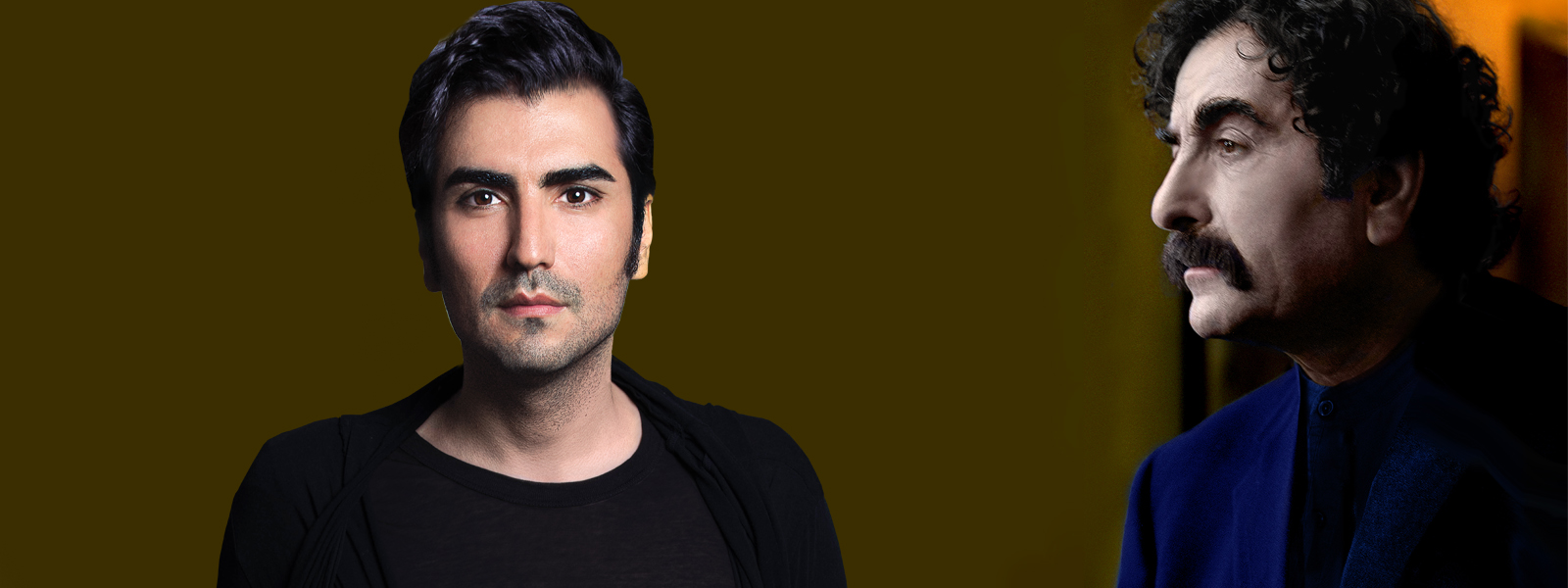
(from left) Hafez Nazeri and Shahram NazeriUntold – A New Chapter: Shahram Nazeri and Hafez Nazeri

Veteran Persian classical vocalist Shahram Nazeri and his son, the multi-instrumentalist and composer Hafez Nazeri, are celebrated in their native Iran and increasingly on the international scene. There are also strong Toronto connections to this story. Shahram Nazeri (b.1950), the widely celebrated Kurdish-Iranian tenor, was the first vocalist to set the mystical Sufi poetry of the 13th-century Persian Jalāl ad-Dīn Muhammad Rūmī (known worldwide as Rumi), to Persian music in the 1980s. Dubbed the “Persian Nightingale” by The New York Times, he has a career discography of over 40 albums that have sold over 70 million units. In 2007 he was honoured with the Chevalier de l’ordre des Arts et des Lettres medal from the government of France for his achievements in Iranian traditional music; the same year he also received the Lifetime Cultural Heritage Award from the Asia Society of New York. Among connoisseurs of classical Persian music he’s considered a legend.

In his father’s footsteps, Hafez Nazeri (b.1979) has also sought to carry Rumi’s message to a global audience, mediated via his hybrid compositions. With formal training in both Persian and Western classical music, he aims to bridge musical divides between those cultures. Searching for common ground, he states: “I want to create a revolution with music, with love rather than hate, or chaos and bloodshed. At a time when all that we hear about Iran is filtered through headlines of intolerance, focusing around the development of nuclear weapons and facilities, it is important to also portray the 7,000-year-old cultural history, with its deeply poetic and artistic mystical tradition through music and art, to the world … The universal language of music can and should function as the common language of humanity, harmonized, refreshed and redefined.”

The Nazeris’ major work is the Rumi Symphony Project, composed by Hafez Nazeri as an evolving large-scale musical suite inspired by Rumi’s poetry, mixing elements of Persian, Hindustani and Western classical music including harmony, orchestration and choral singing, and enthusiastically received at its 2007 Los Angeles premiere.

Their 2014 album Rumi Symphony ProjectUntold, co-produced by Nazeri and Grammy-winning producer David Frost, reportedly took more than 5,000 studio hours to record. It featured the poetry of Rumi as transcribed by bestselling author Deepak Chopra, dozens of leading international musicians, and ecstatic vocals by Shahram Nazeri. Rumi Symphony ProjectUntold became the first album by Middle Eastern artists to top the Billboard Classical chart.

Toronto here they come!

In October 2018, the Toronto-based artist agency and concert producer, Link Music Lab, is taking the bold step of presenting the next chapter of the work, titled Untold – A New Chapter, in five Canadians cities. Rehearsals start in Toronto early in the month. The tour then launches on October 13 in Ottawa and October 14 in Montreal, moving to Calgary on October 27, and Vancouver on October 28.

October 21, right in the middle of the tour, Untold takes over the Sony Centre for the Performing Arts, Toronto, co-presented by Small World Music. “Small World was proud to present the extraordinary vocalist Shahram Nazeri 18 years ago,” says SWM’s Executive Director Alan Davis “It was one of the first classical Persian music concerts we presented. Now we’re continuing that tradition.”

In addition to the multi-instrumentalist Hafez Nazeri – primarily playing the hafez, his own adaptation of the Persian setar, a member of the lute family – the ensemble will include Hussein Zahawy, a versatile daf (Kurdish frame drum) specialist, plus Iranian percussionist Farhad Saffari. American cellist Felix Fan, violist Liuh-Wen Ting, and violinist Conrad Harris form the string section, while soprano Maria Sokolovsky and mezzo Anna Yelizarova provide a strong female vocal counterpart to Shahram Nazeri’s male voice.

Shahram’s vocal performance forms the core of Untold, featuring extensive use of the characteristic Persian tahrir vocal ornament consisting of very quick melismatic oscillations between notes, including tonal gradations finer than a quartertone when extended, forming what has been described as “sonic arabesques.” These tahrir passages, more than exhibitions of breathtaking virtuoso vocalism, express the underlying passion, yearning or even spiritual transcendence of the particular song’s lyrics.

On the Rumi Symphony Project CD’s liner notes Hafez Nazeri observes, “Traditional Middle Eastern music is essentially defined by the soloist and fluid improvisation. It serves the performer as a vehicle for a spiritual and deeply personal journey, even as the audience submits its will to the moment and journeys along where the soloist may lead. Classical Western music, on the other hand, has evolved as a formal composition characterized by orchestral forms built on a solid balance of harmony, rhythm and structure, and requiring a certain disciplined distance by the performers and the listeners to be properly interpreted and appreciated. One of my greatest challenges was to try and meld these two divergent frameworks into one integral structure.”

Hafez Nazeri’s ambitious goal in this project is nothing less than “to create a new sonic universe, a unified construct [… resulting] in a new school of music that would transcend the cultural divide rather than colour one musical system with another [… laying] the foundation of an inclusive and transformed musical language.”

Anandi BhattacharyaAnandi Bhattacharya: The Voice of Modern India

From the venerable mid-century Sony Centre located in Toronto’s core to the barely three-year-old FirstOntario Performing Arts Centre in downtown Catharines is about a two-hour drive – not of course including traffic jams. On November 2, audiences can also travel musically from Iran to Northern India to catch the concert billed as “Anandi Bhattacharya: The Voice of Modern India.”

As in the case of Hafez Nazeri, Anandi Bhattacharya grew up in a deeply musical family, surrounded by professional musicians. The daughter of renowned Hindustani classical slide guitar innovator Debashish Bhattacharya, and niece of tabla master Subhasis Bhattacharya, very early rigorous musical training was to be expected.

Now 22, Anandi is pursuing her own singing career. She has recently released her album Joy Abounds, an exploration of her musical roots and influences. Accompanied by her father, uncle and Catalan clarinetist/guitarist/vocalist Carola Ortiz, her sweet, light and lithe voice covers light classical to folk songs in arrangements interspersed with bravura instrumental solos.

Although steeped in Hindustani musical culture from a very early age, Anandi says she was never forced to be a musical purist by her father and guru. This liberal aesthetic view made possible her high regard for musical fusion and several genres are represented and mashed up in her current repertoire. For example, as well as the pervasive impact of renowned 20th-century Hindustani music masters, she also cites Thom Yorke, Ella Fitzgerald and Joni Mitchell as leading influences.

Her current set list includes folk songs of Rajasthan and Bengal, a song by poet Rabindranath Tagore, original compositions by her father Debashish Bhattacharya and Carola Ortiz, as well as accompaniments and solos by Subhasis Bhattacharya, among the world’s foremost tabla players. Anandi notes that her music “is light-hearted but carries the true essence of ragas and their moods, and evokes a sense of familiarity amidst uncharted waters.”

Another factor in her current direction was touring with her father and uncle on the global stage, a profoundly formative experience. Its impact is summed up by Anandi: “I do not believe that I was meant to imbibe my own culture alone. I think for me, finding my sound [… including] all that I love to hear, and all that churns within me, is my path forward.”

So Long SevenWorld Music! Fun!

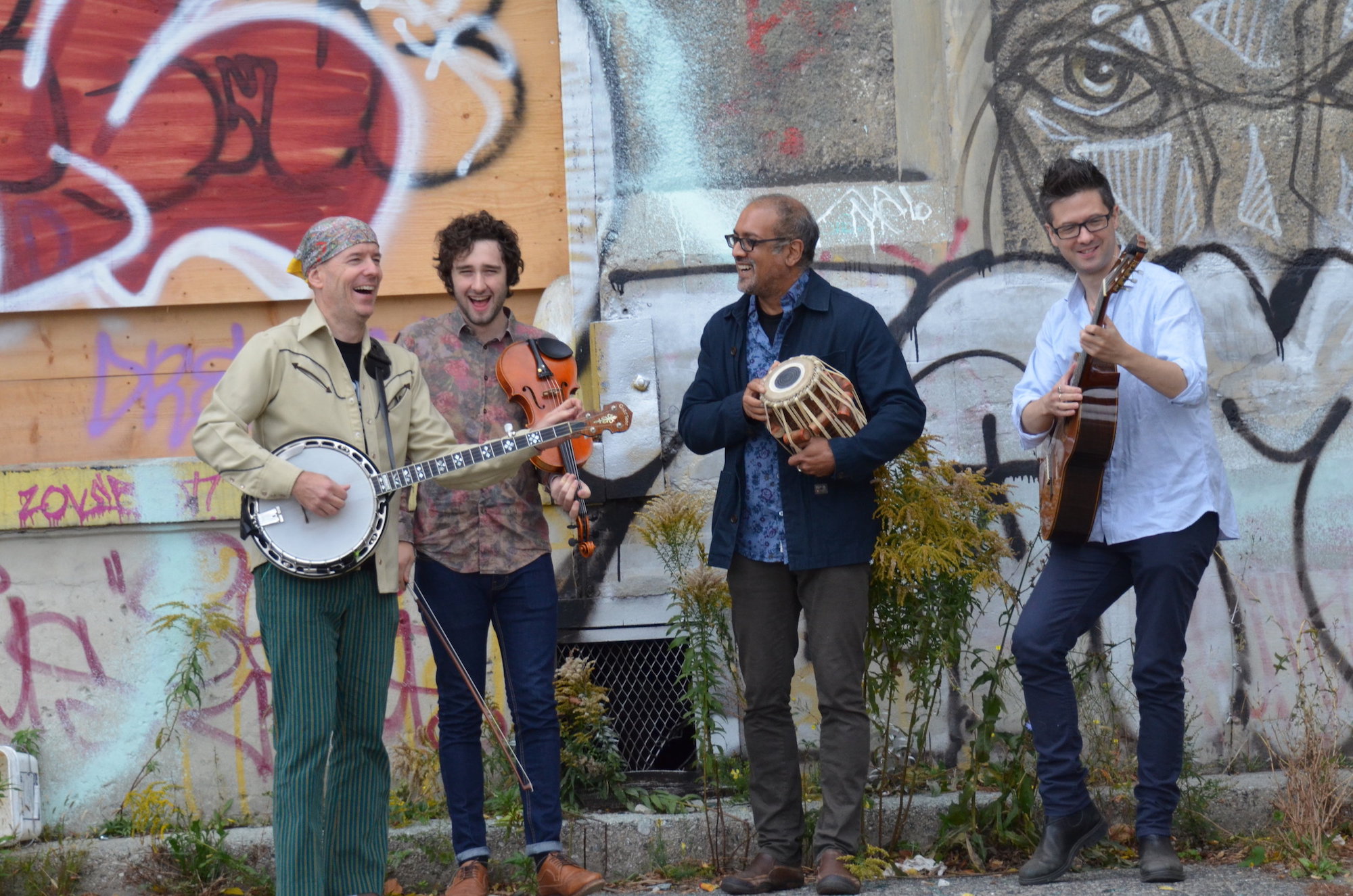
October 28, Toronto world music quartet So Long Seven throws a family-friendly Sunday 4pm world music party at Toronto event venue, Revival Bar, as a sendoff for their November European tour. Called “World Music! Fun!” the afternoon concert features performances, headlined by So Long Seven, opened by two bands with overlapping membership: Near East Trio and Zephyr.

Recently nominated by the Canadian Folk Music Awards for Best Instrumental Band for its album Kala Kalo, So Long Seven is comprised of Neil Hendry (guitars), Tim Posgate (banjo, bass guitar), William Lamoureux (violin, other strings) and Ravi Naimpally (tabla, other percussion). Individually they’re among Canada’s leading instrumentalists on their respective instruments and in their chosen music genres. Jointly, they share a common mission. “We often play and compose for each other with great mutual respect, trying to challenge, push and inspire each other,” says banjoist Posgate.

Another group performing at the Revival Bar gig, Near East Trio – with Ernie Tollar (sax, flutes), Demetrios Petsalakis (oud), Ravi Naimpali (tabla) – was nominated by the Canadian Folk Music Awards for Best World Music Group.

“These groups are part of a rich local scene,” notes Posgate. “In fact, most of the musicians involved in the show can walk to the gig! So Long Seven rehearses just west of Revival, Zephyr two blocks east and Near East Trio a few blocks north. It’s our home turf!”

These musicians all live in one particular downtown Toronto hood, yet their music has taken them far. Collectively they have logged thousands of touring miles, hundreds of recording credits, and multiple Juno nominations. So Long Seven and Near East Trio both released well-received albums this year, while Zephyr – Brenna MacCrimmon sings songs from Turkey and the Balkans, accompanied by Demetrios Petsalakis (oud) and Jaash Singh (darbuka) – are among the city’s most in-demand world musicians.

Listening to all three groups, perhaps we can hear a kind of downtown Toronto music taking form, rooted in multiple world music traditions. For example So Long Seven’s instrumentation combines jazz violin, Hindustani tabla, bluegrass banjo and acoustic guitar.

“All three groups are dynamic and fun to watch – and at Revival there is space for dancing if the mood hits!” adds Posgate. “Plus we really want to make it fun for the whole family: there will be face painting for the kids and cool door prizes.” 

Andrew Timar is a Toronto musician and music writer. He can be contacted at worldmusic@thewholenote.com.
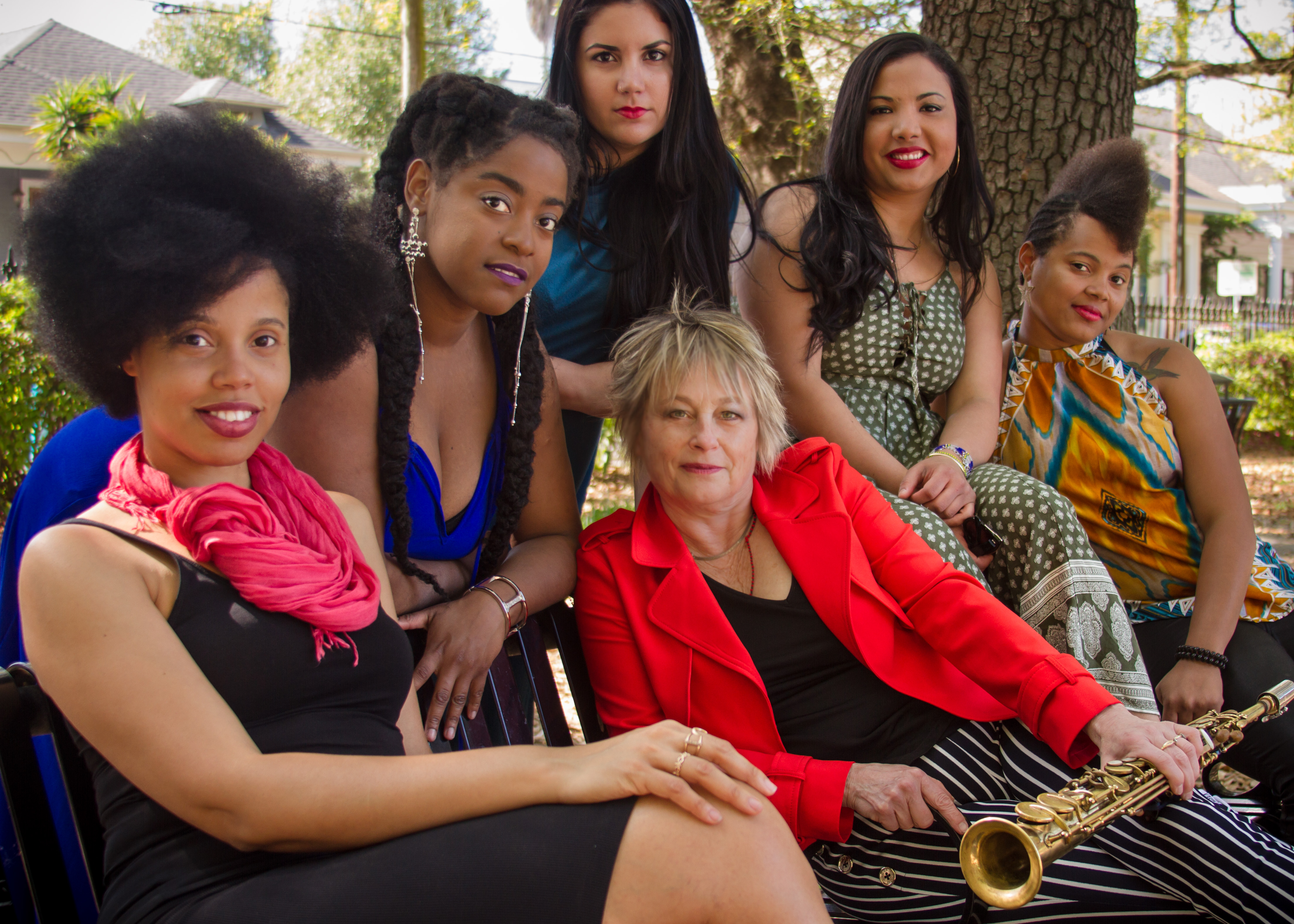
Just past mid-August my WholeNote editor called. Fall on the doorstep, it was time to fine-tune stories for my September column. “What do you have?” he asked. “I am wondering if it’s time for a terminology reboot” I replied. (My column has been called “World View” and the beat I cover has been described as “world music” for a decade or more, even before I took over from my pioneering predecessor columnist Karen Ages.) What got me thinking about all this is that I’d been busy all summer attending, playing in and following online stories of festivals which could be tagged with the “world music” moniker.

To begin with, in June I toured with Toronto’s Evergreen Club Contemporary Gamelan (ECCG) representing Canada at the International Gamelan Music Festival in Munich, Germany. Cheekily dubbed “Indonesia # Bronze.Bamboo.Beats,” the experience proved both exhilarating and exhausting. For ten days the Munich Municipal Museum hosted for the first time what turned out to be Europe’s largest gamelan festival. There was a two-day symposium, over 300 participants giving 40 concerts and 28 workshops at six venues, in an environment that was much more about a global community sharing a passion for music rather than a commercial enterprise. Not a single band was selling an album or T-shirt.

On public display all over downtown Munich was the face of the transnational contemporary gamelan music scene. Far from its birthplace on the islands of Java and Bali in Indonesia, European audiences witnessed live performances of gamelan music which had been adopted and adapted by people all over the globe. What was emotionally and artistically powerful to hear was how some of those diasporic musical adaptations and personalizations (including those by 35-year-global-gamelan-scene veterans ECCG - Canadians who are musically rather than ethnically connected to Indonesian culture) have been in turn absorbed and indigenized by Indonesian innovators. It was in turns unexpected and inspiring to personally experience all this in the Bavarian home of Oktoberfest. Is this one face of “world music” in practice today?

Then on the August 17 weekend I attended the Small World Music Festival (SWMF) at Harbourfront Centre. This year it celebrated the 30th anniversary of the first North American WOMAD (World of Music Art and Dance) which took place at the same venue. WOMAD, “the world’s most influential global music event … became a landmark event during its [five-year] tenure at Harbourfront,” according to Small World. “The ear-opening inspiration it provided led directly to the formation of Small World Music. Three decades on, we explore this legacy and how it resonates in multicultural 21st-century Toronto.”

Evergreen Club Gamelan performing on the Anne Tindall stage at the first Toronto WOMAD, August 14, 1988. Photo by Ramona Timar.I had not only visited WOMAD during its landmark first year here but had also helped arrange an Evergreen Club Gamelan concert on August 14, 1988 and then played in it. So at some level my interest in this year’s SWMF was personal. Keen to get beyond the autobiographical, though, I checked out two SWMF panels and a workshop, on the afternoon of August 18, 2018. The “WOMAD 30” panel, made up of people who were involved in it on various levels, looked back at that first 1988 music festival that in the words of its Facebook events page, “changed the perception of music in Toronto.” Moreover, in terms of live music, it introduced the “world music” brand, then barely one year old, imported from the UK to Canada.

The second panel “A Post-Genre World” asked some big questions: How do artists, audiences and industry work together in the post-genre world? How are livelihoods and bottom lines affected by a multi-fractured or multi-faceted music space? How does genre affect the creative process?” I found the answers offered in both panels memory-jogging, thought-provoking and compelling.

World Music: the double birth of a term

I’ve weighed in on various occasions in this column on the notion of world music, its promoters, detractors, its problems and its origins. It’s helpful to keep in mind that the term “world music” entered the musical lexicon on two separate occasions, on two continents, serving two quite different purposes and masters.

Its academic origins appeared around 1962, coined and promoted by American ethnomusicologist Robert Brown, professor at Wesleyan University. He meant it as an inclusive term to be used in university music education to describe “living music” and to be used to “foster awareness and understanding of the world’s performing arts and cultural traditions through programs of performance and teaching.” That once-academic term got a marketing refresh a quarter century later, however, at a June 1987 gathering of record label bosses, retailers and producers in the Empress of Russia, a now-defunct London pub. Why was a new marketing tag so necessary that these thirsty English professionals had to put their pints down?

In a succinct 2011 story in The Guardian, journalist Caspar Llewellyn Smith reported that “Charlie Gillett who was present that evening, recalled one example of the problem at hand: in the US, Nigeria’s King Sunny Ade would be filed under reggae, while in the UK, he ‘was just lost in the alphabet, next to ABBA.’ After several proposed terms were vetted, ‘world music’ stuck and ‘11 indie labels put in £3,500 between them to introduce newly labelled sections in record stores.’”

At its commercial birth, “world music” was all about labelling, increasing album visibility, genre identity, market share - and thus hopefully sales - in international brick and mortar record stores. (It doesn’t take a Cassandra to observe that it’s a very different world in 2018, when there are many fewer physical shops and when some musicians and presenters increasingly embrace the possibility of a post-genre musical future.)

Genre vs post-genre: late 20th century record store racks

Back in the last two decades of the 20th century, genre still proudly ruled Toronto’s imposing multi-department, multi-floor record (and then also cassette tape) shops. Following London’s lead, there was a wholesale switchover for many records to the World Music label from what previously were marked Folk or International record shelves.

I well recall schlepping numerous times up the creaky upper level wooden stairs of Sam the Record Man’s flagship Yonge St. store to its upper floors. My mission as Evergreen Club Gamelan’s artistic director and Arjuna label manager was to chart the (to be frank, modest) sales of our LP North of Java (1987). I did the same for its CD remix namesake when it was released in 1992, making sure it wasn’t buried too deeply on the shelf.

What was on that album? All the compositions were by younger-generation Canadian composers. All the musicians were Canadian, it was recorded in a Scarborough, Ontario studio, and the label was registered in Ontario by ECG. While gamelan degung instruments were featured on most cuts, some made prominent use of decidedly non-gamelan sound sources like a synthesizer, electric bass and field recordings, as in the case of my work North of Java. Nevertheless, Sam’s didn’t rack it in the substantial Classical Canadian section on the first floor. Now I understand the album was a novelty, being the first Canadian gamelan disc. But this (to my mind) quintessential Canadian album in that retail environment was displayed not with Canadian music, but in the World Music section among other albums with which it had little in common, a long, long walk up.

World music: contesting and defending the term

My North of Java album story reveals the difficulties retailers faced when attempting to apply the new world music marketing tool. In that case it was misinterpreting a product with multiple layers of cultural and music genre affiliation, racking it by default, I assume, in the World Music section.

The commercial use of world music on one hand fuelled consumer interest in sounds from outside the Western mainstream both on recordings and in live concerts, yet on the other hand it posed the risk of ghettoization, of “othering,” the world’s myriad individual music traditions. Such risks have been articulated in recent decades by numerous voices raised in consternation over the term, seeing it as a polarizing factor.

Rock star David Byrne, an early world music adopter, was also thereafter an early dissenter. In his strongly worded October 1999 New York Times article provocatively titled Why I Hate World Music, he sums up some of the problems he saw in the way it had been commercially applied and then received by consumers: “In my experience, the use of the term world music is a way of dismissing artists or their music as irrelevant to one’s own life ... It’s a way of relegating this ‘thing’ into the realm of something exotic and therefore cute, weird but safe, because exotica is beautiful but irrelevant … It groups everything and anything that isn’t ‘us’ into ‘them.’ This grouping is a convenient way of not seeing a band or artist as a creative individual … It’s a label for anything at all that is not sung in English or anything that doesn’t fit into the Anglo-Western pop universe this year.”

Many in the business took notice of Byrne’s passionate denunciation. The following March, Ian Anderson, musician, broadcaster and the editor of fRoots published a lengthy rebuttal in his magazine. In it, he explored many crannies of the topic, including the different resonances world music had in America, UK, France, and among African musicians and audiences. He summed up with, “It’s not all positive, but World Music (or Musique du Monde in neighbourly Paris) is way ahead on points. It sells large quantities of records that you couldn’t find for love or money two decades ago. It has let many musicians in quite poor countries get new respect (and houses, cars and food for their families), and it turns out massive audiences for festivals and concerts. It has greatly helped international understanding and provoked cultural exchanges. …I call it a Good Thing…”

Pierre KwendersPierre Kwenders, the early-career Congolese-Canadian singer and rapper is not impressed with arguments for the term’s usefulness. Shortlisted for the 2015 JUNO Award for World Music Album of the Year and the September 2018 Polaris Prize, Kwenders called out the marketing term on the CBC show q on August 24, 2018. His point comes close to the one I made in the case of North of Java. “What is world music? What is that ‘world’ we put in that box? It’s ridiculous [for example] that classical music from India is put in the same category as the music I make … it doesn’t make any sense. I believe I’m making pop music and it should be put in the pop music category.”

Despite all these concerns, there is still a Grammy Award for Best World Music Album today. Ladysmith Black Mambazo won it earlier this year. Moreover the terms world fusion, ethnocultural music, worldbeat and roots music have been touted as less controversial alternatives, but with modest commercial or popular traction.

As I wrote at the outset of this article, this column has been called “World View” and this beat has been described as “World Music” for over a decade. Is it time for a change? I, and my editor, welcome your comments. 

Andrew Timar is a Toronto musician and music writer. He can be contacted at worldmusic@thewholenote.com.
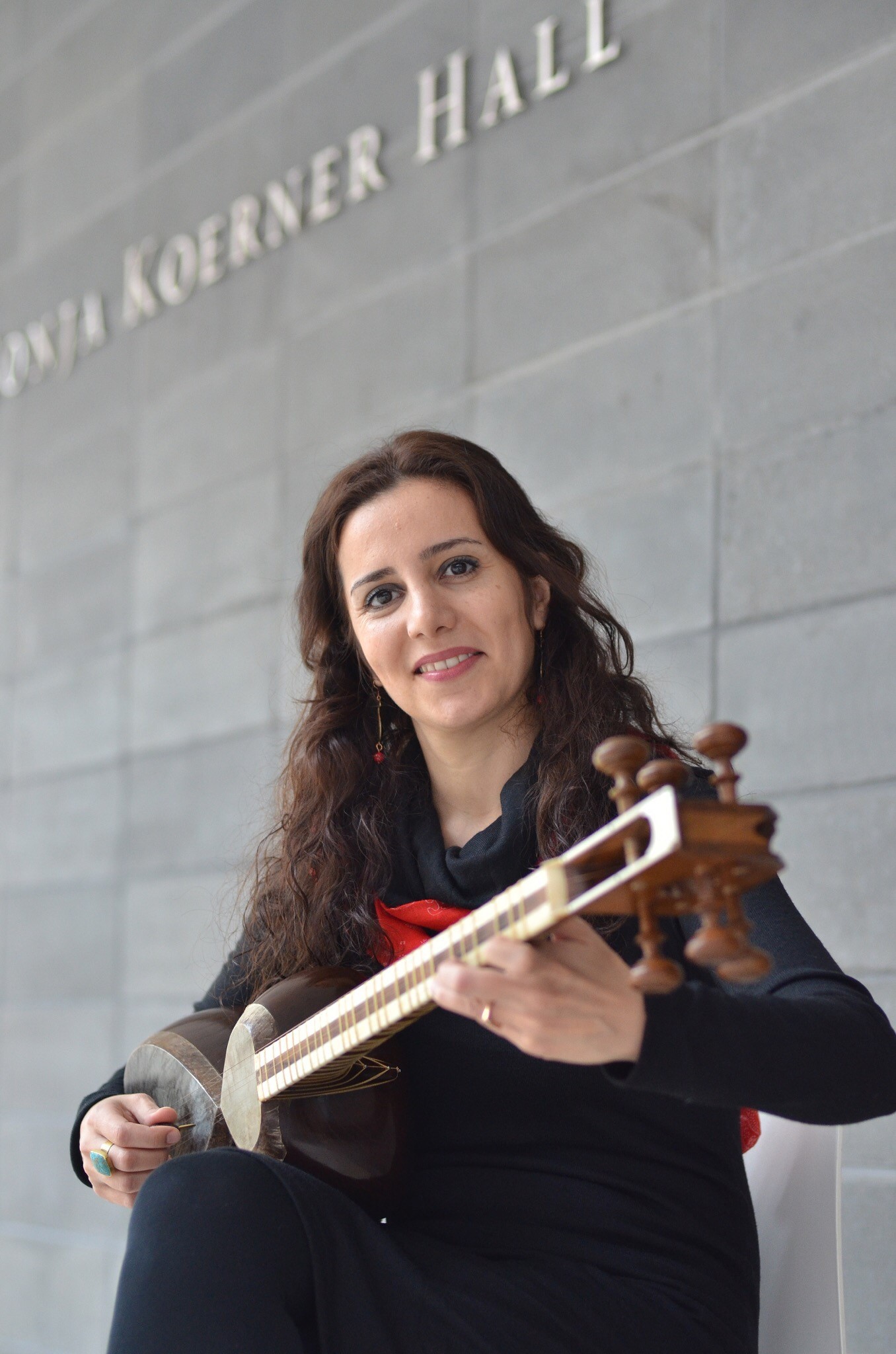
I once mused in this column that “summer in the city for me also means music in the city.” It’s not an especially deep statement, but it does suggest that experiencing sound in warm outdoor weather is different from listening indoors. Summer liberates music in Canada in a way other seasons cannot.

The advent of short sleeves, shorts-and-sandal weather means music lovers need no longer be confined to indoor spaces. We can enjoy music at a wide range of outdoor venues this summer. To name only a few: Harbourfront Centre, North York’s Cultura Festival, Peeks Toronto Caribbean Carnival (commonly still called Caribana), Small World Festival, and Ashkenaz Festival. We can also experience global music at TD Sunfest 2018 in the parkland heart of London, and at Stratford Summer Music in the Ontario town Shakespeare made famous.

Many of these concert series feature music which reflects the diversity we see and hear around us every day.

Summertime concerts often cover a huge cultural range, sometimes with several genres on a single bill. It’s an ideal opportunity to sample music you’ve been meaning to try – or never knew existed. The latter’s a special treat for inveterate sonic explorers.

In this 2018 summer column I’ll explore that en plein air experience as presented by three Toronto music festivals rich in global sounds.

Harbourfront Centre: Summer Music in the Garden, June 28 to September 16

We begin our summer global music journey at Harbourfront Centre, which I once called “the granddaddy of current Toronto summer music festivals.” It has followed its multicultural mandate for more than four decades, presenting what it calls a cross-section of the “mosaic of cultures from within our country and around the world.”

I’ve mentioned here before that I was a Harbourfront Centre early-adopter. I hadn’t yet shared, however, that as well as being an enthusiastic audience member, I also performed there with various groups from the 1970s on. Bringing my children along when they were young to Harbourfront Centre’s eclectic high-quality (and mostly free) music programming proved to be a summertime essential for our growing family. Along the way I learned a great deal about diverse musics there. Perhaps our kids did too.

Harbourfront’s concert series Summer Music in the Garden returns for its 19th year by the shores of Lake Ontario. Located in the Yo-Yo Ma co-designed Music Garden, the free concerts are scheduled on most Thursdays at 7pm and Sundays at 4pm. Audiences are encouraged to sit on the lawn and to bring a blanket or lawn chair since bench seating is quite limited. Hats, umbrellas and sunscreen are wise options.

Summer Music in the Garden’s logo is “Our garden is your concert hall.” It’s an apt description of the relaxed backyard-in-the-city environment you can expect, though you’d have to be in the upper one percent to personally own such a waterfront property.

This year’s 18 concerts have been carefully curated by longtime Summer Music in the Garden artistic director Tamara Bernstein. They include outstanding local and touring artists performing in a wide range of music genres. Here are just three picks from the Music Garden’s abundant 2018 crop.

July 1. Kontiwennenhá:wi and Barbara Croall: “Songs for the Women.”

It’s very fitting that Bernstein booked Kontiwennenhá:wi and Barbara Croall for Canada Day. Kontiwennenhá:wi (Carriers of the Words) have performed at the Toronto Music Garden as The Akwesasne Women Singers in the past. They return performing both received songs that are an integral part of Haudenosaunee life, as well as original repertoire.

Barbara CroallOdawa First Nations composer and musician Barbara Croall was (from 1998 to 2000) resident composer with the Toronto Symphony Orchestra. Her Summer Music in the Garden set features a performance of her Lullaby (2008) for pipigwan (traditional Anishinaabe cedar flute) and voice. The work is dedicated to the many Indigenous mothers whose children died at residential schools.

July 5. Kongero: “Scandinavian Songlines.”

Formed in 2005, the popular Swedish a cappella group Kongero consists of four women folk music singers, Lotta Andersson, Emma Björling, Anna Larsson and Anna Wikénius. They have performed at major folk music, a cappella and chamber music festivals in Europe, Asia and the Americas. Their repertoire consists of a mix of traditional and original songs characterized by tight harmonies, lively rhythms and vocal clarity. They playfully call their genre, “Swedish Folk’appella.”

Summer and beer go together for many Canadians, but how many a cappella groups can boast a beer named after them? This quartet can. Kongero is a bottled Saison/Farmhouse Ale-style brewed by Jackdaw Brewery in Sweden. Audiences can expect to hear excerpts from Kongero’s four full-length albums, though sadly I saw no mention of samples of their eponymous ale.

August 9. Bageshree Vaze, Vineet Vyas and Rajib Karmakar: Satyam (Truth).

The Indo-Canadian dancer and musician Bageshree Vaze and tabla soloist Vineet Vyas both studied their respective art forms with the best in India. They have been part of the Ontario performing arts scene for over two decades. Currently based in LA, Rajib Karmakar is an award-winning electric sitar musician, educator and digital artist with ample international touring credentials.

Last year these three artists were commissioned by Opera Nova Scotia to create Satyam (Truth). Their opera is based on the love story of Savitri and Satyavan, first found in the Mahabharata, one of the two major Sanskrit epics of ancient India.

Small World Festival at Harbourfront Centre, August 17 to 19.

Harbourfront Centre is the venue for several other festivals this summer. For three days in August, this year’s Small World Festival takes over Harbourfront’s facilities for the first time. Placing its 17th annual festival at the height of the summer season in one of the city’s premier summer cultural and tourist destinations is a bold and perhaps even risky move for Small World Music. On the other hand, the fit feels organic. The weekend celebration of “diversity through music” suits the mandates of both organizations well.

In a recent telephone interview with Alan Davis, SWM’s executive director, he told me that this year’s Small World Festival is inspired by the 30th anniversary of WOMAD. Founded by Peter Gabriel in the UK 36 years ago, World of Music Art and Dance was first produced in Canada at Harbourfront Centre in 1988. (I recall that WOMAD particularly well. I performed a concert there with Evergreen Club Gamelan on the outdoor Tindall stage, a stone’s throw from busy Queens Quay.)

Davis noted that the “inspiration [WOMAD] provided created a direct line to the formation of Small World ten years later. Three decades on, this festival explores its legacy and how it resonates in multicultural 21st-century Toronto.”

Small World’s annual signature concert series is known for its “eclectic mix of top artists from around the globe and around the corner, representing the state of the-art in global sound,” continued Davis. “Taking place on multiple stages, the mostly free program will attract a wide range of demographics, ranging from audiences that identify culturally with the music onstage, to mainstream music fans, families and tourists seeking a global cultural experience.”

Davis makes a case for providing “a predominately free program in one of Toronto’s premier summer locales helping to reduce the barriers in celebrating multiculturalism and enriching the cultural tapestry of our city.” He projects the weekend will “draw over 25,000 participants from markets beyond the GTA, including Southern Ontario, Montreal and American border-states.”

What will audiences see and hear? Davis aims “to continue to feature the high-quality presentations that the festival is renowned for. This includes international and Canadian artists from a diverse range of cultures, including but not limited to Korean, South Asian, Iranian, Latin American, Portuguese and Afro-Caribbean.”

Given that the Small World Festival will be held in the middle of August, Davis was reluctant to nail down programming months prior to the festival. When pressed, however, he revealed to The WholeNote readers the acts booked at press time.

The wide-ranging mix includes Daraa Tribes (Morocco), which present a fusion of the ancestral tribal music at the heart of the Moroccan Sahara; DJ Lag (South Africa), a pioneer of the explosive dark techno movement out of Durban; and one of Italy’s hottest bands, Kalàscima, purveyors of a unique brand of “psychedelic trance tarantella.” Also confirmed is the East LA band Las Cafeteras, which fuses spoken word and traditional Son Jarocho, Afro-Mexican and zapateado dancing into a joyous celebration of Chicano culture.

Vieux Farka TouréThe Malian singer and guitarist Vieux Farka Touré may be the best-known Small World Festival headliner to Toronto audiences. Carrying on the musical legacy of his Grammy-winning father Ali Farka Touré, Vieux’s latest album Samba (2017) was praised in the Monolith Cocktail Blog: “This is the devotional, earthy soul of Mali, channelled through a six-string electric guitar.”

Canadian groups include Toronto’s Surefire Sweat, a diverse and multi-generational roster of musicians who feature the danceable original music of drummer Larry Graves which draws on “an amalgam of New Orleans brass band, funk, jazz, blues and Afrobeat.” The Montreal-Moroccan outfit De Ville will also take the stage. More Canadian and international acts will be announced during the summer, so keep an eye out.

Ashkenaz Festival at Harbourfront Centre, August 28 to September 3.

The 12th biennial Ashkenaz Festival happens over the final week of the summer, wrapping on Labour Day Monday. Following the template established in previous editions, this year kicks off with an assortment of events at venues across the GTA before Ashkenaz segues to Harbourfront Centre over the Labour Day weekend.

The 2018 festival features over 90 performances, with more than 250 individual artists coming from across Canada and at least a dozen countries. Following the lead of previous iterations, the festival showcases diversity and cross-culturalism within the Jewish music world. This year the festival also features the enhanced participation of women performers, “spotlighting the role of women as prominent performers, innovators and key custodians of various Jewish musical traditions from around the globe.”

Given the vast scope of the festival I can only provide a few picks.

On August 28, Yiddish Glory (Russia/Canada) is the festival opener at Koerner Hall. The show is built on songs and poetry from the Holocaust era, rediscovered in a Ukrainian archive a decade ago. The songs and texts are presented in a concert format featuring jazz chanteuse Sophie Milman, Psoy Korolenko and Trio Loyko.

Other acts have been confirmed, though their festival appearance dates have not yet been released. Here’s but a taste.

Frank London, Grammy-winning group Klezmatics’ co-founder and one of the godfathers of the new Yiddish culture scene, is this year’s Theodore Bikel artist-in-residence. Fronted by trumpeter London, the band Sharabi has been dubbed “a Yiddish-Punjabi bhangra-funk-klezmer party band.” (Would I kid you?)

Salomé: Woman of Valor (Canada/USA) was created by London and Adeena Karasick. This new work is a multidisciplinary spoken word opera incorporating the interplay of poetry, music and dance. It seeks to refute Oscar Wilde’s “misogynist and anti-Semitic interpretation and re-casts [Salomé] as a powerful revolutionary matriarch, translating the renowned myth to one of female empowerment, socio-politic, erotic and aesthetic transgression.”

Gili Yalo, making his North American debut, is one of the most intriguing new artists in Israel’s world music scene. Yalo mashes his Ethiopian roots with soul, reggae, funk, psychedelia and jazz, forging an energetic new sound.

Neta Elkayam, a leading researcher and performer of Moroccan Jewish music, presents songs with Andalusian, Berber and Middle Eastern influences. Her latest project is a multimedia concert tribute to the great Moroccan-Jewish singer Zohra Al Fassia, featuring 11 musicians..

Choro Das Tres (Brazil) is a virtuoso instrumental ensemble comprised of three sisters and their father who perform choro, Brazil’s first popular music. The group pays tribute in this concert to Brazilian-Jewish mandolin master Jacob do Bandolim, on the 100th anniversary of his birth.

No matter which festival or open-air concert you choose, I wish you a pleasant global musical summer! 

Andrew Timar is a Toronto musician and music writer. He can be contacted at worldmusic@thewholenote.com.
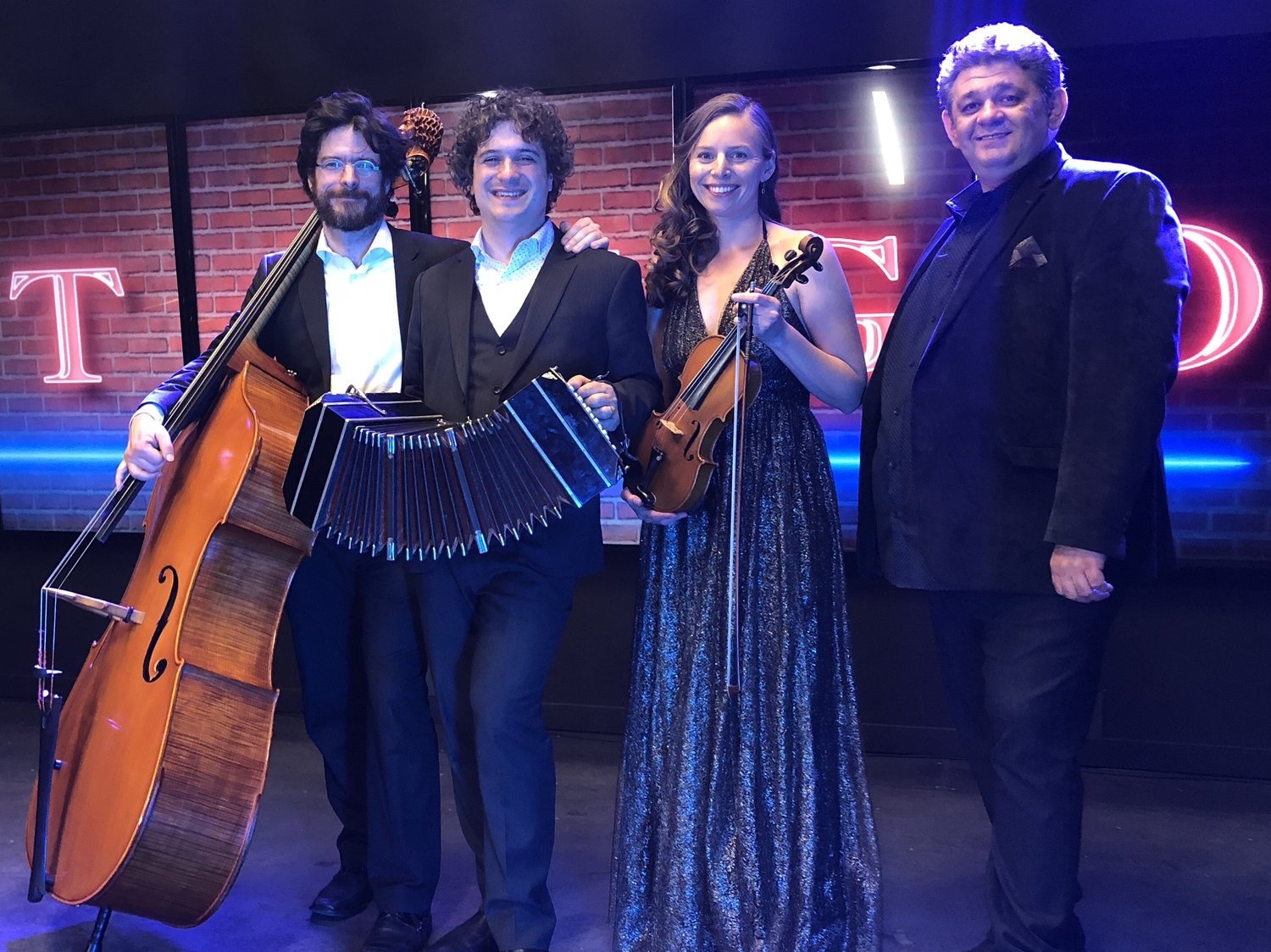
The spirit of an extended modal family is reflected in Labyrinth Musical Workshop Ontario’s inaugural season’s remarkably ambitious lineup featuring 11 masters of Greek, Turkish, Bulgarian, Iranian, Azerbaijani, Arabic, Kurdish and Afghani music traditions. Historically these musical cultures interacted for centuries in their ever-shifting places of origin. In 2018 Toronto it’s possible to see such fruitful musical interactions reflecting the demographic reality on the ground.

Each faculty member will conduct week-long workshops and then perform in four concerts in Toronto throughout May and into June.

Labyrinth Ontario is a made-in-Toronto modal music school founded by an Iranian-Canadian musician, but with roots in an unlikely place (a Mediterranean island), and perhaps an even more unlikely founding father (the English-born Ross Daly who boasts Irish ancestry). Let’s go explore.

Labyrinth Musical Workshop, Crete

Labyrinth Musical Workshop began in 1982 as the brainchild of the Cretan world musician and educator of Irish descent Ross Daly. His first series of Labyrinth workshops took place in 1997 in Athens, Greece.

Daly – a specialist on the music of the Cretan lyra (fiddle) and of the Ottoman court, a participant in intercultural composition before world music became a commercial term, and a composer – originally wanted to establish a space for a creative group of friends. His overall aim was to explore “various modal musical traditions from around the world, as well as of the potential for creative interaction between them.”

In 2002, a permanent base for Labyrinth was established in a restored manor house in the village of Houdetsi on the island of Crete, Greece. There Daly has fine-tuned his workshop model of concentrated weekly music lessons focusing “primarily on the modal musical traditions of the Balkans, Middle East, Central Asia, India, North Africa,” as well as presenting concerts by “outstanding teachers/musicians, the prime representatives of these traditions.”

While leading international musicians and students travel twice a year to Labyrinth’s Cretan village environment, in the last two years Daly’s notion of teaching global modal musical traditions has really caught fire. It has spread across Europe and now jumped the Atlantic to Canada. In 2016 Labyrinth Catalunya was established in Barcelona, and in 2017, Labyrinth Italia in Santa Sofia. This year Labyrinth Cyprus launched, with three modal music seminars which were held April 10 to 15, 2018 in Nicosia, capped with a concert.

Ross DalyLabyrinth Musical Workshop Ontario: Backstory

That brings us to the most recent iteration of the concept, Labyrinth Ontario Musical Workshop in Toronto. And it may be the most ambitious of the Daly-inspired spinoffs, animated by a series of 11 workshops running over four weeks, plus four concerts.

Labyrinth Ontario was on my radar back in September 2017 when I offered a preview in my World Music column, observing that it “focuses on the education of a new generation of musicians – and also audiences.”

Two Toronto-based musicians are at the heart of the project. Virtuoso tar (Persian lute) player and teacher Araz Salek serves as its artistic director and keyboardist and sound designer Jonathan Adjemian as its admin director. Having begun his music career in Iran, Salek has been active as a tar player and leader in Toronto for over a decade in both Persian classical music ensembles as well as in eclectic music circles, such the Persian-flamenco fusion group Persamenco. He performs often in other settings too, in Toronto and on tour internationally, experimenting with new transcultural groupings and various crossroads of classical, experimental and improvised music, seeking out creative musicians in all those areas.

Starting an unorthodox music education and concert series is certainly a risky endeavour, but Salek’s street cred in this arena positions him strongly to kickstart Labyrinth’s presence in Toronto. For example, he has served as an instructor at Daly’s Labyrinth Musical Workshop in Crete and since 2012 has been a core member, with Daly, Pedram Khavarzamini and Kelly Thoma, of the Toronto-Crete quartet This Tale of Ours – a group continuing to be a source of inspiration for Salek. They are all workshop leaders in Labyrinth Ontario’s inaugural season.

I followed the story to the 918 Bathurst Centre. There, on the evening of September 15, 2017, Labyrinth Ontario held its launch and fundraising concert. The event had a warm, mixed-community feel, underscored by the ethnically diverse music and foods on offer covering Persian, Southeastern European, Turkish, Kurdish and Middle Eastern ground. That diversity was reflected in Labyrinth Ontario’s board of directors introduced at the event: Poorya Ferdowsi, Pouria Lotfi, Alia Hamdan O’Brien, Irene Markoff and Rob Simms.

Silk Road and the Spirit of the Extended Modal Family

Simms, associate professor of music at York University, recently posted an essay on Labyrinth Ontario’s website placing its project into a much larger frame. He begins by pointing out that while as recently as 40 years ago “Toronto was thoroughly white-bread, WASP dominated,” today it is “regularly cited as one of the most culturally diverse cities in the world. While this is a wonderful fact and opportunity for those of us who live in the city, it is even more remarkable how recent this came to be.” He continues that while world history “features many previous hotbeds of cultural contact … none of these come close to the complete global integration we now inhabit and that forms the fabric of daily lives” in major global cosmopolitan centres.

Simms then invokes the example of the network of trade routes known as the Silk Road which provide us with “an incredible continuity of musical expression stretching from North Africa, Southern and Eastern Europe, clear across to Central Asia and Western China. This massively extended musical family shares similar social contexts for performance, aesthetics, philosophy, performance practice, instrumentation and musical structures – rhythmic cycles, forms and melodic modes (scales with particular behaviours or personalities).”

Among the various systems of melodic modes which grew up along the Silk Road, one of the most common is the maqam, literally “station, place” in Arabic. “While the underlying musical foundation was shared … a rich array of varying musical traditions flowered, cross-pollinated and withered through the centuries into our own time. Most of the musicians stayed in their particular sonic and social worlds … Until the late 20th century” – which is when Ross Daly enters Simms’ essay. Simms nominates Daly as one of the “early pioneers of exploring the larger maqam family.” Attracted to the lyra tradition of Crete where he has lived for over 40 years, Daly has “established a unique and highly successful series of workshops that brings together master teachers of myriad maqam traditions and keen students from around the world.”

One of the keys to the success of Daly’s Labyrinth Workshops is that they are at the same time informal and highly social yet also intensive and serious in musical focus. In this mix Simms sees the “spirit of the extended modal family tradition throughout history,” echoing Daly’s own ethos: “Labyrinth is more than a musical workshop, it is a way of life through music.”

Labyrinth Ontario’s First Season: Workshops, Concerts and Discussions

Labyrinth Ontario’s first season workshop faculty includes an international roster of leading instrumentalists, singers and composers in their respective genres. They are: Ross Daly (Greece) on modal music composition, Kelly Thoma (Greece) on Cretan lyra, Ali Akbar Moradi (Iran) on Kurdish tanbur, plus American-based Imamyar Hasanov on Azeri kamancha, Tzvetanka Varimezova on Bulgarian singing, and Quraishi on Afghan rabab.

Toronto-area expert practitioners George Sawa on Arabic music theory and qanun, Araz Salek on tar, Bassam Bishara on oud, Pedram Khavarzamini on tombak and Ahmet Ihvani on Turkish bağlama/saz complete this year’s teaching faculty. Interested readers can find bios of each instructor and the dates of instruction on Labyrinth Ontario’s informative website: www.labyrinthontario.com/labyrinth-2018-workshops.

In addition to the workshops, faculty will give a concert each week, and TBA-moderated panel discussions will be open to the public.

The first concert on May 12 features This Tale of Ours, a quartet with members hailing from Canada and Greece, though certainly not musically limited by those nationalities. (The group’s membership – Daly, Thoma, Khavarzamini and Salek – bridges the parent Labyrinth with its newly minted Toronto offspring.) Look to The WholeNote listings and the Labyrinth Ontario website for details on this and the other three concerts.

Each month in this column I chart a few of (what appear to me at the time as) the high points of master musicians from around the world appearing in Toronto and region in concerts, festivals and one-off workshops. From my vantage point it seems Labyrinth Ontario takes this situation to yet another level, focusing our attention intensively – and at an uncompromisingly high artistic level – on a few fascinating and related modal musical cultures.

Borrowing a phrase from Simms’ essay I’m prompted to ask whether Toronto is indeed the “perfect location to carry this amazing, vibrant Eurasian cultural treasure [offered by Labyrinth Ontario] to wherever it is heading in the 21st century.”

It’s too early to give a definitive answer: we’re still weeks away from the final workshop and concert. But the fact that this ambitious project was founded by a person who has emerged from outside Canada’s established cultural elite circles should be a source of pride in the direction we as a community are moving. I will continue to cover Labyrinth Ontario’s progress as it seeks to explore sites of our own Toronto brand of “post-global” music. clip_image001.png

Andrew Timar is a Toronto musician and music writer. He can be contacted at worldmusic@thewholenote.com.
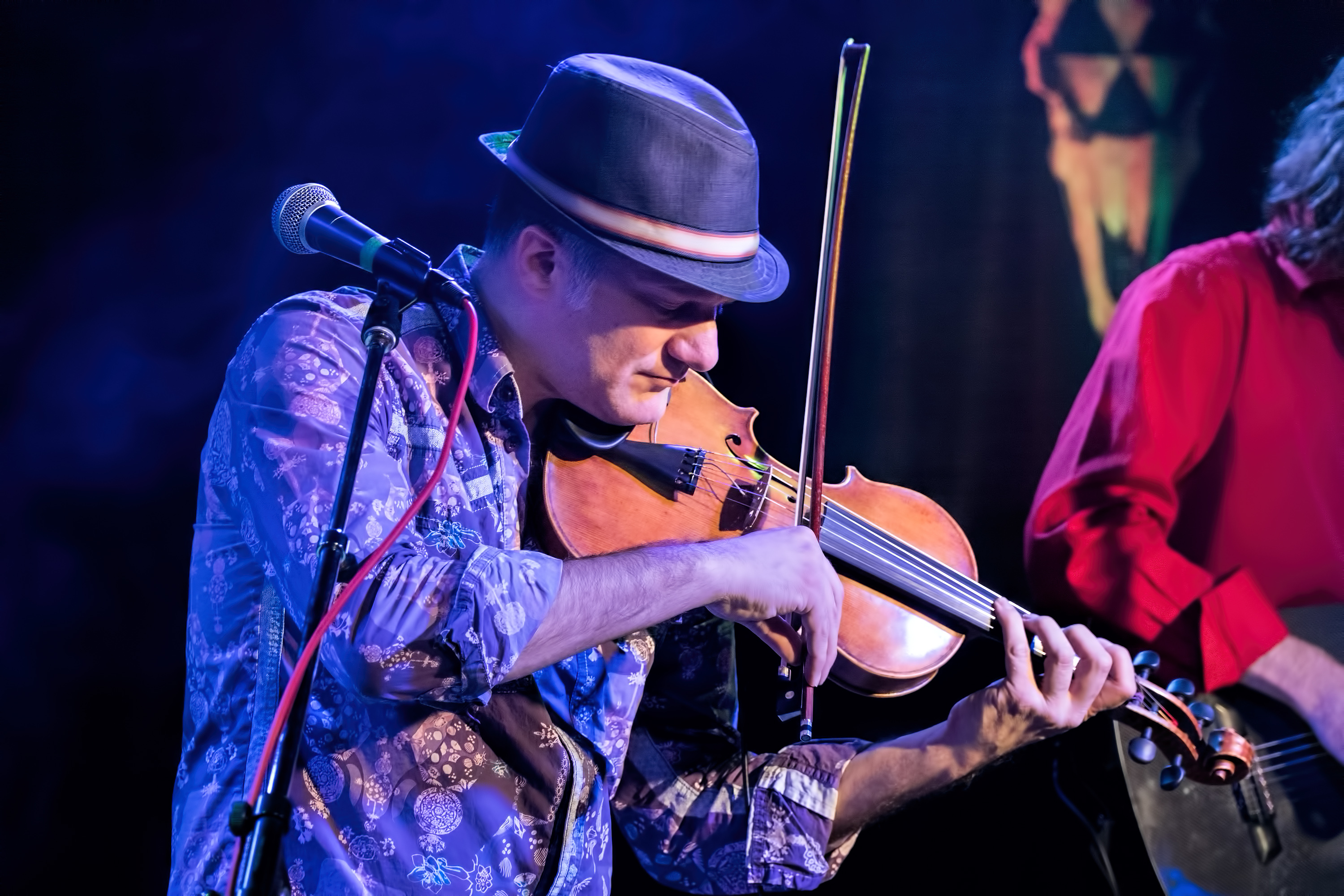
Oversimplifying a complex subject, I believe that all music is essentially hybrid, reflecting the diversity and the hybridity of our own music-loving species. What fuels the hybridizing impulse when staying with the tried and true often seems the safer musical choice?

The continual process propelling the evolution of musical culture can be witnessed in seemingly small things. I’ve seen it sparked by casual jams and offstage exchanges between musicians from different cultures, for example. Such explorations have also occasionally been instigated by adventurous composers eager to incorporate new sounds or cultural sound-views in their scores and recording projects. I see this kind of cultural transfusion as a hallmark of the healthiest scenes, those which will continue to thrive among future music creators, interpreters and audiences.

Relevant to this discussion is the evolving notion of transculturalism. Simply put, it is “involving, encompassing, or combining elements of more than one culture.”

The idea of the transcultural society was developed by the German cultural philosopher Wolfgang Welsch. In Transculturality – the Puzzling Form of Cultures Today (1999) he asserts that the notion of transculturality takes into account “the internal complexities and constant variations characteristic of every culture, as well as recognizing the degree to which cultures are becoming inseparably linked with one another.” According to Welsch, cultures today are no longer homogenous and monolithic but rather have multiple intersections and interdependencies which exhibit network characteristics.

A number of Toronto musicians and music groups have creatively embraced the practices of cultural hybridity and transculturality (with or without using that tag), putting the social reality we experience every day on centre stage.

For this month’s column I’ve sought out music creators and presenters among us who seek to combine instruments, melodies and modes, musical forms, song lyrics, performance genres and practices, presenting concerts mixing two or more musical cultures. Here are just a few I’ve found.

KUNÉ – Canada’s Global Orchestra

Launched last year as The New Canadian Global Music Orchestra by the RCM’s Mervon Mehta, and recently rebranded as the more mellifluous-sounding KUNÉ (“together” in Esperanto), this Toronto world music supergroup could be transcultural music’s poster family. (I wrote extensively on KUNÉ’s origin story in my May 2017 column in The WholeNote (NCGMO Explores the Power of the Collective) and recommend a visit there for those who would like to know more about this ambitious project.)

Directed by David Buchbinder, KUNÉ releases its debut album in concert on April 7 in its Koerner Hall home. As I mention in my review of the album elsewhere in this issue, it is a milestone in the group’s “journey to create a band that looks and sounds like Canada today.”

After intermission David Buchbinder is joined by Grammy Award-nominated Cuban piano master Hilario Durán along with their band Odessa/Havana. They skillfully mash up the worlds of klezmer and Latin music, creating new lyrical and swinging transcultural music along the way.

Kiran Ahluwalia’s “LOVEfest: Welcome the Stranger”

Two-time JUNO Award-winning singer and songwriter Kiran Ahluwalia’s concert “LOVEfest: Welcome the Stranger” is a case study in transcultural performance. The production tours eight North American cities in April. Its sole Toronto stop is on April 14 at the Harbourfront Centre Theatre, part of Small World Music’s 16th Annual Asian Music Series which runs April 6 to May 25.

Kiran Ahluwalia - photo by Swathi ReddyBorn in India, raised in Canada and currently living in New York City, Ahluwalia makes songs deeply rooted in Indian and Pakistani classical music and ghazal traditions. Her songs and arrangements draw from her rich South Asian heritage but they are also heavily influenced by African desert blues and American jazz. In these disparate elements we can trace Ahluwalia’s own multicontinental life journey, witnessing how she has morphed musical influences from each into a sweet sounding emblem of transculturality.

Tagged as “an eclectic celebration of love and diversity through music and dance,” LOVEfest includes sacred and secular performers from both Muslim and Sikh traditions. In an impromptu text chat with me, Ahluwalia pointed out with concern that these “two communities are currently experiencing an alarming rise in hate crimes.” It’s an issue evidently front of mind. The April tour supports her new album 7 Billion; its second track Saat (Seven) explores the faces of cultural intolerance. Says Ahluwalia, “It is a theme close to my personal experience. My story is that of an immigrant born in India and raised in Canada. As an immigrant child the hardships we faced were touted as temporary – the effects were permanent.”

Onstage, Ahluwalia is supported by her crack five-piece band on electric guitar, electric bass, tabla, accordion and voice. Affirming cultural diversity, she welcomes to the show Souad Massi (Algeria), the most successful female singer-songwriter in the Arabic-speaking world today. Massi’s lyrics are about creativity and tolerance, and the common human yearning for freedom.

Adding cultural layers and spiritual dimensions to the concert, the Bhai Kabal Singh trio of tabla, two harmoniums and three voices performs songs in their Sikh temple kirtan tradition. Then Egyptian dancer Yasser Darwish renders the tanoura, a colourful whirling Dervish dance featuring multicoloured skirts that symbolically demonstrate core values of Sufi spiritual belief, such as unconditional forgiveness.

Now for an exclusive insider tip just for WholeNote readers. In our recent text exchange Ahluwalia hinted she and Massi may be singing a cover of a song by a renowned world music diva. After some prompting, she revealed they’re working on Gracias a la Vida, the song made famous by Mercedes Sosa, the late Argentinian giant of Latin American song. It’s a telling choice. Written in 1966 by Violeta Parra, a founder of Nueva Canción Chilena, the song stands as a defiant, life-affirming response to political injustice while unblinkingly reflecting on the bittersweet nature of life’s joy and sadness.

To a generation of Chileans Gracias a la Vida became an anthem uniting people in times of trouble. For audiences on both sides of the world’s longest peaceful border, LOVEfest’s program aims to demonstrate, employing elements from diverse global cultures, what it feels like to “welcome the stranger” though heartfelt music and dance.

“LOVEfest: Welcome the Stranger” also plays April 12 at the Oakville Centre for the Performing Arts and April 13 at FirstOntario Performing Arts Centre in St. Catharines.

Ensemble Constantinople “Under the Senegalese Musical Sky”

April 13 the Aga Khan Museum presents “Under the Senegalese Musical Sky,” featuring the Montreal-based Ensemble Constantinople directed by Kiya Tabassian, and guest Senegalese musician Ablaye Cissoko. Inspired by the ancient city illuminating East and West, Ensemble Constantinople was conceived as a forum for encounters and cross-fertilization. In its two-decade career it has explored many musical genres and historical periods, from medieval manuscripts to contemporary aesthetics, from Mediterranean Europe to Eastern traditions.

Ablaye Cissoko (left) and Ensemble Constantinople - photo by Michael SlobodianLast fall the Aga Khan Museum inaugurated a series of performances titled “Conversation Nation,” linked thematically to its HERE exhibition. Using Ensemble Constantinople as the house band, four musical pairings, each with a different national focus and guest musician, were programmed. The series launched in October 2017 with “Under the Syrian Musical Sky.”

The scene shifts to Senegal April 13, with the master kora player, vocalist and composer Cissoko. Born into a Mandingo griot (troubadour/historian) family, Cissoko has developed an international concert and recording career playing music characterized as “at the confluence of African music and jazz.”

Ensemble Constantinople has worked with Cissoko since 2014, forging innovative encounters between Mandinka and Persian classical music, set within a transnational world music aesthetic. Their 2015 collaborative album Jardins migrateurs (Itinerant Gardens) garnered critical plaudits for “conveying a sense of effortless invention grounded in unassuming technical masterery.” We can expect another masterclass in gentle transcultural music from this quartet on April 13.

Taiko Plus! Esprit Orchestra with guest group Nagata Shachu

Although I’ve followed the trailblazing Esprit Orchestra since its inception, I rarely get a chance to write about its music in this column. Why? As Canada’s only full-sized professional orchestra devoted to performing new orchestral music, it usually falls outside my world music beat. Not this month.

On April 15, the 65-member Esprit Orchestra, under the direction of Alex Pauk, assays the transcultural embedded at the core of contemporary orchestral music in its Koerner Hall concert. The work in question is Japanese composer Maki Ishii’s Mono-Prism (1976), scored for orchestra and a group of seven taiko drummers. Under the direction of Toronto’s Kiyoshi Nagata, members of his veteran taiko group Nagata Shachu perform those demanding drum parts.

I caught up with Esprit conductor Alex Pauk on the phone recently. “This isn’t the first Ishii work with non-orchestral percussion we’ve played. In a past season we performed his Afro-Concerto (1982) which uses African drums. The earlier Mono-Prism had its roots in Ishii’s extended studies with Ondekoza, the founding group of the modern taiko movement.”

Mono-Prism, the first work for orchestra and taiko, was premiered in 1976 by conductor Seiji Ozawa at the Tanglewood Music Festival, with Ondekoza playing the taiko parts. Its compelling energy, rhythmic vitality, clouds of sound from the pen of a skilled orchestrator, and its East-meets-West subtext, won a favourable reception. Its heart-skipping finale still excites audiences today.

I should mention that the Esprit Orchestra has embraced transcultural music making before. In 2013 it hosted Toronto’s Evergreen Club Contemporary Gamelan, jointly performing two works by Canadian composers. (As usual I want to flag my 35-year membership in ECCG – yes, I was on that stage and yes, I’m still having fun doing so!)

As a bonus that night Esprit added a dance performance by Balinese dancer Evie Suyadnyani. Intrepid classical music blogger Leslie Barcza recognized the transculturality that night, exclaiming, “My head is still buzzing in a good way from this exquisitely intercultural experience.”

Gamelan in Concert

Finally, speaking of the Evergreen Club Contemporary Gamelan, the pioneer Canadian world music octet has built a 35-year career making music which regularly crosses cultural stereotypes and boundaries. The group has embraced not only the West Javanese music indigenous to its gamelan degung (set of instruments) but many other global genres as well. ECCG has collaborated in concerts and recordings with an enormous variety of music-makers, including Baroque and contemporary orchestras, string quartets, violin soloists, choirs, NEXUS, opera and world music singers, turntable duo iNSiDEaMiND, rapper Abdominal, and the leading Sundanese songwriter of his generation, Nano S.

On April 21 the Consulate General of the Republic of Indonesia in Toronto presents “Gamelan in Concert” at its Jarvis Street hall. Doesn’t sound particularly transcultural? What if I told you that three types of gamelan from three distinct cultures are represented?

In addition to playing its Sundanese degung, ECCG hosts Javanese musician and scholar Sutrisno Hartana as its artist-in-residence. He’ll be developing new works in a series of workshops with ECCG, exploring common ground between Sundanese, Javanese and Western instruments and performance practices.

Kayonan Balinese Gamelan Orchestra represents Bali, the third culture in the concert. Founded in 2011 by dancer/choreographer and gamelan musician Keiko Ninomiya, Kayonan is Toronto’s first gong kebyar (orchestra). She has actively promoted the awareness and appreciation of Balinese gamelan music and dance in Toronto through performances, demonstrations, workshops and weekly courses ever since.

During the break between the first and second halves of the concert, the Consulate has considerately arranged Indonesian snacks for anyone in the audience who feels peckish. After a feast of mixed gamelan music and dance, what better than a plate of gado-gado piled high with sticks of sate and pink krupuk to feel truly transcultural on Jarvis Street?

Andrew Timar is a Toronto musician and music writer. He can be contacted at worldmusic@thewholenote.com.
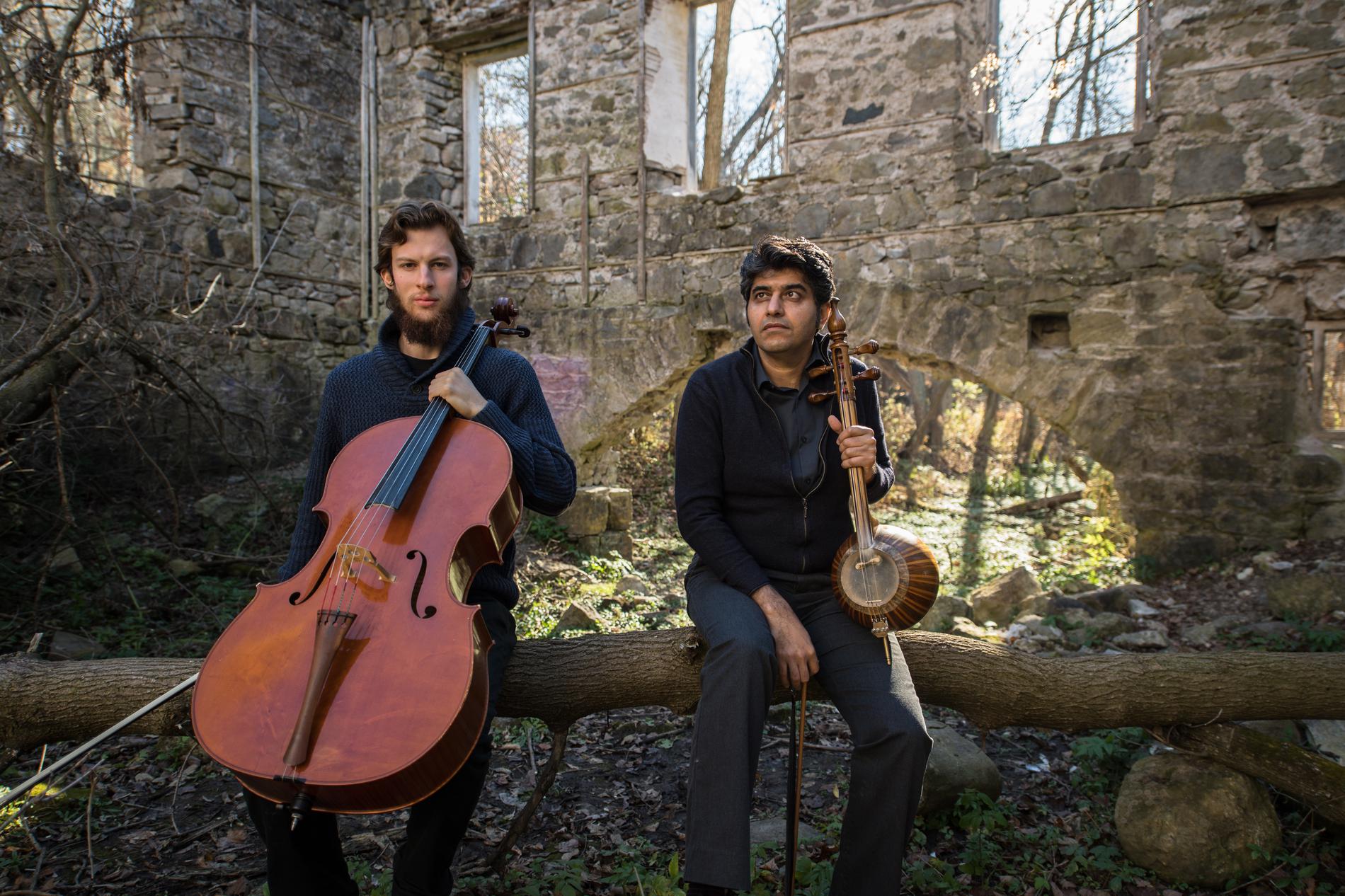
From its earliest years York University fostered a unique music environment which embraced what was then the fringe. Experimental music, research into biofeedback as a musical controller, interdisciplinary performance studies, jazz, improvisation, period musical performance and world music were all on the curriculum. Did geographic isolation encourage and help incubate such an adventurous and exploratory musical spirit?

York University Subway StationYork’s Keele campus is located in northwestern Toronto. Back when I first attended, it felt a world apart from the downtown classical music scene anchored in the established programs at the University of Toronto’s Faculty of Music. The sheer distance between the two institutions and the time it took to travel between them emphasized the cultural gulf. Yet in the traffic between the two universities’ world music ensembles there are threads we can trace, via the public transit web that connects both institutions.

There has been talk of a York University subway station on the Keele campus ever since the Music Department was incorporated in 1969 as part of the Faculty of Fine Arts. Rumours continued to rumble as the decades rolled on about a York subway stop until the new TTC Toronto-York Spadina Subway Extension (TYSSE), finally opening to great fanfare on December 17, 2017, made it a reality. For the first time, downtown travellers can take the subway beyond the city limits – and vice versa. Significant reductions in travel time are being touted by the TTC for their beneficial long-term impacts. Asked for her comments as to what these longer-term impacts of the TYSSE may be on music and other kinds of performances at the Keele campus, York University media relations spokesperson Janice Walls put a positive, if fairly obvious, spin on things in an email: “Now that the subway stops at York University, it makes it much easier for people to access the many music and theatre performances available on campus.”

Equally obvious, perhaps, but perhaps less spin-worthy, York students can now also take the subway to an evening concert at a downtown venue and then get back home at a reasonable time!

The Advantages of New Frontiers

Already evident during its foundational 1970s decade, among the York Music Department’s strong suits were its world music ensembles. In 1970, the first year they were offered at York, I took the Carnatic, Hindustani and kulintang ensemble classes. But what exactly are the roots of this kind of ensemble?

The concept of the world music ensemble can be traced back to the late 1950s at UCLA, when it entered the discipline of ethnomusicology partly being developed there. It was introduced by American ethnomusicologist Mantle Hood (1918-2005), a specialist in Indonesian music, who took on the mission of bringing the fieldwork and academic study of ethnomusicology into the realm of practical musical experience and eventually performance. (I well recall a visit by the dramatic, black cape-wearing Hood to my undergraduate York music class circa 1970, the visit arranged by Sterling Beckwith, the Music Department’s first chair.)

The world music ensemble was one way in which Hood’s notion of bi-musicality, a term he coined in a 1959 paper, could be acquired within an educational institution. His approach encouraged the researcher to learn about music “from the inside,” and thereby experience its technical, conceptual and aesthetic challenges. Another of its aims was to enable the learner to better connect socially with the community being studied and have increased access to that community’s performances and musical practices. Many institutions all over North America have since incorporated a myriad of world music ensembles, presenting many music genres, into their course offerings.

York’s Music Department was among the world music ensemble’s very early Canadian adopters, in part perhaps because of its need to make an adventurous virtue of its isolation from the well-established downtown musical mainstream. Its world music courses have continued to grow in number and variety over the decades. I’m a first-person witness to that evolution as a member of the first Music Department undergrad class, and then later establishing its first Javanese gamelan music performance course there in 1999.

Perhaps what is most significant, however, is not so much the individual careers of professors or their courses, but that collectively they and thousands of their students have in many ways fed the interest and appetite for world music discovery, creation, appreciation, making and public performance in our community. In this way, York’s world music ensembles have served as a sort of R&D studio. They have made a substantial contribution to establishing the Toronto region as one of the most welcoming and productive hybrid music-friendly places on the globe – a real music city!

York University Music Department’s World Music Festival

Every year the Music Department holds a series of late winter concerts celebrating its near five decades of introducing yet another cohort of students to learning musics new to them. It also affords audiences – potentially coming from across the region care of the shiny new TYSSE – to explore musics they may never have heard live in student performances. Bonus: it’s all free.

This year the World Music Festival includes ten concerts representing many music traditions at halls located in York’s Accolade East Building, just south of the new giant white boomerang-shaped subway station.

(Please refer to the WholeNote listings for exact concert times. But here’s an appetizer.)

March 15 promises to be a long world music-rich day at York. Audiences can take in six concerts, starting at 11am with the Cuban Ensemble, directed by Latin music scene veteran Rick Lazar and Anthony Michelli at the Tribute Communities Recital Hall. It’s followed by guitarist and dedicated klezmer expert Brian Katz’s Klezmer Ensemble, upstairs in the Martin Family Lounge. All the remaining concerts also alternate between these two venues

After lunch, master Ghanaian drummer and longtime gifted instructor Kwasi Dunyo directs the “West African Drumming: Ghana” concert, then the Escola de Samba takes the stage, directed by the multitalented Rick Lazar.

At 4pm the West African Mande Ensemble performs, directed by Anna Melnikoff. The day closes with Lindy Burgess’ Caribbean Music Ensemble in the Tribute Communities Recital Hall.

York’s World Music Festival continues the next day, at noon on March 16, with the Korean Drum Ensemble directed by Charles Hong at the Tribute Communities Recital Hall. Sherry Johnson then directs the Celtic Ensemble, followed by the Chinese Classical Orchestra directed by Kim Chow-Morris. The festival wraps at 7:30pm with a performance of ethnomusicologist Irene Markoff’s Balkan Music Ensemble.

Master drummer Kwasi Dunyo leads ensembles in both festivals.

World Music Ensembles: Spring Festival, University of Toronto

Now just a 13-stop, single-line subway ride south from York U to Museum Station, U of T’s Faculty of Music also has a rich history of offering world music classes and engaging Toronto audiences in their performances. I attended world music ensemble concerts at Walter Hall in the 1980s and in following decades. I always encountered new and ear-opening music that enriched my multicultural palette.

The Faculty of Music’s World Music Ensembles website states that the “program at the University of Toronto has for many years enriched the musical lives of our students and has provided alternative perspectives on learning and making music by offering training in various world traditions. The ensembles vary from year to year. We have also been able to take advantage of an ensemble led by our annual visitor in the World Music artist-in-residence program [between 2007 and 2016].”

So we continue our “world music goes to college” theme back downtown, with a concert March 23 at 12 noon featuring the popular, long-running African Drumming and Dancing Ensemble. Under the dynamic direction of the Toronto-based master drummer Kwasi Dunyo, the event takes place at Walter Hall in the Edward Johnson Building.

A couple of weeks later, on April 7 at 2:30pm, other World Music Ensembles take the Walter Hall stage in the Faculty of Music’s annual spring concert. The Latin American Music Ensemble, directed by veteran percussionist and composer Mark Duggan, and Steel Pan Ensemble, directed by pan music educator, percussionist and arranger Joe Cullen, have been confirmed.

It’s far too soon to tell what the impacts of the TYSSE will be, positive and negative, on the health of nodes of local culture within the region.

But for sure I’ll be taking the subway more often in search of music. In both directions. clip_image001.png

Andrew Timar is a Toronto musician and music writer. He can be contacted at worldmusic@thewholenote.com.

Back to top