09 Man UpMan Up / Man Down
Constellation Men’s Ensemble
Sono Luminus DSL-92266 (sonoluminus.com) 

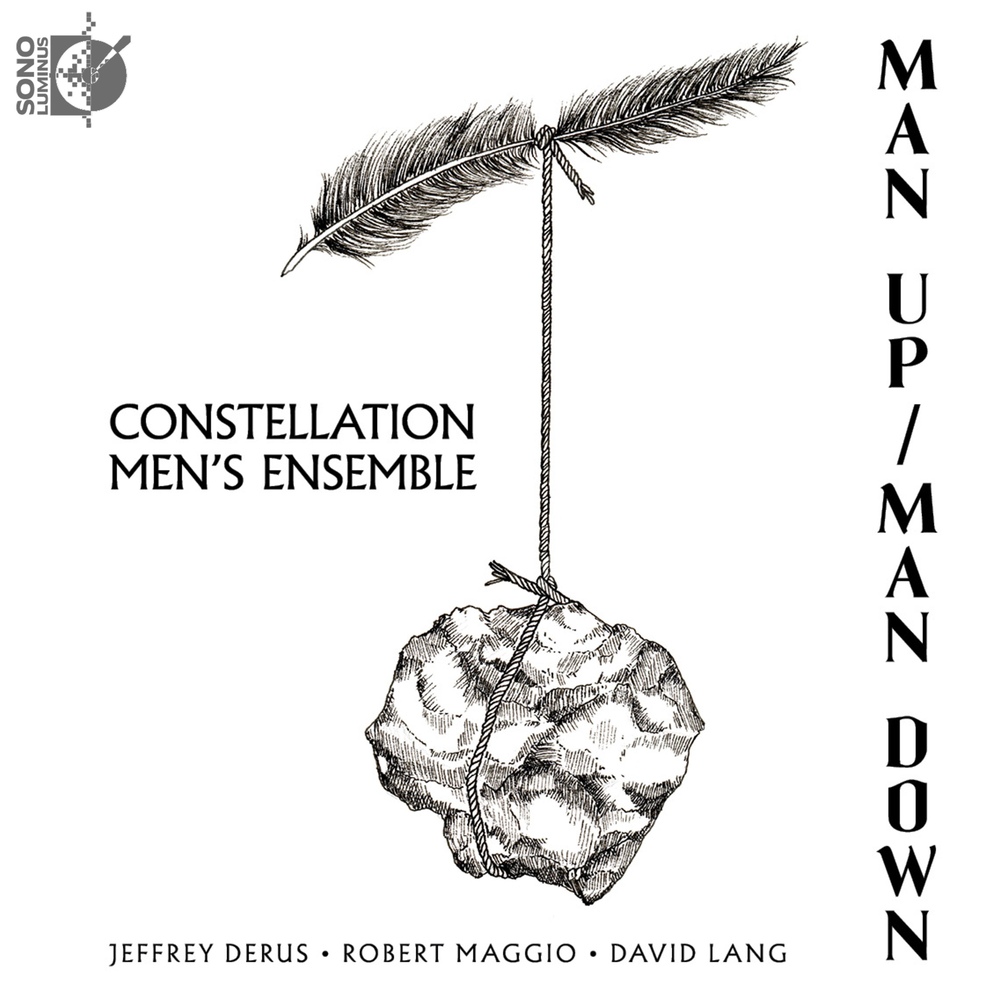
Everything about this recording is dramatic, even to the idiomatic cover, with a feather from which hangs a stone. The image and the imagery of the cover together with the quite bitterly sardonic repertoire has Promethean connotations and therein lies the ingenuity of the whole project. Not least, of course, is that the Constellation Men’s Ensemble is a truly fine all-male a cappella group, unafraid to allow the power of their voices to expose the myth of masculine power in the music of Man Up/Man Down

Three composers contribute to this extraordinary debut album. They are Jeffery Derus, whose composition HOME sets up the whole recording. Derus’ work takes its cue from a poem by Carl Sandberg who writes at night as he “listened… to a mother signing softly to a child restless and angry / in the darkness.” Perhaps unwittingly (or otherwise) this song sets up the Madonna and her unquiet child who grows into his uncomfortable manhood. 

This is the kind of man we encounter in Robert Maggio’s monumental, 11-part work Man Up/Man Down. Expectation and the harsh realities on man/woman inequity collide in Maggio’s work as the composer peals and chips away at the hollowness of male role modelling which – as the narrative prosody of the words tell us – has resulted in the near-destruction of contemporary body politic.  

The disc concludes with a work by David Lang. His song manifesto makes for an uplifting utopian dénouement after some brilliant, yet otherwise dark music.

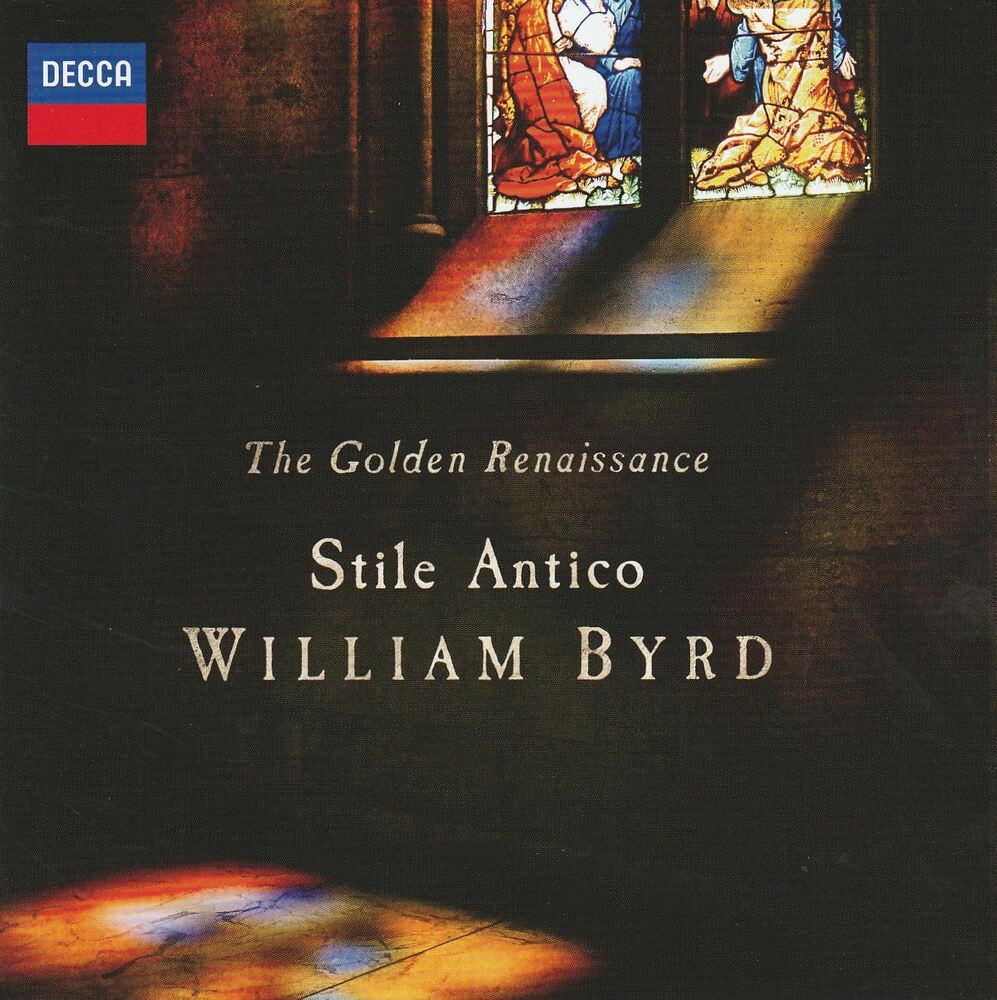
01 William ByrdWilliam Byrd
Stile Antico
Decca 485 3951 (stileantico.co.uk/recordings/william-byrd)

England under Elizabeth I was a dangerous place for Catholics. William Byrd was fined for not attending Anglican services, his movements monitored and restricted owing to his connections with known Catholic dissidents. Yet there’s evidence he received official dispensation to practise his faith, albeit covertly, perhaps because Elizabeth loved music and was a keyboard player herself.

Most of the music on this richly rewarding CD comes from Byrd’s later years, all composed for small groups of singers. The main offering is the 26-minute Mass for Four Voices, printed in the late 1590s with no title or composer identified, intended for secret services in clandestine chapels. This gorgeous music is gorgeously sung, from the tender, affectionate Kyrie and Gloria to the earnest, complex Credo, fervently reverent Sanctus-Benedictus and, most strikingly, the haunting Agnus Dei.

The CD concludes with the grandiose, 13-minute Tribue Domine for six voices, a work from Byrd’s younger years. The nine shorter selections include examples from Byrd’s publicly issued songbooks, music that appealed to singers and listeners of all persuasions, widely performed and appreciated. I particularly enjoyed the elegiac Retire, my soul, the jubilant Gaudeamus omnes, the prayerful Turn our captivity (Psalm 126) and the celebratory Laudate Dominum (Psalm 117).

The 12-member, London-based Stile Antico, performing without a conductor, has won raves from its worldwide tours and numerous awards for its recordings; this latest CD will add to its well-deserved laurels. Texts and translations are included.

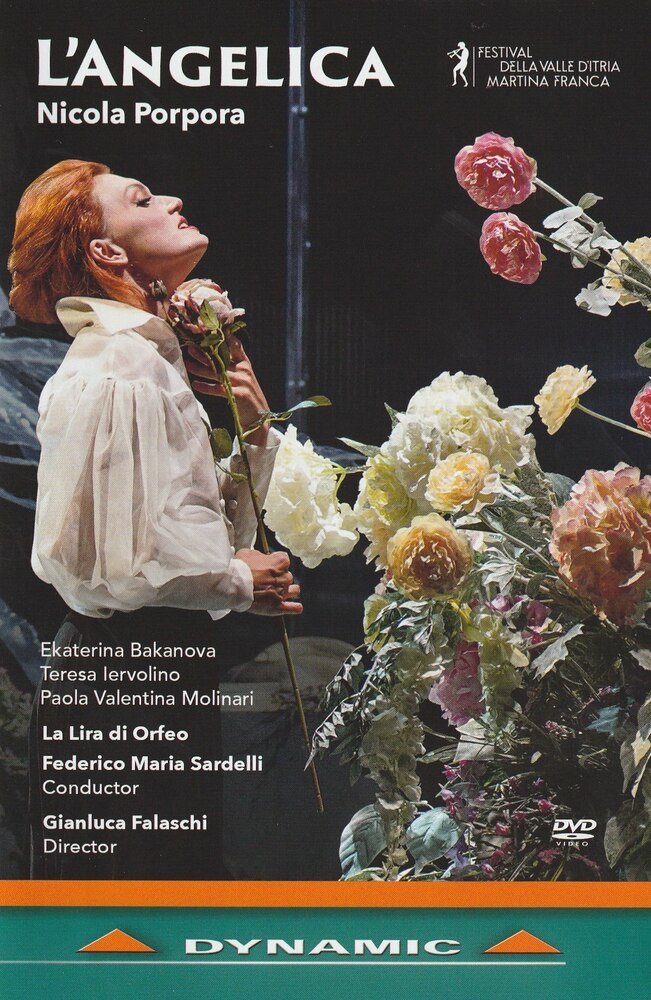
02 Nicola PorporaNicola Porpora – L’Angelica
Ekaterina Bakanova; Teresa Iervolino; Paola Valentina Molinari; La Lira Di Orfeo; Federico Maria Sardelli
Dynamic 37936 (naxos.com/CatalogueDetail/?id=DYN-37936)

I’ve enjoyed my CDs of Karina Gauvin, Cecilia Bartoli and Franco Fagioli singing arias by Nicola Porpora (1686-1768), wondering why hardly any of Porpora’s 50-plus operas are being performed or recorded.

After watching this DVD of L’Angelica from the 2021 Valle d’Itria Festival, I’m even more perplexed. Porpora’s score provides nearly two-and-a-half hours of affecting melodies, enlivened by frequent changes of tempi, rhythms and instrumentation, expressing moods from despair and anger to delight. Here, it’s all brilliantly sung by a superb cast and energetically propelled by the orchestra – La Lira di Orfeo – conducted by Federico Maria Sardelli.

Pietro Metastasio’s libretto tells of the amatory anxieties of two couples: Princess Angelica (soprano Ekaterina Bakanova) and Saracen soldier Medoro (soprano Paola Valentina Molinari); shepherdess Licori (mezzo Gaia Petrone) and shepherd Tirsi (soprano Barbara Massaro). The Christian knight Orlando (mezzo Teresa Iervolino), in pursuit of Medoro, lusts for Angelica; the old shepherd Titiro (baritone Sergio Foresti) offers sage advice. (At L’Angelica’s 1720 premiere, Tirsi was sung by a 15-year-old student of Porpora who would go on to become the most celebrated of all operatic castrati – Farinelli!)

Less pleasing were this production’s visual aspects: the single set, dominated by a banquet table; the singers’ unattractive, era-ambiguous costumes; meaningless masks; a large, grotesque sculpture of a bloody heart; inscrutable antics of four bizarrely attired dancers. Nevertheless, L’Angelica’s many musical felicities argue strongly that renewed attention to Porpora’s long list of forgotten operas is well overdue.

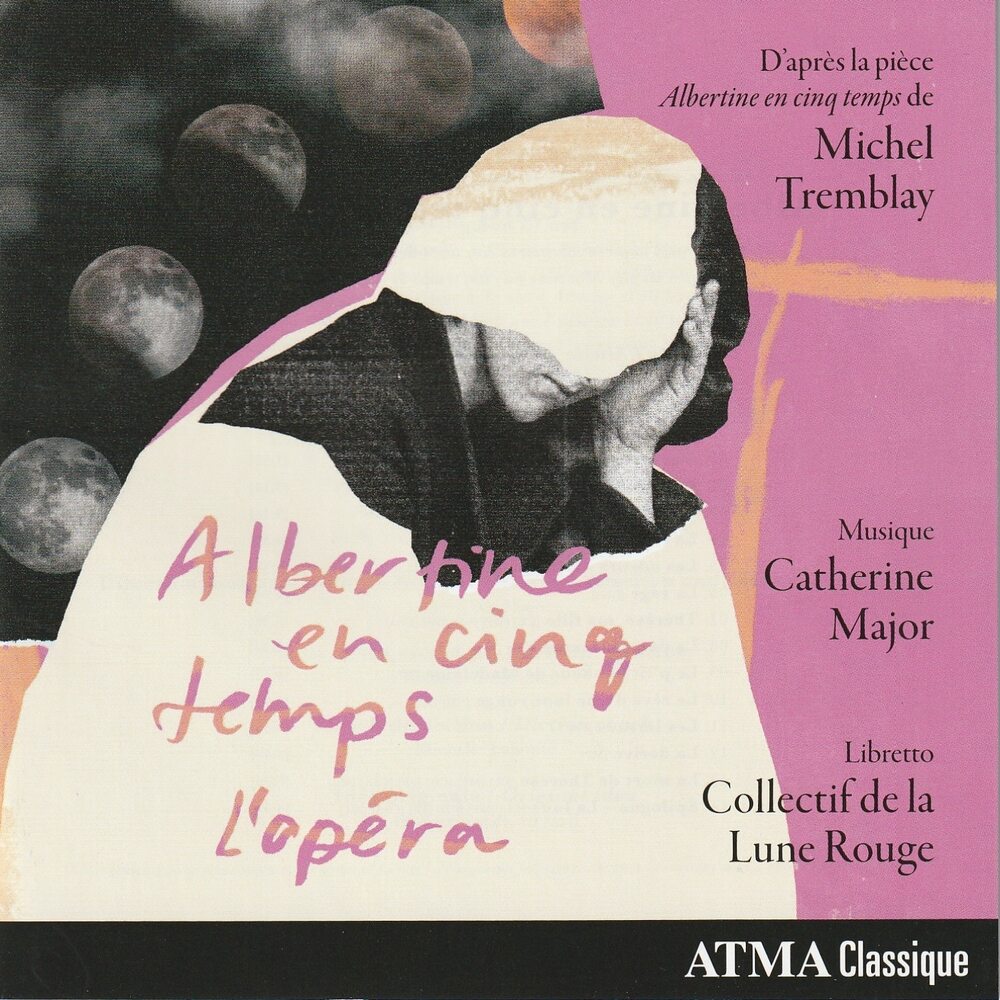
03 AlbertineAlbertine en cinq temps – L’opéra (play by Michel Tremblay; music by Catherine Major)
Collectif de la lune rouge
ATMA ACD2 2875 (atmaclassique.com/en)

Filmed partially in Toronto, Norman Jewison’s amazing 1987 film Moonstruck deals with what once was (still is?) the truism that opera is, in fact, not the sole province of the well-heeled elites who frequent the Metropolitan Opera and Lincoln Center, but a big-tent-accepting musical genre whose aficionados can include Brooklyn bookkeepers (Cher) and one-handed bakers (Nicolas Cage). In other words, there is a folk quality to opera’s history and appeal that, despite its more recent classification as European classical music, blurs hierarchical boundaries of class, status and earning potential.

How nice, then, it is to encounter a uniquely Canadian, and specifically Québécois opera that beautifully and sonically charts the life of the decidedly regular, but no less intriguing, Albertine, as she reflects back on her life cycle through five decades from her present perch in a retirement home. With each decade represented by a unique female voice – Chantal Lambert (age 70), Monique Pagé (age 60), Chantal Dionne (age 50), Florence Bourget (age 40) and Catherine St-Arnaud (age 30) – Albertine’s life in reflection (best listened to in a single session, of course) demonstrates both the banalities and unique challenges that we all endure in this captivating musical realization of National Order of Quebec recipient Michel Tremblay’s play of the same name. In addition to the acknowledgment given to the fine aforementioned singers, the accompanying all-female instrumentalists, musical score by Catherine Major, and libretto by Collectif de la lune rouge all factor significantly in making this recording a fine 2022 addition to our expanding canon of meaningful and vital Canadian original music.

Listen to 'Albertine en cinq temps' Now in the Listening Room

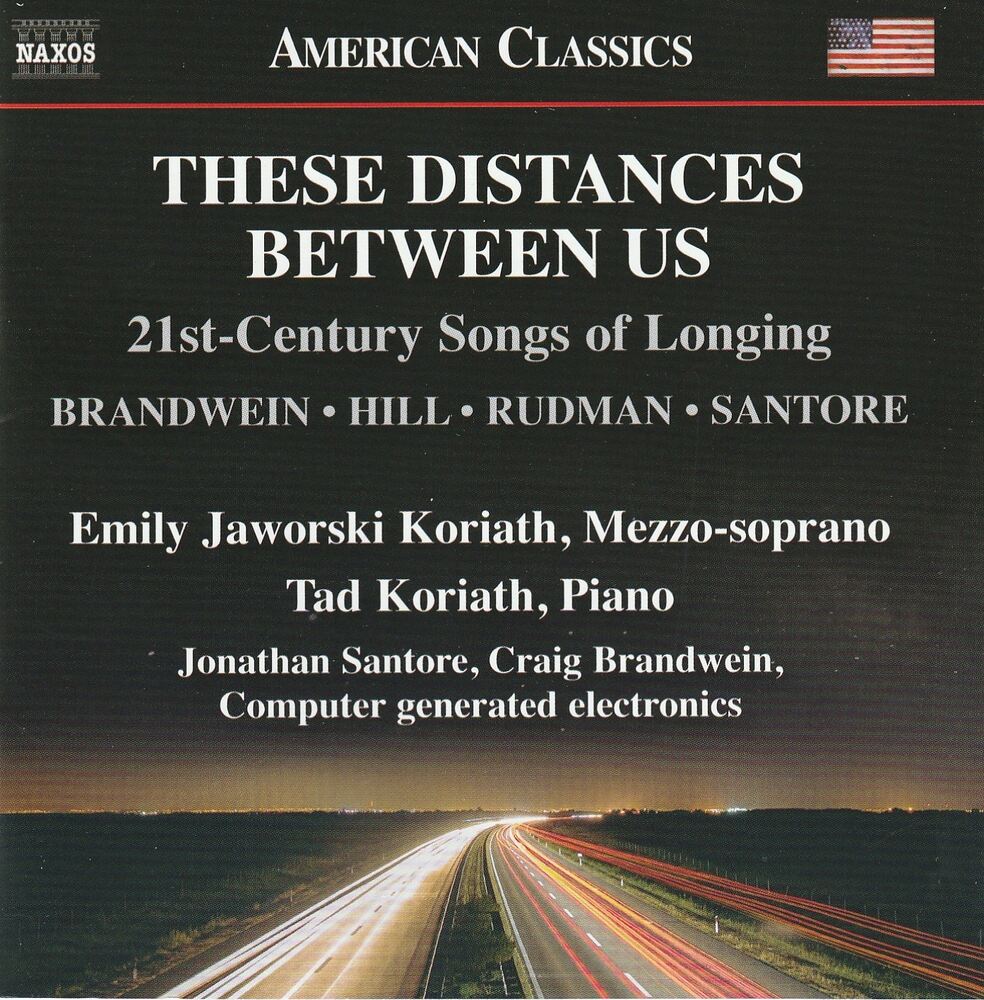
05 These Distances Between UsThese Distances Between Us – 21st Century Songs of Longing
Emily Jaworski Koriath; Tad Koriath
Naxos 8.559908 (naxos.com/Search/KeywordSearchResults/?q=8.559908)

On this rather remarkable, multi-disciplinary recording, the significant works of four American “Art Song” composers is explored – both as lyricist/poets and composers. All of the contemporary artists here are award-winning – and in addition to the thrilling vocals of famed mezzo-soprano Emily Jaworski Koriath, Tad Koriath performs on piano and has also created the stunning arrangements for the collection. The concept stems from Jessica Rudman, composer of the title track. It has been said that, “These Distances Between Us charts a cycle that recognizes the precarious nature of personal connections.” Joining the Koriaths on this CD are Jonathan Santore and Craig Brandwein, who are not only composers, but also magicians of computer-generated electronics.

Included here are Edie Hill’s The Giver of Stars: Six Poems of Amy Lowell. Each of the six movements is lovingly imbued with the majesty of the composition and the beauty of the poetry. Jaworski Koriath’s vocal instrument is both supple and salient – embodying the cornucopia of emotions arising from the material. Hill’s music has been described as “full of mystery,” which is self-evident in the other aptly titled poetic movements such as Vernal Equinox (which feels like a summoning of the spirts of lost lovers in the moist Spring). The innate lyricism of Lowell’s poetry meshes perfectly with the enchanted piano work of Tad Koriath throughout the final three poetic movements. 

Next up is Santore’s mind-opening Two Letters of Sulpicia (version for voice and electronics), which utilizes the technology to enhance and support – such as digital creation of highly realistic pipe organ stops and tubular bells. Also of note is the almost unbearable beauty of Brandwein’s Four Songs of John Charles McNeill. Of particular note is Rudman’s four-movement title piece, in which Jaworski Koriath’s voice easily reaches into the nearly unplumbable depths of human longing. The collection closes with Emmy-nominated Brandwein’s breathtaking Three Rilke Songs, gilded by perfectly placed and executed electronica.

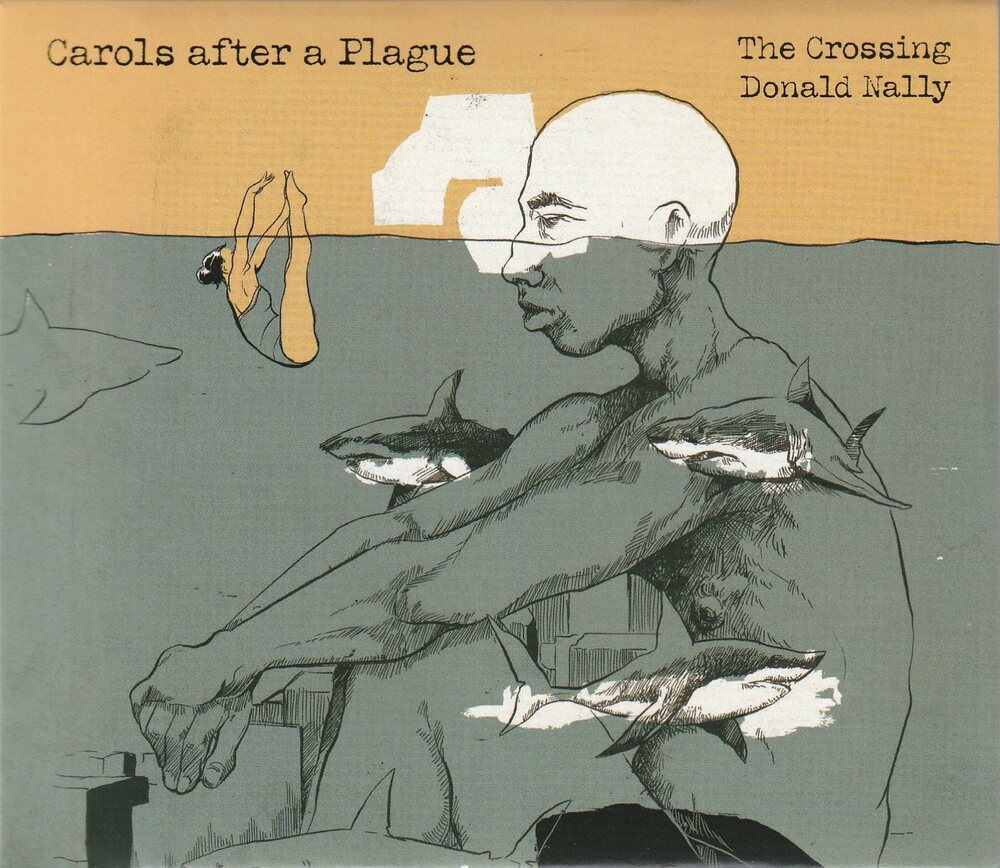
06 Carols after PlagueCarols after a Plague
The Crossing; Donald Nally
New Focus Recordings FCR357 (newfocusrecordings.com)

During the long global pandemic of 2020/21, our existential states were so fraught with death, that rarely did we think of ourselves as inhabiting a living planet teeming with a thriving humanity. We may have lived our lives together, yet we were hopelessly alone. And though the deadly virus may not quite be in the rearview mirror, communities of artists like The Crossing – led by Donald Nally – continue to challenge us to move forward, beyond the ubiquitous facemask; beyond our omnipresent fear of death by pandemic. 

A title such as Carols after a Plague calls for us to return to joyfulness. The carol is, after all, associated with communal singing after darkness falls, albeit to usher in thoughts of the brightness and joys of the Christmas season. 

This 12-song repertoire is woven into the three movements of Shara Nova’s Carols after a Plague, I - Urgency, II - Tone-policing, and III - Resolve. This song becomes the artistic canvas for the whole album. It describes the interconnectedness of human life and is eerily reminiscent of Nova’s song from her baroque chamber opera, You Us We All. The 11 other songs come from the crème de la crème of contemporary composers, each of which thematically examines the impact of the pandemic on global society.

Through the soaring, hour-long repertoire The Crossing, itself a living embodiment of an interconnected community superbly directed by Nally, shines as always, one glorious harmonious progression after the other.

Listen to 'Carols after a Plague' Now in the Listening Room

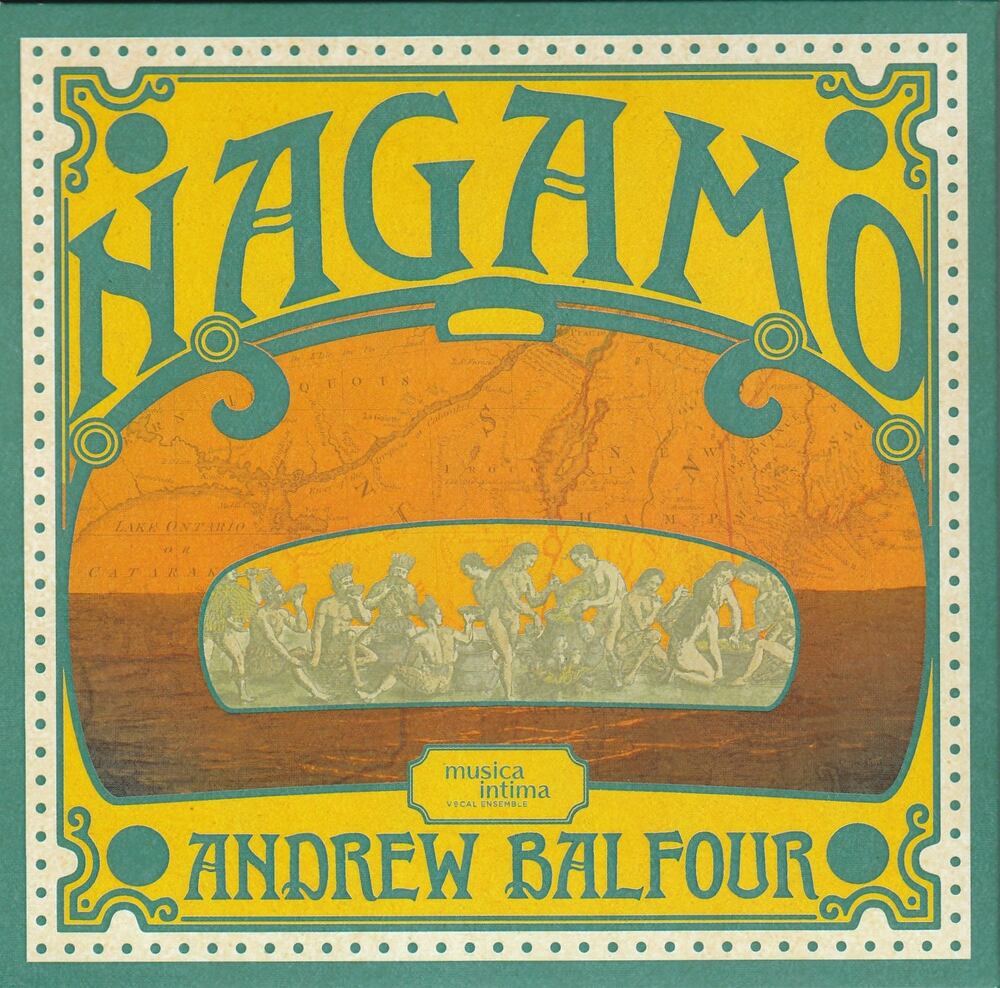
01 Andrew Balfour NagamoAndrew Balfour – Nagamo
Musica Intima vocal ensemble
Redshift Records TK522 (musicaintima.org)

Often, in histories of rock music, one confronts the idea that the so-called “concept album” is the sole province of this genre. Friendships, I’m told, have been ruined as a result of heated debates as to whether Frank Zappa’s Freak Out!, Sgt. Pepper’s Lonely Hearts Club Band or Pet Sounds by the Beach Boys can rightly lay claim to being the inaugural blending of music with an extra musical meaning in conceptual form. All of this is ridiculous, of course. Woody Guthrie was recording dust bowl ballads with a shared narrative theme through his recordings as early as 1940. Further, Frank Sinatra’s 1955 In the Wee Small Hours is most certainly united by way of the themes of melancholy and unrequited love, weaving a requisite and consistent thread through the tracks that, by all accounts, is a hallmark of the concept album.

Regardless of the aforementioned problematic claims to historic ownership of the format, composer Andrew Balfour, a self-described “former choir boy” and Sixties Scoop survivor, has waded into this conceptual format in an extraordinary and beautiful way with his 2023 release Nagamo. The title, like several of the album’s lyrics, is Cree (other texts featured here come from Ojibway, English, Latin and Gaelic sources) and the concept mines the fantastical question of what might have happened musically should Indigenous and European musics and cultural expressions come together in a manner collaborative and respectful, rather than divisive. The suggested result, as manifested on the beautiful album here, captures 12 crystalline skilled voices working their way through motets and Elizabethan choral music reimagined into Cree and Ojibway languages, alongside a duo of fine original pieces by Balfour with a Scottish Gaelic text. A beautifully recorded and interesting new release from the ensemble musical intima.

Listen to 'Andrew Balfour – Nagamo' Now in the Listening Room

02 NelliganNelligan
Various artists
ATMA ACD2 2814 (atmaclassique.com/en)

The tragic life story of Émile Nelligan, one of the most renowned 19th-century Canadian poets, has been a subject of several contemporary artistic endeavours and inspires wonder and speculation in creators and audiences alike. Born in 1879, Nelligan joined the École littéraire du Montréal at 17 and produced a significant body of poetic works by the time he was 19, at which point he was committed to a psychiatric hospital by his parents, for reasons that are not entirely clear. He stayed there for another 40 years and never wrote a word of poetry again.

Although characterized as a pop opera, Nelligan’s score is built on a classical foundation mixed with several musical genres, including pop and musical theatre. It is not surprising that the cast on this album is comprised of 15 stellar actors/singers, who brought to life both the emotional and circumstantial aspects of Nelligan’s story. Written by French Canadian icons, André Gagnon (music) and Michel Tremblay (libretto), the full operatic version was premiered in 1990 to critical acclaim. The more intimate version appearing on this album, splendidly arranged for two pianos and cello by Anthony Rozankovic, has an alluring element of confidentiality, as if the characters are spilling their innermost thoughts to our ears. It could be argued that the score does not quite access the emotional intensity of Nelligan’s life, but the featured elements of restraint, melancholy, purpose and poignancy, as well as beautiful melodies, certainly make up for the lack of raw emotion. Tremblay’s libretto is both potent and subtle, displaying societal oppression of artistic freedom and sexual orientation, the explorative tendencies of young artistic minds and linguistic tensions in Nelligan’s bilingual family all in one breath. 

It is interesting that Tremblay chose to portray two Émiles – a young one, completely consumed by poetry, and a much older one, nearing the end of his life in the hospital. Dominique Côté and Marc Hervieux are simply stunning in their portrayal of these two characters. Their heartfelt performance in one of the arias, Les Muses, into which the chanting of nuns is interpolated, is a perfect example of the power of this opera. Kathleen Fortin is poignant in the role of Émilie Hudon, Nelligan’s mother, especially in La dame en noir. The strong instrumental ensemble, featuring Esther Gonthier (piano and direction), Rosalie Asselin (piano) and Chloé Dominguez (cello) underlines the lyricism and storminess of the music with perfect sensibility.

03 Tu me voyaisTu Me Voyais
Christina Raphaëlle Haldane; Carl Philippe Gionet
Leaf Music LM257 (leaf-music.ca)

Christina Raphaëlle Haldane and Carl Philippe Gionet come together on Tu me Voyais to take us on a fascinating journey with lieder richly evocative of Acadian culture. Haldane is an agile soprano with a whisper-soft, tremulous vibrato. Always plangent and eloquent, she often inhabits a range that is dramatically lower than her soprano and darker in tone texture. Gionet is an equal partner in this exquisite recital and Haldane’s renditions of these songs is borne aloft throughout on Gionet’s delicate, shimmering – often spellbinding – pianism. 

The song poetry does much to elevate the music on this album. With repertoire that ranges from (the fin-de-siècle) Douze chansons folkloriques acadiennes, exquisitely arranged by Gionet, the dramatic Icare: premier fragment by Adam Sherkin, and pour une Amérique engloutie (IV) and Il va sans dire by Jérôme Blais, vocalist and pianist create a canvas that is by turns sensuous, ruminative, teasing and dramatic. 

Both artists weave mighty artistic spells throughout – Haldane with her impassioned and often amorous vocals that are melismatic and hauntingly beautiful, and Gionet with unmatched pianism that is marked with subtle lyricism. Listening to them is like experiencing an exquisitely choreographed pas de deux – one moment graceful and balletic, the next robust and athletic. Their supple ornamentation, informed by evidence of theatricality in the traditional Acadian sources, is also most effective. The open sound of this finely balanced recording enhances the ethereal quality of these delicate songs.

Listen to 'Tu Me Voyais' Now in the Listening Room

Back to top