05 Sibelius KullervoSibelius – Kullervo; Kortekangas – Migrations
Lilli Paasikivi; Tommi Hakala; YL Male Voice Choir; Minnesota Orchestra; Osmo Vanska
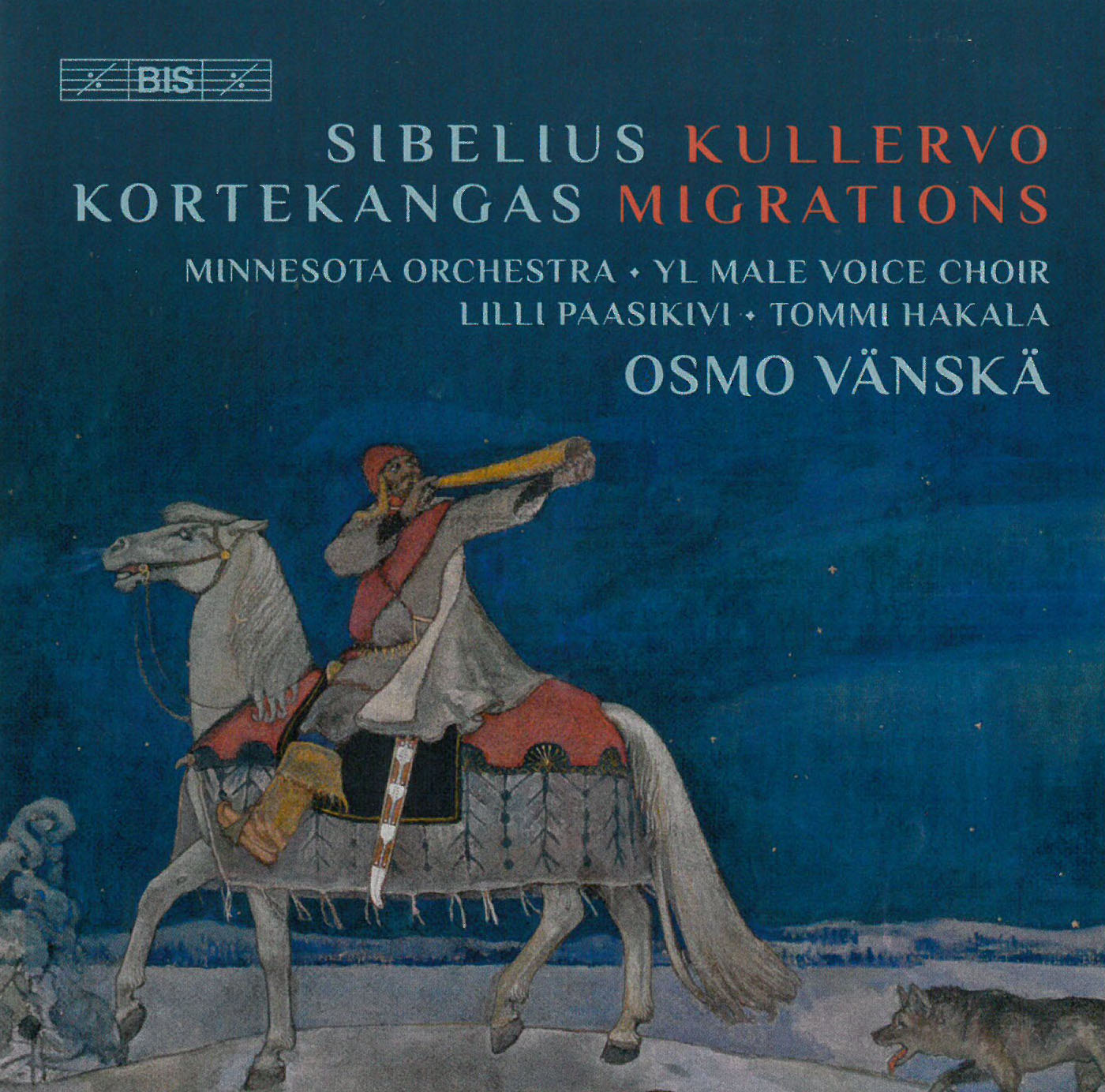
BIS BIS-9048 SACD

The early 1890s found Sibelius engrossed in the Kalevala and other verses of Finnish poetry that were to become the subject matter of so many of his most celebrated and memorable works. Kullervo, published in 1892, was Sibelius’ first grand symphonic opus. It was his first setting of stories from the Kalevala and is packed with new ideas, revealing first glimpses of many of the composer’s trademark orchestrations, his poetic spirit and his depiction of northern vistas. The work is a symphonic poem in five parts scored for symphony orchestra, male voice choir, mezzo-soprano and baritone. The story tells of a clan massacre, seduction, incest, revenge and suicide. This performance is instantly pleasing, particularly the male choir. Interestingly, between 1892 and the composition of the First Symphony in 1898-99 Sibelius wrote just about all of his mighty tone poems, Op.8 to 27. The first performance of Kullervo in Canada using Sibelius’ final revisions was in Roy Thomson Hall on May 3, 1986. The soloists were Ritva Auvinen, soprano, and Esa Ruuttunen, bass, with the Laulun Ystävät (from Turku, Finland), the Toronto Finnish Male Choir, the Toronto Estonian Male Choir and the CJRT Orchestra conducted by Paul Robinson. It was truly a gala event for the city and the who’s who, too.

Olli Kortekangas, born in 1955, studied music theory and composition at the Sibelius Academy in Helsinki under the direction of Einojuhani Rautavaara and continued his studies in Berlin with Dieter Schnebel. His music has been featured in concerts and at festivals around the world and he is currently working on several domestic and international commissions. Migrations, scored for orchestra, male choir and mezzo was commissioned by the Minnesota Orchestra. The English-language text was written by Sheila Packa, a Minnesotan poet of Finnish roots. “I believe that immigration affects families deeply, particularly in relation to borders, language and landscape…many believe that speaking a new language brings out different parts of the self.” Migrations is a narrative poem in seven parts: four sung movements, Two Worlds, Resurrection, The Man Who Lived in a Tree and Music That We Breathe, separated by three instrumental interludes. A suitable disc mate for the Sibelius. The brilliant YL Male Voice Choir was founded in Helsinki in 1883 is deservedly one of the most prominent male choirs in the world. The recorded sound is superb.
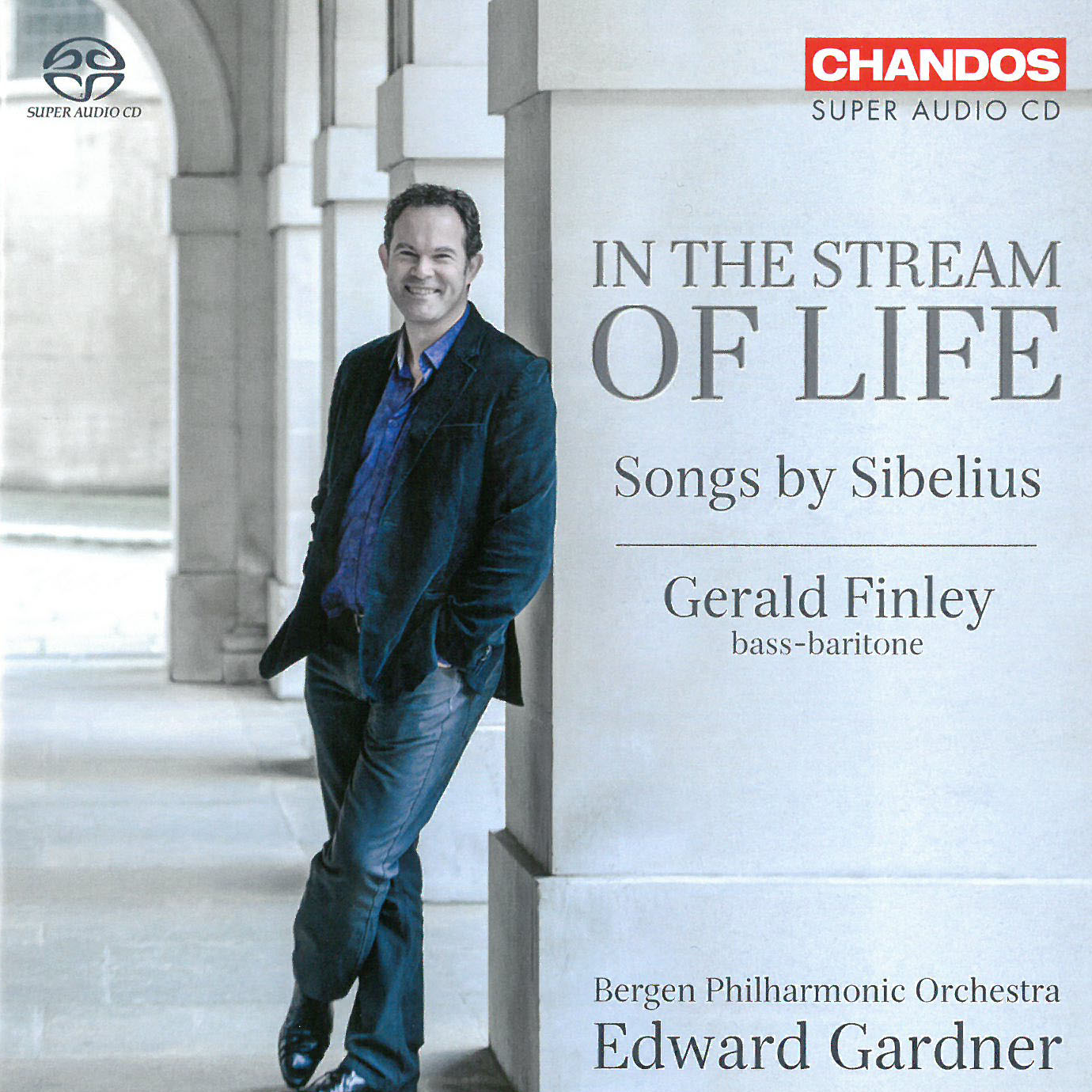
06 Sibelius FinleyIn the Stream of Life – Songs by Sibelius
Gerald Finley; Bergen Philharmonic Orchestra, Edward Gardner
Chandos SA-CD CHSA 5178

Jean Sibelius, the long-lived national Finnish composer, was in fact brought up in a Swedish-speaking home, studied in Berlin and Vienna and the bulk of his song output was set to Swedish and German poems. Despite that, he came to symbolize Finnish music the same way Edvard Grieg did the Norwegian national school. Incidentally, Grieg was for many years the artistic director of the Bergen Philharmonic heard here, one of the oldest orchestras in the world, ringing in 250 years of continuous existence.

Which brings us to Gerald Finley, everybody’s favourite baritone. This Montreal-born, Ottawa-raised artist, currently living in the UK, received particular attention from the sadly departed (in 2016) Einojuhani Rautavaara, another great Finnish composer. It was Finley for whom Rautavaara composed his brilliant Rubaiyat and orchestrated seven of Sibelius’ songs – In the Stream of Life – originally composed for voice and piano. In fact, these orchestrations turned out to be Rautavaara’s swan song and this world premiere recording was only concluded in the week of his funeral. Finley navigates the complex harmonies of Sibelius’ (and Rautavaara’s) music and the treacherous linguistic ground with mastery and elegance that we have come to expect from him.

The Bergen Philharmonic Orchestra’s playing deserves kudos as well, especially in the tone poem Pohjola’s Daughter. It may be of interest that the current principal conductor in Bergen, Edward Gardner, led the English National Opera in the artistically rich, financially disastrous period from 2007 to 2015. Five stars.

07 Patrick HawesPatrick Hawes – Revelation; Beatitudes; Qaunta Qualia
Elora Singers; Noel Edison
Naxos 8.573720

Patrick Hawes is a modern British composer and organist living on the Norfolk coast, whose compositions are inspired by nature, literature and his deep Christian faith. His approach to choral music, at least in this recording, is sublimely gentle and tonal. Even with a subject matter such as the Book of Revelation, he eschews such fiery terrors as the “four horseman of the apocalypse” and the “gnashing of teeth,” instead selecting verses that convey anticipation, awe and reverence. Although there are flashes of drama in the antiphonal section Coming with the Clouds and flashes of lightning and thunder appear in From the Throne, the overall impression conveyed in the scoring of this lovely a cappella setting inspires rather than terrorizes. The voicings in Epilogue: The Alpha and the Omega are both mystical and jubilant.

Following this work is Hawes’ setting of The Beatitudes, transcendently peaceful with music that provides a soothing balm equal to the text. The piano accompaniment performed by Leslie De’Ath is beautifully subtle in its support of the voices. Another notable accompaniment is John Johnson’s alto sax on one of the five stand-alone choral works, Quanta Qualia. This time, the instrumental part is written as a blissful voice to enhance and highlight some ecstatic soprano passages. The Elora Singers deliver a pure and flawless performance in this collection of heavenly works.

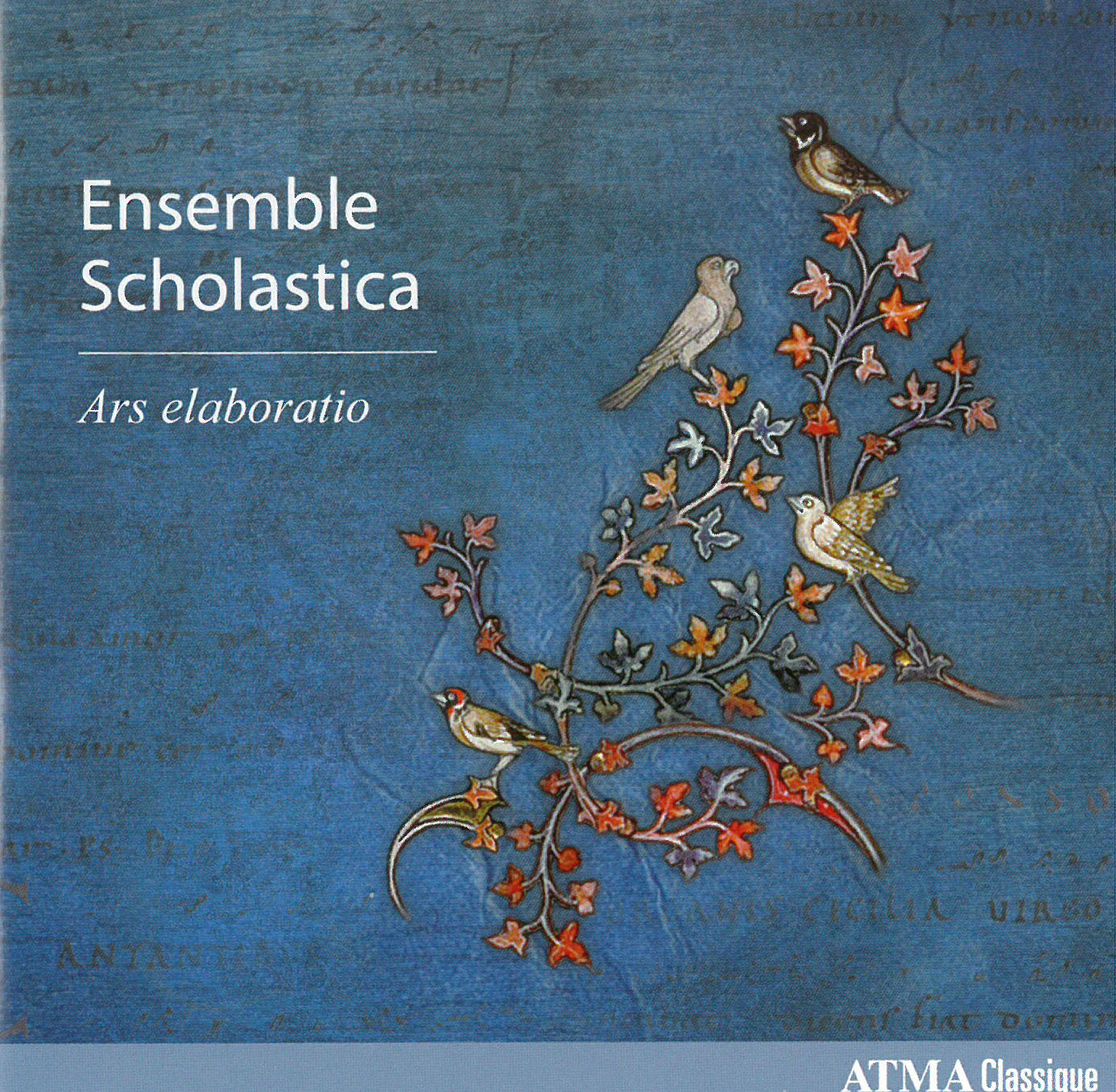
01 Ensemble ScholasticaArs elaboratio
Ensemble Scholastica
ATMA ACD2 2755

These days, the kids call them remixes, but in the hands of musicologist Rebecca Bain, the music on Ars elaboratio is the product of taking plainchant and adding tropes from other sources to create new versions. This was not unheard of in the millennium that was not litigious about intellectual property and it was common because of a more flexible and oral, rather than notated, tradition of handing music down. Think of this as more serious Mediæval Babes repertoire with scholastically informed liberties, which in that era were called elaborations.

The result is litanies, antiphons, poetry and scripture that are often mesmerizing and calming, especially with the addition of symphonia or, in the instrumental version of Claris vocibus, of organetto, a portable precursor to the pipe organ, played with one hand on the keyboard and the other working the bellows. The medieval pronunciation charmed this Latinist, although I may have heard some elision, as in spoken Latin poetry recitation, which may throw some listeners. And there are spots in the CD booklet that omit the original liturgical text that is discussed (e.g. the melisma on “mulierum” in Velox impulit) so that only the tropes can be followed, if that is your wont.

The fascinating background to some of the elaborations contains some ballsy feminist stuff (praise of the chastity of innocent virgins aside), such as the one in Dilexisti iustitiam, in which St. Catherine of Alexandria kicks some male philosophical-debate butt. The approachable narrative in Sancti baptiste of “amice Christi Johannes” ([O] John, friend of Christ) reflects the presumed (relative) egalitarianism of the coeducational abbey of St. Martial de Limoges in the 1100s.

The acoustics of the Chapelle Notre-Dame-de-Bon-Secours in Old Montreal lend themselves to a lovely presentation of the organic nine-voice Ensemble Scholastica. Hildegard of Bingen must be pumping her fist in coelis.

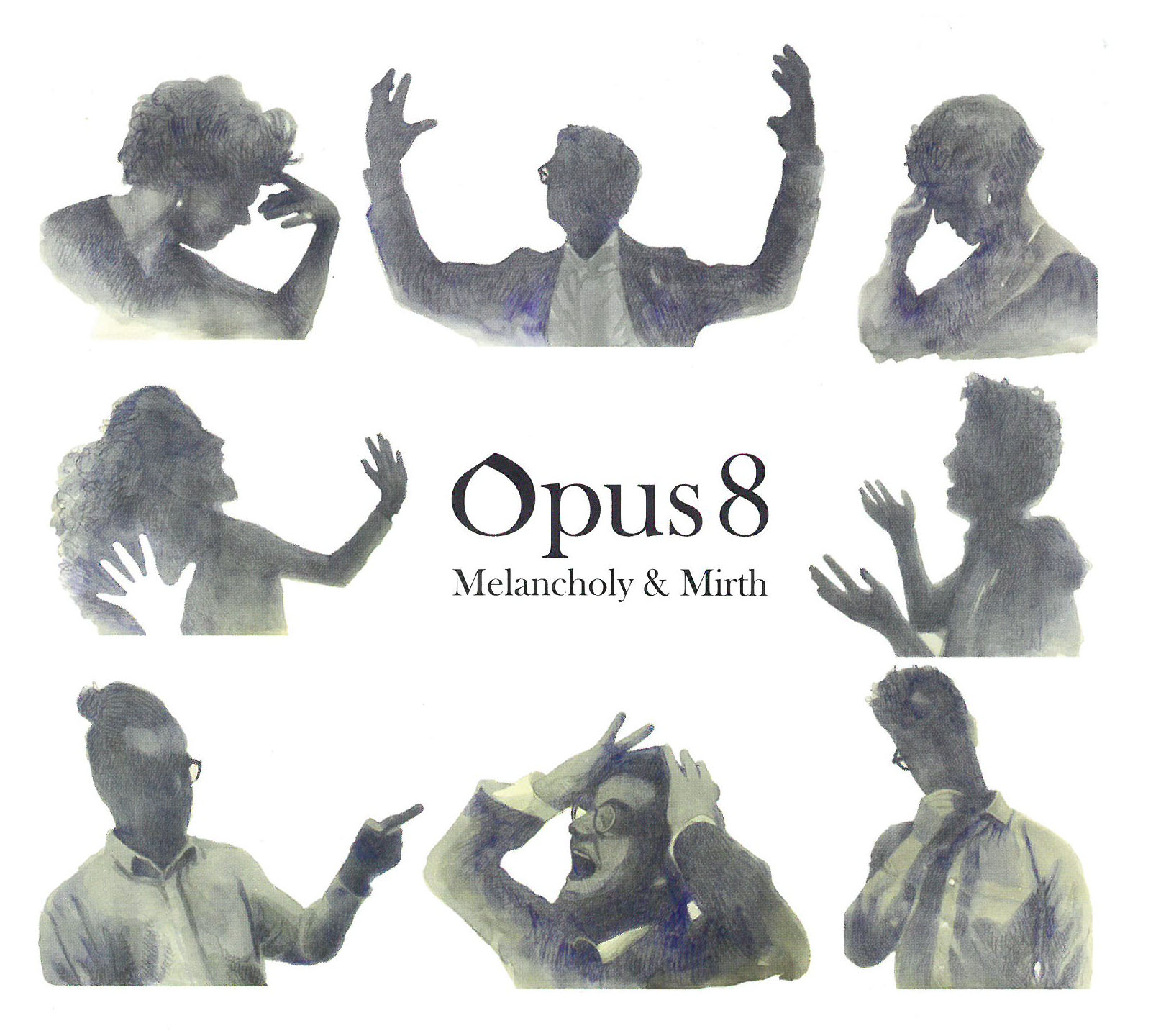
02 Opus 8Melancholy & Mirth
Opus 8
Independent OPUS001 (opus8choir.com)

Review

Opus 8 is a new Toronto ensemble. This is their first disc. The ensemble consists of eight singers and it is directed by Robert Busiakiewicz, who also sings tenor. Busiakiewicz is the director of the choir of St. James Cathedral in Toronto and a number of the singers in Opus 8 are members of the cathedral choir.

Great care has been taken on this disc to provide songs from different periods. The oldest is Josquin des Prez’s great elegy on the death of Johannes Ockeghem; the most recent is a folk-song arrangement by Keith Roberts, who was born in 1971 (when I myself was in my early 30s). In between we have Renaissance madrigals (Thomas Weelkes and John Ward), part-songs by Delius and Parry and 20th-century works by Ravel and Schoenberg, Stockhausen and Maconchy. There is also variation in the number of singers employed: the three Ravel songs take the form of a duet between mezzo and tenor; the Stockhausen sets a soprano soloist against the choir.

Different listeners will like different things. I myself could do without the Martinů with which the disc opens. On the other hand, I was very moved by How are the mighty fallen by Robert Ramsey, an early 17th-century work, perhaps an elegy written on the death of Prince Henry, the British Crown Prince. I was also much taken by Elizabeth Maconchy’s piece on the burial of a dead cat, sad and skittish at the same time.

The performances are very fine in terms of rhythmic precision and purity of intonation. I look forward to the group’s next concert and their next CD.

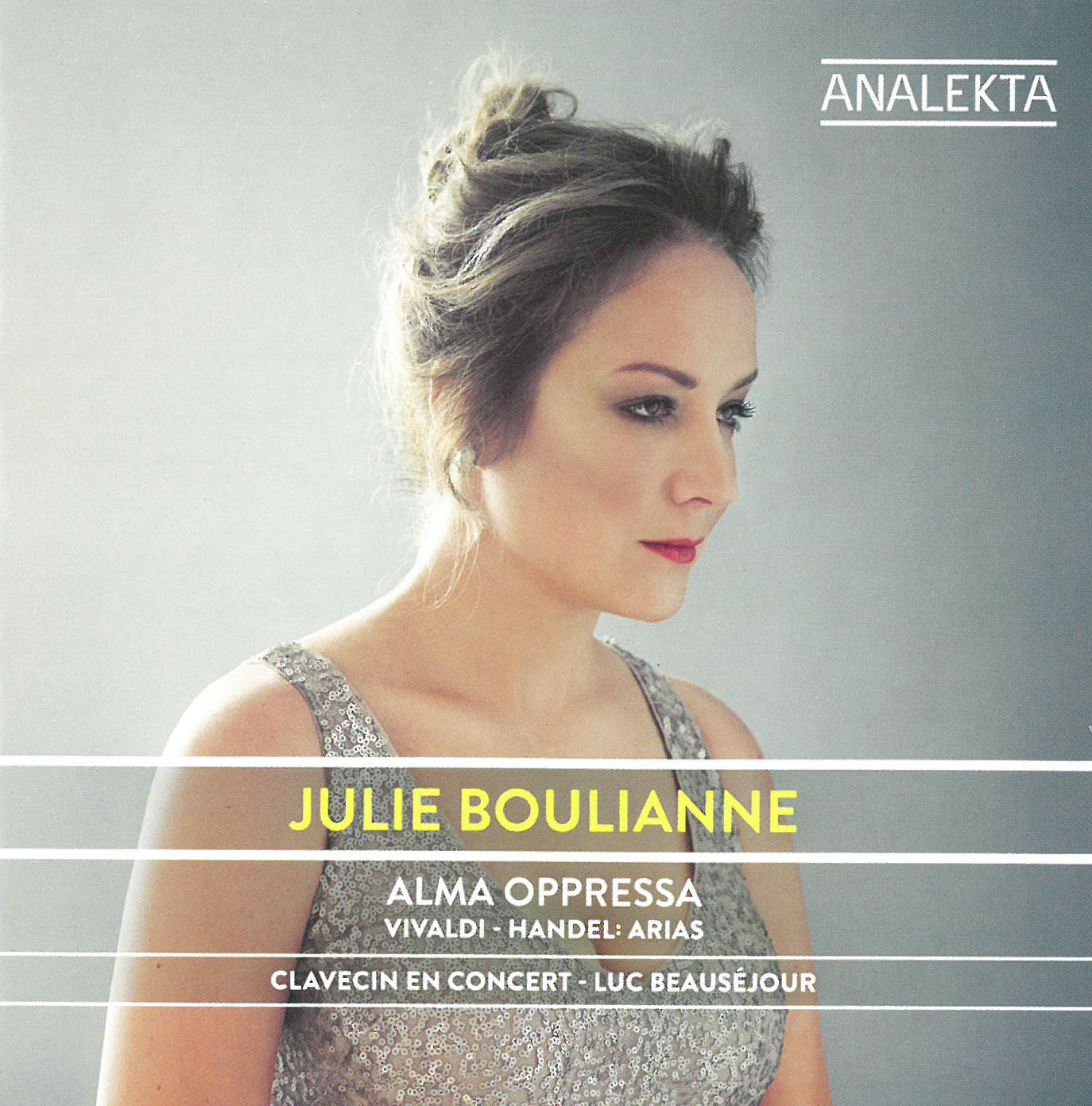
03 Julie BoulianneAlma Oppressa – Vivaldi; Handel – Arias
Julie Boulianne; Clavecin en Concert; Luc Beauséjour
Analekta AN 2 8780

Review

There are on this recital disc six arias by Handel and three by Vivaldi; there are also several instrumental interludes by both. Care has been taken to pair the very well-known Lascia ch’io pianga from Handel’s Rinaldo as well as the relatively well-known arias from his Giulio Cesare and Ariodante with the less familiar arias from Imeneo and from Arianna in Creta. Of the Vivaldi arias I was especially moved by the extract from Andromeda liberata. This serenata was apparently composed by a number of composers but Luc Beauséjour assures us that Vivaldi “almost certainly” wrote this particular aria. What I think this means is that there is no real evidence who wrote it but that it is so fine that it has to be Vivaldi. I don’t think that argument would stand up in a court of law but the aria is indeed so good that it would be hard to contradict it.

Julie Boulianne, the mezzo-soprano soloist, is moving in the slow arias and very impressive in the technically demanding fast items. Clavecin en Concert is a crack ensemble of 13 players. There is especially fine work from the cellist Amanda Keesmaat and the lutenist Sylvain Bergeron.

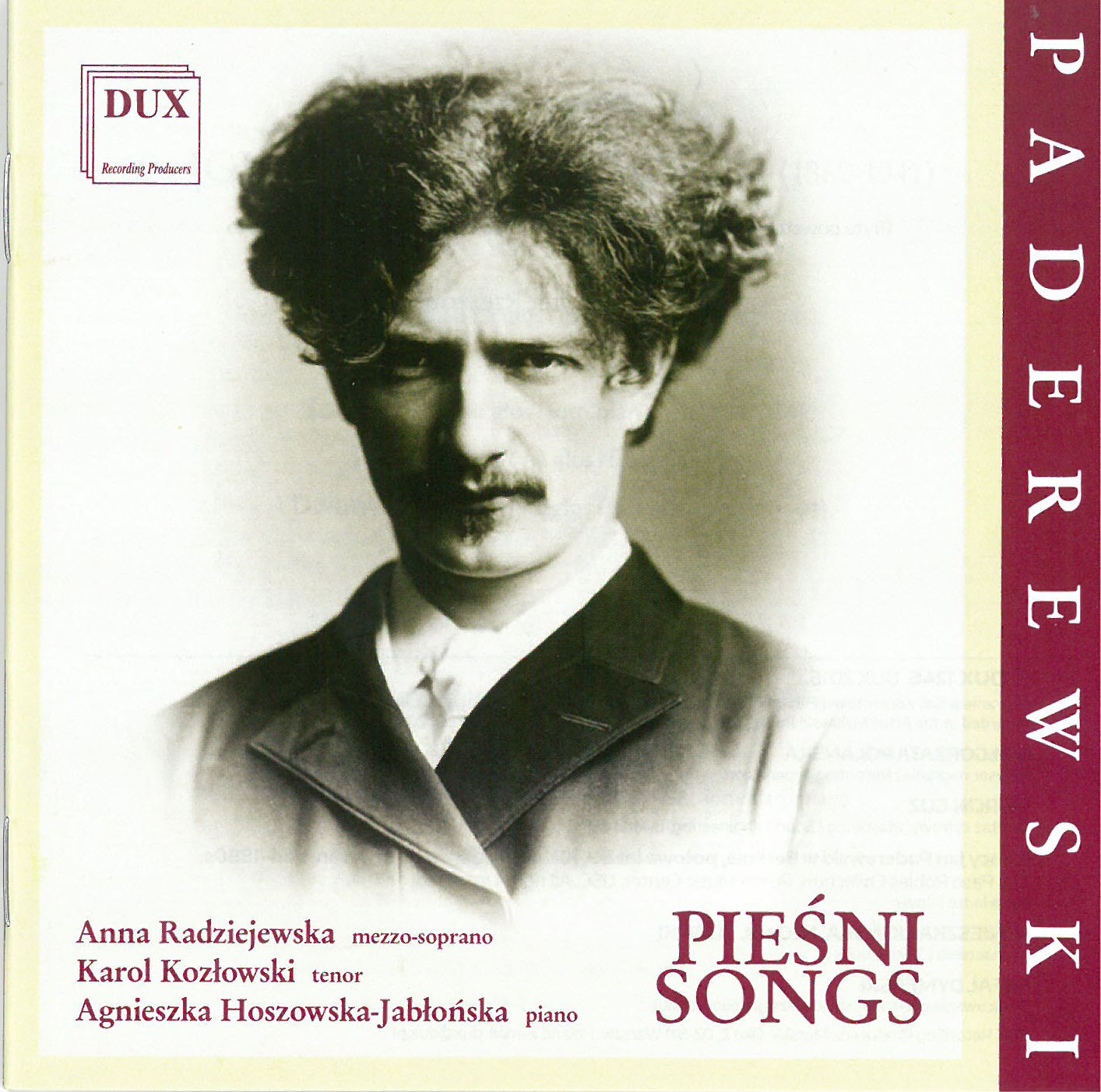
04 PaderewskiPaderewski – Piesni/Songs
Anna Radziejewska; Karol Kozlowski; Agnieszka Hoszowska-Jablonska
Dux 1246 (dux.pl)

Not many composers can honestly say that they have changed the world. Ignacy Jan Paderewski has that distinction. Not through his music, but rather through his political and diplomatic activities. He was instrumental in persuading President Wilson to take up the cause of an independent Poland at the Versailles Conference. Quick historical recap: the once-mighty Poland fell to the surrounding empires of Russia, Germany and Austro-Hungary and disappeared from the map of Europe in 1795. No small feat, then, was the recreation of the Republic of Poland after the Great War. Paderewski was also well-known and regarded in the United States as a virtuoso pianist and his lobbying efforts paid off. He also served briefly as the Polish prime minister, before returning for good to North America in 1922.

It is small wonder that in this larger context, his compositional output has been overlooked. This disc is a part of a series attempting to correct that oversight by publishing all of his music. He was not a groundbreaking musician. Rather, he worked happily within an established idiom, adding to the catalogue of Polish songs so monumentally established by Chopin and Szymanowski. Here, the settings of poems by the “Polish Bard” Adam Mickiewicz, and the works of Théophile Gautier and of his son-in-law, Catulle Mendès, are rendered brilliantly (emphasis mine!) by the tremendous tenor Karol Kozlowski and equally formidable mezzo, Anna Radziejewska. A long-overdue tribute to the “Father of modern Poland.”

05 GurreliederSchoenberg – Gurre-lieder
Soloists; choirs; Bergen Philharmonic Orchestra; Edward Gardner
Chandos CHSA 5172

This is an astonishingly fine performance of this mighty work composed in the early part of the 20th-century. Along with Verklärte Nacht, Gurre-lieder gave little hint of the path Schoenberg was soon to follow through almost half a century, producing works that many think of at the mere mention of his name.

A few months ago I was very enthusiastic about the recent version conducted by Markus Stenz with the Gürzenich-Orchester Köln and now, so soon as Gurre-lieders go, here is another new performance to be considered. Stenz has the measure of the work, as does Gardner, but Gardner’s expertise developed during his years in Glyndebourne and the English National Opera serves the entire work perfectly. He builds a more atmospheric, larger-scaled and, to my ears, a better-balanced performance. The mood-setting orchestral interludes demonstrate this perfectly, particularly the important opening prelude evoking the serene lake beside the Gurre castle at twilight and the set-up for the Wood Dove. Without going into comparisons, Gardner’s cast are all very convincing including the now deservedly ubiquitous heroic tenor, Stuart Skelton as King Waldemar whose mistress Tove (soprano Alwyn Mellor) is murdered by the jealous Queen Helwig. The news of Tove’s death is brought to Waldemar in the tragic narrative delivered by the Wood Dove sung by mezzo Anna Larsson.

Heard in Part Three are Wolfgang Ablinger-Sperrhacke singing Klaus-Narr, the Fool, and James Creswell as Bauer, the Peasant. The speaker is Sir Thomas Allen. There were 350 performers on stage in the orchestra’s home, the Grieghallen in Bergen over four days of performances in December 2015 comprising, in addition to the soloists, the Bergen Philharmonic Choir, Choir of Collegium Musicum, the Edvard Grieg Choir, the Orphei Dränger, students from The Royal Northern College of Music, musicians from the Gothenburg Symphony Orchestra, the Bergen Philharmonic Orchestra and, of course, conductor Edward Gardner. This recording is based on live recordings made of these concerts.

In this performance, as the sequence of events unfolds, there is palpable tension, holding the listener’s rapt attention through to the awe-inspiring radiance of the colossal choral sunrise. The sound is brilliant. Chandos’ multi-channel SACD recording, heard in two channels in my case, effortlessly captures every nuance of the huge augmented orchestra including four harps, multiple sets of timpani, extra brass, etc. All are heard in their natural perspective, as are the massed voices of the choirs. A spectacular work, a spectacular performance, accorded spectacular sound!

06 Eotvos ParadisePeter Eötvös – Paradise Reloaded (Lilith)
Annette Schoenmueller; Rebecca Nelsen; Eric Stoklossa; Hungarian RSO; Gregory Vajda
BMC Records CD 226 (bmcrecords.hu)

In the newly emboldened theocracy, also known as the United States of America, the phrase “God created Adam and Eve” is bandied about to score specific political points. The majority of Bible-thumpers forget, however, that at first it was actually Adam and Lilith. Not created from Adam’s rib, rather, his equal and a powerful being. This is Lilith, who we are pressured to forget in favour of the more feminine, easily yielding Eve. Here we have a major revision of Eötvös’ 2010 opera The Tragedy of the Devil and, in effect, it is an entirely new work.

The axis is the conflict between Lilith and Eve and an exploration of what might have happened, if the first wife of Adam was not thwarted in her efforts to reconcile with him. Lilith, the exiled demon-mother attempts to reload Paradise, and yet loses again. Eötvös, a composer as highly regarded, as he is at times controversial, in this, one of his 12 operas, draws equally on the Viennese tradition of Schoenberg and Berg and on post-war serialism. The fascinating libretto is the work of the Munich-based writer, Albert Ostermaier. The three protagonists and a cast of other characters are accompanied by the Hungarian Radio Symphonic Orchestra, guest-conducted here by Gregory Vajda. This same podium was shared in the past by such titans, as John Barbirolli, Antal Doráti, István Kertész, Otto Klemperer, Neville Mariner and Leopold Stokowski. Biblical proportions, indeed!

01 Bach Magnificat

Bach – Magnificat BWV243; Kuhnau – Cantate “Wie schön leuchtet der Morgenstern”
Winkel; Zomer; Laing; Wilder; Brock; Arion Orchestre Baroque; Alexander Weimann
ATMA ACD2 2727 (atmaclassique.com)

Review

Bach composed the Magnificat for Christmas 1723. The work was originally in E-flat Major but revised to the lower tonality of D Major. Like most recordings this CD presents the revised version but with two differences. The first version included four interpolations. These have been included (transposed in accordance with the D-Major tonality) on the present recording. A more substantial difference with most performances lies in the handling of the choral sections. Most performances observe a marked difference between the solo and the choral sections but Weimann’s interpretation follows the views of Joshua Rifkin and Andrew Parrott that the choral sections should also be sung one to a part. The gain in clarity in movements like Fecit Potentiam and Sicut locutus is unmistakable. There is an odd error in the Table of Contents which states that Suscepit Israel is a duet between the two soprano voices. It is actually a trio with the alto taking the lowest part.

The performance is very successful and several moments stand out: the virtuoso trumpets in the opening and closing movements, the soprano solo (Johanna Winkel) and oboe d’amore obbligato (Matthew Jennejohn) in Quia respexit, the alto and tenor duet (James Laing and Zachary Wilder) in Et misericordia and the alto solo and the flutes’ obbligato (Claire Guimond and Alexa Raine-Wright) in Esurientes implevit bonis.

The CD also contains Johann Kuhnau’s Wie schön leuchtet der Morgenstern, also for five voices and also performed one to a part. It is an imaginative coupling: Kuhnau is best known as Bach’s predecessor as cantor of Saint Thomas’ in Leipzig, but he is clearly an important composer, whose works are worth listening to for their own sake.

02 Franco Fagioli

Rossini
Franco Fagioli; Armonia Atenea Choir and Period Orchestra; George Petrou
Deutsche Grammophon 479 5681

Review

The best ever? In the early 1960s I was fortunate to hear and meet Alfred Deller and Russell Oberlin, pioneers who created the standard for countertenors well before their voice type entered the musical mainstream. They were models for those who followed and eventually surpassed them, such as the splendid David Daniels.

But when I watched the DVD of Vinci’s Artaserse (Erato 46323234) I felt a new level of countertenor brilliance had been achieved. The DVD of Hasse’s Artaserse and the CD Arias for Caffarelli (Naive V5333) convinced me that Franco Fagioli’s phenomenal coloratura technique and uniquely dark timbre make him the greatest of all countertenors.

This, Fagioli’s first CD as an exclusive DG artist, focuses on Rossinian trouser roles, male characters written for and traditionally sung by mezzo-sopranos. Other than arias from Tancredi and Semiramide, four rarities are represented: Demetrio e Polibio, Matilde di Shabran, Adelaide di Borgogna and Eduardo e Cristina.

Though unfamiliar, the music is high quality, showcasing Fagioli through emotions from anguish to joy, fearfulness to triumph. I especially enjoyed the two scenes from Adelaide featuring martial choruses and Fagioli as the heroic Otto singing, of course, heroically. In the scene from Eduardo e Cristina, he spins a breathless, lyrical line before launching into the spectacular coloratura finale, also the CD’s thrilling conclusion. Special credit to George Petrou’s crackling period-instrument orchestra and chorus.

Texts and translations are included. A super disc by a super singer.

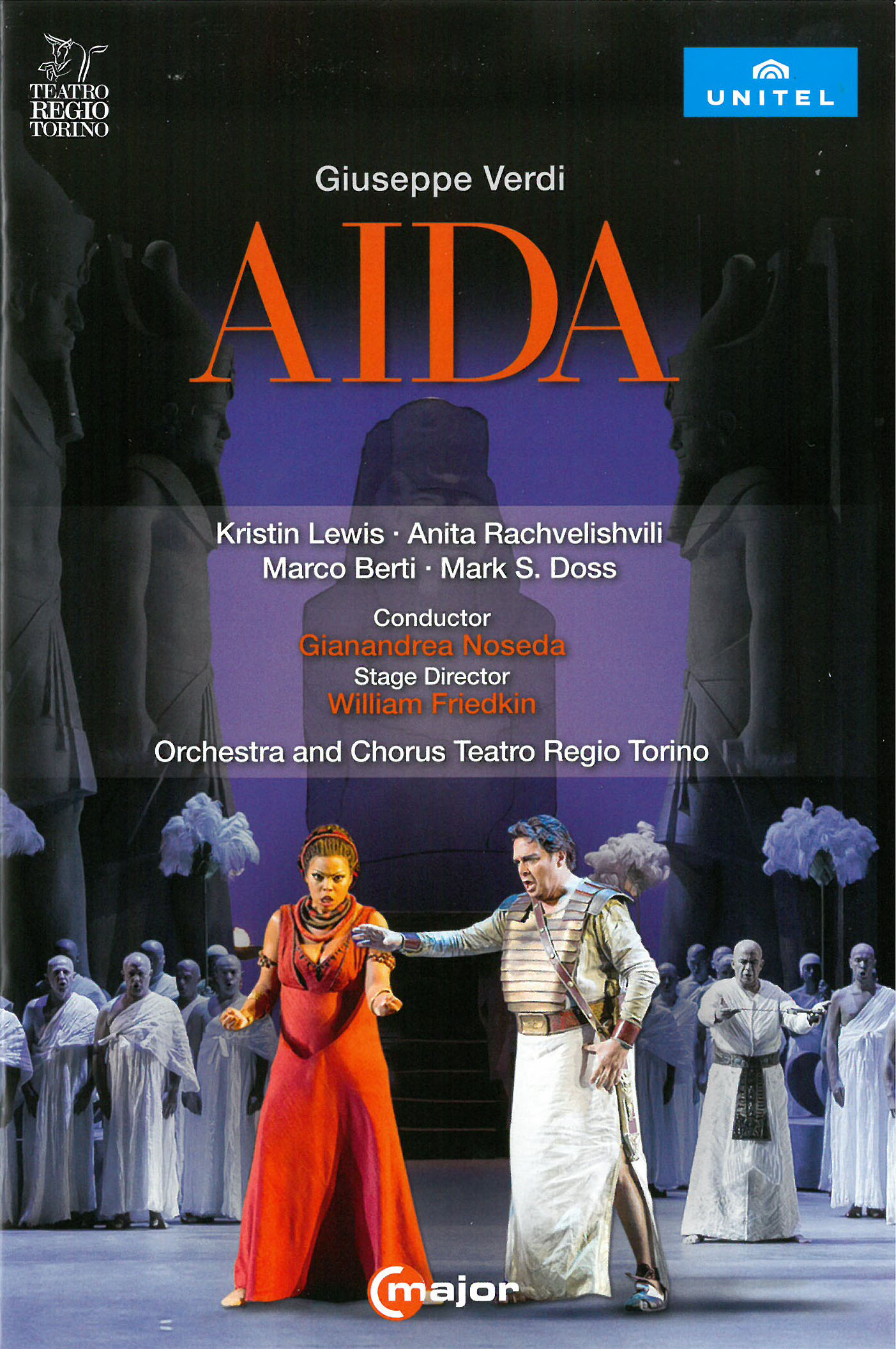
03 Verdi AidaVerdi – Aida
Lewis; Rachvelishvili; Berti; Doss; Orchestra and Chorus Teatro Regio Torino; Gianandrea Noseda
Cmajor 736908

Aida was composed to celebrate the opening of the Cairo Opera House; this production marks the reopening of the Egyptian Museum in Turin. The director is William Friedkin, mainly known as the director of The Exorcist, who has become interested in directing opera in recent years: Wozzeck and Rigoletto in Florence, Salome in Munich and Tales of Hoffmann in Vienna. His production of Aida is not particularly innovative but it is to his credit that he does not try to impose a counternarrative on the opera as so many directors now do. The balance between solemnity and intimacy is well conveyed.

Of the singers I did not particularly like the Radames, Marco Berti. He has a strong voice but tends to be unremittingly loud. If one turns to Jon Vickers’ rendition of the role (with its wonderful tenderness in Celeste Aida) one has a clear sense of how that part could be performed. The female singers are much finer: Kristin Lewis as Aida is particularly fine in O patria mia (Act III) and in O terra addio (final scene). The mezzo Anita Rachvelishvili (we recently heard her as Carmen in Toronto) as Amneris and the baritone Mark S. Doss as Amonasro are also very good. A particular mention should be made of the very fine choreography by Marc Ribaud.

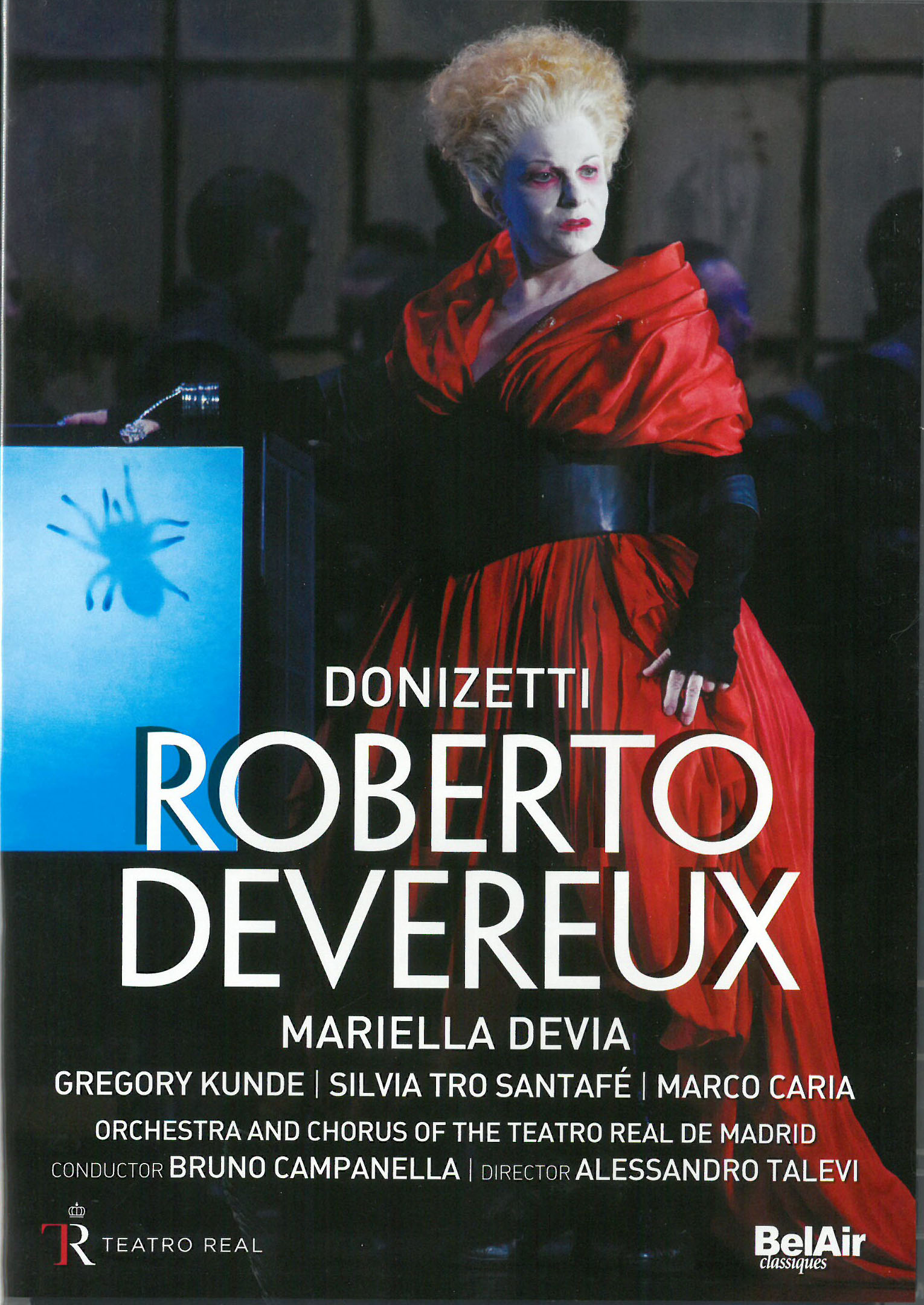
04 Donizetti Roberto DeverauxDonizetti – Roberto Devereux
Marilla Devia; Kunde; Tro Santafé; Caria; Orchestra and Chorus Teatro Real de Madrid; Bruno Campanella
BelAir Classics BAC130

English speaking audiences will rejoice hearing God Save the Queen in the overture, but curb your enthusiasm because this opera is just about the most gruesome and appalling tragedy, made even more gruesome by the dark and menacing but very effective staging in red (for blood) and black (for death) and dominated by a huge mechanical spider.

Gaetano Donizetti wrote three successful operas about the ill-fated Tudor Queens as the topic seemed to have fascinated Italians. Not for long though, as all three disappeared from public consciousness for over a century. Roberto Devereux, being the least popular, didn’t see the light until the 1960s’ bel canto resurgence when the great American soprano Beverly Sills reinstated it into mainstream repertoire.

This 2015 revival by Teatro Real of Madrid was a huge success and its main attribute was the magnificent Italian soprano Mariella Devia, who literally inhabited the role of Queen Elizabeth I, and even late in her spectacular career created such a sensation in New York that people camped out overnight to get tickets, something they hadn’t done since Callas. Now at age 68 she made history with her wonderful control and vocal fireworks and a terrifying yet pitiful portrayal of a woman betrayed and crying out for revenge.

American lyric tenor Gregory Kunde as Robert, Second Earl of Essex the unlucky object of royal fury, whose voice grew more powerful recently, was a good match for Devia, passionate, heroic yet tender in the love scenes. The high vocal standard was carried even further by Spanish mezzo Sylvia Tro Santafé and principal baritone Marco Caria’s heartrendingly anguished performances. A glorious night for bel canto!

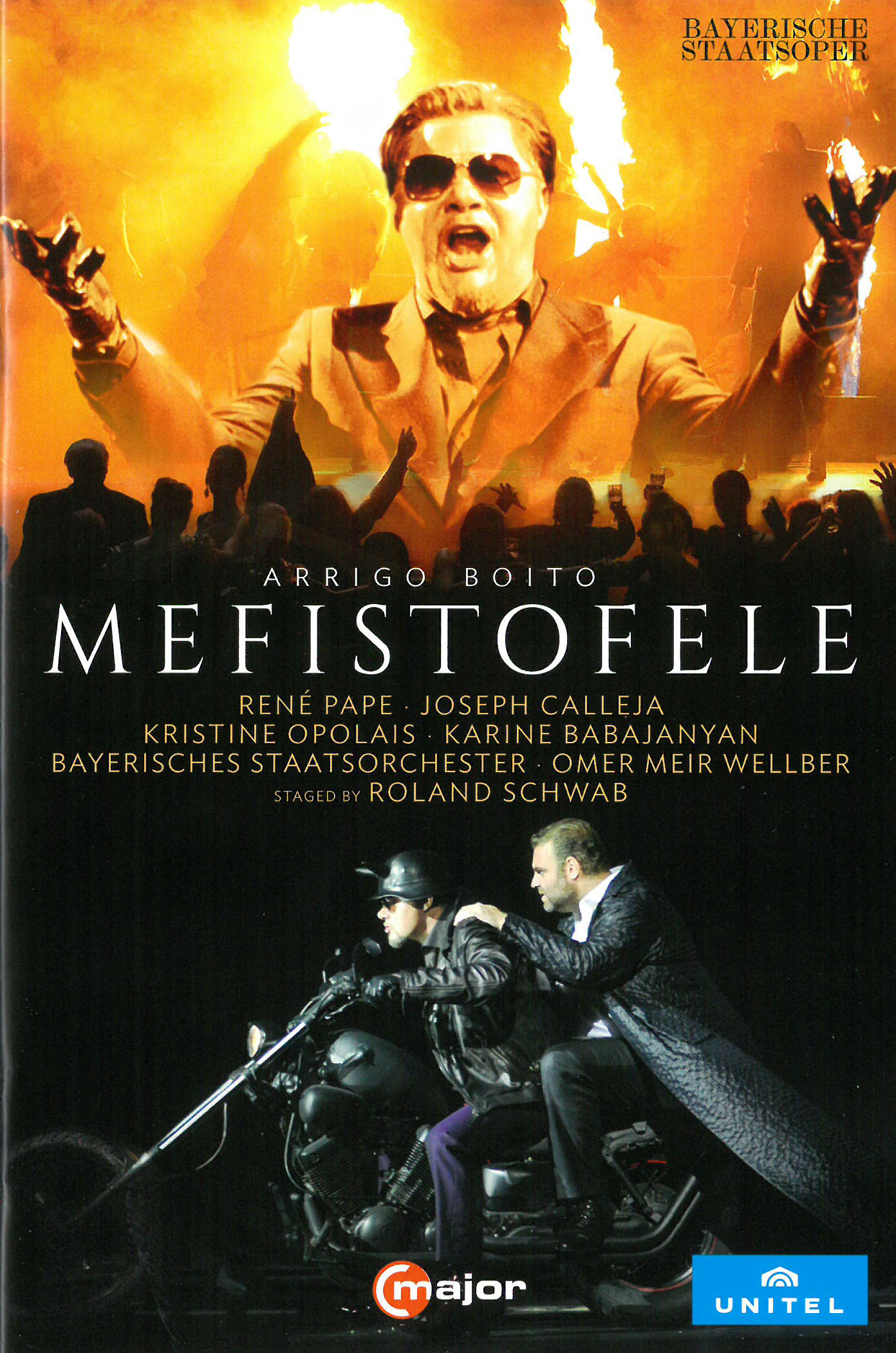
05 MefistofeleBoito – Mefistofele
Pape; Calleja; Opolais; Babajanyan; Bayerisches Staatsorchester; Omer Meir Wellber
Cmajor 73920

The story of Faust, a misguided scholar who trades his soul to the devil for another chance at youth and love, has inspired countless writers and composers. In the world of opera, it wasn’t only Gounod and Berlioz, but also Louis Spohr, Ferruccio Busoni, Sergei Prokofiev, Igor Stravinsky, Alfred Schnittke and of course, Arrigo Boito. Boito’s only finished opera, Mefistofele focuses on the devil himself, rather than the hapless professor. It is significant for another reason as well – the opera is considered an important transition piece between the Verdi period in Italian opera and its Puccini successor. But all was not smooth at the Milan premiere in 1868. Accused of “Wagnerism” and “weirdness,” Boito witnessed riots and quick cancellation of the production. Striking his own “Faustian bargain,” he rewrote and shortened the piece, giving it another premiere seven years later. As they say, the rest was history.

This production, captured here in HD, is opera-as-big-budget entertainment. Opulently staged and phenomenally cast, this is a showcase for Mefistofele, the Harley-riding Rocker and Faust, the deluded Playboy. The sublime Kristine Opolais as Margherita and consistently gorgeous playing of the orchestra under the baton of Meir Wellber add to the incredible aural power of the recording. Equal parts eye candy and feast for the ears, this is grand opera as it should be. No need to shut your eyes or suspend disbelief. Ah, I’d give my left pinkie to have seen it live!

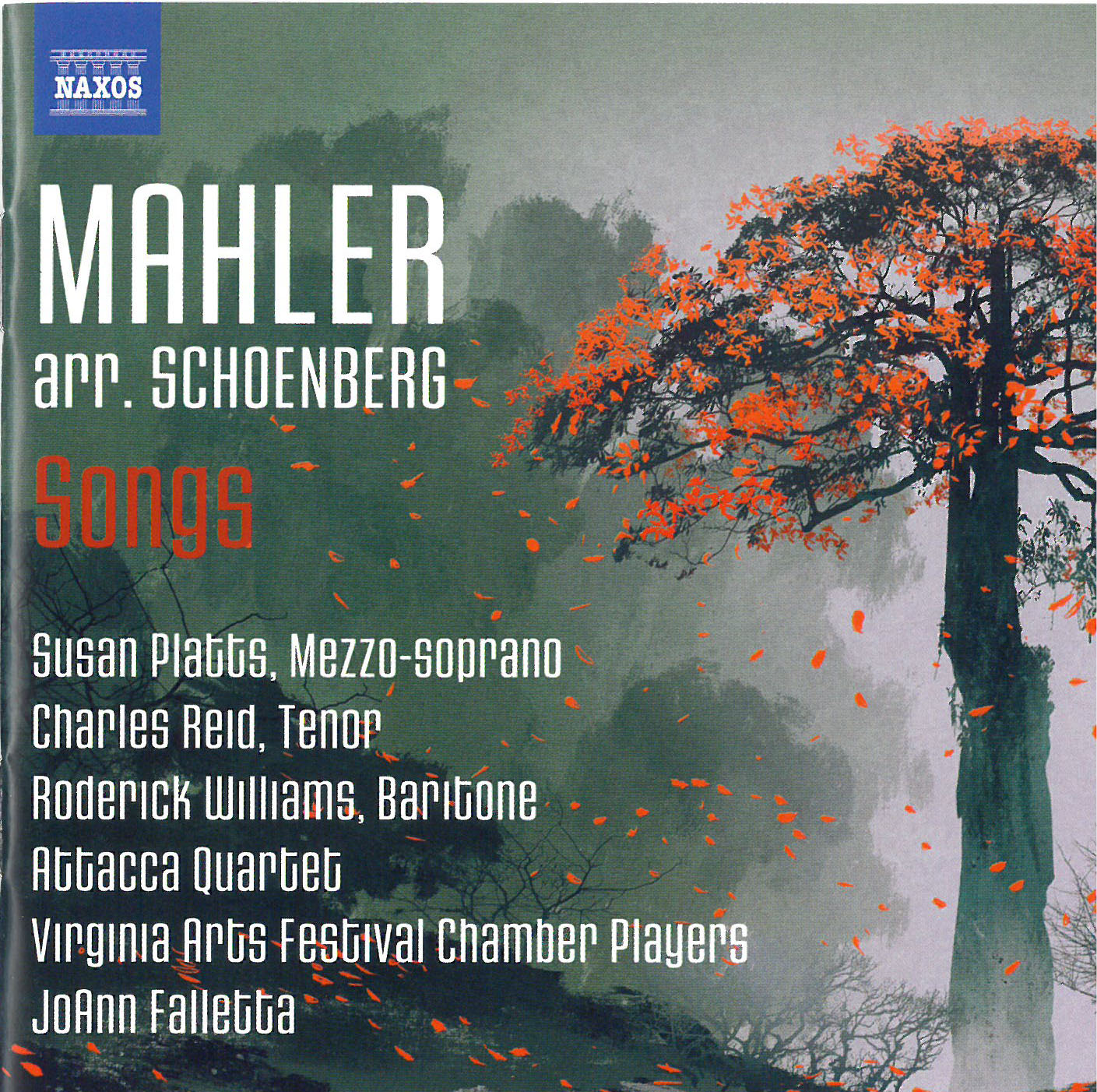
06 Mahler SchoenbergMahler arr. Schoenberg – Songs
Susan Platts; Charles Reid; Roderick Williams; Attacca Quartet; Virginia Arts Festival Chamber Players; JoAnn Falletta
Naxos 8.573536

Arnold Schoenberg’s quixotic concert series, Vienna’s “Society for Private Musical Performances,” was established in 1918 to perform the latest new music. No applause was permitted at these events, every work (you wouldn’t know what was on offer until you got there) was heard twice, and absolutely no music critics were allowed. The towering figure of Schoenberg’s acolyte Alban Berg personally checked your credentials at the door. Over the course of three seasons some 100 works were performed. The repertoire spanned an era beginning with the works of Gustav Mahler, presented in chamber music arrangements prepared by Schoenberg and his minions. The master would mark up the original scores and leave it to others to do the donkey work.

The most ambitious of these Mahler transcriptions, the song cycle Das Lied von der Erde, was never completed as the series eventually failed under the burden of rampant postwar hyperinflation. It was not until 1983 that Rainer Riehn brought Das Lied to fruition. Over a dozen discs devoted to the Society’s Mahler arrangements have appeared since then. In the current offering the sure-footed baritone Roderick Williams makes a compelling impression in the opening Gesellen cycle which, due to the transparency of its original scoring, works well in transcription, though the feebleness of a mere two violins (members of the Attacca Quartet) is an ongoing concern. British-Canadian contralto Susan Platts, well-known for her sensitive Mahler performances, is joined by the stentorian Charles Reid in Das Lied. The latter is a true Heldentenor though I question the casting of such a powerful voice in this more intimate setting.

The ensemble of a dozen players and their direction by Buffalo-based conductor JoAnn Falletta is admirable, with special kudos for clarinetist Ricardo Morales and the noble horn of Jacek Muzyk. A peculiar low rumbling is detectable in the quieter moments from the session captured at Norfolk’s Robin Hixon Theatre in 2015; complete texts and translations are included.

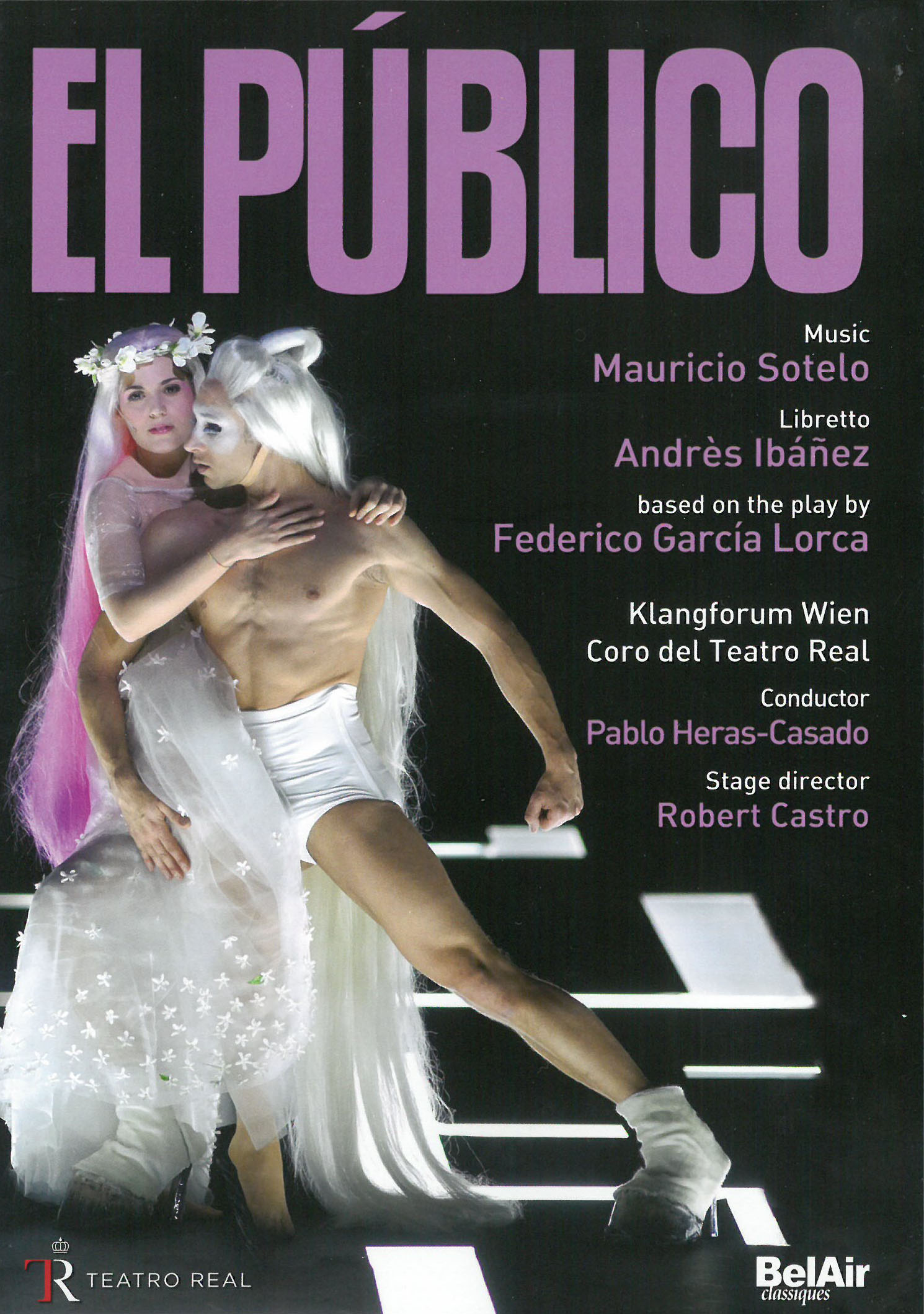
07 El PublicoMauricio Sotelo – El Público
Klangforum Wien; Coro del Teatro Real; Pablo Heras-Casado
BelAir Classics BAC134

Theatrical works about theatre and its relation to the audience (“el público”) are usually metaphors for reality. There’s nothing remotely realistic, though, about this opera, a 2015 world-premiere production from Madrid’s Teatro Real.

Andrès Ibáñez’s libretto, based on a play by Federico Garcia Lorca, deals with an “underground” production of Romeo and Juliet and the conflicted relationship of the director, Enrique (baritone José Antonio López) and his lover Gonzalo (baritone Thomas Tatzl). Ibáñez’s text, despite frequent references to “love” and “masks” is as surreal as the stage action; I had to consult the booklet synopsis to get any inkling about what was happening.

Enrique’s take on Shakespeare includes horses (!) trying to seduce Juliet (soprano Isabella Gaudí), freshly risen from her tomb. When he then casts a teenage boy in her place, “the public” violently rebels, leading to Gonzalo’s death. Along the way, we see a Roman emperor, Jesus, a magician and a short silent film of animated silhouettes.

What held me throughout as a member of “the public” was the most essential element of any effective opera – the music. Mauricio Sotelo’s “spectral” orchestral score is riveting – rhythmic and atmospheric, with glittering percussion and spicy interludes of flamenco vocals and guitar.

Extended sequences for semi-nude male dancers and an array of bizarre, extravagant costumes make El Público almost as much a surrealistic modern ballet as an opera. Either way, it offers a fascinating experience both for ears and eyes.

Back to top