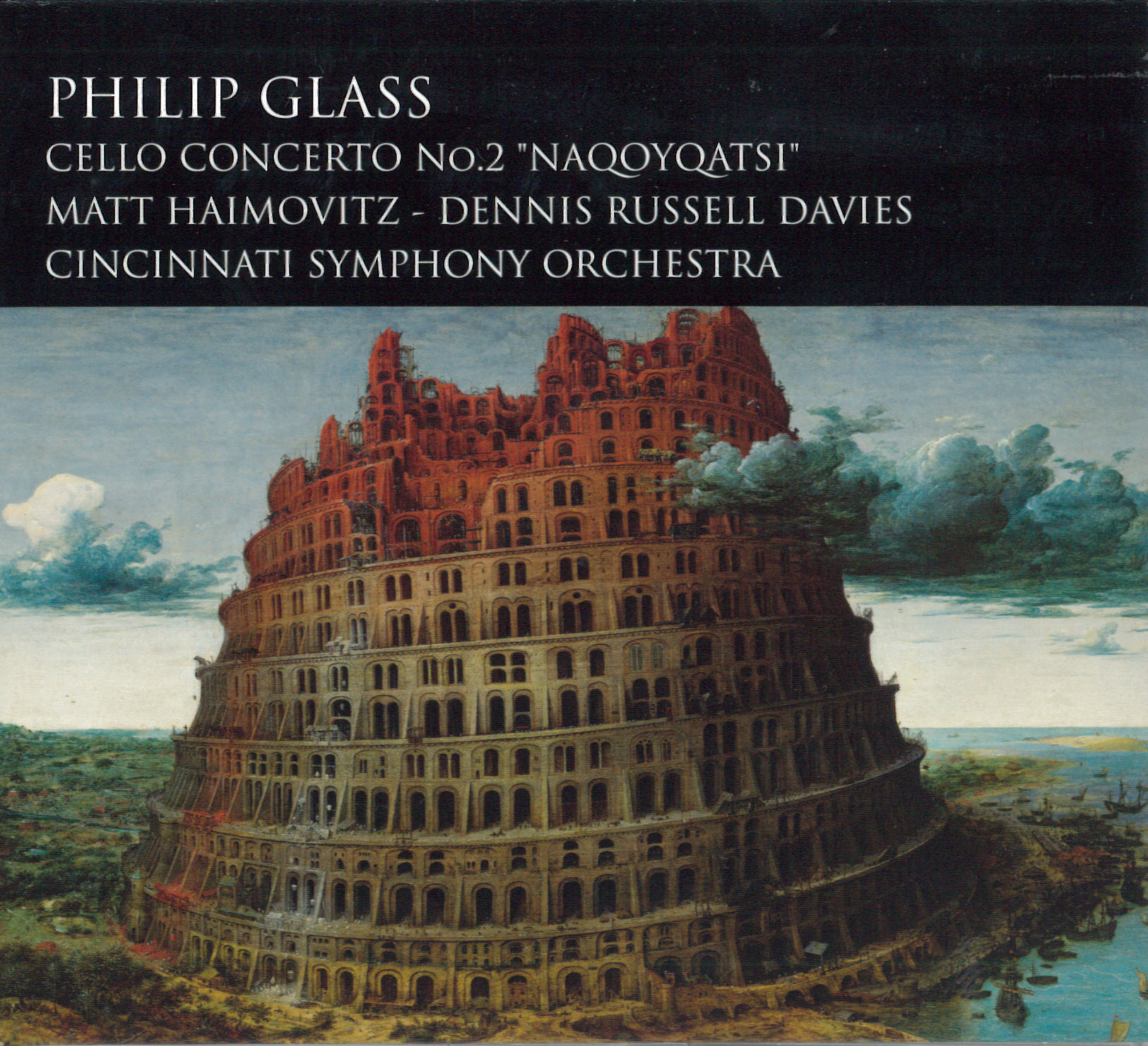
01-Glass-CelloThe terrific Matt Haimovitz is back with another fascinating CD, this time featuring the Cello Concerto No.2 “Naqoyqatsi” by Philip Glass (Orange Mountain Music OMM 0087). Long-time Glass champion Dennis Russell Davies provides excellent support with the Cincinnati Symphony Orchestra.

The bulk of the music dates from the 2002 score Glass wrote for Naqoyqatsi: Life as War, the third film in a Godfrey Reggio trilogy that featured only music and images. The prominent solo cello part was played by Yo-Yo Ma. When Glass became a creative director of the Cincinnati Symphony Orchestra in the 2011/12 season, a commission from the orchestra gave him the opportunity to re-work the film score as a full concerto for cello and orchestra.

It’s not a concerto in the traditional formal or structural sense, but neither is it always what you might expect to hear if you are familiar with Glass’ music. Glass acknowledges that the film’s largely digital images steered him towards “a very acoustic, symphonic piece” which would make the images seem less synthetic and more approachable, thus hopefully making it easier for audiences to connect with the film.

There are seven movements, all shorter than eight minutes in length, with the solo cello third and fifth movements acting as connecting passages within the overall structure. The faster movements certainly have the typical Glass sound, but the cello writing throughout is contemplative and more rhapsodic than virtuosic. Haimovitz plays beautifully throughout this intriguing and highly satisfying work.
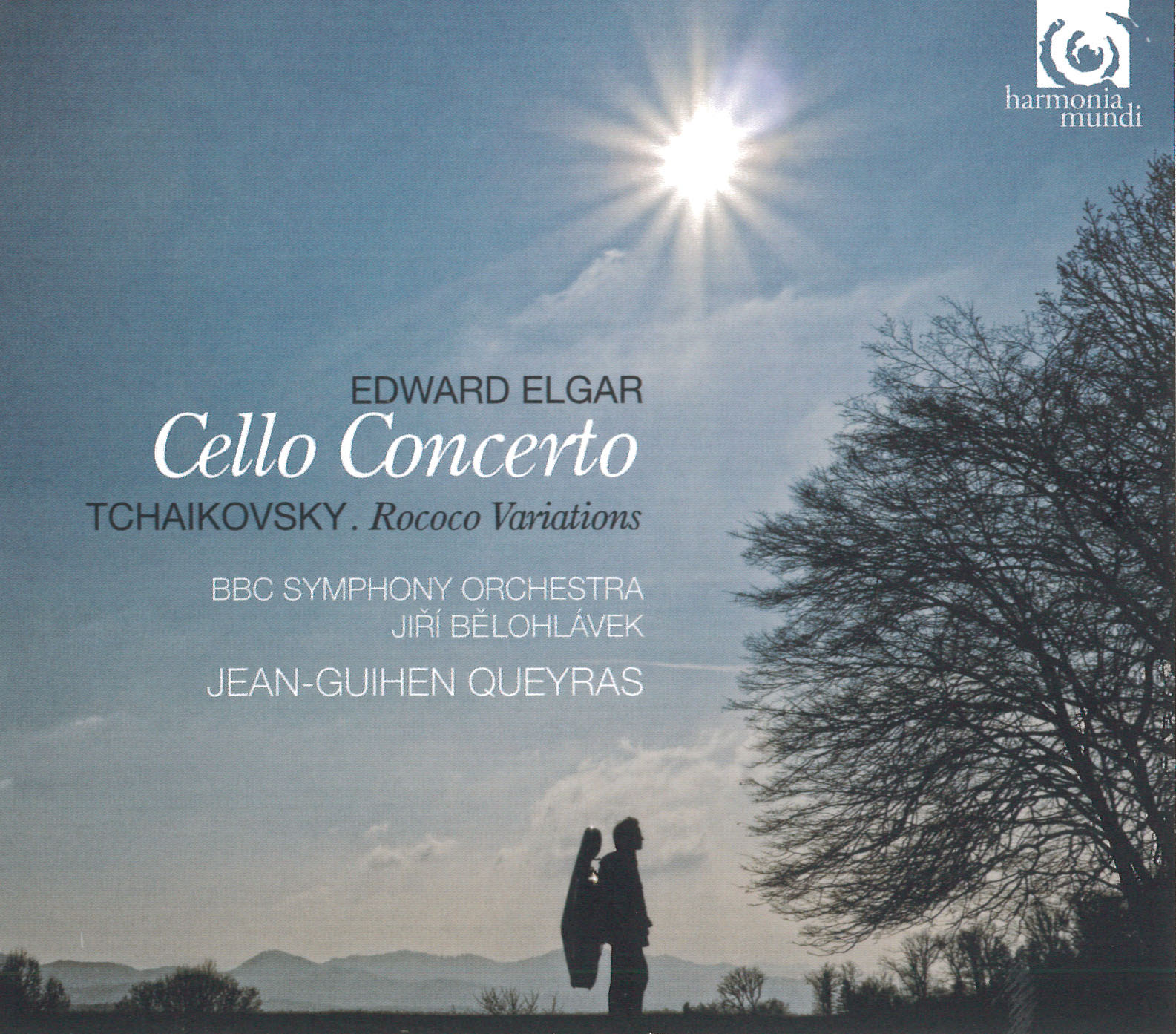
02-Elgar-QueyrasIf you come across a performance of the Elgar Cello Concerto that puts the iconic Jacqueline du Pré recording with Barbirolli completely out of your mind, then you know you’ve found something really special. That’s exactly what the French (but Montreal-born) cellist Jean-Guihen Queyras manages to do with his stunning new harmonia mundi CD, which couples the Elgar concerto with Tchaikovsky’s Rococo Variations and two short pieces by Dvořák (HMC 902148).

It’s clear from the opening solo bars of the Elgar that Queyras understands the inner soul of this quintessentially English work by the most English of composers. It’s a simply beautiful opening — thoughtful, probing and expansive. Jiří Bĕlohlávek draws a performance from the BBC Symphony Orchestra that is perfectly attuned, catching the mood of wistful Romanticism with playing that always has weight and depth, but is never heavy.

The performance level never drops throughout the remainder of the CD. Dvořák’s Rondo Op.94 and Klid (Silent Woods) Op.68/5 were originally written for cello and piano, and orchestrated by the composer in 1893, shortly before he began work on his Cello Concerto. Again, Queyras’ tone is quite beautiful.

The Tchaikovsky Variations were extensively revised and rearranged, prior to publication, by the cellist Wilhelm Fitzenhagen, the composer’s colleague at the Moscow Conservatory, not exactly with Tchaikovsky’s approval, but apparently without much complaint either. It’s still the version we usually hear. Another dazzling performance by Queyras rounds out a marvellous CD.
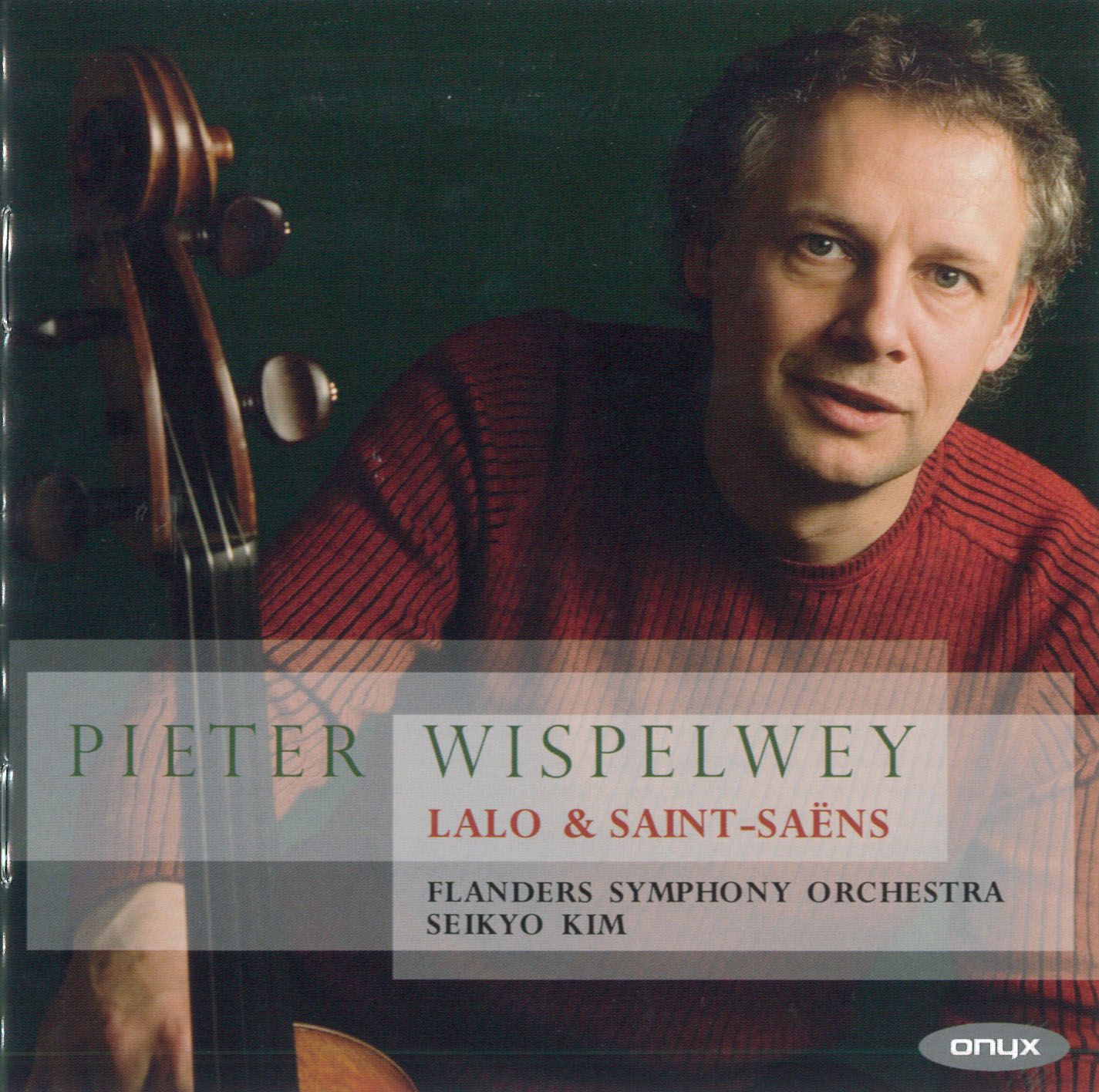
03-WispelweyThe Dutch cellist Pieter Wispelwey has compiled an extensive and impressively varied discography, ranging from the Bach Solo Suites (reviewed in this column last April) to works by Shostakovich, Ligeti and Britten. His latest CD on Onyx Classics pairs two rarely heard works: the Lalo D Minor Cello Concertoand theConcerto No.2,also in D minor, by Saint-Saëns (Onyx 4107).

Wispelwey is in terrific form; indeed, on the strength of these performances it’s difficult to understand why we don’t hear these two outstanding concertos more often. The Lalo is a powerful work with a charming slow movement. Wispelwey’s line is strong and fluent, offering wonderfully assured playing with never a hint of empty bravura. The Saint-Saëns No.2 is a striking concerto that has been unjustly overshadowed by No.1, and reminds us just how much this often-marginalized composer has to offer. Wispelwey displays terrific agility in an extremely difficult and challenging work, with some particularly tender and heartfelt high register playing in the slow movement.
04-Faust-BartokThe Flanders Symphony Orchestra under Seikyo Kim provides top-notch support throughout, and also performs the filler on this CD, the Love Scene from Berlioz’ dramatic symphony Roméo et Juliette. It’s Berlioz at his best and beautifully performed, but this is a CD you’ll be buying for the Lalo and Saint-Saëns.

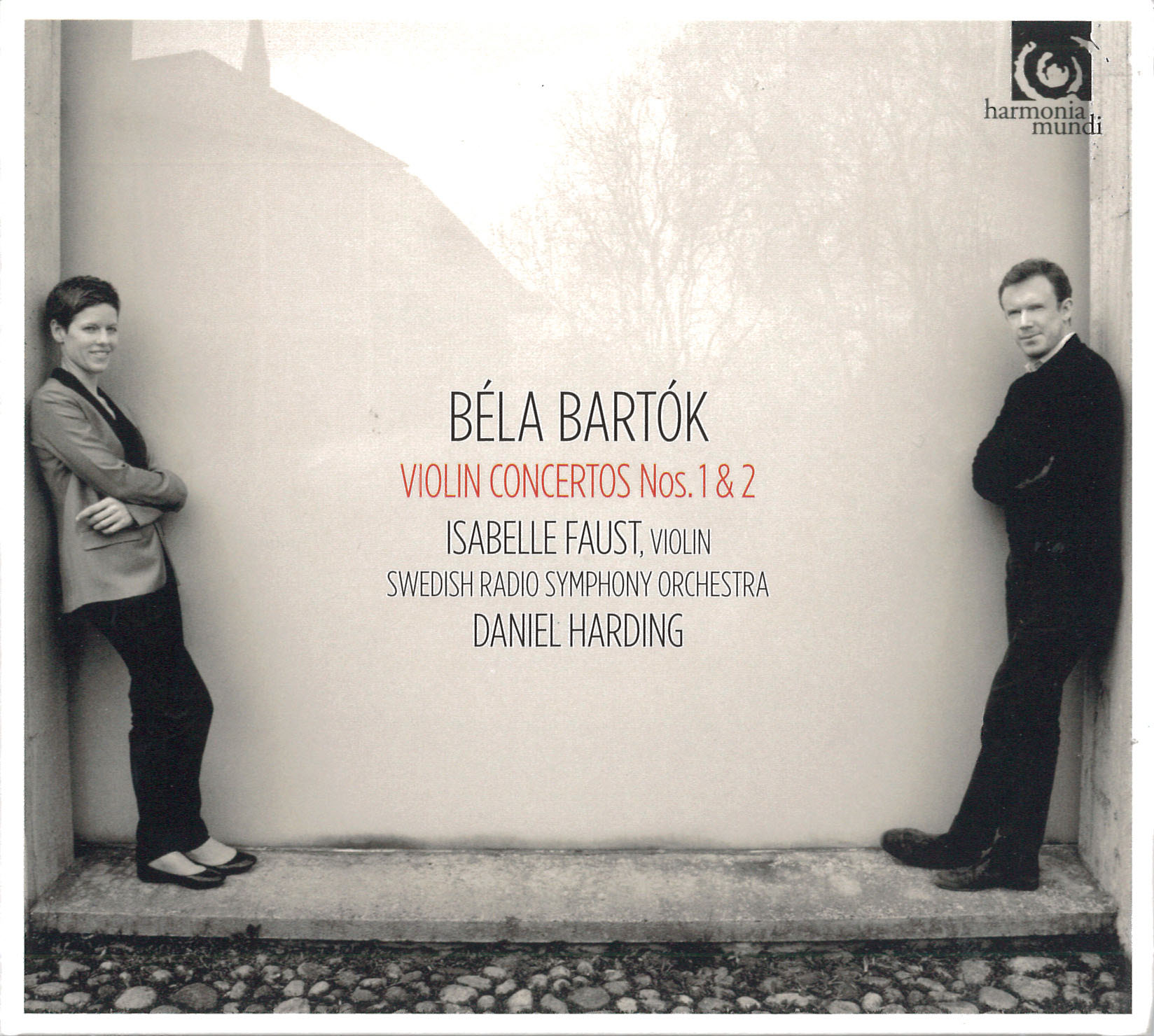
Violinist Isabelle Faust and conductor Daniel Harding team up on another outstanding harmonia mundi CD, with marvellous performances of the Violin Concertos Nos.1 & 2 by Béla Bartók (HMC 902146). The orchestra is the Swedish Radio Symphony Orchestra; Harding has been their principal conductor since 2007. He has already recorded highly successful concerto discs with violinists Nicola Benedetti, Janine Jansen and Ray Chen, and this latest CD is the equal of any of them. Faust is a consummate artist, and her rapport here with Harding is palpable.

For many years the 1938 concerto we now refer to as No.2 was regarded as Bartók’s only violin concerto, but 30 years earlier he had written a concerto for the violinist Stefi Geyer, with whom he was deeply in love. The relationship didn’t last, though, with Geyer rejecting not only the composer but also the concerto. She did keep the manuscript the composer sent her, however, and bequeathed it to the Swiss conductor Paul Sacher, who conducted the premiere in Basel in 1958; it was published in 1959 as Violin Concerto No.1, Op.posth. In her preparation for this recording Faust went back to the various original sources for this early concerto, and discusses the process in fascinating detail in her excellent — and extensive — booklet notes. The depth of her understanding is evident in the depth of her interpretation; this really is an exceptional performance in all respects.

The same innate grasp of the material is just as evident in the Concerto No.2, which also receives an outstanding performance. What makes it even more special is that Faust and Harding choose to use the original ending for the work, which has no solo violin part over the closing bars. Zoltán Székely, for whom the concerto was written, asked the composer to write an alternative ending where the violin could play to the end of the work along with the orchestra and Bartók obliged. The original ending is well worth hearing!
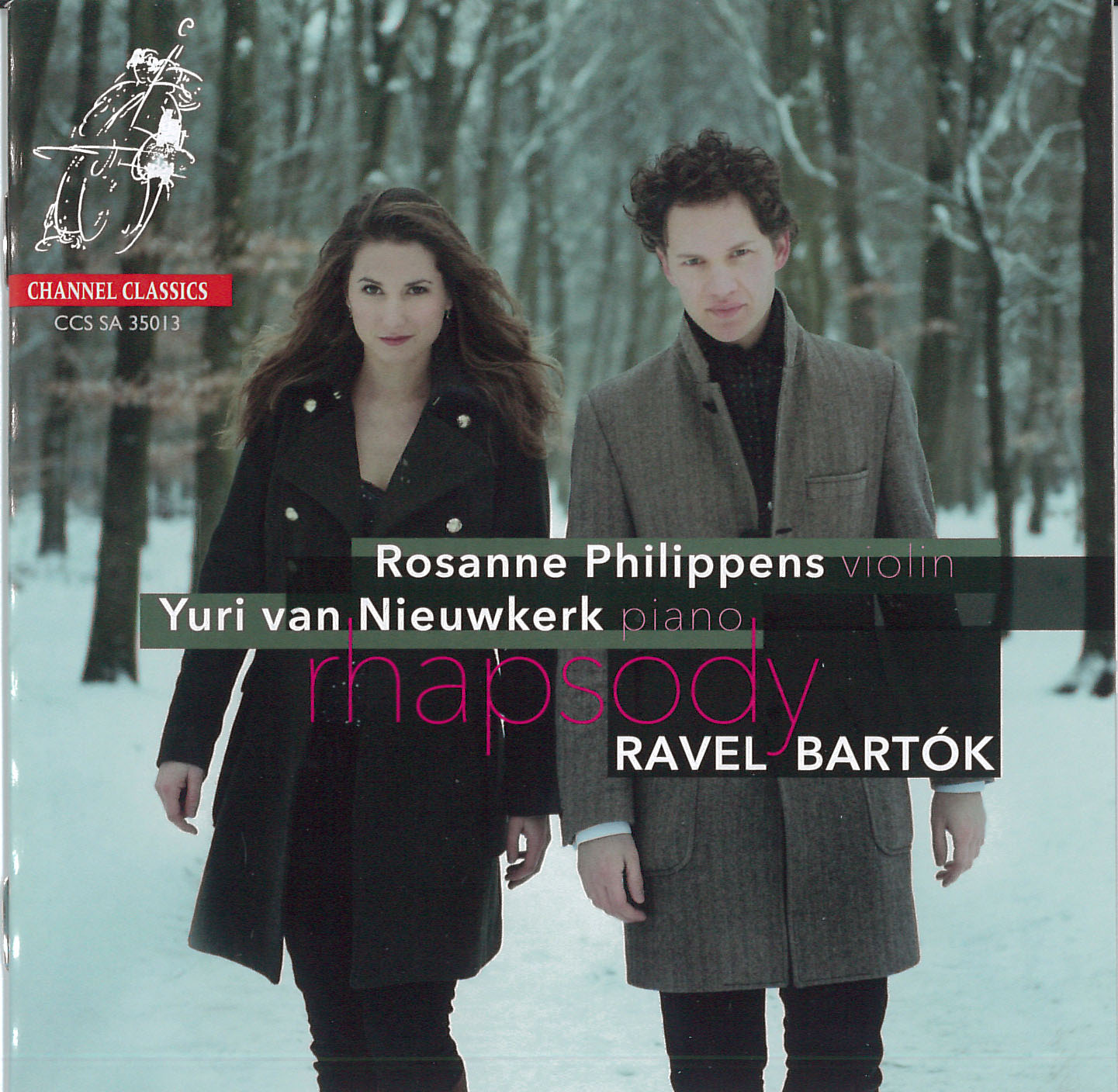
05-Rosanne-PhillippensThe young Dutch violinist Rosanne Philippens is a new name to me, but if Rhapsody, her debut CD on Channel Classics (CCS SA 35013), is anything to go by, we’ll all be hearing a lot more of her in the future. She is accompanied by her regular keyboard partner Yuri van Nieuwkerk in a recital of works by Ravel and Bartók. This may seem like an odd pairing at first glance, but the performers note that both composers worked in a period when a wide range of musical styles — jazz and blues, for instance — were influencing the European musical world; almost all of the works here were written in the 1920s.

Ravel’s Tzigane is given a straightforward but very solid performance, but the real Ravel gem here is the Violin Sonata No.2, which showcases Philippens’ big, expansive tone. There is a perfect balance between the two performers in the first movement; a lovely Moderato: Blues middle movement; and some outstanding playing and great dynamics in the Perpetuum Mobile: Allegro finale.

The Bartók pieces are equally well-served, with just the right mix of spikiness and lyricism in the two Rhapsodies from 1928 and the Rumanian Folk Dances from 1915.

The final track is the short Scène de la Csárda No.4 – Hejre Kati by Bartók’s fellow-countryman Jenö Hubay. Written some 40 years before the other works on the disc, it seems a bit of an odd choice, but it provides a rousing ending to an excellent debut CD that suggests there are great things ahead for this duo.
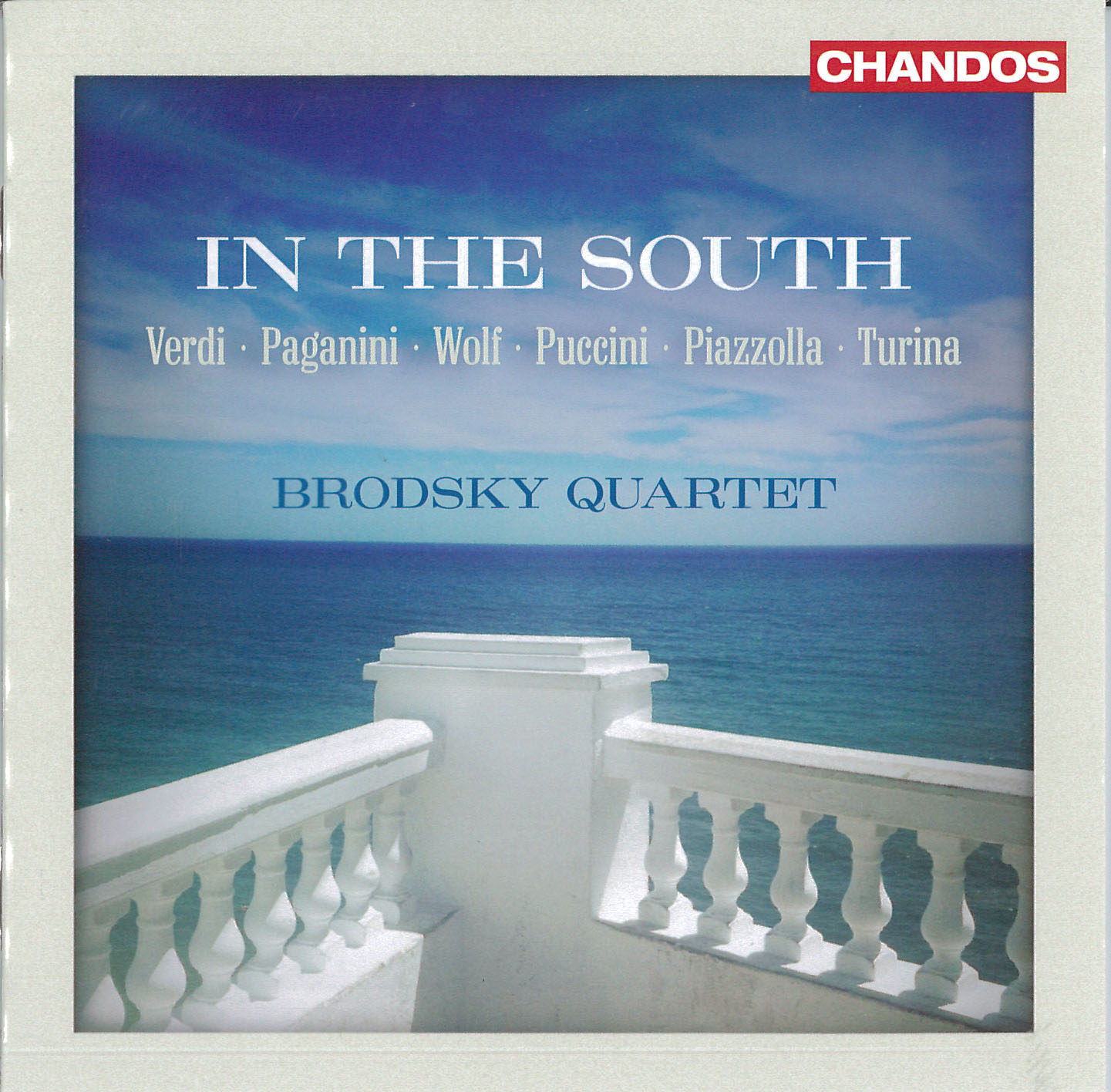
06-Brodsky-In-the-SouthI must admit to being quite astonished to find that Britain’s Brodsky Quartet has been around for over 40 years — two founder members are still there — and has over 60 recordings to its credit. Their latest Chandos CD, In the South (CHAN 10761) is typical of their wide-ranging and intelligent programming, exploring the attraction of the South in musical history, and its relationship with and influence on the North.

It’s essentially a recital of short, almost light classical works by composers from both hemispheres, although the programmatic link does seem a little stretched at times. The Brodsky members play with a lovely sensitivity and a great dynamic range throughout the disc, and really seem to get to the heart of these works, which are not insubstantial despite their brevity.

Hugo Wolf’s Italian Serenade opens the disc, followed by Puccini’s soulful Crisantemi (Chrysanthemums). Verdi’s String Quartet in E Minor, the composer’s only work in the genre, was an attempt to marry the Italian vocal tradition with the German classical quartet form. Critical opinion differed on its success, but here it is handled quite beautifully and with great sensitivity; it’s never too heavy or serious and the lyrical qualities are never over-stressed.

I don’t recall ever having heard Turina’s La oración del torero (The Toreador’s Prayer) before, but it really is a quite beautiful and very effective work. Astor Piazzolla’s Four, for Tango was written four years before the composer’s death, and is typical of his later tango compositions. Its dissonances and percussive effects should come as no surprise, as it was written for the Kronos Quartet.

The disc ends with two of the Paganini 24 Solo Caprices, arranged for string quartet by the Brodsky’s violist Paul Cassidy. No.6 is particularly attractive, and No.24 has some fascinating instrumental effects. The programmatic link, apparently, is that Paganini represented the instrumental “southern individualism” of the 19th century,which is viewed here through the “northern” string quartet form. A bit of a stretch, perhaps, but nonetheless a terrific CD.  
01 ORileys LisztO’Riley’s Liszt
Christopher O’Riley
Oxingale OX2020
oxingalerecords.com

This wonderful pair of CDs is the perfect choice for avid lovers of the piano and its orchestral sound. The Lisztian virtuosic excess is like having a meal of rich overwhelming textures and layers of scintillating colours. Christopher O’Riley has astounding technique and control, as well as a creative and wild imagination. Those skills make these Liszt transcriptions a sumptuous and sensual listening experience.

I enjoyed his programming on the first CD. He paired two mammoth showpieces, alternating them with sensitive song transcriptions. He began with the extremely difficult transcription of Mozart’s Don Juan Fantasy, which Moritz Rosenthal had performed to impress Brahms. Schumann/Liszt’s Fruhlingsnacht followed in a tender and gentle interpretation. This was a breath of calm before the stormy and tragic Tristan und Isolde by Wagner/Liszt/Moskowski and O’Riley, who added a vocal line near the end of the piece and managed to make his fingers sing throughout this opera for the piano. He concludes the first CD with Schubert’s Fruhlingslaube. His emotional response to the music is refreshing and his musicality subtle.

The second CD is Liszt’s transcription of the Berlioz Symphonie fantastique. In his excellent program notes, Ethan Iverson quotes Charles Halle who said that Liszt played his piano version “with an effect even surpassing that of a full orchestra and creating an indescribable furor.” O’Riley displays his own gargantuan keyboard skills in this incredible performance. I didn’t miss the orchestra at all and O’Riley made the piano thunder and sing in washes of orchestral sound. Dream of a Witches’ Sabbath was monumental and devilish. These CDs are highly recommended.

Editor’s Note:O’Riley’s Liszt is also available on a Blu-Ray video disc which includes a special feature The Bells of Berlioz with artist’s commentary (Oxingale OX2021).

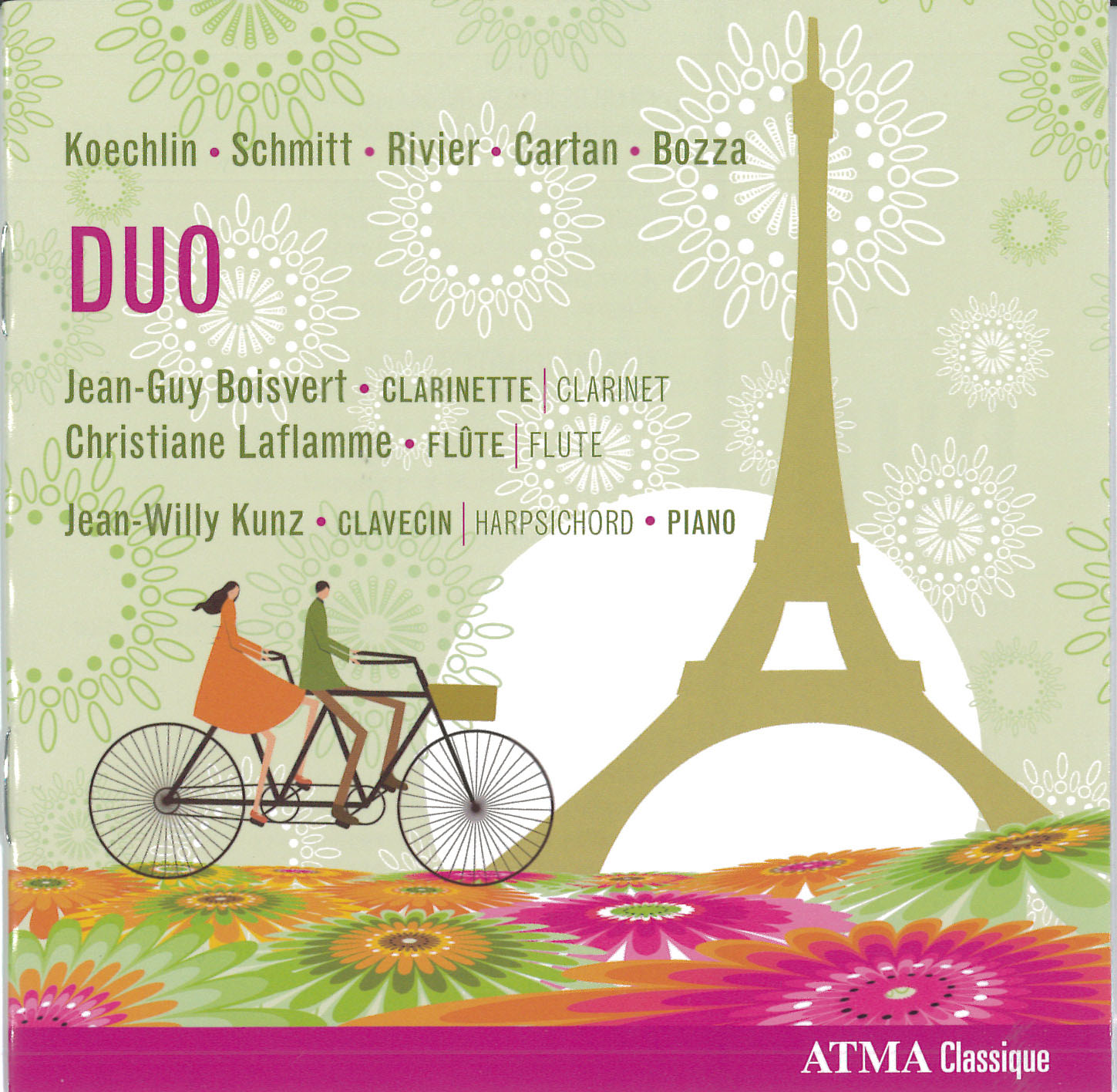
02 Duo KoechlinKoechlin; Schmitt; Rivier; Cartan;
Bozza Duo (Jean-Guy Boisvert;
Christiane Laflamme)
ATMA ACD2 2679

Moncton-based clarinettist Jean-Guy Boisvert’s latest project on the ATMA label brings together colleagues Christiane Laflamme (flute) and Jean-Willy Kunz (keyboards) from the Université de Montréal in an extended program of relatively unknown French miniatures from the margins of the 20th century wind repertoire, including several world premiere recordings. The 27 tracks are united by the recurring presence of the great Alsatian master Charles Koechlin, who is represented by 14 tracks interspersed with compositions by his contemporaries.

The best known of these fellow travellers is Florent Schmitt, represented here by the delightfully quirky modulations of his 1935 Sonatine for flute, clarinet and harpsichord. Also of note is the intriguing 1967 Duo for flute and clarinet by Jean Rivier, the slow movement of which is the only example that briefly flirts with the serial techniques of the 1960s. A series of duets by the short-lived Jean Cartan and the woodwind doyen Eugène Bozza fill out the guest list.

Koechlin is represented by the self-consciously antiquarian Sonatine modale and similarly conceived Motets de style archaïque duets along with six excerpts from his Monodies for solo clarinet. An example of Koechlin’s unique harmonic palette is briefly represented by his Pastorale for flute, clarinet and piano. The duets are masterpieces of contrapuntal writing while the best of the solo pieces is represented by the eerie chromatic bifurcations of the Chant funéraire. Koechlin also wrote extensively for solo flute and it is regrettable that we are not allowed to enjoy the clear and attractive tone of Christiane Laflamme in at least a few examples from the 96 pieces that constitute his monumental Les Chants de Nectaire. The recording is artfully captured in a warm, close acoustic recorded at the Domain Forget in Québec.

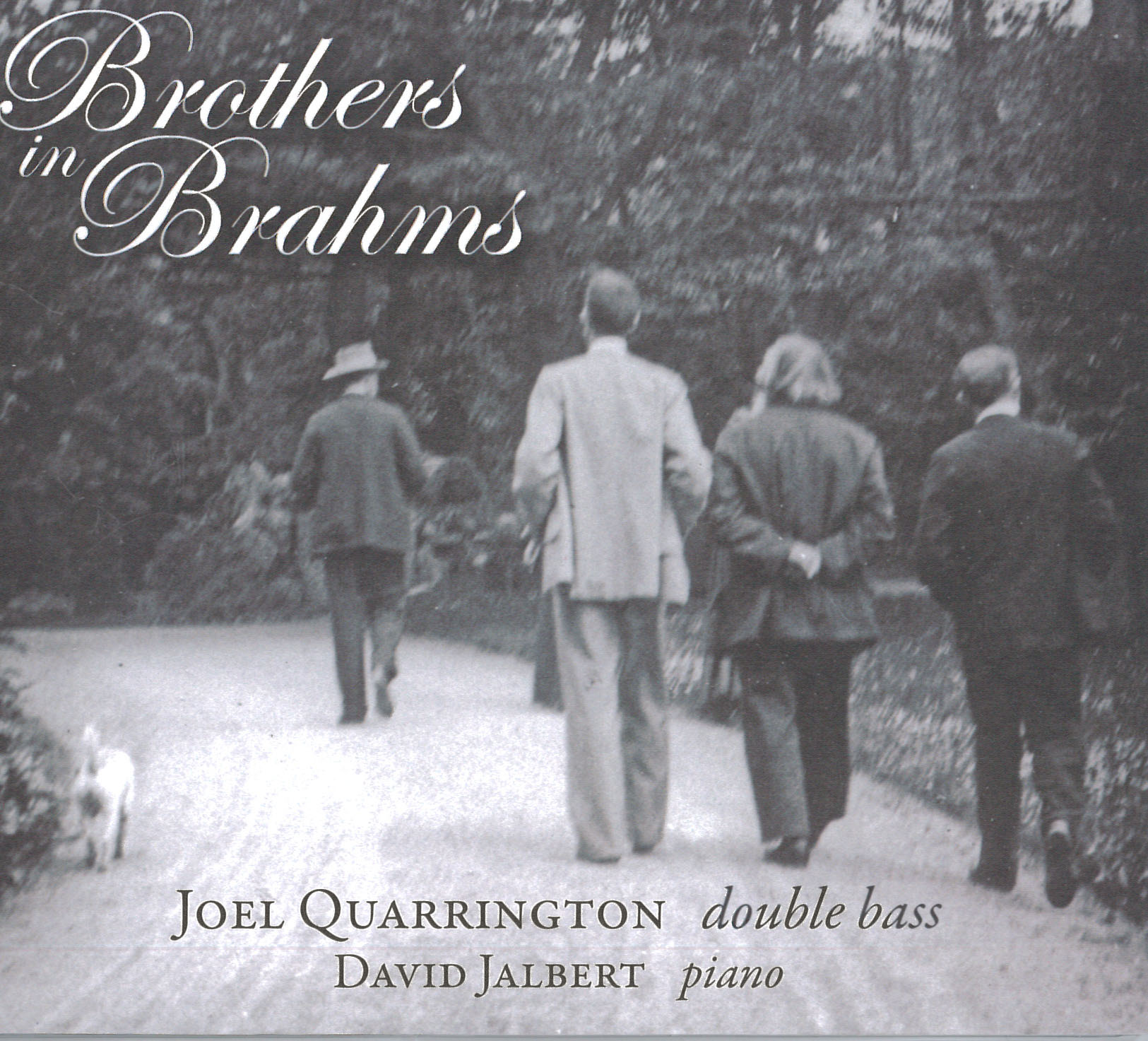
01 Brothers in BrahmsAt the time of writing, the outstanding Toronto double bassist and former TSO principal Joel Quarrington is about to take up his new position as principal bassist of the London Symphony Orchestra. His latest CD with pianist David Jalbert on the Modica Music label, Brothers in Brahms (MM013), consequently has somewhat of a parting gift feel about it, having been recorded at the CBC’s Glenn Gould Studio just this past March and released in June. The title comes from a concert program that the Toronto RCM’s ARC Ensemble presented ten years ago, in which Quarrington was asked to play the Double Bass Sonata Op.97 by Brahms’ contemporary and friend Robert Fuchs. Quarrington had never heard of Fuchs or the sonata, but was quite taken with it, and eventually chose to record it by following the ARC Ensemble’s original program idea, pairing it with his own transcriptions of works by Brahms and Robert Schumann.

The Brahms might stop you in your tracks at first hearing: it’s the Violin Sonata No.1 in G Major, Op.78; a work you wouldn’t think would be able to survive a drop of a couple of octaves for the solo part. It takes a bit of getting used to, but soon assumes a character of its own and does work very well. Quarrington rightly stresses the singing nature of the solo part in his booklet notes and more than justifies this observation with his playing.

The transcription of Schumann’s beautiful Adagio and Allegro Op.70 for French horn is more immediately successful, but the main interest here is the Fuchs sonata. It’s a terrific work, with a cello-like quality much of the time, and quite Brahmsian in style — lyrical, Romantic, lush and passionate. As the original three movements are all Allegro, Quarrington chose to add the Andante from Fuchs’ Three Pieces for Contrabass and Piano Op.96 as a slow third movement; it works extremely well.

Quarrington’s playing throughout the CD is superb, combining virtuosity and musicianship with a tone and agility that are at times quite astonishing. Jalbert is his equal in all respects, and the recorded sound and balance are faultless.

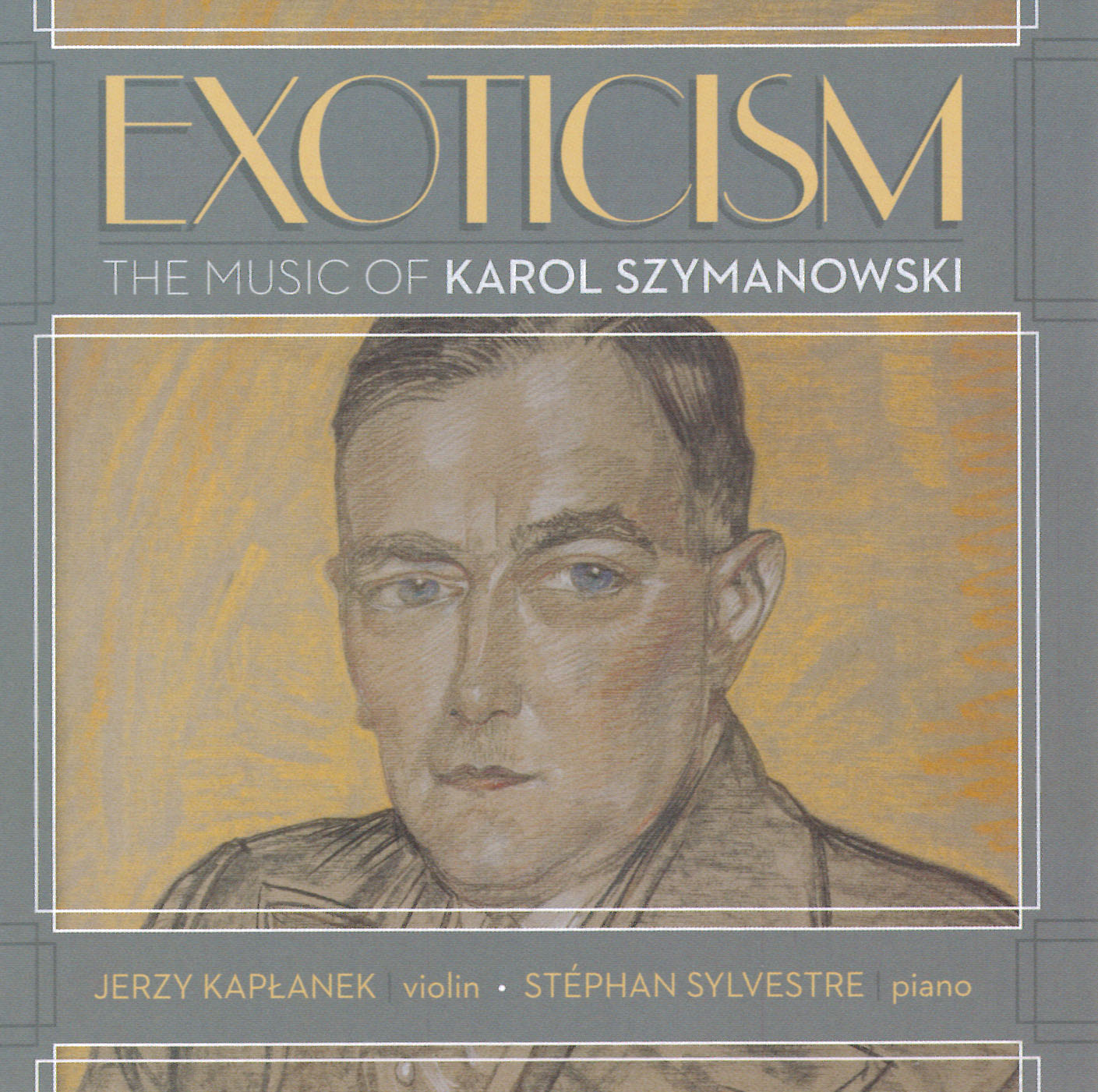
02 Exoticism SzymanowskiPolish-born violinist Jerzy Kaplanek is a member of the Waterloo-based Penderecki String Quartet and associate professor in the Faculty of Music at Wilfrid Laurier University. On his new CD Exoticism – The Music of Karol Szymanowski (Marquis MAR 437), he is joined by pianist Stéphan Sylvestre, associate professor of piano at Western University, in a recital of works by his compatriot.

Kaplanek readily admits that he feels he has known and understood Szymanowski’s music since his childhood days; it’s certainly borne out by his exemplary playing on this excellent disc. Two of the major works here — the Nocturne and Tarantella Op.28 and Mythes Op.30 — are from 1915, at the start of the composer’s most prolific period. Also included are the Sonata in D Minor, Op.9 from 1904, the early B Minor Prelude Op.1 No.1 in a transcription by Grażyna Bacewicz, and the Chant de Roxane from the post-war opera King Roger.

Szymanowski always wrote gratefully for the violin — his two violin concertos are particularly beautiful — and the music throughout this disc is a delight. Beautifully recorded at the Banff Centre in 2011, the recital features outstanding playing from both artists, with the wonderful Mythes the particularly dazzling highlight of a terrific CD.
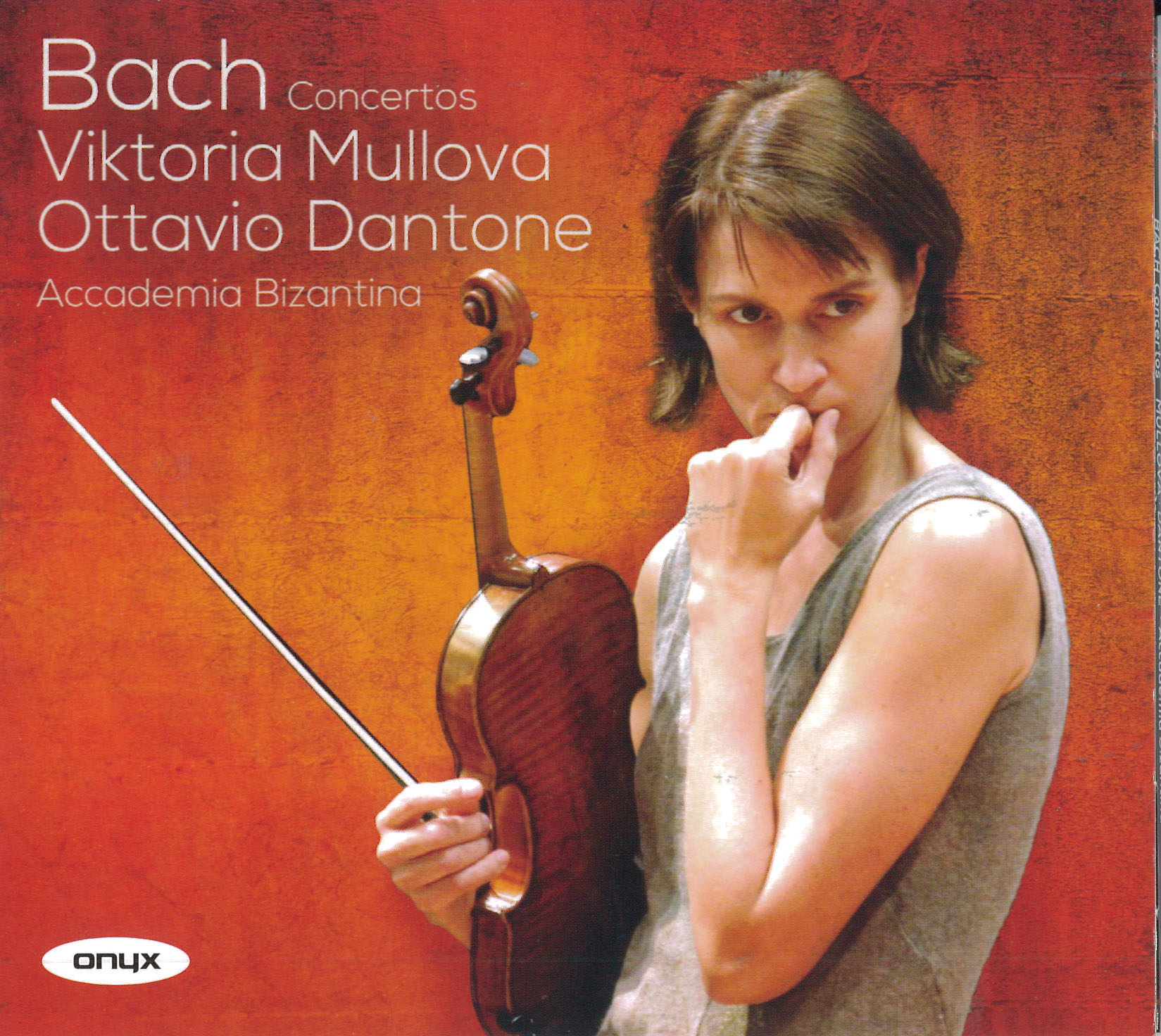
03 Bach Mullova DantoneViolinist Viktoria Mullova is joined by harpsichordist Ottavio Dantone and the Accademia Bizantina on a new Onyx CD of Bach Concertos (ONYX 4114). The two standard solo concertos — the A Minor BWV1041 and the E Major BWV1042 — are here, together with two transcriptions: the E Major Concerto for Harpsichord, arranged for violin in D major; and the Concerto for Two Harpsichords in C Minor, arranged for violin and harpsichord.

Mullova’s playing is simply beautiful: crisp, clean and light, with a nice sense of space. The slow movement of the E major concerto is particularly lovely. The two transcribed concertos aren’t quite as successful, but are still highly satisfying. The C minor concerto perhaps transcribes better, but both works have really nice third movements, with some particularly dazzling harpsichord passages in the duo concerto.

Beautifully presented in a glossy card folder, this is a simply lovely CD.

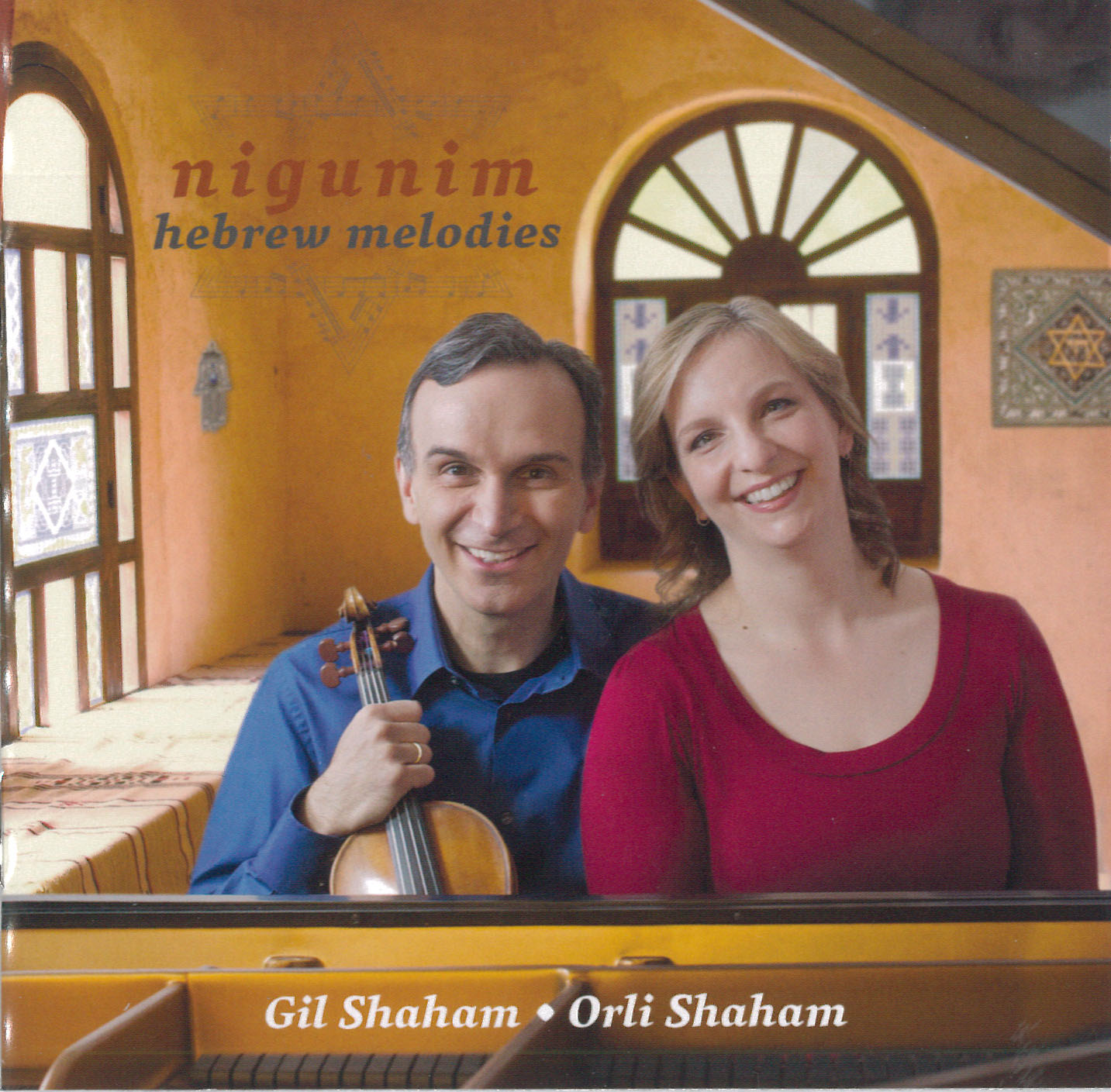
04 NigunimThe wonderful Gil Shaham is back with another outstanding CD on his own Canary Classics label, teaming up once again with his sister Orli Shaham for a fascinating recital titled Nigunim – Hebrew Melodies (CC10). It’s a mixture of old and new, with Josef Bonime’s Danse hébraïque and Joseph Achron’s Hebrew Melody and Two Hebrew Pieces bracketing the major work on the CD, Avner Dorman’s Nigunim (Violin Sonata No.3). The Dorman work was commissioned for this recording by the Shaham siblings, who wanted to emphasize the relevance of the Jewish music tradition in today’s world, and it’s a stunning piece, the virtuosity and quality of which quite clearly thrilled the performers.

The other works on the CD are: John Williams’ Three Pieces from Schindler’s List, the link to the 1940s Poland of their grandparents giving the music a personal relevance for the performers; Leo Zeitlin’s Eli Zion, transcribed by Joseph Achron from the original 1914 piece for cello and piano; and Ernest Bloch’s three-movement Baal Shem, the terrific performance of which features a particularly glorious Nigun central movement.

The Shahams grew up with this music, and it shows: the violin playing throughout the marvellous CD is rich, warm and idiomatic, and the piano playing always sympathetic and perfectly attuned.

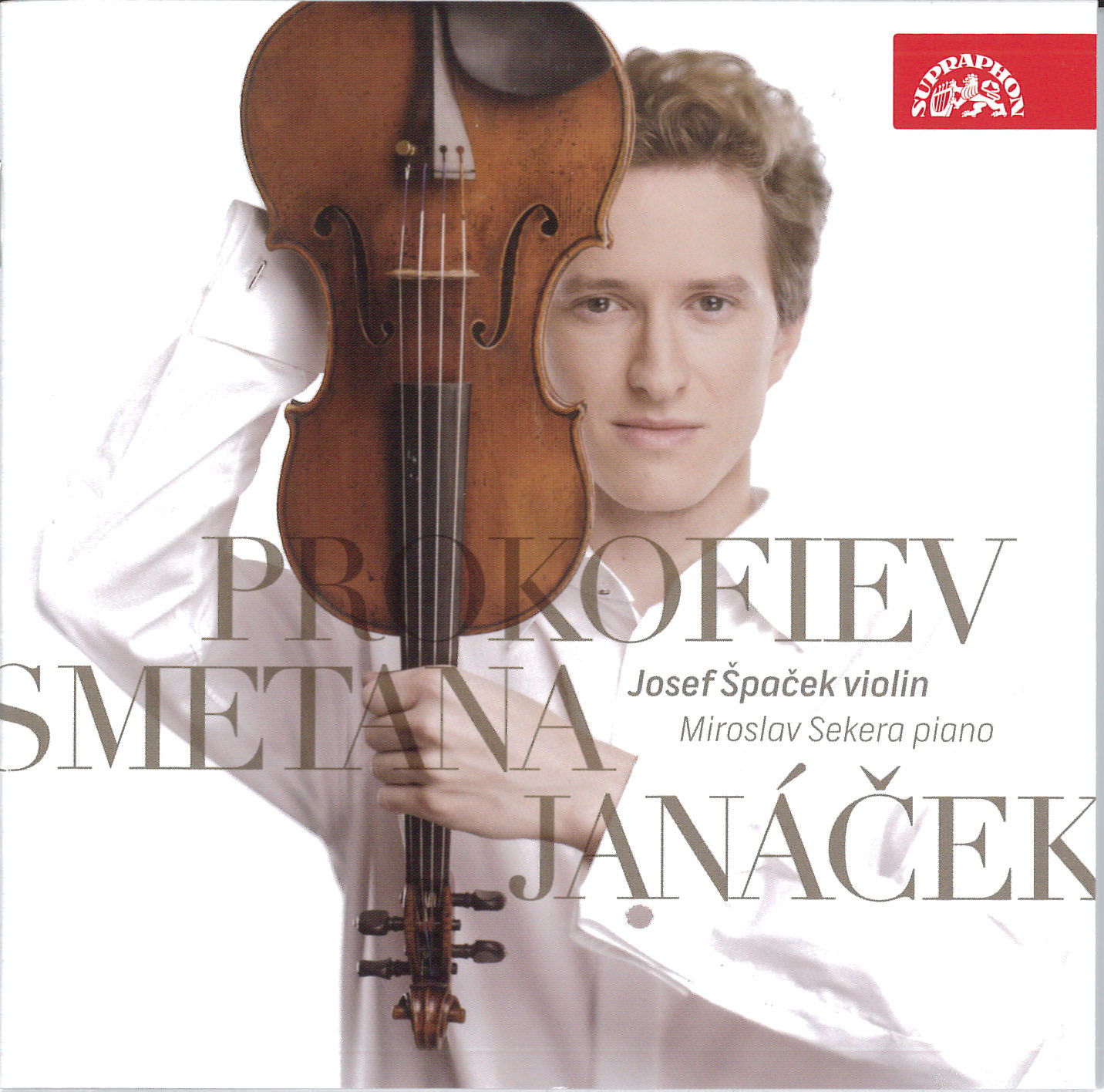
05 Prokofiev Smetana JanacekThe young Czech violinist Josef Špaček has a new CD on the Supraphon label, pianist and fellow Czech Miroslav Sekera joining him in a recital of works by Janáček, Smetana and Prokofiev (SU 4129-2). Both players are clearly very much at home in the Janáček Sonata for Violin and Piano and Smetana’s From the Homeland: Two Pieces for Violin and Piano, but Špaček shows a remarkable affinity for the music of Prokofiev as well. The Sonata for Solo Violin Op.115 is a relatively short but charming work and Špaček gets it absolutely right, with a perfect mix of lyrical and spiky percussive playing in the opening movement, a lovely Theme and Variations middle movement and a nicely contrasted — and not too fast! — finale.

Both players are in dazzling form in Prokofiev’s Sonata for Violin and Piano No.1 in F Minor, Op.80, from the lovely wispy violin scales over the slow, deep bass piano octaves of the first movement, through the percussive second movement to the brilliant Allegrissimo finale and the return to the mysterious mood of the sonata’s opening bars.

The great sound and balance contribute to an outstanding CD.

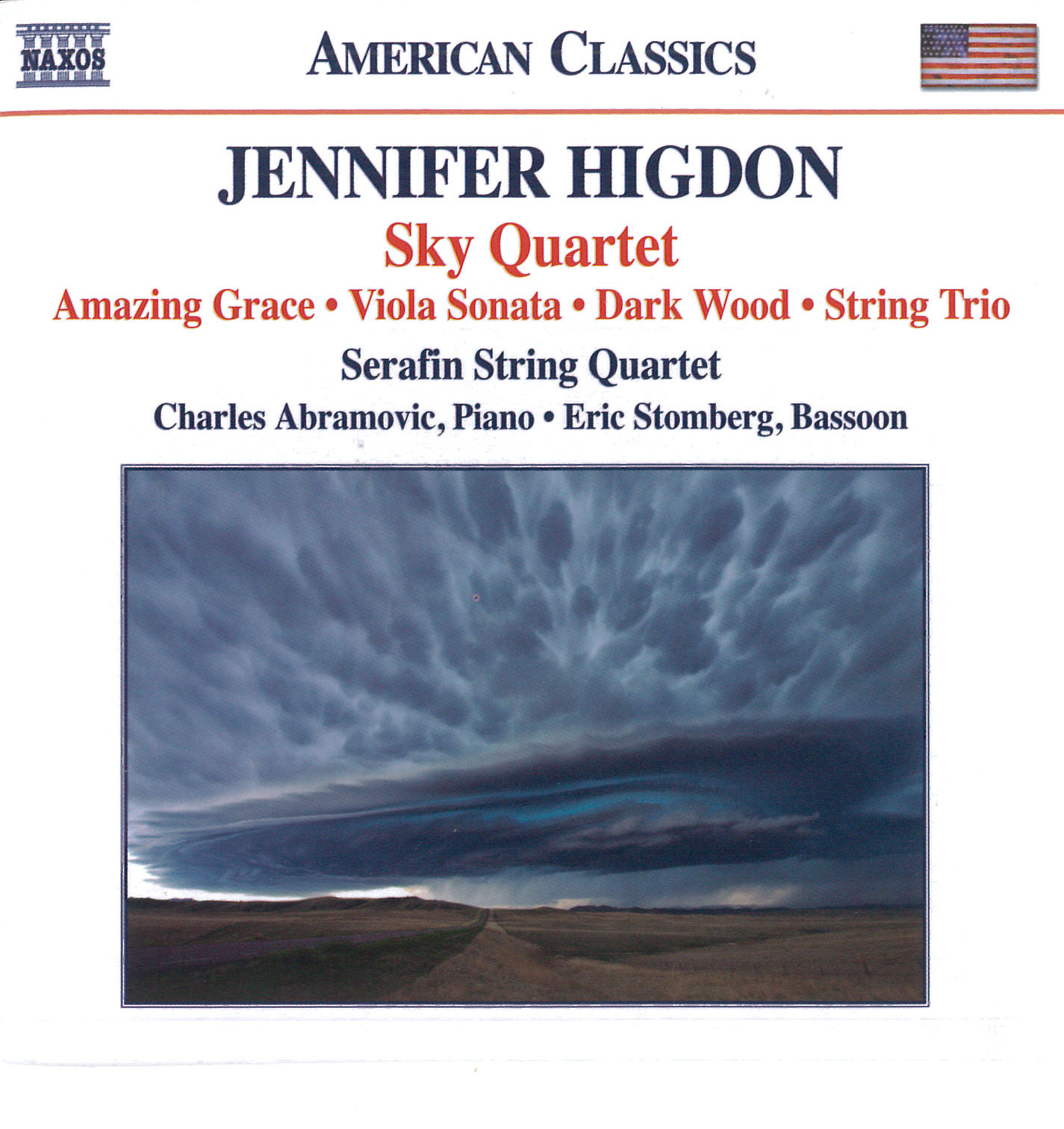
06 HigdonJennifer Higdon, who recently turned 50, is firmly established as one of the leading contemporary American composers. With Early Chamber Works (8.559752) Naxos has added a fascinating retrospective CD to its American Classics series, presenting première recordings, made in association with the composer, of five works from the formative years of Higdon’s career. They are all finely crafted and very accessible.

The Serafin String Quartet opens the CD with a short but lovely setting of Amazing Grace, followed by the Sky Quartet, a four-movement work inspired by the immensity and beauty of the Western U.S. sky. The quartet’s violist Molly Carr is joined by pianist Charles Abramovic for the early — and really beautiful — Sonata for Viola and Piano from 1990, and bassoonist Eric Stomberg joins a standard piano trio line-up for Dark Wood, a short piece that Higdon describes as exploring the bassoon’s virtuosic abilities as well as respecting its soulful nature.

Members of the Serafin Quartet perform the earliest work on the CD, the String Trio from 1988; it’s a terrific work that draws an interesting comment from Higdon, who says it “reveals a young composer in the process of finding her own voice. The language is restless and searching, and even the arrival points do not feel quite settled.” She calls it “a good place to be if you are a developing composer.”

And an even better place to be if you are an interested listener!

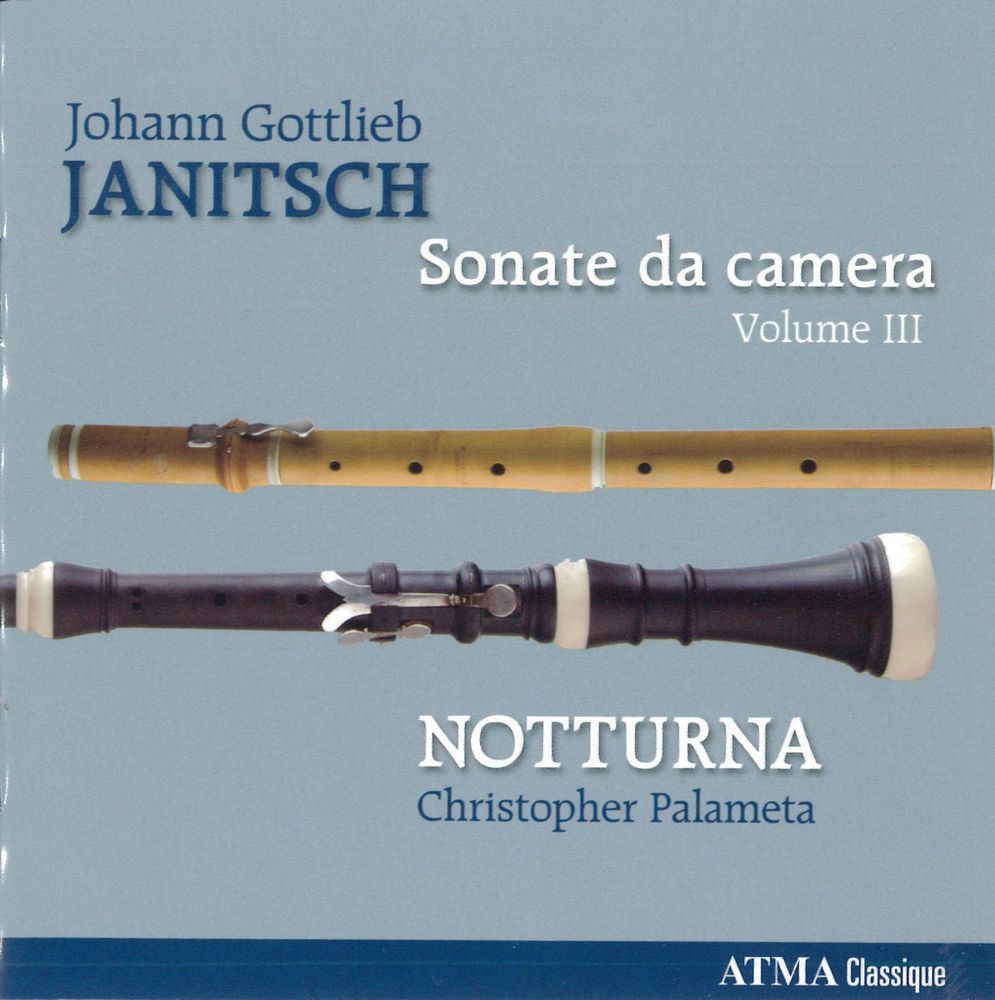
01 janitschJanitsch - Sonate da camera Volume3
Notturna; Christopher Palameta
ATMA ACD2 2626

Johann Gottlieb Janitsch (1708-1763) was a court musician for Frederick the Great. As a composer, he embraced the contrapuntal style of the day in his intricate chamber music. Here Notturna, under the leadership of oboist Christopher Palameta perform five of his quadro sonatas.

The works are complex as the counterpoint weaves between the voices with challenging progressions. The ensemble performs with a clear balance between the instruments and a driving group rhythm. Each member of the ensemble is a “star” as the works demand a detailed focus on each note and a sense of the longer line. This is especially evident in Quadro in B-flat major, Op.3, No.1. In this world premiere recording, a rapid change in harmonies in the first five measures foreshadows a fascinating and technically difficult work that seems to embrace the composer’s self-imposed challenge to expand his musical boundaries. In contrast, Op.1, No.5 in C Major is a slightly lighter work, and is the only quartet to use an obbligato cello. The opening dancelike Larghetto alla Siciliana is convincing with its deliberate pizzicato continuo articulation. The second movement fugue from Op.7, No.5 in C Minor for oboe, violin, viola and continuo is an aural treat. At just over two minutes in duration, Palameta’s oboe performance is especially colourful in its detail and ability to cement the parts together.

The balanced performances make this Notturna release one to be enjoyed time and time again.


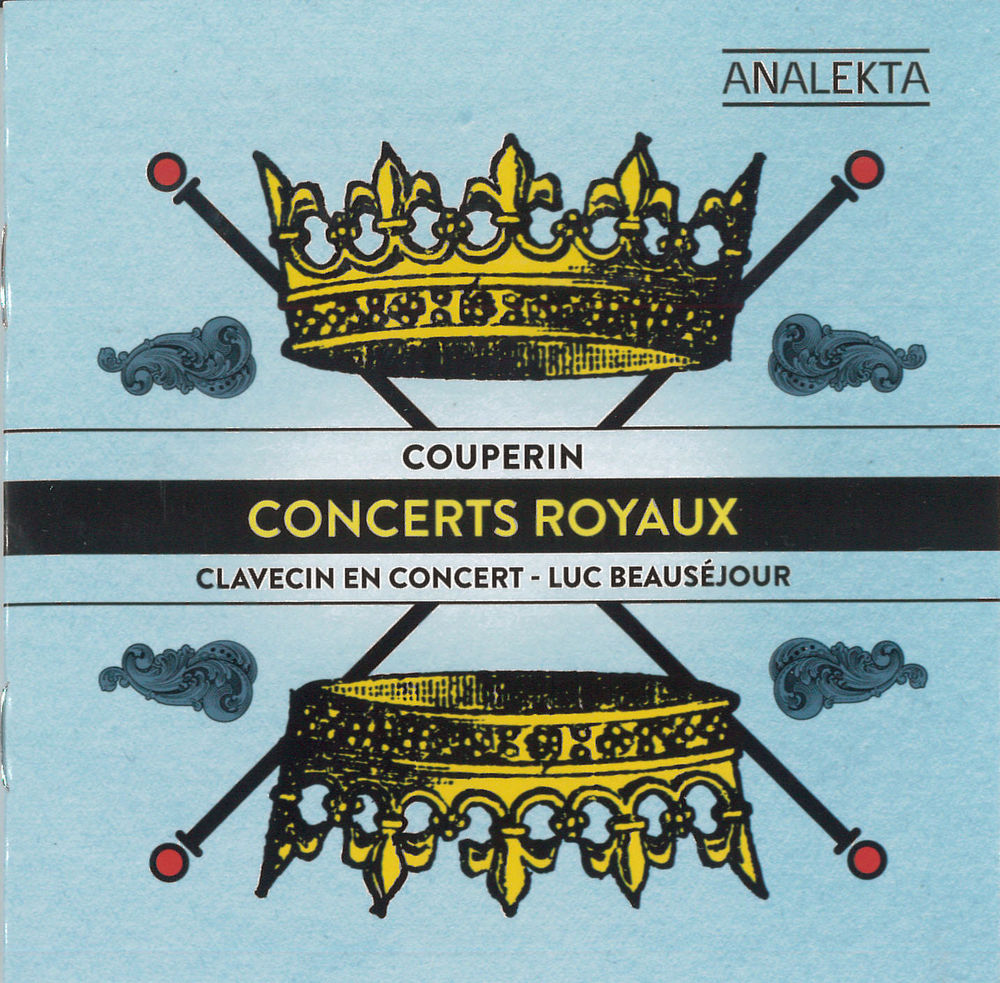
02 couperinCouperin - Concerts Royaux
Clavecin en Concert; Luc Beauséjour
Analekta AN 2 9993

Louis XIV summoned Couperin to play for him nearly every Sunday; the works performed in 1714-1715 were titled Concerts Royaux and were published in 1722. Couperin left the instrumentation of the concerts to the musicians’ discretion, a traditional Renaissance practice, even if the movements take the form of the traditional French baroque suite, no doubt under the Sun King’s influence.
 
From the first concert, the flute, oboe and bassoon lend a different quality to what would otherwise have been strings-dominated pieces. The woodwind instruments are prominent in the prélude and sarabande, where they impart a melancholy quality, and in the gavotte and gigue where the result is a more rustic feel.
 
In the second concert, the strings make themselves felt much more, notably in the gentle quality of the air tendre. The last movement, échos, restores the balance in favour of the woodwind, in a dignified baroque style.
 
The third and fourth concerts royaux combine some lively performances for oboe, bassoon and flute, most notably in the musette of the third. The name allemande for the second movement of the third concert belies its liveliness, even if sarabande grave is an entirely appropriate name for the fourth movement.
 
And then the fourth concert, with yet another allemande not living up to its sombre reputation. In fact, both the courantes which immediately follow, and the rigaudon and forlane en roundeau make this the most exuberant of the concerts royaux.
 
All in all, an enjoyable collection of Couperin’s music for his royal master.


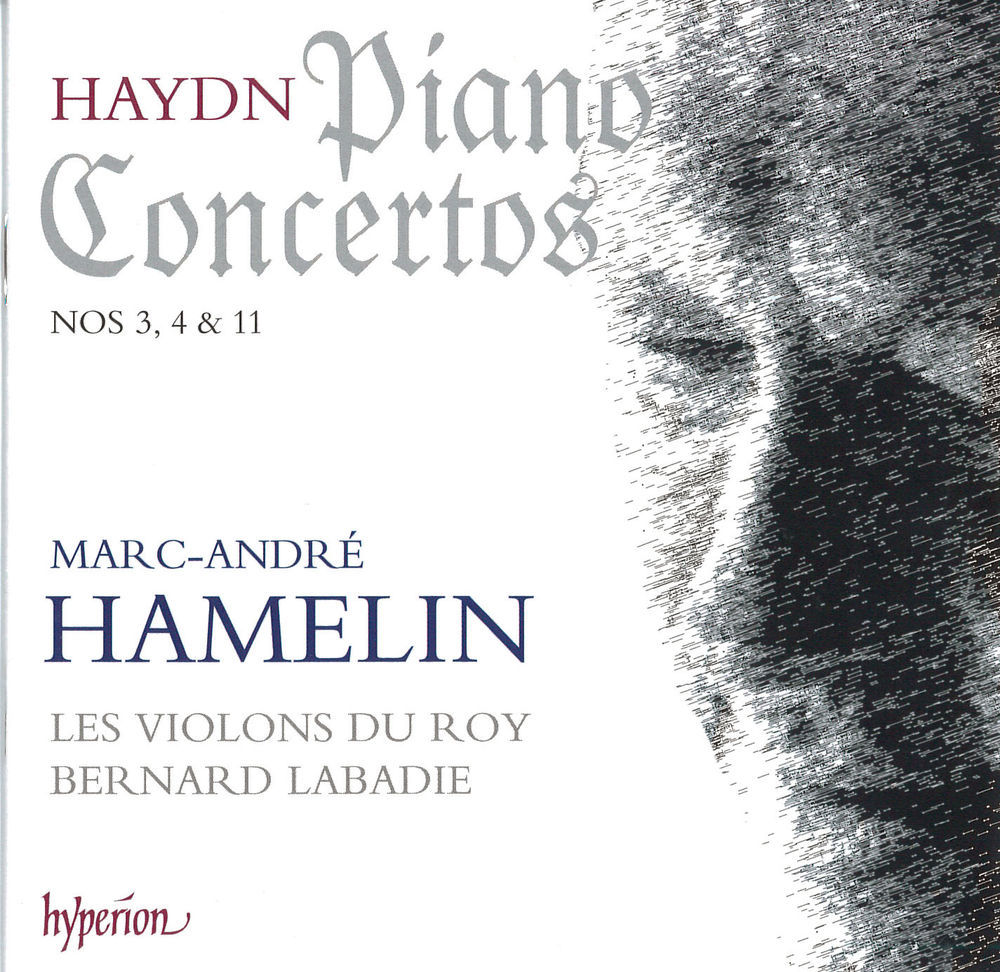
01 hamelin haydnHaydn - Piano Concertos Nos.3, 4 & 11
Marc-André Hamelin; Les Violons du Roy; Bernard Labadie
Hyperion CDA67925

This new offering from Hyperion features Haydn’s three “indubitably genuine” concertos for keyboard and orchestra (HOB XVIII: 3, 4 and 11), and a delightful offering it is. Performed on modern piano, strings and winds rather than on their historical counterparts, the disc opens with the popular D major concerto, written for “harpsichord or fortepiano” sometime between 1779 and 1783. The latest and most dramatic of the three concertos, it makes a bold and energetic opening statement. The F major and G major concertos, originally written for harpsichord in the 1760s, are slightly less effusive works but in these performances they sparkle with refined galanterie.

Hamelin’s performance as the piano soloist is expressive, well considered and full of humour, tenderness or bravado as befits the musical moment at hand. His talent for paying infinite attention to detail without ever losing sight of the bigger musical picture is truly impressive, exceptionally so in the slow movements. As we’d expect from Les Violons du Roy under the baton of Bernard Labadie, the ensemble playing is detailed, focused and musical – lots of light when they are in the forefront, and fine shadowing of Hamelin when the limelight is his. The teamwork between orchestra and soloist is well balanced and amiable. And finally, my kudos to all for the beautiful distinctions made between the various vivaces, allegros and prestos!


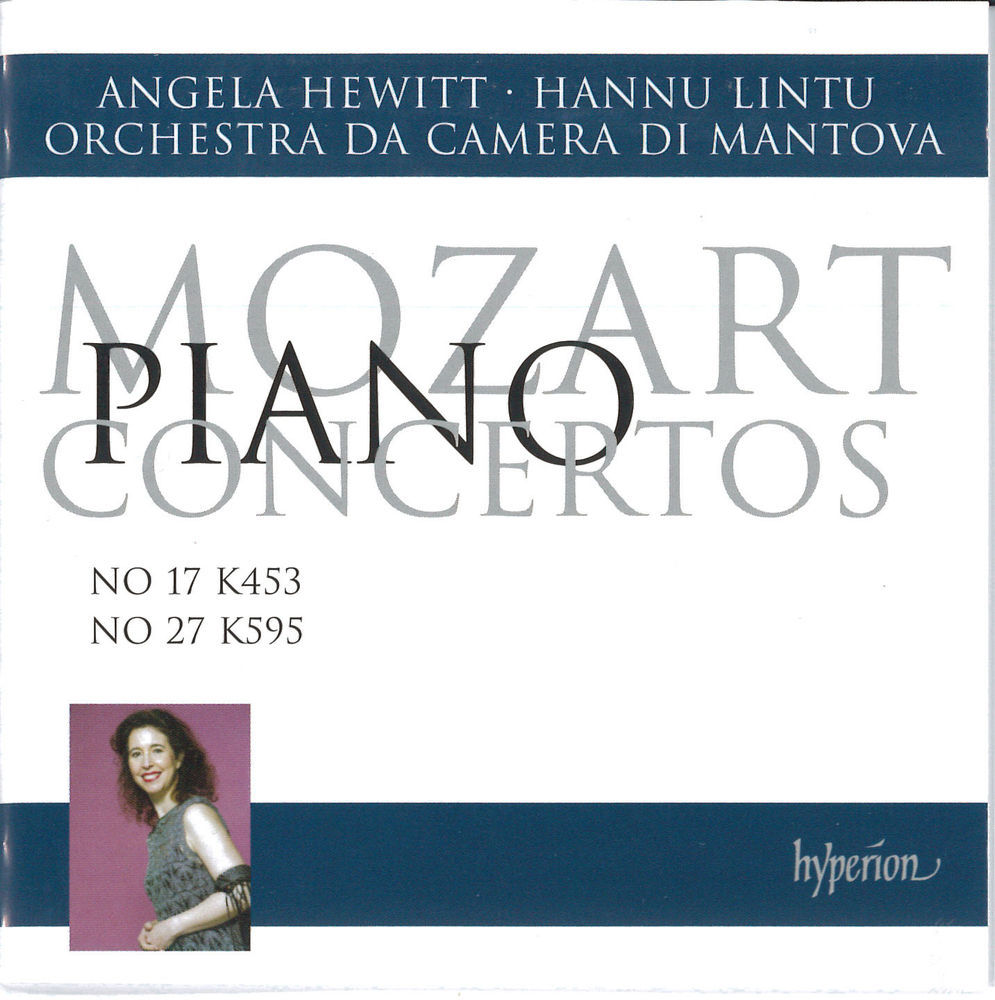
02 mozart hewittMozart - Piano Concertos 17 & 27
Angela Hewitt; Orchestra da Camera di Mantova; Hannu Lintu
Hyperion CDA67919

There is a cute little story attached to Mozart’s G major concerto. Apparently he acquired a little bird, a starling who quickly picked up the rondo theme of the third movement and sang it day in and day out, adding some of its own bits to it which pleased Mozart, a bird lover, immensely. No doubt, this helped him composing.

Canada’s own stellar pianist, Angela Hewitt chose this and the last, the B flat major concerto to follow-up on her previous Mozart concerto issue on the distinguished Hyperion label and what a fine recording this is. In coupling the G major, which comes from a very happy and successful period of the composer’s life with the B flat major, his last statement in this form, Hewitt traverses  a cross section of emotions, from joyful happiness to sad resignation and premonition of death.

My own experience with Hewitt’s exceptional pianism began with Bach and later with immense enjoyment of her beautiful set of Chopin Nocturnes (that were probably easier to interpret), so she came to Mozart relatively late. It was worth the wait. She approaches Mozart like a scholar with exceptional intelligence and a thoroughly sympathetic heart. Her playing has graceful elegance, impeccable technical prowess; the emotional content is deeply felt and compositional structure is fully understood. The orchestra and the conductor Hannu Lintu are wonderfully compatible and in perfect balance with the angelic tones of the Hewitt’s celebrated Fazioli piano. The recording is superlative.


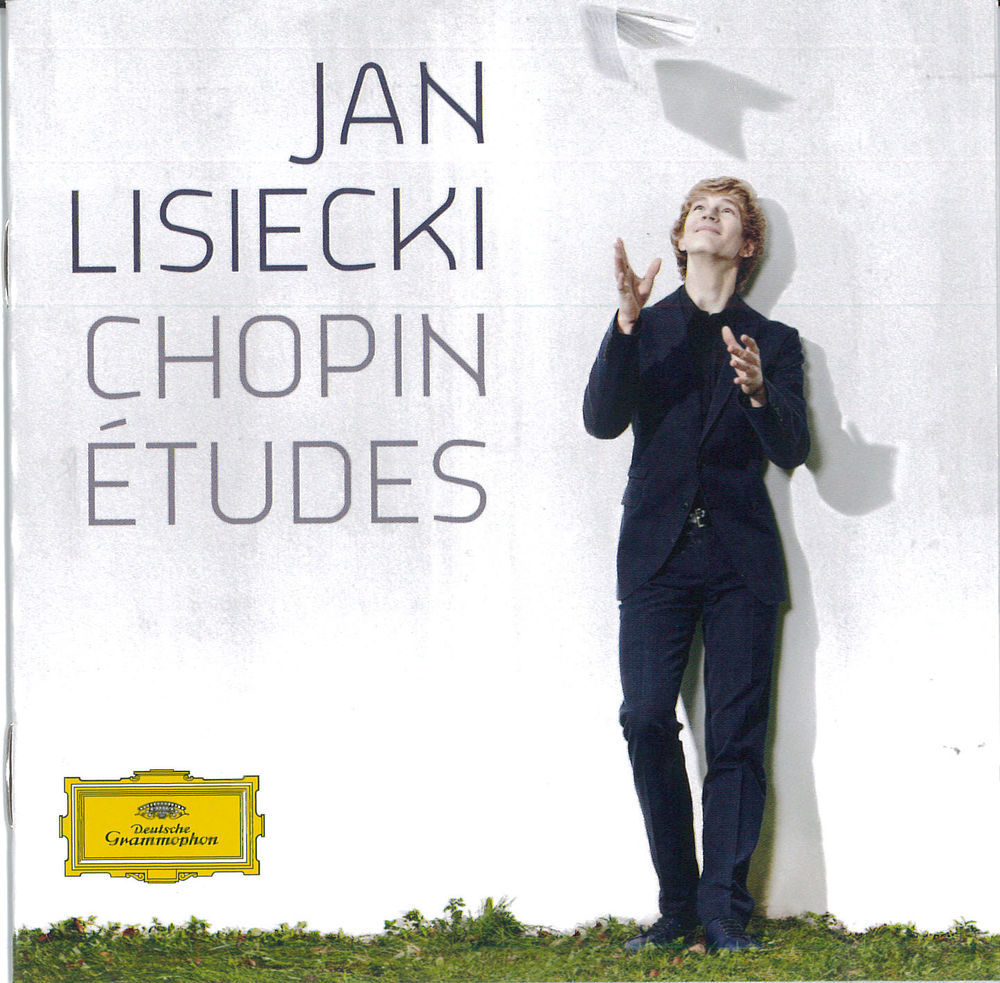
03 lisiecki chopinChopin - Etudes
Jan Lisiecki
Deutsche Grammophon 4791039

Young male pianists all too often try their audiences with a few years of brash playing where speed and volume overshadow their muse. Although impressed with divine keyboard technique, one nevertheless waits patiently for music to emerge – which it eventually and thankfully does.
More rarely, however, comes a young man for whom impeccable technique is merely a tool in the search for music’s kernel of meaning. This is Jan Lisiecki.

Since his early public appearances 5 years ago (in his mid-teens) this young Polish-Canadian has somehow managed to avoid this testosterone trap. He is capable of the most ethereal pianissimos, a blazing and accurate technique and breathtaking power at the keyboard.

The two dozen Etudes of Chopin’s Op.10 and 25 seem the perfect repertoire for Lisiecki at this point in his career. His playing shifts convincingly from transparent lightness to earnest melancholy. His tempi and dynamics feel more understood than learned. His own comments in the CD notes reveal a young mind with a remarkably mature interpretive grasp of Chopin’s music. He thinks with his heart.

As impressive as his playing is his recording technique in which each of the Etudes was recorded as a complete “take.” Technology today offers performers digital perfection with undetectable manipulations of speed and other values, but Lisiecki wanted his audience to have the real thing, start to finish. He allowed no edits. This speaks to a commendable honesty in performance. We should anticipate many years of truly extraordinary recordings from this young man. But we might also hope that his gift finds expression in teaching… we need such mentors.


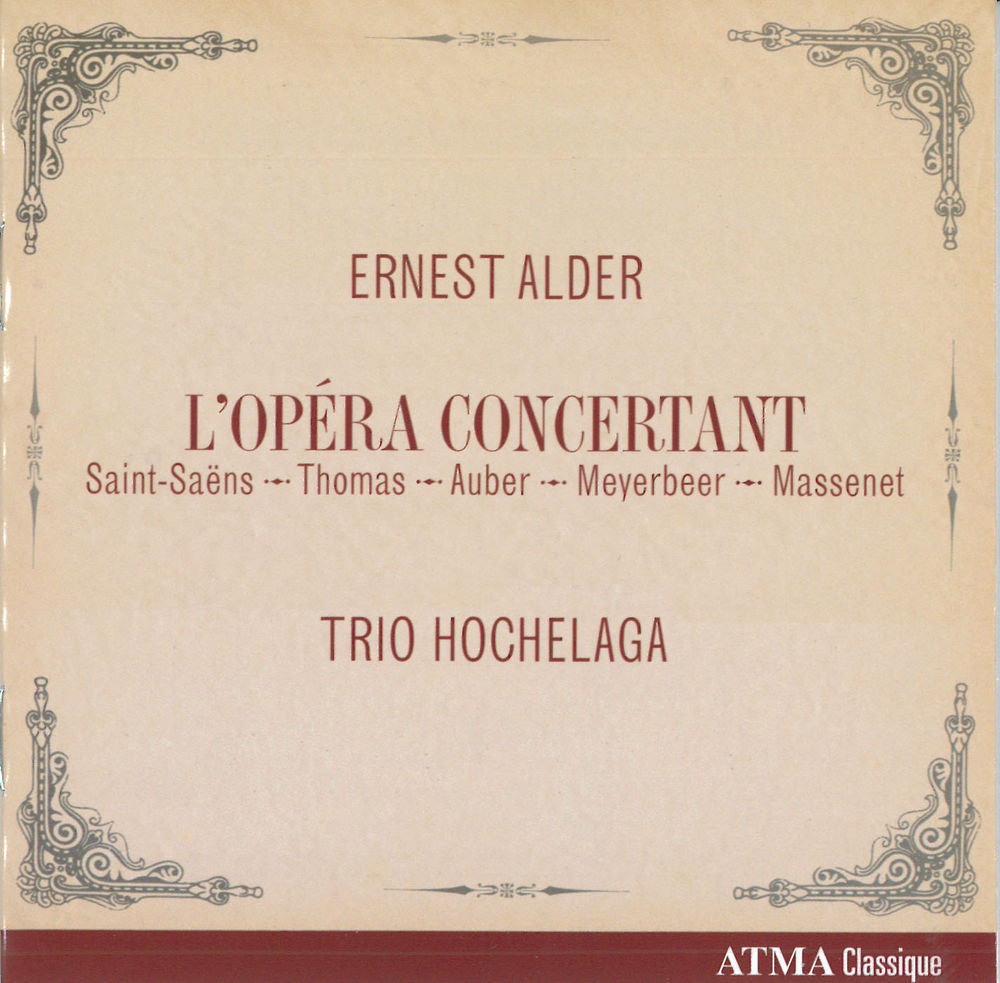
04 lopera concertantL'Opera Concertante (Opera transcriptions by Ernest Alder)
Trio Hochelaga
ATMA ACD2 2652

Transcribing arias from the popular operas of the time was one of the favourite practices of 19th century composers. Those transcriptions ranged from faithful reductions to variations, fantasies and potpourris, and were usually done for one or two pianos, trios and quartets. The public enjoyed the more intimate, chamber setting of these transcriptions and took pleasure in the idea of bringing the opera into their salons.

Richard Ernest Alder (1853-1904) was a Swiss composer who studied at the Paris Conservatory and spent most of his life in France. He wrote a number of pieces for piano, as well as choral and orchestral works. He is being rediscovered today as a transcriber and arranger.

This CD features seven of Alder’s trio transcriptions of the beloved operas by Camille Saint-Saëns (Samson et Dalila), Ambroise Thomas (Mignon), Daniel-François-Esprit Auber (La Muette de Portici), Giacomo Meyerbeer (La Pardon de Ploërmel and Les Huguenots) and Jules Massenet (Le Cid and Werther). The transcriptions are skilfully done and adopt the same formula consisting of a brief introduction, followed by alternating sequences of fast and slow segments ending in a dramatic climax. Even though the composers are different, the music feels like one cohesive piece. Alder brings out both the sweetness and the drama in these transcriptions, combining virtuosic practices of 19th century-writing with more serene and sonorous parts, while using the craftsmanship firmly rooted in the German Romantic tradition.

Trio Hochelaga (Anne Robert, violin; Paul Marleyn, cello; Stéphane Lemelin, piano) is a distinguished Canadian ensemble whose repertoire places an emphasis on lesser known works of French music. Their interpretation of Alder’s transcriptions is playful, sensitive and polished. The ensemble’s use of colours and textures truly captures the romantic essence of these operas.
It is not necessary for the listener to know the operas that inspired Alder – one can just enjoy the wonderful chamber music on this CD and, like the 19th century audience, be entertained by it.


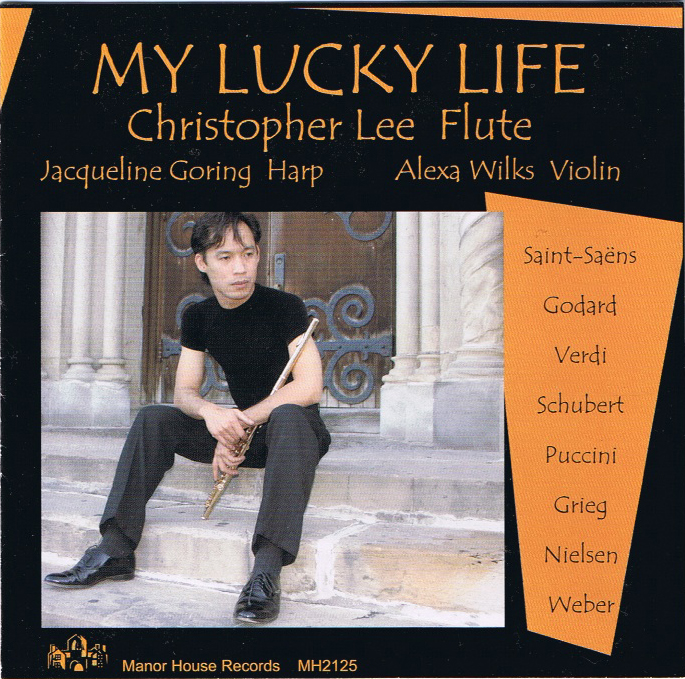
05 my lucky lifeMy Lucky Life  
Christopher Lee; Jacqueline Goring; Alexa Wilks        
Manor House Records MH2125 (christopherlee.ca)

In recordings of flute music, more often than not the focus is on the technical skills of the performer. Toronto flutist Christopher Lee has no need to concentrate on such a display; it is evident in all of his work. This CD shines a different light. With a few exceptions, for this recording Lee has selected well-known arias from operas. I was immediately attracted to this CD because it contains a flute and harp rendition of my all-time favourite operatic aria: Mon couer s’ouvre a ta voix from Saint-Saëns’ opera Samson et Dalila. In the opera Dalila seduces Samson so that he may be captured. All of the emotion of this work is brought to us though the warm and full-bodied tone of the artist’s flute enhanced by the beautiful counterpoint of the harp (Jacqueline Goring). Throughout the many rubato passages these two are in perfect synchronism as if they were reading each other’s emotions. While the violin (Alexa Wilks) plays a lesser role on this CD, it fulfills a significant role in the fabric of the arrangements.
           
Much of the recording contains similar renditions of familiar arias from the operas of Verdi, Puccini and Weber. The balance contains incidental music for plays by Grieg and Nielsen as well as the familiar serenade Ständchen from Schubert’s song cycle Schwanengesang. The disc leads off with Godard’s Berceuse from his opera Jocelyn. This is one of those enduring melodies which has stood the test of time long after the opera and composer have been forgotten.
           
With the exception of the work by Nielsen all of the arrangements were crafted by Lee. The program notes on the music and the performers are concise and informative.

Concert Note:
Christopher Lee is one of a myriad performers featured at the Canadian Flute Convention being held in Oakville June 30 to July 1 (canadaflute.com/convention).

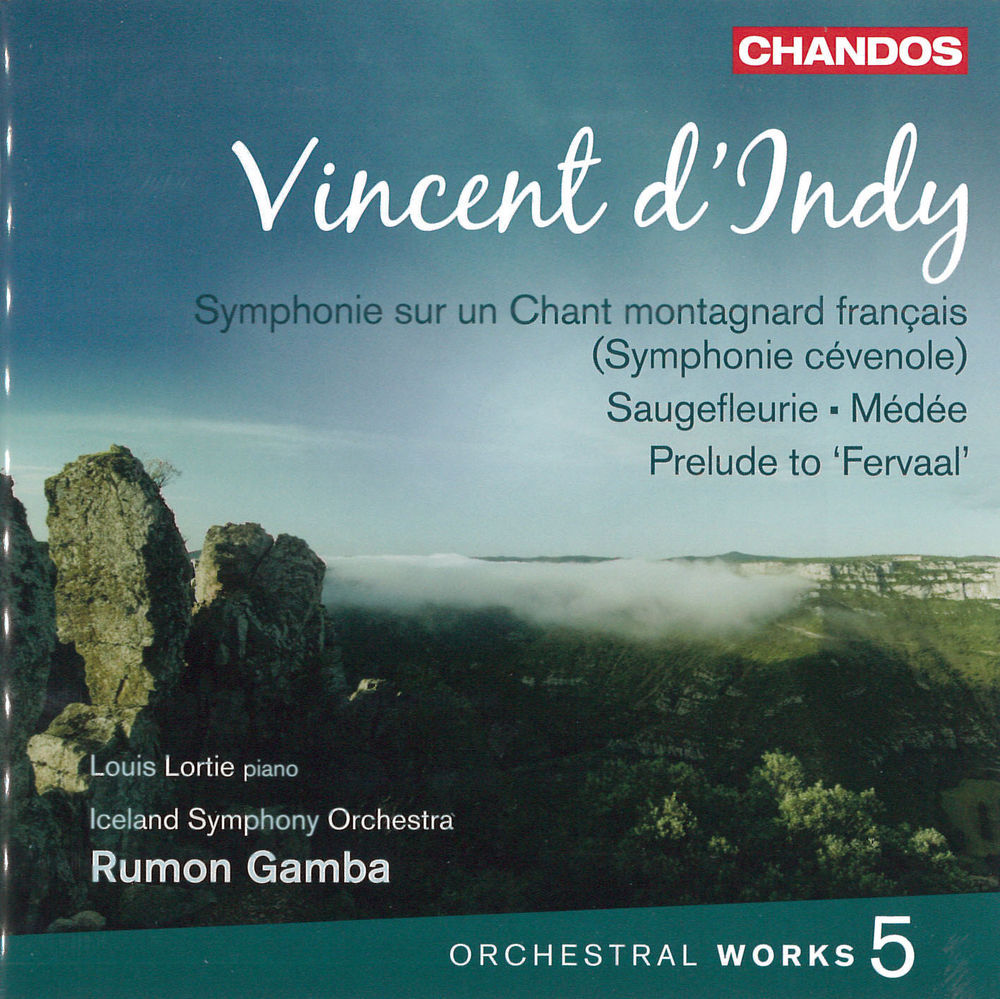
06 dindyD'Indy - Symphonie sur un Chant montagnard français; Saugefleurie; Medée
Louis Lortie; Iceland Symphony Orchestra; Rumon Gamba
Chandos CHAN 10760

At the time of writing, spring has finally arrived, so a disc which includes Vincent d’Indy’s Symphony on a French Mountain Air seems particularly appropriate in celebration of the season. The disc in question is the fifth volume in a series on the Chandos label presenting music by the Parisian-born composer performed by the Iceland Symphony under the direction of Rumon Gamba.

Born in 1851, d’Indy was a controversial figure during his lifetime, his strong right-wing political views frequently going against the mainstream. Nevertheless, he was regarded as a composer of considerable stature, and his eclectic and romantic style exerted considerable influence on later composers, such as Eric Satie and Albert Roussel.

In addition to the Symphonie with renowned pianist Louis Lortie as the soloist, the disc also features Saugefleurie, Medée, and the Prelude to Act One of his opera Fervaal. The Symphonie is surely one of d’Indy’s most famous compositions, and is treated here with the joyous spirit it deserves. Based on a folk song from Tourtous, the work is a large and lush canvas with Lortie forming a perfect musical partnership with the orchestra. Saugefleurie had its origins in a poem by Robert de Bonnières and here the prominent use of horns and chromatic harmonies shows the clear influence of Wagner. (Unlike many of his French contemporaries, d’Indy was a staunch Wagnerite). Also with a literary connotation is the orchestral suite Medée, written for a tragedy by Catulle Mendès. The Iceland Symphony performs with a sensitive assurance, ably capturing the orchestral colours and contrasting moods in this story of doomed love, thus rounding out a most satisfying recording.

This is a fine addition in the series devoted to the “Samson of Music,” one which is helping bring to light certain works that up to now have unjustly languished in obscurity. D’Indy would be gratified!


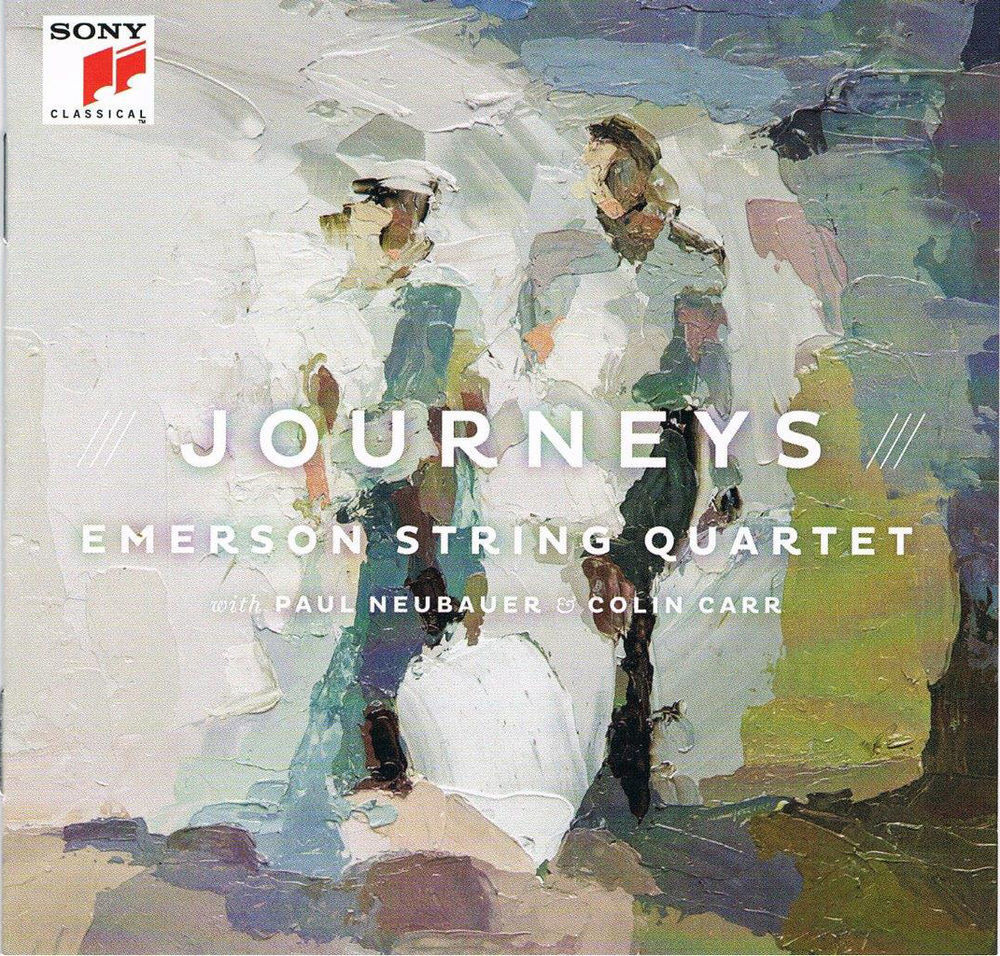
07 emerson journeysJourneys: Tchaikovsky - Souvenir de Florence; Schoenberg - Verklärte Nacht
Emerson String Quartet; Paul Neubauer; Colin Carr    
Sony 887254 70602

Firstly, I must admit my prejudice against the Emerson String Quartet initiated by a keen
disappointment and lingering dislike of their Beethoven String Quartets cycle of the mid-1990s issued by DG. To my ears, those coldly efficient, shiny performances displayed no empathy at all for the human being behind the scores. So it was with some trepidation that I approached this new CD, recorded just last year, but the interpretations are exemplary!

Verklärte Nacht is a particular favourite of mine, both in the original sextet version of 1899 and the opulent version for string orchestra revised in 1943. There is also a version for piano trio by Eduard Steuermann, a pupil of Schoenberg, of which several performances are available. The Emersons are right on the mark here. Their towering performance is completely focused with impeccable ensemble. Sensitive to every nuance and reading between the notes, the group appears to be totally absorbed by the beauty of the score and, just maybe, mindful of the melodrama and imagery of the Richard Dehmel poem that inspired it. Arguably, this performance sweeps the board.
 
Souvenir de Florence is an exhilarating, less familiar four-movement sextet by Tchaikovsky. It enjoys the same attention from the players who turn in a solid and joyous performance of this beautifully decorated score that will surely convert new listeners into fans of this captivating, abundantly energetic opus. 

The recording producer and engineer, Da-Hong Seetoo deserves an award for achieving such stunning realism and immediacy with apparent ease. This is an inspired disc that belongs on your shelf.


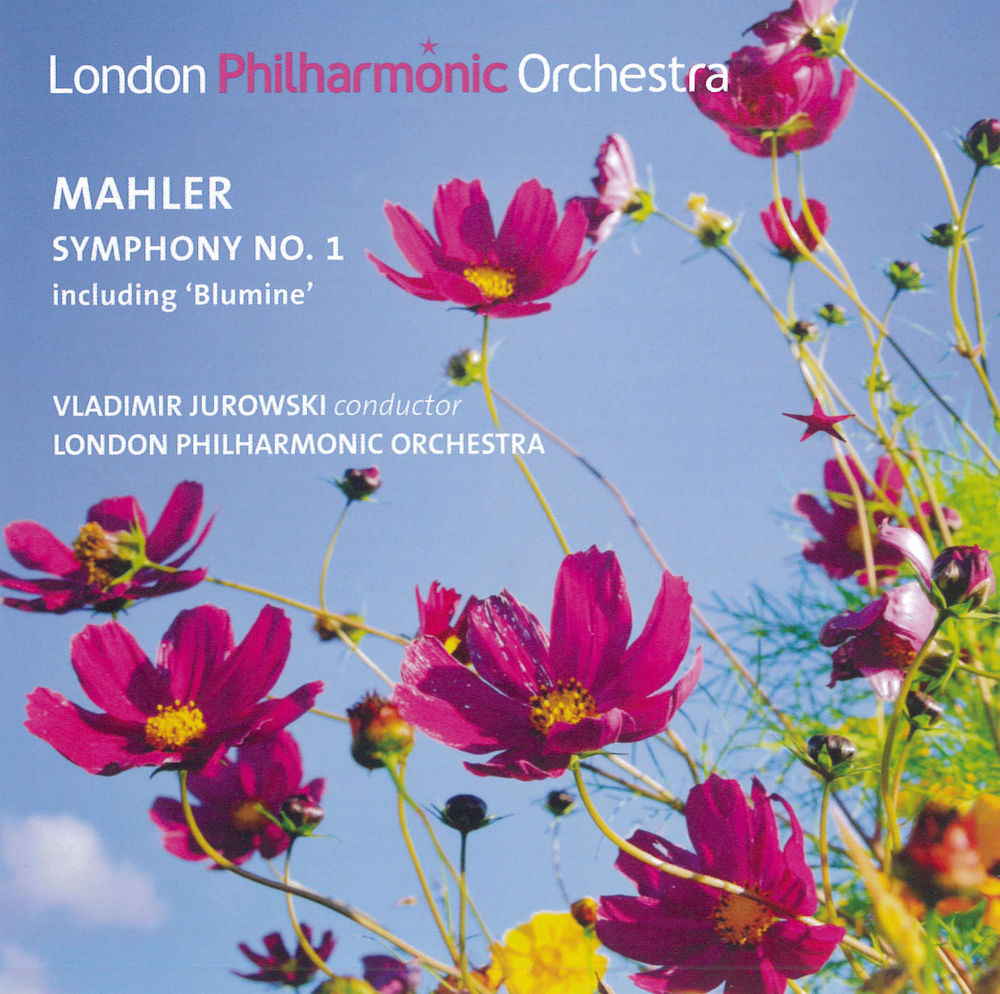
08 mahler 1 lpoMahler - Symphony No.1
London Philharmonic Orchestra; Vladimir Jurowski
LPO LPO-00070

The late release of a 2010 performance of Mahler’s Symphony No.1 on the London Philharmonic’s house label reveals a young conductor, Vladimir Jurowski, leading an enthusiastic and quite capable orchestra in repertoire he evidently has not quite come to terms with. This is most evident in the first movement, where Jurowski’s rigid phrasing robs the music of much of its charm and freshness. The novelty of this particular performance is the inclusion of a fifth movement entitled Blumine (Flowers) inserted between the first and second movements, an addition which was deleted by Mahler after three performances and was presumed lost until it resurfaced in 1966. Over twenty recordings have included this movement since then, but considering the flood of recordings we have experienced lately it’s still quite a rarity. Jurowski’s freakishly muscular interpretation of this delicate movement is certainly no bed of flowers, and for my taste the plebeian lack of perfume spoils the contrast with the country bumpkin charm of the following Scherzo, which seems to pass by in a flash in its wake. Having opted to reclaim the past by the inclusion of the extra movement, Jurowski inexplicably gives in to current revisionism by assigning the celebrated double bass solo that launches the ensuing bizarre funeral march to the entire section according to the specious reasoning of the latest Mahler edition. Thankfully by this point the conductor is beginning to show some real enthusiasm, finally hitting his stride in the hyper-theatrical grand finale and eventually saving the day with a fiery conclusion. The recorded sound from the recently renovated Royal Festival Hall is quite acceptable with no discernible distractions.

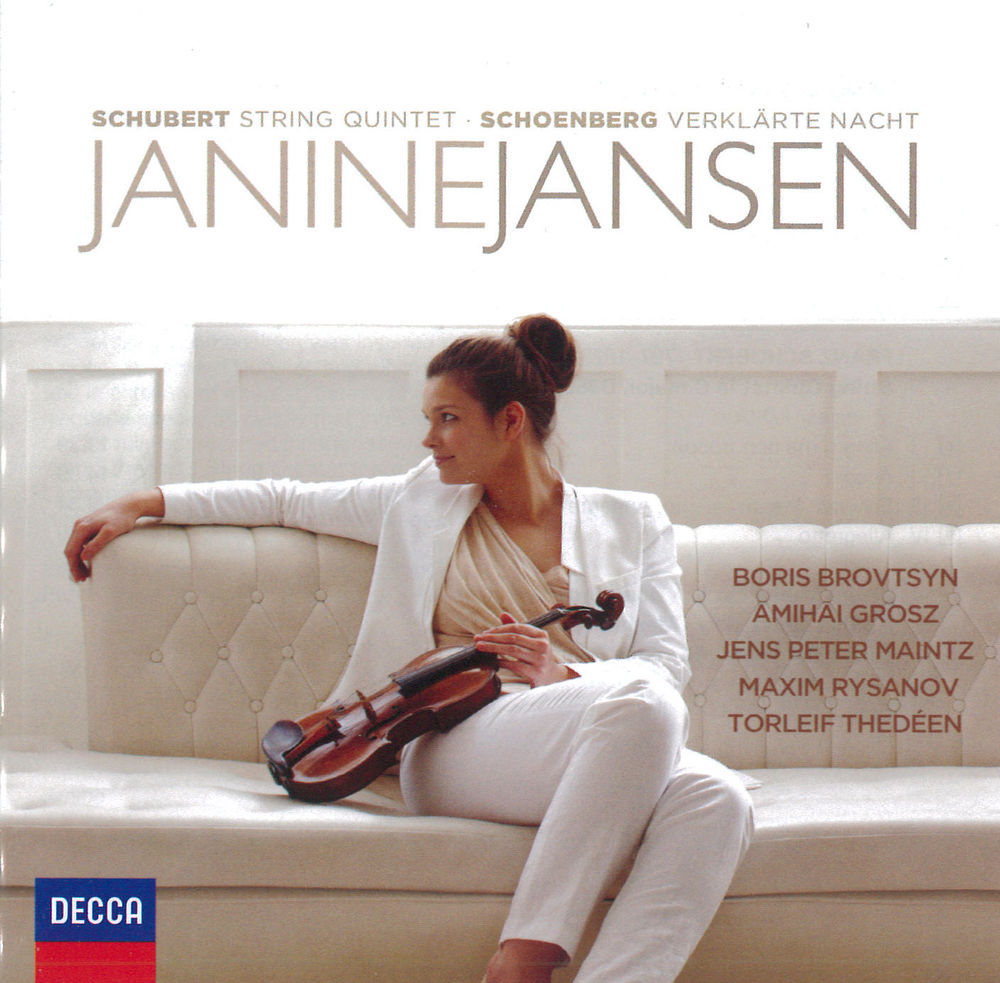
01 jansen schoenbergAlthough she doesn’t really do any more than her collaborators on her latest CD featuring Schubert’s String Quintet and Schoenberg’s Verklärte Nacht, the terrific Janine Jansen gets virtually solo credit and attention on the cover (Decca 478 3551). Her usual musical intelligence and sensitivity, however, is clearly matched by violinist Boris Brovtsyn, violists Maxim Rysanov and Amihai Grosz, and cellists Torleif Thedéen and Jens Peter Maintz. Schoenberg arranged Verklärte Nacht for string orchestra, but what a ravishing and entrancing work it is in this original sextet form. Written in 1899, well before his journey into atonality, it remains a stunningly beautiful late-Romantic work, given an exemplary performance here. The quality is just as high in the Schubert String Quintet, with impeccable balance between the voices revealing the intricate inner details with perfect clarity, and far more successfully than most ensembles. Attention to detail, never for its own sake but always with the aim of enriching the interpretation, is one of Jansen’s great strengths, and her leadership here is evident. This is music-making of the highest quality, and as engrossing and satisfying a performance of this wonderful work as you could wish for.

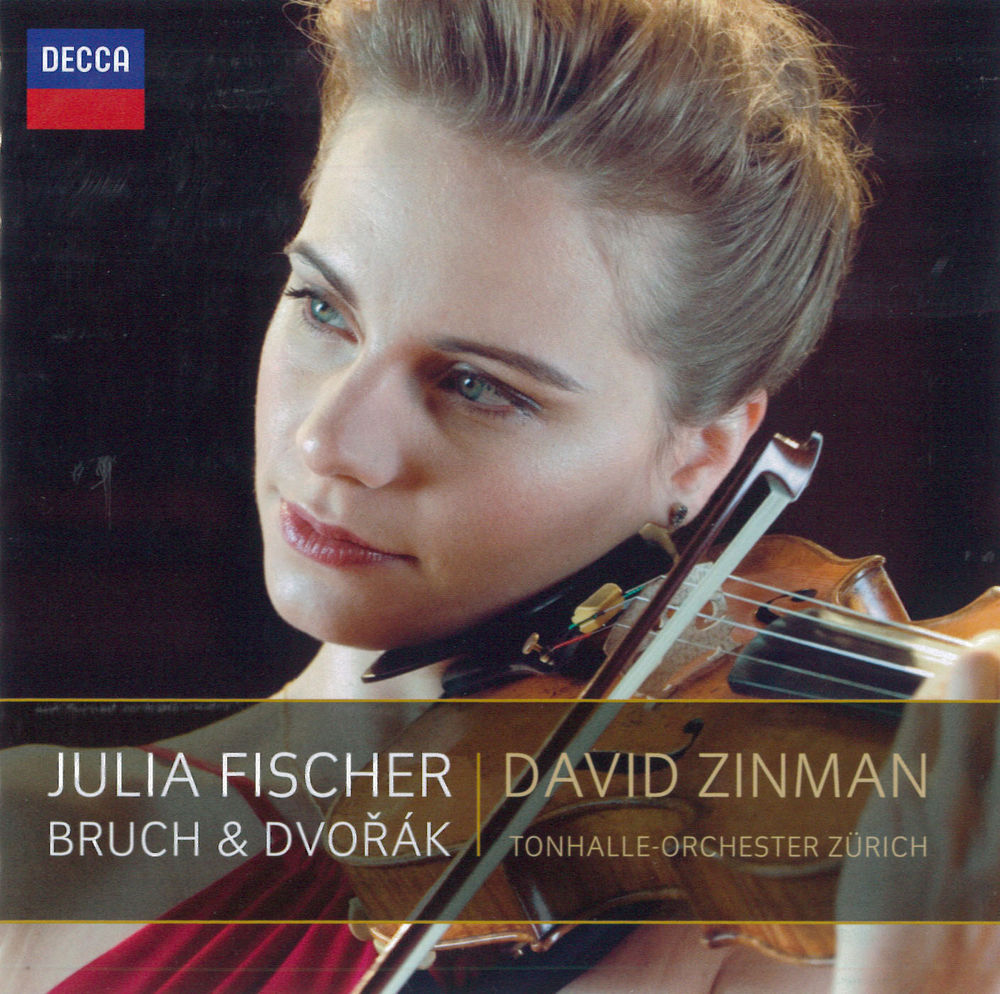
02 fischer bruchAnother of Decca’s young European superstar violinists, Julia Fischer, has a new CD of the Bruch and Dvořák Violin Concertos, with David Zinman leading the Tonhalle-Orchester Zürich (Decca 478 3544). In the old LP days, the Bruch Violin Concerto in G Minor was nearly always paired with the Mendelssohn, but the Dvořák makes a surprisingly good companion. The two works were written only about 12 years apart, and share similarities in form – as indeed they do with the Mendelssohn. Fischer clearly has a great affection and affinity for the Dvořák: her mother is Czech and studied in Prague, and the concerto was one of the first that Fischer studied as a child. It’s a lovely work that has never really established itself at the top of the standard repertoire. Fischer believes that this is changing; it would certainly be difficult to find a more convincing argument than the one she presents here. From the very strong opening, through the beautiful slow movement to the lively finale, this is a magnificent performance – intense, expansive, rich and warm throughout, with a lustrous tone and lovely orchestral support.
Exactly the same can be said for the beautiful performance of the Bruch, which makes this old favourite sound new and fresh.

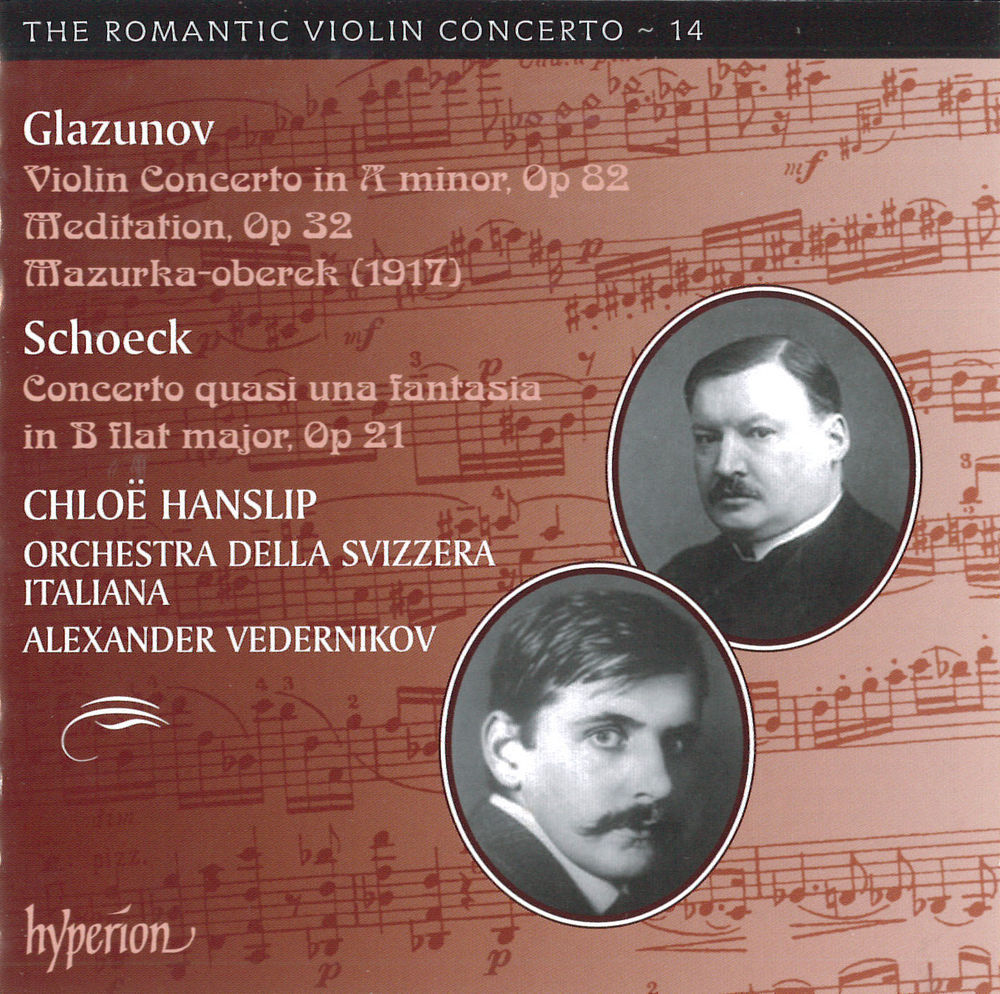
03 glazunov schoekHyperion’s excellent ongoing series The Romantic Violin Concerto has reached Volume 14 with works by Alexander Glazunov and Othmar Schoeck (CDA67940); Chloë Hanslip is the soloist, with the Orchestra della Svizzera Italiana under Alexander Vedernikov. A beautiful performance of the Glazunov A Minor Concerto reminds us what a truly lovely work this is, and the short Meditation Op.32 is no less lovely despite its brevity. The Mazurka-oberek dates from 1917, when Glazunov’s work as head of the Conservatory in St. Petersburg left him with little time for composition; its Polish flavour suggests that it may have been one of the small number of works written with wartime patriotic associations. The Swiss composer Schoeck is known primarily for his vocal works, and his Concerto quasi una fantasia in B flat major, Op.21 is one of the few orchestral works that he produced. Written in his early 20s, it is a work that is an appropriate and welcome addition to this Romantic series.

04 pacifica soviet 3Another outstanding ongoing series is The Soviet Experience: String Quartets by Dmitri Shostakovich and his Contemporaries, which reaches Volume III with a 2-CD set of Shostakovich quartets Nos.9 through 12 paired with Mieczyslaw Weinberg’s String Quartet No.6 in E minor (Cedille CDR 90000 138). The Polish-born Weinberg was a close friend of Shostakovich, and both composers influenced each other in their quartet writing. Weinberg’s quartet, one of a series of seventeen, was written in 1946 but never performed; it was briefly included on the list of “non-recommended” works produced in 1948 as part of Andrei Zhdanov’s anti-formalist campaign. Not published until 1979, it was apparently premiered as late as 2007.
The Pacifica Quartet is once again in simply superb form, playing these intensely personal works with sensitivity and passion and a wonderfully expressive range of dynamics.

05 shostakovich cello
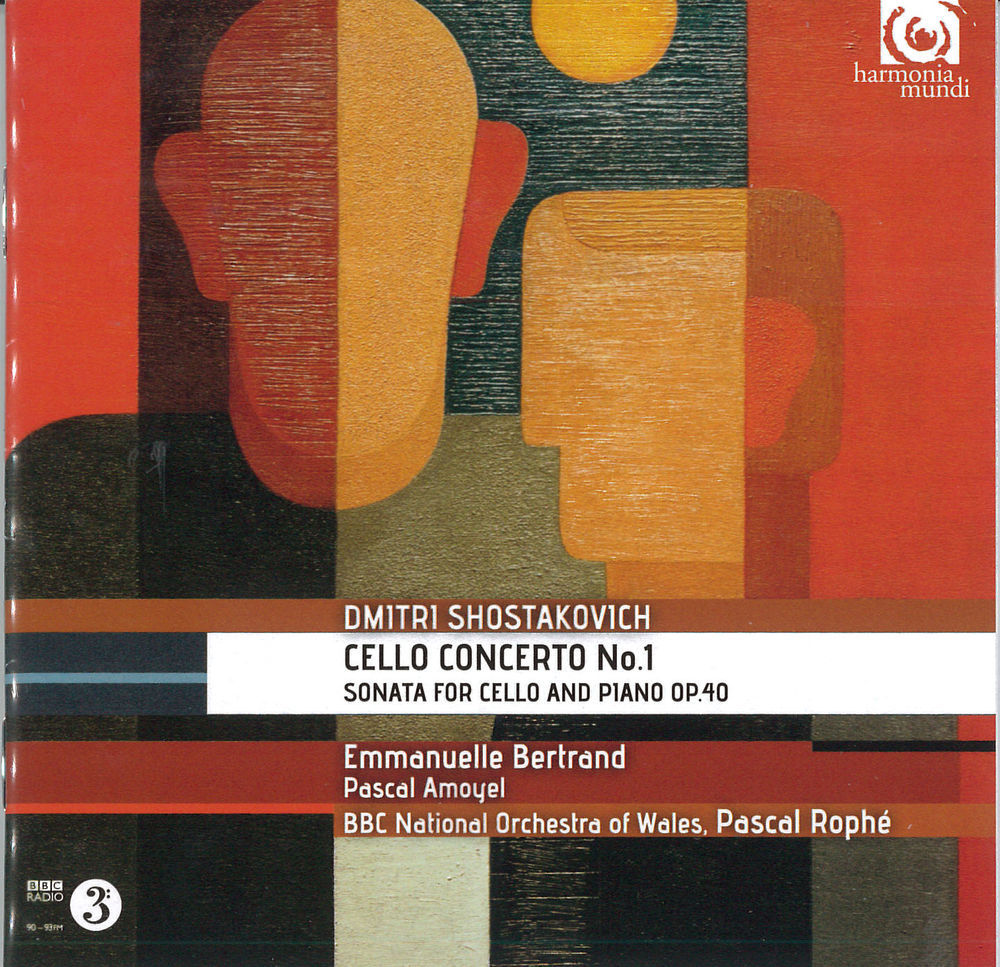
Shostakovich is the featured composer on a new harmonia mundi CD from the French cellist Emmanuelle Bertrand, who gives a solid, committed performance of the Cello Concerto No.1 with the BBC National Orchestra of Wales under Pascal Rophé (HMC 902142). Bertrand is joined by her regular piano partner Pascal Amoyel for an excellent performance of the Cello Sonata Op.40, written just 2 years before the devastating 1936 attack on the composer and his music in the Pravda newspaper, and of the Moderato, a short piece found in manuscript some year’s after the composer’s death, and which may possibly be contemporaneous with the sonata itself.

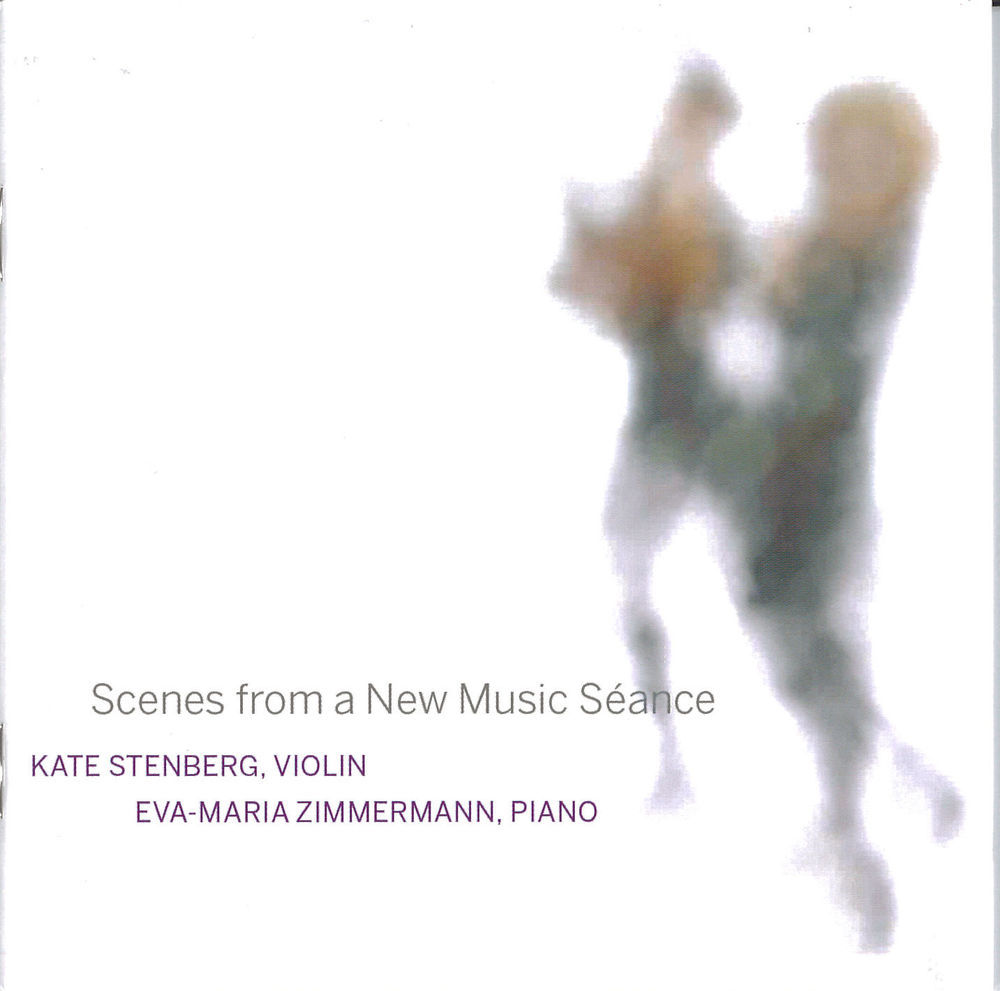
06 new music seanceOther Minds is a non-profit organization in San Francisco dedicated to promoting the work of contemporary composers. For the past 20 years they have produced an annual festival where the composers are in attendance, and a few years ago had the idea of a short series of concerts that would present contemporary works alongside works by the now deceased American composers who had influenced the current generation. As the intention was to summon “the spectres of musical forbears” the series was called A New Music Séance; among the performers were violinist Kate Stenberg and pianist Eva-Maria Zimmermann. The resulting CD Scenes from a New Music Séance (Other Minds OM 1019-2) is the recording debut of the duo, and presents a fascinating program. Works by composers no longer with us are: Josef Matthias Hauer’s Jazz, the fifth of his Fünf Stücke für Violine und Klavier; Henry Cowell’s Ballade; Ruth Crawford’s Violin Sonata; George Antheil’s stunning Sonata No.2 for Violin, Piano and Drums, a fascinating and exhilarating single-movement romp through a whole range of American popular songs and styles; Alan Hovhaness’ Khirgiz Suite; and Henning Christiansen’s Den Arkadiske. Works by current composers are Canadian Ronald Bruce Smith’s Tombeau, Charles Amirkhanian’s Rippling the Lamp, Pelle Gudmundsen-Holmgreen’s Double and Amy X Neuburg’s Nonette. Stenberg and Zimmermann handle the wide range of styles and techniques with consummate ease.

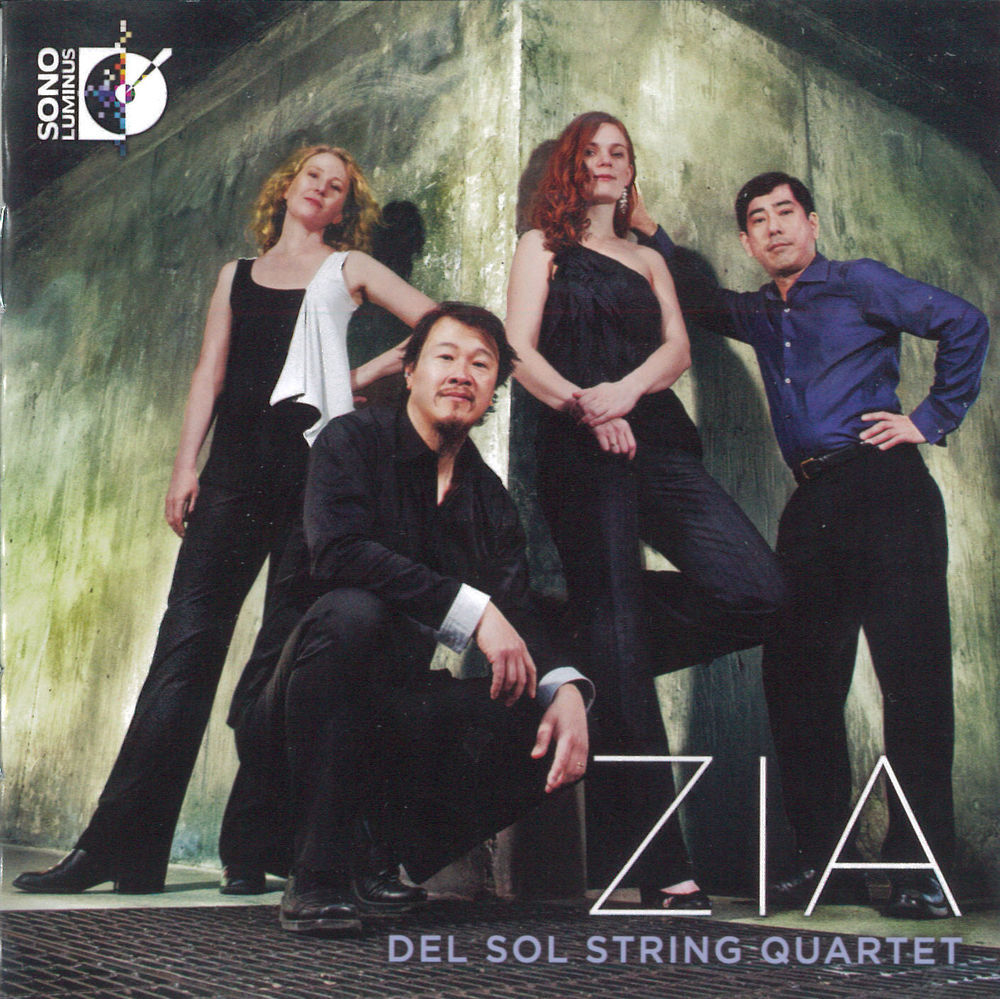
07 ziaKate Stenberg is also the first violinist of the Del Sol String Quartet, an ensemble based in San Francisco and dedicated to breaking musical boundaries. Named for the sun, the group gave their first concert 20 years ago in New Mexico, where the sun is sacred to the Zia Indians of the region. The quartet’s new CD release is called ZIA (Sono Luminus DSL-92164), and features five works by contemporary composers. Gabriela Lena Frank’s Leyendas: An Andean Walkabout takes Andean folk music traditions as its inspiration; the composer has travelled extensively in South America, studying not only music but also poetry and legends (leyendas). There are some fascinating effects here, especially when Andean folk instruments are being evoked. Lou Harrison, who died at 85 in 2003, is represented by his String Quartet Set from 1979, which was dedicated to our own Robert Aitken and New Music Concerts. It’s a decided mixture of five short pieces with quite different characters. Spain’s José Evangelista has been based in Montreal since the 1970s. His Spanish Garland, 12 Folk Melodies from Spain dates from 1993; the melodies used are predominantly very old, and have a distinct middle-Eastern flavour and character to them. The Iranian composer Reza Vali has been on the School of Music faculty at Pittsburgh’s Carnegie Mellon University since 1988. All of the musical material in his Nayshâboorák (Calligraphy No.6) is derived from traditional Persian music. Its use of quarter-tones and precise intervallic degrees makes for challenging but highly distinctive music. Born in Uzbekistan, Elena Kats-Chernin has been resident in Australia since 1994. Her Fast Blue Village 2 is a short moto perpetuo with a 5-beat rhythm. The playing throughout a varied and often technically challenging program is of a very high standard, and the music is always engaging. Perhaps the clue lies in the comment in the booklet notes that the Del Sol Quartet “commissions and performs accessible new music…” (my italics). Certainly there is much to enjoy here.

01-Handel-Concerti-GrossiHandel – Concerti Grossi Op.6
Aradia Ensemble; Kevin Mallon
Naxos 8.557358-60

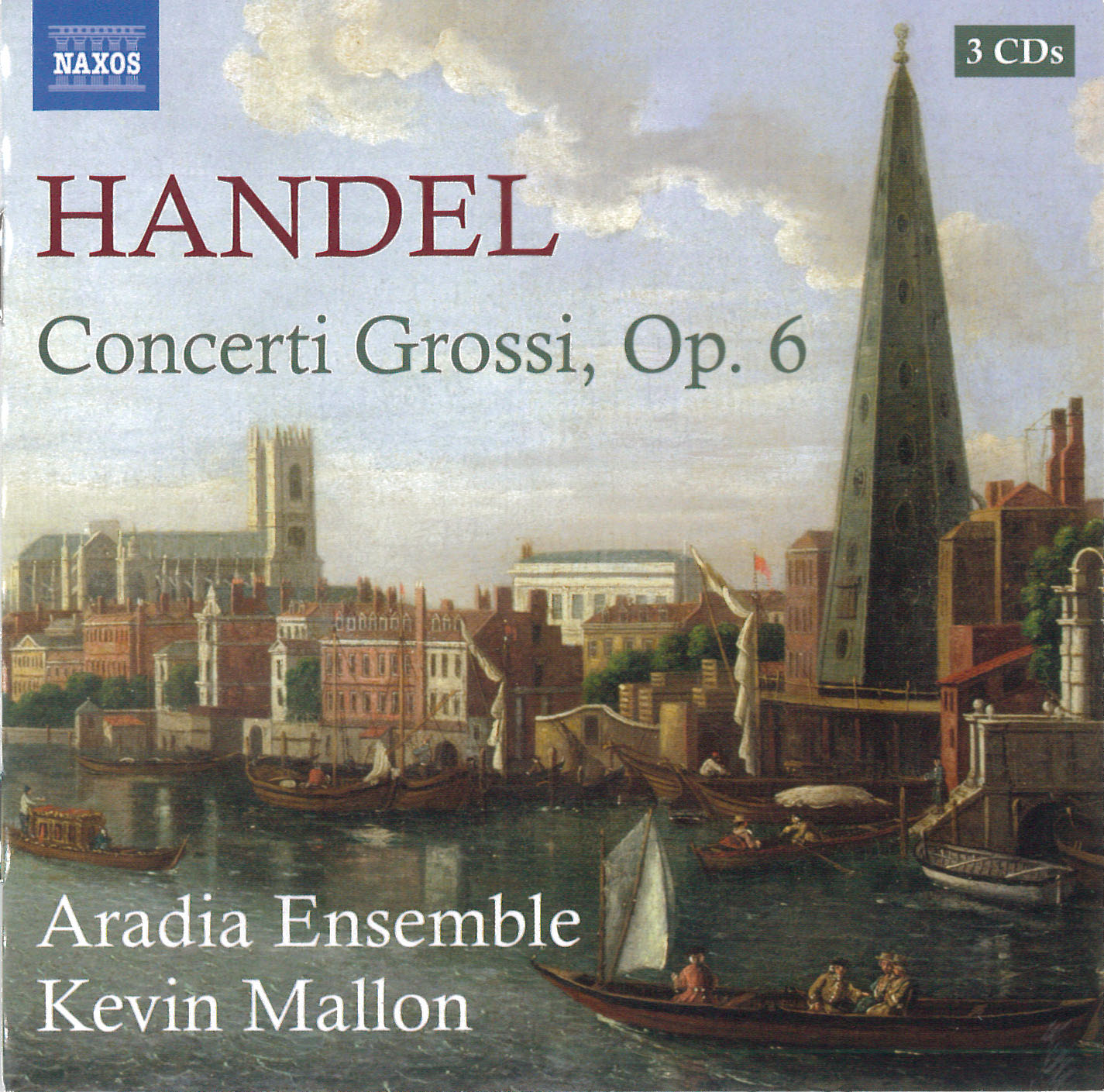
Toronto’s early music Aradia Ensemble, under the energetic direction of conductor/violinist Kevin Mallon, performs with grace and momentum in this three-disc collection of George Frideric Handel’s 12 Concerti Grossi, Op.6.

 Composed over the period of a few weeks, the first seven Concerti are scored for the concertino solo group of two violins and cello, and ripieno orchestra of strings and continuo. Mallon’s first violin solos are impeccable, with Genevieve Gillardeau and Cristina Zacharias taking turns in the second chair. The rich cello concertino solos are well performed by Allen Whear and Katie Rietman. As the liner notes explain, Handel began composing oboe parts later, possibly for the theatre, but never completed them. Aradia oboists Stephen Bard, Chris Palemeta and Kathryn Montoya play these wind parts in Nos.8 to 12. The richness of the winds adds a welcome extra layer of texture. In the compositional style of the day, there are numerous references to Handel’s other works, as well as a nod to composers such as Domenico Scarlatti, and folk music idioms including the Sicilian dance and English hornpipe.

This is music to listen to intently in order to marvel at Aradia’s phrasing, ornamentation and stylistic interpretation. And as background music, the drive and spirit of the performances will brighten even the most drab of days. The strings shine, especially in the cohesive descending lines of No.2 and the triumphant trumpet-like opening of the Overture of No.5,while the resonating double bass of J. Tracy Mortimore adds depth and support, especially in the Musette of No.6.

The sound quality is clear, with each instrumental line carefully balanced. The liner notes are informative and concise. Mallon has brought out the very best in his Aradia ensemble as their passionate performances radiate Handel’s inquisitive artistry.

Back to top