01 MingusMingus – The Lost Album from Ronnie Scott’s
Charles Mingus Sextet
Resonance Records HCD-2063 (resonancerecords.org) 

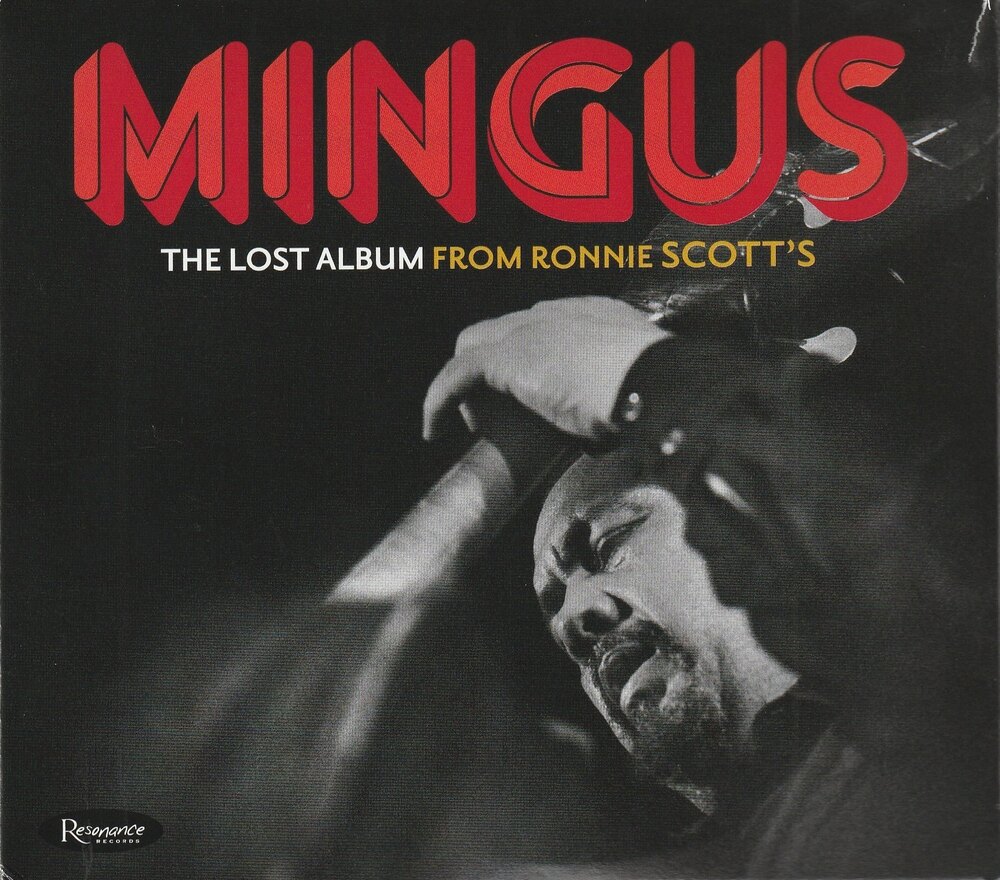
Between 1956 and 1965, composer and bassist Charles Mingus stretched the range of jazz composition with the tumult and keening lyricism of LPs like Pithecanthropus Erectus, Mingus Ah Um and The Black Saint and the Sinner Lady, simultaneously putting the civil rights movement on the jazz-club stage. This three-CD set presents him a few years later, leading his sextet on the last two nights of a two-week run at Ronnie Scott’s eponymous London club in 1972. Originally intended for release on Columbia, that possibility died with the label’s 1973 purge of acoustic jazz greats: Mingus, Bill Evans, Keith Jarrett and Ornette Coleman.

1972 wasn’t Mingus’ happiest hour. He had been concentrating on extended compositions, including a string quartet and the massive orchestral work that would become Epitaph, during an era dominated by the knotty creativity of free jazz and the commercial juggernaut of fusion; however, the band here still pulses with life when reworking Mingus’ earlier masterworks, stretching them to a half-hour and beyond: the dense, yearning harmonies of Orange Was the Color of Her Dress, Then Blue Silk, extends Duke Ellington’s influence into a new expressionism; Fables of Faubus adds fresh dissonances while remaining a seething yet comic refutation of segregation. Two new works have similar dimension: Mind-Readers’ Convention in Milano (AKA Number 29) is kaleidoscopic, while The Man Who Never Sleeps is imbued with a lustrous lyricism by trumpeter Jon Faddis, then a brilliant teenager. Alto saxophonist Charles McPherson is consistently good, improvising fleet and fluid lines across Mingus’ insistent shifting rhythms. Bobby Jones, another regular, was a journeyman saxophonist who could stretch toward greatness on those turbulent undercurrents.

For all of Mingus’ raging assaults on the bar culture of jazz (he once began a studio recording, Charles Mingus Presents Charles Mingus, by admonishing imaginary waitstaff and customers to cease glass clinking, cash register clanging, etc.), he was (even in that double-edged comedy) an entertaining jazz musician (he began his career as sideman to Ellington and Louis Armstrong), but one who had brought uncomfortable truths to the stage. Some of the humour here is satiric, like the bass solo that concludes Fables of Faubus by collaging minstrel songs and anthems, including Turkey in the Straw, Dixie, My Old Kentucky Home and the Star-Spangled Banner, but there’s also low musical humour. Pianist John Foster, otherwise unmemorable, contributes cliched blues vocals and an imitation of Louis Armstrong on Pops. Roy Brooks, the drummer, plays an extended solo on musical saw. One leaves with an uneasy sense that in his later years, Mingus’ art, designed to make audiences uncomfortable, might backfire, making the audience comfortable and Mingus the opposite. In history’s hall of mirrors, that might again make a contemporary audience uncomfortable.     

The iconic American composer George Crumb died peacefully, at home with his family on February 6. He was 92. Of the many world-renowned composers I had the privilege to meet during my two-decade tenure at New Music Concerts, Crumb was among the most affable, knowledgeable and accomplished. In 2003 he spent most of a week working with NMC musicians, accompanied by his wife Elizabeth, son Peter and daughter Ann, who was the soloist in our Canadian premiere performance of Unto the Hills. It was a magical week and one that remains a cherished memory. Crumb had a long relationship with NMC and on a previous visit in 1986 he supervised the first performance of An Idyll for the Misbegotten, performed by its dedicatee Robert Aitken and three percussionists. You can find NMC’s recording of that work among others on George Crumb (Naxos American Classics 8.559205 naxosdirect.com/search/8559205). In a tribute published by NMC, Aitken says “The music of George Crumb has the quality of an elixir, which keeps drawing you back through intricacies in time to a world you feel you know and look forward to enjoying but as many times as you have experienced it, the slightest change takes you to a different place, somewhere you have never been before and never thought of, but will never forget.” I said something similar in a July 2020 review of Metamorphoses Book I: “There are many references to Crumb’s earlier compositions and in many ways these new works sound familiar. One sometimes wonders ‘Why does Grandpa keep telling the same stories?’ but listen carefully; you’ll find vast new worlds buried within them.”

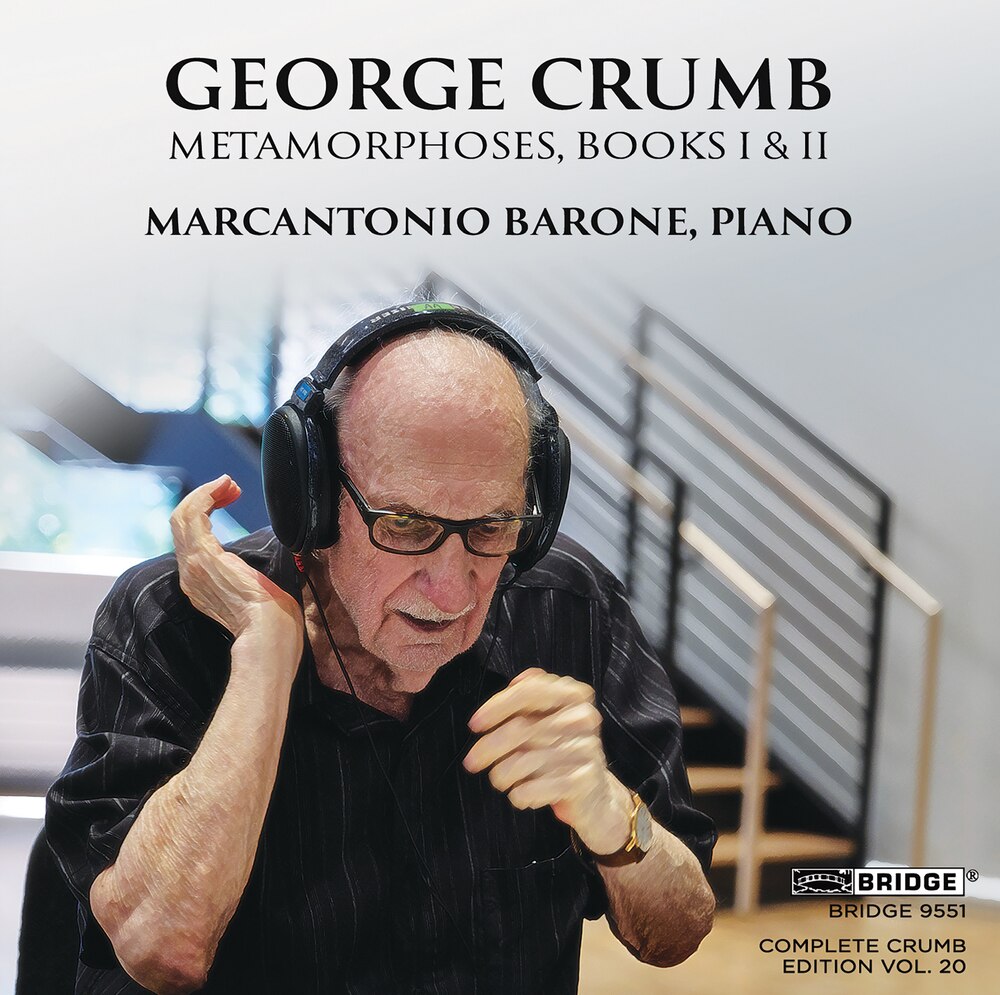
01 Crumb Volume 20In December Bridge Records released Volume 20 in their ongoing series devoted to Crumb’s complete works (BRIDGE 9551). Metamorphoses Books I & II features a remastering of Book I (2015-2017) and the first recording of Book II (2018-2020) performed by Marcantonio Barone, to whom the second book is dedicated. Subtitled Fantasy Pieces (after celebrated paintings) for amplified piano, each of the 20 depicts a different painting by such artists as Picasso, Chagall, Dali and Gauguin. In the excellent and extended booklet notes by Crumb scholar Steven Bruns we learn that “Rather than aiming for precise musical analogs, Crumb responds to the ethos, the characteristic tone of the painting, and often to the title as well. The music explores a dazzling expressive range, and Crumb positions the movements in each Book with the mastery of an expert gallery curator.” You can read my impressions of those in the first book here: thewholenote.com/index.php/booksrecords2/editorscorner/30201-editor-s-corner-july-2020. Book II opens with two paintings by Paul Klee and includes others by Andrew Wyeth, Simon Dinnerstein, Gustav Klimt, Georgia O’Keeffe and the abovementioned Gauguin, Picasso and Chagall. The set ends with a stunning and ethereal interpretation of van Gogh’s The Starry Night

As always with amplification in Crumb’s pieces, the purpose is not to produce loud effects, although there are a few jarring interpolations, but rather to make the most subtle effects audible. The pianist is required to venture inside the piano to pluck and strum and dampen strings, use fists and other implements, vocalize and employ a variety of small instruments to expand the solo piano into a real orchestra of timbres. Barone worked extensively with Crumb for two decades and his understanding of the sensibility, and his command of the techniques required, and often invented, by the composer makes this recording definitive. Bridge Records here provides an exhilarating tribute and important addition to the recorded legacy of this master composer. The Complete George Crumb Edition now numbers 21 CDs and one DVD and is currently available at a special price (US$190) from the Bridge Records website (bridgerecords.com)

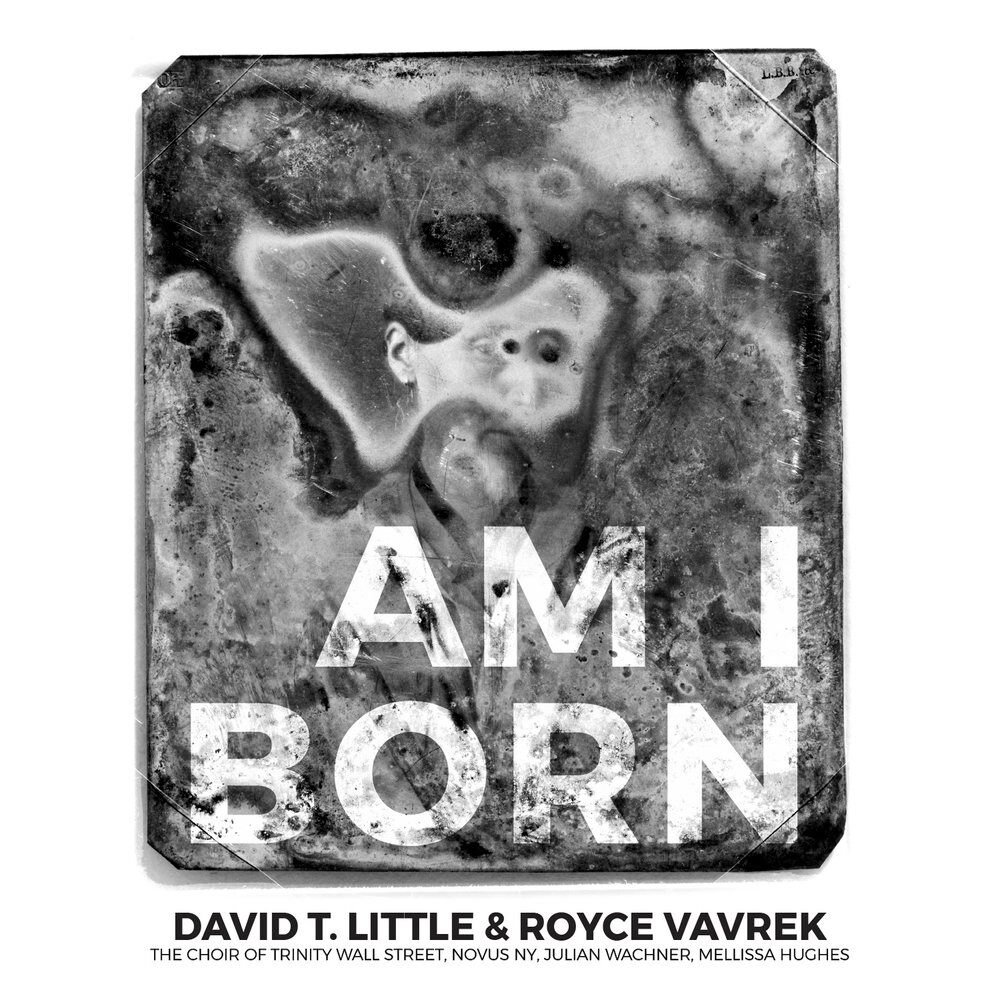
02 Little Am I Born jpegThe oratorio Am I Born by David T. Little with libretto by Royce Vavrek (Bright Shiny Things BSTC-0152 brightshiny.ninja) is another spectacular work that finds its inspiration and context in a painting. The painting in question is Francis Guy’s 1820 Winter Scenes in Brooklyn, depicting a neighbourhood destroyed for the construction of the Brooklyn Bridge. Originally composed in 2011 for the Brooklyn Youth Chorus, Am I Born was the first collaboration between Little and Vavrek, who went on to great success with the operas Dog Days and JFK. This SATB version of the oratorio was commissioned by Trinity Church Wall Street where it premiered in 2019. Opening with big bass drums blazing and full fortissimo chorus reminiscent of Carmina Burana, the listener is captivated immediately. Throughout its half-hour duration the drama does not let up, although there are moments of respite along the way and beautiful soprano solos by Mellissa Hughes before the haunting denouement. The libretto draws on Ananias Davisson’s 1816 hymn Idumea with its lyric “And am I born to die? / To lay this body down! / And must my trembling spirit fly / Into a world unknown?” The solo soprano personifies Guy’s painting, which hangs in the Brooklyn Museum. She gradually draws consciousness and understanding from the crowds of spectators passing by each day, until, urged on by the chorus, she is “born” out of the frame and enters a confusing and lonely present-day reality. At that point, the philosophical speculation “am I born to die?” is modified to the much more pressing and immediate: “am I born?” Hughes and the Choir of Trinity Wall Street are accompanied in this powerful performance by the NOVUS NY orchestra, all under the direction of Julian Wachner. 

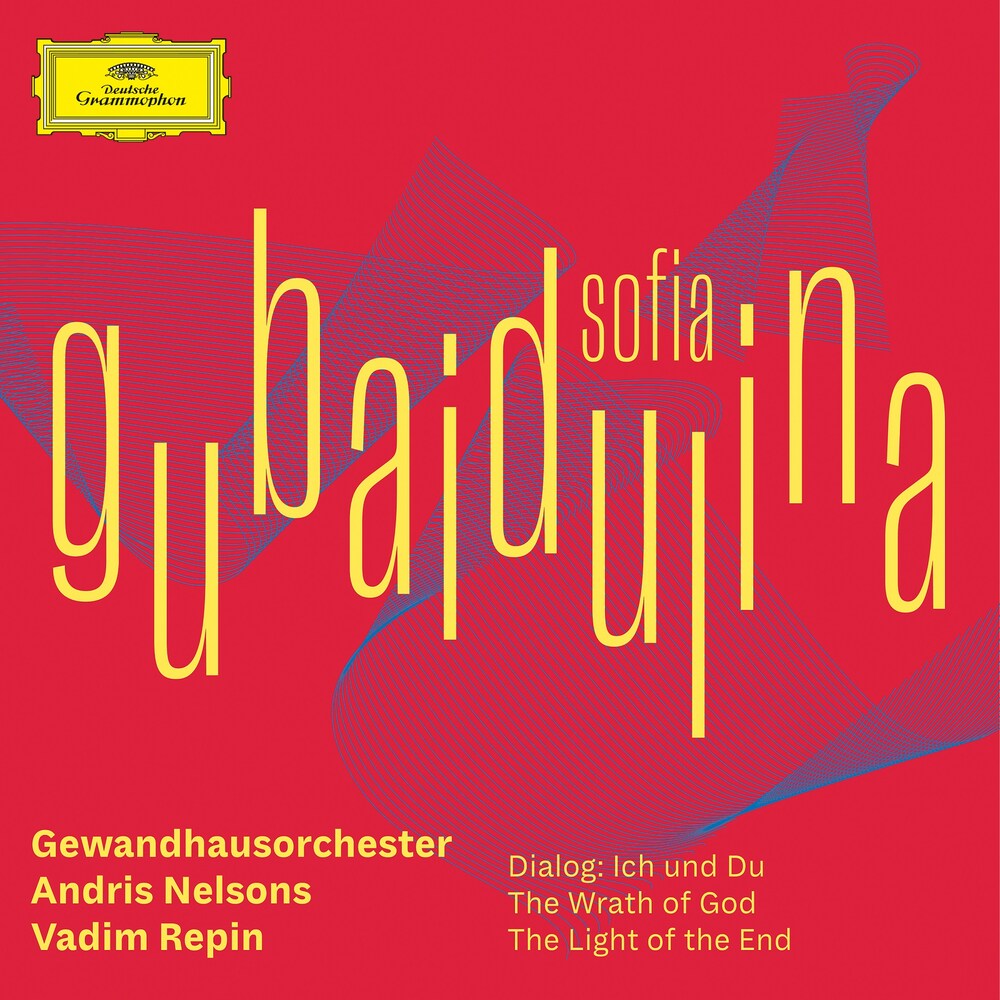
03 Sofia GubaidulinaLike George Crumb, Sofia Gubaidulina (b.1931) has shown no signs of slowing down creatively in her later years. To honour her 90th birthday Deutsche Grammophon has released a disc of world premiere recordings of two recent works and the earlier The Light of the End, written in 2003 for the Boston Symphony (deutschegrammophon.com/en/catalogue/products/gubaidulina-nelsons-repin-12472). Andris Nelsons conducts the Gewandhausorchester Leipzig for which Gubaidulina has served as composer-in-residence since 2019. The last-mentioned work is based on a fundamental conflict that characterizes the physics of music, namely, the irreconcilability between the natural overtone series, played here by the horns, and the tempered tuning of the rest of the orchestra. This conflict leads to a series of dramatic crescendos and climaxes and is illustrated to exemplary effect in a duet between solo horn and solo cello. 

The disc opens with Dialog: Ich und Du (Dialogue: I and You // Violin Concerto No.3). It was written for Vadim Repin in 2018, and he is the soloist here. This and the companion piece The Wrath of God are extrapolated from Gubaidulina’s oratorio On Love and Hatred (2016-2018), which constitutes her appeal to humankind to follow God’s commandments and to overcome hatred through the conciliatory power of love. The title of the violin concerto deliberately recalls religious philosopher Martin Buber’s Ich und Du (I and Thou) which describes the world as “dichotomous,” contrasting two things that are opposed or entirely different, here represented by a conversation, often interrupted, between the solo violin and the orchestra. The Wrath of God is a shimmering depiction of the Day of Judgement, or Dies Irae, for enormous orchestral forces. “God is wrathful, He’s angry with people and with our behaviour. We’ve brought this down on ourselves,” the composer explained in the preamble to the first performance in an empty Vienna Musikverein in November 2020, a result of the coronavirus pandemic. Gubaidulina has dedicated the piece “To the Great Beethoven” and we can hear hints of the Ninth Symphony peeking through in the dramatic finale.

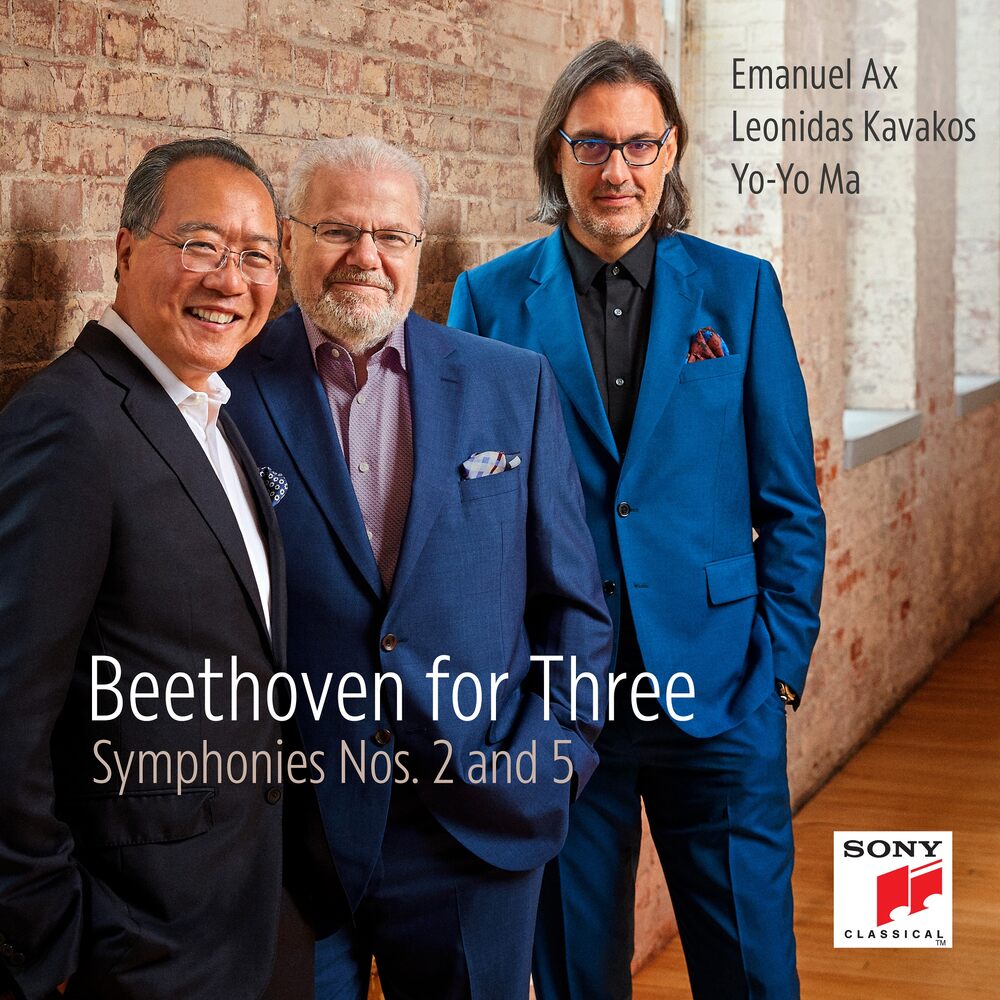
04 Beethoven for ThreeSpeaking of Beethoven, following on their recording of his complete works for cello and piano, Yo-Yo Ma has once again teamed up with Emanuel Ax, this time with violinist Leonidas Kavakos, on Beethoven for Three – Symphonies Nos. 2 & 5 (Sony Classical yoyoma.lnk.to/SymphoniesNos2and5). The arrangements are by Ferdinand Ries, under Beethoven’s supervision (No.2), and the contemporary British composer Colin Matthews (No.5). 

It must be a daunting task to adapt the full resources of a symphony orchestra to just three players, even if we concede that the pianist’s two hands can render separate independent lines. Still we must realize that in Beethoven’s day arrangements were the norm, and in many instances the only opportunity to experience great works of orchestral repertoire. Recordings were still a hundred years in the future and orchestral concerts beyond the reach of most people. I am pleased to report in this instance both of the arrangements are convincing and satisfying. On the one hand I am amazed at how the trio is able to convey the musical scope and range of emotion of these familiar orchestral masterworks. On the other, I was intrigued to realize how reminiscent some of the movements were, especially the scherzo of the second symphony, of Beethoven’s early actual piano trios. I suppose that’s not really a coincidence.  

Satisfying as I found this recording, likely another result of COVID-imposed restrictions, I must confess it inspired me to revisit the cycle of nine symphonies in all their orchestral majesty, and for this I chose Simon Rattle’s live set from 2002 with the Vienna Philharmonic (EMI Classics). So thanks to Kavako, Ma and Ax for an inspirational and illuminating experience, and for an excuse to look up some old friends.

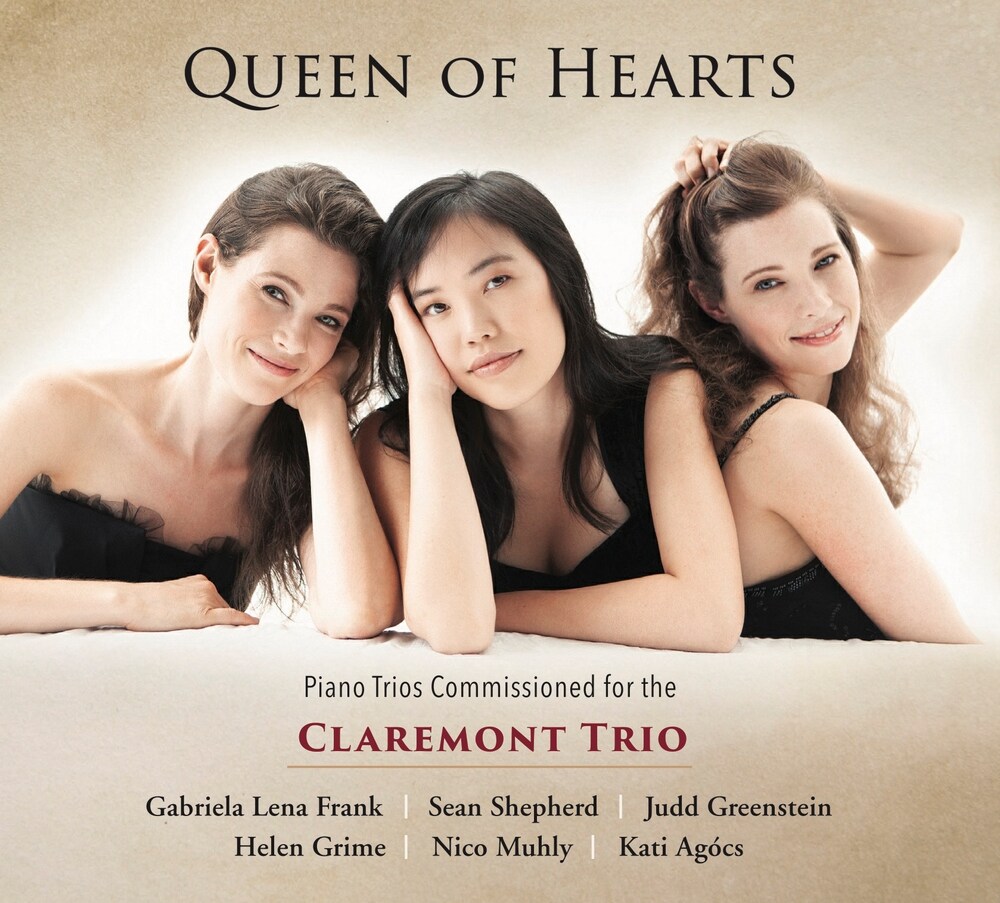
05 Queen of Hearts Claremont TrioFounded 20 years ago, the Claremont Trio (Emily Bruskin, violin; Julia Bruskin, cello; and Andrea Lam, piano) has been commissioning works for much of its existence that expand the repertoire and in some instances push the traditional boundaries of the contemporary piano trio. Queen of Hearts (Tria Records amazon.com/Queen-Hearts-Claremont-Trio/dp/B09RQDVRVV) brings six of these works together with compositions by Gabriela Lena Frank, Sean Shepherd, Judd Greenstein, Helen Grime, Nico Muhly and Kati Agócs. Frank’s Four Folk Songs draws on her Peruvian heritage on her mother’s side for a set that ranges from lyrical to playful and to frankly disturbing. Shepherd’s Trio was commissioned for the opening of Calderwood Hall in the Isabella Stewart Gardiner Museum, Boston. It was inspired by the architecture of Renzo Piano and the three movements consider different aspects of the construction. Most compelling is the finale, Slow Waltz of the Robots.  

Muhly’s Common Ground (2008) and Agócs’ Queen of Hearts (2017) mark the earliest and latest works on this compelling CD. Muhly’s title refers to the ground bass à la Purcell that appears in the final section of the work. Agócs also employs a repeating bass line, in this case alternating with a lyrical melody. She tells us that “A life fully lived may see challenges that can seem insurmountable. The work’s variation structure, by representing tenaciousness and ingenuity – continuously finding new ways to respond – ultimately reveals an inner strength and an emotional core that hold steadfast and unshaken no matter how they are tested. The title Queen of Hearts […] symbolizes resilience, magnetism, nobility, empathy, decorum, a flair for the dramatic, and a distinctly feminine power.” This piece makes a powerful end to a diverse disc with fine performances right across the board.

I spoke earlier about musical works inspired by paintings. I have experienced two artistic epiphanies in my life, one visual and one audial. The first was on a family trip to Washington in my teenage years when I turned a corner in the National Gallery and came face to face with Salvador Dali’s The Sacrament of the Last Supper. I gasped and said to myself “Oh, that’s what they mean by a masterpiece!” The second was in 1984 when I attended the CBC Young Composers’ Competition and had the most visceral musical experience of my first 30 years. Paul Dolden’s The Melting Voice Through Mazes Running, which won the only prize in the electroacoustic category that year, was unlike anything I’d ever heard before. Although it sent some audience members rushing to the exits with hands pressed over their ears, it held me riveted to my seat and ultimately inspired me to commission a new Dolden work (Caught in an Octagon of Unaccustomed Light) for my radio program Transfigured Night at CKLN-FM. Now, some three and a half decades later, Dolden has published his entire catalogue of works and writings and I’m very pleased that Nick Storring has agreed to review The Golden Dolden Box Set in these pages. Storring is a composer in his own right, a generation younger than Dolden, who uses some similar techniques in his own work. I believe his insights are extremely apt and articulately expressed and I welcome him aboard the WholeNote team. 

We invite submissions. CDs, DVDs and comments should be sent to: DISCoveries, WholeNote Media Inc., The Centre for Social Innovation, 503 – 720 Bathurst St. Toronto ON M5S 2R4.

David Olds, DISCoveries Editor
discoveries@thewholenote.com

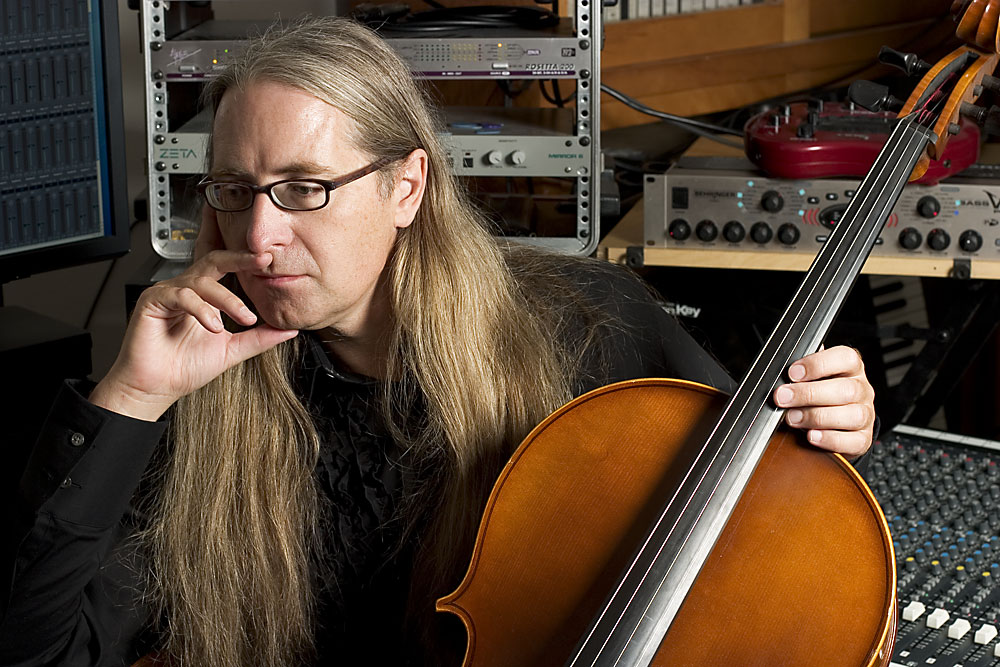
02 Paul Dolden celloGolden Dolden Box Set
Paul Dolden
Independent (pauldolden.bandcamp.com)

01 Paul Dolden 1986In 1988 Canadian electroacoustic composer Paul Dolden (b.1956) started creating Below The Walls of Jericho – the first instalment of a three-part series that invoked the biblical story of Jericho, whose walls crumbled from the sheer power of sound. Though a number of Dolden’s earlier pieces – notably Veils (1984-5) – also employed multi-layered swarms of studio-recorded acoustic instrumentation, this was his first work to display an explicit preoccupation with sonic excess. Many of Dolden’s ensuing pieces also exhibit varying degrees of fascination with loudness, density, and velocity – enough for detractors to label his music, brazen or over-the-top.

It might therefore seem fitting that his latest offering occupies a similarly massive scope. Golden Dolden, is a career-spanning digital compendium featuring ten hours of music (including seven unreleased works), 34 scores, six hours’ of lectures, and a generous serving of text. The virtual box-set’s reverse-chronological avalanche may indeed be overwhelming, but immersing oneself in it reveals the depth of Dolden’s vibrant, utterly singular vision. He does often favour thick, saturated textures comprised of hundreds upon hundreds of active layers, but this vast collection is full of contrast, contradiction, imagination, and, yes, beauty. 

Even at its most claustrophobic (such as on the aforementioned Jericho series) his music’s prevailing drive seems more inquisitive than destructive. The composer’s liner notes may be dismissive of his early catalogue’s underlying nihilism or postmodern posturing, but the swirling microtonal maelstroms are always projected through a radiant sheen of awe and wonder.

Read more: Paul Dolden: A Life's Work in the Studio

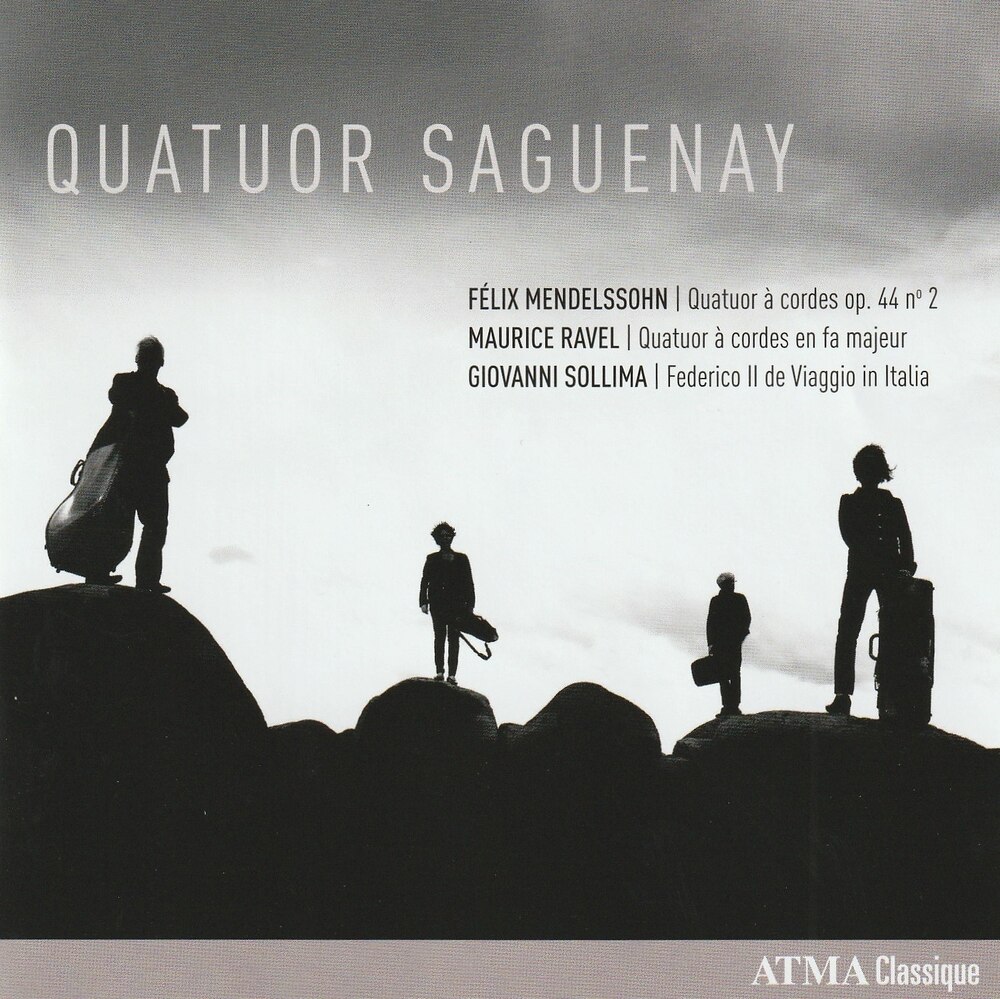
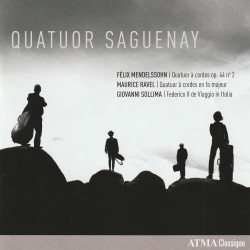
01 Quatuor SaguenayQuatuor Saguenay (formerly Quatuor Alcan) celebrates its 33rd anniversary this year, and while three of the members have been together for almost 30 years, the new CD Mendelssohn – Ravel – Sollima is the first recording with first violinist Marie Bégin (ATMA ACD2 2846 atmaclassique.com/en).

The ensemble says that Bégin brings freshness and a colour to the project that particularly suits the two major works on the CD, Mendelssohn’s String Quartet in E Minor, Op.44 No.2 and the Ravel String Quartet in F Major. Certainly the former is bursting with life and the latter full of shimmering warmth in lovely performances.

Federico II, the first movement from Italian composer Giovanni Sollima’s Viaggio in Italia closes the disc. Written in 2000, its percussive rhythms and bursting energy provide a perfect finale.
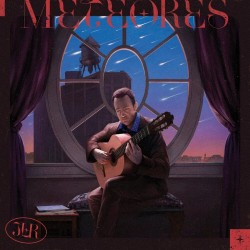
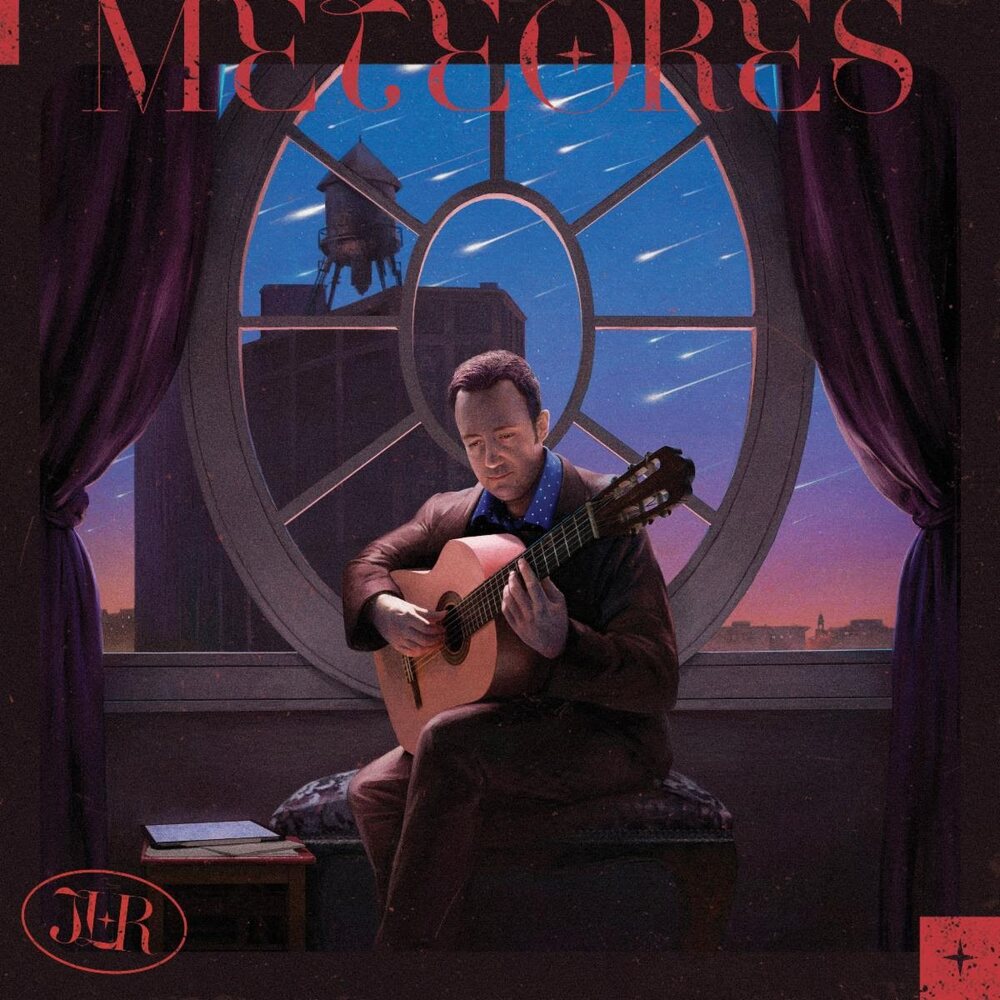
02 MeteoresThe Montreal classical guitarist Jasmin Lacasse Roy recorded, mixed and produced his self-issued CD Météores (fanlink.to/meteores), an album he describes as “an eclectic homage to a neighbourhood that deeply inspires me with its laid-back atmosphere imbued with artistic energy – Montreal’s Mile End district.” The title comes from his desire to have each piece “shine like a meteor.”

The ten short pieces are not literal depictions of scenes or events, but impressions (Roy wanted an album that “sounds like an impressionist painting”), and they’re terrific, displaying great imagination, technical skill and virtuosity. The whimsical titles include Cast iron rhapsody, Impétuositeration, The nostalgic chronicles of count Rachmanula, Mile End Winter and Midnight disco lounge.

Roy can write great melodies and hooks as well as challenging tours de force, all of it beautifully recorded in a delightful CD. 
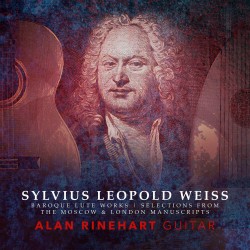
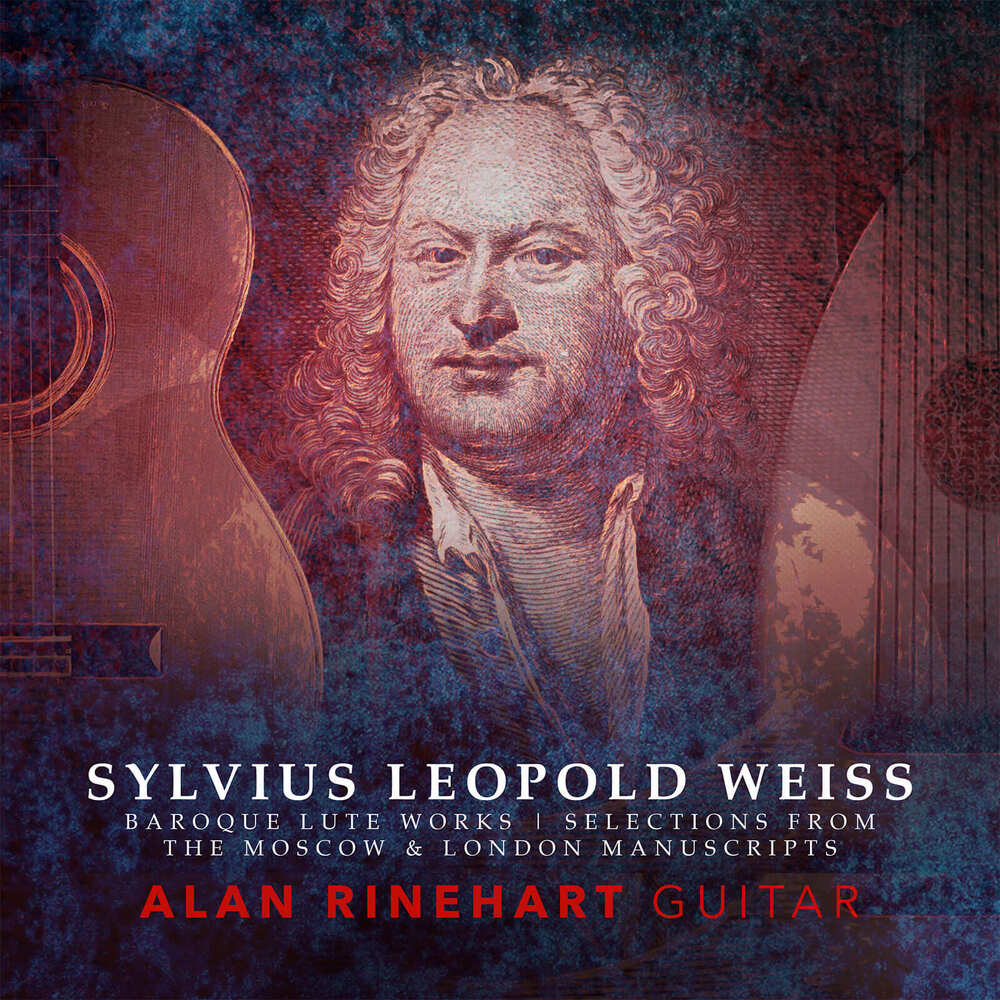
03 Alan Rinehart Sylvius Leopold WeissOn Sylvius Leopold Weiss Baroque Lute Works the Canadian guitarist Alan Rinehart plays selections from the Moscow and London manuscripts, transcribed by him from original tablature for 11 or 13 course lute (Ravello Records RR8056 ravellorecords.com/catalog/rr8056).

Rinehart feels that Weiss’ lute music was overshadowed by keyboard music, especially that of his direct contemporary J.S. Bach, and consequently under appreciated, and the recital here certainly supports that view. The three major works, all with five to seven dance movements, are the Partita in A Minor, the Partita in G Major and the Suite in D Major. An Allegro in E Minor, a Fantasia, the Tombeau sur la mort de M’Comte de Logy, a Gallanterie and a Minuet & Trio complete the disc.

“Travelling bass lines, intricate melodies, and pleasant harmony,” say the booklet notes. Add clean, stylish playing and you have a top-level CD.
Listen to 'Sylvius Leopold Weiss Baroque Lute Works' Now in the Listening Room

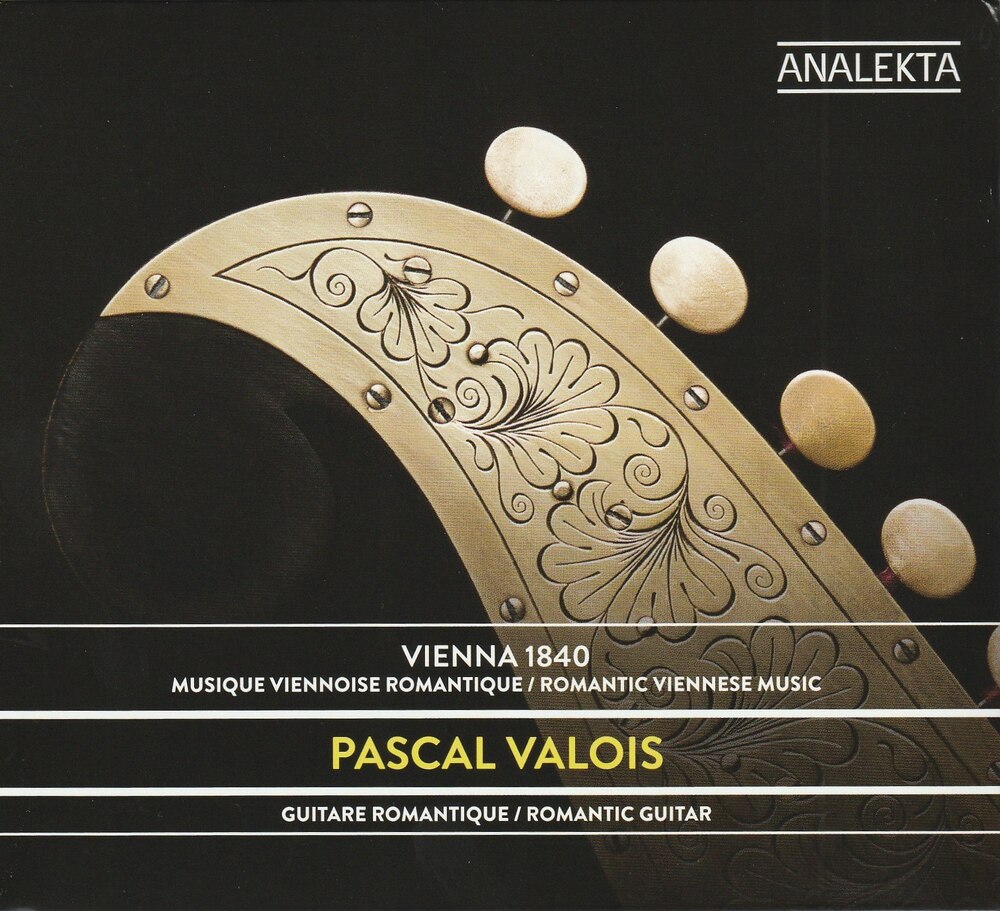
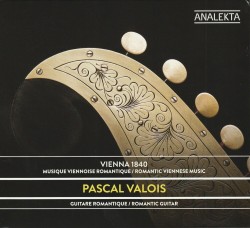
04 Pascal Valois 1840Montreal guitarist Pascal Valois continues his exploration of the guitar during the Romantic era with his new CD Vienna 1840 – Romantic Viennese Music (Analekta AN 2 9197 analekta.com/en).

Valois employs period-appropriate ornamentation, stylistic practices and improvisation in his playing, and for this recording aimed to rediscover the expressive mannerisms widely used in the German Romantic period.

Two of the Six Preludes Op.46 from 1840 by Emilia Giuliani-Guglielmi – the daughter of Mauro Giuliani – open the disc. The Hungarian guitar virtuoso Johann Kaspar Mertz is represented by five selections from his Barden-Klänge Op.13, his Hungarian Fantasy No.1 Op.65 and his arrangement of Schubert’s song Ständchen. Giulio Regondi’s Nocturne “Rêverie” Op.19, with its demanding tremolo work completes the CD.

Valois plays a 1987 Gary Southwell replica of an 1830 Viennese guitar by Johann Georg Stauffer.
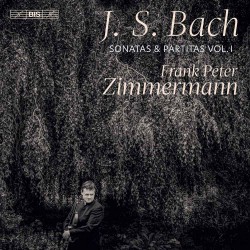
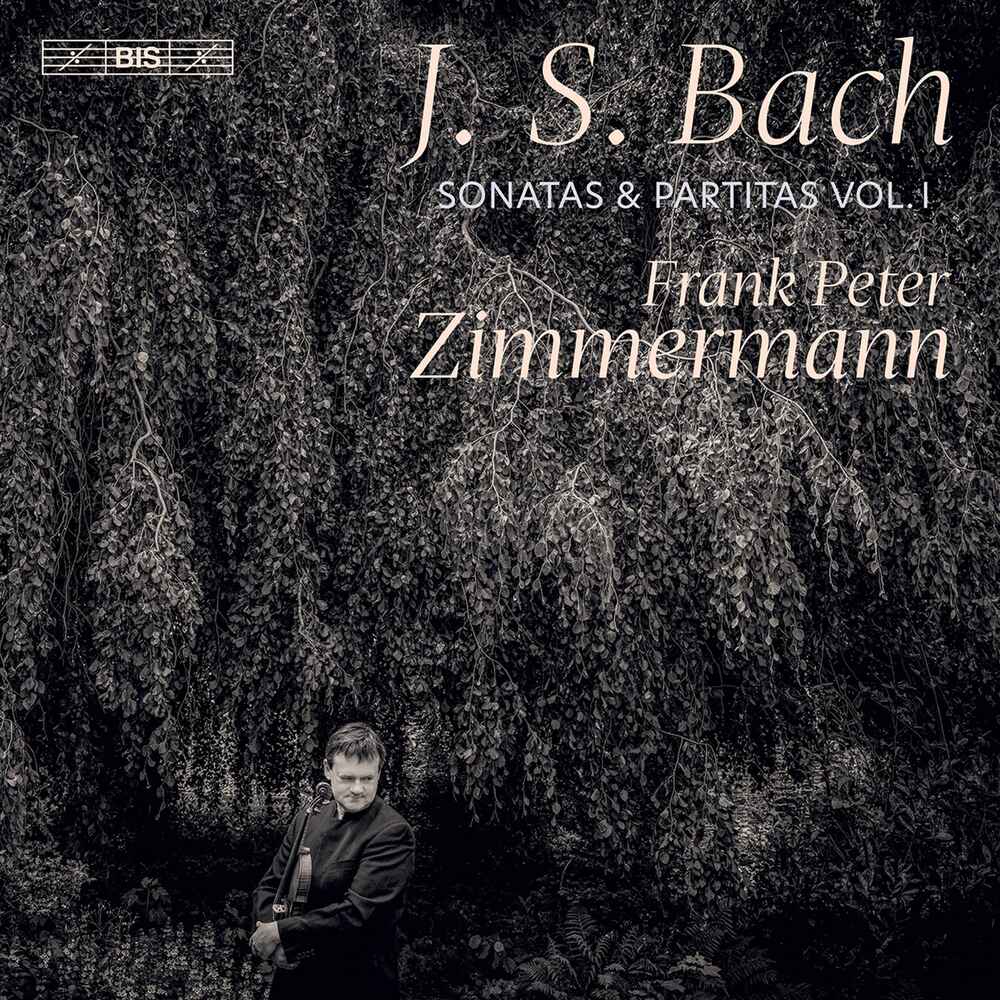
05 Zimmerman BachViolinist Frank Peter Zimmermann has been recording for four decades, but has never included the Bach solo works. With “great respect for the task at hand” his new CD J.S. Bach Sonatas & Partitas Vol.1 begins to rectify that, and boy, was it ever worth the wait (BIS-2577 bis.se).

The three works here are the Sonata No.2 in A Minor BWV1003, the Partita No.2 in D Minor BWV1004 and the Partita No.3 in E Major BWV1006, and the performances are simply outstanding. Zimmermann is faultless technically, with never a hint of anything less than supreme control and artistry. There’s great clarity of line through the multiple-stopping, added ornamentation in the slow movement repeats and an intelligent approach to tempos.

A spacious, resonant recording ambience adds to a superb release.
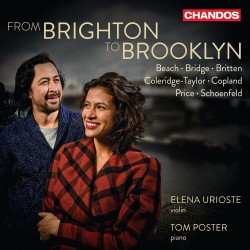
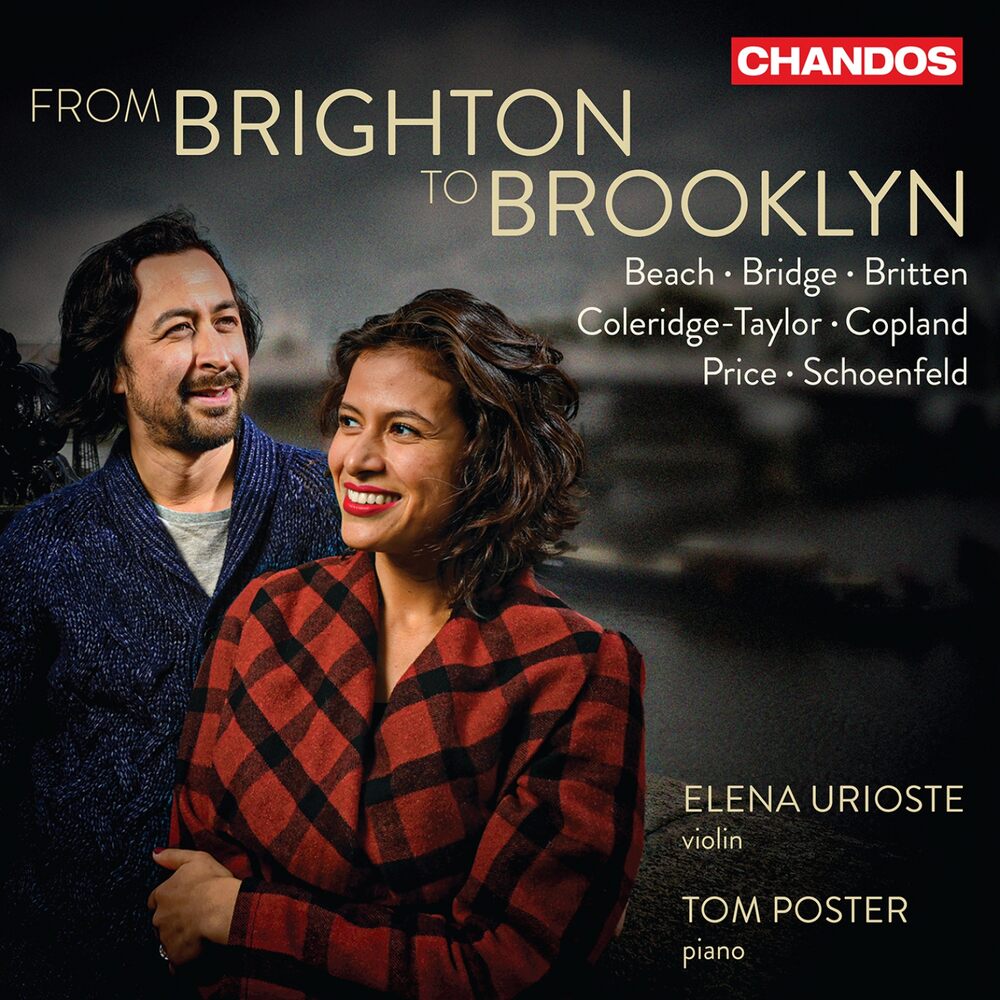
06 From Brighton to BrooklynThe outstanding American violinist Elena Urioste and her English pianist husband Tom Poster follow their superb Jukebox Album release with From Brighton to Brooklyn, another CD overflowing with absolute gems and sumptuous playing that explores composer connections (sometimes somewhat tenuous) with the two cities from their respective countries (Chandos CHAN 20248 naxosdirect.com/items/from-brighton-to-brooklyn-572573).

Paul Schoenfeld’s terrific Four Souvenirs opens the disc with a bang. Three lovely short pieces – Cradle Song, Romanze and Heart’s Ease – by Frank Bridge, who was born in Brighton and conducted in New York – are here, as are the Three Pieces from Suite Op.6 by his student Benjamin Britten, who was president of the Brighton Philharmonic Orchestra.

Aaron Copland was born in Brooklyn; his Two Pieces date from 1926. Also included are Amy Beach’s Three Compositions Op.40, Coleridge-Taylor’s Ballade in C Minor Op.73 and the absolutely charming – and very Kreisler-ish – Elfentanz by Florence Price.

Once again, this superb duo enchants the listener from start to finish of another gorgeous CD.

07 Heritage AyishaHeritage is the debut CD by the young Dominican violinist Aisha Syed Castro, with pianist Martin Labazevitch (Divine Arts DDA25229 divineartrecords.com/recording/heritage). 

Recorded in England in April 2019, it’s an album of works with primarily American and Latino roots, including Una Primavera para el Mundo by the Dominican composer Rafael Solano in his own arrangement made specifically for this recording. There are three numbers from Bernstein’s West Side Story, tangos by Piazzolla (Oblivion), Carlos Gardel (Por Una Cabeza) and Albéniz (España Op.165 No.2), the latter arranged by Kreisler, who also arranged the Granados Spanish Dance No.5 and the Danse Orientale from Rimsky-Korsakov’s Scheherezade.

William Grant Still’s Suite for Violin and Piano, Samuel Coleridge-Taylor’s Deep River and Aisha’s Dance from Khachaturian’s Gayaneh ballet fill out a captivating program that ends with Aisha’s Prayer, Labazevitch’s arrangement of traditional hymns built around Amazing Grace.

The signing of Castro and the launch of this CD were announced with great fanfare, and it’s easy to hear just why Divine Arts is so excited. She’s clearly a talent to watch.

There are two sets of complete works this month:
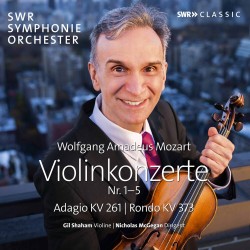
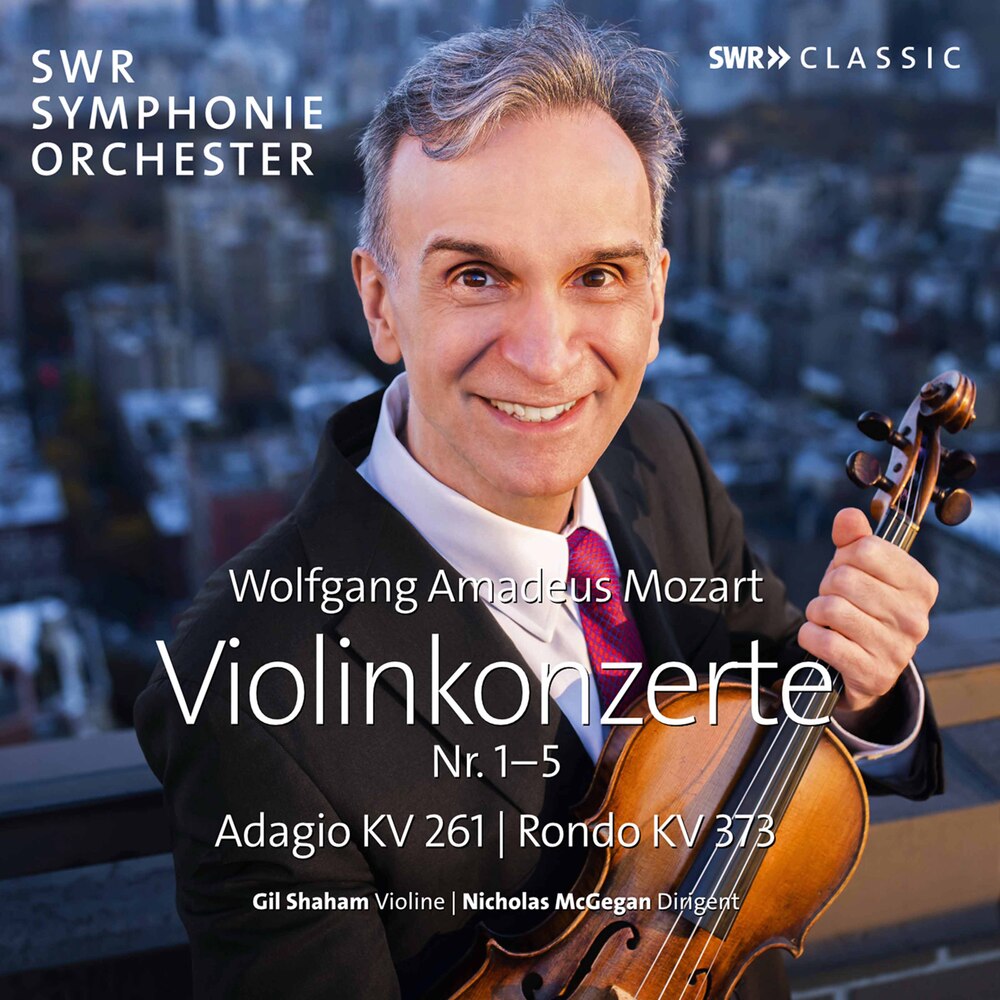
08 Shaham MozartViolinist Gil Shaham is joined by reduced forces of the SWR Symphonieorchester under Nicholas McGegan on the 2CD set of Mozart Violonkonzerte Nr.1-5, along with the Adagio In E Major K261 and the Rondo in C Major K373 (SWR Classic SWR19113 naxosdirect.com/search/swr19113cd).

The concertos were written when Mozart was a full-time violinist at the Salzburg court, the final four in an astonishing six-month period in late 1775. 

Shaham, who always has a radiant clarity to his playing, accurately described here as “flawless technique combined with his inimitable warmth and generosity of spirit,” is in superb form. McGegan is an expert in 18th-century style, and together they make wonderful music on a simply outstanding and beautifully recorded set.
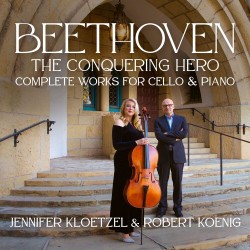
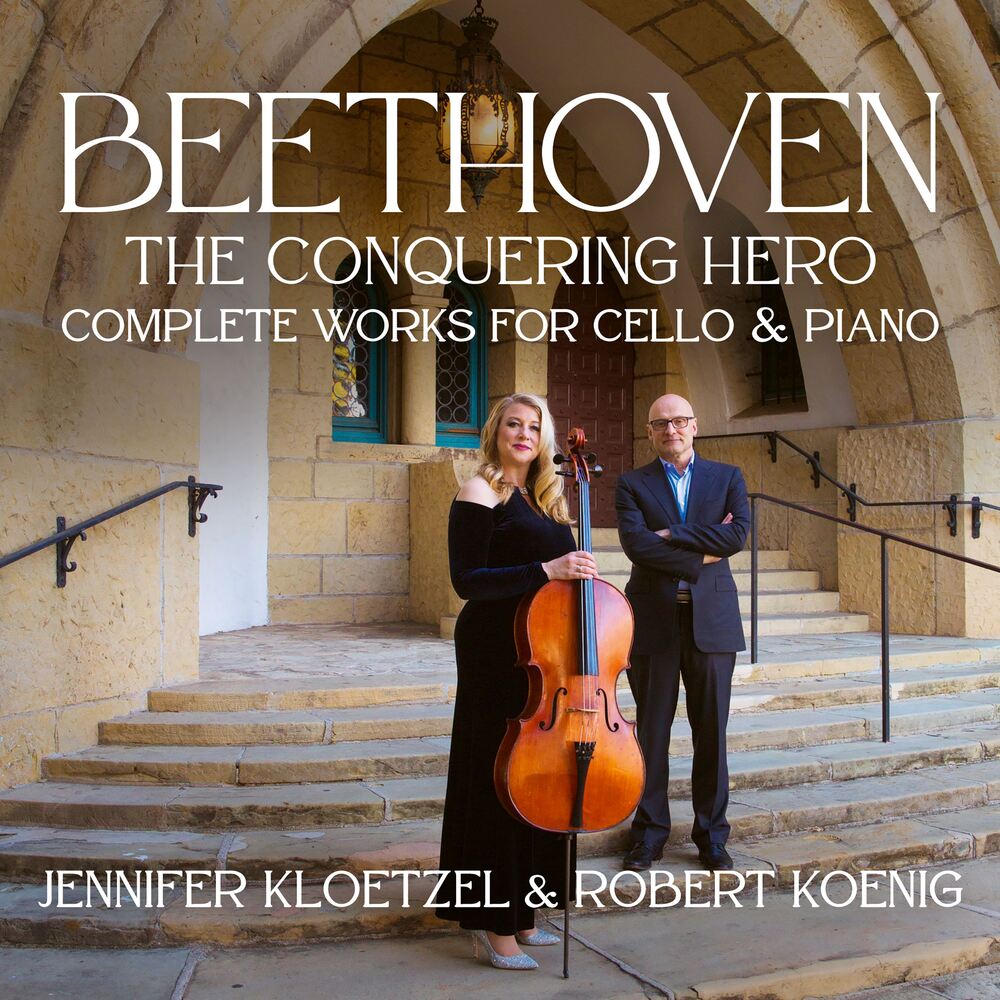
09 Jennifer Kloetzel Beethoven jpegJennifer Kloetzel is the cellist and Robert Koenig the pianist on the 3CD set of Beethoven: The Conquering Hero, Complete Works for Cello and Piano (Avie AV2450 avie-records.com/releases).

The five cello sonatas are here, together with the three sets of variations and the Sonata in F Major for Piano with Horn or Cello, Op.17. The piano is a 19th-century Blüthner 9-foot grand and the cello a 1901 Camillo Mandelli. There’s a lovely balance in the recording, a clear piano sound that never overwhelms and a warm, rich cello tone.

Kloetzel has been playing the cello sonatas since she was eight years old, so it’s no surprise that we’re in very good hands here. Koenig is an outstanding partner.
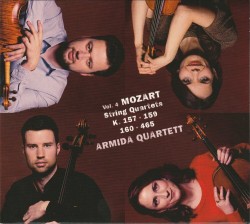
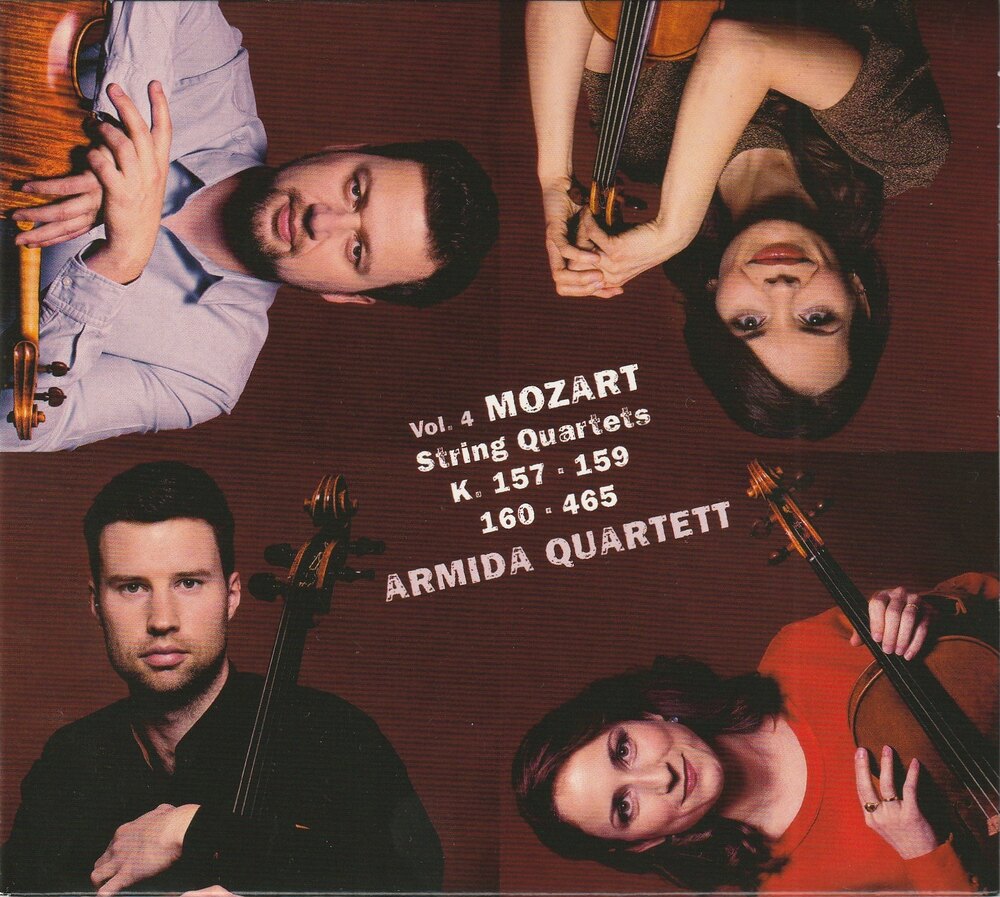
10 Armida MozartThe Armida Quartett continues its ongoing series of the composer’s complete string quartets with Mozart String Quartets Vol.4 (Avi Music 8553205 armidaquartett.com).

The three-movement String Quartets No.4 in C Major K157, No.6 in B-flat Major K519 and No.7 in E-flat Major K160, written in 1773 during a journey to Italy are paired with the String Quartet No.19 in C Major K465 “Dissonance” from 1785, a work foreshadowed by the traces of dissonance in the three earlier quartets by the 17-year-old Mozart.

The Armida Quartett has been collaborating with G. Henle Verlag on their Urtext edition of Mozart’s string quartets, and their study of the manuscript and early edition sources has resulted in stylistically authoritative interpretations and finely detailed performances.

The final volume in the series is scheduled for release in April.
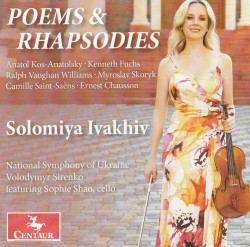
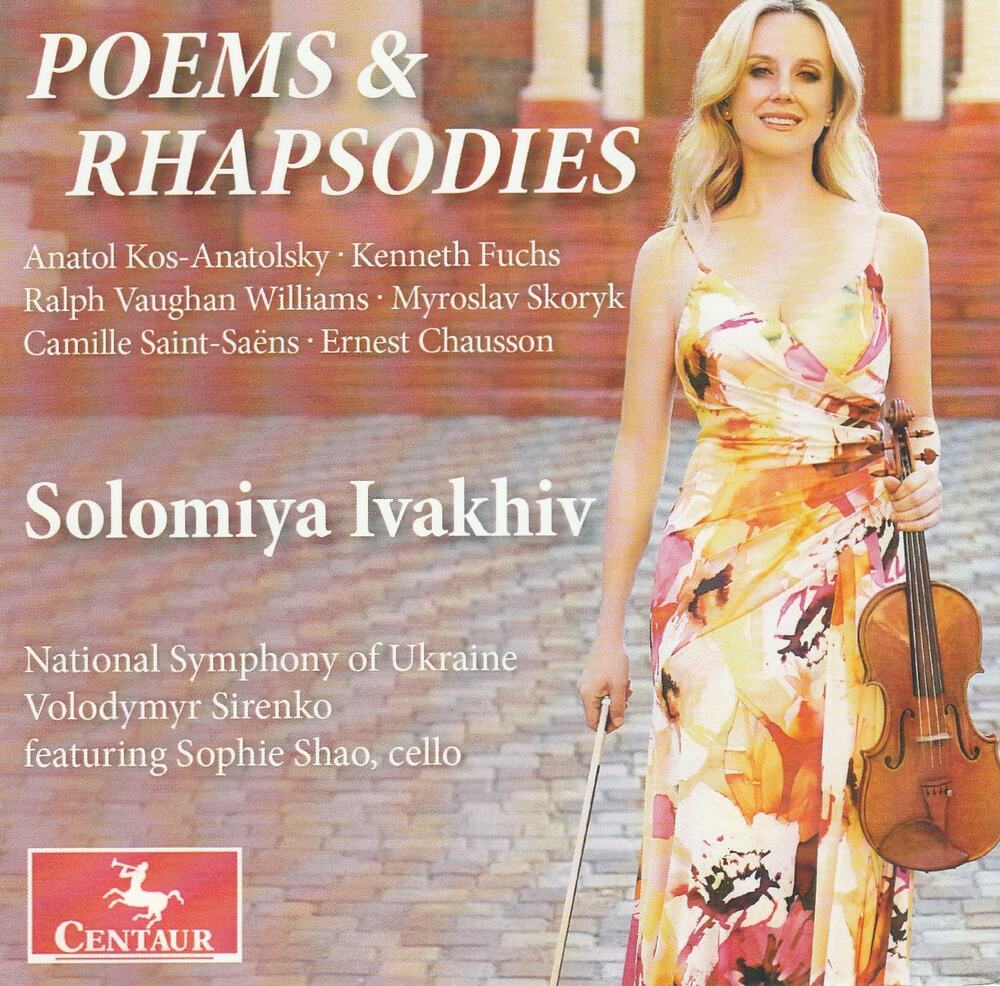
11 Solomiya IvakhivThe American-based Ukrainian violinist Solomiya Ivakhiv is the soloist on Poems & Rhapsodies, with the National Symphony Orchestra of Ukraine under Volodymyr Sirenko (Centaur CRC3799 amazon.com/Poems-Rhapsodies-Solomiya-Ivakhiv/dp/B09NSYKL93).

They are joined by cellist Sophie Shao in the little-heard but quite charming Saint-Saëns work La Muse et le poète Op.132 (the publisher’s title, not the composer’s) which began life as a piano trio.

Ivakhiv displays a clear, bright tone and technical assurance in competent readings of Chausson’s Poème Op.25 and Vaughan Williams’ The Lark Ascending, but really excels in the remaining three works on the disc. The simply lovely American Rhapsody (Romance for Violin and Orchestra) from 2008 by the American composer Kenneth Fuchs is heard between two works by Ukrainian composers: the 1962 Poem in D Minor for Violin and Orchestra by Anatol Kos-Anatolsky (1909-83); and the Carpathian Rhapsody from 2004 by Myroslav Skoryk (1938-2020).
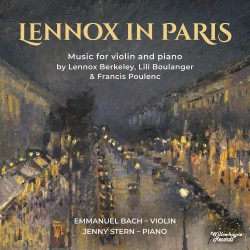
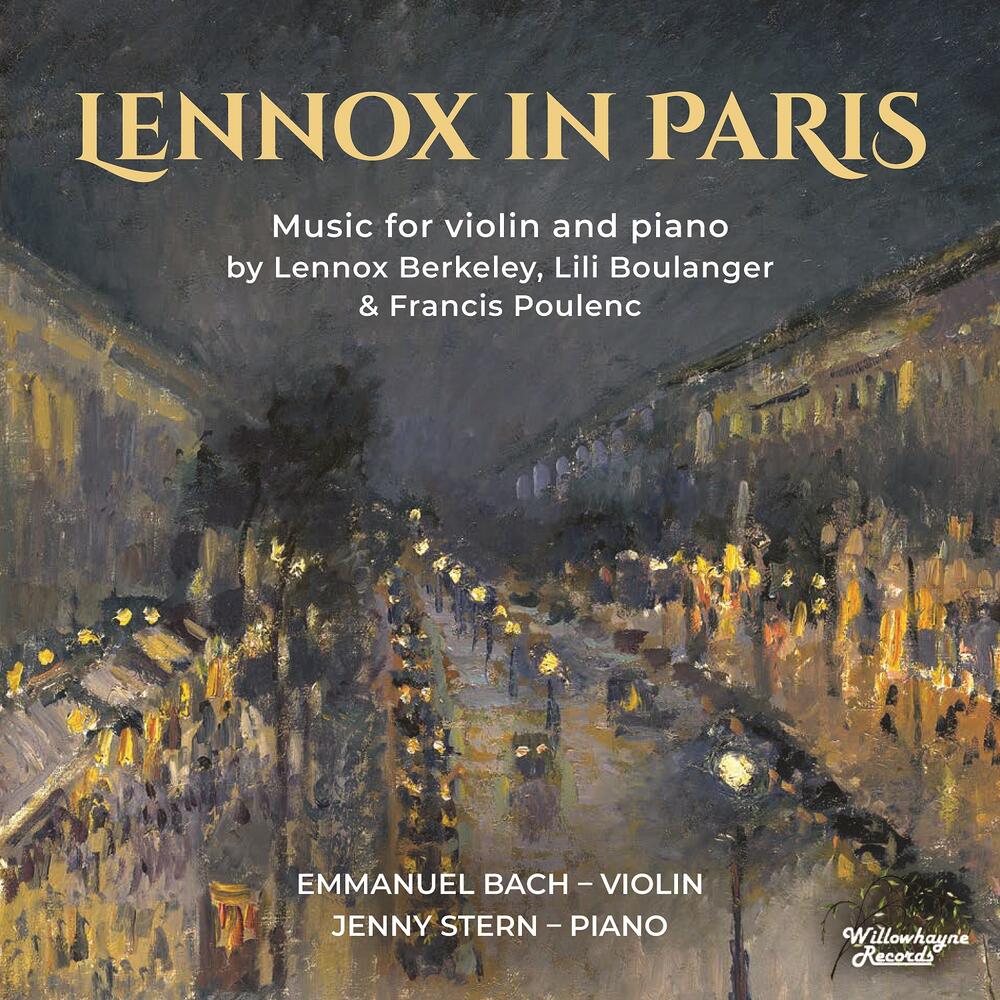
12 Lennox in ParisThe young English violinist Emmanuel Bach is paired with pianist Jenny Stern on Lennox in Paris – Music for violin and piano by Lennox Berkeley, Lili Boulanger & Francis Poulenc (Willowhayne Records WHR070 willowhaynerecords.com).

Berkeley lived in Paris from 1926 to 1932, studying with Nadia Boulanger and Ravel and counting Poulenc among his musical friends. Only one of his works here – the Violin Sonata No.1 – was written during that time, the Sonatina dating from 1942 and the Elegy and Toccata Op.33 Nos. 2 & 3 from 1950.

Bach’s playing seems quite tentative, not being helped by an over-prominent piano balance, and one can’t help feeling that these are works deserving of far more colourful and insightful performances.

The French pieces fare much better. There’s a lovely touch in the Boulanger pieces – Nocturne, Cortège and D’un matin du printemps – a sweet tone and nice feel to the middle movement of the Poulenc Sonata, and some assured playing in the Heifetz transcriptions of Poulenc’s Mouvements perpétuels and Presto in B-flat Major.
Listen to 'Lennox in Paris' Now in the Listening Room

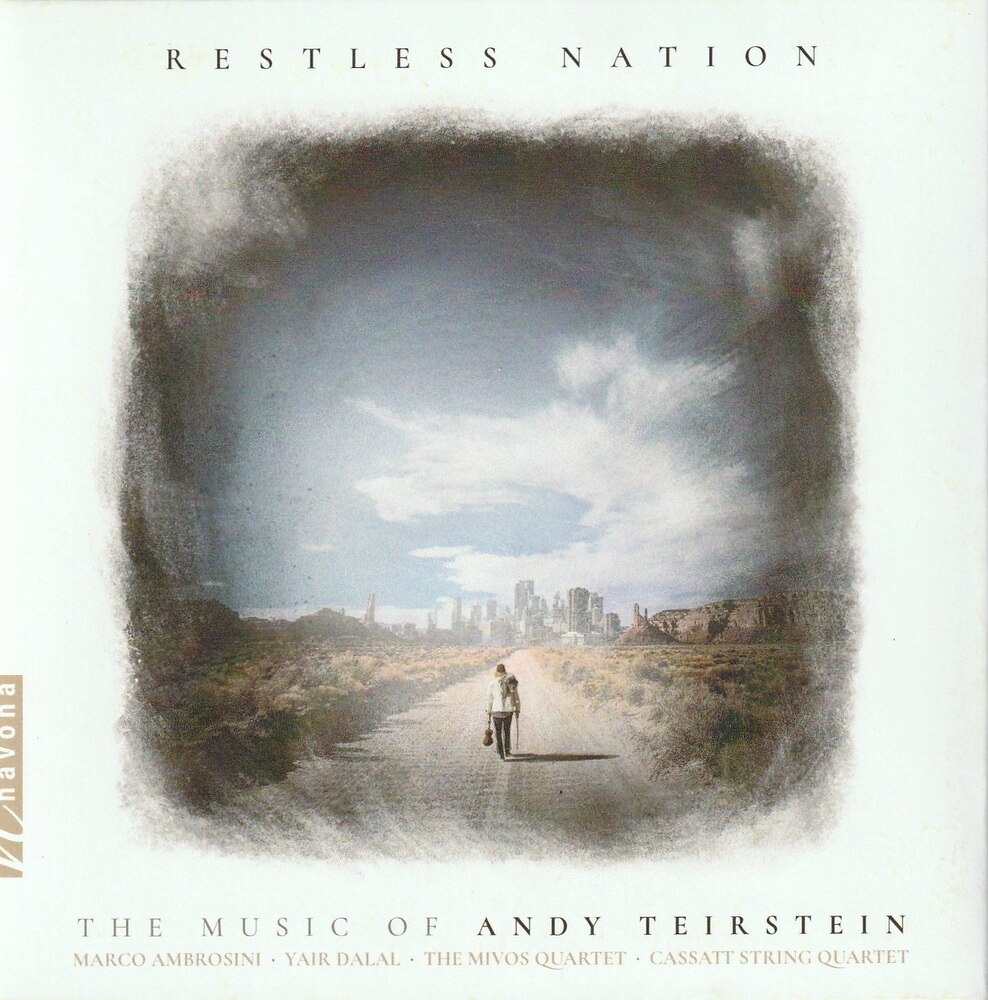
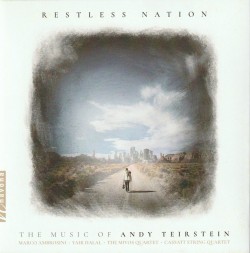
13 Andy TeirsteinRestless Nation – The Music of Andy Teirstein features works that were inspired by world music traditions (Navona NV6397 navonarecords.com/catalog/nv6397). 

The Cassatt String Quartet performs the title work, its impressions of a year-long family expedition evoking “the fierce energy” of American fiddling. 

On Secrets of the North the Mivos String Quartet is joined by Marco Ambrosini on the nyckelharpa, the traditional Swedish keyed fiddle, in a work that incorporates elements inherent in Swedish folk music.

Azazme Songs, Suite for String Quartet, Oud and Dulcimer was composed after a four-day trek with Azazme Bedouins across the Aravah desert. They are not direct transcriptions but rather impressions gleaned, the dulcimer representing the sound of the Bedouin sumsumia, a strummed psaltery-type instrument. The Mivos String Quartet performs again, with the composer playing dulcimer and Yair Dala on the oud.

Teirstein plays a brief harmonica solo to open Letter From Woody with the Janáček Philharmonic Orchestra under Jirí Petrdlík. Inspired by one of the letters that Woody Guthrie wrote to his future wife, it “draws on traditional American folk string bowings and energies.”


Listen to 'Restless Nation' Now in the Listening Room

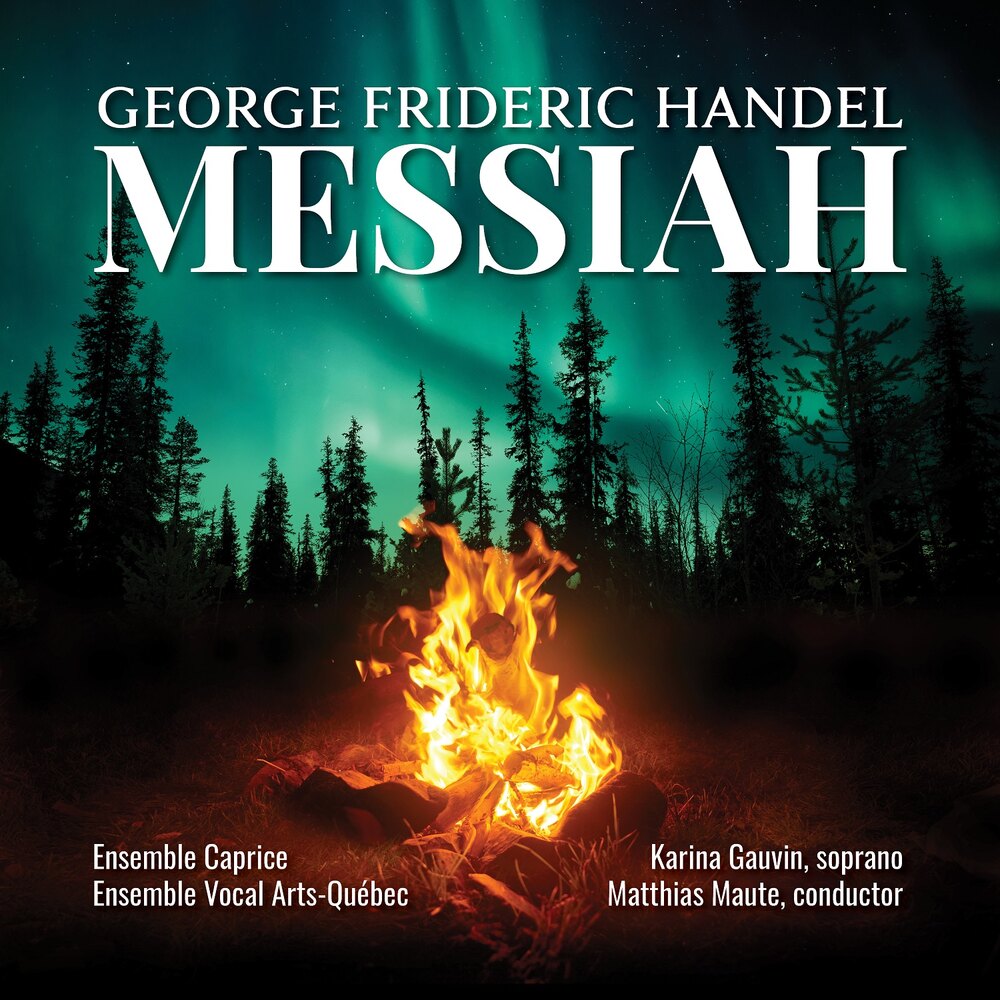
01 MessiahMessiah
Karina Gauvin; Ensemble Caprice; Ensemble Vocal Arts-Quéébec; Matthias Maute
Leaf Music LM247 (leaf-music.ca)

Canadian soprano Karina Gauvin, German-born Matthias Maute and the ensembles he conducts, Ensemble Caprice and Ensemble Vocal Arts-Québec, present a new recording with highlights from Handel’s Messiah.

Although it would be easy to dismiss the recording as “another Messiah,” this interpretation is a unique and valuable contribution to the large number of recorded offerings of Messiah. Dictated by COVID restrictions in place at the time of recording, the chorus includes only 12 voices. Although, unlike the large choruses of contemporary times, this reading does somewhat align with musicological research that estimates the original performances of Messiah comprised only 16 men and/or 16 boy choristers. More controversial for Messiah and Baroque music purists are the many chorus sections with notable faster tempi than what modern ears are used to as well as unusual and sometimes chopped phrasing as in the opening of the “Hallelujah” chorus. 

Artistic choices notwithstanding, this Messiah offers an intimate experience that never feels underpowered because of its smaller effective. Both ensembles offer solid musicianship and musicality; Gauvin, renowned for her performances of Baroque repertoire, is at ease and delivers her usual abilities with elegance, depth and conviction.

The album also offers two new choral works Hope and Belief by Jaap Nico Hamburger on a text from Polish Jewish writer Isaac Leib Peretz (1852-1915) and O Magnum Mysterium by conductor Maute based on the sacred Latin text of the same name. Both works featured prominently in the Mini-Concerts Santé, a Maute initiative that provided uplifting concerts to thousands during the 2020 lockdown.

Listen to 'Messiah' Now in the Listening Room

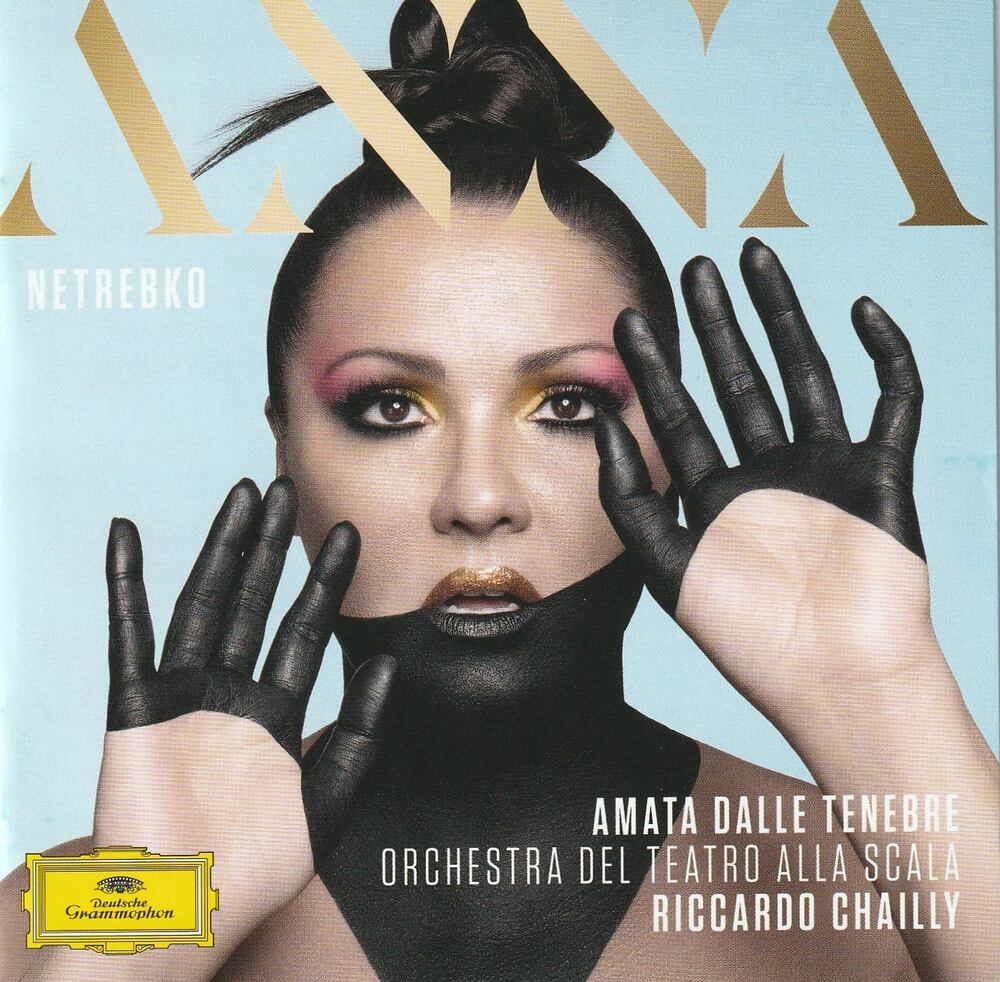
02 Anna NetrebkoAmata Dalle Tenebre
Anna Netrebko; Orchestra del Teatro alla Scala; Riccardo Chailly
Deutsche Grammophon B0034484-02 (deutschegrammophon.com)

The great soprano, Anna Netrebko, is the epitome of the larger-than-life opera star; a diva who ought to be credited with perpetuating the mysterious appeal of the genre. She has the prodigious gift not only of reaching extraordinarily high notes – her high C is sung with electrifying charisma – but she also graces the roles she brings to life with a tragic grandeur. There can also be no doubt that she is Riccardo Chailly’s operatic muse. The repertoire on Amata Dalle Tenebre certainly suggests that she has been so anointed – literally and figuratively – with the ink-black heartbreak of these arias. 

Netrebko can easily lay claim to being the diva assoluta of our time. The disc is kicked off by the dark honeyed voicing of Richard Strauss’ Es Gibt ein Reich, moulding the lyric from Ariadne auf Naxos as if with molten lava. Then she proceeds to unveil – from her palpitating heart – the elemental ache of her very being with her touching evocations of Verdi’s Aida, Puccini’s Madama Butterfly and Manon Lescaut. Netrebko’s Dido from Purcell’s Dido and Aeneas is a deeply cathartic evocation of grief.

Her Wagner is perfectly judged. Both arias: Dich, Teure Halle (Tannhäuser’s Elisabeth) and Einsam in Trüben Tagen (Lohengrin’s Elsa) are shaped in majesty and eloquence, transcending the pitch blackness of operatic emotions. Her Cilea is gorgeous, but the apogee of the disc is Tchaikovsky’s Pique Dame in which Netrebko plays Lisa with unbuttoned authority and anguished poetic brilliance.

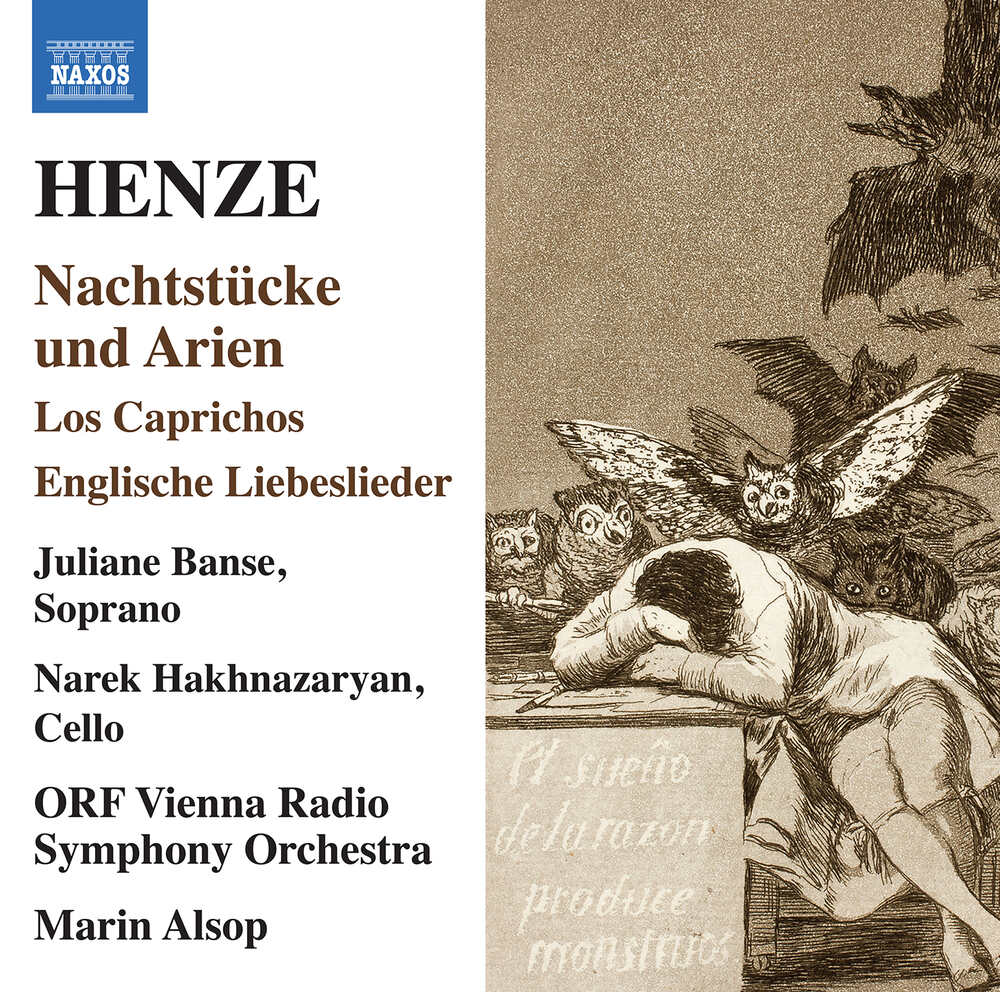
03 Henze Nachtstucke und ArienHenze – Nachtstücke und Arien; Los Caprichos; Englische Liebeslieder
Narek Hakhnazaryan; Juliane Banse; Radio-Symphonieorchester Wien; Marin Alsop
Naxos 8574181 (naxosdirect.com/search/747313418176)

Right from the start of Hans Werner Henze’s long and productive career, performers and audiences have connected viscerally with his music – some of the most lyrical, complex, passionate, committed, literate, uncompromising, provocative, confrontational and powerful of its time. Today, ten years after his death, it speaks to us just as directly as ever. 

The works on this recording were never among Henze’s best-known pieces, compelling though all three are. The one I find most moving is Englische Liebeslieder. This collection of love songs is based on poems by Shakespeare, the Earl of Rochester, Joyce and Graves. But the texts are never actually heard. Instead, they are interpreted by a solo cello. With cellist Narek Hakhnazaryan’s open-hearted lyricism, and the responsiveness of the ORF Vienna Radio Symphony under chief conductor Marin Alsop, the effect is uncannily intimate – and utterly ravishing. 

In Nachtstücke und Arien, the arias are sung, to exquisite poems by Ingeborg Bachmann. But here the three dreamy instrumental movements work better than the two wistful arias. Soprano Juliane Banse captures the essential theatricality of Henze’s style. But her shrillness and pronounced vibrato dampen the mystery and magic for me.

Los Caprichos transports us to the world of foolishness and folly depicted in Goya’s series of 80 etchings of the same name. Under Alsop’s insightful direction the orchestra captures Henze’s brilliant characterizations, shapely phrases and delightfully clear textures, making this a disc well worth seeking out.

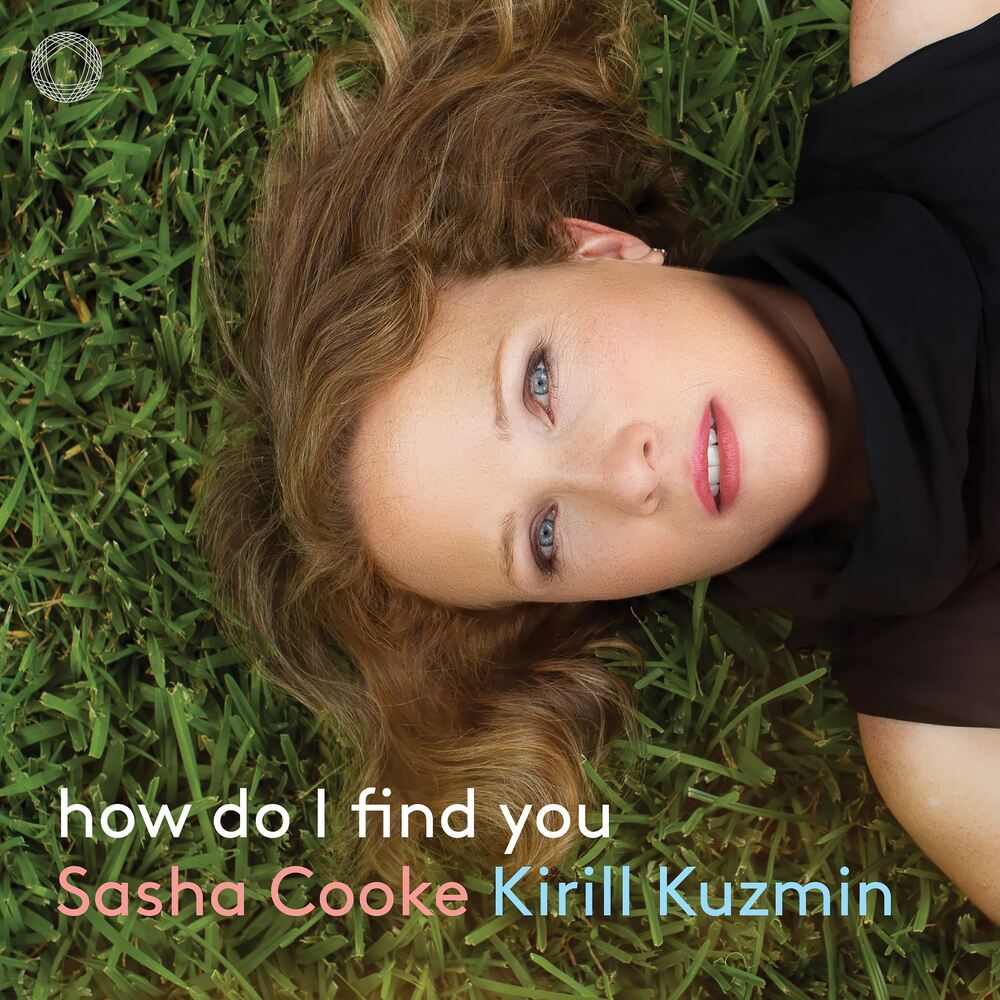
04 Sasha Cookehow do I find you
Sasha Cooke; Kirill Kuzmin
Pentatone PTC 5186961 (pentatonemusic.com/product/how-do-i-find-you)

American mezzo-soprano Sasha Cooke is a two-time Grammy Award winner. Her most recent album, how do I find you, features songs composed by numerous living American composers (Missy Mazzoli, Rene Orth, Frances Pollock, Hilary Purrington, Kamala Sankaram and Caroline Shaw) and written by many living American and Canadian poets and lyricists (Liza Balkan, Mark Campbell, David Henry Hwang and Colleen Murphy).

howdDo I find you is a digital only release in which Cooke partners up with collaborative pianist and Houston Grand Opera principal coach Kirill Kuzmin. Together, they perform 17 newly composed songs commissioned and curated by Cooke during the COVID-19 pandemic. Composers were given the opportunity to write about topics that spoke to them most during the pandemic and this resulted in a wide variety of themes related to the use of social media, social injustice, immigration and environmental concerns, as well as the familiar pandemic themes of working from home, work insecurity, pandemic parenting, general struggles and personal sacrifices. 

Although Cooke’s voice would gain from light text setting revisions and her interpretation of raw and unhinged feelings is, at times, too measured (Dear Colleagues), how do I find you is a compelling album. With music firmly situated in the contemporary American art-song style and up to date lyrics, Cooke and Kuzmin’s interpretations successfully portray the intricacies of pandemic life with relatable depth, seriousness, sarcasm and humour.

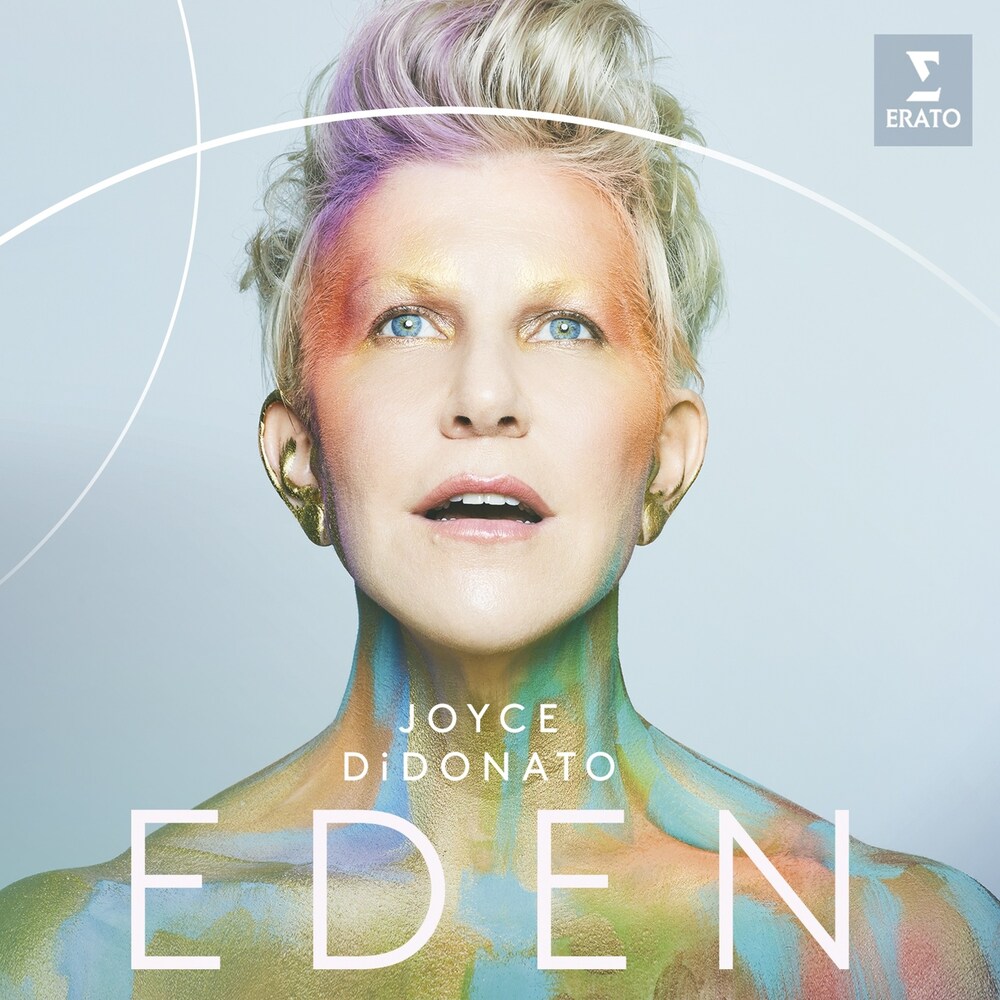
05 DiDonato EdenEDEN
Joyce DiDonato; Il Pomo D’Oro; Maxim Emelyanychev
Erato (joycedidonato.com/2021/12/07/eden)

Joyce DiDonato’s Eden invites us to examine our relationships and connections to the natural world by exploring themes of identity and belonging as well as our role and purpose in the healing of our planet, ourselves and one another. 

The repertoire offered crosses musical genres and eras, from classical Baroque songs from the 17th century to the modern contemporary and jazzy sounds of the 21st. The songs showcase themes of nature that have fascinated numerous composers, from Handel, Gluck and Mysliveček to Mahler, Ives and Copland. Eden also includes a world premiere recording of The First Morning of the World by Rachel Portman and Gene Scheer, commissioned for the album. 

DiDonato is a well-established versatile singer and little can be added to praise the quality of her voice, her technique, her creativity and her artistry, all equally displayed on Eden. Perhaps most notable is the care in curation which results in a cohesive product offering both vocal and instrumental works that efficiently cross the boundaries of musical genres and eras. 

DiDonato’s partners, Ensemble Il Pomo d’Oro and the conductor Maxim Emelyanychev, are historical performance practice specialists and this is reflected throughout the album. Gluck’s instrumental piece Danza degli spettri e delle furie is especially delightful.

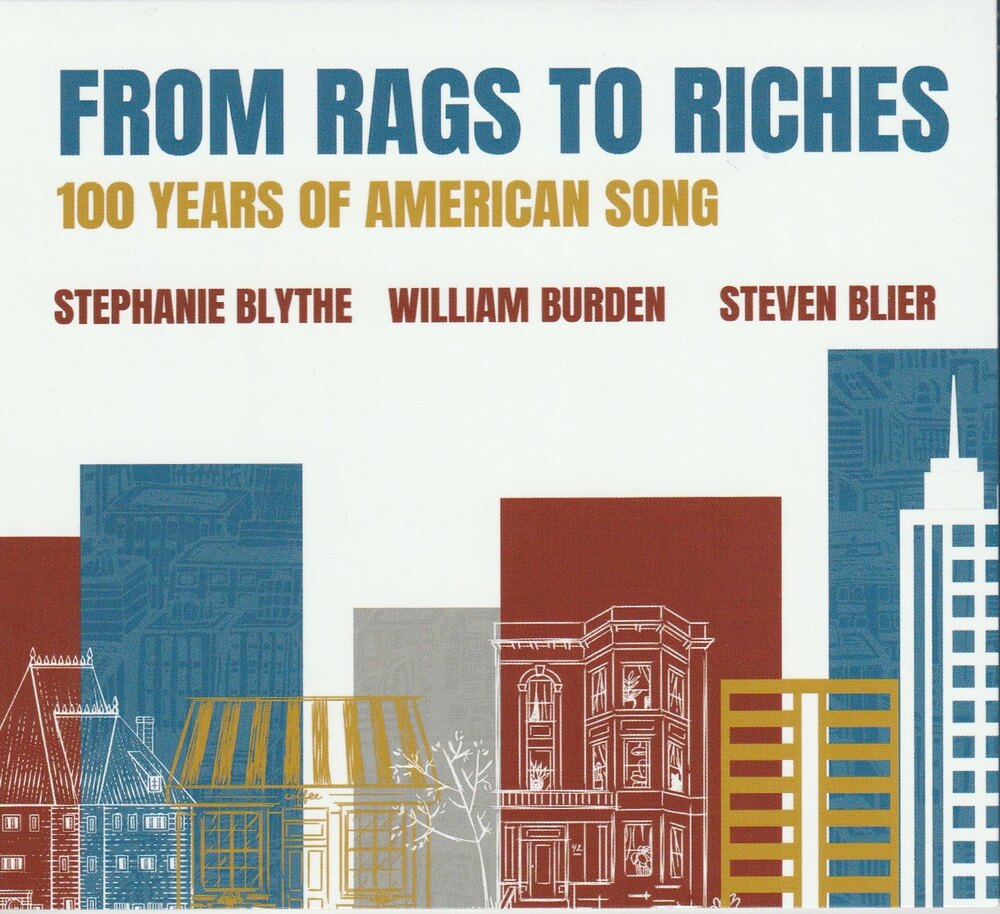
06 Rags to RichesFrom Rags to Riches – 100 Years of American Song
Stephanie Blythe; William Burden; Steven Blier
NYFOS Records n/a (nyfos.org)

This debut album from the New York Festival of Song’s new in-house label NYFOS Records features mezzo-soprano Stephanie Blythe and tenor William Burden accompanied on piano by NYFOS artistic director/co-founder Steven Blier, who also arranged some of the songs. It is taken from a March 2000 live concert recording at Kaye Playhouse at Hunter College in New York celebrating 20th-century American songs including art song, musical theatre, jazz and opera. 

The opening track has happy, energetic Blythe solo vocals in a dance-along rendition of Joplin’s Pineapple Rag, arranged by Blier. Blier’s arrangement of Cook’s vaudeville My Lady Frog is amazing, with opening piano leaping frog line, Burden’s musical singing to higher tenor closing pitches and closing ragtime piano riff. Bernstein’s Broadway song Wrong Note Rag provides a fun change of pace with piano “wrong note chords” hilarious under the vocalists. Nice to hear a more classical piece in the mix here with Samuel Barber’s Nocturne for tenor and piano. Other songs include works by Gershwin, Monk, Weill, Rodgers, Sondheim and Bolcom

The 17 songs comprise a comprehensive, stylistically wide-ranging overview of American songs composed in the last century. Blythe and Burden both sing with clear pitch, articulation and musicality in all the diverse styles. Blier’s rock-solid technique, musicality, accompanying and humour is amazing. His arrangements are musically inspiring. This is a superb release from a live production that includes occasional audience applause. Bravo!

Listen to 'From Rags to Riches: 100 Years of American Song' Now in the Listening Room

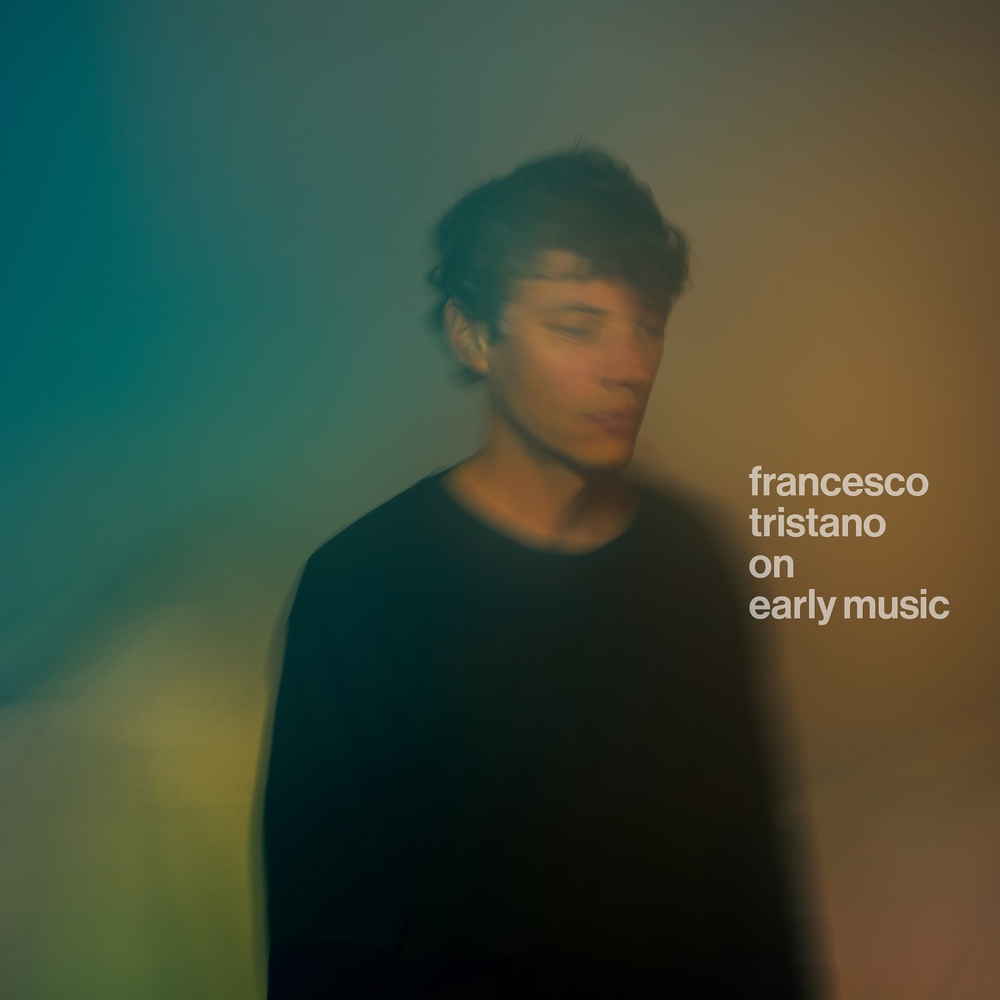
01 Tristano On Early MusicOn Early Music
Francesco Tristano
Sony Classical G0100045975984 (sonyclassical.com/releases/releases-details/on-early-music)

Francisco Tristano studied at four conservatories before graduating from the Juilliard School. Here he turns every last facet of his immense talent as a pianist and composer to interpreting eight pieces of early music juxtaposed with as many of his own creations. 

Breathtaking does not begin to describe Tristano’s talents. After his own highly spirited Toccata we are treated to his version of a John Bull Galliard which combines the pianist’s exceptional skills with the taxing sequences one associates with Bull. Other tracks are as complex; what is more, it is difficult to remember that we are listening to a pianist when so much of this CD sounds as if it is being played on a harpsichord.  

Then there are the slower pieces, notably the surprisingly restrained Aria la folia and Pavan. Tristano also has a keen interest in the works of Orlando Gibbons, selecting four pieces, each with its own stately Elizabethan character. Above all, there is the longest track on the CD, Girolamo Frescobaldi’s Cento partite sopra passacaglie, with an intensity highly appropriate for Tristano’s vigorous technique. 

Which leaves us with Tristano’s surely unique pieces. Ritornello offers no respite to its composer/player, what with its inspiring opening and ever more intense later rhythms. Neither does the breathless Ciacona seconda. It is a brave pianist who would seek to emulate him.

Standing ovations have graced many of Tristano’s performances. This reviewer adds one virtually.

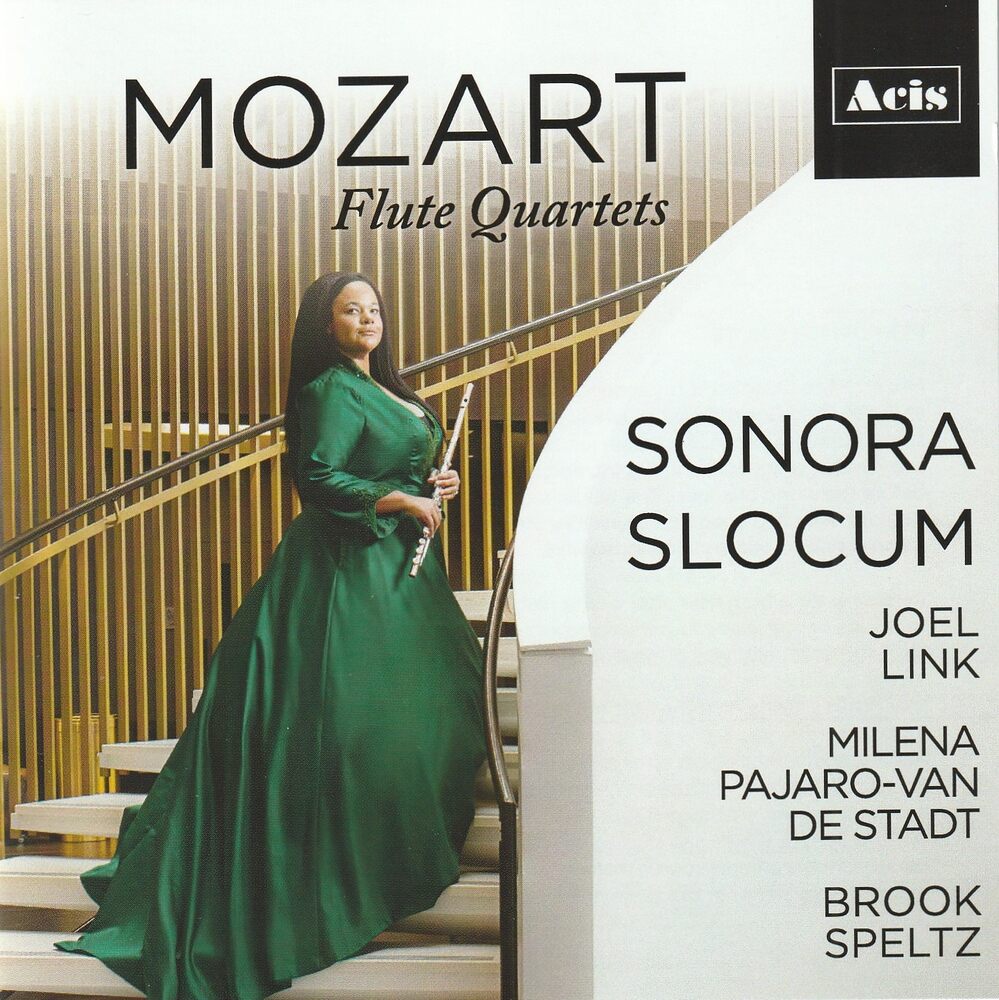
02 Sonora Slocum MozartMozart – Flute Quartets
Sonora Slocum; Joel Link; Milena Pajaro-van de Stadt; Brook Speltz
Acis APL98573 (acisproductions.com)

“Recording these quartets was a dream we had as students at Curtis over 12 years ago....” writes flutist Sonora Slocum in her program notes. So it is no surprise that her warmth and depth of feeling also come out in her playing, not as an imposed emotionality but rather as a kind of transparency, through which the message of the music assigned to the flutist can be felt. This is true not only of the slow movements, the sublime Adagio of the D-Major Quartet or the Andante of the G Major, but also, for example, of the brilliant Allegro first movement of the D Major, where Slocum’s effortless virtuosity serves to convey an intensity of feeling no less than that of the slow movements.

This recording, however, also raises the question: are these quartets flute solos with string trio accompaniment or string quartets with the first violin part given to the flutist? Unfortunately whoever mastered the recording chose the former, consistently putting the flute in the foreground and the strings in the background. As an example, in measures 26 and 27 of the G-Major Andante movement the flute and the cello have a brief duo in contrary motion, in which the flute dominates and the cello is in the background, when the sound from both instruments should be equal. 

So while Slocum’s playing is exemplary, the production values of the album do not, in my opinion, do justice to these wonderful works.

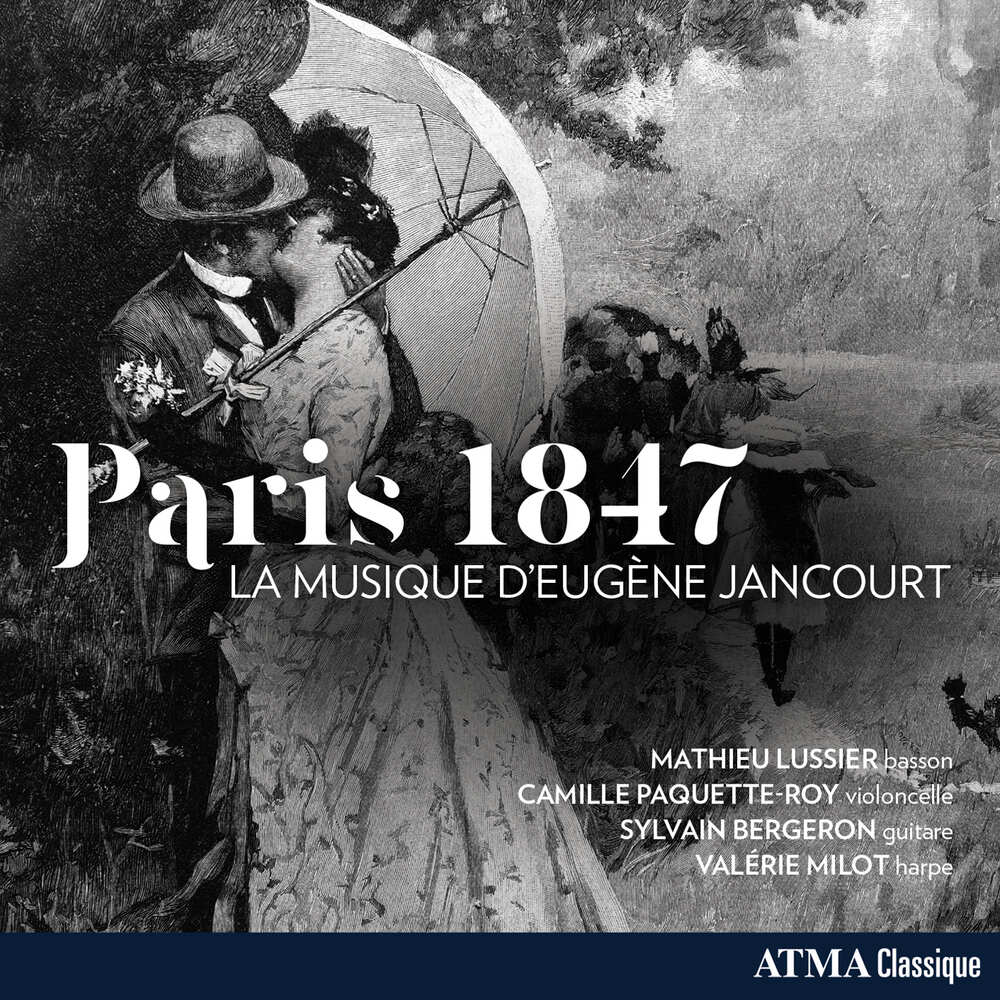
03 Paris 1847Paris 1847 – La Musique d’Eugène Jancourt
Mathieu Lussier; Camille Roy-Paquette; Sylvain Bergeron; Valérie Milot
ATMA ACD2 2834 (atmaclassique.com/en)

Most classical music enthusiasts know that Johann Sebastian Bach was, during his lifetime, better known as a church organist and music educator than as the composer of some of the finest and most canonic pieces of Western Art Music. While the classical world has Felix Mendelssohn to thank for not only contributing his own fine work to the aforementioned canon, but for his rediscovery of Bach’s music. The circuitous path that at least some of Bach’s pieces took from dashed-off manuscript sketchings for the pedagogical purposes of instructing his many students, to sacrosanct artifacts of musical genius, says as much about what society values, collects and ordains as symbols of high culture, as it does of Bach’s considerable genius.

Simply put, beauty and musical inspiration abound in exercise and method books, as well as in etudes composed for didactic and instructive purposes. And that is certainly the case here on this fine ATMA recording by Mathieu Lussier, Camille Roy-Paquette, Sylvain Bergeron and Valérie Milot. Collectively, they mine the beautiful repertoire of Eugène Jancourt, a 19th-century French bassoonist and educator, much of which originated in his 1847 method book. While Lussier, who remains a central figure in promulgating the solo bassoon as a concertizing instrument, acknowledges that this recording “may be of interest to anyone wishing to learn more about historically informed wind playing in the 19th century,” Paris 1847 is no archival recording or historical exercise. Rather the pieces, presented here as the first recording entirely devoted to Jancourt’s music, leaps from the speakers with energy, effervescence and a joie de vivre, capturing this unique and beautiful music from such an intriguing place and time in music history.

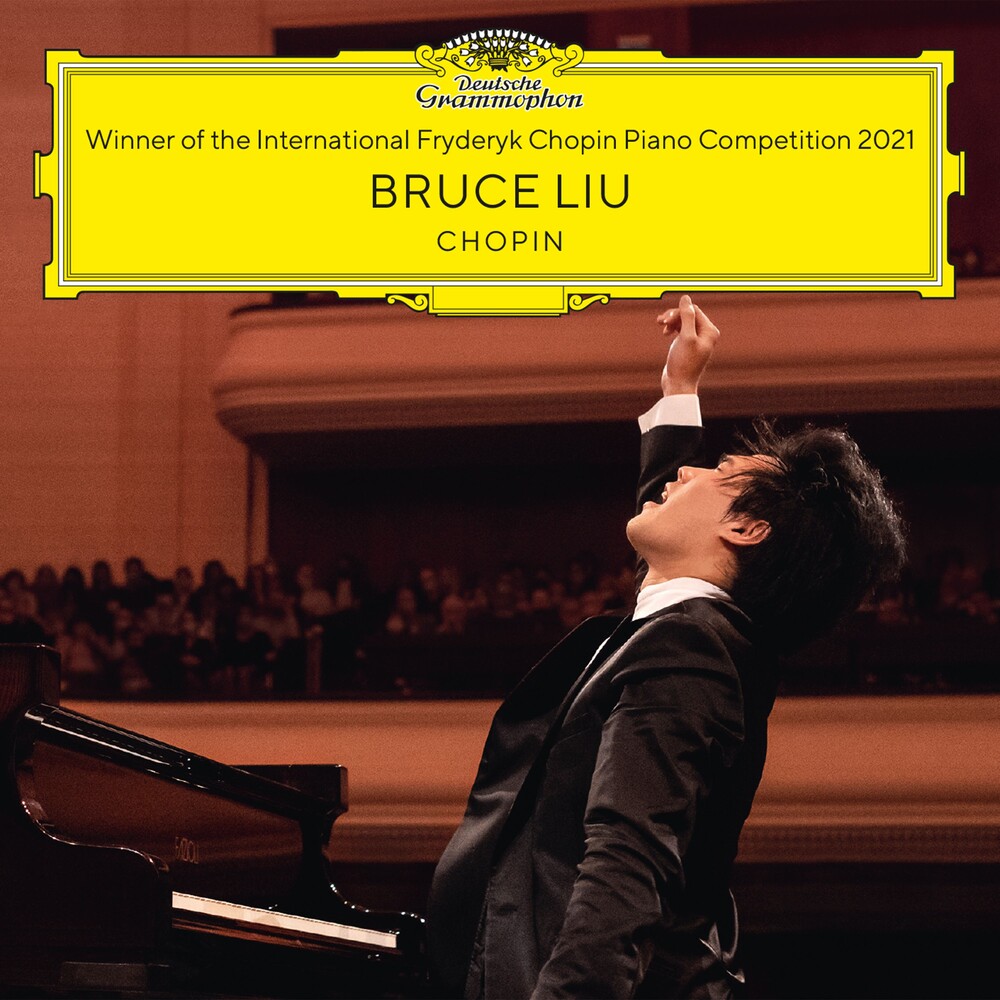
04 Bruce Liu Chopin jpegChopin
Bruce Liu (Winner of the 2021 Chopin Competition)
Deutsche Grammophon (deutschegrammophon.com/en/catalogue/products/chopin-bruce-liu-12506)

One of the few silver linings to arise out of this incessant pandemic has been the boundless, world-class music events made available (often for free) for livestreaming on a variety of platforms. Taking advantage of as many of these musical offerings as my Zoomed-out brain has allowed, one day last October I spent a few sublime hours on YouTube watching the livestream of the 2021 Chopin Piano Competition in Warsaw. I was enthralled, in particular, by Bruce Liu, who in fact, went on to become the first Canadian to win the prestigious competition! 

Shortly thereafter, Deutsche Grammophon (DG) released this CD featuring live highlights of Liu’s solo performances from the competition’s various rounds. According to Liu, DG chose the playlist: the entire round one recital of two Etudes (Op.10 No.4; Op.25 No.4), a Nocturne (Op.27 No.1) and the fourth Scherzo; the Andante Spianato and Grand Polonaise Brillante, and a Waltz (Op.42) from the second round; the Op.33 Mazurkas and the Variations on “La ci darem la mano” from round three. 

Rather than parse out bits and pieces from those performances, I wish to say this about Bruce Liu: the to-be-expected and breathtaking technical prowess aside, what sets Liu apart from the others is his risk-taking spontaneity. His interpretations are revelatory; his joy in playing, palpable. He is a sparkling, elegant and original virtuoso. A true sensation!

Bruce Liu will continue to enchant a worldwide audience. This keepsake CD will continue to remind us why.

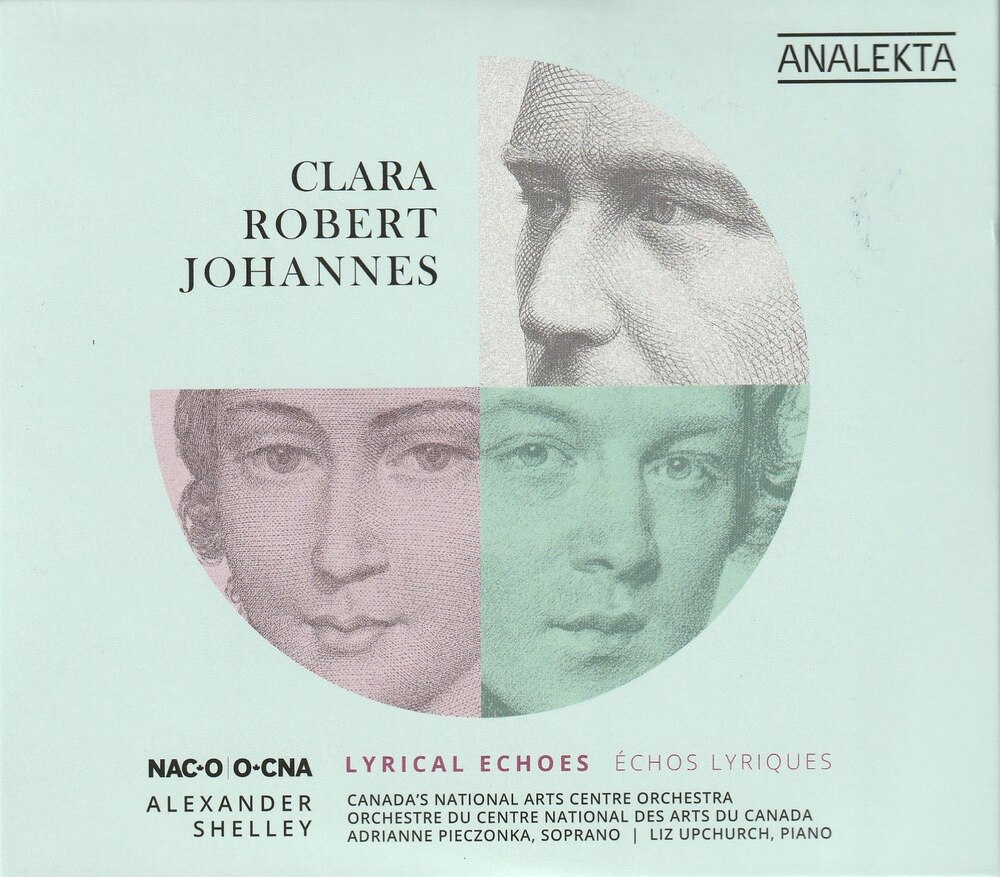
05 Clara Robert JohannesClara Robert Johannes – Lyrical Echoes
Adrianne Pieczonka; Liz Upchurch; Canada’s National Arts Centre Orchestra; Alexander Shelley
Analekta AN 2 8880-1 (analekta.com/en)

Is it by accident that the lead-in to the album title Lyrical Echoes begins with the name of Clara Schumann – ahead of her more celebrated peers, husband Robert and Johannes Brahms? Even if the avowed aim of the proposed four-part series is to show how “closely intertwined personal and artistic connections between the three musical giants” were, I prefer to think it as poetic justice.

Clara Schumann (nee Wieck) was one of the world’s leading pianists of her day, admired by Goethe, Mendelssohn, Paganini and others. As a young woman she was known for her inclination to melancholy. She was proclaimed wundermädchen by the Emperor of Austria and praised by Liszt for her “complete technical mastery, depth and sincerity of feeling.”

Indeed her songs here highlight the ravishing daintiness and poetic feeling of her work. Her skilful use of rhythm, harmony and pianistic colours raises these miniatures to the divine, with the lustrous soprano Adrianne Pieczonka and masterful pianist Liz Upchurch performing them with such a whispered intimacy that you feel almost like an eavesdropper throughout.     

Robert Schumann was a genius in his own right, albeit feeling himself a failure throughout his life. The Symphony No.2 is the darkest work he ever wrote. In each section of this poetic work the National Arts Centre Orchestra soars under Alexander Shelley. The orchestra’s Brahms Symphony No.2 is refined and lustrous, capturing the composer’s epic vision as Shelley maintains its flow and noble grandeur.

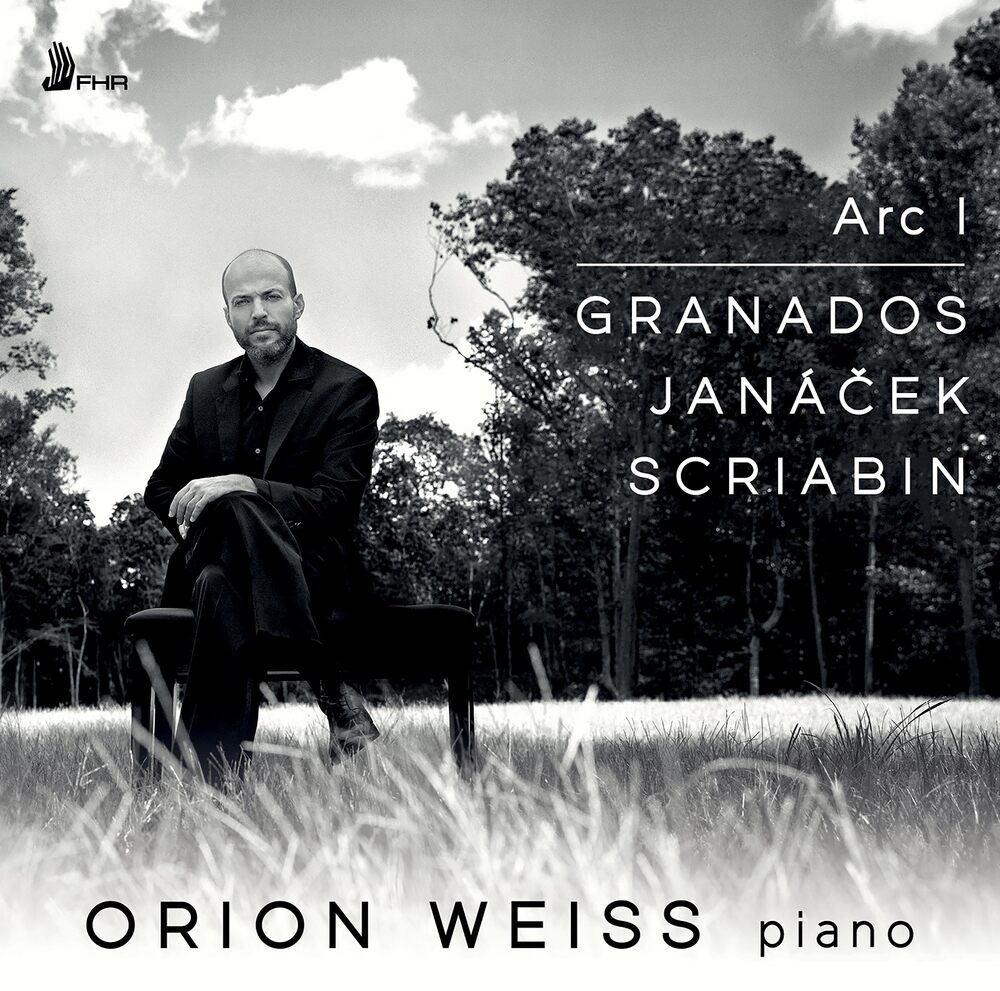
06 Orion Weiss Arc IARC I: Granados; Janáček; Scriabin
Orion Weiss
First Hand Records FHR127 (firsthandrecords.com)

American pianist Orion Weiss delivers a powerful musical statement with his new album, ARC I: Granados, Janáček, Scriabin. Please note that I am using the term album, rather than recording. This is purposeful. Without generalizing, or hopefully sounding overly pedantic, much of what exists in both classical (and jazz) discographies are recordings; a sound capture of what, essentially, is a live musical event documented in such a way as to preserve and remember a concertizing moment in time. An album, conversely, has, at the very least, an extra musical purpose to it, cognizant of track order, narrative arc and overall presentation. 

What Weiss has created, by connecting music written by Enrique Granados, Leoš Janáček and Alexander Scriabin (historically congruent, but stylistically and nationalistically disparate composers), through their zeitgeist-appropriate shared aesthetic of writing bleak, self-referential and globally aware music shortly before the world plunged into a devastating and worldwide war, is creative, programmatic and most definitely, album worthy.

As the first of three recordings in a projected ARC trilogy, Weiss here finds the commonalities of modernism, despair and haunting beauty that unites Granados’ Goyescas, Janáček’s In the Mists and Scriabin’s Piano Sonata No.9 “Black Mass,” mining historically prescient meaning from these pieces, as our world watches what seems likely to be an impending Russian invasion of Ukraine. Weiss’ album is beautifully played, captured with sonic elegance and presents an eerie programmatic message in musical form of what creatively was in the air between 1911 and 1913. The world should listen. Not only for the beauty of this recording, but for the message therein.

Back to top