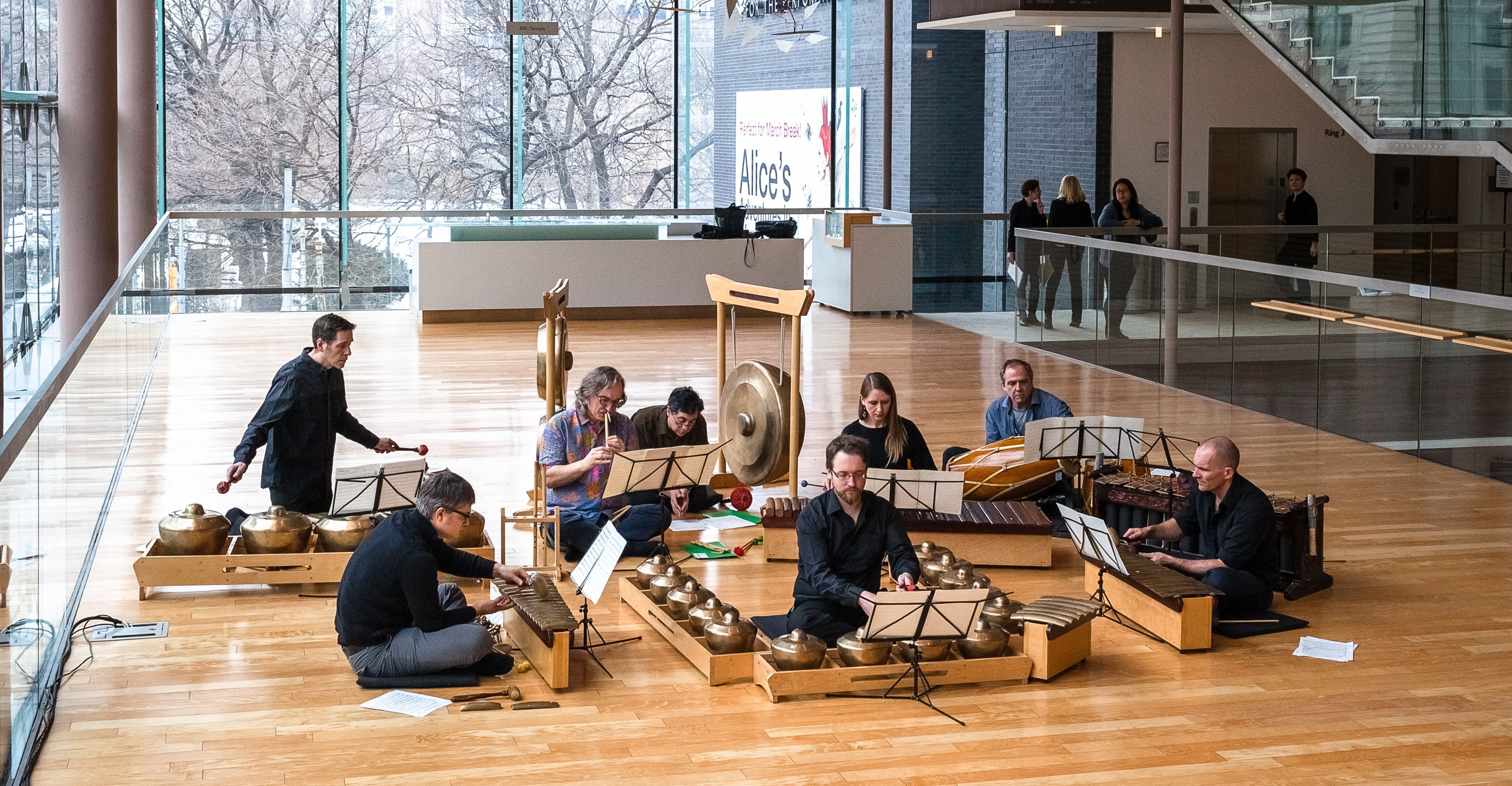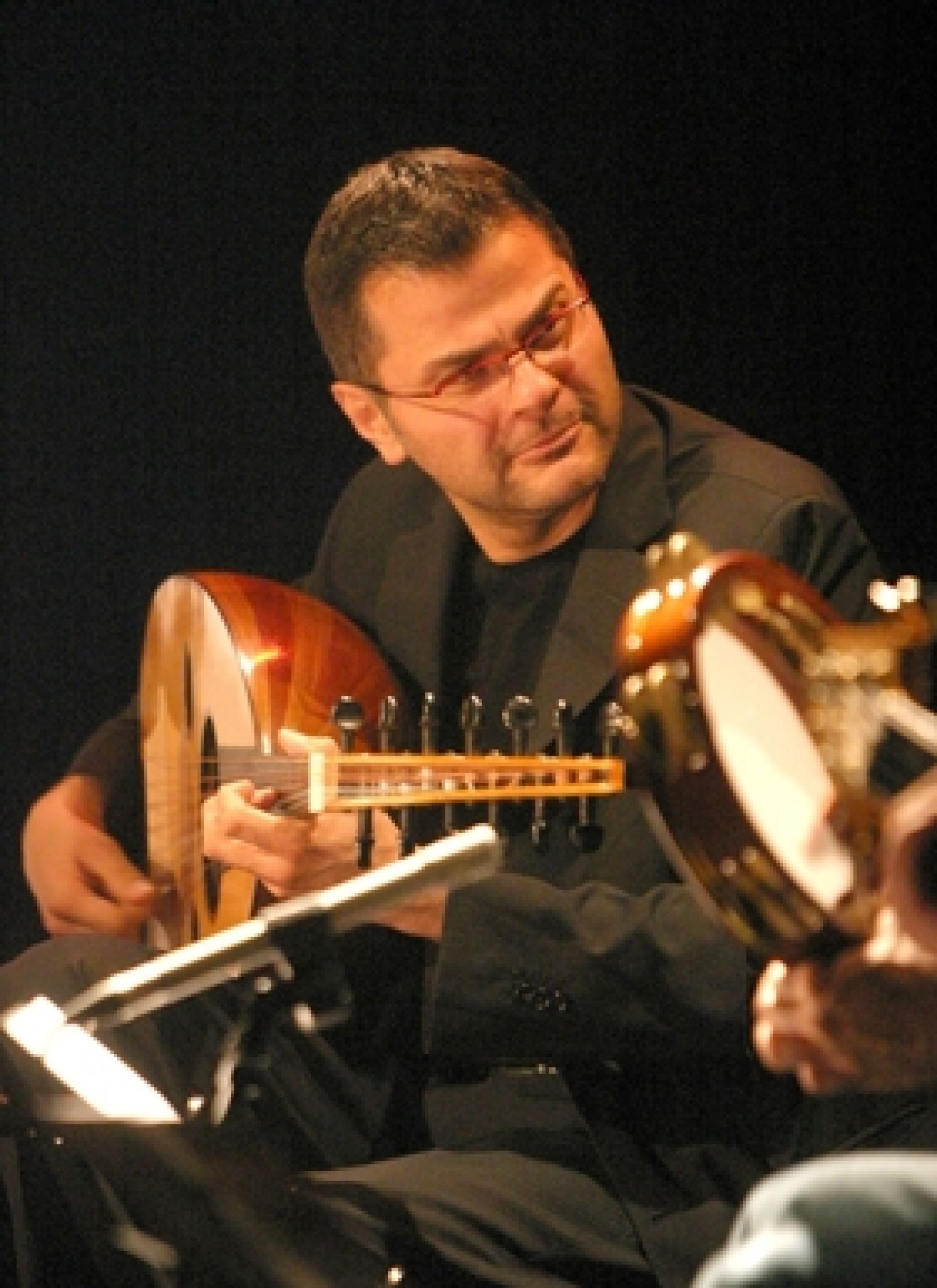
Evergreen Club CONTEMPORARY GAMELANI’ve been writing The Wholenote’s World View column for around a decade. Well over a generation before that I was invited to be a founding member of Evergreen Club Contemporary Gamelan (ECCG), the first Canadian ensemble of its kind. Clearly wearing two hats, I’ve always been explicit about outing myself as an ECCG member when writing about the group in my column.

On the occasion of ECCG’s 35th anniversary season however, rather than a somewhat self-deprecating aside in the column (which follows elsewhere in the issue) I’ve received special dispensation from my esteemed publisher to give a somewhat fuller account of the group’s career and an unapologetic shout-out for the group’s upcoming November 25 Aga Khan Museum concert. After all, who better than an insider to make sense of this band’s arcane music, and to share a story or two?

I agree that ECCG’s music and 35-year career is admittedly difficult to pigeonhole. Pioneering a made-in-Canada approach to the exploration of links between post-classical and world music even before those terms became mainstream, ECCG’s repertoire is a confluence of its founding core members’ musical training and multiple professional practices. Over the years most have been percussionists, among the country’s top drummers and mallet freelancers. On the other hand there has also been a violist, a flutist, guitarists – including founder Jon Siddall and longtime member Bill Parsons – and an ex-bassoonist. The latter? Me! Before I picked up the ECCG’s suling (bamboo end-blown ring flute) in 1984. A lifetime convert from bass to treble winds, I’ve never looked back.

Despite being difficult to slot in a genre, ECCG’s eclectic musical approach has captured the imagination of leading Canadian, American, European and Indonesian concert composers. Musicians, singers, choirs and instrumental ensembles from several genres have also chosen to perform with ECCG. Our music has attracted the interest of international audiences, such as those that attended ECCG’s June 2018 concerts in Munich, Germany. This interest has resulted in a number of tours over the years starting in 1989, and taking us to Indonesia, the gamelan heartland, in 2002.

November 25, the Aga Khan Museum will celebrate the 35th anniversary of Evergreen Club Contemporary Gamelan with a concert that touches on many bases. It will feature the premiere of a new work by Canadian composer Peter Hatch, whose composition thematically explores the environment of his new BC island home. The presence of returning guests, Indonesian musician/composer Ade Suparman and dancer Nurrika, will signal ECCG deep collaborative ties with the rich performance culture of West Java. Their residency will culminate in joint performances of several works. Finally, the group will also honour the centennial of American maverick composer Lou Harrison – one of its founding musical mentors – with a suite of his works arranged by yours truly.

Right from its first season, ECCG’s primary goal has been to create a Canadian-based repertoire which it would commission, perform, tour and record. Has ECCG been successful in meeting these aims? Well, it has generated some 300 works, the sum total of which is a brand new repertoire not replicated anywhere. The group has recorded 15 albums and presented 35 concert seasons in Toronto.

Throughout all this activity, ECCG’s primary aim has always remained – paradoxically to some – to perform music on its degung instruments which ultimately explores and expresses a core Canadian ethos and identity.

During our 2002 Indonesian tour, the ECCG was invited to headline the Yogyakarta Gamelan Festival, along with Toronto’s Maxine Heppner Dance Company. When we arrived I was asked by a young Indonesian organizer what our music was like, having never heard it. Considering an appropriate response, I replied, “We play Canadian music on degung instruments.” After the festival wrapped, we made our way to the tour bus and said our goodbyes. He turned to me and said with a wry smile, “Now I know what Canadian music sounds like.”

Andrew Timar is a Toronto musician and music writer. He can be contacted at worldmusic@thewholenote.com

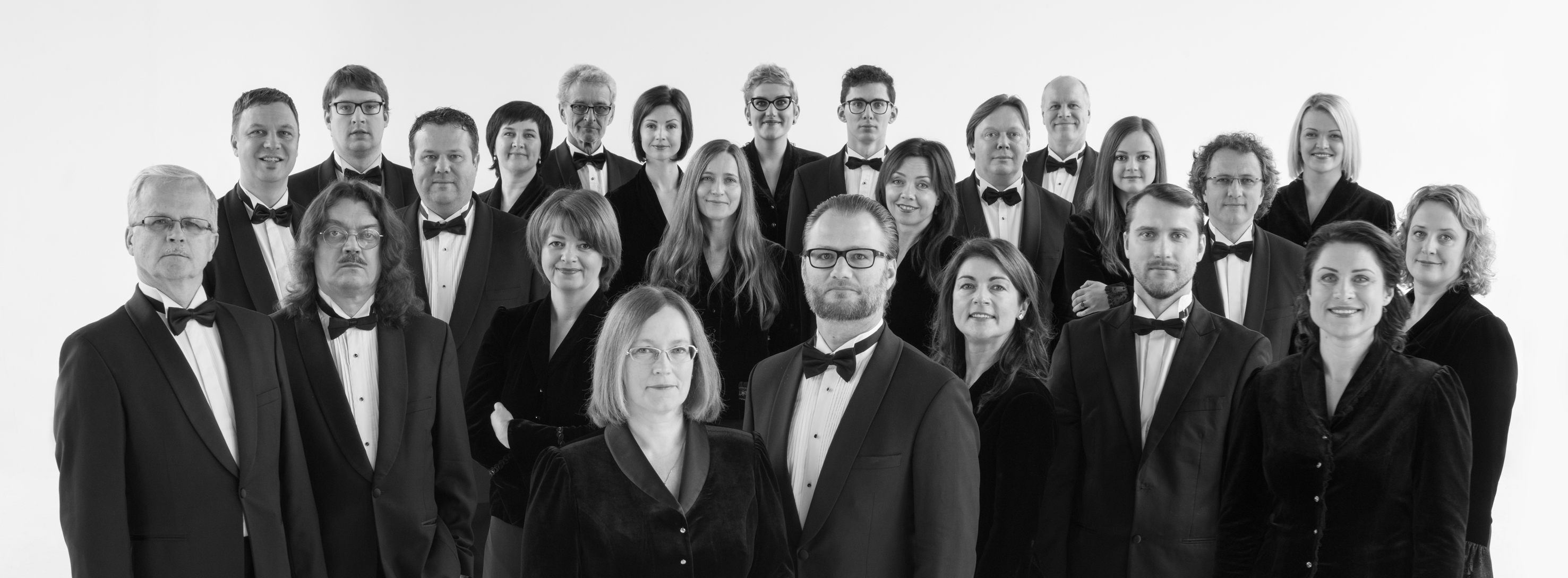
Latvian Radio ChoirSoundstreams’ presentation of the Latvian Radio Choir (LRC) with artistic director Sigvards Klava, in concert at Metropolitan United Church on November 17 at 8pm, has significance in a number of ways. Founded in 1940, the 24-voice LRC is one of the few professional choirs that owes its existence to a national public broadcaster. It was created for the purpose of providing Latvian Radio with a high-quality choral group that could serve the diverse needs of the broadcaster in making its music programs. One of those needs was to allow Latvian composers to not only create new Latvian choral compositions, but also to experiment with the art of choral writing, through creative lab sessions with the choir. This has no doubt contributed to the rise of the tiny nation’s highly respected status in the choral world.

Choral music is at the heart of music making in Latvia, as it is in the entire Baltic region. Every school has a choir and music training is considered a core subject. The well-known Singing Revolution, as it was dubbed in Estonia at its start, in the late 1980s was a broad expression of cultural and political independence that affected the whole region. The 2018 tour by the Latvian Radio Choir, furthermore, is part of a broader celebration of independence from czarist Russia that Latvia and all the Baltic countries gained in 1918.

Peteris VasksThe November 17 concert will be the third time that Soundstreams has presented this widely esteemed choir. The program includes, among other things, music by three leading Latvian composers: the renowned Petēris Vasks (b. 1946) and the much younger, but already well-established Santa Ratniece and Ēriks Ešenvalds (both born in 1977.) Ratniece has composed a large and growing number of quite varied works for the LRC. For example, the choir’s current North American tour follows on the heels of an Australian production of Ratniece’s multimedia opera, WAR SUM UP. Music. Manga. Machines (2011), an ambitious work, in which choir members appear as soloists. By contrast, her first work for the LRC, Saline (2006) is a quiet, delicate, introspective piece containing much subtle detail. At the November 17 concert, the choir will sing Chu Dal (2009), which won her a Copyright’s Infinity Award in 2011.

Santa RatnieceRatniece first came to worldwide attention in 2004 when Latvian Radio presented one of her works to the international delegates at the International Rostrum of Composers (IRC) in Paris. The IRC describes itself as “An international forum of representatives of broadcasting organizations who come together for the purpose of exchanging and broadcasting contemporary art music.” Think of it as a contemporary music meet-up sponsored by public broadcasters from some 35 countries and organized by the International Music Council. Latvian Radio presented works by Ratniece to the IRC three times between 2004 and 2012, including her choral music as performed by the LRC. Each time her music was presented there, the international delegates voted her works to the top ten list of the best works heard. By the end of this period she had become quite well known on the international scene, and I had the pleasure of witnessing this progression. In 2002, I had been elected president of the IRC, after having served as the official delegate for CBC Radio for 25 years. Over that time, I had seen the benefits of exchanging original productions of new compositions from around the globe, benefits that accrued not only to the composers whose music was being made available, but also to the broadcasters themselves, in the form of fresh, high-quality content for use in their programs.

Eriks EsenvaldsLatvian Radio also presented the music of Ēriks Ešenvalds at the IRC in 2006; a choral composition, in a production with the LRC. Like Ratniece, Ešenvalds’ piece was voted as the top selected work by a young composer, and his name spread to all the countries participating in the IRC, resulting in dozens of international broadcasts, a tribute to how effective Latvian Radio, together with their world-famous choir, have been in bringing the story of emerging Latvian composers to international public view. Ešenvalds’ two choral works on the Soundstreams program are Stars (2011) with poetry by Sarah Teasdale (1884–1933), and A Drop in the Ocean (2006) which includes biblical texts, a prayer of St. Francis of Assisi and words of Mother Theresa.

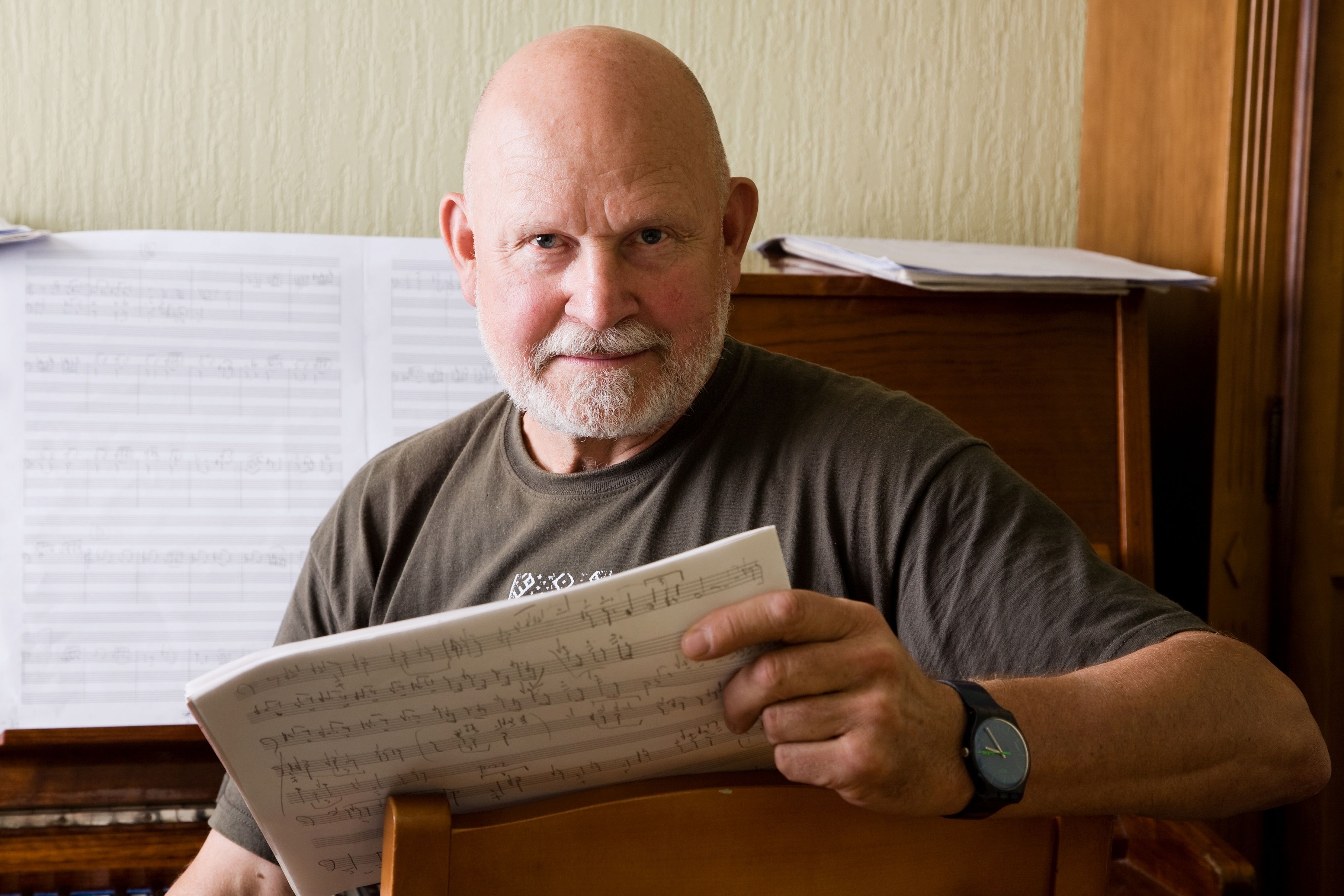
Omar DanielThe November 17 concert will also include a world premiere by Canadian composer Omar Daniel (b. 1960). The work was commissioned by Soundstreams Canada, with the financial assistance of the Canada Council for the Arts, to create the work for another choir, the Estonian Philharmonic Chamber Choir. The Estonian choir has yet to perform the work in its entirety. Daniel, who is an Estonian-Canadian, chose to set a poem by the world-renowned Estonian poet Marie Under (1883–1980), Sõduri ema (The Soldier’s Mother). Daniel told me that he had always wanted to set the poetry of Under, perhaps Estonia’s most famous poet. “There is only a vague narrative to the three sections of the poem: the son arrives for a visit, stays for a brief time, and then leaves to once again join the war. But nothing really occurs in the poem; only fleeting images of hands in prayer, snow, the visage of the son. The images appear as if emerging ever so briefly out of the shadows of the mother’s sadness. The essence of the poem, and I hope my composition, is in its intimacy, in its soft dynamics and use of silence to express quiet grief of the woman who must quietly come to terms with her son’s brief presence and impending departure. It is a highly spiritual poem as it embraces the ideas of hope, faith and sacrifice.”

Like Ratniece and Ešenvalds, Daniel enjoyed the support of his country’s national broadcaster in the development of his career as an emerging composer. Daniel wrote: “It is not an exaggeration to say that CBC radio’s commitment to broadcasting contemporary music in the 1980s and 1990s shaped the musical culture of Canada. Simply put, I would not have become the composer that I am had it not been for the broadcast opportunities that I was privileged to be part of through CBC radio. I remember in my early professional days as a graduate student at U of T, mounting concerts at the old Music Gallery with the then fledgling Continuum; David Jaeger offered to record our concerts for broadcast on CBC’s Two New Hours. We were shocked and ecstatic: They took a risk on an upstart group like ours, and gave the composers, performers and organization a profile boost that we could never have obtained otherwise – national radio exposure. I have the fond memory of, after the soundcheck, all of us (including the iconic David Quinney) having dinner at the Elvis restaurant on Queen Street.”

Daniel goes on to reflect on how throughout the last two decades of the 20th century, he became friends with many of us at CBC in those days: “Radio producers, hosts and engineers who were true believers in the value of homegrown contemporary classical music. Another one of my favourite memories is an episode from one of the many years I spent attending the Winnipeg New Music Festival during the 1990s and early 2000s. It was a live-to-air national show, and there was a rather extensive set change between two pieces on the stage of Centennial Hall in Winnipeg. The legendary Larry Lake, microphone in hand, called me quickly to the stage and conducted an interview with me while stage hands, engineers and musicians were charging across the stage all around us. All broadcast live across Canada.”

He also recalls the 1990 CBC Radio Competition for Young Composers, held in Quebec City that year, as another highlight. “It was my first real experience being part of an event that was of national significance, one that was given national press exposure. I remember being quite overwhelmed by the high level of music-making, impeccable organizing, and respect that my composition colleagues and I were afforded. And having some success at the competition, the CBC immediately commissioned me to write a work for Toronto’s Amici trio. I felt at that time as if there was a true living art form of contemporary music in Canada, with CBC radio as one of the most significant contributors.”

Tālivaldis Ķeniņš (1919–2008) was born in Latvia and emigrated to Canada in 1951. His career as a prolific composer, teacher, organist and music director has been celebrated not only in this country, but also in his native Latvia, where he is remembered and respected. Ķeniņš himself was the recipient of numerous commissions from the CBC’s Radio Music department throughout his creative life. The LRC will sing his Alleluia for choir and organ, composed in 1981.

The LRC’s recording of Sergei Rachmaninoff’s (1873–1943) All-Night Vigil, composed in 1915, gained a Grammy nomination in 2013, and has become a sort of a signature work for the choir. The countless reviews of this recording are all complete raves. The Soundstreams concert will include several movements of this Romantic Russian showstopper.

Latvian Radio has achieved a sustainable strategy for the development of its talented artists, a model that could serve broadcasters, composers, performers and listeners around the world.

David Jaeger is a composer, producer and broadcaster based in Toronto.

Denise Williams. Hair, Make Up & Photography by Amina Abena AlfredThe way Linda Litwack tells this chapter of the Denise Williams story, she and Williams (who have known each other since about 1990, when Williams joined the Toronto Jewish Folk Choir as their soprano support singer/soloist) bumped into each other at the premiere, in October 2015, of David Warrack’s ambitious oratorio Abraham at Metropolitan United Church. (Litwack was the publicist.)

“It involved Jewish, Christian and Muslim singers, instrumentalists and dancers in a celebration of the father of the three major monotheist faiths,” Litwack explains. “There we encountered Salima Dhanani, a lively, young (compared to us anyway) woman, who told us about her Ismaili Muslim youth choir, and said she wanted them to learn some Yiddish songs. That hasn’t happened yet, but we started a series of meetings that has ultimately led to our organizing this concert. As producers, in honour of the common founding father of our backgrounds, and the circumstances of our first meeting, we called ourselves Children of Abraham – even though we have always intended for this to be a secular concert, not religious.”

Antiguan-born, Canadian soprano Denise Williams is a bridge builder in all kinds of ways: a true crossover artist comfortable with opera, oratorio, lieder, 20th century art song, spirituals, musical theatre and jazz; a founding member of, and soloist with, the Nathaniel Dett Chorale (most recently as Monisha in their concert performance of Treemonisha at Koerner Hall); soprano soloist in David Fanshawe’s African Sanctus with both the Pocano Choral Society in Pennsylvania and with the Toronto Mendelssohn Choir; trail-blazing soprano Portia White in in the world premiere of Lance Woolaver’s Portia White: First You Dream, for Nova Scotia’s Eastern Front Theatre in 2004; and an accomplished solo recitalist with venues such as Massey Hall, the St Lawrence Centre, the Toronto Centre for the Arts, and concert venues in the US and the Caribbean under her belt.

Her introduction to Jewish music via the Toronto Jewish Folk Choir sparked a strong musical connection; it also led, over time, to her witnessing and participating in not always easy dialogues between Black and Jewish cultures.

“I have an always growing interest in celebrating artistic harmony with other communities and cultures and in building bridges, which I will continue to explore,” Williams says. “Growing up in the inner city of Toronto, I have embodied the multicultural music community all my life: singing and teaching, reaching out. A large part of my motivation is simply the understanding that comes from connecting.”

Walk Together Children, one of her most popular programs, arose from that sense of motivation. It has been performed at the Toronto Centre for the Performing Arts and was broadcast from the Glenn Gould Studio on CBC Radio’s Music Around Us. In various iterations it has been performed at Ashkenaz (Toronto’s Jewish music festival), the Yiddishland Café, and more recently, last October, three performances in Stratford’s SpringWorks Festival, for which the repertoire included traditional African song, spirituals, Ladino, Yiddush and traditional Antiguan repertoire and more.

It would be tempting to paint the upcoming Children of Abraham production of Walk Together Children: A Cross-Cultural Concert Celebration at the Toronto Centre for the Arts, October 14 as some kind of grand culmination for the project, but by its very nature, it is a show destined to remain a work in progress, an in-the-moment snapshot of a lifelong mission.

The list of participants for this performance tells the story of where the show is at right now: slated to join Williams, at time of going to press, are  pianists Brahm Goldhamer and Nina Shapilsky, percussionists Sam Donkoh and Daniel Barnes, winds player Ben MacDonald, and a choral contingent of Ismaili singers, led by Salima Dhanani. Guests include tenor Mitch Smolkin, sitar player Anwar Khurshid (composer of music featured in the Oscar-winning film Life of Pi and Kama Sutra), tabla player Jaswinder Sraa, pianist Babak Naseri, and dancers Shakeil Rollock and Geneviève Beaulieu.  M.C. is dub poet Clifton Joseph, and First Nations singer/songwriter Aqua Nibii Waawaaskone will open the afternoon.

 And after that? Short answer: Denise Williams will continue to live a multifaceted, committed musical life. No Strings Theatre, which aids youth in developing their performing arts skills, on and off stage, and where Williams is artistic director, will be an ongoing part of the picture; her role as a private voice teacher, a mainstay for over 25 years, an M.A. in Community Music at Wilfrid Laurier University (for which this project serves as a capstone) will be part of at least the short term future.

“I also have a few interesting pending projects in Cuba,” Williams says. “Working with a youth choir/orchestra, an adult ensemble (Orpheo de Santiago), and a performance opportunity with the symphonic orchestra of Santiago de Cuba. Understanding of other cultures that are around us, in our community, that form our pluralistic identity, striving for unity through inclusion. That is what motivates me.”

More information about Walk Together Children: A Cross-Cultural Concert Celebration is available at denisewilliamssoprano.com. Tickets are available at Civic Theatres Toronto box offices and at Ticketmaster.

David Perlman can be reached at publisher@thewholenote.com.

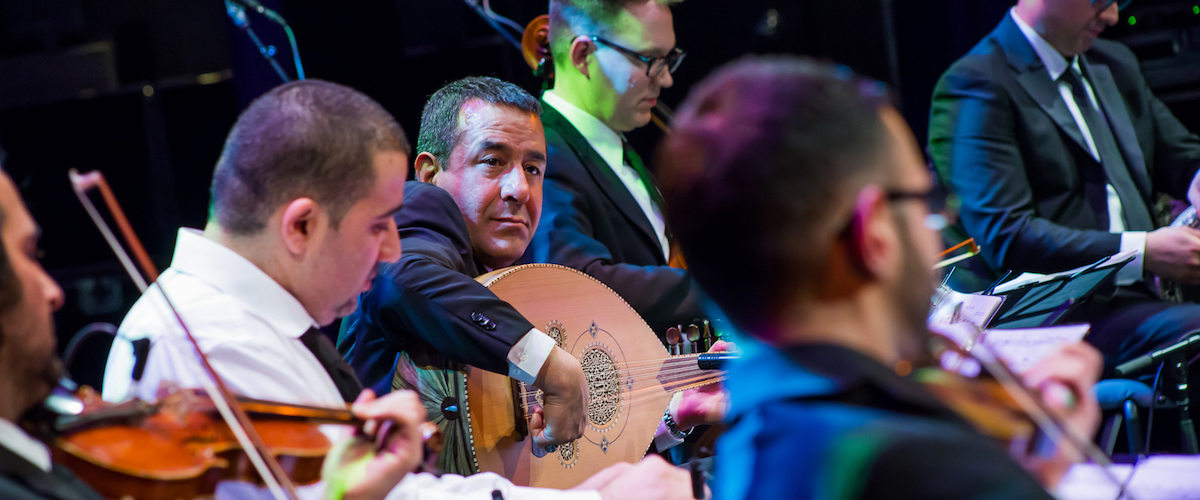
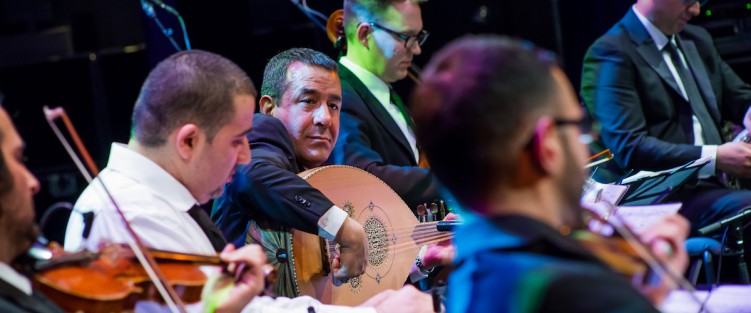
Canadian Arabic Orchestra. NOUR AHRAM PHOTOGRAPHYThe Festival of Arabic Music and Arts (FAMA) was launched last year, produced by the Canadian Arabic Orchestra (CAO) in partnership with the Festival du Monde Arabe de Montréal. Presenting a series of concerts, in the Toronto region and in Montreal, of both Arab and non-Arab artists, it aimed to appeal not only to Arabic audiences but also to a broad spectrum of Canadians.

In the fall of 2017 FAMA staged 60 concerts of music, stand-up comedy and theatre by international and local performers. FAMA returns this year, October 26 to November 10, with an even more enterprising expanded program, presented in 11 venues across the GTA. The lineup features music, theatre, exhibitions and film from Arab countries including Syria, Palestine, Lebanon, Morocco, United Arab Emirates, Iraq and Egypt, as well as several performances by the CAO, which remains the driving force behind the GTA undertaking.

The Mississauga-based CAO was co-founded in 2015 by the husband-and-wife team of qanun expert and orchestra president Wafa Al Zaghal, and pianist Lamees Audeh, its music director. Fuelled by their twin passion for Arabic and Western classical music, they initially began with a modest ensemble of five musicians. Their expanded orchestra today includes a string section of violins, viola, cello, bass, plus piano, clarinet, ney/nay (Arabic reed flute), oud (Arabic lute) and three percussionists. The instrumentation reflects the CAO’s goal of combining Western and Arabic classical instruments and musics.

FAMA, and the CAO role in launching it, caught my attention this time last year and I spoke with Audeh at the time. “Our repertoire is evolving, along with the makeup of the orchestra,” she noted. “Our approach puts less emphasis on [Arab] ethnicity and rather more on the [Arabic] music itself. We wish to connect expatriate Arabs with their classical Arabic musical culture … maintaining this cultural heritage in the hearts and minds of the Arab community in Canada and presenting it to future generations. But at the same time we want to engage with all non-Arab communities. Our aim is to build bridges between Canada’s diverse communities ... multicultural dialogue among the tapestry of Canadian society through music.”

The shifting demographics of the GTA is one factor impacting FAMA’s approach. On its website it notes that the “GTA, comprised of the City of Toronto, Durham, Halton, Peel and York is home to about 6.5 million people speaking approximately 200 languages. … Arabs constitute about four percent.” According to my lazy arithmetic, that’s over a quarter million GTA residents who identify as Arab, a considerable core audience base, within a much larger musically engaged and potentially interested population.

Venues this year range from public spaces and mid-sized theatres, to large concert halls. With the aim of reaching core and wider audiences where they live, work and play, they are strategically and widely dispersed: Mississauga, Oakville, North York, but also in Toronto’s cultural core: at the Hot Docs Ted Rogers Cinema, Jane Mallet Theatre and 918 Bathurst Centre for Culture.

The 2018 Festival opens October 26, close to the CAO’s home base, at the Living Arts Centre-Hammerson Hall, Mississauga with a concert by the multi-award-winning Lebanese singer and popular music songwriter Marwan Khoury. Khoury has had numerous highlights in his three-decade-long career: His Kil Al Asayed (2005) album made him a music star throughout the Arab world, topping charts. Last year he signed with the Al Araby TV Network to host a TV music show titled Tarab with Marwan Khoury where he performed evergreen Arabic songs with Arab guest stars. It’s a foregone conclusion that his GTA fans will make this concert a hot ticket event.

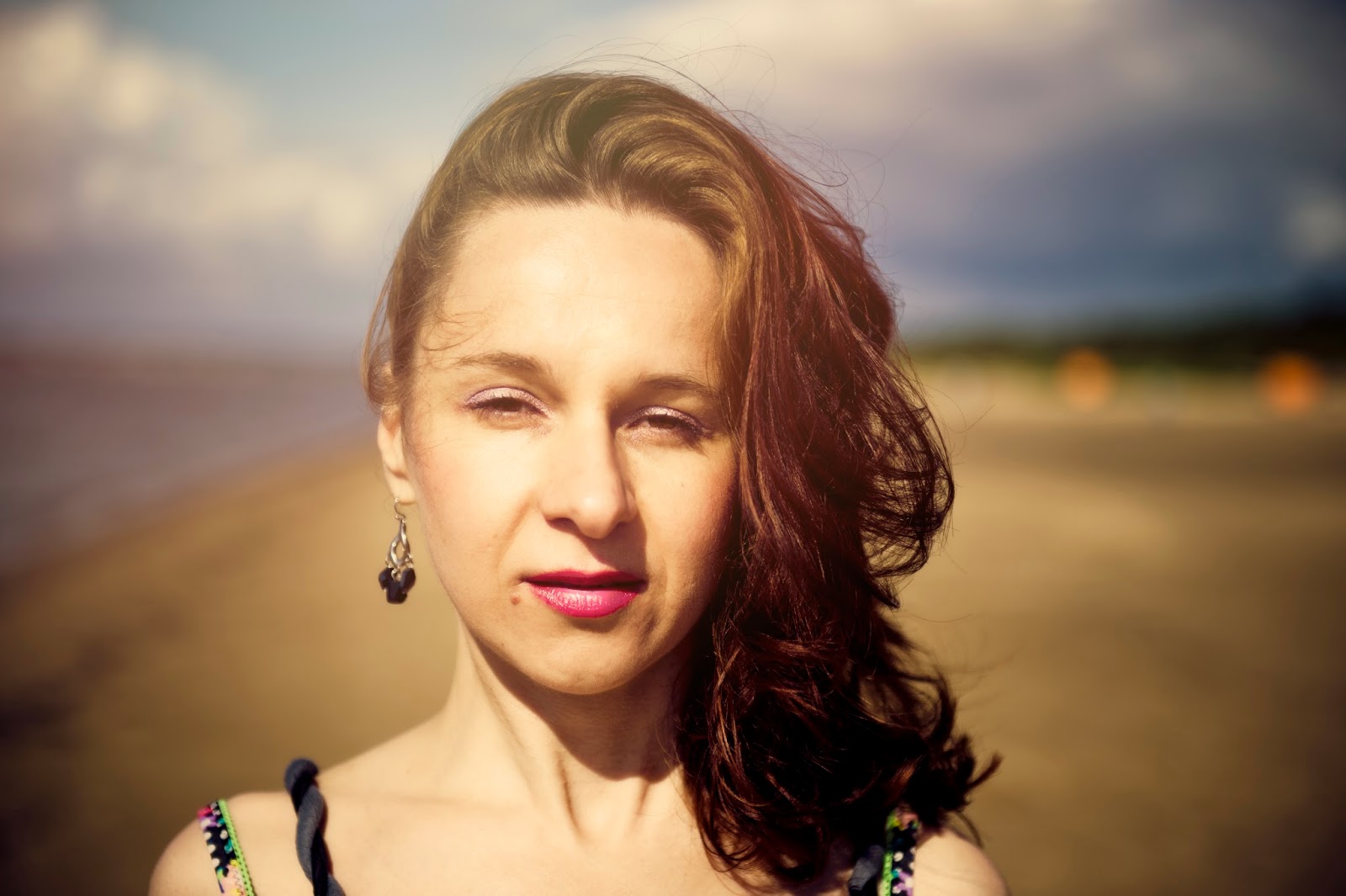
Dalal Abu Abneh

Digging for more details on the ambitious scope of the festival, I spoke on the phone with CAO chorister (and FAMA manager) Omar Najjar. “We strive for partnerships, searching for synergies with presenters and venues,” Najjar said. “The bottom line is that we want to reach all our communities where they make their homes. For example many in the Jordanian community live in the northern end of Toronto, so we are presenting Dalal Abu Amneh’s concert within easy reach at North York’s Lyric Theatre. But first we will present her at 918 Bathurst Centre for Culture, Arts, Media and Education.”

Singer Dalal Abu Amneh was born in Nazareth in 1983. By the age of 13 she was performing Palestinian folk songs at public events. She became well known for rendering the songs of Umm Kulthum (1904?-1975), among the greatest and most influential singers of the 20th century. More recently her song Bokra Jdeed (A New Tomorrow) made it to the shortlist in the 2006 EuromedCafe international song contest for “intercultural dialogue between the two shores of the Mediterranean.”

Amneh actively mixes tarab (classical Arabic singing) and Arabic folk music, focusing her practice on characteristic rhythms and maqamat, a system of melodic modes used in Arabic music. In addition to her career as a professional singer, Amneh is pursuing her PhD in Neuroscience at the Faculty of Medicine at Technion University, Israel.

November 1, FAMA presents Amneh in Nur Sufi at the 918 Bathurst Centre for Culture, Arts, Media and Education. Amneh takes the audiences on “a holistic spiritual journey that combines Sufi whirling with music,” set to some of the works of three outstanding mystical Sufi poets, Rumi, Ibn Arabi and Al Hallaj. Joining her is the Syrian-born American composer and cellist Kinan Abu Afach, along with violin, qanun and percussion. Rumi Canada’s Tawhida Tanya Evanson, whose Sufi whirling is a form of active meditation, will join the musicians. Cognizant of the 918 Bathurst Centre’s former life as a Buddhist temple, and infused with the scent of incense, Nur Sufi draws on the Sufi mystical tradition to set the mood for a special concert experience for the audience. A gallery of Sufi and Arabic calligraphy complements the performance.
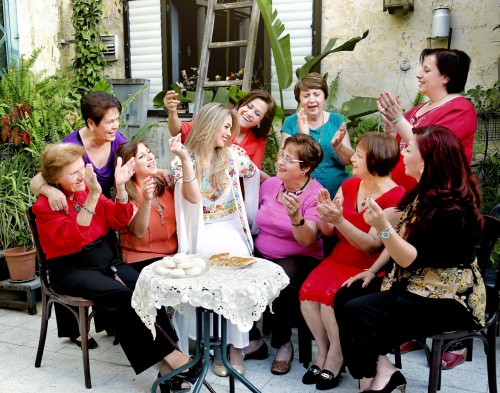
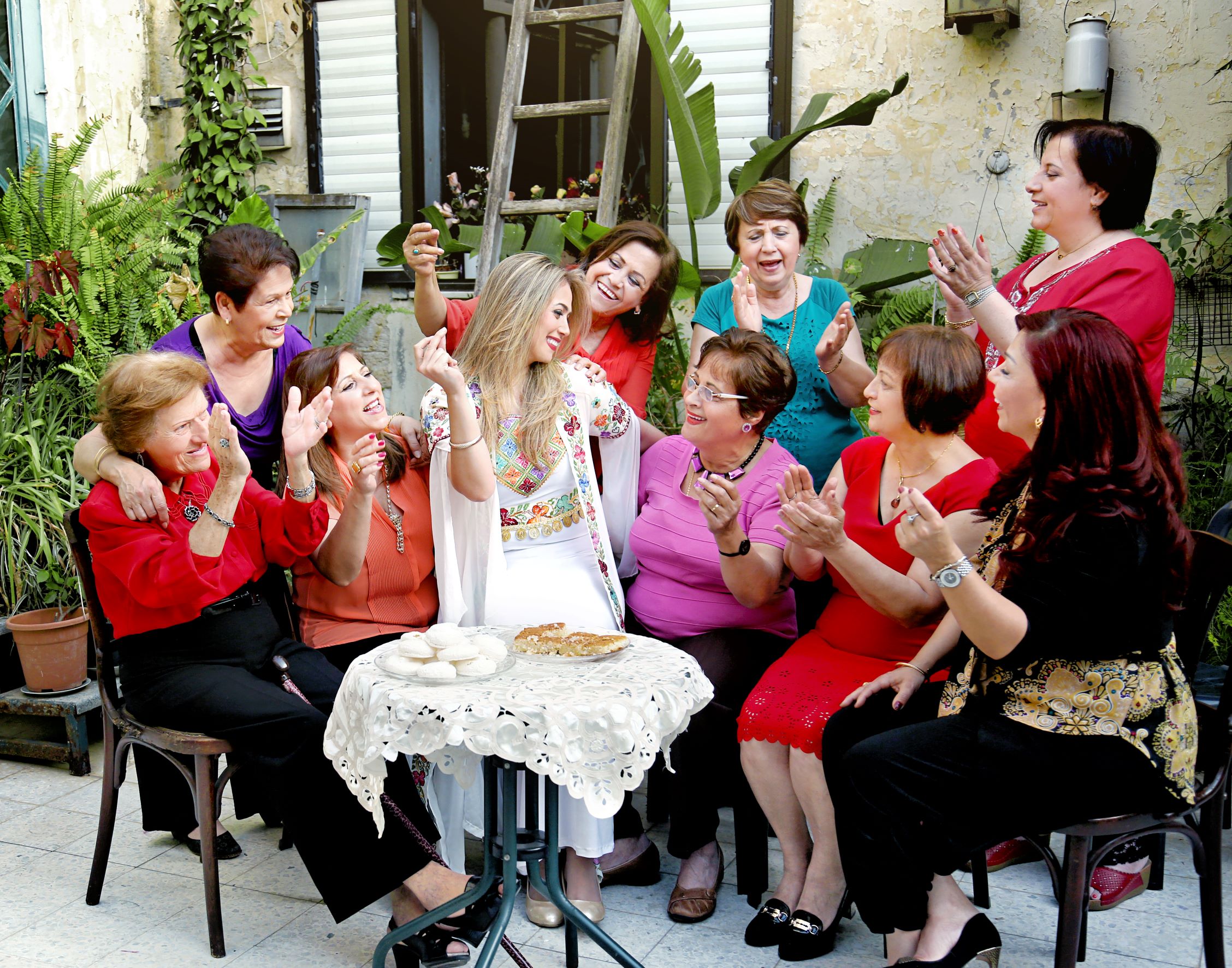
Dalal Ya SittiThen on November 3, Amneh’s concert Ya Sitti (Oh Grandma) takes the stage at the Lyric Theatre in North York. The show is an extension of Amneh’s audio-blogging about her Palestinian heritage in order to document its current practice. Ya Sitti evokes the environment in which this heritage is kept alive. In addition, Amneh aims to restore the cultural sprawl of folk music practiced in the Great Levant and the surrounding Arabic area by choosing songs originating in Palestine, Damascus, Baghdad and Cairo.

Accompanying Amneh on this pan-Arabic journey is an actual group of grandmothers – the theme of the concert. As she explains, in the past these grandmothers used to sing to themselves behind closed doors. Amneh’s project proudly brings them out on the public stage, showcasing their role as the birth mothers of song, highlighting their extraordinary contribution in the inheritance and preservation of their heritage. The grandmothers not only sing with Amneh but also share the stories and history of the songs, illuminating the lives of ordinary women.

Small Wonders

I asked FAMA manager Omar Najjar where the resident CAO Choir comes into the picture. “The choir is directed by Wafa Al Zaghal, who is also the festival’s CEO,” said Najjar. “As a member of the choir, I feel choral singing is an important aspect of Arabic music that perhaps not many in the broader Canadian community are aware of. We include both male and female singers, typically singing in unison, with interspersed solos. A good example of the involvement of choral music and the diversity in our program can be seen at our ‘Small Wonders’ concert, with the participation of the Maronite Youth Choir of St. Charbel Church in Mississauga. The Maronite Church is an Eastern Catholic Church [and one of the oldest in Christianity], yet people of the Maronite faith are very much part of the greater Arabic community.”

November 5, FAMA presents Small Wonders at the Maja Prentice Theatre, Burnhamthorpe Branch Library in Mississauga. In addition to the Maronite Youth Choir, this fundraiser will showcase young talent nurtured by the Canadian Arabic Conservatory of Music (CACM), directed by Lamees Audeh. Children ranging in age from 6 to 16 will perform on traditional Arabic instruments such as oud, qanun and Arabic violin, as well as on classical violin, clarinet, guitar and piano. Small Wonders also features Zaytouna Dabke, a Mississauga folk dance group concerned with preserving Palestinian and Arab culture and heritage, particularly among youth.

Though admission is free, donations will be accepted towards sponsoring CACM tuition for deserving children.

The CAO itself

The resident Canadian Arabic Orchestra is featured in three festival concerts.

November 4 at the Aga Khan Museum, Syrian flamenco guitarist and composer Tarek Ghriri accompanies flamenco dancers with members of the CAO in a program titled “Flamenco Arabia.” Presented in partnership with the Aga Khan Museum’s annual Duende Flamenco Festival, Ghriri explores common ground between Spanish flamenco, traditional Andalusia and contemporary Arabic music.

November 9 at the Lyric Theatre, North York, poet and singer Hassan Tamim presents “Sounds of Iraq,” in collaboration with the CAO, taking the audience on a musical journey to the land between the Tigris and Euphrates rivers, to one of the ancient cradles of poetry and music.
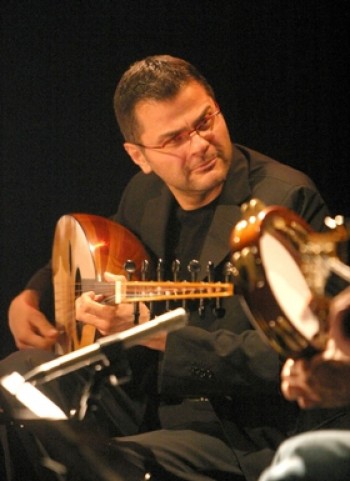
Charbel RouhanaThe festival’s grand finale takes place on November 10 at the Jane Mallett Theatre, St. Lawrence Centre for the Arts, in downtown Toronto. “Tribute to Sayyed Darwish” features Lebanese oud master, singer and composer Charbel Rouhana with the 20-piece Canadian Arabic Orchestra and Choir.

Widely considered the “father of modern popular Arabic music,” the Egyptian singer and composer Sayyed Darwish (1892-1923) believed that music was not merely for entertainment but was an expression of human aspiration which imparted meaning to life. He wrote the melody for the national anthem of Egypt, and his songs remain popular even in the 21st century. His remains rest in the “Garden of the Immortals” in Alexandria, Egypt, his hometown.

This large-scale tribute to one of the Arab world’s leading maestros, a leading light of the Arab music renaissance of the early 20th century, is a fitting way to sum up FAMA’s vision and set the stage for the future.

The Festival of Arabic Music and Arts (FAMA), produced by the Canadian Arabic Orchestra (CAO), runs from October 26 to November 10. Consult canadianarabicorchestra.ca/fama for all the details.

Andrew Timar is a Toronto musician and music writer. He can be contacted at worldmusic@thewholenote.com


Shanghai Symphony Hall. c Arata Isozaki AssociatesIt was all of 40 years ago that Andrew Davis sat down at a Hero baby grand piano in a Shanghai department store, puzzling shoppers with his rendition of Henry Mancini’s Moon River. All the conductor of the Toronto Symphony Orchestra had to do during that brief visit was stop to look at something and a crowd would gather to look at him.

Westerners were a curiosity in those days following the Cultural Revolution, with people still wearing Mao suits and black bicycles crowding the streets. Today’s Shanghai is a different place, a forest of gleaming skyscrapers with shops peddling Gucci, Versace and Prada and streets on which a cyclist can find himself sandwiched between a Lexus and a Mercedes.

No one who has visited China during the intervening years can fail to be impressed by the country’s rate of modernization. In the countryside the pace is understandably slower. In the cities it is sometimes breathtaking and not least in the realm of the arts. A few years ago in Beijing’s state-of-the-art performing arts centre I witnessed a production of Verdi’s Nabucco superior in quality to the one I had witnessed months earlier at the Mariinsky Theatre in St. Petersburg. Both starred Placido Domingo. A few weeks ago I witnessed a production of Wagner’s The Flying Dutchman imported from Erfurt, home of one of Germany’s most modern opera houses, that looked entirely uncompromised on the stage of Shanghai’s elegant Grand Theatre.

All this is by way of saying that – Rodgers and Hammerstein notwithstanding – it is not only in Kansas City that everything is up to date. Shanghai (population 13 million) has set itself the task of becoming one of the world’s top tier international metropolises.

Its music conservatory, China’s oldest (vintage 1927), is just as clearly determined not to be left behind. Host to an annual Shanghai New Music Week, it brings to China’s largest city the sounds of today, inviting major interpreters from far afield to collaborate with native musicians in its performance.

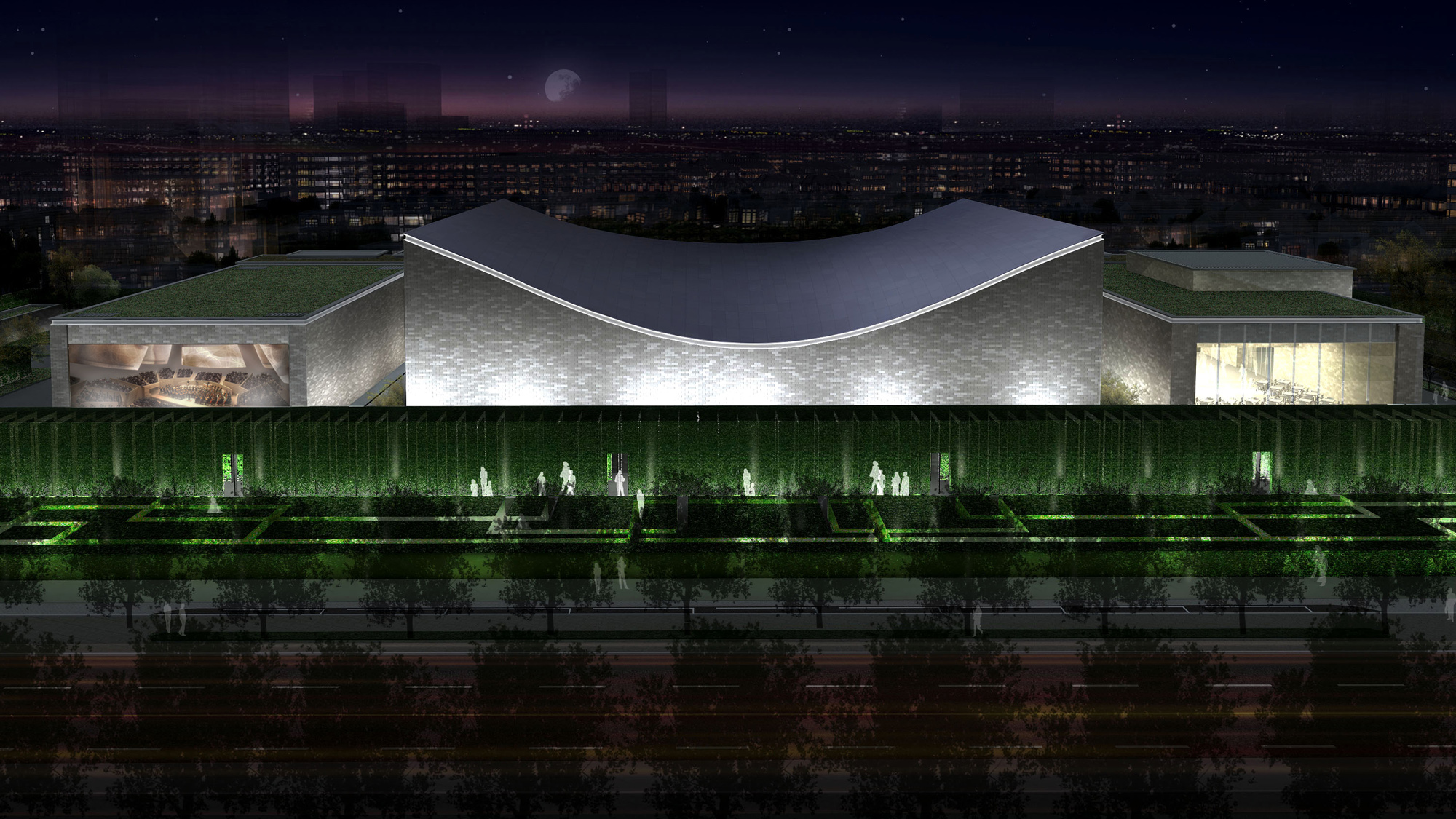
That is where Toronto’s Soundstreams comes in. At last month’s 11th Shanghai New Music Week the conservatory’s concert halls welcomed performers from Amsterdam, Athens and Paris, in addition to Ontario’s capital city, to join their Chinese counterparts in a series of afternoon and evening concerts. Additional off-campus orchestral concerts featured the Zhejiang Symphony Orchestra in Shanghai Symphony Hall, a handsomely modernist venue architecturally inspired by the Philharmonie, home of the Berlin Philharmonic.

It would be an exaggeration to claim that these concerts reached a wide audience. Like those of Beijing’s comparable festival they are conservatory-sponsored projects, aimed primarily at the open ears of the young. Tickets are kept cheap; lectures and concerts are T-shirt-and-shorts informal.

In his introduction to this year’s New Music Week, artistic director Wen Deqing identified as its theme “the fusion of tradition and modernity, of the Eastern and Western, and of China and the rest of the world.” He might almost have borrowed the title of a once-famous book by Wendell Willkie, One World.

The September 14 official opening concert by the Zhejiang Symphony Orchestra featured the world premiere of a new work by Ye Guohui, head of the composition department of the Shanghai Conservatory, but it also included the Chinese première of Quatre Instants by the celebrated Finnish composer Kaija Saariaho. Indeed, Saariaho was even the subject of a Concert Portrait, as were her French colleagues Frédéric Pattar and Gérard Pesson and her Japanese colleague Toshio Hosokawa. There was also an entire recital by the Greek pianist Ermis Theodorakis devoted to the cerebral music of the German composer Claus-Steffen Mahnkopf.

To Soundstreams fell the distinction of presenting a program of new music from North America, relatively little of which has been performed at this week-long event over the years – a reflection, its artistic director admits, of his background. His own advanced training as a composer took place mostly in Europe.

Soundstreams brought over an ensemble of two pianists (Midori Koga and Greg Oh) and two percussionists (Dan Morphy and Ryan Scott), together with mezzo-soprano Andrea Ludwig for this program, which comprised a pair of American works by John Cage and Steve Reich along with three from Canada – R. Murray Schafer’s Tantrika, Juliette Palmer’s Five (Hand in my Pocket) and Nicole Lizée’s Promises, Promises.

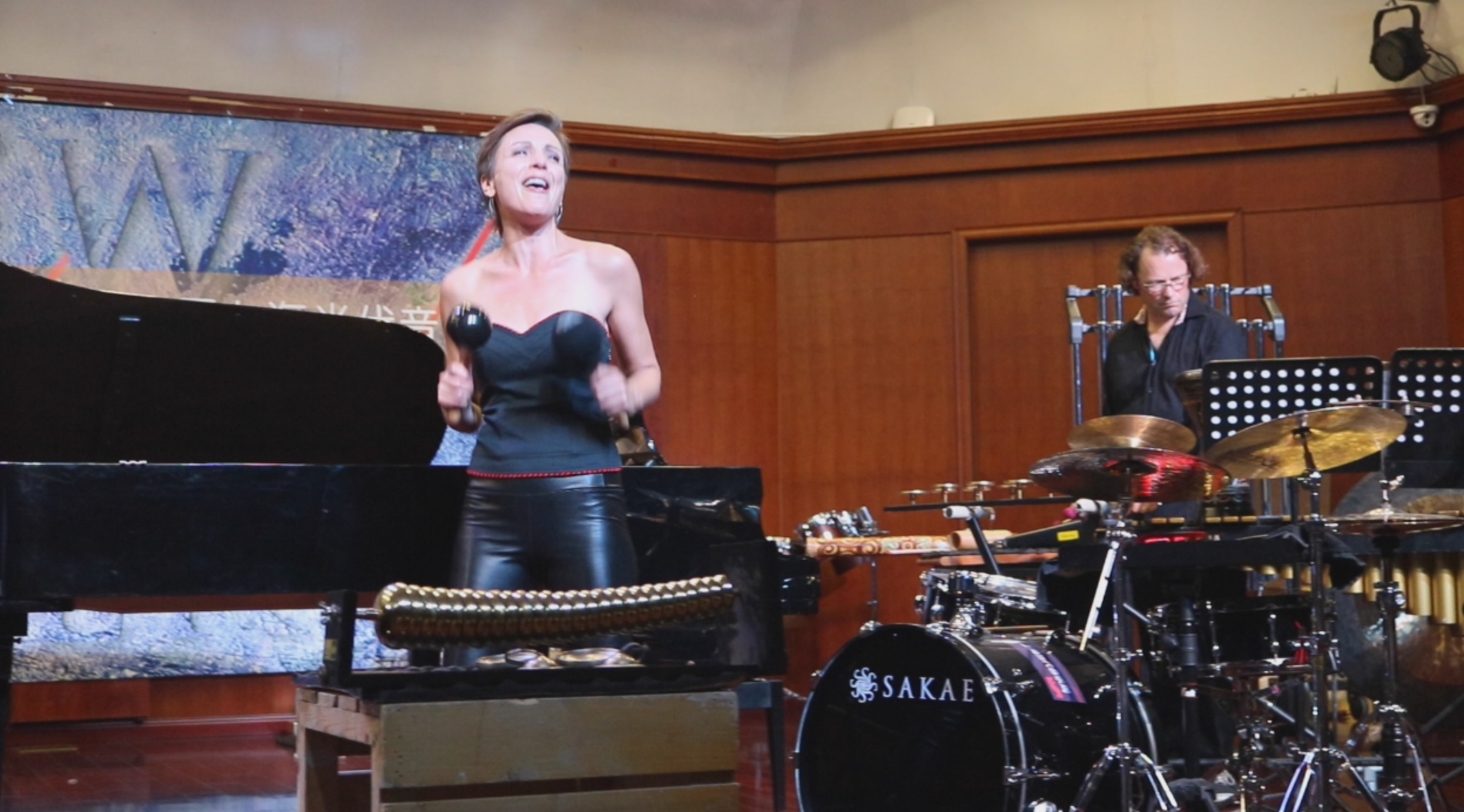
Mezzo soprano Andrea Ludwig and percussionist Ryan Scott of Ensemble Soundstreams performing R. Murray Schafer’s "Tantrika" in the “Music of North America” concert at the Shanghai New Music Week. Lizée accompanied the musicians to Shanghai to give a lecture on her musical ideas as well as take part in an “International Composers Masterclass Concert” for which Soundstreams provided the players. Although four of the participating composers were Chinese, the jury also heard music by a composer from Germany as well as Paulo Brito, a Brazilian-born American currently pursuing a doctorate at the University of Toronto, who played his own piano music with a virtuoso flair. What all these emerging composers brought to the masterclass was an awareness of current trends as well as a professional level of craftsmanship.

Clearly, much has changed in Chinese musical culture since the Cultural Revolution, when Western music was regarded as decadent and modern Chinese music was sometimes composed by committee. Not that Soundstreams was unaware of the change, having performed five years earlier at the modern music festival in Beijing. Artistic director Lawrence Cherney has made a point of cultivating links between Canada and China and has even lectured on Canadian music at the Shanghai Conservatory

“Canadian governments have talked a lot about cultural contacts over the years,” he explained over coffee and a croissant at a shop across the street from the conservatory, “but the current government actually has an active policy. Shanghai is one of 13 cities internationally in which the government is pouring resources into enhanced contacts. Culture really is important now.”

As evidence of the change, Cherney cites recent government approval for a forthcoming Soundstreams European tour of a program of music theatre by Claude Vivier, the Quebec composer murdered in a Paris hotel room in 1983, who has become far better known abroad in death than in life.

“It is an incredible time to be telling Canadian stories abroad,” he says. “Until now we have been more successful in film, literature and maybe the visual arts. We are not trying to prove anything. We hope to give a flavour of what Canadian music has to offer. And I feel very proud that we now have a pool of musicians who can perform virtually anything. It has been made clear to me here that they want us back.”

Mere hours after consuming his croissant Cherney found himself aboard a train bound for Beijing, with Hong Kong to follow and then Tokyo, as he continued a 36-year career as Canadian music’s unofficial ambassador. “There is nothing like meeting people in person,” he smiles.

William Littler is a Toronto-based writer focusing on music.

Back to top